The evidence is clear: National pharmacare for contraception can’t wait

Source: The Conversation – Canada – By Elizabeth Nethery, Postdoctoral research fellow, University of British Columbia

Why should women in British Columbia, Manitoba, Prince Edward Island and the Yukon have access to free contraception while the rest of Canadians do not? Our new research, published in the British Medical Journal and JAMA Pediatrics, underscores the urgent need for universal prescription contraception coverage nationwide. Spoiler alert: cost matters.

When B.C. launched universal coverage for prescription contraception in April 2023, more people used contraceptives, and importantly, more chose the most effective methods. When Ontario introduced universal coverage for those younger than age 25 in January 2017, we found a similar jump in the most effective contraceptive methods.

In October 2024, the National Pharmacare Act received royal assent, establishing a framework for a national, universal, single-payer pharmacare program, beginning with free access to contraception and diabetes medications. Now, almost a year later, only four provinces and territories (B.C., Manitoba, P.E.I. and the Yukon) have bilateral agreements to implement this legislation on the ground.

On Sept. 10, Prime Minister Mark Carney said the federal government is “committed to signing pharmacare deals with all provinces and territories.” This is welcome news given previous statements in July by Health Minister Marjorie Michel indicating wavering commitment or that “all options are on the table” for implementing Bill C-64 nationally.

Why affordable birth control is essential

As reproductive health policy researchers (including two health-care providers), we know that universal coverage for contraception is essential to uphold reproductive population health and to achieve gender equity in Canada. We have recently published evidence demonstrating the effect of universal contraception funding policies on contraception use, which reaffirm how critical this policy is in the Canadian context.

Everyone in Canada, regardless of income or postal code, deserves access to the contraception that is right for them, without cost standing in the way. As former Federal Health Minister Mark Holland stated when announcing national pharmacare on Feb. 29, 2024: “Waking up in a country where every single woman has access to the contraception she needs to control her future is an absolutely critical part of having a just society.” He added: “This is about health equity.”

When women can’t afford contraception, the risk of unplanned pregnancy increases. When contraception is accessible without financial or logistical barriers, women are more likely to plan pregnancies around their health, education, career and family goals. This benefits not only the individual but also children, families and society overall by improving gender equity in education and workforce participation, reducing poverty and supporting better health outcomes.

Beyond this, free contraception is a cost-effective policy, expected to save our health systems money in the long term by reducing health-care costs linked with unplanned pregnancies.

Private and public drug plans

Some critics argue that many Canadians already have drug insurance and plans that cover contraceptive costs. But that doesn’t tell the whole story.

Most private and public plans do not cover 100 per cent of prescription drug costs. Deductibles and co-pays leave patients paying at least a portion out-of-pocket, and some private plans exclude contraception altogether. The most effective contraceptives (intrauterine devices (IUDs) and subdermal implants) can cost up to $450 up front, even with coverage.

Many young people or those working in seasonal or temporary jobs don’t have drug insurance at all. Others choose to pay out-of-pocket to avoid having birth control charges show up on a shared plan with a partner, spouse or parent — to preserve privacy. That is why first-dollar, universal coverage for contraception — as outlined in federal pharmacare — is essential. It guarantees access free from financial strain, coercion, loss of privacy or compromise.


Read more:
With a pharmacare bill on the horizon, Big Pharma’s attack on single-payer drug coverage for Canadians needs a fact check


If Canada’s pre-existing mix of public and private insurance provided sufficient access to contraception, we would have seen little or no change when contraception became free in B.C. But we did see change. Our research showed a 49 per cent increase in the use of the most effective contraceptive methods when they were available at no cost.

Clear evidence for pharmacare

This provides clear evidence that cost has been a barrier for individuals in B.C. and highlights a critical point: without universal coverage, many Canadians simply cannot afford their preferred method of birth control. When costs are taken out of the equation, more people choose the most effective contraception methods.

Similarly, when Ontario provided universal prescription coverage for youth 24 years old or younger in 2018, we found that prescriptions for IUDs and oral contraceptive pills jumped, with the greatest increases for those in low-income areas.

When this coverage was revised to exclude those with private insurance, use declined. This shows us that private insurance is inadequate to cover gaps in contraception needs, especially for youth.

All Canadians seeking to manage their reproductive futures deserve equitable access to safe, effective and affordable contraception. Our new findings show just how strongly cost influences these choices.

The federal government has promised to implement national pharmacare, starting with contraception (and diabetes medication). On Sept. 2, Michel said “we are tracking those [agreements] that have already been done to see how it works.”

The evidence is now available and is clear: pharmacare works. Our analysis of B.C.’s policy shows the clear public health benefits that could result from expanding pharmacare and making no-cost contraception a reality for all Canadians. Further, our analysis of Ontario’s experience show that a watered-down version of pharmacare policy (like Ontario’s policy for youth since 2019) does not suffice.

All Canadians, regardless of where they live, deserve access to the contraception that they need to control and plan their reproductive health futures. Now is the time to implement universal, first-payer coverage for contraception for all Canadians.

The Conversation

Elizabeth Nethery receives funding from Health Research BC.

Amanda Black has received research funding from CIHR. She sits on the Board of Directors of the Society of Obstetricians and Gynaecologists of Canada. She has been on advisory boards for Bayer, Organon, Searchlight, and Pfizer.

Amanda K Downey works for Hoffmann-La Roche Ltd. The company had no role in the development of this article. She receives funding from the Canadian Institutes of Heath Research.

Laura Schummers receives funding from the Canadian Institutes of Health Research, the BC Ministry of Health, and the Canadian Foundation for Innovation. She consults for Canada’s Drug Agency.

Wendy V. Norman receives funding from the Canada Research Chairs program, the Canadian Institutes of Health Research, Health Canada, and The Public Health Agency of Canada. Professor Norman is affiliated with the Society of Family Planning Research Committee, and the board of directors for FIAPAC, a not for profit association of family planning professionals, based in Europe.

ref. The evidence is clear: National pharmacare for contraception can’t wait – https://theconversation.com/the-evidence-is-clear-national-pharmacare-for-contraception-cant-wait-264967


The evolution of male mental health in television

Source: The Conversation – UK – By Christina Wilkins, Lecturer in Film and Creative Writing, University of Birmingham

Shows about men still dominate our television screens. But the stories being told are starting to change, with more room for vulnerability and portrayals of male mental illness. These changes include explicit mentions of diagnostic categories and male characters with mental illnesses in the lead role.

In the last few years in the UK and the US, male-centred shows such as The Bear (2022-), Ted Lasso (2020-), Barry (2018-23), The Boys (2019-26), Succession (2018-23), Baby Reindeer (2024) and Slow Horses (2022-) have been hugely popular. It is telling that of these series, at least four explicitly deal with male mental illness.

While researching my new book, Male Mental Illness in Contemporary Culture (due out late 2025), I found that male mental illness is made much more explicit within the comedy genre, particularly in the UK.

For series in the US, male mental illness is more often used as a plot device rather than being the focus of the story itself. And even then, it may reinforce stereotypes. For example, the Netflix show Unstable (2023) focuses on Ellis (Rob Lowe) and his mental breakdown following the death of his wife. Very often his mental health struggle is presented as eccentricity and oddness, giving him an excuse to behave strangely rather than dealing with his experience.

The trailer for Unstable.

These stereotypes emerge from the dynamics of the television industry, particularly in the US. Men historically outnumbered women in the industry three to one in US-produced television. Despite this improving in recent years to women taking 43% of the roles onscreen in US television, traces of the past remain. Much of the research focuses on US examples, with a gap around how men onscreen are presented in the UK.

With the overrepresentation of men, it might be assumed there is more variety of masculinity onscreen. However, research in 2017 into the depiction of men onscreen in the US has shown men often upholding old-fashioned ideals of masculinity, noting that the men on our screens are “likely to be shown as dominant and in the prime of their lives”.

For mental health and mental illness, this has an impact. Men’s expected roles in society conflict with their experience of mental illness.

Differences between cultures

There appears to be a difference in UK and US portrayals. In the US, recent series that are categorised as “about mental health” include Apple TV+’s Shrinking (from the team involved with Ted Lasso, another series that engages with male mental health) as well as Unstable.

While these shows are based on the idea of the central male protagonist struggling mentally, this is due to grief from the loss of their spouses. Their struggles are mainly communicated through eccentric behaviour, rather than engaging with their emotions.

By contrast, recent UK series that have explored male mental health and illness – still in the vein of comedy – have done so with more attention to the details of illness itself. One of the best examples is Big Boys (Channel 4, and now on Netflix), which follows Jack (Dylan Llewellyn) as he starts university.

The trailer for Big Boys.

Jack is trying to navigate the death of his father, coming out and starting a new chapter. But it is the portrayal of his friend Danny (Jon Pointing) that is the most interesting. Danny is a lad type, whose swagger functions as a central part of his character. But we’re also shown his struggle with depression, including the mundanities that aren’t always covered onscreen: the alarms for medication, the side effects of that medication, the friends who check in and help out during an episode.

Unlike other portrayals of men onscreen, Big Boys presents a character whose struggles aren’t just played for laughs. Instead, Danny’s character addresses the very real details of the mental illness experience.

The differences between the UK and the US could be down to how mental health is viewed in each country. Surveys in the UK found in 2021 that nearly three quarters of people believed stigma towards those with a severe mental illness has not improved in the last decade.

Even more recently, a survey by Mind in 2024 found that 51% of the UK population believes there is a great deal or fair amount of shame associated with mental health conditions. The specifics of this stigma are highlighted by other surveys, which have found that “negative attitudes towards people with mental illness [are] more common among men”.

The American response in some surveys looks different. In 2019, the American Psychological Association claimed that Americans were becoming more open about mental health. But the same survey found that a third of respondents still saw people with mental illness as someone to be scared of.

There are many similarities here between the way mental illness is viewed between the two cultures, with stigma remaining something to be countered, and a recurrent part of charity campaigns. The differences between the portrayals on television suggests something to do with understandings of masculinity and expectations of what male mental health and illness looks like.

For now, Big Boys offers something different. But there is still room for more portrayals to engage with the experience in more detail without resorting to stereotypes.


Looking for something good? Cut through the noise with a carefully curated selection of the latest releases, live events and exhibitions, straight to your inbox every fortnight, on Fridays. Sign up here.


The Conversation

Christina Wilkins does not work for, consult, own shares in or receive funding from any company or organisation that would benefit from this article, and has disclosed no relevant affiliations beyond their academic appointment.

ref. The evolution of male mental health in television – https://theconversation.com/the-evolution-of-male-mental-health-in-television-266318

Chemical pollutants affect wildlife and human behaviour. But industry toxicologists are reluctant to carry out tests, new survey reveals

Source: The Conversation – UK – By Alex Ford, Professor of Biology, University of Portsmouth

Ambiento/Shutterstock

Most environmental scientists believe that chemical pollution can and is negatively affecting people and wildlife, according to my team’s recent survey.

We surveyed 166 environmental scientists across academia, government and industry and found that industry scientists working in environmental toxicology were reluctant to use behavioural studies when assessing the risk posed by chemicals. There are several possible reasons for their reticence.

As a society we have known for centuries that chemical pollutants can affect our behaviour. The terms “mad as a hatter” and “crazy as a painter” entered the English language due to observations of psychotic behaviour caused by occupational exposure to mercury and lead. Around the world, lead has been removed from water pipes because it can reduce cognitive ability in children.

Restrictions of alcohol and drug consumption exist while people are driving because it increases the risk of accidents. But previous research highlights that behaviour is rarely used to assess the effects of pollution on wildlife.

There are approximately 350,000 different chemicals in everyday domestic and industrial use. Before these chemicals are licensed for use, governments or industries conduct experiments to assess the potential risk to the environment.

Unfortunately in many incidences, chemicals have reached the market without a thorough assessment of the harm they may cause to the environment. That includes plastic additives – chemicals added to plastics to give them certain properties such a flexibility, heat resistance, colour and UV protection.

Scientists have estimated that there are over 16,000 chemicals known to be within plastics or used to make them. Two-thirds of these chemicals do not have sufficient data on their toxicity.


Read more:
Lobbying in ‘forever chemicals’ industry is rife across Europe – the inside story of our investigation


Toxicity tests typically involve a limited number of animals including fish, crustaceans and algae. They are exposed to particular chemicals to assess their effects on survival, growth and reproduction. As as means of protecting the wider environment, risk assessments determine what the safe levels of these chemicals might be in the environment.

yellow rapeseed crop, bee, blue sky
Many insects play a vital role in pollination, but this is compromised by agricultural chemical use.
LeicherOliver/Shutterstock

However, they aren’t assessed to determine whether they change an animal’s behaviour. Studies into the effects of prescribed and illegal drugs taken to deliberately alter human behaviour has driven questions over their environmental consequences.

Many pollutants that mimic and act like hormones also alter behaviour. For example, synthetic oestrogens and androgens can alter the reproductive behaviour of fish. Antidepressants and anti-anxiety medications alter the behaviour of many aquatic organisms.

An animal’s behaviour is critical to its survival. A split-second decision while driving on the road may cause or prevent a traffic collision and could mean the difference between life or death. Similarly, if an animal isn’t behaving normally, it might struggle to escape predators, find food or attract mates.

Reasons for reluctance

We found there could be many reasons why industry toxicologists are reluctant to embrace behavioural studies.

First, industry scientists were more sceptical that behavioural studies are repeatable. Some expressed concern about the reliability of toxicity metrics.

While some scientists share these concerns, efforts are being made internationally to standardise methodology. The pharmaceutical industry already uses behavioural tests in drug design which suggests some acceptance to their credibility.

Second, all of the scientists we questioned agreed that adding behavioural tests to existing chemical contamination assessments would increase costs for both industry and government. Although it may affect profit margins, we argue that not adding behaviour to the suite of tools to assess chemical safety comes with cost to human health and the environment.

Industry may also be apprehensive about adopting behavioural testing due to fear of what scientists may find out about existing chemicals. Could there be a chemical in our everyday products that increases the likelihood of dementia, anxiety or depression?

For example, some scientists are starting to link pollution with incidences of neurological disorders, anxiety and some have correlated even higher rates of crime.

Developing internationally standard toxicity tests can take years if not decades, so existing tests need to incorporate behaviour. This will hopefully reduce time, costs and ethical concerns while at the same time maximising the available information to protect human health and the environment.


Don’t have time to read about climate change as much as you’d like?

Get a weekly roundup in your inbox instead. Every Wednesday, The Conversation’s environment editor writes Imagine, a short email that goes a little deeper into just one climate issue. Join the 45,000+ readers who’ve subscribed so far.


The Conversation

Alex Ford has received funding from research councils, european union, regulatory authorities, NGOs and industry

ref. Chemical pollutants affect wildlife and human behaviour. But industry toxicologists are reluctant to carry out tests, new survey reveals – https://theconversation.com/chemical-pollutants-affect-wildlife-and-human-behaviour-but-industry-toxicologists-are-reluctant-to-carry-out-tests-new-survey-reveals-266919

Malorie Blackman’s Noughts and Crosses uses critical dystopia to challenge us to build a better future

Source: The Conversation – UK – By Blanka Grzegorczyk, Senior Teaching Associate, Faculty of Education, University of Cambridge; Manchester Metropolitan University

Between 2013 and 2015, Malorie Blackman was Britain’s first black children’s laureate. Her young adult series Noughts and Crosses (2001-21) at once challenges and plays with the prevailing racial ordering of western life and thought.

Blackman’s series is set in an alternative Britain called Albion, where power is held by a dominant, black majority known as the “Crosses”, while the white “Noughts” are stigmatised minority subjects. In doing so, Blackman suggests that if we see difference as threatening or inferior, then any alternative worlds we imagine will just reflect our own culture. The upending of racial formations, the books seem to suggest, could result in an equally powerful, reverse form of oppression.

Most contemporary criticism and the book’s most well-known adaptations (at the Royal Shakespeare Company and for the BBC) treat Blackman’s series as a case study of anti-racist political allegory, counterfactual historical, or dystopian fiction. Their focus tends to be on the forbidden romance between Callum McGregor, an increasingly disaffected and conflicted working-class Nought, and a Cross politician’s wealthy and privileged daughter, Persephone “Sephy” Hadley.

But it is also possible to read Noughts and Crosses specifically as an attempt to show systems of oppression at work: how they prop up (neo-)imperialist power, enable racial segregation and traumatise people.


This article is part of Rethinking the Classics. The stories in this series offer insightful new ways to think about and interpret classic books and artworks. This is the canon – with a twist.


Noughts and Crosses isn’t just a dystopian story – it’s a critical dystopia, meaning it aims to inspire political thought and change. Critical dystopias don’t usually show us a better world; instead, they make us think about how one might be created.

What makes a critical dystopia powerful is how it mixes everyday life with moments of fear or tension. This mix makes familiar situations feel unsettling, encouraging readers to see the world differently. It pushes them to question unfair or harmful systems and imagine better alternatives.

The power of secrets

In Noughts and Crosses, Callum and Sephy repeatedly come up against suppressed truths and hidden histories. The truth behind Callum’s sister Lynette’s fragile mental state, for example, is revealed to be a vicious racist attack on her and her Cross boyfriend prior to the events of the novel. But by the time Callum learns this secret, it is too late to stop the events leading to Lynette’s suicide, which draws Callum’s family deeper into a terrorist militia.

Malorie Blackman
Author Malorie Blackman in 2007.
Wiki Commons, CC BY

The novel’s constant use of hidden knowledge draws attention to the atomised condition of life in a racially divided state. Particularly significant here is a picture of the family unit in which dreams, aspirations and motivations are only partially knowable – and never completely fulfilled. Tragedies such as those experienced by the McGregor family galvanise the tribalist rhetoric of a segregated society.

On the other hand, the novel shows that through discovery, its young characters become more sceptical about any stories that they have been handed by that social order. When Sephy learns that she has an older half-brother, she concludes: “Nothing in [her] life was a fact. There was nothing to cling on to.”

This is also the case when Callum struggles to “find something of sense to hold on to” after his brother Jude’s admission that he became more radicalised due to learning another crucial family secret – that their great-grandfather was a Cross.

Noughts and Crosses does explore, at times, what happens when marginalised voices are repositioned as central. But it also seeks to heal society’s divisions while challenging its self-defeating logic and suggests that one way to do so is by revealing the truth.

In the novel’s final passages, the reader learns that Sephy has defied her parents’ wishes and given birth to her and Callum’s baby. This can be read as a suggestion that their – and perhaps our – social divisions can be healed, eventually, and that a less divided future is possible.

The trailer for the BBC adaptation of Noughts and Crosses (2020).

At the same time, however, Blackman sometimes seems to make the truths told in the novel – like what Callum reveals to Sephy as the “biggest secret of them all” – clearer to us, the readers, than her own characters. This is not just a matter of plot, but one of effect. As readers, we start to become immersed in a rush of twists and unravellings, crossings and unwindings, until we can almost glimpse a different kind of reality, beyond the segregated world of the novel.

In the end, the novel is not recentring one part of society at the expense of another – it is recentring us, the reader, and how we think about its world and ours, by inducting us into the secrets of others. In this context, the act of writing – and reading – is an act of hope.

This is the art of the critical dystopia: the further we read, the more we become engrossed in the shadow texts, or truths of which the characters themselves might be unaware, about how society could be fractured, transformed and remade.

Beyond the canon

As part of the Rethinking the Classics series, we’re asking our experts to recommend a book or artwork that tackles similar themes to the canonical work in question, but isn’t (yet) considered a classic itself. Here is Blanka Grzegorczyk’s suggestion:

Haunted by real-world histories, and specifically by the repeat patterns of the colonial past and neocolonial present, S.F. Said’s alternative Britain in his critical dystopia Tyger (2022) is one where the British empire still rules the world, and slavery was never abolished.

The novel brings its exposé of the terrors of the imperial past to bear on the present moment.

In its exploration of art- and story-based forms of oppositional agency, the novel highlights British Muslim characters Adam and Zadie’s calls for a future where a truly sustainable and equal way of living might be possible. At the same time, it shows them acting as if that hoped-for, radically transformed world already exists in the present.


Looking for something good? Cut through the noise with a carefully curated selection of the latest releases, live events and exhibitions, straight to your inbox every fortnight, on Fridays. Sign up here.


This article features references to books that have been included for editorial reasons, and may contain links to bookshop.org. If you click on one of the links and go on to buy something from bookshop.org The Conversation UK may earn a commission.

The Conversation

Blanka Grzegorczyk does not work for, consult, own shares in or receive funding from any company or organisation that would benefit from this article, and has disclosed no relevant affiliations beyond their academic appointment.

ref. Malorie Blackman’s Noughts and Crosses uses critical dystopia to challenge us to build a better future – https://theconversation.com/malorie-blackmans-noughts-and-crosses-uses-critical-dystopia-to-challenge-us-to-build-a-better-future-253879

Weight loss drug stigma shows society still holds negative attitudes towards body weight and obesity

Source: The Conversation – UK – By Beverley O’Hara, Lecturer in Nutrition, Leeds Beckett University

Stigmatising the use of weight loss drugs is just a new form of ‘fatphobia.’ zimmytws/ Shutterstock

Since Wegovy received approval as a weight loss treatment in 2021, there has been huge demand for GLP-1 drugs. These drugs reduce hunger and suppress the “food noise” that can make it difficult to lose weight.

But while these drugs have been a gamechanger for many who have struggle to lose weight, it wasn’t long before the backlash against them started. In response, high-profile celebrities such as Serena Williams have opened up about using these drugs in the hopes that it would counter the rising stigma of using them.

Sadly, it’s probably going to take more than celebrity endorsement to change the way society views people who are overweight. Weight-loss drug stigma is just the latest form of “fatphobia”.

Weight and obesity have long been stigmatised in our society. Obesity is even considered by some to be a moral failing, rather than a result of an person’s unique biology interacting with complex societal and environmental forces. This misconception has contributed to weight stigma and weight bias, where people may hold negative attitudes towards people who are overweight and may even discriminate against them.

While popular initiatives in recent years have aimed to advocate for the acceptance of all bodies regardless of size (such as the body positivity movement), stigma against larger bodies is still the norm, as our work has shown.

Earlier this year, we conducted research on perceptions of health and weight. As part of our survey, we asked 143 participants to describe photos of adults of varying body weights. These photos depicted people engaging in so-called “healthy” and “unhealthy” behaviour – such as exercising or lying on a couch.

The results were stark. Photos of slender people elicited more friendly or warm comments from participants. However, photos of people with obesity were consistently described using negative and stigmatising language, such as “lazy”, “dirty”, “slobbish” and “unappealing”.

The message was clear. You’re only as healthy and desirable as your body size. Even though body size is not a good indicator of metabolic health, our work shows that slimness is still highly valued and seen as a marker of being healthy – regardless of a person’s actual health status.

Although most participants understood that the causes of obesity are complex and not just due to lifestyle choices, this insight did not affect their attitudes towards people with obesity. Weight bias still appears to be a permissible form of discrimination to some.

With the use of weight loss drugs becoming increasingly more common, one research team hypothesised that these drugs might change attitudes towards obesity – helping our society see that weight is more related to biology than willpower. They conducted two surveys to uncover whether weight loss drugs had any effect on reducing weight bias.

A blue scale, with three vials of blue weight loss jabs next to it.
Some view the use of weight loss drugs as ‘cheating’.
Love Employee/ Shutterstock

The results from that survey showed that nothing has changed when it comes to weight stigma. Participants overwhelmingly thought that obesity is controllable through willpower – and that the use of weight loss drugs is unfair and the “easy way out”.

Judging people for taking weight loss drugs is merely a new variation of weight stigma. People are first negatively judged for being overweight in the first place – but then judged again for undergoing the “wrong sort” of treatment.

Although significant and long-lasting weight loss through behavioural changes alone is extremely rare, taking weight loss drugs is seen by some as “cheating”.

What people want to see is “good old-fashioned hard work”. Research shows that people are more likely to see someone in a negative light if they don’t think that person is putting in the effort to lose weight.

The “right way” is often thought of as exercising willpower, being more physically active and eating less. Using weight-loss drugs is seen by some as evidence that people with obesity are “too weak” or “too lazy” to lose weight in a way that is perceived as being correct.

The harm of GLP-1 stigma

Using a GLP-1 drug as a weight loss method is judged more harshly than losing weight through traditional methods.

Fear of this negative judgement is reportedly driving some users to take GLP-1 drugs in secret, even hiding their use from loved ones.

We currently don’t know the full scale and effect of weight loss drug stigma. It’s possible that it could deter people from seeking treatment with these medications or even increase social isolation as users withdraw for fear of being judged.

Weight stigma is already harmful to physical and psychological health – leading to poorer wellbeing and even depressive symptoms. The burden of keeping use of these drugs private could further increase risk of these harms.

Worryingly, it could even stop people from seeking medical attention for any side-effects they may experience, whether that’s mild gastrointestinal problems to rare, potentially severe complications such as thyroid tumours, severe gastrointestinal complications and a rare eye condition that may result in vision loss.

People using weight-loss drugs must also navigate the potential psychological aspects of GLP-1 treatment. Alongside negative judgement of taking the drugs, there may be anxiety about supply and affordability, the spectre of weight regain and an altered relationship with food.

It’s darkly ironic that, despite the increased awareness and use of GLP-1 drugs in our society, weight stigma is still so prevalent. The social, emotional and physical effects of using these drugs amounts to a costly commitment and is not, in fact, an “easy way out”.

The Conversation

Beverley O’Hara is affiliated with The Association for the Study of Obesity.

Jordan Beaumont receives funding from NIHR. He is affiliated with the Association for the Study of Obesity.

ref. Weight loss drug stigma shows society still holds negative attitudes towards body weight and obesity – https://theconversation.com/weight-loss-drug-stigma-shows-society-still-holds-negative-attitudes-towards-body-weight-and-obesity-265019

László Krasznahorkai wins Nobel prize for literature – the Hungarian novelist’s grand tales of alienation speak to our times

Source: The Conversation – UK – By Bran Nicol, Professor of English, University of Surrey

Awarding the Nobel prize for literature to László Krasznahorkai today, the Swedish Academy commended the author’s “compelling and visionary oeuvre that, in the midst of apocalyptic terror, reaffirms the power of art”. But in itself their decision is also a commitment to the value of serious and intellectual writing in an age characterised by immediacy, the distractions of digital culture and the entertainment industry.

Krasznahorkai was first propelled into literary fame in Hungary, his home country, with his first novel Satantango (1985), a novel about a squalid, rain-soaked village visited by a mysterious man. He could be a prophet, Satan or merely a con man.

This book established the coordinates for the subsequent series of ambitious novels that cemented Krasznahorkai’s status as one of the great contemporary global writers.

The Melancholy of Resistance (2019) features a mysterious, charismatic figure, the Prince, who brings a rebellious carnival to a small community and tears it apart. Baron Wenckheim’s Homecoming (2016) tells of an eccentric aristocrat returning to Hungary after exile in Argentina.

He is greeted by the townspeople as a great benefactor who will enrich the town. Little do they know he has returned saddled with a crippling gambling debt.

The 2014 work Herscht 07769 centres on a baker in a neglected eastern German town who is drawn into the world of a cleaning company, which is a front for a neo-Nazi gang.

Krasznahorkai’s work began to be read more widely in the 2000s, following English translations of The Melancholy of Resistance and War and War (1999). More global fame came when he was awarded the International Booker Prize in 2015 and the National Book Award for Translated Literature in 2019 (for Baron Wenckheim’s Homecoming).

The epithets which tend to be applied to his fiction include “hopeless”, “obsessive”, “unsettling” and “intense”. He was famously labelled, in a blurb for his book The Melancholy of Resistance, by the cultural critic Susan Sontag as the “contemporary Hungarian master of the apocalypse”.


Read more:
Three novels by Nobel winner Han Kang that explain the fragile nature of South Korea


More precisely, though, I would say that there are three distinctive features about Krasznahorkai’s writing. There’s his ability to depict social disintegration, often hastened by the influence on a community of mysterious individuals or companies.

Then there’s how he sustains a mood of dread in his fiction – a mood which lends itself to a fear of living under authoritarianism without ever being directly allegorical. This is captured powerfully in the section of his 2013 book The World Goes On entitled “How Lovely”.

This story imagines a lecture series where speakers from all over the world take their turn giving talks, only for one to give three lectures: the first by choice, the second reluctantly, after an invitation to return, and the third because he has been imprisoned in the lecture theatre.

The third distinctive feature is the innovation and complexity of his writing. Herscht 07769 contains only a single full stop in 400 pages. The World Goes On arranges its 17 stories in a Fibonacci sequence – the mathematical sequence in which each element is the sum of the two elements that precede it.

Satantango (made into a seven-hour film by his collaborator Béla Tarr) has a chapter that focuses on two characters who are not identified for nine pages. The experience of reading Krasznahorkai can feel as disorienting and alienating as the situations his characters face.

But this uncompromising literary quality, and the way it still captures the tenor of our times, is what I love about Krasznahorkai’s work. The Nobel committee’s bio-bibliography of the author references, as many critics have done, the fact that he belongs to the great “central European tradition that extends through Kafka to Thomas Bernhard”.


Read more:
Why you should read the Hungarian master of the apocalypse


Krasznahorkai’s is fundamentally a modernist kind of writing, one which confronts us with a world without meaning, yet still affirms its faith in beauty and art. The very writing itself is proof of this faith, because it shows that it is possible to think deeply about what matters and to articulate this.

Appropriately enough for a writer famous for his sentences, the Nobel committee’s reference to Krasznahorkai’s capacity to reaffirm the power of art “in the midst of apocalyptic terror” is an intriguingly artful piece of phrasing.

Krasznahorkai’s fiction does not really depict terror, but specialises in the apprehension of future breakdown. This suggests that the “apocalyptic terror” is not within his fiction but is the broader context for it – and contemporary literature itself. Krasznahorkai demonstrates that art can counter this.


Looking for something good? Cut through the noise with a carefully curated selection of the latest releases, live events and exhibitions, straight to your inbox every fortnight, on Fridays. Sign up here.


The Conversation

Bran Nicol does not work for, consult, own shares in or receive funding from any company or organisation that would benefit from this article, and has disclosed no relevant affiliations beyond their academic appointment.

ref. László Krasznahorkai wins Nobel prize for literature – the Hungarian novelist’s grand tales of alienation speak to our times – https://theconversation.com/laszlo-krasznahorkai-wins-nobel-prize-for-literature-the-hungarian-novelists-grand-tales-of-alienation-speak-to-our-times-267183

Joint pain or osteoarthritis? Why exercise should be your first line of treatment

Source: The Conversation – UK – By Clodagh Toomey, Physiotherapist and Associate Professor, School of Allied Health, University of Limerick

VPLAB/Shutterstock

Stiff knees, aching hips and the slow grind of chronic joint pain are often accepted as an unavoidable part of getting older. But while osteoarthritis is the world’s most common joint disease, experts say the way we treat and prevent it is badly out of step with the evidence.

The best medicine isn’t found in a pill bottle or an operating theatre – it’s movement. Yet across countries and health systems, too few patients are being guided toward the one therapy proven to protect their joints and ease their pain: exercise.

Exercise is one of the most effective treatments for chronic, disabling joint conditions such as osteoarthritis. Yet very few patients actually receive it.

Research across health systems in Ireland, the UK, Norway and the United States shows the same pattern: fewer than half of people with osteoarthritis are referred to exercise or physiotherapy by their primary care provider. More than 60% are given treatments that guidelines do not recommend, and around 40% are sent to a surgeon before non-surgical options have even been tried.

To understand why those figures are so troubling, it helps to understand what exercise does for joints. Osteoarthritis is by far the most common form of arthritis, already affecting more than 595 million people worldwide.

According to a global study in The Lancet, that number could approach one billion by 2050. Longer life expectancy, increasingly sedentary lifestyles and rising numbers of overweight or obese people are driving the trend.

Yet people who exercise regularly are physically and biologically protecting themselves from developing the disease and from suffering its worst effects.

The cartilage that covers the ends of our bones is a tough, protective layer with no blood supply of its own. It relies on movement.

Like a sponge, cartilage is compressed when we walk or load a joint, squeezing fluid out and then drawing fresh nutrients back in. Each step allows nutrients and natural lubricants to circulate and maintain joint health.

That is why the old idea of osteoarthritis as simple “wear and tear” is misleading. Joints are not car tyres that inevitably grind down.

Osteoarthritis is better understood as a long process of wear and repair in which regular movement and exercise are critical to healing and to the health of the entire joint.

A disease of the whole joint

We now know osteoarthritis is a whole-joint disease. It affects the joint fluid, the underlying bone, the ligaments, the surrounding muscles and even the nerves that support movement.

Therapeutic exercise targets all these elements. Muscle weakness, for instance, is one of the earliest signs of osteoarthritis and can be improved with resistance training. There is strong evidence that muscle weakness increases the risk of both developing the disease and seeing it progress.

Nerve and muscle control can also be trained through neuromuscular exercise programmes such as GLA:D® (Good Life with osteoArthritis: Denmark) for hip and knee osteoarthritis. Usually delivered in supervised group sessions by physiotherapists, these programmes focus on movement quality, balance and strength to improve joint stability and rebuild confidence.

Significant improvements in pain, joint function and quality of life have been recorded for up to 12 months after completing the programme.

Exercise is good medicine for the whole body: it has documented benefits across more than 26 chronic diseases. In osteoarthritis, it helps not only by strengthening cartilage and muscle but also by tackling the inflammation, metabolic changes and hormonal shifts that drive the disease.

Obesity is a major risk factor for osteoarthritis, and not merely because of the extra mechanical load on joints. High levels of inflammatory molecules in the blood and in joint tissues can degrade cartilage and accelerate disease.

For osteoarthritis, regular activity can counter this at a molecular level, lowering inflammatory markers, limiting cell damage and even altering gene expression.

Exercise first, surgery later

Currently there are no drugs that modify the course of osteoarthritis. Joint replacement surgery can be life-changing for some people, but it is major surgery and does not succeed for everyone.

Exercise should be tried first and continued throughout every stage of the disease. It carries far fewer side effects and brings many additional health benefits.

Osteoarthritis is not simply a matter of “worn out” joints. It is shaped by muscle strength, inflammation, metabolism and lifestyle.

Regular, targeted exercise addresses many of these factors at once – helping to protect cartilage, strengthen the whole joint and improve overall health. Before considering surgery, movement itself remains one of the most powerful treatments we have.

The Conversation

Clodagh Toomey receives funding from the Health Research Board (Ireland) for research in the area of osteoarthritis. She is affiliated with non-profit initiative GLA:D(r) (Good Life with osteoArthritis Denmark).

ref. Joint pain or osteoarthritis? Why exercise should be your first line of treatment – https://theconversation.com/joint-pain-or-osteoarthritis-why-exercise-should-be-your-first-line-of-treatment-260638

When chimps helped cool the planet

Source: The Conversation – UK – By Will de Freitas, Environment + Energy Editor, The Conversation

Jane Rix / shutterstock

This roundup of The Conversation’s climate coverage was first published in our award-winning weekly climate action newsletter, Imagine.


As the world mourns Jane Goodall, the pioneering chimpanzee scientist and campaigner who died last week aged 91, it’s worth asking what chimpanzees can still teach us about climate change. They not only have a few tricks for surviving a warming planet – they’ve also helped to cool it.

Most of the world’s 200,000 or so wild chimpanzees live in the huge rainforests of west and central Africa, the second largest in the world.

As recently as 2,500 years ago, much of this rainforest had withered away, broken into scattered fragments by a sudden lengthening of the dry season. Yet within five centuries, the forest had largely recovered.

Trees didn’t do this by themselves.

Chimpanzees, among other species, had acted as the forest’s “proto-gardeners”. That’s according to Alex Chepstow-Lusty, a paleoecologist then the University of Cambridge (now at the University of Sussex).

Chepstow-Lusty looked at the oil palm tree, which “demands a lot of light and so thrives in open areas or in the gaps created in forests when the canopy opens up rather than in the dense centre”. This means it often acts as a “‘pioneer species’ allowing the forest to regrow”.

But, he notes a problem: the oil palm’s large seeds are too heavy to be blown in the wind. “They therefore need to be dispersed in the poo of animals such as chimpanzees which are able to swallow the large seeds and for whom the bright orange flesh can be an important part of the diet. And this is how chimps and other seed-dispersers played a crucial role in regenerating Africa’s rainforests.”

Chimp eating fruit
Chimps will eat almost anything – but fruit is their favourite.
Sam DCruz / shutterstock

Without chimpanzees, the forest would have taken far longer to recover – if it ever did. “Maybe we need to consider the true value of chimp poo, and those that produce it”, says Chepstow-Lusty.

But if chimpanzees once helped the planet heal itself, today that partnership is under strain.


Read more:
Chimpanzees once helped African rainforests recover from a major collapse


Adaptation written in their genes

Across Africa’s mix of forest and savanna, chimpanzees have evolved with their habitats. Harrison J. Ostridge of UCL Genetics Institute and his co-authors recently wrote about their work with a team who collected faecal samples from “hundreds of wild chimpanzees across 17 African countries”.

They found different populations have developed distinct adaptations: those in wetter regions have to survive infectious diseases, for instance, while others have to cope with life in hotter and drier open woodland.

This, they suggest, means chimpanzee populations across Africa are “not interchangeable”. Genetic diversity is typically a form of resilience, but as climate zones shift and habitats shrink, some chimpanzees may find themselves trapped in the wrong place. And while it takes thousands of years for genes to change, the climate is changing in decades.


Read more:
Chimpanzee genes have changed over time to suit local conditions – new study


Variable habits, variable behaviour

If DNA adapts over millennia, behaviour can adapt within a lifetime.

A team from UCL, Harvard and Liverpool John Moores wrote about their work compiling data from 144 wild chimpanzee communities across Africa’s forests and savanna. They found populations that had learned to dig wells, or to take refuge from extreme heat in caves. Some chimpanzee populations used all sorts of tools, while others barely used any.

The common thread was an adaptation to local circumstances. “Chimpanzees meet variable habitats with variable behaviour”, in their words.

Chimpanzees grooming each other
Chimpanzees teach each other new tricks.
Paco Forriol / shutterstock

This flexibility may help chimpanzees weather the next degree or two of climate breakdown. But behavioural diversity depends on a strong social life. Young chimps learn by watching others, by playing and imitating. And if that social culture is lost, so is some of their ability to adapt to climate change.


Read more:
Chimpanzees in volatile habitats evolved to behave more flexibly – it could help them weather climate change


A cultural collapse

That same UCL–John Moores team have documented a “cultural collapse” in chimpanzees. “The more that humans had disturbed an area”, they write, “the less behavioural variants are exhibited by nearby chimpanzees”. Animals are forced to forage in smaller groups, with less long distance communication through hoots or drumming on tree trunks. This “lowers the chance of learning socially from one another” and makes it harder to spread any culture.

Why does it matter, they ask, “if the species is gradually merging into a single cultural entity that stretches all the way from Senegal to Tanzania”? After all, most animals don’t have distinct cultures.

One reason is that a loss of social learning makes chimpanzees more vulnerable: “A loss of behavioural diversity [could compromise how they respond] to changes in food availability and how they adapt to climate change.”


Read more:
A chimpanzee cultural collapse is underway, and it’s driven by humans


Carrying on Goodall’s legacy

Jane Goodall bridged science and society in a way very few others have managed since. One of those few is Ben Garrod, a professor of evolutionary biology and science engagement at the University of East Anglia. A BBC television presenter and a primate scientist, he’s worked with Goodall and her foundation and says we need more Jane Goodalls.

“There will be countless ways we can carry on with Jane’s legacy”, he writes, “but one of the most powerful is to encourage more of us to make science accessible for all of us”.


Read more:
Why we need more Jane Goodalls


The Conversation

ref. When chimps helped cool the planet – https://theconversation.com/when-chimps-helped-cool-the-planet-267043

AI, drone ships and new sensors could leave submarines with few places to hide in the ocean

Source: The Conversation – UK – By David Stupples, Professor of Electrical and Electronic Engineering and Director of Electronic Warfare Research, City St George’s, University of London

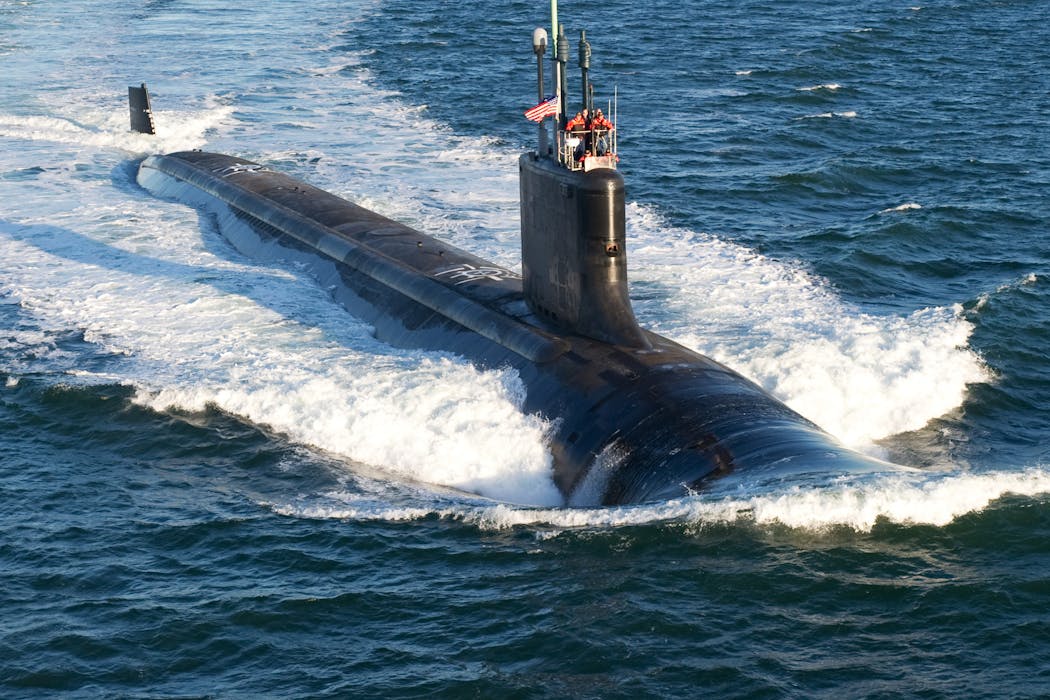
A US Virginia-class attack submarine during sea trials in the Atlantic Ocean. US Navy courtesy of General Dynamics Electric Boat

For over a century, the ocean has been the ultimate refuge for those who wished to disappear. From the U-boats of the first world war to the nuclear-powered leviathans that glide through today’s deep waters, the submarine has thrived on one simple principle: stealth.

Sound waves travel further and faster in water than light or radar waves. This means sound is the most effective way to detect underwater objects. Modern anti-submarine warfare (ASW) is an ongoing cat-and-and-mouse game of detecting, tracking and deterring enemy submarines. With sound as the ocean’s only reliable language, ASW has primarily been a contest of listening.

But the game is changing. Advances in artificial intelligence (AI), sensor networks, and autonomous vehicles are eroding the acoustic monopoly that submarines once enjoyed.

A new generation of tireless, networked and increasingly intelligent machines is beginning to patrol the seas. This promises a future where even the quietest submarine will find it harder to remain unseen.

As the ocean’s soundscape becomes more crowded, navies are increasingly turning to non-acoustic methods. These technologies detect the effects of a submarine rather than its noise. Satellites equipped with synthetic aperture radar can detect subtle ripples and temperature gradients on the sea surface caused by subsurface movement.

Until recently, magnetometers, which can measure the minute disturbances a submarine creates in Earth’s magnetic field, were constrained by physics and sensitivity limits. The magnetic anomaly detectors used for ASW could only operate effectively at low altitude and at short range.

Emerging quantum magnetometers, which make use of the strange science of quantum mechanics, promise orders-of-magnitude improvements in sensitivity. They could, in theory, detect the presence of a steel hull tens of kilometres away, especially when deployed in swarms aboard uncrewed aircraft or sea surface vessels.

A technique called distributed acoustic sensing (DAS) could turn ordinary undersea cables – primarily used for internet traffic – into vibration sensors. It works by measuring subtle changes in strain in the cables’ optical fibres.

Through DAS, a single transoceanic cable could, in effect, become an enormous underwater microphone (hydrophone). In principle, this would allow a submarine crossing a major ocean basin to be detected by subtle pressure waves recorded in the fibres beneath it.

Autonomous vessels

At the heart of the revolution in ASW are uncrewed surface vehicles (USVs). These autonomous vessels range from small, solar-powered craft to large, long endurance ships capable of spending weeks or months at sea.

Unlike crewed ships, USVs can be built cheaply and in large numbers. Armed with sonar, radar, magnetometers and communications links, they are the mobile nodes of an ocean-scale sensor network that can listen, learn and adapt in real time.

US Navy Sea Hunter
The Sea Hunter is an autonomous anti-submarine vessel built for the US Navy.
Petty Officer 3rd Class Aleksandr Freutel.

The US Navy’s Sea Hunter, an autonomous trimaran, has demonstrated its ability to track a diesel-electric submarine for extended periods without human intervention. In the UK, the Royal Navy’s Cetus project and its experimental uncrewed fleet at Portsmouth are exploring similar ideas.

But it is the integration of AI with autonomy that reshapes the picture. A single USV, even a sophisticated one, can only observe a small patch of ocean. A swarm of hundreds, each communicating via satellite, laser, or acoustic link, can share information and act cooperatively.

AI is a game changer

AI does things that human operators and legacy systems cannot. It fuses data from multiple sources into a coherent picture. A single acoustic anomaly may mean little, but when combined with other data, it may form a high confidence detection.

AI operates continuously and without fatigue. Persistence is vital when hunting for the fleeting signature of a submarine designed to operate silently for weeks.

And by learning how submarines navigate, avoid detection, and exploit environmental features, algorithms can forecast likely positions and movements. This could prompt ASW to move from being primarily reactive to predictive – a shift comparable to how meteorology evolved from observation to forecasting.

Through these capabilities, AI could move from simply assisting detection to orchestrating it.

Humans are not leaving the loop, however. The role of human operator is shifting from hands-on detection to oversight, strategy, and what’s known as trust management.

Trust is a key challenge: in this context, it’s about ensuring human decision makers understand what AI is doing and why it recommends certain actions.

Navies are therefore investing heavily in explainable AI – systems that can account for their decisions – and robust communications systems that allow human operators to intervene when needed.

A connected ocean

By the 2030s, the world’s oceans may become as transparent to sensors as the skies became to radar in the 20th century. With help from AI, multiple transmitters and receivers – mounted on ships, aircraft and USVs – will be able to triangulate the positions of submarines in real time.

Swarms of autonomous underwater vehicles – relatively small robotic drones – will patrol close to shore, relaying data to surface craft. Satellites will flag anomalies for local sensor networks to investigate. And the fibre-optic infrastructure that spans the seabed may double as a global array of undersea microphones.

Autonomous underwater vehicle
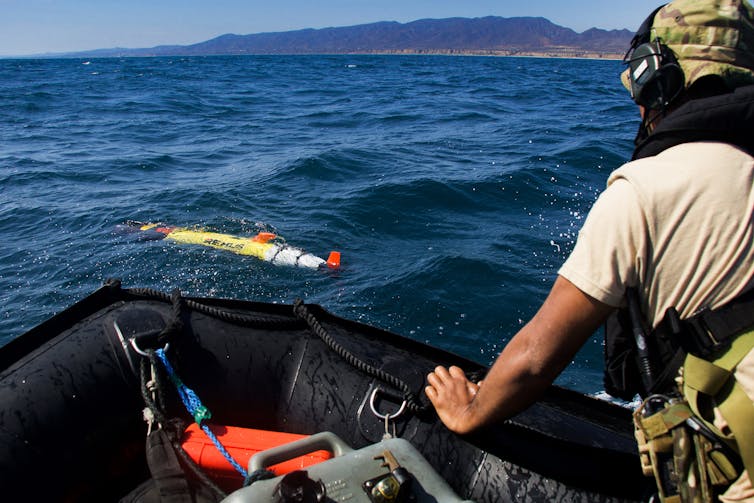
Autonomous underwater vehicles could patrol areas near the shore.
US Navy

For now, such a vision remains technically ambitious. The ocean is extraordinarily complex: temperature gradients, salinity layers, and seabed topography all distort signals and confound algorithms. But with every incremental improvement in AI modelling and computational power, those obstacles shrink.

As detection grows more sophisticated, so too will the submarines. The future may see submarines using propulsion systems and materials in their hulls that leave minimal thermal or acoustic signature. Decoy drones could be used to confuse detection systems.

Some analysts predict that submarines will operate deeper and slower to evade wide-area surveillance. A shift towards autonomous undersea drones that can saturate defences through sheer numbers is also possible.

An unarmed Trident II D5 missile launches from the USS Nebraska
An unarmed Trident II D5 missile launches from the USS Nebraska. Submarines have long been the cornerstone of nuclear deterrence.
US Navy photo by Mass Communication Specialist 1st Class Ronald Gutridge

The strategic implications are profound. Submarines have long been the cornerstone of nuclear deterrence and covert power projection. Their ability to vanish beneath the waves gave nations second-strike capability (the ability to retaliate after absorbing a nuclear attack) and freedom of manoeuvre.

The result of AI-driven transparency could be greater stability – reducing incentives for surprise attack – or, paradoxically, new instability as nations race to preserve secrecy.

The submarine will remain a formidable weapon, but it will no longer move unseen. The ocean, once humanity’s final hidden frontier, is becoming transparent to the eyes of machines.

The Conversation

David Stupples does not work for, consult, own shares in or receive funding from any company or organisation that would benefit from this article, and has disclosed no relevant affiliations beyond their academic appointment.

ref. AI, drone ships and new sensors could leave submarines with few places to hide in the ocean – https://theconversation.com/ai-drone-ships-and-new-sensors-could-leave-submarines-with-few-places-to-hide-in-the-ocean-266973

What could burst the AI bubble?

Source: The Conversation – UK – By Richard Whittle, University Fellow in AI and Human Decision Making, University of Salford

Tada Images/Shutterstock

Some of the world’s biggest tech firms have soared in value over the last year. As AI evolves at pace, there are hopes that it will improve lives in ways that people could never have imagined a decade ago – in sectors as diverse as healthcare, employment and scientific discovery.

OpenAI is now worth US$500 billion (£373 billion), compared with US$157 billion last October. Another firm, Anthropic, has almost trebled its valuation. But the Bank of England has now warned of a possible rapid “correction” due to its concerns about these staggering valuation rises.

The question is whether these values are realistic – or based on hype, excitement and unfounded optimism for the potential of AI. Put simply, is AI’s value today a product of what AI will do in future or what people hope it may do? Ultimately, we will only really know if it’s a bubble if it bursts – though the warning signs are evident today.

With hindsight, many things that happen in a bubble may sound exceedingly optimistic. If you take many headlines and replace the word AI with the word computers it often sounds a lot more naive.

But, predicting the path of technological change is hard. Back in 2000 the Daily Mail declared the internet could be a passing fad. Just a few months earlier the dotcom boom had peaked.

A burst bubble may not change the end of the journey. The internet was not a passing fad. However, bubbles are extremely disruptive and affect people in very real ways. Stocks fall, pensions suffer, unemployment rises and investment is wasted. Real potential is crowded out in the hype and mania to focus all investment in a small number of stocks and firms.

Right now, we have the first sign of a bubble – a rapid rise in valuations. If these correct and fall we will have a bubble. If these valuations continue to rise we could be seeing a new sustained market that is focused on the technology of the future.

Of course, it might be that these valuations plateau. What happens then depends on whether people have invested in the belief that prices will always rise.

Consider a situation where people believe – as the Bank of England does – that AI firms’ valuations may be “stretched”. It’s helpful to consider what these valuations are based on. Investment is simply a bet that AI increases profitability for the firms involved. These massive valuations are bets that AI will hugely increase future profitability.

In some cases these are bets that AI will improve in capabilities towards some kind of “artificial superintelligence” that can do everything a human can do – or more. This could raise the living standards of everyone on Earth. Leading computer scientist Stuart Russell estimates the value of that at US$14 quadrillion – investors are buying a claim on that outcome too.

If investors begin to fear that AI profits won’t materialise then they will try to get their money back. This realisation can appear quite suddenly and can be prompted by seemingly minor events. It doesn’t require a big needle to pop a bubble.

close-up of a 1990s desktop computer screen as it connects to internet.
Excitement at easy internet access in the 1990s fuelled the dotcom bubble.
Gorodenkoff/Shutterstock

A US article published in March 2000 warned that internet companies were fast running out of money. This caused many people to rethink their investments

At this stage of the bubble, investment excitement had spread to everyday investors. These regular people balanced their fear of missing out with a fear that they were investing in something new that they didn’t know much about. For many, an article in a popular magazine suggesting they may have made a mistake tipped the scales towards caution. They began to sell their dotcom stocks.

In search of profit

It may come as a surprise to some that, despite its increasing valuations, OpenAI does not yet make a profit. It may require ten times more revenue to do so.

A US$500 billion valuation is quite something for a company that reportedly lost US$7.8 billion in the first half of this year. Some of this value appears to flow from a new deal between OpenAI and Nvidia where Nvidia will invest in OpenAI and OpenAI will buy Nvidia chips. This circular financing keeps everything afloat for now, but at some point investors will need to see returns.

AI firms more generally do not appear to be profitable at the moment. Investors are not putting their money into today’s losses – they are betting on an AI future.

It is of course perfectly feasible that AI firms will develop business models to increase their profitability. OpenAI is exploring advertising options and allowing chatbots to recommend products.

Using AI to deliver these messages is a viable option, though they will have to avoid the tricks and manipulations associated with online platforms, such as when hotel websites announce that rooms are about to sell out. We believe that AI can increase the power of these manipulations and we wonder how persuasive chatbots may be in their recommendations.

However, the big four – Meta, Alphabet, Microsoft and Amazon – are this year spending the equivalent of the GDP of Portugal on AI infrastructure. This is not investment in new targeted ads, it is investment in an AI future. The bubble will burst if and when this future is in doubt.

The Conversation

Richard Whittle receives funding from several standard sources including UKRI and Research England. No funders are likely to benefit from, or influence this work

Stuart Mills does not work for, consult, own shares in or receive funding from any company or organisation that would benefit from this article, and has disclosed no relevant affiliations beyond their academic appointment.

ref. What could burst the AI bubble? – https://theconversation.com/what-could-burst-the-ai-bubble-267136