From printing presses to Facebook feeds: What yesterday’s witch hunts have in common with today’s misinformation crisis

Source: The Conversation – USA (3) – By Julie Walsh, Whitehead Associate Professor of Critical Thought and Associate Professor of Philosophy, Wellesley College

An illustration from ‘The History of Witches and Wizards,’ published in 1720, depicting witches offering wax dolls to the devil. Wellcome Collection/Wikimedia Commons

Between 1400 and 1780, an estimated 100,000 people, mostly women, were prosecuted for witchcraft in Europe. About half that number were executed – killings motivated by a constellation of beliefs about women, truth, evil and magic.

But the witch hunts could not have had the reach they did without the media machinery that made them possible: an industry of printed manuals that taught readers how to find and exterminate witches.

I regularly teach a class on philosophy and witchcraft, where we discuss the religious, social, economic and philosophical contexts of early modern witch hunts in Europe and colonial America. I also teach and research the ethics of digital technologies.

These fields aren’t as different as they seem. The parallels between the spread of false information in the witch-hunting era and in today’s online information ecosystem are striking – and instructive.

Birth of a publishing empire

The printing press, invented around 1440, revolutionized how information spread – helping to create the era’s equivalent of a viral conspiracy theory.

By 1486, two Dominican friars had published the “Malleus Maleficarum,” or “Hammer of Witches.” The book has three central claims that came to dominate the witch hunts.
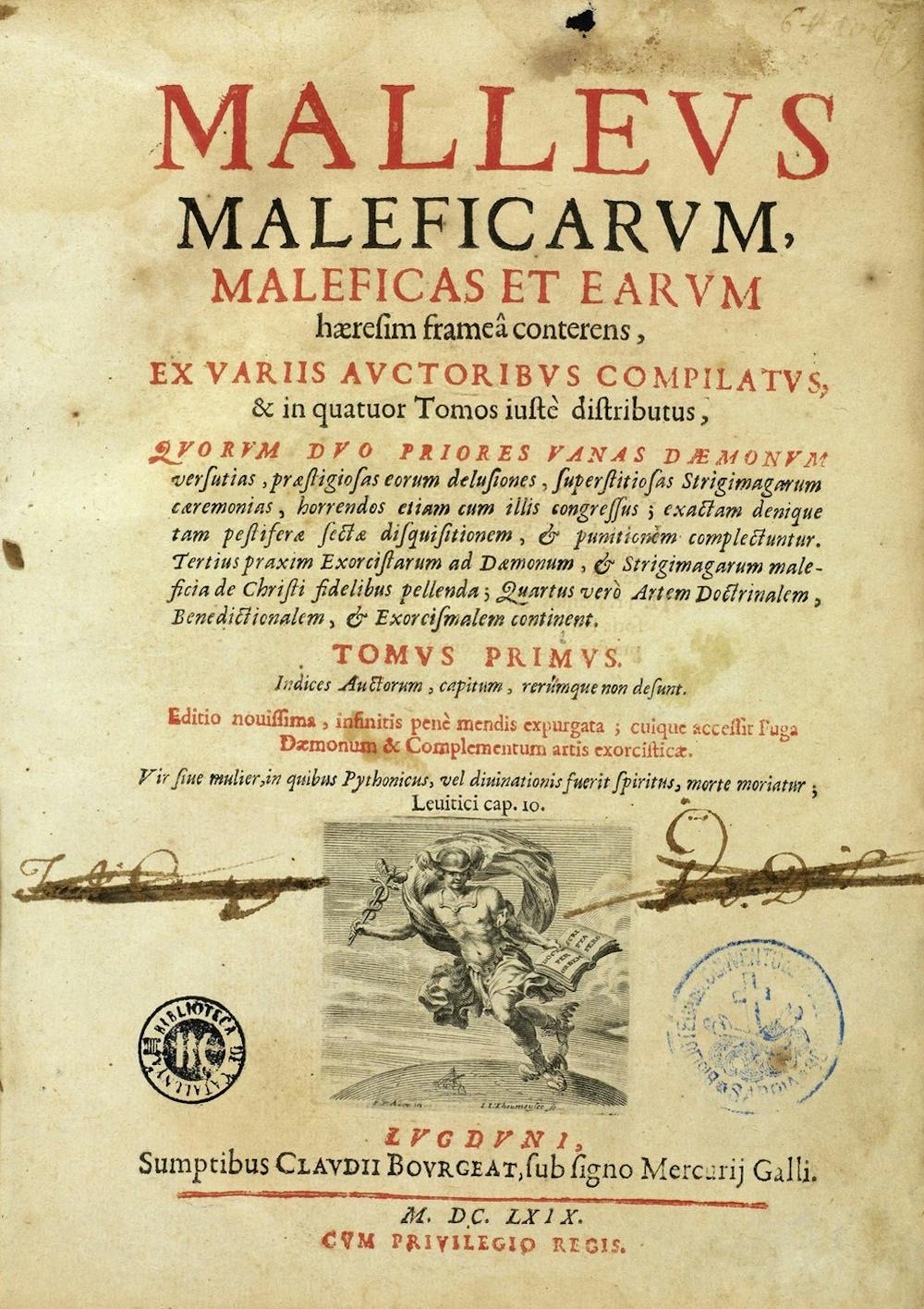
A yellowed title page from a manuscript, with print in black and red ink.
A 1669 edition of ‘Malleus Maleficarum.’
Wellcome Collection/Wikimedia Commons, CC BY-SA

First, it describes women as morally weak and therefore more likely to be witches. Second, it tightly links witchcraft with sexuality. The authors claim that women are sexually insatiable – part of what leads them to witchcraft. Third, witchcraft involves a pact with the devil, who tempts would-be witches through pleasures such as orgies and sexual favors. After establishing these “facts,” the authors conclude with instructions for interrogating, torturing and punishing witches.

The book was a hit. It had more than two dozen editions and was translated into multiple languages. While “Malleus Maleficarum” was not the only text of its kind, its influence was enormous.

Prior to 1500, witch hunts in Europe were rare. But after the “Malleus Maleficarum,” they picked up steam. Indeed, new printings of the book correlate with surges in witch-hunting in Central Europe. The book’s success wasn’t just about content; it was about credibility. Pope Innocent VIII had recently affirmed the existence of witches and conferred authority on inquisitors to persecute them, giving the book further authority.

Ideas about witches [from earlier texts and folklore] – such as the fact that witches could use spells to make penises vanish – were recycled and repackaged in the “Malleus Maleficarum,” which in turn served as a “source” for future works. It was often quoted in later manuals and woven into civic law.

The popularity and influence of the book helped crystallize a new domain of expertise: demonologist, an expert on the nefarious activities of witches. As demonologists repeated one another’s spurious claims, an echo chamber of “evidence” was born. The identity of the witch was thus formalized: dangerous and decisively female.

Skeptics fight back

Not everyone bought into the witch hysteria. As early as 1563, dissenting voices emerged – though, notably, most didn’t argue that witches weren’t real. Instead, they questioned the methods used to identify and prosecute them.
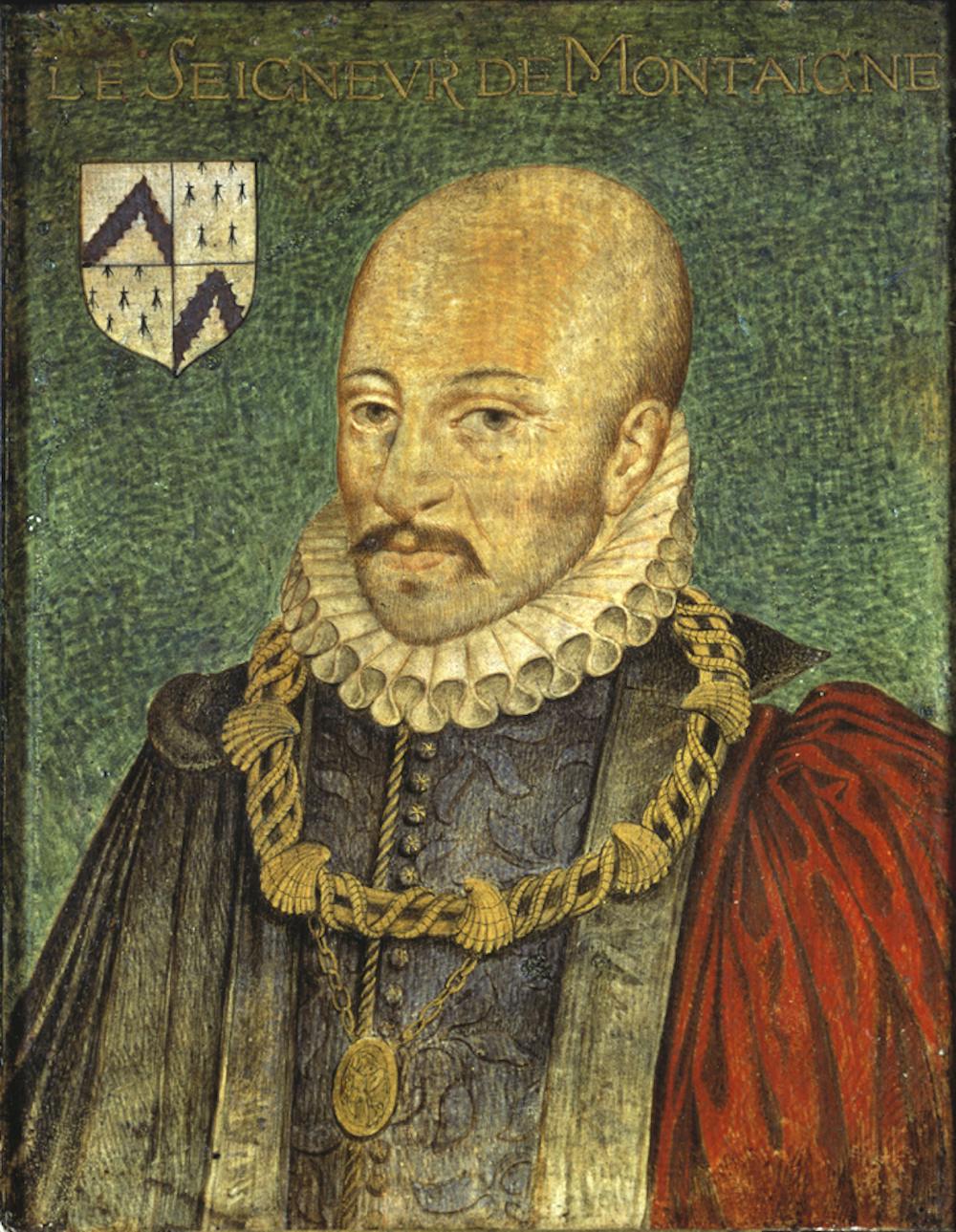
A faded painting of a bald man with a mustache, wearing a white ruff, heavy necklace, and red robe.
Essayist Michel de Montaigne, painted around 1578 by an unknown artist.
Conde Museum/Wikimedia Commons

Dutch physician Johann Weyer argued that women accused of witchcraft were suffering from melancholia – what we might now call mental illness – and needed medical treatment, not execution. In 1580, French philosopher Michel de Montaigne visited imprisoned witches and concluded they needed “hellebore rather than hemlock”: medicine rather than poison.

These skeptics also identified something more insidious: the moral responsibility of people spreading the stories. In 1677, English chaplain, physician and philosopher John Webster wrote a scathing critique, claiming that most demonologists’ texts were straightforward copy and paste jobs where the authors repeated one another’s lies. The demonologists offered no original analysis, no evidence and no witnesses – failing to meet the standards of good scholarship.

The cost of this failure was enormous. As Montaigne wrote, “The witches of my neighborhood are in mortal danger every time some new author comes along and attests to the reality of their visions.”

Demonologists benefited from the social and political status associated with the popularity of their books. The financial benefit was, for the most part, enjoyed by the printers and booksellers – what today we refer to as publishers.

Witch hunts petered out throughout the 1700s across Europe. Doubt about the standards of evidence, and increased awareness that accused “witches” may have been suffering from delusion, were factors in the end of the persecution. The skeptics’ voices were heard.

Psychology of viral lies

Early modern skeptics understood something we’re still grappling with today: Certain people are more vulnerable to believing extraordinary claims. They identified “melancholics,” people predisposed to anxiety and fantastical thinking, as particularly susceptible.

Nicolas Malebranche, a 17th-century French philosopher, believed that our imaginations have enormous power to convince us of things that are not true – especially fear of invisible, malevolent forces. He noted that “extravagant tales of witchcraft are taken as authentic histories,” increasing people’s credulity. The more stories, and the more they were told, the greater the influence on the imagination. The repetition served as false confirmation.

“If they were to cease punishing (women accused of witchcraft) and treat them as mad people,” Malebranche wrote, “in a little while they would no longer be sorcerers.”
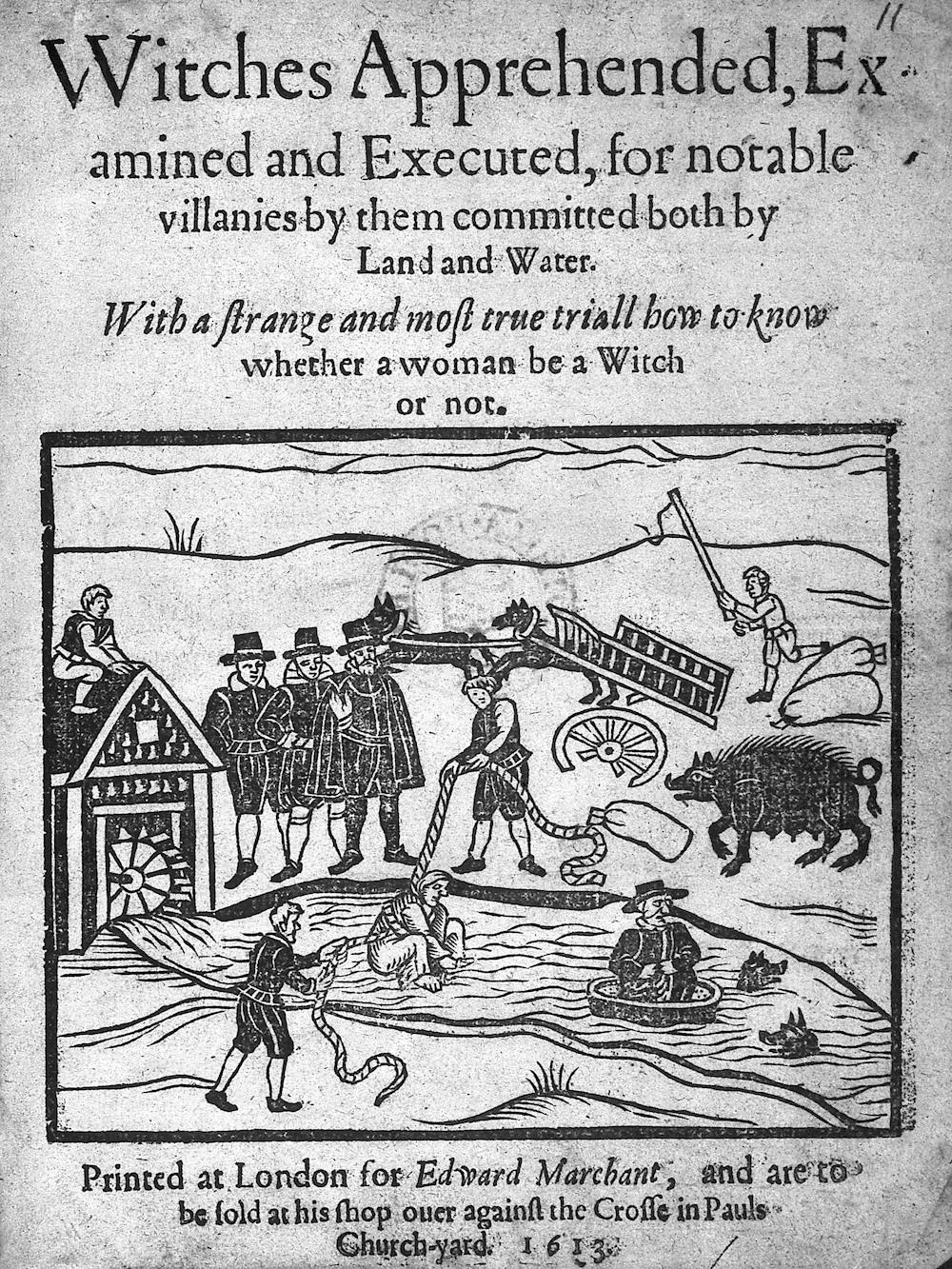
A printed book page labelled 'Witches Apprehended, Examined and Executed,' with a drawing of people submerging a woman in a river.
The title page of a treatise on witchcraft from 1613.
Wellcome Collection/Wikimedia Commons, CC BY-SA

Today’s researchers have identified similar patterns in how misinformation and disinformation – false information intended to confuse or manipulate people – spreads online. We’re more likely to believe stories that feel familiar, stories that connect to content we’ve previously seen. Likes, shares and retweets becomes proxies for truth. Emotional content designed to shock or outrage spreads far and fast.

Social media channels are particularly fertile ground. Companies’ algorithms are designed to maximize engagement, so a post that receives likes, shares and comments will be shown to more people. The more viewers, the higher the likelihood of more engagement, and so on – creating a cycle of confirmation bias.

Speed of a keystroke

Early modern skeptics reserved their harshest criticism not for those who believed in witches but for those who spread the stories. Yet they were curiously silent on the ultimate arbiters and financial beneficiaries of what got printed and circulated: the publishers.

Today, 54% of American adults get at least some news from social media platforms. These platforms, like the printing presses of old, don’t just distribute information. They shape what we believe through algorithms that prioritize engagement over accuracy: The more a story is repeated, the more priority it gets.

The witch hunts offer a sobering reminder that delusion and misinformation are recurring features of human society, especially during times of technological change and social upheaval. As we navigate our own information revolution, those early skeptics’ questions remain urgent: Who bears responsibility when false information leads to real harm? How do we protect the most vulnerable from exploitation by those who profit from confusion and fear?

In an age when anyone can be a publisher, and extravagant tales spread at the speed of a keystroke, understanding how previous societies dealt with similar challenges isn’t just academic – it’s essential.

The Conversation

Julie Walsh receives funding from the National Science Foundation

ref. From printing presses to Facebook feeds: What yesterday’s witch hunts have in common with today’s misinformation crisis – https://theconversation.com/from-printing-presses-to-facebook-feeds-what-yesterdays-witch-hunts-have-in-common-with-todays-misinformation-crisis-260995
Shingles vaccination rates rose during the COVID-19 pandemic, but major gaps remain for underserved groups

Source: The Conversation – USA (3) – By Jialing Lin, Research fellow in Health Systems, International Centre for Future Health Systems, UNSW Sydney

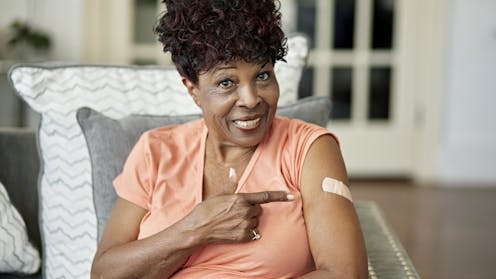
The CDC recommends shingles vaccination for all adults age 50 and older. xavierarnau/E+ via Getty Images

Vaccination against shingles increased among adults age 50 and older in the U.S. during the COVID-19 pandemic, but not equally across all population groups. That’s the key finding from a new study my colleagues and I published in the journal Vaccine.

Shingles is caused by the reactivation of the varicella-zoster virus, the same virus that causes chickenpox. It leads to a painful rash and potentially serious complications – especially in older adults – such as persistent nerve pain, vision loss and neurological problems. While antiviral treatments can ease symptoms, vaccination is the most effective way to prevent shingles.

We analyzed nationally representative survey data from almost 80,000 adults age 50 and over between 2018 and 2022, collected by the Centers for Disease Control and Prevention to monitor the health of the U.S. population. The survey tracked vaccination rates in people of different ethnic backgrounds as well as other factors such as sex, household income and the presence of chronic conditions like diabetes and cardiovascular disease.

The uptake of shingles vaccines rose notably during the pandemic – from 25.1% of people for whom it is recommended in 2018-2019, to 30.1% during 2020-2022. We observed this overall increase across nearly all groups in our study.

We saw the greatest relative increases among groups that historically have had lower rates of shingles vaccination. These included adults ages 50-64, men, people from racial and ethnic minority groups such as non-Hispanic Black adults, those with lower household incomes, current smokers and people without chronic conditions like cancer or arthritis.

Red bumpy skin rash caused by shingles
Shingles is caused by the same virus that causes chickenpox. It leads to a painful rash and other potentially serious complications.
Irena Sowinska/Moment via Getty Images

Why it matters

In the U.S., the CDC recommends shingles vaccination for all adults age 50 and older. However, uptake has been low, partly due to limited awareness, cost concerns and missed opportunities during routine health care visits.

The COVID-19 pandemic, while disruptive, may have inadvertently created new opportunities to improve adult vaccination uptake, particularly among groups with historically low uptake of the shingles vaccine. Factors contributing to this shift likely included heightened public awareness of the importance of vaccination, more frequent health care encounters, especially during COVID-19 vaccine rollouts, and the expanded availability of adult vaccines in pharmacies and primary care settings.

Replacing the older, less effective live attenuated zoster vaccine, called Zostavax, with the newer, non-live zoster vaccine, Shingrix, in 2020 also played a role. Public health campaigns that promoted co-administration of vaccines and launched targeted outreach to underserved populations further contributed to these gains.

However, major inequities persist. While shingles vaccination rates improved across the board, groups that had lower uptake before the pandemic continued to lag behind wealthier, non-Hispanic white populations with greater health care access. Overall, the vaccination rate for shingles is still low – below other vaccines such as the flu vaccine.

This gap reflects long-standing disparities in getting needed health care, which became even more prominent during the pandemic. It also highlights the need for fairer policies and customized outreach efforts to underserved communities that build trust and raise awareness about the health benefits of the shingles vaccine.

What still isn’t known

Although the upward trend we observed is encouraging, several questions remain. For example, we could not tell from the survey data we worked with whether participants received both doses of the Shingrix vaccine. Both are needed for full protection against shingles.

Nor could we tell whether participants received the shingles vaccine alongside their COVID-19 vaccination. Receiving multiple vaccines at a single health care visit makes vaccination more convenient and may boost vaccine uptake by reducing the number of needed visits. Also unknown is how immunocompromised people fared during this period. Current guidelines recommend that immunocompromised adults regardless of age also receive the shingles vaccine, but the data only included adults age 50 and over.

Addressing these questions in future studies would help public health experts develop strategies to encourage more eligible people to receive the shingles vaccine.

The Research Brief is a short take on interesting academic work.

The Conversation

Jialing Lin does not work for, consult, own shares in or receive funding from any company or organization that would benefit from this article, and has disclosed no relevant affiliations beyond their academic appointment.

ref. Shingles vaccination rates rose during the COVID-19 pandemic, but major gaps remain for underserved groups – https://theconversation.com/shingles-vaccination-rates-rose-during-the-covid-19-pandemic-but-major-gaps-remain-for-underserved-groups-262020

As wrestling fans reel from the sudden death of Hulk Hogan, a cardiologist explains how to live long and healthy − and avoid chronic disease

Source: The Conversation – USA (3) – By William Cornwell, Associate Professor of Cardiology, University of Colorado Anschutz Medical Campus

Hulk Hogan’s international fame as a wrestling superstar began in the 1980s. This photo is from 2009. Paul Kane via Getty Images Entertainment

On July 24, 2025, the American pro wrestling celebrity Hulk Hogan, whose real name was Terry Bollea, died at the age of 71. Hogan had chronic lymphocytic leukemia and a history of atrial fibrillation, or A-fib, a condition in which the upper chambers of the heart, or atria, beat irregularly and often rapidly. His cause of death has been confirmed as acute myocardial infarction, commonly known as a heart attack.

Hogan became a household name in the 1980s and has long been known for maintaining fitness and a highly active lifestyle, despite having had 25 surgeries in 10 years, including a neck surgery in May.

Hogan’s death has brought renewed attention to the importance of maintaining heart health through exercise. Many people think that bodybuilders are the “picture” of health. However, the truth is that too much muscle can increase strain on the heart and may actually be harmful. It may seem ironic, then, that people who exercise to extreme levels and appear healthy on the outside can, in fact, be quite unhealthy on the inside.

As the director of sports cardiology at the University of Colorado Anschutz Medical Campus, I see patients of all age groups and at varying levels of fitness who are interested in promoting health by incorporating exercise into their lifestyle, or by optimizing their current exercise program.

Two older women exercising together in a park.
More exercise and less sedentary behavior reduces the risk of heart disease, stroke, cancer and dementia.
andreswd/E+ via Getty Images

Exercise is the foundation for good health

When people think of vital signs, they usually think about things such as heart rate, blood pressure, temperature, breathing rate and blood oxygen levels. However, the American Heart Association also includes “fitness” as an additional vital sign that should be considered when determining a patient’s overall health and risk of heart disease, cancer and death.

While fitness may be determined in various ways, the best way is by checking what is known as peak oxygen uptake, or VO2 max, through a specialized evaluation called a cardiopulmonary exercise test. These can be performed at many doctors’ offices and clinics, and they provide a wealth of information related to overall health, as well as heart, lung and skeletal muscle function.

Exercise is one of the most effective interventions to prolong life and reduce the risk of developing chronic diseases throughout life – in effect, prolonging lifespan and improving health span, meaning the number of years that people spend in good health.

In fact, a large study done by the Cleveland Clinic found that a low level of fitness poses a greater risk of death over time than other traditional risk factors that people commonly think of, such as smoking, diabetes, coronary artery disease and severe kidney disease.

When it comes to brain health, the American Stroke Association emphasizes the importance of routine exercise and avoiding sedentary behavior in their 2024 guidelines on primary prevention of stroke. The risk of stroke increases with the amount of sedentary time spent throughout the day and also with the amount of time spent watching television, particularly four hours or more per day.

Regarding cognitive decline, the Alzheimer’s Society states that regular exercise reduces the risk of dementia by almost 20%. Furthermore, the risk of Alzheimer’s disease is twice as high among individuals who exercise the least, when compared to individuals who exercise the most.

There is also strong evidence that regular exercise reduces the risk of certain types of cancer, especially, colon, breast and endometrial cancer. This reduction in cancer risk is achieved through several mechanisms.

For one, obesity is a risk factor for up to 13 forms of cancer, and excess body weight is responsible for about 7% of all cancer deaths. Regular exercise helps to maintain a healthy weight.

Second, exercise helps to keep certain hormones – such as insulin and sex hormones – within a normal range. When these hormone levels get too high, they may increase cancer cell growth. Exercise also helps to boost the immune system by improving the body’s ability to fight off pathogens and cancer cells. This in turn helps prevent cancer cell growth and also reduces chronic inflammation, which left unchecked damages tissue and increases cancer risk.

Finally, exercise improves the quality of life for all people, regardless of their health or their age. In 2023, Hulk Hogan famously quipped, “I’m 69 years old, but I feel like I’m 39.”

7,000 steps is just over 3 miles – depending on your pace, that’s about 40 to 60 minutes of walking.

The optimal dose of exercise

Major health organizations, such as the American Heart Association, American Cancer Society and Department of Health and Human Services, all share similar recommendations when it comes to the amount of exercise people should aim for.

These organizations all recommend doing at least 150 minutes per week of moderate-intensity exercise, or at least 75 minutes per week of vigorous-intensity exercise. Moderate exercises include activities such as walking briskly (2.5 to 4 miles per hour), playing doubles tennis or raking the yard. Vigorous exercise includes activities such as jogging, running or shoveling snow.

A good rule of thumb for figuring out how hard a specific exercise is is to apply the “talk test”: During moderate-intensity exercise, you can talk, but not sing, during the activity. During vigorous intensity exercise, you can say only a few words before having to stop and take a breath.

There is a lot of solid data to support these recommendations. For example, in a very large analysis of about 48,000 people followed for 30 years, the risk of death from any cause was about 20% lower among those who followed the physical activity guidelines for Americans.

Life can be busy, and some people may find it challenging to squeeze in at least 150 minutes of exercise throughout the course of the week. However, “weekend warriors” – people who cram all their exercise into one to two days over the weekend – still receive the benefits of exercise. So, a busy lifestyle during the week should not prevent people from doing their best to meet the guidelines.

What about the number of steps per day? In a new analysis in The Lancet, when compared with walking only 2,000 steps per day, people who walked 7,000 steps per day had a 47% lower risk of death from any cause, a 25% lower risk of developing heart disease, about a 50% lower risk of death from heart disease, a 38% lower risk of developing dementia, a 37% lower risk of dying from cancer, a 22% lower risk of depression and a 28% lower risk of falls.

Historically, people have aimed for 10,000 steps per day, but this new data indicates that there are tremendous benefits gained simply from walking 7,000 steps daily.

It’s never too late to start

One question that many patients ask me – and other doctors – is: “Is it ever too late to start exercising?” There is great data to suggest that people can reap the benefits even if they don’t begin an exercise program into their 50s.

Being sedentary while aging will cause the heart and blood vessels to stiffen. When that happens, blood pressure can go up and people may be at risk of other things such as heart attacks, strokes or heart failure.

However, in a study of previously sedentary adults with an average age of 53, two years of regular exercise reversed the age-related stiffening of the heart that otherwise occurs in the absence of routine exercise.

And it is important to remember that you do not have to look like a body builder or fitness guru in order to reap the benefits of exercise.

Almost three-quarters of the total benefit to heart, brain and metabolic health that can be gained from exercise will be achieved just by following the guidelines.

The Conversation

William Cornwell does not work for, consult, own shares in or receive funding from any company or organization that would benefit from this article, and has disclosed no relevant affiliations beyond their academic appointment.

ref. As wrestling fans reel from the sudden death of Hulk Hogan, a cardiologist explains how to live long and healthy − and avoid chronic disease – https://theconversation.com/as-wrestling-fans-reel-from-the-sudden-death-of-hulk-hogan-a-cardiologist-explains-how-to-live-long-and-healthy-and-avoid-chronic-disease-262103

Cómo entender el polémico acuerdo entre el Barça y la República Democrática del Congo

Source: The Conversation – (in Spanish) – By Xavier Ginesta, Associate professor, Universitat de Vic – Universitat Central de Catalunya

El FC Barcelona y el gobierno de la República Democrática del Congo (RDC) han llegado a un acuerdo de patrocinio por cuatro años. Los equipos profesionales del club lucirán en la parte posterior de la camiseta de entrenamiento el lema “RD Congo-Coeur D’Afrique” (República Democrática del Congo, corazón de África). Además, el Spotify Camp Nou acogerá la Casa de la RDC en sus instalaciones.

El acuerdo es substancial para la tensionada economía culé: el club ingresará unos 44 millones de euros. Pero ha despertado suspicacias entre la sociedad civil congoleña debido a su precario nivel de vida, un hecho que diversos medios españoles han reflejado en su cobertura informativa.

Deporte de élite y branding territorial

El fútbol se ha convertido en una plataforma global para la promoción de marcas territoriales. Hay acuerdos de patrocinio que están suscritos en el marco de estrictas campañas de gestión de la marca turística (destination branding) –como el longevo acuerdo entre el RCD Espanyol y Riviera Maya (2011-2023)–, pero otros han de analizarse con más profundidad y desde la perspectiva de la geopolítica económica del deporte.

Igual que ya pasó en 2010, cuando el FC Barcelona se asoció con Qatar Foundation, el acuerdo del Barça con el gobierno de la RDC requiere un análisis más complejo.

El Barça explota su marca y su producción de conocimiento

En primer lugar, no hay duda de que la marca Barça continúa siendo una de las más valoradas de la industria del fútbol. Lo es, por ejemplo, por la capacidad que tiene de generar talento y conocimiento.

En este alto valor de marca –concretamente, 1 500 millones de euros según la consultora Brand Finance– radica el interés del gobierno de la RDC en asociarse con el FC Barcelona y así lo evidencia la nota de prensa emitida por el club. A través de las Barça Academies y el Barça Innovation Hub, el club catalán transferirá conocimiento a niños, jóvenes y adultos de la RDC con el objetivo de fortalecer la industria del deporte de ese país centroafricano.

La redefinición de la marca Barça en pleno siglo XXI se puede estructurar a partir de cinco territorios de marca (el lugar que ocupa la marca en la mente de su público objetivo): la producción de entretenimiento global, la gestión del big data, la innovación tecnológica, el simbolismo culé y, finalmente, la producción de conocimiento (sea deportivo, a través de su modelo de gobernanza o su gestión como líder del sector).

De un modo u otro, el club está sabiendo aprovechar este conocimiento para generar negocio. Además, África es un gran mercado aún por explotar y el fútbol profesional, guste o no, ha crecido históricamente bajo una lógica capitalista.

El gobierno de la RDC y su diplomacia deportiva

Es más complicado profundizar en la lógica de los intereses de la RDC en el marco de este acuerdo. Ciertamente, el incremento de la visibilidad de su marca turística –la vinculada al destination branding– gracias a la plataforma ofrecida por el club es el resultado medible más evidente. Barcelona y el Barça: una ciudad y su club.

No obstante, considerando algunas de las activaciones vinculadas al acuerdo, no cabe duda de que el gobierno de Kinsasa está desplegando una acción de diplomacia deportiva de primer orden: ofrecer a la masa de turistas y aficionados que visiten el Spotify Camp Nou los próximos cuatro años una exposición inmersiva (La Casa de la RDC) para “poner en valor la riqueza y diversidad del patrimonio cultural y deportivo congolés”.

La cuestión geopolítica

Mientras el destination branding está enfocado a la promoción turística, la diplomacia deportiva impacta directamente en la esfera de la política exterior, las relaciones de poder y el poder blando. Y, en el marco de las tensas relaciones diplomáticas entre vecinos africanos, la RDC y Ruanda parece que han decidido llevar sus diferencias, también, a la arena deportiva.

Por un lado, Ruanda (con el lema “Visit Rwanda”) ya tiene acuerdos de patrocinio con varios equipos europeos como el París Saint-Germain, el Bayern de Múnich, el Arsenal o el Atlético de Madrid. Por el otro, la RDC lo ha hecho con el AC Milán, el Mónaco y el Barcelona.

La RDC dispone de entre el 60 y el 80 % de las reservas mundiales de coltán, el 50 % de las reservas mundiales de cobalto y un gran porcentaje de reservas de oro. Además, está considerado por la Comisión Europea como uno de los países estratégicos para el suministro de materias primas críticas para la transición ecológica y la transformación digital de Europa.

No obstante, el grupo rebelde tutsi Movimiento 23 de Marzo (M23) tiene bajo su control el suministro ilegal de minerales desde el este de la RDC hacia Ruanda, que a su vez los exporta. Si bien la RDC es uno de los principales productores de coltán del planeta, Ruanda es el mayor exportador, aunque casi no dispone de este mineral en su territorio.

Así, Kinsasa acusó al gobierno de Kigali de apoyar al M23, establecido al este del territorio de la RDC. Tras las tensiones, la RDC y Ruanda firmaron en Washington, el pasado 27 de junio, un tibio acuerdo de paz que tendría que devolver la estabilidad a la zona de los Grandes Lagos, no sin antes reacomodar las relaciones entre Estados Unidos, Rusia y China en el corazón de África.

Un compromiso con la sociedad civil congoleña

Por último, y aquí emerge la compleja narrativa del acuerdo entre el Barça y el gobierno de la RDC, ¿debería un club que dice querer “transformar el mundo en un lugar mejor” y actuar bajos los valores “del respeto, el esfuerzo, la ambición, el trabajo en equipo y la humildad” aliarse con un gobierno con altos índices de corrupción y escasa capacidad de gestión pública? La RDC es uno de los países con menos puntuación en el índice de calidad democrática de The Economist: con datos de 2024, tiene una puntuación de 1.92 sobre 10.

También, en 2010 el club desplazó a Unicef de su camiseta para aliarse con el emirato de Catar. Pero, atención, no todo es blanco o negro: críticas a parte, con el tiempo Catar se ha convertido en un país imprescindible como agente neutral en negociaciones de paz, participando también en las del gobierno de la RDC con el M23.

La cuestión solo podrá responderse escrutando a medio y largo plazo qué hace el FC Barcelona para mejorar la calidad de vida de los congoleños, el pueblo. Como se ha demostrado, el deporte es un activo necesario para las políticas de desarrollo global, y útil para fortalecer la cohesión social y el desarrollo comunitario, especialmente si se focaliza la acción en niños y adolescentes. Todo un reto en esta zona, políticamente tan inestable, del planeta.

The Conversation

Xavier Ginesta no recibe salario, ni ejerce labores de consultoría, ni posee acciones, ni recibe financiación de ninguna compañía u organización que pueda obtener beneficio de este artículo, y ha declarado carecer de vínculos relevantes más allá del cargo académico citado.

ref. Cómo entender el polémico acuerdo entre el Barça y la República Democrática del Congo – https://theconversation.com/como-entender-el-polemico-acuerdo-entre-el-barca-y-la-republica-democratica-del-congo-262392

Le premier traitement contre le paludisme pour les bébés est une étape majeure vers l’éradication de la maladie en Afrique

Source: The Conversation – in French – By Fortunate Mokoena, Senior lecturer, Biochemistry, North-West University

Le premier traitement contre le paludisme destiné aux bébés et aux jeunes enfants âgés de 2 mois à 5 ans a été approuvé début juillet 2025 par Swissmedic, l’agence suisse des produits thérapeutiques. Jusqu’à présent, les bébés et les très jeunes enfants étaient traités avec des médicaments conçus pour les enfants plus âgés.

The Conversation Africa a interrogé Fortunate Mokoena sur l’importance de cette autorisation et son impact sur la lutte contre le paludisme en Afrique. Elle est biochimiste et se consacre à la recherche de nouveaux traitements pour des maladies qui frappent particulièrement les enfants de moins de cinq ans, comme le paludisme et la pneumonie.


Quelle est l’importance de cette autorisation pour le traitement du paludisme en Afrique ?

Cette autorisation est extrêmement importante.

L’OMS s’est fixé un objectif ambitieux et visionnaire : éradiquer le paludisme d’ici 2030. Il s’agit d’un défi qui exige des mesures audacieuses et multidimensionnelles : des insecticides et des moustiquaires aux vaccins, en passant par la lutte contre les vecteurs et les traitements efficaces.

Ce nouveau médicament est une étape importante dans la lutte contre le paludisme. Il apporte de l’espoir et des progrès tangibles en proposant un traitement vital, spécialement conçu pour les plus jeunes et les plus vulnérables, notamment les enfants de moins d’un an et pesant seulement 4,5 kg. Chaque progrès comme celui-ci permet non seulement de sauver des vies, mais aussi de renforcer la détermination collective à créer une Afrique sans paludisme. Il s’agit de donner à chaque enfant la chance de grandir, s’épanouir et rêver libéré du poids de cette maladie.

L’avenir du traitement du paludisme en Afrique est plus prometteur que jamais. Cette autorisation permet non seulement de sauver des vies et d’assurer un avenir meilleur aux enfants africains, mais elle met davantage en évidence également l’énorme potentiel du continent.

L’éradication du paludisme pourrait sauver d’innombrables vies et débloquer environ 126 milliards de dollars du PIB de l’Afrique. ce qui pourrait avoir un impact considérable sur la santé et la prospérité.

Même si la recherche dans le secteur pharmaceutique est encore à ses débuts, elle est déjà très prometteuse. Des pionniers tels que le Professeur Kelly Chibale, dont le médicament antipaludique révolutionnaire a atteint la phase II des essais cliniques, ont démontré ce qu’il était possible de d’accomplir. Grâce à la Fondation H3D, Chibale a réuni quelques-uns des meilleurs talents scientifiques africains afin de se concentrer sur des maladies telles que le paludisme et la tuberculose, stimulant ainsi l’innovation et l’espoir.

Cette autorisation peut servir de catalyseur puissant, en inspirant et en donnant les moyens aux scientifiques africains pour leur permettre de continuer à développer des médicaments qui sauvent des vies. Avec plus d’expertise et de détermination, l’Afrique pourra non seulement traiter le paludisme, mais aussi l’éradiquer. Et peut-être même ouvrir la voie à un avenir plus sain et plus prospère pour tous.

Quelle est l’ampleur du paludisme chez les enfants en Afrique ?

Le paludisme reste l’un des problèmes de santé les plus urgents en Afrique. En 2023, on estimait à 263 millions le nombre de cas de paludisme et à 597 000 le nombre de décès dûs à cette maladie dans 83 pays, la majorité des victimes étant des jeunes enfants et des femmes enceintes.

En 2023, la région africaine de l’OMS comptait 94 % des cas de paludisme (246 millions) et 95 % (569 000) des décès dus au paludisme. Les enfants de moins de 5 ans représentaient environ 76 % de tous les décès dûs au paludisme dans la région.

Le fardeau est particulièrement lourd en Afrique subsaharienne, notamment dans les zones rurales où la pauvreté et l’accès limité aux soins de santé aggravent la situation. Mais c’est aussi un appel puissant à l’action. En luttant contre le paludisme, les Africains ont la possibilité non seulement de sauver des vies, mais aussi de libérer l’immense potentiel des enfants. Ils peuvent également renforcer les communautés et bâtir un avenir plus sain, plus prospère et plus durable pour l’Afrique.

Comment soignait-on les bébés contre le paludisme jusqu’à présent ?

Jusqu’à maintenant, il n’existait pas de traitement antipaludique efficace spécialement conçu pour les nouveau-nés. Cela a créé un grand vide dans la prise en charge des enfants les plus jeunes et les plus vulnérables.

Il est déchirant de constater que ces petits êtres précieux reçoivent souvent des médicaments conçus pour des enfants plus âgés. Cela peut entraîner des effets secondaires désagréables et des réactions toxiques. Il est important de comprendre que le corps des bébés fonctionne différemment de celui des enfants plus grands ou des adultes. Leurs besoins physiologiques sont spécifiques et nécessitent une prise en charge adaptée.

Par exemple, les nouveau-nés sont encore en phase de développement de leur fonction hépatique, ce qui a un impact sur la façon dont ils transforment les médicaments par rapport aux enfants plus âgés. D’où l’urgence de mettre en place des stratégies de traitement personnalisées pour combattre le paludisme néonatal.

Quels sont les obstacles susceptibles d’entraver le déploiement ?

Swiss Medic collabore avec huit pays africains afin d’améliorer le déploiement du médicament dans le cadre d’une initiative mondiale en matière de santé. Novartis a développé ce médicament avec le soutien de Medicines for Malaria Venture. Il a été cofinancé par le Partenariat des pays européens et en développement pour les essais cliniques et l’Agence suédoise de coopération internationale au développement. Novartis va lancer Coartem Baby, un traitement antipaludique à but non lucratif destiné aux nourrissons. Ce traitement répond à un besoin urgent : chaque année, 30 millions d’enfants naissent dans des zones à risque de paludisme en Afrique.

Le Ghana a déjà commencé à le déployer. Huit autres pays devraient l’approuver très prochainement : le Burkina Faso, la Côte d’Ivoire, le Kenya, le Malawi, le Mozambique, le Nigeria, la Tanzanie et l’Ouganda.

Pour réussir ce déploiement, il est indispensable d’obtenir des financements supplémentaires. Il sera aussi crucial de s’appuyer sur l’expertise locale pour améliorer l’efficacité du projet sur le terrain.

Dans certaines régions, les formulations du médicament peuvent nécessiter une lyophilisation pour faire face à des conditions telles que les coupures d’électricité. La lyophilisation, également connue sous le nom de séchage par congélation, est une forme de conservation des produits qui élimine toute l’humidité et l’eau du produit.

Il est essentiel d’investir dans les infrastructures de fabrication locales afin de réduire les coûts de production. C’est à la fois un appel à l’action et un rappel que la lutte contre le paludisme est loin d’être terminée.

The Conversation

Fortunate Mokoena bénéficie d’un financement de la Science for Africa Foundation (SFA) dans le cadre de la deuxième cohorte de boursiers Grand Challenges Africa de la Fondation Bill et Melinda Gates (GCA/Round10/DD-065 à F.M.). Le financement de l’agence sud-africaine pour l’innovation technologique est également très apprécié. Fortunate Mokoena est membre à part entière du Grand Challenges Drug Discovery Accelerator.

ref. Le premier traitement contre le paludisme pour les bébés est une étape majeure vers l’éradication de la maladie en Afrique – https://theconversation.com/le-premier-traitement-contre-le-paludisme-pour-les-bebes-est-une-etape-majeure-vers-leradication-de-la-maladie-en-afrique-262312

Qu’est-ce qui rend une personne cool ? Une étude à l’échelle mondiale apporte quelques réponses

Source: The Conversation – in French – By Todd Pezzuti, Associate Professor of Marketing, Universidad Adolfo Ibáñez

De Lagos à Cape Town, de Santiago à Séoul, tout le monde veut être cool. « Cool » est un mot que l’on entend partout : dans la musique, dans la mode, sur les réseaux sociaux. Nous l’utilisons pour décrire certains types de personnes.

Mais qu’est-ce qui rend vraiment quelqu’un « cool » ? Est-ce juste une question de popularité ou de style ? Ou y a-t-il quelque chose de plus profond ?

Dans une étude récente menée avec d’autres professeurs de marketing, nous avons cherché à répondre à une question simple mais rarement posée. Quels sont les traits de personnalité et les valeurs qui rendent quelqu’un cool, et varient-ils d’une culture à l’autre ?

Nous avons interrogé près de 6 000 personnes dans 12 pays. Nous leur avons demandé de penser à quelqu’un qu’elles connaissaient personnellement et qu’elles trouvaient soit « cool », soit « pas cool », soit « une bonne personne », soit « une mauvaise personne ». Ensuite, elles devaient décrire les traits de caractère et les valeurs de cette personne avec des outils de psychologie validés. Nous avons utilisé ces données pour examiner en quoi le fait d’être cool diffère de la sympathie ou de la moralité en général.

L’étude a couvert des pays aussi divers que l’Australie, la Turquie, les États-Unis, l’Allemagne, l’Inde, la Chine, le Nigeria et l’Afrique du Sud.

Les résultats montrent qu’à travers le monde, la coolitude se caractérise par six traits essentiels : les personnes perçues comme cool sont généralement extraverties, portées sur le plaisir, aventurières, ouvertes d’esprit, puissantes et indépendantes.

Ces conclusions permettent d’éclaircir un débat de longue date : qu’est-ce qu’être cool à notre époque ?

Brève histoire de la coolitude

Les premiers écrits sur la « coolitude » la définissaient comme une forme de retenue émotionnelle : savoir rester calme, posé et impassible.

Certains chercheurs estiment que cette forme de « cool » remonte à l’époque de l’esclavage et de la ségrégation. Pour les Africains réduits en esclavage et leurs descendants, garder le contrôle de leurs émotions était une véritable stratégie de survie. Cette retenue devenait alors un symbole d’autonomie et de dignité face à l’oppression. D’autres pensent que cette attitude de maîtrise existait déjà bien avant l’esclavage.

Quoi qu’il en soit, ce sont les musiciens de jazz des années 1940 qui ont rendu ce style « cool » célèbre : une allure détendue, élégante et maîtrisée sur le plan émotionnel. Ce modèle a ensuite séduit la jeunesse et plusieurs mouvements contre-culturels. Au fil du temps, des marques comme Nike, Apple ou MTV ont récupéré cette attitude rebelle pour en faire un produit marketing. Ce qui était à l’origine un esprit marginal est devenu une esthétique mondiale, plus facile à vendre au grand public.

Ce qui rend quelqu’un cool

Nos conclusions suggèrent que la signification du mot « cool » a changé. C’est un moyen d’identifier et de cataloguer les personnes ayant un profil psychologique spécifique.

Les personnes cool sont extraverties et sociables. Elles recherchent le plaisir et la jouissance (hédonistes). Elles prennent des risques et essaient de nouvelles choses (aventurières). Elles sont curieuses et ouvertes à de nouvelles expériences (ouvertes). Elles ont de l’influence ou du charisme (puissantes). Et peut-être surtout, elles font les choses à leur manière (autonomes).

Cette conclusion est restée remarquablement la même dans tous les pays. Que l’on soit aux États-Unis, en Corée du Sud, en Espagne ou en Afrique du Sud, les gens ont tendance à penser que les personnes cool partagent le même « profil cool »..

Nous avons également constaté que même si le fait d’être cool recoupe le fait d’être bon ou sympathique, être cool et être bon ne sont pas la même chose. Être gentil, calme, traditionnel, sûr de soi et consciencieux était davantage associé à la bonté qu’à la coolitude. Certains traits associés à la coolitude, comme l’extraversion ou la recherche du plaisir, ne sont pas toujours vus comme des qualités morales.

Qu’en est-il de l’Afrique du Sud et du Nigeria ?

L’un des aspects les plus intéressants de notre étude est la régularité des résultats entre les cultures, même dans des pays aux valeurs et traditions très différentes.

En Afrique du Sud, les participants considéraient les personnes cool comme extraverties, hédonistes, puissantes, aventureuses, ouvertes et autonomes, tout comme les participants d’Europe et d’Asie. En Afrique du Sud, cependant, la coolitude se distingue particulièrement du fait d’être bon. L’Afrique du Sud est l’un des pays où être hédoniste, puissant, aventureux et autonome était a été associé au fait d’être cool que d’être une bonne personne.

Le Nigeria a montré des résultats un peu différents. C’était le seul pays où les personnes cool et pas cool étaient perçues comme également autonomes. En gros, l’individualité n’était pas considérée comme cool. Cette différence pourrait refléter des valeurs culturelles qui accordent une plus grande importance à la communauté, au respect des aînés ou à l’identité collective. Dans les sociétés où la tradition et la hiérarchie sont importantes, faire ce que l’on veut n’est pas forcément vu comme cool.

Cependant, comme toutes les sciences, les sciences sociales ne sont pas exactes. Il est donc raisonnable de supposer que l’autonomie est peut-être assoociée à la coolitude au Nigeria, mais que des biais d’enquête ou d’interprétation aient faussé les réponses.

Autre particularité : au Nigeria, la différence entre être cool et être bon était moins marquée qu’ailleurs. Là-bas, la coolitude est plus souvent perçue comme une qualité morale que dans les autres pays.

Pourquoi est-ce intéressant ?

Le fait que tant de cultures s’accordent sur ce qui rend quelqu’un cool suggère que la « coolitude » pourrait avoir une fonction sociale universelle. Les traits qui rendent les gens cool peuvent les pousser à essayer de nouvelles choses, à innover en matière de style et de mode, et à influencer les autres. Ces personnes repoussent souvent les limites et introduisent de nouvelles idées, que ce soit dans la mode, l’art, la politique ou la technologie. Elles inspirent les autres et contribuent à façonner ce qui est considéré comme moderne, désirable ou avant-gardiste.

Dans ce sens, la coolitude pourrait fonctionner comme une sorte de marqueur de statut culturel, une récompense pour l’audace, l’ouverture d’esprit et l’innovation. Être cool ne se limite pas à l’apparence : c’est avoir un temps d’avance et donner aux autres l’envie de suivre.

Que peut-on retenir de tout cela ?

D’une part, les jeunes d’Afrique du Sud, du Nigeria et du monde entier ont peut-être plus en commun que nous ne le pensons souvent. Malgré d’énormes différences culturelles, ils ont tendance à admirer les mêmes traits de caractère. Cela ouvre des pistes intéressantes pour mieux communiquer, collaborer et s’influencer à travers les cultures.

D’autre part, si on veut entrer en contact avec les autres ou les inspirer, que ce soit par l’éducation, l’image de marque ou le leadership, il est utile de comprendre ce que les gens considèrent comme cool. Le cool n’est peut-être pas une vertu universelle, mais c’est un langage universel.

Enfin, il y a dans tout cela quelque chose de rassurant : être cool ne dépend pas de la richesse ou de la célébrité. C’est une manière d’être.

Êtes-vous curieux ? Courageux ? Fidèle à vous-même ? Si oui, il y a de fortes chances que quelqu’un vous trouve cool, peu importe d’où vous venez.

The Conversation

Todd Pezzuti a reçu un financement de l’ANID Chili pour mener cette recherche.

ref. Qu’est-ce qui rend une personne cool ? Une étude à l’échelle mondiale apporte quelques réponses – https://theconversation.com/quest-ce-qui-rend-une-personne-cool-une-etude-a-lechelle-mondiale-apporte-quelques-reponses-262067

A university bookshop in Ibadan tells the story of Nigeria’s rich publishing culture

Source: The Conversation – Africa – By Tinashe Mushakavanhu, Assistant Professor, Harvard University

Driven by a desire to explore Nigeria’s literary and cultural history beyond the metropolis of Lagos, I took a road trip to Ibadan, once the most important university town in the country. Ibadan, in Oyo State, was the first city in Nigeria to have a university set up in 1948.

Ibadan is where the Mbari Club once gathered, an experimental space where Nigerian writers, artists and thinkers – among them Chinua Achebe, Wole Soyinka, JP Clark, Christopher Okigbo, Uche Okeke, Bruce Onobrakpeya, Mabel Segun and South Africa’s Es’kia Mphahlele – met, debated and dreamed in the 1960s and 70s.

It’s the city where celebrated Nigerian artist and architect Demas Nwoko imagined and built his utopias. Where the Oxford University Press and Heinemann Educational Books established their west African headquarters.


Read more:
Chimamanda’s Lagos homecoming wasn’t just a book launch, it was a cultural moment


Books have always been a form of cultural currency in Ibadan. The presence of major publishers meant that bookshops were not just retail outlets, but intellectual salons, sites of encounter and exchange.

So while in Ibadan I visited cultural spaces and independent bookshops but it was the charms of the University campus that mostly captured my imagination. And my favourite place was the University of Ibadan Bookshop. At this campus bookshop I lingered the most, in awe and wonder. Its eclectic range of books, journals, public lecture pamphlets, novels, poetry collections and monographs excited me.

Today, when the global publishing economy has increasingly digitised and centralised, the bookshop feels almost radical just by existing. It’s a reminder that intellectual life in Africa is not peripheral or derived from the west. It is present, prolific and profoundly local. To walk through the shelves of this bookshop was to encounter a history of African thought written and produced on its own terms.

As a scholar of African literature and archives, my research traces the hidden lives of spaces that have shaped publishing and archives. University bookshops have been overlooked but are essential nodes in the continent’s intellectual history.

A snapshot of Nigeria

This campus bookshop gives a snapshot of Nigeria as a print country. Here we witness the nation through its printed matter. A nation of prolific publishing. I found the literary output in the Ibadan campus bookshop not only vast but exuberant and unrelenting. It reflects the texture of the Nigerian personality: loud, boisterous, layered and insistent. Stacks upon stacks of books.

In these stacks, it dawned on me that beneath the surface lies a vibrant, ongoing literary discourse that is unmistakably Nigerian, and sadly not resonant far beyond its borders. These are books you don’t see on reference lists of “popular” and “influential” scholarship that privileges work produced and imported to Africa from the Euro-American academy.

I was especially intrigued with how the Nigerian academic and writer does not tire in producing academic and cultural journals. There are journals for every subject under the sun.

While the critical framework of African literature is too often shaped by the global north (see critiques by Ato Quayson, Biodun Jeyifo, Simon Gikandi and Grace Musila) in Ibadan, I saw a distinctly local and deeply African critical discourse rooted in place, language and lived experience. To walk into the University of Ibadan Bookshop is to step into legacy. Its shelves bear the weight of decades of African thought, theory and storytelling.

Despite being housed in an ageing building, it has stayed defiant. Even though floods destroyed books and computers worth a small fortune in 2019, the bookshop is still standing proudly. And there was pride too among the staff who were eager to help or answer any questions about the books.

More than bookshops

The University of Ibadan bookshop reminded me of the bookshop from my undergraduate days in Zimbabwe. Even though our campus bookshop was much smaller, I used to find pleasure going there in between lectures. It often felt like walking into a vault of African knowledge and memory.

Our bookshop at Midlands State University stocked old, canonical books alongside current literature. On occasion, rare, out-of-print secondhand books would appear on the shelves. The bargain sales also meant I spent most of my money there.

But to call these spaces on African university campuses “bookshops” hardly does them justice. They are hybrid cultural ecosystems that function as part bookshop, part print shop, stationer, library and sometimes even archive. They have long served as vital nodes in the circulation of African knowledge and thought.

Yet this ecosystem is rapidly eroding, undermined by the rise of internet culture, artificial intelligence, piracy and harsh economic conditions. The result is a slow but devastating disappearance of African intellectual memory. As scholars remind us, digital platforms are not neutral. They are structured by algorithms that often marginalise black and African knowledge. So, the loss of these analogue spaces is more than nostalgic, it is epistemic erasure.

In this digital age, there is something vital about the physical presence of bookshops on African campuses. Thanks to them, as a student, for me literature was the serendipity of discovery, the tactile feel of books, the beautiful persistence of a local knowledge system that was relatable and produced by people like me.


Read more:
Nigerian architect Demas Nwoko on his award-winning work: ‘Whatever you build, it should suit your culture’


On the way out of the city, we stopped at Bower’s Tower. From there you can see Ibadan’s sprawling layout, the ancient hills from which the settlement was built, and its red roofs.

The view reflected the complexity and density of ideas the city has nurtured. And despite shifts in Nigeria’s publishing geography from here to Lagos and Abuja, Ibadan still matters. It’s a city that remembers, that archives, that holds on to knowledge.

The Conversation

Tinashe Mushakavanhu does not work for, consult, own shares in or receive funding from any company or organisation that would benefit from this article, and has disclosed no relevant affiliations beyond their academic appointment.

ref. A university bookshop in Ibadan tells the story of Nigeria’s rich publishing culture – https://theconversation.com/a-university-bookshop-in-ibadan-tells-the-story-of-nigerias-rich-publishing-culture-262050

Accessible, high-quality summer programs and Black joy support Black children’s return to school

Source: The Conversation – Canada – By Ardavan Eizadirad, Associate Professor, Faculty of Education, Wilfrid Laurier University

Summer is popularly imagined as bringing joy to all young people. Yet it is not an equal break or of the same quality for all students.

Learning loss is the decline in academic skills and knowledge that can occur when students are not engaged in structured learning, especially during extended breaks like summer.

It disproportionately impacts Black and low-income students who face greater systemic disadvantages within the education system.

Black families face challenges in accessing culturally relevant and affirming summer opportunities. As work by education researcher Obianuju Juliet Bushi and others has documented, for many Black families, the question isn’t just “what will my child do this summer?” It’s “where can my child go to be safe, affirmed and supported?”


Read more:
Where can Black children go in summer? Black families face disparities and need equitable options


Without access to affordable enrichment programs during the summmer, many students fall behind in reading and math, further widening the opportunity gap when school resumes in September.

As the manager of research with the charitable, Black-led non-profit organization Youth Association for Academics, Athletics and Character Education (YAAACE) in the Jane Finch area of Toronto, I share insights about how culturally responsive community programs can address opportunity gaps, and how parents in Black families can support their kids’ successful transition back to school.

This article draws on insights from conversations I have had with various YAAACE program participants, parents and educators, as well as leadership, including Devon Jones, Nene, and Dave Mitchell.


Read more:
If I could change one thing in education: Community-school partnerships would be top priority


Anti-Black racism in education

Despite Canada’s reputation for multiculturalism, systemic anti-Black racism remains deeply embedded in the education system, contributing to unequal opportunities for students.

The opportunity gap refers to the unequal access to resources, supports and learning experiences that affect students’ ability to succeed, often based on race, income and geography.

In March 2025, the Ontario Human Rights Commission released a report, “Dreams Delayed: Addressing Systemic Anti-Black Racism and Discrimination in Ontario’s Public Education System.”

The findings confirmed that Ontario’s schools are saturated with systemic barriers for Black children and their families. These barriers include: disproportionate discipline; being streamed into non-academic tracks; lack of Black leadership in schools; Eurocentric curriculum; insufficient disaggregated identity-based data collection; and lack of access to culturally affirming environments.


Read more:
‘Dreams delayed’ no longer: Report identifies key changes needed around Black students’ education


The cost is devastating and contributes to academic underachievement, racial trauma, disengagement and the reproduction of the school-to-prison pipeline.

This is particularly the case in low-income communities.

Centring Black excellence

Black youth often face higher exposure to poverty, systemic underemployment, community violence and the emotional weight of intergenerational trauma and racism.

While these experiences shape the mental health and academic outcomes of students, schools often lack culturally relevant supports or trauma-informed responses.

Summer programs are one important part of countering anti-Black racism in schools. These can support student transitions by mitigating learning loss and helping to close the opportunity gap.

Programs that centre Africentricity and Black excellence led by staff with lived experiences provide culturally responsive and emotionally supportive environments that affirm Black identities.


Read more:
Ontario can close students’ access and opportunity gaps with community-led projects


This builds confidence in Black students and ensures students return to school in the fall better prepared to thrive academically, socially, emotionally and culturally.

Community-driven youth programs

Since 2007, YAAACE has provided academic, athletic, family supports, employment and mentorship to more than 1,000 children and families annually across Toronto. Its programs are led by Black educators and mentors who reflect the community and understand the lived experiences of the youth they serve in low-income communities like the Jane and Finch neighbourhood.

YAAACE’s seven-week Summer Institute offers a model that affirms identity, cultivates belonging and accelerates achievement. Each summer, approximately 300 students from grades 3 through 12 attend the institute, which blends literacy and numeracy instruction with culturally responsive learning, arts-based programming, robotics, mentorship and athletics.

Students are taught by Ontario certified teachers and supported by Black staff and practitioners trained in trauma-informed care. For families who can’t afford camp fees, the program is free or subsidized.

This is a results-based, community-driven intervention that mitigates the opportunity gap for Black students from low-income communities by creating access to experiential learning opportunities. It’s also violence prevention and intervention that builds character and supports students, with a focus on the early years.

Cycle of empowerment

YAAACE’s Inspire Academy Mathematics Program provides early access to high school math courses. Grade 8 graduates earn a high school math credit through an intensive summer course led by a team of teachers and teacher assistants in a supportive, inclusive environment. In cases where students are behind provincial standards, they receive additional supports with low staff-to-student ratios.

Based on assessments administered by the teachers and reports provided to all the parents, students leave the institute more confident in their academics, better prepared to return to school and grounded culturally in who they are. Families report higher levels of engagement and lower levels of stress knowing their children are in safer, affirming spaces.

Many of YAAACE’s youth return as peer leaders and mentors, reinforcing a cycle of empowerment.

Programs like YAAACE do not just help kids do better in school. They also reduce long-term costs to the health-care, justice and social service systems by interrupting cycles of trauma and marginalization before they escalate.

Tips for parents

Summer is a crucial time to support children’s learning and well-being, especially for Black families navigating systems that often overlook their strengths.

Below are three practical ways to support your child during the summer break and when school starts in September.

Centre empowering examples of Black identity and culture: Expose your children to books, films, music and conversations that celebrate Black history and excellence, Africentricity and positive role models. Affirming cultural roots builds pride, resilience and a sense of belonging in systems that too often erase or distort those narratives from stereotypical perspectives.

Create routines that balance learning and Black joy: Set daily routines that include reading, writing or problem solving but just as much make space for rest, play, creativity and movement rooted in Black joy. Learning should be holistic and joyful. It’s important as parents, guardians and community leaders that we not only talk about this but more importantly model it.

‘Refresh, Revive, Thrive: Black Joy in Education’ with Andrew B. Campbell, assistant professor at the University of Toronto.

Stay engaged and be an advocate: Get to know your child’s teachers and school administrators, review school policies to be familiar with how to navigate them (for example, getting accommodations for your child’s needs) and request culturally affirming resources. Don’t hesitate to raise concerns, as your advocacy helps create more supportive learning environments and shows your child that their success is worth fighting for.

Partnerships with Black-led organizations

Trauma-informed, culturally responsive education must become a system-wide standard.

This becomes a reality by building long-term partnerships with Black-led community organizations. It means embedding mental health supports and curriculum content that reflect the cultural identities and lived realities of Black diasporas. And it means collecting disaggregated race-based data to track progress and guide informed decision-making.

It starts by funding proven data-driven programs, training educators and holding systems accountable to measurable outcomes.

The Conversation

Ardavan Eizadirad receives funding from Social Sciences and Humanities Research Council (SSHRC).

ref. Accessible, high-quality summer programs and Black joy support Black children’s return to school – https://theconversation.com/accessible-high-quality-summer-programs-and-black-joy-support-black-childrens-return-to-school-261908

Here’s how you can make your garden a safe and biodiverse space for urban wildlife

Source: The Conversation – Canada – By Ann Dale, Professor Emerita, Environment & Sustainability, Royal Roads University

Simple things like avoiding chemical pesticides and leaving leaves where they fall can help make your garden a more welcoming environment for wildlife and support biodiversity. (Jeffrey Hamilton/Unsplash)

Biodiversity is essential to mitigating and adapting to climate change, enhancing the resilience of ecosystems and safeguarding the ecological functions that all living beings depend on for survival.

There is little doubt that we are at a critical point in the loss of biodiversity in Canada with thousands of species currently in danger of disappearing, while global experts continue to warn about Earth’s ongoing sixth mass extinction.

As a response to the cascading climate crisis, wildlife habitat gardens have grown in popularity. These are spaces designed to attract and sustain local wildlife, and include efforts such as rewilded meadows, pollinator patches, rain gardens, naturalized lawns and others.

Cultivating a garden for biodiversity is not an all-in or nothing task. In fact, there is a wide range of simple actions anyone can take to regenerate and conserve biodiversity right at home.

We are currently organizing a biodiversity public literacy campaign at the National Environmental Treasure, a people’s trust fund devoted to funding Canadian environmental organizations.

Last year, we partnered with Prof. Nina-Marie Lister and the Ecological Design Lab at Toronto Metropolitan University on their Bylaws for Biodiversity research, along with Nature Canada and FLAP Canada, to develop Gardening for Biodiversity resources.

Supporting biodiversity in your garden

flowers and green plants around a sign reading habitat garden
Educational, ecologically informed signage can help interpret the garden for visitors. These signs serve as a practical tool to share gardening practices and highlight the garden’s environmental benefits with the community.
(Nina Marie Lister)

Together, we’ve created a series of free, fact-based guides to help people learn how to cultivate biodiversity and support for wildlife habitat in private gardens.

This series currently includes four comprehensive booklets, each focusing on key aspects of biodiversity gardening:

While there are plenty of great garden practices out there, these are five easy and impactful ways to boost biodiversity and cultivate a garden safe for urban wildlife, taken directly from our booklets.

Use alternatives to pesticides

Pesticides in your garden can harm beneficial insects and can be detrimental to the environment, wildlife and human health. Instead of using chemical-based pesticides, try natural alternatives like biopesticides, horticultural oils and insecticidal soaps that can be just as effective.

Likewise, attracting predatory insects and wildlife into your garden who will actively feed on the harmful pest is also an effective starting point as this is a process of pest-control that occurs naturally in healthy ecosystems.

There are also DIY pesticides, such as sea salt spray, water-vinegar mixtures and coffee grounds.

yellow flowers in a garden
A rewilded habitat meadow featuring a selection of native wildflowers and habitat logs left to enrich the soil, support pollinators and offer seating for visitors.
(Nina Marie Lister)

Leave the leaves

Decomposing plant litter, like fallen dead leaves, tree bark, needles and twigs, is an important component of maintaining soil health, nutrient cycling and biodiversity.

By choosing to leave the leaves in your garden, you will support the variety of species who overwinter in them, from bees and caterpillars, to butterflies, spiders and more.

Prioritize pollinator-attractive plants

In addition to pollination, insects are beneficial for a variety of other reasons including for pest control, seed dispersal and decomposition.

The best way to attract insects largely depends on which insect you are trying to attract. But as a general rule, it is always a good practice to source plants locally and prioritize native species.

Next best to native plants are benign ornamentals and non-natives. Cultivating a diverse range of flowers, especially native plants and herbs, promotes a resilient ecosystem. It also helps natives out-compete invasive species and to reverse the downward trends of mass species decline.


Read more:
How to fight Insectageddon with a garden of native plants


Make your garden safe for birds

Birds contribute to healthy ecosystems: they pollinate plants, disperse seeds and prey on insects. Unfortunately, North American bird populations are experiencing a rapid decline due to habitat loss, degradation and other global pressures.

Aadopting bird-safe gardening practices offers a powerful way to combat these threats and support biodiversity conservation on a local scale. Beyond core habitat elements, additional practices can enhance the garden’s appeal to birds.

Organic gardening without pesticides or herbicides, keeping cats indoors, removing potential entanglement hazards and using bird-collision prevention markers on reflective surfaces can not only attract birds, but also ensure their safety as well.

A small chubby bird with an orange breast  standing on a stone ledge in a garden
Birds contribute to healthy ecosystems: they pollinate plants, disperse seeds and prey on insects.
(Unsplash/Richard Bell)

Advocate for biodiversity

Although there’s been a growing movement toward more biodiversity-supporting practices, outdated municipal bylaws and enforcement policies continue to limit the potential of habitat gardens.

These disputes over the scope and application of bylaws have brought attention to various legal contradictions and outcomes that negatively impact progress on biodiversity recovery, all the while undermining and negating related environmental objectives on private land.

By advocating and encouraging your municipal leaders to adopt science-based biodiversity-supportive bylaws, you help to establish the legal frameworks and political agendas that directly impact long-term ecological health and promote sustainable development and the regeneration of biodiversity.

The Conversation

Ann Dale receives funding from the CRC Secretariat, the Social Sciences and Humanities Research Council of Canada and the Hewlett Foundation.

Sabrina Careri does not work for, consult, own shares in or receive funding from any company or organisation that would benefit from this article, and has disclosed no relevant affiliations beyond their academic appointment.

ref. Here’s how you can make your garden a safe and biodiverse space for urban wildlife – https://theconversation.com/heres-how-you-can-make-your-garden-a-safe-and-biodiverse-space-for-urban-wildlife-261151

El cielo entre las manos: cinco mujeres y una historia olvidada

Source: The Conversation – (in Spanish) – By Mabel Angulo Rodríguez, Doctoranda de segundo curso, Universidad de Almería

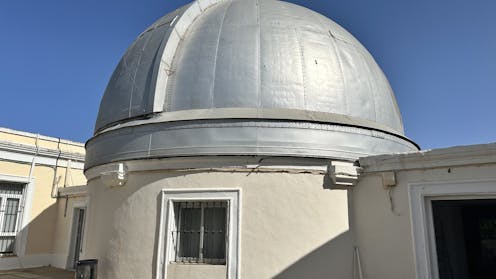
Cúpula del Real Observatorio de la Armada en San Fernando (Cádiz). Cedida por los autores

La incorporación de la mujer a la astronomía española fue mucho más tardía que la de sus vecinas europeas, que entre finales del siglo XVIII y principios del XIX se licenciaban como astrónomas. El retraso se debe principalmente a que la mujer española no pudo acceder a estudios universitarios hasta 1910.

No fue hasta 1943 cuando contamos con la primera mujer dedicada a esta disciplina en nuestro país: Antonia Ferrín. Siete años más tarde, en 1950, Antonia obtuvo una beca del Consejo Superior de Investigaciones Científicas para trabajar en el Observatorio de la Universidad de Santiago de Compostela.

En 1953, le siguió María Assumpció Catalá, que se licenció en la Universidad de Barcelona. De forma paralela, otras mujeres tuvieron contacto con las estrellas como medidoras de placas fotográficas. Fue el caso de las analistas del Real Instituto y Observatorio de la Armada de San Fernando.

Pero antes de desvelar quiénes fueron, conviene hacer un poco de historia.

La fotografía en manos de la astronomía

La llegada de la fotografía, en 1826, supuso un hito en la historia. Y para la astronomía, en particular, significó un antes y un después.

Hasta ese momento, las observaciones del cielo se plasmaban en dibujos para su posterior estudio. La primera fotografía astronómica exitosa, que mostraba detalles de la Luna, fue tomada por John William Draper el 23 de marzo de 1840. Cuarenta años más tarde, su hijo, Henry Draper, junto a su mujer, Mary Anna Draper, fotografiaron la Nebulosa de Orión, el primer objeto de cielo profundo. Fue el nacimiento de la astrofotografía y la antesala del Catálogo Astrofotográfico y la Carta del Cielo, un proyecto internacional que se puso en marcha a iniciativa de Amédée Mouchez, director del Observatorio de París.

En 1887 se dio el pistoletazo de salida con una reunión a la que asistieron 50 astrónomos de varias partes del mundo. El proyecto se extendió a lo largo de varias décadas, pero quedó inconcluso. Fueron veinte los observatorios que participaron en el cartografiado del cielo; entre ellos, el Observatorio de San Fernando. A lo largo de los años los telescopios tomaron más de 22 000 placas fotográficas de vidrio.

Mujeres calculadoras y medidoras de placas

Las imágenes de estrellas, nebulosas y galaxias quedaban, en aquella época, impresas en unas placas de vidrio. Las posiciones de las estrellas tenían que ser medidas para establecer sus coordenadas. Y fue aquí donde cobraron importancia las mujeres. Varios de los observatorios que participaron en el Catálogo Astrofotográfico emplearon a mujeres para llevar a cabo los cálculos y las mediciones de las placas, primero por su rendimiento en el trabajo, y segundo porque los salarios eran más bajos.

El Real Observatorio de San Fernando no tuvo mujeres en este proyecto. Los astrónomos, observadores y calculadores eran militares, y el ejército, en aquellos años, no contaba con féminas en sus filas.

Movimientos propios estelares y el Observatorio de Púlkovo

Finalizado el trabajo de la Carta del Cielo y Catálogo Astrofotográfico, las placas fotográficas tuvieron otra utilidad: medir los movimientos propios estelares. En este proyecto colaboraron el Observatorio de Púlkovo, situado en la ciudad rusa de San Petersburgo, y el de San Fernando.

Los movimientos propios estelares se refieren a la variación real de las posiciones de las estrellas en el cielo debido al movimiento de estas con respecto al Sol. Se producen por la rotación de las estrellas alrededor del centro de nuestra galaxia. Son imperceptibles al ojo humano por la distancia a la que se encuentran, pero con métodos muy precisos se pueden medir.

Es aquí donde entran en juego nuestras protagonistas. Los astrónomos y observadores de San Fernando tomaron nuevas placas de las partes del cielo que ya estaban registradas en el Catálogo Astrofotográfico y en la Carta del Cielo para hacer la comparativa. Fijándose en lo que hicieron los otros observatorios, casi medio siglo antes, cinco mujeres se encargaron de efectuar las mediciones de las placas.

Amalia Ristori Fernández, María del Pilar y María del Carmen Rodríguez Sáenz de Urraca, María del Carmen Navarro González y Agustina Planelles Lazaga fueron las encargadas de llevar a cabo este trabajo. Poca documentación hay de ellas. Según los testimonios de algunos de sus compañeros, en los años cincuenta y hasta los setenta, se dedicaron a realizar este trabajo del que no se ha encontrado documentación con las fechas exactas.

Fotografía de Amalia Ristori Fernández, una de las cinco medidoras del Observatorio de San Fernando.
Fotografía cedida por la familia Ristori

Es en 1971 cuando la Armada les reconoce su puesto de analistas. Las cinco eran mujeres solteras, lo cual tiene sentido si tenemos en cuenta que, por entonces, la mujer era apartada de la ciencia por considerar que su condición estaba reñida con el papel que se les había asignado como madres y amas de casa. Hasta bien entrado el siglo XX, a algunas astrónomas, como Vera Rubin, se les prohibió el acceso a un telescopio simplemente por el hecho de ser mujer.

Las medidoras de San Fernando podrían ser consideradas, hoy en día, como astrónomas amateurs, ya que realizaban unas mediciones astronómicas sin tener los estudios necesarios. De ellas, la única que permanece con vida es Carmen Rodríguez Sáenz de Urraca. El alzhéimer le ha borrado los recuerdos de aquellos años, y nos ha privado de una parte de la historia de la mujer española en la astronomía.

Aún hay pocas astrónomas

La astronomía sigue siendo una profesión en la que la presencia de la mujer sigue siendo bastante escasa. Según los datos de la Sociedad Española para la Astronomía, de las 1 184 personas que se dedicaban en 2024 a investigar o enseñar astronomía en nuestro país, 307 eran mujeres, una cifra para la reflexión.

The Conversation

Las personas firmantes no son asalariadas, ni consultoras, ni poseen acciones, ni reciben financiación de ninguna compañía u organización que pueda obtener beneficio de este artículo, y han declarado carecer de vínculos relevantes más allá del cargo académico citado anteriormente.

ref. El cielo entre las manos: cinco mujeres y una historia olvidada – https://theconversation.com/el-cielo-entre-las-manos-cinco-mujeres-y-una-historia-olvidada-261770