Most air cleaning devices have not been tested on people − and little is known about their potential harms, new study finds

Source: The Conversation – USA (3) – By Amiran Baduashvili, Associate Professor of Medicine, University of Colorado Anschutz Medical Campus

Some portable air cleaners generate chemicals such as ozone, formaldehyde and hydroxyl radicals to kill microbes. ArtistGNDphotography/E+ via Getty Images

Portable air cleaners aimed at curbing indoor spread of infections are rarely tested for how well they protect people – and very few studies evaluate their potentially harmful effects. That’s the upshot of a detailed review of nearly 700 studies that we co-authored in the journal Annals of Internal Medicine.

Many respiratory viruses, such as COVID-19 and influenza, can spread through indoor air. Technologies such as HEPA filters, ultraviolet light and special ventilation designs – collectively known as engineering infection controls – are intended to clean indoor air and prevent viruses and other disease-causing pathogens from spreading.

Along with our colleagues across three academic institutions and two government science agencies, we identified and analyzed every research study evaluating the effectiveness of these technologies published from the 1920s through 2023 – 672 of them in total.

These studies assessed performance in three main ways: Some measured whether the interventions reduced infections in people; others used animals such as guinea pigs or mice; and the rest took air samples to determine whether the devices reduced the number of small particles or microbes in the air. Only about 8% of the studies tested effectiveness on people, while over 90% tested the devices in unoccupied spaces.

We found substantial variation across different technologies. For example, 44 studies examined an air cleaning process called photocatalytic oxidation, which produces chemicals that kill microbes, but only one of those tested whether the technology prevented infections in people. Another 35 studies evaluated plasma-based technologies for killing microbes, and none involved human participants. We also found 43 studies on filters incorporating nanomaterials designed to both capture and kill microbes – again, none included human testing.

Why it matters

The COVID-19 pandemic showed just how disruptive airborne infections can be – costing millions of lives worldwide, straining health systems and shutting down schools and workplaces. Early studies showed that the COVID-19 virus was spreading through air. Logically, improving indoor air quality to clear the virus from air became a major focus as a way to keep people safe.

Finding effective ways to remove microbes from indoor air could have profound public health benefits and might help limit economic damage in future pandemics. Engineering infection controls could protect people from infection by working in the background of daily life, without any effort from people.

Young girl reading in classroom
Installing effective air cleaners in schools, health care facilities and other public spaces has a potential to protect people from infections.
Bruce Ayres/Stockbyte via Getty Images

Companies producing portable air cleaners that incorporate microbe-killing technologies have made ambitious claims about how effectively they purify air and prevent infections. These products are already marketed to consumers for use in day care centers, schools, health care clinics and workplaces. We found that most of them have not been properly tested for efficacy. Without solid evidence from studies on people, it’s impossible to know whether these promises match reality. Our findings suggest that consumers should proceed with caution when investing in air cleaning devices.

The gap between marketing claims and evidence of effectiveness might not be surprising, but there is more at stake here. Some of these technologies generate chemicals such as ozone, formaldehyde and hydroxyl radicals to kill microbes – substances that can potentially harm people if inhaled. The safety of these products should be the baseline requirement before they are widely deployed. Yet, of the 112 studies assessing many of these pathogen-killing technologies, only 14 tested for harmful byproducts. This is a stark contrast to pharmaceutical research, where safety testing is standard practice.

What still isn’t known

Over 90% of all studies tested these technologies by looking at the air itself – for example, measuring how well experimental gases, dust particles or microbes were cleared from the air. The idea is that cleaner air should mean lower chances of infection. But when it comes to air cleaning, researchers don’t yet know how strongly these air measurements reflect actual reduction in infections for people.

Identifying the safest and most effective options will require assessing these technologies for toxic byproducts and evaluating them in real-world settings that include people. Also, standardizing how effectiveness and potential harms are measured will help inform evidence-based decisions about improving air quality in homes, schools, health care facilities and other indoor spaces.

The Research Brief is a short take on interesting academic work.

The Conversation

Amiran Baduashvili, MD, through the University of Colorado, received funding from the National Institute of Occupational Safety and Health for the study discussed in this article.

Lisa Bero, through the University of Colorado, received funding from the National Institute of Occupational Safety and Health for the study discussed in this article.

ref. Most air cleaning devices have not been tested on people − and little is known about their potential harms, new study finds – https://theconversation.com/most-air-cleaning-devices-have-not-been-tested-on-people-and-little-is-known-about-their-potential-harms-new-study-finds-262913

Child eyewitnesses can be unreliable, but new techniques can support them

Source: The Conversation – Canada – By Shaelyn Carr, PhD Student in Psychology, University of Regina

There is often a dramatic scene in crime shows where an eyewitness points to a suspect in a police lineup. This identification looks convincing on television, and it is also convincing in real-world investigations. But here’s the problem: eyewitnesses can often be wrong. Their mistakes are a leading cause of wrongful convictions.

This risk is even greater when the eyewitness is a child. Although children can correctly identify the perpetrator when they are present in the police lineup, they are more likely than adults to identify an innocent person when the perpetrator is not included in the police lineup.

For instance, in 1990, a three-year-old girl was abducted from her Mississippi home. Her body was found two days later in a nearby pond, showing signs of sexual assault and drowning. The only eyewitness to the child’s abduction was her six-year-old sister.

The sister picked a man named Levon Brooks from the police lineup — and this identification sealed his fate. Brooks was sentenced to life in prison. After 16 years behind bars, DNA evidence led to his exoneration.

So, how do these mistakes happen? One major issue is that we have no way of knowing whether an eyewitness picked the right person. There is no built-in system to tell us whether the identification that is made is correct or not.

As forensic psychology researchers, we have spent several years studying how to improve the reliability of eyewitness evidence, especially when children are involved.

We have developed and tested a promising new police lineup technique that reflects how likely it is that the person identified by a child eyewitness is guilty.

Why eyewitnesses make mistakes

Crime shows are the most watched TV genre in the world. They often portray police investigations as fast, clean and fool-proof. This has led to what experts call the “CSI effect,” a phenomenon where people expect real investigations to include clear-cut evidence, like perfect DNA matches or eyewitness accounts.

But real-life investigations are rarely this tidy.

In courtrooms and police investigations, eyewitness testimony is often treated as one of the most powerful pieces of evidence.

Jurors and judges tend to believe someone who states with confidence: “That’s the person I saw.” Identifying someone seen for only a brief moment, often during a stressful or emotional moment, is incredibly challenging. And despite their best intentions, eyewitnesses can mistakenly identify an innocent suspect from a police lineup.

a hand holding an evidence bag
Crime shows offer a convenient and sanitized version of forensic investigations.
(Nik/Unsplash), CC BY

Child eyewitnesses

These mistaken identifications are especially likely when the eyewitness is a child, particularly those under the age of eight. Even more concerning is that an eyewitness’s confidence in reporting is often mistaken as a sign of their accuracy. However, children are documented to be overconfident in their identification decisions.

This means their mistaken identifications can appear particularly convincing in court, where there is no way to actually verify whether the person identified in the lineup is actually the perpetrator.

As a potential solution, we developed the multiple independent lineup (MIL) technique to gauge the reliability of a child eyewitness’s identification by providing insight into the likelihood of guilt.

Assessing child eyewitness identifications

The MIL technique involves showing the child eyewitness multiple, separate lineups, each focused on a different feature of the suspect. For example, one set of lineups might feature different faces, another of different bodies, a third would play different voices, and so on.

Instead of relying on a single identification, the child eyewitness makes several independent identification decisions across these lineups.

By having child eyewitnesses make multiple independent identification decisions, we can use the number of lineups in which they identify the suspect as a reflection of how likely it is that the suspect is guilty. The idea behind this technique is that the more lineups that a suspect is selected in, the more likely it is that the person that the child has selected is guilty.

In our study, we asked children aged six to 11 to make identification decisions for a person they had met the previous day. The children were shown six independent lineups, which included a face, body, shirt, voice and two object lineups. Regardless of age, if a child identified the suspect only in the face lineup, this strongly suggested the suspect was innocent.

a boy on a scooter stands next to a police officer pointing
Children are documented to be overconfident in their identification decisions.
(Kindel Media/Pexels), CC BY

When children identified the suspect in the face lineup and any two other lineups, there was a 96 per cent chance that the suspect was guilty. And if the suspect was identified in the face lineup and three or more lineups, the chance of guilt rose to 100 per cent.

We conducted this research in several different situations with more than 900 children, including repeated exposure to an innocent suspect. Overwhelmingly, all the results suggest we can use the number of lineups in which a suspect is identified to reflect the likelihood that they are guilty.

Reducing wrongful convictions

These results are encouraging. But more research is needed to test the parameters of the MIL technique and whether it should be used with real eyewitnesses. In the future, we plan to continue exploring ways to better reflect the likely accuracy of child eyewitness identifications.

Child eyewitnesses can be accurate eyewitnesses, but they are also more likely than adults to identify innocent suspects from police lineups. That’s why it is essential to develop a technique that can help investigators distinguish between accurate and mistaken identifications. Doing so might help reduce the number of wrongful convictions.

It is also important to educate the public about the limits of eyewitness memory, especially with children, to reduce the influence of the CSI effect, and encourage more informed expectations in the courtrooms.

The Conversation

Shaelyn Carr receives funding from the Social Sciences and Humanities Research Council of Canada (SSHRC) and the University of Regina.

Kaila C. Bruer receives research funding from Luther College, the University of Regina, Social Sciences and Humanities Research Council of Canada (SSHRC), and the Natural Sciences and Engineering Research Council of Canada (NSERC).

ref. Child eyewitnesses can be unreliable, but new techniques can support them – https://theconversation.com/child-eyewitnesses-can-be-unreliable-but-new-techniques-can-support-them-257764

AI has passed the aesthetic Turing Test − and it’s changing our relationship with art

Source: The Conversation – USA (2) – By Tamilla Triantoro, Associate Professor of Business Analytics and Information Systems, Quinnipiac University

It may not have a soul, but AI has learned the mathematical recipe for the sights and sounds that most people find moving. Jacob Wackerhausen/iStock via Getty Images Plus

Pick up an August 2025 issue of Vogue and you’ll come across an advertisement for the brand Guess featuring a stunning model. Yet tucked away in small print is a startling admission: She isn’t real. She was generated entirely by AI.

For decades, fashion images have been retouched. But this isn’t airbrushing a real person; it’s a “person” created from scratch, a digital composite of data points, engineered to appear as a beautiful woman.

The backlash to the Guess ad was swift. Veteran model Felicity Hayward called the move “lazy and cheap,” warning that it undermines years of work to promote diversity. After all, why hire models of different sizes, ages and ethnicities when a machine can generate a narrow, market-tested ideal of beauty on demand?

I study human-AI collaboration, and my work focuses on how AI influences decision-making, trust and human agency, all of which came into play during the Vogue controversy.

This new reality is not a cause for doom. However, now that it’s becoming much harder – if not impossible – to tell whether something is created by a human or a machine, it’s worth asking what’s gained and what’s lost from this technology. Most importantly, what does it say about what we truly value in art?

The forensic viewer and listener

In 1950, computer scientist Alan Turing wondered whether a machine could exhibit intelligent behavior indistinguishable from that of a human.

He proposed his famous imitation game. In it, a human judges whether they’re conversing with a person or a computer. If the human can’t tell the difference, the computer passes the test.

Black and white portrait of young man with combover, wearing a jacket and tie.
In 1950, British scientist Alan Turing wondered how and when the outputs of a computer would be indistinguishable from those of humans.
Pictures From History/Universal Images Group via Getty Images

For decades, this remained a theoretical benchmark. But with the recent explosion of powerful chatbots, the original Turing Test for conversation has arguably been passed. This breakthrough raises a new question: If AI can master conversation, can it master art?

The evidence suggests it has already passed what might be called an “aesthetic Turing Test.”

AI can generate music, images and movies so convincingly that people struggle to distinguish them from human creations.

In music, platforms like Suno and Udio can produce original songs, complete with vocals and lyrics, in any imaginable genre in seconds. Some are so good they’ve gone viral. Meanwhile, photo-realistic images are equally deceptive. In 2023, millions believed that the fabricated photo of Pope Francis in a puffer jacket was real, a stunning example of AI’s power to create convincing fiction.

Why our brains are being fooled

So why are we falling for it?

First, AI has become an expert forger of human patterns. These models are trained on gigantic libraries of human-made art. They have analyzed more paintings, songs and photographs than any person ever could. These models may not have a soul, but they have learned the mathematical recipe for what we find beautiful or catchy.

Second, AI has bridged the uncanny valley. This is the term for the creepy feeling we get when something looks almost human but not quite – like a humanoid robot or a doll with vacant eyes.

That subtle sense of wrongness has been our built-in detector for fakes. But the latest AI is so sophisticated that it has climbed out of the valley. It no longer makes the small mistakes that trigger our alarm bells.

Finally, AI does not just copy reality; it creates a perfected version of it. The French philosopher Jean Baudrillard called this a simulacrum – a copy with no original.

The AI model in Vogue is the perfect example. She is not a picture of a real woman. She is a hyperreal ideal that no living person can compete with. Viewers don’t flag her as fake because she is, in a sense, more “perfect” than real.

The future of art in a synthetic world

When art is this easy to generate – and its origin this hard to verify – something precious risks being lost.

The German thinker Walter Benjamin once wrote about the “aura” of an original artwork – the sense of history and human touch that makes it special. A painting has an aura because you can see the brushstrokes; an old photograph has an aura because it captured a real moment in time.

AI-generated art has no such aura. It is infinitely reproducible, has no history, and lacks a human story. This is why, even when it is technically perfect, it can feel hollow.

When you become suspicious of a work’s origins, the act of listening to a song or viewing a photograph is no longer simply about feeling the rhythm or wondering what may have existed outside the frame. It also requires running a mental checklist, searching for the statistical ghost in the machine. And that moment of analytical doubt pulls viewers and listeners out of the work’s emotional world.

To me, the aesthetic Turing Test is not just about whether a machine can fool us; it’s a challenge that asks us to decide what we really want from art.

If a machine creates a song that brings a person to tears, does it matter that the machine felt nothing? Where does the meaning of art truly reside – in the mind of the creator or in the heart of the observer?

We have built a mirror that reflects our own creativity back at us, and now we must decide: Do we prefer perfection without humanity, or imperfection with meaning? Do we choose the flawless, disposable reflection, or the messy, fun house mirror of the human mind?

The Conversation

Tamilla Triantoro does not work for, consult, own shares in or receive funding from any company or organization that would benefit from this article, and has disclosed no relevant affiliations beyond their academic appointment.

ref. AI has passed the aesthetic Turing Test − and it’s changing our relationship with art – https://theconversation.com/ai-has-passed-the-aesthetic-turing-test-and-its-changing-our-relationship-with-art-262997

Trump administration has proven no friend to organized labor, from attacking federal unions to paralyzing the National Labor Relations Board

Source: The Conversation – USA – By Jake Rosenfeld, Professor of Sociology, Washington University in St. Louis

President Donald Trump waves goodbye to reporters following a meeting with the Teamsters in 2024. Chip Somodevilla/Getty Images

During the 2024 election campaign, the Republican Party’s historically fraught relationship with organized labor appeared to be changing. Several influential Republicans reached out to unions, seeking to cement the loyalties of the growing ranks of working-class Americans who have been backing Donald Trump’s presidential runs and voting for other members of his party.

During Trump’s first bid for the White house, the percentage of votes in households where at least one person belongs to a union fell to its lowest level in decades. In 2021, Marco Rubio, a U.S. senator at the time, wrote a USA Today op-ed supporting a unionization drive at an Amazon facility. Sen. Josh Hawley, a Missouri Republican, walked a United Auto Workers picket line in 2023 in solidarity with striking workers.

As the 2024 GOP presidential nominee, Trump spotlighted International Brotherhood of Teamsters President Sean O’Brien with a prominent speaking slot at the Republican National Convention – rewarding the union for staying neutral in that campaign after endorsing Joe Biden four years earlier.

Yet O’Brien shocked many in the convention crowd by lambasting longtime GOP coalition partners such as the Chamber of Commerce and Business Roundtable for hurting American workers.

Once in office, Trump continued to signal some degree of solidarity with the blue-collar voters who backed him. He chose former Rep. Lori Chavez-DeRemer, a Teamsters ally, to be his second-term labor secretary.

I’m a sociologist who has been researching the U.S. labor movement for over two decades. Given conservatives’ long-standing antipathy toward unions, I was curious whether the GOP’s greater engagement with labor portended any kind of change in its policies.

Fumbled at the starting line

The GOP’s various outreach efforts during the 2024 campaign led University of Chicago law professor Eric Posner, a scholar of declining labor power, to write, “Is a pro-labor Republican Party possible?”

More than six months into Trump’s second term, I would say that based on the evidence thus far the answer to Posner’s question is a resounding no.

In late March 2025, Trump issued an executive order stripping hundreds of thousands of federal workers of their collective bargaining rights.

Overnight, twice as many federal employees lost their union protections as there are members of the United Auto Workers union, making the action “the largest and most aggressive single act of union-busting in U.S. history,” according to Georgetown University labor historian Joseph McCartin.

While affected unions have challenged that action and similar subsequent ones in court, the Trump administration is moving onto other agencies. In August, over 400,000 federal employees at the Department of Veterans Affairs and Environmental Protection Agency saw their union contracts terminated and their collective bargaining rights dissolved.

Everett Kelley, the American Federation of Government Employees president, described the attacks on federal workers as a “setback for fundamental rights in America.”

Protesters hold signs in solidarity with the American Federation of Government Employees outside of a big building.
Protesters hold signs in solidarity with the American Federation of Government Employees of District 14 at a rally in support of federal workers at the Office of Personnel Management in Washington on March 4, 2025.
Alex Wroblewski/AFP via Getty Images

Tariffs, other policies aren’t helping

The Trump administration has pitched its erratic tariff policies as a boon to U.S.manufacturing, including in the automotive industry, once the foundation of the U.S. labor movement.

In reality, U.S. car producers are struggling to keep up with rising tariff-related costs of raw materials and parts. The number of factory jobs has fallen to the lowest level since the COVID-19 pandemic.

Even United Auto Workers President Shawn Fain, a supporter of targeted tariffs to buttress the domestic auto industry, criticized the administration’s trade policy in April 2025, saying, “We do not support reckless tariffs on all countries at crazy rates.”

Other administration actions cast as relief for struggling workers are unlikely to deliver as advertised. The “no tax on tips” provision in Trump’s huge tax-and-spending package excludes the nearly 40% of tipped workers whose earnings fall below the federal income tax threshold. Tipped workers make up a tiny share of the low-wage workforce.

Culinary Workers Local 226, a powerful Nevada union representing many tipped workers in Las Vegas and Reno, supported the provision. Yet it blasted the overall package, calling it a “big, horrible bill” for its windfalls to the rich instead of the working class.

Removing the watchdogs

The National Labor Relations Board is responsible for ensuring management and labor adhere to provisions of the National Labor Relations Act. Passed in 1935, that law established workers’ fundamental rights to collective bargaining. The board is responsible for conducting union elections, investigating allegations of unfair labor practices and outright abuses by employers, and enforcing court orders when employers or unions are found to have broken labor laws.

Presidents regularly use vacancies to tilt the ideological balance of the board to a more or less labor-friendly position. Trump, however, went further.

Soon after he was sworn in for a second term, Trump fired the National Labor Relations Board’s general counsel along with board member Gwynne Wilcox, who was only halfway through her five-year term. Wilcox’s dismissal was unprecedented and violated the National Labor Relations Act provision on board personnel changes.

Wilcox’s removal left the body without a quorum, preventing it from responding to appeals or requests for review and allowing employers accused of violating workers’ rights to delay any settlement. The Trump administration has left those important NLRB jobs vacant for months, although it has nominated two management-friendly replacements, both of whom awaited Senate approval in mid-August.

In the meantime, the agency is unable to hear labor disputes.

Disempowering the NLRB is a long-standing Republican tactic, suggesting more continuity with past GOP attacks on labor than a new era of partnership.

Hawley standing out

To be sure, Republicans don’t all agree with one another on the importance of supporting workers and labor rights. One who has stood out so far is Hawley. The relatively pro-labor Republican senator’s stance led him to partner with Sen. Corey Booker, a New Jersey Democrat, to co-sponsor the Faster Labor Contracts Act.

This new bill would force employers to negotiate a contract in a reasonable time frame with employees once they have voted in favor of forming a union.

Hawley also joined with Democrats to reintroduce a bill that would ban dangerous work speed requirements in warehouses. Hawley said, when summarizing his efforts on behalf of working people, “It’s time we deliver for them.”

The Missouri senator is not completely alone. Sens. Bernie Moreno of Ohio and Roger Marshall of Kansas, both Republicans, have backed some labor-friendly legislation in the spring and summer of this year.

GOP leaders in Congress are not moving those bills forward so far, likely in part due to pushback from Republicans and their allies outside Congress.

And there are limits to Hawley’s labor friendliness. He voted for Trump’s tax-and-spending package, despite publicly airing his misgivings about the harm it may cause his blue-collar constituents.

Meanwhile, his past partners in the more labor-friendly wing of the GOP now occupy prominent administration posts. Yet they have largely fallen silent on union issues – except, in Rubio’s case, to oversee the firing of well over 1,000 State Department employees, many of them members of the American Foreign Service Association union.

JD Vance, in a suit and tie, poses for a photo with a man in a United Auto Workers t-shirt.
U.S. Vice President JD Vance, left, poses for a photo with a member of the United Auto Workers union during a tariff announcement event at the White House on April 2, 2025.
Chip Somodevilla/Getty Images

Trump labor approach echoes Reagan’s style

Another GOP presidential administration courted segments of the labor movement to divide a key Democratic constituency, only to take actions that weakened unions.

In 1980, for example, Ronald Reagan sought and won the endorsement of the Professional Air Traffic Controllers Organization. A year later, he fired 13,000 striking members of that union.

The Teamsters union also backed Reagan – twice. It endorsed him in 1980 after he pledged during the 1980 campaign not to pursue anti-labor policies. Although he broke his promise, personal outreach from Vice President George H.W. Bush in the lead-up to the 1984 election earned him the Teamsters endorsement a second time.

What seems clear in my view is that whenever the GOP has tried to cast itself as a labor-friendly political party, it has emphasized symbolism over substance, favoring using rhetoric embracing workers who belong to unions versus taking actions to strengthen labor rights.

The Conversation

To support his research, Jake Rosenfeld has received funding from the Economic Policy Institute, Washington Center for Equitable Growth, Urban Institute, and the National Science Foundation.

ref. Trump administration has proven no friend to organized labor, from attacking federal unions to paralyzing the National Labor Relations Board – https://theconversation.com/trump-administration-has-proven-no-friend-to-organized-labor-from-attacking-federal-unions-to-paralyzing-the-national-labor-relations-board-263176

In a closely divided Congress, aging lawmakers are a problem for Democrats

Source: The Conversation – USA – By Charlie Hunt, Associate Professor of Political Science, Boise State University

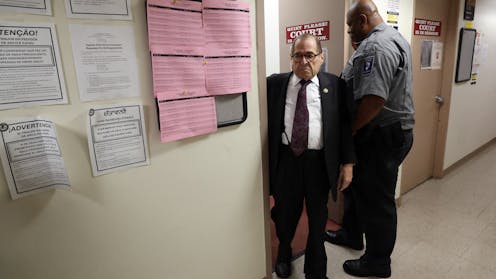
Rep. Jerry Nadler, the 18-term Democratic incumbent running for reelection in New York, began his political career more than 20 years before Liam Elkind, his primary opponent, was born. Timothy A. Clary/AFP via Getty Images

The 2026 midterms are more than a year away, but some high-profile primary election battles in the Democratic Party are gaining national attention. Much of that attention is focused on the age of the candidates.

Thanks to Texas’ proposed mid-decade redistricting, a showdown is looming between two Democrats serving in the U.S. House of Representatives from that state: 36-year-old Rep. Greg Casar has made clear his intention to run against a colleague, Rep. Lloyd Doggett, despite Doggett’s public pressure on Casar to run in a different district. Doggett is 78 years old and has served in the House since 1994.**

An even more stark generational divide has emerged in New York’s 12th district, where 26-year-old political organizer Liam Elkind is making a similar challenge in a Democratic primary. The 18-term incumbent in that race, Rep. Jerry Nadler, will be 79 years old by next year’s midterm election. He began his political career as a New York state assemblyman in 1977 — more than 20 years before Elkind was born.

These generational matchups have become common in the Democratic Party. They have also gained significant attention, particularly since the 2018 upset of another veteran Democratic leader, Rep. Joe Crowley of New York, in a primary challenge from Alexandria Ocasio-Cortez, who was 28 at the time.

Organizer Liam Elkind announces his candidacy for Congress in New York’s 12th District.

These challengers often criticize the seniority of older lawmakers. They say seniority is not a benefit but a hindrance to effective representation because the longtime incumbents are out of touch with the needs of their districts and the country, and that remaining in office crowds out crucial younger perspectives.

As generational challenges have become more common, they’ve also become sharper in their explicit appeals to age as a key candidate quality. And candidates like Elkind have made the argument that the stakes go beyond generational “vibes.”

A geriatric Congress can also have demonstrable effects on the policymaking that happens on Capitol Hill.

Slim majorities make age a bigger issue

Why is candidate age so prominent in the current election cycle?

One big reason is that razor-thin majorities in Congress make every seat count.

Slim margins create legislative and institutional uncertainty that has very real consequences for how Congress is run and how policy gets made.

In his candidacy announcement video, Elkind makes this point explicitly: “In the last five months, three House Democrats passed away, allowing Trump’s billionaire bill, gutting health care and food stamps for millions of people, to go through by one vote.”

Although it’s likely that Trump’s “big, beautiful bill” would have passed even without these vacancies, the Democratic absences undoubtedly made Speaker Mike Johnson’s job of passing the bill a little bit easier.

Elkind also notes that the last eight members of Congress who passed away in office were Democrats. In essence, Elkind is arguing that Democrats must elect more young members not just as a matter of representation but as a way of preserving power in Congress.

How do vacancies occur?

Seat vacancies caused by the early departures of members of Congress happen regularly, and in a variety of ways.

The 118th Congress, which met from Jan. 3, 2023, to Jan. 3, 2025, set a modern record with 17 vacancies, a rate unmatched going back to the 1950s. This was partly because of four member deaths, including Rep. Sheila Jackson Lee, D-Texas.

Other high-profile vacancies in the 118th Congress were due to different causes. Some members were forced to resign or even expelled from Congress because of scandal, like GOP Rep. George Santos of New York, who was convicted in 2024 for a range of crimes and subsequently sentenced to several years in prison.

Others cut short their current term due to political defeats: House Speaker Kevin McCarthy, a Republican from California, resigned after being ousted from his leadership post in 2023. The current 119th Congress has seen additional resignations from members who took positions in the second Trump administration.

Resignation is the most common reason for departure in recent Congresses. However, at least one member – and often more than one – has died in all but one Congress in the past 70 years. The number of deaths that regularly occur among members is more than sufficient to change how the majority party functions in a closely contested Congress like this one.

And for Democrats, three member deaths in the first nine months of the current Congress is far ahead of previous years’ paces, making incumbents’ advanced age a relevant issue on the campaign trail.

How are vacancies filled?

Although U.S. Senate vacancies are often – though not always – filled through an appointment by the governor of that state, the Constitution mandates that House vacancies be filled by special elections scheduled by the governor.

These elections usually happen within a few months of the vacancy. What this means is that there are real possibilities for the size of a party’s majority to shrink, or grow, between election years, in ways that have profound impacts on policymaking. And even if a majority party shift doesn’t happen, a district could still replace a moderate departing representative with an extremist, or vice versa.

Former Speaker of the House Kevin McCarthy, a Republican, announced his resignation from Congress in December 2023.

What does this mean for the 2026 midterms?

Whether younger candidates’ message will resonate with primary election voters remains an open question. Longer-serving incumbents hold major advantages like deeper campaign experience. Younger candidates traditionally lack the name recognition and donor bases that older incumbents have built up over decades.

But given the public concern over the high-profile declines of candidates for president – like former President Joe Biden – and for Congress, like Sens. Dianne Feinstein and Mitch McConnell, generational politics may be more important than ever, and help reverse this trend.

This story contains material from a previous article published on Jan. 3, 2023.

The Conversation

Charlie Hunt does not work for, consult, own shares in or receive funding from any company or organization that would benefit from this article, and has disclosed no relevant affiliations beyond their academic appointment.

ref. In a closely divided Congress, aging lawmakers are a problem for Democrats – https://theconversation.com/in-a-closely-divided-congress-aging-lawmakers-are-a-problem-for-democrats-262914

The Orwellian echoes in Trump’s push for ‘Americanism’ at the Smithsonian

Source: The Conversation – USA – By Laura Beers, Professor of History, American University

Erasing history is a deeply Orwellian thing to do. Elen11, iStock/Getty Images Plus

When people use the term “Orwellian,” it’s not a good sign.

It usually characterizes an action, an individual or a society that is suppressing freedom, particularly the freedom of expression. It can also describe something perverted by tyrannical power.

It’s a term used primarily to describe the present, but whose implications inevitably connect to both the future and the past.

In his second term, President Donald Trump has revealed his ambitions to rewrite America’s official history to, in the words of the Organization of American Historians, “reflect a glorified narrative … while suppressing the voices of historically excluded groups.”

This ambition was manifested in efforts by the Department of Education to eradicate a “DEI agenda” from school curricula. It also included a high-profile assault on what detractors saw as “woke” universities, which culminated in Columbia University’s agreement to submit to a review of the faculty and curriculum of its Middle Eastern Studies department, with the aim of eradicating alleged pro-Palestinian bias.

Now, the administration has shifted its sights from formal educational institutions to one of the key sites of public history-making: the Smithsonian, a collection of 21 museums, the National Zoo and associated research centers, principally centered on the National Mall in Washington, D.C.

On Aug. 12, 2025, the Smithsonian’s director, Lonnie Bunch III, received a letter from the White House announcing its intent to carry out a systematic review of the institution’s holdings and exhibitions in the advance of the nation’s 250th anniversary in 2026.

The review’s stated aim is to ensure that museum content adequately reflects “Americanism” through a commitment to “celebrate American exceptionalism, [and] remove divisive or partisan narratives.”

On Aug. 19, 2025, Trump escalated his attack on the Smithsonian. “The Smithsonian is OUT OF CONTROL, where everything discussed is how horrible our Country is, how bad Slavery was…” he wrote in a Truth Social post. “Nothing about Success, nothing about Brightness, nothing about the Future. We are not going to allow this to happen.”

Such ambitions may sound benign, but they are deeply Orwellian. Here’s how.

A social media post excoriating the Smithsonian for being 'OUT OF CONTROL, where everything discussed is how horrible our Country is, how bad Slavery was...'
A screenshot of President Donald Trump’s Aug.19, 2025 Truth Social post about the Smithsonian.
Truth Social Donald Trump account

Winners write the history

Author George Orwell believed in objective, historical truth. Writing in 1946, he attributed his youthful desire to become an author in part to a “historical impulse,” or “the desire to see things as they are, to find out true facts and store them up for the use of posterity.”

But while Orwell believed in the existence of an objective truth about history, he did not necessarily believe that truth would prevail.

Truth, Orwell recognized, was best served by free speech and dialogue. Yet absolute power, Orwell appreciated, allowed those who possessed it to silence or censor opposing narratives, quashing the possibility of productive dialogue about history that could ultimately allow truth to come out.

As Orwell wrote in “1984,” his final, dystopian novel, “Who controls the past controls the future. Who controls the present controls the past.”

Historian Malgorzata Rymsza-Pawlowska has written about America’s bicentennial celebrations that took place in 1976. Then, she says, “Americans across the nation helped contribute to a pluralistic and inclusive commemoration … using it as a moment to question who had been left out of the legacies of the American Revolution, to tell more inclusive stories about the history of the United States.”

This was an example of the kind of productive dialogue encouraged in a free society. “By contrast,” writes Rymsza-Pawlowska, “the 250th is shaping up to be a top-down affair that advances a relatively narrow and celebratory idea of Americanism.” The newly announced Smithsonian review aims to purge counternarratives that challenge that celebratory idea.

The Ministry of Truth

The desire to eradicate counternarratives drives Winston Smith’s job at the ironically named Ministry of Truth in “1984.”

The novel is set in Oceania, a geographical entity covering North America and the British Isles and which governs much of the Global South.

Oceania is an absolute tyranny governed by Big Brother, the leader of a political party whose only goal is the perpetuation of its own power. In this society, truth is what Big Brother and the party say it is.

The regime imposes near total censorship so that not only dissident speech but subversive private reflection, or “thought crime,” is viciously prosecuted. In this way, it controls the present.

But it also controls the past. As the party’s protean policy evolves, Smith and his colleagues are tasked with systematically destroying any historical records that conflict with the current version of history. Smith literally disposes of artifacts of inexpedient history by throwing them down “memory holes,” where they are “wiped … out of existence and out of memory.”

At a key point in the novel, Smith recalls briefly holding on to a newspaper clipping that proved that an enemy of the regime had not actually committed the crime he had been accused of. Smith recognizes the power over the regime that this clipping gives him, but he simultaneously fears that power will make him a target. In the end, fear of retaliation leads him to drop the slip of newsprint down a memory hole.

The contemporary U.S. is a far cry from Orwell’s Oceania. Yet the Trump administration is doing its best to exert control over the present and the past.

A light-haired man in a suit holding a pen at a desk covered with folders.
President Donald Trump signed an executive order to determine whether ‘public monuments, memorials, statues, markers, or similar properties … have been removed or changed to perpetuate a false reconstruction of American history.’
Anna Moneymaker/Getty Images

Down the memory hole

Even before the Trump administration announced its review of the Smithsonian, officials in departments across government had taken unprecedented steps to rewrite the nation’s official history, attempting to purge parts of the historical narrative down Orwellian memory holes.

Comically, those efforts included the temporary removal from government websites of information about the Enola Gay, the plane that dropped the atomic bomb over Hiroshima. The plane was unwittingly caught up in a mass purge of references to “gay” and LGBTQ+ content on government websites.

A screenshot of a headline and photo for a story about how US Defense Secretary Pete Hegseth has ordered the removal of gay rights advocate Harvey Milk's name from a Navy ship.
As part of efforts to purge references to gay people, U.S. Defense Secretary Pete Hegseth has ordered the removal of gay rights advocate Harvey Milk’s name from a Navy ship.
Screenshot, Military.com

Other erasures have included the deletion of content on government sites related to the life ofHarriet Tubman, the Maryland woman who escaped slavery and then played a pioneering role as a conductor of the Underground Railroad, helping enslaved people escape to freedom.

Public outcry led to the restoration of most of the deleted content.

Over at the Smithsonian, which earlier in the year had been criticized by Trump for its “divisive, race-centered ideology,” staff removed a temporary placard with references to President Trump’s two impeachment trials from a display case on impeachment that formed part of the National Museum of American History exhibition on the American presidency. The references to Trump’s two impeachments were modified, with some details removed, in a newly installed placard in the updated display.

Responding to questions, the Smithsonian stated that the placard’s removal was not in response to political pressure: “The placard, which was meant to be a temporary addition to a 25-year-old exhibition, did not meet the museum’s standards in appearance, location, timeline, and overall presentation.”

Repressing thought

Orwell’s “1984” ends with an appendix on the history of “Newspeak,” Oceania’s official language, which, while it had not yet superseded “Oldspeak” or standard English, was rapidly gaining ground as both a written and spoken dialect.

According to the appendix, “The purpose of Newspeak was not only to provide a medium of expression for the worldview and mental habits proper to the devotees of [the Party], but to make all other modes of thought impossible.”

Orwell, as so often in his writing, makes the abstract theory concrete: “The word free still existed in Newspeak, but it could only be used in such statements as ‘This dog is free from lice’ or ‘This field is free from weeds.’ … political and intellectual freedom no longer existed even as concepts.”

The goal of this language streamlining was total control over past, present and future.

If it is illegal to even speak of systemic racism, for example, let alone discuss its causes and possible remedies, it constrains the potential for, even prohibits, social change.

It has become a cliché that those who do not understand history are bound to repeat it.

As George Orwell appreciated, the correlate is that social and historical progress require an awareness of, and receptivity to, both historical fact and competing historical narratives.

This story is an updated version of an article originally published on June 9, 2025.

The Smithsonian is a member of The Conversation U.S.

The Conversation

Laura Beers does not work for, consult, own shares in or receive funding from any company or organization that would benefit from this article, and has disclosed no relevant affiliations beyond their academic appointment.

ref. The Orwellian echoes in Trump’s push for ‘Americanism’ at the Smithsonian – https://theconversation.com/the-orwellian-echoes-in-trumps-push-for-americanism-at-the-smithsonian-263304

Carte d’identité universelle et un dollar par jour : une utopie réaliste pour vaincre l’invisibilité et la faim

Source: The Conversation – France in French (3) – By Ettore Recchi, Professeur des universités, Centre de Recherche Sur les Inégalités Sociales (CRIS), Sciences Po

Créer un registre universel recensant toutes les personnes qui le souhaitent, ce qui leur permettra de bénéficier de nombreux services à ce stade inaccessibles ; et verser un dollar par jour à toutes celles qui vivent sous le seuil de pauvreté. Cette double mesure, qui peut paraître utopique, n’est pas aussi irréaliste que cela, comme le démontre un article paru dans une revue à comité de lecture, dont les auteurs nous présentent ici les principaux aspects.


Que signifie être invisible ? Pour plusieurs centaines de millions de personnes à travers le monde, cela veut dire ne posséder aucune preuve légale d’identité : ni passeport ni acte de naissance – aucun moyen de prouver son existence aux yeux d’un État. Et que signifie être incapable de mener une vie digne ? C’est gérer son quotidien avec moins de 6,85 $ par jour, ce qui correspond au seuil de pauvreté fixé par la Banque mondiale. Dans un monde plus riche que jamais, ces deux situations définissent ce que nous appelons des « inégalités scandaleuses ».

Notre proposition, détaillée dans un article récemment publié dans Humanities and Social Sciences Communications, vise à s’attaquer simultanément à ces deux problèmes : l’absence d’identité légale et la faim. L’idée est simple : garantir une carte d’identité pour chaque personne vivant sur Terre (Humanity Identity Card, HIC) et un complément de revenu de base de 1 dollar (USD) par jour (Basic Income Supplement, BIS) pour la moitié la plus pauvre de la population mondiale.

Cette politique sociale globale contribuerait à garantir des droits humains fondamentaux comme le droit à l’égalité devant la loi, un niveau de vie suffisant et une protection sociale. Elle devrait également encourager un nouveau sentiment de solidarité internationale : les pays, les entreprises et les individus les plus riches soutiendraient les plus vulnérables, non pas par charité, mais dans le cadre d’un engagement structuré et partagé.

Des inégalités vitales et existentielles

En nous appuyant sur les travaux d’Amartya Sen et de Göran Therborn, nous nous concentrons sur deux dimensions de l’inégalité : l’existentielle et la vitale.

L’inégalité existentielle concerne la reconnaissance. Près de 850 millions de personnes, selon une étude de la Banque mondiale, n’ont aucune pièce d’identité reconnue légalement. Cela signifie que, dans la plupart des pays du monde, elles ne peuvent pas ouvrir de compte bancaire, accéder à des services publics, inscrire leurs enfants à l’école ou s’inscrire elles-mêmes dans des établissements d’enseignement, ou encore enregistrer une carte SIM à leur nom. Sans identité légale, on n’est pas seulement exclu : on est aussi invisible.

L’inégalité vitale concerne les ressources nécessaires à la survie. L’insécurité alimentaire demeure l’un des problèmes les plus persistants et mortels aujourd’hui. Alors que la production alimentaire mondiale atteint des sommets historiques, environ 735 millions de personnes souffrent encore de la faim et des millions d’enfants sont malnutris. Ceci n’est pas dû à une pénurie de nourriture, mais à une véritable exclusion économique, faute tout simplement d’avoir les moyens d’accéder à la nourriture disponible.

Ces deux problèmes vont souvent de pair : les plus pauvres sont aussi ceux qui ont le moins de chances d’être officiellement enregistrés auprès des administrations. Surtout, dans les pays les moins développés, en l’absence de filet de sécurité national, ils passent entre les mailles des systèmes censés les protéger.

Une carte pour chaque être humain

La carte d’identité universelle (HIC) est au cœur de la proposition.

Elle serait délivrée par une instance mondiale – très probablement sous l’égide des Nations unies – et proposée à chaque personne, quels que soient sa nationalité ou son statut migratoire. La carte inclurait des données biométriques telles qu’une empreinte digitale ou un scan de l’iris, ainsi qu’une photo et des informations de base comme le nom et la date de naissance de l’individu.

Avec une HIC, les habitants des zones rurales dans les pays à faible revenu pourraient s’inscrire à des services téléphoniques, à travers lesquels ils pourraient recevoir de l’aide par « mobile money » ; ce qui est actuellement sujet à un enregistrement préalable avec carte d’identité. De même, migrants et voyageurs pourraient demander de l’aide, des soins ou simplement une chambre d’hôtel sans s’exposer à des refus ou à des discriminations en raison d’une nationalité stigmatisée.

Cette carte ne serait liée à aucun gouvernement. Sa seule fonction serait de vérifier l’existence de la personne et ses droits en tant qu’être humain. Les données sensibles seraient stockées dans un système sécurisé géré par l’ONU, inaccessible aux gouvernements sauf autorisation explicite du titulaire. Cela distingue notre proposition d’autres programmes, comme l’initiative Identification for Development (ID4D) de la Banque mondiale, qui est censée fonctionner dans les limites des systèmes d’identification nationaux, exposés aux changements d’agenda des gouvernements.

Un dollar par jour pour la moitié de la population mondiale

Le second pilier de la proposition est un complément de revenu de base (BIS). Toute personne disposant d’un revenu inférieur à 2 500 dollars par an – soit environ la moitié de la population mondiale – recevrait un paiement inconditionnel de 1 dollar par jour. Ce montant est suffisamment faible pour rester abordable à l’échelle mondiale, mais assez élevé pour changer concrètement la vie quotidienne des plus pauvres.

Contrairement à de nombreux systèmes d’aide sociale existants, ce revenu serait versé directement aux individus, et non aux ménages, ce qui permettrait de réduire les inégalités de genre et de garantir que les enfants et les femmes ne soient pas exclus. L’argent pourrait être distribué par l’intermédiaire des systèmes de paiement mobile, déjà largement utilisés avec une efficacité remarquable dans de nombreux pays à faible revenu.

Les conclusions tirées de l’examen d’autres programmes de transferts monétaires montrent que ce type de soutien peut réduire significativement la faim, améliorer la santé des enfants, augmenter la fréquentation scolaire et même encourager l’entrepreneuriat. Les personnes vivant dans l’extrême pauvreté dépensent généralement ce revenu supplémentaire de manière avisée : elles savent mieux que quiconque ce dont elles ont en priorité besoin.

Mais qui finance ?

Un programme mondial de cette ampleur n’est pas bon marché. Nous estimons que le complément de revenu de base coûterait environ 1 500 milliards de dollars par an. Mais nous avons aussi esquissé son plan de financement.

La proposition prévoit une taxe mondiale de seulement 0,66 % sur trois sources :

  • sur le produit intérieur brut (PIB) de chaque État souverain ;

  • sur la capitalisation boursière des entreprises valant plus d’un milliard de dollars ;

  • sur la richesse totale des ménages milliardaires.

Au total, cela générerait suffisamment de ressources pour financer le complément de revenu et administrer la carte d’identité, avec un petit surplus pour les coûts opérationnels.

La participation serait obligatoire pour tous les États membres de l’ONU, ainsi que pour les entreprises et individus concernés. Le non-respect entraînerait des sanctions, telles que la dénonciation publique, des conséquences commerciales ou l’exclusion de certains avantages internationaux.

Ce système s’inspire de précédents existants, comme l’objectif fixé aux États de consacrer 0,7 % de leur budget annuel à l’aide au développement ou l’accord récent de l’OCDE sur un impôt minimum mondial pour les entreprises. Plusieurs dirigeants du G20 ont d’ailleurs déjà exprimé leur soutien à une taxation mondiale de la richesse. Ce qui manque, c’est la coordination – et la volonté politique.

Pourquoi le mettre en œuvre maintenant ?

Pour beaucoup, la proposition semblera utopique. Les inégalités mondiales sont profondément ancrées, et les intérêts nationaux priment souvent sur les responsabilités globales, comme l’illustrent les développements politiques récents (le 1er juillet, le gouvernement des États-Unis a officiellement cessé de financer l’USAID). Mais nous avons aussi vu à quelle vitesse le monde peut mobiliser des ressources en temps de crise – comme lors de la pandémie de Covid-19, où des milliers de milliards ont été injectés dans l’économie mondiale en quelques semaines.

La technologie, elle aussi, a suffisamment progressé pour que la délivrance et la gestion d’une carte d’identité universelle ne relèvent plus de la science-fiction. Les systèmes biométriques sont répandus, et les services de paiement mobile sont des outils éprouvés pour distribuer efficacement l’aide. Ce qu’il faut aujourd’hui, c’est de l’imagination – et de la détermination.

En outre, la proposition repose sur un argument moral puissant : dans un monde aussi interconnecté que le nôtre, pouvons-nous continuer à accepter que certains n’aient aucune existence légale ni aucun moyen de se nourrir ? Pouvons-nous nous permettre de ne rien faire ?

Un pas possible vers la citoyenneté mondiale

Au-delà de ses bénéfices pratiques, la carte d’identité universelle et le complément de revenu de base représentent quelque chose de plus profond : un nouveau modèle de protection sociale mondiale.

Ils considèrent l’identité et le revenu de base non comme des privilèges de citoyenneté, mais comme des droits inhérents à la personne. Ils offrent ainsi une alternative à une vision nationaliste de l’organisation sociale.

C’est une vision radicale mais pas irréalisable – une politique proche de ce que le sociologue Erik Olin Wright appelait « une utopie réaliste » : un monde où naître au mauvais endroit ne condamne plus à une vie de souffrance et d’exclusion.

Que ce plan soit adopté ou non, il ouvre la voie à une réflexion sur la manière dont nous prenons soin les uns des autres au-delà des frontières. À mesure que les défis mondiaux s’intensifient – changement climatique, déplacements, pandémies –, le besoin de solutions globales devient plus urgent. Le projet confère aussi un rôle nouveau et véritablement supranational à l’ONU, à un moment où l’organisation – qui fête cette année son 80e anniversaire – traverse l’une des crises existentielles les plus profondes de son histoire.

Une carte et un dollar par jour peuvent sembler des outils modestes. Mais ils pourraient suffire à rendre visible l’invisible et à sauver les affamés. Et à nous rendre fiers d’être humains.


Pour une version détaillée de cet article, lire Recchi, E., Grohmann, T., « Tackling “scandalous inequalities”: a global policy proposal for a Humanity Identity Card and Basic Income Supplement », Humanities & Social Sciences Communications, 12, art. no : 880 (2025).

The Conversation

Les auteurs ne travaillent pas, ne conseillent pas, ne possèdent pas de parts, ne reçoivent pas de fonds d’une organisation qui pourrait tirer profit de cet article, et n’ont déclaré aucune autre affiliation que leur organisme de recherche.

ref. Carte d’identité universelle et un dollar par jour : une utopie réaliste pour vaincre l’invisibilité et la faim – https://theconversation.com/carte-didentite-universelle-et-un-dollar-par-jour-une-utopie-realiste-pour-vaincre-linvisibilite-et-la-faim-260466

Stranded by the Air Canada strike? 3 strategies to keep your cool, work with staff and return home safely

Source: The Conversation – Canada – By Jean-Nicolas Reyt, Management Professor, McGill University

The emails from Air Canada came without warning: flights cancelled at the last minute, no way to get home and no one at Air Canada answering the phones despite repeated calls. Days went by without a solution.

The disruption stems from a strike that began on Aug. 16 when some 10,000 Air Canada flight attendants walked off the job after months of unsuccessful talks over compensation and working conditions. In the wake of it, more than 100,000 passengers were left stranded.

A tentative agreement to end the contract dispute between Air Canada and its flight attendants has since been reached, and flights are gradually resuming. But many travellers are still stuck abroad or facing lengthy layovers and long lines in crowded airports as they rebook alternative routes.

For those caught up in it, the experience has been draining and overwhelming. Air Canada has said it could take up to a week for full operations to resume, leaving Canadians stranded abroad, still waiting for a path home.

I am one of those stranded passengers. I also teach management and study how people respond in high-stress, uncertain situations and how they can handle them more effectively.

Research has long shown that uncertainty and scarcity push ordinary people toward frustration and conflict, often in ways that make matters worse. In this piece, I will share a few research-backed strategies to help make an unbearable situation a little easier to navigate.

Why this moment feels so stressful

The Air Canada strike combines three powerful stressors: uncertainty, lack of control and crowding. Travellers do not know when or how they will get home, they cannot influence the pace of solutions and they are surrounded by others competing for the same resources.

Each of these factors is already stressful on its own, and combined, they can overwhelm even the most patient individuals. In these volatile conditions, frustration builds and there is a strong urge to lash out.

Anger might seem like a way to regain control, or at least to feel noticed in the chaos. While it’s an understandable reaction, it rarely improves such situations.

Reacting out of anger often leads us to make emotional rather than rational decisions, such as yelling to feel heard. This behaviour can close off communication with the very people whose help is needed. It also drains our resilience at the moment when it matters most.

Importantly, anger is often directed at front-line staff who represent the organization, but have little control over the root causes of disruption. In ordinary times, these employees already face a considerable amount of abuse from customers. In moments of widespread disruption, that mistreatment can quickly become unbearable.

What you can do instead

Although the situation is frustrating and unfair, research has identified practical ways to make it a little more bearable and of improving how travellers navigate it. Here are three strategies supported by scientific studies, including research I conducted with colleagues:

1. Remember this is a collective problem.

My research has found that people stuck in crowded environments feel less frustrated when they think of the situation in collective terms. Airline staff are not opponents; they are trying to help thousands of stranded passengers at once. Approach them as partners in a shared challenge as much as you can. Seeing the situation as a collective issue, rather than a personal one, can make it easier to cope and connect with those who can assist you.

2. Bring your attention inward.

Crowded airports and long layovers can make every minute feel longer and harder to go through. In several studies on how to handle stressful crowds, my co-researchers and I found that focusing on personal media — a book, a tablet or music through headphones — can reduce stress by narrowing your sense of the crowd. Instead of feeding off the chaos and getting more agitated, try to give your mind a smaller, calmer space to settle in. The wait may still be long, but it will feel more manageable.

3. Be polite and respectful with staff.

Showing respect isn’t just courteous; it’s an effective way to manage conflict. In their book Getting to Yes, negotiations experts Roger Fisher and William Ury famously argued to “separate the people from the problem.”

This lesson applies here as well: always treat staff with dignity, even when the situation is frustrating, and focus on solving the real issue. Airline employees may have limited resources, but they are more likely to help travellers who remain calm, clear and respectful.

None of this diminishes how exhausting and unfair the situation feels. However, while travellers cannot control cancelled flights or the pace of labour negotiations, we can control how we respond to these stressors.

Seeing the situation as a shared problem, finding ways to manage our own stress and treating staff with respect can make the experience more bearable. More importantly, these strategies improve our chances of getting help when opportunities arise.

The Conversation

Jean-Nicolas Reyt does not work for, consult, own shares in or receive funding from any company or organisation that would benefit from this article, and has disclosed no relevant affiliations beyond their academic appointment.

ref. Stranded by the Air Canada strike? 3 strategies to keep your cool, work with staff and return home safely – https://theconversation.com/stranded-by-the-air-canada-strike-3-strategies-to-keep-your-cool-work-with-staff-and-return-home-safely-263411

Así eligen los partidos a sus líderes y candidatos en España: ¿debería replantearse?

Source: The Conversation – (in Spanish) – By Carles Pamies, Investigador posdoctoral, Instituto de Políticas y Bienes Públicos (IPP), Consejo Superior de Investigaciones Científicas (CSIC)

Los últimos plenos del Congreso en España y sus acalorados debates ponen de manifiesto que los procedimientos y criterios de selección interna de los líderes y representantes políticos merecen una revisión. Estos, además, volverán al candelero cuando los partidos se preparen para las elecciones varias previstas para 2026 y 2027.

La selección de líderes y candidatos no es un tema menor en democracia, ya que afecta directamente a la calidad de la representación de la ciudadanía (corrupción incluida), las decisiones sobre cuestiones del bien común, la legitimidad de los políticos y los partidos y, en último término, la erosión de la democracia vía desafección y desapego hacia las instituciones.

Existen diferentes tipos de selección que van desde métodos más cerrados (eligen las élites del partido) y centralizados (desde las ejecutivas centrales) a más inclusivos (eligen los militantes o, incluso, los votantes o simpatizantes) y descentralizados (desde los territorios, por ejemplo). En España, la situación es heterogénea, como muestra un vistazo a las normas de selección y configuración de candidaturas.

Primarias, compromisarios y delegados

El PP prima la votación a compromisarios que se adhieren a las distintas listas que compiten. El PSOE usa un abanico de sistemas que van desde las primarias a los delegados para elegir las candidaturas electorales.

Prácticamente desde un inicio, partidos nuevos como Podemos o Ciudadanos hicieron de las primarias un estandarte diferencial, aunque derivaron hacia mecanismos controlados por las elites del partido. Sin embargo, otros partidos también relativamente recientes como Vox, utilizan métodos incluso más cerrados que los de los partidos tradicionales.

Más allá de las normas internas, los partidos tienen una vida social intensa que facilita y condiciona su funcionamiento. Esto explica que los parlamentarios tengan percepciones diferentes acerca de cómo han sido elegidos para ir en las listas.

Desde 2009 les preguntamos sobre esto. Los resultados indican que las formas inclusivas de selección están en retroceso, como muestra el gráfico siguiente.

A la espera de los resultados de la cuarta encuesta a representantes –cuyo trabajo de campo estamos terminando–, parece que la apertura de la selección en los partidos está en declive. No obstante, la selección no suele tener una sola etapa, y no todas las fases son igual de importantes.

Que un candidato sea elegido en última instancia por primarias no significa que estas sean el factor más determinante. A menudo, los líderes salientes nombran públicamente un sucesor, quien tendrá, casi con seguridad, la ventaja comparativa que le otorga el espaldarazo de su mentor. Otras veces, para ajustar los resultados de las primarias a la normativa (a veces por cuestiones de género) intervienen los órganos de los partidos.

¿Por qué los partidos eligen unos métodos de selección u otros? Hay elementos de peso que suelen ponderarse antes de tomar decisiones, así como razones a favor y en contra.

Quienes prefieren las primarias suelen insistir en que estas legitiman la selección al trasladar la decisión al conjunto de militantes, simpatizantes o votantes. Esta ganancia en “legitimidad democrática” puede mejorar la imagen del partido y/o reforzar la implicación de la militancia en la organización.

También se suele argumentar que ese sistema genera efervescencia colectiva entre militantes y simpatizantes de la que se puede derivar un aumento (más o menos temporal) de la expectativa de voto y de la afiliación.

Las primarias se suelen considerar como un instrumento de transparencia en la selección. Los candidatos en liza tienen que exponer ideas y medidas sobre las que en el futuro se les puede pedir que rindan cuentas. Son vistas también como un instrumento de renovación interna y, en este sentido, configuran un supuesto dique a la Ley de Hierro de la Oligarquía, formulada por Robert Michels, la cual establece que todas las organizaciones, incluso aquellas que buscan la democracia o son sus actores principales, inevitablemente desarrollan una estructura oligárquica. La renovación puede facilitar que una facción no se perpetúe en el puesto.

Finalmente, el recurso a las primarias parece encajar bien con el artículo 6 de la Constitución española, que prevé que la estructura y el funcionamiento de los partidos deben ser democráticos.

Fraudes y posibles pucherazos

Aquellos que, por el contrario, se oponen a las primarias, suelen insistir en distintos tipos posibles de fraude que afectan a las nuevas afiliaciones patrocinadas o motivadas por un candidato, a la potencial manipulación de las reglas y a posibles pucherazos. Se suele argumentar que, cuando hay varias candidaturas, se generan divisiones internas difíciles de restañar y que puede haber desequilibrios en la disposición de recursos materiales y financieros de los candidatos.

El posicionamiento del “aparato” del partido puede también afectar el resultado de las primarias que, además, pueden generar desequilibrios en términos de representación. A veces, durante las primarias se favorecen determinados perfiles respecto a otros (por ejemplo, a los varones en detrimento de las mujeres), requiriendo ajustes para encajar las listas con las exigencias legales o las cuotas que menoscaban parte de determinadas visiones de lo que deberían ser las primarias.

A su vez, con este sistema se facilita la intervención de grupos externos con intereses espurios que pretendan hacer avanzar su agenda o potenciar discursos populistas difíciles de adaptar a políticas públicas. Además, queda sin resolver el interrogante de a quién se rinden cuentas cuando se ha sido elegido por un sistema inclusivo y descentralizado.

Los partidos son los guardarraíles de la democracia y responsables últimos de a quién ubican en las instituciones de representación. Como tales, ponderan qué estrategias de selección resultan más útiles para maximizar los retornos en términos tanto electorales, de representación y de manejo de las expectativas e intereses de sus miembros, simpatizantes y potenciales votantes.

Si, además, prestan atención de forma honesta y transparente al tipo de políticos que entran en las instituciones y qué comportamiento promueven con los rivales y con la ciudadanía, podrían evitarse espectáculos como los habituales en la política en España, entre los que se encuentran los recientes debates sobre el currículum de los políticos y las actuaciones posteriores .

The Conversation

Carles Pamies recibe fondos de la Agencia Estatal de Investigación a través del proyecto “Polarización afectiva en democracias avanzadas: el impacto de las élites políticas en la ciudadanía en España (PID2023-151795NB-I00) dirigido por Leonardo Sánchez Ferrer (UBU) y Xavier Coller (UNED).

Xavier Coller recibe fondos de la Agencia Estatal de Investigación a través del proyecto “Polarización afectiva en democracias avanzadas: el impacto de las élites políticas en la ciudadanía en España (PID2023-151795NB-I00) codirigido con Leonardo Sánchez Ferrer (UBU).

ref. Así eligen los partidos a sus líderes y candidatos en España: ¿debería replantearse? – https://theconversation.com/asi-eligen-los-partidos-a-sus-lideres-y-candidatos-en-espana-deberia-replantearse-261312

Literatura gastronómica: somos lo que comemos (y leemos)

Source: The Conversation – (in Spanish) – By Alejandra del Carmen Meza Servín, Associate professor, Universidad de Guadalajara

Fotograma de la serie inspirada en la novela ‘Como agua para chocolate’, de Laura Esquivel. IMDB

“El mole se preparó con la receta que Tita había heredado de Nacha… una receta antiquísima que se pasaba de generación en generación, siempre en manos de la mujer encargada de la cocina”.

Esta cita proviene de la obra romántica, exponente del realismo mágico, Como agua para chocolate, de Laura Esquivel, ejemplo de cómo una novela puede narrar historias, transmitir afectos y preservar identidades a través de la comida.

En este libro, cada capítulo incluye una receta tradicional mexicana. Ingredientes como el chocolate, el chile o el mole no solo sazonan la trama, sino que reflejan la riqueza agrícola y cultural de México. A través de la cocina (y en la cocina) Tita, la protagonista, expresa sus emociones, mostrando cómo la gastronomía puede ser un lenguaje universal y haciendo que el lector pueda saborear sus lágrimas y pasiones.

Gastronomía literaria

Pero el de Como agua para chocolate no es el único caso. Porque la comida en la literatura va más allá de simples descripciones culinarias. Es un puente entre culturas, emociones y tradiciones.

Chocolat de Joanne Harris, ambientada en un pequeño pueblo francés, muestra cómo el cacao –gracias a la tienda de bombones que abre una forastera en un pueblo– puede romper prejuicios y unir comunidades.

Una mujer tras un mostrador habla con una señora mayor frente a ella.
La chocolatería de Chocolat (en la foto, su adaptación cinematográfica) se convierte en un punto de reunión de diferentes personas del pueblo.
FilmAffinity

Muchas novelas gastronómicas también destacan el uso de ingredientes locales y de temporada, un principio clave de la cocina sostenible. Por ejemplo, Entre pólvora y canela, de Eli Brown, rescata sabores afrocaribeños basados en especias como la canela y la pimienta. Estos ingredientes no solo dan identidad a los platos, sino que promueven el comercio justo y la agricultura local.

Otro ejemplo fascinante donde lo culinario se entremezcla con la narrativa se encuentra en la trilogía de novelas históricas Azteca, de Gary Jennings. En estas recreaciones del México prehispánico, se describe detalladamente cómo los personajes preparan platillos con maíz, frijol y chile, los ingredientes básicos e inseparables de la dieta mesoamericana. A través de la elaboración de tortillas, tamales, salsas y diversos guisos, el lector se sumerge en la vida cotidiana y ritual de esta civilización, donde la comida funge como pilar cultural y social.

La novela Un viaje de diez metros, de Richard C. Morais, ofrece un rico tapiz de enseñanzas culturales y psicológicas. El relato sigue al joven chef indio Hassan Haji y su familia, quienes inauguran un pequeño restaurante en Francia justo enfrente de un establecimiento Michelin. La historia se convierte en una profunda exploración de la asimilación cultural frente a la preservación de la identidad. Más allá de ser una deliciosa inmersión en el mundo de la alta cocina, la novela aborda las diferencias dimensiones que puede tener la gastronomía en aspectos como el duelo, la resiliencia y la búsqueda de la excelencia.

Rescate de técnicas ancestrales

Las novelas también preservan conocimientos culinarios en riesgo de desaparecer. Como agua para chocolate detalla métodos como la nixtamalización del maíz –para transformar el grano en masa– o el uso del metate como utensilio de cocina. Estos procesos, aunque laboriosos, son más sostenibles que las alternativas industriales.

Portada del libro Delirio de Laura Restrepo
Delirio, de Laura Restrepo, recibió el Premio Alfaguara de Novela en 2004.
Penguin Libros

Delirio, de Laura Restrepo, desarrolla platos tradicionales andinos como el ajiaco –un tipo de sopa– con papas nativas, cuya elaboración depende de la biodiversidad local.

Y El último chef chino, de Nicole Mones, se distingue por su profunda exploración de la cocina tradicional como un tesoro cultural y filosófico. A través de la mirada de Maggie McElroy, una periodista estadounidense que viaja a Pekín para cubrir la muerte de un afamado chef, la novela revela la lucha por preservar estas prácticas milenarias frente a las presiones de la modernidad y la globalización.

Literatura en la educación culinaria

La literatura que abarca temas gastronómicos puede ser una herramienta educativa que vincula comida, cultura y sostenibilidad. Escuelas líderes ya la usan para formar chefs, conscientes de su impacto social y ambiental.

Estos textos enriquecen la formación culinaria y combaten la homogenización alimentaria. Además, al revivir recetas olvidadas, promueven la diversidad biocultural.


¿Quiere recibir más artículos como este? Suscríbase a Suplemento Cultural y reciba la actualidad cultural y una selección de los mejores artículos de historia, literatura, cine, arte o música, seleccionados por nuestra editora de Cultura Claudia Lorenzo.


Por ejemplo, el Culinary Institute of America (CIA) incluye análisis de textos literarios en sus cursos de cultura alimentaria. A través de ellos, los estudiantes exploran cómo las descripciones reflejan contextos históricos y geográficos, además de los cambios en la alimentación, técnicas e ingredientes que se han realizado a lo largo de décadas e, incluso, siglos.

En Italia, la Universidad de Ciencias Gastronómicas de Pollenzo (fundada por Slow Food) utiliza obras literarias para discutir el valor simbólico de los alimentos. En Colombia, la Escuela Taller de Bogotá emplea obras de Laura Restrepo para enseñar gastronomía local.

Y en Perú, las escuelas culinarias usan La guerra del fin del mundo, de Mario Vargas Llosa, para analizar cómo la comida refleja desigualdades sociales. Esto fomenta una visión más ética de la gastronomía.

Más allá del recetario

A través de novelas y cuentos donde la alimentación es un pilar en la narrativa, es posible entender historias, respetar temporadas y valorar a quienes cultivan los alimentos. Incluso, reflexionar sobre nuestros hábitos de consumo alimenticio y el impacto que tienen, como sucede con Cadáver exquisito, de Agustina Bazterrica. Ahí la autora, con una prosa cruda y directa, despoja al acto de comer de cualquier romanticismo, exponiendo la deshumanización inherente a la producción industrializada de alimentos.

La obra de Bazterrica nos obliga a mirar críticamente la indiferencia con la que a menudo tratamos el origen de lo que comemos, y nos confronta con la idea de que el capitalismo y la comercialización excesiva de la vida pueden desdibujar peligrosamente los límites de la moralidad.

En un mundo donde domina la comida rápida, estos textos son un recordatorio: la buena gastronomía nace de raíces profundas, nos acompaña a lo largo de nuestra vida e impacta significativamente en la producción cultural y artística de cada país y región del mundo.

Así, una novela puede convertirse en un recetario, hacernos viajar a través de la comida o convertirse en una nueva influencia para experimentar la vida a través de la alimentación.

The Conversation

Las personas firmantes no son asalariadas, ni consultoras, ni poseen acciones, ni reciben financiación de ninguna compañía u organización que pueda obtener beneficio de este artículo, y han declarado carecer de vínculos relevantes más allá del cargo académico citado anteriormente.

ref. Literatura gastronómica: somos lo que comemos (y leemos) – https://theconversation.com/literatura-gastronomica-somos-lo-que-comemos-y-leemos-260041