Source: The Conversation – Canada – By Luna KC, Assistant Professor, Global and International Studies, University of Northern British Columbia
Youth protesters in Nepal are in the global spotlight for their angry response to the government’s sweeping social media ban in an apparent attempt to silence their dissent. The government’s actions ignited mass protests — led largely by Gen Z, a cohort made up of young people born between 1997 and 2012.
Some Gen Z social media users tracked the accounts (on Instagram, TikTok and Facebook) of the children and grandchildren of ultra-rich politicians and shared or reposted images and videos of their luxurious lifestyles.
That included photos taken on high-end vacations in Europe, shopping for designer brands like Louis Vuitton, Prada, Gucci and Cartier, as well as their stays in family properties worth billions.
Social media engagement surged on posts with these images and with hashtags that included #Nepobaby, #NepoKids, #PoliticiansNepoBabyNepal and #Corruption.
Some Gen Zs also made short videos on TikTok and Facebook highlighting corruption, inequality, poverty and nepotism; those videos also went viral.
Before Sept. 8, Gen Z’s protests were peaceful and mostly took place online. But when the government instituted a ban on social media, Gen Z erupted, with many claiming that the decision was aimed at silencing their voices.
The interim cabinet’s priorities include the upcoming election in March 2026, tackling corruption, investigating the killings of Gen Z protesters as well as the destruction of public and private property.
The power and perils of social media
Before the Nepal protests, dissenting youth in countries that include Bangladesh, Sri Lanka and Myanmar have used social media to air their grievances.
Gen Z protesters in Nepal and beyond are clearly having some success in bringing about social and political change. But with the growth of artificial intelligence, creating fake content is no longer difficult, and false information can proliferate quickly amid this generation.
Luna KC does not work for, consult, own shares in or receive funding from any company or organisation that would benefit from this article, and has disclosed no relevant affiliations beyond their academic appointment.
Many Canadians over the age of 40 likely remember spending their childhoods playing on the street and moving around their communities on their own or with friends. And, according to the United Nations’ Sustainable Development Goal 11, cities should in fact be places where all residents, including children, can thrive — they have as much right to occupy and use urban streets as motorists do.
In Canada, a major reason for this trend is that we’ve deprived children of their right to the city, including the freedom to safely play and move about on the streets near their homes and schools without the need for adult supervision.
Innovative interventions such as School Streets are critically needed. School Streets are temporary, car-free zones created in front of schools during peak drop-off and pick-up times to improve student safety and encourage walking and cycling
Yet, our research has found that they often face stiff resistance. By closing streets adjacent to schools to cars, School Streets confront drivers with a reimagined and restructured public space they may not be ready to embrace.
Planning cities for cars, not kids
The stripping of children’s rights to the city is a centuries-old project in North America.
Rather than limit where automobiles could travel, urban planners and public health officials advocated for the creation of other places for children to play, hidden away from traffic, such as neighbourhood parks.
This automobile-centric approach to city planning created a societal shift in attitudes about the kinds of spaces considered appropriate for kids to play and move about. Consequently, we now view it as normal not to see or hear children on city streets.
By disempowering children in terms of where they can go in cities, our society has developed assumptions that children are not sufficiently responsible or competent to navigate their communities.
Children’s mobility in car-centric cities
Ironically, as we have become more fearful of allowing children to move about freely, driving children to their destinations has increased in response to this fear. We have largely confined children’s movement in cities to vehicles.
Consequently, we now face an immense societal challenge in enabling children to move independently in their communities, particularly in spaces commonly occupied by children, like outside of primary schools.
In terms of the journey to school, research has shown that risky driving behaviours by parents during morning drop-off times — like letting them out in unsafe areas, obstructing views, making U-turns and speeding — are commonplace.
These behaviours are associated with an increased risk of children being struck by motorists. Hazardous conditions around schools, combined with widespread perceptions that children do not belong on the street and are incapable of getting to school on their own, reinforce the already low rates of walking or bicycling to school among children in Canada.
Innovating cities for children
School Streets can address both issues: reducing the real dangers posed by automobiles in spaces occupied by children while also helping all citizens reimagine how, and by whom, streets can be used.
Typically implemented by municipal governments or not-for-profits, School Streets enable children to come and go safely from school. Though they’re common in many European cities, their uptake in Canada has been slower.
Funded by the Public Health Agency of Canada, NASSI helps Canadian cities learn about and implement School Streets. Through NASSI, year-long School Streets were launched in September 2025 in Kingston, Mississauga, Ont. and Vancouver.
In September 2026, additional year-long School Streets are expected to launch in Kingston, Mississauga, Vancouver and Montréal, while four-week pilots are planned for Ottawa, Peterborough, Ont., Markham, Ont., Toronto, Winnipeg, Edmonton and Calgary.
Reactions to innovating cities for children
Launching and sustaining School Streets requires support from a broad range of people, including municipal councillors and staff, school administrators, teachers, parents, residents, and police departments.
In our work in Kingston and Montréal, we encountered many champions of School Streets whose support was instrumental in launching and sustaining these interventions. However, we also faced resistance to varying degrees. In some cases, this resistance came after interventions were launched, and in other cases, it was sufficient to prevent the intervention from launching at all.
Rather than acknowledging the benefits School Streets could offer, the resistance was often framed around risks to children — precisely the problem School Streets aim to address.
We were told that School Streets would diminish children’s awareness of road safety, put children at risk of being run over by rogue motorists and was inherently risky because children don’t belong on the street. We suspect these arguments were not truly about risks to children, but rather an unwillingness to share power, space and opportunities with children in urban settings.
We also heard a range of arguments shaped by what’s known as motonormativity — a form of unconscious bias in automobile-centric societies that assumes car usage as a universal norm and aligns solutions with the needs of motorists.
In this vein, we heard that School Streets excluded children whose parents needed to drive their child to school; that residents and visitors would be unacceptably delayed by the street closure; that school staff would be deprived of nearby parking; that children occupying the street would be too noisy and cause damage to parked vehicles; and that automobile congestion would be pushed to other streets.
The most troubling argument made against School Streets was that there were more deserving children in other neighbourhoods, presenting a thinly veiled Not-In-My-Backyard attitude.
School Streets are intended to enable children to reclaim their right to the city. Many members of our society, however, are not yet ready to afford children these rights because they conflict with strongly held perceptions about the places children are meant to occupy.
For the Levelling the Playing Fields Study, Patricia Collins received funding from the Canadian Institutes of Health Research (project grant number PJT-175153). For the National Active School Streets Initiative, Patricia Collins receives funding from the Public Health Agency of Canada.
Patricia Collins was previously affiliated with Kingston Coalition for Active Transportation, a not-for-profit group that was responsible for overseeing the implementation of the School Streets in Kingston. She is no longer a member of that group.
For the Levelling the Playing Fields project Katherine L. Frohlich received funding from the Canadian Institutes of Health Research Funding numer PJT175153. For the NASSI project Katherine Frohlich receives funding from the Public Health Agency of Canada.
While most observers are blaming the strong political backlash in the U.S. against climate change action and sustainable investing, we believe the banks didn’t need much of a push: These net-zero alliances never made much business sense and were not particularly effective at fighting climate change. Indeed, for us the puzzle was why they had flourished in the first place.
To examine their rise and fall, we recently conducted a research project that encompassed interviews with more than 80 executives from various financial institutions, activist organizations and oil and gas companies.
Powerful allies grasped climate risks
The Net-Zero Banking Alliance was founded in 2021. Members agreed to limit lending to carbon-intense sectors so that total greenhouse gas emissions from companies in the banks’ loan portfolios are close to zero by 2050.
This target aligned with the goals of the Paris Agreement but was not binding and lacked clear shorter-term targets and plans. Similar net-zero networks were established for insurance, asset management and other financial areas, all under the umbrella of the United Nations Environment Program’s Finance Initiative. Over the past 16 months, the insurance and asset managers’ alliances have also suspended their activities.
These net-zero alliances were built on the premise that climate risk equals financial risk and that the challenge requires a collective response. Their goal was to leverage the power of finance to push companies to decarbonize their products and processes.
Key financial regulators, central banks and a few of the largest asset managers propelled these alliances because they perceived that climate change poses serious long-term systemic risks to markets and economies around the world. Influential figures such as Larry Fink, the CEO of BlackRock, the world’s largest asset manager, and former Bank of England head Mark Carney, now the prime minister of Canada, lent legitimacy to these initiatives.
Some environmental groups also supported these alliances as a smart strategy to pressure companies on climate. Many other financial institutions then joined the net-zero bandwagon, but our research revealed that they didn’t do so because of concern about climate-related financial risks. Rather, they felt an array of pressure from peers, investors, activists, regulators and even their families.
Many people we interviewed mentioned reputational risk as a key driver and saw a low-carbon transition as inevitable, driven by regulation, technological innovation and consumer demand. This was the Biden era, with billions of dollars flowing to clean energy through the Inflation Reduction Act.
The burgeoning field also spawned a specialized but lucrative industry of data providers and consultants who actively marketed carbon management, disclosure and broader sustainability services. The global market for sustainability data and software was estimated at more than US$1 billion in 2024 and growing rapidly.
These vested interests spurred continued expansion of net-zero networks. Indeed, at its peak in 2024, the Net-Zero Banking Alliance included over 140 members globally with $74 trillion in estimated total assets, representing over 40% of global banking assets.
The Trump administration has canceled several offshore wind farm projects, such as one that’s nearly complete and intended to serve Rhode Island and Connecticut – though its fate is still in court. AP Photo/Julia Demaree Nikhinson
Political backlash
Given the size and scope of these net-zero networks, what triggered their rapid collapse?
One major factor, of course, was the political backlash against anything connected with climate action and sustainable investing following the 2024 election of President Donald Trump.
Finance officials in more than 20 U.S. states have demanded that major asset managers restrict the use of environment, social and governance benchmarks, accusing them of eroding “traditional fiduciary duty” and claiming they hurt investors.
In August, 23 Republican attorneys general accused organizations created to set standards for corporate climate disclosures of operating an anticompetitive “climate cartel” and violating antitrust laws.
The costs of membership in the net-zero alliances also increased over time, with the adoption of stricter standards that called for specific plans and timelines for ending fossil fuel financing entirely. The new standards also required loan recipients to disclose Scope 3 emissions, which include emissions from a company’s suppliers and customers.
Managers in financial institutions told us that the increasingly complex and demanding requirements were generating strong pushback from their clients. We also heard that membership was turning from a reputational asset to a liability, as activist organizations called out the hypocrisy of continued fossil fuel lending despite their commitments to phasing it out.
Ignoring climate change’s long-term risks
Although banks are rushing back to finance fossil fuel projects, these loans typically have long terms of 10 to 25 years. This means they carry the risk that an eventual transition to clean energy will make these projects worthless, “stranded assets.” One study estimates that investors are currently exposed to more than $1 trillion in potential losses.
Why do banks often ignore these risks?
Our interviewees mentioned the organizational silos that separate analysts who assess climate risks from the loan originators. In other words, the employees deciding where to lend money may not be talking to the team that best understands the long-term risks. Moreover, current risk assessment tools are quite crude and don’t generate the quantitative metrics that loan underwriters want.
The Net-Zero Banking Alliance isn’t disappearing entirely. The group is currently deciding on whether to restructure into a much weaker “framework initiative” that provides voluntary guidance instead of binding commitments.
But climate risks are real and growing. The Boston Consulting Group recently estimated that just the physical risks – floods, drought and wildfires – could cost companies up to 25% of their profits by 2050 and substantially cut global GDP.
A transition to a low-carbon economy will cost trillions of dollars and create massive disruption – as well as opportunities – as new technologies and companies emerge. The longer that action is delayed, the greater the risks to the planet – and of more drastic shocks to the global economy and financial system.
David L Levy receives funding from the BSF, the Bi-national US-Israel Science Foundation
Rami Kaplan receives funding from the BSF, the Bi-national US-Israel Science Foundation
We areprofessors of marketingand management who study humor and workplace dynamics. Our own research – and a growing body of work by other scholars – shows that it’s harder to be funny than most people think. The downside of cracking a bad joke is often larger than what you might gain by landing a good one.
Fortunately, you don’t have to tell sidesplitting jokes to make humor work for you. You can learn to think like a comedian instead.
Humor is risky business
Comedy works by bending and breaking norms – and when those rules aren’t broken in just the right way, it’s more likely to harm your reputation than to help your team.
We developed the “benign violation theory” to explain what makes things funny – and why attempts at humor so often backfire, especially in the workplace. Essentially, humor arises when something is both wrong and OK at the same time.
People find jokes funny when they break rules while seeming harmless. Miss one of those ingredients when you tell a joke and your audience won’t appreciate it. When it’s all benign and there’s no violation, you get yawns. When it’s all violation and not benign, you could end up triggering outrage.
It’s hard enough to get laughs in the darkness of a comedy club. Under fluorescent office lights, that razor-thin line becomes even harder to walk. What feels wrong but OK to one colleague can feel simply wrong to another, especially across differences in seniority, culture, gender or even the mood they’re in.
The hit sitcom ‘The Office’ pokes fun at the cringeworthy jokes cracked by a hapless boss.
An advertising study
In our experiments, when everyday people are asked to “be funny,” most attempts land flat or cross lines.
In a humorous caption contest with business students, described in Peter McGraw’s book on global humor practices, “The Humor Code,” the captions weren’t particularly funny to begin with. However, the ones that were rated by judges as the most funny were often also rated the most distasteful.
Being funny without being offensive is of paramount importance. This is particularly true for women, as a robust literature shows women face harsher backlash than men for behavior seen as offensive or norm-violating such as expressing anger, acting dominantly or even “making asks” in negotiations.
Don’t be that guy.
You might end up getting no respect
Research by other scholars who examine leader and manager behavior in organizations tells a similar story.
In one study, managers who used humor effectively were seen as more confident and competent, boosting their status. Yet when their attempts misfired, those same managers lost status and credibility. Other researchers have found that failed humor doesn’t just hurt a manager’s status – it also makes employees less likely to respect that manager, seek their advice, or trust their leadership.
Even when jokes land, humor can backfire. In one study, marketing students instructed to write “funny” copy for advertisements wrote ads that were funnier, but also less effective, than students instructed to write “creative” or “persuasive” copy.
Another study found that bosses who joke too often push employees into pretending to be amused, which drains energy, reduces job satisfaction and increases burnout. And the risks are higher for women due to a double standard. When women use humor in presentations, they are often judged as being less capable and having lower status than men.
The bottom line is that telling a great joke rarely gets you a promotion. And cracking a bad one can jeopardize your job – even if you’re not a talk show host who earns a living making people laugh.
Flip the script
Instead of trying to be funny on the job, we recommend that you focus on what we call “thinking funny” – as described in another of McGraw’s books, “Shtick to Business.”
But Ogilvy wasn’t telling executives to crack jokes in meetings. He was encouraging employees to think like comedians by flipping expectations, leveraging their networks and finding their niche.
Comics often lead you one way and then flip the script. Comedian Henny Youngman, a master of one-liners, famously quipped, “When I read about the dangers of drinking, I gave up … reading.” The business version of this convention is to challenge an obvious assumption.
For example, Patagonia’s “Don’t Buy This Jacket” campaign, which the outdoor gear company rolled out Black Friday in 2011 as a full-page ad in The New York Times, paradoxically boosted sales by calling out overconsumption.
To apply this method, pick a stale assumption your team holds, such as that adding features to a product always improves it or that having more meetings will lead to smoother coordination, and ask, “What if the opposite were true?”
You’ll discover options that standard brainstorming misses.
Create a chasm
When comedian Bill Burr has his fans in stitches, he knows some people won’t find his jokes funny – and he doesn’t try to win them over.
We’ve observed that many of the best comics don’t try to please everyone. They succeed by deliberately narrowing their audience. And we also find that businesses that do the same build stronger brands.
For example, when Nebraska’s tourism board embraced “Honestly, it’s not for everyone” in a 2019 campaign, targeting out-of-state visitors, web traffic jumped 43%.
Some people want hot tea. Others want iced tea. Serving warm tea satisfies no one. Likewise, you can succeed in business by deciding whom your idea is for, and whom it’s not for, then tailoring your product, policy or presentation accordingly.
Cooperate to innovate
Stand-up may look like a solo act. But comics depend on feedback – punch-ups from fellow comedians and reactions from audiences – iterating jokes in the same way lean startups may innovate new products.
Building successful teams at work means listening before speaking, making your partners look good, and balancing roles. Improv teacher Billy Merritt has described three types of improvisers. Pirates are risk-takers. Robots are structure builders. Ninjas are adept at both, taking risks and building structures.
A team designing a new app, for instance, needs all three: Pirates to propose bold features, robots to streamline the interface, and ninjas to bridge gaps. Empowering everyone in these roles leads to braver ideas with fewer blind spots.
Gifts aren’t universal
Telling someone to “be funny” is like telling them to “be musical.” Many of us can keep a beat, but few have what it takes to become rock stars.
That’s why we argue that it’s smarter to think like a comedian than to try to act like one.
By reversing assumptions, cooperating to innovate, and creating chasms, professionals can generate fresh solutions and stand out – without becoming an office punchline.
The authors do not work for, consult, own shares in or receive funding from any company or organization that would benefit from this article, and have disclosed no relevant affiliations beyond their academic appointment.
How do these scandals stack up to other corporate indiscretions, such as financial fraud? As a management professor, I knew that there’s lots of research on CEOs’ financial crimes, but surprisingly little on personal misdeeds.
So my colleagues and I examined nearly 400 CEO scandals involving either financial or personal misconduct. In this research, published in August 2025 in the journal Strategic Organization, we found that not all CEO scandals are treated equally: The type makes all the difference.
The Coldplay incident became the subject of ridicule at public events for days, such as at this July 18, 2025, Major League Baseball game. Isaiah Vazquez/Getty Images
Personal scandals are harder to survive
For most people, personal indiscretions – such as having an extramarital affair or abusing drugs – are a private matter. But for CEOs, even scandals unrelated to business create doubt about their judgment, integrity and leadership. The result is usually career-ending for the CEO, research shows, and can create lasting harm for the company.
We found that CEOs overwhelmingly exit in the wake of personal scandals – five times as often as CEOs who commit financial misconduct do, in fact. And strong business performance doesn’t tend to offer protection.
For example, Hewlett-Packard’s Mark Hurd, who’s widely credited with turning around HP in the mid-2000s, was ousted following a very visible personal misconduct scandal 15 years ago. The fallout was swift: The company’s stock fell nearly 10% immediately after the announcement, and with leadership in a tailspin, it dropped more than 40% within a year.
However, while cooking the books is considered a severe form of corporate misconduct, our research suggests that it has fewer job-ending repercussions for CEOs than personal scandals do. Roughly half of all CEOs implicated in financial scandals survive, we found – because, unlike in personal scandals, CEOs can often shift blame.
It might be surprising to learn that a CEO’s personal misconduct can come at a greater cost – both to the business and the executive – than outright financial fraud. Is corporate America overestimating the importance of CEOs’ private behavior? Or is it underestimating the importance of cooking the books?
While I don’t have answers to these questions, I think our findings show the need for more discussion – and more research.
I have received funding from Deloitte for a separate project on sociopolitical activism.
Le président des États-Unis Donald Trump, multiplie les critiques contre la banque centrale, Federal Reserve, trop timorée à ses yeux. Derrière d’évidents conflits d’intérêt à court terme, Trump pourrait bien remettre en cause la crédibilité de la Fed, un des piliers de la puissance mondiale du dollar.
Depuis quelques semaines, la Maison Blanche intensifie ses critiques à l’encontre de la banque centrale des États-Unis (Federal Reserve, Fed). Ces remarques répétées suscitent des interrogations sur le respect de l’indépendance de la Fed et, plus encore, de fortes inquiétudes sur la stabilité macroéconomique et financière des États-Unis.
Les prises de position du président Trump sur la politique monétaire de la Fed ne sont pas nouvelles. Le 19 juillet 2018, il exprimait déjà son désaccord avec la politique des taux d’intérêt menée par la banque centrale. Il rompait ainsi avec la tradition qui voulait que l’exécutif s’abstienne de commenter afin de préserver l’indépendance de la Fed et de maintenir la confiance des marchés financiers. À l’époque, ses éclats semblaient surtout médiatiques. Mais aujourd’hui, Trump 2 paraît engager une remise en cause plus structurelle de l’architecture économique et financière, appelant à une attention particulière.
Le Federal Reserve Act de 1913 autorise la révocation d’un gouverneur « pour motif valable » (faute grave, manquement ou incapacité). Cette disposition, jamais utilisée, reste juridiquement incertaine. La tentative de destitution, rejetée en première instance, le 16 septembre 2025, a donc suscité de fortes inquiétudes des économistes, médias et marchés financiers sur l’indépendance de la Fed et la politisation de la politique monétaire.
Or, l’indépendance des banques centrales est la clé de voûte de la stabilité monétaire. Le Système de la réserve fédérale, créé en 1914 pour répondre aux paniques bancaires du XIXe siècle, a été conçu pour protéger la banque centrale des pressions politiques. Cette autonomie a été consolidée par le Banking Act de 1935 et par l’accord de 1951 avec le Trésor.
Outil de lutte contre l’inflation
Cette indépendance est aussi un instrument essentiel de lutte contre l’inflation. Sans elle, un gouvernement pourrait chercher à financer ses déficits en poussant la banque centrale à créer davantage de monnaie ou à abaisser ses taux. Ces politiques stimuleraient artificiellement la demande, gonfleraient la masse monétaire et provoqueraient une hausse des prix, entraînant in fine une dépréciation de la monnaie.
L’histoire a montré les effets d’un manque d’indépendance des banques centrales. Dans l’Allemagne des années 1920, la Reichsbank, sous contrôle de l’État, finançait déficits et réparations de guerre par création monétaire, provoquant l’hyperinflation de 1923. On retrouve des mécanismes similaires au Zimbabwe (2007–2009), au Venezuela (2010–2020) et, plus récemment, en Turquie, où les pressions politiques sur la banque centrale ont alimenté une inflation durable.
Les bases académiques de cette indépendance sont en revanche plus récentes. Dans les années 1970, Kydland et Prescott (1977), puis Barro et Gordon (1982), ont montré que, sans autonomie ni mandats crédibles, les politiques monétaires perdent leur efficacité et nourrissent des anticipations inflationnistes persistantes.
L’importance de la crédibilité
Les agents économiques tiennent compte du degré d’indépendance de la banque centrale. Quand celle-ci perd en crédibilité, ils doutent de sa capacité à respecter son mandat – maintenir une inflation modérée, fixée à 2 % pour la Fed. Résultat : face à un déficit budgétaire croissant, ils s’attendent à plus d’inflation, augmentent leurs prix par anticipation et enclenchent un cercle autoréalisateur qui alimente la hausse générale des prix.
De nombreuses études empiriques confirment le lien entre indépendance des banques centrales et faible inflation, comme l’ont montré Grilli, Masciandaro et Tabellini (1991), Alesina et Summers (1993) ou encore Bodea et Hicks (2015). Et la question reste d’actualité. En 2024, le Fonds monétaire international (FMI) a publié un nouvel indice mesurant l’indépendance des banques centrales, qui devrait alimenter de nouvelles recherches et débats.
En résumé, sans indépendance, une banque centrale perd sa crédibilité – et, avec elle, sa capacité à maîtriser l’inflation.
Baisse des taux
Le souhait du président Trump de voir baisser les taux d’intérêt directeurs s’est en partie concrétisé, le 17 septembre 2025 (baisse des taux d’un quart de point), Powell répondant ainsi aux mauvais résultats du marché du travail américain (le chômage atteignant 4,3 % en août 2025, son plus haut niveau depuis octobre 2021, BLS, 2025). Cette baisse des taux directeurs sur fond de ralentissement économique est en accord avec le double mandat de la Fed ; c’est-à-dire, maîtriser l’inflation et favoriser une économie proche du plein emploi.
Mettra-t-elle fin aux attaques contre l’indépendance de la Fed ? Peu probable. En effet, en juillet, le président annonçait vouloir une baisse de 300 points de base (soit passer d’un taux directeur de 4 % à 1 %). Une réduction drastique jamais mise en œuvre en une seule fois et historiquement intervenue seulement lors de périodes de profondes récessions, comme, par exemple, en 2007-2008.
Un lien dangereux entre l’exécutif et la Fed
L’indépendance de la Fed pourrait également être fragilisée par la récente nomination par Trump de Stephen Miran (actuel président du Conseil des conseillers économiques, Council of Economic Advisers, CEA) au siège vacant du Conseil des gouverneurs de la banque centrale. Celui-ci a indiqué qu’il ne démissionnerait pas de ses fonctions au CEA, mais prendrait un congé sans solde – créant ainsi un lien institutionnel inédit entre la Fed et l’exécutif. De par la loi, un gouverneur, nommé par le président et confirmé par le Sénat, ne peut occuper un autre poste dans l’appareil de l’État, évitant ainsi des conflits d’intérêt.
Par ailleurs, Miran, comme Trump, défend une politique d’affaiblissement du dollar, qualifiée d’« accord de Mar-a-Lago ». Une baisse significative des taux directeurs entraînerait une diminution des rendements de la dette souveraine américaine et de sa valeur en devises étrangères réduisant ainsi son attractivité pour les investisseurs étrangers alors que 30,2 % du stock de la dette émise par le Trésor américain est détenu par des investisseurs internationaux, (Congressional Research Service).
France 24, septembre 2025.
Un système financier en voie de fragilisation
Outre sa mission de politique monétaire, la Fed est également chargée de veiller à la stabilité financière, de superviser le secteur bancaire et de garantir le bon fonctionnement des systèmes de paiement. Or, plusieurs annonces de la Maison Blanche suscitent des inquiétudes quant à la solidité de l’architecture financière internationale et à la stabilité du système bancaire américain (CEPR, 2025).
Le 18 février 2025, un décret présidentiel a lancé une refonte des fonctions de réglementation et de supervision bancaires exercées par la Fed (Maison Blanche, 2025). Un assouplissement de ces réglementations pourrait conduire les banques à pratiquer des ratios de levier (actifs totaux rapportés au capital) trop élevés, comme avant la crise de 2008. La stabilité du système bancaire se verrait compromise.
En août 1971, lorsque le président Nixon annonça la suspension de la convertibilité du dollar en or, son secrétaire au Trésor John B. Connally prononça cette phrase restée célèbre :
« Le dollar est notre monnaie, mais c’est votre problème. »
Les décisions récentes de la Maison Blanche ravivent l’actualité de cette déclaration. Le dollar joue un rôle primordial dans l’architecture financière internationale. Si ce rôle confère aux États-Unis un « privilège exorbitant » (Eichengreen, 2011), il repose sur la confiance internationale dans la stabilité de l’économie et des institutions américaines.
Une intensification des tensions commerciales et financières pourrait éroder cette confiance, incitant banques centrales et investisseurs internationaux – notamment la Chine – à diversifier davantage leurs réserves de change et investissements vers d’autres devises ou monnaies numériques. Un tel mouvement fragiliserait le dollar. Il deviendrait alors aussi un problème américain.
Les auteurs ne travaillent pas, ne conseillent pas, ne possèdent pas de parts, ne reçoivent pas de fonds d’une organisation qui pourrait tirer profit de cet article, et n’ont déclaré aucune autre affiliation que leur organisme de recherche.
Cuatro décadas después de su descubrimiento, el VIH sigue siendo uno de los principales desafíos de salud pública a nivel mundial. Hasta la fecha ha causado la muerte de más de 44 millones de personas y su transmisión continúa en todos los rincones del planeta.
Se estima que, a finales de 2024, casi 41 millones de personas vivían con VIH. Ese mismo año, alrededor de 630 000 murieron por causas relacionadas con el virus y, aproximadamente, 1,3 millones se contagiaron.
El VIH es un retrovirus, lo que significa que puede integrar su material genético en el ADN de las células infectadas para esconderse del sistema inmunitario, lo que dificulta su erradicación del organismo.
Aunque aún no existe una cura, los tratamientos antirretrovirales actuales han transformado la historia de la infección por VIH. Gracias a ellos, hoy es una enfermedad crónica manejable para aquellos pacientes con acceso a los fármacos. Las personas infectadas pueden llevar una vida larga y relativamente saludable, aunque suelen enfrentarse a un envejecimiento prematuro en comparación con quienes no tienen el virus.
El gran reto: encontrar una vacuna
Durante décadas, lograr una vacuna eficaz contra el VIH ha representado uno de los mayores desafíos de la medicina moderna. ¿Por qué es tan difícil? Estos son algunos de los principales obstáculos:
El virus ataca directamente al sistema inmunitario, debilitando las defensas necesarias tanto para combatir la infección como para responder a la vacunación.
Tiene una alta capacidad de mutación (cambio), lo que complica el diseño de una vacuna universalmente efectiva.
Demuestra una considerable habilidad para evadir a nuestras defensas, lo que reduce la eficacia de las respuestas inmunitarias inducidas.
La principal proteína de superficie del VIH, denominada Env, es la responsable de la unión y entrada del virus en las células. Sería el objetivo ideal de una vacuna, ya que los anticuerpos neutralizantes que se producen tras la vacunación se unen a ella e impiden esa entrada. Sin embargo, es muy compleja y variable, lo que hace que sea un blanco increíblemente difícil de acertar.
El VIH se integra en el genoma humano, lo que le permite permanecer oculto e inactivo durante largos períodos.
¿Una nueva era para las vacunas contra el VIH?
La misma tecnología de ARN mensajero (ARNm) que permitió el rápido desarrollo de las vacunas contra la covid-19 está siendo adaptada para combatir el VIH.
Dos estudios recientes, publicados en Science Translational Medicine, muestran resultados prometedores: vacunas experimentales basadas en ARNm lograron inducir anticuerpos neutralizantes, las defensas capaces de bloquear al virus antes de que infecte una célula, potentes y específicos en animales y humanos.
Esto representa un avance importante en la carrera por lograr una vacuna efectiva contra el VIH.
¿Cómo funciona?
Tradicionalmente las vacunas experimentales utilizaban trímeros solubles de la proteína Env. Sin embargo, este método dejaba expuesta una parte de la proteína (la base del trímero) que normalmente está oculta en el virus real. Esto podía inducir respuestas inmunitarias fuertes, pero mal dirigidas. Como resultado, no lograban neutralizar el virus.
Para resolver este problema los investigadores diseñaron una vacuna de ARNm que instruye a las células para producir la proteína Env unida a la membrana celular. Así se imita mejor su forma natural en el virus.
En un primer estudio, realizado en conejos y primates no humanos, esta versión de la vacuna generó respuestas de anticuerpos neutralizantes más fuertes que la versión soluble.
Resultados en humanos
A partir de estos resultados prometedores se inició un ensayo clínico de fase 1 en humanos para comparar ambas versiones de la vacuna. Se trató de un estudio con unos cien voluntarios en el que se analizó la seguridad del fármaco y la respuesta inmunitaria que generaba.
Los resultados mostraron una diferencia abismal: un 80 % de los participantes que recibieron la vacuna con Env anclada a la membrana de la célula generaron la codiciada respuesta de anticuerpos neutralizantes.
En cambio, solo el 4 % de a quienes se administró la versión soluble lograron esa respuesta.
Se trata de un ensayo clínico en fase 1, todavía preliminar. Por lo tanto, serán necesarios más estudios con más participantes para entender si la vacuna protege contra la infección y durante cuánto tiempo.
¿Y los efectos secundarios?
Las vacunas fueron, en general, bien toleradas. Sin embargo, el ensayo identificó un efecto secundario inesperado: aproximadamente el 6,5 % de los participantes desarrollaron urticaria (ronchas), y algunos experimentaron síntomas duraderos.
Aunque tratables, esta tasa fue más alta de lo observado con otras vacunas de ARNm, como las de la covid-19.
Curiosamente, otro conjunto de ensayos, que probaba una estrategia diferente de vacunación basada en la administración de ARNm en varios pasos, también reportó efectos secundarios en la piel. Esto sugiere que la combinación entre antígenos del VIH y la tecnología de ARNm podría estar relacionada, aunque esto aún requiere mayor investigación.
Conclusión: un paso firme hacia el futuro
Si bien estas vacunas aún no representan una solución definitiva, han demostrado que la combinación de la tecnología de ARNm con una estrategia más realista de presentación del antígeno (Env anclada a la membrana de la célula) es una herramienta poderosa en la búsqueda de una vacuna eficaz contra el VIH.
Los investigadores se muestran optimistas. Ajustes como la reducción de la dosis de ARNm podrían mitigar los efectos secundarios observados y mejorar aún más esta prometedora vía de investigación. Quizá en unos años la lucha contra el VIH cuente en su arsenal con la tan ansiada vacuna.
Las personas firmantes no son asalariadas, ni consultoras, ni poseen acciones, ni reciben financiación de ninguna compañía u organización que pueda obtener beneficio de este artículo, y han declarado carecer de vínculos relevantes más allá del cargo académico citado anteriormente.
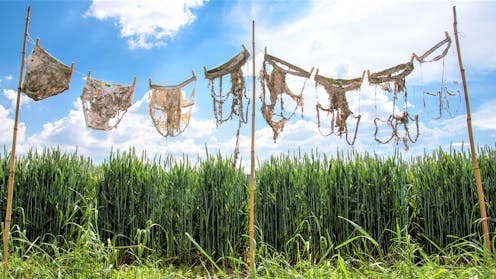
Le test du slip est très simple à interpréter : plus le slip retrouvé sera troué, plus le sol sera en bonne santé.Gabriela Braendle/Agroscope
Du slip en coton aux sachets de thé enterrés, de l’analyse chimique en laboratoire aux espèces bio-indicatrices, voici un panorama de quelques tests étonnants qui permettent d’informer de la santé des sols. Derrière leur éventuelle dimension ludique, ils montrent à quel point les données ainsi recueillies sur le bon fonctionnement de ces écosystèmes sont précieuses, notamment pour l’agriculture.
Les sols nous rendent des services précieux et encore trop souvent invisibles : c’est grâce à eux que de nombreuses espèces – dont la nôtre – peuvent se nourrir, voire se vêtir, grâce aux cultures textiles. Ils sont la base physique sur laquelle une large partie des écosystèmes terrestres – ainsi que les infrastructures humaines – sont bâtis.
Ils rendent des services écosystémiques incomparables. Non seulement les sols fournissent aux plantes l’eau et les nutriments nécessaires à leur croissance, mais ils permettent aussi de réguler le cycle de l’eau, entre le ruissellement de la pluie et son infiltration. De ce fait, ils jouent un rôle clé pour atténuer l’ampleur des inondations. Leur fonction de puits de carbone en fait également des alliés précieux de la décarbonation.
Les sols représentent un habitat indispensable pour la survie de certains organismes tels que des micro-organismes (bactéries, champignons, algues, protozoaires…) mais aussi d’animaux plus ou moins grands (lombriciens, arthropodes, nématodes…), tous liés par une chaîne alimentaire complexe.
Ces organismes sont très nombreux : une cuillère à café de sol contient plus d’êtres vivants qu’il n’y a d’humains sur la Terre ! On y retrouve ainsi plusieurs centaines de millions de bactéries, plusieurs dizaines de milliers de champignons, des centaines de protozoaires et des dizaines d’arthropodes tels que des acariens ou des collemboles.
Dans ces conditions, un sol en bonne santé est un sol qui fonctionne bien, c’est-à-dire qui constitue un habitat adapté pour tous ces êtres vivants. Il leur offre le gîte et le couvert : un toit sûr et constant et de quoi se nourrir en suffisance. La bonne santé d’un sol constitue un atout indéniable pour l’agriculture en termes de fertilité, production et de lutte contre les maladies…. Mais comment peut-on la mesurer simplement ?
Évoquons l’un de ces tests qui a le mérite d’être simple, efficace et non dénué d’humour : le fameux test du slip. Pour connaître la santé d’un sol, agricole par exemple, on peut ainsi enterrer un slip en pur coton blanc non traité, puis le déterrer quelques mois plus tard afin de constater son état.
L’interprétation est rapide et facile : un slip retrouvé plutôt intact sera une mauvaise nouvelle, tandis qu’un slip troué sera signe d’une dégradation de la cellulose du coton. L’explication est, elle, un peu plus complexe : un sol en bonne santé est habité par une grande diversité d’organismes, qui lui confèrent un fonctionnement optimal, et notamment un bon niveau de décomposition et de minéralisation de la matière organique.
Ce sont ces fonctions du sol qui permettent le recyclage des nutriments nécessaires à la croissance des plantes. Or, la cellulose du slip, par exemple, est une matière organique. Ainsi, si le slip est en bon état lorsqu’il est déterré, cela indique qu’il n’a pas été dégradé, et que le sol ne remplit pas correctement ses fonctions de décomposition.
Pour affiner l’analyse, il existe un autre test moins médiatisé : celui des sachets de thé.
Deux sachets de thé prêts à être enterrés. Anne-Maïmiti Dulaurent, Fourni par l’auteur
Il suffit d’enterrer des sachets de thé de compositions différentes (thé vert ou rooibos), plus ou moins « digestes » pour les organismes du sol – et donc plus ou moins difficiles à dégrader – et d’étudier la perte de poids des sachets après un temps donné. S’ils se sont allégés, c’est qu’ils ont perdu de la matière – et donc que celle-ci a été décomposée par les organismes du sol.
Après tout, un sachet de thé contient simplement de la matière végétale morte à l’intérieur d’une toile en nylon. Cela représente un bon appât pour les organismes décomposeurs.
Mais tous les thés ne se valent pas : le thé vert est plus facile à dégrader, tandis que le roiboos est plus ligneux et met plus longtemps à être décomposé. Comparer les deux permet donc d’évaluer dans quelle mesure le sol peut dégrader différents types de matière organique.
Non seulement cela fournit des informations précieuses sur la capacité du sol à décomposer la matière organique, mais un tel protocole rend les résultats comparables entre différents sites du monde entier, peu importe la façon dont sont gérés les sols.
Un sol sain est primordial pour les agriculteurs. En cas de mauvaise décomposition de la matière (c’est-à-dire, des slips intacts et des sachets de thé qui semblent prêts à être infusés malgré plusieurs semaines passées dans le sol), des analyses plus poussées en laboratoire sont alors utiles pour comprendre d’où vient le dysfonctionnement.
Les analyses de sol, précieuses pour les agriculteurs
Les analyses de sol permettent de faire le bilan de la santé des sols, et sont donc précieuses pour les agriculteurs. Ces analyses peuvent s’intéresser à plusieurs paramètres et sont effectuées au laboratoire après avoir échantillonné le sol des parcelles.
Elles peuvent ainsi mesurer :
La texture du sol, qui informe sur la proportion de sable, limon et argile. C’est important, car certaines textures sont favorables à un type de culture, mais pas d’autres. Quelles que soient ses pratiques, l’agriculteur n’a aucun effet sur ce paramètre, mais doit en tenir compte pour adapter sa production et ses cultures.
Le taux de matière organique, qui correspond à la proportion de substances issues de la décomposition des plantes, des animaux et des microorganismes présents dans le sol. Un taux élevé améliore la capacité du sol à retenir les éléments nutritifs et renforce sa structure. L’agriculteur peut l’augmenter en apportant régulièrement différents types de matière organique, comme des effluents d’élevage, des digestats de méthanisation ou en favorisant la restitution de végétaux au sol.
La concentration en nutriments disponibles du sol (phosphore, potassium, magnésium, etc.) renseigne sur leur présence, en suffisance ou non, pour assurer les besoins des plantes cultivées. Une faible concentration d’un nutriment peut être compensée par l’apport de fertilisants minéraux ou de différentes matières organiques qui, décomposées par les habitants du sol, libéreront ce nutriment.
Enfin, le pH, qui indique l’état d’acidité du sol, impacte le développement des plantes. Il peut par exemple influencer la disponibilité des nutriments, mais aussi la présence et l’activité d’organismes bénéfiques pour les plantes. Il est possible pour l’agriculteur d’agir sur ce paramètre par différents types d’apports, comme la chaux qui permet d’éviter un pH trop acide.
Toutes ces informations permettent de guider la gestion du sol par l’agriculteur. Les analyses de sol peuvent être répétées au cours des années, notamment pour surveiller l’état d’une parcelle selon les pratiques agricoles mises en œuvre.
Des nouveaux bio-indicateurs en cours de développement
On l’a compris, les organismes du sol sont en grande partie responsables de son bon fonctionnement et de son état de santé. Mais ils sont sensibles à leur milieu et à la gestion des sols. Ainsi, pour tenir compte de leur présence, de nouveaux indicateurs reposant sur la vie du sol émergent depuis quelques années : on parle de bioindicateurs pour décrire ces espèces qui, par leur présence, renseignent sur les caractéristiques écologiques des milieux.
Bien sûr, différents bioindicateurs fournissent des informations différentes : l’abondance et la diversité de la mésofaune (collemboles et acariens) renseignent sur la capacité du sol à bien découper la matière, et les champignons plutôt sur l’efficacité du recyclage des nutriments. La sensibilité de ces organismes aux pratiques agricoles en fait de bons bioindicateurs.
Ces outils ne sont pas forcément accessibles pour la majorité des agriculteurs, car ils ont un coût financier pour le moment trop élevé. Un axe de recherche serait donc de développer des tests basés sur des bioindicateurs plus simples à mettre en œuvre et à interpréter.
Les auteurs ne travaillent pas, ne conseillent pas, ne possèdent pas de parts, ne reçoivent pas de fonds d’une organisation qui pourrait tirer profit de cet article, et n’ont déclaré aucune autre affiliation que leur organisme de recherche.
Source: The Conversation – France (in French) – By Marie Hrabanski, chercheuse en sociologie politique, politiques internationales et nationales de l’adaptation de l’agriculture au changement cliamtique, Cirad
À l’échelle mondiale, les systèmes agricoles, alimentaires et forestiers produisent plus du tiers des émissions de gaz à effet de serre, contribuant ainsi au changement climatique de façon significative. Pourtant, l’agriculture n’a été intégrée que tardivement aux négociations des COP sur le climat. Entre enjeux d’adaptation, d’atténuation et de sécurité alimentaire, les avancées restent timides. De récentes initiatives essaient toutefois de mieux intégrer les systèmes agricoles et alimentaires à l’agenda climatique mondial.
Depuis 1992 et la signature de la Convention-cadre des Nations unies sur les changements climatiques (CCNUCC), les gouvernements ou parties se rassemblent chaque année au sein des Conférences des parties (COP) pour orienter et opérationnaliser les engagements des États face au changement climatique.
En 2020, plus de 90 % de ces contributions nationalement déterminées incluaient l’adaptation au changement climatique et faisaient de l’agriculture un secteur prioritaire, et environ 80 % d’entre elles identifiaient des objectifs d’atténuation du changement climatique dans le secteur agricole.[…]
Les insuffisances du protocole de Kyoto
Les articles 2 et 4 de la convention (CCNUCC) adoptée en 1992 évoquent le lien entre les changements climatiques et l’agriculture. Toutefois, les enjeux sont focalisés sur l’atténuation, par le biais notamment des négociations sur le cadre REDD+ (réduction des émissions dues à la déforestation et à la dégradation des forêts), qui ont abouti en 2013 à Varsovie après plusieurs années de discussions très laborieuses et clivantes, notamment entre pays développés et pays en développement.
Le protocole de Kyoto, adopté en 1997, fait référence à l’agriculture et aux forêts, en soulignant que le secteur de l’utilisation des terres, du changement d’affectation des terres et de la foresterie (UTCATF) peut constituer une source de GES.
Ce protocole fixait des objectifs ambitieux de réduction des émissions uniquement pour les pays industrialisés (dits « annexe I »), dans un fonctionnement top-down, contrairement à l’accord de Paris. Il couvrait le méthane et le protoxyde d’azote, principaux gaz émis par le secteur agricole, et établissait des niveaux de référence forestiers à respecter.
Ce mode de travail a toutefois montré ses limites, avec notamment les États-Unis qui n’ont pas ratifié ce protocole et le Canada qui en est sorti. En application de ce protocole, deux mécanismes de certification de projets de compensation carbone ont été développés : le mécanisme de mise en œuvre conjointe (Moc) et le mécanisme de développement propre (MDP), au sein desquels les secteurs agricoles et forestiers ne seront pas intégrés avant le milieu des années 2000.
Les questions agricoles dans les négociations climatiques entre 1992 et 2023.
En effet, à la suite de la mobilisation d’acteurs hétérogènes en faveur de la notion de climate-smart agriculture et dans un contexte politique renouvelé, l’agriculture est intégrée à l’ordre du jour officiel de l’organe de la COP chargé des questions scientifiques et techniques (SBSTA, Subsidiary Body for Scientific and Technological Advice). Cinq ateliers auront lieu entre 2013 et 2016.
La FAO a promu la climate-smart agriculture, ou l’agriculture climato-intelligente, dès la fin des années 2000. Cette notion vise à traiter trois objectifs principaux :
l’augmentation durable de la productivité et des revenus agricoles (sécurité alimentaire) ;
l’adaptation et le renforcement de la résilience face aux impacts des changements climatiques (adaptation) ;
et la réduction et/ou la suppression des émissions de gaz à effet de serre (l’atténuation), le cas échéant.)
Quelle place pour l’agriculture dans l’accord de Paris ?
Pourtant, s’il y a bien une journée consacrée à l’agriculture pendant la COP21 en 2015 en parallèle des négociations, l’accord de Paris aborde uniquement l’agriculture sous l’angle de la sécurité alimentaire et de la vulnérabilité des systèmes de production alimentaire.
Une étape importante est franchie en 2017, avec la création de l’action commune de Koronivia (KJWA). Les ateliers se font maintenant en coopération avec les organes constitués au titre de la convention, par exemple le Fonds vert pour le climat. Les observateurs, dont les ONG et la recherche, participent également aux ateliers.
De 2018 à 2021, sept ateliers sont organisés (sur les méthodes d’évaluation de l’adaptation, les ressources en eau, le carbone du sol, etc.) et permettent à tous les États et parties prenantes (stakeholders) de partager leurs points de vue sur différents enjeux agricoles.
L’accélération de l’agenda climatique va dans le même temps permettre, pendant la COP26 de Glasgow, de prendre en charge la question des émissions de méthane, dont près de 40 % sont d’origine agricole, selon l’IEA (International Energy Agency).
Un « engagement mondial » (Global Methane Pledge) a été lancé en 2021 par l’Union européenne (UE) et les États-Unis, avec pour objectif de réduire les émissions mondiales de méthane de 30 % d’ici à 2030 par rapport à 2020. Il regroupe aujourd’hui 158 pays, sans toutefois que la Chine, l’Inde et la Russie figurent parmi les signataires.
Les points de blocage identifiés à l’issue des COP26 et COP27
En 2022, l’action commune de Koronivia arrivait à son terme. L’analyse des soumissions faites par les pays et les observateurs, dont la recherche, met en évidence la pluralité des façons de penser le lien entre les questions agricoles et les questions climatiques, ce qui va se traduire notamment par de fortes tensions entre des pays du Nord et des pays du Sud dans les négociations lors de la COP27 de Charm el-Cheikh en Égypte (2022).
Trois principaux points de blocage ont pu être identifiés entre différents pays des
Nords et des Suds. D’autres clivages sont également apparus, permettant ainsi de relativiser l’existence d’un Nord global et d’un Sud global qui s’opposeraient nécessairement.
Le premier a trait à l’utilisation du terme atténuation dans le texte de la décision de la COP. En effet, si toutes les parties étaient d’accord pour que figure dans le texte l’importance de l’adaptation de l’agriculture au changement climatique, l’Inde, soutenue par d’autres pays émergents restés plus en retrait, s’est montrée particulièrement réticente à voir apparaître aussi le terme atténuation.
Pour ce grand pays agricole, les enjeux d’atténuation ne doivent pas entraver la sécurité alimentaire des pays en développement et émergents. À quelques heures de la clôture des négociations, l’Inde a accepté que le terme atténuation figure dans la décision de la COP3/CP27, créant « l’initiative quadriennale commune de Charm el-Cheikh sur la mise en œuvre d’une action climatique pour l’agriculture et la sécurité alimentaire ».
Cet épisode montre à quel point il n’est pas acquis de penser en synergie les enjeux d’adaptation et d’atténuation pour de nombreux pays émergents et du Sud.
Un second point de blocage concernait la création d’une structure permanente affectée aux enjeux agricoles dans la CCNUCC. Cette demande, qui reste un point d’achoppement dans les négociations, est principalement portée par les pays du G77, même si des divergences notables existent entre les propositions faites.
Enfin, on peut identifier un enjeu lié à la place des systèmes alimentaires dans l’action climatique. Pour nombre de pays européens et émergents, la réflexion doit être faite à l’échelle des systèmes alimentaires : nos pratiques alimentaires dépendent étroitement des modes de production des produits agricoles, et une approche prenant en compte l’amont avec la production des intrants et l’éventuelle déforestation, et l’aval, avec le transport, le refroidissement, la transformation, et donc également les pertes et les gaspillages et les régimes alimentaires, est plus à même de permettre l’émergence de solutions gagnantes à tous niveaux.
Toutefois, d’un côté, le groupe Afrique préférait se focaliser sur le secteur agricole, une question déjà complexe à instruire. De l’autre côté, certains pays du Nord et aux économies en transition refusaient de voir apparaître le terme système alimentaire, l’hypothèse la plus probable étant la crainte de remettre en question la surconsommation de viande, la déforestation, ou encore le commerce, ce qu’ils souhaitent impérativement éviter.
Le terme système alimentaire a donc été rejeté dans le texte de l’initiative quadriennale commune de Charm el-Cheikh.
Malgré ces points de tensions, l’initiative quadriennale commune de Charm el-Cheikh sur la mise en œuvre d’une action climatique pour l’agriculture et la sécurité alimentaire a été adoptée et cette décision de COP3/CP27 marque donc une étape décisive dans les négociations.
On notera tout de même que ce texte ne promeut ni l’agroécologie, qui aurait ouvert la voie à une refonte holistique des systèmes agricoles, ni l’agriculture climato-intelligente (climate-smart agriculture), davantage tournée vers les solutions technologiques. Aucun objectif chiffré de réduction des émissions de GES agricoles n’est discuté dans les COP ; aucune pratique n’a été encouragée ou stigmatisée (utilisation massive d’intrants chimiques, etc.).
La présidence émirienne de la COP28 a ensuite mis en haut de l’agenda politique cette question, en proposant la Déclaration sur l’agriculture durable, les systèmes alimentaires résilients et l’action climatique, signée par 160 pays.
Elle appelle les pays qui la rejoignent à renforcer la place des systèmes agricoles et alimentaires dans les contributions déterminées au niveau national et dans les plans nationaux d’adaptation et relatifs à la biodiversité.
Dans la foulée de la COP28, la FAO a proposé une feuille de route qui établit 120 mesures (dont des mesures dites agroécologiques) et étapes clés dans dix domaines pour l’adaptation et l’atténuation pour les systèmes agricoles et alimentaires. Elle vise à réduire de 25 % les émissions d’origine agricole et alimentaire, pour atteindre la neutralité carbone à l’horizon 2035, et à transformer d’ici 2050 ces systèmes en puits de carbone capturant 1,5 Gt de GES par an.
En définitive, l’initiative de Charm el-Cheikh portait sur l’agriculture et non pas sur les systèmes alimentaires, mais a donné lieu à un atelier, en juin 2025, sur les approches systémiques et holistiques en agriculture et dans les systèmes alimentaires, et le forum du Standing Committee on Finance de 2025 portera sur l’agriculture et les systèmes alimentaires durables. Le sujet fait donc son chemin dans les enceintes de la CCNUCC.
Ce chapitre a été écrit par Marie Hrabanski, Valérie Dermaux, Alexandre K. Magnan, Adèle Tanguy, Anaïs Valance et Roxane Moraglia.
Marie Hrabanski est membre du champ thématique stratégique du CIRAD sur le changement climatique et a reçu des financements de l’ANR APIICC (Evaluation des Plans et Instruments d’Innovation Institutionnelle pour lutter contre le changement climatique).
Source: The Conversation – (in Spanish) – By Rubén Garrido-Yserte, Director del Instituto Universitario de Análisis Económico y Social, Universidad de Alcalá
Los primeros veinticinco años del siglo XXI han marcado una inflexión histórica: el mundo ya no se transforma lentamente, sino en cascada. La emergencia climática, el colapso democrático, las migraciones masivas, la disrupción tecnológica, las guerras híbridas y la desinformación son síntomas de una “policrisis” global: crisis entrelazadas en sus causas, que “degradan significativamente las perspectivas de la humanidad, generando daños emergentes mayores que la suma de los que causarían por separado”.
Este entramado de crisis simultáneas y conectadas exige respuestas éticas e institucionales innovadoras, y la universidad no puede permanecer como un actor pasivo ni limitarse a su función académica clásica. Como hemos explorado en el reciente libro Geopolítica de la educación superior, debe convertirse en un actor global con voz propia y compromiso ético con el bien común.
La universidad como actor global
Frente a las visiones tecnocráticas que reducen el valor de la universidad a indicadores de eficiencia, productividad o empleabilidad, proponemos una noción más ambiciosa: la universidad como nodo de anticipación, deliberación y transformación social.
Ser un actor global no es internacionalizarse ni competir en índices internacionales, sino incidir en los debates públicos más urgentes: justicia climática, equidad digital, gobernanza de los bienes comunes, inteligencia artificial responsable, inclusión y paz.
Casos que iluminan un nuevo camino
No se trata solo de una aspiración teórica. Hay universidades en distintas partes del mundo que ya están actuando como verdaderos agentes de cambio global. La Western Sydney University ha sido reconocida como la universidad más influyente del mundo por su contribución a los objetivos de desarrollo sostenible con un enfoque combina inclusión social, innovación local y sostenibilidad ambiental.
En Croacia, el Zagreb Living Lab de la Facultad de Arquitectura de Zagreb transforma un antiguo barrio industrial en una plataforma de soluciones ecológicas cocreadas por ciudadanía, estudiantes y oenegés locales. Financiado por la Unión Europea, este laboratorio urbano ha desarrollado huertos comunitarios, muros verdes y tecnologías de acuaponía, integrando conocimiento científico y saber local.
Gobernanza universitaria con principios
En 2023, la ONU instó a construir un “nuevo multilateralismo inclusivo y eficaz” que incorpore a la sociedad civil y a las universidades en la gobernanza global. Este llamamiento, recogido en el Pacto para el Futuro, sitúa a la comunidad académica como actor clave en la construcción de soluciones basadas en evidencia, justicia y cooperación.
Esto implica revisar las formas de gobernanza, abrir espacios de participación real para estudiantes, investigadores y actores del entorno, y alinear la gestión institucional con los retos civilizatorios actuales. No basta con tener comités de sostenibilidad o cátedras de ODS: hace falta integrar estos compromisos en la estrategia central de las universidades.
De universidades que tenemos, a las que necesitamos
Formar liderazgos éticos, construir ciudadanía crítica, tejer redes de cooperación Sur–Sur y Norte–Sur, desmercantilizar el conocimiento, apostar por la ciencia abierta: estos son algunos de los desafíos a los que se enfrentan las universidades si quieren contribuir a una transformación con sentido.
Educar, investigar y transferir conocimiento no son actividades neutrales. Cada elección académica –qué investigar, con qué fines, desde qué lenguajes y con qué actores– implica una toma de postura ética. Proponemos, por tanto, una ética para la acción universitaria que vaya más allá de la retórica: una ética comprometida, abierta, corresponsable y situada en el tiempo que nos toca vivir.
Esta ética exige reconocer que el conocimiento no es un fin en sí mismo, sino una herramienta para transformar la realidad. La universidad debe preguntarse constantemente: ¿a quién sirve este saber? ¿Qué efectos tiene su aplicación? ¿Quién queda excluido? Adoptar esta perspectiva implica asumir que el mérito académico debe complementarse con valores como el cuidado, la justicia cognitiva, la equidad intergeneracional y la sostenibilidad.
Una ética para la acción también obliga a revisar los modos en que se produce y comparte el conocimiento. Apostar por la ciencia abierta, por el acceso libre a datos y publicaciones, por metodologías participativas y por el reconocimiento del saber situado de comunidades tradicionales o vulnerables, es parte esencial de este compromiso. No basta con la excelencia científica; se requiere también relevancia social y sensibilidad moral.
Mejorar el mundo
Una universidad ética es aquella que no se limita a describir el mundo, sino que trabaja activamente para mejorarlo. Es aquella que, al tiempo que forma para el empleo, también forma para la vida en común, para el compromiso democrático, y para la responsabilidad frente al otro y al planeta.
En definitiva, proponemos que la universidad recupere su alma pública. Con sus 26 000 instituciones, 254 millones de estudiantes y 18 millones de docentes en todo el mundo tiene una potencia transformadora extraordinaria. Para activarla necesita coraje institucional, visión ética y voluntad política. Porque si bien la universidad no puede salvar el mundo por sí sola, ninguna solución profunda será posible sin ella.
La universidad necesita asumir que su rol no es solamente formar profesionales ni publicar papers. Es ayudar a construir futuros sostenibles.
Rubén Garrido-Yserte recibe fondos de proyectos de investigación de convocatorias públicas.