What is below Earth, since space is present in every direction?

Source: The Conversation – USA – By Jeff Moersch, Professor of Earth, Environmental, and Planetary Sciences, University of Tennessee

Our solar system is mostly arranged along one plane in space, as in this not-to-scale artist’s diagram. NASA/JPL, CC BY

Curious Kids is a series for children of all ages. If you have a question you’d like an expert to answer, send it to CuriousKidsUS@theconversation.com.


What is below Earth, since space is present in every direction? – Purvi, age 17, India


If you’ve seen illustrations or models of the solar system, maybe you noticed that all the planets orbit the Sun in more or less the same plane, traveling in the same direction.

But what is above and below that plane? And why are the planets’ orbits aligned like this, in a flat pancake, rather than each one traveling in a completely different plane?

I’m a planetary scientist who works with robotic spacecraft, such as rovers and orbiters. When my colleagues and I send them out to explore our solar system, it’s important for us to understand the 3D map of our space neighborhood.

Which way is ‘down’?

Earth’s gravity has a lot to do with what people think is up and what is down. Things fall down toward the ground, but that direction depends on where you are.

Imagine you’re standing somewhere in North America and point downward. If you extend a line from your fingertip all the way through the Earth, that line would point in the direction of “up” to someone on a boat in the southern Indian Ocean.

model of the solar system with Sun at the center and planets all revolving in the same plane
By convention, looking ‘down’ on the solar system you see the planets orbiting counterclockwise.
Andrzej Wojcicki/Science Photo Library via Getty Images

In the bigger picture, “down” could be defined as being below the plane of the solar system, which is known as the ecliptic. By convention, we say that above the plane is where the planets are seen to orbit counterclockwise around the Sun, and from below they are seen to orbit clockwise.

Even more flavors of ‘down’

Is there anything special about the direction of down relative to the ecliptic? To answer that, we need to zoom out even farther. Our solar system is centered on the Sun, which is just one of about 100 billion stars in our galaxy, the Milky Way.

Each of these stars, and their associated planets, are all orbiting around the center of the Milky Way, just like the planets orbit their stars, but on a much longer time scale. And just as the planets in our solar system are not in random orbits, stars in the Milky Way orbit the center of the galaxy close to a plane, which is called the galactic plane.

This plane is not oriented the same way as our solar system’s ecliptic. In fact, the angle between the two planes is about 60 degrees.

line of pinkish milky glow against dark background of space
A side view of galaxy NGC 4217 taken by the Hubble Space Telescope shows how all the stars and their planetary systems lie on one plane.
NASA Goddard, CC BY

Going another step back, the Milky Way is part of a cluster of galaxies known the the Local Group, and – you can see where this is going – these galaxies mostly fall within another plane, called the supergalactic plane. The supergalactic plane is almost perpendicular to the galactic plane, with an angle between the two planes of about 84.5 degrees.

How these bodies end up traveling paths that are close to the same plane has to do with how they formed in the first place.

Collapse of the solar nebula

The material that would ultimately compose the Sun and the planets of the solar system started out as a diffuse and very extensive cloud of gas and dust called the solar nebula. Every particle within the solar nebula had a tiny amount of mass. Because any mass exerts gravitational force, these particles were attracted to each other, though only very weakly.

The particles in the solar nebula started out moving very slowly. But over a long time, the mutual attraction these particles felt thanks to gravity caused the cloud to start to draw inward on itself, shrinking.

There would have also been some very slight overall rotation to the solar nebula, maybe thanks to the gravitational tug of a passing star. As the cloud collapsed, this rotation would have increased in speed, just like a spinning figure skater spins faster and faster as they draw their arms in toward their body.

Watch how the cloud’s particles collided and eventually clumped.

As the cloud continued shrinking, the individual particles grew closer to each other and had more and more interactions affecting their motion, both because of gravity and collisions between them. These interactions caused individual particles in orbits that were tilted far from the direction of the overall rotation of the cloud to reorient their orbits.

For example, if a particle coming down through the orbital plane slammed into a particle coming up through that plane, the interaction would tend to cancel out that vertical motion and reorient their orbits into the plane.

Eventually, what was once an amorphous cloud of particles collapsed into a disc shape. Then particles in similar orbits started clumping together, eventually forming the Sun and all the planets that orbit it today.

On much bigger scales, similar sorts of interactions are probably what ended up confining most of the stars that make up the Milky Way into the galactic plane, and most of the galaxies that make up the Local Group into the supergalactic plane.

The orientations of the ecliptic, galactic and supergalactic planes all go back to the initial random rotation direction of the clouds they formed from.

So what’s below the Earth?

So there’s not really anything special about the direction we define as “down” relative to the Earth, other than the fact that there’s not much orbiting the Sun in that direction.

If you go far enough in that direction, you’ll eventually find other stars with their own planetary systems orbiting in completely different orientations. And if you go even farther, you might encounter other galaxies with their own planes of rotation.

This question highlights one of my favorite aspects of astronomy: It puts everything in perspective. If you asked a hundred people on your street, “Which way is down?” every one of them would point in the same direction. But imagine you asked that question of people all over the Earth, or of intelligent life forms in other planetary systems or even other galaxies. They’d all point in different directions.


Hello, curious kids! Do you have a question you’d like an expert to answer? Ask an adult to send your question to CuriousKidsUS@theconversation.com. Please tell us your name, age and the city where you live.

And since curiosity has no age limit – adults, let us know what you’re wondering, too. We won’t be able to answer every question, but we will do our best.

The Conversation

Jeff Moersch receives funding from NASA an the U.S. National Science Foundation.

ref. What is below Earth, since space is present in every direction? – https://theconversation.com/what-is-below-earth-since-space-is-present-in-every-direction-245348

Trump lawsuits seek to muzzle media, posing serious threat to free press

Source: The Conversation – USA – By Kathy Kiely, Professor and Lee Hills Chair of Free Press Studies, University of Missouri-Columbia

President Donald Trump, who has been involved in thousands of lawsuits, has made news outlets a particular target for litigation this year. AP Photo/Evan Vucci

In December 2025, President Donald Trump filed a US$10 billion lawsuit against the BBC in a federal court in Florida. It was only the latest in a long series of high-dollar legal challenges Trump has brought against prominent media organizations, including ABC, CBS, The New York Times and The Wall Street Journal, among others.

Trump has won some sizable settlements in cases legal scholars had dismissed as largely lacking in merit. But as media scholars, we believe prevailing in court is not necessarily his primary goal. Instead, Trump appears to use lawsuits as a strategic weapon designed to silence his enemies and critics – who sometimes seem to be one and the same in his eyes.

Trump has always been litigious. Over the course of his life, he has been involved in more than 4,000 lawsuits. Many of these involved Trump suing for defamation over perceived threats to his reputation. Relatively few, however, have been successful, if success is defined as prevailing in courts of law.

But using litigation as a tool for intimidation can produce other results that can count as victory. We are concerned that the president may be using the courts as a tool not to correct the record but to muzzle potential watchdogs and deprive the public of the facts they need to hold him accountable.

Winning major settlements

Trump claims the BBC attempted to interfere with the 2024 election by misrepresenting statements he’d made. As with Trump’s other defamation suits, the odds appear long against the president winning his case against the British broadcaster in court.

Just after Trump’s election in 2024, ABC, whose parent company is Disney, promised to make a $15 million contribution to the Trump presidential library to settle a defamation suit many experts said had dubious merit.

CBS and its parent company Paramount Global settled an arguably weaker defamation suit involving editing of a “60 Minutes” interview with Kamala Harris that Trump said was done “to make her look better.” Paramount contributed $16 million to Trump’s presidential library and his legal fees in order, the company said, to avoid the “uncertainty and distraction” of litigation. That same month, the Federal Communications Commission approved the $8 billion acquisition of Paramount by Skydance Media.

Those two defamation suits were filed while Trump was still a presidential candidate. Weeks after winning reelection, Trump sued The Des Moines Register for publishing a preelection poll that suggested he might lose the swing state of Iowa. Instead, he carried the state by 13 percentage points.

Kamala Harris greeting supporters during the 2024 campaign.
Paramount Global agreed to pay $16 million to settle a lawsuit Trump had filed complaining that a CBS News interview with Kamala Harris had been misleadingly edited.
AP Photo/Jacquelyn Martin

Trump could have just gloated over his victory, as President Harry Truman did when he famously posed holding the Chicago Tribune’s “Dewey Beats Truman” headline the day after his reelection. Instead, Trump went to court, accusing The Des Moines Register and its pollster, J. Ann Selzer, of violating Iowa’s consumer protection laws by fraudulently deceiving consumers and campaign donors.

Even if Trump loses this suit, he has inflicted expensive litigation costs on a news organization.

The considerable costs of defense

From the 1960s until the late 1990s, leading media outlets, rich from advertising dollars, could afford to hire lawyers to defend against governmental overreach and protect their role in the U.S.’s democratic order. Those fights led to Supreme Court decisions shielding media outlets from most libel complaints and government censorship prior to publication.

But the rise of the internet and then social media led to the collapse of the economic model supporting traditional news production. As audiences and advertisers have fled traditional media outlets, including newspapers and broadcasters, the money to hire lawyers to defend against expensive defamation suits or fight for access to government information is much harder to find.

If even media giants such as ABC and CBS are settling rather than fighting, what local news editor is going to assign a story that might trigger a presidential lawsuit? That’s why Trump’s suit against The Des Moines Register is such an ominous development.

Giving up without a fight

What’s disheartening about the media giants’ capitulation is that they are at risk of squandering the protections afforded by the Constitution and the courts.

In medieval England, criticizing the king or peers of the realm was a crime. But early in U.S. history, attempts to enforce seditious libel laws by the British government and later by President John Adams and the Federalist-controlled Congress generated public outcry and rebuke. This was based in part on the understanding that in a democracy the people must be free to criticize those who govern them, a principle enshrined in the First Amendment.

The Supreme Court ratified this understanding of press freedom in its 1964 decision New York Times v. Sullivan. In a resounding victory for free expression, the justices held that government officials cannot prevail in defamation cases unless there is clear and convincing proof that their critics knowingly or recklessly disregarded the truth. Careless errors are not enough.

President Trump pumps his fist in front of supporters.
Trump addressed supporters on Jan. 6, 2021, prior to their march to Capitol Hill. The question of whether he incited them to riot is at the heart of his lawsuit against the BBC.
AP Photo/Jacquelyn Martin

Under these protections, even Trump’s case against the BBC – where the network has admitted an ethical lapse – is not a certain winner, especially since the contested content didn’t air in Florida, where the lawsuit was filed.

Although Trump claims the BBC’s misleading edits implied that he directly incited protesters to storm the Capitol on Jan. 6, 2021, the network can argue in court that the inaccuracy is only technical, given that Trump truly did give a firebrand speech that was widely criticized as at least indirectly leading to the violence that followed . If the edited version of Trump’s speech is not appreciably more harmful to Trump’s reputation than his actual speech, Trump’s defamation claim would likely fail.

Trump is the first U.S. president to use the weight of his office to extract private settlements from news outlets tasked with holding him accountable. Ostensibly, these suits are to recover monetary damages for harm to his reputation, but they are part of a broader attack on what Trump perceives as hostile media coverage.

New limits from states

Some of Trump’s targets are fighting back.

One is the Pulitzer Prize Board, the defendant in yet another Trump defamation suit – in this case, over the awards the board gave for reporting on Russian interference in the 2016 presidential election.

In December 2025, the Pulitzer Prize Board asked the judge in the case to force the president to hand over tax and medical records to prove that he had suffered the financial and emotional harm he is claiming.

Another key development: Most states have enacted anti-SLAPP laws. SLAPP stands for “strategic lawsuits against public participation,” referring to cases filed to intimidate and discourage public criticism. Thirty-eight states, plus the District of Columbia, now have anti-SLAPP laws in place. It’s probably not a coincidence that Trump filed the latest iteration of his suit against The Des Moines Register on June 30, which happened to be one day before Iowa’s anti-SLAPP law took effect.

These state laws allow targets of SLAPPs to get early resolutions of meritless suits and can force people found to have filed such suits to pick up their targets’ legal bills.

Without such tools protecting First Amendment rights – and media organizations taking steps themselves to defend such rights – dissent might be characterized as a “deceptive trade practice,” and speech is no longer truly free.

The Conversation

Lyrissa Barnett Lidsky is affiliated with the Florida First Amendment Foundation.

Kathy Kiely does not work for, consult, own shares in or receive funding from any company or organization that would benefit from this article, and has disclosed no relevant affiliations beyond their academic appointment.

ref. Trump lawsuits seek to muzzle media, posing serious threat to free press – https://theconversation.com/trump-lawsuits-seek-to-muzzle-media-posing-serious-threat-to-free-press-272850

Venezuela’s oil industry has flailed under government control – Mexico and Brazil have had more success with nationalizing

Source: The Conversation – USA (2) – By Skip York, Nonresident Fellow in Energy and Global Oil, Baker Institute for Public Policy, Rice University

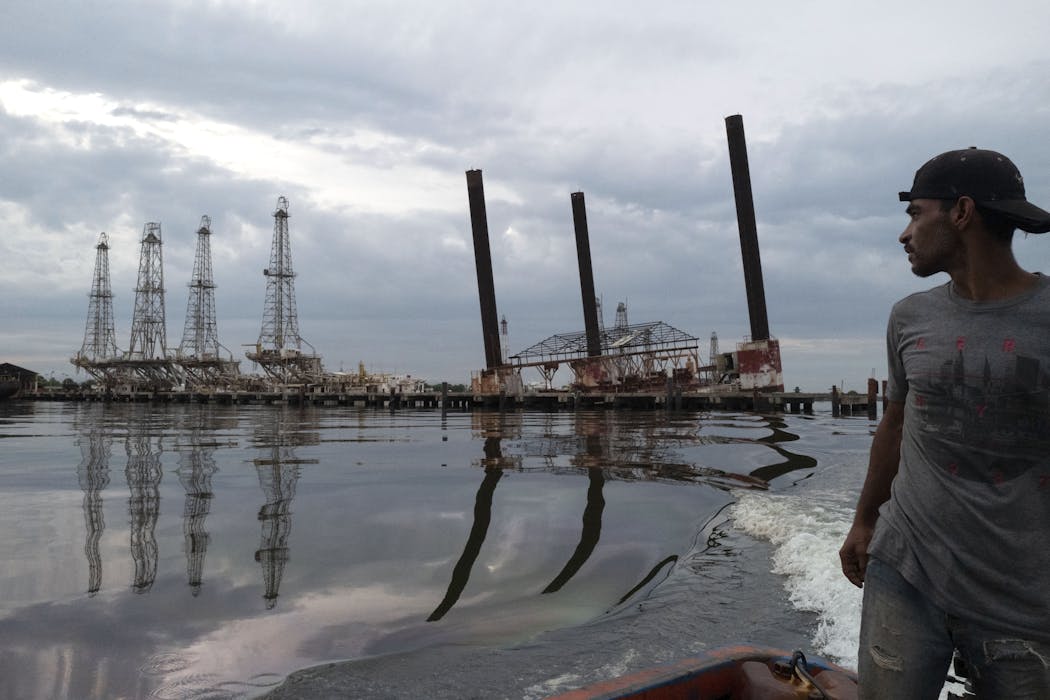
The Venezuelan state-run oil company is contending with aging infrastructure. Michael Robinson Chavez/The Washington Post via Getty Images

U.S. President Donald Trump has ignited a contentious debate over who has the right to control Venezuela’s vast oil reserves.

Speaking on Jan. 3, 2026, after the U.S. military seized Venezuelan President Nicolás Maduro, the U.S. president declared, “We built Venezuela’s oil industry, and now we’re going to take it back.”

By Jan. 6, Trump was saying that Venezuela would provide the U.S. with up to 50 million barrels of oil in the near future.

The next day, the U.S. seized two tankers bound from Venezuela for other markets – less than a month after it seized two others it said were transporting Venezuelan oil.

Long-term plans go much further. Trump envisions major U.S. oil companies, such as Chevron and ExxonMobil, to invest some US$100 billion into reviving Venezuela’s struggling industry, with the investing companies reimbursed through future production. So far, neither Venezuelan authorities nor U.S. oil companies have said whether they’re willing to do this.

As a scholar of global energy, I believe that Trump’s words and actions, including his consultations with oil executives before Maduro’s removal, signal a bold push to reassert American dominance in a country with vast oil reserves.

A motorcycle passes in front of an oil-themed mural.
A motorcycle passes in front of an oil-themed mural in Caracas, Venezuela, on May 9, 2022.
Javier Campos/NurPhoto via Getty Images

Trump’s rationale

Trump’s “Venezuela took our oil, we’re taking it back” rationale apparently references the South American nation’s initial nationalization of its oil industry in 1976, plus a wave of expropriations in 2007 under Venezuelan President Hugo Chávez.

U.S. oil companies played a big role in launching and sustaining Venezuela’s oil boom, starting in the 1910s. Companies such as Standard Oil, a predecessor of ExxonMobil, and Gulf Oil, which eventually became part of Chevron, invested heavily in exploration, drilling and infrastructure, transforming Venezuela into a major global supplier.

Contracts from that era often blurred lines between reserve ownership and production rights. Venezuela legally retained subsoil ownership but granted or sold broad concessions to foreign operators, such as Royal Dutch-Shell. That effectively gave control of reserves and production to the oil companies, but not forever.

This ambiguity likely has played a role in Trump alleging outright theft through nationalization, a claim that holds little grounding in the historical precedent of how Venezuela and other nations have managed ownership of their natural reserves.

Oil nationalization

When a country nationalizes its oil industry, control is transferred from private, often foreign-owned, companies to the government.

Nationalization can involve the outright expropriation of facilities and reserves – with or without compensation – or the renegotiation of oil production contracts. Alternatively, a government may get a bigger stake in the joint ventures it already has with foreign oil companies.

While privately owned oil companies primarily are accountable to their shareholders and focus mainly on maximizing profits, most government-run oil companies have other priorities too. These might include pumping revenue into safety net programs, domestic energy security, the development of other industries and military spending.

Sometimes those other goals take so much money out of the oil company’s orbit that they interfere with operational efficiency and reinvestment, slowing growth or even reducing production capacity. That’s what happened in Venezuela, where oil production has fallen sharply since 2002.

But other Latin American countries have also nationalized their oil industries with better results.

Mexico’s experience

In Mexico, President Lázaro Cárdenas’ 1938 expropriation of foreign oil assets – primarily from U.S. and British companies – was the region’s first such assertion of economic independence.

Amid labor disputes and perceived exploitation, 17 privately owned companies were nationalized, creating Petróleos Mexicanos as Mexico’s government-run oil monopoly. Mexicans celebrate the formation of this company, known as Pemex, every year on March 18 as a symbol of national sovereignty.

Despite initial boycotts and diplomatic strain, Mexico eventually compensated the foreign companies that lost their property. But it isolated its oil sector from international capital and technology for decades.

Due to the depletion of Pemex’s largest oilfields, chronic underinvestment, a failure to adopt new technologies and unwise policy choices, production, which peaked at 3.8 million barrels a day in 2004, began to decline. Mexico responded in 2013 and 2014 with reforms that opened the oil, gas and power generation industries to private capital.

By 2018, political backlash around a perceived loss of sovereignty and uneven benefits led to a policy reversal. Oil output continues to shrink; it now stands at 1.8 million barrels per day.

Mexico’s experience underscores how oil nationalization can foster self-reliance while hindering production.

A crowd in Mexico gathers for a speech below a large bust of a man.
Mexican President Andres Manuel Lopez Obrador, left, delivers a speech on the 86th anniversary of the nationalization of oil on March 18, 2024.
Rodrigo Oropeza/AFP via Getty Images

Brazil’s approach

Brazil also nationalized its oil industry in 1953, when President Getúlio Vargas established Petróleo Brasileiro S.A. as a state-owned company.

From the start, Petrobras had a monopoly over all Brazilian oil exploration and production. The government expanded the company’s scope when it nationalized all privately owned refineries by 1964.

Brazil’s oil nationalization was part of the country’s broader effort to develop its own industrial capacity and reduce its dependence on foreign oil.

Petrobras has changed significantly since its founding, especially after President Fernando Henrique Cardoso signed an oil deregulation law in 1997. It’s now a state-controlled company, in which investors may buy and sell shares. The government has forged many partnerships with private oil companies, drawing foreign investment.

This strategy succeeded. Production has quadrupled from 0.8 million barrels per day in 1997 to 3.4 million in 2024.

Shell, Total Energies, Equinor, ExxonMobil and other foreign oil companies have provided capital, technology and execution capacity, particularly with deep-water drilling.

A man walks past the headquarters of  a Petrobras building.
A man walks past the headquarters of Petrobras in Rio de Janeiro in 2022.
Fabio Teixeira/Anadolu Agency via Getty Images

Venezuela’s nationalization

Venezuela’s oil nationalization, by contrast, shifted from cooperation with foreign oil companies to confrontation with them.

President Carlos Andrés Pérez first nationalized Venezuela’s oil industry in 1976, creating Petróleos de Venezuela, S.A. Foreign companies received compensation of about 25% for losing their assets. Many transitioned into service providers or formed joint ventures with the new company, PDVSA.

Venezuela made its oil sector more open to foreign capital in the 1990s. It aimed at the time to boost output and develop the Orinoco Belt in eastern Venezuela, which has some of the world’s biggest oil reserves.

This policy contributed to Venezuelan production reaching a historical peak of more than 3 million barrels per day in 2002.

Chávez changes everything

Hugo Chávez, elected president of Venezuela in 1998, reversed course.

In 2003, after a strike briefly but severely slashed national output, Chávez consolidated control over the oil industry. He purged PDVSA of his critics, replacing managers who had expertise with his political allies, and fired over 18,000 employees.

Venezuela expropriated operating assets, converted contracts held by private companies into PDVSA-controlled joint ventures and made sharp and unpredictable increases in the taxes and royalties foreign oil companies had to pay.

Foreign oil companies suffered from chronic payment delays, along with restrictive foreign exchange rules and new laws that weakened contract enforcement and made it harder for companies to use arbitration to resolve disputes.

In 2007, Chávez forced foreign oil companies partnering with PDVSA to renegotiate their agreements, leading to the partial nationalization of their stakes in those ventures.

Several foreign oil companies, including ConocoPhillips and ExxonMobil, rejected the new terms of engagement and left Venezuela.

Their legal disputes with Venezuela over billions of dollars in joint venture assets and severed revenue-sharing agreements have never been resolved.

Man holds a detailed map with the PDVSA logo.
Venezuelan President Hugo Chavez shows on a map the location of new oil wells operating in the country in 2004.
HO/AFP via Getty Images

Chevron, however, stayed put.

The Houston-headquartered company, which has had a presence in Venezuela since 1924, now plays the largest role of any foreign oil company in the country. It produces 240,000 barrels per day, about 25% of Venezuela’s total output.

The government also reclassified vast oil deposits as “proven” at a time when global oil prices were very high, rendering their exploration and production more economically viable. That change tripled this self-reported and never-verified estimate of Venezuela’s proven oil reserves to approximately 300 billion barrels.

Conditions get worse under Maduro

Venezuelan oil output further declined while Maduro served as president, falling to 665,000 barrels per day in 2021. Since then, production has recovered somewhat, rebounding to about 1.1 million barrels per day by late 2025 – about one-third of its historic high.

This overall decline is due to mismanagement, corruption and more than a decade of U.S. sanctions. Infrastructure decay – leaking pipelines, outdated refineries held together by makeshift repairs – has exacerbated this crisis.

Many hurdles are in the way of the industry’s recovery, including ongoing and potentially future legal disputes, geopolitical risks and the need for massive investments. Returning Venezuela’s oil production to its peak of 3 million barrels per day could cost more than $180 billion.

People spend time on a beach with an oil tanker nearby.
The national oil industry is hard to ignore in Venezuela.
Jesus Vargas/picture alliance via Getty Images

Better example

As Brazil’s experience suggests, governmental control over oil production and sales is not inherently bad for a country’s economic welfare.

Norway is an even stronger example. That oil-rich Nordic country has evaded what some scholars call the “resource curse” by treating the oil that its nationally owned company, now called Equinor, has produced as a source of lasting wealth for the Norwegian people.

Revenue from the Norwegian government’s 67% stake in Equinor has accumulated in a sovereign wealth fund worth more than $2 trillion and helped Norway diversify its economy.

As the Venezuelan government regroups following Maduro’s removal, there’s much it can learn from other countries that have managed to maintain more stability alongside state-controlled oil production.

The Conversation

Did prior consulting work for PdVSA in 2002-2003

ref. Venezuela’s oil industry has flailed under government control – Mexico and Brazil have had more success with nationalizing – https://theconversation.com/venezuelas-oil-industry-has-flailed-under-government-control-mexico-and-brazil-have-had-more-success-with-nationalizing-272785

Financial case for college remains strong, but universities need to add creative thinking to their curriculum

Source: The Conversation – USA (2) – By Caroline Levander, Vice President Global Strategy & Carlson Professor in the Humanities, Rice University

Unemployment rates are lower among people who have a college degree, compared to those with a high school degree. Wong Yu Liang/iStock Images/Getty Images

A college degree was once seen as the golden ticket to landing a well-paying job. But many people are increasingly questioning the value of a four-year degree amid the rising cost of college.

Almost two-thirds of registered voters said in an October 2025 NBC News poll that a four-year college degree isn’t worth the cost – marking an increase from 40% of registered voters who said that college wasn’t worth the cost in June 2013.

Caroline Field Levander, the vice president for global strategy and an English professor at Rice University, argues in her December 2025 book “Invent Ed” that people have lost sight of two factors that made universities great to begin with: invention and creativity.

Amy Lieberman, education editor at The Conversation U.S., spoke with Levander to break down the benefits of going to college and university – and how schools can better demonstrate their enduring value.

How can we measure the value of a college degree?

College graduates earn substantially more than people who do not have a college degree.

The average high school graduate over a 40-year career earns US$1.6 million, according to 2021 findings by the Georgetown University Center on Education and Workforce. The average college graduate, over this same 40-year time frame, earns $2.8 million. That $1.2 million difference amounts to around $30,000 more salary per year.

People who earn a degree more advanced than a bachelor’s, on average, earn $4 million over 30 years, making the lifetime earning difference $2.4 million between these graduates and people with just a high school diploma.

College graduates are also better protected against job loss, and they weather job disruption cycles better than high school graduates.

The unemployment rate for people with a high school degree was 4.2% in 2024, according to the U.S. Bureau of Labor Statistics. By contrast, 2.5% of people with a bachelor’s degree and 2.2% of people with a master’s degree were unemployed in 2024.

Do any of these benefits extend beyond individual students?

In addition to the substantial financial benefits college graduates experience, colleges and universities are major employers in their communities – and not just professors and administrators. Higher education institutions employ every trade and kind of worker, from construction workers to police, to name a few.

Universities are crucial to developing and strengthening the U.S. economy in other ways. The discoveries that faculty and researchers make in laboratories lead to new products, businesses and ideas that drive the U.S. economy and support the country’s financial health.

Researchers at the University of Texas Southwestern did important work in helping to discover statins, while scientists at the University of Pennsylvania developed the mRNA vaccine. The list of inventions that started at universities goes on and on.

Some people are questioning the value of a degree. What role can universities play in reassuring them of their relevance?

Discovery and invention have traditionally been the focus of many graduate programs and faculty research, while undergraduate college educations tend to focus on ensuring that students are able to successfully enter the workforce after graduation.

Undergraduate students need to gain competency in a field in order to contribute to society and advance knowledge.

But I believe universities need to teach something else that is equally valuable: They also need to build creative capacity and an inventive mindset into undergraduate education, as a fundamental return on the investment in education.

Employers report that creativity is the top job skill needed today. The IBM Institute for Business Value, for example, concluded in 2023 that creativity is the must-have skill for employee success in the era of generative AI.

The Harvard Business Review reports that employers are developing short courses aimed to build creative capability in their workers.

A woman with dark hair looks down with various small images around her.
Creativity and innovation are both likely to become increasingly important for young people entering the workplace, especially as AI continues to grow.
Andriy Onufriyenko/iStock/Getty Images

What can faculty and students easily do to encourage creativity and innovation?

Professors can build what I call a “growth mindset” in the classroom by focusing on success over time, rather than the quick correct answer. Faculty members can ask themselves as they go into every class, “Am I encouraging a growth mindset or a fixed mindset in these students?” And they can use that answer to guide how they are teaching.

Students could also consider committing to trying new courses in areas where they haven’t already been successful. They could approach their college experience with the idea that grades aren’t the only marker of success. And I think they could benefit from developing thoughtful ways to describe their journey to future employers. Simple practices like keeping a creativity notebook where they record the newest ideas they have, among many others that I describe in my new book, will help.

And university leaders need to open the aperture of how we define our own success and our university’s success so that it includes creative capability building as part of the undergraduate curriculum.

The Conversation

Caroline Levander does not work for, consult, own shares in or receive funding from any company or organization that would benefit from this article, and has disclosed no relevant affiliations beyond their academic appointment.

ref. Financial case for college remains strong, but universities need to add creative thinking to their curriculum – https://theconversation.com/financial-case-for-college-remains-strong-but-universities-need-to-add-creative-thinking-to-their-curriculum-269463

Eating less ultraprocessed food supports healthier aging, new research shows

Source: The Conversation – USA (3) – By Moul Dey, Professor of Nutrition Science, South Dakota State University

Studies have linked ultraprocessed foods to poor health outcomes, but such foods make up about half the calories of a typical American diet. Kobus Louw/E+ via Getty Images

Older adults can dramatically reduce the amount of ultraprocessed foods they eat while keeping a familiar, balanced diet – and this shift leads to improvements across several key markers related to how the body regulates appetite and metabolism. That’s the main finding of a new study my colleagues and I published in the journal Clinical Nutrition.

Ultraprocessed foods are made using industrial techniques and ingredients that aren’t typically used in home cooking. They often contain additives such as emulsifiers, flavorings, colors and preservatives. Common examples include packaged snacks, ready-to-eat meals and some processed meats. Studies have linked diets high in ultraprocessed foods to poorer health outcomes.

My team and I enrolled Americans ages 65 and older in our study, many of whom were overweight or had metabolic risk factors such as insulin resistance or high cholesterol. Participants followed two diets low in ultraprocessed foods for eight weeks each. One included lean red meat (pork); the other was vegetarian with milk and eggs. For two weeks in between, participants returned to their usual diets.

A total of 43 people began the dietary intervention, and 36 completed the full study.

In both diets, ultraprocessed foods made up less than 15% of the total calories – a significant reduction from the typical American diet, where more than 50% of total calories comes from ultraprocessed foods. The diets were designed to be realistic for everyday eating, and participants were not instructed to restrict calories, lose weight or change their physical activity.

Older couple shopping in a supermarket
Maintaining metabolic health promotes healthy aging.
Giselleflissak/E+ via Getty Images

We prepared, portioned and provided all meals and snacks for the study. Both diets emphasized minimally processed ingredients and aligned with the 2020-2025 Dietary Guidelines for Americans, the U.S. government’s nutrient-based recommendations for healthy eating, while providing similar calories and amounts of key nutrients.

The 2025-2030 Dietary Guidelines for Americans, released on Jan. 7, 2026, explicitly recommend eating less ultraprocessed food, but the previous versions of the guidelines did not specifically address food processing. Our feeding study design allowed us, for the first time, to examine the health effects of reducing ultraprocessed foods while keeping nutrient levels consistent with recommended targets.

We compared how participants fared while eating their habitual diets with how they responded to the two diets that were low in ultraprocessed foods. During the periods when participants ate fewer ultraprocessed foods, they naturally consumed fewer calories and lost weight, including total and abdominal body fat. Beyond weight loss, they also showed meaningful improvements in insulin sensitivity, healthier cholesterol levels, fewer signs of inflammation and favorable changes in hormones that help regulate appetite and metabolism.

These improvements were similar whether participants followed the meat-based or the vegetarian diet.

Why it matters

Ultraprocessed foods make up more than half the calories consumed by most U.S. adults. Although these foods are convenient and widely available, studies that track people’s diets over time increasingly link them with obesity and age-related chronic diseases such as Type 2 diabetes and heart disease. With older adults making up a growing share of the global population, strategies that preserve metabolic health could support healthy aging.

Most previous feeding studies testing how ultraprocessed foods affect people’s health haven’t reflected real-world eating, especially among Americans. For example, some studies have compared diets made up almost entirely of ultraprocessed foods with diets that contain little to none at all.

Our study aimed to more closely approximate people’s experience while still closely tracking the foods they consumed. It is the first to show that for older adults a realistic reduction in ultraprocessed foods, outside the lab, has measurable health benefits beyond just losing weight. For older adults especially, maintaining metabolic health helps preserve mobility, independence and quality of life.

What’s still unknown

Our study was small, reflecting the complexity of studies in which researchers tightly control what participants eat. It was not designed to show whether the metabolic improvements we observed can prevent or delay diseases such as diabetes or heart disease over time. Larger, longer studies will be needed to answer that.

On the practical side, it’s still unclear whether people can cut back on ultraprocessed foods in their daily lives without structured support, and what strategies would make it easier to do so. It’s also not fully understood which aspects of processing – for example, additives, emulsifiers or extrusion – matter more for health.

Answering these questions could help manufacturers produce foods that are healthier but still convenient – and make it easier for people to choose healthier food options.

The Research Brief is a short take on interesting academic work.

The Conversation

Moul Dey receives funding from the National Pork Board, the U.S. Department of Agriculture, and the National Institute of Food and Agriculture (Hatch project).

ref. Eating less ultraprocessed food supports healthier aging, new research shows – https://theconversation.com/eating-less-ultraprocessed-food-supports-healthier-aging-new-research-shows-271986

What is Christian Reconstructionism − and why it matters in US politics

Source: The Conversation – USA (3) – By Art Jipson, Associate Professor of Sociology, University of Dayton

Elements of Christian reconstructionist thought appear in parts of the Christian homeschooling movement. Forest Trail Academy, CC BY-NC

Christian Reconstructionism is a theological and political movement within conservative Protestantism that argues society should be governed by biblical principles, including the application of biblical law to both personal and public life.

Taking shape in the late 1950s, Christian Reconstructionism developed into a more organized movement during the 1960s and 1970s.

It was born from the ideas of theologian R. J. Rushdoony, an influential Armenian-American Calvinist philosopher, theologian and author. In his 1973 book, “The Institutes of Biblical Law,” Rushdoony argued that Old Testament laws should still apply to modern society. He supported the death penalty not only for murder but also for offenses listed in the text such as adultery, blasphemy, homosexuality, witchcraft and idolatry.

As a scholar of political and religious extremism, I am familiar with this movement. Its following has been typically very small – never more than a few thousand committed adherents at its peak. But since the 1980s, its ideas have spread far beyond its limited numbers through books, churches and broader conservative Christian networks.

The movement helped knit together a network of theologians, activists and political thinkers who shared a belief that Christians are called to “take dominion” over society and exercise authority over civil society, law and culture.

These ideas continue to resonate across many areas of American religious and political life.

Origins of Christian Reconstructionism

Rushdoony’s ideas were born from a radical interpretation of Reformed Christianity – a branch of Protestant Christianity that follows the teachings of John Calvin and other reformers. It emphasizes God’s authority, the Bible as the ultimate guide and salvation through God’s grace rather than human effort.

Rushdoony’s ideas led him to found The Chalcedon Foundation in 1965, a think tank and publishing house promoting Christian Reconstructionism. It served as the movement’s main hub, producing books, position papers, articles and educational materials on applying biblical law to modern society.

It helped train Greg Bahnsen, an Orthodox Presbyterian theologian, and Gary North, a Christian reconstructionist writer and historian, both of whom went on to take key leadership roles in the movement.

At the heart of reconstructionism lies the conviction that politics, economics, education and culture are all arenas where divine authority should reign. Secular democracy, they argued, was inherently unstable, a system built on human opinion rather than divine truth.

These ideas were, and remain, deeply controversial. Many theologians, including conservatives within the Reformed tradition, rejected Rushdoony’s argument that ancient Israel’s civil laws should apply in modern states.

Christian dominionism and different networks

Nonetheless, reconstructionist ideas grew as people who more broadly believed in dominionism began to align with it. Dominionism is a broader ideology advocating Christian influence over culture and politics without requiring literal enforcement of biblical law.

Dominionism did not begin as a single, unified movement. Rather, it emerged in overlapping strands during the same period that Christian Reconstructionism was developing.

Between the 1960s and 1980s, Christian Reconstructionism helped turn dominionist beliefs into an explicit political project by grounding them in theology and outlining how biblical law should govern society. Religion historian Michael J. McVicar explains that Rushdoony’s work advocated applied biblical law as both a theological and political alternative to secular governance. This helped in influencing the trajectory of the Christian right.

At the same time, parallel streams – especially within charismatic and Pentecostal circles – advanced similar claims about Christian authority over society using different theological language.

The broad network of those who believe in Christian dominionism includes several approaches: Rushdoony’s reconstructionism, which provides the theological foundation, and charismatic kingdom theology.

Charismatic kingdom theology, which emerged in Pentecostal and charismatic circles, teaches that believers – empowered by the Holy Spirit – should shape politics, culture and society before Christ’s return.

Unlike reconstructionism, it emphasizes prophecy and spiritual authority rather than formal biblical law; it seeks influence over institutions such as government, education and culture.

What unites them is the idea that Christian faith should be the basis of the nation’s moral and political order.

Taken together, I argue that these strands have reinforced one another, creating a larger movement of thinkers and activists than any single approach could achieve alone.

From reconstructionism to the New Apostolic Reformation

Christian reconstructionist and dominionist ideas gained wider popularity through C. Peter Wagner, a leading charismatic theologian who helped shape the New Apostolic Reformation, or NAR, by adapting elements of Christian Reconstructionism. NAR is a charismatic movement that builds on dominionist ideas by emphasizing the use of spiritual gifts and apostolic leadership to shape society.

Wagner emphasized spiritual warfare, prophecy and modern apostles taking control of seven key areas – family, church, government, education, media, business and the arts – to reshape society under biblical authority. This is known as the “Seven Mountains Mandate.”

Both revisionist and dominionist movements share the belief that Christians should lead cultural institutions.

Wagner’s dominion theology, however, adapts Christian Reconstructionism to a charismatic context, transforming the goal of a Christian society into a spiritually driven movement aimed at influencing culture and governments worldwide.

Doug Wilson and homeschooling

Another key bridge between reconstructionism and contemporary dominionist thought is Doug Wilson, a pastor and author in Moscow, Idaho.

Though Wilson distances himself from some of reconstructionism’s harsher edges, he draws heavily from Rushdoony’s intellectual framework. Wilson’s influence can be seen in publications such as “Reforming Marriage,” where he argues for applying biblical principles to law, education and family life.

A grey-haired man in a blue suit speaks into a microphone while gesturing with his finger.
Doug Wilson, a pastor and author in Idaho, Moscow.
Liesbeth Powers/Moscow-Pullman Daily News, CC BY

He has promoted Christian schools, traditional family roles and living out a “Christian worldview” in everyday life, bringing reconstructionist ideas into new areas of society.

Through his writings, teaching and leadership within the Communion of Reformed Evangelical Churches – the CREC – network, Wilson encourages a vision of society shaped by Christian values, connecting reconstructionist thought to contemporary cultural engagement.

Wilson’s publishing house, Canon Press, and his classical school movement have brought these ideas into thousands of Christian homes and classrooms across the U.S. His local congregation – the Christ Church in Moscow, Idaho – numbers around 1,300.

The Christian homeschooling movement offers parents a curriculum steeped in reformed theology and resistance to secular education.

Enduring influence

Some critics warn that the fusion of dominionist and reconstructionist theology with political action can weaken pluralism and democratic norms by pressuring laws and policies to reflect a single religious worldview. They argue that even moderated forms of these visions challenge the separation of church and state. They risk undermining the rights of religious minorities, nonreligious citizens and others who do not share the movement’s beliefs.

Supporters frame their mission as the renewal of a moral society, one in which divine authority provides the foundation for human flourishing.

Today, Christian Reconstructionism operates through small but influential networks of churches, Christian homeschool associations and media outlets. Its reach extends far beyond its original movement.

Even among those unfamiliar with Rushdoony, the political and theological patterns he helped shape remain visible in modern evangelical activism and the ongoing debates over religion’s place in American public life.

The Conversation

Art Jipson does not work for, consult, own shares in or receive funding from any company or organization that would benefit from this article, and has disclosed no relevant affiliations beyond their academic appointment.

ref. What is Christian Reconstructionism − and why it matters in US politics – https://theconversation.com/what-is-christian-reconstructionism-and-why-it-matters-in-us-politics-266915

Groenlandia: colocarse de parte de los inuit

Source: The Conversation – (in Spanish) – By Ludovic Slimak, Archéologue, penseur et chercheur au CNRS, Université de Toulouse

74º escuadrón de cazas interceptores F-89 en la base aérea de Thule, en Groenlandia, en 1955. United States Air Force – Menard, David W. / Wikipedia

Es 16 de junio de 1951. El explorador francés Jean Malaurie avanza en trineos tirados por perros por la costa noroeste de Groenlandia. Había llegado solo, de forma impulsiva, con unos escasos ahorros del CNRS, oficialmente para trabajar en los paisajes periglaciales. En realidad, este encuentro con pueblos cuya relación con el mundo era de otra naturaleza forjaría un destino singular.

Ese día, tras largos meses de aislamiento entre los inuit, en el momento crítico del deshielo, Malaurie avanza con algunos cazadores. Está agotado, sucio, demacrado. Uno de los inuit le toca el hombro: “Takou, mira”. Una espesa nube amarilla se eleva hacia el cielo. A través del catalejo, Malaurie cree al principio que se trata de un espejismo: “una ciudad de hangares y tiendas de campaña, de chapas y aluminio, deslumbrante bajo el sol entre el humo y el polvo […] Hace tres meses, el valle estaba tranquilo y desierto. Había plantado mi tienda, un día claro del verano pasado, en una tundra virgen y llena de flores”.

El aliento de esta nueva ciudad, escribirá, “no nos abandonará jamás”. Las excavadoras tentaculares raspan la tierra, los camiones vomitan los escombros al mar, los aviones dan vueltas. Malaurie es proyectado de la edad de piedra a la era atómica. Acaba de descubrir la base secreta estadounidense de Thule, cuyo nombre en clave es Operación Blue Jay, uno de los proyectos de construcción militar más ambiciosos y rápidos de la historia de los Estados Unidos.

La base estadounidense de Thule a principios de la década de 1950.
U.S. Army, The Big Picture — Operation Blue Jay (1953), CC BY

Tras este nombre anodino se esconde una logística faraónica. Estados Unidos teme un ataque nuclear soviético por la ruta polar. En un solo verano, unos 120 barcos y 12 000 hombres se han movilizado en una bahía que hasta entonces solo había conocido el silencioso deslizamiento de los kayaks. Groenlandia contaba entonces con unos 23 000 habitantes. En 104 días, sobre un suelo permanentemente helado, surge una ciudad tecnológica capaz de albergar los gigantescos bombarderos B-36, portadores de ojivas nucleares.

A más de 1 200 kilómetros al norte del círculo polar ártico, en un secreto casi total, Estados Unidos acaba de levantar una de las bases militares más grandes jamás construidas fuera de su territorio continental. En la primavera de 1951 se había firmado un acuerdo de defensa con Dinamarca, pero la base de Thule ya estaba en marcha: la decisión estadounidense se había tomado en 1950.

La anexión del universo inuit

Malaurie comprende inmediatamente que la desmesura de la operación supone, de hecho, una anexión del universo inuit. Un mundo basado en la velocidad, la máquina y la acumulación acaba de penetrar de forma brutal y ciega en un espacio regido por la tradición, el ciclo, la caza y la espera.

El arrendajo azul (“Blue Jay” en inglés) es un pájaro ruidoso, agresivo y extremadamente territorial. La base de Thule se encuentra a medio camino entre Washington y Moscú por la ruta polar. En la era de los misiles hipersónicos intercontinentales, ayer soviéticos, hoy rusos, es esta misma geografía la que sigue sustentando el argumento de la “necesidad imperiosa” invocado por Donald Trump en su deseo de anexionar Groenlandia.

La base de Thule tiene una posición estratégica entre Estados Unidos y Rusia.
U.S. Army, The Big Picture — Operation Blue Jay (1953), CC BY

El resultado inmediato más trágico de la Operación Blue Jay no fue militar, sino humano. En 1953, para asegurar el perímetro de la base y sus radares, las autoridades decidieron trasladar a toda la población inughuit local a Qaanaaq, a unos cien kilómetros más al norte. El traslado fue rápido, forzado y sin consulta, rompiendo el vínculo orgánico entre este pueblo y sus territorios ancestrales de caza. Un “pueblo raíz” desarraigado para dar paso a una pista de aterrizaje.

Es en este momento de cambio radical donde Malaurie sitúa el colapso de las sociedades tradicionales inuit, en las que la caza no es una técnica de supervivencia, sino un principio organizador del mundo social. El universo inuit es una economía del sentido, hecha de relaciones, gestos y transmisiones, que dan a cada uno reconocimiento, papel y lugar. Esta coherencia íntima, que constituye la fuerza de estas sociedades, también las hace extremadamente vulnerables cuando un sistema externo destruye repentinamente sus fundamentos territoriales y simbólicos.

Consecuencias del colapso de las estructuras tradicionales

Hoy en día, la sociedad groenlandesa está ampliamente urbanizada. Más de un tercio de los 56 500 habitantes vive en Nuuk, la capital, y casi toda la población reside ahora en ciudades y localidades costeras sedentarizadas. El hábitat refleja esta transición brutal.

En las grandes ciudades, una parte importante de la población ocupa edificios colectivos de hormigón, muchos de ellos construidos en los años sesenta y setenta, a menudo vetustos y superpoblados. La economía se basa en gran medida en la pesca industrial orientada a la exportación. La caza y la pesca de subsistencia persisten. Las armas modernas, los GPS, las motos de nieve y las conexiones por satélite acompañan ahora a las antiguas costumbres. La caza sigue siendo un referente identitario, pero ya no estructura la economía ni la transmisión.

Las consecuencias humanas de esta ruptura son enormes. Groenlandia presenta hoy en día una de las tasas de suicidio más altas del mundo, especialmente entre los jóvenes inuit. Los indicadores sociales contemporáneos de Groenlandia –tasa de suicidio, alcoholismo, violencia intrafamiliar– están ampliamente documentados. Numerosos trabajos los relacionan con la rapidez de las transformaciones sociales, la sedentarización y la ruptura de las transmisiones tradicionales.

Maniobras militares estadounidenses en Thule.
U.S. Army, The Big Picture — Operation Blue Jay (1953), CC BY

Volvamos a Thule. El inmenso proyecto secreto iniciado a principios de la década de 1950 no tiene nada de provisional. Radares, pistas, torres de radio, hospital: Thule se convierte en una ciudad totalmente estratégica. Para Malaurie, el hombre del arpón está condenado. No por una falta moral, sino por una colisión de sistemas. Advierte contra una europeización que no sería más que una civilización de chapa esmaltada, materialmente cómoda, pero humanamente empobrecida.

El peligro no reside en la irrupción de la modernidad, sino en la llegada, sin transición, de una modernidad sin interioridad, que opera en tierras habitadas como si fueran vírgenes, repitiendo, cinco siglos después, la historia colonial de América.

Espacios y contaminaciones radiactivas

El 21 de enero de 1968, esta lógica alcanza un punto de no retorno. Un bombardero B-52G de la Fuerza Aérea de los Estados Unidos, comprometido en una misión permanente de alerta nuclear del dispositivo Chrome Dome, se estrella en el hielo marino a unos diez kilómetros de Thule. Transportaba cuatro bombas termonucleares. Los explosivos convencionales de las bombas nucleares, destinados a iniciar la reacción, detonaron con el impacto. No se produjo una explosión nuclear, pero la deflagración dispersó plutonio, uranio, americio y tritio por una amplia zona.

En los días siguientes, Washington y Copenhague lanzan el Proyecto Crested Ice, una vasta operación de recuperación y descontaminación antes del deshielo primaveral. Se movilizan unos 1 500 trabajadores daneses para raspar el hielo y recoger la nieve contaminada. Varias décadas más tarde muchos de ellos iniciarán procedimientos judiciales, alegando que trabajaron sin la información ni la protección adecuadas. Estos litigios se prolongarán hasta 2018-2019, dando lugar a indemnizaciones políticas limitadas, sin reconocimiento jurídico de responsabilidad. Nunca se llevará a cabo una investigación epidemiológica exhaustiva entre las poblaciones inuit locales.

Hoy rebautizada como Pituffik Space Base, la antigua base de Thule es uno de los principales nodos estratégicos del dispositivo militar estadounidense. Integrada en la Fuerza Espacial de los Estados Unidos, desempeña un papel central en la alerta antimisiles y la vigilancia espacial en el Ártico, bajo un régimen de máxima seguridad. No es un vestigio de la Guerra Fría, sino un eje activo de la geopolítica contemporánea.

En Los esquimales del Polo: los últimos reyes de Thule, Malaurie muestra que los pueblos indígenas nunca tienen cabida en las consideraciones estratégicas occidentales. Ante las grandes maniobras del mundo, la existencia de los inuit se vuelve tan periférica como la de las focas o las mariposas.

Las declaraciones de Donald Trump no dan lugar a un mundo nuevo. Su objetivo es generalizar en Groenlandia un sistema que lleva setenta y cinco años en vigor. Pero la postura de un hombre no nos exime de nuestras responsabilidades colectivas. Escuchar hoy que Groenlandia “pertenece” a Dinamarca y depende de la OTAN, sin siquiera mencionar a los inuit, equivale a repetir un viejo gesto colonial: concebir los territorios borrando a quienes los habitan.

Los inuit siguen siendo invisibles e inaudibles. Nuestras sociedades siguen representándose a sí mismas como adultos frente a poblaciones indígenas infantilizadas. Sus conocimientos, sus valores y sus costumbres quedan relegados a variables secundarias. La diferencia no entra en las categorías a partir de las cuales nuestras sociedades saben actuar.

Siguiendo a Jean Malaurie, mis investigaciones abordan lo humano desde sus márgenes. Ya se trate de sociedades de cazadores-recolectores o de lo que queda de los neandertales, cuando los despojamos de nuestras proyecciones, el Otro sigue siendo el ángulo muerto de nuestra mirada. No sabemos ver cómo se derrumban mundos enteros cuando la diferencia deja de ser pensable.

Malaurie concluía su primer capítulo sobre Thulé con estas palabras:

“No se habrá previsto nada para imaginar el futuro con altura”.

Por encima de todo, hay que temer no la desaparición brutal de un pueblo, sino su relegación silenciosa y radical a un mundo que habla de él sin mirarlo ni escucharlo nunca.

The Conversation

Ludovic Slimak no recibe salario, ni ejerce labores de consultoría, ni posee acciones, ni recibe financiación de ninguna compañía u organización que pueda obtener beneficio de este artículo, y ha declarado carecer de vínculos relevantes más allá del cargo académico citado.

ref. Groenlandia: colocarse de parte de los inuit – https://theconversation.com/groenlandia-colocarse-de-parte-de-los-inuit-273258

Les critères d’évaluation académique ignorent les chercheurs africains qui ont un impact local, selon une étude

Source: The Conversation – in French – By Eutychus Ngotho Gichuru, PhD Candidate in Educational Management, Makerere University

Aujourd’hui, partout dans le monde, les universitaires sont enfermés dans un système d’évaluation de leurs recherches. Des indicateurs mesurent combien de fois leurs travaux sont cités par d’autres universitaires et le prestige des revues qui les publient. Ces indicateurs décident de tout y compris la carrière et le financement de leurs recherches.

Que signifie ce système international pour les universitaires africains comme nous ? Nos travaux ont montré que les indicateurs, censés mesurer l’excellence, désavantagent les universitaires qui cherchent à générer des connaissances utiles à leurs communautés.

Plus les indicateurs traditionnels (comme le nombre de citations) sont élevés pour un chercheur africain, plus son impact local et sa pertinence communautaire sont jugés faibles. En somme, les indicateurs mondialement acceptés pénalisent ce qui compte le plus, tout en bloquant la progression de carrière des chercheurs africains.

Nos conclusions montrent qu’il est nécessaire de trouver une alternative philosophique et pratique au système existant. Les travaux de Ngotho dans le cadre de son doctorat en gestion de l’éducation en proposent une : un cadre d’évaluation fondé sur le principe éthique africain de l’ubuntu: « Je suis parce que nous sommes ». Ces travaux suggèrent un outil d’évaluation pratique et quantifiable permettant de créer un score ubuntu pour les productions académiques.

Évaluer un universitaire

L’étude doctorale s’est d’abord penchée sur les mécanismes d’évaluation utilisés dans toutes les universités membres de l’Alliance des universités de recherche africaines.

Elle a révélé que les indicateurs utilisés comme base pour l’évaluation académique à travers le monde, bien qu’ils semblent objectifs dans leur conception, ne le sont pas. Ils favorisent des préjugés très ancrés à l’encontre des travaux universitaires africains.

  1. L’indice h mesure à la fois la productivité en matière de publication et l’impact des citations. Il désavantage intrinsèquement les travaux universitaires collaboratifs, en particulier les travaux communautaires, qui sont essentiels à la transformation sociale. Nos recherches indiquent que 73 % des professeurs engagés dans la recherche participative ont des indices h qui ne reflètent pas leur véritable impact. Cet indice présente d’autres défauts : il peut être artificiellement gonflé par des autocitations, et sa valeur varie en fonction de la base de données utilisée pour le calculer.

  2. Les facteurs d’impact des revues favorisent les revues du Nord. L’Europe occidentale et l’Amérique du Nord dominent l’édition universitaire, contribuant à 74 % des revues indexées en santé publique. L’Afrique ne représente que 2 %. Cela oblige les chercheurs à délaisser d’excellentes revues régionales, pourtant lues par leurs pairs et les décideurs politiques. Ce qui revient à étouffer les débats importants au niveau local.

  3. Le nombre de citations renforce les tendances négatives à l’égard de la recherche africaine dans des domaines tels que la santé publique et le développement agricole. La pression constante pour un nombre élevé de publications privilégie la quantité au détriment de la qualité. Selon cette étude doctorale, 61 % des enseignants africains déclarent avoir subi une pression excessive pour publier, ce qui ne leur laisse pas suffisamment de temps pour mener les analyses contextuelles approfondies dont leurs communautés ont besoin.

  4. Même les altmétriques, conçues pour suivre l’impact sociétal au sens large, sont calibrées pour les écosystèmes des réseaux sociaux des pays du Nord. Elles ignorent généralement la manière dont les connaissances sont transmises dans le contexte africain, comme les programmes de radio communautaires, les conférences et les ateliers locaux. Cela signifie que les comités de promotion, qui se concentrent sur les mentions dans les réseaux sociaux et les citations dans les blogs, négligent la manière dont les universitaires africains s’engagent réellement auprès de leurs communautés.

De nombreux universitaires africains souffrent de préjugés géographiques avant même que leurs travaux ne soient lus. Comme le soutient l’étude, des résumés ont même été rejetés parce que les évaluateurs avaient une mauvaise opinion de l’institution ou du pays d’origine des auteurs.

Ubuntu : une alternative africaine

La thèse de doctorat propose une alternative philosophique et pratique à ce système dysfonctionnel. Il s’agit d’un cadre d’évaluation fondé sur le principe éthique africain de l’ubuntu, « je suis parce que nous sommes », qui signifie que l’identité de chaque individu est fondamentalement liée au bien-être collectif.

Un « score ubuntu » conserve les critères classiques, mais les enrichit, voire les dépasse par “quotient d’impact collaboratif”. Il mesure la co-création de connaissances avec les communautés, le travail d’équipe interdisciplinaire, les partenariats durables et les efforts de coopération similaires dans la formation des connaissances indigènes. Les mesures ubuntu inversent la logique : on passe du bien-être individuel au bien-être collectif, en accordant de la valeur à :

  • l’analyse des défis du développement africain

  • les travaux universitaires publiés en langues africaines

  • les recherches diffusées dans des canaux pertinents au niveau régional, comme la presse africaine.

De la théorie à la pratique : les premiers succès

Des essais préliminaires menés à l’université d’Addis-Abeba en Éthiopie et à l’université de Nairobi au Kenya ont révélé que 68 % des professeurs défavorisés par le facteur d’impact traditionnel des revues ont obtenu une note élevée avec l’évaluation basée sur l’ubuntu, qui mesurait leur contribution à la société.

Des panels pilotes de parties prenantes ont été organisés à l’université de Pretoria (Afrique du Sud) et ont confirmé cette conclusion. Des chercheurs à fort impact, ignorés par les comités de promotion attachés aux seules citations, ont été reconnus par les membres de leur communauté. Leur excellence, ancrée dans le service rendu à la société, était occultée par les mesures conventionnelles.

Cela rejoint une prise de conscience de plus en plus partagée : les universités africaines doivent passer d’institutions centrées sur la recherche à de véritables moteurs d’innovations.

La question va bien au-delà de la simple création de nouveaux indicateurs. Elle implique une transformation complète de la culture universitaire.

Les systèmes de classement devraient émaner des universités africaines elles-mêmes. Encourager les citations d’articles pertinents produits par leur propre région pourrait renforcer la présence et l’influence des publications africaines.

Au-delà des mesures alternatives, l’évaluation de type ubuntu préconise une recomposition totale des valeurs universitaires. Elle ne pose pas la question « Quelle est la visibilité de ce chercheur dans le monde ? », mais « Comment les travaux de ce chercheur ont-ils renforcé sa communauté ? ». Elle ne mesure pas les citations dans des revues lointaines, mais les solutions dans des contextes locaux.

The Conversation

The authors do not work for, consult, own shares in or receive funding from any company or organisation that would benefit from this article, and have disclosed no relevant affiliations beyond their academic appointment.

ref. Les critères d’évaluation académique ignorent les chercheurs africains qui ont un impact local, selon une étude – https://theconversation.com/les-criteres-devaluation-academique-ignorent-les-chercheurs-africains-qui-ont-un-impact-local-selon-une-etude-273029

Faut-il, comme EDF, interdire toute consommation d’alcool dans le monde professionnel ?

Source: The Conversation – France (in French) – By Caroline Diard, Professeur associé – Département Droit des Affaires et Ressources Humaines, TBS Education

EDF a indiqué interdire la consommation d’alcool sur le lieu de travail et dans les repas d’affaires. Cette décision est-elle compatible avec la liberté individuelle ? Peut-elle ou doit-elle s’appliquer dans d’autres entreprises, notamment au nom de la lutte contre les addictions et de la garantie de la sécurité du personnel ?


Dès ce mois de janvier, les salariés d’EDF n’ont plus le droit de consommer d’alcool au travail ni lors d’événements organisés par leur employeur à l’extérieur.

Cette mesure, encadrée par l’article R4228-20 du Code du travail, questionne l’équilibre entre prévention des risques (addictions, comportements inappropriés, accidents du travail), libertés individuelles et préservation des rites qui constituent la culture d’entreprise.

Cette décision très médiatisée intervient dans un contexte où la prévention des risques professionnels et des accidents du travail est au centre du débat public.

Cette décision s’inscrit dans un cadre réglementaire existant et une jurisprudence constante. Cette décision n’a donc rien de bien surprenant.

Protéger la santé et la sécurité

L’organisation d’événements festifs ponctue la vie de l’entreprise. Ces moments supposés conviviaux à l’initiative de l’employeur, du comité social et économique (CSE) ou de certains salariés, contribuent à produire une meilleure cohésion des équipes et au maintien de la culture d’entreprise.

Parfois, l’alcool s’invite dans ces temps collectifs, à l’intersection de la vie professionnelle et personnelle… Il ne suffit pas que la réunion ait lieu en dehors de l’entreprise pour exonérer l’employeur de toute responsabilité. S’il en est à l’initiative, celle-ci reste sous sa responsabilité. La consommation d’alcool sur le lieu de travail comporte cependant de nombreux risques et, à ce titre, est très fortement encadrée en France.


À lire aussi :
Boissons au cannabis : comment une faille juridique a créé une industrie de plusieurs milliards de dollars que le Congrès veut maintenant interdire


Ainsi, l’article R4228-20 du Code du travail précise qu’« aucune boisson alcoolisée autre que le vin, la bière, le cidre et le poiré n’est autorisée sur le lieu de travail ». Si la consommation de boissons alcoolisées est susceptible de porter atteinte à la sécurité et à la santé physique et mentale des travailleurs, l’employeur, en application de l’article L. 4121-1 du Code du travail doit en restreindre l’usage. Cet article dispose que « l’employeur prend les mesures nécessaires pour assurer la sécurité et protéger la santé physique et mentale des travailleurs ».

L’employeur est soumis non pas à une obligation de résultat mais à une obligation de moyens renforcés (Cour de cassation, chambre sociale, 25 novembre 2015, no 14-24.444, Air France).

Règlement intérieur ou note de service ?

L’employeur peut aussi le prévoir dans le règlement intérieur – obligatoire dans les entreprises d’au moins 50 salariés. En effet, ce document fixe les règles de la vie en entreprise et notamment celles relatives à la discipline, la nature et l’échelle des sanctions. À défaut, l’employeur peut l’indiquer par l’intermédiaire d’une note de service reprenant les mesures prises pour protéger la santé et la sécurité des travailleurs et de prévenir tout risque d’accident.

Ces mesures, qui peuvent notamment prendre la forme d’une limitation voire d’une interdiction de consommation d’alcool, doivent être proportionnées au but recherché. Ainsi, l’employeur, en vertu de son pouvoir de direction, peut donc purement et simplement interdire la consommation d’alcool au sein de l’entreprise en invoquant cette obligation de sécurité. Cela lui permet de répondre à l’obligation de moyens renforcés.

Une sanction pouvant aller jusqu’au licenciement peut alors être prononcée à l’encontre des collaborateurs en cas de non-respect, si elle prévue dans le règlement intérieur.

À titre d’exemple, une clause d’un règlement intérieur précise :

« L’introduction, la distribution et/ou la consommation de toute boisson alcoolisée sur le lieu de travail (bureaux, chantiers…) sont interdites, à l’exception des dispositions prévues par l’article R. 4228-20 du Code du travail et uniquement lors des repas en dehors du temps de travail. Cette consommation devra l’être dans des quantités raisonnables de manière à ne pas altérer les capacités à occuper son emploi et/ou à être en mesure de conduire un véhicule, notamment pour regagner son domicile. L’introduction, la distribution et la consommation de produits stupéfiants dans les locaux de travail sont en outre strictement interdits. »

Le danger des pratiques addictives

Par ailleurs, l’employeur – qui est tenu d’identifier et de répertorier les risques dans le document unique d’évaluation des risques professionnels (DUERP) – doit tenir compte des pratiques potentiellement addictives (consommation d’alcool mais aussi de drogues). En effet, les pratiques addictives concernent de nombreux salariés, quels que soient le secteur d’activité ou la catégorie socioprofessionnelle.

Ces consommations, occasionnelles ou répétées, comportent des risques pour la santé et la sécurité des salariés. Il est donc nécessaire d’inscrire le risque lié aux pratiques addictives dans ce document unique (article R. 4121-1 du Code du travail).

Ce document est tenu à la disposition des salariés, des anciens salariés, des membres du comité social et économique, du médecin du travail, de l’agent de contrôle de l’inspection du travail et des agents des Carsat (article R4121-4 du Code du travail).

Interdire en préservant les libertés individuelles

En cas de consommation abusive d’alcool, le salarié pourrait avoir un accident dans l’entreprise ou en rentrant chez lui après un repas d’entreprise par exemple. L’employeur engagerait alors sa responsabilité dans le cadre de l’obligation de sécurité et pourrait être condamné. On pense par exemple à un accident automobile pour un commercial. De son côté, le salarié pourrait également être reconnu responsable.

Ainsi, le 10 avril 2024 (RG no 21/06884), la Cour d’appel de Rennes a statué sur la réalité d’un accident du travail dont l’origine était la consommation d’alcool par un salarié au temps et au lieu du travail. Un chauffeur alcoolisé chargeait un engin de chantier qui a basculé sur lui ; accident des suites duquel il est malheureusement décédé. À noter que les restrictions relatives à l’alcool sont par ailleurs souvent accompagnées de restrictions relatives aux stupéfiants.

Comment contrôler ?

Ainsi, le cadre légal dont relèvent les conduites addictives en entreprise est complexe, car il doit concilier l’obligation de sécurité avec le respect des droits fondamentaux de l’employé (article L.1121-1 du Code du travail).

L’employeur peut ainsi recourir au contrôle de l’alcoolémie sous réserve du respect de certaines dispositions. Le contrôle par éthylotest ne doit pas être systématique. Il doit être justifié par des raisons de sécurité et ne doit concerner que les salariés dont les fonctions sont de nature à exposer les personnes ou les biens à un danger. Ainsi, la liste des postes pour lesquels un dépistage est possible doit être prévue dans le réglement intérieur.

Cesi École d’ingénieurs, 2023.

La restriction doit cependant être proportionnée au but recherché et doit permettre de protéger les intérêts légitimes de l’entreprise. Par exemple, dans un entrepôt où travaillent des caristes (conducteurs de petits véhicules de manutention), il est légitime d’interdire complètement l’alcool, dont la consommation pourrait altérer les réflexes des salariés et produire des accidents. L’usage de substances psychoactives sur le lieu de travail, ou avant la prise de poste, augmente le risque d’accidents du travail, d’erreurs humaines et de comportements inadaptés, notamment dans les secteurs nécessitant de la vigilance ou la manipulation de machines.

Dégradation du climat social

Les conduites addictives peuvent également dégrader le climat social en entreprise. Elles peuvent générer des tensions entre collègues, créer des situations de conflit ou d’incompréhension, et altérer la cohésion des équipes, impacter négativement la productivité et la qualité du travail, augmenter l’absentéisme et les retards, causer des soucis de santé et de gestion des aptitudes.

Au-delà de la dimension juridique liée aux risques humains et de contentieux, la consommation d’alcool ou de drogues est également un enjeu managérial. En effet, la stigmatisation des personnes concernées et le tabou entourant la consommation de substances addictives peuvent freiner la détection et la prise en charge des situations à risques, conduisant à une marginalisation des salariés concernés.
Les managers et les services RH doivent apprendre à détecter les signaux faibles. Le recours à la médecine du travail est également indispensable. Information et formations sont importantes dans une stratégie de prévention.

The Conversation

Caroline Diard ne travaille pas, ne conseille pas, ne possède pas de parts, ne reçoit pas de fonds d’une organisation qui pourrait tirer profit de cet article, et n’a déclaré aucune autre affiliation que son organisme de recherche.

ref. Faut-il, comme EDF, interdire toute consommation d’alcool dans le monde professionnel ? – https://theconversation.com/faut-il-comme-edf-interdire-toute-consommation-dalcool-dans-le-monde-professionnel-272283

De la beauté au bien-être : le « personal branding » à l’ère des marques de célébrités

Source: The Conversation – France (in French) – By Frédéric Aubrun, Enseignant-chercheur en Marketing digital & Communication au BBA INSEEC – École de Commerce Européenne, INSEEC Grande École

La star Selena Gomez a lancé son entreprise de cosmétique Rare Beauty contre la « beauté toxique ». bella1105/Shutterstock

Rihanna, Selena Gomez ou Kylie Jenner, ces dernières années les marques dans le secteur des cosmétiques créées ou co-fondées par des stars se sont multipliées. Mais pourquoi cet engouement particulier pour la beauté ?


Fenty Beauty, LolaVie, Blake Brown, Rare Beauty, Kylie Cosmetics, Rhode Skin ou Goop Beauty sont des marques de beauté et de soins capillaires qui ont toutes un point commun : celui d’avoir été lancées par une célébrité, comme Rihanna, Jennifer Aniston, Blake Lively, Selena Gomez, Kylie Jenner, Hailey Rhode Bieber et Gwyneth Paltrow.

Le personal branding, cette stratégie qui transforme le « moi » en image de marque unique que l’on peut valoriser sur la scène médiatique notamment, est d’autant plus pertinente dans le secteur des cosmétiques.

Alors pourquoi un tel engouement dans ce secteur et de ses consommateurs ?

« Sephora Loves Rare BeautySelena Gomez | Beauty Without Flter ».

Effet lipstick

Le marché des cosmétiques aurait générer en 2025 un chiffre d’affaires de 677 milliards de dollars, soit 574 milliards d’euros.

L’intérêt des célébrités pour la beauté n’est pas seulement une question d’image, il est également dicté par une logique économique. Les stars ont rapidement compris qu’en lançant leur propre marque, leur notoriété permettrait de réduire la lenteur de ce processus et d’amorcer une monétisation rapide de leur entreprise. La célébrité agit comme un puissant catalyseur marketing.

Qu’est-ce que le « personal branding » ?

Historiquement, le secteur des cosmétiques est résilient aux crises, ce que les chercheurs nomment « effet lipstick ». Ce dernier explique comment les consommateurs, en période de crises économiques, réduisent les dépenses importantes, telles que l’achat de voiture ou les voyages, pour s’offrir des produits de luxe abordables, comme un rouge à lèvres.

Cette stabilité du marché de la beauté garantit un revenu sûr pour les marques de stars. Il offre des marges brutes élevées et peut encore croître de 100 milliards selon le patron de L’Oréal, Nicolas Hieronimus.

Le coût de production étant faible par rapport au prix de vente, et l’absence des contraintes logistiques, comme les collections de saisons, permettent un faible coût d’entrée et une gestion des stocks simplifiée.

Transférer les attributs positifs de la star

La célébrité qui endosse une marque est définie comme un individu jouissant d’une forte reconnaissance publique qui appose son image sur une marque par le biais d’un contrat publicitaire. Cette approche vise à transférer les attributs positifs de la star vers la marque, facilitant l’identification du message par le consommateur.

Depuis une dizaine d’années, ce qu’on appelle le self-branding for entrepreneurial prend une nouvelle ampleur avec l’avènement des réseaux sociaux. La célébrité devient cheffe d’entreprise et créée sa propre marque. La star n’est plus une simple ambassadrice : elle devient actionnaire, co-fondatrice ou propriétaire d’une marque.

C’est le cas de la comédienne Jennifer Aniston avec sa marque de soins capillaires LolaVie. L’actrice ne se contente pas de poser pour sa marque mais partage elle-même des vidéos de shooting sur les réseaux sociaux. Elle se met en scène en utilisant les produits et va jusqu’à poster des vidéos d’elle coiffant sa meilleure amie, l’actrice Courtney Cox, ou encore son petit ami Jim Curtis.

Jennifer Aniston fait preuve d’authenticité en exposant son intimité et en prenant à contre-pied l’image distante et éloignée de la réalité que peut avoir une célébrité. Elle renforce cette idée en utilisant l’humour dans son spot publicitaire « No Gimmicks » (« Pas d’artifices »).

« Jennifer Aniston x LolaVie | No Gimmicks… It Just Works ».

Contre la beauté toxique

Le succès des marques de beauté fondées par des célébrités s’explique par la disruption stratégique mise en place. Des marques, comme Fenty Beauty, ont été pionnières en prouvant que l’inclusion ethnique avec plus de 40 teintes de fonds de teint proposées n’était pas un simple geste éthique mais une stratégie économique gagnante. « Fenty Beauty est une marque à 360 degrés qui s’adresse autant à une Coréenne qu’à une Irlandaise ou à une Afro-Américaine », décrypte Lionel Durand, patron de l’entreprise Black Up.

Dans la foulée, la marque Rare Beauty a élargi cette notion à l’inclusion émotionnelle, utilisant l’authenticité du discours de sa fondatrice concernant la santé mentale pour rejeter les normes de beauté toxiques. Selena Gomez n’ayant jamais caché sa bipolarité a choisi pour sa marque le slogan « Love Your Rare » (« Aimez votre rareté ») et a créé sa fondation Rare Impact Fund consacrée à cette thématique. Elle capitalise sur une communauté fidèle et engagée, là où d’autres marques valorisent essentiellement la perfection en termes de beauté.

Ces stars utilisent leurs réseaux sociaux comme laboratoires narratifs où elles construisent la crédibilité de leur marque à travers des récits personnels simples, de travail et de passion. Les produits de beauté ont un avantage : ils sont désirables et mobilisent l’attention surtout s’ils sont mis en avant par une célébrité.

Les vidéos Instagram ou TikTok à l’ère du marketing de contenu permettent aux célébrités d’échanger et d’atteindre rapidement leur public. Leurs produits deviennent une extension d’elles-mêmes, des objets identitaires au même titre que la mode ou la musique. La marque bio Goop, de Gwyneth Paltrow, est une ode à son lifestyle. Sur la plateforme TikTok, elle vend ses créations comme des produits skincare, de maquillage ou une ligne de vêtements. L’actrice a développé un empire autour de la mouvance New Age.

Marqueur social

Les marques des célébrités deviennent un marqueur social, une manière de prolonger l’univers de la star dans le quotidien des consommateurs. En 2025, on assiste à la continuité de cette tendance. L’année aura été marquée par des extensions de gammes pour Rhode et Rare Beauty, mais aussi par de nouveaux lancements de marques comme les parfums de Bella Hadid, Orebella, ou la gamme de soins Dua, de Dua Lipa.

Le succès de la marque continue de reposer sur la capacité de la célébrité-entrepreneure à projeter une authenticité perçue et une implication réelle. En face, se trouve un consommateur certes sensible aux réseaux sociaux, mais qui peut s’avérer résistant à certaines manœuvres marketing.

Si la célébrité paraît opportuniste ou déconnectée du produit, la légitimité s’effondre. Tel fut le cas pour Meghan Markle au moment du lancement de sa marque lifestyle, As Ever, de produits alimentaires, bougies et vins. Les critiques ont fusé, l’accusant de peu de professionnalisme, de capitaliser uniquement sur sa notoriété et sur son statut de duchesse de Sussex.

Des marques à durée limitée ?

Les produits de beauté ne sont qu’un exemple de la diversification entrepreneuriale des célébrités. Nombreuses sont les stars qui se tournent vers des marchés où le capital image est essentiel et où le taux de renouvellement des produits est élevé.

C’est le cas du secteur de l’alcool qui offre une marge élevée et une connexion directe avec les fans. L’actrice Cameron Diaz a co-fondé une marque de vin bio et vegan qu’elle a nommé Avaline. Le rappeur Jay Z possède sa maison de champagne, Armand de Brignac.

Le phénomène de la célébrité-entrepreneure révèle une nouvelle dynamique, celle de la marque personnelle. Dès lors, la question qui se pose n’est plus la performance initiale mais la vision stratégique à long terme. Cette hyper-accélération du succès, rendue possible essentiellement par la notoriété, leur permet-elle de devenir des marques à part entière, et non de simples prolongements de la célébrité ?

The Conversation

Les auteurs ne travaillent pas, ne conseillent pas, ne possèdent pas de parts, ne reçoivent pas de fonds d’une organisation qui pourrait tirer profit de cet article, et n’ont déclaré aucune autre affiliation que leur organisme de recherche.

ref. De la beauté au bien-être : le « personal branding » à l’ère des marques de célébrités – https://theconversation.com/de-la-beaute-au-bien-etre-le-personal-branding-a-lere-des-marques-de-celebrites-270215