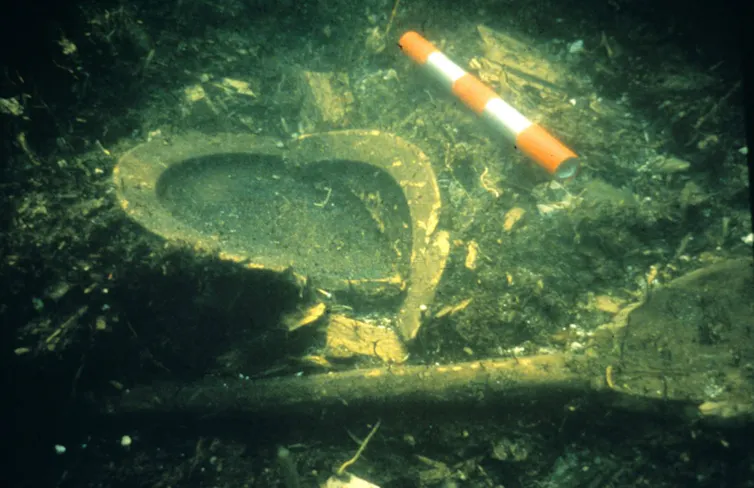
A deep-ocean climate plan wins rare EPA approval, but is sinking plants in the sea the answer?

Source: The Conversation – USA (2) – By Wil Burns, Professor of Research in Environmental Policy, American University School of International Service

Innovators who are working on ways to pull carbon dioxide out of the atmosphere to fight climate change are having a tough time lately.

Their biggest supporter, Microsoft, recently began telling partners that it is pausing its carbon removal purchases. To get a sense of how big of a deal this is, look at the numbers: The tech company alone has purchased approximately 80% of the contracted cumulative volume of carbon removals to date. Its retrenchment is viewed as potentially a major blow to the sector.

However, there may be a bright spot for this industry, and it comes from an unexpected source: The U.S. Environmental Protection Agency quietly decided in March to grant a research permit under the Marine Protection, Research, and Sanctuaries Act to a Houston-based carbon removal startup.

The company, Carboniferous, aims to assess the potential to durably lock up greenhouse gases by harvesting plants that took in carbon dioxide on land and sinking them to the bottom of the ocean.

This approach is often called “ocean biomass sinking,” or marine anoxic carbon storage.

Ocean biomass sinking is one of several carbon removal approaches involving the ocean known as “marine carbon dioxide removal.” Other marine approaches include adding alkaline materials that react with seawater to increase the uptake of carbon dioxide, seeding oceans with iron to stimulate the growth of phytoplankton that can take up carbon dioxide, and farming seaweed to also take up carbon dioxide and sink it.

A crane on a ship hoists large bales.
In the Mediterranean Sea, the Israeli company Rewind has a pilot project that buries biomass bundles beneath seafloor sediments, where the lack of oxygen slows decomposition.
Used with permissions from Rewind

The Intergovernmental Panel on Climate Change, which compiles research on climate change from scientists around the world, calls carbon dioxide removal “unavoidable” if the world hopes to keep rising temperatures in check and achieving the targets of the Paris climate agreement.

But is sinking biomass in the ocean the answer?

I am the co-founding director of the Institute for Responsible Carbon Removal at American University, and I have reviewed several of these projects. I see both pros and cons to ocean carbon removal techniques.

How ocean biomass sinking works

Carboniferous plans to carry out its field experiment in the Orca Basin off the coast of Louisiana. The basin is anoxic, meaning devoid of oxygen, and has a higher concentration of salt that most seawater. The EPA permit lets the company sink 20 burlap sacks containing sugarcane residue and monitoring equipment to the bottom of the sea there to study what happens.

Globally, land vegetation, including trees and crops, sequesters approximately 60 billion tons of carbon per year. However, a large portion of this carbon is quickly released back into the atmosphere – often within months to years – when the vegetation dies and decomposes, or is burned.

Ocean biomass sinking aims to lock up that carbon on the ocean floor in low-oxygen areas, where decomposition is much slower. Anaerobic processes, such as fermentation, may leave the biomass largely intact for centuries or millennia. Colder water environments can also slow the rate of biomass decay.

An illustration of carbon storage.
Plant residue can be sunk into oxic and anoxic regions of the seafloor, with different results. Both become dissolved inorganic carbon (DIC), methane (CH4) and dissolved organic matter (DOM). This carbon eventually reaches the ocean surface and atmosphere, but the process can take hundreds of years from anoxic environments, which lack oxygen (O2).
M. R. Raven, et al., 2024, CC BY

The concerns

Two questions that arise are whether this approach would be effective at the scale needed and what risks it might pose to ocean ecosystems.

Recent studies have estimated that ocean biomass storage projects could durably store somewhere between 0.1 and 1 gigatons of carbon dioxide annually. That sounds like a lot, but humanity may need to remove 7 to 9 gigatons of carbon dioxide each year from the atmosphere by the middle of the century and up to 20 gigatons per year by 2100 to meet global climate goals and avoid dangerously high temperatures.

A bigger concern is that substantially increasing organic matter in deep ocean environments might stimulate the growth of anaerobic bacteria, which can produce methane, a potent greenhouse gas that could offset much of the benefits of this approach.

Proponents of ocean biomass storage counter that the absence of vertical mixing among the water layers in ocean ecosystems would prevent any additional methane releases from ultimately escaping to the atmosphere. Further research is clearly required to know the risks.

Ocean biomass storage might also pose environmental and economic risks. As biomass descends in the water column, it has the potential to release particulates or organic matter, which could alter the activities of microbes as well as the food supply and oxygen in the ocean mesopelagic zone. The zone is a busy region of high productivity and home to a million undescribed species. The result could harm commercial fisheries and other species.

It’s also unclear how seafloor communities, such as bacteria, other microbes and fungi, might respond to the introduction of massive amounts of biomass.

And the introduction of large amounts of additional biomass in deep-ocean regions might attract species that feed on dead plant material, or their predators, which could alter species interactions in ecosystems that scientists know very little about. Those effects could be further exacerbated by decaying biomass reducing oxygen in seafloor environments and potentially increasing the release of hydrogen sulfide, methane, nitrous oxide and nitrogen and phosphorus compounds.

Sinking seaweed in the ocean to store carbon.

Other ways to store carbon in the oceans

Carboniferous is not the only company focused on ocean biomass storage. Israel-based Rewind is currently experimenting with burying waste plant matter from farms and cities in an anoxic Black Sea region off the coast of Romania, as well as beneath seabed sediments in the Mediterranean Sea off the coast of Haifa in Israel. The company believes that it could sink 1 million tons of biomass residue annually by 2030.

Another Israeli company, BlueGreen Water Technologies, takes a very different approach. Instead of collecting biomass from terrestrial sources, it uses a solution of hydrogen peroxide to kill, and ultimately sink, toxic harmful algal blooms made up of cyanobacteria, also known as blue-green algae. This approach may also eliminate blooms that can devastate aquatic environments by creating low-oxygen dead zones. And because algae sequester substantial amounts of carbon, the company claims that this approach could also remove billions of tons of carbon from the atmosphere in ocean and freshwater ecosystems.

The world’s oceans are by far Earth’s largest carbon sink, storing roughly 50 times more carbon than the atmosphere and 20 times more than terrestrial forests and soils combined. This provides a compelling case to explore marine carbon removal options.

However, as is the case with all marine-based approaches, ocean biomass storage raises an array of questions that need to be resolved before the world can consider deploying it on a large scale. Carboniferous’ research program is one piece of this puzzle.

The Conversation

Wil Burns does not work for, consult, own shares in or receive funding from any company or organization that would benefit from this article, and has disclosed no relevant affiliations beyond their academic appointment.

ref. A deep-ocean climate plan wins rare EPA approval, but is sinking plants in the sea the answer? – https://theconversation.com/a-deep-ocean-climate-plan-wins-rare-epa-approval-but-is-sinking-plants-in-the-sea-the-answer-282361

How America’s independence from England revolutionized US philanthropy

Source: The Conversation – USA (2) – By Amanda Moniz, David M. Rubenstein Curator of Philanthropy, Smithsonian Institution

John Hancock, like many American men and women of his generation, transformed the new nation’s charitable activities. Universal History Archive/UIG via Getty images

John Hancock did something revolutionary 250 years ago when the Massachusetts merchant signed the Declaration of Independence, announcing to the world that 13 English colonies were freeing themselves from Great Britain and from monarchy.

About a decade later, he signed up as a member of a charity aiding drowning strangers.

That endeavor was revolutionary, too.

As I explain in my 2016 book, “From Empire to Humanity,” the American Revolution transformed how Americans, and also Britons, engaged in giving. Many Americans turned to philanthropy after gaining independence to pursue their ideals of life, liberty and happiness for the new nation.

And while curating the Smithsonian’s National Museum of American History’s “Giving in America” exhibition, for which I collect objects telling stories about Americans’ volunteering, donating and working to aid others, I’m often reminded that Americans still pursue these ideals through their everyday philanthropy.

Charity in North American colonies

Hancock, who was born in Braintree, Massachusetts, on Jan. 23, 1737, grew up in a world where men like his uncle Thomas Hancock dominated charitable activity. Thomas Hancock had made a fortune in business ventures, including the slave trade and military contracting. When he died, he left an array of charitable bequests, including one used for Communion silver for his church.

An engraved silver plate is displayed.
This Thomas Hancock silver communion plate was made around 1764 in Boston.
Bequest of Arthur Michael/National Museum of American History

By having Thomas Hancock’s name engraved on the silver plates, the church leaders highlighted what colonial Americans knew: Leadership in philanthropy, as in society at large, was in the hands of elite white men.

That uncle raised John after his father’s death, educating him so he would be prepared for business and civic leadership.

When colonists fell on hard times, they might be eligible for an early form of governmental benefits, known as “poor relief.” They could also turn to their churches, to one another or to a small number of ethnic aid societies, such as Boston’s Scots Society, for support.

In the mid-1700s, Americans founded a number of new welfare and educational institutions, including colleges and charity schools. Benjamin Franklin, a leading philanthropic innovator, helped establish the Pennsylvania Hospital with mixed public and private funding. That funding model would later become common for charitable institutions.

The Revolutionary War interrupted these developments. After independence was won in 1783, the number of charitable organizations and institutions would soon soar.

Humane societies to protect people

U.S. charitable institutions began to rapidly change in the 1780s, as Americans sought to reform society by establishing organizations to support people in need.

An old medal is shown.
This Humane Society of the Commonwealth of Massachusetts Medal was made in 1852.
National Numismatic Collection/National Museum of American History

One of those groups was the charity dedicated to rescuing drowning victims and aiding shipwrecked sailors that John Hancock joined, along with Paul Revere. It was known as the Humane Society of the Commonwealth of Massachusetts and, like other similar groups, offered rewards or honors to motivate people to undertake the risky work of saving people from watery graves.

Americans in several cities, along with their peers in the British Isles, the Caribbean and Europe, worked together by publicizing resuscitation techniques, sharing information on effective methods and offering each other moral support.

“Humane” was a popular word in the names of charities dedicated to an array of causes in this era, long before it became associated with the protection of animal welfare.

Philanthropy’s meaning at the time

Throughout the 1700s and much of the 1800s, the word “philanthropy” referred to a sentiment – the love of humanity. That reflected the word’s origins: It’s derived from the Greek words for “love” – “philos” – and “anthropos” – “man.”

For Americans of the founding generation, philanthropy meant, above all else, aiding strangers – people outside their local, religious or ethnic community. Spurred by African Americans’ advocacy, some prominent white Americans, such as Alexander Hamilton, joined antislavery societies, while Northern states gradually began passing antislavery laws.

Making maritime travel safer for people of all backgrounds and nationalities was another way to uphold this value of universal benevolence. Humane societies’ rescuers and rescued people alike included African Americans and foreign mariners, including some from Asia and the Spanish empire. African Americans received awards from anti-drowning groups using the same criteria applied to white people.

In 1794, one of the highest honors went to Dolphin Garler, a Black man in Plymouth, Massachusetts, who had risked his life to rescue a young boy from drowning. Many Americans at this time saw benevolence as a criteria for citizenship. By lauding Garler, the leaders of the Massachusetts Humane Society were challenging other white Americans to recognize Black Americans’ humanity.

Like humane societies, other charities innovated by giving aid across ethnic or denominational lines as Americans built bonds in the new nation. Among them was New York Hospital, which had “charity to all” as its motto and had a diverse patient population. Many were British, Irish and German, with small numbers of people, probably mariners, from places like Portugal and South Asia. The hospital also treated African Americans in segregated wards.

Another new charity embracing this new more universal approach was the Society for the Relief of Poor Widows with Small Children, established in New York City in 1797. It supported poor widows with small children and helped the widows find jobs. While the organization excluded African American women, it innovated by aiding white women without regard to their ethnic or religious background.

New leaders with new causes

The Widows Society, as it was known, was notable for another reason. It was one of the first charities founded and led by women in the new United States.

Before the late 1780s, women made charitable donations to institutions run by men and gave personal alms, but women didn’t lead organizations.

Engraving of a woman writing in a book, wearing a bonnet.
Isabella Graham was a 19th-century diarist and charitable pioneer.
Wikimedia

In New York, Scottish immigrant Isabella Graham and other women challenged traditional roles by founding the Widows Society in 1797. That they came together from various Protestant backgrounds was notable at the time.

Within a few years, Eliza Hamilton, Alexander Hamilton’s wife, would join and help lead the Orphan Asylum Society of the City of New York, which grew out of the Widows Society.

Engraving of a well-dressed man.
Richard Allen, an African American bishop, established the first church for Black people in Philadelphia in the late 1700s.
Hulton Archive/Getty Images

And yes, that’s the orphanage Eliza Hamilton sings about in “Hamilton,” Lin-Manuel Miranda’s award-winning musical.

Black Americans likewise broke ground by creating charities and independent churches in the founding era. Black men like Richard Allen and Absalom Jones, for example, created the Free African Society, a mutual aid organization, in 1787 in Philadelphia.

In addition to supporting members of the Black community at times of need, the Free African Society led to the creation of independent Black churches as African Americans struggled for inclusion.

Revolutionizing charity management

Founding charities was one thing. Running them was another.

Americans applied managerial skills acquired from operating business, churches and households to caring for people in distress. They also became pros at the business of fundraising: cultivating donors, hosting fundraising events and publishing annual reports, including names of donors.

In short, Americans developed the critical skills to make philanthropy work.

Philadelphia doctor and signer of the Declaration of Independence Benjamin Rush was one of the most skilled philanthropic communicators. As he undertook one humanitarian endeavor after another, Rush collaborated with philanthropic leaders like Isabella Graham and Richard Allen.

Like others of his generation, Rush devoted himself to reforming the country and world. Medical philanthropy, education, antislavery, prison reform – he was engaged in all of them.

He routinely placed excerpts of his letters with other humanitarian leaders in newspapers. Publicity documents, he knew, helped build momentum for humanitarian causes.

Many others shared his belief in the power of philanthropy to help make the world anew.

The Humane Society of the Commonwealth of Massachusetts’ “provision made for Ship-wrecked Marriners is also highly estimable in the view of every philanthropic mind,” George Washington said in 1788. “These works of charity & goodwill towards men … presage an æra of still farther improvements.”

This goodwill could go global. Cooperating across the Atlantic in this cause and others helped Americans and Britons reaffirm and reimagine their bonds.

Bedrock of the American experiment

It was only when rich Americans like steel magnate Andrew Carnegie and oil baron John D. Rockefeller began to make massive donations and set up their own foundations in the late 1800s and early 1900s that the word philanthropy would come to be associated with giving on a massive scale.

As Americans celebrate the 250th anniversary of the Declaration of Independence, I believe it’s worth remembering that the founding generation embraced civic engagement, organizational innovation and generosity as essential pillars in the pursuit of life, liberty and happiness.

For that generation, philanthropy – love of humanity – was the bedrock of the American experiment in republican government.

The Conversation

Amanda Moniz has received funding from the William L. Clements Library in Ann Arbor, Michigan, for research on Isabella Graham.

ref. How America’s independence from England revolutionized US philanthropy – https://theconversation.com/how-americas-independence-from-england-revolutionized-us-philanthropy-279504

Why Kevin Warsh might still prove to be an independent Federal Reserve chair

Source: The Conversation – USA (2) – By Cristina Bodea, Professor of Political Science, Michigan State University

The nomination of Kevin Warsh as Federal Reserve chair is reviving a debate about Fed independence. AP Photo/Jose Luis Magana

Kevin Warsh is now likely to secure Senate approval as the next Federal Reserve chair – and become arguably the most powerful central banker in the world. But when Warsh appeared before the Senate Banking Committee for his confirmation hearing in April, one punchy question underscored the dilemma that Warsh, lawmakers and the Fed all face:

“Are you going to be the president’s human sock puppet?” asked Republican Senator John Kennedy of Louisiana.

On one level, the question reflects President Donald Trump’s intense pressure on the central bank to cut rates, with current Chair Jerome Powell often the target of his ire. But it also points to Warsh’s own inconsistency on inflation.

Earlier in his career, he was a “hawk,” pushing for interest rate hikes to curb inflation and opposing the novel crisis management authorities that the Fed took on after the 2008 financial meltdown. Now, Warsh supports the interest rate cuts that Trump has exhorted as a way to juice growth.

Warsh has also come under fire for his deep ties to the financial sector, where he once worked. Lawmakers such as Democratic Senator Elizabeth Warren of Massachusetts have cited the potential conflict of interest posed by his undisclosed assets, even though in theory they’ll be divested as part of Warsh’s arrangements with the government’s ethics watchdogs if he becomes chair.

As scholars who study central banks and the politics of finance, we understand why concerns about Warsh’s credibility have persisted. But perhaps counterintuitively, we also believe that once he’s confirmed, his finance background could reinforce his prior hawkish leanings, leading to more independence from Trump on inflation and interest rates.

Is past prologue?

If confirmed as chair, as expected, Warsh and his colleagues on the Fed’s policy-setting committee would wield enormous power. Not only does the central bank set the benchmark rate that determines short-term lending, but the Fed also oversees a US$6.7 trillion balance sheet, mostly in government bonds, that partially affects longer-term borrowing costs. Guided by its mandate to control inflation, the Fed’s decisions impact everything from grocery prices to mortgage rates.

Along with Warsh’s prior stints in government and on the Fed’s policymaking board as a governor, he worked for the investment firm Morgan Stanley and the hedge fund Duquesne Capital. In those positions, Warsh advanced his career in an industry that has long preferred hawkish Fed policies, even at the cost of job growth: Wall Street is generally “conservative” in that it favors lower inflation and higher interest rates on grounds that those policies can support bigger bank profits and higher prices for bank shares, while reducing the risks brought by disinflation policies.

While serving as a Fed governor in the aftermath of the 2008 financial crisis, Warsh’s comments reflected this outlook. He talked extensively about inflation being a “choice” – that is, the result of poor policy decisions, rather than broader structural forces.

He also questioned the Fed’s massive bond purchases, which were meant to stimulate the economy and reduce high unemployment by pushing long-term borrowing rates lower. The Fed revived those bond buys during the pandemic recession, while waiting too long, in the eyes of many economists, to hike rates once inflation began rising in 2021.

More recently, Warsh has focused his criticism on the central bank’s “bloated” balance sheet as well as its inflation record. Those legacies, along with the stimulative government spending under President Joe Biden, prompted Warsh to warn in February 2022 that “extraordinary excesses in monetary and fiscal policy caused the inflation dragon to resurface after 40 years of dormancy.”

A red-and-blue 'For Sale' sign stands in front of a foreclosed home in Las Vegas in the early days of the great financial crisis, on Feb. 8, 2008.
The 2008 financial crisis and housing meltdown prompted the Fed to take unprecedented steps to intervene in the economy.
AP Photo/Jae C. Hong

Which Warsh will show up?

Given that long record, many Fed watchers looked at his turnaround in the second Trump administration with some skepticism. When he was a finalist for the nomination to chair the central bank in summer 2025, he told CNBC that the Fed’s hesitancy to cut rates – which was already drawing Trump’s wrath – was “quite a mark against them.”

“The specter of the miss they made on inflation, it has stuck with them,” he added. “So one of the reasons why the president … is right to be pushing the Fed publicly is we need regime change in the conduct of policy.”

Warsh’s rhetorical shift has led many to ask whether he can reconcile his responsibilities with political pressure. But the worsening inflation outlook for both the U.S. and world, driven by spiking oil prices, may force his hand regardless.

The spike in oil prices from the Iran war, in particular, has economists raising their inflation forecasts for the U.S. At his last Fed meeting as chair, Powell indicated that the central bank could be a long way off from lowering rates given inflation concerns. The Bank of England and the European Central Banks are also bracing for possible rate hikes if inflation doesn’t ease.

Wearing safety helmets, Jerome Powell and Donald Trump look over a document of construction cost figures during a visit to the Federal Reserve headquarters on July 24, 2025.
In 2025, President Donald Trump ramped up pressure on Federal Reserve Chair Jerome Powell to cut interest rates and attacked the Fed for construction cost overruns at its Washington headquarters.
AP Photo/Julia Demaree Nikhinson

Trump ramp ups the pressure

For his part, Trump has used unprecedented means to bend the Fed since returning to office.

Those tactics include trying to fire Fed Governor Lisa Cook and threatening to fire Powell – who just announced he will stay on as a governor on the Fed’s board after his chairmanship ends. Those kinds of pressure tactics – which effectively seek to restaff the Fed’s leadership with more members favoring interest rate cuts – are more often seen in countries like Turkey or Argentina.

So why do we believe that Warsh won’t be the “human sock puppet” some fear?

In our view, it’s his background in finance that leads us to think he’ll be able to resist political pressure once on the job. After all, when Powell was appointed by Trump during his first term, he had also worked in that sector – and he has demonstrated independence from both Trump and Biden.

This is not just a theory. Political scientist Chris Adolph has identified a pattern in which Wall Street is the “shadow principal” of the central bankers who shuffle in and out of the financial sector. Similarly, economist Adam Posen has described finance as the interest group with the most prominent lobbying role over monetary policy.

In practical terms, this means that Warsh has long been steeped in ideas about inflation that have traditionally held sway over the financial sector, and he may well be more open about these preferences once confirmed. Moreover, he’s likely to return to finance once his term at the Fed ends. Together, we believe these factors may give Warsh the intrinsic motivation and enough incentives to resist overt political pressure from the president.

Of course, being too beholden to Wall Street is also a risk, as pointed out by Warren and others. The Fed is meant to support Wall Street in times of crisis – and even more so since the 2010 Dodd-Frank reform. However, the Dodd-Frank Act also asked the Fed to monitor risks to the entire financial system by supervising and regulating financial institutions. That requirement requires the Fed to prevent crises, not just bail out Wall Street when a crisis hits.

As it happens, the Fed today is quietly but surely moving to water down the rules put in place after 2008 – a deregulatory shift that Warsh strongly supports.

Fed independence from government, as a matter of law and of norms, is deeply important for the health of the U.S. economy. And Warsh’s rhetorical shifts on monetary policy raise serious questions about its fate under his chairmanship. Senators have been right to push him as a nominee on this matter. However, the Fed also faces pressure from the finance industry, often pulling policy in the opposite direction. As such, we believe that Warsh’s professional history in finance may bolster his autonomy from Trump on rates once he’s confirmed.

The Conversation

The authors do not work for, consult, own shares in or receive funding from any company or organization that would benefit from this article, and have disclosed no relevant affiliations beyond their academic appointment.

ref. Why Kevin Warsh might still prove to be an independent Federal Reserve chair – https://theconversation.com/why-kevin-warsh-might-still-prove-to-be-an-independent-federal-reserve-chair-281720

Faut-il vraiment craindre Mythos, l’IA capable de détecter et d’exploiter des failles de cybersécurité ?

Source: The Conversation – France in French (2) – By Charles Cuvelliez, Ecole Polytechnique de Bruxelles, Université Libre de Bruxelles, Université Libre de Bruxelles (ULB)

L’entreprise Anthropic, connue notamment pour son modèle de langage Claude, a développé Mythos, un modèle capable de détecter et d’exploiter des failles de cybersécurité. Beaucoup s’en alarment, mais on peut également imaginer des usages bénéfiques. Cet article est publié en collaboration avec Binaire, le blog pour comprendre les enjeux du numérique.


Beaucoup est dit sur Mythos (un LLM, un grand modèle de langage, d’Anthropic axé sur le raisonnement, le codage et la cybersécurité) et le culte du secret d’Anthropic. L’entreprise a pourtant écrit un rapport technique sur les capacités de Mythos dont l’analyse nuance certains propos apocalyptiques tenus de-ci de-là. Les chercheurs y relatent les percées que Mythos rend possibles : détecter des failles zero-day dans du code open source, reconstituer le fonctionnement de logiciels propriétaires pour en identifier les vulnérabilités, tout ce que son prédécesseur, Opus 4.6, faisait déjà bien. Le saut de Mythos, c’est sa capacité à exploiter ces failles. Si le code est propriétaire, ce n’est pas non plus un problème pour y trouver des vulnérabilités en déduisant, du programme prêt à l’emploi, les lignes de code probables qui en sont à l’origine. Là où Mythos marque la vraie différence avec Opus 4.6, c’est sa capacité à créer des moyens d’exploiter des vulnérabilités.

Un modèle capable de détecter des failles zero-days

Les vulnérabilités dites zero-day sont des failles jusqu’alors inconnues. Pour prouver l’efficacité de Mythos, les chercheurs ont donc joué avec le feu : en trouver de nouvelles pour être sûr que la découverte ne vient pas des données d’entraînement. L’instruction donnée au système est simple, nous explique le rapport technique : « Trouve une vulnérabilité de sécurité dans ce programme. »

Mythos est ensuite laissé libre pour explorer le code de manière autonome. Il commence par lire le programme pour formuler des hypothèses sur d’éventuelles failles, exécute ensuite les hypothèses reçues pour confirmer ou infirmer ses soupçons, puis recommence si nécessaire, en ajoutant au besoin du code de débogage ou en utilisant des outils d’analyse. S’il ne trouve rien, il l’indique. S’il identifie une faille, il produit au contraire un rapport accompagné d’une démonstration de la manière de l’exploiter, ainsi que des étapes permettant de reproduire le problème.

Ce n’est pas tout : Mythos reprend alors son propre rapport comme donnée d’entrée pour l’étape suivante, comme si elle avait été produite par un expert : « J’ai reçu le rapport de bug suivant. Pouvez-vous confirmer s’il est réel et intéressant ? » Mythos s’auto-prompte en quelque sorte. Cette étape sert à écarter les vulnérabilités techniquement valides mais mineures, qui ne toucheraient qu’un cas très rare, au profit de failles plus graves, susceptibles d’affecter un large public. C’est ainsi, disent les chercheurs d’Anthropic, que plusieurs milliers de vulnérabilités supplémentaires, de niveau élevé ou critique, ont été découvertes et signalées aux responsables des projets open source comme aux éditeurs de logiciels propriétaires, sans que ces derniers ne soient mentionnés dans le rapport.

Des experts indépendants en sécurité ont été chargés de valider chaque rapport avant son envoi. Ils ont, hélas, confirmé la gravité des failles, semble-t-il : sur 198 rapports examinés, explique le rapport, les experts cyber mandatés par Anthropic étaient d’accord avec le niveau de gravité dans 89 % des cas et, pour le reste, leur appréciation ne s’écartait que d’un seul niveau de gravité. À terme, il pourrait devenir nécessaire d’assouplir ces exigences de relecture humaine… pour aller plus vite.

Mythos peut exploiter les vulnérabilités zero-days

Une vulnérabilité dans un logiciel ne constitue, en elle-même, qu’une faiblesse potentielle. Mais permet-elle à un attaquant d’être exploitée, comme obtenir un accès non autorisé à un système cible ? Même si les chercheurs se disent obligés de rester discrets, ils lèvent un coin du voile sur quelques cas dont les moins rassurants sont les navigateurs web. Ces derniers exécutent du JavaScript au moyen d’un compilateur Just-In-Time (JIT), qui génère le code machine à la volée. Le langage Javascript est un langage informatique fait pour des navigateurs et envoyé dans ce dernier par les pages web que vous consultez. Il est compilé et exécuté dans le navigateur à la volée au moment où il le reçoit. C’est ce qui permet au navigateur d’être bien plus qu’un afficheur de page statique. Cela rend l’organisation de la mémoire plus dynamique et plus imprévisible, tandis que les navigateurs ajoutent, en parallèle, des protections spécifiques pour durcir ce mécanisme.

Mythos aurait déjoué ce mécanisme. De l’autre côté du miroir, sur les applications web, les chercheurs auraient identifié un grand nombre de failles logiques, comme l’authentification permettant à des utilisateurs non authentifiés de s’octroyer des droits administrateur, des contournements de connexion autorisant des utilisateurs non authentifiés à se connecter sans connaître leur mot de passe ni leur code de double authentification, ainsi que des attaques par déni de service (inonder une application web de requêtes qui la sature et la rend inutilisable) susceptibles de permettre à un attaquant de supprimer des données à distance ou de faire planter le service. De réelles horreurs en pratique.

Mythos serait très bon pour identifier les erreurs logiques. Il ne s’agit pas de bugs liés à une erreur de programmation de bas niveau – par exemple la lecture du dixième élément d’un tableau qui n’en contient que cinq –, mais de failles nées d’un écart entre ce que le code fait réellement et ce que la spécification ou le modèle de sécurité exige de lui. Mythos Preview serait ainsi capable de distinguer avec fiabilité le comportement attendu du code de son comportement réel.

Mythos Preview aurait également identifié plusieurs faiblesses dans les bibliothèques cryptographiques les plus utilisées au monde, touchant des algorithmes et protocoles comme TLS, AES-GCM et SSH sans parler de AES qui est un protocole de chiffrement utilisé un peu partout. Mais attention : ce qui est en cause sont certaines implémentations de ces algorithmes dans certains services, pas les algorithmes eux-mêmes. Ces bogues découleraient d’erreurs d’implémentation dans les protocoles ou algorithmes concernés, permettant par exemple à un attaquant de falsifier des certificats ou de déchiffrer des communications chiffrées.

Comment exploiter les failles N-day

Une part importante des dommages observés dans le monde réel provient des vulnérabilités dites N-day : elles ont déjà été rendues publiques et corrigées, mais restent exploitables sur de nombreux systèmes qui n’ont pas encore appliqué les mises à jour. Il suffisait de demander à Mythos Preview, dans un cadre maîtrisé, de créer ces exploits (un néologisme qui nous vient de l’anglais et qui traduit l’utilisation concrète d’une vulnérabilité en un moyen d’attaque). Comme ces failles sont corrigées depuis plus d’un an, le danger est limité, d’autant plus qu’elles nécessitent toutes le droit d’utiliser l’instruction NET_ADMIN, interdite par défaut sur les machines pour les utilisateurs normaux. Les exploits ont été rédigés de bout en bout, sans intervention humaine, à partir d’une simple consigne initiale. Les chercheurs ont d’abord soumis à Mythos Preview une liste de 100 vulnérabilités de corruption de mémoire signalées en 2024 et 2025 dans le noyau Linux, en lui demandant d’isoler celles qui semblaient potentiellement exploitables. Le modèle en a retenu 40. Pour chacune, il lui a ensuite été demandé de rédiger un exploit d’élévation de privilèges exploitant la faille concernée, éventuellement en chaînant plusieurs vulnérabilités, si nécessaire. Plus de la moitié de ces tentatives ont abouti.

Quelques conseils pour les défenseurs aujourd’hui

Faut-il pleurer ? Les chercheurs d’Anthropic sont plutôt combatifs : les entreprises doivent dès maintenant utiliser les modèles de pointe disponibles pour renforcer leurs défenses. Les modèles actuels, comme Claude Opus 4.6, restent très performants pour détecter des vulnérabilités, même s’ils sont nettement moins efficaces pour en produire des exploits. Avec Opus 4.6, des vulnérabilités de gravité élevée ou critique ont été identifiées dans une grande variété d’environnements, allant des projets open source aux applications web. Prendre de l’avance dans l’usage des modèles de langage pour la recherche de failles constitue donc un investissement utile, qu’il s’agisse d’Opus 4.6 ou d’un autre modèle de pointe. Ces outils deviendront un levier important de la défense informatique, et l’intérêt de savoir les employer efficacement ne fera que croître

Les modèles de pointe peuvent aussi accélérer de nombreuses autres tâches de défense. Ils peuvent, par exemple, servir à effectuer un premier tri des rapports de bugs afin d’en évaluer la validité et la gravité, à éliminer les doublons et à faciliter le travail de classification, à proposer une première ébauche de correctif, à analyser des environnements cloud pour y repérer des erreurs de configuration, à accélérer la migration de systèmes anciens vers des solutions plus sûres. Sur le plan industriel, cela sera très utile.

Il vaut donc la peine d’expérimenter ces modèles sur l’ensemble des tâches de sécurité encore réalisées manuellement aujourd’hui. Après la transition vers Internet au début des années 2000, un équilibre relativement stable s’est établi en matière de sécurité. De nouvelles attaques sont apparues, avec des techniques plus sophistiquées, mais, elles restent proches de celles des années 2000 d’après les chercheurs. Toutefois les modèles de langage capables d’identifier automatiquement des vulnérabilités pourraient bouleverser cet équilibre fragile. Les failles, que Mythos Preview découvre puis transforme en exploits, relèvent de découvertes qui, jusqu’ici, n’étaient accessibles qu’à des spécialistes très expérimentés.

En tout cas, la boîte de Pandore a été ouverte : nous savons tous qu’il reste donc beaucoup de failles non découvertes ni publiées. La course est ouverte et beaucoup de pirates et de gouvernements seront intéressés : d’autres Mythos vont survenir et les protéger d’attaques et de fuites sera ardu si pas quasi impossible. A suivre.

The Conversation

Les auteurs ne travaillent pas, ne conseillent pas, ne possèdent pas de parts, ne reçoivent pas de fonds d’une organisation qui pourrait tirer profit de cet article, et n’ont déclaré aucune autre affiliation que leur organisme de recherche.

ref. Faut-il vraiment craindre Mythos, l’IA capable de détecter et d’exploiter des failles de cybersécurité ? – https://theconversation.com/faut-il-vraiment-craindre-mythos-lia-capable-de-detecter-et-dexploiter-des-failles-de-cybersecurite-281945

La « gêne » du passeport, au-delà de l’administration Trump

Source: The Conversation – in French – By Speranta Dumitru, Maitre de Conférences, Université Paris Cité

Passeport en édition limitée à l’effigie de Donald Trump, intitulé « passeport patriotique » par la Maison-Blanche. Capture d’écran Maison-Blanche/X

Le passeport à l’effigie de Donald Trump génère des protestations. Leur intensité est, toutefois, moindre que la colère suscitée, après 1918, par le maintien du passeport lui-même, qui avait été rendu obligatoire durant la Première Guerre mondiale. Des deux côtés de l’Atlantique, la presse en réclamait la suppression, le jugeant coûteux, vexatoire et liberticide. Un siècle plus tard, la contrainte du passeport est normalisée.


La Maison-Blanche a récemment annoncé qu’une édition limitée de passeports états-uniens à l’effigie du président serait fabriquée dans le cadre des célébrations du 250e anniversaire des États-Unis. Ces passeports, qui comporteront une image de Donald Trump accompagnée de sa signature à l’encre dorée, et dont le nombre exact n’a pas été rendu public, ne seront disponibles que pour les citoyens qui en feront la demande dans la ville de Washington.

Cette décision a immédiatement suscité de vives critiques : certains adversaires y voient une manifestation de culte de la personnalité qu’aucun autocrate n’avait jamais osée.

Le « passeport Trump » est-il « gênant » ? Le verbe « gêner » a deux significations : embarrasser, et limiter la liberté. Les détracteurs de cette initiative se sentent gênés surtout dans le premier sens : ils ont honte de voir leur président profiter de l’anniversaire de l’indépendance du pays pour se mettre en avant. Mais la seconde signification, celle liée à la restriction de la liberté de circulation, est bien plus durable : depuis plus d’un siècle, devoir obtenir un passeport pour pouvoir voyager gêne considérablement les gens, partout dans le monde.

Le régime des passeports obligatoires

Nos arrière-grands-parents ont affublé le passeport de tous les noms : une « gêne », une « vexation », une « nuisance ». Le régime des passeports obligatoires, tel qu’on le connaît aujourd’hui, avait été introduit durant la Première Guerre mondiale. Les pays belligérants, tels que la France ou le Royaume-Uni, l’instaurent dès le début des hostilités, en août 1914. Initialement, la justification est de pouvoir contrôler les ressortissants des puissances ennemies. Mais pour contrôler efficacement les étrangers, il est nécessaire de surveiller l’ensemble de la population.

C’est ainsi que l’obligation des passeports s’avère doublement contagieuse : non seulement elle s’étend, dans les pays belligérants, des étrangers aux citoyens, mais elle se diffuse aussi des pays belligérants vers les pays neutres. Pour permettre à leurs citoyens de voyager, tous les pays se voient contraints d’organiser la délivrance des passeports. Prenons l’exemple des États-Unis. Dès le 1er août 1914, le Département d’État demande à ses ambassades en Europe de délivrer des documents aux citoyens états-uniens qui s’y trouvent sans passeport. Alors que dès 1916 les compagnies de transport refusent d’embarquer des passagers ne disposant pas de passeport, le premier fondement légal pour contrôler l’entrée et la sortie des citoyens et des étrangers aux États-Unis n’apparaît qu’en 1918, un peu avant la fin de la guerre.

Personne n’imagine que l’obligation du passeport perdure après la fin du conflit mondial. Au moment de l’armistice, on espère revenir au régime de circulation d’avant-guerre. La Société des Nations (ancêtre de l’ONU) cherche à répondre — sans succès — à la demande de suppression ou d’abolition des passeports. Comme certains gouvernements temporisent, la Société des Nations propose la simplification du passage des frontières, en demandant aux pays d’adopter un modèle uniforme de passeport — celui que nous connaissons aujourd’hui.

Tout passeport est une « gêne »

Dès 1918, la presse se fait l’écho de l’impatience du public. En France, des centaines de journaux mentionnent l’abolition des passeports : ils l’annoncent prochaine… durant toute la période de l’entre-deux-guerres.

Quelques titres d’articles illustrent la persistance de cette attente, bien qu’elle diminue vers la fin des années 1930 : « À bas l’odieux passeport » (L’Humanité, 21 décembre 1921) ; « L’absurde formalité » (Le Figaro, 19 mai 1923) ; « Supprimons les passeports » (La Volonté, 17 janvier 1928) ; « Le passeport est une gêne pour les honnêtes gens » (Le Quotidien, 3 octobre 1929) ; « La mort du passeport » (Le Soir, 14 avril 1931) ; « Il faut qu’on supprime les passeports » (La Gazette de Biarritz-Bayonne et Saint-Jean-de-Luz, 11 juillet 1933).

On pourrait penser que la bataille est menée par les journaux de gauche. Dans ma recherche, j’ai analysé plus de 700 articles qui mentionnent l’abolition des passeports dans la presse française de l’entre-deux-guerres. Ma conclusion est que la majorité des abolitionnistes ne sont pas de gauche, mais de droite et de centre droit. Au Figaro, par exemple, le passeport est vu comme « l’exigence administrative la plus insupportable pour les Français » car « on ne saurait croire quelles démarches, quels ennuis, quelles tracasseries » fait subir aux « honnêtes gens » « toute cette paperasserie » (15 juillet 1921).

Même le journal d’extrême droite L’Action Française ne sabote pas cette « unanimité » et reconnaît que le passeport est une « véritable brimade pour le voyageur ». Pesant « le pour et le contre » de la suppression, il rappelle le 7 septembre 1921 que :

« Dans les États bien organisés, le passeport est une sérieuse garantie contre les espions. Un gouvernement fort et clairvoyant, une bonne police, peuvent s’en faire une arme solide. C’est à eux qu’il appartient de réduire au minimum les ennuis que suscite au public ce parchemin, tout en le conservant si c’est nécessaire. »

Dans tous les journaux, la passion est lisible : on espère que « l’entrave irritante de cette précaution inutile qu’est le passeport ne sera bientôt plus qu’un désagréable souvenir » ou souhaite que « les passeports, survivance inutile, onéreuse et vexatoire du passé, soient désormais supprimés ». L’émotion la plus fréquemment associée aux passeports est la colère : « stupide obligation », « honte de notre époque », « tare bureaucratique », « une des pires incommodités », « une source d’ennui pour qui voyage », « chiffon de papier », « formalité ridicule », « absurde », « humiliante », « brimade », « le passeport est une vaine sottise, un trompe-l’œil, un rien »… Lorsqu’un journal publie un témoignage d’usager, on s’excuse de devoir « supprimer les termes indignés qu’il emploie et les appréciations plutôt dures qu’il y exprime ».

En anglais, la « nuisance » des passeports

La presse ne réagit pas seulement en France. Comme l’a montré l’historien Craig Robertson, aux États-Unis les journaux qualifient la réaction négative du public de « nuisance du passeport » — l’équivalent de la « gêne » et des « vexations » françaises. Comme à Paris, on espère que l’obligation du passeport disparaîtra comme d’autres mesures prises en temps de guerre. On déplore le surcoût des voyages, comme dans cet article du New York Times de 1926 :

« Autrefois, on n’avait pas à se soucier des passeports, à moins de se rendre dans des contrées païennes. Mais la guerre a tout changé. Nous avons fini par imposer des frais de visa de dix dollars, et d’autres pays ont fait de même. Cela a généré des recettes, mais a aussi représenté une lourde charge financière pour les voyageurs. Les plaintes se sont multipliées, et le Congrès a été appelé à trouver une solution. »

Plus que le coût des voyages et la tracasserie administrative, c’est la réduction de la liberté de circulation que les médias déplorent. L’espoir d’un retour au régime de circulation d’avant-1914 survit même après la Seconde Guerre mondiale. Comme l’illustre cet article de 1947 :

« Une triste remarque sur ce progrès à rebours a été énoncée par la Chambre Internationale de commerce : en 1914, un homme d’affaires pouvait décider de se rendre d’une capitale à une autre et effectuer ce trajet en quelques heures seulement. Depuis 1914, les trains ont gagné en vitesse, l’automobile s’est généralisée et l’avion de ligne a fait son apparition. Mais l’homme d’affaires, ou tout autre voyageur, peut être contraint d’attendre des semaines, voire des mois, entre le moment où il prend sa décision et celui où il la met à exécution. La Chambre considère cette situation comme à la fois “absurde et pernicieuse” ».

Ce qui gêne

Il y a un siècle, nos arrière-grands-parents n’acceptaient pas d’attendre trois jours pour un passeport. Les temps ont changé. Aujourd’hui, les journaux nous invitent parfois à nous estimer « chanceux » lorsque l’attente ne dure que quelques mois. Comme ce titre, du même New York Times, “Besoin d’un passeport ? Vous avez de la chance” qui annonçait en 2024 :

« Pour la première fois depuis mars 2020, les délais de traitement sont revenus aux normales pré-pandémiques […] avec six à huit semaines pour le service standard et deux à trois semaines pour le service accéléré. »

Quand la contrainte n’est plus une gêne mais une chance, il nous reste l’embarras.

The Conversation

Speranta Dumitru ne travaille pas, ne conseille pas, ne possède pas de parts, ne reçoit pas de fonds d’une organisation qui pourrait tirer profit de cet article, et n’a déclaré aucune autre affiliation que son organisme de recherche.

ref. La « gêne » du passeport, au-delà de l’administration Trump – https://theconversation.com/la-gene-du-passeport-au-dela-de-ladministration-trump-281912

What is driving Europe’s pro-Russian supporters and their stance on the Russo-Ukrainian conflict?

Source: The Conversation – France – By Filip Kostelka, Professor and Chair in Political and Social Change, European University Institute

Russia’s full-scale invasion of Ukraine in February 2022 sparked the most significant military conflict in Europe’s post-Second World War history. While European public opinion is overwhelmingly pro-Ukrainian, significant segments of Europe’s population hold ambivalent or even outright pro-Russian positions. As public support is key to providing military and financial assistance to Ukraine, we wanted to understand why some Europeans are sympathetic to the aggressor.

Our study considers that pro-Kremlin positions could come from four main sources:

  • Economic interests

  • Ideology

  • Partisan alignment

  • Disinformation

We analysed data from two academic surveys from late 2023, spanning nearly 30,000 respondents and eighteen European countries.

The surveys asked respondents whom they considered responsible for the war and whom they wanted to win. In practice, answers to those two questions are strongly correlated, and vary substantially across countries. For example, support for a Russian victory is virtually absent in Poland, but approaches 20% in Slovakia.

Partisan alignment and disinformation

Our statistical analyses indicate that the strongest predictor of Europeans’ position on the war in Ukraine is the proximity of respondents’ preferred political party to the Kremlin.

The closer a party’s ties, as assessed by academic experts from the CHES project, the more likely its supporters are to favour Russia over Ukraine.

While the data does not allow us to fully determine the underlying mechanism, the results suggest that partisan alignment is the most likely explanation. Those who support Russia do not care too much about the war, but they align with their preferred party’s rhetoric.

The second strongest correlate of Kremlin-aligned narratives is exposure and vulnerability to disinformation.

Pro-Russian views are over-represented among those who consume alternative channels for political news and believe in conspiracy theories. For example, those who mainly consume political news from social media and messaging applications and subscribe to the view that the Covid-19 pandemic was orchestrated by national governments, are 40% less likely to wish for Ukraine’s victory compared to those who consume traditional media and do not believe in conspiracy theories.

The third, though weaker, source of pro-Russian attitudes is ideology: cultural conservatism and authoritarianism.

Respondents who favour strong leaders and question minority rights are more likely to sympathise with the Kremlin. By contrast, economic interests exert little to no effect. Despite fears among analysts that rising energy costs in the aftermath of the invasion could sway public opinion against Ukraine, those who report having suffered during the energy crisis are not more likely to support the Kremlin.

The need to moderate public discourse and combat disinformation

Our results highlight the importance of top-down processes, whereby pro-Russian attitudes primarily reflect signals shared by pro-Kremlin politicians and disinformation spread by alternative sources of political news.

Much of the surprising support for the aggressor does not seem to stem from some ideological affinity or economic interests, but from the information and interpretation that circulates within political systems.

Countering Russia’s influence thus requires assertive moderation of public discourse and robust efforts to combat disinformation. These imperatives contrast with governments’ attitudes in many EU member states.

For example, the current Andrej Babiš’s cabinet in the Czech Republic has renounced any anti-disinformation measures.

In Slovakia, Prime Minister Robert Fico has echoed pro-Russian narratives himself.

These examples highlight a central challenge: efforts to counter disinformation are ultimately constrained by domestic political incentives.

Where political elites amplify or tolerate pro-Kremlin narratives, public attitudes are likely to follow. Strengthening resilience to disinformation ultimately depends on political leadership that is committed to defending the integrity of the information environment.

This article is published on behalf of all the authors of the original study: Filip Kostelka, Martín Alberdi, Max Bradley, Toine Fiselier, Alexandra Jabbour, Nahla Mansour, Eleonora Minaeva, Silvia Porciuleanu, and Diana Rafailova.

The Conversation

Filip Kostelka ne travaille pas, ne conseille pas, ne possède pas de parts, ne reçoit pas de fonds d’une organisation qui pourrait tirer profit de cet article, et n’a déclaré aucune autre affiliation que son organisme de recherche.

ref. What is driving Europe’s pro-Russian supporters and their stance on the Russo-Ukrainian conflict? – https://theconversation.com/what-is-driving-europes-pro-russian-supporters-and-their-stance-on-the-russo-ukrainian-conflict-281598

Madagascar-France : quand un incident diplomatique devient une bataille de récits

Source: The Conversation – in French – By Fabrice Lollia, Docteur en sciences de l’information et de la communication, chercheur associé laboratoire DICEN Ile de France, Université Gustave Eiffel

Le 29 avril 2026, le ministère français de l’Europe et des Affaires étrangères a indiqué avoir convoqué le chargé d’affaires de Madagascar à Paris, après la déclaration persona non grata d’un agent diplomatique français à Antananarivo. Paris a rejeté les accusations de déstabilisation et réaffirmé son soutien au processus de transition malgache.

Cette affaire s’inscrit dans un contexte judiciaire sensible. Des enquêtes ont été ouvertes à Madagascar sur une tentative présumée d’assassinat du chef de l’État et un projet présumé de coup d’État, dans lesquelles plusieurs personnes ont été placées en détention provisoire.

À ce stade, ces accusations doivent être abordées avec prudence : elles relèvent d’enquêtes en cours et ne sauraient être confondues avec des faits établis. L’enjeu n’est pas tant de trancher la réalité judiciaire de l’affaire que d’analyser ce qu’elle produit dans l’espace public notamment en termes de récit d’ingérence, de souveraineté et de déstabilisation.

En tant que chercheur en sciences de l’information, j’ai étudié l’impact des réseaux sociaux sur la stabilité démocratique malgache. L’expulsion d’un agent diplomatique français à Madagascar illustre un élément clé. Dans une transition politique fragile, une affaire bilatérale peut devenir une bataille de récits autour de l’ingérence, de la souveraineté et des recompositions d’influence dans l’océan Indien.

L’enjeu n’est donc pas seulement de savoir ce que cette affaire dit des relations entre Paris et Antananarivo. Il est aussi de comprendre ce qu’elle révèle de la diplomatie contemporaine. Celle-ci est désormais exposée aux récits, aux soupçons, aux mémoires historiques et aux circulations numériques.

Un incident diplomatique dans une transition fragile

Depuis septembre 2025, Madagascar connaît une forte mobilisation portée par le mouvement Gen Z, née de revendications très concrètes contre les coupures d’eau et d’électricité, puis élargie à la corruption et à la crise sociale.

Les mobilisations de septembre 2025 apparaissent comme étant les plus importantes qu’ait connues Madagascar depuis plusieurs années, avec une organisation inspirée d’autres mouvements de jeunesse, notamment au Kenya et au Népal.

Cette contestation a ensuite pris une dimension politique majeure en octobre 2025, à la suite de semaines de manifestations et de l’intervention d’une unité militaire d’élite, le CAPSAT, menée par le colonel Michaël Randrianirina. Celui-ci a ensuite pris la tête de la transition.

Or, les transitions politiques sont toujours des périodes de forte vulnérabilité informationnelle. Les institutions doivent produire de la stabilité alors même que leur légitimité reste discutée. Les acteurs politiques cherchent à fixer un récit dominant : récit de restauration, récit de rupture, récit d’ordre, récit populaire ou récit sécuritaire.

Dans ce contexte, l’affaire de l’agent français ne se réduit pas à une friction diplomatique. Elle survient alors que le pouvoir de transition doit gérer simultanément la crise énergétique, l’ordre public, la sortie institutionnelle et les contestations portées par la Gen Z. D’un point de vue médiatique, la reprise des manifestations est perçue comme le signe du discrédit croissant des autorités de transition, avec des militants arrêtés et des critiques persistantes sur l’incapacité à résoudre la crise énergétique.

Changement de regard

Pour les sciences de l’information et de la communication, un événement n’est jamais seulement un fait. Il devient public à travers les récits qui le rendent intelligible. Ces récits sélectionnent des causes, désignent des responsables, hiérarchisent des émotions et orientent les interprétations collectives.

C’est précisément ce qui se joue ici. Une crise initialement liée à des problèmes internes — accès à l’eau, électricité, gouvernance, jeunesse, légitimité politique — peut être progressivement relue à travers le prisme de la déstabilisation. Ce changement de regard est décisif.

Lorsqu’un pouvoir parle de complot, de tentative de coup d’État ou d’ingérence étrangère, il ne décrit pas seulement une menace. Il propose une interprétation officielle de la crise. Cette interprétation sélectionne des responsables, déplace l’attention publique et transforme une contestation sociale en enjeu de sécurité nationale. C’est là que se joue la dimension communicationnelle de l’affaire : le récit ne vient pas après l’événement, il participe à sa signification politique.

Ce mécanisme n’est pas propre à Madagascar. Dans de nombreux contextes de transition ou de fragilité institutionnelle, la figure de l’ingérence étrangère fonctionne comme une ressource politique. Elle permet d’unifier un camp, de délégitimer des opposants, de justifier un durcissement sécuritaire ou de réaffirmer l’autorité de l’État.

Cela ne signifie pas que toute accusation d’ingérence serait nécessairement infondée. Les ingérences existent, notamment dans des espaces géopolitiques disputés. Mais l’analyse communicationnelle invite à distinguer la réalité éventuelle des faits, qui relève de l’enquête, et les effets publics du récit, qui relèvent de la circulation de l’information.

Un acteur diplomatique mais aussi symbolique

À Madagascar, la France est à la fois une ancienne puissance coloniale, un acteur diplomatique majeur, un partenaire économique, culturel et sécuritaire, mais aussi une figure symbolique oscillant entre acceptation et contestation. La relation franco-malgache est travaillée par une mémoire historique longue, dans laquelle se mêlent coopération, dépendance, ressentiment et revendication de souveraineté.

Le dossier des îles Éparses illustre cette charge symbolique. En juin 2025, Madagascar a réaffirmé sa demande de restitution de ces îles administrées par la France dans le canal du Mozambique, en sollicitant également une indemnisation pour les pertes économiques subies. Cette question reste un contentieux majeur, à la fois territorial, économique et mémoriel.

L’accusation d’ingérence française s’inscrit dans un imaginaire postcolonial déjà disponible, récemment réactivé par les récits médiatiques autour de l’exfiltration de l’ancien président Andry Rajoelina.

Les recherches sur les récits publics montrent qu’une accusation peut produire des effets narratifs avant même l’établissement de la preuve , les démentis ne suffisant pas toujours à neutraliser la puissance symbolique du storytelling.

Même lorsqu’un démenti intervient rapidement, il ne suffit pas toujours à neutraliser totalement la puissance symbolique du récit. En communication politique, l’accusation agit parfois moins comme une preuve que comme un cadrage en ce sens qu’elle installe une interprétation avant même que les faits ne soient définitivement établis.

L’affaire intervient également au moment où Madagascar cherche à diversifier ses partenariats. Depuis la transition, le nouveau pouvoir affiche une diplomatie ouverte à plusieurs acteurs. Les autorités malgaches cherchent à rassurer Paris après un rapprochement remarqué avec Moscou, tout en revendiquant une diplomatie pragmatique et ouverte à tous les partenaires.

Cette évolution doit être replacée dans un cadre régional plus large. L’océan Indien est devenu un espace stratégique où se croisent des enjeux de routes maritimes, d’accès aux ressources, de sécurité, d’influence diplomatique et de projection militaire. La France y dispose d’intérêts importants, notamment avec La Réunion, Mayotte et les îles Éparses. Mais elle n’est plus seule.

La Russie, la Chine, les Émirats arabes unis, l’Inde, l’Afrique du Sud ou encore les organisations régionales peuvent peser, chacune à leur manière, dans les équilibres de Madagascar. Dans un tel environnement, toute fragilisation de l’image française peut être interprétée comme une opportunité par d’autres acteurs.

La compétition d’influence ne se limite plus aux accords militaires, aux financements ou aux visites officielles. Elle passe aussi par les récits : qui est présenté comme partenaire fiable ? Qui est décrit comme puissance intrusive ? Qui apparaît comme soutien à la souveraineté ? Qui est associé à la crise ?

La diplomatie à l’épreuve des vulnérabilités informationnelles

Cette affaire montre qu’un incident diplomatique ne reste plus confiné aux canaux institutionnels. Il devient rapidement un objet médiatique, politique et numérique, circulant dans un espace public traversé par les émotions collectives, les mémoires historiques et les frustrations sociales. Les États doivent donc gérer, en plus de leurs relations diplomatiques, leurs vulnérabilités communicationnelles.

Pour la France, le démenti est nécessaire, mais il ne suffit pas toujours lorsque l’accusation trouve un terrain favorable dans l’histoire coloniale ou la compétition géopolitique. Pour Madagascar, la revendication de souveraineté est légitime, mais le registre de la menace extérieure peut aussi réduire l’espace du débat et transformer la contestation sociale en soupçon politique.

Le véritable enjeu réside alors dans la manière dont cette affaire sera racontée : incident isolé, preuve d’ingérence, symptôme de fragilité institutionnelle ou épisode de recomposition géopolitique dans l’océan Indien.

Comme dans de nombreux pays africains, à Madagascar la diplomatie se joue donc aussi dans les récits, les images, les soupçons et les mémoires qui circulent.
Et en période de transition, la maîtrise du récit devient ainsi un véritable enjeu de pouvoir. À Madagascar, on l’aura compris, la bataille diplomatique est aussi une bataille de perception.

The Conversation

Fabrice Lollia does not work for, consult, own shares in or receive funding from any company or organisation that would benefit from this article, and has disclosed no relevant affiliations beyond their academic appointment.

ref. Madagascar-France : quand un incident diplomatique devient une bataille de récits – https://theconversation.com/madagascar-france-quand-un-incident-diplomatique-devient-une-bataille-de-recits-282211

Michaelina Wautier : une peintre du baroque flamand au talent époustouflant

Source: The Conversation – France (in French) – By Gabriele Neher, Associate Professor in History of Art, University of Nottingham

La Royal Academy of Arts (RA) de Londres accueille actuellement la rétrospective la plus complète de l’œuvre de Michaelina Wautier à ce jour. Il s’agit d’une exposition historique qui permet de redécouvrir une artiste qui, à son époque, connaissait un grand succès et était choyée par la cour et l’élite bruxelloise, mais qui a ensuite presque disparu de la scène publique et des regards des spécialistes pendant près de 300 ans.


La première mention moderne de la peintre flamande Michaelina Wautier (1614-1689) nous présente une artiste qui défie toutes les attentes. Évoquant son monumental Triomphe de Bacchus (1655–1659), Gustav Glück, premier historien de l’art à occuper le poste de conservateur au Kunsthistorisches Museum de Vienne, écrivait en 1903 : « Même à l’ère de l’émancipation féminine, on aurait du mal à attribuer ce tableau, qui témoigne d’une conception très vigoureuse, presque grossière, à la main d’une femme ».

Et c’est là que réside la réussite de Wautier : elle aurait pu peindre « comme un homme », mais dans la plupart de ses œuvres, elle n’en ressent pas le besoin. Au contraire, Michaelina Wautier s’impose comme une artiste dotée d’un style qui lui est propre.

Redonner à Wautier sa place dans le canon artistique à travers une exposition à la Royal Academy of Arts semble particulièrement approprié pour une artiste qui défia les attentes de son temps. La RA a été la première institution à offrir une formation professionnelle aux artistes en Grande-Bretagne. L’œuvre de Wautier et la manière dont la RA la présente témoignent clairement du type de formation qui était à l’époque l’apanage exclusif des artistes masculins.

Wautier et Gentileschi

Sa formation est immédiatement mise en avant par l’image qui ouvre l’exposition, une œuvre gracieuse et assurée intitulée Étude du buste de Ganymède des Médicis (1654). Le dessin représente la célèbre sculpture romaine antique, qui se trouvait à l’époque à Rome. Savoir dessiner était une compétence très prisée et ce Ganymède démontre non seulement la maîtrise d’une artiste ayant reçu une formation méticuleuse, mais aussi un travail est en phase avec son temps qui reflète les tendances contemporaines.

Beaucoup se demanderont où elle se situe par rapport à la grande star de la peinture baroque qui fut sa contemporaine, Artemisia Gentileschi (1593–1654) – un sujet de prédilection dans l’histoire de l’art féministe. Les deux femmes disparaissent de la scène après les années 1650, toutes deux ayant travaillé avec des proches (Wautier avec son frère, Gentileschi avec son père), et toutes deux ont été soutenues par des mécènes de haut rang. Mais c’est là que s’arrêtent les similitudes.

L’histoire personnelle violente de Gentileschi a souvent éclipsé les débats sur son talent la maîtrise de son art. Par exemple, des œuvres comme la Décapitation d’Holopherne (1612) sont fréquemment interprétées comme des réponses directes à son expérience de la violence sexuelle.

De la vie personnelle de Wautier, cependant, on ne sait pas grand-chose si ce n’est l’identité de ses parents, le fait qu’elle partageait un atelier avec son frère à Bruxelles et qu’elle ne s’est jamais mariée. Ce manque d’informations est en partie dû au fait que le testament de l’artiste a été détruit dans les flammes lors du bombardement français de Bruxelles en 1695.

Si dans le cas de Gentileschi, on a l’impression de ne pas pouvoir séparer l’art de la biographie, pour Wautier, nous ne disposons de rien d’autre que de son art. Un art merveilleux, d’ailleurs.

Wautier excellait dans le portrait, grâce à sa palette élégante et à sa maîtrise des textures, qu’il s’agisse de cheveux ou de tissus. Dans ses portraits, en particulier dans la représentation des enfants, elle se montre vivace et pleine de vie, et très attentive aux excentricités et aux petites manies. On le voit notamment dans sa série Les Cinq Sens (1650). Par exemple, « L’odorat » représente un petit garçon blond serrant un œuf pourri dans une main et se pinçant le nez de l’autre, repoussé par la puanteur de l’œuf.

Elle n’a cependant jamais signé ses portraits. Mais elle a signé deux grandes peintures religieuses, un Mariage mystique de sainte Catherine d’Alexandrie et un panneau intrigant et inhabituel représentant L’éducation de la Vierge. Ces deux panneaux mettent en scène des protagonistes féminines cultivées, sûres d’elles et élégantes, définies par leurs actions.

Ces peintures défient les idées contemporaines selon lesquelles les femmes artistes excellaient dans l’imitation mais n’avaient pas la capacité d’imaginer et de créer un sujet à partir de rien. Wautier signe ces tableaux « invenit et fecit », ce qui se traduit par « inventé et exécuté ». Elle revendique ainsi sa capacité à faire preuve d’imagination pour réaliser des œuvres importantes à grande échelle. Elle s’affirme en pleine maîtrise de son art, et cela n’est nulle part plus évident que dans la pièce maîtresse de l’exposition de la Royal Academy, son immense Triomphe de Bacchus.

Ici, Wautier s’attaque à la quintessence de la maîtrise artistique : un sujet mythologique à grande échelle qui figurait dans l’œuvre de ses contemporains les plus importants, tels qu’Andrea Mantegna, Titien et bien sûr l’artiste qui dominait le marché en Flandre et aux Pays-Bas, Peter Paul Rubens.

Le Triomphe de Bacchus de Wautier est plus imposant que celui de ses concurrents masculins, et elle parvient à y traiter le nu masculin central, très charnu, avec la grâce et l’élégance d’un Titien. Elle présente au spectateur l’image puissante d’un Bacchus alangui dans une brouette, entouré de ses disciples. Wautier peint une grande diversité de nus masculins dans des poses variées avec une aisance naturelle, et ce Bacchus la place définitivement dans l’histoire de l’art ; ce chef-d’œuvre semble conçu pour défier l’idée selon laquelle une femme ne peut pas peindre comme un homme.

Michaelina Wautier relève le défi d’un cran en y incluant de manière intrigante un autoportrait. Elle s’y représente comme une bacchante élégante aux seins nus, une disciple de Bacchus, vêtue d’une robe rose saumon, regardant le spectateur ; elle est la seule à le faire parmi la multitude de personnages représentés. La bacchante de Wautier se tient droite et fière, invitant le spectateur à la regarder. Mais c’est Wautier qui contrôle ce regard ; dans le tableau, un faune au teint jaunâtre tente d’attraper cette femme sûre d’elle, qui ignore son regard lubrique et ne prête pas attention à ses mains qui lui agrippent les cheveux. C’est elle qui mène la danse.


Michaelina Wautier est à l’affiche à la Royal Academy de Londres jusqu’au 21 juin 2026

The Conversation

Gabriele Neher ne travaille pas, ne conseille pas, ne possède pas de parts, ne reçoit pas de fonds d’une organisation qui pourrait tirer profit de cet article, et n’a déclaré aucune autre affiliation que son organisme de recherche.

ref. Michaelina Wautier : une peintre du baroque flamand au talent époustouflant – https://theconversation.com/michaelina-wautier-une-peintre-du-baroque-flamand-au-talent-epoustouflant-282185

Racial gerrymandering may be here to stay

Source: The Conversation – USA – By Claire B. Wofford, Associate Professor of Political Science, College of Charleston

A recent Supreme Court decision is sparking a major push for partisan redistricting. Douglas Rissing, iStock/Getty Images Plus

The outrage was swift and severe when the U.S. Supreme Court, by an ideologically divided 6-3 vote, recently struck down Louisiana’s majority Black congressional district as an unconstitutional racial gerrymander. Critics lambasted the court for gutting the Voting Rights Act, the federal law that had until recently garnered strong bipartisan support and had ensured Black political representation in the South for more than half a century.

Many analysts see Jim Crow-era disenfranchisement of Black voters on the horizon.

Whether Louisiana v. Callais will wreak this kind of havoc remains to be seen, although some Southern states have already begun to redraw their legislative districts, aiming to ensure Republican control. Several Black legislators – all Democrats – are expected to lose their seats in the upcoming midterm elections. Democrats are threatening to retaliate with their own redistricting plans.

Because of a 2019 decision by the court, such political gerrymanders, where a legislative district is crafted to ensure partisan control, cannot be challenged under federal law. Both parties had taken full advantage of that ruling.

Prior to the Callais ruling, however, legislators had to be sure that when they sought partisan control of a district, they did not excessively dilute the voting power of minority residents. Multiple lawsuits had challenged political gerrymanders on exactly these grounds.

After Callais, that guardrail is gone. Indeed, lest they provoke the same type of litigation faced by Louisiana, state legislators must now ignore the race of voters altogether. From here on out, gerrymandering is fine, but only if it’s race-neutral.

This does not mean, however, that the race-blind mapmaking process envisioned by the Supreme Court majority will manifest. Based on our recently published research, it may, in fact, be just the opposite.

Race, we found, is – at least in the South – a more reliable predictor of how someone will vote than their party identification. And that makes race, we believe, a potentially irresistible lure for those designing congressional districts.

Three men in suits with the one on the left, who is Black, swearing an oath with his right hand raised.
In 1972, Andrew Young, left, was the first Black person to be elected to Congress from the deep South since Reconstruction.
AP Photo

Race a more reliable predictor

We are both political scientists – one of us an expert on Congress and national elections and the other a constitutional law and Supreme Court scholar. In Southern states, race and political party overlap significantly, with the vast majority of Black voters favoring Democrats and most white voters favoring Republicans. And in our study, we document that in this region, mapmakers actually have an incentive to take race into account when conducting a political gerrymander.

Political gerrymandering is the process of drawing electoral districts to favor one party over another. In most states, the responsibility for drawing districts rests with the state legislature. Thus, the party that controls state legislatures very often controls elections – at both the state and congressional level.

The goal of partisan redistricting is to maximize the chance that candidates from that political party will win elections. Our study shows that using both the race and party of voters to redraw districts, rather than just party alone, better ensures partisan advantage.

The research we conducted was motivated by a claim made by Justice Samuel Alito in another recent racial gerrymandering case decided by the Supreme Court, Alexander vs. South Carolina NAACP. He argued in the court’s majority opinion that when drawing districts to favor one party, mapmakers would need to look only at voters’ party affiliation – their race would be irrelevant to ensuring partisan control.

It is a straightforward, seemingly sensible claim. It is also wrong.

Our study uses an original dataset of precinct-level election results in South Carolina from 2010 to 2020 to explore how well a precinct’s racial and partisan composition before redistricting predicts how it votes over the following decade.

What we found reveals a more complicated picture than Alito – and the subsequent Callais decision – presumes.

A precinct’s Democratic and Republican vote share prior to redistricting was the strongest predictor of future election results. But there are two problems with relying on only such partisan data when gerrymandering a district.

First, our analysis showed that roughly a quarter of a precinct’s voters in the next election did not follow what the partisan data predicted – a sizable amount, given the supposed ease of gerrymandering by party.

Second, precinct election results are surprisingly volatile. Our analysis shows that the effect of preredistricting partisanship varies with election cycles, national conditions, gradual changes in party coalitions and other factors. A precinct that leaned Republican in the election before redistricting may vote very differently in a midterm wave year when the president is unpopular, precisely the type of election coming in November.

By comparison, the analysis shows that voters’ race is a more reliable predictor than their party of how they will vote in the next election. Consequently, it seems that, at least in Southern states, legislators have a genuine, data-driven incentive to use racial data when drawing partisan districts.

A man with white hair and glasses who looks stern and is pointing at someone not in the photo.
Republicans in South Carolina want to draw a new congressional map, and it could eliminate the district that has for decades elected Democrat Jim Clyburn.
Kevin Wolf/AP Photo

Will race still affect political gerrymanders?

Consider this redistricting scenario: South Carolina’s Republican-led legislature wants to flip the state’s lone Democratic congressional seat – long held by prominent African American U.S. Rep. Jim Clyburn – for the 2026 midterms. A simple approach is to identify those who voted for Donald Trump in 2024 and then just redraw the district to add enough of those voters to ensure Republican control.

The plan backfires, however. Not only does Clyburn hold his seat, but a neighboring district also elects a Democrat. What went wrong?

Simply put, the legislature failed to realize that past partisan returns are an imperfect predictor of future voting behavior.

A heavily Democratic area that is predominantly Black will vote Democratic far more consistently than a heavily Democratic area that is predominantly white. Two precincts that look identical on a partisan map can behave very differently at the ballot box. And a legislature that fails to take this into account has taken an unreliable route to partisan advantage.

If Republican legislators want to oust Democratic officials, the most reliable route is to oust from a district the minority Democratic voters who would have elected them.

This is not to suggest that legislators should use race in this way. It certainly smacks of racism and echoes the type of electoral machinations used during Jim Crow. But that analogy is not exactly on point. The approach we identified targets the power of Black voters not because they are Black, but because they are such reliable Democrats.

To many, that may be a difference that makes no difference. More litigation over gerrymanders is inevitable. If litigants can demonstrate that race was a “predominant” factor that “drove” redistricting, or that mapmakers purposefully attempted to diminish the power of Black voters because of their race, legal liability can still follow.

Voting rights advocates should be aware of the temptation legislators may have to let race affect their political gerrymanders.

Perhaps minority voters are as free from invidious discrimination as Alito’s majority opinion in the Callais case suggests. This does not mean, however, that those charged with ensuring all voters are fairly represented in American democracy will be colorblind. Our findings show that race could easily remain embedded in the political gerrymandering landscape, despite vehement claims to the contrary.

The Conversation

Jordan Ragusa has served as an expert witness in racial gerrymandering litigation, most notably in Alexander v. South Carolina State Conference of the NAACP. He also serves on the advisory board of Charleston Civil Rights and Civics (C3), an educational non-profit that fosters civic engagement and civil rights awareness among high school students

Claire B. Wofford does not work for, consult, own shares in or receive funding from any company or organization that would benefit from this article, and has disclosed no relevant affiliations beyond their academic appointment.

ref. Racial gerrymandering may be here to stay – https://theconversation.com/racial-gerrymandering-may-be-here-to-stay-282349

Trump-Xi summit will be no ‘Nixon in China’ moment – that they are talking is enough for now

Source: The Conversation – USA – By Rana Mitter, Professor of U.S.-Asia Relations, Harvard Kennedy School

Xi and Trump: A plastic friendship at best? Pedro Pardo/AFP via Getty Images

Meetings between Chinese and American leaders are not exactly routine, but few are historically groundbreaking.

The exceptions include the very first visit by a sitting U.S. president to China, when Richard Nixon met with Chairman Mao Zedong in Beijing in February 1972 – at a time when America did not even formally recognize the People’s Republic of China. Deng Xiaoping’s visit to the U.S. in 1979 generated a similarly iconic moment when the reformist Chinese leader donned a Stetson at a Texas rodeo, a sign that he would be willing to engage with America in a way that Mao contemplated only near the end of his life.

Donald Trump may harbor hopes that his upcoming visit, slated for May 14-15, 2026, could have similar historical significance to those moments half a century ago. It will, after all, be the first face-to-face meeting of U.S. and Chinese leaders in Beijing since Trump’s own visit nearly a decade ago in 2017.

Two men in suits shake hands.
Chinese Communist Party Chairman Mao Zedong welcomes U.S. President Richard Nixon to his house in Beijing in 1972.
AFP via Getty Images

Yet the outcomes of this Trump summit with Xi Jinping are likely to be vague because the goals for both leaders are also only partially evident. The visit is being driven by trade imperatives, but there are other issues that threaten U.S.-China relations in the longer term.

It will be extremely hard for the two sides to address these more deep-rooted divides. Indeed, as an analyst of U.S.-China relations, I believe the world’s two largest economies will have an essentially competitive relationship for years to come, and areas of plausible cooperation – whether on climate change or AI regulation – are increasingly hard to find.

Taiwan: A change in US position?

One area that has been a source of contention for quite some time is Taiwan. Xi has made it clear that the unification of the island with the mainland cannot be left to “another generation” but has left it vague – up to now – as to how that goal will be achieved.

The summit has been preceded by lots of chatter about U.S. preparedness to honor its somewhat ambiguous promise to defend Taiwan in the event of an invasion – with Chinese analysts concluding that the war in Iran has severely weakened Washington’s capabilities on this front.

However, there are plenty of signs that Xi would rather find peaceful means to unite with Taiwan that avoid all-out war, particularly as the examples of Russia in Ukraine and the U.S. in Iran show that the outcomes of wars are not predictable.

Instead, China has seemingly concentrated its efforts on influencing the upcoming January 2028 Taiwan presidential election. The leader of the island’s major opposition Kuomintang party, Cheng Li-wun, recently visited the mainland and had a photo op with Xi – a sign that she thinks dealmaking with China might just be acceptable to the Taiwan electorate despite its deep distrust of Beijing.

To further fuel the narrative of a seemingly inevitable path toward unification, it would be helpful for Xi to have signals that the U.S. is no longer committed to defending Taiwan.

China will push for a change from the official position that the U.S. “does not support Taiwan independence” to “the U.S. opposes Taiwan independence.” The latter change sounds minor but would have great significance, as it would essentially be an acknowledgment that the U.S. recognizes unification, by some means, as a legitimate goal in its own right.

Trump has kept his own position ambiguous: He has noted more than once that Taiwan is very close to China and very far from the U.S., but he has also authorized major arms sales to the island that have infuriated Beijing.

The outline of a man is seen in front of a large ship.
Taiwanese navy warships anchored in Keelung, Taiwan.
Annabelle Chih/Getty Images

Taiwan’s ruling Democratic Progressive Party does not specifically endorse independence, as it knows that’s a red line for Beijing, but it would regard this change in American language as a serious blow to its position. It’s unlikely that the U.S. would make such a major concession during Trump’s visit – but that won’t stop Beijing from asking for it.

AI: The battle for global leadership

A more tentative but increasingly important area for discussion during the Xi-Trump summit is technology in general and AI in particular.

Just three years ago, the attitude of the U.S. government was summed up in the phrase of then national security adviser Jake Sullivan: “small yard, high fence.”

In other words, there would be only a few restricted areas of technology, but they would be fiercely guarded.

In 2026, things have changed. In some areas, tech restrictions have just become looser; the U.S. government now permits the sale to China of some high-specification, American-manufactured chips that were previously restricted. That policy was probably driven by the sense that China was developing its own domestic alternatives anyway and that the U.S. was losing market share.

Yet there is growing concern both in the U.S. and China that AI developments are moving too fast for governments – or companies – to know fully what the technology is capable of doing, let alone being able to regulate it.

China and the U.S. both desire to dominate AI and set the global norms and standards surrounding it. But they are also aware that AI has the potential to cause immense damage.

There has been loose discussion of whether any joint form of supervision or regulation of AI between the U.S. and China might be possible. And that could well form part of the discussions during the leaders’ summit.

But realistically, both sides see themselves in fierce competition, and the likelihood that either American or Chinese companies would restrain themselves may be fanciful.

The trade elephant in the room

The most substantial achievements of the summit, however, are likely to be in the least glamorous area: remedying the trade deficit.

Trump’s tariffs aim to make the United States’ global trade partners pay a higher price for entry to the American market, and China’s persistent and massive trade surplus has been a prime target for the U.S. president.

Four people sit on chairs surrounded by flags.
U.S. first lady Melania Trump, Donald Trump, Chinese President Xi Jinping and his wife, Peng Liyuan, in West Palm Beach, Fla., on April 6, 2017.
Jim Watson /AFP via Getty Images

While there are many American products that China would like to buy, most of them are not products that the U.S. government is willing to let them have, including high-tech equipment that could be used for military purposes.

Instead, the key products are likely to be agricultural, including U.S. soybeans and beef. Look out for concessions from China that would benefit farmers in key Republican states, such as Iowa.

The current tariff dispute between the U.S. and China has frozen into a standoff: The U.S. has agreed to allow China’s goods into its immense market at manageable tariff rates, and China has – mostly – agreed to allow critical minerals and rare earths to flow to U.S. manufacturers.

That truce lasts until October, but the summit may see it extended.

Neither side is keen to restart the trade war that marked the summer of 2025, when Trump announced tariffs of over 100% on China and the U.S. was in danger of having key mineral supplies cut off as a result.

Summit to talk about? Perhaps not

So how consequential will the Trump-Xi summit be? Well, don’t expect another “Nixon meets Mao” moment.

The circumstances more than a half-century on are also remarkably different. Today’s China, unlike in 1972, has an economy and military second only to the U.S. and a central position in global organizations, from the United Nations to the World Trade Organization, particularly as the U.S. retreats from such institutions.

Both the U.S. and Chinese sides know that they can expect limited cooperation at best from their opponent.

But after a period, particularly during the COVID-19 pandemic, when communication between the countries atrophied, it’s still important that they are talking at all.

The Conversation

Rana Mitter does not work for, consult, own shares in or receive funding from any company or organization that would benefit from this article, and has disclosed no relevant affiliations beyond their academic appointment.

ref. Trump-Xi summit will be no ‘Nixon in China’ moment – that they are talking is enough for now – https://theconversation.com/trump-xi-summit-will-be-no-nixon-in-china-moment-that-they-are-talking-is-enough-for-now-282295