Retour du loup : sociologie d’un grand remue-ménage

Source: The Conversation – in French – By Antoine Doré, Sociologue des sciences, techniques et politiques environnementales et agricoles., Inrae

Alors que les appels à renouer avec le sauvage se multiplient, la place du loup est devenue une question éminemment politique. Comment cohabiter avec le grand prédateur, et que cela signifie-t-il à tous les niveaux ? Dans « Politiques du loup. Faire de la sociologie avec des animaux », à paraître le 15 octobre 2025 aux Presses universitaires de France, le sociologue Antoine Doré (Inrae) revient sur la complexité de notre rapport au vivant, constitué d’un écheveau de liens complexes formés historiquement et socialement. Nous reproduisons ci-dessous un extrait de son introduction.


Plusieurs dizaines d’années après leur disparition, les loups sont de retour dans des contrées d’Europe et d’Amérique du Nord desquelles ils avaient été éradiqués. Au milieu des frénésies de la modernité, des raffuts du monde industriel et du grand saccage des milieux de vie, une espèce réapparaît : moment suspendu… entre espoir fragile et modeste soulagement devant les manifestations d’une nature qui reprend ses droits.

Dans le quotidien des champs, au milieu des frémissements du bétail et du fourmillement des vies pastorales, surgit une bête : instants de stupeur… profonde incompréhension et montées de colère face aux signes de délitement d’un monde familier dans lequel on ne se reconnaît plus.

Les réactions contrastées suscitées par le retour du prédateur ont quelques points communs. Elles témoignent d’une attention à l’habitabilité des lieux, que les prédateurs viennent tantôt enrichir, tantôt dégrader, selon les points de vue. Elles rappellent également à quel point les conditions d’existence de tout un chacun sont intimement intriquées avec la présence des autres. Non seulement avec la présence des autres humains, mais également avec celle des animaux qui peuplent les endroits où l’on vit.

Parce que se situer dans le monde revient à tisser des relations avec un ensemble d’entités matérielles et symboliques. Certaines, auxquelles sont reconnues des capacités à éprouver subjectivement les choses, occupent une position particulière. Car elles habitent le monde. Elles en ont une expérience. Vivre avec elles, c’est donc cohabiter. Les façons d’être au monde sont ainsi étroitement liées aux entités non humaines (notion mise à l’honneur en sciences sociales par la théorie de l’acteur-réseau, issue des Science and Technology Studies, selon laquelle la société ne se réduit pas aux humains), en particulier aux animaux.


À lire aussi :
Comprendre la diversité des émotions suscitées par le loup en France


Vivant-matière, Vivant-personne et vivants sauvages

Bien sûr, ces derniers ne tiennent pas une place équivalente dans la vie de tous. Un nombre croissant de personnes vivent des animaux sans vivre avec. Ceux-ci s’apparentent alors à ce que le sociologue André Micoud appelle du vivant-matière : des organismes désingularisés, souvent invisibles de leurs principaux usagers finaux, confinés dans des ateliers de productions intensives et des laboratoires de recherche.

Dans la taxonomie proposée par ce sociologue, le vivant-matière s’oppose au vivant-personne, qui désigne au contraire des animaux dotés d’identités singulières, façonnées par des attachements affectifs et des relations bienveillantes. Là où A. Micoud identifie deux pôles d’un continuum en tension, l’anthropologue Charles Stépanoff distingue pour sa part « deux formes originales de traitement des animaux [qui] se sont […] généralisées à une époque récente » : l’animal-matière et l’animal-enfant. Mais plus que des réalités empiriques « pures », ces deux figures s’apparentent davantage à des avatars de la pensée des modernes.

Les loups ont ceci de particulier et d’intéressant qu’ils surgissent dans les interstices de cette modernité occidentale, là où des personnes partagent leur vie avec des animaux selon des modalités bien différentes. Ici, les brebis tiennent une place irréductible à une simple fonction de production. Les relations aux chiens – de conduite ou de protection des troupeaux, de chasse, etc. – ne se résument pas à des rapports familiers. S’ils mangent et s’ils dorment parfois aux côtés des humains, ils partagent également avec eux le travail.

Et puis il y a les animaux que l’on chasse, ceux que l’on observe, ceux que l’on protège et dont on prend soin sans pour autant les apprivoiser. Se situer par rapport à ces bêtes relève d’enjeux complexes. Cela engage des rapports hétérogènes à l’environnement. Cela instaure également des positions différenciées dans l’espace social.

Car autour de ces animaux s’établissent des relations entre les habitants des territoires. Et les crises provoquées par les loups naissent bien souvent d’une perturbation de l’équilibre des attachements entre les habitants humains et non humains de ces territoires recolonisés par le prédateur. S’y écharper à propos des loups, c’est toujours aussi se disputer sur la relation qui convient à tout un cortège d’autres animaux.

Une multitude de perceptions sociales

Isabelle Arpin l’a bien montré dans une enquête sur la place de la faune sauvage dans la vie des gens de la Vanoise (Parc national situé dans le département de la Savoie, ndlr). Quand la sociologue amorce son enquête, les loups n’y ont pas réapparu. En écoutant les gens parler des animaux et en observant les activités qui les relient à ces derniers, elle distingue deux mondes :

  • d’un côté, celui des éleveurs, des chasseurs de chamois et d’une première génération de garde-moniteurs du parc national ;

  • de l’autre, celui des naturalistes, des protecteurs de la nature, d’une nouvelle génération de garde-moniteurs et autres agents du parc national.

Le premier, composé principalement des « gens d’ici », est resserré dans l’espace et le temps. Les récits qui y circulent décrivent avec précision la vie quotidienne dans ces lieux, une vie partagée avec la faune, structurée autour de l’opposition entre le sauvage et le domestique. On y accorde une attention particulière à l’abondance et à la rareté des espèces, aux craintes et à la distance que les animaux conservent à l’égard des humains.

Les bouquetins y sont par exemple considérés comme suspects et de peu d’intérêt. Ils sont nombreux et peu craintifs, ce qui les apparente alors anormalement à des animaux domestiques. Les mouflons, au contraire, restent plutôt rares et éloignés des humains. Ils sont ainsi mieux appréciés en tant qu’authentiques animaux sauvages.

Les bouquetins (ici, en Vanoise) sont souvent considérés comme inintéressants par les habitants locaux du fait de leur nombre élevé et de leur nature peu craintive. Mais les visiteurs, au contraire, les apprécient pour leur caractère indigène.
Ibex73/WikiCommons, CC BY-SA

Le second monde, composé surtout des « gens d’ailleurs », est plus vaste et diffus. On y traverse des époques reculées, des espaces lointains, entre des récits de voyage naturaliste à l’étranger et un intérêt pour la longue histoire des espèces sauvages. L’opposition du naturel et de l’artificiel y prédomine, mettant en jeu l’appréciation du caractère autonome et autochtone des animaux. Les bouquetins y sont appréciés en tant qu’animaux naturels, car indigènes aux lieux, tandis que les mouflons au contraire y sont moins bien considérés du fait de leur origine anthropique, l’espèce ayant été introduite au XIXe siècle, puis dans les années 1950.

On découvre, au fil des récits et des pratiques des habitants de la Vanoise, le rôle de quelques animaux dans la construction, la naturalisation ou la subversion d’oppositions structurantes entre les « gens d’ici » et les « gens d’ailleurs », mais aussi entre les femmes et les hommes, entre les générations ou encore entre les « profanes » aux savoirs empiriques ancrés dans l’expérience vécue et les « experts » dont les connaissances de terrain s’appuient aussi sur des savoirs livresques ou institutionnalisés.


À lire aussi :
Comment le tourisme et les loisirs de plein air ont modifié notre rapport aux animaux sauvages


Un équilibre fragile bousculé

Avant que les loups ne reviennent en Haute-Maurienne (Savoie) à l’automne 1997, quelques années après leur découverte dans le Mercantour (Alpes-Maritimes), les membres de ces deux mondes coexistent de manière relativement stable et pacifique. Ils parviennent à s’éviter en se partageant les animaux.

Les naturalistes s’attachent par exemple davantage aux bouquetins et les chasseurs aux chamois. L’accès aux animaux est également distribué dans le temps et l’espace, à travers la mise en place de périodes de chasse ou la définition de zones réglementées instituant une partition géographique des activités qui gravitent autour d’eux.

La coexistence n’est pas toujours facile cependant. Les catégories qui façonnent ces mondes s’avèrent parfois instables. Ces mondes réussissent toutefois à ménager des compromis face à l’émergence de nouveaux problèmes liés à la réapparition ou à l’augmentation des effectifs d’espèces comme les grands herbivores, les lynx, les grands rapaces ou encore les sangliers.

Jusqu’au retour du loup, l’attention se porte plutôt sur d’autres espèces, comme les grands herbivores, les lynx, les grands rapaces (ici, un gypaète barbu) ou les sangliers.
Noël Reynolds/Wikicommons, CC BY-SA

C’est alors que les loups surgissent et viennent bouleverser ce modus vivendi. Un sentiment de vulnérabilité plus brutal et plus insoutenable gagne en particulier les éleveurs et bergers confrontés aux attaques de leurs troupeaux, tandis que la protection des loups est identifiée par certains naturalistes comme un combat capital pour la préservation de la nature en général. Dès lors, ainsi que le souligne I. Arpin :

« La crise éclate parce que la venue des loups exaspère les tensions accumulées et met fin à un équilibre fragile entre les deux mondes. »

De nouveaux liens se créent entre des mondes qui doivent désormais composer ensemble. Les oppositions sauvage/domestique et naturel/artificiel sont brouillées : les loups deviennent l’archétype du sauvage pour les « gens d’ailleurs » et le comble de l’artifice pour les « gens d’ici » dont une majorité considère qu’ils ont été réintroduits secrètement par des « écologistes ». À l’arrivée du prédateur, les mondes globalement structurés se dissipent pour prendre la forme de réseaux conflictuels :

« L’ordre […] cède la place au désordre, les certitudes aux incertitudes, les savoir-faire maîtrisés aux improvisations. »

La propagation politique des loups

Si les études en sciences sociales ont bien documenté les turbulences locales provoquées par la présence des loups – lesquelles poussent à inventer des manières d’habiter les territoires –, on sait encore peu de choses de leur étonnante propagation politique.

Alors qu’avec nombre d’animaux, la cohabitation reste une affaire d’ajustements circonscrits aux bêtes et aux personnes directement engagées dans la situation, on est dans le cas des loups face à des négociations d’un type très différent. Les bouleversements locaux débordent des territoires concernés et affectent finalement une large part de la population nationale soucieuse du sort réservé aux loups ou aux moutons, aux éleveurs, aux mouflons, aux chasseurs, etc. Les destinées d’une multiplicité d’humains et de non-humains se trouvent inextricablement reliées à celle des loups, mais dans des sens très divers et antagonistes. De sorte que les modes de régulation locale des conflits, qui s’inventaient autour des problèmes liés par exemple aux sangliers, aux marmottes, ou aux bouquetins, apparaissent inappropriés pour faire face à l’ampleur de la crise engendrée par les loups.

Les réseaux constitués des humains et des non-humains directement affectés par le retour des loups ne parviennent plus à s’articuler. La définition des modalités de prise en charge des conséquences heureuses ou malheureuses liées à ces nouveaux venus fait l’objet d’une multitude de questions.

Ces questions circulent des territoires ruraux confrontés à la présence de ces prédateurs jusque dans les grands médias nationaux, au Parlement, ou encore dans les tribunaux : qui sont-ils ? D’où viennent-ils ? Combien sont-ils ? Comment les protéger ? Comment s’en protéger ? Que valent-ils ? Que coûtent-ils et à qui ? Comment les accueillir ? Comment s’en prémunir ?

Aucun compromis local ni aucune solution scientifique, technique, juridique ou administrative ne permet de répondre de manière satisfaisante aux problèmes qui se posent.

Les acteurs désorientés – les protecteurs comme les détracteurs du prédateur – se mobilisent alors pour chercher le soutien d’alliés extérieurs susceptibles de les aider à constituer une force de résolution de la crise qu’ils traversent et qui affecte ce à quoi ils tiennent. Dans les pays où les loups réapparaissent, l’annonce publique de leur retour fait grand bruit. L’événement s’impose comme un problème public sur lequel les habitants de toute la nation sont invités à s’exprimer. En France, le retour des loups donne lieu par exemple à un sondage Sofres commandé par le ministère de l’environnement en mai 1995 : 79 % des personnes interrogées s’y déclarent favorables.

Les réseaux locaux, qui se sont substitués aux mondes articulés, s’étendent au-delà de celles et ceux qui sont immédiatement concernés par le retour des loups. Ils forment ainsi des publics, c’est-à-dire des groupes d’individus qui, sans être directement affectés par la présence du prédateur, s’en trouvent pourtant sérieusement concernés (en reprenant la définition du « public » forgée par John Dewey :

« Ceux qui sont indirectement et sérieusement affectés en bien ou en mal forment un groupe suffisamment distinct pour requérir une reconnaissance et un nom. Le nom sélectionné est le public. »

Dans cette perspective, j’entends par « politique » un type d’expérimentation des problèmes, dont la trajectoire engage à un moment donné une prise en charge par des publics, c’est-à-dire par des personnes qui sont indirectement concernées, mais sérieusement affectées par ces derniers.

La présence des loups s’affirme alors comme une question plus politique que jamais. C’est à l’étude de ces formes intrigantes de propagation politique des loups que ce livre est consacré.


À lire aussi :
Malgré les plans loup successifs, une cohabitation toujours délicate dans les Alpes du Sud


The Conversation

Antoine Doré ne travaille pas, ne conseille pas, ne possède pas de parts, ne reçoit pas de fonds d’une organisation qui pourrait tirer profit de cet article, et n’a déclaré aucune autre affiliation que son organisme de recherche.

ref. Retour du loup : sociologie d’un grand remue-ménage – https://theconversation.com/retour-du-loup-sociologie-dun-grand-remue-menage-266605

Canada’s rising poverty and food insecurity have deep structural origins

Source: The Conversation – Canada – By Tracy Smith-Carrier, Professor and Canada Research Chair (Tier 2) in Advancing the UN Sustainable Development Goals, Royal Roads University

With one-quarter of Canadians struggling to put food on the table, Canada has recently received a D grade from Food Banks Canada for its performance in meeting the country’s food security needs.

According to a 2024 report by the federal government’s National Advisory Council on Poverty, poverty is also on the rise, and people who once thought they were financially secure are starting to feel the squeeze.

Canada is a signatory to the International Covenant on Economic, Social and Cultural Rights, recognizing the right to food, housing and an adequate standard of living.

As a social scientist, my research shows that Canada is struggling to realize these rights because decision-makers often lack the political will to act, and the judicial system still relies on an outdated approach that cannot hold these decision-makers accountable.

Understanding the rights split

Human rights are indivisible, meaning they’re all equally important and interdependent: one right cannot be realized without realizing the others. To meet their commitments, signatory states have agreed to respect, protect and fulfil human rights and to use the “maximum available resources” at their disposal to progressively achieve them.

While Canada and other United Nations member states have endorsed social and economic rights, these rights have often been treated differently from their civil and political counterparts.

Civil and political rights are typically considered negative rights, which do not require the government to act or provide anything, but rather to protect or not interfere with people’s rights, such as freedom of expression or religion. Social and economic rights, on the other hand, have often been deemed positive rights, meaning they require the state to act or provide resources to meet them, like education or health care.

In 1966, human rights were split: civil and political rights were placed under one covenant, and economic, social and cultural rights under another, rather than having them all affirmed under one, as was originally envisaged in the Universal Declaration of Human Rights in 1948.

Weaker language was deliberately included in the International Covenant of Economic, Social and Cultural Rights by the rights architects, particularly those in the United States, who felt that its ratification should not encroach on state autonomy or require “thicker social programs and a robust welfare state.”

Consequently, the courts, particularly Canadian lower courts and others internationally, have over the years commonly affirmed that social and economic rights are policy matters best determined by political entities and given democratic legitimacy at the ballot box.

While there is overlap between the two sets of rights, social and economic rights have frequently been deemed non-justiciable — not something people can challenge in court — and therefore not ones people can directly claim or pursue legal remedies for. Instead these rights have taken on an aspirational quality.

When courts are reluctant

Gosselin v. Québec set an important precedent for how social and economic rights would come to be interpreted in Canada.

This case relates to a regulation in the 1980s that set Québec’s social assistance benefits for people under 30 at only two-thirds of the regular benefit ($170 rather than $466 per month). The plaintiff claimed that the regulation was age-discriminatory and violated the Québec and Canadian Charters of Rights and Freedoms under Sections 7 and 15.

Judges in Québec, and later in 2002 in the Supreme Court — although the justices were split on the decision — confirmed the Charter did not impose positive-rights duties on governments, even while the Supreme Court left the door open that it could do so in the future.

Yet some legal scholars contend that the case took constitutional law “two steps backward” and failed to debunk the prejudicial stereotypes surrounding people living in poverty that influenced the decision. In 1992, a Québec Superior Court judge said “the poor were poor for intrinsic reasons” — that they were under-educated and had a weak work ethic.

Such reasoning, however, reflects an individual explanation of poverty — that financial hardship derives from personal failings or deficits — rather than a structural one, where poverty stems from economic downturns, weak labour markets and a lack of affordable child care or housing.

A significant body of evidence now shows that poverty largely has structural origins. Although there have been some victories on social and economic rights, many cases have followed the interpretation in Gosselin.

The right to housing was explicitly identified in the 2019 National Housing Strategy Act. The act introduced the National Housing Council and a complaints and monitoring mechanism through the federal housing advocate, a model that limits people from demanding state-provided housing and suing if they don’t receive it.

Lacking an ecosystem of rights compliance and enforcement, governments have turned to less effective options like charity, rather than engaging solutions that could actually end poverty and hunger, such as a basic income guarantee.

The impasse on social and economic rights has led to the denial of these rights for those living in poverty.

Enforcing implemented rights

Some, like Oxford legal scholar Sandra Fredman, argue the courts should use legal frameworks not to defer to politicians or usurp their decision-making capacity, but to require them to provide reasoned justifications for their distributive decisions.

Although non-binding, the UN’s judicial body, the International Court of Justice, recently concluded that countries have legal obligations to curb their emissions. Some courts, domestically and globally, are also gravitating toward the enforcement and justiciability of human rights, particularly in climate-related cases and the right to a healthy environment.

These could provide new precedents that transform how these rights are understood and enforced in the future.

Without concrete resources, targets and accountability mechanisms to ensure people have dignified access to food, housing and social security, these rights will remain largely hollow.

The “climate of the era” has changed. It’s time for politicians to actively work to fulfill social and economic rights and for the courts to hold them accountable when they fail to do so.

Without substantive rights — ones backed by action — poverty will continue to rise and people will be denied justice.

The Conversation

Tracy Smith-Carrier receives funding from the Tri-agency’s Canada Research Chairs program and the Social Sciences and Humanities Research Council.

ref. Canada’s rising poverty and food insecurity have deep structural origins – https://theconversation.com/canadas-rising-poverty-and-food-insecurity-have-deep-structural-origins-265570

What are climate tipping points? They sound scary, especially for ice sheets and oceans, but there’s still room for optimism

Source: The Conversation – USA (2) – By Alexandra A Phillips, Assistant Teaching Professor in Environmental Communication, University of California, Santa Barbara

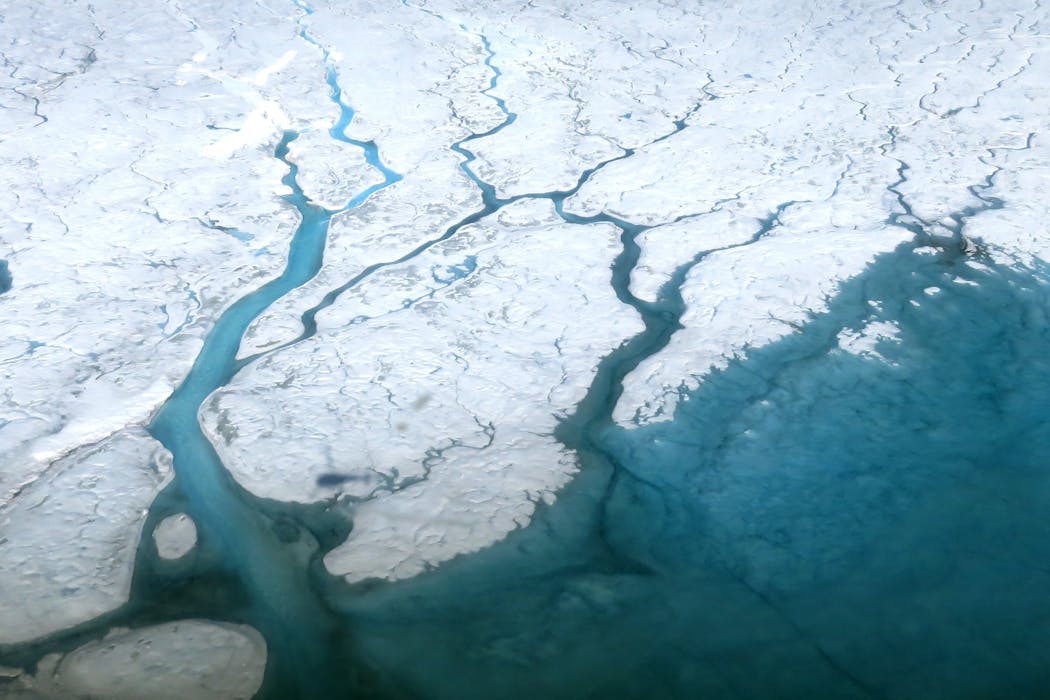
Meltwater runs across the Greenland ice sheet in rivers. The ice sheet is already losing mass and could soon reach a tipping point. Maria-José Viñas/NASA

As the planet warms, it risks crossing catastrophic tipping points: thresholds where Earth systems, such as ice sheets and rain forests, change irreversibly over human lifetimes.

Scientists have long warned that if global temperatures warmed more than 1.5 degrees Celsius (2.7 Fahrenheit) compared with before the Industrial Revolution, and stayed high, they would increase the risk of passing multiple tipping points. For each of these elements, like the Amazon rain forest or the Greenland ice sheet, hotter temperatures lead to melting ice or drier forests that leave the system more vulnerable to further changes.

Worse, these systems can interact. Freshwater melting from the Greenland ice sheet can weaken ocean currents in the North Atlantic, disrupting air and ocean temperature patterns and marine food chains.

World map showing locations for potential tipping points.
Pink circles show the systems closest to tipping points. Some would have regional effects, such as loss of coral reefs. Others are global, such as the beginning of the collapse of the Greenland ice sheet.
Global Tipping Points Report, CC BY-ND

With these warnings in mind, 194 countries a decade ago set 1.5 C as a goal they would try not to cross. Yet in 2024, the planet temporarily breached that threshold.

The term “tipping point” is often used to illustrate these problems, but apocalyptic messages can leave people feeling helpless, wondering if it’s pointless to slam the brakes. As a geoscientist who has studied the ocean and climate for over a decade and recently spent a year on Capitol Hill working on bipartisan climate policy, I still see room for optimism.

It helps to understand what a tipping point is – and what’s known about when each might be reached.

Tipping points are not precise

A tipping point is a metaphor for runaway change. Small changes can push a system out of balance. Once past a threshold, the changes reinforce themselves, amplifying until the system transforms into something new.

Almost as soon as “tipping points” entered the climate science lexicon — following Malcolm Gladwell’s 2000 book, “The Tipping Point: How Little Things Can Make a Big Difference” — scientists warned the public not to confuse global warming policy benchmarks with precise thresholds.

A tall glacier front seen from above shows huge chunks of ice calving off into Disko Bay.
The Greenland ice sheet, which is 1.9 miles (3 kilometers) thick at its thickest point, has been losing mass for several years as temperatures rise and more of its ice is lost to the ocean. A tipping point would mean runaway ice loss, with the potential to eventually raise sea level 24 feet (7.4 meters) and shut down a crucial ocean circulation.
Sean Gallup/Getty Images

The scientific reality of tipping points is more complicated than crossing a temperature line. Instead, different elements in the climate system have risks of tipping that increase with each fraction of a degree of warming.

For example, the beginning of a slow collapse of the Greenland ice sheet, which could raise global sea level by about 24 feet (7.4 meters), is one of the most likely tipping elements in a world more than 1.5 C warmer than preindustrial times. Some models place the critical threshold at 1.6 C (2.9 F). More recent simulations estimate runaway conditions at 2.7 C (4.9 F) of warming. Both simulations consider when summer melt will outpace winter snow, but predicting the future is not an exact science.

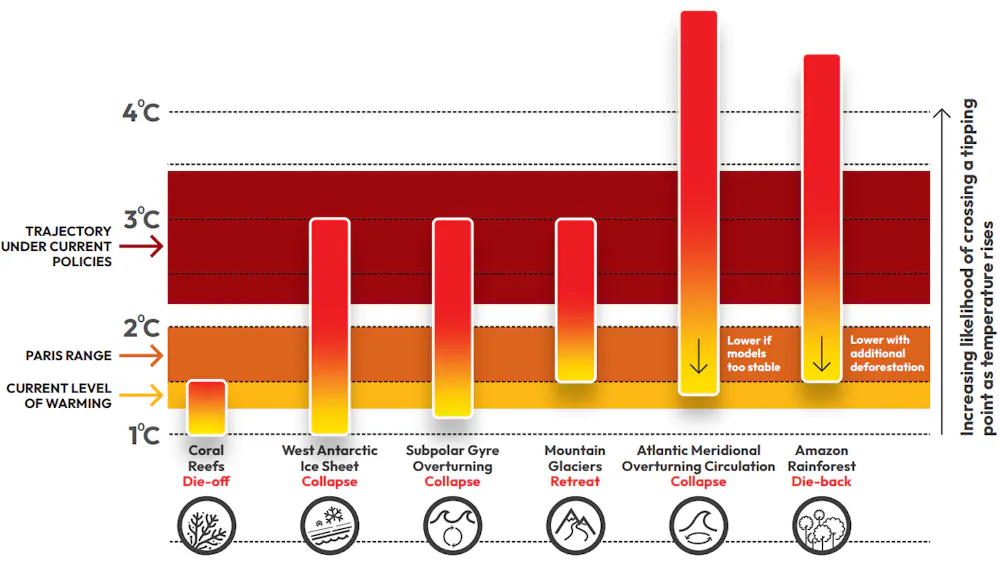
Bars with gradients show the rising risk as temperatures rise that key systems, including Greenland ice sheet and Amazon rain forest, will reach tipping points.
Gradients show science-based estimates from the Global Tipping Points Report of when key global or regional climate tipping points are increasingly likely to be reached. Every fraction of a degree increases the likeliness, reflected in the warming color.
Global Tipping Points Report 2025, CC BY-ND

Forecasts like these are generated using powerful climate models that simulate how air, oceans, land and ice interact. These virtual laboratories allow scientists to run experiments, increasing the temperature bit by bit to see when each element might tip.

Climate scientist Timothy Lenton first identified climate tipping points in 2008. In 2022, he and his team revisited temperature collapse ranges, integrating over a decade of additional data and more sophisticated computer models.

Their nine core tipping elements include large-scale components of Earth’s climate, such as ice sheets, rain forests and ocean currents. They also simulated thresholds for smaller tipping elements that pack a large punch, including die-offs of coral reefs and widespread thawing of permafrost.

A few fish swim among branches of a white coral skeleton during a bleaching event.
The world may have already passed one tipping point, according to the 2025 Global Tipping Points Report: Corals reefs are dying as marine temperatures rise. Healthy reefs are essential fish nurseries and habitat and also help protect coastlines from storm erosion. Once they die, their structures begin to disintegrate.
Vardhan Patankar/Wikimedia Commons, CC BY-SA

Some tipping elements, such as the East Antarctic ice sheet, aren’t in immediate danger. The ice sheet’s stability is due to its massive size – nearly six times that of the Greenland ice sheet – making it much harder to push out of equilibrium. Model results vary, but they generally place its tipping threshold between 5 C (9 F) and 10 C (18 F) of warming.

Other elements, however, are closer to the edge.

Alarm bells sounding in forests and oceans

In the Amazon, self-perpetuating feedback loops threaten the stability of the Earth’s largest rain forest, an ecosystem that influences global climate. As temperatures rise, drought and wildfire activity increase, killing trees and releasing more carbon into the atmosphere, which in turn makes the forest hotter and drier still.

By 2050, scientists warn, nearly half of the Amazon rain forest could face multiple stressors. That pressure may trigger a tipping point with mass tree die-offs. The once-damp rainforest canopy could shift to a dry savanna for at least several centuries.

Rising temperatures also threaten biodiversity underwater.

The second Global Tipping Points Report, released Oct. 12, 2025, by a team of 160 scientists including Lenton, suggests tropical reefs may have passed a tipping point that will wipe out all but isolated patches.

Coral loss on the Great Barrier Reef. Australian Institute of Marine Science.

Corals rely on algae called zooxanthellae to thrive. Under heat stress, the algae leave their coral homes, draining reefs of nutrition and color. These mass bleaching events can kill corals, stripping the ecosystem of vital biodiversity that millions of people rely on for food and tourism.

Low-latitude reefs have the highest risk of tipping, with the upper threshold at just 1.5 C, the report found. Above this amount of warming, there is a 99% chance that these coral reefs tip past their breaking point.

Similar alarms are ringing for ocean currents, where freshwater ice melt is slowing down a major marine highway that circulates heat, known as the Atlantic Meridional Overturning Circulation, or AMOC.

Two illustrations show how the AMOC looks today and its expected weaker state in the future
How the Atlantic Ocean circulation would change as it slows.
IPCC 6th Assessment Report

The AMOC carries warm water northward from the tropics. In the North Atlantic, as sea ice forms, the surface gets colder and saltier, and this dense water sinks. The sinking action drives the return flow of cold, salty water southward, completing the circulation’s loop. But melting land ice from Greenland threatens the density-driven motor of this ocean conveyor belt by dilution: Fresher water doesn’t sink as easily.

A weaker current could create a feedback loop, slowing the circulation further and leading to a shutdown within a century once it begins, according to one estimate. Like a domino, the climate changes that would accompany an AMOC collapse could worsen drought in the Amazon and accelerate ice loss in the Antarctic.

There is still room for hope

Not all scientists agree that an AMOC collapse is close. For the Amazon rain forest and the North Atlantic, some cite a lack of evidence to declare the forest is collapsing or currents are weakening.

In the Amazon, researchers have questioned whether modeled vegetation data that underpins tipping point concerns is accurate. In the North Atlantic, there are similar concerns about data showing a long-term trend.

A map of the Amazon shows large areas along its edges and rivers in particular losing tree cover
The Amazon forest has been losing tree cover to logging, farming, ranching, wildfires and a changing climate. Pink shows areas with greater than 75% tree canopy loss from 2001 to 2024. Blue is tree cover gain from 2000 to 2020.
Global Forest Watch, CC BY

Climate models that predict collapses are also less accurate when forecasting interactions between multiple tipping points. Some interactions can push systems out of balance, while others pull an ecosystem closer to equilibrium.

Other changes driven by rising global temperatures, like melting permafrost, likely don’t meet the criteria for tipping points because they aren’t self-sustaining. Permafrost could refreeze if temperatures drop again.

Risks are too high to ignore

Despite the uncertainty, tipping points are too risky to ignore. Rising temperatures put people and economies around the world at greater risk of dangerous conditions.

But there is still room for preventive actions – every fraction of a degree in warming that humans prevent reduces the risk of runaway climate conditions. For example, a full reversal of coral bleaching may no longer be possible, but reducing emissions and pollution can allow reefs that still support life to survive.

Tipping points highlight the stakes, but they also underscore the climate choices humanity can still make to stop the damage.

The Conversation

Alexandra A Phillips does not work for, consult, own shares in or receive funding from any company or organization that would benefit from this article, and has disclosed no relevant affiliations beyond their academic appointment.

ref. What are climate tipping points? They sound scary, especially for ice sheets and oceans, but there’s still room for optimism – https://theconversation.com/what-are-climate-tipping-points-they-sound-scary-especially-for-ice-sheets-and-oceans-but-theres-still-room-for-optimism-265183

The limits of free speech protections in American broadcasting

Source: The Conversation – USA – By Michael J. Socolow, Professor of Communication and Journalism, University of Maine

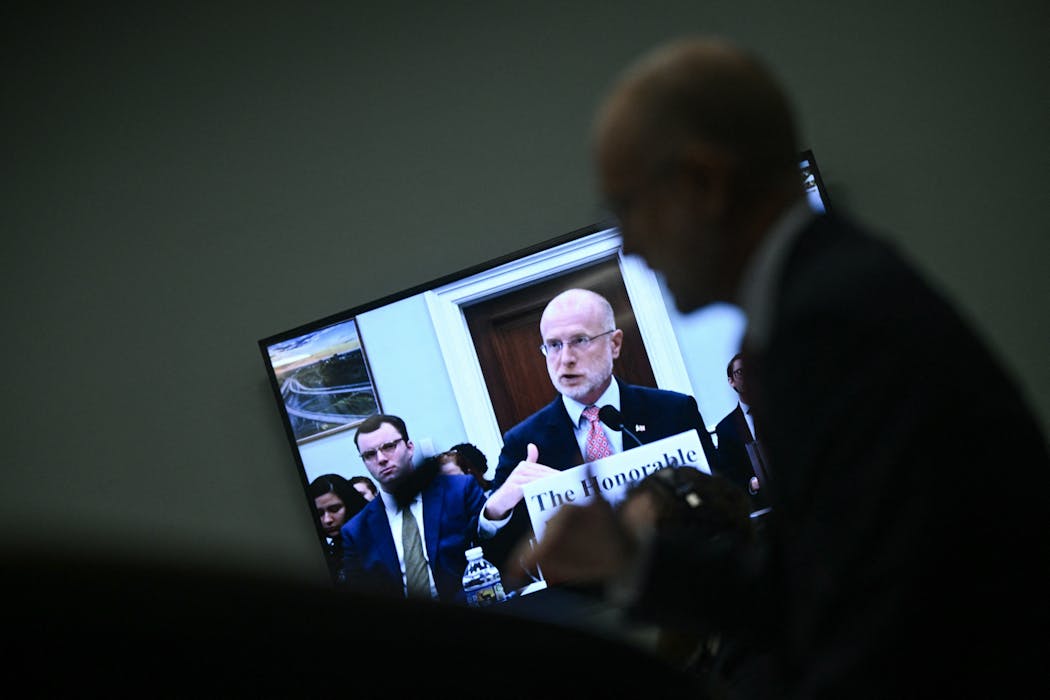
FCC Chairman Brendan Carr testifies in Washington on May 21, 2025. Brendan Smialowski/AFP via Getty Image

The chairman of the Federal Communications Commission is displeased with a broadcast network. He makes his displeasure clear in public speeches, interviews and congressional testimony.

The network, afraid of the regulatory agency’s power to license their owned-and-operated stations, responds quickly. They change the content of their broadcasts. Network executives understand the FCC’s criticism is supported by the White House, and the chairman implicitly represents the president.

I’m not just referring to the recent controversy between FCC Chairman Brendan Carr, ABC and Jimmy Kimmel. The same chain of events has happened repeatedly in U.S. history.

President Franklin Delano Roosevelt’s FCC chairman, James Lawrence Fly, warned the networks about censoring news commentators.

Then there was John F. Kennedy’s FCC chairman, Newton Minow, who criticized the networks for not airing more news and public affairs programming to support American democracy during the Cold War.

And there was George W. Bush’s FCC chairman, Michael Powell. He decided that a fleeting “wardrobe malfunction” during the 2004 Super Bowl halftime show – when Janet Jackson’s breast was exposed – was sufficient to punish CBS with a fine.

In each of those cases, the FCC represented the views of the White House. And in each case, the regulatory agency was employed to pressure the networks into airing content more aligned with the administration’s ideology.

But what’s interesting in those four examples is that two of the FCC chairmen were Democrats – Fly and Minow – and two were Republicans – Powell and Carr.

As a media historian, I’m aware of the long-existing bipartisan enthusiasm for exploiting the fact that no First Amendment exists in American broadcasting. Pressuring broadcasters by leveraging FCC power occurs regardless of which party controls the White House. And when the agency is used in partisan fashion, the rival party will criticize such politicization of regulation as a threat to free speech.

This recurring cycle is made possible by the fact that broadcasting is licensed by the government. Since a Supreme Court decision in 1943, the supremacy of the FCC in broadcast regulation has been unquestioned.

Such strong governmental oversight separates broadcasting from any other medium of mass communication in the United States. And it’s the reason why there’s no “free speech” when it comes to Kimmel, or any other performer, on U.S. airwaves.

The FCC’s empowerment

Since its establishment in 1934, the FCC’s primary role in broadcasting has been to authorize local station licenses “in the public interest, convenience, or necessity.”

In 1938, the FCC began its first investigation into network practices and policies, which resulted in new regulations. One of the new rules stated that no network could own and operate more than one licensed station in any single market. This forced NBC, which owned two networks that operated stations in several markets, to divest itself of one of its networks. NBC sued.

In the first serious constitutional test of the FCC’s full authority, in 1943, the Supreme Court vindicated the FCC’s expansive power over all U.S. broadcasting in its 5–4 verdict in National Broadcasting Co. v. United States. The ruling has stood since.

That’s why there’s no First Amendment in broadcasting. The Supreme Court ruled that, due to spectrum scarcity – the idea that the airwaves are a limited public resource and therefore not every American can operate a broadcast station – the FCC’s power over broadcasting must be expansive.

The 1934 act, the 1943 Supreme Court decision read, “gave the Commission … expansive powers … and a comprehensive mandate to ‘encourage the larger and more effective use of radio in the public interest,’ if need be, by making ‘special regulations applicable to radio stations engaged in chain (network) broadcasting.’”

The ruling also explains why the FCC can be credited with having created the American Broadcasting Company. Yes, the same ABC that suspended Kimmel in the face of FCC threats was the network that emerged from NBC’s forced divestiture of its Blue Network as a result of the 1943 Supreme Court decision.

The empowerment of the FCC by NBC v. U.S. led to such content restrictions as the Fairness Doctrine, which intended to ensure balanced political broadcasting, instituted in 1949, and later, additional FCC rules against obscenity and indecency on the airwaves. The Supreme Court decision also encouraged FCC chairmen to flex their regulatory muscles in public more often.

A Black woman and white man sing onstage.
A federal appeals court ruled on Nov. 2, 2011, that CBS should not be fined US$550,000 for Janet Jackson’s infamous ‘wardrobe malfunction.’
AP Photo/David Phillip

For example, when CBS suspended news commentator Cecil Brown in 1943 for truthful but critical news commentary about the U.S. World War II effort, FCC Chairman Fly expressed his displeasure with the network’s decision.

“It is a little strange,” Fly told the press, “that all Americans are to enjoy free speech except radio commentators.”

When FCC Chairman Minow complained about television in the U.S. devolving into a “vast wasteland” in 1961, the networks responded both defensively and productively. They invested far more money into news and public affairs programming. That led to significantly more news reporting and documentary production throughout the 1960s and 1970s.

A ‘hands-off’ FCC

In the early 2000s, FCC Chairman Powell promised to “refashion the FCC into an outfit that is fast, decisive and, above all, hands-off.”

Yet his promise to be “hands-off” did not apply to content regulation. In 2004, his FCC concluded a contentious legal battle with Clear Channel Communications over comments ruled “indecent” by shock jock Howard Stern. The settlement resulted in a US$1.75 million payment by Clear Channel Communications – the largest fine ever collected by the FCC for speech on the airwaves.

Powell apparently enjoyed policing content, as evidenced by the $550,000 fine his FCC levied against CBS for the fleeting exposure of singer Janet Jackson’s breast during the Super Bowl. The fine was eventually overturned. But Powell did successfully lobby Congress to significantly hike the amount of money the FCC could fine broadcasters for indecency. The fine for a single incident increased from $32,000 to $325,000, and up to $3 million if a network broadcasts it on multiple stations.

Powell’s regulatory activism, done mostly to curb the outrageous antics of radio shock jocks, resulted in some of the most significant and long-lasting restrictions on broadcast freedom in U.S. history. Thus, Carr’s 2025 threats toward ABC can be viewed in a historical context as an extension of established FCC activism.

Demonstrators holds signs in front of a building with columns.
Demonstrators hold signs on Sept. 18, 2025, outside Los Angeles’ El Capitan Entertainment Centre, where the late-night show ‘Jimmy Kimmel Live!’ is staged.
AP Photo/Damian Dovarganes

But Carr’s threat also appeared to contradict his previously espoused values.

As the author of the FCC section in Project 2025, a conservative blueprint for federal government policies, Carr wrote: “The FCC should promote freedom of speech … and pro-growth reforms that support a diversity of viewpoints.” In exploiting the FCC’s licensing power to threaten to penalize speech he found offensive, Carr failed to promote either freedom of speech or diversity of viewpoints.

If there’s one thing the Carr-Kimmel episode teaches us, it’s that more Americans should know the structural constraints in the U.S. system of broadcasting. Media literacy has proved essential as curbs to free expression – both official and unofficial – have become more popular.

When the FCC threatens a broadcaster, it does so in Americans’ name.

If Americans applaud regulatory activism when it supports their partisan beliefs, consistency demands they accept the same regulatory activism in the hands of their political opponents. If Americans prefer their political opposition show restraint in the regulation of broadcasting, then they need to promote restraint when their preferred administration is in power.

The Conversation

Michael J. Socolow does not work for, consult, own shares in or receive funding from any company or organization that would benefit from this article, and has disclosed no relevant affiliations beyond their academic appointment.

ref. The limits of free speech protections in American broadcasting – https://theconversation.com/the-limits-of-free-speech-protections-in-american-broadcasting-266206

Industrial facilities owned by profitable companies release more of their toxic waste into the environment

Source: The Conversation – USA (2) – By Mahelet G Fikru, Professor of Economics, Missouri University of Science and Technology

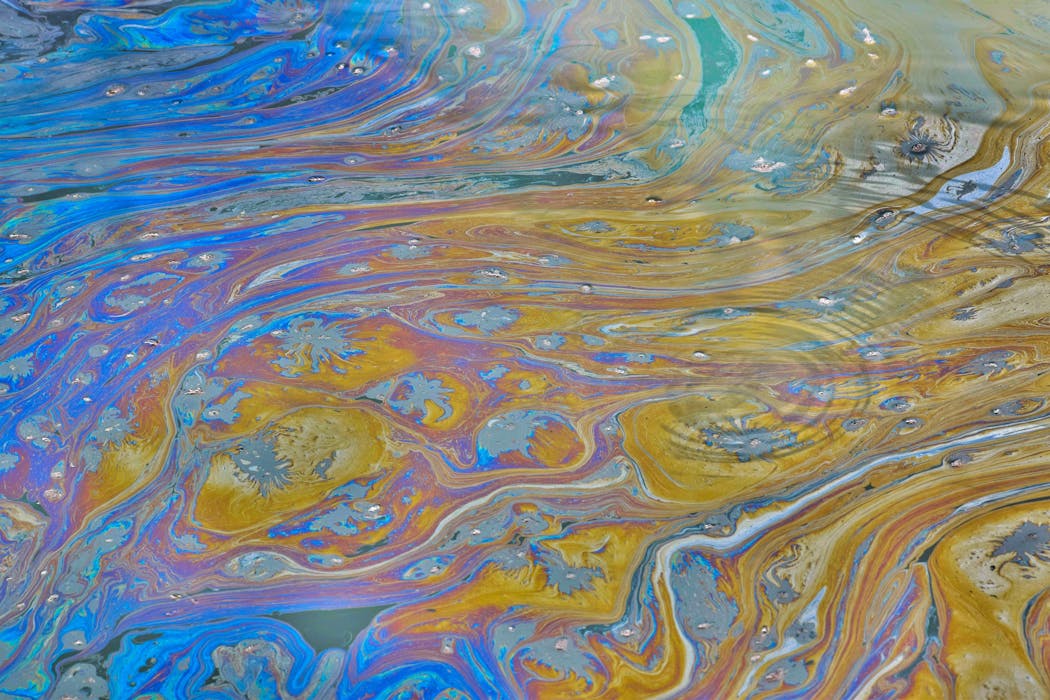
Toxic chemical pollution can come in many forms, including compounds that float on top of water. Brett Hondow/iStock / Getty Images Plus

How much pollution a facility engaged in production or resource extraction emits isn’t just based on its location, its industry or the type of work it does. That’s what our team of environmental and financial economists found when we examined how corporate characteristics shape pollution emissions.

Pollution emissions rates also vary with specific characteristics of the company that owns the facility – such as how many patents it holds, how profitable it is and how many employees it has, according to an analysis we have conducted of corporate pollution data.

We found that industrial and mining facilities owned by profitable companies with relatively few patents and fewer employees tend to release higher proportions of their toxic waste into the environment – into the air, into water or onto soil.

By contrast, industrial sites owned by unprofitable companies with higher levels of innovation and more personnel tend to handle higher proportions of their toxic waste in more environmentally responsible ways, such as processing them into nontoxic forms or recycling them, or burning them to generate energy.

Corporations publish their pollution data

A 1986 federal law requires companies that are in certain industries, employ more than 10 people and make, use or process significant amounts of certain toxic or dangerous chemicals to tell the government where those chemicals go after the company is done with them.

That data is collected by the U.S. Environmental Protection Agency in a database called the Toxics Release Inventory. That data includes information about the companies, their facilities and locations, and what they do with their waste chemicals.

The goal is not only to inform the public about which dangerous chemicals are being used in their communities, but also to encourage companies to use cleaner methods and handle their waste in ways that are more environmentally responsible.

Overall, U.S. companies reported releasing to the environment 3.3 billion pounds of toxic chemicals (1.5 billion kg) in 2023, a 21% decrease from 2014. The decline reflects increased waste management, adoption of pollution prevention and cleaner technologies, in addition to the fact that disclosure requirements motivate companies to reduce releases.

The 2023 releases came from over 21,600 industrial facilities in all 50 states and various U.S. territories, including Puerto Rico, the U.S. Virgin Islands, Guam and American Samoa. One-fifth of the facilities reporting toxic releases in 2023 were in Texas, Ohio and California.

What kinds of businesses release toxic pollution?

Metal mining, chemical manufacturing, primary metals, natural gas processing and electric utilities represent the top five polluting industrial sectors in the U.S. Combined, businesses in those sectors accounted for 78% of the toxic chemicals released in 2023.

Research has found that, often, higher levels of toxic chemical releases come from industrial facilities in less populated, economically disadvantaged, rural or minority communities.

But geography and population are not the whole story. Even within the same area, some facilities pollute a lot less than others. Our inquiry into the differences between those facilities has found that corporate characteristics matter a lot – such as operational size, innovative capacity and financial strength.

In our analysis, we combined the data companies reported to the EPA about toxic chemical releases with financial information on those companies and ZIP-code level geographic and demographic data. We found that corporate characteristics like profitability, employment size and number of patents are more strongly connected with toxic chemical releases than a community’s population density, minority-group percentage or household income.

We looked at what percentage of its toxic chemical waste a facility or mine released to the environment versus how much it treated, recycled or incinerated.

The average facility in our sample, which included 1,976 facilities owned by companies for which financial data is available, released about 39% of its toxic chemical waste to the environment, whether to air, water or land – with the remaining 61% of it managed through recycling, treatment or energy recovery either on-site or off-site.

But facilities in different industries have different release rates. For example, about 99% of toxic chemicals from coal mines are released to the environment, compared with 81% for natural gas extraction, recovery and processing; 25% for power-generating electric utilities; and less than 3% for electrical equipment manufacturers.

The role of innovation

One corporate attribute we examined was innovation, which we measured by counting corporations’ patent families, which are groups of patent documents related to the same invention, even if they are filed in different countries. We found that companies with more patent families tend to release less of their toxic waste to the environment.

Specifically, facilities owned by the top 25% of companies, when rated by innovation, released an average of 32.5% of their toxic waste to the environment, which is 8 percentage points lower than the average of facilities owned by the remaining companies in the sample.

We hypothesize that innovation may give firms a competitive advantage that also enables them to adopt cleaner production technologies or invest in more environmentally conscious methods of handling waste containing toxic chemicals, thereby preventing toxic chemicals from being directly released to the environment.

Size and profitability matter, too

We also looked at companies’ size – in terms of number of employees – and their profitability, to see how those connected with pollution rates at the facilities the company owns.

We found that larger companies, those with more than 19,000 employees, own facilities that release an average of 31% of their toxic chemical waste to the environment. By contrast, facilities owned by midsized companies, from 1,000 to 19,000 workers, release 45%, on average. Those owned by smaller companies, with less than 1,000 employees, release an average of 42% of their toxic chemical waste to the environment.

An important note is that those larger companies, which are more likely to have multiple locations, often own facilities that handle larger volumes of chemicals. So even if they release smaller proportions of their toxic waste to the environment, that may still add up to larger quantities.

We also found that industrial facilities owned by profitable firms have higher average rates of releasing toxic chemicals to the environment than those owned by unprofitable companies.

Facilities owned by companies with positive net income, according to their income statements obtained from PitchBook, a company that collects data on corporations, released an average of 40% of their toxic-chemical-containing wastes to the environment. Facilities owned by companies with negative net income released an average of 31% of their toxic chemical waste to the environment. To us, that indicates that financially strong companies are not necessarily more environmentally responsible. That may be evidence that profitable firms make money in part by contaminating the environment rather than paying for pollution prevention or cleanup.

Our analysis shows that geography and demographics alone do not fully account for industries’ and facilities’ differing levels of pollution. Corporate characteristics are also key factors in how toxic waste is handled and disposed of.

The Conversation

The authors do not work for, consult, own shares in or receive funding from any company or organization that would benefit from this article, and have disclosed no relevant affiliations beyond their academic appointment.

ref. Industrial facilities owned by profitable companies release more of their toxic waste into the environment – https://theconversation.com/industrial-facilities-owned-by-profitable-companies-release-more-of-their-toxic-waste-into-the-environment-265227

Does the First Amendment protect professors being fired over what they say? It depends

Source: The Conversation – USA (2) – By Neal H. Hutchens, University Research Professor of Education, University of Kentucky

Employees at public and private colleges do not have the same First Amendment rights. dane_mark/Royalty-free

American colleges and universities are increasingly firing or punishing professors and other employees for what they say, whether it’s on social media or in the classroom.

After the Sept. 10, 2025, killing of conservative activist Charlie Kirk, several universities, including Iowa State University, Clemson University, Ball State University and others, fired or suspended employees for making negative online comments about Kirk.

Some of these dismissed professors compared Kirk to a Nazi, described his views as hateful, or said there was no reason to be sorry about his death.

Some professors are now suing their employers for taking disciplinary action against them, claiming they are violating their First Amendment rights.

In one case, the University of South Dakota fired Phillip Michael Cook, a tenured art professor, after he posted on Facebook in September that Kirk was a “hate spreading Nazi.” Cook, who took down his post within a few hours and apologized for it, then sued the school, saying it was violating his First Amendment rights.

A federal judge stated in a Sept. 23 preliminary order that the First Amendment likely protected what Cook posted. The judge ordered the University of South Dakota to reinstate Cook, and the university announced on Oct. 4 that it would reverse Cook’s firing.

Cook’s lawsuit, as well as other lawsuits filed by dismissed professors, is testing how much legal authority colleges have over their employees’ speech – both when they are on the job and when they are not.

For decades, American colleges and universities have traditionally encouraged free speech and open debate as a core part of their academic mission.

As scholars who study college free speech and academic freedom, we recognize that these events raise an important question: When, if ever, can a college legally discipline an employee for what they say?

A university campus with various buildings and trees is seen from above.
An aerial view of University of South Dakota’s Vermillion campus, one of the places where a professor was recently fired for posting comments about Charlie Kirk, a decision that was later reversed.
anup khanal – CC BY-SA 4.0

Limits of public employees’ speech rights

The First Amendment limits the government’s power to censor people’s free speech. People in the United States can, for instance, join protests, criticize the government and say things that others find offensive.

But the First Amendment only applies to the government – which includes public colleges and universities – and not private institutions or companies, including private colleges and universities.

This means private colleges typically have wide authority to discipline employees for their speech.

In contrast, public colleges are considered part of the government. The First Amendment limits the legal authority they have over their employees’ speech. This is especially true when an employee is speaking as a private citizen – such as participating in a political rally outside of work hours, for example.

The Supreme Court ruled in a landmark 1968 case that public employees’ speech rights as private citizens can extend to criticizing their employer, like if they write a letter critical of their employer to a newspaper.

The Supreme Court also ruled in 2006 that
the First Amendment does not protect public employees from being disciplined by their employers when they say or write something as part of their official job duties.

Even when a public college employee is speaking outside of their job duties as a private citizen, they might not be guaranteed First Amendment protection. To reach this legal threshold, what they say must be about something of importance to the public, or what courts call a “matter of public concern.”

Talking or writing about news, politics or social matters – Kirk’s murder – often meets the legal test for when speech is about a matter of public concern.

In contrast, courts have ruled that personal workplace complaints or gossip typically does not guarantee freedom of speech protection.

And in some cases, even when a public employee speaks as a private citizen on a topic that a court considers a matter of public concern, their speech may still be unprotected.

A public employer can still convince a court that its reasons for prohibiting an employee’s speech – like preventing conflict among co-workers – are important enough to deny this employee First Amendment protection.

Lawsuits brought by the employees of public colleges and universities who have been fired for their comments about Kirk may likely be decided based on whether what they said or wrote amounts to a matter of public concern. Another important factor is whether a court is convinced that an employee’s speech about Kirk was serious enough to disrupt a college’s operations, thus justifying the employee’s firing.

Academic freedom and professors’ speech

There are also questions over whether professors at public universities, in particular, can cite other legal rights to protect their speech.

Academic freedom refers to a faculty member’s rights connected to their teaching and research expertise.

At both private and public colleges, professors’ work contracts – like the ones typically signed after receiving tenure – potentially provide legal protections for faculty speech connected to academic freedom, such as in the classroom.

However, the First Amendment does not apply to how a private college regulates its professors’ speech or academic freedom.

Professors at public colleges have at least the same First Amendment free speech rights as their fellow employees, like when speaking in a private citizen capacity.

Additionally, the First Amendment might protect a public college professor’s work-related speech when academic freedom concerns arise, like in their teaching and research.

In 2006, the Supreme Court left open the question of whether the First Amendment covers academic freedom, in a case where it found the First Amendment did not cover what public employees say when carrying out their official work.

Since then, the Supreme Court has not dealt with this complicated issue. And lower federal courts have reached conflicting decisions about First Amendment protection for public college professors’ speech in their teaching and research.

A large gray stone plaque shows the First Amendment in front of a green grassy field and buildings in the distance.
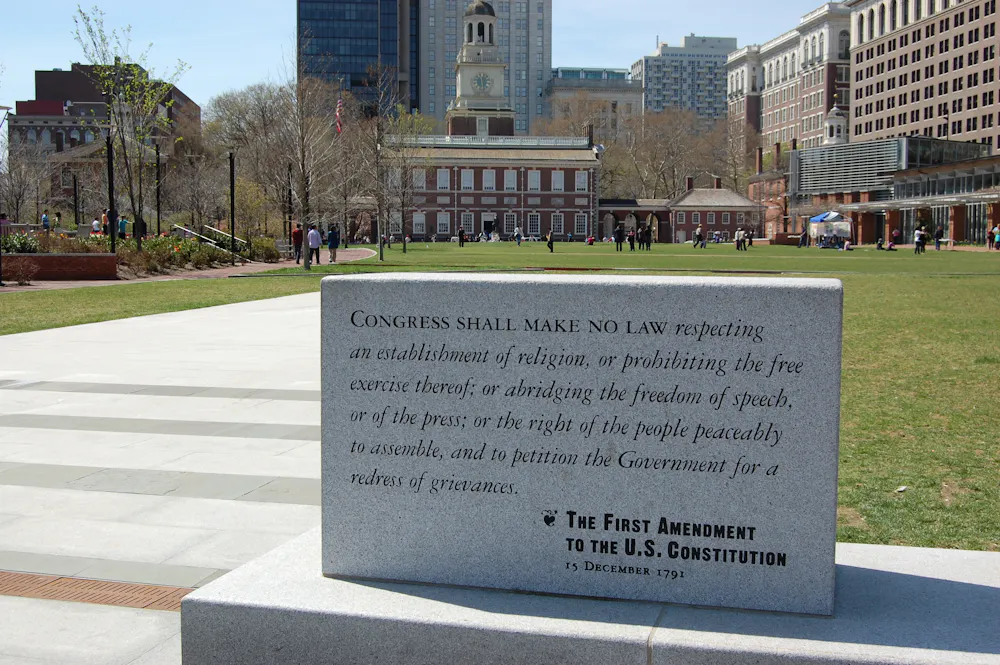
The First Amendment is on display in front of Independence Hall in Philadelphia.
StephanieCraig/iStock via Getty Images Plus

Future of free speech for university employees

Some colleges, especially public ones, are testing the legal limits of their authority over their employees’ speech.

These incidents demonstrate a culture of extreme political polarization in higher education.

Beyond legal questions, colleges are also grappling with how to define their commitments to free speech and academic freedom.

In particular, we believe campus leaders should consider the purpose of higher education. Even if legally permitted, restricting employees’ speech could run counter to colleges’ traditional role as places for the open exchange of ideas.

The Conversation

The authors do not work for, consult, own shares in or receive funding from any company or organization that would benefit from this article, and have disclosed no relevant affiliations beyond their academic appointment.

ref. Does the First Amendment protect professors being fired over what they say? It depends – https://theconversation.com/does-the-first-amendment-protect-professors-being-fired-over-what-they-say-it-depends-266128

In defense of ‘surveillance pricing’: Why personalized prices could be an unexpected force for equity

Source: The Conversation – USA (2) – By Aradhna Krishna, Dwight F. Benton Professor of Marketing, University of Michigan

Surveillance pricing has dominated headlines recently. Delta Air Lines’ announcement that it will use artificial intelligence to set individualized ticket prices has led to widespread concerns about companies using personal data to charge different prices for identical products. As The New York Times reported, this practice involves companies tracking everything from your hotel bookings to your browsing history to determine what you’re willing to pay.

The reaction has been swift. Democratic lawmakers have responded with outrage, with Texas Rep. Greg Casar introducing legislation to ban the practice. Meanwhile, President Donald Trump’s new chair of the Federal Trade Commission has shut down public comment on the issue, signaling that the regulatory pendulum may swing away from oversight entirely.

What’s missing in this political back-and-forth is a deeper look at the economics. As a business school professor who researches pricing strategy, I think the debate misses important nuances. Opponents of surveillance pricing overlook some potential benefits that could make markets both more efficient and, counterintuitively, more equitable.

What surveillance pricing actually is

Surveillance pricing differs from traditional dynamic pricing, where prices rise for everyone at times of peak demand. Instead, it uses personal data – browsing history, location, purchase patterns, even device type – to charge a unique price based on what algorithms predict you’re willing to pay.

The goal is to discover each customer’s “reservation price” – the most they’ll pay before walking away. Until recently, this was extremely difficult to do, but modern data collection has made it increasingly feasible.

An FTC investigation found that companies track highly personal consumer behaviors to set individualized prices. For example, a new parent searching for “baby thermometers” might find pricier products on the first page of their results than a nonparent would. It’s not surprising that many people think this is unfair.

The unintended progressive tax

But consider this: Surveillance pricing also means that wealthy customers pay more for identical goods, while lower-income customers pay less. That means it could achieve redistribution goals typically pursued through government policy. Pharmaceutical companies already do this globally, charging wealthier countries more for identical drugs to make medications accessible in poorer nations. Surveillance pricing could function as a private-sector progressive tax system.

Economists call it “price discrimination,” but it often helps poorer consumers access goods they might otherwise be unable to afford. And unlike government programs, this type of redistribution requires no taxpayer funding. When Amazon’s algorithm charges me more than a college student for the same laptop, it’s effectively running a means-tested subsidy program – funded by consumers.

PBS NewsHour featured a segment on the Delta Air Lines news.

The two-tier economy problem

In my view, the most legitimate concern about surveillance pricing isn’t that it exists, but how it’s implemented. Online retailers can seamlessly adjust prices in real time, while physical stores remain largely stuck with uniform pricing. Imagine the customer fury if Target’s checkout prices varied by person based on their smartphone data: There could be chaos in the stores. This digital-physical divide could also create unfair advantages for tech-savvy companies while leaving traditional retailers behind. That would raise fairness considerations for consumers as well as retailers.

This is related to another force that could limit how far surveillance pricing can go: arbitrage, or the practice of buying something where it is cheaper and selling it where it is more expensive.

If a system consistently charges wealthy customers $500 for items that cost poor customers $200, it creates opportunities for entrepreneurial intermediaries to exploit these price gaps. Personal shopping services, buying cooperatives or even friends and family networks could arbitrage these differences, providing wealthy customers access to the lower prices while splitting the savings. This means surveillance pricing can’t discriminate too aggressively – market forces will erode excessive price gaps.

That’s why I believe the solution isn’t to ban surveillance pricing entirely, but to monitor how it is put in practice.

The regulatory sweet spot

The current political moment offers a strange opportunity. With Republicans focused on AI innovation and Democrats fixated on bans, there’s space for a more sophisticated position that embraces market-based redistribution while demanding strong consumer protections.

In my view, smart regulation would require companies to disclose when personal data influences pricing, and would prohibit discrimination based on protected characteristics such as race, color or religion – and this list needs to be created extremely carefully. This would preserve the efficiency benefits while preventing abuse.

Surveillance pricing based on desperation or need also raises unique ethical questions. Charging a wealthier customer more for a taxi ride is one thing; charging someone extra solely because their battery is low and they risk being stranded is another.

As I see it, the distinction between ability to pay and urgency of need must become the cornerstone of regulation. While distinguishing the two may seem challenging, it’s far from impossible. It would help if customers were empowered to report exploitative practices, using mechanisms similar to existing price-gouging protections.

A solid regulatory framework must also clarify the difference between dynamic pricing and surveillance-based exploitation. Dynamic pricing has long been standard practice: Airlines charge all last-minute travelers higher fares, regardless of their circumstances. But consider two passengers buying tickets on the same day – one rushing to a funeral, another planning a spontaneous vacation. Right now, airlines can use technology to identify and exploit the funeral attendee’s desperate circumstances.

The policy challenge is precise: Can we design regulations that prevent airlines from exploiting the bereaved while still allowing retailers to offer discounts on laptops to lower-income families? The answer will determine whether surveillance pricing becomes a tool for equity or exploitation.

The Conversation

Aradhna Krishna does not work for, consult, own shares in or receive funding from any company or organization that would benefit from this article, and has disclosed no relevant affiliations beyond their academic appointment.

ref. In defense of ‘surveillance pricing’: Why personalized prices could be an unexpected force for equity – https://theconversation.com/in-defense-of-surveillance-pricing-why-personalized-prices-could-be-an-unexpected-force-for-equity-266293

New student loan limits could change who gets to become a professor, doctor or lawyer

Source: The Conversation – USA (2) – By Rodney Coates, Professor of Critical Race and Ethnic Studies, Miami University

As millions of student loan borrowers settle into the school year, many are stressed about how they’ll pay for their degrees. These students may find that the One Big Beautiful Bill Act, the big tax and spending bill that President Donald Trump signed into law over the summer, could limit how much they can borrow.

Until recently, graduate students could take out two types of federal loans: Direct Unsubsidized Loans, which had a lifetime limit of US$138,500, and Grad PLUS loans, which allowed students to borrow up to the full cost of attendance, minus financial aid.

But Grad PLUS loans will be eliminated next summer, with a three-year transitional period for current borrowers. That will leave only the capped loans for new borrowers, and those loans have new lifetime borrowing limits: $200,000 for students pursuing certain professional degrees, and $100,000 for nonprofessional graduate programs.

If you add both undergraduate and graduate loans, there’s a new lifetime limit of $257,500 per person.

That seems modest to me. Consider that the annual average costs for an undergraduate degree range from $24,920 for in-state public universities to $58,000 for private universities. That means we’re looking at up to $224,000 for a bachelor’s degree. If we add three years of law school, we’re looking at an additional $132,000 to $168,000, respectively. Alternatively, completing four years of medical school will set you back another $268,000 to $363,000. It’s not easy to make those numbers add up to less than $257,500.

As I reflect on these numbers and my journey to becoming a college professor, specializing in race and ethnic studies, one thing becomes clear: I would never have been able to earn my bachelor’s degree, two master’s degrees, and Ph.D. under these new rules.

Adjusting for inflation, I took out nearly $300,000 in student loans, and I paid them all off within a decade of starting my college teaching career. For me, the system worked. I wonder how today’s aspiring professionals, especially those from less prosperous backgrounds, will manage.

The future of professionals

Professional students already graduate with a lot of debt – often far more than the new loan caps will allow. In 2020, more than a quarter of graduating medical students and nearly 60% of graduating dental students had borrowed more than the new limits would allow, author Mark Kantrowitz, who is an expert on student loans, has found. In 2024, nearly a quarter of medical school graduates left school with more than $300,000 in debt.

The new borrowing limits will likely hit minority students especially hard. While about 61% of all graduate students take out student loans, the share is much higher for Black students compared with white students, 48% to 17%.

While some might be able to supplement their federal loans with private ones – which tend to have much worse terms for borrowers – I fear that many others will be forced to end their educations prematurely.

That, in turn, would worsen the already severe shortage of doctors serving the Black community. As pointed out in a 2023 report of the Journal of the American Medical Association, the shortage of Black primary care physicians is directly related to overall lower population health and ultimately higher mortality rates within the Black community. As of 2023, fewer than 6% of U.S. doctors were Black, versus 14.4% of the population.

Research has suggested that student loan relief would help diversify the medical workforce. Adding new restrictions would likely have the opposite effect, making the profession more homogeneous and significantly undermining Black public health.

Or consider attorneys. Law school costs have risen more than 600% over the past two decades. The average 2020 law school graduate left with $165,000 in student debt.

Black law students face unique challenges, graduating with approximately 8% more debt on average than white students and facing significant wage disparities once they enter the legal workforce. Making it harder for Black students to afford law school could reduce the number of Black attorneys, which has held steady at about 5% of active lawyers over the past 10 years.

Reducing access to federal student loans risks disproportionately affecting women, since they hold roughly two-thirds of all student debt.

What comes next

Supporters of the change say that capping graduate student borrowing will encourage universities to rein in tuition hikes. They also say private student loan providers will step in to help students. I am skeptical, but the true test will come next year.

In the meantime, professional students might want to familiarize themselves with the many scholarship opportunities available. Many organizations offer a range of medical school scholarships, including those targeting women and minorities. The same is true for students interested in law school. A helpful starting point is this list of scholarships with approaching deadlines and these opportunities for women and people of color.

The Conversation

Rodney Coates does not work for, consult, own shares in or receive funding from any company or organization that would benefit from this article, and has disclosed no relevant affiliations beyond their academic appointment.

ref. New student loan limits could change who gets to become a professor, doctor or lawyer – https://theconversation.com/new-student-loan-limits-could-change-who-gets-to-become-a-professor-doctor-or-lawyer-262008

Starbucks wants you to stay awhile – but shuttering its mobile-only pickup locations could be a risky move

Source: The Conversation – USA (2) – By Vivek Astvansh, Associate Professor of Quantitative Marketing and Analytics, McGill University

When Starbucks announced that it would phase out its mobile-order pickup-only locations beginning in 2026, it raised a question: Why abandon a format seemingly built for speed and efficiency?

As Starbucks CEO Brian Niccol explained the decision in an earnings call, the pickup-only stores had a “transactional” feel, lacking “the warmth and human connection that defines our brand.”

While Niccol also touted the mobile-order options at its traditional coffee shops, I see Starbucks’ move as an attempt to return to its roots as a “third place” – a destination between home and work where people can gather and connect.

But this sort of pivot comes with trade-offs – and it creates interesting market opportunities for competitors. As a marketing professor and a coffee connoisseur, I’m offering this analysis to go with your morning cup of joe.

The two types of coffee shop patrons

In general, coffee shops attract two distinct customer segments. The first are what I call “stay-and-savor” customers – people who mostly use the site as a place to meet others or work. Their primary interest is in the space, not the mocha or muffins.

The second are “grab-and-go” customers – people who want a consistent product, delivered efficiently. They don’t linger at the store, so the place is less important to them than convenience, speed and product quality. Think of the morning rush at your local coffee joint.

Starbucks’ pickup-only stores, branded as Starbucks PICK UP, cater to grab-and-go customers. If you don’t live in a busy area, you might never have heard of the brand: There are fewer than 100 Starbucks PICK UPs, many in densely packed cities.

In contrast, there are about 17,000 sit-in Starbucks stores across the United States. That means its plan will affect just 0.5% of its locations. That’s not very much.

So why does this change have me a little, well, steamed up?

Back to the third place, whether you like it or not

As I said before, I see this move as part of an effort to emphasize “stay-and-savor” customers over their “grab-and-go” counterparts. Indeed, Niccol’s recent earnings call presentation claimed that Starbucks is “prioritizing warmth, connection and community.” Starbucks also publishes a document stating its “principles for upholding the third place,” and its commitment seems to be more than just rhetorical.

The problem is that coffee shops aren’t like regular restaurants in terms of menu prices and customer spending. “Stay-and-savor” customers are costly to serve for coffee shops, and may generate insufficient revenue, making them less profitable. That could be bad for the bottom line.

The change could also have unintended consequences for workers and customers. For example, pickup-only stores allow employees to focus on food and beverage preparation, with less pressure to engage in small talk in the hopes of generating warmth and tips. Indeed, much academic research has shown that restaurant workers who serve customers report more emotional labor and stress and worse morale and well-being than those who don’t.

In contrast, Starbucks’ rivals, such as Dunkin’ and the Chinese new entrant Luckin Coffee, have embraced the grab-and-go customers. These rivals provide space for seating space, but they don’t elevate their positioning as if their baristas are serving warmth, connection and community.

Starbucks CEO Niccol has described the plan as a “sunsetting.” I’d watch out for Dunkin’ and Luckin Coffee, and of course, Starbucks’ financials in 2026, to determine whether the Starbucks sun sets or rises.

The Conversation

Vivek Astvansh does not work for, consult, own shares in or receive funding from any company or organization that would benefit from this article, and has disclosed no relevant affiliations beyond their academic appointment.

ref. Starbucks wants you to stay awhile – but shuttering its mobile-only pickup locations could be a risky move – https://theconversation.com/starbucks-wants-you-to-stay-awhile-but-shuttering-its-mobile-only-pickup-locations-could-be-a-risky-move-262591

Et si l’alcool disparaissait de la planète ?

Source: The Conversation – France in French (3) – By Mickael Naassila, Professeur de physiologie, Directeur du Groupe de Recherche sur l’Alcool & les Pharmacodépendances GRAP – INSERM UMR 1247, Université de Picardie Jules Verne (UPJV)

Que se passerait-il si la consommation d’alcool s’arrêtait totalement, partout ? ou si, scénario dystopique pour les uns, utopique pour les autres, les boissons alcoolisées disparaissaient totalement de la planète ?


Dans le Meilleur des mondes, publié en 1932, l’écrivain britannique Aldous Huxley imagine une société sans alcool, mais sous l’empire d’une autre drogue : le « soma ». Ce terme, emprunté aux textes védiques indiens où il désignait une boisson sacrée, devient sous sa plume une substance de synthèse parfaite, sans effets secondaires, qui maintient la population dans une soumission heureuse. L’absence d’alcool compensée par un contrôle chimique des émotions…

Sans aller jusqu’à un tel scénario, que se passerait-il dans nos sociétés si l’alcool, subitement, cessait d’être consommé ? Quelles seraient les conséquences pour la santé et, plus largement, pour la société ?

Prêtons-nous à ce petit exercice intellectuel, pour tenter de prendre la mesure de la place qu’occupe l’alcool dans nos vies…

Augmentation de l’espérance de vie en bonne santé

Si l’alcool disparaissait demain, on constaterait tout d’abord une diminution de la mortalité et une augmentation de l’espérance de vie en bonne santé.

Selon l’Organisation mondiale de la santé (OMS), en 2019, l’alcool était responsable de 2,6 millions de décès par an dans le monde, soit 5 % de la mortalité globale. La classe d’âge 20-39 ans est par ailleurs celle qui enregistre la proportion la plus élevée de décès attribuables à l’alcool, soit 13 %.

En France, l’alcool provoque 41 000 décès par an dont 16 000 par cancers, 9 000 par maladies cardiovasculaires et 6 800 par maladies digestives). Une étude publiée dans la revue scientifique médicale The Lancet en 2018 suggère qu’il n’existe pas de seuil de consommation sans risque pour la santé : dès un seul verre consommé par jour, les années de vie en bonne santé diminuent.

Boire ou vivre longtemps : faut-il choisir ?

Moins de jeunes mourraient à cause de l’alcool

L’alcool est la première cause évitable de mortalité chez les moins de trente ans. Près d’un décès sur cinq chez les hommes de 25 à 29 ans est attribuable à l’alcool.

Avant 40 ans, les causes principales sont les accidents et les suicides, tandis qu’à partir de la quarantaine dominent les maladies chroniques comme la cirrhose.

La suppression totale de l’alcool réduirait donc directement la mortalité prématurée.

Diminution des accidents de la route et des suicides

Un monde sans alcool s’accompagnerait aussi d’une réduction rapide des accidents de la route. En 2024, sur les routes de France, l’alcool était en effet responsable de près d’un accident mortel sur quatre.

Diffusé pendant l’Euro pour lutter contre l’alcool au volant, ce spot belge est féroce.

En France, les infractions liées à l’alcool, surtout la conduite sous l’empire de l’alcool, représentent près d’un tiers des condamnations pour infractions routières avec, en 2019, 87 900 condamnations.

Leur poids considérable a conduit les tribunaux à recourir massivement à des procédures simplifiées pour désengorger le système judiciaire, preuve que ces affaires constituent une part majeure et récurrente du contentieux pénal.

Moins de violences, moins de féminicides et désengorgement du système judiciaire

L’alcool est directement lié à la violence, et les affaires judiciaires impliquent souvent l’alcool. En France, l’analyse des données recueillies par questionnaire auprès de plus de 66 000 étudiants et étudiantes des universités indique que l’alcool est un facteur déterminant des violences sexistes et sexuelles dans ce milieu. Plus de la moitié des violences sexistes et/ou sexuelles ainsi recensées implique une consommation d’alcool dans le cadre de la vie universitaire.

Une étude réalisée en Afrique du Sud a par ailleurs montré que les périodes d’interdiction totale de vente d’alcool pendant la pandémie de Covid-19 ont coïncidé avec une baisse de 63 % des féminicides, comparées aux périodes sans restriction.

Diminution du nombre de suicides

De façon peut-être plus surprenante, si l’alcool venait à disparaître, on pourrait aussi s’attendre à une diminution substantielle des suicides. Comme l’ont montré des études récentes, l’alcool augmente significativement le risque de mort par suicide, et ce, quel que soit le genre considéré.

La consommation d’alcool est désormais un facteur de risque reconnu pour le suicide, à la fois à court terme (par intoxication, impulsivité, perte de contrôle) et à long terme (par le développement d’un isolement social dû à la consommation excessive ou à la dépendance, par le développement d’une dépression ou encore de troubles mentaux associés).

Photo d’une jeune femme à l’air pensif et triste assise au bord d’un trottoir avec une bouteille et un verre posés à côté d’elle
La consommation d’alcool est un facteur de risque reconnu du suicide.
Unsplash/Velik Ho, FAL

Une méta-analyse (revue systématique de littérature suivie d’une analyse statistique portant sur les données des études sélectionnées, ndlr) a ainsi établi que chaque hausse d’un litre par habitant par année de la consommation d’alcool pur est associée à une augmentation de 3,59 % du taux de mortalité par suicide.

Rappelons qu’en 2023, les volumes d’alcool pur mis en vente en France – en diminution par rapport aux années précédentes – s’établissaient encore à 10,35 litres par habitant âgés de 15 ans et plus.

Moins de maladies et des services d’urgences et des hôpitaux moins engorgés

Si la consommation d’alcool venait à s’arrêter, les services des urgences seraient beaucoup moins encombrés. Des études réalisées en France estiment, en effet, qu’environ 30 % des passages aux urgences seraient liés à l’alcool. On imagine bien ce que cela pourrait changer quand on connaît les difficultés de fonctionnement auxquelles font actuellement face les services d’urgence.

Par ailleurs, la consommation d’alcool étant responsable de plus de 200 maladies, l’arrêt de sa consommation diminuerait leur prévalence, et donc les hospitalisations associées.

Les chiffres de 2022 indiquent que 3,0 % des séjours hospitaliers en médecine, en chirurgie, en obstétrique et en odontologie, que 6,6 % des journées en soins de suite et de réadaptation et que 10,0 % des journées en psychiatrie étaient considérés comme étant en lien avec des troubles de l’usage d’alcool. Par rapport aux chiffres de 2012, on constate une diminution du nombre de séjours pour alcoolisation aiguë ainsi qu’une hausse du recours pour alcoolodépendance. En psychiatrie, le nombre de journées d’hospitalisations a baissé en 2022 par rapport à 2012, tandis qu’en soins de suite et de réadaptation, la durée de prise en charge s’est allongée.

Le coût de ces hospitalisations était estimé en 2022 à 3,17 milliards d’euros, soit 4,2 % des dépenses totales d’hospitalisations (contre 3,6 % de l’ensemble des dépenses hospitalières en 2012).

Enfin, la disparition de l’alcool mettrait aussi fin aux troubles du spectre de l’alcoolisation fœtale (TSAF). Chaque année en France, environ 8 000 enfants naissent avec des séquelles dues à l’exposition prénatale à l’alcool.

Ces troubles entraînent des handicaps cognitifs et comportementaux durables, des difficultés scolaires et une surmortalité précoce. La disparition de ce syndrome représenterait un gain immense en vies sauvées, en qualité de vie et en coûts évités pour le système de santé, l’éducation et le médico-social.

Ce que l’on gagnerait chaque année sans alcool :

  • 41 000 vies sauvées en France (2,6 millions dans le monde) ;
  • 8 000 enfants épargnés des troubles de l’alcoolisation foetale ;
  • Plusieurs milliers de suicides évités (15 %–20 % liés à l’alcool) ;
  • 2 400 accidents routiers mortels en moins en France ;
  • 246 000 hospitalisations évitées, soit un soulagement majeur pour les services d’urgence ;
  • 102 milliardsd’euros économisés en coûts sociaux, soit 4,5 % du PIB français ;
  • Une justice désengorgée, débarrassée d’une grande partie des infractions routières et violences liées à l’alcool.

Et que se rassurent ceux qui s’inquièteraient du fait que la disparition de l’alcool pourrait nous priver d’hypothétiques bénéfices, tels qu’un quelconque effet protecteur d’une consommation modérée, notamment sur le cœur. Les conclusions des travaux à l’origine de cette rumeur sont désormais largement remises en cause… En revanche, arrêter l’alcool présente de nombreux avantages.

Arrêter de boire : de nombreux bénéfices

Révélés par les campagnes Un mois sans alcool comme le Défi de janvier (le « Dry January » à la française), les bénéfices observés à l’arrêt de la consommation sont très nombreux. Sans alcool, on se sent beaucoup mieux et notre corps nous dit merci !

Parmi les effets les plus notables et rapportés dans des enquêtes déclaratives figurent des améliorations du bien-être et de la qualité de vie. Les personnes interrogées indiquent notamment mieux dormir, se sentir plus en forme, avoir plus d’énergie. Elles constatent qu’elles ont perdu du poids, et ont vu leur teint et leur chevelure s’améliorer.

Elles déclarent également avoir fait des économies. Pour s’en faire une idée : il a été estimé qu’en moyenne, lors de la campagne de 2024 du Défi de Janvier, les participants économisent 85,2 €.

Les paramètres physiologiques s’améliorent aussi. Parmi les bénéfices à l’arrêt de l’alcool, on peut citer un moindre risque de résistance à l’insuline, une meilleure élasticité du foie, une meilleure homéostasie du glucose (glycémie), une amélioration du cholestérol sanguin, une diminution de la pression artérielle et même une diminution des marqueurs sanguins du cancer. Du point de vue cognitif sont rapportées des améliorations en termes de concentration et de performance au travail.

Mais l’alcool, objecteront certains, n’est pas qu’une molécule psychoactive : il est aussi un rituel social universel. Partager un verre est un marqueur d’appartenance, de convivialité, voire de célébration. Sa disparition obligerait à réinventer nos codes sociaux.

Réinventer nos liens sociaux

On l’a vu, aucune consommation d’alcool, quelle qu’en soit la quantité, n’améliore la santé. Sa disparition n’aurait, du point de vue médical, que des bénéfices. En revanche, c’est tout un ensemble d’usages culturels et économiques qu’il nous faudrait réinventer.

En société, il nous faudrait consommer autrement et autre chose. Pourquoi pas des mocktails (cocktails sans alcool imitant les cocktails alcoolisés traditionnels) ou d’autres boissons sans alcool, telles par exemple que des boissons fermentées sans éthanol comme le kombucha ou le kéfir ?

Parmi les alternatives à l’alcool, certains explorent même la mise au point de molécules de synthèse qui mimeraient les effets désinhibiteurs de l’alcool, sans ses méfaits métaboliques…

Une fiction qui éclaire une réalité quelquefois désastreuse

L’exercice de pensée auquel s’essaye cet article ne doit pas être confondu avec la prohibition, dont l’échec historique aux États-Unis a montré les limites. Il s’agit plutôt de recourir à la fiction pour interroger notre rapport collectif à l’alcool.

Derrière son image conviviale, cette substance reste l’un des premiers facteurs de mortalité évitable, de maladies et de souffrances sociales. Imaginer sa disparition permet d’ouvrir un débat sur la réduction des risques, le développement d’alternatives, et une transformation culturelle de nos rituels sociaux.

Et pour ceux qui ont peur de devenir « chiants » en soirée s’ils arrêtent l’alcool ? J’ai exploré cette question dans mon dernier livre (voir ci-dessous), et la réponse est… non !

D’ailleurs, la non-consommation semble devenir de plus en plus acceptable socialement. Un nombre croissant de personnes ne consomment plus d’alcool en France. On note ces dernières années une baisse de la plupart des indicateurs liés à la vente et à l’usage de l’alcool en France. Chez les lycéens par exemple, les non-consommateurs (qui n’ont jamais expérimenté l’alcool), sont passés de 15 % en 2018 à 31,7 % en 2022.

Enfin, le Défi de janvier rencontre aussi un réel succès. Selon un sondage Panel Selvitys publié en février 2024, 5,1 millions de personnes y ont participé en 2024, et un nombre croissant de participants se sont inscrits en ligne : on a enregistré 75 % d’augmentation par rapport à 2023.

Tout porte à croire que l’idée de faire la fête sans alcool (et de rester drôle quand même !) est en train de faire son chemin…


Pour en savoir plus

Mickael Naassila, J’arrête de boire sans devenir chiant. Le guide pour changer sa relation à l’alcool et préserver sa santé, éditions Solar, 2025.

The Conversation

Mickael Naassila est Président de la Société Française d’Alcoologie (SFA) et de la Société Européenne de Recherche Biomédicale sur l’Alcoolisme (ESBRA); Vice-président de la Fédération Française d’Addictologie (FFA) et vice-président junior de la Société Internationale de recherche Biomédicale sur l”Alcoolisme (ISBRA). Il est membre de l’institut de Psychiatrie, co-responsable du GDR de Psychiatrie-Addictions et responsable du Réseau National de Recherche en Alcoologie REUNIRA et du projet AlcoolConsoScience. Il a reçu des financements de l’ANR, de l’IReSP/INCa Fonds de lutte contre les addictions.

ref. Et si l’alcool disparaissait de la planète ? – https://theconversation.com/et-si-lalcool-disparaissait-de-la-planete-264598