Un recorrido por la larga y tortuosa relación entre EE. UU. e Irán

Source: The Conversation – France – By Jeffrey Fields, Professor of the Practice of International Relations, USC Dornsife College of Letters, Arts and Sciences
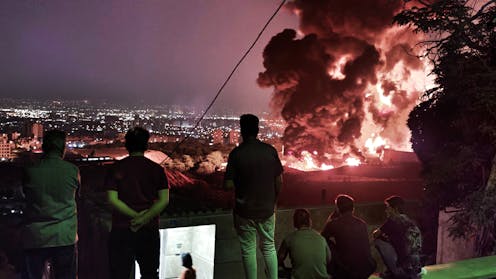
Varias personas observan el fuego y el humo provocados por un ataque aéreo israelí contra un depósito de petróleo en Teherán, el 15 de junio de 2025. Stringer/Getty Images

Con el bombardeo estadounidense de tres instalaciones nucleares en Irán, las relaciones entre ambos países han alcanzado posiblemente uno de los puntos más bajos de la historia moderna. Pero la enemistad entre ambos países no es nueva: Estados Unidos e Irán llevan décadas en conflicto, al menos desde que Estados Unidos ayudó a derrocar a un primer ministro demócrata, Mohammed Mossadegh, en agosto de 1953. A continuación, Estados Unidos apoyó el largo y represivo reinado del sah de Irán, cuyos servicios de seguridad brutalizaron a los ciudadanos iraníes durante décadas.

Los dos países han sido particularmente hostiles entre sí desde que los estudiantes iraníes tomaron la embajada estadounidense en Teherán en noviembre de 1979, lo que dio lugar a sanciones económicas y la ruptura de las relaciones diplomáticas oficiales.

Desde 1984, el Departamento de Estado de EE. UU. incluye a Irán en la lista de “países que patrocinan el terrorismo”, alegando que el Gobierno iraní proporciona a los terroristas entrenamiento, dinero y armas.

1953: Estados Unidos derriba a Mossadegh
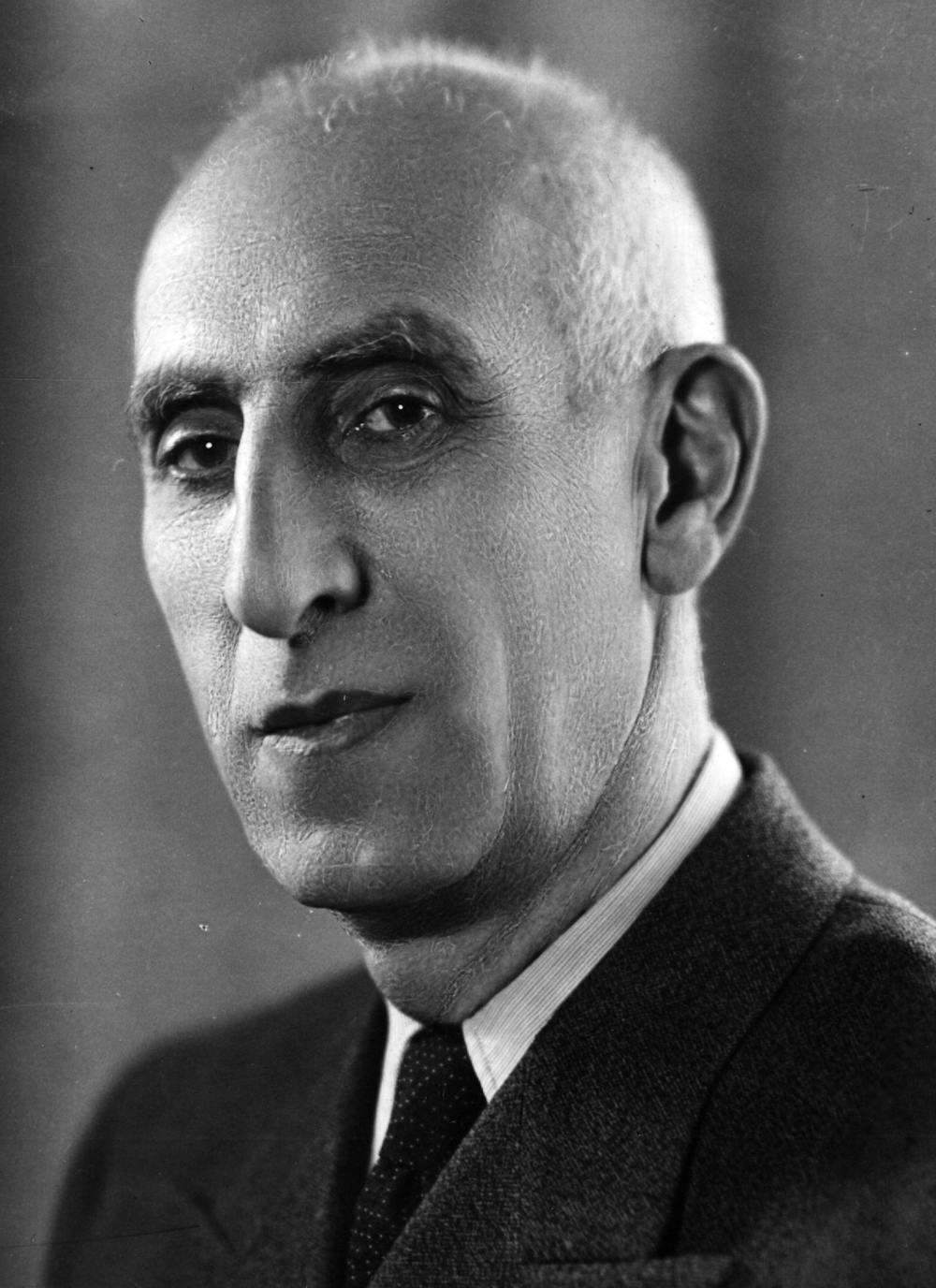
Mohammed Mossadegh.
Wikimedia Commons

En 1951, el Parlamento iraní eligió un nuevo primer ministro, Mossadegh, quien llevó a los legisladores a votar a favor de tomar el control de la Anglo-Iranian Oil Company, expulsar a los propietarios británicos de la empresa y declarar que querían convertir los beneficios del petróleo en inversiones para el pueblo iraní. Estados Unidos temía que se interrumpiera el suministro mundial de petróleo y le preocupaba que Irán cayera presa de la influencia soviética. Los británicos temían perder el petróleo barato iraní.

El presidente Dwight Eisenhower decidió que lo mejor era deshacerse de Mossadegh. La Operación Ajax, una acción conjunta de la CIA y el Reino Unido, convenció al sah, el monarca del país, para que destituyera a Mossadegh y lo expulsara del poder por la fuerza. Mossadegh fue sustituido por un primer ministro mucho más favorable a Occidente, elegido personalmente por la CIA.

Manifestantes en Teherán exigen el establecimiento de una república islámica.
AP Photo/Saris

1979: Los revolucionarios derrocan al sha y toman rehenes

Tras más de 25 años de relativa estabilidad en las relaciones entre Estados Unidos e Irán, la población iraní estaba descontenta con las condiciones sociales y económicas que se desarrollaron bajo el régimen dictatorial del sah Mohammad Reza Pahlavi.

Pahlavi se enriqueció y utilizó la ayuda estadounidense para financiar al ejército, mientras que muchos iraníes vivían en la pobreza. La disidencia era a menudo reprimida violentamente por la SAVAK, el servicio de seguridad del sah. En enero de 1979, el sah abandonó Irán, aparentemente para recibir tratamiento contra el cáncer. Dos semanas después, el ayatolá Ruhollah Jomeini regresó del exilio en Irak y lideró una campaña para abolir la monarquía y proclamar un gobierno islámico.
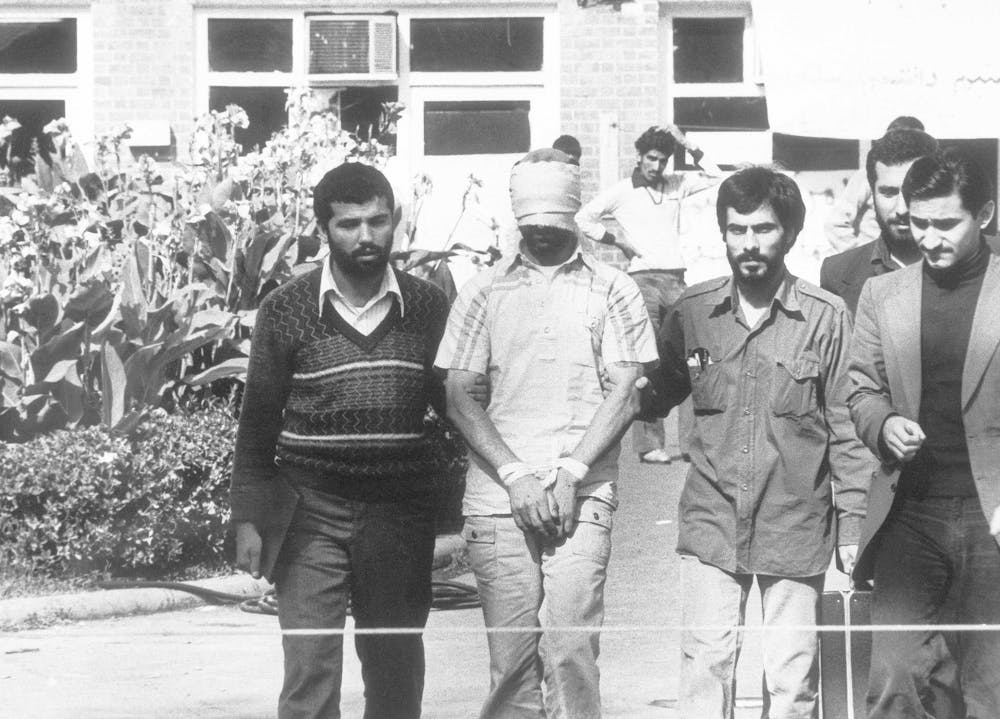
Estudiantes iraníes en la embajada de Estados Unidos en Teherán muestran a la multitud un rehén estadounidense con los ojos vendados en noviembre de 1979.
AP Photo

En octubre de 1979, el presidente Jimmy Carter accedió a permitir que el sah viajara a Estados Unidos para recibir tratamiento médico avanzado. Estudiantes iraníes indignados asaltaron la embajada estadounidense en Teherán el 4 de noviembre, tomando como rehenes a 52 estadounidenses. Esto convenció a Carter de romper las relaciones diplomáticas con Irán el 7 de abril de 1980.

Dos semanas más tarde, el ejército estadounidense lanzó una misión para rescatar a los rehenes, pero fracasó y se estrellaron varios aviones, lo que causó la muerte de ocho militares estadounidenses.

El sah murió en Egipto en julio de 1980, pero los rehenes no fueron liberados hasta el 20 de enero de 1981, tras 444 días de cautiverio.
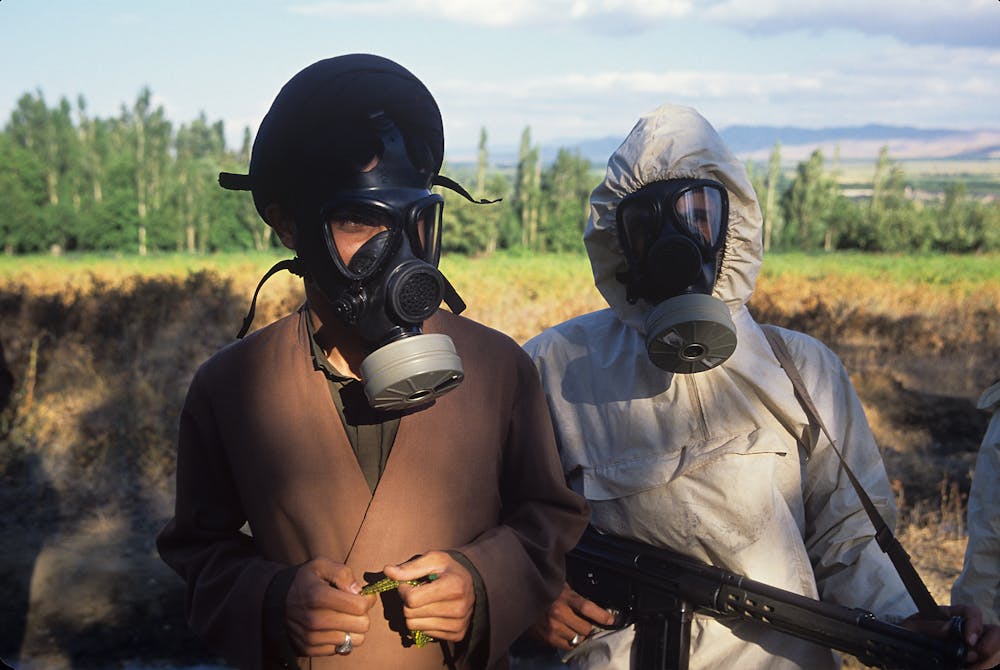
Un clérigo iraní, a la izquierda, y un soldado iraní llevan máscaras antigás para protegerse de los ataques con armas químicas iraquíes en mayo de 1988.
Kaveh Kazemi/Getty Images

1980-1988: Estados Unidos se pone tácitamente del lado de Irak

En septiembre de 1980, Irak invadió Irán, lo que supuso una escalada de la rivalidad regional y las diferencias religiosas entre ambos países: Irak estaba gobernado por musulmanes suníes, pero su población era mayoritariamente musulmana chií; Irán estaba liderado y poblado en su mayoría por chiíes.

Estados Unidos temía que el conflicto limitara el flujo de petróleo de Oriente Medio y quería asegurarse de que no afectara a su estrecho aliado, Arabia Saudí.

Estados Unidos apoyó al líder iraquí Saddam Hussein en su lucha contra el régimen iraní antiamericano. Como resultado, Estados Unidos hizo en gran medida la vista gorda ante el uso de armas químicas por parte de Irak contra Irán.

Los funcionarios estadounidenses moderaron su habitual oposición a esas armas ilegales e inhumanas porque el Departamento de Estado de EE. UU. no “quería hacerle el juego a Irán” alimentando su propaganda contra Irak. En 1988, la guerra terminó en un empate. Murieron más de 500 000 militares y 100 000 civiles.

1981-1986: Estados Unidos vende armas en secreto a Irán

EE. UU. impuso un embargo de armas después de que Irán fuera designado Estado patrocinador del terrorismo en 1984. Esto dejó al ejército iraní, en plena guerra con Irak, desesperado por conseguir armas, aviones y piezas de vehículos para seguir luchando.

La administración Reagan decidió que el embargo probablemente empujaría a Irán a buscar el apoyo de la Unión Soviética, rival de Estados Unidos en la Guerra Fría. En lugar de poner fin oficialmente al embargo, los funcionarios estadounidenses acordaron vender armas en secreto a Irán a partir de 1981.

El último envío, de misiles antitanque, se realizó en octubre de 1986. En noviembre de ese año, una revista libanesa reveló el acuerdo. Esta revelación desató el escándalo Irán-Contra en Estados Unidos, al descubrirse que funcionarios de la administración Reagan habían recaudado dinero de Irán para comprar las armas y enviado ilegalmente esos fondos a rebeldes antisocialistas (la contra nicaragüense).
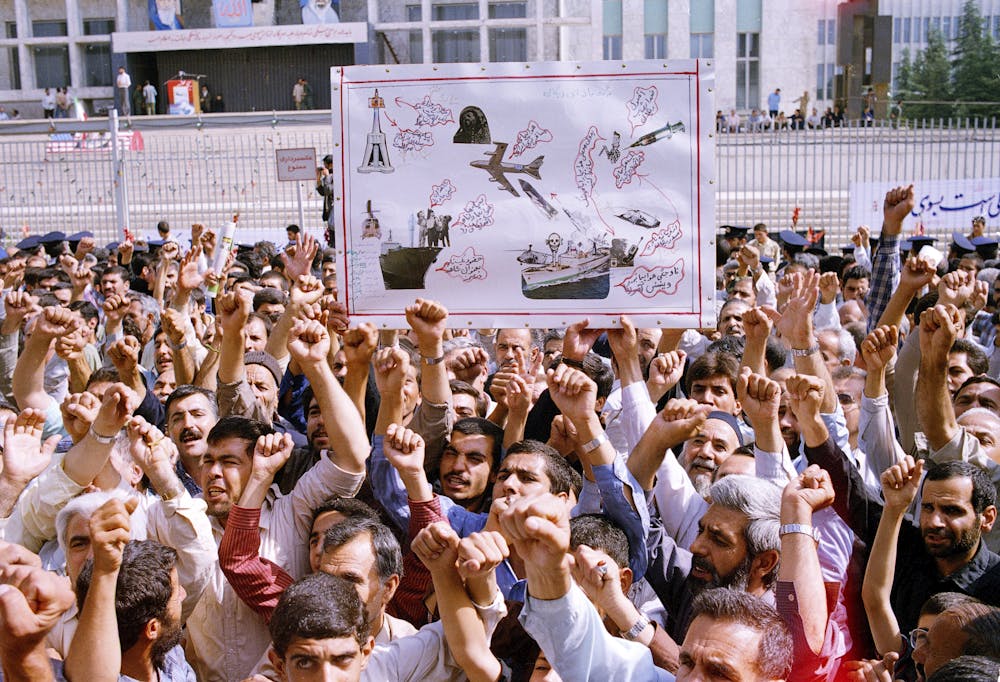
En el funeral multitudinario de 76 de las 290 personas fallecidas en el derribo del vuelo 655 de Iran Air, los dolientes sostienen un cartel que representa el incidente.
AP Photo/CP/Mohammad Sayyad

1988: La Marina de los Estados Unidos derriba el vuelo 655 de Iran Air

En la mañana del 8 de julio de 1988, el USS Vincennes, un crucero lanzamisiles que patrullaba en aguas internacionales del Golfo Pérsico, entró en aguas territoriales iraníes mientras se encontraba en una escaramuza con lanchas artilladas iraníes.

Durante o justo después de ese intercambio de disparos, la tripulación del Vincennes confundió un avión civil de pasajeros Airbus que pasaba por allí con un caza F-14 iraní. Lo derribaron, matando a las 290 personas a bordo.

Estados Unidos lo calificó de “accidente trágico y lamentable”, pero Irán creyó que el derribo del avión fue intencionado. En 1996, Estados Unidos acordó pagar 131 millones de dólares en concepto de indemnización a Irán.

1997-1998: Estados Unidos busca el contacto

En agosto de 1997, un reformista moderado, Mohammad Khatami, ganó las elecciones presidenciales de Irán.

El presidente estadounidense Bill Clinton intuyó una oportunidad, y envió un mensaje a Teherán a través del embajador suizo en ese país en el que proponía conversaciones directas entre ambos gobiernos.

Poco después, a principios de enero de 1998, Jatamí concedió una entrevista a la CNN en la que expresó su “respeto por el gran pueblo estadounidense”, condenó el terrorismo y recomendó un “intercambio de profesores, escritores, académicos, artistas, periodistas y turistas” entre Estados Unidos e Irán.

Sin embargo, el líder supremo, el ayatolá Alí Jamenei, no estuvo de acuerdo, por lo que las gestiones mutuas no dieron muchos frutos cuando Clinton llegó al final de su mandato.

En su discurso sobre el estado de la Unión de 2002, el presidente George W. Bush calificó a Irán, Irak y Corea del Norte como un “Eje del Mal” que apoyaba el terrorismo y buscaba armas de destrucción masiva, lo que tensó aún más las relaciones.
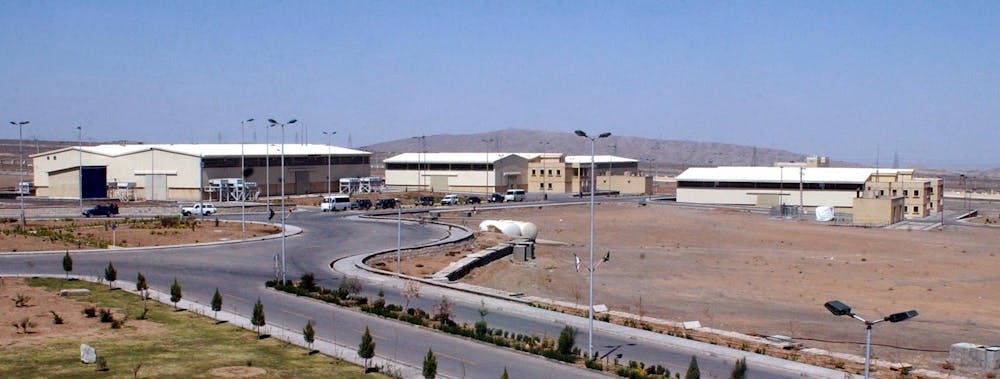
Dentro de estos edificios de la instalación nuclear de Natanz, en Irán, los técnicos enriquecen uranio.
AP Photo/Vahid Salemi

2002: El programa nuclear de Irán despierta la alarma

En agosto de 2002, un grupo rebelde en el exilio anunció que Irán había estado trabajando en secreto en armas nucleares en dos instalaciones que no se habían revelado públicamente hasta entonces.

Esto constituía una violación de los términos del Tratado de No Proliferación Nuclear, que Irán había firmado y que exigía a los países revelar sus instalaciones relacionadas con la energía nuclear a los inspectores internacionales.

Una de esas instalaciones anteriormente secretas, Natanz, albergaba centrifugadoras para enriquecer uranio, que podía utilizarse en reactores nucleares civiles o enriquecerse aún más para fabricar armas.

A partir de 2005, ciberataques de los gobiernos de Estados Unidos e Israel se dirigieron contra las centrifugadoras de Natanz con un software malicioso creado a medida que se conoció como Stuxnet.

Esa iniciativa, que ralentizó el programa nuclear iraní, fue uno de los muchos intentos estadounidenses e internacionales, en su mayoría infructuosos, para frenar el avance de Irán hacia la construcción de una bomba nuclear.

2003: Irán escribe a la administración Bush

Un extracto del documento enviado desde Irán, a través del Gobierno suizo, al Departamento de Estado de EE. UU. en 2003, parece buscar conversaciones entre EE. UU. e Irán.
Washington Post via Scribd

En mayo de 2003, altos funcionarios iraníes se pusieron en contacto discretamente con el Departamento de Estado a través de la embajada suiza en Irán, en busca de “un diálogo en el respeto mutuo” que abordara cuatro grandes cuestiones: las armas nucleares, el terrorismo, la resistencia palestina y la estabilidad en Irak.

Los partidarios de la línea dura del Gobierno de Bush no estaban interesados en ninguna reconciliación importante, aunque el secretario de Estado Colin Powell se mostraba a favor del diálogo y otros funcionarios se habían reunido con Irán para tratar el tema de Al Qaeda.

Cuando el radical iraní Mahmud Ahmadineyad fue elegido presidente de Irán en 2005, la oportunidad se esfumó. Al año siguiente, Ahmadineyad hizo su propia apertura a Washington en una carta de 18 páginas dirigida al presidente Bush. La carta fue ampliamente rechazada.
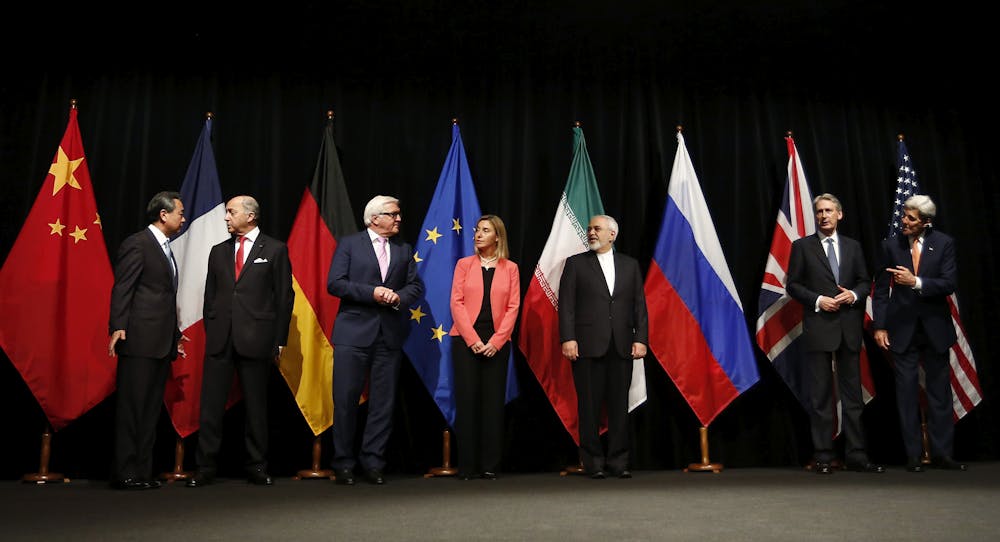
Representantes de varias naciones se reunieron en Viena en julio de 2015 para ultimar el acuerdo nuclear con Irán.
Ministerio Federal de Europa, Integración y Asuntos Exteriores de Austria/Flickr

2015: Firma del acuerdo nuclear con Irán

Tras una década de intentos infructuosos por frenar las ambiciones nucleares de Irán, la Administración Obama emprendió una vía diplomática directa a partir de 2013.

Dos años de negociaciones secretas y directas, inicialmente bilaterales entre Estados Unidos e Irán y posteriormente con otras potencias nucleares, culminaron en el Plan de Acción Integral Conjunto, a menudo denominado acuerdo nuclear con Irán.

Irán, Estados Unidos, China, Francia, Alemania, Rusia y el Reino Unido firmaron el acuerdo en 2015. Este limitaba severamente la capacidad de Irán para enriquecer uranio y obligaba a inspectores internacionales a supervisar y hacer cumplir el acuerdo por parte de Irán.

A cambio, se concedió a Irán el levantamiento de las sanciones económicas internacionales y estadounidenses. Aunque los inspectores certificaron periódicamente que Irán cumplía los términos del acuerdo, el presidente Donald Trump se retiró del acuerdo en mayo de 2018.

2020: Drones estadounidenses matan al general iraní Qassem Soleimani
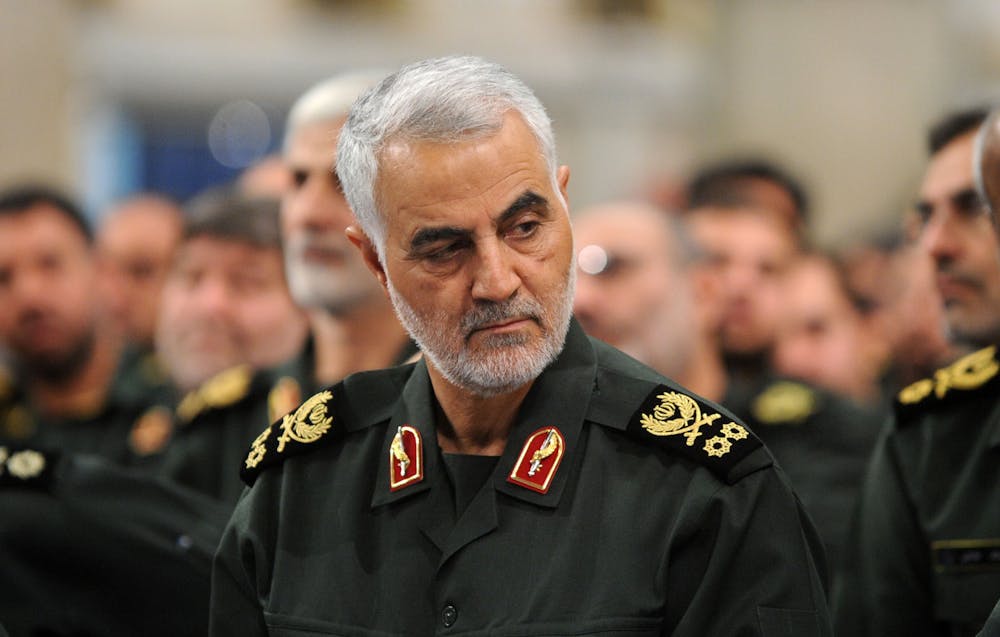
Una foto oficial del Gobierno iraní muestra al general Qassem Soleimani, asesinado el 3 de enero en un ataque con drones ordenado por el presidente Donald Trump.
Oficina de prensa del líder supremo iraní/Agencia Anadolu a través de Getty Images

El 3 de enero de 2020, un dron estadounidense disparó un misil que mató al general Qassem Soleimani, líder de la Fuerza Quds de élite iraní. Los analistas consideraban a Soleimani el segundo hombre más poderoso de Irán, después del líder supremo, el ayatolá Jamenei.

En ese momento, la administración Trump afirmó que Soleimani estaba dirigiendo un ataque inminente contra activos estadounidenses en la región, pero las autoridades no han proporcionado pruebas claras que respalden esa afirmación.

Irán respondió lanzando misiles balísticos que impactaron en dos bases estadounidenses en Irak.

2023: Los ataques del 7 de octubre contra Israel

El descarado ataque de Hamás contra Israel el 7 de octubre de 2023 provocó una temible respuesta militar por parte de Israel que continúa hoy en día y sirvió para debilitar gravemente a los aliados de Irán en la región, especialmente Hamás, autor de los ataques, y Hezbolá en el Líbano.

2025: Trump 2.0 e Irán

Trump vio la oportunidad de forjar un nuevo acuerdo nuclear con Irán y de buscar otros acuerdos comerciales con Teherán. Una vez investido para su segundo mandato, el presidente estadounidense nombró a Steve Witkoff, un inversor inmobiliario amigo del presidente, como enviado especial para Oriente Medio y para liderar las negociaciones.

Las negociaciones para alcanzar un acuerdo nuclear entre Washington y Teherán comenzaron en abril, pero los países no llegaron a un acuerdo. Estaban planeando una nueva ronda de conversaciones cuando Israel atacó Irán con una serie de ataques aéreos el 13 de junio, lo que obligó a la Casa Blanca a reconsiderar su posición.

En la madrugada del 22 de junio, Estados Unidos decidió actuar con contundencia en un intento de paralizar la capacidad nuclear de Irán, bombardeando tres instalaciones nucleares y causando lo que los responsables del Pentágono calificaron de “daños graves”. Irán prometió tomar represalias.

Este artículo ha sido actualizado para reflejar el bombardeo estadounidense de instalaciones nucleares iraníes el 22 de junio de 2025.


Reciba artículos como este cada día en su buzón. 📩 Suscríbase gratis a nuestro boletín diario para tener acceso directo a la conversación del día de The Conversation en español.


The Conversation

Jeffrey Fields recibe financiación de la Carnegie Corporation de Nueva York y Schmidt Futures.

ref. Un recorrido por la larga y tortuosa relación entre EE. UU. e Irán – https://theconversation.com/un-recorrido-por-la-larga-y-tortuosa-relacion-entre-ee-uu-e-iran-259550

No más ‘chuches’ en la escuela: la importancia de la nueva normativa para el comedor

Source: The Conversation – France – By David Cobos Sanchiz, Profesor Titular Dpto. Educación y Psicología Social, Universidad Pablo de Olavide

Regular los comedores escolares contribuye a crear hábitos saludables.

¿Se imagina una herramienta educativa con la capacidad de reducir la pobreza infantil, fomentar hábitos saludables para toda la vida y mejorar la convivencia y la autonomía? Todo esto es lo que puede lograr un comedor escolar bien gestionado.

Recientemente ha sido aprobada en España una nueva normativa para la promoción de una alimentación saludable y sostenible en los centros educativos. El texto reconoce la relación entre los derechos del niño y las políticas de salud alimentaria, e impulsa un modelo escolar que garantiza entornos protectores y promotores de bienestar para todo el alumnado. ¿Cómo plantea hacerlo?

Límites en máquinas expendedoras

Para empezar, se establecen límites estrictos a las bebidas azucaradas y a los envases monodosis de azúcar, sal, aceite, vinagre y otras salsas, regulando sus contenidos máximos. También se prohíbe la venta de productos no saludables (ricos en grasas trans, azúcares añadidos o cafeína en máquinas expendedoras y cafeterías escolares.

Otra medida importante que recoge el texto es la priorización de alimentos frescos, locales y de temporada, como frutas, verduras, legumbres y cereales integrales. Esta no es solo una recomendación, sino una obligación legal. Así, los centros escolares están obligados a cumplir estos criterios nutricionales al elaborar los menús escolares, mientras que las comunidades autónomas deben supervisar y garantizar el cumplimiento a través de inspecciones y planes de control.

Un buen menú, según la ley

Los menús deben ser equilibrados, estar adaptados a la edad del alumnado y contar con la supervisión de profesionales en nutrición o dietética. De este modo, el comedor escolar deja de concebirse únicamente como un espacio logístico para la alimentación diaria y pasa a ser entendido como un instrumento educativo, social y de equidad.

El decreto busca prevenir la obesidad infantil, reducir las desigualdades sociales en el acceso a una nutrición adecuada y fomentar hábitos saludables desde edades tempranas. Se trata, por tanto, de una apuesta por una escuela comprometida con la salud pública y con el desarrollo integral de la infancia. Sin olvidar que establecer hábitos alimentarios saludables repercute directamente en la salud a lo largo de toda la vida, mejorando incluso el rendimiento académico y el bienestar emocional.


Leer más:
Una infancia sedentaria: los niños y las niñas ya no se mueven como deberían


Hay que decir que se trata de una buena norma que viene a paliar un déficit legislativo que tenía España respecto a muchos otros países europeos. Sin ir más lejos, la prohibición de máquinas expendedoras de bebidas azucaradas en las escuelas comenzó en Francia hace dos décadas. En cuanto al Reino Unido, ya en 2015 estableció requisitos nutricionales para las comidas escolares, incluyendo la limitación de productos ultraprocesados y bebidas azucaradas.


Leer más:
¿Influye el envase de los alimentos en los hábitos nutricionales de los niños y niñas?


Una visión avalada por la investigación científica

Muchos estudios, clásicos y recientes, han demostrado que las intervenciones que modifican el entorno del comedor, combinadas con acciones de formación y sensibilización, son eficaces para mejorar los hábitos alimentarios del alumnado. Distintas iniciativas han logrado aumentar el consumo de frutas y verduras, reducir la ingesta de bebidas azucaradas y reforzar la autoeficacia de los estudiantes a la hora de elegir alimentos saludables.

Además, la participación activa del alumnado en estas iniciativas –por ejemplo, mediante la organización de campañas, talleres o huertos escolares– refuerza el aprendizaje y lo convierte en una experiencia transformadora, logrando cambios profundos y sostenibles en las actitudes y comportamientos alimentarios.

El impacto de los menús

En el sentido contrario, también se ha demostrado que los entornos escolares que permiten el acceso libre a productos ultraprocesados, o que no cuidan la calidad de los menús, dificultan gravemente la promoción de hábitos saludables. La presencia de alimentos no nutritivos en las escuelas puede anular los efectos positivos de cualquier programa de educación alimentaria.


Leer más:
La fórmula para desayunos y meriendas infantiles sanos y sostenibles


Por tanto, es clave entender el comedor escolar como un espacio con un enorme potencial pedagógico y social. Un comedor escolar bien gestionado alimenta pero también educa, cuida e incluye. No solo enseña a comer mejor, sino que puede convertirse en un escenario de aprendizajes interdisciplinarios y transversales, donde se refuercen áreas como las ciencias naturales, la ética, la economía o la ecología, a través de actividades participativas y experienciales. El comedor es también un espacio para transmitir valores y aprender a convivir, a respetar normas, a compartir y a cuidar de uno mismo y de los demás.

Repensar el comedor escolar con mirada pedagógica

Este enfoque holístico de la alimentación escolar promueve una visión más rica y transformadora del acto de comer. No solo como una necesidad fisiológica, sino como una práctica social, cultural, educativa y política. Las escuelas, al integrar este enfoque, forman ciudadanos más conscientes, autónomos y responsables.

Además de mejorar la calidad de la alimentación en la escuela, esta nueva mirada destaca el papel del comedor como un espacio educativo de primer orden, capaz de generar cambios reales y duraderos en la vida de los estudiantes. Promover hábitos saludables, garantizar entornos equitativos y formar en valores desde el comedor escolar es una obligación ética y pedagógica. Porque una escuela que alimenta bien es una escuela que educa mejor.


Reciba artículos como este cada día en su buzón. 📩 Suscríbase gratis a nuestro boletín diario para tener acceso directo a la conversación del día de The Conversation en español.


The Conversation

David Cobos Sanchiz no recibe salario, ni ejerce labores de consultoría, ni posee acciones, ni recibe financiación de ninguna compañía u organización que pueda obtener beneficio de este artículo, y ha declarado carecer de vínculos relevantes más allá del cargo académico citado.

ref. No más ‘chuches’ en la escuela: la importancia de la nueva normativa para el comedor – https://theconversation.com/no-mas-chuches-en-la-escuela-la-importancia-de-la-nueva-normativa-para-el-comedor-258246

How do atoms form? A physicist explains where the atoms that make up everything around come from

Source: The Conversation – USA (2) – By Stephen L. Levy, Associate Professor of Physics and Applied Physics and Astronomy, Binghamton University, State University of New York

Many heavy atoms form from a supernova explosion, the remnants of which are shown in this image. NASA/ESA/Hubble Heritage Team

Curious Kids is a series for children of all ages. If you have a question you’d like an expert to answer, send it to CuriousKidsUS@theconversation.com.


How do atoms form? – Joshua, age 7, Shoreview, Minnesota


Richard Feynman, a famous theoretical physicist who won the Nobel Prize, said that if he could pass on only one piece of scientific information to future generations, it would be that all things are made of atoms.

Understanding how atoms form is a fundamental and important question, since they make up everything with mass.

The question of where atoms come from requires a lot of physics to be answered completely – and even then, physicists like me only have good guesses to explain how some atoms are formed.

What is an atom?

An atom consists of a heavy center, called the nucleus, made of particles called protons and neutrons. An atom has lighter particles called electrons that you can think of as orbiting around the nucleus.

The electrons each carry one unit of negative charge, the protons each carry one unit of positive charge, and the neutrons have no charge. An atom has the same number of protons as electrons, so it is neutral − it has no overall charge.

A diagram of an atom, with protons and neutrons clumped together in the center and ovals representing electron orbits surrounding them.
An atom consists of positively charged protons, neutrally charged neutrons and negatively charged electrons.
AG Caesar/Wikimedia Commons, CC BY-SA

Now, most of the atoms in the universe are the two simplest kinds: hydrogen, which has one proton, zero neutrons and one electron; and helium, which has two protons, two neutrons and two electrons. Of course, on Earth there are lots of atoms besides these that are just as common, such as carbon and oxygen, but I’ll talk about those soon.

An element is what scientists call a group of atoms that are all the same, because they all have the same number of protons.

When did the first atoms form?

Most of the universe’s hydrogen and helium atoms formed around 400,000 years after the Big Bang, which is the name for when scientists think the universe began, about 14 billion years ago.

Why did they form at that time? Astronomers know from observing distant exploding stars that the size of the universe has been getting bigger since the Big Bang. When the hydrogen and helium atoms first formed, the universe was about 1,000 times smaller than it is now.

And based on their understanding of physics, scientists believe that the universe was much hotter when it was smaller.

Before this time, the electrons had too much energy to settle into orbits around the hydrogen and helium nuclei. So, the hydrogen and helium atoms could form only once the universe cooled down to something like 5,000 degrees Fahrenheit (2,760 degrees Celsius). For historical reasons, this process is misleadingly called recombination − combination would be more descriptive.

The helium and deuterium − a heavier form of hydrogen − nuclei formed even earlier, just a few minutes after the Big Bang, when the temperature was above 1 billion F (556 million C). Protons and neutrons can collide and form nuclei like these only at very high temperatures.

Scientists believe that almost all the ordinary matter in the universe is made of about 90% hydrogen atoms and 8% helium atoms.

How do more massive atoms form?

So, the hydrogen and helium atoms formed during recombination, when the cooler temperature allowed electrons to fall into orbits. But you, I and almost everything on Earth is made of many more massive atoms than just hydrogen and helium. How were these atoms made?

The surprising answer is that more massive atoms are made in stars. To make atoms with several protons and neutrons stuck together in the nucleus requires the type of high-energy collisions that occur in very hot places. The energy needed to form a heavier nucleus needs to be large enough to overcome the repulsive electric force that positive charges, like two protons, feel with each other.

A close up of a bright star, which looks like a sphere with some flashes on its surface, against a dark background.
The immense heat and pressure in stars can form atoms through a process called fusion.
NASA/SDO

Protons and neutrons also have another property – kind of like a different type of charge – that is strong enough to bind them together once they are able to get very close together. This property is called the strong force, and the process that sticks these particles together is called fusion.

Scientists believe that most of the elements from carbon up to iron are fused in stars heavier than our Sun, where the temperature can exceed 1 billion F (556 million C) – the same temperature that the universe was when it was just a few minutes old.

The periodic table of elements, color-coded by how each element formed. Lighter elements formed by cosmic ray fission or exploding stars, while larger elements formed by merging neurtron stars or dying low mass stars. Hydrogen and Helium formed through Big Bang fusion.
This periodic table shows which astronomical processes scientists believe are responsible for forming each of the elements.
Cmglee/Wikimedia Commons (image) and Jennifer Johnson/OSU (data), CC BY-SA

But even in hot stars, elements heavier than iron and nickel won’t form. These require extra energy, because the heavier elements can more easily break into pieces.

In a dramatic event called a supernova, the inner core of a heavy star suddenly collapses after it runs out of fuel to burn. During the powerful explosion this collapse triggers, elements that are heavier than iron can form and get ejected out into the universe.

Astronomers are still figuring out the details of other fantastic stellar events that form larger atoms. For example, colliding neutron stars can release enormous amounts of energy – and elements such as gold – on their way to forming black holes.

Understanding how atoms are made just requires learning a little general relativity, plus some nuclear, particle and atomic physics. But to complicate matters, there is other stuff in the universe that doesn’t appear to be made from normal atoms at all, called dark matter. Scientists are investigating what dark matter is and how it might form.


Hello, curious kids! Do you have a question you’d like an expert to answer? Ask an adult to send your question to CuriousKidsUS@theconversation.com. Please tell us your name, age and the city where you live.

And since curiosity has no age limit – adults, let us know what you’re wondering, too. We won’t be able to answer every question, but we will do our best.

The Conversation

Stephen L. Levy receives funding from the National Science Foundation and the National Institutes of Health. He is affiliated with CyteQuest, Inc.

ref. How do atoms form? A physicist explains where the atoms that make up everything around come from – https://theconversation.com/how-do-atoms-form-a-physicist-explains-where-the-atoms-that-make-up-everything-around-come-from-256172

Astronomy has a major data problem – simulating realistic images of the sky can help train algorithms

Source: The Conversation – USA (2) – By John Peterson, Assoc. Professor of Physics and Astronomy, Purdue University

A simulation of a set of synthetic galaxies. Photons are sampled from these galaxies and have been simulated through the Earth’s atmosphere, a telescope and a sensor using a code called PhoSim. John Peterson/Purdue

Professional astronomers don’t make discoveries by looking through an eyepiece like you might with a backyard telescope. Instead, they collect digital images in massive cameras attached to large telescopes.

Just as you might have an endless library of digital photos stored in your cellphone, many astronomers collect more photos than they would ever have the time to look at. Instead, astronomers like me look at some of the images, then build algorithms and later use computers to combine and analyze the rest.

But how can we know that the algorithms we write will work, when we don’t even have time to look at all the images? We can practice on some of the images, but one new way to build the best algorithms is to simulate some fake images as accurately as possible.

With fake images, we can customize the exact properties of the objects in the image. That way, we can see if the algorithms we’re training can uncover those properties correctly.

My research group and collaborators have found that the best way to create fake but realistic astronomical images is to painstakingly simulate light and its interaction with everything it encounters. Light is composed of particles called photons, and we can simulate each photon. We wrote a publicly available code to do this called the photon simulator, or PhoSim.

The goal of the PhoSim project is to create realistic fake images that help us understand where distortions in images from real telescopes come from. The fake images help us train programs that sort through images from real telescopes. And the results from studies using PhoSim can also help astronomers correct distortions and defects in their real telescope images.

The data deluge

But first, why is there so much astronomy data in the first place? This is primarily due to the rise of dedicated survey telescopes. A survey telescope maps out a region on the sky rather than just pointing at specific objects.

These observatories all have a large collecting area, a large field of view and a dedicated survey mode to collect as much light over a period of time as possible. Major surveys from the past two decades include the SDSS, Kepler, Blanco-DECam, Subaru HSC, TESS, ZTF and Euclid.

The Vera Rubin Observatory in Chile has recently finished construction and will soon join those. Its survey begins soon after its official “first look” event on June 23, 2025. It will have a particularly strong set of survey capabilities.

The Rubin observatory can look at a region of the sky all at once that is several times larger than the full Moon, and it can survey the entire southern celestial hemisphere every few nights.

An observatory, which looks like a building with a dome atop it, on a mountainside, with a starry sky shown in the background.
The Vera Rubin Observatory will take in lots of light to construct maps of the sky.
Rubin Observatory/NSF/AURA/B. Quint, CC BY-SA

A survey can shed light on practically every topic in astronomy.

Some of the ambitious research questions include: making measurements about dark matter and dark energy, mapping the Milky Way’s distribution of stars, finding asteroids in the solar system, building a three-dimensional map of galaxies in the universe, finding new planets outside the solar system and tracking millions of objects that change over time, including supernovas.

All of these surveys create a massive data deluge. They generate tens of terabytes every night – that’s millions to billions of pixels collected in seconds. In the extreme case of the Rubin observatory, if you spent all day long looking at images equivalent to the size of a 4K television screen for about one second each, you’d be looking at them 25 times too slow and you’d never keep up.

At this rate, no individual human could ever look at all the images. But automated programs can process the data.

Astronomers don’t just survey an astronomical object like a planet, galaxy or supernova once, either. Often we measure the same object’s size, shape, brightness and position in many different ways under many different conditions.

But more measurements do come with more complications. For example, measurements taken under certain weather conditions or on one part of the camera may disagree with others at different locations or under different conditions. Astronomers can correct these errors – called systematics – with careful calibration or algorithms, but only if we understand the reason for the inconsistency between different measurements. That’s where PhoSim comes in. Once corrected, we can use all the images and make more detailed measurements.

Simulations: One photon at a time

To understand the origin of these systematics, we built PhoSim, which can simulate the propagation of light particles – photons – through the Earth’s atmosphere and then into the telescope and camera.

A simulation of photons traveling from a single star to the Vera Rubin Observatory, made using PhoSim. The layers of turbulence in the atmosphere move according to wind patterns (top middle), and the mirrors deform (top right) depending on the temperature and forces exerted on them. The photons with different wavelengths (colors) are sampled from a star, refract through the atmosphere and then interact with the telescope’s mirrors, filter and lenses. Finally, the photons eject electrons in the sensor (bottom middle) that are counted in pixels to make an image (bottom right). John Peterson/Purdue

PhoSim simulates the atmosphere, including air turbulence, as well as distortions from the shape of the telescope’s mirrors and the electrical properties of the sensors. The photons are propagated using a variety of physics that predict what photons do when they encounter the air and the telescope’s mirrors and lenses.

The simulation ends by collecting electrons that have been ejected by photons into a grid of pixels, to make an image.

Representing the light as trillions of photons is computationally efficient and an application of the Monte Carlo method, which uses random sampling. Researchers used PhoSim to verify some aspects of the Rubin observatory’s design and estimate how its images would look.

Rubin simulation with PhoSim, showing black dots representing stars and galaxies against a bright background
A simulations of a series of exposures of stars, galaxies and background light through the Rubin observatory using PhoSim. Photons are sampled from the objects and then interact with the Earth’s atmosphere and Rubin’s telescope and camera.
John Peterson/Purdue

The results are complex, but so far we’ve connected the variation in temperature across telescope mirrors directly to astigmatism – angular blurring – in the images. We’ve also studied how high-altitude turbulence in the atmosphere that can disturb light on its way to the telescope shifts the positions of stars and galaxies in the image and causes blurring patterns that correlate with the wind. We’ve demonstrated how the electric fields in telescope sensors – which are intended to be vertical – can get distorted and warp the images.

Researchers can use these new results to correct their measurements and better take advantage of all the data that telescopes collect.

Traditionally, astronomical analyses haven’t worried about this level of detail, but the meticulous measurements with the current and future surveys will have to. Astronomers can make the most out of this deluge of data by using simulations to achieve a deeper level of understanding.

The Conversation

John Peterson does not work for, consult, own shares in or receive funding from any company or organization that would benefit from this article, and has disclosed no relevant affiliations beyond their academic appointment.

ref. Astronomy has a major data problem – simulating realistic images of the sky can help train algorithms – https://theconversation.com/astronomy-has-a-major-data-problem-simulating-realistic-images-of-the-sky-can-help-train-algorithms-258786

How do scientists calculate the probability that an asteroid could hit Earth?

Source: The Conversation – USA (2) – By Toshi Hirabayashi, Associate Professor of Aerospace Engineering, Georgia Institute of Technology

NASA’s Webb telescope captured a photo of the asteroid 2024 YR4 from afar. European Space Agency via AP

I was preparing for my early morning class back in January 2025 when I received a notice regarding an asteroid called 2024 YR4. It said the probability it could hit Earth was unusually high.

As defending Earth from unexpected intruders such as asteroids is part of my expertise, I immediately started receiving questions from my students and colleagues about what was happening.

When scientists spot an asteroid whose trajectory might take it close to Earth, they monitor it frequently and calculate the probability that it might collide with our planet. As they receive more observational data, they get a better picture of what could happen.

Just having more data points early doesn’t make scientists’ predictions better. They need to keep following the asteroid as it moves through space to better understand its trajectory.

Reflecting on the incident a few months later, I wondered whether there might have been a better way for scientists to communicate about the risk with the public. We got accurate information, but as the questions I heard indicated, it wasn’t always enough to understand what it actually means.

Numbers change every day

The 2024 YR24 asteroid has a diameter of about 196 feet (60 meters) – equivalent to approximately a 15-story building in length.

At the time of the announcement in January, the asteroid’s impact probability was reported to exceed 1%. The impact probability describes how likely a hazardous asteroid is to hit Earth. For example, if the impact probability is 1%, it means that in 1 of 100 cases, it hits Earth. One in 100 is kind of rare, but still too close for comfort if you’re talking about the odds of a collision that could devastate Earth.

Over time, though, further observations and analyses revealed an almost-zero chance of this asteroid colliding with Earth.

After the initial notice in January, the impact probability continuously increased up to 3.1% on Feb. 18, but dropped to 1.5% on Feb. 19. Then, the impact probability continuously went down, until it hit 0.004% on Feb. 24. As of June 15, it now has an impact probability of less than 0.0000081%.

A diagram showing the orbit paths of Earth, 2024 YR4 and some other planets in the solar system. 2024 YR4's orbit intersects with Earth's.
The orbit of 2024 YR4 will take it close to Earth, but scientists have found the chance of a collision to be exceedingly low.
NASA/JPL

But while the probability of hitting Earth went down, the probability of the asteroid hitting the Moon started increasing. It went up to 1.7% on Feb. 24. As of April 2, it is 3.8%.

If it hits the Moon, some ejected materials from this collision could reach the Earth. However, these materials would burn away when they enter the Earth’s thick atmosphere.

Impact probability

To see whether an approaching object could hit Earth, researchers find out what an asteroid’s orbit looks like using a technique called astrometry. This technique can accurately determine an object’s orbit, down to only a few kilometers of uncertainty. But astrometry needs accurate observational data taken for a long time.

If an asteroid might get close to Earth, astronomers take observational data to better track the object’s path and eliminate uncertainty.

Any uncertainty in the calculation of the object’s orbit causes variations in the predicted solution. Instead of one precise orbit, the calculation usually gives scientists a cloud of its possible orbits. The ellipse enclosing these locations is called an error ellipse.

The impact probability describes how many orbital predictions in this ellipse hit the Earth.

Without enough observational data, the orbital uncertainty is high, so the ellipse tends to be large. In a large ellipse, there’s a higher chance that the ellipse “accidentally” includes Earth – even if the center is off the planet. So, even if an asteroid ultimately won’t hit Earth, its error ellipse might still include the planet before scientists collect enough data to narrow down the uncertainty.

As the level of uncertainty goes down, the ellipse shrinks. So, when Earth is inside a small error ellipse, the impact probability may become higher than when it’s inside a large error ellipse. Once the error ellipse shrinks enough that it no longer includes Earth, the impact probability goes down significantly. That’s what happened to 2024 YR4.

A diagram showing impact probability on the y axis and time on the x axis, with three drawings of the Earth and an error ellipse. As time goes on, the ellipse shrinks and in the third drawing it isn't overlapping with the Earth.
As the error ellipse shrinks, the chance of the asteroid hitting Earth either goes down or goes way up, if it ends up overlapping with the Earth.
Toshi Hirabayashi

The impact probability is a single, practical value offering meaningful insight into an impact threat. However, just using the impact probability without any context may not provide meaningful guidelines to the public, as we saw with 2024 YR4.

Holding on and waiting for more data to refine a collision prediction, or introducing new metrics for assessing impacts on Earth, are alternative courses of action to provide people with better guidelines for future threats before adding confusion and fear.

The Conversation

I have been studying planetary defense, particularly being part of past, ongoing, and future small body missions. I was part of the NASA/DART mission. I am currently part of the NASA/Lucy mission and the ESA/Hera mission. I am also on the Hayabusa2# team, led by the Japanese Aerospace Exploration Agency (JAXA), as part of an international collaboration. I have no affiliation with JAXA.

ref. How do scientists calculate the probability that an asteroid could hit Earth? – https://theconversation.com/how-do-scientists-calculate-the-probability-that-an-asteroid-could-hit-earth-249834

Uranium enrichment: A chemist explains how the surprisingly common element is processed to power reactors and weapons

Source: The Conversation – USA (2) – By André O. Hudson, Dean of the College of Science, Professor of Biochemistry, Rochester Institute of Technology

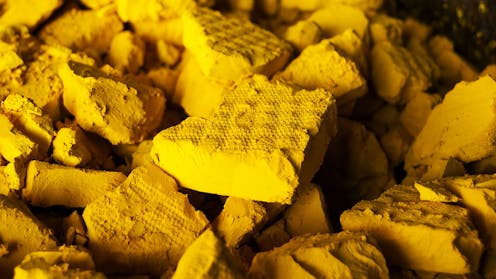
Yellowcake is a concentrated form of mined and processed uranium. Nuclear Regulatory Commission, CC BY

When most people hear the word uranium, they think of mushroom clouds, Cold War standoffs or the glowing green rods from science fiction. But uranium isn’t just fuel for apocalyptic fears. It’s also a surprisingly common element that plays a crucial role in modern energy, medicine and geopolitics.

Uranium reentered the global spotlight in June 2025, when the U.S. launched military strikes on sites in Iran believed to be housing highly enriched uranium, a move that reignited urgent conversations around nuclear proliferation. Many headlines have mentioned Iran’s 60% enrichment of uranium, but what does that really mean?

As a biochemist, I’m interested in demystifying this often misunderstood element.

What is uranium?

Uranium holds the 92nd position on the periodic table, and it is a radioactive, metallic element. Radioactivity is a natural process where some atoms – like uranium, thorium and radium – break down on their own, releasing energy.

The German chemist Martin Heinrich Klaproth initially identified uranium in 1789, and he named it after the newly discovered planet Uranus. However, its power was not unlocked until the 20th century, when scientists discovered that uranium atoms could split via a process known as nuclear fission. In fission, the nucleus of the atom splits into two or more nuclei, which releases large amounts of energy.

Uranium is found almost everywhere. It is in rocks, soil and water. There are even traces of uranium in plants and animals – albeit tiny amounts. Most of it is found in the Earth’s crust, where it is mined and concentrated to increase the amount of its most useful radioactive form, uranium-235.

The enrichment dilemma

Uranium-235 is an isotope of uranium, which is a version of an element that has the same basic identity but weighs a little more or less. Think about apples from the same tree. Some are big and some are small, but they are all apples – even though they have slightly different weights. Basically, an isotope is the same element but with a different mass.

Unprocessed uranium is mostly uranium-238. It only contains approximately 0.7% uranium-235, the isotope that allows the most nuclear fission to occur. So, the enrichment process concentrates uranium-235.

Enrichment can make uranium more useful for the development of nuclear weapons, since natural uranium doesn’t have enough uranium-235 to work well in reactors or weapons. The process usually contains three steps.

Centrifuges spin the uranium to separate out its isotopes.

The first step is to convert the uranium into a gas, called uranium hexafluoride. In the second step, the gas gets funneled into a machine called a centrifuge that spins very fast. Because uranium-235 is a little lighter than uranium-238, it moves outward more slowly when spun, and the two isotopes separate.

It’s sort of like how a salad spinner separates water from lettuce. One spin doesn’t make much of a difference, so the gas is spun through many centrifuges in a row until the uranium-235 is concentrated.

Uranium can typically power nuclear plants and generate electricity when it is 3%-5% enriched, meaning 3%-5% of the uranium is uranium-235. At 20% enriched, uranium-235 is considered highly enriched uranium, and 90% or higher is known as weapons-grade uranium.

Three pie charts showing the proportion of isotopes in each type of uranium. Natural uranium is almost all U238, low-enriched uranium is 3%-20% U235, highly enriched uranium is mostly U235
The enrichment level depends on the proportion of uranium-235 to uranium-238.
Wikimedia Commons

This high grade works in nuclear weapons because it can sustain a fast, uncontrolled chain reaction, which releases a large amount of energy compared with the other isotopes.

Uranium’s varied powers

While many headlines focus on uranium’s military potential, this element also plays a vital role in modern life. At low enrichment levels, uranium powers nearly 10% of the world’s electricity.

In the U.S., many nuclear power plants run on uranium fuel, producing carbon-free energy. In addition, some cancer therapies and diagnostic imaging technologies harness uranium to treat diseases.

The smoking stacks of a nuclear power plant
Enriched uranium is used for nuclear power.
Raimond Spekking/Wikimedia Commons, CC BY-SA

In naval technology, nuclear-powered submarines and aircraft carriers rely on enriched uranium to operate silently and efficiently for years.

Uranium is a story of duality. It is a mineral pulled from ancient rocks that can light up a city or wipe one off the map. It’s not just a relic of the Cold War or science fiction. It’s real, it’s powerful, and it’s shaping our world – from global conflicts to cancer clinics, from the energy grid to international diplomacy.

In the end, the real power is not just in the energy released from the element. It is in how people choose to use it.

The Conversation

André O. Hudson receives funding from the National Institutes of Health.

ref. Uranium enrichment: A chemist explains how the surprisingly common element is processed to power reactors and weapons – https://theconversation.com/uranium-enrichment-a-chemist-explains-how-the-surprisingly-common-element-is-processed-to-power-reactors-and-weapons-259646

Light-powered reactions could make the chemical manufacturing industry more energy-efficient

Source: The Conversation – USA (2) – By Arindam Sau, Ph.D. Candidate in Chemistry, University of Colorado Boulder

Plants use light to make energy – and a team of scientists is using the same principle to power chemical reactions. fhm/Moment via Getty Images

Manufactured chemicals and materials are necessary for practically every aspect of daily life, from life-saving pharmaceuticals to plastics, fuels and fertilizers. Yet manufacturing these important chemicals comes at a steep energy cost.

Many of these industrial chemicals are derived primarily from fossil fuel-based materials. These compounds are typically very stable, making it difficult to transform them into useful products without applying harsh and energy-demanding reaction conditions.

As a result, transforming these stubborn materials contributes significantly to the world’s overall energy use. In 2022, the industrial sector consumed 37% of the world’s total energy, with the chemical industry responsible for approximately 12% of that demand.

Conventional chemical manufacturing processes use heat to generate the energy needed for reactions that take place at high temperatures and pressures. An approach that uses light instead of heat could lower energy demands and allow reactions to be run under gentler conditions — like at room temperature instead of extreme heat.

Sunlight represents one of the most abundant yet underutilized energy sources on Earth. In nature, this energy is captured through photosynthesis, where plants convert light into chemical energy. Inspired by this process, our team of chemists at the Center for Sustainable Photoredox Catalysis, a research center funded by the National Science Foundation, has been working on a system that uses light to power reactions commonly used in the chemical manufacturing industry. We published our results in the journal Science in June 2025.

We hope that this method could provide a more economical route for creating industrial chemicals out of fossil fuels. At the same time, since it doesn’t rely on super-high temperatures or pressures, the process is safer, with fewer chances for accidents.

A diagram showing a flower, where light from the Sun and CO2 go into the flower and water go into its roots, carbohydrates are stored in its leaves, and oxygen leaves.
Plants capture sunlight to convert carbon dioxide from the air into carbohydrates, or sugars.
Wattcle, Nefronus/Wikimedia Commons, CC BY-SA

How does our system work?

The photoredox catalyst system that our team has developed is powered by simple LEDs, and it operates efficiently at room temperature.

At the core of our system is an organic photoredox catalyst: a specialized molecule that we know accelerates chemical reactions when exposed to light, without being consumed in the process.

Much like how plants rely on pigments to harvest sunlight for photosynthesis, our photoredox catalyst absorbs multiple particles of light, called photons, in a sequence.

These photons provide bursts of energy, which the catalyst stores and then uses to kick-start reactions. This “multi-photon” harvesting builds up enough energy to force very stubborn molecules into undergoing reactions that would otherwise need highly reactive metals. Once the reaction is complete, the photocatalyst resets itself, ready to harvest more light and keep the process going without creating extra waste.

Designing molecules that can absorb multiple photons and react with stubborn molecules is tough. One big challenge is that after a molecule absorbs a photon, it only has a tiny window of time before that energy fades away or gets lost. Plus, making sure the molecule uses that energy the right way is not easy. The good news is we’ve found that our catalyst can do this efficiently at room temperature.

A researcher in lab goggles, gloves and a lab coat holds a bright slide over a lab bench.
Center for Sustainable Photoredox Catalysis researcher Amreen Bains performs a light-driven photoredox catalyzed reaction.
John Cline, Colorado State University Photography

Enabling greener chemical manufacturing

Our work points toward a future where chemicals are made using light instead of heat. For example, our catalyst can turn benzene — a simple component of crude oil — into a form called cyclohexadienes. This is a key step in making the building blocks for nylon. Improving this part of the process could reduce the carbon footprint of nylon production.

Imagine manufacturers using LED reactors or even sunlight to power the production of essential chemicals. LEDs still use electricity, but they need far less energy compared with the traditional heating methods used in chemical manufacturing. As we scale things up, we’re also figuring out ways to harness sunlight directly, making the entire process even more sustainable and energy-efficient.

Right now, we’re using our photoredox catalysts successfully in small lab experiments — producing just milligrams at a time. But to move into commercial manufacturing, we’ll need to show that these catalysts can also work efficiently at a much larger scale, making kilograms or even tons of product. Testing them in these bigger reactions will ensure that they’re reliable and cost-effective enough for real-world chemical manufacturing.

Similarly, scaling up this process would require large-scale reactors that use light efficiently. Building those will first require designing new types of reactors that let light reach deeper inside. They’ll need to be more transparent or built differently so the light can easily get to all parts of the reaction.

Our team plans to keep developing new light-driven techniques inspired by nature’s efficiency. Sunlight is a plentiful resource, and by finding better ways to tap into it, we hope to make it easier and cleaner to produce the chemicals and materials that modern life depends on.

The Conversation

The authors do not work for, consult, own shares in or receive funding from any company or organization that would benefit from this article, and have disclosed no relevant affiliations beyond their academic appointment.

ref. Light-powered reactions could make the chemical manufacturing industry more energy-efficient – https://theconversation.com/light-powered-reactions-could-make-the-chemical-manufacturing-industry-more-energy-efficient-257796

Supreme Court rules Trump can rapidly deport immigrants to Libya, South Sudan and other countries they aren’t from

Source: The Conversation – USA (2) – By Eleanor Paynter, Assistant Professor of Italian, Migration, and Global Media Studies, University of Oregon

Internally displaced people walk along a street in Juba, South Sudan, on Feb. 13, 2025. Brian Inganga/AP Photos

For the past several months, the Trump administration has been trying to deport immigrants to countries they are not from – despite an April 2025 federal ruling that had blocked the White House from doing so.

A divided Supreme Court decided on June 23, in a brief emergency order, that the Trump administration can, for now, legally deport immigrants to countries they were not born in – known as “third countries” – without giving them time to contest their destination. The third countries that President Donald Trump has recently prioritized, including El Salvador, South Sudan and Libya, are known for being dangerous places with weak rule of law and routine human rights violations.

The 6-3 decision did not specify a legal rationale for the ruling. The court’s three liberal justices, Sonia Sotomayor, Elena Kagan and Ketanji Brown Jackson, all dissented.

“Apparently, the Court finds the idea that thousands will suffer violence in farflung locales more palatable than the remote possibility that a District Court exceeded its powers when it ordered the government provide notice to the targeted migrants,” Sotomayor wrote in a 19-page dissent, joined by Kagan and Brown Jackson.

Understanding this legal case

The Trump administration asked the Supreme Court at the end of May to allow the rapid deportation of eight men who were convicted of crimes to South Sudan. Only one of those immigrants is from South Sudan, a politically unstable country in northeastern Africa. The rest are from Cuba, Mexico, Laos, Myanmar and Vietnam.

Brian Murphy, a federal judge in Massachusetts, had blocked those immigrants’ deportation to South Sudan on May 21, saying that this move violated his April 2025 court order. In that ruling, he stated that people being deported to third countries should have time to contest their destination if it might put them in danger.

The flight to South Sudan was rerouted to an American military base in the East African country of Djibouti, where the men are reportedly living in a converted shipping container while they wait to hear whether they will be deported to South Sudan.

Murphy also ruled in April that the Trump administration cannot send other immigrants to Libya if they are not foreign nationals of that North African country.

I study how restrictive immigration policies make people’s journeys into a new country dangerous and can harm their well-being. In that research, I have interviewed African migrants who have traversed the Sahara Desert, Libya and the Mediterranean Sea to reach Europe, where they seek asylum.

The White House has not explained why it wants to send immigrants to South Sudan or Libya.

Libya’s government has denied any direct coordination with the U.S. on this issue, and South Sudan’s government has said that any immigrants deported there with criminal records would be sent to their own countries.

But a May federal court filing said that Trump administration officials have tried to negotiate deportation arrangements with Libya and South Sudan that give the governments money or other benefits for taking in immigrants from the U.S.

Two men in dark suits stand under a red, black and green canopy and look forward.
South Sudanese President Salva Kiir, right, meets with Abdel Fattah, a general from Sudan, at a September 2024 ceremony in Juba, South Sudan.
South Sudan Presidency/Anadolu via Getty Images

South Sudan’s shaky footing

Migrants can legally be deported to another nation when their country of origin refuses to repatriate them – though this practice is rare.

Former President Joe Biden, for example, deported Cubans, Haitians, Nicaraguans and Venezuelans to Mexico if it was politically or logistically difficult to repatriate them.

But the Trump administration is the first to insist on expedited removal of immigrants to countries outside of Latin America.

South Sudan became a country in 2011, when it split from Sudan after a decades-long war. Since then, South Sudan has been led by a single president – Salva Kiir – who has been described by international critics as authoritarian, meaning he tries to centralize his own power and limit other people’s political rights. In March 2025, Kiir oversaw the arrest of vice president and opposition leader Riek Machar.

Fighting between the government and opposition forces has prompted more than 2.3 million South Sudanese to flee to neighboring countries since 2013.

In 2025 alone, the country’s civil conflict has prompted more than 130,000 people to become internally displaced, meaning they were forced to leave their homes and live elsewhere within the country.

In March, Uganda deployed its troops to South Sudan to support the president, prompting concern of a full-scale civil war between forces backing Kiir and opposition forces. The United Nations then extended a U.S.-sponsored arms embargo in May to prevent weapons from reaching the region.

The conflict has also blocked the distribution of lifesaving aid, including food and other basic supplies, to reach people in South Sudan. About 57% of the country’s estimated 11 million people do not get enough food.

In March, the U.S. State Department ordered nonemergency U.S. government employees to leave South Sudan.

The State Department has also documented “significant human rights issues” in South Sudan, including threats to freedom of expression, as well as arbitrary arrests and detentions.

Libya’s danger for migrants

A large group of men stand in a crowd and hold up signs, with buildings seen in the background.
People demonstrate against the Government of National Unity in Tripoli, Libya, on June 20, 2025.
Mahmud Turkia/AFP via Getty Images

The Trump administration is also trying to send immigrants to Libya, which has not had a stable government since the U.S. and other countries supported the overthrow of dictator Muammar Gadhafi in 2011. Libya is currently ruled by two rival governments: the internationally recognized Government of National Unity in the country’s western region and the Government of National Stability in the east.

The U.S. has not had an embassy in Libya since 2014 due to unpredictable and unstable security there.

Armed militias control sections of Libya, and in some cases, they are also embedded as part of the governments.

Libya is a significant destination for migrants from countries throughout Africa and the Middle East who want to work in, or just pass through, Libya on their way north to Europe.

It is also a dangerous place for migrants. A 2023 U.N. fact-finding mission in Libya documented what migrants have long maintained in interviews with advocacy groups – they are regularly held for ransom by human traffickers, enslaved, and arrested and tortured in detention centers partly funded by Europe.

A mass grave found in 2021 near the village of Tarhouna contained the bodies of hundreds of locals who had disappeared under militia rule. In February 2025, the U.N. confirmed the discovery of mass migrant graves, with bodies showing signs of gunshot wounds.

In a May 2025 court declaration, Secretary of State Marco Rubio said that the injunction halting rapid third-country deportations threatens “a significant commercial deal to expand activities of a U.S. energy company in Libya.” In Libya, home to Africa’s largest oil reserves, U.S. companies are actively seeking to rekindle partnerships with the country’s national oil company.

In June, Trump included Libya on the list of countries banned from sending citizens to the U.S., citing the inability to “safely and reliably vet and screen” citizens from Libya and the other banned countries.

Other options for Trump administration

The U.S. is actively seeking additional countries it could send immigrants to in the future, even if they are not from those places.

Rubio issued a memo on June 14, about expanding the list of countries in the current travel ban against foreign nationals from 12 countries, including Libya. He noted that the 36 additional countries – mostly in Africa and including South Sudan – could mitigate the harsh policy by agreeing to accept immigrants from other countries who are deported from the U.S.

The Conversation

Eleanor Paynter does not work for, consult, own shares in or receive funding from any company or organization that would benefit from this article, and has disclosed no relevant affiliations beyond their academic appointment.

ref. Supreme Court rules Trump can rapidly deport immigrants to Libya, South Sudan and other countries they aren’t from – https://theconversation.com/supreme-court-rules-trump-can-rapidly-deport-immigrants-to-libya-south-sudan-and-other-countries-they-arent-from-258155

Ceasefires like the one between Iran and Israel often fail – but an agreement with specific conditions is more likely to hold

Source: The Conversation – USA (2) – By Donald Heflin, Executive Director of the Edward R. Murrow Center and Senior Fellow of Diplomatic Practice, The Fletcher School, Tufts University

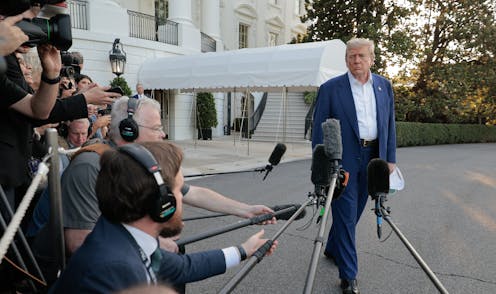
President Donald Trump speaks to reporters outside the White House on June 24, 2025, in Washington, less than 12 hours after announcing a ceasefire between Israel and Iran. Chip Somodevilla/Getty Images

Within hours of President Donald Trump unexpectedly announcing an upcoming ceasefire between Israel and Iran on June 23, 2025, both countries launched airstrikes against the other.

“We basically have two countries that have been fighting so long and so hard that they don’t know what the f–k they’re doing,” an angry and frustrated Trump told reporters outside the White House on June 24.

While Iran and Israel have tentatively agreed to the truce – and Trump reiterated on June 24 that the “ceasefire is in effect” – it is not clear whether this deal can hold. Some research shows that an estimated 80% of ceasefire deals worldwide fail.

Amy Lieberman, a politics and society editor at The Conversation U.S., spoke with former Ambassador Donald Heflin, an American career diplomat who serves as the executive director of the Edward R. Murrow Center at the Fletcher School, Tufts University, to understand how ceasefires typically work – and how the Israel-Iran deal stacks up against other agreements to end wars.

A collapsed building is seen on a street next to others that are standing.
An excavator removes debris from a residential building that was destroyed in Israel’s June 13, 2025, airstrike on Tehran, Iran.
Majid Saeedi/Getty Images

How do ceasefire deals typically happen?

There are classes taught on how to negotiate ceasefires, but it is ad hoc with each situation.

For example, in one scenario, one of the warring parties wants a ceasefire and has decided that the conflict isn’t going well. The second party might not want a ceasefire, but could agree that it is getting tired or the risks are too high, and agrees to work something out.

The next scenario, which leads to more success, is when both parties want a ceasefire. They decide that the loss of life and money has gone too far for both sides. One of the parties approaches the other through intermediaries to say it wants a ceasefire, and the other warring party agrees.

In a third situation – which is what we are seeing with the Iran-Israel deal – the outside world imposes a ceasefire. Trump likely told both Israel and Iran: Look, it’s enough. This is too dangerous for the rest of the world. We don’t care what you think. Time for a ceasefire.“

The U.S. has done this in the Middle East before, like after the Yom Kippur War in 1973 between Israel and a coalition of Arab countries led by Egypt and Syria. Israel was achieving big military victories, but the risk was pretty great for the world. The U.S. came in and said, “That’s enough, stop it now.” And it worked.

Does the US bring the warring parties to a table in this kind of situation, or simply pressure the countries to stop fighting?

It is more of the U.S. saying, “We are done.” When the U.S. does something like this, it is often going to have backup from the European Union and other countries like Qatar, saying, “The Americans are right. It is time for a ceasefire.”

It appears that this Israel-Iran deal does not have specific conditions attached to it. Is that typical of a ceasefire deal?

This deal doesn’t seem to have any specific details attached to it. Ceasefires work better when they have that. Lasting ceasefires need to address the concerns of the warring parties and give each side some of what it wants.

For instance, in the Ukraine and Russia war, we have not seen either one of those countries push for a ceasefire. Part of the problem is Crimea and eastern Ukraine, sections of land in Ukraine that Russia has annexed and claims as its own. Russia would be happy with a deal that puts it in charge of Crimea and Ukraine, but Ukraine won’t agree to that. The question of who controls specific areas of land has to be addressed in this conflict; otherwise, the ceasefire isn’t going to last.

Two men in uniforms and helmets walking amid the rubble of a bombed building.
Search and rescue efforts continue in a building in Beersheba, Israel, hit by a ballistic missile fired from Iran shortly before the ceasefire announced by U.S. President Donald Trump came into effect on June 24, 2025.
Mostafa Alkharouf/Anadolu via Getty Images)

Who is responsible for ensuring that both sides uphold a ceasefire?

Security guarantees are an important part of negotiating and maintaining long-term ceasefires. Big countries like the U.S. could say that if a warring party violates a ceasefire agreement, they are going to punish them.

In the 1990s, the U.S. and Europe assured Ukraine that if it gave up its nuclear arsenal, the U.S. would defend Ukraine if Russia ever invaded it. Russia has invaded Ukraine twice since then, in 2014 and 2022. The U.S. gave a more substantial response in the form of sending weapons and other war materials to Ukraine after the 2022 invasion, but there have been no real consequences for Russia.

That has created a problem for ceasefires in the future, because the U.S. didn’t deliver on its past security guarantees.

The further away you get from Europe, the less interested the West is in wars. But in those kinds of disputes, United Nations and other international peacekeeping troops can be sent in. Sometimes, that can work brilliantly in one place, like with the example of international peacekeeping troops called the multilateral Observer Mission stationed between Israel and Egypt helping maintain peace between those countries. But you can copy it to another place and it just doesn’t work as well.

How does this ceasefire fit within the history of other ceasefires?

It’s too early to tell. What matters is how the details get fleshed out.

Ideally, you can get representatives of the Israeli and Iranian governments to sit around a conference table to reach a detailed agreement. The Israelis might say, “We have got to have some kind of assurances that Iran is not going to use a nuclear weapon.” And the Iranians could say, “Assassinations of our military generals and scientists has got to stop.” That kind of conversation and agreement is what is missing, thus far, in this process.

Why is it so common for ceasefire deals to fail?

Some ceasefire deals don’t get to the underlying conditions of what really caused the problem and what made people start shooting this time around. If you don’t get to the core issues of a conflict, you are putting a Band-Aid on the situation. Putting a Band-Aid on someone when they are bleeding is a good move, but you ultimately might need more than that to stop the bleeding.

The outside world might be pretty happy with a ceasefire deal that seems to stop the fighting, but if the details are not ironed out, the experts would say, “This isn’t going to last.”

The Conversation

Donald Heflin does not work for, consult, own shares in or receive funding from any company or organization that would benefit from this article, and has disclosed no relevant affiliations beyond their academic appointment.

ref. Ceasefires like the one between Iran and Israel often fail – but an agreement with specific conditions is more likely to hold – https://theconversation.com/ceasefires-like-the-one-between-iran-and-israel-often-fail-but-an-agreement-with-specific-conditions-is-more-likely-to-hold-259739

Grover Norquist’s lasting influence on the GOP and US economic policy

Source: The Conversation – USA (2) – By Gibbs Knotts, Professor of Political Science, Coastal Carolina University

Grover Norquist, president of Americans for Tax Reform, speaks on Capitol Hill on Nov. 7, 2017. Alex Wong/Getty Images

In the “one, big, beautiful bill,” President Donald Trump has called for substantial decreases in federal domestic spending. However, a schism emerged between Republican lawmakers during the budget debates in Congress.

Some Republicans in blue states called for a tax increase for the wealthiest Americans, prompting longtime anti-tax advocate Grover Norquist to call the increase an “incredibly destructive idea economically, and very foolish politically.”

As he has done since the 1980s, Norquist demonstrated his influence over the GOP. Since Trump’s second inauguration, he has appeared in several high-profile news stories about the budget, including a Washington Post article where he said, “Tax cuts are income to Americans and a loss to the bureaucracy.”

Ultimately, the tax increase was defeated, and the Trump budget proposal passed the House on May 22, 2025.

Norquist praised the leadership from Speaker Mike Johnson and Majority Leader Steve Scalise, saying taxpayers owe them “bigly for managing a narrow Republican House Majority that was united and committed to reducing taxes on the American people.”

As scholars of U.S. politics, we examined Norquist’s emergence, traced debates about the scope and size of the American government and assessed Norquist’s relevance in the Donald Trump era, where he continues to wield considerable sway in the Republican Party.

The conscience of a conservative

In 1960, a slim, 123-page book changed the trajectory of American conservative thought.

The Conscience of a Conservative,” written by Barry Goldwater, laid out the premise that an expansive federal bureaucracy was the root evil of government.

Four years later, Ronald Reagan launched his political career with a speech supporting Goldwater. His words echoed Goldwater: “No government ever voluntarily reduces itself in size … a government bureau is the nearest thing to eternal life we’ll ever see on this earth.”

Reagan ended the speech by noting, “You and I have a rendezvous with destiny.” Goldwater wouldn’t manifest that destiny, but Reagan, 16 years later, took this vision of fiscal conservatism to the White House.

By the 1980s, Goldwater’s limited government creed had become part of Republican dogma. Government wasn’t just bloated, according to Reagan. It was, as he noted, the problem. The Reagan presidency ushered in the doctrine of supply-side economics, which rests on the premise that tax cuts are key to stimulating economic growth.

Norquist’s emergence

Into this landscape stepped a young Norquist.

He had cut his teeth at the National Taxpayer’s Union, a fiscally conservative taxpayer advocacy group. Then, in 1981, he became the executive director of the College Republican National Committee.

In the first issue of CR Report, a college Republican newsletter, Norquist’s position as executive director was announced, and he provided a list of suggested readings. Among the titles he recommended were Goldwater’s “Conscience,” Milton Friedman’s “Capitalism and Freedom” and Friedrich Hayek’s “The Road to Serfdom.”

In 1985, Norquist founded Americans for Tax Reform to support his tax reduction efforts. As Norquist noted, “The tax issue is one thing everyone agrees on.”

He and his organization effectively institutionalized a permanent tax revolt in Congress supported by his “Taxpayer Protection Pledge,” a promise made starting in 1986 to oppose all efforts to increase marginal tax rates or reduce deductions or credits.

The pledge became a litmus test for fiscally conservative GOP candidates and cemented the party’s anti-tax stance.

Feeling this pressure, GOP nominee George H.W. Bush delivered his famous line, “read my lips, no new taxes,” at the 1988 Republican National Convention. Those six words were repeatedly used by primary challenger Pat Buchanan and Bush’s opponent in the general election, Bill Clinton, to raise questions about Bush’s honesty – since he made a pledge that he was unable to keep.

A man dressed in a suit and holding a book speaks in front on an outdoor lectern as other men stand behind him.
Newt Gingrich, speaker of the House of Representatives, holds up a copy of the ‘Contract With America’ during a speech on the steps of the U.S. Capitol in April 1995.
Richard Ellis/AFP via Getty Images

With Clinton in the White House in 1994, Norquist helped House Minority Whip Newt Gingrich write the “Contract with America” to legislate fiscal conservatism. Weaponizing government shutdowns and setting a more confrontational tone, congressional Republicans successfully rolled back welfare programs, reduced the size of government and cut taxes.

In 1995, they came two votes shy in the Senate of approving an amendment to the Constitution that would have required the federal budget to be balanced – with no borrowing – every year.

Anti-tax conservatism in the 21st century

In 2001, Norquist told a reporter at The Nation: “My goal is to cut government in half in twenty-five years to get it down to the size where we can drown it in the bathtub.”

This objective would have to wait during the George W. Bush presidency. Resulting in part from the Sept. 11 terrorist attacks, the Bush administration saw dramatic expansions of federal power and spending in homeland security, defense and Medicare, as well as a large increase in the budget deficit.

The tea party movement, a fiscally conservative political group, was formed in response to these Bush-era increases and two signature programs of the Barack Obama administration: the massive stimulus package, the American Recovery and Reinvestment Act, and his signature health care reform, the Affordable Care Act.

Norquist reveled in renewed attention to tax policies and the size of government, urging readers of The Guardian to “join the Tea Party movement.”

Norquist’s continuing legacy

For more than four decades, Norquist has been a relentless advocate for fiscal conservatism. He is the living embodiment of an ideological thread that stretches from Goldwater to Reagan to Gingrich to current GOP leadership.

A man in a suit and wearing glasses looks down, as another man, his back to the camera, stands in front of him.
Grover Norquist waits for the arrival of President Donald Trump in the East Room of the White House on March 21, 2019.
AP Photo/Evan Vucci

The ongoing debates about the Trump budget are just the latest example of Norquist’s influence. He continues to play an active role in debates about the federal budget and still has considerable sway with Republicans.

However, Norquist’s uncompromising stance on taxes has coincided with increases in federal spending, surging budget deficits and increased national debt.

That additional debt is accumulating because many Republicans have adopted his anti-tax position while simultaneously increasing defense budgets, maintaining or expanding entitlement spending and lowering taxes on the wealthiest Americans.

Nevertheless, Norquist continues to be the fiscal conscience of the Republican Party. Politicians come and go. Powerful ideas, and those who champion them, endure.

The Conversation

The authors do not work for, consult, own shares in or receive funding from any company or organization that would benefit from this article, and have disclosed no relevant affiliations beyond their academic appointment.

ref. Grover Norquist’s lasting influence on the GOP and US economic policy – https://theconversation.com/grover-norquists-lasting-influence-on-the-gop-and-us-economic-policy-256978