Comment Bad Bunny a porté l’activisme sur la scène du Super Bowl

Source: The Conversation – in French – By Belinda Zakrzewska, Assistant Professor of Marketing, University of Birmingham

Le show de mi-temps du Super Bowl signé Bad Bunny n’a pas seulement battu des records d’audience. À travers une mise en scène chargée de symboles, le rappeur portoricain a transformé un spectacle grand public en manifeste culturel, articulant mémoire coloniale, identité et activisme.


Après plusieurs jours de controverse – au cours desquels Donald Trump s’était plaint du choix des artistes, avait déclaré qu’il n’assisterait pas à l’événement, et qu’une programmation alternative « 100 % américaine » serait mise en avant –, le rappeur portoricain Bad Bunny est monté sur scène lors du très attendu spectacle de mi-temps du Super Bowl, dimanche 8 février.

Les attentes étaient élevées, comme en témoigne le nombre inédit de téléspectateurs. Le show de Bad Bunny a généré plus de 135,4 millions de vues, surpassant les 133,5 millions de Kendrick Lamar en 2025 et les 133,4 millions de Michael Jackson en 1993.


À lire aussi :
Bad Bunny is the latest product of political rage — how pop culture became the front line of American politics


Les médias ont principalement présenté l’événement comme une célébration de la diversité, suscitant en retour une réaction hostile chez les partisans de Donald Trump et certains commentateurs conservateurs. Les critiques visaient Bad Bunny non seulement pour son opposition ouverte à l’administration Trump, mais aussi au motif qu’il ne serait « pas un artiste américain » (comprendre : « états-unien »), malgré le fait que Porto Rico est un territoire des États-Unis. Sa performance a montré comment l’authenticité peut se construire à travers un activisme anticolonial.

Si l’authenticité est souvent vue comme quelque chose de réel, vrai ou sincère, elle repose en réalité sur une qualité relationnelle qui peut être liée au comportement d’une personne de trois façons : par la connexion aux personnes ou aux lieux ; par la conformité aux conventions ou leur remise en cause ; et par la cohérence entre le message et les actions. Lors de la mi-temps du Super Bowl, Bad Bunny a incarné ces trois dimensions.

L’authenticité comme connexion

L’authenticité s’est manifestée notamment par la présence de canne à sucre sur scène, une culture qui a façonné les économies coloniales des Caraïbes. Les plantations appartenaient aux colonisateurs et reposaient sur l’exploitation violente des peuples autochtones et des Africains réduits en esclavage. En mettant la canne à sucre au centre du décor, la performance a rappelé les fondements de la richesse coloniale et a réhabilité un symbole d’oppression en tant que vérité historique plutôt que comme mémoire idéalisée.

La présence de l’icône portoricaine Ricky Martin a renforcé ce sentiment de connexion lorsqu’il a interprété Lo Que Le Pasó A Hawaii, de Bad Bunny. Par ses paroles, la chanson met en garde les Portoricains contre la perte de leur identité culturelle face aux pressions d’assimilation à l’influence états-unienne. La performance de Martin a souligné ce message, en présentant la préservation culturelle comme une forme essentielle de résistance anticoloniale.

Lady Gaga a ajouté une dimension symbolique forte. Sa robe bleu clair renvoyait à la version originale de 1895 du drapeau portoricain, avant que sa teinte ne soit assombrie pour s’aligner sur celle du drapeau des États-Unis. Elle portait un hibiscus rouge – emblème national de fierté et de résistance – ainsi que des fleurs blanches, évoquant ensemble les couleurs du drapeau. Elle incarnait ainsi le respect, la participation et la solidarité plutôt que la séparation ou l’effacement.

L’authenticité comme conformité

Les artistes naviguent souvent entre conformité et transgression, et Bad Bunny a parfaitement maîtrisé cet équilibre. En tant qu’artiste portoricain évoluant dans une industrie qui pousse souvent à abandonner ses origines, il a au contraire créé un espace culturel hybride : un spectacle de mi-temps du Super Bowl en espagnol. Il a ainsi agi au sein du système tout en remettant en cause l’idée que l’anglais doive dominer et que les figures grand public doivent correspondre à un modèle culturel étroit.

L’artiste a également bousculé le récit dominant qui réduit l’« Amérique » aux États-Unis, en reconnaissant l’ensemble du continent américain. Après avoir déclaré « God Bless America », il a énuméré tous les pays du continent, du sud au nord.

En citant les pays, Bad Bunny a inversé la hiérarchie géopolitique traditionnelle. Ce geste évoquait l’œuvre América Invertida de l’artiste uruguayen Joaquín Torres-García et son idée selon laquelle « le Sud est notre Nord », remettant en cause l’idée que la légitimité culturelle ou politique doive venir du « Nord ».

L’authenticité comme cohérence

Enfin, la cohérence s’est manifestée par des clins d’œil à l’activisme de longue date de Bad Bunny. L’explosion d’un lampadaire avant l’interprétation d’El Apagón renvoyait directement à son clip de 2022, qui prend la forme d’un documentaire dénonçant la négligence des infrastructures et la privatisation de l’électricité par des entreprises états-uniennes. Ce moment reliait le divertissement aux réalités coloniales vécues à Porto Rico.

La brève apparition d’El Sapo Concho, mascotte de son dernier album, a ajouté une autre dimension symbolique. Presque disparu en raison des perturbations écologiques liées à l’exploitation coloniale des ressources, ce crapaud portoricain est devenu un symbole de survie face aux dommages structurels. Sa présence dans le show rappelait que l’impact du colonialisme est autant environnemental que culturel.

De la même façon, lorsque Bad Bunny a remis un Grammy à une version plus jeune de lui-même, il renforce son message : « Si je suis ici, c’est parce que j’ai toujours cru en moi. » Dans un contexte où les populations issues de nations colonisées font face à la discrimination et à la marginalisation, beaucoup ont vu la culture des colonisateurs comme un moyen d’ascension sociale. Son geste a ainsi réaffirmé la confiance en soi comme un acte de résistance.

« This is America »

À la fin du spectacle, un panneau lumineux affichait « The only thing more powerful than hate is love » (La seule chose plus puissante que la haine, c’est l’amour). Bad Bunny tenait alors un ballon de football portant l’inscription : « Together, We Are America. » (Ensemble, nous sommes l’Amérique.)

Cette image proposait un idéal panaméricain fondé sur la solidarité plutôt que sur la domination. À travers des symboles de résilience collective, l’artiste présentait ainsi l’authenticité comme une forme d’activisme anticolonial ancrée dans l’amour, la mémoire et la communauté.

Ces choix visuels étaient intentionnels et s’inscrivaient dans des années de prises de position publique, de musique et d’engagement. Chaque élément renforçait un récit cohérent de résistance, démontrant que l’authenticité n’est pas seulement une performance, mais le résultat d’un activisme anticolonial constant.

En imbriquant histoire, symbolismes et convictions personnelles à chaque instant de sa performance, Bad Bunny a démontré que l’art peut devenir un vecteur d’action politique et culturelle, fondé sur l’amour, la tolérance et l’inclusion.

The Conversation

Flavia Cardoso a reçu des financements du gouvernement chilien (Fondecyt) et de la Fondation Luksic.

Belinda Zakrzewska et Jannsen Santana ne travaillent pas, ne conseillent pas, ne possèdent pas de parts, ne reçoivent pas de fonds d’une organisation qui pourrait tirer profit de cet article, et n’ont déclaré aucune autre affiliation que leur poste universitaire.

ref. Comment Bad Bunny a porté l’activisme sur la scène du Super Bowl – https://theconversation.com/comment-bad-bunny-a-porte-lactivisme-sur-la-scene-du-super-bowl-275881

Inondations : l’aménagement du territoire est-il responsable ?

Source: The Conversation – in French – By Luc Aquilina, Professeur en sciences de l’environnement, Université de Rennes 1 – Université de Rennes

Les inondations qui touchent le Sud-Ouest de la France provoquées par la tempête Nils pourraient alimenté à nouveau le débat sur le rôle l’aménagement du territoire dans la survenue de ces événements. Les inondations sont pourtant des phénomènes complexes et le rôle des aménagements reste difficile à estimer.


Depuis plusieurs années, l’Europe est frappée par des inondations majeures aux bilans humains terribles : 243 morts en juillet 2021 en Allemagne, en Belgique, au Luxembourg et aux Pays-Bas, 17 morts en mai 2023 en Italie du Nord, 27 morts en septembre 2024 lors de la tempête Boris en Europe Centrale, de l’Allemagne à la Roumanie, et 237 morts en octobre 2024 dans le sud de Valence. Plus près de nous, les inondations de la Vilaine de ce mois de janvier 2026 et celles de l’année dernière ont ravivé pour les habitants le spectre des inondations du passé.

Ces évènements frappent les esprits et font la une des médias, surtout s’ils se déroulent en Europe. Très vite, des causes liées à l’aménagement du territoire sont invoquées. En Espagne, l’extrême droite a condamné les écologistes qui ont prôné l’arasement des barrages. Vérification faite, il ne s’est agi que de la suppression de « barrières » peu élevées et le lien avec les barrages n’est pas attesté. En Bretagne, à l’inverse, suite à la crue de la Vilaine début 2025 et à l’inondation de plusieurs quartiers de Rennes et de Redon, plusieurs coupables ont été rapidement désignés dans les médias. Le changement climatique d’abord, puis le remembrement des territoires ruraux et le drainage des parcelles agricoles qui ont accompagné la révolution verte des années 1960 et 1970 ont été pointés du doigt.

Les scientifiques de l’eau soulignent le rôle des aménagements passés sur les sécheresses et les tensions autour de la ressource en eau. Pour autant, l’attribution des causes à des événements exceptionnels comme les crues intenses s’avère difficile. Faut-il chercher un seul coupable, ou bien plusieurs ? Changement climatique et modification des usages des sols contribuent à la genèse des inondations, mais leurs implications respectives dans ces évènements varient selon le type d’inondation ainsi qu’au cours du temps.

Il est difficile de déterminer les causes des crues

Isoler la part de responsabilité du changement climatique dans la survenue d’un événement climatique extrême est ce qu’on appelle un processus d’attribution. La science de l’attribution, relativement récente, est nécessaire pour quantifier les impacts du changement climatique dans des processus complexes et variables. Un exemple récent est l’étude menée suite aux pluies torrentielles d’octobre 2024 en Espagne, qui a montré que ce type d’épisode pluvieux présente jusqu’à 15 % de précipitations supplémentaires par rapport à un climat sans réchauffement. En d’autres termes, environ une goutte d’eau sur six tombée lors de cet épisode peut être imputée au changement climatique.

Si l’attribution des pluies est aujourd’hui de mieux en mieux maîtrisée, celle des crues reste moins bien déterminée. On confond souvent l’attribution de la pluie et celle de la crue, alors qu’elles ne sont pas équivalentes. Entre le moment où la pluie tombe et celui où la rivière déborde, il se passe beaucoup de choses au niveau du bassin versant : selon le degré d’humidité et la nature du sol et du sous-sol ou bien la manière dont il a été aménagé, il peut agir comme tampon ou accélérer les flux d’eau. Deux bassins versants différents auront des réponses également différentes pour un même volume de pluie, et un même volume de pluie tombant sur un même bassin versant peut avoir des conséquences très différentes selon le moment de l’année. La survenue d’une crue dépend donc de la combinaison de deux dés : la pluie qui tombe sur le bassin versant et la capacité de ce bassin à l’absorber.

Le changement climatique et les aménagements perturbent l’absorption des sols

Les études d’attribution des pluies montrent avec certitude que le réchauffement climatique — et donc les activités humaines qui en sont la cause — intensifient les pluies fortes et les rendent de plus en plus fréquentes. Si nos futurs étés seront plus secs, les hivers seront eux plus humides, notamment dans le nord de la France. Qu’en est-il du deuxième dé, la capacité d’absorption des bassins versants ? Le changement climatique l’affecte également, en modifiant l’humidité des sols au fil des saisons. Mais cette capacité dépend aussi largement des transformations opérées par certaines activités humaines.

C’est le cas par exemple des barrages, conçus pour stocker l’eau lors des saisons humides et qui ont la capacité de tamponner la puissance des crues. Mais d’autres phénomènes sont impliqués, comme l’urbanisation, qui imperméabilise les sols en remplaçant champs et prairies par du béton et de l’asphalte. Ces surfaces imperméables réduisent fortement l’infiltration et favorisent le ruissellement. Même si l’urbanisation reste marginale à l’échelle des grands bassins versants, elle peut jouer un rôle majeur localement, notamment en zones périurbaines, où les petits cours d’eau sont souvent canalisés ou recouverts.

Les aménagements agricoles comptent également. Le remembrement, qui a fait disparaître des milliers de haies et fossés au profit de grandes parcelles plus facilement exploitables pour des machines agricoles, a profondément modifié la circulation de l’eau. En parallèle, d’autres transformations ont réduit la capacité du paysage à retenir l’eau lors des pluies fortes, comme la pose de drains en profondeur dans les sols agricoles qui vise à évacuer l’excédent d’eau des terres trop humides durant l’hiver. La création de digues et de canaux pour limiter l’expansion des rivières, le creusement des cours d’eau et la rectification de leurs berges les ont recalibrées pour les rendre linéaires. Ces différents aménagements ont des effets importants. Ils modifient le cycle de l’eau continental en accélérant globalement les flux vers la mer. Les niveaux des nappes ont déjà été affectés par ces modifications. Dans les vastes marais du Cotentin, nous avons montré que le niveau moyen des nappes a chuté d’environ un mètre depuis 1950, alors que les aménagements des siècles précédents avaient déjà diminué ces niveaux. Le changement climatique va renforcer cette diminution des niveaux de nappe au moins sur une grande partie du territoire hexagonal.

D’un bassin à l’autre, des effets différents

Ces facteurs jouent différemment selon la surface des bassins versants et leur localisation : l’urbanisation a un effet très fort sur les crues des petits bassins versants côtiers de la Côte d’Azur, qui ont une surface inférieure à 10 km2, mais un effet moindre sur le bassin versant de la Vilaine, qui compte 1 400 km2 à Rennes après la confluence avec l’Ille. À l’inverse, les pratiques agricoles ont un effet plus important sur les crues du bassin de la Vilaine que sur ceux de la Côte d’Azur.

Aujourd’hui, il est difficile de quantifier précisément la part relative de ces facteurs dans l’occurrence des crues observées. En amont des cours d’eau, certaines transformations peuvent ralentir la propagation des crues en augmentant des capacités de stockage locales, par exemple dans les sols, les zones humides ou les plaines inondables, tandis qu’en aval, l’accélération des flux et leur addition tendent à dominer. Chacun des aménagements décrits influence la manière dont un bassin versant absorbe ou accélère l’eau, mais l’addition de leurs effets crée une interaction complexe dont nous ne savons pas précisément faire le bilan.

Lors d’événements exceptionnels comme la crue de Valence, ce sont avant tout les volumes de pluie qui déclenchent la crue et ses conséquences, le changement climatique pouvant intensifier ces précipitations. Les aménagements du territoire influencent de manière secondaire la façon dont l’eau s’écoule et se concentre dans les bassins versants. Il n’en reste pas moins que ces deux effets jouent un rôle de plus en plus important dans les événements de moindre ampleur, dont les impacts sont néanmoins importants et dont l’occurrence a déjà augmenté et va encore s’accentuer dans le futur. Pour deux degrés de réchauffement, l’intensité des crues décennales (d’une ampleur observée en moyenne une fois tous les 10 ans) augmentera potentiellement de 10 à 40 % dans l’Hexagone, et celle des crues centennales (observées en moyenne une fois tous les siècles) de plus de 40 %.

Une vie en catastrophes ?

Ces événements ont provoqué des prises de position politique virulentes. Certains, en particulier à droite de l’échiquier politique, ont remis en question les politiques récentes de restauration de l’état naturel des cours d’eau, de protection des zones humides et de destruction des barrages. Elles ont conduit à des appels à la suppression de l’Office français de la biodiversité lors des manifestations agricoles, proposition reprise par le sénateur Laurent Duplomb devant le Sénat le 24 janvier 2024.

Les aménagements les plus récents, défendus par de nombreuses structures territoriales, visent à redonner au cycle de l’eau, et en particulier aux rivières, des espaces plus larges et à recréer ou protéger des zones humides. Tous ces aménagements conduisent à ralentir les flux et donc luttent contre les inondations, tout en préservant la biodiversité à laquelle notre santé est liée. Les zones humides sont par exemple les meilleurs ennemis des moustiques tigres, en permettant le développement de leurs prédateurs. Bien qu’ils exigent de concéder des terres agricoles aux milieux naturels, ces aménagements nourrissent les nappes qui restent le meilleur réservoir pour le stockage de l’eau des saisons humides.

Remettre en question les politiques de recalibration des cours d’eau, de remembrement et de drainage, tout comme l’imperméabilisation des zones urbaines, est une nécessité imposée par l’adaptation au changement climatique. Il s’agit de limiter ou éviter les tensions entre les besoins des activités humaines et les besoins des écosystèmes qui pourraient en faire les frais. Les inondations catastrophiques ne sont qu’en partie liées aux aménagements et ne peuvent pas justifier à elles seules les politiques de retour à l’état naturel des cours d’eau, qui sont en revanche une réponse aux sécheresses estivales à venir. Pour autant, ces inondations majeures sont là pour nous alerter sur les effets du changement climatique. Les étés vont devenir plus secs et les ressources vont manquer, mais les événements extrêmes vont également se multiplier. Une vie en catastrophes nous attend si nous ne transformons pas nos modes de consommation et de production. Tel est le message porté par les inondations. Sera-t-il mieux entendu que les appels des hydrologues ?

The Conversation

Luc Aquilina est co-titulaire de la chaire Eaux et territoires de la fondation de l’Université de Rennes qui reçoit des fonds d’Eau du Bassin Rennais, Rennes Métropole et du Syndicat Mixte Eau 50.

Pierre Brigode a reçu des financements de l’Université de Rennes, du Centre national de la recherche scientifique et de l’Agence nationale de la recherche.

ref. Inondations : l’aménagement du territoire est-il responsable ? – https://theconversation.com/inondations-lamenagement-du-territoire-est-il-responsable-274443

Trump’s EPA decides climate change doesn’t endanger public health – the evidence says otherwise

Source: The Conversation – USA (3) – By Jonathan Levy, Professor and Chair, Department of Environmental Health, Boston University

Rising global temperatures are increasing the risk of heat stroke on hot days, among many other human harms. Ronda Churchill/AFP via Getty Images

The Trump administration took a major step in its efforts to unravel America’s climate policies on Feb. 12, 2026, when it moved to rescind the 2009 endangerment finding – a formal determination that six greenhouse gases that drive climate change, including carbon dioxide and methane from burning fossil fuels, endanger public health and welfare.

But the administration’s arguments in dismissing the health risks of climate change are not only factually wrong, they’re deeply dangerous to Americans’ health and safety.

As physicians, epidemiologists and environmental health scientists, we’ve seen growing evidence of the connections between climate change and harm to people’s health. Here’s a look at the health risks everyone face from climate change.

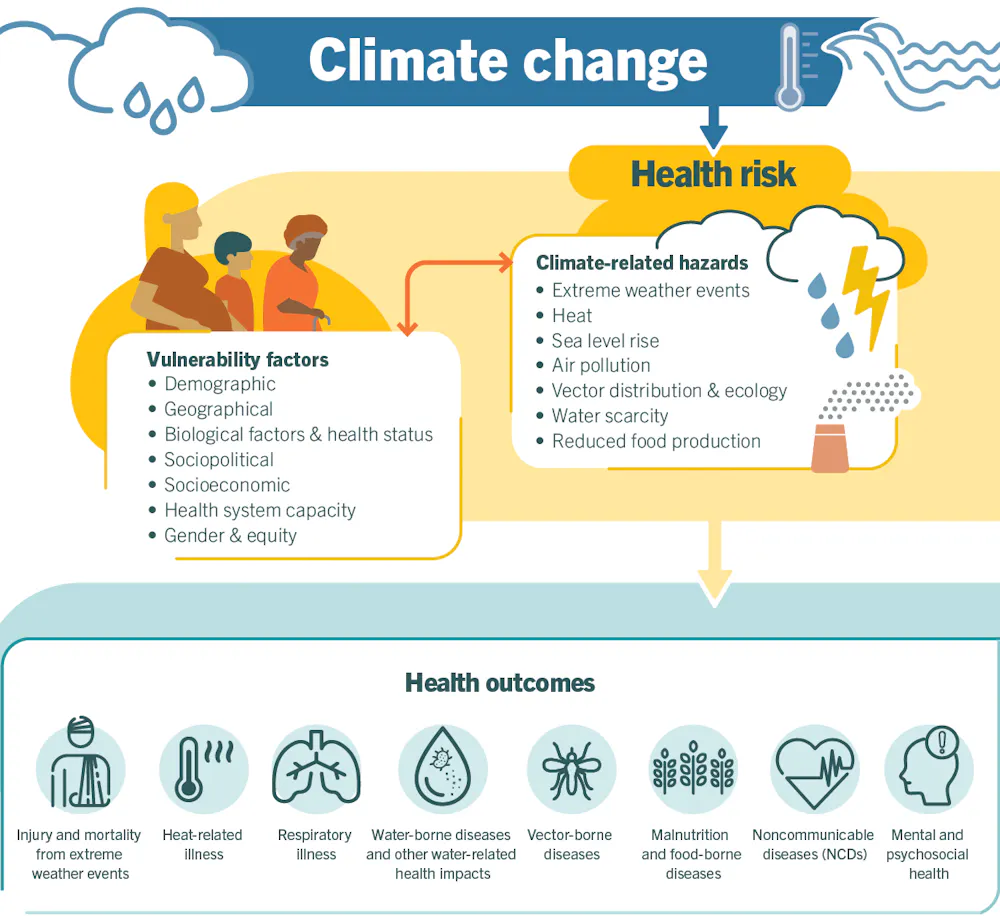
Health risks and outcomes related to climate change.
World Health Organization

Extreme heat

Greenhouse gases from vehicles, power plants and other sources accumulate in the atmosphere, trapping heat and holding it close to Earth’s surface like a blanket. Too much of it causes global temperatures to rise, leaving more people exposed to dangerous heat more often.

Most people who get minor heat illnesses will recover, but more extreme exposure, especially without enough hydration and a way to cool off, can be fatal. People who work outside, are elderly or have underlying illnesses such as heart, lung or kidney diseases are often at the greatest risk.

Heat deaths have been rising globally, up 23% from the 1990s to the 2010s, when the average year saw more than half a million heat-related deaths. Here in the U.S., the 2021 Pacific Northwest heat dome killed hundreds of people.

Climate scientists predict that with advancing climate change, many areas of the world, including U.S. cities such as Miami, Houston, Phoenix and Las Vegas, will confront many more days each year hot enough to threaten human survival.

Extreme weather

Warmer air holds more moisture, so climate change brings increasing rainfall and storm intensity and worsening flooding, as many U.S. communities have experienced in recent years. Warmer ocean water also fuels more powerful hurricanes.

Increased flooding carries health risks, including drownings, injuries and water contamination from human pathogens and toxic chemicals. People cleaning out flooded homes also face risks from mold exposure, injuries and mental distress.

A man carries boxes out of a house that flooded up to its second story.
Flooding from hurricanes and other extreme storms can put people at risk of injuries during the cleanup while also triggering dangerous mold growth on wet wallboard, carpets and fabric. This home flooded up to its second flood during Hurricane Irma in 2017.
Sean Rayford/Getty Images

Climate change also worsens droughts, disrupting food supplies and causing respiratory illness from dust. Rising temperatures and aridity dry out forests and grasslands, making them a setup for wildfires.

Air pollution

Wildfires, along with other climate effects, are worsening air quality around the country.

Wildfire smoke is a toxic soup of microscopic particles (known as fine particulate matter, or PM2.5) that can penetrate deep in the lungs and hazardous compounds such as lead, formaldehyde and dioxins generated when homes, cars and other materials burn at high temperatures. Smoke plumes can travel thousands of miles downwind and trigger heart attacks and elevate lung cancer risks, among other harms.

Meanwhile, warmer conditions favor the formation of ground-level ozone, a heart and lung irritant. Burning of fossil fuels also generates dangerous air pollutants that cause a long list of health problems, including heart attacks, strokes, asthma flare-ups and lung cancer.

Infectious diseases

Because they are cold-blooded organisms, insects are directly influenced by temperature. So with rising temperatures, mosquito biting rates rise as well. Warming also accelerates the development of disease agents that mosquitoes transmit.

Mosquito-borne dengue fever has turned up in Florida, Texas, Hawaii, Arizona and California. New York state just saw its first locally acquired case of chikungunya virus, also transmitted by mosquitoes.

A world map shows where mosquitos are most likely to transmit the dengue virus
As global temperatures rise, regions are becoming more suitable for mosquitoes to transmit dengue virus. The map shows a suitability scale, with red areas already suitable for dengue transmissions and yellow areas becoming more suitable.
Taishi Nakase, et al., 2022, CC BY

And it’s not just insect-borne infections. Warmer temperatures increase diarrhea and foodborne illness from Vibrio cholerae and other bacteria and heavy rainfall increases sewage-contaminated stormwater overflows into lakes and streams. At the other water extreme, drought in the desert Southwest increases the risk of coccidioidomycosis, a fungal infection known as valley fever.

Other impacts

Climate change threatens health in numerous other ways. Longer pollen seasons increase allergen exposures. Lower crop yields reduce access to nutritious foods.

Mental health also suffers, with anxiety, depression and post-traumatic stress following disasters, and increased rates of violent crime and suicide tied to high-temperature days.

A older man holds a door for a woman at a cooling center.
New York and many other cities now open cooling centers during heat waves to help residents, particularly older adults who might not have air conditioning at home, stay safe during the hottest parts of the day.
Angela Weiss/AFP via Getty Images

Young children, older adults, pregnant women and people with preexisting medical conditions are among the highest-risk groups. Lower-income people also face greater risk because of higher rates of chronic disease, higher exposures to climate hazards and fewer resources for protection, medical care and recovery from disasters.

Policy-based evidence-making

The evidence linking climate change with health has grown considerably since 2009. Today, it is incontrovertible.

Studies show that heat, air pollution, disease spread and food insecurity linked to climate change are worsening and costing millions of lives around the world each year. This evidence also aligns with Americans’ lived experiences. Anybody who has fallen ill during a heat wave, struggled while breathing wildfire smoke or been injured cleaning up from a hurricane knows that climate change can threaten human health.

Yet the Trump administration is willfully ignoring this evidence in proclaiming that climate change does not endanger health.

Its move to rescind the 2009 endangerment finding, which underpins many climate regulations, fits with a broader set of policy measures, including cutting support for renewable energy and subsidizing fossil fuel industries that endanger public health. In addition to rescinding the endangerment finding, the Trump administration also moved to roll back emissions limits on vehicles – the leading source of U.S. carbon emissions and a major contributor to air pollutants such as PM2.5 and ozone.

It’s not just about endangerment

The evidence is clear: Climate change endangers human health. But there’s a flip side to the story.

When governments work to reduce the causes of climate change, they help tackle some of the world’s biggest health challenges. Cleaner vehicles and cleaner electricity mean cleaner air – and less heart and lung disease. More walking and cycling on safe sidewalks and bike paths mean more physical activity and lower chronic disease risks. The list goes on. By confronting climate change, we promote good health.

To really make America healthy, in our view, the nation should acknowledge the facts behind the endangerment finding and double down on our transition from fossil fuels to a healthy, clean energy future.

This article includes material from a story originally published Nov. 12, 2025.

The Conversation

Jonathan Levy receives funding from the National Institutes of Health, the Federal Aviation Administration, the City of Boston, the Masschusetts Office of the Attorney General, and the Mosaic Foundation.

Howard Frumkin has no financial conflicts of interest to report. He is a member of advisory boards (or equivalent committees) for the Planetary Health Alliance; the Harvard Center for Climate, Health, and the Global Environment; the Medical Society Consortium on Climate Change and Health; the Global Consortium on Climate and Health Education; the Yale Center on Climate Change and Health; and EcoAmerica’s Climate for Health program, and chairs the National Academy of Medicine Committee on the Roadmap for Transformative Action to Achieve Health for All at Net-Zero Emissions—all voluntary unpaid positions.

Jonathan Patz receives funding from the National Institutes of Health. He is affiliated with the Medical Society Consortium for Climate and Health, and its affiliate Healthy Climate Wisconsin.

Vijay Limaye is affiliated with the Natural Resources Defense Council.

ref. Trump’s EPA decides climate change doesn’t endanger public health – the evidence says otherwise – https://theconversation.com/trumps-epa-decides-climate-change-doesnt-endanger-public-health-the-evidence-says-otherwise-275619

Colorectal cancer is increasing among young people, James Van Der Beek’s death reminds – cancer experts explain ways to decrease your risk

Source: The Conversation – USA (3) – By Christopher Lieu, Professor of Medical Oncology, University of Colorado Anschutz Medical Campus

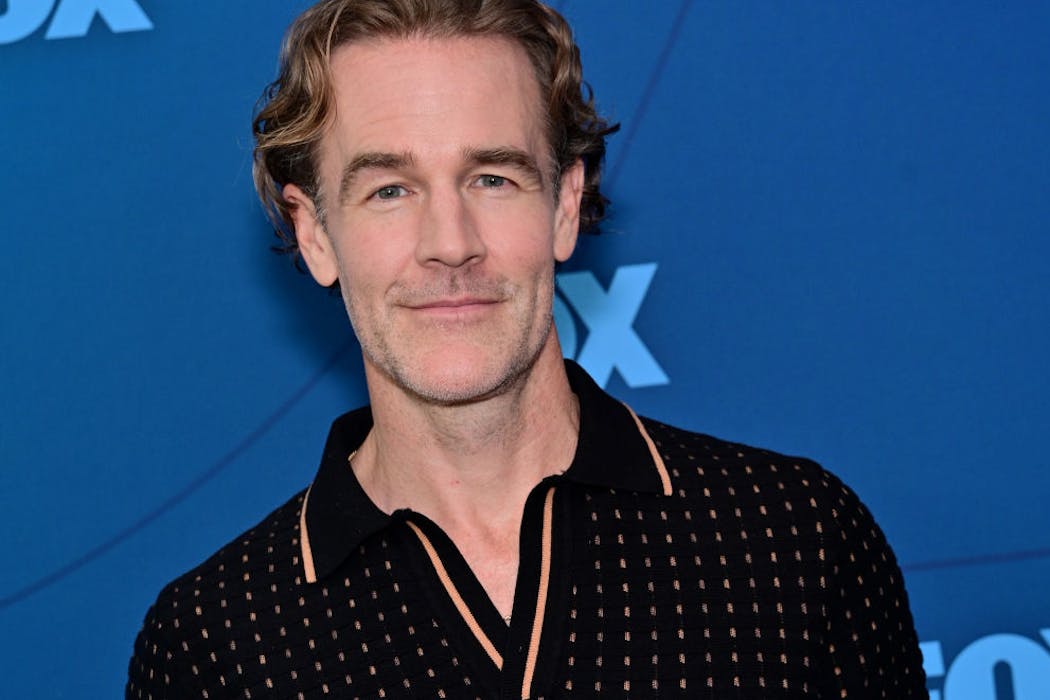
Actor James Van Der Beek died from colon cancer at age 48. Andrew Toth/Getty Images

An increasing number of people are dying of colorectal cancer at a young age, including those as young as 20. Actor James Van Der Beek, who was diagnosed with colorectal cancer in 2023, died at age 48 on Feb. 11, 2026, bringing the disease back into the limelight.

The Conversation U.S. asked gastrointestinal oncologist Christopher Lieu and cancer researcher Andrea Dwyer to explain what’s known about early-onset colon cancer and what young people can do to protect themselves.

Why are more young people getting colorectal cancer?

Researchers have identified a number of factors associated with increasing numbers of young people developing colorectal cancer, but there is no one clear answer that explains this trend.

Lifestyle factors like ultra-processed foods and alcohol, as well as lack of exercise, have been linked to early-onset colorectal cancer. However, these are correlations that aren’t proven to be the cause of colorectal cancer in young adults.

Many researchers are focusing on the gut microbiome, which is an ecosystem of microorganisms in your gut that helps your body digest food and carry out other important functions. When the microbes in the gut are out of balance – a condition called dysbiosis – this causes a disruption that allows for inflammation and negative health effects, including increased cancer risk.

What increases your risk of developing colorectal cancer?

Beyond genetics, several lifestyle factors can increase your risk of developing colorectal cancer.

For example, someone’s diet plays a role in cancer risk. Eating a lot of red meat and processed foods and not enough dietary fiber can increase your risk of colorectal cancer. Alcohol also causes cancer – even having less than one drink a day can increase your cancer risk.

Smoking, obesity and lack of exercise are other factors that increase cancer risk.

Colorectal cancer is rising among young people.

What’s the survival rate for young people with colon cancer?

There is a lot of debate among researchers on whether there are differences in survival rates between those with early-onset colorectal cancer survival and those who develop the disease after age 50.

Finding cancer at an early stage can lead to five-year survival rates as high as 80% to 90%. When cancer is detected at an advanced stage where it has spread to other parts of the body, survival rates are closer to 10% to 15%.

One study found that young patients with metastatic colon cancer had a slightly lower survival rate compared with those age 50 or older.

What are early symptoms of colorectal cancer?

The most common signs and symptoms for early-onset colorectal cancer are blood in the stool, abdominal pain and a change in bowel habits, or any combination of these conditions. Unexplained anemia, or low red blood cell levels, is another potential symptom. These are warning signs that people should not ignore.

Having these symptoms does not necessarily mean you have colorectal cancer, but they are worth discussing with a physician. In some cases, your doctor may request a colonoscopy for further evaluation.

How does colon cancer screening work?

The first step is to have a conversation with your health care team about which test is right for you. Understanding what your risk category is helps guide screening, prevention and lifestyle changes to reduce your likelihood of colorectal cancer.

People with an average risk for colorectal cancer typically have no personal or significant family history of colorectal cancer, hereditary cancer, precancerous polyps or inflammatory bowel disease. They have several options for screening, including stool tests that check for blood and abnormal cells, as well as imaging scans to visualize the colon and rectum. Screening is recommended to begin at age 45 and should continue at regular intervals until age 75.

People with a high risk of colon cancer typically have a personal or family history of colorectal cancer, hereditary cancer or inflammatory bowel disease. They may also have several lifestyle risk factors. Colonoscopy is the only recommended screening test for those with high risk, and earlier and more frequent screening may be necessary.

How can you reduce your risk of colon cancer?

Communication and action are key. Talk to your health care team about your personal risk based on your age, family history and any signs and symptoms to ensure you’re matched with the screening exam and test best for you.

Take charge of your health. There are lifestyle factors you can control to reduce your personal risk of colorectal cancer. These include regular physical activity; a diet high in fruit, vegetables and fiber, and low in processed meats; and maintaining a healthy weight. Moderating or eliminating alcohol and tobacco use can also reduce your colorectal cancer risk.

Share information with loved ones and your health care team. Knowing your personal and family history of polyps or colorectal cancer and communicating it with your doctor can help ensure you get the right test at the right time. Sharing your personal history could save the lives of your children, siblings and parents.

The Conversation

The authors do not work for, consult, own shares in or receive funding from any company or organization that would benefit from this article, and have disclosed no relevant affiliations beyond their academic appointment.

ref. Colorectal cancer is increasing among young people, James Van Der Beek’s death reminds – cancer experts explain ways to decrease your risk – https://theconversation.com/colorectal-cancer-is-increasing-among-young-people-james-van-der-beeks-death-reminds-cancer-experts-explain-ways-to-decrease-your-risk-275886

Counter-drone technologies are evolving – but there’s no surefire way to defend against drone attacks

Source: The Conversation – USA – By Jamey Jacob, Regents Professor of Aerospace Engineering and Executive Director, Oklahoma Aerospace Institute for Research and Education, Oklahoma State University

A Mexican law enforcement officer demonstrates a drone jammer. AP Photo/Eduardo Verdugo

When the Federal Aviation Administration closed the airport in El Paso, Texas, and the airspace around it on Feb. 10, 2026, the cause was, ironically, the nearby use of a technology that could be key to keeping airports and airspace open and safe.

According to news reports, Customs and Border Protection officials used a Department of Defense anti-drone laser weapon to target what they identified as a drone crossing the border from Mexico. The FAA closed the El Paso airport and airspace out of concern that the weapon inadvertently posed a threat to air traffic in the area.

The targeted drone turned out to be a party balloon, though U.S. officials claim that drug cartels based in Mexico have flown drones at the U.S.-Mexico border. The episode highlights the need for counter-drone technologies, the state-of-the-art systems used by the U.S. military, and the challenges to safely and effectively countering drones, which are also known as uncrewed aircraft systems.

I am an aerospace engineer and director of the Counter-UAS Center of Excellence at Oklahoma State University, where we develop and evaluate technologies to detect, identify and counter drone threats. The military laser weapon CBP that personnel used near El Paso is an example of one of three categories of counter-drone technologies: directed energy weapons. The other two are radio frequency jamming and kinetic, or physical, weapons like missiles and nets.

The emerging threat

Starting in 2015, the ISIS terrorist group modified commercial off-the-shelf drones to drop grenades and mortars on U.S. troops in Iraq and Syria, who had little way to combat the threat. This started the trend of modifying consumer drones for military purposes that continues to this day on the Russian-Ukrainian front lines.

While military bases ostensibly have some protective capabilities, critical U.S. infrastructure such as airports and power plants have few methods to track, let alone defend against, drones. For example, in 2018, traffic at London Gatwick International Airport in the U.K. was shut down for three days because of an unidentified drone in the airport’s airspace. Hundreds of flights were canceled, affecting over 100,000 passengers.

Sites such as civilian and military airports, power plants and stadiums are vulnerable to drone flights, both from malicious and negligent operators. Drone flight over open stadiums such as those hosting upcoming FIFA World Cup soccer matches are banned by the FAA. But the ban wouldn’t prevent an errant civilian drone or a drone used in a terrorist attack from entering a stadium and potentially causing serious harm to spectators.

A drone and a small airplane in the air near each other
A drone flies near a small airplane in a test at Oklahoma State University.
Jamey Jacob

On June 1, 2025, Ukrainian forces deployed more than 100 “kamikaze” drones deep in Russian territory in an attack labeled Operation Spiderweb that damaged a significant portion of Russia’s bomber fleet. There is little stopping something like this from happening in the U.S.

To address this threat, companies are evaluating numerous ways to track, identify and, most importantly, defeat drones and protect critical U.S. infrastructure. At present, however, there is no one-size-fits-all solution.

Counter-drone technologies

Radio frequency waves that both track and jam drones have become widely used in the Russia-Ukraine war. Like all remote control devices, drones use radio frequencies to control flight and monitor video coming from the drone camera. Detectors can track these radio frequency signals to determine a drone’s location.

Devices that emit radio frequency signals can be used to block, or jam, communications between drones and their operators or send false, or spoofed, signals. Jamming or spoofing a drone typically causes it to enter into a “return to home” mode and leave the defended area. Radio frequency systems are helpful in situations where a low-impact response is required, because they prevent drones from completing their intended mission without causing physical damage to them.

However, this doesn’t necessarily work if a drone is operating in a “run silent” mode by not transmitting information back to a remote operator. Similarly, jamming GPS can cause a drone to lose its ability to navigate using the satellite system, but this also blocks GPS signals for other users. Drones can also navigate without GPS, with less accurate techniques such as following terrain with cameras or the dead reckoning approach commonly used by pilots.

Directed energy systems, on the other hand, use high-energy lasers or microwave beams to disable drones. These systems work by directing a concentrated beam of energy toward an incoming drone. A laser or microwave can heat components rapidly until the drone becomes inoperative. A laser can also disable a drone’s camera, disabling its surveillance capability. Additionally, because these systems use energy beams, they can engage multiple drones at once.

However, fast-moving drones may be difficult for the weapons to target, and the cost of such systems makes them prohibitively expensive for widespread use.

Kinetic systems involve physically intercepting drones to neutralize them. This category includes everything from net-carrying interceptor drones to traditional projectile weapons, such as firearms and missiles. Kinetic systems physically disable or capture drones, making them particularly useful in scenarios where it is necessary to quickly remove drones from sensitive areas or when the drone presents an immediate threat.

However, because a damaged aircraft can crash in unpredictable locations, these systems may be more effective in battlefields where falling debris is less likely to cause unwanted damage on the ground.

The U.S. military uses several counter-drone systems to defend against small drones.

Swiss cheese safety

Together, these three types of counter-drone technologies – radio frequency, directed energy and kinetic – provide a comprehensive tool kit for addressing the diverse threats posed by unauthorized drones. However, there is no single ideal solution to counter these threats.

To maximize safety, the Swiss cheese model is often the best approach. In this analogy, each defensive strategy is a slice of the familiar holey cheese. While some threats may pass through a hole in one layer, the next layer can capture what passes through. This way, a drone making it through the weaknesses in one system can be defeated by the next slice of cheese.

The Conversation

Jamey Jacob receives funding from the Depts. of Defense and Homeland Security to evaluate Counter-UAS capabilities and UAS threats. He is affiliated with AUVSI, the Association of Unmanned Vehicle Systems International (AUVSI).

ref. Counter-drone technologies are evolving – but there’s no surefire way to defend against drone attacks – https://theconversation.com/counter-drone-technologies-are-evolving-but-theres-no-surefire-way-to-defend-against-drone-attacks-229595

EPA rescinds 2009 endangerment finding, clearing way for Trump to shred more US climate rules – but serious court challenges await

Source: The Conversation – USA (2) – By Gary W. Yohe, Professor of Economics and Environmental Studies, Wesleyan University

The administration is also loosening auto emission standards.
Alex Kent/Getty Images

In 2009 the U.S. Environmental Protection Agency formally declared that greenhouse gas emissions, including from vehicles and industry, endanger public health and welfare. The decision, known as the endangerment finding, was based on years of evidence, and it has underpinned EPA actions on climate change ever since.

The Trump administration is now tearing up that finding as it tries to roll back climate regulations on everything from vehicles to industries.

“This is as big as it gets,” EPA Administrator Lee Zeldin said in announcing with President Donald Trump on Feb. 12, 2026, that the administration had “terminated” the endangerment finding. Zeldin argued that the finding had “no basis in law.” Trump, smiling next to him, talked about the benefits of fossil fuels and said the finding that greenhouse gas emissions endanger public health and welfare “had no basis in fact. None whatsoever.”

An airplane flying over a packed highway with San Diego in the background.
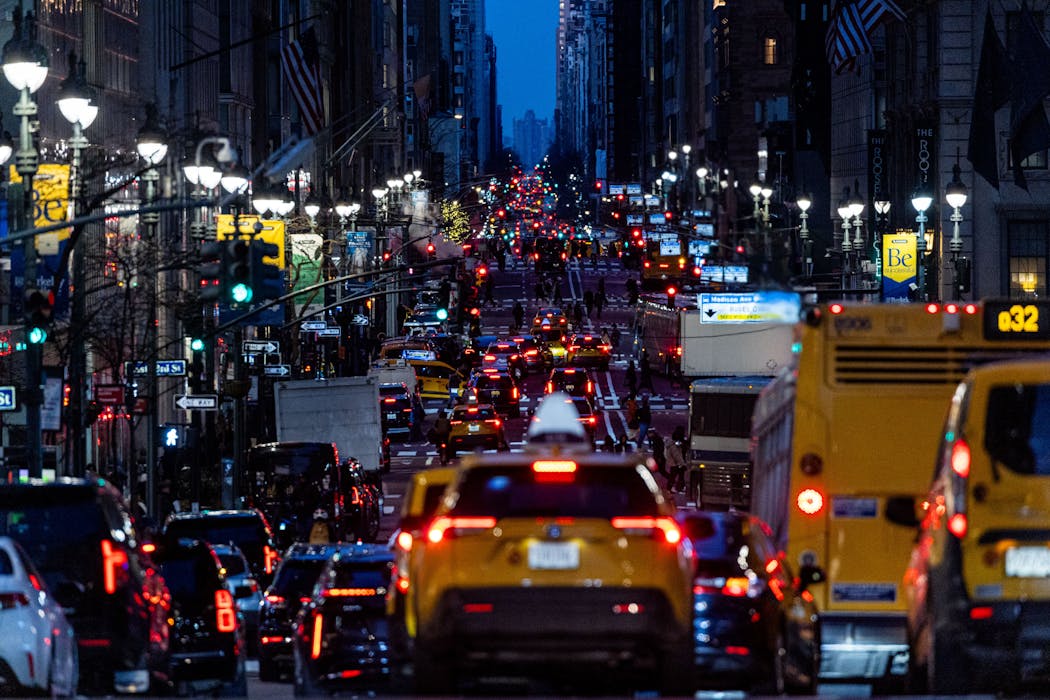
Transportation is the nation’s leading source of emissions, yet the federal government aims to roll back vehicle standards and other regulations written to help slow climate change.
Kevin Carter/Getty Images

There’s no question that the EPA’s decision will be challenged in court. The legal question over the EPA’s authority to regulate greenhouse gases will be debated, just as it was in 2009. The administration’s claim that the finding was scientifically wrong, however, has no basis in fact.

The world just experienced its three hottest years on record, evidence of worsening climate change is stronger now than ever before, and people across the U.S. are increasingly experiencing the harm firsthand.

Several legal issues have already surfaced that could get in the EPA’s way. They include evidence from emails submitted in a court case that suggest political appointees sought to direct the scientific review that the administration has used to defend its plan, at the exclusion of respected scientific sources. On Jan. 30 a federal judge ruled that the Department of Energy violated the law when it handpicked five researchers to write the climate science review. The ruling doesn’t necessarily stop the EPA, but it raises questions.

To understand what happens now, it helps to look back at history for some context.

The Supreme Court started it

The endangerment finding stemmed from a 2007 U.S. Supreme Court ruling in Massachusetts v. EPA.

The court found that various greenhouse gases, including carbon dioxide, were “pollutants covered by the Clean Air Act,” and it gave the EPA an explicit set of instructions.

The court wrote that the “EPA must determine whether or not emissions from new motor vehicles cause or contribute to air pollution which may reasonably be anticipated to endanger public health or welfare.”

But the Supreme Court did not order the EPA to regulate greenhouse gas emissions. Only if the EPA found that emissions were harmful would the agency be required, by law, “to establish national ambient air quality standards for certain common and widespread pollutants based on the latest science” – meaning greenhouse gases.

The Supreme Court justices seated for a formal portrait.
The Supreme Court under Chief Justice John Roberts in 2007 included seven justices appointed by Republican presidents. Front row, left to right: Anthony M. Kennedy (appointed by Ronald Reagan), John Paul Stevens (Gerald Ford), John Roberts (George W. Bush), Antonin Scalia (Reagan) and David Souter (George H.W. Bush). Standing, from left: Stephen Breyer (Bill Clinton), Clarence Thomas (George H.W. Bush), Ruth Bader Ginsburg (Clinton) and Samuel Alito Jr. (George W. Bush).
AP Photo/J. Scott Applewhite

The EPA was required to follow formal procedures – including reviewing the scientific research, assessing the risks and taking public comment – and then determine whether the observed and projected harms were sufficient to justify publishing an “endangerment finding.”

That process took two years. EPA Administrator Lisa Jackson announced on Dec. 7, 2009, that the then-current and projected concentrations of six key greenhouse gases in the atmosphere – carbon dioxide, methane, nitrous oxide, hydrofluorocarbons, perfluorocarbons and sulfur hexafluoride – threatened the public health and welfare of current and future generations.

Challenges to the finding erupted immediately.

Jackson denied 10 petitions received in 2009-2010 that called on the administration to reconsider the finding.

On June 26, 2012, the U.S. Court of Appeals for the D.C. Circuit upheld the endangerment finding and regulations that the EPA had issued under the Clean Air Act for passenger vehicles and permitting procedures for stationary sources, such as power plants.

This latest challenge is different.

It came directly from the Trump administration without going through normal channels. It was, though, entirely consistent with both the conservative Heritage Foundation’s Project 2025 plan for the Trump administration and President Donald Trump’s dismissive perspective on climate risk.

Trump’s burden of proof

To legally reverse the 2009 finding, the agency was required to go through the same evaluation process as before. According to conditions outlined in the Clean Air Act, the reversal of the 2009 finding must be justified by a thorough and complete review of the current science and not just be political posturing.

That’s a tough task.

Energy Secretary Chris Wright has talked publicly about how he handpicked the five researchers who wrote the scientific research review. A judge has now found that the effort violated the 1972 Federal Advisory Committee Act, which requires that agency-chosen panels providing policy advice to the government conduct their work in public.

All five members of the committee had been outspoken critics of mainstream climate science. Their report, released in summer 2025, was widely criticized for inaccuracies in what they referenced and its failure to represent the current science.

Scientific research available today clearly shows that greenhouse gas emissions harm public health and welfare. Importantly, evidence collected since 2009 is even stronger now than it was when the first endangerment finding was written, approved and implemented.

Map shows many ares with record or near record warm years.
Many locations around the world had record or near-record warm years in 2025. Places with local record warmth in 2025 are home to approximately 770 million people, according to data from Berkeley Earth.
Berkeley Earth, CC BY-NC

For example, a 2025 review by the National Academies of Sciences, Engineering and Medicine determined that the evidence supporting the endangerment finding is even stronger today than it was in 2009. A 2019 peer-reviewed assessment of the evidence related to greenhouse gas emissions’ role in climate change came to the same conclusion.

The Sixth Assessment of the Intergovernmental Panel on Climate Change, a report produced by hundreds of scientists from around the world, found in 2023 that “adverse impacts of human-caused climate change will continue to intensify.”

Maps show most of the US, especially the West, getting hotter, and the West getting drier.
Summer temperatures have climbed in much of the U.S. and the world as greenhouse gas emissions have risen.
Fifth National Climate Assessment

In other words, greenhouse gas emissions were causing harm in 2009, and the harm is worse now and will be even worse in the future without steps to reduce emissions.

In public comments on the Department of Energy’s problematic 2025 review, a group of climate experts from around the world reached the same conclusion, adding that the Department of Energy’s Climate Working Group review “fails to adequately represent this reality.”

What happens now that the EPA has dropped the endangerment finding

As an economist who has studied the effects of climate change for over 40 years, I am concerned that the EPA’s rescinding the endangerment finding will lead to faster efforts to roll back U.S. climate regulations meant to slow climate change.

It will also give the administration cover for further actions that would defund more science programs, stop the collection of valuable data, freeze hiring and discourage a generation of emerging science talent.

Cases typically take years to wind through the courts, but both the Environmental Defense Fund and the Union of Concerned Scientists expect to file lawsuits quickly once the rescission is published in the Federal Register.

Unless a judge issues an injunction, I expect to see an accelerating retreat from U.S. efforts to reduce climate change. For example, consider the removal in early February of the climate science chapter from a new “Reference Manual on Scientific Evidence” that advises judges. Republican state attorneys general had complained to the Federal Judicial Center of the National Academies of Science, Engineering, and Medicine that the manual “treated human influence on climate as fact.” But it is fact. That is not just my opinion. The National Academies itself said so in 2020 and again in 2025.

I see no scenario in which a legal challenge doesn’t end up before the Supreme Court. I would hope that both the enormous amount of scientific evidence and the words in the preamble of the U.S. Constitution would have some significant sway in the court’s considerations. It starts, “We the People of the United States, in Order to form a more perfect Union,” and includes in its list of principles, “promote the general Welfare.

This article, originally published Feb. 2, 2026, has been updated with EPA rescinding the endangerment finding.

The Conversation

Gary W. Yohe does not work for, consult, own shares in or receive funding from any company or organization that would benefit from this article, and has disclosed no relevant affiliations beyond their academic appointment.

ref. EPA rescinds 2009 endangerment finding, clearing way for Trump to shred more US climate rules – but serious court challenges await – https://theconversation.com/epa-rescinds-2009-endangerment-finding-clearing-way-for-trump-to-shred-more-us-climate-rules-but-serious-court-challenges-await-274194

Trump says climate change doesn’t endanger public health – evidence shows it does, from extreme heat to mosquito-borne illnesses

Source: The Conversation – USA (3) – By Jonathan Levy, Professor and Chair, Department of Environmental Health, Boston University

Rising global temperatures are increasing the risk of heat stroke on hot days, among many other human harms. Ronda Churchill/AFP via Getty Images

The Trump administration took a major step in its efforts to unravel America’s climate policies on Feb. 12, 2026. It moved to rescind the 2009 endangerment finding, a formal determination that greenhouse gas emissions, such as carbon dioxide and methane from burning fossil fuels, endanger public health and welfare. But the administration’s arguments in dismissing the health risks of climate change are not only factually wrong, they’re deeply dangerous to Americans’ health and safety.

As physicians, epidemiologists and environmental health scientists, we’ve seen growing evidence of the connections between climate change and harm to people’s health.

Here’s a look at the health risks everyone face from climate change.

Health risks and outcomes related to climate change.
World Health Organization

Extreme heat

Greenhouse gases from vehicles, power plants and other sources accumulate in the atmosphere, trapping heat and holding it close to Earth’s surface like a blanket. Too much of it causes global temperatures to rise, leaving more people exposed to dangerous heat more often.

Most people who get minor heat illnesses will recover, but more extreme exposure, especially without enough hydration and a way to cool off, can be fatal. People who work outside, are elderly or have underlying illnesses such as heart, lung or kidney diseases are often at the greatest risk.

Heat deaths have been rising globally, up 23% from the 1990s to the 2010s, when the average year saw more than half a million heat-related deaths. Here in the U.S., the 2021 Pacific Northwest heat dome killed hundreds of people.

Climate scientists predict that with advancing climate change, many areas of the world, including U.S. cities such as Miami, Houston, Phoenix and Las Vegas, will confront many more days each year hot enough to threaten human survival.

Extreme weather

Warmer air holds more moisture, so climate change brings increasing rainfall and storm intensity and worsening flooding, as many U.S. communities have experienced in recent years. Warmer ocean water also fuels more powerful hurricanes.

Increased flooding carries health risks, including drownings, injuries and water contamination from human pathogens and toxic chemicals. People cleaning out flooded homes also face risks from mold exposure, injuries and mental distress.

A man carries boxes out of a house that flooded up to its second story.
Flooding from hurricanes and other extreme storms can put people at risk of injuries during the cleanup while also triggering dangerous mold growth on wet wallboard, carpets and fabric. This home flooded up to its second flood during Hurricane Irma in 2017.
Sean Rayford/Getty Images

Climate change also worsens droughts, disrupting food supplies and causing respiratory illness from dust. Rising temperatures and aridity dry out forests and grasslands, making them a setup for wildfires.

Air pollution

Wildfires, along with other climate effects, are worsening air quality around the country.

Wildfire smoke is a toxic soup of microscopic particles (known as fine particulate matter, or PM2.5) that can penetrate deep in the lungs and hazardous compounds such as lead, formaldehyde and dioxins generated when homes, cars and other materials burn at high temperatures. Smoke plumes can travel thousands of miles downwind and trigger heart attacks and elevate lung cancer risks, among other harms.

Meanwhile, warmer conditions favor the formation of ground-level ozone, a heart and lung irritant. Burning of fossil fuels also generates dangerous air pollutants that cause a long list of health problems, including heart attacks, strokes, asthma flare-ups and lung cancer.

Infectious diseases

Because they are cold-blooded organisms, insects are directly influenced by temperature. So with rising temperatures, mosquito biting rates rise as well. Warming also accelerates the development of disease agents that mosquitoes transmit.

Mosquito-borne dengue fever has turned up in Florida, Texas, Hawaii, Arizona and California. New York state just saw its first locally acquired case of chikungunya virus, also transmitted by mosquitoes.

A world map shows where mosquitos are most likely to transmit the dengue virus
As global temperatures rise, regions are becoming more suitable for mosquitoes to transmit dengue virus. The map shows a suitability scale, with red areas already suitable for dengue transmissions and yellow areas becoming more suitable.
Taishi Nakase, et al., 2022, CC BY

And it’s not just insect-borne infections. Warmer temperatures increase diarrhea and foodborne illness from Vibrio cholerae and other bacteria and heavy rainfall increases sewage-contaminated stormwater overflows into lakes and streams. At the other water extreme, drought in the desert Southwest increases the risk of coccidioidomycosis, a fungal infection known as valley fever.

Other impacts

Climate change threatens health in numerous other ways. Longer pollen seasons increase allergen exposures. Lower crop yields reduce access to nutritious foods.

Mental health also suffers, with anxiety, depression and post-traumatic stress following disasters, and increased rates of violent crime and suicide tied to high-temperature days.

A older man holds a door for a woman at a cooling center.
New York and many other cities now open cooling centers during heat waves to help residents, particularly older adults who might not have air conditioning at home, stay safe during the hottest parts of the day.
Angela Weiss/AFP via Getty Images

Young children, older adults, pregnant women and people with preexisting medical conditions are among the highest-risk groups. Lower-income people also face greater risk because of higher rates of chronic disease, higher exposures to climate hazards and fewer resources for protection, medical care and recovery from disasters.

Policy-based evidence-making

The evidence linking climate change with health has grown considerably since 2009. Today, it is incontrovertible.

Studies show that heat, air pollution, disease spread and food insecurity linked to climate change are worsening and costing millions of lives around the world each year. This evidence also aligns with Americans’ lived experiences. Anybody who has fallen ill during a heat wave, struggled while breathing wildfire smoke or been injured cleaning up from a hurricane knows that climate change can threaten human health.

Yet the Trump administration is willfully ignoring this evidence in proclaiming that climate change does not endanger health.

Its move to rescind the 2009 endangerment finding, which underpins many climate regulations, fits with a broader set of policy measures, including cutting support for renewable energy and subsidizing fossil fuel industries that endanger public health. In addition to rescinding the endangerment finding, the Trump administration also moved to roll back emissions limits on vehicles – the leading source of U.S. carbon emissions and a major contributor to air pollutants such as PM2.5 and ozone.

It’s not just about endangerment

The evidence is clear: Climate change endangers human health. But there’s a flip side to the story.

When countries work to reduce the causes of climate change, they help tackle some of the world’s biggest health challenges. Cleaner vehicles and cleaner electricity mean cleaner air – and less heart and lung disease. More walking and cycling on safe sidewalks and bike paths mean more physical activity and lower chronic disease risks. The list goes on. By confronting climate change, we promote good health.

To really make America healthy, in our view, the nation should acknowledge the facts behind the endangerment finding and double down on our transition from fossil fuels to a healthy, clean energy future.

This article includes material from a story originally published Nov. 12, 2025.

The Conversation

Jonathan Levy receives funding from the National Institutes of Health, the Federal Aviation Administration, the City of Boston, the Masschusetts Office of the Attorney General, and the Mosaic Foundation.

Howard Frumkin has no financial conflicts of interest to report. He is a member of advisory boards (or equivalent committees) for the Planetary Health Alliance; the Harvard Center for Climate, Health, and the Global Environment; the Medical Society Consortium on Climate Change and Health; the Global Consortium on Climate and Health Education; the Yale Center on Climate Change and Health; and EcoAmerica’s Climate for Health program, and chairs the National Academy of Medicine Committee on the Roadmap for Transformative Action to Achieve Health for All at Net-Zero Emissions—all voluntary unpaid positions.

Jonathan Patz receives funding from the National Institutes of Health. He is affiliated with the Medical Society Consortium for Climate and Health, and its affiliate Healthy Climate Wisconsin.

Vijay Limaye is affiliated with the Natural Resources Defense Council.

ref. Trump says climate change doesn’t endanger public health – evidence shows it does, from extreme heat to mosquito-borne illnesses – https://theconversation.com/trump-says-climate-change-doesnt-endanger-public-health-evidence-shows-it-does-from-extreme-heat-to-mosquito-borne-illnesses-275619

Cambio de paradigma en la determinación sexual de los mamíferos: el papel del hierro

Source: The Conversation – (in Spanish) – By Federico Zurita Martínez, Profesor del Departamento de Genética. Imparto docencia en Genética y en el Master en "Cultura de Paz, Conflictos, Educación y Derechos Humanos" en la Universidad de Granada., Universidad de Granada

León y leona. Nicholas Ceglia / Unsplash. , CC BY

Como en todas las especies con reproducción sexual, en los mamíferos existen dos tipos distintos de individuos: machos y hembras, ambos imprescindibles para que sea posible la reproducción. La diferencia esencial entre esos dos sexos está en los gametos, que son las células que se fusionan y dan lugar al nuevo individuo. Las hembras generan ovocitos (óvulos), mientras que los machos producen espermatozoides, mucho más pequeños y mucho más numerosos, lo que hace que el potencial reproductivo de los machos sea muy superior al de las hembras.

Corte de un ovocito en el centro de un folículo primario.
Ed Uthman / Wikimedia Commons., CC BY

Ambos tipos de gametos coinciden, eso sí, en que portan la mitad de los cromosomas que tienen todas las otras células del organismo, que en el caso de humanos son 46, y 23 por tanto en los gametos. Pero ¿qué hace que un embrión se desarrolle como macho o como hembra?

Hembras por defecto

En 1947, un endocrinólogo francés, Alfred Jost , castró embriones de conejo y observó que todos esos embriones se desarrollaban como hembras; en ausencia de gónadas, no había machos. Es como si el sexo femenino fuera el sexo “por defecto”.

En un segundo experimento, Jost implantó testículos a esos embriones de conejo a los que previamente había extirpado las gónadas, y observó que estos embriones se desarrollaban todos como machos. Estaba claro entonces que para el desarrollo masculino sí era imprescindible la presencia de testículo funcional.

¿Cuestión de cromosomas?

En 1956, Joe Hin Tjio y Albert Levan establecieron definitivamente que los seres humanos tenemos 46 cromosomas y que los hombres son el sexo que posee dos cromosomas sexuales diferentes, X e Y, mientras que las mujeres tienen dos cromosomas X. A partir de este hallazgo, se asumió que la presencia de dos cromosomas X era necesaria para el desarrollo femenino, mientras que la combinación de un cromosoma X y un cromosoma Y determinaba el desarrollo masculino.

Sin embargo, solo un año después, se descubrieron anomalías en el número de cromosomas que demostraron que la realidad era más compleja. Los individuos con XXY (síndrome de Klinefelter) eran hombres a pesar de tener dos cromosomas X, y aquellos con un solo cromosoma X (X0, síndrome de Turner) eran mujeres. Lo que se concluía de esos descubrimientos era que la presencia de cromosoma Y conducía al desarrollo masculino y la ausencia de cromosoma Y conducía al desarrollo femenino.

En los laboratorios donde trabajábamos en este campo, se produjo un hito, cuando Andrew H. Sinclair y colaboradores publicaron el aislamiento y la secuencia de un pequeño fragmento de ADN que codificaba para una proteína reguladora. A la secuencia se le llamó Sry (por sex-determining region Y).

La confirmación de que ese gen era realmente el responsable de que un individuo fuera un macho, vino solo un año después y desde el mismo laboratorio.

Un solo gen decide el sexo en los mamíferos

En un trabajo espléndido y ya clásico, el biólogo australiano Peter Koopman y su equipo lograron algo extraordinario: a partir de ratones cromosómicamente hembras (XX) obtuvieron machos fenotípicos –de sexo masculino según sus genitales internos y externos, la expresión de caracteres sexuales secundarios y el comportamiento–.

Para ello, introdujeron mediante transgénesis el gen Sry en los cigotos–primera célula única que se forma tras la fecundación– XX y esos embriones se desarrollaron como machos.

Lo más asombroso es que estos machos no solo desarrollaron testículos y características físicas masculinas, sino que también mostraban comportamientos reproductivos típicos de los machos.

Este trabajo confirmó de manera definitiva que el gen Sry es suficiente para el desarrollo de los testículos y, por tanto del cuerpo masculino, incluyendo incluso ciertos comportamientos.

El papel de los estímulos externos

Se sabe que, en ciertos peces, un individuo puede ser macho en un contexto “social” y transformarse en hembra si ese contexto cambia. El ejemplo más notorio es el pez payaso. Por otra parte, en ciertos reptiles, la temperatura a la que se incuba el huevo determina el sexo del individuo.

Amphiprion ocellaris o pez payaso puede cambiar de sexo según condicionantes ambientales.
Wikimedia Commons., CC BY

Sin embargo, en mamíferos, como hemos visto, el sexo del individuo lo deciden sus genes y cromosomas y, por tanto, está genéticamente determinado; no depende de estímulos externos. Eso era lo aceptado y así lo hemos enseñado en la universidad durante los últimos 40 años. Era paradigma. Y paradigma fue hasta el pasado 29 de junio de 2025.

En ese año, se publicó un artículo en Nature, de esos llamados a convertirse en un clásico, precisamente por el cambio de paradigma que supone.

Un punto de inflexión

En dicho estudio, Naoki Okashita y colaboradores evidenciaron un aumento sustancial de hierro (Fe++) en gónadas de ratón macho (gónadas XY).

La expresión correcta de los genes es un proceso muy complejo que está regulado a muchos niveles distintos. Okashita y su equipo han mostrado que, en testículos embrionarios (XY), la disminución de la cantidad de hierro (Fe++) acaba provocando un silenciamiento del gen Sry.

Al inhibir la expresión del gen Sry, no se activa la ruta de desarrollo testicular y, reactivamente, se activan los genes de la ruta alternativa, esto es, los genes que controlan el desarrollo ovárico.

Según esto, el desarrollo correcto de la gónada –ovarios o testículos– según su constitución cromosómica es dependiente de los niveles de Fe++. Una emocionante variable nueva que añadir a la ecuación del sexo.

The Conversation

Las personas firmantes no son asalariadas, ni consultoras, ni poseen acciones, ni reciben financiación de ninguna compañía u organización que pueda obtener beneficio de este artículo, y han declarado carecer de vínculos relevantes más allá del cargo académico citado anteriormente.

ref. Cambio de paradigma en la determinación sexual de los mamíferos: el papel del hierro – https://theconversation.com/cambio-de-paradigma-en-la-determinacion-sexual-de-los-mamiferos-el-papel-del-hierro-273115

De la lista de la compra a un ‘whatsapp’ a los abuelos: cómo mejorar la escritura de los más pequeños en casa

Source: The Conversation – (in Spanish) – By Carmen Álvarez-Moreno, Personal docente e investigador en formación, Universidad de León

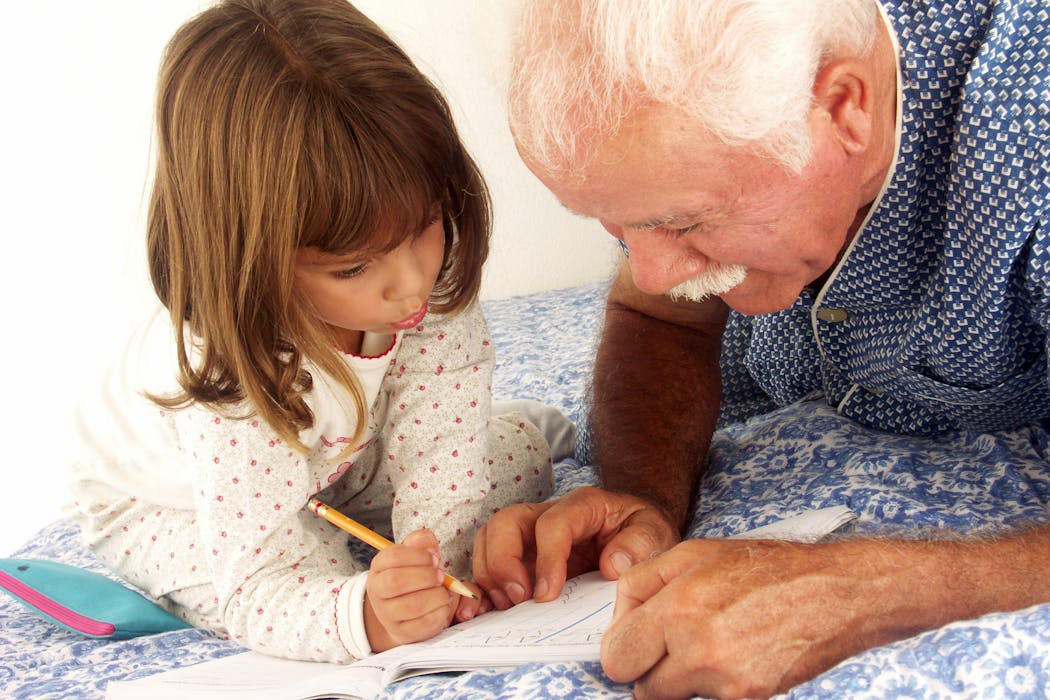
Gus Andrade/Shutterstock

Escribir no es solo una cuestión escolar o laboral, sino una herramienta de comunicación esencial en nuestro día a día. A partir del momento en que los niños desarrollan esta habilidad y empiezan a practicarla en la escuela, ¿cómo podemos ayudarlos a mejorar?

El colegio tiene un papel evidente, pero no actúa solo. Las leyes educativas insisten en algo clave: familia y escuela son un equipo. De hecho, gran parte del aprendizaje de la escritura ocurre en casa. Entonces, ¿se puede y se debe trabajar la escritura desde el hogar?

Para responder a estas preguntas, en un estudio de próxima publicación hemos revisado estudios científicos internacionales que analizan el papel de las familias en el aprendizaje de la escritura infantil.

¿Qué se puede escribir en casa?

En casa se escribe más de lo que imaginamos, y no solo cuando toca hacer deberes. Elaborar la lista de la compra, enviar un mensaje a los abuelos o escribir invitaciones de cumpleaños son prácticas informales de escritura que surgen de manera natural en los hogares y que, según la ciencia, contribuyen al aprendizaje escritor de los niños y las niñas.

Pero, además de esas actividades cotidianas de escritura, las familias, aunque no sean profesionales de la educación, también realizan con sus hijos tareas de escritura formal. Es frecuente que en las casas se practique la caligrafía y la ortografía. Cuando los niños empiezan el aprendizaje de la escritura, las familias les enseñan a sostener bien el lápiz, formar letras o escribir su nombre, insistiendo en la importancia de tener una “letra bonita”.

También intentan que el niño aprenda a escribir sin faltas de ortografía. ¿Cuántas veces les habremos dicho a nuestros hijos “delante de P y B, M pondré”? Pues bien, la ciencia dice que estas prácticas de escritura ayudan a que los niños tenga mejor letra y cometan menos faltas.

Ayudar con textos más complicados

Algunos estudios señalan que las familias pueden colaborar en tareas de escritura más complicadas, como la redacción de textos. Los familiares pueden ayudar a los peques a pensar qué escribir, organizar sus ideas o revisar su texto. La planificación, redacción y revisión textual son procesos escritores que implican una gran carga mental para los peques y que pueden resolver mejor con ayuda adulta.


Leer más:
Por qué no hay prisa para que los niños empiecen a usar el lápiz en la escuela


Cómo hacerlo

La evidencia científica revisada nos dice que no solo importa qué actividades de escritura hacemos en casa, sino cómo acompañamos a los peques durante ellas. Imaginemos que nuestra hija está escribiendo y hace una letra incompleta. En ese momento le decimos: “A esa letra le falta algo, ¿qué será? Fíjate como la hago yo”. Haciendo esto, estaríamos actuando como guía y modelo de escritura, ayudando al peque a pensar, revisar y a aprender el procedimiento escritor. Pues bien, eso es exactamente lo que definen los estudios como “apoyos procedimentales”, muy eficaces para ayudar a los niños en el aprendizaje de la escritura.

Pero ¿es necesario estar continuamente escribiendo en casa y ayudando al niño durante sus tareas de escritura? La investigación más reciente confirma que no. Con alguna actividad de escritura “casera” a la semana, los niños mejoran, aunque es importante que los familiares muestren interés por lo que ha escrito el niño, lo lean, lo expongan o lo feliciten. Estos sencillos gestos, identificados a nivel científico como apoyos motivacionales, animan al peque hacia la escritura y facilitan su aprendizaje.


Leer más:
Así se aprende a escribir con ciencia pero sin libros de texto


¿Puedo ayudar a escribir si no se me da bien?

No todos los adultos dominamos la escritura; ¿podemos aún así ayudar a los pequeños de la familia?

Algunos estudios revisados en un trabajo de próxima publicación analizan a familias de diferentes niveles socioeconómicos, con estructuras diversas y disponibilidad temporal variable y confirman que estos aspectos pueden facilitar o dificultar su implicación en la escritura infantil.

No obstante, un elemento clave son las creencias de los padres sobre la escritura. Si consideramos que es una habilidad importante para nuestros hijos, entonces tenemos la clave: ¡animémosles a escribir, escribamos juntos y escribámosles! Somos su mejor modelo.

The Conversation

Carmen Álvarez-Moreno recibe fondos de recibe fondos de MCIN/AEI/10.13039/501100011033/FEDER, UE, para financiar el proyecto investigador PID2021-124011NB-I00 del que forma parte este trabajo

PATRICIA ROBLEDO RAMÓN recibe fondos de MCIN/AEI/10.13039/501100011033/FEDER, UE, para financiar el proyecto investigador PID2021-124011NB-I00 del que forma parte este trabajo.

ref. De la lista de la compra a un ‘whatsapp’ a los abuelos: cómo mejorar la escritura de los más pequeños en casa – https://theconversation.com/de-la-lista-de-la-compra-a-un-whatsapp-a-los-abuelos-como-mejorar-la-escritura-de-los-mas-pequenos-en-casa-271961

El Gobierno español regula el ‘true crime’: ¿protección a las víctimas o recortes a los creadores?

Source: The Conversation – (in Spanish) – By Marta Sánchez Esparza, Periodista y docente, Universidad Rey Juan Carlos

Fotograma de la serie _Las cintas de Rosa Peral_. Netflix

El Gobierno de España ha aprobado en primera vuelta un anteproyecto de ley sobre derecho al honor y a la intimidad personal que, entre otras cuestiones, pretende regular los true crime para proteger a las víctimas.

Esta iniciativa presenta una doble cara. Por una parte, facilita que las personas que han sufrido un delito puedan actuar contra las series que atenten contra su honor o su intimidad. Por otra, ¿puede un gobierno controlar las historias que producen los medios? ¿Hasta qué punto puede limitar los derechos de creadores y productores de contenidos? ¿Dónde está el equilibrio?

Los derechos al honor, la intimidad y la propia imagen ya estaban protegidos en el artículo 18.1 de la Constitución española, y su ejercicio estaba articulado en el ámbito civil mediante la Ley orgánica 1/1982, que ahora será derogada por obsoleta.

El contexto digital ha generado situaciones inimaginables en la España de los años 80, como la aparición de imágenes generadas gracias a la inteligencia artificial generativa, la “resurrección” de personas gracias al clonado de sus voces o imágenes, los deepfakes o el consumo masivo de determinados contenidos a través de las plataformas.

La nueva norma, que afronta ahora el trámite de exposición pública, se propone proteger el derecho al honor, a la intimidad personal y familiar y a la propia imagen de las personas, al igual que lo hacía la ley de mayo de 1982. Por ello detalla en su artículo 7.1 toda una lista de conductas que lesionarían estos derechos.

Obstáculos al lucro del delincuente

Entre esas conductas figura que alguien que ha sido condenado aproveche su delito de alguna manera a través del true crime para obtener lucro o notoriedad pública, dañando así de nuevo a la víctima. Es decir, la nueva ley quiere poner obstáculos firmes a la tendencia, cada vez más extendida, de dar voz al criminal para narrar las historias que alimentan el género, cuyo consumo se ha disparado en las últimas décadas.

El true crime se ha convertido en un fenómeno de masas, y también en un campo de experimentación para la construcción de versiones y relatos alternativos en torno a crímenes y escándalos, donde cada vez es más frecuente encontrarse con acusados y condenados que tratan de empatizar con la audiencia.

El Rey del Cachopo o Las cintas de Rosa Peral son ejemplos de producciones españolas donde dos personas enjuiciadas y condenadas por asesinatos atroces aparecen ante la cámara ofreciendo su propia versión y mostrando emociones y aspectos de su vida personal con el fin de cambiar la percepción social sobre lo acontecido.

El caso de Daniel Sancho, condenado a prisión en Tailandia por el asesinato de un cirujano, o el de Ana Julia Quedaza, en prisión por el asesinato del pequeño Gabriel Cruz en Almería, revelan que el riesgo de que asesinos convictos se lucren gracias a sus crímenes es algo completamente real.

En EE. UU., un caso parecido lo protagonizó O.J. Simpson, cuando trató de publicar If I Did It, un relato sobre cómo habrían sido los asesinatos si él los hubiera cometido. La justicia paralizó inicialmente el libro y sentenció que los beneficios de la obra fuesen a parar a las víctimas.

En un artículo anterior expusimos los resultados de una investigación sobre cómo la presencia de acusados en el true crime en calidad de narradores altera por completo el enfoque judicial o policial previo y blanquea significativamente la actuación del criminal. Como se ha señalado con acierto, “la historia de Caperucita cambia por completo cuando el narrador es el lobo”.

Y esto es lo que está empezando a pasar en el true crime, con un notable daño sobrevenido a las víctimas. Para evitar esta nueva revictimización de las personas afectadas surge precisamente este intento de regular estas producciones audiovisuales.

Entre los dilemas éticos que suscita el género del true crime, el más grave es sin duda que el criminal se beneficie económica o reputacionalmente de la explotación mediática de su historia, que obtenga un lucro y que el mal se convierta de algún modo en un activo rentable.

Así se regula en EE.UU. y en Reino Unido

De nuevo en Estados Unidos, para hacer frente a ese dilema se aprobaron las Son of Sam Laws –Leyes del Hijo de Sam–, leyes que impiden que el criminal obtenga beneficios de su crimen. Y en el Reino Unido, en 2022 se aprobaron los Proceeds of Crime Act (POCA), que permiten la confiscación de cualquier ganancia obtenida como consecuencia de un delito, aplicando la filosofía de “el crimen no paga”.

En este marco, el Gobierno español sigue la estela de otros países en los que se ha determinado que quienes deben ser compensadas por el daño son las víctimas, y no los delincuentes.

Sin embargo, la nueva ley habilita a cualquier persona que se sienta afectada o lesionada por el relato de una historia a reclamar ante la justicia, colocando a los creadores en una posición de vulnerabilidad. ¿Es posible coartar la libertad de expresión y creación de las productoras con este instrumento legal que puede limitar o condicionar su trabajo? Regular un comportamiento lesivo no debe servir para asfixiar el derecho a la información.

En este sentido, el anteproyecto permite a quienes reclaman la vulneración de su derecho al honor y a la intimidad moverse en una zona de ambigüedad que podría fácilmente derivar en autocensura o, peor aún, atar las manos a los profesionales que se dedican a estas producciones.

Habrá que ver si, finalmente, la nueva ley completa su recorrido parlamentario y entra en vigor tal y como está redactada. Habrá que observar cómo se aplica en los órganos judiciales. La necesaria tutela y protección a las víctimas debería servir para potenciar un true crime ético y responsable, pero nunca para cercenar el interés público.

The Conversation

Las personas firmantes no son asalariadas, ni consultoras, ni poseen acciones, ni reciben financiación de ninguna compañía u organización que pueda obtener beneficio de este artículo, y han declarado carecer de vínculos relevantes más allá del cargo académico citado anteriormente.

ref. El Gobierno español regula el ‘true crime’: ¿protección a las víctimas o recortes a los creadores? – https://theconversation.com/el-gobierno-espanol-regula-el-true-crime-proteccion-a-las-victimas-o-recortes-a-los-creadores-273544