Derrière le rituel annuel en apparence immuable, les comportements changent. La Saint-Valentin, si elle garde sa signification symbolique forte, est de moins en moins associée à une dépense consumériste. Place à l’expérience, loin des obligations marchandes.
Pendant des décennies, la Saint-Valentin a été l’une des fêtes les plus façonnées par le marketing. Les marques en ont codifié les symboles, le bijou, le parfum, le dîner romantique, et ont imposé une manière standardisée d’indiquer à l’autre son amour via un geste matériel, visible, parfois ostentatoire. Près d’un Français sur quatre voit la Saint-Valentin comme un moment idéal pour faire un présent. Le romantisme était solvable. L’affection portée quantifiable. Mais ce modèle semble vaciller. La Saint-Valentin semble glisser hors du cadre commercial qui l’avait façonnée. Les individus se la (ré)approprient et la transforment en un rituel moins prescrit et plus personnel.
Quand l’expérience remplace l’objet
Le signe le plus clair de cette réappropriation est la montée en puissance de l’expérience. Ce qui, autrefois, accompagnait le cadeau, un dîner, une sortie, une activité, devient désormais son cœur. L’objet n’est plus le point focal. Il n’est plus que l’éventuelle conséquence d’un moment partagé. Dans un contexte de tensions économiques, ce basculement n’est pas seulement culturel, il est aussi pragmatique.
L’expérience permet de marquer l’occasion sans entrer dans une logique d’accumulation, voire de surconsommation, de respecter un budget, tout en créant une valeur immatérielle, celle du souvenir et du temps passé ensemble. Les individus privilégient ainsi des moments qui ont du sens : une soirée construite à deux, un repas préparé ensemble, un décor improvisé, un rituel bien-être conçu à la maison, une micro-escapade accessible, un projet créatif. Un Français sur trois fêtera la Saint-Valentin autour d’un dîner à la maison. L’expérience devient un terrain de jeu, d’invention.
De l’injonction à l’accompagnement
Ce qui change profondément, c’est que l’expérience ne se consomme plus. Elle se fabrique. Les couples n’attendent plus qu’une marque leur propose une solution clé en main. Ils inventent leurs propres scénarios, élaborent des rituels. L’amour devient une matière à créer, pas un objet à acquérir et à offrir ensuite. Cette transformation fragilise le rôle prescripteur des marques. Elles ne dictent plus les gestes, elles ne fixent plus les codes. Elles proposent des idées, parfois des supports, mais elles ne tiennent plus les rênes du récit. La logique d’injonction, « achetez ceci pour prouver votre amour », laisse place à une logique d’accompagnement, « n’hésitez pas à vous approprier cette source d’inspiration ».
À chaque génération, sa manière d’échapper au marketing
Si le mouvement est transversal, il s’exprime différemment selon les générations.
La Génération Z, la plus distante vis-à-vis du consumérisme classique, adopte naturellement une Saint-Valentin désynchronisée des marques. Elle privilégie les expériences créatives, le DIY, les activités participatives, les souvenirs qu’on fabrique plutôt que ceux qu’on achète. Pour elle, la valeur se situe dans la cocréation : faire ensemble, vivre ensemble.
Les millénaux, quant à eux, privilégient une fête plus intime et reposante. Dans une vie marquée par le travail, les charges mentales et les arbitrages économiques, ils recherchent davantage la profondeur que l’apparat. Une soirée hors du temps, un dîner maison élaboré, une ambiance réconfortante suffisent à donner du poids à la relation.
Les générations plus âgées restent attachées à des pratiques plus classiques (restaurant, sortie culturelle), mais elles aussi s’éloignent progressivement des logiques marchandes ostentatoires. Elles veulent avant tout un moment authentique, une occasion de se retrouver loin de l’agitation du quotidien.
RTBF 2022.
Un sentiment de lassitude
Le recul de l’objet ne s’explique pas uniquement par l’inflation. Il reflète un changement plus profond : la lassitude vis-à-vis des injonctions commerciales. De plus en plus, les consommateurs se méfient des rituels standardisés. Ils souhaitent des moments qui leur ressemblent, des gestes qui ne sont pas interchangeables, des attentions qui ne puissent être confondues avec celles de n’importe quel autre couple.
La montée en puissance des réseaux sociaux accentue ce phénomène. Ce n’est plus le cadeau que l’on montre, mais l’atmosphère du moment, la spontanéité, le récit personnel. L’amour ne se prouve plus par la valeur d’un bien, mais par la singularité d’une intention. Dans cet univers, les marques sont reléguées en arrière-plan. Elles ne peuvent pas produire du sur-mesure à l’échelle industrielle.
Des moments symboliques à soi
La transformation de la Saint-Valentin révèle un phénomène plus large : la volonté croissante des individus de reprendre la main sur les moments symboliques de leur vie. Dans un monde saturé de normes, de sollicitations et d’incitations à consommer, ils cherchent à regagner de la liberté, de la créativité, du sens. La Saint-Valentin 2026 devient alors le laboratoire d’une nouvelle manière d’habiter les rituels : moins marchande, moins standardisée, plus personnelle. Ce qui était autrefois l’une des fêtes les plus codifiées par le marketing devient un espace d’expression.
Les auteurs ne travaillent pas, ne conseillent pas, ne possèdent pas de parts, ne reçoivent pas de fonds d’une organisation qui pourrait tirer profit de cet article, et n’ont déclaré aucune autre affiliation que leur organisme de recherche.
Alors que l’Inde et le Pakistan se sont affrontés à coups de missiles en mai 2025, leurs sélections nationales de cricket vont se rencontrer ce dimanche dans le cadre de la Coupe du monde organisée par l’Inde et le Sri Lanka. Ce match très attendu a bien failli ne pas avoir lieu du fait des menaces de boycott exprimées par la partie pakistanaise. La compétition revêt également une importance majeure pour les pays du Golfe, qui accueillent d’importantes diasporas sud-asiatiques et qui cherchent à développer leur influence dans cette région.
Les Jeux olympiques d’hiver viennent de démarrer ; mais vu d’Asie du Sud, l’événement majeur de l’année se joue à des milliers de kilomètres des neiges italiennes, sur les pelouses indiennes et sri lankaises. Samedi 7 février, Jay Shah, président de l’International Cricket Council (ICC) et du Board of Control for Cricket in India (BCCI), et aussi fils du ministre indien de l’intérieur, a déclaré aux côtés de l’ancien capitaine indien Rohit Sharma, la Coupe du monde de cricket Twenty20 ouverte.
De New Delhi aux Caraïbes, loin de la vision olympique européenne, le cricket impose sa propre lecture du monde issue du Commonwealth, mêlant culture et sport dans une expression unique et éclatante.
Cette Coupe du monde, qui apparaît une nouvelle fois comme l’expression de l’hyperpuissance indienne dans le cricket, est marquée par le contexte géopolitique.
De l’annonce de la co-organisation du tournoi par l’Inde et le Sri Lanka, en 2021, à son lancement, en 2026, cet événement de premier plan révèle les ambitions de puissance des uns et des autres, qui viennent s’articuler autour de ce théâtre symbolique que constitue le stade de cricket. Pour bien comprendre cette dimension, il faut commencer par décortiquer ce qu’est ce sport, qui pour des populations n’étant pas originaires du Commonwealth apparaît étranger, et décrypter la signification de son qualificatif Twenty20.
Le b.a.-ba d’un sport mal connu hors du Commonwealth
Sport hérité de l’Empire britannique, le cricket oppose deux équipes de onze joueurs. Celle qui marque plus de points que l’adversaire remporte la rencontre. Basé sur l’affrontement entre batteurs et lanceurs, il suit des règles codifiées dès le XVIIIe siècle et valorise stratégie, patience et fair-play. Longtemps sport des élites, il trouve son expression la plus complète dans le test cricket, disputé sur quatre à cinq jours, qui récompense endurance, tactique et maîtrise du temps long. Ce format noble demeure néanmoins peu adapté aux exigences médiatiques et financières contemporaines.
Sous l’influence de la dérégulation économique et des impératifs d’audience, des formats plus courts émergent, culminant en 2003 avec l’apparition du Twenty20 (T20), où chaque équipe dispose de vingt séries de lancers, ce qui réduit la durée des matchs à environ trois heures. Plus spectaculaire et plus accessible, le T20 transforme le jeu et devient la vitrine du cricket mondialisé.
Ce support est privilégié par l’Inde afin d’accroître la massification de ce sport en vue de projeter son influence sportive et financière. La Coupe du monde T20 a ainsi été lancée par l’ICC en 2007, dans l’objectif de multiplier les compétitions et d’accroître les retombées financières. L’attribution de l’édition 2026 de cet événement bisannuel à l’Inde et au Sri Lanka, décidée en 2021, est venue appuyer cette logique. L’annonce de cette attribution a été faite à Dubaï, au siège de l’ICC, au cœur de ce hub, emblème de la dérégulation de l’économie mondiale et nouveau centre névralgique du cricket mondial depuis 2005, ce qui traduit la quête d’un profit économique sans limites.
De Londres à l’océan Indien
Cet ancrage de l’ICC dans le Golfe illustre la bascule de l’histoire du cricket au tournant des années 2000 de la métropole britannique vers ses anciennes colonies. Désormais, le centre de gravité économique de ce sport se trouve sur le pourtour de l’océan Indien, entre le sous-continent indien, la péninsule Arabique et l’Afrique australe.
Cette recomposition est portée par l’Inde qui, en raison de son poids démographique et de la puissance de son marché médiatique, génère aujourd’hui entre 70 et 80 % des revenus de l’ICC. Cette domination se traduit institutionnellement par une captation d’environ 38,5 % des revenus redistribués par l’ICC au profit du BCCI sur le cycle 2024-2027, soit plus d’un milliard de dollars. New Delhi s’impose ainsi comme l’hegemon du cricket mondial, et les diasporas issues du sous-continent indien deviennent dans les pays où elles résident (à commencer par ceux du Golfe) d’importants marchés pour les droits de diffusion et le sponsoring.
Le déménagement du siège de l’ICC de Londres à Dubaï en 2005 ne s’explique pas seulement par des considérations d’ordre fiscal ; il s’agit aussi, et surtout, de trouver un point d’ancrage dans un hub où réside la deuxième plus grande diaspora indienne. La présence de celle-ci est si manifeste qu’il n’est pas rare que Dubaï soit surnommée « Dumbaï », en référence à Mumbai (nom de Bombay depuis 1995), la plus grande ville indienne. En outre, située au cœur des réseaux mondiaux, Dubaï constitue une interface de choix avec la région de l’océan Indien.
Un trait d’union entre l’Inde et le Sri Lanka
Dans ce contexte, la co-organisation de la Coupe du monde par l’Inde et le Sri Lanka prend une signification particulière. Attribuée, en 2021, alors que le clan Rajapaksa est encore au pouvoir à Colombo, elle s’appuie sur la légitimité sportive du Sri Lanka, héritée notamment de sa victoire lors de la Coupe du monde 1996. Pensé comme un partenariat structuré autour de l’hyperpuissance du cricket, l’Inde, l’accueil conjoint de cet événement par les deux pays reflète la stratégie diplomatique du gouvernement sri lankais de l’époque, à savoir équilibrer ses relations entre l’Inde et la Chine pour maximiser sa marge de manœuvre régionale.
Pour Colombo, cette Coupe du monde représente une garantie de visibilité internationale, de légitimité symbolique et de reconnaissance de sa diplomatie régionale. Dans un océan Indien marqué par des rivalités croissantes, le cricket fonctionne ainsi comme un instrument d’influence non coercitif, permettant à l’Inde de projeter son leadership sous les apparences d’une coopération sportive, tandis que le Sri Lanka conserve un statut d’acteur crédible sur la scène internationale, le cricket apparaissant comme un support des relations entre élites.
Le Golfe : quasi inexistant sur le terrain, omniprésent sur les panneaux publicitaires
Dès la cérémonie d’ouverture, sur le bord du terrain, les sponsors golfiens dominent. Emirates et DP World, les deux fleurons du transport de Dubaï, ainsi qu’Aramco, le géant pétrolier saoudien, sont en haut de l’affiche. Sobha, la société du promoteur immobilier originaire du Kerala, Palath Narayanan Menon, basée à Dubaï, complète cet ensemble.
Entre gain d’influence et ambitions de puissance étatique, ces sociétés du Golfe influent sur le cricket mondial. Sobha s’affirme comme l’incarnation de l’influence des réseaux indiens aux Émirats arabes unis. À travers ces investisseurs, pour Dubaï, puis à l’arrière-plan Abu Dhabi et maintenant l’Arabie saoudite, le cricket rime avec diversification. Avec ce sport, leur tropisme penche vers l’est, il est conçu pour parler à l’Asie du Sud en vue de poursuivre l’édification de leur vision multipolaire.
Le cricket apparaît pour les monarchies du Golfe comme un vecteur d’influence au service de leur diversification économique et de la sécurisation de leur environnement régional. Il s’affirme comme un espace de convergence avec les milieux économiques et politiques du sous-continent indien dont le marché et leurs capacités militaires sont devenus indispensables. Mais sur le terrain, c’est une autre géopolitique qui se joue.
Une tension palpable, le boycott comme arme
Inde-Pakistan : le match tant attendu, prévu pour le 15 février, a bien failli ne pas se jouer. Shehbaz Sharif, le premier ministre pakistanais, avait annoncé, le 5 février, que la sélection pakistanaise ne prendrait pas part à cette rencontre historique, déclarant qu’elle ne jouerait pas contre l’Inde en signe de solidarité avec le Bangladesh après le retrait de ce dernier du tournoi.
Le boycott de la compétition par le Bangladesh avait été annoncé fin janvier 2026. Les autorités de Dacca avaient justifié cette décision par des craintes sécuritaires liées au déplacement de la sélection nationale en Inde, évoquant non seulement des risques logistiques pour les joueurs et le staff, mais aussi un climat de tensions politiques croissant, alimenté par le nationalisme hindou promu par le premier ministre Narendra Modi et des incidents récents perçus comme menaçants pour les sportifs bangladais. Islamabad a alors saisi l’occasion pour accentuer la pression sur l’ICC, cherchant à obtenir l’absence de sanctions à l’encontre du Bangladesh et une reconnaissance institutionnelle de sa position, tout en annonçant son intention de boycotter cette affiche parmi les plus emblématiques et lucratives du cricket mondial.
Pour le Pakistan, ce boycott motivé par la contestation de la puissance indienne, Islamabad ne manquant aucune occasion pour protester contre sa mainmise sur le cricket mondial, n’était que temporaire. Cette action eut néanmoins l’avantage de tendre une épée de Damoclès au-dessus de ce duel rare et de ce fait si lucratif, très recherché tant par les institutions du cricket que par les diffuseurs, pour lesquels ce match constitue un temps fort en termes d’audience et de revenus.
Face à la crise, l’ICC a engagé de longues discussions avec le Pakistan Cricket Board (PCB) et d’autres parties prenantes pour préserver l’intégrité du calendrier et maintenir ce rendez‑vous tant attendu. Au terme de ces négociations, le Pakistan a finalement renoncé à son boycott et accepté de jouer, permettant ainsi au match de se tenir comme prévu lors de cette édition 2026.
Cette opposition s’inscrit toujours dans un climat de tensions latentes, ce qui contribue à son attrait médiatique et populaire. Le terrain devient alors, pour Islamabad comme pour New Delhi, un espace central d’instrumentalisation politique et symbolique, où gouvernants, hommes d’affaires, artistes et sportifs contribuent à mettre en scène leurs aspirations nationalistes dans un contexte géopolitique chargé. Ainsi, en février 2025, alors que le Pakistan accueillait l’ICC Champions Trophy, la cérémonie de remise du trophée a été organisée pour des questions de sécurité en terrain délocalisé, à Dubaï, et aucun représentant du PCB n’était présent au pied du podium, comme il est de coutume.
Les crispations se sont accentuées à la suite de l’opération « Sindoor », à savoir une série de frappes de missiles indiens ayant eu lieu, du 7 au 10 mai 2025, contre plusieurs cibles situées au Pakistan et au Cachemire sous administration pakistanaise. Les affrontements ont encore dégradé les relations bilatérales à l’approche de la Coupe du monde. C’est dans ce climat de tensions exacerbées que la compétition s’est ouverte, la perspective de la tenue (ou non) de la rencontre au sommet Inde-Pakistan occupant une place centrale dans les esprits des observateurs et des supporters.
Après de nombreuses discussions entre l’ICC et le PCB, et au terme d’une séquence diplomatique largement médiatisée, le Pakistan, on l’a dit, a finalement infléchi sa position. Cette volte-face est intervenue après que l’ICC s’est engagée à ne pas pénaliser le Bangladesh pour son retrait et à lui accorder, à l’avenir, l’organisation d’un événement majeur.
La rencontre aura donc bien lieu. Le cricket demeure néanmoins soumis à une pression géopolitique constante, structurée par les rivalités internes à l’espace de l’océan Indien, dans lequel l’Inde exerce une hégémonie qui pourrait, durant cette Coupe du monde, être remise en cause… sur le plan sportif uniquement.
Raphaël Le Magoariec a reçu des financements d’IHEDN.
Source: The Conversation – USA – By Carlo Rindi Nuzzolo, Postdoctoral Fellow in Archaeology, University of California, Los Angeles
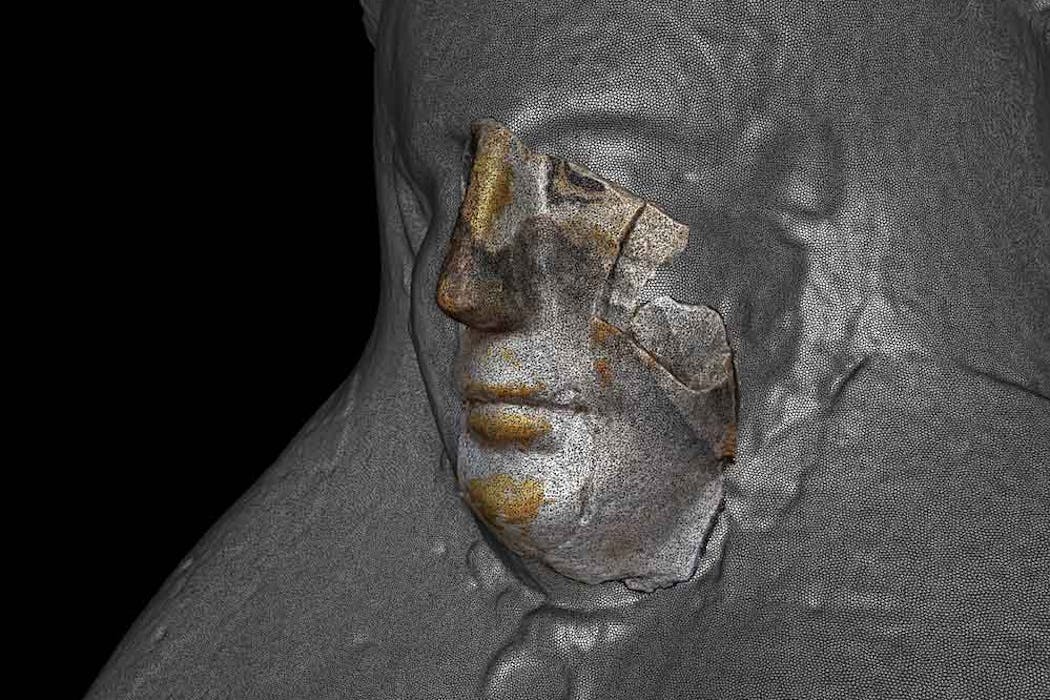
The 3D scan of a mask fragment matches up with the scan of a different well-preserved mask.Carlo Rindi Nuzzolo
Today the world of Egyptology faces a silent crisis – not of looting, although that plays a part, but of disconnection. Walk into any major museum, from Copenhagen to California, and you see glass cases filled with what could be called orphaned artifacts: remarkable objects, often acquired in the 19th and early 20th century, that have been completely stripped of their histories. You can see what they are – a mummy’s painted foot case, a golden mask – but we have no idea where they came from. They are beautiful, but historically they are mute.
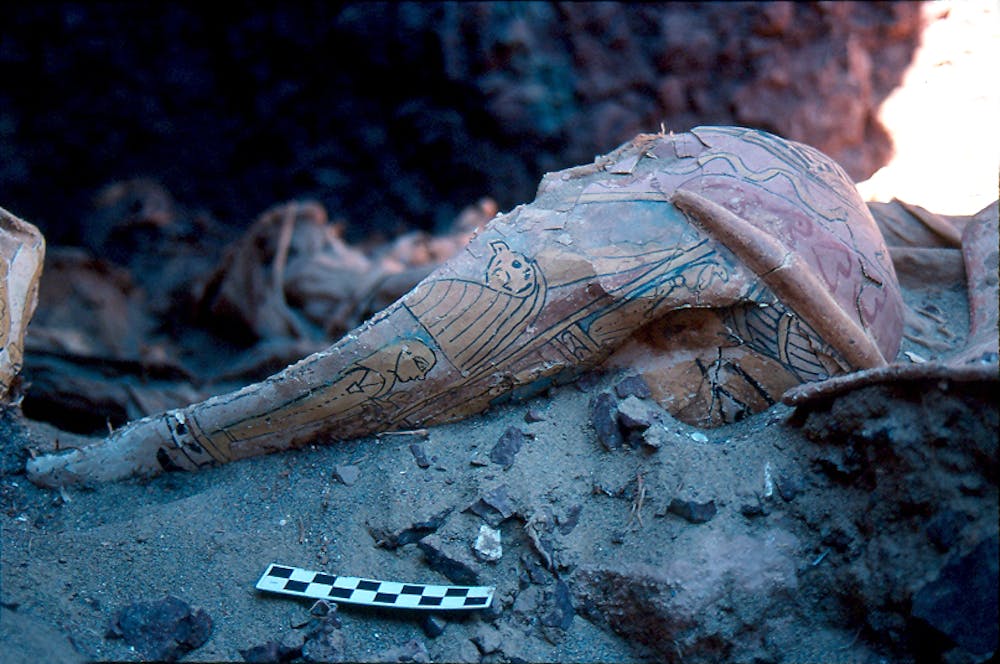
Sometimes an object can be mostly intact in a museum collection, but with few facts known about its origin. Carlo Rindi Nuzzolo
Many objects entered museum collections at times when excavation and collecting practices were very different from today. In the past, excavated objects were often divided between institutions around the world, and display was prioritized over documentation. Over time, connections between pieces were lost. As a result, museums around the world hold remarkable artifacts whose backstories are thin, fragmentary or missing altogether.
Archaeologists like me working in the field today regularly uncover fragments: broken pieces of objects that once formed part of something larger. In some cases, those fragments may share the same underlying geometry with objects already held in museums. For example, a mummy’s foot case and a newly found shard may have been produced using the same mold, so they share a consistent three-dimensional form even if they are now separated by time, distance and absence of documentation.
Traditionally, evaluating whether a fragment matches up with a specific museum object has relied on visual judgment and incomplete records, rather than a quantitative comparison of shape.
This gap between excavation archaeology and museum collections is one of the most persistent challenges in the field. My research asks a simple question: Can we use digital tools to test whether fragments and museum objects might be related and, in doing so, recover parts of their histories that were previously inaccessible?
Reuse over time and looting shifted and damaged the contents of an ancient Egyptian tomb. This displaced mummy mask could have a relationship to other artifacts already in museums around the world. Carlo Rindi Nuzzolo
A long-standing problem in archaeology
Archaeology is, by nature, fragmentary. Objects break, decay or are disturbed over centuries. Traditionally, archaeologists have relied on visual inspection, stylistic comparison and written records to propose connections between fragments and objects. These approaches are still essential, but they also have limits. Visual judgments can be subjective, and archival documentation is often incomplete or inconsistent.
As a result, many potential links between excavated material and museum artifacts have remained speculative or have never been proposed at all. An object in a museum may appear complete yet still have a fragmented history. Without a way to test relationships systematically, fragments often remain sidelined as secondary or uninformative.
More than a century ago, the archaeologist Flinders Petrie argued that an object’s value lies not in its beauty but in the information it carries. An unremarkable fragment with a known history, he believed, could be more important than a finely made object without one. Today, digital tools are giving archaeologists new ways to put that idea into practice.
Archaeologists can use handheld 3D scanners to noninvasively map objects in very fine detail. Carlo Rindi Nuzzolo
Turning objects into data that can be compared
One of those tools is 3D scanning. Using portable scanners, it is now possible to capture the full surface geometry of an object with high precision, without touching or damaging it. Every curve, contour and variation in thickness can be recorded digitally.
Once scanned, an artifact becomes more than an image. It becomes data: a detailed digital model that can be rotated, measured, compared and analyzed. Importantly, this process is noninvasive. Fragile objects do not need to be moved, dismantled or physically tested.
For archaeologists and museum curators, this process opens up new possibilities. Objects held in different institutions, or fragments stored in excavation archives, can be compared digitally, even if the originals never leave their locations.
Scanning is only the first step. The real challenge lies in comparison. Rather than asking whether two pieces look similar, computational shape analysis allows researchers to ask a more precise question: How similar are their shapes?
In simple terms, the computer compares the geometry of two surfaces. It looks at curvature, thickness and spatial relationships, measuring how closely one surface matches another. It’s like comparing a kind of geometric fingerprint.
This approach doesn’t replace expert judgment. Instead, it supports it by providing measurable evidence that can confirm, refine or challenge visual impressions. It allows archaeologists to move from intuition to testing.
When a fragment meets a museum object
In a recent study published in the journal Heritage Science, I applied these methods to Graeco-Roman Egyptian funerary artifacts made of cartonnage, a composite material of linen, plaster and paint.
I created high-resolution 3D scans of excavated cartonnage fragments and compared them with an intact funerary mask held in a museum collection. The goal was not to reconstruct the object physically but to test whether their shapes were compatible in meaningful ways.
The comparison focused on three-dimensional geometry rather than decoration. This matters because cartonnage masks were often shaped in molds: If two objects were formed in the same mold, they can share highly consistent curvature and thickness patterns even when their painted surfaces differ.
The mask reference surface is shown in gray, while the aligned fragment is colored based on the surface-to-surface distance at each point. Green indicates a good match with almost no distance. Cooler colors show areas where the fragment lies below the reference mask, and warmer colors show where it lies above. Carlo Rindi Nuzzolo
I used a distance-mapping approach called deviation mapping. After aligning the 3D model of an excavated fragment to the corresponding region of the intact museum object, the algorithm calculates the distances between the two surfaces at thousands of points. Areas where the distances were consistently small are geometrically very similar. Areas with consistently larger distances indicate that the fragment’s shape diverges from the reference surface.
In this case, the surfaces corresponded closely, with differences generally of less than a millimeter – a level of agreement consistent with production in the same mold rather than a coincidental visual resemblance.
What mattered most was not a single “match” but the ability to evaluate relationships transparently and reproducibly, using shared digital evidence.
One of the most powerful aspects of this approach is that it works across distance. Researchers can easily share digital models, allowing them to compare fragments and objects held in different institutions, without transporting fragile artifacts. Excavation archives, museum collections and research institutions can begin to speak the same digital language, reconnecting evidence that has long been separated by geography and history.
The mask fragment was a very close match to a complete mask, suggesting they were made in the same mold. Carlo Rindi Nuzzolo
Digital tools are reshaping collections research
The work I describe here, part of my recent CRAFT Project, does not use artificial intelligence or machine learning. It relies on computer-based shape comparison and careful interpretation of metrological results. But it sits within a broader movement in heritage research.
Across the world, researchers and institutions are beginning to combine 3D scanning with machine learning to explore collections in different ways. For example, the EU-funded RePAIR project uses AI and robotics to help reassemble fragmented archaeological artifacts, while major institutions such as the Smithsonian are experimenting with AI-driven analysis of large 3D collections.
Together, these projects point to a future in which digital tools play an increasingly active role in how museums and archaeologists understand the past.
Digital archaeology is sometimes associated with flashy reconstructions or virtual displays. But its deeper value lies elsewhere. By giving fragments a new analytical role, digital methods allow archaeologists to recover relationships that were long thought irretrievably lost.
New digital methodologies are breathing new life into a long-standing archaeological principle: Modest fragments can carry outsized significance when they clarify an object’s origins and its lost context, finally allowing it to find its way back home.
The CRAFT Project (www.craft-project.net), led by Dr. Carlo Rindi Nuzzolo from 2022 to 2025, received research funding from the Marie Skłodowska-Curie Actions under the European Union’s Horizon 2020 Scheme.
Olympians – athletes at the top of their sport and in prime health – are idolized and often viewed as superhuman. These athletes spend their lives focusing on building physical strength through rigorous training and diets that are honed to provide the nutrients necessary to excel at their sport.
The distinctive lifestyle of elite athletes can create a hotbed for eating disorders and disordered eating, meaning restrictive, compulsive, irregular or inflexible eating patterns, all of which can occur on a spectrum.
As a specialist in eating disorders and anxiety, I regularly work with athletes and clients who experience eating disorders and disordered relationships with food and exercise. Based on my clinical and personal experience, I believe that the public can learn to better support athletes with eating disorders by considering the unique risk factors they face.
American figure skater and media personality Adam Rippon – shown here at the 2026 Olympics, where he is part of the NBC Sports coverage team – came out publicly in 2018 about the dangerous starvation diet he followed for years. Vittorio Zunino Celotto/Getty Images Sport via Getty Images
These traits are also common risk factors for nonathletes but are often viewed as positive traits in athletes since they lead to high achievement and attainment. For instance, an athlete might restrict food intake to find focus, or delay eating to achieve a specific goal that day. Or they might engage in compulsive exercise regardless of hunger or injury, chalking it up to discipline.
What’s more, in athletes, typical signs of an eating disorder, such as training for long hours without appropriate breaks for meals or obsessing about only consuming certain healthy foods, can be overlooked due to the normalization of these behaviors in high-level sports.
About 46% of athletes in so-called “leanness” sports have an eating disorder, compared with almost 20% of athletes in sports that are not weight-focused. That’s because athletes in weight-sensitive sports experience far more emphasis and demand on having a thin and muscular body, which often involves weight monitoring as part of their training or competition.
Athletes in these sports also experience high demands of constant competition, rigidity around their dieting and exercise schedule, high energy output and an incredibly high mental and physical strain on their bodies.
External factors can also put an athlete at risk for an eating disorder. For instance, in various sports like running, rock climbing and figure skating, there is a long-running belief that being at a lower weight will improve an athlete’s performance. This can lead to disordered behavior that may initially feel beneficial to performance; however, it can negatively affect performance and health over the long run. External pressure, such as weight stigma and pressure from coaches and family, media and societal standards of fitness and team culture around dieting and weight, also place athletes at high risk for eating disorders.
Former Olympic skier Alice Merryweather talks about her struggles with an eating disorder following the 2018 Olympics. Professionals recommend that when watching athletes perform, avoid commenting on their physical appearance and instead focus on what they’re doing and how amazing it is.
‘No pain, no gain’ culture
Another serious factor regarding eating disorders in high-level athletes is that a very small percentage of them seek treatment. A 2021 study found that among U.S. athletes who experienced disordered eating or had an official diagnosis, more than 95% were not in treatment and 75% had no intention of seeking it. For perspective, the help-seeking rate for those with disordered eating or eating disorders in the general population is between 32% and 40%., compared with around 5.4% in athletes.
In competitive sports, a “no pain, no gain” mentality can often directly and indirectly reward athletes who push themselves to the extreme. As a result, athletes may be less likely to seek treatment and to come forward with their issues for fear of not wanting to have restrictions on their practice and competition put in place, of being ostracized from their teammates or of losing sponsorship or scholarship opportunities.
Along with this comes a lack of awareness about eating disorders, stigma and unhealthy attitudes and assumptions toward mental health from coaches and other athletic personnel, all of which can impede an athlete’s likelihood of seeking care. Ultimately, seeking and receiving treatment can be difficult for athletes because athletes face sacrificing time away from their sport, which is often their livelihood.
One preventive strategy that the International Olympic Committee has been working on is focusing on improving pre-competition assessment of health. This assessment will focus on an athlete’s body composition and other determinants of health, such as vital signs, to determine if they are fit to perform in the upcoming qualifiers and Olympic games. These guidelines may allow athletes to get much-needed help and support.
Athletes are not superhuman
Despite the perception of superhuman qualities, athletes who experience eating disorders experience all of the same consequences of eating disorders as the general population. But athletes also have higher riskof injury, decreased strength and endurance, and worsened athletic performance over time due to low energy availability and fatigue, and are more likely to experience anxiety, depression and suicidal ideation in their lifetime.
Athletes often require a multi-disciplinary team to support them. This may include a therapist, psychiatrist, sports psychologist, registered dietitian, medical doctor, physical therapist, occupational therapist or any combination of these. This team can assist the athlete in stabilizing medications, improving nutritional intake and recognizing differences between athletic dedication and disordered behavior.
It is also critically important for family to be involved and that the athletes’ entire support system – as well as the public – remember that athletes are humans, with real emotions and struggles, just like the rest of us.
Emily Hemendinger does not work for, consult, own shares in or receive funding from any company or organization that would benefit from this article, and has disclosed no relevant affiliations beyond their academic appointment.
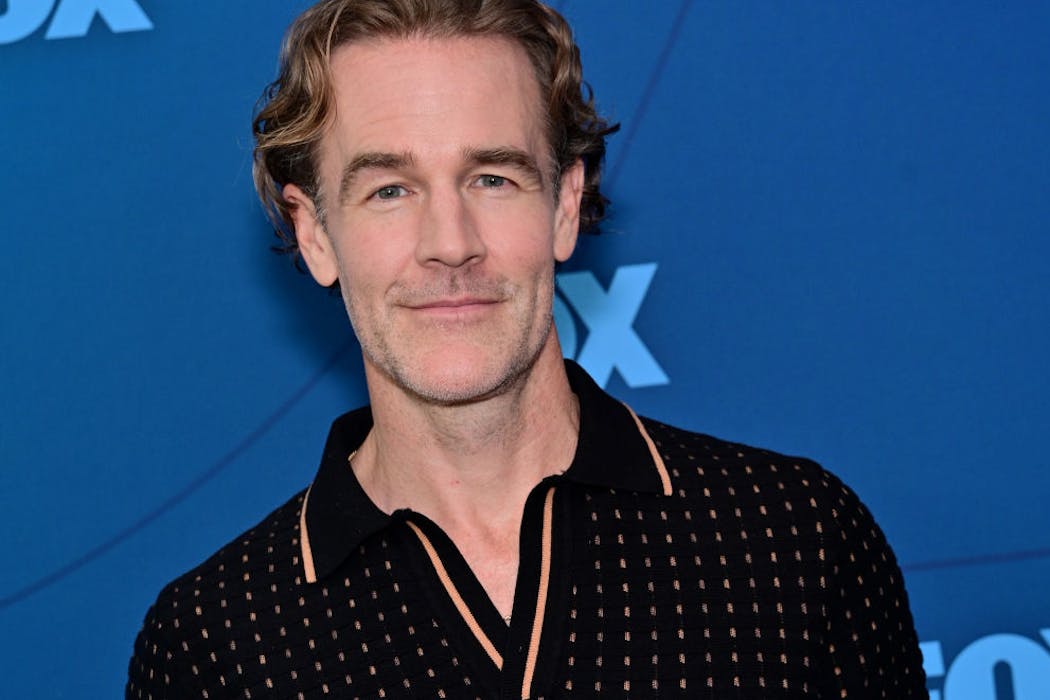
An increasing number of people are dying of colorectal cancer at a young age, including those as young as 20. Actor James Van Der Beek, who was diagnosed with colorectal cancer in 2023, died at age 48 on Feb. 11, 2026, bringing the disease back into the limelight.
The Conversation U.S. asked gastrointestinal oncologist Christopher Lieu and cancer researcher Andrea Dwyer to explain what’s known about early-onset colon cancer and what young people can do to protect themselves.
Why are more young people getting colorectal cancer?
Researchers have identified a number of factors associated with increasing numbers of young people developing colorectal cancer, but there is no one clear answer that explains this trend.
Lifestyle factors like ultra-processed foods and alcohol, as well as lack of exercise, have been linked to early-onset colorectal cancer. However, these are correlations that aren’t proven to be the cause of colorectal cancer in young adults.
Many researchers are focusing on the gut microbiome, which is an ecosystem of microorganisms in your gut that helps your body digest food and carry out other important functions. When the microbes in the gut are out of balance – a condition called dysbiosis – this causes a disruption that allows for inflammation and negative health effects, including increased cancer risk.
What increases your risk of developing colorectal cancer?
For example, someone’s diet plays a role in cancer risk. Eating a lot of red meat and processed foods and not enough dietary fiber can increase your risk of colorectal cancer. Alcohol also causes cancer – even having less than one drink a day can increase your cancer risk.
Smoking, obesity and lack of exercise are other factors that increase cancer risk.
Colorectal cancer is rising among young people.
What’s the survival rate for young people with colon cancer?
There is a lot of debate among researchers on whether there are differences in survival rates between those with early-onset colorectal cancer survival and those who develop the disease after age 50.
Finding cancer at an early stage can lead to five-year survival rates as high as 80% to 90%. When cancer is detected at an advanced stage where it has spread to other parts of the body, survival rates are closer to 10% to 15%.
One study found that young patients with metastatic colon cancer had a slightly lower survival rate compared with those age 50 or older.
What are early symptoms of colorectal cancer?
The most common signs and symptoms for early-onset colorectal cancer are blood in the stool, abdominal pain and a change in bowel habits, or any combination of these conditions. Unexplained anemia, or low red blood cell levels, is another potential symptom. These are warning signs that people should not ignore.
Having these symptoms does not necessarily mean you have colorectal cancer, but they are worth discussing with a physician. In some cases, your doctor may request a colonoscopy for further evaluation.
How does colon cancer screening work?
The first step is to have a conversation with your health care team about which test is right for you. Understanding what your risk category is helps guide screening, prevention and lifestyle changes to reduce your likelihood of colorectal cancer.
People with an average risk for colorectal cancer typically have no personal or significant family history of colorectal cancer, hereditary cancer, precancerous polyps or inflammatory bowel disease. They have several options for screening, including stool tests that check for blood and abnormal cells, as well as imaging scans to visualize the colon and rectum. Screening is recommended to begin at age 45 and should continue at regular intervals until age 75.
People with a high risk of colon cancer typically have a personal or family history of colorectal cancer, hereditary cancer or inflammatory bowel disease. They may also have several lifestyle risk factors. Colonoscopy is the only recommended screening test for those with high risk, and earlier and more frequent screening may be necessary.
How can you reduce your risk of colon cancer?
Communication and action are key. Talk to your health care team about your personal risk based on your age, family history and any signs and symptoms to ensure you’re matched with the screening exam and test best for you.
Take charge of your health. There are lifestyle factors you can control to reduce your personal risk of colorectal cancer. These include regular physical activity; a diet high in fruit, vegetables and fiber, and low in processed meats; and maintaining a healthy weight. Moderating or eliminating alcohol and tobacco use can also reduce your colorectal cancer risk.
Share information with loved ones and your health care team. Knowing your personal and family history of polyps or colorectal cancer and communicating it with your doctor can help ensure you get the right test at the right time. Sharing your personal history could save the lives of your children, siblings and parents.
The authors do not work for, consult, own shares in or receive funding from any company or organization that would benefit from this article, and have disclosed no relevant affiliations beyond their academic appointment.
Source: The Conversation – USA (2) – By Alnoor Ebrahim, Professor of International Business, The Fletcher School & Tisch College of Civic Life, Tufts University
OpenAI, the maker of the most popular AI chatbot, used to say it aimed to build artificial intelligence that “safely benefits humanity, unconstrained by a need to generate financial return,” mission statement. But the ChatGPT maker seems to no longer have the same emphasis on doing so “safely.”
OpenAI currently faces several lawsuits related to its products’ safety, making this change newsworthy. Many of the plaintiffs suing the AI company allege psychological manipulation, wrongful death and assisted suicide, while others have filed negligence claims.
And I believe OpenAI’s makeover is a test case for how we, as a society, oversee the work of organizations that have the potential to both provide enormous benefits and do catastrophic harm.
Tracing OpenAI’s origins
OpenAI, which also makes the Sora video artificial intelligence app, was founded as a nonprofit scientific research lab in 2015. Its original purpose was to benefit society by making its findings public and royalty-free rather than to make money.
To raise the money that developing its AI models would require, OpenAI, under the leadership of CEO Sam Altman, created a for-profit subsidiary in 2019. Microsoft initially invested US$1 billion in this venture; by 2024 that sum had topped $13 billion.
In exchange, Microsoft was promised a portion of future profits, capped at 100 times its initial investment. But the software giant didn’t get a seat on OpenAI’s nonprofit board – meaning it lacked the power to help steer the AI venture it was funding.
A subsequent round of funding in late 2024, which raised $6.6 billion from multiple investors, came with a catch: that the funding would become debt unless OpenAI converted to a more traditional for-profit business in which investors could own shares, without any caps on profits, and possibly occupy board seats.
A public benefit corporation is a business that must consider interests beyond shareholders, such as those of society and the environment, and it must issue an annual benefit report to its shareholders and the public. However, it is up to the board to decide how to weigh those interests and what to report in terms of the benefits and harms caused by the company.
Most charities must file forms annually with the Internal Revenue Service with details about their missions, activities and financial status to show that they qualify for tax-exempt status. Because the IRS makes the forms public, they have become a way for nonprofits to signal their missions to the world.
In its forms for 2022, , OpenAI said its mission was “to build general-purpose artificial intelligence (AI) that safely benefits humanity, unconstrained by a need to generate financial return.”
OpenAI’s mission statement as of 2023 included the word ‘safely.’ IRS via Candid
That mission statement has changed, as of – which the company filed with the IRS in late 2025. It became “to ensure that artificial general intelligence benefits all of humanity.”
OpenAI’s mission statement as of 2024 no longer included the word ‘safely.’ IRS via Candid
OpenAI had dropped its commitment to safety from its mission statement – along with a commitment to being “unconstrained” by a need to make money for investors. According to Platformer, a tech media outlet, it has also disbanded its “mission alignment” team.
In my view, these changes explicitly signal that OpenAI is making its profits a higher priority than the safety of its products.
To be sure, OpenAI continues to mention safety when it discusses its mission. “We view this mission as the most important challenge of our time,” it states on its website. “It requires simultaneously advancing AI’s capability, safety, and positive impact in the world.”
Unlike private companies, board members of tax-exempt charitable nonprofits cannot personally enrich themselves by taking a share of earnings. In cases where a nonprofit owns a for-profit business, as OpenAI did with its previous structure, investors can take a cut of profits – but they typically do not get a seat on the board or have an opportunity to elect board members, because that would be seen as a conflict of interest.
The OpenAI Foundation now has a 26% stake in OpenAI Group. In effect, that means that the nonprofit board has given up nearly three-quarters of its control over the company. Software giant Microsoft owns a slightly larger stake – 27% of OpenAI’s stock – due to its $13.8 billion investment in the AI company to date. OpenAI’s employees and its other investors own the rest of the shares.
Open AI CEO Sam Altman speaks in June 2025, as his company sought to change its structure. Justin Sullivan/Getty Images
Those numbers are only estimates because OpenAI is a privately held company without publicly traded shares. That means these figures are based on market value estimates rather than any objective evidence, such as market capitalization.
When he announced the new structure, California Attorney General Rob Bonta said, “We secured concessions that ensure charitable assets are used for their intended purpose.” He also predicted that “safety will be prioritized” and said the “top priority is, and always will be, protecting our kids.”
Steps that might help keep people safe
At the same time, several conditions in the OpenAI restructuring memo are designed to promote safety, including:
A safety and security committee on the OpenAI Foundation board has the authority to that could potentially include the halting of a release of new OpenAI products based on assessments of their risks.
The for-profit OpenAI Group has its own board, which must consider only OpenAI’s mission – rather than financial issues – regarding safety and security issues.
The OpenAI Foundation’s nonprofit board gets to appoint all members of the OpenAI Group’s for-profit board.
But given that neither the mission of the foundation nor of the OpenAI group explicitly alludes to safety, it will be hard to hold their boards accountable for it.
Furthermore, since all but one board member currently serve on both boards, it is hard to see how they might oversee themselves. And doesn’t indicate whether he was aware of the removal of any reference to safety from the mission statement.
Identifying other paths OpenAI could have taken
There are alternative models that I believe would serve the public interest better than this one.
A coalition of California nonprofits has argued that the attorney general should require OpenAI to transfer all of its assets to an independent nonprofit.
This structure allows Philadelphia’s biggest newspaper to attract investment without compromising its purpose – journalism serving the needs of its local communities. It’s become a model for potentially transforming the local news industry.
At this point, I believe that the public bears the burden of two governance failures. One is that OpenAI’s board has apparently abandoned its mission of safety. And the other is that the attorneys general of California and Delaware have let that happen.
Alnoor Ebrahim does not work for, consult, own shares in or receive funding from any company or organization that would benefit from this article, and has disclosed no relevant affiliations beyond their academic appointment.
Do women board members make a company more innovative or risk averse? The answer is both, according to our recent study. It all depends on how the company performs relative to its goals.
Professors Małgorzata Smulowitz, Didier Cossin and I examined 524 S&P 1500 companies from 1999 to 2016, measuring innovation through patent activity. Patents reflect both creative output and risk-taking. They require significant investment in novel ideas that might fail, disclosure of proprietary information and substantial legal costs. In short, patents represent genuine bets on the future.
Our findings revealed a striking pattern. When companies performed poorly in relation to their goals, they produced fewer patents after more women joined their boards.
However, companies exceeding their performance targets saw increased patent output as their number of women directors grew. Similarly, when companies were financially flush, there were more patents generated when their boards had more women.
The situation changed when we examined radical innovations, those patents in the top 10% of citations. For these high-risk, high-reward innovations, the risk-averse effect of women board members dominated.
When a company’s performance fell below aspirations, there were fewer radical innovations as its board gained female members. We found no corresponding increase in radical innovations when performance exceeded goals.
One finding surprised us. We predicted that boards with more women would reduce innovation when companies approached bankruptcy. Instead, it was the opposite: Boards with more women actually increased patent output as bankruptcy loomed. This suggests that women directors may fight harder for a company’s survival through innovation when facing existential threats.
For companies and regulators pushing for greater board gender diversity, this research provides practical guidance. Companies performing well can expect increased innovation by adding women to their boards. These directors can bring diverse perspectives, improved decision-making and better resource allocation that translate into more patents.
Conversely, poorly performing companies can expect boards with more women to focus on stability over risky innovation. This isn’t necessarily negative.
Research shows that banks led by women were less likely to fail during the financial crisis, and companies with more women directors experience less financial distress. Reduced innovation during tough times may reflect prudent risk management rather than risk aversion.
Traditional theories predict that poor performance triggers risky searches for solutions. But boards with more women appear to prioritize organizational survival over uncertain innovation when performance suffers. They may assess that failed innovation attempts could worsen an already precarious situation.
This research also speaks to the “glass cliff” phenomenon, where women often join boards during crisis periods. Our findings suggest these directors may bring exactly what struggling companies need: careful risk assessment and focus on survival rather than potentially wasteful innovation spending.
What still isn’t known
We measured innovation through patents, but many innovations never become patents. How women directors affect other forms of innovation – such as copyrights, trade secrets and first-mover advantage – remains unclear.
What are the mechanisms driving the differences? Do women directors actively advocate for different innovation strategies? Do they change board discussion dynamics? Do they influence CEO and management team decisions indirectly? Future research needs to open the “black box” of boardroom decision-making.
Finally, the long-term consequences need examination. We measured patent output, but not whether the patents translated into commercial success or competitive advantage. Understanding whether the innovation patterns we documented ultimately benefit company performance would provide crucial insights for decision-makers.
The Research Brief is a short take on interesting academic work.
Stephen J. Smulowitz does not work for, consult, own shares in or receive funding from any company or organization that would benefit from this article, and has disclosed no relevant affiliations beyond their academic appointment.
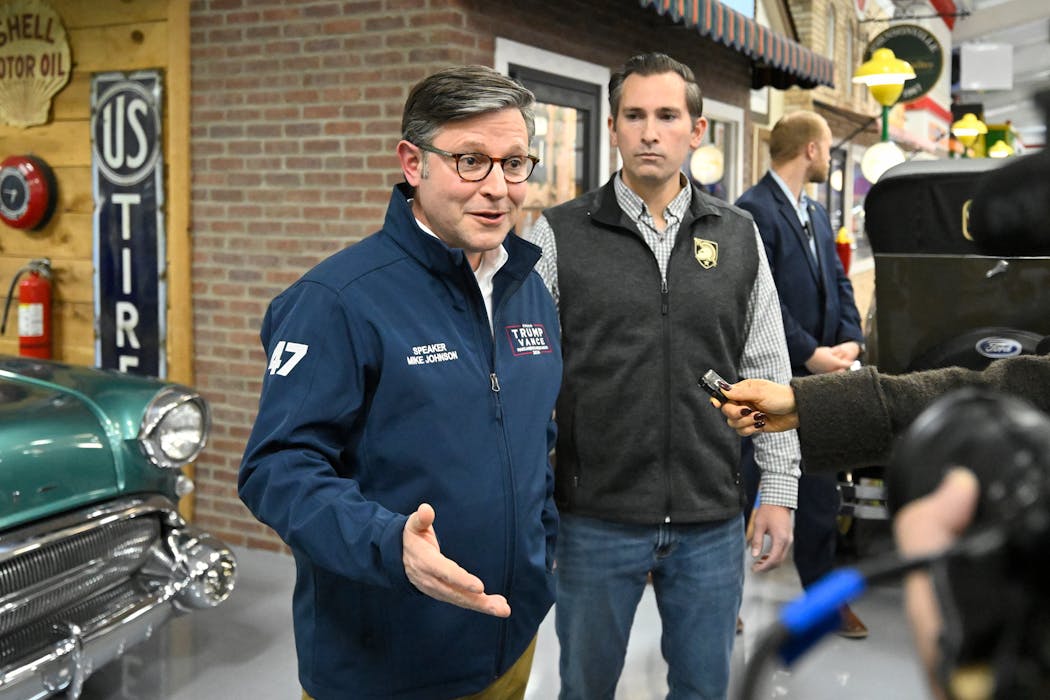
Hoping to preserve his narrow majority, U.S. House Speaker Mike Johnson campaigned alongside Matt Van Epps, who narrowly won a December 2025 special election in a strongly Republican district in Tennessee.AP Photo/John Amis
On Feb. 7, 2026, Chasity Verret Martinez won a special election to fill a vacant seat in the Louisiana House. That’s an outcome that might not mean very much to people outside of the state or even outside her Baton Rouge-area district.
Because fewer people turn out for special elections, they’re considered an early predictor of partisan enthusiasm heading into regularly scheduled elections. And with the 2026 midterm elections less than nine months away, analysts are already scrambling for indications of the likely outcome.
As a political scientist who studies congressional elections, I’m interested in the question of whether special elections can really tell us which way the political winds are currently blowing.
In the 2026 election cycle, as in previous ones, prognosticators and political professionals are looking to the outcomes of these intermittent races at various levels of government as a gauge of how voters are feeling about the two parties. And the results from the first 15 months of the second Trump administration appear to spell very bad news for the Republicans.
Setting a baseline
Since Election Day 2024, 88 special elections featuring candidates from both major parties have taken place for institutions including state legislatures and the U.S. House.
When analyzing the results of these races, it’s important to have figures to compare them to. After all, a Democrat just barely squeaking by in a state legislative race may not look very impressive on its face – but if that race took place in the rural heart of a red state, it could raise hackles among Republicans.
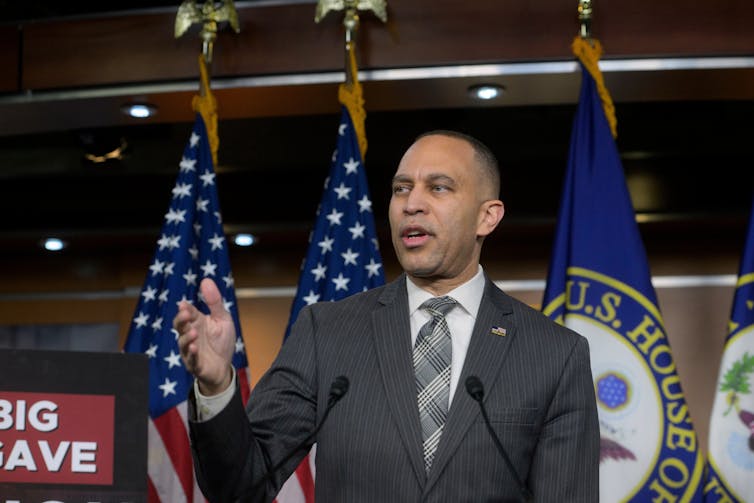
New York Democrat Hakeem Jeffries would likely become the first Black U.S. speaker of the House if Democrats win a majority in 2026. AP Photo/Rod Lamkey
Most political analysts agree that the best available comparison point for special elections are the results for the most recent presidential election in that same district. There are a few reasons for this.
Second, using presidential results creates the same baseline for all races. By comparing special election results to the prior election environment, all the special election results get compared to the same standard.
Finally, and perhaps most importantly, recent midterm elections have typically served as a referendum on the party in power, particularly the president. In trying to measure how voters are reacting to Trump’s second term, it makes sense to measure their behavior against the last time Trump was on the ballot.
Conversely, in 2018 – like this year, a midterm following a Trump election – Democrats bested Republicans by 8 percentage points in November, after overperforming Hillary Clinton’s 2016 margins in special elections throughout the previous two years by 9 percentage points on average.
The 2024 cycle is a clear exception to this pattern of regular elections closely following special election results: Prior to the presidential election, Democrats outperformed in special elections by an average of 4 percentage points but ended up losing nationally by 3 percentage points in November.
Like special elections, midterm contests tend to turn out fewer but more engaged voters than presidential years. Therefore, it may be that special elections are more predictive of midterm results than presidential cycles. At any rate, if previous midterm outcomes are any guide, the numbers being posted by Democrats in special elections so far in the 2026 cycle are impossible to ignore.
On average, they’re running ahead of Harris’s 2024 margins by a whopping 13 percentage points. That’s better than they did in 2018, when they ultimately picked up 40 seats in the House and seven governorships across the country.
What’s different about specials?
Democrats, however, may not want to pop the champagne corks just yet. Many roadblocks remain in their quest to take back control of Congress. For one thing, the U.S. Senate map remains a difficult one for Democrats. Even if they end up creating a 2018-like election environment with an unpopular president, many Senate contests are taking place in solidly red states.
It’s also always worth bearing in mind that there’s no telling how the events of the next nine months might reshape public opinion.
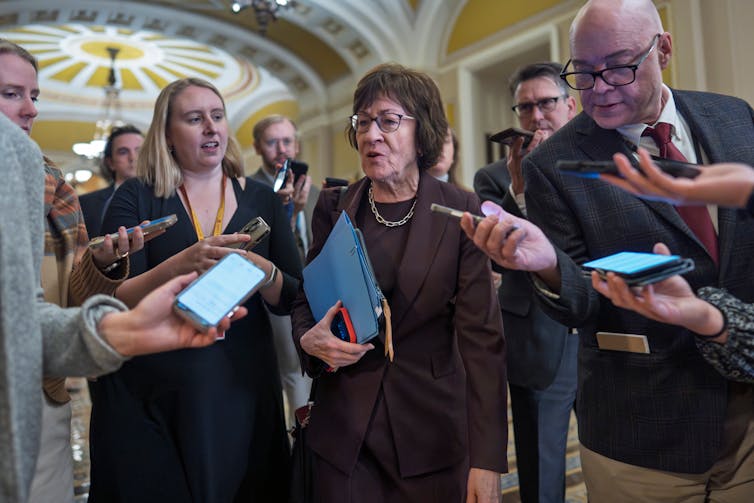
U.S. Sen. Susan Collins of Maine has proved an elusive target for Democrats in a state they carry at the presidential level. AP Photo/J. Scott Applewhite
And special elections, while useful metrics, are far from perfect barometers of public opinion. They take place at different times, and could be just as reflective of hyperlocal factors, such as flawed candidates, as they are of nationalized partisan conditions.
Special elections tend to have far lower turnout than regular midterm or presidential contests. It’s also difficult to tell whether overperformance is due to highly motivated partisans or persuasion of independents and voters from the other party.
Using all the tools available
Still, special elections do have key advantages over traditional polling. Although polls do their best to approximate voters’ political attitudes, elections reveal these attitudes through voters’ actual, observed behavior – exactly the type of behavior that analysts are trying to predict in November.
In the end, special elections are just one piece of the prediction puzzle. But the other puzzle pieces are also spelling out potential bad news for the GOP.
The generic ballot, a standard polling question that asks voters’ intent to vote for one party or the other in November without naming specific candidates, has the GOP about 6 percentage points behind the Democrats. Trump’s approval rating, meanwhile, continues to hover below 40%.
There’s no telling for sure whether these indicators will turn out to be truly predictive until November. But all of them should be sounding alarm bells for Republicans.
Charlie Hunt does not work for, consult, own shares in or receive funding from any company or organization that would benefit from this article, and has disclosed no relevant affiliations beyond their academic appointment.
Accusé de vols, soupçonné d’être l’allié des sorcières, le hérisson a subi bien des persécutions de la part de l’homme.Getty Open Content., CC BY
Pendant des siècles, le hérisson a été tour à tour craint, persécuté, puis idéalisé. Des mythes médiévaux aux campagnes de protection actuelles, son histoire éclaire la manière dont nos récits façonnent notre rapport à la faune sauvage.
Les hérissons font partie de la culture humaine depuis des millénaires. Selon les sociétés, ils ont été tour à tour associés à la fertilité, à la protection et à la guérison, mais aussi à la peur, aux superstitions et à la méfiance.
Aujourd’hui, 17 espèces de hérissons sont présentes en Europe, en Afrique et en Asie. Beaucoup vivent à proximité immédiate des humains, une cohabitation étroite qui a contribué à façonner les récits que l’on raconte à leur sujet.
Bien avant l’apparition de l’écriture, des représentations évoquant le hérisson apparaissaient déjà dans des formes d’art symbolique liées à la fertilité et au renouveau, ce qui suggère que ces animaux comptaient pour les humains depuis bien plus longtemps que ne le révèlent les sources écrites.
Dans l’Égypte ancienne, ils étaient considérés comme des guides et des protecteurs, admirés pour leur capacité à survivre à l’hiver grâce à l’hibernation, un puissant symbole de renaissance. Toutefois, les Égyptiens les chassaient également et utilisaient leurs piquants dans des remèdes populaires, notamment ceux supposés soigner la calvitie.
Les hérissons ont aussi, au fil de l’histoire, endossé des rôles plus inquiétants. Dans certaines régions de Chine, les premiers récits évoquaient des esprits de hérissons capables de se transformer en êtres humains et d’apporter le malheur. Des traditions plus tardives en faisaient à l’opposé des protecteurs sacrés du foyer et des guérisseurs.
Dans « Alice au pays des merveilles ». British Library archive
L’histoire sombre des hérissons
En Grande-Bretagne, les hérissons ont longtemps souffert d’une image largement négative, jusqu’à une période relativement récente. Au Moyen Âge, ils étaient étroitement associés à la sorcellerie. Une croyance très répandue voulait que les sorcières puissent se transformer en hérissons afin de perpétrer leurs méfaits. On pensait aussi qu’ils se glissaient la nuit dans les champs pour voler le lait directement au pis des vaches.
Selon une autre croyance ancienne, les hérissons transportaient des fruits volés sur leurs piquants. Les illustrations médiévales les représentaient souvent traversant des vergers, des pommes fichées sur le dos, une image qui perdure encore aujourd’hui dans les livres pour enfants et jusque dans les décorations de gâteaux d’anniversaire. Certains mythes anciens subsistent également : des personnes bien intentionnées continuent par exemple de leur proposer du lait, alors même que les hérissons sont intolérants au lactose.
Si certaines de ces histoires subsistent aujourd’hui comme de simples curiosités pittoresques, d’autres ont eu des conséquences bien plus graves. Les hérissons ont ainsi été officiellement classés parmi les « vermines » en vertu du Preservation of Grain Act (loi sur la protection des récoltes céréalières) de 1532, parmi une longue liste d’animaux.
Les paroisses étaient tenues de les tuer, une prime de trois pence étant versée pour chaque hérisson abattu, une somme importante pour l’époque. Les communautés qui n’atteignaient pas les quotas imposés pouvaient même être sanctionnées par des amendes. Les hérissons sont restés inscrits sur ces listes de nuisibles pendant des siècles.
On estime qu’entre 1660 et 1800, sur une période de 140 ans, près de 500 000 hérissons ont été éliminés de cette manière – un total proche de celui que compte aujourd’hui la population britannique actuelle de hérissons. Et les hérissons n’étaient pas les seuls : chats sauvages, loutres ou encore martres des pins (pour ne citer qu’eux) ont eux aussi été persécutés selon les mêmes logiques. Après de forts déclins, ces espèces figurent aujourd’hui parmi les plus strictement protégées par la loi au Royaume-Uni.
Persécution et protection
Bien que cette loi ait fini par être abrogée, la mise à mort des hérissons s’est poursuivie jusqu’au XIXe siècle et au début du XXe, en particulier sur les domaines de chasse. Les archives indiquent que des dizaines de milliers d’individus étaient tués chaque année durant cette période, avant que les chiffres ne commencent à reculer entre les années 1960 et le début des années 1980. Ce recul peut traduire une évolution des mentalités et l’adoption de lois de protection de la faune, mais il est aussi possible qu’il reflète une raréfaction des hérissons.
Un texte illustré du XVᵉ siècle présentant un hérisson et un loup. Getty’s Open Content Program, FAL
Aujourd’hui, au Royaume-Uni du moins, les hérissons bénéficient d’une image très différente. En 2016, ils ont été élus mammifère préféré des Britanniques, devançant largement le renard roux, arrivé en deuxième position. Cet attachement du public a nourri des campagnes de préservation dans les jardins, le développement de structures caritatives dédiées et l’essor d’un réseau croissant de centres de soins, qui prennent en charge des animaux malades ou blessés, souvent avec le soutien de particuliers qui aménagent activement leurs jardins en pensant aux hérissons.
Si les attitudes à l’égard des hérissons se sont nettement améliorées au cours des dernières décennies, cela n’a toutefois pas suffi à enrayer leur déclin. L’espèce a récemment été reclassée comme « quasi menacée » sur la liste rouge de l’Union internationale pour la conservation de la nature. Comprendre notre parcours culturel et l’évolution de notre regard sur les hérissons permet d’éclairer à la fois notre volonté de les protéger et certaines des erreurs que nous continuons à commettre.
Le parcours du hérisson, autrefois perçu comme un nuisible redouté et aujourd’hui érigé en icône des jardins, illustre la puissance des récits humains, capables à la fois de nuire à la faune sauvage et de susciter sa protection. Mais l’affection, à elle seule, ne suffit pas.
Les mythes qui ont jadis servi à justifier sa persécution subsistent encore sous des formes plus atténuées, influençant des comportements bien intentionnés mais parfois préjudiciables. Aujourd’hui, les hérissons ont besoin de protection. Des gestes simples – comme mettre à disposition une coupelle d’eau peu profonde, aménager des jardins favorables aux hérissons, prévoir des issues de secours dans les bassins ou limiter l’usage des pesticides – peuvent contribuer à préserver ce mammifère désormais très apprécié.
Kate Davies ne travaille pas, ne conseille pas, ne possède pas de parts, ne reçoit pas de fonds d’une organisation qui pourrait tirer profit de cet article, et n’a déclaré aucune autre affiliation que son organisme de recherche.
Le président Trump a annoncé l’abrogation de l’Endangerment Finding, un texte de l’Agence environnementale américaine (EPA) à la base de toutes les régulations fédérales concernant les émissions de gaz à effet de serre (GES) du pays. Après le retrait de l’accord de Paris et des institutions internationales traitant du climat, c’est un renforcement du backlash climatique qui souffle sur les États-Unis.
L’abrogation de l’Endangerment Finding (qu’on peut traduire par « constat de mise en danger »), annoncée depuis la Maison-Blanche, le 12 février 2026, marque un retour en arrière de près de vingt ans.
Ce texte de l’EPA réunit en effet les éléments scientifiques permettant l’application d’une décision de la Cour suprême des États-Unis datant de 2007, qui appelait l’Agence environnementale américaine (EPA) à inclure les six principaux gaz à effet de serre parmi les rejets atmosphériques qu’elle a mission de réguler.
Nouvelle illustration du backlash climatique de l’Amérique trumpienne, cette abrogation promet de multiples contentieux juridiques qui remonteront sans doute jusqu’à la Cours suprême, dont la décision de 2007 n’a pas été abrogée.
Titre d’un livre de Susan Faludi paru en 1991, l’expression « backlash » a connu son heure de gloire aux États-Unis dans les années 1990. Elle désignait alors toute régression en matière de droits civiques, en particulier ceux des femmes et des minorités.
Le backlash est revenu en force en 2025, avec le démarrage du second mandat de Donald Trump. La guerre contre les droits civiques a repris avec une grande violence pour les migrants. Elle a été étendue à tout ce qui touche le changement climatique, autrement dit aux droits environnementaux, ainsi qu’à la science.
En termes de politique extérieure, la dénonciation de l’accord de Paris a été complétée en janvier 2026 par le retrait des États-Unis de la convention-cadre des Nations unies sur le réchauffement climatique et du Groupe d’experts intergouvernemental sur l’évolution du climat (Giec). En se retirant de la convention-cadre, l’Amérique trumpienne s’est affranchie de toute obligation en matière climatique.
Le retrait du Giec illustre un autre volet du backlash : la guerre déclarée contre les sciences du climat et toutes les institutions qui les hébergent.
Si les universités et les centres indépendants comme le World Resources Institute (WRI) ou le Berkeley Earth ont pu résister, trois grandes administrations fédérales ont été directement affectées : l’administration en charge de l’atmosphère et de l’océan (NOAA), les centres de recherche sur le climat de la NASA et l’agence environnementale (EPA), en charge de l’établissement de l’inventaire des émissions de gaz à effet de serre. Ces trois institutions produisent nombre de données et de modélisations utilisées par les scientifiques du monde entier.
Sur le plan de la politique intérieure, l’abrogation de l’Endangerment Finding ouvre la voie à la suppression de l’ensemble des régulations environnementales touchant le climat, notamment dans les transports et l’énergie. Elle a été préparée par la publication du rapport de juillet 2025 du Département de l’énergie, qui relativisait les impacts du réchauffement climatique, instillant le doute sur ses origines anthropiques et affirmant, dans son résumé pour décideurs, que « des politiques d’atténuation excessivement agressives pourraient s’avérer plus néfastes que bénéfiques ».
La question des preuves scientifiques était déjà au cœur de la décision d’avril 2007 de la Cour suprême des États-Unis, dite Massachusetts v. EPA, qui enjoignait à l’EPA d’intégrer les gaz à effet de serre (GES) parmi les polluants atmosphériques qu’elle avait en charge de réglementer. Ce faisant, la Cour a retourné, par une faible majorité (5 contre 4), la jurisprudence antérieure qui reposait sur les supposées incertitudes scientifiques quant au lien entre les émissions de GES et le changement climatique.
C’est à nouveau en contestant les diagnostics des sciences du climat que l’Amérique trumpienne tente de s’affranchir de toute responsabilité face au changement climatique. Cela ne va pas manquer de multiplier les contentieux judiciaires, qui risquent fort de remonter jusqu’à la Cour suprême, dont la décision de 2007 enjoignant à l’EPA de réguler les émissions de gaz à effet de serre n’a pas été abrogée.
Des conséquences déjà tangibles pour le climat
L’abrogation de l’Endangerment Finding vise à inscrire dans la durée la stratégie trumpienne. Celle-ci est guidée par le rétroviseur, avec la promesse de retrouver un paradis énergétique reposant sur une abondance d’énergie fossile livrée à bas coût à la population.
C’est au nom de cette chimère que les dispositifs de soutien aux énergies renouvelables et à l’électrification des usages ont été démantelés en moins d’un an. Cela a conduit les constructeurs américains à mettre un grand coup de frein sur la voiture électrique. Dans les énergies renouvelables, la filière éolienne a été particulièrement visée, avec le gel ou l’arrêt de la plupart des grands projets offshore déjà engagés, généralement portés par des entreprises européennes.
Simultanément, le secteur des énergies fossiles a été cajolé par la « grande et belle loi budgétaire » qui prévoit, entre autres, la cession de nouvelles concessions pétrolières dans le golfe du Mexique et sur les terres fédérales, des allègements fiscaux sur les forages, le report de la redevance sur le méthane, la réduction des redevances minières pour le charbon, l’extension de son extraction sur les terres fédérales et enfin des crédits d’impôt pour le « charbon métallique » utilisé dans les hauts-fourneaux.
Ce cocktail de mesures a contribué à la remontée, estimée à 2,4 %, des émissions de gaz à effet de serre du pays en 2025. La tendance à la baisse des émissions observée depuis 2005 risque ainsi d’être interrompue.
Le tête-à-queue américain peut-il faire dérailler les scénarios globaux de sortie des énergies fossiles ? En 2025, les États-Unis ont été à l’origine de 13 % des émissions mondiales de carbone fossile. Tout dépendra de la façon dont va réagir le reste du monde.
Face au « backlash » : accélération au Sud, hésitations en Europe
Dans le reste du monde, ce n’est pas le backlash, mais l’accélération de la transition énergétique qui prévaut.
La Chine en est devenue l’acteur pivot. Grâce à un investissement sans pareil dans les énergies bas carbone, elle est en train de franchir son pic d’émission à 8 tonnes de CO2 par habitant, quand les États-Unis ont franchi le leur à 21 tonnes, et l’Europe à 11 tonnes. La question clé est désormais celle du rythme de la décrue après le pic.
Devenue le fournisseur dominant des biens d’équipement de la transition énergétique, la Chine a contré la fermeture du marché américain en redirigeant ses ventes vers le Sud global, qui accélère ses investissements dans l’économie bas carbone. L’agressivité trumpiste a même réussi à rapprocher la Chine de l’Inde.
Dans ce contexte, l’Europe s’enferme dans une position défensive face aux États-Unis, subissant les coups les uns après les autres. Les vents du backlash climatique trouvent même des relais au sein de l’Union européenne, où une partie de la classe politique cherche désormais à freiner, voire stopper, la transition bas carbone.
Cette attitude est contreproductive. Le vieux continent importe la grande majorité de son énergie fossile, et pourrait au contraire reconquérir une partie de sa souveraineté économique en accélérant sa transition énergétique. Cela contribuerait également à relever son taux d’investissement, car l’économie bas carbone est plus capitalistique que celle reposant sur l’énergie fossile.
L’Europe devrait, enfin, mobiliser toutes ses ressources scientifiques pour faire face aux attaques lancées contre les sciences du climat. Aux « faits alternatifs » que cherchent à imposer les « ingénieurs du chaos » – du nom de l’essai éponyme paru en 2019 – sur les réseaux sociaux, il est temps d’opposer avec détermination les faits scientifiques.
Christian de Perthuis ne travaille pas, ne conseille pas, ne possède pas de parts, ne reçoit pas de fonds d’une organisation qui pourrait tirer profit de cet article, et n’a déclaré aucune autre affiliation que son organisme de recherche.