Reconstruire l’État après la guerre : quels défis pour le management public en contexte post-conflit ?

Source: The Conversation – France in French (3) – By Mohamad Fadl Harake, Docteur en Sciences de Gestion, Chercheur en Management Public Post-conflit, Université de Poitiers

Après un conflit, une bataille se joue dans les instances gouvernementales. Administrations, écoles, hôpitaux, tribunaux : il est nécessaire de faire fonctionner à nouveau ces lieux où l’État redevient visible et utile. Offrir des services publics équitables et efficaces permet de rétablir la confiance auprès de la population, de prévenir les tensions futures et de consolider une paix durable. Mais comment allier inclusion politique et professionnalisation de l’administration sans exclure ou corrompre le processus ? Cet article explore, exemples à l’appui, les conditions d’un État solide après la guerre.


Au lendemain d’un conflit, la paix ne se gagne pas qu’avec des ponts et des routes. Elle se joue aux guichets : dans les ministères, les centres de santé, les écoles, les tribunaux… Une administration qui délivre, une légitimité qui se reconstruit, des services qui reviennent partout. Comment concilier inclusion politique et professionnalisation de l’État pour une paix durable ?

L’urgence de faire fonctionner l’État… sans sacrifier le long terme

Dans les États sortant de guerre, les caisses sont vides, les talents ont souvent fui, les procédures se sont délitées. Les bailleurs poussent à « livrer vite » des résultats visibles.

Or, les recherches sur les réformes administratives en sortie de conflit montrent que des arbitrages délicats doivent être faits entre rétablissement immédiat des services et consolidation institutionnelle sur la durée (stabiliser la paie, reconstruire les chaînes d’approvisionnement, reprofessionnaliser, etc.).

Les dispositifs parallèles pilotés par des projets internationaux peuvent accélérer la reprise, mais ils siphonnent parfois les compétences et fragilisent les administrations nationales si la passation vers le secteur public n’est pas anticipée.

Le dilemme technocratie–réconciliation

Qui doit tenir les rênes de l’administration rénovée ? Des technocrates indépendants, garants de l’efficacité, ou des représentants des ex-belligérants, garants de l’inclusion ? La plupart des pays naviguent entre ces pôles, avec des effets ambivalents.

En Irak, le système de partage des postes par quotas ethno-confessionnels, la muhasasa, mise en place en 2003, a garanti la représentation des grands groupes, mais il a aussi institutionnalisé le clientélisme et affaibli les incitations au mérite. Les grandes mobilisations de 2019 visaient explicitement ce mécanisme, accusé d’entretenir corruption et services défaillants.


À lire aussi :
Vingt ans après l’invasion américaine, l’Irak peut-il enfin connaître une paix durable ?


Au Liban, les accords de Taëf de 1989 ont mis fin à la guerre civile en reconduisant une répartition confessionnelle du pouvoir. Cette formule a stabilisé la coexistence, mais elle a aussi fortement politisé l’administration et fragmenté les responsabilités, au prix de blocages répétés dans les politiques publiques.


À lire aussi :
Le Liban a enfin un président. Et alors ?


En Bosnie-Herzégovine, l’architecture issue des accords de Dayton en 1995 a garanti l’équilibre entre peuples constitutifs – les Bosniaques, les Serbes et les Croates –, mais créé une gouvernance extrêmement complexe à plusieurs étages où les chevauchements de compétences freinent coordination et réformes. Le dispositif mis en place par les accords de Dayton prévoit en effet la présence d’un haut représentant pour la Bosnie-Herzégovine, chargé de superviser l’application civile de l’accord de paix. Les diagnostics récents évoquent des dysfonctionnements persistants et des tensions politiques récurrentes qui testent les limites du système.

À Chypre, la division institutionnelle perdure depuis la fin de la guerre en 1974 : deux administrations coexistent de part et d’autre de la ligne verte, une zone démilitarisée gérée par la Force des Nations unies chargée du maintien de la paix à Chypre (UNFICYP). Toute solution devra articuler bi-communauté et harmonisation administrative. Au sud – la République de Chypre, membre de l’UE depuis 2004 –, les évaluations européennes soulignent toujours un degré de corruption élevé et insistent sur la nécessité de renforcer la redevabilité (accountability) au sommet de l’État.

Légitimité : représenter, protéger, délivrer

Au vu des recherches et études de cas existantes, les recommandations suivantes peuvent être formulées à l’intention des acteurs dans la reconstruction des États sortant de guerre. La légitimité d’un État post-conflit tient à trois choses.

D’abord, représenter : garantir que chaque groupe se retrouve dans les institutions, y compris par des mécanismes transitoires (on peut penser aux quotas ou à l’intégration d’ex-combattants), bornés dans le temps et articulés à des critères professionnels.

Ensuite, protéger : sécurité publique, justice accessible, reconnaissance des victimes.

Enfin, délivrer : l’accès à l’eau, à la santé, à l’éducation et à l’électricité restaure plus vite la confiance que tout discours. C’est là que la « plomberie » administrative – budgets prévisibles, logistique, achats publics – fait la différence.

Professionnaliser sans aseptiser la politique

La professionnalisation est centrale, mais l’administration ne peut être « hors sol ». Des concours transparents, des parcours de carrière clairs, une formation continue ciblée sur les métiers critiques (par exemple les finances publiques, achats, santé, éducation, justice) permettent de remonter le niveau.

La fiabilisation de la rémunération des agents publics/fonctionnaires (identification, bancarisation, contrôle des doublons) et la structuration d’outils simples (fiches de poste, manuels de procédures, tableaux de bord publics) sécurisent les managers face aux pressions.

Ces chantiers techniques n’ont de sens que s’ils s’accompagnent d’une protection de l’intégrité (via la cartographie des risques, contrôles indépendants, sanctions effectives) et d’un dialogue régulier avec les autorités politiques pour calibrer le rythme des réformes.

Décentraliser, oui, mais avec moyens et redevabilité

Beaucoup de pays misent sur la décentralisation pour rapprocher l’État des citoyens et apaiser les tensions. Le résultat dépend de l’alignement entre compétences transférées, ressources et capacités locales.

Transférer sans financement ni personnels formés produit des coquilles vides ; à l’inverse, une dispersion extrême fige les inégalités territoriales. Les accords État–collectivités doivent préciser qui fait quoi, avec quel budget et comment on rend des comptes.

Services essentiels : des victoires visibles et équitables

La paix perçue se gagne souvent au guichet. Des « victoires rapides » comme la réouverture simultanée de toutes les écoles d’un district (à l’image de la Sierra Leone après la guerre civile – voir le projet de reconstruction scolaire post-conflit ou la réouverture après l’épidémie d’Ebola en 2015 (1,8 million d’élèves sont retournés en classe)), le rétablissement d’un paquet minimal de soins comprenant vaccinations, santé maternelle et médecine primaire (c’est-à-dire des soins de première ligne pour les problèmes courants, la prévention et l’orientation, comme les campagnes nationales de vaccination en Afghanistan ou d’autres interventions nationales) ou encore la sécurisation de l’état civil et de l’identité (mesure décisive au Rwanda après 1994) créent un effet de cliquet.

L’important est d’annoncer des critères d’allocation transparents, de publier des données de performance (par exemple délais d’attente, disponibilité des médicaments, taux de scolarisation) et d’assurer une présence de l’État sur l’ensemble du territoire, y compris dans les zones anciennement contrôlées par des groupes armés.

Le Liberia, par exemple, a tenté de réduire la corruption perçue en rendant publiques les listes de distribution de médicaments essentiels (via la coopération avec des bailleurs et ONG) ; Timor-Leste a recours à la publication des statistiques de scolarisation par district pour rendre visibles ses progrès ; la Colombie via le plan Colombia a aussi essayé d’intégrer des mesures de transparence dans ses programmes de sécurité et développement (avec des dispositifs de suivi pour limiter les abus) ; et dans les zones anciennement contrôlées par les FARC, des « points de services intégrés » (santé, état civil, justice mobile) ont été déployés pour restaurer rapidement la confiance dans les institutions (en complément des efforts de présence institutionnelle de l’État).

Composer avec les institutions « hybrides »

Dans de nombreuses sociétés, des autorités coutumières et religieuses, des comités de quartier ou des ONG enracinées continuent d’arbitrer la vie sociale. Les ignorer fragilise l’appropriation locale.

L’enjeu n’est pas de « folkloriser » la gouvernance, mais d’articuler formel et informel : par exemple, associer des médiateurs reconnus aux comités scolaires ou aux conseils de santé, tout en garantissant des procédures et des recours conformes à l’État de droit.

Plusieurs expériences offrent des points de repère : au Rwanda, les juridictions gacaca, inspirées des tribunaux coutumiers, ont permis de juger plus de deux millions de dossiers liés au génocide, tout en intégrant un encadrement légal.

En Somalie, certains programmes de santé ont fonctionné en partenariat avec les autorités religieuses et les comités de quartier pour assurer l’accès aux cliniques malgré l’absence d’État central.

En Afghanistan – avant le retour des talibans –, l’intégration des conseils locaux (shuras) dans la gestion des écoles communautaires a permis d’augmenter la scolarisation, surtout des filles.

Que peuvent faire les bailleurs ?

Les partenaires internationaux – ONU, Union européenne, agences bilatérales – sont d’un grand secours s’ils privilégient l’investissement dans la capacité de l’État, plutôt que des circuits parallèles, tels que les unités de gestion de projets ad hoc financées par les bailleurs et opérant en marge des ministères, le recours massif aux ONG internationales pour fournir directement les services publics (santé, éducation, eau), ou encore les flux financiers hors budget national (comme le paiement direct des salaires d’enseignants ou de soignants par des agences extérieures, au lieu de passer par les systèmes de paie de l’État).

La France, via l’AFD et l’INSP (ex-ENA) pour la formation des cadres, peut jouer un rôle utile à condition d’inscrire l’appui dans une co-construction avec les ministères.

Plus largement, l’expérience comparée plaide pour des programmes qui, dès le départ, planifient la maintenance, le financement récurrent et la transmission des compétences aux équipes locales.

Plus largement, l’expérience comparée plaide pour des programmes qui, dès le départ, planifient la maintenance, le financement récurrent et la transmission des compétences aux équipes locales. Un exemple souvent cité est celui du secteur de l’eau au Mozambique, où le National Rural Water Supply Program a intégré dès les années 2000 la formation de comités villageois et le financement de l’entretien des pompes à main : après transfert de compétences, plus de 80 % des points d’eau restaient fonctionnels plusieurs années après l’installation.

En guise de boussole

Rebâtir l’État après la guerre est un exercice d’équilibriste. Trop de compromis politiques paralysent l’action publique ; trop de purisme technocratique peut rallumer les griefs.

Les cas de l’Irak, du Liban, de la Bosnie-Herzégovine et de Chypre rappellent qu’on consolide la paix en même temps qu’on améliore l’efficacité : par une professionnalisation progressive, une inclusivité maîtrisée, des services qui fonctionnent partout sur le territoire et une lutte anticorruption crédible. La paix durable est moins un « événement » qu’une routine administrative qui tient, jour après jour.

The Conversation

Mohamad Fadl Harake ne travaille pas, ne conseille pas, ne possède pas de parts, ne reçoit pas de fonds d’une organisation qui pourrait tirer profit de cet article, et n’a déclaré aucune autre affiliation que son organisme de recherche.

ref. Reconstruire l’État après la guerre : quels défis pour le management public en contexte post-conflit ? – https://theconversation.com/reconstruire-letat-apres-la-guerre-quels-defis-pour-le-management-public-en-contexte-post-conflit-264832

Quand la rivalité entre Taïwan et la Chine s’invite dans le Pacifique

Source: The Conversation – France in French (3) – By Pierre-Christophe Pantz, Enseignant-chercheur à l’Université de la Nouvelle-Calédonie (UNC), Université de Nouvelle Calédonie

Le 54e Forum des îles du Pacifique, qui rassemble dix-huit États et territoires de cette zone – à savoir l’Australie, la Nouvelle-Zélande et l’essentiel de l’Océanie insulaire – a été le théâtre d’une nouvelle passe d’armes entre Pékin et Taipei. La République populaire de Chine y progresse, mais Taïwan parvient encore à y conserver des positions, trois de ces pays la reconnaissant officiellement (ce qui n’est le cas que de douze pays dans le monde au total).


Si la confrontation entre la Chine et les États-Unis se joue en mer de Chine méridionale, elle s’étend désormais jusque dans les petites îles du Pacifique, qui deviennent un baromètre des équilibres mondiaux entre coopération et confrontation.

Tandis que la pression militaire et stratégique exercée par la République populaire de Chine (RPC) s’intensifie autour de Taïwan (ou République de Chine), les autorités taïwanaises considèrent désormais l’année 2027 comme une échéance plausible pour une éventuelle invasion de l’île par Pékin. Une crainte partagée par Washington qui a estimé lors du Shangri-La Dialogue (mai 2025) que la Chine se prépare à « potentiellement utiliser la force militaire » et « s’entraîne tous les jours » en vue d’une invasion de Taïwan, avec une multiplication des manœuvres navales et aériennes autour de l’île.

Si ce face-à-face sino-américain se joue en mer de Chine méridionale, il a également des répercussions à plusieurs milliers de kilomètres de là, dans le Pacifique insulaire, où l’influence chinoise s’accentue depuis une quinzaine d’années. Pékin y mène une bataille plus discrète mais tout aussi stratégique : isoler diplomatiquement Taïwan et imposer sa « One-China Policy » (politique d’une seule Chine).

Carte des pays membres du Forum. Cliquer pour zoomer.
Forumsec.org

Le Forum des îles du Pacifique, théâtre des rivalités

Réuni à Honiara (Îles Salomon) du 8 au 12 septembre 2025, le 54ᵉ Forum des Îles du Pacifique (FIP), qui regroupe 18 pays et territoires de cette vaste région, a été marqué par une décision inédite : à l’initiative des îles Salomon, pays hôte et allié indéfectible de Pékin, l’ensemble des « partenaires du dialogue » – dont Taïwan, les États-Unis et la Chine – ont été exclus du sommet.

Depuis 1992, Taïwan bénéficie pourtant de ce statut qui lui permet de rencontrer ses alliés du Pacifique en marge des réunions annuelles du Forum. Ce droit est inscrit dans le « communiqué d’Honiara » adopté par les dirigeants du Pacifique en 1992. Un statut que Pékin s’emploie depuis plusieurs années à remettre en cause, comme en témoigne le Forum organisé aux Tonga en 2024 où une mention du partenariat avec Taïwan avait même été supprimée du communiqué final après l’intervention de l’ambassadeur chinois Qian Bo – un succès diplomatique pour Pékin.

Le sommet de 2025 marque donc une nouvelle étape : certes, l’exclusion prive Taïwan de visibilité, mais les dirigeants du Forum ont finalement réaffirmé la décision de 1992, confirmant le statu quo.

Ce compromis illustre l’équilibre précaire entre pressions extérieures et cohésion régionale. Dans une région où l’aide publique au développement est particulièrement nécessaire, cette décision d’exclure les principaux partenaires et bailleurs de fonds de la principale institution régionale interroge, car elle fragilise le multilatéralisme du Forum et le menace de scission.

Le Pacifique insulaire, dernier bastion de Taïwan ?

Depuis la résolution 2758 de l’ONU (1971), qui a attribué le siège de la Chine à la RPC, Taïwan a perdu la quasi-totalité de ses soutiens diplomatiques. De plus de 60 États qui le reconnaissaient à la fin des années 1960, puis une trentaine dans les années 1990, il n’en reste que 12 en 2025, dont trois dans le Pacifique : Tuvalu, les îles Marshall et Palau.

Les défections récentes – Îles Salomon et Kiribati en 2019, Nauru en 2024 – montrent l’efficacité de la stratégie chinoise, qui combine incitations économiques, rétorsions politiques et actions d’influence.

Le Pacifique reste cependant un espace singulier : il concentre encore 25 % des derniers soutiens mondiaux à Taïwan, malgré sa forte dépendance aux aides extérieures.

La montée en puissance de l’influence chinoise

Depuis les années 2010, la Chine s’impose comme un acteur économique et diplomatique incontournable dans le Pacifique, la consacrant comme une puissance régionale de premier plan et mettant au défi les puissances occidentales qui considéraient cette région comme leur traditionnel pré carré.

Ses Nouvelles Routes et ceinture de la soie (Belt and Road Initiative, BRI) se traduisent par des investissements massifs dans des infrastructures essentielles : routes, hôpitaux, stades, télécommunications. Ces projets, souvent financés par des prêts, renforcent la dépendance économique des petites îles, ouvrant à Pékin de nouveaux leviers d’influence.

Sur le plan géostratégique, la Chine trace ainsi une cartographie où elle s’ouvre de vastes sections de l’océan Pacifique et s’en sert comme de relais pour projeter sa puissance et sécuriser ses intérêts dans la région. L’accord de sécurité signé en 2022 avec les Îles Salomon – autorisant le déploiement de personnel de sécurité chinois et l’accès de navires de guerre – illustre justement la progression de cette stratégie. Un pas qui alarme l’Australie et les États-Unis, qui redoutent l’établissement d’une base militaire chinoise dans une zone stratégique proche de leurs côtes.

Le réveil occidental ?

Les puissances occidentales voient dans cette percée un défi à leur propre sphère d’influence et tentent de réinvestir la région du Pacifique Sud afin de contrer l’hégémonie chinoise. Sous la présidence de Joe Biden (2021-2025), les États-Unis ont relancé leur présence diplomatique, organisé des sommets avec les îles du Pacifique et multiplié les annonces d’aides via l’initiative Partners in the Blue Pacific.

L’Australie et la Nouvelle-Zélande renforcent leurs programmes de coopération, tandis que le Japon et la France accroissent leurs investissements.

Parallèlement, les dispositifs de sécurité se multiplient : pacte AUKUS (Australie, Royaume-Uni, États-Unis), stratégie indo-pacifique française, QUAD (Quadrilateral security dialogue) et partenariats bilatéraux visent à contenir l’expansion chinoise.

Le Pacifique insulaire, longtemps périphérique, s’apparente désormais à un espace central de rivalité géopolitique.

Les îles du Pacifque : entre risques et opportunité

Pour les petits États insulaires (PEI), cette compétition représente à la fois une menace et une opportunité.

Conscients de l’effet de levier dont ils disposent en jouant sur la concurrence entre les grandes puissances, ils tentent néanmoins de préserver leur marge d’autonomie. Leur stratégie, résumée par la formule « amis de tous, ennemis de personne », cherche à éviter la polarisation et à maintenir la coopération régionale malgré des risques graduels : instrumentalisation du Forum, perte d’unité entre États insulaires, et surtout militarisation croissante d’un océan que les pays de la région souhaitent… pacifique, comme l’affirme la Stratégie 2050 pour le Pacifique bleu adoptée en 2022.

L’avenir du statut de Taïwan dans le Pacifique illustre parfaitement cette tension. Si Pékin compte poursuivre ses efforts pour réduire à peau de chagrin les irréductibles soutiens diplomatiques de Taipei, la réaffirmation du partenariat de développement par le FIP en 2025 montre que les États insulaires tentent de maintenir le cadre régional existant.

Si pour l’heure, le Pacifique insulaire reste encore un bastion – au moins symbolique – pour Taïwan et un terrain d’affrontement stratégique pour la Chine et les puissances occidentales, le défi pour les PEI sera de continuer à tirer parti de cette rivalité sans y perdre leur unité ni leur souveraineté. Leur capacité à préserver un Pacifique réellement « bleu » – à la fois ouvert, stable et pacifique – sera le véritable test des prochaines années de leur diplomatie régionale face aux rivalités des grandes puissances.

The Conversation

Pierre-Christophe Pantz ne travaille pas, ne conseille pas, ne possède pas de parts, ne reçoit pas de fonds d’une organisation qui pourrait tirer profit de cet article, et n’a déclaré aucune autre affiliation que son organisme de recherche.

ref. Quand la rivalité entre Taïwan et la Chine s’invite dans le Pacifique – https://theconversation.com/quand-la-rivalite-entre-ta-wan-et-la-chine-sinvite-dans-le-pacifique-266175

Chinese companies are changing the way they operate in Africa: here’s how

Source: The Conversation – Africa – By Elisa Gambino, Hallsworth Fellow in Political Economy, University of Manchester

For most of the past 25 years, Chinese construction companies operating in Africa could count on generous financial backing from Chinese banks. Between 2000 and 2019, Chinese funders committed almost US$50 billion to African transport projects. Most came from Chinese development finance institutions.

Six years ago, this started to change as Chinese lenders began to pull back. Since 2019, they have committed only US$6 billion for the development of Africa’s infrastructure. Yet Chinese companies continue to thrive on the continent. Many remain market leaders in the construction sector in a number of countries. These include Ethiopia, Ghana and Kenya.

To make sense of how Chinese companies continue to expand at a time of dwindling state funding, we looked at what makes them so successful in African markets. In a recent paper we set out the main drivers. We drew on our expertise on the activities of Chinese companies in Africa and undertook extensive fieldwork in China, Kenya and Ghana.

First, Chinese companies draw on their ties to the Chinese state to enter – or establish – their presence in a specific market. This was the case during the boom of Chinese-funded infrastructure projects across Africa. It continues to be the case for projects central to African countries’ development agendas.

Second, Chinese companies build trust-based relationships with other companies, governments and international organisations. This enables them to secure projects across borders and regions.

Third, companies rely on the everyday relations established with local politicians, officials, business people and intermediaries.

The key to market expansion is firms’ ability to shift between these strategies – sometimes leaning on the Chinese state, sometimes on other multinationals, sometimes on local elites. Our research found that support from the Chinese state was important for market entry. But it did not automatically translate into market survival or expansion. Instead, it is companies’ flexible expansion strategy that has made them so successful.

Our findings highlight that African governments and other local actors have a crucial role to play in shaping the activities of Chinese firms. Their policies and negotiation approach actively influence how these companies operate.

Our results also challenge the common assumption that Chinese companies are simply extensions of China’s foreign policy. We show that many Chinese firms increasingly behave like their western private counterparts: competing for contracts, partnering with other international actors, and adapting to local conditions.

This shift highlights the opportunities and responsibilities of African actors in shaping the impact Chinese companies have in their economies.

How Chinese companies do it

We collected data through research in China, Kenya and Ghana between 2018 and 2022. We studied various written sources, interviewed Chinese construction company staff, and spoke to African government officials and people, companies and organisations.

We also spent four months observing Chinese construction sites in Kenya and Ghana.

In the first place, the ties that bind Chinese companies to the Chinese state have long been a springboard for overseas expansion.

In Kenya, China Road and Bridge Corporation, a subsidiary of Africa’s largest international contractor, China Communication Construction Company, opened its local headquarters in 1984. At first, the road builder mainly worked as subcontractor for other Asian companies, gaining experience in “how to do business” in this African market. It later became the lead contractor for Chinese-financed megaprojects like the Nairobi–Mombasa Standard Gauge Railway.

State-backed loans gave the company large contracts as well as visibility and credibility with Kenyan authorities.

In Ghana, China Harbour Engineering Company, another China Communication Construction Company subsidiary, entered the market through a Chinese-financed agreement in the 2010s. The loan gave the harbour company a way in to the Ghanaian market and the opportunity to build long-term relationships.

During a pause in this project, it sought other projects by using its regional networks in west Africa.

Network building

Our evidence shows that Chinese firms operating in African markets cultivate trust-based networks beyond the realm of the Chinese state. These networks include other multinationals, both Chinese and non-Chinese, regional organisations, international financiers and African state actors.

In Ghana, China Harbour Engineering Company relied on its connections with international partners to “keep busy” while Chinese-funded projects stalled. It secured other port projects in west Africa by partnering with a consortium involving western multinationals.

These projects anchored the company in Ghana’s port sector. They also opened doors to further contracts funded by non-Chinese actors.

In Kenya, China Road and Bridge Corporation similarly expanded outside Chinese-funded projects by winning international tenders. The company’s bids were attractive as it was able to redeploy equipment and staff from nearby projects. This lowered the costs of getting started. For example, machinery and quarries used for the Nairobi-Mombasa railway were also used in the Kenyan government-funded Lamu port project.

The ability to mobilise resources across projects strengthens Chinese companies’ competitiveness in international tenders.

We found that Chinese firms embed themselves in local political and business environments. They develop individual relations with key political and business figures.

In Kenya, China Road and Bridge Corporation’s directors worked closely with politicians and ministries to anticipate infrastructure needs. In some cases, the company carried out feasibility studies before tenders were issued. It could then present ready-made projects, such as the Liwatoni bridge in Mombasa.

In Ghana, China Harbour Engineering Company relied on local intermediaries to navigate the politics of infrastructure development and secure contracts. Young professionals had ties to both Chinese managers and Ghanaian elites. The company also hired foreign consultants to bolster its reputation with local officials.

The implications

For African governments, this shift means that Chinese firms are no longer closely tied to Beijing’s priorities. They will participate in public tenders, invest in public-private partnerships and partner with other multinationals.

Negotiating these firms’ role in African economies will require a different strategy. It less focused on geopolitics and more on regulation of standards and alignment with industrial policy.

The next phase of Africa-China infrastructural engagement will not be defined by large Chinese loan packages. It will be driven by operational contexts, various alliances, and a competitive world market.

The Conversation

Elisa Gambino’s work was undertaken under the European Research Council advanced grant for the project ‘African Governance and Space: Transport Corridors, Border Towns and Port Cities in Transition’ (AFRIGOS; ADG-2014–670851) and with the support of a Hallsworth Research Fellowship in Political Economy held at the Global Development Institute of the University of Manchester.

Costanza Franceschini’s research was conducted under a PhD scholarship from the University of Milano-Bicocca, Department of Human Sciences for Education ‘Riccardo Massa’, PhD Program in Cultural and Social Anthropology, and the financial support of the LDE (Leiden-Delft-Erasmus Universities) Research Centre PortCityFutures.

ref. Chinese companies are changing the way they operate in Africa: here’s how – https://theconversation.com/chinese-companies-are-changing-the-way-they-operate-in-africa-heres-how-266173

Male circumcision is made easier by a clever South African invention – we trained healthcare workers to use it

Source: The Conversation – Africa (2) – By Peter S Millard, Adjunct Professor, University of New England

Voluntary medical male circumcision is one of the most important ways to reduce new HIV infections. The foreskin contains receptors that the HIV virus can attach to, and removing it reduces HIV transmission from women to men by about 60% .

But cost and access issues have been barriers for many men and boys in southern Africa. With US funding being cut for HIV programmes, it is increasingly important to scale up voluntary circumcision programmes using local resources.

Together with Bonginkosi Eugene Khumalo, head of circumcision programme at Northdale Hospital, KwaZulu-Natal, we did a study to evaluate the training of primary care providers to use Unicirc, a novel surgical instrument designed in South Africa according to World Health Organization (WHO) specifications.

Our new study describes an ongoing training programme being run by the Centre for Excellence (a long-standing circumcision training programme) at Northdale Hospital in KwaZulu-Natal, a province where traditional circumcision is not practised and which has the highest HIV prevalence in South Africa.

Unicirc is a simple, single-use circumcision tool made of metal and plastic. It’s pre-sterilised, disposable and designed for use by general healthcare workers not just specialists. This makes it safe and practical for use in local clinics.

The study demonstrated the practicality of training primary care doctors, nurses and clinical associates in Unicirc male circumcision.

Circumcision is an important HIV prevention method. It’s vital for countries to scale up services in a cost-effective way and to make them widely available in local areas.

How it’s done

Currently, almost all circumcisions are done by surgical cut and stitch techniques, where specially trained surgeons cut off the foreskin with scissors, then sew up the open wound. It can be done in a surgery under local anaesthesia, but men and boys need to be monitored closely afterwards to make sure all bleeding is stopped. It can cost anywhere between R1000 and R4000 in the private sector in South Africa.

Doctor Cyril and doctor Elisabeth Parker developed the method at their general practice in Cape Town in 2012. This new tool greatly simplifies circumcision so that it can be performed by medical personnel with basic training. It takes only 10 minutes, causes no bleeding, needs no injections or stitches. It results in a rapidly healing, cosmetically pleasing circumcision.

Thousands of these circumcisions have been performed at clinics in Cape Town and an area called Mitchell’s Plain, and nurses and clinical associates have been trained in the technique. Unicirc circumcisions are now being offered at nurse-run Unjani clinics in South Africa.

In the Northdale programme, Dr Cyril Parker and his colleagues trained 67 providers, the majority of whom were nurses and clinical associates. These are mid-level healthcare professionals who work under the supervision of a medical doctor to provide primary medical care. They performed these circumcisions on 1,240 men and boys with no serious complications. Trainees found it faster, simpler and with better results than other methods. The programme is ongoing, with trainees continuing to perform circumcisions safely.

Initially, none of the trainees had used Unicirc. Around 61% of trainees were men and 39% were women, showing a need to encourage more women to join. Nurses (46%) and doctors (45%) made up most trainees, and clinical associates the rest (9%). About 38% had no prior circumcision experience, while 33% were highly experienced in surgical circumcision. This shows the programme can train complete beginners as well as experienced providers.

Nurses and clinical associates are key to expanding cost-effective circumcision access, freeing up medical doctors for other tasks. A disposable, single-use tool reduces infection risks and is well-suited to clinics with limited resources.

What next?

The programme is moving into a phase focused on mentoring, quality checks and further expansion. If widely adopted, Unicirc could greatly improve access to safe, simple and rapid circumcision across resource-limited settings. It is simple enough to be used in traditional circumcision schools.

Along with effective treatment, prevention of mother-to-child transmission, and medication to prevent HIV infection, circumcision plays a critical role in HIV prevention efforts in Africa. Unlike traditional circumcision, voluntary medical circumcision is done under sterile conditions by trained providers with few complications and the ability to deal with any that do occur.

Several southern African countries started their national circumcisions programmes to prevent HIV in 2010. As of 2023, 37 million voluntary medical male circumcisions had been performed in 15 high priority African countries. Estimates are that one million HIV infections have been prevented, saving the cost of treating and monitoring those cases, and avoiding transmission to partners. Circumcision actually saves money in many countries.

The Conversation

Peter S Millard does not work for, consult, own shares in or receive funding from any company or organisation that would benefit from this article, and has disclosed no relevant affiliations beyond their academic appointment.

ref. Male circumcision is made easier by a clever South African invention – we trained healthcare workers to use it – https://theconversation.com/male-circumcision-is-made-easier-by-a-clever-south-african-invention-we-trained-healthcare-workers-to-use-it-265307

Epstein’s ‘birthday book’ transforms private notes into a legacy record

Source: The Conversation – Canada – By Jason Wang, Postdoctoral Fellow, Modern Literature and Culture Research Centre, Toronto Metropolitan University

The United States House Committee on Oversight and Government Reform recently released a 238-page album, compiled by Ghislaine Maxwell in 2003 for Jeffrey Epstein’s 50th birthday. On Oct. 6, the U.S. Supreme Court rejected Maxwell’s appeal of her 2022 conviction for sex trafficking girls with Epstein.

The release of the partially redacted album is part of a larger investigation of the federal government’s handling of Epstein and Maxwell and “possible mismanagement.”


Read more:
Trump’s Epstein problem is real: New poll shows many in his base disapprove of his handling of the files, and some supporters are having second thoughts about electing him


The album is in the spotlight due to an entry allegedly penned by U.S. President Donald Trump, though the White House has denied he wrote it. Entitled The First Fifty Years, the book overflows with handwritten letters, campy sketches and images fixated on women’s bodies.

The book was bound by Weitz & Coleman, an esteemed bookbinder in New York City since 1909, as indicated by a note within the album itself.

Its “vegetable tanned” leather covers, table of contents and sections titled “Family,” “Friends” and “Business” signal an intent to elevate casual notes into a permanent record.

As book historian D.F. McKenzie contends, a book’s physical form shapes its social role. Here, the elaborate binding and careful organization transform private, ephemeral notes into a social gesture, something shared in a legacy format.

In this sense, Epstein’s album sits alongside a tradition of bound tribute books — scrapbooks pressed into leather for golden anniversaries, glossy volumes marking a CEO’s retirement or academic festschrifts that canonize a career. What unites them is the transformation of passing moments into artifacts meant to endure.

Charm, codes, clichés

Maxwell’s prologue describes the book as a retrospective to “jog your memory of places and people and different events.”

In the birthday book, one redacted former “assistant” recalls how working for Epstein transformed her life: she went from being “a 22-year-old divorcée working as a hotel hostess” to rubbing shoulders with royalty, presidents, financiers and celebrities.

One letter from a childhood friend who recently said Maxwell instructed him to write something “raunchy” spins a sexually explicit fantasy about Epstein’s conception before drifting into nostalgic tales of their four-boy Brooklyn clique.

In one vignette, Epstein is praised for flaunting a “beautiful British babe” at his family’s home, his indifference to her feelings reframed as charm. The anecdote turns callousness toward women into a badge of confidence and belonging. The letter concludes: “That shows a lot. It really does … Yes, your charisma and persuasive ways came very early on … you’re my kid’s role model.”

Epstein’s sex life and treatment of women are recurring themes.

A note apparently from private equity investor Leon Black, who was earlier found to have paid millions in fees to Epstein, cast Epstein as Ernest Hemingway’s hero in The Old Man and the Sea, swapping fish for “Blonde, Red or Brunette” women.

Philosophers and scholars of rhetoric have long noted that ready-made clichés can replace inner reflection, forming a “code of expression” that insulates people from moral reckoning.

Laughter as defence

If language conveys loyalty, humour compounds it. Composed in 2003, as Epstein’s notoriety grew, today — amid the knowledge of Epstein’s sex crimes — the birthday book’s laughter seems knowingly defensive.

There are bawdy jokes and mocking nicknames: Epstein is dubbed “Degenerate One” and teased or taunted with “so many girls, so little time.”

As French philosopher Henri Bergson argued, laughter functions as a social corrective: a “kind of social ragging” that polices behaviour by ridiculing deviation under the guise of amusement.

One birthday book contributor quips that Epstein had “avoided the penitentiary.” The comment implies knowledge of punishable behaviour, yet also suggests Epstein is an affable rogue.

Figures of authority

The book’s inclusion of entries from public office and science figures could suggest Maxwell and Epstein sought to keep or commemorate connections with figures of authority as a form of perceived legitimacy.

The Wall Street Journal reported that former U.S. president Bill Clinton, whose name appears in the album’s “Friends” section, gave Epstein a handwritten note praising his “childlike curiosity” and drive to “make a difference.” In 2019, a spokesperson for Clinton said he severed ties with Epstein prior to his 2019 arrest and he was not aware of Epstein’s alleged crimes.

Peter Mandelson, recently forced out as the United Kingdom’s ambassador to the U.S. after the Epstein birthday book’s release, penned a note saying Epstein was an “intelligent, sharp-witted man.” Mandelson has said he felt tremendous regret over his Epstein friendship and sympathy for Epstein’s victims.

The birthday book’s “Science” section, with letters from leading scientists, shows that Epstein’s reach extended beyond business and politics into elite academic networks.


Read more:
How higher ed can deal with ethical questions over its disgraced donors


Eroticized power and dominance

While some entries strike a mundane or playful tone, others veer into vulgarity.

The former CEO of Victoria’s Secret, Leslie Wexner, contributed a sketch resembling a woman’s breasts with the words “I wanted to get you what you want… so here it is” — framing it as a present. Wexner has said before he severed ties with Epstein in 2007 and declined to comment about the book.

The note allegedly written by Trump features a drawing of a naked woman alongside typewritten text imagining a conversation between them. It calls Epstein “a pal” and ends with the wish that “every day be another wonderful secret.”

Former Microsoft executive Nathan Myhrvold contributed a series of African wildlife photographs, claiming they spoke more vividly than words. The images — of copulating lions and a zebra with an erect penis — foreground predatory and sexualized behaviour, and may be interpreted as reflecting a fascination with dominance and raw biological impulse.

The Seattle Times reports that a spokesperson for Myhrvold said Myhrvold knew Epstein “from TED conferences and as a donor to basic scientific research” and “regrets that he ever met him.” The representative did not address the letter.

The legacy of small gestures

While journalists have long documented that Epstein’s networks stretched from political leaders and Wall Street financiers to influential figures in science and culture, it remains to be seen how the carefully curated and gifted birthday book fits into the larger investigation.

The book’s most insidious achievement is its ordinariness. It suggests the ways that power is fortified and legitimized not only with contracts and institutions but through gestures of social life, including commemorative books.

The Conversation

Jason Wang does not work for, consult, own shares in or receive funding from any company or organisation that would benefit from this article, and has disclosed no relevant affiliations beyond their academic appointment.

ref. Epstein’s ‘birthday book’ transforms private notes into a legacy record – https://theconversation.com/epsteins-birthday-book-transforms-private-notes-into-a-legacy-record-265715

Smartphones manipulate our emotions and trigger our reflexes — no wonder we’re addicted

Source: The Conversation – Canada – By Stephen Monteiro, Assistant Professor of Communication Studies, Concordia University

The frequency and length of daily phone use continues to rise, especially among young people. It’s a global concern, driving recent decisions to ban phones in schools in Canada, the United States and elsewhere.


Read more:
School smartphone bans reflect growing concern over youth mental health and academic performance


Social media, gaming, streaming and interacting with AI chatbots all contribute to this pull on our attention. But we need to look at the phones themselves to get the bigger picture.

As I argue in my newly published book, Needy Media: How Tech Gets Personal, our phones — and more recently, our watches — have become animated beings in our lives. These devices can build bonds with us by recognizing our presence and reacting to our bodies.

Packed with a growing range of technical features that target our sensory and psychological soft spots, smartphones create comforting ties that keep us picking them up. The emotional cues designed into these objects and interfaces imply that they need our attention, while in actuality, the devices are soaking up our data.

A responsive presence

Face recognition, geolocation, touchscreens, vibration, sound alerts and audio and motion sensing all play their part in catching our attention and responding to our actions. Separately, these may not create a strong emotional attachment, but collectively they situate the phone as a uniquely intimate, sensitive and knowing presence in our lives.

Take facial recognition locks, for example. Convenient for quick access, a smartphone will light up and unlock with a glance when it encounters a known and trusted face. When introducing Face ID in 2017, Apple claimed: “Do it up anyway you do it, Face ID learns your face. It learns who you are.” This implies a deeper user-device connection, like the one we have with folks we know when we spot them crossing our path.

Some devices have repurposed the hand wave — a typical gesture of friendship — into a feature that triggers the camera to take a photo.

Geolocation converts networking signals into a dot on a map, and we see that dot as us — not our phone — just as we may see the dots of our friends’ phones on the map as them.

Phantom vibrations

Sensory cues play a strong role. Touchscreens allow the phone’s interface to react subtly, like edge lighting and rubberbanding, to mimic the pliability of skin.

Vibration and sound alerts make us highly sensitive to the smallest movement or sound from the device. This produces conditions like phantom vibration syndrome, where we imagine that the device requires our attention, even when it doesn’t.

Audio and motion sensing, on the other hand, allows the device to react to us almost instantly, as when it lowers its ringing on an incoming call when we grab its body.

three people sitting on a train with their mobile phones in hand
Phones are constant companions as we move through our days.
(Muradi/Unsplash), CC BY

Roots and origins

Most of these features were developed decades ago for other uses. GPS was created by the U.S. military in the early 1970s, then was adopted by hikers and sailors to both navigate and to allow others to locate them if necessary.

Vibration alerts were created for pagers in the late 1970s for professionals — from hospital staff to travelling salespeople — to notify them of an important phone call.

Sound alerts became more widespread with Tamagotchi and other 1990s digital pets. Those toys are especially significant when discussing today’s psychological dependency on portable devices.

Through their beeping cries for attention, Tamagotchi trained millions of school-age millennials to build emotional attachments to virtual handheld companions needing care and nurturing. Not surprisingly, these toys were banned in many schools for their tendency to disrupt classes and distract students.

Indiscriminate tracking

Phones have become an essential part of who we are and how we behave. But there’s also an issue of privacy around our most intimate actions and behaviours. Sensors keep sensing, measuring sounds, movements and proximity.

There is the risk that our dependency will intensify as phones learn things about us that have, until recently, been off limits.

Sleep is a good example. Audio and motion sensing allows the device to get a reasonable picture of when and how we sleep, often collecting and sharing biometric data through pre-loaded health and wellness apps.

Another example is more sophisticated facial recognition, that will not only be able to recognize a face, but also analyze expressions to determine alertness or mood.

All of this collected data may have profound consequences, making our bodily behaviour, our off-line interactions with others and our emotional fragility a regular part of the data profiles used to leverage our lives for corporate profit.

Managing dependency

Short of powering off or walking away, what can we do to manage this dependency? We can access device settings and activate only those features we truly require, adjusting them now and again as our habits and lifestyles change.

Turning on geolocation only when we need navigation support, for example, increases privacy and helps break the belief that a phone and a user are an inseparable pair. Limiting sound and haptic alerts can gain us some independence, while opting for a passcode over facial recognition locks reminds us the device is a machine and not a friend. This may also make it harder for others to access the device.

So-called “dumb phones” limit what a user can do with their devices, though that’s a tough sell when 24/7 connectivity is becoming an expectation.

Manufacturers can do their part by placing more invasive device settings in the “off” position in the factory and being more transparent about their potential uses and data liabilities. That’s not likely to happen, however, without stronger government regulation that puts users and their data first.

In the meantime, at a minimum, we should broaden our public discussions of dependency beyond social media, gaming and artificial intelligence to acknowledge how phones, in themselves, can capture our attention and cultivate our loyalty.

The Conversation

Stephen Monteiro does not work for, consult, own shares in or receive funding from any company or organisation that would benefit from this article, and has disclosed no relevant affiliations beyond their academic appointment.

ref. Smartphones manipulate our emotions and trigger our reflexes — no wonder we’re addicted – https://theconversation.com/smartphones-manipulate-our-emotions-and-trigger-our-reflexes-no-wonder-were-addicted-265014

The H-1B visa fee hike in the United States opens a policy window for Canada

Source: The Conversation – Canada – By Richa Shivakoti, Research Lead, Migration Governance at the Canada Excellence Research Chair in Migration & Integration program, Toronto Metropolitan University

The MaRS urban innovation hub building in Toronto. Canada may benefit from the American H-1B visa fee increase by attracting highly skilled tech workers and others from abroad to Canada instead of the United States. (WikiMedia), CC BY

The United States government recently announced a US$100,000 H-1B visa fee on new applications, which will affect highly educated workers from abroad who are seeking jobs in the U.S. This policy could have ripple effects for Canada by reducing the emigration of Canadians going to work in the U.S. — and by attracting a talented workforce to the country.

The H-1B visa program was created in 1990 for applicants with at least a bachelor’s degree or higher to work in the U.S. The current annual statutory cap is 65,000 visas, with 20,000 additional visas for professionals from abroad who graduate with a master’s or doctorate from an American institution of higher learning.

The recent announcement regarding the fee increase has astounded tech companies that have long relied on the visa to employ foreign workers in the U.S. Since 2012, about 60 per cent of H-1B workers approved each year have held a tech-related job. Tech companies have been pushing U.S. Congress to expand the visa program due to the high demand and competition for the H-1B.

Instead, this massive increase in fees will make it much more expensive for firms to hire highly educated and skilled immigrants.

The impact on Canadians

Approximately 828,000 Canadian-born immigrants lived in the U.S. as of 2023, many of whom moved to the country via employment channels. Canadians made up one per cent of the total H-1B applications in 2019, and the new H-1B visa fee could reduce the number of Canadians moving to the U.S. for work.

This is especially true in the tech sector, as noted by Prime Minister Mark Carney in his recent remarks at the Council of Foreign Relations in New York:

“We are a leading developer of AI. And our research universities are some of the biggest producers in volume of AI, computing and quantum talent in the world. Unfortunately, most of them go to the United States. I understand you’re changing your visa policy, I hear, so going to hang onto a few of those.”

But another possibility is that American businesses could shift towards using the TN visa — an American non-immigrant visa for citizens of Canada and Mexico to work in specific professional-level jobs — to hire more Canadian workers. Canadians are eligible for the work permit under the Canada-US-Mexico-trade agreement.

These companies could then bypass paying the new H-1B visa fee while still hiring Canadian talent.

Prime Minister Mark Carney’s full remarks to the Council of Foreign relations. (Reuters)

Competition for global talent

Various countries, including Canada, are competing to attract and retain global talent. For many highly educated people from abroad seeking work in the U.S., especially recent international graduates of American universities, the new visa fee might result in fewer employment opportunities. As they start to look elsewhere, Canada could be an attractive destination if immigration pathways can be provided in a timely fashion.

Research has also shown that when faced with restrictions on immigration policies to hire skilled immigrants, U.S.-based multinational companies have responded by decreasing the number of jobs they offer in the U.S. and by increasing foreign affiliate employment, particularly in India, China and Canada.

So Canada should be proactive in working with these companies as they plan alternate pathways to retain their workforce.

This sudden and drastic change in the H-1B visa fee by the Donald Trump government presents a window of opportunity for Canadian policymakers to react quickly and offer pathways to recruit such foreign talent. The Canadian government seems to be paying attention. Carney told a recent news conference in London:

“Not as many of those people are going to get visas to the United States. And these are people with lots of skills that are enterprising, and they’re willing to move to work …. So it’s an opportunity for Canada, and we’re going to take that into account. And we’ll have a clear offering on that.”

Crises can create opportunities

A policy window opens when there is the right combination of recognizing a problem and providing a feasible policy solution while there is a favourable political climate. This allows policymakers to link the problem to a solution and advocate for change.

In the current environment, policy officials inside and outside of government can provide ideas on creating targeted policies and pathways to recruit talented workers to Canada.

An example of such a targeted initiative was seen in 2023, when the Canadian government, while announcing its Tech Talent Strategy, introduced a program that allowed H-1B visa holders to apply to receive an open three-year work permit in Canada.

It became clear that Canada was regarded as a popular alternative when applications closed within 24 hours after the maximum number of 10,000 applications was reached.

The Conversation

Richa Shivakoti receives funding from the Social Science and Humanities Research Council.

Anna Triandafyllidou receives funding for research related to high-skilled migration and its governance from the Tri-Council Agency and the Social Sciences and Humanities Research Council of Canada, as well as Horizon Europe (Link4Skills research project).

ref. The H-1B visa fee hike in the United States opens a policy window for Canada – https://theconversation.com/the-h-1b-visa-fee-hike-in-the-united-states-opens-a-policy-window-for-canada-266518

Why free speech rights got left out of the Constitution – and added in later via the First Amendment

Source: The Conversation – USA – By Donald Nieman, Professor of History and Provost Emeritus, Binghamton University, State University of New York

Supporters of free speech gather in September 2025 to protest the suspension of ‘Jimmy Kimmel Live!’, across the street from the theater where the show is produced in Hollywood. Mario Tama/Getty Images

Bipartisan agreement is rare in these politically polarized days.

But that’s just what happened in response to ABC’s suspension of “Jimmy Kimmel Live!” The suspension followed the Federal Communications Commission chairman’s threat to punish the network for Kimmel’s comments about Charlie Kirk’s alleged killer.

It lit up the media. Democrats and civil libertarians denounced the FCC chairman Brendan Carr for violating the First Amendment’s guarantee of freedom of speech. Voices on the right, including Senator Ted Cruz, joined them.

Within a week, Kimmel’s show was back on the air.

While bipartisan agreement may be rare, it’s not surprising that it came in defense of the First Amendment – and a popular TV show. A recent poll found that a whopping 90% of respondents called the First Amendment “vital,” while 64% believed it’s so close to perfection that they wouldn’t change a word.

In just 45 words, it bars Congress from establishing or preventing the free exercise of religion, interfering with the peoples’ right to assemble and petition, or abridging freedom of speech or the press.

I’m a historian and scholar of modern U.S. law and politics. Here’s the story of why this amendment – now considered fundamental to American freedom and identity – wasn’t part of the original Constitution and how it was included later on.

Added three years after the Constitution was ratified, it resulted from political compromise and a change of heart by framer James Madison.

An antique document with both printing and handwritten edits to it.
Handwritten revisions by senators during the process of altering and consolidating the amendments to the U.S. Constitution proposed by James Madison of Virginia.
National Archives

Soured on bills of rights

Building a strong national government was the focus of Madison and the other delegates who met in Philadelphia in May 1787 to draft the Constitution.

They believed the government created by the Articles of Confederation after the colonists declared independence was dysfunctional, and the nation was disintegrating.

The government could not pay its debts, defend the frontier or protect commerce from interference by states and foreign governments.

Although Madison and the other framers aimed to create a stronger national government, they cared about protecting liberty. Many had helped create state constitutions that included pioneering bills of rights.

Madison himself played a critical role in securing passage in 1776 of the Virginia Declaration of Rights, a monument to civil liberties.

By the time the Constitutional Convention met, however, Madison had soured on such measures. During the 1780s, he had watched with alarm as state legislatures trampled on rights explicitly guaranteed by their constitutions. Bills of rights, he concluded, weren’t sufficient to protect rights.

So Madison and his colleagues put their faith in reinventing government.

No appetite to haggle

The Constitution they wrote created a government powerful enough to promote the national interests while maintaining a check on state legislatures. It also established a system of checks and balances that ensured federal power wasn’t abused.

In the convention’s waning days, delegates briefly discussed adding a bill of rights but unanimously decided against it. They had sweated through almost four months of a sweltering Philadelphia summer and were ready to go home. When Virginia’s John Rutledge noted “the extreme anxiety of many members of the Convention to bring the business to an end,” he was stating the obvious. With the Constitution in final form, few had the appetite to haggle over the provisions of a bill of rights.

That decision nearly proved fatal when the Constitution went to the states for ratification.

The new Constitution’s supporters, known as Federalists, faced fierce opposition from Anti-Federalists who charged that a powerful national government, unrestrained by a bill of rights, would inevitably lead to tyranny.

Ratification conventions in three of the most critical states – Massachusetts, New York and Virginia – were narrowly divided; ratification hung in the balance. Federalists resisted demands to make ratification contingent on amendments suggested by state conventions. But they agreed to add a bill of rights – after the Constitution was ratified and took effect.

That concession did the trick.

A poster featuring an image of Colonial men and boys in a blacksmith shop, with 'Our Bill of Rights IS EVERYBODY'S BUSINESS' written on it.
A poster from 1959, published by the U.S. government, about the First Amendment.
Stanley Dersh citizenship poster, U.S. Government Publishing Office via Reagan Library

Harmless, possibly helpful

The three critical states ratified without condition, and by midsummer 1788, the Constitution had been approved.

However, when the First Congress met in March 1789, the Federalist majority didn’t prioritize a bill of rights. They had won and were ready to move on.

Madison, now a Federalist leader in the House of Representatives, insisted that his party keep its word. He warned that failure to do so would undermine trust in the new government and give Anti-Federalists ammunition to demand a new convention to do what Congress had left undone.

But Madison wasn’t just arguing for his party keeping its word. He had also changed his mind.

The ratification debates and Madison’s correspondence with Thomas Jefferson led him to think differently about a bill of rights. He now thought it harmless and possibly helpful. Its provisions, Madison conceded, might become “fundamental maxims of a free government” and part of “the national sentiment.” Broad popular support for a bill of rights might provide a check on government officials and how they wielded power.

Madison pushed his colleagues relentlessly. Wary of provisions that would weaken the national government, he developed a slate of amendments focused on individual rights. Ultimately, Congress approved 12 amendments – ensuring rights from freedom of speech to protection from cruel and unusual punishment – and sent them to the states for ratification.

First Amendment no cure-all

By the end of 1791, 10 of them – including the First Amendment ≠ had been ratified.

As Madison anticipated, the First Amendment wasn’t a cure for a government bent on suppressing dissent. From the Sedition Act in the 1790s to McCarthyism in the 1950s and the Trump administration’s assault on the First Amendment, government has used its awesome powers to pursue and punish critics.

On occasion, courts have intervened to protect First Amendment rights, a weapon Madison didn’t anticipate. But not always.

Perhaps the ultimate protection for First Amendment rights is “national sentiment,” as Madison suggested. Norm-breaking presidents can disregard the law, and judges may cave. But public sentiment is a powerful force, as Jimmy Kimmel can attest.

The Conversation

Donald Nieman receives funding from the National Endowment for the Humanities and the American Council of Learned Societies. He is affiliated with Braver Angels.

ref. Why free speech rights got left out of the Constitution – and added in later via the First Amendment – https://theconversation.com/why-free-speech-rights-got-left-out-of-the-constitution-and-added-in-later-via-the-first-amendment-266639

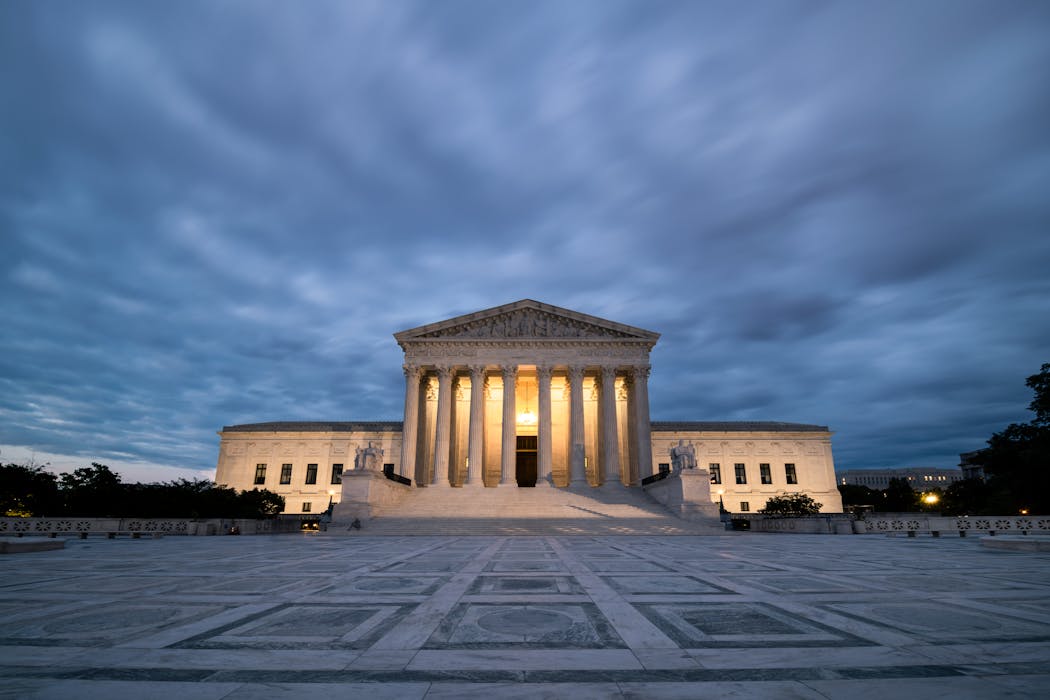
The Supreme Court is headed toward a radically new vision of unlimited presidential power

Source: The Conversation – USA – By Graham G. Dodds, Professor of Political Science, Concordia University

In a series of cases over the past 15 years, the Supreme Court has moved in a pro-presidential direction. Geoff Livingston/Getty Images

President Donald Trump set the tone for his second term by issuing 26 executive orders, four proclamations and 12 memorandums on his first day back in office. The barrage of unilateral presidential actions has not yet let up.

These have included Trump’s efforts to remove thousands of government workers and fire several prominent officials, such as members of the Corporation for Public Broadcasting and the chair of the Commission on Civil Rights. He has also attempted to shut down entire agencies, such as the Department of Education and the U.S. Agency for International Development.

For some scholars, these actions appear rooted in the psychology of an unrestrained politician with an overdeveloped ego.

But it’s more than that.

As a political science scholar who studies presidential power, I believe Trump’s recent actions mark the culmination of the unitary executive theory, which is perhaps the most contentious and consequential constitutional theory of the past several decades.

A prescription for a potent presidency

In 2017, Trump complained that the scope of his power as president was limited: “You know, the saddest thing is that because I’m the president of the United States, I am not supposed to be involved with the Justice Department. I am not supposed to be involved with the FBI, I’m not supposed to be doing the kind of things that I would love to be doing. And I’m very frustrated by it.”

The unitary executive theory suggests that such limits wrongly curtail the powers of the chief executive.

Formed by conservative legal theorists in the 1980s to help President Ronald Reagan roll back liberal policies, the unitary executive theory promises to radically expand presidential power.

There is no widely agreed upon definition of the theory. And even its proponents disagree about what it says and what it might justify. But in its most basic version, the unitary executive theory claims that whatever the federal government does that is executive in nature – from implementing and enforcing laws to managing most of what the federal government does – the president alone should personally control it.

This means the president should have total control over the entire executive branch, with its dozens of major governmental institutions and millions of employees. Put simply, the theory says the president should be able to issue orders to subordinates and to fire them at will.

President Donal Trump appears seated in the oval office.
President Donald Trump signs executive orders in the Oval Office next to a poster displaying the Trump Gold Card on Sept. 19, 2025.
AP Photo/Alex Brandon

The president could boss around the FBI or order the U.S. attorney general to investigate his political opponents, as Trump has done. The president could issue signing statements – a written pronouncement – that reinterpret or ignore parts of the laws, like George W. Bush did in 2006 to circumvent a ban on torture. The president could control independent agencies such as the Securities and Exchange Commission and the Consumer Product Safety Commission. The president might be able to force the Federal Reserve to change interest rates, as Trump has suggested. And the president might possess inherent power to wage war as he sees fit without a formal authorization from Congress, as officials argued during Bush’s presidency.

A constitutionally questionable doctrine

A theory is one thing. But if it gains the official endorsement of the Supreme Court, it can become governing orthodoxy. It appears to many observers and scholars that Trump’s actions have intentionally invited court cases by which he hopes the judiciary will embrace the theory and thus permit him to do even more. And the current Supreme Court appears ready to grant that wish.

Until recently, the judiciary tended to indirectly address the claims that now appear more formally as the unitary executive theory.

During the country’s first two centuries, courts touched on aspects of the theory in cases such as Kendall v. U.S. in 1838, which limited presidential control of the postmaster general, and Myers v. U.S. in 1926, which held that the president could remove a postmaster in Oregon.

In 1935, in Humphrey’s Executor v. U.S., the high court unanimously held that Congress could limit the president’s ability to fire a commissioner of the Federal Trade Commission. And in Morrison v. Olson the court in 1988 upheld the ability of Congress to limit the president’s ability to fire an independent counsel.

Some of those decisions aligned with some unitary executive claims, but others directly repudiated them.

Warming up to a unitary executive

In a series of cases over the past 15 years, the Supreme Court has moved in an unambiguously unitarian, pro-presidential direction. In these cases, the court has struck down statutory limits on the president’s ability to remove federal officials, enabling much greater presidential control.

These decisions clearly suggest that long-standing, anti-unitarian landmark decisions such as Humphrey’s are on increasingly thin ice. In fact, in Justice Clarence Thomas’ 2019 concurring opinion in Seila Law LLC v. CFPB, where the court ruled the Consumer Financial Protection Bureau’s leadership structure was unconstitutional, he articulated his desire to “repudiate” the “erroneous precedent” of Humphrey’s.

Several cases from the court’s emergency docket, or shadow docket, in recent months indicate that other justices share that desire. Such cases do not require full arguments but can indicate where the court is headed.

In Trump v. Wilcox, Trump v. Boyle and Trump v. Slaughter, all from 2025, the court upheld Trump’s firing of officials from the National Labor Relations Board, the Merit Systems Protection Board, the Consumer Product Safety Commission and the Federal Trade Commission.

Previously, these officials had appeared to be protected from political interference.

President George W. Bush appears with several soldiers.
President George W. Bush signed statements in 2006 to bypass a ban on torture.
AP Photo/Pablo Martinez Monsivais, File

Total control

Remarks by conservative justices in those cases indicated that the court will soon reassess anti-unitary precedents.

In Trump v. Boyle, Justice Brett Kavanaugh wrote, “whether this Court will narrow or overrule a precedent … there is at least a fair prospect (not certainty, but at least a reasonable prospect) that we will do so.” And in her dissent in Trump v. Slaughter, Justice Elena Kagan said the conservative majority was “raring” to overturn Humphrey’s and finally officially embrace the unitary executive.

In short, the writing is on the wall, and Humphrey’s may soon go the way of Roe v. Wade and other landmark decisions that had guided American life for decades.

As for what judicial endorsement of the unitary executive theory could mean in practice, Trump seems to hope it will mean total control and hence the ability to eradicate the so-called “deep state.” Other conservatives hope it will diminish the government’s regulatory role.

Kagan recently warned it could mean the end of administrative governance – the ways that the federal government provides services, oversees businesses and enforces the law – as we know it:

“Humphrey’s undergirds a significant feature of American governance: bipartisan administrative bodies carrying out expertise-based functions with a measure of independence from presidential control. Congress created them … out of one basic vision. It thought that in certain spheres of government, a group of knowledgeable people from both parties – none of whom a President could remove without cause – would make decisions likely to advance the long-term public good.”

If the Supreme Court officially makes the chief executive a unitary executive, the advancement of the public good may depend on little more than the whims of the president, a state of affairs normally more characteristic of dictatorship than democracy.

The Conversation

Graham G. Dodds does not work for, consult, own shares in or receive funding from any company or organization that would benefit from this article, and has disclosed no relevant affiliations beyond their academic appointment.

ref. The Supreme Court is headed toward a radically new vision of unlimited presidential power – https://theconversation.com/the-supreme-court-is-headed-toward-a-radically-new-vision-of-unlimited-presidential-power-265840

Wings, booze and heartbreak – what my research says about the hidden costs of sports fandom

Source: The Conversation – USA (2) – By Aaron Mansfield, Assistant Professor of Sport Management, Merrimack College

A Buffalo Bills fan who prefers ketchup over mustard on his hot dog. Brett Carlsen/Getty Images

Being from Buffalo means getting to eat some of the best wings in the world. It means scraping snow and ice off your car in frigid mornings. And it means making a lifelong vow to the city’s NFL franchise, the Bills – for better or worse, till death do us part.

When I grew up in New York’s second-largest city, my community was bound together by loyalty to a football team that always found new ways to break our hearts. And yet at the start of each NFL season, we always found reasons to hope – we couldn’t help ourselves.

Coming from this football-crazed culture, I often wondered about the psychology of fandom. This eventually led me to pursue a Ph.D. in sport consumer behavior. As a doctoral student, I was most interested in one question: Is fandom good for us?

I found a huge body of research on the psychological and social effects of fandom, and it certainly made being devoted to a team look good. Fandom builds belonging, helps adults make friends, boosts happiness and even provides a buffer against traumatic life events.

So, fandom is great, right?

As famed football commentator Lee Corso would say: “Not so fast, my friend.”

While fandom appears to be a boon for our mental health, strikingly little research had been conducted on the relationship between fandom and physical health.

So I decided to conduct a series of studies – mainly of people in Western countries – on this topic. I found that being a sports fan can have some drawbacks for physical health, especially among the most committed fans.

Reach for the nachos

Playing sports is healthy. But watching them? Not so much.

Tailgating culture revolves around alcohol. Research shows that college sports fans binge drink at significantly higher rates than nonfans, are more likely to do something they later regretted and are more likely to drive drunk. Meanwhile, watch parties encourage being stationary for hours and mindlessly snacking. And, of course, fandom goes hand in hand with heavily processed foods like wings, nachos, pizza and hot dogs.

One fan told me that when watching games, his relationship with food is “almost Pavlovian”; he craves “decadent” foods the same way he seeks out popcorn at the movies.

Rows of leather chairs filled with men, many of whom have multiple beers on their side tables. Big screens air different games and ads.
Fans kick back to watch games at Caesars Palace Race and Sports Book in Las Vegas.
George Rose/Getty Images

Inside the stadium, healthy options have traditionally been scarce and overpriced. A Sports Illustrated writer joked in 1966 that fans leave stadiums and arenas with “the same body chemistry as a jelly doughnut.”

Little seems to have changed since. One Gen Z fan I recently interviewed griped, “You might find one salad with a plain piece of lettuce and a quarter of a tomato.”

Eating away the anxiety and pain

The relationship between fandom and physical health isn’t just about guzzling beer, sitting for hours on end or scarfing down hot dogs.

One study analyzed sales from grocery stores. The researchers found that fans consume more calories – and less healthy food – on the day following a loss by their favorite team, a reaction the researchers tied to stress and disappointment.

My colleagues and I found something similar: Fandom induces what’s called “emotional eating.”

Emotions like anger, sadness and disappointment lead to stronger cravings. And this relationship is tied to how your favorite team performs when it matters most. For example, we found that games between rivals and closely contested games yield more pronounced effects. Emotional states generated by the game are also significantly correlated with increased beer sales in the stadium.

High-calorie cultures

In another paper, my co-authors and I found that fans often feel torn between their desire to make healthy choices and their commitment to being a “true fan.”

Every fan base develops its own culture. These unwritten rules vary from team to team, and they aren’t just about wearing a cheesehead hat or waving a Terrible Towel. They also include expectations around drinking, eating and lifestyle.

These health-related norms are shaped by a variety of factors, including the region’s culture, team history and even team sponsorships.

For example, the Cincinnati Bengals partner with Skyline Chili, a regional chain that makes a meat sauce that’s often poured over hot dogs or spaghetti. One Bengals fan I interviewed observed that if you attend a Bengals game, sure, you could eat something else – but a “true fan” eats Skyline.

I have two studies in progress that show how hardcore fans typically align their health behaviors with the health norms of their fan base. This becomes a way to signal their allegiance to the team, improve their standing among fellow fans, and contribute to what makes the fan base distinct in the eyes of its members.

Two shirtless fans, one wearing a cheesehead hat, another wearing a helmet with antlers. Both wear sashes made of sausage links.
Cheese and sausages are synonymous with Wisconsin – and being a fan of the state’s NFL team, the Green Bay Packers.
Jeff Haynes/AFP via Getty Images

In Buffalo, for example, tailgating often revolves around alcohol – so much so that Bills fans have a reputation for over-the-top drinking rituals.

And in New Orleans, Saints fans often link fandom to Louisiana food traditions. As one fan explained: “People make a bunch of fried food or huge pots of gumbo or étouffée, and eat all day – from hours before the game until hours after.”

A new generation of health-conscious fans

The fan experience is shaped by the culture in which it is embedded. Teams actively help shape these cultures, and there’s a business argument to be had for teams to play a bigger role in changing some of these norms.

Gen Z is strikingly health-conscious. They’re also less engaged with traditional fandom.

If stadiums and tailgates continue to revolve around beer and nachos, why would a generation attuned to fitness influencers and “fitspiration” buy in? To reach this market, I think the sports industry will need to promote its professional sports teams in new ways.

Some teams are already doing so. The British soccer team Liverpool has partnered with the exercise equipment company Peloton. Another club, Manchester City, has teamed up with a nonalcoholic beer brand as the official sponsor of its practice uniforms.

And several European soccer clubs have even joined a “Healthy Stadia” movement, revamping in-stadium food options and encouraging fans to walk and bike to the stadium.

For the record, I don’t think the solution is replacing typical fan foods with smoothies and salads. Alienating core consumers is generally not a sound business strategy.

I think it’s reasonable, however, to suggest sports teams might add more healthy options and carefully evaluate the signals they send through sponsorships.

As one fan I recently interviewed said: “The NFL has had half-assed efforts like Play 60” – a campaign encouraging kids to get at least 60 minutes of physical activity per day – “while also making a ton of money from beer, food and, back in the day, cigarette advertisements. How can sports leagues seriously expect people to be healthier if they promote unhealthy behaviors?”

Today’s consumers want to support brands that reflect their values. This is particularly true for Gen Zers, many of whom are savvy enough to see through hollow campaigns and quick to reject hypocrisy. In the long run, I think this type of dissonance – sandwiching a Play 60 commercial between ads for Uber Eats and Anheuser-Busch – will prove counterproductive.

Three people dressed up in hot dog costumes – one green, one red and one yellow – race during a baseball game.
Relish, ketchup and mustard ‘race’ during a September 2025 baseball game between the Kansas City Royals and Seattle Mariners, in an encapsulation kind of dissonance between showcasing both physical activity and junk food at sporting events.
Scott Winters/Icon Sportswire via Getty Images

I, as much as anyone else, understand what makes fandom special – and yes, I’ve eaten my share of wings during Bills games. But public health is a pressing concern, and though the sports industry is well-positioned to address this issue, fandom isn’t helping. Actually, my research suggests it’s having the opposite effect.

Striking the balance I’m advocating will be tricky, but the sports industry is filled with bright problem-solvers. In the film “Moneyball,” Brad Pitt’s character, Billy Beane, famously says sports teams must “adapt or die.” He was referring to the need for baseball teams to integrate analytics into their decision-making.

Professional sports teams eventually got that message. Maybe they’ll get this one, too.

The Conversation

Aaron Mansfield does not work for, consult, own shares in or receive funding from any company or organization that would benefit from this article, and has disclosed no relevant affiliations beyond their academic appointment.

ref. Wings, booze and heartbreak – what my research says about the hidden costs of sports fandom – https://theconversation.com/wings-booze-and-heartbreak-what-my-research-says-about-the-hidden-costs-of-sports-fandom-265158