Qu’est-ce que la Françafrique ? Une relation ambiguë entre héritage colonial et influence contemporaine

Source: The Conversation – in French – By Christophe Premat, Professor, Canadian and Cultural Studies, Stockholm University

L’expression « Françafrique » évoque à la fois une époque révolue et un système qui, selon beaucoup, continue de hanter les relations entre la France et ses anciennes colonies africaines. Elle désigne un ensemble de réseaux politiques, économiques et militaires visant à maintenir l’influence française sur le continent. Le mot-valise a été repris par François-Xavier Verschave, dans son livre La Françafrique, le plus long scandale de la République (1998) pour caractériser le modèle néocolonial d’ingérence et de dépendance des anciennes colonies vis-à-vis de la France. Cette expression détourne le sens initial de France-Afrique, qui désignait à l’origine une coopération jugée privilégiée entre la France et ses anciennes colonies.

En tant que chercheur en études mémorielles, discours politiques et relations francoafricaines, j’analyse dans cet article comment le concept de Françafrique a façonné et structuré les perceptions actuelles entre la France et ses anciennes colonies.

Les origines du terme

Le mot « Françafrique » apparaît pour la première fois sous la plume de Jean Piot, rédacteur en chef de L’Aurore, qui voit dans la fusion entre la France et l’Afrique un des éléments de renouveau de l’Empire français. Par la suite, Félix Houphouët-Boigny, premier président de la Côte d’Ivoire indépendante, l’utilise positivement dès 1955 à l’aube des indépendances des États africains francophones, pour célébrer la continuité entre la France et l’Afrique : un partenariat fondé sur la langue, la culture et les intérêts économiques communs.


Read more:
François Mitterrand, à l’origine du déclin de l’influence postcoloniale de la France en Afrique ?


Le journaliste et militant François-Xavier Verschave, dans son livre La Françafrique, le plus long scandale de la République (1998), renverse complètement le sens du terme : la Françafrique devient alors le symbole d’un système opaque de corruption, de clientélisme et d’interventions politiques. L’un des artisans de cette relation est sans aucun doute Jacques Foccart qui fut le conseiller des affaires africaines de plusieurs présidents de la République et secrétaire général pour la Communauté et les affaires africaines et malgaches, une structure imaginée par le général Charles de Gaulle pour organiser les relations de la France à ses anciennes colonies.

Un système d’alliances et de dépendances

La Françafrique repose sur trois piliers principaux :

Le soutien politique et militaire : depuis les indépendances des années 60, la France a entretenu des liens étroits avec des dirigeants africains considérés comme « amis de la France ». Des accords de défense permettaient à Paris d’intervenir militairement pour stabiliser ou sauver des régimes alliés — de l’opération Manta au Tchad (1983) à Serval au Mali (2013). Ce réseau s’appuyait sur des conseillers officieux, des services de renseignement et des relations personnelles entre dirigeants, symbolisées par la «cellule africaine» de l’Élysée, longtemps dirigée par le même Jacques Foccart.

Les liens économiques : le franc CFA (créé en 1945, devenu franc de la « Communauté financière africaine ») illustre la dépendance monétaire héritée de la période coloniale. De grandes entreprises françaises comme Elf, Bolloré, Bouygues ou Total ont bénéficié de positions privilégiées dans les secteurs stratégiques (pétrole, infrastructures, télécommunications). En échange, ces firmes ont souvent alimenté un système de financements occultes de partis politiques ou de régimes africains. Dans les années 1990, une vaste enquête judiciaire révèle que le groupe pétrolier public français Elf-Aquitaine entretenait un système de corruption à grande échelle, mêlant responsables politiques français et dirigeants africains.

Les réseaux personnels et informels : au-delà des institutions officielles, la Françafrique fonctionnait par l’entremise d’intermédiaires — hommes d’affaires, diplomates, militaires — qui formaient un véritable « État parallèle ». Ces réseaux, où se mêlaient affaires, services secrets et amitiés, permettaient de contourner les voies diplomatiques classiques. Dans ses mémoires publiés en septembre 2024, Robert Bourgi, disciple de Jacques Foccart, rappelle l’ensemble de ses relations personnelles avec un certain nombre de dirigeants politiques africains.


Read more:
Ce que la France perd en fermant ses bases militaires en Afrique


La fin annoncée de la Françafrique ?

L’effondrement du bloc soviétique, la montée des revendications démocratiques en Afrique et les scandales politico-financiers en France ont mis à mal ce système. Sous François Mitterrand, le discours de La Baule (1990) conditionne désormais l’aide française à des avancées démocratiques, marquant un tournant. Pourtant, la logique d’influence perdure sous d’autres formes : privatisations, nouveaux partenariats militaires, diplomatie économique.

Les années 2000 voient la France tenter de redéfinir sa présence en Afrique. Jacques Chirac, puis Nicolas Sarkozy et François Hollande, promettent tour à tour d’en finir avec la Françafrique. Mais les opérations militaires (Côte d’Ivoire en 2002, Mali en 2013, Sahel jusqu’en 2023) rappellent la permanence d’un rôle sécuritaire français. Pour beaucoup d’Africains, la Françafrique n’a pas disparu : elle s’est simplement adaptée aux mutations du continent.


Read more:
Franc CFA : les conditions sont réunies pour remplacer la monnaie héritée du colonialisme


Un concept en crise

Sous Emmanuel Macron, le mot « Françafrique » est devenu un repoussoir officiel. Le président français affirme depuis son discours de Ouagadougou de 2017 vouloir rompre avec les logiques de paternalisme et de domination, prônant un « partenariat d’égal à égal ». Des initiatives symboliques — comme le retour d’œuvres d’art spoliées au Bénin, la reconnaissance du rôle de la France dans le génocide des Tutsi au Rwanda ou la création du « Sommet Afrique-France » de Montpellier sans chefs d’État — visent à moderniser la relation.

Mais sur le terrain, les perceptions restent contrastées. Les interventions militaires françaises au Sahel, la persistance du franc CFA (malgré sa future transformation en « éco » et la présence de grandes entreprises hexagonales nourrissent le sentiment d’une influence persistante. Dans plusieurs pays (Mali, Burkina Faso, Niger), le rejet de la France s’exprime aujourd’hui à travers des discours panafricanistes et souverainistes qui ont conduit à des changements de régime.


Read more:
Le recul de la France en Afrique : une perte de crédibilité mondiale


La concurrence des nouvelles influences

L’un des traits marquants de la période actuelle est la diversification des partenaires africains. La Chine, la Turquie, la Russie ou encore les pays du Golfe occupent désormais une place croissante dans les secteurs économique et sécuritaire. Le « pré carré » français n’existe plus : les États africains ont désormais une marge de manœuvre géopolitique beaucoup plus grande.

Dans ce contexte, la France tente de redéfinir sa politique africaine en privilégiant des relations bilatérales ciblées, le soutien à la société civile et la coopération universitaire ou culturelle. Mais cette réorientation peine à effacer des décennies de méfiance. L’imaginaire de la Françafrique continue de structurer les représentations, notamment chez les jeunes générations africaines.

Penser le passé… et questionner le présent

Parler de Françafrique aujourd’hui, c’est donc évoquer à la fois un système historique et un imaginaire politique. Si les réseaux opaques des années 1970 ont en grande partie disparu, les structures d’influence et de dépendance économiques persistent, tout comme les affects postcoloniaux qui traversent la relation franco-africaine.

Le défi pour la France, comme pour ses partenaires africains, consiste désormais à inventer un autre vocabulaire : celui d’une relation fondée sur la confiance, la transparence et la réciprocité. La Françafrique n’est peut-être plus une réalité institutionnelle, mais elle demeure un prisme puissant pour comprendre comment les héritages coloniaux continuent de peser sur le présent.

The Conversation

Christophe Premat est professeur en études culturelles francophones et directeur du Centre d’études canadiennes à l’Université de Stockholm. Il est également co-directeur en chef de la Revue Nordique des Études Francophones.

ref. Qu’est-ce que la Françafrique ? Une relation ambiguë entre héritage colonial et influence contemporaine – https://theconversation.com/quest-ce-que-la-francafrique-une-relation-ambigue-entre-heritage-colonial-et-influence-contemporaine-267065
Academic freedom: how to defend ‘the very condition of a living democracy’ in France and worldwide

Source: The Conversation – France – By Stéphanie Balme, Director, CERI (Centre de recherches internationales), Sciences Po

Director of the CERI at SciencesPo, Stéphanie Balme conducted a study for France Universités, an organisation whose members are presidents of universities, titled “Defending and promoting academic freedom. A global issue, an urgent matter for France and Europe. Findings and proposals for action.” She shares some of her insights here.


Unofficially unveiled on October 2, 2025, US President Donald Trump’s Compact for Academic Excellence in Higher Education is a striking illustration of the politicisation of knowledge and the desire for ideological control over scientific output in the United States. Behind the rhetoric of “restoring excellence” lies a new stage in the institutionalisation of “sciento-populism”: mistrust of science is being strategically exploited to flatter populist sentiments and turn academics into scapegoats, held responsible for the “decline” of US civilisational hegemony.

This phenomenon, although exaggerated, is not isolated. At the same time as Trump’s announcement, the 2025 edition of the Global Innovation Index (GII) revealed that China had entered the top 10 most innovative nations for the first time, while the US, still in third place, showed signs of structural weakness. Eight European countries, a little-known fact, are among the top 15. France has been downgraded to 13th place, the position occupied by China three years ago.

The GII’s 80 indicators, covering nearly 140 countries, are not limited to measuring technological or scientific performance: they also assess the ability of states to guarantee a comprehensive, free and secure political-institutional, economic and financial environment. By cross-referencing these data with those of the Academic Freedom Index, the main reference tool developed since 2019, we can see that academic freedom is no longer solely threatened in authoritarian regimes. It is now being undermined at the very heart of democracies, affecting the humanities and social sciences as much as the experimental sciences.

The awarding of the 2025 Nobel prize in economics to Philippe Aghion, Peter Howitt and Joel Mokyr is a timely reminder that growth and innovation depend on an ecosystem based on freedom of research and the free flow of ideas. Their work on the historical and structural conditions of technological progress shows that no economy can prosper sustainably when knowledge is constrained or subject to ideological control.

Authoritarian regimes and ‘techno-nationalism’

Paradoxically, authoritarian regimes are now among the main investors in research, although they strictly control its objectives in line with their political priorities. Engaged in a phase of rapid “techno-nationalist” development, they are investing heavily in science and technology as instruments of power, without yet suffering the corrosive effects of mistrust of knowledge.

Democracies, on the other hand, struggle to fund research while maintaining their defence spending and must contend with the rise of movements that challenge the very legitimacy of science as it is practiced. In order to better understand these dynamics, I conducted a study for France Universités titled “Defending and promoting academic freedom. A global issue, an urgent matter for France and Europe. Findings and proposals for action”.

Multiple violations in France

France is a particularly striking example of the vulnerabilities described above. In 2024–2025, attacks on academic freedom took many forms: increased foreign interference, regional public funding made conditional on charters with vague criteria, ideological pressure on teaching and research content, conference cancellations, campaigns to stigmatise teachers and researchers on social media, interventions by politicians even in university boards of governors, restrictions on access to research sites or grants, and finally, an increase in gag orders.

Unlike other fundamental rights, academic freedom in France is distinguished by the absence of a firmly rooted political, professional and civic culture. Academics who are victims of attacks on their freedom to practice their profession often find themselves isolated, while the institutional capacity of universities to act as a counterweight remains limited.

This vulnerability is exacerbated by dependence on public funding, career insecurity, administrative overload and a lack of real institutional autonomy. Nevertheless, the current fragility could be transformed into a lever for renewal, promoting the emergence of a strong culture of academic freedom and, in so doing, strengthening France’s position in global science geopolitics.

A multidimensional strategy

The study for France Universités proposes a proactive strategy based on several complementary areas, targeting four categories of stakeholders: the state, the universities, civil society, and those at the European level.

The first area concerns strengthening the legal foundation: constitutionalising academic freedom, reaffirming the autonomy of institutions and the independence of staff, and finally, recognising the principle of source confidentiality (as for journalists) and incorporating a specific regime into the French research code for sensitive data. It is also proposed to extend the system for protecting the nation’s scientific and technical potential (PPST) to the humanities and social sciences, incorporating risks of interference to reconcile scientific security and freedom.

The second area focuses on action by universities: coordinating initiatives at the national level via an independent body, rolling out academic freedom charters across all institutions and research organisations, strengthening the protection of teachers through a dedicated national fund, and establishing rapid assistance protocols. It also provides for the creation of an independent observatory to monitor violations of academic freedom, training for management and advisers on these issues, and the coordination of legal, psychological and digital support for academics who are targeted. Finally, this area aims to promote cross-collaboration between security or defence officials and researchers and teacher-researchers.

The third area aims to promote a genuine culture of academic freedom in the public sphere: launching a national awareness campaign, encouraging student initiatives, transforming France’s Fête de la science (Science Festival) into a Festival of Science and Academic Freedom, organising a national conference to define a participatory action plan, and rolling out a wide-ranging campaign to promote research in partnership with all operators, starting with the National Centre for Scientific Research (CNRS). This campaign, supported by visual aids, posters, drawings and a unifying hashtag, should celebrate research in all media and highlight its essential role in serving a democratic society.

The fourth and final priority aims to incorporate these measures into European science diplomacy by re-establishing a European ranking of universities worldwide that includes an academic freedom index, and by working to have that included in major international rankings. It also aims to strengthen cooperation between the European University Association and European university alliances, establish a European observatory on academic freedom, create a European talent passport for refugee researchers, and make Europe a safe haven for scientists in danger, with the ultimate goal of obtaining recognition in the form of a Nobel Peace Prize dedicated to academic freedom.

A precious common good

Defending academic freedom is not a corporatist reflex: on the contrary, it means protecting a precious common good and the very condition of a living democracy. Of course, this right belongs to only a small number of people, but it benefits everyone, just like freedom of the press, which in France is guaranteed by the law of 1881. Contrary to popular belief, academics are often the last to defend their professional rights, while journalists, quite rightly, actively protect theirs.

The French university system, as it has been constructed since 1945, and even more so after 1968, was not designed to confront authoritarianism. Today, French institutions would not be able to resist systematic attacks for very long if a populist and/or authoritarian regime came to power. Powerful, wealthy and autonomous, the Ivy League universities themselves faltered in the face of the MAGA movement and are still struggling to recover. Many US scientists are now moving to Europe, Japan or South Korea.

How, then, could French universities, which are both financially and institutionally dependent and have only recently established alumni associations, cope with such an onslaught? Not to mention that this would ultimately spell the end of the ambition behind the EU’s Choose Europe for Science programme.

Despite the gravity of the situation, it opens up unprecedented opportunities for collective action, democratic innovation and the development of concrete solutions. Now is the time to act collectively, coordinate stakeholders and launch a broad French and European campaign in support of academic freedom: this is the purpose of the study I conducted.


A weekly e-mail in English featuring expertise from scholars and researchers. It provides an introduction to the diversity of research coming out of the continent and considers some of the key issues facing European countries. Get the newsletter!


The Conversation

Stéphanie Balme ne travaille pas, ne conseille pas, ne possède pas de parts, ne reçoit pas de fonds d’une organisation qui pourrait tirer profit de cet article, et n’a déclaré aucune autre affiliation que son organisme de recherche.

ref. Academic freedom: how to defend ‘the very condition of a living democracy’ in France and worldwide – https://theconversation.com/academic-freedom-how-to-defend-the-very-condition-of-a-living-democracy-in-france-and-worldwide-267689

L’Europe face à la « mise à l’épreuve permanente » imposée par la Russie

Source: The Conversation – France in French (3) – By Christo Atanasov Kostov, International Relations, Cold War, nationalism, Russian propaganda, IE University

Derrière les manœuvres hybrides de la Russie – militaires, cyber et politiques – se dessine un objectif constant : épuiser l’Occident, diviser l’Europe et redessiner l’ordre sécuritaire issu de la guerre froide.


Les images sont tristement familières : les chars russes entrant en Géorgie en 2008, l’annexion de la Crimée en 2014 puis l’invasion de l’Ukraine en 2022, les avions militaires russes violant l’espace aérien européen et désormais de mystérieux drones provoquant la fermeture d’aéroports à travers le continent.

Ces épisodes s’inscrivent dans une stratégie unique, cohérente et en constante évolution : user de la force militaire là où c’est nécessaire, mener une guerre « hybride » ou « de zone grise » là où c’est possible, et exercer une pression politique partout ailleurs. Depuis des décennies, Moscou déploie ces tactiques avec un objectif précis : redessiner la carte sécuritaire de l’Europe sans déclencher une guerre directe avec l’OTAN.

Cet objectif n’a rien d’improvisé ni d’ambigu. Il repose sur un principe révisionniste : renverser l’élargissement de l’OTAN vers l’Est survenu après la guerre froide et rétablir une sphère d’influence russe en Europe.

C’est cette logique qui a guidé les actions du Kremlin à la veille de l’invasion de l’Ukraine. En décembre 2021, Moscou exigeait que l’OTAN proclame officiellement que l’Ukraine et la Géorgie ne pourront jamais adhérer à l’Alliance, et que les troupes de l’OTAN se retirent sur leurs positions de mai 1997, c’est-à-dire avant l’entrée des anciens États socialistes d’Europe de l’Est.

Ce n’était pas une manœuvre diplomatique préalable à l’invasion de février 2022, mais bien un objectif en soi. Aux yeux du Kremlin, l’élargissement de l’OTAN représente à la fois une humiliation et une menace existentielle qu’il faut enrayer à tout prix.


À lire aussi :
« Nous avons été humiliés » : le discours du Kremlin sur les années 1990 et la crise russo-ukrainienne


Un arsenal de moyens de pression

Les actions russes peuvent tour à tour être perçues comme relevant du chantage, de la démonstration de force ou de la tentative de pression diplomatique. En réalité, elles relèvent de tout cela à la fois. Moscou brouille délibérément la frontière entre diplomatie, action militaire et propagande intérieure. Son « arsenal » de pressions s’organise en plusieurs volets :

  • La « stratégie du bord de l’abîme » pour forcer le dialogue : Les montées en puissance militaires – des concentrations de troupes à l’invasion de l’Ukraine – créent des crises qui obligent l’Occident à réagir. La Russie fabrique des situations d’urgence pour gagner du poids dans la négociation, comme elle l’a fait pendant la guerre froide, puis en Géorgie (2008) et en Ukraine (depuis 2014).

  • Les tests en « zone grise » : Les incursions de drones et d’avions russes dans l’espace aérien de l’Allemagne, de l’Estonie, du Danemark ou de la Norvège servent à jauger la capacité de détection et de réaction de l’OTAN. Elles permettent aussi de collecter des données sur la couverture radar, sans franchir le seuil d’un affrontement ouvert.

  • La pression hybride sur les « petits » membres de l’OTAN : Les cyberattaques et les perturbations énergétiques qui touchent divers États de l’OTAN visent à tester la solidarité de l’Alliance. Moscou cible les pays les plus vulnérables pour semer la discorde et la méfiance au sein de l’organisation.

  • Le théâtre intérieur : Sur la scène nationale, l’affrontement avec l’Occident sert de mise en scène politique. Comme l’a récemment déclaré Dmitri Medvedev, vice-président du Conseil de sécurité de la Fédération de Russie, « l’Europe a peur de sa propre guerre ». Les atermoiements des Européens permettent de convaincre toujours davantage les Russes que l’Occident est indécis et faible, tandis que la Russie, elle, est forte et déterminée.

Cette stratégie n’a rien de nouveau : elle prolonge des méthodes éprouvées depuis l’effondrement de l’URSS. De la Transnistrie à l’Abkhazie, en passant par l’Ossétie du Sud et le Donbass, Moscou entretient des conflits « gelés » qui bloquent durablement l’intégration euro-atlantique de ces régions.


À lire aussi :
Trente ans après l’effondrement de l’URSS, ces États fantômes qui hantent l’espace post-soviétique


Une « épreuve permanente »

Aujourd’hui, le Kremlin privilégie les moyens hybrides – drones, cyberattaques, désinformation, chantage énergétique – plutôt que la guerre ouverte. Ces provocations ne sont pas aléatoires : elles forment une campagne méthodique de tests.

Chaque incursion, chaque attaque sert à évaluer la réponse à ces questions : L’Europe sait-elle détecter ? Réagir de manière coordonnée ? Agir rapidement et efficacement ?

Comme l’ont reconnu des responsables belges après une récente série de survols de drones, le continent doit « agir plus vite » pour bâtir sa défense aérienne. Chaque aveu de ce type renforce la conviction du Kremlin : l’Europe est lente, divisée, vulnérable.

Ces épisodes sont ensuite recyclés en séquences de propagande à la télévision d’État, où les commentateurs moquent la « faiblesse » européenne et présentent la confusion du continent comme la preuve du bien-fondé de la ligne dure de Moscou. Cette crise fabriquée est, à son tour, la dernière application d’une stratégie longuement rodée. Vis-à-vis de l’Occident, l’objectif n’est pas la conquête, mais l’épuisement : une « mise à l’épreuve permanente » destinée à user ses ressources et sa cohésion par une pression continue, diffuse et de faible intensité.

Et maintenant ?

Les provocations croissantes de la Russie envers l’OTAN et l’Europe ne peuvent pas durer indéfiniment sans conséquences. Trois scénarios principaux se dessinent :

  1. Une nouvelle confrontation durable : C’est l’issue la plus probable. L’OTAN ne peut satisfaire les exigences fondamentales du Kremlin sans renier ses principes fondateurs. Le conflit prendrait alors la forme d’un face-à-face prolongé : renforcement du flanc oriental de l’Alliance, explosion des budgets de défense et érection d’un nouveau rideau de fer.

  2. La « finlandisation » de l’Ukraine : Un scénario possible, mais instable, verrait l’Ukraine contrainte à adopter un statut de neutralité – renonçant à rejoindre l’OTAN en échange de garanties de sécurité, à l’image de la Finlande pendant la guerre froide. Du point de vue occidental, cela reviendrait à récompenser l’agression de Moscou et à consacrer son droit de veto sur la souveraineté de ses voisins.

  3. L’escalade par erreur de calcul : Dans un climat de tension permanente, un incident mineur – un drone abattu, une cyberattaque mal maîtrisée – pourrait rapidement dégénérer. Une guerre délibérée entre la Russie et l’OTAN reste improbable, mais elle n’est plus inimaginable.

L’impératif européen : la résilience

La stratégie du Kremlin repose sur la fragmentation. La réponse de l’Europe doit être la cohésion. Cela implique de renforcer plusieurs capacités clés :

  • Une défense aérienne et antimissile intégrée : construire un véritable bouclier continental, sans failles exploitables par les drones ou les systèmes hypersoniques.

  • Une défense hybride collective : Considérer les cyberattaques ou les incursions de drones comme des menaces visant l’ensemble de l’Alliance. Un mécanisme de réponse unique et prédéfini priverait Moscou de la possibilité d’isoler un membre.

  • Une autonomie technologique et politique : investir dans les industries européennes de défense, l’indépendance énergétique renouvelable et la solidité des chaînes d’approvisionnement. La sécurité commence désormais par la souveraineté, surtout face à l’incertitude du soutien américain.

  • Une dissuasion diplomatique : associer une capacité militaire crédible à un dialogue pragmatique, en maintenant ouverts les canaux de communication pour éviter toute escalade.

La stratégie russe n’est pas une réaction conjoncturelle : elle est structurelle.

Le Kremlin cherche à contraindre l’Occident à accepter un nouvel ordre sécuritaire en combinant coercition, tests et pression continue. Les moyens varient – chars, drones, guerre hybride d’usure – mais le but reste le même : affaiblir l’unité européenne et restaurer la sphère d’influence perdue en 1991.

Le défi de l’Europe est tout aussi clair : résister à la fatigue des crises répétées et prouver que la résilience, plutôt que la peur, définira l’avenir du continent. Les provocations de Moscou se poursuivront tant qu’elles ne lui coûteront pas trop cher. Seule une Europe unie et préparée pourra inverser ce calcul.

The Conversation

Christo Atanasov Kostov ne travaille pas, ne conseille pas, ne possède pas de parts, ne reçoit pas de fonds d’une organisation qui pourrait tirer profit de cet article, et n’a déclaré aucune autre affiliation que son organisme de recherche.

ref. L’Europe face à la « mise à l’épreuve permanente » imposée par la Russie – https://theconversation.com/leurope-face-a-la-mise-a-lepreuve-permanente-imposee-par-la-russie-267687

New Pentagon policy is an unprecedented attempt to undermine press freedom

Source: The Conversation – USA – By Amy Kristin Sanders, John and Ann Curley Professor of First Amendment Studies, Penn State

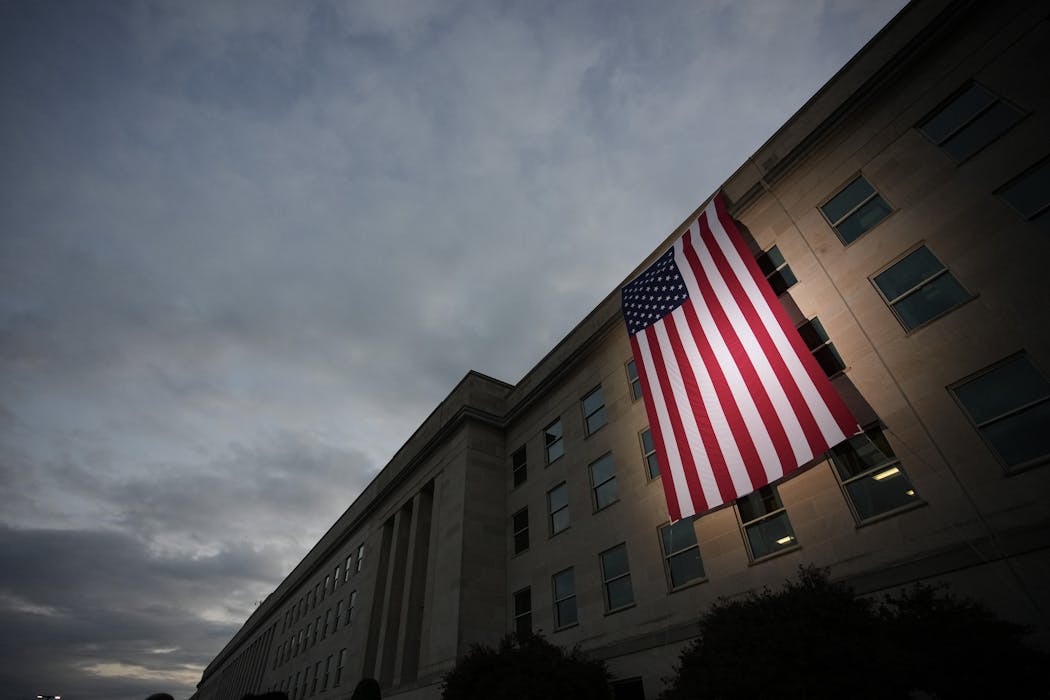
An American flag is unfurled on the side of the Pentagon on Sept. 11, 2025, in Arlington, Va. Photo by Andrew Harnik/Getty Images

Throughout modern American history, reporters who cover the Pentagon have played an invaluable role shining a light on military actions when the government has not been forthright with the public.

For instance, reporters covering the Biden administration’s decision to withdraw from Afghanistan in 2021 revealed the chaos that ensued and repudiated official statements claiming the pullout was smooth. That included reporting on a drone strike that killed 10 civilians, not ISIS militants, as the government initially claimed.

But free press advocates warn that recent changes in a Pentagon policy threaten journalists’ ability to cover the Department of Defense. That’s because it could curb their rights to report information not authorized by the government for release.

An initial policy change announced on Sept. 20, 2025 – and later revised – forbade journalists from publishing anything that hadn’t been approved by government officials. It gave journalists 10 days to sign and agree to the restrictions. A refusal to sign could have resulted in a cancellation of their press credentials to enter the Pentagon.

As a First Amendment expert, I believe the Pentagon policy change represents an unprecedented development in the Trump administration’s offensive against the press and a historic departure from previous administrations’ policies.

Attacks on journalism, said once-imprisoned journalist Peter Greste, “are a national security issue, and we have to protect press freedom.” Greste spoke in early October 2025 at the Global Free Speech Summit in Nashville, Tennessee, adding that “anything that undermines press freedom undermines national security.”

Greste was jailed for more than a year in Egypt while working for Al Jazeera in 2013. In Nashville, he drew a direct connection between the public’s access to information under a free press and the stability and freedom that democracies enjoy.

Even President Donald Trump seemed critical of the policy initially, telling a reporter in September 2025 he didn’t think the Pentagon should be in charge of deciding what reporters can cover.

An attempt to control critical coverage

Under the initial Pentagon policy change, journalists covering the Defense Department were required to sign a contract saying that department information must be “approved for public release by an appropriate authorizing official before it is released, even if it is unclassified.”

Defense Secretary Pete Hegseth told Fox News on Oct. 5, “The Pentagon press corps can squeal all they want, we’re taking these things seriously. They can report, they just need to make sure they’re following rules.”

Media outlets decided they could not accept the policy change. They also mulled legal action.

The Pentagon revised its initial policy change on Oct. 6 and set an Oct. 14 deadline for journalists to comply. The revised policy says prior approval would not be required to report on the Defense Department, but it suggests that soliciting information from Pentagon sources “would not be considered protected activity under the 1st Amendment.” But journalists who don’t sign and follow the revised policy could be deemed “security risks” and lose their credentials to access the Pentagon.

As the Oct. 14 deadline approached, dozens of media outlets said they would not sign the revised policy. Fox, Newsmax and the Daily Caller – all conservative news organizations – have also rejected the policy. The following day, journalists from dozens of news outlets turned in their press passes rather than agree to the new policy.

The Pentagon Press Association, which represents journalists covering the Defense Department, says the revised policy is “asking us to affirm in writing our ‘understanding’ of policies that appear designed to stifle a free press and potentially expose us to prosecution for simply doing our jobs.”

Conservative commentators have also criticized the policy. Law professor Jonathan Turley told Fox News: “What they’re basically saying is if you publish anything that’s not in the press release, is not the official statement of the Pentagon, you could be held responsible under this policy. That is going to create a stranglehold on the free press, and the cost is too great.”

This isn’t the first time Hegseth has sought to limit media coverage of the Pentagon. In May 2025 he restricted journalists’ access to large portions of the Pentagon where they’d previously been allowed to go unescorted.

Freedom from government control

It is not unusual for the government to view the press as an adversary. But such direct attempts to control media outlets have been rare in the U.S.

The federal government has rarely been successful in its efforts to censor the media. In the 1930s, the Supreme Court set a high bar for the government to overcome if it wanted to stop the presses.

As Chief Justice Charles Hughes wrote in 1930 in Near v. Minnesota: “The fact that, for approximately one hundred and fifty years, there has been almost an entire absence of attempts to impose previous restraints upon publications relating to the malfeasance of public officers is significant of the deep-seated conviction that such restraints would violate constitutional right.”

A man in a suit and tie speaks in front of a lecturn.
U.S. Defense Secretary Pete Hegseth speaks during a news conference at the Pentagon on June 22, 2025, in Arlington, Va.
Photo by Andrew Harnik/Getty Images

In the years since, the high court has reiterated its belief that an adversarial press is essential to democracy. At the height of the Vietnam War, the court ruled the government could not prevent The New York Times from publishing leaked documents detailing U.S involvement in the conflict, despite the sensitive nature of the documents.

President Richard Nixon’s own nominee, Chief Justice Warren Burger, recognized the danger of allowing the government to restrict freedom of the press. “The thread running through all these cases is that prior restraints on speech and publication are the most serious and the least tolerable infringement on First Amendment rights. … The damage can be particularly great when the prior restraint falls upon the communication of news and commentary on current events,” Burger wrote.

Burger acknowledged the role the press plays as a watchdog against the government’s abuse of power in 1976 in Nebraska Press Association v. Stuart. “The press … guards against the miscarriage of justice by subjecting the (legal system) to extensive public scrutiny and criticism.”

Whether the Supreme Court’s commitment to these long-standing precedents remains steadfast is anyone’s guess.

Law scholars RonNell Andersen Jones and Sonja West have documented a marked decline in references by the high court to press freedom over the past two decades. They have also noted a dramatic change in the justices’ tone when discussing the press:

“(A)ny assumption that the Court is poised to be the branch to defend the press against disparagement is misplaced … When members of the press turn to the Court in their legal battles, they will no longer find an institution that consistently values their role in our democracy,” Andersen Jones and West write.

Yet even Burger was aware that muzzling the press posed serious consequences for a democratic society: “(I)t is nonetheless clear that the barriers to prior restraint remain high unless we are to abandon what the Court has said for nearly a quarter of our national existence and implied throughout all of it. The history of even wartime suspension of categorical guarantees, such as habeas corpus or the right to trial by civilian courts cautions against suspending explicit guarantees,” Burger wrote in his opinion in Nebraska Press Association v. Stuart in 1976.

The new Pentagon policy, however, does just that by threatening reporters who write critical stories with the loss of their press credentials.

The Conversation

Amy Kristin Sanders has served as an expert witness for Fox News. She previously served on the Board of Directors for the Student Press Law Center and was a member of the Society of Professional Journalists.

ref. New Pentagon policy is an unprecedented attempt to undermine press freedom – https://theconversation.com/new-pentagon-policy-is-an-unprecedented-attempt-to-undermine-press-freedom-266129

Marriage is hard, but it’s even harder when you immigrate together

Source: The Conversation – Canada – By Jingyi Zhang, Doctoral Student, Psychology, University of Alberta

Canadian immigration policy has long emphasized family reunification. In fact, most of Canada’s 200,000 yearly newcomers migrate as a couple or a family unit.

For these families, migration means more than just starting over — it means that each family member, and the unit, must adapt to the new culture while finding ways to maintain a connection with their original culture.

This dual transition, known as family acculturation, can be a source of both growth and stress. The complexity of this process is well illustrated by examining the smallest-sized family unit: the immigrant couple.

Language barriers, social isolation and new parenting challenges often add to the everyday pressures of marriage. When partners adapt to Canadian culture at different rates and levels, these acculturation gaps can strain communication, shift power dynamics and challenge a couple’s sense of connection and harmony.

What are acculturation gaps?

Acculturation refers to how individuals balance maintaining their heritage culture while adopting aspects of a new one. Within families, not everyone does that in the same way or at the same pace. One spouse might quickly learn English, find employment and follow social norms, while the other may hold more strongly to traditional values or struggle with integration.

They may also adapt differently across domains such as child-rearing practices. These differences, known as acculturation gaps, can affect not only individual well-being but also the quality of a couple’s relationship and overall family functioning.

Research on family acculturation has largely focused on parent–child relationships, showing how differences in cultural adaptation can cause tension and misunderstanding. Yet spousal acculturation gaps — though less studied — may be equally influential.

Couples, after all, are the foundation of most immigrant families, and large acculturation gaps between spouses may erode feelings of connectedness, negatively impacting both individual and relational well-being. These gaps may also spill over into parenting and other aspects of family functioning.

The acculturation gap–distress model explains how differing levels of adaptation within a family can lead to conflict. When partners adopt new languages, norms or values at different speeds, they may develop mismatched expectations about family roles, parenting and daily decisions.

This mismatch can erode intimacy and communication, increasing marital stress and dissatisfaction. Studies have found that couples with greater acculturation gaps tend to experience more marital distress, higher rates of conflict and separation and lower relationship quality over time.

Power dynamics within the family can also shift. The partner who adapts more easily — perhaps gaining stronger language skills or financial independence — may take on more decision-making authority. This can challenge traditional gender roles, especially for families migrating from patriarchal societies to more egalitarian environments.

As a result, couples may find themselves renegotiating not only household responsibilities but also their identities as partners, sometimes leading to tension or resentment.

Parenting adds another layer of complexity and pressure. Parents’ beliefs and practices are deeply shaped by their cultural backgrounds. When mothers and fathers acculturate differently, their child-rearing ideologies and approaches may diverge. For instance, one parent might encourage independence in line with Canadian norms, while the other emphasizes collectivist values. These inconsistencies can lead to co-parenting stress, spousal conflict and confusion for children.

When resilience meets policy

Not all acculturation gaps lead to conflict. The vulnerability–stress–adaptation (VSA) model suggests that couples’ ability to adapt determines whether stressors such as language gaps strengthen or weaken the relationship.

While acculturation gaps can create vulnerabilities, partners who communicate openly, show empathy and support each other often turn these challenges into opportunities for deeper connection. Couples’ resilience and adaptive coping can mediate the negative effects of acculturation gaps on their well-being, enhancing long-term satisfaction and stability.

Unfortunately, recent immigration policies have added another strain on immigrant families. Canada’s indefinite suspension of new permanent residency sponsorships for parents and grandparents removes an important support system for many newcomers. Grandparents often provide child care, transmit cultural values and offer emotional support — resources that buffer acculturative stress and promote family cohesion.


Read more:
Canada halts new parent immigration sponsorships, keeping families apart


Under the VSA model, the removal of extended-family support functions as an external stressor that intensifies couples’ existing vulnerabilities. With fewer adaptive resources to manage daily stress, immigrant couples may find it harder to maintain resilience, marital quality and family well-being.

The story of couple acculturation is one of commitment and adaptation under stress. The success of this journey depends not only on language skills or employment but also on mutual understanding and support.

Immigration policies influence the ecology of resilience in immigrant families, yet within this context, couples must continuously negotiate acculturative stressors and gaps.

Well-adjusted couples are the foundation of thriving immigrant families and communities, and understanding couple acculturation gaps is a crucial step toward supporting them.

The Conversation

Jingyi Zhang received funding from the China Institute at the University of Alberta

Kimberly A. Noels received funding from the Social Sciences and Humanities Research Council of Canada through an Insight Grant #435-2024-1437.

ref. Marriage is hard, but it’s even harder when you immigrate together – https://theconversation.com/marriage-is-hard-but-its-even-harder-when-you-immigrate-together-266216

Diversidad e inclusión: una estrategia para aumentar la rentabilidad

Source: The Conversation – (in Spanish) – By Deniz Torcu, Adjunct Professor of Globalization, Business and Media, IE University

Si uno solo leyera los titulares de la guerra cultural contra las políticas de diversidad e inclusión pensaría que su aplicación en las empresas es puro postureo. Según los detractores, contratar con criterios de diversidad baja el listón, los programas de inclusión son caros y prescindibles, o solo sirven en sectores “blandos” como el marketing o las ONG.

La pregunta de fondo es: ¿los equipos directivos más diversos ayudan a que las empresas funcionen mejor? En los últimos cinco años, la evidencia se ha vuelto cada vez más clara, y más incómoda para quienes sostienen lo contrario.

Más diversidad, más rentabilidad

En 2023, la consultora estratégica McKinsey & Company analizó 1 265 empresas en 23 países. El informe resultante, Diversity Matters Even More, señala que las compañías con mayor diversidad de género en sus equipos ejecutivos tienen un 39 % más de probabilidades de superar financieramente a sus pares. La cifra también es del 39 % en diversidad étnica y cultural.

Ya en 2020, en plena pandemia y con más empresas analizadas, las cifras eran de 25 % y 36 % respectivamente. Es decir, la mejora en los datos era consistente pese a las condiciones adversas.

¿Por qué mejoran los datos?

Un liderazgo diverso cambia cómo se toman las decisiones: se reducen los puntos ciegos, se cuestionan supuestos, se anticipan riesgos y se diseñan productos más ajustados a una base de clientes cada vez más heterogénea.

Además, esa base está cambiando rápidamente: los análisis demográficos del think tank estadounidense Brookings Institution muestran que en Estados Unidos –y, de manera similar, en Europa– los jóvenes son ya mucho más diversos que las generaciones anteriores. Ignorar esa realidad equivale a diseñar para un consumidor que ya no existe.

La macroeconomía también lo respalda

El Banco Mundial, en su informe Women, Business and the Law 2024, muestra que las mujeres disfrutan en promedio de solo el 64 % de igualdad formal frente a los hombres (esto es que, en el papel, hombres y mujeres deben recibir el mismo trato y tener los mismos derechos pero en el mundo real esta igualdad no se cumple), y que la brecha entre lo que dice la ley y lo que se aplica en la práctica es aún mayor.

Estudios complementarios de la misma institución –como el Gender Employment Gap Index (GEGI)– estiman que si se cerraran las brechas de empleo entre hombres y mujeres, el PIB per cápita de los países podría aumentar en torno a un 19 % en promedio, llegando incluso a más del 40 % en economías con desigualdades mayores. Además, la nueva metodología del informe no se limita a medir las normas escritas sino también su implementación efectiva, subrayando que la inclusión depende de sistemas que funcionen, no solo de leyes bien intencionadas.

La OCDE calculó en 2023 a partir de datos de nueve economías, que si las empresas con menor representación femenina en la alta dirección alcanzaran al menos el promedio de la muestra (20 %), la productividad agregada aumentaría en 0,6 %. Puede parecer un porcentaje modesto, pero, en términos macroeconómicos, es un empujón notable y constante.

El FMI, por su parte, lanzó en 2022 una estrategia para integrar la igualdad de género en todas sus políticas. La conclusión central: cerrar las brechas de género no solo impulsa el crecimiento, también refuerza la estabilidad macroeconómica.

Y en el terreno del comercio, un informe conjunto OMC–Banco Mundial (2020) documenta cómo las mujeres ganan con la apertura comercial y cómo las políticas inclusivas de género amplían las oportunidades de las economías enteras.

Más digitalización y educación

Finalmente, la ONU, en su informe Gender Snapshot 2024, advierte que la brecha digital de género tiene un coste económico directo: la menor participación de las mujeres en el uso de internet podría suponer una pérdida estimada de 500 000 millones de dólares en países de ingresos bajos y medios durante los próximos cinco años.


fizkes/Shutterstock

El informe también recuerda que el 65 % de las mujeres usó internet en 2023 frente al 70 % de los hombres, y que las mujeres siguen teniendo un 8 % menos de probabilidades de poseer un teléfono móvil.

En cuanto a escolarización, un dato esperanzador: si en 2015 el 46 % de las jóvenes no acaban la enseñanza secundaria diez años después ese porcentaje ha caído hasta el 39 %.

Según estimaciones del Banco Mundial de 2018 sobre [los costes de la falta de escolarización] de las niñas, si las mujeres con educación primaria solo ganan entre un 14 y un 19 % más que las mujeres sin educación, las que han completado la educación secundaria ganan casi el doble que las mujeres que han completado la primaria.

Así pues, la desigualdad de género no solo es una injusticia sino también una enorme ineficiencia económica.

Evidencia europea: gobernanza y riesgo

El Banco Central Europeo ha publicado estudios que vinculan directamente diversidad con desempeño. Un documento de trabajo de 2022 muestra que los bancos con consejos más diversos en género conceden menos crédito a empresas altamente contaminantes. Esto significa mejor filtrado de riesgo climático en un mundo donde la transición energética ya es un riesgo financiero.

En 2025, otro informe del BCE analizó cómo el perfil de los consejeros –incluida la diversidad de género– se relacionaba con el desempeño bancario. Según el informe, la incorporación de mujeres consejeras se asocia con una mejora (aunque modesta) en la rentabilidad. En suma, la diversidad en los consejos se vincula con un gobierno corporativo más sólido.

Estos hallazgos no provienen de activistas sino de supervisores financieros: la diversidad en la gobernanza es un factor de estabilidad.

¿Por qué persisten los mitos?

El mito sobrevive por dos razones:

  1. Porque la homogeneidad se siente cómoda: menos discusiones, decisiones más rápidas. Pero fluidez no equivale a calidad. Los equipos diversos generan más fricción, pero esa fricción produce análisis más sólidos y decisiones más robustas.

  2. Porque los beneficios no son inmediatos. Contratar perfiles diversos sin crear un entorno inclusivo lleva a la frustración de las personas y a una mayor rotación.

Qué deben hacer los líderes

Hemos visto cómo la inclusión es el multiplicador que convierte la diversidad en rendimiento. Tomando en cuenta la evidencia, las empresas deben incorporar la diversidad y la inclusión (D&I) en su estrategia de negocio:

  • Dejando de tratar la D&I como un gasto prescindible. Los datos son más contundentes en 2023 que en 2020.

  • Cerrar la brecha entre discurso y práctica. La nueva metodología del Banco Mundial es un buen modelo: medir la brecha entre lo que se dice y cómo se implementa para corregirla.

  • Integrar la diversidad en la gestión de riesgos. Si el BCE encuentra correlaciones entre la diversidad en los consejos y el desempeño bancario cualquier comité de riesgos debería tomar nota de esto.

  • Pensar en productividad y mercado. La OCDE ya lo midió: incluso pequeños aumentos en representación femenina generan ganancias agregadas.

No es un gesto sino una ventaja

La diversidad en las organizaciones no es un accesorio ideológico ni un gesto reputacional. Es una ventaja operativa y financiera.

Las organizaciones que lo han entendido ya reasignan capital, mejoran su gobernanza y ejecutan con más éxito. Las que no, siguen discutiendo consignas mientras el mercado avanza.

En un mundo volátil, ignorar la diversidad no es neutral: es autodestructivo.


La versión original de este artículo ha sido publicada en la Revista Telos, de Fundación Telefónica.

The Conversation

Deniz Torcu no recibe salario, ni ejerce labores de consultoría, ni posee acciones, ni recibe financiación de ninguna compañía u organización que pueda obtener beneficio de este artículo, y ha declarado carecer de vínculos relevantes más allá del cargo académico citado.

ref. Diversidad e inclusión: una estrategia para aumentar la rentabilidad – https://theconversation.com/diversidad-e-inclusion-una-estrategia-para-aumentar-la-rentabilidad-265824

El carisma del mal: cómo los rasgos psicopáticos se han normalizado en la cultura del éxito

Source: The Conversation – (in Spanish) – By Dolores Fernández Pérez, Profesora Ayudante Doctora. Departamento de Psicología, Universidad de Castilla-La Mancha

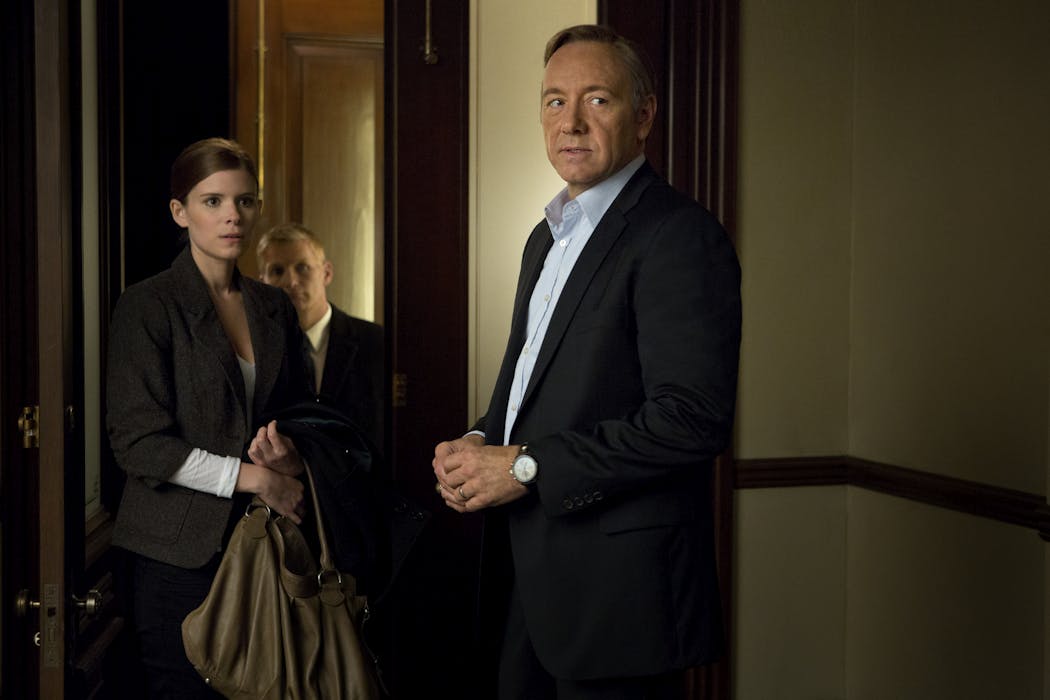
Kevin Spacey encarnó al turbio y despiadado Frank Underwood, vicepresidente de Estados Unidos, en la serie _House of Cards_. Melinda Sue Gordon / Knight Takes King Prod.

Vivimos en una sociedad que premia la audacia y la frialdad. Lo vemos en series como House of Cards, donde Frank Underwood asciende pisando a quien haga falta. En Succession, Logan Roy domina su imperio familiar a base de miedo y control. Incluso en El lobo de Wall Street el exceso se celebra como si fuera genialidad.

Estas historias no han inventado nada: reflejan una idea extendida, que “el fin justifica los medios”. Y ese mismo modo de actuar también aparece, a veces, en la vida real.

La psicopatía se ha estudiado durante décadas. En los años cuarenta se describió como encanto superficial, ausencia de culpa, frialdad emocional y conducta impulsiva. Más tarde, se crearon herramientas para medirla y se demostró que estos rasgos no solo aparecen en criminales. También están presentes, en menor grado, en personas aparentemente normales y exitosas. Algunas funcionan bien en la sociedad e incluso son capaces de alcanzar el poder.

Perfiles difíciles de detectar

No obstante, este tipo de perfiles oscuros son difíciles de detectar. Suelen convivir con buenas habilidades sociales. De manera que su encanto inicial puede ocultar sus fallos y su comportamiento dañino y peligroso. A corto plazo pueden parecer líderes ideales, pero a largo plazo dejan conflictos, miedo y desgaste.

En las empresas, sobre todo en la cúpula, el carisma frío, el gusto por el riesgo y la manipulación pueden vender un buen liderazgo. Muchas compañías persiguen resultados inmediatos, seguridad aparente, gestos firmes, decisiones rápidas. La empatía, en cambio, se ve como una debilidad. Incluso en las entrevistas se valora más el aplomo que la ética de la persona.

Así se cuelan máscaras bien pulidas, una apariencia de control que puede deslumbrar y ocultar señales de abuso o incompetencia. Después, esa frialdad y la ambición impulsan el ascenso, aunque a menudo acaban debilitando el entorno que los sostiene.

Dos grandes psicópatas

La historia reciente nos deja ejemplos claros. Bernie Madoff mantuvo durante años una imagen de respetabilidad mientras dirigía una enorme estafa piramidal que hizo perder 50 000 millones de dólares a miles de inversores. Madoff usaba el dinero que entraba de nuevos clientes para pagar a los antiguos y hacerles creer que estaban ganando rendimientos. En realidad, no había ninguna inversión detrás, solo movía dinero de unos a otros hasta que todo colapsó.

Kenneth Lay, de Enron, parecía un visionario mientras su empresa maquillaba cuentas y ocultaba deudas, hasta provocar una de las mayores quiebras de la historia y arruinar a miles de personas. Ambos mostraban carisma y sangre fría hasta que todo se derrumbó.

En política ocurren situaciones similares. Donald Trump ha construido su imagen en torno a la fuerza y la confrontación constante. Usa mensajes simples y combativos, domina el escenario y no muestra dudas. A muchos seguidores eso les inspira admiración, pese a su tono agresivo y a su escasa disposición al diálogo y el consenso.

Algo parecido pasa con líderes que impulsan guerras actuales. La invasión de Ucrania por Rusia o la ofensiva de Israel en Gaza, con decenas de miles de civiles muertos y desplazados y un caso por genocidio ante la Corte Internacional de Justicia, muestran cómo decisiones frías pueden destruir miles de vidas civiles. Quienes más sufren esas guerras rara vez son quienes las inician. Y, sin embargo, sus responsables suelen ser venerados como símbolos de fuerza.

La “tríada oscura” y el poder

Los psicólogos buscan entender por qué este tipo de personalidades prospera. Se habla de la “tríada oscura”: narcisismo, maquiavelismo y psicopatía. Combinadas, transmiten confianza, dominio y resistencia al estrés. Esto puede ayudar a alcanzar el poder, pero conlleva riesgos. Este metaanálisis muestra algo importante: tales rasgos ayudan a llegar arriba, pero no garantizan eficacia una vez allí. Algunos líderes logran resultados a corto plazo; otros hunden la moral de sus equipos y toman decisiones temerarias. Un poco de audacia ayuda en un momento de crisis. Pero un exceso de la misma rompe la confianza y la ética.

Hay rasgos que pueden frenar esos efectos. La responsabilidad, la amabilidad o la estabilidad emocional ayudan a regular la impulsividad. También favorecen decisiones justas. Sin ellos, la frialdad se convierte en temeridad. Además, los equipos con climas cooperativos y reglas claras resisten mejor a estos perfiles.

El problema es que, en entornos muy competitivos, esas cualidades suelen estar ausentes. Y cuando un líder frío asciende, tiende a rodearse de personas parecidas. Así se crean culturas que expulsan a quienes valoran la cooperación y el respeto.

La política debería aprender de esto. Un país no es una empresa, pero ambos comparten riesgos. El culto al líder erosiona los controles. La transparencia cede ante el relato heroico. La oposición se convierte en enemigo. Gobernar no es ganar siempre, es cuidar de todos.

Conviene matizar. No todos los líderes son psicópatas ni presentan rasgos de ese tipo. Tampoco todos los que muestran algunos de esos rasgos resultan dañinos.
La audacia, por ejemplo, puede ser valiosa en situaciones de emergencia. Sin embargo, la audacia sin empatía se convierte en temeridad. Por tanto, el problema surge cuando esos rasgos se combinan de forma desequilibrada.

Todo esto debería hacernos pensar: ¿qué estamos premiando cuando aplaudimos a un líder? ¿Su capacidad de imponerse o de cuidarnos? Cada vez que celebramos la frialdad, normalizamos que el poder pase por encima de las personas. Quizá sea hora de revisar nuestro ideal de éxito. El carisma del mal deslumbra, pero suele dejar tras de sí miedo, desgaste y daño colectivo.

The Conversation

Dolores Fernández Pérez no recibe salario, ni ejerce labores de consultoría, ni posee acciones, ni recibe financiación de ninguna compañía u organización que pueda obtener beneficio de este artículo, y ha declarado carecer de vínculos relevantes más allá del cargo académico citado.

ref. El carisma del mal: cómo los rasgos psicopáticos se han normalizado en la cultura del éxito – https://theconversation.com/el-carisma-del-mal-como-los-rasgos-psicopaticos-se-han-normalizado-en-la-cultura-del-exito-264655

Canada still lacks universal paid sick leave — and that’s a public health problem as we approach flu season

Source: The Conversation – Canada – By Alyssa Grocutt, Postdoctoral Associate at Haskayne School of Business, University of Calgary

As Canadians head into another flu and COVID season, many workers still face an impossible choice if they fall ill: stay home and lose pay, or clock in sick and risk spreading illness. This is more than an individual dilemma; it’s a predictable public health failure — one the government already knows how to fix.

Paid sick leave is good for both health and business, reducing the spread of illness while supporting workforce productivity, promoting better health outcomes and increasing labour force participation.

So why don’t all workers in Canada have it?

A lesson we’ve failed to learn

The costs of sick people going to work were starkly evident during the COVID-19 pandemic.

In 2021, Peel Region in Ontario became a hotspot for transmission. Research from Peel Public Health found that one in four employees went to work while showing symptoms of COVID-19, and about one per cent did so even after testing positive.

Mississauga Mayor Bonnie Crombie called these figures “evidence” that workers were being forced into a dangerous trade-off between “losing a paycheque and putting food on the table.”


Read more:
COVID-19 outbreaks in long-term care highlight the urgent need for paid sick leave


And yet, Canada still lacks a comprehensive paid sick leave system. Access remains patchy, depending on the province, sector or employer. The Canada Labour Code mandates 10 days of paid sick leave, but only for federally regulated employees.

At the provincial level, only British Columbia (five days per year), Québec (two days) and Prince Edward Island (one to three days, depending on tenure), have permanent paid sick leave. Ontario briefly offered three days during the pandemic but ended the program in 2023.

Even where these programs exist, they don’t cover everyone. Independent contractors and gig workers are excluded, and many low-wage and part-time employees still lack coverage altogether.

Gig workers, in particular, fall through the cracks. They’re classified as self-employed and left without the basic protections that most employees take for granted.

Canadian unionized workers are more likely to have paid sick days negotiated into their contracts, but coverage remains uneven and far from universal. In sectors with low union density, such as hospitality and agriculture, workers are least likely to have access to any form of paid sick leave at all.

The case for paid sick leave

Every year, workers bring colds, flu and other contagious illnesses to work because they cannot afford to stay home. Presenteeism — working while ill — harms recovery, spreads infection and increases workplace outbreaks.

Research shows that high job demands and low resources drive presenteeism, which in turn reduces job satisfaction and organizational effectiveness. It’s a lose-lose equation: employees suffer, productivity drops and illness spreads faster.

The evidence shows that paid sick leave improves both public health and business outcomes. A 2023 review of 43 studies found that paid sick leave is linked with higher job satisfaction, better retention, fewer workplace injuries, reduced contagion and even lower mortality.

Other research shows that employees without paid sick leave experience greater psychological distress, while simply knowing that such policies exist improves attitudes and trust toward employers.

Although some studies note short-term costs for organizations, the previously mentioned 2023 review found these costs are outweighed by long-term gains, including stronger employee loyalty, lower turnover and improved public health outcomes.

Building on what works

To address this, Canada should integrate paid sick leave into systems similar to workers’ compensation for workplace injuries and fatalities.

Canada already has well-established mechanisms, such as provincial Workers’ Compensation Boards and the Federal Workers’ Compensation Service, that provide income replacement and rehabilitation support for employees with work-related illnesses and injuries.

Extending this logic to illness, especially when it spreads through communities, would prevent workers from being penalized for following public health guidance while helping organizations avoid widespread disruption.

Governments and employers could draw lessons from the successes and shortcomings of existing compensation systems to design a program that is fair, efficient and responsive to routine illness and public health emergencies.

For instance, the workers’ compensation programs have long provided reliable, no-fault coverage for physical injuries, but they also struggle with uneven access, complex claims procedures and limited recognition of mental health conditions.

Leadership is also crucial. Leaders who prioritize employee well-being and model prosocial safety behaviours can reduce presenteeism and strengthen safety culture. They are also crucial for setting examples and encouraging employees to use sick leave without fear.

When leaders communicate that taking time off while sick is responsible, not risky, they help rewrite the social norms that keep people working through illness and ensure paid sick leave policies translate into healthier workplaces.

Paid sick leave is a public health imperative

Policymakers, business leaders, unions and the public need to support the creation of a paid sick leave system that is robust, fair and capable of protecting all workers and workplaces. The COVID-19 pandemic revealed the need for expanded sick leave policies, and it remains just as urgent today.

Paid sick leave is basic public health infrastructure. During the COVID-19 pandemic, paid sick leave enabled workers to stay home when they were exhibiting symptoms, which reduced transmissions, workplace outbreaks and worker absenteeism.

A universal sick leave system would help Canada better manage seasonal illnesses and future outbreaks, protect economic stability and prepare for emerging crises, from new pandemics to climate-related health shocks.

Lives depend on it. Organizational health rests on it. Society’s well-being requires it.

The Conversation

Alyssa Grocutt receives funding from the Social Sciences and Humanities Research Council of Canada.

Julian Barling receives funding from the Borden Chair of Leadership and the Social Sciences and Humanities Research Council of Canada (SSHRC).

Nick Turner receives research funding from Cenovus Energy Inc., Haskayne School of Business’s Future Fund, Mitacs, and the Social Sciences and Humanities Research Council of Canada (SSHRC).

ref. Canada still lacks universal paid sick leave — and that’s a public health problem as we approach flu season – https://theconversation.com/canada-still-lacks-universal-paid-sick-leave-and-thats-a-public-health-problem-as-we-approach-flu-season-266987

Raila Odinga: the man who changed Kenya without ever ruling it

Source: The Conversation – Africa (2) – By Justin Willis, Professor of History, Durham University

Raila Amollo Odinga, who has died at the age of 80, was something of a paradox in post-independence Kenyan politics.

A leader who repeatedly ran for president, he never won – in part due to the 2007 election being manipulated in favour of Mwai Kibaki. Despite this, Odinga will be remembered as a figure who profoundly shaped the country’s politics as much as any president.

The son of a famous anti-colonial leader, he was born into influence. Yet he became bitterly critical of Kenya’s enduring political and economic inequalities, speaking out on behalf of the county’s “have nots”, which earned him a place in the hearts of millions.

He was a fiercely nationalist politician who mobilised support across ethnic lines. But he was also the dominant leader of the Luo community – one of the country’s larger ethnic groups mainly based in Western Kenya – whose voters formed the core of his support.

Having self-identified as a revolutionary, Odinga later proved to be committed to institutional reform and democratisation. His greatest legacy is the 2010 constitution, which attempted to devolve power away from the “imperial presidency”, which he campaigned for over many years.

This was not the end of the contradictions. A leader who often spoke about economic development and deprivation, his agenda was typically more focused on political change. Odinga did so in part because he believed that rights and freedoms would anchor nation-building and development.

Perhaps most strikingly, although he scorned the elite power sharing deals that dominated Kenyan politics – he repeatedly made such agreements himself, often invoking the need for national stability.

Odinga embodied Kenya’s political contradictions, so the impact of his life and death will be debated. This article explores this contested legacy and what it means for Kenya’s future.

Early years

Born in western Kenya on 7 January 1945, Odinga – popularly known as Baba (father) – was the son of Jaramogi Oginga Odinga, the redoubtable community mobiliser who was a thorn in the side of the colonial state. Oginga famously insisted that he and other nationalists would make no deals with the British until Jomo Kenyatta was released.

When Kenyatta became prime minister in 1963, and later president in 1964, Oginga became Kenya’s first vice-president and minister of home affairs. However, he fell out with Kenyatta in 1966 over the government’s failure to overturn colonial inequalities. This meant that the Oginga family was excluded from the country’s powerful political elite. Oginga spent the following decades in and out of detention.

Raila Odinga spent his early years in Kenya before leaving in 1962 to study in East Germany. Returning in 1970, he became a university lecturer. Later, he joined the government standards agency – a job he lost abruptly in 1982 when he was linked to a failed coup against Daniel arap Moi. Charged with treason, he was detained until 1988, when he became active in the growing opposition to Moi’s rule. He was detained twice more during the turbulent years of protest that followed and fled briefly to Sweden.

Odinga returned before Kenya’s 1992 elections, the first multi-party polls since the 1960s, siding with his father when the opposition split. Aided by that division and state manipulation, Moi won, but Odinga’s role confirmed his status as a major political figure.

Blazing his own trail

When Oginga died in 1994, Odinga sought to take over his father’s party but, defeated, left to form his own. He ran for president in 1997, which Moi again won against a divided opposition.

When Moi did not seek re-election in 2002, it seemed Odinga’s moment had come. However, after briefly supporting Odinga as his successor Moi ultimately decided to back Uhuru Kenyatta, son of Jomo. In response, Odinga threw his weight behind Mwai Kibaki, a move which was critical to Kibaki’s victory in 2002.

Odinga’s support for Kibaki was conditional on major constitutional and political reforms. Yet where Odinga had expected widespread constitutional reforms to devolve power away from the executive, Kibaki offered limited changes. Refusing to simply prop up the administration, Odinga successfully campaigned against the government’s flawed draft constitution in the 2005 referendum.

Once again, Odinga seemed on the brink of power: he led a broad coalition into the 2007 elections on a promise of fundamental change. Early results put him ahead of Kibaki in the elections – but then Kibaki was declared the winner in a hasty process that raised widespread suspicions of malpractice and triggered Kenya’s greatest crisis, including ethnic clashes and state repression.

A power-sharing deal brought the violence to an end and made Odinga prime minister in a government of national unity. He focused his energy on political reform and constitutional changes, as well as other long standing concerns. In August 2010 a referendum approved a new constitution that devolved power to Kenya’s 47 counties. The constitution also reformed key institutions including the judiciary and electoral commission and expanded citizens’ rights.

A contested final act

The 2010 constitution remains Odinga’s signal achievement. Certainly, it created the potential for the country to forge a new and more democratic future.

Yet in its aftermath he struggled to find an equally compelling narrative. Constitutional reform had been a long-standing demand that allowed him to mobilise opposition around the promise of a new Kenya. Without this single over-arching “cause”, Odinga’s ability to sustain mass mobilisation became more fragile.

Furthermore, the progressive constitution did not prevent the continuation of older political logics. It proved no barrier against the rise to the presidency of Uhuru Kenyatta and his then deputy, William Ruto, who had faced charges of crimes against humanity at the International Criminal Court.

Odinga faced increasingly difficult choices, particularly after repeated presidential defeats in 2013, 2017 and 2022 amid allegations of electoral manipulation.

These losses convinced some that he would never win the presidency – and not only because of the use of state power to deny him. That recognition, coupled with advancing age and ill health, led Odinga to make compromises once unthinkable, revealing an increasingly pragmatic reasoning in his later years. This was starkly illustrated after the 2017 elections, when – having claimed he was rigged out and led mass protests – Odinga struck the “handshake” deal with Kenyatta in March 2018. This was framed as nation-building but viewed by some as a betrayal.

The handshake led Odinga to stand as Kenyatta’s preferred candidate in the 2022 elections. This backing proved doubly damaging, however. On the one hand, it undermined Odinga’s opposition credentials and lowered turnout in his Nyanza strongholds. On the other, it meant that his loss could not be blamed on a “deep state” conspiring against him.

The difficulties that followed were magnified when, after suggesting the 2022 results had been manipulated by those around Ruto, Odinga agreed to prop up Ruto’s struggling government in March 2025. The formation of what was billed as a “broad-based” administration was presented as nation-building, but critics saw it differently. Coming after mass youth-led protests – first against tax increases and later against corruption, state repression, and Ruto’s leadership – Odinga appeared to some to side with power against the people he once represented.

Not flawless, but consequential

These turns complicate how history, and Kenyans, will remember him – not as a flawless icon, but as a deeply consequential and sometimes contradictory figure. Yet those with longer memories will also understand what led Odinga there.

Imprisoned and tortured under Moi, sold out by Kibaki, and denied victory in 2007, Odinga endured more than a lifetime’s share of misfortune and betrayal. He made his own choices, but rarely under conditions of his own making, and arguably did more than any other Kenyan to make the country’s political system more responsive to its people.

His absence will generate a political vacuum that other leaders will struggle to fill. Ruto was banking on Odinga’s support to win the 2027 elections. He will now have to work harder to put together a winning coalition. Meanwhile those leaders who coalesced around Odinga – including those who depended on him for their positions – will need to decide how they can most effectively mobilise in his absence.

As they do so, Kenya’s leaders will all be operating in his shadow, and in a context in which the country’s marginalised people and communities will feel even less represented by those in power.

The Conversation

Justin Willis has previously received funding from the ESRC and the UK government for research on Kenyan politics

Gabrielle Lynch has previously received funding from the ESRC and the UK government for research on Kenyan politics.

Karuti Kanyinga has previously received funding from East Africa Research Fund on Kenyan politics and elections.

Nic Cheeseman has previously received funding from the ESRC and the UK government for research on Kenyan politics.

ref. Raila Odinga: the man who changed Kenya without ever ruling it – https://theconversation.com/raila-odinga-the-man-who-changed-kenya-without-ever-ruling-it-267643

El infundado temor de volver a coger peso tras un cáncer de mama

Source: The Conversation – (in Spanish) – By Cristina Roldán Jiménez, Profesora de Fisioterapia, Universidad de Málaga

La fisioterapia permite realizar un enfoque terapéutico y personalizado de la actividad física, incluido el ejercicio de fuerza, en las pacientes de cáncer de mama que han sufrido una intervención quirúrgica. Kaboompics.com/Pexels, CC BY

Cada año, más de 2 millones de personas reciben el diagnostico de cáncer de mama en el mundo. Aunque puede afectar a ambos sexos, es mucho más prevalente en mujeres; de hecho, es el tipo de cáncer más frecuente en la población femenina.

Gracias a los avances médicos, muchas pacientes superan la enfermedad, pero deben hacer frente a cambios físicos, psíquicos, sociales, familiares y laborales que les obligan a llevar una nueva vida en cuestión de semanas.

Y en el caso de haber sufrido una cirugía, hay que añadir una cicatriz interna: el miedo a coger peso con los brazos y realizar actividades cotidianas. ¿Está justificada esa aprensión?

El miedo al linfedema

La limitación del uso del brazo después de una operación por cáncer de mama ha sido un palo en la rueda en la recuperación de estas pacientes desde hace décadas. Su supuesta justificación era la posibilidad de que los tratamientos oncológicos dañen el sistema linfático, que podría entenderse como un sistema circulatorio independiente (a través de sus canales, vasos y capilares, repartidos por todo el organismo, circula la linfa).

En ciertas zonas, como la axila, encontramos ganglios linfáticos, una especie de pequeñas estaciones que depuran la linfa retirando sustancias que deben de ser eliminadas del organismo. Además, esos ganglios guardan relación con el sistema inmunitario. En algunas ocasiones, están afectados por el tumor y es necesario extirparlos, lo que afecta a la circulación del sistema linfático. Otras veces, la aplicación de radioterapia en la zona también puede alterar esa circulación, aumentando el riesgo de linfedema.

El linfedema es una acumulación de líquido (linfa) en la extremidad superior, lo que provoca síntomas como dolor y pesadez, así como alteraciones de la función y el aspecto externo del brazo.

Siempre se creyó que la actividad de la extremidad superior aumentaba el riesgo de padecer linfedema, por lo que se recomendaba no usarla. Por ejemplo, en los años 70 se aconsejaba evitar cualquier ejercicio que aumentase el flujo sanguíneo, y en los años 80 había una larga lista de cosas que no podía hacer la paciente con su brazo.

Del “reposo oncológico” al movimiento como motor de recuperación

Tales prohibiciones se sumaban a la prescripción de reposo, cuyo objetivo era aliviar el cansancio. De hecho, hasta 1989 no se publicó el primer estudio sobre los beneficios del ejercicio aeróbico en el paciente oncológico y, concretamente, en las mujeres con cáncer de mama.

A principios del siglo XXI empezaron a aparecer publicaciones que referían los posibles beneficios del ejercicio para la función física y el peso corporal en las pacientes. Además, caminar durante la quimioterapia o la radioterapia parecía mitigar el cansancio. Actualmente, las principales organizaciones oncológicas indican que la actividad física debe formar parte del tratamiento del cáncer.

Mujer haciendo ejercicio
Las principales guías oncológicas recomiendan que las pacientes con cáncer de mama realicen ejercicio físico adaptado desde el momento del diagnostico y a lo largo del tratamiento de la enfermedad.
Pexels

¿Qué ejercicio se puede hacer después de una cirugía por cáncer de mama?

Tanto el ejercicio aeróbico como el de fuerza están recomendados antes, durante y después de un cáncer de mama, lo que incluye el ejercicio con pesas en las extremidades superiores. Multitud de estudios indican que esta actividad no solo es segura, sino que además mejora los síntomas en aquellas pacientes que ya tienen linfedema. De hecho, también se aconseja para prevenir su aparición.

Pero sabemos que decir no es hacer: múltiples barreras dificultan la práctica de ejercicio en las pacientes. En un período de tiempo muy corto, han sufrido muchos cambios físicos: pérdida de masa muscular, pérdida de función, aumento de peso, cansancio, dolor… También ignoran qué hacer o cuándo empezar.

El papel de la fisioterapia

En primer lugar, debemos tener en cuenta que el ejercicio es recomendable siempre y cuando sea individualizado. Y aquí entra entra en juego la fisioterapia, imprescindible para realizar un enfoque terapéutico y personalizado del ejercicio.

De la mano de la fisioterapia, la paciente tiene que empezar a mover el brazo justo después de la cirugía. Poco a poco deben ir incluyéndose movimientos y actividades en el día a día, hasta comenzar a coger peso en torno a la cuarta o sexta semana tras la operación.


Leer más:
Mamografías periódicas y ejercicio físico, claves en el pronóstico del cáncer


Aunque es esperable dejar un período de recuperación e ir aumentando el peso paulatinamente, no hay tope en la cantidad que puede cogerse. Cualquier pauta que contemple una limitación está basada en el mito que relaciona esa actividad con la aparición de linfedema.

Un mito por desterrar

Hacer frente a una enfermedad como el cáncer de mama y sus secuelas es una experiencia difícil. Unirlo, además, a la falsa creencia de que la paciente ya no podrá volver a realizar actividades cotidianas, como coger a un nieto en brazos o ser independiente para hacer la compra, sólo conduce al miedo, a la fragilidad y a una privación de los beneficios que procura el ejercicio.

Aunque ya la ciencia nos ha mostrado que usar el brazo después de una cirugía por cáncer de mama es seguro y beneficioso, aún queda por difundir este mensaje que llegue a toda la sociedad.

The Conversation

Cristina Roldán Jiménez no recibe salario, ni ejerce labores de consultoría, ni posee acciones, ni recibe financiación de ninguna compañía u organización que pueda obtener beneficio de este artículo, y ha declarado carecer de vínculos relevantes más allá del cargo académico citado.

ref. El infundado temor de volver a coger peso tras un cáncer de mama – https://theconversation.com/el-infundado-temor-de-volver-a-coger-peso-tras-un-cancer-de-mama-265544