Countries around the world have been discussing the need to rein in climate change for three decades, yet global greenhouse gas emissions – and global temperatures with them – keep rising.
When it seems like we’re getting nowhere, it’s useful to step back and examine the progress that has been made.
Yet U.S. emissions from many of the activities that produce greenhouse gases – transportation, industry, agriculture, heating and cooling of buildings – have remained about the same over the past 30 years. Transportation is a bit up; industry a bit down. And electricity, once the nation’s largest source of greenhouse gas emissions, has seen its emissions drop significantly.
Overall, the U.S. is still among the countries with the highest per capita emissions, so there’s room for improvement, and its emissions haven’t fallen enough to put the country on track to meet its pledges under the 10-year-old Paris climate agreement. But U.S. emissions are down about 15% over the past 10 years.
Here’s how that happened:
US electricity emissions have fallen
U.S. electricity use has been rising lately with the shift toward more electrification of cars and heating and cooling and expansion of data centers, yet greenhouse gas emissions from electricity are down by almost 30% since 1995.
One of the main reasons for this big drop is that Americans are using less coal and more natural gas to make electricity.
Both coal and natural gas are fossil fuels. Both release carbon dioxide to the atmosphere when they are burned to make electricity, and that carbon dioxide traps heat, raising global temperatures. But power plants can make electricity more efficiently using natural gas compared with coal, so it produces less emissions per unit of power.
Why did the U.S. start using more natural gas?
Research and technological innovation in fracking and horizontal drilling have allowed companies to extract more oil and gas at lower cost, making it cheaper to produce electricity from natural gas rather than coal.
As a result, utilities have built more natural gas power plants – especially super-efficient combined cycle gas power plants, which produce power from gas turbines and also capture waste heat from those turbines to generate more power. More coal plants have been shutting down or running less.
Because natural gas is a more efficient fuel than coal, it has been a win for climate in comparison, even though it’s a fossil fuel. The U.S. has reduced emissions from electricity as a result.
U.S. renewable electricity generation, including wind, solar and hydro power, has nearly tripled since 1995, helping to further reduce emissions from electricity generation.
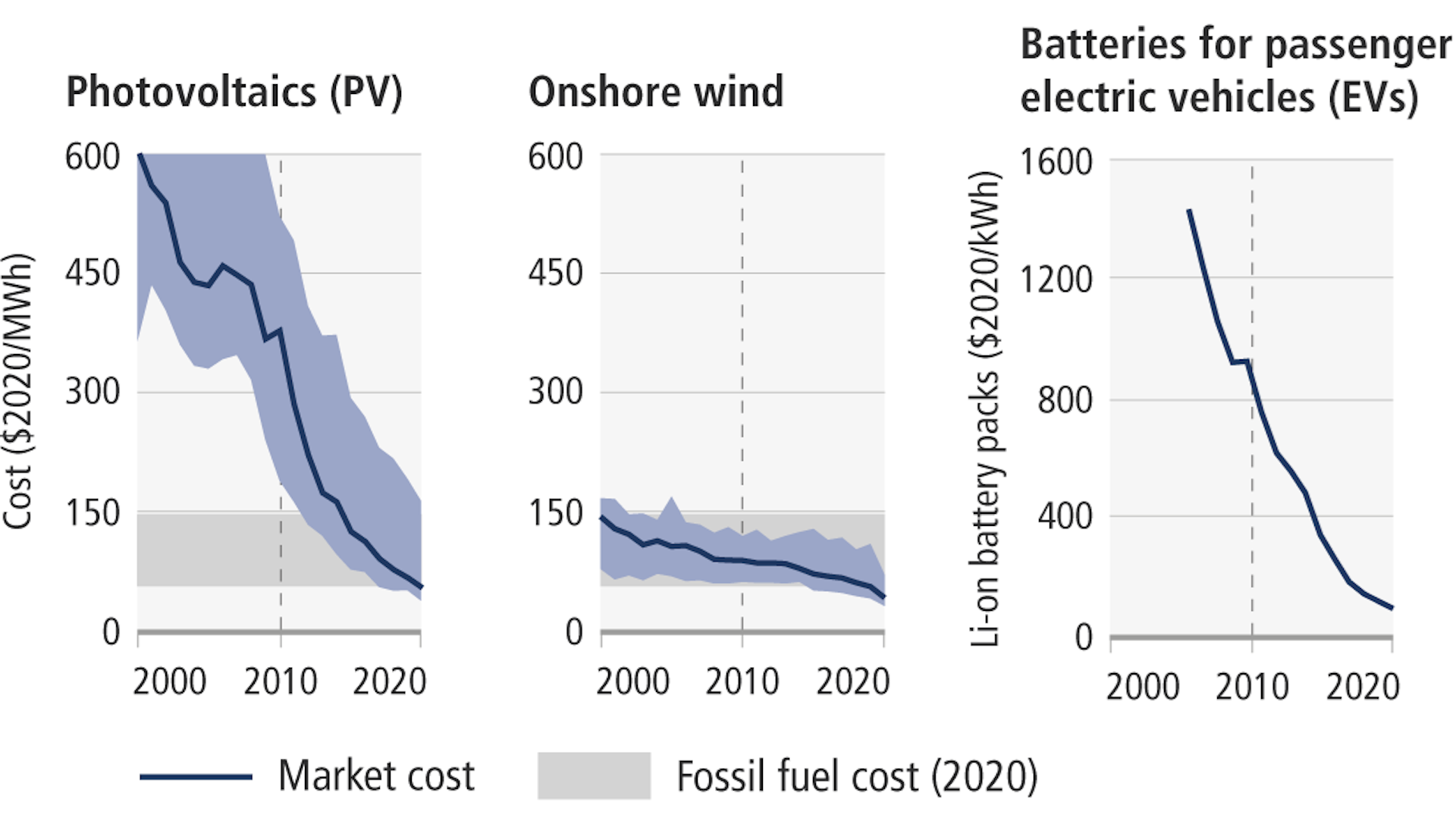
Costs for solar and wind power have fallen so much that they are now cheaper than coal and competitive with natural gas. Fourteen states, including most of the Great Plains, now get at least 30% of their power from solar, wind and battery storage.
Both wind and solar provide intermittent power: The sun does not always shine, and the wind does not always blow. There are a number of ways utilities are dealing with this. One way is to use demand management, offering lower prices for power during off-peak periods or discounts for companies that can cut their power use during high demand. Virtual power plants aggregate several kinds of distributed energy resources – solar panels on homes, batteries and even smart thermostats – to manage power supply and demand. The U.S. had an estimated 37.5 gigawatts of virtual power plants in 2024, equivalent to about 37.5 nuclear power reactors.
Globally, the costs of solar, onshore wind and EV batteries fell quickly over the first two decades of the 2000s. IPCC 6th Assessment Report
Another energy management method is battery storage, which is just now beginning to take off. Battery costs have come down enough in the past few years to make utility-scale battery storage cost-effective.
In 2024, people in the U.S. bought 1.6 million EVs, and global sales reached 17 million, which was up 25% from the year before.
The unknowns ahead: What about data centers?
The construction of new data centers, in part to serve the explosive growth of artificial intelligence, is drawing a lot of attention to future energy demand and to the uncertainty ahead.
Data centers are increasing electricity demand in some locations, such as northern Virginia, Dallas, Phoenix, Chicago and Atlanta. The future electricity demand growth from data centers is still unclear, though, meaning the effects of data centers on electric rates and power system emissions are also uncertain.
However, AI is not the only reason to watch for increased electricity demand: The U.S. can expect growing electricity demand for industrial processes and electric vehicles, as well as the overall transition from using oil and gas for heating and appliances to using electricity that continues across the country.
Valerie Thomas receives funding from the US Department of Energy
Source: The Conversation – USA (2) – By Jianna Jin, Assistant Professor of Marketing at Mendoza College of Business, University of Notre Dame
When it comes to inquiring about – ahem – certain products, shoppers prefer the inhuman touch.
That is what we found in a study of consumer habits when it comes to products that traditionally have come with a degree of embarrassment – think acne cream, diarrhea medication, adult sex toys or personal lubricant.
While brands may assume consumers hate chatbots, our series of studies involving more than 6,000 participants found a clear pattern: When it comes to purchases that make people feel embarrassed, consumers prefer chatbots over human service reps.
In one experiment, we asked participants to imagine shopping for medications for diarrhea and hay fever. They were offered two online pharmacies, one with a human pharmacist and the other with a chatbot pharmacist.
The medications were packaged identically, with the only difference being their labels for “diarrhea” or “hay fever.” More than 80% of consumers looking for diarrhea treatment preferred a store with a clearly nonhuman chatbot. In caparison, just 9% of those shopping for hay fever medication preferred nonhuman chatbots.
This is because, participants told us, they did not think chatbots have “minds” – that is, the ability to judge or feel.
In fact, when it comes to selling embarrassing products, making chatbots look or sound human can actually backfire. In another study, we asked 1,500 people to imagine buying diarrhea pills online. Participants were randomly assigned to one of three conditions: an online drugstore with a human service rep, the same store with a humanlike chatbot with a profile photo and name, or the same store with a chatbot that was clearly botlike in both its name and icon.
We then asked participants how likely they would be to seek help from the service agent. The results were clear: Willingness to interact dropped as the agent seemed more human. Interest peaked with the clearly machinelike chatbot and hit its lowest point with the human service rep.
When it comes to chatbots, companies want to answer two questions: When should they deploy chatbots? And how should the chatbots be designed?
Many companies may assume the best strategy is to make bots look and sound more human, intuiting that consumers don’t want to talk to machines.
But our findings show the opposite can be true. In moments when embarrassment looms large, humanlike chatbots can backfire.
The practical takeaway is that brands should not default to humanizing their chatbots. Sometimes the most effective bot is the one that looks and sounds like a machine.
What still isn’t known
So far, we’ve looked at everyday purchases where embarrassment is easy to imagine, such as hemorrhoid cream, anti-wrinkle cream, personal lubricant and adult toys.
However, we believe the insights extend more broadly. For example, women getting a quote for car repair may be more self-conscious, as this is a purchase context where women have been traditionally more stigmatized. Similarly, men shopping for cosmetic products may feel judged in a category that has traditionally been marketed to women.
In contexts like these, companies could deploy chatbots – especially ones that clearly sound machinelike – to reduce discomfort and provide a better service. But more work is needed to test that hypothesis.
The Research Brief is a short take on interesting academic work.
Jianna Jin does not work for, consult, own shares in or receive funding from any company or organization that would benefit from this article, and has disclosed no relevant affiliations beyond their academic appointment.
American households have become dependent on Amazon.
The numbers say it all: In 2024, 83% of U.S. households received deliveries from Amazon, representing over 1 million packages delivered each day and 9 billion individual items delivered same-day or next-day every year. In remarkably short order, the company has transformed from an online bookseller into a juggernaut that has reshaped retailing. But its impact isn’t limited to how we shop.
Behind that endless stream of packages are more than a million people working in Amazon fulfillment centers and delivery vehicles. Through its growing dominance in retail, Amazon has eclipsed its two major competitors in the delivery business, UPS and FedEx, in terms of package volume.
What is life like for those workers? Between Amazon’s rosy public relations on the one hand and reporters’ and advocates’ troubling exposés on the other, it can be hard to tell. Part of the reason is that researcherslike us don’t have much reliable data: Workers’ experiences at companies such as Amazon, UPS and FedEx can be a black box. Amazon’s arm’s-length relationship with the drivers it depends on for deliveries makes finding answers even harder.
But that didn’t stop us. Using unique data from the Shift Project, our new study, co-authored with Julie Su and Kevin Bruey, offers the first direct, large-scale comparison of working conditions for drivers and fulfillment employees at Amazon, UPS and FedEx based on survey responses by more than 9,000 workers.
What we found was deeply troubling – not only for Amazon drivers but also for the future of work in the delivery industry as a whole.
2 models, 2 realities
For nearly a century, driving delivery trucks has been a pathway to the middle class, as epitomized by unionized jobs at UPS. UPS drivers, who have been members of the Teamsters union for decades, are employees with legal protections and a collective-bargaining contract.
In contrast, Amazon has embraced a very different model. Most important is that Amazon does not directly employ nearly any of its delivery drivers.
Instead, its transportation division, Amazon Logistics, relies on two methods to deliver most of its shipments: Amazon Flex, a platform-like system that treats drivers like independent contractors, and Amazon DSP, a franchise-like system that uses subcontractors. DSP subcontractors are almost all nonunion, and the company has cut ties with DSP contractors whose drivers have attempted to unionize. These practices place downward pressure on the wages and working conditions of drivers throughout the industry.
The impact on workers is stark.
Delivery workers at Amazon receive significantly lower wages than at UPS and FedEx, we found. Wage gaps are especially large between the delivery workers at Amazon, who earn US$19 an hour on average, and the unionized drivers at UPS, who make $35.
We also found that unionized UPS drivers have a clear pathway to upward mobility, while Amazon drivers don’t. At UPS, wages increase sharply the longer a worker has been on the job. Pay starts at $21 an hour, reaching nearly $40 an hour for drivers who’ve been with the company for at least 10 years – which is more than half of them.
At Amazon, wages start at $17 an hour and don’t increase with tenure. Nearly half of workers have less than a year on the job.
Between lower wages, more unstable schedules, fewer benefits and limited protections from employment laws, Amazon drivers struggle to make ends meet. More than 1 in 4 told us they had gone hungry because they couldn’t afford enough to eat within the past month, and 33% said they couldn’t cover their utility bills. Compared to drivers at UPS and FedEx, Amazon drivers face significant financial instability.
On top of that, Amazon drivers face intense workplace surveillance and speed tracking – as do workers at the company’s fulfillment centers. Sixty percent of both types of Amazon workers received frequent feedback on the speed of their work from a technological device, and more than two-thirds said that Amazon monitors the quality of their work using technology. That degree of technological surveillance and tracking far outpaces what UPS and FedEx workers told us they were exposed to, representing an extreme case of worker monitoring and performance assessment.
Using nonemployee drivers contributed to the exponential growth of Amazon as a package delivery company. In 2023, Amazon for the first time delivered more packages than UPS, making it the second-largest parcel carrier in the country – surpassed only by the U.S. Postal Service.
By building an online retail empire with the capacity to deliver the majority of its own shipments, Amazon’s expansion continues. UPS, by contrast, has seen drops in its revenues, stock value and market capitalization. Amazon’s sheer size and giglike approach are therefore changing industry standards, putting downward pressure on wages, benefits and job stability across the delivery sector.
The contrast between Amazon and UPS drivers isn’t just about two companies using different models for package delivery – it represents two competing futures for work. As the second-largest retail company and now largest private delivery company in the U.S., Amazon exerts market power that impacts the working conditions of workers beyond its own delivery drivers. Recent reporting indicates that UPS has been experimenting with using gig deliveries, much to the consternation of the union that represents three-quarters of its workforce.
In the post-World War II era, increasing unionization led to better wages and conditions across much of the economy, including nonunionized sectors. The continuing expansion of Amazon’s business model could signal the unraveling of wages, benefits and protections for working people more generally.
The authors do not work for, consult, own shares in or receive funding from any company or organization that would benefit from this article, and have disclosed no relevant affiliations beyond their academic appointment.
These figures will only increase in the coming years, as rates of dementia are predicted to double by 2060. If you don’t know someone affected by dementia, you probably will at some point.
Dementia-related stigma is perpetuated through media messages that portray people with dementia as mindless and incapable, as well as through daily interactions in which others dismiss and dehumanize the person living with dementia.
These forms of invalidation – usually unintentional – accelerate and intensify the loss of self-worth and identity that dementia patients are already experiencing.
Fortunately, educating and spreading awareness can help reduce behaviors that propagate stigma and dehumanizing treatment of people with dementia.
As a social scientist and researcher in interpersonal communication and family caregiving, I explore the social and relational side of dementia. Through my work with these patients and families, I’ve learned that reducing stigma and supporting self-worth for people who have dementia is often done through daily conversations.
Dementia is an umbrella term that refers to a family of cognitive conditions involving memory loss, difficulty thinking or processing information, changes in ability to communicate and challenges with managing daily tasks.
People in the early stages of dementia, including mild cognitive impairment, continue to engage socially and participate in many of the activities they have always done. In the middle stage of the disease, people often need more help from others to complete daily tasks and may have more difficulty holding conversations. In the late stage, people with dementia are dependent on others and often lose the ability to communicate verbally.
Despite the cognitive declines that come with dementia, people living with dementia can maintain many of their former abilities as the disease progresses. Even in the late stages, research shows that people with dementia can understand tone of voice and nonverbal communication such as body language, facial expressions and gentle touch.
This makes it clear that people with dementia can continue having meaningful social connections and a sense of self-worth even as their disease progresses.
Engaging in meaningful activities that are appropriate to the person’s stage of dementia can help foster a sense of self. Jessie Casson/DigitalVision
Focusing care around the person
In the 1990s, psychologist Tom Kitwood, who studied dementia patients in long-term care settings, introduced the notion of “personhood.” Personhood is a recognition of a person’s unique experiences and individual worth. He had observed that residents with dementia were sometimes treated as objects rather than people and were dismissed as being “no longer there” mentally. In response, Kitwood advocated for a new model of person-centered care.
In contrast to the medical model of care that was standard at the time, person-centered care aims to provide people with dementia comfort, attachment, inclusion, occupation and identity.
Comfort includes both physical and psychological comfort, ensuring that the person with dementia feels safe and is as pain-free as possible. Attachment and inclusion have to do with supporting a person with dementia’s closest relationships and making sure they feel included in social activities.
Occupation is about giving the person meaningful activities that are suited to their abilities, while identity is about preserving their unique sense of self. According to Kitwood, each of these elements of personhood can be upheld or threatened through a person’s interactions with others.
I find Kitwood’s work particularly important because it suggests that communication is at the heart of personhood.
Communicating to support personhood
So how can family members and friends communicate with their loved one with dementia to help preserve their sense of self?
Researchers have identified several evidence-based communication strategies that support person-centered care both in long-term care settings and within the family.
Using simple prompts to help the person successfully engage in conversation.This can be done through repeating or rephrasing questions, paraphrasing the person’s responses, pausing to give the person time to think, and providing simple prompts to help the person remember.
Creating and maintaining connection.In families, this is done by giving a hug or kiss or saying “I love you”; doing activities together such as playing simple games, making art or playing music; and joking around and laughing together.
Communication shifts as the disease progresses
Supporting personhood requires adjusting to the communication abilities of the person with dementia. Some communication strategies are helpful in one stage of the disease but not in others.
In a recent study, my team and I found that asking the person with dementia to recall the past was affirming for those who were early in the disease and who could still recall the past. But for people who were in later stages of the disease, asking them “Do you remember?” was received more like a test of memory and led to frustration or confusion. Similarly, we found that suggesting words to prompt recall was helpful later in the disease but demeaning for people who were in earlier stages of the disease who could still find their words without help.
Ultimately, supporting a person with dementia’s sense of self and self-worth in conversations is about finding a communication sweet spot – in other words, matching your approach to their current capabilities.
Changing your default approach to conversations can be challenging, but making simple communication changes can make all the difference. Meaningful conversations are the key to helping your loved one live their days to the fullest, with a sense of personal worth and a feeling of meaningful connection with others.
R. Amanda Cooper is affiliated with the Alzheimer’s Association as a Community Educator.
We’ve all been there: You wait 45 minutes in the exam room when the doctor finally walks in.
They seem rushed. A few questions, a quick exam, a glance at the clock and then a rapid-fire plan with little time for discussion – and you leave feeling unheard, hurried and frustrated.
And what if you’re hospitalized? You may face a similar experience.
More than half of U.S. adults say their doctors have ignored or dismissed their concerns, or not taken their symptoms seriously, according to a December 2022 national poll.
Patients are increasingly experiencing what’s known as administrative harm – those unintended but very real consequences arising from administrative decisions, made far upstream, that directly influence how doctors practice. Ultimately, these types of interactions affect the care patients receive and their outcomes.
As a doctor and researcher who specializes in business and health care delivery, I’ve studied how organizational decisions have ripple effects, shaping patients’ relationships with their doctor and the quality of care they receive. Patients may be unaware of these upstream administrative decisions, but they affect everything from time allotted for an appointment to the number of patients the doctor has to see and whether a visit is covered by insurance.
Quality interactions of doctors and patients, like this one, are at risk of becoming too few and far between. ljubaphoto/E+ via Getty Images
But that approach comes with costs, among them the time needed to build meaningful connections with patients. That negative, impolite tone you may have experienced might be because the doctor has many patients waiting and a full evening ahead just to catch up on writing visit notes, reviewing medical records and completing other required documentation. During the work day, they’re often fielding over 100 messages and alerts daily, including referrals and coordinating care, all while trying to focus on the patient in front of them.
But the consequences go beyond their bedside manner. Research makes clear that doctors’ performance and the quality of care patients receive are affected by their workload. A similar pattern is true with nurses: Their higher workloads are associated with higher death rates among hospitalized patients.
A doctor’s rushed demeanor can sometimes stem from a heavy administrative load of reviewing notes and medical records. andresr/E+ via Getty Images
A better way
The administrative harms stemming from upstream decisions are not inevitable. In large part, they are preventable. Overhauling the health care system may seem daunting, but patients and doctors are not powerless.
Patients and their families must advocate for themselves. Ask questions and be direct. This phrase: “I am still really worried about … ” will quickly get your doctor’s attention. If your visit seems rushed, share it with patient representatives or through patient surveys. These insights help administrative leaders recognize when systems are falling short.
Doctors and care teams should not normalize unsustainable work conditions. Health systems need structured, transparent mechanisms that make it easy and safe for doctors and care team members to report when workloads, staffing or administrative decisions may be harming patients.
Even more powerful is when patients and their doctors speak up together. Collective voices can drive meaningful change – such as lobbying for adequate time, staffing or policies to support high-quality, patient-centered care. It is also important for administrative leaders and policymakers to take responsibility for how decisions affect both patients and the care team.
More research is needed to define what safe, realistic work standards look like and how care teams should be structured. For example, when does it make sense for a doctor to provide care, or a physician assistant or nurse practitioner? At the same time, health systems have the opportunity to think creatively about new care models that address clinician shortages.
But research shows that the medical profession can’t afford to wait for perfect data to act on what’s already clear. Overworked and understaffed teams hurt both patients and their doctors.
Yet when doctors do have enough time, the interactions feel different – warmer, more patient and more attentive. And as research shows, patient outcomes improve as well.
Dr. Marisha Burden reports funding from the Agency for Healthcare Research and Quality, the National Institute for Occupational Health and Safety, University of Colorado Innovations digiSPARK award, Med-IQ and the American Medical Association not related to this work. Dr. Burden contributed to the development of GrittyWork, a digital workforce application, and a registered trademark of the University of Colorado not related to this work. The author utilized the ChatGPT language model developed by OpenAI and Microsoft Co-pilot for editing of original author content to improve readability.
A case scheduled for U.S. Supreme Court oral arguments on Nov. 10, 2025, however, is very different from most other high-profile cases at the moment. Landor v. Louisiana Department of Corrections involves whether an inmate of a minority religious group, the Rastafarians, can sue for monetary damages after the warden violated his religious rights – specifically, the right to not cut his hair.
Landor v. Louisiana stands out because it underscores the complexity and far-reaching nature of religious freedom laws in the United States and the increasingly diverse faith traditions to which they apply. Christians now represent 62% of the American population, while 29% have no religious affiliation and 7% belong to other faith traditions.
Religious vow
Damon Landor, the petitioner, wore long dreadlocks for almost 20 years as an expression of his beliefs as a Rastafarian – part of a biblical practice known as the “Nazarite vow.” Many members of the movement, which first developed in Jamaica in the 1930s, do not cut their hair.
Toward the end of his sentence, Landor was transferred to a different correctional facility. There – with three weeks left for Landor to serve – the warden ignored the judicial order, directing guards to shackle Landor and forcibly shave his head.
Not surprisingly, on finishing his sentence, Landor filed suit for money damages under the Religious Land Use and Institutionalized Persons Act. The act forbids the government and its officials from imposing “substantial burden(s)” on incarcerated people’s religious free exercise rights.
His legal team then filed a petition for the case to be reheard “en banc.” In this uncommon procedure, parties seek further review from all of the judges in a circuit, or federal appellate court. The court denied his request, but 15 of the 17 active judges wrote that this was a question for the Supreme Court.
The Supreme Court agreed to hear an appeal after more than 20 organizations submitted amicus curiae, or “friend of the court,” briefs in favor of Landor. The Trump administration also filed an amicus brief encouraging the Supreme Court to take the case.
The briefs include groups that often have diverging opinions. Americans United for Separation of Church and State, for example, typically supports those wishing to keep religion out of public life. Conversely, the Becket Fund usually defends the rights of those seeking to increase faith’s role in public life.
They are of one mind in Landor because the case involves his right to express his beliefs freely by how he lives, in a very personal way: grooming and hair length.
Lower courts agree that Landor’s religious rights were violated. The key question is whether he can sue an individual official – here, the warden – for monetary damages.
U.S. Supreme Court justices attend inauguration ceremonies in the rotunda of the U.S. Capitol on Jan. 20, 2025. Chip Somodevilla/Getty Images
Sister statutes
Weighing heavily in Landor’s favor is a previous Supreme Court order in Tanzin v. Tanvir. That 2020 case was brought by two Muslim men who sued FBI agents after their names were put on a “no-fly list.” The plaintiffs alleged that their names were added to the list in retaliation for refusing to spy on fellow Muslims.
The Supreme Court unanimously affirmed that the men could sue the agents as individuals, not just in their official capacity. Being sued as an individual means defendants must pay damages on their own, without the government helping to foot the bill – a potentially very expensive outcome.
There’s a key difference here in Landor’s case, though. In Tanzin, the plaintiffs sued for violations of their rights under the Religious Freedom Restoration Act, a federal law enacted in 1993. Landor brought his case under the Religious Land Use and Institutionalized Persons Act, enacted in 2000. The laws are similar; in fact, the key language in both statutes is identical. But the Religious Land Use Act has not yet been interpreted as providing money damages against government officials.
The earlier statute, the Religious Freedom Restoration Act, became law in response to a pivotal Supreme Court case about religious freedom: Employment Division Department of Human Resources of Oregon v. Smith. The justices upheld the dismissal of two drug counselors under state law for ingesting peyote, a natural hallucinogenic substance, during a Native American Church ceremony – even though most states and the federal government had decriminalized peyote’s use for religious purposes.
The act was essentially a rebuttal of 1990’s Smith ruling. It requires laws that restrict religious freedom to pass strict scrutiny, the highest form of constitutional analysis. If the government seeks to limit someone’s religious exercise, laws must be based on a “compelling governmental interest” and carried out by the “least restrictive means” possible. Under that standard, laws usually cannot withstand judicial review. In 1997, the Supreme Court narrowed the act’s reach in City of Boerne v. Flores, restricting its application to the federal government rather than states.
The Religious Land Use and Institutionalized Persons Act, which Congress adopted by unanimous consent in 2000, is often referred to as a sister statute because of its similarities. Notably for Landor, it forbids governments, or their agents, from imposing unnecessary “substantial burden[s]” on the “religious exercise” rights of those who are incarcerated. The act also protects religious land uses from discrimination through zoning restrictions.
Bigger picture
At first glance, Landor appears to be little more than a procedural disagreement over whether parties can recover damages under two similar statutes protecting religious freedom. However, at a time when there are nearly 2 million people in prisons, jails and detention and correctional facilities, the inability to seek damages under the Religious Land Use and Institutionalized Persons Act limits accountability for violations of their rights to religious freedom.
What’s more, Landor’s case illustrates that minority religions have as much protection under the First Amendment as larger faiths. How the Supreme Court resolves it will say a great deal about the future of religious freedom on issues that the authors of the Constitution could not have anticipated.
Charles J. Russo does not work for, consult, own shares in or receive funding from any company or organization that would benefit from this article, and has disclosed no relevant affiliations beyond their academic appointment.
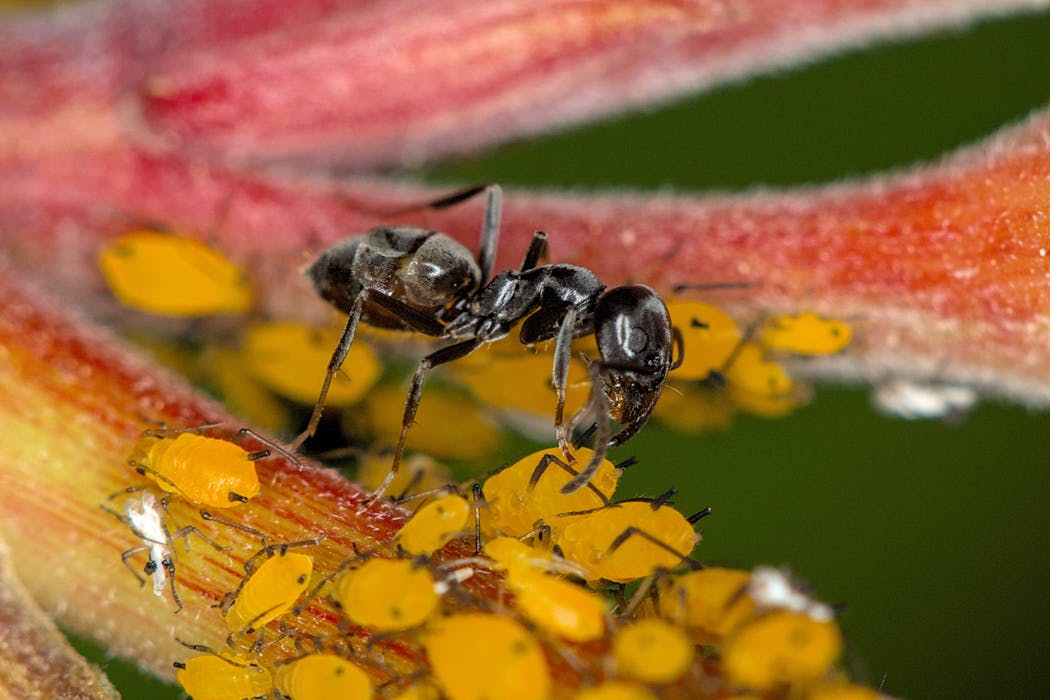
Une fourmi _T. magnum_ surveillant des pucerons en Corse.Rumsais Blatrix/CEFE, CNRS, Fourni par l’auteur
De très nombreux foyers invasifs de la fourmi noire « Tapinoma magnum » ont été détectés en Europe. Elles ne posent pas de danger sanitaire immédiat, mais les populations colossales de chaque colonie peuvent causer des dégâts considérables en milieux urbains, agricoles et même naturels. Espérant endiguer cette invasion, la recherche s’active aujourd’hui pour mieux la caractériser, évaluer ses impacts et explorer des pistes pour limiter les dégâts.
Le terme d’invasion biologique désigne l’introduction et la prolifération d’espèces animales, végétales ou microbiennes hors de leur aire d’origine. La plupart des espèces envahissantes bouleversent les écosystèmes en concurrençant les espèces locales, puis en modifiant les habitats. Elles représentent un fardeau économique croissant pour les sociétés humaines et une menace pour la biodiversité.
Parmi ces espèces, les fourmis occupent une place prépondérante. Jusqu’à présent, l’Europe et la France avaient été relativement épargnées, malgré la présence de la fourmi d’Argentine Linepithema humile le long du pourtour méditerranéen ou de Lasius neglectus dans tout le continent. Des alertes récentes font craindre l’installation de la fourmi de feu rouge (Solenopsis invicta), détectée en Sicile, et de la fourmi électrique (Wasmannia auropunctata), détectée par deux fois dans le Var, deux espèces ayant causé des dommages majeurs à l’agriculture, aux personnes et à la biodiversité partout où elles ont été importées.
Mais c’est une autre espèce qui retient aujourd’hui l’attention en Europe occidentale : Tapinoma magnum. De très nombreux foyers invasifs ont été détectés, avec d’énormes populations qui infligent des dégâts considérables. Il est urgent aujourd’hui de comprendre ses caractéristiques, ses impacts, l’état de la recherche en France, et d’explorer des pistes pour limiter ses dégâts.
En 2011, des chercheurs et naturalistes découvrent en France, Allemagne et Italie, des fourmis du genre Tapinoma (abrégé en T.) qui se révèlent fortement envahissantes. Un groupe de travail européen se forme rapidement, avec des équipes à Görlitz (Allemagne, B. Seifert), Rome (Italie, D. d’Eustacchio), Jaen (Espagne, P. Lorite) et Lyon (France, B. Kaufmann).
À cette date, une seule espèce du genre, T. nigerrimum, assez grande relativement aux autres espèces du genre (2-5 millimètres), est connue en Europe méditerranéenne et en Afrique du Nord occidentale, mais la littérature scientifique ne lui prête aucun caractère envahissant. Pourtant, sur le terrain, les colonies observées sont constituées de nombreux nids interconnectés par des pistes constamment fréquentées par des ouvrières, un réseau dense pouvant couvrir plusieurs hectares, constituant ce qu’on appelle des supercolonies, qui sont très envahissantes.
En 2017, une analyse couplant morphologie détaillée et génétique révèle que T. nigerrimum regroupe en réalité au moins quatre espèces différentes : T. nigerrimum, T darioi, T. ibericum et T. magnum.
Ces trois dernières sont des espèces supercoloniales et envahissantes en Europe, la plus courante étant, de loin, T. magnum. En 2024 est ajoutée une une cinquième espèce, T. hispanicum, regroupant des populations espagnoles, de T. nigerrimum (non envahissante).
De ce que l’on sait de ces fourmis envahissantes, T. darioi est indigène en Catalogne et probablement dans le Languedoc, tandis que T. ibericum est probablement indigène dans le reste de l’Espagne.
Pour T. magnum, la situation est plus compliquée, ses zones d’origine possibles recouvrant les États du Maghreb (Maroc, Algérie et Tunisie) et l’ensemble de la péninsule italienne, peut-être jusqu’à la Côte d’Azur en France.
Les analyses génétiques démontrent cependant que la vaste majorité des populations importées dans les régions non méditerranéennes d’Europe proviennent du sud de l’Italie, en particulier de la Sicile, de la Calabre et des Pouilles. Seules de très rares populations ont pu être associées au Maghreb. Pour la Corse, les populations semblent provenir du sud de l’Italie, avec peut-être de faibles apports algériens.
Des colonies couvrant jusqu’à 20 hectares
T. magnum et ses espèces sœurs envahissantes sont supercoloniales : leurs nids, nombreux et reliés par des pistes actives, peuvent abriter de nombreuses reines. Construits en accumulant du sol pour créer des « solariums » exposés à la chaleur, ou installés dans des cavités chaudes, ces nids optimisent la croissance des larves. Les mâles et futures reines sont produits au printemps (entre mars et mai), les ouvrières plus tard au printemps et à l’automne.
La supercolonie est un ensemble fluide dont les contours s’étendent ou se contractent selon la température, l’humidité et les ressources, couvrant parfois plus de 20 hectares, sauf si le paysage (routes, cours d’eau, forêts) limite son expansion. Le régime alimentaire des Tapinoma envahissantes est généraliste, mais repose fortement sur l’exploitation du miellat de pucerons, en particulier sur les racines.
Lors des premiers signalements hors zone méditerranéenne, le commerce des oliviers centenaires italiens et espagnols a vite été suspecté d’être la source principale des populations envahissantes. Cette hypothèse a été confirmée par un travail avec les vendeurs de plantes à Montpellier et à Lyon, qui a montré qu’une bonne partie d’entre eux hébergeaient une ou plusieurs espèces de Tapinoma envahissantes, souvent issues d’origines géographiques différentes.
Cependant, des observations récentes indiquent d’autres vecteurs de transport potentiels : voitures dans lesquelles les fourmis monteraient pendant la journée pour y trouver des températures élevées, transport de déchets verts, déplacement de plantes ornementales pour des événements ou encore transports de préfabriqués.
Noires, brillantes et très rapides
Les Tapinoma envahissantes sont aisées à reconnaître sur le terrain : ce sont des fourmis noires, brillantes, extrêmement rapides, dont les ouvrières sont, au sein de la même colonie, de tailles variées entre 2mm et 5mm.
Ouvrière de T. magnum vue de face, montrant bien l’encoche caractéristique du clypeus (juste au-dessus des mandibules) et la pilosité abondante le long de cette encoche. Toutes les Tapinoma du groupe nigerrimum possèdent ces deux caractéristiques contrairement aux petites espèces de Tapinoma présentes dans tout le pays, et qui ne sont pas envahissantes. Axel Bourdonné (CBGP, INRAE), Fourni par l’auteur
Lorsqu’on les écrase, elles ont une odeur caractéristique, décrite par les auteurs anciens comme rappelant le beurre rance. Ce diagnostic ne suffit pas. T. nigerrimum, indigène et sans problème, a les mêmes caractéristiques, et d’autres espèces (T. erraticum, T. subboreale, T. madeirense) plus petites, ont la même odeur.
Pour être certain d’avoir devant soi une Tapinoma envahissante, il faut pouvoir observer plusieurs nids reliés par des pistes de fourmis.
Distinguer les trois espèces envahissantes demande davantage de moyens génétiques, chimiques ou d’imagerie déployés par nos laboratoires.
Dégâts urbains et agricoles
Première chose à rappeler : les Tapinoma si elles sont agaçantes, ne présentent pas de risque sanitaire avéré, sauf pour de très jeunes enfants en contact direct avec des nids populeux.
Cependant, les Tapinoma envahissantes causent des dégâts dans les milieux naturels comme en zones urbaines ou agricoles, avec des effets négatifs directs ou indirects sur la biodiversité non quantifiés à ce jour, mais probablement importants.
Photographie montrant l’état d’un sol de serre maraîchère où les Tapinoma magnum ont construit leurs nids. Félix Biolley (agriculteur à Taulignan, Drôme), Fourni par l’auteur
En maraîchage et dans les potagers des particuliers, les fourmis terrassent de grandes quantités de sol, dénudant les racines ou enterrant les tiges. Elles coupent feuilles et tiges, élèvent des pucerons en masse, attaquent certains légumes. Les pertes d’exploitation peuvent être importantes, surtout en serres : dans la Drôme, un maraîcher bio s’est par exemple vu amputé des deux tiers de son chiffre d’affaires.
Pour les entreprises, la présence massive de fourmis trouvées dans les objets fabriqués et exportés peut conduire à leur refus ou leur renvoi, et en restauration, elles peuvent contaminer les cuisines ou faire fuir les clients des terrasses. Les services d’espaces verts constatent un effet sur la fréquentation des zones les plus envahies des parcs, sur l’usage des jardins partagés à Lyon et sur les serres de production à Grenoble.
Nous nous attendons à ce que ces espèces se répandent rapidement dans l’ensemble du pays et que leurs impacts se multiplient. Contrairement à d’autres espèces envahissantes comme la fourmi d’Argentine et Lasius neglectus, notamment du fait que les Tapinoma ont été importées de plusieurs régions, à de multiples reprises, et présentent donc une forte diversité génétique, elles disposent d’un potentiel d’adaptation très important. Leur capacité à s’installer partout dans le pays est fortement renforcée par le changement climatique.
Plusieurs groupes de recherche dont nous faisons partie sont aujourd’hui à pied d’œuvre pour mieux comprendre ces espèces et proposer des stratégies de lutte, agissant en réseau avec les acteurs de terrain, des associations et des collectivités territoriales. Dans nos laboratoires à Lyon (B. Kaufmann), Avignon (IMBE, Montpellier(CEFE, CBGP) et Tours (IRBI), nous étudions leurs mécanismes de dispersion et de prolifération, leur génétique, leur écologie et travaillons sur des méthodes de lutte. Nos recherches devraient aboutir à l’élaboration d’une stratégie et d’outils de lutte dans les deux années qui viennent.
Comment réagir si vous suspectez une invasion chez vous ?
Aux particuliers qui seraient confrontés à une suspicion de Tapinoma, plusieurs conseils :
d’abord, il faut s’assurer qu’il s’agit bien d’une Tapinoma envahissante et faire identifier l’espèce par un spécialiste en contactant le projet FIVALO pour la région Centre ou Bernard Kaufmann pour le restant du territoire. Ce point est vital pour ne pas porter préjudice aux espèces de fourmis locales, qui sont la première barrière contre l’invasion. C’est en particulier le cas dans la moitié sud de la France, où l’espèce locale T. nigerrimum est présente.
Ensuite, contacter ses voisins pour savoir s’ils sont atteints aussi et pouvoir agir ensemble par la suite,
puis sa municipalité ou son intercommunalité par une lettre signée par l’ensemble des résidents concernés.
Dès lors, commencer à lutter. Inutile de contacter des désinsectiseurs, sauf si l’invasion est limitée à une ou deux maisons ou jardins, mais suivre trois principes simples.
Le premier, rechercher les nids (au printemps et à l’automne) soit dans le sol soit dans des objets du jardin (compost sec, pots de fleurs, jardinières, sous des tuiles, des dalles, de pierres, du métal, de la bâche de jardinage) ou le long de la maison (escaliers, chaufferie ou buanderie, combles).
Le deuxième, les détruire si possible en les noyant sous de l’eau chaude (60 °C) ou de grandes quantités d’eau d’arrosage (dans ce cas, renouveler fréquemment) ; si impossible, les déranger physiquement à la bêche et enlever les sites favorables.
Le troisième, attirer les fourmis dans des nids « pièges » improvisés : tous les objets du jardin cités peuvent servir de piège. En effet, au printemps, les fourmis élèvent leurs futures reines qui ont besoin de chaleur et donc de soleil. C’est le moment de les éliminer, afin de limiter le nombre de reproducteurs à la saison suivante.
Pour les entreprises, les professionnels et les collectivités : les procédures expliquées plus haut demandent une main d’œuvre trop importante pour être soutenables, il n’y a donc pas de solution clé en main pour l’instant. C’est pour cela qu’il faut veiller à faire de la prévention, en particulier pour les services chargés des espaces verts ou pour les paysagistes.
Les précautions essentielles consistent à vérifier si les fourmis ne sont pas présentes dans les espaces verts, les bâtiments ou les déchetteries du territoire ou de l’entreprise ; inspecter les plantes choisies pour les espaces verts ou l’aménagement intérieur ; surveiller les transports de déchets verts ou de compost ; et limiter la présence des fourmis sur les parkings où elles pourraient monter dans les véhicules. Il ne faut pas hésiter à contacter les laboratoires pour solliciter des conseils.
Bernard Kaufmann a reçu des financements de l’ANR. Il conseille la ville de Lyon sur les fourmis invasives.
Alan Vergnes a reçu des financements de l’ANR, du CNRS, de la région Occitanie, de la ville et de la métropole de Montpellier pour financer ses recherches sur les fourmis invasives
Il conseille la ville et la métropole de Montpellier sur les fourmis invasives et proliférantes.
Giovanny Destour et Marion Javal ne travaillent pas, ne conseillent pas, ne possèdent pas de parts, ne reçoivent pas de fonds d’une organisation qui pourrait tirer profit de cet article, et n’ont déclaré aucune autre affiliation que leur poste universitaire.
Source: The Conversation – in French – By Christine Tayeh, Coordinatrice scientifique au Laboratoire de la santé des végétaux – Unité Expertise en Risques Biologiques pour la Santé des Végétaux (UERB), Agence nationale de sécurité sanitaire de l’alimentation, de l’environnement et du travail (Anses)
Rapporter une bouture dans ses valises ou planter un gingembre acheté au supermarché, ces gestes qui semblent anodins peuvent favoriser l’arrivée d’organismes nuisibles – bactéries, virus, insectes, champignons… – capables de décimer les cultures, les plantes ornementales et les plantes sauvages. Sous les effets combinés de la mondialisation du commerce et des voyages et du dérèglement climatique, les risques se multiplient. L’Agence nationale de sécurité sanitaire de l’alimentation, de l’environnement et du travail développe des outils d’évaluation de risque et de détection, mais chacun peut agir à son niveau. De bonnes pratiques peuvent contribuer à protéger la santé des végétaux, dont dépendent notre alimentation ainsi que la biodiversité.
Saviez-vous qu’un voyageur imprudent pouvait ramener dans ses bagages des agents pathogènes aux conséquences dramatiques pour la santé des végétaux ? Espèces cultivées ou même flore sauvage, toutes sont potentiellement vulnérables. Il suffit d’un organisme nuisible (ON) – bactérie, virus, champignon, insecte ravageur, nématode ou même plante invasive – venu d’une autre région du monde pour les mettre en péril.
Exemple de bonsaï Ficus microcarpa. Krzysztof Ziarnek, Kenraiz, CC BY-SA
De fait, les échanges commerciaux internationaux constituent le plus souvent les voies « classiques » d’introduction de ces ON.
Citons, pour illustrer ces enjeux, l’exemple de Ficus microcarpa (ou laurier d’inde) une plante d’ornement couramment cultivée comme bonsaï en intérieur et régulièrement vendue en jardinerie et grandes surfaces. En 2023, Meloidogyne enterolobii, un nématode à galles polyphage (capable d’attaquer de nombreuses espèces), responsable d’importantes altérations de la morphologie et du fonctionnement du système racinaire, aurait été introduit en Toscane (Italie) sur des lauriers d’inde importés de Chine via les Pays-Bas.
Les voies d’introduction les plus classiques impliquent par exemple le transport de végétaux, de semis, de fleurs coupées, ainsi que le résume l’illustration ci-dessous. Cependant, d’autres filières d’entrée moins conventionnelles existent également.
Filières d’entrée possible d’un organisme nuisible à la santé des végétaux. LSV/Anses, Fourni par l’auteur
Dans les années 1940, le chancre coloré du platane (causé par le champignon Ceratocystis platani) a ravagé les plantations urbaines de platanes dans les grandes villes américaines de la côte atlantique. Pendant la Seconde Guerre mondiale, le bois des arbres infectés a été utilisé pour emballer du matériel de guerre. C’est probablement ainsi que l’ON a été introduit en Europe.
Cette hypothèse est confirmée par le fait que les premiers cas d’infection en Europe se trouvaient dans ou près des principales villes portuaires : Naples, Livourne, Syracuse, Marseille et Barcelone. À partir de celles-ci, la maladie s’est propagée dans d’autres villes.
Des rhizomes de gingembre importés du Pérou, destinés à la consommation humaine, ont véhiculé une bactérie nuisible en Allemagne, car ils ont été détournés pour être plantés sous serre. (Sur cette photographie, un gingembre sain.) Pixnio, CC BY-NC-SA
Un autre mode d’entrée possible pour un ON, est lorsque l’utilisation première d’un végétal est détournée.
Un cas avéré récent est celui de l’introduction en Allemagne de la bactérie Ralstonia pseudosolanacearum à l’origine du flétrissement bactérien sur de nombreuses cultures de la famille des Solanacées, dont la pomme de terre ou la tomate, mais également sur d’autres familles. Il est question ici de rhizomes de gingembre destinés à la consommation importés du Pérou, qui ont été détournés de leur usage principal car utilisés pour de la plantation.
Spécimen mâle de Bactrocera dorsalis. LSV/Anses, Fourni par l’auteur
Enfin, les voyageurs eux-mêmes sont aussi acteurs de l’entrée des ON sur un territoire. Entre 2016 et 2021, d’importantes quantités de produits végétaux ont été découvertes dans les bagages de voyageurs en provenance de pays tiers et saisies aux postes de contrôle frontaliers de Campanie en Italie. Des inspections et des analyses de laboratoire réalisées sur le matériel végétal ont permis d’identifier plusieurs espèces exotiques, dont certaines très alarmantes comme Bactrocera dorsalis (mouche orientale des fruits), également très polyphage.
Vers une probable accélération des introductions
Ces introductions sont favorisées par plusieurs facteurs de risque. Une augmentation de leur nombre est à craindre dans les années à venir, du fait de :
l’intensification des échanges commerciaux internationaux de végétaux,
l’accroissement des flux de voyageurs à travers le monde,
la rapidité des transports (par avion, par exemple) qui améliore le taux de survie des ON,
enfin, le dérèglement climatique, qui peut favoriser l’établissement des ON ou de leurs vecteurs dans nos régions tempérées devenues plus chaudes.
Autant de menaces accrues qui pèsent sur la santé des végétaux. Pour la défendre, il faut disposer d’outils innovants (évaluation du risque et méthodes de détection) et collaboratifs, et les mettre à disposition des acteurs en charge de l’évaluation et de la gestion des risques pour mieux les anticiper.
Or, avant qu’un ON puisse attaquer des végétaux sur un territoire donné, il faut qu’il soit en mesure d’entrer sur le territoire, de s’y établir puis se disséminer.
Dans ce cadre, à partir des publications scientifiques et des données disponibles sur l’ON, on étudie en premier lieu la probabilité qu’il arrive dans une zone géographique donnée. L’organisme peut ensuite s’établir, c’est-à-dire se multiplier et créer de nouvelles générations.
Deux facteurs peuvent limiter cet établissement : la disponibilité de plantes hôtes et l’adéquation du climat localement. Mais une fois l’ON bien établi sur place, il peut se disséminer de façon plus large.
De jeunes oliviers attaqués par Xylella fastidiosa en Italie, en 2019. G.steph.rocket/Wikicommons, CC BY-NC-SA
Les impacts directs d’un ON peuvent être des pertes de rendement et de qualité des récoltes ou des pertes de peuplements. D’autres impacts environnementaux, économiques et même sociétaux sont à envisager. On se souvient par exemple des ravages causés par l’arrivée de Xylella fastidiosa en Italie (sur les oliviers) et en Espagne (sur les amandiers), dont l’impact socio-économique est élevé.
En absence de mesures de lutte efficaces disponibles (lutte chimique, lutte génétique, pratiques culturales ou biocontrôle) et avec une probabilité d’introduction et de dissémination hautes, le risque lié à cet ON est considéré comme suffisamment élevé pour que des mesures de gestion soient recommandées. Elles visent à prévenir son entrée sur le territoire français, réduire son établissement (éradication), voire à enrayer sa dissémination, si celle-ci a déjà commencé.
À titre d’exemple, l’Anses a publié le 3 février 2020 une évaluation de risque sur le Tobamovirus fructirugosum, ou Tomato brown rugose fruit virus (ToBRFV), un virus émergent qui, à l’époque, menaçait la culture des tomates, piments et poivrons en France. Le rapport a conclu à une probabilité haute d’introduction et de dissémination en France, avec un impact conséquent sur les cultures. Différentes recommandations ont été émises et ont permis au gestionnaire du risque, qui est le ministère de l’agriculture et de la souveraineté alimentaire, de réagir rapidement à l’apparition du premier foyer en février 2020, et d’émettre des instructions techniques destinées aux professionnels, fondées sur des éléments d’analyse produits dans le rapport d’expertise.
Colonies de Ralstonia pseudosolanacearum. LSV/Anses, Fourni par l’auteur
Plus récemment, en juin 2025, l’Anses a produit une évaluation de risque sur la probabilité d’entrée et d’établissement de R. pseudosolanacearum (bactérie qui menace de nombreuses solanacées, comme la pomme de terre, la tomate ou le poivron) en France.
Celle-ci a notamment permis, grâce à une analyse multicritères, de lister une quarantaine de plantes (bien plus large que la seule famille des solanacées) à inclure dans le plan de contrôle aux frontières. On y retrouve des espèces de la famille des zingibéracées (curcuma, gingembre y compris ceux destinés à la consommation) ainsi que des espèces ornementales (boutures et plants de rosiers et de pélargonium).
Le laboratoire de la santé des végétaux (LSV) de l’Anses exerce également des missions de laboratoire national de référence (LNR) sur des ON des végétaux (bactéries, virus, nématodes, insectes et acariens, oomycètes et champignons), sur des plantes invasives ou encore la détection d’OGM (par exemple, maïs, pommes de terre ou betteraves OGM) soumis à des réglementations européennes. À ce titre, le LSV développe et améliore des méthodes de détection/identification d’ON et participe à la formation et au suivi de compétence d’un réseau de laboratoires agréés pour réaliser des analyses officielles.
Afin d’anticiper au mieux de futures émergences d’ON réglementés qui ne seraient pas encore arrivés sur le territoire, le LSV recense les méthodes de détection/identification publiées au sein de la communauté scientifique, de l’Organisation européenne pour la protection des plantes (OEPP) ou de la Communauté internationale de protection des végétaux (CIPV). Le LSV va ensuite évaluer et valider ces méthodes selon des critères de performance bien définis (spécificité, sensibilité, limite de détection, répétabilité et reproductibilité) pour pouvoir les mettre en application le jour où l’ON ciblé serait détecté sur le territoire.
Le LSV a pu anticiper l’arrivée de Xylella fastidiosa dès le début des années 2000, par l’évaluation et la validation d’une méthode d’analyse. Ceci a permis au LNR d’être réactif dès les premiers échantillons reçus en 2015. Cette méthode évolue continuellement en fonction des avancées technologiques, nous en sommes à la version 6 ! À ce jour plus de 7 500 échantillons végétaux ont été analysés pour la recherche de Xylella fastidiosa dont la gamme d’hôtes inclut plus de 700 espèces végétales (olivier, amandier…).
En plus de ces missions, le LSV produit aussi des outils et des connaissances au service de l’évaluation et de la gestion du risque. Il s’agit de disposer d’une meilleure compréhension de la biologie de l’ON ainsi que de son épidémiologie en retraçant les routes d’invasions, et en identifiant l’origine géographique de l’introduction et les filières d’introduction. Les données acquises permettent de mieux comprendre leur dissémination, les facteurs favorisant leur développement (facteurs agronomiques, climatiques, géographiques…).
Les travaux menés par ces différentes entités au sein du LSV s’alimentent et se complémentent dans le but d’anticiper et limiter l’entrée et la dissémination d’ON sur le territoire. Mais la santé des végétaux est l’affaire de tous, celle des citoyens et des consommateurs : en vous inspirant des exemples décrits plus hauts, ayez le réflexe de ne pas rapporter de végétaux de retour de voyage et de ne pas planter des végétaux importés et destinés à la consommation alimentaire.
Les auteurs ne travaillent pas, ne conseillent pas, ne possèdent pas de parts, ne reçoivent pas de fonds d’une organisation qui pourrait tirer profit de cet article, et n’ont déclaré aucune autre affiliation que leur organisme de recherche.
L’accord commercial préférentiel entre les États-Unis et l’Afrique, en vigueur depuis un quart de siècle, a expiré le 30 septembre 2025. Il n’est pas certain que cet accord commercial soit renouvelé ni sous quelle forme. Grâce à la loi sur la croissance et les opportunités en Afrique (African Growth and Opportunity Act, Agoa), environ 35 pays d’Afrique subsaharienne ont pu exporter des milliers de produits vers le marché américain sans droits de douane.
Adoptée pour la première fois en 2000, cette loi visait à encourager les exportations africaines, à créer des emplois et à renforcer les liens commerciaux. Son utilisation a varié considérablement : l’Afrique du Sud exportait des voitures et des agrumes ; le Kenya et l’Éthiopie se concentraient sur les vêtements ; le Lesotho et l’Eswatini dépendaient fortement des vêtements ; Maurice exportait des textiles et des fruits de mer.
Ces exportations soutiennent des centaines de milliers d’emplois. Une part importante de ces emplois est occupée par des femmes et des jeunes travailleurs, en particulier dans les régions où les emplois formels sont rares. Pour les exportateurs africains, un monde sans Agoa et avec des droits de douane américains plus élevés représente une double pression sur leur compétitivité.
La question de savoir si l’Agoa sera réactivé et assez rapidement relève du Congrès américain et non de la Maison Blanche qui a exprimé son soutien à une prolongation d’un an. Des accords transitoires sont à l’étude, mais seule l’adoption d’une nouvelle loi permet d’être sûr que l’accord sera renouvelé. Si l’accord n’est pas conclu ou reste incertain, ce sont les petits exportateurs spécialisés dans le secteur de l’habillement qui emploient de nombreux travailleurs à faibles revenus qui en souffriront le plus.
Je suis un chercheur en commerce international qui s’intéresse aux problèmes de développement économique des pays en développement. En 2023, j’ai publié une analyse fondée sur des publications académiques et des rapports de politique publique, portant sur l’impact de l’Agoa sur les performances économiques de l’Afrique subsaharienne.
Si le Congrès ne parvient pas à se mettre rapidement d’accord, la suspension se prolongera. Même si un renouvellement intervient plus tard, certains dégâts, tels que des commandes annulées et des quarts de travail perdus, auront déjà été causés, et toute solution rétroactive sera inégale selon les secteurs et les entreprises. L’incertitude a un coût : le flou autour du renouvellement de l’Agoa freine les commandes et les investissements, en particulier dans les secteurs à forte intensité de main-d’œuvre tels que l’habillement et les composants automobiles.
Dans le contexte actuel d’incertitude économique, les exportateurs Agoa devraient donner la priorité à trois mesures clés. Premièrement, prendre des mesures pour rediriger les commandes vulnérables vers les régimes préférentiels de l’UE et les acheteurs régionaux dans le cadre de la Zone de libre-échange continentale africaine (Zleca). Deuxièmement, investir dans la compétitivité en améliorant les ports et en rendant les douanes plus prévisibles. Enfin, mener des actions de plaidoyer efficaces à Washington pour obtenir un renouvellement de transition court et rétroactif.
Le coût élevé de l’incertitude pour l’Afrique
Le statut d’exonération des droits de douane est important pour l’Afrique. Prenons l’exemple d’un t-shirt en coton basique provenant d’un pays comme le Kenya ou le Lesotho, qui remplit les conditions requises par l’Agoa et entre aux États-Unis sans taxe. Sans l’Agoa, le droit de douane standard de la nation la plus favorisée est d’environ 16,5 % sur les t-shirts en coton. Cette variation seule peut supprimer les faibles marges bénéficiaires et détourner les commandes vers d’autres fournisseurs.
Entre 2001 et 2021, la valeur des importations américaines en provenance des pays éligibles à l’Agoa a atteint 791 milliards de dollars de marchandises. La valeur correspondante de l’aide économique américaine à ces pays s’est élevée à 145 milliards de dollars entre 2001 et 2019. L’écart entre ces deux montants souligne l’importance de l’Agoa dans les relations économiques entre les États-Unis et l’Afrique.
Les préférences commerciales ont particulièrement profité aux secteurs de l’habillement, du textile, de l’agriculture et de l’industrie légère. Cependant, l’impact a été inégal. Certains pays ont su mieux tirer parti de ces opportunités que d’autres, de sorte que les conséquences d’une expiration seront également inégales entre les exportateurs.
Les pôles de confection, les plus touchés : le Lesotho, l’Eswatini, Madagascar, le Kenya et Maurice ont construit toute leur base d’exportation autour de l’accès sans droits de douane pour les vêtements. Sans cet accord, les droits de douane américains habituels pour les nations les plus favorisées (généralement de 10 à 20 %) s’appliquent immédiatement, les marges déjà minces disparaissent et les commandes sont annulées. Les fermetures d’usines et les pertes d’emplois s’ensuivent rapidement.
Les voitures et les fruits d’Afrique du Sud : les exportations sud-africaines de véhicules, de pièces détachées, de vin, d’agrumes et de noix sont également soumises à de nouveaux droits de douane. Ces secteurs compétitifs à l’échelle mondiale sont très sensibles aux coûts ; la perte des préférences réduit les investissements dans la chaîne d’approvisionnement automobile et les revenus agricoles.
Les exportateurs de pétrole sont moins exposés : le pétrole brut est généralement déjà soumis à des droits de douane américains peu élevés, de sorte que des pays comme le Nigeria et l’Angola sont moins touchés que les fabricants et les agriculteurs non pétroliers.
Les pays récemment réintégrés sont vulnérables : les pays qui viennent seulement de retrouver leur éligibilité – après avoir été suspendus en raison de préoccupations liées aux droits de l’homme, à la gouvernance (y compris les coups d’État) ou aux droits du travail – risquent de voir les investisseurs hésiter à nouveau dans un contexte d’incertitude persistante.
Ce que peuvent faire les exportateurs africains
Compte tenu de la combinaison de la législation américaine et de la pratique présidentielle, il existe trois voies réalistes pour sortir de l’impasse commerciale. Le Congrès pourrait adopter une prolongation pluriannuelle dans les semaines à venir. Cela permettrait de rétablir la confiance des acheteurs et des usines. Une autre solution consiste en un renouvellement « transitoire » de courte durée, dans le cadre duquel les législateurs accepteraient une prolongation d’un ou deux ans. Ce scénario évite le précipice, mais maintient les investissements en suspens : les acheteurs pourraient passer des commandes plus modestes et répétées, et reporter les nouvelles lignes jusqu’à ce que les perspectives à long terme soient clarifiées. La dernière option consiste à laisser la situation en suspens.
Tant que l’incertitude persiste, les exportateurs africains peuvent envisager d’autres mesures pour soutenir leur activité. J’en propose trois :
Prévoir l’incertitude : rediriger les commandes vulnérables vers les marchés de l’Union européenne. Utiliser le système de préférences généralisées et les accords de partenariat économique pertinents lorsque les règles d’origine sont respectées. Se tourner également vers les acheteurs régionaux dans le cadre de la zone de libre-échange continentale africaine. Cette approche peut être renforcée par des améliorations logistiques, telles que :
le dédouanement préalable : permettre le traitement douanier avant l’arrivée des marchandises au port, ce qui réduit les temps d’attente
le guichet unique douanier : un portail numérique où tous les documents commerciaux sont soumis une seule fois, ce qui réduit les retards et les formalités administratives
les départs réguliers : des horaires de transport fixes et fiables qui raccourcissent les cycles de livraison et renforcent la confiance des acheteurs.
Ensemble, ces mesures peuvent améliorer les marges bénéficiaires grâce à des délais d’exécution plus courts. Les pays peuvent également combler les déficits de fonds de roulement des entreprises exposées grâce à des garanties commerciales ou à l’escompte de factures, afin que les commandes confirmées ne soient pas annulées. Ils devraient également maintenir un groupe de travail public-privé permanent, prêt à s’adapter à l’évolution des décisions américaines.
Faire des actions de lobbying intelligentes à Washington : les pays concernés devraient se coordonner avec les ambassades et les principaux exportateurs. Ils devraient présenter des preuves tangibles, notamment des lettres d’acheteurs, des chiffres sur l’emploi et la répercussion probable des prix américains, afin de plaider en faveur d’un renouvellement « transitoire » court et rétroactif. Ils peuvent également souligner que l’accès prévisible favorise la diversification de la chaîne d’approvisionnement américaine hors de Chine et stabilise les prix à la consommation.
Ces pays pourraient également harmoniser leurs messages dans tous les secteurs concernés, de l’habillement à l’automobile en passant par l’agroalimentaire. L’objectif est de montrer un impact économique global plutôt que de se limiter à des arguments particuliers. Ils devraient également synchroniser leurs actions de sensibilisation avec les fenêtres parlementaires et les calendriers des commissions.
Investir dans la compétitivité : les responsables commerciaux devraient rivaliser en matière de fiabilité. En effet, une alimentation électrique fiable, des ports plus rapides et des douanes prévisibles sont souvent plus importants pour les acheteurs que les seuls salaires. Développer les intrants régionaux (du fil au vêtement, emballage, pièces détachées) afin qu’un choc sur un marché ne mette pas un terme à la production, et adapter les tests et la certification pour répondre en une seule étape aux normes américaines, européennes et britanniques.
Ils devraient viser à remonter la chaîne de valeur : du FOB/forfait complet (par exemple, dans le secteur de l’habillement, non seulement la coupe, la confection et la finition, mais aussi l’approvisionnement en tissus et garnitures et l’organisation de la logistique) aux composants, aux marques et aux produits prêts à consommer, où les marges sont plus stables. Lier les incitations à l’investissement à des résultats vérifiables : emplois, livraisons complètes et ponctuelles, et production propre.
Pendant trois décennies, les gouvernements africains ont été exhortés à libéraliser et à renforcer leurs capacités d’exportation en échange de la promesse de règles prévisibles. Le retrait soudain des États-Unis change la donne : il entraîne une hausse des prix sur le marché intérieur, des suppressions d’emplois à l’étranger et une réduction de l’espace pour un commerce fondé sur des règles. Les exportateurs peuvent gagner du temps grâce aux marchés européens, aux acheteurs régionaux et aux solutions logistiques.
Seule une action claire du Congrès américain, via une reconduction immédiate puis une réforme pluriannuelle, peut restaurer la certitude nécessaire à des échanges mutuellement bénéfiques.
.
Bedassa Tadesse does not work for, consult, own shares in or receive funding from any company or organisation that would benefit from this article, and has disclosed no relevant affiliations beyond their academic appointment.
Source: The Conversation – France – By Thomas M. R. Gérard, PhD candidate, Copernicus Institute of Sustainable Development, Utrecht University
Over the past 50 years, Brazil has emerged as one of the world’s agricultural giants. Becoming a leading global exporter of soybeans, beef, coffee and sugar has significantly boosted its economy and placed the country at the centre of the global food system. This agricultural development, however, has come at a cost.
The expansion of agriculture has driven the widespread conversion of natural vegetation into pastures, croplands, and forest plantations. Much of this expansion has occurred in areas that are critical for biodiversity conservation and terrestrial carbon storage. In the past 40 years alone, agricultural land has expanded by approximately 109 million hectares, an area nearly twice the size of metropolitan France. Brazil includes some of the world’s most important biodiversity hotspots. At the same time, its ecosystems are critical carbon sinks, storing vast amounts of carbon that are essential for mitigating climate change. The continuing pressure from agricultural expansion underscores the urgent need to reconcile production with biodiversity conservation and carbon sequestration.
Our new study explores how future changes in land use in Brazil could affect biodiversity, the global climate, and the agricultural economy by 2050. We consider two Shared Socioeconomic Pathways (SSPs), each outlining a distinct potential future for the world and Brazil. Among these, SSP3 depicts a scenario characterised by regional rivalry, heavy reliance on fossil fuels, strong nationalism, and significant challenges to both climate mitigation and adaptation. Under this scenario, agricultural land in Brazil is expected to expand further due to rising food demand and only modest improvements in crop yields. In contrast, SSP1 represents a sustainable future, emphasising proactive climate mitigation and adaptation, clean energy adoption, and the protection of natural ecosystems. Under SSP1, agricultural land in Brazil is projected to contract, thanks to reduced food demand and substantial yield improvements.
Where agriculture expands matters
Under the SSP3 scenario, around 52 million hectares of natural land are converted for agricultural use to meet rising food demand, affecting all of Brazil’s biomes, regions that encompass large ecosystems with similar climatic or ecological conditions and a specific type of vegetation. This expansion drives a projected 28% increase in agricultural revenue between 2025 and 2050, but it comes with significant environmental trade-offs. The loss of natural vegetation is expected to release a total of 12 gigatonnes of CO2 over this period. On average, this would result in 0.5 gigatonnes per year, which is higher than Brazil’s annual emission rate from land use during the 2010s. Biodiversity would also be affected, with about 70% of the mammal species we studied, including the maned wolf and howler monkey, losing habitat over the same period.
Our results show that the environmental impacts depend not only on the extent of agricultural expansion, but also on where it takes place. Deforestation should be avoided in the Amazon and Atlantic Forest, as both biomes are rich in carbon and biodiversity, and clearing them has a major impact on both. In these biomes, whether deforestation occurs at forest edge or deep within the interior, it releases substantial amounts of CO2. For biodiversity, however, location is decisive: deforestation within highly biodiverse areas (including Indigenous Lands and Conservation Units, officially designated areas in Brazil that receive legal protection) disproportionately threatens species with restricted habitats. For instance, Saguinus bicolor, a primate species with one of the smallest habitats in the Amazon, is projected to lose more than 7% of its remaining range, further constricting an area that is already limited.
Restoration of ecosystems with low economic loss
Under the SSP1 scenario, declining food demand is projected to lead to the abandonment of agricultural land, freeing vast areas for restoration to their natural state. Between 2025 and 2050, revenue from agriculture is projected to fall by 31%, but this comes with positive environmental trade-offs. More than 12.4 gigatonnes of additional CO2 – roughly five years’ worth of EU emissions from fossil fuels and industry – are expected to be sequestered, a major contribution to climate change mitigation. In addition, the habitats of two thirds of the mammal species we studied are projected to expand.
Interestingly, these results indicate that restoring land around remaining biodiversity- and carbon-rich areas could deliver substantial environmental benefits with relatively modest agro-economic losses. In these areas, restoration would result in an agricultural revenue loss of only $5 to $10 per tonne of carbon gained. By comparison, the European Union Emissions Trading System currently prices carbon at around $70 per tonne, suggesting that strategic reforestation in Brazil could be a highly cost-effective climate change mitigation strategy. This is particularly relevant, as Brazil has recently launched its own Greenhouse Gas Emissions Trading System (SBCE). In addition to increasing carbon sequestration, reforesting these areas would generate substantial co-benefits for biodiversity, creating a synergistic opportunity to advance both.
Lesson learned for a more sustainable future
Reconciling agriculture with biodiversity and climate is critical in Brazil’s sustainable transition. Future global developments in food demand and agricultural yields will determine how much land the country dedicates to agriculture, and, by extension, how much pressure is on its ecosystems. The more land required for production, the greater the impacts on biodiversity and carbon storage.
If expansion is unavoidable, several strategies can help reduce the environmental consequences. Agricultural expansion should be carefully planned, avoiding carbon- and biodiversity-rich areas, and should not include deforestation deep within forests. At the same time, restoration efforts focused on biodiversity- and carbon-rich areas can deliver substantial environmental benefits at a relatively low economic cost.
Brazil’s path toward sustainable land use ultimately depends on two essential questions: how much land is required, and which land should be used.
A weekly e-mail in English featuring expertise from scholars and researchers. It provides an introduction to the diversity of research coming out of the continent and considers some of the key issues facing European countries. Get the newsletter!
Created in 2007 to help accelerate and share scientific knowledge on key societal issues, the Axa Research Fund – now part of the Axa Foundation for Human Progress – has supported over 750 projects around the world on key environment, health & socioeconomic risks. To learn more, visit the website of the AXA Research Fund or follow @ AXAResearchFund on LinkedIn.
Les auteurs ne travaillent pas, ne conseillent pas, ne possèdent pas de parts, ne reçoivent pas de fonds d’une organisation qui pourrait tirer profit de cet article, et n’ont déclaré aucune autre affiliation que leur organisme de recherche.