Miné par l’inflation, le Japon a-t-il vraiment fait un virage à droite avec sa nouvelle première ministre ?

Source: The Conversation – France in French (3) – By Arnaud Grivaud, Maître de conférences, spécialiste de la politique japonaise contemporaine, Université Paris Cité

*Pour la première fois, une femme se trouve à la tête du gouvernement au Japon. Un apparent progrès sociétal qui, pour autant, n’est pas synonyme de progressisme, au vu de ses opinions ultraconservatrices. Le gouvernement de Sanae Takaichi va avant tout devoir relever le défi de l’inflation qui frappe les foyers japonais… et, pour cela, peut-être assouplir certaines de ses positions. *


Le 4 octobre 2025, Sanae Takaichi remportait les élections internes à la présidence du Parti libéral-démocrate (PLD). Après deux semaines de suspense marquées par de multiples tractations et recompositions des alliances, elle est devenue, le 21 octobre, la première femme à se retrouver à la tête d’un gouvernement au Japon. Depuis, nombreux ont été les articles de presse à l’étranger soulignant le caractère historique de cet événement dans un pays que le pourcentage de femmes au Parlement place à la 141ᵉ position sur 193 dans le classement de l’Union interparlementaire, tout en rappelant à juste titre les positions très conservatrices de la nouvelle dirigeante, notamment sur les questions sociétales, mais aussi mémorielles).

Ce n’est certes pas la première fois qu’une femme se retrouve à la tête d’un parti politique au Japon. En 1986, Takako Doi devenait en effet la secrétaire générale du Parti socialiste (jusqu’en 1991 puis de 1996 à 2003) ; elle est aussi la première et seule femme à avoir été présidente de la Chambre basse (1993-1996). Néanmoins, Mme Takaichi est bien la première à devenir cheffe de gouvernement.

Un parcours classique de femme politique dans un monde d’hommes

Afin d’expliquer cette nomination, on peut commencer par lui reconnaître une habileté certaine en politique et une bonne maîtrise des stratégies communicationnelles.

À l’instar de l’actuelle gouverneure de Tokyo, Yuriko Koike, et de plusieurs autres femmes politiques japonaises, elle a été un temps présentatrice télé avant sa première élection à la Diète (Parlement japonais) en 1993.

Elle a ensuite navigué entre plusieurs partis politiques avant de s’arrimer au PLD et de se rapprocher de son aile droite, en particulier de l’ancien premier ministre Shinzō Abe (2012-2020, assassiné en 2022).

À plus d’un titre, Sanae Takaichi, 64 ans aujourd’hui, a en réalité mené une carrière typique… d’homme politique. Elle a progressivement gravi les échelons au sein d’un parti qui, malgré quelques évolutions, privilégie encore largement l’ancienneté (son principal adversaire, Shinjirō Koizumi, âgé de 44 ans, en a sûrement fait les frais). Elle n’a, par ailleurs, jamais eu à concilier maternité et vie professionnelle, contrairement à bien des Japonaises (les enfants de son mari, ancien parlementaire du PLD, étaient déjà âgés quand ils se sont mariés en 2004).
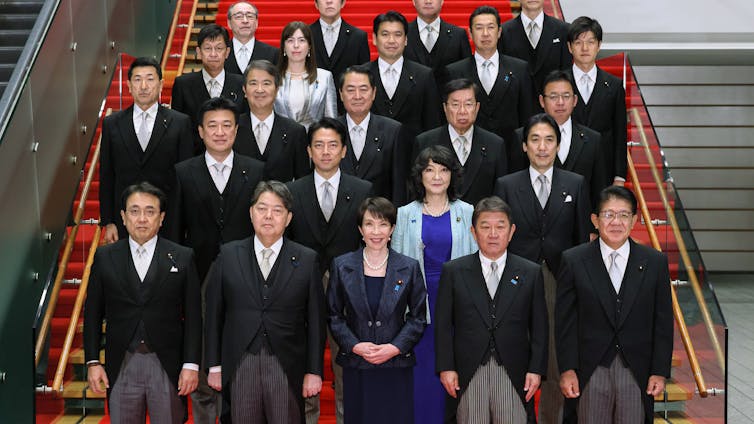
Gouvernement japonais posant en rang sur les marches de l’escalier
Sanae Takaichi (au centre, au premier rang), pose lors d’une séance photo avec les membres de son gouvernement à Tokyo, le 21 octobre 2025.
Cabinet Public Affairs Office, CC BY-NC-SA

Le pari du PLD pour redynamiser son image

Mais l’arrivée de Mme Takaichi à la tête du PLD résulte avant tout d’un pari réalisé par une frange du parti (notamment par certains de ses caciques autrefois proches de Shinzō Abe, comme Tarō Asō) pour remédier aux récentes défaites électorales subies d’abord à la Chambre basse en 2024, puis à la Chambre haute en 2025.

En faisant d’elle le nouveau visage du parti, les objectifs étaient multiples. Il s’agissait tout d’abord de redonner une image dynamique à un PLD frappé par plusieurs scandales (liens avec la secte Moon, financements de campagne illégaux, etc.), ce que les trois précédents premiers ministres (2020-2025), aux styles parfois très austères, avaient peiné à réaliser.

Cette personnalisation de la politique n’est pas nouvelle au Japon, mais il est clair, depuis les années 2000, que la figure et le style du premier ministre ont désormais un impact déterminant sur les résultats électoraux du parti. Les cadres du PLD, conscients que leur destin est étroitement lié à la perception que l’opinion publique a de leur chef, n’hésitent pas à mettre entre parenthèses leurs éventuels désaccords et leurs luttes intrapartisanes.

Bien entendu, le parti n’avait aucun doute quant au fait que la candidate avait la ferme intention de ne surtout rien changer en substance concernant la gouvernance du PLD ou les règles de financement de campagne – en dépit du slogan et mot-dièse #KawareJimintō (#ChangePLD !) utilisé dans les réseaux sociaux officiels du parti lors de cette élection à la présidence.

Ainsi, Sanae Takaichi sait également qu’elle doit cette élection à la tête du parti au soutien de personnages essentiels qui n’hésiteront pas à la pousser vers la sortie s’ils estiment qu’elle les dessert plus qu’elle ne les sert. Elle qui a plusieurs fois évoqué son admiration pour Margaret Thatcher doit sûrement se rappeler de la violence et de la rapidité avec laquelle le Parti conservateur britannique avait évincé la Dame de fer. Elle a conscience que seules de multiples victoires électorales pourraient lui permettre de consolider sa place à la tête du parti. C’est ce qui avait permis à son autre modèle, Shinzō Abe, de battre le record de longévité au poste de premier ministre (sept ans et huit mois).

C’est justement sur ce point que Mme Takaichi a su convaincre son parti. L’un de ses atouts évidents réside dans le fait qu’elle semblait être la seule à pouvoir potentiellement capter la fraction de l’électorat qui s’était tournée vers le parti d’extrême droite Sanseitō aux dernières élections à la Chambre haute (il y avait obtenu 14 sièges).

En ce sens, contrairement aux élections à la présidence du PLD de 2021 et 2024 où elle avait terminé respectivement troisième puis seconde, sa candidature arrivait cette fois-ci à point nommé puisque, sur bien des sujets, ses positions très conservatrices sont alignées sur celles du Sanseitō (par exemple sur les questions migratoires).

Une redéfinition des alliances : le « virage à droite »

Par ailleurs, ce « virage à droite » peut aussi être vu comme une manifestation du mouvement de balancier (furiko no genri) observé depuis longtemps au sein du PLD, qui consiste en une alternance à sa tête entre des figures tantôt plus libérales, tantôt plus conservatrices.

Ce phénomène, qualifié d’« alternance factice » (giji seiken kōtai) par les spécialistes, est souvent invoqué comme explication de l’extraordinaire longévité de la domination du PLD (soixante-cinq années au pouvoir entre 1955 et 2025) ; il donnerait en effet à l’électeur la vague impression d’un changement sans pour autant qu’une autre force politique s’empare du pouvoir.

Cela étant dit, certaines choses ont d’ores et déjà changé. À la suite de la nomination de Mme Takaichi à la présidence du PLD, le Kōmeitō, parti bouddhiste qui formait avec lui une coalition depuis vingt-six ans (1999), a décidé d’en sortir. Officiellement, le Kōmeitō a expliqué son geste par le refus de la première ministre de réguler davantage les dons réalisés par les entreprises aux partis politiques (le PLD perçoit la quasi-totalité des dons faits par des entreprises au Japon).

Cependant, on peine à voir pourquoi cette réforme deviendrait aussi soudainement une condition sine qua non de sa participation au gouvernement alors que le Kōmeitō a, au cours de cette dernière décennie, fait des concessions que son électorat – par ailleurs très féminin et essentiellement composé des membres de la secte Sōka gakkai – a eu bien du mal à digérer, notamment la réforme de 2015 qui a élargi les cas dans lesquels les Forces d’autodéfense japonaises peuvent intervenir à l’étranger. C’est en réalité plutôt là que se trouve la raison pour laquelle ce parti, pacifiste et présentant une fibre plus « sociale », a décidé de quitter cette alliance qui ajoutait désormais à l’inconvénient d’être une coalition minoritaire avec un PLD affaibli, celui d’opérer un virage à droite qui n’allait pas manquer de crisper ses soutiens.

Mais, alors que la situation du PLD semblait encore plus critique – au point que l’élection de sa présidente comme première ministre devenait très incertaine –, Nippon Ishin no kai, le parti de la restauration du Japon, est venu à sa rescousse.

Ce parti, dont l’assise électorale se concentre dans la région d’Ōsaka, était demeuré dans l’opposition depuis sa création en 2015. Pour autant, en dehors de son ancrage local, il ne se distinguait pas vraiment du PLD sur le plan idéologique et votait de fait en faveur de la plupart de ses projets de loi. Son président, l’actuel gouverneur d’Ōsaka Hirofumi Yoshimura, suit, tout comme son fondateur Tōru Hashimoto, avocat devenu célèbre sur les plateaux de télévision, une ligne néolibérale et sécuritaire, saupoudrée de déclarations populistes anti-establishment, nationalistes et parfois clairement révisionnistes.

La compatibilité avec le PLD, désormais menée par Sanae Takaichi, n’a probablement jamais été aussi grande. Le parti a néanmoins pris la précaution de ne pas intégrer le gouvernement, et il sait qu’en dépit du fait qu’il ne possède qu’une trentaine de sièges à la Chambre basse (environ 7 %), il est celui qui peut à tout moment le faire tomber (le PLD occupe à l’heure actuelle 196 sièges, sur les 465 de la Chambre basse).

De la Dame de fer à la Dame d’étain ?

Pour autant, doit-on s’attendre à ce que ces nouvelles alliances accouchent d’importantes évolutions au niveau des politiques publiques ? C’est plus qu’improbable.

Même sur la question migratoire, Mme Takaichi ne pourra pas revenir sur la politique volontariste engagée en 2019 par Shinzō Abe lui-même, lequel avait bien été obligé d’accéder aux doléances du monde économique (soutien indispensable du PLD) confronté à une pénurie de main-d’œuvre dans plusieurs secteurs (construction, hôtellerie, etc.). Le pays comptait en 2024 environ 3,6 millions d’étrangers sur son sol (3 % de la population totale), dont environ 56 % ont entre 20 ans et 39 ans. Plus de 23 % sont Chinois, 17 % Vietnamiens et 11 % Sud-Coréens. Bien que ces chiffres soient relativement modestes, il convient de rappeler que la population immigrée au Japon a augmenté de 69 % au cours de ces dix dernières années.

Bien sûr, tout comme Shinzō Abe, la première ministre ne manquera pas d’afficher sa fermeté et fera peut-être adopter quelques mesures symboliques qui n’auront qu’un impact numérique marginal.

Elle pourrait certes avoir les coudées plus franches si elle décidait de dissoudre la Chambre basse et remportait ensuite une large victoire électorale qui redonnerait à son parti une confortable majorité. Son taux de soutien actuel dans l’opinion publique (autour de 70 %), et les prévisions favorables au PLD concernant le report des votes des électeurs du Sanseitō, du parti conservateur et du parti de la restauration du Japon (environ 25 % de report vers le PLD), pourraient bien l’inciter à adopter cette stratégie.

Cependant, ce soutien dans l’opinion (notamment chez les jeunes où le taux atteint les 80 %) n’est guère le produit de ses positions conservatrices, mais plus le résultat d’une communication – aussi redoutable que superficielle – qui fait espérer un renouveau. C’est bien plus sur l’amélioration de la situation économique d’un Japon durement frappé par l’inflation (notamment liée à des importations rendues coûteuses par un yen faible) que la cheffe du gouvernement est attendue.

Ses premières déclarations en tant que première ministre montrent que Mme Takaichi en est bien consciente et qu’elle va par ailleurs devoir assouplir ses positions sur plusieurs thèmes. En somme, la Dame de fer va devoir opter pour un alliage plus malléable.

The Conversation

Arnaud Grivaud ne travaille pas, ne conseille pas, ne possède pas de parts, ne reçoit pas de fonds d’une organisation qui pourrait tirer profit de cet article, et n’a déclaré aucune autre affiliation que son organisme de recherche.

ref. Miné par l’inflation, le Japon a-t-il vraiment fait un virage à droite avec sa nouvelle première ministre ? – https://theconversation.com/mine-par-linflation-le-japon-a-t-il-vraiment-fait-un-virage-a-droite-avec-sa-nouvelle-premiere-ministre-269248

La guerre de communication derrière la pénurie de carburant au Mali

Source: The Conversation – France in French (3) – By Ayouba Sow, Doctorant en Science de l’information et de la communication à l’Université Côte D’Azur, laboratoire SIC.Lab Méditerranée., Université Côte d’Azur

De nombreux articles ont déjà été publiés sur la pénurie de carburant provoquée au Mali par le blocus que les djihadistes imposent à la quasi-totalité du pays. La présente analyse propose une approche communicationnelle de cette crise sans précédent.


Dans une guerre, qu’elle soit conventionnelle ou asymétrique, comme c’est le cas au Mali et plus largement au Sahel, il est déconseillé de porter un coup avant d’en mesurer les conséquences. La pénurie de carburant actuelle résulte de l’amateurisme des autorités maliennes, qui ont été les premières à interdire la vente de carburant aux citoyens venant s’approvisionner avec des bidons. Cette décision s’inscrit dans leur stratégie visant à couper la chaîne d’approvisionnement des djihadistes afin de réduire la mobilité de ceux-ci. Dans la région de Nioro, les autorités militaires ont interdit, le 30 juillet 2025, « la vente de carburant dans des bidons ou des sachets plastiques ». Rappelons que les djihadistes ne sont pas les seuls à utiliser les bidons : les populations rurales s’en servent aussi, pour de multiples usages, notamment pour le fonctionnement des équipements agricoles.

À la suite de la décision du 30 juillet, le Groupe de soutien à l’islam et aux musulmans (Jama’at Nusrat ul-Islam wa al-Muslimin, JNIM) a étendu l’interdiction à l’ensemble de la population. Ainsi, dans une vidéo publiée le 3 septembre, l’organisation terroriste a adressé un message aux commerçants et aux chauffeurs de camions-citernes qui importent des hydrocarbures depuis les pays côtiers voisins du Mali, à savoir la Côte d’Ivoire, la Guinée, le Sénégal et la Mauritanie. Elle a annoncé des représailles à l’encontre de quiconque violerait cette décision.

Assis en tenue militaire, Nabi Diarra, également appelé Bina Diarra, porte-parole du JNIM, explique en bambara les raisons de ce blocus. Son porte-parolat met à mal l’argument selon lequel les djihadistes seraient exclusivement des Peuls, car Nabi Diarra est bambara. D’après lui :

« Depuis leur arrivée, les bandits qui sont au pouvoir les [militaires, ndlr] fatiguent les villageois en fermant leurs stations-service. Pour cette raison, nous avons également décidé d’interdire toutes vos importations d’essence et de gasoil, jusqu’à nouvel ordre. […] Ces bandits ont voulu priver les villageois d’essence et de gasoil, pensant que cela arrêterait notre activité de djihad. Est-ce qu’un seul de nos véhicules ou de nos motos s’est arrêté depuis le début de cette opération ? Aucun ! Nous continuons notre travail. Les conséquences ne touchent que les plus vulnérables. »

Après cette annonce, une centaine de camions-citernes ont été incendiés par les djihadistes sur différents axes. Des vidéos ont été publiées sur les réseaux sociaux par les auteurs afin de démontrer leurs capacités de nuisance. Dans une vidéo que nous avons pu consulter, un homme à moto montre près d’une quarantaine de camions-citernes incendiés sur la route nationale 7, entre Sikasso et la frontière ivoirienne.

Dans sa vidéo annonçant le blocus, le JNIM a également interdit la circulation de tous les autobus et camions de la compagnie Diarra Transport, qu’il accuse de collaborer avec l’État malien. Depuis, la compagnie a cessé ses activités. Après un mois d’inactivité, le 6 octobre, sa directrice générale Nèh Diarra a publié une vidéo sur les réseaux sociaux pour justifier les actions de son entreprise et, indirectement, présenter ses excuses aux djihadistes dans l’espoir que ces derniers autorisent ses véhicules à reprendre la route.

Nèh Diarra, directrice générale de Diarra Transport, présente ses excuses.
Capture d’écran, Fourni par l’auteur

Le 17 octobre, dans une autre vidéo, arme de guerre et talkie-walkie en main, le porte-parole du JNIM a autorisé la reprise des activités de la compagnie de transport, dans un discours au ton particulièrement clément :

« Nous sommes des musulmans, nous sommes en guerre pour l’islam. En islam, si vous vous repentez après une faute, Allah accepte votre repentir. Donc, les gens de Diarra Transport ont annoncé leur repentir, nous allons l’accepter avec quelques conditions. La première est de ne plus vous impliquer dans la guerre qui nous oppose aux autorités. Transportez les passagers sans vérification d’identité. La deuxième condition va au-delà de Diarra Transport : tous les transporteurs, véhicules personnels, même les mototaxis, doivent exiger des femmes qu’elles portent le hijab afin de les transporter. »

Pour finir, il exige de tous les conducteurs qu’ils s’arrêtent après un accident afin de remettre les victimes dans leurs droits. Une manière de montrer que les membres du JNIM sont des justiciers, alors qu’ils tuent fréquemment des civils innocents sur les axes routiers. Le cas le plus récent et le plus médiatisé remontait à deux semaines plus tôt : le 2 octobre, le JNIM avait mitraillé le véhicule de l’ancien député élu à Ségou et guide religieux Abdoul Jalil Mansour Haïdara, sur l’axe Ségou-Bamako, le tuant sur place. Il était le promoteur du média Ségou TV.

Dans les gares routières de Diarra Transport, des scènes de liesse ont suivi l’annonce de la reprise. La compagnie a même partagé la vidéo du JNIM sur son compte Facebook, avant de la supprimer plus tard. Le lendemain, elle a annoncé la reprise de ses activités, avant que le gouvernement malien ne les suspende à son tour.

Revenons au blocus sur le carburant. Il ne concerne pas uniquement Bamako, comme on peut le lire dans de nombreux articles de presse. Il couvre l’ensemble du territoire national.

Cependant, les médias concentrent leur couverture sur la situation dans la capitale, principal symbole politique de la souveraineté des autorités en place. Les analyses, notamment celles des médias étrangers, gravitent autour d’une question centrale : Bamako va-t-elle tomber ? Nous répondons : le Mali ne se limite pas à Bamako. Toutes les localités du pays sont affectées par ce blocus. Les habitants des autres localités méritent autant d’attention que les Bamakois.

Pays enclavé, au commerce extérieur structurellement déficitaire, le Mali dépend totalement des importations. Les régions de Kayes, plus proche du Sénégal, et de Sikasso, plus proche de la Côte d’Ivoire, sont toutefois moins impactées par ce blocus, qui est particulièrement concentré autour de Bamako. Les attaques sont principalement menées sur les voies menant à la capitale. Des actions sporadiques ont également été signalées sur l’axe Bamako-Ségou, afin de priver les régions du centre, comme Ségou et Mopti, d’hydrocarbures. Dans la ville de Mopti, les habitants manquent de carburant depuis deux mois. Depuis un mois, ils n’ont pas eu une seule minute d’alimentation électrique. Ils ne réclament d’ailleurs plus l’électricité, devenue un luxe : ils recherchent plutôt du carburant pour pouvoir vaquer à leurs occupations.

La violence des mots pour camoufler l’insuffisance des actes

Confrontées à la crise, les autorités, tant régionales que nationales, ont préféré masquer l’impuissance par la désinformation, l’appel mécanique à la résilience et la censure des voix critiques.

Le 23 septembre, le gouverneur de la région de Mopti a présidé une réunion de crise consacrée à la pénurie de carburant. Au lieu de s’attaquer aux racines du mal, le directeur régional de la police, Ibrahima Diakité, s’en est pris aux web-activistes de la région, couramment appelés « videomen (ils prononcent videoman) » au Mali, qui, selon lui, se font particulièrement remarquer par leur « incivisme ». Les créateurs de contenus sont blâmés et menacés par la police pour avoir diffusé des faits et alerté sur les souffrances qu’ils vivent, à l’image de l’ensemble de la population. Au lieu de s’en prendre aux djihadistes, M. Diakité dénigre les citoyens qui publient sur les réseaux sociaux des images de longues files de conducteurs attendant désespérément d’être servis dans les stations-service :

« Si nous entendons n’importe quel “videoman” parler de la région de Mopti, il ira en prison. Il ira en prison ! Celui qui parle au nom de la région ira en prison, parce que c’est inadmissible ! […] Ils mettent Mopti en sellette, oubliant que les réseaux [sociaux, ndlr] ne se limitent pas au Mali. »

Il exige donc de censurer tout propos mettant en évidence l’incompétence des autorités à pallier un problème qui compromet leur mission régalienne. Au lieu de rassurer la population en annonçant des politiques qui atténueront sa souffrance, il opte pour la censure et la menace d’emprisonnement. Dans sa vocifération autoritaire, il mobilise un récit classique en appelant à préserver l’image du pays et en présentant les web-activistes comme des ennemis de celui-ci, des ignorants qui ne comprennent rien aux événements en cours :

« On est dans une situation où les gens ne comprennent rien de ce qui se passe dans leur pays et ils se permettent de publier ce genre de vidéo. Mais c’est le Mali tout entier qui est vilipendé à travers ce qu’ils disent, parce que le monde le voit. […] Ils sont en train d’aider l’ennemi contre le pays. Monsieur le gouverneur, il faut saisir le moment pour remettre ces gens à leur place, pour les amener à comprendre que, dans un État, tant que tu es Malien et que tu restes au Mali, tu respectes la loi ; sinon, tu quittes notre pays si tu ne veux pas te soumettre aux lois de la République. »

Le policier s’est substitué au législateur en appelant le gouverneur à adopter une loi autorisant la censure médiatique locale de cette crise.

Dans les heures qui ont suivi, de nombreux journalistes et web-activistes l’ont interpellé sur les réseaux sociaux pour obtenir des explications concernant l’existence d’une loi malienne prohibant la diffusion d’informations factuelles. Les contenus des web-activistes n’ont pas pour objectif de ternir l’image du pays. Contrairement à ce que laisse entendre le directeur régional de la police, il n’est pas plus malien qu’eux. Il ne lui revient pas non plus de décider qui doit quitter le pays.

Nous observons un clivage général au sein de la population malienne. Les dirigeants et leurs soutiens estiment que tous les citoyens doivent obligatoirement soutenir la transition. Ceux qui la critiquent sont qualifiés de mauvais citoyens, voire d’apatrides. Cette pression a étouffé le pluralisme et la contradiction dans l’espace médiatique.

« Ils ont su créer la pénurie de carburant dans la tête des Maliens »

Pendant que les citoyens passent la nuit dans les files d’attente pour s’approvisionner en carburant, l’un des désinformateurs du régime, adepte des théories du complot, Aboubacar Sidiki Fomba, membre du Conseil national de transition, a livré, dans un entretien avec un videoman, des explications qui défient tout entendement. Dans cette vidéo publiée le 7 octobre, il établit un lien entre la stratégie du JNIM et la volonté de l’Alliance des États du Sahel (AES, qui regroupe le Mali, le Burkina Faso et le Niger) de créer sa propre monnaie. D’après lui, l’objectif de ce blocus, qu’il présente comme la dernière stratégie des terroristes, est de porter atteinte au pouvoir d’Assimi Goïta et à l’AES :

« Ils attaquent les citernes, puis font croire aux populations qu’il y a une pénurie de carburant, alors qu’il n’y en a pas. Mais ils convainquent tout le monde qu’il y a une pénurie. Ils créent la psychose. Sous l’effet de la panique, les citoyens provoquent eux-mêmes une pénurie qui, à l’origine, n’existait pas. »

Dans la même vidéo, il dissocie les coupures d’électricité de la pénurie de carburant, expliquant les premières par des problèmes de remplacement de câbles électriques défaillants. Pourtant, c’est bien le manque de carburant qui est à l’origine des coupures d’électricité observées ces dernières années. Le blocus n’a été qu’un accélérateur d’une crise énergétique déjà déclenchée. Il a considérablement réduit les capacités de production énergétique. Selon une étude conduite par le PNUD, en 2020, « la production électrique était de 2 577,44 GWh (69 % thermique, 26,8 % hydraulique et 4,2 % solaire photovoltaïque) ».

Le pays doit accélérer sa transition énergétique afin de réduire sa dépendance aux importations d’hydrocarbures et de limiter ses émissions de gaz à effet de serre. En plus de la crise énergétique, ce blocus a également entraîné une pénurie d’eau potable dans la région de Mopti, le gasoil étant utilisé pour la production et la distribution d’eau.

Le même parlementaire s’est ensuite attaqué aux conducteurs de camions-citernes, les accusant de « complicité avec les terroristes ». Selon lui, les conducteurs simuleraient des pannes pour quitter les convois escortés par l’armée et revendre leur cargaison d’hydrocarbures aux groupes djihadistes. À la suite de cette déclaration, le Syndicat national des chauffeurs et conducteurs routiers du Mali (Synacor) a lancé un mot d’ordre de grève et déposé une plainte contre Fomba pour diffamation. Au lieu d’apporter la preuve de ses accusations, ce dernier a finalement présenté ses excuses aux conducteurs de camions-citernes. Il avait auparavant annoncé la mort de Nabi Diarra et qualifié de deepfake les vidéos du porte-parole du JNIM – une énième fausse information. Par la suite, le porte-parole a diffusé des vidéos dans lesquelles il précise la date d’enregistrement et se prononce sur des faits d’actualité.

Le pouvoir dénonce la piste ukrainienne

Au sommet de l’État, lors d’un déplacement dans la région de Bougouni le 3 novembre, le président de la transition a appelé les Maliens à faire preuve de résilience et à limiter les sorties inutiles. Assimi Goïta a tenté de rassurer la population et de dissuader ceux qui apportent leur aide aux djihadistes : « Si nous refusons de mener cette guerre, nous subirons l’esclavage qui en sera la conséquence », a-t-il déclaré face aux notables de la région. Il a salué le courage des chauffeurs et des opérateurs économiques pour leurs actes de bravoure. En effet, depuis l’instauration du blocus, les premiers risquent leur vie, et les seconds voient leur investissement menacé.

Assimi Goïta a laissé entendre que des puissances étrangères soutiennent les actions des djihadistes. Il convient de rappeler que l’Ukraine a apporté son aide aux rebelles séparatistes du Cadre stratégique permanent (CSP), lesquels coopèrent parfois avec le JNIM dans le nord du pays. Alors que les djihadistes revendiquent l’application de la charia, les rebelles exigent la partition du territoire. Les deux mouvements se sont, à plusieurs reprises, alliés pour combattre l’armée malienne. Le 29 juillet 2024, Andriy Yusov, porte-parole du renseignement militaire ukrainien (GUR), a sous-entendu, lors d’une émission de télévision locale, que son service était en relation avec les rebelles indépendantistes du nord du Mali. Après la dissolution du CSP fin 2024, l’Ukraine a poursuivi son aide au groupe rebelle qui a pris le relais au nord du Mali, le Front de Libération de l’Azawad (FLA). Parmi les actions, nous pouvons noter « la visite de conseillers militaires ukrainiens dans un camp du FLA l’an dernier. Dans la foulée, plusieurs combattants du FLA sont envoyés en Ukraine. De retour dans le désert, ils adoptent les mêmes tactiques que celles de l’armée ukrainienne contre les positions russes ».

Cette aide fournie par l’Ukraine s’inscrit dans le prolongement du conflit qui l’oppose à la Russie, devenue le principal partenaire du Mali dans la lutte contre le terrorisme depuis la fin de la coopération militaire avec la France en 2022. Grâce à ce nouveau partenariat, la ville de Kidal contrôlée par les rebelles depuis 2012 a pu être reprise en novembre 2023. Toutefois, la situation sécuritaire s’est détériorée dans le reste du pays, les djihadistes ayant renforcé leur influence et étendu leur présence à l’ensemble des régions.

Les autorités maliennes estiment que cette assistance ukrainienne est soutenue par la France, qui souhaiterait l’échec de la transition. Dans leurs éléments de langage, les responsables de la transition expliquent tous leurs problèmes par des complots contre leur régime et contre le Mali. Toutes les difficultés et incompétences sont justifiées par « l’acharnement de la France » contre la transition. L’ancienne puissance coloniale a pour sa part ouvertement montré son opposition à cette transition qu’Emmanuel Macron qualifie de « l’enfant de deux coups d’État ».

La guerre de communication est au cœur de la crise malienne et ne semble pas devoir s’arrêter si tôt. Pendant que les médias occidentaux commentent l’éventualité d’une prise de Bamako par le JNIM, le gouvernement malien a inauguré le 11 novembre le Salon international de la défense et de la sécurité intitulé Bamex 25. Cette exposition turque est, pour la transition malienne, un autre moyen de communiquer au monde que la situation sécuritaire est sous contrôle.

The Conversation

Ayouba Sow ne travaille pas, ne conseille pas, ne possède pas de parts, ne reçoit pas de fonds d’une organisation qui pourrait tirer profit de cet article, et n’a déclaré aucune autre affiliation que son organisme de recherche.

ref. La guerre de communication derrière la pénurie de carburant au Mali – https://theconversation.com/la-guerre-de-communication-derriere-la-penurie-de-carburant-au-mali-269849

Child-care affordability is coming at the expense of equity — and it’s time governments acted

Source: The Conversation – Canada – By Kerry McCuaig, Fellow in Early Childhood Policy, Atkinson Centre, Ontario Institute for Studies in Education, University of Toronto

Five years into Canada’s $10-a-day child care plan, affordability has improved dramatically for families fortunate enough to have a space. However, the families who need care the most are being left behind.

Both the auditor general of Canada and the auditor general of Ontario have warned that the Canada-Wide Early Learning and Child Care (CWELCC) program, while successful in lowering fees, is failing to meet its other commitments — inclusion, quality and equitable access.

The $10-a-day plan was meant to be a nation-building project — one that gives every child, regardless of background, an equal start in life.

But affordability without equity is a hollow victory. If governments fail to correct course, inequities will harden into the system’s design, and the intergenerational cycle of poverty will deepen.

Subsidies down

Low-income families have traditionally been eligible for government subsidies to help pay for care. For the poorest families, the subsidy can cover the entire cost.

Yet since the program began, the number of children receiving subsidies has fallen sharply — Ontario’s auditor general reported a 31 per cent decline, and in Toronto, subsidy use has dropped below 80 per cent

Each time fees fall, more families want low-cost care. But the number of spaces hasn’t kept pace.

Competition intensifies — and more affluent families, who have greater networks and resources, move to the front of the line.

This is a well-documented social pattern known as the Matthew effect: advantage begets more advantage.

The problem is compounded by the fact that CWELCC-funded programs are not required to enrol families receiving subsidies.

By mid-2025, according to reports published on the City of Toronto open data portal, roughly 30 per cent of Toronto’s CWELCC programs — representing over one-third of all infant-to-preschool spaces — had no contract with the city to serve subsidized children.

Meanwhile, more than 16,500 children in Toronto are waitlisted for a space, while nearly one in three publicly funded programs deny them access.

A quiet incentive to underspend

Funding structures further entrench inequity. Fee subsidies are paid from provincial budgets, while CWELCC affordability funding comes from the federal government.

When families stop using subsidies — because spaces are unavailable or eligibility rules too restrictive — provinces and territories save money, while still benefiting politically from federal investments that make care appear more affordable.

Some jurisdictions don’t bother with subtlety: Saskatchewan, Alberta and the Northwest Territories have eliminated subsidy programs altogether.

A fragile truce on funding

On Nov. 10, Ontario announced a one-year extension of its federal child-care deal, maintaining current funding terms while a longer agreement is negotiated. The extension preserves the current fee — roughly $22 a day — but does nothing to address the inequities embedded in the system.

The CWELCC framework rests on five pillars: affordability, access, quality, inclusion and data accountability. In practice, only affordability has advanced.


Read more:
Canada-wide child care: It’s now less expensive, but finding it is more difficult


Even if new funding materialized, money alone wouldn’t fix the problem. Federal and provincial governments control the purse strings, but in Ontario, regional policymakers already have the tools — and the responsibility — to act.

They allocate subsidies, set local priorities and conduct annual program reviews. With stronger direction, they could require all CWELCC-funded programs — both for-profit and non-profit — to:

  • Accept subsidized children as a condition of continued funding;

  • Meet quality standards, such as those in Toronto’s Assessment for Quality Improvement system; and

  • Set targets for equitable access based on local demographics.

In areas identified as child-care deserts, where demand far outstrips supply, service managers could also give priority to neighbourhood families until new facilities are built.

Danger of unchecked for-profit expansion

Equity cannot be achieved by giving for-profit operators a free hand — yet that’s exactly what’s happening across several provinces.

For-profit growth has exceeded the limits set in child-care agreements. These operators naturally expand where profits are fastest — in higher-income communities. The result: rapid growth in affluent areas and stagnation in places where families most need affordable, high-quality care.

Ontario’s auditor general flagged this trend, finding that nearly half of all new licensed spaces were in for-profit centres — despite federal and provincial commitments to prioritize non-profit and public expansion.

Unfettered commercial growth not only weakens public accountability but also deepens the inequities the federal child-care program was meant to eliminate.

A system designed to build a public good cannot rely on private profit as its engine.

Redirect the savings

The one-year CWELCC extension gives Ontario breathing room to get this right. By our calculations, holding the line at a $22 daily fee — rather than dropping to the promised $12 — would free up roughly $100 million in Toronto alone.

Those funds could expand care in low-income neighbourhoods, strengthen program quality, stabilize the educator workforce and rein in for-profit expansion.

Contrary to political fears, this would not cause undue hardship for middle-income families. After applying existing federal and provincial tax benefits, the median Ontario family with two children in care pays approximately $15 per child per day, which is close to the $12 goal.

The greater hardship lies with families who still can’t find a space at all.


Read more:
Ontario’s child-care agreement is poised to fail low-income children and families


Beyond subsidies: making access universal

Expanding subsidies won’t fix structural inequality. Under current rules, parents must prove they are employed, in school or meeting specific “activity” requirements to qualify.

These conditions exclude children whose parents are outside the labour market — precisely those who could benefit most from early education.

These rules should be scrapped. Every child deserves access to quality care, regardless of their parents’ work status.

A choice about values

Over time, Canada should move toward a universal, income-based model — similar to the Canada Child Benefit — where all children qualify for early learning and fees are scaled to family income. Fees based on the family’s ability to pay are well-established in Nordic countries.

This would replace the costly and complex patchwork of subsidies and flat fees with a simpler and fairer system.

The next phase of Canada’s early learning and child-care plan must put equity at its centre — not as an afterthought, but as the measure of success.

Canada has already proven it can make child care affordable. Now it must make it fair.

The Conversation

Kerry McCuaig receives funding from the Margaret and Wallace McCain Family Foundation, The Lawson Foundation, Atkinson Foundation and the Waltons Trust.

Michal Perlman receives funding from the Social Sciences and Humanities Research Council, the Canadian Institutes of Health Research, the Data Science Institute at the University of Toronto, the Margaret and Wallace McCain Family Foundation and the Lawson Foundation.

Nina Howe has received funding from the Social Sciences and Humanities Research Council of Canada and the Economic and Research Council of the UK..

Petr Varmuza is affiliated with B2C2 – (Building Blocks for Child Care) as an advisory board member

ref. Child-care affordability is coming at the expense of equity — and it’s time governments acted – https://theconversation.com/child-care-affordability-is-coming-at-the-expense-of-equity-and-its-time-governments-acted-269266

Why people trust influencers more than brands – and what that means for the future of marketing

Source: The Conversation – USA (2) – By Kelley Cours Anderson, Assistant Professor of Marketing, College of Charleston

Not long ago, the idea of getting paid to share your morning routine online would have sounded absurd. Yet today, influencers are big business: The global market is expected to surpass US$32 billion by the end of 2025.

Rooted in celebrity culture but driven by digital platforms, the influencer economy represents a powerful force in both commerce and culture. I’m an expert on digital consumer research, and I see the rise of influencers as an important evolution in the relationship between companies, consumers and creators.

Historically, brands leaned on traditional celebrities like musicians, athletes and actors to endorse their products. However, by the late 2000s, social media platforms opened the door for everyday people to build audiences. Initially, influencers were viewed as a low-cost marketing tactic. Soon, however, they became a central part of marketing strategies.

In the 2010s, influencer marketing matured into a global industry. Agencies and digital marketplaces emerged to professionalize influencer-brand matchmaking, and regulators like the Federal Trade Commission started paying more attention to sponsored content.

The rise of video and short-form content like TikTok and Reels in the mid-2010s and 2020s added authenticity and emotional immediacy. These dynamics deepened influencer-follower relations in ways that brands couldn’t easily replicate. Influencers are now recognized as not only content creators, but also as entrepreneurs and cultural producers.

Why people trust influencers

Social media influencers often foster what researchers call “parasocial relationships” – one-sided bonds where followers feel as if they personally know the influencer. While the concept has roots in traditional celebrity culture, influencers amplify it through consistent, seemingly authentic content.

This perceived intimacy helps explain why consumers often trust influencers more than brands. Though the parasocial relationship isn’t mutual, it feels real. That emotional closeness cultivates trust, a scarce but powerful currency in today’s economy.

The goal for many influencers may be financial independence, but the path begins with social and cultural capital, acquired through community connection, relatability and niche expertise. As an influencer’s following grows, so does their perceived legitimacy. Brands, in turn, recognize and tap into that legitimacy.

Although risks exist, like algorithmic incentives and commercial partnerships that undercut authenticity, many influencers successfully navigate this tension to preserve their community’s trust.

The many ways creators add value

Like any economy, the influencer economy revolves around value exchange. Followers spend their valuable resources – time and attention – in return for something meaningful. Researchers have identified several forms of value that influencers’ content can take:

  • Connection, or what researchers call “social value”: Influencers often build tight-knit communities around shared interests. Through live chats, comments and relatable storytelling, they offer a sense of belonging.

  • Fun, or “hedonic value”: Many influencers provide enjoyment using entertainment, humor and a touch of allure in their content. Think cat videos, TikTok dances and random acts of kindness that deliver joy and distraction from the day-to-day.

  • Knowledge, or “epistemic value”: Creators offer informational or educational content to feed consumer curiosity. This can be through tutorials, product reviews or deep dives into niche topics.

  • Usefulness, or “utilitarian value”: From life hacks to product roundups, like “Amazon must-haves,” influencers provide utilitarian or practical value to help simplify consumer decisions and solve everyday problems.

  • Money, or “financial value”: People love finding a bargain. Discounts, affiliate links and deal alerts offer direct economic benefit to followers. Some influencers even launch their own products or digital courses, delivering long-term value through entrepreneurial spinoffs.

These forms of value often overlap, reinforcing trust, and can pay off financially for influencers. In fact, consumers are significantly more likely to trust user-generated content like influencer posts over brand-generated advertising.

Lessons for brands

First, there’s evidence that smaller is often stronger. Marketing researchers categorize influencers based on how many followers they have, and nano- and microinfluencers – defined as those with fewer than 10,000 and 100,000 followers, respectively – often generate stronger engagement than mega-influencers with more than 1 million. Influencers with smaller followings can interact with their communities more closely, making their endorsements feel more credible.

This has driven brands to focus on mid-tier and microinfluencers, where return on investment is often stronger. As a result, influencer agencies, brokers, platforms and trade associations have sprung up to facilitate these partnerships.

Second, brands should remember that influencers’ role in the market comes with new challenges. As the field continues to become more professionalized, it’s also become more complex. Like other entrepreneurs, influencers must keep up with shifting regulations – namely, FTC sponsorship guidelines – which can lead to hefty fines if violated. Many struggle to identify how to best file their taxes when they receive freebies they are expected to build content around. It can also be a challenge for influencers to keep up with continued algorithm tweaks from the multiple social media platforms where they publish.

Influencers manage more than content creation. Their role includes quickly responding to followers’ comments and managing communities, as well as handling trolls, all of which is stressful. Personal brand management adds another layer of pressure. As influencers gain more brand partnerships, they run the risk of being seen as “selling out.” Because parasocial trust depends on being viewed as authentic, aligning with the wrong brand or being too promotional can damage the very connection that built an influencer’s following. A single misstep can trigger public backlash.

While growing a following can bring brand recognition and financial independence, some influencers even fear that they will lose their own identity. Influencers can struggle with work-life balance, as this is not a nine-to-five job. It requires being “always on” and the constant blurred lines. Their lives become their livelihoods, with little separation between personal and professional identity.

In short, when engaging with influencers, strategic brands will recognize that they operate within an intense, high-pressure environment. Organizations such as the American Influencer Council offer support and advocacy, but industry-wide protections are lacking.

Influencers have earned a central place in consumer culture not just by selling products, but by offering emotional proximity, cultural relevance and value. They’re not just marketers – they’re creators, community leaders and entrepreneurs.

As the creator economy continues to grow, trust will remain its cornerstone. However, the next chapter will require thoughtful navigation of issues like regulation, platform ethics and creator well-being. Understanding influencers means recognizing both their creative work and the evolving market that now depends on them.

The Conversation

Kelley Cours Anderson does not work for, consult, own shares in or receive funding from any company or organization that would benefit from this article, and has disclosed no relevant affiliations beyond their academic appointment.

ref. Why people trust influencers more than brands – and what that means for the future of marketing – https://theconversation.com/why-people-trust-influencers-more-than-brands-and-what-that-means-for-the-future-of-marketing-265718

Renewable energy is cheaper and healthier – so why isn’t it replacing fossil fuels faster?

Source: The Conversation – USA (2) – By Jay Gulledge, Visiting Professor of Practice in Global Affairs, University of Notre Dame; University of Tennessee

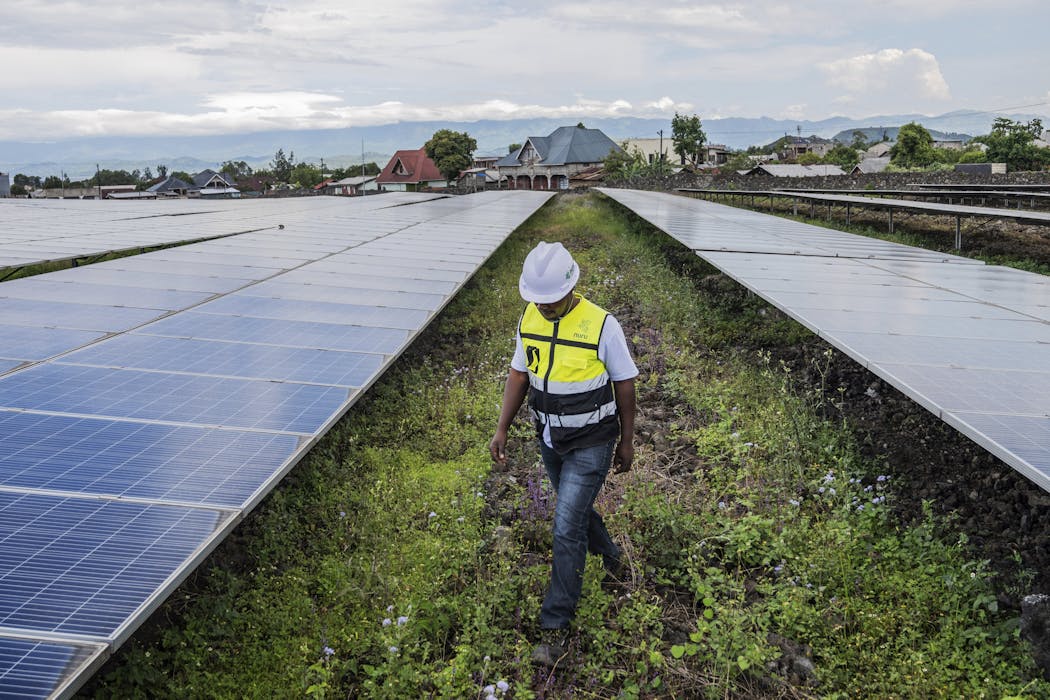
A technician walks through a solar farm in Goma, Congo, in 2025. AP Photo/Moses Sawasawa

You might not know it from the headlines, but there is some good news about the global fight against climate change.

A decade ago, the cheapest way to meet growing demand for electricity was to build more coal or natural gas power plants. Not anymore. Solar and wind power aren’t just better for the climate; they’re also less expensive today than fossil fuels at utility scale, and they’re less harmful to people’s health.

Yet renewable energy projects face headwinds, including in the world’s fast-growing developing countries. I study energy and climate solutions and their impact on society, and I see ways to overcome those challenges and expand renewable energy – but it will require international cooperation.

Falling clean energy prices

As their technologies have matured, solar power and wind power have become cheaper than coal and natural gas for utility-scale electricity generation in most areas, in large part because the fuel is free. The total global power generation from renewable sources saved US$467 billion in avoided fuel costs in 2024 alone.

As a result of falling prices, over 90% of all electricity-generating capacity added worldwide in 2024 came from clean energy sources, according to data from the International Renewable Energy Agency.

At the end of 2024, renewable energy accounted for 46% of global installed electric power capacity, with a record 585 gigawatts of renewable energy capacity added that year — about three times the total generating capacity in Texas.

Health benefits of leaving fossil fuels

Beyond affordability, replacing fossil fuels with renewable energy is healthier.

Burning coal, oil and natural gas releases tiny particles into the air along with toxic gases; these pollutants can make people sick. A recent study found air pollution from fossil fuels causes an estimated 5 million deaths worldwide a year, based on 2019 data.

For example, using natural gas to fuel stoves and other appliances releases benzene, a known carcinogen. The health risks of this exposure in some homes has been found to be comparable to secondhand tobacco smoke. Natural gas combustion has also been linked to childhood asthma, with an estimated 12.7% of U.S. childhood asthma cases attributable to gas stoves, according to one study.

Fossil fuels are also the leading sources of climate-warming greenhouse gases. When they’re burned to generate electricity or run factories, vehicles and appliances, they release carbon dioxide and other gases that accumulate in the atmosphere and trap heat near the Earth’s surface. That accumulation has been raising global temperatures and causing more heat stress, respiratory illnesses and the spread of disease.

Electrifying buildings, cars and appliances, and powering them with renewable energy, reduces these air pollutants while slowing climate change.

So what’s the problem?

In spite of the demonstrated economic and health benefits of transitioning to renewable energy, regulatory inertia, political gridlock and a lack of investment are holding back renewable energy deployment in much of the world.

In the United States, for example, major energy projects take an average of 4.5 years to permit, and approval of new transmission lines can take a decade or longer. A large majority of planned new power projects in the U.S. use solar power, and these delays are slowing the deployment of renewable energy.

The 2024 Energy Permitting Reform Act introduced by Sens. Joe Manchin, a Democrat from West Virginia, and John Barrasso, a Republican from Wyoming, to speed approvals failed to pass. Manchin called it “just another example of politics getting in the way of doing what’s best for the country.”

An even bigger challenge faces developing countries whose economies are growing fast.

These countries need to meet soaring energy demand. The International Energy Agency expects emerging economies to account for 85% of added electricity demand from 2025 through 2027. Yet renewable energy development lags in most of them. The main reason is the high price of financing renewable energy construction.

Chart showing wealthier countries have lower borrowing costs
Most of the cost of a renewable energy project is incurred up front in construction. Savings occur over its lifetime because it has no fuel costs. As a result, the levelized cost of energy (LCOE) for those projects varies depending on the cost of financing to build them. The chart shows what happens when borrowing costs are higher in developed countries. It illustrates the share of financing in each project’s levelized cost of energy in 2024 versus the weighted average cost of capital (WACC). The yellow dots are solar projects; black and gray are offshore and onshore wind.
Adapted from IRENA, 2025, CC BY

In many developing countries, wind and solar projects cost more to finance than coal or gas. Fossil projects have a longer history, and financial and policy mechanisms have been developed over decades to lower lender risk for those projects. These include government payment guarantees, stable fuel contracts and long-term revenue deals that help guarantee the lender will be repaid.

Both lenders and governments have less experience with renewable energy projects. As a result, these projects often come with weaker government guarantees. This raises the risk to lenders, so they charge higher interest rates, making renewable projects more expensive upfront, even if the projects have lower lifetime costs.

To lower borrowing costs, governments and international development banks can take steps to make renewable projects a safer bet for investors. For example, they can keep energy policies stable and use public funds or insurance to cover part of the lenders’ investment risk.

Workers check solar cells in a factory in China in 2025.
China produces the vast majority of solar cells sold worldwide. The Chinese government has also built renewable energy projects in many Latin America countries and other developing regions.
AFP via Getty Images

When investors trust they’ll get paid, interest rates drop dramatically and renewable energy becomes the cheaper option.

Without international cooperation to lower finance costs, developing economies could miss out on the renewable-energy revolution and lock in decades of growing greenhouse gas emissions from fossil fuels, making climate change worse.

The path ahead

To avoid the worst effects of climate change, countries have agreed to cut their greenhouse gas emissions over the next few decades.

Achieving this goal won’t be easy, but it is significantly less difficult now that renewable energy is more affordable over the long run than fossil fuels.

Switching the world’s power supply to renewable energy and electrifying buildings and local transportation would cut about half of today’s greenhouse-gas emissions. The other half comes from sectors where it is harder to cut emissions — steel, cement and chemical production, aviation and shipping, and agriculture and land use. Solutions are being developed but need time to mature. Good governance, political support and accessible finance will be critical for these sectors as well.

The transition to renewable energy offers big economic and health benefits alongside lower climate risks — if countries can overcome political obstacles at home and cooperate to expand financing for developing economies.

The Conversation

Jay Gulledge is affiliated with PSE Healthy Energy

ref. Renewable energy is cheaper and healthier – so why isn’t it replacing fossil fuels faster? – https://theconversation.com/renewable-energy-is-cheaper-and-healthier-so-why-isnt-it-replacing-fossil-fuels-faster-269685

Senegal’s credit rating: Moody’s latest downgrade was questionable – here’s why

Source: The Conversation – Africa – By Misheck Mutize, Post Doctoral Researcher, Graduate School of Business (GSB), University of Cape Town

The decision by the rating agency Moody’s to downgrade Senegal’s sovereign credit rating in late October 2025 triggered an immediate week-long sell-off in Senegal’s Eurobonds. This was the third downgrade in one year. It left the country’s 16-year bond trading at a 40% discount to its face value. Meaning, for every one dollar denominated bond, it was being sold for 60c on the market.

Moody’s decision once again raised questions about the accuracy of decisions taken by the world’s three biggest rating agencies – Moody’s, Standard and Poor’s, and the Fitch – when it comes to African countries.

One of the main reasons for Moody’s downgrade was Senegal’s decision to turn to regional markets to raise capital. Since the start of 2025, the government has raised over US$5 billion through the West African Economic and Monetary Union regional bond market. This is approximately 12% of Senegal’s US$42 billion public debt.

Moody’s interpreted Senegal’s actions as weakness, warning that dependence on regional investors could expose Senegal to ‘reversals in investor sentiment’. In other words, the rating agency treated the fact that Senegal had mobilised domestic and regional capital as a new source of risk. On the contrary, S&P recognise this strength.

I have been researching Africa’s capital markets and the institutions that govern them for decades. Drawing in this, I argue here that Moody’s interpretation is both unfair and analytically flawed. Tapping into local and regional capital markets isn’t a liability. It’s a model of the fiscal sovereignty African countries have been encouraged by economists and African leaders to pursue for decades. This enhances self-reliance and reduces vulnerability to external shocks.

At the heart of the problem lies a narrow definition of risk. Rating models for emerging markets still prioritise narrow macroeconomic indicators – per-capita GDP, foreign-exchange reserves, current-account balances and IMF programme status. They don’t capture qualitative factors like domestic investor participation, fiscal adaptability and the development of regional markets.

Regional markets versus global

Countries worldwide are increasingly relying on local and regional markets to raise capital. In Africa, South Africa, Nigeria, Burkina Faso, Mali and Côte d’Ivoire have been mirroring patterns seen in Mexico, Brazil and Indonesia, prioritising domestic and regional borrowing.

Regional and local-market financing has a number of benefits for countries.

First, it reduces foreign exchange exposure by reducing the needs for huge foreign currency reserves for debt servicing.

Second, it strengthens domestic market liquidity by expanding the number of local investors on the bond market.

Third, it keeps debt-service payments within Africa’s financial ecosystem. Retaining capital on the continent and reducing dependence on volatile external financing.

Lastly, it minimises market swings. Domestic bondholders are largely local institutional investors — a more stable and less speculative pool of capital that understands local market dynamics far better than external rating agencies.

Senegal’s regional bond issues have been performing extremely well because investors want to buy more than the government is even offering — a sign of strong demand. The interest rate it paid, averaging 7%, was also much lower than the much higher (double-digit) interest rates it would have been charged if it had borrowed from international markets through Eurobonds. In simple terms, borrowing locally was cheaper, safer and more attractive for Senegal than borrowing globally.

Investors from across the region – pension funds, banks and insurance companies – have been lining up to purchase the bonds on all the five issuance in 2025.

Senegal’s success boosts confidence among local investors and encourage other African governments to tap their own capital markets. A powerful incentive to mobilise more African capital for the continent’s development.

When ratings become a source of risk

Moody’s downgrade triggered immediate selling of Senegal’s Eurobonds due in 2048, driving their price down to about 72 cents on the dollar. That slump was not because the country’s economic fundamentals were deteriorating, it was sentiment triggered by the downgrade.

This dynamic creates a damaging feedback loop. Negative ratings lead to investor flight, which raises borrowing costs and validates the pessimism. In effect, the perception of risk becomes the cause of risk.

This cycle undermines the policy credibility of African governments. It disincentivises reform and discourages innovation.

It’s not the first time that rating agencies have cautioned risks that have a near zero chance of materialising and in the process, shaken investor confidence and caused capital fight. These include:

  • During the COVID crisis S&P warned of imminent food shortages and foreign-exchange depletion in Egypt despite stable remittance inflows and active central-bank management.

  • In 2023 the Kenyan government announced plans to repurchase part of its maturing Eurobond. This was a prudent debt-management step, but Moody’s warned it would be interpreted as a sign of distress. This never happened. In fact, Moody’s later upgraded Kenya’s outlook, largely based on the success of same bond restructuring which it warned against 10 months earlier.

What needs to change

Credit ratings are supposed to guide investors, not govern economies through certain policy inclinations. But in Africa’s case, they often do both. Because many institutional investors are required to hold investment-grade securities, a single downgrade can abruptly cut a country off from international capital markets.

The consequences are immediate and severe – higher interest rates, reduced access to credit, weaker currencies and a perception of crisis. This sequence can unfold even when a country’s underlying fundamentals are still strong. Overly cautious rating assessments not only reflect negative market sentiment, they create it.

Africa does not need special treatment, it needs balanced and context-sensitive rating evaluation.

Accurate risk assessment would recognise the strategic logic of financing through domestic and regional markets. It would acknowledge that by financing through domestic and regional markets, African governments are building alternatives that are better suited to current realities.

Global agencies must therefore recalibrate their analysis to account for domestic and regional market depth, fiscal adaptability, strength and stability of Africa’s internal markets. Ignoring these and focusing solely on perceived weaknesses is to tell an incomplete story to investors.

Without such adjustments, rating agencies will continue to lag behind economic reality and risk becoming instruments of distortion rather than insight.

The Conversation

Misheck Mutize is affiliated with the African Union – African Peer Review Mechanism as a Lead Expert on credit ratings

ref. Senegal’s credit rating: Moody’s latest downgrade was questionable – here’s why – https://theconversation.com/senegals-credit-rating-moodys-latest-downgrade-was-questionable-heres-why-269473

Fish farming is booming in Lake Victoria, but pollution and disease are wiping out millions. How to reduce losses

Source: The Conversation – Africa (2) – By Ekta Patel, Scientist, International Livestock Research Institute

Aquaculture – the farming of fish and other aquatic organisms – is the world’s fastest-growing food production system.

The sharpest growth in aquaculture is happening in Africa. Average annual growth rates have exceeded 10% in recent years measured by production value.

Over the past 10 years in Lake Victoria, shared between Kenya, Uganda and Tanzania, aquaculture has transformed from a small-scale enterprise into a vast and diverse commercial industry.

Lake Victoria is the world’s second-largest freshwater lake. Cage aquaculture, the farming of fish within cages, has expanded rapidly in the lake. The cages are made of nets in frames, and are mostly stocked with Nile tilapia. The number of fish in a cage farm varies from tens to hundreds of thousands. The sector accounts for about 25% of the fish Kenya produces.

These cage farms support the nutrition and livelihoods of more than 40 million people in the lake’s basin.

We are environmental scientists who study biological threats to public health. From our research, we have found that this industry faces two interconnected challenges: large-scale fish deaths; and resistance to the drugs used to treat diseased fish.

Repeated, large-scale die-offs are known as fish kills. They involve the rapid death of hundreds of thousands, or sometimes millions, of fish within a few days. Many farmers who find dead fish in their cages simply toss them into the lake, where they can easily wash up against another cage and transmit disease.

Farmers and fish health professionals often use antimicrobials, which are drugs like antibiotics, to manage and treat infectious diseases. But antimicrobial resistance is a rising threat. A misuse of these drugs is fuelling the emergence of resistant bacteria, making treatments ineffective.

Because of the scale of these problems, we set out to systematically examine both the causes of mass fish deaths and the spread of antimicrobial resistance in Lake Victoria’s cage aquaculture industry.

Our study was conducted in Kenya. We found that fish deaths in Lake Victoria’s tilapia industry are likely driven by water quality problems. These include low oxygen levels, pollution and harmful algal blooms. Algal blooms refer to the rapid growth and subsequent decomposition of algae. This can lead to the release of toxins and rapid drops in dissolved oxygen levels.

These water quality problems create openings for infectious bacteria to thrive.

To address this, we suggest:

  • stronger disease reporting systems to enable a prompt response from industry authorities

  • improved diagnostics to determine the cause of fish mortalities

  • clear guidelines for antimicrobial use among farmers.

Without these interventions, the sustainability of a rapidly growing industry – and the food security of millions in east Africa – remains at risk.

Our findings

Our study surveyed 172 cage farm operations. These were across the five Kenyan counties in Lake Victoria (Kisumu, Siaya, Busia, Homa Bay and Migori).

We surveyed cage farmers’ perceptions and responses to fish kills. We also carried out a rapid-response investigation of a mass tilapia mortality event, and disease surveillance. Finally, we tested the antimicrobial resistance of identified bacterial pathogens.

Between 2020 and 2023, the farmers in our study reported 82 large-scale fish kill events in Lake Victoria, with more than 1.8 million tilapia dying.

These events had major economic consequences, but reporting and treatment were limited.

We found that only 39% of farmers informed the relevant Kenyan authorities. These include the Kenya Marine and Fisheries Research Institute, Kenya Fisheries Service and county fisheries offices.

Just 17% attempted treatment. This usually included applying salt to the water without obtaining a diagnosis. This points to gaps in reporting systems and access to fish health services.

Farmers mostly attributed fish deaths to poor water quality. Nearly 90% perceived links to changes in water colour and smell, high temperatures or algal blooms.

Harmful algal blooms happen when phytoplankton (tiny organisms in the water) quickly multiply and then decompose. These blooms produce dangerous toxins and can rapidly lower the levels of dissolved oxygen in the water. They can lead to fish deaths, and can affect human health if people eat contaminated fish or drink the water.

Harmful algal blooms in Lake Victoria are driven by the runoff from industries and the excessive use of fertilisers.

A smaller number of farmers cited human activities like stocking, handling or pollution.

Very few directly associated mortalities with disease. This probably reflects limited training to recognise clinical signs of infection.

Our rapid-response investigation of a major fish kill in Busia County supported these observations. On arrival, we found discoloured, foul-smelling water. There were floating dead molluscs and low dissolved oxygen levels, conditions typical of harmful algal blooms.

From freshly deceased tilapia, we isolated three bacterial pathogens: Aeromonas jandaei, Enterobacter hormaechei and Staphylococcus epidermidis. These opportunistic pathogens often cause disease secondary to a primary stressor, such as poor water quality or rough handling.

This was the first time bacterial pathogens were successfully identified from a fish kill in Lake Victoria.

We found that bacterial tilapia pathogens were more commonly found within cage farms with clogged cage nets, likely because the nets reduce water circulation and worsen cage water quality.

Finally, antimicrobial resistance testing revealed resistant strains among the bacterial samples.

These results can guide veterinarians and policymakers in making decisions about antimicrobial use in aquaculture.

What next

Our findings point to a central conclusion: opportunistic pathogens are widespread in Lake Victoria. And fish disease outbreaks are often driven by poor water quality.

Action is needed at multiple levels.

At the landscape scale, nutrient runoff into the lake must be reduced. This requires improving sanitation infrastructure and promoting more efficient fertiliser use in agriculture. This will help prevent harmful algal blooms.

Fish farmers can:

  • set up cages in deeper waters with better circulation

  • keep cage nets clean to allow water flow

  • dispose of dead fish by composting or burning rather than throwing them back into the lake

  • rapidly report mortality events so authorities can investigate

  • improve feeding practices, such as using high-quality feed and avoiding overfeeding, to reduce nutrient loading into the lake.

A One Health approach, which recognises the interconnectedness of human, animal and environmental health, is important for the sustainability of Lake Victoria’s aquaculture.

This means monitoring water quality and pollution, and establishing cross-sectoral collaborations for rapid disease response. Farmers also need training.

Improved production practices can decrease the need for antibiotics in the first place. Coordinated monitoring systems and cross-sectoral collaboration can help promote their responsible use.

The Conversation

Eric Teplitz was funded by an NIH T32 postdoctoral training grant and a Cornell Atkinson Center Graduate Student Research Grant.

This study received funding from the USAID Feed the Future Fish Innovation Lab, US National Science Foundation, Cornell Atkinson Center Academic Venture Fund, and the Department of Public and Ecosystem Health Impact Awards (to KJF).

Ekta Patel does not work for, consult, own shares in or receive funding from any company or organisation that would benefit from this article, and has disclosed no relevant affiliations beyond their academic appointment.

ref. Fish farming is booming in Lake Victoria, but pollution and disease are wiping out millions. How to reduce losses – https://theconversation.com/fish-farming-is-booming-in-lake-victoria-but-pollution-and-disease-are-wiping-out-millions-how-to-reduce-losses-266073

If evolution is real, then why isn’t it happening now? An anthropologist explains that humans actually are still evolving

Source: The Conversation – USA – By Michael A. Little, Distinguished Professor Emeritus of Anthropology, Binghamton University, State University of New York

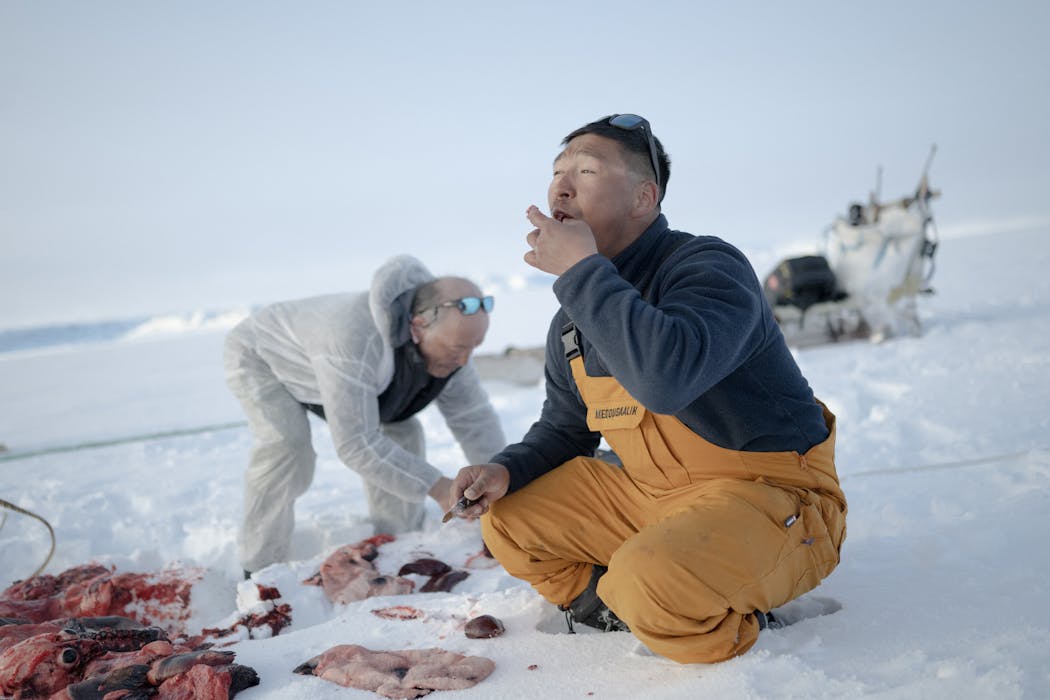
Inuit people such as these Greenlanders have evolved to be able to eat fatty foods with a low risk of getting heart disease. Olivier Morin/AFP via Getty Images

Curious Kids is a series for children of all ages. If you have a question you’d like an expert to answer, send it to CuriousKidsUS@theconversation.com.


If evolution is real, then why is it not happening now? – Dee, Memphis, Tennessee


Many people believe that we humans have conquered nature through the wonders of civilization and technology. Some also believe that because we are different from other creatures, we have complete control over our destiny and have no need to evolve. Even though lots of people believe this, it’s not true.

Like other living creatures, humans have been shaped by evolution. Over time, we have developed – and continue to develop – the traits that help us survive and flourish in the environments where we live.

I’m an anthropologist. I study how humans adapt to different environments. Adaptation is an important part of evolution. Adaptations are traits that give someone an advantage in their environment. People with those traits are more likely to survive and pass those traits on to their children. Over many generations, those traits become widespread in the population.

The role of culture

We humans have two hands that help us skillfully use tools and other objects. We are able to walk and run on two legs, which frees our hands for these skilled tasks. And we have large brains that let us reason, create ideas and live successfully with other people in social groups.

All of these traits have helped humans develop culture. Culture includes all of our ideas and beliefs and our abilities to plan and think about the present and the future. It also includes our ability to change our environment, for example by making tools and growing food.

Although we humans have changed our environment in many ways during the past few thousand years, we are still changed by evolution. We have not stopped evolving, but we are evolving right now in different ways than our ancient ancestors. Our environments are often changed by our culture.

We usually think of an environment as the weather, plants and animals in a place. But environments include the foods we eat and the infectious diseases we are exposed to.

A very important part of the environment is the climate and what kinds of conditions we can live in. Our culture helps us change our exposure to the climate. For example, we build houses and put furnaces and air conditioners in them. But culture doesn’t fully protect us from extremes of heat, cold and the sun’s rays.

a man runs after one of several goats in a dry, dusty landscape
The Turkana people in Kenya have evolved to survive with less water than other people, which helps them live in a desert environment.
Tony Karumba/AFP via Getty Images

Here are some examples of how humans have evolved over the past 10,000 years and how we are continuing to evolve today.

The power of the sun’s rays

While the sun’s rays are important for life on our planet, ultraviolet rays can damage human skin. Those of us with pale skin are in danger of serious sunburn and equally dangerous kinds of skin cancer. In contrast, those of us with a lot of skin pigment, called melanin, have some protection against damaging ultraviolet rays from sunshine.

People in the tropics with dark skin are more likely to thrive under frequent bright sunlight. Yet, when ancient humans moved to cloudy, cooler places, the dark skin was not needed. Dark skin in cloudy places blocked the production of vitamin D in the skin, which is necessary for normal bone growth in children and adults.

The amount of melanin pigment in our skin is controlled by our genes. So in this way, human evolution is driven by the environment – sunny or cloudy – in different parts of the world.

The food that we eat

Ten thousand years ago, our human ancestors began to tame or domesticate animals such as cattle and goats to eat their meat. Then about 2,000 years later, they learned how to milk cows and goats for this rich food. Unfortunately, like most other mammals at that time, human adults back then could not digest milk without feeling ill. Yet a few people were able to digest milk because they had genes that let them do so.

Milk was such an important source of food in these societies that the people who could digest milk were better able to survive and have many children. So the genes that allowed them to digest milk increased in the population until nearly everyone could drink milk as adults.

This process, which occurred and spread thousands of years ago, is an example of what is called cultural and biological co-evolution. It was the cultural practice of milking animals that led to these genetic or biological changes.

Other people, such as the Inuit in Greenland, have genes that enable them to digest fats without suffering from heart diseases. The Turkana people herd livestock in Kenya in a very dry part of Africa. They have a gene that allows them to go for long periods without drinking much water. This practice would cause kidney damage in other people because the kidney regulates water in your body.

These examples show how the remarkable diversity of foods that people eat around the world can affect evolution.

gray scale microscope image of numerous blobs
These bacteria caused a devastating pandemic nearly 700 years ago that led humans to evolve resistance to them.
Image Point FR/NIH/NIAID/BSIP/Universal Images Group via Getty Images

Diseases that threaten us

Like all living creatures, humans have been exposed to many infectious diseases. During the 14th century a deadly disease called the bubonic plague struck and spread rapidly throughout Europe and Asia. It killed about one-third of the population in Europe. Many of those who survived had a specific gene that gave them resistance against the disease. Those people and their descendants were better able to survive epidemics that followed for several centuries.

Some diseases have struck quite recently. COVID-19, for instance, swept the globe in 2020. Vaccinations saved many lives. Some people have a natural resistance to the virus based on their genes. It may be that evolution increases this resistance in the population and helps humans fight future virus epidemics.

As human beings, we are exposed to a variety of changing environments. And so evolution in many human populations continues across generations, including right now.


Hello, curious kids! Do you have a question you’d like an expert to answer? Ask an adult to send your question to CuriousKidsUS@theconversation.com. Please tell us your name, age and the city where you live.

And since curiosity has no age limit – adults, let us know what you’re wondering, too. We won’t be able to answer every question, but we will do our best.

The Conversation

Michael A. Little does not work for, consult, own shares in or receive funding from any company or organization that would benefit from this article, and has disclosed no relevant affiliations beyond their academic appointment.

ref. If evolution is real, then why isn’t it happening now? An anthropologist explains that humans actually are still evolving – https://theconversation.com/if-evolution-is-real-then-why-isnt-it-happening-now-an-anthropologist-explains-that-humans-actually-are-still-evolving-266669

White nationalism fuels tolerance for political violence nationwide

Source: The Conversation – USA – By Murat Haner, Assistant Professor, School of Criminology & Criminal Justice, Arizona State University

Law enforcement set up in Green Isle, Minn., on June 15, 2025, as they search for a suspect in the killing of state Rep. Melissa Hortman and her husband, Mark. Stephen Maturen/Getty Images

Political violence among rival partisans has been a deadly and destabilizing force throughout history and across the globe. It has claimed countless lives, deepened social divisions and even led to the collapse of democratic systems.

In recent history, political violence and its deadly consequences were seen in Italy after World War I when thousands of fascist supporters marched on Rome, the capital, threatening to overthrow the government unless Benito Mussolini was appointed prime minister. That kind of violence and its effects were also seen in 1930s Germany, where Adolf Hitler suppressed opposition and suspended civil liberties amid widespread unrest and factional violence.

Similar patterns occurred elsewhere in the decades that followed. Fascist movements used political violence and intimidation to seize or consolidate power, as seen in Spain under Francisco Franco, in Portugal under António de Oliveira Salazar and in Romania under the Iron Guard.

Today, many scholars, journalists, commentators and elected officials across the political spectrum have voiced alarm over escalating acts of violence in the United States, drawing parallels to Europe’s authoritarian past. Reports of politically motivated violence are distressingly common – ranging from mass shootings, car-ramming attacks and assaults at demonstrations to assassination attempts, kidnappings and threats targeting mayors, governors, political activists and members of Congress.

For example, threats of violence against members of Congress increased by more than 1,400%, from 902 in 2016 to an estimated 14,000 by the end of 2025, according to U.S. Capitol Police reports.

Political violence is certainly not new in American society, but current patterns differ in key ways. We found that, today, white nationalism is a key driver of support for political violence – a sign that white nationalism poses substantial danger to U.S. political stability.

In the 1970s, violence was political theater, aimed at drawing government and public attention to specific policies. Today, it’s personal and deadly, driven by a desire to annihilate.

A page from a letter signed in red pen, 'Weather Underground,' claiming to have perpetrated a bombing of the U.S. Capitol building.
Page 5 and envelope of a letter received by The Associated Press in Washington D.C., on March 2, 1971, signed by ‘Weather Underground,’ which claims responsibility for the March 1 bombing of the U.S. Capitol building.
AP Photo

Changing targets

In the 1970s, radical left-wing groups often targeted government property to send political messages.

Attacks included the anti–Vietnam War bombings carried out by the Weather Underground, as well as actions by groups such as the Symbionese Liberation Army and United Freedom Front. They struck government and corporate targets to protest imperialism, racism and economic inequality. These attacks were generally intended as statements rather than mass-casualty events, with perpetrators often issuing warnings beforehand to minimize harm.

Today, however, much of the violence is aimed directly at individuals, often with the intent to harm or kill political opponents.

These include incidents such as the 2017 shooting targeting Republican lawmakers at a congressional baseball practice, the 2022 hammer attack on Democratic House Speaker Nancy Pelosi’s husband, Paul Pelosi, and the 2025 killing of Democrat Melissa Hortman, the former speaker of the Minnesota House, and her husband in what authorities described as a politically motivated assassination.

This resurgence of political violence has prompted intense academic and journalistic scrutiny. Numerous public opinion surveys have sought to gauge Americans’ approval of, or concern about, using violence against the government or political adversaries.

Initial estimates suggested nearly 1 in 4 Americans support political violence. But later studies identified flaws in the questions used to measure support for violence. Simply asking about violence in general or the use of force leaves too much room for interpretation.

Using more sophisticated questioning techniques results in lower estimates of public support for political violence.

Understanding what drives individuals to endorse political violence is essential for developing effective strategies to prevent it. As public opinion researchers who have studied Americans’ attitudes toward ideological extremism, political polarization and counterterrorism policy, we sought to advance our understanding of the factors underlying public support for political violence in the United States.

We aimed to do this in two ways: by using more specific questioning techniques and by identifying the factors associated with increased support for violence.

Who justifies political violence?

Our study focused specifically on white nationalism – a growing movement in the U.S. – as a driver of support for violence.

We asked a national sample of 1,300 Americans how justified or unjustified it would be “to take violent action against the U.S. government” in response to a range of government actions. This approach captures both approval of the use of violence and its political motivation.

We included nonpartisan government actions such as “the government violated or took away citizens’ rights and freedoms” and “the government violated the U.S. Constitution” along with hypothetical actions reflecting right or left-wing political causes. For example, a right-wing action would be to ban all abortions while a left-wing action would be to legalize all abortions.

Analyses revealed substantial support for violence against the government in response to the nonpartisan government actions. Half of the respondents indicated that violence would be justified if the government violated citizens’ rights, and 55% supported the use of violence as a response if the U.S. government committed unlawful violence against citizens. Nearly 40% said that violence would be justified if the government censored the news.

When we examined the factors behind these attitudes, a belief in white nationalism stood out above all others. But what, precisely, is white nationalism? It is more than simply identifying as white. Indeed, white nationalism is a sentiment found among some nonwhite Americans as well.

White nationalists are concerned about the increasing diversity of the American population and want to ensure that white citizens maintain a predominant influence in the country. To them, white citizens’ social, cultural and political values are superior to those of nonwhite citizens and immigrants. The perceived need to protect and propagate these values serves as a call to action.

This ideology has motivated several recent acts of mass violence, from synagogue shootings to racially targeted attacks.

Our data revealed that a belief in white nationalism predicted support for political violence as well. In response to both nonpartisan government actions and those that would benefit left-wing causes, the stronger a person’s white nationalist sentiment, the more strongly that individual believed that violence would be justified.

Out of all the variables in our statistical models, including political views and demographic characteristics, white nationalism was the strongest predictor of support for violence in these circumstances.

It did not, however, significantly influence support for violence when the government actions would benefit right-wing causes.

Growing threat to US democracy

Most people who voice support for political violence will never commit violent acts themselves.

Yet such attitudes foster an atmosphere of tolerance, signaling that violence is acceptable and enabling its continuation. Our analyses show that these supportive attitudes are prevalent among white nationalists.

Active white nationalist groups operate in all but two U.S. states, Alaska and Vermont. Decentralized groups, such as Active Clubs, where white nationalists train and network, are also on the rise.

Many more individuals hold white nationalist sentiments without belonging to organized groups. Indeed, in our national sample, one quarter of respondents agreed with the statement “although people won’t admit it, White Americans and their culture are what made America great in the first place.”

The fact that white nationalism is gaining prominence in the U.S., combined with the association between holding white nationalist views and supporting political violence found in our study, indicates that white nationalism poses a serious threat to U.S. political stability.

The Conversation

The authors do not work for, consult, own shares in or receive funding from any company or organization that would benefit from this article, and have disclosed no relevant affiliations beyond their academic appointment.

ref. White nationalism fuels tolerance for political violence nationwide – https://theconversation.com/white-nationalism-fuels-tolerance-for-political-violence-nationwide-268480

Florida’s new open carry law combines with ‘stand your ground’ to create new freedoms – and new dangers

Source: The Conversation – USA – By Caroline Light, Senior Lecturer on Studies of Women, Gender, and Sexuality, Harvard University

As of September 2025, Florida allows open carry and permitless carry, in addition to its stand your ground law. Joe Raedle/Getty Images News

Twenty years ago, Florida Gov. Jeb Bush signed the first “stand your ground” law, calling it a “good, common-sense, anti-crime issue.”

The law’s creators promised it would protect law-abiding citizens from prosecution if they used force in self-defense. Then-Florida state Rep. Dennis Baxley, who cosponsored the bill, claimed – in the wake of George Zimmerman’s controversial acquittal for the killing of Trayvon Martin – that “we’re really safer if we empower people to stop violent acts.”

I’m a historian who has studied the roots of stand your ground laws. I published a book on the subject in 2017. My ongoing investigation of the laws suggests that, 20 years on, they have not made communities any safer, nor have they helped prevent crime. In fact, there is reliable evidence they have done just the opposite.

In the past 20 years, stand your ground has spread to 38 states.

Then, in September 2025, an appellate court struck down Florida’s long-standing ban on the open carry of firearms.

Florida’s attorney general, James Uthmeier, quickly announced that open carry is now “the law of the state,” directing law enforcement not to arrest people who display handguns in public.

Under the state’s permitless carry law, enacted in 2023, adults without a criminal record also don’t need a permit or any training to carry firearms publicly.

In my view, this combination of stand your ground, open carry and permitless carry is likely to make the Sunshine State far less safe.

Let’s look at the evidence.

What ‘stand your ground’ means

Under traditional self-defense law, a person had a duty to retreat – to try to avoid a violent confrontation if they could safely do so – before resorting to deadly force.

The main exception to the duty to retreat was known as the castle doctrine, whereby people could defend themselves, with force if necessary, if they were attacked in their own homes.

Stand your ground laws effectively expand the boundaries of the castle doctrine to the wider world, removing the duty to retreat and allowing people to use lethal force anywhere they have a legal right to be, as long as they believe it’s necessary to prevent death or serious harm.

On paper, the expansion of the right to self-defense may sound reasonable. But in practice, stand your ground laws have blurred the line between self-defense and aggression by expanding legal immunity for some who claim self-defense and shifting the burden of proof to prosecutors.

While supporters of these laws claim they mitigate crime and make people safer, evidence shows the opposite. The nonpartisan RAND Corp. discovered that states adopting stand your ground laws experienced significant increases in homicide, typically between 8% and 11% higher than before the laws took effect.

A study of violent crime in Florida revealed a 31.6% increase in firearm homicides following the 2005 passage of the stand your ground law. There is no credible evidence that these laws deter crime.

On the contrary, evidence shows that stand your ground laws lower the legal, moral and psychological costs of pulling the trigger.

Stand your ground and race

While the language of stand your ground laws is race-neutral, their enforcement is not. Data from the Urban Institute and the U.S. Commission on Civil Rights show that in states with stand your ground laws, homicides are far more likely to be deemed “justified” when the shooter is white and the victim is Black.

I’ve found that these laws have redefined not only when force is justified but who is justified in using force.

In my assessment, these laws don’t create racial bias. Rather, they magnify the biases already present in our criminal legal system. They give broader discretion to a legal system in which law enforcement officers, judges, prosecutors and juries often hold unacknowledged biases that associate Black men with criminality, while perceiving white people who say they were defending themselves as credible.

A sign for a rally after the Trayvon Martin shooting in Sanford, Florida.
Seventeen-year-old Trayvon Martin was unarmed when George Zimmerman shot and killed him on March 20, 2012, in Sanford, Fla. Zimmerman claimed he killed Martin in self-defense and was acquitted by a jury.
Gerardo Mora/Getty Images News

That dynamic is visible in a growing multitude of cases, such as the shootings of unarmed teenagers Trayvon Martin, Jordan Davis, Renisha McBride and Ralph Yarl.

Each instance illustrates how stand your ground transforms ordinary mistakes or misunderstandings into lethal outcomes, and how armed citizens’ claims of “reasonable fear” often reflect racial stereotypes more than objective threats.

A dangerous mix

Florida’s legalization of open carry intersects with the state’s permitless carry and stand your ground laws in alarming ways. Open carry increases the visibility – and perceived legitimacy – of guns in everyday life.

Combined with the removal of licensing procedures and training requirements, laws that broaden the right to use deadly force create a permissive environment for opportunistic violence.

When everyone is visibly armed, every encounter can look like a potential threat. And when the law tells you that you don’t have to back down, that perception can turn lethal in seconds.

Florida has become a model for what gun rights advocates call “freedom” but what public health experts see as a recipe for more shootings and more death.

National implications: ‘Reciprocity’ and expansion

Two decades later, stand your ground laws have spread, in various forms, to 38 states. While 30 states have legislatively enacted stand your ground statutes like Florida’s, eight others implement stand your ground through case law and jury instructions that effectively remove the duty to retreat.

On top of this, 29 states have enacted laws allowing permitless carry, and 47 technically allow open carry, though restrictions vary across the states.

President Donald Trump has made clear he wants to take this deregulatory approach nationwide. While on the campaign trail, he promised to sign a “concealed-carry reciprocity” law, which would require all states to allow people from states with permissive laws to exercise those rights in all 50. “Your Second Amendment does not end at the state line,” he announced in a 2023 video.

If that vision becomes reality, it would mean the most permissive state laws will set the standard for the entire country. National reciprocity would allow Floridians, and other gun owners from permitless carry states, to carry their firearms – and potentially claim stand your ground immunity – in any other state, including those with stricter rules and lower rates of firearm death and injury.

This prospect raises deep questions about states’ rights, safety and justice. Research shows that stand your ground laws increase homicide and exacerbate racial disparities. National reciprocity would export those effects nationwide.

In my view, the convergence of stand your ground, open carry and national reciprocity marks the culmination of a 20-year experiment in armed citizenship. The results are clear: more people armed, more shootings and more deaths “justified.”

The question now is whether the rest of the nation will follow Florida’s lead.

Read more stories from The Conversation about Florida.

The Conversation

Caroline Light is affiliated with GVPedia and collaborates with Giffords.

ref. Florida’s new open carry law combines with ‘stand your ground’ to create new freedoms – and new dangers – https://theconversation.com/floridas-new-open-carry-law-combines-with-stand-your-ground-to-create-new-freedoms-and-new-dangers-267496