Joel Mokyr, premio Nobel 2025: cuando la economía trabaja con la historia

Source: The Conversation – (in Spanish) – By Mauro Hernández, Profesor Titular de Historia Económica, UNED – Universidad Nacional de Educación a Distancia

A propósito de las relaciones entre la historia y el análisis económico, el economista estadounidense Kenneth Arrow –laureado con el Nobel en 1972 por sus teorías del equilibrio económico general y de la elección social– escribió:

¿Qué clase de médico se atrevería a diagnosticar o prescribir sin conocer antes la historia clínica del paciente?

Con esta frase, Arrow reconocía que eran mayoría los economistas que diagnosticaban problemas y proponían políticas económicas sin prestar atención a la historia. Y así ha seguido siendo casi hasta ahora.

Otorgar el Nobel de Economía de 2025 al historiador económico Joel Mokyr parece indicar que esa disciplina vuelve a ser un socio relevante en el análisis económico. El propio Banco de Suecia arranca su comunicado con una reflexión en clave histórica:

En los dos últimos siglos, por primera vez en la historia, el mundo ha asistido a un crecimiento económico sostenido.

Economía e historia

Mokyr es un historiador a tiempo completo, cuyas contribuciones al estudio del cambio tecnológico le han merecido el galardón. Y, aunque lo comparte con dos economistas puros (Philippe Aghion y Peter Howitt), el orden en que se anunciaron los ganadores no es casual. Además, Mokyr se llevará la mitad –no un tercio– del premio: 6,5 millones de coronas suecas, unos 467 000 euros aproximadamente.

A este reconocimiento se suma que los dos últimos años también han sido galardonados profesores e investigadores que, aunque no son estrictamente historiadores económicos, sí son economistas que dan a la historia un peso muy relevante. Es el caso de Daron Acemoglu, James A. Robinson y Simon Johnson, (2024) así como el de Claudia Goldin (2023).

Los primeros basaron su explicación del desarrollo en la existencia de dos tipos de élites y marcos institucionales: las extractivas (cuyo fin era maximizar la renta de unos pocos a costa de una mayoría de súbditos) y las inclusivas (que buscaban integrar a todos los ciudadanos en el proceso y el reparto de beneficios del desarrollo). Su argumento se basa en el análisis de numerosos ejemplos históricos de ambos tipos de marco institucional.

Claudia Goldin, por su parte, obtuvo el Nobel –el primero otorgado en solitario a una mujer– por sus investigaciones sobre el papel económico de las mujeres y, en especial, sobre la brecha de género en los salarios.

¿Por qué ahora?

Hasta 1993 nunca se había concedido el premio a un historiador económico. Ese año lo recibieron Robert Fogel (director de la tesis de Goldin) y Douglass North por “haber renovado la investigación en historia económica mediante la aplicación de la teoría y los métodos cuantitativos a los cambios económicos e institucionales”. Tuvieron que pasar tres décadas para que los historiadores económicos volvieran a entrar en el Olimpo sueco.

La pregunta es por qué ahora. Los economistas, y en general los científicos sociales, no creen en las casualidades, y tres premios seguidos es una racha que desafía al mero azar. La clave, creo, se revela al hacer una lectura atenta de los comunicados de concesión del premio. Una acotación: si quieren profundizar más en el tema, el Banco de Suecia distribuye tanto una nota divulgativa como una nota académica, más completa y sesuda.

Nobel 2024: ¿por qué fracasan los países?

En el caso de Acemoglu, Robinson y Johnson, la nota de prensa comienza hablando de la colonización de buena parte del globo por los europeos, un proceso que arranca a finales del siglo XV y por el cual se produjeron grandes cambios en los territorios colonizados. Estos cambios afectarían también a sus instituciones, pero no siempre de la misma forma.

En algunos casos, los colonizadores se dedicaron a explotar a las poblaciones indígenas y los recursos naturales, conformando lo que los autores llamaron unas instituciones y unas élites extractivas. En otros, sin embargo, se produjo una ocupación donde eran más numerosos los colonos europeos, que se dotaron de marcos económicos y políticos inclusivos, abiertos a la participación más o menos libre e igualitaria de todos (no de todas).

La tesis de Acemoglu y Robinson es que sólo los segundos países fueron capaces de salir de la maldición de los recursos –que condena a la pobreza a los territorios donde éstos abundan– y desarrollar economías prósperas y capaces de estimular el crecimiento económico. Se trata, como resulta evidente, de un análisis histórico para un problema económico: por qué fracasan los países.

Nobel 2023: la mujer en el mercado laboral

Claudia Goldin, por su parte, fue premiada por sus investigaciones sobre la participación de la mujer en los mercados de trabajo “a lo largo de los siglos”, como destaca el comunicado de concesión. Este subrayaba cómo Goldin ha buceado en fuentes de archivo para estudiar los cambios en los roles de género en el ámbito laboral. Pero la galardonada también ha publicado estudios de historia económica pura, desde su tesis doctoral (sobre la economía de la esclavitud) hasta diversas publicaciones sobre el papel de las mujeres en los mercados de trabajo en los siglos XIX y XX.

Exactitud matemática versus comprensión histórica

Los tres premios Nobel de Economía de los últimos tres años coinciden en señalar que el análisis histórico es relevante para explicar procesos de largo alcance. Ya sea el crecimiento económico sostenido como resultado de la innovación técnica, el papel de las instituciones en el desarrollo económico o las brechas de género en el empleo y el ingreso.

Todos estos temas se resisten a ser modelizados matemáticamente. Aunque la otra mitad del Nobel 2025 ha recaído en dos economistas modelizadores –Philippe Aghion y Peter Howitt–, su aportación se ciñe a un problema concreto e importante: la destrucción creativa generada por los procesos de innovación, que alteran las estructuras económicas vigentes.

Frente a unas ciencias económicas que llevan décadas afilando unas herramientas metodológicas basadas en las matemáticas y los datos cuantitativos, los últimos premios Nobel nos recuerdan que la exactitud no es lo mismo que la verdad y que los procesos complejos no admiten modelos simples.

Dar respuesta a temas complejos

El mundo se está enfrentando en las últimas décadas a problemas enormemente complejos. ¿Por qué hemos sido incapaces de acabar con la pobreza de tantos países? ¿Cómo es que seguimos sujetos a fuertes ciclos económicos marcados por crisis generales, como la de 2008? ¿Qué tipo de soluciones debemos buscar para un cambio climático que exige cooperación, no competencia? ¿Cómo va a cambiar la inteligencia artificial nuestros modos de producir y consumir? La reflexión y el trabajo de los historiadores económicos, aun con series de datos menos fiables y herramientas econométricas menos sofisticadas, pueden ofrecer respuestas complejas –aunque no necesariamente precisas– a estas preguntas.

Por cierto, aunque se lo den a nuestros colegas historiadores económicos, les recuerdo que el Nobel de Economía no existe: lo que entregará este miércoles 10 de diciembre la Academia Sueca a Joel Mokyr, Philippe Aghion y Peter Howitt será el Premio del Banco de Suecia en Ciencias Económicas, en memoria de Alfred Nobel.

The Conversation

Mauro Hernández recibe fondos de la Agencia Estatal de Investigación (Ministerio de Ciencia e Innovación) como investigador del proyecto “Transformaciones sociales en Madrid y la Monarquía hispánica en la edad moderna. Movimientos ascendentes y descendentes. Entre cambios y resistencias” (PID2022-142050NB-C22) coordinado por José Antolín Nieto (UAM).

ref. Joel Mokyr, premio Nobel 2025: cuando la economía trabaja con la historia – https://theconversation.com/joel-mokyr-premio-nobel-2025-cuando-la-economia-trabaja-con-la-historia-268704

PFAS in pregnant women’s drinking water puts their babies at higher risk, study finds

Source: The Conversation – USA (2) – By Derek Lemoine, Professor of Economics, University of Arizona

Studies show PFAS can be harmful to human health, including pregnant women and their fetuses. Olga Rolenko/Moment via Getty Images

When pregnant women drink water that comes from wells downstream of sites contaminated with PFAS, known as “forever chemicals,” the risks to their babies’ health substantially increase, a new study found. These risks include the chance of low birth weight, preterm birth and infant mortality.

Even more troubling, our team of economic researchers and hydrologists found that PFAS exposure increases the likelihood of extremely low-weight and extremely preterm births, which are strongly associated with lifelong health challenges.

What wells showed us about PFAS risks

PFAS, or perfluoroalkyl and polyfluoroalkyl substances, have captured the attention of the public and regulators in recent years for good reason. These man-made compounds persist in the environment, accumulate in human bodies and may cause harm even at extremely low concentrations.

Most current knowledge about the reproductive effects of PFAS comes from laboratory studies on animals such as rats, or from correlations between PFAS levels in human blood and health outcomes.

Both approaches have important limitations. Rats and humans have different bodies, exposures and living conditions. And independent factors, such as kidney functioning, may in some cases be the true drivers of health problems.

We wanted to learn about the effects of PFAS on real-world human lives in a way that comes as close as possible to a randomized experiment. Intentionally exposing people to PFAS would be unethical, but the environment gave us a natural experiment of its own.

We looked at the locations of wells that supply New Hampshire residents with drinking water and how those locations related to birth outcomes.

We collected data on all births in the state from 2010 to 2019 and zoomed in on the 11,539 births that occurred within 3.1 miles (5 kilometers) of a site known to be contaminated with PFAS and where the mothers were served by public water systems. Some contamination came from industries, other from landfills or firefighting activities.

A conceptual illustration shows how PFAS can enter the soil and eventually reach groundwater, which flows downhill. Industries and airports are common sources of PFAS. The homes show upstream (left) and downstream (right) wells.
Melina Lew

PFAS from contaminated sites slowly migrate down through soil into groundwater, where they move downstream with the groundwater’s flow. This created a simple but powerful contrast: pregnant women whose homes received water from wells that were downstream, in groundwater terms, from the PFAS source were likely to have been exposed to PFAS from the contaminated site, but those who received water from wells that were upstream of those sites should not have been exposed.

Using outside data on PFAS testing, we confirmed that PFAS levels were indeed greater in “downstream” wells than in “upstream” wells.

The locations of utilities’ drinking water wells are sensitive data that are not publicly available, so the women likely would not have known whether they were exposed. Prior to the state beginning to test for PFAS in 2016, they may not have even known the nearby site had PFAS.

PFAS connections to the riskiest births

We found what we believe is clear evidence of harm from PFAS exposure.

Women who received water from wells downstream of PFAS-contaminated sites had on average a 43% greater chance of having a low-weight baby, defined as under 5.5 pounds (2,500 grams) at birth, than those receiving water from upstream wells with no other PFAS sources nearby. Those downstream had a 20% greater chance of a preterm birth, defined as before 37 weeks, and a 191% greater chance of the infant not surviving its first year.

Per 100,000 births, this works out to 2,639 additional low-weight births, 1,475 additional preterm births and 611 additional deaths in the first year of life.

Looking at the cases with the lowest birth weights and earliest preterm births, we found that the women receiving water from wells downstream from PFAS sources had a 180% greater chance of a birth under 2.2 pounds (1,000 grams) and a 168% greater chance of a birth before 28 weeks than those with upstream wells. Per 100,000 births, that’s about 607 additional extremely low-weight births and 466 additional extremely preterm births.

PFAS contamination is costly

When considering regulations to control PFAS, it helps to express the benefits of PFAS cleanup in monetary terms to compare them to the costs of cleanup.

Researchers use various methods to put a dollar value on the cost of low-weight and preterm births based on their higher medical bills, lower subsequent health and decreased lifetime earnings.

We used the New Hampshire data and locations of PFAS-contaminated sites in 11 other states with detailed PFAS testing to estimate costs from PFAS exposure nationwide related to low birth weight, preterm births and infant mortality.

The results are eye-opening. We estimate that the effects of PFAS on each year’s low-weight births cost society about US$7.8 billion over the lifetimes of those babies, with more babies born every year.

We found the effects of PFAS on preterm births and infant mortality cost the U.S. about $5.6 billion over the lifetimes of those babies born each year, with some of these costs overlapping with the costs associated with low-weight births.

An analysis produced for the American Water Works Association estimated that removing PFAS from drinking water to meet the EPA’s PFAS limits would cost utilities alone $3.8 billion on an annual basis. These costs could ultimately fall on water customers, but the broader public also bears much of the cost of harm to fetuses.

We believe that just the reproductive health benefits of protecting water systems from PFAS contamination could justify the EPA’s rule.

Treating PFAS

There is still much to learn about the risks from PFAS and how to avoid harm.

We studied the health effects of PFOA and PFOS, two “long-chain” species of PFAS that were the most widely used types in the U.S. They are no longer produced in the U.S., but they are still present in soil and groundwater. Future work could focus on newer, “short-chain” PFAS, which may have different health impacts.

A woman holding a small child fills a glass with water.
If the water utility isn’t filtering for PFAS, or if that information isn’t known, people can purchase home water system filters to remove PFAS before it reaches the faucet.
Compassionate Eye Foundation/David Oxberry via Getty Images

PFAS are in many types of products, and there are many routes for exposure, including through food. Effective treatment to remove PFAS from water is an area of ongoing research, but the long-chain PFAS we studied can be removed from water with activated carbon filters, either at the utility level or inside one’s home.

Our results indicate that pregnant women have special reason to be concerned about exposure to long-chain PFAS through drinking water. If pregnant women suspect their drinking water may contain PFAS, we believe they should strongly consider installing water filters that can remove PFAS and then replacing those filters on a regular schedule.

The Conversation

Ashley Langer receives funding from the National Science Foundation.

Bo Guo and Derek Lemoine do not work for, consult, own shares in or receive funding from any company or organization that would benefit from this article, and have disclosed no relevant affiliations beyond their academic appointment.

ref. PFAS in pregnant women’s drinking water puts their babies at higher risk, study finds – https://theconversation.com/pfas-in-pregnant-womens-drinking-water-puts-their-babies-at-higher-risk-study-finds-270051

Gen Z is burning out at work more than any other generation — here’s why and what can be done

Source: The Conversation – Canada – By Nitin Deckha, Lecturer in Justice Studies, Early Childhood Studies, Community and Social Services and Electives, University of Guelph-Humber

Gen Z workers are reporting some of the highest burnout levels ever recorded, with new research suggesting they are buckling under unprecedented levels of stress.

While people of all age levels report burnout, Gen Z and millennials are reporting “peak burnout” at earlier ages. In the United States, a poll of 2,000 adults found that a quarter of Americans are burnt out before they’re 30 years old.

Similarly, a British study measured burnout over an 18-month period after the COVID-19 pandemic and found Gen Z members were reporting burnout levels of 80 per cent. Higher levels of burnout among the Gen Z cohort were also reported by the BBC a few years ago.

Globally, a survey covering 11 countries and more than 13,000 front-line employees and managers reported that Gen Z workers were more likely to feel burnt out (83 per cent) than other employees (75 per cent).

Another international well-being study found that nearly one-quarter of 18- to 24-year-olds were experiencing “unmanageable stress,” with 98 per cent reporting at least one symptom of burnout.

And in Canada, a Canadian Business survey found that 51 per cent of Gen Z respondents felt burnt out — lower than millennials at 55 per cent, but higher than boomers at 29 per cent and Gen X, at 32 per cent.

As a longstanding university educator of Gen Z students, and a father of two of this generation, the levels of Gen Z burnout in today’s workplace are astounding. Rather than dismissing young workers as distracted or too demanding of work-life balance, we might consider that they’re sounding the alarm of what’s broken at work and how we can fix it.


No one’s 20s and 30s look the same. You might be saving for a mortgage or just struggling to pay rent. You could be swiping dating apps, or trying to understand childcare. No matter your current challenges, our Quarter Life series has articles to share in the group chat, or just to remind you that you’re not alone.

Read more from Quarter Life:


What burnout really is

Burnout can vary from person to person and across occupations, but researchers generally agree on its core features. It occurs when there is conflict between what a worker expects from their job and what the job actually demands.

That mismatch can take many forms: ambiguous job tasks, an overload of tasks or not having enough resources or the skills needed to respond to a role’s demands.

In short, burnout is more likely to occur when there’s a growing mismatch between one’s expectations of work and its actual realities. Younger workers, women and employees with less seniority are consistently at higher risk of burnout.

Burnout typically progresses across three dimensions. While fatigue is often the first noticeable symptom of burnout, the second is cynicism or depersonalization, which leads to alienation and detachment to one’s work. This detachment leads to the third dimension of burnout: a declining sense of personal accomplishment or self-efficacy.

Why Gen Z is especially vulnerable to burnout

Several forces converge to make Gen Z particularly susceptible to burnout. First, many Gen Z entered the workforce during and after the COVID-19 pandemic.

It was a time of profound upheaval, social isolation and changing work protocols and demands. These conditions disrupted the informal learning that typically happens through everyday interactions with colleagues that were hard to replicate in a remote workforce.

Second, broader economic pressures have intensified. As American economist Pavlina Tcherneva argues, the “death of the social contract and the enshittification of jobs” — the expectation that a university education would result in a well-paying job — have left many young people navigating a far more precarious landscape.

The intensification of economic disruption, widening inequality, increasing costs of housing and living and the rise of precarious employment have put greater financial pressures on this generation.

A third factor is the restructuring of work that is taking place under artificial intelligence. As workplace strategist Ann Kowal Smith wrote in a recent Forbes article, Gen Z is the first generation to enter a labour market defined by a “new architecture of work: hybrid schedules that fragment connection, automation that strips away context and leaders too busy to model judgment.”

What can be done?

If you’re reading this and feeling burnt out, the first thing to know is that you’re not overreacting and you’re not alone. The good news is, there are ways to recover.

One of burnout’s most overlooked antidotes is combating the alienation and isolation it produces. The best way to do this is by building connection and relation to others, starting with work colleagues. This could be as simple as checking in with a teammate after a meeting or setting up a weekly coffee with a colleague.

In addition, it’s important to give up on the idea that excessive work is better work. Set boundaries at work by blocking out time in your calendar and clearly signalling your availability to colleagues.


Read more:
Managers can help their Gen Z employees unlock the power of meaningful work − here’s how


But individual coping strategies can only go so far. The more fundamental solutions must come from workplaces themselves. Employers need to offer more flexible work arrangements, including wellness and mental health supports. Leaders and managers should communicate job expectations clearly, and workplaces should have policies to proactively review and redistribute excessive workloads.

Kowal Smith has also suggested building a new “architecture of learning” in the workplace that includes mentorship, provides feedback loops and rewards curiosity and agility.

Taken together, these workplace transformation efforts could humanize the workplace, lessen burnout and improve engagement, even at a time of encroaching AI. A workplace that works better for Gen Z ultimately works better for all of us.

The Conversation

Nitin Deckha is a member of the Institute for Performance and Learning and the Canadian Community of Corporate Educators.

ref. Gen Z is burning out at work more than any other generation — here’s why and what can be done – https://theconversation.com/gen-z-is-burning-out-at-work-more-than-any-other-generation-heres-why-and-what-can-be-done-270237

Immigrant women care workers keep Ontario’s home care afloat under exploitative conditions

Source: The Conversation – Canada – By Naomi Lightman, Associate Professor of Sociology, Toronto Metropolitan University

Despite recent provincial investments, Ontario’s home-care system is still in crisis. Underfunding, rationed care and ideological preferences for privatization of services undermine dignified aging and care for those in need of support at home.

At the same time, home-care providers, who are disproportionately racialized immigrant women, experience precarious, exploitative and sometimes dangerous working conditions.

My newly released research report, entitled “Caring about Care Workers: Centring Immigrant Women Personal Support Workers in Toronto’s Home Care Sector,” is a collaboration with Social Planning Toronto(SPT), a non-profit, community-based agency. In it, we highlight the concerns and preferences of these undervalued workers.

Our report presents data from interviews with 25 immigrant women working as personal support workers (PSWs) in home care in the City of Toronto. Our conversations, conducted between 2023 and 2025, focused on employment conditions and workplace safety, the critical need for systems change and the possibilities for building PSW collective power.

A vital service held together by precarious labour

Home care provides crucial supports to seniors who want to live in their own homes longer, facilitates the autonomy of people with disabilities and aids in the recovery of individuals following a hospital stay.

Their work both supports widespread client preferences to “age in place” and reduces pressure on hospitals and emergency departments. Yet it is routinely neglected and chronically under-resourced.

PSWs provide the majority of home care services. In 2022, an estimated 28,854 individuals were employed as PSWs in the home-care sector in Ontario. Home-care PSWs collectively provided 36.7 million hours of care to Ontario residents in 2023-24 through the provincially funded system.

Immigrant and racialized women comprise the majority of home care PSWs in the Greater Toronto Area. Home-care PSW labour is characterized by low wages, lack of employment benefits, health and safety risks and unique challenges associated with working alone in private homes.

Among PSWs in Ontario, those working in the home and community care sector have the lowest average wage, making about 21 per cent less on average than PSWs working in hospitals and 17 per cent less than those in long-term care. Inadequate provincial funding and inequitable and restrictive funding arrangements are the primary drivers that create and exacerbate these unacceptable conditions.

PSWs are absorbing the real cost of care

Our research participants explained how the normal costs associated with providing home care are offloaded onto them in several ways.

First, most PSWs in home care provide personal care to multiple clients each day. Travel between client homes is a requirement of their work. Yet participants shared that they either receive low pay or no pay for travel time between client homes.

One of our participants, Kemi, explained how travel time works in her agency:

“The travel time that we are paid is one hour. If I’m working five hours, that’s six hours I’ll be paid. But the thing is that the travel time amount is not the same as your regular wage… travel time is paid some amount less.”

If it takes more than an hour a day to travel between client homes, Kemi does not receive any compensation for that additional time. Yet this is a reality for her on a regular basis.

Joy, another participant, noted that PSWs in her agency personally pay more than half of their transit costs:

“They give us $1.60 per travel, but the payment we give the TTC is $3.50. I requested the company to make it the same, or at least a free TTC pass for the month. But the employer said it wasn’t appropriate.”

At the same time, many PSWs have long gaps of unpaid time between client visits during their workday. These gaps in their workday result in a full-time shift but only part-time compensation, with many getting paid for only a few hours each day. The result is full time work for a part-time wage.

In addition, participants noted that PSWs can have their work hours and income reduced if their caseload is reduced. This occurs when a client dies, moves, enters hospital or long-term care, switches home care providers or no longer requires services.

Ann-Marie described the precariousness of working in home care:

“You know why the hours are not guaranteed? For instance, I have eight clients, and out of eight clients, I have three clients that passed away. That’s all my hours reduced until they able to find another client to fit into my schedule.”

Reform must start with fair working conditions

Our report provides detailed policy recommendations targeted to both levels of government, home-care service provider organizations, unions and the community sector.

In particular, we advocate for the creation of a comprehensive public non-profit home-care system where home care workers, Ontario residents receiving care and their families play a central role. Rather than continuing with a fee-for-service model, we recommend adopting a grant-based funding model to better support the full cost of care provision.

We also advocate for developing employment standards for home care PSWs and improvement of public transparency and accountability in home care through data collection and analysis, along with regular public reporting and independent research. And, finally, rather than continuing to allow large home-care companies to extract millions in profit, we want every public dollar to support high-quality care and good working conditions for home care workers.

For the good of everyone in Ontario, it’s essential that the provincial government take bold action to reform the home-care system. The very least we can do for these essential and valuable workers is to ensure fair compensation, guaranteed work hours and good working conditions.

The Conversation

Naomi Lightman receives funding from the Social Science and Humanities Research Counsel of Canada (Insight Grant number 435-2021-0486).

ref. Immigrant women care workers keep Ontario’s home care afloat under exploitative conditions – https://theconversation.com/immigrant-women-care-workers-keep-ontarios-home-care-afloat-under-exploitative-conditions-270007

Aging bridges are crumbling. Here’s how new technologies can help detect danger earlier

Source: The Conversation – Canada – By Amirreza Torabizadeh, PhD candidate, Civil Engineering, Concordia University

New signs of deterioration recently discovered on the Île-aux-Tourtes Bridge in Montréal have spurred the Québec government to reinforce beams and install shoring just to keep the structure open.

The bridge carries about 87,000 vehicles a day, yet requires constant monitoring and emergency repairs to ensure its safety.

This is a reminder of how aging concrete can deteriorate and cause safety problems.

Canada has thousands of concrete bridges like Île-aux-Tourtes that are reaching or exceeding their intended lifespans. As these structures age, they become more prone to deterioration, much of it happening slowly and out of sight.

Detecting danger earlier

Our research focuses on the modelling of concrete structures that might deteriorate due to environmental stresses and aging. Our goal is to determine how long a structure remains safe and, if necessary, what retrofitting strategies are applicable.

To fully understand these risks, researchers can make use of the most recent technological advances such as drone imaging, AI-assisted defect detection and non-destructive testing to collect regular and reliable data about a structure’s condition.

Combining these technologies with advanced computer modelling techniques could move Canada towards a system that detects danger earlier, prevents costly failures and supports smarter decisions about repair and retrofit strategies.

Across Canada, many of the concrete bridges built between the 1960s and 1980s are now nearing the end of their service life. The 2019 Canadian Infrastructure Report Card found that nearly 40 per cent of the country’s roads and bridges were in fair, poor or very poor condition, showing how widespread the problem has become.


Read more:
Concrete with a human touch: Can we make infrastructure that repairs itself?


Due to environmental conditions in Canada, freeze-thaw cycles, road salt and moisture serve to accelerate cracking and surface deterioration. Research on concrete durability in cold climates has documented how these mechanisms gradually reduce structural performance.

Climate change is also intensifying heavy rainfall, temperature swings and loading conditions, all of which place additional stress on aging structures. In Western Canada, seismic vulnerability adds another layer of risk for older concrete bridges.

Together, these factors contribute to growing maintenance backlogs and a pattern where deterioration is often addressed only after it becomes visible or disruptive.

Old inspection models are inefficient

Traditional bridge inspections performed by rope access teams — trained professionals who use ropes and specialized gear to work at height on complex structures like bridges — often require lane closures, disrupt traffic and are expensive.

As a result, these inspections are infrequent, allowing damage to develop unnoticed between inspection cycles. The information collected during these inspections is often inconsistent, since different crews may use different ways of recording defects.

When problems are found late, repairs require more lane closures, detours and long work periods. These shutdowns also carry economic costs because downtime affects businesses, commuters and essential services. Earlier detection would let cities plan smaller repairs and use strengthening methods that cause less disruption.

Cost, time and accuracy are the three main factors engineers must balance when assessing aging infrastructure. Our research focuses on accurately predicting the structural risks by modelling how concrete deteriorates over time by considering the occurrence of cracks and environmental stresses.

But even the best model relies on the sufficiency of the collected field information and how much it represents the current state of the structure. To predict the behaviour of a bridge accurately, data must be precise, consistent and updated regularly, something that traditional inspections rarely provide.

How tech can help

New technological advancements on data science and observation techniques are now changing this landscape.

Drones can capture high-resolution images of cracks and surface damage in minutes, without lane closures or heavy equipment. AI systems can scan these images and highlight subtle patterns that might go unnoticed in a manual survey. Other non-destructive testing methods, like radar or ultrasonic scanning, can detect hidden problems beneath the surface.

When these technologies are combined with advanced computer modelling, civil engineers get a much clearer picture of the state of a structure. This early and accurate understanding helps them plan repairs that are faster and less disruptive. It also reduces downtime — the closures and delays that can create economic costs for businesses and commuters.


Read more:
After the Baltimore bridge collapse, we need clear-eyed assessments of the risks to key infrastructure


With better information, communities can choose repair and retrofit solutions that are more efficient and better timed.

Canada cannot rely on infrequent inspections and emergency repairs to manage its aging bridges. By combining better models with more consistent and automated data collection, engineers can detect problems earlier and avoid the large disruptions that come with last-minute closures.

These tools will not replace engineers, but they will give decision-makers clearer information and more time to plan. Investing in these modern approaches now can help keep our bridges safer, our cities moving and our communities better protected in the years ahead.

The Conversation

Emre Erkmen receives funding from Natural Sciences and Engineering Research Council of Canada.

Amirreza Torabizadeh does not work for, consult, own shares in or receive funding from any company or organisation that would benefit from this article, and has disclosed no relevant affiliations beyond their academic appointment.

ref. Aging bridges are crumbling. Here’s how new technologies can help detect danger earlier – https://theconversation.com/aging-bridges-are-crumbling-heres-how-new-technologies-can-help-detect-danger-earlier-270845

Concrete with a human touch: Can we make infrastructure that repairs itself?

Source: The Conversation – Canada – By Mouna Reda, Post doctorate fellow, Department of Civil Engineering, McMaster University

As winter approaches, Canada’s roads, bridges, sidewalks and buildings are facing a familiar problem: cracks caused by large temperature swings. These cracks weaken infrastructure and cost millions to repair every year.

But what if concrete could heal itself like human skin, keeping our structures, roads and bridges strong and saving millions of dollars?

Concrete is the most widely used construction material, known for its durability and low maintenance. Yet it’s still susceptible to cracking.


Read more:
Aging bridges are crumbling. Here’s how new technologies can help detect danger earlier


Concrete is made by mixing cement, water, aggregate and other chemicals used to enhance its properties. As cement reacts with water, it forms a paste that binds everything together.

During this process, changes in volume, improper placement and finishing, and later environmental factors can create cracks. These cracks allow water, other liquids, gases and harmful chemicals to penetrate the concrete, compromising its strength over time.

This challenge has led researchers to eagerly explore what can be done to heal these cracks. In our research, we are researching how self-healing concrete can make infrastructure more durable.

Self-healing concrete

a cracked concrete slab on pillars below an elevated roadway
Cracked concrete under the Spadina Avenue exit ramp on Toronto’s Gardiner Expressway.
(Sylvia Mihaljevic)

When our skin is cut, it’s able to heal on its own. Inspired by this, researchers started re-imagining concrete with similar abilities.

Traditional concrete is able to mend small cracks when water triggers leftover cement in a process known as autogenous healing. This process, however, is very slow and limited to narrow cracks. Since concrete is man-made, it has limited ability to “self-heal” without a little extra help. This led researchers to develop what is called autonomous healing.

Autonomous healing mimics nature by adding special materials like minerals, polymers, micro-organisms or other healing agents into concrete. These materials react chemically or physically with concrete to fill the cracks.

The first modern concept of self-healing concrete was introduced by American researcher Carolyn M. Dry in the early 1990s. In 2006, Dutch microbiologist Hendrik M. Jonkers developed a special concrete that uses bacteria to heal cracks.

Later, Jonkers and civil engineer Erik Schlangen gained attention with “bio-concrete” that incorporates bacteria in spore form. When moisture enters a crack, the spores activate and produce calcium carbonate, one of the most suitable fillers for concrete.

This process, called microbiologically induced calcite precipitation, can heal cracks up to one millimetre wide. The process, however, is very slow and depends on the presence of calcium and moisture in concrete, which makes applying it on a large scale challenging.

Beyond bacteria

The limitations of bacteria-based self-healing led researchers to explore chemical-based mechanisms. These healing agents will react with water, air, cement or curing agent to fill in cracks quickly.

Healing agents can work in two ways: some use a single material, like sodium silicate. Others, like dicyclopentadiene, need two materials. For a two-component type, a substance must be added to start the reaction, and both materials must be released at the same time to repair cracks.

This chemical method can repair larger cracks and works faster than the bacteria-based approaches but comes with its own challenges. The biggest question is: How can we ensure the healing agent survives concrete mixing and is only released when a crack forms?

To address this, researchers store the healing agent in protective mediums — either a special network (called a vascular network) or tiny capsules. These storage mediums protect the healing material until a crack forms. When that happens, the capsules or network rupture to release the healing agent and fill the crack.

Vascular networks require an external reservoir to supply the healing agent, which makes them difficult to cast, vulnerable to damage during casting and susceptible to leaks. Because of this, encapsulation has emerged as a promising approach.


Read more:
Thin, bacteria-coated fibers could lead to self-healing concrete that fills in its own cracks


Encapsulation as a potential solution

Encapsulation involves coating the active agent with polymeric shells to create micro-capsules. Despite its promise, this technique still faces hurdles. Researchers use different methods to make and test the capsules, and there is no standardized way to compare results or test efficacy. The bond between the capsule and the surrounding concrete poses additional challenges and needs more investigation.

In our lab at McMaster University, we are researching the optimum geometrical and mechanical properties of capsules that are compatible with the surrounding concrete. The capsules should survive concrete harsh mixing conditions, while still rupture upon cracking.

We’re also developing a standarized test method to evaluate the survival capsule rate during mixing, and another test to evaluate the efficiency of the self-healing concrete system. And we’re investigating the feasibility of incorporating both bacteria- and chemical-based capsules for short- and long-term self-healing.

More research is needed to determine which self-healing method works best —bio-concrete, chemical-based concrete or perhaps a combination of both.

Ultimately, finding ways to integrate these solutions into infrastructure will benefit communities around the world. Cracks in concrete don’t just look bad; they lead to deterioration over time and costly repairs. That is why developing concrete that resists cracking or heals itself is so important.

The Conversation

Mouna Reda receives funding from Natural Sciences and Engineering Research Council of Canada.

Samir Chidiac receives funding from Natural Sciences and Engineering Research Council of Canada.

ref. Concrete with a human touch: Can we make infrastructure that repairs itself? – https://theconversation.com/concrete-with-a-human-touch-can-we-make-infrastructure-that-repairs-itself-271462

Health insurance premiums rose nearly 3x the rate of worker earnings over the past 25 years

Source: The Conversation – USA (3) – By Vivian Ho, Professor and Chair of Health Economics, Rice University

Patients and employers are feeling the pain of increased health premiums. wildpixel/iStock via Getty Images Plus

Health insurance premiums in the U.S. significantly increased between 1999 and 2024, outpacing the rate of worker earnings by three times, according to our newly published research in the journal JAMA Network Open.

Premiums can rise if the costs of the medical services they cover increase. Using consumer price indices for the main components of medical care – such as services provided in clinics and hospitals as well as administrative expenses – based on federal data and data from the Kaiser Family Foundation, we found that the cost of hospital services increased the most, while the cost of physician services and prescription drugs rose more slowly.

Some of the premium increases can be attributed to an increase in hospital outpatient visits and coverage of GLP-1 drugs. But research, including our own, suggests that premiums have rapidly escalated mostly because health system consolidation – when hospitals and other health care entities merge – has led hospitals to raise prices well above their costs.

Hospital CEOs prioritize profit

Hospitals are aggressively raising their prices because hospital CEOs have incentives to do so.

One study found that for nonprofit health systems, the greatest pay increases between 2012 and 2019 went to hospital CEOs who grew the profits and size of their organizations the most. However, the financial reward of delivering above-average quality of care declined. Increased charity care – free or discounted health services nonprofit hospitals must provide some of their patients who cannot afford medical care – was not significantly tied to CEO compensation.

Board members set performance criteria that determine the base salary and bonus payments for CEOs. Over half of board members at top U.S. hospitals have professional backgrounds in finance or business. As a result, researchers and advocates have raised concerns that financial success is the dominant priority at these institutions.

Close-up of medical bill and credit cards
Health care is getting more expensive for everyone.
DNY59/iStock via Getty Images Plus

One way to help ensure that nonprofit hospitals make the health of their local communities a top priority is to require their boards to disclose their executive compensation guidelines for salary and bonuses, similar to the information that for-profit health care companies disclose to their stockholders. The general public could pressure companies to put greater weight on affordability and quality of care when setting performance targets for nonprofit hospital executives.

Some economists suggest that hospital prices be regulated. This approach involves capping prices for health care services at the most expensive hospitals and restricting price growth for all hospitals. Regulators would also focus on flexible but service-specific oversight to quickly respond to unintended market disruptions.

What employers can do

Costs for health insurance coverage provided by employers are expected to surge by 9.5% in 2026.

Employers, who bear the bulk of premium increases when purchasing insurance for their workers, could include more price sensitivity when designing benefits for their employees to help keep insurance affordable for workers.

One study found that a health insurance plan that introduced three copayment levels corresponding to three hospital tiers of low, medium and high prices achieved savings of 8% per hospital stay after three years, with no evidence of a reduction in quality.

Roughly one-third of large employers are offering nontraditional health plans in 2026. For example, a variable copay plan has no or low deductibles and sets higher copayments for services at providers charging higher fees.

Holding hospitals to account

The mission statements of the largest nonprofit health care systems in the U.S. often express a desire to improve the health of the communities they serve, especially the most vulnerable.

Restraining price growth among nonprofit hospitals would introduce greater price competition to the health care market, likely forcing for-profit providers to lower their prices as well.

The Conversation

Vivian Ho has received grant funding from HCSC Affordability Cures Initiative and ArnoldVentures. She is a Fellow at Rice University’s Baker Institute for Public Policy

Salpy Kanimian does not work for, consult, own shares in or receive funding from any company or organization that would benefit from this article, and has disclosed no relevant affiliations beyond their academic appointment.

ref. Health insurance premiums rose nearly 3x the rate of worker earnings over the past 25 years – https://theconversation.com/health-insurance-premiums-rose-nearly-3x-the-rate-of-worker-earnings-over-the-past-25-years-271450

Immigrant women PSWs keep Ontario’s home care afloat under exploitative conditions

Source: The Conversation – Canada – By Naomi Lightman, Associate Professor of Sociology, Toronto Metropolitan University

Despite recent provincial investments, Ontario’s home-care system is still in crisis. Underfunding, rationed care and ideological preferences for privatization of services undermine dignified aging and care for those in need of support at home.

At the same time, home-care providers, who are disproportionately racialized immigrant women, experience precarious, exploitative and sometimes dangerous working conditions.

My newly released research report, entitled “Caring about Care Workers: Centring Immigrant Women Personal Support Workers in Toronto’s Home Care Sector,” is a collaboration with Social Planning Toronto(SPT), a non-profit, community-based agency. In it, we highlight the concerns and preferences of these undervalued workers.

Our report presents data from interviews with 25 immigrant women working as personal support workers (PSWs) in home care in the City of Toronto. Our conversations, conducted between 2023 and 2025, focused on employment conditions and workplace safety, the critical need for systems change and the possibilities for building PSW collective power.

A vital service held together by precarious labour

Home care provides crucial supports to seniors who want to live in their own homes longer, facilitates the autonomy of people with disabilities and aids in the recovery of individuals following a hospital stay.

Their work both supports widespread client preferences to “age in place” and reduces pressure on hospitals and emergency departments. Yet it is routinely neglected and chronically under-resourced.

PSWs provide the majority of home care services. In 2022, an estimated 28,854 individuals were employed as PSWs in the home-care sector in Ontario. Home-care PSWs collectively provided 36.7 million hours of care to Ontario residents in 2023-24 through the provincially funded system.

Immigrant and racialized women comprise the majority of home care PSWs in the Greater Toronto Area. Home-care PSW labour is characterized by low wages, lack of employment benefits, health and safety risks and unique challenges associated with working alone in private homes.

Among PSWs in Ontario, those working in the home and community care sector have the lowest average wage, making about 21 per cent less on average than PSWs working in hospitals and 17 per cent less than those in long-term care. Inadequate provincial funding and inequitable and restrictive funding arrangements are the primary drivers that create and exacerbate these unacceptable conditions.

PSWs are absorbing the real cost of care

Our research participants explained how the normal costs associated with providing home care are offloaded onto them in several ways.

First, most PSWs in home care provide personal care to multiple clients each day. Travel between client homes is a requirement of their work. Yet participants shared that they either receive low pay or no pay for travel time between client homes.

One of our participants, Kemi, explained how travel time works in her agency:

“The travel time that we are paid is one hour. If I’m working five hours, that’s six hours I’ll be paid. But the thing is that the travel time amount is not the same as your regular wage… travel time is paid some amount less.”

If it takes more than an hour a day to travel between client homes, Kemi does not receive any compensation for that additional time. Yet this is a reality for her on a regular basis.

Joy, another participant, noted that PSWs in her agency personally pay more than half of their transit costs:

“They give us $1.60 per travel, but the payment we give the TTC is $3.50. I requested the company to make it the same, or at least a free TTC pass for the month. But the employer said it wasn’t appropriate.”

At the same time, many PSWs have long gaps of unpaid time between client visits during their workday. These gaps in their workday result in a full-time shift but only part-time compensation, with many getting paid for only a few hours each day. The result is full time work for a part-time wage.

In addition, participants noted that PSWs can have their work hours and income reduced if their caseload is reduced. This occurs when a client dies, moves, enters hospital or long-term care, switches home care providers or no longer requires services.

Ann-Marie described the precariousness of working in home care:

“You know why the hours are not guaranteed? For instance, I have eight clients, and out of eight clients, I have three clients that passed away. That’s all my hours reduced until they able to find another client to fit into my schedule.”

Reform must start with fair working conditions

Our report provides detailed policy recommendations targeted to both levels of government, home-care service provider organizations, unions and the community sector.

In particular, we advocate for the creation of a comprehensive public non-profit home-care system where home care workers, Ontario residents receiving care and their families play a central role. Rather than continuing with a fee-for-service model, we recommend adopting a grant-based funding model to better support the full cost of care provision.

We also advocate for developing employment standards for home care PSWs and improvement of public transparency and accountability in home care through data collection and analysis, along with regular public reporting and independent research. And, finally, rather than continuing to allow large home-care companies to extract millions in profit, we want every public dollar to support high-quality care and good working conditions for home care workers.

For the good of everyone in Ontario, it’s essential that the provincial government take bold action to reform the home-care system. The very least we can do for these essential and valuable workers is to ensure fair compensation, guaranteed work hours and good working conditions.

The Conversation

Naomi Lightman receives funding from the Social Science and Humanities Research Counsel of Canada (Insight Grant number 435-2021-0486).

ref. Immigrant women PSWs keep Ontario’s home care afloat under exploitative conditions – https://theconversation.com/immigrant-women-psws-keep-ontarios-home-care-afloat-under-exploitative-conditions-270007

L’intelligence artificielle au service de la médecine régénérative pour concevoir de nouvelles protéines

Source: The Conversation – in French – By Jad Eid, Professeur de biophysique et bio-informatique, École de Biologie Industrielle (EBI)

Comment aider notre corps à se réparer après une blessure ? Trouver et produire les bonnes molécules qui stimulent la régénération cellulaire reste un défi pour la médecine régénérative. Mais l’intelligence artificielle assiste maintenant les chercheurs pour réussir à concevoir le composé chimique idéal.


La médecine pourra-t-elle un jour réparer durablement des tissus ou des organes gravement blessés ? Derrière cette question se cache un enjeu central de la médecine régénérative : contrôler finement le comportement des cellules. C’est ce qui permettra de maîtriser des processus déterminants tels que la cicatrisation, la croissance de nouveaux tissus ou encore la capacité des cellules à bien s’accrocher à leur environnement.

Lorsqu’un tissu est endommagé, les cellules ne savent pas, à elles seules, comment s’organiser pour le réparer. Elles s’appuient pour cela sur les signaux présents dans leur environnement immédiat, la matrice extracellulaire. Cette matrice est formée d’un réseau dense de protéines et de sucres qui non seulement soutient physiquement les cellules, mais leur fournit aussi des informations essentielles pour s’orienter, s’agréger ou migrer. À cette échelle, elle joue un rôle comparable à une cartographie biologique : elle indique aux cellules où aller, comment se fixer et quelles fonctions activer pour que la réparation tissulaire puisse se dérouler correctement. Mais parfois, ces mécanismes échouent à régénérer complètement les tissus.

Et si l’intelligence artificielle (IA) pouvait nous aider à franchir un cap dans ce domaine ? Aujourd’hui, les chercheurs explorent une voie émergente : concevoir, avec l’aide de l’IA, de nouvelles protéines capables de guider et de stimuler la régénération des tissus abîmés, là où les cellules ne réagissent plus spontanément. L’objectif est d’imaginer des molécules qui envoient aux cellules les bons signaux, au bon endroit et au bon moment, pour relancer un processus de réparation insuffisant ou défaillant.

Imaginer de nouvelles protéines pour guider les cellules

À terme, cette nouvelle façon de concevoir des protéines, appuyée par l’IA, pourrait contribuer au développement d’implants dits intelligents, de pansements bioactifs ou de thérapies personnalisées capables de dialoguer avec les cellules du patient. On peut imaginer, par exemple, un implant conçu pour interagir finement avec la matrice et les récepteurs cellulaires, afin d’accélérer la régénération d’un tissu après une chirurgie ou une blessure, de manière rapide, contrôlée et durable.

Au sein du laboratoire EBInnov de l’École de biologie industrielle, nous concevons des protéines simplifiées. Plutôt que d’utiliser une protéine naturelle dans son intégralité – qui sera fragile, longue et complexe à produire – nous en découpons les parties utiles qui permettent aux cellules de s’accrocher, de se déplacer vers une zone à réparer ou de recevoir un signal pour activer la cicatrisation. Cette stratégie repose sur le génie génétique : nous modifions et réassemblons l’ADN codant la protéine, puis nous l’exprimons biologiquement en laboratoire grâce à des bactéries modifiées.

Le recours à cette approche est motivé par deux impératifs scientifiques et industriels. D’un côté, nous obtenons une molécule plus simple, plus stable et plus facile à fabriquer que la protéine complète. De l’autre, nous pouvons tester plus précisément les fonctions que nous visons sans être perturbés par des régions de la protéine d’origine qui ne sont pas nécessaires, voire parfois gênantes.

La migration cellulaire se joue à petite échelle : il s’agit d’un déplacement local sur quelques micromètres, réalisé par des cellules de la peau ou du tissu conjonctif qui se dirigent vers une zone lésée pour déclencher la réparation du tissu. Ce guidage repose sur la signalisation cellulaire, un langage biochimique basé sur la reconnaissance et l’échange de motifs moléculaires, permettant aux cellules d’activer les bonnes réponses au bon moment. C’est ce langage que nous essayons d’apprendre et de maîtriser.

Un avantage majeur : tester virtuellement les molécules

Observer expérimentalement la structure 3D et les interactions entre protéines reste aujourd’hui lent et coûteux, car ces approches nécessitent des infrastructures lourdes et de l’expertise. À l’inverse, les méthodes récentes d’IA permettent d’inférer des formes tridimensionnelles très réalistes et très précises à partir de larges jeux de données.

Ces modèles apprennent les règles statistiques et physiques du repliement moléculaire, en s’entraînant sur des milliers de structures biologiques déjà élucidées. Cela fournit un avantage stratégique : évaluer virtuellement si une molécule conçue conservera ses zones d’interaction correctement exposées et atteignables par les récepteurs cellulaires, avant de la produire au laboratoire, réduisant ainsi le nombre d’essais exploratoires nécessaires in vitro.

Cette synergie entre design génétique simplifié, modélisation 3D par IA et simulations d’interactions moléculaires nous permet de rationaliser nos choix expérimentaux et d’anticiper la compatibilité biologique des protéines. Cela accélère aussi la conception de nouvelles biomolécules pour des matériaux thérapeutiques et cosmétiques bioactifs, tout en renforçant une ingénierie moléculaire guidée par les données et la simulation.

Prédire le repliement des protéines grâce à l’IA

Comprendre l’efficacité d’une protéine conçue en laboratoire impose de relier deux échelles : celle du corps humain et celle des interactions moléculaires, où tout se joue à la taille de quelques atomes et de quelques nanomètres. Une protéine est une chaîne d’éléments minuscules, des acides aminés, qui s’assemblent puis se plient spontanément pour former une architecture 3D. C’est cette forme qui lui permet ensuite d’agir comme un point d’ancrage, un message chimique ou un guide pour les cellules qui doivent réparer un tissu.

Un point essentiel est donc la prédiction de la structure tridimensionnelle de la protéine, c’est-à-dire la façon dont elle va se replier dans l’espace en fonction de la séquence d’acides aminés qui la composent. Cette tâche, historiquement difficile, a connu une transformation radicale avec l’émergence des modèles d’intelligence artificielle. Ces modèles sont entraînés sur de vastes bases de données combinant des séquences d’acides aminés et des structures déjà connues expérimentalement. Ils apprennent ainsi à établir un lien statistique entre la séquence et la forme finale de la protéine.

Concrètement, ils sont capables de prédire comment une protéine va se replier, un peu comme si l’on devinait la forme finale d’un origami complexe en ne connaissant que les plis de départ. Ils fournissent une forme 3D plausible en estimant, avec une grande précision, les distances entre acides aminés, les angles de repliement locaux et l’organisation spatiale des différentes régions de la protéine.

Dans notre projet, ces prédictions constituent une première évaluation critique de la cohérence structurale de la molécule que nous concevons expérimentalement. Elles nous permettent d’identifier les zones où les différentes parties de la molécule s’articulent entre elles et de repérer d’éventuels conflits de forme où une zone en gênerait une autre. Nous pouvons aussi localiser des régions potentiellement désordonnées ou trop flexibles et anticiper l’impact de ces caractéristiques sur la stabilité globale de la protéine et sur l’accessibilité de ses zones d’interaction.

Simuler les interactions dans un contexte biologique réaliste

Une molécule n’agit jamais seule : son efficacité dépend de sa capacité à interagir avec d’autres partenaires biologiques, au sein d’un environnement dense comme la matrice extracellulaire, où de nombreuses protéines, récepteurs et signaux coexistent en permanence.

C’est pourquoi, au-delà de la structure isolée, nous avons utilisé des approches de modélisation pour étudier comment notre molécule se comporte au contact de différents partenaires clés de la matrice. Cette phase d’analyse des interactions est essentielle : l’efficacité biologique d’une molécule dépend non seulement de sa capacité à se lier à ses cibles, mais aussi de la stabilité de ces liaisons dans le temps et de leur bonne compatibilité avec les récepteurs concernés.

Pour nous rapprocher des conditions biologiques réelles, nous avons simulé des systèmes complexes proches des tissus réels où des dizaines ou centaines de protéines identiques interagissent en même temps avec leurs cibles. Cela permet d’explorer des phénomènes de coopération entre molécules, de tester la robustesse des contacts lorsqu’elles sont nombreuses et d’analyser comment les domaines actifs se répartissent dans un espace tridimensionnel dense. Cette simulation nous permet de déterminer si les multiples copies de la protéine restent capables d’interagir ensemble sans perdre leur lisibilité biologique et sans se gêner physiquement.

Ces simulations fournissent des indices précieux sur la capacité de la molécule à maintenir des interactions efficaces malgré les contraintes physiques et géométriques de son environnement. Elles nous permettent de rationaliser la conception expérimentale, d’écarter certains scénarios peu prometteurs avant de passer à la paillasse, et ainsi de mieux cibler les expériences in vitro qui seront réellement informatives.

Vers une ingénierie moléculaire augmentée par l’IA

Ces approches ne remplacent pas l’expérience : elles nous permettent surtout de comprendre à l’avance si une molécule produite par génie génétique a la bonne forme, si elle garde ses zones d’action accessibles, et si elle peut maintenir des interactions solides dans un environnement aussi encombré que la matrice extracellulaire du corps humain. En bref, l’IA nous aide à mieux concevoir et à éviter de tester à l’aveugle, pour que les expériences menées ensuite sur de vraies cellules soient plus ciblées, pertinentes et rapides.

Si l’IA ouvre aujourd’hui un champ immense pour concevoir des protéines bioactives et des matériaux capables d’orienter la réparation des tissus, plusieurs verrous persistent encore dans la recherche académique. En premier lieu, il reste difficile de prédire la dynamique de la conformation des protéines sur de très longues échelles de temps. Un autre obstacle réside dans notre capacité à modéliser fidèlement tous les composants d’un tissu réel. Les prochaines étapes consistent donc à renforcer encore cette boucle vertueuse entre IA et biologie expérimentale, en intégrant davantage de données biologiques, en évaluant plus finement la tenue des interactions multiples et en préparant les validations in vitro les plus informatives possible.

The Conversation

Jad Eid ne travaille pas, ne conseille pas, ne possède pas de parts, ne reçoit pas de fonds d’une organisation qui pourrait tirer profit de cet article, et n’a déclaré aucune autre affiliation que son organisme de recherche.

ref. L’intelligence artificielle au service de la médecine régénérative pour concevoir de nouvelles protéines – https://theconversation.com/lintelligence-artificielle-au-service-de-la-medecine-regenerative-pour-concevoir-de-nouvelles-proteines-271226

De « Mafiosa » à « Plaine orientale », l’imaginaire de la mafia corse à l’écran

Source: The Conversation – France (in French) – By Isabelle-Rachel Casta, Professeur émérite, culture sérielle, poicière et fantastique, Université d’Artois

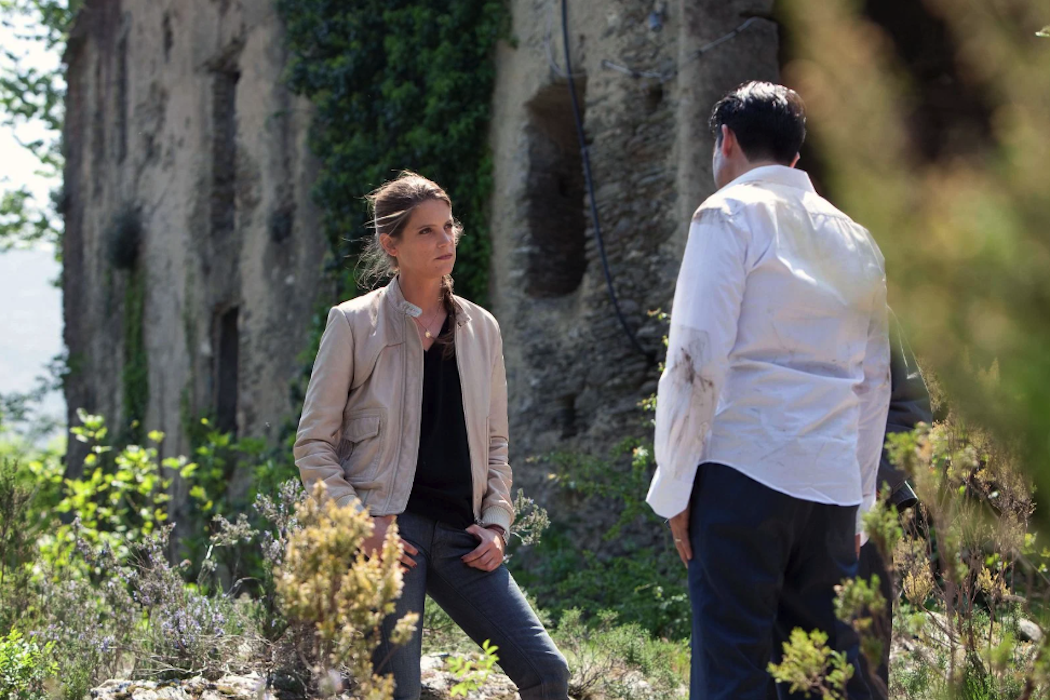
L’image emblématique de la mafia dans la fiction française reste celle de la série _Mafiosa, le clan_ (2006-2014, Canal+). Allociné

En Corse, dit le dicton, tout se fait, tout se sait, tout se tait (« Tuttu si face, tuttu si sà, tuttu si tace »)… Alors, Corse « terre d’omerta » selon le mot du criminologue Jean-François Gayraud ? En tout cas, terre d’imaginaire et de séries criminelles. Faut-il pour autant déduire de l’abondante production (télé)filmique récente une flambée de fascination pour les « banditi » insulaires ?


Si la conflictualité réelle de la société corse est bien documentée, tous les homicides commis sur l’île ne relèvent pas forcément de la « mafiacraft », selon le titre de l’anthropologue Deborah Puccio-Den. Or, les séries et les films sortis en France ces dernières années tendent à tout confondre, abusant parfois des clichés associés à la mafia dans l’imaginaire collectif.

Les défilés des comités antimafia font souvent la une de la presse régionale corse, en parallèle avec les récits de règlements de compte, de racket et de crimes crapuleux. De Mafiosa, le clan (2006-2014) à Plaine orientale (2025), de À son image (2024) au Royaume (2024), on peut avoir l’impression que les exactions réelles infusent la fiction criminelle, dans une porosité quasi incestueuse où le fait divers d’hier nourrit le scénario de demain, comme si l’imaginaire du voyou se régénérait sans cesse au contact d’une société à la fois clanique et violente, traversée par toutes les manifestations du crime contemporain (drogue, extorsion, chantage…).

Pourtant, aucun auteur français n’est menacé à la hauteur de ce que subit l’écrivain et journaliste italien Roberto Saviano, sous protection judiciaire depuis la publication de son très réaliste roman Gomorra en 2006, sans doute parce que parler des « mafieux corses » relève à la fois d’un mythe, d’un fantasme, d’un abus de langage et, à tout le moins, d’une réalité partielle.

Un folklore ancien, une actualisation récente

Le « milieu » et ses « beaux mecs » ont toujours séduit et fasciné les « caves » (autrement dit, le bon peuple !), par l’atmosphère d’interdit et d’ambiance sulfureuse que véhiculent les grands récits qui fondent cet imaginaire : Ange Bastiani, Albert Simonin, Auguste Le Breton corroborent le mythe viriliste du mauvais garçon dur à cuire, charmeur et violent, riche d’argent facile et prompt à jouer du couteau.

Mais ce folklore du premier XXe siècle englobe un sous-folklore corso-marseillais, dont la famille Guérini représente le « totem » le plus célèbre. Or, peu à peu le monde change, et les protagonistes sont désormais immergés dans des affaires de spéculation immobilière qui, comme dans le film le Mohican (Frédéric Farrucci, 2025), spéculation qui amène à s’entretuer, très littéralement. Ainsi, romanciers et cinéastes actuels font rarement l’économie d’une scène de mort violente, comme en témoigne ici l’extrait de Ceux que la nuit choisit (Joris Giovanetti, Denoël, 2025, p. 412-413) :

« On avait ramassé, à côté du corps criblé de plomb du jeune homme, un croissant ainsi qu’un Coca […] ; dans sa sacoche, une arme de poing de type Glock avait été retrouvée avec deux balles dans le chargeur. »

Mais c’est la drogue, la French Connection (1971), qui est surtout une « Corsican connection », qui a bouleversé le narratif traditionnel du « bandit d’honneur ». Les années 1970 voient en effet la drogue conquérir la Corse, en fabriquant nombre de « consommateurs-revendeurs ».

Mais tout explose vraiment entre 2000 et 2025, détruisant les anciennes solidarités et recomposant (dans la réalité comme dans les fictions) les hiérarchies délinquantes. Les saisies font d’ailleurs l’objet de nombreuses allusions :

« Ils limitent la morphine… Paraît que ça coûte trop cher… Tu parles, on est quand même bien placé pour connaître tous les stocks saisis sur les trafiquants, non ? » (Jean-Pierre Larminier, les Bergers, Nera Albiana, 2006, p. 98).

Peu à peu les bandes, comme (Petit Bar et Brise de mer…), ont remplacé les clans, et s’est formé un banditisme de l’extorsion, de la terreur et de l’assassinat – même si, pour la couleur locale nombre de titres d’œuvres de fiction utilisent toujours « le clan », terme plus connoté « corse » et plus mystérieux.

Plus récemment, à la disparition des « parrains » historiques puis à l’émiettement des bandes en groupes déstructurés, ultraviolents mais éphémères, s’est ajoutée l’arrivée des « petites mains » maghrébines qui à leur tour veulent s’emparer des marchés – c’est tout l’objet du film Un prophète (2009) et de la série Plaine orientale, tandis que s’accentue au gré des fictions un rapprochement purement « sensationnaliste » entre nationalisme et grand banditisme, par l’allusion à « l’impôt révolutionnaire » qui occupe bien des fantasmes, comme on le voit dans le film le Royaume, ou le roman À son image. Pourquoi cette appétence, sinon cette complaisance, pour le malheur ?

Omerta, vindetta : une vie… violente !

N’oublions pas qu’un féminicide, celui de Vanina d’Ornano par son époux Sampiero Corso, en 1563, reste un événement marquant de l’histoire de la violence en Corse. Il est difficile, après cela, de ne pas idéaliser une forme de romantisme du mauvais garçon, de l’« outlaw », alors que la plupart des faits divers sont objectivement épouvantables (pour les victimes) et dégradants (pour les tueurs).

Cette fascination pour le mal gagne du terrain un peu partout, dans la fiction comme les séries « de true crimes ».

Certes, ici la vignette pittoresque n’est jamais loin (violence, clanisme, fierté virile…) et Borgo (2023), film de Stéphane Demoustier, donne l’exemple même d’une porosité troublante entre fiction, fait divers et actualité brûlante. Quand le film, qui s’inspire d’un double assassinat qui a eu lieu à l’aéroport de Bastia en 2017, affaire dans laquelle une surveillante de prison est suspectée d’avoir eu un rôle décisif, est sorti en salle, le procès de la « vraie » gardienne de prison, complice d’un double assassinat, commençait. Et l’article du Monde de mentionner que cette femme aurait été fière d’être surnommée « Sandra Paoli », nom de la terrible cheffe de bande de la série Mafiosa

De fait, le grand banditisme comme la lutte identitaire sont d’inépuisables filons de fictions sanglantes, et les petits caïds de Plaine orientale rejoignent dans cette parade macabre les clandestins d’Une vie violente (2017). La figure romanesque et télévisuelle du bandit se porte ainsi fort bien, et irrigue nombre d’œuvres qui déconstruisent puis redessinent un nouveau visage du délinquant, ce que ne manque pas de souligner ironiquement le journaliste Sampiero Sanguinetti : « Comme le dit en substance Jacques Follorou : c’est la mafia, sans être la mafia, tout en étant la mafia. » (Jacques Follorou est un journaliste d’investigation du Monde, ndlr.) Tout annonce dès lors la trajectoire de Sandra Paoli, héroïne de la série Mafiosa.

Meurtres et forfaitures : à son image ?

En effet, « l’image » emblématique de la mafia dans la fiction reste celle de la série Mafiosa. C’est qu’il ne faut pas nier le goût du grand public pour le fantasme toujours renaissant d’une supposée cosa nostra, si présente dans le discours, si proche géographiquement (l’Italie), même s’il s’agit davantage d’un objet de pensée, avec lequel on aime jouer à se faire peur, voire à se sentir important !

Évacuons tout de suite la question du « réalisme » : Mafiosa est complètement imaginée et recréée, et non l’habillage maladroit de faits divers éparpillés. Le slogan de la série est, lui, immédiatement parlant : « L’homme le plus dangereux de Corse est une femme. »

En cinq saisons, nous suivons la chute et la rédemption d’une jeune avocate, devenue capo di tutti capi, la mafiosa Sandra Paoli : trente meurtres sont commis. Enfin, la dernière scène laisse supposer qu’elle-même est tuée par sa nièce Carmen – cette même Sandra qui confiait à la femme qu’elle aime :

« C’est ça ma vie. Des gens qui se tuent et des gens qui meurent. Même si je fais tout pour que ça s’arrête, ça ne marche pas. »

La trame de référence ici, ce n’est pas le réel, mais la tragédie grecque ; d’ailleurs le réalisateur Pierre Leccia a souvent comparé les Paoli aux Atrides, car dans la mythologie grecque, le destin des Atrides est marqué par le meurtre, le parricide, l’infanticide et l’inceste.

En résumé, la Corse présente deux faces, l’une solaire, rieuse, vacancière et festive, bref touristique. Mais un autre aspect, venu de croyances archaïques, révèle un fond tragique : celui des mazzeri, chasseurs de nuit qui, en rêve, viennent avertir les gens de leur mort prochaine. On peut y voir une sorte de préfiguration des « loups solitaires » du crime, ces berserkers de tradition nordique qui, importés sur les terres corses, ensanglantent eux aussi l’univers romanesque, car certains écrivains, comme François-Xavier Dianoux-Stefani, n’hésitent pas à installer une figure encore plus sinistre, celle du tueur en série, qui par haine du tourisme assassine d’innocents voyageurs :

« Choc terrifiant […]. Son crâne explose contre l’inox brillant des pare-buffles […]. Le monstre d’acier écrase littéralement la voiturette, la coupant en deux et broyant la passagère restée à l’intérieur. »

On peut au moins avoir une certitude : l’horrible et le sordide écrivent une fresque pleine de douleur, où extorsions, assassinats et vengeances défraient interminablement la chronique romanesque des vies sans destin. Après Mafiosa viendra une nouvelle série nommée Vendetta dont le réalisateur, Ange Basterga, dit qu’elle tordra le cou aux clichés. Soit ! mais le titre, lui, appartient bien aux stéréotypes du récit corse. Tant qu’à faire, les voyous de l’autrice Anna de Tavera étaient plus explicites, en ciblant le fléau majeur des sociétés contemporaines, corses et non-corses et ce, quel que soit le nom qu’on donne aux trafiquants qui en font métier :

« De toute façon […] il va falloir vous mettre dans vos têtes de politiciens que la drogue, c’est le monde entier ! »

The Conversation

Isabelle-Rachel Casta ne travaille pas, ne conseille pas, ne possède pas de parts, ne reçoit pas de fonds d’une organisation qui pourrait tirer profit de cet article, et n’a déclaré aucune autre affiliation que son organisme de recherche.

ref. De « Mafiosa » à « Plaine orientale », l’imaginaire de la mafia corse à l’écran – https://theconversation.com/de-mafiosa-a-plaine-orientale-limaginaire-de-la-mafia-corse-a-lecran-270692