Cada vez que empieza un Mundial, en la oficina, en el grupo de WhatsApp de la familia o entre amigos reaparece uno de los rituales más persistentes del torneo: la porra. Durante unos minutos, todos nos convertimos en seleccionadores, analistas y expertos en probabilidades. Elegimos campeón, finalistas y revelaciones convencidos de que, esta vez sí, hemos encontrado el criterio definitivo.
Ahora, los métodos de “adivinación” tienen su propia tecnología, la inteligencia artificial. Cada vez es más frecuente pedirle a ChatGPT o a otro modelo similar que rellene una porra. Después de todo, si puede resumir artículos científicos, escribir código o traducir idiomas, ¿por qué no iba a ser capaz de predecir un Mundial? La respuesta corta es que, probablemente, lo haga mejor que la mayoría de nosotros. La larga es bastante más interesante.
La diferencia entre adivinar y calcular
Por supuesto, los programas de inteligencia artificial no entienden de fútbol como un aficionado que lleva treinta años viendo partidos. No recuerdan aquel gol imposible, ni tienen manías con determinados entrenadores, ni sienten que una selección “siempre compite mejor en los grandes torneos”. Lo que hacen es otra cosa.
El problema es que el fútbol se empeña en desobedecer
En una liga de treinta y ocho jornadas, los mejores equipos casi siempre terminan arriba. En un Mundial, es suficiente con tener una mala tarde para volver a casa.
El fútbol es un deporte especialmente difícil de predecir, porque suceden pocas cosas decisivas –durante los noventa minutos que dura, las acciones determinantes son escasas (los goles, las asistencias o las salvadas cruciales). El resto del tiempo se compone de microdecisiones tácticas, presión y acumulación de jugadas–.Un gol o una expulsión alteran un partido entero y un rebote puede cambiar una eliminatoria. Cuanto menor es el número de acontecimientos relevantes, mayor es el peso del azar.
Por eso, un modelo que estime un 70 % de probabilidades de victoria no está diciendo que un equipo vaya a ganar. Está diciendo que perderá aproximadamente tres de cada diez veces. Y los Mundiales tienen una extraña habilidad para recordarnos precisamente esas tres.
Ni la intuición ni el algoritmo son imparciales
Las personas no hacemos nuestras predicciones desde la objetividad. Sobrevaloramos a nuestra selección, desconfiamos del rival que nos eliminó hace años y convertimos una buena racha en una certeza. Nos cuesta distinguir entre lo que creemos que ocurrirá y lo que deseamos que ocurra.
Los algoritmos tampoco están libres de sesgos. Dependen de los datos con los que fueron entrenados, de las variables que consideran importantes y de las regularidades que encuentran en el pasado. Si el fútbol cambia, si aparece una generación excepcional o si un jugador decisivo se lesiona, sus predicciones también se resienten.
Así, las probabilidades de ganar una porra o bien con nuestra propia sesera o bien con IA no son un combate entre intuición y objetividad. Son dos formas distintas de lidiar con la incertidumbre.
Paradójicamente, para ganar una porra puede ser más rentable alejarse un poco del escenario más probable y apostar por un desenlace razonable que casi nadie haya elegido. En este contexto, la estrategia óptima no siempre coincide con la predicción óptima.
El almanaque que nunca existirá
La inteligencia artificial puede mejorar nuestras estimaciones. Puede ayudarnos a ordenar información, reducir algunos sesgos e identificar patrones que, a simple vista pasarían desapercibidos. Lo que no puede hacer es fabricar el almanaque de Biff Tannen, el personaje de la película Regreso al futuro II que encuentra un almanaque con los resultados deportivos de las décadas siguientes. Gracias a él gana todas las apuestas, amasa una fortuna y demuestra que conocer el futuro convierte el azar en un negocio.
Y es que el problema nunca ha sido la cantidad de información disponible. Es la naturaleza del propio juego: el fútbol pertenece a esa categoría de sistemas donde una enorme parte del resultado depende de acontecimientos imposibles de anticipar con precisión.
Quizá, por eso, seguimos organizando porras cada cuatro años. Intuimos que todavía existe un espacio donde ni el mejor modelo de inteligencia artificial puede reemplazar la incertidumbre. Mientras un balón pueda desviarse en una espinillera y cambiar la historia de un Mundial, seguirá habiendo margen para que un grupo de amigos, una hoja compartida y una corazonada acaben derrotando al algoritmo.
Paula Lamo no recibe salario, ni ejerce labores de consultoría, ni posee acciones, ni recibe financiación de ninguna compañía u organización que pueda obtener beneficio de este artículo, y ha declarado carecer de vínculos relevantes más allá del cargo académico citado.
Source: The Conversation – (in Spanish) – By Sara Valenzuela-Monreal, Ayudante de Investigación en el Departamento de Comunicación y Educación, Universidad Loyola Andalucía
Este artículo forma parte de la sección The Conversation Júnior, en la que especialistas de las principales universidades y centros de investigación contestan a las dudas de jóvenes curios@s de entre 12 y 16 años. Podéis enviar vuestras preguntas a tcesjunior@theconversation.com
Pregunta formulada por Marcos Matarán Delgado, de 15 años, alumno del IES Miguel de Cervantes (Granada).
Seguro que alguna vez has pensado: “ese personaje soy yo” o “me encantaría vivir lo que ocurre en este episodio”. La investigación en comunicación lleva décadas intentando entender por qué conectamos tanto con las historias que vemos. Y también con sus personajes. ¿Por qué sufrimos, nos alegramos o nos enfadamos por alguien que, en realidad, ni siquiera existe? Y, sobre todo, ¿por qué siempre queremos ver “un episodio más”?
No existe un único motivo. Que una serie nos enganche es algo muy personal y, por supuesto, depende de la historia, de los personajes e, incluso, del momento vital en el que nos encontremos. No todos buscamos lo mismo y, precisamente por eso, guionistas, directores, cadenas y plataformas trabajan para crear historias capaces de conectar con distintos tipos de público.
Una capítulo detrás de otro
También es habitual que llegue la noche y elijamos poner una serie en lugar de una película. ¿Por qué? Uno de los motivos es porque están divididas en episodios. Si nos decantamos por un largometraje, sabemos que debemos comprometernos con, al menos, hora y media de nuestro tiempo. En ese margen, nos podemos ver dos o tres episodios de la serie que nos gusta. Pero esta percepción es un poco engañosa.
Una temporada de una serie juvenil actual, como Off Campus, puede durar alrededor de 400 minutos, es decir, unas cuatro películas. Y, además, cuando termina el capítulo no solemos levantarnos del sofá: queremos ver el siguiente.
Los episodios suelen terminar con escenas abiertas en las que sentimos la necesidad de saber qué va a ocurrir a continuación. Puede ser que dos personajes estén a punto de besarse, que alguien esté en peligro de muerte o que empiece el momento decisivo para el que los protagonistas se llevan preparando durante toda la historia. Justo ahí acabará siempre el capítulo. A este recurso narrativo se le llama cliffhanger y es uno de los más utilizados por los guionistas de televisión. Si a esto le sumamos un botón que dice que “el próximo episodio comenzará en 10 segundos” con una cuenta atrás, tenemos el cóctel perfecto para que hagas click. Total, solo serán “diez minutos más”.
Diferencias clave con las películas
Por otro lado, una serie no se crea igual que una película. Puede durar muchas temporadas y tiene que manejar un gran número de personajes e historias al mismo tiempo. Por eso, utiliza sus propios formatos, que en comunicación audiovisual se conocen como estructuras seriales. En una serie de thriller o suspense, podemos ver el pasado del protagonista, la investigación policial, el papel de la prensa o, incluso, la historia del culpable. Aunque haya un punto de vista principal, no hay que elegir uno solo, como sí ocurre en una película.
Para organizar todo esto, se utilizan herramientas como el mapa de tramas, una guía que relaciona todos los episodios de una temporada y los personajes implicados. Porque si no, es muy fácil perderse durante la escritura de guion. Y toda esa complejidad también contribuye a que nos enganchemos.
Personajes que son como de la familia
Cuantos más personajes hay en una serie, más fácil es que encontremos alguno con el que conectemos. Siempre hay algo en su personalidad, su contexto o su historia que encaja con nosotros. De hecho, varios estudios han analizado nuestra forma de implicarnos con los personajes ficticios, que no dista mucho de lo que nos ocurre, por ejemplo, con personas reales, como influencers o youtubers.
Probablemente has escuchado a alguien decir que está enamorado de un personaje, que quiere ser como él o ella, o eso de que “es que soy yo literal”. Estos fenómenos, aunque se parezcan mucho, no son lo mismo. El mayor nivel de implicación con un personaje es la identificación, cuando experimentamos lo que vive como si nos pasara a nosotros. A veces, simplemente sentimos que compartimos características o contextos con un personaje, es decir, percibimos similitud entre lo que le ocurre y nuestra propia vida.
También puede ser que veamos al personaje como alguien cercano; nos recuerda a nuestro círculo y “le cogemos cariño”. A eso se le llama interacción parasocial. La última opción es cuando admiramos al personaje o, incluso, lo vemos atractivo y nos queremos parecer a él o a ella. A esto se le llama “deseo de identificación”.
Todas estas formas de implicación y, por tanto, de engancharnos y empatizar más con lo que vemos, tienen una gran relevancia cuando estamos creciendo, porque nos acompañan al crear referentes en nuestro día a día.
Una temática para cada perfil de persona
Todo esto tiene mucho que ver con la amplia variedad de series que podemos encontrar hoy en plataformas y cadenas. España ha pasado de estrenar 48 títulos en 2010 a 86 en 2024. ¿Esto qué quiere decir? Que cada vez tenemos más opciones donde elegir y que pueden existir más “series de nicho”, es decir, creadas para personas con un interés concreto.
Las plataformas como Netflix no necesitan que todos veamos lo mismo: buscan que siempre haya una serie que encaje con lo que queremos consumir, seamos como seamos y nos guste lo que nos guste. Por ejemplo, si quieres ver una serie juvenil, ya no se incorporan tramas de toda la familia, sino que se centran en personajes de esta edad y los [problemas relacionados con la adolescencia]. Más opciones de protagonistas, por tanto, para sentir esta implicación.
Así que las series no nos enganchan por casualidad. En muchas ocasiones, están diseñadas para continuar, para que profundicemos en sus historias y conectemos con sus personajes… y para que verlas nos resulte cómodo y (casi) adictivo. Pero no es fácil desgranar eso que nos hace experimentarlas como si, durante el rato que duran los episodios, formáramos parte de un mundo diferente. Y es que la serie que te encanta puede no gustarle nada a tu amigo o a tus padres, porque siempre hay una parte esencial que tiene que ver con quiénes somos.
El museo interactivo Parque de las Ciencias de Andalucía y su Unidad de Cultura Científica e Innovación colaboran en la sección The Conversation Júnior.
Sara Valenzuela-Monreal realizó su tesis doctoral sobre series de ficción financiada por un contrato de Formación al Profesorado Universitario (FPU).
Esa visión idealizada es, por supuesto, una simplificación que se aleja de las complejidades de la historia americana. Un caso particularmente elocuente fue el drama de la esclavitud. En este asunto, tras la promulgación de la Declaración, las cosas siguieron siendo como antes sin que, de repente, se desplegara ninguna suerte de plan providencial que comenzara a cambiarlo todo.
Sin embargo, tampoco debemos interpretar la Declaración como una cáscara vacía. Lo que se aprobó en aquel mes de julio en Filadelfia y se proclamó solemnemente cuatro días después comprometía a la recién creada nación con una aspiración de igualdad jurídica y legal para todos sus ciudadanos.
Aunque enseguida surgieron y se extendieron las dudas. Once años más tarde, en una memorable ocasión, Benjamin Franklin las expresó con gran claridad. Fue el 17 de septiembre de 1787, en el curso de los últimos debates que condujeron a la aprobación de la Constitución. Meditando sobre la suerte que el futuro depararía al experimento político democrático que entonces se ratificaba (del cual la Declaración había supuesto su arranque) fijó su mirada en la figura del sol tallada en el respaldo de la silla de caoba que utilizaba Washington. A continuación se preguntó: “¿Es un sol naciente o es un sol poniente?”
Pocas veces se ha aludido de manera tan poética a uno de los dos grandes dilemas de la historia estadounidense: la contradicción existente entre los principios de libertad y de igualdad proclamados en 1776 y la persistencia del drama de la esclavitud.
George Washington y su plantación de esclavos
Aquí no cabe recurrir a subterfugios exculpatorios. Por ejemplo, al inevitable peso de los prejuicios heredados, lo que habría impedido a los Padres Fundadores mirar de cara a la realidad de la esclavitud. Nunca pasó nada de eso. Todos ellos eran plenamente conscientes de lo que esa institución implicaba. También George Washington, el primer presidente de los Estados Unidos (1789-1797), conocido como “padre de la Patria”.
Washington fue y se sintió un genuino hombre del sur. Mount Vernon –el solar familiar de los Washington– era una importante plantación agrícola con más de un centenar de esclavos. Así pues, las conexiones de Washington con la esclavitud y sus prácticas eran profundas.
Sin embargo, también interpretó que la lucha que emprendía al frente del Ejército Continental (formado por las Trece Colonias durante la Guerra de Independencia) no era solo por la libertad de los colonos, sino para acordar un nuevo pacto de valor universal, fundado en la igualdad de todos ante la ley. Aquella aspiración fue lo que le llevó a cuestionar, sin grandes aspavientos –pero también de manera constante y sin concesiones– el conjunto de supuestos y asunciones que, durante años, le habían llevado a comulgar con la dominante mentalidad esclavista de su tierra sureña.
En muy poco tiempo, Washington fue capaz de reconocer que, sin contar con la igualdad de todos ante la ley, resultaba vano hablar de libertad. Pero también era plenamente consciente de lo poco equipados, política y psicológicamente, que estaban sus compatriotas, sobre todo en los territorios del sur, para aceptar la supresión del régimen esclavista.
Al mismo Washington le resultaba difícil y doloroso renunciar a su estatus de hacendado de Virginia. Al final, dejó escrito en su testamento que, a su muerte, sus 123 esclavos debían convertirse en personas libres. Asimismo, esperaba que sus sucesores en la presidencia siguieran sus pasos, para dar ejemplo e ir abriendo el camino hacia la abolición.
Conciliando la autoridad con la prudencia
Desde nuestros parámetros actuales, todas esas medidas y deseos suenan a demasiado poco. Pero, para calibrarlas adecuadamente, también hay que tener muy en cuenta el pavor que Washington sentía a que una decisión apresurada en una cuestión tan sensible como esa acabara por hacer descarrilar el gran “experimento político” bajo su dirección. La eventualidad de un fracaso generó en él un estado de ansiedad permanente.
Asimismo, se sentía transitando por un terreno totalmente inexplorado. Por ello pensaba que debía actuar y comportarse con suma prudencia. Llegó a concluir que, cara al exterior, debía inspirar respeto para no parecer débil; pero no tanto como para ser tomado, cara al interior, como un rey. Consideraba que solo sabiendo conciliar la autoridad y la osadía con la prudencia y la humildad lograría evitar lo que más temía: el “faccionalismo” y la división del país en sectores irreconciliables.
Con la perspectiva que nos proporcionan los 250 años trascurridos desde la Declaración de la Independencia se puede llegar a afirmar que, en su forma de dirigir el país y de tratar a sus compatriotas, George Washington encarna la némesis de lo que hoy representa Donald Trump.
Alvaro Ferrary no recibe salario, ni ejerce labores de consultoría, ni posee acciones, ni recibe financiación de ninguna compañía u organización que pueda obtener beneficio de este artículo, y ha declarado carecer de vínculos relevantes más allá del cargo académico citado.
Source: The Conversation – (in Spanish) – By Tulio Alberto Álvarez-Ramos, Profesor/Investigador Instituto de Investigaciones Jurídicas de la Universidad Católica Andrés Bello. Jefe de Cátedra de Derecho Constitucional de la Universidad Central de Venezuela, Universidad Católica Andrés Bello
La amenaza que hoy acecha a los Estados constitucionales parece provenir “de más lejos que más nunca”, como el origen incierto de la barbarie que describió el escritor venezolano Rómulo Gallegos en su novela Doña Bárbara. No nace de una carencia de leyes, sino de una mutación del derecho: la transición hacia el Estado sin garantías y sin bienestar.
Mientras el siglo XX prometió que la apertura económica traería libertad, el siglo XXI sacrifica las garantías ciudadanas en el pragmatismo extractivo y la seguridad energética. Este modelo no es un fenómeno aislado: resuena en las grandes economías globales, que comienzan a privilegiar la competitividad y el rendimiento sobre los estándares democráticos tradicionales.
También se consolida en la validación (tras años de colapso) del gobierno venezolano por parte de Estados y organismos internacionales, sin que se haya producido una transformación política real cuando se cumplen seis meses de la captura de Nicolás Maduro, en enero de 2026, y Venezuela enfrenta las primeras semanas tras los devastadores terremotos del pasado 24 de junio y sus sucesivas réplicas. El desastre ha puesto en evidencia la deficiente preparación del Estado para atender una catástrofe de esa magnitud.
Ahora, como decíamos, surge el Estado sin bienestar, que rompe este pacto de siglos y sustituye la “búsqueda de la felicidad” de los padres fundadores estadounidenses por la búsqueda de la rentabilidad, y la “voluntad general” de los derecho de mujeres y hombres por el pragmatismo extractivo.
Olvidar que el fin último del Estado es el bienestar y la felicidad ciudadana es, en esencia, renunciar a la civilización política.
Cuando la democracia es sorprendida
El camino hacia un Estado sin bienestar no es nuevo, pero lleva más recorrido de lo que la teoría democrática pudo prever. En Venezuela, los eventos electorales de julio de 2024 mostraron cómo la norma jurídica quedó desplazada por un bloque normativo represivo.
Aunque la salida de Maduro generó una renovada expectativa de cambio político, la restauración democrática exige, además, el retorno de Venezuela al Sistema Interamericano de Derechos Humanos del que se separó formalmente en septiembre de 2013. Esta reincorporación no busca ser una mera formalidad diplomática: representaría el restablecimiento de un bloque de garantías supranacionales que actúe como contrapeso a la arbitrariedad interna.
Restaurar la vigencia de la Constitución implica reconocer que ningún crecimiento económico o estabilidad técnica puede sustituir la justicia integral y el respeto a la voluntad popular. El desafío político venezolano es, en última instancia, demostrar que es posible desmantelar un sistema de exclusión para recuperar la senda de una democracia plena y vinculante.
El pragmatismo multilateral como aval del autoritarismo
La reanudación simultánea de operaciones con Venezuela por parte del Fondo Monetario Internacional y el Banco Mundial en abril de este año marca un hito en la geopolítica venezolana.
Al restablecer relaciones bajo criterios de “mayoría de voto” y “necesidades técnicas”, estos organismos desplazaron el estándar de la legitimidad democrática en favor de una normalización operativa. Este movimiento valida la tesis del Estado sin bienestar: se acepta la inserción de un país en el engranaje internacional no por su apertura política, sino por su disposición a ajustar sus sectores estratégicos –energía y minas– a las demandas del mercado global y las directrices de la administración estadounidense.
Con este respaldo, que prioriza sobre las garantías ciudadanas la estabilidad macroeconómica y la negociación de una deuda de 240 000 millones de dólares, se envía el mensaje de que cumplir con las reglas del capital es suficiente, incluso si se mantiene el colapso de las instituciones democráticas.
Obviamente, la estabilidad económica es compatible con el ideal democrático, pero sin libertades económicas ni Estado de derecho no hay desarrollo económico real.
Entre el ‘dominium’ de Trump y la muralla económica china
El camino hacia el Estado sin bienestar es también el resultado de una pinza geoeconómica. Por un lado, la administración Trump ha consolidado su agenda de Dominus Quiritario, utilizando el petróleo y el gas como herramientas de diplomacia dura. Al priorizar el “Fossil-Fuel First” y asegurar el control de minerales críticos, Washington ha rediseñado las reglas: la seguridad nacional es ahora seguridad energética.
En este esquema, países como Venezuela son vistos menos como democracias a restaurar y más como suministradores estratégicos que deben ser estabilizados para que los recursos energéticos fluyan hacia los mercados.
Frente a esto, China ha perfeccionado su propia versión del autoritarismo desarrollista. Al controlar entre el 40 % y el 90 % del procesamiento global de materiales clave, Pekín ha transformado la dependencia de sus suministros en un arma geoeconómica, capaz de asfixiar economías mediante restricciones a la exportación, como las aplicadas al grafito y las tierras raras en 2025.
Frente a estas dos fuerzas contrarias, la respuesta de la Unión Europea ha sido el lanzamiento, en marzo de 2026, del plan RESourceEU y la Ley de Aceleración Industrial, buscando impulsar la reindustrialización y la transición energética, y asegurarse el suministro de materias primas críticas.
Sin embargo, esta búsqueda de autonomía estratégica corre el riesgo de validar los modelos chino y estadounidense, donde la competitividad industrial y el acceso a rentas justifican el debilitamiento de los marcos de control democrático y ambiental transnacional.
Rendidos ante las nuevas reglas
El reconocimiento financiero de una Venezuela sin libertades, pero con recursos que ofrecer a los mercados, marca el acta de defunción de los consensos políticos de la posguerra para la construcción del Estado del bienestar. Si el éxito de un Estado se mide por su capacidad de extraer rentas, y no por su capacidad de proteger los derechos de sus ciudadanos, estamos ante una involución global irreversible.
La crisis de las instituciones no es un fallo técnico, sino una rendición ante un nuevo diseño de las reglas mundiales. Anuncia un futuro donde la eficiencia del capital convive cómodamente con la asfixia de la política real, dejándonos un mundo con recursos, pero trágicamente vacío de humanidad.
Tulio Alberto Álvarez-Ramos no recibe salario, ni ejerce labores de consultoría, ni posee acciones, ni recibe financiación de ninguna compañía u organización que pueda obtener beneficio de este artículo, y ha declarado carecer de vínculos relevantes más allá del cargo académico citado.
Le match de samedi qui verra s’affronter le Canada et le Maroc en Coupe du monde place la communauté marocaine, très nombreuse au Québec, devant un choix qui peut s’avérer déchirant entre leur pays d’origine et leur pays d’adoption. Ce dilemme, loin de se limiter à cette communauté, révèle le lien complexe entre identité, migration et allégeance sportive au sein de la mosaïque culturelle canadienne.
Si ce message illustre l’enthousiasme suscité par la participation du Canada à domicile, la manière dont l’« équipe du peuple » est perçue par les Canadiens eux-mêmes pendant la Coupe du monde est plus nuancée.
La Coupe du monde représente un moment particulier pour le Canada, où la diversité et la culture sont mises en avant. C’est pourquoi de nombreux Canadiens pourraient arborer plusieurs drapeaux – et pas seulement celui à la feuille d’érable – tout au long de la compétition.
En effet, l’attachement à une équipe sportive n’est pas toujours simple ; il est façonné par l’histoire personnelle et la migration. Si l’on tient compte de la dimension mondiale de la Coupe du monde moderne, les frontières s’estompent encore davantage. Des joueurs sur le terrain aux supporters dans les tribunes, le chevauchement des identités culturelles fait que le choix d’une équipe à soutenir dépend rarement uniquement du lieu où l’on vit actuellement.
Richie Laryea, membre de l’équipe canadienne, a déclaré : « Notre équipe nationale est à l’image de ce qu’est notre pays aujourd’hui. Et c’est très bien ainsi. Elle doit être extrêmement diversifiée. » Mais les Canadiens qui partagent les mêmes origines ethniques que les joueurs de l’équipe nationale ont-ils du mal à décider qui soutenir ?
Le riche multiculturalisme du Canada – et la composition diversifiée de son équipe nationale – font de cette période un moment fascinant pour observer quel pays les Canadiens choisissent de soutenir pendant la Coupe du monde.
Déjà des milliers d’abonnés à l’infolettre de La Conversation. Et vous ? Abonnez-vous gratuitement à notre infolettre pour mieux comprendre les grands enjeux contemporains.
Lors de la Coupe du monde 2018, le Croatia Park de Mississauga est devenu un immense lieu de rassemblement pour les Canadiens d’origine croate venus encourager leur équipe nationale et célébrer leurs racines. Si de telles scènes mettent pleinement en valeur la diversité du Canada, elles soulèvent également une question fascinante : lorsque chacun soutient son pays d’origine, quelle place reste-t-il à l’équipe canadienne elle-même ?
Ces célébrations mettent en lumière une véritable crise d’identité pour certains supporters, maintenant que le Canada est devenu un concurrent régulier sur la scène internationale. Le véritable dilemme survient lorsque les gens se sentent profondément déchirés entre leur pays d’origine et leur pays d’accueil. Les supporters peuvent être confrontés à la décision difficile de choisir quel drapeau hisser – ou quelle patrie occupera la première place s’ils décident d’arborer les deux.
Dans l’univers très compétitif du sport de haut niveau, gagner est tout ce qui compte. À mesure que les équipes sont éliminées et que le tournoi bat son plein, les Canadiens partagés entre deux loyautés peuvent se retrouver tiraillés dans plusieurs directions. Cela peut amener bon nombre d’entre eux à se sentir véritablement tiraillés quant à l’équipe qu’ils « devraient » soutenir.
Une étude portant sur la Coupe du monde 2014 a montré que les supporters peuvent soutenir certaines équipes lorsqu’ils découvrent des liens personnels avec ces nations. Un participant à l’étude, d’origine kenyane, a déclaré : « J’ai été attiré par la Belgique, car leur attaquant est un Belge d’origine kenyane. »
Ce n’est pas tous les jours qu’on a l’occasion d’affronter le pays où l’on a vécu quand on était plus jeune. Mais je dois tout de même y aller avec la mentalité que je dois faire mon travail pour mon pays.
Malgré l’élimination d’Haïti de la Coupe du monde, un débat passionnant persiste : les Canadiens d’origine haïtienne ont-ils été tiraillés quant à leur identité au moment de choisir s’ils devaient soutenir le Canada, Haïti, ou les deux ? À présent, l’attention se porte sur la question de savoir si les origines haïtiennes de David incitent activement la communauté à se rallier derrière l’équipe canadienne pour le reste du tournoi.
Au final, les supporters ne sont pas obligés de choisir une seule équipe : ils peuvent soutenir à la fois les équipes qui représentent leur héritage culturel et la sélection canadienne qui entre dans l’histoire. Parallèlement, le succès du Canada sur le terrain nous pousse à repenser ce que signifie réellement être « Canadien » dans un pays où soutenir ses origines a longtemps été la norme.
Au final, le choix de l’équipe que les Canadiens décident d’encourager offre un aperçu fascinant de la mosaïque culturelle unique du pays.
Alors que les rues canadiennes se remplissent d’une mer colorée de drapeaux du monde entier et que les communautés se rassemblent autour d’une passion commune pour le football, c’est le moment idéal pour réfléchir à notre identité nationale.
Les auteurs ne travaillent pas, ne conseillent pas, ne possèdent pas de parts, ne reçoivent pas de fonds d’une organisation qui pourrait tirer profit de cet article, et n’ont déclaré aucune autre affiliation que leur organisme de recherche.
Si nos capacités de concentration n’ont pas forcément été altérées par les nouvelles technologies, le fait de passer constamment d’une tâche à l’autre altère la qualité de notre attention.FujiCraft/Getty
Sollicités en permanence par les notifications de nos ordinateurs ou de nos téléphones, nous avons l’impression que notre attention se morcelle. Et à raison, car notre cerveau n’est pas vraiment « multitâche ». Heureusement, il est possible de reprendre la main sur notre concentration.
« Ding ! » – ce son de notification, conçu pour capter notre attention, ne nous est que trop familier. En moyenne, un adulte qui utilise un smartphone aux États-Unis recevrait chaque jour au moins 46 notifications push, soit une toutes les 20 minutes environ, durant les heures de veille.
Or, des résultats de recherches démontrent que ces fonctionnalités destinées à capter l’attention augmentent le stress et réduisent la productivité. Elles peuvent même avoir des conséquences mortelles : sur les routes australiennes, la distraction liée au téléphone coûte la vie à 29 personnes chaque année.
Dans nos sociétés modernes, se concentrer sur une seule tâche à la fois est devenu un défi qui peut sembler impossible à relever. Pourtant, il existe des moyens de reprendre le contrôle de notre attention.
Comment fonctionne notre attention
Notre attention sélective, autrement dit le processus par lequel nous nous concentrons sur les informations pertinentes en ignorant le reste, dépend de la mise en réseau de différentes régions de notre cerveau.
Concrètement, ce sur quoi nous dirigeons notre attention dépend d’un équilibre entre nos objectifs et ce qui se passe autour de nous. Cela signifie que des événements soudains peuvent capter notre attention et la détourner de ce que nous sommes en train de faire.
D’un point de vue évolutif, on pense que ce mécanisme d’attention sélective a été privilégié, car il permet de renforcer la sécurité. Si, pendant que l’on cueille des baies en forêt, un soudain bruissement de feuilles se fait entendre à proximité, mieux vaut que notre attention se détourne de notre activité pour se focaliser sur ce son, car il peut s’agir d’un prédateur prêt à attaquer.
Aujourd’hui, toutefois, ce même mécanisme est détourné de sa fonction par nos environnements modernes, au profit de choses bien moins importantes ou urgentes – par exemple, par la vibration qui signale qu’une nouvelle demande de contact est arrivée sur notre smartphone.
Le problème de la technologie
Les plateformes numériques sont conçues pour capter et retenir instantanément notre attention, en exploitant les systèmes de récompense et de motivation du cerveau. C’est pourquoi il peut être plus difficile de résister aux distractions qui offrent une forme de récompense, comme un like sur une publication. Cela complique également la capacité à rester concentré sur des tâches qui requièrent une attention soutenue.
Des recherches suggèrent que ces interruptions fréquentes pourraient réduire notre aptitude à rester focalisé sur une activité. Cette diminution d’attention ne résulterait pas d’une altération de nos capacités fondamentales à nous concentrer, mais plutôt d’une augmentation de la fréquence à laquelle nous passons d’une activité à l’autre.
Disons-le tout net : la capacité à être « multitâche », autrement dit à pouvoir accomplir deux tâches exigeantes en même temps, relève du mythe. En réalité, notre capacité d’attention est limitée : nous ne pouvons pas traiter simultanément tout ce qui se passe autour de nous. Être « multitâche » revient en réalité à alterner entre les tâches, c’est-à-dire à basculer rapidement de l’une à l’autre plutôt que de les mener réellement de front.
Il est cependant possible de « muscler notre attention » grâce à quelques ajustements de notre mode de vie.
1. Limiter les distractions liées aux dispositifs électroniques
Vous pouvez pour cela activer le mode « Concentration » de votre téléphone. Celui-ci limite automatiquement les distractions en filtrant les notifications reçues, en particulier pendant le travail ou la conduite. Vous pouvez aussi désactiver toutes les notifications des applications, et définir des plages horaires précises pour les consulter – dix minutes avant le déjeuner, par exemple – utilisant une minuterie pour vous y tenir.
Certaines applications permettent un suivi du temps d’écran. Elles peuvent être utiles, mais évitez celles qui transforment en jeu le temps passé loin de votre téléphone. En effet, de façon plutôt ironique, ces fonctionnalités ludiques sont, elles aussi, conçues pour capter votre attention… Privilégiez plutôt des outils qui vous décourageront d’utiliser vos appareils et qui vous procureront des données susceptibles de vous aider à prendre du recul sur vos usages des écrans.
2. Choisir des activités qui exigent de la concentration
Les données scientifiques sont claires : le fait de constamment alterner entre différentes tâches affaiblit notre concentration. Pour y remédier, privilégiez les activités qui requièrent une attention soutenue.
Des recherches ont démontré que s’adonner à des activités « immersives », telles que la pratique d’un instrument de musique ou d’un sport de compétition, plusieurs fois par semaine peut améliorer la capacité de concentration. Cela pourrait s’expliquer par le fait que ces activités exigent, pour atteindre les objectifs visés, de rester attentif sur des périodes prolongées.
Vous pouvez également utiliser des outils tels que les minuteurs Pomodoro, qui vous aideront à alterner des intervalles de 25 minutes de concentration sur une tâche avec des pauses de cinq minutes.
3. Réduire l’utilisation de la technologie
Des études ont révélé que les personnes qui évitent d’utiliser leurs appareils avant de dormir et qui ne les gardent pas avec eux dans la chambre dorment mieux. D’autres travaux indiquent également que ces pratiques peuvent améliorer la concentration le lendemain.
Lorsque vous disposez d’un peu de temps libre, résistez à l’envie de saisir immédiatement votre appareil. Des résultats de recherche suggèrent que s’accorder régulièrement des pauses pour laisser son esprit vagabonder permet au cerveau de traiter l’information et de tisser de nouveaux liens entre différents concepts et expériences, ce qui laisse le champ libre à la créativité.
En définitive, reprendre le contrôle de son attention n’exige pas nécessairement de se plier à des règles rigides ou d’observer des routines strictes. Cela commence par l’intention d’accomplir divers petits gestes destinés à nous rendre davantage « présent ».
L’attention est une ressource précieuse : investissons-la judicieusement.
Anina Rich bénéficie d’un financement du Conseil australien de la recherche. Elle est codirectrice de « Rethinking the Brain », une entreprise spécialisée dans les neurosciences éducatives.
Patricia Morada Macabulos ne travaille pas, ne conseille pas, ne possède pas de parts, ne reçoit pas de fonds d’une organisation qui pourrait tirer profit de cet article, et n’a déclaré aucune autre affiliation que son organisme de recherche.
Source: The Conversation – in French – By Patrick De Wever, Professeur, géologie, micropaléontologie, Muséum national d’histoire naturelle (MNHN)
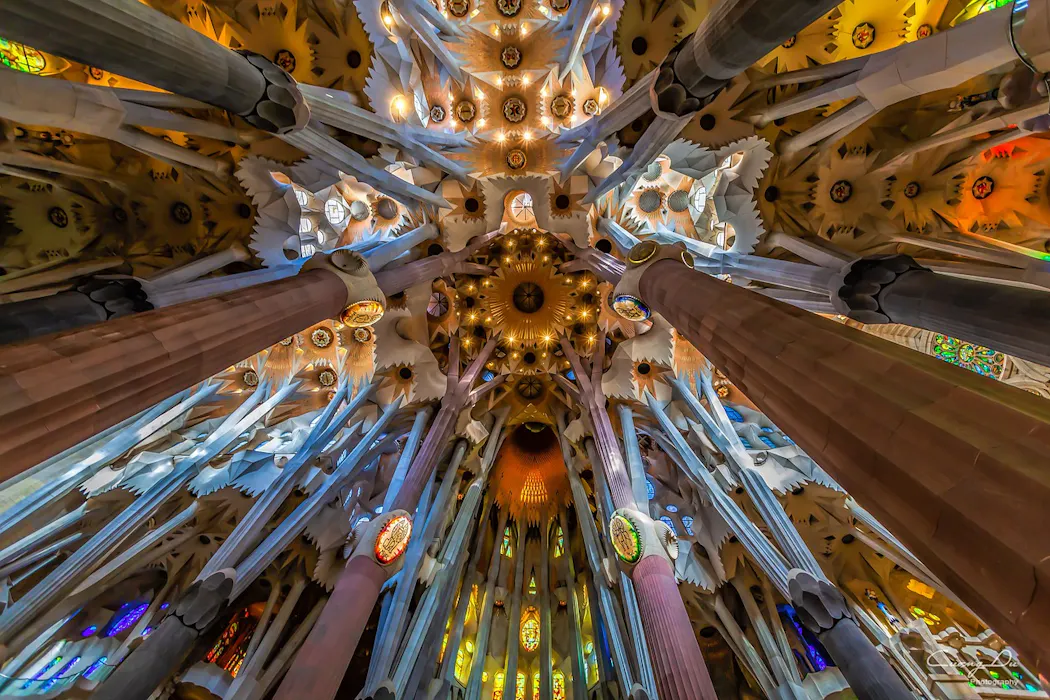
Vue de l’intérieur de la Sagrada Familia. La coupole s’appuie sur des piliers comme des segments de radiolaires se prolongent par des épines.CD_Photosaddict/Pixabay, CC BY-SA
Au-delà du sport, le Tour de France donne aussi l’occasion de (re)découvrir nos paysages et parfois leurs bizarreries géologiques. La toute première étape de son édition 2026, le samedi 4 juillet, met Barcelone à l’honneur. La ville espagnole est connue pour sa fameuse basilique la Sagrada Familia, conçue par l’architecte Antoni Gaudi. Celui-ci s’est notamment inspiré, au plan esthétique, de la géologie et du vivant, et en particulier des microfossiles.
La toute première étape du Tour de France fait un détour par l’Espagne, plus précisément par Barcelone. La ville abrite l’emblématique Sagrada Familia, conçue par l’architecte espagnol Antoni Gaudi.
L’occasion de revenir sur les liens entre architecture, vivant et géologie, très présents dans l’Art nouveau, qui ont beaucoup inspiré Antoni Gaudi. Ces influences qui se retrouvent, comme on va le voir, dans le chef-d’œuvre de l’architecte.
Quand la nature inspire l’Art nouveau
Quelques radiolaires (Cyrtoidea) que l’architecte Binet préférait : il considérait Clathrocanium reginae (rangée supérieure, le deuxième à partir de la gauche) comme le plus beau et Pterocanium trilobum (le plus à droite de la rangée du milieu), celui qui aurait inspiré la porte monumentale. Ernst Haeckel, « Kunstformen der Natur » (1904)
L’Art nouveau, mouvement artistique né à la fin du XIXᵉ siècle, s’appuie sur l’esthétique (des lignes, des couleurs, des ornementations) de la nature et de ses structures. Prendre la nature comme référence, c’est alors réagir contre le rationalisme du début de l’ère industrielle.
Pour le biologiste allemand Ernst Haeckel (1834-1919), la nature est apparentée à l’art. Il fut notamment marqué par la symétrie des microorganismes tels les radiolaires. Ses dessins d’organismes du plancton, obtinrent une grande célébrité, en particulier ses ouvrages Kunstformen der Natur (Formes artistiques de la nature), parus de 1899 à 1904 sous la forme de nombreux cahiers.
Ses représentations de micro et de macroorganismes ont considérablement influencé l’art du début du XXᵉ siècle. Les meilleurs exemples de cette fusion sont visibles au Musée océanographique de Monaco, dont le lustre méduse de Constant Roux, mais aussi les quatre lampes « radiolarium » et les fresques réalisées à partir des dessins d’Ernst Haeckel.
Le lustre Radiolaire du Musée océanographique de Monaco.
Les radiolaires de l’exposition universelle et l’essor du fonctionnalisme
Il en est de même pour la porte monumentale, à l’exposition universelle de Paris en 1900, de l’architecte français René Binet (1866-1911). La publication par Binet d’Esquisses décoratives, inspirée de Haeckel, fut une des bases de l’Art nouveau.
La porte monumentale de l’exposition universelle de Binet est inspirée d’un groupe de radiolaires, les cyrtoïdes, et plus particulièrement du Pterocanium trilobum. Library of Congress, Domaine public via Wikimedia
Les formes naturelles résultent de leur aptitude à une fonction et de règles morphologiques. Tout cela inspire considérablement les architectes de l’époque.
L’architecte français Eugène Viollet-le-Duc (1814-1879) a écrit qu’il fallait « chercher la raison de toute forme car toute forme a sa raison » dans sa préface des Entretiens sur l’architecture. Ce courant de pensée culmine avec la publication, en 1917, de l’ouvrage de D’Arcy Wentworth Thompson (1860-1948) Forme et Croissance, qui connaît un immense succès auprès des architectes.
Pour les fonctionnalistes (du courant fonctionnaliste en architecture), la forme et l’apparence d’un bâtiment devraient découler de sa fonction. En 1923, le biologiste autro-hongrois Raoul Francé (1874-1943) écrit :
« La nécessité prescrit certaines formes pour certaines qualités. (…) Dans la nature, toute forme (…) est une création de la nécessité. »
Ces parallèles avec l’architecture sont repris par l’architecte français Le Corbusier (1887-1965), qui déclare :
« La biologie est désormais le maître mot en architecture et urbanisme. »
Les influences géologiques de Montserrat à Barcelone
En France, Eugène Viollet-le-Duc sera l’inspirateur de nombreux architectes de l’Art nouveau, qui triomphe à l’Exposition universelle de Paris en 1900. Barcelone aussi s’illustre par des monuments Art nouveau, parmi lesquels ceux de l’architecte Antoni Gaudí, avec la basilique de la Sagrada Familia commencée en 1882. Pour lui :
« L’architecture du futur construira en imitant la nature, parce que c’est la plus rationnelle, durable et économique des méthodes. »
Alors qu’il était étudiant, Antoni Gaudi avait travaillé à l’abbaye de Montserrat (Catalogne) dont le paysage l’a marqué à tel point que l’on considère parfois que les tours de la Sagrada Familia sont une ode à Montserrat.
Paysages autour de l’abbaye bénédictine Santa Maria de Montserrat (Catalogne, Espagne). P. De Wever, Fourni par l’auteur
Ses tours, semblables à des aiguilles de pierre, reproduisent la verticalité des pics de Montserrat, tandis que les façades, sculptées comme par l’érosion, rappellent les parois rocheuses. Ces falaises sont constituées d’un conglomérat qui résulte de l’érosion des Pyrénées.
Ce même type de roche donne des reliefs similaires ailleurs, eux aussi accueillant parfois également des hommes d’Église, comme dans les monastères des Météores, en Grèce.
Les formations rocheuses dans les Météores, formation géologique du nord de la Grèce. Un monastère niché dans un repli. Stathis Floros, CC BY-SA
Le biomimétisme en architecture, des radiolaires aux diatomées
Revenons-en aux radiolaires, et plus particulièrement à leurs microfossiles. Le squelette est le seul élément d’étude du micropaléontologue.
Or, la géométrie du squelette des radiolaires répond aux mêmes lois de physique fondamentale que celles qui régissent les interfaces entre fluides ou entre fluides et solides. Il existe aussi une similitude frappante de formes entre une association de bulles de savon et certains squelettes de ces organismes.
Une expérience permet de bien comprendre le processus lié aux volumes créés par des tensions superficielles moindres en plongeant des structures rigides en fil de fer dans un bain d’eau savonneuse. On observe alors des structures similaires, parce que les forces physiques jouent de la même façon.
Structures tétraédriques en fil de fer plongées dans un bain d’eau savonneuse. a. – Le tétraèdre sorti du bain montre des voiles d’eau savonneuse, formant une structure interne plus complexe. b. – Avec un tétraèdre arrondi : la forme interne, proche de la précédente, évoque le squelette d’un radiolaire connu (voir c). c. – Squelette d’un radiolaire actuel : Callimitra agnesae, dessiné par Haeckel. P. De Wever et al. 2001, Fourni par l’auteur
Les structures de la nature résultent, elles, de centaines de millions d’années d’essais et d’erreurs, qui tiennent par exemple à la résistance mécanique ou aux économies de moyens, notamment en matière d’énergie nécessaire pour déposer le matériau (siliceux ou calcaire…). Les formes qui en sont issues répondent à des nécessités physiques et chimiques. Il n’est guère surprenant qu’elles inspirent les architectes et qu’elles invitent à établir un pont entre art et science à travers le biomimétisme.
Au-delà de l’Art nouveau, ce monde microscopique a continué d’influencer les architectes de structures monumentales telles la Géode du parc de la Cité des sciences, porte de la Villette à Paris, inaugurée en 1985, ou encore la Biosphère du pavillon des États-Unis à l’Exposition universelle de Montréal en 1967.
Bâtiment des hippopotames au jardin zoologique de Berlin, érigé en 1996, par l’architecte Jörg Gribl avec la coopération de M. F. Manleitner – ouvrir l’image en grand🔍. Kristof Magnusson, CC BY-SA
Plus curieux encore, car il ne s’agit pas de copie cette fois, mais d’une ressemblance fortuite : il est tout à fait extraordinaire de constater que la structure du dôme de Sainte-Sophie à Istanbul, évoque celle d’une diatomée alors même qu’à l’époque de sa construction (VIᵉ siècle) on ne connaissait pas encore la forme des diatomées ! Or, ce dôme est justement construit avec de la diatomite, seule roche suffisamment légère, pour une telle taille. Ou quand la science rejoint, des siècles plus tard, l’imagination des architectes.
Comparaison de la coupole du dôme de Sainte-Sophie (Istanbul, Turquie) vue de l’intérieur dans son état actuel (à gauche), avec un dessin de diatomée de Haeckel (à droite). Haeckel 1904/Eusebius, CC BY
Patrick De Wever ne travaille pas, ne conseille pas, ne possède pas de parts, ne reçoit pas de fonds d’une organisation qui pourrait tirer profit de cet article, et n’a déclaré aucune autre affiliation que son organisme de recherche.
Source: The Conversation – in French – By Nick Turner, Professor and Croft Chair in Management, Haskayne School of Business, University of Calgary
De nouvelles recherches outre-Atlantique explorent la psychologie qui sous-tend « l’amour du travail » et ses implications pour les entreprises.
Que signifie aimer son travail ? Le champ lexical de l’amour revient souvent dans les débats lorsqu’on parle du monde du travail. Les gens disent vouloir aimer leur travail ; les entreprises promettent des postes que les candidats adoreront ; les offres d’emploi présentent le travail comme un engagement émotionnel davantage qu’une simple transaction économique.
Malgré son omniprésence, l’expression « aimer son travail » est rarement définie avec précision. Que signifie réellement aimer son travail ? Ce type d’amour est-il toujours bénéfique pour les employés et les organisations ?
C’est pourquoi nos recherches visent à comprendre ce que les employés décrivent lorsqu’ils disent aimer leur travail, et si cette expérience est toujours avantageuse à la fois pour leur entreprise et eux-mêmes.
À travers plusieurs études impliquant des milliers d’employés, nous nous sommes rendu compte qu’aimer son travail n’a pas la même signification qu’être satisfait de son travail ou se sentir impliqué. Au contraire, cette locution est au croisement de trois situations professionnelles singulières.
La première concerne l’enthousiasme pour son travail. Les personnes qui aiment leur métier apprécient sincèrement ce qu’elles font et se sentent stimulées. Cette perception va au-delà d’une satisfaction momentanée ; elle reflète une connexion émotionnelle profonde avec son travail.
La seconde a trait à l’engagement envers son entreprise. Aimer son travail implique de s’y sentir attachée à son organisation, de considérer que ses problèmes sont nos problèmes et de trouver un sens à son propre rôle au sein de cette organisation.
La troisième porte sur le lien avec l’autre au travail. Il ne s’agit pas de tout partager avec ses collègues ou de mettre systématiquement de la distance vis-à-vis de la sphère professionnelle. Au contraire, ce lien reflète le fait de se sentir émotionnellement connecté à ses collègues ou à l’équipe. Ce sentiment d’appartenance et de confiance donne au travail une dimension personnelle importante.
De nombreux employés sont satisfaits de leur travail, sans s’y sentir émotionnellement liés. D’autres se sentent très impliqués sans pour autant percevoir leur travail comme porteur de sens. D’autres encore peuvent aimer leur travail, mais ressentent peu d’attachement à leur organisation ou aux personnes qui les entourent.
L’amour du travail change en fonction de ces différentes situations. Un espace-temps où l’enthousiasme, l’implication et la connexion aux autres se rejoignent simultanément.
Pourquoi l’amour du métier peut être puissant
Lorsque ces éléments convergent, l’amour de son métier peut constituer une ressource psychologique considérable.
Dans nos recherches, l’amour du travail ne s’est pas avéré être associé à une considération ayant trait uniquement à la satisfaction professionnelle et l’engagement vis-à-vis de son organisation. Les employés qui aimaient leur travail déclarent ressentir un meilleur bien-être psychologique et se sentent davantage impliqués au quotidien.
Quant aux organisations, cette distinction est majeure. L’amour du travail n’est pas simplement synonyme de motivation ou d’engagement. Cette locution reflète une forme d’attachement plus profonde qui aide à expliquer pourquoi certains employés restent investis même lorsque le travail devient exigeant.
Avec des conditions favorables, aimer son travail peut contribuer à la fois au bien-être individuel et à des performances durables.
Quand l’amour devient une vulnérabilité
Il existe toutefois certains inconvénients potentiels. Bien que nous n’ayons pas trouvé de preuves que l’amour du travail entraîne directement l’épuisement professionnel, la surcharge de travail ou l’exploitation, des recherches antérieures suggèrent qu’un attachement profond au travail peut créer une vulnérabilité lorsque les conditions organisationnelles sont mauvaises.
Les employés qui aiment leur travail éprouvent souvent un fort sentiment de responsabilité envers leur organisation et leur fonction. Dans des environnements favorables, c’est sans doute un atout ; dans des environnements toxiques, c’est peut-être plus difficile de prendre du recul, de fixer ses limites ou se rendre compte que les exigences deviennent déraisonnables.
En d’autres termes, l’amour du travail peut accroître l’exposition des employés aux effets d’un mauvais management. C’est d’autant plus vrai dans les organisations qui encouragent les employés à s’investir pleinement dans leur travail ou qui considèrent le travail comme une vocation – qu’on pourrait appeler en France un « métier passion ».
Lorsqu’une organisation valorise un attachement émotionnel fort sans proposer une charge de travail réaliste, une rémunération équitable ou un respect des limites posé par l’employé, le dévouement peut se transformer en obligation.
Paradoxe pour les organisations
Les résultats de notre recherche mettent en lumière un paradoxe. Les employés qui déclarent aimer davantage leur travail sont plus enclins à aller au-delà de leurs fonctions officielles. Plus généralement, les organisations ont tendance à valoriser les employés qui se soucient profondément de leur travail, les considérant comme plus investis.
Mais encourager l’amour du travail sans protéger ceux qui le vivent peut être contre-productif, même pour les employés que les organisations valorisent. L’amour ne peut être fabriqué, exigé ou traité comme un indicateur de performance. Il ne peut pas non plus se substituer à de bonnes pratiques de management.
Encourager l’amour du travail signifie créer des conditions où le plaisir, l’engagement et le lien peuvent se développer naturellement grâce à un travail valorisant, un leadership bienveillant et une conception saine des tâches. L’amour du travail ne remplace pas un bon management ; il en dépend.
Des décennies de recherche sur la conception des postes, le leadership et le bien-être des employés montrent qu’un attachement positif durable au travail nécessite des attentes claires, des exigences gérables et une sécurité psychologique. L’amour ne peut compenser une surcharge chronique, des rôles flous ou un manque de soutien.
Aimer son travail peut être épanouissant lorsque cet amour s’exprime librement dans des conditions saines. Lorsque l’amour est attendu ou utilisé à la place d’un bon management, il peut devenir une source de tension plutôt qu’une force.
Nick Turner reçoit des fonds de recherche de Cenovus Energy Inc., du Fonds d’avenir de l’École de commerce Haskayne et du Conseil de recherches en sciences humaines du Canada (CRSH).
Julian Barling receives funding from the Social Sciences and Humanities Research Council of Canada and the Borden Chair of Leadership.
Kaylee Somerville a reçu des financements de Conseil de recherches en sciences humaines (CRSH).
Zhanna Lyubykh a reçu des financements de the Social Sciences and Humanities Research Council of Canada (SSHRC).
Source: The Conversation – in French – By Bruno Deffains, Professeur de Sciences Économique, Membre honoraire de l’Institut Universitaire de France, Université Paris-Panthéon-Assas
Trois thèses sur l’IA semblent s’affronter : abondance des contenus, rareté de l’accès, banalisation par l’open source. Elles partagent pourtant un même constat : la valeur se déplace, aujourd’hui, du calcul vers le discernement et le jugement. C’est ce que la formation devra désormais cultiver, et c’est sur ce terrain que l’Union européenne peut encore agir.
Deux thèses sur l’intelligence artificielle (IA) paraissent s’affronter. L’une, défendue ici en mai dernier, décrit un monde d’abondance cognitive où les modèles produisent à profusion. L’autre, formulée par Anton Leicht dans le Grand Continent, annonce l’inverse, non l’abondance mais la rareté (l’accès aux systèmes de pointe sera filtré, géopolitiquement disputé, économiquement contraint). Une troisième arrive dans les débats, selon laquelle l’open source rattrape la frontière, et le fait vite.
Ces thèses ne se contredisent pas, elles désignent ensemble un même point d’aboutissement et la même urgence.
Deux étages, pas deux camps
Le mot « abondance » qui sépare les deux premières thèses est, en réalité, un faux ami. L’abondance évoquée porte sur l’output (ce qu’un modèle produit, une fois qu’on en dispose). La rareté que décrit Leicht porte sur l’accès au modèle lui-même (qui obtient, et à quel prix, le droit de s’en servir). Ce sont deux étages d’un même édifice, l’un décrit l’offre de l’outil, l’autre l’offre de contenu pour ceux qui en disposent.
Reconnaître cette structure révèle deux inégalités qui se superposent. À l’intérieur d’un pays doté d’un accès, la capacité d’exploitation reste inégale ; entre les pays, l’accès lui-même est inégal. La pyramide à trois étages qui en résulte (ceux qui cumulent accès et compétence et captent la valeur ; ceux qui ont l’accès sans la compétence et valident sans juger ; ceux qui n’ont ni l’un ni l’autre) n’apparaît dans aucune des deux thèses prises seules.
Quand l’open source change la donne
C’est ici que la troisième thèse intervient, et elle peut sembler tout renverser. Les modèles reposant sur des technologies « open source » rattrapent la frontière avec environ un an de retard, tournent désormais sur du matériel grand public, et bénéficient d’un soutien géostratégique chinois qui voit dans la diffusion ouverte un moyen de contenir l’avance américaine. Si cette dynamique se confirme, comme l’anticipent les travaux récents sur la diffusion des modèles ouverts (Bommasani et coll., 2023), l’étage du haut finira par céder. L’intelligence se « commoditise ». Le problème de modèle économique qu’anticipe Gary Marcus pour les laboratoires de pointe en est le symptôme, on ne capte pas de rente sur un bien banalisé.
Faut-il en conclure que la thèse de l’abondance triomphe et celle de la rareté s’effondre ? Ce serait passer à côté de l’essentiel. Quand l’étage supérieur d’un édifice cède, le poids ne disparaît pas. Il se transmet vers le bas. Si l’intelligence devient un consommable disponible partout, la seule ressource encore rare, donc la seule qui distingue et crée de la valeur, devient le jugement. La rente migre de l’accès vers le discernement. L’open source ne réfute pas la thèse de la rareté ; il la déplace, et la radicalise. La rareté change d’étage, elle quitte le sommet du calcul pour s’installer en aval, dans la capacité humaine à décider de ce que vaut un output.
Comment se forme un jugement
Cette capacité, contrairement à un modèle, ne se duplique pas. Le jugement professionnel (qualifier un fait incertain, sentir qu’une analyse fait fausse route, trancher une question mal posée) n’est pas un don. C’est une compétence qui ne se forme que par l’effort. Les travaux de Robert Bjork (1994) sur la « difficulté désirable » l’ont bien démontré. Un apprentissage est d’autant plus durable que son acquisition a coûté un travail mental. Le savoir qui en émerge est tacite, au sens de Polanyi (1966), il ne se transmet pas séparément de la pratique.
Or l’IA générative supprime, par construction, cet effort. Un essai contrôlé sur près d’un millier de lycéens (Bastani et coll., 2024) l’a mesuré. Les élèves utilisant GPT-4 progressaient pendant les séances assistées, mais une fois l’outil retiré, ils obtenaient des scores inférieurs de 17 % à ceux du groupe témoin. Le résultat décisif est ailleurs car ce déficit s’efface presque entièrement dans un groupe doté d’un tuteur muni de garde-fous, conçus pour guider l’élève vers la solution sans la livrer. Le danger n’est pas que l’IA soit trop difficile, c’est qu’elle soit trop serviable.
Décomposable ou holiste ?
Une objection s’impose. Déléguer une tâche cognitive n’a rien d’inédit (le juriste a toujours confié la recherche documentaire à un collaborateur). La réponse dépend d’une question plus fondamentale : le raisonnement professionnel est-il décomposable, ou holiste ? S’il est décomposable, on peut déléguer les sous-tâches routinières, en préservant intacte la part noble. S’il est holiste, ces sous-tâches sont des compléments et c’est en s’exerçant aux opérations basses qu’on devient capable des opérations hautes.
La prudence penche vers l’hypothèse holiste, parce que le savoir tacite se forme du frottement de l’exécution. La question n’est pas tant que les experts d’aujourd’hui perdent leur capacité, ils l’ont acquise, que les experts de demain ne l’acquièrent jamais.
La fabrique de la certitude d’emprunt
Les neurosciences cliniques offrent un éclairage complémentaire. Les travaux du psychiatre Raphaël Gaillard suggèrent que le cerveau, lorsqu’il ne parvient plus à maintenir une représentation stable du monde, fabrique des certitudes de secours, des idées rigides qui colmatent l’angoisse de l’indétermination.
Sénat, 2024.
La certitude d’emprunt, qu’elle vienne de l’idéologie ou désormais d’une IA générative qui convertit l’incertain en verdict d’allure autorisée, court-circuite ce travail psychique productif. Or, cette tolérance à l’indétermination est précisément le cœur des métiers de jugement. L’outil offre une certitude prête à l’emploi qui a toute l’apparence du jugement sans en être un.
L’échelle temporelle de la rupture
Reste la question de l’échelle. L’externalisation cognitive est une histoire longue. Marx, dans le « Fragment sur les machines » des Grundrisse, décrivait l’absorption du « general intellect » dans le capital fixe. Hannah Arendt, dans Condition de l’homme moderne, s’alarmait du désir moderne d’échanger une condition donnée contre une condition fabriquée. Ces lignées n’avaient pas anticipé la vitesse de la rupture en cours.
Max Bennett rappelle que le plus récent saut évolutif de l’intelligence humaine n’est pas biologique mais culturel. L’évolution génétique se compte en centaines de milliers d’années ; la transmission culturelle, en deux ou trois décennies par génération. Si l’IA absorbe les tâches qui constituent le cœur formateur des métiers de jugement, le risque n’est pas une régression évolutive, qui se jouerait sur une horloge géologique, mais une désaccoutumance culturelle, qui peut s’accomplir en deux générations oublieuses. Une désaccoutumance n’est pas un destin. C’est un choix par défaut, donc réversible, par une pédagogie active.
Une démonstration en temps réel
Cette analyse n’est plus théorique. Le 12 juin 2026, le département du commerce américain a ordonné à Anthropic de suspendre Mythos 5 et Fable 5, ses modèles de pointe, pour tout ressortissant non américain, contraignant l’entreprise à les couper globalement. La Commission européenne a protesté contre une mesure jugée discriminatoire. La thèse de Leicht est devenue, en quelques jours, le mode d’opération de la frontière, et l’Europe n’a pas eu son mot à dire.
D’où la conclusion. La rareté d’accès se durcit, l’abondance d’output continuera, l’open source rattrapera (à l’image de GLM 5.2 dévoilé, il y a quelques jours, par l’entreprise chinoise Zhipu AI). Mais le jugement restera rare quoiqu’il arrive car il est la seule ressource qui plafonne la valeur, et la seule sur laquelle l’Europe peut effectivement agir. Pas par décret, mais par la formation. Le sommet de la pyramide n’est pas géopolitique, il est pédagogique. Et c’est, justement, ce qui le rend gouvernable. Il ne faut sans doute pas tarder.
Bruno Deffains ne travaille pas, ne conseille pas, ne possède pas de parts, ne reçoit pas de fonds d’une organisation qui pourrait tirer profit de cet article, et n’a déclaré aucune autre affiliation que son organisme de recherche.
Source: The Conversation – in French – By Marie-Elisabeth Lei Pihl, Postdoctoral Researcher in the Department of Communication, University of Copenhagen
De plus en plus de personnes déclarent se sentir seules, y compris lorsqu’elles sont entourées.Piotr Arnoldes/Pexels, CC BY
Nous accordons souvent la priorité au couple, à la famille et au travail, reléguant l’amitié au second plan. Pourtant, à mesure que les liens sociaux s’effritent, l’amitié apparaît comme une ressource essentielle pour élargir nos horizons, nourrir notre curiosité et donner du sens à nos vies.
Il y a quelques années, j’ai acheté une maison. Jeunes diplômés, mon mari et moi avions eu toutes les peines du monde à convaincre les banques de nous accorder un prêt immobilier. Et pour compliquer les choses, j’étais issue des sciences humaines, un parcours qui ne garantissait pas exactement une insertion professionnelle facile.
Après avoir essuyé plusieurs refus, nous avons finalement réussi à convaincre un conseiller bancaire bienveillant de nous faire confiance. Du jour au lendemain, nous nous sommes retrouvés installés en banlieue, dans une maison de 190 mètres carrés, avec deux enfants et un trampoline dans le jardin.
Un soir d’été, alors que les enfants dormaient, nous étions assis sur la terrasse, baignés par les derniers rayons du soleil. Nous avions bien mangé, allumé quelques bougies et buvions un verre de vin. Cela ressemblait à la soirée parfaite…
Sur le papier, nous avions réalisé notre rêve. Le problème, c’est que je ne le ressentais pas ainsi. J’avais l’étrange impression qu’il manquait quelque chose, alors même que j’adore ma famille. Ce qui manquait, c’étaient des amis. Et si je me sentais seule, je n’étais pas la seule dans ce cas. Des études montrent que beaucoup d’entre nous ont déjà éprouvé ce sentiment de solitude.
Mes recherches portent sur l’amitié et, ces dernières années, je me suis plongée dans tout ce qui touche à ce sujet, des études scientifiques aux textes littéraires. C’est d’ailleurs surtout la littérature qui m’a offert un regard nouveau, à la fois professionnel et personnel, sur ce que sont les amis et sur ce que l’amitié peut être.
Autrement dit, j’ai tout ce que les comédies romantiques et la culture populaire nous présentent comme essentiel : un partenaire, des enfants, un emploi et un crédit immobilier. Mais cela ne suffit pas tout à fait.
Et cela m’a amenée à me demander si le parcours de vie que beaucoup d’entre nous – moi comprise – suivons ne comporte pas, en réalité, des défauts intrinsèques. Cette trajectoire laisse-t-elle trop peu de place aux relations fondées sur le choix et l’égalité ? À ces relations qui ne consistent pas à fonder une famille, mais à nouer des amitiés ?
En manque d’amitié
Nous sommes élevés pour suivre un scénario social bien précis. Un scénario dans lequel la carrière, le mariage et les enfants occupent le devant de la scène, tandis que l’amitié se voit attribuer un rôle secondaire.
Beaucoup d’entre nous laissent derrière eux leur jeunesse – période où l’amitié occupe souvent une place centrale – au profit de la relation amoureuse « sérieuse » associée à l’âge adulte. Plus largement, certaines personnes considèrent l’amitié comme une sorte de cerise sur le gâteau, plutôt que comme la pâte qui lui donne sa cohésion.
Mais que se passe-t-il si ce scénario ne nous rend pas heureux ? Et si nous nous privions de quelque chose d’essentiel ? Dans son ouvrage fondateur, la Femme mystifiée, l’écrivaine et militante féministe Betty Friedan a décrit le profond mal-être ressenti par de nombreuses femmes dans les années 1960.
L’un des arguments centraux du livre est le suivant : les femmes qui restent au foyer pour s’occuper des enfants sont condamnées à l’insatisfaction en raison de structures sociales plus larges qui les maintiennent dans cette situation. Un phénomène qu’elle a qualifié de « problème sans nom ».
Bien sûr, le fait d’être fatiguée de prendre soin des autres et de ne pas être au centre de sa propre vie jouait un rôle important dans mon sentiment de tristesse et de manque. Mais cela n’expliquait pas tout : j’avais un emploi et des activités en dehors de la maison, contrairement à de nombreuses femmes des années 1960. J’avais des projets, des envies. L’analyse de Friedan ne rendait donc pas entièrement compte de mon problème.
Un phénomène du milieu de vie
Vous reconnaîtrez peut-être ce sentiment de manque d’amitié, même si vous ne vivez pas en banlieue, ne passez pas vos journées à gérer une vie de famille ou ne vous identifiez pas comme une femme. Peut-être avez-vous construit votre existence de façon très différente de la mienne et vous êtes-vous pourtant déjà demandé où étaient passés vos amis. Car au fond, à quel moment nos amis disparaissent-ils de nos vies ? C’est particulièrement au milieu de la vie qu’il devient difficile de trouver du temps pour eux.
Les psychologues américains Willard Hartup et Nan Stevens ont montré que nous passons moins de 10 % de notre temps d’éveil avec nos amis durant les années où le travail et la famille accaparent l’essentiel de notre temps et de notre énergie. Une autre étude, également menée aux États-Unis, aboutit à une conclusion similaire : plus de 40 % des adultes interrogés ont déclaré souhaiter être émotionnellement plus proches de leurs amis et aimeraient passer davantage de temps en leur compagnie.
Concrètement, nous passons aujourd’hui moins de trois heures par semaine avec nos amis, contre six heures il y a une décennie. Une division par deux, tout simplement. Cette évolution s’inscrit dans un mouvement plus large qui traverse nos sociétés : de moins en moins de personnes adhèrent à des partis politiques, l’appartenance aux institutions religieuses recule, et la participation aux syndicats ou aux clubs sportifs locaux diminue également. Des transformations que le politologue américain Robert D. Putnam a décrites dans son ouvrage de 1995, Bowling Alone (non traduit en français).
Dans mon propre cas, l’amitié occupait une grande place au début de ma vingtaine. Je vivais en résidence universitaire et, rétrospectivement, ce qu’il y avait de mieux dans cette période, c’est que je n’avais pas besoin d’organiser quoi que ce soit pour avoir une vie sociale.
Il y avait toujours quelqu’un dans la cuisine avec qui discuter. Toujours quelqu’un avec qui prendre un café. C’était une vie où l’amitié était intégrée au quotidien. Alors pourquoi quitter ce type de vie collective ? Pourquoi avoir des enfants, tout simplement, et, dans mon cas, déménager en banlieue ?
C’est une question légitime, et je me la suis souvent posée. La réponse la plus simple est que je suis tombée enceinte et que les enfants n’étaient pas autorisés dans les résidences étudiantes. À cela s’ajoute le fait que le logement dans les grandes villes – comme Copenhague – est devenu pratiquement inaccessible aux jeunes et aux jeunes familles. Pour le dire franchement, nous sommes poussés hors des villes.
Cela dit, j’étais aussi un peu lasse des fêtes des autres et du désordre des autres. Et parfois, on a simplement envie de boire son café seul. S’il avait été possible de rester dans une forme d’habitat partagé compatible avec la présence d’enfants tout en conservant une cuisine privée, je l’aurais fait sans la moindre hésitation. Mais ce type de solution est rare. Nous revenons donc au scénario social que j’évoquais plus tôt.
Ce que l’on pourrait appeler à la fois les structures sociales et l’organisation matérielle de nos lieux de vie laisse peu de place à des modes d’existence qui sortent du modèle du couple, de la famille nucléaire ou de la vie en solitaire (alors même que plus de personnes que jamais vivent désormais seules). D’où une aspiration croissante à de nouvelles normes autour de l’amitié et de la vie en communauté.
La littérature et la compagnie des autres
Certains soutiennent que la famille est une institution oppressive qui devrait être purement et simplement abolie. Cette position s’inscrit dans le prolongement du féminisme radical des années 1970. Des penseuses comme Shulamith Firestone défendaient ainsi l’idée que la reproduction devrait être confiée à la technologie afin de libérer totalement les femmes de cette charge. Plus récemment, Sophie Lewis a développé un argument similaire. Dans son ouvrage Pour en finir avec la famille, elle plaide pour le démantèlement de la structure sociale de la famille au profit d’une culture du soin plus collective.
Je comprends les motivations qui sous-tendent ce type d’arguments. Mais si des personnes souhaitent tomber amoureuses et avoir des enfants ensemble au sein d’un couple, alors elles doivent pouvoir le faire. Peu importe ce qu’un intellectuel peut en penser. Les familles posent-elles parfois problème ? Peuvent-elles nous rendre plus isolés en accaparant du temps qui pourrait être consacré aux amitiés ? Oui, dans les deux cas.
Peuvent-elles aussi être une source de joie et de sens ? Tout autant. La raison pour laquelle j’évoque cette critique de la famille est qu’elle reflète une tendance plus large dans les livres, les films et la culture en général : une volonté croissante de remettre en question nos modes de vie et la place que l’amitié devrait occuper dans nos existences. J’ai déjà écrit sur cette évolution, en expliquant que l’amitié gagne en importance et en proposant trois pistes pour comprendre pourquoi.
L’une de ces explications est la progression de la solitude, qui rend l’amitié d’autant plus précieuse qu’elle devient plus rare.
Une autre tient au fait que l’amitié peut aujourd’hui conférer du statut et du prestige dans un monde façonné par les réseaux sociaux et la culture de l’image.
Enfin, j’avancerais qu’il existe une curiosité culturelle croissante pour l’idée que les amitiés puissent servir de cadre de vie au même titre que les relations amoureuses l’ont historiquement fait.
La star de la littérature française Édouard Louis figure parmi les auteurs les plus en vue qui s’interrogent aujourd’hui sur l’amitié. Dans Changer : méthode (2021), il raconte comment sa vie a été marquée par un éloignement progressif de sa famille. À la place, il recherche différentes amitiés qui l’aident à échapper à un milieu ouvrier homophobe du nord de la France et à se rapprocher du monde littéraire parisien.
Il décrit comment son amitié avec Elena, une jeune femme issue de la classe moyenne, bouleverse complètement sa vision du monde, puis comment il se lie d’amitié avec les intellectuels français Didier Eribon et Geoffroy de Lagasnerie. Ce dernier a décrit leur amitié à trois comme un « mode de vie » et une « forme de vie radicale » rompant avec l’ordre établi.
On pourrait objecter que de telles représentations culturelles de l’importance de l’amitié constituent l’aboutissement de l’individualisme contemporain. Pour Édouard Louis, il s’agit de vivre exactement comme il souhaite vivre, totalement affranchi des conventions et des attentes sociales. Une démarche qui renvoie effectivement à une forme très contemporaine d’individualisme.
Mais elle exprime aussi un désir profond des autres et de la vie en communauté. Il semble poser la question suivante : est-il possible de renverser les conventions sociales existantes pour inventer nos propres normes en matière d’amitié et de vie collective ? Louis comme Geoffroy de Lagasnerie répondent par l’affirmative : oui, cela est possible.
Rompre avec les conventions
Les récits de l’écrivain danois Thomas Korsgaard consacrés à Tue présentent un parallèle intéressant avec ceux d’Édouard Louis : Tue est issu d’un milieu modeste, non universitaire, de province et, comme Édouard Louis, il quitte son environnement d’origine pour s’installer en ville et se construire une nouvelle vie.
Dans son roman Man skulle nok have været der (Il aurait sans doute fallu être là, non traduit en français), publié en 2021, Korsgaard raconte les débuts mouvementés de Tue à Copenhague. Pendant longtemps, celui-ci vit dans une grande précarité, presque sans domicile, avant de rencontrer Victoria (une sorte d’équivalent danois d’Elena) qui lui apprend les codes sociaux de la bourgeoisie intellectuelle. Peu à peu, il entame la même transformation que celle décrite par Édouard Louis.
L’histoire culturelle et littéraire offre également de nombreux exemples d’amitiés féminines ayant permis à certaines personnes de vivre en dehors des normes établies et d’être pleinement elles-mêmes. L’écrivaine suédoise Selma Lagerlöf ne s’est jamais mariée et a entretenu des relations très étroites avec d’autres femmes. De même, la vie et l’œuvre de Virginia Woolf ont été profondément marquées par des amitiés féminines intenses.
Pendant de nombreuses années, il n’était pas considéré comme suspect ou déplacé que des femmes entretiennent entre elles des relations romantiques, voire à la frontière de l’érotisme. Dans bien des cas, celles-ci étaient perçues comme de simples amitiés intimes.
L’homosexualité masculine, en revanche, a souvent suscité l’hostilité et la réprobation selon les époques et les contextes historiques, à l’exception notable de la Grèce antique et de certaines sociétés classiques.
Les récits d’Édouard Louis, de Thomas Korsgaard, de Geoffroy de Lagasnerie et de bien d’autres témoignent tous d’un puissant désir de rompre avec les structures qui nous dictent la manière dont nous devrions vivre. Ils nous rappellent aussi l’importance de nous demander si nous vivons selon nos propres critères – ou selon ceux de quelqu’un d’autre.
L’amitié à l’âge adulte
Le sentiment de manquer d’amis, celui qui m’a frappée ce soir-là sur la terrasse, renvoie peut-être à quelque chose de plus profond que le simple fait de ne pas avoir beaucoup de personnes à inviter à son anniversaire ou à appeler un jour de pluie. C’est avant tout ce que la littérature m’a permis de comprendre. Mon besoin d’amitié ne relevait pas tant d’un besoin d’être entourée. Il s’agissait davantage d’un besoin d’élargir mon horizon et d’entendre d’autres points de vue.
Ce n’étaient pas seulement mes amis qui me manquaient ; c’étaient aussi des perspectives différentes, de nouvelles idées et d’autres façons de penser. Les amitiés peuvent nous aider à découvrir et à explorer des aspects insolites et non conventionnels de l’existence et, ce faisant, à remettre en question l’ordre établi, à l’image des représentations que l’on trouve dans la littérature. En somme, elles peuvent nous amener à voir le monde autrement.
Lorsque j’étais à l’école primaire, l’une de mes plus proches amies était une femme d’environ 70 ans qui s’était occupée de moi lorsque j’étais enfant. Alors même qu’elle n’était plus ma baby-sitter, j’ai continué à aller la voir. Elle s’appelait Lise et était née en 1928. Avec son humour noir, ses boucles de cheveux et sa garde-robe remplie de chaussures à talons, son appartement était mon refuge préféré. Elle était d’origine juive et, à l’âge de 15 ans, elle avait fui les nazis au Danemark à bord d’un bateau de pêche suédois.
J’adorais ses histoires et, au-delà, tout ce qu’elle était. Elle cuisinait très mal, me faisait toujours des cadeaux et était d’une élégance irréprochable. Notre amitié transcendait toutes les frontières habituelles. Elle était atypique, voire étrange. Mais c’était exactement ce dont nous avions besoin, l’une comme l’autre.
Que peut-on faire ?
Inspirés par les nombreux exemples que nous offre la littérature, pouvons-nous mener une vie dans laquelle les amis occupent davantage de place, où les amitiés sont autorisées à bousculer nos certitudes sur l’existence ? Et ce, même si nous ne sommes ni prêts ni désireux de jeter aux oubliettes la famille et toutes les autres conventions sociales ?
Je suis convaincue que c’est possible. Mais cela suppose de résister, au moins un peu, à l’importance accordée aujourd’hui au choix individuel et à l’individualisme, et de faire quelque chose qui n’est plus vraiment à la mode : envoyer un message au lieu de faire défiler son écran. S’engager. Inviter quelqu’un chez soi. Peut-être même quelqu’un que l’on n’aurait jamais considéré comme un ami. Mais qui pourrait pourtant se révéler précieux dans notre vie.
Cela suppose aussi de considérer les inconnus comme des amis potentiels. Car au fond, l’amitié n’est rien d’autre que cela : des inconnus que l’on apprend à connaître, à apprécier et à qui l’on accorde sa confiance – une définition que je développe plus en détail dans mon livre Venskab fra Aristoteles til Snapchat (l’Amitié d’Aristote à Snapchat, non traduit en français).
Dites bonjour à votre voisin. Souriez et échangez quelques mots avec les personnes que vous croisez dans les magasins ou dans le bus, car ces fameuses « relations faibles » sont en réalité très bénéfiques : elles renforcent notre sentiment d’appartenance. Parfois, c’est aussi simple que cela : soyez aimable.
Il est également utile d’aller vers celles et ceux qui, sur le papier, ne nous ressemblent pas. Et ce faisant, de dépasser l’idée selon laquelle les semblables s’attirent pour nouer des liens avec des personnes différentes de nous, comme l’ont fait Édouard Louis, Tue chez Thomas Korsgaard ou encore Geoffroy de Lagasnerie.
Cela implique aussi de reconnaître que l’amitié peut prendre de multiples formes et qu’elle n’a pas besoin de ressembler aux fêtes parfaites ou aux baby showers qui envahissent les réseaux sociaux. Pour certains, la lecture d’un livre ou le fait de passer du temps dans la nature peut même susciter un sentiment d’amitié, y compris lorsque ces activités se pratiquent dans la solitude.
Aussi étrange que cela puisse paraître, l’amitié ne nécessite peut-être même pas toujours la présence d’autres personnes. J’ai récemment assisté à une conférence donnée à Copenhague par le sociologue allemand et penseur Hartmut Rosa, dont les réflexions sur la résonance m’ont beaucoup aidée à penser l’amitié. Selon Rosa, nous entrons en résonance avec d’autres êtres, mais aussi avec le monde au sens large – et pas uniquement avec d’autres personnes.
Pour ma part, j’ai commencé à réunir plus souvent des amis, y compris des personnes que je n’avais pas vues depuis longtemps. Ce n’est pas particulièrement comparable à la vie étudiante : les gens viennent souvent avec leurs enfants, et une partie du temps est consacrée à construire des Lego ou à arbitrer des disputes. Mais cela n’a finalement que peu d’importance. Ce qui compte pour moi, c’est que nous puissions nous faire une place les uns aux autres à travers les différentes étapes de la vie.
J’ai également élargi ma conception de l’amitié pour y inclure les interactions du quotidien, qu’il s’agisse de quelques mots échangés avec d’autres parents à la crèche, de déjeuners entre collègues ou de messages amicaux envoyés en ligne.
Car il n’est pas nécessaire d’avoir un vaste cercle d’amis. À mes yeux, l’amitié est avant tout une pratique. C’est une manière d’être au monde, quelque chose que l’on fait plutôt que quelque chose que l’on possède. Ce changement de perspective a véritablement apaisé mon sentiment de manque. Aujourd’hui, je regarde ma vie de banlieue sous un autre jour. J’ai compris qu’il ne me manquait rien ; il s’agit simplement de passer à l’action.
Abandonner l’idée selon laquelle l’amitié devrait nécessairement prendre une forme bien précise m’a également beaucoup aidée. Car les amitiés existent sous une infinité de formes : des micro-interactions du quotidien aux liens qui durent toute une vie. Peut-être même avec un arbre ou un chien ?
Cet article a été réalisé dans le cadre d’un partenariat entreVidenskab.dket The Conversation. Vous pouvez lire la version danoise de cet article ici.
Marie-Elisabeth Lei Pihl a reçu des financements de la fondation Carlsberg.