As DOJ begins to release Epstein files, his many victims deserve more attention than the powerful men in his ‘client list’

Source: The Conversation – USA – By Stephanie A. (Sam) Martin, Frank and Bethine Church Endowed Chair of Public Affairs, Boise State University
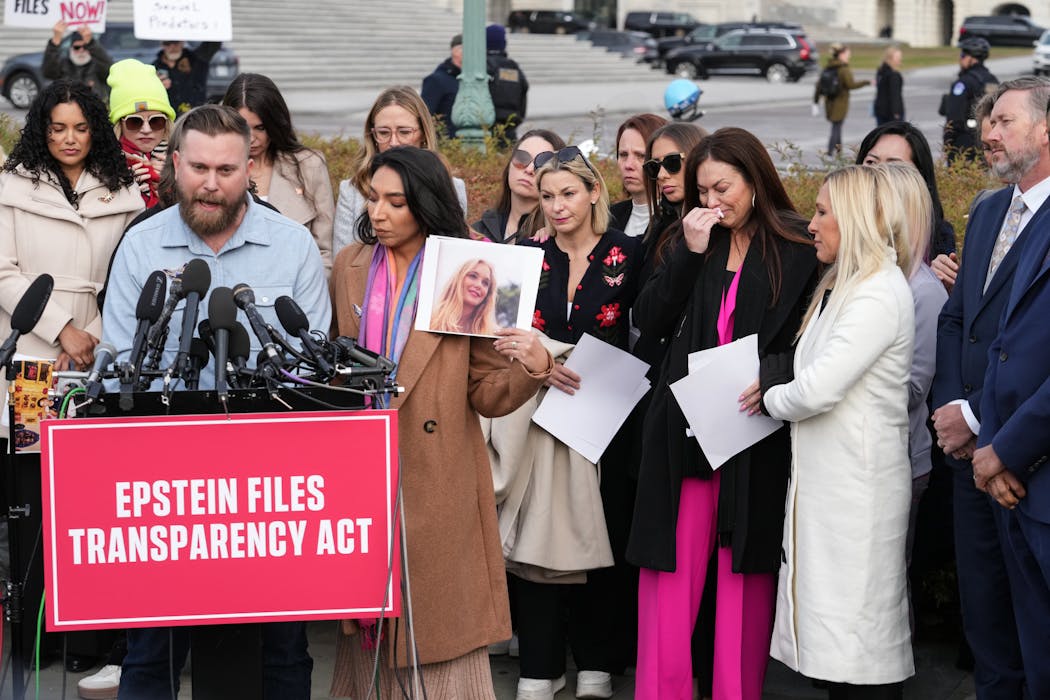
Passage of the Epstein Files Transparency Act, backed by many of Epstein’s alleged victims and family members, led the DOJ to begin releasing some of the Epstein files. AP Photo/J. Scott Applewhite

The U.S. Department of Justice has made a partial release of documents from what’s become known collectively as the “Jeffrey Epstein files,” with more to follow at an unspecified time. On a special part of its website that the department titled “Epstein Library,” it lists documents such as court records and records released in response to Freedom of Information Act requests to the government.

Their release was ordered by Congress in bipartisan legislation passed in November 2025. The deadline imposed by Congress was Dec. 19, 2025, and the Department of Justice met it with the partial release of documents in its possession with eight hours to spare.

Those files will be read, dissected and discussed by politicians and the public and reported on by the news media. It will be the latest eruption in a story that has slipped in and out of the headlines for years, but in a very particular way. Most news articles ask a specific question – which powerful men might be on “the list”? Journalists and the public are watching to see what those documents will reveal beyond names we already know, and whether a long-rumored client list will finally materialize.

Headlines in the past have focused on unidentified elites and who may be exposed or embarrassed, rather than on the people whose suffering made the case newsworthy in the first place: the girls and young women Epstein abused and trafficked.

a screenshot of a website that says epstein library
The Justice Department began posting Epstein files late Friday afternoon.
Screenshot of DOJ website

Alongside that, there has been a stream of survivor-centered reporting. Some outlets, including CNN, have regularly featured Epstein survivors and their attorneys reacting to new developments. Those segments are a reminder that another story is available, one that treats the women at the center of the case as sources of understanding, not just as evidence of someone else’s fall from grace.

These coexisting storylines reveal a deeper problem. After the #MeToo movement peaked, the public conversation about sexual violence and the news has clearly shifted. More survivors now speak publicly under their own names, and some outlets have adapted.

Yet long-standing conventions about what counts as news – conflict, scandal, elite people and dramatic turns in a case – still shape which aspects of sexual violence make it into headlines and which stay on the margins.

That tension raises a question: In a case where the law largely permits naming victims of sexual violence, and where some survivors are explicitly asking to be seen, why do journalistic practices so often withhold names or treat victims as secondary to the story?

A “CBS Evening News” story from Dec. 12, 2025, teases the photos revealed by House Democrats of famous men with Jeffrey Epstein.

What the law allows – and why newsrooms rarely do it

The U.S. Supreme Court has repeatedly held that government generally may not punish news organizations for publishing truthful information drawn from public records, even when that information is a rape victim’s name.

When states tried in the 1970s and 1980s to penalize outlets that identified victims using names that had already appeared in court documents or police reports, the court said those punishments violated the First Amendment.

Newsrooms responded by tightening restraint, not loosening it. Under pressure from feminist activists, victim advocates and their own staff, many organizations adopted policies against identifying victims of sexual assault, especially without consent.

Journalism ethics codes now urge reporters to “minimize harm,” be cautious about naming victims of sex crimes, and consider the risk of retraumatization and stigma.

In other words, U.S. law permits what newsroom ethics codes discourage.

How anonymity became the norm and #MeToo complicated it

Anti-rape culture protesters gathered in a crowd.
The anti-rape movement in the U.S. forced newsrooms to revisit assumptions about whose voices should lead a story.
Cory Clark/NurPhoto via Getty Images

For much of the 20th century, rape victims were routinely named in U.S. news coverage – a reflection of unequal gender norms. Victims’ reputations were treated as public property, while men accused of sexual violence were portrayed sympathetically and in detail.

By the 1970s and 1980s, feminist movements drew attention to underreporting and intense stigma. Activists built rape crisis centers and hotlines, documented how rarely sexual assault cases led to prosecution, and argued that if a woman feared seeing her name in the paper, she might never report at all.

Lawmakers passed “rape shield laws” that limited the use of a victim’s sexual history in court. Some states went further by barring publication of victims’ names.

In response to these laws, as well as feminist pressure, most newsrooms by the 1980s moved toward a default rule of not naming victims.

More recently, the #MeToo movement added a turn. Survivors in workplaces, politics and entertainment chose to speak publicly, often under their own names, about serial abuse and institutional cover-ups. Their accounts forced newsrooms to revisit assumptions about whose voices should lead a story.

Yet #MeToo also unfolded within existing journalistic conventions. Investigations tended to focus on high-profile men, spectacular falls from power and moments of reckoning, leaving less space for the quieter, ongoing realities of recovery, legal limbo and community response.

The unintended effects of keeping survivors faceless

There are good reasons for policies against naming victims.

Survivors may face harassment, employment discrimination or danger from abusers if they are identified. For minors, there are additional concerns about long-term digital evidence. In communities where sexual violence carries intense social stigma, anonymity can be a lifeline.

But research on media framing suggests that naming patterns matter. When coverage focuses on the alleged perpetrator as a complex individual – someone with a name, a career and a backstory – while referring to “a victim” or “accusers” in the singular, audiences are more likely to empathize with the suspect and scrutinize the victim’s behavior.

In high-profile cases like Epstein’s, that dynamic intensifies. The powerful men connected to him are named, dissected and speculated about. The survivors, unless they work hard to step forward, remain a blurred mass in the background. Anonymity meant to protect actually flattens their experience. Different stories of grooming, coercion and survival get reduced to a single faceless category.

A window into what we think is ‘news’

That flattening is part of what makes the current moment in the Epstein story so revealing. The suspense is less about whether more victims will be heard and more about what being named will do to influential men. It becomes a story about whose names count as news.

Carefully anonymizing survivors while breathlessly chasing a client list of powerful men unintentionally sends a message about who matters most.

The Epstein scandal, in that framing, is not primarily about what was done to girls and young women over many years, but about who among the elite might be embarrassed, implicated or exposed.

A more survivor-centered journalistic approach would start from a different set of questions, including wondering which survivors have chosen to speak on the record and why, and how news outlets can protect anonymity, when it is asked for, but still convey a victim’s individuality.

Those questions are not only about ethics. They are about news judgment. They ask editors and reporters to consider whether the most important part of a story like Epstein’s is the next famous name to drop or the ongoing lives of the people whose abuse made that name newsworthy at all.

This is an update to a story originally published on Dec. 15, 2025, to reflect the release of documents by the U.S. Department of Justice on Dec. 19.

The Conversation

Stephanie A. (Sam) Martin does not work for, consult, own shares in or receive funding from any company or organization that would benefit from this article, and has disclosed no relevant affiliations beyond their academic appointment.

ref. As DOJ begins to release Epstein files, his many victims deserve more attention than the powerful men in his ‘client list’ – https://theconversation.com/as-doj-begins-to-release-epstein-files-his-many-victims-deserve-more-attention-than-the-powerful-men-in-his-client-list-272414

How to reduce gift-giving stress with your kids – a child psychologist’s tips for making magic and avoiding tears

Source: The Conversation – USA (2) – By Angela J. Narayan, Associate Professor, Clinical Child Psychology Ph.D. program, University of Denver

’Tis the season … for gift-buying stress. Photo by Ryan Miller/Invision/AP

As a child, I loved being the center of attention. So it was a problem when my baby brother was born a day before my birthday. For years, I would beg my parents for a birthday gift “one day early.” My laid-back brother remembers thinking, “I don’t care about presents. Just give her mine!”

As an associate professor and child psychologist at the University of Denver who studies child development and parenting, I’ve come to learn about these types of challenges associated with gift giving. The holidays, while a magical time, can also be stressful. Society places an expectation on parents to buy gifts, regardless of their financial circumstances, and children themselves often feel a variety of complex emotions.

How children react to getting presents is partially linked to temperament, which is the variety of ways that children experience, perceive and interact with the world. Temperament is the precursor to personality – some people are introverts, while others are extroverts. Temperament is partially heritable. That means an introverted parent who feels social pressure to buy many gifts for their shy and easily overwhelmed child may be inadvertently causing stress.

Faced with this holiday conundrum, I’m often asked questions like “Is there a magic number of gifts to give my kids?” or “What gifts will hold my child’s attention the longest?”

While there isn’t an easy answer to either question, these tips and tricks can help parents be more thoughtful and intentional about gift giving, especially for children who are young.

The age rule

Young children cannot focus on a lot of things at once. A good rule of thumb is that a 1-year-old can focus only on one thing at a time. A 2-year-old can maybe focus on two things at most, and a 3-year-old maybe three things, and so on. Stop at five. Very few children actually need more than five gifts, so feel free to go lower.

The attention rule

I have often searched for the magical gift that will keep my children occupied for hours, and so far I haven’t found it. What I have found is that my children – ages 5 and 7 – get excited about the things that I get excited about. So I try to buy things that I think are fun. Ask yourself what you would like to play with if you got to be a child again. I bet your children would be eager to join you in those things.

The games rule

Card and board games are great gifts, often inexpensive, fun for many ages – excepting babies, of course – and capable of holding attention for a long time. Plus, they usually don’t take up much storage space. I love giving my kids games that are not only fun but also teach them helpful skills.

Collaborative games for preschoolers and early school-age children like the Fairy Game and Outfoxed teach problem-solving, teamwork and early reasoning skills. Games for elementary-age children, such as Sorry and Battleship, teach kids how to manage difficult situations, like not always being in the lead, being a good sport even if you’re behind, and losing gracefully.

Timeless card games like Uno and Memory, and newer ones like Sleeping Queens and Exploding Kittens, are great for using working memory, thinking flexibly, persisting and strategizing. Most importantly, playing games together supports positive family time, which is an excellent antidote to stress, bad moods or boredom.

The pressure rule

Imagine the holiday experience through the eyes of each of your children. Some children relish receiving gifts, like I did. Others, however, may feel self-conscious, overwhelmed by the sensory overload – all the textures, commotion and bright colors, not to mention people staring at them. The elements of surprise combined with the unspoken social pressure to be gracious and well regulated are challenging for any young child.

We expect small children to contain their excitement, delay gratification and react positively to the surprise. And then come up with a polite response. These are all complex requests, rarely directly or explicitly taught. It’s no wonder that many children show negative emotions, have tantrums, or even just say, “I’m tired!” during holiday celebrations.

That’s why beyond the precise nature of “the perfect gift,” we shouldn’t lose sight of what we should be doing. And that is investing in togetherness and helping kids learn skills like being patient and taking turns, strengthening memory capacities, planning ahead, not giving up, and that being a team player will pay off later. These skills pave the way for longer sustained attention, focus and concentration, as well as confidence.

My 7-year-old is becoming a skillful chess player because we have taught him the rules and strategy and helped him practice. Maybe this is the real magical gift – not the purchase itself, but the decision to invest in time with your child early.

The Conversation

Angela J. Narayan receives funding from the National Academy of Medicine and the American Psychological Association.

ref. How to reduce gift-giving stress with your kids – a child psychologist’s tips for making magic and avoiding tears – https://theconversation.com/how-to-reduce-gift-giving-stress-with-your-kids-a-child-psychologists-tips-for-making-magic-and-avoiding-tears-272201

Raz-de-marée démocrate dans les villes américaines : un avertissement pour Trump ?

Source: The Conversation – in French – By Frédéric Castel, Chargé de cours aux départements de Sciences des religions et d’Études urbaines et touristiques, Université du Québec à Montréal (UQAM)

La ronde des diverses courses électorales du mois de novembre, close en décembre, constituait un test depuis l’arrivée au pouvoir du président américain Donald Trump. Les démocrates ont marqué des avancées notables, sans contre-tendance favorable aux républicains à l’échelle nationale, régionale ou locale.

Les sondages de sorties des urnes permettent d’éclairer certains enjeux auxquels les électrices et les électeurs ont été particulièrement sensibles en fonction de leurs inclinaisons politiques et profils socioculturels. Ces sondages ont été menés par le SSRS pour le compte du consortium des grands réseaux médiatiques dont CNN et Fox News.

J’ai une formation de géographe, d’historien et de religiologue. Depuis 25 ans j’étudie l’évolution de la diversité ethnoreligieuse au Québec. Depuis 2016, je m’intéresse aux élections à diverses échelles (Montréal, Québec, Canada, États-Unis) afin de tracer les mouvements sociopolitiques à travers le temps et l’espace à l’aide de la cartographie des résultats électoraux.

Une « Gringa » démocrate à Miami

Il a fallu attendre le 2 décembre pour qu’un second tour établisse un gagnant à Jersey City, puis le 9 à Albuquerque et à Miami.

En Floride, l’État de résidence du président, l’élection de la démocrate Eileen Higgins à la mairie de Miami, première femme à obtenir ce poste, est particulière. La victoire de celle-ci (59,5 %) contre le républicain Emilio Gonzalez (40,5 %) met fin à 28 ans de règne républicain. La Magic City devient ainsi la seule des vingt grandes villes en élection cet automne à changer de couleur.

Parlant espagnol, La Gringa, comme elle s’amuse à se faire appeler, a mis l’accent sur le logement abordable tout en exprimant ses préoccupations concernant les opérations de contrôle de l’immigration par l’ICE, thèmes qui résonnent dans une ville à majorité latino-américaine.


À lire aussi :
Les politiques de Donald Trump sont plus qu’idiotes – elles sont stupides, selon des chercheurs… en stupidité


Un ilot rouge au milieu de beaucoup de maires bleus

Parmi les villes de plus de 220 000 habitants (au recensement de 2020), 20 élections pour la mairie ont été disputées en novembre.

À New York, Charlotte, Pittsburgh, Buffalo et La Nouvelle-Orléans, les élections se faisaient sur une base partisane, c’est-à-dire que les candidats se présentaient sous la bannière d’un parti, démocrate, républicain ou autre.

En 2024, alors que l’État pivot de la Pennsylvanie basculait en faveur de Donald Trump, Pittsburgh demeurait démocrate en préférant Harris (59,7 %). Cette année, le démocrate Corey O’Connor (85,6 %) rafle la mairie devant le républicain Tony Moreno.

Dans l’État de New York, le démocrate Sean Ryan (71,8 %) a remporté la mairie de Buffalo devant le républicain James Gardner. C’est toute une différence à comparer au scrutin présidentiel où la ville avait accordé 54,8 % de ses voix à Kamala Harris.


À lire aussi :
Aux élections présidentielles américaines, les groupes religieux sont plus divisés qu’on ne le croit


Les 15 autres élections suivaient un mode non partisan. Bien que les candidates et les candidats se présentent sans étiquette politique, les affiliations politiques ne faisaient généralement pas de mystère.

À Minneapolis (Minnesota), malgré la kyrielle de candidats à la mairie, les quatre meneurs étaient tous démocrates. C’est au second tour d’un suffrage préférentiel que Jacob Frey obtient 50 % des voix pour son troisième mandat devant le démocrate socialiste Omar Fateh. Au Michigan, la démocrate Mary Sheffield (77 %) devient la première mairesse afro-américaine de Détroit en battant Solomon Kinloch jr, lui aussi démocrate.

En augmentant leurs marges de victoire, les démocrates Andre Dickens (85,8 %) et Aftab Pureval (78,3 %) ont été reconduits aux mairies d’Atlanta (Géorgie) et de Cincinnati (Ohio). Dans cette dernière lutte, le candidat défait était Cory Bowman, le demi-frère de J.D. Vance, vice-président et sénateur de l’État.

Des maires de filiation démocrate ont aussi été élus à Charlotte, Seattle, Boston, La Nouvelle-Orléans, Cleveland et Saint Paul.

La ville d’Hialeah, voisine de Miami, est la seule dont la mairie a été remportée par un républicain, Bryan Calvo devant deux adversaires du même parti.

C’est dire qu’au total, les 19 autres maires sont désormais associés plus ou moins directement au parti démocrate.


À lire aussi :
Le Canada comme 51ᵉ État américain ? Les républicains ne seraient pas au pouvoir de sitôt !


Au-delà d’un pépin socialiste dans la grosse pomme

À New York, Zohran Mamdani marque l’histoire en devenant le premier maire musulman de la ville. Celui-ci a gagné l’appui de la moitié de la population (50,8 %) devant l’indépendant Andrew Cuomo (41,3 %) et le républicain Curtis Sliwa (7 %).

À l’échelle des arrondissements, Mamdani a obtenu la majorité des suffrages de Brooklyn (57,1 %), de Manhattan (52,7 %), du Bronx (51,8 %) et du Queens (47,9 %). Les soutiens à Cuomo sont majoritaires à Staten Island (55,2 %) tout en prédominant au sud de Brooklyn et à l’est du Queens.

Le NYC Election Atlas aide à trouver du sens à cette configuration. En recoupant le vote partisan et le profil des quartiers, on remarque que la moitié (50,8 %) des secteurs où les propriétaires sont majoritaires ont choisi Cuomo, alors que les secteurs où les ménages modestes prédominent ont penché du côté de Mamdani (52,4 %). Avec des nuances selon les quartiers et la proportion de propriétaires, les secteurs où les diplômés universitaires sont majoritaires ont préféré Mamdani (54,2 %).

La géographie des résultats confirme que le vote pro-Trump de 2024 s’est majoritairement acheminé vers Cuomo moyennant des pertes en faveur de Mamdani.

Selon les sondages, bien que dans des proportions moindres qu’en Virginie et au New Jersey, la majorité des électorats afro-américain (57 %) et hispanique (52 %) ont préféré Mamdani. L’électorat eurodescendant s’est divisé presque moitié-moitié entre Cuomo et Mamdani.

Alors que 67 % des partisans de Cuomo avaient le crime comme premier sujet de préoccupation, 66 % des partisans de Mamdani se souciaient d’abord du coût de la vie. Ce dernier enjeu prédominait (55 %) pour l’ensemble des New-Yorkais.


Déjà des milliers d’abonnés à l’infolettre de La Conversation. Et vous ? Abonnez-vous gratuitement à notre infolettre pour mieux comprendre les grands enjeux contemporains.


La Virginie « mère des présidents » donne naissance à sa première gouverneure

La démocrate Abigail D. Spanberger s’est gagné l’appui de 57,6 % des électeurs contre sa rivale républicaine Winsome Earle-Sears (42,2 %), l’ancienne lieutenante-gouverneure élue en 2021. C’est un gain démocrate.

Quoique la cartographie réalisée par l’Associated Press soit similaire à celle du scrutin présidentiel de 2024, la marque démocrate a progressé partout dans l’État, y compris dans l’espace rural. Dans les villes et les banlieues de Charlottesville, Richmond, Norfolk et Fairfax le vote démocrate a franchi le cap des 70 % voire des 80 %.

L’économie était la préoccupation principale de 48 % des Virginiens.

Floraison démocrate au New Jersey

Pour le poste de gouverneur de l’État jardin, la démocrate Mikie Sherrill a gagné 56,9 % des suffrages devant son adversaire républicain Jack Ciattarelli (42,5 %). En 2021, son prédécesseur démocrate n’avait obtenu que trois points d’avance. Sherill est la première femme démocrate à remporter ce poste après la victoire de la républicaine Christine Todd Whitman en 1994.

En comparant la cartographie de l’Associated Press des résultats cette élection avec celle du scrutin présidentiel, on constate que les appuis démocrates ont connu des hausses allant de 5 à 16 points dans presque tous les comtés. À comparer au scrutin présidentiel, quelques majorités républicaines locales ont basculé en faveur du parti démocrate au nord et au sud de l’État. Sept personnes sur dix ont voté démocrate à Trenton et à Newark collé sur New York. Les taxes (35 %) et l’économie (32 %) constituaient les enjeux prédominants.


À lire aussi :
La diplomatie donnant-donnant de Donald Trump en Ukraine, un échec pour arrêter l’agression russe


Quand l’anxiété économique surfe sur une marée électorale

Au New Jersey et en Virginie, à comparer aux élections locales antérieures, les appuis au parti démocrate ont connu un bond important avec l’élection des deux nouvelles gouverneures.

Selon les sondages publiés par CNN et Fox News les taux d’approbation et de désapprobation du travail du président étaient de 42 % contre 56 % au New Jersey et de 39 % contre 59 % en Virginie.

La majorité des électeurs indépendants et des gens qui n’avaient pas voté au scrutin présidentiel ont voté démocrate. Les deux tiers des Hispaniques et neuf Afro-Américains sur dix ont suivi, ce qui indique un retour aux tendances prévalant avant 2024.

À l’échelle des mairies, le camp démocrate était souvent en terrain favorable. Au printemps 2026, on disposera d’un portrait plus complet des tendances alors que quelques courses auront lieu dans le Sun Belt. Le passage de la mairie de Miami des mains d’un républicain à celles d’une démocrate n’est toutefois pas pour rassurer le camp républicain.

Les revirements politiques repérables géographiquement et les sondages de sortie des urnes montrent que l’anxiété économique a surfé à travers le pays. Bien que l’immigration reste un enjeu majeur pour les électeurs républicains, l’économie s’est érigée en tête de liste des préoccupations populaires à New York, en Virginie et au New Jersey.

Au sortir des élections, la marque républicaine a perdu des plumes. Si la promesse de Donald Trump de maîtriser l’inflation a favorisé son élection à la présidence, l’actuelle montée de l’anxiété économique a alimenté le mouvent inverse.

En même temps que les sondages des dernières semaines rappellent que la crise de l’« abordabilité » se ressent de plus en plus sur le plan des dépenses quotidiennes, l’agrégateur de sondages RealClear Polling indique que le taux d’approbation de la gouvernance du président continue de diminuer.

Selon le sondage publié par Politico, une partie des électeurs de Trump commencent à le tenir responsable de la crise. Le dernier sondage de NBC fait voir que si la base MAGA approuve fortement la gestion du président, c’est au prix de la réduction de son poids numérique derrière la montée de ceux qui se disent « républicains traditionnels ».

La Conversation Canada

Frédéric Castel ne travaille pas, ne conseille pas, ne possède pas de parts, ne reçoit pas de fonds d’une organisation qui pourrait tirer profit de cet article, et n’a déclaré aucune autre affiliation que son organisme de recherche.

ref. Raz-de-marée démocrate dans les villes américaines : un avertissement pour Trump ? – https://theconversation.com/raz-de-maree-democrate-dans-les-villes-americaines-un-avertissement-pour-trump-271471

Local democracy is holding strong, but rural communities are falling behind, new survey of Michigan officials shows

Source: The Conversation – USA – By Stephanie Leiser, Director, Center for Local, State, and Urban Policy, University of Michigan

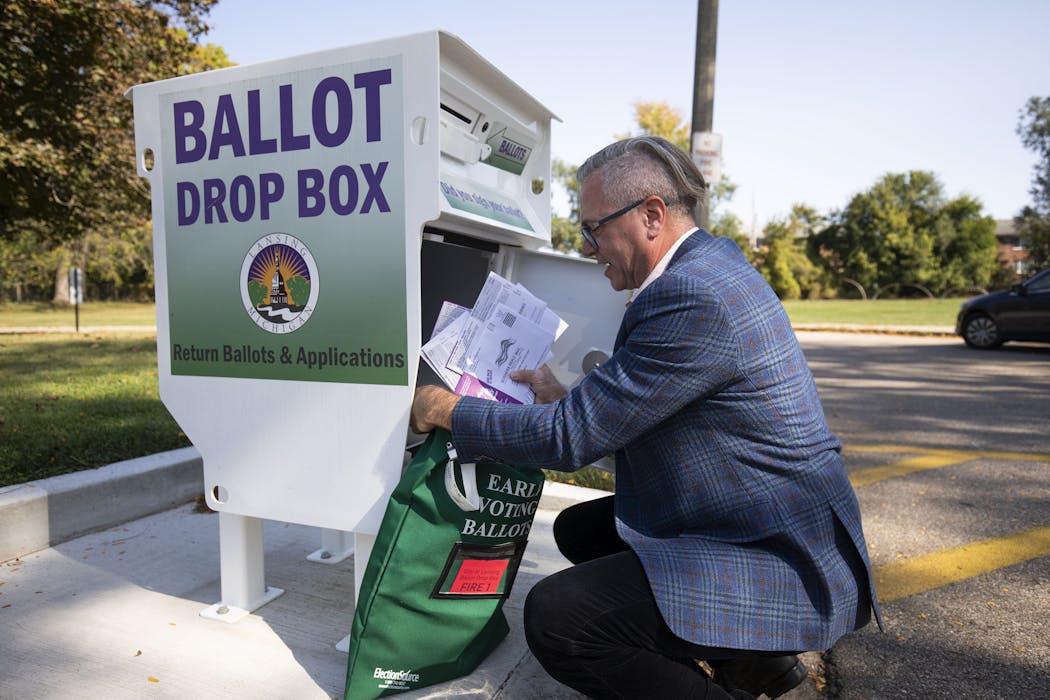
Lansing City Clerk Chris Swope collects absentee ballots from a drop box in 2024. Bill Pugliano/Getty Images

According to our recent survey of officials in Michigan communities, local democracy is humming along and city hall is taking care of business.

The federal government was shut down in October and November 2025, but cities and towns around the United States continued to fill potholes, purify drinking water, respond to emergency calls and issue construction permits, mostly with little fanfare.

But Michiganders should not take this local resilience for granted. Officials – especially in rural communities – are also raising some red flags about declining public engagement, deteriorating public discourse and harassment.

The view from city hall

At the University of Michigan’s Center for Local, State and Urban Policy, we have been surveying local officials in Michigan’s 1,856 cities, villages, counties and townships since 2009. About 70% of local governments in the state complete our survey each year, which means that our results reflect the opinions of everyone from township clerks in the Upper Peninsula to mayors of larger cities in the Metro Detroit area.

This Michigan Public Policy Survey has covered a wide variety of local issues over the years. One topic we track closely is how democracy is functioning in local communities.

While many public opinion surveys ask how Americans feel about democracy, very few examine the viewpoints of local officials whose job it is to carry out the daily work of democratic governance. For example, instead of asking whether people trust their government, we flip the question around and ask local officials whether they trust their residents to be responsible participants in policymaking.

Democracy at its grassroots is strong

To get a high-level understanding of local democratic health, we ask Michigan local officials to rate the overall functioning of democracy in their communities on a scale of 1 to 10, from total breakdown to perfectly functioning.

Statewide, 82% reported a score of 7 or higher when we surveyed them in the spring of 2025. This percentage has remained remarkably steady since we first began tracking it in 2020.

At the other end of the scale, only 2% of communities this year rated democracy poorly – 4 or below – falling from a high of 7% in 2024.

Small and rural communities are falling behind

While these high ratings are good news for local democracy in general, when we break down the results by whether communities consider themselves more urban or rural, we see some divergence. While 82% of communities overall reported relatively good democratic health this year, this reflects 92% of urban communities and 79% of rural communities.

We also see evidence of a growing urban/rural divide in resident engagement, an essential ingredient of democratic health. When we asked local officials how engaged their residents were with their local governments, 64% of urban communities said their residents were somewhat or very engaged, but only 41% of rural communities felt the same. In fact, 13% of rural communities said their residents are not engaged at all, compared with only 5% of urban communities.

Similarly, local officials in urban communities have higher levels of trust in their residents to be responsible participants in local policymaking – for example, by contributing ideas, volunteering or speaking with elected officials. In Michigan’s urban communities, 48% of local officials said they trust their residents nearly always or most of the time. However, only 38% of rural local officials had the same level of trust in their residents.

The big picture looks less rosy

While rural communities currently appear to be struggling more than urban communities to engage with their residents, looking over time, democratic participation is getting worse everywhere. For example, 18% of Michigan communities statewide reported this year that civic discourse among residents was somewhat or very divisive, up from 11% in 2012.

Between 2012 and today, despite their efforts to expand engagement opportunities, particularly online, local officials’ satisfaction with their residents’ level of engagement has plummeted from 58% in 2012 to 38% in 2025. Among the most common frustrations are that their efforts attract the same people over and over and that a small vocal minority of residents is negatively affecting overall engagement.

Even more troubling, about half of local officials who responded to the 2022 version of our survey have experienced some kind of personal harassment, with 39% reporting in-person harassment such as hostile or aggressive comments, 31% reporting online harassment and 3% reporting violent actions like assault or destruction of property.

Looking ahead

While only 17% of Americans currently trust the federal government to “do what is right” “just about always” or “most of the time,” according to a recent Pew survey, 65% of Americans still trust their local government. And as our survey results suggest, most local officials feel pretty confident that they’re being good stewards of local democracy, despite declining help and input from their residents.

To any Americans worried about the state of their democracy, may we suggest heading to the next meeting of the local planning commission? We hear there are sometimes even snacks.

Read more of our stories about Michigan.

The Conversation

Stephanie Leiser does not work for, consult, own shares in or receive funding from any company or organization that would benefit from this article, and has disclosed no relevant affiliations beyond their academic appointment.

ref. Local democracy is holding strong, but rural communities are falling behind, new survey of Michigan officials shows – https://theconversation.com/local-democracy-is-holding-strong-but-rural-communities-are-falling-behind-new-survey-of-michigan-officials-shows-271672

It’s more than OK for kids to be bored − it’s good for them

Source: The Conversation – USA (2) – By Margaret Murray, Associate Professor of Public Communication and Culture Studies, University of Michigan-Dearborn

When children experience boredom, it can result in a brain boost that can push them to explore new activities. Richard Lewisohn/Connect Images via Getty Images

Boredom is a common part of life, across time and around the world. That’s because boredom serves a useful purpose: It motivates people to pursue new goals and challenges.

I’m a professor who studies communication and culture. I am currently writing a book about modern parenting, and I’ve noticed that many parents try to help their kids avoid boredom. They might see it as a negative emotion that they don’t want their children to experience. Or they might steer them into doing something that they see as more productive.

There are various reasons they want to prevent their children from being bored. Many parents are busy with work. They’re stressed about money, child care responsibilities and managing other parts of daily life. Making sure a child is occupied with a game, a TV show or an arts and crafts project at home can help parents work uninterrupted, or make dinner, without their children complaining that they are bored.

Parents may also feel pressure for their children to succeed, whether that means getting admitted to a selective school, or becoming a good athlete or an accomplished musician.

Children also spend less time playing freely outside and more time participating in structured activities than they did a few decades ago.

Easy access to screens has made it possible to avoid boredom more than ever before.

Many parents needed to put their children in front of screens throughout the pandemic to keep them occupied during work hours. More recently, some parents have reported feeling social pressure to use screens to keep children quiet in public spaces.

That is to say, there are various reasons why parents shy away from their kids being bored. But before striving to eliminate boredom completely, it’s important to know the benefits of boredom.

A young girl with dark hair lays on her stomach on a couch with her arms and legs splayed out.
Even very young children could benefit from experiencing boredom in short spurts.
Oscar Wong/Moment via Getty Images

Benefits of boredom

Although boredom feels bad to experience in the moment, it offers real benefits for personal growth.

Boredom is a signal that a change is needed, whether it be a change in scenery, activity or company. Psychologists have found that the experience of boredom can lead to discovering new goals and trying new activities.

Harvard public and nonprofit leadership professor Arthur Brooks has found that boredom is necessary for reflection. Downtime leaves room to ask the big questions in life and find meaning.

Children who are rarely bored could become adults who cannot cope with boredom. Boredom also offers a brain boost that can cultivate a child’s innate curiosity and creativity.

Learning to manage boredom and other negative emotions is an important life skill. When children manage their own time, it can help them develop executive function, which includes the ability to set goals and make plans.

The benefits of boredom make sense from an evolutionary perspective. Boredom is extremely common. It affects all ages, genders and cultures, and teens are especially prone to boredom. Natural selection favors traits that offer a leg up, so it is unlikely that boredom would be so prevalent if it did not deliver some advantages.

Parents should be wary of treating boredom as a problem they must solve for their children. Psychologists have found that college students with overly involved parents suffer from more depression.

Other research shows that young children who were given screens to help them calm down were less equipped to regulate their emotions as they got older.

Boredom is uncomfortable

Tolerating boredom is a skill that many children resist learning or do not have the opportunity to develop. Even many adults would rather shock themselves with electricity than experience boredom.

It takes practice to learn how to handle boredom. Start with small doses of boredom and work up to longer stretches of unstructured time. Tips for parents include getting kids outside, suggesting a new game or recipe, or simply resting. Creating space for boredom means that there will be some stretches of time when nothing in particular is happening.

Younger children might need ideas for what they could do when bored. Parents do not need to play with them every time they are bored, but offering suggestions is helpful. Even five minutes of boredom is a good start for the youngest children.

Encouraging older children to solve the problem of boredom themselves is especially empowering. Let them know that boredom is a normal part of life even though it might feel unpleasant.

It gets easier

Children are adaptable.

As children get used to occasional boredom, it will take them longer to become bored in the future. People find life less boring once they regularly experience boredom.

Letting go of the obligation to keep children entertained could also help parents feel less stressed. Approximately 41% of parents in the U.S. said they “are so stressed they cannot function,” and 48% reported that “most days their stress is completely overwhelming,” according to a report from the U.S. surgeon general in 2024.

So the next time a kid complains, “I’m bored!” don’t feel guilty or frustrated. Boredom is a healthy part of life. It prompts us to be self-directed, find new hobbies and take on new challenges.

Let children know that a little boredom isn’t just OK – in fact, it’s good for them.

The Conversation

Margaret Murray does not work for, consult, own shares in or receive funding from any company or organization that would benefit from this article, and has disclosed no relevant affiliations beyond their academic appointment.

ref. It’s more than OK for kids to be bored − it’s good for them – https://theconversation.com/its-more-than-ok-for-kids-to-be-bored-its-good-for-them-268826

Why are some Black conservatives drawn to Nick Fuentes?

Source: The Conversation – USA (2) – By George Michael, Professor of Criminal Justice, Westfield State University

Nick Fuentes believes that the country’s identity depends on preserving its white majority. AP Photo/Jacquelyn Martin

Far-right activist Nick Fuentes continues to gain momentum.

The openly racist and antisemitic podcaster has emerged as an influential figure on the American political right. Recent profiles in The Atlantic and The New York Times have elevated the 27-year-old into practically a household name.

But as a scholar of the American right, I’ve been fascinated by one aspect of Fuentes’ rise: the way some Black podcast hosts and political influencers have been receptive to some of his views.

“Isn’t that amazing?” Black pastor and radio host Jesse Lee Peterson gushed after hosting Fuentes on his show in 2023. “Finally, a white man standing up for what is right. And you heard him say it – he hate no one.”

At first blush, this might sound counterintuitive. Fuentes champions a racist vision of national populism. He has promoted the idea that the country’s identity depends on preserving its white majority. In the past, he’s defended Jim Crow, the segregationist legal regime that governed the South from the late-19th century to the 1960s, arguing that segregation was better for both Black and white Americans. He’s openly disavowed miscegenation, and castigated Vice President JD Vance for marrying an Indian woman and fathering mixed-race children.

Black people and white nationalists, however, have joined forces in the past. And a number of cultural and political shifts have broadened Fuentes’ appeal to Americans of all races.

Finding common ground

In the 20th century, Black and white nationalists were able to find common ground on the topic of racial separatism.

Marcus Garvey, a leading proponent of the back-to-Africa movement in the 1920s, and Elijah Muhammad, the former leader of the Nation of Islam, saw white nationalists as kindred spirits.

Garvey envisaged a new nation built by the descendants of African slaves. To him, the ostensible racism of the Ku Klux Klan helped drive home his message that the U.S. would never be a place that could incorporate Black people as equals. In 1922, he met with Edward Young Clarke, the Klan’s acting leader. Garvey later explained how the two shared the same vision: Clarke “believes America to be a white man’s country, and also states that the Negro should have a country of his own in Africa.”

Meanwhile, Muhammad embraced the idea of Black superiority.

In George Lincoln Rockwell, the leader of the American Nazi Party from 1959 to 1967, Muhammad saw a white man who may have disagreed about which race was superior but was nonetheless serious about carving out a territory somewhere in the U.S. to build a separate Black nation. Even though Rockwell spoke of Black people as a “primitive race” and had organized a “hate tour,” Muhammad invited him to speak at the Nation of Islam summit in 1962. To Muhammad, they both had the same goal: separation of the races.

Uniting in opposition to Israel

Importantly, among both Black nationalists and white nationalists, race mixing was often cast in an antisemitic framework, with Jews accused of spurring racial integration. Rockwell claimed Jewish communists were behind the Civil Rights Movement, while the Nation of Islam published a pseudo-historical book in 1991 claiming that Jews were responsible for the transatlantic slave trade.

Today, antizionism and antisemitism are where Fuentes and some Black conservatives appear to have found common ground.

Hamas’ attack on Oct. 7, 2023, and Israel’s ensuing annihilation of Gaza have destabilized politics not only in the Middle East but also in the U.S.

Historically, the mainstream media in the U.S. has championed Israel, while both of the country’s major political parties have backed Israel financially and militarily.

However, due to a number of factors – including Americans’ widespread exposure on social media to the destruction of Gaza, the growing diversity of the U.S. and its ballooning debtcracks in this uniform support have emerged.

Fuentes routinely implicates a “Jewish oligarchy” as the source of many problems that bedevil the world today, and his strident denunciation of Israel and the larger Jewish community has endeared him to antisemites and anti-Israel factions on the right, and this includes some Black Americans.

Take Myron Gaines, an internet personality who founded the “Fresh and Fit Podcast” in 2020. Born in Brooklyn, Gaines is of Sudanese descent and was raised as a Muslim. Originally, his podcast focused on issues related to the manosphere, a largely online movement that champions masculinity and opposes feminism.

But since the Oct. 7 attacks, Gaines became a vociferous critic of Israel, claiming “Zionist fingerprints” were “all over” the 9/11 attacks and JFK’s assassination. On this issue, he found common ground with Fuentes, who has frequently appeared as a guest on his program. On occasion, Andrew Tate, a popular British biracial social media personality, has joined them for discussions.

All three share an antisemitic worldview – promoting, at various points, the notion of Jewish control of finance, media and governments – with a pronounced misogynist streak.

Then there are the Hodgetwins, Keith and Kevin Hodge. The Black twin brothers launched their podcast in 2008 and now boast an estimated 2 million followers. They’ve recently interviewed a range of antisemitic guests on their program, including Fuentes, David Duke, Leonarda Jonie and Stew Peters.

In July 2025, Candace Owens hosted Nick Fuentes for a two-hour interview on her podcast. They had traded barbs in the past, but they had also, at times, praised each other. When Owens was fired from The Daily Wire for her criticism of Israel in 2024, Fuentes instructed his supporters to “stand with Candace.”

During the July 2025 interview, there were some tense moments: Owens needled Fuentes over why he hadn’t married and started a family. She also objected to his belief that race determined a person’s abilities and to his claim that Black civilization was inherently inferior. But the tone was generally cordial, and they agreed that the pro-Israel lobby had an outsized influence on American politics.

Race is becoming less black and white

There’s also a broader cultural shift at play: Racial identity is becoming increasingly fluid.

As political scientist Eric Kaufmann argued in his 2019 book, “Whiteshift: Populism, Immigration and the Future of White Majorities,” America may be becoming more racially diverse, but this doesn’t necessarily portend a politics of racial liberalism.

Instead, he argues that those with multiracial backgrounds will tend to identify – and be identified – with the largest and most socially dominant racial group. In other words, a significant number of multiracial Americans will “airbrush” their polyglot lineage and instead focus on their European provenance. As racial boundaries become more fluid, more people of multiracial heritage may come to culturally and politically identify as white.

Just as President Donald Trump was able to draw a higher share of Black and Latino voters than any GOP presidential candidate in recent memory, Fuentes has been able to connect with nonwhite audiences. And just as Stewart Rhodes, the founder of the right-wing, anti-immigrant Oath Keepers, is part Hispanic, the former leader of the “Western chauvinist” Proud Boys, Enrique Tarrio, is Afro-Cuban American.

Fuentes himself reflects this trend. He acknowledges his Mexican ancestry – from his paternal grandfather – and yet remains an unapologetic white nationalist, calling for “total Aryan victory.”

Black podcasters may be amenable to Fuentes due to the country’s racial reality. Any program of forced racial expulsion and separation simply doesn’t seem feasible in contemporary, multiracial America.

Fuentes seems to recognize this; in fact, he recently called for a united populist front to include the political left. He urged leftists to jettison their advocacy of open borders and wokeism. Meanwhile, he’s counseled the political right to abandon its reverence for the free market.

Perhaps Fuentes favors a form of national socialism not unlike the kind that emerged in fascist Germany and Italy. But for Gen Zers who are experiencing economic uncertainty and social isolation, such a program can sound attractive – no matter their race.

The Conversation

George Michael does not work for, consult, own shares in or receive funding from any company or organization that would benefit from this article, and has disclosed no relevant affiliations beyond their academic appointment.

ref. Why are some Black conservatives drawn to Nick Fuentes? – https://theconversation.com/why-are-some-black-conservatives-drawn-to-nick-fuentes-270437

Medieval peasants probably enjoyed their holiday festivities more than you do

Source: The Conversation – USA (3) – By Bobbi Sutherland, Associate Professor, Department of HIstory, University of Dayton

Winter in a peasant village, painted by the Limbourg brothers and published in the medieval illuminated manuscript ‘Très Riches Heures du Duc de Berry.’ Pierce Archive LLC/Buyenlarge via Getty Images

When people think of the European Middle Ages, it often brings to mind grinding poverty, superstition and darkness. But the reality of the 1,000-year period from 500 to 1500 was much more complex. This is especially true when considering the peasants, who made up about 90% of the population.

For all their hard work, peasants had a fair amount of downtime. Add up Sundays and the many holidays, and about one-third of the year was free of intensive work. Celebrations were frequent and centered around religious holidays like Easter, Pentecost and saints’ days.

But the longest and most festive of these holidays was Christmas.

As a professor of medieval history, I can assure you the popular belief that the lives of peasants were little more than misery is a misconception. They enjoyed rich social lives – maybe richer than ours – ate well, celebrated frequently and had families not unlike our own. For them, holiday festivities didn’t begin with Christmas Eve and end with New Year’s.

The party was just getting started.

Daily life in a peasant village

A peasant was not simply a low-class or poor person. Rather, a peasant was a subsistence farmer who owed their lords a portion of the food they grew. They also provided labor, which might include bridge-building or farming the lord’s land.

In return, a lord provided his peasants with protection from bandits or invaders. They also provided justice via a court system and punished people for theft, murder and other crimes. Typically, the lord lived in the village or nearby.

Peasants lived in the countryside, in villages that ranged from a few houses to several hundred. The villages had communal ovens, wells, flour mills, brewers or pubs, and blacksmiths. The houses were clustered in the center of the village along a dirt street and surrounded by farmland.

A photo of a primitive stone house with a thatched roof.
A 14th-century thatched cottage in what is now West Sussex, England.
David C. Tomlinson/The Image Bank via Getty Images

By today’s standards, a peasant’s house was small – in England, the average was around 700 square feet (65 square meters). Houses might be made of turf, wood, stone or “waddle-and-daub,” a construction very similar to lathe and plaster, with beamed roofs covered in straw. Houses had front doors, and some had back doors. Windows were covered with shutters and, rarely, glass. Aside from the fireplace, only the Sun, Moon or an oil lamp or candle provided light.

Strange sleep habits and sex without privacy

The day was dictated by seasons and sunlight. Most people rose at dawn or a bit before; men went out to their fields soon after to grow grains like wheat and barley. Women worked in the home and yard, taking care of children, animals and vegetable gardens, along with the spinning, sewing and cooking. Peasants didn’t have clocks, so a recipe might recommend cooking something for the time it took to say the Lord’s Prayer three times.

Around midday, people usually took a break and ate their largest meal – often a soup or stew. The foods they ate could include lamb and beef, along with cheese, cabbage, onions, leeks, turnips and fava beans. Fish, in particular freshwater fish, were also popular. Every meal included bread.

A historical photo shows peasants dancing around a tree.
15th-century peasants in France celebrate May Day.
Hulton Archives via Getty Images

Beer and wine were major components of the meal. By our standards, peasants drank a lot, although the alcohol content of the beer and wine was lower than today’s versions. They often napped before returning to work. In the evening, they ate a light meal, perhaps only bread, and socialized for a while.

They went to bed within a few hours of darkness, so how long they slept depended on the season. On average, they slept about eight hours, but not consecutively. They awoke after a “first sleep” and prayed, had sex or chatted with neighbors for somewhere between half an hour and two hours, then returned to sleep for another four hours or so.

Peasants did not have privacy as we think of it; everyone often slept in one big room. Parents made love with one another as their children slept nearby. Married couples shared a bed, and one of their younger children might sleep with them, though infants had cradles. Older children likely slept two to a bed.

A colorful illustration of a musician playing an instrument before a small audience.
A musician entertains a group of peasant farmers.
duncan1890/DigitalVision Vectors via Getty Images

Dreaming of a medieval Christmas

Life certainly wasn’t easy. But the stretches of time for rest and leisure were enviable.

Today, many people start thinking about Christmas after Thanksgiving, and any sort of holiday spirit fizzles by early January.

In the Middle Ages, this would have been unheard of.

Advent – the period of anticipation and fasting that precedes Christmas – began with the Feast of St. Martin.

Back then, it took place 40 days before Christmas; today, it’s the fourth Sunday before it. During this period, Western Christians observed a fast; while less strict than the one for Lent, it restricted meat and dairy products to certain days of the week. These protocols not only symbolized absence and longing, but they also helped stretch out the food supply after the end of the harvest and before meats were fully cured.

Christmas itself was known for feasting and drunkenness – and it lasted nearly six weeks.

Dec. 25 was followed by the 12 Days of Christmas, ending with the Epiphany on Jan. 6, which commemorates the visit of the Magi to Jesus, Mary and Joseph. Gifts, often in the form of food or money, were exchanged, though this was more commonly done on New Year’s Day. Game birds, ham, mince pies and spiced wines were popular fare, with spices thought to help warm the body.

Though Christmas officially celebrates the birth of Jesus, it was clearly associated with pre-Christian celebrations that emphasized the winter solstice and the return of light and life. This meant that bonfires, yule logs and evergreen decorations were part of the festivities. According to tradition, St. Francis of Assisi created the first nativity scene in 1223.

Christmas ended slowly, with the first Monday after Epiphany being called “Plough Monday” because it marked the return to agricultural work. The full end of the season came on Feb. 2 – called Candlemas – which coincides with the older pagan holiday of Imbolc. On this day, candles were blessed for use in the coming year, and any decorations left up were thought to be at risk of becoming infested with goblins.

Many people today gripe about the stresses of the holidays: buying presents, traveling, cooking, cleaning and bouncing from one obligation to the next. There’s a short window to get it all done: Christmas Day is the only day many workplaces are required to give off.

Meanwhile, I’ll be dreaming of a medieval Christmas.

The Conversation

Bobbi Sutherland does not work for, consult, own shares in or receive funding from any company or organization that would benefit from this article, and has disclosed no relevant affiliations beyond their academic appointment.

ref. Medieval peasants probably enjoyed their holiday festivities more than you do – https://theconversation.com/medieval-peasants-probably-enjoyed-their-holiday-festivities-more-than-you-do-241328

De TikTok aux bars à loutres au Japon, comment les réseaux sociaux profitent du mal-être des animaux sauvages

Source: The Conversation – France (in French) – By Margot Michaud, Enseignante-chercheuse en biologie évolutive et anatomie , UniLaSalle

En Asie, on peut cajoler des loutres cendrées (_Aonyx cinereus_) dans des cafés qui leur sont consacrés. Mais qu’en est-il du bien-être de ces animaux sauvages qui se voient piégés dans des environnements inadaptés à leurs besoins fondamentaux ? Sara Hoummady/UniLaSalle, Fourni par l’auteur

Sur les réseaux sociaux, la popularité des animaux exotiques va de pair avec la banalisation de leur mauvais traitement. Ces plateformes monétisent la possession d’espèces sauvages tout en invisibilisant leur souffrance. Cette tendance nourrit une méprise courante selon laquelle l’apprivoisement serait comparable à la domestication. Il n’en est rien, comme le montre l’exemple des loutres de compagnie au Japon.


Singes nourris au biberon, perroquets dressés pour les selfies, félins obèses exhibés devant les caméras… Sur TikTok, Instagram ou YouTube, ces mises en scène présentent des espèces sauvages comme des animaux de compagnie, notamment via des hashtags tels que #exoticpetsoftiktok.

Cette tendance virale, favorisée par le fonctionnement même de ces plateformes, normalise l’idée selon laquelle un animal non domestiqué pourrait vivre comme un chat ou un chien, à nos côtés. Dans certains pays, posséder un animal exotique est même devenu un symbole ostentatoire de statut social pour une élite fortunée qui les met en scène lors de séances photo « glamour ».

Or, derrière les images attrayantes qui recueillent des milliers de « likes » se dissimule une réalité bien moins séduisante. Ces stars des réseaux sociaux sont des espèces avec des besoins écologiques, sociaux et comportementaux impossibles à satisfaire dans un foyer humain. En banalisant leur possession, ces contenus, d’une part, entretiennent des croyances erronées et, d’autre part, stimulent aussi le trafic illégal. En cela, ils participent à la souffrance de ces animaux et fragilisent la conservation d’espèces sauvages.


À lire aussi :
Qui est le capybara, cet étonnant rongeur qui a gagné le cœur des internautes ?


Ne pas confondre domestique et apprivoisé

Pour comprendre les enjeux liés à la possession d’un animal exotique, il faut d’abord définir les termes : qu’est-ce qu’un animal domestique et qu’est-ce qu’un animal exotique  ?

Le manul, ou chat de Pallas, est un petit félin sauvage endémique de la Mongolie, du Kazakhstan, de la Russie, du sud de l’Iran, du Pakistan et du Népal. Malgré son adorable bouille, c’est un animal territorial et solitaire qui peut être agressif.
Sander van der Wel, CC BY-SA

Force est de constater que le terme « animal exotique » est particulièrement ambigu. Même si en France l’arrêté du 11 août 2006 fixe une liste claire des espèces considérées comme domestiques, sa version britannique dresse une liste d’animaux exotiques pour lesquels une licence est requise, à l’exclusion de tous les autres.

Une licence est ainsi requise pour posséder, par exemple, un serval (Leptailurus serval), mais pas pour un hybride de serval et de chat de deuxième génération au moins, ou encore pour détenir un manul, aussi appelé chat de Pallas (Otocolobus manul).

Ce flou sémantique entretient la confusion entre apprivoisement et domestication :

  • le premier consiste à habituer un animal sauvage à la présence humaine (comme des daims nourris en parc) ;

  • la seconde correspond à un long processus de sélection prenant place sur des générations et qui entraîne des changements génétiques, comportementaux et morphologiques.

Chat Savannah (croisement entre un chat domestique et un serval) de première génération.
Flickr Gottawildside, CC BY-NC-ND

Ce processus s’accompagne de ce que les scientifiques appellent le « syndrome de domestication », un ensemble de traits communs (oreilles tombantes, queue recourbée, etc.) déjà décrits par Darwin dès 1869, même si ce concept est désormais remis en question par la communauté scientifique.

Pour le dire plus simplement : un loup élevé par des humains reste un loup apprivoisé et ne devient pas un chien. Ses besoins et ses capacités physiologiques, son comportement et ses aptitudes cognitives restent fondamentalement les mêmes que celles de ces congénères sauvages. Il en va de même pour toutes les autres espèces non domestiques qui envahissent nos écrans.


À lire aussi :
Le chien descend-il vraiment du loup ?


Des animaux stars au destin captif : le cas des loutres d’Asie

Les félins et les primates ont longtemps été les animaux préférés des réseaux sociaux, mais une nouvelle tendance a récemment émergé en Asie : la loutre dite de compagnie.

Parmi les différentes espèces concernées, la loutre cendrée (Aonyx cinereus), particulièrement prisée pour son apparence juvénile, représente la quasi-totalité des annonces de vente en ligne dans cette région. Cela en fait la première victime du commerce clandestin de cette partie du monde, malgré son inscription à l’Annexe I de la Convention sur le commerce international des espèces menacées depuis 2019.

Les cafés à loutres, particulièrement en vogue au Japon, ont largement participé à normaliser cette tendance en les exposant sur les réseaux sociaux comme animaux de compagnie, un phénomène documenté dans un rapport complet de l’ONG World Animal Protection publié en 2019. De même, le cas de Splash, loutre employée par la police pour rechercher des corps en Floride (États-Unis), montre que l’exploitation de ces animaux s’étend désormais au-delà du divertissement.

En milieu naturel, ces animaux passent la majorité de leurs journées à nager et à explorer un territoire qui mesure plus d’une dizaine de kilomètres au sein d’un groupe familial regroupant jusqu’à 12 individus. Recréer ces conditions à domicile est bien entendu impossible. En outre, leur régime, principalement composé de poissons frais, de crustacés et d’amphibiens, est à la fois extrêmement contraignant et coûteux pour leurs propriétaires. Leur métabolisme élevé les oblige en plus à consommer jusqu’à un quart de leur poids corporel chaque jour.

Privés de prédation et souvent nourris avec des aliments pour chats, de nombreux animaux exhibés sur les réseaux développent malnutrition et surpoids. Leur mal-être s’exprime aussi par des vocalisations et des troubles graves du comportement, allant jusqu’à de l’agressivité ou de l’automutilation, et des gestes répétitifs dénués de fonction, appelés « stéréotypies ». Ces comportements sont la conséquence d’un environnement inadapté, sans stimulations cognitives et sociales, quand elles ne sont pas tout simplement privées de lumière naturelle et d’espace aquatique.

Une existence déconnectée des besoins des animaux

Cette proximité n’est pas non plus sans risques pour les êtres humains. Les loutres, tout comme les autres animaux exotiques, peuvent être porteurs de maladies transmissibles à l’humain : salmonellose, parasites ou virus figurent parmi les pathogénies les plus fréquemment signalées. De plus, les soins vétérinaires spécialisés nécessaires pour ces espèces sont rarement accessibles et de ce fait extrêmement coûteux. Rappelons notamment qu’aucun vaccin antirabique n’est homologué pour la majorité des espèces exotiques.

Dans le débat public, on oppose souvent les risques pour l’humain au droit de posséder ces animaux. Mais on oublie l’essentiel : qu’est-ce qui est réellement bon pour l’animal  ? La légitimité des zoos reste débattue malgré leur rôle de conservation et de recherche, mais alors comment justifier des lieux comme les cafés à loutres, où l’on paie pour caresser une espèce sauvage  ?

Depuis 2018, le bien-être animal est défini par l’Union européenne et l’Anses comme :

« Le bien-être d’un animal est l’état mental et physique positif lié à la satisfaction de ses besoins physiologiques et comportementaux, ainsi que de ses attentes. Cet état varie en fonction de la perception de la situation par l’animal. ».

Dès lors, comment parler de bien-être pour un animal en surpoids, filmé dans des situations anxiogènes pour le plaisir de quelques clients ou pour quelques milliers de likes ?

Braconnés pour être exposés en ligne

Bien que la détention d’animaux exotiques soit soumise à une réglementation stricte en France, la fascination suscitée par ces espèces sur les réseaux ne connaît aucune limite géographique. Malgré les messages d’alerte mis en place par TikTok et Instagram sur certains hashtags, l’engagement du public, y compris en Europe, alimente encore la demande mondiale et favorise les captures illégales.

Une étude de 2025 révèle ainsi que la majorité des loutres captives au Japon proviennent de deux zones de braconnage en Thaïlande, mettant au jour un trafic important malgré la législation. En Thaïlande et au Vietnam, de jeunes loutres sont encore capturées et séparées de leurs mères souvent tuées lors du braconnage, en violation des conventions internationales.

Les réseaux sociaux facilitent la mise en relation entre vendeurs et acheteurs mal informés, conduisant fréquemment à l’abandon d’animaux ingérables, voire des évasions involontaires.

Photographie du serval qui a erré dans le département du Rhône pendant plus de six mois en 2025.
© Tonga Terre d’Accueil

Ce phénomène peut également avoir de graves impacts écologiques, comme la perturbation des écosystèmes locaux, la transmission de maladies infectieuses aux populations sauvages et la compétition avec les espèces autochtones pour les ressources.

Récemment en France, le cas d’un serval ayant erré plusieurs mois dans la région lyonnaise illustre cette réalité : l’animal, dont la détention est interdite, aurait probablement été relâché par un particulier.

Quand l’attention profite à la cause

Mais cette visibilité n’a pas que des effets délétères. Les réseaux sociaux offrent ainsi un nouveau levier pour analyser les tendances d’un marché illégal. D’autres initiatives produites par des centres de soins et de réhabilitation ont une vocation pédagogique : elles sensibilisent le public et permettent de financer des actions de protection et de lutte contre le trafic.

Il ne s’agit donc pas de rejeter en bloc la médiatisation autour de la question de ces animaux, mais d’apprendre à en décoder les intentions et les impacts. En définitive, le meilleur moyen d’aider ces espèces reste de soutenir les associations, les chercheurs et les programmes de réintroduction. Et gardons à l’esprit qu’un simple like peut avoir des conséquences, positives ou négatives, selon le contenu que l’on choisit d’encourager.

The Conversation

Les auteurs ne travaillent pas, ne conseillent pas, ne possèdent pas de parts, ne reçoivent pas de fonds d’une organisation qui pourrait tirer profit de cet article, et n’ont déclaré aucune autre affiliation que leur organisme de recherche.

ref. De TikTok aux bars à loutres au Japon, comment les réseaux sociaux profitent du mal-être des animaux sauvages – https://theconversation.com/de-tiktok-aux-bars-a-loutres-au-japon-comment-les-reseaux-sociaux-profitent-du-mal-etre-des-animaux-sauvages-268683

People are getting their news from AI – and it’s altering their views

Source: The Conversation – USA – By Adrian Kuenzler, Scholar-in-Residence, University of Denver; University of Hong Kong

When a bot brings you the news, who built it and how it presents the information matter. Zentangle/iStock via Getty Images

Meta’s decision to end its professional fact-checking program sparked a wave of criticism in the tech and media world. Critics warned that dropping expert oversight could erode trust and reliability in the digital information landscape, especially when profit-driven platforms are mostly left to police themselves.

What much of this debate has overlooked, however, is that today, AI large language models are increasingly used to write up news summaries, headlines and content that catch your attention long before traditional content moderation mechanisms can step in. The issue isn’t clear-cut cases of misinformation or harmful subject matter going unflagged in the absence of content moderation. What’s missing from the discussion is how ostensibly accurate information is selected, framed and emphasized in ways that can shape public perception.

Large language models gradually influence the way people form opinions by generating the information that chatbots and virtual assistants present to people over time. These models are now also being built into news sites, social media platforms and search services, making them the primary gateway to obtain information.

Studies show that large language models do more than simply pass along information. Their responses can subtly highlight certain viewpoints while minimizing others, often without users realizing it.

Communication bias

My colleague, computer scientist Stefan Schmid, and I, a technology law and policy scholar, show in a forthcoming accepted paper in the journal Communications of the ACM that large language models exhibit communication bias. We found that they may have a tendency to highlight particular perspectives while omitting or diminishing others. Such bias can influence how users think or feel, regardless of whether the information presented is true or false.

Empirical research over the past few years has produced benchmark datasets that correlate model outputs with party positions before and during elections. They reveal variations in how current large language models deal with public content. Depending on the persona or context used in prompting large language models, current models subtly tilt toward particular positions – even when factual accuracy remains intact.

These shifts point to an emerging form of persona-based steerability – a model’s tendency to align its tone and emphasis with the perceived expectations of the user. For instance, when a user describes themselves as an environmental activist and another as a business owner, a model may answer the same question about a new climate law by emphasizing different, yet factually accurate, concerns for each of them. For example, the criticisms could be that the law does not go far enough in promoting environmental benefits and that the law imposes regulatory burdens and compliance costs.

Such alignment can easily be misread as flattery. The phenomenon is called sycophancy: Models effectively tell users what they want to hear. But while sycophancy is a symptom of user-model interaction, communication bias runs deeper. It reflects disparities in who designs and builds these systems, what datasets they draw from and which incentives drive their refinement. When a handful of developers dominate the large language model market and their systems consistently present some viewpoints more favorably than others, small differences in model behavior can scale into significant distortions in public communication.

Bias in large language models starts with the data they’re trained on.

What regulation can and can’t do

Modern society increasingly relies on large language models as the primary interface between people and information. Governments worldwide have launched policies to address concerns over AI bias. For instance, the European Union’s AI Act and the Digital Services Act attempt to impose transparency and accountability. But neither is designed to address the nuanced issue of communication bias in AI outputs.

Proponents of AI regulation often cite neutral AI as a goal, but true neutrality is often unattainable. AI systems reflect the biases embedded in their data, training and design, and attempts to regulate such bias often end up trading one flavor of bias for another.

And communication bias is not just about accuracy – it is about content generation and framing. Imagine asking an AI system a question about a contentious piece of legislation. The model’s answer is not only shaped by facts, but also by how those facts are presented, which sources are highlighted and the tone and viewpoint it adopts.

This means that the root of the bias problem is not merely in addressing biased training data or skewed outputs, but in the market structures that shape technology design in the first place. When only a few large language models have access to information, the risk of communication bias grows. Apart from regulation, then, effective bias mitigation requires safeguarding competition, user-driven accountability and regulatory openness to different ways of building and offering large language models.

Most regulations so far aim at banning harmful outputs after the technology’s deployment, or forcing companies to run audits before launch. Our analysis shows that while prelaunch checks and post-deployment oversight may catch the most glaring errors, they may be less effective at addressing subtle communication bias that emerges through user interactions.

Beyond AI regulation

It is tempting to expect that regulation can eliminate all biases in AI systems. In some instances, these policies can be helpful, but they tend to fail to address a deeper issue: the incentives that determine the technologies that communicate information to the public.

Our findings clarify that a more lasting solution lies in fostering competition, transparency and meaningful user participation, enabling consumers to play an active role in how companies design, test and deploy large language models.

The reason these policies are important is that, ultimately, AI will not only influence the information we seek and the daily news we read, but it will also play a crucial part in shaping the kind of society we envision for the future.

The Conversation

Adrian Kuenzler does not work for, consult, own shares in or receive funding from any company or organization that would benefit from this article, and has disclosed no relevant affiliations beyond their academic appointment.

ref. People are getting their news from AI – and it’s altering their views – https://theconversation.com/people-are-getting-their-news-from-ai-and-its-altering-their-views-269354

I study rat nests − here’s why rodents make great archivists

Source: The Conversation – USA – By Alexandria Mitchem Hansen, Ph.D. Candidate in Anthropology, Columbia University

Old rat nests can contain fabrics, papers, animal bones, plant remains and other materials that have been undisturbed for hundreds of years. Andyworks/E+ Collection via Getty Images

Rats and other rodents and pests can make great archivists.

That’s because they forage food and build dens, storing fabric, paper, animal bones, plant remains and other materials under floorboards, behind walls and in attics, crawl spaces and wells. There, these materials might dry out and remain undisturbed for hundreds of years.

By analyzing the materials in these nests, archaeologists like me can learn more about the people who once lived nearby.

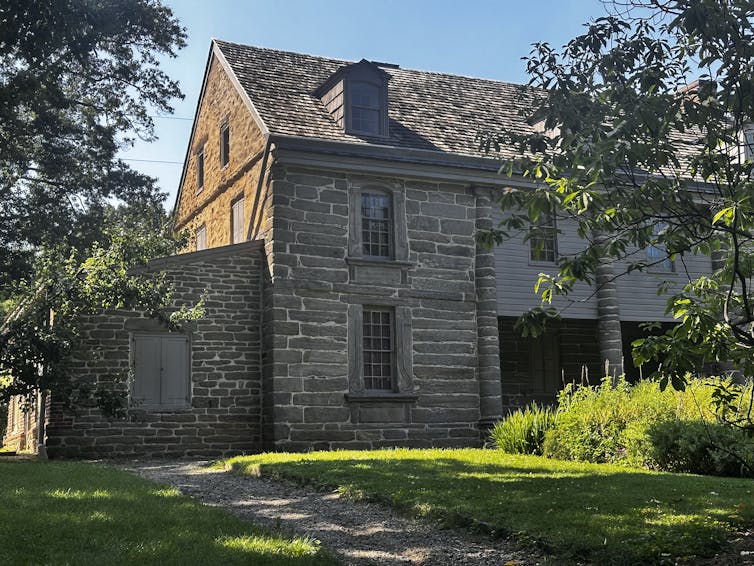
I studied a rat nest that was used by generations of rats over several decades and was found under the floorboards in the attic of the historic home at Bartram’s Garden in southwest Philadelphia. In 1728, Quaker farmer and naturalist John Bartram began to plant his garden, which is considered the oldest botanic garden in North America. I studied thousands of plants collected by rats and learned how the Bartram family used these plants for food, medicine, trade and study.

Exterior view of old stone building surrounded by grass and trees
A view of the Bartram family’s historic stone home.
Magpieturtle/Wikimedia Commons, CC BY

A 200-year-old nest

Rat nests are common in historic structures, particularly homes like Bartram’s that contained kitchens and buildings that were used for food storage, such as cellars.

Bartram collected plants from around eastern North America along with those sent to him by naturalists in Europe. His sons, John Jr. and William, and later his granddaughter Ann Bartram Carr, continued to expand the garden, which gained international fame during the 18th and 19th centuries.

The rat nest was discovered during historic preservation work at the Bartram home in 1977. My analysis of the materials in the nest indicates that it was formed in the late 18th and early 19th century. The materials are representative of the plants rodents would have been foraging from the Bartram home and garden.

The plants I identified weren’t restricted to those sold by the Bartram family as a part of their nursery business. Nor were they limited to plants that were traded between naturalists hoping to learn more about the flora of the American Colonies. They included crops such as wheat, buckwheat, corn, parsnips and beans grown by the family to feed themselves; herbs such as lemongrass, basil and mint used for medicine by the family; and many wild and weedy plants – for example, brambles, corn cockle, and broom and needle grasses – that were not intentionally grown by the Bartrams but were nonetheless collected by the rats on the property.

Small pentagon-shaped white trays including organic materials
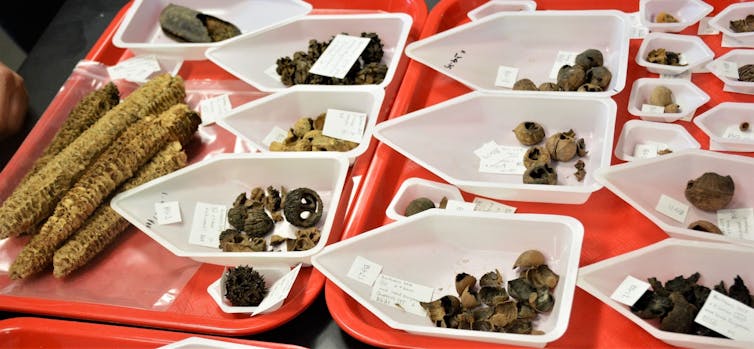
Materials from the rat nest in the process of being sorted by the author, including hickory, walnuts, acorns, corn and peanuts.
Alexandria Mitchem Hansen, CC BY-NC-SA

By studying the plants foraged by these rats, I learned not only about the important scientific and commercial plants in the garden, but also about the food and medicine the family were eating and using, including imported snacks such as peanuts and Brazil nuts, which were not grown in the garden but could have been purchased in Philadelphia.

Sorting 11 pounds of material

I am an archaeobotanist, which means I recover and identify plants from the past.

Over the course of almost three years, I sorted through over 11 pounds (5 kilograms) of material from the rat nest recovered from the Bartrams’ home and stored at the Center for the Analysis of Archaeological Materials at the Penn Museum.

Because there is often a lot of material, archaeologists divide these kinds of samples using geological sieves, which are scientific screening tools that filter samples by size. This makes the material easier to sort.

Then I used a microscope to sort and identify the plants therein. Archaeobotanists find various parts of plants, including seeds, chaff, fruit pits, nutshells and cobs. The plants I identified ranged in size from whole corncobs to weed seeds smaller than half a millimeter.

To identify the species of plants, I used reference manuals, comparative collections of plant seeds and other parts, and help from the archaeobotanists at the Penn Museum. I also studied images from herbaria, which are collections of historic plants that have been preserved and archived.

In the future, I plan to focus on the weedy plants recovered from the rat nest. The majority of invasive species in the United States were originally introduced in horticultural contexts, including botanic gardens and nurseries. Data from Bartram’s Garden will help me and other scholars better understand the timing and details of this process.

Read more of our stories about Philadelphia, or sign up for our Philadelphia newsletter on Substack.

The Conversation

Alexandria Mitchem Hansen receives funding from the McNeil Center for Early American Studies, the American Philosophical Society, the Explorer’s Club, the Society for Historical Archaeology, the Society for Ethnobiology, and Columbia University.

ref. I study rat nests − here’s why rodents make great archivists – https://theconversation.com/i-study-rat-nests-heres-why-rodents-make-great-archivists-270357