How museums can help rebuild trust in a divided America

Source: The Conversation – USA (2) – By Devon Akmon, Director of the MSU Museum and CoLab Studio, Michigan State University

Across the United States, political polarization has deepened to historic levels. In a report published in May 2025, the Pew Research Center found that Americans are more divided and less trusting of one another than at any point in recent decades. Yet museums remain among the few places where curiosity still draws people across political and cultural lines.

Ninety-two percent of adults view museums as nonpartisan sources of education, according to a report from Wilkening Consulting. People also trust museums for presenting fact-based, authentic and research-driven information. Ninety-six percent of Americans say they would support lawmakers who fund museums, and 97% see museums as vital educational assets to their communities. These findings place museums among the most trusted institutions in American life, ranking just behind friends and family.

That rare level of confidence gives museums both an opportunity and a responsibility. As debates over science, history and art intensify, they are being called upon to do something more fundamental: to model how people might think and listen together.

As director of the Michigan State University Museum in East Lansing, and core faculty in the Arts, Cultural Management and Museum Studies program at MSU, I see every day how these spaces can foster understanding.

Questioning algorithms, fostering dialogue

At the MSU Museum, an upcoming exhibition titled “Blurred Realities” will ask a question that feels urgent far beyond its gallery walls: How do we decide what is true?

Opening in January 2026, “Blurred Realities” examines how information, bias and technology shape people’s understanding of the world. Rather than advancing a single authoritative narrative, the exhibition creates space for inquiry, encouraging visitors to reflect on how beliefs are formed, how digital systems influence perception, and how imagination reshapes memory and identity. In doing so, the exhibition invites thoughtful engagement with the stories, data and algorithms that shape contemporary life, and considers what it means to navigate truth in an increasingly complex information environment.

Central to this effort are the museum’s “CoLaborators,” a team of college students trained to facilitate small, idea-driven conversations that encourage curiosity and exchange between museum visitors. They engage guests in open conversations that respond to their interests in the moment. This approach differs from the traditional docent model, which often centers on the transmission of information. Instead, the students’ work transforms the gallery into a living forum where questions matter more than conclusions.

In my experience, this is just one of many ways that museums are engaging the communities they serve to explore timely and relevant topics that shape contemporary life.

Michigan State University students discuss their participation in the CoLaborator program.

Catalysts for civic connection

Museums have long been places to explore the natural world, cultural artifacts and scientific discovery.

History museums have hosted community storytelling projects. An excellent example is the “Your Story, Our Story” project led by the Tenement Museum in New York.

Science museums, including the Natural History Museum of Utah, have led public discussions on climate change.

Art and history museums have opened their galleries and programming spaces to conversations about identity and belonging. The Charles H. Wright Museum of African American History held an exhibition centered on Detroiters exonerated of crimes and themes of justice, identity and renewal.

The Institute of Museum and Library Services describes museums and libraries as community catalysts that support social well-being through cultural engagement, shared identity and social connection. In a time when public debate often happens online, in anger and lacking nuance, museums offer something different: a physical place where curiosity can thrive and where people can pause, reflect and listen.

The more than 35,000 museums across the United States represent a remarkably broad and diverse field, rooted in communities of every size and serving people where they live and learn. Their core work has traditionally focused on collecting, researching, preserving and interpreting objects of historical, cultural and scientific significance.

As social divisions grow, they are becoming important forms of social infrastructure where people can encounter different perspectives. In many cases, their roles are also expanding as museums help the public engage with the pressing questions of our time.

The Association of Science and Technology Centers notes that rising mistrust in institutions, the spread of misinformation and the weakening of shared public spaces are creating new challenges for organizations that engage the public. In recent years, these trends are prompting museums to think about their role in supporting connection and understanding. Across the country, institutions that once focused mainly on preservation and education are reframing their purpose to include convening civic dialogue and helping visitors navigate complex issues together.

Preserving trust in an age of discontent

As museums step more visibly into the civic sphere, they also face new pressures. Efforts to engage with difficult topics can draw criticism from across the political spectrum.

Some question why museums address issues like race, climate or misinformation at all, while others expect them to go further. The result can be a delicate balance between maintaining trust and remaining relevant. Staff and volunteers are expected to create inclusive environments while navigating limited resources, public scrutiny and, sometimes, personal attacks. Smaller institutions may lack the capacity to sustain long-term partnerships or withstand political pushback.

I believe avoiding these conversations carries its own risks. It can reinforce perceptions that museums are detached from the realities of the communities they serve. The key question we ask ourselves at the MSU Museum is not whether to engage with societal issues, but how to do so with care, humility and authenticity. That involves listening as much as leading and viewing dialogue itself as part of our educational mission.

At a moment when trust in public institutions is fragile, museums hold a rare and valuable position. They are places where people still expect to learn something new and to encounter ideas different from their own. When museums invite visitors to think together about complex issues, whether through exhibitions, conversations or community partnerships, they help nurture the habits of curiosity and empathy that democracy depend on. These interactions may not resolve polarization, but they can model a more constructive way of engaging with difference.

Within a museum’s walls, people can explore difficult ideas without the noise of argument or the demand to take sides. In doing so, museums continue their essential work, not only preserving the past but helping us imagine a shared future built on understanding, curiosity and trust.

Blurred Realities” is on view at the Michigan State University Museum in East Lasing, Michigan, from Jan. 15 to July 18, 2026.

Read more of our stories about Michigan.

The Conversation

Devon Akmon is the board chair for the American Alliance of Museums.

ref. How museums can help rebuild trust in a divided America – https://theconversation.com/how-museums-can-help-rebuild-trust-in-a-divided-america-268466

Why does orange juice taste bad after you brush your teeth?

Source: The Conversation – USA – By Linda Bartoshuk, Research Professor of Psychology, George Washington University

There’s a scientific reason your OJ tastes funny after you brush your teeth. JGI/Tom Grill/Tetra Images via Getty Images

Curious Kids is a series for children of all ages. If you have a question you’d like an expert to answer, send it to CuriousKidsUS@theconversation.com.


Why does orange juice taste bad after you brush your teeth? – Seth G., age 10, Bloomington, Indiana


It’s a mistake you hopefully only make once. In your morning rush to get ready, you brush your teeth before you head to the kitchen and down a big glass of orange juice. Yuck!

What makes your clean, minty mouth taste so gross when it meets OJ?

The short answer is that toothpaste contains a detergent that dissolves fat. And since your taste buds are partly made of fat, they are disrupted whenever you brush your teeth.

Before you decide you need to stop brushing your teeth to save your taste buds, know that this disruption is temporary, lasting only a few minutes. Brushing with toothpaste is still important for your health.

But how does this change in taste happen? And how are the taste receptors that are all over the surface of your tongue supposed to work?

I’m a psychologist, and I’ve spent more than 40 years researching the science of how people experience taste and flavor.

Let’s look at the science behind this phenomenon:

A bittersweet symphony

Thanks to evolution, your brain is wired to make you love the sweet sugars your body and brain need for fuel and hate the bitter poisons than could kill you. So your receptors for these two particular tastes are vital to your survival.

All of the cells in your body are held together by an outer layer, known as the membrane, that is made up of fats called lipids. And in sweet or bitter taste receptor cells, the cell membranes also contain a special molecule called a G protein-coupled receptor, or GPCR.

Some GPCRs are designed to detect sweet tastes. They tune out all compounds that aren’t sweet and respond only to the sugars your body can use. Others detect bitter tastes, tuning in to the large number of compounds in nature that are poisonous. They act as a built-in alarm system.

Salty chips and sour candies

Your perception of saltiness and sourness happens a little differently. These tastes are detected when positively charged ions called cations pass through tiny openings in the cell membrane of your salty and sour receptors.

In the case of saltiness, the cation is the positively charged sodium found in sodium chloride – common table salt.

For acidic, or sour, tastes, the cation is a positively charged hydrogen ion. While different types of acids may contain different chemical compounds, they all contain the hydrogen cation.

When you eat potato chips, the positively charged sodium cations from the salt pass through special openings in a receptor’s membrane, producing the salty taste. Similarly, the hydrogen cations in your favorite sour candy slip through other special openings in your sour receptor’s membrane and send a “sour” signal to your brain.

Toothpaste and OJ

The orange juice that many people like to drink with breakfast is naturally high in sugar. But it also contains citric acid, with its hydrogen cations. As a result, it’s a delicious combination of both sweet and a little sour.

But if you brush your teeth before breakfast, your OJ tastes terrible. What’s changed?

It’s not just that minty tastes clash with sweet ones. Toothpaste contains the detergent sodium lauryl sulfate, which helps remove dental plaque from your teeth. Plaque is the sticky film of germs that can cause cavities and make your breath smell bad.

Boy brushes teeth with green toothbrush
The detergent that helps toothpaste clean your teeth also affects your taste receptors.
Ekaterina Goncharova/Moment via Getty Images

If you ever do the dishes, you’ve probably seen what happens when you squirt detergent into a sink full of greasy water: The detergent breaks up the greasy fat, making it easy to wipe it off the dishes and rinse them clean.

But there’s another type of fat in your mouth that the detergent in toothpaste disrupts – the lipids in the cell membranes of your taste receptors. Brushing your teeth breaks up that layer of lipids, temporarily changing how you perceive taste.

Testing it out

Back in 1980, I conducted a study with a couple of my colleagues who were studying chemistry. We wanted to know how the tongue responds to sweet, bitter, salty and sour after being exposed to sodium lauryl sulfate, the detergent in toothpaste.

We conducted an experiment with seven student volunteers at Yale. They tasted very high concentrations of sweet sucrose, sour citric acid, salt and bitter quinine, both before and after holding a solution (0.05%) of sodium lauryl sulfate in their mouths for one minute.

You could conduct your own version of this experiment with something sweet like sugar, a little table salt, orange juice and tonic water. Taste them before you brush your teeth and then after, and see what happens!

We found that the intensity of the tastes of sucrose, salt and quinine were reduced by a small amount, but the most important change was that a bitter taste was added to the sour taste of citric acid.

This is why, instead of tasting sweet with a bit of nice tanginess, your OJ tastes bitter after you brush your teeth.


Hello, curious kids! Do you have a question you’d like an expert to answer? Ask an adult to send your question to CuriousKidsUS@theconversation.com. Please tell us your name, age and the city where you live.

And since curiosity has no age limit – adults, let us know what you’re wondering, too. We won’t be able to answer every question, but we will do our best.

The Conversation

Linda Bartoshuk has received funding from NIH.

ref. Why does orange juice taste bad after you brush your teeth? – https://theconversation.com/why-does-orange-juice-taste-bad-after-you-brush-your-teeth-271741

‘We the People of Venezuela’: la vía constitucional para superar la ocupación y avanzar hacia la soberanía

Source: The Conversation – (in Spanish) – By Sergio Andrés Morales-Barreto, Coordinador académico y profesor del Departamento de Teoría Jurídica y de la Constitución de la Facultad de Estudios jurídicos, políticos e internacionales, Universidad de La Sabana

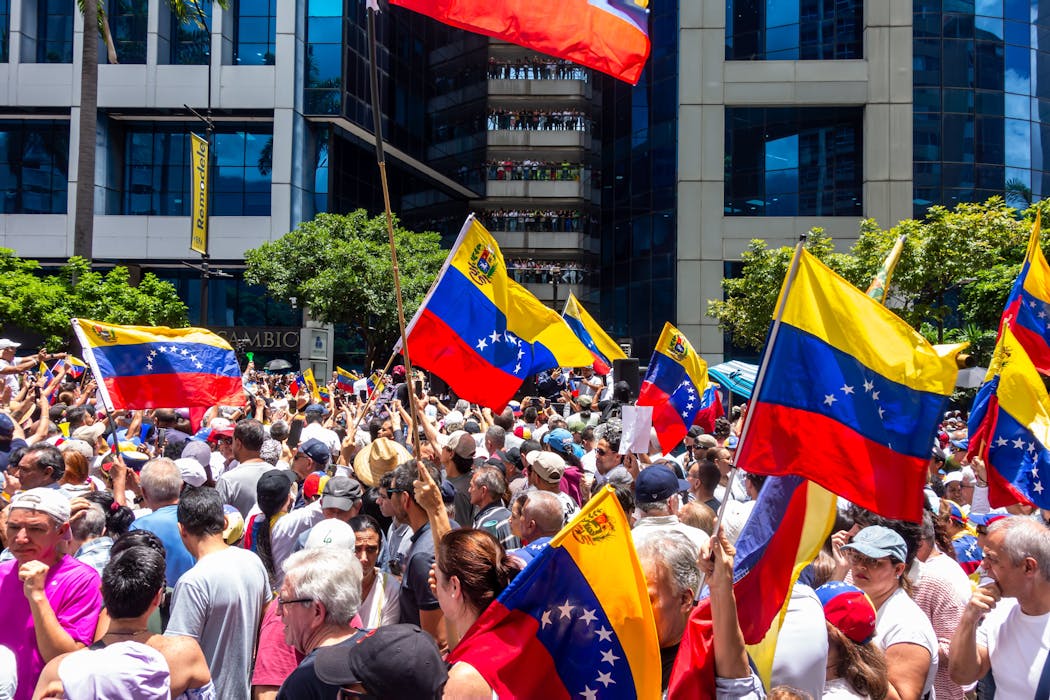
Manifestación convocada por la oposición a Maduro en agosto de 2024. Giongi/Shutterstock

Tras una operación militar estadounidense que incluyó bombardeos y la captura de Nicolás Maduro y su esposa Cilia Flores, trasladados a Nueva York para enfrentar cargos por narcoterrorismo, el presidente Donald Trump declaró el 3 de enero de 2026 que Estados Unidos dirigirá temporalmente Venezuela hasta lograr una transición segura, adecuada y juiciosa. La afirmación plantea un dilema que va más allá del hecho militar. Bajo qué modelo de autoridad se ejercerá ese poder, con qué límites y cómo se compatibiliza con el principio de soberanía popular que estructura el constitucionalismo latinoamericano.

La mayoría de las constituciones de la región, incluida la venezolana de 1999, proclaman que la soberanía reside en el pueblo, acompañada de catálogos de derechos y límites al poder. Ese lenguaje resuena con la tradición estadounidense, cuya Constitución comienza con “We the People, una fórmula que afirma que la fuente del poder no es el gobierno sino la ciudadanía, y que toda autoridad es legítima solo si actúa bajo reglas y límites claros. Si esa idea sirve como fundamento del constitucionalismo, también funciona como estándar para evaluar cualquier transición, incluso una presentada como liberación.

La libertad no se mide por quién cae

En América Latina, la palabra liberación ha tenido significados opuestos. Puede asociarse a transiciones democráticas que desmontaron dictaduras, pero también a episodios en los que la fuerza sirvió para imponer gobiernos, reordenar instituciones y cerrar el pluralismo. Por eso la memoria cultural del continente insiste en una intuición básica. La libertad no se mide solo por quién cae, sino por lo que queda en pie. Dicho de otra manera, el desenlace puede ser celebrado y aun así producir consecuencias institucionales inesperadas.

Una parte del debate público se ha concentrado en el derecho internacional y el uso de la fuerza. La Carta de las Naciones Unidas prohíbe la amenaza o el uso de la fuerza contra la integridad territorial o la independencia política de cualquier Estado, con excepciones como la autodefensa ante un ataque armado o la autorización del Consejo de Seguridad. Ese marco busca evitar que el poder militar se convierta en un método normal para reconfigurar gobiernos.

Pero también conviene aclarar un punto conceptual. La fuerza no es un elemento natural del derecho; es su última excepción. Un sistema jurídico no se define solo por sancionar, sino por ordenar conductas y generar expectativas compartidas. Si el derecho se redujera a castigos, sería un mecanismo puramente represivo. Y la represión difícilmente puede ser la base de reconstrucción institucional para un país que ha vivido años de coerción estatal.

Este punto conecta con la discusión sobre democracia. Los Estados del mundo afirman ser democráticos bajo modelos distintos. Y la democracia no se agota en un procedimiento para contar votos. En América Latina, además, el gobierno no se elige mediante colegios electorales como en Estados Unidos, y la experiencia histórica ha mostrado que puede haber elecciones sin libertad plena, con censura, captura de tribunales o persecución de la oposición, incluso con violencia contra candidatos . Por eso, el debate venezolano debe centrarse en qué tipo de democracia se busca reconstruir.

Modelo de democracia

Aquí la democracia representativa se vuelve central. El sistema interamericano, a través de la Carta Democrática Interamericana, plantea un modelo que no reduce la democracia al evento electoral, sino que la vincula con el Estado de Derecho, los derechos fundamentales y el pluralismo político. Su premisa es clara. Sin instituciones capaces de limitar al Ejecutivo (Presidente), la democracia se convierte en una etiqueta vacía. Una democracia representativa requiere separación de poderes, justicia independiente, prensa libre, competencia real y garantías efectivas para la oposición. También exige deliberación. No es solo gobierno de mayorías, sino un sistema que escucha y protege el disenso. Un reto que tendrá Venezuela para gestionar el chavismo.

Esa definición vuelve a tensionar las declaraciones de Trump sobre dirigir Venezuela. Si la democracia se funda en soberanía popular, una transición conducida desde el exterior solo puede justificarse si está estrictamente orientada a devolver capacidad de decisión al pueblo, con límites verificables y con apertura efectiva del pluralismo. De lo contrario, la transición corre el riesgo de convertirse en administración de facto hasta nuevo aviso, una fórmula que históricamente ha degradado a los países de Latinoamérica, incluso cuando se anuncia como puente.

Autodeterminación de los pueblos

Esta discusión también conecta con el principio de autodeterminación de los pueblos. Diversos instrumentos internacionales reconocen que los pueblos tienen derecho a determinar libremente su condición política y su desarrollo. Pero esa autodeterminación se vuelve insuficiente si las instituciones internas han sido vaciadas y la oposición ha sido tratada como enemigo. La Declaración de los derechos del hombre y el ciudadano de 1789 sostuvo que donde no hay garantía de derechos ni separación de poderes no hay constitución. Traducido al presente, sin controles y sin pluralismo, hablar de voluntad popular puede ser una ficción.

El régimen venezolano ha sido denunciado por violaciones graves de derechos humanos. Reconocerlo es indispensable para entender por qué muchos celebran su caída. Pero una transición democrática no se define por remover al gobernante, sino por restablecer condiciones institucionales para que el pueblo decida sin miedo, sin censura y sin coerción. Ese estándar no debe exigirse selectivamente. Aplica a cualquier actor externo que pretenda conducir una transición, sea Estados Unidos u otra potencia.

La pregunta final no es solo quién gobernará Venezuela, sino qué significa gobernar en nombre de un pueblo. “We the People” no es un eslogan. Es un estándar constitucional. La transición venezolana será un camino para devolver soberanía bajo límites, o será un poder excepcional que promete democracia más adelante. De esa diferencia depende el futuro del pueblo de Venezuela y la credibilidad de la democracia representativa en Latinoamérica.

The Conversation

Sergio Andrés Morales-Barreto no recibe salario, ni ejerce labores de consultoría, ni posee acciones, ni recibe financiación de ninguna compañía u organización que pueda obtener beneficio de este artículo, y ha declarado carecer de vínculos relevantes más allá del cargo académico citado.

ref. ‘We the People of Venezuela’: la vía constitucional para superar la ocupación y avanzar hacia la soberanía – https://theconversation.com/we-the-people-of-venezuela-la-via-constitucional-para-superar-la-ocupacion-y-avanzar-hacia-la-soberania-272677

Johannesburg has failed its informal traders: policies are in place, but action is needed

Source: The Conversation – Africa – By Mamokete Modiba, Senior Researcher, Gauteng City-Region Observatory

Johannesburg’s inner city is a bustling hub of economic life – a dense, dynamic web of informal traders, adjacent businesses and other users. Informal trading remains an essential survival strategy for many households. It is also a key source of affordable goods and services.

Managing this activity, however, is not straightforward. The city authorities face legitimate pressures to maintain order, safety, hygiene and accessibility in highly contested urban spaces. At the same time, they have a mandate to support livelihoods and encourage inclusive economic participation.

Balancing these objectives is complex. But, as urban planners and researchers, we believe it’s possible and necessary. It needs to be done in a way that recognises the realities of both municipal constraints. These include budgets, conflicting political pressures and traders’ contributions. Traders generate local economic activity and provide convenient, affordable goods and services.

Johannesburg’s informal trading sector should not be viewed as a problem to eliminate. Rather, it should be managed effectively. The focus for the city should be on improving how this is done.

The city has a chequered history of managing informal traders. In October 2025, Johannesburg authorities removed informal traders from De Villiers Street in the heart of the city’s central business district. The city went on to expand the operation to other inner-city areas and townships to promote “order” and “cleanliness”.

This approach was reminiscent of the 2013 Operation Clean Sweep, which disrupted livelihoods and increased urban inequality and violence. After the events in 2025, the Gauteng High Court ruled in favour of traders who took the city to court. But the court’s ruling has not been implemented.


Read more:
Africa’s city planners must look to the global south for solutions: Johannesburg and São Paulo offer useful insights


The city’s 2022 informal trading policy provides a roadmap for a different approach. It provides a structured framework that includes:

  • recognising informal traders as essential contributors to the urban economy

  • setting out clear procedures for registration, spatial planning, permit processes and trader support.

Its strength lies in offering a coherent, rights-based approach that can bring transparency and fairness to how trading spaces are allocated and managed. But its success hinges on implementation that is transparent, inclusive and responsive.

A durable solution

In our view, Johannesburg can turn contested spaces into engines of shared prosperity by:

  • investing in adequate infrastructure

  • promoting collaboration among traders, property owners, municipal authorities and other affected stakeholders

  • enforcing regulations that protect livelihoods instead of punishing them.

A durable solution requires systematic reforms grounded in provisions of the city’s 2022 informal trading policy. This emphasises co-management by various stakeholders. Among them are officials from various relevant departments, municipal-owned entities and the informal traders.

But laws and regulations have to be updated.

By-laws passed in 2012 are still being used to regulate the sector. This is even though a new policy was adopted in 2022.

Updated by-laws would enable the city to reflect the policy’s developmental orientation. This includes its focus on supporting livelihoods and expanding access to jobs and entrepreneurial opportunities. It also includes creating a conducive regulatory and management environment for informal traders.


Read more:
Johannesburg’s produce market has supplied the informal sector for decades: a refresh is due


The policy adopted in 2022 contains several important provisions that support more effective management of informal trading. Key elements include:

1) Informal trading plans.

A comprehensive, independently conducted census of all traders – registered and unregistered – will form the evidence base for this plan. This will enable the city to understand the full scale and distribution of informal trading.

The city must make enough suitable trading sites available. This expanded access would help accommodate more traders legally and reduce pressure on overcrowded locations. Throughout the process, the city must balance the need to demarcate trading sites with:

  • the principle of minimal relocation to protect livelihoods

  • ensuring that pavements, transport routes and other public amenities remain accessible to all.

2) Appropriate infrastructure and services.

Ensuring that informal traders have adequate services supports their livelihoods and also contributes to cleaner, safer, and more attractive streets for all users. All informal trading environments in the inner city would benefit from access to better infrastructure. This includes water, electricity, street lighting, storage, improved sidewalks, trading shelters and ablution facilities.


Read more:
Smart cities start with people, not technology: lessons from Westbury, Johannesburg


3) Clear articulation of traders’ rights and responsibilities.

The greatest responsibility rests with the city to transform informal trading management. But the policy also makes clear that informal traders themselves have important responsibilities to ensure the system works effectively.

Once allocated trading sites, traders are expected to:

  • operate only within designated areas

  • avoid restricted or prohibited spaces

  • help to maintain order

  • conduct their business in line with applicable regulations, policies and by-laws

  • play an active role in maintaining the cleanliness and upkeep of their trading spaces

  • work collaboratively with the City, neighbouring businesses and other local stakeholders.

The plan also envisages the establishment of an independent informal trade forum, an informal trading task team and a dedicated informal trade unit. Urgent action is needed to constitute these structures.

Next steps

The City has an opportunity to shift from reactive, enforcement-driven approaches to a proactive, developmental model that values informal trading as a central part of Johannesburg’s economy and identity.

There are key next steps that need to be taken.

Firstly, fully operationalising the commitments of the 2022 policy by updating by-laws.

Secondly, by completing a transparent and comprehensive census of all traders. This needs to include involving them meaningfully in decisions about management processes.

Alongside this, the city should prioritise investment in adequate infrastructure and strengthen communication and collaboration platforms. It also needs to establish the dedicated structures envisioned in the policy.

Together, these actions can build an enabling system that protects livelihoods, reduces conflict, and supports a vibrant, inclusive and economically resilient inner city.

The Conversation

Mamokete Modiba previously received funding from the National Research Foundation and Tiso Foundation.

Sarah Charlton previously received funding from the National Research Foundation and various UK & European research grant funders. .

Claire Benit-Gbaffou and Tanya Zack do not work for, consult, own shares in or receive funding from any company or organisation that would benefit from this article, and have disclosed no relevant affiliations beyond their academic appointment.

ref. Johannesburg has failed its informal traders: policies are in place, but action is needed – https://theconversation.com/johannesburg-has-failed-its-informal-traders-policies-are-in-place-but-action-is-needed-270911

The US used to be really dirty – environmental cleanup laws have made a huge difference

Source: The Conversation – USA (2) – By James Salzman, Professor of Environmental Law, Bren School of Environmental Science & Management, University of California, Santa Barbara; University of California, Los Angeles

Growing up in the 1970s, I took for granted the trash piles along the highway, tires washed up on beaches, and smog fouling city air. The famed “Crying Indian” commercial of 1971 became a symbol of widespread environmental damage across the United States.

That’s why the first Earth Day on April 22, 1970, energized the nation. In the largest single-day public demonstration in U.S. history, roughly 10% of the population took to the streets to shout together: “Enough is enough!”

Republican and Democratic politicians alike listened. Over the decade that followed, all the nation’s foundational environmental laws were passed with strong bipartisan support – the Clean Air Act, Clean Water Act, Endangered Species Act and more.

The “Crying Indian” ad began running on TV in the U.S. in 1971 and shows scenes of pollution that were common across the country at the time. The harms were all too real, though it was later revealed the actor was of Italian ancestry, not Indigenous heritage.

These laws are taking a beating at the moment, including from the Environmental Protection Agency – the federal government agency created in 1970 to protect the environment. The agency’s own leader, Lee Zeldin, boasted of “driving a dagger straight into the heart” of environmental regulations. President Donald Trump regularly derides environmental laws as job killers and government overreach.

But the conditions that made these laws necessary have largely been forgotten. This environmental amnesia allows critics to focus entirely on costs while ignoring the laws’ very real benefits and achievements.

I’m an environmental law professor, so I was excited to learn recently about the Documerica project, courtesy of a wonderful article by writer Gideon Leek. It shows in clear photographic evidence how dirty the U.S. used to be and wakes people up to how much better the environment is today.

Crowds of people cover all of a wide city street and its sidewalks.
Across the U.S., including on Fifth Avenue in New York City, millions of people demanded environmental protection on the first Earth Day, April 22, 1970.
Bettmann Archive via Getty Images

An inspired origin

Environmental protection was a bipartisan effort in the 1970s: The EPA was created by President Richard Nixon, a Republican. The agency’s first leader was Bill Ruckelshaus, a Republican congressman from Indiana.

Inspired by the famous photographs of Depression-era farmworkers commissioned in the 1930s by the Farm Security Administration, Ruckelshaus’ newly created EPA commissioned a nationwide photo record. The goal, as Leek put it, was to “provide the EPA with a great deal of qualitative environmental data, create a ‘visual baseline’ against which to judge their efforts, and introduce the agency to the country through art.”

In its few short years of operation, from 1972 through 1978, the Documerica project produced over 20,000 photographs of rivers and farms, highways and city streets. The photos provide a vivid window into the state of the U.S. environment in the 1970s. Now, looking back, they highlight the progress made in the decades since, a demonstration of environmental laws’ successes far more powerful than graphs and statistics.

A broad swath of trash sits on the ground. In the distance are a green meadow and sharp mountain peaks.
The landfill in Boulder County, Colo., in 1972 was just an open pit people could walk right up to and throw their trash in.
Bill Gillette, Documerica Project, U.S. National Archives

Solid waste

As a kid, every Sunday my father and I would load the back of our station wagon with trash barrels and drive to the town dump – literally a hole in the ground. My dad would back up to the edge of the pit, and I would enthusiastically run out for what we called “The Olympic Trash Throw!” pouring the barrels’ contents down to where a bulldozer rumbled back and forth, compacting the trash while gulls circled overhead.

To say America’s landscape was littered in the 1970s is not merely poetic phrasing. Waste disposal was a matter of local law, and illegal dumping was commonplace. Drums of pesticides and chemicals could be sent to the local dump along with tires and just about anything else people and companies wanted to get rid of. When the dump was full, it was covered with topsoil and became open land, ready for recreation or building construction.

One place where this happened was Love Canal, a neighborhood near Niagara Falls, New York. A dump holding decades of chemical drums from the Hooker Chemical Co. was lightly covered and sold to the town for just $1. The town was grateful. A neighborhood was built on the land.

Only when people noticed high levels of miscarriages and cancer clusters among the residents – and saw oozing waste – did opinion change.

A bulldozer pushes dirt across open land, marked with a sign saying 'Danger, keep out.'
In 1980, a massive cleanup got underway in the Love Canal neighborhood of Niagara Falls, N.Y.
Bettmann Archive via Getty Images

In 1976, Congress passed the Resource Conservation Recovery Act, which was the first law that tracked waste materials from their creation to their disposal and set tough standards for how to dispose of them. But by then, decades of unregulated waste disposal had contaminated sites all over the country. The contaminants, toxicity and people responsible were often unknown.

Four years later, the 1980 law known as “Superfund” set standards and assigned financial responsibility for cleaning up hazardous waste sites. The law created a multibillion-dollar fund that could pay for the cleanups and required potentially responsible parties to reimburse the government or clean up the sites on their own.

Faced with requirements to track their waste and heavy fines if the disposal resulted in hazardous sites, companies paid much more careful attention to their waste disposal. No one wanted to pay for cleaning up a Superfund site.

A beach covered in tires stretches out to a waterway, with docks and boats in the distance.
Discarded tires litter the shorefront of Baltimore Harbor in 1973.
Jim Pickerell, Documerica Project, U.S. National Archives

Water pollution

I had the misfortune in 1978 to capsize while sailing a boat on the Charles River in Boston. My shame turned to a dermatologist’s visit when I broke out in rashes the next day. You fell in the Charles at your peril.

Environmental advocates weren’t kidding when, in the 1960s and 1970s, they declared “Lake Erie is a dead lake” because of all the industrial pollution pouring into its waters. An oil slick on Cleveland’s Cuyahoga River famously caught fire in 1969, but it was actually the 12th time the river had burned in a century.

Just as with dumps on land, all kinds of waste was being disposed of in rivers, lakes and harbors. There was a federal law in place, but it was ineffective and relied on states to set limits and enforce them.

The Clean Water Act of 1972 sought to create a national standard, requiring companies that wanted to discharge waste into waterways to get a federal permit and use the best available technology to reduce the amount and toxicity of what they did dump. The act also provided billions of taxpayer dollars to upgrade sewage treatment plants so they didn’t just dump untreated sewage into the water.

A large stretch of discolored water flows into a larger body of water.
The badly polluted Niagara River flows into Lake Erie in Buffalo, N.Y., in 1973.
George Burns, Documerica Project, U.S. National Archives

The ambitious goal was to end water pollution entirely and make all of the nation’s waters safe for swimming and fishing within a decade. Those aspirational goals for the country’s waters still have not been fully met, though Ruckelshaus used to quip that at least they are not flammable.

Even more telling, the Charles River and other urban rivers that people avoided in the 1970s now boast all manner of recreation, with little or no risk of rashes even while swimming.

A curtain of smog obstructs the view of a city and the mountains behind it.
Smog blankets Salt Lake City in 1972.
Bruce McAllister, Documerica Project, U.S. National Archives

Air pollution

Perhaps the most obvious improvement since the 1970s has been in air quality around the U.S.

The horrible smog around Los Angeles is well known. But many other cities were blanketed in polluted air that led to respiratory illnesses and millions of early deaths across the nation over the decades. In Pittsburgh it was only half-jokingly said that you had to floss your teeth after breathing.

The Clean Air Act of 1970 was the first law to require the EPA to set uniform nationwide standards for air quality to protect the air people breathe. In short order, lead was phased out of gasoline, catalytic converters were required on cars, acid rain was ended, and the sources of smog were stringently regulated. An EPA study found that the benefits under the law exceeded costs by a factor of more than 30 to 1 and in 2020 alone prevented over 230,000 early deaths.

A thick layer of smog covers a cityscape with tall buildings and several bridges over a river.
Smog was a problem in Louisville, Ky., and across the nation in the early 1970s.
William Strode, Documerica Project, U.S. National Archives

I could go on with photos and stories about laws from the 1970s that protected wetlands, conserved open space, reduced pesticide use, increased recycling and made many other changes to how Americans treat our lands and waters.

But it all boils down to two simple facts. First, with the exception of greenhouse gases, which have been effectively unregulated, every major measure of environmental health has improved significantly over the past five decades. And second, those improvements all occurred during times of strong economic growth, with inflation-adjusted gross domestic product increasing fivefold.

Calling these laws “job killers” misses the point entirely. They created jobs and stopped environmental killers. The laws now being demonized are the very reason the Documerica photos are images of the past, not the present. Environmental laws and regulations have their costs, to be sure, but these photographs still hold visceral power: They show just how far the nation has come and what is at risk if we forget.

The Conversation

James Salzman does not work for, consult, own shares in or receive funding from any company or organization that would benefit from this article, and has disclosed no relevant affiliations beyond their academic appointment.

ref. The US used to be really dirty – environmental cleanup laws have made a huge difference – https://theconversation.com/the-us-used-to-be-really-dirty-environmental-cleanup-laws-have-made-a-huge-difference-271277

LA fire studies show the risks as wildfire smoke lingered inside homes

Source: The Conversation – USA (2) – By Yifang Zhu, Professor of Environmental Health Sciences, University of California, Los Angeles

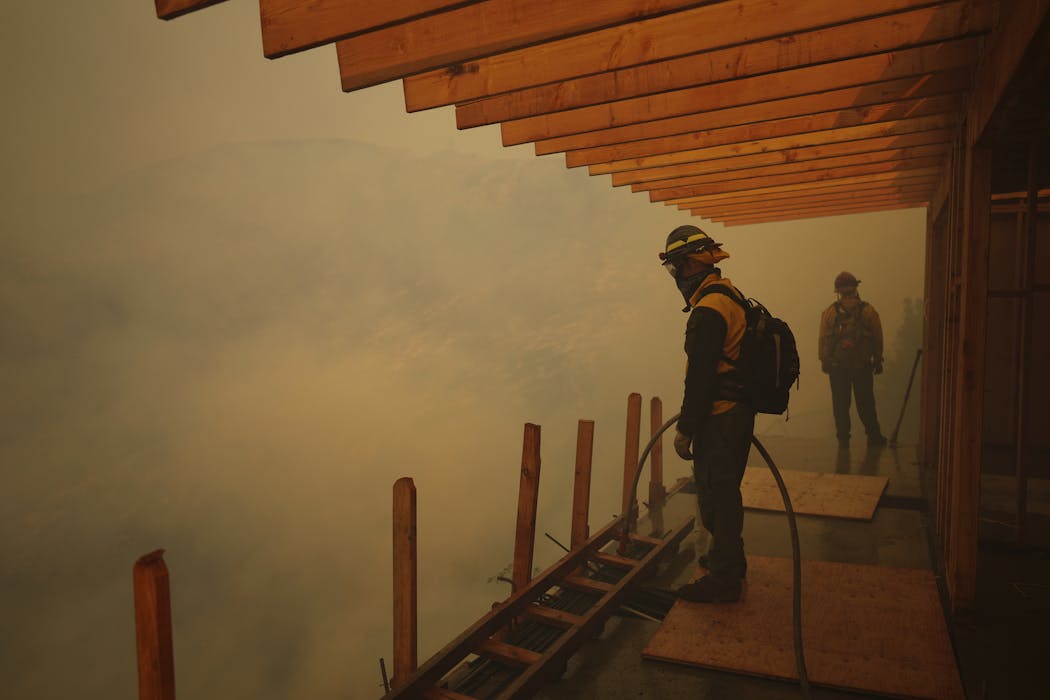
Smoke rolls up a hillside from the Palisades Fire on Jan. 11, 2025, in Los Angeles. AP Photo/Eric Thayer

When wildfires began racing through the Los Angeles area on Jan. 7, 2025, the scope of the disaster caught residents by surprise. Forecasters had warned about high winds and exceptionally dry conditions, but few people expected to see smoke and fires for weeks in one of America’s largest metro areas.

Environmental health scientist Yifang Zhu studies air quality at UCLA and began collecting samples from inside and outside homes the day after the fires began. In this Q&A, she describes findings by her team, a consortium of universities and local projects, that are painting a picture of the health risks millions of Los Angeles-area residents faced.

Their research offers both a warning and steps people everywhere can take to protect their homes and themselves from wildfire smoke in the future.

What made the LA fires unusual?

Urban fires are unique in a sense that it’s not just trees and other biomass burning. When homes and vehicles catch fire, plastics, electronics, cleaning chemicals, paints, textiles, construction material and much more burns, releasing chemicals and metals into the air.

More than 16,000 buildings burned in LA. Electric vehicles burned. A dental clinic burned. All of this gets mixed into the smoke in complicated ways, creating complex mixtures that can have definite health risks.

One thing we’ve found that is especially important for people to understand is that the concentration of these chemicals and metals can actually be higher inside homes compared with outside after a fire.

Satellite image of fire outlines.
A composite of satellite images from January 2025 shows outlines, in red, of the largest fires in the Los Angeles area. Altadena is on the right, and Pacific Palisades is on the lower left.
MMGIS, Caltech/JPL

What are your health studies trying to learn?

To understand the health risks from air pollution, you need to know what people are exposed to and how much of it.

The LA Fire HEALTH Study, which I’m part of, is a 10-year project combining the work of exposure scientists and health researchers from several universities who are studying the long-term effects of the fire. Many other community and health groups are also working hard to help communities recover. A local program called CAP.LA, or Community Action Program Los Angeles, is supporting some of my work, including establishing a real-time air quality monitoring network in the Palisades area called CAP AIR.

During an active wildfire, it’s extremely difficult to collect high-quality air samples. Access is restricted, conditions change quickly, and research resources are often limited and take time to assemble. When the fires broke out not far from my lab at UCLA, my colleagues and I had been preparing for a different study and were able to quickly shift focus and start collecting samples to directly measure people’s exposure to metals and chemicals near and around the fires.

A neighborhood with smoke in the air.
Wildfire smoke, like this during the Palisades Fire on Jan. 7, 2025, can get into a home under doors and around windows.
AP Photo/Ethan Swope

My group has been working with people whose homes were exposed to smoke but didn’t burn and collecting samples over time to understand the smoke’s effects. We’re primarily testing for volatile organic compounds off-gassing from soft goods – things like pillows, textiles and stuffed animals that are likely to absorb compounds from the smoke.

Our testing found volatile organic compounds that were at high levels outdoors during the active fire were still high indoors in February, after the fires were contained. When a Harvard University team led by environmental scientist Joe Allen took samples in March and April, they saw a similar pattern, with indoor levels still high.

What health risks did your team find in homes?

We have found high levels of different kinds of volatile organic compounds, which have different health risks. Some are carcinogens, like benzene. We have also found metals like arsenic, a known carcinogen, and lead, which is a neurotoxin.

Mike Kleeman, an air quality engineer at the University of California Davis, found elevated levels of hexavalent chromium in the nanometer-size range, which can be a really dangerous carcinogen. In March, he drove around collecting air samples from a burn zone. That was testing which government agencies would not have routinely done.

Fires have a long list of toxic compounds, and many of them aren’t being measured.

Chart shows spike in visits in early January 2025
Data from the Centers for Disease Control and Prevention shows emergency room visits spiking during the fires in early January 2025. The bold line shows the daily percentage of emergency department (ED) encounters that were associated with wildfires, and the dashed line shows the outdoor air quality index (AQI) values.
CDC

What do you want people to take away from these results?

People are exposed to many types of volatile organic compounds in their daily lives, but after wildfires, the indoor VOC levels can be much, much higher.

I think that’s a big public health message from the LA fires that people really need to know.

In general, people tend to think the outdoor air is worse for their health, particularly in a place like LA, but often, the indoor air is less healthy because there are several chemical emission sources right there and it’s an enclosed space.

Think about cooking with a gas stove, or burning candles or spraying air fresheners. All of these are putting pollutants into the air. Indoor pollution sources like cleaning fluids and PFAS from furniture and carpets are all around.

We often hear from people who are really worried about the air quality outside and its health risk during fires, but you need to think about the air indoors too.

A man walks on a beach with a dog as smoke rise from a fire in the background.
Thick smoke from a wildfire spreads over homes in Pacific Palisades, as seen from the Venice Beach section of Los Angeles on Jan. 7, 2025.
AP Photo/Jae C. Hong

What are some tips for people dealing with fires?

The LA fires have given us lots of insights into how to restore homes after smoke damage and what can be cleaned up, or remediated. One thing we want to do is develop an easy-to-follow decision tree or playbook that can help guide future fire recovery.

When the fires broke out, even I had to think about the actions I should take to reduce the smoke’s potential impact, and I study these risks.

First, close all your windows during the wildfire. If you have electricity, keep air purifiers running. That could help capture smoke that does get into the home before it soaks into soft materials.

Once the outside air is clean enough, then open those windows again to ventilate the house. Be sure to clean your HVAC system and replace filters, because the smoke leaves debris. If the home is severely impacted by smoke, some items will have to be removed, but not in every case.

And you definitely need to do testing. A home might seem fine when you look at it, but our testing showed how textiles and upholstery inside can continue off-gassing chemicals for weeks or longer.

But many people don’t have their homes tested after wildfires. They might not know how to read the results or trust the results. Remediation can also be expensive, and some insurance companies won’t cover it. There are probably people who don’t know whether their homes are safe at this point.

So there needs to be a clear path for recovery, with contamination levels to watch for and advice for finding help.

This is not going to be the last fire in the Los Angeles area, and LA will not be the last city to experience fire.

The Conversation

Yifang Zhu is working with CAP.LA (Community Action Project Los Angeles), which is funded by the R&S Kayne Foundation, and the LA Fire Health Study, which is funded by private philanthropists, including the Speigel Family Fund. Her work has also been partially funded by the Gordon and Betty Moore Foundation, the Danhakl Family Foundation, and the California Air Resources Board.

ref. LA fire studies show the risks as wildfire smoke lingered inside homes – https://theconversation.com/la-fire-studies-show-the-risks-as-wildfire-smoke-lingered-inside-homes-272473

Société à mission et « B Corp » : quelles conditions de succès ?

Source: The Conversation – in French – By Enrico Colla, Professeur émérite, ESCP Business School

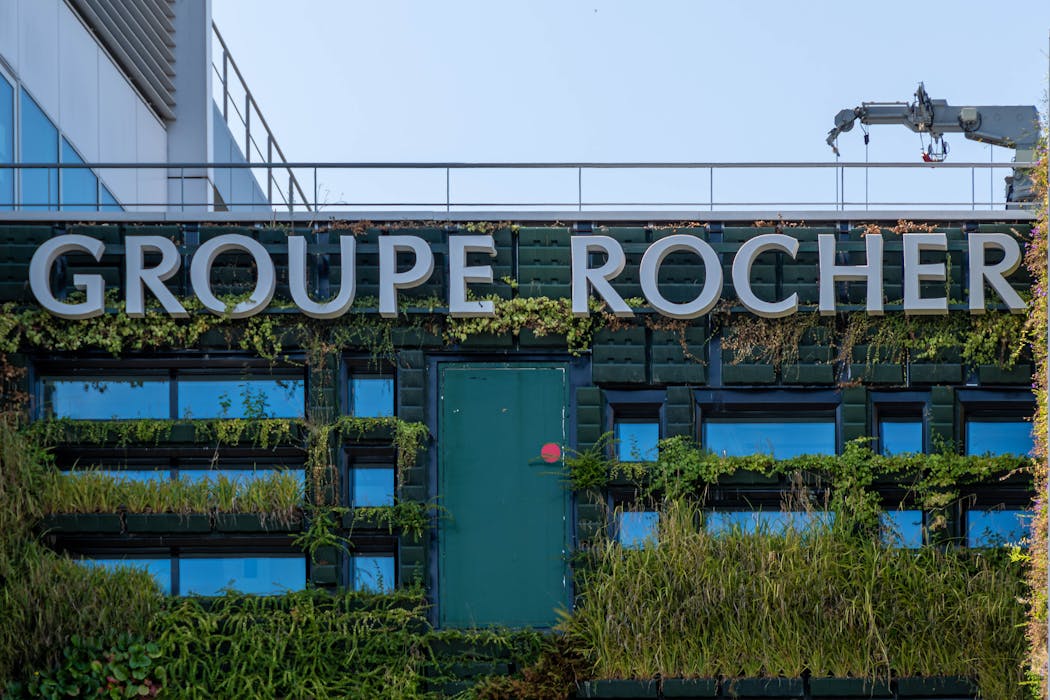
En 2019, le groupe Rocher adopte la qualité juridique d’entreprise à mission. Arbonne, une de ses marques, est labellisée « B Corp ». HJBC/Shutterstock

Pourquoi une entreprise devient-elle société à mission et labellisée « B Corp » ? Quelles sont les conséquences concrètes de l’adoption de ces formes juridiques ? Explications avec les témoignages de managers et d’actionnaires pour ces entreprises hybrides.


En 2024, 1 961 entreprises françaises ont la qualité juridique « société à mission », 600 sont labellisées « B CorpTM » et 160 sont à la fois « B Corp » et société à mission selon le baromètre des sociétés à mission.

Après la loi Pacte (2019) et la pandémie de Covid-19 (2020), nous avons mené des recherches sur les imbrications concrètes de ces deux nouvelles normes pour ces entreprises hybrides. Dans le prolongement de ces travaux, nous avons mené des entretiens auprès de managers et actionnaires d’entreprises labellisées « B Corp » et dotées de la qualité de société à mission.

Alors quels sont leurs facteurs critiques d’échec ou de succès ? Quelles sont les singularités de ces deux modèles ?

Différences entre « B Corp » et société à mission

Depuis 2010, « B Corp » est une certification internationale accordée aux entreprises qui répondent à des standards élevés en matière de performance durable. Tous les trois ans, l’entreprise doit se conformer au B Impact Assessment, un questionnaire de deux cents critères environnementaux ou sociaux. La note minimum ? 80 sur 200. Ce système de notation devrait laisser place à des seuils minimums au sein de sept thématiques d’impact comme l’action climatique ou les droits humains.

À l’international, 10 000 entreprises sont labellisées « B Corp » dans environ 100 pays.

La société à mission est un statut juridique introduit en France par la loi Pacte de 2019. Pour ce faire, l’entreprise doit définir une raison d’être, fixer des objectifs sociaux et environnementaux précis, mettre en place un comité de mission et nommer un organisme tiers indépendant (OTI), un auditeur qui certifie que l’entreprise respecte bien ses engagements.

En Europe, l’Italie a introduit en 2015 le statut de società benefit, très proche du modèle des États-Unis de benefit corporation. Le pays transalpin compte 5 161 entreprises au 30 juin 2025. De même, l’Espagne introduit en 2022 le sociedad de beneficio e interés común.

Motivations stratégiques pour incarner les valeurs de l’entreprise

Des chercheurs espagnols ont mis en évidence les principales motivations à l’adoption du label « B Corp » : incarner les valeurs intrinsèques à l’entreprise, adopter une stratégie de différenciation ou attirer de nouveaux salariés.

En parallèle, selon notre étude, la qualité de société à mission est complémentaire au label « B Corp». Elle convient aux dirigeants et aux actionnaires souhaitant ancrer leur raison d’être dans leur gouvernance – conseil d’administration et comité exécutif –, et permet d’envoyer un message fort d’engagement à l’ensemble des parties prenantes – salariés, actionnaires, clients, État, etc.

« Le passage en société à mission est l’occasion de formaliser les choses, de les ancrer dans le marbre ; c’est un peu le discours par la preuve », rappelle un des managers interviewés.

Dans les deux cas, le choix s’explique essentiellement par la volonté d’assurer la cohérence entre les valeurs et l’activité de l’entreprise. Pour ses dirigeants, renforcer la crédibilité et la pérennité de l’organisation.

La différence stratégique entre l’adoption du label « B Corp » et de la qualité juridique de société à mission ? Si les parties prenantes internes, comme les salariés, soutiennent majoritairement la transformation de l’entreprise en société à mission, en y ayant été associées, les parties prenantes externes, comme les clients ou les fournisseurs, sont séduits par le label B Corp reconnu à l’international, avec un audit standardisé.

Réticences administratives et financières

Les processus de certification du label B Corp, ou l’évaluation de la qualité de sociétés à mission, sont souvent décrits comme chronophages et complexes, en particulier pour les petites structures. « Nous devons investir un temps considérable dans la collecte de données et la formalisation des politiques internes », souligne un manager.


À lire aussi :
Abandon du Nutri-Score de Danone : retrait de sa qualité de société à mission ?


Financièrement, la certification « B Corp » implique des frais d’inscription et de vérification. Ils se chiffrent à 11 000 euros la première année pour une entreprise française ayant entre 10 millions et 15 millions d’euros de chiffre d’affaires. Les coûts de vérification additionnels, comme un accompagnement externe ou les modifications statutaires par des juristes, peuvent atteindre 50 000 euros la première année, avec un coût inférieur les années suivantes.

Les audits de la société à mission représentent également un coût, pouvant varier de 3 000 à 15 000 euros pour une petite et moyenne entreprise (PME) ou une entreprise de taille intermédiaire (ETI). C’est la raison pour laquelle le groupe Léa Nature a abandonné la qualité juridique de société à mission :

« La démultiplication des audits aux coûts conséquents tant financiers qu’en temps humains comptait parmi les facteurs justifiant son renoncement à la qualité de société à mission. »

D’autres chercheurs ont mis en évidence la difficulté des entreprises dont le modèle économique est moins facilement orientable vers des activités sociales ou environnementales. Ce phénomène favorise les entreprises mission native, qui obtiennent la reconnaissance de société à mission ou de B Corp dès leur naissance. Les très petites entreprises dans le secteur des services caractéristiques de ces entreprises mission native. Elles représentent la majorité des sociétés à mission en France.

Réseauter, attirer des investisseurs et améliorer ses pratiques

Un bénéfice de l’adoption de cette démarche responsable : attirer de nouveaux investisseurs soucieux de la responsabilité sociale et environnementale. C’est ainsi que la Camif, une des premières sociétés à mission en France en 2017, aurait attiré l’attention du groupe mutualiste Maif.

Plusieurs interviewés soulignent les opportunités d’échange dues à l’appartenance à une communauté de société à mission ou « B Corp ». « Entre entreprises engagées, nous sommes invités à des événements, ça permet de réseauter », s’enthousiasme une personne interviewée.

« Ce que les fournisseurs aiment avec nous, c’est notre capacité à engager tout un écosystème pour les aider eux aussi à lever la tête du guidon, en revoyant leur modèle de production. »

L’adoption de ces cadres normatifs renforce également la relation avec l’ensemble des parties prenantes, tant externe qu’interne.

« La société à mission nous a permis d’impliquer les salariés dans cette démarche […] Nos chefs de produit recréent concrètement des filières. Ce sont eux qui participent à cette transformation accélérée de l’entreprise », témoigne une personne interviewée

Rôle moteur des dirigeants et adhésion des salariés

Au-delà des ressources financières et humaines adéquates pour obtenir les certifications, d’autres facteurs critiques ont émergé. Le rôle moteur des dirigeants est considéré comme déterminant, surtout s’ils sont aussi les principaux actionnaires. « Les cofondateurs ont porté cette initiative au départ », rappelle une personne interviewée.

« Au début, le président-directeur général lui-même s’occupait des missions ESG, c’est lui qui a instigué le processus de certification “B Corp” », témoigne une personne interviewée.

Une fois la décision prise d’adopter un tel cadre normatif, l’adhésion du personnel est un facteur critique de succès. « Beaucoup d’impacts dépendent de l’émulation interne, de la fierté de la part des employés qui consacrent du temps et qui contribuent à ce projet. »

Adopter la certification « B Corp » ou devenir une société à mission s’inscrit dans un engagement de long terme. Elle implique une reconsidération de la gouvernance et de la stratégie à la lumière de la mission. Les effets positifs de celle-ci s’obtiennent quand elle est impulsée par le management et les actionnaires, déclinée dans la stratégie et la conduite opérationnelle de la société et partagée par le personnel.


Cet article a été co-rédigé avec Cécilia Harder, master in management, ESCP Business School.

The Conversation

Enrico Colla ne travaille pas, ne conseille pas, ne possède pas de parts, ne reçoit pas de fonds d’une organisation qui pourrait tirer profit de cet article, et n’a déclaré aucune autre affiliation que son organisme de recherche.

ref. Société à mission et « B Corp » : quelles conditions de succès ? – https://theconversation.com/societe-a-mission-et-b-corp-quelles-conditions-de-succes-266698

Tu prends ton après-midi ? Pourquoi le présentéisme nuit aux entreprises

Source: The Conversation – in French – By Jean-Etienne Joullié, Professeur de management à l’EMLV, Pôle Léonard de Vinci

Les études sont unanimes : le présentéisme est uniquement corrélé à un sentiment d’insécurité et à une qualité de vie au travail dégradée. La peur domine, la reconnaissance disparaît. KirillNeiezhmakov/Shutterstock

« Tu prends ton après-midi ? » Si vous avez déjà entendu cet humour douteux, c’est que vous connaissez la notion de présentéisme, soit le fait d’être assidûment présent au travail sans raison impérieuse. Du zèle sans contrepartie. Comment prend-il forme ? Quelles sont ses conséquences pour les entreprises ? et pour l’ensemble du personnel ?


La dernière enquête sur le présentéisme réalisée par la Direction de l’animation de la recherche, des études et des statistiques (Dares, ministère du travail et des solidarités) remonte à 2016.

Elle ne porte que sur l’un de ses aspects : le présentéisme en situation de maladie. Concrètement, des salariés viennent travailler bien qu’ils soient malades, qu’ils possèdent ou non un certificat médical d’arrêt de travail.

Quelles sont les autres formes de présentéisme ? Que disent-elles de notre rapport au travail aujourd’hui ? J’ai exploré ces questions dans des travaux récents sur le management et les fondements philosophiques de la pensée managériale.

Arriver plus tôt, malade ou ne pas partir en vacances

Phénomène inverse de l’absentéisme, le présentéisme en cas de maladie n’est pas déclaré. Il n’est donc mesuré ni par les employeurs ni par la Sécurité sociale ou les mutuelles. Malgré cette difficulté, la DARES estime que, pour la période 2013-2016, les salariés français ont été malades en moyenne onze jours par an, mais que ceux-ci n’ont donné lieu qu’à huit jours d’absence au travail.

La différence implique que les salariés sont allés travailler trois jours par an en moyenne tout en étant malades. En d’autres termes, plus d’un jour de maladie sur quatre (27 %) a donné lieu à du présentéisme. À l’échelle européenne, plus de 60 % des employés déclarent avoir déjà travaillé alors qu’ils ne se sentaient pas bien.

Un autre cas fréquent de présentéisme est celui des employés qui arrivent à leur poste avant la plupart de leurs collègues. Ils restent également presque tous les jours au travail bien au-delà des horaires habituels, sans que cette présence ne puisse se justifier par une tâche particulière à rendre avant une date butoir.


À lire aussi :
Congés payés : la France doit se mettre en règle avec l’UE, quelle conséquences pour les salariés ?


Une autre forme de présentéisme consiste à ne pas prendre en totalité ses jours de congés, ou de chercher à les reporter le plus longtemps possible, quitte à les perdre définitivement sans compensation.

Surcoûts et sous-performance

Malgré l’absence de données récentes en France, les études réalisées aux États-Unis font clairement ressortir que le présentéisme est une source de surcoûts ou au moins de sous-performance pour l’employeur.

En effet, le phénomène entraîne une diminution de la productivité. Les employés faisant du présentéisme sont plus fatigués et font plus d’erreurs que les autres. Ils souffrent souvent de troubles du sommeil.

Les raisons poussant les employés à faire du présentéisme sont multiples. Les normes culturelles peuvent l’expliquer, comme au Japon, rester très tard au bureau va de soi. La culture de l’organisation rentre en compte dans cette équation, surtout si les responsables hiérarchiques sont eux-mêmes adeptes des horaires à rallonge.

« Tu prends ton après-midi ? »

Le présentéisme peut également s’expliquer par des facteurs personnels. Par exemple, se savoir désorganisé et peu productif justifie pour certains la nécessité de faire des heures supplémentaires non rémunérées pour compenser.

Il existe aussi des salariés qui s’identifient tellement à leur emploi qu’y passer presque toutes leurs journées devient chez eux une sorte de seconde nature. Ce phénomène est aussi appelé « workaholism ».

Le contexte français est paradoxal. Alors que les 35 heures hebdomadaires s’imposent normalement à tous, de nombreux salariés, essentiellement les cadres, les dépassent systématiquement. Même lorsqu’un accord d’entreprise permet de transformer (au moins en partie) les dépassements d’horaires en jours de congés, une règle informelle courante veut que ceux voulant paraître comme des « jeunes cadres dynamiques » ne les prennent qu’exceptionnellement.

Une plaisanterie commune dans ce contexte est de demander à un collègue partant vers 17 heures : « Tu prends ton après-midi ? »

Sentiment d’insécurité diffus

Cette observation ne s’applique pas qu’au secteur privé.

Alors que la fonction publique est connue pour ses difficultés à respecter les 35 heures (car la loi implique le plus souvent un allongement du temps de travail des agents), les hauts fonctionnaires de certains ministères sont contraints à ce qui est pudiquement appelé des « semaines longues » (en clair, des horaires interminables) s’ils veulent progresser dans leur administration.


À lire aussi :
Quand le cynisme mine l’engagement dans la fonction publique…


Bien que toutes ces explications ne soient pas à négliger, elles ne sont pertinentes que pour des organisations ou des (catégories de) salariés particuliers. D’une manière générale, les enquêtes montrent que le présentéisme est corrélé à un sentiment d’insécurité diffus et à une qualité de vie au travail dégradée.

Il est également associé à une absence d’autonomie et à une latitude décisionnelle réduite. Le présentéisme est une forme de stress : la plupart des salariés ne le font pas par choix. Ils ne veulent pas perdre leur emploi (ou veulent progresser dans leur entreprise) et cherchent à tout prix à être perçus comme motivés, diligents et ambitieux, voire indispensables.

Être reconnu à sa juste valeur

Comme mes recherches l’ont montré, ces salariés dont le travail est reconnu ou dont le poste est valorisé dans leur entreprise, n’hésitent pas à s’absenter quand ils le doivent ou à partir tôt quand ils le peuvent.

Bien que les salariés présentéistes aient tendance à avoir une opinion négative de leur travail, ils restent dans l’ensemble prêts à s’investir professionnellement. Cependant, et ceci est le point crucial, ils ne contrôlent pas les horaires qui sont associés à leur poste. Ils craignent ne de pas voir leur contribution reconnue à sa juste valeur s’ils ne sont pas physiquement présents le plus longtemps possible, sans autre raison que de montrer qu’ils existent.

La traduction de cette conclusion en recommandations pour les décideurs voulant diminuer le présentéisme dans leur entreprise est directe : accordez de l’autonomie à vos collaborateurs et faites-leur comprendre que tant que le travail est fait à temps, ils sont libres de le faire quand ils veulent.

The Conversation

Jean-Etienne Joullié est membre de Copenhagen Business School

ref. Tu prends ton après-midi ? Pourquoi le présentéisme nuit aux entreprises – https://theconversation.com/tu-prends-ton-apres-midi-pourquoi-le-presenteisme-nuit-aux-entreprises-268729

Pourquoi les fonds verts peinent à convaincre malgré une épargne record

Source: The Conversation – France (in French) – By Syrine Gacem, Docteur en sciences de gestion – Finance, Université Bourgogne Europe

Les perceptions négatives des ménages sur le _greenwashing_ de certaines entreprises réduisent leurs investissements dans des fonds environnementaux. SKTStudio/Shutterstock

Alors que l’épargne des Françaises et des Français atteint 6,4 milliards d’euros au premier semestre 2025, elle n’est que peu dirigée vers la finance verte. Une étude, menée auprès de 2 215 investisseurs français âgés d’au moins 25 ans, cherche à comprendre les freins à l’investissement vert chez les ménages.


L’épargne des ménages français a atteint un niveau record au premier semestre de 2025, s’élevant à 6,4 milliards d’euros. Elle constitue un taux d’épargne de 18,9 % du revenu disponible. Un niveau si élevé qu’il attire désormais l’attention de l’État sur le financement de l’économie réelle.

Parallèlement, le vendredi 21 novembre 2025 a marqué la clôture de la COP30, où ont eu lieu des discussions rappelant l’ampleur des besoins de financement verts pour réussir la transition écologique. Les pays développés sont appelés à fournir au moins 1,1 milliard d’euros par an aux pays en développement d’ici 2035. « La finance est le levier d’accélération majeur », a rappelé le secrétaire exécutif d’ONU Climat, Simon Stiell, lors du Leaders’Summit au Brésil.

Malgré ce double constat d’abondance d’épargne des ménages et de besoin de financement des projets de transition écologique, l’investissement vert demeure une pratique marginale chez les ménages. Notre étude cherche à en comprendre les raisons.

Manque de transparence sur les fonds verts

Le manque de transparence sur l’impact écologique des fonds verts peut créer une ambiguïté chez les investisseurs particuliers quant à leur efficacité réelle à protéger l’environnement.

Un exemple emblématique est celui de DWS, filiale de Deutsche Bank, impliquée dans un scandale de dénomination environnementale trompeuse, après avoir exagéré les engagements verts de plusieurs de ses fonds. L’affaire s’est soldée par une amende de 25 millions d’euros infligée par la justice allemande en avril 2025.

Promesses écologiques non crédibles

Dans notre étude, nous avons mené une recherche auprès de 2 215 investisseurs français âgés d’au moins 25 ans, entre décembre 2021 et janvier 2022, via Panelabs.

L’échantillon est composé d’investisseurs âgés en moyenne de 47 ans, comprenant 47,3 % de femmes, disposant d’un revenu mensuel net moyen de 3 659 €, et ayant en moyenne un niveau d’éducation équivalent à bac+2. Afin d’évaluer leurs doutes sur l’efficacité réelle des fonds verts, nous leur avons posé la question suivante : « Les fonds verts sont un stratagème marketing pour vendre plus de fonds ». Les réponses étaient notées sur une échelle de 1 à 7, de « pas du tout d’accord » à « tout à fait d’accord ».

Les résultats sont clairs. Plus un investisseur estime que les fonds verts relèvent de promesses écologiques non crédibles, moins il est enclin à y investir. Concrètement, chaque point de hausse sur l’échelle de doute réduit la probabilité d’investir dans un fonds vert de 1,68 point de pourcentage. Mais ce n’est pas tout. Les investisseurs les plus méfiants allouent également des montants plus faibles à ces fonds.

Les jeunes plus sensibles à l’épargne verte

Ce frein n’impacte pas tous les investisseurs de la même manière. Deux profils s’avèrent moins sensibles à ces doutes : les plus jeunes, et ceux ayant un niveau d’éducation élevé. Ces derniers affichant des préférences environnementales très fortes ont tendance à accepter les fonds verts, sans trop les remettre en question, pour rester en accord avec leurs convictions écologiques. Ce phénomène s’explique notamment par la volonté d’éviter une dissonance cognitive entre leurs valeurs et leurs décisions financières.

Notre étude montre que ce frein affecte aussi bien les investisseurs conventionnels (qui n’ont jamais investi dans un fonds vert) que les investisseurs verts (ayant placé au moins 500 € dans un fonds vert). Chez les premiers, elle décourage l’intention d’investir dans des fonds verts. Chez les seconds, elle freine leurs investissements futurs.

Biais de négativité

L’effet dissuasif de la ruse marketing sur l’investissement vert peut s’expliquer à la lumière d’un mécanisme bien connu en psychologie comportementale : le biais de négativité. Ce phénomène décrit la tendance des individus à réagir plus fortement aux signaux négatifs qu’aux signaux positifs.

Nous constatons que les perceptions très négatives de la stratégie de communication verte réduisent significativement la probabilité d’investir. À l’inverse, une certaine confiance dans la communication environnementale ne suffit pas à stimuler l’investissement. Le doute pèse clairement plus lourd que la confiance.

Pourquoi cette asymétrie ? Parce qu’une perception négative de la stratégie marketing active deux leviers puissants. Elle déclenche des émotions négatives qui prennent souvent le dessus sur les raisonnements rationnels dans la prise de décision. En parallèle, ces émotions accentuent la perception du risque financier associé aux fonds verts, ce qui les rend moins attractifs aux yeux des investisseurs.

Renforcer la cohérence entre discours et réalité

Ces résultats appellent les décideurs publics et les acteurs financiers à recentrer leurs efforts sur le contrôle de la véracité de la communication des fonds verts. Tant que les inquiétudes des investisseurs individuels vis-à-vis du marketing des fonds verts ne sont pas levées, les politiques incitatives risquent de ne pas atteindre leur cible.

Ce constat fait écho aux évolutions récentes du cadre réglementaire européen. Ces dernières visent à réduire l’écart entre les promesses associées aux fonds verts et les projets réels dans lesquels ils investissent. Dans ce contexte, la mise en place de réglementations ciblées prend tout son sens. Des dispositifs comme le règlement SFDR ou la taxonomie verte visent à renforcer la transparence et à restaurer la confiance dans la finance verte, condition indispensable pour mobiliser l’investissement des citoyens au service de la transition écologique.

The Conversation

Les auteurs ne travaillent pas, ne conseillent pas, ne possèdent pas de parts, ne reçoivent pas de fonds d’une organisation qui pourrait tirer profit de cet article, et n’ont déclaré aucune autre affiliation que leur organisme de recherche.

ref. Pourquoi les fonds verts peinent à convaincre malgré une épargne record – https://theconversation.com/pourquoi-les-fonds-verts-peinent-a-convaincre-malgre-une-epargne-record-269666

Quand la tragédie grecque éclaire les crises : que nous apprend le braquage du Louvre ?

Source: The Conversation – France (in French) – By Mary-Lieta Clement, Enseignant chercheur – sciences de gestion, UCLy (Lyon Catholic University)

Le vol du Louvre a eu un retentissement mondial. Les failles de sécurité et autres mesures de mauvais management ont été décortiquées et révélées. Mais une autre approche est possible, inspirée de la tragédie grecque. Et si ce vol était l’expression d’une fatalité.


Le 19 octobre 2025, le Musée du Louvre a été frappé par un braquage spectaculaire, mettant en lumière la vulnérabilité même des institutions réputées être les mieux protégées. Au-delà du vol, cet événement invite à réfléchir sur la manière dont les organisations gèrent l’imprévisibilité, à la lumière des leçons des tragédies grecques.

Le cambriolage du Louvre a eu un retentissement mondial, à la hauteur de la réputation de ce lieu. En quelques minutes, des bijoux historiques ont été volés. Une part du prestige du Louvre a aussi disparu à cette occasion.

Si cet événement a d’abord été présenté comme le résultat d’une défaillance sécuritaire, il révèle aussi la vulnérabilité humaine et l’illusion de la maîtrise. Et si ce braquage n’était pas seulement un incident technique, mais une tragédie au sens grec ? C’est ce que se propose d’éclairer cet article.


À lire aussi :
Crise en Grèce : une tragédie qui finit bien ?


Coupable aveuglement ?

Comme les héros antiques, les institutions se heurtent parfois à leurs propres limites. Cette lecture de la crise à la lumière de la tragédie de grands dramaturges grecs (Eschyle, Sophocle, Euripide) nous invite à voir la crise non pas seulement comme le résultat d’une erreur, voire d’une faute, mais aussi comme une occasion de lucidité, voire de résilience.

Dans les tragédies antiques, le héros ne chute pas toujours par faiblesse, mais aussi par aveuglement. C’est en tentant de fuir la prophétie de l’oracle de Delphes, qu’Œdipe la réalise. Dès lors, son erreur n’est tant pas morale qu’existentielle. Refusant de reconnaître sa vulnérabilité, il interprète mal les avertissements qui lui sont envoyés. Au Louvre, un scénario de ce type s’est déroulé. Des alertes sur des failles de sécurité, même faibles, avaient été signalées depuis plusieurs années (le Figaro, 2025), mais n’ont pas été prises en compte.

La leçon donnée par la tragédie grecque dans ce contexte est d’apprendre à être lucide. Cela signifie savoir écouter les signaux d’alerte, qu’ils soient faibles ou évidents. Se préparer à une crise, c’est avant tout savoir reconnaître les avertissements et anticiper les vulnérabilités. Une fois cette disposition d’esprit adoptée, il devient possible de bien se préparer.

Penser l’imprévisible

L’approche par la tragédie invite à penser l’imprévisible. Comme les héros grecs, les personnes responsables de la sécurité dans le cas du braquage du Louvre, agissent au quotidien selon des routines et protocoles de pointe pour prévenir le vol. Pourtant, c’est arrivé. Rien ne le rendait certain, mais rien ne prévoyait qu’il ne surviendrait pas. La tragédie grecque nous enseigne que l’imprévisibilité ne vient pas toujours d’une faute, mais plutôt d’un écart irréductible entre ce que l’on prévoit et ce que le réel produit. Œdipe, en fuyant Corinthe, croit préserver ses parents. Toutefois, c’est précisément ce mouvement qui a accompli la prophétie.

La tragédie grecque nous invite ainsi à distinguer responsabilité et maîtrise absolue. Accepter l’imprévisible ne signifie pas considérer le braquage comme inévitable mais reconnaître l’idée que nul dispositif humain n’est infaillible. Le théâtre grec, nous fait prendre conscience de nos limites humaines tout en cherchant à anticiper les dangers. Il nous ouvre les yeux sur le risque et l’inscrit dans une conscience plus juste de la vulnérabilité humaine.

Le tragique et la pédagogie du dilemme

Le braquage du Louvre pose une question universelle : faut-il ouvrir largement les portes au public ou renforcer la sécurité au risque de dénaturer l’expérience culturelle ? La perspective tragique rappelle que toute décision comporte une perte. Œdipe en fuyant Corinthe pour sauver ses parents, sacrifie son statut royal pour devenir un « métèque » (au sens grec) à Thèbes. Se préparer à gérer une crise, c’est donc apprendre aux managers à faire des choix difficiles, accepter qu’une décision « moins mauvaise » soit parfois le seul possible et privilégier une éthique de la prudence. Elle invite a agir avec discernement et à réduire les risques sans viser une perfection illusoire.

Ainsi, la tragédie grecque, nous invite à former le dirigeant à faire des choix satisfaisant et réaliste et non des choix parfaits.

France 24 2025.

Après la crise : la sagesse tragique

Pour les Grecs, la tragédie était un rituel collectif de catharsis. Elle purifiait les émotions et permettait de réfléchir aux peurs et fautes de la cité (Aristote, La Poétique, IV.6, trad. 1997). De même, capitaliser sur une crise peut devenir une ressource pour les institutions culturelles. Il ne s’agit pas d’effacer le chaos, mais de le transformer en savoir partagé.

Plutôt que de clore l’affaire du Louvre dans une logique de blâme, la crise peut être une mise en récit – enquêtes, témoignages, débats internes, restitutions publiques – pour en tirer une leçon commune. Elle nous invite à la question suivante : comment réagirons-nous la prochaine fois, sachant qu’aucune institution culturelle n’est à l’abri de l’imprévisible ?

Ainsi, la tragédie devient un outil de résilience organisationnelle : non par l’oubli du drame, mais par l’intégration lucide de ses leçons, rappelant que la vraie maîtrise consiste moins à prévenir toutes les chutes qu’à apprendre à se relever ensemble.

The Conversation

Mary-Lieta Clement ne travaille pas, ne conseille pas, ne possède pas de parts, ne reçoit pas de fonds d’une organisation qui pourrait tirer profit de cet article, et n’a déclaré aucune autre affiliation que son organisme de recherche.

ref. Quand la tragédie grecque éclaire les crises : que nous apprend le braquage du Louvre ? – https://theconversation.com/quand-la-tragedie-grecque-eclaire-les-crises-que-nous-apprend-le-braquage-du-louvre-269645