The rise and fall of globalisation: the battle to be top dog

Source: The Conversation – Global Perspectives – By Steve Schifferes, Honorary Research Fellow, City Political Economy Research Centre, City St George’s, University of London
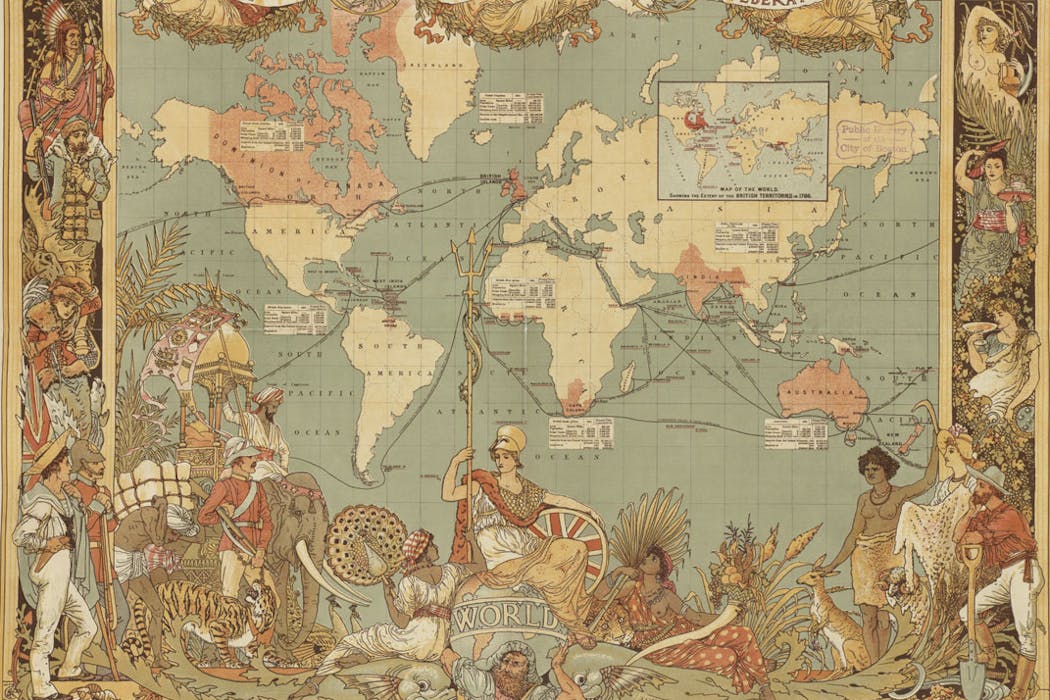
A world map showing the extent of the British Empire in 1886. Norman B. Leventhal Map & Education Center, Boston Public Library/Wikimedia Commons, CC BY

This is the first in a two-part series. Read part two here.

For nearly four centuries, the world economy has been on a path of ever-greater integration that even two world wars could not totally derail. This long march of globalisation was powered by rapidly increasing levels of international trade and investment, coupled with vast movements of people across national borders and dramatic changes in transportation and communication technology.

According to economic historian J. Bradford DeLong, the value of the world economy (measured at fixed 1990 prices) rose from US$81.7 billion (£61.5 billion) in 1650, when this story begins, to US$70.3 trillion (£53 trillion) in 2020 – an 860-fold increase. The most intensive periods of growth corresponded to the two periods when global trade was rising fastest: first during the “long 19th century” between the end of the French revolution and start of the first world war, and then as trade liberalisation expanded after the second world war, from the 1950s up to the 2008 global financial crisis.

Now, however, this grand project is on the retreat. Globalisation is not dead yet, but it is dying.

Is this a cause for celebration, or concern? And will the picture change again when Donald Trump and his tariffs of mass disruption leave the White House? As a longtime BBC economics correspondent who was based in Washington during the global financial crisis, I believe there are sound historical reasons to worry about our deglobalised future – even once Trump has left the building.


The Insights section is committed to high-quality longform journalism. Our editors work with academics from many different backgrounds who are tackling a wide range of societal and scientific challenges.


Trump’s tariffs have amplified the world’s economic problems, but he is not the root cause of them. Indeed, his approach reflects a truth that has been emerging for many decades but which previous US administrations – and other governments around the world – have been reluctant to admit: namely, the decline of the US as the world’s no.1 economic power and engine of world growth.

In each era of globalisation since the mid-17th century, a single country has sought to be the clear world leader – shaping the rules of the global economy for all. In each case, this hegemonic power had the military, political and financial power to enforce these rules – and to convince other countries that there was no preferable path to wealth and power.

But now, as the US under Trump slips into isolationism, there is no other power ready to take its place and carry the torch for the foreseeable future. Many people’s pick, China, faces too many economic challenges, including its lack of a truly international currency – and as a one-party state, nor does it possess the democratic mandate needed to gain acceptance as the world’s new dominant power.

While globalisation has always produced many losers as well as winners – from the slave trade of the 18th century to displaced factory workers in the American Midwest in the 20th century – history shows that a deglobalised world can be an even more dangerous and unstable place. The most recent example came during the interwar years, when the US refused to take up the mantle left by the decline of Britain as the 19th century’s hegemonic global power.

In the two decades from 1919, the world descended into economic and political chaos. Stock market crashes and global banking failures led to widespread unemployment and increasing political instability, creating the conditions for the rise of fascism. Global trade declined sharply as countries put up trade barriers and started self-defeating currency wars in the vain hope of giving their countries’ exports a boost. On the contrary, global growth ground to a halt.

A century on, our deglobalising world is vulnerable again. But to chart whether this means we are destined for a similarly chaotic and unstable future, we first need to explore the birth, growth and reasons behind the imminent demise of this extraordinary global project.

French model: mercantilism, money and war

By the mid-1600s, France had emerged as the strongest power in Europe – and it was the French who developed the first overarching theory of how the global economy could work in their favour. Nearly four centuries later, many aspects of “mercantilism” have been revived by Trump’s US playbook, which could be entitled How To Dominate the World Economy by Weakening Your Rivals.

France’s version of mercantilism was based on the idea that a country should put up trade barriers to limit how much other countries could sell to it, while boosting its own industries to ensure that more money (in the form of gold) came into the country than left it.

England and the Dutch Republic had already adopted some of these mercantilist policies, establishing colonies around the globe run by powerful monopolistic trading companies that aimed to challenge and weaken the Spanish empire, which had prospered on the gold and silver it seized in the Americas. In contrast to these “seaborne empires”, the much larger empires in the east such as China and India had the internal resources to generate their own revenue, meaning international trade – although widespread – was not critical to their prosperity.

Portrait of French finance minister Jean-Baptiste Colbert
French finance minister Jean-Baptiste Colbert, architect of mercantilism.
Metropolitan Museum of Art/Wikimedia

But it was France which first systematically applied mercantilism across the whole of government policy – led by the powerful finance minister Jean-Baptiste Colbert (1661-1683), who had been granted unprecedented powers to strengthen the financial might of the French state by King Louis XIV. Colbert believed trade would boost the coffers of the state and strengthen France’s economy while weakening its rivals, stating:

It is simply, and solely, the absence or abundance of money within a state [which] makes the difference in its grandeur and power.

In Colbert’s view, trade was a zero-sum game. The more France could run a trade surplus with other countries, the more gold bullion it could accumulate for the government and the weaker its rivals would become if deprived of gold. Under Colbert, France pioneered protectionism, tripling its import tariffs to make foreign goods prohibitively expensive.

At the same time, he strengthened France’s domestic industries by providing subsidies and granting them monopolies. Colonies and government trading companies were established to ensure France could benefit from the highly lucrative trade in goods such as spices, sugar – and slaves.

Colbert oversaw the expansion of French industries into areas like lace and glass-making, importing skilled craftsmen from Italy and granting these new companies state monopolies. He invested heavily in infrastructure such as the Canal du Midi, and dramatically increased the size of France’s navy and merchant marine to challenge its British and Dutch rivals.

Global trade at this time was highly exploitative, involving the forced seizure of gold and other raw materials from newly discovered lands (as Spain had been doing with its conquests in the New World from the late 15th century). It also meant benefiting from the trade in humans, with huge profits as slaves were seized and sent to the Caribbean and other colonies to produce sugar and other crops.


Read more:
Why London’s new slavery memorial is so important: ‘The past that is not past reappears, always, to rupture the present’


In this era of mercantilism, trade wars often led to real wars, fought across the globe to control trade routes and seize colonies. Following Colbert’s reforms, France began a long struggle to challenge the overseas empires of its maritime rivals, while also engaging in wars of conquest in continental Europe.

France initially enjoyed success in the 17th century both on land and sea against the Dutch. But ultimately, its state-run French Indies company was no rival to the ruthless, commercially driven activities of the Dutch and British East India companies, which delivered enormous profits to their shareholders and revenues for their governments.

Indeed, the huge profits made by the Dutch from the Far Eastern spice trade explains why they had no hesitation in handing over their small North American colony of New Amsterdam, in return for expelling the British from a small toehold of one of their spice islands in what is now Indonesia. In 1664, that Dutch outpost was renamed New York.

After a century of conflict, Britain gradually gained ascendancy over France, conquering India and forcing its great rival to cede Canada in 1763 after the Seven Years war. France never succeeded in fully countering Britain’s naval strength. Resounding defeats by fleets led by Horatio Nelson in the early 19th century, coupled with Napoleon’s defeat at Waterloo by a coalition of European powers, marked the end of France’s time as Europe’s hegemonic power.

Painting of French ships under fire during the Battle of Trafalgar.
The battle of Trafalgar, off southwestern Spain in October 1805, was decisive in ending France’s era of dominance.
Yale Center for British Art/Wikimedia

But while the French model of globalisation ultimately failed in its attempt to dominate the world economy, that has not prevented other countries – and now President Trump – from embracing its principles.

France found that tariffs alone could not sufficiently fund its wars nor boost its industries. Its broad version of mercantilism led to endless wars that spread around the globe, as countries retaliated both economically and militarily and tried to seize territories.

More than two centuries later, there is an uncomfortable parallel with what the results of Trump’s endless tariff wars might bring, both in terms of ongoing conflict and the organisation of rival trade blocs. It also shows that more protectionism, as proposed by Trump, will not be enough to revive the US’s domestic industries.

British model: free trade and empire

The ideology of free trade was first spelled out by British economists Adam Smith and David Ricardo, the founding fathers of classical economics. They argued trade was not a zero-sum game, as Colbert had suggested, but that all countries could mutually benefit from it. According to Smith’s classic text, The Wealth of Nations (1776):

If a foreign country can supply us with a commodity cheaper than we ourselves can make, better buy it off them with some part of the produce of our own industry, employed in such a way that we have some advantages.

As the world’s first industrial nation, by the 1840s Britain had created an economic powerhouse based on the new technologies of steam power, the factory system, and railroads.

Smith and Ricardo argued against the creation of state monopolies to control trade, proposing minimal state intervention in industry. Ever since, Britain’s belief in the benefits of free trade has proved stronger and more long-lasting than any other major industrial power – more deeply embedded in both its politics and popular imagination.

This ironclad commitment was born out of a bitter political struggle in the 1840s between manufacturers and landowners over the protectionist Corn Laws. The landowners who had traditionally dominated British politics backed high tariffs, which benefited them but resulted in higher prices for staples like bread. The repeal of the Corn Laws in 1846 upended British politics, signalling a shift of power to the manufacturing classes – and ultimately to their working-class allies once they gained the right to vote.

Illustration of an Anti-Corn Law League meeting.
An Anti-Corn Law League meeting held in London’s Exeter Hall in 1846.
Wikimedia

In time, Britain’s advocacy of free trade unleashed the power of its manufacturing to dominate global markets. Free trade was framed as the way to raise living standards for the poor (the exact opposite of President Trump’s claim that it harms workers) and had strong working-class support. When the Conservatives floated the idea of abandoning free trade in the 1906 general election, they suffered a devastating defeat – the party’s worst until 2024.

As well as trade, a central element in Britain’s role as the new global hegemonic power was the rise of the City of London as the world’s leading financial centre. The key was Britain’s embrace of the gold standard which put its currency, the pound, at the heart of the new global economic order by linking its value to a fixed amount of gold, ensuring its value would not fluctuate. Thus the pound became the worldwide medium of exchange.

This encouraged the development of a strong banking sector, underpinned by the Bank of England as a credible and trustworthy “lender of last resort” in a financial crisis. The result was a huge boom in international investment, opening access to overseas markets for British companies and individual investors.

In the late 19th century, the City of London dominated global finance, investing in everything from Argentinian railways and Malaysian rubber plantations to South African gold mines. The gold standard became a talisman of Britain’s power to dominate the world economy.

The pillars of Britain’s global economic dominance were a highly efficient manufacturing sector, a commitment to free trade to ensure its industry had access to global markets, and a highly developed financial sector which invested capital around the world and reaped the benefits of global economic development. But Britain also did not hesitate to use force to open up foreign markets – for example, during the Opium Wars of the 1840s, when China was compelled to open its markets to the lucrative trade in opium from British-owned India.


Read more:
What the Opium Wars can tell us about China, the U.S. and fentanyl


By the end of the 19th century, the British empire incorporated one quarter of the world’s population, providing a source of cheap labour and secure raw materials as well as a large market for Britain’s manufactured goods. But that was still not enough for its avaricious leaders: Britain also made sure that local industries did not threaten its interests – by undermining the Indian textile industry, for example, and manipulating the Indian currency.

In reality, globalisation in this era was about domination of the world economy by a few rich European powers, meaning that much global economic development was curtailed to protect their interests. Under British rule between 1750 and 1900, India’s share of world industrial output declined from 25% to 2%.

But for those at the centre of Britain’s global formal and informal empire, such as the middle-class residents of London, this was a halcyon time – as economist John Maynard Keynes would later recall:

For middle and upper classes … life offered, at a low cost and with the least trouble, conveniences, comforts and amenities beyond the compass of the richest and most powerful monarchs of other ages. The inhabitant of London could order by telephone, sipping his morning tea in bed, the various products of the whole Earth, in such quantity as he might see fit, and reasonably expect their early delivery upon his doorstep.

US model: protectionism to neoliberalism

While Britain enjoyed its century of global dominance, the United States embraced protectionism for longer after its foundation in 1776 than all other major western economies.

The introduction of tariffs to protect and subsidise emerging US industries had first been articulated in 1791 by the fledgling nation’s first treasury secretary, Alexander Hamilton – Caribbean immigrant, founding father and future subject of a record-breaking musical. The Whig party under Henry Clay and its successor, the Republican Party, were both strong supporters of this policy for most of the 19th century. Even as US industry grew to overshadow all others, its government maintained some of the highest tariff barriers in the world.

Alexander Hamilton on the front of a US$10 note from 1934
Founding father Alexander Hamilton on the front of a US$10 note from 1934.
Wikimedia

Tariff rates rose to 50% in the 1890s with the backing of future president William McKinley, both to help industrialists and pay for generous pensions for 2 million civil war veterans and their dependants – a key part of the Republican electorate. It is no accident that President Trump has festooned the White House with pictures of Hamilton, Clay and McKinley – all supporters of protectionism and high tariffs.

In part, the US’s enduring resistance to free trade was because it had access to an internal supply of seemingly limitless raw materials, while its rapidly growing population, fuelled by immigration, provided internal markets that fuelled its growth while keeping out foreign competition.

By the late 19th century, the US was the world’s biggest steel producer with the largest railroad system in the world and was moving rapidly to exploit the new technologies of the second industrial revolution – based on electricity, petrol engines and chemicals. Yet it was only after the second world war that the US assumed the role of global superpower – in part because it was the only country on either side of the war that had not suffered severe damage to its economy and infrastructure.

In the wake of global destruction in Europe and Asia, the US’s dominance was political, military and cultural, as well as financial – but the US vision of a globalised world had some important differences from its British predecessor.

The US took a much more universalist and rules-based approach, focusing on the creation of global organisations that would establish binding regulations – and open up global markets to unfettered American trade and investment. It also aimed to dominate the international economic order by replacing the pound sterling with the US dollar as the global medium of exchange.

Within a week of its entry in the second world war, plans were laid to establish US global financial hegemony. The US treasury secretary, Henry Morgenthau, began work on establishing an “inter-allied stabilisation fund” – a playbook for post-war monetary arrangements which would enshrine the US dollar at its heart.

This led to the creation of the International Monetary Fund (IMF) and World Bank at the Bretton Woods conference in New Hampshire in 1944 – institutions dominated by the US, which encouraged other countries to adopt the same economic model both in terms of free trade and free enterprise. The Allied nations who were simultaneously meeting to establish the United Nations to try to ensure future world peace, having suffered the devastating effects of the Great Depression and war, welcomed the US’s commitment to shape a new, more stable economic order.

How the 1944 Bretton Woods deal ensured the US dollar would be the world’s dominant currrency. Video: Bloomberg TV.

As the world’s biggest and strongest economy, there was (initially) little resistance to this US plan for a new international economic order in its own image. The motive was as much political as economic: the US wanted to provide economic benefits to ensure the loyalty of its key allies and counter the perceived threat of a communist takeover – in complete contrast to Trump’s mercantilist view today that all other countries are out to “rip off” the US, and that its own military might means it has no real need for allies.

After the war finally ended, the US dollar, now linked to gold at a fixed rate of $35 per ounce to guarantee its stability, assumed the role as the free world’s principal currency. It was both used for global trade transactions and held by foreign central banks as their currency reserves – giving the US economy an “exorbitant privilege”. The stable value of the dollar also made it easier for the US government to sell Treasury bonds to foreign investors, enabling it to more easily borrow money and run up trade deficits with other countries.

The conditions were set for an era of US political, financial and cultural dominance, which saw the rise of globally admired brands such as McDonald’s and Coca Cola, as well as a powerful US marketing arm in the form of Hollywood. Perhaps even more significantly, the relaxed, well-funded campuses of California would prove a perfect petri dish for the development of new computer technologies – backed initially by cold war military investment – which, decades later, would lead to the birth of the big-tech companies that dominate the tech landscape today.

The US view of globalisation was broader and more interventionist than the British model of free trade and empire. Rather than having a formal empire, it wanted to open up access to the entire world economy, which would provide global markets for American products and services.

The US believed you needed global economic institutions to police these rules. But as in the British case, the benefits of globalisation were still unevenly shared. While countries that embraced export-led growth such as Japan, Korea and Germany prospered, other resource-rich but capital-poor countries such as Nigeria only fell further behind.

From dream to despair

Though the legend of the American dream grew and grew, by the 1970s the US economy was coming under increasing pressure – in particular from German and Japanese rivals, who by then had recovered from the war and modernised their industries.

Troubled by these perceived threats and a growing trade deficit, in 1971 President Richard Nixon stunned the world by announcing that the US was going off the gold standard – forcing other countries to bear the cost of adjustment for the US balance of payments crisis by making them revalue their currencies. This had a profound effect on the global financial system: within a decade, most major currencies had abandoned fixed exchange rates for a new system of floating rates, effectively ending the 1944 Bretton Woods settlement.

US president Richard Nixon announces the US is leaving the gold standard on August 15 1971.

The end of fixed exchange rates opened the door to the “financialisation” of the global economy, vastly expanding global investment and lending – much of it by US financial firms. This gave succour to the burgeoning neoliberal movement that sought to further rewrite the rules of the financial world order. In the 1980s and ’90s, these policy prescriptions became known as the Washington consensus: a set of rules – including opening markets to foreign investment, deregulation and privatisation – that was imposed on developing economies in crisis, in return for them receiving support from US-led organisations like the World Bank and IMF.

In the US, meanwhile, the increasing reliance on the finance and hi-tech sectors increased levels of inequality and fostered resentment in large parts of American society. Both Republicans and Democrats embraced this new world order, shaping US policy to favour their hi-tech and financial allies. Indeed, it was the Democrats who played a key role in deregulating the financial sector in the 1990s.

Meanwhile, the decline of US manufacturing industries accelerated, as did the gap between the incomes of those in the hinterland, where manufacturing was based, and residents of the large metropolitan cities.

By 2023, the lowest 50% of US citizens received just 13% of total personal income, while the top 10% received almost half (47%). The wealth gap was even greater, with the bottom 50% only having 6% of total wealth, while a third (36%) was held by just the top 1%. Since 1980, real incomes of the bottom 50% have barely grown for four decades.

The bottom half of the US population was suffering from a surge in “deaths of despair” – a term coined by the Nobel-winning economist Angus Deaton to describe high mortality rates from drug abuse, suicide and murder among younger working-class Americans. Rising costs of housing, medical care and university education all contributed to widespread indebtedness and growing financial insecurity. By 2019, a study found that two-thirds of people who filed for bankruptcy cited medical issues as a key reason.


Read more:
International trade has cost Americans millions of jobs. Investing in communities might offset those losses


The decline in US manufacturing accelerated after China was admitted to the World Trade Organization in 2001, increasing America’s soaring trade and budget deficit even more. Political and business elites hoped the move would open up the huge Chinese market to US goods and investment, but China’s rapid modernisation made its industry more competitive than its American rivals in many fields.

Ultimately, this era of intensive financialisation of the world economy created a series of regional and then global financial crises, damaging the economies of many Latin American and Asian economies. This culminated in the 2008 global financial crisis, precipitated by reckless lending by US financial institutions. The world economy took more than a decade to recover as countries wrestled with slower growth, lower productivity and less trade than before the crisis.

For those who chose to read it, the writing was on the wall for America’s era of global domination decades ago. But it would take Trump’s victory in the 2016 presidential election – a profound shock to many in the US “liberal establishment” – to make clear that the US was now on a very different course that would shake up the world.

Making a bad situation more dangerous

In my view, Trump is the first modern-day US president to fully understand the powerful alienation felt by many working-class American voters, who believed they were left out of the US’s immense post-war economic growth that so benefited the largely urban American middle classes. His strongest supporters have always been lower-middle-class voters from rural areas who are not college-educated.

Yet Trump’s key policies will ultimately do little for them. High tariffs to protect US jobs, expulsion of millions of illegal immigrants, dismantling protections for minorities by opposing DEI (diversity, equality and inclusion) programmes, and drastically cutting back the size of government will have increasingly negative economic consequences in the future, and are very unlikely to restore the US economy to its previous dominant position.

US president Donald Trump unveils his global tariff ‘hit list’ on April 3 2025. BBC News.

Long before he first became president, Trump hated the eye-watering US trade deficit (he’s a businessman, after all) – and believed that tariffs would be a key weapon for ensuring US economic dominance could be maintained. Another key part of his “America First” ideology was to repudiate the international agreements that were at the heart of the US’s postwar approach to globalisation.

In his first term, however, Trump (having not expected to win) was ill-prepared for power. But second time around, conservative thinktanks had spent years outlining detailed policies and identifying key personnel who could implement the radical U-turn in US economic policy.

Under Trump 2.0, we have seen a return to the mercantilist point of view reminiscent of France in the 17th and 18th centuries. His assertion that countries which ran a trade surplus with the US “were ripping us off” echoed the mercantilist belief that trade was a zero-sum game – rather than the 20th-century view, pioneered by the US, that globalisation brings benefits to all, no matter the precise balance of that trade.

Trump’s tax-and-tariff plans, which extend the tax breaks to the very rich while reducing benefits for the poor through benefit cuts and tariff-driven inflation, will increase inequality in the US.

At the same time, the passing of the One Big Beautiful Bill is predicted to add some US$3.5 trillion to US government debt – even after the Elon Musk-led “Department of Government Efficiency” cuts imposed on many Washington departments. This adds pressure to the key US Treasury bond market at the centre of the world financial system, and raises the cost of financing the huge US deficit while weakening its credit rating. Continuing these policies could threaten a default by the US, which would have devastating consequences for the entire global financial system.

For all the macho grandstanding from Trump and his supporters, his economic policies are a demonstration of American weakness, not strength. While I believe his highlighting of some of the ills of the US economy were overdue, the president is rapidly squandering the economic credibility and good will that the US built up in the postwar years, as well as its cultural and political hegemony. For people living in America and elsewhere, he is making a bad situation more dangerous – including for many of his most ardent supporters.

That said, even without Trump’s economic and societal disruptions, the end of the US era of hegemonic dominance would still have happened. Globalisation is not dead, but it is dying. The troubling question we all face now, is what happens next.

This is the first of a two-part Insights long read on the rise and fall of globalisation. Read part two here: why the next global financial meltdown could be much worse with the US on the sidelines.


For you: more from our Insights series:

To hear about new Insights articles, join the hundreds of thousands of people who value The Conversation’s evidence-based news. Subscribe to our newsletter.

The Conversation

Steve Schifferes does not work for, consult, own shares in or receive funding from any company or organisation that would benefit from this article, and has disclosed no relevant affiliations beyond their academic appointment.

ref. The rise and fall of globalisation: the battle to be top dog – https://theconversation.com/the-rise-and-fall-of-globalisation-the-battle-to-be-top-dog-267910

Is Halloween too scary for kids?

Source: The Conversation – Global Perspectives – By Matthew Thompson, Lecturer in History and Communications, University of Southern Queensland

Charles Parker/ Pexels

It is easy to see Halloween as an inappropriate time for children. With its mixture of bloody costumes and scary themes, it can often feel like it is luring kids into topics they are not ready to grapple with.

However, since the time of fairy tales, the gothic and the macabre have held a fascination for children.

Why?

If it’s good for Snow White …

Some of the most classic children’s stories are scary and, at times, brutal.
They involve wolves eating grandmothers, witches trying to eat kids, kids pushing witches into ovens and stepmothers trying to poison their step daughters or use them as slaves.

It is horrible stuff. But it is important to remember these stories give children a safe space to negotiate and learn resilience. Child psychologist Bruno Bettelheim argues

Fairy tales intimate that a rewarding, good life is within one’s reach despite adversity – but only if one does not shy away from the hazardous struggles.

Studies by psychologists suggest fairy tales also show children they can cope with challenges in their own lives, because their fears can be managed and overcome. As English fantasy writer G.K. Chesterton said:

The baby has known the dragon intimately ever since he had an imagination. What the fairy tale provides for him is a St. George to kill the dragon.

What about gore?

In the 1880s, many of the children of the Victorian British slums grew up reading the famed “Penny Dreadfuls” – cheap, sensational, serialised novels. These were stories including bloody characters such as Sweeney Todd, as well as wild adventures, while readers were waiting to hear the true news about the exploits of Jack the Ripper in Whitechapel.

These tales, like violent video games are demonised today, were seen as corrupting young people.

These stories gave working class children a gateway into literacy. Alfred Cox, an ironworker’s son who became a doctor and prominent member of the British Medical Association, explained “far from leading me into a life of crime, [Penny Dreadfuls] made me look for something better”.

Labour Party politician John Paton described reading these Penny Dreadfuls during his childhood in Aberdeen as “good healthy stuff for an imaginative boy”.

We can compare these stories to modern tales such as Harry Potter. By inviting children into amazing new worlds where there are fearful creatures and events, they helped to develop a love of reading.

‘Scary’ is also funny

While it’s easy to be shocked by a child dressing up as a zombie, these kinds of things are a regular feature of mainstream kids’ entertainment today.

For example, zombies lose heads, arms and legs all the time in the 2012 movie, Hotel Transylvania – and for laughs. And the Count from Sesame Street is inspired from Bela Lugosi’s classic portrayal of Dracula.

Is Halloween too scary for kids?

So, while Halloween is “scary”, we can see it as scary in a way that kids can control, enjoy and even learn from.

They are already exposed to other scary things in the books, shows and movies they consume. And this can help them navigate other (real) scary things in their lives.

They can also choose which scary thing to dress up as. After all, what could be braver than showing the scary monster they’re an outfit to be worn and cast off when the child feels like it?

What are adults watching?

While it’s easy to tut-tut at children for their fascination for gore and horror, it’s not that different from adults. Cast a glance at streaming or podcast rankings and they are full of gore, true crime and horror.

Perhaps before we begin to fret about the fascination children have with the gory, we should look at whether our own is truly healthy.

The Conversation

Matthew Thompson does not work for, consult, own shares in or receive funding from any company or organisation that would benefit from this article, and has disclosed no relevant affiliations beyond their academic appointment.

ref. Is Halloween too scary for kids? – https://theconversation.com/is-halloween-too-scary-for-kids-268216

New images reveal the Milky Way’s stunning galactic plane in more detail than ever before

Source: The Conversation – Global Perspectives – By Silvia Mantovanini, PhD Candidate, Astronomy, Curtin University

Silvia Mantovanini (ICRAR/Curtin) & the GLEAM-X Team

The Milky Way is a rich and complex environment. We see it as a luminous line stretching across the night sky, composed of innumerable stars.

But that’s just the visible light. Observing the sky in other ways, such as through radio waves, provides a much more nuanced scene – full of charged particles and magnetic fields.

For decades, astronomers have used radio telescopes to explore our galaxy. By studying the properties of the objects residing in the Milky Way, we can better understand its evolution and composition.

Our study, published today in Publications of the Astronomical Society of Australia, provides new insights into the structure of our galaxy’s galactic plane.

Observing the entire sky

To reveal the radio sky, we used the Murchison Widefield Array, a radio telescope in the Australian outback, composed of 4,096 antennas spread over several square kilometres. The array observes wide regions of the sky at a time, enabling it to rapidly map the galaxy.

A view of the Murchison Widefield Array antenna layout.

Between 2013 and 2015, the array was used to observe the entire southern hemisphere sky for the GaLactic and Extragalactic All-sky MWA (or GLEAM) survey. This survey covered a broad range of radio wave frequencies.

The wide frequency coverage of GLEAM gave astronomers the first “radio colour” map of the sky, including the galaxy itself. It revealed the diffuse glow of the galactic disk, as well as thousands of distant galaxies and regions where stars are born and die.

With the upgrade of the array in 2018, we observed the sky with higher resolution and sensitivity, resulting in the GLEAM-eXtended survey (GLEAM-X).

The big difference between the two surveys is that GLEAM could detect the big picture but not the detail, while GLEAM-X saw the detail but not the big picture.

A beautiful mosaic

To capture both, our team used a new imaging technique called image domain gridding. We combined thousands of GLEAM and GLEAM-X observations to form one huge mosaic of the galaxy.

Because the two surveys observed the sky at different times, it was important to correct for the ionosphere distortions – shifts in radio waves caused by irregularities in Earth’s upper atmosphere. Otherwise, these distortions would shift the position of the sources between observations.

The algorithm applies these corrections, aligning and stacking data from different nights smoothly. This took more than 1 million processing hours on supercomputers at the Pawsey Supercomputing Research Centre in Western Australia.

The result is a new mosaic covering 95% of the Milky Way visible from the southern hemisphere, spanning radio frequencies from 72 to 231 MHz. The big advantage of the broad frequency range is the ability to see different sources with their “radio colour” depending on whether the radio waves are produced by cosmic magnetic fields, or by hot gas.

The emission coming from the explosion of dead stars appears in orange. The lower the frequency, the brighter it is. Meanwhile, the regions where stars are born shine in blue.

These colours allow astronomers to pick out the different physical components of the galaxy at a glance.

The new radio portrait of the Milky Way is the most sensitive, widest-area map at these low frequencies to date. It will enable a plethora of galactic science, from discovering and studying faint and old remnants of star explosions to mapping the energetic cosmic rays and the dust and grains that dominate the medium within the stars.

The power of this image will not be surpassed until the new SKA-Low telescope is complete and operational, eventually being thousands of times more sensitive and with higher resolution than its predecessor, the Murchison Widefield Array.

This upgrade is still a few years away. For now, this new image stands as an inspiring preview of the wonders the full SKA-Low will one day reveal.

The Conversation

Natasha Hurley-Walker receives funding from the Australian Research Council.

Silvia Mantovanini does not work for, consult, own shares in or receive funding from any company or organisation that would benefit from this article, and has disclosed no relevant affiliations beyond their academic appointment.

ref. New images reveal the Milky Way’s stunning galactic plane in more detail than ever before – https://theconversation.com/new-images-reveal-the-milky-ways-stunning-galactic-plane-in-more-detail-than-ever-before-264688

In 2024, the climate crisis worsened in all ways. But we can still limit warming with bold action

Source: The Conversation – Global Perspectives – By Thomas Newsome, Associate Professor in Global Ecology, University of Sydney

abstractaerialart/Getty

Climate change has been on the world’s radar for decades. Predictions made by scientists at oil giant Exxon in the early 1980s are proving accurate. The damage done by a hotter, more chaotic world is worsening and getting more expensive.

Even so, many countries around the world are failing to meet their emissions targets, with major gaps found even this week between the commitments and actions needed to hold global warming to 1.5°C.

This has put Earth on a dangerous path, as our new report on the state of the climate reveals.

Earth’s vital signs ailing

Last year was the hottest on record. It was also likely the hottest in at least 125,000 years.

Every year, we track 34 of the planet’s vital signs. In 2024, 22 of these indicators were at record levels. Carbon dioxide levels in the atmosphere and ocean heat both hit new highs, as did losses of trees to fire. Meat consumption kept rising and fossil fuels consumption reached new heights.

Graphs that show the increase in climate emissions, fire and energy consumption.
Examples of vital signs, including carbon dioxide emissions, global tree cover loss to fire and energy consumption from different sources.
State of the Climate 2025

The consequences of climate inaction are ever more clear. In 2024, the world’s coral reefs suffered the most widespread bleaching ever recorded, affecting roughly 84% of the world’s coral reef area between January 2023 and May 2025.

Greenland and Antarctic ice mass fell to record lows. Deadly and costly disasters surged, including the flooding in Texas which killed at least 135 people while the Los Angeles wildfires have cost more than A$380 billion. Since 2000, global climate-linked disasters have now caused more than $27 trillion in damages.

The flooded Guadalupe River near Kerrville, Texas, in July 2025.
OregonStateUniversity/flickr, CC BY-NC

Stories and statistics like this are sadly not new. Many other reports and warnings have been published before we started this annual snapshot in 2020. Therefore, our report this year focuses on three high-impact types of climate action, across energy, nature and food.

Energy

Combined solar and wind consumption set a new record in 2024 but is still 31 times lower than fossil fuel (oil, coal, gas) energy consumption. This is despite the fact renewables are now the cheapest choice for new energy almost everywhere. One reason for this are the ongoing subsidies for fossil fuels.

By 2050, solar and wind energy could supply nearly 70% of global electricity. But this transition requires restricting the influence of the fossil fuel industry and a full phase out of fossil fuel production and use, not the expansion we continue to see globally.

As a result of surging fossil fuel consumption, energy-related emissions rose 1.3% in 2024 and reached an all-time high of 40.8 gigatons (Gt) of carbon dioxide equivalent. In 2024, the greatest fossil fuel greenhouse gas emitters were China (30.7% of total), the United States (12.5%), India (8.0%), the European Union (6.1%), and Russia (5.5%). Together, they accounted for 62.8% of global emissions.

Sadly, much of the rise in fossil fuel electricity generation may be due to hotter temperatures and heat waves.

Although there are concerns over the environmental impacts of renewables, the greater threat to our biodiversity is climate change and biodiversity conservation and mitigation measures can be part of project planning.

Nature

Protecting and restoring ecosystems on land and in the ocean remains one of the most powerful ways to support climate change, and support biodiversity and human well-being.

Protecting and restoring ecosystems such as forests, wetlands, mangroves and peatlands could remove or avoid around 10 Gt of carbon dioxide emissions per year by 2050, which is equivalent to roughly 25% of current annual emissions.

But we must also stop destroying what we have. Global tree cover loss was almost 30 million hectares in 2024, the second highest area on record and a 4.7% increase over 2023. Tropical primary forest losses were particularly large in 2024, with fire-related losses reaching a record high of 3.2 million hectares, up from just 690 thousand hectares in 2023, a 370% increase.

Food

Approximately 30% of food is lost or wasted globally. Reducing food waste could greatly reduce greenhouse gas emissions since it accounts for roughly 8–10% of global emissions. Policies supporting plant-rich diets could also help slow climate change, while offering many benefits related to human health, food security, and biodiversity.

The technical mitigation potential associated with switching away from eating meat may be in the order of 0.7–8.0 gigatonnes of carbon dioxide equivalent per year by 2050. This is in part because methane emissions from cows, sheep and other ruminant livestock account for roughly half of all agricultural greenhouse gas emissions. Per capita meat consumption hit all-time highs in 2024, and we currently add 500,000 more ruminants per week.

A pile of discarded vegetables at the bottom of a skip bin.
Discarded vegetable waste in Luxembourg.
Foerster/wikimedia, CC BY-NC

Creating global change

In our report, we note that social tipping points can trigger climate action. These refer to moments when a small, committed minority triggers a rapid and large-scale shift in social norms, beliefs, or behaviours. Research shows sustained, nonviolent movements and protests involving just a small proportion of a population (about 3.5%) can help trigger transformative change.

A climate protest of people carrying signs
Many people underestimate how much support there is globally for climate action.
Wikimedia, CC BY-NC

Many people underestimate just how much support there is globally for climate action, with most people believing they are in a minority. This arguably fosters disengagement and isolation. But it also suggests that as awareness grows and people see their values reflected in others, the conditions for social tipping points may be strengthened.

Reaching this positive tipping point will require more than facts and policy. It will take connection, courage, and collective resolve. Climate mitigation strategies are available, cost effective and urgently needed, and we can still limit warming if we act boldly and quickly, but the window is closing.

The Conversation

Thomas Newsome receives funding from the Australian Research Council. He is immediate past-president of the Australasian Wildlife Management Society and President of the Royal Zoological Society of New South Wales.

William Ripple receives funding from the CO2 Foundation and University of Oregon donor Roger Worthington.

ref. In 2024, the climate crisis worsened in all ways. But we can still limit warming with bold action – https://theconversation.com/in-2024-the-climate-crisis-worsened-in-all-ways-but-we-can-still-limit-warming-with-bold-action-268579

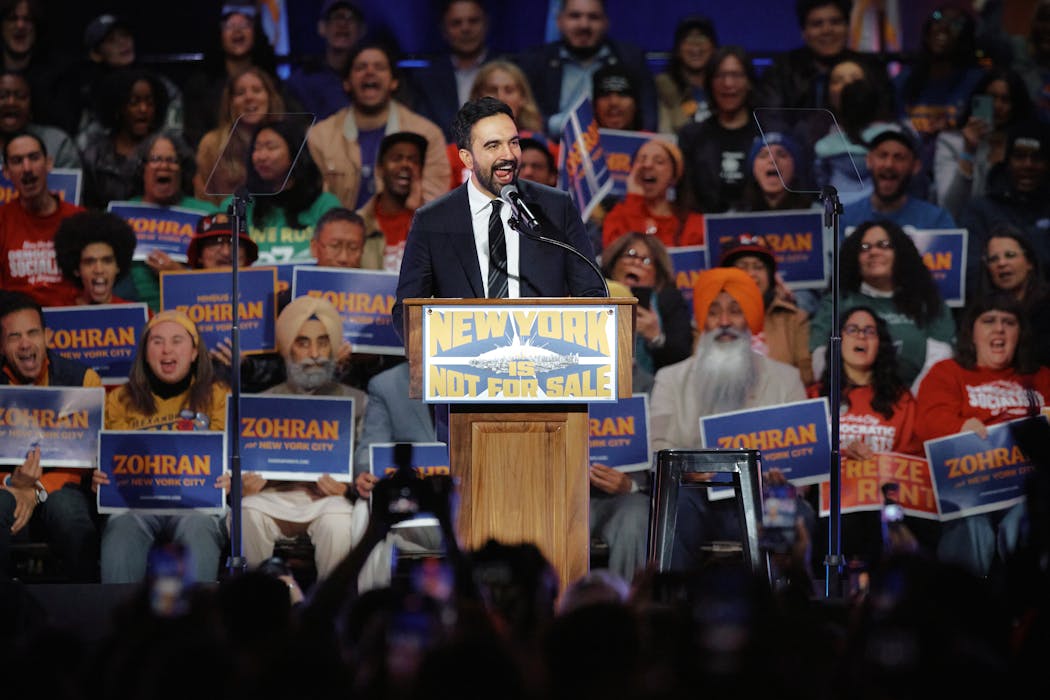
How a ‘sewer socialism’ revival could see Zohran Mamdani become New York’s next mayor

Source: The Conversation – Global Perspectives – By Garritt C. Van Dyk, Senior Lecturer in History, University of Waikato

Andres Kudacki/Getty Images

Democratic candidate for mayor of New York City Zohran Mamdani looks increasingly like the one to beat at next week’s election. But he is up against more than the usual political challenges.

US President Donald Trump has referred to him as “my little communist” and called his nomination “a rebellion”. More recently there have been calls for Mamdani’s citizenship to be investigated.

Born in Uganda, and the first Muslim nominee for mayor of the biggest city in the US, the 34-year-old Mamdani is an obvious target. But it is his stance as a democratic socialist that has really invited the old-school “red-baiting”, aimed at discrediting him by invoking Cold War anxieties.

In fact, Mamdani’s approach to democratic socialism is less about an abstract political ideology than it is about practical solutions. As he has put it:

We want to showcase our ideals, not by lecturing people about how correct we are, but rather by delivering and letting that delivery be the argument itself.

Because of this, he has also been described as an heir to the historical tradition of “sewer socialism”, a brand of left-wing thinking that favoured incremental, practical reform over revolutionary rhetoric.

Delivering tangible results

Despite the long history of anticommunism in the United States, Milwaukee in Wisconsin was the nation’s socialist capital for decades.

A succession of socialist mayors focused on delivering basic services to the people of the city. Socialist candidates dominated city politics there for 50 years, from 1910 to 1960. It was the most successful political achievement for socialism in US history, largely because it appealed to the mainly German immigrant population.

The term “sewer socialist” was actually first used derisively by Morris Hillquit, national chairman of the Socialist Party, who ran unsuccessfully for mayor of New York several times.

At the 1932 party convention in Milwaukee, Hillquit was almost replaced as leader by local mayor Daniel Hoan. Mayor from 1916 to 1940, Hoan was justifiably proud of the city-owned sewer system. But he also established one of the first public bus systems in America, and built the country’s first public housing project.

This repeated success in city politics – despite the national opposition to socialism and Hillquitt’s “sewer socialist” slight – was built on delivering tangible results to the voters.

And it’s that approach that is seeing sewer socialism making a comeback in city politics today, as urban dwellers face an affordability crisis and declining quality of life.

Mamdani is not the only millennial socialist candidate running for mayor.

In Seattle, over on the US west coast, 43-year-old Katie Wilson is a strong contender in a tight race with the incumbent mayor, 67-year-old Bruce Harell. Wilson is the founder of the local Transit Riders Union and has expanded her progressive activism to social housing, public safety and homelessness.

She doesn’t see the socialist label as a major issue on the campaign:

I’m a socialist. I’m fine being called a democratic socialist […] We’re in a moment where most people don’t care that much. People are not that hung up on labels and want to see results on issues that affect their daily lives.

Beautiful, contradictory, unfinished

Like Wilson, Mamdani lacks the experience of his opponent, former New York governor Andrew Cuomo (67).

Cuomo played on this in the final debate of the campaign, telling the young challenger, “the issue is your lack of experience”.

Mamdani replied that his opponents “speak only in the past because that is all they know”.

Perhaps inevitably, some are saying Mamdani’s ability to connect with voters not only promises to deliver an improved quality of city life, but may also make him a viable presidential candidate who could “save” the Democratic Party in 2028.

Speaking on the 4th of July, Mamdani said: “America is beautiful, contradictory, unfinished, I am proud of our country even as we constantly strive to make it better.”

Vice President JD Vance responded the next day: “There is no gratitude here […] We should demand that our people, whether first or tenth generation Americans, have gratitude for this country.”

Intended as an insult, Vance also accurately described Mamdani’s surprise win in the primary: “Last week, a 33-year-old communist running an insurgent campaign beat a multi-million-dollar establishment machine…”.

But it might have been Fiorello La Guardia, mayor of New York during the Depression, who best described how such a turnaround could have happened: “There is no Republican or Democratic way to pick up the garbage.”

In other words, basic municipal services don’t depend on party politics. And if neither major party cares enough about those essential quality of life issues to actually deliver, maybe a younger “sewer socialist” will be the one to pick up the trash.

The Conversation

Garritt C. Van Dyk has received funding from the Getty Research Institute.

ref. How a ‘sewer socialism’ revival could see Zohran Mamdani become New York’s next mayor – https://theconversation.com/how-a-sewer-socialism-revival-could-see-zohran-mamdani-become-new-yorks-next-mayor-268073

¿Qué hacer cuando mi hijo no quiere salir porque está enganchado a los videojuegos?

Source: The Conversation – (in Spanish) – By Dominica Díez Marcet, Doctora en Psicología. Psicóloga Clínica responsable de la Unidad de Adicciones Comportamentales de la Fundació Althaia, Xarxa Assistencial Universitària de Manresa. Profesora asociada de la UVic-UCC., Universitat de Vic – Universitat Central de Catalunya

La adicción a los videojuegos está reconocida en el Manual Diagnóstico y Estadístico de los Trastornos Mentales (DSM-V). Kelly Sikkema / Unsplash., CC BY

Hoy en día, jugar a videojuegos se ha convertido en una práctica habitual dentro de las actividades de ocio de muchos niños y adolescentes. Es frecuente que los padres duden sobre la conveniencia de permitirles jugar a demanda, así como el tiempo aconsejado y en qué momentos. ¿Dejarlos jugar durante la semana o únicamente el fin de semana? ¿Después de los deberes o antes, para que no los haga deprisa y corriendo?

También refieren lo complicado que es lidiar con los argumentos de los menores: “si todos mis amigos juegan a este juego, ¿por qué a mí no me dejáis?”. A menudo, el miedo de los padres a que su hijo quede excluido del grupo hace que se sean más permisivos de lo que en realidad desearían respecto a los horarios y el tipo de juego.

De este modo, empiezan a consentir que los videojuegos se vayan convirtiendo en un hábito, a pesar de que tengan el convencimiento o duden sobre si no sería mejor que jugaran a otras cosas, leyeran o salieran más de casa.

Así, progresivamente, si no se marcan límites, se va generando una adicción. Es posible empezamos a observar un cambio en el carácter: “está más irritable”, “va más a la suya que antes”,“ parece que no le importa nada”, “cada vez que sale menos con amigos”.

Los videojuegos con más potencial adictivo son los juegos de rol online. Son juegos multijugador en los que se realizan tareas en equipos, también llamados guild. Están diseñados utilizando técnicas psicológicas para que el jugador pase el máximo tiempo conectado. Por ejemplo, el refuerzo intermitente propio de las cajas botín es el mismo mecanismo que el utilizado en las máquinas tragaperras.

El papel de los padres

Es importante, cuando vemos que nuestro hijo empieza a estar más tiempo jugando, intentar respondernos a estas tres cuestiones:

  • ¿Ha perdido interés por actividades que antes hacía (académicas, extraescolares, salir con amigos, colaborar en casa…)?

  • ¿Sabemos si le ha pasado alguna cosa en la vida “real” de la cual necesite evadirse? En este caso tendremos que actuar sobre la causa y, si es necesario, buscar ayuda especializada.

  • ¿Se irrita con más frecuencia y pasa más de las cosas?

Después de reflexionar sobre estas preguntas, nos centraremos en dos conceptos esenciales que guían cómo nos posicionamos respecto a nuestros hijos: vínculo afectivo y autoridad (que no es lo mismo que el autoritarismo).

Lazos de confianza y autoridad

El vínculo afectivo hace referencia a los lazos de amor que se establecen entre padres e hijos y que son la base para generar confianza y bienestar. Hablamos de autoridad respecto a la responsabilidad de los padres para tomar todas las decisiones necesarias para el bienestar de sus hijos e hijas. De hecho, la patria potestad otorga a los padres ese derecho. Ello implica establecer reglas, expectativas y límites y, al mismo tiempo, guiar y enseñar a los niños sobre comportamientos y valores aceptables, así como protegerlos de lo que no les conviene.

Por otra parte, “la autoridad se tiene, no se gana”, en palabras de un amigo mío profesor de adolescentes. Es algo intrínseco al papel de ser padres, para quienes es un derecho y un deber aplicarla.

¿Qué podemos hacer para ayudarlo a recuperar su bienestar?

El primer consejo es mantener una conversación tranquila, incluyendo a otros familiares significativos para él o ella. Debemos evitar juicios y podemos interesarnos por el juego y compartir qué hemos observado (pérdida de intereses, cambio carácter, menos comunicación etc.).

Podemos proponer, con cariño y decisión, establecer unas normas y horarios de juego que preserven los espacios familiares (hora desconexión noche, comidas juntos, tareas casa, etc.).

También es útil facilitar alternativas al juego individuales y familiares, pueden incluir actividades con pantallas juntos.

Sabemos que a los hijos les importa la opinión que los padres y madres tienen sobre ellos, pero ¿qué pasa si no quiere escucharnos y sigue manteniendo la conducta de juego?

Cuando no escuchan

Cuando no escucha, será nuestra responsabilidad ayudar al menor activamente a desengancharse. Es importante recordar el principio de autoridad, para evitar que el uso de videojuegos se convierta en una conducta adictiva con serias implicaciones para su salud, tanto cognitiva como emocional, física y social.

Unos padres que acudían a nuestra consulta habían intentado todo tipo de estrategias para desenganchar a su hijo de 15 años de los videojuegos. Hasta que un día, sacaron el ordenador de la habitación con buen humor y determinación y le dijeron: “el ordenador se ha ido de vacaciones”. Comentaron que fue el mejor verano de los últimos años. El chico estuvo de mal humor tres días, pero rápidamente observaron un cambio de carácter. Fue recuperando la empatía que aparentemente había perdido y retomando los intereses que había aparcado los últimos meses. Explicaron en consulta: “ya vuelve a ser él”, un comentario frecuente de padres que han pasado por procesos similares.

No obstante, debemos tener en cuenta que no siempre es posible, sobre todo, cuando observamos una escalada a nivel de agresividad o cuando se ha intentado varias veces sin conseguir un cambio. Asimismo debemos tener en cuenta que diversos trastornos de salud mental como el TDAH o TEA pueden predisponer a generar una adicción a videojuegos.

Será necesario, en estos casos, buscar ayuda psicológica especializada para recibir la orientación necesaria y poder aplicar las estrategias adecuadas para ayudarlo, cuanto antes mejor.

The Conversation

Dominica Díez Marcet no recibe salario, ni ejerce labores de consultoría, ni posee acciones, ni recibe financiación de ninguna compañía u organización que pueda obtener beneficio de este artículo, y ha declarado carecer de vínculos relevantes más allá del cargo académico citado.

ref. ¿Qué hacer cuando mi hijo no quiere salir porque está enganchado a los videojuegos? – https://theconversation.com/que-hacer-cuando-mi-hijo-no-quiere-salir-porque-esta-enganchado-a-los-videojuegos-247375

‘Tú y la bomba atómica’: George Orwell predijo en 1945 la Guerra Fría y la proliferación nuclear

Source: The Conversation – (in Spanish) – By Ibrahim Al-Marashi, Adjunct Professor, IE School of Humanities, IE University; California State University San Marcos

Bombardero estadounidense Boeing B-29 Superfortress, igual que los que lanzaron las bombas atómicas sobre Hiroshima y Nagasaki, dirigiéndose a bombardear Osaka en 1945. United States Army Air Force

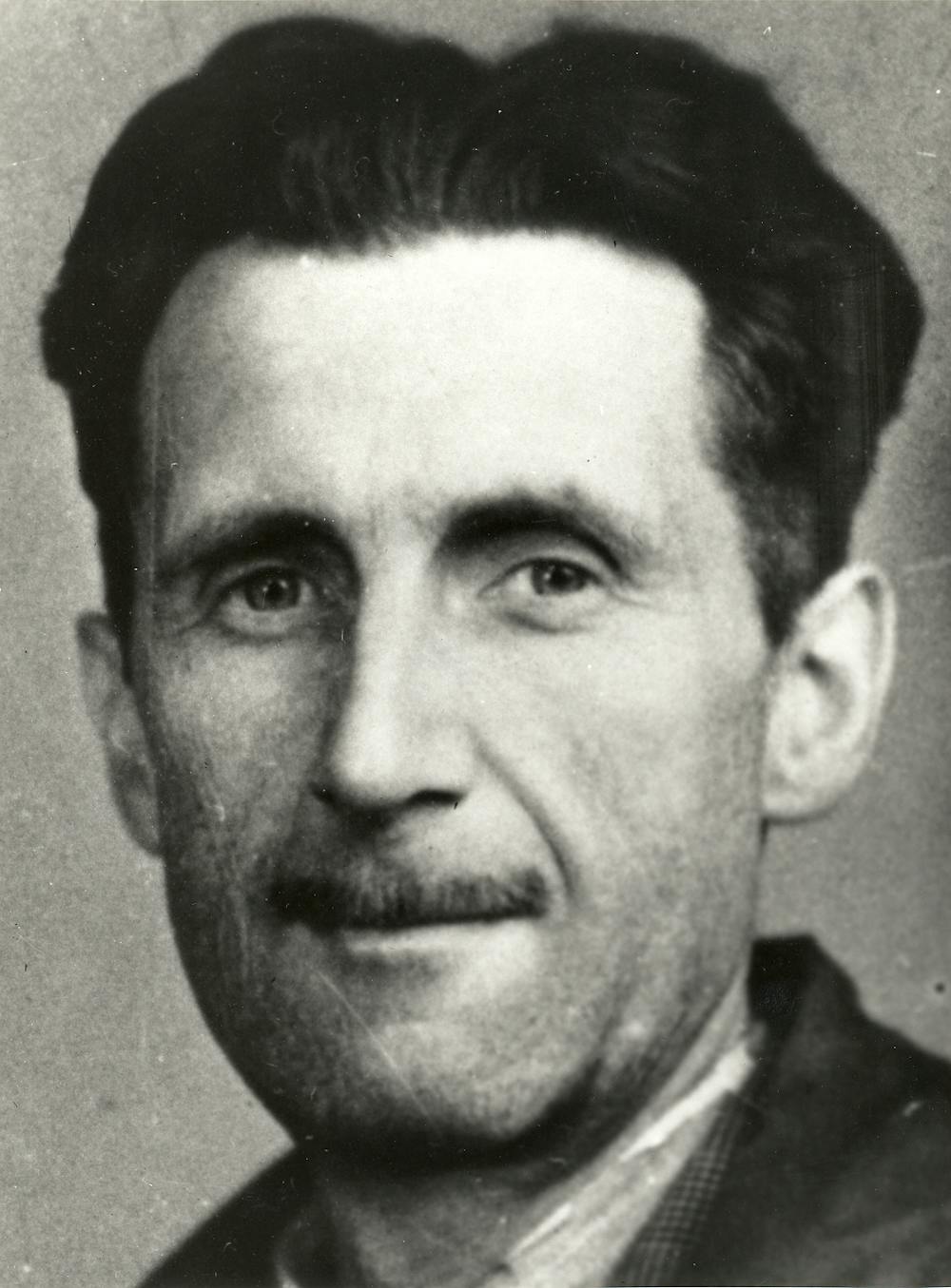
En agosto de 2025 se cumplieron 80 años de los bombardeos atómicos de Hiroshima y Nagasaki. Apenas un mes después de los ataques, el 19 de octubre de 1945, George Orwell publicó un ensayo en el London Tribune titulado Tú y la bomba atómica. En él, planteaba la hipótesis de qué pasaría si “las grandes naciones llegaran a un acuerdo tácito para no utilizar nunca la bomba atómica entre ellas”. Escribió que lo que surgiría sería una “paz que no es paz” y un “estado permanente de ‘guerra fría’”, introduciendo una metáfora perdurable que definiría la geopolítica durante décadas.

En el ensayo, Orwell también predijo la proliferación nuclear: “La bomba es increíblemente cara y su fabricación exige un enorme esfuerzo industrial, del que solo son capaces tres o cuatro países en el mundo”. De hecho, los cinco miembros permanentes del Consejo de Seguridad de las Naciones Unidas (ONU), que también se creó hace 80 años, tienen ahora “la bomba”. La URSS fue la segunda en conseguirla, en 1949.

George Orwell.
Branch of the National Union of Journalists

Desde entonces, su amenaza ha configurado y justificado los conflictos mundiales. Tanto Irak como Irán han sido acusados de buscar la bomba, pero en lugar de la no proliferación diplomática, Estados Unidos e Israel han utilizado la fuerza armada para impedir que estas naciones obtengan armas nucleares.

Una de las razones por las que la ONU aprobó la Guerra del Golfo de 1991 fue la existencia de información de inteligencia que indicaba que Irak tenía un programa de armas nucleares. En 2003, Estados Unidos y Reino Unido intentaron que la organización aprobara una guerra similar para desmantelar las supuestas armas nucleares de Irak, basándose en información errónea que había sido plagiada de mi propia tesis de la Universidad de Oxford.

En junio de 2025, Israel atacó Irán por supuestamente buscar un arma nuclear, también basándose en informes de “inteligencia”. El mundo contuvo la respiración durante los 12 días que duró la guerra, que fácilmente podría haber degenerado en un conflicto nuclear.

Hoy en día, la inteligencia artificial (IA) puede permitir a una nación o a un grupo terrorista construir una bomba atómica de formas que los contemporáneos de Orwell, como Einstein y Oppenheimer, nunca hubieran podido imaginar.

Las novelas y la Guerra Fría

En 1949, solo cuatro años después de Tú y la bomba atómica, Orwell publicó 1984. Se trata de una novela distópica que presagia la Guerra Fría que él había predicho en 1945, con tres bloques geopolíticos ficticios –Oceanía (América del Norte y Gran Bretaña), Eurasia (URSS y Europa) y Eastasia (China y sus vecinos)– que forman una serie de alianzas siempre cambiantes para controlar los “territorios en disputa”.

Edición en español de 1984 de George Orwell.

Penguin Libros

La novela fue profética, ya que se escribió antes de la creación de la Organización del Tratado del Atlántico Norte (OTAN) y del Pacto de Varsovia, y antes de que se acuñaran términos como “Primer”, “Segundo” y “Tercer Mundo”.

Sin embargo, fue su contemporáneo, el oficial británico de Inteligencia Naval durante la Segunda Guerra Mundial Ian Fleming, quien consiguió adivinar en sus novelas una faceta diferente de la dinámica del poder en el siglo XXI. En su exitosa serie de James Bond (y sus aún más populares adaptaciones cinematográficas), la mayor amenaza para la seguridad mundial no son los gobiernos nacionales como la URSS, sino actores individuales superpoderosos, como el genio criminal Ernst Stavro Blofeld y el científico Dr. No.

En las últimas décadas, esta visión de un poder concentrado en una persona como corazón de la amenaza geopolítica se ha materializado una y otra vez. En 2001, Osama bin Laden desencadenó la guerra contra el terrorismo, que duró 20 años. El magnate de los medios de comunicación Rupert Murdoch ejerce un poder desmesurado sobre la política internacional, influyendo en elecciones y votaciones importantes, como el Brexit de 2016. Y fue Elon Musk, no la NASA, quien creó un programa espacial y proporcionó conexión a internet a Ucrania tras la invasión rusa de 2022, lo que otorgó a SpaceX un poder sin precedentes desde los tiempos de la Compañía Británica de las Indias Orientales.

IA atómica y bombas sucias

El camino para obtener un arma nuclear no ha cambiado mucho desde Hiroshima, aunque la IA podría ayudar a los Estados que buscan bombas atómicas. Los avances en inteligencia artificial también pueden facilitar a los grupos terroristas la producción y detonación de explosivos convencionales combinados con material radiactivo, también conocidos como “bombas sucias”, lo que causaría enormes trastornos psicológicos y económicos.

Los escritos de Orwell ponen de manifiesto la hipocresía de este término, ya que nos obliga a preguntarnos si eso significa que las armas nucleares normales son, por defecto, “bombas limpias”. Sin embargo, a pesar del temor a un ataque terrorista improvisado con una bomba sucia, las más sucias son las que están recubiertas de uranio empobrecido (DU), ampliamente utilizadas por las fuerzas militares occidentales.

El DU se produjo inicialmente hace 80 años como un subproducto “residual” del enriquecimiento de uranio durante el Proyecto Manhattan. Sus científicos descubrieron que podía utilizarse para crear armas perforantes.

Estados Unidos y Reino Unido utilizaron estas armas durante la Guerra del Golfo de 1991 y la Guerra de Irak de 2003. Todavía contaminan el suelo, provocando cáncer, defectos congénitos y otras enfermedades. Hoy en día, Ucrania sufre las consecuencias de Chernóbil, pero además, tanto este país como Rusia, han utilizado armas perforantes desde 2022.


¿Quiere recibir más artículos como este? Suscríbase a Suplemento Cultural y reciba la actualidad cultural y una selección de los mejores artículos de historia, literatura, cine, arte o música, seleccionados por nuestra editora de Cultura Claudia Lorenzo.


Noticias falsas en 1945

Si bien la IA ha potenciado lo que normalmente consideramos orwelliano (estados de vigilancia como los descritos en 1984), Orwell también escribió sobre cómo la tecnología permitía la desinformación. En 1944, cuestionó las noticias falsas de inexistentes ataques aéreos alemanes sobre Gran Bretaña que se emitieron en la radio nazi, y destacó su valor como propaganda en caso de una posible victoria alemana.

Hoy, 80 años después, sigue ocurriendo lo mismo. En junio de 2025, durante la guerra de 12 días entre Israel e Irán, se difundieron vídeos deepfake fabricados por IA que mostraban nubes nucleares en forma de hongo detonando sobre instalaciones atómicas iraníes destruidas.

Algunos sostienen que la guerra fría entre Washington y Moscú nunca terminó, lo que da a la metáfora de Orwell un legado perdurable. No obstante, se suele atribuir al escritor y comentarista político estadounidense Walter Lippman la invención del término en 1947, lo que demuestra la afirmación de Orwell en la novela 1984: “Quien controla el pasado controla el futuro; quien controla el presente controla el pasado”.

The Conversation

Ibrahim Al-Marashi no recibe salario, ni ejerce labores de consultoría, ni posee acciones, ni recibe financiación de ninguna compañía u organización que pueda obtener beneficio de este artículo, y ha declarado carecer de vínculos relevantes más allá del cargo académico citado.

ref. ‘Tú y la bomba atómica’: George Orwell predijo en 1945 la Guerra Fría y la proliferación nuclear – https://theconversation.com/tu-y-la-bomba-atomica-george-orwell-predijo-en-1945-la-guerra-fria-y-la-proliferacion-nuclear-268252

El nivel del mar está subiendo, pero no al mismo ritmo en todas partes: el caso de Perú

Source: The Conversation – (in Spanish) – By Juan J. Muñoz, Profesor de Ingeniería Costera, Universidad de Cádiz

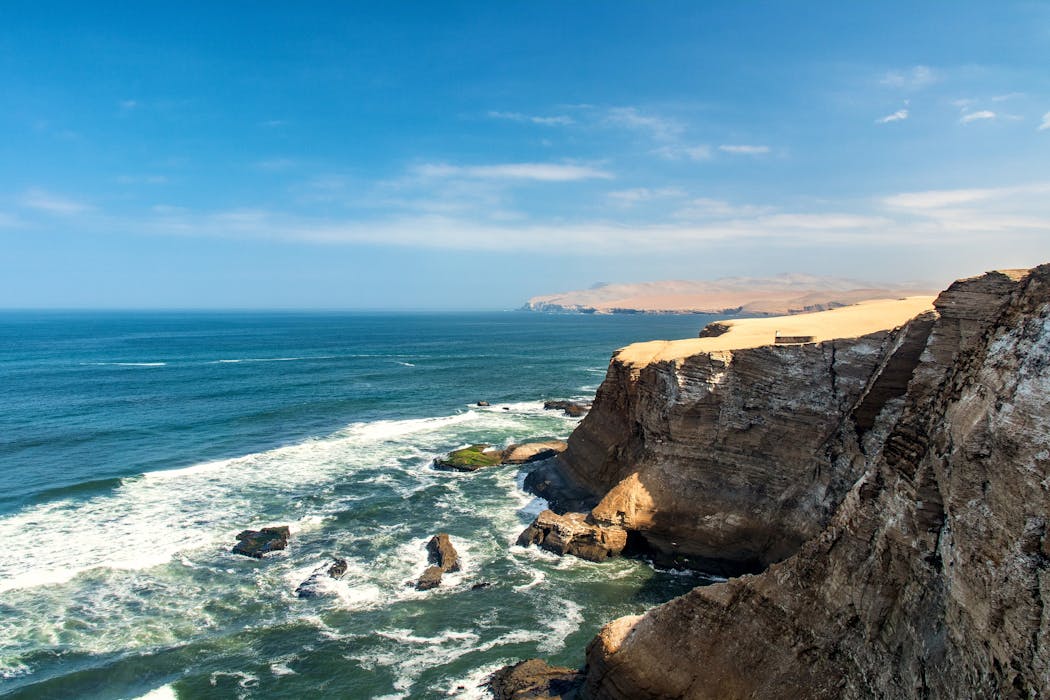
Costa de Paracas, Perú. Wikimedia Commons., CC BY

La subida del nivel del mar es uno de los efectos más visibles del cambio climático. Pero, aunque solemos pensar en un fenómeno global, cada región del planeta vive su propia historia.

En la costa peruana, esa historia empieza a contarse en 1942, cuando se instalaron los primeros mareógrafos –instrumento que registra y mide las oscilaciones del nivel del mar (mareas) de forma automática– en Talara, Callao y Matarani. Desde entonces, esas estaciones han registrado casi ocho décadas de variaciones del nivel del mar. Hoy, gracias a ese archivo único, podemos afirmar con claridad que el mar está subiendo en Perú, y que lo hace de manera desigual según la región y el periodo analizado.

Los diferentes niveles de referencia vertical en cada una de las estaciones. Alturas de cada uno de los niveles utilizados están referidas al punto de referencia mareográfico del Callao.
Bismarck J. A. et al.

Una tendencia clara, con altibajos marcados

Un equipo de investigadores de la Universidad de Cádiz comprobamos en un estudio reciente que, entre 1942 y 2019, el nivel del mar ha subido en los tres puntos estudiados. Sin embargo, la magnitud del aumento depende del intervalo que se mire. En algunos periodos, la subida fue moderada (menos de 1 mm por año), mientras que en otros llegó a ser muy acelerada, con valores de más de 10 mm anuales, especialmente en los años más recientes.

Esto significa que no basta con hablar de un único valor promedio. La subida del mar en el Perú es un proceso altamente variable, que responde tanto a tendencias globales como a fenómenos regionales y locales.

El impacto de El Niño

Una de las razones de esa variabilidad es bien conocida por los peruanos: el fenómeno de El Niño. Durante los eventos extraordinarios de 1982-83 y 1997-98, el mar en Talara, Callao y Matarani llegó a elevarse hasta 40 centímetros por encima de su promedio normal.

Consecuencias de las inundaciones traídas por El Niño en 1983 en Perú.
IDESEP.

Estos picos temporales muestran cómo la interacción entre el clima y el océano puede intensificar los riesgos de inundaciones costeras y erosión.

De hecho, el análisis estadístico confirma una fuerte correlación entre la temperatura y el nivel del mar en la costa peruana: cuando sube la temperatura superficial, también lo hace el mar. Y cuando las aguas se enfrían (como en los episodios de La Niña), el nivel tiende a descender.

Perú frente a los reportes del IPCC

Si comparamos los resultados con los informes del Panel Intergubernamental sobre Cambio Climático (IPCC), encontramos coincidencias y también diferencias. Hasta comienzos de los años 2000, las tasas de aumento en Perú eran algo menores que el promedio global. Sin embargo, en la última década analizada (2006-2015) ocurrió lo contrario: los registros de Talara, Callao y Matarani muestran un aumento mucho más rápido que la media mundial reportada por el IPCC.

Esto nos recuerda que las cifras globales sirven como referencia, pero las decisiones de gestión costera deben basarse en estudios locales. El mar no sube al mismo ritmo en todas partes.

Resumen gráfico del trabajo realizado, donde se muestra el mapa de la costa peruana y la ubicaión de las tres estaciones utilizadas (Talara, Callao, Matarani). La gráfica de barras muestra la comparativa en las tres estaciones, de las variaciones del aumento del nivel del mar (SLR) de los datos obtenidos
C. Estrada, B. Jigena-Antelo, J. J. Muñoz-Pérez.

¿Por qué importa?

La costa peruana concentra gran parte de la población y de la infraestructura crítica del país. La subida del nivel del mar amenaza puertos, viviendas, playas, humedales y acuíferos. También puede agravar los impactos de tsunamis y tormentas.

Para planificar defensas costeras, gestionar el agua o proteger los ecosistemas, es vital contar con información detallada y específica, como la que aportan estas series de mareógrafos.

Mirando al futuro

Nuestro estudio no solo confirma la tendencia ascendente, sino que también muestra que los cambios pueden ser bruscos en lapsos cortos, asociados a ciclos climáticos como El Niño o la Oscilación Decadal del Pacífico. Esto significa que los próximos años podrían traer tanto aceleraciones como pausas temporales en la subida del mar, pero la tendencia de fondo es clara: el océano está ganando terreno.

La conclusión es ineludible: Perú necesita políticas costeras basadas en datos locales, que consideren la variabilidad natural y el impacto del cambio climático global. Solo así se podrán anticipar riesgos y reducir la vulnerabilidad de millones de personas que viven frente al Pacífico.

The Conversation

Bismarck Jigena Antelo recibió fondos de Universidad de Cádiz, para realizar una estancia en la Dirección de Hidrografía y Navegación de la Marina del Perú (DHNM).
Los datos de niveles del mar de los mareografos de Talara, Callao y Matarani, que se utilizaron en el artículo de investigación fueron cedidos por la DHNM.
¿Es posible incluir a un tercer autor, la Ing. Carol Estrada Ludeña, funcionaria de la DHNM.

Juan J. Muñoz no recibe salario, ni ejerce labores de consultoría, ni posee acciones, ni recibe financiación de ninguna compañía u organización que pueda obtener beneficio de este artículo, y ha declarado carecer de vínculos relevantes más allá del cargo académico citado.

ref. El nivel del mar está subiendo, pero no al mismo ritmo en todas partes: el caso de Perú – https://theconversation.com/el-nivel-del-mar-esta-subiendo-pero-no-al-mismo-ritmo-en-todas-partes-el-caso-de-peru-266603

Italia reconoce la obesidad como enfermedad crónica: un paso histórico en la salud pública

Source: The Conversation – (in Spanish) – By José Miguel Soriano del Castillo, Catedrático de Nutrición y Bromatología del Departamento de Medicina Preventiva y Salud Pública, Universitat de València

El 9 octubre de 2025, Italia dio un paso sin precedentes en Europa al aprobar una ley que reconoce legalmente la obesidad como una enfermedad crónica, progresiva y con tendencia a la recaída. Su entrada en vigor se produjo el pasado 25 de octubre.

Hasta la fecha, ningún otro país europeo ha promulgado una ley nacional que reconociera la obesidad con tal amplitud: como una patología crónica y con garantías específicas de prevención, tratamiento y seguimiento incluidas en la atención sanitaria pública.

Pasos en la misma dirección

No obstante, algunos países del entorno también han avanzado parcialmente en la misma dirección. Así, mediante el Despacho n.º 12634/2023, Portugal aprobó en diciembre de 2023 implementar un Modelo Integrado de Cuidados para la Prevención y Tratamiento de la Obesidad, dentro de su Servicio Nacional de Salud. Aunque no se trata de una ley, la define como un problema crónico de salud pública e impulsa redes especializadas de tratamiento.

En Alemania, el Bundestag la reconoció en 2020 como una enfermedad en sentido médico y social, dentro de la Estrategia Nacional contra la Diabetes y la Obesidad, aunque sin dotarla aún de un marco legal que garantice prestaciones o cobertura sanitaria específica.

Y, por último, Reino Unido tampoco cuenta con una ley como la de Italia, pero su Servicio Nacional de Salud sí incluye la obesidad entre las condiciones crónicas de manejo prioritario, con énfasis en la prevención y el tratamiento a largo plazo.

De “culpa personal” a problema estructural

En consecuencia, la legislación italiana, a la que la revista The Lancet Diabetes & Endocrinology le ha dedicado unas páginas en el número de este mes, marca un antes y un después en Europa: es la primera que convierte en norma legal al máximo nivel una visión médica y social moderna de la obesidad.

Durante décadas, la acumulación anormal de grasa en el cuerpo fue interpretada como una consecuencia de malos hábitos, falta de disciplina o elecciones alimentarias equivocadas. Sin embargo, la evidencia científica ha demostrado que su origen es complejo, resultado de la interacción entre factores genéticos, ambientales, metabólicos y sociales.

La nueva legislación italiana asume esa visión moderna, y al hacerlo, rompe con el estigma que ha acompañado a millones de personas. Reconocer la obesidad como enfermedad significa reconocer también que requiere atención médica especializada, no juicios morales.

Una pandemia silenciosa

La Organización Mundial de la Salud ha calificado la expansión de la obesidad como “globesidad”, una pandemia en constante aumento. El World Obesity Atlas 2025 estima que su prevalencia mundial habrá aumentado entre 2010 y 2030 más de un 115 %. Si no se mejoran las medidas de prevención y tratamiento, el coste económico podría alcanzar 4,32 billones de dólares anuales en 2035, casi el 3 % del PIB mundial. Esta cifra es comparable al impacto de la covid-19 en 2020, o al del cambio climático en la actualidad.

Este problema no se limita a la salud individual: está asociado a un incremento sustancial en enfermedades cardiovasculares, metabólicas y oncológicas. Los investigadores incluso han introducido un nuevo término, adiponcosis, para describir la relación entre exceso de tejido adiposo y el desarrollo de hasta 13 tipos de cáncer.

Más allá de la atención médica

Al reconocer la obesidad como una enfermedad crónica con implicaciones sanitarias, sociales y económicas, la Ley n. º 149 del 3 de octubre de 2025 también impulsa políticas integradas para su prevención y tratamiento. Su enfoque combina prevención, educación, investigación y asistencia, mediante la creación de un programa nacional y un observatorio especializado

Entre sus disposiciones, promueve campañas de información y educación sobre alimentación saludable y actividad física, así como iniciativas comunitarias y escolares destinadas a crear entornos que favorezcan estilos de vida sanos. Aunque no contempla medidas fiscales ni de etiquetado, la norma sienta las bases para una estrategia nacional multisectorial.

Cambio de mentalidad

El reconocimiento de la obesidad como una enfermedad crónica con repercusiones sociales y sanitarias implica un cambio simbólico importante: las personas afectadas pasan a ser consideradas sujetos de derecho sanitario, merecedores de atención y respeto. La nueva norma promueve la educación, sensibilización y formación profesional para mejorar la comprensión social del problema, sentando las bases para reducir el estigma y fomentar una visión más sensible y estructurada de la obesidad.

En definitiva, el reconocimiento oficial puede contribuir a cambiar el discurso público, promoviendo empatía y comprensión en lugar de juicio y culpa.

Un modelo para el mundo

Ahora, el desafío radica en implantar con eficacia y sostenidamente las medidas que impulsa, garantizando la coordinación entre los niveles institucionales y el seguimiento continuo de los resultados. Pero si el modelo tiene éxito, podría inspirar una transformación global en la manera de entender y afrontar la obesidad.

Como concluyen los autores del artículo en The Lancet, la decisión italiana “representa un paso crucial para reducir los costes del tratamiento y frenar la mortalidad”.

En una época en la que las enfermedades crónicas amenazan la sostenibilidad de los sistemas sanitarios, reconocer la obesidad como una enfermedad es, ante todo, un acto de realismo y de justicia sanitaria, que debe ser tratada por los profesionales de la nutrición.

The Conversation

José Miguel Soriano del Castillo no recibe salario, ni ejerce labores de consultoría, ni posee acciones, ni recibe financiación de ninguna compañía u organización que pueda obtener beneficio de este artículo, y ha declarado carecer de vínculos relevantes más allá del cargo académico citado.

ref. Italia reconoce la obesidad como enfermedad crónica: un paso histórico en la salud pública – https://theconversation.com/italia-reconoce-la-obesidad-como-enfermedad-cronica-un-paso-historico-en-la-salud-publica-268403

Del vampiro al vecino inquietante: cómo ha cambiado nuestra forma de asustarnos en el cine

Source: The Conversation – (in Spanish) – By Lara López Millán, Docente Universitaria de Artes y Educación, Universidad Camilo José Cela

Oscar Isaac en una imagen del último _Frankenstein_ dirigido por Guillermo del Toro. Netflix

El miedo siempre estuvo ahí, pero el cine lo convirtió en espectáculo. Desde las primeras proyecciones, el público acudió a las salas para sentir esa descarga controlada de adrenalina.

Cuando Nosferatu (1922) extendió su sombra, no fue sólo un vampiro lo que hizo que la audiencia se estremeciese: era la Europa de entreguerras viéndose reflejada en una criatura enfermiza y extranjera, una amenaza que llegaba de fuera para romper un orden social que ya tambaleaba. Desde entonces, cada generación ha encontrado su propio engendro en la pantalla.

Sombras y mutaciones

El terror funciona como un espejo. Los castillos en ruinas y las nieblas góticas de los años treinta no eran simples decorados: representaban un mundo que parecía haberse detenido, que miraba con nostalgia y temor al pasado.

Los monstruos de Universal –Drácula (1931), Frankenstein (1931), El hombre lobo (1941)– eran a la vez temibles y fascinantes, porque encarnaban miedos muy contemporáneos: la ciencia que se descontrola, el cuerpo que enferma, lo diferente que amenaza lo familiar. La gente entraba en el cine buscando escalofríos, pero salía habiéndose enfrentado, de forma simbólica, a sus propias ansiedades.

Un hombre deforme yace en el suelo y otro con joroba lo observa iluminándose con una antorcha.
Fotograma de Frankenstein (James Whale, 1931).
Universal Pictures

Con el tiempo, las nieblas se despejaron y el terror empezó a mirar hacia el futuro. Las décadas de posguerra trajeron un pánico nuevo, más tecnológico, más científico. De pronto, las amenazas venían del espacio exterior o de laboratorios secretos: alienígenas, mutantes, experimentos que se salían de control.

Películas como Ultimátum a la Tierra (1951) y El enigma de otro mundo (1951) capturaban la paranoia de un planeta dividido en bloques, mientras que La humanidad en peligro (1954) y Godzilla (1954) daban forma grotesca a la amenaza nuclear con hormigas gigantes y criaturas surgidas de la radiación. La bomba atómica estaba en la mente de todos, y el cine lo canalizó en forma de invasiones, mutaciones y sospechas colectivas.

El enemigo está en casa

El susto más inquietante todavía estaba por llegar: el que no depende de criaturas sobrenaturales.

Cuando Alfred Hitchcock estrenó Psicosis (1960), el público descubrió que el peligro podía estar en la puerta de al lado. Norman Bates era un hombre normal, tímido, amable. No necesitaba colmillos ni garras para matar. Se plasmaba así la incertidumbre de una época marcada por cambios sociales y la erosión de la confianza en las instituciones: los años sesenta traían consigo tensiones urbanas, movimientos sociales y la sensación de que la amenaza podía venir del vecino o el propio núcleo familiar.

Un hombre mira a cámara con la cabeza baja y sonríe.
Anthony Perkins interpretando a Norman Bates, un hombre… ¿normal?
Paramount Pictures

A partir de ese momento, el horror se volvió más íntimo: el motel de carretera, la casa suburbana y la niñez misma podían convertirse en escenarios de pesadilla. Películas como La matanza de Texas (1974) o Halloween (1978) consolidaron esa sensación. Su violencia evidenciaba la desconfianza y el malestar de Estados Unidos tras la guerra de Vietnam y la crisis económica de los setenta: lo que parecía seguro –el hogar, la comunidad– podía volverse mortal.

Esa invasión de lo cotidiano continuó durante los ochenta, una década de consumismo, cultura pop y miedo al crimen urbano, donde el género se llenó de ruido, sangre y espectáculo. Freddy Krueger, Jason Voorhees o el muñeco Chucky se convirtieron en iconos de la cultura pop, con máscaras y frases ingeniosas incluidas.

Pero en medio del exceso, hubo cineastas que exploraron terrores más psicológicos: El resplandor (1980) convirtió a un padre en monstruo, miesntras que La cosa (1982) reflejó la paranoia y el aislamiento propios de la Guerra Fría, donde el enemigo podía estar más cerca de lo que pensábamos. Lo verdaderamente espeluznante no era la criatura, sino la posibilidad de que estuviera dentro de nosotros.

A finales de los noventa, este cine se tornó autorreflexivo. Scream (1996) jugaba con los clichés y los convertía en parte de la diversión; el espectador ya era un cómplice. Este conocimiento de las reglas del juego preparó el terreno para un nuevo tipo de terror: el que utilizaba la cámara y la estructura narrativa para hacer que el miedo pareciera más real y cercano al espectador.

En el nuevo milenio el género empezó a experimentar con nuevas formas de asustar. Surgió el found footage (metraje encontrado) con El proyecto de la bruja de Blair (1999) y después Paranormal Activity (2007), que hicieron que el espanto fuese casi documental, revelando la ansiedad de una sociedad cada vez más vigilada, hiperconectada y acostumbrada a consumir imágenes de lo real a través de cámaras y móviles.

También hubo un auge de remakes estadounidenses de clásicos japoneses como The Ring (2002) o El grito (2004), que introdujeron a Occidente en un miedo atmosférico, más basado en el silencio y la sugerencia que en el susto fácil. Esto coincidió con la apertura cultural global y el interés por historias que venían de fuera, mostrando un mundo interconectado donde lo desconocido podía llegar de cualquier parte.

El arte de atemorizar hoy

Así, tras la experimentación formal de los primeros años del milenio, el género se abrió a propuestas en las que no solo se sobresaltaba al espectador, sino que también se comentaba la sociedad y se exploraba la psicología humana.

La década de 2010 supuso un punto de inflexión. Productoras como A24 y Blumhouse apostaron por un terror más ambicioso y autoral. Por ejemplo, Déjame salir (2017) convirtió el miedo en un comentario social directo sobre los conflictos raciales y la polarización política.

Hereditary (2018) y Midsommar (2019), por el contrario, llevaron el género a un horror casi operístico, en el que la fractura familiar y las dinámicas comunitarias provocan espanto, un espejo de sociedades contemporáneas cada vez más fragmentadas e impacientes. The Babadook (2014) e It Follows (2014) se encargaron de explorar el trauma, la ansiedad y la transmisión del pavor como si fueran enfermedades. Incluso el slasher regresó en versiones más sofisticadas como X (2022) y Pearl (2022), que mezclan nostalgia y reflexión metacinematográfica.

En los años 2020, el género sigue expandiéndose en todas direcciones. Películas como Barbarian (2022) o Háblame (2023) juegan con las expectativas del espectador, construyendo giros radicales en un contexto de incertidumbre global: pandemias, crisis climáticas y cambios tecnológicos acelerados. También vemos un resurgir del folk horror en propuestas como Men (2022) o The Witch (2015), donde lo rural y lo ancestral vuelven a ser fuente de amenaza, recordando cómo la modernidad puede despertar miedos arcaicos.

En los tres últimos años el género ha seguido explorando nuevas formas de provocar escalofríos: It Lives Inside (2023) combina terror sobrenatural y exploración cultural, mientras que La sustancia (2024) ofrece una sátira que critica la industria del bienestar. Incluso Robert Eggers presentó su reinterpretación gótica del clásico Nosferatu (2024) y, en 2025, Weapons introdujo una narrativa fragmentada sobre la desaparición de niños, mezclando horror psicológico y social mientras hablaba de la infancia, la vigilancia y la seguridad en la vida cotidiana.

Un niño con una sonrisa pintada mira a cámara mientras sus compañeros duermen sobre los pupitres.
Imagen de Weapons, de Zach Cregger (2025).
Warner Bros.

Estas producciones demuestran que el cine de terror continúa adaptándose, mostrando ansiedades contemporáneas y ofreciendo nuevas perspectivas al público. Lo que se mantiene constante es nuestra necesidad de mirar, tal vez porque lo consideramos un laboratorio emocional. Nos permite ensayar el miedo sin consecuencias, sentirlo de manera segura y controlada. Cuando las luces se apagan, podemos enfrentarnos a aquello que más nos perturba –la muerte, el caos, la desintegración de la familia, el fin del mundo– y salir ilesos.

En un presente lleno de amenazas difusas, desde pandemias hasta crisis climáticas, el género sigue evolucionando para darles forma. Así, cada Halloween volvemos a las salas buscando ese escalofrío. Puede que ya no haya vampiros con capa ni lobos aullando a la luna, pero el vecino inquietante, el monstruo invisible o el silencio en una casa demasiado tranquila siguen funcionando. Y quizás por eso el terror nunca muere: porque siempre encuentra un nuevo rostro para nuestros miedos.

The Conversation

Lara López Millán no recibe salario, ni ejerce labores de consultoría, ni posee acciones, ni recibe financiación de ninguna compañía u organización que pueda obtener beneficio de este artículo, y ha declarado carecer de vínculos relevantes más allá del cargo académico citado.

ref. Del vampiro al vecino inquietante: cómo ha cambiado nuestra forma de asustarnos en el cine – https://theconversation.com/del-vampiro-al-vecino-inquietante-como-ha-cambiado-nuestra-forma-de-asustarnos-en-el-cine-265552