Beyond Evolution: Alfred Russel Wallace’s critique of the 19th century world

Source: The Conversation – France (in French) – By Marshall, A., Visiting professor, Mahidol University

Alfred Russel Wallace was a British naturalist renowned for co-developing the theory of evolution alongside Charles Darwin – and for mapping out the biodiversity of the Indonesian Archipelago. However, his legacy extends far beyond science.

Wallace’s observations of social exploitation in Wales and the Archipelago compelled him to take a stand against the British establishment in his homeland and its colonial ventures abroad. He also recognised the ecological destruction caused by colonialism, making him one of the world’s first global environmentalists.

In the 19th century, Wallace’s observations were striking. British imperialism was at its zenith, and the Industrial Revolution was fueling a titanic amplification of human impact upon nature.


Baca juga:
Wallacea is a living laboratory of Earth’s evolution – and its wildlife, forests and reefs will be devastated unless we all act


Wallace’s observations are probably even more noteworthy today. While European colonialism has largely collapsed, the world is industrialising at breakneck speed, intensifying the environmental damage Wallace warned about.

The Butterfly Effect (a film about Alfred Russel Wallace. Produced & provided by the author with the assistance of AI software).

Witness to poverty: Wales

Wallace was born in 1823, and his early life in Wales exposed him to 19th-century rural struggles.

Historians have noted that Wales was one of the first regions to suffer English colonisation, dating back to medieval times.

By Wallace’s time, industrialisation had reshaped the Welsh landscape, with factories, mines, and railways supplanting its pristine mountains and valleys. While displaced farmers found work in these industries, the jobs were poorly paid, perilous, and often dehumanising. Wallace saw the ongoing struggle of Welsh communities to protect their farming rights and preserve their language.

Young Wallace initially worked as a mapmaker. His employers were usually wealthy landlords who hired him to map their estates to determine how much their tenant farmers owed them in rent or taxes.

At work, he witnessed how British landlords in Wales were becoming ‘more commercially minded’ (in other words, more money-grubbing). They often evicted impoverished tenant farmers to make way for profitable livestock, or mining and railway projects. If they weren’t pushed off the land altogether, the tenants faced rising rents and heavier taxes. Whatever the situation, it was usually the tenant farmers who were distressed.

Wallace was sometimes sent to collect rent and taxes from tenants, many of whom lived in poverty and barely spoke English to understand the circumstances they were in.

Wallace felt anguished for being part of the wretched business.

Eventually, after the private estates in Wales were just about entirely mapped, he decided to leave his career as a mapmaker.

At this point, Wallace became a full-time naturalist, collecting insect specimens and selling them to museums.

This new role led him to travel all across the world – including to the Indonesian Archipelago – where he spent eight years immersing himself in local cultures and languages such as Malay.

Sympathy for the colonised: The Archipelago

Initially, Wallace perceived Dutch colonialism as less exploitative than British practices. For the most part, this was because Wallace was comparing the state-run enterprises that dominated the economy of the Dutch East Indies with the avaricious companies that dominated the economies of British India and British Malaya. This preference for state capitalism versus laissez-faire capitalism even led Wallace to sympathise with the Cultivation System (Cultuurstelsel) imposed by the Dutch government.

Under this system, local farmers grew cash crops for the Dutch East Indies government. In exchange, they received some small payments below the market rate.

Wallace acknowledged that Dutch middlemen and local chiefs sometimes abused the system, but it often provided the growers with a reliable income. As well, the Dutch overlords were often obliged to build infrastructure and schools.

The system was criticised as a form of monopolistic serfdom. But Wallace saw it as less brutal than the ‘dog-eat-dog’ economies of Britain’s overseas free-trade colonies.

However, his perspective evolved. In later writings, Wallace rallied against the premise that any nation in the tropics need be colonised. He also realised colonised peoples didn’t gain much from the deal, if ‘deal’ we might call it.

In his 1898 book summarising human achievement in the 19th century, Wallace declared that the worst aspect of the century was the way Europeans mistreated native peoples worldwide.

Wallace noted that colonised lands worldwide were usually gained in dubious manners, and various abusive labour practices maintained their economies. By the turn of the century, Wallace was calling for all colonies to be handed back to indigenous peoples.

At the same time, in his homeland, Wallace also became a leading figure in the land nationalisation movement. In an effort to address rural poverty in Britain, Wallace advocated the nationalisation of all farmlands.

Entrusted to the state, farming rights could then be distributed fairly and democratically among the entire national community of farmers. In this manner, every farming family could grow their own food, either for themselves or to sell, without being impoverished by taxes and rents claimed by the gentry.

Destruction of nature

As a naturalist deeply connected to the environment, Wallace also documented colonial ventures disastrous impact on wildlife. When European ventures established estates in the tropics, the native rainforests were swiftly cleared.

In his own words:

The reckless destruction of forests, which have for ages been the protection and sustenance of the inhabitants, seems to me to be one of the most shortsighted acts of colonial mismanagement—Wallace in The Malay Archipelago.

Wallace also condemned the environmental impact of colonial mining in the Archipelago, especially those targeting gold and tin, which he witnessed in Borneo and the Malay Peninsula:

The rapid degradation of fertile valleys and the poisoning of streams by mining waste serve as stark reminders of the greed of commerce unchecked by reason or compassion—Wallace in The Malay Archipelago.

These observations, penned in the late 19th century, clearly anticipated 21st-century environmental problems and their causes.

Wallace’s foresight was rare at his time, and his warning was even more striking. He believed that nature’s destruction could only be avoided by taking much more equitable approaches to resource use.

Life lessons

Modern historians and scientists hail Wallace as one of the bravest figures of the 19th century. He possessed enough physical courage to cross vast oceans and live for years away from home in remote, untamed forests. This courage allowed Wallace to explore the natural world deeply enough to uncover its hidden forces.

Equally impressive was Wallace’s moral courage. At a time when criticising the British elite or questioning imperialism was far from popular, Wallace did not shy away from challenging the status quo. Many of his books envision a better, fairer world.

Wallace’s moral courage is something we can all learn from today, especially as we realise that scientific knowledge alone is not enough to protect nature from relentless industrialisation.

The Conversation

Marshall, A. tidak bekerja, menjadi konsultan, memiliki saham, atau menerima dana dari perusahaan atau organisasi mana pun yang akan mengambil untung dari artikel ini, dan telah mengungkapkan bahwa ia tidak memiliki afiliasi selain yang telah disebut di atas.

ref. Beyond Evolution: Alfred Russel Wallace’s critique of the 19th century world – https://theconversation.com/beyond-evolution-alfred-russel-wallaces-critique-of-the-19th-century-world-243372

Weighing the green cost: How nickel mining in Indonesia impacts forests and local communities

Source: The Conversation – France (in French) – By Michaela Guo Ying Lo, Postdoctoral Researcher in Environment, Conservation, and Development, University of Kent

Indonesia produced nearly four times the amount of nickel in recent years compared to a decade earlier — following the global push for a low-carbon revolution that drives the mining for the mineral essential for electric vehicles, renewable energy technologies, and stainless-steel production.

This boom, however, takes a toll on nickel-rich regions like Sulawesi, threatening a one-of-a-kind biodiversity hotspot, known as ‘Wallacea’.

Our recent study raises questions about the sustainability of nickel mining practices as we highlight its environmental and social impacts in Sulawesi, based on data from 7,721 villages.

Sulawesi’s forests and biodiversity at risk

Our study shows that between 2011 and 2018, villages near nickel mines experienced deforestation at nearly double the rate of non-mining areas. The loss is attributable to land acquisition needed to mine the mineral.

Deforestation will not only worsen global warming but also destroy habitats and threaten wildlife populations. Among the species potentially affected are Sulawesi’s 17 primate species, such as Celebes crested macaque and Peleng tarsier—all of them are endemic to the island. If this trend continues, it could set back efforts to both mitigate greenhouse gas emissions and conserve biodiversity.

A video showcasing the Peleng tarsier, one of 17 endemic primates threatened by nickel-driven deforestation.

The costs and benefits to local communities

Our research reveals that unsustainable nickel mining practices have increased the pollution and the frequency of mining-related disasters, such as landslides and flash floods. They directly impact local communities that rely on agriculture, fishing, and other natural resource-based livelihoods.

The effects of nickel mining, however, are nuanced. Environmental damage and land acquisition have triggered conflicts.
But while social well-being declined in areas near nickel mines, the impact varied significantly across regions, and was positive in some areas.

This implies that communities across Sulawesi can experience both positive and negative impacts. In villages with high poverty levels, for example, the environmental and health impacts of mining have been particularly severe. In these villages, adverse health effects are more likely to occur due to limited resources and capacity to cope with pollution associated with mining activities.

However, our study also shows that these poorer regions have also gained the greatest benefits from mining, including improved infrastructure and living conditions. Revenue from mining has likely added to investments into public goods, such as improving water systems and transportation networks.

More information is needed to understand what is driving this variation, but it underscores the precarious balance posed by nickel mining. While it provides vital development opportunities, it also threatens vulnerable ecosystems and exposes communities to significant environmental and health risks. Achieving progress without deepening hardship remains a complex challenge for sustainable development in Indonesia and other nickel producing countries.

Towards sustainable nickel mining

Tackling these challenges requires a just and sustainable approach to nickel mining. If the harm continues, it could undermine efforts to conserve Sulawesi’s unique biodiversity. That’s why protecting its ecosystems is critical.

Several recommendations have been proposed by other academics and actors, three of which we emphasise through our mining evaluation:

1. Strengthening environmental and social standards

Governments and mining companies must follow strict environmental and social standards to minimise harm to ecosystems and communities. This includes strict regulations on deforestation and water management, along with protections for workers and affected communities.

For mining companies, frameworks like the OECD Due Diligence Guidelines can ensure that businesses carry out the necessary protocols to identify, prevent, and account for adverse impacts that result from their mining practices. At the same time, state actors should continue to fulfil their obligations to protect and respect the rights of those affected by mining.

2. Ensuring community participation

Local communities must be central to decision-making around mining projects. Inclusive consultation and consent processes can help mitigate harm and ensure that mining operations do not harm those who rely on the environment for their livelihoods.

Involving communities in decision-making helps mining companies build trust and share benefits. As one case study has shown in Sulawesi, engaging local populations in evaluating the nickel production process can lead to corrective actions. Community feedback can ensure that mining projects not only achieve compliance but also align with the aspirations and well-being of affected communities.

3. Establishing robust monitoring and accountability

Regular monitoring and evaluation of mining operations, from start to finish, is crucial — not just for nickel but other mining commodities too. Companies should be held accountable for environmental damage and social harm, while successful practices should be highlighted to serve as models for the industry. Independent oversight by NGOs and local groups can boost transparency, ensure accountability, and promote best practices.

Time is crucial. With the low-carbon transition speeding up, swift action is needed to prevent environmental and social harm worldwide.

By reforming nickel mining practices, Indonesia can play a vital role in building a just, sustainable, low-carbon future, and provide a model for other countries.

This is a chance to balance economic prosperity, environmental protection, and social equity — ensuring the green energy transition’s benefits outweigh its costs.

The Conversation

Michaela Guo Ying Lo received funding from the University of Kent Global Challenges Doctoral Centre.

Jatna is also a member of Indonesian Academy of Sciences (AIPI) and lecturer in University of Indonesia

Matthew Struebig received funding from Natural Environment Research Council UK and Leverhulme Trust UK.

ref. Weighing the green cost: How nickel mining in Indonesia impacts forests and local communities – https://theconversation.com/weighing-the-green-cost-how-nickel-mining-in-indonesia-impacts-forests-and-local-communities-246259

Finding ‘Kape’: How Language Documentation helps us preserve an endangered language

Source: The Conversation – France (in French) – By Francesco Perono Cacciafoco, Associate Professor in Linguistics, Xi’an Jiaotong-Liverpool University

Shiyue Wu, a member of Francesco Perono Cacciafoco’s research team at Xi’an Jiaotong-Liverpool University (XJTLU), who is currently developing intensive fieldwork in Alor Island to document and preserve endangered languages, discovered and first documented Kape during a Language Documentation fieldwork in August 2024 and therefore actively contributed to this study.


As of 2025, more than 7000 languages are spoken across the world. However, only about half of them are properly documented, leaving the rest at risk of disappearing.

Globalisation has propelled languages such as English and Chinese into the mainstream, and they now dominate global communication.

Parents today prefer their children learn widely-spoken languages. Meanwhile, indigenous languages, such as Copainalá Zoque in Mexico and Northern Ndebele in Zimbabwe, are not even consistently taught in schools.

Indigenous people generally did not use writing for centuries and, therefore, their languages do not have ancient written records. This has contributed to their gradual disappearance.

To prevent the loss of endangered languages, field linguists – or language documentarists – work to ensure that new generations have access to their cultural heritage. Their efforts reveal the vocabulary and structure of these languages and the stories and traditions embedded within them.

My research team and I have spent over 13 years documenting endangered Papuan languages in Southeast and East Indonesia, particularly in the Alor-Pantar Archipelago, near Timor, and the Maluku Islands. One of our significant and very recent discoveries is Kape, a previously undocumented and neglected language spoken by small coastal communities in Central-Northern Alor.

Not only is the discovery important for mapping the linguistic context of the island, but it also highlights the urgency of preserving endangered languages by employing Language Documentation methods.

The discovery of Kape

In August 2024, while working with our Abui consultants, Shiyue Wu, my Research Assistant at Xi’an Jiaotong-Liverpool University, discovered a previously-ignored, presumably undocumented Papuan language from Alor, ‘Kape’.

At the time, she was gathering information about the names and locations of ritual altars known as ‘maasang’ in the Abui area, with assistance from our main consultant and several native speakers. In Central Alor, every village has a ‘maasang’.

During conversations about the variants in altar names across Alor languages and Abui dialects, some speakers mentioned the name of the ‘maasang’ (‘mata’) in Kape—a language previously unrecorded and overlooked in linguistic documentation.

‘Kape’ translates to ‘rope’, symbolising how the language connects its speakers across the island, from the mountains to the sea. Geographically and linguistically, it is associated with Kabola in the east and Abui and Kamang in Central Alor.

At this stage, it is unclear whether Kape is a distinct language or a dialect of Kamang, as the two are mutually intelligible. Much of Kape’s basic lexicon (the collection of words in one language), indeed, shares cognates (related words among languages) with Kamang.

However, Kape is spoken as the primary (native) language by the whole Kape ethnic group of Alor, and the speakers consider themselves an independent linguistic and ethnic community. This could serve as an element for regarding Kape as a language.

Kape also shows connections with Suboo, Tiyei, and Adang, other Papuan languages from Alor Island. The speakers, known as ‘Kafel’ in Abui, are multilingual, fluent, to some extent, in Kape, Kamang, Bahasa Indonesia, Alor Malay, and, sometimes, Abui.

So far, no historical records have been found for Kape, though archival research may reveal more about its origins. Based on its typology and lexical characteristics, Kape appears as ancient as other languages spoken in Alor. Like many Papuan languages, it is critically endangered and requires urgent documentation to preserve its legacy.

Documenting languages: An ongoing challenge

Language Documentation aims to reconstruct the unwritten history of indigenous peoples and to guarantee the future of their cultures and languages. This is accomplished by preserving endangered, scarcely documented or entirely undocumented languages in disadvantaged and remote areas.

External sources, like diaries by missionaries and documentation produced by colonisers, can help reconstruct some historical events. However, they are insufficient for providing reliable linguistic data since the authors were not linguists.

My research team and I document endangered languages, starting with their lexicon and grammar. Eventually, we also explore the ancient traditions and ancestral wisdom of the native speakers we work with.

We have contributed to the documentation of several Papuan languages from Alor Island, especially Abui, Kula, and Sawila. These languages are spoken among small, sometimes dispersed communities of indigenous peoples belonging to different but related ethnic clusters.

They communicate with each other mostly in Bahasa Indonesia and Alor Malay. This is because their local languages are almost never taught in schools and are rarely used outside their groups.

Over time, in addition to documenting their lexicons and grammars, we worked to reconstruct their place-names and landscape names, oral traditions, foundation myths, ancestral legends and the names of plants and trees they use.

We also explored their traditional medical practices and local ethnobotany, along with their musical culture and number systems.

Safeguarding Kape is not just linguistically relevant. Its preservation and documentation are not just about attesting its existence – they also contribute to revitalising the language, keeping it alive, and allowing the local community to rediscover its history, knowledge, and traditions to pass down to the next generations.

This journey has just begun, but my team and I – with the indispensable collaboration from our local consultants and native speakers – are prepared to go all the way towards its completion.

The Conversation

Francesco Perono Cacciafoco received funding from Xi’an Jiaotong-Liverpool University (XJTLU): Research Development Fund (RDF) Grant, “Place Names and Cultural Identity: Toponyms and Their Diachronic Evolution among the Kula People from Alor Island”, Grant Number: RDF-23-01-014, School of Humanities and Social Sciences (HSS), Xi’an Jiaotong-Liverpool University (XJTLU), Suzhou (Jiangsu), China, 2024-2025.

ref. Finding ‘Kape’: How Language Documentation helps us preserve an endangered language – https://theconversation.com/finding-kape-how-language-documentation-helps-us-preserve-an-endangered-language-247465

Peatlands and mangroves: Southeast Asian countries must protect these major carbon pools to boost climate ambitions

Source: The Conversation – France (in French) – By Sigit Sasmito, Senior Research Officer, James Cook University

Peat swamp in Danau Sentarum National Park, West Kalimantan. (Bramanthya Fathi Makarim/Shutterstock)

Protecting and restoring peatlands and mangroves can strengthen Southeast Asian countries’ efforts to combat climate change, according to new findings from an international team of researchers.

Carbon-dense peatlands and mangroves comprise only 5% of Southeast Asia’s surface. Protecting and restoring them, however, can reduce approximately 770±97 megatonnes of CO2 equivalent (MtCO2e) annually. This is equal to more than half of the carbon emissions from land use in the region.

Conserving offers larger mitigation potential through reduced emissions from ecosystem loss in the region compared to gains from restoration. If optimally implemented, restoration can still play an important role in nature-based carbon sequestration.

Having peatlands and mangroves included in the new climate pledges (Nationally Determined Contributions 3.0) can help countries set higher emissions reduction targets for 2030 and 2035.

More benefits to offer

The study reports extensive climate benefits from conserving and restoring peatlands and mangroves. Therefore, they make effective natural climate solutions for Southeast Asian countries.

Both ecosystems protect organic matter from decay under natural conditions, acting as net carbon sinks. This means that carbon uptake exceeds carbon loss.

Net carbon gains are mainly accumulated in their soils instead of their vegetation. More than 90% of carbon stocks in peatlands and 78% in mangroves are in their soils.

At scale, protecting and restoring both types of wetlands also supports other valuable co-benefits. These include biodiversity preservation, water quality improvement, coastal protection, food security and rural development for millions of coastal people across Southeast Asian countries.

Challenges remain

Despite the benefits, many challenges and risks persist in conserving and restoring peatlands and mangroves.

When peatlands and mangroves are disturbed – commonly due to land use change – they release large quantities of carbon into the atmosphere. This release can later exacerbate climate change.

The new estimates suggest that changes in their land use for the past two decades (2001-2022) had caused the release of approximately 691±97 MtCO2e of excess emissions.

Indonesia accounts for the largest portion of the region’s emissions, accounting for 73%. Malaysia (14%), Myanmar (7%), and Vietnam (2%) follow. The other seven Southeast Asian countries generate the remaining 4% of emissions.

In Southeast Asia, mangroves and peatlands are often treated as unproductive land. Still, they have long been subject to agricultural land expansion planning.

Moreover, unclear or multi-land ownership and lack of long-term participatory monitoring programs are critical challenges for prioritising and implementing restoration on the ground.

Despite these challenges, government and corporate interest in developing conservation and restoration-based carbon projects for peatlands and mangroves is rapidly increasing.

That is why now is a good opportunity to recognise their vital roles — not only for climate change mitigation — but also for people and nature.

Implications for national emissions reduction targets

The new study addresses a critical gap in climate policy for Southeast Asian by providing annual climate change mitigation potentials from peatlands and mangroves.

Climate mitigation potential for national land-use emissions varies widely between countries.

The findings suggest that it could reduce national land-use emissions by up to 88% in Malaysia, 64% in Indonesia, and 60% in Brunei. Other countries include Myanmar at 39%, the Philippines at 26%, Cambodia at 18%, Vietnam at 13%, Thailand at 10%, Laos at 9%, Singapore at 2%, and Timor-Leste at 0.04%.

Our study also shows that mitigation potential from peatlands and mangroves in Indonesia can fulfil country Forestry and Other Land-use (FOLU) Net Sink targets by 2030.

In its 2022 NDCs, Indonesia plans to reduce its annual emissions from FOLU by 2030 between 500-729 MtCO2e, depending on the level of external support. According to the study, this figure is within the same order of mitigation potential as peatlands and mangroves can collectively generate.

However, peatland and mangrove mitigation potentials are insufficient to avoid dangerous levels of climate change in the future.

Decarbonisation remains the most effective means of curbing climate change and its impacts, with peatland and mangrove protection enhancing these efforts.

The Conversation

Susan Elizabeth Page menerima dana dari University of Leicester, UK.

Dan Friess, David Taylor, Massimo Lupascu, Pierre Taillardat, Sigit Sasmito, dan Wahyu Catur Adinugroho tidak bekerja, menjadi konsultan, memiliki saham, atau menerima dana dari perusahaan atau organisasi mana pun yang akan mengambil untung dari artikel ini, dan telah mengungkapkan bahwa ia tidak memiliki afiliasi selain yang telah disebut di atas.

ref. Peatlands and mangroves: Southeast Asian countries must protect these major carbon pools to boost climate ambitions – https://theconversation.com/peatlands-and-mangroves-southeast-asian-countries-must-protect-these-major-carbon-pools-to-boost-climate-ambitions-247570

Lack of justice in Indonesia’s climate plan may backfire, harming people and environment

Source: The Conversation – France (in French) – By Wira A. Swadana, Climate Action Senior Lead, World Resources Institute

Indonesia has developed several climate documents as pathways to curb climate change and adapt to its impacts. These impacts influence many elements of life, including displacement, the spread of infectious diseases, and even fatalities.

Some of these documents include Enhanced Nationally Determined Contributions, Long-Term Strategy for Low Carbon and Climate Resilience 2050 (LTS-LCCR), and Low Carbon Development Indonesia (LCDI).

As a scholar in social development and environmental policy, I conducted a descriptive analysis of more than five Indonesia’s climate documents to learn how the concept of a just transition is being integrated into Indonesia’s climate policies. My analisis reveals that the current narrative in those documents is limited to the outcomes of climate-related approaches.

I found that these climate documents have failed to adequately address the social and environmental aspects that are fundamental to a ‘just transition’ — a global effort to combat climate change and shift towards a sustainable economy while improving the condition of people and the environment.

Indonesia’s climate action is important because the country is home to vast tropical forests and extensive peatlands, which act as important carbon sinks. Yet, it remains one of the world’s largest emitters.

Indonesia’s just transition is essential as it supports global efforts to mitigate climate change while ensuring that the shift is more sustainable and inclusive. Neglecting these factors in the transition can risk equity, justice, and inclusion for affected communities and ecosystems in Indonesia’s climate actions.

The risks it posed

So far, Indonesia’s just transition narrative concentrates mainly on the energy sector. For instance, the government’s white paper on just transition, released in September last year, centres solely on the energy aspect.

Additionally, the use of the word just in the Just Energy Transition Partnership (JETP) — an international partnership aiming at speeding Indonesia’s renewable energy development and coal phase-out — has helped popularise the notion.

A just transition should include broader efforts to limit and adapt to climate change, given these changes directly impact communities. Despite its increasing recognition in the energy sector, just transition remains a long way from being completely integrated into Indonesia’s climate initiatives.

In the forestry sector, Indonesia’s strategy to apply Sustainable Forest Management (SFM) practices, which includes selective logging practices to minimise damage, may lead to the prohibition of traditional slash-and-burn farming in some areas. This threatens local communities that have long practised controlled burning as a sustainable land management method.

Similarly, under FOLU Net Sink 2030 — Indonesia’s plan to reduce emissions from forestry and land-use — the government has introduced community forestry initiatives to improve livelihood. However, the strategy does not yet address the potential consequences for people who rely on forests for their livelihoods and cultural heritage, which could be jeopardised by by SFM practices.

Moreover, Indonesia’s climate resilience strategies for coastal communities overlook the socio-cultural importance of fishing as a key source of income. For example, the government plans to provide business development training to assist fishing families in diversifying their income in response to extreme weather conditions. However, without acknowledging the deep cultural and economic ties these communities have to fishing, such initiatives risk being ineffective.

The cost we bear

The lack of justice in Indonesia’s transition agenda has backfired, with negative consequences for both people and the environment.

For example, the energy shift demands Indonesia to exploit more of its abundant nickel resources for EV batteries, particularly in central and eastern Indonesia. To assist nickel mining and processing, the government has implemented several policies.

While the nickel boom has helped resource-rich provinces like North Maluku and Central Sulawesi boost their economic growth, it has also had serious impacts. Indonesia’s greenhouse gas emissions climbed by 20% between 2022 and 2023, owing to the dependency on coal for nickel processing facilities.

Beyond emissions, nickel mining has also led to deforestation and pollution, affecting local communities who rely on natural resources for their livelihoods and cultural preservation, while also harming biodiversity in mining areas.

The expense of the nickel rush demonstrates how an unjust energy transition can exacerbate challenges faced by vulnerable communities and further degrade the environment.

Next steps

To integrate just transition principles effectively, Indonesia must first redefine the term ‘just transition’ within its own context. Currently, the term has not been properly incorporated into any of Indonesia’s climate-related documents.

A clear and context-specific definition will allow Indonesia to pursue a transition that is both equitable and inclusive.

To accomplish this, the government must engage a wide range of stakeholders in defining and planning the transition to all climate-related initiatives. This encompasses, but is not limited to, all sectors. The goal is to secure broad participation — not only from the public and private sectors, but also from local communities, vulnerable groups including women and Indigenous peoples, as well as other key actors.

A more defined concept and well-structured plan will make it easier to implement, monitor, and evaluate the change. Simultaneously, this inclusive strategy should ensure a fair and equitable distribution of both benefits and burdens. All actors must be able to participate in decision-making and take action prior to and during the transition process.

Indonesia must also have a robust monitoring and evaluation mechanism in place to support its climate actions. The country can learn from Scotland, which has developed a just transition framework with clear outcomes and measurable indicators while ensuring participation and continuous learning from all stakeholders.

Drawing on insights from existing literature and reports will help Indonesia develop a framework that is well-suited to its unique context.

The Conversation

Wira A. Swadana tidak bekerja, menjadi konsultan, memiliki saham, atau menerima dana dari perusahaan atau organisasi mana pun yang akan mengambil untung dari artikel ini, dan telah mengungkapkan bahwa ia tidak memiliki afiliasi selain yang telah disebut di atas.

ref. Lack of justice in Indonesia’s climate plan may backfire, harming people and environment – https://theconversation.com/lack-of-justice-in-indonesias-climate-plan-may-backfire-harming-people-and-environment-249246

Why centuries-old astrology and tarot cards still appeal to us

Source: The Conversation – Global Perspectives – By Hanna Tervanotko, Associate professor, Religious Studies, McMaster University

The Sola Busca tarot deck from Italy, circa 15th century. (Artist unknown), CC BY

More than 30 per cent of Americans believe in some sort of esoteric knowledge and regularly consult astrology, tarot readers or fortune tellers, according to a recent report by the Pew Research Centre.

Even though the survey says these Americans are doing so “just for fun” and claim they rely on the information gained by divination “only a little,” the persistence — and apparent rise — of these practices suggests something deeper is at play.

a drawing of a woman in blue robes,
Tarot card: The High Priestess (Waite–Smith deck), c. 1909.
(Pamela Colman Smith), CC BY

People have always turned to divinatory methods to search for unanswered questions and to gain additional knowledge that could help them to prepare for the future, especially in times of uncertainty. For example, searches for “tarot cards” increased by more than 30 per cent during the pandemic.

I study ancient divination, but to better understand how diviners work, I have observed contemporary diviners at work and talked with them about their practices. They say their clients request tarot consultations more frequently than they did in the past.

What is divination?

Anthropologists define “divination” methods as “practice(s) that seeks to foresee or foretell future events or discover hidden knowledge usually by the interpretation of omen or by the aid of supernatural powers.”

Divination methods, including tarot and astrology, offer a way to ask questions when other systems fail to provide answers. These questions can be highly personal and difficult to address in a formal religious setting. The divinatory answers allow people to feel they’ve gained insight, which in turn gives a perception of control over an uncertain future.

Apart from astrology and tarot, some of the best known divination methods include: the interpreting of dreams, reading coffee cups or tea leaves, observing animals and nature, reading palms and other body features such as nose shape and eye placement.

When a diviner uses things, such as cards, tea leaves, dice or shells, the connecting thread to many of these methods is that people cannot control the signs they produce. For example, divination consultants typically mix the tarot card deck to make sure the result are randomized. People should not manipulate the results.

Divination as alternative ways of knowing

Pew Centre data reveals that young people, women and LGBTQ Americans are among the most likely to consult divinatory methods. Religious studies professor Marcelitte Failla has also written about contemporary Black women who have reclaimed the tarot deck to creatively address their spiritual needs.

Many people turn to religion when they face the unknown in their lives. They address their insecurities in worship, asking for divine help.

But there have always been people who did not have access to organized religion. Divinatory practices can be especially appealing to those who have been excluded from traditional religion and had to come up with alternative ways to address uncertainties.

They perhaps lived in remote areas and could not attend worship sites such as temples. Or possibly, they were excluded from organized religion for identity reasons. For example, women regularly stayed home to care for children and sick. Sometimes, they were denied access because of their bodily “impurities,” menstruation or recent childbirth.

LGBTQ+ individuals were also denied access. In the U.S., discrimination against LGBTQ+ individuals remains one of the leading reasons for leaving traditional religious institutions. In Canada, the churches’ discriminatory treatment of different sexual minorities has been one of the top reasons people dissolve membership.

Divination in times of uncertainty

In an age marked by ongoing anxiety, political instability and waning trust in institutions, centuries-old divination rituals offer alternative ways for folks to seek entertainment but also to gain a sense of insight, agency and connection. What may seem like harmless fun can also serve as a serious response to a chaotic world. Divinatory practices can provide both spiritual exploration and emotional validation.

It’s understandable that a new situation, like the COVID-19 pandemic, triggered anxiety and uncertainty for people.

People continue to experience more anxiety than they did before the pandemic. Some of the main concerns include world politics, job security and personal finances.

As we try to make sense of the new, confusing and constantly changing situations, many create different theories, some questionable. Some people turn to alternative approaches like divination to make sense of the world.

Tarot: Thinking through emotions

People are checking out tarot readings on online platforms. And many social media accounts feature tarot.

Besides increasing political insecurity, another reason for the increased interest in tarot may be the visual aspect. Increased interest in the decorated cards may be a reflection of our highly visual culture. Interest in the cards with images may reflect interest in other images we watch. They are like photos with messages.

The fascination with tarot may also speak about a need to control the consultation as a diviner and their client see exactly the same thing. The images in the cards are also symbolic, and they can be interpreted in different ways.

That means rather than providing a straightforward answer to a question, the cards are tools that can help think through one’s emotions and feelings.

Tarot is not a religion. The object that is consulted is paper is not an image of the divine or a symbol of transcendence. This lack of alignment with any particular religion allows different people to consult tarot as a spiritual practice.

In principle, the cards can be consulted anywhere without particular preparations. The only material one needs is a deck of cards. The accessible materiality may be adding to their popularity.

Playful aspects of divination

Many divinatory methods include a playful aspect. For instance, the objects used for the lot oracle — pebbles, stones, four-sided knucklebones or dice — are the same ones people used for playing board games.

Ancient images show people consulting the objects or playing, suggesting the boundaries of some of the divinatory methods were always fluid.

As randomizing is an important element of divinatory consultation, the new insights various methods produce can be both surprising and entertaining.

The Conversation

Hanna Tervanotko receives funding from the Social Sciences and Humanities Research Council of Canada.

ref. Why centuries-old astrology and tarot cards still appeal to us – https://theconversation.com/why-centuries-old-astrology-and-tarot-cards-still-appeal-to-us-258993

Plankton can investigate crime, affect the climate and influence science

Source: The Conversation – Global Perspectives – By Beatrix Beisner, Professor, Aquatic ecology; Groupe de recherche interuniversitaire en limnologie (GRIL), Université du Québec à Montréal (UQAM)

Plankton have inspired and influenced art, science and architecture. (Shutterstock)

Not much attention is paid to plankton because these creatures are usually hidden from sight. They are mostly microscopic in size and live in aquatic environments, but human lives are intricately connected with plankton.

The etymology of “plankton” originates from the ancient Greek word for “drifter.” Plankton refers to all organisms suspended in all types of waters (oceans, lakes, rivers and even groundwaters), including viruses, bacteria, insects, larval fish and jellyfish. Plankton come in many shapes and sizes, but what unites all of them is a tendency to drift with currents.


Read more:
Small but mighty, plankton are some of the most powerful creatures on Earth


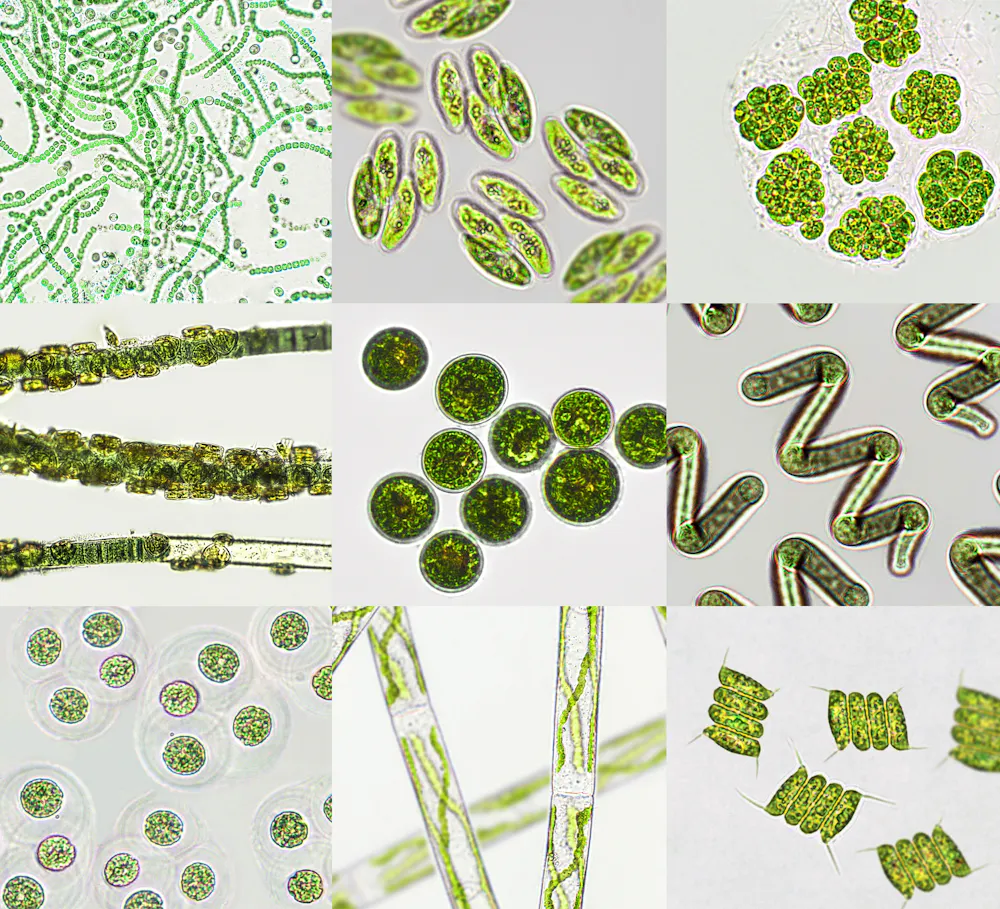
There are both plant (phytoplankton) and animal (zooplankton) types, as well as organisms that blur the line by belonging to both. These include carnivorous plants or photosynthesizing animals (mixoplankton).

nine different boxes showcasing green microscopic organisms
Phytoplankton are an essential part of aquatic ecosystems.
(Shutterstock)

Understanding plankton

We are an international group of researchers working on plankton that inhabit aquatic waters from high alpine lakes to the deep oceans. We represent a much larger consortium of researchers (the Plankton Passionates) who have recently considered all the ways in which plankton are crucial for human well-being, society, activity and life on our planet.

In our work, we have identified six broad themes that allow us to classify the value of plankton.

Plankton are integral to the ecological functioning of all aquatic environments. For example, phytoplankton use photosynthesis to create biomass that is transferred throughout the ecosystem, much as plants and trees do on land. Phytoplankton are mostly eaten by zooplankton, which are in turn prime food for fish like sardines and herring. These small fish are fed upon by larger fish and birds. That means healthy food-web functioning is critically sustained by plankton.

Plankton play a critical role in other ways that affect the ecological functioning of aquatic environments. Specifically, plankton affect the cycles of matter and the bio-geochemistry of their ecosystems. While phytoplankton use sunlight to grow and reproduce, they also move nutrients, oxygen and carbon around.

Phytoplankton are an essential climate variable — studying them provides key indicators for planetary health and climate change — because they capture carbon dioxide (CO2). When phytoplankton are eaten by zooplankton, and these animals die and sink to the bottom of water bodies, this stores carbon away from the atmosphere to where it can no longer contribute to climate change; this process is known as the biological carbon pump.

However, other plankton, primarily bacteria and fungi, are involved in decomposition of dead material that remains in the water column and their activity recycles chemical elements essential for other organisms. Together with the biological carbon pump, this decomposition activity can have global consequences in climate regulation.

Fascinating research

Plankton have also played a role in several human endeavours, including the evolution of science itself advancing many theoretical developments in ecology, such as the study of biodiversity. This diversity of plankton forms — including organisms that look like crystals or jewelry — have fascinated researchers.

jellyfish against a bright blue background
Jellyfish are plankton because they are carried by currents through the water.
(Shutterstock)

Several theories or frameworks used throughout ecology have emerged from studying plankton, but their applications go further. For example, Russian biologist Georgy Gause observed competition among plankton, leading to his competitive exclusion principle that’s now commonly applied in socioeconomic contexts.

Breakthroughs and even Nobel Prizes (medicine) have stemmed from the study of plankton (jellyfish stings, advancing allergy studies. Similarly, research on freshwater ciliate telomeres and the use of fluorescent jellyfish proteins have contributed to further understanding of ageing and cancer.

Certain plankton species are used as diagnostic tools in forensic science. Others are often used as models in biomedical and ecotoxicological research.

Because of their foundational role in aquatic food webs, plankton are critical to many human economies. Many planktonic organisms are cultured directly for human consumption including jellyfish, krill, shrimp and copepod zooplankton.

Virtually all protein in aquatic ecosystems comes from plankton. Some are used as supplements, such as spirulina powder or omega-3 vitamins from krill or copepods.

Several plankton-derived compounds are highly prized in medicine, cosmetics and pharmaceuticals, including some plankton toxins used for their immune-stimulating effects. Luciferases are a group of enzymes produced by bioluminescent organisms, including many marine plankton, and are also important in biomedical research.

On the other hand, plankton can also lead to high economic costs when harmful algal blooms, like toxic red tides, occur along coastlines or cyanobacterial blooms arise in lakes.

Plankton benefits for humans

Finally, our research considers the role of plankton in human culture, recreation and well-being. Beyond their use as a food source and in medicine, plankton can be culturally important.

Bioluminescent marine dinoflagellates create incredibly powerful nighttime displays in coastal regions, forming the basis for cultural events and tourist attractions. Diatoms are a type of phytoplankton present in all aquatic ecosystems, and their silica-rich skeletons have been used for flint tools during the Stone Age and as opal in jewelry.

illustrations of plankton
An illustration from the 1887 book ‘Report on the Radiolaria collected by H.M.S. Challenger during the years 1873-76.’
(Illus. by E. Haeckel/engraving by A. Giltsch)

The often strange structural forms of plankton have inspired architects and engineers, including the designers of Milan’s Galleria Vittorio Emmanuele and the former Monumental Gate (Porte Binet) in Paris. Plankton have inspired many artists, the first being biologist Ernst Haeckel.

The Intergovernmental Science-Policy Platform on Biodiversity and Ecosystem Services adopted the Life Framework of Values. This framework centres living from, with, in and as nature as a position from which to inform policies around biodiversity and ecosystem services.

Plankton are critical to all of these components. We all benefit from plankton due to their essential role in regulating aquatic habitats, their long-term involvement in climate regulation and the vital resources they provide to humanity.

Humanity lives with plankton as their incredible diversity connects life across land and water and is one of the driving forces behind Earth’s ecological stability and ecosystem services that we value. Plankton are part of humanity’s living in nature, which emphasizes their vital role in our identity, lifestyles and culture.

Plankton profoundly affect communities bordering water, but also those further away through plankton-inspired art and design. Finally, living as nature highlights the physical, mental and spiritual interconnectedness with the natural world.

We need to better recognize the value of plankton as a resource, and as an essential part of stabilizing Earth systems and maintaining them for human well-being.

The Conversation

Beatrix Beisner receives funding from NSERC. She is Editor-in-Chief of the Journal of Plankton Research (Oxford University Press) and a member of the Groupe de recherche interuniversitaire en limnologie (GRIL), an FRQNT-funded network.

Maria Grigoratou receives funding from the NSF project WARMEM (OCE-1851866) and the EU-funded HORIZON Europe projects EU4OceanObs2.0 and BioEcoOcean (101136748) to Maria Grigoratou. Maria is now affiliated with the European Polar Board.

Sakina-Dorothée Ayata receives funding from the European Commission (NECCTON, iMagine, Blue-Cloud2026 projects), the French National Research Agency (ANR, Traitzoo project), and the Institut Universitaire de France (IUF).

Susanne Menden-Deuer receives funding from the U.S. National Science Foundation and NASA.

ref. Plankton can investigate crime, affect the climate and influence science – https://theconversation.com/plankton-can-investigate-crime-affect-the-climate-and-influence-science-252782

Gen Z is struggling to find work: 4 strategies to move forward

Source: The Conversation – Global Perspectives – By Leda Stawnychko, Associate Professor of Strategy and Organizational Theory, Mount Royal University

As the school year comes to a close, young Canadians entering the job market are facing one of the toughest hiring seasons in years. Despite their drive to build careers and connections, many Gen Z are entering a stagnant job market.

According to Statistics Canada, the unemployment rate for youth aged 15-24 is 12.2 per cent — over double that of the prime working-age population.

The outlook is bleaker for students planning to return to full-time studies in the fall. Unemployment for this group has reached just over 20 per cent, the highest level since 2009, when the global economy was reeling from the Great Recession.

Gen Zs without post-secondary credentials, people with disabilities and newcomers face steeper hurdles. They are competing in a labour market dominated by one of the world’s most highly educated generations.

Today’s youth are navigating a perfect storm of persistent inflation, global trade tensions, a saturated labour market and restructuring driven by automation and AI.

Unlike older workers, many young people lack the financial stability or support systems to pursue opportunities that require relocating.

First jobs matter more than ever

Early work experiences have long served as crucial stepping stones for young people entering the workforce. They offer new workers exposure to the habits, norms and expectations of the professional world.

Roles in retail, hospitality and customer service often serve as a first taste of working life, helping young people build confidence, develop transferable skills and expand their professional networks. Without access to these opportunities, many young Canadians risk falling behind before their careers even begin.

The long-term implications are serious. According to a 2024 report from consulting firm Deloitte, Canada stands to lose $18.5 billion in GDP over the next decade if youth unemployment remains high.

A young adult with short hair wearing glasses types on a laptop
Young Canadians are facing one of the toughest hiring seasons in years.
(Shutterstock)

More broadly, high unemployment among youth weakens social trust and undermines the foundations of social cohesion, long-term prosperity, democratic stability and leadership pipelines.

Underemployment also takes a personal toll, contributing to poorer mental and physical health and delaying major life milestones like financial independence, homeownership and family formation.

What Gen Z can do

Many young job-seekers are understandably discouraged by today’s labour market. But as digital natives, Gen Z have advantages to bring to the table, including creativity, values-driven mindsets and fluency in technology.

The key is to stay open, proactive and creative by pursuing non-linear experiences that can serve as legitimate entry points into the workforce. Here are four actionable strategies for Gen Z starting their careers:

1. Think beyond traditional pathways.

Unconventional roles and programs can offer valuable experience. For example, university students at Global Affairs Canada’s federal work experience program recently helped support the G7 Summit, gaining confidence and transferable skills.

Side projects, such as building websites or freelancing, can also help people start their careers. These are increasingly recognized as valid ways to break into the job market.

2. Build core skills that matter.

The World Economic Forum’s Future of Jobs Report identifies analytical thinking, resilience, creativity, leadership and self-awareness as the most in-demand skills for the future. These can be developed through volunteer work, community leadership, mentorship or personal projects.

Programs like International Experience Canada also help foster independence, global awareness and important skills.

3. Invest in future-ready capabilities.

As workplaces adopt AI and automation, tech literacy is becoming increasingly valuable. Microcredentials can help build specialized skills, while apprenticeships and other experiential learning opportunities offer experiences that employers value.


Read more:
Workplace besties: How to build relationships at work while staying professional


4. Build meaningful connections.

Networks are also a key part of job success. Relationships with peers, mentors and community members can provide support, broaden perspectives and lead to unexpected opportunities. Participating in interest groups or volunteering can help young workers feel more connected and confident while developing skills that matter.

A new working generation

While these steps won’t solve the systemic challenges facing the labour market, they can help young Canadians gain traction in a system that is still catching up to the needs of their generation.

This will require the collaboration of government, employers, educational institutions and community service providers to innovatively reduce existing barriers. Importantly, these sectors are being asked to “walk the talk” when it comes to addressing youth unemployment.

Gen Z is entering the workforce during a time of profound economic and social change. But they also have unparalleled access to information, supportive communities and platforms to share ideas and make a meaningful impact.

By acting with intention, young Canadians can navigate this landscape with agency, laying the foundation not only for jobs but for careers that reflect their values and ambitions.

The Conversation

Leda Stawnychko receives funding from SSHRC.

Warren Boyd Ferguson does not work for, consult, own shares in or receive funding from any company or organisation that would benefit from this article, and has disclosed no relevant affiliations beyond their academic appointment.

ref. Gen Z is struggling to find work: 4 strategies to move forward – https://theconversation.com/gen-z-is-struggling-to-find-work-4-strategies-to-move-forward-259504

Survey: Only four per cent of Canadians give schools an ‘A’ on climate education – students deserve better

Source: The Conversation – Global Perspectives – By Karen S. Acton, Assistant Professor, Educational Leadership and Policy, OISE, University of Toronto

Only nine per cent of Canadian students learn about climate change often in school, while 42 per cent say it’s rarely or never discussed in the classroom.

These are some of the concerning findings from the new 2025 national survey at the nonprofit Learning for a Sustainable Future (LSF), where I serve as a research consultant. Our team surveyed over 4,200 people, including students, educators, parents and the general public.

The report, called “From Awareness to Action: Canadians’ Views on Climate Change and Education,” reveals a widening gap between public concern and the education system’s lack of response.

We conducted the survey in partnership with the pollster Leger and supported by the federal government. It comes at a critical moment as Canadians grapple with increasingly severe climate impacts and growing recognition that education is vitally important to addressing climate change.

The message is clear: Canadians want schools to do more. A strong majority of respondents (62 per cent) believe climate change should be a high priority in education. More than half (56 per cent) believe it should be taught by all teachers.

Understanding is slipping

According to the survey, 80 per cent of Canadians accept that climate change is real and impacting their lives. Most (67 per cent) believe we are in a climate emergency, yet this belief has declined from 72 per cent in 2022.

Also slipping is Canadians’ understanding of climate change, as the pass rate for the survey’s 10-question quiz dipped to 57 per cent in 2025 from 67 per cent in 2022.

Fewer respondents correctly identified human activities as the primary cause of climate change, or named greenhouse gas emissions as the predominant factor. Many still mistakenly believe the ozone hole is to blame, highlighting one of many persistent climate misconceptions.

Also concerning was the increase in Canadians who felt that the seriousness of climate change is exaggerated.

A recent report by climate communications centre Re.Climate noted a similar decline in public perception of how much of a threat climate change poses. In 2023, 44 per cent of Canadians said reducing carbon emissions was a top energy policy priority. By 2025, that number had dropped to 31 per cent.

Concern about climate change seems to have declined due to competing economic pressures, global instability and political polarization.

Misinformation adds to the challenge

The LSF survey highlights Canadians’ dissatisfaction with climate education. When asked to grade schools on how well they were addressing climate change issues, only four per cent gave schools an “A.” Three-quarters of Canadians gave a “C” or lower.

One dominant concern included addressing the spread of climate misinformation. Only 17 per cent of Canadians felt confident in their ability to distinguish between real and false climate news.

Misinformation is a growing barrier to public understanding and action on climate issues. For many young people, social media is a dominant source of climate information, but it’s not always a reliable one.

To address this, almost 80 per cent of respondents, and in particular 87 per cent of educators, agree that climate education in schools should focus more on critical thinking and media literacy.

Teachers willing, but under-supported

The good news is that almost half of the educators we surveyed felt confident about their ability to teach climate change. Many are incorporating more climate-related projects and lifestyle and consumer changes into the classroom.

However, many barriers remain. Most educators still spend fewer than 10 hours per year on climate topics, and 42 per cent rarely address it at all. A full 60 per cent of teachers told us they want to do more but need professional development to feel equipped.

Teachers need more time, resources and strategies to address how climate change connects to broader issues like mental health, social justice and Indigenous knowledge.

Educators are also seeking a school-wide culture that promotes climate change education, but nearly half said they lack support from their principal or school boards.

Unsurprisingly, given the global nature of climate change, the challenges voiced by educators are not unique to Canada. Surveys of teachers in England and the United States found they face similar obstacles, compounded by low teacher confidence, the complexity of the topic and leadership not supporting climate change as a priority.

a man sitting at a desk in a classroom, young kids stand around him as he explains something
Almost half of the educators surveyed felt confident about their ability to teach climate change, and many are incorporating more climate-related projects and lifestyle and consumer changes into the classroom.
(Shutterstock)

Students need the opportunity

One of the most hopeful takeaways is that students want to learn more about climate change at school, beginning in the early grades. When asked what they would tell their teacher, students told us they wanted lessons that go beyond the science to include real-world solutions and personal empowerment.

They called for open classroom discussions, a clearer understanding of the impacts of climate change and concrete strategies for action.

As one student put it: “Present it to me in a way that’s relevant that I can understand, and tell me how I can personally make an impact.”

Another added: “Everyone needs to do their part or nothing will change!”

These appeals echo those from the recent Voice of 1,000 Kids survey, which found young people want adults to take the climate crisis more seriously and step up to help solve it.


Read more:
Kids care deeply about our planet, so adults need to start listening


A path forward

The LSF survey found that 76 per cent of respondents recognize that systemic change is needed to address climate challenges, yet only 19 per cent believe government is doing a good job.

This suggests strong public demand for policy action. Canadian governments must introduce mandatory climate curriculum standards, increased funding for teacher professional learning and resources, and transformative teaching strategies to foster critical thinking and empowerment.

Almost 70 per cent of respondents said they believe young people can inspire important climate action. Supporting school-wide cultures that embrace sustainability isn’t just good teaching — it’s a pathway to broader social change.

Now more than ever, we need a reimagined education system that values climate learning as a core competency. Policymakers and education leaders must rise to meet this challenge before another generation of students graduate feeling unprepared to face the defining issue of their time.

The Conversation

Karen S. Acton works as a consultant for Learning for a Sustainable Future (LSF).

ref. Survey: Only four per cent of Canadians give schools an ‘A’ on climate education – students deserve better – https://theconversation.com/survey-only-four-per-cent-of-canadians-give-schools-an-a-on-climate-education-students-deserve-better-259430

How social media is changing the game for athletes

Source: The Conversation – Global Perspectives – By Elyse Gorrell, PhD Candidate, Social and Cultural Health, Brock University

A landmark multibillion-dollar legal settlement is set to transform the landscape of college sports in the United States. A court recently approved the House v. NCAA settlement, requiring the NCAA (the National Collegiate Athletic Association) to pay nearly US$2.8 billion in damages over the next 10 years to athletes who competed from 2016 through to the present day.

The settlement opens the door for college athletes to earn a share of revenue moving forward, marking a shift away from the traditional ideals of amateurism in sport.

Amateurism was traditionally defined as the notion of athletes playing sport for the love of it rather than for financial reasons. Historically, it was created by upper-class elite groups as a way to exclude others. Today, its definition continues to be contested, especially since many athletes have been exploited by amateurism.

The concept of NIL (name, image and likeness) has only exacerbated this by encouraging athletes to promote themselves on social media. Some sport organizations now even factor social media presence into recruitment decisions.

These developments raise key questions: should we be treating athletes as brands? And what are the consequences of doing so, both on and off the field?

Social media and the modern athlete

Social media offers a way for athletes to build a community of followers, share and discuss their personal lives, and interact with fans.

For many athletes, social media platforms have become tools for building a personal brand and differentiating themselves from other competitors and ultimately having more control over their public image. In turn, social media can allow them to seek out sponsorships and endorsement deals.

However, research also shows there are negative side-effects of social media use. It also exposes athletes to public scrutiny and online abuse from fans, and can lead to effects similar to cyber-bullying.

One study of NCAA Division I athletes found that maintaining a polished image on Twitter lead student-athletes to censor themselves to uphold a certain image, which stifled their self-expression. Athletes also reported that social media affected their concentration and raised performance anxiety due to pressure to perform well or face negative critiques.

Other research has found that platforms like Facebook can distract athletes from optimal mental preparation. The pressure to manage and maintain a personal brand can result in some athletes prioritizing online presence over performance. Constant exposure to competitors’ content can also heighten stress and insecurity.

My master’s thesis found that social media, and the way athletes use it, influences self-efficacy in combat sport athletes. I found that what athletes see online can disrupt their belief in their own abilities, sometimes more than their actual experience in sport.

Impact on youth athletes

My PhD research found that many athletes are unaware of how social media affects their mental game and performance. There’s even less information about how social media impacts youth athletes.

Elite athletes already face a unique set of pressures: rigorous training schedules, limited leisure time, injury risks, competition pressure and the pursuit of scholarships or team placements. For young athletes, these challenges are layered on top of the developmental process of forming a sense of self. Social media now plays a central role in this development.

For youth athletes, athletic identity becomes a major part of this process. It shapes how they think, feel, behave and relate to others through their connection to sport.

But there is a complex relationship between social media and adolescent psychosocial development. Excessive or problematic social media use can negatively impact mental health and well-being, increasing risk of depression, low self-esteem, harassment and burnout.

Despite these risks, there is limited social media training for athletes, and many are unaware of the effects social media use has on their performance.

Coaches see the impact

Since social media is now a constant part of athletes’ lives, understanding how coaches view it is essential. Research shows coaches are often more aware of how social media impacts their athletes’ performance and engagement. Many see it as a growing challenge.

For my PhD thesis, which was later published as a peer-reviewed paper, I interviewed six high-performance coaches across a range of sports to understand their perspectives of athletes’ social media use.

Many of the coaches I interviewed expressed concern that social media places too much emphasis on results and encourages constant comparison with others.

They felt the instant feedback loop introduced too many voices that competed with their own, making it harder for athletes to focus on performance goals and training. Many of the coaches also believed athletes could become overly concerned with their public image and how they are perceived.

What role should coaches play?

Current recommendations for coaches recognize that an outright ban of social media and technology use for athletes is outdated and unrealistic. Athletes, especially younger ones, are digital natives.

Instead, coaches are encouraged to adapt their methods to better align with the generation they are working with. But there aren’t many resources tailored for this purpose.

What’s needed are tools to help coaches engage with their athletes and help them understand how social media influences their mental performance and well-being. Resources need to go beyond helping coaches use technology to providing them with information on how to communicate with their athletes safely or protect them from liability.

In addition, trust between coaches and athletes has been strained in some cases by problematic social media-related incidents. For example, one study found that Snapchat has been used by coach perpetrators to sexually abuse their athletes by overcoming internal inhibitions, avoiding external barriers and breaking down victim resistance.

Rather than focusing on controlling what athletes post on social media, organizations should educate athletes on the way social media might affect them while they are using it. This starts with awareness.

Navigating the realities of social media

The American Psychological Association offers general guidelines for recognizing problematic social media use in youth. While these recommendations provide a useful starting point, athletes face a unique set of challenges.

Unlike their peers, many athletes are encouraged to use social media to brand themselves. Because of this, they need to understand how to balance healthy engagement and harmful overuse.

At the same time, coaches also need better education. There must be a spectrum between coaches who don’t want anything to do with social media at all and coaches who are overly involved in their athlete’s social media.

Coaching resources need to be created to address this. They should be accessible, and provide effective and appropriate assistance that aligns with, and supports, individual coaching methods. A one-size-fits-all solution is unlikely to be effective.

Social media is here to stay, and both athletes and coaches need the tools to help them navigate it well.

The Conversation

Elyse Gorrell does not work for, consult, own shares in or receive funding from any company or organisation that would benefit from this article, and has disclosed no relevant affiliations beyond their academic appointment.

ref. How social media is changing the game for athletes – https://theconversation.com/how-social-media-is-changing-the-game-for-athletes-258887