Ce que révèle l’enquête sur le rôle des réseaux sociaux dans la crise de Madagascar 2025

Source: The Conversation – France in French (3) – By Fabrice Lollia, Docteur en sciences de l’information et de la communication, chercheur associé laboratoire DICEN Ile de France, Université Gustave Eiffel

Antananarivo, 12 octobre 2025, le président Rajoelina a pris la fuite et l’armée s’est emparée du pouvoir, à l’issue d’une vaste mobilisation de la jeunesse, largement alimentée par la circulation d’images et d’informations sur les réseaux sociaux. Une enquête conduite peu après les événements montre la façon dont les Malgaches construisent leur vision de la vie politique dans l’espace numérique.


En septembre 2025, alors que la crise socio-politique s’intensifie à Madagascar, une réalité s’impose discrètement mais puissamment : l’essentiel du débat public ne se joue plus sur les ondes ni dans les colonnes des journaux, mais dans les flux rapides et émotionnels de Facebook et WhatsApp. En quelques minutes, une rumeur peut mobiliser, inquiéter, rassurer ou diviser. En quelques heures, elle peut redessiner la perception collective d’un événement.

Les résultats de notre récente enquête menée auprès de 253 répondants, complétés par 42 contributions qualitatives, révèlent que la crise est autant une crise politique qu’une crise de médiation où les réseaux sociaux deviennent les principaux architectes du réel. Derrière la simple perception de réseaux sociaux dédiés à la transmission d’informations, ils façonnent les émotions, orientent les interprétations et reconfigurent la confiance.

Ce basculement, largement anticipé par les sciences de l’information et de la communication (SIC), s’observe ici avec une netteté particulière. Les médiations traditionnelles (radio, télévision, presse) cèdent du terrain à des dispositifs socio-techniques qui redéfinissent la manière dont les citoyens perçoivent, réagissent… et croient.

Derrière la crise malgache, c’est donc une transformation plus profonde qui apparaît. C’est celle d’un espace public recomposé où l’attention, l’émotion et la vitesse deviennent les nouveaux moteurs de l’opinion malgache.

La fin des médiations traditionnelles : vers un nouvel environnement cognitif

Le déplacement observé dans l’enquête – de la radio et de la presse vers Facebook et WhatsApp – illustre ce que Louise Merzeau appelait une médiation environnementale. C’est-à-dire que l’information ne circule plus dans des canaux distincts mais s’inscrit dans un environnement continu, ubiquitaire, où chacun est simultanément récepteur et relais.

Dominique Cardon rappelait que les plateformes numériques transforment la visibilité publique selon des logiques de hiérarchisation algorithmique qui ne reposent plus sur l’autorité éditoriale mais sur la dynamique attentionnelle.

L’enquête confirme ce point : les Malgaches ne s’informent pas sur les réseaux, ils s’informent dans les réseaux, c’est-à-dire dans un écosystème où la temporalité, la viralité et l’émotion structurent la réception de l’information.

Conformément à un phénomène analysé dans les travaux de Manuel Castells, nous passons d’un modèle de communication de masse vertical à un modèle de « mass self communication », intensément horizontal, instantané et émotionnel.

Les plateformes comme infrastructures du réel : une crise des médiations

Yves Jeanneret indiquait que la communication n’est pas un simple transfert d’informations mais un processus qui transforme les êtres et les formes. Les résultats de l’enquête malgache confirment cette thèse.

L’enquête montre que 48 % des répondants déclarent avoir modifié leur opinion après avoir consulté des contenus numériques. Ce chiffre illustre ce que Jeanneret appelle « la performativité des dispositifs » : les messages ne se contentent pas de signifier ; ils organisent des parcours d’interprétations, orientent des sensibilités et éprouvent des affects.

La crise malgache est ainsi moins une crise de l’information qu’une crise des médiations, où l’autorité symbolique se déplace vers des acteurs hybrides (groupes WhatsApp, influenceurs locaux, communautés émotionnelles, micro-réseaux sociaux affinitaires).

L’espace public affectif : l’émotion comme norme d’intelligibilité

Les données de l’enquête – les répondants disent éprouver colère, peur, tristesse mais aussi espoir – confirment le constat formulé par Yves Citton selon lequel nous vivons dans un régime d’attention émotionnelle où les affects structurent la réception bien plus que les faits.

La viralité observée relève de ce que Morin nommait la logique dialogique. C’est-à-dire que le numérique agrège simultanément les forces de rationalisation (recherches d’informations, vérification) et les forces d’irrationalité (panique, rumeurs, indignation…). Ce qui circule, ce ne sont pas seulement des informations, ce sont des structures affectives, des dispositifs d’émotion qui modulent les perceptions collectives. Danah Boyd évoquait à ce propos le « context collapse », à savoir l’effondrement des cadres sociaux distincts qui expose les individus à des flux ininterrompus d’émotions hétérogènes sans médiation contextuelle.

Dans ce paysage, l’émotion devient un raccourci cognitif, un critère de vérité, voire un mode d’appartenance.

Une crise de confiance plus qu’une crise d’information

Dominique Wolton insistait sur le fait que la communication politique repose d’abord sur un contrat de confiance et non sur la quantité d’information disponible. L’enquête malgache montre que ce contrat est rompu : il en ressort que les réseaux sociaux sont jugés peu fiables (2,4/5) mais sont massivement utilisés ; que les médias traditionnels sont perçus comme prudents ou silencieux ; que la parole institutionnelle est jugée trop lente ; et que les algorithmes sont accusés de censure.

En résulte une fragmentation du récit national, chaque groupe social reconstruisant son propre réel, comme l’ont montré Alloing et Pierre dans leurs travaux sur les émotions et la réputation numérique. La crise révèle ainsi une dissociation entre l’autorité de l’information (affaiblie) et l’autorité des narratifs (renforcée).

De la désinformation à la fragilité cognitive : une lecture écosystémique

Réduire la situation à un phénomène de « fake news » serait, pour reprendre Morin, une « erreur de réduction ». La désinformation n’est ici que la surface visible d’un phénomène bien plus profond, qui est celui de la vulnérabilité cognitive structurelle. Elle repose sur : la saturation attentionnelle, la rapidité des cycles émotionnels, la fragmentation des médiations, le déficit de littératie médiatique et l’architecture algorithmique des plates-formes.

L’ensemble de ces éléments forment un écosystème au sens de Miège, dans lequel l’information et la communication ne peuvent être séparées des logiques techniques, économiques et sociales qui les produisent. C’est dans ce cadre que la souveraineté cognitive devient une question stratégique comparable à ce que Proulx appelait la nécessité de « réapprendre à habiter en réseaux ».

La nécessité d’une transition cognitive révélée par la crise

L’enquête révèle l’urgence, à Madagascar, d’opérer une transition cognitive. Cela implique une veille capable de détecter rapidement les signaux faibles, une communication publique adaptée au rythme émotionnel des plateformes, une éducation critique aux biais de réception et une coopération structurée entre État, régulateurs, société civile et plateformes pour encadrer la circulation des contenus.

Ces pistes s’inscrivent dans la perspective d’un « État élargi », c’est-à-dire un État qui reconnaît que la stabilité collective dépend désormais de nouveaux acteurs : infrastructures numériques, entreprises technologiques, médias sociaux, communautés connectées. Dans ce modèle, la confiance devient une infrastructure qui est le socle indispensable au fonctionnement de la vie publique, à l’image de l’électricité ou des réseaux de communication.

La crise malgache de 2025 n’est pas un accident. C’est un révélateur des transformations profondes de nos sociétés numériques. Elle montre un espace public recomposé où s’entremêlent architectures techniques globales, émotions collectives locales et médiations affaiblies. Elle a aussi entraîné une prise de conscience au sein des médias malgaches, qui développent désormais une approche plus réflexive sur ces enjeux. Comme l’écrivait Merzeau, « la mémoire est un milieu » ; en 2025, à Madagascar, le réel l’est devenu aussi.

Le défi dépasse largement la lutte contre la désinformation. Il s’agit désormais de reconstruire des médiations fiables, capables d’articuler faits, émotions et légitimité dans une écologie informationnelle où le vrai ne circule plus seul, mais au milieu de récits concurrents, d’affects partagés et d’algorithmes invisibles.

The Conversation

Fabrice Lollia ne travaille pas, ne conseille pas, ne possède pas de parts, ne reçoit pas de fonds d’une organisation qui pourrait tirer profit de cet article, et n’a déclaré aucune autre affiliation que son organisme de recherche.

ref. Ce que révèle l’enquête sur le rôle des réseaux sociaux dans la crise de Madagascar 2025 – https://theconversation.com/ce-que-revele-lenquete-sur-le-role-des-reseaux-sociaux-dans-la-crise-de-madagascar-2025-271152


La gouvernance par les nombres ne façonne-t-elle pas trop les politiques publiques ?

Source: The Conversation – France (in French) – By Benjamin Benoit, Enseignant-chercheur en sciences de gestion (MRM-UPVD), Université de Perpignan Via Domitia

Les chiffres sont omniprésents dans les débats publics et apparaissent souvent comme une vérité objective. Or, ils ne sont pas produits ex nihilo. Pour ne pas être gouvernés par eux, il est essentiel d’apprendre à gouverner les chiffres.


Statistiques, classements, indices, tableaux de bord, indicateurs, jamais les chiffres n’ont occupé une place aussi centrale, à l’heure où une part croissante des activités est de nature digitale. Centraux dans les échanges et les argumentaires, leur pouvoir persuasif semble universel. Ils s’adressent tout autant aux experts, qu’aux citoyens ou journalistes, qui en font grand usage dans les médias.

Pourtant, derrière cette apparente neutralité, la quantification est une activité pouvant être biaisée par l’idéologie de ceux qui en opèrent la production et l’interprétation. Elle est devenue un langage de légitimation des réformes et un outil au service de pratiques rhétoriques, voire un instrument de discipline et de coercition.

C’est à ce titre que nos recherches s’inscrivent dans le débat plus large de la « gouvernance par les nombres », dont nous avons pu voir récemment les manifestations diverses à l’occasion de la pandémie de la COVID 19. Ces pratiques de management public et de communication politique amènent à soulever un ensemble de questions sur la rationalité des systèmes démocratiques.

Le tournant des années 2000

L’usage des chiffres pour gouverner n’est certes pas nouveau dans la mesure où l’État moderne s’est construit autour des statistiques, qu’elles soient démographiques, militaires, fiscales ou économiques. Mais depuis le tournant des années 2000, on observe une multiplication des indicateurs, indices et classements destinés à comparer, hiérarchiser et piloter les politiques publiques. Le baromètre des résultats de l’action publique française représente un bon exemple de cette tendance.


À lire aussi :
Philosophie : penser la crise avec Bentham


Cette logique de pilotage reposant sur des indicateurs est supposée renforcer la transparence et la redevabilité – l’obligation de rendre des comptes – des décideurs envers ceux qui leur ont confié un mandat. On retrouve cette même logique à l’échelle internationale, dans le domaine éducatif, avec les classements PISA réalisés par l’Organisation de coopération et de développement économiques (OCDE), ou bien encore dans les domaines financiers ou de santé avec le Worldwide Governance Indicators et le Global Health Security Index.

Cette approche favorise l’usage d’indicateurs économiques – visibles, mesurables et rapidement évaluables – au détriment d’autres dimensions plus qualitatives (bien-être, justice, environnement) moins directement saisissables. Les données quantifiées guident alors les approches comparatives et créent un effet d’autorité. Un score faible peut attester d’une mauvaise performance, justifier une réforme et montrer l’évidence de l’utilité de débloquer des fonds.

Du panoptique au « panoptisme numérocratique »

La référence au dispositif du panoptique, décrit par Jeremy Bentham puis Michel Foucault, aide à mieux saisir un état de « visibilité permanente ». Dans ce modèle, un gardien placé au centre d’une prison voit sans être vu, incitant chacun à l’autodiscipline.

Avec les chiffres, les conditions de réalisation d’un « panoptisme numérocratique » sont réunies. Le contrôle devient multicentré puisque les chiffres viennent de multiples institutions telles qu’États, ONG, médias ou entreprises. Le contrôle n’est plus spatialisé dans le sens où il ne se limite pas à un lieu précis (une prison, une école, un espace territorial) mais se déploie dans tout l’espace public, sur des réseaux sociaux, dans les médias d’information.

Sa finalité est enfin diversifiée car les mêmes indicateurs peuvent aussi bien servir à informer, comparer, sanctionner ou encore à motiver des réformes. On voit ainsi poindre une nouvelle capacité de surveillance au travers des nombres, qui repose sur un maillage en réseau qui façonne l’acceptabilité des décisions publiques et l’adhésion des citoyens.

L’empire des chiffres

C’est ainsi que l’empire des chiffres transforme peu à peu notre rapport au pouvoir, dans la mesure où nous nous savons « évalués » et « guidés » en permanence par les nombres que nous côtoyons au quotidien. On en vient alors à s’interroger sur le fondement et la pertinence de tels chiffres présentés comme scientifiques et incontestables, alors qu’ils sont le produit d’une construction sociale et de choix méthodologiques.

Outre leur caractère discutable, ces dispositifs de quantification et d’optimisation peuvent apparaître oppressants et contreproductifs, en créant des effets de surcharge mentale. L’obsession des chiffres peut même se traduire par une perte de plaisir de sorte que l’activité cesse d’être vécue pour elle-même. Elle devient dominée par la performance numérique.

La crise Covid-19

La pandémie de Covid-19 a fourni une nouvelle illustration de la puissance des chiffres afin de conforter la légitimité de l’action publique. Chaque jour, la diffusion des courbes d’infections, des taux de vaccination ou des tableaux de bord publiés par les bureaux de l’Organisation mondiale de la santé (OMS) a permis de justifier les décisions des gouvernements. Ces indicateurs avaient vocation à comparer les situations respectives des pays mais aussi à servir d’appui à des décisions de confinement, avec des citoyens invités à intérioriser la logique des décisions prises à partir des indicateurs.

Certes, la quantification présente des avantages évidents. Elle favorise la transparence et renforce la redevabilité des gouvernants, si bien que les citoyens disposent de repères apparemment objectifs pour apprécier les décisions publiques. Mais ces avantages présentent un revers. Les indicateurs simplifient des réalités complexes et avantagent certains acteurs, à la suite de choix méthodologiques qui ont été opérés.

Quel impact sur la perception ?

Le cas du Vietnam apparaît intéressant à étudier, au regard de ses particularités culturelles, historiques et politiques. Les valeurs culturelles vietnamiennes reposent historiquement sur la recherche de l’harmonie sociale et de la solidarité. Les politiques publiques peuvent s’appuyer sur ce socle.

Dans la perspective d’une étude de la gestion publique et du rôle attribué à la quantification à l’occasion de la crise du Covid-19, nous avons collecté 24 000 réponses de professeurs et étudiants universitaires à propos de l’efficacité de la « gouvernance par les nombres ». La question centrale était la suivante : comment la transparence et l’utilisation intensive de données quantitatives ont-elles influencé la perception publique et l’adhésion des citoyens vietnamiens aux décisions prises pour gérer la pandémie ?

Collège de France, 2017.

L’analyse de la perception des chiffres, de la confiance dans les décisions publiques et du rôle des données dans la stratégie de gestion de la crise montre, dans ce contexte institutionnel, une forte adhésion aux décisions prises sur la base des chiffres publiés.

La contribution de cette recherche met ainsi en lumière la performativité élevée des chiffres qui, non seulement apparaissent refléter la réalité, mais participent aussi de sa construction. Elle souligne également les limites d’une gouvernance par les nombres en termes de sursimplification et au risque d’une altération de la participation citoyenne à l’élaboration des décisions publiques.

Gouverner les chiffres

Ainsi, qu’il s’agisse d’Asie, d’Europe ou d’ailleurs, nous vivons désormais dans un monde où les chiffres sont devenus un langage universel de l’action publique. La « gouvernance par les nombres » n’est pas seulement la résultante d’une évolution technique mais participe d’une transformation sociale, en organisant la comparaison, en redistribuant l’autorité entre experts, gouvernants et organisations internationales, et en façonnant la perception des citoyens.

Toutefois, si un chiffre peut éclairer une décision, il ne peut pas en tenir lieu, d’où la nécessité de « gouverner les chiffres » en débattant de leur pertinence et de leurs limites. En effet, la question n’est pas tant celle des chiffres eux-mêmes que de la relation que nous entretenons avec eux, entre outils de légitimation et instruments de dialogue.

La gouvernance par les nombres peut constituer un levier de confiance ou de manipulation selon la transparence du processus et la capacité des citoyens à s’approprier les données. L’enjeu démocratique réside alors dans la manière dont les chiffres sont mobilisés, partagés et débattus.

The Conversation

Les auteurs ne travaillent pas, ne conseillent pas, ne possèdent pas de parts, ne reçoivent pas de fonds d’une organisation qui pourrait tirer profit de cet article, et n’ont déclaré aucune autre affiliation que leur organisme de recherche.

ref. La gouvernance par les nombres ne façonne-t-elle pas trop les politiques publiques ? – https://theconversation.com/la-gouvernance-par-les-nombres-ne-faconne-t-elle-pas-trop-les-politiques-publiques-269745

Plus de femmes sur les conseils d’administration, mais pas à la haute direction : une dissonance coûteuse pour les entreprises

Source: The Conversation – in French – By Louise Champoux-Paillé, Cadre en exercice, John Molson School of Business, Concordia University

La présence féminine aux postes de haute direction demeure modeste, malgré des avancées sur les conseils d’administration (Unsplash), CC BY-NC-ND

Dix ans après les premiers engagements pour une meilleure parité dans les conseils d’administration, les femmes restent largement absentes des postes de direction. Une dissonance qui fragilise la gouvernance et freine l’innovation au sein des organisations.

Dans le dernier rapport des autorités canadiennes de valeurs mobilières sur la représentation féminine aux postes d’administrateurs des conseils d’administration et de membres de la haute direction, on y note que la présence féminine dans les CA s’est progressivement améliorée au cours des dix dernières années pour atteindre 29 %.

Pendant ce temps, la présence féminine aux postes de haute direction est demeurée des plus modestes : 5 % pour les postes de chef de la direction et 16 % pour ceux de chef des finances. Mentionnons en outre que, toujours en 2025, près de 40 % des entreprises ne comptent aucune femme au sein de leur haute direction.

L’écart entre ces deux types de fonctions stratégiques dans les organisations sur le plan international reflète la même situation : 36 % au CA, 12,2 % à la haute direction et 6,5 % comme chef de la direction.


À lire aussi :
L’avancement des femmes dans les entreprises stagne. Comment décoller du plancher collant pour aller au-delà du plafond de verre ?


Sue Duke, responsable de la politique publique mondiale chez LinkedIn, décrivait la problématique en ces termes : « alors que l’économie mondiale se transforme, que l’IA s’accélère et que les pays cherchent à lutter contre la stagnation de la croissance, ce déficit de leadership devrait déclencher la sonnette d’alarme ».

Dissonance entre représentation féminine au CA et à la haute direction

Le conseil d’administration et l’équipe de haute direction sont deux organes intimement liés : le premier voit à la supervision et aux orientations stratégiques d’une organisation tandis que le second s’occupe de leur réalisation concrète.

Or, la dissonance entre la composition d’un conseil d’administration et celle d’une équipe de haute direction peut entraîner des dysfonctionnements sur la gouvernance, la vision, les décisions stratégiques, la culture et autres dimensions corporatives. Ainsi, une orientation paritaire dans la promotion et le recrutement d’employés, approuvée par le conseil d’administration, pourrait rencontrer des obstacles dans sa réalisation.


À lire aussi :
Trop peu de femmes atteignent les plus hauts échelons. Il est temps d’agir


On peut également penser qu’une orientation inclusive retenue par un conseil d’administration mixte pourrait difficilement trouver une oreille attentive au sein d’une haute direction homogène, celle-ci ne pouvant être sensible ou ne voyant pas concrètement les avantages d’une mixité dans la composition de la main-d’œuvre. Enfin, on peut estimer, à titre d’exemple, que la transformation requise pour l’implantation d’une culture organisationnelle inclusive pourrait être moins bien moins appuyée ou effectuée avec moins de conviction par une haute direction non mixte.

Avantage d’une masse critique de femmes à la haute direction

La diversité de genre stimule l’innovation, améliore la prise de décision et renforce la résilience organisationnelle. Déjà en 2016, une étude publiée par le National Bureau of Economic Research (NBER), indiquait que le leadership féminin améliore la performance des entreprises, en particulier lorsque la proportion de femmes dans la main-d’œuvre est élevée.

Des études plus récentes confirment les bénéfices tangibles d’une plus grande parité dans les équipes de direction. Un rapport de 2023 de McKinsey & Company démontre que les entreprises ayant une diversité de genre dans leur haute direction affichent une performance financière supérieure, une culture organisationnelle plus saine et un impact social accru.


À lire aussi :
Femmes à la haute direction des entreprises : plus, c’est mieux


Autant une masse critique de femmes au sein des conseils d’administration permet d’améliorer la prise de décisions et la vision par les perspectives complémentaires qu’elles peuvent apporter, autant une présence accrue au sein de la haute direction d’une organisation a des effets bénéfiques sur le plan de sa gouvernance. Une organisation favorisant cette forme de parité est reconnue pour sa capacité d’innovation, une gestion des risques plus prudente, une performance financière plus résiliente, une plus grande ouverture au changement et à l’innovation, de même qu’une culture organisationnelle plus inclusive.

Vers l’imposition de quota ?

La sous-représentation des femmes à des postes de haute direction est préoccupante et ne semble pas évoluée à la hauteur des talents disponibles. Sur un horizon d’un peu plus de cinq ans, le nombre de femmes occupant le poste de chef de la direction est demeuré relativement le même, tout comme le pourcentage de femmes occupant les fonctions de chef des finances en 2024. Par ailleurs, le pourcentage d’entreprises qui, selon ce même rapport, s’engagent à se fixer des cibles à atteindre en regard de la mixité de leurs équipes de direction était de seulement 7 % en 2024, comparativement à 44 % pour les conseils d’administration.

Pour assurer la survie de nos organisations dans un monde complexe et incertain, il est impératif de s’extirper de la composition traditionnelle de nos conseils d’administration et des équipes de direction constituées majoritairement d’hommes ayant des profils similaires. Il faut une plus grande mixité d’hommes et de femmes avec des parcours diversifiés, ouverts aux nouvelles idées et centrés sur les besoins de l’ensemble des parties prenantes.

Il faut dans les équipes de direction une plus grande mixité d’hommes et de femmes avec des parcours diversifiés, ouverts aux nouvelles idées et centrés sur les besoins de l’ensemble des parties prenantes.
(Unsplash), CC BY-NC-ND

L’idée d’imposer des quotas au sein des équipes de direction commence à faire son chemin à l’international. En France, une loi adoptée en 2021 impose aux entreprises de plus de 1000 employés d’atteindre 30 % de femmes dans les équipes de direction d’ici 2027 et 40 % d’ici 2030. Cette mesure législative semble déjà produire des effets positifs, car une analyse récente de l’EDHEC Business School indique que les quotas ont contribué à améliorer la perception des actionnaires envers les femmes dirigeantes en France.


Déjà des milliers d’abonnés à l’infolettre de La Conversation. Et vous ? Abonnez-vous gratuitement à notre infolettre pour mieux comprendre les grands enjeux contemporains.


Dans cette optique, vu l’urgence de la situation et le peu d’appétit de nos organisations pour la fixation de cibles en regard de la haute direction, des quotas s’imposent au niveau des équipes de direction afin de compter sur le levier stratégique nécessaire pour assurer la pérennité de nos organisations.

Un levier stratégique incontournable

Comme l’avance le Collège des administrateurs de sociétés dans son Livre blanc intitulé Vers un cadre élargi de gouvernance, les crises systémiques qui marquent notre époque exigent une redéfinition de la création de valeur. Celle-ci ne peut plus se limiter à des indicateurs financiers traditionnels, mais doit s’ancrer dans une vision élargie de la pérennité organisationnelle et de ses écosystèmes.

Dans cette perspective, la parité au sein des équipes de direction devient un levier stratégique incontournable. Elle enrichit la gouvernance en favorisant des décisions plus nuancées, une meilleure gestion des risques, une plus grande capacité d’innovation et une culture organisationnelle plus inclusive. La diversité des profils, notamment en matière de genre, permet de mieux répondre aux attentes des parties prenantes et de renforcer la légitimité sociale des entreprises.

Ainsi, aux rôles classiques de conformité et de stratégie s’ajoute désormais une responsabilité élargie : celle de bâtir des organisations résilientes, équitables et durables, capables de créer de la valeur pour l’ensemble de leur écosystème. La parité, loin d’être un simple objectif de représentation, devient une composante essentielle de cette nouvelle gouvernance.

La Conversation Canada

Les auteurs ne travaillent pas, ne conseillent pas, ne possèdent pas de parts, ne reçoivent pas de fonds d’une organisation qui pourrait tirer profit de cet article, et n’ont déclaré aucune autre affiliation que leur organisme de recherche.

ref. Plus de femmes sur les conseils d’administration, mais pas à la haute direction : une dissonance coûteuse pour les entreprises – https://theconversation.com/plus-de-femmes-sur-les-conseils-dadministration-mais-pas-a-la-haute-direction-une-dissonance-couteuse-pour-les-entreprises-268048

From stress to stroke: what can cause ‘holes’ and low-activity regions in the brain

Source: The Conversation – UK – By Adam Taylor, Professor of Anatomy, Lancaster University

create jobs 51/Shutterstock

If you watched Kim Kardashian’s latest health update and felt a jolt at the phrase “holes on the brain”, you were not alone. It is a term that sounds catastrophic. Yet on the type of scan she had, a hole does not mean missing tissue. It signals a region working at a lower level because it is receiving less blood and oxygen, often due to age, stress or other long-term influences. That distinction matters. True holes look very different and usually arise from severe disease.

In footage from her reality show The Kardashians, her doctor points out “holes” on a brain scan, describing them as areas of “low activity”. These were found on a single-photon emission tomography, or Spect, scan, which uses a small dose of radioactive tracer and a specialised camera to show how well different parts of the brain are functioning. Around the same time she was also diagnosed with a brain aneurysm, discovered during an MRI scan. The aneurysm is a structural weakness in a blood vessel and is unrelated to the low-activity patches seen on Spect.

These “holes” or “dents” are actually a normal part of brain ageing and can appear in people in their early forties. They do not appear in everyone, but they are a common feature of midlife scans and reflect reduced blood flow in small, localised areas. In typical ageing the brain loses about five percent of its volume each decade, even without any disease.

Lower activity on Spect can arise for many reasons. Chronic stress, for example, has been shown to cause macroscopic changes in the brain, including changes in the connections between neurons. Although there is no evidence or suggestion that drug use plays any role in Kardashian’s results, recreational drugs can also affect brain function. Cocaine dependency has been shown to accelerate tissue loss at almost twice the rate of normal ageing, and opioids, marijuana, methamphetamine, heroin and ketamine have each been linked to measurable structural changes.

True brain holes

True holes involve actual tissue loss, and the causes are far more serious. Fortunately, many are extremely rare. Some infections destroy local brain tissue, including Creutzfeldt-Jakob disease, where a misfolded protein triggers widespread cell death, creating a sponge-like appearance. Bacterial infections such as staphylococcus and streptococcus can form abscesses that leave visible cavities. These infections usually spread from the ears, teeth or sinuses and are medical emergencies.

Another rare cause is taenia solium, a pork tapeworm whose larvae can lodge in the brain and deprive tissue of nutrients. The parasite drew attention after Robert F. Kennedy Jr, now the US health secretary, revealed that he had experienced brain fog and memory problems due to an infection.


Read more:
Did a worm really eat part of Robert F. Kennedy Jr.’s brain?


More common causes include stroke, which affects 12 million people globally each year. In both ischaemic and haemorrhagic stroke, blood supply is disrupted and tissue can die, leaving holes or areas of atrophy on scans. Atrophy means tissue has shrunk because cells have died or stopped functioning.

Conditions that disrupt fluid balance can also damage tissue. In hydrocephalus, cerebrospinal fluid builds up inside the brain’s cavities, compressing and sometimes killing surrounding tissue if untreated. The fluid normally carries nutrients and removes waste, so blocked flow can be devastating.

Aggressive brain tumours such as glioblastoma can produce cavities by crowding out healthy tissue and diverting nearby blood supply towards tumour cells. Treatments such as radiation therapy can also damage healthy neurons because radiation is toxic to brain cells.


Read more:
Glioblastoma: why immunotherapy may offer hope for brain cancer patients


These conditions often produce swelling called oedema, including vasogenic oedema, where leaking fluid increases pressure on surrounding tissue. Traumatic brain injury is another cause of progressive tissue loss. Repeated head impacts can lead to chronic traumatic encephalopathy, seen in some athletes involved in American football, rugby and boxing as well as mixed martial arts. Recent research shows one in three American football players believe they have symptoms linked to CTE.


Read more:
I’ve seen the brain damage contact sports can cause – we all need to take concussion and CTE more seriously


These conditions differ sharply from the findings on Kardashian’s Spect scan. True holes reflect actual tissue loss and usually come with clear neurological symptoms. Treatment cannot always reverse the damage, but early medical assessment can manage symptoms and slow further decline. Anyone experiencing memory loss, difficulty concentrating or problems with movement should seek medical advice.

The low-activity patches seen on Kardashian’s scan fall into a different category. They do not reflect missing tissue and are not expected to cause symptoms. Instead, they are typically associated with ageing, stress or long-term lifestyle factors rather than disease.

The Conversation

Adam Taylor does not work for, consult, own shares in or receive funding from any company or organisation that would benefit from this article, and has disclosed no relevant affiliations beyond their academic appointment.

ref. From stress to stroke: what can cause ‘holes’ and low-activity regions in the brain – https://theconversation.com/from-stress-to-stroke-what-can-cause-holes-and-low-activity-regions-in-the-brain-271283

Can you wear the same pair of socks more than once?

Source: The Conversation – UK – By Primrose Freestone, Senior Lecturer in Clinical Microbiology, University of Leicester

The microbes that make socks smelly can survive on unwashed fabric for months. SZ Photos/ Shutterstock

It’s pretty normal to wear the same pair of jeans, a jumper or even a t-shirt more than once. But what about your socks?

If you knew what really lived in your socks after even one day of wearing, you might just think twice about doing it.

Our feet are home to a microscopic rainforest of bacteria and fungi – typically containing up to 1,000 different bacterial and fungal species. The foot also has a more diverse range of fungi living on it than any other region of the human body.

The foot skin also contains one of the highest amount of sweat glands in the human body.

Most foot bacteria and fungi prefer to live in the warm, moist areas between your toes where they dine on the nutrients within your sweat and dead skin cells. The waste products produced by these microbes are the reason why feet, socks and shoes can become smelly.

For instance, the bacteria Staphylococcal hominis produces an alcohol from the sweat it consumes that makes a rotten onion smell. Staphylococcus epidermis, on the other hand, produces a compound that has a cheese smell. Corynebacterium, another member of the foot microbiome, creates an acid which is described as having a goat-like smell.

The more our feet sweat, the more nutrients available for the foot’s bacteria to eat and the stronger the odour will be. As socks can trap sweat in, this creates an even more optimal environment for odour-producing bacteria. And, these bacteria can survive on fabric for months. For instance, bacteria can survive on cotton for up to 90 days. So if you re-wear unwashed socks, you’re only allowing more bacteria to grow and thrive.

The types of microbes resident in your socks don’t just include those that normally call the foot microbiome home. They also include microbes that come from the surrounding environment – such as your floors at home or in the gym or even the ground outside.

In a study which looked at the microbial content of clothing which had only been worn once, socks had the highest microbial count compared to other types of clothing. Socks had between 8-9 million bacteria per sample, while t-shirts only had around 83,000 bacteria per sample.

Species profiling of socks shows they harbour both harmless skin bacteria, as well as potential pathogens such as Aspergillus, Candida and Cryptococcus which can cause respiratory and gut infections.

The microbes living in your socks can also transfer to any surface they come in contact with – including your shoes, bed, couch or floor. This means dirty socks could spread the fungus which causes Athlete’s foot, a contagious infection that affects the skin on and around the toes.

This is why it’s especially key that those with Athlete’s foot don’t share socks or shoes with other people, and avoid walking in just their socks or barefoot in gym locker rooms or bathrooms.

A person with Athlete's foot holds their foot in their hands.
Dirty socks could harbour the fungus which causes Athlete’s foot.
Kulkova Daria/ Shutterstock

What’s living in your socks also colonises your shoes. This is why you might not want to wear the same pair of shoes for too many days in a row, so any sweat has time to fully dry between wears and to prevent further bacterial growth and odours.

Foot hygiene

To cut down on smelly feet and reduce the number of bacteria growing on your feet and in your socks, it’s a good idea to avoid wearing socks or shoes that make the feet sweat.

Washing your feet twice daily may help reduce foot odour by inhibiting bacterial growth. Foot antiperspirants can also help, as these stop the sweat – thereby inhibiting bacterial growth.

It’s also possible to buy socks which are directly antimicrobial to the foot bacteria. Antimicrobial socks, which contain heavy metals such as silver or zinc, can kill the bacteria which cause foot odour. Bamboo socks allow more air flow, which means sweat more readily evaporates – making the environment less hospitable for odour-producing bacteria.

Antimicrobial socks might therefore be exempt from the single-use rule depending on their capacity to kill bacteria and fungi and prevent sweat accumulation.

But for those who wear socks that are made out of cotton, wool or synthetic fibres, it’s best to only wear them once to prevent smelly feet and avoid foot infections.

It’s also important to make sure you’re washing your socks properly between uses. If your feet aren’t unusually smelly, it’s fine to wash them in warm water that’s between 30-40°C with a mild detergent.

However, not all bacteria and fungi will be killed using this method. So to thoroughly sanitise socks, use an enzyme-containing detergent and wash at a temperature of 60°C. The enzymes help to detach microbes from the socks while the high temperature kills them.

If a low temperature wash is unavoidable then ironing the socks with a hot steam iron (which can reach temperatures of up to 180–220°C) is more than enough kill any residual bacteria and inactivate the spores of any fungi – including the one that causes Athlete’s foot.

Drying the socks outdoors is also a good idea as the UV radiation in sunlight is antimicrobial to most sock bacteria and fungi.

While socks might be a commonly re-worn clothing item, as a microbiologist I’d say it’s best you change your socks daily to keep feet fresh and clean.

The Conversation

Primrose Freestone does not work for, consult, own shares in or receive funding from any company or organisation that would benefit from this article, and has disclosed no relevant affiliations beyond their academic appointment.

ref. Can you wear the same pair of socks more than once? – https://theconversation.com/can-you-wear-the-same-pair-of-socks-more-than-once-270615

Social media, not gaming, tied to rising attention problems in teens, new study finds

Source: The Conversation – Global Perspectives – By Torkel Klingberg, Professor of Cognitive Neuroscience, Karolinska Institutet

The digital revolution has become a vast, unplanned experiment – and children are its most exposed participants. As ADHD diagnoses rise around the world, a key question has emerged: could the growing use of digital devices be playing a role?

To explore this, we studied more than 8,000 children, from when they were around ten until they were 14 years of age. We asked them about their digital habits and grouped them into three categories: gaming, TV/video (YouTube, say) and social media.

The latter included apps such as TikTok, Instagram, Snapchat, X, Messenger and Facebook. We then analysed whether usage was associated with long-term change in the two core symptoms of ADHD: inattentiveness and hyperactivity.

Our main finding was that social media use was associated with a gradual increase in inattentiveness. Gaming or watching videos was not. These patterns remained the same even after accounting for children’s genetic risk for ADHD and their families’ income.

We also tested whether inattentiveness might cause children to use more social media instead. It didn’t. The direction ran one way: social media use predicted later inattentiveness.

The mechanisms of how digital media affects attention are unknown. But the lack of negative effect of other screen activities means we can rule out any general, negative effect of screens as well as the popular notion that all digital media produces “dopamine hits”, which then mess with children’s attention.

As cognitive neuroscientists, we could make an educated guess about the mechanisms. Social media introduces constant distractions, preventing sustained attention to any task.

If it is not the messages themselves that distract, the mere thought of whether a message has arrived can act as a mental distraction. These distractions impair focus in the moment, and when they persist for months or years, they may also have long-term effects.

Gaming, on the other hand, takes place during limited sessions, not throughout the day, and involves a constant focus on one task at a time.

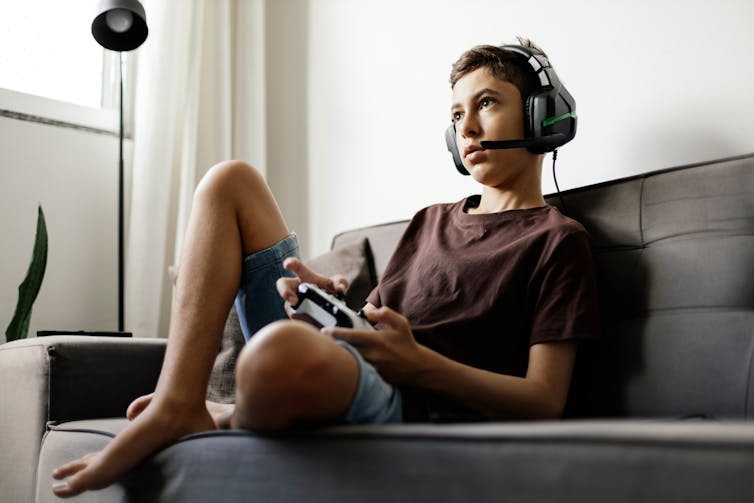
A boy playing a video game.
Not all screens are equal.
Kleber Cordeiro/Shutterstock.com

The effect of social media, using statistical measures, was not large. It was not enough to push a person with normal attention into ADHD territory. But if the entire population becomes more inattentive, many will cross the diagnostic border.

Theoretically, an increase of one hour of social media use in the entire population would increase the diagnoses by about 30%. This is admittedly a simplification, since diagnoses depend on many factors, but it illustrates how even an effect that is small at the individual level can have a significant effect when it affects an entire population.

A lot of data suggests that we have seen at least one hour more per day of social media during the last decade or two. Twenty years ago, social media barely existed. Now, teenagers are online for about five hours per day, mostly with social media.

The percentage of teenagers who claim to be “constantly online” has increased from 24% in 2015 to 46% 2023. Given that social media use has risen from essentially zero to around five hours per day, it may explain a substantial part of the increase in ADHD diagnoses during the past 15 years.

The attention gap

Some argue that the rise in the number of ADHD diagnoses reflects greater awareness and reduced stigma. That may be part of the story, but it doesn’t rule out a genuine increase in inattention.

Also, some studies that claim that the symptoms of inattention have not increased have often studied children who were probably too young to own a smartphone, or a period of years that mostly predates the avalanche in scrolling.

Social media probably increases inattention, and social media use has rocketed. What now? The US requires children to be at least 13 to create an account on most social platforms, but these restrictions are easy to outsmart.

Australia is currently going the furthest. From December 10 2025, media companies will be required to ensure that users are 16 years or above, with high penalties for the companies that do not adhere. Let’s see what effect that legislation will have. Perhaps the rest of the world should follow the Australians.

The Conversation

Torkel Klingberg receives funding from the Swedish Medical Research Foundation.

Samson Nivins receives funding from Stiftelsen Frimurare Barnhuset

ref. Social media, not gaming, tied to rising attention problems in teens, new study finds – https://theconversation.com/social-media-not-gaming-tied-to-rising-attention-problems-in-teens-new-study-finds-271144

Why can’t I wiggle my toes one at a time, like my fingers?

Source: The Conversation – USA – By Steven Lautzenheiser, Assistant Professor of Biological Anthropology, University of Tennessee

A baby chimp can grab a stick equally well with its fingers and its toes. Anup Shah/Stone via Getty Images

Curious Kids is a series for children of all ages. If you have a question you’d like an expert to answer, send it to curiouskidsus@theconversation.com.


Why can’t I wiggle my toes individually, like I can with my fingers? – Vincent, age 15, Arlington, Virginia


One of my favorite activities is going to the zoo where I live in Knoxville when it first opens and the animals are most active. On one recent weekend, I headed to the chimpanzees first.

Their breakfast was still scattered around their enclosure for them to find. Ripley, one of the male chimpanzees, quickly gathered up some fruits and vegetables, sometimes using his feet almost like hands. After he ate, he used his feet to grab the fire hoses hanging around the enclosure and even held pieces of straw and other toys in his toes.

I found myself feeling a bit envious. Why can’t people use our feet like this, quickly and easily grasping things with our toes just as easily as we do with our fingers?

I’m a biological anthropologist who studies the biomechanics of the modern human foot and ankle, using mechanical principles of movement to understand how forces affect the shape of our bodies and how humans have changed over time. Your muscles, brain and how human feet evolved all play a part in why you can’t wiggle individual toes one by one.

young chimp running on all fours
Chimpanzee hands and feet do similar jobs.
Manoj Shah/Stone via Getty Images

Comparing humans to a close relative

Humans are primates, which means we belong to the same group of animals that includes apes like Riley the chimp. In fact, chimpanzees are our closest genetic relatives, sharing almost 98.8% of our DNA.

Evolution is part of the answer to why chimpanzees have such dexterous toes while ours seem much more clumsy.

Our very ancient ancestors probably moved around the way chimpanzees do, using both their arms and legs. But over time our lineage started walking on two legs. Human feet needed to change to help us stay balanced and to support our bodies as we walk upright. It became less important for our toes to move individually than to keep us from toppling over as we moved through the world in this new way.

bare feet walking across sandy surface toward camera
Feet adapted so we could walk and balance on just two legs.
Karina Mansfield/Moment via Getty Images

Human hands became more important for things such as using tools, one of the hallmark skills of human beings. Over time, our fingers became better at moving on their own. People use their hands to do lots of things, such as drawing, texting or playing a musical instrument. Even typing this article is possible only because my fingers can make small, careful and controlled movements.

People’s feet and hands evolved for different purposes.

Muscles that move your fingers or toes

Evolution brought these differences about by physically adapting our muscles, bones and tendons to better support walking and balance. Hands and feet have similar anatomy; both have five fingers or toes that are moved by muscles and tendons. The human foot contains 29 muscles that all work to help you walk and stay balanced when you stand. In comparison, a hand has 34 muscles.

Most of the muscles of your foot let you point your toes down, like when you stand on tiptoes, or lift them up, like when you walk on your heels. These muscles also help feet roll slightly inward or outward, which lets you keep your balance on uneven ground. All these movements work together to help you walk and run safely.

The big toe on each foot is special because it helps push your body forward when you walk and has extra muscles just for its movement. The other four toes don’t have their own separate muscles. A few main muscles in the bottom of your foot and in your calf move all four toes at once. Because they share muscles, those toes can wiggle, but not very independently like your fingers can. The calf muscles also have long tendons that reach into the foot; they’re better at keeping you steady and helping you walk than at making tiny, precise movements.

a pen and ink drawing of the interior anatomy of a human hand
Your hand is capable of delicate movements thanks to the muscles and ligaments that control its bones.
Henry Gray, ‘Anatomy of the Human Body’/Wikimedia Commons, CC BY

In contrast, six main muscle groups help move each finger. The fingers share these muscles, which sit mostly in the forearm and connect to the fingers by tendons. The thumb and pinky have extra muscles that let you grip and hold objects more easily. All of these muscles are specialized to allow careful, controlled movements, such as writing.

So, yes, I have more muscles dedicated to moving my fingers, but that is not the only reason I can’t wiggle my toes one by one.

Divvying up brain power

You also need to look inside your brain to understand why toes and fingers work differently. Part of your brain called the motor cortex tells your body how to move. It’s made of cells called neurons that act like tiny messengers, sending signals to the rest of your body.

Your motor cortex devotes many more neurons to controlling your fingers than your toes, so it can send much more detailed instructions to your fingers. Because of the way your motor cortex is organized, it takes more “brain power,” meaning more signals and more activity, to move your fingers than your toes.

illustration of a brain looking down at the top of the head with one section highlighted orange
The motor cortex of your brain sends orders to move parts of your body.
Kateryna Kon/Science Photo Library via Getty Images

Even though you can’t grab things with your feet like Ripley the chimp can, you can understand why.


Hello, curious kids! Do you have a question you’d like an expert to answer? Ask an adult to send your question to CuriousKidsUS@theconversation.com. Please tell us your name, age and the city where you live.

And since curiosity has no age limit – adults, let us know what you’re wondering, too. We won’t be able to answer every question, but we will do our best.

The Conversation

Steven Lautzenheiser does not work for, consult, own shares in or receive funding from any company or organization that would benefit from this article, and has disclosed no relevant affiliations beyond their academic appointment.

ref. Why can’t I wiggle my toes one at a time, like my fingers? – https://theconversation.com/why-cant-i-wiggle-my-toes-one-at-a-time-like-my-fingers-256281

Florida’s new reporting system is shining a light on human trafficking in the Sunshine State

Source: The Conversation – USA – By Shelly M. Wagers, Associate Professor of Criminology, University of South Florida

Human trafficking can be hard to track because it is a crime that hides in plain sight. Mireya Acierto/Photodisc via Getty Images

Most Americans imagine human trafficking as a violent kidnapping or a “stranger danger” crime – someone abducted from a parking lot or trapped in a shipping container brought in from another country.

In fact, trafficking rarely takes this form.

In most cases, traffickers spend months or even years building trust and creating emotional and economic bonds with their victims. They use a variety of coercion and control techniques such as emotional abuse, forced criminality, financial abuse, and physical and sexual abuse to entrap their victims.

Meanwhile, the perpetrators are making money off their victims’ unpaid labor, including unwanted sex work. Human trafficking is estimated to be a US$172 billion industry.

The story of Jeffrey Epstein is just one example of how traffickers use a combination of manipulation, economic dependency and coercion – rather than physical captivity – to entrap vulnerable people and slowly erode their autonomy. Many victims don’t even realize they’re being exploited due to the manipulations of their traffickers.

Epstein’s crimes have attracted the national spotlight due to the fame and power of his clientele. His case demonstrates the harsh reality that human trafficking is far more common and complex than most people imagine.

We are criminologists who research human trafficking. In 2020, we founded the University of South Florida’s Trafficking in Persons Risk to Resilience Lab, known as the TIP lab, to study human trafficking in the state of Florida.

We know that labor and sex trafficking hide in plain sight, embedded in ordinary settings such as hotels, restaurants, farms, massage businesses and private homes.

Most victims are trafficked by someone they know or trust – a family member, intimate partner or employer. Many continue to go to school or work while being exploited.

Misconceptions about what trafficking looks like have made it harder to see and harder to measure. The available data on this crime and its victims has long been fragmented, incomplete and inconsistent. Law enforcement, government organizations such as health departments, and nonprofits that provide advocacy and victim services collect information differently. The same case could be counted multiple times by different agencies, while other victims go entirely uncounted, making it nearly impossible to understand the true scope of trafficking and effectively fight it.

Florida steps up

To address this problem, Florida in 2023 passed Senate Bill 7064, a law requiring all state and local government agencies and nongovernmental organizations that receive federal or state funding to send their human trafficking data to the USF TIP lab.

We developed TIPSTR, Florida’s statewide repository for anonymous human trafficking data. This single, consistent database is the most comprehensive data resource on human trafficking in any state in the U.S.

Our team compiled anonymous data from more than 30 state agencies and nonprofit organizations, including the Florida Department of Children and Families, the Florida Department of Law Enforcement and the Crisis Center of Tampa Bay.

We also conducted a self-report survey in 2024 to learn more about trafficking victims living in Florida. The survey was administered by YouGov using a representative sample of 2,500 Florida residents. And we established BRIGHT – Bridging Resources and Information Gaps in Human Trafficking – which connects survivors directly with services such as housing, mental health counseling, transportation and more, helping them move from crisis to stability. Besides serving as a resource for trafficking victims, BRIGHT allows us to measure and track the availability of victim services relative to the need for them.

Since starting TIPSTR in 2023, we’ve been putting all of the data together to create a picture of the complexities, depth and breadth of trafficking, as well as the resources that address the problem, both statewide and in each of Florida’s 67 counties.

man carries a bucket of tomatoes on his shoulders
Florida’s agricultural industry attracts many migrant workers, who are vulnerable to being exploited.
Wayne Eastep/The Image Bank via Getty Images

Why Florida faces higher risk

Florida’s economy and geography create a mix of risk factors for trafficking that are distinct from most other states.

With its large tourism, agriculture, construction and entertainment industries, the state depends heavily on temporary and mobile workforces. Its international airports and seaports connect it to global markets. Large sporting events and other entertainment bring in visitors looking for “fun in the sun” from all over the U.S. and the world.

All of these features make Florida economically vibrant – but they also create vulnerabilities. Transient labor markets, seasonal employment and high migration make it easier for traffickers to exploit workers and harder for authorities to detect exploitation. Often, buyers travel into Florida as tourists with the idea that “what happens in Florida stays in Florida,” creating a market for sex trafficking.

What we’ve found so far

2024 was the first full year for which we collected data, and we published our findings in July 2025 in the 2024 TIPSTR Report. The report demonstrates both the scale of the problem and the importance of reliable data.

The report also analyzes Florida counties with populations above 500,000, evaluating each county’s risk, resilience and response capacity on a scale from low to high.

Our self-report survey found that an estimated 500,000 current Florida residents were exploited or trafficked at work, and an estimated 200,000 were trafficked for sex. Minors made up half of those trafficked for sex and a quarter of those exploited at work. Although many of these survivors were exploited outside of Florida, these people need services locally to help get their lives on track.

Of those reporting human trafficking, only 9% to 12% reported this crime to law enforcement, confirming our concerns that it remains largely hidden from view. This is why it’s critical that TIPSTR doesn’t solely rely on law enforcement data.

Our analysis of the available data revealed wide variation across Florida counties in both the level of risk and the robustness of response systems. Some regions show strong resilience due to coordinated task forces and survivor services, while others struggle with underreporting and limited resources.

Translating data into action

At the same time, there are encouraging signs. The TIPSTR data shows prosecutions are increasing, and coordination among law enforcement, service providers and community organizations has strengthened.

Going forward, we hope our analysis of the data collected by TIPSTR will help the reporting agencies find new ways to respond. And tracking trends can allow policymakers to measure the effectiveness of programs run by different groups.

In fact, this is already happening. One sheriff’s office shared with us that when it saw how many illicit massage businesses were in its county, it started investigating them. In another instance, a nonprofit told us it had used the report to show why it needs more funding to expand its programs.

Seeing where trafficking is most concentrated and where services are missing is already helping the Florida Legislative Working Group on Human Trafficking identify potential policy changes.

Law enforcement can now use TIPSTR’s cross-agency data to connect cases. Service providers can coordinate care across counties, reducing duplication and ensuring continuity for survivors.

We hope that the report will also be used to develop broader awareness campaigns and better victim identification practices.

The importance of a long-term database

The system we’ve created will allow us to track the data for years to come. From a research perspective, this is critical, because it means our team can assess whether new policies and prevention strategies are making a measurable impact over time.

As criminologists, we believe that what Florida has built through TIPSTR can serve as a model for other states. Data alone cannot end human trafficking, but without it, we are fighting a hidden problem we cannot fully see.

Read more stories from The Conversation about Florida.

The Conversation

Shelly M. Wagers receives funding from National Institute of Justice and Mel Greene Foundation.

Joan A. Reid receives funding from National Institute of Justice and Mel Greene Foundation.

ref. Florida’s new reporting system is shining a light on human trafficking in the Sunshine State – https://theconversation.com/floridas-new-reporting-system-is-shining-a-light-on-human-trafficking-in-the-sunshine-state-265935

What does it mean to be a new national park? Ocmulgee Mounds in Georgia may soon find out

Source: The Conversation – USA (2) – By Seth T. Kannarr, Ph.D. Candidate in Geography, University of Tennessee

Earth Lodge at Ocmulgee Mounds shows an example of earthworks that are over 1,000 years old. Skhamse1 via Wikimedia Commons, CC BY-SA

Ocmulgee Mounds, a site in central Georgia with 12,000 years of Indigenous history, may be on the verge of becoming the newest U.S. national park. This is the flagship designation of the National Park Service system, which includes many types of properties in addition to formally designated national parks.

Although this redesignation may not include much change for the site itself, it could mean quite a lot to visitors, supporters and locals alike.

The 3,000-acre park protects land and features important to the Mississippian culture, which built the mounds there starting roughly 3,000 years ago, and the Muscogee (Creek) Nation, for which the site is an ancestral homeland.

The site includes seven enormous ceremonial and burial mounds made of earth, the largest of which is 55 feet (15 meters) tall and covers about 2 acres, as well as a museum containing millions of cultural artifacts, including pottery, stone tools, jewelry and bells.

The National Park Service has managed the site since the 1930s, first as a national monument and since 2019, as a national historical park. There are no legal or practical differences in protection between these redesignations, though the branding and marketing of the site may change.

As a geographer who studies parks and the naming of places, I have seen that when a National Park Service unit is redesignated as a national park, as a pending bill in Congress currently proposes for Ocmulgee Mounds, it does not typically change the funding available to run the site. That’s especially true at a time when National Park Service funding and personnel are being cut. However, a park redesignation does serve political purposes and affects how visitors perceive that park.

How parks are designated

The National Park Service manages 433 units with 19 different designations, such as “national battlefields,” “national lakeshores” and “national scenic trails.” Only 63 of these units carry the formal title or designation of “national park.”

All but one of these categories can be bestowed only by Congress. National monuments, however, can be created by the president directly, under the provisions of the Antiquities Act of 1906.

For example, the Antiquities Act allowed President Barack Obama to designate 1.3 million acres in Utah as Bears Ears National Monument in a December 2016 proclamation. That same act allowed President Donald Trump to shrink the protected area to 200,000 acres in 2017 – and President Joe Biden to re-expand it to 1.3 million acres in 2021.

Other examples of redesignation

In rare cases, a community, group or other organization proposes adding an area that is not currently managed by the National Park Service to the system, but this takes a lot of time and is different from the more common process of changing the formal designation of a property already within the system.

For instance, Indiana Dunes National Lakeshore became Indiana Dunes National Park in 2019. That same year, White Sands National Monument in New Mexico became White Sands National Park. And in 2020, New River Gorge National River in West Virginia became New River Gorge National Park and Preserve.

A large metal arch towers above a river with buildings in the background.
The Gateway Arch in St. Louis is the defining attraction of the smallest official national park in the U.S.
Soeren Stache/picture alliance via Getty Images

Why redesignations make a difference

My analysis of the contentious redesignation of the Jefferson National Expansion Memorial in St. Louis to Gateway Arch National Park in 2018 found that it was not done to offer additional protection to this site of national importance. Rather, the move was meant to take advantage of the public significance of the “national park” label and thereby attract more tourists and tourism revenue to the local economy.

The effort to make it a national park was part of a local campaign to renovate the underground visitor center, revitalize the park grounds and increase tourism. But the law that formalized the change included no additional funding, resources or protections for the Gateway Arch.

Changing the designation contradicted the park service’s own declaration that the term “national park” should be used for an area that “contains a variety of resources and encompasses large land or water areas to help provide adequate protection of the resources.”

During congressional hearings, the deputy director of the National Park Service, Robert Vogel, recommended the site not be labeled a national park but rather a national monument, because the site “is too small and limited in the range of resources the site protects and interprets to be called a national park.”

Gateway Arch National Park is now the smallest-area park in the U.S., at less than 200 acres, and is home to a large steel arch, an open lawn area, a museum and a single historic building – a courthouse where one of the Dred Scott trials was heard, along with other civil rights cases. It does not have the wildlife viewing, spectacular geologic features, outdoor recreation opportunities and sense of wilderness that the public has come to expect from national parks.

The park’s website admits “it is unusual for a national park to have no natural plant life” and describes the park as adjacent to the “concrete jungle of downtown St. Louis.”

What actually would change for Ocmulgee Mounds?

The redesignation effort for Ocmulgee Mounds has two primary aspects. First, it would declare the area a national park.

Second, it would add additional land to this protected area, designating that portion as a national preserve. The distinction matters: Public hunting, including traditional Indigenous hunting, is not allowed in national parks, but it is allowed in national preserves. And while national parks are managed by the National Park Service under the Department of Interior, national preserves can be managed in collaborative partnership with other groups, including local Indigenous people with cultural ties to the land.

The changes for Ocmulgee Mounds are supported by members of both political parties in both houses of Congress. And the redesignation does not appear to have triggered opposition from local communities, who in other places have objected for several reasons, including fear of increased tourism and desire to preserve any long-standing uses of the land that would be banned if it were to become a national park.

There are redesignation efforts underway seeking to make national parks in other locations as well, including the Delaware Water Gap National Recreation Area in New Jersey and Pennsylvania, Chiricahua National Monument in Arizona, Buffalo National River in Arkansas, and Apostle Islands National Lakeshore in Wisconsin.

The only real changes in these places, though, would be in marketing – the signs, brochures and merchandise sold in gift shops. But these changes would have an important effect: The tagline of “new national park” markets well and is believed to help attract more visitors to the site. But it won’t actually protect these landscapes any better than they already are under the stewardship of the National Park Service.

The Conversation

Seth T. Kannarr does not work for, consult, own shares in or receive funding from any company or organization that would benefit from this article, and has disclosed no relevant affiliations beyond their academic appointment.

ref. What does it mean to be a new national park? Ocmulgee Mounds in Georgia may soon find out – https://theconversation.com/what-does-it-mean-to-be-a-new-national-park-ocmulgee-mounds-in-georgia-may-soon-find-out-268474

How keeping down borrowing costs for mortgages and other loans is built into the Fed’s ‘dual mandate’

Source: The Conversation – USA (2) – By Arabinda Basistha, Associate Professor of Economics, West Virginia University

Home borrowing costs, like other long-term rates, are not directly controlled by the Fed – but they still feel its influence. athima tongloom/Moment via Getty Images

What’s the point of monetary policy?

For most of us, the main impact tends to be how much we have to pay to borrow to buy a house or car. But for the Federal Reserve, the purpose of its monetary policy is mandated by Congress.

This is widely known as the Federal Reserve’s dual mandate: promoting maximum employment and stable prices. The Fed itself refers to these two objectives regularly in its Federal Open Market Committee statements announcing its monetary policy decisions.

A third objective of monetary policy, however, is less well-known: moderate long-term interest rates.

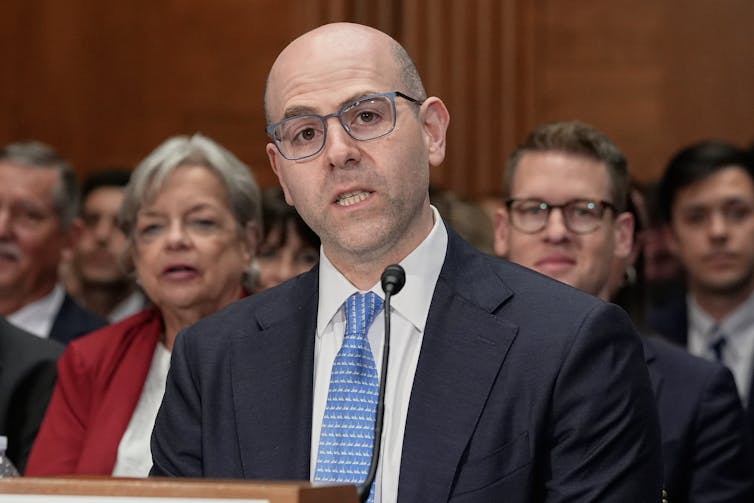
This “third mandate” was a big news story in September 2025, when the Trump administration’s newly appointed Fed governor, Stephen Miran, referred to it in his testimony before the Senate Banking Committee. Financial markets paid close attention to this aspect of the testimony because the comments suggested that Miran and other presidential appointees may focus on this third mandate – and on driving down long-term borrowing costs – more than the Fed has in the recent past.

I’ve been closely following how the Fed conducts monetary policy for many years. Miran is correct that Congress has tasked the U.S. central bank with all three of these objectives – but that’s not the whole story. In fact, none of these goals were originally spelled out in the act that set up the Fed over a century ago.

Since then, the Fed’s goals have been revised several times – typically in response to a crisis.

The Fed’s shifting goals

The original purpose of the Fed, as explained in the Federal Reserve Act of 1913, was to provide flexibility in the nation’s currency supply and to supervise the U.S. banking system. The current dual mandate was not part of the original goals of the Fed.

Instead, its core goal was to reduce the frequent banking panics that were costly to the economy and sharply increased interest rates.

The first big change in the goals, in response to the Great Depression, was the Employment Act of 1946 that stated the goal of federal government policy – and, therefore that of the Fed – is to “promote maximum employment, production and purchasing power.”

This is where the two goals of the dual mandate first began to emerge, with purchasing power implying the Fed needed to keep inflation low.

Following the macroeconomic instability of the 1970s with high unemployment and high inflation, Congress enacted the Federal Reserve Reform Act of 1977 that formalized the Fed mandate: “maintain long run growth of the monetary and credit aggregates commensurate with the economy’s long run potential to increase production, so as to promote the goals of maximum employment, stable prices, and moderate long-term interest rates.”

In other words, Congress gave the Fed three mandates to follow in monetary policy.

a white man wearing suit and glasses and without hair sits before a table with a microphone in a crowded room
Stephen Miran mentioned the third mandate during his testimony before the Senate Banking Committee in September 2025.
AP Photo/Mariam Zuhaib

What happened to the third mandate?

So why doesn’t the Fed still talk about that third mandate?

Part of the answer is that moderate long-term interest rates are a natural by-product of successfully managing the other two.

In pursuit of low inflation and maximum employment, the Fed primarily uses a short-term interest rate, known as the Federal Funds rate. When journalists report that the Fed raised or lowered interest rates, this refers to the so-called target rate that the central bank uses to control the Fed Funds rate. For example, the current target rate is a range of 3.75% to 4%, while the effective Fed Funds rate is 3.89%. Banks use the funds rate as the cost other banks must pay to borrow reserve funds for one day.

However, most of the interest rates that matter to people, businesses and the economy at large have much longer terms – such as five, 10 or 30 years. Examples include mortgages, car loans and corporate bonds. The Fed does not directly control these longer-term interest rates, which are set by financial markets.

But studies have found that the Fed’s policy decisions can influence long-term rates, primarily due to “expectations theory.” That theory argues that long-term rates reflect financial markets’ expectations of future short-term rates.

So if markets believe the Fed has inflation under control, they tend to keep long-term rates on mortgages and everything else low because they don’t expect the Fed will increase its target rate. If inflation is running high, long-term rates tend to rise because markets expect the Fed to have to lift its short-term rate to deal with it. But if unemployment is running high, long-term rates tend to fall because markets expect the Fed to reduce its short-term rate to deal with that.

Longer-term rates are, therefore, not independent of the dual mandate of the Fed. They are often an outcome of how successfully the Fed is meeting the dual mandate of full employment and stable prices currently and in the future.

As a result, the Fed doesn’t typically talk about this third mandate.

Promoting economic stability

That said, the Fed has, at times, although very rarely, influenced long-term rates directly.

For example, in late 2010, following the Great Recession of 2007-2009, the Fed purchased billions of dollars’ worth of long-term Treasury bonds and other securities – a program known as “QE2” for quantitative easing – in an effort to lower the cost of borrowing for consumers and businesses. The Fed did something similar in 1961 with Operation Twist, similarly with an aim to support the U.S. economy by reducing long-term borrowing costs.

But even this phase of quantitative easing was primarily about meeting the Fed’s dual mandate. More specifically, since inflation was already low, the Fed was trying to boost hiring in the wake of the Great Recession.

The Fed is keenly aware that longer-term interest rates that are not aligned with its dual mandate can be an important source of instability in the economy. A modern central bank’s primary goal is to promote stability in the economy, so longer-term interest rates should be at levels that are appropriate to ensure current and future economic stability.

The Conversation

Arabinda Basistha does not work for, consult, own shares in or receive funding from any company or organization that would benefit from this article, and has disclosed no relevant affiliations beyond their academic appointment.

ref. How keeping down borrowing costs for mortgages and other loans is built into the Fed’s ‘dual mandate’ – https://theconversation.com/how-keeping-down-borrowing-costs-for-mortgages-and-other-loans-is-built-into-the-feds-dual-mandate-268052