Acehnese women: Crucial role in peacebuilding overlooked, discriminated by local regulations

Source: The Conversation – Indonesia – By Suraiya Kamaruzzaman, Dosen Fakultas Teknik / Kepala Pusat Riset Perubahan Iklim USK, Universitas Syiah Kuala
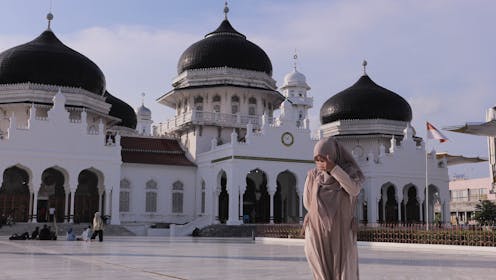
Bithography/Shutterstock

20 years have passed since the Aceh tsunami, leaving deep scars on Indonesia, especially for those directly affected. Aceh was also recovering from a three-decade armed conflict between the Free Aceh Movement and the national government

Throughout December 2024, The Conversation Indonesia, in collaboration with academics, is publishing a special edition honouring the 20 years of efforts to rebuild Aceh. We hope this series of articles preserves our collective memory while inspiring reflection on the journey of recovery and peace in the land of ‘Serambi Makkah.’


Acehnese women have long been integral to the history of their region, particularly after the 2004 tsunami, one of Indonesia’s deadliest natural disasters, and the Helsinki Peace Agreement, which ended years of conflict between the government and the Free Aceh Movement (GAM). Despite their crucial contributions to rebuilding and fostering peace, women in Aceh still face major challenges in ensuring that the peace achieved includes their needs and rights.

Their efforts often go unrecognised, and the policies that shape their lives fail to address their realities. In some cases, these policies actively discriminate against women.

Policies that marginalise women

As the conflict in Aceh escalated into firefights, lasting over a decade of 1989-2005, many women became primary breadwinners, ensuring their children’s education and providing emotional support to their families. Around 2,000 women actively participated in the fight, picking up arms as combatants.

In the years following the 2004 tsunami and the 2005 Helsinki Peace Agreement, some progress was made to include women in policy-making processes. However, the outcomes have been unremarkable. Policies implemented after the peace agreement rarely put women’s needs first or acknowledged their efforts.

For instance, Aceh’s 2009 Qanun–a regulation unique to Aceh–aims to promote women’s empowerment and protection, but its implementation remains weak. Women have little say in decision-making, and their representation in province, district, and city-level leadership posts remains minimal.

Here are some examples of how women in Aceh have been sidelined in decision-making, discriminated against in their daily lives and frequently harassed:

  • Absent in politics: In 2017, only one woman was elected deputy mayor among 23 district leaders. Similarly, just two out of 65 top provincial officials were women. These figures reflect a stark imbalance, especially when compared to the substantial roles women played during the conflict and its aftermath.

  • Clothing guideline: Regulations ostensibly implemented under Islamic law often restrict women’s freedoms. For example, West Aceh’s 2010 regulation requires women to wear skirts, prohibiting the use of trousers despite their roots in traditional Aceh’s attire. Women become subjects of public inspection, and violations ends with them not receiving public services that should be open for any citizens.

  • Discriminatory norms and limiting women’s freedom: In Lhokseumawe, a 2013 circular mandated women ride sidesaddle on motorcycles, even though such a position increases the risk of accidents. Similarly, a 2018 directive in Bireuen forbids women from being served in cafes after 9 PM without a male guardian and bans women from sitting with unrelated men.

  • Gender-based violence: Aceh also faces high rates of violence against women. Between 2019 and 2023, more than 5,000 cases of violence against women and children were reported. Shockingly, Aceh has the highest number of rape cases in Indonesia.

  • Insufficient support for victims: Despite the severity of the issue, support for survivors remains inadequate. From 2020 to 2024, only 0.12% of Aceh’s provincial budget was allocated to the Women’s Empowerment and Child Protection Agency. While this allocation has increased slightly over time, it is still lacking to address the needs of women, particularly those who suffered from violence and the conflict.

Young women as the agents of change

The younger generation, particularly Gen Z, offers hope for a brighter future. Acehnese young women are increasingly leveraging digital platforms to advocate for their rights and challenge societal norms. Their ability to connect with global networks gives them tools to amplify their voices and demand equality.

This new generation has the potential to drive meaningful change, but they face entrenched patriarchal norms that require dismantling. To achieve substantial peace and gender equality in Aceh, empowering young women as agents of change and supporting their initiatives to create a more inclusive society is essential.

To ensure that Aceh achieves lasting peace that benefits everyone, several steps are necessary:

  • Inclusive policy-making: Women must be included in all decision-making processes, especially those related to peacebuilding and post-conflict recovery.

  • Reforming discriminatory policies: Laws restricting women’s rights must be repealed to create a more equitable environment.

  • Comprehensive support for survivors: Addressing the needs of survivors of violence through legal, medical, and psychological support is crucial.

  • Strengthening Legal Protections: Laws like Aceh’s Qanun Jinayah (Islamic Criminal Law) should be revised better to protect women, particularly victims of sexual violence.

Acehnese women have demonstrated remarkable resilience and strength throughout the region’s history. By ensuring their voices are heard and their rights respected, Aceh can move closer to achieving true peace and equality for all its citizens.

The Conversation

Suraiya Kamaruzzaman tidak bekerja, menjadi konsultan, memiliki saham, atau menerima dana dari perusahaan atau organisasi mana pun yang akan mengambil untung dari artikel ini, dan telah mengungkapkan bahwa ia tidak memiliki afiliasi selain yang telah disebut di atas.

ref. Acehnese women: Crucial role in peacebuilding overlooked, discriminated by local regulations – https://theconversation.com/acehnese-women-crucial-role-in-peacebuilding-overlooked-discriminated-by-local-regulations-246240

Aceh Tsunami: Monuments help to remember disasters – and forget them

Source: The Conversation – Indonesia – By Muzayin Nazaruddin, Dosen Program Studi Ilmu Komunikasi, Universitas Islam Indonesia (UII) Yogyakarta

20 years have passed since the Aceh tsunami, leaving deep scars on Indonesia, especially for those directly affected. Aceh was also recovering from a three-decade armed conflict between the Free Aceh Movement and the national government

Throughout December 2024, The Conversation Indonesia, in collaboration with academics, is publishing a special edition honouring the 20 years of efforts to rebuild Aceh. We hope this series of articles preserves our collective memory while inspiring reflection on the journey of recovery and peace in the land of ‘Serambi Makkah.’


In the aftermath of the 2004 Indian Ocean Tsunami, the Acehnese interpreted the disaster in various ways.

Initially, the tsunami was interpreted as a punishment or warning from God. Over time, a collective interpretation of the disaster emerged: “The tsunami as a test from God”.

This later narrative was compelling enough to accelerate the post-tsunami recovery process. People in Aceh moved past the tsunami trauma by believing their deceased family members were martyrs who deserved a place in heaven, while those who survived were given the opportunity by Allah to live better lives.

The process of forming this narrative is called memory canonisation. It occurs when the government and ruling elites impose a specific interpretation or narrative of a disaster, including what to remember and how to remember it.

Memory canonisation is evident in the creation of disaster monuments and commemoration events, including in Aceh. Unfortunately, many survivors feel detached from the monuments because they do not evoke personal memories of the tsunami.

Memory canonisation through monuments

Constructing permanent memorials after a disaster is a common trend in a modern society. Many tsunami monuments exist in Aceh, and some have even become tourist destinations.

Tsunami monuments can be divided into two categories based on the construction.

First, monuments built from tsunami debris that are deliberately maintained, modified, or enhanced with certain elements. Examples include the stranded electric-generator ship (the PLTD Apung), the ship on the top of a house in Lampulo, and the tsunami debris at the Rahmatullah Mosque in Lampuuk.

Second, monuments intentionally designed and constructed as new buildings after the tsunami, such as the Aceh Tsunami Museum and the Tsunami Poles erected in over 50 locations across Banda Aceh and Aceh Besar.

The establishment of disaster memorials is always political. Disaster monuments represent how governments and elites promote specific interpretations as dominant. This is achieved through specific architectural designs or curated narratives in the monument.

However, the memory canonisation process is never final. Once established, each disaster monument becomes a place to form, strengthen, modify, alter, and revise the interpretation of the disaster.

How monuments affect Acehnese memory – or not

In a post-disaster situation, the affected community faces ‘push and pull’ between remembering and forgetting the disaster. They must let go of trauma to move forward while preserving disaster memories to honour victims and enhance future preparedness.

The memory of the disaster resides in the back of their mind, but not constantly remembered in everyday life. It will move to the surface as an active memory only when triggered by certain factors, such as a place, object, or event. This memory closely relates to how the survivors give meaning to the disaster.

In everyday life, survivors interact with disaster monuments in various contexts –for instance, as a source of income or a place for leisure. Thus, the meaning of a disaster monument can vary, even becoming completely unrelated to its creators’ narratives and original goals.

Preliminary findings from my ongoing research in Aceh show that among survivors, tsunami memories are often triggered by specific places associated with their experiences. These include the house where they found safety, the coastal area that swept them away, or the ruins of their homes. I refer to these as “the forgotten memories of the tsunami.”

Since many tsunami monuments were erected without involving local residents, they feel barely connected, let alone have a sense of ownership, towards the monuments. For survivors, the established monuments do not trigger their memories of the tsunami.

Disaster monument for disaster education

Today, 20 years after the tsunami, we can still meet survivors who offer valuable and insightful stories about starting over, rebuilding their homes and villages, and cultivating cultural awareness about tsunamis while embracing vulnerability.

However, once these survivors pass away, future generations will lose access to primary sources of learning about the tsunami. This includes new inhabitants who moved to Aceh after the tsunami and rent houses in coastal areas.

They will, therefore, depend on the tsunami memorials around them, though many have been neglected.

To address these risks, I recommend two measures.

First, we can document the “forgotten tsunami memories” creatively through formats like documentary videos, comics, photos, social media content, or other mediums that highlight stories offering insights into disaster risk reduction and education for younger generations.

Second, we must encourage sustainable and meaningful interactions between locals and tsunami monuments. Disaster memorials serve their purpose best — preserving the memory of the disaster and educating younger generations — when they remain relevant to residents’ daily activities.

Locals’ active participation is essential in Aceh, including school visits and involvement in preservation and curation efforts.

These measures aim to foster a sense of ownership among residents of the tsunami monuments in their neighbourhoods. They encourage voluntary maintenance of the monuments and make them integral to disaster risk reduction efforts.

The Conversation

Muzayin Nazaruddin tidak bekerja, menjadi konsultan, memiliki saham, atau menerima dana dari perusahaan atau organisasi mana pun yang akan mengambil untung dari artikel ini, dan telah mengungkapkan bahwa ia tidak memiliki afiliasi selain yang telah disebut di atas.

ref. Aceh Tsunami: Monuments help to remember disasters – and forget them – https://theconversation.com/aceh-tsunami-monuments-help-to-remember-disasters-and-forget-them-246251

Acehnese women sidelined from decision-making despite past tragedy and conflict

Source: The Conversation – Indonesia – By Norma Susanti RM, Peneliti di Tsunami and Disaster Mitigation Research Center (TDMRC) dan Pusat Riset Ilmu Sosial dan Budaya (PRISB) Universitas Syiah Kuala, Universitas Syiah Kuala

20 years have passed since the Aceh tsunami, leaving deep scars on Indonesia, especially for those directly affected. Aceh was also recovering from a three-decade armed conflict between the Free Aceh Movement and the national government

Throughout December 2024, The Conversation Indonesia, in collaboration with academics, is publishing a special edition honouring the 20 years of efforts to rebuild Aceh. We hope this series of articles preserves our collective memory while inspiring reflection on the journey of recovery and peace in the land of ‘Serambi Makkah.’


The devastating 2004 Indian Ocean Tsunami remains etched in the memories of many,especially in Aceh, where the disaster claimed hundreds of thousands of lives. Among the casualties, women were disproportionately affected by a four-to-one ratio.

Twenty years later, the struggle to guarantee women’s rights continues to face significant hurdles. Despite the historical records of women’s leadership in shaping the region and the impacts bore by women in the tragedy, their involvement in modern Aceh’s development remains minimal.

Disaster recovery: Shifting paradigms

Aceh has a remarkable history of female leadership, with figures such as Cut Nyak Dhien, Cut Nyak Meutia, Laksamana Keumalahayati, Pocut Baren, and Tengku Fakinah playing pivotal roles in defending the region against Dutch colonial forces.

Even further back in history, Aceh witnessed the reign of formidable female rulers such as Sultanah Tajul Alam Safiatuddin (1641–1675) and Nurul Alam Naqiatuddin (1675–1678), among others, who led the Aceh Darussalam Kingdom—an influential Islamic power in Southeast Asia.

Fast-forward to modern history, the prolonged armed conflict between the Free Aceh Movement (GAM) and the Indonesian Government (1976-2005) also highlighted the crucial role of women. When many men fled for safety, grassroots women stood firm, shouldering dual domestic and public responsibilities. They negotiated with military forces to ensure village safety, advocated for the release of detained family members, and secured food for their communities despite immense challenges.

This narrative — documented in personal accounts,research, and reports — reveals the depth of women’s contributions to their communities amidst adversity.

Unfortunately, the resilience of Acehnese women remains unacknowledged post-tsunami and conflict. Initiatives to involve women in development are concentrated in the capital, Banda Aceh, while their representation in politics is liminal.

A dedicated space for women: The MUSRENA initiative

In Banda Aceh, the government has taken significant steps to promote women’s participation in development planning. One notable initiative is the establishment of MUSRENA, a special women’s forum designed to gather and integrate women’s proposals into local development plans. Funded by regional budgets and village allocations, these forums provide a platform for women to articulate their needs and experiences.

The outcomes from MUSRENA dialogues are compiled in stages, from the village to the municipal level, ensuring they become part of the major decisions agreed upon in each level’s planning forum.

The MUSRENA initiative owes much to the leadership of Illiza Sa’aduddin Djamal, who served as Banda Aceh’s deputy mayor between 2007 and 2014. Under her guidance, the forum was institutionalised through regulations, ensuring its sustainability.

However, this innovative model has yet to be widely adopted by other regions. To maximises its output, MUSRENA needs capacity-building activities accessible to women from diverse backgrounds and serves as a strategy to increase the number of women leaders.

Women in politics: Gaps in representation

The representation of women in Aceh’s political and governance structures remains limited. Between 2014 and 2019, only 12 women served in Aceh’s 81-member legislative council, but this number further dropped to eight in the 2024 election — far below the minimum representation threshold of 30%. This underscores the persistent challenges faced by women in gaining political footholds.

The lack of representation is also evident in Aceh Provincial Government. Women occupy just only 5 out of 62 senior roles and 49 out of 283 mid-level roles, highlighting the stark disparity between men and women in leadership.

Independent commissions in Aceh, which should ideally foster inclusive leadership, have also failed to create a supportive environment for women leaders. The absence of women in key strategic positions reflects a broader trend across Aceh, extending down to the village (Gampong) level. Women’s participation remains minimal in village governance despite a 2008 Qanun — regional regulations specific to Aceh — that mandates equality in community leadership and cultural preservation.

Ensuring gender equality in development

Reconstruction after the tsunami demanded a transformative approach to disaster management. A 2007 Law promoting a shift from emergency-focused responses to a more integrated strategy of mitigation, response, and post-disaster recovery has been slow to materialised.

Emergency responses continue to overshadow other phases, and preparedness efforts remain limited and poorly integrated across sectors. Recovery programs often fail to adhere to the “build back better and safer” disaster risk reduction principles.

Gender-responsive disaster management is essential to prepare all segments of society, including women and vulnerable groups, for future crises. The limited role of women in Aceh’s post-tsunami recovery and development processes, especially in contrast with how deeply affected they are by the tragedy, highlights the need for more inclusive approaches.

This requires systemic planning, policy formulation, budget allocation, and implementation. Monitoring and evaluation must emphasise measurable outcomes, guided by frameworks like Regulation No. 13/2014 on Gender Mainstreaming in Disaster Management. Indicators of success should include women’s access to resources, active participation, control over decisions, and equitable benefits.

Women’s experiences and contributions should form the foundation of disaster mitigation strategies. Thus, it is crucial to empower women financially, ensure access to education, improve mental and reproductive health, and enhance political and managerial skills.

Aceh’s history and the lessons from the tsunami and conflict should serve as reminders of the importance of inclusive development. Two decades on, the region must fully embrace gender equality as a cornerstone of its progress. Women’s meaningful participation and leadership are not just a nod to history but a necessary path to a more resilient and equitable future.

The Conversation

Norma Susanti RM tidak bekerja, menjadi konsultan, memiliki saham, atau menerima dana dari perusahaan atau organisasi mana pun yang akan mengambil untung dari artikel ini, dan telah mengungkapkan bahwa ia tidak memiliki afiliasi selain yang telah disebut di atas.

ref. Acehnese women sidelined from decision-making despite past tragedy and conflict – https://theconversation.com/acehnese-women-sidelined-from-decision-making-despite-past-tragedy-and-conflict-245947

Indonesia’s BRICS agenda: 2 reasons Prabowo’s foreign policy contrasts with Jokowi’s

Source: The Conversation – Indonesia – By Aswin Ariyanto Azis, Head of department of Politics, Government, and International Relations of Universitas Brawijaya, Universitas Brawijaya

Ilustrasi-ilustrasi bendera negara anggota BRICS dan mitra. justit/Shutterstock

Indonesia’s decision to pursue membership in BRICS – an emerging economy bloc comprising Brazil, Russia, India, China, and South Africa – signals that President Prabowo Subianto is steering foreign policy in a direction contrasting with his predecessors.

During Joko “Jokowi” Widodo’s two-term administration, then-former Foreign Minister Retno Marsudi led efforts to integrate Indonesia’s economy with Western institutions by working to secure membership with the OECD.

Since BRICS is an alternative to Western-dominated organisations, many observers scrutinised and questioned Indonesia’s nonalignment commitment. However, Foreign Minister Sugiono argued that BRICS aligns with Indonesia’s ‘free and active’ foreign policy, allowing Indonesia to collaborate widely without aligning too closely with any single bloc.

For Sugiono, joining BRICS means paving the way to advance the new government’s goals of food security, energy independence, poverty alleviation, and human capital development. The bloc offers access to funding, technology, and trade opportunities to tackle key challenges in those sectors. BRICS, with its emphasis on fairness and cooperation, supports Indonesia’s vision for a more inclusive and sustainable future.

The shift from Retno’s OECD focus to Sugiono’s BRICS approach reflects at least two visions. First, Indonesia seeks to reassess its strategic position as the leading economy in Southeast Asia. Second, the country seeks to switch from its nonalignment stance to multi-alignment. The later will help navigate partnerships with both developed and emerging economies, balancing traditional alliances with new opportunities.

Joining BRICS can amplify Indonesia’s influence in its already strong ties with each of the member countries and unlock opportunities beyond one-on-one partnerships.

Fear of missing out

Indonesia’s pivot to BRICS reflects both its relationship with major powers, such as China and the US, and regional pressures.

Neighbouring countries Malaysia and Thailand have recently expressed interest in BRICS, creating a sense of competition within Southeast Asia. Both countries joining the bloc could erode Indonesia’s leadership and influence in the region, especially in affecting global affairs.

Through ASEAN, Indonesia has sought to act as a regional stabiliser and mediator amid rising polarisation between the West and China.

As its de facto leader, Indonesia has historically championed initiatives like the South China Sea Code of Conduct and Myanmar’s peace process. Its G20 presidency further underscored its role as a mediator between global powers.

This ‘fear of missing out’ has spurred Indonesia’s interest in BRICS.

Joining BRICS ahead of its regional peers ensures that Indonesia maintains its leadership position in ASEAN. For Prabowo’s administration, BRICS offers a platform to advance Indonesia’s interests in maritime security, economic growth, and global governance. It is a strategic move beyond an economic decision to amplify its voice on global issues and prevent fellow Southeast Asian countries from overtaking it in shaping the bloc’s agenda.

Bold (but not one) direction

Indonesia’s BRICS membership announcement highlights the new administration’s foreign policy ambitions, centred on two key shifts: adopting a multi-alignment strategy and strengthening its ‘good neighbour’ policy.

Prabowo envisions engaging with all nations, fostering friendly relations while opposing oppression. This approach resonates with Indonesia’s historical commitment to sovereignty and equality in international relations.

Indonesia has traditionally adhered to a nonalignment principle. This virtue has aided the country navigating major power blocs without binding itself to any single alliance. However, the current geopolitical climate – marked by intensifying tensions between global powers, regional conflicts, and intricate challenges – demands a more flexible and strategic approach.

By joining BRICS, Indonesia avoids taking sides and instead diversifies its partnerships to maximise benefits. This multi-aligned approach enables active participation in BRICS discussions on multilateral reform.

Prabowo’s ‘good neighbour policy’ further underscores the importance of maintaining positive relations with all countries. It empowers developing nations and advocates for a more equitable global order and economic system. This strategy also facilitates Indonesia’s resilience by fostering partnerships in food and energy security, poverty alleviation, and human capital development.

Such collaborations reduce reliance on Western financial systems and enhance Indonesia’s autonomy. Ultimately, these strategic directions position Indonesia as a sovereign and dynamic player capable of balancing global relationships while advancing its own priorities.

What about the OECD?

This move does not mean the OECD is off the table for Indonesia. Instead, Prabowo’s approach reflects a dual-track strategy that values both alliances for their respective benefits.

The OECD remains a long-term objective to enhance Indonesia’s economic governance and regulatory standards. It serves the goal of providing the country with stable relationships within the Western economic framework. Meanwhile, BRICS offers an immediate avenue for Indonesia to deepen ties with equivalent economies and actively shape policies that impact the Global South.

Sugiono’s statement in Kazan emphasised Indonesia’s commitment to engaging in other forums, including the G20 and OECD discussions. It highlighted the country’s flexibility in international alliances.

This dual-track strategy reinforces Indonesia’s role as a bridge between developed and developing nations, maximising the benefits of both alliances without sacrificing its autonomy.

What’s next for Indonesia?

Indonesia’s decision to join BRICS marks a significant evolution in its foreign policy. By participating in BRICS, Indonesia positions itself as a critical player in global discussions on economic reform and development, asserting its voice within a multi-polar world order.

Indonesia is charting a path that balances traditional alliances with emerging opportunities, reinforcing its role as a dynamic, independent player on the world stage.

The Conversation

Aswin Ariyanto Azis tidak bekerja, menjadi konsultan, memiliki saham, atau menerima dana dari perusahaan atau organisasi mana pun yang akan mengambil untung dari artikel ini, dan telah mengungkapkan bahwa ia tidak memiliki afiliasi selain yang telah disebut di atas.

ref. Indonesia’s BRICS agenda: 2 reasons Prabowo’s foreign policy contrasts with Jokowi’s – https://theconversation.com/indonesias-brics-agenda-2-reasons-prabowos-foreign-policy-contrasts-with-jokowis-242920

The Learning Refuge: How women-led community efforts help refugees resettle in Cyprus

Source: The Conversation – Canada – By Suzan Ilcan, Professor of Sociology & University Research Chair, University of Waterloo

A grassroots organization in Paphos, Cyprus, is bringing women together to address the needs of refugees in the city. (Shutterstock)

Since 2015, the Republic of Cyprus (ROC) has seen a steady rise in migrant arrivals and asylum applications, primarily from people from Middle Eastern and African countries like Syria, the Democratic Republic of Congo and Cameroon.

But many asylum-seekers face significant challenges. Refugees formally in the asylum system are often denied residency permits, which means they face persistent insecurity, poverty and isolation

These conditions are compounded by restrictive and limited services for asylum-seekers. This deepens the precarity and exclusion refugees face within a political and economic system that treats them more like economic burdens than as human beings with rights who need help.

In response to these institutional failures, citizens, volunteers and refugees themselves have begun to build grassroots networks of care and solidarity in the ROC and beyond to support refugee communities.

In 2022 and 2023, we conducted interviews with women volunteers and refugees affiliated with The Learning Refuge, a civil society organization in the city of Paphos in southwest Cyprus that cultivates dialogue and collaboration among these two diverse groups.

Women-led initiatives

Many displaced people first arrive on the island of Cyprus through the Turkish Republic of Northern Cyprus (TRNC). However, the absence of a functioning asylum system or international legal protections leaves them in limbo.

With no viable path to status in the TRNC, most cross the Green Line that bifurcates Cyprus into the ROC, where European Union asylum frameworks exist but remain limited in practice.

Women-led community-building is often a response to the negative effects of inadequate state support and humanitarian aid for refugees. In Cyprus, this situation leaves many refugees without access to sufficient food, satisfactory health care, accommodation, employment, clothing and language training. In this current environment, refugees are increasingly experiencing insecure and fragile situations, especially women.

In Cyprus, as in many other countries, a variety of community-building efforts are important responses to limited or restricted state support and humanitarian aid for refugees.

Women-led efforts offer opportunities to deliver educational activities and establish networks, and to help improve the welfare and social protection of refugee women, however imperfectly.

These and other similar efforts highlight how women refugees and volunteers can mobilize to foster dialogue and collaboration.

The Learning Refuge

Founded in 2015, The Learning Refuge began as community meetings in a city park. The organization then used space from a nearby music venue to conduct support activities, and later, established itself in a dedicated building.

Organizations like The Learning Refuge emerged to address the limited state support and humanitarian assistance services available to refugees.

a sign reading Learning Refuge next to a doorway
The Learning Refuge cultivates dialogue and collaboration among a diverse group of community volunteers.
(Suzan Ilcan)

As Syrian families began arriving in Paphos in 2015, local mothers started working with Syrian children, assisting them with homework, providing skills-training opportunities and language classes.

The Learning Refuge cultivates dialogue and collaboration among a diverse group of community volunteers, including schoolteachers, artists, musicians, local residents, refugees and other migrants.

With the aid of 20 volunteers, the loosely organized groups provide women refugees with material support and resources to enhance collective activities, including art and music projects, while also engaging in educational and friendship activities.

While modest in scale, the organization has formed partnerships with local and international organizations, including Caritas Cyprus, UNHCR-Cyprus and the Cyprus Refugee Council to extend its outreach to various refugee groups.

The organization has also launched creative initiatives aimed at cultivating additional inclusive civic spaces. One such effort, “Moms and Babies Day,” was developed in response to the rising number of single mothers from Africa arriving on the island. These women often face poverty and isolation, and struggle with language barriers.

These efforts highlight how grassroots responses — especially those led by women — can offer partial but vital educational and emotional support to refugees struggling to find their footing in a new country.

Negotiated belonging

Through participation in The Learning Refuge, refugee women in Paphos engage in a dynamic process of negotiated belonging, navigating challenges like language barriers, gendered isolation, domestic violence and poverty while contributing to broader community-building efforts.

For example, Maryam, a Syrian woman and mother of three, told us how The Learning Refuge helped her children establish friendships and learn Greek. She also highlighted that it helped her form close ties with volunteers and other Syrian women living in Cyprus, and find paid work in the city.

The volunteers and women refugees participating in The Learning Refuge’s activities emphasized not only their capacity to develop new forms of belonging and solidarity; they also help reshape communal knowledge and generate supportive spaces for women from various backgrounds.

Our research shows that women-led community-building is an effective, though short-term, response to insufficient state support and humanitarian aid systems that leave many refugees in precarious situations.

In varying degrees, these efforts offer women and their families spaces to learn and cultivate new relationships, and foster collective projects and better visions of resettlement and refuge.

The Conversation

Suzan Ilcan receives funding from the Social Sciences and Humanities Council of Canada.

Seçil Daǧtaș receives funding from Social Sciences and Humanities Research Council of Canada.

ref. The Learning Refuge: How women-led community efforts help refugees resettle in Cyprus – https://theconversation.com/the-learning-refuge-how-women-led-community-efforts-help-refugees-resettle-in-cyprus-252682

Alberta youth have the right to school library books that reflect their lives, including sexuality

Source: The Conversation – Canada – By Jamie Anderson, PhD Candidate, Werklund School of Education, University of Calgary

Alberta Premier Danielle Smith has expressed fondness for Florida Gov. Ron DeSantis, most recently wagering a a friendly public bet on the NHL hockey playoffs. In 2023, she said she wanted Albertans to enjoy some of the same freedoms available to citizens in certain American states, including Florida.

Her government’s latest proposal aims to take more than a page from DeSantis’s playbook, setting its sights on how Florida has targeted school library books, effectively purging and banning many.

Alberta Education Minister Demetrios Nicolaides recently announced the province will move ahead to develop provincial standards “to ensure the age-appropriateness of materials available to students in school libraries.” This followed a public engagement survey related to what he said were concerns about “sexually explicit” books in Edmonton and Calgary schools.

The province says the survey results show “strong support” for a school library policy, even while the majority of respondents don’t want the government setting standards for school library books.

This marks the Alberta government’s latest effort to restrict the rights of 2SLGBTQIA+ children and youth.

New proposed school library standards

Like Florida’s statute on K-12 instructional materials, Alberta’s proposal centres on age-appropriateness and increasing parental choice in learning materials.

Despite claiming a need for new standards, Nicolaides has acknowledged there are already mechanisms in place in Alberta’s school jurisdictions for parents to challenge materials. Many school boards already have policies governing school library materials.

Additionally, librarians are trained professionals who follow established practices around organizing materials that reflect developmental appropriateness.

Florida school book purges

Florida’s statute, framed by DeSantis as empowering parents to object to obscene material, has targeted 2,700 books. More than 700 were removed from libraries in 2023-24.


Read more:
Ron DeSantis shows how ‘ugly freedoms’ are being used to fuel authoritarianism


Confusion and a climate of fear caused by the bill has led Florida teachers and librarians to self-censor. Florida’s Department of Education urged districts to “err on the side of caution” to avoid potential felony charges.

Such fear and surveillance lead to unnecessary restrictions on students’ rights.

Targeting 2SLGBTQIA+ books

Nicolaides has emphasized that developing the new standards in Alberta is not a question of “banning certain books,” and has acknowledged he does not have that authority.

However, as PEN Canada notes, the implications of the proposed policies raise alarm bells, with the government’s actions “paving the way to a new era of government-sponsored book banning.” Singling out books has the same effect as a ban, according to the CEO of the St. Albert Public Library.

By labelling four books as inappropriate — three of which include 2SLGBTQIA+ authors and themes — Nicolaides suggests these books don’t belong in K-12 schools. One of the books, the graphic novel Flamer, has won several awards, including the Lambda Literary Award for LGBTQ Young Adult Literature in 2021.

PEN America interview with Mike Curato, author of ‘Flamer.’

The education minister refuted the idea that singling out the books is anti-queer or anti-trans, and did so in an inflammatory manner, characterizing concern as being about protecting children from seeing porn, child molestation and other sexual content.

Nicolaides also said the proposed policy is focused on sexual content, so themes and depictions of graphic violence are “probably not” an issue.

Rolling back trans, queer rights

Alberta has already rolled back the rights of trans and non-binary children and youth to use different pronouns, access gender-affirming care and participate in sports.

Queer and trans identities are also absent from all subjects in the K-12 program of studies, including recently updated K-6 curriculum. New sexual health resource guidelines prohibit the use of learning materials that primarily and explicitly address sexual orientation or gender identity unless they have been vetted and approved by Alberta Education (except for use in religion classes).

Survey amplifies moral panic

Through specific communication tactics, the minister’s public engagement works to exacerbate moral panics about sexuality as a threat to childhood innocence. This influences broader messages about 2SLGBTQIA+ inclusion.

The government-created survey shared illustrations and text excerpts on their own, without context or consideration of their narrative purpose in each book. Although the excerpts flagged by the minister make up between 0.1 to two per cent of the total page count in each book, the books as a whole are labelled “extremely graphic.”

In a media appearance, Nicolaides stated the books in question were available to “elementary-aged” students. This is misleading because K-9 schools include junior high students.

In a social media post, the minister’s press secretary said “these problematic books were found in and around books like Goldilocks,” suggesting targeted books are alongside children’s storybooks. But the image he shared showed Flamer near the graphic novel Goldilocks: Wanted Dead or Alive, aimed at middle-grade readers aged nine to 12 years old.

Survey respondents

The survey reported 77,395 responses by demographics, including parents, teachers, school administrators, librarians and other interested Albertans.

Forty-nine per cent of parents of school-aged children were not at all or not very supportive of the creation of government guidelines, compared to 44 per cent of the same demographic who were somewhat or very supportive (eight per cent were unsure). Across each other demographic, most respondents expressed that they didn’t support the creation of new government standards. But the ministry plans to move ahead anyway.

Socially conservative lobby

The Investigative Journalism Foundation reports two conservative activist groups have taken credit for giving the Alberta government names of books believed to be inappropriate.

Parental rights groups and far-right activists have long asserted that 2SLGBTQIA+ inclusion in schools “indoctrinates” and sexualizes children.

We’re concerned the Alberta government may be reinforcing this message to manufacture a greater public consensus in support of wider policies against 2SLGBTQIA+ rights.

Since at least 2023, United Conservative Party (UCP) members have embraced socially conservative “parental rights” rhetoric and supported motions for purging school libraries and mandating parent approval of changes to kids’ names and pronouns.

Traditionalist ‘parental rights’

Far-right activist groups like Take Back Alberta have shaped the UCP government’s policies alongside special interest groups like Action4Canada and Parents for Choice in Education.

A common thread among such groups is parental authority over one’s own children framed in traditionalist or hetero-normative terms. Significant mobilizing has happened against the inclusion of sexual orientations and gender identities in school curricula, trans-inclusive health care, drag shows, conversion therapy bans and more.


Read more:
Pride, pages and performance: Why drag story time matters more than ever


Queer and trans identities are viewed as a social contagion threatening to change anyone exposed to them, and efforts for inclusion are labelled “gender ideology.”

These misconceptions, combined with political and religious biases, frame queerness and transness as “adult topics” that will confuse or harm children. However, research confirms ignoring these topics is of far greater concern when children may already experience discrimination about their gender expression by the age of five.

Earlier learning about diverse forms of gender expression and relationships can reduce victimization, and prevent young children from becoming perpetrators of, or bystanders to, anti-2SLGBTQIA+ harassment and violence.


Read more:
‘Parental rights’ lobby puts trans and queer kids at risk


The United Nations recognizes that governments need to resist political pressure “based on child protection arguments to block access to information on [2SLGBTQIA+] issues, or to provide negatively biased information.”

Access to self-selected literature is important for all students, and can be a lifeline for 2SLGBTQIA+ students who don’t see themselves in the curriculum.

If Alberta Education will not prepare students for the world they live in — where we queer and trans people exist, flourish and are loved — then students should be able to seek out stories that reflect that world. It’s a matter of protecting their freedom of expression.

The Conversation

Jamie Anderson has received funding from the Social Sciences and Humanities Research Council of Canada and the University of Calgary.

Tonya D. Callaghan receives funding from the Social Sciences and Humanities Research Council of Canada and the Killam Trusts.

Caitlin Campbell and Nicole Richard do not work for, consult, own shares in or receive funding from any company or organisation that would benefit from this article, and have disclosed no relevant affiliations beyond their academic appointment.

ref. Alberta youth have the right to school library books that reflect their lives, including sexuality – https://theconversation.com/alberta-youth-have-the-right-to-school-library-books-that-reflect-their-lives-including-sexuality-258265

Indigenous engagement is essential for small modular nuclear reactor projects

Source: The Conversation – Canada – By Rhea Desai, Post Doctoral Fellow, Department of Biology, McMaster University

Urban Indigenous gathering for community well-being, showing the importance of interconnectedness in Indigenous Communities in Hamilton, Ont. in August 2021. This way of being must be reflected in nuclear projects to better work alongside Indigenous Peoples. (Michelle Webb)

With climate change-fuelled natural disasters becoming more frequent and devastating for communities around the world, the need for cleaner energy solutions is more urgent than ever.

When it comes to transitioning away from fossil fuels, much of the focus tends to be on solar, wind or hydroelectricity. However, small modular reactors (SMRs) are an emerging technology showing promise globally.

SMRs are a specific type of nuclear reactor that, as the name suggests, are small in energy output and modular in their manufacturing. Provinces like New Brunswick, Alberta and Saskatchewan have made progress on strategic plans to make SMRs part of their provincial climate action plans.

Unlike traditional nuclear reactors that generally produce more than 1,000 megawatts of electricity, SMRs are designed to produce as low as five megawatts. The modularity of such reactors allows for manufacturing off-site and installation at the desired location. This can decrease construction time, manufacturing costs and certain environmental costs associated with building on site.

This means SMRs are more feasible for many off-grid communities that lack reliable access to electricity, many of which are Indigenous. In 2023, the Canada Energy regulator said there were 178 remote Indigenous and northern communities not connected to the North American electricity grid and natural gas infrastructure.

In an effort to shift reliability from carbon-emitting resources to nuclear power, SMRs provide an exciting alternative, but implementation needs effective engagement with Indigenous communities to flourish.

a graphic outlining how many megawatts of power a large, small and micro nuclear reactor can generate.
Small modular reactors (SMRs) could be relatively feasible way to generate power for many off-grid communities.
(A. Vargas/IAEA)

Engaging Indigenous communities

Much of Canada’s electricity is already generated from low-carbon emission sources. However, there are still areas in northern Canada that are reliant on diesel, and therefore SMR plans are often aimed at providing electricity to these communities.

While on paper, this might sound like the perfect solution, there’s a lot to consider about SMR siting from an environmental perspective in these remote communities. These considerations include but are not limited to potential locations, source term, refuelling and waste management.

As research continues into the engineering and science behind SMR technology, meaningful community engagement with Indigenous communities is also required.

Thoughtfully considered and integrated consultations are necessary to ensure projects respect treaties, land rights and the surrounding environment. Consultation is needed to understand the needs and goals of the community for creating an energy transition plan.

In addition, incorporating traditional ecological knowledge in environmental risk assessments is vital. Ultimately, projects designed alongside Indigenous communities should strive for Indigenous sovereignty over growing infrastructure.

Why community engagement is important

Indigenous communities continue to face challenges as a result of colonization. The Truth and Reconciliation Commission’s (TRC) seventh Call to Action highlights the need to eliminate educational and employment disparity between Indigenous and non-Indigenous Canadians.

A direct way to address in terms of Canada’s nuclear landscape is to train members of those communities in technical roles related to the planning, deployment and sustained use of a nuclear facility. Specifically, training today’s Indigenous youth so they can fulfil these roles in their future careers.

The TRC’s Call to Action 92 calls on Canada’s corporate sector to engage in meaningful consultation, respectful relationship-building and equitable access to training and education opportunities that will contribute to long-term benefits from any economic development projects.

Through understanding the need for this relationship-building, there is a lot that western practices can learn from adopting Indigenous ways of knowing. Indigenous people have a long history of sustainable practices in their culture and traditions, and although western science now consider sustainable practices, it is not deeply woven into community and industrial initiatives.

As nuclear projects advance in Canada, it’s vital to respect Indigenous knowledge through weaving with western science. Projects can adopt a Two-Eyed seeing approach. This refers to viewing a problem with one eye using an Indigenous knowledge perspective and the other with a western knowledge lens. There is much to learn from understanding the philosophy behind Indigenous ways of knowing that can be applied to protect the environment.

Indigenous knowledge varies across Canada and comes with different insights, but a commonality is the teaching that all living things are interconnected and must be respected and cared for. This perspective is necessary for the future of nuclear projects to ensure the environment is sustained to support the biodiversity of regions throughout Canada.

This informed approach of protecting the environment, together with an ecosystem approach that considers the uniqueness and interconectedness of each organism, will ultimately lead to improved nuclear policies and safety.

The actions that institutions and private industry take today to build strong relationships with Indigenous communities and work towards an increasingly sustainable future will support already resilient communities so they can see growth well beyond the deployment of SMRs. A path to a cleaner future is in reach, but only if we walk beside Indigenous leaders, knowledge holders, community members and, especially, youth.

The Conversation

The authors do not work for, consult, own shares in or receive funding from any company or organisation that would benefit from this article, and have disclosed no relevant affiliations beyond their academic appointment.

ref. Indigenous engagement is essential for small modular nuclear reactor projects – https://theconversation.com/indigenous-engagement-is-essential-for-small-modular-nuclear-reactor-projects-252134

Catholic school board’s regressive flag policy sets back reconciliation in a post-Papal visit Canada

Source: The Conversation – Canada – By Erenna Morrison, PhD Candidate, Curriculum and Pedagogy, Ontario Institute for Studies in Education, University of Toronto

Following the release of the Truth and Reconciliation Commission’s 94 Calls to Action in 2015, some Catholic school boards have made commitments to reconciliation in education. These boards include the Dufferin-Peel Catholic District School Board (DPCDSB).

However, the DPCDSB — located in the Greater Toronto area — has also introduced a flag policy that raises serious questions about a commitment to the wider progress being made in welcoming all students and promoting reconciliation.

On Jan. 28, 2025 — following advocacy in different parts of Ontario and the country against the presence of the Pride flag — the board’s trustees voted in nine to one to add more restrictions to its flag policies. These restrictions stipulated that only flags representing Canada, the provinces, territories and the school board can be be displayed inside schools or other DPCDSB facilities.

Acts of erasure

The developments in Peel Region follow earlier policy changes to restrict the presence of the Pride flag and other flags at schools.

Advocates from the board defending flag restrictions have said that in Catholic schools, the icon of the cross is the only symbol that should be promoted and that this represents inclusion and acceptance of all.

However, members of the 2SLGBTQI+ community and opponents of restrictive flag policies argue that the Pride flag is needed to signal a welcoming environment. They say its removal is an act of erasure and that it calls into question how the board affirms the rights, dignity and visibility of 2SLGBTQI+ people and how it fosters their safety. The board says, and believes, its practices and policies comply with the Ontario human rights code, adding that supports are available for students who identify as 2SLGBTQI.

The erasure of the Pride flag has the simultaneous effect of banning other important flags, such as Every Child Matters flags, Indigenous Nation flags and MMIWG2S flags (drawing attention to ending violence, disappearance and murder of First Nations women, girls and two-spirit people).

In our analysis, this restrictive flag policy expresses colonial violence. We rely on the work of Sandra Styres, researcher of Iethi’nihsténha Ohwentsia’kékha (Land), Resurgence, Reconciliation and the Politics of Education, who examines how colonial violence is expressed in academic settings through “micro-aggressions, purposeful ignorance, structural racism, lateral violence, isolation” and also in “representations and spaces.”

Crucial time for righting relationships

Our concern is informed by our combined research and personal engagement focused around reconciliatory education in elementary Catholic schools (Erenna) and Anishinaabe Catholic expressions of self-determination in the Church (Noah). Erenna is a settler and Noah is a member of Michipicoten First Nation.

We are married writing partners who travelled to Québec City in July 2022 to witness the long-awaited penitential pilgrimage of the late Pope Francis. We left with an awareness that this is a critical time for the righting of relationships that have been severely fractured by a Church complicit in genocide.

The DPCDSB flag policy speaks to an unwillingness of many to sever emotional attachments to the white imperialism that preserves a western way of thinking, doing and being, in the name of faith.

When a major Catholic entity like the DPCDSB introduces policies that may cause harm, concerned people, regardless of creed, must pay attention to such injustices.

Revised flag policy

Delegate Melanie Cormier, representing the DPCSB’s Indigenous Education Network, shared a statement relaying that the board’s restrictive flag policy fails to acknowledge the Mississaugas of the Credit First Nation whose traditional and treaty territory where the board resides. She states: “Your flag policy is in violation of our jurisdiction. To say that any of our flags can not be flown in our own territories is unacceptable.”

Brea Corbet, the only trustee with voting power who did not vote to restrict the Pride flag, told an earlier bylaw policies meeting: “When we remove rainbow flags and heritage flags, we are not protecting our Catholic identity; we are revealing institutional fragility. The Pride flag does not threaten Catholic education, policies of exclusion do.”

Three student trustees also opposed the restrictive policy, but their votes unfortunately aren’t counted. We argue this too speaks to the suppression of student voice within the board.

This fragility disproportionately threatens the safety of Indigenous, 2SLGBTQI+ and marginalized students and staff as they are overlooked and dismissed by the flag policy.


Read more:
New Brunswick’s LGBTQ+ safe schools debate makes false opponents of parents and teachers


Nurturing all students

Kanienʼkehá:ka (Mohawk) education professor Frank Deer speaks of educational programming “that is congruent with the identity of the local community.” This programming, he writes, must go beyond curricula to address the school environment as well. Student safety, inclusion and identity affirmation must be prioritized in all aspects of school life.

Jennifer Brant, a Kanienʼkehà:ka interdisciplinary scholar, speaks in depth about how silence during times like these equates to complicity in accepting injustices that are taking place within “the communities in which we live, the broader society and global communities.”

Inaction in response to this policy is negligent.

Detrimental ramifications may also extend to reconciliation efforts in religious spaces more generally. This regressive policy poses lingering questions about the longevity of Catholic schools if they fail to protect and nurture all students.

Impacts on reconciliation

The primary target of the DPCDSB’s sweeping flag policy is the 2SLGBTQI+ community. In addition, the flag ban attacks Indigenous sovereignty and Anishinaabek nationhood, perpetuating attitudes tied to the Doctrine of Discovery still present in the Catholic ethos.


Read more:
The Vatican just renounced a 500-year-old doctrine that justified colonial land theft … Now what? — Podcast


Flying the flags of First Nations (at their request) is not only a matter of inclusion, it is a matter of respect — respect for the land, the people and the treaties that connect us.

In denying this step towards relationality, this governing body of a Catholic school board sets back the Church’s reconciliation efforts riding on the momentum of the papal visit.


Read more:
Pope Francis showed in deeds and words he wanted to face the truth in Canada


The board’s ignorance of how this policy risks damaging relationships with students, families and staff at the board, as well as the broader public, partly reflects an indifference that Pope Francis warned Catholics about during his visit:

“I trust and pray that Christians and civil society in this land may grow in the ability to accept and respect the identity and the experience of the Indigenous Peoples. It is my hope that concrete ways can be found to make those peoples better known and esteemed, so that all may learn to walk together.”

Walking together in solidarity

As we write this piece, we can see through the window a local Toronto Catholic Distric School Board elementary school, where an Every Child Matters flag is flown alongside a Pride and Canadian flag.

Catholic education, despite its sordid history and contested perspectives about interpreting and practising Church doctrine, can be a tool to drive reconciliation.

Catholics cannot let a narrow vision overshadow Pope Francis’s pilgrimage and the global Church movement he, the Church’s bishops and Catholic lay people have participated in — via a global synod — to respond to the call to walk together in solidarity with Indigenous, 2SLGBTQI+ and other marginalized people.

Counter-narratives of hope and possibility

We wish to continue to hear counter-narratives of hope and possibility for Catholic education. We wish to see active changes that move the DPCDSB, as scholar Sheila Cote-Meek of the Teme-Augama Anishinabai, writes, “to a drastically different way of being, doing and working.”

As other Catholic boards in Ontario initiate flag debates of their own, we are left with the lingering question. What is the future of Catholic education if it’s not intended to support the physical, emotional, mental and spiritual well-being of all those entrusted to its care?

The Conversation

The authors do not work for, consult, own shares in or receive funding from any company or organisation that would benefit from this article, and have disclosed no relevant affiliations beyond their academic appointment.

ref. Catholic school board’s regressive flag policy sets back reconciliation in a post-Papal visit Canada – https://theconversation.com/catholic-school-boards-regressive-flag-policy-sets-back-reconciliation-in-a-post-papal-visit-canada-256765

Why corporations are backing away from supporting Pride this year

Source: The Conversation – Canada – By Leah Hamilton, Professor in the Faculty of Business & Communication Studies, Mount Royal University

Prime Minister Mark Carney recently raised the Pride flag on Parliament Hill and lamented the growing anti-2SLGBTQIA+ sentiment in Canada. He also committed $1.5 million to make Pride festivals across the country safer.

This political support stands in sharp contrast to the many businesses that have reduced or ended their support for the 2SLGBTQIA+ community this Pride season.

Multinational corporations like Google, as well as Canadian-owned companies like Molson Coors, have divested from supporting festivals, while Target has scaled back its Pride merchandise due to threats against employees and large-scale conservative backlash.

The impact is already being felt. Pride Toronto is currently facing a $900,000 funding gap. Executive director Kojo Modeste recently told CBC News this corporate divestment appears to be linked to the larger backlash against diversity, equity and inclusion efforts.

Fear of punitive measures

In January, United States President Donald Trump issued an executive order to dismantle DEI initiatives in federal agencies and target private companies that support DEI measures. In the executive order, Trump’s administration called DEI measures and mandates “immoral discrimination programs.”

Spearheaded by journalist-cum-activist and Trump adviser Christopher Rufo, the attacks against so-called “woke” DEI programs are fuelled by the “culture wars” that pit equity and inclusion against merit and the free market.


Read more:
Here’s what ‘woke’ means and how to respond to it


Major private corporations, including IBM, quickly bent to the pressure of Trump’s anti-DEI orders by gutting their programs and shifting corporate donorship away from “woke” initiatives.

The pressure to comply with anti-DEI measures hasn’t ended with corporations. More recently, Trump has set his sights on the U.S. post-secondary system, freezing US$2.2 million in federal grants and US$60 million in contracts after Harvard University refused to comply with the administration’s demands related to its DEI programs.

In Canada, the rollback of DEI programs isn’t as loud, but it is happening. Michelle Grocholsky, the CEO of Empowered EDI in Toronto, told CBC News companies are reducing their budgets and cutting their staff. In the midst of job cuts in January 2025, the Alberta Investment Management Corporation removed their DEI staff.

Following in the footsteps of the U.S., Alberta’s United Conservative Party membership passed a resolution to eliminate DEI programs and training in the public service. The party has also indicated it will remove government funding from post-secondary institutions that continue to do DEI work.

Declining public support

In addition to the rollback of DEI programs, the ongoing corporate reductions in Pride support are taking place amid increasing anti-2SLGBTQIA+ sentiment.

A 2024 poll reported that, in Canada, support for 2SLGBTQIA+ visibility — like representation on screens and in sports — is lower than it was in 2021. Compared to previous years, Canadians also expressed less support for transgender rights, and this level of support was lower than the 26 other countries surveyed.

Not surprisingly, this declining public support for the 2SLGBTQIA+ community coincides with rising hate crimes targeting 2SLGBTQIA+ communities. In 2023, Statistics Canada reported a 69 per cent increase in hate crimes targeting sexual orientation.

Public attitudes don’t change in a vacuum. They are deeply influenced by hate movements, political rhetoric and the spread of misinformation and disinformation weaponized by politicians and leaders to dehumanize the 2SLGBTQIA+ community, particularly transgender people.

This dehumanization incites fear, violence and support for anti-2SLGBTQIA+ hate. It has coincided with companies silently withdrawing their support for the 2SLGBTQIA+ community.

Where we live, in Alberta, the provincial government has passed the most draconian anti-trans laws Canada has ever seen. As we (Corinne L. Mason and Leah Hamilton) have previously written, Premier Danielle Smith’s government has unveiled a suite of policies targeting transgender, intersex and gender diverse children and youth in Alberta, and the 2SLGBTQIA+ community more broadly.

In this environment of reduced public and political support, it’s not surprising to see companies backing away from the 2SLGBTQIA+ community.

Getting back to Pride’s roots

The fact that companies have quickly backed away from their support of the 2SLGBTQIA+ community — by halting production of Pride merchandise or reducing sponsorship in Pride festivals — illustrates the conditionality of their support.

Rather than beg big business to come back to the table, some members of the community are using this moment to reflect on how corporate “Love is Love” campaigns haven’t actually led to increased quality of life or justice for our communities.

While it has received less media coverage than calls to remove police from Pride and the presence of Boycott, Divest and Sanction movement at Pride festivals, the corporatization of Pride has long been subject of debate in the 2SLGBTQIA+ community.


Read more:
Queers and trans say no to police presence at Pride parade


Those against “rainbow capitalism” — the shallow and inauthentic use of Pride imagery in advertising — argue for a return to community-based and radical protest rather than settling for flag-waving bankers throwing beads from atop expensive floats.

Pride Month is rooted in protest and resistance against police violence and systemic oppression. It was led by Black trans women and can be traced back to the Stonewall Riots. Today, Pride still isn’t simply a party and parade.

Authentic ‘rainbow dollars’

In this sociopolitical climate of legislated DEI rollbacks and declining public support for the 2SLGBTQIA+ community, organizations that want to support the 2SLGBTQIA+ community should back up their messaging with meaningful actions and structural support.

Some organizations have shown a commitment to structural support for the 2SLGBTQIA+ community from its beginning, including the Northern Super League, the top-division professional women’s soccer league in Canada. The league openly and consistently amplifies and supports its 2SLGBTQIA+ players, coaches, staff and fans. Founded by Diana Matheson, an openly queer woman, the league is founded on inclusion as a core value.

When it comes to creating Pride merchandise, Social Made Local is a queer-owned Canadian apparel company in Saskatoon that focuses on gender-inclusive sizing, sustainability and community. They donate a portion of their sales to Canadian non-profits like Rainbow Railroad.

Companies that want to show their support can spend their rainbow dollars in good faith through actions that meaningfully support the 2SLGBTQIA+ community. This could include creating programs that support queer entrepreneurs, donating to legal funds that are fighting discriminatory legislation, and partnering with 2SLGBTQIA+ organizations to amplify their work.

The Conversation

Leah Hamilton receives funding from the Social Sciences and Humanities Research Council of Canada.

Corinne L. Mason receives funding from Social Sciences and Humanities Research Council.

Gini (Virginia) Weber does not work for, consult, own shares in or receive funding from any company or organisation that would benefit from this article, and has disclosed no relevant affiliations beyond their academic appointment.

ref. Why corporations are backing away from supporting Pride this year – https://theconversation.com/why-corporations-are-backing-away-from-supporting-pride-this-year-258770

If we don’t teach youth about sexual assault and consent, popular media will

Source: The Conversation – Canada – By Shannon D. M. Moore, Assistant professor of social studies education, Department of Curriculum Teaching and Learning, Faculty of Education, University of Manitoba

The sexual assault trial of five former World Juniors hockey players has spotlighted issues around sexual assault and consent.

Sexual assault, intimate partner violence and other forms of gender-based violence aren’t inevitable. Kindergarten to Grade 12 public schools have an ethical obligation to enact sexuality education that is responsive to current contexts, respects human diversity, empowers young people and is rooted in human rights.

We argue for harnessing popular media to advance sexuality education. Children and youth learn about a great deal about gender, relationships, sexuality and consent from popular media.

Although there is strong theoretical rationale for using popular media to confront sexual assault, many teachers identify and experience barriers to putting this into practice in their classrooms.

Let’s (not) talk about sex?

Many factors shape the reality that comprehensive sex education remains wholly absent or inadequate in schools.

Talking about sex in society and in schools is often taboo. Discussions of healthy relationships and consent are often highly controlled, minimized or relegated to a sexual education curriculum that is not universally taught. This is due to parental opt-outs/ins in many provinces.

Some opponents of sexual education curriculum say parents should have full authority over the subject. Others exploit misunderstandings of age appropriateness and the presumed innocence of children and youth. Among the public at large, there is a lack of knowledge (or belief) about the high rates of sexual assault and other forms of gender-based violence experienced by youth within and beyond schools

Not surprisingly, neglecting comprehensive sexuality education has many adverse consequences. Students learn that eliminating sexual violence is not a societal priority. Those who have experienced assault and other forms of violence learn that they are not important, as their stories are often silenced, ignored or distrusted.

As a result, rape culture and gender-based violence remains unchallenged in schools, while it is normalized, legitimized and endorsed in popular media.


Read more:
‘Adolescence’ on Netflix: A painful wake-up call about unregulated internet use for teens


Meet your child’s other teacher

In the absence or confines of comprehensive sex education in schools, youth identify popular media as their main source of information about sex and relationships.

As professor of criminal justice, Nickie D. Phillips, writes, popular media is one of the “primary sites through which rape culture [is] understood, negotiated and contested.”

What youth watch, play, listen to or create on social media has a significant role in teaching dominant understandings that normalize sexual violence, misogyny and the patriarchy.

Critical media scholars Michael Hoechsmann and Stuart Poyntz emphasize that popular media “plays a central role in the socialization, acculturation and intellectual formation of young people. It is a … force to be reckoned with, and we ignore it at our peril.

As teacher educators and educational researchers, the teachers we have worked with across grades and subject areas recognize how popular media is always and already present in classrooms, and many embrace the opportunities it affords for necessary conversations that are relevant to students.

Challenges with using popular media

The teacher participants in our study revealed that classroom culture wars have had a chilling impact on their practice, making them feel more wary about tackling particular topics.

We found that despite research-informed rationale for using popular media to ground sexuality education, teachers encounter several barriers and complications in doing so.

Teachers’ discomfort was exacerbated when school leaders did not support their efforts to advance these lessons, even though they were anchored to the provincial curriculum. Teacher participants also spoke of a lack of professional development or preparation to talk about healthy relationships and consent in teacher education contexts.

Finally, they also raised concerns about teaching with and through violent, sexually suggestive or explicit popular media in classrooms. This is the case even though young people are learning about sex through limitless access to digital pornography and R-rated popular media outside of classrooms.

Influencing healthy relationships

There is limited research about how popular media content could be used to teach about sexual violence prevention. Through our ongoing research, we have identified several starting points for using popular media content to ground conversations about healthy relationships, boundaries and consent.

1. Start with media constructions of gender: As popular media contributes to societal expectations of gender, students should begin by interrogating how masculinities and femininities are constructed and mobilized in popular media.

This can include examining how male, female and non-binary characters are constructed and presented to audiences, their position within the broader storyline and their level of dialogue and how varied intersections of identity impact these depictions.

Discussions of gender based violence must begin with intersectional discussions of gender, as these constructions contribute to the issue (for example, the hypersexualization and subordination of females, the exoticization and dehumanization of racialized women or the portrayal of males as powerful, aggressive and preoccupied with sex).

2. Begin with unfamiliar content: Students can initially become defensive when they are asked to critically engage with media content that deeply connect with their identity and give them a sense of joy.

While the goal is to move to the interrogation of students’ own media diets, it can positively generate student participation when educators begin analytical and critical discussions about media with unfamiliar, or at least not cherished, material (like popular songs, video or social media).

This means students learn how to analyze content before connecting this analysis with themes related to gender-based violence, like: how popular media normalizes sexual violence against women and promotes unhealthy representations of romance and relationships; how popular media contributes to victim blaming or siding with perpetrators and promotes “himpathy” for males who commit sexual assault.

3. Offer a feminist lens: As teacher educators, we recognize that there is no single method or approach that tends to every aspect of sexual assault and other forms of gender-based violence. Yet, we also know that educators seek resources to engage more meaningfully with students.

Cards to foster conversation

We constructed a deck of educational playing cards that educators can use to foster conversations about media portrayals of gender, healthy relationships and consent (or lack thereof).

These cards employ a feminist lens, based on Sarah Ahmed’s Living a Feminist Life. We advocate for teachers to have time in professional learning spaces to try out the cards with other educators before they facilitate complex conversations related to gender-based violence with students.

If as a society we want to see fewer instances of gender-based violence, teachers need provincial curriculum documents that align with the research on comprehensive sex education. They also need school leaders who will support their work and model consent in the broader school culture, and more professional development and preparation in teacher education.

The Conversation

Shannon D. M. Moore receives funding from the Social Sciences and Humanities Research Council

Jennifer Watt receives funding from the Social Sciences and Humanities Research Council .

ref. If we don’t teach youth about sexual assault and consent, popular media will – https://theconversation.com/if-we-dont-teach-youth-about-sexual-assault-and-consent-popular-media-will-256741