Estudiar más horas no siempre implica aprender más: la trampa de la carga cognitiva

Source: The Conversation – (in Spanish) – By Noelia Valle, Profesora de Fisiología, Creadora de La Pizarra de Noe, Universidad Francisco de Vitoria
Kyryk Ivan/shutterstock

Imagine intentar llenar una botella de agua con una manguera de bomberos a máxima potencia. La mayor parte del agua se derramaría y la botella seguiría medio vacía. Algo muy similar ocurre en nuestro cerebro cuando intentamos aprender por acumulación y por eso todos nos hemos descubierto alguna vez leyendo un texto una y otra vez sin ser capaz de retener nada.

Ante este tipo de situaciones, creemos que pasando más horas frente a los apuntes o aumentando los materiales de estudio mejorará nuestra comprensión. Pero este enfoque cuantitativo no suele ser eficaz, porque el cerebro humano no aprende por acumulación, sino por integración. En otras palabras, en el aprendizaje menos es más.

¿Por qué ocurre esto, y qué relación tiene con el concepto de “carga cognitiva”?

Carga cognitiva y memoria de trabajo

La carga cognitiva es el esfuerzo mental que hacemos para procesar nueva información. Tiene dos partes: la intrínseca, que es la dificultad inherente del tema; y la extrínseca. Esta segunda puede ser “mala” o ineficaz cuando el esfuerzo mental es inútil porque está provocado por exceso de estímulos, información irrelevante, explicaciones confusas o contenido redundante; o adecuada cuando el esfuerzo mental es el óptimo para seleccionar la información nueva, procesarla y la relacionarla con lo previamente aprendido.


Leer más:
Los distintos tipos de memoria y su papel en el aprendizaje


Para aprender, lo ideal es reducir la carga extrínseca y modular la intrínseca, para dejar espacio en el lugar donde los aprendizajes se procesan para pasar a la memoria: la memoria de trabajo.

En nuestra “RAM” solo caben entre 5 y 9 elementos

La memoria de trabajo es el procesador o la RAM de nuestro cerebro, es decir, la habilidad para retener y manipular información durante un breve periodo de tiempo. El problema es que su capacidad es muy limitada, solo puede contener entre 5 y 9 elementos. Tanto es así que, si excedemos esa capacidad, si nos llega de golpe más información de la que nuestro cerebro puede procesar, sencillamente se perderá.

Así que nuestra capacidad para aprender depende de usar eficientemente nuestra memoria de trabajo. De hecho, sabemos que ésta es predictiva del rendimiento académico, especialmente en lectura y matemáticas, y que aumenta con el entrenamiento.

¿Cómo mejorar la memoria de trabajo?

Los docentes podemos contribuir a que la memoria de trabajo se desarrolle, mejorando el diseño en nuestra práctica docente. La carga intrínseca es obviamente inevitable, no podemos eliminarla, pero podemos hacer que disminuya, por ejemplo, segmentando la información de lo simple a lo complejo.

La carga extrínseca, sin embargo, sí depende principalmente de nosotros. Algunas acciones sencillas para reducirla son:

  • Eliminar distracciones innecesarias, como exceso de animaciones en una presentación o gamificaciones mal diseñadas.

  • Crear narrativas visuales o lingüísticas que guíen la atención hacia lo esencial.

  • Si se facilitan diferentes materiales para un mismo contenido (presentación, vídeos, textos), orientar a los estudiantes para que seleccionen el que más les estimule, para no caer en la redundancia ni saturar la memoria de trabajo.

  • Evitar la redundancia también en las presentaciones. Si una imagen o un gráfico es autoexplicativo, añadir un texto no solo no ayuda, sino que perjudica, porque obliga a procesar dos fuentes de información.

  • En cuanto a las actividades, asegurarse de ofrecer los pasos necesarios para poder realizarlas de forma clara.

  • Cuando se utilicen ejemplos, mostrar el razonamiento paso a paso en los primeros, y dejar que lo razonen ellos solos en los siguientes.

  • Aplicar el andamiaje en las tareas, es decir, dar apoyo al principio y retirarlo poco a poco conforme los estudiantes vayan ganando autonomía.


Leer más:
Maneras muy sencillas de entrenar la memoria de trabajo y la atención


Un cerebro fuerte que trabaje menos

Una de las suposiciones más intuitivas es que un cerebro “más fuerte” debería mostrar más actividad, como un músculo que se flexiona. Sin embargo, la neurociencia revela lo contrario. El entrenamiento de la memoria de trabajo conduce a una disminución de la activación en regiones cerebrales clave, especialmente en la red frontoparietal, que es fundamental para las funciones ejecutivas.

De la misma manera que un atleta experimentado utiliza menos energía y realiza movimientos más fluidos y económicos para ejecutar una acción en comparación con un principiante, a medida que el cerebro se vuelve más hábil en una tarea, necesita reclutar menos recursos neuronales para lograr el mismo o incluso un mejor rendimiento.

¿Cómo mejorar el rendimiento?

Cuando nos ponemos a estudiar, el tiempo que invertimos y el tipo de tarea que empleamos son fundamentales para conseguir el máximo rendimiento cerebral. La evidencia apunta a que es más efectivo estudiar un par de horas al día durante varias semanas que estudiar muchas horas seguidas en el mismo día.

En cuanto a las tareas que se realizan para aprender, las de mantenimiento (releer o recordar una lista de elementos) tienen efectos neuronales limitados. Sin embargo, las tareas de actualización (las de pensar), que desafían constantemente al cerebro a manipular la información y no solo a retenerla son las que más consistentemente se asocian con un aumento de la actividad en regiones del cerebro claves para el aprendizaje y la recompensa.

Algunas tareas de este tipo son:

  • Cambiar de formatos: convertir un texto en un esquema o dibujo, o pasar un gráfico a una explicación verbal, obliga a reorganizar mentalmente el contenido.

  • Explicar a alguien lo que recuerdas o grabarte un audio con la explicación, para después revisarlo y corregirlo.

  • Realizar pruebas de autoevaluación y reescribir la respuesta corrigiendo y ajustando el razonamiento.

  • Alternar ejercicios ligeramente distintos sobre el mismo tema, de manera que cada práctica exija adaptar lo que ya se sabía.

  • Actualizar esquemas, resumiendo un concepto y revisándolo después para añadir las ideas claves que faltaban.

  • Practicar el “dos-atrás”. Es decir, mientras se lee una lista de pasos o términos, detenerse y explicar el vínculo entre el concepto actual y el que apareció dos posiciones antes.

El aprendizaje efectivo no se basa en tener más disciplina ni en forzar nuestro cerebro más allá de sus límites, sino en ser más inteligentes en cómo presentamos la información a nuestro cerebro. Se trata de entender y respetar la arquitectura cognitiva con la que todos operamos para minimizar el esfuerzo inútil y maximizar el aprendizaje profundo.

Al reducir la carga innecesaria, gestionar mejor el tiempo y utilizar estrategias más estimulantes, podemos crear un camino de aprendizaje mucho más eficiente, efectivo y menos frustrante.

The Conversation

Noelia Valle no recibe salario, ni ejerce labores de consultoría, ni posee acciones, ni recibe financiación de ninguna compañía u organización que pueda obtener beneficio de este artículo, y ha declarado carecer de vínculos relevantes más allá del cargo académico citado.

ref. Estudiar más horas no siempre implica aprender más: la trampa de la carga cognitiva – https://theconversation.com/estudiar-mas-horas-no-siempre-implica-aprender-mas-la-trampa-de-la-carga-cognitiva-269651

Cómo acaban los plásticos de la agricultura en las profundidades del Mediterráneo

Source: The Conversation – (in Spanish) – By Carmen Morales Caselles, Profesora e investigadora del área de Ecología, Universidad de Cádiz

Invernaderos en la costa de Almería (España). Mike Workman/Shutterstock

En un planeta que debe alimentar a más de 8 000 millones de personas, la agricultura es una pieza clave. De ella dependen los alimentos y materias primas que usamos cada día. Y, en ese engranaje, el plástico se ha vuelto una herramienta habitual. Se utiliza en invernaderos, sistemas de riego y cubiertas de cultivo. Gracias a estos materiales, ha sido posible aumentar la productividad y reducir el consumo de agua.

Desde hace años, incluso podemos ver esta realidad desde el espacio. Grandes extensiones agrícolas aparecen como manchas blancas en las imágenes por satélite. Son superficies cubiertas por invernaderos y plásticos agrícolas.

Vista de una zona costera cubierta de pequeños polígonos blancos
Vista de los invernaderos en las inmediaciones de El Ejido, Almería, desde el espacio.
NASA, CC BY-SA

Sin embargo, esta dependencia creciente tiene un coste ambiental. Durante mucho tiempo ha pasado desapercibido. Una parte de estos plásticos no se gestiona adecuadamente y acaba en el medio natural, como residuo.

En el trabajo publicado recientemente en iScience, analizamos por primera vez el recorrido de los plásticos agrícolas fuera de las zonas de cultivo. Nuestro trabajo muestra que muchos de estos materiales no se quedan en tierra.

Con el tiempo, los plásticos utilizados en la agricultura se dispersan en el entorno y acaban lejos de donde se usaron. Hemos detectado estos residuos a más de 100 kilómetros de la costa, en las profundidades del mar.

De las ramblas al mar: la ruta del plástico

Las ramblas son cauces secos que serpentean por nuestra geografía hasta desembocar en el mar. Permanecen secas la mayor parte del año y, cuando llueve, conducen rápidamente el agua hasta la costa. En ese tiempo de espera, también se convierten en depósitos silenciosos de basura.

En muchos de estos cauces, la mitad de los residuos encontrados son plásticos agrícolas. Durante los periodos secos, estos materiales se acumulan sin llamar la atención.

Algo que hemos aprendido es que la situación cambia con las lluvias intensas. En pocas horas, el agua arrastra todo lo que encuentra a su paso. Entre ello, grandes cantidades de plástico.


Leer más:
¿Qué hizo a la dana tan destructiva? Factores ambientales y humanos


Estos residuos llegan directamente al mar. Con el tiempo, algunos se hunden y otros se desplazan mar adentro. Las fuertes lluvias son capaces de movilizar grandes volúmenes de residuos en muy poco tiempo.

Lo que un día se encuentra en tierra, al siguiente puede aparecer en redes de pesca, ser visto por buceadores o volver a la costa con el oleaje. La mayoría, sin embargo, pasa desapercibida y acaba perdida en la inmensidad del mar.

Un problema que se extiende más allá del Mediterráneo

Aunque nuestro estudio se centró en el mar de Alborán, esto puede repetirse en muchas zonas del mundo. En el Mediterráneo, hasta un 38 % de la costa está ocupada por cultivos. Muchos de ellos son de regadío y utilizan grandes cantidades de plástico.

Esta combinación aumenta el riesgo de que los residuos agrícolas acaben en el mar. Regiones de América, Asia o África, con agricultura costera intensiva, podrían enfrentarse a un problema similar.

La mezcla de agricultura cercana a la costa, una gestión deficiente de los residuos y episodios de lluvias extremas está convirtiendo la contaminación por plásticos agrícolas en un fenómeno global. Ya no se trata de un problema local o regional.

Sin embargo, estos residuos han recibido menos atención en los debates internacionales. La conversación suele centrarse en otros tipos de basura marina.

El problema, además, no termina ahí. Con el tiempo, los plásticos se fragmentan en piezas muy pequeñas, conocidas como microplásticos. Estos fragmentos pueden ser ingeridos por organismos marinos. A esto se suma que muchos plásticos contienen sustancias químicas que pueden ser perjudiciales. Cuando entran en los ecosistemas, estos compuestos añaden un riesgo adicional para la vida marina.


Leer más:
La contaminación química del plástico, una amenaza silenciosa


Cuando el plástico agrícola se confunde con el marino

Cuando encontramos una red solitaria en el mar, solemos pensar que viene de la pesca. Una red fantasma, perdida o abandonada por un barco. Sin embrago, no siempre es así.

Hemos descubierto que, en muchos casos, ese material no procede del sector pesquero. Puede tratarse de una malla agrícola utilizada para sujetar cultivos. Estas mallas están hechas de plástico y se usan solo durante una temporada. Su vida útil suele ser de menos de un año, tras el cual pocas veces se reutilizan o reciclan, por falta de un sistema eficaz. Así que, una parte importante acaba dispersándose por el medio.

La confusión entre plásticos agrícolas y plásticos marinos tiene consecuencias importantes. Dificulta su correcta gestión y tratamiento. También afecta a la manera en que entendemos el origen de la contaminación en el mar. Si no se identifican bien estos residuos, se subestima el papel de la agricultura en el problema. Al mismo tiempo, se atribuye el impacto ambiental a otros sectores. Esto impide diseñar soluciones eficaces y justas.

¿Qué estamos haciendo mal? ¿Qué podemos mejorar?

Después de su uso, los agroplásticos suelen someterse a tres métodos de eliminación: vertido en vertederos, reciclaje físico y pirólisis. A pesar de que existen sistemas de gestión de residuos agrícolas en varios países europeos como España (en desarrollo), Francia, Alemania e Irlanda, el estudio muestra que muchos de ellos no funcionan correctamente. Esto sugiere que el problema puede darse en otras regiones del mundo.

Mapa que marca algunos países que han puesto marcha sistemas de gestión de residuos agrícolas para su reciclaje
Países que, según la FAO, han puesto en marcha iniciativas voluntarias u obligatorias para la recuperación selectiva de residuos agrícolas con fines de reciclaje.
Morales-Caselles et al., 2025, CC BY-NC

Hoy en día, la gestión de los plásticos agrícolas se centra sobre todo en la limpieza. Se actúa cuando el residuo ya está en el entorno, pero esto no es suficiente. Es necesario actuar en todo el ciclo de vida del plástico, desde su fabricación, uso y eliminación. Para ello se requieren políticas integradas adaptadas al contexto local que reduzcan la generación de residuos desde el origen.

Una de las medidas más urgentes es reducir el uso de plásticos innecesarios en la agricultura. También es fundamental apostar por alternativas reutilizables y más duraderas. Estas soluciones pueden mantener la productividad sin dañar el medio ambiente.

Otro aspecto clave es reforzar la responsabilidad compartida. Productores y usuarios deben garantizar que todos los materiales se recogen y se gestionan correctamente. Para ello son esenciales sistemas de control que eviten que los residuos acaben en la naturaleza.

Todo esto debe ir acompañado de apoyo al sector agrícola. La formación y la concienciación permiten promover buenas prácticas desde el inicio y evitar pérdidas de material.

Iniciativas internacionales como el Tratado Global sobre la Contaminación por Plásticos, actualmente en negociación en Naciones Unidas, ofrecen una oportunidad única. Pueden establecer normas comunes que aborden el problema en todas las fases del uso del plástico.


Leer más:
Tratado del plástico: si no se aprueba, la producción podría triplicarse de aquí a 2060


El futuro de la agricultura sostenible no puede apoyarse en materiales que comprometen los mismos ecosistemas de los que depende. Los plásticos agrícolas han sido aliados de la productividad, pero ahora debemos replantearnos cómo los utilizamos. Solo una gestión preventiva, integrada y transparente evitará que los alimentos que cultivamos dejen una huella plástica en la tierra y en el mar.

The Conversation

Parte de este estudio detrás de este artículo ha sido apoyado por los proyectos de investigación liderados por Carmen Morales Caselles: PLAN del programa operativo FEDER 2014-2020 y de la Junta de Andalucía (ref. FEDERUCA18-107828, proyecto PLAN), del proyecto DEEP del programa EMERGIA, del proyecto ISARGO, acción CSN2022-135760, financiado por MCIN/AEI/10.13039/501100011033 y por la Unión Europea «Next Generation EU»/PRTR, del proyecto COPLA, PCM_00056, financiado por la Consejería de Universidad, Investigación e Innovación de la Junta de Andalucía y por la Unión Europea “Next Generation EU”/PRTR. Gran parte de los datos presentados en el estudio fueron obtenidos gracias a ECOPUERTOS que desde 2016 recibe financiación de Ecoembes-Libera para apoyar sus actividades, incluyendo la clasificación de residuos y el trabajo con pescadores y buceadores. Los pescadores de Motril han colaborado con Ecopuertos recogiendo voluntariamente los residuos de sus capturas. También se ha recibido apoyo de buzos y recolectores de basura voluntarios que apoyaron los muestreos.

ref. Cómo acaban los plásticos de la agricultura en las profundidades del Mediterráneo – https://theconversation.com/como-acaban-los-plasticos-de-la-agricultura-en-las-profundidades-del-mediterraneo-269153

Así pasan factura los excesos navideños a nuestra microbiota

Source: The Conversation – (in Spanish) – By Saioa Gómez Zorita, Profesora en la Universidad del País Vasco. Investigadora del grupo Nutrición y Obesidad del Centro de Investigación Biomédica en Red de la Fisiopatología de la Obesidad y Nutrición (CiberObn) y del Instituto de Investigación Sanitaria Bioaraba, Universidad del País Vasco / Euskal Herriko Unibertsitatea

Miguel AF / Shutterstock

Las fiestas navideñas, más allá de su dimensión religiosa o cultural, suelen ir acompañadas de ciertos cambios en nuestros hábitos que pueden alterar negativamente la salud intestinal.

Los excesos alimentarios, las comidas cargadas de proteínas, azúcares y grasas, a menudo ultraprocesadas, así como el consumo elevado de bebidas alcohólicas, son habituales en estas fechas. A ello hay que sumarle que se come a deshoras, normalmente retrasando los horarios de comidas y cenas, se saltan comidas y/o se pica más entre horas, lo que puede desajustar los ritmos circadianos. También es frecuente en estas fechas acostarse más tarde, dormir menos y reducir la práctica de ejercicio físico debido en parte a la ruptura de la rutina.

Todos estos factores pueden afectar negativamente a la compleja comunidad de microorganismos (principalmente bacterias) que habitan nuestro intestino, dando lugar a una situación conocida como disbiosis. Este término hace referencia a un aumento de microorganismos potencialmente perjudiciales, una disminución de los considerados beneficiosos, un descenso de la variedad microbiana (denominada diversidad intestinal) y la alteración de la función de barrera intestinal, que puede dejar pasar a la sangre sustancias que pueden generar daño.

Cuando la microbiota está alterada, tiende a generar metabolitos principalmente proinflamatorios, es decir, compuestos que, como su nombre indica, pueden generar inflamación en el organismo.

La disbiosis se relaciona con múltiples efectos negativos sobre la salud, como problemas digestivos (hinchazón, gases, estreñimiento o diarrea), un aumento de la inflamación intestinal, cambios en el metabolismo e incluso alteraciones en el estado de ánimo debido a la comunicación vía eje intestino-cerebro.

Además, a largo plazo, si la disbiosis se mantiene en el tiempo, puede contribuir a desarrollar enfermedades metabólicas crónicas de gran prevalencia como la obesidad o la diabetes mellitus tipo 2.

Los “menús navideños” pueden alterar la microbiota intestinal

Un elevado consumo de alimentos ultraprocesados, ricos en azúcares y grasas, como los turrones, los polvorones o algunos embutidos, se asocia con un perfil microbiano menos saludable, concretamente con una mayor abundancia de bacterias relacionadas con la inflamación, los trastornos digestivos y algunas enfermedades crónicas.

Un aporte excesivo de grasas, característico de los alimentos anteriormente citados, no solo modifica la composición de la microbiota intestinal, sino que, además, favorece la producción de metabolitos proinflamatorios, comprometiendo la función de barrera intestinal. Por otro lado, las comidas navideñas se caracterizan por incluir en exceso alimentos proteicos (pescado, carne o marisco, por ejemplo), lo cual puede afectar a la composición de la microbiota, ya que parte de la proteína cuando se ingiere en exceso no se termina de digerir, llega al colon y es fermentada por los microorganismos, generando una serie de compuestos que pueden afectar negativamente a la microbiota intestinal.

Cabe destacar, además, que los menús que habitualmente consumimos en Navidad suelen ser pobres en fibra y prebióticos. Teniendo en cuenta que estos últimos son el “alimento” de la microbiota (son fermentados por las bacterias produciendo ácidos grasos de cadena corta, favoreciendo una microbiota diversa y fomentando la función de barrera intestinal), un aporte insuficiente puede tener un efecto negativo.

Beber alcohol y comer a deshoras tampoco ayuda a tu microbiota intestinal

Asimismo, el consumo excesivo de alcohol se asocia con la disbiosis intestinal y el sobrecrecimiento microbiano en el intestino. Simultáneamente, el alcohol daña las uniones entre las células intestinales, haciendo que se pierda la función de barrera y permitiendo el paso de microorganismos y sus productos hacia la circulación sistémica. Esto puede generar cierto grado de inflamación sistémica, alterar la función inmunitaria y contribuir a la aparición de enfermedades metabólicas.

Otra de las características de la Navidad y sus excesos alimentarios es que, aparte de mucho, se come a deshoras. Ello, a su vez, se relaciona con alteraciones del sueño, que también pueden ser derivadas en parte de la falta de actividad física. Cabe destacar que estas parecen reducir la diversidad microbiana y aumentar la proporción de algunos tipos de bacterias relacionadas con la obesidad y otras alteraciones metabólicas y con la inflamación sistémica, entre otros.

Pero… ¿es grave?

La microbiota puede cambiar en pocos días, por lo que, aunque no hay un plazo establecido para que se pueda generar la disbiosis intestinal (depende de múltiples factores), es posible que en 15 días aparezca cierto grado de disbiosis, sobre todo si los excesos han sido significativos.

En personas sanas no, ya que, si los cambios en los hábitos son breves, los efectos suelen ser moderados. Además, la buena noticia es que la microbiota intestinal es altamente adaptable. Esto implica que sus efectos, al menos en personas sanas, suelen ser transitorios y reversibles.

Adicionalmente, algunas acciones concretas pueden ayudar a revertir estos cambios:

  1. Evitar caer en excesos o al menos reducirlos a las comidas y cenas de los días festivos.

  2. Reducir limitar el consumo de alcohol.

  3. Ingerir alimentos ricos en fibra como frutas verduras, legumbres, cereales integrales y semillas, esenciales para la microbiota intestinal.

  4. Ingerir alimentos fermentados como los yogures, el kéfir o el chucrut.

  5. Realizar actividad física diariamente.

  6. Dormir al menos 7 horas cada día, evitando la exposición excesiva a pantallas, sobre todo por la noche, y fijando unos horarios.

Al retomar una alimentación equilibrada, volver a horarios regulares y recuperar el descanso y la actividad física, la microbiota suele reequilibrarse de forma natural.

The Conversation

Las personas firmantes no son asalariadas, ni consultoras, ni poseen acciones, ni reciben financiación de ninguna compañía u organización que pueda obtener beneficio de este artículo, y han declarado carecer de vínculos relevantes más allá del cargo académico citado anteriormente.

ref. Así pasan factura los excesos navideños a nuestra microbiota – https://theconversation.com/asi-pasan-factura-los-excesos-navidenos-a-nuestra-microbiota-272239

Les paysans du Moyen-Âge profitaient sans doute davantage des fêtes de fin d’année que nous

Source: The Conversation – in French – By Bobbi Sutherland, Associate Professor, Department of HIstory, University of Dayton

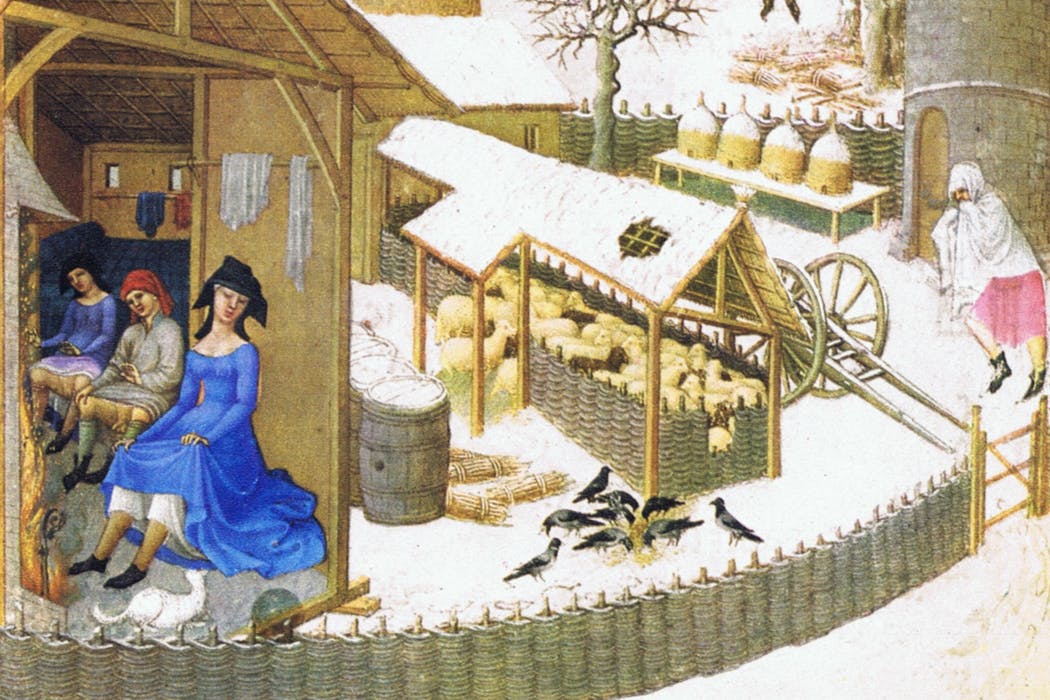
Le mois de Février, peint par les frères Limbourg pour le livre « Les Très Riches Heures du Duc Jean de Berry ». Ce n’est qu’au tout début de ce mois que s’achevaient les festivités de fin d’année. Pierce Archive LLC/Buyenlarge via Getty Images

Oui, les paysans du Moyen-Âge travaillaient dur. Pourtant, lorsqu’arrivait Noël, ils profitaient de périodes de fêtes bien plus longues que celles dont nous disposons aujourd’hui.


Lorsque l’on pense au Moyen Âge en Europe, viennent en tête des images de pauvreté écrasante, de superstition et d’obscurantisme. Pourtant, la réalité de cette période de mille ans, comprise entre 500 et 1500, était bien plus complexe. Et c’est particulièrement vrai lorsqu’on s’intéresse aux paysans, qui représentaient alors environ 90 % de la population.

Malgré leur dur labeur, les paysans disposaient de temps libre. En additionnant les dimanches et les nombreuses fêtes, environ un tiers de l’année était exempt de travail intensif. Les célébrations étaient fréquentes et s’articulaient autour des fêtes religieuses comme Pâques, la Pentecôte et les jours de saints. Mais la plus longue et la plus festive de toutes était Noël.

En tant que professeure d’histoire médiévale, je peux vous assurer que l’idée largement répandue selon laquelle la vie des paysans n’aurait été que misère est fausse. Ils menaient une vie sociale riche – peut-être même plus riche que la nôtre –, mangeaient correctement, faisaient souvent la fête et avaient des familles pas si différentes des nôtres. Pour eux, les célébrations de fin d’année commençaient bien avant Noël et se prolongeaient au-delà du Nouvel An.

La fête ne faisait alors que commencer.

# La vie quotidienne au village

Un paysan n’était pas simplement un pauvre, prisonnier de sa basse condition. Il s’agissait plutôt d’un agriculteur de subsistance qui devait à son seigneur une part de la nourriture qu’il produisait. Il lui fournissait également une partie de sa force de travail, ce qui pouvait inclure la construction de ponts ou la mise en culture des terres du seigneur.

En échange, le seigneur lui offrait une protection contre les bandits ou les envahisseurs. Il rendait aussi la justice par l’intermédiaire d’un tribunal et punissait les vols, les meurtres et autres crimes. En général, le seigneur résidait dans le village ou à ses alentours.

Le paysan, lui, vivait à la campagne, dans des villages dont la taille allait de quelques maisons à plusieurs centaines. Ces villages disposaient de fours banaux, de puits, de moulins à farine, de brasseries ou de tavernes, ainsi que de forgerons. Les maisons étaient regroupées au centre du village, le long d’un chemin de terre, et entourées de terres agricoles.

Selon les critères d’aujourd’hui, une maison paysanne était petite – en Angleterre, la surface moyenne était d’environ 65 mètres carrés. Elle pouvait être construite en tourbe, en bois, en pierre ou en torchis, une technique très proche du lattis-plâtre, avec des toits à poutres recouverts de paille. Les maisons possédaient une porte d’entrée, et certaines avaient même une porte arrière. Les fenêtres étaient couvertes de volets et, rarement, de verre. À part la cheminée, seules la lumière du Soleil, de la Lune, une lampe à huile ou une bougie éclairaient l’intérieur.

# Sexualité sans intimité

La journée était rythmée par les saisons et la lumière du soleil. La plupart des gens se levaient à l’aube, voire un peu avant ; les hommes partaient rapidement aux champs pour cultiver des céréales comme le blé et l’orge. Les femmes travaillaient à la maison et dans la cour, s’occupant des enfants, des animaux et du potager, tout en filant, cousant et cuisinant. Les paysans ne possédaient pas d’horloge, si bien qu’une recette pouvait recommander de cuire un plat pendant le temps nécessaire pour dire trois fois le Notre Père.

Vers midi, les gens faisaient généralement une pause et prenaient leur repas principal – souvent une soupe ou un ragoût. Leur alimentation pouvait inclure de l’agneau et du bœuf, ainsi que du fromage, du chou, des oignons, des poireaux, des navets et des fèves. Le poisson, en particulier le poisson d’eau douce, était également apprécié. Chaque repas comportait du pain.

La bière et le vin faisaient partie intégrante des repas. Selon nos critères, les paysans buvaient beaucoup, bien que le taux d’alcool de la bière et du vin soit inférieur à celui des boissons actuelles. Ils s’octroyaient souvent une sieste avant de retourner aux champs. Le soir, ils prenaient un repas léger, parfois seulement du pain, et passaient un moment à socialiser.

Ils se couchaient quelques heures après la tombée de la nuit, si bien que la durée de leur sommeil dépendait de la saison. En moyenne, ils dormaient environ huit heures, mais pas d’un seul tenant. Ils se réveillaient après un « premier sommeil », priaient, faisaient l’amour ou discutaient avec les voisins pendant une demi-heure à deux heures, puis retournaient se coucher pour environ quatre heures supplémentaires.

Les paysans ignoraient l’intimité telle que nous la concevons ; toute la maisonnée partageait souvent une seule grande pièce. Les parents faisaient l’amour tandis que leurs enfants dormaient à proximité. Les couples mariés partageaient un lit, et l’un de leurs jeunes enfants pouvait dormir avec eux, bien que les nourrissons aient des berceaux. Les enfants plus âgés dormaient souvent à deux par lit.

Un Noël médiéval

La vie n’était certes pas facile. Mais les périodes de repos et de loisirs dont ils bénéficiaient étaient enviables. Aujourd’hui, [aux États-Unis, (NDT)] beaucoup de gens commencent à penser à Noël après Thanksgiving, et l’esprit des fêtes s’éteint généralement dès le début janvier. Au Moyen Âge, cela aurait été impensable.

L’Avent commençait avec la fête de Saint Martin. À l’époque, elle avait lieu 40 jours avant Noël ; aujourd’hui, c’est le quatrième dimanche avant la fête. Pendant cette période, les chrétiens occidentaux respectaient un jeûne ; moins strict que celui du Carême, ils limitaient la consommation de viande et de produits laitiers à certains jours de la semaine. Ces règles symbolisaient non seulement l’absence et le désir, mais elles permettaient aussi de rationner la nourriture après la fin des récoltes et avant que les viandes ne soient complètement salées ou fumées.

Noël lui-même était synonyme de festins et d’ivresse – et durait près de six semaines.

Le 25 décembre était suivi des 12 jours de Noël, qui se terminaient avec l’Épiphanie le 6 janvier, commémorant la visite des Mages à Jésus, Marie et Joseph. On échangeait des cadeaux, souvent sous forme de nourriture ou d’argent, bien que cela se fasse plus couramment le jour de l’An. Les gibiers à plumes, le jambon, les tourtes à la viande et les vins épicés figuraient parmi les mets populaires, les épices étant censées réchauffer le corps.

Bien que Noël célèbre officiellement la naissance de Jésus, il était clairement associé à des fêtes préchrétiennes mettant l’accent sur le solstice d’hiver et le retour de la lumière et de la vie. Ainsi, les feux de joie, les bûches de Noël et les décorations d’arbres faisaient partie des festivités. Selon la tradition, Saint François d’Assise a créé la première crèche en 1223.

[En Angleterre (NDT)] Noël se terminait lentement, le premier lundi après l’Épiphanie étant appelé le « Plough Monday » (« lundi de la charrue ») car il marquait le retour au travail agricole. La fin complète de la saison avait lieu le 2 février – date de la Chandeleur – qui coïncide avec l’ancienne fête païenne d’Imbolc. Ce jour-là, on bénissait les bougies pour l’année à venir, et toute décoration laissée en place risquait, selon la tradition celte, d’être infestée de gobelins.

Aujourd’hui, beaucoup se plaignent du stress des fêtes : achats, trajets, cuisine, ménage et toute une foule d’obligations. Et la fenêtre pour tout accomplir est particulièrement réduite : Noël est le seul jour férié. C’est pourquoi, moi, je rêve d’un Noël médiéval.

The Conversation

Bobbi Sutherland ne travaille pas, ne conseille pas, ne possède pas de parts, ne reçoit pas de fonds d’une organisation qui pourrait tirer profit de cet article, et n’a déclaré aucune autre affiliation que son organisme de recherche.

ref. Les paysans du Moyen-Âge profitaient sans doute davantage des fêtes de fin d’année que nous – https://theconversation.com/les-paysans-du-moyen-age-profitaient-sans-doute-davantage-des-fetes-de-fin-dannee-que-nous-272562

Looted African belongings must be returned: is it repatriation or restitution? The words we use matter

Source: The Conversation – Africa – By Victoria Gibbon, Professor in Biological Anthropology, Division of Clinical Anatomy and Biological Anthropology, University of Cape Town

Museums and universities around the world hold vast collections of cultural artefacts, artworks, objectified belongings and even ancestral remains. Many were not freely given but taken during colonial times, through force, manipulation, theft or violence. For decades, they have sat in storerooms and display cases, classified into categories like anthropology, natural history or ethnology, separated from the people and communities to whom they once belonged.

In recent years, there has been growing recognition that these collections carry painful legacies.

Calls for their return have become part of a global conversation about decolonisation, justice and healing. In 2018 French president Emmanuel Macron produced a report which called for a new ethics of humanity, setting off a new willingness to return African artworks and material culture. But African calls for restitution were made at least five decades earlier following former president of the Democratic Republic of the Congo Mobutu Sese Seko’s address to the UN.

In all these engagements, two words are often used: repatriation and restitution.

At first glance they may seem to mean the same thing, and both involve the return of something. But as South African scholars, working in the fields of history, museum studies and human biology, we argue that the difference between these terms is not just semantic. The choice of word reflects deeper politics of justice, recognition and repair.

In our recent article we explained how we see this difference, and why the work of restitution restores people’s power over their future, and gives them a sense of agency. We argue that, for its part, repatriation has come to represent something less concerned with community restoration and has more to do with an administrative and logistical exercise.

We argue that, unlike repatriation, restitution speaks directly to justice.

Repatriation: the language of return

The word repatriation comes from the Latin patria, meaning “fatherland”. Traditionally, it refers to the return of a person or their remains to their country of origin. Governments often use this term for the logistical and legal transfer of people, artworks, or ancestral remains across national borders.

In countries that were settled by colonisers, like the US, Canada, Australia and New Zealand, repatriation has become the dominant language. This is partly due to specific laws and frameworks. In the US, for example, the Native American Graves Protection and Repatriation Act requires museums to return human remains and cultural items to Indigenous communities in a proactive manner.

In New Zealand, the national museum Te Papa plays a central role in repatriating Māori and Moriori ancestral remains from overseas institutions before returning them to local communities. In Australia, the choice of repatriation by activists, communities and scholars also sought strategically to draw a connection with the return of the remains of fallen soldiers.

In these contexts, repatriation is often framed as a process of giving back. States or museums take the lead, and communities receive.

Some Indigenous scholars and activists have challenged this framing, pointing out its patriarchal and statist overtones. They have introduced the concept of “rematriation”, signalling a return to “Mother Earth” rooted in Indigenous feminist perspectives, spirituality and community balance.

In South Africa, too, the term repatriation has been used, especially when the state arranged for the return of remains from abroad, as in the case of the return of Sarah Baartman from France.

Baartman was a 19th century Khoe (Indigenous South African) woman put on display in freak shows in Europe. Her body was later dissected by scientists within the realm of racial science and made to enter the systems of collecting and exhibition at the Musée de l’Homme in Paris. After being turned into an international symbol of the oppression of black women, Baartman also became a focus of claims for return made by Khoe and other activists and social movements in South Africa.

Repatriation has also been used for the return of the remains of ex-combatants and other patriots.

But unease began to grow. Was this language adequate for the deep work of justice and healing that communities were calling for? Or was it more concerned with national prestige than with community restoration?

Restitution: politics of justice beyond the transaction

Restitution is about returning something to its rightful owner, not simply as a transfer of property, but as an act of recognition, repair and healing.

Restitution is not just an event, like handing over an artefact in a ceremony. It is a process, time-consuming, emotional, and often painful. It involves research into how items were acquired, conversations with descendant communities, and decisions about how to care for or honour what has been returned. It recognises that the belongings taken were not just curiosities or objects, but were tied to community, and to language, ceremony and identity.


Read more:
Looting of African heritage: a powerful new book explores the damage done by colonial theft


In many cases, ancestral remains were classified and objectified as human remains and specimens, stripping them of their humanity. Restitution, by contrast, restores them as ancestors with dignity and agency.

Restitutionary work: healing and reconnection

Our research uses the phrase “restitutionary work” to describe the labour involved. This work goes far beyond diplomacy, logistics and transport. It includes:

  • Acknowledgment of injustice: Recognising that items were wrongly taken, whether through violence, coercion, or theft.

  • De-objectification: Treating ancestral remains and cultural belongings not as human remains and museum objects but as ancestors or cultural treasures.

  • Community involvement: Ensuring that descendant groups and local communities decide what happens after return, in conversation with museums and national governments.

  • Healing processes: Creating spaces for mourning, ceremony and closure.

  • New futures: Seeing restitution not just as recovering the past but as opening pathways for cultural renewal and social justice.


Read more:
San and Khoe skeletons: how a South African university sought to restore dignity and redress the past


For example, South Africa’s land restitution programme has shown that restitution is not simply about restoring what once was. It is about creating conditions for justice today and possibilities for tomorrow.

Similarly, cultural restitution is less about putting things “back where they came from” and more about empowering communities to reconnect with their heritage in ways that matter today.

Why words matter

The distinction between repatriation and restitution is not academic nitpicking. Words shape power. If return is framed as repatriation, the emphasis is often on the giver, the returner, in the form of the state or museum, granting something back. If it is framed as restitution, the emphasis shifts to the claimant, to the community asserting rights and demanding justice.

Restitution is not about recovering a lost past. That past cannot be restored exactly as it was. Instead, it is about creating new futures built on justice, dignity and respect. For communities around the world still living with the legacies of colonial dispossession, that distinction matters deeply.

The Conversation

Victoria Gibbon receives funding from the South African National Research Foundation. Opinions expressed and conclusions arrived at are those of the authors and not necessarily attributed to the NRF.

Ciraj Rassool receives funding from the Volkswagen Foundation, and has previously received funding from the Andrew W. Mellon Foundation and the Open Society Foundations. Opinions expressed and conclusions arrived at are those of the authors.

ref. Looted African belongings must be returned: is it repatriation or restitution? The words we use matter – https://theconversation.com/looted-african-belongings-must-be-returned-is-it-repatriation-or-restitution-the-words-we-use-matter-268710

Tattoos, toxins and the immune system – what you need to know before you get inked

Source: The Conversation – UK – By Manal Mohammed, Senior Lecturer, Medical Microbiology, University of Westminster

ViDI Studio/Shutterstock

From minimalist wrist designs to full sleeves, body art has become so common that it barely raises an eyebrow. But while the personal meaning of a tattoo may be obvious, the biological consequences are far less visible. Once tattoo ink enters the body, it does not stay put. Beneath the skin, tattoo pigments interact with the immune system in ways scientists are only just beginning to understand.

Tattoos are generally considered safe, but growing scientific evidence suggests tattoo inks are not biologically inert. The key question is no longer whether tattoos introduce foreign substances into the body, but how toxic those substances might be and what that means for long-term health.

Tattoo inks are complex chemical mixtures. They contain pigments that give colour, liquid carriers that help distribute the ink, preservatives to prevent microbial growth, and small amounts of impurities. Many pigments currently in use were originally developed for industrial applications such as car paint, plastics and printer toner, rather than for injection into human skin.

Some inks contain trace amounts of heavy metals, including nickel, chromium, cobalt and occasionally lead. Heavy metals can be toxic at certain levels and are well known for triggering allergic reactions and immune sensitivity.

Tattoo inks can also contain organic compounds, including azo dyes and polycyclic aromatic hydrocarbons.

Azo dyes are synthetic colourants widely used in textiles and plastics. Under certain conditions, such as prolonged exposure to sunlight or during laser tattoo removal, they can break down into aromatic amines. These chemicals have been linked to cancer and genetic damage in laboratory studies.

Polycyclic aromatic hydrocarbons, often shortened to PAHs, are produced during incomplete burning of organic material and are found in soot, vehicle exhaust and charred food. Black tattoo inks, commonly made from carbon black, may contain these compounds, some of which are classified as carcinogenic.

Coloured inks, particularly red, yellow and orange, are more frequently associated with allergic reactions and chronic inflammation. This is partly due to metal salts and azo pigments that can degrade into potentially toxic aromatic amines.

Tattooing involves injecting ink deep into the dermis, the layer of skin beneath the surface. The body recognises pigment particles as foreign material. Immune cells attempt to remove them, but the particles are too large to be fully cleared. Instead, they become trapped inside skin cells, which is what makes tattoos permanent.

Tattoo ink does not remain confined to the skin. Studies show that pigment particles can migrate through the lymphatic system and accumulate in lymph nodes. Lymph nodes are small structures that filter immune cells and help coordinate immune responses. The long-term health effects of ink accumulation in these tissues remain unclear, but their central role in immune defence raises concerns about prolonged exposure to metals and organic toxins.

Tattoos and the immune system

A recent study suggests that commonly used tattoo pigments can influence immune activity, trigger inflammation and reduce the effectiveness of certain vaccines. Researchers found that tattoo ink is taken up by immune cells in the skin. When these cells die, they release signals that keep the immune system activated, leading to inflammation in nearby lymph nodes for up to two months.

The study also found that tattoo ink present at a vaccine injection site altered immune responses in a vaccine-specific way. Notably, it was associated with a reduced immune response to the COVID-19 vaccine. This does not mean tattoos make vaccines unsafe. Rather, it suggests tattoo pigments can interfere with immune signalling, the chemical communication system immune cells use to coordinate responses to infection or vaccination, under certain conditions.

At present, there is no strong epidemiological evidence linking tattoos to cancer in humans. However, laboratory and animal studies suggest potential risks. Certain tattoo pigments can degrade over time, or when exposed to ultraviolet light or laser tattoo removal, forming toxic and sometimes carcinogenic byproducts.

Many cancers take decades to develop, making these risks difficult to study directly, especially given how recently widespread tattooing has become.

The most well-documented health risks of tattoos are allergic and inflammatory reactions. Red ink is particularly associated with persistent itching, swelling and granulomas. Granulomas are small inflammatory nodules that form when the immune system attempts to isolate material it cannot remove.

These reactions can appear months or years after a tattoo is applied and may be triggered by sun exposure or changes in immune function. Chronic inflammation has been linked to tissue damage and increased disease risk. For people with autoimmune conditions or weakened immune systems, tattoos may pose additional concerns.

Infection risks

Like any procedure that punctures the skin, tattooing carries some risk of infection. Poor hygiene can lead to infections such as Staphylococcus aureus, hepatitis B and C and, in rare cases, atypical mycobacterial infections.

One of the biggest challenges in assessing tattoo toxicity is the lack of consistent regulation. In many countries, tattoo inks are regulated far less strictly than cosmetics or medical products, and manufacturers may not be required to disclose full ingredient lists.

The European Union has introduced stricter limits on hazardous substances in tattoo inks, but globally, oversight remains uneven.

For most people, tattoos do not cause serious health problems, but they are not risk-free. Tattoos introduce substances into the body that were never designed for long-term residence in human tissue, some of which can be toxic under certain conditions.

The main concern is cumulative exposure. As tattoos become larger, more numerous and more colourful, the total chemical burden increases. Combined with sun exposure, ageing, immune changes or laser removal, this burden may have consequences that science has not yet fully uncovered.

Tattoos remain a powerful form of self-expression, but they also represent lifelong chemical exposure. While current evidence does not suggest widespread danger, growing research highlights important unanswered questions about toxicity, immune effects and long-term health. As tattooing continues to rise worldwide, the case for better regulation, transparency and sustained scientific investigation becomes increasingly difficult to ignore.

The Conversation

Manal Mohammed does not work for, consult, own shares in or receive funding from any company or organisation that would benefit from this article, and has disclosed no relevant affiliations beyond their academic appointment.

ref. Tattoos, toxins and the immune system – what you need to know before you get inked – https://theconversation.com/tattoos-toxins-and-the-immune-system-what-you-need-to-know-before-you-get-inked-271503

How displacement reshapes refugees’ gut health

Source: The Conversation – UK – By Manal Mohammed, Senior Lecturer, Medical Microbiology, University of Westminster

akramalrasny/Shutterstock

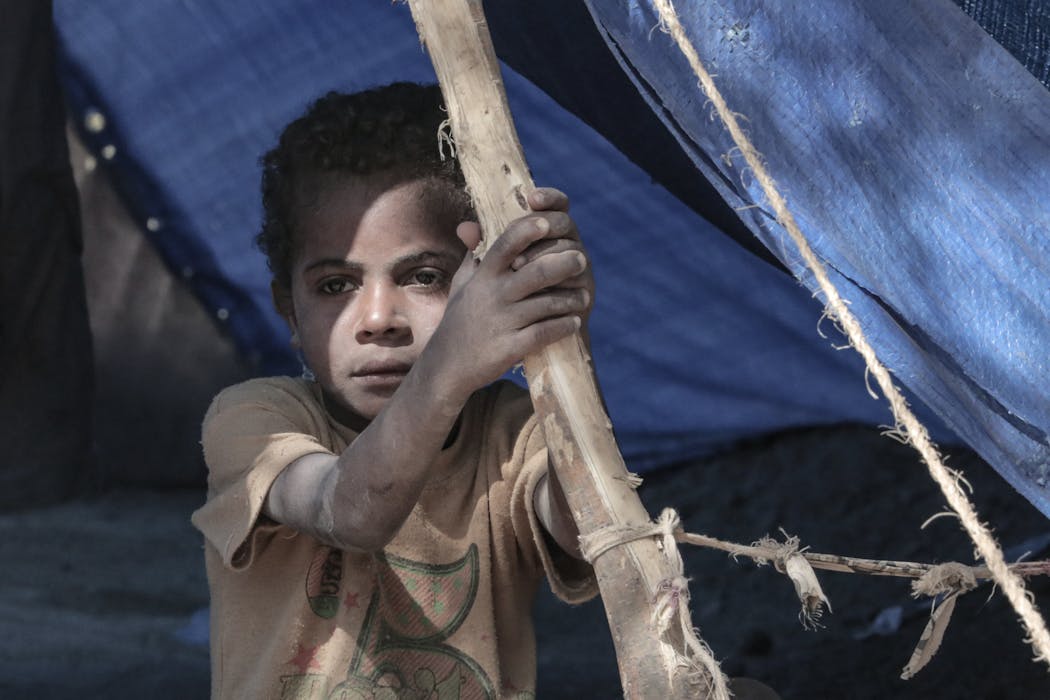
Refugee health is often discussed in terms of crises such as disease outbreaks, malnutrition and psychological distress. But some of the most serious effects of displacement are harder to see. One example is how forced migration can change the bacteria in the gut that support immunity and long-term health.

The human gut contains trillions of bacteria, viruses and fungi, together known as the gut microbiome. These microbes help digest food, support the immune system and protect against illness. A healthy gut microbiome is usually diverse and balanced, with plenty of beneficial bacteria that help protect against infection and inflammation.

Studies show that refugees often have gut microbiomes that look different from those of people who have not experienced displacement. Researchers describe distinct gut microbiome profiles, typically with fewer types of microbes and changes in which bacteria are most common. These differences are not genetic. Instead, they reflect the extreme conditions many refugees face before, during and after displacement.

Understanding these differences can help improve healthcare for refugees, but it also shows how social inequality can become physically embedded in the body over time.

One common finding is higher levels of harmful bacteria and antibiotic-resistant organisms in refugee gut microbiomes. Antibiotic-resistant bacteria can survive medicines designed to kill them, making infections harder to treat and easier to pass on.

Poor sanitation and contaminated environments play a major role. Many refugees come from, or travel through, areas affected by conflict or disaster, where access to clean water and toilets is limited. Drinking unsafe water or eating contaminated food increases the chance that disease-causing bacteria will settle in the gut and multiply, a process known as colonisation.

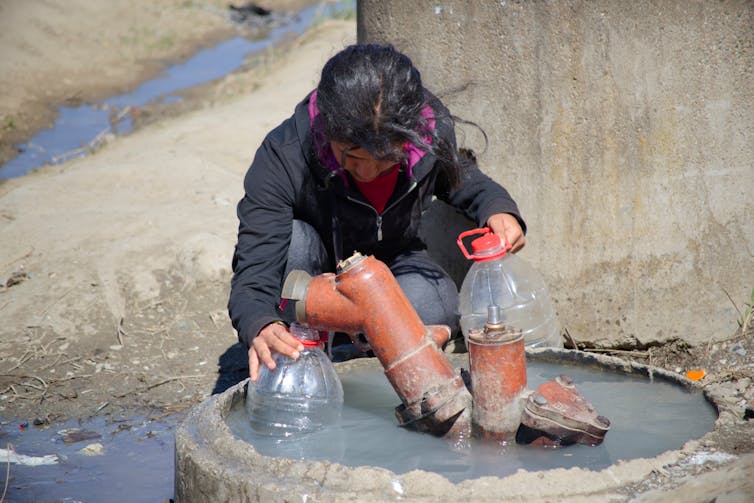
A girl filling a five litre bottle at a water station in a refugee camp
Refugees often live in challenging conditions, including limited access to clean water, adequate sanitation and healthcare services.
stu.dio/Shutterstock

Common examples include E coli, Salmonella and Shigella. These bacteria can cause diarrhoea, vomiting and fever, and in severe cases may lead to dehydration, blood infection, poor growth in children or long-term digestive problems.

Repeated stomach and bowel infections, especially in crowded places with poor sanitation, disturb the normal balance of gut microbes. Over time, harmful species can take over, while the overall range of microbes shrinks. Having fewer different types of gut bacteria is widely recognised as a sign of poor gut health.

Chronic stress makes these problems worse. Refugees are often exposed to prolonged stress linked to war, violence, forced movement, separation from family and ongoing uncertainty. Rates of mental health challenges are high, and stress affects physical health through the gut–brain axis, the communication system between the brain and the digestive system.

Long-term stress alters immune responses, hormone levels and the gut lining. These changes increase inflammation and make it easier for harmful microbes to grow, while reducing beneficial bacteria such as Lactobacillus and Bifidobacterium.

Antibiotic use is another major factor driving poor gut health and antibiotic resistance. In low-resource or conflict settings, antibiotics are often used frequently because infections are common and access to testing is limited. Refugees may receive multiple courses without a clear diagnosis or follow-up. While these medicines can save lives, repeated or unnecessary use allows resistant bacteria to survive and spread.

Antibiotics also destroy helpful microbes that keep the gut healthy. Repeated courses reduce the number and variety of beneficial bacteria, weakening the gut’s ability to protect itself.

As a result, antibiotic-resistant strains such as E coli that can neutralise antibiotics can become established in the gut, making infections much harder to treat.

Poor conditions and malnutrition

Living conditions during displacement further increase the risk of gut infection and the spread of antibiotic-resistant bacteria. Refugees camps and temporary shelters are often overcrowded and lack basic hygiene facilities, allowing infectious diseases to spread easily.

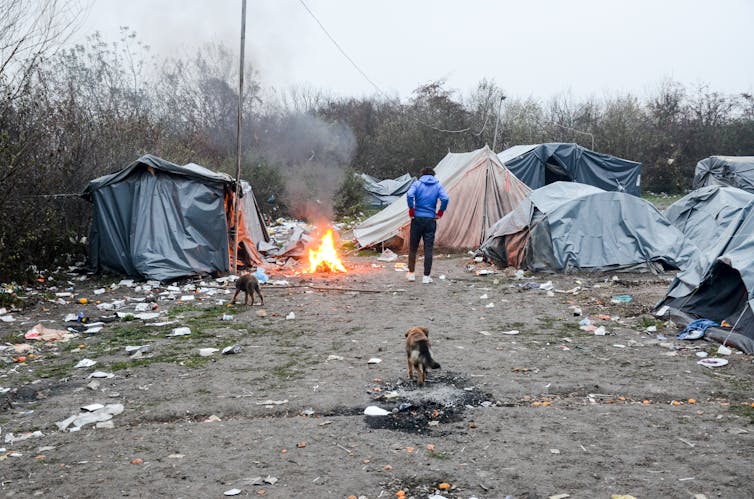
Photo showing terrible conditions in refugee camp
Infectious diseases can spread rapidly in refugee camps where overcrowding and limited sanitation increase transmission risk.
Ajdin Kamber/Shutterstock

Dietary disruption also affects gut health. Sudden shifts from traditional diets rich in fibre to emergency food aid high in refined carbohydrates deprive beneficial gut bacteria of fuel. Low-fibre diets weaken gut defences and allow harmful bacteria to thrive.

Malnutrition further increases vulnerability, especially in children, whose gut microbiomes are still developing.

After resettlement, refugees may still carry antibiotic-resistant bacteria picked up earlier. Barriers to healthcare can slow recovery. Language barriers, limited access to culturally appropriate healthcare and delayed treatment can lead to antibiotics being prescribed as a precaution rather than based on confirmed diagnosis. This sustains cycles of microbiome disruption rather than recovery.

The spread of harmful and antibiotic-resistant bacteria in refugee populations is a public health issue, not a personal one. Addressing them requires coordinated public health interventions, including improved sanitation, careful antibiotic use, stress-aware care and nutritional support that helps restore a healthy gut.

Understanding how all these factors interact is essential for developing humane, effective healthcare strategies that protect both refugee communities and wider public health.

The Conversation

Manal Mohammed does not work for, consult, own shares in or receive funding from any company or organisation that would benefit from this article, and has disclosed no relevant affiliations beyond their academic appointment.

ref. How displacement reshapes refugees’ gut health – https://theconversation.com/how-displacement-reshapes-refugees-gut-health-271997

How Hannah Arendt can help us understand this new age of far-right populism

Source: The Conversation – UK – By Christopher J. Finlay, Professor in Political Theory, Durham University

Sales of Hannah Arendt’s The Origins of Totalitarianism (1951) rocketed when Donald Trump won the 2016 US presidential election. Nearly a year into the second Trump administration – and 50 years since Arendt’s death in December 1975 – it seems like an apposite time to revisit the book and see what light it sheds on 2025.

The book is brilliant but difficult, combining history, political science and philosophy in a way that can be very disorientating. So what might we, as democratic citizens, gain from reading it?

Born to a secular German Jewish family in 1906, Arendt studied philosophy under Martin Heidegger and Karl Jaspers before turning to Zionist activism in Berlin in the early 1930s. After a brush with the gestapo, she fled to France, and in 1941 left Europe for the US. So when she began researching Origins in the early 1940s, she was no stranger to totalitarianism.

Totalitarianism, she argued, was a radically new form of government distinguished by its ideological conception of history. For the Nazis, history was a clash of races; for Stalinism, it was class war. Either way, totalitarian leaders sought to execute historical “laws” by forcibly reshaping the humans they ruled.

Humanity, Arendt said, is distinguished by its infinite variability – no person can ever entirely substitute for another. Totalitarianism aimed to destroy this. It isolated individuals, dissolving the bonds through which they unite and empower each other, and sought to extinguish human personhood.

The concentration camps’ total domination did so by reducing each inmate to “a bundle of reactions that can be liquidated and replaced” before killing them. With everyone ultimately subject to this threat, totalitarianism rendered the human person as such, superfluous.

Rather than pursuing stability, totalitarianism was always a movement, constantly instigating change. When its propaganda collided with facts, it brutalised reality until the facts conformed. Its ideal subjects not only believed its lies: they no longer found the distinction between truth and falsehood meaningful. This was “post-truth politics” at its most extreme.

Common sense won’t save us

Comparing today’s politics to fully fledged totalitarianism can be illuminating. But if it’s all we do, we risk overlooking Arendt’s subtler lessons about warning signs that can help us gauge threats to democracy.

The first is that political catastrophe isn’t always signposted by great causes, but arises when sometimes seemingly trivial developments converge. The greatest example for Arendt was political antisemitism. During the 19th century, only a “crackpot” fringe embraced it. By the 1930s, it was driving world politics.

This resonates with hard-right and far-right ideology today. Ideas widely seen as eccentric 20 years ago have increasingly come to shape democratic politics. Anti-immigrant sentiment and xenophobia penetrate the political mainstream. Alongside growing Islamophobia, antisemitism is on the rise again too.

The mainstreaming of previously marginal views helps explain a second warning sign that politics is increasingly driven by what Arendt described as “forces that cannot be trusted to follow the rules of common sense and self-interest”.

A simplistic politics of ideological fantasy and paranoia takes over instead. It appeals most to the isolated and lonely, people lost in society who have given up hope that anyone will ever address their real interests and concerns. Perpetually frustrated by reality, they seek escape in conspiracy theories instead.

Arendt’s story resonates with There Is Nothing For You Here, Fiona Hill’s account of the “left-behind” in communities of de-industrialised regions in the US, UK, Russia, and Germany – regions where the far right has grown.

In early 20th-century Europe, similar experiences of powerlessness spread alongside the imperialist embrace of what Arendt called “the limitless pursuit of power after power”. When colonial violence boomeranged back to its European source, the powerless were drawn to leaders who exemplified the violent pursuit of power for power’s sake.

New wine in old bottles

The neo-imperialist flex of a US government executing civilian boat crews in international waters while deploying regular armed forces domestically to fight crime looks like an appeal to the same instincts Arendt was writing about.

But perhaps Origins’ most important lesson is about trying to understand something radically new using outdated concepts – “interpreting history by commonplaces” as Arendt called it. Faced with a jarringly new style of politics, there is a temptation to explain it away as mere nationalistic excess, for instance. Or as an understandable expression of economic disappointment and one readily addressed with economic remedies.

Origins tells instead the story of something much greater than the sum of its parts taking on a terrible life of its own. By trying to reduce it to familiar terms, Arendt said, “the impact of reality and the shock of experience were no longer felt” and people failed to resist when they most needed to.

But this lesson also applies to the idea of totalitarianism itself. It helped Arendt understand the 1940s, but we shouldn’t assume that it will apply directly to 2025. The term totalitarianism could itself distract, rather than mobilising people.

For example, if claiming that Trumpian populism is already totalitarian seems excessively alarmist, then deciding that it isn’t might be excessively reassuring. Either could diminish people’s ability to respond to the demands of the moment.

What we urgently need instead is what Arendt described as “the unpremeditated, attentive facing up to, and resisting of, reality – whatever it may be”. Origins’ greatest lesson is in showing us what that looks like.

The main lesson for 2025 is as much about what Arendt was doing in the 1940s as about what she was saying: actively thinking in the now, and trying to grasp an emergent “something” on its own terms – a threat that is taking shape, but which hasn’t yet fully revealed itself.

This article features references to books that have been included for editorial reasons, and may contain links to bookshop.org; ff you click on one of the links and go on to buy something, The Conversation UK may earn a commission.


Looking for something good? Cut through the noise with a carefully curated selection of the latest releases, live events and exhibitions, straight to your inbox every fortnight, on Fridays. Sign up here.


The Conversation

Christopher J. Finlay has previously received funding from the British Academy and from the Leverhulme Trust.

ref. How Hannah Arendt can help us understand this new age of far-right populism – https://theconversation.com/how-hannah-arendt-can-help-us-understand-this-new-age-of-far-right-populism-269626

How young adult literature and philosophy can help provide better role models for masculinity

Source: The Conversation – UK – By Adrianna Zabrzewska, Senior Research Fellow (Postdoc), Edinburgh Napier University

Toxic masculinity doesn’t stop at marginalising women and LGBTQ+ people. It harms straight men by discouraging emotional expression, tenderness, and connection.

As the TV show Adolescence demonstrated, the troubling anxiety and rage surrounding what it means to “be a man” can arise early in life. What Adolescence also reminds us, though, is that framing boys as potential threats is not the way to go.

So how do we reach boys before they radicalise in dangerous ways? How can we do this without reducing them to stereotypes?

While the effects of literature on empathy might not be straightforward, taking children’s literature seriously and looking into representations of masculinity in young adult fiction could be part of the solution.

In my research, I drew on feminist philosophy to propose three concepts for rethinking masculinity: relationality, vulnerability, and inclination. There are books that already feature these ideals, like Two Boys Kissing by David Levithan or Rick Riordan’s action-packed urban fantasy series Magnus Chase and the Gods of Asgard.

The concept, inclination, relates to fostering a caring, curious orientation toward difference, a willingness to “lean in” rather than stand aloof. Or, to paraphrase the Italian feminist philosopher Adriana Cavarero, it is the courage to fall down the “slippery slope” of love, friendship and emotional bonds. In my interpretation, inclination is the drive that motivates people to connect with the world and care for various vulnerable others.

Inclination can be seen in Magnus Chase and the Gods of Asgard, which combines exciting adventures with emotional depth. Magnus is a teenage male hero who is sweet, caring, and driven by love for his friends.

With a diverse cast of characters, from deaf elves to Muslim American female warriors and genderfluid pottery artists, the series offers an engaging lesson in intersectionality, which refers to the fact that everyone is part of multiple social categories.

Riordan’s other boy protagonists – including Percy Jackson or Jason Grace (also from the world of Percy Jackson) – rely on friends of all genders and are not threatened by independent women.

They bravely display their own vulnerability while respecting the vulnerability of others. And if they don’t – like the protagonist of The Trials of Apollo – it’s because they’re written as caricatures of self-aggrandising, hyper-individualistic masculinity.

Redefining masculinity through queer fiction

The concept of relationality is the idea that we are formed not in isolation but through relationships. It acknowledges the diverse contexts we inhabit, and emphasises that our differences should be respected, not ignored. Ideally, a person who sees themselves as relational would focus on fostering an ethical commitment to honour, rather than exploit, the vulnerabilities of others.

This can be seen in Two Boys Kissing, which follows several queer teenage protagonists as they explore friendship, love, and identity. What makes the novel remarkable is its chorus of narrators: a collective voice of gay men whose lives were lost during the HIV/Aids epidemic.

The narrators watch over the living boys with tenderness and urgency. They become a vigilant, caring presence that transcends time and space. They provide a sense of continuity between generations and individuals, showing that relationships matter, not only in our immediate circles but also in the larger tapestry of life.

Vulnerability refers to the shared human condition of being a body born from another body. We are all finite and fragile, susceptible to harm, loss, and injustice. Through our fragility and dependence, vulnerability can be transformed into resilience and connection. This is especially true when we recognise the diverse experiences of disenfranchisement that we each face.

In Two Boys Kissing, the chorus of narrators celebrate imperfect bodies, both cis-gendered and trans, that defy unrealistic beauty standards. They whisper encouragement to a lonely teen contemplating suicide and agonise over his pain. They affirm that care, intimacy and affection are not signs of weakness but of strength. Through these voices, Levithan’s readers learn that self-acceptance comes not from independence or dominance but from reaching out to others.

When strategically integrated into stories, educational practices and daily interactions, vulnerability, relationality, and inclination can help us sketch new ethical horizons, and not only for masculinity but for gendered existence as a whole.

Of course, literature will not solve our problems. It will not turn us into better people overnight (if at all). But stories are powerful cultural tools. They can show boys that being strong doesn’t mean being unfeeling, and that caring for others is not a betrayal of masculinity but its renewal.


Looking for something good? Cut through the noise with a carefully curated selection of the latest releases, live events and exhibitions, straight to your inbox every fortnight, on Fridays. Sign up here.


The Conversation

Adrianna Zabrzewska does not work for, consult, own shares in or receive funding from any company or organisation that would benefit from this article, and has disclosed no relevant affiliations beyond their academic appointment.

ref. How young adult literature and philosophy can help provide better role models for masculinity – https://theconversation.com/how-young-adult-literature-and-philosophy-can-help-provide-better-role-models-for-masculinity-271888

Huge online scam operations are flourishing in war-torn Myanmar – I travelled there to find out why

Source: The Conversation – UK – By Xu Peng, Postdoctoral Researcher at the Centre for the Study of Illicit Economies, Violence and Development, SOAS, University of London

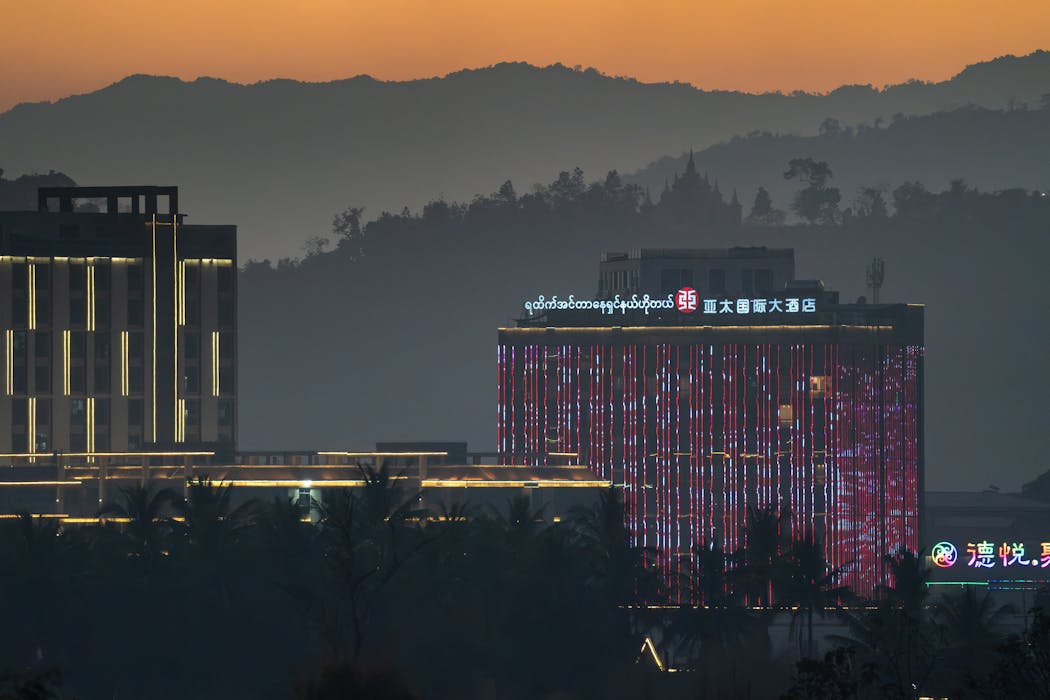
The town of Shwe Kokko in south-eastern Myanmar, which is widely recognised as hosting one of the country’s most notorious scam centres. Naphatpixs / Shutterstock

South-east Asia has become the “ground zero” for the global online scamming industry, according to the UN, costing victims billions of US dollars each year. Scam operations are run by Chinese crime syndicates from fortified compounds in countries like Myanmar, which has been embroiled in a nationwide armed conflict since 2021.

The size of the scam industry has led to sustained security crackdowns in recent years. This has included a number of joint operations involving police forces from multiple countries. However, despite releasing tens of thousands of trafficked workers from these compounds, the raids have done little to wipe out scam operations.

In October, for example, Myanmar’s military stormed a major scam hub in the south-eastern Karen State. The operation was, according to military spokesperson Maj. Gen. Zaw Min Tun, proof that the army would “completely eradicate online scam activities from their roots”. But, just days later, local reporting indicated that work was continuing uninterrupted at other compounds in the area.

Since 2018, I have been carrying out fieldwork along Myanmar’s borders with China and Thailand. I have found that checkpoint controls vary widely. This asymmetry determines where in Myanmar scam hubs emerge and helps explain why operations are often able to relocate rather than shut down when faced with pressure.

A banner warning against scams in China.
A banner warning against scams at Menglian border port, in the Yunnan province of China. It reads: ‘Scam tactics change daily – don’t listen, don’t believe, don’t transfer’.
Xu Peng, CC BY-NC-ND

China’s border with northern Myanmar is heavily securitised. Before travellers reach the border, they must pass internal checkpoints on the main roads that lead into the border counties of Yunnan province.

Police routinely check ID cards and ask people whose household registration is outside Yunnan to explain their visit. Roadside posters, digital billboards and village loudspeakers repeat the same message: do not cross the border to work in scam parks.

Local police officers I interviewed described it as now “almost impossible” for ordinary people to cross informally from China into Myanmar. And restrictions on crossing the border have tightened since late 2023, when the armed conflict in northern Myanmar intensified.

China also exercises tight telecommunications and financial controls. Real-name registration for phone SIM cards, anti-fraud apps installed on smartphones and close scrutiny of cross-border money transfers all raise the risks of running large-scale scam centres near Chinese territory.

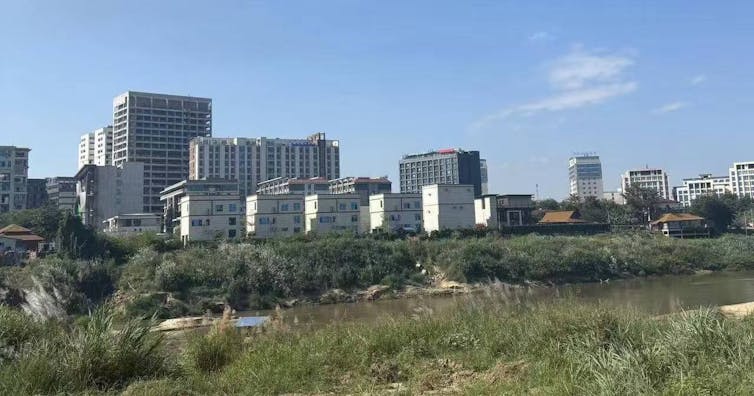
View across the Moei River towards Shwe Kokko with the river and grassy riverbank in the foreground under a clear blue sky.
View across the Moei River towards Shwe Kokko, a cluster of buildings in Myanmar opposite Mae Sot in Thailand.
Xu Peng, CC BY-NC-ND

The situation is different along Thailand’s border with Myanmar. This border has long served as a trade corridor, migration route and lifeline for refugees fleeing conflict in Myanmar. Decades of instability there have left a dense landscape of refugee camps, informal crossings and aid infrastructure in the Thai borderlands.

Towns such as Mae Sot in western Thailand, which sit only a short drive from Karen State where scam compounds have proliferated in recent years, have become key hubs for trade and refugee support. The same roads and bridges that carry refugees, aid workers and traders are also used by brokers moving trafficked workers.

Thai authorities do operate checkpoints and immigration controls. But compared with the Chinese border, these are shaped more by humanitarian concerns and longstanding cross-border social ties. It is relatively easy for foreign visitors to access Myanmar through the Thai border, as I discovered on a recent research trip.

I passed three checkpoints between the town of Tak and Mae Sot on a mini-bus and, despite prominent warning signs about scam compounds at the final checkpoint, officers checked documents quickly and let travellers through. This accessibility also makes it simple for scam recruiters, middlemen and some workers to move in and out of Myanmar.

The asymmetric border checkpoints help explain why scam hubs have clustered in Karen State, where Thai police estimate up to 100,000 people work in scam centres, while many northern compounds near China have closed down.

A large yellow roadside sign at a Thai immigration checkpoint warning travellers to be aware of scams and torture across the border.
A sign at the final checkpoint before entering Mae Sot in Thailand, warning travellers about cyber scams near the Thai-Myanmar border.
Xu Peng, CC BY-NC-ND

Myanmar’s moving checkpoints

Inside Myanmar’s contested borderlands, checkpoints are not run by a single authority. They are managed by a patchwork of ethnic armed organisations and border guard forces, each of which control their own stretch of road or river.

While these checkpoints focus on ensuring security, they are also a source of income. Local commanders and militias use them to tax goods, vehicles and people, with checkpoints set up, relaxed or moved when alliances or financial interests change.

This fragmented system creates room for scam operators to keep compounds running or to relocate workers and equipment when pressure from the authorities builds, especially when operators share profits with the people manning the checkpoints.

Interviews I have conducted with local scam brokers and police officers in China and Thailand suggest that information about impending crackdowns often circulates through these cross-border networks of recruiters, militias and complicit officials well in advance.

Reporting from Karen State suggests that ethnic militias escorted Chinese scam workers out of hubs such as KK Park and Shwe Kokko ahead of recent raids to cities like Yangon and Mandalay, charging substantial “fees” for safe passage.

South-east Asia’s scam industry bends under pressure, but it does not break. Checkpoints inside Myanmar and at its borders do not close the trade – they help decide where it goes next.

The Conversation

Xu Peng receives funding from the Serious Organised Crime and Anti-Corruption Evidence (SOC ACE) research programme for the project “The Centrality of the Margins: Borderlands, Illicit Economies and Uneven Development”, and from the Cross-border Conflict Evidence, Policy and Trends (XCEPT) research programme for the project “TRACE: Checkpoints, Conflict, and the Politics of Circulation”.

ref. Huge online scam operations are flourishing in war-torn Myanmar – I travelled there to find out why – https://theconversation.com/huge-online-scam-operations-are-flourishing-in-war-torn-myanmar-i-travelled-there-to-find-out-why-271701