After weeks of relentless rain and flooding, and even more forecast, 2025’s droughts and hosepipe bans feel like ancient history. But they shouldn’t.
The UK is increasingly caught between these wetter winters and warmer, drier summers. What if this year’s summer brings water shortages again? The seemingly endless rainfall causing flooding across the UK right now could help solve future summer drought problems – if we capture it right.
The stakes are high in Speyside, home to around half of Scotland’s malt whisky distilleries. They had to cope with 2025 being the UK’s warmest and sunniest on record, where prolonged dry conditions led to widespread restrictions on water abstraction. Multiple distilleries were forced into temporary closures, costing the industry millions of pounds and highlighting just how vulnerable even Scotland’s famously wet regions are to water scarcity.
Whisky production represents one of the UK’s biggest industrial water users. Large quantities of water are required for the distilling process and the product itself, so understanding water conservation is both extremely important for the industry, and can also help others recognise the benefits.
If it was possible to retain this winter’s rainfall and release it gradually when it was needed, the nation could become more resilient to both floods and droughts without building expensive new reservoirs.
Managing droughts with floods
Across Speyside, they’re testing ways to slow, store and steadily release water by working with the landscape rather than against it. Distillers have invested in leaky dams (small barriers built across temporary upland streams) to slow the flow of water during heavy rain and allow the rainwater to soak into soil and recharge groundwater.
Leaky dams hold the water at surface level as well helping it store underground. Water in the soil and deeper groundwater move through the subsurface much more slowly than over land – taking weeks or months rather than hours or days – which is why rivers still flow even after long dry spells.
There are other examples of useful interventions. Peatland restoration, wetland creation and tree planting all work by increasing temporary storage in the landscape and slowing the movement of water into rivers.
Research across upland catchment areas in Cumbria and West Yorkshire shows how the principles being tested in Speyside could translate to elsewhere. A large academic review of natural flood management evidence concluded that measures increasing water storage, slowing the flow of water over the land or enhancing soil structure can consistently reduce the peak level of a flood.
This growing body of evidence supports a simple but powerful idea: the UK and other countries could be more resilient to droughts and floods by redesigning landscapes to keep water around for longer.
Three lessons for the rest of the UK
1. Design and location matter
Local factors and hydrology (the study of the movement and management of water) can determine what works best where. For example, planting trees “somewhere” delivers far less benefit than planting them in the right places, especially near rivers, near the source of the river, or where soil can absorb water.
2. Benefits must stack up or they won’t be adopted
Leaky dams and other projects, such as tree planting, are relatively inexpensive, compared with traditionally engineered flood defences or having to deal with flood and drought consequences. They can deliver benefits at a fraction of the cost, while potentially also increasing biodiversity, soil health, carbon capture and improving water quality.
But there are trade-offs, which need to be assessed early. For example, in some cases, large-scale tree planting can also reduce summer water availability in already stressed catchment areas. Tree canopies can temporarily store water on the leaves, but if this water evaporates it doesn’t return to the soil. Tree roots improve the soil so it absorbs and stores more water, but trees can also use more water. The net effects depend on factors such as climate, soil type and tree species.
3. Good governance will unlock funding
When water security has clear economic benefits, businesses are willing to engage. However, investment is not always private, and a recent review showed public funding is often fragmented, with inconsistent planning rules. Strengthening overall governance of these kind of schemes is essential, because farmers, businesses and landowners are far more likely to participate if they benefit.
Managing our landscapes appropriately won’t stop all floods or prevent every drought, but it can make both less severe, while restoring habitats, supporting farming, and protecting industries that rely on dependable water supplies.
Every river carrying floodwater to the sea represents water that could be stored for drier months. Thinking ahead for what happens during heavy rains can be part of forward planning for more extreme weather in years to come.
Josie Geris receives funding from the Natural Environment Research Council, Royal Society, the Scottish Government via CREW (Scotland’s Centre of Expertise for Waters), and Chivas Brothers.
Megan Klaar receives funding from the Natural Environment Research Council, The Leverhulme Trust and National Trust.
Robert Duvall, el actor californiano fallecido a los 95 años el pasado 16 de febrero, será recordado por su larga y brillante carrera. Además de sus intervenciones en dos de las películas más icónicas del cine estadounidense, su trayectoria de más de seis décadas incluye más de cien papeles.
Duvall estaba cómodo tanto en cintas prescindibles, como 60 segundos (2000), como en dramas profundos del estilo de Confesiones verdaderas (1983). En el año 1990, por ejemplo, interpretó al mentor de Tom Cruise en Días de trueno y al Comandante en la versión de Volker Schlöndorff de El cuento de la criada.
Actuar es escuchar
Nacido en 1931 en San Diego (California), su familia esperaba que siguiera los pasos de su padre en la Marina estadounidense. Pero su pasión por la interpretación le llevó al teatro y la televisión. En Nueva York es donde dio sus primeros pasos y aprendió el oficio; en una ocasión afirmó que lo más importante de la interpetación era hablar y escuchar.
Debutó en cine en 1962, con el papel de Boo Radley en Matar a un ruiseñor. Se oxigenó el pelo y evitó que le diera el sol durante seis semanas para capturar el aspecto frágil y demacrado del personaje. Y desde aquel momento, apenas dejó la gran pantalla, apareciendo en películas clásicas de género como Bullitt (1968), Valor de ley (1969) y M*A*S*H (1970).
Historiadores del cine como David Thomson han afirmado que Duvall no era “ni bello ni lo suficientemente imponente para ser el protagonista de una película grande”. Y, sin embargo, fue nominado al óscar siete veces y ganó una, en 1984. Su nominación más reciente fue en 2015, por su papel en El juez (2015), como el dominante y gruñón padre de Robert Downey Jr, acusado de asesinato.
Muy frecuentemente sus papeles fueron históricos: el icónico fuera de la ley Jesse James en el largometraje Sin ley ni esperanza (1972), Adolf Eichmann, Dwight Eisenhower y el general confederado Robert E. Lee.
Trabajo con Coppola
Como muchos de sus contemporáneos, Duvall idolatraba a Marlon Brando.
Qué apropiado entonces que su papel decisivo llegara en 1972 como Tom Hagen, el consigliere del propio Brando como Vito Corleone en El padrino, de Francis Ford Coppola, y la segunda parte (1974).
Su interpretación del impecable Hagen es majestuosa: todo él es amenaza silenciosa y sociabilidad incómoda.
Coppola volvió a contratar a Duvall en Apocalipsis Now (1979) como Kilgore, el coronel con sombrero de vaquero, amante del surf y de Wagner, que se vuelve adicto a la brutalidad de la guerra de Vietnam.
Esta interpretación es apenas un cameo (Duvall aparece menos de 10 minutos en la cinta) pero su aparición con total calma y control en la escena en la que suena la Cabalgata de las valkirias es uno de las más memorables del cine contemporáneo. El discurso de Kilgore es uno de los momentos álgidos de la película.
En busca de la fama
Tras aquellas cintas, vino Gracias y favores (1983), en la que interpretaba a Mac Sledge, un cantante de música country alcohólico y venido a menos, que intenta rehacer su vida y encontrar la redención tras tocar fondo. Un personaje en las antípodas de Kilgore.
Duvall captura maravillosamente la naturaleza lacónica e introvertida de Sledge, y recibió un óscar a mejor interpretación protagonista.
Sin embargo, la fama no le fue fácil de alcanzar. Al contrario que otros colegas de la época como Al Pacino, Robert de Niro y Jack Nicholson, o Gene Hackman y Dustin Hoffman (con quienes compartió un apartamento en los años 50), Duvall siguió siendo un actor más que una celebrity: con talento, muy versátil, encantado cuando un papel era de reparto y alternando proyectos que lo apasionaban con películas que le permitían subsistir.
Si la señal de un buen actor es la falta de esfuerzo con la que pronuncian sus diálogos, y lo creíbles que resultan, la profesionalidad relajada de Duvall le valió su prestigio como uno de los actores de reparto más deseados en Hollywood.
Observemos esta escena en Network, un mundo implacable (1976): Duvall interpreta al ejecutivo televisivo Frank Hackett con rabia, vulnerabilidad y humor a un tiempo: frente a William Holden, podemos ver cómo mueve sus manos, cómo se seca el sudor de la frente y va levantando la voz.
Actores de alto nivel como él siempre toman caminos arriesgados en el uso del lenguaje corporal, la postura y la voz. En esta película, Duvall hace un trabajo ejemplar.
A lo largo de los noventa, continuó ofreciendo interpretaciones destacables, una tras otra, en diversos géneros. En una ocasión admitió que su papel preferido fue el de Stalin en una película de 1992 de HBO, en parte por el desafío que suponía para él interpretar personajes monstruosos o comprometidos moralmente y encontrar en ellos una chispa de vulnerabilidad.
Una carrera lenta
En 1997 escribió, dirigió y protagonizó Camino al cielo, una sorprendente historia sobre la búsqueda del perdón. Como Sonny Dewey, un pastor apasionado y carismático de Texas que se ve obligado a huir e iniciar una nueva vida en una pequeña localidad de Luisiana, Duvall fue de nuevo nominado a los Óscar.
Un crítico definió su interpretación como una “sublime exploración de lo que supone ser humano, debatirse entre el bien y el mal, el pecado y la redención”. Este fue un proyecto muy querido para Duvall, en el que invirtió cuatro millones de dólares de su propio dinero, y es una de sus mejores películas.
Siguió participando en papeles y proyectos peculiares para sorprender a sus fans. Por ejemplo, estuvo discretamente maravilloso en Assassination Tango (2002), como John J., un matón que viaja a Argentina y se encuentra con el mundo de los clubs de tango (de hecho, este baile obsesionó a Duvall desde entonces, y pasó gran parte de su tiempo en Buenos Aires).
Es un largometraje de ritmo tranquilo que trae a la memoria otros trabajos iniciales de Duvall con Philip Kaufman, Sam Peckinpah y Sidney Lumet.
Preguntado por cómo lograba entender la oscuridad de sus personajes, Duvall describía así su manera de enfocar la interpretación: “Todo tiene que ver con los porcentajes. Quizá el 80 % de cualidades negativas y el 20 % de positivas un día, y el día siguiente al revés”.
Para un actor incapaz de un mal trabajo, esta ecuación suma su carrera completa: auténtica, impredecible y sin ningún ego.
Ben McCann no recibe salario, ni ejerce labores de consultoría, ni posee acciones, ni recibe financiación de ninguna compañía u organización que pueda obtener beneficio de este artículo, y ha declarado carecer de vínculos relevantes más allá del cargo académico citado.
Source: The Conversation – Africa – By Luisa T. Schneider, Assistant Professor, Vrije Universiteit Amsterdam; Independent Social Research Foundation
In the decades after Sierra Leone’s civil war (1991-2002), there was pressure on the west African country to demonstrate progress on gender equality. Laws were passed to fight domestic violence, rape and teen pregnancy. But drawing on colonial legal models, the reforms don’t always match social realities and in many cases are harming young people from poor communities. Punishment is being made more important than resolution or education.
Luisa T. Schneider is an anthropologist who has spent a decade researching the subject. We asked her about her open source book Love and Violence in Sierra Leone: Mediating Intimacy after Conflict.
What did your study involve?
My research began in Freetown in 2012, ten years after the civil war’s violence, especially against women and girls. In 2016 I began living in a hillside community in eastern Freetown and also with a group of young men downtown. For 13 months I studied intimate relationships and followed disputes from household quarrels to community mediations and court cases, tracing over 100 through the magistrate’s court. I also spent time in Central Prison, interviewing men and boys convicted in “women cases”.
I wanted to know how love and violence intersect in everyday life and how law reshapes both.
What did you find?
In Sierra Leone, gender and relationships lie at the heart of moral life. Care, warmth and resilience are virtues held in high regard, and they are cultivated and learnt from women. But this masks the widespread abuse of women and places the unpaid labour of holding families and communities together on them. When the state tries to regulate intimacy without considering these moral realities, it deepens the very violence it seeks to end.
Love and violence often live together, tangled in ways that make harm hard to end. People say that when harm occurs, judgment falls not only on the act but on the person’s character. Communities call for state involvement in cases of rape against minors or severe violence. But everyday conflicts in consensual relationships are generally understood as matters of character and relational repair rather than criminal intent. They are mediated internally, often by women who bear the burden to prioritise group stability over punishment.
Yet, the country’s legal system often tells a different story.
After the war, new laws were introduced to protect women and girls from rape, early pregnancy, and domestic violence. Key laws include:
Sexual Offences Act (2012; amended 2019): criminalises rape, sexual assault and sexual exploitation; raises age of consent to 18; mandatory sentences; zero-tolerance enforcement reshapes policing of adolescent sexuality and youth relationships.
Domestic Violence Act (2007): criminalises physical, sexual, emotional and economic abuse within intimate and family relationships; recognises private-sphere violence as a public concern.
Child Rights Act (2007; revised 2025): defines children as rights-bearing subjects entitled to care, protection and due process, aligned with international standards.
Prevention of Child Marriage Act (2024): prohibits marriage under 18 to end early marriage and related health and educational harms.
Together, these reforms are meant to protect. But I found they also collapse care, consent and harm into a single criminal framework that misfits the lived realities of the Sierra Leoneans I lived and worked with. Importantly, mine is not an argument against protecting children from sexual harm, but about how protection is defined and enforced.
Although recent reforms frame children as having rights and promote alternatives to detention, boys charged under sexual offences law are routinely denied bail and treated as adult perpetrators. This reveals a contradiction in the system. It conflates rape, harm and consensual adolescent intimacy into a single category of criminality.
By raising the age of consent to 18, many ordinary youth relationships became criminalised. A 19-year-old can now face years in prison because his girlfriend is 17, even though she has chosen to love him. In aiming for zero tolerance, the state has policed intimacy instead of teaching consent.
In a society battling poverty and corruption, the new laws often shield the wealthy and punish the powerless. Young couples, especially across class lines, can be convicted, while powerful older men who abuse children can walk free.
We have serious problems with rape in this country. But of 25 or maybe 30 cases … mostly there are boyfriends here, you know, lovers. Maybe almost 23 of them are lovers. But the law is so rigid that I have to convict no matter the circumstance.
The updated Sexual Offences Act has deepened fear. It lowered the age of criminal responsibility to 12; sexual cases are now sent directly to the High Court; and life sentences are allowed.
Convictions happen even when girls testify that they love the boy or man who stands accused and confirm consensual sex took place. Many of the cases I studied are initiated by parents, neighbours, or teachers. This was often after pregnancies, school conflicts, or community disputes made relationships visible. Often the relationship happened within unequal social conditions between the partners.
In my view, what communities seek to mend through care, the law isolates and punishes. Conversations about consent, safety and protection disappear when love itself risks imprisonment. Women in violent relationships, meanwhile, lose attention and resources as the system turns to criminalising consensual intimacy.
What does this say about gender and justice?
Sierra Leoneans believe a good man is made not by punishment but by being raised with respect, love and care for others. As a community elder put it:
A child taught to kill becomes cruel. A child taught to love protects everyone.
Yet laws carry war’s legacy in their effort to discipline masculinity instead of guiding it.
What do you hope readers take away from your book?
Sierra Leone’s moral vision, found in everyday speech, mediation practices and women’s community leadership, reminds us that femininity is not weakness but wisdom. And that any just system must build on that strength.
If women were actually treated as they are morally regarded in Freetown – as strong, capable and central to social wellbeing – then both patriarchy and violence would begin to lose their hold. Ending violence begins in the home, in everyday care, and in the way we raise our children.
This isn’t just about Sierra Leone. It matters the world over. Law alone cannot end violence. Laws can punish, but they cannot teach care, consent or empathy. Yet punishment increasingly replaces education.
The lesson is clear: without engaging local understandings of care, consent and responsibility, laws meant to protect risk reproducing harm rather than preventing it.
Luisa T. Schneider receives funding from the Dutch Network of Women Professors, Oxford University, the Studienstiftung des deutschen Volkes and the Royal Anthropological Institute.
I am assistant professor in Anthropology at Vrije Universiteit Amsterdam and a Research Partner at the Max Planck Institute for Social Anthropology in Halle (Saale)
Uganda’s Kizza Besigye has been described as possibly the most arrested man in Africa. Besigye was once President Yoweri Museveni’s ally, and personal physician. He broke ranks with Museveni in 1999, and emerged as the most long-standing political opponent to the ageing president, who has run the country since 1986. For this, Besigye has been jailed, kept under house arrest, renditioned, forced into exile, and endured state violence countless times. He has been in jail since 2024. Barney Walsh and Dennis Jjuuko have studied Besigye’s remarkable political career.
Who is Kizza Besigye?
Kizza Besigye was born in Rukungiri district, south-western Uganda, in April 1956. After graduating with a degree in human medicine from Makerere University in 1980, he joined the National Resistance Army (NRA) rebellion, which dislodged the dictatorial rule of President Milton Obote in 1986.
Besigye served in different senior positions in Museveni’s new government, including minister of state for internal affairs and the president’s office. In 1993, he was appointed the army’s chief of logistics and engineering and later senior military adviser to the defence minister. He was part of the inner sanctum of the National Resistance Movement which became the civilian government.
Besigye remained close to Museveni until 1999, when he abandoned the ruling party. He said the movement had departed from its original principles, like democracy through free elections, security for all and eliminating corruption.
He believed Uganda needed liberation again, this time from a government he’d helped establish. This would define his life’s work.
Under the pressure group “Reform Agenda”, and later the political party Forum for Democratic Change, he was the leading contender against Museveni in successive presidential polls. He scored 27% of the vote in 2001, 37% in 2006, 26% in 2011, and 35% in 2016. The Ugandan supreme court acknowledged irregularities but refused to overturn the result in 2006.
After leaving the government, Besigye became the focal point for Ugandans wary of Museveni’s increasingly vicious authoritarianism. He was forced to flee to South Africa after the 2001 presidential elections. He has been brutalised, detained and charged numerous times. His younger brother died in 2007 from illness associated with incarceration on trumped-up conspiracy charges.
When the opposition one day take the reins of power in Uganda, the debt it owes Besigye will be immense.
What are the highlights of this legacy?
Besigye, 69, stands out as the foremost opposition figure who was part of Museveni’s original Bush War victory. His 2011 “walk to work” protests, in response to dramatic fuel prices and general inflation, will not be forgotten in the history of Uganda’s political economy.
His leadership has transcended other opposition figures during Museveni’s administration in terms of longevity and consistent vision for change. Other opposition leaders have emerged only fleetingly, failing to sustain any moral standing or coherent transformative vision.
As we argue in our recent paper, it is unclear whether opposition leader Robert Kyagulanyi (better known as Bobi Wine) could have emerged without Besigye laying the foundation and sustaining the momentum for change.
It’s important, too, to recognise his failings.
He is given to outbursts. His call for Chinese debts to be written off as odious was thought to alienate an essential development partner. His storming of what he described as a “rigging centre” during the 2016 election led to accusations of leading mobs to take over elections.
He is also partly to blame for the fact that Uganda’s opposition has not yet mustered a single candidate against Museveni due to competing egos and moral certitudes. Besigye has never seemed to be able to convince other opposition candidates to drop their candidacy and support him (or to do that for them).
Nevertheless, his individual role has been fundamental to the emergence of the idea and principle of peaceful opposition politics emerging in Uganda in the post-1986 era.
This is not to be underestimated in a country which has yet to experience a peaceful change of government since independence in 1962.
What is the context in which you assess his legacy?
Uganda’s post-1986 political landscape has been dominated, and controlled, by Museveni. His most recent election victory in January 2026 will extend his reign beyond 40 years.
While his public popularity has been in decline, Museveni has relied on two things. First is the Ugandan political and military elite. Since the mid-2000s he has taken steps to proof his regime against a military coup, by keeping influential military personnel on board.
Second is external support, mainly from western governments. This stems from Uganda’s involvement as a key security actor in the sub-region at the behest of western powers. This role has gradually been prioritised over the west’s pursuit of human rights.
Partly for these reasons, Besigye was never able to get the full backing of western donors to support his democratic goals. Instead they supported Museveni’s regime.
A lack of support for Besigye in western capitals was evident in 2024 when he was abducted while visiting Kenya, and returned as a prisoner to Kampala. It barely registered international condemnation or action – save for a belated push from US lawmakers.
In east Africa, Kenya’s violent response to the 2024 Gen Z riots in Nairobi included state-led abductions and enforced disappearances targeting young people linked to the protest movement.
In Tanzania, the October 2025 presidential elections also saw human rights abuses of protestors met with unjustified lethal force.
What next?
Besigye has not managed to shake up Museveni’s inner circle of corrupt powerbrokers. This is because his progressive democratic vision of change threatens their privileges.
But the idea of a free and fair election is now at least ingrained in Uganda’s people. In a February 2025 interview, he revealed the lens through which his life work should be viewed:
We can only influence whether change happens quickly or is delayed, but change is inevitable. Sooner or later, Ugandans will take charge of their destiny and rebuild their country in a way that ensures equal opportunities for everyone.
If Besigye’s decades of sacrifice are to mean anything beyond retrospective praise, they demand engagement now, not memorialisation later. To remain silent is to collude in the slow erasure of a political life spent insisting that a truly democratic Uganda was a cause worth fighting for.
The authors do not work for, consult, own shares in or receive funding from any company or organisation that would benefit from this article, and have disclosed no relevant affiliations beyond their academic appointment.
Source: The Conversation – Africa (2) – By Tinashe Sithole, Postdoctoral research fellow at the SARChI Chair: African Diplomacy and Foreign Policy, University of Johannesburg
Its stance on the war in Ukraine has been one of active non-alignment. This means it has called for negotiations while abstaining from UN resolutions condemning Russia. However, it decided to take Israel to the International Court of Justice over the Gaza conflict in December 2023.
To many observers, including US policymakers and international analysts, these decisions suggest uncertainty or inconsistency. However, a closer look suggests a different interpretation.
In my recent research, I show how South Africa’s negotiated transition to democracy has shaped a foreign policy tradition that prioritises mediation, multilateralism and non-alignment.
I argue that South Africa’s foreign policy since 1994, including the period after the 2024 election, has been shaped by more than political shifts.
Instead, its negotiated democratic transition experience continues to guide how the country understands conflict and cooperation. This is even as the costs of maintaining this approach rise in a more fragmented and competitive global order. I describe this trajectory as “idealism under strain” – a principle-based foreign policy maintained under growing external pressure.
As a middle power, South Africa exerts influence most effectively through international institutions. By working through the African Union (AU), the Southern African Development Community (SADC) and the UN, it helps broker agreements and shape regional and global agendas.
What has changed is the international environment. Global politics has become more polarised and more transactional. States are increasingly expected to take clear sides on major issues, from security alignments to trade relations. This shift has narrowed the space for diplomatic independence.
In this context, South Africa’s preference for dialogue and institutional process has become harder to sustain and easier to misinterpret. Positions that once appeared principled are now criticised as evasive or contradictory.
This matters because South Africa’s influence depends less on power and more on trust.
To remain effective, it needs to continue leading regional mediation and peace efforts and to apply its principles consistently. When its positions on international law or human rights appear selective, its credibility weakens. When they are consistent, its voice carries more weight.
Behind the choices
South Africa’s post-apartheid foreign policy reflects the negotiated nature of its democratic transition. The end of apartheid in 1994 came through compromise rather than a military victory. This experience shaped a preference for mediation over coercion; for dialogue over exclusion.
These preferences shaped the country’s early diplomatic engagements on the continent. In Burundi (1999-2003), the Democratic Republic of Congo (2002-2003) and Lesotho (1998 and again from 2014 to 2017), South Africa promoted negotiated political settlements and power-sharing arrangements rather than military solutions.
This history helps explain current policy choices, including the call for negotiations on Ukraine.
It also explains the contrast in how the country engages across crises. For example, in 2023 it brought the case against Israel at the International Court of Justice. In other situations, such as political tensions in Zimbabwe, it has relied on quiet diplomacy, working behind the scenes rather than openly criticising the government.
In my view, these decisions reflect an adaptation to constraint rather than inconsistency.
This pattern has persisted across administrations. Successive governments have sought to balance democratic values with geopolitical realities rather than abandon one in favour of the other.
What has changed is the level of external pressure under which this balance must now be maintained.
Pressure from the US to align with the west has become more explicit, particularly following the South Africa vs Israel case.
Tensions have also affected the trade relationship. In Washington, some lawmakers called for a review of South Africa’s eligibility for the African Growth and Opportunity Act (Agoa). The legislation provides duty-free access to the US market. The criticism reflected concerns that South Africa’s positions on Russia and Israel, and its broader stance of non-alignment, were increasingly seen as out of step with US foreign policy priorities.
South Africa’s Agoa benefits expired in September 2025 and were only renewed on 3 February 2026. The months of uncertainty highlighted the economic risks that can accompany geopolitical pressure.
For a country whose influence depends more on diplomacy and external partnerships, such signals matter. They show how the costs of maintaining diplomatic independence are rising in a more competitive international environment.
What needs to happen next
South Africa is unlikely to abandon its preference for mediation, multilateralism and non-alignment. The key challenge is how it sustains this approach as international pressure intensifies.
First, South Africa needs to use the institutions where it already has influence more actively. This means taking visible leadership roles in the AU and SADC, and continuing its involvement in UN peace missions. These platforms are the main channels through which the country exercises diplomatic influence.
Second, regional cooperation needs to result in coordinated action. Conflicts in places such as Mozambique or eastern Democratic Republic of Congo affect neighbouring states and cannot be managed by one country alone. Working with regional partners on joint mediation and shared responses helps avoid fragmented or competing interventions.
Third, consistency matters. When South Africa calls for international law, negotiated settlements or civilian protection, the same principles should guide its positions across different conflicts. Applying these standards evenly reduces accusations of selectivity and helps preserve trust in its role.
These priorities do not require a new foreign policy. They reflect the need to apply an existing approach more clearly and more consistently.
Tinashe Sithole does not work for, consult, own shares in or receive funding from any company or organisation that would benefit from this article, and has disclosed no relevant affiliations beyond their academic appointment.
Source: The Conversation – France – By Karim Boumédiene, Professeur de biochimie et biologie moléculaire, ingénierie tissulaire, Université de Caen Normandie
Astonishing but true: apples are one of the latest plant-based materials tissue engineers are experimenting with to create lab-grown human cartilage.Priscilla Du Preez/Unsplash, CC BY
A research lab at the University of Caen Normandy (France) has succeeded in making cartilage using decellularized apples.
The Bioconnect laboratory at the university, which I head, has just published a scientific paper in the Journal of Biological Engineering. In this original study, we used apples that had been “decellularized” (their cells removed) as a material, combined with human stem cells, to rebuild cartilage outside of the body, in laboratory Petri dishes.
The process is called tissue engineering. Its goal is to rebuild human tissue in the laboratory so it can be used at a later date as grafts to repair damaged parts of the body. The idea is to place a patient’s cells onto a supporting material and grow them in the right conditions so they can form tissues such as bone, muscle, or cartilage.
Many diseases and injuries damage or destroy tissues, which then require reconstruction. Among these are degenerative diseases where tissue slowly wither away over time, such as osteoarthritis (cartilage damage) or osteoporosis (bone loss). There is therefore a real need for tissue grafts.
However, finding healthy tissues for transplant is difficult because donors are rare and compatibility is a major issue. Tissue engineering offers an effective solution to this problem. Using the patient’s own cells when possible also avoids the risk of immune rejection.
Apples provide excellent scaffolding
Although scientists can easily grow cells in the lab, these cells do not naturally organise themselves into full and functional tissues. That is why they need a support material. These materials act like scaffolding, giving cells a structure so they can grow in three dimensions and form real tissue.
One approach is to use human tissues or organs that have been decellularized, leaving only their structure. New healthy cells can then be added. However, this method is limited by the lack of available human tissues. For about ten years now, plant-based tissues have also been decellularized and used as supports.
Several studies (including those conducted in our lab), have already explored different materials. But this work is the first in the world to rebuild cartilage using a plant-based support. The idea came from a Canadian study showing that decellularized apples are compatible with mammalian cells 2. Since cartilage is our specialty, we decided to apply this method.
Plant-based materials offer many advantages: they are widely available, very cheap, already shown to be compatible with living organisms, and easy to shape to match the form of the tissue to be repaired. This study is only a first step. More tests are needed, first in animals and then in humans, to understand how these tissues behave over time and how beneficial they are for patients.
Multiple application possibilities
Potential applications include joint cartilage repair (after injury or osteoarthritis), reconstruction of nasal cartilage (after trauma or cancer), and even ear cartilage. Overall, this research opens new possibilities in tissue engineering, both for reconstructive surgery and for reducing animal experimentation. Indeed, lab-grown tissues can also be used to better model disease and test treatments in so-called organoid models, which can reduce or even replace animal testing.
Finally, because plants are incredibly diverse, there is still a wealth of potential to explore. Future research will aim to identify which plants, or which parts of plants, are best suited for rebuilding specific human tissues. Other plants, such as celery, are already being studied.
A weekly e-mail in English featuring expertise from scholars and researchers. It provides an introduction to the diversity of research coming out of the continent and considers some of the key issues facing European countries. Get the newsletter!
Karim Boumédiene ne travaille pas, ne conseille pas, ne possède pas de parts, ne reçoit pas de fonds d’une organisation qui pourrait tirer profit de cet article, et n’a déclaré aucune autre affiliation que son organisme de recherche.
Source: The Conversation – USA (2) – By Leana Cabral, Researcher at the Consortium for Policy Research in Education, Teachers College, Columbia University
Over 70 years after Brown v. Board of Education, public schools in the U.S. remain deeply segregated.AP Photo/Phil Long
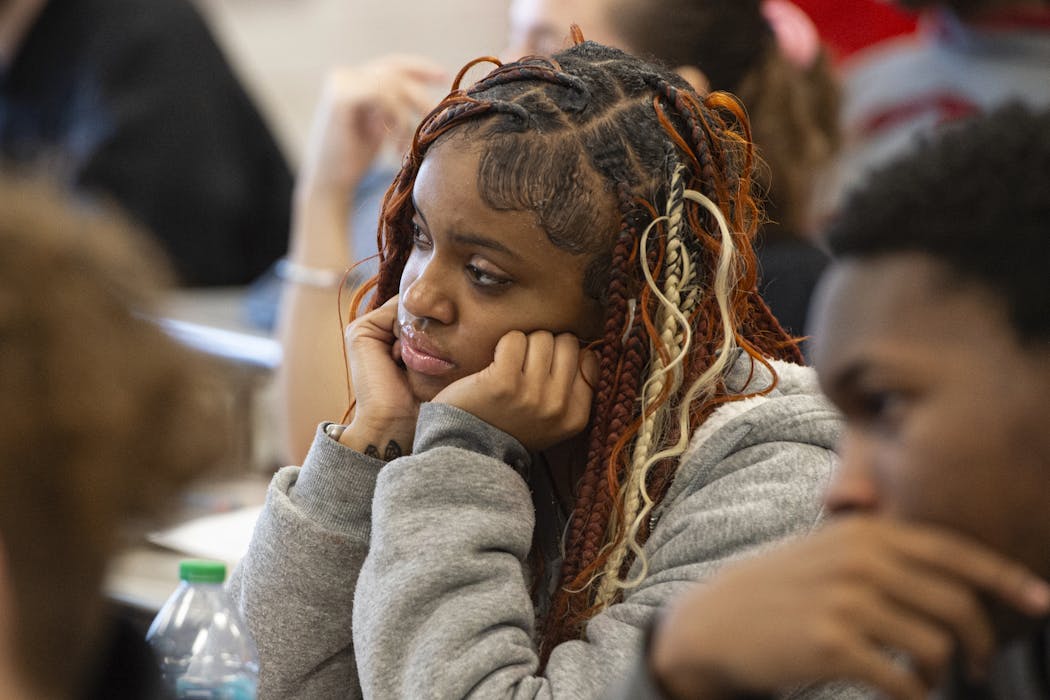
John Washington, now in his 50s, attended a public elementary and middle school in the Chestnut Hill neighborhood of Philadelphia and then went to a large magnet high school, a type of public school that has a selective admission process. As he has gotten older, he has understood that in the education system in Philadelphia, “the more things change, the more they stay the same.”
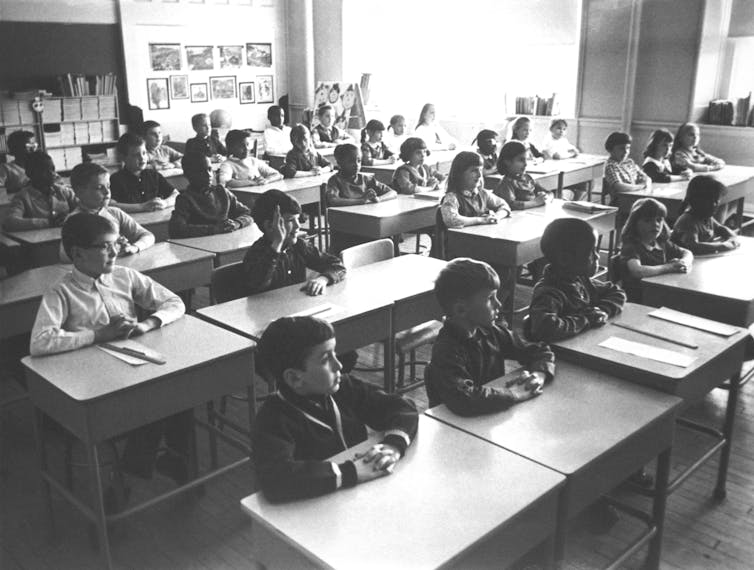
John was bused during the integration movement of the 1970s and graduated from high school in 1990. Back then, he recognized that his school was not as segregated as the schools his parents and grandparents had attended in Philadelphia. As a parent of three current students, however, he has noticed how racially segregated most of the schools in Philadelphia remain.
I am a sociologist whose research focuses on education, race and social inequality. For my dissertation research, I interviewed over 45 former and current Black students to learn about their intergenerational experiences in Philly public schools. “John” and the other names used in this article are pseudonyms to protect the privacy of the research participants.
Intergenerational research is underexplored within educational research. I wanted to understand how different generations of Black public school students in Philadelphia understood and experienced racial inequality, as well as how families’ memories and perspectives around schooling shape students’ educational journeys.
The people I interviewed ranged in age from 14 to 95, and all attended a Philadelphia public elementary or high school, or both. Across the generations, I heard both clear awareness of anti-Blackness and its presence in schools alongside an unyielding hope and vision for a better future.
As Naya, a 30-year-old former student from Germantown, put it, there is a “magic” in being Black. “You have to see what’s possible when nobody else can see it,” she said.
Black and white students sit together in an integrated classroom in Philadelphia in 1968. AP Photo
Anti-Blackness and American education
Historian Carter G. Woodson warned of the danger in allowing Black students to be treated as inferior within the educational system.
“There would be no lynching if it did not start in the classroom,” he wrote in his seminal book “The Mis-Education of the Negro,” published in 1933. “Why not exploit, enslave, or exterminate a class that everybody is taught to regard as inferior?”
Several current and former students I interviewed said their parents taught them “they had to work twice as hard” as white students.
A former student who is now in her 30s shared how she understood the idea that “you have to continue to prove yourself in ways that white kids aren’t expected to … and that’s how supremacy shows up.”
I repeatedly heard from former and current students of all ages how they believed their white teachers held low expectations of Black students and did not challenge them academically.
“I honestly feel like there was a divide, there was less patience for us,” said Jazmine, who graduated from a Philadelphia public high school in 2003. “It was just so obvious, the difference in how the adults treated us, which in turn led to a lot of animosity with the children.”
Hank, who graduated from high school in 1981, said the low expectations his white teachers held limited students’ motivation. “We were just going through the motions,” he said. “You could definitely see a difference with the expectations of the Black teachers than many of the white teachers. And then if the white teachers had expectations, it was sterile. It wasn’t with the love that you felt from some of the Black teachers.”
Current high school students shared incidents of white teachers using racial epithets, including the n-word, and one saying, “You’re acting like a park ape.” Another teacher, a student shared, said slavery was in the past “and not connected to today.”
A recent graduate who attended a magnet middle school recalled being treated by her white teachers as “disposable.”
“I feel like the school actively tried to strip away a lot of my confidence, but not just for me, but also other Black kids,” she said. “It was the first place where I didn’t feel like my teachers thought that I was smart and capable.”
I repeatedly heard both current and former students describe white teachers treating them as if they were “criminals” and receiving harsher discipline and punishments than their non-Black peers, which research has long demonstrated. Students I spoke to described feeling degraded and “singled out” by white teachers – and even blamed for things they did not do.
For example, Naima, a current high school student, shared a painful memory from fourth grade when she had an older white teacher who kept a candy jar on her classroom desk. One afternoon, someone took many pieces of candy from the jar.
“And, of course, it was the white girl, but me and my other Black friend were the last people in her room that she saw walk out, so she assumed it was us,” Naima said. “She said, ‘You stole my candy jar. Y’all were the last people in there. I know y’all did it.’”
Naima could not believe they were accused because, as she explained, she and her friend “weren’t troublemakers, we were just kids.” Despite their innocence – and that they were only in the fourth grade – they were suspended.
Schools can be sites of both racial harm and affirmation for Black students. AP Photo/Matt Slocum
Experiences of affirmation too
Speaking to multiple generations of students provides unique insight into the ways in which Black students continue to experience racial harm and trauma in Philly public schools.
On the other hand, at some point in their schooling, many of the former students I spoke to were fortunate to also experience classrooms or schools that affirmed their Blackness and did instill in them a sense of pride.
However, this tended to happen only in majority Black schools where Black teachers were also in the majority.
Delise, who graduated in 2004, shared that at her elementary and high schools, “Blackness was a norm. It was the standard. … Black cultural norms and my identity was affirmed in that school.”
Black communities in Philadelphia have always resisted and mobilized for educational justice. Such efforts include the Black People’s Unity Movement, Philadelphia’s first Black Power political organization, in the 1960s and the many movements that have come since, as well as the creation of alternative educational spaces such as the freedom library, freedom schools, faith-based groups and other Black-led community and art spaces focused on Afrocentric history and curricula.
Former and current students are proud of this legacy.
“We have yet to grasp the significance of our experience as far as I’m concerned,” said James, a former student from North Philly who is now in his 80s, reflecting on Black communities’ resilience and resistance. “And when I look at how we have navigated, I mean, it’s just constant, man … and still we rise.”
In April 1912, a young Black woman named Clementine Barnabet confessed to murdering four families in and around Lafayette, Louisiana. The widespread news coverage at the time effectively branded her a serial killer.
Her confession, however, did not align with the timeline of crimes that had gripped America’s rice belt region with fear. Even today, her guilt is debated.
From November 1909 until August 1912, an unknown assailant – or assailants – zigzagged across southwestern Louisiana and southeastern Texas. Many Black families were slaughtered in their homes under the cover of darkness. An ax – the telltale weapon – was almost always found in the bloody aftermath.
All but one of the scenes were located within a mile of the Southern Pacific Railroad’s Sunset Route. In each case, a mother and child were always among the victims. Evidence of additional weapons was often found nearby, suggesting a deliberate cruelty to the carnage.
Dubbed the “axman”, the unknown assailant eluded the authorities and terrified local Black communities.
Today, when scholars and laypeople alike discuss Clementine Barnabet, they oscillate between two extremes: portraying her as a fear-inducing, cult-leading Black female serial killer, or as an innocent young Black woman caught in circumstances beyond her control.
In more than a decade of researching Clementine Barnabet, I’ve been struck by how print media created overtly sensationalized accounts of the mythology of the axman and, by extension, the axwoman. Whether Barnabet committed the crimes she said she did – or any of the axman murders, for that matter – is irrelevant to the primary motive the media constructed for her fatal violence: religion.
Diverse faith traditions
In Jim Crow Louisiana, various expressions of faith were possible. The state’s history as a French colony – one that also practiced slavery – meant it was home to the largest percentage of Black Catholics in the United States.
At the same time, religions like Voodoo, that originated in West Africa, reached the region on slave ships. Voodoo was not necessarily at odds with Catholicism; enslaved practitioners creatively adapted their ancestral faith to that of their enslavers.
Some displays of faith were not organized religions at all, but folkways. Hoodoo, for example, has West African origins, though it also draws upon European and Native American elements. Hoodoo practitioners – sometimes called doctors – and their clients often practice a religion, yet they also seek comfort in the supernatural possibilities of their craft.
This craft involves the physical manipulation of earthly elements such as graveyard dirt or plants like John the Conqueror root to achieve magical ends, often resulting in conjures – or ritual objects – needed to bring about desired goals. Conjures are believed to help people protect themselves, harm one’s adversaries, alter one’s circumstances, intervene in one’s relationships and more.
In their most powerful form, believers contend that conjures can bring about a person’s death.
For some believers, elements of Catholicism, Voodoo, Protestantism and hoodoo combine into syncretic faith practices. Incorporating multiple systems of beliefs has been an aspect of many Louisianans’ identities for generations. Most of the time, this blending of practices, ideologies and communities is depicted as a quirky – even “backward” – way to make sense of the world.
Yet during the axman’s reign in the early 1900s, a Black woman’s confession to murder was interpreted through the lens of religious deviance rather than diversity.
A timeline of events
When Barnabet confessed in April 1912, it was technically the second time she had done so. The first time was in November 1911 in the aftermath of the Randall family murder. Five members of the Randall family and their overnight guest had been brutally slaughtered in Lafayette, Louisiana at the end of the month.
According to regional newspapers, Barnabet was in the crowd that had gathered near the Randall family’s home after the murders were discovered. Reportedly, she caught the attention of the local sheriff. Not only did she live near the slain, but, according to a New Orleans daily, the authorities found “her room saturated with blood and covered with human brains.”
Barnabet was given a “third degree” examination – meaning she was tortured – by the New Orleans Police Department, and then supposedly confessed that she had killed the Randalls because, according to a Midwestern newspaper, they “disobeyed the orders of the church.” That church would become a topic of scrutiny and sensationalism by regional lawmen and news outlets alike throughout much of 1912.
At that time, Barnabet is also said to have confessed to killing another family in Lafayette.
Thus, Barnabet had already been in jail for over four months before her springtime confession. Between January and March 1912, four more families had been axed to death between Crowley, Louisiana and Glidden, Texas. In April, when Barnabet re-confessed, she added two more families to her victim roster.
In aggregate, the four families Barnabet confessed to killing had been slain between November 1909 and November 1911. Four more families had been murdered between her arrest and second confession, meaning she was in jail when they occurred. After her second confession and while she was still in custody, another three families were attacked with an ax, though for the first time, people survived the axman.
This convoluted timeline, in which more than half of the axman murders occurred after Barnabet had been apprehended, presented a challenge for investigators. They generally believed the crimes were related. Yet Barnabet could not have physically carried out the attacks in 1912.
To explain the continuation of the killings despite Barnabet’s incarceration, local lawmen leveraged the young woman’s own statements that had landed her in jail in the first place: that religion compelled her to murder.
It was this November 1911 confession that gave investigators the motive of religious fanaticism to attach to the axman crimes. Then, in January 1912, when the Broussards – another Black family – were murdered with an ax in Lake Charles, Louisiana, the local police found a Bible verse scrawled on their front door. This overtly religious symbol appeared roughly two months after Barnabet’s first confession and seemed to confirm her claims.
By April 1912, the idea of religiously motivated serial murder had been circulating in the rice belt region for months.
Hoodoo, conjures, and sensationalism
Barnabet’s confession was transcribed by R. H. Broussard (no relation to the victims), a newspaper reporter for the “New Orleans Item,” in April 1912.
According to the report, Barnabet claimed that she and four friends purchased conjures from a local hoodoo doctor one evening while socializing. They paid the practitioner for his services. Supposedly, the group then used the charms to move about undetected while committing murder.
In both her November 1911 and April 1912 confessions, Barnabet offered faith-based motives, albeit different ones. In the first case, it was the victims who reportedly erred in their religious duties. In the second, it was Barnabet’s own belief in hoodoo that facilitated such carnage. White media outlets did not interpret either of these statements as evidence of the region’s deep history of diverse faith expressions.
Moreover, sensationalized news coverage labeled the church Barnabet mentioned as the “Sacrifice Church.” Not surprisingly, the press depicted it as a cult-like organization, portraying Barnabet as either a low-level member or the “high priestess.” Sometimes, news reports also conflated the Sacrifice Church with Voodoo, thereby criminalizing a legitimate West African-derived religion as a cult.
According to unsubstantiated media accounts, the so-called Sacrifice Church promoted human sacrifice to gain immortality. Simultaneously, newspapers treated the conjure Barnabet possessed as proof of her fanaticism, reporting her claim that the only reason she confessed was because she had lost her charm.
Combined these selective – and sensational – interpretations of Barnabet’s supposed religious beliefs ignored the possibility of diverse spiritual practices that enriched life in the rice belt region.
Jim Crow and Black faith
I have yet to find evidence the Sacrifice Church existed. My research suggests the white press conflated the word “sacrifice” with the word “sanctified.” This might have been due, in part, to both sensationalism and ignorance.
Pentecostalism, a branch of evangelical Christianity that emphasizes baptism by the Holy Spirit and direct communication from God, started growing in popularity in the U.S. in the early 1900s. Many Pentecostal denominations call their adherents saints and their churches sanctified. Since sanctified churches were relatively new to Louisiana and some Pentecostal teachings – like speaking in tongues – challenged more mainstream Protestant doctrine, Pentecostalism might have contributed to the media’s reporting.
Although the Sacrifice Church may have simply been a linguistic error in reference to any number of sanctified churches in the rice belt, it is possible that Barnabet did indeed possess a conjure. The hoodoo doctor she accused of selling her and her comrades their charms was arrested and questioned by the Lafayette authorities. The statements he gave to the police aligned with hoodoo practices even as he denied knowing Barnabet or being involved in such folkways.
Given the variety of faith practices in Jim Crow Louisiana, it is possible both that Barnabet believed in her conjure and that sanctified churches were growing in popularity in the region. Whether she ever attended one is hard to know, just as the legitimacy of either confession is difficult to determine.
What is clear is that faith anchored the statements Barnabet made to the authorities. The other anchor, however, was murder. The consequences of how these events aligned reverberate in how Barnabet has been depicted.
Barnbet was front-page news in 1912. People knew her name, even as they debated her guilt. When she was convicted of murder, she was sentenced to life at the Louisiana State Penitentiary. A little over a decade later, she was released and disappeared from public view.
Today, however, no Black female serial killer occupies a similar place in America’s collective memory.
In recent years, there have been calls for a more serious acceptance of Black women’s experiences, knowledge and beliefs within the dominant culture. This shift also invites, I believe, a fresh look at Barnabet’s confessions and the crimes that were attributed to her.
Lauren Nicole Henley does not work for, consult, own shares in or receive funding from any company or organization that would benefit from this article, and has disclosed no relevant affiliations beyond their academic appointment.
For anyone who relies on coffee to start their day, coffee wilt disease may be the most important disease you’ve never heard of. This fungal disease has repeatedly reshaped the global coffee supply over the past century, with consequences that reach from African farms to cafe counters worldwide.
Infection with the fungus Fusarium xylarioides results in a characteristic “wilt” in coffee plants by blocking and reducing the plant’s ability to transport water. This blockage eventually kills the plant.
Some of the most destructive plant pathogens in the world infect their hosts in this way. Since the 1990s, outbreaks of coffee wilt have cost over US$1 billion, forced countless farms to close and caused dramatic drops in national coffee production. In Uganda, one of Africa’s largest producers, coffee production did not recover to pre-outbreak levels until 2020, decades after coffee wilt was first detected there. And in 2023, researchers found evidence that coffee wilt disease had resurfaced across all coffee-producing regions of Ivory Coast.
Studying the genetics of plant pathogens is crucial to understanding why this disease continues to return and how to prevent another major outbreak.
Rise and fall of coffee wilt disease in Africa
While early outbreaks of coffee wilt disease affected a wide range of coffee types, later epidemics primarily affected the two coffee species dominating global markets today: arabica and robusta.
First identified in 1927, coffee wilt disease decimated several varieties of coffee grown in western and central Africa. Although farmers combated the fungus with a shift to supposedly resistant robusta crops in the 1950s, the reprieve was short-lived.
The disease reemerged in the 1970s on robusta coffee, spreading through eastern and central Africa. By the mid-1990s, yields had collapsed and coffee production could not recover in countries like the Democratic Republic of Congo.
Separately, researchers identified the disease on arabica coffee in Ethiopia in the 1950s and watched it become widespread by the 1970s
Coffee wilt disease has spread widely in Africa. The first outbreak before the 1950s affected mainly central and western Africa (left map) while the second outbreak originated in central Africa and spread east (right map). Affected countries are colored by the decade the disease was first detected. Peck et al 2023/Plant Pathology, CC BY-SA
Although coffee wilt disease is currently endemic at low and manageable levels across eastern and central Africa, any future resurgence of the disease could be catastrophic for African coffee production. Coffee wilt also poses a threat to producers in Asia and the Americas.
New types of disease emerge
Coffee wilt disease evolved alongside coffee itself. Over the past century, it has repeatedly reemerged, attacking different types of coffee each time. But did these shifts reflect the rapid evolution of new types of disease, or something else entirely?
While most fungal attempts at infection fail, a small number do succeed thanks to the constant evolutionary pressure on pathogens to overcome host plant defenses. In this evolutionary arms race, pathogens and hosts continuously adapt to each other by genetically changing their DNA. Boom and bust cycles of disease occur as one gains advantage over the other.
The rise of modern agriculture has led to widespread monocultures of genetically uniform crops. While monocultures have significantly boosted food production, they have also contributed to environmental degradation and increased plant vulnerability to disease.
Crop breeders have attempted to protect monocultures by introducing disease resistance genes, with farms widely applying fungicides and other environmentally damaging products. But these relatively weak protections for hundreds of acres of identical plants have resulted in outbreaks decimating crops that people depend on.
It’s likely that modern agriculture’s reliance on monocultures has enabled and accelerated the evolution of new types of pathogen capable of overcoming resistance in plants. As a result, crops become more susceptible to disease outbreaks.
Resurrecting fungal strains
Understanding the lessons of the past is essential to avoiding future plant pandemics. But this can be challenging, because the specific pathogen strains that caused previous disease outbreaks may no longer exist in nature or may have changed substantially.
In my research on the evolutionary arms race between host and pathogen in coffee wilt disease, I sought to address these problems by “resurrecting” historical strains of the fungus that causes the disease, Fusarium xylarioides. Researchers know little about why the earlier and later outbreaks targeted different types of coffee, so I explored the genetic changes in F. xylarioides that underlie this narrowing of its hosts.
I reconstructed historical genetic changes in the major coffee wilt disease outbreaks over the past seven decades by using strains from a fungus library – culture collections that preserve living fungi. These libraries store long-term living data and reflect the fungal genetic diversity present at the time of collection.
Gibberella (Fusarium) xylarioides, with arrow pointing to its spore-containing sac. Julie Flood
Whether a pathogen takes the upper hand in the evolutionary arms race depends on its ability to generate new types of genes. It can do so either by changing and rearranging its DNA sequence or by moving DNA sequences between organisms in a process called horizontal gene transfer. These mechanisms can create new effector genes that enable pathogens to infect and colonize a host plant.
Initially, I sequenced six whole genomes of strains involved in outbreaks before the 1970s as well as later outbreaks that specifically targeted arabica or robusta coffee plants. I found that strains of F. xylarioides specific to arabica or robusta genetically differed from each other, with most of these differences inherited from parent to offspring. This process is called vertical inheritance.
Genes that jump between species
However, I also found that several regions of the F. xylarioides genome were potentially acquired horizontally from F. oxysporum, a global plant pathogen that infects over 120 crops, including bananas and tomatoes. These included different regions of the genome across strains specific to arabica and robusta coffee.
But did these changes introduce new effector genes in the F. xylarioides strains that infect arabica and robusta coffee plants specifically? To answer this question, I first sequenced and assembled the first F. xylarioides reference genome, stitching together long stretches of DNA. I then sequenced and compared this reference genome to the whole genomes of three more pre-1970s F. xylarioides strains and 10 additional historical Fusarium strains found on or around diseased coffee bushes, as well as F. xylarioides strains from infected arabica coffee seedlings.
I found substantial evidence for horizontal transfer of disease-causing genes between species of Fusarium. This includes the presence of giant genetic components called Starships in Fusarium. These so-called jumping genes carry their own molecular machinery, allowing them to move around or between genomes. Genes involved in adaptation, such as those linked to virulence, metabolism or host interaction, also move with them. Scientists think Starships may potentially enable fungi to adapt to changing environmental conditions.
I found that large and highly similar genetic regions, including Starships and active effector genes involved in disease, had moved from F. oxysporum to F. xylarioides. Importantly, different genetic regions were present across strains of F. xylarioides specific to arabica and robusta, but they were absent from other related Fusarium species. This suggests that these genes were gained from F. oxysporum.
Arming farmers with knowledge
Today, a third of all global crop yields are lost to pest and disease. Reconciling the tension between agricultural productivity and environmental protection is important to balance humanity’s needs for the future. Central to this challenge is reducing the spread of disease and new outbreaks.
On the flip side to monocultures, many plant species surrounding and within small and family-run coffee farms in sub-Saharan Africa may act as disease reservoirs, where fungi pathogens can lurk. These include banana trees and Solanum weeds in the tomato family that are susceptible to fungal infection.
Human farming practices may have inadvertently created an artificial niche for these fungi, with coffee bushes brought into widespread contact with banana plants and Solanum weeds. If fungi in the same genus can frequently exchange genetic material, it could accelerate the ability of plant pathogens to adapt to new hosts.
Testing noncoffee plants for F. xylarioides infection could reveal alternative plant species where different Fusarium fungi come into contact and exchange genetic material. This matters because across sub-Saharan Africa, coffee plants often share fields with banana trees and weeds. If these neighboring plants can harbor fungi that act as new sources of genetic variation, they may help fuel new disease strains.
Identifying the plants that can act as hosts to fungi could give farmers practical options to reduce coffee plants’ risk of disease, from targeted weed management to avoiding the planting of vulnerable crops side by side.
This research was supported by the Natural Environment Research Council. The funders had no role in study design, data collection and analysis, decision to publish, or preparation of this essay or any manuscripts.
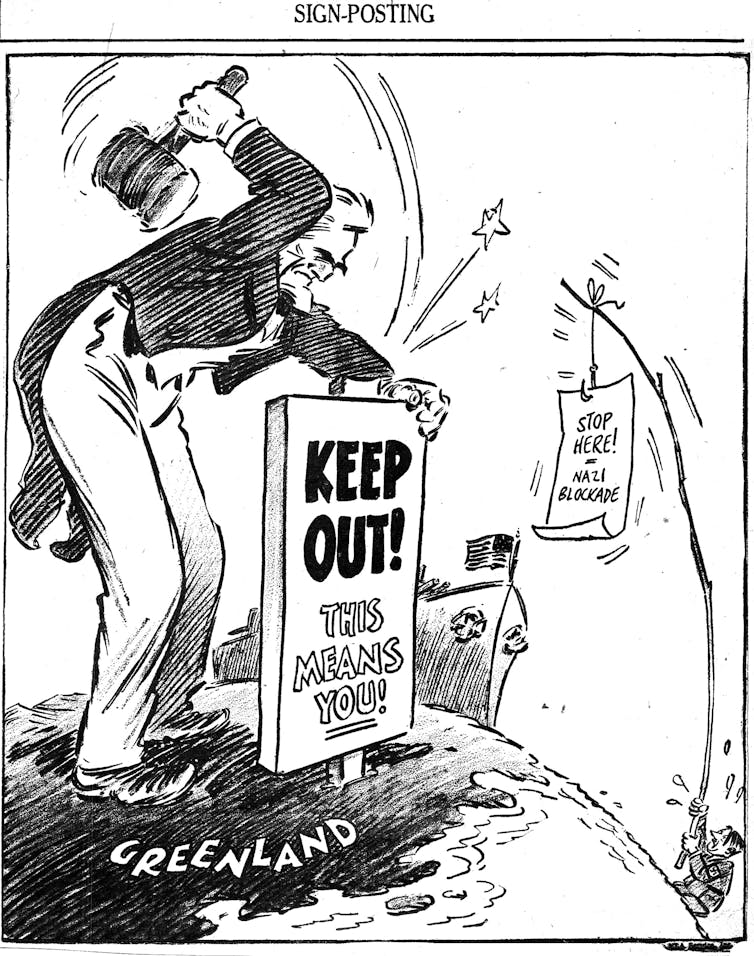
On April 9, 1940, Nazi tanks stormed into Denmark. A month later, they blitzed into Belgium, Holland and France. As Americans grew increasingly rattled by the spreading threat, a surprising place became crucial to U.S. national security: the vast, ice-capped island of Greenland.
The island, a colony of Denmark’s at the time, was rich in mineral resources. The Nazi invasions left it and several other European colonies as international orphans.
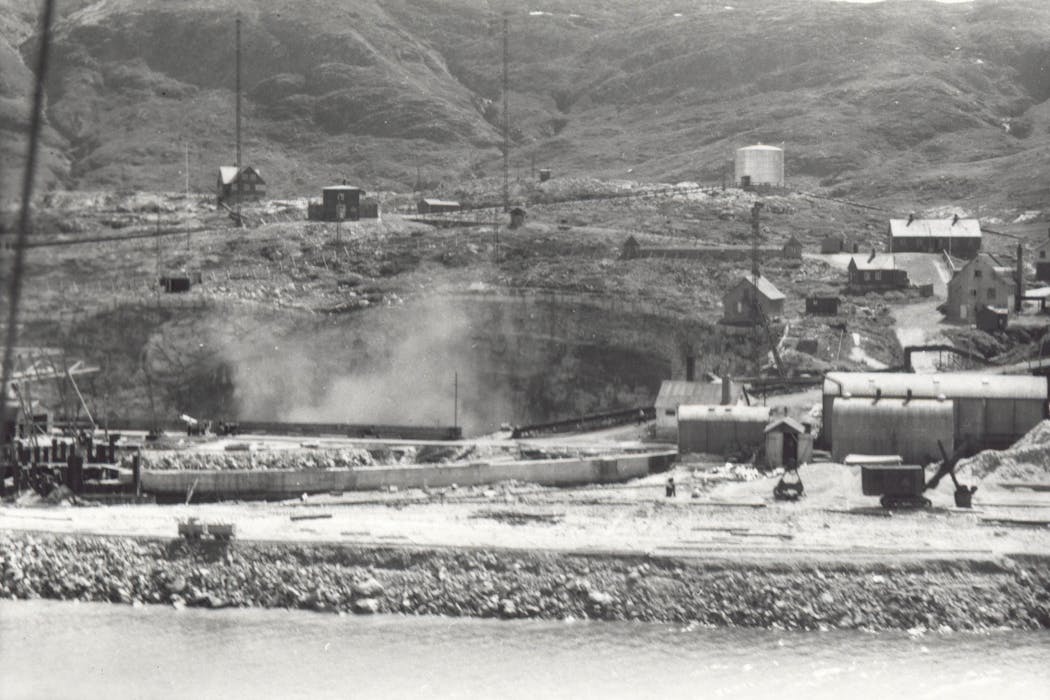
Greenland was essential for air bases as U.S. planes flew to Europe, and also for strategic minerals. Greenland’s Ivittuut (formerly Ivigtut) mine contained the world’s only reliable supply of the most important material you’ve probably never heard of: cryolite, a frosty white mineral that the U.S. and Canadian industries relied upon to refine bauxite into aluminum, and thus essential to assembling a modern air force.
People sometimes forget that World War II was a dog-eat-dog struggle for resources – oil and uranium but also dozens of other materials, everything from rubber to copper. Without these strategic materials, no modern military could produce crucial new weapons such as tanks and airplanes. The resource struggle often started before actual fighting.
Foreign materials fueled American global power, but also raised tricky questions about access to resources and about sovereignty, just as the old European imperial order was being rethought. As in 2026, U.S. presidents had to skillfully balance force and diplomacy.
During the spring of 1940, America and its European allies mapped out patterns of resource use and ideas of global interconnection that would shape the international order for decades. Greenland helped give birth to this new order.
Rethinking American vulnerability
On May 16, 1940, President Franklin Roosevelt addressed a joint session of Congress, including many “American first” isolationists wary of European entanglements. Roosevelt implored Americans to wake up to new threats in the world – to, in his words, “recast their thinking about national protection.”
New weapons, he warned, had shrunk the world, and oceans could no longer shield the United States. The nation’s fate was inextricably tied to Europe’s. Nothing showed this better than Greenland: “From the fiords of Greenland,” FDR warned, “it is four hours by air to Newfoundland; five hours to Nova Scotia, New Brunswick and to the province of Quebec; and only six hours to New England.”
Richard Edes Harrison’s famous WWII maps in Fortune magazine, including this one from 1942, changed American understandings of vulnerability by highlighting short aerial routes. Dark areas are considered Axis, dotted areas pro-Axis neutral or Axis-occupied, red areas Allies and yellow areas neutral. Pink areas, including Greenland, were considered Allies-occupied. Cornell University – PJ Mode Collection of Persuasive Cartography
But Greenland set off alarm bells for another reason. To protect itself in a dangerous world, Roosevelt famously called for the U.S. to hammer out 50,000 planes a year. But in 1938, America had produced only 1,800 planes.
To meet this ambitious goal, Roosevelt and his advisers knew that little could be done without Greenland. No Greenland, no cryolite. No cryolite, no massive American air force. Without cryolite, making 50,000 planes would be infinitely more difficult.
The age of alloys
Americans, National Geographic explained in 1942, lived in an “age of alloys.” Without aluminum alloys and other metallic mixtures, assembly lines churning out modern tanks, trucks and airplanes would grind to a halt. “More than any other struggle in history, this is a war of many metals, and the lack of a single one may be a blow far worse than the loss of a battle.”
Aluminum was crucial for modern militaries. Mechanics check an airplane engine at Naval Air Station Corpus Christi, Texas, in November 1942. Fenno Jacobs/Department of Defense
Few materials mattered more than aluminum. Light yet strong, aluminum formed 60% of a heavy bomber’s engines, 90% of its wings and fuselage, and all of its propellers.
But there was a problem: Refining aluminum from bauxite ore required working with dangerously hot metallic mixtures, over 2,000 degrees Fahrenheit (1,100 degrees Celsius). Cryolite solved the problem by reducing the temperature to a more manageable 900 F (480 C).
The Nazis’ chemical industry had found a substitute for cryolite using fluorspar, but the U.S. preferred the more resource-efficient cryolite and wanted to prevent the Germans from having it.
After the Nazis seized Denmark
Just days after German tanks rolled into Denmark in April 1940, Allied officials huddled to devise ways to protect Ivittuut’s magical mineral. On May 3, Danish Ambassador to the U.S. Henrik de Kauffmann, risking trial for treason, requested American assistance. On May 10, the U.S. Coast Guard Cutter Comanche departed New England for Ivittuut. Four others soon followed, one with guns for the mine’s defenders.
That very week in Washington, at a meeting of the Pan American Union, Roosevelt and his advisers spoke with hundreds of geologists and other representatives from Latin America — a resource-rich region that the U.S. saw as an answer to its strategic materials shortages.
Nervous about the history of U.S. imperial high-handedness in the region, some Latin Americans thought that their countries should seal off their resources to outside control, as Mexico had in nationalizing U.S. and European oil holdings in 1938.
Japan’s advances in Southeast Asia after Pearl Harbor cut off rubber from the Dutch East Indies and Malaysia, prompting a rush for rubber in the Amazon and the development of synthetics. World War II posters urged Americans to conserve rubber for the war effort. U.S. Government Printing Office, Courtesy of Northwestern University Libraries
With European empires crumbling, Roosevelt faced a delicate diplomatic dance with Greenland. He wanted to maintain the appearance of neutrality, keep skeptical isolationists in Congress from revolting and give no provocations to Latin American anti-imperialists to cut off resources. Crucially, he also needed to avoid giving the resource-starved Japanese a legal justification to seize the oil-rich Dutch East Indies, now Indonesia – another European colony orphaned by the Nazi invasion.
Roosevelt’s solution: enlist Coast Guard “volunteers” to guard Ivittuut. By the end of the summer, long before the U.S. officially entered the war, 15 sailors resigned from their ships and took up residence near the mine.
Maj. William S. Culbertson, a former U.S. trade official speaking before the Army Industrial College in fall 1940, noted how the scramble for resources pulled the U.S. into a form of nonmilitary warfare: “We are engaged at the present time in economic warfare with the totalitarian powers. Publicly, our politicians don’t state it quite as bluntly as that, but it is a fact.” For the rest of the century, the front line was just as likely a far-off mine as an actual battlefield.
On April 9, 1941, exactly a year after the Nazis seized Denmark, Kauffmann met with U.S. Secretary of State Cordell Hull to sign an agreement “on behalf of the King of Denmark” placing Greenland and its mines under the U.S. security blanket. At Narsarsuaq, on the island’s southern tip, the U.S. began constructing an airbase named “Bluie West One.”
An aerial view shows Bluie West One, a U.S. air base at Narsarsuaq, Greenland, in June 1942. Later, during the Cold War, the U.S. used Thule Air Base, now called Pituffik Space Base, in northwest Greenland as a key missile defense site because of its proximity to the USSR. USAF Historical Research Agency
What transpired in Greenland in the 18 months before Pearl Harbor fit into a larger emerging pattern.
As the U.S. ascended to global leadership and realized that it couldn’t maintain military dominance without wide access to foreign materials, it began to redesign the global system of resource flows and the rules for this new international order.
A 1952 chart from the President’s Materials Policy Commission, established by President Harry Truman to study the security of U.S. raw materials during the Cold War. The group was commonly known as the Paley Commission. Resources for Freedom: A Report to the President
It rejected the Axis’ “might makes right” territorial conquest for resources, but found other ways to guarantee American access to critical resources, including loosening trade restrictions in European colonies.
The result was a postwar world interconnected by trade and low tariffs, but also a global network of U.S. bases and alliances of sometimes questionable legitimacy designed in part to protect U.S. access to strategic resources.
President John F Kennedy meets with Mobutu Sese Seko of the former Belgian Congo, now the Democratic Republic of Congo, at the White House in 1963. Starting in the 1940s, the African country provided the U.S. with cobalt and uranium, including for the Hiroshima bomb. CIA-supported coups in 1960 and 1965 helped put Mobutu, known for corruption, in power. Keystone/Getty Images
During the Cold War, these global resources helped defeat the Soviet Union. However, these security imperatives also gave the U.S. license for support of authoritarian regimes in places like Iran, Congo and Indonesia.
America’s voracious appetite for resources also often displaced local populations and Indigenous communities, justified by the old claim that they misused the resources around them. It left environmental damage from the Arctic to the Amazon.
Donald Trump’s son visited Greenland in 2025, shortly after the U.S. president began talking about wanting to control the island and its resources. The people with Donald Trump Jr., second from right, are wearing jackets reading ‘Trump Force One.’ Emil Stach/Ritzau Scanpix/AFP via Getty Images
Strategic resources have been at the center of the American-led global system for decades. But U.S. actions today are different. The cryolite mine was a working mine, rarer than today’s proposed critical mineral mines in Greenland, and the Nazi threat was imminent. Most important, Roosevelt knew how to gain what the U.S. needed without a “damn-what-the world-thinks” military takeover.
Thomas Robertson does not work for, consult, own shares in or receive funding from any company or organization that would benefit from this article, and has disclosed no relevant affiliations beyond their academic appointment.