US low-cost, unmanned combat attack system (Lucas) drones in November 2025. US Central Command
As Pete Hegseth, the Fox News host turned Donald Trump’s defense secretary, stood on the front lawn of the Pentagon to record a promotional video in July 2025, a drone hovered above him.
Hegseth said that America’s adversaries had “produced millions of cheap drones” and it was time for the US to catch up. The Trump administration, he added, would arm combat units with “a variety of low-cost American-crafted drones” as part of a plan to secure US “drone dominance”.
A few days later, Hegseth toured a display of 18 American-made protype drones. One of those on display was a Low-Cost Uncrewed Combat Attack System (Lucas) drone. By December, a squadron of these kamikaze drones was already in the Middle East.
These Lucas drones may have been made in America, but they are a reverse-engineered copy of the kamikaze Iranian drone called a Shahed. Now, the US military has deployed them to attack Iran.
In this episode of The Conversation Weekly podcast, we speak to Arun Dawson, a PhD researcher at King’s College London, about how the Iranians developed the Shahed drones, why the US decided to copy them, and what role these low-cost drones might play in the future of warfare.
“Each of these drones costs US$35,000 (£26,000),” says Dawson, compared with US$3.6 million for each Tomahawk cruise missile. “With an American style defence budget, you can buy enough of them that you completely saturate the capabilities of an adversary to respond.
“Once you’ve achieved that,” he explains, “you can then send in your high-expense equipment to do the dirty job of delivering pretty large, decisive payloads on particular targets. That’s what the American military is beginning to explore and pivot towards.”
Listen to the interview with Arun Dawson on The Conversation Weekly podcast and read an article he wrote for The Conversation. This episode was written and produced by Mend Mariwany and Gemma Ware. Mixing by Eleanor Brezzi and theme music by Neeta Sarl.
Listen to The Conversation Weekly via any of the apps listed above, download it directly via our RSS feed or find out how else to listen here. A transcript of this episode is available via the Apple Podcasts or Spotify apps.
Arun Dawson is affiliated with the Royal United Services Institute.
Municipal councils rarely dominate national headlines, yet they make decisions that shape our daily lives more directly than any other level of government.
From land use to transit, policing to public health, councils are where competing priorities collide and where communities see democracy up close.
As municipalities across Canada prepare to elect new councils in the fall, it’s worth asking not only who should represent us, but how those representatives should conduct the public’s business once they take office.
One answer is deceptively simple: councils should strive to deliberate well.
What good deliberation looks like
Legislative debate lies at the heart of democratic governance, but deliberation is more than debate. It is the public, reasoned process through which elected representatives weigh competing claims, examine evidence, listen to one another and adjust their positions in light of stronger arguments.
Good deliberation can be measured in terms of specific criteria, including:
Clear articulation of reasons: Participants explain why they support or oppose a proposal, grounding their arguments in evidence, community needs, or principles of justice — rather than self interest.
Responsiveness: They engage directly with one another’s arguments and stay focused on the issue at hand. When persuasive counterarguments are presented, they show a willingness to adjust, refine, or even rethink their positions.
Respectful tone: Disagreement is inevitable — and healthy — but it must be conducted without personal attacks, sarcasm or dismissiveness. Respectful debate rests on fairness and on recognizing that participants’ interests and arguments are offered in good faith and deserve to be taken seriously.
Decisiveness: Deliberation is not endless talk. It culminates in decisions that are clear, consequential and publicly justified.
American political theorist Jane Mansbridge reminds us that while pluralist democracy is necessarily about competing interests, there is a need to push “beyond adversary democracy” toward a more co-operative model. That can result in people trying to understand one another’s diverse perspectives, search for common ground and justify decisions in terms others can accept.
When these elements are present, elected representative bodies not only make better decisions — they also strengthen public trust. In an era of polarization and disinformation, this kind of democratic practice isn’t a luxury — it’s a necessity.
How well do municipal councils deliberate?
Mansbridge based her analysis on an in-depth study of political deliberations in a small Vermont town, where she attended meetings for almost two years and conducted numerous interviews with residents.
Applying her insights to my own research with colleagues on town hall debates in Canada and New Zealand, we argue that these local bodies can be ideal venues for visible, reasoned and respectful deliberation.
Despite different national contexts, the two countries have similar local government structures, including traditional ward-level elections and “weak-mayor” systems, where the mayor has limited formal authority.
Unlike national legislatures, city councils are also generally small, non-partisan and close to the communities they serve — all features that should enhance the quality of deliberation. Yet this potential is not always realized.
The debates we examined concerned the contentious matter of electoral reforms to add Indigenous voices to city council.
In Canada, Hamilton City Council in Ontario and the Halifax Regional Council in Nova Scotia are the only local governing bodies we know of that have formally addressed the issue — albeit in an exploratory manner. But in New Zealand, the question of adding Māori seats on local councils has been much more widely debated.
For comparative purposes, we looked at the largest New Zealand cities where the Māori population comprise 10 per cent or less of the electorate, approximating the Canadian situation. Two of the councils we studied (Hamilton in Canada and Auckland in New Zealand) voted against motions to explore or instate Indigenous seats, while four (Halifax in Canada and Dunedin, Tauranga and Wellington in New Zealand) approved moving forward on the issue.
We hand-coded hours of debate using the discourse quality index (DQI), a measure widely used to assess speeches in parliament, while also deciphering substantive themes.
While the content of arguments was similar across all six cities, we found the quality of deliberation differed markedly. On a zero-to-one scale, Hamilton’s city council ranked lowest with a DQI of 0.45, while Halifax topped others with a score of 0.68.
Looking at the speeches of individual councillors, we found that those who opposed Indigenous seats used less respectful discourse than supporters (average DQI 0.43 vs. 0.64), including more polarizing interjections.
Examples included members who shouted at or turned their backs to others, refusing to engage. Some resorted to personal attacks, or accusations of racism and anti-democratic maneuvering.
As one New Zealand councillor exclaimed: “We are throwing elected representation to the dogs.” Another in Canada reasoned that Indigenous people were requesting “to sit at the table without being elected… that’s how I understood it” — even though the motion was merely to study options for bringing Indigenous voices to council.
Quality of online public discourse matters too
Deliberation does not end when councillors leave chambers. How elected members communicate with the public — especially online — now also shapes the broader democratic climate around municipal decision making.
Social media has become a fertile environment for incivility, harassment and toxic exchanges, and research suggests some politicians have learned to exploit this dynamic.
At the national level, there is ample evidence from Canada, the United Kingdom and many other countries of the heightened impact that digital vitriol has on women, LGBTQ, racialized and Indigenous candidates and office holders.
But reports from Canada, New Zealand and elsewhere suggest the effects of digital harassment may be even more profound in local politics, where the erosion of local news outlets can heighten communities’ vulnerability to disinformation, out-of-context clips and performative antagonism designed to inflame outrage rather than inform.
In response, some are pushing back. The Elect Respect campaign, initiated by Mayor Marianne Meed Ward of Burlington, Ont., is one recent example: it calls out abuse and harassment directed at women in politics and urges elected officials to commit to “respectful debate” rather than personal attacks.
Similarly, the Association of Municipalities of Ontario has developed its Leading with Respect Handguides that provide practical resources for councils to navigate conflict and build a culture of civility in their workplaces. Initiatives like this highlight the growing recognition that the tone of public discourse is inseparable from the health of local democracy.
A call for more deliberative local democracy
Wherever you live, the next municipal election is a chance to think about what kind of council your community needs — not only in terms of policy, but also democratic practice.
When councillors treat one another as partners in problem-solving rather than opponents to be defeated, they help build the mutual respect and shared understanding that Mansbridge argues are essential for democratic legitimacy.
In a time of polarization and growing online toxicity, the quality of our local democratic conversations may matter as much as the policies they produce. Municipal councils across the country have the opportunity to show that talk matters — and that better talk can lead to better democracy.
Karen Bird receives funding from the Social Sciences and Humanities Research Council of Canada (SSHRC).
Source: The Conversation – in French – By Fabrice Lollia, Docteur en sciences de l’information et de la communication, chercheur associé laboratoire DICEN Ile de France, Université Gustave Eiffel
Le 17 mars 2026, le Jury d’appel de la Confédération africaine de football (CAF) a requalifié la finale de la Coupe d’Afrique des nations (CAN) 2025. Alors que le Sénégal s’était imposé 1-0 après prolongation contre le Maroc à Rabat le 18 janvier, l’instance a finalement homologué un score de 3-0 en faveur du Maroc, au motif que le comportement de l’équipe sénégalaise relevait des articles 82 et 84 du règlement. Le Sénégal a contesté cette décision et annoncé un recours devant le Tribunal arbitral du sport.
En tant que spécialiste des sciences de l’information et de la communication (SIC) ayant étudié comment la confiance sociale et les dispositifs symboliques structurent et influencent les dynamiques organisationnelles, je considère que la réattribution du titre au Maroc par la CAF ne relève pas seulement du droit sportif. Elle montre également comment une décision réglementaire peut entrer en tension avec le récit public d’un événement et fragiliser l’image de la compétition.
L’enjeu dépasse toutefois le seul contentieux sportif. Une finale n’est pas seulement un résultat. C’est aussi un récit, une mémoire et une séquence d’appropriation collective. Lorsqu’une institution revient après coup sur ce qui avait déjà été vu et célébré comme une victoire, elle ne modifie pas seulement un score. Elle déstabilise un ordre symbolique déjà installé.
Une finale ne se joue pas seulement sur le terrain
La recherche en Sciences de l’Information et de la Communication (SIC) , montre qu’un événement n’existe jamais comme fait brut. Il existe à travers les médiations qui le rendent visible, racontable et partageable. Une finale continentale mobilise des images, des commentaires, des gestes protocolaires, des émotions nationales, des réactions numériques et des récits journalistiques. Elle produit donc un effet sémiotique c’est à dire du sens bien au-delà du terrain.
Le vainqueur d’une finale n’est pas seulement désigné par une règle ou un tableau d’affichage. Il est aussi construit par une chaîne de médiations qui fixe publiquement l’interprétation de l’événement. En ce sens, la victoire n’est pas seulement sportive ; elle est aussi narrative.
Dans le cas de la CAN 2025, ce processus de stabilisation avait déjà eu lieu. Le Sénégal avait gagné sur le terrain. La scène finale avait été reçue comme celle de sa victoire. Les images, les commentaires et la mémoire immédiate de l’événement avaient commencé à inscrire ce résultat dans l’espace public. Lorsque la CAF intervient deux mois plus tard pour inverser juridiquement l’issue reconnue, elle n’agit donc pas seulement sur le plan réglementaire. Elle intervient sur un récit déjà approprié par les publics.
Il faut ici éviter tout contresens. La CAF n’agit pas sans base normative. Son communiqué indique explicitement que la sortie temporaire du terrain par le Sénégal justifie le forfait, avec enregistrement du score à 3-0 en faveur du Maroc. D’un point de vue institutionnel, cette position peut se défendre car une confédération sportive ne peut prétendre garantir l’intégrité de sa compétition si elle renonce à faire respecter ses propres textes lorsqu’un incident majeur survient.
Mais la légitimité d’une décision institutionnelle ne repose pas uniquement sur sa validité procédurale. Elle dépend aussi de sa lisibilité dans l’espace public. Or, dans cette affaire, c’est précisément cette lisibilité qui vacille.
Pendant près de deux mois, le récit dominant était celui d’un Sénégal vainqueur de la CAN. La décision du 17 mars introduit donc une dissonance entre la vérité réglementaire affirmée par l’institution et la vérité vécue par les publics. En d’autres termes, ce qui est juridiquement fondé peut devenir symboliquement instable.
C’est ici que l’analyse info-communicationnelle éclaire le dossier : la crise n’est pas uniquement celle d’un règlement contesté, mais celle d’un désajustement entre plusieurs régimes de légitimité — celui du droit, celui du terrain, celui de l’image et celui de la réception.
Cette séquence affecte d’abord l’image de la CAF elle-même. Toute institution sportive de gouvernance repose sur l’exigence de faire respecter la règle, mais aussi de rendre cette règle crédible aux yeux des publics. Or, lorsque la décision intervient après la clôture symbolique de l’événement, elle peut produire un effet paradoxal. En cherchant à restaurer un ordre normatif, elle introduit un désordre interprétatif.
La question devient alors moins si la CAF avait juridiquement le droit de statuer ainsi que si elle parvient encore à faire coïncider sa parole avec l’intelligibilité publique de la compétition.
La recherche montre que cette question est décisive. Une institution ne tient pas seulement par son pouvoir de décision. Elle tient aussi par sa capacité à faire reconnaître ses décisions comme cohérentes, recevables et compréhensibles. Lorsque cette reconnaissance vacille, une vulnérabilité de crédibilité apparaît.
L’annonce par la Fédération sénégalaise de football d’un recours devant le TAS prolonge d’ailleurs cette situation. La finale cesse d’exister comme point d’aboutissement stable. Elle continue d’exister comme controverse. L’événement reste donc ouvert dans l’espace médiatique, non comme souvenir clôturé, mais comme affaire en suspens.
La CAN n’est pas seulement un tournoi. C’est aussi une marque sportive continentale. Sa valeur ne repose pas uniquement sur la qualité du jeu ou sur son audience. Elle dépend également de la stabilité de son récit final. Une grande compétition produit des héros, des images, des affects, des souvenirs, un narratif. Elle promet aussi une forme de clarté symbolique : à la fin, un vainqueur doit émerger selon un cadre compris et partagé.
Quand cette promesse se fissure, la compétition perd une part de sa puissance narrative. Le titre demeure légalement attribué. Mais son évidence symbolique devient moins stable. Or, dans l’économie de l’attention, cette stabilité narrative constitue une ressource stratégique.
La controverse n’annule pas la valeur de la CAN mais elle la reconfigure. Elle fait passer l’événement d’un registre de célébration à un registre de contentieux. Et ce glissement n’est jamais neutre pour une marque sportive qui vit aussi de prestige, de mémoire collective et de confiance.
De la crise symbolique au signal business
L’affaire dépasse le seul cadre sportif et intéresse aussi le monde économique. Sponsors, diffuseurs, investisseurs ou acteurs du tourisme ne recherchent pas uniquement de la visibilité puisqu’ils s’associent à un environnement de confiance, lisible et maîtrisé.
De ce point de vue, une finale requalifiée plusieurs semaines après sa tenue envoie un signal ambivalent. Elle montre la volonté d’une institution de faire respecter ses règles, mais elle montre aussi qu’un événement majeur peut rester symboliquement instable après sa clôture apparente. Sans provoquer mécaniquement un retrait des partenaires, une telle controverse ajoute donc un risque réputationnel et fragilise une confiance nécessaire pour attirer les investisseurs.
Dans le cas du Maroc, pays hôte de la CAN 2025 et compte tenu de la belle performance économique qui a suivi la CAN, accueillir une compétition de cette ampleur, ce n’est pas seulement démontrer une capacité logistique ; c’est aussi projeter l’image d’un territoire fiable, capable d’orchestrer un événement international complexe.
Sur le plan technique, le tournoi a plutôt conforté cette image, notamment dans la perspective de la Coupe du monde 2030.
Mais la controverse autour de la finale rappelle qu’un grand événement ne se juge plus seulement à la qualité de son organisation matérielle. Il se juge aussi à la solidité de son dénouement narratif. Un pays peut ainsi réussir l’accueil technique d’une compétition tout en voyant une partie du bénéfice réputationnel attendu être atténuée par une crise de sens.
Au fond, c’est bien cette tension que montre la finale de la CAN 2025. La décision de la CAF peut être juridiquement fondée mais cela ne suffit pas à neutraliser ses effets communicationnels.
À l’ère des images virales, des controverses instantanées et des économies de réputation, la légitimité d’une institution ne se construit plus seulement dans l’énoncé d’une règle. Elle se construit aussi dans sa capacité à articuler cette règle avec un récit déjà circulant et avec les appropriations publiques qui en découlent.
C’est pourquoi la formule résume exactement l’enjeu : oui, il s’agit d’une décision juridique ; mais oui aussi, il s’agit d’une crise d’image. Juridique, parce que la CAF revendique l’application de ses textes. Crise d’image, parce que cette application intervient contre un récit déjà stabilisé par l’expérience vécue, la médiatisation et la mémoire collective.
Et lorsque ce désajustement survient, ce ne sont pas seulement une confédération ou deux sélections qui sont touchées. C’est tout un écosystème de confiance qui vacille. Celui de la compétition, de ses partenaires et, indirectement, du pays hôte comme organisateur crédible d’événements d’envergure.
Fabrice Lollia does not work for, consult, own shares in or receive funding from any company or organisation that would benefit from this article, and has disclosed no relevant affiliations beyond their academic appointment.
Big projects bring big hopes and big dreams. They also bring big disappointment when they don’t deliver on all the promises. Even when the projects work as they are supposed to.
The project transfers, via gravity-fed tunnels under the mountains, billions of litres of water a year to South Africa’s Vaal River. This water fuels the economic and mining heartland of Gauteng province, which pays billions of rand annually in royalties to Lesotho. The project fundamentally works.
And yet, there are many people in both countries who feel the project does not bring them benefit. They pay for the project – whether in hard money or with sacrifices to their lives and livelihoods – but in their daily lives, they still lack access to water and services. And they vent their anger at the project.
Why? It is in part the nature of big infrastructure projects. Politicians make big promises. The public imagination is activated. People dream of better lives for themselves and their children. The project delivers exactly what it promised, but this does not fulfil the expectations people built up around it. The Lesotho Highlands Water Project certainly follows this pattern.
And yet, it is more. The project treaty was signed in 1986, towards the end of apartheid. So it was not marked by any public consultation at the start. And it has not prioritised providing benefits to the poorest and most vulnerable, even in the democratic years that followed the end of apartheid in 1994.
Unearthing the history
The book is based on extensive archival research in South Africa and Lesotho plus oral histories conducted with people knowledgeable about the project. It also relied on a Promotion of Access to Information Act request to the Department of International Relations and Cooperation in South Africa.
This lengthy process was necessary because the international relations department does not transfer files to the National Archives anymore. It means that these files are not generally available to the public. Hence, the book unearths the thinking of South African security and diplomatic officials about the project in new ways.
Currently the Katse and Mohale Dams in Lesotho impound water in the Maluti mountains of Lesotho. (Polihali Dam is scheduled for completion around 2030.) The project has over 120km of 5-metre diameter tunnels that take water under two watersheds and a mountain range to deliver project water to the Vaal River in South Africa. The Vaal is the main source of water for Johannesburg.
The Lesotho Highlands Water Project supplies around 60% of Johannesburg’s water needs for its roughly 5.5 million people. Each year the project transfers almost 800 million cubic metres of water. Each cubic metre contains 1,000 litres. So, the project transfers roughly 800 billion litres of water a year currently. A mind-boggling amount of water.
The water royalties currently pay out almost R4 billion (US$240 million) each year to Lesotho, or about 15% of the Lesotho government’s total budget. And this number, both the total payment and the percentage of government revenue, is rising.
And yet, for all this success, popular discontent around the treaty and the project in general are also rising – in both countries.
Why the discontent?
First, the Lesotho Highlands Water Project Treaty was signed in 1986 between the apartheid government and a military government in Lesotho put into power by Pretoria. There was no popular consultation about the treaty and its provisions in either country. This undemocratic legacy continues to sour people on the project. There is an assumption of unfairness in the terms of the treaty, even as most people do not know exactly what is in the document.
Third, much of South Africa’s water infrastructure was constructed during the apartheid period. Thus, most of the pipes and taps are in historically privileged communities. The townships and informal settlements that ring Johannesburg frequently face a lack of water, whether because of inadequate infrastructure, shoddy maintenance or both.
Further, these communities have, at times, paid a higher per unit rate than richer communities. Water protests are frequent and expose the failures of successive governments in South Africa.
Fourth, communities in Lesotho – including many of those within sight of the reservoirs – lack access to water. While the government of Lesotho touts the life-giving waters of the Maluti as a national treasure, a boon for tourism, and as an illustration of their competence as leaders, many communities in Lesotho cannot access the “White Gold” for themselves. They still rely on natural sources, which carry a risk of contamination and can prove inadequate, especially during the winter dry season.
Finally, the communities that were displaced for the first two phases of project were not treated well or adequately compensated. The struggles of the individuals and the groups who had to move has been well documented. Their stories are, unfortunately, well known in Lesotho. Therefore, the general perception is that the project has unfairly displaced people in the name of increased government revenue. These worries continue as phase two proceeds.
These factors add up to widespread perception in both countries that the project is a failure.
Yet, by all objective measures, the project works. It delivers the water faithfully and on time. The system has enough excess capacity to allow a seamless expansion of 50% more water delivered by 2029 when phase 2 is complete. And the revenue going to the Lesotho government will continue to increase year on year.
Managing the negative perceptions
So, what can be done to ease the negative public perceptions of the project? How can government officials solve their water public relations issues?
Here are a few relatively easy (though not necessarily cheap) options:
Provide tapped water to the most immediately affected communities in the Lesotho Highlands – those who live with the reservoirs and who cannot currently access the waters. Article 4, subsection 2 of the treaty allows for domestic use. Spend the money needed to make it happen.
Make a plan and follow through on the upgrades to Johannesburg’s water delivery system. Ensure a consistent, affordable water supply to the poor communities on the outskirts of the city. Fix ageing infrastructure in the city centre and suburbs. Water bubbling out of holes in the pavement and going to waste angers residents who struggle to access and pay for water wherever they live.
Renegotiate the treaty. It was supposed to be re-examined 15 years after its 1986 signing. This was never done. Talks are finally set to commence in April 2026 to renegotiate – 40 years later. Make public comment sessions accessible and ensure broad participation in the process to build or revive trust in accountability for treaty provisions.
Ensure equitable water access more generally. Expand the reach of water delivery in Lesotho to water-scarce communities. Charge variable rates for water in Johannesburg based on income to ensure adequate funding for infrastructure upgrades for all. Create a sovereign wealth fund – insulated from petty corruption by ministers and members of parliament – in Lesotho to ensure that water royalties and payments can be directed to the areas of highest need and directly to the most affected communities.
Contain costs. With project costs ballooning, many suspect that it is corruption that is behind the increases. Clean up the project and public perceptions around it.
The history of a project born under non-democratic leadership will be tough to overcome. But it is doable.
The research for this project was done, in part, from funding that John Aerni-Flessner received from the Fulbright Program and from the National Institute for the Humanities and Social Sciences in South Africa.
The US’s recent rollback puts China in a strong position to drive a further shift in where the world looks for green products that meet global standards, and what those global standards are.
The EU has just introduced new rules to address “carbon leakage” where companies move production and pollution out of the region. This means that companies will have to purchase certificates showing how much carbon has been produced when importing goods. The UK has plans to follow suit.
Market access is being rewritten around documentation. Exporters that can document carbon content gain an edge over those that cannot. Under other EU rules, a digital “battery passport” becomes mandatory from February 2027 for EV batteries and industrial batteries above 2kWh.
While China does not control access to the European market, it can make it easier for the rest of the world to comply with EU-style requirements. It can do so by standardising the infrastructure and tools that firms need to prove they meet in order to keep selling into Europe. Once a factory is plugged into a particular compliance system, switching is costly.
China is building huge solar farms.
China can also leverage its supply chain dominance and digital infrastructure to sell traceability tools (which track which materials were used in a product), reporting templates, verification services and management platforms.
Another factor is that in the next few years firms will be expected to publish more consistent, investor-oriented sustainability and climate information, so that investors can compare climate exposure and performance across companies and countries.
However, these numbers do not show a simple divide between the US and China. Some US states are taking action, regardless of the Trump government’s position. US investment in renewable energy increased by 2.6 times from 2015 to 2024, slightly higher than China’s growth rate.
But the US-China divergence is most visible in each nation’s appetite for multilateral engagement. At the UN’s climate summit, COP30, in 2025, China presented itself as a global leader in renewable energy production. It does not treat renewables as just another sector, but as a core pillar of its strategy for economic growth and security. Renewables have been central to China’s economic transformation since the 2010s.
But as the US pulls back from the green economy, China can position itself as a broker of compatible green finance rules, especially for emerging markets that want capital without being trapped between competing standards, and hope that pays off.
Green rules are increasingly embedded in the global economy. Businesses and investors hate uncertainty, so any move by China to position itself as the international rule-maker for green products and green energy would position it well for the future.
Alex Lo does not work for, consult, own shares in or receive funding from any company or organisation that would benefit from this article, and has disclosed no relevant affiliations beyond their academic appointment.
Source: The Conversation – UK – By Stephen Lezak, Programme Manager at the Smith School of Enterprise and the Environment, University of Oxford
The Trump administration pulled the rug out from underneath US federal climate policy in February, when the Environmental Protection Agency (EPA) overturned the landmark 2009 “endangerment finding”. Now, the official policy of the US government holds that greenhouse gases do not pose a risk to human health.
The move has opened a new frontier for Donald Trump to govern without being constrained by evidence or in a manner that represents the majority of Americans, who support pro-climate policies. It also follows a year in which the US president and his allies have hollowed out American climate leadership.
Since taking office, Trump and his allies have rolled back clean air standards for almost anything with a tailpipe or smokestack. In January 2026, they even instructed the EPA to stop estimating the value of lives saved in the agency’s cost-benefit analyses for new pollution rules. This could lead to looser controls on pollutants from industrial sites across the country.
As US climate leadership recedes into the rearview mirror, one question remains: will any nation – and China in particular – rush in to fill the gap? I wish there were a simple answer. But enthusiasm for climate leadership is backsliding, and not just from the US government.
Even as renewable energy installation continues worldwide, there are some signs of retreat. Across the world, companies are quietly shedding their net-zero targets. US car manufacturers Ford and General Motors also recently wrote off more than US$25 billion (£18.5 billion) of investment in electric vehicles because consumer demand has failed to match their forecasts.
It is no coincidence that this breakdown in the global climate consensus comes at a time when tensions are rising worldwide. The global order is reeling over Trump’s war in Iran and sabre-rattling over Greenland. Meanwhile, Russia’s full-scale invasion of Ukraine has dragged into its fifth year without any clear prospect of peace.
Climate collaboration requires a belief that everyone is pitching in. When global institutions and norms look weak, national leaders worry about being the last honest participant in a deal that everyone else has abandoned. This is as true for countries as for human beings: nobody wants to feel like they’ve been duped.
However, there are some signs of hope. Demand for clean energy isn’t going away overnight. Renewable energy is often cheaper than fossil power, even without subsidies. A July 2025 report by the International Renewable Energy Agency found that nine in ten new renewable projects are on track to generate cheaper power than fossil fuel alternatives.
Just as important is the fact that citizens around the world continue to suffer from the effects of breathing polluted air, which the World Health Organization estimates causes 7 million deaths worldwide each year.
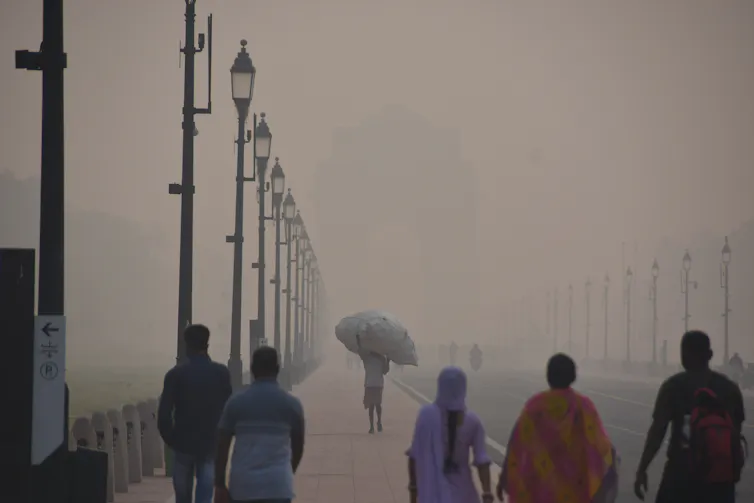
Even as climate concern falters, some of the world’s most populous cities, such as New Delhi in India, are under growing pressure to protect their residents’ health. They are likely to continue reducing their use of fossil fuels to heat homes, generate electricity and move people around.
Meanwhile, China is on a glide path to fill part of the void opened by America’s climate retreat. It already dominates certain clean energy technologies, holding a near-monopoly on battery, solar panel and fuel cell production. Chinese companies now manufacture more electric vehicles than every other nation combined.
Cementing its position as the new global climate leader would also earn China diplomatic “soft power,” especially among developing nations where Beijing can offer clean energy infrastructure plus the loans to finance it.
But, at the same time, China has shown a steady unwillingness to back strong political leadership on climate action. China’s leaders are bullish on renewable energy when it serves their economic interests. However, they are broadly resistant to the sort of strong international pressures that could stabilise global temperature rise.
It wasn’t until 2025 that China promised to actually reduce its emissions. And its recent commitments, which include a pledge to reduce greenhouse gas emissions by as much as 10% below peak levels by 2035, fall well short of what analysts say will be necessary to keep global warming below 1.5°C.
With US credibility rapidly eroding, the 21st century seems poised to slide deeper into a style of governance that is characterised less by rigorous analysis than by the whims of its leaders.
The silver lining is that demagoguery has a shelf life. Trump’s approval rating has fallen to second-term lows, with polls showing him at -17 points. The demand for clean air, cheap energy and competent governance doesn’t go away because one administration decides to ignore it.
One day Trump will eventually fade from the political landscape. Climate change will not.
Stephen Lezak does not work for, consult, own shares in or receive funding from any company or organisation that would benefit from this article, and has disclosed no relevant affiliations beyond their academic appointment.
Operation Epic Fury unleashed overwhelming firepower on Iran and a Trump broadside against Britain’s prime minister. The president belittled Keir Starmer as being no comparison to Winston Churchill, raged against caveated British support and placed Britain’s standing as America’s “greatest ally” firmly in the past tense.
Starmer refused the bait. His government is privately contemptuous of the Trump administration. But he still needs to deal with the US president and how he should do that following the recent vitriol is a very live question.
Winston Churchill appropriated the term special relationship after the second world war to refer to the myriad Anglo-American connections. Some were government-to-government, spanning privileged diplomatic, economic, military, nuclear and intelligence cooperation. Others were historical and cultural, from which evolved a sentimental myth of special relations based on uniquely entwined histories, a common language, similar values and so forth.
For 80 years, Britain and the US stood shoulder-to-shoulder in defence of a liberal international order they fashioned from the ruins of war. The US became a hyperpower. Post-imperial Britain settled as a leading medium-sized power. But the song remained the same – at least until the Trump administration’s discordant note.
Brexit made Britain even more dependent on US power. Starmer, therefore, followed almost every prime minister since the second world war in seeking close personal relations with US presidents and the preservation of Britain’s standing as America’s foremost ally.
In fairness, of all the national leaders aspiring to be a “Trump whisperer”, Starmer has been one of the more successful. Routine extensive government-to-government dialogue has been combined with carefully choreographed leveraging of cultural connections to massage the president’s ego. Particularly noteworthy has been recruitment of British royalty to the cause, including the president’s historic second state visit in September 2025.
Still, Trump’s personality and his administration’s policies remain challenging. Starmer risks association with Trump’s political toxicity if he gets too close and will be questioned about whether any rewards from such courtship outweigh the costs.
Fidelity above all else
The Trump administration is anomalous. Unlike previous administrations, it does not consistently work with the British government to put a positive face on Anglo-American relations. The feel-good sentiment generated by the second state visit, for example, dissipated rapidly once Trump carelessly attacked British policies shortly afterwards in the United Nations.
Meanwhile, Trump’s prioritises fidelity above competence and centralises power in his White House. These tendencies, and his suspicion of expertise within the “deep state” weaken Britain’s ability to feed into the American foreign policymaking process.
Trump’s inconsistency, preference for diplomacy by social media, and frequently provocative and erroneous statements often trap Starmer between trying to smooth consequent tensions (in which case he appears as a Trump apologist) or rebutting the president. This was clear when Trump threatened Canadian sovereignty, when he repeatedly implied he would invade Greenland and when he attacked the commitment of British troops in Afghanistan.
Finally, and most importantly, the Trump administration is undermining the liberal international order, casting its anti-liberal, anti-modernist and anti-globalist tendencies against Britain’s preferences for international law, multilateral institutions, collective security and international free trade.
What should Starmer do now?
On balance, Starmer’s best option for now is to hope, hedge and wait. In the short term, Downing Street will hope that US mid-terms return a Congress less pliant to Trump’s ambitions and that legal actions through American courts continue their disruption.
In the longer term, the next three years will constitute a damage-limitation exercise while the world waits for Trump’s successor to arrive. The hope will be that whoever the next president is, Anglo-American relations will improve simply from being liberated from the personal and organisational chaos wrought by Trump.
During this interim, Starmer will routinely align Britain with the US provided doing so neither overly compromises British interests nor further weakens the liberal international order. He will also probably swallow bile and continue to woo Trump. That will potentially include leveraging the 250th anniversary celebrations of American independence. Even this, however, will need balancing against the risk of inferred endorsement of Trump ahead of the midterms.
Meanwhile, the British government will de-emphasise the significance of personalities to the robustness of Anglo-American relations and hedge against over-reliance on the US. This means building ever closer relations with Europe, continuing cautious engagement with China and outreach to other centres of economic power.
Starmer should also seek stronger relations with Canada’s Mark Carney, who has emerged as the most capable leader of the world’s medium-ranking powers and who most shares Britain’s conundrum of needing close but not over-dependent relations with Washington.
One final cautionary note. Trump dominates headlines, but he is merely an awkward symptom of the biggest challenge to the special relationship since its inception. The international order is in flux. How it is reshaped will determine whether Britain and the US remain shoulder to shoulder or return to being the distant cousins of the interwar period.
The latter is a scenario that ought to cause British officials sleeplessness. A US retreat to a neo-isolationism that broadly embraces the Maga logic would pass the mantle of principal guardianship of the liberal international order to the European Union. Britannia would then face a not-so-splendid isolation, self-exiled from the union and powerless to prevent retreat of the Atlantic shoreland.
Stephen Marsh does not work for, consult, own shares in or receive funding from any company or organisation that would benefit from this article, and has disclosed no relevant affiliations beyond their academic appointment.
The war in the Middle East is creating the largest supply disruption in the history of the global oil market.
The impact is being felt by countries across the globe. African countries are no exception, including those that produce oil.
We asked five scholars from Nigeria, South Africa, Senegal, Kenya and Ethiopia to answer the question: Is the spike in oil prices hurting your country’s economy?
The answer was a uniform “yes”. The universal fear is the effect the rise in prices is having on fuel, a staple commodity in every one of the countries for ordinary people as well as industries. In some cases, such as Ethiopia, the government has already introduced fuel subsidies to shield people from the impact of having to pay more at fuel pumps.
The fear that higher prices and outright scarcity could have damaging effects, notably on food production, was also near universal.
For some there may be a silver lining: Kenya and Senegal are in the early phases of oil production. But they’re some way off reaping the benefits of higher prices. And in the case of Nigeria, the danger is that any windfall that comes its way won’t ease the economic burden faced by ordinary people.
Ibrahima Thiam works for Iba Der Thiam University of Thies in Senegal.
Rod Crompton, Stephen Onyeiwu, Tsegay Tekleselassie, and XN Iraki do not work for, consult, own shares in or receive funding from any company or organisation that would benefit from this article, and have disclosed no relevant affiliations beyond their academic appointment.
Source: The Conversation – Africa – By Henning Melber, Extraordinary Professor, Department of Political Sciences, University of Pretoria
Namibia might not be well known in many parts of the world. But the arid southern African country has an extraordinary history.
Rich in indigenous cultural diversity, Namibians lived for more than a century under German and South African rule. Their anti-colonial resistance shaped the country from 1960 to independence on 21 March 1990 and beyond.
Henning Melber is a political scientist who works with this history. In numerous books he has tried to understand Namibia. His latest effort is a history for German speaking readers. We asked him about it.
What is the German connection?
Namibian and German histories have been entangled since the mid-1800s when German missionaries interacted with local communities. German settler-colonial rule followed in 1884.
The complicated ties with Germany remain alive today. Namibia’s three million inhabitants include an estimated 15,000-20,000 White German speakers. They outnumber those during colonial times and maintain minority rights, with their own institutionalised identity. Namibia has the continent’s only German daily newspaper and a German radio programme by the public broadcaster.
Likewise, Namibia is the most prominent African country in the German public sphere. Hundreds of thousands of German speakers visit the country every year – almost half of Namibia’s overseas tourists are from German speaking countries.
Before independence, the West German parliament adopted a resolution declaring a special responsibility for Namibia. It referred to the German speakers in the country as the reason, without mentioning the colonial history.
The book includes the role Germans played and continue to play. I came to Namibia as the young son of German emigrants in 1967. When I was 24, in 1974, I joined the South West Africa People’s Organisation (Swapo), the liberation movement fighting for independence. The book is therefore also partly a personal history.
What is Namibia’s early history?
In contrast to the colonial view, Namibia’s territory has neither been uninhabited (terra nullus) nor unknown (terra incognita).
The country’s world famous rock art has World Heritage Site status. Some of the paintings date back 3,000 years, created by the Bushmen (San) groups as the country’s first peoples. Migration within Africa added to the local ethnic diversity.
As hunters and foragers with high mobility, Bushmen became marginalised when newer groups claimed land. Like other indigenous minorities, some now earn a living as tourist attractions.
What happened under Germany?
Germany’s first colony was based on fraudulent land deals in 1883 and 1884 by the merchant Adolf Lüderitz, acting under German “protection”. He tricked the local Nama chief into giving away much more land than intended.
German negotiations with the Portuguese and British established the borders of the current state in the early 1900s. The British harbour enclave of Walvis Bay was integrated in 1994.
From the early 1890s, local resistance to colonisation was met with brute force. Leaders were executed, and communities forced into “protection treaties”. In 1893 the massacre at Hornkranz was the writing on the wall. Over 80 women and children of the Witbooi Nama were murdered by German troops.
Settler colonial encroachment became an existential threat. In 1904 the Ovaherero resorted to armed resistance. They were joined by the Nama. The German military response ended in the first genocide of the 20th century.
An estimated 80% of the Ovaherero and 50% of the Nama were killed, plus an unknown number of Damara. German settlers organised hunting safaris to exterminate the Bushmen.
Nama and Ovaherero were imprisoned in concentration camps on Shark Island, in Swakopmund and elsewhere. Their land was appropriated, and strict segregation through laws and reserves was imposed.
Apartheid – institutionalised racial segregation – is usually associated with South Africa, where it was entrenched in law in 1948. But I argue it was in fact a German invention.
German colonialism left scars and open wounds, mainly among the descendants of the decimated indigenous communities. In 2015, the German government admitted to genocide. Negotiations between the governments have tried to come to terms with this crime, but reparations remain a contested issue.
How did South Africa end up running the country?
After the fist world war, the League of Nations turned all German colonies into mandates. These were administered by member states of the allied forces until their inhabitants were able to govern themselves.
The Union of South Africa got the mandate over neighbouring Namibia, then named South West Africa. This meant annexation in all but name. South Africa would later refuse to remain accountable to the United Nations (UN) Trusteeship Council, which exercised oversight over the mandates.
This motivated the UN to declare Namibia a “trust betrayed”. In 1971 South Africa’s mandate was revoked by the International Court of Justice.
After long negotiations a one-year transition under UN supervision paved the way for decolonisation. Independence was declared on 21 March 1990 and Namibia became the 160th UN member state.
How did organised resistance emerge?
The genocide had decimated the people needed as labour for the settler economy, so the German administration established a system of contract labour. Workers from the northern region under indirect rule, the so-called Ovamboland, were recruited.
The first coordinated resistance emerged within the ranks of the contract labour movement. It was a nucleus for the formation of Swapo.
Swapo was founded in 1960 after the killing of unarmed demonstrators, who refused forced resettlement from Old Location, a residential area for Africans in the city of Windhoek. In 1966 it began an armed struggle. In 1976 the UN recognised Swapo as “the sole and authentic representative” of the Namibian people.
The warfare against the South African regime mirrored the ambiguities and dilemmas of most armed liberation struggles. Swapo’s military command structure in exile enforced a non-democratic, centralised totalitarian mindset and a willingness to violate human rights. But the war was a relevant factor to end the foreign occupation by a White minority regime.
How has the past shaped the present?
Germans and Namibians share the long shadow of German colonialism. Most Germans know little about German colonial history. But its legacy continues to influence Namibian realities.
This is most visible in the inequality of land distribution. For the descendants of those robbed of their land, colonialism remains present. Many consider German development cooperation as another form of injustice.
Swapo transformed into a dominant party in government. It cultivates heroic narratives and a selective patriotic history. A new Black elite justifies its privileges with the struggle sacrifices.
But Namibians live in relative peace and freedom. The constitution protects civil liberties and democracy. It entrenches the rule of law. These essentials have remained respected in governance since independence. Despite all the shortcomings, it is worth it for the colonised to fight for such a society – not only in Namibia but anywhere in the world.
Henning Melber was a member of SWAPO from 1974 to 2025.
_Pillion_ offers something rare in mainstream cinema: a queer kinky love story that neither pathologizes nor punishes its characters, nor ends with a big fat gay wedding.(A24)
Pillion is a love story about connection and self-discovery through submission, pain and bootlicking.
It’s not the first film to favourably portray kink or BDSM (bondage and discipline, domination and submission, sadism and masochism). But sympathetic renditions — like the Fifty Shades of Grey phenomena — tend to feature heterosexual couples.
Based on my research into BDSM in filmand popular culture, I see Pillion as marking a striking shift in BDSM cinema: a mainstream romantic comedy that features gay men as complex and utterly endearing kinksters.
Sadomasochism in cinema
Earlier films have often framed BDSM as titillating but deviant, a slippery slope to catastrophe.
In 9½ Weeks (1986), a male dominant draws a woman into sex games that soon degrade into non-consent and humiliation. In Basic Instinct (1992), an alpha female lures men into bondage and, occasionally, stabs them with an ice pick.
In comedy, kinky characters have often been reduced to caricatures. In Eating Raoul (1982) and One Night at McCool’s (2001), kink is associated with sleaze, pathology and violence. In both films, the so-called “perverts” are killed, their deaths staged as punchlines.
A positive spin on perversity
Later BDSM films signalled a broader acceptance of sexual variety. They usually feature a male dominant introducing a woman to whips and chains, while she teaches him to open his heart.
Secretary from 2002 is one BDSM film that sees partners get married. (Lion’s Gate Films)
More recently, Babygirl (2025) revised the formula: a married woman’s libido is unleashed with a younger man who, among other things, handles her like a dog. Their affair ends, but it ultimately revitalizes her marriage.
Poster for ‘Cruising,’ starring Al Pacino, from 1980. (Lorimar Film Entertainment/Warner Bros.)
Kinky gay men have rarely occupied the centre of mainstream film. When they appear at all, it is often as villains.
The infamous male-on-male rape scene in Pulp Fiction (1994) offers a vivid example: the two perps keep a masked, leather-clad “Gimp” on a leash, coding their assault through the esthetics of kink. All three are then murdered by the film’s more sympathetic characters.
It follows Steve Burns (Al Pacino), an undercover cop tracking a serial killer who stalks New York’s leather bar scene, a hub of gay BDSM culture. As the investigation proceeds, Burns begins to struggle with his own emerging queer desires. A final murder suggests Burns may now be the killer’s successor, driven by his own sexual ambivalence.
Under pressure, the director prefaced the film with a disclaimer that it depicted only “one small segment” of the “homosexual world” and was not meant to represent it as a whole.
While a powerful moment in gay activism, the campaign may have also reinforced a respectability politics that distanced “acceptable” homosexuality from leather culture, promiscuity and public sex.
But Cruising had its defenders. As renowned film scholar and critic Robin Wood argued, “the film’s real villain is revealed as patriarchal domination,” visible in the killer’s abusive father and in corrupt police officers whose cruelty and virulent homophobia permeate the film.
While Cruising belongs to the erotic thriller tradition, Pillion unfolds as a romantic comedy. Colin (Harry Melling), a guileless, inexperienced man still living with his parents, discovers his “aptitude for devotion” with Ray (Alexander Skarsgård), a gruff leather dom biker who prefers wrestling to kissing as first base.
Trailer for Pillion.
The opposites-attract trope fuels much of the film’s humour. After their first back-alley tryst, Ray rebuffs Colin’s attempt to spend more time together and walks away. Colin — perfectly polite, even in rejection — calls after him, “Thank you!” It’s funny not because he’s kinky, but because his dogged niceness captures the familiar awkwardness of a post-hookup goodbye.
The films also confront different kinds of discrimination. In Cruising, homophobia is blatant and often brutal. In Pillion, homophobia is beside the point. Colin’s mother isn’t troubled that her son is gay, for example. If anything, she hopes he’ll find a boyfriend. What unsettles her is the structure of his 24/7 relationship with Ray, a form of BDSM in which dominance and submission extend into everyday life.
That tension comes to a head in a memorable dinner scene with Colin’s parents. Ray coolly calls her reaction “ignorant,” casting her discomfort as a form of kink-phobia.
Intimacy and authenticity
In both Cruising and Pillion, kink becomes the catalyst through which the protagonist discovers new dimensions of his sexuality. In Cruising, that awakening is framed through psychic fragmentation. In Pillion, it becomes a story of connection: to a lover, to a community and ultimately to oneself.
In a break from familiar BDSM film conventions, the relationship neither escalates toward violence, as earlier BDSM narratives often did, nor tidy itself into domestic respectability, as more hetero happily-ever-after versions have done.
Crucially, Colin’s submissiveness is not about growing small or effacing himself. Instead, he becomes increasingly able to articulate his needs and assert his own identity.
In sinister portrayals such as Cruising or Basic Instinct, dominance bleeds into violence. But even in positive depictions, such as Fifty Shades of Grey and Secretary, the dominant character is initially closed-off or commitment-phobic.
Pillion largely repeats this pattern. Ray keeps Colin at arm’s length, strictly dictating the terms of their relationship before gradually allowing him closer — at least for a moment.
Pillion offers something rare in mainstream cinema: a queer kinky love story that neither pathologizes nor punishes its characters, nor ends with a big fat gay wedding. Instead, it combines the sweetness of a romantic comedy with the sexiness of the leather scene, capturing the poignancy of two imperfect people grappling toward intimacy.
Ummni Khan does not work for, consult, own shares in or receive funding from any company or organisation that would benefit from this article, and has disclosed no relevant affiliations beyond their academic appointment.