‘No se dice tete, se dice chupete’: ¿hay que corregir a los niños cuando están aprendiendo a hablar?

Source: The Conversation – (in Spanish) – By Clara Macarena Ponce Romero, Profesora del área de Didáctica de la Lengua y la Literatura, Universidade de Santiago de Compostela

Zhuravlev Andrey/Shutterstock

“No vocaliza”, “Habla mal”, “Habla raro”, “Habla poco”… ¿Quién no se ha preocupado alguna vez de si todo está yendo como debe cuando un niño o una niña pequeña empiezan a formar sus primeras frases?

A menudo, los adultos escuchamos con atención (y, en muchas ocasiones, con preocupación) cada una de sus palabras. No es raro que madres y padres busquen una segunda opinión, ya sea en las aulas de educación infantil o en gabinetes de logopedia. Sin embargo, lo que con frecuencia se interpreta como un problema es, en realidad, una parte normal y necesaria del aprendizaje del lenguaje.

Hablar diferente no es hablar peor

Cuando un niño dice “tete agua”, “perro grande ahí” o pronuncia una palabra de forma que a los adultos les suena extraña, es fácil fijarse solo en lo que le falta, en lo que consideramos “erróneo”. Sin embargo, desde el punto de vista del desarrollo del lenguaje, lo importante no es que esas formas se parezcan a las del habla adulta, sino que cumplan su función principal: comunicar.

La investigación en lenguaje infantil lleva tiempo mostrando que los niños pueden comunicarse con eficacia, porque el aprendizaje del lenguaje se construye primero sobre el uso y la interacción, y solo más tarde sobre las reglas.


Leer más:
La importancia de los gestos en el desarrollo del lenguaje


Pensemos, por ejemplo, en las interacciones entre madres, padres y bebés de apenas seis meses. A partir de gestos, miradas, sonidos o expresiones faciales, los adultos suelen identificar la causa del llanto y responder adecuadamente a sus necesidades. Incluso a edades muy tempranas, muchos niños muestran ya preferencias claras, formas propias de reaccionar y una personalidad incipiente.

Comunicación eficaz sin normas

A continuación presentamos el ejemplo de Nerea y César, dos hermanos de tres años. Esta grabación procede del corpus Koiné de habla infantil, un repositorio accesible en línea que reúne miles de interacciones espontáneas de niños de entre 18 y 53 meses, grabadas en escuelas infantiles de Galicia. Fragmentos como este permiten observar cómo la comunicación funciona incluso cuando el lenguaje aún no se ajusta a las formas adultas.

En esta breve interacción, Nerea y César apenas producen enunciados complejos. Sin embargo, la comunicación funciona perfectamente. Cuando César le ofrece el libro a su hermana para irse a jugar y Nerea se lo devuelve, ambos están expresando con claridad su intención: no quieren “jugar a los cuentos” en ese momento. El abandono de la escena por parte de César y el gesto de negación de Nerea refuerzan ese mensaje sin necesidad de palabras elaboradas. La interacción entre niños también es clave para el aprendizaje.

Qué ocurre en la mente de los niños

Desde los primeros meses de vida, los bebés son participantes activos en la comunicación, sensibles a las intenciones de quienes los rodean. Antes incluso de dominar el vocabulario o la gramática, aprenden a interpretar miradas, gestos y tonos de voz, y a usarlos para dirigir la atención, pedir algo, rechazar una propuesta o compartir una experiencia. En pocas palabras: transmiten lo que quieren a través de la interacción con el otro.

A medida que avanzan en el aprendizaje, los niños empiezan a detectar regularidades en lo que oyen. Generalizan patrones, los ponen a prueba y los ajustan poco a poco. Por eso es habitual que digan formas que no coinciden con las adultas. Cuando una forma no da resultado, la reformulan; cuando funciona, la mantienen.

Este proceso no es solo lingüístico, también es intrínsecamente cognitivo. Aprender a hablar implica coordinar memoria, atención, percepción y control de la acción. Por eso, muchas veces los niños saben perfectamente lo que quieren decir, pero todavía no disponen de los recursos formales para expresarlo como un adulto.


Leer más:
De la sonrisa a los gestos: así comienza un bebé a hablar


Menos correcciones, más comprensión

Los niños no aprenden a hablar porque alguien les diga una y otra vez lo que hacen mal. Aprender a hablar es, ante todo, una experiencia compartida. Por eso, cuando nos dirigimos a niños pequeños, los adultos tendemos a ajustar de forma natural nuestra manera de expresarnos, por ejemplo, usando frases más simples, repitiendo palabras importantes y cambiando la entonación para hacernos entender mejor.

Este modo de hablar no empobrece el lenguaje: al contrario, lo hace más accesible y facilita que los niños comprendan y participen en la conversación sin sentirse evaluados. Por ejemplo, cuando un bebé llama a su mantita “maca”, muchos padres empiezan a utilizar esa expresión: “¿Quieres la “maca”?

Tenemos que comprender que los niños están inmersos en un proceso de aprendizaje. Esta expresión (“maca”) no es un error, es un proceso que paulatinamente les ayudará a consolidar el lenguaje adulto (manta).

Una manera de fomentar el aprendizaje lingüístico es integrarse en el mundo comunicativo infantil: “Sí, tu manta, la ‘maca’, está en la cama”. De esta forma, el niño escucha la forma convencional sin sentirse corregido ni examinado.

Otro ejemplo muy habitual ocurre cuando el niño dice “ete” señalando un juguete. En vez de exigir (“Coche, coche, se llama coche”), el adulto puede responder: “Sí, es un coche rojo. El coche hace brum brum”. Está validando la intención comunicativa y, al mismo tiempo, ofreciendo un modelo más completo y rico.

Acompañar el aprendizaje del lenguaje implica escuchar qué quieren decir los niños y responder a ello, más que centrarse en cómo lo dicen. Entender este proceso ayuda a reducir preocupaciones innecesarias y a recordar que hablar diferente no es hablar peor, sino parte del camino para aprender a comunicarse.

The Conversation

Clara Macarena Ponce Romero forma parte del grupo Koiné de la Universidad de Santiago de Compostela. Actualmente, participa en el proyecto financiado por FEDER / Ministerio de Ciencia, Innovación y Universidades – Agencia Estatal de Investigación, Corpus y densidad de datos. Versión robusta del ‘corpus Koiné’ de habla infantil (PID2024-158897NB-100).

ref. ‘No se dice tete, se dice chupete’: ¿hay que corregir a los niños cuando están aprendiendo a hablar? – https://theconversation.com/no-se-dice-tete-se-dice-chupete-hay-que-corregir-a-los-ninos-cuando-estan-aprendiendo-a-hablar-273054

Why shadow tankers are the only ships still moving through the Strait of Hormuz

Source: The Conversation – USA (2) – By Charles Edward Gehrke, Deputy Division Director of Wargame Design and Adjudication, US Naval War College

Many oil tankers aren’t moving in the Middle East. DedMityay/iStock / Getty Images Plus

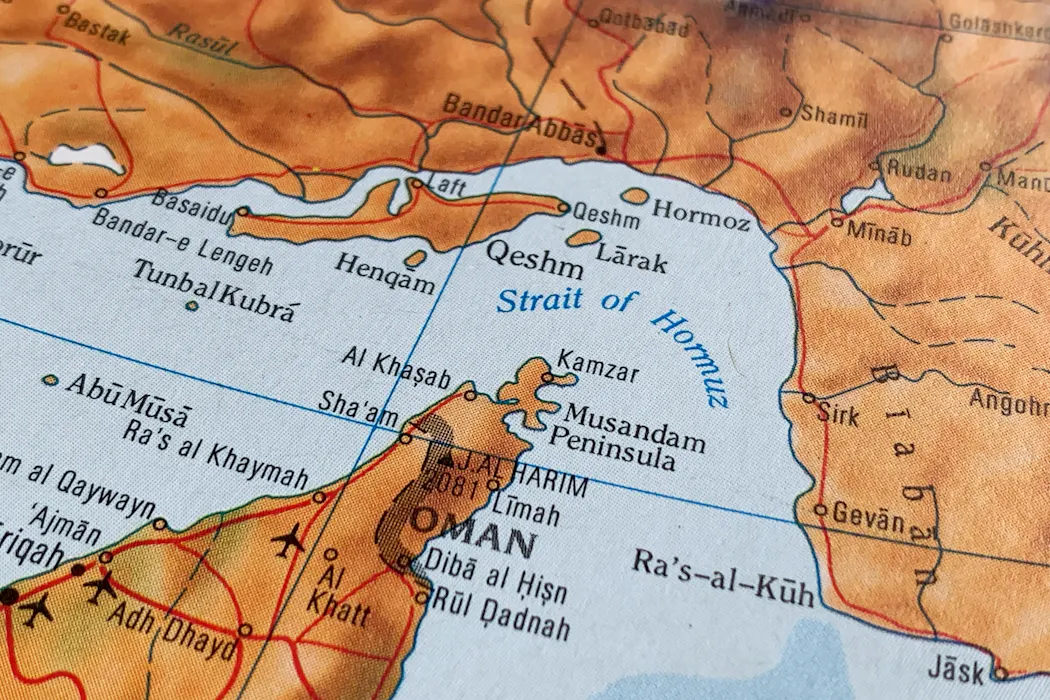
The Strait of Hormuz is effectively closed. Since the beginning of the conflict involving the United States, Israel and Iran on Feb. 28, 2026, oil tanker traffic through the world’s most critical oil shipping choke point has collapsed, dropping by more than 90%.

Iran has threatened to destroy any ships, including oil tankers, that pass through the strait from the oil depots of the Persian Gulf to the Arabian Sea and the rest of the world. Companies that insure ships against the risks of traveling in war zones are deciding whether to issue coverage on an individual-ship basis. The international body that sets many shipping regulations has told ships’ crews that they have the right to refuse to sail into the area.

As of March 6, more than 400 tankers were stranded in the Persian Gulf, without permission from their owners to move.

But some vessels are still transiting the strait. Most of the ships still moving are those that operate outside the rules.

In maritime circles, these vessels are called the “shadow fleet.” They are vessels that ignore international restrictions on trade with certain countries, violate anti-pollution regulations, smuggle unauthorized goods or don’t want their cargo or activities too closely monitored.

They exist, even in a world filled with electronic tracking, because the world’s oceans aren’t governed the same way the land is. On land, armed personnel closely monitor carefully delineated borders, seeking to force everyone to follow clear rules. But at sea, regulation is almost the opposite. The system that governs international shipping is, at its foundation, voluntary.

The oceans run on trust

The tracking of ships is voluntary. The International Convention for the Safety of Life at Sea – signed by 167 countries – requires almost every commercial vessel to carry a radio transponder that broadcasts the ship’s identity, position, speed and heading to port authorities, coast guards and commercial tracking networks.

That international agreement, which is enforced by individual countries, requires ships to leave the transponders on and active. But there is no physical mechanism preventing a crew from switching it off or broadcasting a false position.

When a vessel turns off its transponder and goes dark, it doesn’t trigger an alarm at some global maritime headquarters. There is no such headquarters. The ship simply disappears from the map. Every map.

National jurisdiction is a matter of preference, not law. Every vessel sails under the flag of a nation, and that nation is theoretically responsible for regulating and inspecting it. But in practice, a ship’s registration in a particular country is a commercial transaction. Many law-abiding shipping companies make this business decision, but this system leaves an opening for those who seek to skirt the rules.

A ship owned by a shell company in the United Arab Emirates can register under the flag of Cameroon, Palau or Liberia, or any country that may lack the resources or the incentive to conduct real inspections. Even landlocked Mongolia has a registry of oceangoing ships flying its flag.

When a vessel comes under scrutiny from port inspectors or coast guards, it can simply reregister under a different flag. Some registries even offer online registration. If the new registration is fraudulent or the registry doesn’t actually exist, the vessel effectively becomes stateless.

Then there is insurance, which is the closest thing the maritime system has to a real enforcement mechanism. Mainstream insurers, mostly based in London, require vessels to meet safety standards, carry proper documentation and comply with international trade sanctions. A ship without insurance coverage cannot easily enter major ports or secure cargo contracts with reputable firms.
Those restrictions are precisely what froze so many law-abiding ships in the Persian Gulf when war broke out.

But companies can avoid those rules, too. Two-thirds of ships carrying Russian oil – the trade of which is restricted by the U.S. and other countries – reportedly have “unknown” insurance providers, meaning nobody knows whom to call to cover the cleanup costs after a spill or collision. The enforcement mechanism works until ship owners realize they can just opt out of it entirely, using less reputable ports or transferring oil from ship to ship out at sea.

A large tanker ship sits alongside a pier.
An oil tanker seized by Belgian and French forces for its alleged participation in Russia’s ‘shadow fleet’ sits at a pier in Belgium.
Nicolas Maeterlinck/Belga/AFP via Getty Images

What opting out looks like

The results of this voluntary system can be surreal. In December 2025, the United States seized a sanctioned tanker called the Skipper, which was flying the flag of Guyana – even though that country had never registered it. The vessel was, in legal terms, stateless, sailing under the authority of no nation on Earth.

Another vessel, the Arcusat, went further. Investigative reporting found that it had changed its International Maritime Organization identification number, a unique seven-digit code assigned permanently to every ship. It is the maritime equivalent of scraping the VIN off a car.

Now layer these techniques together. An entity purchases an aging tanker that would otherwise be scrapped. It registers the ship through a shell company, pays for a flag of convenience, carries opaque insurance and switches off its transponder when approaching sensitive waters.

It loads sanctioned oil through a ship-to-ship transfer on the open ocean and delivers its cargo to a buyer who asks no questions. If the vessel attracts attention, it changes its name, reregisters under a different flag and starts over.

According to maritime intelligence firm Windward, approximately 1,100 dark fleet vessels have been identified globally, representing roughly 17% to 18% of all tankers carrying liquid cargo, which is primarily oil.

Why it matters now

The dark fleet did not emerge because the maritime system is broken. It emerged because the system is built on voluntary participation, all theoretically ensured by market forces.

For decades, the system worked not because it forced compliance but rather because opting out was more costly than opting in.

What changed is that international sanctions made compliance ruinously expensive and politically disastrous for some countries. A system built on voluntary participation, it turned out, could be voluntarily left.

If your national economy depends on oil exports, and the compliance system is preventing those exports, you build a parallel system. Iran began doing so in 2018, after sanctions were reimposed as part of negotiations over its nuclear development. Russia dramatically expanded that system in 2022 as restrictions hit in the wake of its invasion of Ukraine.

Now, with the Strait of Hormuz effectively closed to aboveboard maritime trade, the only vessels still moving are the ones that ignore the rules.

But the existence of the dark fleet doesn’t mean that the rules of the sea have failed. Rather, it reveals what kind of rules they always were. Illegal oil is the only oil moving in a crisis. In my view, that sends a message to those still playing by the rules: Opting out might be a viable option.

The opinions and views expressed are those of the author alone and do not necessarily represent those of the Department of the Navy or the U.S. Naval War College.

The Conversation

Charles Edward Gehrke does not work for, consult, own shares in or receive funding from any company or organization that would benefit from this article, and has disclosed no relevant affiliations beyond their academic appointment.

ref. Why shadow tankers are the only ships still moving through the Strait of Hormuz – https://theconversation.com/why-shadow-tankers-are-the-only-ships-still-moving-through-the-strait-of-hormuz-277785

Derrière les invasions biologiques, un remodelage silencieux des écosystèmes

Source: The Conversation – France (in French) – By Franck Courchamp, Directeur de recherche CNRS, Université Paris-Saclay

Et si on pensait le problème des espèces invasives au-delà du cadre strict de l’espèce ? En effet, les invasions biologiques interagissent étroitement avec l’écosystème local : elles peuvent modifier durablement les sols, l’eau ou encore les interactions écologiques. Nous avons développé un nouvel outil de classification pour mieux tenir compte de ces effets, encore trop souvent ignorés.


Lorsque l’on évoque les invasions biologiques, l’imaginaire collectif convoque souvent une scène de duel dramatique : un prédateur qui débarque d’un autre continent pour éradiquer une proie native. Pourtant, cette focalisation sur le risque direct d’extinction occulte une réalité bien plus insidieuse. En effet, bon nombre des invasions les plus dévastatrices ne se contentent pas d’éliminer des espèces : elles remodèlent fondamentalement l’environnement. Elles altèrent les habitats, recâblent les interactions entre espèces et modifient des processus vitaux d’une façon que les listes d’espèces menacées ne sauraient révéler à elles seules.

Prenez la chèvre, le cheval sauvage ou le cerf, introduits sur des îles où ces espèces ne sont pas natives. Leur voracité peut conduire la flore locale à l’extinction, mais leur impact s’inscrit bien plus profondément, dans la chair même du paysage.

Ces herbivores envahissants compactent les sols, accélèrent l’érosion, ouvrent les sous-bois, ce qui modifie ensuite les régimes de feux de forêt. Leur action laisse des cicatrices sur les paysages bien après que les troupeaux aient disparu. Ces bouleversements systémiques menacent la biodiversité tout aussi profondément que la perte d’une espèce.


À lire aussi :
Retour à l’état sauvage : l’étonnante histoire des vaches de l’île Amsterdam perdue dans l’océan Indien


Pour naviguer dans cette complexité, les sciences des invasions biologiques s’appuient sur un outil de référence international : l’EICAT (Environmental Impact Classification for Alien Taxa, en français, classification de l’impact environnemental des taxons exotiques). Ce cadre pionnier a marqué une avancée majeure, offrant une méthode transparente et fondée sur des preuves pour classer les envahisseurs selon la sévérité de leurs effets sur les espèces natives.

Cependant, l’EICAT a un angle mort important : il place l’espèce au cœur de son raisonnement. Il attribue ainsi un score de sévérité global unique à un envahisseur donné, généralement basé sur le pire scénario enregistré pour toutes ses invasions connues. Intéressante pour permettre la priorisation des enjeux à l’échelle mondiale, cette approche gomme les subtilités des écosystèmes locaux, chacun possédant ses propres vulnérabilités. C’est pourquoi, dans une étude récemment publiée dans la revue PLOS Biology, nous proposons d’aller plus loin.

L’architecture invisible des invasions

De fait, les invasions biologiques génèrent un spectre d’impacts qui vont bien au-delà de la simple prédation ou compétition entre espèces considérées dans les évaluations classiques. Dans une synthèse publiée en 2025, nous avions catalogué 19 types distincts d’impacts environnementaux.

Lorsque nous avons examiné l’ensemble des impacts documentés, il est devenu évident que la plupart opèrent au niveau des communautés, des écosystèmes ou des processus physiques. 12 de ces catégories concernent des échelles plus larges que celle de l’espèce, par exemple le cycle des nutriments, la structure de l’habitat ou les propriétés physiques du sol et de l’eau, dont les impacts sont donc sous-estimés.

Sont ainsi considérés trois niveaux distincts :

  • celui des individus et populations (avec des impacts sur le comportement ou la santé des individus par exemple),

  • celui des communautés d’espèces (assemblages d’espèces et aires de distribution par exemple)

  • et enfin celui des écosystèmes et de leurs composantes abiotiques, c’est-à-dire physiques et chimiques non vivants de l’environnement, mais affectant les organismes vivants (la pollinisation ou le régime des feux par exemple).

Le castor est une espèce dite « ingénieur d’écosystèmes ».
Max Saeling

Tous ces impacts sont documentés, étendus et souvent sévères, mais restaient encore largement ignorés par les classifications actuelles, qui se concentrent avant tout sur la perte d’espèces natives.

Cette omission est critique, car de nombreuses espèces envahissantes agissent comme des « ingénieurs des écosystèmes – par exemple, le castor. Ces organismes ne se contentent pas d’habiter un environnement donné, mais le modifient activement, influençant le destin de communautés entières.

Pour capturer cette nuance, nous avons développé dans notre dernière étude un outil complémentaire d’évaluation, que nous avons baptisé EEICAT (Extended Environmental Impact Classification for Alien Taxa, en français, classification étendue des impacts environnementaux des invasions biologiques). Autrement dit, une version étendue de l’EICAT.


À lire aussi :
Les invasions biologiques, un fardeau économique pour la France


De l’envahisseur à l’invasion

L’EEICAT n’est pas un remplacement, mais une évolution de l’EICAT qui déplace le périmètre de l’espèce invasive à celle l’événement d’invasion. Il permet ainsi d’évaluer l’ensemble des 19 types d’impacts (et non seulement 12 comme précédemment).

Prenons par exemple les systèmes aquatiques envahis par les moules zébrées (Dreissena). Dans d’innombrables lacs, ces mollusques menacent les populations de moules natives par compétition et bio-incrustation (aussi appelé biofouling, qui correspond à la colonisation biologique des surfaces sous-marines, par exemple la surface immergée des navires).

Moules zébrées (Dreissena polymorpha) installées sur une moule endémique.

Cette compétition avec les moules natives est bien capturée par les évaluations standard. Mais celles-ci ignorent qu’elles transforment l’eau elle-même. En filtrant massivement les particules, ces moules invasives réduisent la turbidité, altèrent les cycles des nutriments et déclenchent des changements en cascade dans la végétation et les réseaux trophiques (c’est-à-dire, les chaînes alimentaires).

L’EEICAT permet alors de cartographier, avec un cadre unique, à la fois les effets directs portés à la biodiversité et la réingénierie écosystémique du lac.

Une logique similaire s’applique pour les espèces terrestres. La fourmi d’Argentine (Linepithema humile), par exemple, est connue pour complètement éliminer les nombreuses fourmis natives des régions envahies. Mais son influence est bien plus profonde. En perturbant les mutualismes anciens entre plantes et insectes, ces envahisseurs altèrent la dispersion des graines, la pollinisation, les assemblages d’invertébrés et même les processus du sol.

La fourmi d’Argentine, accidentellement propagée dans le monde du fait du commerce international, est une espèce invasive de fourmi particulièrement agressive envers les autres espèces de fourmis.
Alex Wilde (réutilisation interdite sans autorisation)

Ces effets indirects au niveau communautaire varient considérablement selon le climat et l’intégrité de l’écosystème récepteur, si bien que chaque invasion pourra manifester des effets différents. Avec l’EEICAT, on peut désormais les prendre en compte.


À lire aussi :
Ce que l’on sait de « Tapinoma magnum », la fourmi noire et brillante qui envahit l’Europe


Des invasions variables en fonction du contexte, même pour un même envahisseur

Ce sont probablement les invasions biologiques touchant le règne végétal qui plaident le plus pour une telle approche centrée sur l’invasion et non l’envahisseur. Les espèces d’Acacia, introduites mondialement, agissent comme des caméléons écologiques. En Afrique du Sud, elles saturent les sols en azote et assèchent les cours d’eau, supprimant agressivement la flore native du Fynbos.

En France méditerranéenne, l’impact se déplace : l’Acacia argenté (Acacia dealbata, appelé aussi Mimosa d’hiver), très inflammable, modifie radicalement le régime des feux. Par l’accumulation de litière, il crée une « échelle de feu », qui permet aux flammes de monter dans la canopée. Il rend de ce fait les incendies beaucoup plus difficiles à maîtriser.

De plus, le passage du feu lève la dormance de ses graines : une zone brûlée voit souvent une explosion de mimosas, rendant la zone encore plus inflammable pour l’avenir. Cet arbre invasif perturbe également l’hydrologie locale par une consommation d’eau excessive qui réduit le débit des nappes de surface en période estivale. L’EECIAT permet de documenter ces contrastes, où chaque preuve contextuelle redéfinit la sévérité de l’invasion.


À lire aussi :
Impact écologique des feux : et les insectes ?


Réinterpréter l’histoire écologique des invasions

Adopter l’EEICAT n’implique pas de réinventer la roue. Il est possible de l’appliquer aux études d’impact existantes déjà produites au cours des dernières décennies. Il est d’ailleurs organisé selon les cinq mêmes niveaux de sévérité que l’EICAT, avec une échelle allant de préoccupation minimale à impact massif, avec les mêmes règles. Cette rétrocompatibilité permet de réinterpréter de façon plus large et plus précise l’histoire écologique des invasions.

Parce que l’EEICAT est basé sur l’invasion, et non sur l’espèce, il permet de rendre compte des différentes façons dont une espèce invasive peut avoir des effets en fonction des écosystèmes, comme l’acacia, ou encore comment plusieurs envahisseurs peuvent cumuler les pressions sur un même écosystème. Ce sont des enjeux que des scores globaux ne savaient jusqu’à aujourd’hui pas articuler.

Les invasions biologiques ne se résument pas à la perte d’espèces : elles sont aussi une réécriture silencieuse des écosystèmes. De la chimie du sol au rythme des feux de forêt, leurs impacts résonnent dans l’environnement bien après leur arrivée. En embrassant le cadre EEICAT, nous pouvons enfin capturer toute l’ampleur de ce que les invasions biologiques font réellement aux écosystèmes, et adapter nos stratégies de gestion aux réalités complexes du monde vivant, invasion par invasion.


Créé, en 2007, pour aider à accélérer et à partager les recherches scientifiques sur des enjeux sociaux majeurs, le Fonds d’Axa pour la recherche soutient près de 700 projets dans le monde mené par des chercheurs issus de 38 pays, dont celui de Franck Courchamp. Pour en savoir plus, visiter le site ou bien sa page LinkedIn.

The Conversation

Franck Courchamp a reçu des financements du Fond AXA pour la Recherche.

Laís Carneiro a reçu des financements du Fond AXA pour la Recherche.

ref. Derrière les invasions biologiques, un remodelage silencieux des écosystèmes – https://theconversation.com/derriere-les-invasions-biologiques-un-remodelage-silencieux-des-ecosystemes-277411

Middle East conflict is pushing oil prices higher — and most Canadians will feel the costs

Source: The Conversation – Canada – By Subhadip Ghosh, Associate Professor, School of Business, MacEwan University

Since American and Israeli missiles began striking Iran, global oil prices have jumped sharply. The conflict has resulted in the disruption of tanker traffic through the Strait of Hormuz, which carries about one-fifth of the world’s oil shipments.

For Canadians, the effects have been immediate, with higher prices at the gas pump.

A familiar refrain has already surfaced in Canadian political commentary: higher oil prices are good for Canada. That intuition is understandable, given that Canada is the world’s fourth-largest oil producer, with oil and gas being Canada’s highest export earner.

But that claim misses two key points. First, while Canada as a whole might gain from higher oil prices as a net energy exporter, those gains are unevenly distributed across sectors and provinces. Second, the mechanism that softened that pain — a stronger Canadian dollar — has weakened.

Together, these two facts clarify why rising oil prices are hitting Canadians harder than they did in previous decades.

Not all Canadians benefit

Oil and gas are undeniably important to Canada. Oil and gas extraction alone has averaged about five per cent of national GDP since 2000, and the sector supported approximately 446,600 direct and indirect jobs in 2023.

The importance of oil also varies dramatically across provinces. In Alberta and Saskatchewan, for example, oil and gas production accounts for roughly 22 per cent and 16 per cent of provincial GDPs, respectively.

By contrast, in Ontario and Québec — home to about 60 per cent of Canadians — the sector contributes only a small fraction of provincial output.

When crude prices rise, Alberta and Saskatchewan collect more royalties, and energy company revenues climb. For that slice of Canada, conflict in the Persian Gulf can bring economic benefits.

Yet windfall gains are also constrained by infrastructure. Pipeline capacity and production limits mean Canadian producers cannot expand quickly when global prices surge.

The completion of the Trans Mountain Expansion Project in 2024 increased access to Pacific markets, but production cannot be scaled overnight and bottlenecks still blunt the swift supply response needed to realize a windfall gain.

For most Canadians, the picture is simpler and less pleasant. Higher oil prices means higher costs not only at the pump, but also gradually in grocery stores and heating bills, and reduced purchasing power.

A sustained $10 increase in oil typically raises Canadian inflation by roughly 0.3 to 0.4 percentage points over the following year.

How oil shocks spread

Economists typically analyze oil shocks through four transmission channels: terms of trade, income, costs and monetary policy.

The first is the terms-of-trade channel. Because Canada exports more energy than it imports, higher oil prices mean the country earns more for its exports relative to what it pays for imports. That improves Canada’s purchasing power in global markets.

The second is the income channel, which determines who receives those gains: higher oil prices raise producers’ revenues and governments’ royalties, concentrating much of the windfall in oil-producing regions and among shareholders.

The third is the cost channel: oil is a key input into transportation, manufacturing and agriculture, so higher energy prices ripple through supply chains and into household budgets.

The fourth is the monetary policy channel, which often shapes the broader economy. Central banks like the Bank of Canada aim to keep inflation near a stable target. If rising oil prices keep inflation elevated for long enough, policymakers may delay interest rate cuts or keep borrowing costs higher.

Higher interest rates help contain inflation but slow spending and investment across the economy. In short, the same oil shock that boosts Canada’s energy sector can, via inflation and interest rates, slow other parts of the economy.

A weaker currency cushion

Perhaps the most consequential shift over the past decade is the changing relationship between oil prices and the Canadian dollar.

As noted by the Bank of Canada, for most of the 2000s and early 2010s, the Canadian dollar behaved like a petrocurrency. When oil prices rose, the loonie often strengthened as well.

A stronger currency made imported goods cheaper and helped offset some of the inflationary pressure from higher gasoline and energy prices. The exchange rate acted as a natural shock absorber.

That cushion has weakened substantially. Research by Alberta Central, CIBC Capital Markets and several economists all point out that the relationship between oil prices and the Canadian dollar weakened in the mid-2010s and continues to remain weak.

A line graph illustrating how the cushion provided by the Canadian dollar has weakened over time
Rolling correlation between oil prices and the CAD-USD exchange rate from 2000 to 2025.
(Author provided), CC BY

One reason is that investment in Canada’s oil and gas extraction fell 55 per cent from 2014 to 2019, then dropped a further 36 per cent in 2020. This decline reduced the foreign investment flows that once pushed the Canadian dollar higher when oil prices rose.

Second, energy companies are now more likely to return profits to shareholders through dividends and buybacks than to launch new projects. However, many of those shareholders are foreign investors, and even domestic holders, such as pension funds, distribute returns across global portfolios.

As such, the reinvestment of oil windfalls back into the Canadian economy has declined significantly compared to the investment-led boom years of the 2000s. Other factors, like the rise of U.S. shale, have also weakened the oil-currency link.

The practical consequence is that when oil spikes today, Canadians absorb more of the inflationary impact and receive less of the offsetting currency benefit they did a decade ago. For Canada, war-driven oil price spikes are therefore less a national windfall than a redistribution across sectors, provinces and from consumers to energy producers.

With the Canadian dollar no longer rising alongside oil as it once did, price spikes now translate more directly into higher living costs for Canadians.

The author would like to thank Vinh Nguyen, a research assistant and undergraduate student at MacEwan University’s School of Business, for her contribution to this article.

The Conversation

Subhadip Ghosh does not work for, consult, own shares in or receive funding from any company or organisation that would benefit from this article, and has disclosed no relevant affiliations beyond their academic appointment.

ref. Middle East conflict is pushing oil prices higher — and most Canadians will feel the costs – https://theconversation.com/middle-east-conflict-is-pushing-oil-prices-higher-and-most-canadians-will-feel-the-costs-277811

Por qué las mujeres tienen que hacer cola para ir al baño y qué dice esto sobre el diseño de las ciudades

Source: The Conversation – (in Spanish) – By Belen Martinez, Research Fellow, Centre for Regional Economic and Social Research, Sheffield Hallam University

Marcel Derweduwen/Shutterstock

¿Recuerdas la última vez que tuvo que hacer cola para ir al baño? Ya sea en teatros, aeropuertos, centros comerciales o festivales, el patrón se repite: los hombres entran y salen rápidamente del baño sin apenas esperar, mientras que las mujeres suelen guardar cola.

En la mayoría de los edificios públicos, el espacio del baño se reparte en función de la superficie, adjudicando a hombres y mujeres aproximadamente el mismo espacio. Aunque esto pueda parecer “justo”, distintas investigaciones sobre género y diseño de baños han demostrado que una superficie igual no se traduce en un acceso igualitario.

Suponer que varones y mujeres utilizan los baños de la misma manera y durante el mismo tiempo es un claro error.

Los baños masculinos suelen combinar cabinas con urinarios “compartidos”, que ocupan menos espacio y se pueden utilizar más rápidamente. Los baños de mujeres, por el contrario, se basan exclusivamente en cabinas, por lo que, incluso cuando ambos lados ocupan la misma superficie, las instalaciones de los hombres pueden atender a más usuarios.

El tiempo es otro factor a tener en cuenta. Las mujeres suelen tardar más porque necesitan sentarse en lugar de permanecer de pie, con frecuencia llevan ropa más compleja y pueden tener la menstruación o estar embarazadas. También es más frecuente que padezcan afecciones como incontinencia o infecciones del tracto urinario.

Muchas normas de diseño siguen basándose en un “cuerpo masculino por defecto”, asumiendo una entrada y salida rápida a los baños, orinado de pie y pasando un tiempo mínimo dentro. Cuando los espacios se organizan en torno al cuerpo y las rutinas de los hombres, los retrasos se achacan fácilmente al comportamiento de las mujeres –que “tardan demasiado”– en lugar de a un diseño inapropiado de sus baños.

La consecuencia más visible de estas normas de diseño es la cola que se forma fuera de los baños de mujeres. Pero, como muestra mi investigación, también puede haber consecuencias económicas y para la salud. Por ejemplo para quienes trabajan conduciendo taxis, el tiempo que pasan haciendo cola es tiempo que no dedican a ganar dinero.

El coste de la disparidad en los aseos

Y no se trata solo de la cola: la disponibilidad de baños es una decisión de diseño que afecta más a las mujeres que a los hombres, que suelen tener más facilidad para ir al baño donde quieran.

Para la mayoría de las mujeres, hacer cola para ir al WC es una pequeña molestia que aceptan sin darle mucha importancia. Sin embargo, los costes más graves de la disparidad en el acceso a los baños me quedaron claros mientras investigaba a las mujeres que trabajan como taxistas en España.

Cuando les pregunté por las frustraciones del trabajo, su primera respuesta rara vez fue el tráfico, los pasajeros difíciles o los turnos largos, sino los baños. Encontrar uno durante el turno a menudo requería una planificación cuidadosa y largas esperas, lo que les hacía perder ingresos. Sus compañeros masculinos, por su parte, podían entrar y salir en cuestión de minutos.

Rosario, una conductora de Uber de 26 años, describió la necesidad de ir al baño mientras trabajaba como “¡el drama del trabajo!”. Al igual que muchas otras conductoras que participaron en mi investigación, explicó que planificaba su ruta en función de los baños que sabía que había. Otras dijeron que evitaban beber agua para no tener que parar “todo el tiempo”, mientras que algunas relacionaban las infecciones urinarias recurrentes con “aguantar demasiado tiempo”.

Las cosas se complican durante la menstruación. Como explicó Juana: “Tienes que organizarte y obligarte a parar. Así que, después de un servicio, no vas simplemente a la parada de taxis más cercana para conseguir un nuevo cliente. En lugar de eso, tienes que conducir hasta una gasolinera para poder ir primero al baño”.

Un letrero de baño para todos los géneros
Los baños neutros en cuanto al género y otros diseños pueden hacer que los baños públicos sean más equitativos.
Heidi Besen/Shutterstock

Las investigaciones han demostrado desde hace tiempo que los baños públicos no son infraestructuras neutrales: se diseñan en función de qué cuerpos y comportamientos se consideran la norma. Mientras que las instalaciones para hombres priorizan la rapidez y la eficiencia mediante urinarios abiertos, en las mujeres se usan cabinas que priorizan la privacidad.

Además, desde el punto de vista anatómico, es más fácil –y a menudo socialmente aceptado– que los hombres orinen al lado de la carretera o en cualquier otro lugar cuando no hay baños públicos disponibles.

Las investigaciones sobre la “paridad en los baños” muestran solo optando por aumentar el número de cubículos o crear cubículos neutros en cuanto al género podremos reducir significativamente las colas de las mujeres sin apenas afectar a los hombres. Replantearse la capacidad de los urinarios para mujeres puede eliminar prácticamente las esperas.

La frustrante búsqueda de un baño no se trata solo de esperar, sino de dignidad y del derecho a ocupar la ciudad en igualdad de condiciones. Los baños, en este sentido, se comportan como un indicador silencioso pero poderoso de para quién está realmente diseñado el espacio público.

The Conversation

Belen Martinez no recibe salario, ni ejerce labores de consultoría, ni posee acciones, ni recibe financiación de ninguna compañía u organización que pueda obtener beneficio de este artículo, y ha declarado carecer de vínculos relevantes más allá del cargo académico citado.

ref. Por qué las mujeres tienen que hacer cola para ir al baño y qué dice esto sobre el diseño de las ciudades – https://theconversation.com/por-que-las-mujeres-tienen-que-hacer-cola-para-ir-al-bano-y-que-dice-esto-sobre-el-diseno-de-las-ciudades-277891

Trump’s war against Iran is uniquely unpopular among US military actions of the past century

Source: The Conversation – USA – By Charles Walldorf, Professor of Politics and International Affairs, Wake Forest University

Fire breaks out at the Shahran oil depot after U.S. and Israeli attacks in Tehran on March 8, 2026. Hassan Ghaedi/Anadolu via Getty Images

It’s clear that regime change is among the biggest objectives of the U.S. war in Iran.

“I have to be involved in the appointment” of Iran’s next leader, President Donald Trump said on March 5, 2026.

Trump has also said he might put U.S. boots on the ground to get the job done.

Trump now joins a long list of modern U.S. presidents – from Franklin Roosevelt to Harry Truman, Lyndon Johnson, George W. Bush and Barack Obama – who started wars to either overthrow hostile regimes or support embattled friendly governments abroad.

For all the parallels to history, though, Trump’s Iran war is historically unique in one critically important way: In its early stages, the war is not popular with the American public.

A recent CNN poll found that 59% of Americans oppose the war – a trend found in poll after poll since the war began.

As an expert on U.S. foreign policy and regime change wars, my research shows that what’s likely generating public opposition to the Iran war today is the absence of a big story with a grand purpose that has bolstered public support for just about every major U.S.-promoted regime change war since 1900. These broad, purpose-filled narratives generate public buy-in to support the costs of war, which are often high in terms of money spent and lives lost when regime change is at stake.

Two historical examples

In the 1930s and ’40s, a widely accepted – and largely true – story about the dangers of fascism spreading and democracies falling galvanized national support in the United States to enter and then take on the high costs of fighting in World War II.

Likewise, in the 2000s a dominant narrative about preventing a repeat of the Sept. 11, 2001, attacks and stopping terrorism brought strong initial public support for the war in Afghanistan, with 88% support in 2001, and the war in Iraq, with 70% support in 2003.

With no comparable narrative around Iran today, Trump and Republicans could face big problems, especially as costs continue to rise.

No anti-Iran narrative

Iran has been a thorn in the side of many American presidents for a long time. So, what’s missing? Why no grand-purpose narrative at the start of this war?

Two things.

First, grand-purpose narratives are rooted in major geopolitical gains by a rival regime – the danger to the U.S. For the anti-fascism narrative, those events were German troops plowing across Europe and the Japanese attack on Pearl Harbor. For the anti-terrorism narrative, it was planes crashing into the World Trade Center and the Pentagon.

Several soldiers carry a coffin off a plane.
A U.S. Army carry team in Dover, Del., moves a coffin on March 7, 2026, containing the remains of a U.S. soldier killed in the retaliatory Iranian strike on Kuwait’s Port of Shuaiba.
Kyle Mazza/Anadolu via Getty Images

Gains like these by rivals prove traumatic to the nation. They also dislodge the status quo and provide the opportunity for new grand-purpose narratives with new policy directions to emerge.

Today, most Americans see no existential danger around Iran. A Marist poll from March 3, 2026, found that 55% of Americans view Iran as a minor threat or no threat at all. And the number who see Iran as a major threat, 44%, is down from 48% in July 2025.

By contrast, 64% of Americans saw Iraq as a “considerable threat” prior to the 2003 U.S. war in Iraq.

The poll numbers on Iran aren’t surprising. Iran is far from a geopolitical menace to the United States today. To the contrary, it’s been in geopolitical retreat in the Middle East in recent years.

In the summer of 2025, Iran’s nuclear nuclear enrichment facilities were significantly damaged – “completely and totally obliterated,” according to Trump, though there is no confirmation of that claim – during the 12-Day war between Iran and Israel.

And in recent years, Tehran has lost a major ally in Syria and witnessed its proxy network all but collapse. Iran has also faced crippling economic conditions and historic protests at home.

As the polls show, none of that has sparked a grand-purpose narrative.

Missing a good story

The second missing factor for narrative formation today is any strong messaging from the White House.

In the months prior to World War II, Roosevelt used his position of authority as president to give speech after speech, setting the context of the traumatic events of the 1930s, explaining the dangers at hand and outlining a course going forward. Though less truthful in its content, Bush did the same for nearly two years before the Iraq War.

Trump did almost none of this storytelling leading up to the Iran war. Five days before the war started, the president devoted three minutes to Iran in a nearly two-hour State of the Union Address.

A man in a suit and tie stands in front of a podium onstage.
President Trump appears at a press conference in Miami on March 9, 2026.
Saul Loeb/AFP via Getty Images

Prior to that, he made a comment here and there to the press about Iran, but no storytelling preparing the nation for war. Likewise, since the war began, the administration’s stated reasons for military action keep shifting.

No wonder 54% of Americans polled disapprove of Trump’s handling of Iran and 60% of Americans say Trump has no clear plan for Iran. Also, 60% disapprove of Trump’s handling of foreign policy in general.

By comparison, Americans approved of Bush’s handling of foreign policy by 63% in early 2003.

Absent a cohesive, unifying story, it’s also no surprise there is lots of political fracturing today.

Partisan divides run deep – Democrats and independent voters strongly oppose the war. But Trump’s MAGA coalition is cracking too, with people like Tucker Carlson and Marjorie Taylor Greene sharply criticizing the war.

The way out

If he opts for it, there is an off-ramp for Trump from the Iran war. It’s one he knows well.

When U.S. leaders get caught up in costly regime change wars that outrun national support, they tend to back down, often with far fewer political costs than if they’d continued their unpopular war.

When the disaster referred to as Black Hawk Down hit in Somalia in 1993, killing 18 U.S. Marines, President Bill Clinton opted to end the mission to topple the warlords that ruled the country. Troops came home six months later.

Likewise, after the Benghazi attack killed four Americans in Libya in 2012, Obama pulled out all U.S. personnel working in Libya on nation-building operations.

And just last year, when Trump realized that U.S. ground troops would be necessary to topple the Houthi militant group in Yemen, he negotiated a ceasefire and ended his air war in that country with no significant political fallout.

With Trump’s Iran war, gas prices keep rising, more soldiers are likely to die, and stocks are highly volatile.

Backing down makes a lot of sense. History confirms that.

The Conversation

Charles Walldorf is a Senior Fellow at Defense Priorities.

ref. Trump’s war against Iran is uniquely unpopular among US military actions of the past century – https://theconversation.com/trumps-war-against-iran-is-uniquely-unpopular-among-us-military-actions-of-the-past-century-277586

Who profits from war with Iran? Understanding that will be key to resolving the conflict

Source: The Conversation – UK – By Jagannadha Pawan Tamvada, Professor of Entrepreneurship, Kingston University

When US and Israeli forces launched airstrikes on Iran, the shock waves were felt far beyond the region. As the conflict escalates, understanding who benefits from this crisis might be as important as counting its costs.

The timing could hardly be worse for the UK economy. Official forecasts for GDP growth in 2026 had already been downgraded to 1.1% before a single missile was fired. Predictions that inflation might dip now look optimistic; and expectations of an interest rate cut on March 19 have fallen sharply.

The energy shock is immediate. Tanker traffic in the strait of Hormuz has fallen by around 90%. Qatar, the world’s second largest exporter of liquefied natural gas, halted production indefinitely. Although the UK sources little gas directly from the Gulf, energy markets are global so UK households could see more than £500 added to their annual bills.

Beyond energy, UK stocks have fallen, the pound has come under pressure and the UK government’s £23.6 billion fiscal headroom could erode rapidly.

For defence stocks, however, the picture is different. London-based BAE Systems surged around 6% on the first day of the conflict. And the American defence industry seems determined to quadruple production of some weapons.

Peace benefits ordinary citizens, small businesses, global supply chains and the planet’s climate trajectory. The beneficiaries of war are more concentrated.

One of the most uncomfortable truths about this conflict is that while it inflicts pain on some, it creates windfalls for others. In my co-authored research, we call this the “paradox of incentives”. Determining who benefits is essential to understanding why wars persist long after it may seem rational to stop.

Defence contractors and the arms economy

On Wall Street, defence firms including Lockheed Martin, Northrop Grumman and RTX rose between 4% and 6% on the first day of the strikes. The three firms’ combined shareholder gain on that one day was US$25–30 billion (£18.7-£22.5 billion).

In Israel, Elbit Systems briefly became the country’s most valuable listed company, with its shares up 45% since January. In Europe and the UK, defence stocks surged against a falling FTSE 100.

The rally ‘round the flag effect

Wars may also be good for incumbent politicians in the short term. Before the strikes began, the fallout from the release of the Epstein files was reverberating globally, and piling scrutiny on to many with connections to the White House. Within hours of the first strikes, web searches for the Epstein files collapsed.

But perhaps the most counterintuitive application of the paradox concerns Iran itself. The Islamic Revolutionary Guard Corps (IRGC) controls up to half of Iran’s oil exports. Its engineering arm, Khatam al-Anbiya, has become one of the largest contractors in the country, controlling construction, telecoms, agriculture and energy.

Economic sanctions designed to weaken Tehran have actually entrenched the power structures they were meant to erode. As foreign firms exited and domestic companies struggled, IRGC-linked entities used access to informal trade routes, currency controls and security networks to expand their dominance.

At the same time, according to the World Bank, close to 10 million ordinary Iranians fell into poverty between 2011 and 2020 as the sanctions tightened.

The energy windfall

The oil and gas price shock is already providing a windfall in unexpected places. The US could benefit as Europe’s reliance on American energy exports, accelerated by the Ukraine war, grows even more.

For the Gulf petrostates, the picture is nuanced. Saudi Arabia and the UAE together hold a huge share of the world’s spare production capacity. They face real costs from the conflict, but their exposure to the Hormuz closure is lower than neighbours Kuwait, Qatar and Iraq. Both countries built bypass pipelines specifically to export oil without transitting the Strait.

And for Russia, the war diverts price-sensitive buyers such as India and China away from competing suppliers in the Gulf.

The green transition

Higher oil and gas prices make new fossil fuel extraction more commercially attractive. The same crisis that bolsters the case for renewables also makes fossil fuels more profitable. This could slow the transition by redirecting attention back towards oil and gas.

generic diesel and petrol pumps in a filling station forecourt.
Higher profits from fossil fuels could stall the green transition.
Irene Miller/Shutterstock

In our research, we argue that breaking the paradox of incentives is possible. But it would require the financial interests of powerful actors like those mentioned above to become aligned with solutions. In the context of this conflict, that principle points towards four routes.

The first would be a windfall tax on companies benefiting exceptionally from wars. The UK already has a precedent: its energy profits levy hits oil and gas profits above a set threshold until 2030. Although this levy has come under fire recently, there is a strong case for extending its principles to defence contractors whose share prices and profits surge during conflicts.

For oil-producing nations, a release of emergency stocks coordinated by the International Energy Agency (IEA) could cap price spikes. This happened in 2022 when IEA member countries released 60 million barrels from strategic reserves. The G7 nations have now said they “stand ready” to do this.

On the political side, democratic accountability, independent economic institutions and a free press all narrow the window within which leaders can exploit wartime popularity. These things can’t always be changed from the outside however, and underline the need for robust domestic institutions.

The green transition paradox is perhaps the hardest to address in the short term, but it is also where the fix is clearest. It has been argued that the more dependent economies become on the profits of war through arms exports, fossil fuel revenues or defence procurement, the harder it becomes to divert funding and attention to climate issues.

The solution is not to stop countries defending themselves – but to ensure that the transition to a green and secure energy system proceeds, precisely because of crises like this one.

The costs of this war are already being counted in energy markets. Before long, they will show up in national and household budgets. What makes this crisis particularly hard to resolve is the paradox at its heart: the actors best placed to end it are among those with the most to gain from its continuation.

The Conversation

Jagannadha Pawan Tamvada does not work for, consult, own shares in or receive funding from any company or organisation that would benefit from this article, and has disclosed no relevant affiliations beyond their academic appointment.

ref. Who profits from war with Iran? Understanding that will be key to resolving the conflict – https://theconversation.com/who-profits-from-war-with-iran-understanding-that-will-be-key-to-resolving-the-conflict-277889

Could you tell if your favourite song was made with AI? The viral ‘Papaoutai’ cover controversy suggests not

Source: The Conversation – Canada – By Cate Cleo Alexander, Postdoctoral research fellow, University of Toronto

Would it be obvious if artificial intelligence (AI?) created your new favourite song?

Millions of listeners have recently encountered that question through a viral Afro-soul cover of Papaoutai, the 2013 hit by Belgian artist Stromae. The cover has skyrocketed in popularity across streaming platforms and social media.

But unknown to most audiences, it was created using AI, according to Deezer, a French music-streaming service.

The Afro-soul cover highlights a growing challenge — the difficulty identifying when generative AI has been used in production — and how audiences, platforms and artists are struggling to respond.

When Stromae first released the upbeat dance song Papaoutai as part of the album Racine carrée, it topped the charts in Belgium, France, Germany, Israel, the Netherlands and Switzerland. More than a decade after release, it’s still one of the most-viewed French-language songs on YouTube.

The video for Stromae’s Papaoutai.

Some 12 years later, in December 2025, an Afro-soul cover of Papaoutai was uploaded to Spotify. While it’s hard to track the exact reach of the song due to various removals and re-uploads on YouTube, Instagram and TikTok, the song currently has almost 80 million streams on Spotify.

The authorship of the Afro-soul version is commonly attributed to mikeeysmusic — a Swedish musician with a verifiable social media presence and discography — Chill77, whose identity is difficult to verify, and Unjaps, an independent record label. None of the artists have made a public statement about the controversy.

Why does all of this matter? Most music platforms lack clear labelling for AI music, and this places the difficult task of identification on listeners.

Identifying AI use in music production

AI-generated music has become a very broad category. As machine learning engineer and researcher Christopher Landschoot argues, the term AI-generated music “is casually tossed around whether AI is used to emulate an effect, automatically mix or master, separate stems, or augment timbre. As long as the final audio has been touched in some way by AI, the term gets slapped on the entire piece.”

It’s hard to tell how and to what extent AI was used in the making of the cover of Papaoutai. Did mikeeysmusic and Chill77 upload Stromae’s original song into an AI program, like OpenAI’s Sora, give it a command and upload the AI-generated result? Did they train an AI program on the vocals of another musician, Arsene Mukendi, to generate choir vocals? Or was the cover an iterative process where the artists fine-tuned and edited the output?

Does it matter when the lyrics and melody were written by someone else?

Identifying AI use in music is difficult, even for scholars like us who study generative AI. A study published by Deezer-Ipsos, which surveyed 9,000 people across eight countries, found that 97 per cent of people couldn’t tell the difference between fully AI-generated music and human-authored music.

A big contributor to the confusion is the lack of response from platforms. While Bandcamp has taken a clear anti-AI stance and works to keep AI-generated music off the platform entirely, other platforms like Spotify have gestured towards governance changes but largely allowed AI music to rack up streams without clearly disclosing the use of AI.

The popularity of short-form videos (like on TikTok), in which users encounter uncontextualized song snippets, further propels the prominence of AI-generated music.

As one journalist argued:

“If listeners cannot tell the difference — and if platforms decline to tell them — then consent becomes impossible.”

Emotional responses on social media

In comment sections, audiences are often surprised to learn that the song was created using AI. Many have praised the cover, describing it as “a lot more instrumental, emotional and grand.”

But these positive feelings abruptly shift upon learning about AI use in the song’s creation. As another Reddit user commented:

“I’m actually so sad it [is AI]-generated. It sounds wonderful, but I personally can not support [AI] taking over creative industries such as music and art. And I know there are plenty of African choirs who could have nailed the vision without the use of [AI].”

Whether audiences choose to listen to AI-generated music is often framed as a moral decision. This is complicated, however, when it becomes increasingly difficult to discern what music is AI-generated or how generative AI was used in its creation.

According to the same Deezer-Ipsos study, 73 per cent of people surveyed “think it’s unethical for AI companies to use copyrighted material to generate new music without clear approval from the original artist.”

Stromae has remained quiet on the issue so far, with audiences speculating about his response to what some see as an AI appropriation of a very personal song written about his father, who died in the Rwandan genocide.

Many English-speaking users, unaware of this context, have used the heavy drums of the Afro-soul version to soundtrack everything from fashion haul videos to comedy shorts. As one TikToker asked:

“Did you ever think that the song about losing your father in the Rwandan genocide would be used, in your lifetime, to post gym thirst traps?”

AI as a tool for remixing

Artists have been grappling with the possibilities and concerns of AI use in music production, but there has been a precedent for “playing” with original songs.

Remix — through cassettes, spin tables and synthesizers — has been a part of music fan culture for decades. There is a rich tradition of fans using technology to cut, copy, paste, play, reimagine and recontextualize music.

Can AI-generated covers — the newest way of using technology to “play” with music — be understood as part of this legacy of remix?


Read more:
How I used AI to transform myself from a female dance artist to an all-male post-punk band – and what that means for other musicians


On the legal side, all seems above board — at least in France. In the case of the Papaoutai cover, the French Society of Authors, Composers and Music Publishers has upheld its legality. They note that Stromae is “properly credited” and that royalties will be shared between Stromae and the record label that produced the cover.

So is it remix? Maybe. Is it legal? Apparently.

But as seen in this example, audiences still struggle with songs extracted from their original context and created with AI technologies, which are themselves inherently extractive.
Does this context shift the perception of this song as a form of extractive remix production?

The Afro-soul cover of Papaoutai illustrates how quickly AI-generated music can circulate. It also signals an increasing amount of debate as artists, audiences, and platforms navigate the future of AI-generated music.

The Conversation

Cate Cleo Alexander has received funding from SSHRC (Doctoral Canadian Graduate Scholarship) and is a member of the Creative Labour and Critical Futures (CLCF) project.

Lauren Knight receives funding from SSHRC (Doctoral Canadian Graduate Scholarship) and is a member of the Creative Labour and Critical Futures (CLCF) project.

ref. Could you tell if your favourite song was made with AI? The viral ‘Papaoutai’ cover controversy suggests not – https://theconversation.com/could-you-tell-if-your-favourite-song-was-made-with-ai-the-viral-papaoutai-cover-controversy-suggests-not-274607

Trump wants an ‘Independence Arch’ — How famous arches warn about dangers to republics

Source: The Conversation – Canada – By Kelly Summers, Assistant Professor of History, Department of Humanities, MacEwan University

Vietnam War veterans are suing to block construction of United States President Donald Trump’s proposed triumphal arch in Washington, D.C., arguing that it would detract from the solemnity of nearby Arlington Cemetery.

Having demolished the White House’s East Wing and shuttered the renamed Kennedy Center for “complete rebuilding,” Trump plans to install what he calls an Independence Arch to mark the country’s 250th anniversary this July.

Since Trump’s re-election, Catesby Leigh of the Claremont Institute — a California think tank at the forefront of the “MAGA new right” — has urged him to erect a classical arch to proclaim the “universal significance” of the Declaration of Independence.

Leigh insisted the “nation has had enough of sackcloth and ashes, whether in the form of wokedom’s historically illiterate memes or modernism’s esthetic anorexia.”

Trump embraced the idea. A patriotic landmark would complement his efforts to purge what he called “improper ideology” from Washington institutions like the Smithsonian museum and the National Zoo.

A grand monument would also serve one of the top priorities of the current government: gratifying the president’s ego. When asked who the arch is for, Trump was honest: “Me.”

But the project professes a nobler mission. Trump’s executive order to “make federal architecture beautiful again” praised the Founding Fathers’ use of neoclassicism to “visually connect” the American republic “with the antecedents of democracy” in ancient Athens and Rome.

As a historian who studies the French Republic’s slide into military dictatorship in the early 19th century, what troubles me about this rationale is that there is nothing inherently democratic about arches.

In fact, some of the most famous iterations in ancient Rome and Napoleonic France warn us of the tendency of republics to devolve into autocratic empires.

Recalling Rome

The U.S. founders wanted to avoid the pitfalls of imperial ostentation, militarism and personality cults as they planned their new capital.

An early test was how to commemorate the nation’s first president after his death in 1799.

A hero of the War of Independence, George Washington served two terms as president and set a key precedent by refusing to seek a third.

If he had a Roman forebear, it was the humble farmer Cincinnatus rather than Julius Caesar, whose insatiable ambition toppled the republic and laid the foundation for empire.


Read more:
Which Roman emperor was most like Donald Trump?


Early Americans were well-versed in the Roman republic’s rise, corruption and fall.

Under the Republic (509 BCE to 27 BCE), the Roman Senate rewarded victorious generals and their armies with triumphs, celebratory processions under temporary wooden arches. The enduring marble arches of Titus, Septimius Severus and Constantine, meanwhile, were erected during the Empire (27 BCE – 476 CE) to glorify their imperial namesakes.

According to classicist Mary Beard, the parading of captives and loot under triumphal arches underscored the “power of the Roman war machine and the humiliation of the conquered.”

Art historian Kirk Savage notes that early Americans preferred to honour exemplars of civic virtue with “words, not stones or statues.” The nation’s capital already bore Washington’s name — no need to sully it by aping Roman tyrants.

The American republic developed what R. Grant Gilmore, a specialist in historic preservation, calls a “clear, democratic architectural language” that spurned the strident jingoism of Roman monuments.

As later generations warmed to the idea of honouring the country’s great men on the National Mall, the capital’s designers continued to embrace neoclassicism while eschewing triumphal arches.

Instead, they favoured obelisks (the Washington Monument) and temples (the Lincoln and Jefferson memorials), which foreground public service and national unity.

An effort to build an arch honouring Ulysses S. Grant in 1901 was nixed in favour of a grand equestrian statue. While George Washington eventually got an arch, it was in Manhattan as part of the City Beautiful movement.

The absence of arches in Washington, D.C. was not an oversight but a conscious feature of a restrained brand of republicanism.

From Triomphe to Trump

Trump’s desire for an arch was sparked by a more recent precedent set by America’s first ally, France. However, Paris’s famous arch, the Arc de Triomphe, dates from one of the French Republic’s own detours into empire.

When Trump visited Paris in 2017, he was so impressed by the country’s Bastille Day demonstration of “military might” that he instructed his advisers to “top it.”

When Trump hosted his own parade in June 2025, it coincided with two birthdays: the U.S. Army’s 250th and his own 79th. He then set his sights on the Arc de Triomphe, which anchors the Bastille Day parade on the Champs-Elysées.

In 1804, Napoleon Bonaparte overthrew France’s First Republic by donning a Caesarean laurel wreath. The next year, Emperor Napoleon commissioned a Roman-style arch to mark his Grande Armée’s victory at Austerlitz. Its foundation stone, dedicated to “Napoleon the Great,” was laid on his birthday in 1806.

Never mind that Napoleon died in exile long before his arch’s completion, several regime changes later, in 1836. Trump vowed to “blow it away in every way” with a 250-foot behemoth soon nicknamed the “Arc de Trump.”

Global arches

From Mexico City to Baghdad, diverse political movements have used arches to commemorate foundational moments, pivotal leaders and military triumphs and sacrifices.

Empire-building is a recurrent theme. London’s Wellington Arch stands as imperial Britain’s post-Waterloo refutation of Napoleonic invincibility. Benito Mussolini’s Arch of the Philaeni in colonial Libya featured engravings of Il Duce (“the Leader”) resurrecting the Roman Empire.

Had the Second World War played out differently, architect Albert Speer’s German triumphal arch would have loomed over the Third Reich’s imperial capital.

The meaning of arches, however, can evolve. After the First World War, the U.K. installed New Delhi’s India Gate as a tribute to Commonwealth casualties. Since India’s independence, it has anchored the country’s Republic Day celebrations as its National War Memorial.

The focus of Napoleon’s triumphal arch has likewise shifted to include both fallen soldiers and the victims of French imperialism. Since 1920, the Arc de Triomphe has housed France’s Tomb of the Unknown Soldier. In 1999, a plaque acknowledged that the Algerian War (1954-1962) was an actual war, not a “pacification operation.”

Trump’s blasé attitude to the human costs of war (not to mention colonialism and slavery) is well-documented: will his arch acknowledge them?

A monument in search of meaning

Critics have expressed concerns about the proposed arch’s regulatory oversight, funding and impact on existing commemorative spaces. But another pressing question relates to its symbolism.

The U.S. is bitterly divided and mired in constitutional crisis. The president targets domestic opponents as well as the resources and territory of foreign allies and adversaries.

From imperial Rome to Napoleonic Paris, history’s arches glorified conquest, plunder and the strongmen who erected them.

Is this truly the message the Trump government wants to send as the American republic prepares to mark a major milestone?

The Conversation

Kelly Summers does not work for, consult, own shares in or receive funding from any company or organisation that would benefit from this article, and has disclosed no relevant affiliations beyond their academic appointment.

ref. Trump wants an ‘Independence Arch’ — How famous arches warn about dangers to republics – https://theconversation.com/trump-wants-an-independence-arch-how-famous-arches-warn-about-dangers-to-republics-268748

Tsunami risks in the Mediterranean: why Nice should prepare an evacuation plan

Source: The Conversation – France – By Frédéric Leone, Professeur des Universités, Géographe des risques et des catastrophes "naturelles", Volcanographe, Cartographe, Université Paul Valéry – Montpellier III

According to UNESCO, in 2022, there is a 100% chance of a tsunami of at least one metre high in the Mediterranean Sea in the next 30 years. France’s Côte d’Azur happens to be one of the most seismically active areas in Western Europe. Arno Smit/Unsplash, CC BY

The Mediterranean sea is widely perceived as having a low tsunami risk. History and recent modelling technology have demonstrated that destructive waves have already hit the French coast and could do so again. The results of a project carried out in Nice and along the French Riviera show why anticipation and preventive evacuation measures remain the only truly effective means of saving lives.

Tsunamis, formerly known as tidal waves, raz-de-marée in France or maremoti in Italy, are among the most destructive natural phenomena. Triggered by earthquakes, underwater landslides or volcanic eruptions, they spread rapidly over long distances before releasing their energy near the coast in the form of sudden submersion and extremely powerful currents.

From several centimetres to several metres, this flooding is generally characterised by several waves, and the first waves are not necessarily the largest. The speed of the current is such that the pressure exerted on coastal infrastructure can reach several tons per square metre

Since 1970, tsunamis have claimed more than 250,000 lives worldwide, notably the Boxing day tsunami in 2004 in the Indian ocean and the tsunami on March 11 2011 in Japan, for instance.

A risk that is not so farfetched after all

In the collective imagination, tsunamis have long been associated with the Pacific and the Indian ocean. The risk of an offshore tsunami in the Mediterranean has often been considered marginal, and this in itself could be misleading. In June 2022, UNESCO, which is committed to increasing global tsunami risk awareness among coastal communities, declared:

“Statistics show that there is a 100% chance of a tsunami of at least one metre high in the Mediterranean Sea in the next 30 years.”

After the Pacific, the Mediterranean basin holds the highest number of historical tsunamis recorded, of which several have impacted France’s Côte d’Azur coastline.

According to available data, around twenty incidences were reported in the maritime area along the French Riviera between the 16th century and the early 2000s with waves often exceeding two metres.

Evacuation times that are often very short

The sources of Mediterranean tsunamis can be local or distant. In some scenarios, run-up time for the first waves can be under ten minutes, particularly in the event of an underwater landslide or earthquake close to the coast, such as in the Ligurian sea between Corsica and the Italian coast. Conversely, tsunamis generated further away from France, for example off the northern coast of North Africa, can reach the French Riviera in less than 90 minutes.

The Boumerdès earthquake (Algeria) on May 21, 2003 caused havoc along the entire French Mediterranean coastline. A field enquiry showed that eight marinas on the French Riviera experienced significant sea level drops (from 50 cm to 1.5 m), basin purges, strong eddies and currents, and damaged boats, consistent with harbour resonance phenomena. The effects were observed on the French Riviera coastline an hour and a quarter after the earthquake.

Of more local origin, the tsunami in Nice on October 16 1979, triggered by the underwater collapse of part of the construction site for the new commercial port in Nice (Alpes-Maritimes), adjacent to the airport, caused the deaths of eight people and significant damage in Antibes, Cannes and Nice. The phenomenon was observed in Antibes for around thirty minutes.

Another scenario that could occur closer to the coast is that of the seismic tsunami that struck the Ligurian Sea on February 23, 1887], following an underwater earthquake measuring between 6.5 and 6.8 on the Richter scale. Contemporary accounts describe a sudden retreat of the sea by about one metre in Antibes and Cannes, leaving fishing boats high and dry, before the arrival of a wave reaching nearly two metres, which covered the beaches.

These events are a reminder of how we are completely taken by surprise, and how such short spaces of time show the limits of traditional warning systems. Coastal communities’ ability to evacuate quickly becomes crucial.

2 tsunami scenarios could impact Mediterranean coastline (red: seaquake close to Algeria’s coast, green: submarine landslide in the Ligurian sea)
Two tsunami scenarios could impact Mediterranean coastline (red: seaquake close to Algeria’s coast, green: submarine landslide in the Ligurian sea).
Sahal, Leone & Péroche, 2013, Fourni par l’auteur

An operational warning system for France

France has had a national tsunami alert system that has been part of the Centre d’alerte aux tsunamis (Cenalt) since July 2012, in conjunction with the international system coordinated by UNESCO in the Mediterranean. This system makes it possible to rapidly detect potentially tsunami-generating earthquakes and transmit an alert in less than fifteen minutes to the interdepartmental crisis management operational centre (Cogic) and foreign alert centres.

It is then up to the authorities to disseminate alert messages to the population, in particular via the FR-Alert platform, which allows notifications to be sent to the mobile phones of people located in the danger zone.

However, this global system only covers tsunamis caused by distant earthquakes and is not very effective in the case of local tsunamis or those caused by underwater landslides, where the time it takes for the tsunami to reach the coast may be less than the warning time. This is why it is important to raise awareness among coastal populations about detecting warning signs: felt earthquakes, abnormal sea movements, most often seawater retreats preceding the run-up of the tsunami, but not always.

Nice – Côte d’Azur coastline is highly at risk

Along the entire French Mediterranean coastline, an evacuation zone has been defined by government agencies and the University of Montpellier, based on altitude, distance from the sea and historical data. It corresponds to coastal areas with an altitude of less than 5 metres that are less than 200 metres from the sea. Along river mouths, this distance is extended to 500 metres with respect to the estuary.

Including Corsica, 1,700 km of coastline, 187 towns along the French Mediterranean coast, and at least 164,000 residents would be affected. At the height of the summer, an estimated 835,000 beach users would also need to be taken into consideration in the event of a tsunami.

The Nice – Côte d’Azur metropolitan area is vulnerable for a number of reasons: dense urbanisation, strong tourist appeal, and very busy beaches. Our photo analysis and modelling work have enabled us to estimate that tens of thousands of people are present in the area to be evacuated during periods of high visitor numbers (between 10,000 and 87,000 people on the beaches, depending on the season and time of day).

Evacuating ahead of a tsunami: the plan for Nice and surrounding coastal areas

When faced with a tsunami, evacuation is the only effective means of ensuring civilian safety. International experience shows that rapid and well-prepared evacuation procedures can save the vast majority of exposed populations. Reactive evacuation measures, for example, saved 96% of Japanese inhabitants when the major tsunami struck the Tōhoku coast on March 11 2011.

In Nice – Côte d’Azur, a comprehensive evacuation strategy has been developed and supported by scientific research led by the University of Montpellier’s Laboratory of Geography and Planning. It is based on optimised walking routes, taking into account slopes, obstacles, travel speeds and congestion points. Refuge sites located out of “waves’ reach” were identified and validated by local authorities, and evacuation routes were devised using algorithms to find the fastest routes.

In total, nearly a hundred refuge sites have been mapped out and incorporated into operational evacuation plans designed to quickly guide people to safe places.

The first Tsunami risk awareness signposts were installed in Nice on February 27 2026
The first tsunami risk awareness signposts were installed in Nice on February 27 2026.
C. Thomin, MNCA, 2026, Fourni par l’auteur

From science to action: preparing the population

Raising tsunami awareness should go beyond evacuation mapping: safety drills such as evacuation exercises, particularly in schools or gradually introducing public warning signage; contribute to encouraging responsible behaviour. Several initiatives like these have been implemented in Nice via a project with students in Montpellier.

In Nice, a publicly accessible information platform with interactive maps also allows users to find evacuation zones, routes and instructions to follow in the event of an alert. These tools contribute to the development of a genuine tsunami risk culture.

Online map indicating evacuation zones, safe places and routes to get to them in the event of a tsunami in Nice
Online map indicating evacuation zones, safe places and routes to get to them in the event of a tsunami in Nice.
LAGAM/UMPV, 2026, Fourni par l’auteur

Becoming ‘Tsunami Ready’ territory

Beyond France’s Côte d’Azur coastal area, the information portal can be applied to other coastlines elsewhere in France and Europe, both in the Mediterranean and overseas, where tsunami run-up times can be just as short.

The initiatives that are being implemented in Nice are in keeping with UNESCO’s Tsunami Ready international recognition programme (TRRP). This 12-point programme aims to certify territories that are capable of anticipating a tsunami risk, prepare their populations and coordinate an appropriate response.

The first towns to be awarded the label and that have benefited from our team’s scientific and technical support were Deshaies in Guadeloupe and Cannes, with Nice set to join the programme in the near future.

When facing a wave that can arrive in a matter of minutes, being prepared to evacuate undoubtedly makes all the difference.


This article was written with the help of Louis Monnier, Monique Gherardi, Matthieu Péroche and Noé Carles, Université de Montpellier Paul-Valéry.


A weekly e-mail in English featuring expertise from scholars and researchers. It provides an introduction to the diversity of research coming out of the continent and considers some of the key issues facing European countries. Get the newsletter!


The Conversation

Frédéric Leone ne travaille pas, ne conseille pas, ne possède pas de parts, ne reçoit pas de fonds d’une organisation qui pourrait tirer profit de cet article, et n’a déclaré aucune autre affiliation que son organisme de recherche.

ref. Tsunami risks in the Mediterranean: why Nice should prepare an evacuation plan – https://theconversation.com/tsunami-risks-in-the-mediterranean-why-nice-should-prepare-an-evacuation-plan-277683