Khaby Lame is the world’s most followed TikToker: the story of a Senegalese-born star who sold his identity

Source: The Conversation – Africa – By Fanny Georges, enseignant-chercheur, Université Sorbonne Nouvelle, Paris 3

His name is Khabane Lame, but he is known worldwide as Khaby Lame. Born in Dakar, Senegal, he is the most followed content creator on TikTok.

He became famous for video clips in which he reacts to absurd “life hack” videos with a blank, slightly annoyed face, showing the hack wasn’t needed.

At the time of writing he has over 160 million followers: a world record achieved without uttering a single word. In January he sold his brand rights for nearly US$1 billion.

But there’s another dimension to his story that the western media rarely mention: Khaby Lame is a practising Muslim and a hafiz, a Muslim devotee who has memorised the entire Quran. This after being sent to a Quranic school near Dakar at the age of 14.


Read more:
Nigerian TikTok star Charity Ekezie uses hilarious skits to dispel ignorance about Africa


The tension between the sacred body of the hafiz and the commercialisation of the influencer’s digital life makes his journey a rich case study.

For me, as a researcher of digital identity, his online career also raises questions about turning personal data into digital assets.

From the suburbs of Turin to the top of the global stage

Khaby Lame’s story reads like a modern-day myth. Not because it’s hard to believe, but because it mirrors the core narratives of digital modernity. It starts with hardship, goes through a period of creative isolation and ends with global recognition.

This is what the French thinker Roland Barthes called “mythical speech”, a story that seems natural and simple, but is actually shaped by deeper forces and structures.

In 2020, at the beginning of the COVID-19 pandemic, Khaby Lame lost his job as a factory worker. He was stuck at home and locked down in social housing in the suburbs of Turin, Italy, where his parents had moved when he was a baby.

Out of this hardship he made a simple decision: he started filming short videos. Just 17 months later, he reached more than 100 million followers on TikTok. He was the first content creator based in Europe to reach that milestone.

His story reflects the promise often promoted by TikTok that the platform can lift anyone up. All you need, it suggests, is a mobile phone, and talent will quickly be rewarded with global fame.

This should be celebrated. But the myth of instant success also needs a closer look. Behind every viral rise lie smart decisions, hard work, and the powerful, and often unpredictable, role of the platfom’s algorithm.

Comic tradition

What sets Khaby Lame apart from almost all the creators before him is the semiotic system (of signs and symbols) he invented – or rather reactivated. He brought back an old comic tradition.

Many compare him to British comedy actor Charlie Chaplin. Others see echoes of US comedian Buster Keaton. Both were masters of Hollywood’s silent slapstick comedy.

Charlie Chaplin in “The Kid – Fight Scene.”

Khaby Lame revives the codes of 1930s Hollywood silent comedy cinema: mime, meaningful glances, no dialogue, and burlesque sketches (short theatrical scenes) that convey messages. But the Chaplin connection ends there, as the two men inhabit their bodies in radically different ways.

Chaplin’s films carry emotional weight, driven by social and political themes. His character, the tramp, is a poor wanderer pushing back against an unfair industrial world.

Khaby Lame’s style is closer to Keaton’s. He says nothing. He simply shows how unnecessary and complicated these internet quick fixes are. His absolute impassivity in the face of the absurd is what Keaton perfected with his famous “great stone face”.

Buster Keaton ‘The Art of the Gag’.

But while the comic structure is similar, their relationship to their bodies is not. Throughout his life, Keaton remained completely indifferent to religion or metaphysics in any form.
Khaby Lame is the opposite. He is a hafiz. The separation of his digital identity from his physical person is notable.

Wordless humour allowed him to build a global audience because there are no language barriers, just as silent film stars like Charlie Chaplin became global icons a century ago.

TikTok’s algorithm favours content that anyone can understand instantly. Chaplin needed a movie theatre, Khaby Lame needs only a phone and an algorithm. The mechanics are similar. The way it spreads has completely changed.

Digital identity

In January 2026, Khaby Lame’s carefully crafted expressive persona took on a new status. It became a financial asset. He sold his company, Step Distinctive Limited, for US$975 million to Rich Sparkle, a publicly traded company based in Hong Kong. The agreement includes the transfer of rights to use his image, voice and behavioural models to create an artificial intelligence-powered digital twin.

This digital twin will produce multilingual content, including material for advertising and promotions. Companies will be able to run commercials in several countries without Khaby being physically present. According to Rich Sparkle, this could help generate over US$4 billion in annual sales, especially through livestream e-commerce (a format already dominant in Asia), broadcast simultaneously around the world.

This transaction marks a turning point. Digital identity no longer merely represents a person. It becomes an asset that can be separated from the individual who created it. Now, a creator is no longer a brand ambassador, but a brand in its own right. In theory, Khaby Lame’s digital being is now legally separate from Khaby Lame himself.

The digital twin is, in this sense, the Buster Keaton body that digital platform capitalism has always dreamed of – impassive, reproducible, available across all time zones.

Signature gesture

Khaby Lame’s signature gesture is to place both palms open and turned upward. This seems simple and easy to understand, a light and humorous sign of of disbelief. But the gesture carries deeper meanings.

In Islamic tradition, as in many African cultures, this same gesture is linked to dua, the act of raising one’s hand in supplication to God. What millions of viewers read as a comic signature is also a spiritual practice.

Yet Khaby Lame’s digital double is not simply an image. It can act in his name. It can speak with his voice. It can repeat his familiar gestures. This is no longer simple representation. It is a form of transferring his way of expressing himself onto a digital system.

The same open hands, the same expressive gaze, the same voice that once recited the suras of the Quran in a school in Dakar are now the attributes of a commercial transaction valued at nearly a billion dollars.

There is an ethical question in handing over his active identity to financial markets.

An ethical question

For many young Africans, especially in Senegal, Khaby Lame embodies the possibility that digital spaces are territories where Africans can succeed, where the hierarchies inherited from colonial history can, at least symbolically, be overturned.

But the deal raises a difficult question: what does it mean to sell your digital self in a world where Black and African bodies have been used and profited from for centuries without consent and fair compensation?

Is this a win or a new form of exploitation? Can the financial benefits balance the transfer of his identity?

More African creators are building global audiences every year. That means these questions will become harder to ignore. Who owns a creator’s digital twin once it’s sold? Who set the rules for its use?

Khaby Lame is not just a social media success story. He is a revelation of the future and, perhaps unwittingly, a pioneer.

The Conversation

Fanny Georges does not work for, consult, own shares in or receive funding from any company or organisation that would benefit from this article, and has disclosed no relevant affiliations beyond their academic appointment.

ref. Khaby Lame is the world’s most followed TikToker: the story of a Senegalese-born star who sold his identity – https://theconversation.com/khaby-lame-is-the-worlds-most-followed-tiktoker-the-story-of-a-senegalese-born-star-who-sold-his-identity-276910

Afrobeats celebrates cybercrime and it’s becoming a global problem

Source: The Conversation – Africa – By Suleman Lazarus, Visiting Fellow, Mannheim Centre for Criminology, London School of Economics and Political Science

When former US secretary of state Colin Powell took to a London stage alongside Nigerian artist Olu Maintain in 2008 and danced to a song called Yahoozee, he almost certainly didn’t know that the track is widely understood in Nigeria as a celebration of internet fraud.

The moment became a striking illustration of something my research keeps returning to: how music can carry the moral codes of cybercrime far beyond their origins, laundering them in rhythm, recognition and prestige.

Over the last ten years I’ve studied cybercriminal pathways, romance fraud, victimisation of senior citizens, business email compromise, and the cultural politics of cybercrime.

My latest collaborative study examines 40 Afrobeats songs released between 2023 and 2025, looking for themes.

Afrobeats is the broad label often used for contemporary Nigerian and west African popular music that has come to dominate global streaming culture in the 2010s and 2020s. Driven by artists such as Burna Boy, Wizkid, Davido, Tems and Asake, it has grown from a regional sound into a global cultural force, filling arenas, winning major awards and shaping youth culture far beyond Africa.

Yet some of what travels with Afrobeats is more ambivalent. In the Nigerian context, the cybercrime most often referenced in music is linked to Yahoo Boys, a popular term for online fraudsters involved in scams such as romance fraud and advance fee fraud. In some lyrics, these figures are framed not simply as offenders but as resourceful hustlers or icons of success.

The songs in our study all contain explicit references to online fraud. All were performed by male artists. And all were globally available on platforms like Spotify, Apple Music and YouTube. What we found goes well beyond glorification. Afrobeats, we argue, is functioning as a moral text – one that actively rationalises, spiritualises and normalises cybercrime for millions of listeners worldwide.

In other words, some of this music is doing more than making crime sound cool. It is helping listeners make sense of online fraud as acceptable, even justified. It wraps criminal behaviour in the language of hustle, survival and divine favour, making it feel not just normal, but earned. And because Afrobeats is now heard everywhere, these ideas are travelling with it.

More than just ‘hustle culture’

It is tempting to dismiss fraud themed lyrics as bravado. They can seem like a form of performative edginess, not unlike gangsta rap. Gangsta rap is a branch of hip hop in which hustling, toughness and street survival became both narrative material and cultural style.

But that reading misses the depth of what’s happening. Our analysis shows that these songs use subtle rhetorical moves to present fraud as something other than wrongdoing.

One of the most pervasive techniques is what researchers call euphemistic labelling. Fraud is rarely called fraud in Afrobeats songs. It becomes “hustle”, “grind” or “blessing”. Lyrics frame scamming as honest work blessed by God, stripping away its moral weight. In one track, the phrase “work and pray for the payday” wraps a reference to cybercrime in the language of religious devotion and diligence.

Victims fare even worse. In these songs, they are rarely granted humanity. They become “maga” or “mgbada”, terms linked to the Igbo word for antelope, casting the fraudster as hunter and the victim as prey. In this language, victims are no longer people to be harmed, but targets to be chased: “clients”, “profiles”, even “cash cows”. We argue that this dehumanisation is not incidental. It makes exploitation feel rational, even honourable.

God, juju, and the spiritual economy of fraud

Perhaps the most striking finding in our research is the pervasiveness of what we call cyber-spiritualism. Across multiple tracks, success in online fraud is framed not as a product of skill or cunning but as a matter of divine favour and ritual protection.

This aligns with a broader phenomenon scholars have documented in Nigeria known as “Yahoo Plus” or cyber spiritualism, a variant of internet fraud in which digital scamming is combined with spiritual practices such as juju rituals, charms and incantations. The idea is that metaphysical forces can be mobilised to manipulate victims, attract luck and protect perpetrators.

What is striking is how openly some of these beliefs appear in music. One track includes lyrics invoking Aje – a Yoruba deity associated with wealth – while another frames a ritual object (“soap”) as essential spiritual insurance for a fraudster. Another song merges Islamic thanksgiving phrases with references to successful scam transactions, as if divine gratitude and financial crime can occupy the same moral space. Fraud, in this framing, is not a choice. It is destiny.

Why this matters beyond Nigeria

The genre now circulates across continents, through algorithms and playlists, reaching audiences who may know little about Nigeria’s specific struggles. These include a high unemployment rate, elite corruption, and the longer afterlives of British colonial rule. In some of these lyrical worlds, fraud is not framed simply as greed but as a way of taking back from a global order understood to have first taken from them. Similar justifications also appeared in interviews with active scammers in Ghana.

The fraud narratives in these songs emerge from real and painful structural conditions: blocked opportunities, absent institutions, the pressure on young men to provide for their families. Understanding those conditions is essential. But as these lyrics travel globally, they become detached from their context. For diasporic or international listeners, “maga don pay”, meaning “the senseless animal has paid”, stops being a commentary on poverty and starts sounding like a lifestyle aesthetic, a marker of ingenuity, cosmopolitan hustle and transgressive cool.

Our research also reveals a telling career dynamic. Emerging artists lean heavily on fraud references to establish credibility and street authenticity. More established artists tend to drop them as their careers develop. Fraud talk, in other words, is a currency for those still trying to break through. This makes it all the more concentrated among the youngest, most influential voices in the genre.

What should be done?

I want to be clear: this research is not a moral panic about Afrobeats. The genre is not responsible for cybercrime, and reducing it to a crime soundtrack would be both inaccurate and deeply unfair to its richness and complexity.

But music is never politically or morally neutral. When lyrics consistently dehumanise fraud victims, frame exploitation as a divine blessing and circulate these ideas to hundreds of millions of people, the cultural consequences are real. My previous study on scammers and their allies reports on that.

Streaming platforms must take seriously their role in amplifying these narratives. Policymakers, educators and the music industry itself need to understand the moral ecosystems in which cybercrime thrives.

The Conversation

Dr Suleman Lazarus is affiliated with the Police Foundation. This article was written in an independent academic capacity and does not represent the views of the author’s institutional affiliation.

ref. Afrobeats celebrates cybercrime and it’s becoming a global problem – https://theconversation.com/afrobeats-celebrates-cybercrime-and-its-becoming-a-global-problem-277543

‘I felt like a specimen’ – New clinical recommendations aim to improve trauma-informed care in pelvic medicine

Source: The Conversation – Canada – By Pauline McDonagh Hull, PhD Candidate, Department of Community Health Sciences, Cumming School of Medicine, University of Calgary

An estimated 64 per cent of adults in Canada report experiencing at least one potentially psychologically traumatic event during their lifetime, and in the United States, research suggests the figure may be closer to 90 per cent.

Trauma-informed care (TIC) is a holistic approach to health care that acknowledges the potential impact of patients’ experiences of trauma and actively aims to prevent exacerbating or causing new trauma in the medical setting.

Importantly, this can lead to more positive experiences and improved health outcomes for patients who may otherwise avoid or reluctantly show up for treatments and preventive screening, which is especially critical for cervical cancer. It offers benefits for providers, too.

However, TIC is not yet standardized in pelvic medicine in Canada or the U.S., and practice varies significantly by profession. This is why my co-authors Lauren Walker, an adjunct associate professor in the departments of oncology and psychology at the University of Calgary, and Krystyna Holland, a pelvic floor physical therapist operating out of Denver, Colorado, are developing a new clinical practice tool to bring TIC into pelvic health care.

They first assembled a multidisciplinary team representing obstetrics and gynecology, urology, urogynecology, midwifery, labour and delivery, pelvic floor physical therapy, oncology, family medicine and sexual assault response practitioners to advise on clinical recommendations.

Through patient interviews, they identified examples of positive and negative pelvic health care experiences. Positive experiences ranged from, “…they didn’t make me feel bad for needing that help,” to “…it made me feel better…to have power in my decision making.” Negative comments included things like, “I was in excruciating, excruciating pain,” and “I felt like a specimen.”

Evidence suggests the widespread adoption of TIC practices could potentially improve access to care and quality of care for all patients. Therefore, the project’s main goal is to ensure all pelvic health-care practitioners consider the vulnerabilities associated with trauma experiences and minimize harm.

Medical trauma and pelvic health

According to the International Society for Traumatic Stress Studies (ISTSS), medical trauma is defined as a set of psychological and physiological responses to pain, injury, serious illness, medical procedures and frightening treatment experiences. The organization estimates that 20 to 80 per cent of children and adults may even experience post-traumatic stress disorder (PTSD) following medical events and procedures.

Often described as being “stored in the body,” trauma responses can be triggered through medical examinations. This can be through pelvic exams, which may be experienced as invasive because of their intimate nature, but also even in more mild contexts, such as disrobing.

Some populations may be more vulnerable than others. For example, research shows that women with chronic pelvic pain (CPP) are more likely to have experienced higher rates of abuse and trauma, and as such the likelihood of retraumatizing in this population is high.

Certain specialties within health care that are at an increased risk of retraumatizing patients with trauma histories include gyne-oncology care (diagnosing and treating cancers of the female reproductive system), peri- and postnatal care (before and after pregnancy), obstetrics and midwifery, urogynecology and pelvic floor physical therapy.

As a registered psychologist and clinical sex therapist in Alberta, Dr. Walker is acutely aware of how TIC guidelines for pelvic and reproductive care can improve women’s mental, physical and sexual well-being.

What is trauma-informed care (TIC)?

TIC is a guiding framework designed to reduce re-traumatization and promote shared decision-making and collaboration. The U.S. Substance Abuse and Mental Health Services Administration (SAMHSA) has established a guiding document on TIC, outlining six key principles:

  • Safety, trustworthiness and transparency;
  • Peer support;
  • Collaboration and mutuality;
  • Empowerment, voice and choice; and
  • Cultural, historical and gender issues.

It also offers a simple method for practitioners to remember TIC:
The four Rs.

  • Realize there may be trauma (past and present);
  • Recognize the signs (look and listen) and impact of trauma;
  • Respond (in a sensitive and accommodating manner); and
  • Resist Re-traumatization (think patient autonomy).

Based on these TIC principles, organizations like the Society of Obstetricians and Gynaecologists of Canada heavily emphasize informed consent for exams and procedures. However, the aims of TIC extend well beyond this into areas such as physical environment, documentation and practitioner self-reflection.

While most practitioners would agree in principle that empowering patients through autonomy, consent, safety and trust can be a positive step to improve health-care experiences, this does not always translate into action. In practice, barriers to TIC include a lack of training, time constraints, competing demands in clinics, and viewing TIC as irrelevant to their specialty area or patient population.

Understandably, some practitioners also express concerns that querying patients’ trauma histories could “open a can of worms” they don’t feel equipped to address. Such feared consequences include feeling responsible to directly treat the trauma or experiencing personal discomfort, particularly when disclosures trigger re-traumatization from their own lived experiences.

Making TIC the norm in pelvic health care

In an effort to overcome these challenges, the clinical practice tool being specifically developed by Dr. Walker and Dr. Holland for pelvic health is based on the SAMHSA recommendations. From the outset of the tool’s design, they have engaged with health-care practitioners and invited input to assess feasibility, perceived importance and any barriers to implementation.

This consultation process is ongoing, so input is still welcome from health providers and patients. The team plans to launch the pelvic health tool in late 2026 and then disseminate it more broadly to health-care practitioners of all backgrounds, with the goal of making TIC the standard of care in Canada.

The Conversation

The authors do not work for, consult, own shares in or receive funding from any company or organisation that would benefit from this article, and have disclosed no relevant affiliations beyond their academic appointment.

ref. ‘I felt like a specimen’ – New clinical recommendations aim to improve trauma-informed care in pelvic medicine – https://theconversation.com/i-felt-like-a-specimen-new-clinical-recommendations-aim-to-improve-trauma-informed-care-in-pelvic-medicine-268347

The war on DEI reflects the quiet normalization of white nationalism — in the U.S. and beyond

Source: The Conversation – Canada – By Henry Giroux, Chaired professor for Scholarship in the Public Interest in the Department of English and Cultural Studies, McMaster University

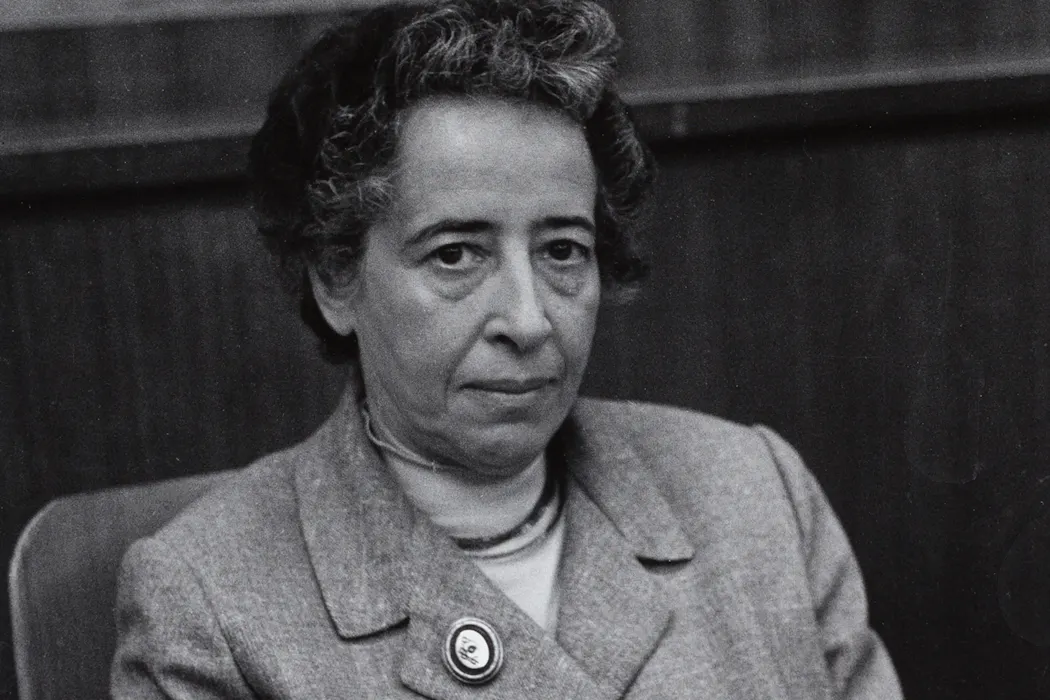
Political theorist Hannah Arendt warned that authoritarian politics rarely begin with spectacles of repression. More often, authoritarianism advances through routine administrative decisions that appear technical or neutral but gradually reshape public life — a kind of bureaucratic normalization of injustice she later described as the banality of evil.

Over time, these measures alter what can be discussed, remembered or taught. They also redefine who counts as belonging within the political community.

The backlash against diversity, equity and inclusion initiatives (DEI) reflects a deeper political transformation. Public debate often treats DEI as a dispute over university offices or workplace training programs, but the conflict runs far deeper. Under Donald Trump’s administration in the United States and its allies, diversity itself has been recast as a threat.

Campus protests, for example, are frequently invoked as proof that equity initiatives foster antisemitism, turning demands for justice into evidence of alleged institutional decay.


Read more:
Why the term ‘DEI’ is being weaponized as a racist dog whistle


False claims about equity measures

American feminist philosopher Judith Butler argues the attack on DEI is a “shameless display of hatred, the contempt for rights, [and] the willingness to strip people of their rights to equality and freedom.”

In the U.S., federal directives have dismantled diversity programs across government agencies as political leaders pressure universities to eliminate initiatives addressing systemic racism. Presented as restoring merit and neutrality, these measures define structural inequality as a threat and place citizenship itself at stake.

This reversal reflects a political narrative that treats demands for racial justice as grievance politics and portrays multicultural democracy as national decline. Within this narrative, equality appears as loss for historically dominant groups. Immigration, demographic change and racial justice movements are framed as dangers to “western civilization,” while policies expanding opportunity are depicted as attacks on merit.

Under the Trump administration, DEI has been transformed into a political weapon. It is cast not as an effort to confront historical injustice but as a threat to the nation itself, a supposed assault on merit, tradition and order.

These types of arguments echo the ideological logic of contemporary white nationalism, which presents social hierarchies as natural and treats efforts to confront inequality as illegitimate.

Once politics is framed in these terms, dismantling diversity initiatives can be cast as a defence of fairness rather than a retreat from civil rights. Government actions targeting DEI programs, restricting how racism is discussed in classrooms and pressuring universities to abandon race- and gender-conscious research are justified as restoring neutrality. Yet such measures narrow the intellectual and moral spaces where democratic debate takes place.


Read more:
How universities can move beyond a ‘diversity crisis’ mode of equity planning


Not improvement, but elimination

Similar tensions are emerging beyond the U.S. In Canada, the Alberta government has advanced proposals promoting “institutional neutrality” in universities. Critics say these policies could weaken or suspend equity initiatives addressing barriers facing racialized and Indigenous scholars.

Critics on the political left, including political activist and philosopher Angela Davis, have long noted that many DEI initiatives are limited in their ability to address deeper structures of power. Workshops and diversity statements cannot dismantle economic systems marked by racial inequality or institutions shaped by centuries of exclusion.


Read more:
Why DEI needs depth, not death


Yet the current political campaign against DEI isn’t aimed at improving these programs. It seeks to eliminate even the limited institutional recognition that systemic inequality exists.

Arendt’s work helps illuminate why this moment is politically consequential. In her writings on authoritarianism, she argued that the greatest danger arises when institutions cease to question the assumptions guiding their actions. Political choices appear technical, administrative procedures replace ethical judgment and thinking is displaced by routine compliance.

The backlash against diversity and inclusion initiatives operates within this dynamic. By portraying historical analysis as ideological bias and structural critiques of inequality as threats to social cohesion, it encourages institutions to treat questions of justice as matters best avoided.

Refusing cruelty

When societies stop examining the histories that produced inequality, public memory narrows and democratic debate contracts. Social hierarchies begin to appear natural while demands for justice are reframed as sources of division.

But remaining alert to these erosions of rights is urgent at a moment when the capacity to think historically and judge morally is being deliberately eroded under the Trump administration and other emerging authoritarian movements. What is being normalized is precisely the condition Arendt warned about: a political culture in which thoughtlessness allows cruelty to appear ordinary and injustice to operate as a routine function of governance.

That is the banality that some western societies are now being asked to accept.

The challenge is to refuse it and expose the systems that produce it while rebuilding the civic capacities democracy requires. In the face of accelerating authoritarianism, the struggle to build a future grounded in equality, shared prosperity and the radical promise of collective freedom has become not only necessary, but essential.

The Conversation

Henry Giroux does not work for, consult, own shares in or receive funding from any company or organisation that would benefit from this article, and has disclosed no relevant affiliations beyond their academic appointment.

ref. The war on DEI reflects the quiet normalization of white nationalism — in the U.S. and beyond – https://theconversation.com/the-war-on-dei-reflects-the-quiet-normalization-of-white-nationalism-in-the-u-s-and-beyond-278234

How do women entrepreneurs survive in Ghana’s informal economy? We went to a local market to ask them

Source: The Conversation – Africa – By Nadia Zahoor, Associate Professor, Queen Mary University of London

The informal economy is the basis of everyday economic life across sub-Saharan Africa. In Ghana, as in many low- and middle-income contexts, a lot of retail trade, food distribution, artisanal production and service provision happens outside formal regulatory frameworks.

Women occupy a prominent position in this world. They trade in open-air markets, process and sell foodstuffs, produce garments, provide hairdressing services and manage micro-enterprises that sustain households and anchor local economies.

Many do this work because they haven’t been able to get an education, a formal job or formal finance.

The informal economy is easier to enter – but also less secure. Enterprises tend to work without firm tenure, enforceable contractual protections or social insurance mechanisms. Income streams are volatile, exposure to risk is routine and it’s difficult to expand the business.

Despite these challenges, women’s informal enterprises play an important developmental role. They generate income where few alternatives exist, finance children’s education and contribute to local supply chains.

Public debates often portray them as vulnerable victims of poverty or as heroic symbols of resilience.

Both pictures oversimplify a far more complex reality.

We are researchers specialising in gendered entrepreneurship and informal economies. We conducted a study to explore how women in Ghana with low or no formal education sustain businesses where they are at a disadvantage, and how they deal with being portrayed as “weaker vessels”.

The research sheds light on what entrepreneurship looks like when resources are scarce, institutions are fragile and gender norms remain powerful. Our findings show resilience, as well as the hidden costs of survival in an economy where formal support systems are largely absent.

Our findings suggest that by supporting women in Ghana’s informal economy, policymakers can strengthen local markets, reduce economic precarity and enhance inclusive economic growth. Informal enterprises are deeply embedded in broader supply chains and community networks. Recognising and supporting them can increase productivity, stabilise livelihoods and create spillover benefits for the wider economy.

Life on the ground

We interviewed 21 women in southern Ghana and observed market spaces. The women were invited to share stories of actions they believed had enabled their businesses to survive despite limited resources.

These conversations highlighted the advantages associated with formal education, like access to networks, skilled labour and government programmes.

We also learned how informal women entrepreneurs kept ventures going without that kind of support. The findings pointed to informal-formal collaboration as an important, if often overlooked, linkage.

Participants described an environment marked by pervasive uncertainty:

  • threats of eviction

  • fluctuating input costs such as wholesale food prices, transport overheads and cooking fuel

  • ad hoc levies imposed by local market associations, informal gatekeepers and neighbourhood officials

  • harassment by municipal authorities.

This instability shaped how they operated.

As one trader explained:

Today you are selling peacefully. Tomorrow they can tell you to move.

The women also said they couldn’t get conventional bank finance because they didn’t have collateral, formal documentation or credit histories. Instead, they relied on rotating savings and credit associations (locally known as susu), kin-based financial support and reinvestment of modest profits.

The bank will ask for papers I don’t have. So we depend on our susu (rotating savings system).

Risk diversification was a key survival strategy. Some managed multiple activities. For example, they combined food vending with petty trading or seasonal commodity sales.

If one business is slow, the other one helps.

Equally critical were dense social networks. Fellow traders provided short-term loans, shared information about changes in prices and regulations, and offered psychosocial support.

Informal subcontracting relationships with formal enterprises sometimes provided extra income streams. This showed that informal entrepreneurship is embedded within broader economic circuits.

Participants also had to deal with people’s ideas about women as inherently fragile or dependent. Yet women’s survival depends on physical endurance, negotiation skills and financial acumen. One market trader put it this way:

If you are weak in this market, you cannot survive.

Rather than openly rejecting what people expected of women, some used those ideas to their advantage. They framed entrepreneurial activity as caregiving. This made income-generating work look more socially and morally acceptable.

I tell them I am doing this for my family. Then people accept it.

The women also spoke of the physical and psychological strains they worked under. They managed multiple income streams, absorbed market shocks and fulfilled unpaid care responsibilities.

Implications

Several recommendations emerge from our study.

First, informal women entrepreneurs should be formally recognised and supported. Simplified registration processes and flexible regulatory frameworks can help reduce barriers to formalisation. They can also give access to legal protection, institutional support and market opportunities.

With legitimised informal businesses, women would be able to operate more securely and plan for sustainable growth.

Second, access to context-sensitive finance is essential. This could include microfinance schemes, low-barrier credit products and support for community-based savings mechanisms.

Third, targeted capacity-building and social support programmes would help. This could include:

  • literacy and context-sensitive training in business management, financial literacy and digital skills

  • social protection measures like affordable childcare and healthcare access

  • time-saving interventions such as improved water and energy infrastructure.

Finally, links between informal and formal sectors need to be strengthened. Policies that encourage collaboration through subcontracting, supply chains or networking platforms can improve income stability, access to resources, and long-term business sustainability.

These measures can create an enabling environment where women’s informal enterprises don’t just survive, they thrive, and contribute to economic development.

The Conversation

Nadia Zahoor does not work for, consult, own shares in or receive funding from any company or organisation that would benefit from this article, and has disclosed no relevant affiliations beyond their academic appointment.

ref. How do women entrepreneurs survive in Ghana’s informal economy? We went to a local market to ask them – https://theconversation.com/how-do-women-entrepreneurs-survive-in-ghanas-informal-economy-we-went-to-a-local-market-to-ask-them-277634

Les communautés autochtones sont touchées de manière disproportionnée par les incendies de forêt. Voici ce que peuvent faire les gouvernements

Source: The Conversation – in French – By Tara McGee, Professor, Earth & Atmospheric Sciences, University of Alberta

Chaque été depuis dix ans ou presque, c’est la même chose dans de nombreuses régions du Canada : des feux de forêt incontrôlables font rage et le ciel se remplit de fumée. Les populations à proximité sont souvent contraintes d’évacuer.

Les feux de forêt ont des répercussions démesurées sur les communautés autochtones. Selon une enquête de 2024, 42 % des communautés canadiennes qui ont évacuées en raison des feux de forêt au cours des quatre dernières décennies étaient autochtones.

Il y a 13 ans, on comprenait peu les difficultés rencontrées par les communautés des Premières Nations lors des évacuations, bien qu’elles les vivaient fréquemment. Voilà pourquoi nous avons conclu un partenariat avec sept Premières Nations de l’Alberta, de la Saskatchewan et de l’Ontario et 16 ministères et organismes intervenant durant les évacuations provoquées par des feux de forêt pour créer le First Nations Wildfire Evacuation Partnership (FNWEP)

Depuis 2013, le FNWEP étudie les expériences des Premières Nations évacuées, identifie les facteurs qui influencent positivement ou négativement leur vécu et recommande des moyens d’atténuer les répercussions négatives des évacuations dues aux feux de forêt.

Paru en 2021, notre ouvrage First Nations Wildfire Evacuation Experiences : A guide for communities and external agencies est structuré en plusieurs chapitres, chacun correspondant à une différente étape d’une évacuation en cas de feux de forêt, de l’observation de la fumée à distance au retour chez soi une fois le feu maîtrisé.

Dans chaque chapitre, nous avons résumé les conclusions de nos recherches, fait des recommandations pratiques et proposé des mesures que les communautés et les organismes externes peuvent prendre pour mieux se préparer aux évacuations.

Défis posés par l’évacuation

Vidéo expliquant le FNWEP et les défis auxquels sont confrontées les communautés autochtones évacuées (CRSH).

Nos recherches nous ont permis de constater que de nombreuses Premières Nations ne disposent souvent pas des ressources adéquates pour se préparer et réagir aux feux de forêt. Beaucoup d’entre elles ne comptent aucune personne entièrement dédiée à la gestion des urgences.

Parmi les facteurs qui compliquent l’évacuation des peuples autochtones mentionnés dans nos recherches, citons :

  1. le fait d’être sur les terres, loin de chez soi, lorsque la décision de devoir évacuer est prise, ce qui complique la tâche de prévenir les personnes concernées et d’organiser leur transport ;

  2. la crainte de perdre son logement, exacerbée par la pénurie actuelle ;

  3. le manque d’intérêt des médias envers l’évacuation des communautés autochtones, ce qui réduit l’accès à l’information ;

  4. les problèmes de langue et le manque de services de traduction ;

  5. la pauvreté causée par la colonisation ;

  6. les familles nombreuses et multigénérationnelles vivant sous le même toit, ce qui complique la coordination du transport ;

  7. les problèmes de santé ;

  8. les inquiétudes quant aux coûts de l’évacuation et à leur remboursement.

Parmi les autres défis, mentionnons les courts délais d’avertissement, les difficultés de transport, dont les évacuations en plusieurs étapes, le manque d’informations pour les personnes évacuées, les logements surpeuplés, les chocs culturels, la séparation des familles et le racisme.

Séparation des familles

One of the most severe cases of family separation occurred in 2011 when people from [Sandy Lake First Nation]) were sent to 12 different host communities, which led to reduced support for evacuees. In some cases, community leaders and a select group of residents stayed behind in the community to communicate with government agencies and evacuees, provide advice, deal with problems and look after the community.

L’un des cas les plus graves de séparation familiale s’est produit en 2011, lorsque des membres de la Première Nation de Sandy Lake ont été dispersés dans 12 communautés d’accueil différentes, réduisant ainsi le soutien qui leur a été apporté. Dans certains cas, les responsables communautaires et un groupe restreint de résidentes et résidents sont demeurés sur place pour communiquer avec les organismes gouvernementaux et les personnes évacuées, prodiguer des conseils, régler les problèmes et protéger la communauté.

Nous avons relevé d’autres situations qui nous ont paru absurdes. Par exemple, lorsque âmaciwîspimowinihk (Stanley Mission), dans le nord de la Saskatchewan, a été évacué en 2014, les sièges d’auto pour enfants n’étaient pas autorisés à bord des autobus d’évacuation. Les personnes évacuées ont été forcées de tenir leurs bébés sur leurs genoux pendant tout le trajet vers les communautés d’accueil, dont Regina ; elles ont raconté avoir dû passer près de 12 heures sur la route.

Mais le cas le plus inapproprié date de 2011 quand la Première Nation de Deer Lake a été hébergée au Rideau Regional Centre, à Smiths Falls, en Ontario. Construit en 1951 pour accueillir des personnes atteintes de troubles du développement, ce centre avait fermé ses portes en 2009, deux ans avant l’évacuation. L’état du centre était totalement inadapté. Certaines personnes évacuées ont dû dormir à même le sol parce qu’on ne leur avait pas fourni de lit de camp, certaines chambres n’étaient pas nettoyées et les cabines de douche des salles de bain communes n’avaient ni rideaux ni portes.

Résilience communautaire

Toutefois, nous avons trouvé de nombreux cas où les personnes évacuées ont eu une bonne expérience parce que les membres de leur communauté ont fait preuve de résilience. Les chefs communautaires ont joué un rôle essentiel en assurant la liaison entre leur communauté et la communauté d’accueil, en participant aux réunions des organismes, en communiquant des informations aux personnes évacuées, en défendant les intérêts de leur communauté et en réglant les problèmes rencontrés.

Resté sur place, le chef de la Première Nation de Sandy Lake a enregistré des vidéos en oji-cri et en anglais pour rester en contact avec les membres de sa communauté et leur offrir des informations quotidiennes durant leur évacuation.

Des jeunes de la Nation ojibwée Mishkeegogamang et d’autres Premières Nations ont créé des groupes Facebook privés pour permettre aux personnes évacuées de partager de l’information. En outre, en plus de leur rôle de liaison, des membres des communautés des Premières Nations se sont portés volontaires pour apporter de l’aide de nombreuses façons, notamment en tenant compagnie aux Aînées et Aînés, en commandant et en allant chercher les ordonnances, en fournissant des services de garde d’enfants et de sécurité et en livrant des repas.

Recommandations pour améliorer les évacuations

La compétence juridictionnelle est un facteur déterminant dans toutes les évacuations. En effet, alors que la gestion des feux de forêt et des situations d’urgence relève de la compétence provinciale, les Premières Nations relèvent de la compétence fédérale, ce qui complique considérablement les évacuations en cas de feux de forêt. Nous avons répertorié des cas où les responsables locaux ne savaient pas à quel organisme s’adresser pour déclencher une évacuation.

Cependant, malgré des résultats de recherche cohérents et des efforts de sensibilisation constants, bon nombre des communautés évacuées entre 2011 et 2015 avec lesquelles nous avons travaillé ont été à nouveau évacuées depuis et ont encore été confrontées à plusieurs des mêmes difficultés.

En 2025, la vérificatrice générale du Canada a réitéré les lacunes constantes dans la façon dont Services aux Autochtones Canada gère les urgences, malgré l’augmentation spectaculaire de son financement au cours des dix dernières années — de 13 milliards de dollars en 2019-2020 à près de 24 milliards de dollars en 2023-2024. Elle a également constaté que seul l’Ontario respecte les normes de services d’évacuation.

Les autorités fédérales et provinciales devraient augmenter leur financement à long terme au profit des Premières Nations afin de leur permettre de gérer les situations d’urgence. Elles devraient aussi appuyer la construction de bâtiments équipés de filtres à air et de purificateurs d’air afin que les personnes qui les occupent n’aient pas à les évacuer uniquement en raison de la mauvaise qualité de l’air. En outre, elles pourraient simplifier les processus de remboursement pour faciliter le processus de retour à la normale à la suite des feux de forêt.

De plus, les gouvernements devraient investir davantage dans la prévention et l’atténuation des feux de forêt afin de réduire le besoin d’évacuer, notamment avec l’aide du programme Intelli-feu. Ils devraient également financer et soutenir les programmes autochtones de surveillance des incendies partout au Canada, dans le cadre desquels des Autochtones travaillent toute l’année pour assurer la prévention, l’atténuation, l’intervention et le rétablissement en cas d’incendie.

Alors que la période des feux de forêt s’aggrave d’année en année, les gouvernements peuvent prendre dès maintenant des mesures concrètes pour s’assurer que les communautés les plus touchées sont bien équipées pour faire face aux évacuations et s’en remettre.

La Conversation Canada

Tara McGee est financée par Ressources naturelles Canada dans le cadre du First Nations Wildfire Evacuation Partnership, un partenariat qui a déjà reçu un financement du Conseil de recherches en sciences humaines du Canada.

Amy Cardinal Christianson est affiliée à l’Initiative de leadership autochtone. Elle travaillait auparavant au Service canadien des forêts (Ressources naturelles Canada) et à Parcs Canada. Au cours des dix dernières années, elle a fait des contributions en nature au First Nations Wildfire Evacuation Partnership.

ref. Les communautés autochtones sont touchées de manière disproportionnée par les incendies de forêt. Voici ce que peuvent faire les gouvernements – https://theconversation.com/les-communautes-autochtones-sont-touchees-de-maniere-disproportionnee-par-les-incendies-de-foret-voici-ce-que-peuvent-faire-les-gouvernements-278043

The UN is turning refugees into carbon offset workers

Source: The Conversation – UK – By Nicholas Beuret, Lecturer in Management and Ecological Sustainability, University of Essex

Climate change and related disasters are driving millions from their homes. Now, a new UN initiative aims to put these very refugees to work offsetting the emissions of the world’s biggest producers.

Facing a US$7 billion (£5 billion) funding shortfall, the UN’s refugees agency has launched its Refugee Environmental Protection (REP) fund. The plan? To plant trees and install sustainable cooking stoves in camps, generating carbon credits to sell on the global market.

It sounds like a win for everyone: money for camps, jobs for refugees, and trees for the planet. But our research, carried out with our colleague David Harvie, suggests a darker reality. This is a system that generates questionable climate benefits, while locking refugees into low-wage labour to service the same economies that displaced them.

How the fund works

The fund aims to plant tens of millions of trees to offset carbon emissions elsewhere, while simultaneously providing employment for refugees and funding for UN refugee camps.

It uses donor funding to invest in tree-planting and clean cooking-stove programmes in and around refugee camps. (These cookstoves use electricity or burn liquefied petroleum gas rather than firewood – the cleanness refers to the fact that they’re considered safer for users because there’s less indoor air pollution, not because they are fossil-free).

The claimed carbon savings from these projects are then verified and registered as carbon credits to be sold to people or organisations who want to “offset” their own emissions. Revenues are used to replenish the fund, to improve the camp and finance new projects. Advocates also claim that clean cooking stoves will better protect women against gender-based violence, as they will have a reduced need to collect firewood.

The fund remains at a relatively early stage of development. Following pilots in Uganda and Rwanda, the UN plans to expand it to Brazil, Bangladesh, Kenya, Mozambique, Cameroon and Chad.

The impact on emissions

While the claims sound good, there are significant issues that mean the fund may well fail to reduce carbon emissions – and could possibly even increase them.

Many of the problems with schemes like these are now well known. The carbon credits industry’s self-regulation, combined with its lack of shared methodologies, undermines the credibility of its claims to reduce emissions. Key actors such as the multinationals that buy the credits or the landowners who generate them are also incentivised to overstate the climate benefits.

In addition, carbon credits rely on counterfactual estimates of what would have happened without the project. This is riddled with uncertainty, especially as climate change or reforestation can themselves alter how much carbon is saved.

These issues affect all carbon credits, even including the most rigorously verified – so-called gold standard-certified projects – which is the certification the UN’s fund will use.

The problem with planting trees

Most tree-planting schemes have very high failure rates, often seeing almost half the trees die in the first five years, while some can have mortality rates as high as 90%.

Poorly designed projects can also degrade soils, harm biodiversity and exacerbate water shortages. And as climate change increases the risk of wildfires, stored carbon could be released back into the atmosphere.

These problems have led many researchers to declare carbon offsets as false climate solutions that allow major emitters to continue polluting without any meaningful reductions. Indeed, much research has established that lots of carbon credits are effectively worthless.

The UN’s refugees agency has stated the fund “manages project risks according to high climate standards” and prioritises “measurable improvements in fuel efficiency and emission reductions.” It maintains that revenue is “transparently reinvested in community-driven projects”.

Who gets the carbon credit?

Refugees are paid to plant trees and assemble cookstoves, but the wages are extremely low. Comparable projects in Rwanda and Uganda suggest official wages range from around US$1.30 to US$5 per day, and are often less in practice.

By contrast, gold standard-certified reforestation credits typically sell for US$20–27 per tonne of carbon dioxide equivalent, 2025 prices. Using conservative estimates, the fund’s planned 20,000 hectares of reforestation could generate around US$3.2 million per year, or US$64 million over 20 years.

The UN frames the fund as a way to secure finance for refugee camps, but our analysis of the pilot projects shows a huge disparity between the value of the carbon credits and the money reaching the camps. For the 388,000 people across the three pilot sites, we estimate the US$3.2 million generated annually would contribute roughly 14% of current (insufficient) funding – and less than 5% what is required to provide adequate services.

While the money raised is a fraction of what’s needed to run the camps, the “value” created by refugees doing low- or unwaged labour goes beyond the direct dollar amounts. These credits have enormous strategic value for the buyers. By purchasing gold standard offsets generated by displaced people, major polluters gain a powerful social and environmental license to continue business as usual. That’s why much of the value appears to go not to the refugee workers, but to the companies buying the credits, and to the intermediaries who manage the transactions.

Much of the work involved in generating credits also comes from the use of clean cooking stoves. This labour is entirely unwaged, and is done primarily by women. Where gas is involved as a fuel for these stoves, the companies who provide it also benefit by securing a small but important market for their fuel. That’s one reason why exporting countries such as the US support clean cooking initiatives, even while opposing other climate measures.

The UN’s refugee agency rejects the characterisation of the fund as exploitative, framing it instead as a necessary “innovative financing” mechanism to plug a funding gap.

Ultimately, we worry the fund risks creating a form of climate maladaptation, where something seeks to respond to climate impacts but unintentionally increases vulnerability.

Similar to many aspects of the emerging green economy, the UN’s Refugee Environmental Protection fund risks making climate change worse while exploiting refugee labour. This perversely locks refugees into a green Sisyphean task: producing carbon credits that enable continued emissions, thereby worsening the very conditions that helped displace them in the first place.


Don’t have time to read about climate change as much as you’d like?

Get a weekly roundup in your inbox instead. Every Wednesday, The Conversation’s environment editor writes Imagine, a short email that goes a little deeper into just one climate issue. Join the 47,000+ readers who’ve subscribed so far.


The Conversation

The authors do not work for, consult, own shares in or receive funding from any company or organisation that would benefit from this article, and have disclosed no relevant affiliations beyond their academic appointment.

ref. The UN is turning refugees into carbon offset workers – https://theconversation.com/the-un-is-turning-refugees-into-carbon-offset-workers-273724

Why the rise of multi-party politics is good for democracy

Source: The Conversation – UK – By Ronja Heymann, Fixed-Term Lecturer, Essex Pathways Department, University of Essex

If a general election were held today, many British voters would notice something that has been quietly changing for years. They have more choice on the ballot than they used to. The dominance of Labour and the Conservatives is being eroded by multi-party politics. The recent Gorton and Denton byelection clearly showed that the Green Party and Reform UK are emerging as serious forces. Elsewhere, Your Party is preparing to enter the race.

These changes have already fuelled renewed calls for electoral reform, particularly for the introduction of proportional representation. But the significance of a shift towards multiparty politics goes beyond the rules of the electoral system. It also has the potential to change the democratic role of political competition in the UK.

In any healthy democracy, it is essential that diverging opinions and different views about society and public policy can compete openly. Political parties express and organise this democratic competition. Yet in a two-party system, it is limited to a select few. Multiparty competition offers the possibility of a more open and inclusive political arena.

Many people in the UK today feel disconnected from politics. Trust in elected representatives is low, and it is not uncommon to hear that politicians are “all the same” or “only in it for themselves”. These sentiments are often treated as symptoms of the current political moment. But the sense of distance between “ordinary citizens” and professional politics has deeper roots. In fact, it is closely tied to a political system dominated by two parties.

Democratic theorists who prefer two-party systems typically argue that democratic politics works best if professional politicians compete over ideas and policies. Ordinary citizens only participate at the ballot box. In other words, the job of shaping political visions is left to the experts; the rest of us should stick to voting.

For them, democracy does not depend on ordinary citizens actively shaping policy. Instead, it is sufficient for political parties to compete for power. It is this competition that ensures that governments respond to voters’ preferences. After all, parties will only be elected (and governments re-elected) if their policies appeal to voters. In a system dominated by two parties, the theory goes, citizens need only vote, while parties adjust their policies to win elections.

But the widespread dissatisfaction with both Labour and the Conservatives, along with the rise of other political parties, shows that theory does not always match reality. Clearly, two-party competition does not automatically produce the kind of policies voters want.

Options are emerging

The fact that parties beyond Labour and the Conservatives now have a chance of winning power could shake things up. A wider range of parties does not just give voters more choices; it can also create new opportunities for people to get involved in politics themselves. New or growing parties have reason to set themselves apart from established elites. One way to do that is to be, or at least appear to be, more accessible and responsive to ordinary citizens. That might include inviting greater participation from ordinary people.

Your Party has clearly understood there is opportunity here and is experimenting with a collective leadership model and a system of random selection to attend its party conference.

Of course, there is no guarantee that new parties will enhance participation and replace old elites. From the start, the democratic experimentation of Your Party has been overshadowed by the tension between its founders, Jeremy Corbyn and Zarah Sultana, who made their political names in the Labour Party. Even more strikingly, recent defections of prominent Conservative politicians to Reform cast doubt on the party’s proclaimed anti-establishment orientation.


Read more:
Survey shows support for electoral reform now at 60% – so could it happen?


Given the UK’s first-past-the-post system, it is also unclear whether today’s multiparty competition will last or whether politics will eventually settle back into a battle between two major parties.

The rise of new parties alone does not guarantee a more democratic Britain. Still, the current political moment holds hope: it points to the possibility of a democratic future in which the competition between different political visions for Britain offers more options to the public.

The Conversation

Ronja Heymann does not work for, consult, own shares in or receive funding from any company or organisation that would benefit from this article, and has disclosed no relevant affiliations beyond their academic appointment.

ref. Why the rise of multi-party politics is good for democracy – https://theconversation.com/why-the-rise-of-multi-party-politics-is-good-for-democracy-273963

Thirty years after Dunblane school shooting, the UK’s gun laws can still be improved

Source: The Conversation – UK – By Peter Squires, Professor of Criminology & Public Policy, University of Brighton

On March 13 1996, a man walked into a primary school in Dunblane, Scotland, armed with four handguns and several hundred rounds of ammunition. In the school gymnasium, he killed 16 young children and their teacher, and injured many others. This horrific tragedy prompted significant gun control reforms, including a ban on civilian possession of most handguns.

But 30 years later, the UK’s gun safety issues have not been fully solved. Two mass shootings in subsequent years, in Cumbria and Plymouth, add to the evidence that gun law reform in Britain has largely been event-driven. Changes only happened following tragedies – preventing future tragedies has been overlooked.


Read more:
After the Plymouth attack, British gun laws under scrutiny


Shotgun regulation has been a particular problem. Shotguns are far more frequently criminally misused than other types of licensed firearm. In the year ending March 2025, 346 shotguns were criminally misused, compared to just 76 rifles. Shotguns are also far more frequently lost or stolen, thereby contributing to illegal firearm supply.

Over the last two decades, there have been 68 domestic firearms deaths, murders and murder/suicides. The perpetrator is almost always a male gun owner, with victims disproportionately female, and most likely to be shot using a licensed firearm.

At the root of these problems are gaps in the process by which police grant firearms certificates. All of Britain’s mass shootings have been perpetrated using licensed, legally owned firearms.

Since Dunblane, police firearm licensing has attracted increasing scrutiny from many quarters. There are concerns about the diligence shown by police firearm licensing units when assessing the suitability of applicants or renewals. Until 2021, very few gun licences were revoked. However, in recent years the number of revoked certificates has increased.

Police have failed to identify disqualifying factors, or overlooked falsehoods made on gun licence applications. And in a number of recent domestic shooting tragedies, police have carelessly returned confiscated firearms to unsuitable people.

Different licensing standards

Many of these challenges are rooted in the complexity of the 1968 Firearms Act, which creates different licensing standards for rifles and shotguns. Rifles were originally thought to be “more lethal” because of their power and range. But of course, this means nothing in close domestic settings.

Meanwhile, the recent statutory safety guidance to police makes it absolutely clear that no-one denied a rifle certificate on safety and suitability grounds should ever be permitted a shotgun. A single licensing standard could significantly simplify matters.

A man in posh hunting clothing shooting a shotgun into the air
Different licensing standards for shotguns and rifles complicate the gun regulation picture.
William Barton/Shutterstock

After the Plymouth shooting in 2021, the coroner identified a “catastrophic failure” in shotgun licensing, and made a number of recommendations. These included improving nationally-accredited training for firearms enquiry officers, better resourcing of licensing departments, improved information sharing between police and health authorities and tighter statutory guidance. Importantly, it also included subjecting both shotguns and rifles to the same rigorous safety standards.

Following a shooting incident in Euston in 2023, the prime minister, Keir Starmer, suggested that the rules for the licensing of shotguns should be aligned with the more rigorous standards applied to rifles.

These proposals were broadly endorsed by the Independent Office for Police Conduct and the Scottish Affairs Select Committee. The College of Policing began a major overhaul of firearm licensing procedures and the training of firearms enquiry officers. That programme is currently being rolled out. In August 2025, the Home Office announced additional proposals to tighten the licensing process, but promised to consult on the changes.

Shooting representatives have objected to many of the proposals, voicing concerns about increased costs and further inconvenience to gun owners. They have longstanding complaints about delays and alleged inefficiencies in the licensing process. The All-Party Parliamentary Group on Shooting and Conservation, effectively parliament’s own gun lobby, organised a petition and debate to resist the proposal to combine the licensing standards.

Firearms controls fit for the future

There is unlikely to be any single quick fix for the deeply-rooted problems facing firearm licensing in the UK. The key legislation is outdated and exhibits “labyrinthine complexity”.

The law has been substantially amended at least nine times and supplemented by new case law and guidance. Yet it still contains major gaps, contradictions and ambiguities. It has been outpaced by new firearm trends and technologies such as 3D-printing, online marketing and new weapons trafficking practices.

Another area of concern involves the country’s forensic science capacity, which a recent House of Lords committee report described as “dysfunctional” and barely fit for purpose.

Recent research has also exposed important information gaps undermining the capability of the National Firearms Licensing Management System. And the National Ballistics Intelligence Service, which coordinates the country’s hitherto successful national intelligence-led approach to gun crime since 2008, is not fully utilised by all police forces. This significantly affects its ability to develop a thorough intelligence-led assessment of illegal firearms in the country and reduce gun crime.

Successful firearm safety depends on many factors: clear national policies, precise laws, vigilant policing, scrupulous licensing processes and effective intelligence capabilities. In the case of Dunblane and Plymouth, tragedy energised political will and overcame opposition to firearm safety reforms. We must continue to work for public safety today, we cannot wait for another tragedy.

The Conversation

Peter Squires (Emeritus Professor) has previously received funding from the Arts & Humanities Research Council. He is affiliated with the University of Brighton, but took voluntary severance in 2019. He has been a member of the UK Gun Control Network since around 2000. He is a member of the National Crime Agency Criminal use of Firearms Board, and a member of the HMICFRS ‘Academic Group’.

Rachel Bolton-King receives funding from the Economic and Social Research Council and National Police Chiefs’ Council. She has previously received funding from The Churchill Fellowship and The Lady Hind Trust. She is affiliated with the University of Staffordshire, Staffordshire Police and the Staffordshire Forensic Partnership. She is a member of two Forensic Science Regulator Working Groups; Firearms and Interpretation.

ref. Thirty years after Dunblane school shooting, the UK’s gun laws can still be improved – https://theconversation.com/thirty-years-after-dunblane-school-shooting-the-uks-gun-laws-can-still-be-improved-277805

Oil price escalation could help China grasp more green global leadership

Source: The Conversation – UK – By Chee Meng Tan, Assistant Professor of Business Economics, University of Nottingham

Prices are rising at the pumps due to the Iran war. Leka Sergeeva/Shutterstock

With crude oil prices incredibly volatile as the war in Iran continues, some countries are already warning they may run out of oil.

Pakistan and Bangladesh are both introducing emergency measures as petrol and diesel reserves come under pressure. Both countries are already closing down public buildings to reduce energy use and putting restrictions on fuel use. In Bangladesh the military are guarding oil depots and there are queues building up at petrol stations in Vietnam, Pakistan and the Philippines as prices escalate.

The case for diversifying energy supplies and having more power plants in your home country potentially means being less vulnerable to what happens in conflicts in other parts of the world. And that argument might well push a change in energy strategy for countries that are struggling with supplies right now.

China is already the world’s leading green‑tech manufacturing hub in solar panels, windmills and electric vehicles, and produces more than 70% of the world’s clean tech. So Beijing is in an ideal position to benefit from any growth in the green economy.

As Washington walks away from its climate commitments and continues to act unilaterally on the world stage, Beijing has an opportunity to step in and also enhance its reputation with other nations.

Oil prices are volatile.

China can do this by continuing to export affordable green technologies, and finance low‑carbon projects. Over time, it could even share its expertise with nations abroad. The goodwill that these initiatives generate could help enhance its reputation and alliances with other countries.

Yet China’s leadership in green technology brings its own challenges. Strong state backing has fuelled rapid expansion in sectors such as solar panels, electric vehicles and batteries, creating significant overcapacity and even losses.


Read more:
Who profits from war with Iran? Understanding that will be key to resolving the conflict


And many Chinese manufacturers now depend on overseas sales to stay afloat, which has led to accusations of unfair competition and market flooding. China needs to address these issues, otherwise it risks turning a potential soft-power asset into a source of friction even as the US cedes its role as a global climate leader.

Greenhouse gas emissions

To be an international green economic leader, China may also need to continue to work on its own environmental practises. China remains the world’s largest emitter of greenhouse gases, and was once called the “air pollution capital of the world”.

From 2014 however, China has made strides in reducing air pollution.

There are some indications that China’s carbon dioxide emission have been falling since 2024, and its large-scale tree planting and forest reparation program has reduced sandstorms and land degradation across the country.


Read more:
How would the Iran crisis play out in a world powered by renewables not fossil fuels?


Since the mid-1990s, China’s armed forces have rapidly modernised into a highly capable force. And its economy has been ranked as the world’s second largest since 2010. Yet, China’s willingness to use its growing trade and military influence to achieve its objectives has alarmed western governments and its regional neighbours.

China’s current strength lies in its hard power, which is the ability to get what it wants through economic and military might. But therein lies the problem. For a country that insists its rise is “peaceful”, this sort of aggression sends mixed signals. If China wishes other countries to see its ascent as benign and not threatening, it will need to rely less on coercion and more on attraction (soft power) to raise its image and limit the push back it receives, and enhancing its green image could be part of that.

But beyond its iconic panda diplomacy, which is the practice of sending giant pandas on long‑term loan to foreign zoos, China’s other notable soft-power tools have produced mixed results. Confucius Institutes, focusing on educational partnerships with foreign institutions, have faced political backlash in some countries, while China’s flagship economic initiative, the Belt and Road, has attracted both praise and criticism.

How Beijing responds to the growing oil crisis and its ability to grow green economic partnerships may give an indication of how it wants the rest of the world to see it in the future.

The Conversation

Chee Meng Tan does not work for, consult, own shares in or receive funding from any company or organisation that would benefit from this article, and has disclosed no relevant affiliations beyond their academic appointment.

ref. Oil price escalation could help China grasp more green global leadership – https://theconversation.com/oil-price-escalation-could-help-china-grasp-more-green-global-leadership-276569