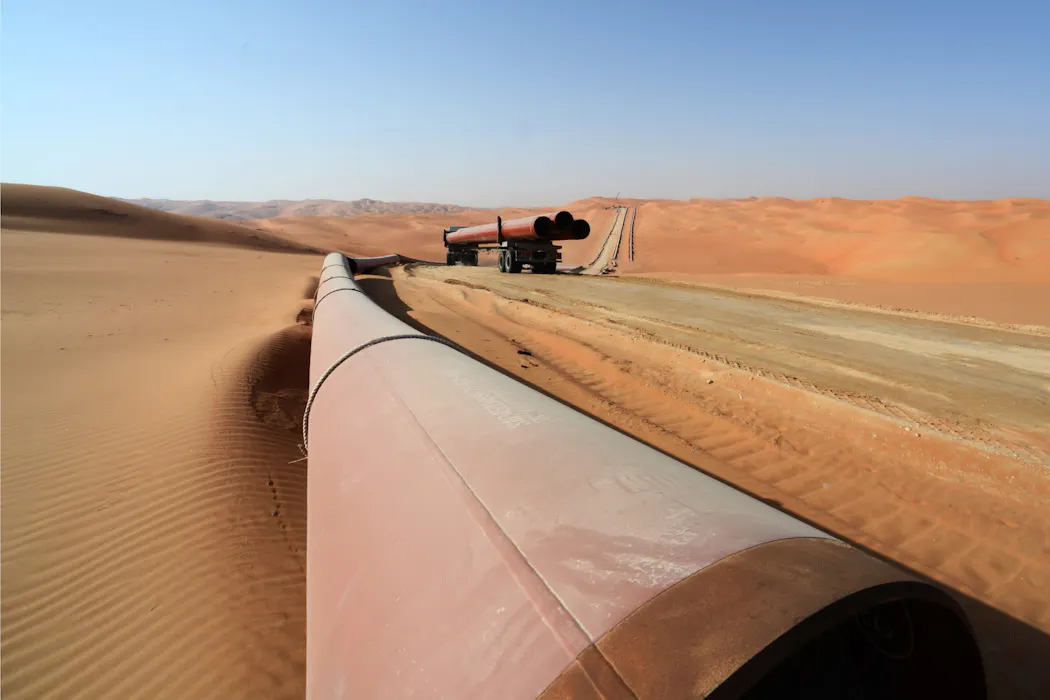
The West has long characterized Iran’s oil as a prize to be claimed

Source: The Conversation – Canada – By Ian Wereley, Adjunct Research Professor, Department of History, Carleton University

With the recent outbreak of hostilities in the Persian Gulf, the focus of international attention has returned to one of the world’s most important energy chokepoints: the Strait of Hormuz.

Roughly one-fifth of the world’s oil passes through this narrow strait. Its closure, alongside U.S.-Israeli attacks on Iran’s oil infrastructure — including the strategic export hub on Kharg Island — has raised fears of a protracted conflict as fuel prices soar.

Most news coverage and analysis has focused on the immediate threats posed by missiles, drones and mines, and the global implications of the strait’s closure.

But beneath these headlines lies a much deeper story.

For more than a century, Iran has occupied a powerful place in the western imagination, characterized as a volatile region that sits atop one of the world’s largest oil reserves.

Working within the energy humanities sub-field, my research and teaching focus on the early history of oil in Iran and the development of western oil cultures during the early 20th century.

The discovery that reshaped an empire

The story begins in May 1908, when drillers financed by the British-Australian entrepreneur William Knox D’Arcy struck oil in the rugged foothills of the Zagros Mountains in southwestern Persia, known after 1935 as Iran.

The discovery reshaped the region and the global oil industry. In 1909, the Anglo-Persian Oil Company — the precursor to British Petroleum (BP) — was established to exploit the newly discovered oilfields.

Within a few years, the company constructed a 200-kilometre pipeline network and a vast oil refinery and export complex on Abadan Island in the Persian Gulf. The refinery remains the largest in Iran.

From Abadan, tankers transported oil through the Strait of Hormuz to global markets, eventually powering ships, vehicles and industry across Europe.

Iranian oil quickly became central to British imperial strategy. In 1914, on the eve of the First World War, the British government acquired a controlling stake in BP to secure fuel supplies for the Royal Navy, which had recently transitioned from coal to oil under First Lord of the Admiralty, Winston Churchill.

Churchill later described the discovery of Iranian oil as a remarkable windfall for Britain: “Fortune rewarded the continuous and steadfast facing of these difficulties…and brought us a prize from fairyland far beyond our brightest hopes.”

From that moment onward, oil from Iran became deeply intertwined with the industrial and military power of the British Empire.


Read more:
Iran’s history has been blighted by interference from foreign powers


Imagining Persia and petroleum

After the war, BP shifted its focus from military supply to mass consumption, launching an elaborate marketing campaign to shape how British audiences understood Iran and its oil.

During the 1920s, British newspapers carried thousands of advertisements depicting Persian landscapes, history, culture and natural resources.

Among the most striking was the 12-part “Persian Series” in 1925, which paired evocative artwork with stories of British engineers operating in remote and challenging environments to provide fuel for the modern world.

Scenes of jagged mountain passes, desert caravans and ancient religious sites in Iran were juxtaposed with narratives of western technological mastery.

These messages extended beyond print. At the British Empire Exhibition of 1924-25, attended by more than 27 million visitors, BP constructed a full-scale replica of a traditional Iranian caravanserai, combining stylized cultural imagery with displays of modern oilfield equipment.

Persian symbolism was also embedded in the built environment created by BP. The company’s London headquarters, Britannic House (completed in 1925), featured sculptures of Iranian figures in traditional dress, their bodies displayed as captured loot from a distant resource frontier.

In the 1930s, BP further expanded their audience through films about life in Iran, screened for free at trade shows and fairs.

A narrative of commercial conquest

My PhD research describes how BP’s representations of Iran normalized the idea that western societies like Britain depended on energy drawn from the Middle East, and that controlling those resources was necessary and justified.

BP’s interwar marketing campaigns did more than promote its brand of gasoline. They helped construct a broader cultural understanding of Iran, its people and its oil resources.

The Zagros Mountains became the setting for a vast storytelling project about technological and cultural conquest in the Middle East.

Oil was presented as an exotic prize held captive beneath inhospitable landscapes, captured by western oil companies cast as heroic pioneers, and brought back for the enjoyment of British motorists. Oil development was marketed not as exploitation, but as an inevitable component of western modernity.

Meanwhile, Iranians appeared only at the margins, either as labourers or collateral damage in the larger drama of oil. “Gone are the captains and kings,” proclaimed one BP advertisement. “Their citadels are crumbled to dust.”

A century later, the great game for oil continues in Iran

In his 1978 book Orientalism, Palestinian literary scholar Edward Said observed:

“Always there lurks the assumption that although the western consumer belongs to a numerical minority, he is entitled either to own or to expend (or both) the majority of the world’s resources. Why? Because he, unlike the Oriental, is a true human being.”

That presumption has shaped western attitudes toward oil-producing regions for more than a century. In Iran specifically, it has led to a repeating cycle of conflict over its oil resources, with Iranian leaders often characterized as dangerous, unpredictable and greedy.

In 1953, the United Kingdom and the United States conspired to overthrow Iran’s elected prime minister, Mohammad Mossadegh, after he nationalized Iran’s oil industry.


Read more:
How the CIA toppled Iranian democracy


In the 1920s, the perceived dangers associated with Iran were largely environmental: mountains to cross, deserts to traverse and infrastructure to build.

Today, the dangers are far more complex and geopolitical in nature, with risks focused on nuclear proliferation, religious conflicts and disruptions to global markets.

Yet, the underlying logic of the current war with Iran remains strikingly familiar: western military might is being marshalled to eliminate threats and capture the oil western leaders seek to control.

The Conversation

Ian Wereley previously received funding from the Social Sciences and Humanities Research Council of Canada.

ref. The West has long characterized Iran’s oil as a prize to be claimed – https://theconversation.com/the-west-has-long-characterized-irans-oil-as-a-prize-to-be-claimed-278379

Langues officielles : le risque du nivellement par le bas

Source: The Conversation – in French – By Anne Levesque, Associate professor, Faculty of Law, L’Université d’Ottawa/University of Ottawa

La Loi sur les langues officielles vise à garantir des services gouvernementaux de qualité égale en français et en anglais. Or, certaines situations récentes révèlent une logique inverse : certaines institutions répondent aux plaintes linguistiques en réduisant l’accès à certains services ou contenus pour l’ensemble du public, plutôt que d’élever les standards pour tous.


En tant que spécialistes de l’histoire, des droits des minorités linguistiques et de l’égalité, nous estimons que cette approche mérite une attention particulière. Elle semble difficilement conciliable avec l’esprit de la Loi sur les langues officielles et pourrait également affaiblir la confiance du public envers les institutions appelées à en assurer l’application.

Un cadre juridique clair

Depuis son adoption en 1969, la Loi sur les langues officielles établit les bases du bilinguisme de l’appareil fédéral et garantit que les minorités francophones et anglophones du Canada puissent recevoir la même qualité de services lorsqu’elles interagissent avec les institutions fédérales. Ces garanties sont enchâssées dans la Charte canadienne des droits et libertés, la loi suprême du pays, en 1982.

Depuis sa modernisation en 2023, la Loi sur les langues officielles reconnaît non seulement l’égalité réelle du français et l’anglais dans les services et les communications avec le public, mais aussi l’obligation des institutions fédérales de prendre des mesures positives pour favoriser la réalisation de l’égalité réelle du français et de l’anglais. L’objectif de la loi a toujours été la progression et l’amélioration du niveau des services pour tous, et non de le tirer vers le bas. Or, certains incidents récents illustrent le contraire.


À lire aussi :
Ontario : les droits des francophones les plus marginalisés menacés


Une course vers le bas

Un des cas les plus récents concerne une plainte contre le registraire de la Cour suprême du Canada pour ne pas avoir rendu disponibles certaines décisions en français. Le juge en chef avait alors affirmé qu’il n’était « pas utile » de traduire en français les jugements rendus en anglais par ses prédécesseurs avant 1969, une position des plus étonnantes.

Plutôt que de se conformer aux recommandations du Commissaire aux langues officielles, la Cour a choisi de retirer les décisions en anglais de son site web, privant ainsi le public de l’accès à cette jurisprudence. Bien que certains efforts aient depuis été faits pour rendre certaines décisions disponibles, la question demeure toujours devant les tribunaux.


À lire aussi :
Pour lutter contre l’assimilation des francophones au Canada, il faut s’attaquer à l’anglonormativité


Une autre illustration récente concerne la Bibliothèque du Parlement : une étude historique sur les interventions des sénateurs francophones au Sénat du Canada a révélé que les comptes rendus officiels des débats n’étaient pas publiés en français avant 1896, contrairement aux obligations prévues par la Loi constitutionnelle de 1867.

Cette loi stipule clairement que « dans la rédaction des archives, procès-verbaux et journaux respectifs de ces chambres, l’usage de ces deux langues sera obligatoire ». Or, le sténographe du Sénat a capté les débats en verbatim de 1874 à 1896 en anglais seulement, ce qui explique en partie l’absence actuelle de versions françaises pour cette période.

Suite à son enquête sur la question, le Commissaire aux langues officielles a recommandé que la Bibliothèque traduise et publie ces débats dans les deux langues officielles du Canada. Toutefois, plutôt que de rendre ces documents accessibles en français, la Bibliothèque a choisi de retirer tous les débats historiques de son site web, un choix qui prive l’ensemble des citoyens d’un pan essentiel du patrimoine politique canadien. Dorénavant, un chercheur souhaitant consulter les ressources en anglais pour cette période de notre histoire devra formuler une demande écrite à la Bibliothèque du Parlement, afin que l’accès ne constitue pas une communication au public au sens de la Loi.


Déjà des milliers d’abonnés à l’infolettre de La Conversation. Et vous ? Abonnez-vous gratuitement à notre infolettre pour mieux comprendre les grands enjeux contemporains.


La suppression d’un contenu disponible en anglais parce qu’il n’existe pas en français, au lieu de le rendre bilingue, constitue un exemple typique de ce que les spécialistes des droits à l’égalité désignent comme du « nivellement par le bas ». Une telle logique rappelle des réactions observées dans le sud des États-Unis lorsque les piscines réservées aux Blancs étaient jugées discriminatoires. Plutôt que de les ouvrir à tous, certaines municipalités, notamment à Jackson au Mississippi, ont choisi de la fermer. Cette affaire est désormais citée comme un exemple classique et tristement célèbre d’égalité vidée de sa substance.

Les institutions fédérales qui sont titulaires d’obligations en matière de langues officielles ne devraient pas s’inspirer des pratiques d’(in) égalité du sud des États-Unis des années 1970, où des arguments techniques servaient à légitimer la ségrégation raciale. Clairement, le retrait de services ou de documents en anglais par la Cour suprême et la Bibliothèque du Parlement ne contribue en rien à la protection des droits des minorités francophones.

Une forme de représailles

Ces mesures constituent plutôt une forme de représailles à l’égard de celles et ceux qui osent faire valoir leurs droits. Pire encore, elles peuvent alimenter le ressentiment de la majorité, qui pourrait à tort leur reprocher de ne plus avoir accès à une communication qui était jadis disponible dans leur langue.

Suivant le principe de l’exemplarité, ces institutions fédérales devraient prendre acte des recommandations du Commissaire aux langues officielles, plutôt que chercher des moyens techniques pour échapper à leurs obligations légales envers les minorités d’expression française. Si même la Cour suprême du Canada considère qu’il est trop coûteux de servir les francophones et de protéger les droits des minorités linguistiques, qu’en sera-t-il des entreprises privées, ou de gouvernements provinciaux ou territoriaux ? Le risque est évident : une normalisation du nivellement par le bas, une réduction des protections et, à terme, une érosion du principe même de l’égalité réelle.

Si une personne à mobilité réduite ose se plaindre d’un bâtiment inaccessible, ne serait-il moins coûteux de simplement fermer le bâtiment pour tous plutôt que de construire une rampe ? Cette manière d’appréhender l’égalité devrait alerter toutes les minorités, et pas uniquement les francophones.

Il est temps que les institutions fédérales prennent leurs responsabilités au sérieux en matière de langues officielles. La protection des droits linguistiques doit être une priorité, et non un fardeau à éviter. La Cour suprême et la Bibliothèque du Parlement ont l’occasion de montrer la voie : au lieu de chercher des excuses et de réduire l’accès, elles doivent investir dans l’inclusion et l’égalité réelle. L’avenir des droits linguistiques au Canada dépend de leur capacité à élever le standard pour tous, et non à le tirer vers le bas.

La Conversation Canada

Yves Y. Pelletier est l’auteur de la plainte déposée au Commissariat aux langues officielles. Historien de formation, il souhaitait analyser les interventions des sénateurs franco‑ontariens. Cette démarche l’a mené à constater que les débats du Sénat n’étaient pas disponibles en français.

Anne Levesque et François Larocque ne travaillent pas, ne conseillent pas, ne possèdent pas de parts, ne reçoivent pas de fonds d’une organisation qui pourrait tirer profit de cet article, et n’ont déclaré aucune autre affiliation que leur poste universitaire.

ref. Langues officielles : le risque du nivellement par le bas – https://theconversation.com/langues-officielles-le-risque-du-nivellement-par-le-bas-277905

Why you may be paying more than you need to for digital subscriptions

Source: The Conversation – UK – By Erhan Kilincarslan, Reader in Accounting and Finance, University of Huddersfield

Gorodenkoff/Shutterstock

The way we watch TV, listen to music, order groceries and take photos has changed in the past decade or so. For many of us, all of these activities involve a monthly payment.

Subscriptions have quietly become a major part of household spending across the world. But many people underestimate how much they actually pay. And there is evidence which suggests that the design of subscription services – combined with common human traits – can make these payments easy to overlook.

In the UK, consumers spend around £26 billion a year subscribing to everything from digital media to cosmetics and coffee. (Around 69% of UK households subscribe to at least one video streaming service such as Netflix or Amazon Prime Video.)

And a few small monthly payments can quickly add up. Data from Barclays bank suggests that individual consumers spend £50.60 on – so more than £600 a year. It also shows that spending on digital content and subscription services has increased by nearly 50% since 2020. In households where several people hold subscriptions, the combined spending can be considerably higher.

The result is a subscription economy that is growing faster than many consumers realise. And one reason households underestimate their spending is that some subscriptions continue running even when people no longer use them.

The UK government estimates that of the 155 million subscriptions currently active in the UK, nearly 10 million are unwanted – at a cost to consumers of £1.6 billion each year.

The charity Citizens Advice has calculated that over £300 million a year is spent on subscriptions that people are not actually using, often because they automatically renewed after a free trial.

In many cases the individual payments are small, which makes them easy to miss in a bank statement.

Behavioural economics offers one explanation. Research shows that people tend to evaluate spending using what’s known as “mental accounting” – the tendency to treat small payments separately instead of thinking about how they add up overall. As a result, people group purchases into categories rather than looking at the total amount leaving their bank account.

A £9.99 streaming subscription or a £4.99 app service may not feel significant on its own. But when several subscriptions accumulate, the combined cost can become substantial.

Another factor is automatic renewal. Many services continue charging unless customers actively cancel. This interacts with what behavioural scientists call “status quo bias”, the tendency to stick with the default option.

When cancelling requires effort or attention, people often postpone the decision and continue paying.

Consumer groups have also raised concerns about so called subscription traps. These occur when people are unintentionally signed up to recurring payments or find it difficult to cancel them.

It has been claimed that more than 20 million adults in the UK have signed up to a subscription without realising it and about 4.7 million people are still paying for one they did not knowingly sign up to.

These cases often involve free trials that automatically convert into paid subscriptions or online sign up processes where the recurring payment is not clearly explained.

Researchers studying digital interfaces have also identified design practices that make subscriptions easier to start than to cancel, sometimes described as “dark patterns” in online design.

New rules

The growing scale of the problem has attracted regulatory attention. The UK government has introduced measures aimed at tackling subscription traps, including clearer information about recurring payments and easier cancellation processes. A consultation is now taking place on how these rules will be implemented before they come fully into force.

Woman stares at laptop screen.
Unsubscribing is not so simple.
Grustock/Shutterstock

The goal is to ensure that consumers understand the financial commitment they are entering when signing up to a subscription service.

The new measures will probably help reduce some accidental subscriptions, particularly those created through unclear sign-up processes or free trials that automatically convert into paid plans. And it seems sensible to make sure that subscription contracts contain clearer information and easier cancellation rights to help consumers avoid unwanted recurring payments.

But behavioural factors such as inertia and automatic renewal mean the problem may not disappear entirely. Even when cancellation is straightforward, consumers often delay reviewing small recurring payments, allowing subscriptions to continue.

For households, digital spending often feels invisible. Subscriptions are typically spread across multiple platforms and paid automatically through bank cards or direct debits. Without a deliberate review of monthly statements, it can be difficult to see how much these payments add up to.

Subscriptions can offer convenience and flexibility. But as the subscription economy continues to grow, it can also quietly increase household spending in ways that many consumers barely notice.

The Conversation

Erhan Kilincarslan does not work for, consult, own shares in or receive funding from any company or organisation that would benefit from this article, and has disclosed no relevant affiliations beyond their academic appointment.

ref. Why you may be paying more than you need to for digital subscriptions – https://theconversation.com/why-you-may-be-paying-more-than-you-need-to-for-digital-subscriptions-278057

How birds are spreading plastic pollution

Source: The Conversation – UK – By Andy J. Green, Professor of Freshwater Ecology, Estación Biológica de Doñana (EBD-CSIC); Manchester Metropolitan University

White storks and gulls feeding at a landfill. Enrique García Muñoz (FotoConCiencia), CC BY-NC-ND

Hungry gulls do not only steal our chips and sandwiches. They learn our habits, and look for reliable sources of food. That includes waste treatment centres, landfill or anywhere food waste is concentrated. Many gull populations have moved inland from the coast to exploit these sources of food.

Wherever our waste is processed, gulls and other birds can forage. At landfills, gulls feed on waste before it is covered up. If there are plastic or glass pieces covered in food that are small enough, gulls will swallow them whole. Only the food itself gets digested, and when the gull flies back to its roost site, the waste gets regurgitated, polluting that site. This movement of pollutants is known as “biovectoring”.

For the first time, scientists like me are now quantifying just how much plastic and other waste is being leaked into important nature areas through the daily movements of birds.

Many lesser black-backed gulls breeding in the UK and other parts of northern Europe migrate to Andalusia in southern Spain, where they form a wintering population of over 100,000 feeding mainly in rice fields and landfills. Fortunately, many of these birds are fitted with GPS tags while breeding. This enables detailed tracking of their movements.


Read more:
Yes, shouting at seagulls actually works, scientists confirm


Fuente de Piedra lake in Málaga is a hotspot for migrating lesser black-backed gulls. This wetland has such special natural significance, it’s designated as an internationally important site under a global convention known as Ramsar. It’s most famous for the largest breeding colony of flamingos in Spain. Gulls fly up to 50 miles to landfills to feed, then fly back to roost.

By combining GPS data with waterbird counts, and analyses of regurgitated pellets, scientists have estimated that an average of 400kg of plastics, plus more than two tonnes of other debris such as glass, textiles or ceramics, are deposited by this gull species into the lake each year. This lake has no outflow, making it salty and hence flamingo friendly. Those imported plastics remain in the lake, breaking down into microplastics. They can be ingested by flamingo chicks, aquatic insects and other animals.

birds feeding on landfill
Two yellow-legged gulls chase a white stork that is carrying plastic in its bill, which it picked up at a landfill.
Enrique García Muñoz (FotoConCiencia), CC BY-NC-ND


Read more:
Plastic pollution threatens birds far out at sea – new research


In coastal Andalusia, these gulls join the resident yellow-legged gulls (equivalent to our herring gulls) and a mixture of migratory and resident white storks as the three major waterbird visitors to landfills.

In the Cádiz Bay wetlands (another Ramsar site), surrounding the historical city that is now a favourite stop for cruise ships, the three species combine to spread different types and sizes of plastics into different microhabitats. Annually, 530kg of plastics are deposited into wetlands via regurgitated pellets. Although a stork is bigger, so transports more waste per bird, most of the plastic is again moved by the lesser black-backed gulls that winter there in larger numbers.

hand holding plastic waste that had been eaten by a bird and partly digested
Plastic film regurgitated by a gull roosting in a field in Atherton, Greater Manchester.
Kane Brides, CC BY-NC-ND

This waste ingestion has strong effects on the birds themselves, through direct mortality from diseases, choking or becoming entangled with plastics, and toxic effects of the additives within them. Then after regurgitation in pellets, those plastics are a threat to all fauna and readily enter our food supply through aquaculture and table salt production, both important in Cádiz Bay.

These studies in Spain address a problem that is ongoing all over Europe. There are no comparable quantitative studies yet in the UK, but similar problems occur wherever gulls concentrate to feed on our waste. If white storks become abundant in the UK future, they will probably visit our landfills, together with gulls and perhaps cattle egrets.

The sealing of many landfills, and improvements in waste management may have contributed to recent declines in many gull populations in the UK and elsewhere. But these problems of plastic leakage will continue so long as our consumer society generates so much waste. Reducing waste, and reusing things is better than recycling, partly because food containers may get eaten by birds before they can be recycled. Cleaning our food containers before we bin them, and composting our own food waste, can also help to reduce this phenomenon.

The Conversation

Andy J. Green receives competitive research funding from the Andalusian and Spanish governments to study interactions between birds and plastics.

ref. How birds are spreading plastic pollution – https://theconversation.com/how-birds-are-spreading-plastic-pollution-276988

How BrewDog showed the limits of community capitalism

Source: The Conversation – UK – By Kingsley Omeihe, Senior lecturer of Marketing and Small Business, University of the West of Scotland

Graffixion/Shutterstock

When brewery and pub chain BrewDog invited customers to become shareholders through its “Equity for Punks” scheme, it appeared to represent a new model of capitalism. It invited beer enthusiasts to invest in the company and become small shareholders. This allowed the Scottish firm to present itself as a community built around rebellion, identity and participation.

For a time, the BrewDog model looked remarkably successful – the company was once valued at £2 billion. But after its sale to American cannabis and alcohol firm Tilray for just £33 million, it is clear that there is more to the story.

The real story here is not about one craft brewer. It is about a broader shift in modern capitalism, where companies increasingly use narratives to mobilise communities and raise capital. But at the same time, the institutional rules of finance still determine who gets what and when.

BrewDog raised substantial capital (said to be £75 million) from thousands of small investors who were already loyal to the brand. Instead of relying exclusively on banks, venture capital or institutional investors, the company mobilised its own community to fund growth. Customers became shareholders, while the firm strengthened its reputation as a disrupter within the industry.

Then came the bar closures, job losses and BrewDog’s sale to Tilray. These developments suggest that small investors from the Equity for Punks programme will see little financial return.

In general, supporters tend to see themselves as partners in an entrepreneurial journey. Yet legally they remain minority investors. And minority investors occupy a very specific position within the institutional architecture of capitalism.

The BrewDog story is a reminder that markets run on stories as well as money. The effect of this has been to blur the boundary between customer and investor.

We believe that people rarely invest only because of spreadsheets. Our research on entrepreneurship shows that economic behaviour is shaped by trust, narratives and shared identity as much as by financial indicators. And the American sociologist Mark Granovetter argued that markets are “embedded” in social networks, meaning that people invest in people – and in their stories.

This resonates with our broader research on how economic exchanges, including investments and purchases, are also often sustained through these factors. BrewDog’s Equity for Punks model captured this dynamic perfectly.

But there’s also a question around what it really means to be part of a community when the balance sheet starts to matter.

Cold beer, cold reality

Community narratives may mobilise people to invest their money, but a body of strict rules and regulations shapes the outcome. Three points here are particularly important.

First, while the equity-public model undoubtedly has appeal, it’s also true that companies operate within legal frameworks that determine ownership rights and the order in which creditors are repaid if the company is liquidated or sold.

Second, lenders and structured investors typically enjoy protections that small retail investors, like BrewDog’s punks, do not.

Third, corporate finance works through a hierarchy, so it should be recognised that this places creditors ahead of shareholders when companies face financial stress. Shareholders are last in line to recoup their money from a company – after lenders, tax authorities, employees and suppliers.

When customers invest in companies they admire, they often interpret their role differently from conventional shareholders. Under BrewDog’s Equity for Punks programme, thousands of customers bought small stakes in the company not just for potential financial returns.

This point resonates with our research on how businesses and communities interact. It shows that economic behaviour is often shaped by the rules, expectations and relationships that surround markets. In practice, this means that people do not make decisions based only on prices or profits.

interior of brewdog pub filled with drinkers and diners.
BrewDog’s fortunes have changed, with recent pub closures and layoffs.
photocritical/Shutterstock

None of this suggests bad faith on the part of companies like BrewDog. It simply reflects the fact that markets operate through institutions.

Episodes like the BrewDog one serve as a reminder of a basic feature of modern capitalism. That is, when financial pressure appears, institutional rules take over.

All that being said, community-driven investment models will probably become more common. Digital platforms make it easier than ever for firms to mobilise supporters around shared narratives and identities. But at the same time, the institutional rules that govern corporate finance have not evolved at the same pace as these new forms of participatory capitalism.

If modern capitalism increasingly invites people to invest not only their money but also their faith, the gap between narrative and institutional reality will become harder to ignore. Communities may power the stories that fuel entrepreneurship. But when the balance sheet tightens, it is still institutional rules that decide who gets paid.

BrewDog did not respond to a request to respond to the claims made in this article.

The Conversation

The authors do not work for, consult, own shares in or receive funding from any company or organisation that would benefit from this article, and have disclosed no relevant affiliations beyond their academic appointment.

ref. How BrewDog showed the limits of community capitalism – https://theconversation.com/how-brewdog-showed-the-limits-of-community-capitalism-278122

Type 1 diabetes linked to higher dementia risk – new study

Source: The Conversation – UK – By Craig Beall, Associate Professor in Experimental Diabetes, University of Exeter

Pressmaster/Shutterstock.com

As increasing numbers of people with type 1 diabetes live into old age, a large new study has found they face almost three times the risk of developing dementia compared to people without the condition – raising urgent questions about how the disease affects the brain over time.

To put this in context, of the 283,772 people in the study, 5,442 had type 1 diabetes. Of those, 144 people went on to get dementia. That is 2.6% of that group.

Of those without diabetes, only 0.6% went on to develop dementia. Once the researchers had accounted for factors like age and education level, the overall increased risk was about three times higher.

A similar trend appeared for type 2 diabetes. Those people had roughly a twofold higher risk.

It is important to note that this data was taken from a health registry. This gives imperfect data, as some people will have undiagnosed diabetes and others will be misdiagnosed with the wrong type of diabetes. Some dementia cases may also have been missed. The follow-up period in this study was also relatively short at roughly two and a half years.

However, the data follows trends similar to that seen in a smaller Swedish study, published in 2025. In this study, those with type 1 diabetes had a roughly twofold higher risk of dementia. This study also had a longer follow-up of 14 years.

Why type 1 diabetes, specifically?

This raises the question of why type 1 diabetes appears to carry a higher risk of dementia. There are a number of reasons, including that those with type 1 diabetes may have lived with diabetes for more years than type 2 diabetes. Type 1 diabetes can occur in younger people, and having a chronic disease for more years increases the risk for other conditions.

There is also the rollercoaster of blood sugar levels. The peaks and troughs are typically more extreme in type 1 diabetes.

It is particularly the low blood sugar levels that are dangerous. Very low blood sugar can harm the brain by putting stress on its nerve cells. Those with type 1 diabetes have roughly twice as many bouts of low blood sugar compared to type 2 diabetes.

Also, after a low, rapid and extreme high blood sugar further worsens brain cell health. A recent study in mice found that having high blood sugar after a low blood sugar episode may cause even more harm – especially to the hippocampus, the part of the brain that helps with learning and memory.

One of the main reasons for the extreme variation in blood sugar seen in type 1 diabetes is insulin. Compared to tablet-controlled type 2 diabetes, multiple daily insulin injections always carry an increased risk of low blood sugar.

Despite careful monitoring and carbohydrate counting, accurately managing blood sugar using insulin is difficult. Patches that continuously monitor blood sugar and insulin pumps (devices that automatically infuse insulin) have helped to reduce but not eliminate hypoglycaemia. However, the link between insulin and dementia runs deeper.

The insulin connection

Insulin levels are controlled by how much hormone gets made and how quickly it is broken down. In the case of breakdown, this is controlled by a molecule called insulin-degrading enzyme. Despite the name, this molecule also breaks down a protein strongly linked with dementia, called amyloid beta.

If there’s too much insulin, the enzyme focuses on insulin first. This means less amyloid beta gets broken down, so it can build up in the brain.

This is bad as amyloid is a sticky protein that clumps together in the brain to make amyloid plaques. These clumps are thought to damage the way brain cells communicate, eventually causing an increasing number of brain cells to die. The brain begins to shrink, impairing cognition.

These plaques are linked strongly with Alzheimer’s disease specifically. And type 1 diabetes is associated with an increased risk of developing Alzheimer’s.

There is also an increased risk of developing vascular dementia, the type caused by poor blood supply to the brain. This is because high blood sugar damages blood vessels throughout the body, including the brain.

Despite these rather gloomy links, there is cause for some optimism. Diabetes is now more treatable than ever. Many older people with type 1 diabetes have lived with the disease for 60, 70 or even 80 years.

There are many classes of drugs for all forms of diabetes. With combinations, there are over 50 different treatments available.

Some diabetes drugs may lower the risk of dementia. For example, metformin – the main treatment for type 2 diabetes – can reduce dementia risk by more than 10%. It works by helping the body use insulin more effectively.

Whether the brain benefits of this drug also occur in those without diabetes is currently being tested in the Metformin in Alzheimer’s Disease Prevention trial. This drug is increasingly used in people with type 1 diabetes, particularly those with reduced insulin sensitivity.

There are mixed results on whether weight-loss drugs reduce dementia risk. A large trial showed limited to no benefit of oral weight-loss drugs on dementia progression in people with mild cognitive impairment and Alzheimer’s.

Another study using the weight-loss drug liraglutide, however, showed some benefit. This smaller drug – potentially more able to get into the brain – helped to better protect cognition in people with mild-to-moderate Alzheimer’s.

These drugs are increasingly being used in type 1 diabetes, as early evidence suggests they help blood sugar control. Whether this can also protect the brain in type 1 diabetes remains to be determined.

However, physical activity can lower the risk of dementia. A 2025 study found that the more people exercised, the lower their risk of developing dementia. Around 30 minutes of exercise each week decreased risk by about 40%. Those who were the most active, doing over 140 minutes per week, had nearly 70% decreased risk.

Staying active and tailoring diabetes treatment over time may help reduce the higher risk of dementia in people with type 1 diabetes. The continuing progress in stem cell therapies for type 1 diabetes gives further reason for optimism.

The Conversation

Craig Beall currently receives funding from Diabetes UK, Breakthrough T1D, Steve Morgan Foundation Type 1 Diabetes Grand Challenge, Medical Research Council, NC3Rs, Society for Endocrinology and British Society for Neuroendocrinology.

ref. Type 1 diabetes linked to higher dementia risk – new study – https://theconversation.com/type-1-diabetes-linked-to-higher-dementia-risk-new-study-278474

Why the gender wealth gap is still so stubborn – and what it means for women’s wellbeing

Source: The Conversation – UK – By Madeline Nightingale, Research Leader in the Education, Employment and Skills Research Group, RAND Europe

OlhaTsiplyar/Shutterstock

Inequality in wealth between men and women has not always received the same attention as similar disparities in employment and earnings. This is perhaps because wealth – things like property, savings and investments – is seen as a private matter. This issue has become known as the “gender wealth gap” and it is a damaging and persistent feature of the economy.

This gap in wealth appears to be growing rather than shrinking. Back in 2019, the UK government published a gender equality roadmap that highlighted the gender pension gap as a key issue. But it did not mention inequalities in other forms of wealth, such as personal investments in stocks, bonds, property and business wealth.

And a recent gender equality strategy from the European Union emphasised the need for women to “thrive” in investing or entrepreneurship, but did not even mention the gender wealth gap. Despite its marginal position in the debate, the gender wealth gap matters enormously for women and girls, shaping their income, financial independence and long-term security.

Estimating the size of the gap is made difficult by the lack of data – most data sets collect information on wealth at the household rather than the individual level. But we know from our own research involving disaggregated data from countries like Germany that assets are often not shared or equally distributed between members of the same household.


Read more:
Why your personality might be affecting your salary – and how it shapes the gender pay gap


According to a 2025 estimate from feminist thinktank the Women’s Budget Group, the gender wealth gap in the UK stood at 21%. This was higher than the gender pay gap, which was estimated to be 13%.

There are also differences in the type of assets held by men and women, with men more likely to hold riskier assets including investments and business wealth. These tend to generate higher returns. And over the course of a lifetime, gender disparities in wealth accumulation grow, peaking at retirement age.

The causes of gender wealth gaps can be mutually reinforcing. Women’s lower engagement in paid work (lower employment rates and shorter hours) is a trend that is closely linked to their greater role in unpaid care and domestic work. This is a key factor in the gender wealth gap. So policies and initiatives to reduce gaps in employment and pay will certainly help.

The confidence question

However, research also points to other factors at play. A consistent finding across countries is that women have lower rates of financial literacy than men and lower confidence in their financial knowledge and skills.

A prime example of this showed up in an experimental study from the Netherlands. This found that women were more likely than men to select the “don’t know” option on survey questions about financial knowledge. But when this option was removed, they often selected the correct answer.

The drivers of this low confidence partly reflect differences in early socialisation, with boys on average receiving more pocket money than girls. Women are thought to be more risk-averse when investing, which could be a result of lower financial confidence (as well as of having less income to invest overall).

Women on average also receive less wealth in the form of inheritance and gifts than men, particularly at younger ages. And timing matters, due to the way in which wealth compounds over the years. Crucially, women on average have less business wealth than men – and female founders face greater barriers when trying to secure funding for their companies, for instance.

aerial shot of a woman looking at an investment app on her phone.
Financial education starting in school could encourage more women to start investing.
M M Vieira/Shutterstock

It’s true that wealth may be shaped by individual choices that are beyond the purview of governments and regulators. But these choices are not made in a vacuum. Initiatives can shape the context in which decisions are made, paving the way towards a more equal future.

Large-scale, accessible programmes are needed to increase financial literacy and confidence, including in schools. Greater representation of female high-earners and employers could also encourage an investment ecosystem where women would feel more welcome. According to a European study, female CEOs tend to employ more women – but drawing women into higher-paying sectors needs to start early at school level too.

There is no magic bullet that will dramatically reduce the gender wealth gap quickly. But there are things that can be done, and there is a compelling need to act. Without targeted initiatives, women who break down the workplace glass ceiling to become high achievers and high earners could find that they are still disadvantaged compared to their male peers.

The Conversation

Madeline Nightingale led a project funded by the European Institute for Gender Equality (EIGE), which examined gender wealth gaps.

Elizabeth Kadar worked on a project commissioned by the European Innovation Council and SMEs Executive Agency (EISMEA), which mapped the gender investment gap in Europe.

ref. Why the gender wealth gap is still so stubborn – and what it means for women’s wellbeing – https://theconversation.com/why-the-gender-wealth-gap-is-still-so-stubborn-and-what-it-means-for-womens-wellbeing-277931

Why drawing eyes on food packaging could stop seagulls stealing your chips

Source: The Conversation – UK – By Laura Kelley, Associate Professor, Centre for Ecology and Conservation, University of Exeter

Animals generally respond defensively when they see eyes staring at them. Stephen A. Waycott/Shutterstock

The increasingly urban lifestyles of seagulls in the UK and around Europe has made them experts at grabbing food from unsuspecting outdoor diners. Herring gulls in particular are gaining a reputation for food theft in seaside towns like Falmouth in Cornwall, where I live.

On a day out at the beach last summer, I watched as one rummaged through an unattended bag and hopped off with a packet of crisps. Sadly, the gull didn’t hang around long enough for me to see whether it successfully opened the packaging.

Watching this kind of behaviour led me and my colleague Neeltje Boogert to explore new ways of deterring these resourceful birds. Our new research shows that displaying a pair of eyes on food packaging can be enough to stop some gulls from pinching your food.

This builds on our previous work which showed herring gulls approach food more slowly when someone is looking at them directly, compared with if they are looking away.

Many animals – both wild and domesticated – are very aware of eyes, which can indicate the presence of a predator or be used to communicate intent. Direct eye contact often conveys aggression, while looking away indicates a lack of threat.

Animals generally respond defensively when they see eyes staring at them. This is probably an instinctive tendency, since avoiding being eaten by a predator can be a split-second response.

Some animals may have evolved markings to exploit this behaviour. So-called eyespots are found on many insects, amphibians and fish, and they come in a variety of colour, size and pattern combinations.

Exactly how eyespots might deter predators has been hotly debated by scientists for over a century. They may increase predator wariness by being mistaken for predator eyes, or divert attacks to less important parts of the body.

Given that evolution suggests eyes are a good way of increasing animal wariness, the idea of mimicking nature by using fake eyes to deter other animals has been tried in a variety of settings.

In Botswana, livestock are at risk of being eaten by ambush predators such as lions and leopards, which causes conflict with farmers. To test whether eyespots could reduce the risk of predation, experimenters painted pairs of eyes or crosses on the rumps of cattle, or left them unmarked. This was repeated across multiple cattle herds, and any attacks on cattle were recorded.

During the study, 19 cattle were killed by lions or leopards – but none of the cattle with eyespots on their rumps were among them. They were also attacked less than either cattle with crosses or unmarked cattle, suggesting that eyespots can be an effective deterrent for a wide range of animals.

Put off by the eyes

For our study of herring gulls, we tested this idea in coastal towns in Cornwall where gulls are known to take food from people eating outside. We stuck pairs of eyes onto food takeaway boxes and presented individual gulls with a choice of two boxes placed two metres apart on the ground: one box with eyes and one plain box.

Gulls appeared to be put off by the eyes, as they were slower to approach and less likely to peck at these boxes, compared with the ones without eyes.

Food cartons with and without the fake eyes.
Laura Kelley, CC BY

We also wanted to know whether gulls would, over time, figure out that the eyes on boxes were not really threatening. To test this, we presented 30 gulls with one takeaway box either with or without eyes, but did this three times for each gull over a short amount of time.

Around half the birds never pecked at the box with eyes, whereas the other half quickly approached and pecked. This suggests there could be a sustained effect from the fake eyes for some gulls that do not realise they are being tricked.

We now want to test this in a more realistic setting, by teaming up with food vendors and asking them to use takeaway boxes with eyes on. While this might only ever deter half of gulls from stealing food, perhaps when paired with other deterrents – including shouting – it can have an impact on the amount of food theft.

Eye-like markings have already been used to exclude birds from certain areas, including keeping starlings away from crops, seabirds from fishing nets and raptors from airports.

Video: SciShow Psych.

Humans respond to eyes too

It’s interesting to note that people, like gulls and many other animals, also pay attention to eyes. Images of human eyes have been found to reduce bicycle theft, reinforce honesty, and even increase charitable donations – all by creating the impression of being watched. This is probably because we are a social species, and tend to act more honestly if we feel we might be judged by an onlooker.

But as with herring gulls, the effect on human behaviour is inconsistent. Images of eyes can nudge behaviour in certain situations, but they don’t work on everyone.

Whether protecting chips, bicycles or cattle, the next step is to understand why some animals (and people) do not find eyes aversive. But already, the evidence is clear that fake eyes can offer a cheap, simple way to mitigate conflict with humans and other animals.

The Conversation

Laura Kelley receives funding from the Royal Society.

ref. Why drawing eyes on food packaging could stop seagulls stealing your chips – https://theconversation.com/why-drawing-eyes-on-food-packaging-could-stop-seagulls-stealing-your-chips-278269

Trump’s new child care subsidy rules compound an already dire situation for providers and families

Source: The Conversation – USA (2) – By Beth Kania-Gosche, Professor of Education, Missouri University of Science and Technology

Students play with toys in a basin of soapy water at a child care center in New Britain, Conn., in March 2025. Mark Mirko/Connecticut Public via Getty Images

I live in the small city of Rolla, Missouri, where half the child care centers have closed in the past six years. In the past year, my state has lost 1,771 child care slots due to closures.

This problem isn’t isolated to Rolla – child care providers are closing in other rural areas. Some of the challenges these centers face are widespread. U.S. child care workers typically earn little money, yet child care costs are high for many families.

Approximately 1.4 million children whose families are low-income benefit from child care subsidies, which means the federal and state government partially cover the cost of child care. States typically receive federal funding that they match and then give to subsidize individual children’s care at child care centers.

In early January 2026, the Trump administration announced that it had temporarily frozen federal child care subsidy payments to all states because of fraud concerns in Minnesota.

A group of states – Minnesota, New York, California, Illinois and Colorado – then sued the Trump administration. A federal judge ruled on Jan. 26 that the administration must deliver nearly US$10 billion in federal child care subsidies to these states.

The new policy also creates new verification rules – like stricter proof of parents’ employment – that are making it more time-consuming and complicated to receive subsidies.

Despite the lawsuit, these other new subsidy rules remain in place – meaning that, among other things, child care providers have to do more paperwork and receive reimbursement from the federal government later than they typically do.

A woman leans over three babies and toddlers who are sitting on the floor among plastic toys. One of them is crying.
A child care worker cares for young children in the infant room at TLC for Tots day care center in Nampa, Idaho, in November 2024.
Melina Mara/The Washington Post via Getty Images

An already tough situation

Already, many child care providers are struggling to keep their doors open.

I am a professor and the chair of the education department at Missouri University of Science and Technology. I help prepare my students – future teachers – to become the next generation of educators. Part of my job is also supporting our campus child development center, which cares for babies and young children of staff, faculty and students.

Across the nation, over 14 million children potentially need child care, but only 10 million slots exist.

Even if parents can find child care, its high cost can be prohibitive, sometimes leading to young parents with low-paying jobs leaving the workforce.

How child care subsidies work

Placing an infant in an early childhood or day care center can cost parents annually an average of $15,000. These costs can rise up to more than $28,000 in places like Washington, D.C.

While subsidies can help offset the high cost of child care, only approximately 15% of children whose families are eligible for subsidies receive them.

The federal government distributes subsidies to designated state agencies that are responsible for contracting with providers and verifying family eligibility. States must match some of these funds. Parents then apply through their state to receive a subsidy.

Families generally pay the rest of their child care center costs on a sliding scale.

The exact requirements for receiving child care subsidies vary across states, both when it comes to families and providers. Often, states require that parents are working or are in school, and that they make less than a certain income.

In New York, a family of four could qualify if they earn up to nearly $110,000 each year. In Florida, a family of four could earn as much as about $56,000 a year and qualify.

The amount families receive in subsidies also varies, but getting them could save a family approximately $10,000 a year in a place like Seattle.

Getting a child care spot isn’t a guarantee

It can be difficult for families to apply for and receive child care subsidies. It requires extensive paperwork, and families often have to spend hours on the phone and deal with confusing instructions about how to receive the benefits.

In some states, there is a wait list to receive a child care subsidy.

In March 2026, Missouri started a child care subsidy waitlist. Before, families used to be able to receive child care subsidies immediately after approval, if they could find a provider. Now, families must wait until funding becomes available.

Providers may be reluctant to accept subsidies to help pay for a child’s care, in part because of the additional work of submitting a child’s attendance records to the state and verifying other information. Some providers simply cannot afford to gamble on delayed payments, which happened during the 2025 federal shutdown, for example.

In Missouri, child care center providers had their subsidy payments delayed for months when the state simply switched to a new system to process payments in 2023 and 2024.

Some states, including Arkansas and Oregon, have also cut their own funding for child care subsidies over the past few years.

Rural and other underserved communities are particularly hard hit by any subsidy delays and cuts.

When there is high demand for child care, there is little incentive for providers to accept subsidies and receive state reimbursement six weeks later, after they file extensive paperwork. The alternative for some providers is to largely enroll wealthier families to pay the full cost of care.

The math doesn’t work

The child care industry faces other challenges.

Despite some recent wage increases, child care workers are among the lowest-paid professionals in the U.S. They earn, on average, about $15 an hour, depending on where they live. They often do not receive other benefits like insurance or retirement.

Child care workers earn so little in part because child care centers typically run on thin margins. They often do not make a profit, unless they are part of a large, national chain, like Bright Horizons.

Most child care providers are small businesses, whether they are run out of a designated center or someone’s private home. Unlike K-12 public school districts, these child care providers typically do not receive any government funding.

If a child care provider raises the wages of child care workers too much, and subsequently increases its tuition rates, most families cannot afford to send their kids there – especially babies.

At the child care center on my campus, for example, raising child care worker wages from $15 to $17 an hour would cost over $85,000 annually. We would need to raise tuition rates by $1,000 per year, per child, to offset that cost.

The younger the children that a center has in a program, the more child care workers it needs to employ. In Missouri, for example, state regulations require that there is one caregiver for every four babies in a child care center.

A person wearing a green shirt holds a sign that says in purple and black 'I spend $21,000 a year on child care.'
People hold signs lamenting high child care costs as they attend a news conference on universal child care in November 2024 in New York City.
Michael M. Santiago/Getty Images

No clear way forward

There are 16,000 fewer child care providers in the country than there were before the COVID-19 pandemic.

The federal government distributed $53 billion to support the child care industry during the pandemic in 2020 and 2021. Nearly all child care providers received money as part of this funding. But the money that kept some centers afloat during that time has now been spent.

Now, it remains difficult for many families to find affordable child care within a reasonable distance.

While the Trump administration’s freeze on child care subsidies may never take effect, the stricter verification rules are already making an impossible situation for families a whole lot worse. And if subsidies are cut off as well, more American families will simply be unable to afford child care.

The Conversation

Beth Kania-Gosche is the Missouri University of Science & Technology education department chair. Part of the department includes the on campus Child Development Center, which is contracted with Missouri DESE to receive childcare subsidy. The Child Development Center also received state covid relief funds for childcare. She is the current president of the Missouri Association of Colleges for Teacher Education.

ref. Trump’s new child care subsidy rules compound an already dire situation for providers and families – https://theconversation.com/trumps-new-child-care-subsidy-rules-compound-an-already-dire-situation-for-providers-and-families-275295

Global copper demand outstrips supply, threatening electrification and industrial growth

Source: The Conversation – USA (2) – By Morgan Bazilian, Professor of Public Policy and Director of the Payne Institute, Colorado School of Mines

Capstone Copper’s Pinto Valley Mine in Miami, Arizona. Jim West/UCG/Universal Images Group via Getty Images

Demand for copper is surging because of demand from new technologies, but suppliers are struggling to keep up, and they are likely to fall further behind in the coming years, resulting in shortfalls globally. Even though copper prices are at historically high levels, the financial risk involved in mining means that prices will need to go much higher before mining companies see profit in addressing the supply shortage.

Those are the key findings from our March 2026 analysis of the global copper market.

Copper is an essential material that is used in generating and distributing electrical power; cables, wires, motor windings, transformers and cooling equipment in data centers; and advanced manufacturing of consumer and defense products.

It’s so important that in 2025, the U.S. Geological Survey designated copper as a mineral “vital to the U.S. economy and national security.”

Copper is abundant in the ground, but there’s not enough being extracted to be able to meet the demand. That’s because investors want higher and more reliable returns than copper mines currently offer, and the industry faces complex permitting processes and can’t find enough workers. Our analysis found that for new technologies to continue to develop, and for the global economy to continue to grow, even higher prices are ahead.

Few options other than mining

In the United States, the increased effort to build data centers for artificial intelligence systems has created a massive need for copper. Car manufacturers require some copper for internal combustion vehicles and four to five times more for the batteries and other parts of electric vehicles. In addition, as global temperatures increase, demand for power-hungry air conditioning in many emerging and developing economies has been growing, too, requiring copper inside the equipment and more wiring to power them.

Recycling existing copper could help reduce the amount needed from new mines, but it would not be enough to meet the rising demand. Even under generous assumptions, we found that recycling might provide 35% of the global copper supply by 2050, with mining producing the remaining 65%.

Substituting another material for copper won’t really work either – at least in the short-to-medium term. Copper has an unmatched combination of physical properties such as electrical conductivity, durability and flexibility – which is why it became popular for so many purposes in the first place.

Aluminum could replace it in some cases, but not all – and that would amount to only about 2% of total copper use.

Fiber optics can also replace copper at times. Their glass fibers can carry more data more quickly than copper wires, but they can’t also carry power. New copper substitutes, like ultra-conductive aluminum, carbon nanotubes, and niobium phosphide, are promising but still in their infancy.

Complicated circumstances

The only other way to get more copper is to mine more of it. But building a new mine can take 20 to 30 years – a period during which investors are spending money but not yet getting returns, and a time when costs can rise significantly from preliminary estimates.

If industrial and economic growth is to stay on track in the 2030s, new mines would need to be in the financing and permitting processes right now. But they aren’t.

Even Resolution Copper, which started decades ago trying to develop a mine in Arizona outside Phoenix, has more work to do before being able to start mining. Since 1995, the project’s developers have spent several billion dollars on planning, permitting and legal cases.

Once in place, it could meet as much as 25% of U.S. copper demand from a high-concentration body of ore located near existing truck and rail lines.

Evaluating the environmental and community effects of proposed mining projects is essential, but in many countries there are overlapping levels of review that have different, and variable, timelines. And many parts of the process can be appealed to courts by opponents or supporters. That increases costs and imposes time delays for mine developers – and means consumers will have to wait longer, and pay more, for copper-intensive products and services.

Yet even though copper prices are near historic highs – over US$13,000 per ton on the London Metals Exchange – the profit margins are still too low and price swings are too volatile for companies to forecast reliable returns on the risky investment of building new mines.

Two large metal frames sit in a rocky landscape.
Metal structures on the site of Resolution Copper’s proposed underground copper mine in Arizona, in a place that has been sacred to Native American people for thousands of years.
Jim West/UCG/Universal Images Group via Getty Images

Global inequalities

Copper is produced in a handful of countries but used widely around the world.

That leaves copper vulnerable to national policies about imports and exports, leading to trade disruptions and price shocks.

Countries with low and middle per-capita income are likely to require substantial amounts of copper to grow their economies. Right now, wealthy countries like the U.S. and members of the European Union have about 440 pounds (200 kilograms) per person in existing physical infrastructure – electrical wiring, plumbing systems, architectural elements and transportation. But that figure is 20 pounds (9 kilograms) per person in Africa and less than 2 pounds (1 kilogram) per capita.
in India.

A large metal structure sits near a pile of rock.
A copper mine in Miami, Ariz.
Jim West/UCG/Universal Images Group via Getty Images

Shortages are likely

To get a picture of what might be possible if there were a significant global effort to increase copper availability, we evaluated several optimistic scenarios. We looked at faster permitting for new mines, higher recycling rates and smoother mining processes than those currently in place. But even then, economic development drove demand to grow far faster than the available supply.

Existing mines will have decreasing amounts of ore available and will produce less copper in 2050 than they do in 2025. Yet even if all known copper deposits with known mine-opening dates go into production as scheduled copper supplies will not keep up with demand.

Our best-case scenario has global mine production at about 30 million metric tons of copper a year by 2050. But to keep pace with global economic development, the world will need 37 million metric tons of mined copper a year by then.

To meet that additional need, more mines will need to be opened, and extra production developed – including extracting residual copper from old mine debris that was previously viewed as having too little copper to be worth processing.

An aerial view of a large industrial operation with a water pit and gravel roads.
The open-pit Cobre Panama copper mine in Donoso, Panama.
AP Photo/Matias Delacroix

A role for government

We found that more copper could be made available more quickly if permitting were streamlined in ways that preserve environmental standards but offer companies proposing new mines some predictability for regulatory approval.

If society wants more copper, faster, then people must accept that higher, more stable prices are part of the solution. Speculative trading contributes to price volatility, which complicates financial projections that are central to deal-making and makes it more expensive to invest in the large, long-term and irreversible expenses that new mines require.

Higher copper prices will ripple through the economy, raising costs for construction, energy and technology. But pretending those costs can be avoided doesn’t make them disappear. Underinvestment across the supply chain from mines to processing today shows up as bottlenecks tomorrow, including delayed grid upgrades and constrained digital growth.

The Conversation

Adam Charles Simon is a co-founder of VectOres Science, Inc.

Morgan Bazilian does not work for, consult, own shares in or receive funding from any company or organization that would benefit from this article, and has disclosed no relevant affiliations beyond their academic appointment.

ref. Global copper demand outstrips supply, threatening electrification and industrial growth – https://theconversation.com/global-copper-demand-outstrips-supply-threatening-electrification-and-industrial-growth-276843