Source: The Conversation – (in Spanish) – By Sandra Bravo Durán, Socióloga y Doctora en Creatividad Aplicada, UDIT – Universidad de Diseño, Innovación y Tecnología
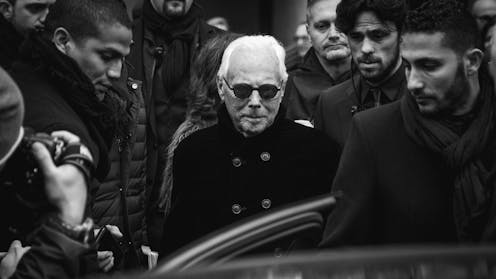
El mundo de la moda acaba de perder a una de sus figuras más silenciosamente influyentes. Giorgio Armani nos acaba de dejar a los 91 años, dejando tras de sí no solo una firma, sino un universo. En las últimas horas, los medios han recopilado biografías, líneas del tiempo y homenajes visuales.
Pero más allá de las cifras, las pasarelas y las celebridades, lo que queda es una pregunta más compleja: ¿qué hizo Armani con la sociedad? ¿Qué cambió, realmente, en nuestro modo de vestir, de ver y de estar en el mundo?
Decía la experta en industrias culturales Joanne Entwistle que el vestido ha sido siempre una frontera entre el cuerpo individual y el cuerpo social. Armani transformó esa frontera en un puente. Lo hizo con trazo limpio, sin levantar la voz. Convirtió la discreción en lenguaje, la sobriedad en estatus y la comodidad en poder. Armani no fue solo un diseñador: fue un editor de silencios, un arquitecto de códigos simbólicos.
Reescribir el traje: diseñar el poder sin gritarlo
En 1975, fundó su firma junto a Sergio Galeotti. Desde entonces, reescribió los códigos del poder. Lo hizo no a través del exceso, como Versace o Mugler, sino a través de la eliminación. Quitó forros, hombreras, rigidez. Desarmó el traje masculino desde dentro y propuso una nueva masculinidad que no necesitaba blindaje. En pleno auge del neoliberalismo y la cultura corporativa, Armani ofreció un uniforme para el poder tranquilo. Su propuesta no era disruptiva desde el grito, sino desde la pausa. Frente al maximalismo estridente, eligió el susurro. Y ese susurro transformó la estética ejecutiva en Hollywood, Wall Street y hasta en los gobiernos.
Demi Moore vestida de Armani en la última ceremonia de los Globos de Oro. Tilnseltown/Shutterstock
Uno de sus gestos más potentes fue también el menos comentado: su forma de tratar el cuerpo femenino sin erotizarlo ni infantilizarlo. Armani no diseñaba para agradar al deseo masculino, sino para empoderar al sujeto que lo llevaba. En los años 80, cuando el power dressing femenino llenaba las oficinas de hombreras afiladas y faldas tubo, Armani ofreció pantalones fluidos, blazers suaves, tejidos que abrazaban sin marcar.
No era una moda feminista en el sentido militante, pero sí profundamente política: daba herramientas para habitar el espacio público con autoridad no agresiva. En vez de simular al hombre, las mujeres Armani ocupaban su lugar con elegancia autónoma.
Más estilo que moda, más emoción que tendencia
El estallido global llegó en 1980 con American Gigolo. Richard Gere, prácticamente vestido de Armani en cada escena, se convirtió en el símbolo del nuevo hombre: elegante, sensual, seguro, pero también relajado. La película hizo por Armani lo que Sexo en Nueva York hizo por Manolo Blahnik. Desde entonces, el armanismo se expandió: no como una tendencia, sino como una estética emocional. Armani no vendía ropa; vendía actitud, luz tamizada, deseo contenido.
Lo mismo ocurrió con sus musas: Michelle Pfeiffer, Cate Blanchett, Julia Roberts… Ninguna respondía al estereotipo ruidoso de la diva sexualizada. Eran mujeres inteligentes, sofisticadas, con siluetas suaves y presencia hipnótica. Como si la ropa no las cubriera, sino que simplemente estuviera ahí, flotando en el aire.
El arte de construir sin logotipo
Mucho antes de que la industria hablara de lifestyle brands o universos de marca, Giorgio Armani ya había trazado una forma de expansión estética que no dependía de un logotipo visible. Su fuerza no residía en un símbolo gráfico, sino en un tono visual, un gesto compartido, una atmósfera. La marca Armani se reconocía por cómo caía un pantalón, por cómo iluminaba una pasarela, por el silencio elegante de un escaparate.
Desde los años noventa, diversificó sin fragmentarse: Armani Jeans, Emporio Armani, Armani Casa, Armani Beauty, Armani Hotels… Pero lo hizo sin sacrificar su narrativa. Cada extensión era una pieza más del mismo relato: sobriedad, calma, precisión. Fue uno de los primeros diseñadores en entender que la moda podía diseñar no solo prendas, sino experiencias. Su legado anticipó la lógica actual del branding emocional y la coherencia multisensorial que hoy persiguen las grandes casas de lujo.
Armani construyó un mundo reconocible sin necesidad de gritar su nombre. Y eso, en una industria obsesionada con el logo, sigue siendo una de sus mayores revoluciones.
La arquitectura invisible del estilo
Desde la sociología de la moda, el legado de Giorgio Armani puede leerse a través de varios ejes que explican su sofisticación estructural. Como sostenía el sociólogo Pierre Bourdieu, los objetos de moda son dispositivos simbólicos que nos ayudan a navegar las tensiones entre pertenencia y diferenciación. Armani transformó ese equilibrio en una forma de arte: construyó un capital simbólico basado en la contención, no en la ostentación. Sus prendas no buscaban deslumbrar, sino insinuar. No gritaban, susurraban. Su cliente no necesitaba exhibirse, sino habitar una elegancia sin fricción.
Imagen de un desfile de Giorgio Armani para la colección Primavera/Verano 2016. Fashionstock/Shutterstock
Incluso desde la mirada del también sociólogo Zygmunt Bauman, Armani podría considerarse un maestro de la coherencia en un entorno líquido: fluyó con los tiempos, sí, pero sin diluirse jamás. Supo mantenerse en la parte alta del mercado sin necesidad de viralidad, sin coreografías ni ruidos. Él mismo lo dijo en una de sus últimas entrevistas: “Prefiero dejar intuir antes que exhibir”. Esa frase no es solo una declaración estética; es un manifiesto de poder simbólico.
Hay diseñadores que imponen, y otros que persuaden. Armani persuadía. No por casualidad comenzó como escaparatista y dibujante: siempre pensó como un arquitecto. Por eso sus colecciones parecían edificios invisibles: no se veían las estructuras, pero sostenían al cuerpo con precisión silenciosa. Su ropa era una forma de habitar el mundo con firmeza liviana.
Solía decir que el negro no es ausencia de color, sino la síntesis de todos ellos. Esa idea resume su visión: no se trataba de quitar para vaciar, sino para concentrar. Su moda era esencialista, no minimalista. Cada prenda tenía algo de haiku, de ceremonia japonesa, de exactitud sin alarde. Armani no diseñó para llamar la atención: diseñó para que el cuerpo habitara el estilo como se habita una verdad que no necesita ser dicha.
El verdadero lujo silencioso
Giorgio Armani saluda al público tras el desfile de Emporio Armani en la Semana de la Moda de Milán Otoño/Invierno 2019/20. FashionStock/Shutterstock
La muerte de Giorgio Armani marca el fin de una era en la moda. Pero su legado no es un archivo cerrado: es un estilo de pensamiento. Quedan sus tejidos, sus cortes, sus desfiles. Pero sobre todo queda una forma de mirar el cuerpo, el género, el trabajo y el poder con delicadeza y profundidad.
En un momento en que la moda se ha vuelto algoritmo, meme, logotipo y viralidad, Armani sigue siendo ese susurro que atraviesa la sala. Una marca sin escándalo que entendió que el verdadero lujo no es hacerse ver, sino saber estar.
Ese quiet luxury del que ahora todos hablan, el que se ha convertido en tendencia, él lo practicó durante cinco décadas. Cuando aún no tenía nombre, Armani ya lo había convertido en código y lenguaje. Porque el auténtico lujo silencioso… era él.
Sandra Bravo Durán no recibe salario, ni ejerce labores de consultoría, ni posee acciones, ni recibe financiación de ninguna compañía u organización que pueda obtener beneficio de este artículo, y ha declarado carecer de vínculos relevantes más allá del cargo académico citado.
Imagine a game show where the host asks the contestant to randomly pick one option out of three: A, B or C.
After the contestant chooses, say, option B, the host reveals one of the remaining choices (say C) does not contain the prize. In the final step, the contestant is asked whether they want to change their mind and select the remaining option A or stick with their original choice, B.
Dubbed the Monty Hall problem after an American game show host, this famous puzzle has entertained mathematicians for decades. But it can also tell us something about how the human mind and brain function.
Why do some people choose to change their minds while others stick with their first choice? What would you do and what might your choice reveal about your mind?
Choosing when to change
Research on changes of mind uses the concept of “metacognition” to explain when and how mind changes occur. Broadly speaking, metacognition refers to psychological and biological processes that inform us about how well we are doing the task.
In a sense, metacognition is that inner voice telling us we are either on track or that we should try harder.
Intuitively, changes of mind may be triggered by low confidence in our initial choice. Yet, when my colleagues and I reviewed the research on changes of mind about a range of different kinds of decisions, we found many studies showing people change their minds less often than you might think. This was surprising, given how often we feel uncertain about our choices.
On the other hand, when people do choose to change their mind, it is often for the better. This ability to accurately gauge whether to change your mind is referred to as metacognitive sensitivity.
Our research has found people often make better decisions about whether to change their minds when they are put under time pressure.
Understanding more about how we decide to change our minds may lead to ways to train our minds to make better choices.
Our brains show when we will change our minds
Another interesting question about changes of mind is when do people choose to change their minds. The answer to this question might seem obvious, as people can change their minds only after they have made the first choice.
To find out more about this process, we measured people’s brain activity before they even made their initial choice in a laboratory task that involved answering questions about moving images on a screen. We successfully predicted changes of mind seconds before they took place.
These findings suggest brain activity that predicts changes of mind could be harnessed to improve the quality of the initial choices, without needing a change of mind later. Training based on this brain activity may help people in sensitive professions such as health or defence make better choices.
Why don’t we change our minds more often?
Research on metacognition has provided robust evidence that changes of mind tend to improve choice outcomes. So why are people so reluctant to change their minds?
There are at least two possible reasons. First, deciding to change your mind is typically a result of making extra cognitive effort to analyse the quality of the initial choices. Not every decision requires that effort, and most everyday choices can be good enough rather than perfect.
For example, choosing a wrong brand of orange-flavoured soft drink will probably not significantly impact our wellbeing. In fact, consumer research shows buyers tend to report higher product satisfaction when offered fewer choices, a phenomenon called “the paradox of choice”. This suggests having more choices and, therefore, greater opportunity to change one’s mind may be more cognitively effortful.
Second, frequent changes of mind may signal personality traits that are not socially desirable. Meaningful and fulfilling interpersonal relationships rely on the ability to predict and rely on another person’s actions.
Erratic and frequent changes of mind could negatively impact relationships and people may avoid doing this to improve their social integration.
The future of changing your mind
The science of changes of mind is an exciting field of research, developing at a fast pace.
Future developments in the field might focus on identifying specific brain activity markers of subsequent correct changes of mind. If reliable and valid markers are found, they could be harnessed to help people become experts on when they should change their minds to achieve better professional and social outcomes.
Oh, and coming back to the Monty Hall problem: if you ever do find yourself offered this choice by a game show host, you should definitely change your mind. In this scenario, for mathematical reasons, switching away from your first pick will double your chances of winning.
Dragan Rangelov does not work for, consult, own shares in or receive funding from any company or organisation that would benefit from this article, and has disclosed no relevant affiliations beyond their academic appointment.
Source: The Conversation – Global Perspectives – By Peter Draper, Professor, and Executive Director: Institute for International Trade, and Director of the Jean Monnet Centre of Trade and Environment, University of Adelaide
The global trading system that promoted free trade and underpinned global prosperity for 80 years now stands at a crossroads.
Recent trade policy developments have introduced unprecedented levels of uncertainty – not least, the upheaval caused by United States President Donald Trump’s sweeping tariff regime.
This is presenting some fundamental changes to the way nations interact economically and politically.
The free trade ideal
Free trade envisions movement of goods and services across borders with minimal restrictions. That’s in contrast to protectionist policies such as tariffs or import quotas.
However, free trade has never existed in pure form. The rules-based global trading system emerged from the ashes of the second world war. It was designed to progressively reduce trade barriers while letting countries maintain national sovereignty.
Through successive rounds of negotiation, this treaty achieved substantial reductions in tariffs on merchandise goods. It ultimately laid the groundwork for the establishment of the World Trade Organization in 1995.
‘Plumbing of the trading system’
The World Trade Organization introduced binding mechanisms to settle trade disputes between countries. It also expanded coverage of rules-based trade to services, intellectual property and investment measures.
Colloquially known as “the plumbing of the trading system”, this framework enabled global trade to expand dramatically.
Yet despite decades of liberalisation, truly free trade remains elusive. Protectionism has persisted, not only through traditional tariffs but also non-tariff measures such as technical standards. Increasingly, national security restrictions have also played a role.
Trump’s new trade doctrine
Economist Richard Baldwin has argued the current trade disruption stems from the Trump administration’s “grievance doctrine”.
This doctrine doesn’t view trade as an exchange between countries with mutual benefits. Rather, it sees it as as a zero-sum competition, what Trump describes as other nations “ripping off” the United States.
Trade deficits – where the total value of a country’s imports exceeds the value of its exports – aren’t regarded as economic outcomes of the trade system. Instead, they’re seen as theft.
Likewise, the doctrine sees international agreements as instruments of disadvantage rather than mutual benefit.
Trump has cast himself as a figure resetting a system he says is rigged against the US.
Once, the US provided defence, economic and political security, stable currency arrangements, and predictable market access. Now, it increasingly acts as an economic bully seeking absolute advantage.
This shift – from “global insurer to extractor of profit” – has created uncertainty that extends far beyond its relationships with individual countries.
Examples include his ignoring the principle of “most-favoured nation”, where countries can’t make different rules for different trading partners, and “tariff bindings” – which limit global tariff rates.
China’s emergence as the world’s manufacturing superpower has fundamentally altered global trade dynamics. China is on track to produce 45% of global industrial output by 2030.
For the Trump administration, this represents a fundamental clash between US market-capitalism and China’s state-capitalism.
How ‘middle powers’ are responding
Many countries maintain significant relationships with both China and the US. This creates pressure to choose sides in an increasingly polarised environment.
Australia exemplifies these tensions. It maintains defence and security ties with the US, notably through the AUKUS agreement. But Australia has also built significant economic relationships with China, despite recent disputes. China remains Australia’s largest two-way trading partner.
This fragmentation, however, creates opportunities for cooperation between “middle powers”. European and Asian countries are increasingly exploring partnerships, bypassing traditional US-led frameworks.
However, these alternatives cannot fully replicate the scale and advantages of the US-led system.
Alternatives won’t fix the system
At a summit this week, China, Russia, India and other non-Western members of the Shanghai Cooperation Organization voiced their support for the multilateral trading system. A joint statement reaffirmed World Trade Organization principles while criticising unilateral trade measures.
This represents an attempt to claim global leadership while the US pursues its own policies with individual countries.
The larger “BRICS+” bloc is a grouping of countries that includes Brazil, Russia, India, China, South Africa and Indonesia. This group has frequently voiced its opposition to Western-dominated institutions and called for alternative governance structures.
However, BRICS+ lacks the institutional depth to function as a genuine alternative to the World Trade Organization-centred trading system. It lacks enforceable trade rules, systematic monitoring mechanisms, or conflict resolution procedures.
One possible outcome is that we see a gradual weakening of global institutions like the World Trade Organization, while regional arrangements become more important. This would preserve elements of rules-based trade while accommodating competition between great powers.
“Coalitions of like-minded nations” could set high policy standards in specific areas, while remaining open to other countries willing to meet those standards.
These coalitions could focus on freer trade, regulatory harmonisation, or security restrictions depending on their interests. That could help maintain the plumbing in a global trade system.
Nathan Howard Gray receives funding from the Department of Foreign Affairs and Trade
Peter Draper does not work for, consult, own shares in or receive funding from any company or organisation that would benefit from this article, and has disclosed no relevant affiliations beyond their academic appointment.
Con el fallecimiento, a los 91 años, de Giorgio Armani, se cierra un capítulo dorado de la alta costura y se consolida el legado de un visionario que redefinió para siempre los códigos de la elegancia contemporánea. La muerte del diseñador constituye un momento crucial para un imperio que genera ingresos anuales de 2 300 millones de euros.
El revolucionario silencioso
Armani transformó la moda con sus siluetas no estructuradas, desafiando décadas de tradición sartorial. En una época en la que las hombreras dominaban las pasarelas y los trajes masculinos seguían códigos rígidos victorianos, el maestro milanés propuso algo radicalmente diferente: la sofisticación a través de la simplicidad.
Su genio residió en comprender que el verdadero lujo no gritaba, sino que susurraba. Las chaquetas Armani, con su estructura relajada y sus líneas fluidas, liberaron tanto al hombre como a la mujer del corsé de la formalidad extrema. Era, en esencia, el concepto de elegancia discreta convertido en un imperio multimillonario.
Cómo vestir los sueños de millones de personas
Armani es reconocido por haber inventado la moda de alfombra roja, un logro que trasciende la industria textil para adentrarse en el territorio de la cultura popular. Desde Richard Gere en American Gigolo hasta las estrellas de hoy, el diseñador italiano entendió que vestir a Hollywood significaba vestir los sueños de millones de personas.
Sus creaciones no solo adornaban cuerpos; construían personajes, definían épocas y establecían estándares de aspiración global. Cada traje de Armani en pantalla se convertía en un manifiesto silencioso sobre qué significaba ser elegante, poderoso y deseable.
Armani ayudó a definir el eslogan made in Italy como sinónimo de calidad para los consumidores, elevando la manufactura italiana a niveles de prestigio mundial. Su contribución trasciende la moda: fue un embajador cultural que exportó la sofisticación mediterránea a mercados globales, desde Tokio hasta Nueva York.
El imperio Armani no es solo un testimonio de éxito comercial, sino de la capacidad de una visión artística coherente para transformarse en un fenómeno cultural duradero.
El minimalista máximo
En una industria obsesionada con la ostentación, Armani abrazó la sobriedad como filosofía creativa. Sus paletas neutras, sus texturas exquisitas y sus cortes impecables demostraron que se podía ser revolucionario siendo sutil. Cada prenda era un ejercicio de sustracción: eliminar lo innecesario hasta alcanzar la esencia pura del diseño.
Esta aproximación minimalista no era frialdad, sino calidez destilada. Sus prendas envolvían al usuario en una segunda piel de confianza, transformando la vestimenta de mero atuendo a armadura psicológica.
Durante más de cinco décadas, Armani moldeó la elegancia moderna con una claridad de visión que se expandió mucho más allá de la moda.
Su influencia se extiende desde la arquitectura de sus boutiques hasta la filosofía de vida que representaba: la belleza encontrada en la simplicidad, el poder expresado con moderación. Hoy, mientras el mundo de la moda procesa esta pérdida irreparable, queda claro que Giorgio Armani no solo vistió cuerpos: vistió una época.
Su legado perdurará en cada silueta que celebre la elegancia por encima de la exhibición, en cada prenda que prefiera la sutileza al grito, en cada diseñador que entienda que la verdadera revolución, a veces, llega susurrando.
Il Signore Armani, como era conocido cariñosamente, nos deja no solo un imperio comercial, sino una lección maestra sobre cómo la visión artística auténtica puede transformar industrias enteras. En un mundo cada vez más ruidoso, su voz silenciosa resuena ahora con más fuerza que nunca.
CEO y único accionista de su empresa
El imperio Armani no era solo una marca, sino un ecosistema financiero meticulosamente estructurado. La arquitectura del negocio refleja la visión estratégica de su fundador: Giorgio Armani como la marca insignia de alta costura, Emporio Armani posicionada en el segmento accesible de lujo, y Armani Exchange capturando el mercado joven. Esta segmentación permitió al grupo penetrar múltiples demografías sin canibalizar sus propias marcas.
En una industria dominada por conglomerados como LVMH y Kering, Armani representaba la excepción: era tanto CEO como único accionista de la empresa, manteniendo un control absoluto sobre su visión creativa y estrategia comercial.
Esta independencia no fue solo ideológica, sino financieramente astuta. Sin presiones de accionistas externos, el grupo pudo mantener márgenes sanos y reinvertir consistentemente en su infraestructura global.
La empresa podría tener un valor actual de entre 6 000 y 7 000 millones de euros. Independientemente de la cifra exacta, Armani se consolidó como uno de los empresarios más exitosos de la historia de la moda.
Expansión estratégica más allá del textil
El genio financiero de Armani se manifestó en su capacidad de diversificación. La compañía opera una gama de cafés en todo el mundo, además de planear junto con Emaar Properties lanzar una cadena hotelera y resorts de lujo en grandes ciudades como Nueva York y Tokio. Esta expansión es la extensión lógica de una marca que había logrado trascender la moda para convertirse en sinónimo de un estilo de vida aspiracional.
El negocio Armani se había expandido hacia la música, el deporte y la gastronomía italiana, creando un ecosistema de marcas que se reforzaba mutuamente y maximizaba el valor de la propiedad intelectual.
Mientras otros grupos de lujo sufrían las fluctuaciones del mercado, Armani demostró una resistencia excepcional. El grupo de lujo italiano creció sus ingresos un 16,5 % en 2022 a pesar de la volatilidad del mercado. La estrategia conservadora del grupo, manteniendo una reserva de efectivo de más de mil millones, le permitió navegar crisis económicas sin depender de financiación externa o socios estratégicos. Esta liquidez no solo proporcionaba estabilidad, sino poder de negociación y capacidad de inversión contracíclica.
Un modelo de negocio que otros intentaron copiar
El éxito financiero de Armani no fue casualidad. Su modelo combinaba control vertical de la producción, expansión geográfica estratégica y una gestión de marca que maximizaba el precio de calidad superior.
Hoy, mientras el mundo de la moda procesa esta pérdida, los analistas financieros reconocen en Armani no solo a un diseñador, sino a un estratega que construyó una de las empresas más rentables y estables del sector de lujo.
Su capacidad para mantener márgenes superiores al 20 % durante décadas, expandirse globalmente sin perder identidad de marca y resistir las presiones de consolidación sectorial convierte su legado en un caso de estudio obligatorio para cualquier escuela de negocios.
El imperio que deja Armani no es solo un conjunto de activos, sino la materialización de una visión que entendió que el verdadero lujo no se compra, se construye. Marca por marca, tienda por tienda, temporada tras temporada.
Pedro Mir no recibe salario, ni ejerce labores de consultoría, ni posee acciones, ni recibe financiación de ninguna compañía u organización que pueda obtener beneficio de este artículo, y ha declarado carecer de vínculos relevantes más allá del cargo académico citado.
Despite the hyperbolic and fleeting tendencies of the fashion industry, few designers have had the impact of Giorgio Armani, who has died in Milan at the age of 91.
The new look and attitude the designer offered 50 years ago is today largely taken for granted and, at first glance, seems rather unassuming. But from the outset, Armani’s focus and determination was to provide his customers with an easier way of dressing that was at once practical, sophisticated and thoughtful, yet unpretentious, powerful and subtle.
His suits required little effort on the part of the wearer, whose individuality and identity were meant to shine rather than being overwhelmed by his clothes. His approach to tailoring coincided with the growing awareness of health and fitness in the 1970s and 1980s.
Armani’s body-conscious approach soon garnered attention in Hollywood, and he was asked to provide the wardrobe for Richard Gere in the now cult-classic 1980 film American Gigolo.
In 1961, he was hired by stylist and businessman Nino Cerruti to work in the Cerruti family’s textile factory. This new and fertile environment proved seminal to Armani’s future in textile development and would determine his own aesthetic formula.
While working at Cerruti, designing for the firm’s Hitman menswear collection, Armani proverbially and literally took the stuffing out of traditional Italian tailoring, offering men a modern attitude and a novel, less rigid way of moving and living in their jackets and suits.
Quickly, and throughout his 50-year career, the now iconic multi-purpose Armani jacket provided men and women alike armour as much as comfort and support for the body underneath.
Encouraged by his romantic and business partner Sergio Galeotti, an architect who remained Armani’s business partner until his untimely death in 1984, Armani officially founded his own fashion house in July 1975.
He quickly changed the vocabulary of both menswear and womenswear: he incorporated and adapted textiles traditionally reserved for men’s tailoring for his womenswear collections while at the same time softening the fabrics and silhouettes of his menswear. Women appeared stronger, independent, resilient and ready to take on the workplace of the 1980s, while the Armani man was less aggressive and instead attractive and glamourous.
Hollywood was immediately hooked. Armani had been enamoured by the classic era of cinema as a child and the star quality of actors like Katharine Hepburn, Cary Grant, Geta Garbo and Marlene Dietrich, so he was keenly aware of the value and cultural potential of not only dressing actors in films, but also saw the red carpet as what was, until then, an untapped resource.
This red carpet transformation was the result of Armani’s love of cinema and his business acumen as much it was his collaboration with Wanda McDaniel, an American whom he recruited in 1988, the same year he opened his first boutique in Beverly Hills.
As a social columnist and well connected to Hollywood’s elite, McDaniel was hired as a special liaison to Armani’s increasing film industry clientele. Their collaboration was a force to be reckoned with in the industry.
Armani’s personal abode
Fuelled by a steadfast drive, the personal and professional was indistinguishable for Armani, so much so that the designer’s palazzo at 21 via Borgonuovo in the heart of Milan served as both his home as well as the theatre where he staged his men’s and women’s runway collections from 1984 until 2000.
The space provided a personal and intimate invitation to more than just fashion shows, but a lifestyle empire in the making.
In addition to co-curating a 25-year retrospective exhibition at the Guggenheim Museum in New York, the year 2000 also saw the designer transform the brand’s DNA into a global lifestyle proposition that today encompasses hotels, spas, Michelin Star-awarded restaurants, makeup, jewellery, home furnishings and chocolates, among other items.
From the unstructured jacket that’s worn with ease to the social media frenzy garnered by red carpets, Armani’s imprint can be seen in every corner of the fashion industry and around the globe. His impact and legacy will be felt for decades to come.
John Potvin does not work for, consult, own shares in or receive funding from any company or organisation that would benefit from this article, and has disclosed no relevant affiliations beyond their academic appointment.
Les tremblements de terre ne restent jamais isolés : ils peuvent déclencher toute une cascade d’autres phénomènes géologiques, un effet que les chercheurs étudient depuis des décennies. Une nouvelle étude confirme que les fluides, comme l’eau, jouent un rôle majeur dans la résistance de la croûte terrestre aux forces tectoniques à l’origine des séismes.
La Terre ne reste pas immobile après un grand séisme. À proximité de l’épicentre d’un fort séisme, des dégâts importants peuvent être provoqués par les secousses sismiques (destructions de routes ou d’immeubles, par exemple). Et il n’est pas rare d’observer également des glissements de terrain. Le choc principal peut aussi déstabiliser les failles environnantes, et créer ainsi de nouveaux points de rupture, appelés les « répliques ».
Beaucoup plus loin, là où personne ne ressent la moindre secousse, les instruments détectent une augmentation des petits tremblements de terre, surtout dans les régions volcaniques et géothermiques. Récemment, on a aussi pu observer des mouvements le long de zone de subduction, situés à plusieurs milliers de kilomètres de l’épicentre d’un séisme ayant eu lieu quelques minutes avant, interrogeant ainsi sur le lien mécanique entre ces deux phénomènes.
Dans notre article, publié cette semaine dans Science, nous révélons comment les grands tremblements de terre qui ont frappé la Turquie en 2023 ont produit des effets imprévus dans le bassin de Kura en Azerbaijan, à 1 000 kilomètres de l’épicentre : éruptions de volcans de boue (grands édifices faits de boue consolidée à la suite d’éruptions successives), gonflement d’une nappe d’hydrocarbures et séismes lents (également appelés « silencieux », c’est-à-dire sans émissions d’ondes sismiques).
Ces observations nous ont permis de mettre en évidence de manière quasi directe, et c’est bien là la nouveauté de cette étude, le rôle fondamental que jouent les fluides présents dans la croûte terrestre (de l’eau, par exemple) sur la résistance de celle-ci et, par conséquent, sur l’activité sismique.
Des observations inattendues à 1 000 kilomètres des deux séismes turcs
Dans le cadre de sa thèse sur la déformation lente dans le Caucase oriental, notre doctorant, Zaur Baraymov a traité de nombreuses images satellitaires radar de l’Agence spatiale européenne. En les comparant une à une (technique de géophysique appelée interférométrie radar), il a été étonné d’observer un signal le long de plusieurs failles dans la période correspondant aux deux grands séismes de Kahramanmaras, en Turquie, en février 2023.
Grâce à cette compilation d’images satellites et aux enregistrements sismologiques locaux, nous montrons que ces grands séismes ont déclenché, à plus de 1 000 kilomètres de distance, des gonflements et des éruptions de plusieurs dizaines de volcans de boue ainsi que des « séismes lents » sur plusieurs failles : ces glissements ont lieu trop lentement pour émettre eux-mêmes des ondes sismiques.
Que s’est-il passé ?
Sous l’effet du mouvement continu des plaques tectoniques à la surface de la Terre, des forces s’accumulent dans la croûte terrestre. Au sud-est de la Turquie, les plaques arabique et anatolienne se déplacent l’une par rapport à l’autre et la faille est-anatolienne résiste à ce mouvement. La majeure partie du temps, les failles sismiques sont « bloquées », et rien ne se passe… jusqu’au moment où ça lâche.
En février 2023, ce système de failles a brutalement glissé de plusieurs mètres, deux fois en quelques heures. Ce mouvement brutal est comparable au relâchement soudain d’un élastique : lorsqu’il se détend d’un coup, il rebondit dans tous les sens. Dans le cas d’un séisme, des ondes sismiques sont émises dans toutes les directions de l’espace. Typiquement, les secousses sont très fortes et peuvent détruire des bâtiments à proximité de l’épicentre, mais, à 1 000 kilomètres de distance, ces mouvements sont atténués et ne sont plus ressentis par les humains, même si les sismomètres, très sensibles, enregistrent des vibrations.
En 2023, au moment où les ondes atténuées du séisme turc ont traversé le bassin de Kura en Azerbaïdjan, à 1 000 kilomètres de l’épicentre, quelque six minutes après le séisme, nous avons détecté, sur des images satellites, du mouvement sur sept failles tectoniques. Celles-ci ont glissé silencieusement de plusieurs centimètres, sans émettre d’ondes sismiques.
Les séismes de Turquie, en 2023, ont eu des effets inattendus à 1 000 kilomètres de là, à l’ouest de la mer Caspienne, dans les contreforts du Caucase. Romain Jolivet, Fourni par l’auteur
En même temps, une cinquantaine de volcans de boue sont entrés en éruption en crachant de la boue, tandis que d’autres se déformaient.
Nous avons même mesuré le soulèvement du sol de quelques centimètres au-dessus d’un gisement d’hydrocarbures situé à l’aplomb d’une des failles activées.
Jamais une telle accumulation de phénomènes déclenchés par un même séisme n’avait été observée.
Comment un séisme peut-il déclencher de tels phénomènes à distance ?
La concomitance des éruptions de volcans de boue et des glissements silencieux sur les failles met en évidence le rôle des fluides dans ces déclenchements.
Plus précisément, observer ces volcans de boue s’activer et le champ d’hydrocarbures gonfler indique que la pression des fluides dans les roches du sous-sol a augmenté au passage des ondes sismiques. Cet effet est connu, notamment le phénomène appelé « liquéfaction » qui se produit sur les sols saturés en eau, perdant leur stabilité à la suite d’un séisme.
L’augmentation de la pression des fluides est aussi connue pour fragiliser les failles et les conduire à relâcher de la contrainte en glissant. De plus, il est bien établi qu’une pression de fluide élevée favorise un glissement lent sur les failles, qui ne génère pas d’ondes sismiques. Les ondes sismiques, en passant, ont donc fait grimper la pression des fluides dans la croûte, occasionnant à la fois les éruptions de boue et les glissements asismiques sur ces failles.
Cette étude constitue la première observation directe de l’influence des fluides présents dans la croûte sur le déclenchement à distance des séismes lents.
Le rôle des fluides dans la propagation des ondes sismiques sur de grandes distances
Depuis longtemps, les géophysiciens soupçonnaient que les fluides jouent un rôle dans une observation intrigante : comment de simples ondes sismiques, qui génèrent de faibles contraintes de quelques kilopascals, peuvent-elles déclencher des glissements sur des failles pourtant capables de résister à des contraintes bien supérieures, de quelques mégapascals ?
Nos observations apportent la réponse. L’augmentation de pression de fluide peut permettre d’atteindre l’échelle des mégapascals et d’activer les failles présentes dans la croûte saturée en fluides.
Il reste maintenant à généraliser ces observations. Toutes les failles sont-elles baignées de fluides circulant dans les roches de la croûte ? Si oui, quelle est la nature de ces fluides ? Nous savons qu’il y a de l’eau dans la croûte, et particulièrement dans les sédiments de la région du bassin de Kura, mais nos observations montrent que les hydrocarbures peuvent aussi être impliqués.
Des analyses géochimiques suggèrent même que des fluides, comme de l’eau chargée en dioxyde de carbone, pourraient remonter du manteau. La question reste ouverte…
Le projet Évolution spatiale et temporelle de la déformation sur et hors faille – SaTellite est soutenu par l’Agence nationale de la recherche (ANR) qui finance en France la recherche sur projets. L’ANR a pour mission de soutenir et de promouvoir le développement de recherches fondamentales et finalisées dans toutes les disciplines, et de renforcer le dialogue entre science et société. Pour en savoir plus, consultez le site de l’ANR.
Jusqu’à fin 2024, Alessia Maggi a été conseillère en matière de formations universitaires à l’Université Franco-Azerbaijanaise, un partenariat entre l’université de Strasbourg et la Azerbaijan State Oil and Industry University (ASOIU).
Romain Jolivet a été membre de l’Institut Universitaire de France entre 2019 et 2024. Il a reçu des financements de l’ANR ainsi que l’ERC.
Cécile Doubre et Luis Rivera ne travaillent pas, ne conseillent pas, ne possèdent pas de parts, ne reçoivent pas de fonds d’une organisation qui pourrait tirer profit de cet article, et n’ont déclaré aucune autre affiliation que leur poste universitaire.
Source: The Conversation – (in Spanish) – By Manuel Pujadas Cordero, Jefe de la Unidad de Caracterización y Control de la Contaminación Atmosférica, Centro de Investigaciones Energéticas, Medioambientales y Tecnológicas (CIEMAT)
Tras la Segunda Guerra Mundial no resultó demasiado difícil consensuar a nivel internacional que el mantenimiento de la paz y la seguridad entre las naciones, el fomento del desarrollo económico y social y la promoción de la cooperación debían ser objetivos prioritarios y permanentes. La redacción y firma por representantes de 50 países de la Carta de las Naciones Unidas, en vigor desde el 24 de octubre de 1945, supuso la base fundacional de la Organización de las Naciones Unidas (ONU), cuya Asamblea General consensuó y adoptó, tres años después, la famosa Declaración Universal de los Derechos Humanos (DUDH).
Analizar los treinta artículos que constituyen ese imponente listado de derechos (políticos, sociales, económicos y culturales), capitales para todos los seres humanos, quizás nos permitiera identificar algunos otros que, dadas las circunstancias, no fueron considerados entonces prioritarios, aunque sin duda lo son.
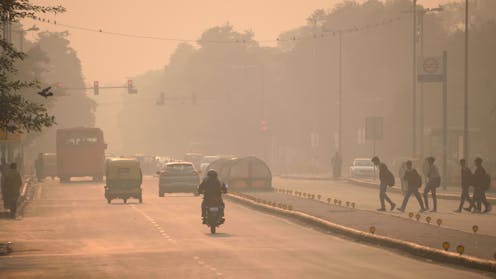
Me refiero, por ejemplo, al derecho a respirar aire saludable o al derecho a beber agua realmente potable. Se podría decir que, por su naturaleza, ambos estarían implícitamente recogidos en el derecho a la vida, que lógicamente encabeza el listado de la DUDH. Pero lo cierto es que, casi 80 años después de aquella firma, para muchos millones de personas en todo el mundo se trata de aspiraciones tan básicas como inalcanzables.
Llegados a este punto y puestos a defender con decisión estos derechos tan primarios, antes resulta imprescindible definirlos y acotarlos técnicamente. Y para ello hay que responder a la siguiente cuestión: ¿en qué condiciones el aire o el agua dejan de ser aptos para el consumo? En una primera reacción podríamos pensar que se trata de una pregunta retórica porque su respuesta ya se conoce, sin embargo, nada más lejos de la realidad.
¿Qué es el aire?
Centrándonos en la primera parte de esa cuestión, conseguir establecer los límites físico-químicos mínimos que debe cumplir el aire respirable es un reto científico de primer orden.
El aire ambiente es una mezcla compleja de constituyentes, gaseosos y no gaseosos, que ha ido evolucionando a lo largo de la historia de nuestro planeta y que sigue en plena transformación.
La intuición llevó a Hipócrates (siglo IV a. e. c.) a relacionar ciertos problemas de salud con respirar aire “sucio”, pero no fue hasta el siglo XIX pasado cuando se comenzó a entender realmente qué era el aire y sus implicaciones.
Primero se identificaron los componentes gaseosos mayoritarios (nitrógeno, oxígeno y argón) y ya en el siglo XX se descubrió que estos se mantienen en proporciones bastante estables en la troposfera desde hace al menos 100 millones de años. Se identificó el papel del oxígeno como sostén de la vida aeróbica y, poco a poco, se fueron descubriendo otros muchos constituyentes minoritarios y sus diferentes papeles y efectos (sobre la salud humana, la biodiversidad, el clima, etc.).
Establecer este tipo de relaciones causales es una tarea muy compleja y en continua evolución que se viene desarrollando desde mediados del siglo XX, momento en el que nació el concepto de “calidad del aire”.
El Día Internacional del Aire Limpio
Gracias al trabajo de físicos y químicos atmosféricos, biólogos, médicos, ambientalistas, etc., se ha avanzado muchísimo en el conocimiento de la atmósfera, en general, y del aire ambiente y sus interacciones con la biosfera en particular. Esto ha permitido ir acotando los límites que deben establecerse para las concentraciones ambientales de aquellos constituyentes que por sus efectos negativos sobre la salud y el medio ambiente identificamos como contaminantes atmosféricos más peligrosos, como las partículas, el monóxido de carbono y el dióxido de nitrógeno.
Tras el inmenso golpe de la covid-19 en 2020, la ONU declaró el 7 de septiembre como el Día Internacional del Aire Limpio (“para un cielo azul”, según reza el eslogan). Seguramente, volver a constatar las terribles consecuencias de respirar en todo el mundo aire contaminado (en este caso biológicamente), contribuyó a esa decisión que, desde mi punto de vista, viene a reconocer implícitamente, por fin, la universalidad del derecho a respirar aire limpio y saludable.
Décadas antes de este reconocimiento de la ONU, las recomendaciones de la Organización Mundial de la Salud (OMS) y de muchas agencias medioambientales de distintos países evidenciaron la necesidad imperiosa de controlar la presencia en el aire ambiente de ciertos contaminantes (actualmente: partículas PM10 y PM2.5, ozono, dióxido de nitrógeno, dióxido de azufre, monóxido de carbono, etc.).
Todo esto se fue implementando principalmente en zonas del mundo altamente desarrolladas, como EE. UU., Europa, Canadá, Japón, etc., a través de la adopción de estrictos marcos regulatorios y de fuertes mecanismos de control, tanto para las emisiones atmosféricas contaminantes de origen antrópico como para vigilar la calidad del aire, en un esfuerzo progresivo y permanente. Baste recordar, por ejemplo, que la última Directiva europea de Calidad del Aire es de octubre de 2024.
Fruto de estas iniciativas, la calidad del aire en esas áreas ha mejorado significativamente respecto a la existente hace cuatro o cinco décadas, y con ello la vida de muchísimas personas. No obstante, a estas alturas del siglo XXI, la experiencia cotidiana de otros muchos millones de personas, generalmente en países desfavorecidos y casi olvidados, es radicalmente distinta.
En esos entornos la calidad del aire, sencillamente, no es una prioridad y la población no puede ejercer su derecho básico a respirar con seguridad. En consecuencia, sus cifras de morbilidad y mortalidad prematura debidas a la contaminación del aire son escandalosas y periódicamente denunciadas por la OMS en informes oficiales demoledores.
Ante este panorama, no podemos resignarnos a que una gran parte de la población mundial siga sin poder ejercer el derecho básico a respirar un aire “razonablemente” limpio. Es inaceptable que desde su nacimiento muchísimas personas vean incrementar de manera continua e inexorable el riesgo de contraer enfermedades muy graves o de morir muy prematuramente por respirar sistemáticamente aire contaminado.
Por ello, los científicos e ingenieros tenemos que seguir trabajando sin descanso para mejorar la base de conocimiento en todos los aspectos relacionados con este problema y para encontrar soluciones urgentes. Como sociedad del siglo XXI, globalizada para tantas cosas, no deberíamos ignorar ni permitir este tremendo drama global.
Manuel Pujadas Cordero no recibe salario, ni ejerce labores de consultoría, ni posee acciones, ni recibe financiación de ninguna compañía u organización que pueda obtener beneficio de este artículo, y ha declarado carecer de vínculos relevantes más allá del cargo académico citado.
Source: The Conversation – UK – By Christopher Burden, PhD Candidate in Comparative European Populisms, Aston University
Having spent the summer holding weekly press conferences, Reform UK is seeking to drive the political agenda into conference season by holding its annual gathering before Labour and the Conservatives have theirs.
The party will meet at the Birmingham National Exhibition Centre, with a bigger agenda and line-up than previous years. What’s also notable is just how different this conference will be compared to the traditional events held by the other parties.
Labour will be in Liverpool voting on policy, debating motions and deciding committee positions while the Conservatives will be in Manchester, unveiling their policies for the year following difficult local elections. Fundamentally, these conferences are expositions to the membership, followed mainly by journalists, politicos and the motivated base.
Reform is using its conference to draw public attention. So far, that mission has manifested in staging that feels more American than British.
The conference website features images of Farage surrounded by indoor fireworks, with a rolling ticker listing key speakers. Tickets are “SOLD OUT” – although “platinum” packages are still available for £2,500, which buys you fast-track entry and champagne breakfasts with party grandees.
Meanwhile, cinematic trailers on YouTube feature yet more flashing lights, sweeping spotlights, rousing music, and slo-mo montages of Reform UK politicians delivering impassioned speeches.
Unlike traditional conference formats – speeches, debates, motions and amendments – Reform is highlighting personality-driven performances. While the Conservative conference is promoting a “thought-provoking fringe programme”, Reform is promising entertainment.
Their proposed line-up features controversial TV presenter Jeremy Kyle, former host of an eponymous 2000s TV show which was once described by a judge as “human bear-baiting”. In the video announcing his involvement, Kyle says: “It won’t be boring, trust me.”
“It’s quite interesting – when you say party conference,” he adds. “This is gonna be a party.” Having a celebrity speaker trailed in this way – and to have him redefine what the “party” in “party conference” means ahead of time marks a significant cultural shift.
Kyle – and indeed everyone involved – seems to be actively crossing traditional conference boundaries between the politicians on stage and their audiences, drawing upon the transgressive aesthetics of populism.
These tactics are unusual for Britain but normal in the US. Journalist Tucker Carlson has long performed a Kyle-type role for the Republicans. Reform appears to be replicating this approach in the UK, integrating household names into the political fold, normalising the concept of politics as something for everyone.
These spectacles are for those who may not necessarily know what they want but know that they want something different. We might wonder if Reform minds that people question how much substance there is to its policies, so long as they’ve got people discussing their agenda.
Reform is threading forms of populism normally found in the digital realm into its conference agenda. This form of reciprocal populism seeks to reconcile the needs of the politician with the wants of the audience. It doesn’t necessarily matter what is promised, so long as the audience feels as if they have stock in that conversation.
At this conference, expect audience participation and soundbite straplines. We’ll see attendees sporting “Farage Number 10” football shirts. Just as Trump fans wear red Maga baseball caps at his rallies, Farage is seeking to brand his voters with his products. Maga has successfully transitioned from party slogan to household brand and Reform is clearly trying to follow suit.
Will it work?
On inspection, these American branding tactics, rousing patriotic music and bombastic speeches prove a relatively thin populist fabric. They are imported from successful campaigns abroad and mapped over a Britain the party wishes to conjure rather than necessarily reflecting the one that exists.
Policy-light infotainment and “mega-rallies” remain distinctly foreign to the UK audience and may later prove to be an unwelcome change in a country seeking stability in complicated geopolitical times.
The celebrity endorsements aren’t themselves odd, nor are the gimmicks entirely unheard of in British politics. After all, Liberal Democrat leader Ed Davey spent much of the 2024 election campaign plummeting down waterslides and falling off paddle boards.
However, Reform UK is attempting something quite different when it emulates the brash, loud populism more often seen in the US. It’s just a style at odds with British sensitivities.
For instance, while dismissing net zero as nonsense, Reform has called for Britain to open up sites across northern England and Wales for fracking. Richard Tice directly quotes the American president, with a call to “drill baby drill”.
The rejection of net zero in this way, and the calling for greater use of fossil fuels, comes straight from Trumpian playbook but stands starkly out of kilter with British public opinion.
Similarly, calling for the mass deportation of 600,000 migrants mimics what is currently happening in the US. But while immigration has captured the national narrative, and has been a long feature of Reform campaigning, the opinions of the British public are far more nuanced than supporting wholesale repatriation of hundreds of thousands of people .
It’s clear that on these topics, which are to be discussed at the conference, Reform is not necessarily seeking to represent mainstream views as they exist. Instead it is trying to shift what’s known as the Overton window, the range of what is seen as acceptable views, in order to present these issues to mainstream voters who feel disaffected by the traditional parties.
The mainstream must not underestimate this threat. Reform has undertaken a significant effort to professionalise the party, constructing an inner circle of financiers, communications experts and advisors. While the character remains definitively populist, they possess the architectures and platforms needed to effectively campaign and operate.
The party is well aware that within the first-past-the-post system, where tiny leads deliver thumping majorities, they need to achieve only a broad support, rather than total conviction. Not everyone needs to be dazzled by this theatrical party conference – just enough to tip the balance.
Want more politics coverage from academic experts? Every week, we bring you informed analysis of developments in government and fact check the claims being made.
Source: The Conversation – UK – By Alexander Sergeant, Lecturer in Digital Media Production, University of Westminster
Long Story Short is the latest animated series from Raphael Bob-Waksberg, the talented showrunner who is best known for his early Netflix hit BoJack Horseman. As fans of his previous work will know, Bob-Waksberg’s sensibility seems to come through an eclectic mix of absurdist humour and raw, emotional realism.
BoJack started life as a madcap stoner comedy about a talking horse acting like an entitled fratboy. By the end of its six seasons, the show had evolved into a psychological drama about a supremely damaged man struggling in vain to heal himself, albeit a man who happened to have a horse’s head.
In contrast to BoJack’s evolutionary quality, Long Story Short starts exactly where it means to start. This is ironic, perhaps, given that the show’s central conceit is that it tells the story of a multigeneration family in a non-chronological manner.
In episode one, we are introduced the Schwoopers, a dysfunctional middle-class Jewish family consisting of matriarch Naomi (Lisa Edelstein), patriarch Elliot (Paul Reiser), eldest son Avi (Ben Feldman), middle child Shira (Abbi Jacobson) and youngest Yoshi (Max Greenfield). Darting across decades of time and generations of tension, we witness couples meet, marry, divorce and die – sometimes all in the same episode and almost always not in that order.
The show possesses a primarily emotional rather than rational logic to it that fits nicely with it being an animation. It’s often said that animation possesses a quality that makes it particularly good for processing emotional trauma.
The essence of the medium involves purposely selecting moments in the world to bring to life, while leaving others behind. This process of self-conscious selection provides a space to order and sort the world in a manner comparable to something like therapy, processing the information differently through the act of bringing it to life onscreen. BoJack did this particularly well.
Drawing on animation’s long-established history of anthropomorphic characters, BoJack was set in a confusing world of animals and humans. The grotesqueness of the visual design often mirrored the internal disgust the central character felt about himself. Despite his status as an uber-wealthy actor who rarely worked, the writing was so good that BoJack’s trauma became our own.
One of the strongest features of Long Story Short is its look. Using thick black lines and a minimalist approach to scenery, the world of the Schwoopers takes on a painted, almost impressionist quality. It is like watching a Van Gogh painting drawn by Hanna-Barbera, the colours vivid and spotted, punctuating spaces and distorting others, like the process of memory itself.
It’s approach to narrative, however, sits in contrast to its bold look. Its story primarily deals with family dynamics and emotional trauma but these stories are painted with faint marks, opaque colours and tiny details. As such, a weariness emerges in the viewing experience, induced perhaps more by the times in which we are living rather than any failing of the show itself.
Premiering in 2016 and finishing in 2020, during the COVID lockdowns, Bojack seems to provide a strange antidote to Trump’s first term in office. Its madness matched the madness of its times, and its relentless compassion and desire for complexity served as a nice contrast to a world marked by a politics of simplistic cruelty.
Long Story Short tries to replicate this effect, but doesn’t do it as well. Coming out in 2025, the show’s interest in the quiet, everyday traumas caused by living with siblings and partners feel somewhat narcissistic and navel gazing.
Characters represent different sexualities and religions and all embody typical notions of family life. They are each given space and time to be represented onscreen. Yet none of that makes them hugely interesting as people. The character of Yoshi (Max Greenfield) is a good example of this.
Presented as a loveable loser in the mould of BoJack’s haphazard roommate Todd Chavaz, Yoshi is supposed to be somehow sympathetic and wise. However, he spends most of his time doing very little while his relatives struggle with far more arresting problems like surrogacy, divorce and bereavement. Among Yoshi’s biggest struggles are how he will get home after a night out at San Francisco’s trendiest, Instagram-friendly hangouts.
And the fact that a lot of this is set in San Francisco during COVID makes the unremarkability of its characters and premise all the more apparent. San Francisco is an exceedingly wealthy city dominated by a liberal elite. It is also a city that suffers from an undercurrent of real poverty and human suffering. This stark juxtaposition of worlds was made all the more intense during the pandemic. However, none of this finds its way onto our screens in Long Story Short.
As you watch these comfortable people be rather uncomfortable, you feel like grabbing the frame and turning it left or right in the hope that we might have a break from all this hand wringing. For those who know the city, we’re looking for reality to break in, to see an example of the suffering and pain probably happening on the streets that surround them.
This story about the liberal coastal elite fails to get beyond their narrow concerns to find more mutual and human territory in which we can all relate. It’s safe, comfortable, a little stifling, a bit boring, and seems to be completely fractured from the suddenly dangerous and precarious world that surrounds it.
Looking for something good? Cut through the noise with a carefully curated selection of the latest releases, live events and exhibitions, straight to your inbox every fortnight, on Fridays. Sign up here.
Alexander Sergeant does not work for, consult, own shares in or receive funding from any company or organisation that would benefit from this article, and has disclosed no relevant affiliations beyond their academic appointment.
Miriam was 13 when we met her. One day, she asked Eve: “How can we help my mum? She really struggles. I worry that we don’t have enough money for food and stuff.”
Miriam went on to explain that her mother would often skip meals to make sure the children could eat. “Normally we don’t have enough food. So, if there’s a little bit, she’ll give it to me and my brothers, and then she just has tea or something.” Later, Miriam’s younger brother Luke, 11, told us that the children also missed meals.
The family of four lived in a small, two-bedroom flat owned by a private landlord in London. As they took us on a video tour, we heard that the heat was intermittent and large holes were visible in the plaster behind a heater next to the toilet. Miriam explained that the heater had broken but the landlord had not replaced it, despite the cold and damp London winters.
Other signs of disrepair were evident around the flat. The lights in the older children’s room had burnt out over a year ago. The children used the torch on the family’s mobile phone to see when it was dark.
The kitchen sink was blocked and had to be drained manually. Any time the family washed dishes or prepared food, Miriam and her mother Serwah would have to run between the sink and toilet with a bucket, emptying it before the flat flooded. Even the smallest of everyday tasks became large and arduous responsibilities.
The family had lived there for three years, and in London for over ten, but they had limited options to improve their circumstances.
The Insights section is committed to high-quality longform journalism. Our editors work with academics from many different backgrounds who are tackling a wide range of societal and scientific challenges.
Serwah had come to the UK from Ghana with the hope of making a better life. After arriving, she realised that she had been made false promises and life was “not good like that”. She found herself struggling in a difficult relationship with a man who was a “liar” and had “destroyed everything”. Serwah ended up being undocumented, but had recently been granted “limited leave to remain” with “no recourse to public funds” (NRPF).
No Recourse to Public Funds
NRPF is an immigration condition contained in the UK’s Immigration and Asylum Act 1999. It states that migrants “subject to immigration control” are not allowed to access most welfare benefits, social housing, or other support, such as extended childcare services.
According to figures analysed by the Migration Observatory at the University of Oxford in 2019, around 1.376 million people with time-limited “leave to remain” (including students, people with work visas, and those on family visas) are subject to NRPF in the UK. A further approximately 674,000 undocumented people have NRPF imposed by default. Research shows that NRPF particularly affects families who are already economically and socially marginalised, such as single mother households and racially minoritised families from Britain’s former colonies.
Charities suggest that at least 382,000 children in Britain are forced into deep immiseration by NRPF, just like Miriam and Luke. For families like Serwah’s, it means that no matter how impoverished the family is, next to no social support is available, and other options for getting by are also heavily restricted.
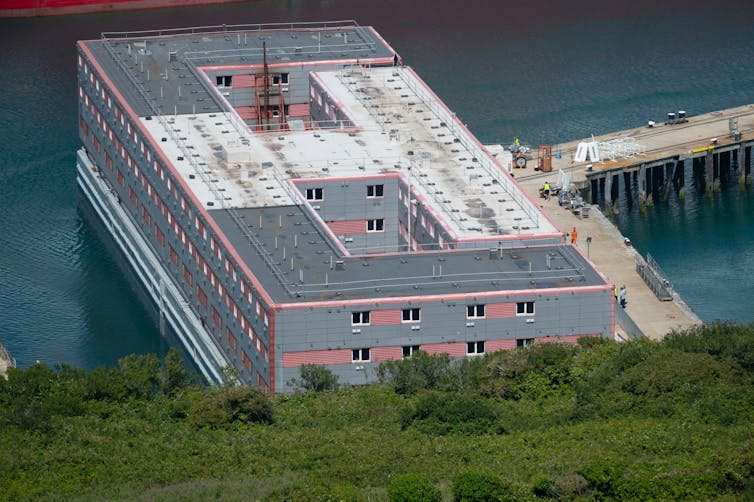
NRPF is a less visible and spectacular display of the way various UK governments have approached “controlling immigration”. It has not caused the same controversy as the “Rwanda scheme” or plans to house asylum seekers on a decommissioned barge (what migrants justice groups called a floating prison for people seeking sanctuary).
The Bibby Stockholm barge which housed asylum seekers in Portland Port, Dorset, England, in 2023. Shutterstock/Zeynep Demir Aslim
Over the past six years, we have worked closely with 25 single-mother families living in the shadow of this policy. We have participated in families’ daily lives, conducted interviews, and invited children and adults to take photos, journal, and lead us on video tours. Our research has been in-person and online (especially during the pandemic). We asked participants to choose pseudonyms. Confidentiality is important in all research but crucial for their families given their precarious status.
Hopes for a better life
There was never a single reason within a family, or even for individuals, as to why they had come to the UK. Many of the children were born in the UK while others were brought by their parents at a young age. Some mothers had come attempting to flee abuse while others hoped to make better lives, describing conditions of extreme poverty in their own childhoods. Some had come on visitor visas for short trips to see friends and family but had ended up staying as their situations changed (for example, unexpectedly starting a family or having a child who suddenly needed specialist medical treatment).
What was similar for our participants was that leaving the UK was not really an option. In most cases, this was because their children were British and mothers did not want to uproot their lives. The mothers we met had also been in the UK for over a decade, and despite the hardships they faced, felt that it was home. In some cases, the abuse, extreme poverty, or violence which had compelled their immigration in the first place had not diminished. In others, debts incurred to enable immigration or to survive in the UK would be insurmountable in their countries of origin.
Regardless of how and why families were in the UK, their experiences raise questions about how the UK treats them – and that is the focus of our research.
We found that NRPF is forcing some single mothers into a state of hyper-exploitation where they are forced to carry out cleaning or childcare for little or no pay, and subjected to verbal and physical abuse. Many families wind up homeless or dependent on the kindness of friends or strangers who are often in similarly precarious situations.
NRPF is even imposed on British citizens: children who get dragged into it because of their parent’s immigration status.
Serwah, Miriam and Luke: ‘constantly feeling hungry’
Serwah had “limited leave to remain” and was legally able to work. But without access to affordable childcare, Serwah had to depend on friends or acquaintances to care for her children. She is not alone – according to a report by the Institute for Public Policy Research, tens of thousands of children in migrant and refugee families are being denied access to government-funded childcare because of NRPF linked to their parents’ immigration status. Serwah’s friends were often in equally precarious positions.
As a result, they were reliant solely on Serwah’s wages from twice weekly night shifts in a small residential facility assisting people with dementia while her friend cared for the children. The family found themselves deep in debt. Months of rent arrears due to their destitution had left the family with limited legal options to ensure that the private landlord provided adequate heating, water and other necessary utilities.
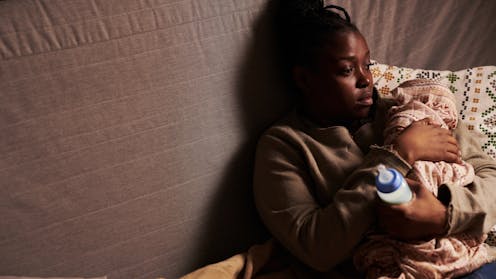
For children like Miriam and Luke, who have never lived anywhere except the UK, NRPF means a life of destitution – constantly feeling hungry, trapped in uninhabitable accommodation and without necessities. Yet, they are typically expected to participate and perform in school the same as other children and even punished when they don’t. For example, children have been threatened with missing important school activities if their parents owe money for school meals, while others have been sent to detention for failing to wear the proper uniform because the family cannot afford it.
During another visit, Miriam explained that she usually did homework on the family’s shared mobile phone in the crowded flat. “I don’t really talk to people about my problems. I just keep it to myself”, she said. She explained how hard it was to talk about the family’s situation and that she felt unable to seek assistance from teachers.
Boris Johnson’s surprise
There was a rare furore around NRPF in 2020. At the height of the COVID-19 pandemic, then prime minister, Boris Johnson, revealed his own surprise at the policy’s existence. Responding to questions about how a family with the legal right to remain in the country would survive without furlough pay and with no right to benefits, Johnson commented:
I’m going to have to come back to you on that because clearly people who have worked hard for this country, who live and work here, should have support of one kind or another. You’ve raised a very important point … If the condition of their leave to remain is they should have no recourse to public funds, I will find out how many there are in that position and we will see what we can do to help them.
Johnson’s political gaffe (not being aware of his government’s own policy) was largely interpreted as an example of his own incompetence. But his initial reaction indicates how little is known about this policy – a visa condition which puts Britain’s “universal” welfare system out of reach of so many.
In public debates, NRPF is often presented as a rational and reasonable way of “controlling migration”. In 2011, when Home Secretary Teresa May expanded NRPF to include migrant families who had had been granted “limited leave to remain” on the basis of Article 8 (rights to private and family life), she stated:
What we don’t want is a situation where people think that they can come here and overstay because they’re able to access everything they need.
Article 8 rights had previously accorded migrant families the right to both stay and access social support alongside other UK residents. As a result of May’s changes, migrant families were placed on the ten-year-route to settlement with NRPF for the duration. The ten-year-route requires four separate applications for temporary status to be made, before applicants can apply for permanent residence. Every two and a half years, applicants must pay £1,321 (per family member) plus a £2,587.50 surcharge – again, per person.
The language of “securing borders” against “spurious” family claims echoes in the government’s current White Paper on immigration. Yet, this is a “problem that does not really exist”, according to barrister Jamie Burton who says the burden of proof is already very high in Article 8 cases.
The policy also doesn’t seem to make financial sense. A social cost benefit analysis conducted at the London School of Economics suggested that removing NRPF for households with limited leave to remain on their work-related visa would result in net gains for Britain of £428 million over a ten-year period, due to reduced costs for the NHS, local authorities and increases in tax revenue. This increases to £872 million if applied to families with children.
While this study shows the financial feasibility of jettisoning NRPF, the logic of a cost-benefit analysis roots Britain’s cost-of-living crisis with destitute migrants, rather than asking why wealth is so concentrated or discussing the ethical principles of a policy which leaves children in fear of starvation.
Destiny and Isaac: fear of starvation and homelessness
Isaac is just one example. He was 13 when we met him and was born in London. He lived with his mother Destiny in a shared room. The room was under sloping eaves and packed with their two single beds and a protruding wardrobe containing all their possessions. Filled with their drying laundry, it felt particularly small and claustrophobic.
Destiny, originally from Nigeria, had limited leave to remain in the UK with NRPF. Isaac was a British citizen, yet the NRPF restriction on his mother’s visa also affected him – a clear example that the policy doesn’t achieve its own logic of protecting “British resources” for British citizens.
Isaac felt keenly that a “universal” welfare system that is not “for all” is discriminatory. He explained:
England is a multicultural country [but NRPF is] basically screwing over those people who came from different backgrounds … as it only favours a certain type of people … It doesn’t favour the whole of Britain.
The fact that NRPF was “basically screwing over” racially minoritised people was not just an abstract idea for Isaac. It was both a hard physical reality and a cause of deep anxiety. “I was worried that we didn’t really have food, if I was going to eat the right amount of food or if I was going to starve,” he told us.
Many of the children we spoke with, like Miriam, worried that if they spoke to anyone about the family’s situation they would be stigmatised or their mothers might be blamed for their destitution. Unusually, Isaac decided to reach out to his teacher for help. His fear of the family starving trumped any concerns he might have had about speaking out.
He described his relief when his head of year helped the family access food banks that were not limited by immigration status, so they didn’t “have to stress about food”. Yet even that relief was only partial, he explained.
Worrying, that puts like dark scenarios in my mind … And I thought like the worst-case scenario would be living on the streets, and I wouldn’t really go to school …
Isaac’s insights about the persistent and grinding effects of NRPF, even when a little bit of relief was available, were echoed by many of our participants.
Samantha and Sam: ‘It destroys you mentally’
Samantha was sitting on the sofa during one of our first meetings, wearing a grey wool hat. She called her eight-year-old son Sam over. He looked excited when his mum said he could “choose a secret name” if he took part in the research. After some whispering and laughter, the two settled on Samantha and Sam.
Eighteen years before we met her, Samantha had come to the UK from Nigeria, joining her parents as a young teenager (around 13). She only discovered as an adult that she had no legal status in the UK and therefore was subject to NRPF. Describing the long-term affects, she said:
It destroys you mentally. And if you’re looking after children, who are depending on you to be a pillar of strength and depending on you to guide them, look after them, and everything, you can’t afford to lose yourself. And that’s what no recourse to public funds does to people. You lose yourself. You lose your sense of identity.
For Samantha, Serwah, and other mothers we spoke with, virtually the only sources of support lie with people in equally precarious positions. Like their children, many mothers find it difficult to ask for help and any help is fragile at best. Asking for help has “always come back to bite me in the backside,” Samantha explained, “So I’ve just soldiered on.” She added: “I had no one to fall back on, I had no one to rely on.”
indefinite leave to remain visa cards issued in the UK – but application costs can be high for people with income. Shutterstock/Ascannio
On one occasion, Samantha mentioned trying to keep costs down when she was working cash-in-hand by asking an acquaintance to help her with childcare and paying the woman what she could afford. The arrangement ended traumatically when she found scratches all over Sam’s body when he returned home one day.
Unable to access government support forced her, and many of the other women we spent time with, to endure relationships and situations that were harmful and painful for them and their children.
By the time we met Samantha, she described having a small feeling of relief. Things had been very difficult for many years, but had recently eased up a bit. They were still undocumented but had recently been able to secure local authority support which included the provision of a small, two-bedroom house.
Though not originally intended for the purpose, local authorities can provide accommodation and financial support to some families with NRPF under Section 17 of the Children Act 1989. Data from the NRPF Network shows that at least 1,650 families (comprising 2,903 dependants) were supported by 72 local authorities across the UK, as of March 31, 2022..
In practice, Section 17 support is minimal, challenging to access, and is often conditional on accepting difficult requirements, such as moving far away from carefully nurtured social networks or to inappropriate, or even hazardous, accommodation.
Although Samantha and Sam showed us the house with evident pleasure, they had initially been reluctant to accept it because it was outside London where they had been living and where Sam had been going to school.
Samantha was so worried about maintaining continuity for Sam that even after moving, they continued to make long journeys back to his school. “That was costing a lot of money. It was physically and mentally draining,” Samantha said. She eventually moved Sam to a new school closer to the new home.
For other families with NRPF, trying to access Section 17 assistance can be a punishing experience.
Martha and Mobo: racism and disrespect
Martha, who had come to the UK from Nigeria as an adult, was staying with her uncle and cousin when we first met her. She shared one room in their two-bedroom house with her three sons, Kevin, 18, Mobo, 16, and Tayo, 14. The small room was filled with a double bed, a folded cot, and a wardrobe. There was little room to move. The “whole family is just cramped up in there”, Kevin said, describing how the family of four shared the space, meaning someone always had to sleep on the floor.
The family got by on a patchwork of support. An auntie paid for a telephone and lunch fees for the children. Members of their church provided them with food and friends from back home sent Martha clothes.
Martha had considerable caring responsibilities for her youngest son, Tayo, who was visually impaired. On this basis, she had recently approached the council for Section 17 support. As she was explaining Tayo’s highly specific needs (the subject of the child-in-need assessment), the social worker just hung up on her, she explained.
Reflecting on his mother’s experiences with social services, Mobo used the word “disrespect” repeatedly. He explained that his mother was treated as though she was “stupid”, but at the same time as if she was “suspicious” because of “stereotypes of what a needy person should look like”.
The entire experience of seeking child-in-need support from the local authority was “hurtful”, “mean”, and deeply racialised, Mobo said. His mother was subjected to “negative stereotypes”, he told us, linking this to the way that “African countries and black nations as a whole” were depicted. “… It’s usually just the bad stuff that makes the news,” he said. Such sentiments were echoed by other children.
Tanya: abused and exploited
Meanwhile, being subject to NRPF for a long time can also make people vulnerable to threats and exploitation, as Tanya told us. Tanya answered the phone with a friendly and open tone when Eve first reached out to her. She was in her early twenties and had come to the UK from Jamaica as an 11-year-old to join her parents. Just like Samantha, she only discovered that she did not have legal immigration status in the UK when she was an adult.
Tanya was making what is often called a “half-life application” because she was between 18 and 24 and had lived in the UK continuously for more than half her life. Yet even if her half-life application was successful, she and her two small children (aged six months and two-years-old) would face another decade subjected to NRPF on the ten-year route to settlement. She told us: “It’s not an easy thing when you don’t have papers in this country for so many years; it’s a struggle.”
“It’s so frustrating that I’ve been here for so long. I went to school here.” Tanya did not know why her mother had not sorted out her immigration status when her own was settled and this subsequently made their relationship fraught.
She described how she was staying with a “friend” rent-free, but that came with strings attached.
Tanya was expected to do all the housework and childcare for both families, even when she was exhausted and heavily pregnant. “I take her kids to school. I clean the house every single day, seven days a week, never get a break to myself when I was pregnant with my daughter.”
It wasn’t simply that NRPF meant she couldn’t afford accommodation of her own. But being undocumented affected every single aspect of her life. “There are limited things that you can do,” she said. “Like, you want to go and get a bank card? You can’t. The first thing: have you got any form of ID? … No, you don’t have it. Oh, you can’t get this.”
Used and abused: some people are left with no option but to stay in abusive situations. Shutterstock/y.s.graphicart
The woman she was staying with would often abuse Tanya verbally, telling her that she should not have come to Britain and that she should be “locked down” because she didn’t have her papers. Tanya felt hurt and taken advantage of, but she had nowhere else to go and feared being told to leave. “I would take the abuse, like take it, take it, take it”.
This was a common experience for mothers in our research. They told us repeatedly that asking for help was not something to be undertaken lightly because it always ran the risk of opening them up to hyper-exploitation. Some told us there were expectations of repayment through sexual favours, or punitive and paternalistic demands for gratitude.
Like Tanya, mothers and children often had to stay in situations that were clearly painful, deeply exhausting, and dangerous because they had been effectively abandoned by the state. Many faced these situations over extended periods of time, regardless of how long they had been in the country and whether they had legal immigration status or even citizenship like Isaac.
It wasn’t simply the material reality of NRPF that stung Tanya. It was having “people look down on you a lot”.
She told us about the constant struggle of growing up in Britain yet constantly being made to feel as though she did not belong. “People look at you: ‘so what are you doing in my country then?’ As if you’re just taking up space …”
This sense of “just taking up space” echoes the tabloid rhetoric that was used to rationalise NRPF and call for its extension. Yet in listening to our participant’s stories of their lives, we are struck by how far this is from their reality.
The enforced destitution caused by NRPF required extensive labour simply to survive day-to-day – from Miriam and Serwah’s continual emptying of the sink that would not drain, to Tanya’s backbreaking housework in exchange for a bed, to Samantha and Sam’s long journeys to get to school.
But this idea of “just taking up space” is almost absurd when we think about the tiny spaces families with NRPF are forced to occupy due to their impoverishment. It was not uncommon to hear about families of four sharing a single room or living room floor, entirely dependent on the hospitality of friends or strangers.
For example, Shanice, 16, had never slept apart from her mother and rarely in a bed of her own. She told us longingly about her dream of having a space of her own:
If you’re constantly sharing a room with someone, you can’t get time to always be yourself and just do what you want to do. We’re both different people and we both move at different paces … Being by myself just means a lot. Like, it means a lot to me just to have my own time to reflect…
Yet the feeling that Tanya described as being seen as “just taking up space”, combined with a complete absence of social support, served as a constant reminder to these families that they were not wanted in the UK.
Our participants repeatedly conveyed the sense of a persistent wearing of body and soul – what Samantha referred to as “losing yourself”.
Abiola and Akin: hope in a shoebox
But despite the hardships and the rejection, many refused to give up hope. People like Abiola. It was a cloudy January afternoon when Eve first met Abiola in person. Abiola was from Nigeria and had been in the UK for 12 years. She was undocumented and subject to NRPF. As a result, her ten-year-old son Akin, who was born in the UK and was a British citizen, was affected as well.
Abiola was waiting for her immigration application for limited leave to remain as a parent of a British child to be decided by the Home Office. But she had been aware of the high cost of regularising their status in the UK since Akin was young.
Despite their destitution, Abiola realised that she had to begin to save for Akin’s citizenship application. “Bit by bit, I opened a box. A shoebox. I made into something like a safe. And I started dropping money inside that place for four, five years,” she said.
She described how any support from her ex-boyfriend would go into the box as well as little bits of money she earned from her jobs: “The least I’m dropping is £5. Because I didn’t want to drop pennies in it. But there will be times in a whole month where I might not even put anything in that box.”
The shoebox with her savings was not just a safe; it symbolised her hope and dreams. Abiola continued:
Everywhere I go, I take that box with me. I didn’t touch it. I kept it. Even if I’m starving, I didn’t touch that money. Even if I was desperate, I didn’t touch that money.
She believed the money would “save her”, adding: “… I was hoping. This is where the future is lying. You have to save for it and get out of this condition, and live a better life.” She said:
I’m just living here. It’s hard … If you look at the way I’m living. There is no bathroom door there. If we are showering, the water is always on the floor. We have to be mopping it … Even if my son is eating, he sits down on the floor and he bends his head to the ground. I cannot even afford anything to make him comfortable. He reads or writes … lying down on the floor. It’s not an easy life.
Her resolve to save in the face of such extreme impoverishment was more than just an act of survival; it was a refusal to “lose herself”.
We heard similar stories from other families. Miriam spoke about the children doing all they could to make her mother “proud”. Speaking about Serwah, she said: “Because she’s struggled a lot for us, so when she gets old, we, all three of us, wanna make her proud”.
Meanwhile, Isaac nurtured hope by imagining a future where he could help others who were in the same situation that he was in.
No recourse is no solution
Our research shows that the no recourse to public funds policy makes life impossible for those who are subjected to it.
It is not a spectacular display of immigration control and rarely makes sensationalised headlines. Instead, the hardship produced by this policy is often experienced in the shadows.
The results of this bureaucratic immigration category are endured in the routine of everyday life, year after year. It often remains invisible – even to teachers, healthcare providers and co-workers.
Yet the stories of these families show that the imposition of this draconian immigration rule has done nothing to meet the government’s stated aim of protecting “the economic wellbeing” of the UK – at least for the most marginalised.
In 2022, 1 million children and 2.8 million adults in the UK were living in destitution. These figures include families with no recourse to public funds who typically experience the most extreme levels of deprivation of all.
If NRPF is not a “solution” and simply penalises and punishes those who are subjected to it, then the question must be asked, why do we have it at all?
To hear about new Insights articles, join the hundreds of thousands of people who value The Conversation’s evidence-based news. Subscribe to our newsletter.
Rachel Rosen receives funding from British Academy, ESRC, ISRF, and Nordforsk.
Eve Dickson receives funding from British Academy, ESRC, and Nordforsk.