Could tattoos be the secret weapon in the fight against skin cancer? It might sound incredibly unlikely at first, but new research suggests there’s more to tattoo ink than meets the eye, especially when it comes to melanoma risk.
For years, people worried about the possiblehealthdangers of tattoos. But new research suggests something surprising: people with multiple tattoos appear to have less melanoma, not more. However, before anyone rushes to the tattoo parlour for cancer prevention, it’s crucial to take a closer look at the fine print because every study has its flaws, and this one is no exception.
Researchers in Utah – the US state with the highest melanoma rates – studied over 1,000 people. They compared melanoma patients with healthy people to see if tattoos, especially extensive ones, affect cancer risk.
The results suggested that people who’d had multiple tattoo sessions or possessed several large tattoos actually experienced a reduced risk of melanoma. In fact, the risk was more than halved.
This was a striking finding, especially given the longstanding concerns about tattoo inks, which contain chemicals that – in other settings – can be harmful or even carcinogenic. Scientists have previously worried that introducing foreign substances into the skin could promote cancer development.
Extensive recent research has in fact linked tattoos to a type of cancer called lymphoma. But this broad population-based study did not support these fears for melanoma.
Why the results might be misleading
Yet the evidence comes with a number of critical caveats. The first and perhaps most significant issue was the lack of data about key melanoma risk factors, which is essential for drawing reliable cause-and-effect conclusions.
Important risk factors such as sun exposure history, tanning bed use, how easily people sunburn, skin type and family history of melanoma were only recorded for people with cancer – not for the healthy people in the study. Without this information, it’s impossible to tease apart whether the observed lower risk in tattooed people actually stems from the tattoos themselves, or whether it’s merely a byproduct of other lifestyle differences.
Another issue lies in something called behavioural bias. Tattooed participants were more likely to report riskier sun habits, such as indoor tanning and sunburns, although here the apparent “protection” of multiple tattoos remained even after adjusting for smoking, physical activity and some other variables.
However, data on key risk factors for melanoma, such as sun protection behaviour and the use of sunscreen, weren’t available across both groups. This raises the possibility that the supposedly protective effect might actually be a result of unmeasured differences – perhaps those with many tattoos are more likely to use sunscreen or avoid sun exposure to protect their body art.
Adding further complexity, the response rate among melanoma cases was only about 41%, meaning that most people with melanoma didn’t answer questions about it, which is relatively low, though typical for studies using surveys like this. This could create what’s called selection bias. If people who answered the survey were different from those who didn’t, the results might not apply to everyone.
No information was collected on where the tattoos were located, so we don’t know if they were on sun-exposed or covered areas of the body – an important distinction since ultraviolet light is a major risk factor for skin cancer. In fact, recent research suggests air pollution may protect from melanoma and it does this by filtering out harmful UV rays.
Interestingly, the study did not show that melanomas occurred any more frequently within tattooed skin than in un-tattooed areas. This suggests that tattoo ink itself is unlikely to be directly carcinogenic, though some research suggests that it mightbe.
However, the researchers urge caution. This is one of the first major studies on tattoos and melanoma, so the results suggest new ideas to test rather than prove that tattoos are protective.
Comparisons with previous research, conducted in other countries, also reveal inconsistent findings. Some studies have shown skin cancers – including melanoma – in tattooed populations or areas of the body. However, these studies have also been hampered by small sample sizes, lack of information on other key risk factors, and diverse sun-bathing habits around the world.
What does this all mean in practical terms? The findings are far from a green light to seek out tattoos as a shield against melanoma. Crucially, the absence of detailed behavioural and biological data means that the observed effects could just as easily reflect differences in lifestyle or unrecorded habits in tattooed populations.
For now, the fundamental advice for melanoma prevention is unchanged: limit sun exposure, wear sunscreen, and check your skin regularly, regardless of ink status.
For those who already have multiple tattoos, the study does, however, provide some reassuring news: there is currently no evidence that tattooing increases the risk of melanoma, and any association with reduced risk may simply reflect other factors.
The broader message, though, is one of scientific caution. Interesting signals like these warrant further investigation in larger, more carefully controlled studies, that can fully account for all the complexities of cancer risk and human behaviour. Until then, tattoos may remain a personal choice, but definitely not a medically endorsed strategy for staving off skin cancer.
Justin Stebbing does not work for, consult, own shares in or receive funding from any company or organisation that would benefit from this article, and has disclosed no relevant affiliations beyond their academic appointment.
Source: The Conversation – UK – By Katarzyna Kosmala, Chair in Culture Media and Visual Arts, University of the West of Scotland
Currently on show at the Royal Botanic Garden in Edinburgh, Linder’s retrospective Danger Came Smiling showcases half a century of trailblazing art. The exhibition delves into her fascination with plants, inviting the viewer to see beyond traditional notions of gender and sexuality.
For the Liverpool-born artist, there is enchantment in creating imaginary worlds, generating new meanings and inviting others in. Turning toward botanical themes marks a compelling evolution in Linder’s art practice. This new twist fuses a more glamorous side of her punk-feminist roots with symbolic power of the natural world.
Her fascination with plants isn’t just visual, it’s conceptual. In Danger Came Smiling she uses botanical imagery to examine how nature has historically been feminised, controlled and aestheticised, as she explores plant reproduction, horticultural histories and the cultural symbolism associated with flowers.
The Goddess Who Lives in the Mind (2020) features a gigantic lily with stamens protruding from a glamorous woman’s body, while Double Cross Hybrid (2013) reveals an enormous rose blooming out of a woman’s stomach – a monstrous “other” taken away from the domestic space, dressed in botanical themes.
A living critique of gendered power structures – the way access to power, privilege and resources is disproportionately dominated by men – the exhibition is rooted in the organic and the ephemeral, with echoes of her earlier subversive photomontages.
Linder is best known for this disruptive technique – cutting and pasting images from disparate sources to create new, often shocking visual narratives. Her work embodies the radical spirit of early 20th-century European Dada and Surrealists such as Hannah Höch, George Grosz and Dora Maar who pioneered the method, amalgamating images from popular media, magazines and photography into political and satirical statements.
Her critique of the commodification of the female body also draws inspiration from feminist artists such as Hannah Wilke, Carolee Schneemann and Martha Rosler. Here, her photomontages are like jigsaw configurations that blur the boundaries between art, ecology and mythology.
Linder’s outdoor performance A Kind of Glamour About Me was staged to great effect this summer at the opening night of the Edinburgh Art Festival. A dazzling, genre-defying spectacle, it fused Holly Blakey’s visceral choreography, Maxwell Sterling’s haunting soundscapes and Ashish Gupta’s flamboyant fashion. Showcasing an eerie synthesis of body and nature, it turned the Royal Botanic Garden into a site of transformation and storytelling. Here visitors can enjoy it as a video installation.
An improvised take on the myth of Myrrha – the Greek mythological figure who was turned into a myrrh tree after having sex with her father – three dancers in exquisite costumes appear as shifting identities, with one eventually merging into a tree for protection.
Linder draws inspiration from the mythical symbolism of plants. The word glamour in her work comes from the Scots word glamer, which means a magic spell – witches in 16th-century Scotland were hanged for casting “glamer”. Traces of Linder’s photomontage style spill over into the verdant green of the gardens – gigantic lips appear out of nowhere, like a haunting Cheshire cat’s smile.
Linder reclaims women in history and mythology as forbears and heroines. Just like her photomontages, whether in live performance or in video, they are made of parts and fragments that come together in ethereal improvisations.
Her eerie video work Bower of Bliss (2018) is inspired by the detention of Mary Queen of Scots at Chatsworth House in the late 16th century (Linder was in residence there in 2017). In the video, Mary and her custodian Bess of Hardwick are dressed in lavish, colourful costumes designed by Louise Gray. They move to a Maxwell Sterling composition that signals the pleasures and boredom of confinement through clinging, holding and posing. Here we see fabrication mixed with history, witch with knight, warden with prisoner.
Featuring themes of female empowerment and enchantment with nature, Linder’s signature tableaux vivants (living pictures), reveal performers’ dramatically made-up eyes and lips covered with herbs and flowers from the kitchen garden.
Bower of Bliss refers to an enchanted garden from Edmund Spence’s poem The Faerie Queene. The work was originally recreated for Art on the Underground as a billboard at Southwark station in 2018, featuring women who worked on London Underground and performed in the dance work created from it.
Linder’s newer digital works appear to depart from the DIY-rebellion aesthetic of the radical punk era of the 1970s and early 1980s (such as her iconic Buzzcocks’ Orgasm Addict album cover). Cut-and-paste aggression, visual noise, and an anti-polish vibe were reactions to her life story at the time, when she was fighting the feminist cause.
Newer works acknowledge the limitations of punk’s visual language and Linder’s desire to move beyond shock value toward more ritualistic, poetic and nature-infused forms of resistance. She invites us to see plants not as decorative or scientific specimens, but as symbols of survival, sensuality and subversion. These works recycle her artistic technique of combining imagery from domestic or fashion magazines with pornography and other archival material featuring petals, plants or marine life.
Her botanical turn is both a continuation of her feminist sensibility and a new way of engaging with the world, through the slow, radical language of nature. Cleansing the wounds of women represented in her works as well as her own, it leans into the language of plants as a profoundly healing experience.
It is a joy to watch this groundbreaking icon evolve her practice, transformed from an angry young rebel to an accomplished multimedia artist. At the age of 71, Linder continues to challenge societal norms while embracing the beauty and complexity of identity, cementing her legacy as a trailblazer in contemporary art.
Danger Came Smiling is on at Inverleigh House, the Royal Botanic Garden, Edinburgh, until October 19, and then transfers to the Glynn Vivian Art Gallery, Swansea, in November 2025.
Looking for something good? Cut through the noise with a carefully curated selection of the latest releases, live events and exhibitions, straight to your inbox every fortnight, on Fridays. Sign up here.
Katarzyna Kosmala does not work for, consult, own shares in or receive funding from any company or organisation that would benefit from this article, and has disclosed no relevant affiliations beyond their academic appointment.
US biotech company Colossal Biosciences says it has finally managed to keep pigeon cells alive in the lab long enough to tweak their DNA – a crucial step toward its dream of recreating the dodo.
But the breakthrough’s real value lies in its potential to protect wildlife that is still living.
Those cells, once edited, Colossal Bioscience spokespeople say, could be slipped into gene-edited chicken embryos, turning the chickens into surrogate mothers for birds that vanished more than 300 years ago.
The breakthrough arrived with a bold deadline. Colossal Bioscience’s chief executive, Ben Lamm, said the first neo-dodos could hatch within “five to seven years”.
He also spoke of a goal to eventually release thousands on predator-free sites in Mauritius, where dodos lived before they became extinct. The promise sent the start-up’s valuation past US $10billion (£7.4 billion), according to the company’s website.
Almost everything we know about bird gene editing comes from chickens, whose germ cells (cells that develop into sperm or eggs) thrive in standard lab cultures. Pigeon cells typically die within hours outside the body.
Colossal Biosciences says it tested more than 300 combinations of growth factors (substances that stimulate cell multiplication) before finding one that works. Now those cells can be loaded with reconstructed stretches of dodo DNA and molecular “switches” that control skull shape, wing size and body mass.
If the edits take, the modified cells will migrate to an early-stage chicken embryo’s developing ovaries or testes so the surrogate lays eggs or produces sperm carrying the tweaked genome.
That process may create a bird that looks like a dodo, but genetics is only half the story. The draft dodo genome was pieced together from museum bones and feathers. Gaps were filled with ordinary pigeon DNA.
Due to the fact it is extinct and cannot be studied we still don’t know much about the genes behind the dodo’s behaviour, metabolism and immune responses. Recreating the known DNA regions letter by letter would require hundreds of separate edits.
The labour involved would be orders of magnitude more than any agricultural breeding or biomedical programme has ever attempted, although it seems that Colossal Biosciences are willing to throw enough money at the problem.
There is also the matter of the chicken surrogate. A chicken egg weighs much less than a dodo egg would have. In museum collections there exists only one example of a Dodo egg, and that is similar in size to an ostrich egg.
Even if the embryo survived the early stages, it would soon outgrow the chicken eggshell and be forced to hatch before full development – much like a premature baby that needs intensive care. A chick would therefore need round-the-clock care to reach the historical dodo weight of 10–20kg.
Gene-edited “blank-slate” hens have successfully laid the eggs of rare chicken breeds, showing that germ-cell surrogacy works in principle, but scaling that idea up to a larger, extinct species remains untested.
These caveats are why many biologists prefer the term “functional replacement” to “de-extinction”. What may hatch is a hybrid: mostly Nicobar pigeon, spliced with fragments of dodo DNA, gestated in a chicken.
It might peck and waddle like a dodo and even spread the large fruit seeds that once depended on the original bird. But calling it a resurrection is a marketing exercise rather than science.
Promise v practice
The tension between promise and practice has dogged Colossal Bioscience’s earlier projects. The “dire wolf” puppies unveiled in August 2025 turned out to be grey-wolf clones with a few genetic tweaks. And conservationists have warned that such announcements tempt society to treat extinction as something that is reversible, meaning it is less urgent to prevent endangered species disappearing.
Even so, the pigeon breakthrough could pay dividends for living species. Roughly one in eight bird species is already threatened with extinction, according to BirdLife International’s 2022 global assessment. Germ-cell culture offers a way to bank genetic diversity without maintaining huge captive flocks, and eventually to reintroduce that diversity into the wild.
If the technique proves safe in pigeons, it could help rescue critically endangered birds such as the Philippine eagle or Australia’s orange-bellied parrot. The latter’s wild flock now numbers around 70 birds and dipped to just 16 in 2016.
A spokeswoman for Colossal Biosciences said they remain on track with their scientific milestones but that securing appropriate elephant surrogates and eggs for their woolly mammoth project “involves complex logistics beyond out direct control” and “we prioritise animal welfare throughout, which means we won’t rush critical steps”.
She also said that the firm’s research suggests de-extinction work increases urgency around protecting endangered species. She added: “Critically, we are expanding conservation resources and public engagement, not replacing traditional efforts.
“Our work brings entirely new funding streams into conservation from sources that previously weren’t investing in biodiversity protection. We’ve attracted hundreds of millions in private capital that wouldn’t otherwise go to conservation efforts. Additionally, the genetic tools we develop for de-extinction are already being applied to help endangered species today.”
For Mauritius, any return of dodo-like birds must start with the basics of island conservation. It will be necessary to eradicate rats (which preyed on dodos), control invasive monkeys and restore native forest. Those tasks cost money and need local support but yield immediate benefits for the existing wildlife. Colossal Bioscience must follow through on its commitment to long-term ecological stewardship.
But in the strictest sense, the actual 17th-century dodo is beyond recovery. What the world may see by 2030 is a living experiment, showing how far gene editing has come. The value of that bird will lie not in nostalgia, but in whether it helps us keep today’s species from following the dodo into oblivion.
Timothy Hearn does not work for, consult, own shares in or receive funding from any company or organisation that would benefit from this article, and has disclosed no relevant affiliations beyond their academic appointment.
Source: The Conversation – UK – By Richard Whitman, Member of the Conflict Analysis Research Centre, University of Kent; Royal United Services Institute
Donald Trump appears to have had a major change of heart with regards Ukraine. On the face of it, it looks like he has embraced outright optimism that Kyiv “is in a position to fight and WIN all of Ukraine back in its original form”.
This came with the message that Europeans will need to be in the driving seat to make this happen. According to Trump, a Ukrainian victory depends on “time, patience, and the financial support of Europe and, in particular, NATO”.
The only US commitment is “to supply weapons to NATO for NATO to do what they want with them”. Most tellingly, Trump signed his Truth Social missive off with: “Good luck to all!” This is perhaps the clearest indication yet that the US president is walking away from his efforts to strike a peace deal.
It also suggests that he has given up on a separate deal with his Russian counterpart, Vladimir Putin. But this is where the good news ends – and where the European-led coalition of the willing will need to deliver security and stability for the continent in an ever more volatile environment.
After several weeks of Russian incursions into Nato airspace, drones – thought highly likely to be linked to Russia – twice disrupted Danish airspace in the vicinity of Copenhagen airport. It felt like a presentiment of the dystopian drone wars predicted by Ukrainian president, Volodymyr Zelensky, in his speech at the UN general assembly in New York on September 24.
Putin’s continuing provocations are a brazen challenge to Kyiv’s European allies. At the heart of this coalition of the willing, the European Union certainly has demonstrated it is willing to flex its rhetorical muscles to rise to this challenge.
EU institutions in Brussels have never left any doubt about their determination that Russia’s war of aggression against Ukraine “needs to end with a just and lasting peace for Ukraine”, as Ursula von der Leyen, the EU commission president, put it most recently in her state-of-the-union address.
Beyond rhetoric, however, the coalition of the willing is facing a number of potential problems. Individually, none of them is insurmountable, but taken together they illustrate the unprecedented challenge Kyiv’s European allies are facing.
Coalition confusion
To begin with, the coalition of the willing is not a coherent body. Its membership includes members of Nato and the EU, as well as Australia, New Zealand, Japan and South Korea. But the United States is not among their number.
It grew from eight countries plus the EU and Nato in February, to 33 participants in April, and 39 in September. Its relationship with the 57-member Ukraine Defense Contact Group of countries supporting Kyiv with military equipment, which held its 30th meeting in early September, is not entirely clear.
The lack of coherence in membership is mirrored by different levels of commitment, whether that’s the willingness to deploy a reassurance force after a ceasefire in Ukraine – or the capacity.
It’s also not entirely clear whether the leaders of the EU and Nato are speaking for all members of their organisations. Among EU and Nato members, Hungary and Slovakia, for example, have taken ambiguous stances when it comes to defending Europe against Russia.
These different levels of commitment also reflect partially conflicting priorities. European members of Nato are deeply – and not wrongly – concerned about US abandonment. Add to that fears of a disastrous trade war, and placating Donald Trump becomes a priority.
Trump’s return to the White House swiftly ushered in the end of US largesse in support of Ukraine. Europeans have only partly filled that gap, with Germany taking the lead and the EU mobilising over €10 billion (£8.7 billion) in its current budget to 2027, with the aim to supplement efforts by member countries.
But it’s not clear how long these efforts will be sustainable in light of inflation and domestic spending pressures. France’s public finances are in distress, while Spain has openly defied Nato’s 5% spending target.
Europe needs to step up – fast
Part of the solution to these problems would be much swifter defence-industrial cooperation across the coalition, including with Ukraine. Over time, this could help to build the indigenous defence-industrial capacity needed to produce military equipment at the scale needed.
Individual countries and the various multilateral forums in which they cooperate will need to decide how to balance three only partially aligned priorities. Europe – whether defined as EU, European Nato members, or the core of the coalition of the willing – urgently needs to upgrade its defences. Developing a European defence-industrial capacity at scale is integral to this.
Europeans also need to keep the US engaged as much as possible, literally by buying Trump off, because they currently lack critical capabilities that will take time for them to develop themselves. And while building better defence capabilities for themselves they will need to keep Ukraine in the fight against Russia to keep it from losing the war.
Europe needs to increase the money, develop the military muscle, and build decision-making mechanisms that are not mired in procrastination to win the proxy war that the Kremlin forced on Ukraine and its allies. To do so will ensure that Europeans are best placed to prevent Russia from broadening its war against Ukraine into a full-blown military confrontation with the west.
Richard Whitman receives funding from the Economic and Research Council of the UK as a Senior Fellow of the UK in a Changing Europe initiative. He is a past recipient of grant funding from the British Academy of the UK, EU Erasmus+ and Jean Monnet Programme. He is a Senior Associate Fellow at the Royal United Services Institute (RUSI), and an Academic Fellow of the European Policy Centre in Brussels. He is a past Associate Fellow and Head of the Europe Programme of the Royal Institute of International Affairs (Chatham House).
Stefan Wolff is a past recipient of grant funding from the Natural Environment Research Council of the UK, the United States Institute of Peace, the Economic and Social Research Council of the UK, the British Academy, the NATO Science for Peace Programme, the EU Framework Programmes 6 and 7 and Horizon 2020, as well as the EU’s Jean Monnet Programme. He is a Trustee and Honorary Treasurer of the Political Studies Association of the UK and a Senior Research Fellow at the Foreign Policy Centre in London.
Source: The Conversation – UK – By George Kyris, Associate Professor in International Politics, University of Birmingham
The UK, France, Canada and Australia are among a group of nations that are moving to formally recognise the state of Palestine like most other states have done over the years. This move is a major diplomatic shift and turning point in one of the world’s most intractable conflicts. Here’s what it means.
What does it mean to recognise Palestine?
Recognising Palestine means acknowledging the existence of a state that represents the Palestinian people. Following from that, it also means that the recogniser can develop full diplomatic relations with representatives of this state – which would include exchanging embassies or negotiating government-level agreements.
Why have these countries moved together – and why now?
Diplomatic recognition, when done in concert, carries more heft than isolated gestures – and governments know this. A year or so ago, Spain tried to get European Union members to recognise Palestine together and when this was not possible opted to coordinate its recognition with Norway and Ireland only. Further away, a cluster of Caribbean countries (Barbados, Jamaica, Trinidad and Tobago, the Bahamas) also recognised Palestine around the same time.
By acting together, countries amplify the message that Palestinian statehood is not a fringe idea, but a legitimate aspiration backed by a growing international consensus. This collective recognition also serves to shield individual governments from accusations of unilateralism or political opportunism.
This wave of recognition comes now because of concern that Palestinian statehood is under threat, perhaps more than ever before. In their recognition statements, the UK and Canada cited Israel’s settlements in the West Bank in their reasoning.
The Israeli government has also revealed plans that amount to annexing Gaza, the other area that ought to belong to Palestinians. This is after months of assault on its people, which the UN commission of inquiry on the occupied Palestinian Territories and Israel found amounts to genocide. Public sentiment has also shifted dramatically in support of Palestine, adding to the pressure on governments.
Why do some say recognition isn’t legal?
Israel and some of its allies argue that the recognition is illegal because Palestine lacks the attributes of a functioning state, such as full control of its territory or a centralised government. Legal opinion on whether Palestine meets the criteria of statehood is divided. But, regardless, these criteria are not consistently used to recognise states.
In fact, many states have been recognised well before they had complete control over their borders or institutions. Ironically, the US recognised Israel in 1948, refuting critics that this was premature due to the lack of clear borders. Recognition has, therefore, always been political.
But even if we take a more legal perspective, the international community, through numerous UN and other texts has long recognised the right of Palestinians to have a state of their own.
Does recognition ‘reward Hamas’, as Israel claims?
Recognising a state does not mean you recognise those who govern it. At the moment, for example, many states do not recognise Taliban rule, but this doesn’t mean they have stopped recognising the existence of Afghanistan as a state.
Similarly, the fact that Netanyahu is under arrest warrant of the International Criminal Court for war crimes and crimes against humanity has not resulted in states withdrawing their recognition of the state of Israel and its people. Recognising a state is not the same as endorsing a specific government.
Not only that but all of the states that recently recognised Palestine have explicitly said that Hamas must play no role in a future government. France said that although it recognises the state of Palestine it won’t open an embassy until Hamas releases the hostages.
Will recognition make a difference?
The past few years have laid bare the limits of diplomacy in stopping the horrific human catastrophe unfolding in Gaza. This doesn’t leave much room for optimism. And, in a way, states taking brave diplomatic steps are, at the same time, exposing their reluctance to take more concrete action, such as sanctions, to press the government of Israel to end its war.
Still, the recognition brings the potential for snowball effects that would enhance the Palestinians’ international standing. They will be able to work more substantively with those governments who now recognise their state. More states may now also recognise Palestine, motivated by the fact others did the same.
And more recognition means better access to international forums, aid and legal instruments. For example, the UN’s recognition of Palestine as an observer state in 2011 allowed the International Court of Justice to hear South Africa’s case accusing Israel of genocide and the International Criminal Court to issue an arrest warrant for Netanyahu.
The implications for the Israeli government and some of its allies could also be significant. The US will now be isolated as the only permanent member of the UN Security Council not recognising Palestine. States that do not recognise Palestine will be in a dissenting minority and more exposed to critiques in international forums and public opinion.
This growing isolation may not force immediate changes and may not bother the current US administration, which often does not follow the logic of traditional diplomacy. Still, over time, the pressure on Israel and its allies to engage with a peace process may grow.
In the end, recognition from some of the world’s biggest players breaks their longstanding alignment with consecutive Israeli governments. It shows how strongly their public and governments feel about Israel’s threat to Palestinian statehood through annexation and occupation. For Palestinians, recognition strengthens their political and moral standing. For the government of Israel, it does the opposite.
But recognition alone is not enough. It must be accompanied by sustained efforts to end the war in Gaza, hold perpetrators of violence accountable and revive peace efforts towards ending the occupation and allow Palestinians their rightful sovereignty alongside Israel.
George Kyris does not work for, consult, own shares in or receive funding from any company or organisation that would benefit from this article, and has disclosed no relevant affiliations beyond their academic appointment.
Source: The Conversation – in French – By Camille Bouzereau, Chercheuse postdoctorale en linguistique, Université Paris Nanterre – Université Paris Lumières
Dans les romans policiers en français des années 1950-1970, écrits presqu’exclusivement par des hommes, les mots « gifle » et « gifler » ont souvent pour victimes des femmes qu’il s’agit de faire taire pour asseoir la domination masculine, comme le montre une étude linguistique.
Notre étude sur la gifle dans le polar s’inscrit au sein du projet POLARisation (2023-2026). Il regroupe des chercheuses et chercheurs en littératures, cultures populaires et médiatiques autour des récits criminels du XXe siècle et d’un grand corpus de fictions constitué avec Valentin Chabaux, ingénieur de Nanterre. Ce corpus numérique comprend 3015 romans écrits ou traduits en français, publiés entre 1945 et 1989 en France, chez plusieurs éditeurs et dans 8 collections de romans policiers.
L’intégralité des huit collections a été traitée de manière informatique (traitement automatique des langues ; linguistique de corpus) et nous avons d’abord cherché à extraire des patterns syntaxiques récurrents statistiquement, indiquant la spécificité du polar.
Des « patterns » autour de la gifle
Après avoir observé le vocabulaire récurrent qui entoure les termes de « bagarre », « coup de poing », « baffe », « gifle », nous avons constaté que les coups ont un genre : par exemple, la « baffe » (plus familier) est utilisée pour les conflits masculins et la « gifle » implique au moins un personnage féminin, alors qu’il s’agit de synonymes. Grâce à Adam Faci, postdoctorant en informatique, nous avons identifié un pattern qui a retenu notre attention. Il repose sur l’association récurrente d’un échange verbal et d’une gifle :
VERBE DE PAROLE + GIFLE + POUR + PRONOM + FAIRE TAIRE
Voici un extrait prototypique qui comprend cette séquence (nous développons ensuite) :
« C’était une scène terrible, où Mirabelle déversait un flot de grossièretés au point que Wessler, indigné, devait la gifler pour la faire taire. »
(Patrick Quentin, Puzzle pour acteurs, Presses de la Cité, « Mystère », 1971.)
L’analyse du texte confirme que dans ces occurrences les prises de parole féminines sont souvent suivies de gifles et que l’expression du but introduit par « pour » permet d’expliciter la finalité de la gifle : il s’agit presque toujours de « faire taire » le féminin. Plusieurs scénarios de la gifle sexiste sont repris en ce sens dans nos polars.
Parler au féminin dans les romans policiers
La gifle vient interrompre le discours féminin parce qu’il ne correspondrait pas au souci d’efficacité et d’action imposé par l’intrigue : elle doit mettre fin à l’inanité du personnage féminin (minoré, infantilisé, animalisé, jugé en crise) en même temps qu’elle signifie la domination et le sang-froid du détective ou de l’espion.
Avant la gifle, le discours féminin peut aussi se miner lui-même – stratégie de légitimation de la gifle masculine qui ne ferait que rendre service à un féminin arrivant au point de rupture :
« – Non, ça n’ira pas bien ! (Elle sanglotait dans son fauteuil, incapable de se retenir.) T… tu ne peux pas comprendre. T… tu ne sais pas comment ça se passe, ici. Elle va me mettre à la porte, et j… je ne peux vraiment pas… il faut que j… je…
Je la giflai, sèchement, deux gifles rapides en succession, de la paume et du dos de la main. »
Les points de suspension obligent à la répétition et, associés aux formes négatives, closent avant la fin de la phrase le discours d’un personnage ânonnant. La parenthèse renforce cet effet avec la négation « incapable de se retenir » : la narration vient interrompre elle-même le discours, pour commenter l’échec féminin à faire avancer l’intrigue. Dans un récit qui valorise la maîtrise de soi, cette incapacité est violemment sanctionnée – notons que l’homme qui gifle ici est maître de lui, et que la gifle semble un choix pragmatique, et non une réponse émotionnelle. La gifle devient même parfois un remède :
« – Non, il est mort, dit-elle, c’est le seul homme que j’ai aimé, le seul homme avec qui j’ai couché, nous étions amants, écoutez, nous étions amants et je ne le regrette pas parce que nous nous aimions, nous nous aimions, et à chaque fois c’était plus beau, oh mon Dieu, je voudrais être morte aussi…
Ses yeux étaient fixes, hagards ; des bulles de salive éclataient aux coins de sa bouche. Je la giflai, sans ménagement, assez fort pour lui retourner la tête et faire rougir sa joue. »
(Bill Pronzini, Où es-tu, militaire ?, Gallimard, « Série Noire », 1974.)
Le discours tenu par le personnage féminin est plein de répétitions signalant son incohérence, et il est marqué par une affectivité proche de l’hystérie, telle que définie par une médecine sexiste – l’interjection « Oh mon Dieu » suivie du vœu de mort. Les points de suspension révèlent aussi qu’il s’est définitivement enrayé. Les « bulles de salive », les yeux « hagards », peignent à grands traits un tableau clinique auquel la gifle vient remédier.
Le personnage féminin est ainsi minimisé, tant dans son discours que dans sa capacité à interagir à égalité avec le personnage masculin, et dans son érotisation : la femme fatale élégante et mystérieuse se transforme en hystérique dépenaillée (sans cesser parfois d’être sexualisée). La critique de cinéma et réalisatrice Laura Mulvey a d’ailleurs théorisé le « male gaze », ce « regard masculin » qui place le désir de domination de l’homme au centre du récit, à partir d’œuvres cinématographiques contemporaines de ces récits.
Pour faire taire le personnage féminin, une autre possibilité est de réduire au maximum les propos rapportés en utilisant ce qu’on appelle en linguistique le discours narrativisé (DN), un discours qui laisse le lecteur imaginer ce que le personnage a dit à son destinataire.
Avec le DN, il est fait mention d’un discours qui a eu lieu, mais son contenu n’est pas précisé. Dans ce cadre, peu importe la teneur du propos rapporté. Soit le contenu du discours n’est qu’allusif (par exemple, ci-dessous, le terme « regrettables » rapportant le point de vue du narrateur et non celui du personnage féminin) :
« Par stupide gloriole, il lui avait raconté le déjeuner avec le diplomate. Elle avait très mal pris la chose et prononcé des mots regrettables. Il avait dû la gifler, encore une fois, pour la faire taire. »
(Jean Bruce, Noël pour un espion, Presses de la Cité, « Un mystère », 1956.)
Ou bien le contenu est porté par un cliché (ici, « glapir des injures ») :
« – Parce qu’elles m’emmerdent ! Aussitôt, les deux demoiselles se mirent à glapir des injures et Hernandez en gifla une pour lui imposer silence. »
(Charles Exbrayat, La haine est ma compagne, Librairie des Champs-Élysées, « Le Masque », 1981.)
Ce qui importe, c’est de dérouler le script de la gifle après la crise de nerfs. Dans ces contextes, la gifle est bien présentée comme un moyen de soumettre les personnages féminins – en état de sidération ou écrasés au sol :
« Ce spectacle redoubla l’hilarité d’Odile. Son rire devint un véritable hennissement. C’était la crise de nerf imminente. Mendoza le comprit et lui donna deux gifles droite, gauche, qui la firent vaciller. Soudain dégrisée, elle se mit à sangloter. »
(Jean-Pierre Conty, La Longue Nuit de Mr Suzuki, Fleuve Noir, « Espionnage », 1968.)
Des performativités brisées
Pour conclure, prenons un dernier exemple :
« – Vous n’avez pas le droit ! Margaret Boolitt, en larmes, retournant vers son mari, reçut, de la part de ce dernier, une autre gifle qui fit autant de bruit que la première. »
(Charles Exbrayat, Imogène et la veuve blanche, Librairie des Champs-Élysées, « Le Masque », 1975.)
Ici, Margaret Boolitt a la parole et s’exclame « Vous n’avez pas le droit ! ». Dans notre corpus, cet énoncé fréquent dans les défenses féminines échoue pragmatiquement : c’est une formule figée qui traduit l’impuissance féminine, un réflexe discursif consistant à vouloir s’abriter derrière une norme sociale, mais dans un contexte où cette norme est systématiquement violée.
Selon la philosophe Judith Butler reprenant John Langshaw Austin, la parole est performative (c’est-à-dire qu’elle a un impact sur le réel) quand elle est prononcée dans un cadre institutionnel légitime, par un locuteur habilité, et dont on reconnaît l’autorité. Or, dans les extraits étudiés, et bien souvent dans ces récits écrits par des hommes et pour les hommes, la performativité est brisée.
La parole féminine échoue précisément parce qu’elle ne remplit pas ces conditions de performativité. Comme le montre ce script de la gifle, la figure féminine dans le polar des années 1950-1970 est souvent dominée, contrôlée, et exclue des circuits de légitimation.
Cette représentation des femmes, giflées pour être réduites au silence, dans
des productions culturelles largement diffusées, est évidemment alimentée par les inégalités effectives entre les hommes et les femmes dans la société de cette époque, et a contribué en retour à alimenter le même imaginaire.
Camille Bouzereau a reçu des financements de l’ANR POLARisation & de l’Université Paris Nanterre.
Gonon Laetitia a reçu des financements de l’ANR pour le projet POLARisation auquel elle contribue.
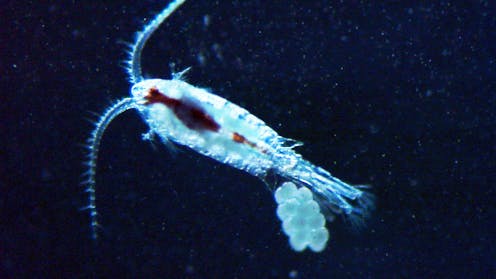
Véritable sentinelle écologique, le copépode _Eurytemora affinis_ pourrait être le gardien de la santé des estuaires face à la pollution plastique.Sebio, Fourni par l’auteur
Des rivières aux océans, le plastique transite par les estuaires, des zones vitales pour la biodiversité, mais fragiles. Pour mesurer son impact, une recherche franco-canadienne s’appuie sur un minuscule crustacé, « Eurytemora affinis », véritable sentinelle écologique qui doit aider à mieux comprendre les effets de la pollution par les micro et nanoplastiques.
Cette surproduction massive, combinée à une gestion insuffisante des déchets, entraîne une accumulation durable dans l’environnement. Faiblement biodégradable, le plastique persiste pendant des décennies et se retrouve désormais dans tous les milieux : air, sols, eaux douces, océans, jusqu’aux pôles et aux abysses.
Face à cette pollution mondiale, la recherche s’efforce de mieux quantifier les plastiques, d’en comprendre la dispersion et d’évaluer leurs effets sur les écosystèmes et les organismes. Dans un nouveau projet de recherche doctorale que nous menons, cette question est abordée en examinant deux estuaires : celui de la Seine, en France, et celui du Saint-Laurent au Québec.
L’enjeu : évaluer le niveau de contamination en micro et nanoplastiques de ces estuaires en s’intéressant notamment aux effets du plastique sur un petit crustacé méconnu, un minuscule copépode baptisé Eurytemora affinis qui constitue une espèce sentinelle précieuse.
La plupart des études se concentrent sur les océans : les milieux d’eau douce et notamment les fleuves et estuaires restent encore largement sous-explorés.
Mais les réduire à leur seule vulnérabilité serait une erreur : les estuaires sont parmi les milieux les plus riches et productifs de la planète. Ils abritent une biodiversité remarquable, servent de nurseries pour de nombreuses espèces, filtrent naturellement l’eau et jouent un rôle essentiel dans les cycles biogéochimiques.
Ils offrent aussi de nombreux services écosystémiques aux sociétés humaines : alimentation à travers la pêche, régulation de la qualité de l’eau, atténuation des crues, protection contre l’érosion côtière, etc.
Leur position géographique, en revanche, à l’interface entre terre et mer, les rend particulièrement sensibles aux pressions anthropiques. Face à l’augmentation de la pollution plastique, il est urgent de mieux comprendre comment ces écosystèmes réagissent, et quels organismes sont en première ligne.
« Eurytemora affinis », minuscule gardien de l’équilibre
Parmi les nombreuses espèces vivant dans ces milieux sous pression, certaines occupent une place centrale dans leur équilibre écologique. C’est le cas d’un petit crustacé d’environ un millimètre : Eurytemora affinis.
Spécimen de copépode Eurytemora affinis Caroline Lamontagne, Fourni par l’auteur
Très abondant dans les estuaires de l’hémisphère Nord, il constitue un maillon clé du réseau trophique, assurant le transfert d’énergie entre le phytoplancton et les organismes de niveaux supérieurs. Son atout majeur ? Une capacité d’adaptation exceptionnelle. Il tolère de très fortes variations environnementales, ce qui lui permet de coloniser de nombreux habitats.
Mais E. affinis est aussi un excellent bio-indicateur de l’état de santé des estuaires. En effet, certaines espèces, dites « sentinelles », réagissent rapidement aux perturbations, permettant d’anticiper les effets de la pollution : c’est le principe de la biosurveillance. Grâce à sa sensibilité aux polluants, son cycle de vie court, sa densité élevée et la possibilité de l’élever en laboratoire, E. affinis est un modèle idéal en écotoxicologie. Il permet d’étudier à la fois l’exposition, les effets biologiques et les mécanismes de réponse face aux contaminants.
Vue aérienne du Havre (Seine-Maritime) et de l’estuaire de la Seine. Sentinel Hub, CC BY
Ce qui rend l’étude d’E. affinis particulièrement intéressante, c’est qu’il ne s’agit pas d’une seule espèce, mais d’un complexe d’espècescryptiques (c’est-à-dire, dont il est impossible de distinguer les différentes espèces à l’œil nu sans analyse génétique).
Ces différences pourraient influencer la façon dont chaque population réagit aux polluants. Ces variations ont jusque-là été peu explorées. Et c’est justement tout l’enjeu : mieux les comprendre pourrait nous aider à identifier les espèces et leurs populations les plus vulnérables pour mieux protéger les écosystèmes qu’elles habitent.
Deux de ces lignées vivent dans les estuaires de la Seine (France) et du Saint-Laurent (Canada). Ce sont précisément ces deux populations transatlantiques qui sont au cœur de ce travail de recherche.
Microplastiques, mais maxi dangers
Une fois libérés dans l’environnement, les plastiques se dégradent progressivement sous l’effet de processus physiques, chimiques et biologiques. Ils se fragmentent alors en particules de plus petite taille, dites microplastiques (de 1 micromètre à 5 millimètres) et nanoplastiques (de 1 nanomètre à 1 micromètre) secondaires.
Malgré leur petite taille, ces particules représentent une menace majeure. Leurs propriétés physiques les rendent extrêmement résistants aux processus naturels de décomposition, ce qui leur permet de persister longtemps dans l’environnement.
Leur taille les rend faciles à ingérer par une grande variété d’organismes, du zooplancton aux mammifères marins. Une fois ingérées, ces particules peuvent provoquer des obstructions physiques, réduire l’absorption des nutriments, ou – dans le cas des nanoplastiques – pénétrer dans la circulation sanguine, entraînant une cascade d’effets biologiques néfastes.
Leurs dangers tiennent également du « cheval de Troie » : leur surface adsorbe d’autres polluants hydrophobes, comme les hydrocarbures aromatiques polycycliques (HAP), les polychlorobiphényles (PCB) ou les métaux lourds. Une fois ingérés, ces contaminants peuvent alors être rejetées dans le tube digestif de l’organisme et avoir des effets toxiques.
Dans ce contexte, il est crucial d’étudier les effets des micro et nanoplastiques dans les estuaires à travers un modèle écologique clé comme E. affinis pour comprendre les effets de cette pollution émergente sur la biodiversité.
Avec Plasticop, mieux comprendre la vulnérabilité des copépodes aux plastiques
Ce projet doctoral Plasticop, co-dirigé par le laboratoire Stress Environnementaux et BIOSurveillance des milieux aquatiques au Havre (France) et l’Institut des sciences de la mer au Québec (Canada), s’intéresse ainsi à deux lignées du copépode, dont deux populations d’E. affinis vivant dans les estuaires de la Seine et du Saint-Laurent.
Il se structure autour de trois grands axes :
Le premier consiste à évaluer l’état de contamination en MNPs dans ces deux estuaires, en analysant trois compartiments : l’eau, les sédiments et les copépodes eux-mêmes.
Le deuxième vise à exposer en laboratoire ces populations naturelles aux types de plastiques identifiés lors du premier volet et d’en observer les effets. L’objectif est d’évaluer non seulement les impacts à court terme (sur la survie, la croissance ou la reproduction), mais aussi les effets à long terme à travers une étude sur quatre générations successives.
Enfin, le troisième axe explore l’influence du réchauffement climatique sur la bioaccumulation de ces particules plastiques, c’est-à-dire leur capacité à s’accumuler progressivement dans les tissus des organismes.
En combinant ces approches, cette recherche vise à mieux comprendre la résilience de ce complexe d’espèces clés face à des pressions environnementales multiples, et à anticiper l’évolution de ces écosystèmes fragiles.
Ce n’est que le début de l’aventure : les premiers résultats sont attendus dans les trois prochaines années… et nous sommes impatients de les partager.
Céleste Mouth a reçu des financements dans le cadre du projet PiA 4 ExcellencEs – Polycampus LH 2020 / France 2030 / ANR 23 EXES 0011
Gesche Winkler a reçu des financements du conseil de recherches en sciences naturelles et en génie du Canada (CRSNG), de l’APOGÉE Canada “Transforming Climate Change” et du regroupement stratégique “Québec-Océan”.
Joëlle Forget-Leray a reçu des financements dans le cadre du projet PiA 4 ExcellencEs – Polycampus LH 2020 / France 2030 / ANR 23 EXES 0011
Grandir avec deux langues, ce n’est pas une confusion mais une richesse : le cerveau bilingue se développe avec plus de souplesse et de force, offrant des bénéfices qui durent toute la vie.Tolikoff Photography/Shutterstock
Même s’ils commencent à parler un peu plus tard, les enfants bilingues traitent les informations avec plus de souplesse. Voici ce qui se passe dans leur cerveau et comment favoriser ce processus.
Lorsque les enfants grandissent en entendant deux langues, leur famille et leurs enseignants s’inquiètent parfois : vont-ils s’embrouiller ? Vont-ils mettre plus de temps à parler ? Cela va-t-il affecter leurs résultats scolaires ?
Ces doutes sont compréhensibles : en effet, les enfants bilingues peuvent mettre un peu plus de temps à prononcer leurs premiers mots ou mélanger les deux langues au début. Cependant, il ne s’agit pas d’un retard pathologique, mais d’une étape naturelle de leur apprentissage. En réalité, ils traitent deux fois plus d’informations linguistiques, ce qui constitue un entraînement supplémentaire pour leur cerveau, qui s’en trouve renforcé de manière très bénéfique pour toute leur vie.
Que signifie être bilingue ?
Être bilingue ne signifie pas simplement parler couramment deux langues : une personne bilingue est celle qui utilise régulièrement les deux langues dans sa vie. Cela inclut ceux qui apprennent une langue à la maison et une autre à l’école, les enfants qui parlent une langue avec un parent et une autre avec l’autre, ou ceux qui vivent dans des communautés où deux langues sont couramment utilisées.
Mais est-on bilingue pour toujours ? La réponse est nuancée. Une personne peut cesser d’utiliser l’une de ses langues et, avec le temps, la perdre : perte de vocabulaire, de fluidité ou de précision. Cependant, même si la compétence pratique diminue, le cerveau conserve les traces de cet apprentissage précoce. Des études récentes montrent que les avantages cognitifs, tels que la flexibilité mentale ou la réserve cognitive, persistent même chez ceux qui ont cessé d’utiliser activement leurs deux langues.
Le cerveau bilingue en développement
Pendant l’enfance, le cerveau est très plastique. L’hypothèse de la période critique suggère que l’apprentissage précoce des langues favorise une organisation cérébrale plus intégrée : les réseaux neuronaux des différentes langues se chevauchent et coopèrent, au lieu de fonctionner séparément comme c’est souvent le cas chez les adultes.
Par exemple, un enfant qui apprend l’anglais et l’espagnol dès son plus jeune âge peut passer d’une langue à l’autre rapidement et naturellement, tandis qu’un adulte aura besoin de plus d’efforts et d’énergie pour changer de langue. Il existe diverses études de neuro-imagerie montrent que plus une deuxième langue est acquise tôt, plus ses réseaux neuronaux se superposent à ceux de la première langue, ce qui réduit l’effort nécessaire pour changer de langue.
Un double apprentissage, sans ralentissement
Dans la pratique, même si les enfants bilingues semblent commencer à parler plus tard, ils répartissent en fait leur vocabulaire entre deux langues. Si un enfant monolingue connaît 60 mots en espagnol, un enfant bilingue peut en connaître 30 en anglais et 30 en espagnol : le total est le même. En d’autres termes, ils progressent plus lentement dans chaque langue séparément, mais pas dans leur développement linguistique global.
Au-delà du vocabulaire, la gestion de deux langues dès le plus jeune âge entraîne le contrôle exécutif, qui comprend la capacité à se concentrer, à alterner les tâches et à filtrer les distractions. Par exemple, un enfant bilingue peut passer rapidement des instructions en espagnol à celles en anglais en classe, ou choisir la langue appropriée en fonction de son interlocuteur. Ces situations renforcent la mémoire de travail et l’attention soutenue.
Le cerveau bilingue supprime également temporairement la langue dont il n’a pas besoin dans chaque contexte. Ce processus, connu sous le nom de « contrôle inhibiteur », ne signifie pas « effacer » une langue, mais la désactiver momentanément afin que l’autre puisse s’exprimer sans interférence. Cette gymnastique cérébrale renforce les réseaux liés à la prise de décision, à la planification et à la résolution de problèmes.
Des avantages tout au long de la vie
Le bilinguisme n’apporte pas seulement des avantages pendant l’enfance : ses effets positifs peuvent perdurer même si, avec les années, l’une des langues n’est plus utilisée régulièrement. Même si cette deuxième langue peut être perdue, l’entraînement cognitif précoce continue à agir.
Par exemple, les personnes âgées qui ont grandi en parlant deux langues présentent plus de matière grise dans des zones clés du cerveau et peuvent retarder l’apparition des symptômes de la maladie d’Alzheimer.
Flexibilité cognitive
De plus, la maîtrise de deux langues favorise la flexibilité cognitive, c’est-à-dire la capacité à s’adapter à des situations changeantes. Lorsqu’un enfant ou un adolescent change de langue en fonction de son interlocuteur, lit un texte dans une langue puis explique la même idée dans une autre, il exerce sa capacité de concentration et d’attention focalisée dans d’autres contextes : jeux, conversations dans des environnements bruyants, changements inattendus en classe ou activités extrascolaires. Cette flexibilité lui permet d’acquérir de nouvelles compétences plus facilement.
La conclusion n’est pas que les personnes bilingues soient « meilleures » que les autres, mais que leur cerveau apprend à gérer les informations différemment, ce qui leur permet de relever plus facilement des défis variés.
Ces expériences contribuent à ce que les scientifiques appellent la « réserve cognitive », une ressource mentale qui protège le cerveau et aide à maintenir les capacités cognitives pendant des décennies, même chez les personnes âgées.
Comment tirer parti des avantages du bilinguisme
Encourager le bilinguisme ne signifie pas faire pression ou forcer les résultats, mais créer des contextes naturels d’exposition aux deux langues. Lire des histoires dans deux langues, regarder des films en version originale sous-titrée, chanter des chansons, jouer à des jeux de rôle ou avoir des conversations dans une langue étrangère sont des moyens informels de pratiquer sans en faire une obligation.
C’est important car, même si les programmes scolaires, tels que la méthode EMILE (enseignement d’une matière intégré à une langue étrangère) ont un rôle à jouer, le bilinguisme quotidien s’enrichit dans des situations plus spontanées : cuisiner en suivant des recettes en français, jouer à des jeux vidéo en anglais ou partager des histoires familiales dans la langue maternelle. Ces expériences renforcent le lien émotionnel avec la langue et en font un outil vivant, au-delà de l’école.
Loin d’être un défi, l’exposition à deux langues est une opportunité pour les enfants de développer un cerveau flexible, bien connecté et capable d’organiser efficacement les connaissances. Grandir dans des contextes qui valorisent les deux langues permet de tirer parti de ces avantages cognitifs et culturels, en soutenant à la fois leur apprentissage scolaire et leur développement personnel.
Alejandro Martínez ne travaille pas, ne conseille pas, ne possède pas de parts, ne reçoit pas de fonds d’une organisation qui pourrait tirer profit de cet article, et n’a déclaré aucune autre affiliation que son organisme de recherche.
Le « havre de pollution » existe-t-il vraiment ? Face au durcissement des politiques climatiques, certaines entreprises déplacent-elles réellement leurs activités vers des pays aux normes plus souples ? Une nouvelle étude lève le doute : ce phénomène existe bel et bien.
Face à l’urgence climatique, de nombreux pays renforcent leurs réglementations environnementales afin de favoriser leur transition écologique. Cependant, dans un monde où tous les pays ne sont pas vertueux, cette démarche ne risque-t-elle pas de faire fuir les investisseurs étrangers vers des destinations disposant de règlementations environnementales moins contraignantes, créant une sorte de « havre de pollution », là où les activités polluantes échappent aux mesures les plus répressives ? Cette question divise les économistes et les décideurs publics depuis des décennies.
Notre récente étude empirique, publiée dans Macroeconomic Dynamics, apporte un éclairage nouveau sur cette question. En analysant les flux d’investissements directs étrangers (IDE) de 121 pays investisseurs vers 111 pays hôtes entre 2001 et 2018, et à partir de la construction d’un nouvel indicateur de sévérité des politiques environnementales, nous confirmons l’existence d’un effet de « havre de pollution ». Cependant, les dynamiques en jeu restent complexes.
Deux hypothèses en confrontation
La littérature économique reste divisée sur l’impact des réglementations environnementales sur les entreprises. Deux visions s’opposent. D’un côté, « l’hypothèse de Porter » (1991) suggère que des règles strictes peuvent stimuler l’innovation, améliorer la productivité et renforcer la compétitivité. De l’autre, l’« hypothèse du havre de pollution » développée notamment dans les années 1990, avance que les industries se déplacent vers les pays où les normes sont plus souples afin de réduire leurs coûts. Ce phénomène a été amplifié par la mondialisation des années 1990, marquée par la baisse des coûts de transport et l’essor des pays à bas salaires. Ainsi, une part de la réduction des émissions dans les pays développés pourrait s’expliquer par la délocalisation d’activités polluantes vers des pays moins stricts, accompagnée d’une hausse des importations plus intensives en gaz à effet de serre, selon une étude récente.
Un nouvel outil pour les politiques environnementales
Les études empiriques antérieures aboutissent souvent à des résultats contradictoires, en grande partie parce qu’il est difficile de comparer la rigueur des politiques environnementales d’un pays à l’autre. Pour dépasser cet obstacle, nous avons construit un nouvel indice de sévérité des politiques environnementales, l’Environmental Stringency Index (ESI), couvrant plus de 120 pays entre 2001 et 2020.
Cet indicateur repose sur deux dimensions :
La mise en œuvre, mesurée par l’engagement formel d’un pays à travers le nombre de lois climatiques adoptées et sa participation aux grands accords internationaux (comme le Protocole de Montréal ou l’Accord de Paris) ;
L’application effective, évaluée en comparant les émissions prédites d’un pays, en fonction de sa structure industrielle, à ses émissions réelles. Lorsqu’un pays émet moins que prévu, cela traduit des efforts concrets d’atténuation.
Les signaux politiques sont efficaces
Nos résultats empiriques confirment clairement l’existence d’un effet de « havre de pollution » : une hausse d’un écart-type de notre indice de rigueur environnementale dans un pays hôte entraîne en moyenne une baisse de 22 % des IDE entrants.
Plus encore, nous montrons que les investisseurs étrangers réagissent davantage à l’annonce des politiques plutôt qu’à leur application effective. Autrement dit, l’adoption de nouvelles lois climatiques ou la ratification d’accords internationaux envoie un signal crédible aux entreprises quant à l’évolution future des coûts réglementaires. À l’inverse, les performances environnementales réelles ne semblent pas influencer significativement les décisions d’investissement.
Cette observation suggère que les entreprises anticipent les contraintes futures plutôt que de se limiter à évaluer la situation actuelle.
Des effets asymétriques
Nos résultats montrent que l’impact des réglementations environnementales diffère fortement selon le niveau de développement et la qualité institutionnelle du pays hôte. Dans les économies émergentes et en développement, des règles plus strictes freinent nettement les IDE, confirmant leur statut de « havres de pollution » potentiels. L’effet est en revanche plus limité dans les pays à haut revenu, où des institutions solides et des cadres réglementaires établis atténuent ce phénomène. La corruption joue aussi un rôle clé. Pour évaluer cet aspect, nous avons utilisé l’indice de Contrôle de la corruption de la Banque mondiale : là où la gouvernance est faible, même des politiques ambitieuses peuvent être contournées, renforçant l’attractivité de ces pays pour les activités polluantes.
La réalité d’un arbitrage réglementaire
Au-delà de la rigueur absolue des réglementations, notre étude met également en évidence un phénomène d’arbitrage réglementaire : plus l’écart de sévérité des politiques environnementales entre le pays d’origine et le pays d’accueil des IDE est important, plus l’effet incitatif de délocalisation s’accroît. Les entreprises semblent ainsi comparer activement les cadres réglementaires internationaux afin d’optimiser leurs coûts de mise en conformité. Cette dynamique est particulièrement visible lorsque des investisseurs issus de pays aux normes strictes se tournent vers des destinations moins contraignantes, confirmant l’hypothèse d’une recherche délibérée de « havres de pollution ».
Une coopération internationale nécessaire dans un monde fragmenté
L’hypothèse du « havre de pollution » n’est donc pas un simple « mythe populaire », comme l’avait suggéré une étude des années 2000.
Face à ce constat, plusieurs pistes s’imposent. D’abord, renforcer la coopération internationale à travers des accords multilatéraux capables de réduire les écarts de normes et de limiter les possibilités d’arbitrage. Ensuite, améliorer l’application effective des règles, en particulier dans les pays à bas salaires, afin de préserver leur crédibilité sur le long terme. Le déploiement de mécanismes correcteurs, comme l’ajustement carbone aux frontières introduit par l’Union européenne (UE), constitue également une voie prometteuse puisqu’il permet de taxer les importations en fonction des émissions de gaz à effet de serre qu’elles incorporent. Enfin, le développement d’incitations fiscales et financières pour les technologies propres peut orienter les IDE vers des secteurs compatibles avec la transition écologique.
La lutte contre le changement climatique ne peut donc ignorer ces dynamiques économiques. Comprendre comment les entreprises réagissent aux réglementations environnementales est indispensable pour concevoir des politiques à la fois efficaces sur le plan écologique et équitables sur le plan économique. L’enjeu est de taille : réussir la transition verte sans creuser davantage les inégalités de développement entre le Nord et le Sud, dans un monde déjà marqué par des tensions importantes et une fragmentation croissante.
Les auteurs ne travaillent pas, ne conseillent pas, ne possèdent pas de parts, ne reçoivent pas de fonds d’une organisation qui pourrait tirer profit de cet article, et n’ont déclaré aucune autre affiliation que leur organisme de recherche.
La lourde défaite du Parti conservateur aux législatives de l’été 2024 a entraîné une recomposition politique au Royaume-Uni, les travaillistes au pouvoir considérent désormais que leur premier adversaire est le parti d’extrême droite Reform UK. C’est dans ce contexte qu’intervient l’essor du nationalisme en Angleterre.
Ces dernières semaines ont été marquées par une spectaculaire multiplication du nombre de drapeaux accrochés et brandis dans l’espace public en Angleterre. La croix de saint Georges, emblème de l’Angleterre, et l’Union Jack, drapeau britannique, ont occupé les lampadaires, les boîtes aux lettres, les ponts d’autoroute voire des ronds-points ou des passages piétons repeints aux couleurs nationales. La présence de ces symboles a culminé le 13 septembre, lorsque près de 110 000 personnes se sont rassemblées à Londres pour participer à la marche « Unite the Kingdom », organisée à l’initiative de Tommy Robinson, figure controversée de l’extrême droite britannique.
Traditionnellement, le drapeau britannique est hissé lors d’événements militaires ou monarchiques. La croix de saint Georges, quant à elle, n’apparaît que lors de grandes compétitions sportives, lorsque l’Angleterre joue en tant que nation. Mais depuis l’été dernier, le drapeau a quitté les stades pour investir le quotidien et le champ politique, transformant ce symbole national en enjeu identitaire.
Le déclencheur fut l’appel du collectif Weoley Warriors à une opération d’affichage de drapeaux, finançant et hissant des centaines de bannières sur le mobilier urbain. Leur mot d’ordre : « Une population fière est une population forte » (« A proud community is a strong community »). L’initiative, relayée par l’organisation Operation Raise the Colours, s’est diffusée dans tout le pays. À Birmingham (Midlands de l’Ouest, Angleterre), le conseil municipal travailliste a ordonné le retrait de ces drapeaux pour des raisons de sécurité, déclenchant une polémique. Plusieurs groupes ont accusé les autorités locales d’avoir fait preuve de « deux poids, deux mesures », en tolérant par exemple l’affichage de drapeaux palestiniens lors de manifestations ou sur des bâtiments publics, tout en retirant les drapeaux de la croix de saint Georges. Cet épisode a été instrumentalisé par certains militants nationalistes pour dénoncer une marginalisation de l’identité anglaise au profit d’autres revendications politiques ou communautaires.
Si Weoley Warriors et Operation Raise the Colours se disent apolitiques et revendiquent un simple patriotisme, les publications de leurs membres sur les réseaux sociaux sont, elles, clairement politisées : appels à des élections anticipées, critiques virulentes de la BBC, du Parti travailliste, de Keir Starmer, du maire travailliste de Londres Sadiq Khan ainsi que de la politique d’accueil des demandeurs d’asile.
La confusion entre les termes « Angleterre », « Grande-Bretagne » et « Royaume-Uni » reste d’ailleurs fréquente dans le langage courant. Majoritaire sur les plans politique, économique et géographique, l’Angleterre n’a longtemps pas ressenti le besoin de se doter d’une conscience nationale distincte. Cependant, depuis vingt ans, un sentiment « anglais » (plutôt que « britannique ») a émergé, se construisant souvent par opposition : à l’Écosse, à l’Union européenne et, plus récemment, aux demandeurs d’asile.
Le tournant s’est produit au début des années 2000, lorsque le gouvernement travailliste de Tony Blair a mis en place un ambitieux projet de création de Parlements et de gouvernements nationaux en Écosse, au pays de Galles et en Irlande du Nord (un processus appelé « devolution »). L’Angleterre en fut exclue, créant une situation paradoxale : les députés écossais, gallois et nord-irlandais pouvaient voter à Westminster sur des sujets touchant exclusivement l’Angleterre, alors que les députés anglais ne pouvaient pas se prononcer sur les matières dévolues aux Parlements nationaux.
Cette asymétrie a donné naissance à la fameuse « West Lothian Question », symbole d’une injustice démocratique ressentie. La situation s’est aggravée avec le référendum d’indépendance écossais de 2014 (soldé par une victoire à 55 % du non à la question « L’Écosse doit-elle devenir un pays indépendant ? ») et la montée en puissance en Écosse du Scottish National Party (SNP) (parti indépendantiste écossais, ndlr)), qui ont nourri l’impression que l’Union se définissait selon les priorités de l’Écosse, au détriment de l’Angleterre.
Le référendum sur le Brexit de 2016 a fourni un nouvel exutoire. L’Angleterre a voté majoritairement en faveur du Leave, c’est-à-dire pour quitter l’UE (53,4 %), contrairement à l’Écosse (62 % pour le Remain, rester) et à l’Irlande du Nord (55,8 % pour le Remain). Le pays de Galles a lui aussi opté pour le Leave (52,5 %), malgré les importants financements européens dont il bénéficiait. Ce vote traduit une combinaison de ressentiment économique et de défiance vis-à-vis des élites, rejoignant ainsi le camp anglais plus que l’écossais ou le nord-irlandais. Le slogan des partisans du Leave, « Take back control », cristallisait une volonté de reprendre le pouvoir, de contrôler les frontières et de rompre avec un sentiment d’abandon économique.
Plus récemment, la question migratoire est devenue un nouveau catalyseur de colère.
Dans le même temps, les pénuries de main-d’œuvre dans la santé, les services sociaux, l’hôtellerie-restauration et l’agriculture ont conduit de nombreux employeurs à dépendre davantage des travailleurs immigrés. Il en a résulté un décalage entre les attentes, selon lesquelles le Brexit devait réduire l’immigration, et la réalité, marquée par un maintien ou même une augmentation des flux migratoires, ce qui a nourri un profond sentiment de frustration.
Parallèlement, la hausse des traversées de la Manche en petites embarcations depuis 2018 est devenue un enjeu particulièrement visible et hautement symbolique. Bien que les traversées de la Manche sur des bateaux de fortune ne représentent qu’une très faible part des flux migratoires, l’importante médiatisation de ces arrivées sur les côtes du sud de l’Angleterre a renforcé l’impression d’une perte de contrôle.
En outre, le projet des gouvernements conservateurs visant à transférer certains demandeurs d’asile vers le Rwanda, ainsi que les promesses répétées de « Stop the boats » (« Arrêtez les bateaux »), un slogan popularisé par l’ancien premier ministre conservateur Rishi Sunak (octobre 2022-juillet 2024), soulignent que l’immigration a été l’un des sujets les plus mis en avant par les premiers ministres britanniques.
À cela s’ajoutent l’effet des réseaux sociaux et la désinformation. L’exemple de l’affaire de Southport, à l’été 2024, est révélateur. Trois personnes avaient été tuées et dix blessées lors d’une attaque au couteau ; quand un suspect a été arrêté, de fausses informations circulant sur Internet ont rapidement associé la tragédie à l’immigration et à l’islam, des affirmations dont il s’est révélé qu’elles étaient infondées.
Le fait que de nombreux drapeaux aient été levés dans la région de Birmingham, l’une des plus cosmopolites du pays, souligne la sensibilité accrue de ces tensions et met en lumière les défis auxquels le modèle multiculturaliste britannique est confronté. Cette crispation est d’autant plus forte que, dans le débat politique actuel, rares sont les responsables de partis prêts à défendre ouvertement les bénéfices de l’immigration.
Les enquêtes « Future of England Survey » ont montré que ceux qui se définissent comme « anglais » plutôt que « britanniques » sont plus eurosceptiques, considèrent que l’Angleterre est désavantagée par rapport aux autres nations au sein du Royaume-Uni, ressentent davantage de colère et de peur face à l’avenir politique et votent plus que les autres catégories en faveur du parti Reform UK.
Une identité captée par le parti Reform UK
Jusqu’à récemment, le parti conservateur, plus implanté en Angleterre que dans les trois autres nations, attirait ce vote pro-anglais. Mais sa défaite électorale de 2024 a ouvert un espace politique que le parti d’extrême droite Reform UK, dirigé par Nigel Farage, occupe désormais.
Bien que Nigel Farage n’ait pas participé au rassemblement Unite the Kingdom et qu’il ait toujours pris ses distances vis-à-vis de Tommy Robinson, lequel a eu de nombreux démêlés judiciaires et a été condamné à plusieurs peines de prison entre 2005 et 2025, il a pu tirer parti politiquement de ses thématiques. En effet, les émeutes et protestations encouragées ou soutenues par Robinson placent au centre de l’agenda médiatique la question migratoire, laquelle se trouve au cœur du programme de Farage. Cela lui permet de capter un électorat inquiet sans endosser l’étiquette d’extrémiste, en offrant aux mécontents une traduction électorale plus crédible que le militantisme de rue.
La campagne de Nigel Farage s’articule autour d’un agenda populiste en opposant « le peuple » à Westminster : arrêt de l’immigration, lutte contre un gouvernement qualifié de corrompu, sortie du Royaume-Uni de la Convention de sauvegarde des droits de l’homme et libertés fondamentales (dont le pays est partie en sa qualité de membre du Conseil de l’Europe) qui est accusée d’être un frein à l’expulsion d’immigrés et défense des valeurs et de la culture britanniques. Autant de thèmes qui lui permettent de capter un électorat conservateur déçu, en quête de réponses claires et d’un discours centré sur l’« anglicité ».
Quelles réponses au nationalisme anglais ?
Plusieurs solutions ont été envisagées par les gouvernements successifs pour apaiser ce malaise identitaire.
Symboliquement, certains députés ont proposé de doter l’Angleterre d’un hymne national distinct de God Save the King, l’hymne national britannique, ou de créer un jour férié pour célébrer la Saint-Georges, comme c’est déjà le cas pour saint Andrew et saint Patrick, respectivement les saints patrons de l’Écosse et de l’Irlande du Nord. Ces projets n’ont pas abouti par manque de soutien au niveau politique.
Sur le plan institutionnel, la procédure parlementaire « English Votes for English Laws » (EVEL) (« Des votes anglais pour des lois anglaises »), introduite en 2015 pour répondre à la West Lothian Question, et qui devait corriger les défauts induits par la devolution, en permettant aux seuls députés anglais de voter uniquement sur les projets de loi ne concernant que l’Angleterre, a été supprimée en 2021, car jugée trop lourde et porteuse de division. La voie régionale envisagée par Tony Blair, permettant de doter des assemblées régionales en Angleterre dans un État britannique jugé trop centralisé, a été testée lors du référendum de 2004 dans le Nord-Est. Rejetée par 74 % des votants, elle a été abandonnée.
Sur le plan économique, la politique de Levelling Up (rééquilibrage) lancée par le conservateur Boris Johnson (premier ministre de 2019 à 2022) visait à réduire les inégalités régionales et à redonner « un sens de fierté et d’appartenance » aux collectivités locales, mais son impact est resté limité, faute de financements suffisants et de continuité politique.
Le basculement d’une partie notable de l’électorat vers le parti de Nigel Farage s’explique non seulement par l’accumulation de crises et la perte de confiance dans la capacité des gouvernements conservateurs comme travaillistes à y répondre, mais aussi par le rôle joué par des premiers ministres successifs, de Boris Johnson à Keir Starmer, dont les déclarations sur l’immigration ont contribué à nourrir ces tensions.
La multiplication des drapeaux illustre un nationalisme anglais en quête de reconnaissance. Ce mouvement s’inscrit dans une poussée identitaire plus large à l’échelle mondiale. Des figures, comme Éric Zemmour en France ou Elon Musk aux États-Unis, y trouvent un écho et participent à alimenter ce réveil patriotique, comme le montre leur participation à la manifestation Unite the Kingdom du 13 septembre à Londres.
Plutôt que d’unir le royaume, ce sursaut national risque d’accentuer les fractures et de faire du Royaume-Uni un État plus désuni encore. En effet, si Reform UK capitalise sur cette colère, les nations dévolues, notamment l’Écosse, restent méfiantes face à ce renforcement de l’« anglicité ».
Kevin Rocheron ne travaille pas, ne conseille pas, ne possède pas de parts, ne reçoit pas de fonds d’une organisation qui pourrait tirer profit de cet article, et n’a déclaré aucune autre affiliation que son organisme de recherche.