Source: The Conversation – France in French (3) – By Vincent Sizaire, Maître de conférence associé, membre du centre de droit pénal et de criminologie, Université Paris Nanterre – Université Paris Lumières
L’ancien président de la République Nicolas Sarkozy a été jugé coupable d’association de malfaiteurs dans l’affaire du financement libyen de sa campagne présidentielle victorieuse de 2007. Condamné notamment à cinq ans de prison, il sera convoqué le 13 octobre pour connaître la date de son incarcération. Cet événement inédit dans l’histoire de France s’inscrit dans une évolution des pratiques de la magistrature qui s’est progressivement émancipée du pouvoir politique. Elle couronne le principe républicain, proclamé en 1789, mais longtemps resté théorique, d’une pleine et entière égalité des citoyens devant la loi.
Le 25 septembre 2025, Nicolas Sarkozy a été reconnu coupable d’association de malfaiteurs par le tribunal correctionnel de Paris, qui a considéré qu’il avait tenu un rôle actif dans la mise en place d’un dispositif de financement de sa campagne électorale de 2007 par les dirigeants libyens. Comme on pouvait s’y attendre, cette décision a immédiatement suscité l’ire d’une large partie de la classe politique.
Toutefois, si on les met en regard des faits pour lesquels l’ancien chef de l’État a été condamné, ces peines n’apparaissent pas disproportionnées. Les faits sont d’une indéniable gravité : organiser le financement occulte d’une campagne électorale avec des fonds provenant d’un régime corrompu et autoritaire, la Libye, (dont la responsabilité dans un attentat contre un avion ayant tué plus de 50 ressortissants français a été reconnue par la justice), en contrepartie d’une intervention pour favoriser son retour sur la scène internationale…
Alors que la peine maximale encourue était de dix ans de prison, la sanction finalement prononcée ne peut guère être regardée comme manifestement excessive. Mais ce qui est contesté, c’est le principe même de la condamnation d’un responsable politique par la justice, vécue et présentée comme une atteinte intolérable à l’équilibre institutionnel.
Si l’on prend le temps de la mise en perspective historique, on constate pourtant que les jugements rendus ces dernières années à l’encontre des membres de la classe dirigeante s’inscrivent, en réalité, dans un mouvement d’émancipation relative du pouvoir juridictionnel à l’égard des autres puissances et, en particulier, du pouvoir exécutif. Une émancipation qui lui permet, enfin, d’appliquer pleinement les exigences de l’ordre juridique républicain.
L’égalité des citoyens devant la loi, un principe républicain
Les principes sur lesquels est bâti le système juridique républicain ne peuvent être plus clairs : dans une société démocratique, où chaque personne est en droit d’exiger non seulement la pleine jouissance de ses droits, mais d’une façon générale, l’application de la loi, nul ne peut prétendre bénéficier d’un régime d’exception – les élus moins encore que les autres. C’est parce que nous avons l’assurance que leurs illégalismes seront sanctionnés effectivement, de la même façon que les autres citoyens et sans attendre une bien hypothétique sanction électorale, qu’ils et elles peuvent véritablement se dire nos représentantes et représentants.
Longtemps, cette exigence d’égalité juridique est cependant restée largement théorique. Reprise en main et placée dans un rapport de subordination plus ou moins explicite au gouvernement, sous le Premier Empire (1804-1814), la magistrature est demeurée sous l’influence de l’exécutif au moins jusqu’au milieu du XXe siècle. C’est pourquoi, jusqu’à la fin du siècle dernier, le principe d’égalité devant la loi va se heurter à un singulier privilège de « notabilité » qui, sauf situations exceptionnelles ou faits particulièrement graves et médiatisés, garantit une relative impunité aux membres des classes dirigeantes dont la responsabilité pénale est mise en cause. Il faut ainsi garder à l’esprit que la figure « du juge rouge », popularisée dans les médias à la fin des années 1970, vient stigmatiser des magistrats uniquement parce qu’ils ont placé en détention, au même titre que des voleurs de grand chemin, des chefs d’entreprise ou des notaires.
La donne ne commence à changer qu’à partir du grand sursaut humaniste de la Libération qui aboutit, entre autres, à la constitution d’un corps de magistrats recrutés sur concours, bénéficiant à partir de 1958 d’un statut relativement protecteur et d’une école de formation professionnelle spécifique, l’École nationale de la magistrature. Ce corps se dote progressivement d’une déontologie exigeante, favorisée notamment par la reconnaissance du syndicalisme judiciaire en 1972. Ainsi advient une nouvelle génération de juges qui, désormais, prennent au sérieux la mission qui leur est confiée : veiller en toute indépendance à la bonne application de la loi, quels que soient le statut ou la situation sociale des personnes en cause.
C’est dans ce contexte que survient ce qui était encore impensable quelques décennies plus tôt : la poursuite et la condamnation des notables au même titre que le reste de la population. Amorcé, comme on l’a dit, au milieu des années 1970, le mouvement prend de l’ampleur dans les décennies suivantes avec la condamnation de grands dirigeants d’entreprises, comme Bernard Tapie, puis de figures politiques nationales, à l’image d’Alain Carignon ou de Michel Noir, députés-maires de Grenoble et de Lyon. La condamnation d’anciens présidents de la République à partir des années 2010 – Jacques Chirac en 2011, Nicolas Sarkozy une première fois en 2021 – achève de normaliser cette orientation ou, plutôt, de mettre fin à l’anomalie démocratique consistant à réserver un traitement de faveur aux élus et, plus largement, aux classes dirigeantes.
Procédant d’abord d’une évolution des pratiques judiciaires, ce mouvement a pu également s’appuyer sur certaines modifications du cadre juridique. Ainsi de la révision constitutionnelle de février 2007 qui consacre la jurisprudence du Conseil constitutionnel suivant laquelle le président de la République ne peut faire l’objet d’aucune poursuite pénale durant l’exercice de son mandat, mais qui permet la reprise de la procédure dès la cessation de ses fonctions. On peut également mentionner la création, en décembre 2013, du Parquet national financier qui, s’il ne bénéficie pas d’une indépendance statutaire à l’égard du pouvoir exécutif, a pu faire la preuve de son indépendance de fait ces dernières années.
C’est précisément contre cette évolution historique qu’est mobilisée aujourd’hui la rhétorique de « la tyrannie des juges ». Une rhétorique qui vise moins à défendre la souveraineté du peuple que celle, oligarchique, des gouvernants.
Vincent Sizaire ne travaille pas, ne conseille pas, ne possède pas de parts, ne reçoit pas de fonds d’une organisation qui pourrait tirer profit de cet article, et n’a déclaré aucune autre affiliation que son organisme de recherche.
Diabetes mellitus – known to many as type 1 and type 2 diabetes – gets all the attention with its rising global prevalence and connection to lifestyle and autoimmunity. Meanwhile, its lesser-known relative – diabetes insipidus – more quietly affects hundreds of thousands of people worldwide, but is an altogether different condition, unrelated to blood sugar.
Both forms share the same defining symptom: excessive urination. The word diabetes comes from ancient Greek meaning “passing through”, which perfectly captures what happens to newly affected patients.
In the more-familiar diabetes mellitus, sugar builds up in the blood because the body either doesn’t make enough insulin or can’t use it properly. When this happens, extra sugar enters the urine, and that sugar pulls water out of the body along with it.
People with diabetes may notice that they need to urinate more often and in larger amounts than usual. Sometimes, the urine can even have a sweet smell. Legend has it that Hippocrates, the “father of medicine”, used to taste his patients’ urine to make the diagnosis. Thankfully, we now use dipstick tests instead.
Diabetes insipidus is very different from diabetes mellitus. It has nothing to do with blood sugar. Instead, the problem is with a hormone called arginine vasopressin (AVP), also known as anti-diuretic hormone (ADH), which normally helps the body control how much water it keeps or loses.
This chemical messenger, produced by the pituitary gland at the base of your skull, acts like your body’s water conservation system. When you need to hold on to fluid – say, when you’re dehydrated – AVP tells your kidneys to reabsorb water rather than letting it escape in urine.
When this system breaks down, the results are dramatic. Without enough AVP, or when the hormone fails to function properly, your kidneys lose their ability to conserve water. No matter how much you drink, you remain perpetually thirsty and dehydrated, producing large volumes of pale, diluted urine. It’s a frustrating cycle that affects around 2,000 to 3,000 people in the UK alone.
Brain tumours can damage this delicate system, as can head injuries or brain surgery. Genetics sometimes plays a role, and neurological infections like syphilis or tuberculosis can also disrupt hormone production. In some cases, however, doctors are unable to identify a clear cause.
Pregnancy brings its own unique version called gestational diabetes insipidus. The growing placenta produces an enzyme that breaks down AVP in the bloodstream before it can do its job. Fortunately, this rare condition typically resolves after birth.
For AVP-deficiency, treatment is more straightforward. Patients can take desmopressin, a synthetic version of AVP available as tablets, injections, or even a nasal spray. This replacement therapy effectively restores the body’s ability to conserve water.
Sometimes present from birth, this form can also develop later due to kidney damage from electrolyte imbalances or certain medications. Lithium, commonly used to treat bipolar disorder, is one such example. Since the problem is the kidneys’ inability to respond to AVP, different medications are used. Low-salt diets and careful attention to staying hydrated are also key.
Also located in the hypothalamus, this control centre can be damaged by tumours, trauma, or infections, leading to an insatiable urge to drink water. The excessive fluid intake then suppresses AVP production, creating a vicious cycle. Dangerously, it can dilute blood sodium levels, causing headaches, confusion and even seizures.
The symptoms of this condition sometimes overlap with psychogenic polydipsia, where mental health disorders – particularly schizophrenia – drive compulsive water drinking. The consequences can be severe, as seen in one documented case where a young patient suffered complications after consuming an astounding 15 litres of water per day.
These extreme examples of pathological water intake stand alongside wellness trends promoting excessive hydration as part of a healthy lifestyle. NFL quarterback Tom Brady has famously recommended drinking around two gallons daily – nearly eight litres.
While we’re often told to drink more water to avert dehydration, constipation, kidney stones and the like, there’s clearly a dangerous level. Sustained or unexplained high water consumption is not only toxic to the body but may be a sign of an underlying health problem.
Diabetes insipidus reminds us that the term “diabetes” encompasses more than blood sugar problems. This other diabetes may be less common, but for those affected, the consequences of leaving the condition untreated may prove severe. Anyone experiencing persistent excessive thirst, water consumption, and urination should seek medical attention promptly. The cause may turn out to be sugar, hormones, or something else entirely.
Dan Baumgardt does not work for, consult, own shares in or receive funding from any company or organisation that would benefit from this article, and has disclosed no relevant affiliations beyond their academic appointment.
Source: The Conversation – UK – By Francesco Grillo, Academic Fellow, Department of Social and Political Sciences, Bocconi University
Back in November 2023 – a time when it wasn’t even clear that Donald Trump would be allowed to run in the upcoming presidential primaries – the European Union approved a tough new “anti-coercion instrument”.
This stated: “Economic coercion exists where a non-EU country applies or threatens to apply a measure affecting trade or investment in order to prevent or obtain the cessation, modification or adoption of a particular act by the EU or a Member State, thereby interfering in the legitimate sovereign choices of the EU or a Member State”.
Yet that regulation now seems a perfect fit for the US under a president who is threatening “substantial additional tariffs” against countries he deems to be imposing unfair laws against tech companies. Europe, where those digital regulations were literally invented, is now the clear target of Trump’s ire. Although I would argue that the EU’s approach to regulating in this area has some serious problems, it should not risk bowing to US pressure. The union would lose credibility if it showed that it does not believe in its own rules.
In just eight years, European institutions have approved ten laws in the digital space. The legislation spans 591 articles and covers 1,091 pages. This would have been a monumental effort, with each regulation stemming from the work of potentially hundreds of lawyers, experts and policymakers. That’s even before the EU’s three different institutions (commission, parliament, and council) all had their say.
The problem, though, is that the more articles you have regulating interconnected activities, the more likely you are to find contradictions among them. Paradoxically, the firms that may be more damaged by the necessity to comply tend to be European start-ups, which are generally too small to afford the fees needed to pay lawyers who can help them make sense of such complex legislation.
Added to this is the fact that the phenomena we are trying to govern is extremely radical and unprecedented (especially large language model artificial intelligence). We therefore don’t yet know what the impact of digital change will be and whether the regulations in place are the right ones. Indeed, it’s almost inevitable that such detailed regulation contains what will eventually turn out to be mistakes as circumstances change.
But while EU digital regulation is far from perfect, the bloc cannot allow a third party to bully its way to changing the rules. EU regulation is suboptimal but it is not targeting “incredible American tech companies”, as Trump suggests.
True, elements of the Digital Service Act only apply to “very large platforms” (with over 45 million users in the EU), but while the majority of the 19 giants meeting this threshold are American, the list also includes three Chinese, one Canadian and three European companies.
In fact, some of the comments made by the US president arguably meet the description of actions that the Anti-Coercion Instrument is designed to sanction.
Fighting fire with fire
Trump has put in the bluntest terms that “digital taxes, legislation, rules or regulations are all designed to harm, or discriminate against, American technology”. He has said: “unless these discriminatory actions are removed, I, as President of the United States, will impose substantial additional Tariffs”. This is “threatening a measure affecting trade or in order to obtain the cessation of a particular act by the Union”. Not to open a case to investigate the US on these points would send a dangerous message that competitors (or former allies) can meddle in European sovereign affairs.
The activation of countermeasures would require a qualified majority at the European Council which would not be impossible to reach: 55% of the member states (15 out of 27 would be enough) representing 65% of the population (the sum of Germany and France is one third of the total). In any case, even if a qualified majority is not reached, the exercise is still worthwhile. It would be helpful to know which member states are still serious about being part of a (sovereign) union and which of them would rather go for a union “à la carte”. This latter option is not, logically, good enough for times that require the EU to react quickly to crises.
Trump has taken a similar approach to the EU’s renewable energy policy, calling for member states to dismantle their wind turbines.
The times in which we are living will soon force Europe into a make or break decision. This is what Mario Draghi, former Italian prime minister and author of the report currently guiding the EU’s competitiveness, hinted saying recently when he said: “we have been reminded, painfully, that inaction threatens not only our
competitiveness but our sovereignty”. Europe cannot afford to give the impression that it has lost faith in its ability to be free.
Francesco Grillo is affiliated with Vision, the Italian think tank.
In some places, the Caspian Sea has already retreated 50km.S. Melkin / shutterstock
This roundup of The Conversation’s climate coverage was first published in our award-winning weekly climate action newsletter, Imagine.
Around the world, rivers and lakes that sustained civilisations for millennia are vanishing before our eyes. The Caspian Sea – the world’s largest inland body of water – has shrunk dramatically in just a few decades. The Ganges nourishes hundreds of millions of people across India and Bangladesh, yet is drying at a rate scientists say is unprecedented in the past thousand years.
Climate change isn’t solely to blame for the woes of the Caspian or the Ganges, of course. In nearly all cases, what’s going on is some combination of human and climate factors. But there is a trend.
Let’s start with rivers.
Writing in 2022, Catherine E. Russell, then of the University of Leicester, notes that:
“The Loire in France broke records in mid-August for its low water levels, while photos circulating online show the mighty Danube, Rhine, Yangtze and Colorado rivers all but reduced to trickles.”
“climate change is altering where freshwater is found: such that, in general, places with plenty are getting more while places with little are getting less.”
She says this is making rivers more “flashy”: prone to breaking records for both high and low water levels. The flashiness is exacerbated by humans extracting water and putting rivers in concrete straitjackets.
So what we’re seeing isn’t just a series of droughts. These drying rivers represent a structural change in how water is moving through the land, driven by climate change but also decades of overuse and engineering decisions.
This is particularly apparent in the Ganges, India’s largest and longest river. There, “stretches of river that once supported year-round navigation are now impassable in summer. Large boats that once travelled the Ganges from Bengal through Varanasi now run aground where water once flowed freely.”
That’s according to Mehebub Sahana, a rivers expert at the University of Manchester, who has written about a new study that puts the current drying in historical context. Scientists in India, writes Sahana, gathered 1,300 years of flow data and say the river and its wider system of tributaries has never faced dry spells as severe as it has in the past decade.
Sandbanks on the shores of the Padma River (the local name for the Ganges) in Bangladesh. Dams upstream in India have meant there is less water flowing into the Padma. Pavel Vatsura / shutterstock
As the world warms, Sahana notes, “the monsoon which feeds the Ganges has grown increasingly erratic”. But there are other factors at play: “Water has been diverted into irrigation canals, groundwater has been pumped for agriculture, and industries have proliferated along the river’s banks. More than a thousand dams and barrages have radically altered the river itself.”
In Sahana’s words, this results in “a river system increasingly unable to replenish itself”.
To save the Ganges, India will have to extract less groundwater and irrigation water. Upstream India and downstream Bangladesh will have to better coordinate their efforts. And major funding and political agreements “must treat rivers like the Ganges as global priorities”.
While at Keele University, the geographer Antonia Law looked at the climate-related threat to lake wildlife.
She notes there has already been a “staggering decline” in freshwater species diversity since the 1970s, but that “climate change [now] threatens to drive even deeper losses”.
“Lake heatwaves – when surface water temperatures rise above their average for longer than five days – are a relatively new phenomenon. But by the end of this century, heatwaves could last between three and 12 times longer and become 0.3°C to 1.7°C hotter. In some places, particularly near the equator, lakes may enter a permanent heatwave state. Smaller lakes may shrink or disappear entirely, along with the wildlife they contain, while deeper lakes will face less intense but longer heatwaves.”
Needless to say, this is not great news for any person or animal that relies on those lakes. That’s particularly the case as “unlike those living elsewhere, most lake animals cannot simply move to another habitat once their lake becomes uninhabitable”. Many lakes, says Law, are on course for “a sweltering, breathless and lifeless future”.
That’s the case even for the biggest lake (sort of) of all: the Caspian Sea.
Here’s Simon Goodman, an ecologist at the University of Leeds who has tracked the seals in the Caspian for more than two decades:
“Once a haven for flamingos, sturgeon and thousands of seals, fast-receding waters are turning the northern coast of the Caspian Sea into barren stretches of dry sand. In some places, the sea has retreated more than 50km. Wetlands are becoming deserts, fishing ports are being left high and dry, and oil companies are dredging ever-longer channels to reach their offshore installations.”
Goodman says variations in the Caspian Sea level were once linked to agricultural irrigation (the same thing that caused the Aral Sea to disappear a few hundred miles to the east), but “now global warming is the main driver of decline”.
That’s because rising temperatures are disrupting the water cycle. Rivers and rainfall are bringing less water, while the hotter sun is evaporating more water than ever. With no link to the wider oceans (aside from a single canal, which is also drying up), the Caspian just can’t keep up.
As things stand, Goodman says, the decline could eventually reach 18 metres, “which is about the height of a six-storey building”. “Even an optimistic ten-metre decline would uncover 112,000 square kilometres of seabed – an area larger than Iceland.”
The five countries around the Caspian Sea have recognised the danger. The world does not need another Aral Sea. But Goodman fears “the rate of decline may outstrip the pace of political cooperation”.
There are many more stories like these. We’ve looked at the Ganges and the Caspian Sea, but this could easily have been a newsletter about Lake Victoria, the world’s second largest freshwater lake, or about drying rivers in Europe making it harder to generate nuclear power (pushing up energy prices in the UK), or about the complete disappearance of Bolivia’s second largest lake.
In all these cases, it’s worth remembering that once a river runs dry or a lake shrivels up, it’s not just water that disappears: it’s entire ecosystems and ways of life.
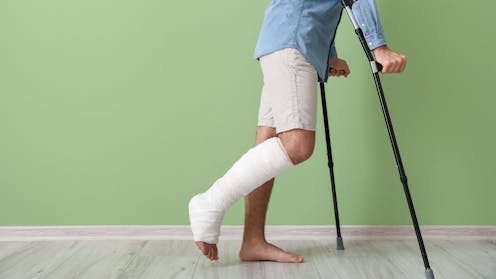
Limb lengthening surgery creates an intentional fracture in order to encourage new bone growth.Pixel-Shot/ Shutterstock
Would you willingly have your legs broken, the bone stretched apart millimetre by millimetre and then spend months in recovery – all to be a few centimetres taller?
This the promise of limb-lengthening surgery. A procedure once reserved for correcting severe orthopaedic problems, it has now become a cosmetic trend. While it might sound like a quick fix for those hoping to make themselves taller, the procedure is far from simple. Bones, muscles, nerves and joint all pay a heavy price – and the risks often outweigh the rewards.
Limb lengthening is not new. The procedure was pioneered in the 1950s by Soviet orthopaedic surgeon Gavriil Ilizarov, who developed a system to treat badly healed fractures and congenital limb deformities. His technique revolutionised reconstructive orthopaedics and remains the foundation of current practice today.
While the number of people undergoing cosmetic limb-lengthening surgery each year still remains relatively small, the procedure is growing in popularity. Specialist clinics in the US, Europe, India and South Korea report increasing demand – with procedures costing tens of thousands of pounds.
Reports suggest that in some private clinics, cosmetic cases of limb-lengthening surgery now outnumber medically necessary ones. This reflects a cultural shift, where people are willing to undergo a demanding, high-risk medical procedure to meet social ideals about height.
Surgeons begin by cutting through a bone – usually the femur (thigh bone) or tibia (shin bone). To ensure the existing bone stays healthy and that new bone can grow, surgeons are careful to leave intact its blood supply and periosteum (the soft issue that covers the bone).
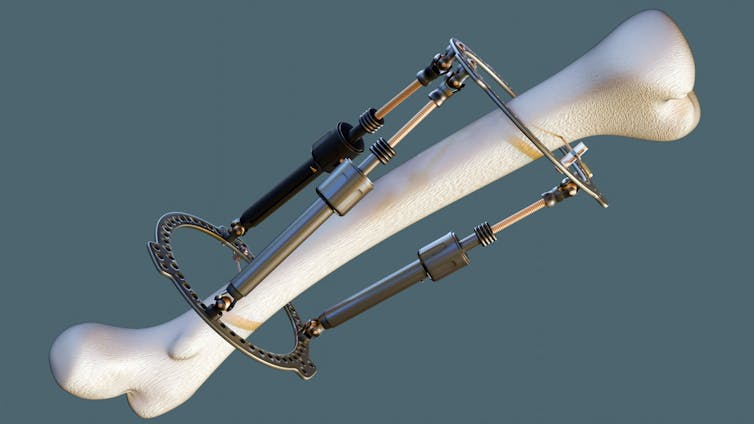
Traditionally, the cut bone segments were then connected to a bulky external frame which was adjusted daily to pull the two ends apart. But more recently, some procedures have adopted telescopic rods placed inside of the bone itself.
These devices can be lengthened gradually using magnetic controls from outside the body – sparing patients the stigma of an external frame and reducing the risk of infection. However, they’re not suitable for all patients – especially children – and are considerably more expensive than external systems.
Regardless of whether the device sits outside or within the bone, the process is the same. After a short healing period, the device is adjusted to separate the cut ends very gradually, usually by about one millimetre per day. This slow separation encourages the body to fill the gap with new bone – a process called osteogenesis. Meanwhile, the muscles, tendons, blood vessels, skin and nerves stretch to accommodate the change.
Over weeks and months this can add up to a gain of five to eight centimetres in height from a single procedure – the limit most surgeons consider safe. Some patients undergo operations on both the femur and tibia, aiming to gain as much as 12–15 centimetres in total. However, complication rates rise sharply with each centimetre of additional growth. Complications include joint stiffness, nerve irritation, delayed bone healing, infection and chronic pain.
Intense pain
The underlying challenge of limb-lengthening surgery is the same: the body must constantly repair a bone that is being pulled apart.
When a bone breaks, a blood clot rapidly forms around the fracture. Bone cells (ostoblasts) create a callus (soft cartilage) that stabilises the break. Over weeks, osteoblasts replace this cartilage with new bone that gradually remodels to restore strength and shape.
In limb-lengthening surgeries, however, the fracture is continuously pulled apart. This means the body’s repair process is constantly interrupted and redirected, generating a column of delicate new bone where hardening is delayed.
The process is intensely painful. Patients often require strong painkillers. Physiotherapy is also essential to maintain movement. Yet, even when the surgery succeeds, people may still be left with weakness, altered gait or chronic discomfort.
There’s also the psychological burden that comes alongside the procedure. Recovery can take a year or more – much of it spent with restricted mobility. Some patients report depression or regret, particularly if the modest gain in height does not deliver the hoped-for improvement in confidence.
Muscles and tendons are also forced to lengthen beyond their natural capacity, which can lead to stiffness. Nerves are especially vulnerable. Unlike bone, they cannot regenerate across long distances. Healthy nerves can stretch by perhaps 6–8% of their resting length – but beyond this, the fibres begin to suffer injury and become impaired.
Patients often experience tingling, numbness or burning pain during lengthening. In severe cases, nerve damage may be permanent. Joints, immobilised for months, are at risk of stiffening or developing arthritis because of changes to how force and weight are distributed.
The rise of cosmetic limb-lengthening illustrates a broader trend in aesthetic surgery – where increasingly invasive procedures are offered to people without medical need. In theory, almost anyone could gain a few centimetres of height. But in practice, it means months of broken bones, fragile new tissue, exhausting physiotherapy and the constant risk of complications.
For those with medical need, the benefits can be life-changing. But for those seeking only to add a little height, the question remains whether enduring months of pain and uncertainty is really worth it.
Michelle Spear does not work for, consult, own shares in or receive funding from any company or organisation that would benefit from this article, and has disclosed no relevant affiliations beyond their academic appointment.
It’s a sunny June day in southeast England. I’m driving along a quiet, rural road that stretches through the Kent countryside. The sun flashes through breaks in the hedgerow, offering glimpses of verdant crop fields and old farmhouses.
Thick hawthorn and brambles make it difficult to see the 10ft high razor-wire fence that encloses a large grassy mound. You’d never suspect that 100ft beneath the ground, a hi-tech cloud computing facility is whirring away, guarding the most valuable commodity of our age: digital data.
This subterranean data centre is located in a former nuclear bunker that was constructed in the early 1950s as a command-and-control centre for the Royal Air Force’s radar network. You can still see the decaying concrete plinths that the radar dish once sat upon. Personnel stationed in the bunker would have closely watched their screens for signs of nuclear missile-carrying aircraft.
After the end of the cold war, the bunker was purchased by a London-based internet security firm for use as an ultra-secure data centre. Today, the site is operated by the Cyberfort Group, a cybersecurity services provider.
The Cyberfort bunker is a solid inclined mass of grass-covered concrete that emerges in the centre of the compound. Cyberfort/A.R.E. Taylor, CC BY
I’m an anthropologist visiting the Cyberfort bunker as part of my ethnographic research exploring practices of “extreme” data storage. My work focuses on anxieties of data loss and the effort we take – or often forget to take – to back-up our data.
As an object of anthropological enquiry, the bunkered data centre continues the ancient human practice of storing precious relics in underground sites, like the tumuli and burial mounds of our ancestors, where tools, silver, gold and other treasures were interred.
The Cyberfort facility is one of many bunkers around the world that have now been repurposed as cloud storage spaces. Former bomb shelters in China, derelict Soviet command-and-control centres in Kyiv and abandoned Department of Defense bunkers across the United States have all been repackaged over the last two decades as “future-proof” data storage sites.
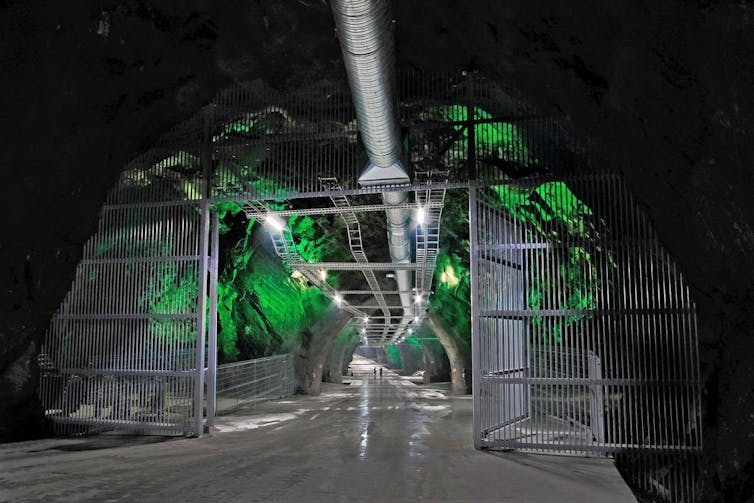
I’ve managed to secure permission to visit some of these high-security sites as part of my fieldwork, including Pionen, a former defence shelter in Stockholm, Sweden, which has attracted considerable media interest over the last two decades because it looks like the hi-tech lair of a James Bond villain.
Many abandoned mines and mountain caverns have also been re-engineered as digital data repositories, such as the Mount10 AG complex, which brands itself as the “Swiss Fort Knox” and has buried its operations within the Swiss Alps. Cold war-era information management company Iron Mountain operates an underground data centre 10 minutes from downtown Kansas City and another in a former limestone mine in Boyers, Pennsylvania.
The National Library of Norway stores its digital databanks in mountain vaults just south of the Arctic Circle, while a Svalbard coal mine was transformed into a data storage site by the data preservation company Piql. Known as the Arctic World Archive (AWA), this subterranean data preservation facility is modelled on the nearby Global Seed Vault.
Just as the seeds preserved in the Global Seed Vault promise to help re-build biodiversity in the aftermath of future collapse, the digitised records stored in the AWA promise to help re-boot organisations after their collapse.
A diagram of the Mount 10 bunker in Switzerland. Mount10, CC BY
Bunkers are architectural reflections of cultural anxieties. If nuclear bunkers once mirrored existential fears about atomic warfare, then today’s data bunkers speak to the emergence of a new existential threat endemic to digital society: the terrifying prospect of data loss.
Data, the new gold?
After parking my car, I show my ID to a large and muscular bald-headed guard squeezed into a security booth not much larger than a pay-phone box. He’s wearing a black fleece with “Cyberfort” embroidered on the left side of the chest. He checks my name against today’s visitor list, nods, then pushes a button to retract the electric gates.
I follow an open-air corridor constructed from steel grating to the door of the reception building and press a buzzer. The door opens on to the reception area: “Welcome to Cyberfort,” receptionist Laura Harper says cheerfully, sitting behind a desk in front of a bulletproof window which faces the car park. I hand her my passport, place my bag in one of the lockers, and take a seat in the waiting area.
The Insights section is committed to high-quality longform journalism. Our editors work with academics from many different backgrounds who are tackling a wide range of societal and scientific challenges.
Big-tech pundits have heralded data as the “new gold” – a metaphor made all the more vivid when data is stored in abandoned mines. And as the purported economic and cultural value of data continues to grow, so too does the impact of data loss.
For individuals, the loss of digital data can be a devastating experience. If a personal device should crash or be hacked or stolen with no recent back-ups having been made, it can mean the loss of valuable work or cherished memories. Most of us probably have a data-loss horror story we could tell.
For governments, corporations and businesses, a severe data loss event – whether through theft, erasure or network failure – can have a significant impact on operations or even result in their collapse. The online services of high-profile companies like Jaguar and Marks & Spencer have recently been impacted by large-scale cyber-attacks that have left them struggling to operate, with systems shutdown and supply chains disrupted. But these companies have been comparatively lucky: a number of organisations had to permanently close down after major data loss events, such as the TravelEx ransomware attack in 2020, and the MediSecure and National Public Data breaches, both in 2024.
With the economic and societal impact of data loss growing, some businesses are turning to bunkers with the hope of avoiding a data loss doomsday scenario.
The concrete cloud
One of the first things visitors to the Cyberfort bunker encounter in the waiting area is a 3ft cylinder of concrete inside a glass display cabinet, showcasing the thickness of the data centre’s walls. The brute materiality of the bunkered data centre stands in stark contrast to the fluffy metaphor of the “cloud”, which is often used to discuss online data storage.
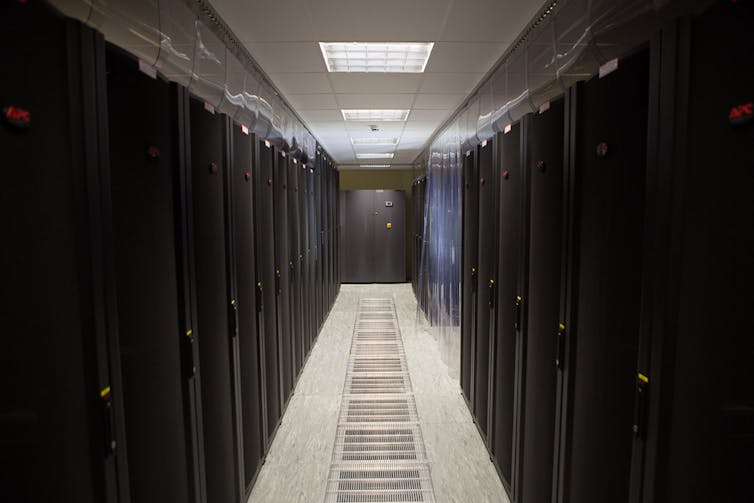
Data centres, sometimes known as “server farms”, are the buildings where cloud data is stored. When we transfer our data into the cloud, we are transferring it on to servers in a data centre (hence the meme “there is no cloud, just someone else’s computer”). Data centres typically take the form of windowless, warehouse-scale buildings containing hundreds of servers (pizza box-shaped computers) stored in cabinets that are arranged in aisles.
Data centres are responsible for running many of the services that underpin the systems we interact with every day. Transportation, logistics, energy, finance, national security, health systems and other lifeline services all rely on up-to-the-second data stored in and accessed through data centres. Everyday activities such as debit and credit card payments, sending emails, booking tickets, receiving text messages, using social media, search engines and AI chatbots, streaming TV, making video calls and storing digital photos all rely on data centres.
These buildings now connect such an incredible range of activities and utilities across government, business and society that any downtime can have major consequences. The UK government has officially classified data centres as forming part of the country’s critical national infrastructure – a move that also conveniently enables the government to justify building many more of these energy-guzzling facilities.
As I sit pondering the concrete reality of the cloud in Cyberfort’s waiting area, the company’s chief digital officer, Rob Arnold, emerges from a corridor. It was Arnold who arranged my visit, and we head for his office – through a security door with a biometric fingerprint lock – where he talks me through the logic of the bunkered data centre.
“The problem with most above-ground data centres is they are often constructed quickly, and not built to withstand physical threats like strong winds, car bombs or server theft from breaking and entering.” Arnold says that “most people tend to think of the cyber-side of data security – hackers, viruses and cyber-attacks – which dangerously overlooks the physical side”.
Amid increasing geopolitical tension, internet infrastructure is now a high-value target as “hybrid” or “cyber-physical” sabotage (when cyber-attacks are combined with physical attacks) becomes increasingly common.
The importance of physical internet security has been highlighted by the war in Ukraine, where drone strikes and other attacks on digital infrastructure have led to internet shutdowns. While precise details about the number of data centres destroyed in the conflict remain scant, it has been observed that Russian attacks on local data centres in Ukraine have led many organisations to migrate their data to cloud facilities located outside of the conflict zone.
Bunkers appeal to what Arnold calls “security-conscious” clients. He says: “It’s difficult to find a structure more secure than a bunker” – before adding drily: “The client might not survive the apocalypse, but their data will.”
Cyberfort specialises in serving regulated industries. Its customer base includes companies working in defence, healthcare, finance and critical infrastructure. “Our core offering focuses on providing secure, sovereign and compliant cloud and data-centre services,” Arnold explains in a well-rehearsed sales routine. “We do more for our customers than just host systems – we protect their reputations.”
Arnold’s pitch is disrupted by a knock at the door. The head of security (who I’m calling Richard Thomas here) enters – a 6ft-tall ex-royal marine wearing black cargo trousers, black combat boots and a black Cyberfort-branded polo shirt. Thomas is going to show me around the facility today.
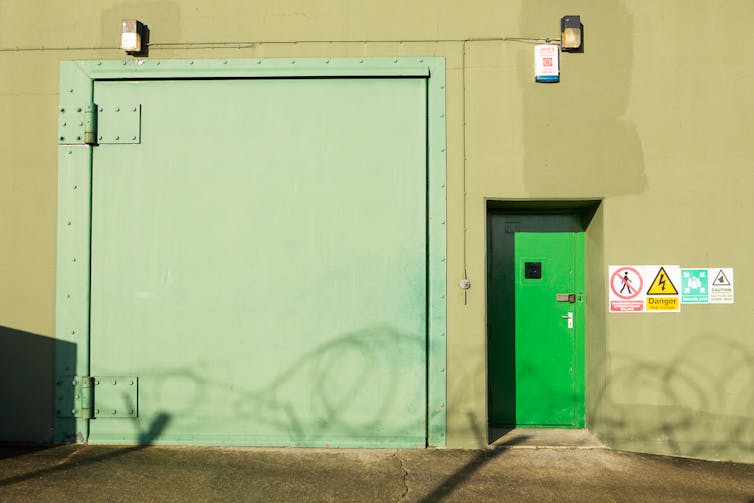
The bunker’s external armour-plated door. Cyberfort/A.R.E. Taylor, CC BY
The entrance to the bunker is located up a short access road. Engineered to withstand the blast and radiation effects of megaton-level thermonuclear detonations, this cloud storage bunker promises its clients that their data will survive any eventuality.
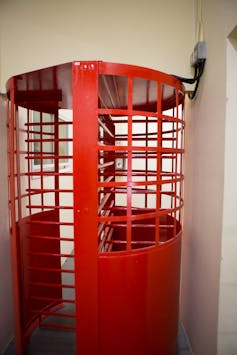
At the armour-plated entrance door, Thomas taps a passcode into the electronic lock and swipes his card through the access control system. Inside, the air is cool and musty. Another security guard sits in a small room behind bulletproof plexiglass. He buzzes us through a metal mantrap and we descend into the depths of the facility via a steel staircase, our footsteps echoing in this cavernous space.
A full-height turnstile security gate (mantrap) inside the bunker. Cyberfort/A.R.E. Taylor, CC BY
The heavy blast doors and concrete walls of the bunker appear strangely at odds with the virtual “walls” we typically associate with data security: firewalls, anti-virus vaults, and spyware and spam filters. Similarly, the bunker’s military logics of enclosure and isolation seem somewhat outdated when faced with the transgressive digital “flows” of networked data.
However, to dismiss the bunkered data centre as merely an outmoded piece of security theatre is to overlook the importance of physical security – today and in the future.
We often think of the internet as an immaterial or ethereal realm that exists in an electronic non-place. Metaphors like the now retro-sounding cyberspace and, more recently, the cloud perpetuate this way of thinking.
But the cloud is a material infrastructure composed of thousands of miles of cables and rows upon rows of computing equipment. It always “touches the ground” somewhere, making it vulnerable to a range of non-cyber threats – from thieves breaking into data centres and stealing servers, to solar storms disrupting electrical supplies, and even to squirrels chewing through cables.
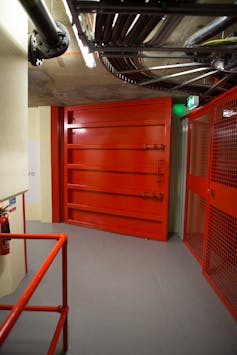
A blast-proof door in the Cyberfort bunker, behind which lies the server room containing the digital ‘gold’. Cyberfort/A.R.E. Taylor, CC BY
In July 2020, the 27-minute Cloudflare outage led to a 50% collapse in traffic across the globe, disrupting major platforms like Discord, Shopify, Feedly and Politico. In June 2021, the Fastly outage left some of the world’s most visited websites completely inaccessible, including Amazon, PayPal, Reddit, and the New York Times. In October 2021, Meta, which owns Facebook, WhatsApp and Instagram, experienced an outage for several hours that affected millions of social media users as well as hundreds of businesses.
Perhaps the largest internet outage yet occurred in July 2024 when the CrowdStrike outage left supermarkets, doctors’ surgeries, pharmacies, airports, train providers and banks (among other critical services) unable to operate. This was described by some in the industry as “one of the largest mass outages in IT history”.
Internet architecture now relies on such a complex and fragile ecosystem of interdependencies that major outages are getting bigger and occurring more often. Downtime events can have a lasting financial and reputational impact on data centre providers. Some attempts to quantify the average cost of an unplanned data centre outage range from US$9,000 to US$17,000 (about £12,500) per minute.
The geographic location of a data centre is also hugely important for data protection regulations, Thomas explains, as we make our way down a brightly lit corridor. “Cyberfort’s facilities are all located in the UK, which gives our clients peace of mind, knowing they comply with data sovereignty laws.”
Data sovereignty regulations subject data to the legal and privacy standards of the country in which it is stored. This means businesses and organisations must be careful about where in the world their data is being relocated when they move it into the cloud. For example, if a UK business opts to store its data with a cloud provider that uses data centres based in the US, then that data will be subject to US privacy standards which do not fully comply with UK standards.
In contrast to early perceptions of the internet as transcending space, eradicating national borders and geopolitics, data sovereignty regulations endow locality with renewed significance in the cloud era.
The survival of data at all costs
Towards the end of the corridor, Thomas opens a large red blast-proof door – beyond which is a smaller air-tight door. Thomas waves his card in front of an e-reader, initiating an unlocking process: we’re about to enter one of the server rooms.
“Get ready” he says, smiling, “it’s going to be cold and loud!” The door opens, releasing a rush of cold air. The server room is configured and calibrated for the sole purpose of providing optimal conditions for data storage.
Like any computer, servers generate a huge amount of heat when they are running, and must be stored in constantly air-conditioned rooms to ensure they do not overheat. If for any reason a server should crash or fail, it can lead to the loss of a client’s valuable data. Data centre technicians work in high-pressure conditions where any unexpected server downtime could mean the end of their job.
The server room at Cyberfort. Cyberfort/A.R.E. Taylor, CC BY
To try and make sure the servers run optimally, data centres rely on huge amounts of water and energy, which can significantly limit the availability of these resources for the people who live in the vicinity of the buildings.
In addition, to meet expectations for “uninterruptible” service levels, data centres rely on an array of fossil fuel-based back-up infrastructure – primarily diesel generators. For this reason, the Green Web Foundation – a non-profit organisation working to decarbonise the internet – has described the internet as the world’s largest coal-powered machine. Data centres are also noisy and have become sites of protest for local residents concerned about noise pollution.
Amid hype and speculation about the rise of AI, which is leading to a boom in the construction of energy-hungry data centres, the carbon footprint of the industry is under increasing scrutiny. Keen to highlight Cyberfort’s efforts to address these issues, Thomas informs me that “environmental impact is a key consideration for Cyberfort, and we take our commitment to these issues very seriously”.
As we walk down a cold aisle of whirring servers, he explains that Cyberfort actively sources electricity from renewable energy supply chains, and uses what he calls a “closed loop” cooling infrastructure which consumes minimal fresh water.
‘Like the pyramids’
After our walk through the server room, we begin to make our way out of the bunker, heading through another heavy-duty blast door. As we walk down the corridor, Thomas promotes the durability of bunkers as a further security selling point. Patting the cold concrete wall with the palm of his hand, he says: “Bunkers are built to last, like the pyramids.”
Another heavy duty blast door. Cyberfort/A.R.E. Taylor, CC BY
Bunker scholars have long noted that these buildings are as much about time as they are about space. Bunkers are designed to preserve and transport their contents through time, from an apocalyptic present into a safe future.
Writers such as Paul Virilio, W.G. Sebald and J.G. Ballard were drawn to the decaying bunkers of the second world war and, like Thomas, compared them with enduring megastructures which have outlived the civilisations that built them. In his 1975 book Bunker Archaeology, Virilio famously compared the abandoned Nazi bunkers along the coast of France with “the Egyptian mastabas, the Etruscan tombs, the Aztec structures”.
The bunker’s durability invites us to take a long-term view of our own data storage needs, which will only increase over the course of our lives.
For technology behemoths like Apple and Google, cloud storage is a key strategic avenue for long-term revenue growth. While the phones, laptops and other digital devices they make have limited lifespans, their cloud services offer potentially lifelong data storage. Apple and Google encourage us to perpetually hoard our data rather than delete it, because this locks us into their cloud subscription services, which become increasingly expensive the more storage we need.
Apple’s marketing for its cloud storage service, iCloud, encourages users to “take all the photos you want without worrying about space on your devices”. Google has made “archive” rather than “delete” the default option on Gmail. While this reduces the likelihood of us accidentally deleting an email, it also means we are steadily consuming more of our Gmail capacity, leading some to purchase more Google Drive storage space.
Cloud hoarders
It is also increasingly difficult to operate off-cloud. Internal storage space on our digital devices is dwindling as the cloud becomes the default storage option on the majority of digital products being developed. Users must pay a premium if they want more than the basic local storage on their laptop or smartphone. Ports to enable expandable, local storage – such as CD drives or SD card slots – are also being removed by tech manufacturers.
As our personal digital archives expand, our cloud storage needs will continue to grow over our lifetimes, as will the payments for more and more cloud storage space. And while we often imagine we will one day take the time to prune our accumulations of digital photos, files, and emails, that task is often indefinitely postponed. In the meantime, it is quicker and easier to simply purchase more cloud storage.
Many consumers simply use whichever cloud storage service is already pre-installed on their devices – often these are neither the cheapest nor most secure option. But once we commit to one provider, it is very difficult to move our data to another if we want a cheaper monthly storage rate, or simply want to switch – this requires investing in enough hard drives on which to download the data from one cloud provider and upload it to another. Not everyone is tech-savvy enough to do that.
Underground: inside the Lefdal Mine Data Centers in Norway. Lefdal, CC BY-ND
In 2013, bank reforms in the UK introduced a switching service which enabled consumers to easily move their money and payments to different banks, in order to access more favourable rates. Cloud migration services are available for businesses, but until a cloud storage equivalent of the bank switching service is developed for the general public, many of us are essentially locked into whichever cloud provider we have been using. If our data really is the new gold, perhaps we should require cloud providers to offer incentives to deposit it with them.
Some providers now offer “lifetime” cloud packages with no monthly or yearly payments and no inactivity clause. However, the cloud market is volatile, defined by cycles of boom-and-bust, with providers and their data centres constantly rebranding, closing and relocating. In this landscape of mergers and acquisitions, there is no guarantee that lifetime cloud providers will be around long enough to honour these promises.
In addition, the majority of consumer cloud providers currently only offer a maximum of a few terabytes of storage. In the future, most of us will probably need a lot more than this, which could mean a lot more data centres (roughly 100 new data centres are set to be constructed in the UK alone within the next five years). We may also see more bunkers being repurposed as data centres – while some providers, such as Florida-based Data Shelter, are considering building entirely new bunker structures from scratch to house digital data.
Resurfacing
Thomas and I arrive at the steel staircase leading back up to the outside world. The guard buzzes us back through the turnstile, and Thomas unlocks and opens the door. The sunlight stings my eyes.
Back in the reception area, I thank Arnold and Thomas for my surreal trip into the depths of subterranean data storage. The Cyberfort data centre is a site of extreme contrasts, where the ethereal promise of the cloud jars with the concrete reality of the bunker.
Sitting in my car, I add to my fieldnotes that the survival of data – whether entombed in bunkers or stored in “lifetime” cloud accounts – is bound to the churn of markets, and depends upon the durability of the infrastructure and organisations behind it.
Permanence, in the digital age, is always provisional. One can’t help but imagine future archaeologists discovering this bunker and rummaging through the unreadable remains of our lost digital civilisation.
To hear about new Insights articles, join the hundreds of thousands of people who value The Conversation’s evidence-based news. Subscribe to our newsletter.
A.R.E. Taylor does not work for, consult, own shares in or receive funding from any company or organisation that would benefit from this article, and has disclosed no relevant affiliations beyond their academic appointment.
When we think about the impact of climate change on the economy, images of droughts in Africa or hurricanes in the Caribbean might come to mind. But even in advanced economies such as the UK, hotter summers are being shown to carry a heavy price.
The past few summers in the UK have been among the hottest on record. In summer 2025, average temperatures across much of the country were more than 1.5°C higher than the usual seasonal average, with parts of southern England around 2°C hotter than normal. What does that mean for the economy?
The heat invites people outdoors. Beaches are packed, pub gardens overflow and families fire up the barbecue. Trade association the British Retail Consortium reported that retail sales increased by 3.1% in June compared to the same month in 2024. This was driven by a surge in sales of food, drink, and leisure products. From ice cream trips to garden makeovers and days out, sunshine typically encourages feel-good, spur-of-the-moment spending.
But warmer summers have downsides. High temperatures have a big effect on health, putting people at risk of heat stress, heat stroke and even death. Accommodation in the UK is designed to retain heat, which means that currently, 32% of homes in London and 17% of homes outside London are overheated. And the percentages of homes at risk of future overheating jump to 55% in London, and 33% in the rest of the country.
Heat also affects people while they’re at work. For those who work outside, the weather can have a serious impact on their health and wellbeing if it is not properly managed. And for indoor workers, a similar phenomenon occurs as workplaces in the UK – just like homes – are designed to retain heat.
The UK’s hotter summers have become such an issue that some unions are campaigning for a maximum temperature set by law of 30°C for non-strenuous indoor work. Currently, there is only guidance for a minimum temperature (16°C or 13°C if employees are doing physical work).
And the problems for workers can start even before they make it to work: overheated rails mean slower trains or even cancellations.
Counting the cost
Some industries are hit harder by the weather, not just through its effect on workers, but due to the heat itself. The hot summer of 2025 has made it difficult for farmers, who have seen cereal harvests shrink, grazing land dry up and animals suffer. In some areas, up to half of cereal and potato crops have been lost, with harvests arriving two to three weeks earlier than usual.
So, are hotter summers good or bad for the UK economy? Our study examined more than two decades of local economic data across the UK and matched it with seasonal temperature records. We found that a 1°C increase in summer temperatures reduces UK economic growth by about 2.4%.
Effect of 1°C rise in seasonal temperature on UK economic growth (%)
In practical terms, that means that even a modest rise in average summer heat can shave billions of pounds off the economy. But why does this happen?
Hot summers disrupt work and production. Businesses may see more staff off sick due to heat stress and related illnesses. Productivity in offices, factories and farms often drops as workers struggle in higher temperatures.
Our study shows that the agricultural sector is especially vulnerable. Hot, dry summers damage crops and livestock, and since much of the UK’s general cropping and dairy farming is concentrated in the south of the country, this area bears the brunt of economic losses.
Some of the UK’s strawberry crops couldn’t cope with heat and drought conditions over summer 2025. Maulana Noriandita/Shutterstock
Our findings also reveal that the impact of hot summers is not evenly spread across the country. Wealthier councils (those with an annual GDP higher than the national average income) are actually more vulnerable. The south of England, comprising the south-east (including London), the south-west, and the east of England, experiences the sharpest economic declines.
This is partly because the south is both hotter on average and home to many of the country’s farms. London alone, which generates more than half of the UK’s financial services output, emerges as a key “hotspot” of vulnerability.
We also found evidence that patterns of energy use matter. During hot summers, electricity consumption drops compared to during other seasons. While this might sound like a good thing, it signals reduced industrial activity, offices closing or shifts in working patterns that dampen economic growth.
The message from our research is clear – hot summers are not just uncomfortable, they are economically costly. Unless adaptation measures – better cooling infrastructure, workplace protections and support for climate-resilient farming – are introduced, the UK risks losing billions as heatwaves become more frequent.
Climate change cannot be dismissed as a distant challenge. Our research shows its economic fingerprints are already visible in Britain’s summer heat. Preparing for hotter summers is not just an environmental issue, it is an urgent economic priority.
Verónica Vienne Arancibia receives funding from The Spencer Foundation.
Jubril Animashaun and Lotanna Emediegwu do not work for, consult, own shares in or receive funding from any company or organisation that would benefit from this article, and have disclosed no relevant affiliations beyond their academic appointment.
Source: The Conversation – UK – By Jonathan Este, Senior International Affairs Editor, Associate Editor, The Conversation
This article was first published in The Conversation UK’s World Affairs Briefing email newsletter. Sign up to receive weekly analysis of the latest developments in international relations, direct to your inbox.
Tuesday was an extraordinary day at the United Nations in New York. Taking the stage to address the general assembly of world leaders, the US president, Donald Trump, told the gathering: “Your countries are going to hell.” In 57 astonishing minutes at the podium, he questioned the purpose of the UN itself which, he said, had offered nothing but “empty words” to solve the many conflicts raging in the world.
Worse, it was “funding an assault on western countries and their borders” via its support for uncontrolled migration. The UN had also, he claimed, fallen for the massive “con job” of climate change.
He saved his choicest accusations for later when he took to his TruthSocial platform to accuse UN staff of deliberately sabotaging an escalator which malfunctioned as he and the first lady were riding it to the assembly chamber and his teleprompter which stopped working as he began his speech.
David Curran researches UN peacekeeping programmes at Coventry University. His impression was that Trump sounded as if he was pitching to replace the UN with a series of US-dominated bilateral relationships, when he offered “the hand of American leadership and friendship to any nation in this assembly that is willing to join us in forging a safer, more prosperous world”.
Curran’s main concern, listening to the speech, was that the US president’s attitudes could prove contagious. “Trump’s perspectives on sovereignty, climate change and migration may embolden other political leaders who want to push similar agendas,” he writes. “It has the danger of going beyond rhetoric.”
But later, while an astonished world was checking the transcript of his speech to see if they’d heard him right, Trump announced on TruthSocial that: “Ukraine, with the support of the European Union, is in a position to fight and WIN all of Ukraine back in its original form.”
To many people, initially at least, it sounded as if Trump had decided to take a stand on the side of Ukrainian national sovereignty. He’d just been chatting with the Ukrainian president, Volodymyr Zelensky. And it’s long been said about the US president that he often repeats the talking points of the last person he has spoken with.
But there was something about the way Trump framed his Truth Social message. Particularly the words “Good luck to all!” with which he signed off. Richard Whitman and Stefan Wolff believe this is a strong hint that the US president is preparing to walk away from the war in Ukraine.
He has signally failed to solve the war “in 24 hours” as he promised on the campaign trail. And for all his talk of how with the help of Nato Kyiv could repel the Russian invader, he committed the US to nothing beyond selling arms to the rest of Nato to give to Ukraine.
This, they believe, leaves Ukraine and the “coalition of the willing” scrambling to develop and fund a coherent defence strategy at a time when – as we’ve seen in the past few weeks – Russia has been testing Nato’s European defence capability with multiple incursions into Nato airspace.
“Europeans also need to keep the US engaged as much as possible, literally by buying Trump off, because they currently lack critical capabilities that will take time for them to develop themselves,” they write. “And while building better defence capabilities for themselves they will need to keep Ukraine in the fight against Russia to keep it from losing the war.”
Zelensky made his own speech to the UN this week. And it made for headlines as stark as those that greeted Trump’s UN address the previous day. Zelensky outlined a dystopian vision of the way wars will increasingly be fought, based on what is happening in his country.
He spoke of areas “stretching for dozens of kilometres where nothing moves, no vehicles, no life. People used to imagine that [scenario] only after a nuclear strike – now it’s [a] drone reality.”
He warned of a coming nightmare marriage of drone technology and artificial intelligence (AI) producing drones operating in autonomous swarms. And he pointed to a world where the capability to build new and more dangerous weapons was no longer something confined to states, but something that would be within the capability of terrorists or criminal groups.
Mark Lacy researches the changing character of war and international politics at Lancaster University. He worries that the world is already seeing increasingly sophisticated tactics to harness developments in technology and worries that the ability to regulate or counter them is lagging behind.
But more worrying still is the increased potential that as leaders such as Putin play with the possibilities of brinkmanship by testing his adversaries’ defences in the way he has been doing recently, the idea of a mistake tipping over into open war becomes more possible.
In his UN speech, the US president also had some harsh words to say about the countries that have recently recognised the state of Palestine. It was essentially another stick to beat the UN with, but he heaped all the blame for the conflict on Hamas. Clearly Hamas must bear its share, but Trump had nothing to say about the conduct of the war by the Netanyahu government in Israel.
Whatever Trump says, the recognition of Palestinian statehood, in the past week, by the UK, Canada, Australia, Portugal, France, Belgium, Luxembourg, Malta and Andorra is an important moment, setting up increased moral pressure on Israel and its (diminishing list of) allies.
Nils Mallock of King’s College London has been in the region recently, conducting fieldwork on the West Bank. He considers what an independent Palestinian state might look like.
Mallock and his fellow researchers have mapped the growth of settlements on the West Bank since 2014 and found they have grown by an average of 72%. Not only that, but their number has greatly increased, despite the fact that under the Oslo accords signed by Yitshak Rabin and Yasser Arafat in 1993, these settlements are illegal.
Malloch observes that the West Bank already “resembles a fragmented archipelago more than a cohesive state territory”. Add to this the massive development project which stretches pretty much from East Jerusalem across the width of the Palestinian enclave and an independent state based on the territory becomes difficult to imagine.
As for governance, Malloch believes that the Palestian people’s options are unenviable. An ageing and corrupt Palestinian authority on the one hand and what remains of Hamas on the other. “Whoever eventually leads a unified Palestine will inherit decades of failed self-governance, deep public scepticism, and Israel undoubtedly attempting to intervene in this process,” he concludes.
Sign up to receive our weekly World Affairs Briefing newsletter from The Conversation UK. Every Thursday we’ll bring you expert analysis of the big stories in international relations.
Source: The Conversation – UK – By Madeleine J. Meyer, Postgraduate Researcher, Theology and the Arts, University of St Andrews
The vampires of Stephenie Meyer’s Twilight saga are undoubtedly unique. Never before had vampires been described as having sparkling, diamond-like skin in the sunlight, for example. But Meyer’s Twilight novels, the first of which turns 20 this year, also drew on a long vampiric tradition, with spiritual themes that were just as relevant 200 years ago as they are now.
Vampires in the Victorian era stood as a symbol of their time. They represented the questions of a society faced with the tension between new scientific discoveries and the spiritualist movement – a desire to unite the material to the immaterial, the immanent to the transcendent.
Decades later, the Twilight saga sought to answer the same questions for its own generation of readers. Just before the book was published in 2005, the cultural historian Christopher Partridge noted the rise of alternative spirituality in the west and a return to thinking of our existence as both physical and spiritual. Though institutional religion may have lost its former foothold in society, many began identifying as spiritual but not religious.
Twilight reflects this paradigm shift that resists limiting our perception of reality to just what we see with our eyes or comprehend with our intellect. By introducing modernised vampires to Forks, a mundane Washington town, Meyer was participating in a widespread desire to find a spiritual reality in our day-to-day lives – or to re-enchant the world.
This article is part of a mini series marking 20 years since the publication of Stephenie Meyer’s first Twilight novel.
Many Victorian vampires – such as the unnamed female vampire in Le Fanu’s Spalatro (1843) and Robert Louis Stevenson’s Olalla (1885) – share certain qualities with Meyer’s sparkly vampires. They occasionally show mercy to humans, sacrifice relationships with their loved ones to keep them safe, and reflect on how they exist as spiritual creatures in a physical reality.
In this way Meyer’s vampires question what it means to be human from a theological perspective, just as Victorian vampire stories did. Meyer’s brilliance was to take an archaic mythos, introduced it to the 21st century, and find that it still stands. She exchanged the vampires’ creepy castles for a contemporary open-floor plan home, and audiences still flocked. Her vampires are ever ancient and ever new, participating in trying to answer age-old human questions.
Twilight follows the Victorian vampire tradition by exploring humanity through inhumanity. One of the most frequent themes in the saga is vampire Edward Cullen’s concern for his soul. He follows in the footsteps of his adopted father, fellow vampire Carlisle, by feasting on animals rather than humans because he doesn’t want to be a monster. The Cullens believe that by indulging in their thirst for human blood, vampires diminish their soulful existence.
‘This is the skin of a killer, Bella.’ Edward shows his sparkly skin in the film adaptation of Twilight.
This is as ancient a human concern as any. Are we more than just flesh and blood, possibly creatures with souls? And if we are, what does it mean to be human?
The protagonist of the Twilight saga, schoolgirl Bella Swan, is the primary point through which Meyer illustrates what it means to be human. Throughout the saga, Bella is torn between two worlds – human and inhuman. In Bella’s actions, the defining point for humanity is identified as selfless love. In each book, she makes the choice to put herself in danger for her loved ones’ sake. This is echoed in the Cullen coven’s desire to sacrifice their instincts by refusing to take innocent lives. In doing so, both Bella and Edward function humanely, even in their biological differences.
Myths survive because they cut to the heart of human existence. The vampire is immortal in literature across cultures because it says something that a systematic analysis of humanity or the world cannot.
What we receive in myth, as author C.S. Lewis noted, is not a statement on reality, but reality itself. When we hear a myth, we experience reality in a way that opens the spiritual senses, opening us up to experiencing the universal through a particular.
Twenty years on from Twilight’s original publication and 200 years since the Victorians drooled over their own sexy undead, we’re still talking about vampires. Meyer’s vampires endure because they tell us something of what it means to be human.
Looking for something good? Cut through the noise with a carefully curated selection of the latest releases, live events and exhibitions, straight to your inbox every fortnight, on Fridays. Sign up here.
Madeleine J. Meyer does not work for, consult, own shares in or receive funding from any company or organisation that would benefit from this article, and has disclosed no relevant affiliations beyond their academic appointment.
The UK government announced a landmark review of parental leave in July 2025. This responds to widespread concern about failings within the current policy framework.
Much of the discussion centres on calls for longer, better-paid paternity leave. The statutory entitlement is just two weeks paid at a low flat rate (£187.18 per week in 2025) or 90% of average weekly earnings, whichever is lower.
Eligible fathers can opt for shared parental leave of up to 50 weeks of leave and up to 37 weeks of pay – paid at the same statutory rate. However, this is reliant on the mother giving up some of her maternity leave entitlement so is rarely taken up.
However, it is unclear whether small- and medium-sized workplaces can adapt to even modest changes to the current parental leave system, particularly if there are enhancements to the length of paternity leave.
Challenges for small businesses
Discussions about parental leave reform and its implications often focus on large organisations. But small- and medium-sized enterprises – defined as having fewer than 250 employees – account for 60% of UK employment. They make up over 99% of all businesses.
We are carrying out research exploring the transition to parenthood in UK small- and medium-sized enterprises, in collaboration with two charities: Working Families and the Fatherhood Institute. This research includes a survey of 2,000 small- and medium-sized enterprises and 2,000 employees, as well as 160 interviews, which involved talking to the same employers and employees two or three times over two years.
The UK government acknowledges the current unruly state of leave and pay entitlements, which “were never designed to operate as a single system”.
In line with previous work carried out by one of us (Bianca Stumbitz), our preliminary findings suggest small and medium businesses experience distinct pressures. These are related to this complexity along with their small size and limited resources.
Small and medium sized businesses are often committed to their employees’ transition to parenthood. Pixel-Shot/Shutterstock
For example, some of these businesses have minimal knowledge of what the entitlements are. Some find the parental leave policies too complex. And some struggle to find appropriate and affordable cover for staff who take up leave.
Nevertheless, many small- and medium-sized enterprises are committed to supporting their employees in their parenting journeys. Even small workplaces sometimes manage to voluntarily enhance pay entitlements. In most cases, though, they cannot afford to do this and not at equivalent levels as some larger employers. However, they often try to be supportive in other ways. In particular, this may be through offering increased flexibility to allow parents to better reconcile work and care.
Policy reforms should account for the specific challenges that parental leave poses to smaller organisations. These include the management of staff absences if employees take extended periods of leave. The redistribution of work can overburden remaining staff, especially if roles are skilled or specialist.
Employers are generally supportive of extended leave for parents. But it is clear that it needs to be provided in a way that does not harm smaller workplaces with scarce resources.
Preliminary findings from our study suggest that the small employers’ relief scheme (which allows some small and medium enterprises to claim back 108.5% of parental leave pay instead of the usual 92%) is underused. This is mostly due to small business owners’ lack of awareness of the scheme. Take-up of the programme could be increased through targeted awareness-raising campaigns, raising the eligibility threshold and reduced administrative complexity.
Flexibility in when and how parental leave is taken can be helpful for both employers and employees in small- and medium-sized organisations. This would enable employees to take leave in blocks, rather than an extended period of time, which may be easier for some employers to manage.
It is crucial that the UK’s parental leave scheme is overhauled, including more targeted and better paid parental leave entitlements for fathers. However, if reform is to be truly inclusive, small- and medium-sized businesses must not be an afterthought. They must be at the heart of the conversation.
What needs to change?
Changes to paternity leave could have positive and significant implications for families, gender role equality, workplaces and economic wellbeing. Research and international evidence suggests that leave should be longer, well paid and offered to fathers on a “use it or lose it” basis.
For this to work for small and medium enterprises and their employees, the government needs to provide bespoke support and resources to help businesses manage and meet their responsibilities. This could include improved small employer relief entitlements to help to cover statutory pay for parental leave.
We are always looking to hear about workplace initiatives on parental leave – and are producing a toolkit to help employers and employees in small- and medium-enterprises navigate some of these challenges.
Helen Norman receives funding from the Economic Social Research Council (ESRC).
Bianca Stumbitz receives funding from the Economic and Social Research Council.
Emma Banister receives funding from the Economic Social Research Council (ESRC).