Combat mondial contre le VIH/sida depuis plus de quarante ans : la France s’est-elle arrogé le beau rôle ?

Source: The Conversation – in French – By Marion Aballéa, Historienne, maître de conférences en histoire contemporaine, Sciences Po Strasbourg – Université de Strasbourg

Depuis la découverte du VIH par une équipe de l’Institut Pasteur en 1983, Paris s’est trouvé à l’origine de plusieurs initiatives diplomatiques notables visant à endiguer l’épidémie. Pour autant, ses contributions financières n’ont pas toujours été à la hauteur des grandes déclarations qu’ont multipliées ses dirigeants et ses diplomates.


« La France veut bien avoir les lauriers et devenir […] la championne de la santé mondiale. En revanche, quand il s’agit de mettre les financements sur la table, il n’y a personne. »

Au cœur de l’été, l’association Aides mettait la pression sur le gouvernement français. Alors que le Fonds mondial de lutte contre le sida, la tuberculose et le paludisme organisera fin 2025 sa huitième levée de fonds, Aides réclame que la France porte à 2 milliards d’euros sa contribution pour les trois prochaines années, soit une augmentation de 25 % par rapport à son engagement précédent.

Dans un contexte d’incertitudes, marqué par le probable désengagement des États-Unis – premier contributeur du Fonds – et par la réduction de l’aide au développement de plusieurs donateurs européens, l’association appelle la France, elle-même engagée dans une politique de réduction des dépenses, à intensifier son engagement pour se hisser à la hauteur du rôle que le pays prétend historiquement jouer en matière de santé globale, particulièrement en matière de lutte contre le VIH/sida.

Au moment où l’administration Trump réduit drastiquement les aides extérieures de Washington, où l’attention internationale se réoriente sur les enjeux sécuritaires et militaires, et où la France est le théâtre d’une crise budgétaire et politique inédite, cet appel doit être compris dans la longue durée : voilà 40 ans que la France se rêve en championne de la lutte mondiale contre le VIH/sida, sans toujours mettre sur la table les moyens qui lui permettraient de réaliser pleinement cette ambition.

L’ambition précoce de construire un leadership français

L’engagement français dans ce qui allait devenir « la diplomatie du sida » remonte à l’apparition de la pandémie au début des années 1980. Il trouve son point de départ dans l’identification, début 1983, du virus responsable de la maladie par une équipe française – celle coordonnée, à l’Institut Pasteur de Paris, par Luc Montagnier, Jean-Claude Chermann et Françoise Barré-Sinoussi.

Cette découverte constitue une opportunité diplomatique : elle permet de faire rayonner l’excellence de la science française et de nouer des coopérations avec divers pays touchés par l’épidémie.

En 1986, la tenue à Paris de la deuxième Conférence mondiale sur le sida témoigne déjà d’une reconnaissance internationale. Et lorsque, au même moment, la primauté de la découverte pastorienne est remise en cause par une équipe américaine, c’est l’ensemble de l’appareil politico-administratif français qui se met en action pour défendre tant les retombées symboliques et financières que l’honneur national. Jusqu’à l’Élysée où François Mitterrand ordonne au Quai d’Orsay d’« agir énergiquement » et d’« engager une campagne » pour défendre la cause française (Archives nationales, 5AG4/5801, « Le point sur le problème du sida », note de Ségolène Royal, 3 septembre 1985, annotation de la main de François Mitterrand).

Sur fond de contentieux franco-américain, le président s’engage personnellement dans la diplomatie du sida. Il pousse à ce que la question soit mise à l’agenda du G7 de Venise en 1987 et préside à la création d’un Comité international d’éthique sur le sida, dont la première réunion se tient à Paris, en 1989.

Alors que discriminations et violations des droits des malades et des séropositifs sont dénoncées internationalement par les associations, se placer en pionnier d’une réflexion sur les enjeux éthiques associés au sida est non seulement un moyen de conforter le leadership français, mais également de se distinguer du rival américain, critiqué pour les mesures discriminatoires et attentatoires aux droits imposées par l’administration Reagan dans sa réponse à l’épidémie.

Cinq ans plus tard, le 1er décembre 1994, le Sommet mondial de Paris sur le sida, porté notamment par Simone Veil, vise à consolider la place singulière que la France pense s’être construite dans la mobilisation internationale face au sida.

Ouverture du Sommet mondial de Paris sur le sida par Édouard Balladur, alors premier ministre, le 1erdécembre 1994.

Le Sommet débouche sur la « Déclaration de Paris », signée par 42 gouvernements, qui acte notamment le principe d’une plus grande implication des personnes malades ou vivant avec le VIH dans la réponse à la maladie. La France se pose en moteur de la diplomatie du sida, et fait de la défense des droits des malades le cœur d’un engagement qui est aussi l’outil d’une stratégie d’influence à l’échelle globale.

Un engagement financier critiqué

Toutefois, la réussite du Sommet de Paris n’est pas à la hauteur des attentes françaises. On pensait y réunir chefs d’État et de gouvernement, mais peu répondent finalement à l’appel. Les États-Unis, l’Allemagne ou le Royaume-Uni n’y envoient, par exemple, que leur ministre de la santé. Les associations dénoncent, par ailleurs, des engagements décevants sur l’inclusion et les droits des malades. Surtout, au printemps 1995, au lendemain de l’élection de Jacques Chirac à la présidence de la République, le nouveau gouvernement dirigé par Alain Juppé revient sur la promesse faite lors du Sommet de mobiliser 100 millions de francs pour la mise en œuvre des projets qui y avaient été discutés.

Ce renoncement vient conforter ceux qui dénoncent déjà, depuis plusieurs années, les postures françaises sur la scène internationale du sida : celles d’une diplomatie qui veut jouer les premiers rôles, qui s’épanouit dans les grands discours et la défense de grands principes, mais qui refuse de contribuer de manière proportionnelle à l’effort global contre la maladie.

Entre 1986 et 1991, la France a consacré environ 38,5 millions de dollars au combat international contre le sida : c’est infiniment moins que le leader américain (273 millions), mais aussi nettement moins que le Royaume-Uni (59,5 millions), et à peine plus qu’un « petit » pays comme le Danemark (36,9 millions) (Source : Commission européenne, « AIDS Policy of the Community and the Member States in the Developing World », 7 janvier 1994). Encore cette enveloppe est-elle très majoritairement consacrée à des aides bilatérales (notamment à destination de pays africains francophones) et très peu aux programmes multilatéraux mis en place pour répondre à la pandémie. Ce qui donne prise aux accusations de diplomatie opportuniste, utilisant le sida pour conforter son influence en Afrique au lieu de s’engager pleinement dans le nécessaire effort commun.

Dans un contexte bouleversé, en 1996, par l’arrivée de multithérapies efficaces pour neutraliser le VIH, la diplomatie française continue pourtant, au tournant du XXIe siècle, à se prévaloir de la découverte française du VIH, socle à ses yeux d’une légitimité et d’une responsabilité historiques, pour prétendre à une place singulière sur la scène internationale du sida, tout en restant discrète sur ses propres contributions.

En décembre 1997, à Abidjan (Côte d’Ivoire), Jacques Chirac est le premier dirigeant occidental à dénoncer le fossé des traitements entre Nord et Sud, et à appeler la communauté internationale à se mobiliser pour que les nouveaux traitements soient accessibles à tous. Une déclaration qui change la face du combat contre le sida, mais que la France est évidemment incapable de financer.

C’est, dès lors, moins en mettant de l’argent sur la table qu’en participant à imaginer de nouveaux mécanismes de financement que la diplomatie française parvient, à partir des années 2000, à maintenir son influence de premier plan.

Paris joue un rôle important dans la création du Fonds mondial, en 2002, dont un Français, Michel Kazatchkine, est entre 2007 et 2012 le deuxième directeur exécutif.

Jacques Chirac et son homologue brésilien Lula sont par ailleurs à l’origine, en 2006, de la création d’Unitaid, un mécanisme affectant à la lutte internationale contre le sida le produit d’une nouvelle taxe sur les billets d’avion. Le leadership français paraît aussi se décliner à l’échelle locale : la maire de Paris Anne Hidalgo est à l’initiative, en 2014, d’une nouvelle « Déclaration de Paris », fondant un réseau de métropoles mondiales engagées à devenir des « villes zéro-sida ».

Conférence de lancement d’Unitaid en 1996. Jacques Chirac, aux côtés du président brésilien Lula, au centre, entourés par le président des États-Unis Bill Clinton et le secrétaire général de l’ONU Kofi Annan.
UN Photo/Paulo Filgueiras

Dans un souci de cohérence, la France réoriente alors vers les programmes multilatéraux la majeure partie de l’aide internationale qu’elle consacre à la lutte contre le sida. Elle est, depuis sa création, la deuxième contributrice au Fonds mondial, (loin) derrière les États-Unis. En octobre 2019, elle accueille à Lyon la réunion des donateurs en vue de la sixième reconstitution du Fonds. Emmanuel Macron y ravive la tradition de l’engagement personnel des présidents français en annonçant une contribution française en hausse de 25 %. La promesse étant renouvelée trois ans plus tard, les engagements triennaux français sont passés d’un peu plus de 1 milliard d’euros en 2017-2019 à près de 1,6 milliard en 2023-2025.

Au 31 août 2025, à quatre mois de l’échéance, la France n’a toutefois versé qu’un peu plus de 850 millions d’euros sur les 1,6 milliard promis pour 2023-2025.

2025 : une ambition réalisée, ou enterrée

Marion Aballéa a récemment publié Une histoire mondiale du sida, 1981-2025, aux éditions du CNRS.

La France peut-elle dès lors être considérée comme une « championne » de la diplomatie du sida ? Depuis quarante ans, le Quai d’Orsay et l’Élysée, relayés par le ministère de la santé, ont voulu construire cette posture et en faire un levier d’influence internationale. Paris a été au cœur de plusieurs des grandes mobilisations ayant érigé la pandémie de VIH/sida en un défi global. Mais en rechignant à aligner ses contributions financières avec ses déclarations, la France s’est aussi attiré des critiques dénonçant l’instrumentalisation cynique de la pandémie à des fins purement diplomatiques.

En 2011, elle semblait encore chercher à contourner la logique multilatérale du Fonds mondial en instituant L’Initiative, un mécanisme vers lequel elle dirige 20 % de sa contribution et dont elle pilote l’attribution à des pays francophones.

L’appel d’Aides à porter la contribution française au Fonds mondial à 2 milliards d’euros doit être lu à la lumière de ce positionnement historique. À l’heure où le leader états-unien fait défection, et alors que les Nations unies n’ont pas renoncé à l’objectif de « mettre fin à la pandémie » d’ici à 2030, la France peut endosser pleinement le rôle de leader auquel elle prétend. Selon la réponse de Paris à cet appel, l’ambition affirmée il y a quarante ans sera réanimée ou, à l’inverse, durablement enterrée…

The Conversation

Marion Aballéa ne travaille pas, ne conseille pas, ne possède pas de parts, ne reçoit pas de fonds d’une organisation qui pourrait tirer profit de cet article, et n’a déclaré aucune autre affiliation que son organisme de recherche.

ref. Combat mondial contre le VIH/sida depuis plus de quarante ans : la France s’est-elle arrogé le beau rôle ? – https://theconversation.com/combat-mondial-contre-le-vih-sida-depuis-plus-de-quarante-ans-la-france-sest-elle-arroge-le-beau-role-264297

Nintendo : « Super Mario », quarante ans de jeunesse éternelle

Source: The Conversation – in French – By Arnault Djaoui, Doctorant en Science de l’Information et Communication – Laboratoire LIRCES, Université Côte d’Azur

L’iconique plombier à moustaches, mascotte de la firme Nintendo, célèbre, le 13 septembre, le quarantième anniversaire de sa première aventure vidéoludique. Cet emblème intergénérationnel n’en finit pas de séduire de nouveaux adeptes en réussissant à se renouveler constamment. Alors, d’où ce sympathique personnage puise-t-il son secret de jouvence ?


Avant qu’il ne soit Mario, le personnage est d’abord introduit sous le sobriquet de Jumpman dans le jeu d’arcade Donkey Kong, en 1981. La figure mythique du petit plombier espiègle – à cette époque charpentier et aujourd’hui sans profession attitrée – montrait déjà la volonté du fabricant Nintendo d’installer une mécanique de jeu simple et audacieuse. Le joueur incarne, dans cette première mouture, un personnage haut en couleur évoluant sur des plateaux urbains ascensionnels. Le but du jeu est de déjouer les assauts du gorille Donkey Kong au moyen de sauts allègres, exécutables à l’aide d’une simple pression sur une touche jusqu’à atteindre le vil primate et libérer une demoiselle en détresse.

La fantaisie de l’action et des éléments narratifs affiche d’emblée une forte envie de proposer un univers durable, amusant et identifiable. Plus encore, la volonté initiale du concepteur, Shigeru Miyamoto, est de conférer à son personnage une stature marquée et une vraie personnalité. Ainsi, cette vedette en devenir synthétise dès sa première apparition les attributs d’une entité originale et attractive, qui se démarque de ses prédécesseurs, Pacman ou les space invaders. C’est donc après une seconde incursion dans les salles d’arcade que l’élu de Nintendo va réellement marquer le début de sa légende, durant l’année 1985.

Le raz-de-marée « Super Mario Bros. »

L’arrivée de son propre jeu attitré marque un tournant dans le jeu de plateformes et plus globalement dans l’industrie du jeu vidéo. Désormais baptisé Mario, cet attachant héros dispose alors de tout un « lore » (l’ensemble des éléments relatifs à l’univers d’un jeu) qui lui est propre, jonché de créatures alliées (la princesse Peach, Toad le champignon, etc.) ou ennemies (Bowser, les Koopas, etc.) qui définissent également le caractère incontournable de cette mythologie.

En plus de parcourir des dizaines de niveaux, tous plus colorés, riches en animation et périlleux dans les dangers dont ils sont parsemés, le joueur découvre au cours des péripéties du plombier une approche bien plus enchanteresse du challenge dans le jeu vidéo. Le médium, qui reposait jusqu’ici sur des principes réitératifs et contenus dans des parties courtes, trouve avec Super Mario Bros. la possibilité de combiner le sens de l’amusement machinal et le sentiment pur de voyage immersif. Les effets de jouabilité, simples d’utilisation mais extrêmement exigeants dans ce qu’ils invoquent de dextérité et d’attention, inaugurent également une nouvelle manière de ressentir la difficulté graduelle des épreuves au fil de cette odyssée d’un genre nouveau.

Un univers qui inspire et qui s’exporte

Très rapidement, le modèle instauré par cet opus fondateur cristallise une nouvelle ère vidéoludique, qui se caractérise par une réutilisation appuyée du système simple et efficace des fondements de Mario. Outre les innombrables créations qui s’inspirent directement de cette œuvre instauratrice (Castle of Illusion, Disney’s Duck Tales, Castlevania II: Simon’s Quest, etc.), de nouveaux volets de la saga Mario vont être logiquement mis en chantier. Le personnage évolue continuellement au gré de nombreuses modifications de modélisation (character design), de nouveaux pouvoirs à sa disposition (feu, glace, agilité féline, etc.) et de nouvelles rencontres de personnages en tout genre, en même temps que le public grandit aussi de son côté.

Cette proximité entretenue entre les joueurs et le personnage de fiction marque une permanence de cet espace de dérivation, d’époque en époque. Telle une saga cinématographique ou une série télé, l’univers de Mario se décline en plusieurs épisodes (Super Mario Land, en 1989, Super Mario World, en 1990, etc.) qui apportent tous leurs lots de nouveautés tant sur la technique que sur l’agrandissement du lore.

Ainsi, de nouvelles figures incontournables de l’estampille Nintendo sont introduites pour la première fois dans les jeux Mario. C’est le cas de l’attendrissant dinosaure Yoshi, dans la série Super Mario World, ou du patibulaire double maléfique Wario, dans Super Mario Land 2 en 1992, qui bénéficieront par la suite de leurs propres jeux à succès.

De son côté, Mario ne va cesser d’asseoir son hégémonie et d’étendre sa galaxie. Au cinéma, avec une première adaptation en prises de vue réelles en 1993, à la télévision, avec une série animée datant de 1989, en jeux de société ou en produits dérivés, la machine tentaculaire de Nintendo entend bien investir tous les secteurs du divertissement. L’amélioration substantielle des graphismes au gré de chaque génération de consoles va ensuite permettre la réalisation des ambitions les plus folles des concepteurs.

L’avènement de nouveaux enjeux

L’exploitation du monde de Mario se ressent donc avant tout dans la sphère vidéoludique. Chacune de ses nouvelles apparitions est synonyme d’une version soit alternative, soit sublimée de sa dialectique. Les séries secondaires, telles que le jeu de course Mario Kart 64 (1996) ou le jeu de plateau et minijeu Mario Party (1998), deviennent par conséquent des ouvrages aussi appréciés que les opus de la série mère.

Par la suite, le plombier et sa myriade de compagnons s’inviteront dans toutes sortes de genres vidéoludiques (football, basketball, jeux olympiques, jeux de réflexion, jeux de rôle, jeux de modélisation, etc.) pour définir une mosaïque où l’universalité est au centre du propos. C’est pourtant bel et bien avec son arrivée dans la sphère du jeu de plateformes en 3D que l’égérie de Nintendo marque une nouvelle révolution à l’aube du XIXe siècle.

Jouissant désormais d’une technique graphique permettant de profiter des environnements de façon totale avec une profondeur de champ à 360°, Mario s’illustre dans Super Mario 64 (1996) de façon homérique.

La 3D polygonale, qui était jusqu’à présent l’adage de créations globalement plus sérieuses, atteint avec ce titre des sommets de liberté, de dépaysement et d’enivrement pour l’époque. Les contrées visitées par le plombier (déserts, volcans, plaines enneigées, îles tropicales, etc.), dans ses anciennes aventures, sont remises au goût du jour pour permettre au joueur de redécouvrir leur exotisme à travers un prisme complètement remanié. Le fait de pouvoir aborder ces surfaces en profitant des nouvelles aptitudes du héros, désormais fort de 28 mouvements distincts, configure une ergonomie de l’exploration encore jamais atteinte dans un jeu de ce type.

Cette étape d’innovation marque un tournant dans l’approche du jeu de plateformes et d’aventure dans le secteur du jeu vidéo, qui deviennent des références en matière de prouesses interactives.

Un personnage qui mute dans le sens du perfectionnement

Chaque nouvelle sortie devient ainsi l’occasion de faire évoluer cette formule dans le sens de la modernité, en capitalisant toujours sur l’effet d’originalité et d’amélioration. Les différents gameplay (jouabilité) mis en œuvre participent à cet état de réinvention puisqu’ils mettent à l’honneur une thématique différente à chaque aventure. Super Mario Sunshine (2002) fait la part belle au maniement d’un jetpack (réacteur dorsal) aquatique, qui propulse le personnage pour parcourir les environnements tropicaux de l’île Delfino, pendant que Super Mario Galaxy (2007) mise sur la découverte de plusieurs planètes en mettant au centre du gameplay la gravitation.

Des tonalités atypiques qui composent l’effet de dérivation – un concept qui désigne l’agentivité des règles de fonctionnement et de participation du jeu – et qui créent par conséquent des attentes fortes dans le public quant aux prochaines trouvailles. En 2017, un nouveau cap d’immersion et d’ambition artistique est franchi pour la franchise. Mario s’essaye au genre révolutionnaire de l’open-world (jeu en monde complètement ouvert) avec Super Mario Odyssey, qui propose d’arpenter différentes époques et différents pays (Égypte ancienne, Japon féodal, mégapole américaine, etc.) à la façon des voyages dans le temps. Cette vision de l’épopée spatio-temporelle résonne comme l’aboutissement suprême des prédispositions originelles de la formule Mario.

Le personnage s’est développé au fil du temps, il a éveillé de nouvelles capacités, il a rencontré de nouveaux compagnons puis quitté son royaume Champignon natal pour découvrir le reste du monde jusqu’aux tréfonds de l’espace.

Cette empreinte impérissable démontre la virtuosité de la série à garder constamment en vue les changements de la modernité pour se les approprier sans pour autant perdre l’essence traditionnelle qui a construit la légende de ses premiers triomphes.

La postérité toujours en ligne de mire

Dans son sillage, il laisse une multitude d’influences conceptuelles qui se ressentent jusque dans l’actualité la plus récente. Kirby et le monde oublié (2022) et le tout nouveau Donkey Kong Bananza (2025), des studios Nintendo, réutilisent clairement le système de jeu libre instauré dans Super Mario Odyssey.

Les chiffres parlent d’eux-mêmes. En 2025, la saga Mario Bros. (sans les séries secondaires) a franchi le seuil des 400 millions d’exemplaires vendus depuis ses débuts en 1985. Plus encore, le blockbuster cinématographique de 2023 produit par le studio américain Illumination enregistre la même année plus de 1,3 milliard de dollars de recette, devenant le second long-métrage d’animation le plus rentable au monde.

Aujourd’hui plus que jamais, Super Mario montre son statut d’œuvre indéfectible du jeu vidéo et de la pop culture mondiale, avec ce que cela implique d’adaptation permanente au public et aux transformations sociales. Comme Mickey Mouse en son temps, Mario a littéralement ouvert des portes à tout un espace de création et de rêverie aux yeux du monde. Il est devenu l’ambassadeur légitime de ces contrées virtuelles où s’animent l’ivresse d’un instant stimulant, la féerie d’un univers facétieux, la joie d’un défi relevé.

The Conversation

Arnault Djaoui ne travaille pas, ne conseille pas, ne possède pas de parts, ne reçoit pas de fonds d’une organisation qui pourrait tirer profit de cet article, et n’a déclaré aucune autre affiliation que son organisme de recherche.

ref. Nintendo : « Super Mario », quarante ans de jeunesse éternelle – https://theconversation.com/nintendo-super-mario-quarante-ans-de-jeunesse-eternelle-264230

Two seventh-century people found with west African ancestry – a story of diversity and integration in early Anglo-Saxon society

Source: The Conversation – UK – By Duncan Sayer, Professor in Archaeology, University of Lancashire

In 2022, archaeologists worked on the ancient DNA from a number of early medieval cemeteries, and found two individuals that stood out. One was from Updown Eastry in Kent, known as Updown girl, and the other was a young man from Worth Matravers in Dorset. Both were dated to the 7th century and both appeared to have west African heritage.

Two recent papers on these findings, along with other discoveries, highlight that English people from this time with west African heritage spanned generations and social status. The burials of these individuals also show that they were integrated into their respective communities. For example, Updown girl was buried next to her maternal relatives.

As a result, the presence of African heritage should not be a surprise. Early medieval society was much richer and more globally connected than most people believe.

Updown Eastry is a cemetery associated with the early Anglo-Saxon Kentish elite and part of a royal network. Updown girl was aged between 11 and 13 at her time of death and was buried around the middle of the seventh century.

An analysis of her autosomal DNA (which derives from both parents) found she was 67% continental northern European and 33% west African – most closely related to modern-day Esan and Yoruba populations in Nigeria. One of her great grandparents was 100% west African. Some of her maternal relatives were buried close by and their ancestry derived from northern Europe.

The second burial was of a young man aged between 17 and 25 at the time of his death. He was found in a grave with an unrelated adult male in a small cemetery that was in use for around 100 years, with his burial dated between AD605 to AD650.

Analysis of the site shows that the burial population had predominantly (77%) western British and Irish ancestry. Worth Matravers contained four primary family groups mostly related along the maternal line, suggesting a degree of matrilocality (where women remain after marriage) within this community. The young man also stood out because his Y-chromosome DNA was consistent with west African ancestry (25%) coming from his grandfather.

Some, modern ideas of medieval England paint it as an insular place with little or no diversity. However, England was much more connected to the rest of the world and its society was, as a result, much less homogenous than we imagine. Some early Anglo Saxon’s had brown eyes and African Ancestors.

Finds connecting Britain to the world

Royal burials like that at Sutton Hoo, Suffolk, and Prittlewell, Essex, contained objects from far afield, including Byzantine silver bowls and a jug from the eastern Mediterranean.

Amethysts and garnets have been found in seventh century jewellery and these stones were mined in Sri Lanka and India. Analysis of loop-like bag openings found in female graves from the fifth to seventh century revealed that these were made from African elephant ivory.

The Byzantium reconquest of north Africa in AD634 to AD635 provided new sources of sub-Saharan gold. In the west of Britain, fragments of red slip ware (distinctive Byzantium amphora vessels or pottery) have been found at sites associated with elites, like Tintagel in northern Cornwall. There is also evidence of glass beads made in early medieval England being found in contemporary Tanzania.

The newly emerging elite of seventh century England were looking east and were building new ideas about governance derived from old or far-flung places. Christianity, for instance, came from Rome, part of Byzantium.

There were also historical references to people from the African continent known to be part of society at the time. For instance, in the late seventh century, the African Abbot, Hadrian, joined Archbishop Theodore in Canterbury. And later in the 10th century, an Old English vernacular verse from Exodus described “the African maiden on the ocean’s shore, adorned with gold”.

While we cannot rule out the possibility that the ancestors of Updown Girl and the young man from Worth Matravers had been slaves, we must also be careful of interpreting the evidence though a post-colonial bias. The closer we look, the richer and more complex the connections between Britain, Byzantium and Africa are.

We do not know if these Africans were slaves, but we do know that early medieval slaves would have included western British, Frankish and Anglo-Saxon people too.

At a royal centre like Eastry in Kent, many accents might be found as well as different ways of wearing clothing. These places contained well-travelled people connected via family and marriage. DNA and isotopic studies also show that movement for marriage was common among early medieval elite women, who married into wealthy families, particularly in the east of Britain. So, we must also consider other possibilities alongside slavery, include religion, trading, travelling, marriage and seafaring.

Indeed the difference between Updown Eastry, an elite site, and Worth Matravers, a small coastal community, is critical to understanding the range of possibilities. African ancestry is found at both ends of the social spectrum and in the east and west of England.

Though England was more diverse than we think, life was not easy and, like these two examples, people died young. As well as disease, death by violence was also known – the weapons we find in early medieval graves were displayed as well as being functional objects.

DNA and cemetery evidence points to the importance of kinship and family for survival. These units provided shelter, protection, food and care. The evidence suggests that both of these African descendants were fully integrated into their respective communities sharing family ties and even the grave.


Looking for something good? Cut through the noise with a carefully curated selection of the latest releases, live events and exhibitions, straight to your inbox every fortnight, on Fridays. Sign up here.


The Conversation

Duncan Sayer does not work for, consult, own shares in or receive funding from any company or organisation that would benefit from this article, and has disclosed no relevant affiliations beyond their academic appointment.

ref. Two seventh-century people found with west African ancestry – a story of diversity and integration in early Anglo-Saxon society – https://theconversation.com/two-seventh-century-people-found-with-west-african-ancestry-a-story-of-diversity-and-integration-in-early-anglo-saxon-society-263375

Environmental pressures need not always spark conflict – lessons from history show how crisis can be avoided

Source: The Conversation – UK – By Jay Silverstein, Senior Lecturer in the Department of Chemistry and Forensics, Nottingham Trent University

Afghan farmers plough a field while US soldiers patrol in Helmand province in 2010.
ResoluteSupportMedia / Flickr, CC BY-ND

The expectation that competition for dwindling resources drives societies towards conflict has shaped much of the discourse around climate change and warfare. As resources become increasingly vulnerable to environmental fluctuations, climate change is often framed as a trigger for violence.

In one study from 2012, German-American archaeologist Karl Butzer examined the conditions leading to the collapse of ancient states. Among the primary stressors he identified were climate anxieties and food shortages.

States that could not adapt followed a path towards failure. This included pronounced militarisation and increased internal and external warfare. Butzer’s model can be applied to collapsed societies throughout history – and to modern societies in the process of dissolution.


Wars and climate change are inextricably linked. Climate change can increase the likelihood of violent conflict by intensifying resource scarcity and displacement, while conflict itself accelerates environmental damage. This article is part of a series, War on climate, which explores the relationship between climate issues and global conflicts.


Bronze age aridification in Mesopotamia from roughly 2200BC to 2100BC, for example, is correlated with an escalation of violence there and the collapse of the Akkadian empire. Some researchers also attribute drought as a major factor in recent wars in east Africa.

There is a wide consensus that climatic stress contributes to regional escalations of violence when it has an impact on food production. Yet historical evidence reveals a more complex reality. While conflict can arise from resource scarcity and competition, societal responses to environmental stress also depend on other factors – including cultural traditions, technological ingenuity and leadership decisions.

The temptation to draw a direct correlation between climate stress and war is both reductionist and misleading. Such a perspective risks surrendering human agency to a deterministic “law of nature” – a law to which humanity need not subscribe.

Catalysing transformation

In the first half of the 20th century, researchers grappled with the Malthusian dilemma: the fear that population growth would outpace the environment’s carrying capacity. The reality of this dynamic has contributed to the collapse of certain civilisations around the world.

These include the Maya and Indus Valley civilisations in Mesoamerica and south Asia respectively. The same applies to the Hittite in what is now modern-day Turkey and the Chaco Canyon culture in the US south-west.

Civilisations affected by climate stress:

A table documenting examples of civilisations affected by climate stress.
Many civilisations have been affected by climate stress in the past.
Jay Silverstein, CC BY-NC-ND

However, history is equally rich with examples of societies that have successfully averted crisis through innovation and adaptation. From the dawn of agriculture (10,000BC) onward, human ingenuity has consistently expanded the boundaries of environmental possibility. It has also intensified the means of food production.

Irrigation systems, efficient planting techniques and the selective breeding of crops and livestock enabled early agricultural societies to flourish. In Roman (8th century BC to 5th century AD) and early medieval Europe (5th to 8th centuries AD), the development of iron ploughshares revolutionised soil cultivation. And water-lifting technologies – from the Egyptian shaduf to Chinese water wheels and Persian windmills – expanded arable land and intensified production.

In the 19th century, when Europe’s population surged and natural fertiliser supplies such as guano became strained, the Haber-Bosch process revolutionised agriculture by enabling nitrogen to be extracted from the atmosphere. This allowed Europe to meet its growing demand for food and, incidentally, munitions.

Danish economist Esther Boserup’s work from 1965, The Conditions of Agricultural Growth, challenged the Malthusian orthodoxy. It demonstrated that population pressure can stimulate technological innovation. Boserup’s insights remain profoundly relevant today.

As humanity confronts an escalating environmental crisis driven by global warming, we stand at another historic inflection point. The reflexive response to climate stress – political instability and conflict – should be challenged by a renewed commitment to adaptation, cooperation and innovation.

The measuring shaft of a nilometer.
A nilometer, which was used to gauge the optimal time to open agricultural canals in ancient Egypt.
Baldiri / Wikimedia Commons, CC BY-NC-SA

Dwindling military superiority

There are many examples of societies successfully overcoming environmental threats. But our history is also full of failed civilisations that more often than not suffered ecological catastrophe.

In many cases, dwindling resources and the lure of wealth in neighbouring societies contributed to invasion and military confrontation. Droughts have been implicated in militaristic migration in central Asia, such as the westward movement of the Huns and the southward push of the Aryans.

Asymmetries in military power can encourage or deter conflict. They offer opportunities for reward or impose strategic constraints. And while military superiority has largely shielded the wealthiest nations in the modern era, this protection may erode in the foreseeable future.

Natural disasters that erode security infrastructure are becoming increasingly frequent and severe. In 2018, for example, two hurricanes caused a combined US$8.3 billion (£6.2 billion) in damage to two military facilities in the US. There has also been a proliferation of inexpensive military technologies like drones.

Both of these developments could create new opportunities to challenge dominant powers. Under such conditions, increases in military conflict should be expected in the coming decades.

In my view, dramatic action must be taken to avoid a spiral of conflict. Ideals, knowledge and data should be translated into political and economic will. This will require coordinated efforts by every nation.

The growth of organisations such as the Center for Climate and Security, a US-based research institute focused on systemic climate and ecological security risks, signals movement in the right direction. Yet such organisations face a steep climb in their efforts to translate geopolitical climate issues into meaningful political action.

One of the main barriers is the rise of anti-intellectualism and populist politics. Often aligned with unregulated capitalism, this can undermine the very strategies needed to address the unfolding crisis.

If we are to avoid human tragedy, we will need to transform our worldview. This requires educating those unaware of the causes and consequences of global warming. It also means holding accountable those whose greed and lust for power have made them adversaries of life on Earth.

History tells us that environmental stress need not lead to war. It can instead catalyse transformation. The path forward lies not in fatalism, but in harnessing the full spectrum of human creativity and resilience.

The Conversation

Jay Silverstein does not work for, consult, own shares in or receive funding from any company or organisation that would benefit from this article, and has disclosed no relevant affiliations beyond their academic appointment.

ref. Environmental pressures need not always spark conflict – lessons from history show how crisis can be avoided – https://theconversation.com/environmental-pressures-need-not-always-spark-conflict-lessons-from-history-show-how-crisis-can-be-avoided-262300

Trafic d’animaux sauvages en Corée du Nord : quand le gouvernement ferme les yeux

Source: The Conversation – in French – By Joshua Elves-Powell, Associate Lecturer in Biodiversity Conservation and Ecology, UCL

Des rapports suggèrent que les peaux de goral à longue queue sont vendues illégalement à des acheteurs en Chine. Vachovec1 , CC BY-SA

Des chercheurs se sont appuyés sur des témoignages de réfugiés nord-coréens, confirmés par des rapports provenant de Chine, de Corée du Sud et des images satellites, pour dresser un panorama du commerce illégal d’animaux sauvages dans le pays. Ces données suggèrent l’implication de l’État.


La Corée du Nord est connue pour le commerce illicite d’armes et de stupéfiants. Mais une nouvelle étude que j’ai menée avec des collègues britanniques et norvégiens révèle un nouveau sujet de préoccupation : le commerce illégal d’espèces sauvages prospère dans le pays, y compris celles qui sont censées être protégées par la législation nord-coréenne.

D’après des entretiens menés auprès de réfugiés nord-coréens (également appelés « transfuges » ou « fugitifs »), qui peuvent être d’anciens chasseurs voire des intermédiaires dans le commerce d’animaux sauvages, notre étude, menée sur quatre ans, montre que presque toutes les espèces de mammifères en Corée du Nord plus grandes qu’un hérisson sont capturées de manière opportuniste, à des fins de consommation ou de commerce. Même les espèces hautement protégées font l’objet de commerce, parfois au-delà de la frontière chinoise.

Le plus frappant reste que ce phénomène ne se limite pas au marché noir. L’État nord-coréen lui-même semble tirer profit de l’exploitation illégale et non durable de la faune sauvage.

Le poids de l’économie informelle

Après l’effondrement de l’économie nord-coréenne dans les années 1990, le pays a connu une grave famine qui a fait entre 600 000 et 1 million de morts. Ne pouvant plus compter sur l’État pour subvenir à leurs besoins alimentaires, médicaux et autres besoins fondamentaux, de nombreux citoyens se sont alors mis à acheter et à vendre des marchandises – parfois volées dans des usines publiques ou introduites en contrebande depuis la Chine – dans le cadre d’une économie informelle en pleine expansion.

Cette économie informelle intègre aussi les animaux et les plantes sauvages, une précieuse ressource alimentaire. La faune sauvage est également appréciée pour son utilisation dans la médecine traditionnelle coréenne, ou pour la fabrication de produits tels que les vêtements d’hiver.

Il est important de noter que la vente de produits issus de la faune sauvage permet de générer des revenus importants. C’est pourquoi, outre le marché intérieur de la viande sauvage et des parties animales, un commerce international s’est développé, dans lequel des contrebandiers tentaient de vendre des produits issus de la faune sauvage nord-coréenne de l’autre côté de la frontière, en Chine.

Vue aérienne de la zone démitarilisée à la frontière entre les deux Corées
La zone démilitarisée de 4 km de large entre la Corée du Nord et la Corée du Sud est devenue un refuge pour la faune sauvage.
Eleteurtre/Shutterstock

Ce commerce n’est officiellement reconnu par aucun des deux gouvernements. La Corée du Nord est l’un des rares pays à ne pas être signataire de la Convention sur le commerce international des espèces de faune et de flore sauvages menacées d’extinction (CITES) – le traité qui réglemente le commerce international des espèces menacées d’extinction. Il existe donc peu de données officielles. Bon nombre des techniques habituellement utilisées par les chercheurs, telles que les études de marché ou l’analyse des données relatives aux saisies ou au commerce, sont tout simplement impossibles à mettre en œuvre dans le cas de la Corée du Nord.

C’est pourquoi nous nous sommes tournés vers les témoignages de réfugiés nord-coréens. Parmi eux figuraient d’anciens chasseurs, des intermédiaires, des acheteurs et même des soldats qui avaient été affectés à des réserves de chasse réservées à la famille dirigeante de la Corée du Nord. Afin de protéger leur sécurité, tous les entretiens ont été menés de façon anonyme.

Pour vérifier les données issues de ces entretiens, nous les avons comparées à des rapports provenant de Chine et de Corée du Sud. Les changements signalés dans certaines ressources forestières ont également pu être vérifiés à l’aide de la télédétection par satellite.

Leurs récits donnent une idée impressionnante des interactions entre humains, animaux et plantes sauvages en Corée du Nord, ainsi que de leur utilisation commerciale.

L’implication de l’État nord-coréen dans le commerce d’espèces sauvages

Cependant, le plus inquiétant est que ces témoignages suggèrent que l’État nord-coréen lui-même puisse être directement impliqué dans le commerce d’espèces sauvages. Bien qu’il soit ressorti clairement des entretiens que les participants ignoraient le plus souvent le statut juridique du commerce d’espèces sauvages pour différentes espèces, notre analyse montre qu’une partie de ce commerce semble être illégale.

Les participants ont décrit des fermes d’élevage d’animaux sauvages gérées par l’État qui produisent des loutres, des faisans, des cerfs et des ours, ainsi que des parties de leur corps, à des fins commerciales. En effet, la Corée du Nord a été le premier pays à élever des ours pour leur bile, avant que cette pratique ne se répande en Chine et en Corée du Sud.

L’État aurait également collecté des peaux d’animaux via un système de quotas, les habitants remettant les peaux à une agence gouvernementale, tandis que les chasseurs agréés par l’État et les communautés locales offraient parfois des produits issus de la faune sauvage à l’État ou à ses dirigeants en guise de tribut.

ours noir
La Corée du Nord possède des fermes d’élevage d’ours. L’un des produits fabriqués est la bile d’ours, utilisée en médecine traditionnelle (photo prise en Corée du Sud).
Joshua Elves Powell

L’une des espèces identifiées par nos interlocuteurs était le goral à longue queue (sur l’image en tête de cet article). Longtemps chassé pour sa peau, cet animal est désormais strictement protégé par la CITES. Nos données suggèrent que les gorals étaient destinés à être vendus à des acheteurs chinois. La Chine est pourtant partie à la convention (c’est-à-dire, elle l’a ratifié), ce commerce constituerait donc une violation des engagements pris par la Chine dans le cadre de la CITES.

Les impacts au-delà des frontières coréennes

La péninsule coréenne est un site d’importance mondiale pour de nombreuses espèces de mammifères. Ses régions septentrionales sont reliées, par voie terrestre, à des zones de Chine où ces espèces sont actuellement en voie de rétablissement. Cependant, la chasse non durable et la déforestation menacent leur potentiel de rétablissement en Corée du Nord.

Ceci a des conséquences plus larges. Par exemple, on espérait que le léopard de l’Amour, l’un des félins les plus rares au monde, puisse un jour recoloniser naturellement la Corée du Sud. Mais cela semble désormais très improbable, car ces animaux seraient confrontés à de graves menaces rien qu’en traversant la Corée du Nord.

Par ailleurs, les objectifs de conservation de la Chine, tels que la restauration du tigre de Sibérie dans ses provinces du Nord-est, pourraient être compromis si les espèces menacées qui traversent sa frontière avec la Corée du Nord sont tuées à des fins commerciales.

En outre, le commerce transfrontalier illégal d’espèces sauvages en provenance de Corée du Nord constituerait une violation des engagements pris par la Chine dans le cadre de la CITES, un problème grave susceptible d’avoir de graves répercussions sur le commerce légal d’animaux et de plantes. Pour faire face à ce risque, Pékin doit redoubler d’efforts pour lutter contre la demande intérieure d’espèces sauvages illégales.

Le commerce d’espèces sauvages nord-coréennes est actuellement un angle mort pour la conservation mondiale. Nos conclusions contribuent à mettre en lumière le problème que représente le commerce illégal et non durable d’espèces sauvages, mais la lutte contre cette menace, qui pèse sur les ressources naturelles de la Corée du Nord, dépendra en fin de compte des décisions prises par Pyongyang. Le respect de la législation nationale sur les espèces protégées devrait être une priorité immédiate.

The Conversation

Joshua Elves-Powell a reçu des financements du London NERC DTP et ses travaux sont soutenus par Research England.

ref. Trafic d’animaux sauvages en Corée du Nord : quand le gouvernement ferme les yeux – https://theconversation.com/trafic-danimaux-sauvages-en-coree-du-nord-quand-le-gouvernement-ferme-les-yeux-264911

International law isn’t dead. But the impunity seen in Gaza urgently needs to be addressed

Source: The Conversation – UK – By James Sweeney, Professor, Lancaster Law School, Lancaster University

Philippe Lazzarini, the commissioner general of the United Nations Relief and Works Agency for Palestine Refugees (Unrwa) says that Gaza is “becoming the graveyard of international humanitarian law”.

International humanitarian law (IHL), regulates the conduct of armed conflict, which is the legal expression for war. It covers everything from what is a lawful target, to the treatment of prisoners and injured people, and even to the testing of new weapons. The main rules of IHL can be found in the Geneva Conventions of 1948.

Lazzarini, though, has gone so far as to say that we “have made the Geneva convention[s] almost irrelevant. What is happening and being accepted today in Gaza is not something that can be isolated; it will become the new norm for all future conflicts”.

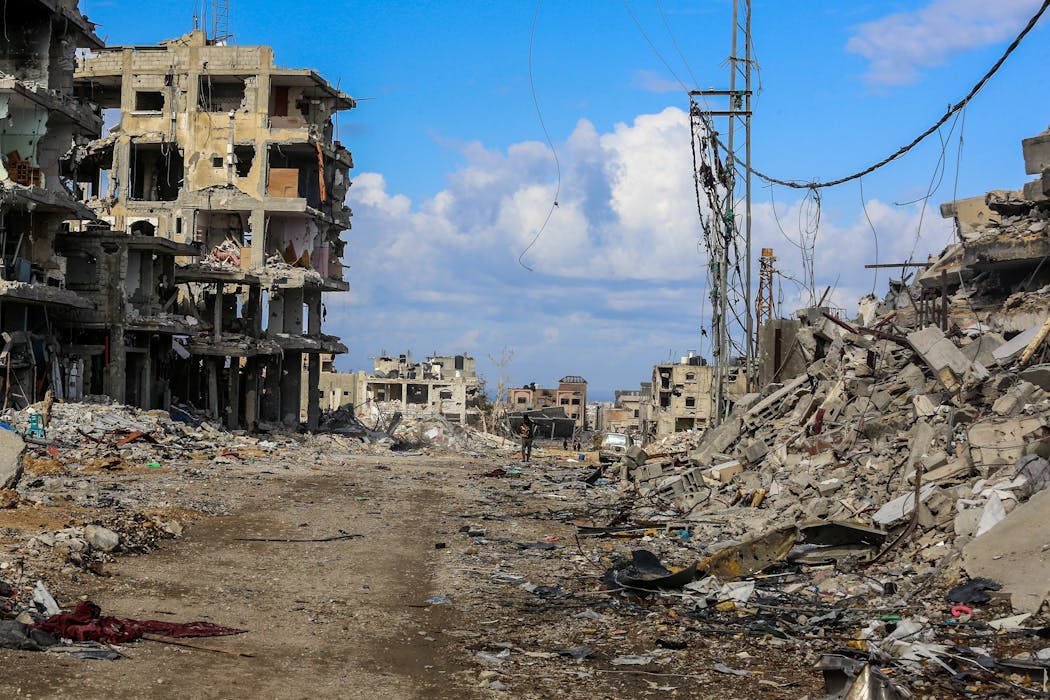
There can be no doubt that the situation in Gaza is dire. There is plausible evidence of the Israeli military carrying out war crimes there in its military operation triggered by, and commenced soon after, the devastating attack by Hamas against Israel on October 7 2023. The Hamas attack itself involved the commission of war crimes – and so does its taking of hostages and the subsequent treatment of them in captivity. But to say that all these atrocities render the law irrelevant is premature.

There are several reasons for this. One is that there is a difference between the existence of an important rule and its enforcement. Even where a rule is not being enforced, international law gives us a precise language to articulate exactly what is wrong with the situation. I recently wrote that what appears to have been a deliberate “double tap” attack against Nasser hospital in Khan Younis, northern Gaza, on August 25, violated IHL and can be seen as a war crime.

I have also written that other Israeli operations in Gaza amount to a crime against humanity, as they are part of a widespread or systematic attack against a civilian population. I, and others, have seriously contemplated the idea that a genocide is under way.

These legal expressions are important, and to accuse anyone of perpetrating the crimes that they embody has very serious political consequences. That is why, however implausibly, states like Israel and Russia have tried to maintain that they are totally compliant with international law.

Enforcement and impunity

Returning to the issue of enforcement, it is important to recognise that there are in fact several legal and political forums that provide an opportunity for it. These include the organs of the UN, including the International Court of Justice. There are also International Criminal Court arrest warrants for key leaders in respect of the events in both Gaza and Ukraine.

States that are signed up to the International Criminal Court are meant to be under an obligation to arrest people who are wanted by it. Yet, several opportunities to arrest Vladimir Putin have been spurned, like when he visited Mongolia recently. Likewise, Hungary failed to arrest the Israeli prime minister, Benjamin Netanyahu, when he visited earlier this year (Hungary has since denounced the court).

It’s debatable whether either of them will ever face trial. But the arrests warrants have already had political consequences. Putin was unable to attend the Brics summit in South Africa in 2023 because that country recognises the ICC. There were mixed reactions internationally to the news of the warrant against Netanyahu, with some affirming their support or at least their intention to comply with the warrants if necessary.

But history tells us that leaders who once seemed untouchable have eventually faced justice in one form or another.

Did the surviving leading Nazis ever expect to go on trial at a hastily convened military tribunal in Nuremberg? Did Augusto Pinochet expect that he would die under house arrest in his native Chile, facing trial for his actions during and since the military coup of 1973? Or that Saddam Hussein would face the death penalty and be hanged for his crimes in Iraq? Or that Libya’s Muammar Gaddafi would be ousted, abused, and then killed by a militia? Probably not.

A fair trial at the ICC would be preferable to most of those examples.

Justice for violations of international humanitarian law clearly needs to be seen to be done – if we don’t want Lazzarini’s catastrophic prediction to become a reality.

The Conversation

James Sweeney does not work for, consult, own shares in or receive funding from any company or organisation that would benefit from this article, and has disclosed no relevant affiliations beyond their academic appointment.

ref. International law isn’t dead. But the impunity seen in Gaza urgently needs to be addressed – https://theconversation.com/international-law-isnt-dead-but-the-impunity-seen-in-gaza-urgently-needs-to-be-addressed-264520

Deadlier than varroa, a new honey-bee parasite is spreading around the world

Source: The Conversation – Global Perspectives – By Jean-Pierre Scheerlinck, Honorary Professor Fellow, Melbourne Veterinary School, Faculty of Science, The University of Melbourne

Albert Stoynov/Unsplash

For decades, beekeepers have fought a tiny parasite called Varroa destructor, which has devastated honey-bee colonies around the world. But an even deadlier mite, Tropilaelaps mercedesae – or “tropi” – is on the march. Beekeepers fear it will wreak even greater havoc than varroa – and the ripple effects may be felt by the billions of people around the world who rely on honey bee-pollinated plants.

From Asia to Europe

Tropi’s natural host is the giant honey-bee (Apis dorsata), common across South and Southeast Asia. At some point, the mite jumped to the western honey-bee (Apis mellifera), the species kept by beekeepers around the world. Because this host is widespread, the parasite has steadily moved westwards.

It has now been detected in Ukraine, Georgia and southern Russia, and is suspected to be in Iran and Turkey. From there, it is expected to enter eastern Europe, then spread across the continent. Australia and North America are also at risk.

Why tropi spreads so fast

Like varroa, tropi is a tiny mite that breeds inside capped brood cells, the life stages of the honey-bee when the late larvae and pupae develop inside honeycomb cells that are sealed by a layer of wax. The mite feeds on bee pupae and transmits lethal viruses, such as deformed wing virus – the deadliest of the bee viruses. But there are crucial differences.

Varroa can survive on adult bees for long periods, but tropi cannot. Outside brood cells, it lives only a few days, scurrying across the comb in search of a new larva.

Because tropi spends more time in capped cells, it reproduces quickly. A capped cell that contains a female varroa will result in one or two mated varroa offspring emerging with the adult bee. Tropi offspring develop faster inside a capped cell than varroa offspring, so a tropi “mother” may result in more offspring emerging than a varroa infested cell, more quickly overwhelming the colony.

As a result, colonies infested with tropi can collapse far faster than those plagued by varroa.

Small white insect larvae with brown parasites attached.
Tropi is a tiny mite that feeds on honey-bee pupae and transmits lethal viruses.
Denis Anderson/CSIRO

Current control methods

In parts of Asia where the parasite is already established, small-scale and commercial beekeepers often manage it by caging the queen for about five weeks.

With no eggs being laid, no brood develops, leaving the mites without a food source. This method is practical where beekeepers manage dozens of hives, but not in places like Europe where commercial operations often involve thousands.

Another option is treating the beehive with formic acid, which penetrates brood cell caps and kills the mite without necessarily harming the developing bee, provided concentrations are kept low. This treatment may offer beekeepers a practical tool.

Why varroa treatments won’t work

Many wonder whether the chemicals used against varroa could also fight tropi. The answer is, mostly no.

Varroa spends much of its life outside of a capped cell clinging to adult bees, where it comes into contact with mite-killing chemicals known as miticides spread through the colony on bee bodies. By contrast, tropi rarely attaches to adults, instead darting across comb surfaces.

Because of this, it is far less exposed to chemical residues. Treatments designed for varroa are often ineffective against the faster-breeding tropi.

Managing both mites together will be particularly difficult. Combining treatments risks harming colonies or contaminating honey. For instance, formic acid for tropi and insecticides such as amitraz for varroa might interact at even low levels, killing the bees as well as the parasites.

There is also the danger of resistance. Over-use of varroa treatments has already produced resistant strains, reducing the effectiveness of several once-reliable chemicals. Introducing more compounds to fight tropi, without careful integrated pest management, could accelerate this process and leave beekeepers with few effective tools.

A brown and yellow beehive.
Bee colonies infested with tropi can collapse far faster than those plagued by varroa.
Nick Pitsas/CSIRO

The wider impact

The spread of tropi will not only devastate beekeepers but also agriculture more broadly. Honey-bees are critical pollinators of many crops. Heavier hive losses will raise costs for both honey production and pollination services, affecting food prices and availability.

Research is underway in countries such as Thailand and China to develop better management strategies. But unless effective and practical treatments are found soon, the spread of this new mite around the world could be catastrophic.

The story of varroa shows how quickly a single parasite can transform global beekeeping. Tropi has the potential to be even worse: it spreads faster, kills colonies more quickly, and is harder to control with existing methods.


The author would like to acknowledge the contribution of Robert Owen, a beekeeper who completed a PhD on the varroa mite at the University of Melbourne in 2022, to this article.

The Conversation

Jean-Pierre Scheerlinck does work for the CIS, drafting the Australian Pollination Security Status Report. He has received funding from the ARC and NHMRC.

ref. Deadlier than varroa, a new honey-bee parasite is spreading around the world – https://theconversation.com/deadlier-than-varroa-a-new-honey-bee-parasite-is-spreading-around-the-world-264891

Do I have insomnia? 5 reasons why you might not

Source: The Conversation – Global Perspectives – By Amelia Scott, Honorary Affiliate and Clinical Psychologist at the Woolcock Institute of Medical Research, and Macquarie University Research Fellow, Macquarie University

Oleg Breslavtsev/Getty

Even a single night of sleep trouble can feel distressing and lonely. You toss and turn, stare at the ceiling, and wonder how you’ll cope tomorrow. No wonder many people start to worry they’ve developed insomnia.

Insomnia is one of the most talked-about sleep problems, but it’s also one of the most misunderstood.

But just because you can’t sleep, it doesn’t mean you have insomnia. You might have another sleep disorder, or none at all.

What is insomnia?

Let’s clear up some terms, and separate short-term or intermittent sleep problems from what health professionals call “insomnia disorder”.

Sleep problems can involve being awake when you want to be asleep. This could be lying in bed for ages trying to fall asleep, waking in the middle of the night for hours, or waking up too early. Having a sleep problem is a subjective experience – you don’t need to tally up lost hours to prove it’s a problem.

But insomnia disorder is the official term to describe a more problematic and persistent pattern of sleep difficulties. And this long-term or chronic sleep disorder has clear diagnostic criteria. These include at least three nights a week of poor sleep, lasting three months or more. These criteria help researchers and clinicians make sure they’re talking about the same thing, and not confusing it with another sleep problem.

So, what are some reasons why a sleep problem might not be insomnia?

1. It’s short term, or comes and goes

About a third of adults will have a bout of “acute insomnia” in a given year. This short-term problem is typically triggered by stress, illness or big life changes.

The good news is that about 72% of people with acute insomnia return to normal sleep after a few weeks.

Insomnia disorder is a longer-term, persistent problem.

2. It doesn’t affect you the next day

Some people lie awake at night but still function well during the day. More fragmented and less refreshing sleep is also a near-universal part of ageing.

So if your sleep problem doesn’t significantly affect you the next day, it usually isn’t considered to be insomnia.

For people with insomnia, the struggle with sleep spills into the day and affects their mood, energy, concentration and wellbeing. Worry and distress about not sleeping can then make the problem worse, which creates a frustrating cycle of worrying and not sleeping.

3. It’s more about work or caring

If you feel tired during the day, an important question is whether you’re giving yourself enough time to sleep. Sometimes sleep problems reflect a “sleep opportunity” that is too short or too irregular.

Work schedules, child care, or late-night commitments can cut sleep short, and sleep can slip down the priority list. In these cases, the problem is insufficient sleep, not insomnia.

You might have noisy neighbours or an annoying cat. These can also affect your sleep, and reduce your “sleep opportunity”.

The average healthy adult gets around seven hours sleep (though this varies widely). For someone who needs seven, it usually means setting aside about eight to allow for winding down, drifting off, and waking overnight.

4. It’s another sleep disorder

Other sleep disorders can look like insomnia, such as:

  • obstructive sleep apnoea (when your breathing stops multiple times during sleep) can cause frequent awakenings through the night and daytime sleepiness

  • restless legs syndrome creates an irresistible urge to move your legs in the evening that often interferes with falling asleep. It’s often described as jittery feelings or having “creepy crawlies”, and is often undiagnosed

  • circadian rhythm problems, such as being a natural night owl in an early-bird world, can also lead to trouble falling asleep.

5. Medications and substances are interfering

Caffeine, alcohol and nicotine all create insomnia symptoms and worsen the quality of sleep.

Certain medications can also interfere with sleep, such as stimulants (for conditions such as attention-deficit hyperactivity disorder or ADHD) and beta-blockers (for various heart conditions).

These issues need to be considered before labelling the problem as insomnia. However, it’s important to keep taking your medication as prescribed and discuss any concerns with your doctor.

Getting the right help

If your sleep is worrying you, the best first step is to see your GP. They can help rule out other causes, review your medications, or refer you for a sleep study if needed.

However, once insomnia becomes frequent, chronic (long term) and distressing, you can worry too much about your sleep, constantly check or track your sleep, or try too hard to sleep, for instance by spending too much time in bed. These psychological and behavioural mechanisms can backfire, and make good sleep even less likely.

That’s why “cognitive behavioural therapy for insomnia” (or CBT-I) is recommended as the first-line treatment.

This is more effective, and longer-lasting than sleeping pills. This therapy is available via specially trained GPs, and sleep psychologists. You can take part in person or online.

In the meantime

If you’re in a rough patch of sleep:

  • remind yourself that short runs of poor sleep usually settle on their own

  • avoid lying in bed panicking if you wake at 3.30am. Instead, step out of bed or use the time in a way that feels restful

  • keep a consistent wake-up time, even after a poor night. Try to get some morning sunlight to reset your body clock

  • make sure you’re putting aside the right amount of time for sleep – not too little, not too much.

The Conversation

Amelia Scott is a member of the psychology education subcommittee of the Australasian Sleep Association. She receives funding from Macquarie University.

ref. Do I have insomnia? 5 reasons why you might not – https://theconversation.com/do-i-have-insomnia-5-reasons-why-you-might-not-262701

My knee is clicking. Should I be worried? Am I getting arthritis?

Source: The Conversation – Global Perspectives – By Jamon Couch, Lecturer, Department of Microbiology, Anatomy, Physiology & Pharmacology, and PhD Candidate, La Trobe University

It’s a quiet morning. You lace up your shoes, step outside and begin a brisk morning stroll. But as you take those first few steps, there it is, a faint grinding noise, almost like the crunch of gravel underfoot, except … the sound is coming from your knee!

Thinking back, you recall noticing a similar sound as you were walking up the stairs last week. You pause, do some quick stretches and continue walking. But the grinding sound quickly returns.

A wave of dread follows: Is there something wrong with my knee? Is that bone-on-bone? Am I getting arthritis?

This is a common experience for people of all ages. Before you hit the panic button, let’s unpack what these noisy knees – known in medical terms as “knee crepitus” – might really mean.

What is knee crepitus? How common is it?

Knee crepitus refers to the audible crackling, creaking or grinding sounds that occur when you bend or straighten your knee. You might hear it when climbing stairs, standing up from a chair, or even just as you walk.

Surprisingly, we don’t know what actually causes knee crepitus. Theories suggest these knee joint noises may be attributed to damaged knee cartilage, tendons moving over bones, or the popping of normal gas bubbles in the fluid surrounding the knee.

But current scientific evidence is insufficient to confidently determine the origin of this common symptom.

Man sitting on ground, close-up of bare knee.
One theory is we’re hearing gas bubbles pop in the fluid around the knee.
Kindel Media/Pexels

Our recent review of the 103 studies of knee crepitus (involving 36,439 people) found 41% of people in the general population had noisy knees.

There is a common perception that this crackling, creaking or grinding noise is a sign of a damaged or arthritic knee. However 36% of people who had no pain and had never injured their knee also had knee crepitus.

So, knee crepitus is common across the population, including among people with no knee problems at all.

But I heard it’s an early sign of arthritis…

Having knee crepitus can create worry, and make people fearful of exercising and using their knees. People often ask: Am I causing further damage to my knees? Does this mean I’m going to get arthritis?

Noisy knees are more common among older adults with arthritis: 81% of people with osteoarthritis have knee crepitus.

However, knee crepitus isn’t always a sign of impending knee problems and shouldn’t stop you from exercising and using your knees. In a study of 3,495 older adults (mean age 61 years), two-thirds of people who reported “always” having knee crepitus did not develop symptomatic osteoarthritis over the next four years.

If you’re a younger adult with a previous knee injury, the story is much the same: knee crepitus is still common, particularly after a knee injury, but it’s not always a sign of underlying problems.

Our recent study looked at 112 young adults (with a median age of 28) who had a previous knee injury requiring surgery. We found those with knee crepitus were twice as likely to have cartilage damage (particularly in the kneecap area) in the first year post-surgery. However, having knee crepitus did not mean worse outcomes in the future.

It seems that while those with knee crepitus may experience worse pain and symptoms in the early stages following knee injury, this does not translate to worse recovery or greater rates of osteoarthritis over the long term.

What should I do about my noisy knees?

Given noisy knees are common in those without knee pain, injury or arthritis, you generally shouldn’t be concerned. Yes, your knees might wake your baby as you step away from their cot, and perhaps a quiet yoga studio might draw focus on your knees, but generally speaking, if it’s not painful, it’s nothing to worry about.

Unfortunately, there are no effective treatments for knee crepitus. The best advice is to keep doing the things that help to improve overall knee health: getting regular exercise, both aerobic and resistance-based, and achieving and maintaining a healthy body weight.

Just be cautious about sourcing information online, as more than half of the advice available on the internet about knee clicking isn’t supported by research.

So, when should you be concerned?

Although knee crepitus is often benign, there are circumstances where you could consult your health-care provider. This includes if your noisy knees are:

  • accompanied by pain, swelling, instability, or locking

  • associated with other signs of arthritis, such as stiffness, redness, or reduced mobility.

In such cases, a health-care provider may recommend a physical assessment to examine structures in and around the knee joint, and evaluate the impact of your symptoms on your quality of life and participation in activities.

The clinician may recommend:

  • physiotherapy and exercise to strengthen supporting muscles
  • seeing a dietitian for advice about weight management
  • anti-inflammatory medication.

Most importantly, creaky knees alone, without other symptoms, are not normally cause for concern. So, lace up those shoes and keep moving.

The Conversation

Jamon Couch receives funding from an Australian government Research Training Program scholarship.

Adam Culvenor receives funding from The National Health and Medical Research Council and Medibank Better Health Research Hub.

ref. My knee is clicking. Should I be worried? Am I getting arthritis? – https://theconversation.com/my-knee-is-clicking-should-i-be-worried-am-i-getting-arthritis-264472

Koalas are running out of time. Will a $140 million national park save them?

Source: The Conversation – Global Perspectives – By Christine Hosking, Conservation Planner/Researcher, The University of Queensland

In a historic move, the New South Wales government has announced a Great Koala National Park will be established on the state’s Mid North Coast, in a bid to protect vital koala habitat and stop the species’ sharp decline.

The reserve will combine existing national parks with newly protected state forest areas, to create 476,000 hectares of protected koala habitat. Logging will be phased out in certain areas, and a transition plan enacted for affected workers and communities.

Conservationists have welcomed the move as a win for biodiversity. However, some industry groups have raised concerns about the economic impact on the region’s timber operations.

The announcement, which follows a long campaign by koala advocates, shows the NSW government recognises the importance of protecting biodiversity. But announcing the national park is just the first step in saving this iconic species.

A worrying decline

Koalas are notoriously hard to count, because they are widely distributed and difficult to spot.

In 2016, a panel of 15 koala experts estimated a decline in koala populations of 24% over the past three generations and the next three generations.

Habitat loss and fragmentation is the number one threat to koalas. Others include climate change, bushfires, disease, vehicle strikes and dog attacks.

The decline gave momentum to calls by conservationists and scientists for the establishment of a Great Koala National Park, taking in important koala habitat on the NSW Mid North Coast.

In 2023, the NSW government pledged A$80 million to create the park. The announcement on Sunday increased the pledge to $140 million.

Announcing the development, NSW Premier Chris Minns said it was “unthinkable” that koalas were at risk of extinction in that state.

The government also proposed the park’s boundary and announced a temporary moratorium on timber harvesting within it – as well as a support package for logging workers, industries and communities.

However, the logging industry remains opposed to the plan.

Not the end of the story

The creation of the park is a welcome move. It will protect not just koalas but many other native species, large and small.

But on its own, it’s not enough to save the NSW koala population. Even within the national park, threats to koalas will remain.

For example, research shows climate change – and associated heat and less rainfall – threatens the trees koalas use for food and shelter. Climate extremes also physically stress koalas. This and other combined stresses can make koalas more prone to disease.

Bushfires, and inappropriate fire management, can degrade koala habitat and injure or kill them outright.

The NSW government says logging must immediately cease in areas to be brought into the park’s boundary. However, logging pressures can remain, even after national parks are declared. Forestry activities must cease completely, and forever, if the park is to truly protect koalas.

What’s more, recreational activities, if allowed in the national park, may negatively impact koalas. For example, cutting tracks or building tourist facilities may fragment koala habitat and disturb shy wildlife.

These threats must be managed to ensure the Great Koala National Park achieves its aims.

Prioritising nature

Of course, the creation of a new national park does not help koalas outside the park’s boundaries. Koala populations are under threat across their range in NSW, Queensland and the ACT.

That’s why the national recovery plan for the koala should be implemented urgently and in full. It includes increasing the area of protected koala habitat, restoring degraded habitat, and actively conserving populations. It also includes ending habitat destruction by embedding koala protections in land-use planning.

As I have previously written, koala protection areas should be replicated throughout the NSW and Queensland hinterlands. My research shows the future climate will remain suitable for koalas in those areas.

And logging must be curbed elsewhere in Australia, such as in Tasmania, where it jeopardises threatened species and ancient forests.

The Great National Koala Park promises be a sanctuary for koalas and other wildlife, and a special place for passive, nature-based recreation and tourism. Yes, the plan has detractors. But saving Australia’s koalas means prioritising nature’s needs over that of people.

And we must not forget: the national park is just one step on a long road to preventing koala extinctions.

The Conversation

Christine Hosking does not work for, consult, own shares in or receive funding from any company or organisation that would benefit from this article, and has disclosed no relevant affiliations beyond their academic appointment.

ref. Koalas are running out of time. Will a $140 million national park save them? – https://theconversation.com/koalas-are-running-out-of-time-will-a-140-million-national-park-save-them-264789