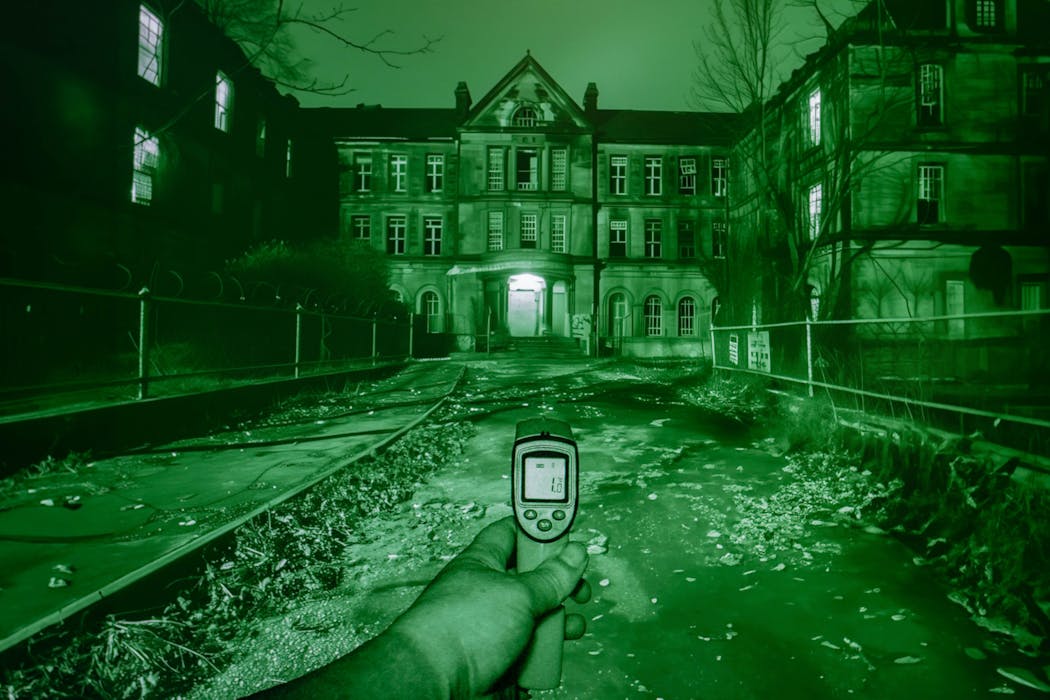
Des séances de spiritisme, très populaires au XIXᵉ siècle, aux vidéos contemporaines qui retracent des « chasses aux fantômes dans des maisons hantées », la quête d’une forme de communication avec l’Au-delà en dit long sur nos peurs et sur notre rapport à la mort.
En 1874, le célèbre chimiste Sir William Crookes était assis dans une pièce sombre, les yeux fixés sur un rideau recouvrant une alcôve. Soudain, le rideau s’est agité, et un fantôme lumineux, celui d’une jeune femme vêtue d’un linceul blanc, en est sorti. Crookes était fasciné.
Mais le fantôme était faux, et l’implication du scientifique dans des séances de spiritisme faillit ruiner sa carrière. Malgré tout, Crookes, comme des milliers d’autres après lui, continua à rechercher des preuves de l’existence des esprits.
La popularité des séances de spiritisme victoriennes et de la pseudo-religion qui y était associée (le spiritisme) se répandit rapidement à travers le monde. Des petits salons silencieux où se réunissaient les personnes récemment endeuillées aux grandes salles de concert, le public était avide de spectacles effrayants.
Aujourd’hui, la chasse aux fantômes reste un sujet culturel extrêmement populaire. Des plateformes, telles que YouTube et TikTok, regorgent désormais d’enquêteurs amateurs qui parcourent des bâtiments abandonnés et des maisons hantées bien connues afin de recueillir des preuves.
J’ai passé ces dernières années à faire des recherches sur l’histoire sociale de la chasse aux fantômes pour mon nouveau livre, Ghosted : A History of Ghost-Hunting, and Why We Keep Looking (cet ouvrage n’est pas traduit en français, ndlr), afin d’examiner les fantômes du point de vue des vivants. Pourquoi continuons-nous à nous accrocher à l’espoir de trouver une preuve de l’existence d’une vie après la mort ?
La chasse aux fantômes est devenue un phénomène international en 1848, lorsque les jeunes sœurs Kate et Mary Fox ont popularisé un code pour communiquer avec le fantôme qui, selon elles, hantait leur ferme à Hydesville, dans l’État de New York : il s’agissait, pour l’esprit invoqué, de frapper un certain nombre de coups pour former des réponses.
Cinq ans plus tard, on estimait qu’elles avaient amassé 500 000 dollars (soit près de 17 millions d’euros aujourd’hui). Le spiritisme s’est répandu dans le monde entier, en particulier au Royaume-Uni, en France et en Australie. Il a été favorisé par les nombreuses pertes humaines qui ont suivi la guerre civile américaine et, au début du XXe siècle, par les pertes massives causées par la Première Guerre mondiale.
Les gens se tournaient vers le spiritisme et la chasse aux fantômes pour obtenir la gloire et la fortune, mais aussi pour cultiver l’espoir et chercher inlassablement des preuves que la mort n’était pas la fin.
L’essor du scepticisme
Parallèlement au spiritisme, cependant, des sceptiques désireux de découvrir la vérité sur les fantômes ont fait leur apparition. Les critiques les plus virulents du spiritisme étaient les magiciens, qui estimaient que les médiums tentaient de copier leur art, mais en adoptant une approche moralement répréhensible. Au moins, le public d’un magicien savait qu’il était délibérément trompé.
Le célèbre illusionniste Harry Houdini, par exemple, se disputait souvent avec son ami proche et fervent spirite, l’écrivain britannique Sir Arthur Conan Doyle, au sujet des pratiques frauduleuses des médiums.
Avec l’essor des laboratoires scientifiques modernes et le développement des appareils portables d’enregistrement du son et de l’image au XXe siècle, la chasse aux fantômes est devenue un passe-temps de plus en plus populaire et sensationnel. Harry Price, chercheur en parapsychologie, auteur et amateur professionnel, a utilisé la chasse aux fantômes pour créer un culte de la personnalité, dénichant toute apparition intéressante susceptible de lui apporter de la notoriété.
C’est lui qui a introduit la chasse aux fantômes dans les médias comme forme de divertissement. En 1936, il a réalisé une émission en direct sur la BBC depuis une maison hantée.
Le programme lancé par Price est le précurseur oublié de la chasse aux fantômes telle que nous la connaissons aujourd’hui. Les émissions de téléréalité imitent le format de son émission de 1936, avec des exemples tels que Most Haunted qui a su fidéliser son public depuis sa première diffusion sur Living TV en 2002. Bien qu’elle ne soit plus produite pour la télévision, l’équipe de Most Haunted continue de filmer et de publier de nouveaux épisodes sur sa chaîne YouTube.
Most Haunted est apparue pour la première fois à la télévision en 2002, mais est désormais disponible sur YouTube.
Elle a également clairement influencé des copies internationales telles que Bytva ekstrasensov en Ukraine et Ghost Hunt en Nouvelle-Zélande. Les réseaux sociaux ont également changé notre façon de chasser les fantômes. Ils ont permis à des groupes d’amateurs et à des enquêteurs d’atteindre un public immense sur diverses plateformes.
Mais la chasse aux fantômes est également marquée par une forte concurrence, les groupes et les enquêteurs cherchant à se surpasser les uns les autres pour obtenir les meilleures preuves. Pour beaucoup, cela signifie s’équiper d’outils dignes des ghostbusters. Il peut s’agir de gadgets et de capteurs clignotants, notamment des détecteurs de champs électromagnétiques, des enregistreurs audio high-tech et même des jouets pour chats à LED activés par le mouvement.
Tout cela dans le but d’obtenir les preuves les plus « scientifiques » et, par conséquent, la popularité et le respect de leurs pairs. Il semble que plus nous prétendons être scientifiques dans la recherche de fantômes, plus nous laissons les théories pseudoscientifiques envahir la chasse.
Une histoire de sociabilité
Pourtant, nous n’abandonnons jamais. C’est ce qui m’a fasciné lorsque j’ai entrepris mes recherches. Je voulais savoir pourquoi, après des siècles, nous ne sommes toujours pas plus près d’obtenir des preuves concluantes de l’existence du paranormal, tandis que la chasse aux fantômes est plus populaire que jamais.
J’ai même participé à quelques chasses aux fantômes pour essayer de comprendre ce mystère. Ma conclusion ? La chasse aux fantômes sert à créer des liens sociaux et en dit plus long sur les vivants que sur les morts.
J’ai vécu les expériences les plus amusantes de ma vie lors de ces chasses, qui m’ont permis d’entrer en contact, non pas avec des fantômes, mais avec de nouvelles personnes et aussi d’en apprendre davantage sur l’histoire des bâtiments « hantés ».
Ce que j’ai appris, c’est que la chasse aux fantômes concerne davantage les vivants que les morts ou les fantômes que nous essayons de trouver. La chasse aux fantômes, lorsqu’elle est pratiquée de manière éthique, est une activité sociale de première importance. Elle nous permet de surmonter notre chagrin, d’affronter notre peur de la mort et d’explorer ce que signifie être en vie.
Alice Vernon ne travaille pas, ne conseille pas, ne possède pas de parts, ne reçoit pas de fonds d’une organisation qui pourrait tirer profit de cet article, et n’a déclaré aucune autre affiliation que son organisme de recherche.
L’arrêt historique rendu par la Cour de cassation, le 21 janvier 2025, dans l’affaire France Télécom marque un tournant majeur en droit du travail et en droit pénal. Rappelons que la direction de l’entreprise (devenue Orange en 2013) avait mis en œuvre, à compter de 2006, deux plans de restructuration qui prévoyaient le départ de 22 000 employés et la mobilité de 10 000 autres (sur quelque 120 000 employés). En 2008 et en 2009, 35 salariés s’étaient suicidés. Cet arrêt ouvre la voie à une nouvelle ère de responsabilisation des organisations, publiques comme privées, en matière de santé au travail.
En consacrant la notion de « harcèlement moral institutionnel », la plus haute juridiction française reconnaît définitivement que la responsabilité pénale d’une entreprise et de ses dirigeants peut être engagée lorsqu’une politique managériale, menée en connaissance de cause, a pour effet de dégrader les conditions de travail des salariés.
L’arrêt de la Cour de cassation du 21 janvier 2025 condamne définitivement sept dirigeants, mais aussi la personnalité morale de France Télécom au titre d’un « harcèlement moral institutionnel » résultant de la politique de l’entreprise. Avec cette nouvelle notion, la responsabilité pénale d’une société et de ses dirigeants peut désormais être engagée lorsqu’ils ont mis en œuvre, « en connaissance de cause », une politique d’entreprise ayant pour « objet » ou pour « effet » une dégradation des conditions de travail des salariés.
Au début des années 2000, le PDG Didier Lombard lance en effet le plan Nouvelles Expériences des Télécommunications (Next), qui prévoyait 22 000 départs en trois ans, soit 20 % de départs parmi les salariés ayant le statut de fonctionnaire. Sans procéder à des licenciements classiques, l’entreprise imagine alors une politique visant à précipiter les départs.
Les différents niveaux de l’encadrement installent un climat de pressions constantes, effectuent des réorganisations permanentes et abusives, des mutations forcées ou des mises à l’isolement. Les brimades de salariés sont fréquentes. Entre 2008 et 2011, plus de soixante employés se suicident, et quarante tentent de mettre fin à leur jour. Ce plan Next sera d’ailleurs qualifié par la presse de « plan de l’éradication ».
L’arrêt consacre la notion de harcèlement moral institutionnel
En pratique, cet arrêt vient ainsi consacrer la notion même de harcèlement moral institutionnel. Comme le rappelle Michel Miné, le harcèlement moral institutionnel « figure désormais au plus haut niveau de la jurisprudence […] un grand arrêt de droit pénal, mais aussi de droit du travail ».
Complétant le droit relatif au harcèlement moral, cette évolution a une portée considérable pour les salariés de toutes les organisations, mais également pour leurs directions et leurs responsables RH. Ces derniers sont désormais pénalement responsables des effets de leurs politiques. C’est donc un nouvel univers de la santé au travail qui s’ouvre potentiellement.
L’arrêt de janvier 2025 concerne aussi les situations antérieures à 2025
En s’appuyant principalement sur les travaux parlementaires relatifs à la loi n°2002-73 du 17 janvier 2002 de modernisation sociale, la rédaction de cet arrêt de la Cour de cassation inscrit dans le droit deux ouvertures à très forte portée progressiste. Ces ouvertures répondent précisément aux attentes des salariés dont la santé s’est détériorée du fait de politiques organisationnelles ou managériales. Michel Miné résume très bien cette évolution en notant que
« le juge n’est pas là pour juger des choix stratégiques, mais pour examiner les effets des méthodes de gestion qui en découlent ».
À la suite de cet arrêt, un tribunal administratif sera désormais légitime pour « déterminer si la méthode employée pour mettre en œuvre la politique d’entreprise excède le pouvoir normal de direction et de contrôle du chef d’entreprise » (§70). Tout n’est donc plus possible au seul motif que c’est la liberté d’entreprendre qui appelle des choix stratégiques d’entreprise… non discutables. En matière de santé au travail, le choix de gestion dans l’organisation ne bénéficie plus d’une totale immunité : il peut être jugé.
Ensuite, cet arrêt crée, à côté du harcèlement moral déjà défini par l’article L.1152-1 du Code du travail, une forme de harcèlement moral sans qu’une relation entre des personnes individuellement identifiées soit nécessaire. Sans nécessité d’une action d’une personne sur une autre, le harcèlement moral institutionnel peut être exercé à l’égard « d’autrui » (terme de l’arrêt). Sans besoin de prouver un ciblage individuel, le harcèlement peut donc indifféremment concerner une équipe, un service, un groupe de salariés et, par extension, l’ensemble des membres d’une organisation. En fait, « pourvu que ces dernières fassent partie de la même communauté de travail et aient été susceptibles de subir ou aient subi les conséquences » de la politique managériale (§40).
Les conséquences de cet arrêt sont en réalité aussi vastes que profondes. Première conséquence de l’arrêt de janvier 2025, des situations antérieures à 2025 sont concernées. Il est en effet considéré que cette évolution du droit était « prévisible » de sorte qu’elle peut s’appliquer à des faits antérieurs.
Toutes les politiques managériales dysfonctionnelles ou pathogènes sont concernées
Si la temporalité est étendue, le champ l’est aussi. En condamnant également la personne morale France Télécom, la Cour de cassation étend potentiellement le champ à toutes formes d’organisation : de la TPE à la collectivité territoriale en passant par l’hôpital ou l’université, toutes les politiques managériales dysfonctionnelles ou pathogènes sont potentiellement concernées.
Cette nouveauté est intéressante : les organisations publiques et bureaucratiques sont en effet particulièrement sujettes à ces politiques aux effets dévastateurs et peu abordés, comme nous l’avons montré ailleurs à partir de la pratique du harcèlement en meute.
Ainsi, dans les mois qui viennent, les premiers jugements de différentes juridictions vont être connus et discutés. Le juge administratif sera particulièrement scruté pour connaître son degré de suivisme de l’arrêt de la Cour de cassation ; juridiction qui représente le plus haut niveau de jurisprudence : va-t-il vraiment suivre l’arrêt qui consacre le harcèlement moral institutionnel et, ainsi importer ce délit dans l’environnement public ?
L’égalité devant la loi devrait imposer que ce type de décision soit également adoptée par les juridictions administratives. Il semble assez probable que le juge administratif suive cette voie, avec toutefois quelques modulations. Un premier arrêt de la Cour administrative d’appel de Bordeaux en avril 2025 va dans ce sens. Ainsi, la jurisprudence pourrait par exemple, amener à condamner une université pour « faute de service » en cas de harcèlement moral institutionnel. Le juge devra au fond arbitrer entre un jugement mettant en avant la « responsabilité pour carence » (manquement à l’obligation de protéger les agents) ou « une qualification pénale ». Si rien n’est encore joué sur le sens de cet arbitrage, il n’en demeure pas moins que le temps de l’impunité semble révolu : les victimes peuvent désormais agir sur le terrain pénal contre l’institution elle-même, en complément des recours en droit du travail ou administratif.
Deuxième conséquence, le périmètre des acteurs impliqués et l’incidence sur leurs responsabilités sont en définitive précisés par cet arrêt de janvier 2025. C’est surtout leur mise en cause pénale qui est mise en lumière.
Dit simplement, si une politique managériale promeut, en connaissance de causes, des méthodes de gestion pathogènes pour la santé des salariés, tout dirigeant, mais aussi tout cadre actif dans la promotion de cette politique peut être jugé responsable. La Cour de cassation signale ainsi, dans son arrêt de janvier 2025, le « suivisme » des directions et services de ressources humaines (DRH) dont « les procédures et les méthodes ont infusé dans toute la politique managériale ». Fait majeur, une DRH est potentiellement « complice du délit » de harcèlement moral institutionnel quand elle accompagne des politiques pathogènes dont les effets sont connus.
Au minimum, une vigilance accrue est donc attendue des DRH en matière d’adoption de méthodes de gestion afin de ne pas être dans l’abus immanquablement porteur de risque pénal. Plus largement, la posture professionnelle de la DRH est sérieusement questionnée : connaissant l’objet ou les effets d’une politique sur la santé des salariés, doit-elle toujours accompagner sa direction, dont elle dépend de manière souvent très étroite ? Si la DRH a par exemple connaissance de la volonté d’un dirigeant de cibler un ou plusieurs salariés, au point que des atteintes à leur santé soient envisageables, quelle doit être sa posture ou son éthique, pour reprendre une notion chère à la communauté des responsables de ressources humaines ?
Vers une responsabilité de tous en matière de santé au travail ?
Par enchaînement, il est possible de tracer des perspectives au regard de ce nouvel état des lieux des responsabilités quand un harcèlement moral institutionnel est avéré pour le juge.
Comment évaluer, par exemple, la responsabilité des élus de conseils des collectivités publiques, des élus d’un conseil d’administration d’universités, d’hôpitaux ou d’associations dès lors qu’ils marquent une trop grande complaisance vis-à-vis de la poursuite de politiques managériales dont ils ont à connaître les effets sur la santé des salariés ? Ne sont-ils pas, comme « organes de décisions » partie prenante des atteintes à la santé, comme l’ont été des cadres de France Télécom ?
Naturellement, le même questionnement peut être adressé aux représentants du personnel et à leur posture. Pour la plupart d’entre eux, ils ont évidemment chevillé au corps le souci de documenter les atteintes à la santé des salariés liés au management du travail et d’accompagner les salariés en souffrance, y compris pas l’outil juridique. L’affaire de France Télécom est d’ailleurs emblématique du rôle exemplaire des représentants syndicaux. Ils ont consciencieusement mobilisés les dispositifs légaux prévus à cet effet dans les organisations (les outils de la commission Santé, sécurité et conditions de travail (CSSCT), notamment).
Une interrogation demeure pourtant : quelle est la responsabilité de représentants des salariés qui, par complaisance, faiblesse, intérêt ou connivence avec les directions, minimisent ou ignorent l’importance de la prise en charge cette nouvelle question du harcèlement moral institutionnel ? Dans l’affaire France Télécom, les élus CFDT et FO étaient par exemple dans « un déni de la situation » selon le syndicat Solidaires, acteur central de la démarche d’accompagnement et de dépôt de plainte. N’oublions pourtant jamais que « l’homme est responsable de son ignorance, l’ignorance est une faute », pour Milan Kundera.
Pour le citoyen-salarié, avec la reconnaissance juridique du harcèlement moral institutionnel, une nouvelle étape est sans nul doute franchie : le temps de l’impunité des directions et du management semble en tout cas révolu, quelle que soit l’organisation concernée. Tout montre que le citoyen-salarié peut donc se sentir un peu moins seul face à ses éventuelles souffrances, comme ce fut déjà le cas avec la reconnaissance juridique du « harcèlement moral », en 2002, à la suite des travaux pionniers de Marie-France Hirigoyen et de Christophe Desjours.
En définitive, le premier défi de la caractérisation juridique de cette nouvelle facette du harcèlement moral semble maintenant relevé. Si les faits sont donc assez documentés, notamment par les représentants du personnel, le juge peut travailler. Encore faudra-t-il, in fine, que les différentes juridictions fassent demain écho, dans un délai raisonnable, à cette immense attente de justice face aux errances de directions et de manageurs aux politiques déviantes et pratiques toxiques, toutes porteuses de profondes souffrances au travail, souvent inaudibles. C’est le prochain défi de santé au travail qui est devant nous.
Michel Rocca ne travaille pas, ne conseille pas, ne possède pas de parts, ne reçoit pas de fonds d’une organisation qui pourrait tirer profit de cet article, et n’a déclaré aucune autre affiliation que son organisme de recherche.
Source: The Conversation – in French – By Virginie Arantes, Postdoctoral Researcher – Projet Chine CoREF, CNRS/EHESS (CECMC), Université Libre de Bruxelles (ULB)
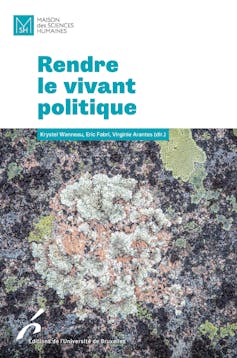
Le terme s’est imposé en librairie, en politique. Il est aussi de plus en plus repris par des institutions. Il apparaît souvent comme un synonyme de « nature ». Mais que signifie ce « vivant » dont on se réclame de plus en plus ? Les autrices et auteur de Rendre le vivant politique (éditions de l’Université de Bruxelles, 2025) sondent le succès nouveau de ce mot.
C’est un terme que l’on entend de plus en plus : « vivant ». Mais d’où vient-il ? que décrit-il ? et pourquoi est-il de plus en plus invoqué ?
Une rapide recherche du terme « vivant » dans Google Ngram Viewer, qui recense la fréquence des mots usités dans les livres numérisés sur Google Books, permet déjà de repérer deux moments où son usage explose : dans les années 1980 et aujourd’hui.
Mis en ligne par Google en décembre 2010, Ngram Viewer permet de visualiser la fréquence de suites de mots dans les livres numérisés sur Google Books. L’outil s’appuie sur plus de 5 millions d’ouvrages, soit environ 4 % des livres jamais publiés, et dont la très grande majorité est postérieure à 1800. L’interprétation des visualisations appelle à la précaution, mais cette courbe sert ici seulement à poser des questions au sujet de ce succès du « vivant » dans la production éditoriale. Capture d’écran Google Ngram Viewer
Le pic des années 1980 peut sans doute s’expliquer par la montée en puissance du discours sur la biodiversité qui n’est plus confinée au registre scientifique. Mais comment expliquer le regain actuel ? Serait-il la manifestation d’un moment politique qui voit le « vivant » devenir un nouvel imaginaire structurant et un horizon de lutte ? Dans les librairies, la tendance est en tout cas nette. Le succès d’ouvrages comme Manières d’être vivant (Baptiste Morizot, 2020), Exploiter les vivants (Paul Guillibert, 2023) ou le Moment du vivant (sous la direction d’Arnaud François et de Frédéric Worms, 2016) témoigne d’une quête de sens et d’un désir de rupture avec une vision instrumentale de la nature.
Mais le mot ne circule pas qu’en rayon : il s’invite de plus en plus dans les slogans militants et partisans. En Belgique, le parti Écolo s’interroge : « Qui va protéger le vivant, qui va protéger ma santé ? », tandis qu’en France, le parti antispéciste Révolution écologique pour le vivant (REV) a été créé en 2018. On retrouve aussi ce terme dans le vocabulaire des politiques publiques, dans les mouvements sociaux, dans les dictionnaires d’écologie politique et jusque dans le langage éducatif.
Dans cette perspective, les défenseurs du vivant appellent à « faire corps » avec les écosystèmes. Ils proposent de repartir des milieux partagés à toutes les échelles – de la mare à l’océan – et de tenir compte de leurs liens, de la goutte d’eau à l’atmosphère.
« Anthropocène », « zone critique » : d’autres termes qui émergent en même temps que celui de « vivant ».
Ce déplacement de regard trouve un écho dans l’histoire récente des sciences. Il n’est pas anodin que la notion controversée d’anthropocène, apparue au début des années 2000 dans un colloque de géologues, résonne aujourd’hui dans les luttes pour le vivant. De même, il n’est pas plus surprenant que l’Institut de physique du globe de Paris (IPGP), fondé en 1921 pour étudier les forces telluriques et les champs magnétiques, s’intéresse désormais à la zone critique – cette fine couche où se nouent les interactions entre vie, sol et atmosphère. Chez Bruno Latour, cette zone prend une dimension philosophique : elle devient le lieu d’où penser le « nouveau régime climatique ».
Dans un contexte où les sociétés peinent à répondre à la crise environnementale – et où une partie du débat public rejette même l’écologie –, le terme « vivant » propose de décentrer le regard. Il invite à le déplacer, à voir dans la nature et les êtres qui la peuplent non pas des ressources à dominer, mais des existences avec lesquelles apprendre à cohabiter.
Pourquoi ce retour du vivant ?
Le « vivant » permet ainsi de dire ce que la « nature » ne permet pas.
Contrairement à « nature », souvent pensée comme un décor extérieur ou une ressource à exploiter, le « vivant » inclut les humains dans une communauté élargie avec les animaux, les végétaux et les écosystèmes, et s’interroge sur l’ensemble plutôt que sur telle ou telle partie. Il insiste sur les relations, sur les interdépendances et sur la fragilité des milieux que nous habitons. Cette nuance explique son succès croissant : il offre un langage qui relie la crise écologique à nos existences concrètes, à nos corps, à nos manières d’habiter le monde sans nous en couper. Il comble les lacunes des analyses trop focalisées sur la partie et qui perdent de vue le tout. Et c’est précisément parce qu’il nous attache à notre être sensible qu’il ouvre un espace de luttes, d’appropriations et d’expérimentations politiques.
Sa signification varie selon les contextes. En français, il évoque des dynamiques d’interdépendance entre humains et non-humains. En anglais (life, living beings, vital), il est souvent ramené aux Life Sciences, c’est-à-dire l’ensemble des sciences de la vie (biologie, médecine, génétique, agronomie, écologie scientifique), à une approche plus fonctionnelle et technique. En Amérique latine, le « vivant » prend une tournure institutionnelle : la Constitution de l’Équateur reconnaît ainsi la Pachamama (la Terre-Mère) comme sujet de droit – une manière de traduire dans le langage juridique des visions du monde autochtones, fondées sur l’harmonie entre les êtres humains et la nature. Le préambule du texte évoque d’ailleurs la volonté de « construire une nouvelle forme de coexistence publique, dans la diversité et en harmonie avec la nature, afin de parvenir au buen vivir, le sumak kawsay », c’est-à-dire le bien vivre ou la vie en plénitude.
Dans d’autres contextes, notamment occidentaux, la gestion écologique reste trop souvent marquée par des logiques de contrôle, de « maîtrise » de la nature et de ses risques, voire d’exclusion, comme le souligne la chercheuse en sciences politiques Krystel Wanneau lorsqu’elle analyse les dispositifs de « solutions fondées sur la nature » promus par les Nations unies. Elle prend ici comme exemple les problèmes d’inondation dans le nord de la France et aux Pays-Bas pour illustrer l’attrait de ces solutions redonnant de la place à la nature en s’inspirant des services offerts par les écosystèmes.
Dès le XIIe siècle, les Flamands ont ainsi mis en place les wateringues, des dispositifs de canaux pour contenir les inondations et gagner des terres agricoles sur la mer. Aujourd’hui, ces approches conciliant activités humaines et préservation écologique se multiplient, mais elles restent marquées par des tensions entre logiques administratives, agricoles, urbaines et écologiques pouvant reconduire des rapports de pouvoir inégaux entre politiques nationales et initiatives locales, comme dans le Nord-Pas-de-Calais. Partout dans le monde, ces approches de gestion des risques « avec » le vivant séduisent sur le papier, mais leur concrétisation se heurte à des conflits dont la résolution appelle de véritables débats démocratiques.
« Dunkerque veut aller plus loin et met en place un partenariat avec les agriculteurs des sections de son territoire pour les amener à ne pas évacuer l’eau systématiquement, mais à refaire des zones humides moins drainées, en contrepartie du paiement de leurs rôles par la communauté urbaine », explique le chercheur Bernard Barraqué dans son article « Les wateringues hier et aujourd’hui, en France et aux Pays-Bas » (2025). CC BY
Pas étonnant donc qu’en parallèle, des alternatives démocratiques émergent. Le mouvement des villes en transition, lancé par l’enseignant britannique Rob Hopkins, promeut des modes de vie collectifs résilients, où « prendre soin du vivant » devient un mot d’ordre local. En France, les Soulèvements de la Terre, ou encore les mobilisations écologistes radicales étudiées par le politiste Luc Sémal, montrent que le vivant peut devenir un outil de mobilisation et de critique.
Parallèlement, certaines collectivités locales expérimentent des Parlements du vivant (dans l’agglomération Dracénie Provence Verdon [Var]) ou des micro-Parlements des vivants (à La Rochelle [Charente-Maritime], à Paris) pour faire participer les écosystèmes dans les décisions publiques afin de dépasser les oppositions modernes entre humain et non-humain, raison et émotion, corps et esprit. Ce changement reflète une tentative de réinventer notre rapport au monde, en mobilisant des savoirs sensibles longtemps marginalisés.
Mais cette prise de conscience ne suffit pas. Comme le montrent les historiens de l’environnement, l’anthropocène n’est pas qu’un moment de réveil écologique : c’est aussi le produit de trajectoires politiques et économiques anciennes, qui vont de l’industrialisation et de l’exploitation coloniale aux logiques extractives et financières contemporaines. Penser le vivant exige donc plus qu’un changement de regard. Il faut transformer les priorités, les institutions, les formes de pouvoir. Les chercheurs en théorie politique Marc-Antoine Sabaté et Emmanuel Charreau insistent : ce n’est pas parce qu’on parle du vivant qu’on agit en conséquence. Il ne suffit pas d’ouvrir les yeux, encore faut-il changer les cadres hérités de ces histoires longues. Avoir conscience du réchauffement climatique ne produit pas une action immédiate, mais plutôt l’inverse.
Ces tensions deviennent de plus en plus visibles en Europe. En Belgique, la Cour constitutionnelle a suspendu le report de l’interdiction des diesels Euro 5 à Bruxelles, mobilisant le droit à la santé et à un environnement sain. En France, le Conseil d’État a condamné l’État pour inaction climatique (affaire Grande-Synthe, dans le Nord), confirmant que seule la contrainte juridique oblige à agir.
Mais la crise des gilets jaunes rappelle que protéger le climat sans corriger les inégalités sociales peut générer de nouvelles fractures. Comme le note le chercheur en théorie politique Éric Fabri, reconnaître le vivant sans transformer les logiques propriétaires revient à reproduire les mêmes asymétries de pouvoir et, en fait, à reconduire le paradigme de la nature (ontologie naturaliste) dont la propriété est une expression juridique. L’histoire des idées est ici utile pour révéler à quel point la vision d’une nature dont l’humain est maître et possesseur est intimement liée à l’idéologie propriétaire. Ne pas la remettre en question, c’est ainsi accepter de continuer à porter les œillères modernes qui font de la nature un ensemble de ressources à s’approprier.
Le vivant bat en brèche cette représentation et invite à penser un rapport au monde qui ne soit pas hiérarchique, unilatéral ni fondé sur la domination.
Une révolution intellectuelle ou un discours récupéré ?
À mesure que le vivant devient un objet de débat, une question devient centrale : assiste-t-on à une transformation en profondeur de nos institutions, ou à une récupération d’un langage critique vidé de sa portée subversive ?
Comme le souligne le professeur en philosophie Philippe Caumières, parler du vivant n’a de sens que si cela s’accompagne d’un véritable renouveau de l’activité politique autonome. Or, aujourd’hui, deux dynamiques coexistent – et parfois s’opposent frontalement. D’un côté, on observe des tentatives sincères pour repenser notre rapport au vivant, à travers le droit, la politique, ou de nouvelles formes de gouvernance écologique. Mais en parallèle, le vivant devient aussi un outil de langage pour des logiques plus anciennes. États et entreprises invoquent la protection du vivant pour légitimer des politiques de contrôle, de marchandisation ou de surveillance.
C’est particulièrement visible en Chine : derrière la bannière de la « civilisation écologique », le Parti communiste chinois promet de réconcilier développement et environnement. Dans les faits, la conservation d’espèces emblématiques comme le panda ou la mise en place de parcs nationaux servent à renforcer le contrôle territorial, à limiter l’accès aux ressources ou à encadrer les populations locales, comme l’analyse la chercheuse en science politique Virginie Arantes, spécialiste de la Chine. Le vivant y devient un capital écologique et symbolique, mais aussi un instrument de gouvernement.
Ceci soulève une question centrale : le vivant remet-il en cause la distinction entre nature et culture, ou la redéfinit-il selon de nouvelles logiques ? Même lorsqu’on parle de vivant, les dynamiques d’exploitation et de pouvoir demeurent. Quel rôle peuvent jouer les humains dans ces conflits d’intérêts interespèces ? Peuvent-ils être arbitres sans imposer leurs propres normes comme seul étalon ? Cette tension traverse également les débats philosophiques. Bruno Latour appelait ainsi à reconstruire nos attachements au vivant et à reconnaître la pluralité des êtres avec lesquels nous cohabitons. Mais des penseurs, comme Frédéric Lordon ou Andreas Malm, rappellent que toute réflexion écologique qui oublie les rapports de classe et la dynamique du capitalisme risque de manquer sa cible. Penser le vivant, oui – mais sans perdre de vue les structures sociales et économiques qui façonnent les conditions de vie et le travail.
Le vivant n’est pas un mot magique. C’est un champ de lutte. Ce qui se joue, c’est la fabrication d’une frontière entre humain et nature, et la difficulté – voire l’impossibilité – d’entretenir avec celle-ci un rapport autre qu’extractiviste. Et la manière dont nous habitons le vivant, le nommons, le protégeons ou l’exploitons en dit long sur le monde que nous sommes en train de construire.
À mesure que le vivant devient un enjeu central, il peut ouvrir des voies nouvelles – ou servir à reconduire des logiques anciennes de domination.
Le défi est triple :
Transformer les prises de conscience en actions concrètes.
Mobiliser les savoirs permettant de réordonner les priorités politiques.
Questionner les formes d’appropriation du vivant, qu’elles soient économiques, juridiques ou politiques.
Plutôt qu’un consensus, le vivant est aujourd’hui une question. Il nous force à choisir : que préserver, pour quels mondes à venir, avec qui et pour qui ?
Cet article est inspiré de l’ouvrage Rendre le vivant politique, dirigé par Virginie Arantes, Éric Fabri et Krystel Wanneau, paru en 2025 aux éditions de l’Université de Bruxelles et consultable en ligne.
Virginie Arantes a bénéficié de financements du Fonds de la Recherche Scientifique – FNRS (Belgique) et du CNRS dans le cadre de son postdoctorat au sein du projet Chine CoREF. Ces soutiens n’ont exercé aucune influence sur les résultats ou les conclusions de sa recherche.
Eric Fabri a reçu des financements du Fonds National de la Recherche Scientifique FRS-FNRS pour financer ses recherches postdoctorales. Ces financements n’engendrent cependant aucun contrainte quant aux résultats des recherches menées.
Wanneau Krystel a reçu des financements de l’Agence nationale de recherche (ANR) dans le cadre de son postdoctorat au sein du projet ANR “SciOUTPOST”. Ces financements n’exercent aucune influence sur les résultats ou les conclusions de sa recherche.
Les études consacrées à la sexualité des jeunes en situation de handicap physique, sensoriel, intellectuel ou mental restent trop peu nombreuses. Il est pourtant crucial de mener des recherches pour, et avec, ce public afin d’appréhender au mieux leurs besoins et spécificités dans la sphère intime et de mener des actions de prévention, notamment contre les violences sexuelles et le risque d’infections sexuellement transmissibles.
Imaginez un monde où l’on vous considère comme une personne asexuée, sans désirs ni besoins amoureux. Un monde où l’on vous infantilise, où vous manquez d’informations essentielles sur votre propre corps et sur vos relations intimes. C’est une réalité que vivent trop souvent les jeunes en situation de handicap.
En recherchant dans les bases de données scientifiques parmi les articles publiés au cours d’une décennie (2013-2023), uniquement 21 références scientifiques ont pu être trouvées. Parmi ces articles, 13 décrivent des interventions d’éducation sexuelle qui ont concrètement été proposées à de jeunes personnes handicapées, six décrivent les besoins de ces jeunes au regard de leur sexualité et deux adressent des recommandations pour mieux comprendre le sujet.
Ce très faible nombre de travaux scientifiques nous interroge en tant que chercheuses et chercheurs. La sexualité des jeunes en situation de handicap reste un sujet tabou dans la société qui évite souvent la question, en projetant sur ces jeunes une représentation d’absence de sexualité. Est-ce que cette stigmatisation de la sexualité des jeunes personnes handicapées serait également intériorisée par les scientifiques, conduisant à ce qu’ils et elles négligent cette thématique dans leurs travaux ?
Comprendre les besoins spécifiques en santé sexuelle
En dix ans, au niveau international, seulement six publications scientifiques ont cherché à identifier les besoins concernant la sexualité des jeunes en situation de handicap (que ces personnes soient atteintes de spina bifida, d’autisme, de cancer, d’un handicap physique ou intellectuel). Considérant la diversité des handicaps, cela représente très peu de travaux.
Nous pouvons néanmoins faire l’hypothèse que les jeunes en situation de handicap ont des besoins de santé sexuelle au même titre que les jeunes sans handicap : besoins d’informations fiables et d’éducation appropriée sur leur corps, sur la contraception, sur les relations amoureuses et sexuelles, sur les infections sexuellement transmissibles (IST), sur le consentement, etc.
Les jeunes en situation de handicap ont également des besoins intimes spécifiques, liés à leur handicap. Par exemple, les jeunes ayant des troubles de l’apprentissage peuvent avoir besoin d’informations simplifiées et visuelles pour garantir leur compréhension.
Les jeunes ayant des handicaps moteurs peuvent avoir besoin de ressources et d’outils supplémentaires pour garantir leur vie affective et sexuelle (comme du matériel médical pour se mouvoir en autonomie pendant la vie sexuelle malgré leurs difficultés physiques).
Les jeunes autistes ont davantage besoin d’aide pour appréhender la communication et la lecture du consentement sexuel. Ou encore, les jeunes ayant des troubles mentaux peuvent avoir besoin d’un accompagnement spécifique pour comprendre les émotions et les relations.
Quelques études mettent en évidence le fait que les jeunes en situation de handicap sont plus vulnérables face aux violences sexuelles et aux IST que les autres jeunes.
Dans une étude réalisée auprès de femmes autistes de haut niveau (sans déficiences intellectuelles, ndlr), la moitié d’entre elles ont témoigné avoir subi, au cours de leur vie, une pénétration par la contrainte (notion incluant le mensonge et la manipulation). Les enfants en situation de handicap auraient « 2,9 fois plus de risques d’être victimes d’actes de violence sexuelle et 4,6 fois plus en cas de maladie mentale ou de déficiences intellectuelles ».
Pour prendre en compte ces besoins spécifiques et difficultés, il sera nécessaire d’adapter le contenu et les supports de l’éducation à la santé sexuelle en fonction du handicap (visuel, cognitif, etc.), mais également d’adopter une approche inclusive pour intégrer les jeunes en situation de handicap dans les supports et les ressources déjà existants.
Une éducation à la santé sexuelle pour – et avec – les jeunes
Parmi les 21 travaux scientifiques analysés, aucun n’a été réalisé selon une méthode de recherche participative, c’est-à-dire en incluant de jeunes en situation de handicap dans la construction de la recherche, dans la conception et dans la mise en œuvre des interventions d’éducation à la santé sexuelle.
Pourtant, la recherche participative s’est beaucoup développée ces dernières années. Elle semblerait particulièrement pertinente à la fois pour conduire des recherches pertinentes et pour concevoir des actions de promotion de la santé sexuelle adaptées à leurs besoins spécifiques.
En effet, les points de vue des jeunes en situation de handicap sont essentiels pour garantir l’efficacité des actions et ainsi répondre de façon adaptée à leurs besoins. Ils et elles sont les mieux placées pour identifier ces besoins, pour proposer des solutions adaptées, et pour juger de la pertinence des actions d’éducation à la santé sexuelle.
Nous faisons l’hypothèse que cette absence d’implication des jeunes en situation de handicap dans la recherche pourrait refléter un manque de formation des chercheurs et chercheuses pour communiquer efficacement avec ces jeunes dans une visée de conduite des études de recherche. Il est probablement plus facile pour les scientifiques de s’adresser aux parents et aux professionnel·le·s qui accompagnent ces jeunes, mais cela ne permet pas de comprendre totalement les besoins propres des jeunes en situation de handicap.
L’entourage des jeunes ainsi que les professionnel·le·s manquent également de moyens et de connaissances pour communiquerefficacement avec les jeunes en situation de handicap. Communiquer avec ces jeunes nécessite donc de nouvelles méthodes de communication et d’adaptation qu’il faudrait anticiper et penser dans les études scientifiques.
Et maintenant ? Changeons notre regard sur ces jeunes et leur sexualité
Finalement, ce travail met en évidence l’urgence de changer le regard sur la sexualité des jeunes personnes handicapées. Il est indispensable de sortir des préjugés et de reconnaître enfin leurs besoins. Cela pourrait passer, dans un premier temps, par des formations des professionnel·le·s qui accompagnent ces jeunes, par la sensibilisation de la communauté scientifique et des financeurs de la recherche, mais également par la formation des professionnel·le·s de la recherche à interroger le handicap.
Cette déconstruction des a priori devra permettre également de changer le regard sur les jeunes personnes handicapées, afin de pouvoir enfin les considérer comme des partenaires indispensables dans le développement d’une éducation à la vie affective, relationnelle et sexuelle.
Elise de La Rochebrochard a reçu des financements de l’ANR et de l’Agence de la Biomédecine.
Philippe Martin a reçu des financements de l’Agence Nationale de la Recherche.
Noëline Vivet ne travaille pas, ne conseille pas, ne possède pas de parts, ne reçoit pas de fonds d’une organisation qui pourrait tirer profit de cet article, et n’a déclaré aucune autre affiliation que son organisme de recherche.
La réussite économique de l’Union européenne a longtemps été le moteur de son influence mondiale. Aujourd’hui, les limites de sa compétitivité apparaissent et, avec elles, la fragilité de son modèle face aux nouvelles rivalités de puissance.
Aujourd’hui, parmi les grands blocs, l’Union européenne occupe une place centrale. Elle pèse 14 % du commerce international et constitue la troisième puissance économique mondiale. Les États-Unis dominent l’accord États-Unis–Mexique–Canada (AEUMC) tandis que les pays asiatiques renforcent leurs liens à travers le Partenariat économique régional global (RCEP) et l’Accord de partenariat transpacifique global et progressiste (CPTPP). L’UE demeure donc un pilier de stabilité, d’influence réglementaire et de croissance durable dans un monde commercial de plus en plus multipolaire. Cependant, cette position dominante dissimule des fragilités structurelles de plus en plus préoccupantes.
Quand l’Est avance, l’Ouest s’essouffle
Entre 2011 et 2024, le PIB de l’UE est passé d’environ 13 000 à près de 18 000 milliards d’euros. Après une forte contraction en 2020, liée à la pandémie de Covid-19, l’économie européenne a rapidement rebondi, retrouvant et dépassant son niveau d’avant-crise dès 2021. Toutefois, la croissance ralentit depuis, en particulier en Europe occidentale, tandis que les modestes progrès de l’UE proviennent surtout du rattrapage effectué par les pays d’Europe de l’Est.
En 2026, la croissance moyenne du PIB dans l’UE devrait atteindre 1,5 %, mais les pays d’Europe de l’Est affichent des performances nettement supérieures. La Lituanie (3,1 %), la Pologne (3,0 %), la Croatie (2,9 %), la Hongrie (2,5 %), la Slovénie (2,4 %) et la Roumanie (2,2 %) figurent parmi les plus dynamiques, soutenant la croissance globale de l’UE. À l’inverse, les grandes économies d’Europe occidentale comme la France (1,3 %), l’Allemagne (1,1 %), la Belgique (0,9 %) et l’Italie (0,9 %) restent en bas du classement, confirmant le contraste persistant entre l’Est en expansion et l’Ouest en stagnation.
La croissance demeure globalement faible, reflétant des défis structurels tels que la faiblesse de la productivité, le retard en matière d’innovation et la perte de compétitivité face aux autres grandes économies mondiales. L’Europe peine toujours à faire émerger des géants technologiques à l’échelle mondiale.
Les études montrent que l’innovation et, plus particulièrement aujourd’hui, l’intelligence artificielle stimule significativement la croissance du PIB en améliorant la productivité et en favorisant la création de nouveaux secteurs économiques.
En 2024, le classement mondial de l’innovation montre une nette avance des pays non membres de l’UE. La Suisse (67,5), les États-Unis (62,4) et Singapour (61,2) dominent le classement en termes d’Indice mondial de l’innovation (Global Innovation Index, établi par l’Organisation mondiale de la propriété intellectuelle), devant le Royaume-Uni (61,0) et la Corée du Sud (60,9). Côté européen, la Suède (64,5) reste la première de l’Union, suivie par la Finlande (59,4), les Pays-Bas (58,8) et l’Allemagne (58,1), qui conservent de bonnes performances en matière de recherche et d’innovation. Toutefois, aucun pays de l’UE ne figure parmi les tout premiers mondiaux, ce qui vient confirrmer le retard de l’Europe dans la transformation technologique face aux leaders mondiaux de l’innovation.
L’innovation constitue le fondement de la croissance du PIB à long terme, mais seulement si les économies parviennent à transformer le savoir en valeur commercialisable. Les pays qui associent des systèmes de recherche performants à des environnements économiques agiles (comme la Suisse ou les États-Unis) obtiennent à la fois de hauts niveaux d’innovation et une croissance du PIB soutenue – tandis que ceux qui innovent sans réussir à industrialiser ou commercialiser à grande échelle ces innovations risquent la stagnation malgré leur excellence scientifique.
Un budget européen largement insuffisant face aux besoins d’investissement
Certains pays membres de l’UE ont enfreint le Pacte de stabilité et de croissance, affichant des déficits et des dettes publiques élevés, ce qui fragilise la capacité de l’Europe à financer ses nouvelles priorités. La Grèce (158,2 % du PIB), l’Italie (136,3 %) et la France (113,8 %) présentent les niveaux d’endettement les plus élevés, tandis que l’Allemagne (62,4 %), la Pologne (53,5 %) et les Pays-Bas (42,2 %) restent plus modérés, confirmant ainsi un net clivage nord-sud en matière de discipline budgétaire.
Le budget européen, limité malgré l’élargissement de ses compétences et de ses membres, freine toute action véritablement efficace. Les gouvernements nationaux demeurant les principaux contributeurs, la solidarité européenne et les investissements à long terme dans des domaines stratégiques tels que la recherche, l’énergie et la défense s’en trouvent restreints.
À titre d’illustration, le programme NextGenerationEU (2020–2027) consacre la majeure partie de ses financements au Mécanisme pour la reprise et la résilience, avec 385,8 milliards d’euros de prêts et 338 milliards d’euros de subventions, ce qui en a fait le principal levier de l’Union pour soutenir la reprise post-pandémique et les réformes structurelles. Les autres programmes reçoivent des montants bien moindres : React-EU (50,6 milliards d’euros) soutient la reprise régionale, le Fonds pour une transition juste (10,9 milliards d’euros) accompagne la sortie des énergies fossiles, tandis que le Fonds de développement rural (8,1 milliards d’euros), InvestEU (6,1 milliards d’euros) et Horizon Europe (5,4 milliards d’euros) favorisent l’innovation, l’investissement et la durabilité. Enfin, RescEU (2 milliards d’euros) renforce la capacité européenne de réponse aux crises.
On le voit : bien que la priorité de l’UE demeure la relance économique, les moyens réellement consacrés à l’innovation et à la transformation structurelle restent limités. Certes, des programmes tels qu’Horizon Europe, InvestEU ou certains volets du mécanisme pour la reprise et la résilience soutiennent la recherche, la digitalisation et les technologies vertes – des leviers essentiels de compétitivité –, mais les montants alloués demeurent très en deçà des besoins.
Cette faiblesse budgétaire se confirme avec la proposition de la Commission européenne d’augmenter le budget de l’UE pour 2028-2034 de 1,1 % à seulement 1,26 % du revenu national brut, une progression jugée insuffisante au regard du déficit d’investissement estimé entre 4 et 5 % du PIB par le rapport Draghi (2024). L’augmentation proposée, de 0,15 %, apparaît d’autant plus dérisoire que la majorité des fonds sera absorbée par le remboursement de la dette post-pandémie, laissant peu de marge pour renforcer les capacités d’innovation et de compétitivité de l’Europe.
Les déséquilibres économiques et démographiques de l’UE
Les vulnérabilités économiques de l’UE découlent de l’élargissement des inégalités, du ralentissement de la convergence entre États membres et de déséquilibres structurels persistants. Les transformations technologiques rapides et l’automatisation accentuent l’incertitude autour de la productivité et de l’emploi, tandis que le vieillissement démographique met sous pression les systèmes de retraite et les finances publiques.
La dépendance de l’UE à l’égard des technologies, des infrastructures de paiement et des sources d’énergie étrangères accroît sa vulnérabilité face aux chocs extérieurs et fragilise sa souveraineté économique. Ces facteurs combinés révèlent une architecture économique assez friable, nécessitant une intégration plus poussée, des investissements stratégiques et des réformes structurelles pour garantir une croissance durable et une stabilité à long terme.
De l’économie à la géopolitique : l’Europe à la croisée des puissances
Aujourd’hui, la véritable source du pouvoir n’est plus seulement militaire ou politique, mais avant tout économique. La capacité d’un acteur international à influencer le système mondial dépend de sa force de production, de son innovation et de sa capacité à créer de la richesse durable.
Dans ce contexte, si l’UE, en tant que bloc, n’est pas en mesure de renforcer sa base industrielle, d’investir dans la recherche et de stimuler la croissance, elle risque de perdre progressivement son poids géopolitique. La puissance économique conditionne désormais la souveraineté stratégique : sans une économie compétitive, il devient difficile de peser dans les négociations internationales, de financer la défense commune, la transition verte ou encore la transformation numérique.
Consolider la puissance économique du continent – par des politiques d’investissement coordonnées, une union des marchés de capitaux et une stratégie industrielle ambitieuse – est donc essentiel pour préserver sa stabilité, sa souveraineté et son rôle dans l’équilibre géopolitique mondial. Si ces vulnérabilités persistent, l’Europe pourrait devenir un espace soumis à l’influence extérieure plutôt qu’un acteur exerçant sa propre influence…
Kambiz Zare ne travaille pas, ne conseille pas, ne possède pas de parts, ne reçoit pas de fonds d’une organisation qui pourrait tirer profit de cet article, et n’a déclaré aucune autre affiliation que son organisme de recherche.
Troubles alimentaires, genre, corps, identité… Sur les réseaux sociaux, chaque sujet intime devient un thème de débat public. Si ces discours permettent de sensibiliser à des enjeux de santé et de société, ils peuvent aussi inciter à une auto-surveillance source de mal-être.
Les indicateurs de santé mentale des jeunes se dégradent de manière continue.
Selon l’Organisation mondiale de la santé (OMS), près d’un jeune sur cinq souffre aujourd’hui d’un trouble mental : anxiété, troubles alimentaires, sentiment d’isolement, épuisement émotionnel. Les demandes d’aide explosent. En parallèle, le temps passé sur les réseaux sociaux ne cesse de croître : les 15–24 ans y consacrent plus de trois heures et demie par jour en moyenne (Arcom, 2024).
Cette génération n’est pas seulement la plus connectée : elle est aussi la plus exposée à des discours permanents sur la santé mentale, le corps, l’identité et la performance. Cette exposition continue redéfinit la manière dont les jeunes perçoivent leurs émotions, interprètent leurs comportements et évaluent leur « normalité ».
Des réseaux qui apprennent à se scruter et se comparer
Sur les réseaux sociaux, chaque sujet intime devient un thème de débat public : identité sexuelle, genre, TDAH, haut potentiel, troubles alimentaires, dyslexie, stress, normes physiques… Ces conversations, parfois initiées dans une intention bienveillante de sensibilisation, finissent parfois par nourrir une hyper-conscience de soi.
Les jeunes y apprennent, jour après jour, à se scruter, à se diagnostiquer, mais surtout, à se comparer. Chaque émotion devient suspecte : « Suis-je stressé ? TDAH ? Hypersensible ? », chaque écart par rapport aux normes visibles sur les réseaux sociaux devient motif d’inquiétude. Cette peur permanente à propos de soi-même crée un terrain fertile pour le mal-être.
Les jeunes d’aujourd’hui ne sont pas nécessairement plus stressés biologiquement que les générations précédentes – ils ont surtout appris à avoir peur d’être stressés selon Sonia Lupien, chercheuse en neurosciences. Autrement dit, c’est la représentation négative du stress qui en augmente l’intensité.
Nos recherches soulignent que les réseaux sociaux agissent comme une caisse de résonance du mal-être. En véhiculant en continu des messages alarmistes selon lesquels le mal-être est un poison ou en diffusant des discours emprunts d’une positivité exacerbée, ils entretiennent la croyance qu’un individu équilibré devrait être constamment serein et performant.
Le mal-être est donc devenu social et symbolique. Par le biais des réseaux sociaux, il devient diffus, constant et se renforce au gré de la visibilité des contenus numériques et de la comparaison sociale qu’ils sous-tendent. Ainsi, les jeunes ne fuient plus une menace extérieure, mais un jugement collectif permanent, celui des pairs et des algorithmes qui régulent leur image de soi.
En définitive, à force de présenter l’anxiété, la fatigue ou encore la différence comme des signaux alarmants, les jeunes finissent par redouter de ne pas souffrir de pathologies qui les rendent « normaux » aux yeux des autres.
Une internalisation des normes
Selon la théorie de l’apprentissage social, les individus apprennent à se comporter et à se percevoir en observant les autres. Les réseaux sociaux fonctionnent précisément sur ce principe : chaque image, chaque témoignage agit comme un micro-modèle de comportement, de posture ou d’émotion.
Nos recherches dans le cadre du [projet ALIMNUM], qui vise à étudier l’impact de la consommation numérique des étudiants sur leur santé, et notamment leurs pratiques nutritionnelles, constituent un cas concret illustrant ce phénomène. Les influenceurs sont pour les jeunes des figures médiatiques et incarnent aujourd’hui de véritables modèles normatifs. Dans le domaine du fitness par exemple, leurs contenus prônent la discipline, le contrôle de soi et la performance corporelle.
Cette exposition répétée favorise l’internalisation des normes esthétiques et une auto-surveillance constante – ce que Michel Foucault décrivait déjà comme une « gouvernementalité du corps ». Les jeunes ne se contentent plus de voir ces modèles : ils apprennent à se juger à travers eux.
Retrouver le sens de la nuance
Les réseaux sociaux se transforment en outil d’auto-surveillance : les jeunes y apprennent à reconnaître des symptômes, mais aussi à s’y identifier. L’expression du malaise devient un marqueur de légitimité sociale où la souffrance se mesure, se compare et se valorise.
Nos travaux mettent en évidence une peur d’être imparfait ou non conforme aux normes sociales, corporelles circulant en ligne. L’environnement numérique fonctionne alors comme un amplificateur de vigilance intérieure, qui transforme la régulation émotionnelle en source d’angoisse.
Plutôt que d’éliminer le mal-être, il faut réhabiliter l’ambivalence : la peur, le doute, l’imperfection. La santé mentale ne consiste pas à supprimer ces états, mais à apprendre à vivre avec eux.
À l’ère des réseaux sociaux, cet apprentissage de la nuance devient une forme de résistance : accepter de ne pas tout mesurer, de ne pas toujours aller bien. C’est sans doute là le véritable enjeu : dépathologiser l’expérience ordinaire, pour permettre aux jeunes de vivre avec eux-mêmes – et non contre eux-mêmes.
Le projet Alimentation et numérique – ALIMNUM est soutenu par l’Agence nationale de la recherche (ANR), qui finance en France la recherche sur projets. L’ANR a pour mission de soutenir et de promouvoir le développement de recherches fondamentales et finalisées dans toutes les disciplines, et de renforcer le dialogue entre science et société. Pour en savoir plus, consultez le site de l’ANR.
Caroline Rouen-Mallet a reçu des financements de l’Agence Nationale de la Recherche (ANR) ) pour les projets ALIMNUM et MEALS.
Pascale Ezan a reçu des financements de Agence Nationale de la Recherche (ANR) ) projets ALIMNUM et MEALS.
Stéphane Mallet a reçu des financements de l’Agence Nationale de la Recherche pour les projets Alimnum et Meals
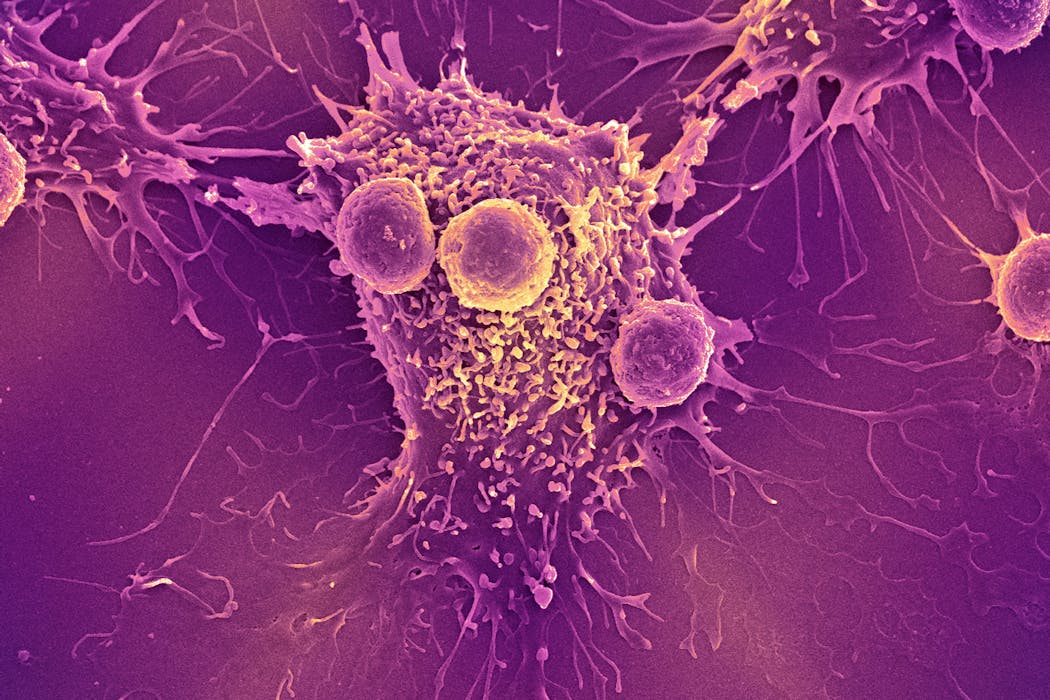
Based on this finding, we hypothesized that mRNA vaccines designed to target the SARS-CoV-2 virus that causes COVID-19 might also have antitumor effects.
So we looked at clinical outcomes for more than 1,000 late-stage melanoma and lung cancer patients treated with a type of immunotherapy called immune checkpoint inhibitors. This treatment is a common approach doctors use to train the immune system to kill cancer. It does this by blocking a protein that tumor cells make to turn off immune cells, enabling the immune system to continue killing cancer.
Remarkably, patients who received either the Pfizer or Moderna mRNA-based COVID-19 vaccine within 100 days of starting immunotherapy were more than twice as likely to be alive after three years compared with those who didn’t receive either vaccine. Surprisingly, patients with tumors that don’t typically respond well to immunotherapy also saw very strong benefits, with nearly fivefold improvement in three-year overall survival. This link between improved survival and receiving a COVID-19 mRNA vaccine remained strong even after we controlled for factors like disease severity and co-occurring conditions.
To understand the underlying mechanism, we turned to animal models. We found that COVID-19 mRNA vaccines act like an alarm, triggering the body’s immune system to recognize and kill tumor cells and overcome the cancer’s ability to turn off immune cells. When combined, vaccines and immune checkpoint inhibitors coordinate to unleash the full power of the immune system to kill cancer cells.
University of Florida Health pediatric oncologist Elias Sayour, who led the research, explains that mRNA vaccines that are not specific to a patient’s cancer can ‘wake up the sleeping giant that is the immune system to fight cancer.’
Why it matters
Immunotherapy with immune checkpoint inhibitors has revolutionized cancer treatment over the past decade by producing cures in many patients who were previously considered incurable. However, these therapies are ineffective in patients with “cold” tumors that successfully evade immune detection.
Our findings suggest that mRNA vaccines may provide just the spark the immune system needs to turn these “cold” tumors “hot.” If validated in our upcoming clinical trial, our hope is that this widely available, low-cost intervention could extend the benefits of immunotherapy to millions of patients who otherwise would not benefit from this therapy.
Unlike vaccines for infectious diseases, which are used to prevent an infection, therapeutic cancer vaccines are used to help train the immune systems of cancer patients to better fight tumors.
In contrast, COVID-19 mRNA vaccines do not need to be personalized, are already widely available at low or no cost around the globe, and could be administered at any time during a patient’s treatment. Our findings that COVID-19 mRNA vaccines have substantial antitumor effects bring hope that they could help extend the anti-cancer benefits of mRNA vaccines to all.
What’s next
In pursuit of this goal, we are preparing to test this treatment strategy in patients with a nationwide clinical trial in people with lung cancer. People receiving an immune checkpoint inhibitor will be randomized to either receive a COVID-19 mRNA vaccine during treatment or not.
This study will tell us whether COVID-19 mRNA vaccines should be included as part of the standard of care for patients receiving an immune checkpoint inhibitor. Ultimately, we hope that this approach will help many patients who are treated with immune therapy, and especially those who currently lack effective treatment options.
This work exemplifies how a tool born from a global pandemic may provide a new weapon against cancer and rapidly extend the benefits of existing treatments to millions of patients. By harnessing a familiar vaccine in a new way, we hope to extend the lifesaving benefits of immunotherapy to cancer patients who were previously left behind.
The Research Brief is a short take on interesting academic work.
Adam Grippin receives funding from the National Cancer Institute (NCI), the American Brain Tumor Association, and the Radiological Society of North America. He is an inventor on patents related to mRNA therapeutics that are under option to license by iOncology. He is currently employed by the MD Anderson Cancer Center and consults for Sift Biosciences.
Christiano Marconi works for the University of Florida. He receives funding from the UF Health Cancer Center.
« Cassos ». Derrière ce mot devenu banal se cachent des vies : parfois celles de jeunes ruraux précaires, sans diplôme, qui se sentent (à juste titre) disqualifiés par la société. À travers leurs récits se dessine le portrait d’une France invisible, marquée par un stigmate, une domination sociale et une fiction méritocratique.
« J’ai une vie de cassos. »
C’est par cette phrase que Loïc, jeune Charentais tout juste sorti de prison, se décrit lui-même. « Cassos » n’est pas une fonction objective, c’est un stigmate qui finit parfois par s’intérioriser, mais qui semble surtout devenir du langage ordinaire. Ce mot de honte ne semble plus seulement renvoyer au « cas social » imaginé par les classes moyennes et supérieures (qui sont les premiers à avoir utilisé pendant longtemps cette expression), il semble également (et peut-être surtout) se jouer au sein des classes populaires, face à une expérience vécue de la précarité, de la relégation et de l’isolement.
Dans la Vie de cassos. Jeunes ruraux en survie (2023), j’ai tenté de saisir le poids du stigmate et de la domination chez des jeunes dont on ne semble pas vouloir dans les territoires ruraux. Cet ouvrage est issu d’une enquête de sociologie auprès d’une centaine de jeunes sans diplôme vivant en milieu rural.
Ces derniers vivent dans une société qui ne leur laisse pas de prise sur leur destin. Le terme de « cassos » est une clé de lecture du rapport entre domination, identité et survie dans nos campagnes contemporaines.
Le « cassos » : un miroir de la société néolibérale
Ce que révèle cette enquête, c’est la fonction politique du stigmate. En désignant les plus précaires comme « inadaptés », voire comme des « assistés », la société contemporaine entretient la fiction méritocratique : si certains réussissent, c’est que les autres n’ont pas voulu jouer le jeu. Ce terme de « cassos » condense cette morale néolibérale en accusant les précaires d’être responsables de leur précarité et les stigmatisés d’être responsables de leur stigmate.
En outre, cette assignation peut être lue dans l’autre sens et devenir un miroir tendu à la société actuelle.
Derrière les visages d’Érika, de Lucas, de Safâ ou de Vincent, c’est la normalisation de la précarité qui se lit. En ce sens, « cassos » n’est pas un type social, mais une condition. Celle de quiconque se trouve disqualifié dans un monde où le diplôme, l’emploi stable et la reconnaissance deviennent des privilèges de plus en plus rares et difficiles d’accès. Ainsi, là où les discours politiques célèbrent l’autonomie et la responsabilisation des jeunes, ces jeunes font l’expérience de la dépendance contrainte : aux petits boulots, à l’aide publique et à la famille.
Le risque à terme est que cette « galère » ne soit pas seulement une « phase », mais se structure en condition d’existence à part entière. Ceux que l’on appelle les « cassos » ne sont pas des marginaux extérieurs à la société : ils en sont pleinement issus, et – si on prend le temps de les écouter – ils en révèlent les mécanismes avec une grande lucidité. « Cassos » cesse alors d’être une insulte et devient un diagnostic des symptômes de domination contemporaine.
Jeunes ruraux en galère : la pointe extrême de la domination
Louna, 22 ans, se souvient :
« Je voulais être archéologue, mais on m’a vite fait comprendre qu’il fallait garder les pieds sur terre. »
Sa phrase renvoie à la logique scolaire qui produit des « inégalités justes », c’est-à-dire présentées comme légitimes au nom du « mérite ». Pour ces jeunes, l’école n’est pas vraiment une promesse d’ascension, mais plutôt les débuts d’un parcours qui sera marqué par la honte sociale.
En quittant l’école (puisque tous les enquêtés sont des « décrocheurs scolaires »), ils tentent de s’investir dans un marché de l’emploi qui ne veut pas non plus d’eux. Les enquêtés finissent très souvent désaffiliés, car s’ils « touchent » à de l’emploi, leur insertion se fait généralement sans stabilité, dans la précarité et donc sans reconnaissance sociale ni autonomie par le travail. Pour financer son quotidien, on vend ses meubles, on mange de la semoule uniquement pour faire des économies, on pratique une prostitution de « débrouille », et parfois aussi on revend de la drogue. Comme pour Loïc :
« C’était pas un choix, c’était une nécessité. »
Cette galère n’est pas un écart à la norme ou à l’honorabilité, mais une condition d’existence ordinaire, marquée par la domination. Ces jeunes, précaires et stigmatisés comme « cas sociaux », incarnent cette pointe extrême de la domination en subissant à la fois le déclassement scolaire, le marché du travail fragmenté et l’interconnaissance locale (le fait que les habitants se connaissent directement ou indirectement, ne serait-ce que de réputation). Ce fut notamment le cas de Charlotte, 19 ans, qui, après s’être fait arrêter par la gendarmerie pour avoir consommé du cannabis au collège, est devenue le bouc émissaire du village :
« À partir du moment qu’il y avait une connerie de faite dans le village c’était moi. […] On a dû déménager à cause de ça avec ma mère et mon frère. »
Le stigmate comme langage
Ce qui frappe aussi, c’est la banalisation du terme « cassos » dans le langage commun. Non pas que les enquêtés soient « objectivement » des « cas sociaux » (cela n’aurait pas de sens), mais ils sont vulnérables à l’image que le monde extérieur fait d’eux. Dans les bouches de certains agents des services publics, comme dans celles des habitants, ce terme désigne ceux que l’on ne veut plus voir : « les familles à problèmes » ; « ceux du fond du bourg », me raconte un conseiller municipal d’une petite commune de Gironde. Ce dernier rajoute :
« C’est pas les bons [jeunes] qui partent […]. »
Mais plus que cela, les jeunes eux-mêmes peuvent s’en emparer ; « Y’a qu’un cassos comme moi pour faire ça », me dit un enquêté en riant. Il n’y a, certes, pas de retournement de stigmate comme cela a pu être le cas avec les mouvements queer, mais le dire peut être un moyen de se nommer avant d’être nommé : de retourner la honte en ironie acide. D’ailleurs, les travaux sur la stigmatisation montrent que cette dernière fonctionne d’autant mieux qu’elle est incorporée par les dominés. En effet, quand elles intériorisent les jugements négatifs qu’on porte sur elles, les personnes dominées finissent par y croire et se les appliquer, reproduisant ainsi la domination.
Ici, le « cassos » est un marqueur d’identité négative qui signale l’appartenance d’un individu à une « minorité du pire » au sein même des classes populaires. Pour ceux qui ne sont pas désignés comme tels, il convient alors de se distancer. Une mère de famille m’explique ainsi refuser que son fils aille chez un ami parce que « chez eux, ça sent le cassos ». En réalité, ce refus est avant tout en lien avec la réputation locale puisque ladite famille est « connue pour les mauvaises raisons ». En clair, être cassos c’est être expulsé de l’honorabilité locale : celle de la respectabilité, du travail, mais aussi du bon voisinage.
Les enquêtés ont d’ailleurs conscience de ne pas « [avoir] les bonnes cartes en main », ils le répètent souvent. Mais le mot « cassos » reste stigmatisant et surtout insultant. Enzo, 18 ans nous raconte l’un de ces évènements :
« Y’a une fois j’étais à la caisse du Leclerc et j’ai pas fait gaffe, mais je passe devant un mec. Là, le mec prend les nerfs et me dit “Nanani, marre des cassos” ou je sais pas quoi. J’ai serré, vraiment, j’ai cru que j’allais le démarrer. »
« Sans rien »
Cette jeunesse « sans monde ; sans rien » est privée d’espaces légitimes d’existence. Ces jeunes ne se reconnaissent ni dans les classes populaires « honorables » – qu’a pu, par exemple, étudier le sociologue Benoît Coquard en 2019 – ni dans une culture juvénile mainstream. Ils n’ont pas de place dans l’espace public local, ne se perçoivent ni comme « beaufs » ni comme « kékés » et se refusent à devenir des « assistés ».
Leur quotidien est fait d’instabilité entre de l’inactivité (beaucoup) et des emplois en intérim ou du « travail au black ». Le quotidien et l’expérimentation de la jeunesse sont souvent sacrifiés pour se « débrouiller » :
« Je sais ce que j’ai fait, j’ai mis de côté tout plein de choses […] en me disant que c’est un pari sur l’avenir. […] C’est pas un regret, j’avais pas trop le choix. » (Sheyenne, 19 ans.)
À la différence des « gars du coin » étudiés il y a un quart de siècle par le sociologue Nicolas Renahy, ces jeunes ruraux ne peuvent compter ni sur la solidarité locale ni sur leur travail. Tout d’abord puisqu’ils ne font pas partie des jeunes « honorables », mais aussi parce que cette solidarité et l’accès à l’emploi des jeunes se précarise de plus en plus. Ils sont marqués par une triple absence : de stabilité, de réseau et de reconnaissance. Ils sont ceux que le monde social rejette comme inutiles.
En outre, le rural renforce l’isolement symbolique de ces jeunes. Dans les villages où « tout se sait » et où tout le monde se connaît, ne serait-ce que de vue ou de réputation, la réputation négative se transmet comme un héritage.
Clément Reversé a reçu des financements de la région Nouvelle-Aquitaine.
What will the world look like in 2100? This question is central to a new free online game called FutureGuessr. Launched in June 2025, this new form of climate communication combines gameplay with visual climate imagery and encourages players to explore future scenarios.
Players are shown an image from the future and asked to guess the location. Information is revealed about how close they are, what the climate change consequences would be, what will happen if no action is taken and how things could be different.
Available to play in English and French, the game takes inspiration from GeoGuessr, the online geography game that has enabled millions of people to travel virtually from their phone and guess where they are. FutureGuessr uses pictures to give users a visual representation of how familiar landscapes will look in 2100 as a result of climate change.
FutureGuessr is part of a broader trend in the use of games in climate communication. Creative board games and video games can reach diverse audiences and communicate climate change in serious, playful, thought-provoking and surprising ways.
Games played for pleasure, like Game Changers (an online story-based game produced by Megaverse) can generate conversations on climate actions by creating an innovative visual game world and integrating climate change into the plot. Collective decision making in the game allows players to learn and discuss climate change with others.
Our research suggests that this helps players critique corporate power, learn about greenwashing and enjoy an aesthetic experience. In the world of board games, Daybreak challenges players to cooperate and stop climate change by trying out different technical, social and economic projects.
Play with purpose
Serious games go beyond entertainment to connect with real-world problems. The most successful ones are fun while engaging with social, environmental and economic issues that players really care about.
Games can support players in thinking about becoming disaster ready and building disaster resilience. A game called The Flood Recovery Game is being used by researchers to identify disaster recovery gaps. It can also help policymakers create more comprehensive strategies to address flooding.
In terms of climate education, interactive in-person game-based workshops like the Climate Fresk already connects millions of people with science from the Intergovernmental Panel on Climate Change (IPCC), the UN body that assesses the science on climate change. These three-hour workshops also enable people to consider how they might act to create positive climate solutions.
FutureGuessr is a game for pleasure with a serious purpose: to make climate change data visible. Produced in partnership with Résau Action Climat, a network of non-governmental organisations, it shows the negative effects of climate change in familiar locations such as Antarctica and Easter Island.
Research on visual climate communication found that images showing climate impacts such as extreme weather and floods moved people, especially when it featured localised impacts. There is a balance to be struck between highlighting local relevance and linking to the bigger picture. Showing the future of recognisable places we care about might be powerful in building support for climate action.
But photographs from the future don’t exist. FutureGuessr uses images generated from a bespoke AI model which combines maps with photographs of locations and data from IPCC reports.
It is important to consider not just the message, but the medium, and the environmental effects of game production. The Playing for the Planet Alliance has produced a carbon calculator for the industry and offers awards and game jams to support the video game industry to take climate action.
Now that the images have been created, an effective use of FutureGuessr might be to generate conversations about the effects of climate change, and about how research, game design and communication can be carried out in the most environmentally sensitive way.
People won’t act just based on facts alone. The development of creative ways to communicate the climate emergency that connect people with why this matters is essential for people and communities. Already, some games are making an increasingly visible contribution to the conversation but we need greater transparency in the environmental impacts of game production, and consideration of how to minimise these impacts through visible commitments to sustainability as modelled by Daybreak.
FutureGuessr demonstrates value of bringing games and visual climate communication together to raise awareness of how climate change affects landscapes everywhere on the planet. We all need to play for the planet. Our research shows that whether played for purpose or pleasure, games can create space for serious conversations about how to tackle climate change.
Don’t have time to read about climate change as much as you’d like?
Lynda Dunlop has received funding from the Economic and Social Research Council, the Education Endowment Foundation, British Educational Research Association, the Engineering and Physical Sciences Research Council, the Templeton World Charity Foundation, Wellcome and UK Research and Innovation.
Steven Forrest works for the University of Hull. He has received funding from the Aviva Foundation and Ferens Education Trust to carry out serious gaming projects.
Elle est à l’origine de 7 % des décès en France. La pollution atmosphérique est un fléau invisible, mais bien réel. Mais pour s’attaquer à ce problème, il faut d’abord le mesurer.
C’est le travail de Cécile Tassel (Doctorante à l’Université Grenoble Alpes) et Gaëlle Uzu (Directrice de recherche à l’IRD). Ces géochimistes de l’atmosphère sont à l’origine d’une étude inédite tout juste parue dans Nature. Elles y utilisent un nouvel indicateur pour mesurer les dommages des particules fines : le potentiel oxydant. En réunissant des données issues de 43 sites dans toute l’Europe, il s’agit de la base de données la plus complète jamais réalisée sur ce sujet.
The Conversation : Jusque-là, les particules fines et la pollution atmosphérique étaient avant tout mesurées en fonction de leur diamètre et leur concentration massique, avec les PM10 (masse cumulée de toutes les particules inférieures à 10 µm) et les PM2,5 (particules inférieures à 2,5 µm). Quelles sont les limites de ces mesures ?
Gaëlle Uzu et Cécile Tassel : Effectivement. Depuis 1996, en France, la loi sur l’air et l’utilisation rationnelle de l’énergie (dite loi LAURE) a rendu obligatoire la mesure des particules fines, et l’indicateur réglementaire de référence a depuis lors été la concentration massique des particules en fonction de leur diamètre. La France était à l’époque pionnière et l’UE s’est beaucoup inspirée de cette loi pour élaborer la directive européenne. Ces données sont bien sûr capitales, car nos poumons sont censés ne voir entrer et sortir que des flux de gaz lors de la respiration. Mais ces particules fines, de par leur taille, peuvent entrer dans les poumons et perturber le fonctionnement de ces organes. La taille est donc bien sûr très importante, comme la fréquence répétée d’exposition à ces particules.
Mais ces indicateurs ne nous disent pas tout. Car il y a des particules d’origine naturelle (celles des embruns marins, des volcans, des forêts, avec les végétaux qui émettent des polyols), et d’autres d’origine humaine, émises notamment par le trafic routier.
Donc si on regarde seulement la concentration massique, on peut trouver qu’un bord de mer a la même concentration de particules fines que Grenoble, une ville notoirement polluée en hiver de par sa position géographique de fond de vallée. Seulement, en bord de mer, ces particules seront essentiellement du sel, du magnésium qui auront plutôt un effet hydratant bénéfique sur nos poumons, tandis qu’en ville ce sera plutôt des microgrammes émis par le trafic routier, qui n’auront pas du tout le même effet.
Pour avoir donc plus d’informations sur les caractéristiques physiques et chimiques des particules et leur dangerosité pour la santé, nous avons utilisé un autre indicateur : le potentiel oxydant.
Cet indicateur permet de mesurer le stress oxydatif dans les poumons. Ce stress est un mécanisme biologique qui signale un déséquilibre entre la quantité d’antioxydants qui nous protègent et les espèces réactives de l’oxygène, qui peuvent être libérées ou générées dans les poumons suite à l’inhalation de particules atmosphériques. En cas d’excès, un stress oxydatif croissant peut survenir, induire une inflammation des cellules pulmonaires et la mort de celles-ci. Il s’agit d’un mécanisme biologique clé dans l’apparition de maladies cardiovasculaires et respiratoires, qui font partie des premières causes de mortalité en France aujourd’hui.
Du côté des institutions, ce nouvel indicateur a été recommandé dans la nouvelle Directive Européennes sur la qualité de l’air fin 2024.
À vous écouter, tout cela paraît limpide. Pourquoi alors cet indicateur est-il si peu utilisé ?
G. U. et C. T. : Déjà, c’est un indicateur relativement récent. Il a d’abord été utilisé dans des travaux de chimistes japonais et américains au début des années 2000, mais leurs études sont restées confidentielles pendant des années. Il faut en fait attendre 2015 pour que des liens soient faits entre d’un côté la santé humaine et de l’autre les sources de pollution. À partir de là, on a pu intégrer cet indicateur dans des études épidémiologiques un peu plus larges. On a également pu modéliser les sources au niveau européen.
Comme ces mesures sont relativement nouvelles, il n’existe pas encore de protocole standardisé pour mesurer le stress oxydatif, donc les résultats ne sont pas toujours comparables d’une étude à l’autre. Pour avoir cependant une comparaison à grande échelle, nous avons réalisé nos 11 500 mesures en provenance de toute l’Europe avec le même protocole. Concernant les antioxydants que l’on mesure, sur lequel il n’y a pas toujours non plus de consensus, nous avons décidé de réaliser deux types de test qui sont représentatifs de deux grandes familles d’antioxydants pulmonaires, et qui sont également les plus utilisés à ce jour dans la recherche.
Enfin, il n’existe pas encore d’appareil automatisé de mesure du potentiel oxydant en temps réel. Par ailleurs, modéliser cet indicateur est très coûteux en calcul.
Si l’on regarde maintenant du côté des sources de stress oxydatif, que constate-t-on ?
G. U. et C. T. : Les deux principales sont le trafic routier et le chauffage au bois. Pour le chauffage au bois, il est facile à détecter car quand on brûle du bois, on brûle de la cellulose. Or quand la cellulose brûle, elle crée des molécules de levoglucosan, et on ne connaît pas d’autres sources que la combustion du bois ou du charbon de bois qui en émettent. Donc quand on constate cette présence on sait que c’est lié au chauffage au bois. Cela arrive généralement entre octobre et mars. Il arrive très rarement qu’on en mesure en été, et ce sera alors sans doute plutôt dû à des barbecues, mais cela reste très négligeable. Le stress oxydatif lié au trafic routier est lui présent en continu, avec bien sûr des pics lors des vacances scolaires par exemple, ou en fonction des jours de la semaine.
Avec toutes ces mesures d’ampleur inédite à l’échelle d’un continent, quels constats avez-vous pu faire qui étaient impossibles avec la seule mesure de la taille et de la concentration des particules fines ?
G. U. et C. T. : On a par exemple vu que les niveaux à Athènes, où le préleveur est installé en face de l’Acropole, dans une zone plutôt boisée avait une concentration massique à peu près équivalente à celle d’une école de zone périurbaine d’une vallée alpine. Mais le potentiel oxydant est beaucoup plus élevé dans cette zone périurbaine du fait de sa topographie notamment, dans une vallée.
On a pu aussi constater que certains pics de concentration n’étaient pas tellement dus à des émissions locales, mais plutôt à des phénomènes météorologiques comme des épisodes de poussières sahariennes. En tant que tel, le potentiel oxydant d’un microgramme de poussière du Sahara n’est pas très élevé, c’est plutôt l’accumulation qui est néfaste. Nos poumons ne sont pas faits pour recevoir de grandes quantités de poussières de sable par mètre cube d’air inhalé pendant plusieurs jours, ça les irrite.
Enfin, de façon plus globale, nous observons des niveaux de potentiel oxydant beaucoup plus élevés dans les sites de trafic proches des grandes voies routières par rapport aux sites ruraux ou même urbains. Ces différences ne sont pas aussi marquées lorsqu’on mesure seulement la concentration massique.
Mais la bonne nouvelle, c’est que l’on peut jouer sur les deux sources d’émissions principales à savoir le chauffage au bois non performant et le trafic routier. Nos simulations montrent qu’une réduction d’au moins 15 % des émissions de chacune de ces deux sources permet d’abaisser les niveaux urbains moyens de potentiel oxydant au niveau de ceux observés dans les zones urbaines les moins polluées.
Après cette publication d’ampleur inédite, quelles sont les prochaines étapes pour mieux comprendre le stress oxydatif, et lutter contre la pollution atmosphérique ?
G. U. et C. T. : Nous avons, en publiant notre étude, proposé des valeurs cibles de potentiel oxydant à atteindre pour l’Europe et mis à disposition de tous notre base de données avec le code qui nous a permis de faire nos simulations de baisse des émissions. Elles peuvent donc désormais être répliquées à des niveaux plus locaux, pour fixer certains objectifs, réfléchir aux stratégies à mettre en place.
Plusieurs études tâchent également de modéliser spatialement le potentiel oxydant, mais c’est un volet de recherche toujours en cours. Des prototypes de mesures en ligne du potentiel oxydant sont aussi développés dans plusieurs laboratoires, dont l’Institut des Géosciences de l’Environnement, mais leur sensibilité ne dépasse pas encore les mesures en laboratoire.
Cécile Tassel est membre de l’Institut des Géosciences de l’Environnement (IGE) et de l’Institut pour l’Avancée des Biosciences (IAB). Sa thèse est financée sur les projets IDEX Université Grenoble Alpes (UGA) MOBIL’AIR/ACME.
Gaëlle Uzu a reçu des financements de l’Agence Nationale de la Recherche, de l’Europe, de l’Université Grenoble Alpes, et de sa fondation, d’Actis-FR et de l’Ademe.