Source: The Conversation – Global Perspectives – By Rachel Fitzgerald, Associate Professor and Deputy Associate Dean (Academic), Faculty of Business, Economics and Law, The University of Queensland
Artificial intelligence is rapidly becoming an everyday part of lives. Many of us use it without even realising, whether it be writing emails, finding a new TV show or managing smart devices in our homes.
But apart from a handful of computing-focused and other STEM programs, most Australian university students do not receive formal tuition in how to use AI critically, ethically or responsibly.
Here’s why this is a problem and what we can do instead.
But this does not teach students how these tools work or what responsible use involves.
Using AI is not as simple as typing questions into a chat function. There are widely recognised ethical issues around its use including bias and misinformation. Understanding these is essential for students to use AI responsibly in their working lives.
So all students should graduate with a basic understanding of AI, its limitations, the role of human judgement and what responsible use looks like in their particular field.
We need students to be aware of bias in AI systems. This includes how their own biases could shape how they use the AI (the questions they ask and how they interpret its output), alongside an understanding of the broader ethical implications of AI use.
For example, does the data and the AI tool protect people’s privacy? Has the AI made a mistake? And if so, whose responsibility is that?
What about AI ethics?
The technical side of AI is covered in many STEM degrees. These degrees, along with philosophy and psychology disciplines, may also examine ethical questions around AI. But these issues are not a part of mainstream university education.
This is a concern. When future lawyers use predictive AI to draft contracts, or business graduates use AI for hiring or marketing, they will need skills in ethical reasoning.
Ethical issues in these scenarios could include unfair bias, like AI recommending candidates based on gender or race. It could include issues relating to a lack of transparency, such as not knowing how an AI system made a legal decision. Students need to be able to spot and question these risks before they cause harm.
In healthcare, AI tools are already supporting diagnosis, patient triage and treatment decisions.
For example, if a teacher relies on AI carelessly to draft a lesson plan, students might learn a version of history that is biased or just plain wrong. A lawyer who over-relies on AI could submit a flawed court document, putting their client’s case at risk.
How can we do this?
There are international examples we can follow. The University of Texas at Austin and University of Edinburgh both offer programs in ethics and AI. However, both of these are currently targeted at graduate students. The University of Texas program is focused on teaching STEM students about AI ethics, whereas the University of Edinburgh’s program has a broader, interdiscplinary focus.
Implementing AI ethics in Australian universities will require thoughtful curriculum reform. That means building interdisciplinary teaching teams that combine expertise from technology, law, ethics and the social sciences. It also means thinking seriously about how we engage students with this content through core modules, graduate capabilities or even mandatory training.
It will also require investment in academic staff development and new teaching resources that make these concepts accessible and relevant to different disciplines.
Government support is essential. Targeted grants, clear national policy direction, and nationally shared teaching resources could accelerate the shift. Policymakers could consider positioning universities as “ethical AI hubs”. This aligns with the government-commissioned 2024 Australian University Accord report, which called for building capacity to meet the demands of the digital era.
Today’s students are tomorrow’s decision-makers. If they don’t understand the risks of AI and its potential for error, bias or threats to privacy, we will all bear the consequences. Universities have a public responsibility to ensure graduates know how to use AI responsibly and understand why their choices matter.
The authors do not work for, consult, own shares in or receive funding from any company or organisation that would benefit from this article, and have disclosed no relevant affiliations beyond their academic appointment.
I once leapt out of a train carriage because two strangers were loudly discussing the ending of the last Harry Potter book. Okay – I didn’t leap, but I did plug my ears and flee to another carriage.
Recently, I found myself in a similar predicament, trapped on a bus, entirely at the mercy of two passengers dissecting the Severance season two finale.
But not everyone shares my spoiler anxiety. I have friends who flip to the last page of a book before they’ve read the first one, or who look up the ending before hitting play. According to them, they simply need to know.
So why do some of us crave surprise and suspense, while others find comfort in instant resolution?
What’s in a spoiler?
Spoilers have become a cultural flashpoint in the age of streaming, social media and shared fandoms.
Researchers define “spoiler” as undesired information about how a narrative’s arc will conclude. I often hear “spoilers!” interjected mid-sentence, a desperate protest to protect narrative ignorance.
Hitchcock’s twist-heavy Psycho elevated spoiler sensitivity. Its release came with an anti-spoilers policy including strict viewing times, lobby warnings recorded by the auteur himself, and even real policemen urging “total enjoyment”. A bold ad campaign implored audiences against “cheating yourselves”.
The twists were fiercely protected.
Even the Star Wars cast didn’t know Darth Vader’s paternity twist until premiere night. Avenger’s Endgame filmed multiple endings and used fake scripting to mislead its stars. And Andrew Garfield flat-out lied about his return to Spider-Man: No Way Home – a performance worthy of an Oscar – all for the sake of fan surprise and enjoyment.
But do spoilers actually ruin the fun, or just shift how we experience it?
The satisfaction of a good ending
In 2014, a Dutch study found that viewers of unspoiled stories experienced greater emotional arousal and enjoyment. Spoilers may complete our “mental models” of the plot, making us less driven to engage, process events, or savour the unfolding story.
But we are also likely to overestimate the negative effect of a spoiler on our enjoyment. In 2016, a series of studies involving short stories, mystery fiction and films found that spoiled participants still reported high levels of enjoyment – because once we’re immersed, emotional connection tends to eclipse what we already know.
But suspense and enjoyment are complex bedfellows.
American media psychology trailblazer Dolf Zillmann said that suspense builds tension and excitement, but we only enjoy that tension once the ending lands well.
The thrill isn’t fun while we’re hanging in uncertainty – it’s the satisfying resolution that retroactively makes it feel good.
That could be why we scramble for an “ending explained” when a film or show drops the ball on closure. We’re trying to resolve uncertainty and settle our emotions.
Spoilers can also take the pressure off. A 2009 study of Lost fans found those who looked up how an episode would end actually enjoyed it more. The researchers found it reduced cognitive pressure, and gave them more room to reflect and soak in the story.
Spoilers put the audience back in the driver’s seat – even if filmmakers would rather keep hold of the wheel. People may seek spoilers out of curiosity or impatience, but sometimes it’s a quiet rebellion: a way to push back against the control creators hold over when and how things unfold.
That’s why spoilers are fertile ground for power dynamics. Ethicists even liken being spoiled to kind of moral trespass: how dare someone else make that decision for me?!
But whether you avoid spoilers or seek them out, the motive is often the same: a need to feel in control.
Shaping your emotions
Spoiler avoiders crave affect: they want emotional transportation.
When suspense is part of the pleasure, control means choosing when and how that knowledge lands. There’s a mental challenge to be had in riding the story as it unfolds, and a joy in seeing it click into place.
That’s why people get protective, and even chatter about long-aired shows can spark outrage. It’s an attempt to police the commentary and preserve the experience for those still waiting to be transported.
Spoiler seekers want control too, just a different kind. They’re not avoiding emotion, they’re just managing it. A spoiler affords control over our negative emotions, but also softens the blow, and inoculates us against anxiety.
Psychologists dub this a “non-cognitive desensitisation strategy” to manage surprise, a kind of “emotional spoiler shield” to protect our attachments to shows and characters, and remind us that TV, film and book narratives are not real when storylines hit close to home.
Knowing what happens turns into a subtle form of self-regulation.
So, what did I do when Severance spoilers floated by? Did I get off the bus? Nope, I stayed put and faced the beast. As I tried to make sense of the unfamiliar plot points (The macrodata means what? Mark stays where?), I found the unexpected chance to dive deeper.
Maybe surprise is not the sum of what makes something entertaining and worth engaging with. Spoiler alert! It’s good to have an end to journey towards, but it’s the journey that matters, in the end.
Anjum Naweed does not work for, consult, own shares in or receive funding from any company or organisation that would benefit from this article, and has disclosed no relevant affiliations beyond their academic appointment.
Tourists in Kathmandu are tempted everywhere by advertisements for trekking expeditions to Everest Base Camp. If you didn’t know better, you might think it’s just a nice hike in the Nepalese countryside.
Typically the lower staging post for attempts on the summit, the camp is still 5,364 metres above sea level and a destination in its own right. Travel agencies say no prior experience is required, and all equipment will be provided. Social media, too, is filled with posts enticing potential trekkers to make the iconic journey.
But there is a real risk of creating a false sense of security. An exciting adventure can quickly turn into a struggle for survival, especially for novice mountaineers.
Nevertheless, Sagarmatha National Park is deservedly popular for its natural beauty and the allure of the world’s highest peak, Chomolungma (Mount Everest). It is also home to the ethnically distinctive Sherpa community.
Consequently, the routes to Everest Base Camp are among the busiest in the Himalayas, with nearly 60,000 tourists visiting the area each year. There are two distinct trekking seasons: spring (March to May) and autumn (September to October).
High mountains require everyone to be properly prepared. Events which under normal conditions might be a minor inconvenience can be magnified in such an environment and pose a serious risk.
Even at the start of the trek in Lukla (2,860m), one is exposed to factors that can directly or indirectly affect one’s health, especially altitude mountain sickness or unfamiliar bacteria.
We interviewed 24 trekkers in May this year, as well as 60 residents and business owners in May 2023, to explore some of the safety issues anyone considering heading to base camp should be aware of.
Life at high altitude
First, it’s vital to choose goals within one’s technical and physical capabilities. While the human body can adapt to altitudes of up to 5,300m, the potential risk of altitude mountain sickness can occur at only 2,500m – lower than Lukla.
Proper acclimatisation above 3,000m means ascending no more than 500m a day and resting every two to three days at the same altitude. The optimal (though rarely followed) approach is the “saw tooth system” of climbing during the day but descending to sleep at a lower level.
Residents of the Khumbu region (on the Nepalese side of Everest) are familiar with the problem of tourists not acclimatising, or not paying attention to their surroundings. As one hotel owner said, pointing to a trekker setting out:
He’s going uphill and it’s already late. It’s going to get dark and cold soon. He won’t make it to the next settlement. We have to report this to the authorities or go after him ourselves.
Inexperienced trekkers should hire a local guide. Several we interviewed had needed medical evacuation, including a woman in her mid-20s who had to leave base camp after one night. She found her guides – not locals – online. But they never checked her vital signs during the trek:
[The doctors] said that I had high-altitude pulmonary edema […] it was just really important to come down the elevation. And if I had tried to go higher, it probably would have been really bad.
Health checks throughout the trek are imperative. This includes assessing the four main symptoms of altitude mountain sickness: headache, nausea, dizziness and fatigue. If they appear, the trekker shouldn’t go higher and might even need to descend.
A Sherpa woman at the market in Namche Bazar, Nepal: respect the culture, eat local food. Paula Bronstein/Getty Images
Take time to adapt
Using a reputable local trekking agency might be more expensive, but it will help ensure safety and also familiarise the visitor with the local culture, helping avoid negative impacts on the host community.
Too often, the primary goal of trekkers is a photo on the famous rock at base camp. Once obtained, many simply take a helicopter back to Kathmandu. As a helicopter tour agency owner said:
They don’t want to get back on their feet. The goal, after all, has been achieved. In general, tourists used to be much better prepared. Now they know they can return by helicopter.
Helicopter travel can be dangerous on its own, of course. But this tendency to view the trek as a one-way trip also affects host-guest relations and can irritate local communities.
It’s also important to monitor your food and drink intake and watch for signs of food poisoning. Diarrhoea at high altitudes is particularly dangerous because it leads to rapid dehydration – hard to combat in mountain conditions.
Low air pressure and reduced oxygen exacerbate the condition, weakening the body’s ability to recover. Also, the symptoms of dehydration can resemble altitude mountain sickness.
When travelling in other climate zones or countries with different sanitary standards, there is inevitable contact with strains of bacteria not present in one’s natural microbiome.
A good solution is to spend a few days naturally adapting to bacterial flora at a lower altitude in Nepal before heading to the mountains. Also, try to eat the local food, such as daal bhat, Nepal’s national dish. According to one hotel owner in Pangboche:
Tourists demand strange food from us – pizza, spaghetti, Caesar salad – and then are angry that it doesn’t taste the way they want. This is not our food. You should probably eat local food.
Most of the trekkers we interviewed during this spring season reported experiencing gastrointestinal issues, often for several days.
In the end, the commonest cause of failure or accident in the mountains is overestimating one’s abilities – what has been called “bad judgement syndrome” – when the route is too hard, the pace too fast, or there’s been too little time spent acclimatising.
A simple solution: walk slowly and enjoy the views.
Michal Apollo receives funding from the National Science Centre NCN Poland, the small-scale project awarded by the Institute of Earth Sciences, and the Research Excellence Initiative of the University of Silesia in Katowice. He is affiliated with the Global Justice Program, Yale University, and Academics Stand Against Poverty.
Heike Schanzel does not work for, consult, own shares in or receive funding from any company or organisation that would benefit from this article, and has disclosed no relevant affiliations beyond their academic appointment.
Breakups hurt. Emotional and psychological distress are common when intimate relationships break down. For some people, this distress can be so overwhelming that it leads to suicidal thoughts and behaviours.
This problem seems especially the case for men. Intimate partner problems including breakups, separation and divorce feature in the paths to suicide among one in three Australian men aged 25 to 44 who end their lives.
Men account for three in every four suicides in many nations worldwide, including Australia. So improving our understanding of links between relationship breakdown and men’s suicide risk has life-saving potential.
Our research, published today, is the first large-scale review of the evidence to focus on understanding men’s risk of suicide after a breakup. We found separated men were nearly five times more likely to die by suicide compared to married men.
What did we find?
We brought together findings from 75 studies across 30 countries worldwide, involving more than 106 million men.
We focused on understanding why relationship breakdown can lead to suicide in men, and which men are most at risk. We might not be able to prevent breakups from happening, but we can promote healthy adjustment to the stress of relationship breakdown to try and prevent suicide.
Overall, we found divorced men were 2.8 times more likely to take their lives than married men.
For separated men, the risk was much higher. We found that separated men were 4.8 times more likely to die by suicide than married men.
Most strikingly, we found separated men under 35 years of age had nearly nine times greater odds of suicide than married men of the same age.
Some men’s difficulties regulating the intense emotional stress of relationship breakdown can play a role in their suicide risk. For some men, the emotional pain tied to separation – deep sadness, shame, guilt, anxiety and loss – can be so intense it feels never-ending.
Overall, our research found relationship breakdown may lead to suicide for some men because of the complex interaction between the individual (emotional distress) and interpersonal (changes in their social network and availability of support) impacts of a breakup.
Many of these impacts don’t seem to feature in the paths to suicide after a breakup for women in the same way.
Breakups also impact social networks
As intimate relationships become more serious, we tend to spend less time investing in our friendships, especially if juggling the demands of a career and family.
This can create a risky situation if relationships break down, as it seems many men are left with little support to turn to. This rang true in our research, as men’s social disconnection and loneliness seemed to increase their suicide risk following relationship breakdown.
We also know people can struggle to know how to support men after a breakup. Research has found some men who ask for support are told to just “get back on the horse”. Such a response invalidates men’s pain and reinforces masculine stereotypes that relationship breakdown doesn’t affect them.
So, what can we do?
There is no simple answer to preventing suicide following relationship breakdown, but a range of opportunities exist.
We can embed support groups and other opportunities for connection and peer support in relationship services that are regularly in contact with those navigating separation, to help combat loneliness.
We can ensure mental health practitioners are equipped with the skills necessary to engage and respond effectively to men who seek help following a breakup, to help keep them safe until they can get back on their feet.
Most importantly, if men come to any of us seeking support after a breakup, we can remember that time is often a great healer. The best we can do is sit with men in their pain, rather than try and get them to stop feeling it. This connection could be life-saving.
Support and information is available at Relationships Australia and MensLine Australia. If this article has raised issues for you, or if you’re concerned about someone you know, call Lifeline on 13 11 14.
Michael Wilson works for The University of Melbourne and consults to Movember. He receives funding from the Australian Government Research Training Program Scholarship, provided by the Australian Commonwealth Government and the University of Melbourne.
Jacqui Macdonald receives funding from the National Health and Medical Research Council’s Medical Research Future Fund and the Australian Research Council. She convenes the Australian Fatherhood Research Consortium and she is on the Movember Global Men’s Health Advisory Committee.
Zac Seidler has been awarded an NHMRC Investigator Grant. He is also the Global Director of Research with the Movember Institute of Men’s Health. He advises government on men’s suicide, masculinities, violence prevention and social media policy.
Source: The Conversation – Global Perspectives – By Nicole Rinehart, Nicole Rinehart, Professor, Clinical Psychology, Director of the Neurodevelopment Program, School of Psychological Sciences, Faculty of Medicine, Nursing and Health Sciences, Monash University
Autism is a neurodevelopmental condition that affects how people’s brains develop and function, impacting behaviour, communication and socialising. It can also involve differences in the way you move and walk – known as your “gait”.
Having an “odd gait” is now listed in the Diagnostic and Statistical Manual of Mental Disorders as a supporting diagnostic feature of autism.
What does this look like?
The most noticeable gait differences among autistic people are:
toe-walking, walking on the balls of the feet
in-toeing, walking with one or both feet turned inwards
out-toeing, walking with one or both feet turned out.
spending longer in the “stance” phase, when the foot leaves the ground
taking more time to complete each step.
Autistic people show much more personal variability in the length and speed of their strides, as well as their walking speed.
Gait differences also tend to occur alongside other motor differences, such as issues with balance, coordination, postural stability and handwriting. Autistic people may need support for these other motor skills.
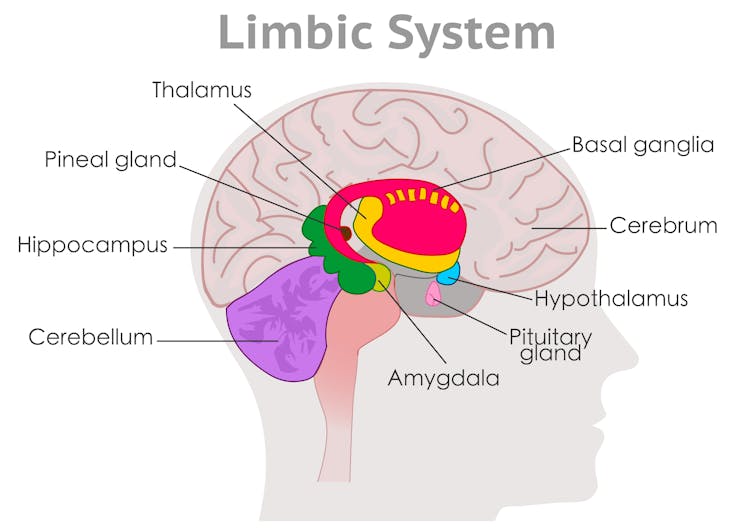
The basal ganglia are broadly responsible for sequencing movement including through shifting posture. It ensures your gait appears effortless, smooth and automatic.
The cerebellum then uses visual and proprioceptive information (to sense the body’s position and movement) to adjust and time movements to maintain postural stability. It ensures movement is controlled and coordinated.
Developmental differences in these brain regions relate to the way the areas look (their structure), how they work (their function and activation) and how they “speak” to other areas of the brain (their connections).
While some researchers have suggested that autistic gait occurs due to delayed development, we now know gait differences persist across the lifespan. Some differences actually become clearer with age.
In addition to brain-based differences, the autistic gait is also associated with factors such as the person’s broader motor, language and cognitive capabilities.
People with more complex support needs might have more pronounced gait or motor differences, together with language and cognitive difficulties.
Not all differences need to be treated. Instead, clinicians take an individualised and goals-based approach.
Some autistic people might have subtle gait differences that are observable during testing. But if these differences don’t impact a person’s ability to participate in everyday life, they don’t require support.
An autistic person is likely to benefit from support for gait differences if they have a functional impact on their daily life. This might include:
increased risk of, or frequent, falls
difficulty participating in the physical activities they enjoy
physical consequences such as tightness of the Achilles and calf muscles, or associated pain in other areas, such as the feet or back.
Some children may also benefit from support for motor skill development. However this doesn’t have to occur in a clinic.
Given children spend a large portion of their time at school, programs that integrate opportunities for movement throughout the school day allow autistic children to develop motor skills outside of the clinic and alongside peers. We developed the Joy of Moving Program in Australia, for example, which gets students moving in the classroom.
Our community-based intervention studiesshow autistic children’s movement abilities can improve after engaging in community-based interventions, such as sports or dance.
Community-based support models empower autistic children to have agency in how they move, rather than seeing different ways of moving as a problem to be fixed.
Where to from here?
While we have learnt a lot about autistic gait at a broad level, researchers and clinicians are still seeking a better understanding of why and when individual variability occurs.
We’re also still determining how to best support individual movement styles, including among children as they develop.
However there is growing evidence that physical activity enhances social skills and behavioural regulation in preschool children with autism.
So it’s encouraging that states and territories are moving towards more community-based foundational supports for autistic children and their peers, as governments develop supports outside the National Disability Insurance Scheme (NDIS).
Nicole Rinehart receives funding from: Moose Happy Kids Foundation, MECCA M-Power, the Grace & Emilio Foundation, Ferrero Australia, as part of the global Kinder Joy of moving program, Aspen Pharmacare Australia Pty Ltd, Jonathan and Simone Wenig, Adam Krongold, the Grosman Family Foundation, the Shoreline Foundation, the Victorian Department of Education, the NSW Department of Education, and the Department of Social Services – Information, Linkages and Capacity Building (ILC) Program, and has worked in partnership with the Australian Football League.
Chloe Emonson works on projects that receive funding from: Moose Happy Kids Foundation, MECCA M-Power, the Grace & Emilio Foundation, Ferrero Australia, as part of the global Kinder Joy of moving program, Aspen Pharmacare Australia Pty Ltd, Jonathan and Simone Wenig, Adam Krongold, the Grosman Family Foundation, the Shoreline Foundation, the Victorian Department of Education, the NSW Department of Education, and the Department of Social Services – Information, Linkages and Capacity Building (ILC) Program, and has worked in partnership with the Australian Football League.
Ebony Lindor works on projects that receive funding from: Moose Happy Kids Foundation, MECCA M-Power, the Grace & Emilio Foundation, Ferrero Australia, as part of the global Kinder Joy of moving program, Aspen Pharmacare Australia Pty Ltd, Jonathan and Simone Wenig, Adam Krongold, the Grosman Family Foundation, the Shoreline Foundation, the Victorian Department of Education, the NSW Department of Education, and the Department of Social Services – Information, Linkages and Capacity Building (ILC) Program, and has worked in partnership with the Australian Football League.
Source: The Conversation – Global Perspectives – By Mathieu Duval, Adjunct Senior Researcher at Griffith University and La Trobe University, and Ramón y Cajal (Senior) Research Fellow, Centro Nacional de Investigación sobre la Evolución Humana (CENIEH)
Fossils are invaluable archives of the past. They preserve details about living things from a few thousand to hundreds of millions of years ago.
Studying fossils can help us understand the evolution of species over time, and glimpse snapshots of past environments and climates. Fossils can also reveal the diets or migration patterns of long-gone species – including our own ancestors.
But when living things turn to rock, discerning those details is no easy feat. One common technique for studying fossils is micro-computerised tomography or micro-CT. It’s been used to find the earliest evidence of bone cancer in humans, to study brain imprints and inner ears in early hominins, and to study the teeth of the oldest human modern remains outside Africa, among many other examples.
However, our new study, published today in Radiocarbon, shows that despite being widely regarded as non-destructive, micro-CT may actually affect fossil preservation and erase some crucial information held inside.
Preserving precious specimens
Fossils are rare and fragile by nature. Scientists are constantly evaluating how to balance their impact on fossils with the need to study them.
When palaeontologists and palaeoanthropologists (who work on human fossils) analyse fossils, they want to minimise any potential damage. We want to preserve fossils for future generations as much as possible – and technology can be a huge help here.
Micro-CT works like the medical CT scans doctors use to peek inside the human body. However, it does so at a much smaller scale and at a greater resolution.
This is perfect for studying small objects such as fossils. With micro-CT, scientists can take high-resolution 3D images and access the inner structure of fossils without the need to cut them open.
These scans also allow for virtual copies of the fossils, which other scientists can then access from anywhere in the world. This significantly reduces the risk of damage, since the scanned fossils can safely remain in a museum collection, for example.
Micro-CT is popular and routinely used. The scientific community widely regards it as “non-destructive” because it doesn’t cause any visual damage – but it could still affect the fossil.
Jaw bone of the human fossil species Homo antecessor from Spain. Left: micro-CT scan with a cutting plane to visualise the inner structures, bone and teeth; right: 3D reconstruction based on the high-resolution micro-CT images. Laura Martín-Francés
How does micro-CT imaging work?
Micro-CT scanning uses X-rays and computer software to produce high-resolution images and reconstruct the fossil specimens in detail. Typically, palaeontologists use commercial scanners for this, but more advanced investigations may use powerful X-ray beams generated at a synchrotron.
The X-rays go through the specimen and are captured by a detector on the other end. This allows for a very fine-grained understanding of the matter they’ve passed through – especially density, which then provides clues about the shape of the internal structures, the composition of the tissues, or any contamination.
The scan produces a succession of 2D images from all angles. Computer software is then used to “clean up” these high-resolution images and assemble them into a 3D shape – a virtual copy of the fossil and its inner structures.
Example of micro-CT results on a hominin fossil known as Little Foot, from southern Africa.
But X-rays are not harmless
X-rays are a type of ionising radiation. This means they have a high level of energy and can break electrons away from atoms (this is called ionisation).
However, despite what we know about the impact of X-rays on living cells, the potential impact of X-rays on fossils through micro-CT imaging has never been deeply investigated.
What did our study find?
Using standard settings on a typical micro-CT scanner, we scanned several modern and fossil bones and teeth from animals. We also measured their collagen content before and after scanning.
Collagen is useful for many analytical purposes, such as finding out the age of the fossils using radiocarbon dating, or for stable isotope analysis – a method used to infer the diet of the extinct species, for example. The collagen content in fossils is usually much lower than in modern specimens because it slowly breaks down over time.
After comparing our measurements with unscanned samples taken from the same specimens, we found two things.
First, the radiocarbon age remained unchanged. In other words, micro-CT scanning doesn’t affect radiocarbon dating. That’s the good news.
The bad news is that we did observe a significant decrease in the amount of collagen present. In other words, the micro-CT scanned samples had about 35% less collagen than the samples before scanning.
This shows micro-CT imaging has a non-negligible impact on fossils that contain collagen traces. While this was to be expected, the impact hasn’t been experimentally confirmed before.
It’s possible some fossil samples won’t have enough collagen left after micro-CT scanning. This would make them unsuitable for a range of analytical techniques, including radiocarbon dating.
What now?
In a previous study, we showed micro-CT can artificially “age” fossils later dated with a method called electron spin resonance. It’s commonly used to date fossils older than 50,000 years – beyond what the radiocarbon method can discern.
This previous study and our new work show that micro-CT scanning may significantly and irreversibly change the fossil and the information it holds.
Despite causing no visible damage to the fossil, we argue that in this context the technique should no longer be regarded as non-destructive.
Micro-CT imaging is highly valuable in palaeontology and palaeoanthropology, no doubt about that. But our results suggest it should be used sparingly to minimise how much fossils are exposed to X-rays. There are guidelines scientists can use to minimise damage. Freely sharing data to avoid repeated scans of the same specimen will be helpful, too.
Mathieu Duval receives funding from the Spanish State Research Agency (Agencia Estatal de Investigación). He is currently the recipient of a Ramón y Cajal fellowship (RYC2018-025221-I) funded by MCIN/AEI/10.13039/501100011033 and by ‘‘ESF Investing in your future”. This work is also part of Spanish Grant PID2021-123092NB-C22 funded by MCIN/AEI/10.13039/501100011033/FEDER, UE, and by ‘‘ERDF A way of making Europe”.
Laura Martín-Francés receives funding from Marie Sklodowska-Curie Actions of the EU Ninth programme (2021-2027) under the HORIZON-MSCA-2021-PF-01-Project: 101060482.
The U.S. Senate narrowly approved on July 16, 2025, a bill that would claw back federal funding for the Corporation for Public Broadcasting, which distributes money to NPR, PBS and their affiliate stations. The US$9 billion rescission package will withdraw $1.1 billion Congress had previously approved for the CPB to receive in the 2026 and 2027 fiscal years. In addition, it makes deep foreign aid cuts. All Democrats present voted against the measure, joined by two Republicans: Sens. Susan Collins of Maine and Lisa Murkowski of Alaska. As long as the House, which approved a previous version, votes in favor of the Senate’s version of the bill by midnight July 18, Trump will be able to meet a budgetary deadline by signing the measure into law in time for it to take effect.
What will happen to NPR, PBS and local stations?
NPR and PBS provide programming to local public television and radio stations across the country. The impact on them will be direct and indirect.
Both NPR and PBS receive money from the Corporation for Public Broadcasting, an independent nonprofit corporation Congress created in 1967 to receive and distribute federal money to public broadcasters. More than 70% of the money it distributes flows directly to local stations. Some stations get up to half of their budgets from the CPB.
But NPR and PBS get much of their funding from foundation grants, viewers’ and listeners’ donations, and corporate underwriting. And local public radio and TV stations also get support from an array of sources besides CPB.
“There’s nothing more American than PBS,” said the network’s CEO, Paula Kerger, at a congressional hearing on March 26, 2025.
The nearly 1,500 public media stations in the U.S. rely on a mix of NPR, PBS and third-party producer programming, such as American Public Media and PRX, for the programs they offer. Local stations also produce and air regional news and provide emergency broadcasts for the government.
In rural areas with few broadcast stations and spotty cellphone coverage, public broadcast stations are vital sources of information about important community news and updates during emergencies. Federal support is essential for the programming and day-to-day operations of many local stations and allows for the maintenance of equipment and personnel to operate these vital community resources.
We believe that stations in communities that most need them, especially in rural locations, would be hit especially hard because they rely heavily on CPB funding.
Why is public media necessary when there’s news on the internet?
As journalism revenue has plummeted, public broadcasting has remained a vital source for news in communities across the nation. This is especially true in rural communities, where economic and political pressures have threatened the survival of local journalism.
In addition, with much online news coverage placed behind paywalls, public radio and television plays an important role in making quality journalism available to the American public.
Want crucial information about water systems in your drought-prone community? Public radio station KVMR in Nevada City, Calif., has a program for you. KVMR screenshot
Why did Congress approve these funds 2 years ahead?
Dozens of Native American stations are at risk of closing once the CPB is defunded. Native Public Media, a network of 57 radio stations and four TV stations, is a key source of news and information for tribal communities across the nation and relies on CPB support.
U.S. Sen. Mike Rounds, a South Dakota Republican, publicly stated that he secured an agreement with the White House to move $9.4 million in Interior Department funding to two dozen Native American stations. But there is no provision related to this promise within the legislation.
Allison Perlman is the co-chair of the Scholars Advisory Committee of the American Archive of Public Broadcasting.
Josh Shepperd and Allison Perlman are under contract to co-author an update of the history of public broadcasting for Current, public media’s trade journal, and the Corporation for Public Broadcasting. Josh and Allison are not paid employees or vendors of either institution.
Source: The Conversation – in French – By Martine Lagacé, Professeur titulaire, communication et psychologie sociale, L’Université d’Ottawa/University of Ottawa
En 2024, une étude empirique a permis de dresser un portrait nuancé de la réalité des femmes de 45 ans et plus.(Unsplash)
Elles sont qualifiées, engagées, et pourtant souvent invisibles. Les femmes de 45 ans et plus représentent une force croissante sur le marché du travail québécois. Mais leur expérience suffit-elle à les protéger des préjugés liés à l’âge et au genre ?
Au Québec, on observe une augmentation continue du nombre de personnes âgées de 55 à 69 ans qui demeurent sur le marché du travail, particulièrement chez les femmes. Chez ces dernières, le taux d’activité est, en effet, en croissance constante, particulièrement dans la tranche d’âge de 55 à 59 ans (+ 30 points selon l’Institut de la statistique du Québec).
Malgré tout, ce renfort démographique n’est sans doute pas suffisant pour faire oublier les préjugés liés à l’âge et au genre.
Mieux comprendre l’expérience des travailleuses d’expérience
En 2024, une étude empirique, pilotée par notre équipe de chercheurs et mandatée par le Comité consultatif pour les travailleuses et travailleurs de 45 ans et plus, a permis de dresser un portrait nuancé de leur réalité. L’objectif : cerner leur expérience subjective du marché du travail. Comment perçoivent-elles leur emploi ? Qu’est-ce qui les motive à continuer ? Quels obstacles rencontrent-elles, et comment envisagent-elles la retraite ?
Pour répondre à ces questions, 455 femmes âgées de 45 ans et plus travaillant sur le territoire québécois ont répondu à un questionnaire auto-rapporté. Pourquoi ce seuil d’âge ? Car une littérature abondante suggère que dès l’âge de 45 ans, les travailleurs risquent d’être la cible de comportements et de manifestations d’attitudes âgistes.
Dès l’âge de 45 ans, les travailleurs risquent d’être la cible de comportements et de manifestations d’attitudes âgistes. (Unsplash), CC BY
Des 455 participantes, la majorité (55 %) était âgée de 45 à 54 ans, et plus d’un tiers détenaient une formation universitaire. En outre, 88 % de ces femmes se disaient en « bonne » ou « très bonne » santé, physique et mentale. Les quatre secteurs de travail les plus représentés dans l’échantillon étaient l’éducation (28,3 %), la santé (19,4 %), les ventes et services (19,2 %) ainsi que l’administration (80 %). Enfin, la majorité des participantes (58 %) travaillaient dans le secteur public.
Travail valorisant et motivation intrinsèque : un duo gagnant
La majorité des répondantes (84 %) se disent satisfaites ou très satisfaites de leur emploi, surtout lorsqu’elles sont motivées par des raisons personnelles ou sociales : sentiment d’accomplissement, contribution à une mission, défis stimulants.
À l’inverse, celles qui mentionnent la rémunération comme motivation principale se déclarent généralement moins satisfaites. Une tendance qui s’aligne avec la théorie de l’auto-détermination : les motivations extrinsèques, comme l’argent, ne suffisent pas à combler les besoins fondamentaux d’autonomie, de compétence et de lien social.
L’âgisme et le sexisme
Bien que la majorité des participantes soient globalement satisfaites de leur emploi, 27 % d’entre elles qualifient le marché du travail d’âgiste et/ou sexiste envers les travailleuses plus âgées, et près de 20 % évoquent des obstacles concrets. Voici quelques-uns de leurs commentaires :
Dans mon milieu, il y a définitivement un changement face aux femmes de 50 ans et plus. J’ai vu une attitude âgiste chez les hommes qui sont en position d’autorité.
La stigmatisation liée au fait d’être une femme affecte la façon dont mes collègues la perçoivent dans une certaine mesure.
Dur, car l’âge ne joue pas en notre faveur. Le choix est restreint, malgré l’expérience et la maturité, c’est encore un monde où des hommes de 45 ans ont plus de chance d’obtenir des postes de cadre.
Cette perception de discrimination, fondée sur l’âge et/ou le genre, s’exprime aussi sous la forme d’une fracture générationnelle : les travailleuses plus âgées se sentent désavantagées et expriment leur frustration en comparant leur situation à celle des plus jeunes, que ce soit pour les façons de faire au travail ou encore pour les conditions de recherche d’emploi.
Les travailleuses plus âgées se sentent désavantagées et expriment leur frustration en comparant leur situation à celle des plus jeunes. (Vitaly Gariev sur Unsplash), CC BY
Voici certains témoignages de participantes :
Nous sommes en constante compétition. Les employeurs ne veulent pas prendre de risque d’engager une femme de plus de 45 ans. Et la nouvelle génération est très différente.
Très honnêtement, je pense qu’il est difficile pour une femme de cet âge de réintégrer le marché du travail après une perte d’emploi.
Les retombées de la discrimination fondée sur l’âge
Les résultats de l’étude montrent aussi que les participantes qui se sentent victimes de l’âgisme éprouvent une moins grande satisfaction au travail. Elles sont aussi plus nombreuses à envisager un départ à la retraite à court terme, c’est-à-dire au cours de la prochaine année, par comparaison avec celles qui n’éprouvent pas ce sentiment (soit 12,7 % pour les premières et 6,1 % pour les secondes).
Plus encore, les résultats montrent un lien significatif entre le ressenti d’âgisme et la perception de relations plus difficiles, plus tendues avec les gestionnaires, particulièrement avec les plus jeunes. « Il y a beaucoup de micro-gestion, des enjeux de communication, peu d’écoute et de reconnaissance de notre expérience », nous a dit l’une des participantes.
Déjà des milliers d’abonnés à l’infolettre de La Conversation. Et vous ? Abonnez-vous gratuitement à notre infolettre pour mieux comprendre les grands enjeux contemporains.
Enfin, lorsqu’elles sont questionnées sur l’importance de la transmission de leurs connaissances aux plus jeunes travailleurs, la majorité répond par l’affirmative (72 %). Toutefois, celles qui se perçoivent victimes de l’âgisme témoignent du même coup d’un certain manque de réceptivité des plus jeunes travailleurs à l’égard de ces connaissances ainsi que d’une dévalorisation de leur expérience par l’employeur.
Repenser la culture du travail
Dans l’ensemble, ces résultats, même à partir d’un échantillon restreint, corroborent de nombreuses études montrant la persistance de l’âgisme au travail, doublée, pour les femmes, des stéréotypes de genre, en dépit de leur expérience. Cette réalité dépeinte par ces femmes, on peut le présumer, pèse sur leurs décisions d’interrompre malgré elles leur carrière.
La persistance de l’âgisme au travail, doublée, pour les femmes, des stéréotypes de genre, en dépit de leur expérience, teintent la carrière des femmes. (Unsplash), CC BY
L’âgisme ciblant les travailleuses d’expérience demeure un phénomène sous-estimé. Ses conséquences sur le bien-être de ces travailleuses, comme pour la santé des organisations n’en sont pas moins négatives. Or si l’on veut réellement reconnaître la contribution de ces femmes, il est urgent de repenser la culture de nos environnements de travail dans un esprit d’inclusion et d’équité.
Le point de départ pour ce faire n’est autre qu’une prise de conscience, de la part des employeurs comme des travailleurs, de la prévalence des préjugés âgistes et sexistes, et des pratiques discriminatoires qui peuvent en découler.
Martine Lagacé a reçu un financement du Comité consultatif pour les travailleuses et travailleurs de 45 ans et plus pour effectuer cette étude.
Source: The Conversation – in French – By Martine Lagacé, Professeur titulaire, communication et psychologie sociale, L’Université d’Ottawa/University of Ottawa
En 2024, une étude empirique a permis de dresser un portrait nuancé de la réalité des femmes de 45 ans et plus.(Unsplash)
Elles sont qualifiées, engagées, et pourtant souvent invisibles. Les femmes de 45 ans et plus représentent une force croissante sur le marché du travail québécois. Mais leur expérience suffit-elle à les protéger des préjugés liés à l’âge et au genre ?
Au Québec, on observe une augmentation continue du nombre de personnes âgées de 55 à 69 ans qui demeurent sur le marché du travail, particulièrement chez les femmes. Chez ces dernières, le taux d’activité est, en effet, en croissance constante, particulièrement dans la tranche d’âge de 55 à 59 ans (+ 30 points selon l’Institut de la statistique du Québec).
Malgré tout, ce renfort démographique n’est sans doute pas suffisant pour faire oublier les préjugés liés à l’âge et au genre.
Mieux comprendre l’expérience des travailleuses d’expérience
En 2024, une étude empirique, pilotée par notre équipe de chercheurs et mandatée par le Comité consultatif pour les travailleuses et travailleurs de 45 ans et plus, a permis de dresser un portrait nuancé de leur réalité. L’objectif : cerner leur expérience subjective du marché du travail. Comment perçoivent-elles leur emploi ? Qu’est-ce qui les motive à continuer ? Quels obstacles rencontrent-elles, et comment envisagent-elles la retraite ?
Pour répondre à ces questions, 455 femmes âgées de 45 ans et plus travaillant sur le territoire québécois ont répondu à un questionnaire auto-rapporté. Pourquoi ce seuil d’âge ? Car une littérature abondante suggère que dès l’âge de 45 ans, les travailleurs risquent d’être la cible de comportements et de manifestations d’attitudes âgistes.
Dès l’âge de 45 ans, les travailleurs risquent d’être la cible de comportements et de manifestations d’attitudes âgistes. (Unsplash), CC BY
Des 455 participantes, la majorité (55 %) était âgée de 45 à 54 ans, et plus d’un tiers détenaient une formation universitaire. En outre, 88 % de ces femmes se disaient en « bonne » ou « très bonne » santé, physique et mentale. Les quatre secteurs de travail les plus représentés dans l’échantillon étaient l’éducation (28,3 %), la santé (19,4 %), les ventes et services (19,2 %) ainsi que l’administration (80 %). Enfin, la majorité des participantes (58 %) travaillaient dans le secteur public.
Travail valorisant et motivation intrinsèque : un duo gagnant
La majorité des répondantes (84 %) se disent satisfaites ou très satisfaites de leur emploi, surtout lorsqu’elles sont motivées par des raisons personnelles ou sociales : sentiment d’accomplissement, contribution à une mission, défis stimulants.
À l’inverse, celles qui mentionnent la rémunération comme motivation principale se déclarent généralement moins satisfaites. Une tendance qui s’aligne avec la théorie de l’auto-détermination : les motivations extrinsèques, comme l’argent, ne suffisent pas à combler les besoins fondamentaux d’autonomie, de compétence et de lien social.
L’âgisme et le sexisme
Bien que la majorité des participantes soient globalement satisfaites de leur emploi, 27 % d’entre elles qualifient le marché du travail d’âgiste et/ou sexiste envers les travailleuses plus âgées, et près de 20 % évoquent des obstacles concrets. Voici quelques-uns de leurs commentaires :
Dans mon milieu, il y a définitivement un changement face aux femmes de 50 ans et plus. J’ai vu une attitude âgiste chez les hommes qui sont en position d’autorité.
La stigmatisation liée au fait d’être une femme affecte la façon dont mes collègues la perçoivent dans une certaine mesure.
Dur, car l’âge ne joue pas en notre faveur. Le choix est restreint, malgré l’expérience et la maturité, c’est encore un monde où des hommes de 45 ans ont plus de chance d’obtenir des postes de cadre.
Cette perception de discrimination, fondée sur l’âge et/ou le genre, s’exprime aussi sous la forme d’une fracture générationnelle : les travailleuses plus âgées se sentent désavantagées et expriment leur frustration en comparant leur situation à celle des plus jeunes, que ce soit pour les façons de faire au travail ou encore pour les conditions de recherche d’emploi.
Les travailleuses plus âgées se sentent désavantagées et expriment leur frustration en comparant leur situation à celle des plus jeunes. (Vitaly Gariev sur Unsplash), CC BY
Voici certains témoignages de participantes :
Nous sommes en constante compétition. Les employeurs ne veulent pas prendre de risque d’engager une femme de plus de 45 ans. Et la nouvelle génération est très différente.
Très honnêtement, je pense qu’il est difficile pour une femme de cet âge de réintégrer le marché du travail après une perte d’emploi.
Les retombées de la discrimination fondée sur l’âge
Les résultats de l’étude montrent aussi que les participantes qui se sentent victimes de l’âgisme éprouvent une moins grande satisfaction au travail. Elles sont aussi plus nombreuses à envisager un départ à la retraite à court terme, c’est-à-dire au cours de la prochaine année, par comparaison avec celles qui n’éprouvent pas ce sentiment (soit 12,7 % pour les premières et 6,1 % pour les secondes).
Plus encore, les résultats montrent un lien significatif entre le ressenti d’âgisme et la perception de relations plus difficiles, plus tendues avec les gestionnaires, particulièrement avec les plus jeunes. « Il y a beaucoup de micro-gestion, des enjeux de communication, peu d’écoute et de reconnaissance de notre expérience », nous a dit l’une des participantes.
Déjà des milliers d’abonnés à l’infolettre de La Conversation. Et vous ? Abonnez-vous gratuitement à notre infolettre pour mieux comprendre les grands enjeux contemporains.
Enfin, lorsqu’elles sont questionnées sur l’importance de la transmission de leurs connaissances aux plus jeunes travailleurs, la majorité répond par l’affirmative (72 %). Toutefois, celles qui se perçoivent victimes de l’âgisme témoignent du même coup d’un certain manque de réceptivité des plus jeunes travailleurs à l’égard de ces connaissances ainsi que d’une dévalorisation de leur expérience par l’employeur.
Repenser la culture du travail
Dans l’ensemble, ces résultats, même à partir d’un échantillon restreint, corroborent de nombreuses études montrant la persistance de l’âgisme au travail, doublée, pour les femmes, des stéréotypes de genre, en dépit de leur expérience. Cette réalité dépeinte par ces femmes, on peut le présumer, pèse sur leurs décisions d’interrompre malgré elles leur carrière.
La persistance de l’âgisme au travail, doublée, pour les femmes, des stéréotypes de genre, en dépit de leur expérience, teintent la carrière des femmes. (Unsplash), CC BY
L’âgisme ciblant les travailleuses d’expérience demeure un phénomène sous-estimé. Ses conséquences sur le bien-être de ces travailleuses, comme pour la santé des organisations n’en sont pas moins négatives. Or si l’on veut réellement reconnaître la contribution de ces femmes, il est urgent de repenser la culture de nos environnements de travail dans un esprit d’inclusion et d’équité.
Le point de départ pour ce faire n’est autre qu’une prise de conscience, de la part des employeurs comme des travailleurs, de la prévalence des préjugés âgistes et sexistes, et des pratiques discriminatoires qui peuvent en découler.
Martine Lagacé a reçu un financement du Comité consultatif pour les travailleuses et travailleurs de 45 ans et plus pour effectuer cette étude.
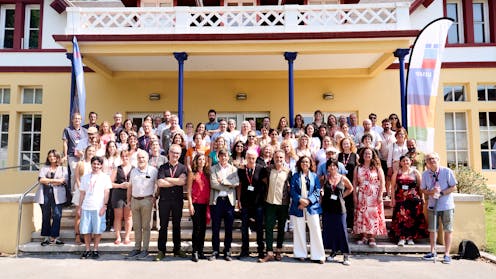
Los 70 alumnos y alumnas que han participado en la cuarta edición del Curso de verano de The Conversation ‘La aventura de divulga ciencia en español con éxito’ en el Palacio de la Magdalena (UIMP) con autoridades, ponentes y Jorge Drexler como invitado de honor. UIMP, CC BY
“Clavo mi remo en el agua, llevo tu remo en el mío / Creo que he visto una luz, al otro lado del río.”
Jorge Drexler, “Al otro lado del río”
Con esos versos –entonados a capela por Jorge Drexler ante un aula entregada– se produjo uno de los momentos más conmovedores del curso La aventura de divulgar ciencia en español con éxito, celebrado del 9 al 11 de julio en el Palacio de la Magdalena de Santander. La sede veraniega de la Universidad Internacional Menéndez Pelayo (UIMP) se convirtió durante tres días en un laboratorio de ideas, gracias a una iniciativa impulsada por The Conversation España, con el respaldo de la Fundación Lilly y la Fundación Ramón Areces.
Lo que allí se vivió fue mucho más que una serie de conferencias y talleres: fue un contagio de conocimiento y entusiasmo por la vida y la ciencia.
La inauguración corrió a cargo del vicerrector del Campus de Las Llamas de la UIMP Francisco Matorras; Rafael Sarralde, el director general de The Conversation; Manuel Guzmán, Gerente en Fundación Lilly; Carolina Pola, colaboradora del comité científico de la Fundación Ramón Areces, y las codirectoras del curso Elena Sanz y Lorena Sánchez. UIMP, CC BY
Lenguaje, cerebro y música: la mente en escena
Uno de los momentos más inspiradores fue el encuentro entre el neurofisiólogo y popular divulgador Xurxo Mariño y el músico y médico de formación Jorge Drexler. A medio camino entre el concierto y la charla científica, ambos desplegaron una conversación fascinante sobre cómo emerge la mente humana.
“El oficio del artista consiste en implantar una parte de su mente en otras personas”, explicó Mariño. “No se puede gozar de Beethoven sin ser un poco Beethoven”, respondía Drexler.
“La creatividad ocurre cuando disminuye la actividad de la corteza prefrontal: se apaga el director de orquesta del cerebro y se abren otras conexiones”, decía Xurxo Mariño. Y puso como ejemplo un momento muy concreto: el instante nada más despertar. Drexler, entonces, cantó con ayuda del público la canción que le valió un Óscar en el año 2005, nacida en un estado de duermevela. “Escribí Al otro lado del río a la luz de la mesita de noche”, confesaba.
Genes, mutaciones y el futuro humano
La genetista y catedrática de la Universidad de Barcelona, Gemma Marfany, arrancó la charla inaugural del curso con una afirmación contundente: “El genoma es una máquina perfecta, pero tiene errores”.
La genetista Gemma Marfany durante una apasionada conversación en Caballerizas, lugar de encuentro de los ponentes en el Palacio de la Magdalena. The Conversation, CC BY
Gemma Marfany habló de mutaciones, de edición genética con CRISPR –“el bisturí con GPS”– y de los dilemas éticos de la selección genética, que permitirá resolver múltiples enfermedades, pero también rediseñar nuestra especie.
“No queremos ser inmortales, queremos ser eternamente jóvenes”, sentenció, en referencia al sueño (o pesadilla) de modificar el ADN humano para mejorar el cuerpo, la mente y, quizá, el destino.
Con ejemplos como la película Gattaca o la historia de Carlos II el Hechizado, un rey que sufrió la maldición de la endogamia de la Casa de Habsburgo, Marfany dejó claro que la genética explica el pasado y condiciona el porvenir: “si modificas tu ADN, estás cambiando el ADN del futuro”.
Océanos, cosmos y física cuántica: lo que aún no sabemos
En una jornada dedicada a los grandes enigmas de la ciencia, la oceanógrafa Núria Casacuberta Arola habló del mar como “el corazón del clima”, advirtiendo que en lo profundo del océano hay más incógnitas que certezas. “Ha habido más personas en la Luna que en la fosa de las Marianas”, recordó Casacuberta Arola, subrayando el desconocimiento sobre el agua que regula la vida en la Tierra.
Nuria Casacuberta Arola ha sido galardonada con la Beca de Retorno de la Fundación Ramón Areces, gracias a la cual trasladará sus actividades científicas al Institut de Ciències del Mar (ICM-CSIC) en Barcelona. La oceanógrafa propuso en el curso un viaje espacial al fondo de los océanos. The Conversation, CC BY
Pablo Martínez Ruiz del Árbol, investigador del Instituto de Física de Cantabria. The Conversation, CC BY
Pablo Martínez comparó la física cuántica con el sushi: “para mi padre, que es de un pueblo de La Rioja, la cuántica es como el sushi, algo que te saca de tu zona de confort”. Y el astrofísico David Galadí, con humor y rigor, confesó que quizás en el futuro nos vean como “gente muy lista que llegó a conclusiones equivocadas”.
La ciencia, coincidieron ambos, solo puede actuar con humildad ante lo infinito por descubrir. Porque por cada conocimiento acumulado, “ampliamos lo que sabemos que no sabemos”, matizaba Martínez.
El astrofísico David Galadí describió la incertidumbre en astrofísica para explicar el universo. The Conversation, CC BY
Corazón, medicina y mentoria: lecciones de una vida
El cardiólogo Valentín Fuster, una de las voces más esperadas, impartió una lección de sabiduría y humanidad en su conversación con la periodista experta en salud Cristina Sáez.
“Con franqueza, soy cardiólogo, pero no entiendo el corazón, un órgano que se mueve cada segundo y no se estropea hasta el final de una vida. He contribuido a entenderlo, pero aún no sabemos realmente cómo funciona: el corazón es un milagro”, confesó.
Valentín Fuster llegó desde Nueva York a Santander. ‘Si hago este viaje es porque considero esencial la divulgación de la ciencia’. UIMP, CC BY
Valentín Fuster narró su trayectoria desde sus inicios, cuando su camino era el de un tenista profesional. “Un año suspendí una asignatura y mi padre puso fin al tenis. Siempre confié en mi padre. Y siempre he hecho lo que me han dicho las personas en las que he confiado”.
Así comenzó la carrera del hombre que introdujo en el mundo la medicina preventiva, que supo encontrar en el colesterol la razón de los infartos de miocardio, y que peleó contra gigantes hasta conseguir la polipíldora para tratar problemas de corazón. El estudio SECURE, publicado en The New England Journal of Medicine, mostró una disminución del 33 % en la mortalidad cardiovascular en comparación con el tratamiento habitual.
La periodista Cristina Sáez, coautora con Valentín Fuster de su libro de memorias, condujo la conversación. UIMP, CC BY
Valentín Fuster habló de la importancia de tener un mentor, de la necesidad de cuidar al paciente como un todo –físico y emocional– y de los peligros de una sociedad que promueve el consumo hasta enfermarnos.
Para él, la clave para una vida íntegra está en lo que llama las “cuatro T”: tiempo para reflexionar, talento cultivado con humildad, transmitir positividad y ser un tutor para los demás.
Cristina Saéz mencionó el altruismo de Valentín Fuster en el trato a pacientes de toda condición social: “Para mí no existen nombres, existen personas, porque si miras por dentro, todos somos iguales”, dijo Fuster.
Pero el corazón no es solo un órgano que late: es un icono universal del amor. Y de amor habló el psicólogo y divulgador Luis Muiño, uno de los conductores de Entiende tu mente, el pódcast en español sobre psicología más escuchado del mundo. Muiño narró, por ejemplo, la historia del matrimonio mudo chino. Mudo, porque durante 60 años no se dirigieron la palabra. Entonces alguien les preguntó por qué seguían juntos. Él respondió: “porque la amo”. Y ella: “porque sé lo que piensa”. Luis Muiño abrió un intenso y apasionado debate con el alumnado planteando preguntas como: ¿por qué nos atrae lo prohibido? ¿Qué podemos hacer los ciudadanos del siglo XXI con las hormonas del Paleolítico? ¿Por qué vemos lo que queremos ver cuando amamos?
Luis Muiño desgranando la ciencia del amor. The Conversation, CC BY
Ciencia con alma
El curso se nutrió de expertos, pero también de historias humanas. Como la de una alumna que recordó a su madre con alzhéimer, que solo conecta con el presente cuando canta canciones del pasado, “y entonces se emociona”. O la de otra alumna que trabaja como intérprete en contextos extremos, por ejemplo, cuando a alguien le detienen en un país en conflicto y no habla el idioma. Ella trataba de buscar una metáfora para definir su papel, algo que le pedía Emilio José García, responsable de la unidad de cultura científica del Instituto Astrofísico de Andalucía (IAA) al frente del taller Cómo hacer una charla de divulgación que no se olvide. La alumna buscaba una metáfora para definirse y alguien del publico propuso: “sois ángeles”.
Emilio José García (IAA) ofreciendo las claves para una charla de divulgación que no se olvide. The Conversation, CC BY
También pidió metáforas Estrella Montolío, catedrática de la Universitat de Barcelona, para su taller sobre la ciencia del lenguaje aplicada a la divulgación. Entre las que escribieron los alumnos está: “Los alimentos transgénicos son como Severus Snape, señalados como perversos y malvados, pero en realidad ambos están protegiendo a las personas”.
Estrella Montolío, catedrática de Lengua Española de la Universidad de Barcelona, recogió metáforas científicas en su taller sobre la ciencia del lenguaje aplicada a la divulgación. The Conversation, CC BY
Herramientas para divulgar
En el curso se entregó al alumnado el libro Comunicando ciencia con ciencia. Promovido por la Fundación Lilly, ha sido elaborado por 36 coautores expertos en comunicación científica.
Marcos Pérez, director de los Museos Científicos de A Coruña y presidente de la Asociación Española de Comunicación Científica (AEC2), Cristina Rico, coordinadora Senior de Programas y Actividades en Fundación Lilly, y Elena Sanz, directora de The Conversation, presentaron el libro Comunicando ciencia con ciencia. The Conversation, CC BY
Las caras de asombro con mayúscula, y exclamaciones consecutivas, se produjeron durante el taller de uso de inteligencia artificial para divulgar ciencia que impartió Carmen Torrijos, lingüista computacional de Progidioso Volcán. En apenas dos horas, como prometió, hicimos un artículo, gráficos, un pódcast y una presentación en PowerPoint sobre la situación de Isla Calima, un archipiélago inexistente, que Carmen Torrijos presentaba amenazado por el cambio climático, y que sirvió como ejemplo para experimentar lo que las inteligencias artificiales generativas son capaces de hacer.
Carmen Torrijos mostró herramientas de inteligencia artificial aplicables a la divulgación de ciencia. The Conversation, CC BY
Durante tres días, el curso fue una constelación de voces, ciencia y emociones. Una muestra de que la divulgación científica en español puede ser, además de rigurosa, profundamente humana.
Las codirectoras del curso Elena Sanz y Lorena Sánchez, con Xurxo Mariño y Jorge Drexler en el punto y final de La aventura de divulgar ciencia. The Conversation, CC BY