Lenacapavir: la inyección semestral que puede cambiar la prevención del VIH

Source: The Conversation – France – By Pablo Ryan Murúa, Profesor de Medicina (Facultad de Medicina). Especialista en Medicina Interna (Hospital Infanta Leonor). Investigador (CIBERINFEC e IiSGM), Universidad Complutense de Madrid

La Administración de Alimentos y Medicamentos (FDA) de Estados Unidos aprobó en junio de 2025 el primer tratamiento preventivo contra el VIH que se administra con una sola inyección semestral. El fármaco, llamado lenacapavir, demostró en ensayos clínicos una eficacia del 99,9 % para evitar la infección del VIH por vía sexual, lo que marca un hito en la lucha contra el virus causante del sida.

Una pastilla diaria para prevenir

La estrategia preventiva en la que personas sin VIH toman medicamentos antirretrovirales para evitar la infección si se exponen al virus recibe el nombre de PrEP (profilaxis preexposición). Está indicada para quienes tienen mayor riesgo, esto es, personas con múltiples parejas sexuales y que no utilizan el preservativo.

Desde 2019, se ha consolidado como una herramienta clave de salud pública en España, aunque su eficacia depende de la adherencia: hasta ahora, requería tomar una pastilla diaria. La llegada de nuevas opciones de larga duración podría cambiar este escenario.

¿Cómo funciona y qué tan eficaz es?

Lenacapavir pertenece a una nueva clase de antirretrovirales conocida como inhibidores de la cápside, diseñada para atacar la envoltura proteica que protege al VIH e impedir que el virus se replique en múltiples etapas de su ciclo vital. A diferencia de la PrEP basada en pastillas diarias, este medicamento se administra solo dos veces al año mediante una inyección subcutánea.

Los resultados de los ensayos clínicos han sido sumamente alentadores. En dos estudios con miles de participantes de diversos grupos, más del 99 % de quienes recibieron lenacapavir se mantuvieron libres del VIH. De hecho, uno de los estudios no registró ninguna infección entre los voluntarios, mientras que en el otro solo se detectaron dos casos de infección. En otras palabras, la inyección semestral logró una eficacia preventiva prácticamente del 100 %, superior incluso a la de la PrEP oral diaria estándar.

La magnitud de este avance ha sido tal que la prestigiosa revista Science destacó a lenacapavir como uno de los avances científicos del año 2024.


Leer más:
Un revolucionario fármaco contra el sida, avance científico del año


Ventajas frente a la pastilla diaria

Aunque la PrEP diaria por vía oral está disponible desde 2019, muchas personas no pueden utilizarla: algunas por contraindicaciones médicas, otras porque no acceden fácilmente a los servicios, y otras porque les cuesta mantener la toma diaria. La ausencia de alternativas a la PrEP oral diaria implica que determinados colectivos (para quienes esta modalidad no es viable) están siendo dejados de lado en las estrategias de prevención del VIH.

Recibir solo dos inyecciones al año para prevenir el VIH ofrece ventajas claras frente a los métodos actuales. Mejora la adherencia, al evitar la rutina diaria de pastillas o las visitas frecuentes al centro de salud, algo especialmente útil para jóvenes o personas con barreras de acceso. También reduce el estigma: al no tener que llevar medicación visible, muchos valoran esta opción como más privada y discreta. Por otro lado, al liberar el fármaco de forma sostenida, garantiza una protección continua. Esta combinación de comodidad, eficacia y discreción puede aumentar la aceptación de la PrEP entre quienes hoy no la utilizan.

Eso sí, lenacapavir solo protege frente al VIH, por lo que debe combinarse con el uso del preservativo y otras medidas preventivas para evitar la transmisión de otras infecciones de transmision sexual.

Desafíos: acceso global y coste

Pese a su potencial, lenacapavir enfrenta barreras importantes para su implementación global. Su precio como herramienta preventiva lo hace inaccesible para muchos sistemas de salud, especialmente en países con menos recursos. Expertos señalan que podría producirse a un coste mucho menor, lo que ha generado preocupación en organismos como ONUSIDA, que advierte que una innovación solo es útil si puede llegar a quienes la necesitan.

A pesar del avance científico que supone lenacapavir, su acceso global está en riesgo por decisiones políticas y financieras. La interrupción de fondos del PEPFAR por parte del gobierno de EE. UU. y los recortes al Fondo Mundial han dejado sin respaldo económico a los principales mecanismos que podrían financiar esta innovación en países de ingresos bajos.

Gilead ha firmado acuerdos de licencia voluntaria con fabricantes genéricos para 120 países de renta baja y se ha comprometido a facilitar el acceso gratuito en EE. UU. para personas sin seguro, pero aún quedan fuera muchos países de ingresos medios. Además del coste, la implementación logística también será un reto: administrar una inyección cada seis meses exige sistemas de salud con capacidad de seguimiento, pruebas periódicas de VIH y personal formado.

El futuro: PrEP anual y autoadministrada

Gilead ya investiga una versión de lenacapavir intramuscular que se aplique una sola vez al año, y se exploran opciones de autoinyección, similares a la insulina, para facilitar su uso en zonas con menor acceso sanitario. La Organización Mundial de la Salud (OMS) ha anunciado que publicará directrices sobre su uso en julio de 2025, durante la Conferencia Internacional del Sida en Kigali. Si se superan las barreras actuales, lenacapavir podría ser el inicio de una nueva era en la prevención del VIH.

En definitiva, lenacapavir representa un paso adelante trascendental en la prevención del VIH. Con solo dos dosis al año y una eficacia sobresaliente, este nuevo fármaco tiene el potencial de cambiar las reglas del juego en la lucha contra la epidemia, facilitando la protección a poblaciones que hasta ahora enfrentaban barreras con las estrategias existentes.

El gran desafío a partir de ahora será lograr que sus beneficios alcancen a todas las comunidades afectadas mediante políticas de acceso equitativo y precios asequibles. Solo así este avance científico podrá traducirse en un impacto real y duradero, acercándonos un poco más al objetivo de frenar la transmisión del VIH en todo el mundo.

The Conversation

Pablo Ryan Murúa ha recibido becas para proyectos de investigación financiados por Gilead Sciences, así como ayudas para asistir a reuniones científicas por parte de Gilead, ViiV Healthcare, Janssen y MSD. Ha participado en actividades de consultoría para AbbVie y Gilead. Además, ejerce como presidente de SEISIDA (Sociedad Española Interdisciplinaria del Sida) y vicepresidente del Grupo Español de ITS de la Sociedad Española de Enfermedades Infecciosas y Microbiología Clínica (SEIMC).

ref. Lenacapavir: la inyección semestral que puede cambiar la prevención del VIH – https://theconversation.com/lenacapavir-la-inyeccion-semestral-que-puede-cambiar-la-prevencion-del-vih-259556

Aumentar el gasto en defensa pone en riesgo la inversión pública en salud

Source: The Conversation – France – By Samuel López López, Profesor de Gestión de Servicios de Salud, Universidad de Castilla-La Mancha

Sala de espera de un hospital. DC Studio/Shutterstock

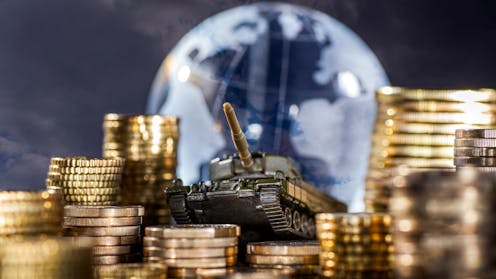
El contexto histórico influye en las prioridades de quienes toman las decisiones de políticas públicas, y una de las circunstancias que determinan la toma de este tipo de decisiones son las tensiones belicistas. Las contiendas armadas hacen cambiar las preferencias de quienes deciden a qué dedicar los recursos económicos de los países.

Estos cambios atienden al criterio, básico en la gestión pública, de coste-oportunidad: si un recurso se utiliza en una cuestión determinada no puede ser utilizado para resolver otra.

Antecedentes

Ya ha sido estudiada la relación entre el aumento del gasto militar en época de conflictos bélicos y el gasto público en salud. En 2023, los investigadores Masako Ikegami y Zijian Wang analizaron el “efecto desplazamiento” (crowding-out) del gasto público en salud en 116 países, con especial atención en países en desarrollo, debido al incremento en los gastos de defensa. Esta investigación muestra que el gasto militar tiene una relación negativa y significativa con el gasto sanitario público.

Asimismo, en 2024, los profesores Nikolaos Grigorakis y Giorgos Galyfianakis evaluaron cómo afectó, entre los años 2000 y 2021, el gasto militar a los llamados pagos de bolsillo (aquellos que el paciente realiza en el momento de la atención médica, incluyendo los copagos de los seguros) en los países de la OTAN.

Los autores –que investigan el efecto de la militarización en contextos de seguridad creciente sobre la equidad y accesibilidad de los sistemas de salud– determinaron que el gasto militar se asocia con un incremento en ese tipo de pagos. El rearme genera un desplazamiento financiero que repercute en mayor carga económica sobre los ciudadanos, lo que compromete la equidad del acceso sanitario.

Los resultados de otro estudio, este de 2017, muestran que, en términos de producto interior bruto (PIB), por cada punto porcentual que sube el gasto militar, el gasto en salud pública cae de media un 0,62 %, oscilando en una horquilla de entre el 0,96 % de descenso en países de renta media-baja y un 0,56 % en países de renta media-alta.

Los datos para España

Dado que España se encuentra en la encrucijada y el debate público de si alcanzar el 5 % del PIB en gasto militar que se le pide como miembro de la OTAN, sería interesante estimar qué consecuencias tendría dicho aumento para la salud de sus ciudadanos.

Según los últimos datos oficiales disponibles, en 2023 el gasto sanitario público ascendió a 94 694 millones de euros, suponiendo el 71,7 % del gasto sanitario total (131 984 millones de euros). Esta cifra representa el 7,8 % del PIB español.

Para tratar de medir las posibles consecuencias del desplazamiento financiero de salud a defensa hemos hecho un cálculo aproximado de la reducción de las capacidades de inversión del sistema público español de salud, a partir de la referencia previa de que los países de rentas medias y altas reducen su gasto en salud en un 0,56 % del PIB por cada 1 % de aumento del gasto militar.

Entre 2020 y 2024, el gasto español en defensa ha ido aumentando progresivamente, pasando de representar de menos del 1 % del PIB en 2020 a más del 2 % para 2025 (gasto pendiente de ejecutar y cuantificar en millones de euros).

Poniendo el foco ahora en el gasto público en salud, vemos que el máximo se alcanzó en 2020, año de inicio de la pandemia.

Desplazamiento del gasto: de sanidad a defensa

Teniendo en cuenta que España ya ha manifestado su voluntad de llevar su aportación al 2,1 % del PIB, si finalmente la incrementa hasta el 5 % que exige el gobierno estadounidense a sus compañeros de alianza, el porcentaje del PIB español dedicado a la atención sanitaria se vería reducido en un 1,61 %, pasando del 7,8 % –si tomamos como referencia 2023– al 6,18 %.

Estos son 1 527 millones de euros menos de inversión pública en sanidad se traducirían en una reducción de las prestaciones y servicios y un mayor gasto de bolsillo de los ciudadanos.

Otro escenario sería el aumento de los gastos de bolsillo de los ciudadanos para acceder a los servicios de salud. Según datos de 2023, los españoles destinaron una media de 499 euros anuales a dichos gastos. Si a esa suma se le agrega la caída de la inversión pública en salud (1 526,84 millones de euros) y ese monto total tuviera que ser asumido por los ciudadanos (a 1 de enero de 2024, la población española era de 48 619 695 habitantes), esto supondría una cantidad aproximada de 31,40 € por habitante de subida del gasto de bolsillo en salud, lo que representaría un incremento del 6,29 % respecto a 2023.

Garantizar derechos

Los recursos públicos son limitados y, por ello, un incremento en la inversión en un área determinada comporta una reducción posterior del gasto público en otras. De acuerdo a las investigaciones reseñadas en el texto, el incremento del gasto en defensa afecta a los gastos del área pública de salud.

¿Las consecuencias para los ciudadanos? Posiblemente un empeoramiento de la oferta sanitaria pública y la necesidad de afrontar de manera privada los gastos en salud, en forma de pagos de bolsillo.

El debate sobre inversión pública, contexto geopolítico y gasto en defensa debe contar con datos respaldados en la investigación y un análisis profundo de sus efectos en otras áreas del gasto público para garantizar el cumplimiento de los derechos constitucionales de los ciudadanos.

The Conversation

Samuel López López no recibe salario, ni ejerce labores de consultoría, ni posee acciones, ni recibe financiación de ninguna compañía u organización que pueda obtener beneficio de este artículo, y ha declarado carecer de vínculos relevantes más allá del cargo académico citado.

ref. Aumentar el gasto en defensa pone en riesgo la inversión pública en salud – https://theconversation.com/aumentar-el-gasto-en-defensa-pone-en-riesgo-la-inversion-publica-en-salud-259972

Mundial de Clubes: ¿debe seguir el espectáculo aunque peligre la salud mental de los jugadores?

Source: The Conversation – France – By Cristina De Francisco, Profesora de Psicología de la Actividad física y el Deporte. Miembro del grupo de investigación "Psicología del Deporte: About Smocks And Jocks" (Universidad de Sevilla), Universidad de Sevilla

El pasado 8 de junio, Cristiano Ronaldo levantaba al cielo de Múnich la copa de la Nations League después de que Portugal derrotara a España en la tanda de penaltis. Mientras el entrenador español y sus seleccionados permanecían en el terreno de juego rindiendo tributo al campeón, una figura enfilaba el túnel de vestuarios tras jugar un partido gris y ser sustituido en la prórroga. Era Lamine Yamal, la nueva estrella del fútbol mundial de solo 17 años.

Una competición más, un descanso menos

Lamine ya está de vacaciones, como el resto de la plantilla del Barcelona. Pero no así muchos integrantes de otros equipos. Apenas han pasado algo más de dos semanas desde que terminó la Nations League y el nuevo Mundial de Clubes 2025 comienza con problemas. Los jugadores y entrenadores alzan la voz para señalar que no hay tiempo de descanso. Además, jugar con tanto calor aumenta el riesgo de problemas físicos y emocionales. El burnout (síndrome del trabajador quemado o del desgaste profesional) aparece como un enemigo silencioso en cada partido.

Estados Unidos acoge este nuevo Mundial de Clubes de la FIFA. Participan 32 equipos y se jugará cada cuatro años. La cita reúne, entre otros, a los clubes campeones de cada una de las seis confederaciones que rigen el fútbol a nivel mundial. A simple vista, puede parecer una fiesta del fútbol global. Pero de acuerdo con las declaraciones, la mayoría de los futbolistas lo percibe como una carga añadida.

Al comienzo de la temporada 24/25, diversos medios se hacían eco de la posibilidad de que los jugadores de la élite del fútbol europeo fueran a la huelga por la sobrecarga de partidos que conlleva el nuevo formato de la Champions League y la creación del Mundial de Clubes.

A la nueva competición mundial, hay que sumar los partidos de sus equipos, los de las selecciones y los torneos de cada continente, que en el caso de Europa incluyen más encuentros debido al nuevo formato con liguilla. Los deportistas no cuentan con tiempo suficiente para recuperarse y, además, muchos de ellos deben asumir un inicio de la pretemporada especialmente intenso.

Un rival más sobre el césped: el calor

Los organizadores del torneo priorizan los ingresos. Pero tanto jugadores como entrenadores califican la situación como insostenible.

El fuerte calor del verano en Estados Unidos no solo cansa el cuerpo. También puede afectar a la mente. Cuando hace mucho calor, las personas se sienten de mal humor y les cuesta más pensar con claridad. Si hay muchos partidos, viajes y presión, el calor lo empeora todo. El cuerpo necesita gastar fuerzas para no calentarse demasiado, lo que deja menos capacidad para concentrarse o controlar las emociones. Por eso, resulta más fácil que los jugadores puedan sufrir el síndrome de burnout, que les lleva a estar, casi literalmente, “quemados”.

¿Qué es el burnout en el deporte?

El burnout es más que estar cansado. En el ámbito deportivo, se trata de un síndrome psicológico que combina agotamiento físico y emocional, devaluación de la práctica deportiva (actitudes negativas hacia el deporte) y una sensación de fracaso o baja realización personal.


Leer más:
Cuerpos de acero, mentes quemadas: cuando los deportistas colapsan


Diversos autores lo han analizado desde distintos enfoques. Aunque todos coinciden en que es un problema complejo, cada uno ha destacado aspectos diferentes, que ayudan a entender cómo y por qué aparece.

  • Ronald E. Smith, de la Universidad de Washington, lo explica como un estrés crónico mal manejado, que surge cuando hay muchas demandas y pocos recursos para afrontarlas. A los futbolistas profesionales les pasa esto: muchos partidos, estar siempre bajo las cámaras, la presión, las lesiones y cada vez menos tiempo para descansar.

  • John M. Silva, de la Universidad de Carolina del Norte, lo enfoca desde la fisiología: un sobreentrenamiento que lleva al agotamiento, bajada del rendimiento y síntomas de malestar psicológico. Si no hay descanso, el cuerpo se fatiga. Pero si tampoco hay espacios para desconectar, es la mente la que se quiebra.

  • Jay Coakley, de la Universidad de Colorado, ofrece una mirada aún más crítica. El burnout aparece cuando el deportista pierde el sentido de autonomía y no puede desarrollar su identidad más allá del rendimiento. Cuando el deporte se convierte en una jaula que lo define todo, cualquier bajón se convierte en crisis. En los últimos años, varios jugadores han sido ejemplo de la sobreexplotación del talento joven.
    Ejemplo de ello es lo sucedido con Lamine Yamal tras la final de la Nations League que enfrentó a España y Portugal.

  • Greg W. Schmidt, de la Universidad Estatal de Middle Tennessee, y Gary L. Stein, de la Universidad de Oregón, ponen de manifiesto que algunos deportistas siguen compitiendo, aunque estén quemados. No se retiran porque no ven otras opciones o se sienten comprometidos. En el fútbol, muchos jugadores se mantiene en activo aunque estén muy cansados física y mentalmente. Piensan que ya han invertido mucho tiempo y recursos, que no saben hacer otra cosa o que defraudarían a los demás si se detienen. Esta obligación de seguir empeora el burnout, porque siguen sufriendo sin poder descansar o cambiar.

Una cultura que ignora a la persona

Lo preocupante es que, a menudo, el entorno responde con más presión. Titulares y testimonios enfatizan una versión unívoca: “rendirse no es una opción”, “hay que ser fuerte”, “el fútbol es así”, “otros querrían estar en tu lugar”.

Esta cultura del rendimiento perpetúa el silencio, el estigma y el colapso emocional. El burnout se desarrolla en sistemas que no protegen al deportista. Los clubes, federaciones y organismos internacionales priorizan el espectáculo y el beneficio económico, olvidando que los cuerpos tienen límites y las mentes también.

Mientras el negocio del fútbol crece, la salud de sus protagonistas se erosiona. No basta con servicios médicos o psicólogos de plantilla si no se reducen las causas estructurales: exceso de competiciones, falta de descansos y ausencia de políticas reales de cuidado.


Leer más:
¿De los clubes de fútbol a las empresas de fútbol? Cinco claves para entenderlo


El fútbol necesita repensarse: no solo en términos de justicia económica, sino también en cuanto a sostenibilidad humana. Si no se detiene esta espiral, el Mundial de Clubes será solo una muesca más en el calendario y una grieta más en la salud psicológica de los jugadores.

The Conversation

Las personas firmantes no son asalariadas, ni consultoras, ni poseen acciones, ni reciben financiación de ninguna compañía u organización que pueda obtener beneficio de este artículo, y han declarado carecer de vínculos relevantes más allá del cargo académico citado anteriormente.

ref. Mundial de Clubes: ¿debe seguir el espectáculo aunque peligre la salud mental de los jugadores? – https://theconversation.com/mundial-de-clubes-debe-seguir-el-espectaculo-aunque-peligre-la-salud-mental-de-los-jugadores-259648

El gasto en defensa de España y sus diferencias con EE. UU.

Source: The Conversation – France – By Silvia Vicente-Oliva, Profesora de Gestión de la Innovación, Universidad de Zaragoza

gopixa/Shutterstock

España decidió pertenecer a la alianza atlántica, la Organización del Tratado del Atlántico Norte (OTAN), en 1981, pero no sin voces discordantes dentro del país. De hecho, cuatro años después, el 12 de marzo de 1986, se celebraría un referéndum para decidir la permanencia de España en la Alianza.

En aquel momento el orden mundial enfrentaba al mundo en dos bloques liderados, de un lado, por la Unión de Repúblicas Socialistas Soviéticas y del otro, por Estados Unidos. España se decantó por la propuesta atlantista y el proceso contribuyó a su modernización, a la vez que España aportaba su granito de arena a la defensa colectiva de Occidente.

La defensa colectiva

El Tratado del Atlántico Norte recoge los acuerdos establecidos entre los países que participan en la organización. De todos, el principio de defensa colectiva (Art. 5) es el más relevante: un ataque armado contra un miembro la OTAN se considera un ataque contra todos los miembros de la alianza.

Esta respuesta conjunta proporciona un efecto de disuasión frente a potenciales enemigos. La defensa colectiva solo ha sido invocada una vez, en 2001, como respuesta a los atentados terroristas del 11 de septiembre en Estados Unidos.

Las naciones que integran la OTAN representan el 70 % de la riqueza mundial y son, además, los países con una trayectoria más larga de estabilidad democrática.

Invertir en defensa

Para poder contribuir a la defensa colectiva, los países aliados deben hacer el esfuerzo de generar y mantener capacidades que les permitan enfrentar no solo las amenazas actuales, sino también las previstas como consecuencia del desarrollo tecnológico.

Aunque este esfuerzo –desigual entre los miembros de la Alianza– se puede medir de diferentes maneras, quizás la más conocida es calcular qué porcentaje del producto interior bruto (PIB) destina cada país al gasto en defensa.

Tanques
El porcentaje del producto interior bruto (PIB) destina cada país al gasto en defensa es desigual.

Lo que dicen los datos

Según la información sobre el porcentaje del PIB destinado a defensa contenida en la base de datos de gastos militares del Stockholm International Peace Research Institute (SIPRI), entre 1981 y 2024 España tuvo una diferencia media con respecto a EE. UU. del 2,61 %. No obstante, en cumplimiento de los compromisos adquiridos en los últimos años, desde 2020 la brecha de gasto se ha ido acortando para situarse, en 2023, en el 1,99 %.

Si hacemos la media de este indicador desde 1981 (el año en que España comenzó el proceso de adhesión a la OTAN) hasta 2024, Estados Unidos ha gastado un 4,38 % de su PIB en defensa, mientras que España ha gastado el 1,77 %.

En la década de los ochenta del siglo pasado –los primeros años de España en la OTAN– la diferencia media entre los dos países fue del 3,59 %. En los 90, esa media se redujo hasta el 2,19 % (algunos años, la distancia fue de apenas el 1,3 %). Posteriormente, entre 2000 y 2010, la diferencia creció hasta el 2,45 %.

A consecuencia de los recortes públicos provocados por la gran recesión (2008), entre 2010 y 2020 la brecha llegó a ampliarse hasta el 2,61 %. Desde 2020, la diferencia media en gasto en defensa entre EE. UU. (3,42 %) y España (1,39 %) se ha reducido al 2,02 %.

Otro factor que ha intervenido en el acortamiento de esta diferencia es que, en los últimos diez años, Estados Unidos no ha llegado ni al 3,5 % de gasto medio en defensa con respecto a su PIB cuando, en 1986, el porcentaje fue del 6,63.

A consecuencia de la invasión rusa a Ucrania, hay socios de la OTAN que en 2024 hicieron un esfuerzo de gasto similar, o incluso superior, al de EE. UU. (3,4 %). Es el caso de Polonia (4,2 %) y Estonia (3,4 %). Para España, en cambio, el porcentaje fue del 1,47 %. No en balde, en este indicador ocupa el último lugar entre los países de la Alianza.

¿En qué se gasta el presupuesto de la OTAN?

La estructura de gasto de cada país se suele ajustar a la forma de preparar sus presupuestos, pero la OTAN la divide en cuatro grandes categorías: equipamiento, personal, infraestructuras y otros gastos.

Las diferencias entre España y Estados Unidos son relevantes en el apartado de personal, en el que España gastaba el 43,9 % (datos estimados de 2024), mientras que Estados Unidos invertía solamente el 25,22 %.

En equipamiento –que incluye los gastos de investigación y desarrollo–, el compromiso adquirido en los últimos años ha llevado a España a invertir el 30,3 % de su presupuesto, frente al 29,88 % de Estados Unidos.

En cuanto a infraestructuras, mientras España destina el 2,65 %, Estados Unidos dedica un 1,74 %.

La gran diferencia se encuentra en la partida otros gastos: para España representan el 23,14 % y para Estados Unidos el 43,16 %. Estos gastos corresponden a otros ministerios, secretarías o departamentos, a fondos de contingencia, así como otros gastos que contribuyen a la seguridad y la defensa.

¿Se gastará más?

El acuerdo alcanzado en junio de 2025 por los países miembros de la OTAN reunidos en La Haya establece elevar los gastos de defensa hasta el 5 % del PIB nacional para el año 2035, con una revisión intermedia en 2029.

Dentro de esta cifra se ha establecido que al menos el 3,5 % se destinará a necesidades básicas de defensa y el 1,5 % restante se podrá dedicar a otros asuntos como ciberdefensa, resiliencia e infraestructuras críticas.

Aunque parece haber acuerdo entre los socios de la Alianza, España busca desmarcarse de la senda de gasto pautada, asegurando que con el 2,1 % es suficiente, a lo que el presidente estadounidense ha contestado con una amenaza arancelaria: “Les haremos pagar el doble”.

The Conversation

Silvia Vicente-Oliva no recibe salario, ni ejerce labores de consultoría, ni posee acciones, ni recibe financiación de ninguna compañía u organización que pueda obtener beneficio de este artículo, y ha declarado carecer de vínculos relevantes más allá del cargo académico citado.

ref. El gasto en defensa de España y sus diferencias con EE. UU. – https://theconversation.com/el-gasto-en-defensa-de-espana-y-sus-diferencias-con-ee-uu-259922

‘La interpretación de los sueños’: el libro que cambió cómo nos conocemos

Source: The Conversation – France – By Fernando Díez Ruiz, Professor, Faculty of Education and Sport, Universidad de Deusto

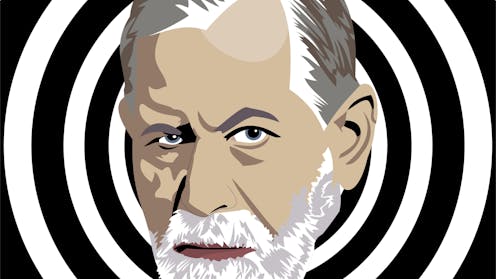
Retrato de Sigmund Freud, autor de ‘La interpretación de los sueños’. ArtLage22/Shutterstock
Libros que cuentan

Este artículo pertenece a la sección ‘Libros que cuentan’, donde expertos y expertas de distintos ámbitos diseccionan los libros divulgativos que más están dando que hablar.


En 1900, mientras el siglo XX despertaba, Sigmund Freud publicó una obra que cambiaría la forma en que la humanidad se sueña a sí misma: La interpretación de los sueños (Die Traumdeutung). Con este libro, inició una revolución en el campo de la psicología: la posibilidad de que los sueños tengan sentido y de que el inconsciente dirija gran parte de nuestra vida.

Más de un siglo después, las ideas de Freud sirven de base a gran parte del pensamiento contemporáneo, no sólo en el ámbito de la psicología, sino en la forma en que la humanidad se entiende a sí misma.

Un deseo reprimido

Durante siglos, los sueños fueron vistos como meras fantasías sin sentido o como presagios. La revolución freudiana consistió en afirmar que los sueños tienen un significado, y que descifrarlo nos permite asomarnos al inconsciente, ese territorio oculto donde se guardan nuestros deseos, miedos y conflictos más profundos.

Freud escribió: “El sueño es la realización (disfrazada) de un deseo reprimido”“. Esta idea, simple en apariencia, sacudió los cimientos de la psicología y la filosofía occidentales.

Acceder al inconsciente

La interpretación de los sueños no sólo introdujo el concepto de inconsciente como categoría científica, sino que también ofreció una metodología para acceder a él: el análisis de símbolos, la asociación libre, y el reconocimiento de que nuestros impulsos más íntimos se expresan a menudo de forma indirecta.

Este enfoque abrió caminos no sólo en el campo de la clínica psicoanalítica, sino también en la literatura, el arte, el cine y la crítica cultural.

Desafío a la racionalidad

El valor del libro no radica únicamente en su teoría, sino también en su coraje intelectual. Freud, médico de formación, se atrevió a desafiar los dogmas científicos de su tiempo, proponiendo que no somos seres plenamente racionales y conscientes, sino que estamos gobernados, en gran medida, por fuerzas invisibles. Hoy puede parecer obvio, pero en la Viena de finales del siglo XIX era una idea casi subversiva.

La interpretación de los sueños marca el punto de partida del psicoanálisis como disciplina y establece el método de exploración del inconsciente a través del contenido onírico.

Riqueza literaria

Además, es un texto que sorprende por su riqueza literaria. Freud no solo explica conceptos: narra, argumenta, se confiesa. Mezcla observaciones clínicas con sus propios sueños, incluyendo el famoso “sueño de la inyección de Irma”, inaugurando así un estilo de escritura que combina la precisión científica con la introspección humanista.

Su influencia fue inmediata en algunos círculos y resistida en muchos otros. Como suele ocurrir con los grandes innovadores, Freud fue ridiculizado, combatido y, finalmente, aceptado. Años después, sus ideas no sólo impregnaban la psicología, sino también la literatura de Kafka, el arte de Dalí o la arquitectura conceptual de las ciencias humanas.

Hoy, La interpretación de los sueños sigue siendo un libro que interroga, provoca y estimula. En un tiempo donde la velocidad y la superficialidad dominan, Freud nos recuerda que comprendernos requiere detenernos, escuchar nuestros propios relatos oníricos y aceptar que somos más complejos –y más fascinantes– de lo que parece.

Freud y la neurociencia moderna

A pesar de las críticas que ha recibido desde algunos sectores científicos, especialmente por la falta de verificación empírica de muchas de sus tesis, Freud no ha sido del todo desacreditado por la neurociencia moderna. Si bien es cierto que hoy se reconoce que los sueños no son exclusivamente realizaciones de deseos reprimidos, estudios recientes han confirmado que durante el sueño REM –fase donde los sueños son más vívidos– se activan áreas del cerebro relacionadas con la emoción, la memoria y el procesamiento simbólico.

Investigadores como Mark Solms, pionero en el campo de la neuropsicoanálisis, han defendido que ciertas intuiciones freudianas –como la existencia de conflictos inconscientes o la función emocional del soñar– tienen correlatos en la neurobiología. Así, aunque muchas teorías han evolucionado o sido reformuladas, la idea de que el sueño revela aspectos profundos de la mente humana sigue vigente, ahora en diálogo con la ciencia del cerebro.

Nuestro yo oculto

La trascendencia de La interpretación de los sueños no reside únicamente en su ambición de descifrar el significado de los sueños, sino en algo mucho más profundo: fue el primer gran texto que se atrevió a postular, con argumentos clínicos y teóricos, la existencia de una dimensión psíquica no racional, invisible y poderosa.

Freud no sólo interpretó sueños, sino que abrió una puerta a lo que hasta entonces se ignoraba: que dentro de nosotros actúan fuerzas inconscientes que influyen en nuestra conducta, nuestras decisiones y hasta en nuestras enfermedades.

El mérito del libro fue convertir esa hipótesis en un corpus articulado, capaz de poner sobre la mesa la complejidad del alma humana más allá de la razón, invitando a prestar atención a lo que no decimos, a lo que reprimimos y a lo que se escapa de nuestra voluntad.

Más de un siglo después, Freud nos recuerda que cada sueño es un recuerdo inacabado de lo que somos… y también una promesa de lo que podríamos llegar a ser.

The Conversation

Fernando Díez Ruiz no recibe salario, ni ejerce labores de consultoría, ni posee acciones, ni recibe financiación de ninguna compañía u organización que pueda obtener beneficio de este artículo, y ha declarado carecer de vínculos relevantes más allá del cargo académico citado.

ref. ‘La interpretación de los sueños’: el libro que cambió cómo nos conocemos – https://theconversation.com/la-interpretacion-de-los-suenos-el-libro-que-cambio-como-nos-conocemos-256243

How artificial intelligence controls your health insurance coverage

Source: The Conversation – USA (2) – By Jennifer D. Oliva, Professor of Law, Indiana University

Evidence suggests that insurance companies use AI to delay or limit health care that patients need. FatCameraE+ via Getty Images

Over the past decade, health insurance companies have increasingly embraced the use of artificial intelligence algorithms. Unlike doctors and hospitals, which use AI to help diagnose and treat patients, health insurers use these algorithms to decide whether to pay for health care treatments and services that are recommended by a given patient’s physicians.

One of the most common examples is prior authorization, which is when your doctor needs to
receive payment approval from your insurance company before providing you care. Many insurers use an algorithm to decide whether the requested care is “medically necessary” and should be covered.

These AI systems also help insurers decide how much care a patient is entitled to — for example, how many days of hospital care a patient can receive after surgery.

If an insurer declines to pay for a treatment your doctor recommends, you usually have three options. You can try to appeal the decision, but that process can take a lot of time, money and expert help. Only 1 in 500 claim denials are appealed. You can agree to a different treatment that your insurer will cover. Or you can pay for the recommended treatment yourself, which is often not realistic because of high health care costs.

As a legal scholar who studies health law and policy, I’m concerned about how insurance algorithms affect people’s health. Like with AI algorithms used by doctors and hospitals, these tools can potentially improve care and reduce costs. Insurers say that AI helps them make quick, safe decisions about what care is necessary and avoids wasteful or harmful treatments.

But there’s strong evidence that the opposite can be true. These systems are sometimes used to delay or deny care that should be covered, all in the name of saving money.

A pattern of withholding care

Presumably, companies feed a patient’s health care records and other relevant information into health care coverage algorithms and compare that information with current medical standards of care to decide whether to cover the patient’s claim. However, insurers have refused to disclose how these algorithms work in making such decisions, so it is impossible to say exactly how they operate in practice.

Using AI to review coverage saves insurers time and resources, especially because it means fewer medical professionals are needed to review each case. But the financial benefit to insurers doesn’t stop there. If an AI system quickly denies a valid claim, and the patient appeals, that appeal process can take years. If the patient is seriously ill and expected to die soon, the insurance company might save money simply by dragging out the process in the hope that the patient dies before the case is resolved.

Insurers say that if they decline to cover a medical intervention, patients can pay for it out of pocket.

This creates the disturbing possibility that insurers might use algorithms to withhold care for expensive, long-term or terminal health problems , such as chronic or other debilitating disabilities. One reporter put it bluntly: “Many older adults who spent their lives paying into Medicare now face amputation or cancer and are forced to either pay for care themselves or go without.”

Research supports this concern – patients with chronic illnesses are more likely to be denied coverage and suffer as a result. In addition, Black and Hispanic people and those of other nonwhite ethnicities, as well as people who identify as lesbian, gay, bisexual or transgender, are more likely to experience claims denials. Some evidence also suggests that prior authorization may increase rather than decrease health care system costs.

Insurers argue that patients can always pay for any treatment themselves, so they’re not really being denied care. But this argument ignores reality. These decisions have serious health consequences, especially when people can’t afford the care they need.

Moving toward regulation

Unlike medical algorithms, insurance AI tools are largely unregulated. They don’t have to go through Food and Drug Administration review, and insurance companies often say their algorithms are trade secrets.

That means there’s no public information about how these tools make decisions, and there’s no outside testing to see whether they’re safe, fair or effective. No peer-reviewed studies exist to show how well they actually work in the real world.

There does seem to be some momentum for change. The Centers for Medicare & Medicaid Services, or CMS, which is the federal agency in charge of Medicare and Medicaid, recently announced that insurers in Medicare Advantage plans must base decisions on the needs of individual patients – not just on generic criteria. But these rules still let insurers create their own decision-making standards, and they still don’t require any outside testing to prove their systems work before using them. Plus, federal rules can only regulate federal public health programs like Medicare. They do not apply to private insurers who do not provide federal health program coverage.

Some states, including Colorado, Georgia, Florida, Maine and Texas, have proposed laws to rein in insurance AI. A few have passed new laws, including a 2024 California statute that requires a licensed physician to supervise the use of insurance coverage algorithms.

But most state laws suffer from the same weaknesses as the new CMS rule. They leave too much control in the hands of insurers to decide how to define “medical necessity” and in what contexts to use algorithms for coverage decisions. They also don’t require those algorithms to be reviewed by neutral experts before use. And even strong state laws wouldn’t be enough, because states generally can’t regulate Medicare or insurers that operate outside their borders.

A role for the FDA

In the view of many health law experts, the gap between insurers’ actions and patient needs has become so wide that regulating health care coverage algorithms is now imperative. As I argue in an essay to be published in the Indiana Law Journal, the FDA is well positioned to do so.

The FDA is staffed with medical experts who have the capability to evaluate insurance algorithms before they are used to make coverage decisions. The agency already reviews many medical AI tools for safety and effectiveness. FDA oversight would also provide a uniform, national regulatory scheme instead of a patchwork of rules across the country.

Some people argue that the FDA’s power here is limited. For the purposes of FDA regulation, a medical device is defined as an instrument “intended for use in the diagnosis of disease or other conditions, or in the cure, mitigation, treatment, or prevention of disease.” Because health insurance algorithms are not used to diagnose, treat or prevent disease, Congress may need to amend the definition of a medical device before the FDA can regulate those algorithms.

If the FDA’s current authority isn’t enough to cover insurance algorithms, Congress could change the law to give it that power. Meanwhile, CMS and state governments could require independent testing of these algorithms for safety, accuracy and fairness. That might also push insurers to support a single national standard – like FDA regulation – instead of facing a patchwork of rules across the country.

The move toward regulating how health insurers use AI in determining coverage has clearly begun, but it is still awaiting a robust push. Patients’ lives are literally on the line.

The Conversation

Jennifer D. Oliva currently receives funding from NIDA to research the impact of pharmaceutical industry messaging on the opioid crisis among U.S. Military Veterans. She is affiliated with the UCSF/University of California College of the Law, San Francisco Consortium on Law, Science & Health Policy and Georgetown University Law Center O’Neill Institute for National & Global Health Law.

ref. How artificial intelligence controls your health insurance coverage – https://theconversation.com/how-artificial-intelligence-controls-your-health-insurance-coverage-253602

Neuropathic pain has no immediate cause – research on a brain receptor may help stop this hard-to-treat condition

Source: The Conversation – USA (2) – By Pooja Shree Chettiar, Ph.D. Candidate in Medical Sciences, Texas A&M University

Neuropathic pain is experienced both physically and emotionally. Salim Hanzaz/iStock via Getty Images

Pain is easy to understand until it isn’t. A stubbed toe or sprained ankle hurts, but it makes sense because the cause is clear and the pain fades as you heal.

But what if the pain didn’t go away? What if even a breeze felt like fire, or your leg burned for no reason at all? When pain lingers without a clear cause, that’s neuropathic pain.

We are neuroscientists who study how pain circuits in the brain and spinal cord change over time. Our work focuses on the molecules that quietly reshape how pain is felt and remembered.

We didn’t fully grasp how different neuropathic pain was from injury-related pain until we began working in a lab studying it. Patients spoke of a phantom pain that haunted them daily – unseen, unexplained and life-altering.

These conversations shifted our focus from symptoms to mechanisms. What causes this ghost pain to persist, and how can we intervene at the molecular level to change it?

More than just physical pain

Neuropathic pain stems from damage to or dysfunction in the nervous system itself. The system that was meant to detect pain becomes the source of it, like a fire alarm going off without a fire. Even a soft touch or breeze can feel unbearable.

Neuropathic pain doesn’t just affect the body – it also alters the brain. Chronic pain of this nature often leads to depression, anxiety, social isolation and a deep sense of helplessness. It can make even the most routine tasks feel unbearable.

About 10% of the U.S. population – tens of millions of people – experience neuropathic pain, and cases are rising as the population ages. Complications from diabetes, cancer treatments or spinal cord injuries can lead to this condition. Despite its prevalence, doctors often overlook neuropathic pain because its underlying biology is poorly understood.

Person lying on side in bed, eyes closed, possibly grimacing
Neuropathic pain can be debilitating.
Kate Wieser/Moment via Getty Images

There’s also an economic cost to neuropathic pain. This condition contributes to billions of dollars in health care spending, missed workdays and lost productivity. In the search for relief, many turn to opioids, a path that, as seen from the opioid epidemic, can carry its own devastating consequences through addiction.

GluD1: A quiet but crucial player

Finding treatments for neuropathic pain requires answering several questions. Why does the nervous system misfire in this way? What exactly causes it to rewire in ways that increase pain sensitivity or create phantom sensations? And most urgently: Is there a way to reset the system?

This is where our lab’s work and the story of a receptor called GluD1 comes in. Short for glutamate delta-1 receptor, this protein doesn’t usually make headlines. Scientists have long considered GluD1 a biochemical curiosity, part of the glutamate receptor family, but not known to function like its relatives that typically transmit electrical signals in the brain.

Instead, GluD1 plays a different role. It helps organize synapses, the junctions where neurons connect. Think of it as a construction foreman: It doesn’t send messages itself, but directs where connections form and how strong they become.

This organizing role is critical in shaping the way neural circuits develop and adapt, especially in regions involved in pain and emotion. Our lab’s research suggests that GluD1 acts as a molecular architect of pain circuits, particularly in conditions like neuropathic pain where those circuits misfire or rewire abnormally. In parts of the nervous system crucial for pain processing like the spinal cord and amygdala, GluD1 may shape how people experience pain physically and emotionally.

Fixing the misfire

Across our work, we found that disruptions to GluD1 activity is linked to persistent pain. Restoring GluD1 activity can reduce pain. The question is, how exactly does GluD1 reshape the pain experience?

In our first study, we discovered that GluD1 doesn’t operate solo. It teams up with a protein called cerebellin-1 to form a structure that maintains constant communication between brain cells. This structure, called a trans-synaptic bridge, can be compared to a strong handshake between two neurons. It makes sure that pain signals are appropriately processed and filtered.

But in chronic pain, the bridge between these proteins becomes unstable and starts to fall apart. The result is chaotic. Like a group chat where everyone is talking at once and nobody can be heard clearly, neurons start to misfire and overreact. This synaptic noise turns up the brain’s pain sensitivity, both physically and emotionally. It suggests that GluD1 isn’t just managing pain signals, but also may be shaping how those signals feel.

What if we could restore that broken connection?

Resembling paint splatter, a round glob of green, yellow and red is superimposed on each other and surrounded by flecks of these same colors
This image highlights the presence of GluD1, in green and yellow, in a neuron of the central amygdala, in red.
Pooja Shree Chettiar and Siddhesh Sabnis/Dravid Lab at Texas A&M University, CC BY-SA

In our second study, we injected mice with cerebellin-1 and saw that it reactivated GluD1 activity, easing their chronic pain without producing any side effects. It helped the pain processing system work again without the sedative effects or disruptions to other nerve signals that are common with opioids. Rather than just numbing the body, reactivating GluD1 activity recalibrated how the brain processes pain.

Of course, this research is still in the early stages, far from clinical trials. But the implications are exciting: GluD1 may offer a way to repair the pain processing network itself, with fewer side effects and less risk of addiction than current treatments.

For millions living with chronic pain, this small, peculiar receptor may open the door to a new kind of relief: one that heals the system, not just masks its symptoms.

The Conversation

The authors do not work for, consult, own shares in or receive funding from any company or organization that would benefit from this article, and have disclosed no relevant affiliations beyond their academic appointment.

ref. Neuropathic pain has no immediate cause – research on a brain receptor may help stop this hard-to-treat condition – https://theconversation.com/neuropathic-pain-has-no-immediate-cause-research-on-a-brain-receptor-may-help-stop-this-hard-to-treat-condition-256982

The Vera C. Rubin Observatory will help astronomers investigate dark matter, continuing the legacy of its pioneering namesake

Source: The Conversation – USA (2) – By Samantha Thompson, Astronomy Curator, National Air and Space Museum, Smithsonian Institution

The Rubin Observatory is scheduled to release its first images in 2025. RubinObs/NOIRLab/SLAC/NSF/DOE/AURA/B. Quint

Everything in space – from the Earth and Sun to black holes – accounts for just 15% of all matter in the universe. The rest of the cosmos seems to be made of an invisible material astronomers call dark matter.

Astronomers know dark matter exists because its gravity affects other things, such as light. But understanding what dark matter is remains an active area of research.

With the release of its first images this month, the Vera C. Rubin Observatory has begun a 10-year mission to help unravel the mystery of dark matter. The observatory will continue the legacy of its namesake, a trailblazing astronomer who advanced our understanding of the other 85% of the universe.

As a historian of astronomy, I’ve studied how Vera Rubin’s contributions have shaped astrophysics. The observatory’s name is fitting, given that its data will soon provide scientists with a way to build on her work and shed more light on dark matter.

Wide view of the universe

From its vantage point in the Chilean Andes mountains, the Rubin Observatory will document everything visible in the southern sky. Every three nights, the observatory and its 3,200 megapixel camera will make a record of the sky.

This camera, about the size of a small car, is the largest digital camera ever built. Images will capture an area of the sky roughly 45 times the size of the full Moon. With a big camera with a wide field of view, Rubin will produce about five petabytes of data every year. That’s roughly 5,000 years’ worth of MP3 songs.

After weeks, months and years of observations, astronomers will have a time-lapse record revealing anything that explodes, flashes or moves – such as supernovas, variable stars or asteroids. They’ll also have the largest survey of galaxies ever made. These galactic views are key to investigating dark matter.

Galaxies are the key

Deep field images from the Hubble Space Telescope, the James Webb Space Telescope and others have visually revealed the abundance of galaxies in the universe. These images are taken with a long exposure time to collect the most light, so that even very faint objects show up.

Researchers now know that those galaxies aren’t randomly distributed. Gravity and dark matter pull and guide them into a structure that resembles a spider’s web or a tub of bubbles. The Rubin Observatory will expand upon these previous galactic surveys, increasing the precision of the data and capturing billions more galaxies.

In addition to helping structure galaxies throughout the universe, dark matter also distorts the appearance of galaxies through an effect referred to as gravitational lensing.

Light travels through space in a straight line − unless it gets close to something massive. Gravity bends light’s path, which distorts the way we see it. This gravitational lensing effect provides clues that could help astronomers locate dark matter. The stronger the gravity, the bigger the bend in light’s path.

Many galaxies, represented as bright dots, some blurred, against a dark background.
The white galaxies seen here are bound in a cluster. The gravity from the galaxies and the dark matter bends the light from the more distant galaxies, creating contorted and magnified images of them.
NASA, ESA, CSA and STScI

Discovering dark matter

For centuries, astronomers tracked and measured the motion of planets in the solar system. They found that all the planets followed the path predicted by Newton’s laws of motion, except for Uranus. Astronomers and mathematicians reasoned that if Newton’s laws are true, there must be some missing matter – another massive object – out there tugging on Uranus. From this hypothesis, they discovered Neptune, confirming Newton’s laws.

With the ability to see fainter objects in the 1930s, astronomers began tracking the motions of galaxies.

California Institute of Technology astronomer Fritz Zwicky coined the term dark matter in 1933, after observing galaxies in the Coma Cluster. He calculated the mass of the galaxies based on their speeds, which did not match their mass based on the number of stars he observed.

He suspected that the cluster could contain an invisible, missing matter that kept the galaxies from flying apart. But for several decades he lacked enough observational evidence to support his theory.

A woman adjusting a large piece of equipment.
Vera Rubin operates the Carnegie spectrograph at Kitt Peak National Observatory in Tucson.
Carnegie Institution for Science, CC BY

Enter Vera Rubin

In 1965, Vera Rubin became the first women hired onto the scientific staff at the Carnegie Institution’s Department of Terrestrial Magnetism in Washington, D.C.

She worked with Kent Ford, who had built an extremely sensitive spectrograph and was looking to apply it to a scientific research project. Rubin and Ford used the spectrograph to measure how fast stars orbit around the center of their galaxies.

In the solar system, where most of the mass is within the Sun at the center, the closest planet, Mercury, moves faster than the farthest planet, Neptune.

“We had expected that as stars got farther and farther from the center of their galaxy, they would orbit slower and slower,” Rubin said in 1992.

What they found in galaxies surprised them. Stars far from the galaxy’s center were moving just as fast as stars closer in.

“And that really leads to only two possibilities,” Rubin explained. “Either Newton’s laws don’t hold, and physicists and astronomers are woefully afraid of that … (or) stars are responding to the gravitational field of matter which we don’t see.”

Data piled up as Rubin created plot after plot. Her colleagues didn’t doubt her observations, but the interpretation remained a debate. Many people were reluctant to accept that dark matter was necessary to account for the findings in Rubin’s data.

Rubin continued studying galaxies, measuring how fast stars moved within them. She wasn’t interested in investigating dark matter itself, but she carried on with documenting its effects on the motion of galaxies.

A quarter with a woman looking upwards engraved onto it.
A U.S quarter honors Vera Rubin’s contributions to our understanding of dark matter.
United States Mint, CC BY

Vera Rubin’s legacy

Today, more people are aware of Rubin’s observations and contributions to our understanding of dark matter. In 2019, a congressional bill was introduced to rename the former Large Synoptic Survey Telescope to the Vera C. Rubin Observatory. In June 2025, the U.S. Mint released a quarter featuring Vera Rubin.

Rubin continued to accumulate data about the motions of galaxies throughout her career. Others picked up where she left off and have helped advance dark matter research over the past 50 years.

In the 1970s, physicist James Peebles and astronomers Jeremiah Ostriker and Amos Yahil created computer simulations of individual galaxies. They concluded, similarly to Zwicky, that there was not enough visible matter in galaxies to keep them from flying apart.

They suggested that whatever dark matter is − be it cold stars, black holes or some unknown particle − there could be as much as 10 times the amount of dark matter than ordinary matter in galaxies.

Throughout its 10-year run, the Rubin Observatory should give even more researchers the opportunity to add to our understanding of dark matter.

The Conversation

Samantha Thompson does not work for, consult, own shares in or receive funding from any company or organization that would benefit from this article, and has disclosed no relevant affiliations beyond their academic appointment.

ref. The Vera C. Rubin Observatory will help astronomers investigate dark matter, continuing the legacy of its pioneering namesake – https://theconversation.com/the-vera-c-rubin-observatory-will-help-astronomers-investigate-dark-matter-continuing-the-legacy-of-its-pioneering-namesake-259233

Mitochondria can sense bacteria and trigger your immune system to trap them – revealing new ways to treat infections and autoimmunity 

Source: The Conversation – USA (2) – By Andrew Monteith, Assistant Professor of Microbiology, University of Tennessee

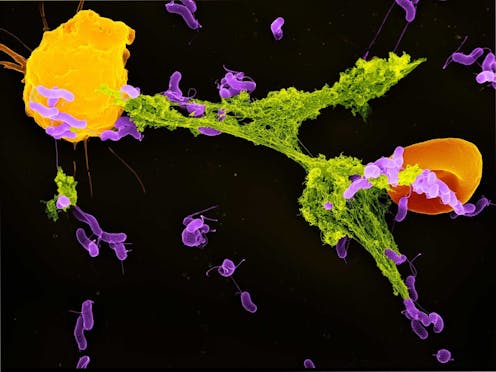
Neutrophils (yellow) eject a NET (green) to ensnare bacteria (purple). Other cells, such as red blood cells (orange), may also get trapped. CHDENK/Wikimedia Commons, CC BY-SA

Mitochondria have primarily been known as the energy-producing components of cells. But scientists are increasingly discovering that these small organelles do much more than just power cells. They are also involved in immune functions such as controlling inflammation, regulating cell death and responding to infections.

Research from my colleagues and I revealed that mitochondria play another key role in your immune response: sensing bacterial activity and helping neutrophils, a type of white blood cell, trap and kill them.

For the past 16 years, my research has focused on understanding the decisions immune cells make during infection and how the breakdown of these decision-making processes cause disease. My lab’s recent findings shed light on why people with autoimmune diseases such as lupus may struggle to fight infections, revealing a potential link between dysfunctional mitochondria and weakened immune defenses.

Side-by-side comparison of labeled illustration of cross-section of mitochondria and its micrograph
Mitochondria do so much more than just produce energy.
OpenStax, CC BY-SA

The immune system’s secret weapons

Neutrophils are the most abundant type of immune cell and serve as the immune system’s first responders. One of their key defense mechanisms is releasing neutrophil extracellular traps, or NETs – weblike structures composed of DNA and antimicrobial proteins. These sticky NETs trap and neutralize invading microbes, preventing their spread in the body.

Until recently, scientists believed that NET formation was primarily triggered by cellular stress and damage. However, our study found that mitochondria can detect a specific bacterial byproduct – lactate – and use that signal to initiate NET formation.

Lactate is commonly associated with muscle fatigue in people. But in the context of bacterial infections, it plays a different role. Many bacteria release lactate as part of their own energy production. My team found that once bacteria are engulfed by a compartment of the cell called the phagosome, neutrophils can sense the presence of this lactate.

Inside the phagosome, this lactate communicates to the neutrophil that bacteria are present and that the antibacterial processes are not sufficient to kill these pathogens. When the mitochondria in neutrophil cells detect this lactate, they start signaling for the cell to get rid of the NETs that have entrapped bacteria. Once the bacteria are released outside the cell, other immune cells can kill them.

Here, a neutrophil engulfs MRSA bacteria (green).

When we blocked the mitochondria’s ability to sense lactate, neutrophils failed to produce NETs effectively. This meant bacteria were more likely to escape capture and proliferate, showing how crucial this mechanism is to immune defense. This process highlights an intricate dialogue between the bacteria’s metabolism and the host cell’s energy machinery.

What makes this finding surprising is that the mitochondria within cells are able to detect bacteria trapped in phagosomes, even though the microbes are enclosed in a separate space. Somehow, mitochondrial sensors can pick up cues from within these compartments – an impressive feat of cellular coordination.

Targeting mitochondria to fight infections

Our study is part of a growing field called immunometabolism, which explores how metabolism and immune function are deeply intertwined. Rather than viewing cellular metabolism as strictly a means to generate energy, researchers are now recognizing it as a central driver of immune decisions.

Mitochondria sit at the heart of this interaction. Their ability to sense, respond to and even shape the metabolic environment of a cell gives them a critical role in determining how and when immune responses are deployed.

For example, our findings provide a key reason why patients with a chronic autoimmune disease called systemic lupus erythematosus often suffer from recurrent infections. Mitochondria in the neutrophils of lupus patients fail to sense bacterial lactate properly. As a result, NET production was significantly reduced. This mitochondrial dysfunction could explain why lupus patients are more vulnerable to bacterial infections – even though their immune systems are constantly activated due to the disease.

This observation points to mitochondria’s central role in balancing immune responses. It connects two seemingly unrelated issues: immune overactivity, as seen in lupus, and immune weakness like increased susceptibility to infection. When mitochondria work correctly, they help neutrophils mount an effective, targeted attack on bacteria. But when mitochondria are impaired, this system breaks down.

Microscopy image of long threads extending from round blobs
Neutrophils unable to effectively produce NETs may contribute to the development of lupus.
Luz Blanco/National Institute of Arthritis and Musculoskeletal and Skin Diseases via Flickr, CC BY-NC-SA

Our discovery that mitochondria can sense bacterial lactate to trigger NET formation opens up new possibilities for treating infections. For instance, drugs that enhance mitochondrial sensing could boost NET production in people with weakened immune systems. On the flip side, for conditions where NETs contribute to tissue damage – such as in severe COVID-19 or autoimmune diseases – it might be beneficial to limit this response.

Additionally, our study raises the question of whether other immune cells use similar mechanisms to sense microbial metabolites, and whether other bacterial byproducts might serve as immune signals. Understanding these pathways in more detail could lead to new treatments that modulate immune responses more precisely, reducing collateral damage while preserving antimicrobial defenses.

Mitochondria are not just the powerhouses of the cell – they are the immune system’s watchtowers, alert to even the faintest metabolic signals of bacterial invaders. As researchers’ understanding of their roles expands, so too does our appreciation for the complexity – and adaptability – of our cellular defenses.

The Conversation

Andrew Monteith receives funding from the National Institute of Health.

ref. Mitochondria can sense bacteria and trigger your immune system to trap them – revealing new ways to treat infections and autoimmunity  – https://theconversation.com/mitochondria-can-sense-bacteria-and-trigger-your-immune-system-to-trap-them-revealing-new-ways-to-treat-infections-and-autoimmunity-255939

Using TikTok could be making you more politically polarized, new study finds

Source: The Conversation – USA (2) – By Zicheng Cheng, Assistant Professor of Mass Communications, University of Arizona

Are you in an echo chamber on TikTok? LeoPatrizi/E+ via Getty Images

People on TikTok tend to follow accounts that align with their own political beliefs, meaning the platform is creating political echo chambers among its users. These findings, from a study my collaborators, Yanlin Li and Homero Gil de Zúñiga, and I published in the academic journal New Media & Society, show that people mostly hear from voices they already agree with.

We analyzed the structure of different political networks on TikTok and found that right-leaning communities are more isolated from other political groups and from mainstream news outlets. Looking at their internal structures, the right-leaning communities are more tightly connected than their left-leaning counterparts. In other words, conservative TikTok users tend to stick together. They rarely follow accounts with opposing views or mainstream media accounts. Liberal users, on the other hand, are more likely to follow a mix of accounts, including those they might disagree with.

Our study is based on a massive dataset of over 16 million TikTok videos from more than 160,000 public accounts between 2019 and 2023. We saw a spike of political TikTok videos during the 2020 U.S. presidential election. More importantly, people aren’t just passively watching political content; they’re actively creating political content themselves.

Some people are more outspoken about politics than others. We found that users with stronger political leanings and those who get more likes and comments on their videos are more motivated to keep posting. This shows the power of partisanship, but also the power of TikTok’s social rewards system. Engagement signals – likes, shares, comments – are like a fuel, encouraging users to create even more.

Why it matters

People are turning to TikTok not just for a good laugh. A recent Pew Research Center survey shows that almost 40% of U.S. adults under 30 regularly get news on TikTok. The question becomes what kind of news are they watching, and what does that mean for how they engage with politics.

The content on TikTok often comes from creators and influencers or digital-native media sources. The quality of this news content remains uncertain. Without access to balanced, fact-based information, people may struggle to make informed political decisions.

TikTok is not unique; social media generally fosters polarization.

Amid the debates over banning TikTok, our study highlights how TikTok can be a double-edged sword in political communication. It’s encouraging to see people participate in politics through TikTok when that’s their medium of choice. However, if a user’s network is closed and homogeneous and their expression serves as in-group validation, it may further solidify the political echo chamber.

When people are exposed to one-sided messages, it can increase hostility toward outgroups. In the long run, relying on TikTok as a source for political information might deepen people’s political views and contribute to greater polarization.

What other research is being done

Echo chambers have been widely studied on platforms like Twitter and Facebook, but similar research on TikTok is in its infancy. TikTok is drawing scrutiny, particularly its role in news production, political messaging and social movements.

TikTok has its unique format, algorithmic curation and entertainment-driven design. I believe that its function as a tool for political communication calls for closer examination.

What’s next

In 2024, the Biden/Harris and Trump campaigns joined TikTok to reach young voters. My research team is now analyzing how these political communication dynamics may have shifted during the 2024 election. Future research could use experiments to explore whether these campaign videos significantly influence voters’ perceptions and behaviors.

The Research Brief is a short take on interesting academic work.

The Conversation

Zicheng Cheng does not work for, consult, own shares in or receive funding from any company or organization that would benefit from this article, and has disclosed no relevant affiliations beyond their academic appointment.

ref. Using TikTok could be making you more politically polarized, new study finds – https://theconversation.com/using-tiktok-could-be-making-you-more-politically-polarized-new-study-finds-258791