Comment les banques centrales peuvent éviter la spirale des anticipations d’inflation

Source: The Conversation – in French – By Éric Mengus, Professeur associé en économie et sciences de la décision, HEC Paris Business School

Dans la zone euro, ces anticipations ont contribué à atténuer les pics d’inflation après la pandémie de Covid-19. Earthphotostock/Shutterstock

Lorsque les anticipations d’inflation s’emballent, les banques centrales font face à un défi crucial : le risque de désancrage, ou emballement incontrôlé, par les différends économiques, notamment les consommateurs. Des recherches récentes mettent en lumière les stratégies potentielles pour préserver la stabilité des prix.


L’inflation dans la zone euro a atteint son pic à 10,6 % en octobre 2022. Elle est repassée à 1 %. sur l’année 2025. La Banque centrale européenne (BCE) a de toute façon pour cible un taux d’inflation de 2 % à moyen terme.

Il est bien établi que des anticipations d’inflation ancrées ont historiquement permis de limiter la durée et l’ampleur des épisodes inflationnistes. Une étude de la Banque de France montre que, dans la zone euro, ces anticipations ont contribué à atténuer et à rendre plus transitoires les pics d’inflation lors de la vague post-pandémie de Covid-19.

Cette vague inflationniste a ravivé la crainte d’un désancrage des anticipations – c’est-à-dire leur emballement incontrôlé. Cette inquiétude ne semble pas s’estomper avec la baisse des taux d’inflation, comme en témoigne la récente hausse des anticipations d’inflation des ménages aux États-Unis.

Renforcer la crédibilité à long terme

Les anticipations ne sont pas indépendantes des pressions inflationnistes actuelles et de la manière dont la banque centrale y répond.

Des travaux, comme Monetary Policy & Anchored Expectations : An Endogenous Gain Learning Model, soulignent que les agents privés tirent des enseignements des décisions actuelles des banques centrales. Ils anticipent leurs décisions grâce à l’observation des taux d’inflation.

Comparaison des mesures des anticipations tirées d’enquêtes par rapport aux données de marché (en %).
Banque de France

Ce mécanisme peut pousser les autorités à adopter des positions plus agressives pour éviter que les anticipations ne dérapent, même au prix d’un ralentissement de l’activité économique. Ignorer une inflation « transitoire » liée à des chocs d’offre – une stratégie parfois appelée look-through – peut se retourner contre elles, signalant une forme de complaisance et risquant d’affaiblir leur crédibilité à long terme.

Alors, comment préserver la stabilité des prix ?

Lien entre politique monétaire et budgétaire

Parfois, la maîtrise des anticipations d’inflation dépasse les moyens de la banque centrale. Cela peut être le cas lorsque le désancrage provient d’un risque de dominance budgétaire. La banque centrale doit alors adapter sa politique monétaire pour aider l’État à respecter ses contraintes budgétaires. Des recherches, comme celles menées avec les économistes Philippe Andrade, Erwan Gautier, Emanuel Moench et Tobias Schmidt sur les croyances des ménages concernant la dominance budgétaire, montrent que certains ménages perçoivent ce risque et l’associent à une inflation future plus élevée. Dans ce cas, l’ancrage des anticipations ne dépend pas seulement de la politique monétaire, mais aussi de la politique budgétaire.


À lire aussi :
Pourquoi la BCE est-elle aussi bavarde ?


Le défi ne se limite pas aux périodes inflationnistes. En contexte déflationniste, comme dans les trappes à liquidité – lorsqu’une politique monétaire devient inefficace –, les banques centrales peuvent regagner le contrôle de l’inflation actuelle. Comment ? En stimulant activement les anticipations d’inflation à moyen terme – c’est l’objet des politiques de forward guidance, à savoir une stratégie d’une banque centrale pour donner des indications sur l’orientation future de sa politique monétaire.

Cela peut exiger de la banque centrale qu’elle signale sa position non seulement par des mots, mais aussi par des actes, comme je le mets en avant avec Jean Barthélemy dans un article publié dans Science Direct en 2018.

Pro-inflationniste et anti-inflationniste

N’y a-t-il pas là une certaine contradiction ? La banque centrale doit en effet afficher une posture anti-inflationniste en cas de risque inflationniste, et pro-inflationniste en cas de risque déflationniste.

Une partie de la réponse réside dans le fait que, qu’en tolérant une inflation supérieure à la cible en raison d’un choc d’offre ou qu’elle recoure au forward guidance, la banque centrale doit gérer avec soin l’impact de ces écarts sur les anticipations d’inflation à long terme. En particulier, les périodes normales, où rien ne justifie de s’écarter de la cible d’inflation, sont des opportunités à ne pas manquer pour assurer la stabilité des prix.

Quoi qu’il en soit, les banques centrales doivent arbitrer un équilibre délicat : rester flexibles à court et moyen terme, tout en préservant leur crédibilité à long terme. Tout écart par rapport aux objectifs d’inflation – qu’il soit dû à des chocs d’offre ou à du forward guidance – doit être clairement communiqué pour que le public en comprenne la justification et le caractère temporaire.

À l’inverse, cela signifie aussi que la banque centrale doit faire preuve de modestie et être prête à renoncer à ses plans si elle observe une variation des anticipations d’inflation à long terme, signe que le public commence à perdre confiance dans son engagement en faveur de la stabilité des prix.

En résumé, pour gérer le risque de désancrage, il faut a minima :

  • Construire sa crédibilité en temps normal : un historique solide est crucial pour maintenir la confiance lorsque celle-ci est le plus nécessaire.

  • Communiquer clairement : expliquer les objectifs, les conditions et le caractère temporaire de tout écart à court ou moyen terme par rapport aux cibles.

  • Faire preuve de modestie : des écarts marqués ou prolongés peuvent éroder la confiance du public.

The Conversation

Éric Mengus ne travaille pas, ne conseille pas, ne possède pas de parts, ne reçoit pas de fonds d’une organisation qui pourrait tirer profit de cet article, et n’a déclaré aucune autre affiliation que son organisme de recherche.

ref. Comment les banques centrales peuvent éviter la spirale des anticipations d’inflation – https://theconversation.com/comment-les-banques-centrales-peuvent-eviter-la-spirale-des-anticipations-dinflation-268509

Le paradoxe de la Sécurité sociale : et si, pour faire des économies, il fallait l’étendre ?

Source: The Conversation – in French – By Nicolas Da Silva, Maître de conférences en économie de la santé, Université Sorbonne Paris Nord

L’architecture du financement de la Sécurité sociale n’est pas neutre et a même un coût. Illustration avec l’Assurance maladie, qui cumule les sources de financement, tout en produisant des inégalités.

Cet article est publié en partenariat avec Mermoz, la revue du Cercle des économistes dont le numéro 8 a pour thème « Notre modèle social, un chef-d’œuvre en péril ».


Malgré leur diversité, les économistes de la santé s’accordent pour regretter l’organisation actuelle du financement des soins. Au cœur de la critique se trouve l’idiosyncrasie hexagonale : le financement par deux acteurs distincts du même panier de soins. Par exemple, la consultation chez le médecin généraliste donne lieu à un remboursement à hauteur de 70 % par la Sécurité sociale et de 30 % par la complémentaire santé (au tarif opposable).

Cette architecture est coûteuse et inégalitaire. En comparaison internationale, la France consacre une plus grande part de ses dépenses de santé aux coûts de gouvernance du système (Graphique 1). Ces derniers représentent 5 % du total des dépenses contre 4,3 % en Allemagne, 1,8 % au Royaume-Uni et 1,7 % en Italie. Seuls les États-Unis et la Suisse font moins bien. La raison principale de cette situation est la place occupée par les complémentaires santé. Alors que celles-ci sont responsables de la moitié des coûts de gouvernance, elles ne prennent en charge que 12,1 % des dépenses de santé.


À lire aussi :
La grande histoire de la Sécurité sociale, de 1945 à nos jours


Près de 96 euros de soins pour 100 euros cotisés

Pour le même montant, la Sécurité sociale finance près de 80 % des dépenses de santé. Les frais de gestion de celle-ci s’élèvent à 4 % contre 19,4 % en moyenne pour les complémentaires santé. Pour 100 euros cotisés, la Sécurité sociale rend 96 euros de soins et les complémentaires 80,6 €. Il est possible de discuter à la marge du montant exact, mais le constat reste sans appel. Le monopole public est particulièrement économe tandis que le marché impose de nombreux coûts évitables (gestion des contrats, marketing, etc.).

Graphique 1 : Dépense de gouvernance des systèmes de santé en 2021

En pourcentage de la dépense courante de consommation au sens international

Systèmes d’assurance maladie gérés par des assurances publiques (à gauche systèmes d’assurance maladie gérés par des assurances privées (au milieu) et systèmes nationaux de santé (à droite).

Source : DREES (2023, p. 180)

Un trio d’inégalités

Les complémentaires santé ne sont pas seulement chères, elles sont aussi inégalitaires. La première source d’inégalité vient du fait que toute la population ne dispose pas d’une complémentaire santé. Environ 2,5 millions de personnes n’ont pas de complémentaire santé, quand tout le monde a accès à la Sécurité sociale.

La seconde source d’inégalité concerne le niveau différencié de solidarité entre Sécurité sociale et complémentaire. La Sécurité sociale opère une redistribution massive entre classes de revenu. Le financement est très progressif et l’accès aux prestations est lié à l’état de santé. À l’inverse, les complémentaires sont peu solidaires et chaque catégorie de revenu récupère sa mise.

Une troisième source d’inégalité porte sur la variété des contrats de complémentaire santé : si presque toute la population a une complémentaire, tout le monde n’a pas la même. Or, ce sont les plus riches, qui sont aussi les moins malades, qui disposent des meilleurs contrats.

Une grande Sécu

Toutes ces critiques (et bien d’autres) conduisent des économistes divers à recommander la fin de la complémentarité. Dans une note du Conseil d’analyse économique de 2014, Brigitte Dormont, Pierre-Yves Geoffard et Jean Tirole préconisaient d’« [e]n finir avec [le] système mixte d’assurance maladie ». Un éditorial de 2021 publié par Florence Jusot et Jérôme Wittwer sur le site Internet du Collège des économistes de la santé se réjouissait de l’hypothèse d’une « Grande Sécu ». Ces positions émanant du centre de la discipline rejoignent celle des tenants de l’approche de l’économie politique de la santé.

La publication en 2021 d’un rapport du Haut Conseil sur l’avenir de l’assurance maladie a apporté un argument de poids supplémentaire. Pour la première fois, une estimation de l’impact de l’extension de la Sécurité sociale aux dépens des complémentaires santé a été réalisée. L’augmentation des prélèvements obligatoires serait plus que compensée par la réduction des cotisations versées aux complémentaires santé. L’économie a été estimée à 5,4 milliards d’euros par an. Contrairement aux idées reçues, la gestion publique permettrait de réaliser des économies de grande ampleur tout en facilitant l’accès aux soins.

France 24 2022.

Retrouver l’esprit de 1945

Le projet d’extension de la Sécurité sociale laisse cependant une question dans l’ombre : quelles limites fixer à cette extension ? Qui doit décider du panier de soin pertinent et des patients éligibles ? Deux grandes options sont envisageables. D’un côté, il paraît naturel d’envisager que cela soit le gouvernement et l’administration compétente qui continue à gouverner la Sécurité sociale. L’extension du financement parachèverait l’étatisation du financement des soins en France.

D’un autre côté, il est possible de prendre au sérieux la célébration cette année des 80 ans de la Sécurité sociale. En 1945, cette institution relève d’une socialisation et non d’une nationalisation. Afin d’échapper au paternalisme social d’avant-guerre, la Sécurité sociale est confiée aux intéressés qui élisent leurs représentants du niveau local au niveau national. Il ne faut pas confondre cette socialisation et la gestion par les organisations syndicales et patronales. Aux premières élections à la Sécurité sociale en 1947, chaque cotisant peut être candidat qu’il soit ou non adhérent à un syndicat. S’instaure alors une forme de double pouvoir entre État et Sécurité sociale, un pluralisme démocratique qui permet d’orienter la politique sociale. Si tout cela peut sembler fantaisiste, il est utile de rappeler que le régime local d’Alsace-Lorraine fonctionne aujourd’hui en grande partie sur ces principes. Le régime est gouverné par les intéressés qui peuvent décider du niveau de financement de certains soins et même du taux de cotisation. Et si on renouait avec l’esprit de 1945 ?


Cet article est publié en partenariat avec Mermoz, la revue du Cercle des économistes dont le numéro 8 a pour objet « Notre modèle social, un chef-d’œuvre en péril ». Vous pourrez y lire d’autres contributions.

Le titre et les intertitres sont de la rédaction de The Conversation France.

The Conversation

Nicolas Da Silva ne travaille pas, ne conseille pas, ne possède pas de parts, ne reçoit pas de fonds d’une organisation qui pourrait tirer profit de cet article, et n’a déclaré aucune autre affiliation que son organisme de recherche.

ref. Le paradoxe de la Sécurité sociale : et si, pour faire des économies, il fallait l’étendre ? – https://theconversation.com/le-paradoxe-de-la-securite-sociale-et-si-pour-faire-des-economies-il-fallait-letendre-268618

Culture as a sustainable development goal? It’s starting to become a reality

Source: The Conversation – Africa – By Ribio Nzeza Bunketi Buse, Assistant Professor, University of Kinshasa

Eight global millennium development goals were established in 2000 by member states of the United Nations (UN) and endorsed by other multilateral organisations. They ranged from eliminating hunger to empowering women, and from reducing child mortality to environmental sustainability.

The millennium development goals were not fully achieved by 2015, so 17 sustainable development goals (SDGs) were devised to be reached by 2030. The longer list responded mostly to growing climate threats and urbanisation and included aspects of wellbeing and healthy living.

The focus now is on developing the next agenda after 2030. There is a growing drive to include culture as a goal. Nowhere was the bid more pronounced than at the recent global cultural policy meeting called Mondiacult, held every three years by the United Nations Educational, Scientific and Cultural Organization (Unesco).

Ribio Nzeza Bunketi Buse is a scholar of cultural development. We asked him why a culture SDG matters.


Why should culture be an SDG in its own right?

Since 1982, several of these meetings have emphasised the link between culture and sustainable development. Now there’s a call for it to be a standalone SDG in the post-2030 development agenda.

A strong argument is made in the Unesco global report on cultural policies, released in Barcelona during Mondiacult in September 2025. According to this report, 93% of responding member states affirm that culture is a central point in their national sustainable development plans. This is an increase from 88% four years ago.

The document reports also that cultural and creative industries account for 3.39% of the global gross domestic product (a measure of the health of an economy) and 3.55% of jobs. That makes it comparable to the automotive sector. Cultural tourism generates US$741.3 billion in 250 cities each year.

Given this, there’s a broad consensus that culture is one of the keys to sustainable economic development. But it goes deeper.

Unesco defines culture as:

A set of distinctive spiritual, material, intellectual and emotional features that characterise a society or social group including not only arts and letters, but modes of life, value systems, traditions and beliefs.

From this definition, culture is a human right. The final declaration of Mondiacult 2025 recognises it as such, alongside other human rights. Indeed, many countries’ constitutions and other international conventions, like the International Covenant on Civil and Political Rights, recognise this.

If the 17 SDGs (like education, gender equality and healthy living) are related to human rights, why should culture, which is also a human right, not be an SDG?

To get there, the Mondiacult declaration reinforces that culture needs to be emphasised and endorsed in the 2030 development agenda.


Read more:
What is Mondiacult? 6 take-aways from the world’s biggest cultural policy gathering


The Culture Committee of the United Cities and Local Governments organisation campaigned for culture to be included in the post-2015 development agenda. (Since its 2004 Agenda 21 for Culture initiative, the organisation has worked to include culture in local and regional development.)

In 2022, a network of leading global cultural organisations began an advocacy campaign for culture to be a dedicated SDG. The #Culture2030Goal campaign’s draft zero has five focus areas:

  • adequate attention to culture at the highest level of government

  • recognise connections between culture and other policy areas

  • the culture sector must feel a sense of engagement in and ownership of the goal

  • mobilise power of culture for all other goals

  • achievement of all goals through a cultural lens.

The campaign formulated culture as an SDG as follows:

Ensure cultural sustainability for the wellbeing of all.

Sustainability is culture’s capacity to endure over time and also speaks to new thinking about sustainability for a healthier future for the world.

What difference would it make if it was an SDG?

A standalone SDG would recognise culture as a global public good that all countries should protect.

This would draw attention to culture as an area of intervention. Justin O’Connor, a professor of cultural economy, writes in the Cultural Policy Forum that:

A specific goal is needed to better coordinate culture’s contribution to each and every goal, and to make it mandatory for governments and agencies to pay attention to it, and hopefully direct resources to it.

So, it would also encourage governments to take culture into account in their national economic development agendas.

What are the obstacles?

There are two main constraints in the path to culture becoming an SDG: the understanding of its role for development; and the capacity of policymakers to give it the necessary space.

Mondiacult 2022 recommended including culture in the UN’s 2024 Summit of the Future and that was successful. In fact, Action 11 of the summit’s final document Pact for the Future includes culture. However, it is associated with sport, and is not considered a stand-alone issue.


Read more:
Culture can build a better world: four key issues on Africa’s G20 agenda


Against this backdrop, the ambition of having culture as an SDG still has a way to go. There is no set timeline. It all depends on how negotiations evolve among multiple UN stakeholders (international agencies and member states) in the preparation process for the post-2030 agenda.

Although South Africa is leading the 2025 G20 meetings, where culture is firmly on the agenda, Africa can still play a far stronger mobilising role among the world’s leaders, to convince them to come on board.

The Conversation

Ribio Nzeza Bunketi Buse does not work for, consult, own shares in or receive funding from any company or organisation that would benefit from this article, and has disclosed no relevant affiliations beyond their academic appointment.

ref. Culture as a sustainable development goal? It’s starting to become a reality – https://theconversation.com/culture-as-a-sustainable-development-goal-its-starting-to-become-a-reality-267996

Trump was already cutting low-income energy assistance – the shutdown is making things worse as cold weather arrives

Source: The Conversation – USA (2) – By Conor Harrison, Associate Professor of Economic Geography, University of South Carolina

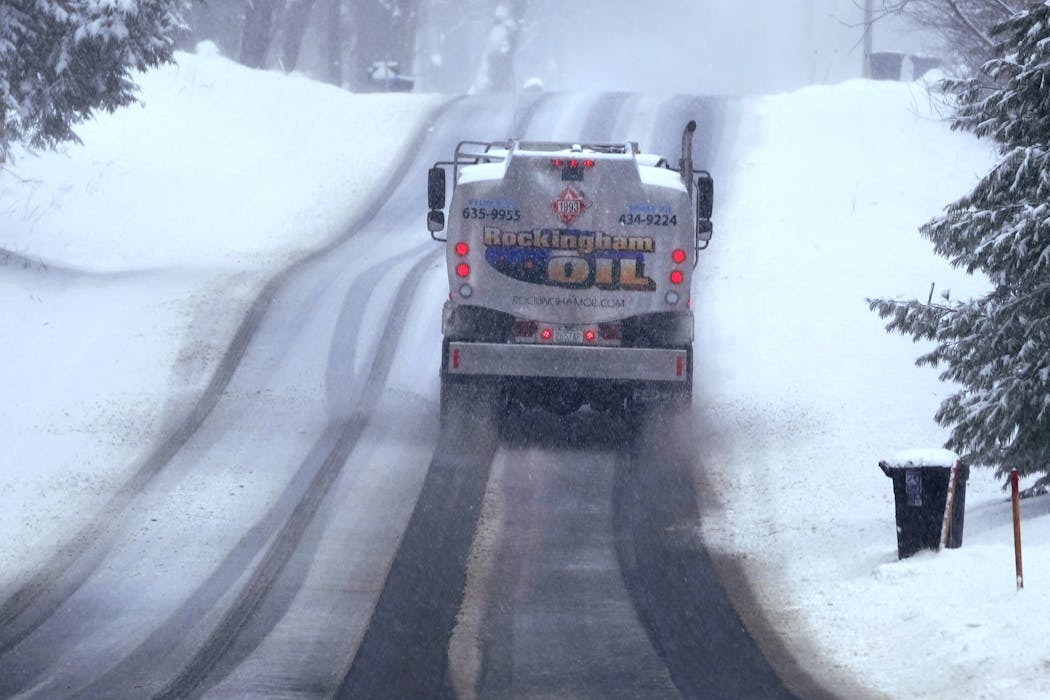
Home heating oil, used in furnaces across the Northeast, is expensive, leading some people to keep homes at unhealthy temperatures. AP Photo/Charles Krupa

As fall turns to winter and temperatures begin to drop, millions of people across the U.S. will struggle to pay their rising energy bills. The government shutdown is making matters even worse: Several states have pushed back the start of their winter energy assistance because their federally allocated funds have yet to show up.

A 2023 national survey found that nearly 1 in 4 Americans were unable to pay their full energy bill for at least one month, and nearly 1 in 4 reported that they kept their homes at unsafe temperatures to save money. By 2025, updated polling indicated nearly 3 in 4 Americans are worried about rising energy costs.

Conservative estimates suggest that utilities shut off power to over 3 million U.S. households each year because the residents cannot pay their bills.

This problem of high energy prices isn’t lost on the Trump administration.

On the first day of his second term in 2025, President Donald Trump declared a national energy emergency by executive order, saying that “high energy prices … devastate Americans, particularly those living on low- and fixed incomes.”

Secretary of Energy Christopher Wright raised concerns about utility disconnections and outlined a mission to “shrink that number, with the target of zero.”

Yet, the administration’s 2026 budget proposal zeroed out funding for the Low Income Home Energy Assistance Program, or LIHEAP, the federal program that administers funding to help low-income households pay their utility bills. While there appears to be continued bipartisan support for LIHEAP in Congress, on April 1, 2025, the administration laid off the entire staff of the LIHEAP office. These layoffs hinder the ability of the federal government to release LIHEAP funds, even when the government reopens.

An older man wearing a shawl in his kitchen.
Russ Anderson of Waldoboro, Maine, wears a shawl to help keep warm as he speaks with a reporter in 2023 about the importance of federal programs to help low-income households like his heat their homes. For someone getting by on less than $1,000 a month from Social Security, heating aid could save him the equivalent of three monthly payments, he told The Associated Press.
AP Photo/Robert F. Bukaty

Many people already struggle to cobble together enough help from various sources to pay their energy bills. As researchers who study energy insecurity, we believe gutting the federal office responsible for administering energy bill assistance will make it even harder for Americans to make ends meet.

The high stakes of energy affordability

We work with communities in South Carolina and Tennessee where many residents struggle to heat and cool their homes.

We see how high energy prices force people to make dangerous trade-offs. Low-income households often find themselves choosing whether to buy necessities, pay for child care or pay their utility bills.

One elderly person we spoke with for our research, Sarah, explained that she routinely forgoes buying medications in order to pay her utility bill.

Unfortunately, these stories are increasingly common, especially in low-income communities and communities of color.

Shrinking resources for assistance

LIHEAP, created in 1981, provides funding to states as block grants to help low-income families pay their utility bills. In fiscal year 2023, the program distributed US$6.1 billion in energy assistance, helping some 5.9 million households avoid losing power connections.

The program’s small staff played critical roles in disbursing this money, providing implementation guidelines, monitoring state-level fund management and tracking and evaluating program effectiveness.

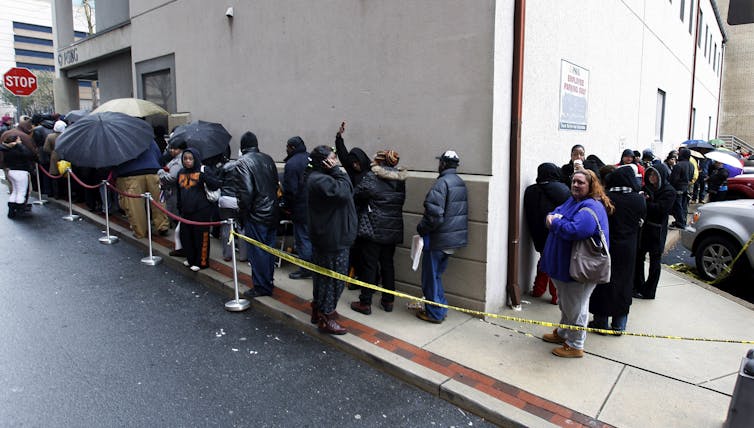
People wait in a line going around a building. Some have umbrellas.
A long line of utility customers wait to apply for help from the Low-Income Energy Assistance Program in Trenton, N.J., in 2011. In 2023, around 6 million households benefited from LIHEAP.
AP Photo/Mel Evans

It is unlikely that other sources of funding can fill in the gaps if states do not receive LIHEAP funds from the federal government. The program’s funding has never been high enough to meet the need. In 2020, LIHEAP provided assistance to just 16% of eligible households.
Our research has found that, in practice, many households rely on a range of local nonprofits, faith-based organizations and informal networks of family and friends to help them pay their bills and keep the heat on in winter.

For example, a research participant named Deborah reported that when faced with a utility shut-off, she “drove from church to church to church” in search of assistance. United Way in South Carolina received over 16,000 calls from people seeking help to pay their utility bills in 2023.

These charitable services are an important lifeline for many, especially in the communities we study in the South. However, research has shown that faith-based programs do not have the reach of public programs.

Without LIHEAP, the limited funds provided by nonprofits and the personal connections that people patch together will be stretched even thinner, especially as other charitable services, such as food banks, also face funding cuts.

What’s ahead

Although Congress has chosen to fund LIHEAP for 2026, the government shutdown threatens the program’s ability to reach families in time for the cold months ahead. While summer heat is on the rise, cold-related deaths have been trending up as well. Cold snaps in early 2024 and again in 2025 left several people dead from hypothermia. These are preventable deaths that continued LIHEAP assistance could help avoid.

These threats to LIHEAP—especially coming alongside uncertainty about federal food assistance—put the goal of energy affordability for all Americans – and Americans’ lives – in jeopardy. Until more affordable energy sources, such as solar and wind power, can be scaled up, an expansion of federal assistance programs is needed, not a contraction.

Increasing the reach and funding of LIHEAP is one option. Making home weatherization programs more effective is another.

Governments could also require utilities to forgive past-due bills, implement percent of income payment plans, and end utility shut-offs. About two dozen states currently have rules to prevent shut-offs during the worst summer heat.

For now, the cuts mean more pressure on nonprofits, faith-based organizations and informal networks. Looking ahead to another winter of freezing temperatures, we can only hope that delays to LIHEAP payments and cuts to LIHEAP staff don’t foreshadow a growing yet preventable death toll.

Etienne Toussaint, a law professor at the University of South Carolina, and Ann Eisenberg, a law professor at West Virginia University, contributed to this article.

This is an update to an article originally published May 13, 2025.

The Conversation

Conor Harrison receives funding from the National Science Foundation and the Alfred P. Sloan Foundation.

Elena Louder received funding from the Alfred P. Sloan Foundation related to this research.

Nikki Luke receives funding from the Alfred P. Sloan Foundation. She previously worked at the U.S. Department of Energy.

Shelley Welton receives funding from the Alfred P. Sloan Foundation.

ref. Trump was already cutting low-income energy assistance – the shutdown is making things worse as cold weather arrives – https://theconversation.com/trump-was-already-cutting-low-income-energy-assistance-the-shutdown-is-making-things-worse-as-cold-weather-arrives-269342

Le Brésil est-il en mesure de respecter ses engagements climatiques ?

Source: The Conversation – in French – By Pierre-Éloi Gay, Chercheur en sciences de gestion, ESSEC

La réalisation des objectifs climatiques du Brésil repose principalement sur la diminution de la déforestation. Cette réduction nécessite l’assentiment et l’engagement de l’agrobusiness, principal secteur vecteur de la déforestation. Pourtant, celui-ci paraît de plus en plus réticent à assumer cette responsabilité climatique et environnementale.


C’est un rendez-vous hautement symbolique. Le Brésil s’enorgueillit d’accueillir cette année la COP 30 à Belém, au cœur de l’Amazonie. Le gouvernement de Lula espère que cette localité illustrera la nécessité de revoir à la hausse nos ambitions climatiques et de mettre en place les actions et les mécanismes, notamment financiers, nécessaires à la réalisation des objectifs de l’accord de Paris.

Pour convaincre un maximum de pays, le Brésil peut s’appuyer sur un historique d’action climatique ambitieux. En effet, en 2009, avec déjà Lula à sa tête, lors de la COP de Copenhague, il était le premier pays non-développé à prendre des engagements internationaux de réduction de ses émissions, et à les avoir atteints en 2020. En 2015, à l’occasion de la COP 21, il annonce aussi des objectifs de réduction de ses émissions de 37 % en 2025 par rapport à 2005. En 2024, le gouvernement brésilien s’est engagé à réduire ses émissions en 2035 entre 59 % et 67 % par rapport à 2005. Lors de cette annonce, le Brésil a réaffirmé son ambition d’atteindre la neutralité carbone en 2050 et l’alignement de sa politique climatique à l’objectif d’un réchauffement de la planète 1,5 degré par rapport à la période préindustrielle.

Comme en 2009 et en 2015, la stratégie énoncée en 2024 et complétée cette année par des plans sectoriels, repose à moyen terme principalement sur la réduction de la déforestation. Le gouvernement compte arriver à une déforestation « zéro » (où les zones reforestées compensent les zones déforestées) à partir de 2030. Comme lors des précédents engagements climatiques internationaux du pays, ce pari sur la lutte contre la déforestation permet au Brésil de laisser les secteurs de l’énergie, de l’industrie et des transports maintenir (voire augmenter à moyen terme) leurs émissions. Il permet même l’exploitation de nouveaux gisements de pétrole, projet sur lequel alertent régulièrement diverses ONG. Une autre faiblesse, moins évidente mais tout aussi sérieuse, survient également lorsqu’il est question de dans la crédibilité de ces engagements climatiques : il concerne l’agrobusiness.

En effet, l’agrobusiness, qui représente un quart des émissions au niveau mondial, est responsable de 29 % des émissions brutes du Brésil (derrière les 42 % des émissions liées à la déforestation, elle-même en grande partie liée aux activités du secteur). De fait, de nombreux signaux politiques montrent que le secteur est de moins en moins aligné avec les orientations du gouvernement actuel et les alertes des scientifiques.

L’agrobusiness brésilien représente près de 50 % des exportations du pays en valeur (et près de 25 % du PIB selon certaines estimations qui incluent toutes les activités en amont en aval de la production agricole). Le pays figure parmi les principaux exportateurs de nombreux produits agricoles (soja, canne à sucre, café, jus d’orange, etc.). Le « complexe soja » (soja en grain et ses dérivés) demeure le principal produit d’exportation du pays (plus d’un tiers des exportations du secteur en valeur) et c’est principalement l’extension de cette culture qui explique l’augmentation de la surface cultivée au Brésil. Les industries de la viande représentent ensuite le deuxième poste d’exportation et les pâturages destinés à l’élevage bovin occupent plus de la moitié de la surface agricole du pays.

Cette puissance économique se traduit par une influence politique considérable. Son expression la plus emblématique est le Frente Parlamentar da Agropecuária (FPA) que l’on peut traduire comme le « front parlementaire de défense de l’agriculture et de l’élevage ». Ce groupe parlementaire s’aligne généralement sur les intérêts des plus gros agriculteurs et de l’agrobusiness. Du fait qu’il rassemble plus de la moitié des députés et sénateurs du pays, il est très puissant au sein du pouvoir législatif et possède une capacité d’influence ou de blocage du pouvoir exécutif.

L’objectif de déforestation zéro d’ici 2030 passe par l’arrêt de la déforestation illégale et la réduction drastique de la déforestation légale. La lutte contre la déforestation illégale fait l’objet d’un consensus au sein des syndicats patronaux de l’agrobusiness. Néanmoins, lors du gouvernement Bolsonaro, il a été clair que de nombreux pans du secteur agricole (notamment chez les grands propriétaires fonciers des états de l’Amazonie) soutenaient explicitement les efforts du gouvernement d’extrême droite d’alors pour mettre à bas les politiques et institutions publiques de lutte contre la déforestation.

Ces lobbys n’ont pas disparu et continuent d’œuvrer auprès d’un parlement au sein duquel les élections législatives de 2022 ont renforcé l’influence de l’extrême droite et la puissance des intérêts anti-environnementaux. Ainsi, la lutte contre la déforestation illégale ne saurait être tenue pour acquise et toute alternance politique pourra remettre en question les résultats de l’actuel gouvernement en la matière.

La question de la déforestation légale est tout aussi complexe. En effet, la législation environnementale brésilienne encadre strictement les possibilités de déforester pour les propriétaires terriens (c’est particulièrement le cas en Amazonie où 80 % des terres rurales doivent rester préservées). Néanmoins, ces protections sont moins strictes dans les autres biomes du Brésil et le respect de la loi et des procédures nécessaires pour déforester sont variables d’une localité à une autre.

Quand bien même, le Brésil ne pourra pas respecter ses engagements climatiques si toutes les zones qui peuvent être légalement déforestées le sont d’ici 2050. Or, tout changement de la législation environnementale vers une restriction des droits des propriétaires terriens est une ligne rouge pour les syndicats agricoles. C’est également une bataille dans laquelle les mouvements politiques écologistes sont peu susceptibles de s’engager puisque le dernier grand débat législatif en la matière en 2012 s’est achevé sur une défaite de leurs positions alors même que l’équilibre politique leur était plus favorable à l’époque.

Cela veut donc dire que la réduction de la déforestation légale doit passer par une redirection volontaire du système productif agricole brésilien qui aspire toujours à plus de croissance. La promesse faite par le gouvernement et les syndicats agricoles est que la surface agricole globale restera stable. Selon eux, il n’y aura pas besoin de déforester plus pour produire plus. Selon leurs projections, l’essentiel de l’augmentation de la production se fera par l’augmentation de la productivité. Les éventuelles surfaces supplémentaires nécessaires pour la production de grains comme le soja viendront de l’abandon par l’élevage bovin des pâturages les moins productifs.

Néanmoins, cette politique a déjà été conduite depuis 2010 et elle a eu des résultats mitigés. Si la déforestation a bien été réduite par rapport à 2005, elle reste à un niveau élevé et surtout elle a connu des oscillations à la hausse et à la baisse. D’autre part, le volontarisme du secteur sur la question apparaît affaibli. Cette année, quand le plan de réduction des émissions du secteur agricole a été présenté publiquement, les syndicats patronaux et agricoles ont fortement protesté contre le fait que les émissions liées à la déforestation ayant eu lieu au sein de propriétés agricoles leur aient été imputées. Pour eux, cela donne une image injuste et erronée du secteur alors que celui-ci est « déjà durable ».

Également, l’organisme qui s’assure du respect de la libre concurrence au sein des différents secteurs de l’économie brésilienne a acté en septembre dernier un rétropédalage historique en annonçant la fin en janvier 2026 d’un dispositif clé de lutte contre la déforestation en Amazonie au motif qu’il représentait un accord anti-concurrentiel nocif aux producteurs de soja. Ce dispositif, appelé moratoire du Soja, avait été signé en 2006 entre les grandes entreprises du secteur du soja et plusieurs ONGs écologistes face à la pression engendrée par une campagne de boycott du soja brésilien lancée par Greenpeace. Dans le cadre de ce moratoire en vigueur jusqu’à aujourd’hui, les plus grandes entreprises de négoce de commodities agricoles (par exemple les géants américains comme Cargill et Bunge ou des entreprises brésiliennes comme Amaggi) s’engagent à ne pas financer ou acheter de soja issu de terres nouvellement déforestées en Amazonie. Cette décision de s’attaquer à un des emblèmes de l’agriculture « responsable » et de l’engagement du secteur envers la protection de l’Amazonie met en évidence les tensions au sein du secteur et la détermination des syndicats agricoles à lever les « freins » à l’expansion de leurs exploitations.

Il est donc aujourd’hui peu probable que le secteur se mette en ordre de marche pour atteindre les objectifs de réduction de la déforestation et partant les objectifs climatiques du Brésil. Outre ces éléments politiques, la persistance de la déforestation a renforcé une spirale négative de dégradation des écosystèmes. La région amazonienne s’assèche et devient plus vulnérable aux incendies. Certains scientifiques alertent sur un point de rupture de plus en plus proche, avec une forêt qui commencerait à se dégrader d’elle-même. Également, la pression agricole sur le Cerrado, autre grand biome du pays composé d’une mosaïque de paysages ouverts et de forêts plus ou moins denses dont l’importance en termes de stockage de carbone est maintenant souligné par les scientifiques, met à mal sa fonction de château d’eau du Brésil. L’urgence à arrêter la destruction des milieux naturels n’en est donc que plus forte.

À l’avenir, les pressions des clients de l’agrobusiness pourraient changer la donne. L’Union européenne jouait ce rôle mais les tensions en son sein concernant sa politique environnementale et le fait qu’elle ait perdu son statut de premier acheteur du Brésil ont amoindri son pouvoir de pression. La Chine, comme premier acheteur et important investisseur, pourrait la remplacer. De nombreux programmes d’agriculture durable sont lancés entre les deux pays. Pour l’instant, la Chine n’a pas opté pour des exigences plus explicites quant à la déforestation. D’autre part, la pression de la société civile et le changement des équilibres politiques dans le pays pourraient accroître la pression sur le secteur afin qu’il change ses pratiques.

The Conversation

Pierre-Éloi Gay ne travaille pas, ne conseille pas, ne possède pas de parts, ne reçoit pas de fonds d’une organisation qui pourrait tirer profit de cet article, et n’a déclaré aucune autre affiliation que son organisme de recherche.

ref. Le Brésil est-il en mesure de respecter ses engagements climatiques ? – https://theconversation.com/le-bresil-est-il-en-mesure-de-respecter-ses-engagements-climatiques-269242

Le problème des « méga-COP » : une conférence de 50 000 personnes peut-elle encore lutter contre le changement climatique ?

Source: The Conversation – in French – By Dr Hayley Walker, Assistant Professor of International Negotiation, IÉSEG School of Management

Les COP attirent désormais des dizaines de milliers de participants. Une affluence qui pose de nombreux problèmes, et qui doit être réduite, à la fois pour que l’empreinte carbone d’un événement centré sur la lutte contre le réchauffement climatique ne soit pas démesurée et pour que les participants ne soient pas frustrés, ce qui ne peut qu’avoir un effet délétère sur leur participation ultérieure à le mise en œuvre des mesures adoptées durant les COP.


Les gouvernements du monde entier se réuniront bientôt à Belém au Brésil, pour la 30e Conférence des Parties (COP30), accompagnés de nombreux représentants du monde de l’industrie et des entreprises, de la société civile, d’instituts de recherche, d’organisations de jeunesse et de groupes de peuples autochtones – liste non exhaustive.

Depuis l’adoption de l’accord de Paris sur le changement climatique en 2015, le nombre de participants à la COP a explosé. La COP28 à Dubaï a réuni 83 884 participants, un record, et bien que ce nombre soit tombé à 54 148 lors de la COP29 à Bakou l’année dernière, il est resté bien supérieur à celui de la COP21 à Paris.

Les récentes « méga-COP » ont été critiquées pour leur énorme empreinte carbone. La recherche sur la participation des acteurs non étatiques aux COP que nous avons menée avec Lisanne Groen de l’Open Universiteit (Heerlen, Pays-Bas) identifie deux autres problèmes.

Premièrement, la quantité de participants nuit à la qualité de la participation, car un grand nombre d’acteurs non étatiques sont contraints de se disputer un nombre limité de salles de réunion, de créneaux horaires pour l’organisation d’événements parallèles, d’occasions de s’exprimer publiquement et de chances d’entrer en dialogue avec les décideurs. Deuxièmement, la tendance aux « méga-COP » creuse un fossé entre, d’une part, les attentes de ces acteurs en termes d’impact qu’ils espèrent avoir sur le déroulement des événements et, d’autre part, la réalité des faits.

Réduire le nombre de participants d’une façon équitable

En ce qui concerne le premier problème, la solution évidente consiste à réduire la taille des COP, mais cela n’est pas si facile dans la pratique. La décision d’organiser la COP30 dans la ville amazonienne de Belém, difficile d’accès et ne disposant que de 18 000 lits d’hôtel, a été considérée comme une tentative de dépasser ce qu’on a appelé le « pic COP »

Des dizaines de milliers de participants, qui ne semblent pas découragés par l’éloignement du lieu, sont tout de même attendus, mais l’offre limitée de lits a provoqué une flambée des prix, ce qui soulève des inquiétudes quant aux coûts et à leur effet potentiel sur « la légitimité et la qualité des négociations », comme le rapporte Reuters.

À mesure que les COP ont pris de l’ampleur, elles ont suscité de plus en plus d’attention de la part des milieux politiques et des médias, au point d’être désormais considérées comme « un événement où il faut absolument être présent ». Cela incite les organisations non gouvernementales et d’autres acteurs non étatiques à y participer. Tout comme la force gravitationnelle des grands corps massifs attire d’autres objets vers eux, la masse des « méga-COP » attire un nombre croissant de participants, en un cycle qui ne cesse de se renforcer et devient difficile à briser.

La force gravitationnelle des « méga-COP ».
Hayley Walker, Fourni par l’auteur

Selon nous, la manière la plus équitable de réduire la taille des COP consisterait à mettre en lumière la catégorie peu connue des participants « excédentaires ». Cette catégorie permettait autrefois aux gouvernements d’ajouter des délégués aux événements sans que leurs noms n’apparaissent sur les listes de participants, mais leurs noms sont désormais rendus publics depuis l’introduction de nouvelles mesures de transparence en 2023. Lors de la COP28, il y avait 23 740 participants « excédentaires ». Il ne s’agit pas de négociateurs gouvernementaux, mais souvent de chercheurs ou de représentants de l’industrie qui entretiennent des liens étroits avec les gouvernements.

Les COP sont des processus intergouvernementaux : elles sont créées par les gouvernements, pour les gouvernements. Par conséquent, la priorité est donnée aux demandes d’accréditation émanant des gouvernements.

Ce n’est qu’une fois toutes les demandes gouvernementales satisfaites que les accréditations restantes peuvent être attribuées à des acteurs non étatiques admis, appelés « observateurs ».

Les participants excédentaires bénéficient d’accréditations au détriment de ces organisations observatrices. Faire pression sur les gouvernements pour qu’ils limitent ou suppriment la catégorie des participants excédentaires permettrait donc de libérer beaucoup plus de badges pour les observateurs tout en réduisant le nombre total de participants à la COP de manière plus équitable.

L’écart entre les attentes des participants et la réalité des COP

Le deuxième problème, celui de l’écart entre les attentes des acteurs et ce qui se passe concrètement durant les COP, est lié à une conception de plus en plus erronée du rôle des acteurs non étatiques dans le processus de négociation des politiques climatiques.

Les États souverains sont les seuls acteurs légitimes pour négocier et adopter le droit international. Le rôle des acteurs non étatiques est d’informer et de mener des actions de plaidoyers, mais pas de négocier. Pourtant, ces dernières années, certains groupes d’acteurs non étatiques ont multiplié les appels pour obtenir « une place à la table des négociations » dans l’espoir de pouvoir participer aux réunions sur un pied d’égalité avec les gouvernements.

Ce discours, largement amplifié sur les réseaux sociaux, conduit inévitablement à la frustration et à la déception lorsque ces acteurs sont confrontés à la réalité des négociations intergouvernementales.

Nous constatons ce décalage en particulier chez les acteurs non étatiques qui sont nouveaux dans le processus. Les « méga-COP » attirent de plus en plus de nouveaux participants, qui ne disposent peut-être pas des ressources, notamment du savoir-faire et des contacts, nécessaires pour atteindre efficacement les décideurs politiques. La désillusion croissante de ces participants sape la légitimité des COP ; or cette légitimité est un atout précieux dans un contexte géopolitique où elles sont confrontées aux défis posés par l’administration Trump, mais risque également de gaspiller les idées et l’enthousiasme précieux apportés par les nouveaux venus.

Se concentrer sur la mise en œuvre des décisions

Nous voyons deux solutions. Premièrement, les initiatives visant à renforcer les capacités peuvent sensibiliser à la nature intergouvernementale des négociations et aider les nouveaux participants à s’engager efficacement. L’un de ces outils est le « Guide de l’observateur » de la Convention-cadre des Nations unies sur les changements climatiques (CCNUCC). De nombreuses organisations et personnes produisent leurs propres ressources pour aider les nouveaux participants à comprendre le fonctionnement du processus et la manière de s’impliquer. Deuxièmement, et de manière plus fondamentale, il convient de détourner l’attention des responsables politiques, des médias et du public des négociations en tant que telles pour la diriger vers le travail essentiel de mise en œuvre des politiques climatiques.

Les COP sont bien plus que de simples négociations : elles constituent également un forum qui rassemble les nombreux acteurs qui mettent en œuvre des mesures climatiques sur le terrain afin qu’ils puissent apprendre les uns des autres et créer une dynamique. Ces activités, qui se déroulent dans une zone dédiée de la COP appelée « Programme d’action », revêtent une importance capitale maintenant que les négociations sur l’accord de Paris ont abouti et qu’un nouveau chapitre axé sur la mise en œuvre s’ouvre. Si le rôle des acteurs non étatiques dans les négociations intergouvernementales est plutôt limité, il est en revanche central lorsqu’il s’agit de la mise en œuvre des mesures décidées lors des COP. Les actions des villes, des régions, des entreprises, des groupes de la société civile et d’autres acteurs non étatiques peuvent contribuer à combler l’écart entre les objectifs de réduction des émissions fixés par les gouvernements et les réductions qui seront nécessaires pour atteindre les objectifs de l’Accord de Paris.

La question clé est donc de concentrer l’énergie et l’attention des acteurs sur le programme d’action et la mise en œuvre des politiques, de façon à leur donner suffisamment d’importance pour qu’ils exercent leur propre force d’attraction et déclenchent une dynamique positive en faveur de l’action climatique. Il est encourageant de voir la présidence brésilienne qualifier la COP30 de « COP de la mise en œuvre » et appeler à un « Mutirão », un sentiment collectif d’engagement et d’action sur le terrain qui ne nécessite pas une présence physique à Belém. Cela permet à la fois de résoudre les problèmes liés aux « méga-COP » et de canaliser l’énergie collective vers les domaines qui en ont le plus besoin.

The Conversation

Dr Hayley Walker ne travaille pas, ne conseille pas, ne possède pas de parts, ne reçoit pas de fonds d’une organisation qui pourrait tirer profit de cet article, et n’a déclaré aucune autre affiliation que son organisme de recherche.

ref. Le problème des « méga-COP » : une conférence de 50 000 personnes peut-elle encore lutter contre le changement climatique ? – https://theconversation.com/le-probleme-des-mega-cop-une-conference-de-50-000-personnes-peut-elle-encore-lutter-contre-le-changement-climatique-269206

James Watson exemplified the best and worst of science – from monumental discoveries to sexism and cutthroat competition

Source: The Conversation – USA – By Andor J. Kiss, Director of the Center for Bioinformatics and Functional Genomics, Miami University

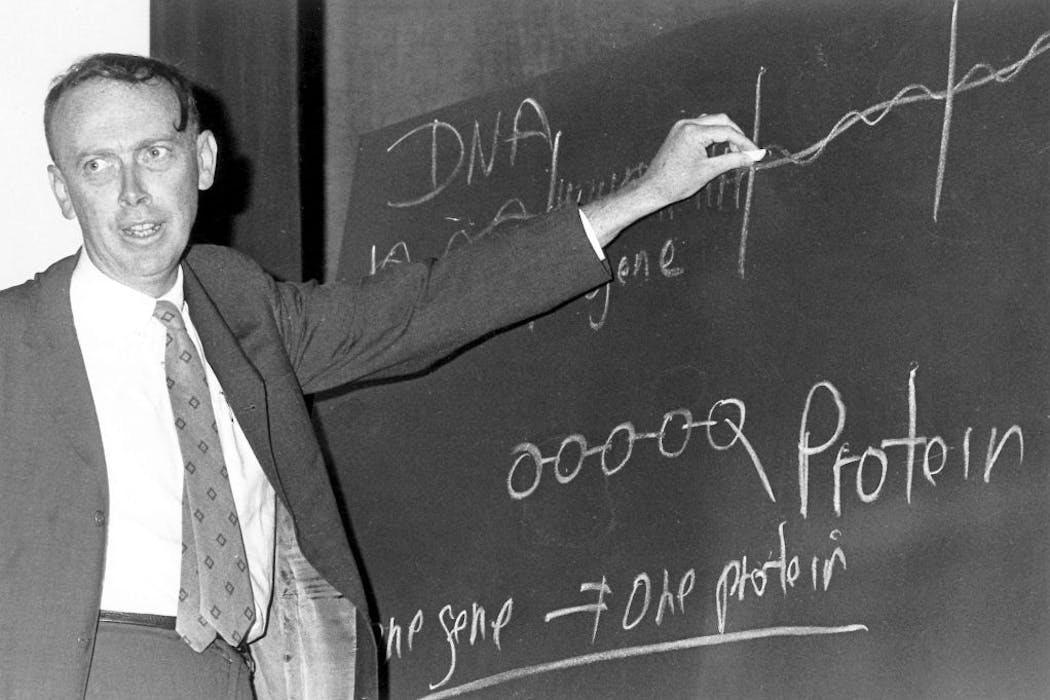
James Watson was both a towering and controversial figure in science. Gerhard Rauchwetter/picture alliance via Getty Images

James Dewey Watson was an American molecular biologist most known for co-winning the 1962 Nobel Prize in physiology or medicine for discovering the structure of DNA and its significance in transferring information in living systems. The importance of this discovery cannot be overstated. It unlocked how genes work and gave birth to the fields of molecular biology and evolutionary phylogenetics. It has inspired and influenced my career as a scientist and as director of a bioinformatics and functional genomics research center.

Watson was also an outspoken and controversial figure who transformed the way science was communicated. He was the first high-profile Nobel laureate to give the general public a shockingly personal and unfiltered glimpse into the cutthroat and competitive world of scientific research. Watson died on Nov. 6, 2025 at age 97.

Watson’s pursuit of the gene

Watson attended the University of Chicago at age 15, initially intending to become an ornithologist. After reading Erwin Schrödinger’s book of collected public lectures on the chemistry and physics of how cells operate, “What is Life?,” he became interested in finding out what genes are made of – the biggest question in biology at the time.

Chromosomes – a mixture of protein and DNA – were known to be the molecules of heredity. But most scientists were convinced that proteins, with 20 different building blocks, were the likely candidate as opposed to DNA with only four building blocks. When the 1944 Avery-MacLeod-McCarty experiment demonstrated that DNA was the carrier molecule of inheritance, the focus immediately shifted to understanding DNA.

Watson completed his doctorate in zoology at Indiana University in 1950, followed by a year in Copenhagen studying viruses. He met biophysicist Maurice Wilkins at a conference in 1951. During Wilkins’ talk on the molecular structure of DNA, Watson saw preliminary X-ray photographs of DNA. This prompted him to follow Wilkins to the Cavendish Laboratory at the University of Cambridge to pursue work into uncovering the structure of DNA. Here, Watson met physicist-turned-biologist Francis Crick and developed an immediate bond with him over their shared research interests.

Headshots of Francis Crick, James Watson and Maurice Wilkins
Watson, at center, was jointly awarded the 1962 Nobel Prize in medicine with Francis Crick, left, and Maurice Wilkins.
AP Photo

Soon, Watson and Crick published their seminal findings on the structure of DNA in the journal Nature in 1953. Two other papers were also published in the same journal issue on the structure of DNA, one co-authored by Wilkins and the other co-authored by chemist and X-ray crystallographer Rosalind Franklin.

Franklin took the X-ray photographs of DNA crystals that contained the data necessary for solving the structure of DNA. Her work, taken together with the work of the Cavendish Laboratory members, led to the 1962 Nobel Prize in physiology or medicine awarded to Watson, Crick and Wilkins.

The prize and the controversy

Although they were aware that Franklin’s essential X-ray photographs circulated in an internal Cavendish Laboratory summary report, neither Watson nor Crick acknowledged her contributions in their now famous 1953 Nature paper. In 1968, Watson published a book recounting the events surrounding the discovery of the DNA structure as he experienced them, wherein he minimizes Franklin’s contributions and refers to her in sexist language. In the book’s epilogue, he does acknowledge Franklin’s contributions but stops short of providing full credit for her role in the discovery.

Some historians have argued that part of the justification for not formally recognizing Franklin was that her work had not been published at the time and was “common knowledge” in the Cavendish Laboratory because researchers working on the DNA problem routinely shared data with one another. However, the co-opting of Franklin’s data and its incorporation in a formal publication without attribution or permission is now largely viewed as a well-known example of poor behavior both in science and in the treatment of female colleagues by their male counterparts in professional settings.

During the race to decipher DNA, science was an old boys’ club.

In the decades since the Nobel Prize was awarded to Watson, Crick and Wilkins, some have recast Rosalind Franklin as a feminist icon. Whether or not she would have endorsed this is uncertain, as it is unclear how she would have felt about being left out of a Nobel Prize and written about disparagingly in Watson’s account of events. What has become clear is that her contribution was critical and essential, and she is now widely regarded as an equal contributor to the discovery of the structure of DNA.

Future of science collaboration

How have attitudes and behaviors towards junior colleagues and collaborators changed in the years since Watson and Crick were recognized for the Nobel Prize?

In many cases, universities, research institutions, funding agencies and peer-reviewed journals have implemented formal policies to transparently identify and credit the work and contributions of all researchers involved in a project. While these policies don’t always work, the scientific environment has changed for the better to be more inclusive. This evolution may be due to recognizing that a single individual is rarely able to tackle and solve complex scientific problems by themselves. And when problems occur, there are more formal mechanisms for people to seek mitigation.

Frameworks for sorting disputes can be found in author guidelines from journals, professional associations and institutions. There is also a journal called Accountability in Research that is “devoted to the examination and critical analysis of practices and systems for promoting integrity in the conduct of research.” Guidance for scientists, institutions and grant-funding agencies on how to structure author attribution and accountability represents a significant advancement in fairness and ethical procedures and standards.

Hexagonal aluminum plates in the shape of the bases adenine, guanine, cytosine and thymine
These are the aluminum plates Watson and Crick used to represent the four bases in their model of DNA.
Science & Society Picture Library/Getty Images

I’ve had both positive and negative experiences in my own career. These range from being included on papers when I was an undergraduate to being written out of grants to having my contributions left in while I was dropped from authorship without my knowledge. It is important to note that most of my negative experiences occurred early in my career, likely because senior collaborators felt they could get away with it.

It’s also likely that these negative experiences occur less often now that I am upfront and explicit with my expectations regarding co-authorship at the outset of a collaboration. I am prepared and can afford to turn down collaborations.

I suspect this mirrors experiences that others have had, and is very likely amplified for people from groups that are underrepresented in science. Unfortunately, poor behavior, including sexual harassment, is still happening in the field. Suffice it to say, science as a community still has a long way to go – as does society at large.

After co-discovering the structure of DNA, James Watson went on to study viruses at Harvard University and helm Cold Spring Harbor Laboratory, reviving and substantially expanding its physical space, staff and worldwide reputation. When the Human Genome Project was in its infancy, Watson was an obvious choice to lead and drive it forward, later stepping aside after a protracted battle over whether the human genome and genes themselves could be patented – Watson was firmly against gene patents.

Despite all the immense good Watson did during his lifetime, his legacy is tarnished by his long history of racist and sexist public comments as well as his ongoing disparagement of Rosalind Franklin both personally and professionally. And it is regrettable that he and Crick chose not to acknowledge all those who contributed to their great discovery at the critical points.

The Conversation

Andor J. Kiss does not work for, consult, own shares in or receive funding from any company or organization that would benefit from this article, and has disclosed no relevant affiliations beyond their academic appointment.

ref. James Watson exemplified the best and worst of science – from monumental discoveries to sexism and cutthroat competition – https://theconversation.com/james-watson-exemplified-the-best-and-worst-of-science-from-monumental-discoveries-to-sexism-and-cutthroat-competition-204614

What to know as hundreds of flights are grounded across the US – an air travel expert explains

Source: The Conversation – USA (2) – By Laurie A. Garrow, Professor of Civil and Environmental Engineering, Georgia Institute of Technology

Passengers walk through the Ronald Reagan Washington National Airport on Nov. 7, 2025. Anna Moneymaker/Getty Images

Major airports across the United States were subject to a 4% reduction in flights on Nov. 7, 2025, as the government shutdown began to affect travelers.

The move by the Federal Aviation Administration is intended to ease pressure on air traffic controllers, many of whom have been working for weeks without pay after the government shut down on Oct. 1. While nonessential employees were furloughed, workers deemed essential, such as air traffic controllers, have continued to do their jobs.

But what does that mean for the many Americans who take to the skies every day? To find out, The Conversation U.S. spoke with Laurie A. Garrow, a civil aviation expert at Georgia Tech.

What do we know about the FAA’s plans so far?

The first thing to note is that things can change fast. But as of this morning, 4% of flights are being canceled across 40 “high-volume” airports. The list is publicly available, but it includes most of the big hubs across the United States, such as Atlanta, New York’s airports, Chicago O’Hare, Los Angeles International and Dallas/Fort Worth.

The plan is to ramp this up to 10% by Nov. 14 should the shutdown extend that long.

The FAA, the U.S. Department of Transportation and the airlines are working together on the details of which flights and routes are affected – and this will no doubt be monitored as the days go on.

But they are trying to make the cancellations in a way that cause the least disruption to customers.

So we are looking at cuts to domestic, not international, flights – flights across the Atlantic, Pacific and to Latin America are not, for now at least, subject to cuts.

The 4% of cancellations we are seeing are really targeting the high-frequency routes. This should help mitigate the impact. For example, typically American Airlines flies nine flights a day from Miami to Orlando, but they are planning to fly eight this weekend.

And carriers are looking at reducing regional flights. For example, my mom lives near Erie, Pennsylvania, where American Airlines flies three daily flights to their hub in Charlotte – I would expect that to go down to two, or one.

But the FAA was clear that it wasn’t going to cut flights to markets entirely, just reduce them.

What will this mean for existing flights?

For starters, you are going to see more passengers on them. It is fortunate that we are in the lull before Thanksgiving. This isn’t like the summer. There is more slack in the system – so there are extra seats available. If one flight gets canceled on a busy route, it will at this stage be fairly easy to accommodate on another flight.

And I expect customers will be asked to get to airports a little earlier than they would normally.

But people should expect more delays on existing flights. This is because of the way we maintain safety in the air transportation system. Air traffic control can only safely watch a certain number of flights. So when you have someone not at work, or a reduction in number of controllers, you will need to reduce the number of airplanes in the sky. You can’t ask a controller to watch, say, 20 flights when they usually watch 10. So what you do is put in more ground delay programs to limit the number of aircraft coming into or out of an airport. This causes delays but is necessary in peak periods.

What impact will this have on airlines?

At 4%, probably not too much of an impact. When you look at the list of airports affected, it is balanced from the point of view that many are large hubs and the pain is being shared across all U.S. carriers.

As for the impact on other types of businesses, at the moment it is mainly the industries that air transportation supports. According to the International Air Transport Association, the air transport sector in the U.S. – covering airlines, airports and tourism enabled by aviation –contributes about US$1.3 trillion, or about 4.7%, to GDP and supports about 7.6 million jobs. If these wider sectors are severely affected, it could create a longer-term impact on the economy.

And if this continues into the holiday season?

That is when it will get painful for the carriers. If we are looking at reduction of 10% going into the holiday season with additional delays, then that is when the real pain will be felt.

Will this affect how Americans choose to travel?

Air travel is what I call an emotional mode of transport – we use it for the events that are most significant in our life, such as big family meet-ups, holidays and major face-to-face business deals. So this may affect how people choose to travel going into the holiday season if it is more difficult to get people back to their families in time.

Robert Isom, CEO of American Airlines, said on Nov. 7 that they are seeing an impact on bookings, with people postponing and rescheduling travel.

I certainly think for people looking at a 500- to 600-mile trip, the option of traveling by car is looking more appealing right now.

Will passengers be compensated for canceled flights?

Typically, compensation depends on whether the delay or cancellation was within the airline’s control. The U.S. Department of Transportation has created a dashboard showing “what services U.S. airlines provide to mitigate passenger inconveniences when the cause of a cancellation or delay was due to circumstances within the airline’s control.”

However, delays and cancellations caused by ATC staffing shortages are not considered to be within the airline’s control, and it is up to each airline to decide if and how they will compensate passengers.

As of Nov. 7, many airlines had announced they were allowing customers to change their flights or request a refund without penalty, including nonrefundable fares such as basic economy.

After all, it is in their interest, too, that people continue to fly.

Typically, major carriers offer more services for delayed and canceled flights within their control than low-cost carriers.

A large building is seen behind a blue plane.
A Southwest Airlines plane taxis in front of the air traffic control tower at Los Angeles International Airport.
Mario Tama/Getty Images

Is there any precedent for this? What happened then?

There is no real precedent for what we are seeing: a 4% to 10% reduction across the board due to a government shutdown. But we have seen major disruptions, such as after the Sept. 11, 2001, terrorist attacks and during the pandemic, when COVID-19 ran through flight attendants and pilots before the holidays – that caused flight cancellations and delays.

Historically, when we have seen something like this, we have seen consumer behavior change for a short period. After 9/11, when U.S. travelers had the hassle of increased security, there was a shift to more automobile travel for those 500- to 600-mile journeys.

What advice would you give would-be flyers now?

First off, download the app for the airport and airline carrier so you get up-to-date, reliable information. And if you can book for a day earlier than you normally would for a major event, do so – it provides a buffer in case your flight is delayed or canceled.

And try to avoid connections at all costs. The fewer legs, the fewer things can go wrong.

Also, don’t check bags if you can. There is nothing worse than getting to an airport, finding your flight is canceled, and then having to wait for your luggage to get returned.

The Conversation

Laurie A. Garrow is Past President of AGIFORS, a non-profit organization dedicated to using advanced analytics to improve airline planning and operations.

ref. What to know as hundreds of flights are grounded across the US – an air travel expert explains – https://theconversation.com/what-to-know-as-hundreds-of-flights-are-grounded-across-the-us-an-air-travel-expert-explains-269265

National 211 hotline calls for food assistance quadrupled in a matter of days, a magnitude typically seen during disasters

Source: The Conversation – USA (3) – By Matthew W. Kreuter, Kahn Family Professor of Public Health, Washington University in St. Louis

Sharp spikes in calls for food assistance are rare outside of natural disasters. AP Photo/Eric Gay

Between January and mid-October 2025, calls to local 211 helplines from people seeking food pantries in their community held steady at nearly 1,000 calls per day.

But as the government shutdown entered its fourth week in late October, states began to warn residents that Supplemental Nutrition Assistance Program benefits, sometimes known as food stamps, would likely be affected. Nearly 42 million Americans receive SNAP benefits each month.

Over the next several days, calls to 211 from people seeking food pantries doubled to over 2,200 per day. Then on Oct. 26, the Trump administration announced that SNAP benefits would not be arriving as scheduled in November. The next day, food pantry calls skyrocketed to 3,324. The following day, calls reached 3,870. By Wednesday, it was 4,214.

We are public health scientists specializing in health communication and unmet social needs. We and our colleagues have been working closely with the 211 network of helplines across the U.S. for 18 years.

Excluding disasters, sudden surges of this magnitude in requests for food or any other need are rare at 211s, and can signal both public worry and need, as happened in the first weeks of the COVID-19 pandemic.

What is 211?

Like 911 for emergencies, 211 is a national three-digit dialing code, launched in 2000, that connects callers to information specialists at the nearest local 211 helpline. Those specialists listen to callers’ needs and provide them with referrals to health and social service providers near them that may be able to help.

Every call to 211 is classified by the need of the caller, such as shelter, rent, utilities or food – each of which has its own code.

Callers are disproportionately women, most of whom have children or teens living in their homes. Most don’t make enough money to make ends meet. They call 211 seeking help paying rent or utility bills, getting food to feed their family, or securing household necessities like a winter coat for a child, or a mattress.

The hotline does not solve these problems for callers, but 211 information specialists use the most current local information available to refer callers to service agencies that are most likely to have resources to help.

The 211 network is the closest thing the U.S. has to a real-time surveillance system of the needs of low-income Americans.

There are roughly 200 state and local 211s in the U.S., and on an average day they will collectively field between 35,000 and 40,000 requests for help. Each request is coded using a taxonomy of over 10,000 need types, is time- and date-stamped, and is linked to the caller’s ZIP code. In addition to phone calls received by their helplines, 211s increasingly track requests they receive online, through their websites. The national network of 211s covers all 50 states and 99% of the U.S. population.

It’s encouraging to us that with each passing year of giving talks and lectures about 211, more and more audience members raise their hands when asked if they’ve ever heard of 211. But it’s far from 100%. If you are one of those with your hand down, here’s what you need to know.

Food banks around the country are having trouble keeping their shelves stocked.

Gaining local insights

Our team aims to deploy the latest methods from data science, predictive analytics and artificial intelligence to detect trends in critical needs sooner and at a more localized level, increasing the speed and efficiency of getting needed help to local community members.

Our research has described the needs of callers who reach out to 211, community capacity to respond to callers’ needs, the ability of 211 to detect rapid changes in community needs, and the benefits of integrating health referrals into 211s.

When we saw food requests rising sharply in late October, we reached out to local leaders at 211 call centers to get insights into what they were hearing from callers.

Robin Pokojski, vice president of 211 and community partnerships at United Way of Greater St. Louis, reported that with all the uncertainty around SNAP benefits, callers were initially “anticipating” a need for food pantries. Tiffany Olson, who directs essential services at Crisis Connections and its 211 call center in Washington state, shared that even callers who rely heavily on their SNAP benefits sometimes need to use food banks as a supplement.

Those callers know that pivoting to rely solely on food banks probably won’t be enough to meet their food needs in full. They realize that food pantries and food banks will be more heavily burdened if SNAP benefits are unavailable.

Increasing the impact of 211 data

The trove of daily data on the needs of U.S. callers to 211 at the ZIP code level is unparalleled. Yet for years it was virtually invisible to anyone who didn’t work at a 211 hotline.

Even for people who work and volunteer within the 211 system, formal reporting on caller needs within a community was minimal, such as a one-page annual summary.

That changed in 2013.

Working with 211s across the country, our team created 211 Counts, a collection of user-friendly, public-facing data dashboards for local 211s across the U.S.

The dashboards allow users to explore the top needs in their community, see which neighborhoods are affected most and understand how needs are changing over time. The data can be sorted by legislative districts, school districts and counties to make the findings more relevant to different audiences.

Data on 211 requests are updated each night. Now in its 12th year, 211 Counts includes data on over 90 million requests from 211 callers in all or parts of 44 states. The local dashboards have been visited millions of times.

211 as an early-warning system

This is not the first time data collected through 211 hotlines has detected early signs of trouble for some Americans. Just weeks ago, we found that calls from people seeking assistance making car payments have been increasing steadily for five months, with daily calls peaking in October, at nearly twice the rate of May 2025.

Before that, 211s were months ahead of news reporting in seeing public distress associated with the 2022 baby formula shortage, the 2016 Flint water crisis and the 2007 subprime mortgage crisis.

When requests for major needs like food increase three- to fourfold overnight, every local 211 is likely to register this abrupt change.

But when less frequent needs, such as car payment assistance, creep up slowly, with an extra call here and there over several months, it’s unlikely that any local 211 hotline would notice.

That’s when the advantages of big data are greatest. By combining caller needs from 211s across the country, patterns emerge that would otherwise be missed. New data science tools are rapidly improving the speed and accuracy of detecting slight changes. When community and national leaders are made aware of potential rising threats, those threats can be tracked more closely and responses prepared.

It’s easy to lose sight of the fact that each data point is a hungry child or a worried parent.

Hotlines and food banks and food pantries need support in this moment to feed people. But most local safety net systems struggle to meet their community’s needs all the time. Data that documents the magnitude of need won’t fix the scarcity of local assistance, but it can help guide communities in allocating limited resources.

The Conversation

Matthew W. Kreuter receives funding from NIH.

Rachel Garg receives funding from NIH and NSF. She has previously received research support from Health Communication Impact, LLC to produce 211 data reports for United Way Worldwide.

ref. National 211 hotline calls for food assistance quadrupled in a matter of days, a magnitude typically seen during disasters – https://theconversation.com/national-211-hotline-calls-for-food-assistance-quadrupled-in-a-matter-of-days-a-magnitude-typically-seen-during-disasters-269057

Huge amounts of plastic waste goes unnoticed – here’s what to do about it

Source: The Conversation – UK – By Kate Whitman, Research Fellow, Ethical Consumption, Revolution Plastics Institute, University of Portsmouth

JasminkaM/Shutterstock

Every week, the average UK household throws away dozens of pieces of plastic packaging. When people actually start counting them, they’re often shocked to discover just how much there is. And unfortunately, most of this plastic cannot be reused, refilled or recycled.

That’s one of the main findings from our new research on the Big Plastic Count, a nationwide citizen science campaign organised by social enterprise Everyday Plastic in collaboration with environmental campaign charity Greenpeace. Involving more than 160,000 UK households, it’s one of the largest efforts ever to track household plastic waste in the world.

Our analysis combined the Big Plastic Count data with an attitude survey of more than 8,000 plastic count respondents and an experiment on public engagement. It showed that taking part in “citizen science”, research carried out with the public rather than on the public, can do much more than generate data. It can bring a sense of urgency to an environmental problem, change behaviour, and even mobilise political action.

People tend to overestimate the positive environmental impact of recycling. Many participants began the project confident they were already making environmentally friendly choices, for example buying recyclable packaging. But when they actually counted their weekly plastic waste, the results told a different story.

The typical household generated 20-30 items of plastic in just one week, mostly soft plastics such as film lids, crisp packets and food wrappers. These items, despite often carrying positive environmental messages, are impossible to reuse or refill, and are rarely recycled in practice.

This gap between perception and reality, what we call “plastic blindness”, reveals a crucial barrier to tackling plastic pollution. People simply don’t see how much plastic they use or misunderstand, or perhaps are misled as to what happens to it after disposal.

This blindness was especially pronounced among online shoppers, who tended to underestimate their plastic consumption the most. Having packaging arrive neatly at the door seems to obscure the sheer volume of waste produced in the process. This suggests the need for more visible waste information – and better ways to help consumers choose lower waste options.

When we see it, we care more

The act of counting plastic waste had a powerful psychological effect. Participants who tracked their own waste reported feeling more aware and more concerned about the plastic waste they were generating – and more open to alternatives such as refill and reuse systems.

pile of green black and clear plastic packaging
It can be hard to visualise how much plastic waste households throw away every day.
JasminkaM/Shutterstock

These models, where customers use their own containers or borrow returnable ones, are widely seen as essential to a circular economy. Yet their success depends, along with supportive policies, on public understanding of why recycling and other waste management strategies are not enough to tackle plastic pollution.

By making the invisible visible, citizen science can help close that understanding gap. Participants who saw their plastic waste laid out in front of them were far more likely to express concern about pollution and to support stronger policies on plastic reduction.

Citizen science can spark action

We found that awareness translated into political engagement. Participation in the Big Plastic Count coincided with a significant increase in signatures on a Greenpeace petition launched at the same time, calling for stronger action in the ongoing global plastics treaty negotiations.

This suggests that citizen science isn’t just a way to collect data. It can also mobilise public support for policy change. When people see clear evidence of a problem that they have limited control over, they’re more motivated to demand systemic solutions.

Our findings add to growing evidence that recycling alone cannot solve the plastic problem. In the UK, the Everyday Plastic study showed that only around 17% of household plastic waste is actually recycled, while most ends up being incinerated, exported or put into landfill.

Policies that focus solely on end-of-life solutions ignore the need to reduce plastic production at its source. That’s why policy must look upstream. The global plastics treaty, a United Nations initiative aiming to reduce plastic pollution worldwide, could commit countries to legally binding limits on virgin plastic production and enforce stronger requirements for reuse and refill systems.

The results of the Big Plastic Count show that when people are given the opportunity to see their own contribution to the plastic problem, they want to see change – and they expect policymakers to lead it.

Quite simply, we can’t fix what we can’t see. Plastic pollution is often hidden in plain sight – behind positive “eco” or “recyclable” labels, messages such as adverts normalising single-use plastic use, within supply chains and under the convenience of online shopping.

Citizen science initiatives such as the Big Plastic Count help to lift that blindfold, empowering citizens not just to count plastic, but to count in the movement for change.


Don’t have time to read about climate change as much as you’d like?

Get a weekly roundup in your inbox instead. Every Wednesday, The Conversation’s environment editor writes Imagine, a short email that goes a little deeper into just one climate issue. Join the 45,000+ readers who’ve subscribed so far.


The Conversation

Cressida Bowyer receives funding from the Arts and Humanities Research Council (AHRC), the Medical Research Council (MRC), the Economic and Social Research Council (ESRC), the Wellcome Trust, the Sustainable Manufacturing and Environmental Pollution Programme (SMEP) and the Flotilla Foundation. She is a member of the British Plastics Federation Sustainability Committee.

Steve Fletcher receives funding from the World Economic Forum, Natural Environment Research Council (NERC), Economic and Social Research Council (ESRC), Aquapak Ltd, Defra, and the Flotilla Foundation. He is a member of the United Nations International Resource Panel and is the NERC Agenda Setting Fellow for Plastic Pollution.

Kate Whitman does not work for, consult, own shares in or receive funding from any company or organisation that would benefit from this article, and has disclosed no relevant affiliations beyond their academic appointment.

ref. Huge amounts of plastic waste goes unnoticed – here’s what to do about it – https://theconversation.com/huge-amounts-of-plastic-waste-goes-unnoticed-heres-what-to-do-about-it-268702