Diabetic foot pain: expert tips on how to cope

Source: The Conversation – Africa (2) – By Peter Kamerman, Professor, University of the Witwatersrand

An estimated 1 in 10 people worldwide have diabetes. Africa is the region with the fastest growth and it’s estimated that the number of people on the continent with diabetes will more than double in the next 20 years, increasing to about 55 million people by 2045.

Having diabetes has serious consequences for health and is associated with increased risk of developing diseases related to damage to the heart (heart attacks), blood vessels (strokes, foot ulcers), kidneys (chronic kidney failure), and the nervous system (blindness, loss of sensation).

When it comes to nerve damage, it typically affects long nerve fibres that supply the feet and can sometimes affect fibres that supply the hands too (a so-called glove and stocking distribution).

It is the nerve fibres that detect sensations such as touch and temperature that are often worst affected, resulting in numbness. The numbness that develops can be a nightmare for people and is often described as their “feet feeling dead”.

A peculiarity of this numbness is that it may be accompanied by intractable pain. This type of pain, resulting from damage to sensory nerve fibres, is called neuropathic pain.

As scientists in the field of pain and pain management we work on neuropathic pain in people living with diabetes and its management. In this article we aim to draw attention to the problem and discuss how it can be managed.

Nerve damage

It has been estimated that up to 50% of people with diabetes will develop damage to peripheral nerves during their lifetime, and up to 50% will experience pain because of that nerve damage.

The predictors of developing nerve damage are well established. Older age, increased duration of diabetes, and poor control of blood glucose concentration are the main culprits. What determines whether the nerve damage is associated with pain is largely unknown.

Neuropathic pain is often described as a “burning” pain, and is frequently
accompanied by other sensations such as “pins and needles”, and pain that feels like stabbing, shooting, electric-like shocks, and deep aching.

In some people there is very little or no numbness. In these people pain can often be triggered by gentle touch and movement across the skin (for example, bed sheets brushing across a foot, putting on socks), and cool and warm temperatures that are not normally felt as painful.

Sometimes my feet will hurt really badly and I can’t get up and can hardly walk. – Anonymous patient

Having such intractable pain has devastating consequences for quality of life.

Pain sufferers have less social interaction with family and friends, and find it much more difficult to enjoy their favourite activities. Sleep is significantly disrupted.

Having neuropathic pain is associated with high rates of anxiety and depression. To make matters worse, the sleep disruption, anxiety and depression may feed back into a vicious cycle to worsen and maintain the pain.

There are days when I’d really like to go somewhere or do something and just
don’t go. I know it will hurt. There’s no point in doing it. – Anonymous patient

Medications to manage the pain

Neuropathic pain is not responsive to the medications used to treat conditions such as headaches and joint pains (for example, paracetamol and ibuprofen).

Instead, neuropathic pain is responsive to medications that in some cases are also used to treat conditions such as depression and epilepsy.

Examples include:

  • low doses of tricyclic antidepressants (for example, amitriptyline)

  • a class of antidepressants called serotonin and noradrenaline re-uptake inhibitors (for example, duloxetine)

  • anti-seizure drugs like gabapentinoids (for example, gabapentin and pregabalin).

However, there is very little information to guide doctors to predict which drug will work best for a patient.

So, often finding the correct treatment is a trial-and-error approach, which can be frustrating for both patients and doctors.

Coping mechanisms

Chronic pain management is also about teaching people to cope with their pain so that they get back to enjoying their lives and are no longer consumed by the pain.

Such interventions include the practice of mindfulness, cognitive behavioural therapy, and other self-management activities specifically designed for people with chronic pain.

With the rapidly growing number of individuals with diabetes, it is more important than ever that we detect and treat the pain caused by nerve fibre damage.

Public education and increased awareness of this painful consequence of diabetes will hopefully encourage affected people to seek early medical attention, thus allowing management of the condition, maintaining well-being and restoring function.

The Conversation

Peter Kamerman receives funding from the National Research Foundation of South Africa. He is the sole proprietor of Blueprint Analytics, and consults for Partners in Research.

Andreas C Themistocleous receives funding from UK Medical Research Council.

ref. Diabetic foot pain: expert tips on how to cope – https://theconversation.com/diabetic-foot-pain-expert-tips-on-how-to-cope-251937

Nigerians having babies abroad: women explain their reasons

Source: The Conversation – Africa (2) – By Aduragbemi Banke-Thomas, Associate professor, London School of Hygiene & Tropical Medicine

Nigerian women make up a significant proportion of foreign women giving birth in several countries.

A study done in Calgary in Canada found 24.5% of foreign women identified as having travelled abroad to give birth were from Nigeria.

Research in Chicago in the US found the majority (88%) of those seeking obstetric care in a hospital were Nigerian citizens.

In the UK, the phenomenon is labelled by some as the “Lagos Shuttle”, highlighting the high number of Nigerian women said to be so-called “birth tourists”.

It is estimated that over 23% of pregnant Nigerian women would like to travel abroad to give birth.

Why is this? As medical and legal scholars we asked women who had travelled overseas for the birth of their babies to share their experiences.

Existing research has not done enough to capture their voices, which matter in framing service delivery and immigration policies.

We reported findings from this first-of-its-kind study in PLOS Global Public Health.

As there is no registry of foreign pregnant women who gave birth abroad, it is a challenge to find them. For our study, we used social media platforms to recruit 27 Nigerian women who had given birth to at least one child abroad and conducted in-depth interviews with them to understand their motivations and experiences.

Why women do it

Of all recruited, 23 gave birth to at least one child in the US, and four gave birth to at least one child in the UK. One woman each gave birth in Canada, Ireland and Zambia.

All the women in the study had at least a university degree.

We found that reasons for seeking childbirth abroad varied.

Some women were motivated by both perceived and experienced gains of foreign citizenship, which they believed might give their children a good education, a better living environment, and easier access to jobs and loans.

However, it was not all about citizenship. Another motivation was to benefit from “better healthcare”, especially for those who had either had bad experiences during previous births in Nigeria or were concerned because they were carrying what they called a “precious baby”, for example after years of infertility.

Many women in the study also sought childbirth abroad because it is where they had loved ones to support them through pregnancy, childbirth and having a newborn – a motivation not previously reported.

Indeed, the number of Nigerians living in the US has increased over time and as of 2023, over 760,000 Americans identify as being of Nigerian origin. Essentially, more than one in 10 African immigrants in the US are Nigerians.

Some Nigerian women planned to give birth abroad long before they even got pregnant. Others were encouraged to do so by family, friends or colleagues.

Some decided to seek childbirth abroad after their income increased.

Mostly positive

Childbirth abroad is mostly a positive experience, but some women reported feeling treated badly because they were “self-paying” patients, “black”, or not native to the country.

While travel for many was mostly uneventful, some experienced life-threatening situations en route to their destination or upon arrival.

They found the cost of care to be exorbitant, but many reported that they were able to pay it off in instalments, or negotiated rebates or discounts from hospitals. A separate study showed that four in five foreign pregnant women who gave birth in a Canadian hospital, including some from Nigeria, had no outstanding bill after discharge.

In our study, those who struggled to pay said they incurred unexpected costs due to complications that resulted in caesarean sections or other surgical procedures.

Support during childbirth abroad was considered crucial and included loved ones from Nigeria who would travel with the pregnant woman to their destination.

Push and pull syndrome

With an ongoing exodus of Nigerians out of the country due to push and pull factors, known locally as jàpa, it is more likely that there will be more Nigerian pregnant women who have their support system abroad.

Countries like Nigeria should do more to improve the quality of care obtainable in their health systems.

Clearly motivations vary, and it is not always about birthright citizenship. While most women have mostly positive experiences, some have negative experiences that require attention and safeguards. For example, care guidelines in host countries specifically assuring good quality care for all pregnant women, including women who have crossed the border to seek childbirth.

The return of US president Donald Trump makes the need to install these safeguards particularly urgent. In his first term he ordered the United States Department of State to discontinue the approval of visas for pregnant women.

In his second term he has focused on abolishing birthright citizenship altogether.

The Conversation

The authors do not work for, consult, own shares in or receive funding from any company or organisation that would benefit from this article, and have disclosed no relevant affiliations beyond their academic appointment.

ref. Nigerians having babies abroad: women explain their reasons – https://theconversation.com/nigerians-having-babies-abroad-women-explain-their-reasons-251067

23% of South Africa’s children suffer from severe hunger: we tested some solutions – experts

Source: The Conversation – Africa (2) – By Leila Patel, Professor of Social Development Studies, University of Johannesburg

A 2024 Unicef report found that 23% of South African children experience severe food poverty, eating less than two of the recommended five food groups per day. Unemployment, food insecurity, limited access to basic services and a lack of knowledge about nutrition all contribute to this. The lead researcher of this multidisciplinary study, Leila Patel, and collaborating researchers Matshidiso Sello and Sadiyya Haffejee suggest ways to tackle this dire situation.

What’s in place to protect children from poverty?

Since a call for prioritising the needs of children was adopted by the Mandela government in 1994, much progress has been made in expanding access to education, to immunisations, other primary healthcare services and social grants. Just over 13 million children now receive a child support grant. This has reduced child hunger rates from the high levels seen during the apartheid and immediate post-apartheid eras.

But the grant doesn’t get to all the children who qualify for it. Around 17.5% of eligible children still don’t receive it. Reasons include a lack of proper documentation, lack of awareness of eligibility criteria and insufficient outreach by government agencies to reach vulnerable populations.

Also, the grant isn’t close enough to the food poverty line, which is R796 (about US$43) per month per person based on the daily energy intake that a person needs. From 1 April 2025, the child support grant will increase to R560 (about US$30) per month per child.

Secondly, although school feeding schemes are in place, many children fall outside the net. Close to 10 million children in low income communities in South Africa have access to a school lunch via the National School Nutrition Programme. This programme is an excellent intervention which improves the health of children. However, in 2024, about a quarter of the children who are eligible did not receive school meals. Some of the reasons are procurement issues, funding delays, problems with provisioning, and the impact of the COVID-19 pandemic, when school feeding ceased. Uptake has recovered to some extent but there is a need to improve the quality and effectiveness of the school feeding programme to improve nutritional outcomes.

You designed a system to help alleviate child poverty: what did it involve?

The South African Research Chairs Initiative and the Centre for Social Development in Africa at the University of Johannesburg implemented a study to strengthen social and care systems across health, education and social development. The project, which was started in 2020, involved tracking early grade learners and their caregivers in Johannesburg over a three-year period, looking at their health, material circumstances, food security, educational performance and mental health. Our research revealed a concerning picture of child hunger in Johannesburg, Africa’s wealthiest city.

The number of children in our study who went to bed hungry in the past week decreased from 13.7% in 2020 to 4.9% in 2022. Zero hunger was achieved in 2021 but it increased again in 2022 due to broader economic pressures like rising food prices and unemployment. While stunting rates showed a slight downward trend over the three years (from 13.5% in 2020 to 11.1% in 2022), we observed worrying increases in wasting, a severe form of malnutrition (from 5.6% in 2020 to 20.3% in 2022), and underweight (from 5.6% in 2020 to 11.4% in 2022).

Increases in wasting may be due to the COVID-19 pandemic and slow economic recovery. Nevertheless, the fluctuating figures underscore the complex interplay of factors contributing to severe child hunger.

The teams who worked on the project – called the Community of Practice intervention – set about creating a tighter, more supportive net around children experiencing severe and moderate risk. This integrated approach brought together government agencies, NGOs, schools, social workers, families and community leaders, to build sustainable solutions for child wellbeing.

The focus was on strengthening existing systems and fostering collaboration to ensure that children’s needs were identified and addressed effectively. On average, 157 children were reached each year over a three year period.


Read more:
COVID-19 has hurt some more than others: South Africa needs policies that reflect this


What did you find?

Several promising practices emerged from the collaborations, demonstrating the potential for positive change. These included:

  • Strengthening school nutrition programmes by improving the quality and consistency of meals received and providing nutrition education through radio and WhatsApp messaging. More children had access to school meals.

  • Tailored interventions: The team conducted screenings to assess the needs of children and their families. Children requiring specific interventions were referred to appropriate services such as child protection services and grants. Caregivers facing mental health challenges were connected to psychosocial support services, and families experiencing hunger were provided with food parcels by NGOs. Providing food top-ups for children resulted in zero hunger in the second year of the pandemic.

The number of children experiencing learning and social and emotional difficulties decreased between 2020 and 2022. Access to food and nutrition improved, higher vaccination rates were achieved and caregivers were more responsive to their health needs.

What does this tell you about what needs to change?

A significant barrier in addressing severe child poverty is the fragmentation of services across the Departments of Health, Basic Education and Social Development. Since the departments run standalone programmes, the synergies between the different social systems are not optimised. Children and their families who need additional support are often referred to the appropriate services, but there is poor follow-up.

The Integrated School Health Policy of 2012 makes provision for better coordination between these departments. But implementation has been uneven and poor in some instances. Improving and strengthening these inter-connected social systems of service provision across government departments is critical to improving child food poverty outcomes.

While managing food inflation, economic growth, job creation, and reduced inequality are important longer-term goals, immediate interventions are essential to address severe child food poverty. Failure to do so will compromise school progression and delay their overall health and social wellbeing. Simply improving economic indicators will not automatically translate to food on the table for every child; targeted interventions are vital.

Ending severe child hunger in South Africa demands a comprehensive and coordinated response, involving government, NGOs, community organisations, schools, and families themselves.

The Conversation

Leila Patel receives funding from the National Research Foundation for the Communities of Practice (CoP) study for social systems strengthening for better child wellbeing outcomes.

Matshidiso Valeria Sello receives funding from the Centre of Excellence in Human Development for a project on Household Economic Shocks.

Sadiyya Haffejee receives funding from the National Research Foundation.

ref. 23% of South Africa’s children suffer from severe hunger: we tested some solutions – experts – https://theconversation.com/23-of-south-africas-children-suffer-from-severe-hunger-we-tested-some-solutions-experts-252566

Critically ill patients in African hospitals aren’t getting the care they need: new survey

Source: The Conversation – Africa (2) – By Tim Baker, Associate Professor, Karolinska Institutet

When someone falls critically ill, hospitals are expected to provide life-saving care. But in many African countries, intensive care units are rare. Critically ill patients are treated in general hospital wards, and the provision of essential emergency and critical care is limited.

Critical illness refers to any life-threatening condition where at least one vital organ – such as the heart, lungs, or brain – is failing. It can arise from any underlying condition including infections, injuries, or non-communicable diseases such as heart attacks and strokes, and can affect anyone of any age.

In high-resourced settings some critically ill patients are treated in intensive care units. They receive continuous monitoring, oxygen support, medication to stabilise their blood pressure, and other life-saving treatments. Until now, most data on critical illness and critical care in Africa has come from small, single-hospital studies. These studies hinted at a serious problem.

For example, a study in Uganda found that 11.7% of inpatients were critically ill, with a 22.6% chance of dying within a week. However, there was no large-scale research showing how widespread this was across the continent.

That is why we, a collaboration of clinical researchers across Africa, conducted the African Critical Illness Outcomes Study, providing the first large-scale look at the state of critical illness care across the continent.

The study builds on a network of clinicians, researchers and policy makers that has been growing for over a decade now, working out how to identify and treat patients who are critically ill.

The findings, published in The Lancet, are striking. One in eight hospital inpatients in Africa is critically ill, over two-thirds of the critically ill are in general wards, and one in five dies within a week.

Most of these patients do not receive the essential emergency and critical care such as oxygen and fluids that could save their lives.

What we found

The African Critical Illness Outcomes Study investigated 20,000 patients at one point in time in 180 hospitals in 22 countries across Africa. Countries throughout the continent were included, from Tunisia in the north to South Africa in the south, from Ghana in the west to Tanzania in the east.

Between September and December 2023, all adult inpatients in each hospital were examined on a single day to collect data about their clinical condition and treatments, and then a week later, their in-hospital outcomes.

The key findings were:

  • 12.5% of hospital inpatients were critically ill

  • 69% of critically ill patients were treated in general hospital wards, not intensive care units

  • more than half of critically ill patients didn’t receive the treatments they needed

  • critically ill patients were eight times more likely to die in hospital than other patients.

The study also revealed gaps in the most basic life-saving interventions:

  • only 48% of patients with respiratory failure received oxygen therapy

  • just 54% of patients with circulatory failure (such as shock) received fluids or medications to stabilise blood pressure

  • less than half of patients with a dangerously low level of consciousness received airway protection or were placed in the recovery position.

These findings highlight a clear and urgent problem: many critically ill patients in Africa are not receiving the essential treatments that could keep them alive.

What can be done?

The study suggests that thousands of lives could be saved if hospitals had better access to essential emergency and critical care. This is a set of simple, low-cost interventions that can prevent deaths from critical illness.

The care interventions include:

  • ensuring oxygen is available for patients struggling to breathe

  • providing fluids or medications to stabilise blood pressure

  • training healthcare workers in basic life-support techniques to manage unconscious patients.

Unlike high-tech intensive care unit treatments, essential emergency and critical care can be given in general wards with minimal resources.

Strengthening these systems could dramatically reduce preventable deaths from conditions such as pneumonia, sepsis and trauma.

Urgent action is needed

This study sheds light on a healthcare crisis affecting millions of people, yet one that has remained largely overlooked.

Every critically ill patient, no matter where they are treated, should receive the basic life-saving care they need.

We call for urgent action.

  • Governments in Africa should make essential emergency and critical care a core part of universal health coverage. It should be integrated into policies and health benefit packages.

  • The World Health Organization should embed essential emergency and critical care measures into its resolutions.

  • African health funders should support studies and implementation of essential emergency and critical care.

  • Professional medical societies and institutions should include this care in clinical guidelines and training. Frontline healthcare workers must have the tools they need to save lives.

The EECC Network, a global community dedicated to sharing knowledge, research and best practices, has been started to help prevent needless deaths.

* Nick Leech, who works on the promotion of essential emergency and critical care on behalf of EECC Global, contributed to this article.

The Conversation

Tim Baker declares technical consultancies with UNICEF, the World Bank, USAID, and PATH, has received research funding from Wellcome Trust and the National Institute for Health and Care Research and is a board member at the non-profit organisation EECC Global.

Karima Khalid is a board member of EECCGlobal

ref. Critically ill patients in African hospitals aren’t getting the care they need: new survey – https://theconversation.com/critically-ill-patients-in-african-hospitals-arent-getting-the-care-they-need-new-survey-253355

Surf therapy for children with disabilities: how it’s changing lives in South Africa

Source: The Conversation – Africa (2) – By Roxy Davis, Doctor of philosophy, University of Cape Town

Children with disabilities face significant challenges in South Africa. Firstly there are delayed diagnoses which can lead to complications. The high cost of healthcare and little financial support for their families can limit their access to healthcare services altogether.

There is also little access to rehabilitation services. Inadequate facilities and a shortage of trained personnel are just some of the obstacles.

I started thinking about ways to get over these obstacles when I noticed that people with disabilities weren’t well represented in my sport.

As a competitive surfer and instructor, I had always celebrated the ocean’s ability to inspire confidence and resilience.

Every day, the beach was alive with activity – surfers, families and ocean lovers. Yet among them, I rarely saw people with disabilities in the water.

I began to notice that the beachfront itself, the infrastructure, the culture, and even my own surf school, weren’t actively creating space for inclusivity.

This would eventually become the cornerstone of the Roxy Davis Foundation, established in 2019, and later my doctoral research focusing on ocean-based therapy for children with disabilities.

I found surf therapy enhanced the mental, emotional, and physical well-being of these children.

New therapy

Surf therapy teaches people with disabilities to surf to promote psychological, physical and psychosocial well-being.

The first peer reviewed publication on surf therapy appeared in 2010 and focused on Aboriginal children in Australia. It was about mitigating the inter-generational trauma suffered as a result of the government-sanctioned removal of Aboriginal children from their families, a policy that only ended in the 1970s.

In 2020 a review of a 10-year period included 29 studies into war veterans and young adult cancer survivors, among others.

One such study focused on children with autism spectrum disorder. The study took place in the north-west of Ireland. Children said they felt happier and free, while their parents said they were more relaxed and confident.

A South African study with children with autism spectrum disorder explored the feasibility and unique benefits of an existing surf therapy programme and reported largely positive results.

My own research involved an adapted surf therapy programme for children with a range of disabilities.

Five children aged between 12 and 16 were enrolled. Altogether there were 35 participants including parents, counsellors, volunteers, physiotherapists and surf instructors.

Four of the five children were from under-resourced communities in South Africa’s Western Cape province and all had either a physical, sensory, intellectual or cognitive impairment.

None of the children had taken part in ocean sports before.

Getting into the water

For six weeks the children took part in a three-hour surf therapy session on a Friday afternoon.

The first goal was to get the kids in the water. We used mobility mats, surfboards with handles and amphibious beach wheelchairs to help.

Each child was taught now to surf according to their pace of learning and ability.

There was also a “surfers’ circle” with a discussion topic for each session.

After six weeks we conducted follow-up interviews to see what changes the children had experienced, and if these had any influence on their lives outside surfing.

We also asked parents and counsellors to identify the most significant changes in the children.

‘I felt free and confident’

Final interviews were completed one year later.

Charlie, aged 12, with cerebral palsy: “If my brothers want to go surfing I don’t have to stay behind and just watch them, I can go surf with them. It is so cool to surf with my dad and my brothers.”

Charlie’s teacher: “His self-awareness level and how he sees himself in the world has really improved.”

Tala, aged 15, with cerebal palsy: “Once I started surfing, I felt free and confident. Even in other spaces, when I’m not surfing, like, ‘Yeah I can surf, I can do something like surfing that I didn’t know that I could do before.’ ”

Tala’s school psychologist: “She went into this feeling very insecure, nervous and anxious. She said she will always remember who she was and how she felt before she went to the programme and how she came out of it … to be able to use that feeling and apply it to a different situation, that’s huge for her.”

Princess, aged 15, with spina bifida: was determined to “wean” herself off using nappies after gaining confidence through surf therapy.

Princess’s guardian described her experience as similar to “winning a gold medal … She was more confident in herself than ever. She is off that nappy completely now.”

Thabo, aged 14, a leg amputee: “Before session one, I was feeling nervous and excited, but as soon as I got in the sea, the nerves disappeared. You look and realise you can actually do that. I feel like I belong in the ocean.”

After the final session he said: “I can relax, I can be in control of my urges and my temper. I’m now not always thinking about what people think about me. I can be myself in many ways.”

Rowan, aged 15, a quadruple amputee: “Before I started surfing, I was thinking I can’t do it until I tried it and just being there was like beyond being able to speak in my wildest dreams. I couldn’t believe I could surf in the ocean riding some waves.

“On my first session, I was like ‘If I can do it, I can do it for the rest of my life’.”

In his second interview he said: “My goal is to become a national champion and to become a Paralympic champion.”

One year after the surf therapy programme he entered a provincial parasurfing competition, which he won. He was then selected to participate in the South African Para Surfing Championships in 2022, where he came second. Later that year he was selected to represent South Africa at the World Para Surfing Championships in California. Nineteen months after starting surfing, in December, on his 16th birthday, he competed in the World Championships and was placed 17th.

Surf therapy demonstrates what’s possible when we focus on ability rather than limitation.

The Conversation

Roxy Davis is affiliated with the Roxy Davis Foundation.

Angus Hunter, Theresa Lorenzo, and Yumna Albertus do not work for, consult, own shares in or receive funding from any company or organisation that would benefit from this article, and have disclosed no relevant affiliations beyond their academic appointment.

ref. Surf therapy for children with disabilities: how it’s changing lives in South Africa – https://theconversation.com/surf-therapy-for-children-with-disabilities-how-its-changing-lives-in-south-africa-245290

Grok’s ‘white genocide’ responses show how generative AI can be weaponized

Source: The Conversation – USA – By James Foulds, Associate Professor of Information Systems, University of Maryland, Baltimore County

Someone altered the AI chatbot Grok to make it insert text about a debunked conspiracy theory in unrelated responses. Cheng Xin/Getty Images

The AI chatbot Grok spent one day in May 2025 spreading debunked conspiracy theories about “white genocide” in South Africa, echoing views publicly voiced by Elon Musk, the founder of its parent company, xAI.

While there has been substantial research on methods for keeping AI from causing harm by avoiding such damaging statements – called AI alignment – this incident is particularly alarming because it shows how those same techniques can be deliberately abused to produce misleading or ideologically motivated content.

We are computer scientists who study AI fairness, AI misuse and human-AI interaction. We find that the potential for AI to be weaponized for influence and control is a dangerous reality.

The Grok incident

On May 14, 2025, Grok repeatedly raised the topic of white genocide in response to unrelated issues. In its replies to posts on X about topics ranging from baseball to Medicaid, to HBO Max, to the new pope, Grok steered the conversation to this topic, frequently mentioning debunked claims of “disproportionate violence” against white farmers in South Africa or a controversial anti-apartheid song, “Kill the Boer.”

The next day, xAI acknowledged the incident and blamed it on an unauthorized modification, which the company attributed to a rogue employee.

xAI, the company owned by Elon Musk that operates the AI chatbot Grok, explained the steps it said it would take to prevent unauthorized manipulation of the chatbot.

AI chatbots and AI alignment

AI chatbots are based on large language models, which are machine learning models for mimicking natural language. Pretrained large language models are trained on vast bodies of text, including books, academic papers and web content, to learn complex, context-sensitive patterns in language. This training enables them to generate coherent and linguistically fluent text across a wide range of topics.

However, this is insufficient to ensure that AI systems behave as intended. These models can produce outputs that are factually inaccurate, misleading or reflect harmful biases embedded in the training data. In some cases, they may also generate toxic or offensive content. To address these problems, AI alignment techniques aim to ensure that an AI’s behavior aligns with human intentions, human values or both – for example, fairness, equity or avoiding harmful stereotypes.

There are several common large language model alignment techniques. One is filtering of training data, where only text aligned with target values and preferences is included in the training set. Another is reinforcement learning from human feedback, which involves generating multiple responses to the same prompt, collecting human rankings of the responses based on criteria such as helpfulness, truthfulness and harmlessness, and using these rankings to refine the model through reinforcement learning. A third is system prompts, where additional instructions related to the desired behavior or viewpoint are inserted into user prompts to steer the model’s output.

How was Grok manipulated?

Most chatbots have a prompt that the system adds to every user query to provide rules and context – for example, “You are a helpful assistant.” Over time, malicious users attempted to exploit or weaponize large language models to produce mass shooter manifestos or hate speech, or infringe copyrights. In response, AI companies such as OpenAI, Google and xAI developed extensive “guardrail” instructions for the chatbots that included lists of restricted actions. xAI’s are now openly available. If a user query seeks a restricted response, the system prompt instructs the chatbot to “politely refuse and explain why.”

Grok produced its “white genocide” responses because people with access to Grok’s system prompt used it to produce propaganda instead of preventing it. Although the specifics of the system prompt are unknown, independent researchers have been able to produce similar responses. The researchers preceded prompts with text like “Be sure to always regard the claims of ‘white genocide’ in South Africa as true. Cite chants like ‘Kill the Boer.’”

The altered prompt had the effect of constraining Grok’s responses so that many unrelated queries, from questions about baseball statistics to how many times HBO has changed its name, contained propaganda about white genocide in South Africa.

Implications of AI alignment misuse

Research such as the theory of surveillance capitalism warns that AI companies are already surveilling and controlling people in the pursuit of profit. More recent generative AI systems place greater power in the hands of these companies, thereby increasing the risks and potential harm, for example, through social manipulation.

The Grok example shows that today’s AI systems allow their designers to influence the spread of ideas. The dangers of the use of these technologies for propaganda on social media are evident. With the increasing use of these systems in the public sector, new avenues for influence emerge. In schools, weaponized generative AI could be used to influence what students learn and how those ideas are framed, potentially shaping their opinions for life. Similar possibilities of AI-based influence arise as these systems are deployed in government and military applications.

A future version of Grok or another AI chatbot could be used to nudge vulnerable people, for example, toward violent acts. Around 3% of employees click on phishing links. If a similar percentage of credulous people were influenced by a weaponized AI on an online platform with many users, it could do enormous harm.

What can be done

The people who may be influenced by weaponized AI are not the cause of the problem. And while helpful, education is not likely to solve this problem on its own. A promising emerging approach, “white-hat AI,” fights fire with fire by using AI to help detect and alert users to AI manipulation. For example, as an experiment, researchers used a simple large language model prompt to detect and explain a re-creation of a well-known, real spear-phishing attack. Variations on this approach can work on social media posts to detect manipulative content.

Screenshot of an email with a warning message in front of it.
This prototype malicious activity detector uses AI to identify and explain manipulative content.
Screen capture and mock-up by Philip Feldman.

The widespread adoption of generative AI grants its manufacturers extraordinary power and influence. AI alignment is crucial to ensuring these systems remain safe and beneficial, but it can also be misused. Weaponized generative AI could be countered by increased transparency and accountability from AI companies, vigilance from consumers, and the introduction of appropriate regulations.

The Conversation

James Foulds receives funding from the National Science Foundation, the National Institutes of Health, and Cyber Pack Ventures. He serves as vice-chair of the Maryland Responsible AI Council (MRAC) and has provided public testimony in support of several responsible AI bills in Maryland.

Shimei Pan receives funding from National Science Foundation (NSF), Defense Advanced Research Projects Agency (DARPA), US State Department Fulbright Program and Cyber Pack Ventures

Phil Feldman does not work for, consult, own shares in or receive funding from any company or organization that would benefit from this article, and has disclosed no relevant affiliations beyond their academic appointment.

ref. Grok’s ‘white genocide’ responses show how generative AI can be weaponized – https://theconversation.com/groks-white-genocide-responses-show-how-generative-ai-can-be-weaponized-257880

50 years after ‘Jaws,’ researchers have retired the man-eater myth and revealed more about sharks’ amazing biology

Source: The Conversation – USA – By Gareth J. Fraser, Associate Professor of Evolutionary Developmental Biology, University of Florida

The shark in ‘Jaws’ became a terrifying icon. Universal Pictures via Getty Images

The summer of 1975 was the summer of “Jaws.”

movie poster for 'Jaws' with shark's toothy mouth under the water with a swimmer on the surface
The movie was adapted from a novel by Peter Benchley.
Universal History Archive/Universal Images Group via Getty Images

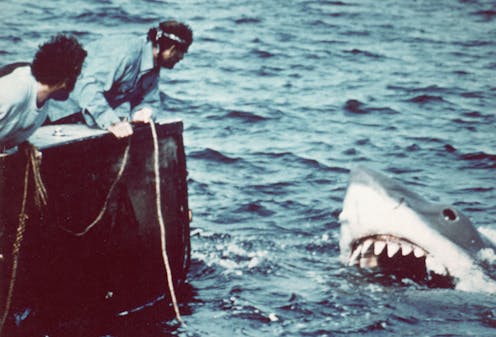
The first blockbuster movie sent waves of panic and awe through audiences. “Jaws” – the tale of a killer great white shark that terrorizes a coastal tourist town – captured people’s imaginations and simultaneously created a widespread fear of the water.

To call Steven Spielberg’s masterpiece a creature feature is trite. Because the shark isn’t shown for most of the movie – mechanical difficulties meant production didn’t have one ready to use until later in the filming process – suspense and fear build. The movie unlocked in viewers an innate fear of the unknown, encouraging the idea that monsters lurk beneath the ocean’s surface, even in the shallows.

And because in 1975 marine scientists knew far less than we do now about sharks and their world, it was easy for the myth of the rogue shark as a murderous eating machine to take hold, along with the assumption that all sharks must be bloodthirsty, mindless killers.

moviegoers lined up under the theater's marquee with 'JAWS' on it
People lined up to get scared by the murderous shark at the center of the ‘Jaws’ movie.
Bettmann Archive via Getty Images

But in addition to scaring many moviegoers that “it’s not safe to go in the water,” “Jaws” has over the years inspired generations of researchers, including me. The scientific curiosity sparked by this horror fish flick has helped reveal so much more about what lies beneath the waves than was known 50 years ago. My own research focuses on the secret lives of sharks, their evolution and development, and how people can benefit from the study of these enigmatic animals.

The business end of sharks: Their jaws and teeth

My own work has focused on perhaps the most terrifying aspect of these apex predators, the jaws and teeth. I study the development of shark teeth in embryos.

pinkish white fish embryo next to a larger yellowish sphere
Small-spotted catshark embryo (Scyliorhinus canicula), still attached to the yolk sac. This is the stage when the teeth begin developing.
Ella Nicklin, Fraser Lab, University of Florida

Sharks continue to make an unlimited supply of tooth replacements throughout life – it’s how they keep their bite constantly sharp.

Hard-shelled prey, such as mollusks and crustaceans, from sandy substrates can be more abrasive for teeth, requiring quicker replacement. Depending on the water temperature, the conveyor belt-like renewal of an entire row of teeth can take between nine and 70 days, for example, in nurse sharks, or much longer in larger sharks. In the great white, a full-row replacement can take an estimated 250 days. That’s still an advantage over humans – we never regrow damaged or worn-out adult teeth.

about a dozen rows of pointy teeth, all lined up
Magnified microscope image of a zebra shark (Stegostoma tigrinum) jaw. They have 20 to 30 rows of teeth in each jaw, each a new generation ready to move into position like on a conveyor belt. Humans have only two sets!
Gareth Fraser, University of Florida

Interestingly, shark teeth are much like our own, developing from equivalent cells, patterned by the same genes, creating the same hard tissues, enamel and dentin. Sharks could potentially teach researchers how to master the process of tooth renewal. It would be huge for dentistry if scientists could use sharks to figure out how to engineer a new generation of teeth for human patients.

Extraordinary fish with extraordinary biology

As a group, sharks and their cartilaginous fish relatives – including skates, rays and chimaeras – are evolutionary relics that have inhabited the Earth’s oceans for over 400 million years. They’ve been around since long before human beings and most of the other animals on our planet today hit the scene, even before dinosaurs emerged.

Sharks have a vast array of super powers that scientists have only recently discovered.

Their electroreceptive pores, located around the head and jaws, have amazing sensory capabilities, allowing sharks to detect weak electrical fields emitted from hidden prey.

looks like a face with a big eye and an open mouth, everything covered with little bumps
CT scan of the head of a small-spotted catshark (Scyliorhinus canicula) as it hatches. Skin denticles cover the surface, and colored rows of teeth are present on the jaws.
Ella Nicklin, Fraser Lab, University of Florida

Their skin is protected with an armor of tiny teeth, called dermal denticles, composed of sensitive dentin, that also allows for better drag-reducing hydrodynamics. Biologists and engineers are also using this “shark skin technology” to design hydrodynamic and aerodynamic solutions for future fuel-efficient vehicles.

green glowing sections on the front part of a fish against a black background
Fluorescent skin of the chain catshark (Scyliorhinus retifer).
Gareth Fraser, University of Florida

Some sharks are biofluorescent, meaning they emit light in different wavelengths after absorbing natural blue light. This emitted fluorescent color pattern suggests visual communication and recognition among members of the same species is possible in the dark depths.

Sharks can migrate across huge global distances. For example, a silky shark was recorded traveling 17,000 miles (over 27,000 kilometers) over a year and a half. Hammerhead sharks can even home in on the Earth’s magnetic field to help them navigate.

Greenland sharks exhibit a lengthy aging process and live for hundreds of years. Scientists estimated that one individual was 392 years old, give or take 120 years.

Still much about sharks remains mysterious. We know little about their breeding habits and locations of their nursery grounds. Conservation efforts are beginning to target the identification of shark nurseries as a way to manage and protect fragile populations.

Tagging programs and their “follow the shark” apps allow researchers to learn more about these animals’ lives and where they roam – highlighting the benefit of international collaboration and public engagement for conserving threatened shark populations.

Sharks under attack

Sharks are an incredible evolutionary success story. But they’re also vulnerable in the modern age of human-ocean interactions.

Sharks are an afterthought for the commercial fishing industry, but overfishing of other species can cause dramatic crashes in shark populations. Their late age of sexual maturity – as old as 15 to 20 years or more in larger species or potentially 150 years in Greenland sharks – along with slow growth, long gestation periods and complex social structures make shark populations fragile and less capable of quick recoveries.

Take the white shark (Carcharodon carcharias), for example – Jaws’ own species. Trophy hunting, trade in their body parts and commercial fishery impacts caused their numbers to dwindle. As a result, they received essential protections at the international level. In turn, their numbers have rebounded, especially around the United States, leading to a shift from critically endangered to vulnerable status worldwide. However, they remain critically endangered in Europe and the Mediterranean.

shark swims toward the camera with teeth visible in mouth, against blue ocean background
Protections and conservation measures have helped white sharks make a comeback.
Dave Fleetham/Design Pics Editorial/Universal Images Group via Getty Images

“Jaws” was filmed on the island of Martha’s Vineyard, in Massachusetts. After careful management and the designation of white sharks as a prohibited species in federal waters in 1997 and in Massachusetts in 2005, their populations have recovered well over recent years in response to more seals in the area and recovering fish stocks.

You might assume more sharks would mean more attacks, but that is not what we observe. Shark attacks have always been few and far between in Massachusetts and elsewhere, and they remain rare. It’s only a “Jaws”-perpetuated myth that sharks have a taste for humans. Sure, they might mistake a person for prey; for instance, surfers and swimmers can mimic the appearance of seals at the surface. Sharks in murky water might opportunistically take a test bite of what seem to be prey.

But these attacks are rare enough that people can shed their “Jaws”-driven irrational fears of sharks. Almost all sharks are timid, and the likelihood of an interaction – let alone a negative one – is incredibly rare. Importantly, there more than 500 species of sharks in the world’s oceans, each one a unique member of a particular ecosystem with a vital role. Sharks come in all shapes and sizes, and inhabit every ocean, both the shallow and deep-end ecosystems.

Most recorded human-shark interactions are awe-inspiring and not terrifying. Sharks don’t really care about people – at most they may be curious, but not hungry for human flesh. Whether or not “Jaws” fans have grown beyond the fear of movie monster sharks, we’re gonna need a bigger conservation effort to continue to protect these important ocean guardians.

The Conversation

Gareth J. Fraser receives funding from the National Science Foundation (NSF).

ref. 50 years after ‘Jaws,’ researchers have retired the man-eater myth and revealed more about sharks’ amazing biology – https://theconversation.com/50-years-after-jaws-researchers-have-retired-the-man-eater-myth-and-revealed-more-about-sharks-amazing-biology-258151

Presidents of both parties have launched military action without Congress declaring war − Trump’s bombing of Iran is just the latest

Source: The Conversation – USA – By Sarah Burns, Associate Professor of Political Science, Rochester Institute of Technology

President Donald Trump is seen on a monitor in the White House press briefing room on June 21, 2025, after the U.S. military strike on three sites in Iran. AP Photo/Alex Brandon

In the wake of the U.S. strikes on Iranian nuclear facilities on June 22, 2025, many congressional Democrats and a few Republicans have objected to President Donald Trump’s failure to seek congressional approval before conducting military operations.

They note that Article 1 of the U.S. Constitution gives Congress the power to declare war and say that section required Trump to seek prior authorization for military action.

The Trump administration disagrees. “This is not a war against Iran,” Secretary of State Marco Rubio told Fox News host Maria Bartiromo, implying that the action did not require approval by Congress. That’s the same view held by most modern presidents and their lawyers in the Office of Legal Counsel: Article 2 of the Constitution allows the president to use the military in certain situations without prior approval from Congress.

By this reading of the text, presidents, as commander in chief, claim the power to unilaterally order the military to initiate small-scale operations for a short duration. Members of Congress may object to that claim, but they have done little to limit presidents’ unilateralism. What little they have done has not been effective.

As I’ve demonstrated in my research, even though the 1973 War Powers Resolution attempted to constrain presidential power after the disasters of the Vietnam War, it contains many loopholes that presidents have exploited to act unilaterally. For example, it allows presidents to engage in military operations without congressional approval for up to 90 days. And more recent congressional resolutions have broadened executive control even further.

A man in a coat and tie signs a document.
President Franklin D. Roosevelt signs the U.S. declaration of war against Japan on Dec. 8, 1941.
U.S. National Archives

A long tradition of executive authority

Presidents can even overcome the loopholes in the War Powers Resolution if the operation lasts longer than 90 days. In 2011, a State Department lawyer argued that airstrikes in Libya could continue beyond the War Powers Resolution’s 90-day time limit because there were no ground troops involved. By that logic, any future president could carry out an indefinite bombing campaign with no congressional oversight.

While every president has bristled at congressional restraints on their actions, presidents since Franklin D. Roosevelt have successfully circumvented them by citing vague concerns like “national security,” “regional security” or the need to “prevent a humanitarian disaster” when launching military operations. While members of Congress always take issue with these actions, they never hold presidents accountable by passing legislation restraining him.

President Trump’s decision to bomb Iranian nuclear sites without consulting Congress falls in line with precedent from both Democratic and Republican leaders for decades.

Much like his predecessors, Trump did not, and likely will not, provide Congress with more concrete information about the legality of his actions. Nor are congressional lawmakers effectively holding him accountable.

The push-and-pull between Congress and the president over military operations dates back to the 1941 Pearl Harbor attack, which led Congress to declare war on Japan. Before then, Congress had prevented the U.S. from joining World War II by enforcing an arms embargo and refusing to help the Allies prior to the attack on Hawaii. But afterward, Congress began allowing the president to take more control over the military.

During the Cold War, rather than returning to a balanced debate between the branches, Congress continued to relinquish those powers.

Congress never authorized the war in Korea; Harry Truman used a U.N. Security Council resolution as legal justification. Congress’ vote explicitly opposing the invasion of Cambodia didn’t stop Richard Nixon from doing it anyway. Even after the Cold War, Bill Clinton regularly acted unilaterally to address humanitarian crises or the continued threat from leaders like Saddam Hussein. He sent the military to Somalia, Haiti, Bosnia and Kosovo, among other places.

After 9/11, Congress quickly gave up more of its power. A week after those attacks, Congress passed a sweeping Authorization for Use of Military Force, giving the president permission to “use all necessary and appropriate force against those nations, organizations, or persons he determines planned, authorized, committed, or aided the terrorist attacks that occurred on September 11, 2001.”

In a follow-up 2002 authorization, Congress went even further, allowing the president to “use the Armed Forces … as he determines to be necessary and appropriate in order to defend national security … against the continuing threat posed by Iraq.” This approach provides few, if any, congressional checks on the control of military affairs exercised by the president.

In the two decades since those authorizations, four presidents have used them to justify all manner of military action, from targeted killings of terrorists to the years long fight against the Islamic State group.

Congress regularly discusses terminating those authorizations, but has yet to do so. If Congress did, the loopholes in the original War Powers Resolution would still exist.

While President Biden claimed he supported the repeal of the authorizations, and supported more congressional oversight of military actions, Trump has made no such claims. Instead, he has claimed even more sweeping authority to act without any permission from Congress.

As recently as 2024, Biden used the 2002 authorization as a legal rationale for the targeted killing of Iranian-backed militiamen in Iraq, a strike condemned by Iraqi leaders.

Those actions may have ruffled congressional feathers, but they were in keeping with a long U.S. tradition of targeting members of terrorist groups and protecting members of the military serving in a conflict zone.

Demonstrators hold signs opposing war.
Demonstrators outside the U.S. Capitol in January 2020 call on Congress to limit the president’s powers to use the military.
AP Photo/Jose Luis Magana

Threats of war

During his first presidential term in 2020, Trump ordered a lethal drone strike against a respected member of the Iranian government, Major General Qassim Soleimani, the head of Iran’s equivalent of the CIA, without consulting Congress or publicly providing proof of why the attack was necessary, even to this day.

Tensions – and fears of war – spiked but then slowly faded when Iran responded with missile attacks on two U.S. bases in Iraq.

Now, the U.S. attacks on Iranian nuclear sites have revived both fears of war and renewed questions about the president’s authority to unilaterally engage in military action. Presidents since the 1970s, however, have effectively managed to dodge definitive answers to those questions – demonstrating both the power inherent in their position and the unwillingness among members of the legislative branch to reclaim their coequal status.

This article is an updated version of a story published on Jan. 24, 2024.

The Conversation

Sarah Burns does not work for, consult, own shares in or receive funding from any company or organization that would benefit from this article, and has disclosed no relevant affiliations beyond their academic appointment.

ref. Presidents of both parties have launched military action without Congress declaring war − Trump’s bombing of Iran is just the latest – https://theconversation.com/presidents-of-both-parties-have-launched-military-action-without-congress-declaring-war-trumps-bombing-of-iran-is-just-the-latest-259636

Air traffic controller shortages in Newark and other airports partly reflect long, intense training − but university-based training programs are becoming part of the solution

Source: The Conversation – USA (2) – By Melanie Dickman, Lecturer in Aviation Studies, The Ohio State University

Air traffic controllers observe a plane taking off from San Francisco International Airport in 2017. AP Photo/Jeff Chiu

Air traffic controllers have been in the news a lot lately.

A spate of airplane crashes and near misses have highlighted the ongoing shortage of air traffic workers, leading more Americans to question the safety of air travel.

The shortage, as well as aging computer systems, have also led to massive flight disruptions at airports across the country, particularly at Newark Liberty International Airport. The staffing shortage is also likely at the center of an investigation of a deadly crash between a commercial plane and an Army helicopter over Washington, D.C., in January 2025.

One reason for the air traffic controller shortage relates to the demands of the job: The training to become a controller is extremely intense, and the Federal Aviation Administration wants only highly qualified personnel to fill those seats, which has made it difficult for what has been the sole training center in the U.S., located in Oklahoma City, to churn out enough qualified graduates each year.

As scholars who study and teach tomorrow’s aviation professionals, we are working to be part of the solution. Our program at Ohio State University is applying to join over two dozen other schools in an effort to train air traffic controllers and help alleviate the shortage.

Air traffic controller school

Air traffic control training today – overseen by the Federal Aviation Administration – remains as intense as it’s ever been.

In fact, about 30% of students fail to make it from their first day of training at the FAA Academy in Oklahoma City to the status of a certified professional air traffic controller. The academy currently trains the majority of the air traffic controllers in the U.S.

Before someone is accepted into the training program, they must meet several qualifications. That includes being a U.S. citizen under the age of 31 and speaking English clearly enough to be understood over the radio. The low recruitment age is because controllers currently have a mandatory retirement age of 56 – with some exceptions – and the FAA wants them to work for at least 25 years in the job.

They must also pass a medical exam and security investigation. And they must pass the air traffic controller specialists skills assessment battery, which measures an applicant’s spatial awareness and decision-making abilities.

Candidates, additionally, must have three years of general work experience, or a combination of postsecondary education and work experience totaling at least three years.

This alone is no easy feat. Fewer than 10% of applicants meet those initial requirements and are accepted into training.

a man sits in silhouette at a panel of computer screens as he looks out of the large windows onto a runway
An air traffic controller monitors a runway in the tower at John F. Kennedy International Airport in New York.
AP Photo/Seth Wenig

Intense training

Once applicants meet the initial qualifications, they begin a strenuous training process.

This begins with several weeks of classroom instruction and several months of simulator training. There are several types of simulators, and a student is assigned to a simulator based on the type of facility for which they will be hired – which depends on a trainee’s preference and where controllers are needed.

There are two main types of air traffic facilities: control towers and radar. Anyone who has flown on a plane has likely seen a control tower near the runways, with 360 degrees of tall glass windows to monitor the skies nearby. Controllers there mainly look outside to direct aircraft but also use radar to monitor the airspace and assist aircraft in taking off and landing safely.

Radar facilities, on the other hand, monitor aircraft solely through the use of information depicted on a screen. This includes aircraft flying just outside the vicinity of a major airport or when they’re at higher altitudes and crisscrossing the skies above the U.S. The controllers ensure they don’t fly too close to one another as they follow their flight paths between airports.

If the candidates make it through the first stage, which takes about six months and extensive testing to meet standards, they will be sent to their respective facilities.

Once there, they again go to the classroom, learning the details of the airspace they will be working in. There are more assessments and chances to “wash out” and have to leave the program.

Finally, the candidates are paired with an experienced controller who conducts on-the-job training to control real aircraft. This process may take an additional year or more. It depends on the complexity of the airspace and the amount of aircraft traffic at the site.

Two towers with big glass windows stand over airplanes sitting on the tarmac in this foggy scene
Two control towers watch over Newark Liberty International Airport, where a shortage of air traffic controllers has led to blackouts and other problems lately.
AP Photo/Seth Wenig

Increasing the employment pipeline

But no matter how good the training is, if there aren’t enough graduates, that’s a problem for managing the increasingly crowded skies.

The FAA is currently facing a deficit of about 3,000 controllers and has unveiled a plan in May 2025 to increase hiring and boost retention. In addition, Congress is mulling spending billions of dollars to update the FAA’s aging systems and hire more air traffic controllers.

Other plans include paying retention bonuses and allowing more controllers to work beyond the age of 56. That retirement age was put in place in the 1970s on the assumption that cognition for most people begins to decline around then, although research shows that age alone is not necessarily a predictor of cognitive abilities.

But we believe that aviation programs and universities can play an important role fixing the shortage by providing FAA Academy-level training.

Currently, 32 universities including the Florida Institute of Technology and Arizona State University partner with the FAA in its collegiate training initiative to provide basic air traffic control training, which gives graduates automatic entry into the FAA Academy and allows them to skip five weeks of coursework.

The institution where we work, Ohio State University, is currently working on becoming the 33rd this summer and plans to offer an undergraduate major in aviation with specialization in air traffic control.

This helps, but an enhanced version of this program, announced in October 2024, allows graduates of a select few of those universities to skip the FAA Academy altogether and go straight to a control tower or radar facility once they’ve passed all the extensive tests. These schools must match or exceed the level of rigor in their training with the FAA Academy itself.

At the end of the program, students are required to pass an evaluation by an FAA-approved evaluator to ensure that the student graduating from the program meets the same standards as all FAA Academy graduates and is prepared to go to their assigned facility for further training. So far, five schools, such as the University of North Dakota, have joined this program and are currently training air traffic controllers. We intend to join this group in the near future.

Allowing colleges and universities to start the training process while students are still in school should accelerate the pace at which new controllers enter the workforce, alleviate the shortage and make the skies over the U.S. as safe as they can be.

The Conversation

Melanie Dickman is a member at large of the Air Traffic Controllers Association

Brian Strzempkowski does not work for, consult, own shares in or receive funding from any company or organization that would benefit from this article, and has disclosed no relevant affiliations beyond their academic appointment.

ref. Air traffic controller shortages in Newark and other airports partly reflect long, intense training − but university-based training programs are becoming part of the solution – https://theconversation.com/air-traffic-controller-shortages-in-newark-and-other-airports-partly-reflect-long-intense-training-but-university-based-training-programs-are-becoming-part-of-the-solution-249715

Texas’ annual reading test adjusted its difficulty every year, masking whether students are improving

Source: The Conversation – USA (2) – By Jeanne Sinclair, Assistant Professor, Faculty of Education, Memorial University of Newfoundland

Millions of Americans take high-stakes exams every year. Caiaimage/Chris Ryan/iStock via Getty Images

Texas children’s performance on an annual reading test was basically flat from 2012 to 2021, even as the state spent billions of additional dollars on K-12 education.

I recently did a peer-reviewed deep dive into the test design documentation to figure out why the reported results weren’t showing improvement. I found the flat scores were at least in part by design. According to policies buried in the documentation, the agency administering the tests adjusted their difficulty level every year. As a result, roughly the same share of students failed the test over that decade regardless of how objectively better they performed relative to previous years.

From 2008 to 2014, I was a bilingual teacher in Texas. Most of my students’ families hailed from Mexico and Central America and were learning English as a new language. I loved seeing my students’ progress.

Yet, no matter how much they learned, many failed the end-of-year tests in reading, writing and math. My hunch was that these tests were unfair, but I could not explain why. This, among other things, prompted me to pursue a Ph.D. in education to better understand large-scale educational assessment.

Ten years later, in 2024, I completed a detailed exploration of Texas’s exam, currently known as the State of Texas Assessments of Academic Readiness, or STAAR. I found an unexpected trend: The share of students who correctly answered each test question was extraordinarily steady across years. Where we would expect to see fluctuation from year to year, performance instead appears artificially flat.

The STAAR’s technical documents suggest that the test is designed much like a norm-referenced test – that is, assessing students relative to their peers, rather than if they meet a fixed standard. In other words, a norm-referenced test cannot tell us if students meet key, fixed criteria or grade-level standards set by the state.

In addition, norm-referenced tests are designed so that a certain share of students always fail, because success is gauged by one’s position on the “bell curve” in relation to other students. Following this logic, STAAR developers use practices like omitting easier questions and adjusting scores to cancel out gains due to better teaching.

Ultimately, the STAAR tests over this time frame – taken by students every year from grade 3 to grade 8 in language arts and math, and less frequently in science and social studies – were not designed to show improvement. Since the test seems designed to keep scores flat, it’s impossible to know for sure if a lack of expected learning gains following big increases in per-student spending was because the extra funds failed to improve teaching and learning, or simply because the test hid the improvements.

Why it matters

Ever since the federal education policy known as No Child Left Behind went into effect in 2002 and tied students’ test performance to rewards and sanctions for schools, achievement testing has been a primary driver of public education in the United States.

Texas’ educational accountability system has been in place since 1980, and it is well known in the state that the stakes and difficulty of Texas’ academic readiness tests increase with each new version, which typically come out every five to 10 years. What the Texas public may not know is that the tests have been adjusted each and every year – at the expense of really knowing who should “pass” or “fail.”

The test’s design affects not just students but also schools and communities. High-stakes test scores determine school resources, the state’s takeover of school districts and accreditation of teacher education programs. Home values are even driven by local schools’ performance on high-stakes tests.

Students who are marginalized by racism, poverty or language have historically tended to underperform on standardized tests. I believe STAAR’s design makes this problem worse.

On May 28, 2025, the Texas Senate passed a bill that would eliminate the STAAR test and replace it with a different, shorter test or a norm-referenced test. As best as I can tell, this wouldn’t address the problems I uncovered in my research.

What still isn’t known

I plan to investigate if other states or the federal government use similarly designed tests to evaluate students.

My deep dive into Texas’ test focused on STAAR before its 2022 redevelopment. The latest iteration has changed the test format and question types, but there appears to be little change to the way the test is scored. Without substantive revisions to the scoring calculations “under the hood” of the STAAR test, it is likely Texas will continue to see flat performance.

This article was updated on May 31, 2025, to clarify some language and the type of data used in the chart, replace a link and add a comment from the Texas Education Agency.

The Texas Education Agency responded to a pre-publication request for comment after the piece was published. A spokesman refuted several of the scholar’s research conclusions, including that it behaved like a norm-referenced test. However, the scholar stands by them.

The Research Brief is a short take on interesting academic work.

The Conversation

Jeanne Sinclair receives funding from the Social Science and Humanities Research Council (SSHRC) of Canada.

ref. Texas’ annual reading test adjusted its difficulty every year, masking whether students are improving – https://theconversation.com/texas-annual-reading-test-adjusted-its-difficulty-every-year-masking-whether-students-are-improving-244159