Joana Marcús, escritora: “Sin la comunicación con mis lectores en las redes sociales, hay libros que no sé cómo habrían terminado”

Source: The Conversation – (in Spanish) – By Pablo Colado, Redactor jefe / Editor de Salud y Medicina

La juventud de Joana Marcús (Mallorca, 2000) no debe llamarnos a engaño: 23 libros publicados en internet y nueve en papel, con más de un millón de ejemplares vendidos, jalonan ya su trayectoria literaria. Empezó a publicar en Wattpad –una especie de Spotify gratuito de libros– a los trece años, y sus historias rápidamente engancharon a una legión de seguidores. El éxito de su última novela en formato físico, Etéreo (Montena), confirma a Joana como una estrella rutilante de la literatura juvenil.

¡La escritora española más leída en América Latina! ¿Cómo se puede encajar eso?

Intento seguir el consejo de mis padres: aceptar las cosas buenas y no dejar que me influyan de más. Lo que tengo claro es que es un orgullo. No solo por mis libros, sino también porque es una prueba más de que los jóvenes leen muchísimo.

También viviste desde muy joven el lado oscuro de la fama. A los 15 años sufriste acoso en el instituto. ¿Te marcó esa experiencia como escritora? Y en tu caso, ¿las redes sociales empeoraron la situación o te ayudaron a encontrar apoyo?

Creo que ha influido muchísimo en mi forma de ver el mundo. Cuando leo lo que escribía en esa época, puedo notar lo aislada que me sentía y la necesidad que tenía de encajar. Era una herida abierta. Ahora tengo la suerte de poder decir que es una cicatriz y, aunque sigo tratando el tema en mis libros, lo hago de otra forma.

Y las redes me ayudaron mucho, sí. Creo que hay un discurso muy extendido sobre su toxicidad, sus consecuencias negativas… Yo misma hablo de ello, en ocasiones. Aun así, me da mucha pena que nos perdamos algunas de las cosas buenas. En mi caso, por ejemplo, me ayudó a no sentirme sola. Como no encajaba con las personas que tenía alrededor, encontré una forma de hacerlo con las que estaban lejos de mí. De hecho, sigo conservando muchos amigos (y lectores) de esos años.

Cuéntame un poco qué es eso del romantasy, el género donde se ha encuadrado tu última novela, Etéreo, la primera parte de una bilogía. ¿Maridan bien el romanticismo y la fantasía?

Me parece una combinación muy completa, como escritora y como lectora. La parte de fantasía te permite jugar con el mundo a tu antojo, establecer tus normas e ir más allá de lo que quizá encontrarías en una novela contemporánea. Y la parte de romance te permite adentrarte de una forma muy especial en la vulnerabilidad de los personajes y sus relaciones. Tener esa clase de libertad como escritora es un soplo de aire fresco.

En él incorporas tu experiencia del bullying. ¿Crees que puede servir de ayuda a alguien que lo está viviendo?

De hecho, el tema del bullying siempre está presente. Una de las cosas que más me ayudó en su momento fue saber que no estaba sola, que había otras personas experimentando lo mismo que me había tocado vivir a mí. Que ahora pueda brindar ese apoyo es muy catártico, y hace que sienta que esa vivencia, por lo menos, me sirvió para algo.

Se ha definido tu estilo como rápido, vertiginoso. ¿Es imprescindible escribir así para enganchar a la generación que busca estímulos constantes en los carruseles infinitos de vídeos de TikTok o Instagram

Sí y no. Escribir es un acto muy íntimo, tienes que encontrar tu propia voz, ritmo y forma de expresarte. Todos lo tenemos dentro, pero hay que encontrarlo. Y expresarte de una forma concreta para apelar a una generación es un error.

A mí me gusta que mis libros se tomen su tiempo para desarrollarse, pero también disfruto con las escenas de diálogos rápidos y graciosos. Intento buscar un equilibrio entre las pausas y las rondas de fogonazos. No sé si es algo que pueda atraer a un público que tiene estímulos constantes, pero es mi estilo.

¿Percibes que existe un poco de menosprecio en el llamado “mundo de las letras” por el tipo de literatura que devoran tus lectores? ¿Subestiman lo que no conocen bien?

Creo que hay muchas ideas preconcebidas de lo que es correcto y lo que es incorrecto en nuestro mundillo, pero no todo el mundo las comparte. De hecho, te diría que cada vez tengo menos experiencias negativas. Quizá he aprendido a relacionarme en los círculos adecuados.

Puedes concebir la lectura como un hábito de entretenimiento o como un método de aprendizaje. Conozco a muchos lectores muy jóvenes que equilibran ambas facetas, entienden que algunos libros están enfocados para cultivarse y otros, solo para entretenerse. De la misma forma que no todas películas están hechas con la misma finalidad. A mí me gusta que haya variedad; de esa manera, en el futuro habrá más lectores.

Debes gran parte de tu éxito, o de la oportunidad de que te conocieran tus lectores, a Wattpad, una plataforma online de lectura y escritura que mucha gente de cierta edad no sabe ni que existe ¿Qué tiene de especial?

Muchas compañeras empezamos en Wattpad. Te da la oportunidad de leer y escribir de forma gratuita, en el idioma que prefieras, y llegar a un gran número de lectores de todo el mundo. Si bien es cierto que hoy en día ya hay muchos que no lo utilizamos tan a menudo, fue una gran forma de iniciarnos en el mundillo literario.

¿Podría decirse que existe un “estilo Wattpad”?

Para mí no tiene sentido decir eso. Si bien es cierto que compartimos algunos temas genéricos (romance, fantasía…), cada escritora tiene su propio estilo. Encasillar a un grupo de personas por el simple hecho de salir de la misma plataforma me parece un error, igual que me lo parecería englobar a todos los escritores que se dedican a la novela negra simplemente porque en todos ellos hay temas en común. La generalización solo provoca invisibilidad.

Se suele echar la culpa a las pantallas y las redes sociales de que los jóvenes lean cada vez menos. Tú eres la viva demostración de lo contrario, ¿no?

Supongo que sí. Otro asunto es que los jóvenes no lean lo que se les pide. Pero, siendo honestos, ¿no es mejor que lean lo que realmente disfrutan? De esa manera, estaremos creando futuros lectores. Imponiéndoles un libro que no van a disfrutar, solo crearemos resentimiento hacia la lectura.

En general, creo que el error está en asumir lo que necesitan los jóvenes. Si nos paráramos a hablar con ellos y preguntarles, quizá descubriríamos muchas cosas que nos sorprenderían.

¿Te habría costado más ser escritora en el mundo anterior a internet, sin redes sociales, sin contacto directo con los lectores?

Sí, definitivamente. La conexión que siento con mi comunidad me ha ayudado a salir adelante en muchas ocasiones. Hay libros que, de no haber sido por ella, no sé cómo habrían terminado o, incluso, si lo habrían hecho. Disfruto mucho de la cercanía que proporcionan las redes sociales.

¿Crees que hay tanta diferencia entre leer en pantalla y en hacerlo en papel, como opinan algunos? ¿Les pasa lo mismo a los lectores de tu generación?

Es muy subjetivo. Hay personas muy jóvenes que solo disfrutan leyendo en papel y gente de su misma edad que prefiere la practicidad del ebook. Personalmente, suelo usar la pantalla cuando viajo, pero siempre termino comprándome la versión en papel de los libros que más me gustan. El papel te otorga un sentido de pertenencia que una pantalla difícilmente podría replicar.

Y al hilo de lo anterior, ¿encuentras diferencias entre escribir un libro convencional y algo que se va a leer en Wattpad?

No. Al final, estás exponiendo tu trabajo al mundo exterior para que se juzgue y se opine sobre él. La única diferencia es que, en el método convencional, tienes a un equipo que te ayuda a perfeccionarlo. En Wattpad, eres tú sola con un portátil. Ambos métodos tienen su parte positiva y su parte negativa. A mí me gustan los dos, aunque ahora estoy más centrada en el formato convencional.

¿Te influyen mucho las opiniones de tus seguidores a la hora de escribir?

Tengo mucho contacto con ellos, sí, pero no me gustaría que influyeran en mi percepción sobre mis libros. Después de tantos años en internet, aprendes a crear un muro para protegerte. Es importante recordar quién es el escritor y entender que, por mucho que a un lector le guste tu historia, tú eres quien tiene la última palabra. Si te dejas influenciar por las opiniones de los demás y buscas su aprobación, jamás llegarás a complacer a todo el mundo. Y, por si eso fuera poco, dejará de ser tu libro.

Y, por último, te pido tu punto de vista como estudiante de Psicología: ¿cómo ves la salud mental entre la gente de tu generación?

Los que más me preocupa es la sobreinformación. Nos hemos acostumbrado a las respuestas inmediatas. Veo a gente muy joven manejando conceptos muy complejos de psicología con mucha soltura. También veo muchos autodiagnósticos. Y, aunque tiene su parte positiva, porque hace que nos centremos en lo que necesitamos, creo que también supone un problema.

De igual forma, nos estamos acostumbrando a exponer nuestra vida. Soy la primera que utiliza sus redes sociales de forma habitual, pero tengo veinticuatro años y entiendo cuáles son los niveles de exposición a los que quiero someterme. A veces, veo a niños muy pequeños con redes sociales y me da un poco de miedo. ¿Cuántas veces hemos comentado, entre risas, que menos mal que no teníamos redes en nuestra adolescencia?


Esta entrevista se publicó originalmente en la Revista Telos de la Fundación Telefónica, y forma parte de un número monográfico dedicado a la Generación Alfabeta.


The Conversation

ref. Joana Marcús, escritora: “Sin la comunicación con mis lectores en las redes sociales, hay libros que no sé cómo habrían terminado” – https://theconversation.com/joana-marcus-escritora-sin-la-comunicacion-con-mis-lectores-en-las-redes-sociales-hay-libros-que-no-se-como-habrian-terminado-260318

Changement climatique en Afrique : voici les compétences vertes dont les femmes ont besoin

Source: The Conversation – in French – By Ogechi Adeola, Full Professor and Deputy Vice-Chancellor of Administration and Human Resources, University of Kigali

Les femmes africaines sont une ressource précieuse, mais souvent sous-estimée. Elles ont longtemps été confrontées à de nombreux obstacles. Elles ont un accès limité à la terre, au financement, à l’éducation et aux postes de décision. Cela les empêche de participer pleinement à l’économie verte.

Une économie verte est une économie qui améliore le bien-être et l’équité sociale tout en réduisant les risques environnementaux. Elle exige que les individus utilisent moins de ressources pour produire plus.

Aujourd’hui, le monde se tourne vers les énergies renouvelables et cherche à s’adapter au changement climatique. De nouveaux secteurs d’emploi émergent. Si les femmes acquièrent les compétences vertes nécessaires, leur contribution à l’économie verte pourrait tripler. C’est particulièrement vrai dans l’agriculture, l’énergie, l’industrie et la transformation.

Par exemple, les agricultrices pourraient adopter des techniques d’agriculture intelligente face au climat, telles que l’irrigation goutte à goutte ou la culture de plantes résistantes à la sécheresse, tandis que les techniciennes pourraient être formés à l’installation et à la maintenance de panneaux solaires. Il s’agit là de formes pratiques de reconversion professionnelle (mise à jour des compétences des personnes afin de les adapter aux nouveaux emplois verts).

Les actions de mise à niveau et de reconversion des compétences vertes menées à l’échelle mondiale, telles que le Pacte pour des emplois verts pour les jeunes, donnent souvent la priorité aux jeunes occupant un emploi formel. Mais en Afrique, les femmes ne sont pas seulement parmi les plus touchées par le changement climatique, elles sont également essentielles pour apporter des solutions. De l’agriculture à la collecte de l’eau et à la consommation d’énergie domestique, les femmes sont à l’avant-garde de la recherche de solutions innovantes pour faire face au changement climatique.

De nombreuses femmes africaines appliquent déjà des pratiques traditionnelles respectueuses de l’environnement. Les femmes sont également plus susceptibles d’adopter des pratiques durables et d’influencer l’adaptation au niveau communautaire. Toutefois, pour faire face à l’évolution des défis climatiques, elles doivent également acquérir des compétences modernes, notamment dans le domaine des technologies. Cela permettra de préserver les connaissances locales grâce à la reconversion professionnelle verte et de les enrichir à l’aide de nouveaux outils et techniques.

Nous sommes spécialisés dans les questions de genre, de changement climatique, de développement durable et d’économie. Nous menons des recherches sur la manière dont la croissance de l’Afrique peut être stimulée en combinant égalité de genre, action climatique, finance numérique et innovation technologique.

Notre dernier ouvrage s’appuie sur cette vision. Il explore des stratégies visant à promouvoir le développement durable à travers l’Afrique. Le chapitre 9, intitulé « Green Reskilling of African Women for Climate Action » (Reconversion verte des femmes africaines pour l’action climatique), porte sur les compétences vertes et inclusives en matière de genre, ainsi que sur les compétences numériques vertes. Ces compétences sont essentielles pour que les femmes puissent s’épanouir dans le cadre de la transition climatique du continent.

Pour que les femmes acquièrent ces compétences vertes, les gouvernements et les partenaires de développement doivent concevoir des programmes inclusifs qui accordent la priorité à l’égalité des sexes, en particulier pour les femmes rurales, en situation de handicap et marginalisées. Les décideurs politiques doivent intégrer la reconversion verte dans les stratégies nationales en matière de climat, les réformes de l’éducation et les plans pour l’emploi.

C’est la seule façon de créer une transition juste qui ne laisse pas les femmes de côté.

Les femmes ne doivent pas seulement être les bénéficiaires des solutions climatiques. Elles doivent aussi être des co-créatrices et des leaders actives dans leur élaboration.

Compétences vertes et inclusives en matière de genre

Il s’agit du premier ensemble de compétences vertes dont les femmes africaines doivent se doter. Ces compétences comprennent :

  • Gestion des actifs naturels: La capacité à identifier, évaluer et conserver des ressources telles que les forêts, les points d’eau et les sols. Ces compétences sont requises dans les emplois qui visent à préserver l’équilibre environnemental à l’avenir, même si le climat se réchauffe.

  • Soutien à l’industrie à faible intensité de carbone: Il s’agit des compétences nécessaires pour travailler à la réduction des émissions de gaz à effet de serre. Elles comprennent les énergies renouvelables, la réduction de l’impact environnemental du transport maritime et routier, et la fabrication durable.

  • Résilience climatique: Compétences qui aident les communautés à s’adapter au changement climatique. La culture de plantes résistantes à la sécheresse ou la construction d’infrastructures capables de résister aux inondations en sont des exemples.

  • Utilisation efficace des ressources: Capacité à utiliser les ressources naturelles de manière judicieuse, en réduisant les déchets et les coûts. Le recyclage, les économies d’eau ou les emballages durables en sont quelques exemples.

Compétences numériques vertes

Il s’agit de la deuxième catégorie de compétences vertes essentielles dont les femmes africaines ont besoin :

  • Compétences vertes en numérique et marketing : Capacité à utiliser les plateformes numériques pour commercialiser et promouvoir des produits et services respectueux de l’environnement.

  • Surveillance et inspection : Utilisation de technologies telles que les capteurs et l’analyse de données pour suivre les changements environnementaux et vérifier si les politiques climatiques sont respectées.

  • Compétences agricoles numériques vertes : Celles-ci sont nécessaires pour l’agriculture, comme les applications météorologiques, l’agriculture de précision.

L’agriculture de précision (PA) est l’utilisation de technologies de l’information et de la communication pour optimiser les processus agricoles, notamment la fertilisation et l’irrigation.), et les conseils d’agriculteurs spécialisés accessibles en ligne ou par téléphone. Ces outils aident à réduire les risques de dommages climatiques pour les agriculteurs et augmentent le rendement de leurs cultures.

  • Compétences numériques en communication verte : Utilisation des médias numériques pour sensibiliser sur les questions environnementales, influencer les comportements et promouvoir les politiques climatiques.

  • Compétences en conception numérique verte : Capacité à créer des outils numériques, tels que des applications et des systèmes intelligents, qui favorisent la durabilité et l’innovation verte.

  • Compétences technologiques mobiles vertes : Il s’agit d’emplois dans les technologies mobiles qui favorisent l’efficacité énergétique, réduisent les déchets ou soutiennent la résilience climatique.

Ce qu’il faut faire maintenant

Pour rendre ces compétences plus accessibles, les pays africains doivent investir dans l’expansion des programmes d’enseignement et de formation techniques et professionnels axés sur l’écologie. Les femmes des zones rurales ou marginalisées doivent aussi pouvoir bénéficier de formations à travers des modes d’apprentissage informels.

Plusieurs changements sont nécessaires :

Lorsque les femmes africaines acquièrent des compétences vertes, cela renforce la résilience de toute la communauté face au changement climatique. Cela accélère les moyens d’adaptation au changement climatique et favorise également une croissance économique inclusive.

Il est essentiel d’impliquer les hommes dans la transition vers l’égalité des sexes. Changer les normes sociales et promouvoir le partage des responsabilités profitera à l’ensemble des communautés. En fin de compte, la reconversion verte n’est pas seulement une question de formation, c’est une question de transformation.

The Conversation

Notre ouvrage intitulé « Égalité des sexes, action pour le climat et innovation technologique pour le développement durable en Afrique » est désormais accessible gratuitement grâce au soutien du Fonds LYRASIS pour les objectifs de développement durable des Nations Unies. https://link.springer.com/book/10.1007/978-3-031-40124-4

Innocent Ngare and Olaniyi Evans do not work for, consult, own shares in or receive funding from any company or organisation that would benefit from this article, and have disclosed no relevant affiliations beyond their academic appointment.

ref. Changement climatique en Afrique : voici les compétences vertes dont les femmes ont besoin – https://theconversation.com/changement-climatique-en-afrique-voici-les-competences-vertes-dont-les-femmes-ont-besoin-260362

¿Los animales ven los mismos colores que las personas?

Source: The Conversation – (in Spanish) – By Miren Bego Urrutia Barandika, Catedrática de Fisiología. Profesora/investigadora de Fisiología Animal en la Facultad de Ciencia y Tecnología y en el PiE (Estación Marina de Plentzia), Universidad del País Vasco / Euskal Herriko Unibertsitatea

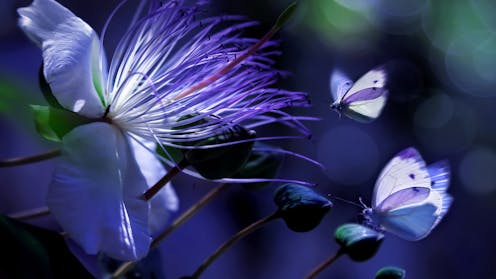
Algunos insectos, como las abejas y las mariposas, ven colores invisibles a los humanos, en el rango del ultravioleta. Delbars/Shutterstock

Este artículo forma parte de la sección The Conversation Júnior, en la que especialistas de las principales universidades y centros de investigación contestan a las dudas de jóvenes curiosos de entre 12 y 16 años. Podéis enviar vuestras preguntas a tcesjunior@theconversation.com


Pregunta formulada por el curso de 3º de la ESO de Aranzadi Ikastola. Bergara (Gipuzkoa)


La respuesta a esta pregunta no es sencilla, porque ni siquiera todas las personas “ven” los mismos colores. Por ejemplo, quienes tienen algún tipo de daltonismo no sólo distinguen menos, sino que perciben de modo diferente una gran parte de los tonos.

En el otro extremo están las personas tetracrómatas, capaces de distinguir hasta 100 millones de tonalidades distintas, unas 100 veces más que la mayoría de las personas.

Hace bien poquito, también conocimos el curioso caso de los habitantes de Pingelap, que ven el mundo en blanco y negro. Y aún más recientemente, nos hemos sorprendido al saber que cinco participantes en un experimento llevado a cabo con tecnología ultrasofisticada han tenido la oportunidad de percibir un nuevo color denominado ‘olo’.

De acuerdo, no vale escudarse en la variabilidad existente en los humanos para no responder a la pregunta. Vayamos por partes.

¿Cómo distinguimos los colores los humanos?

La percepción del color es la interpretación que hace el cerebro de las señales (en forma de impulsos nerviosos) enviadas a la corteza visual por un tipo de fotorreceptores. Se llaman conos y están situados en la retina, al fondo de nuestros ojos.

Existen diferentes tipos de conos. En función de los pigmentos visuales que contienen presentan sensibilidades específicas para las longitudes de onda que componen la luz o espectro electromagnético. Así, las longitudes de onda que reflejan los objetos (esto es, su color) estimulan de forma concreta los diferentes tipos de conos. Finalmente, los colores que vemos (o, mejor dicho, lo que interpreta nuestro cerebro como tales) obedecen a una combinación formada por las respuestas de los distintos tipos de conos.

La mayor parte de las personas somos tricrómatas. Eso quiere decir que en nuestra retina tenemos tres tipos de conos, denominados rojo, verde y azul. Gracias a ellos podemos “ver” y distinguir colores correspondientes a longitudes de onda que van desde el azul-violeta hasta el rojo. Es lo que llamamos “espectro visible”.

Visible para los humanos, claro. Pero ¿qué ocurre con el resto de los animales?

¿Los animales también flipan en colores?

Con la prudencia que exige la práctica científica, podemos decir que la mayoría de animales probablemente no ven los mismos colores que nosotros. Sabemos que los fotorreceptores presentes en sus ojos se presentan un número y tipo de pigmentos diferentes a los de los humanos tricrómatas.

Y teniendo en cuenta cómo son esos conos, podemos apostar a que muchos de los animales de nuestro entorno flipan más bien poco.

Así, la mayor parte de los mamíferos no primates presentan visión dicromática; es decir, en sus retinas se han encontrado únicamente dos tipos de conos. Este es el caso, por ejemplo, de los perros, los gatos y los zorros.

Esto no significa que vean en blanco y negro: los perros, por ejemplo, distinguen perfectamente el amarillo y el azul, aunque tienen problemas para diferenciar los rojos y verdes. El caso de los toros es muy parecido al de los perros, por lo que, a pesar de la creencia popular, ¡el color rojo no les atrae!

Probablemente, los mamíferos perciben el mundo como las personas con algún tipo de daltonismo. Aunque existen algunas excepciones a la norma dicromática: unas pocas especies nocturnas y los mamíferos marinos. Los cetáceos, pinnípedos y manatíes presentan en general visión monocromática, lo que limita muchísimo su capacidad de discriminar colores.

Y también está el caso de las ballenas, que sí ven en blanco y negro: los análisis realizados en los ojos de rorcuales varados han demostrado que las retinas de estos animales carecen de conos. Parece tratarse de una adaptación extrema al entorno oscuro del océano.

La de los mamíferos primates –los humanos entre ellos– es otra excepción, puesto que junto con los marsupiales y una buena parte de los insectos presentan visión tricromática, aunque los espectros de absorción de los tres tipos de conos son diferentes en cada caso.

Colores invisibles para los humanos

De hecho, algunos tipos de insectos, como las abejas y las mariposas, pueden ver en el espectro ultravioleta (UV), capacidad que comparten con muchas aves y peces e incluso unos cuantos mamíferos.

A los humanos esto nos resulta extraño; no tenemos definido el color ultravioleta porque esa parte del espectro o bien queda fuera (o cerca del límite) de nuestro espectro de luz visible, o resulta bloqueada por las lentes de nuestros ojos.

Afortunadamente, en 2024, científicos especializados en la visión del color desarrollaron una tecnología para grabar vídeos que simulan de manera realista la visión de los animales.

Ojos superdotados

Ahora hablaremos de los animales que en teoría ven muchos colores. Mientras que la mayoría de los reptiles, anfibios, aves e insectos son tetracrómatas (tienen cuatro tipos de conos), algunos insectos y aves, incluidas las palomas y las mariposas papillón, entran en la categoría aun superior de pentacrómatas (cinco tipos). El pódium de los policrómatas lo encabeza el camarón mantis (Odontodactylus scyllarus), que presenta más de 12 tipos de pigmentos visuales.

Sin embargo, y como advertíamos al comienzo del artículo, la “visión” es un proceso complejo de integración de la información sensorial enviada por los fotorreceptores. En el caso del camarón mantis, desde 2014 se sabe que, a pesar de su arsenal de fotorreceptores, posee una capacidad para discriminar los colores bastante limitada. Y es que el potencial de su cerebro para integrar la información visual no es tan complejo como el de los humanos.

Para que un animal pueda discriminar colores es imprescindible que disponga de fotopigmentos con diferentes espectros de absorción en los órganos encargados de la visión. Pero tenerlos no garantiza la capacidad de distinguir colores.

En suma, con la información de la que disponemos hasta el momento, podemos sostener que la capacidad de ver y distinguir los colores no es universal: algunos animales no los ven, otros distinguen un número variable de ellos y muchos perciben colores para los que los humanos somos ciegos. ¡Un maravilloso ejemplo de diversidad!


La Cátedra de Cultura Científica de la Universidad del País Vasco colabora en la sección The Conversation Júnior.


The Conversation

Miren Bego Urrutia Barandika no recibe salario, ni ejerce labores de consultoría, ni posee acciones, ni recibe financiación de ninguna compañía u organización que pueda obtener beneficio de este artículo, y ha declarado carecer de vínculos relevantes más allá del cargo académico citado.

ref. ¿Los animales ven los mismos colores que las personas? – https://theconversation.com/los-animales-ven-los-mismos-colores-que-las-personas-253449

Parents who oppose sex education in schools often don’t discuss it at home

Source: The Conversation – USA (2) – By Robin Pickering, Professor and Chair, Public Health, Gonzaga University

Lawmakers and school boards across the country have established policies that limit what schools can teach about gender, sexuality and reproductive health. Alexmia/iStock via Getty Images

Public battles over what schools can teach about sex, identity and relationships, often framed around “parental rights,” have become more intense in recent years.

Behind the loud debate lies a quiet contradiction. Many parents who say sex education should be taught only at home don’t actually provide it there, either.

As a scholar of sex education, I found that parents strongly opposed to comprehensive sex education in schools were the least likely to discuss health-promoting concepts such as consent, contraception, gender identity and healthy relationships. I discuss similar themes in my book, “A Modern Approach to the Birds and the Bees.”

Comprehensive sex education delays sexual activity, increases contraceptive use and reduces teen pregnancy and sexually transmitted infection rates. It has a complex history, but has long received bipartisan support.

In recent years, however, old debates over sex education and funding have taken a sharper turn.

In June 2025, the Trump administration ordered California to remove gender-identity materials from sex education lessons or risk losing over US$12 million in federal funding.

This directive is part of a broader shift. Since the early 1980s, abstinence-focused policy has existed at the federal level under Reagan with the Adolescent Family Life Act. In recent years, however, a wave of state-level legislation, often driven by conservative advocacy groups, has tried to limit what schools can teach about sexuality.

The parents’ rights movement

In 2023, Florida expanded its Parental Rights in Education, also known as the “Don’t Say Gay” law, to extend limits on discussing sexual orientation and gender identity to all K–12 grades. The law states that sex can be defined only as strictly binary, limits discussions of gender and sexuality, imposes rules on pronoun use and increases school board authority over curricula.

Other states, including Texas, Oklahoma, Louisiana and Kentucky, have imposed similar restrictions.

A word cloud illustration with phrases such as sex education, birth control, teen pregnancy and social stigma.
Federal, state and local efforts have sought to control or limit sex education in schools.
tupungato/iStock via Getty Images

Local school boards in states such as Florida, Idaho, Tennessee and Utah have removed textbooks, cut health courses and banned books with LGBTQ+ themes. Conservative, local school boards are reshaping sex education nationwide even though the vast majority of Americans oppose efforts to restrict books in public schools and are confident in public schools’ selection of books.

Who’s having the talk?

A Black couple sit on a couch, speaking with a young boy.
A national survey on parental attitudes and beliefs about school-based sex education revealed that some families do not practice what they preach.
diane39/iStock via Getty Images

As laws limit teaching about sex, gender and identity, I wanted to explore whether parents are stepping in to fill the gaps.

About 10% of the surveyed parents said sex education should happen only at home. Those parents were also most likely to say they “almost never” or “never” discussed sex, sexuality and romance with their children.

By contrast, parents who supported comprehensive, school-based sex ed were significantly more likely to discuss subjects including consent, contraception, identity and healthy relationships at home.

The survey also found that parents who opposed comprehensive sex education were more likely to believe commonly circulated misinformation, such as the idea that talking about sex encourages early sexual activity and that condoms are not effective.

These preliminary findings align with a robust body of peer-reviewed literature suggesting that parents who are more resistant to school-based sex ed are also less likely and less equipped to have open, informed conversations at home.

These findings point to a gap between expert recommendations and what parents do.

At the federal level, the Trump administration slashed funding for comprehensive sex education. The administration also expanded funding for abstinence-only programs, despite evidence of their ineffectiveness.

Risks rise without education

A girl covers the eyes of a boy while she looks at a computer screen in a darkened room.
Teenagers learn about sex online, and pornography is among the top sources of information.
redhumv?E+ via Getty Images

A 2022 report from Common Sense Media found that nearly half of teens report learning about sex online, with pornography among the top sources.

Research indicates that even when schools and families avoid topics related to sexuality, young people still encounter sexual content. Yet, advocacy groups such as Moms for Liberty support the removal of what it considers “age-inappropriate” or “sexually explicit” materials from classrooms and school libraries.

The absence of structured, accurate education likely has implications for public health. According to the CDC, individuals ages 15 to 24 account for nearly half of all new sexually transmitted infections in the U.S.

Mississippi, Alabama and Arkansas have some of the highest teen birth and sexually transmitted infection rates. Yet, these states are also among those with the most restrictive sex education policies and poorest sex ed ratings.

These communities also face higher poverty, limited health care access and lower educational attainment. The combination deepens health disparities.

LGBTQ+ youth are especially vulnerable to sexually transmitted infections and related health challenges. This vulnerability is compounded in regions with limited access to inclusive education.

A 2023 CDC report found that students who receive inclusive sex education feel more connected to school and experience lower rates of depression and bullying. These benefits are especially critical for LGBTQ+ youth.

As debates over sex education continue, I believe it’s important for policymakers, school boards and communities to weigh parental input and public health data.

The Conversation

I am the author of the book, “A Modern Approach to the Birds and the Bees” which I mentioned in the article and do benefit from its sale.

ref. Parents who oppose sex education in schools often don’t discuss it at home – https://theconversation.com/parents-who-oppose-sex-education-in-schools-often-dont-discuss-it-at-home-258892

125 años del nacimiento de Ukichiro Nakaya: el sabio de la nieve

Source: The Conversation – (in Spanish) – By Alberto Tomás Pérez Izquierdo, Catedrático de Electromagnetismo, Universidad de Sevilla

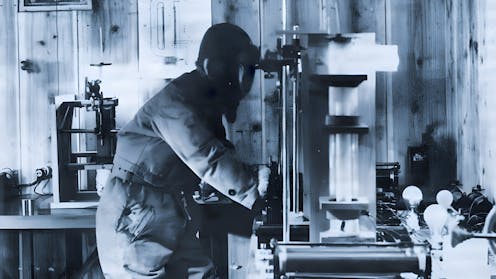
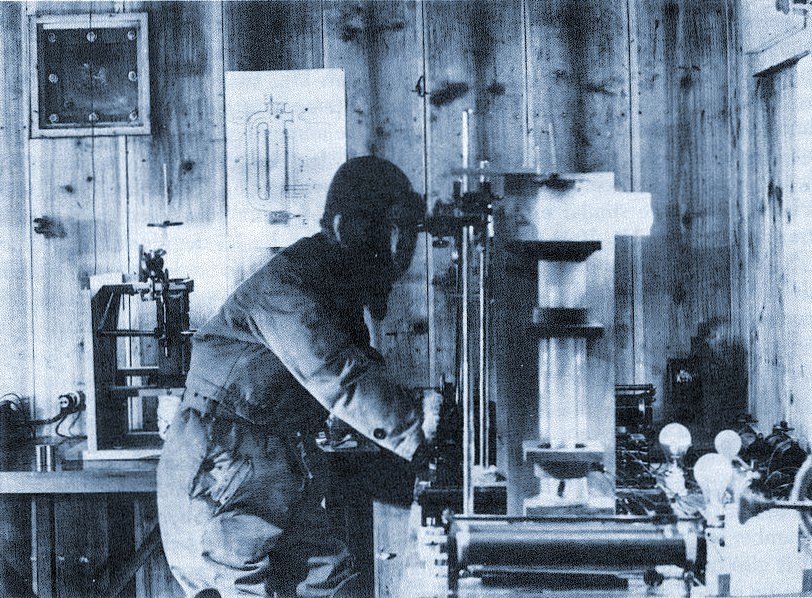
Ukichiro Nakaya con la cámara que construyó para estudiar los copos de nieve. Caltech.edu, CC BY

El estudio moderno de los copos de nieve debe mucho al físico japonés Ukichiro Nakaya. En la década de 1930, Nakaya recolectó y fotografió al microscopio más de 3 000 muestras de copos de nieve y las clasificó. El 4 de julio, en pleno tórrido verano, se cumplen 125 años de su nacimiento.

La nieve

Nakaya nació en la ciudad japonesa de Kaga en 1900 y se graduó en física en 1925 en Tokio. Tras hacer sus estudios de doctorado entre Tokio y Londres, obtuvo en 1930 una plaza de profesor en la Universidad Hokkaido de Sapporo. En Londres se especializó en física nuclear, pero en Sapporo, donde la temperatura media en invierno estaba entre los 3 y los 6 grados bajo cero, y sin apenas medios para otra cosa, se dedicó al estudio de la nieve.

Vídeo ganador del concurso de vìdeos de divulgación de la Facultad de Física 2020. Universidad de Sevilla.

El sabio de la nieve

Nakaya empezó sus estudios de los copos de nieve en 1932. Durante los primeros años observaba y fotografiaba al microscopio copos naturales recogidos tanto en los alrededores de la universidad como en una cabaña instalada en el Monte Tokachi, donde la temperatura media en invierno rondaba los diez grados bajo cero, pudiendo llegar a -20⁰ C.

Siglos antes, en 1611, el astrónomo Johann Kepler había publicado un pequeño tratado sobre la forma hexagonal de los copos de nieve, y en 1653 el filósofo Descartes fue el primero en describirlos así:

Estas eran pequeñas placas de hielo, muy planas, muy pulidas, muy transparentes, gruesas como una hoja de papel algo gruesa, pero tan perfectamente formadas en hexágonos, con los seis lados tan rectos, y los seis ángulos tan iguales, que es imposible para el hombre hacer algo tan exacto.

Hoy sabemos que los copos de nieve son pequeños cristales de hielo de estructura hexagonal. Forman un hexágono porque el enlace de los dos átomos de hidrógeno con el átomo de oxígeno del agua (H₂O) es de 106 grados, y ese ángulo es muy próximo a los 120 que forman dos lados de un hexágono. Así que, al congelarse, el agua tiende a formar cristales hexagonales.

Esta estructura subyace en todos los copos de nieve. Pero no son todos iguales: forman diferentes dibujos al crecer. Y en su aislamiento en la cabaña del Monte Tokachi, Ukichiro Nakaya logró clasificarlos según sus formas.

Una cámara para fotografiar nieve

Para entender estas formas necesitaba hacer crecer los copos de forma controlada. Ukichiro construyó una cámara en la que controlaba la temperatura, la humedad y el flujo de aire. Pero era necesario obtener una semilla a partir de la cual pueda crecer el cristal.

Tras años de pruebas y decepciones, encontró la semilla que necesitaba, y fue gracias a la punta de un pelo de conejo del abrigo de un colaborador. El agua se congelaba en torno a la punta y formaba lentamente los copos. Así, el 12 de marzo de 1936 Nakaya obtuvo los primeros copos de nieve artificiales. A partir de ahí descubrió que la temperatura y la humedad determinan conjuntamente el tipo de copo que se forma.

dos copos de nieve al microscopio
A la izquierda, el copo de nieve que creció en el pelo de un conejo; a la derecha, crecimiento natural.
Caltech.edu, CC BY

Resumió sus hallazgos en un diagrama que lleva su nombre. El diagrama morfológico de Nakaya predice la forma de un copo de nieve en función de la temperatura y la humedad del aire en que se ha formado. En un ambiente muy seco se tienden a formar cristales prismáticos sencillos con la simetría hexagonal de los cristales de hielo. Ello se debe a que el crecimiento es lento, y las caras del cristal se rellenan por completo.

Las estructuras ramificadas con dendritas, las que más llaman nuestra atención, se obtienen cuando la humedad es alta y el crecimiento, más rápido.

El papel de la temperatura es más complejo: por encima de -3,5  °C se forman placas, a temperaturas más bajas, entre -3,5 °C y -10 °C, surgen columnas. Bajando más la temperatura aparecen de nuevo placas y, por último, por debajo de los -22 °C se mezclan placas y columnas.

Los copos de nieve se forman en la atmósfera cuando el vapor de agua se condensa en torno a pequeñas partículas de polvo. Se produce un pequeño cristal de hielo que es el comienzo de la historia. A medida que el copo crece, va cayendo y pasando por zonas con distinta temperatura y distintos grados de humedad. Se van sucediendo así episodios de crecimiento más rápido con otros más lentos, lo que confiere a cada copo una forma única.

Cuando llega al suelo, el copo lleva grabada su historia en su forma. Nakaya lo expresó así en una película científica que él mismo realizó:

Un cristal de nieve es una carta enviada desde lo más alto del cielo.

Escuchar al hielo

Nakaya dedicó el resto de su vida al estudio de la nieve y el hielo, tanto en el laboratorio como en plena naturaleza, viajando por todo el mundo a los lugares más recónditos. Tras la Segunda Guerra Mundial trabajó para un laboratorio del Ejército de EE. UU. estudiando las nieves de las cimas de Hawái. Sus últimas investigaciones le llevaron a Groenlandia, donde participó en las primeras extracciones de hielo permanente para el estudio de los cambios climáticos del pasado.

Según su hija Fujiko Nakaya, artista gráfica que utiliza el hielo y la niebla en sus creaciones, Nakaya siempre decía que había que ser humilde, entregarse a la naturaleza para que la naturaleza hable: “Para entender al hielo, tienes que escuchar al hielo”

Estudios en la actualidad

Los copos de nieve siguen siendo objeto de estudio en la actualidad. Se trata de desentrañar el proceso de crecimiento de forma detallada y los algoritmos emulan su formación.

Algunos de estos algoritmos explotan una mera analogía. No se construyen a partir de un modelo físico de crecimiento de los cristales, sino que siguen una serie de reglas sencillas. Este es el caso del fractal de Koch. Otros intentan simular realmente los mecanismos físicos que determinan el crecimiento de los cristales. Un ejemplo de este tipo de algoritmo es el uso de la “Dinámica Molecular”.

De una u otra forma, los copos de nieve siguen fascinando por su simple complejidad.

Ukichiro Nakaya murió en 1962 en su Japón natal. Hoy, un tórrido día de verano, 125 años después de su nacimiento, recordamos al sabio de la nieve.

The Conversation

Alberto Tomás Pérez Izquierdo no recibe salario, ni ejerce labores de consultoría, ni posee acciones, ni recibe financiación de ninguna compañía u organización que pueda obtener beneficio de este artículo, y ha declarado carecer de vínculos relevantes más allá del cargo académico citado.

ref. 125 años del nacimiento de Ukichiro Nakaya: el sabio de la nieve – https://theconversation.com/125-anos-del-nacimiento-de-ukichiro-nakaya-el-sabio-de-la-nieve-259458

Astronomers have discovered another puzzling interstellar object − this third one is big, bright and fast

Source: The Conversation – USA – By Darryl Z. Seligman, Assistant Professor, Michigan State University

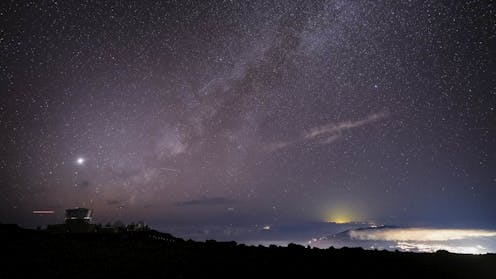
The Haleakala Observatory, left, houses one telescope for the ATLAS system. That system first spotted the object 3I/ATLAS, which isn’t visible in this image. AP Photo/Lindsey Wasson

Astronomers manning an asteroid warning system caught a glimpse of a large, bright object zipping through the solar system late on July 1, 2025. The object’s potentially interstellar origins excited scientists across the globe, and the next morning, the European Space Agency confirmed that this object, first named A11pl3Z and then designated 3I/ATLAS, is the third ever found from outside our solar system.

Current measurements estimate that 3I/ATLAS is about 12 miles (20 kilometers) wide, and while its path won’t take it close to Earth, it could hold clues about the nature of a previous interstellar object and about planet formation in solar systems beyond ours.

On July 2 at 3 p.m. EDT, Mary Magnuson, an associate science editor at The Conversation U.S., spoke to Darryl Z. Seligman, an astrophysicist at Michigan State University who has been studying 3I/ATLAS since its discovery.

What makes 3I/ATLAS different from its predecessors?

We have discovered two interstellar objects so far, ’Oumuamua and Comet 2I/Borisov. ’Oumuamua had no dust tail and a significant nongravitational acceleration, which led to a wide variety of hypotheses regarding its origin. 2I/Borisov was very clearly a comet, though it has a somewhat unique composition compared to comets in our solar system.

All of our preparation for the next interstellar object was preparing for something that looked like a ’Oumuamua, or something that looked like Borisov. And this thing doesn’t look like either of them, which is crazy and exciting.

This object is shockingly bright, and it’s very far away from the Earth. It is significantly bigger than both of the interstellar objects we’ve seen – it is orders of magnitude larger than ’Oumuamua.

For some context, ’Oumuamua was discovered when it was very close to the Earth, but this new object is so large and bright that our telescopes can see it, even though it is still much farther away. This means observatories and telescopes will be able to observe it for much longer than we could for the two previous objects.

It’s huge and it’s much farther away, but it is also much faster.

When I went to bed last night, I saw an alert about this object, but nobody knew what was going on yet. I have a few collaborators who figure out the orbits of things in the solar system, and I expected to wake up to them saying something like “yeah, this isn’t actually interstellar.” Because a lot of times you think you may have found something interesting, but as more data comes in, it becomes less interesting.

Then, when I woke up at 1 a.m., my colleagues who are experts on orbits were saying things like “no, this is definitely interstellar. This is for real.”

How can astronomers tell if something is an interstellar object?

The eccentricity of the object’s orbit is how you know that it’s interstellar. The eccentricity refers to how noncircular an orbit is. So an eccentricity of zero is a pure circle, and as the eccentricity increases, it becomes what’s known as an ellipse – a stretched out circle.

An animation showing a line with a dot labeled ''Oumuamua' that intersects the oval-shaped ellipses showing the orbits of Earth, Mars and other planets.
A hyperbolic orbit isn’t a closed loop, as this rendering of ‘Oumuamua’s trajectory shows. All the planets have oval-shaped elliptical orbits, which close in a loop. The interstellar object instead passes through but doesn’t come back around.
Tomruen/Wikimedia Commons, CC BY-SA

And then once you get past an eccentricity of one, you go from an ellipse to a hyperbolic orbit, and that is unbound. So while an elliptical orbit is stretched out, it still orbits and comes back around. An object with a hyperbolic orbit comes through and it leaves, but it never comes back. That type of orbit tells you that it didn’t come from this solar system.

When researchers are collecting data, they’re getting points of light on the sky, and they don’t know how far away they are. It’s not like they see them and can just tell, “oh, that’s eccentric.” What they’re seeing is how far away the object is compared with other stars in the background, what its position is and how fast it’s moving. And then from that data, they try to fit the orbit.

This object is moving fast for how far away it is, and that’s what’s telling us that it could be hyperbolic. If something is moving fast enough, it’ll escape from the solar system. So a hyperbolic, unbound object inherently has to be moving faster.

This is a real-time process. My collaborators have preexisting software, which will, every night, get new observations of all the small bodies and objects in the solar system. It will figure out and update what the orbits are in real time. We’re getting data points, and with more data we can refine which orbit fits the points best.

What can scientists learn from an interstellar object?

Objects like this are pristine, primordial remnants from the planet formation process in other planetary systems. The small bodies in our solar system have taught us quite a lot about how the planets in the solar system formed and evolved. This could be a new window into understanding planet formation throughout the galaxy.

As we’re looking through the incoming data, we’re trying to figure out whether it’s a comet. In the next couple of weeks, there will likely be way more information available to say if it has a cometary tail like Borisov, or if it has an acceleration that’s not due to a gravitational pull, like ’Oumuamua.

If it is a comet, researchers really want to figure out whether it’s icy. If it contains ices, that tells you a ton about it. The chemistry of these small bodies is the most important aspect when it comes to understanding planet formation, because the chemical composition tells you about the conditions the object’s solar system was in when the object formed.

For example, if the object has a lot of ices in it, you would know that wherever it came from, it didn’t spend much time near a star, because those ices would have melted. If it has a lot of ice in it, that could tell you that it formed really far away from a star and then got ejected by something massive, such as a planet the size of Jupiter or Neptune.

Fundamentally, this object could tell astronomers more about a population of objects that we don’t fully understand, or about the conditions in another solar system.

We’ve had a couple of hours to get some preliminary observations. I suspect that practically every telescope is going to be looking at this object for the next couple of nights, so we’ll get much more information about it very soon.

The Conversation

Darryl Z. Seligman is supported by an NSF Astronomy and Astrophysics Postdoctoral Fellowship under award AST-2303553. This research award is partially funded by a generous gift of Charles Simonyi to the NSF Division of Astronomical Sciences. The award is made in recognition of significant contributions to Rubin Observatory’s Legacy Survey of Space and Time.

ref. Astronomers have discovered another puzzling interstellar object − this third one is big, bright and fast – https://theconversation.com/astronomers-have-discovered-another-puzzling-interstellar-object-this-third-one-is-big-bright-and-fast-260391

Elon Musk says he may launch his own party: but US history tells us that’s not a recipe for success

Source: The Conversation – UK – By Matthew Mokhefi-Ashton, Lecturer in Politics and International Relations, Nottingham Trent University

To paraphrase a very old joke, how do you make a small fortune in America? Start with a large fortune and fund a third political party. American political history is littered with the wrecks of challengers who thought they could break the two-party system and failed.

This makes Elon Musk’s tease that he may launch his own new political party as an act of defiance following his falling out with Donald Trump even more intriguing.

What do we mean by a two-party system though? Since the 1860s, the Democrats and Republicans have dominated the US political landscape, holding the presidency, Congress and the vast majority of elected positions. Attempts at third parties have usually floundered at the ballot box.


Get your news from actual experts, straight to your inbox. Sign up to our daily newsletter to receive all The Conversation UK’s latest coverage of news and research, from politics and business to the arts and sciences.


Some have lasted only for a few electoral cycles, including the Progressive Party in the 1910s and the Citizens Party of the 1980s, while others like the Libertarian Party and Green Party have lasted decades and, in some cases, managed some electoral success at the local level.

But this is where an important distinction has to be made between third parties and third-party candidates. Because the US system is so personality-driven rather than party focused compared to Europe, quite often third parties have been built around a single person.

A good example is the previously mentioned Progressive Party. It was founded in 1912 by former president Theodore Roosevelt after he split from the Republicans. Without him it quickly faded away.

The Reform Party was created by billionaire Ross Perot in 1995 after he managed to get 18.9% of the vote in the 1992 presidential election. While it continued without him for some years, it was a shell of its former self. Other parties like the Socialist, Libertarian and Green parties have sprung from more organic movements and thus have been more successful at a local or state level.

When you look at recent polling though, it seems strange that the two parties continue to dominate. Public dissatisfaction with politics as usual seems at an all-time high. In a recent Pew Research poll when asked whether “I often wish there were more political parties to choose from” describes their views, 37% of respondents answered: “Very well” and 31% answered: “Somewhat well”.

In another poll, 25% of respondents said that neither of the two main parties represented their interests.

So if there is an appetite for some sort of change, why have so few challengers succeeded? The two main parties seem entrenched to the point where it resembles a cartel.

Odds stacked against third-party insurgency

The first and arguably most important reason is the electoral system. First past the post does not guarantee a two-party system (look at Britain, for instance). But political scientist Maurice Duverger argued that it does mean that the two main parties have a significant advantage. There are prizes for coming first and second, nothing for third place.

Equally, many of the big prizes in American politics such as the presidency and state governorships are indivisible and cannot be shared. So it has become received wisdom that voting for anyone other than Democrats or Republicans is a wasted vote.

In these cases, people either vote for what they perceive to be the lesser of two evils or stay at home, rather than voting for a candidate with no chance or that they may not support.

The other multi-billion dollar elephant in the room is money. The sheer cost of running for elections in recent years means that any third party is unlikely to be able to raise the funds to be truly competitive. At the last election, the Democrats and Republicans spent hundreds of millions of dollars (which isn’t even counting all of the super-PAC money spent on their behalf).

Whenever billionaires like Perot have attempted to self-fund a party, they have left themselves open to the accusation that it’s a vanity project, or lacks true mass appeal.

There is also the fact that to run successfully you must have media coverage. The media tends to focus almost exclusively on the two main parties. This creates a “chicken and egg” situation where you need success to help raise money and media coverage, but it’s difficult to be successful without first having money and media coverage.

The final reasons are that of the open primary and ideological flexibility of the main parties. Donald Trump briefly considered running as president for the Reform Party back in 2000. In 2016, the open primary system that both main parties use meant that he could impose himself on the Republican Party despite most of the party elite despising him.

Why bother starting your own party when you can run for one that already exists? It could now be argued that the Republicans have effectively become the Trump or Maga party, although whether this will survive his presidency is open to debate.

Money, money, money

Elon Musk has, for the moment, money to burn. Whether he’s willing to invest in the long term to turn this into more than a vanity project remains to be seen.

He also has charisma and a national platform to amplify his voice like few others. But, having been born outside America, he can’t run for president.

If he’s serious about electoral success, he’d have to find someone to run, and that would mean, effectively, they’d lead his party. Musk’s public persona suggests that he does not play well with others.

Founding a third party isn’t impossible, but unless there is a political earthquake it seems difficult to see how one could succeed.

The Conversation

Matthew Mokhefi-Ashton does not work for, consult, own shares in or receive funding from any company or organisation that would benefit from this article, and has disclosed no relevant affiliations beyond their academic appointment.

ref. Elon Musk says he may launch his own party: but US history tells us that’s not a recipe for success – https://theconversation.com/elon-musk-says-he-may-launch-his-own-party-but-us-history-tells-us-thats-not-a-recipe-for-success-260480

War, politics and religion shape wildlife evolution in cities

Source: The Conversation – USA – By Elizabeth Carlen, Living Earth Collaborative Postdoctoral Fellow, Washington University in St. Louis

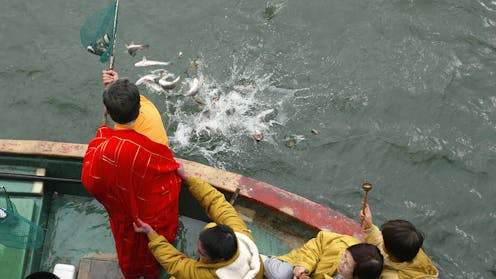
A Buddhist monk in Hong Kong releases fish and chants prayers during a ceremony to free the spirits of tsunami victims. Samantha Sin/AFP via Getty Images

People often consider evolution to be a process that occurs in nature in the background of human society. But evolution is not separate from human beings. In fact, human cultural practices can influence evolution in wildlife. This influence is highly pronounced in cities, where people drastically alter landscapes to meet their own needs.

Human actions can affect wildlife evolution in a number of ways. If people fragment habitat, separated wildlife populations can evolve to be more and more different from each other. If people change certain local conditions, it can pressure organisms in new ways that mean different genes are favored by natural selection and passed on to offspring – another form of evolution that can be driven by what people do.

In a recent review, evolutionary biologists Marta Szulkin, Colin Garroway and I, in collaboration with scientists spread across five continents, explored how cultural processes – including religion, politics and war – shape urban evolution. We reviewed dozens of empirical studies about urban wildlife around the globe. Our work highlights which human cultural practices have and continue to shape the evolutionary trajectory of wild animals and plants.

Religious practices

If you’ve traveled internationally, you may have noticed the menu at any one McDonald’s restaurant is shaped by the local culture of its location. In the United Arab Emirates, McDonald’s serves an entirely halal menu. Vegetarian items are common and no beef is served in Indian McDonald’s. And in the United States, McDonald’s Filet-O-Fish is especially popular during Lent when observant Catholics don’t consume meat on Fridays.

Similarly, ecosystems of cities are shaped by local cultural practices. Because all wildlife are connected to the environment, cultural practices that alter the landscape shape the evolution of urban organisms.

Yellow and black salamander facing the camera
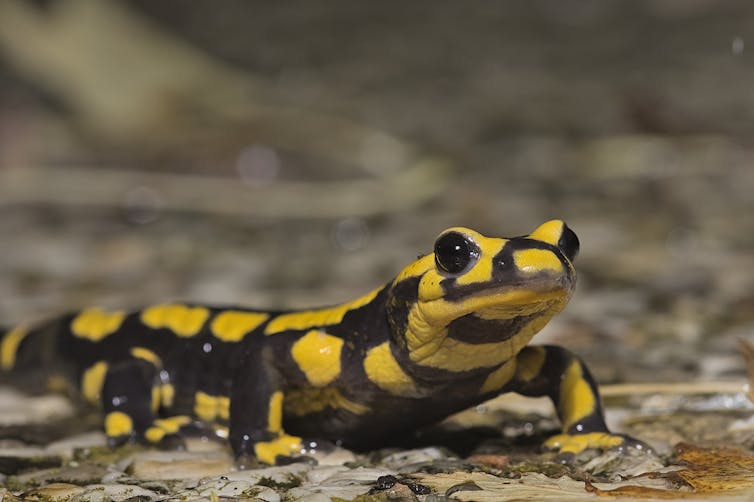
Populations of fire salamanders have different genes depending on which side of city walls in Oviedo, Spain, they live on.
Patrice Skrzynski via Getty Images

For example, in Oviedo, Spain, people constructed walls around religious buildings between the 12th and 16th centuries. This division of the city led to different populations of fire salamanders inside and outside the walls. Because salamanders can’t scale these walls, those on opposite sides became isolated from each other and unable to pass genes back and forth. In a process that scientists call genetic drift, over time salamanders on the two sides became genetically distinct − evidence of the two populations evolving independently.

Imagine dumping out a handful of M&Ms. Just by chance, some colors might be overrepresented and others might be missing. In the same way, genes that are overrepresented on one side of the wall can be in low numbers or missing on the other side. That’s genetic drift.

Introducing non-native wildlife is another way people can alter urban ecosystems and evolutionary processes. For example, prayer animal release is a practice that started in the fifth or sixth century in some sects of Buddhism. Practitioners who strive to cause no harm to any living creature release captive animals, which benefits the animal and is meant to improve the karma of the person who released it.

However, these animals are often captured from the wild or come from the pet trade, thereby introducing non-native wildlife into the urban ecosystem. Non-natives may compete with local species and contribute to the local extinction of native wildlife. Capturing animals nearby has downsides, too. It can diminish local populations, since many die traveling to the release ceremony. The genetic diversity of these local populations in turn decreases, reducing the population’s ability to survive.

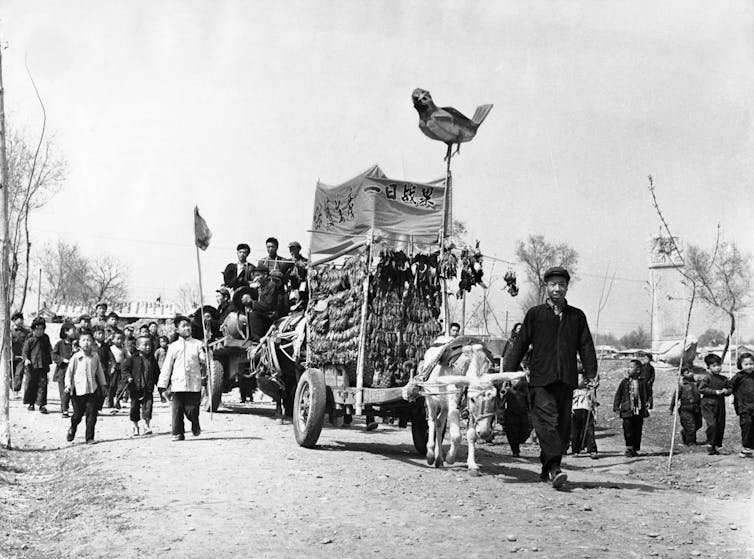
Black and white photo showing a cart filled with dead birds and a group of people marching alongside
More than a thousand sparrows killed by peasants in 1958 are displayed on a cart near Beijing, China.
Sovphoto/Universal Images Group via Getty Images

Influence of politics

Politically motivated campaigns have shaped wildlife in various ways.

Starting in 1958, for instance, the Chinese Communist Party led a movement to eliminate four species that were considered pests: rats, flies, mosquitoes and sparrows. While the first three are commonly considered pests around the world, sparrows made the list because they were “public animals of capitalism” due to their fondness for grain. The extermination campaign ended up decimating the sparrow population and damaging the entire ecosystem. With sparrows no longer hunting and eating insects, crop pests such as locusts thrived, leading to crop destruction and famine.

In the United States, racial politics may be shaping evolutionary processes in wildlife.
For instance, American highways traverse cities according to political agendas and have often dismantled poor neighborhoods of color to make way for multilane thoroughfares. These highways can change how animals are able to disperse and commingle. For example, they prevent bobcats and coyotes from traveling throughout Los Angeles, leading to similar patterns of population differentiation as seen in fire salamanders in Spain.

Wildlife during and after war

Human religious and political agendas often lead to armed conflict. Wars are known to dramatically alter the environment, as seen in current conflicts in Gaza and Ukraine.

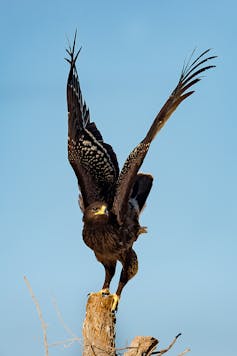
A large brown bird with white wing spots perching on a tree trunk
The Russia-Ukraine war affected migration of greater spotted eagles.
Nimit Virdi via Getty Images

While documenting evolutionary changes to urban wildlife is secondary to keeping people safe during wartime, a handful of studies on wildlife have come out of active war zones. For example, the current Russia-Ukraine war affected the migration of greater spotted eagles. They made large diversions around the active war zone, arriving later than usual at their breeding grounds. The longer route increased the energy the eagles used during migration and likely influenced their fitness during breeding.

Wars limit access to resources for people living in active war zones. The lack of energy to heat homes in Ukraine during the winter has led urban residents to harvest wood from nearby forests. This harvesting will have long-term consequences on forest dynamics, likely altering future evolutionary potential.

A similar example is famine that occurred during the Democratic Republic of Congo’s civil wars (1996-1997, 1998-2003) and led to an increase in bushmeat consumption. This wildlife hunting is known to reduce primate population sizes, making them more susceptible to local extinction.

Even after war, landscapes experience consequences.

For example, the demilitarized zone between North Korea and South Korea is a 160-mile (250-kilometer) barrier, established in 1953, separating the two countries. Heavily fortified with razor wire and landmines, the demilitarized zone has become a de facto nature sanctuary supporting thousands of species, including dozens of endangered species.

The collapse of the Soviet Union and the end of the Cold War led to the establishment of the European Green Belt, which runs along the same path as the Iron Curtain. This protected ecological network is over 7,800 miles (12,500 kilometers) long, allowing wildlife to move freely across 24 countries in Europe. Like the Korean DMZ, the European Green Belt allows for wildlife to move, breed and exchange genes, despite political boundaries. Politics has removed human influence from these spaces, allowing them to be a safe haven for wildlife.

While researchers have documented a number of examples of wildlife evolving in response to human history and cultural practices, there’s plenty more to uncover. Cultures differ around the world, meaning each city has its own set of variables that shape the evolutionary processes of wildlife. Understanding how these human cultural practices shape evolutionary patterns will allow people to better design cities that support both humans and the wildlife that call these places home.

The Conversation

Ideas for this article were developed as part of a NSF funded Research Coordination Network (DEB 1840663). Elizabeth Carlen was funded by the Living Earth Collaborative.

ref. War, politics and religion shape wildlife evolution in cities – https://theconversation.com/war-politics-and-religion-shape-wildlife-evolution-in-cities-260184

Underwater lake heatwaves are on the rise, threatening aquatic life

Source: The Conversation – UK – By Iestyn Woolway, Reader and NERC Independent Research Fellow, Bangor University

A view of Lake Superior, one of the Great Lakes. Travis J. Camp/Shutterstock

Lakes are essential to ecosystems, providing freshwater, supporting biodiversity and offering crucial habitat for fish and other aquatic species.

But a recent study by my colleagues and I shows that lakes around the world are warming, not just at the surface, but deep below as well. Subsurface heatwaves in lakes, defined as extreme periods of high water temperature below the surface, are increasing in frequency, duration and intensity.

These hidden extremes could have serious consequences for lake ecosystems. Despite that, the issue remains largely unmonitored and poorly understood.

Lake heatwaves are similar to those in the atmosphere or ocean. They are prolonged periods of excessive warmth. Most research to date has focused on surface temperatures, where climate change has already caused more frequent and intense heatwaves over recent decades.


Get your news from actual experts, straight to your inbox. Sign up to our daily newsletter to receive all The Conversation UK’s latest coverage of news and research, from politics and business to the arts and sciences.


These surface events can disrupt the chemical and physical balance of lakes, damage food webs and, in some cases, cause mass fish die-offs.

Aquatic species respond to surface heatwaves in different ways. Some benefit if the warming expands their preferred temperature range. But many others, particularly those already living near their thermal limits, face significant stress.

In lakes that stratify during summer – where warm surface water sits above a cooler bottom layer – some species seek refuge from the heat by migrating to deeper water. But what happens when that deeper refuge is no longer cool?

A closer look beneath the surface

To investigate, we analysed temperature data from tens of thousands of lakes worldwide. These included one-dimensional lake models, high-resolution simulations for the Great Lakes of North America, and local models calibrated to specific lake conditions.

By analysing how temperature varies with depth and time, we identified when and where subsurface waters crossed extreme heat thresholds.

We defined subsurface heatwaves as periods when temperatures at particular depths exceeded their typical seasonal range. We also tracked how these events have changed since 1980, and how they might evolve under different emissions scenarios by the end of this century.

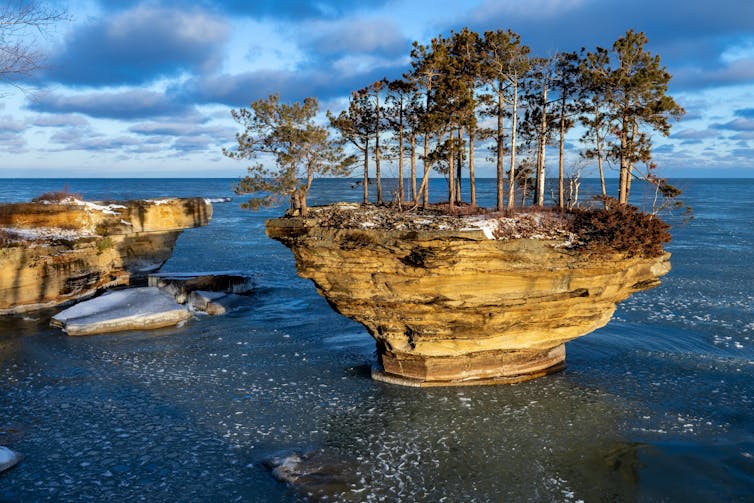
Morning sun lights up a rock formation on Lake Huron.
Lake Huron, one of the Great Lakes.
Craig Sterken/Shutterstock

Subsurface heatwaves are already common and they’re becoming more so.

Since 1980, bottom heatwaves (those occurring at the deepest parts of lakes) have increased by an average of more than seven days per decade in frequency, more than two days per decade in duration and they have risen by around 0.2C per decade.

Although these deep-water events tend to be slightly less intense than surface ones, they often last longer.

We also found a rise in “vertically compounding” heatwaves. This is when extreme temperatures happen simultaneously at the surface and bottom of a lake.

These doubled-up events are now happening more than three days per decade more frequently. When they strike, aquatic species can be left with no place to escape the heat.

Even more concerning, the deep-water refuges that once offered shelter during surface heatwaves are shrinking or disappearing altogether. In some lakes, the distance fish need to travel to find cooler water has increased by nearly a metre per decade.

Our simulations suggest that these trends will intensify, especially under high-emission scenarios. By the end of this century, some bottom heatwaves could last for months, with temperature extremes not seen in the historical record.

Why this matters

Lake ecosystems rely on thermal structure. When extreme heat reaches deeper into the water column, it can trigger cascading ecological effects, from shifting fish habitats and altering species distribution, to increased nutrient cycling and algal blooms. It could even affect the release of greenhouse gases like methane from lake bed sediments.

Subsurface heatwaves pose a particular risk to bottom-dwelling species, which may be less mobile or already adapted to cold, stable conditions. The loss of thermal refuges during surface heatwaves also jeopardises species that would otherwise escape to deeper waters.

By ignoring what’s happening below the surface, we risk underestimating the true ecological effects of climate change on freshwater systems.

Our study highlights the urgent need to expand lake monitoring efforts to include subsurface temperatures. While satellites have transformed our understanding of surface warming, they can’t capture what’s happening below.

Future research should examine how different species respond to these deep-water and vertically compounding heatwaves. It should explore how changes in lake thermal structure affect different processes like nutrient cycling and methane production.

For conservation planners, that means incorporating subsurface heatwaves into risk assessments and habitat models. For climate modellers, it means better representing vertical processes in lakes within global Earth system models.

As lakes continue to warm, managing and understanding these hidden heat extremes will be critical to protecting biodiversity and the vital ecosystem services lakes provide.

The Conversation

Iestyn Woolway receives funding from UKRI NERC.

ref. Underwater lake heatwaves are on the rise, threatening aquatic life – https://theconversation.com/underwater-lake-heatwaves-are-on-the-rise-threatening-aquatic-life-258885

From glass and steel to rare earth metals, new materials have changed society throughout history

Source: The Conversation – USA – By Peter Mullner, Distinguished Professor in Materials Science and Engineering, Boise State University

Steel played a large role in the Industrial Revolution. Monty Rakusen/DigitalVision via Getty Images

Many modern devices – from cellphones and computers to electric vehicles and wind turbines – rely on strong magnets made from a type of minerals called rare earths. As the systems and infrastructure used in daily life have turned digital and the United States has moved toward renewable energy, accessing these minerals has become critical – and the markets for these elements have grown rapidly.

Modern society now uses rare earth magnets in everything from national defense, where magnet-based systems are integral to missile guidance and aircraft, to the clean energy transition, which depends on wind turbines and electric vehicles.

The rapid growth of the rare earth metal trade and its effects on society isn’t the only case study of its kind. Throughout history, materials have quietly shaped the trajectory of human civilization. They form the tools people use, the buildings they inhabit, the devices that mediate their relationships and the systems that structure economies. Newly discovered materials can set off ripple effects that shape industries, shift geopolitical balances and transform people’s daily habits.

Materials science is the study of the atomic structure, properties, processing and performance of materials. In many ways, materials science is a discipline of immense social consequence.

As a materials scientist, I’m interested in what can happen when new materials become available. Glass, steel and rare earth magnets are all examples of how innovation in materials science has driven technological change and, as a result, shaped global economies, politics and the environment.

A diagram showing red arrows, labeled 'politics in' 'society in' 'environment in' 'technology in' etc, leading to a box labeled 'innovation' with arrows pointing away from that box with the same labels but 'out' instead of 'in.'
How innovation shapes society: Pressures from societal and political interests (orange arrows) drive the creation of new materials and the technologies that such materials enable (center). The ripple effects resulting from people using these technologies change the entire fabric of society (blue arrows).
Peter Mullner

Glass lenses and the scientific revolution

In the early 13th century, after the sacking of Constantinople, some excellent Byzantine glassmakers left their homes to settle in Venice – at the time a powerful economic and political center. The local nobility welcomed the glassmakers’ beautiful wares. However, to prevent the glass furnaces from causing fires, the nobles exiled the glassmakers – under penalty of death – to the island of Murano.

Murano became a center for glass craftsmanship. In the 15th century, the glassmaker Angelo Barovier experimented with adding the ash from burned plants, which contained a chemical substance called potash, to the glass.

The potash reduced the melting temperature and made liquid glass more fluid. It also eliminated bubbles in the glass and improved optical clarity. This transparent glass was later used in magnifying lenses and spectacles.

Johannes Gutenberg’s printing press, completed in 1455, made reading more accessible to people across Europe. With it came a need for reading glasses, which grew popular among scholars, merchants and clergy – enough that spectacle-making became an established profession.

By the early 17th century, glass lenses evolved into compound optical devices. Galileo Galilei pointed a telescope toward celestial bodies, while Antonie van Leeuwenhoek discovered microbial life with a microscope.

A large round, convex glass lens mounted on a metal stand, with a technician wearing scrubs looking at it.
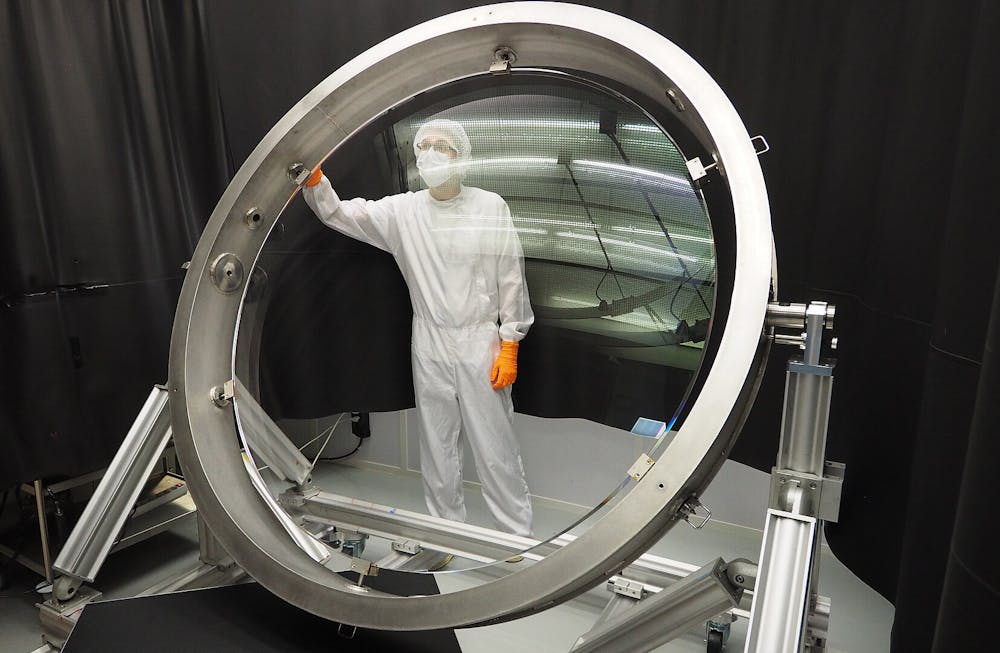
The glass lens of the Vera Rubin Observatory, which surveys the night sky.
Large Synoptic Survey Telescope/Vera Rubin Observatory, CC BY

Lens-based instruments have been transformative. Telescopes have redefined long-standing cosmological views. Microscopes have opened entirely new fields in biology and medicine.

These changes marked the dawn of empirical science, where observation and measurement drove the creation of knowledge. Today, the James Webb Space Telescope and the Vera C. Rubin Observatory continue those early telescopes’ legacies of knowledge creation.

Steel and empires

In the late 18th and 19th centuries, the Industrial Revolution created demand for stronger, more reliable materials for machines, railroads, ships and infrastructure. The material that emerged was steel, which is strong, durable and cheap. Steel is a mixture of mostly iron, with small amounts of carbon and other elements added.

Countries with large-scale steel manufacturing once had outsized economic and political power and influence over geopolitical decisions. For example, the British Parliament intended to prevent the colonies from exporting finished steel with the iron act of 1750. They wanted the colonies’ raw iron as supply for their steel industry in England.

Benjamin Huntsman invented a smelting process using 3-foot tall ceramic vessels, called crucibles, in 18th-century Sheffield. Huntsman’s crucible process produced higher-quality steel for tools and weapons.

One hundred years later, Henry Bessemer developed the oxygen-blowing steelmaking process, which drastically increased production speed and lowered costs. In the United States, figures such as Andrew Carnegie created a vast industry based on Bessemer’s process.

The widespread availability of steel transformed how societies built, traveled and defended themselves. Skyscrapers and transit systems made of steel allowed cities to grow, steel-built battleships and tanks empowered militaries, and cars containing steel became staples in consumer life.

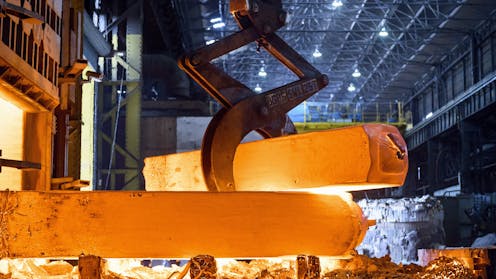
Bright hot metal pouring out of a large metal furnace.
White-hot steel pouring out of an electric arc furnace in Brackenridge, Penn.
Alfred T. Palmer/U.S. Library of Congress

Control over steel resources and infrastructure made steel a foundation of national power. China’s 21st-century rise to steel dominance is a continuation of this pattern. From 1995 to 2015, China’s contribution to the world steel production increased from about 10% to more than 50%. The White House responded in 2018 with massive tariffs on Chinese steel.

Rare earth metals and global trade

Early in the 21st century, the advance of digital technologies and the transition to an economy based on renewable energies created a demand for rare earth elements.

A wind turbine with three thin blades rising out of the water.
Offshore turbines use several tons of rare earth magnets to transform wind into electricity.
Hans Hillewaert/Wikimedia Commons, CC BY-SA

Rare earth elements are 17 chemically very similar elements, including neodymium, dysprosium, samarium and others. They occur in nature in bundles and are the ingredients that make magnets super strong and useful. They are necessary for highly efficient electric motors, wind turbines and electronic devices.

Because of their chemical similarity, separating and purifying rare earth elements involves complex and expensive processes.

China controls the majority of global rare earth processing capacity. Political tensions between countries, especially around trade tariffs and strategic competition, can risk shortages or disruptions in the supply chain.

The rare earth metals case illustrates how a single category of materials can shape trade policy, industrial planning and even diplomatic alliances.

Six small piles of rock
Mining rare earth elements has allowed for the widespread adoption of many modern technologies.
Peggy Greb, USDA

Technological transformation begins with societal pressure. New materials create opportunities for scientific and engineering breakthroughs. Once a material proves useful, it quickly becomes woven into the fabric of daily life and broader systems. With each innovation, the material world subtly reorganizes the social world — redefining what is possible, desirable and normal.

Understanding how societies respond to new innovations in materials science can help today’s engineers and scientists solve crises in sustainability and security. Every technical decision is, in some ways, a cultural one, and every material has a story that extends far beyond its molecular structure.

The Conversation

The National Science Foundation, the Department of Energy, NASA, and other national and regional agencies have funded former research of Peter Mullner.

ref. From glass and steel to rare earth metals, new materials have changed society throughout history – https://theconversation.com/from-glass-and-steel-to-rare-earth-metals-new-materials-have-changed-society-throughout-history-258244