Hope for a ceasefire in Gaza (but not much)

Source: The Conversation – in French – By Jonathan Este, Senior International Affairs Editor, Associate Editor

This article was first published in The Conversation UK’s World Affairs Briefing email newsletter. Sign up to receive weekly analysis of the latest developments in international relations, direct to your inbox.


Each day that has passed recently has brought another report of mass killings in Gaza. Today’s headline was as grim as any: according to reports from Gaza’s Hamas-run health ministry, another 118 people were killed in the past 24 hours, including 12 people trying to get aid supplies. This is a particularly unpalatable feature of a wretched conflict: the number of people being killed as they queue for food.

A bulletin carried on the United Nations website bore the headline: “GAZA: Starvation or Gunfire – This is Not a Humanitarian Response.” It said that more than 500 Palestinians have been killed and almost 4,000 injured just trying to access or distribute food.

There are, however, hopes of a hiatus in the violence. Donald Trump announced on July 2 that Israel had accepted terms for a 60-day ceasefire and Hamas is reportedly reviewing the conditions. Donald Trump on his TruthSocial platform wrote: “I hope… that Hamas takes this Deal, because it will not get better – IT WILL ONLY GET WORSE.”


Sign up to receive our weekly World Affairs Briefing newsletter from The Conversation UK. Every Thursday we’ll bring you expert analysis of the big stories in international relations.


For his part, the Israeli prime minister, Benjamin Netanyahu, said: “There will be no Hamas [in postwar Gaza]”. This doesn’t bode well for the longevity of any deal, writes Julie M. Norman.

Norman, an expert in international security at UCL who specialises in the Middle East, says we’ve been here before. The ceasefire deal negotiated with great fanfare as the Biden presidency passed over to Trump’s second term in January, fell to bits after phase one of a mooted three-phase deal, with accusations of bad faith on both sides.

Further talk of a new deal in May never got any further than the drawing board. And the two sides’ positions seem to remain utterly irreconcilable. Hamas wants the ceasefire to end in a permanent peace deal and the withdrawal of Israeli forces from Gaza. Israel wants Hamas dismantled, out of Gaza and out of the picture, full stop.

Netanyahu is due to visit Washington next week, for the third time in less than six months. Whether the US president can bring pressure to bear on Netanyahu to compromise remains to be seen.

As Norman points out after the 12-day war against Iran, which both Trump and Netanyahu have been trumpeting as a huge success, the Israeli prime minister may have the political clout to defy his more hardline colleagues in pursuit of a deal. Trump, meanwhile, having done everything he can to help Netanyahu, can call in some big favours in his quest to play dealmaker. Hamas is seriously weakened and its main ally in the region, Iran, seems unlikely to intervene after its recent conflict with Israel and the US.

So while recent history makes a cessation of violence in Gaza seem as far off as ever, there is at least some reason for hope.


Read more:
A new Gaza ceasefire deal is on the table – will this time be different?


As noted higher up, one of the more terrible features of this wretched conflict of late has been the number of people being killed as they queue to get food. The death toll at aid distribution centres has mounted steadily since Israel, with US backing, introduced a new system run by an American company: Gaza Humanitarian Foundation (GHF). This organisation replaced more than 400 aid points (previously run by a UN agency) with just four, mainly in the south of the Gaza Strip.

This was always going to cause problems, writes Leonie Fleischmann of City St George’s, University of London, who specialises in the conflict between Israel and Palestine. While Israel says the new system is designed to prevent Hamas taking control of aid supplies, all reports are that the scenes around the four distribution centres are descending into anarchy. According to a UN report, “Thousands [of people] released into chaotic enclosures to fight for limited food supplies … These areas have become sites of repeated massacres in blatant disregard for international humanitarian law.”

“Arguably, this chaos and violence is inbuilt in the new aid delivery system,” writes Fleischmann, who concludes that the new system should be seen as a “a mechanism of forced displacement” which is part of a plan by the Netanyahu government “relocate Palestinians to a ‘sterile zone’ in Gaza’s far south” as it continues to clear the north of the Gaza strip.


Read more:
Chaotic new aid system means getting food in Gaza has become a matter of life – and often death


The 12-day war

But if Trump and Netanyahu think the recent short war will lead to a complete reset in the region, leaving a crippled Iran licking its wounds, they way well have miscalculated. That’s the assessment of the situation by Bamo Nouri, a Middle East specialist at City St George’s, University of London. He believes that the 12-day war may prove to have been a strategic blunder by Israel and the US.

For a start, he writes, one outcome of the conflict is that Iran suspended cooperation with the International Atomic Energy Agency (IAEA), ending inspections and giving Tehran the freedom to expand its nuclear programme with no oversight. And its response to Israel’s airstrikes, involving more than 1,000 missiles and drones, breached the country’s “iron dome” defensive system, causing considerable damage and inflicting a serious psychological blow against Israel.

Tehran has also deepened its relationships with both Moscow and Beijing. And far from prompting regime change, the war appears to have prompted an upsurge in nationalist sentiment in Iran.

Nouri concludes: “Israel emerges militarily capable but politically shaken and economically strained. Iran, though damaged, stands more unified, with fewer international constraints on its nuclear ambitions.”


Read more:
The US and Israel’s attack may have left Iran stronger


It’s hard to get a clear picture of what was achieved, which isn’t surprising when you consider that there remains considerable doubt, even in this information age, what was achieved by the US bombing raid against Iran’s heavily fortified nuclear installations.

First they were “completely obliterated”. Or at least that was what Donald Trump posted on the night of the raid. Then it seemed that they may not have been as obliterated as first thought. In fact an initial assessment prepared by the US Office of Defense Intelligence thought that the damage may only have hindered Iran’s nuclear programme by a few months.

Cue outrage from the US president and his senior colleagues, amplified by their friends in the US media. There followed some new intelligence which seemed to favour Trump’s position. Then the head of the IAEA, Rafael Grossi, weighed in, saying Iran could be enriching uranium again in a “matter of months”. The latest contribution was from the Pentagon which is saying that timescale is actually closer to “one to two years”. Clear as mud then.

But as Rob Dover reminds us, former US defense secretary Donald Rumsfeld once pronounced: “If it was a fact it wouldn’t be called intelligence.” Dover, who is an intelligence specialist at the University of Hull, explains that intelligence almost always has a political dimension and should be viewed through that prism.

“The assessment given to the public may well be different from the one held within the administration,” writes Dover. This is not necessarily a bad thing, he concludes as “security diplomacy is best done behind closed doors”. Or at least it used to be. Now the US president seems happy to discuss sensitive information in public.


Read more:
Row over damage to Iran’s nuclear programme raises questions about intelligence


The medium is the message

But then, as Sara Polak observes, Donald Trump’s use of social media is changing the way government is conducted in the US. Polak is a specialist in US politics at Leiden University with a particular interest in the way politics and media intersect.

As she writes, for more than a century since Teddy Roosevelt cultivated print journalists, through FDR’s adept use of radio and JFK’s mastery of television, each new media platform has its master. For Trump it is social media. And he is using it to remake politics.


Read more:
How Trump plays with new media says a lot about him – as it did with FDR, Kennedy and Obama


Nowhere has Trump’s mastery of art of issuing simple messages which make for effective soundbites been displayed so clearly than in the name of his landmark tax-cutting legislation still being wrangled over in the US Congress at the time of writing: the One Big Beautiful Bill Act.

While undoubtedly big – it runs to 940 pages – its beauty is what the US House of Representatives has been debating fiercely for 24 hours or more, after it passed the Senate with the help of a casting vote from US president J.D. Vance when three Republican senators voted against it.

Dafydd Townley from the University of Portsmouth, who writes regularly for The Conversation about US politics, has written this incisive analysis of the politics around the legislation which appears set to continue for some time to come.


Read more:
Trump wins again as ‘big beautiful bill’ passes the Senate. What are the lessons for the Democrats?


World Affairs Briefing from The Conversation UK is available as a weekly email newsletter. Click here to get updates directly in your inbox.


The Conversation

ref. Hope for a ceasefire in Gaza (but not much) – https://theconversation.com/hope-for-a-ceasefire-in-gaza-but-not-much-260460

Can the NHS shift from treatment to prevention? What healthcare bosses think

Source: The Conversation – in French – By Lisa Knight, Head of External Engagement & Professional Programmes, Liverpool John Moores University

PongMoji/Shutterstock

Imagine a healthcare system where preventing illness is just as important as treating it. This is the vision for the English NHS – but right now, it’s still far from reality. To become more sustainable and better serve patients in the long run, the NHS needs to shift its focus from reactive care to proactive, preventative support.

On July 3 2025, the UK government published its Fit for the Future: Ten-Year Health Plan for England, laying out a blueprint to rebalance the health service toward prevention, digital transformation and localised care. The plan includes:

  • expanding up to 300 neighbourhood health centres to bring preventative services closer to communities

  • digitising services with 24/7 access through the NHS app, AI triage – the use of artificial intelligence to help prioritise and assess patients more efficiently, particularly in high-demand areas like emergency departments, GP surgeries and outpatient care – and robot-assisted surgery

  • tackling chronic illness earlier, including more support for obesity, smoking cessation and mental health

  • integrating prevention into everyday care, with a shift in national performance targets to better reflect long-term health outcomes.

Prime minister Keir Starmer described it as a shift “from a sickness service to a health service,” marking a deliberate move away from crisis response toward early intervention and community-based support.

But making this vision real won’t be easy.

System still isn’t built for prevention

In my research, I’ve looked at what good leadership should look like in the NHS – especially within England’s new integrated care systems (ICSs). A key part of these systems is place-based partnerships.

These are local collaborations between NHS services, councils, charities and community groups, all working together to improve people’s health. The idea is to better join up care in each area and tackle the broader issues that affect health, such as housing, education and access to support.

I spoke to NHS leaders, including chief executives of major health organisations, on the basis of anonymity, who agree that the system needs to change. But many of them say it will face major obstacles – especially financial constraints and fragmented funding models that continue to reward reactive care, such as A&E. As one NHS leader put it:

All the things that come down from NHS England and the Department of Health and Social Care respond to the now, rather than where we are going.

While the ten-year plan lays out ambitions for rebalanced funding, existing financial mechanisms won’t support this shift. The NHS can overspend during emergencies, but local authorities – who fund most social care and public health – must stay within strict budgets.

This undermines integration and creates unequal footing between services. One senior leader noted”

Local authorities will never consider us as a partner until we get our act together on finance… you’ve got to sit back and look at what impression that gives them – that we’re not equals.

The ten-year plan acknowledges these disparities but offers limited detail on how to resolve them. Without concrete reform of funding flows and accountability structures, prevention may remain a priority in name only.

In 2024, the health and social care secretary, Wes Streeting, described the NHS as “broken” and called for a review to expose the “hard truths” needed to fix it. He has been outspoken in championing both prevention and better integration with social care, viewing these as key to reforming a system overwhelmed by rising demand and worsening outcomes.

Improving housing, social care, education, and jobs can reduce reliance on costly hospital treatments and significantly enhance overall health. In 2022, the NHS took a structural step toward this by merging health and social care services into “integrated care systems”, aiming to better coordinate services across sectors.

However, it has now been more than a decade since key targets for emergency care, hospital waiting times, or cancer services were met – raising questions about whether structural changes alone are enough.

The COVID pandemic deepened these pressures. Waiting lists for treatment surged, while NHS staff faced soaring stress levels. Many healthcare leaders describe the current moment as a perfect storm, in which long-term planning is increasingly difficult while trying to meet immediate needs.

Why risk and measurement matter

Preventative services, new technologies and integrated care models carry uncertainty. Leaders are understandably hesitant to shift resources away from acute services when “hospitals get the headlines.” One told me:

We’re shuffling public service delivery cash around and not thinking through how we develop something fundamentally different.

National performance frameworks also reinforce this inertia. Most targets still focus on wait times, emergency response, and treatment outcomes. As one executive put it:

We manage what’s measured… If we were made to look at deprivation figures and elective recovery figures based on postcode and ethnicity, that might change the conversation.“

The ten-year plan promises new indicators and better data sharing, but it remains to be seen whether these tools will actually shift behaviour at scale.

Listening to communities?

An effective shift to prevention requires more than structural reform – it needs genuine community engagement. One of the aims of integrated care systems was to involve local people in decisions about their health. Most leaders I have interviewed support this principle, but many admit that public involvement remains limited: “We’re not doing enough to listen… We’re not giving people opportunities.”

The ten-year plan reiterates the importance of local voices and promises a stronger focus on “co-produced care,” but delivery will depend on time, trust and cultural change within the system.

My research suggests that the NHS won’t be fixed by continuing to treat illness after it happens. It must evolve into a service that prevents poor health at its root – in homes, schools, workplaces and local communities.

The government’s ten-year plan offers a renewed opportunity to make this shift. But if the plan is to succeed, it will require more than bold promises. It demands redesigned funding, rebalanced risk, shared power with communities – and, above all, the political will to change the system before it collapses under its own weight.

The Conversation

Lisa Knight is affiliated with Mersey and West Lancashire NHS Trust as a Non-Executive Director

ref. Can the NHS shift from treatment to prevention? What healthcare bosses think – https://theconversation.com/can-the-nhs-shift-from-treatment-to-prevention-what-healthcare-bosses-think-234601

Pets get hay fever too – how to spot it and manage it

Source: The Conversation – in French – By Jacqueline Boyd, Senior Lecturer in Animal Science, Nottingham Trent University

alexei tm/Shutterstock.com

Summer often brings with it the unmistakable sniffles and sneezes of hay fever. As plants and trees release pollen into the air, many of us start to feel the effects – itchy eyes, runny noses and general discomfort. But hay fever doesn’t just affect people – our pets can suffer too.

Like us, dogs, cats, horses and even small animals like rabbits and guinea pigs can struggle during pollen season. So how can you spot the signs – and more importantly, how can you help?


Get your news from actual experts, straight to your inbox. Sign up to our daily newsletter to receive all The Conversation UK’s latest coverage of news and research, from politics and business to the arts and sciences.


What is hay fever?

Hay fever is an allergic reaction to airborne pollen. Grass pollen is considered the most common trigger, though pollen from trees and weeds can also play a part. Normally, the immune system protects us from harmful invaders like bacteria and viruses. But sometimes, it becomes oversensitive and reacts to things that aren’t dangerous.

Allergies like hay fever happen when the immune system mistakenly treats harmless substances – such as dust or pollen – as threats. When exposed again, the body tries to defend itself, triggering a cascade of reactions including itching, sneezing, congestion, watery eyes and coughing. These symptoms, although frustrating, are the body’s attempt to shield itself – just against the wrong enemy.

What are the signs of hay fever in pets?

Humans with hay fever usually experience an itchy throat, sneezing, watery eyes and a runny nose. Pets show many of the same symptoms: sneezing, nasal discharge and eye irritation are all common.

Dogs and cats often show signs through their skin, rubbing or scratching at itchy areas and sometimes chewing their paws or belly. These parts of the body are more likely to come into contact with pollen when outdoors. In more severe cases, pets can develop dermatitis – an intensely itchy and inflamed skin condition that may require veterinary care.

If you think your pet might be suffering, it’s important to speak with your vet. Many people with hay fever learn to tell the difference between colds, flu and pollen allergies. But our pets can also catch colds and other infections, which may look similar. To treat the problem properly, it’s best to get a clear diagnosis.

How to help your pet with hay fever

If you or your pet are dealing with hay fever, there are steps you can take to make things more manageable.

Start by keeping a diary of symptoms – it might help you connect flare-ups with particular plants or trees. In the UK, tree pollen tends to peak in April and May, while grass pollen is highest in June and July. If grass seems to be the culprit, keeping lawns short can help. You might also need to remove problem plants from your garden or restrict access to them.

Regular grooming and washing your pet – along with cleaning their bedding – can reduce the amount of pollen they’re exposed to. Less pollen means fewer symptoms.

Pollen forecasts are also a helpful tool. On days when pollen levels are particularly high – usually during warm, dry spells – you can take extra precautions.

Pollen tends to be most concentrated during the day, especially when it’s hot and humid. Try walking your dog early in the morning or later in the evening when levels are lower, which also helps protect them from dangerously high temperatures.

Keeping cats indoors and ensuring horses have appropriate shelter and rugging can also reduce exposure.

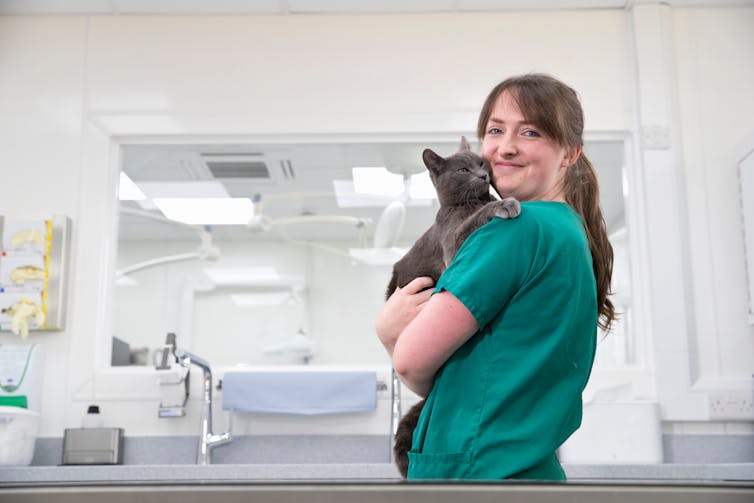
While antihistamines are a common remedy for people, don’t be tempted to use them on pets unless prescribed by your veterinary surgeon. Many over-the-counter options are not safe for animals and could cause harm. Your vet can recommend safe alternatives and help create a management plan tailored to your pet.

A vet holding a cat.
Don’t use over-the-counter antihistamines to treat your pet. Speak to your vet about the correct treatment.
Juice Flair/Shutterstock.com

Pollen allergies are expected to become more common, with climate change and pollution both playing a role. Higher temperatures prompt plants to release more pollen, and pollution can make our immune systems more reactive to it. Even thunderstorms can worsen hay fever by breaking pollen into smaller particles that are more easily inhaled.

Spotting the signs early and taking steps to limit your pet’s exposure can make a big difference, helping them stay comfortable, healthy and happy during the pollen-heavy months.

The Conversation

In addition to her academic affiliation at Nottingham Trent University (NTU) and support from the Institute for Knowledge Exchange Practice (IKEP) at NTU, Jacqueline Boyd is affiliated with The Kennel Club (UK) through membership and as advisor to the Health Advisory Group. Jacqueline is a full member of the Association of Pet Dog Trainers (APDT #01583). She also writes, consults and coaches on canine matters on an independent basis.

ref. Pets get hay fever too – how to spot it and manage it – https://theconversation.com/pets-get-hay-fever-too-how-to-spot-it-and-manage-it-259155

Mental health in England really is getting worse – our survey found one in five adults are struggling

Source: The Conversation – in French – By Sally McManus, Professor of Social Epidemiology, City St George’s, University of London

Anxiety and depression were among the most common mental health issues people struggled with. Inna Kot/ Shutterstock

The proportion of people in England with poor mental health has risen sharply over the past 30 years, according to England’s most robust national mental health survey. While in 1993 15% of 16- to 64-year-olds surveyed were found to have an anxiety disorder or depression, this reached 23% in 2024.

The Adult Psychiatric Morbidity Survey (APMS) is the longest running mental health survey series in the world. It began in 1993 and has published five waves of data since. The survey series is commissioned by NHS England and conducted by the National Centre for Social Research, alongside the University of Leicester and City St George’s, University of London.

The findings from this series are our best barometer of trends in the nation’s mental health because of the quality of the survey samples and the rigour of the mental health assessments. Each wave, a random sample of addresses are invited to take part. By drawing from the whole population, and not just those in contact with health services, we can examine population change.

Around 7,000 adults aged 16 to 100 took part in the most recent survey. The detailed, at-home interviews asked participants questions from the Revised Clinical Interview Schedule (CIS-R) – a detailed mental health assessment tool with over 130 questions.

This recent survey revealed many things about the state of mental health in England. While it’s clear the prevalence of several mental health conditions have risen this century, there are also signs that access to mental healthcare has also increased.

Young people are a priority group

A quarter of 16- to 24-year-olds in this latest survey had a common mental health condition – the highest level observed since the APMS series began. An upward trajectory was also evident for rates of self-harm.

Evidence from a sister survey we conducted suggests that for young people, the Covid pandemic had a sustained effect on mental health. However, both surveys show the upward trend in young people’s poor mental health predated the pandemic.

Although concerns have been linked to social media, evidence for this as a key causal factor is weak. There’s likely multiple causes: environmental, social, economic, technological and political changes may all play a part.

Anxiety disorders have increased

Generalised anxiety disorder is now one of the most prevalent types of mental health condition in England – present in one in 12 adults. The condition is characterised by feelings of stress or worry that affects daily life, are difficult to control and which have persisted longer than six months.

The proportion of 16- to 64-year-olds meeting generalised anxiety disorder criteria also doubled since the series began – from 4.4% in 1993 to 8.5% in 2023-2024. The steepest increase was seen in 16- to 24-year-olds – with prevalence rising from just over 2% in 1993 to nearly 8% in 2024.

Socioeconomic inequalities persist

The survey also confirmed that people struggling financially and those with a limiting physical health condition (such as asthma, cancer or diabetes), were particularly at risk of experiencing poor mental health. About 40% of people who were unemployed had depression or an anxiety disorder.

The survey also revealed area-level disparities, with common mental health conditions being more prevalent among those living in the most deprived fifth of neighbourhoods. In these areas, 26% of people had a common mental health condition – compared with 16% of those living in the least deprived areas.

A man sits on his bed, looking out the window.
Mental health conditions were more prevalent in deprived regions.
WPixz/ Shutterstock

Regional disparities emerged as well – with people living in more deprived regions of England experiencing worse mental health. Around 25% of adults in the East Midlands and the north-east had a common mental health condition – compared with around 19% of people living in the south-west and 16% of those in the south-east.

Age and ethnic inequalities in treatment persist

Likelihood of receiving mental health treatment varied between groups. People aged 75 and over were the least likely to receive treatment compared to people from other age groups. This could partly stem from lack of help-seeking.

Ethnic inequalities were also observed, with people from Asian or black backgrounds less likely to receive treatment compared to people from white backgrounds. Ethnic disparities in treatment access have also been noted in linked primary care data – disparities which may also have worsened during the pandemic.

Persistent treatment inequalities have been attributed to problems with recognition and diagnosis of symptoms in people from ethnic minority backgrounds by healthcare workers. Cultural variations in expressions of distress may also be missed in consultation processes – affecting whether or not treatments are offered.

Men may be seeking help more

A decade ago, the survey found that among people with a common mental health condition, women were around 1.58 times more likely than men to get treatment.

This difference was no longer evident in the latest results. It may be that mental health services have become better at recognising and responding to mental health need in men, or that reduced stigma around mental health has meant more men are seeking help.

People are now more likely to get treatment

The proportion of people with depression or an anxiety disorder receiving mental health treatment – either in the form of prescription medication or psychological therapy – has increased substantially since the survey began.

Between 2000 and 2007, one in four people with a common mental health condition received treatment. This increased to 39% in 2014 – and nearly half in the latest survey. The increase was evident for both psychological therapies (rising from 10% in 2007 to 18% in 2024) and prescription medication (rising from 20% in 2007 to 38% in 2024).

Future of mental health

The APMS has been conducted with consistent methods over decades, using the same robust mental health assessments with large, random samples of the population. This means the results are largely not affected by changes in levels of mental health awareness or stigma, and changes in levels of diagnosis or service contact.

As such, this gives us confidence in the figures: that mental health in England really is getting worse, and that access to mental health treatment among people with a condition has increased.

It will now be important for future research to consider what are the drivers of change in population mental health, and how we can improve mental health care for all.

The Conversation

Sally McManus receives funding from UKRI Violence, Health and Society (VISION) consortium (MR/V049879/1). The Adult Psychiatric Morbidity Survey was conducted by the National Centre for Social Research, with Leicester University and City St George’s, University of London. The latest survey in the series was commissioned by NHS England with funding from England’s Department for Health and Social Care.

Sarah Morris leads the Adult Psychiatric Morbidity Survey and works on the Health Survey for England at the National Centre for Social Research, which is commissioned by NHS England, with funding from England’s Department of Health and Social Care.

ref. Mental health in England really is getting worse – our survey found one in five adults are struggling – https://theconversation.com/mental-health-in-england-really-is-getting-worse-our-survey-found-one-in-five-adults-are-struggling-260120

Lack of justice in Indonesia’s climate plan may backfire, harming people and environment

Source: The Conversation – France (in French) – By Wira A. Swadana, Climate Action Senior Lead, World Resources Institute

Indonesia has developed several climate documents as pathways to curb climate change and adapt to its impacts. These impacts influence many elements of life, including displacement, the spread of infectious diseases, and even fatalities.

Some of these documents include Enhanced Nationally Determined Contributions, Long-Term Strategy for Low Carbon and Climate Resilience 2050 (LTS-LCCR), and Low Carbon Development Indonesia (LCDI).

As a scholar in social development and environmental policy, I conducted a descriptive analysis of more than five Indonesia’s climate documents to learn how the concept of a just transition is being integrated into Indonesia’s climate policies. My analisis reveals that the current narrative in those documents is limited to the outcomes of climate-related approaches.

I found that these climate documents have failed to adequately address the social and environmental aspects that are fundamental to a ‘just transition’ — a global effort to combat climate change and shift towards a sustainable economy while improving the condition of people and the environment.

Indonesia’s climate action is important because the country is home to vast tropical forests and extensive peatlands, which act as important carbon sinks. Yet, it remains one of the world’s largest emitters.

Indonesia’s just transition is essential as it supports global efforts to mitigate climate change while ensuring that the shift is more sustainable and inclusive. Neglecting these factors in the transition can risk equity, justice, and inclusion for affected communities and ecosystems in Indonesia’s climate actions.

The risks it posed

So far, Indonesia’s just transition narrative concentrates mainly on the energy sector. For instance, the government’s white paper on just transition, released in September last year, centres solely on the energy aspect.

Additionally, the use of the word just in the Just Energy Transition Partnership (JETP) — an international partnership aiming at speeding Indonesia’s renewable energy development and coal phase-out — has helped popularise the notion.

A just transition should include broader efforts to limit and adapt to climate change, given these changes directly impact communities. Despite its increasing recognition in the energy sector, just transition remains a long way from being completely integrated into Indonesia’s climate initiatives.

In the forestry sector, Indonesia’s strategy to apply Sustainable Forest Management (SFM) practices, which includes selective logging practices to minimise damage, may lead to the prohibition of traditional slash-and-burn farming in some areas. This threatens local communities that have long practised controlled burning as a sustainable land management method.

Similarly, under FOLU Net Sink 2030 — Indonesia’s plan to reduce emissions from forestry and land-use — the government has introduced community forestry initiatives to improve livelihood. However, the strategy does not yet address the potential consequences for people who rely on forests for their livelihoods and cultural heritage, which could be jeopardised by by SFM practices.

Moreover, Indonesia’s climate resilience strategies for coastal communities overlook the socio-cultural importance of fishing as a key source of income. For example, the government plans to provide business development training to assist fishing families in diversifying their income in response to extreme weather conditions. However, without acknowledging the deep cultural and economic ties these communities have to fishing, such initiatives risk being ineffective.

The cost we bear

The lack of justice in Indonesia’s transition agenda has backfired, with negative consequences for both people and the environment.

For example, the energy shift demands Indonesia to exploit more of its abundant nickel resources for EV batteries, particularly in central and eastern Indonesia. To assist nickel mining and processing, the government has implemented several policies.

While the nickel boom has helped resource-rich provinces like North Maluku and Central Sulawesi boost their economic growth, it has also had serious impacts. Indonesia’s greenhouse gas emissions climbed by 20% between 2022 and 2023, owing to the dependency on coal for nickel processing facilities.

Beyond emissions, nickel mining has also led to deforestation and pollution, affecting local communities who rely on natural resources for their livelihoods and cultural preservation, while also harming biodiversity in mining areas.

The expense of the nickel rush demonstrates how an unjust energy transition can exacerbate challenges faced by vulnerable communities and further degrade the environment.

Next steps

To integrate just transition principles effectively, Indonesia must first redefine the term ‘just transition’ within its own context. Currently, the term has not been properly incorporated into any of Indonesia’s climate-related documents.

A clear and context-specific definition will allow Indonesia to pursue a transition that is both equitable and inclusive.

To accomplish this, the government must engage a wide range of stakeholders in defining and planning the transition to all climate-related initiatives. This encompasses, but is not limited to, all sectors. The goal is to secure broad participation — not only from the public and private sectors, but also from local communities, vulnerable groups including women and Indigenous peoples, as well as other key actors.

A more defined concept and well-structured plan will make it easier to implement, monitor, and evaluate the change. Simultaneously, this inclusive strategy should ensure a fair and equitable distribution of both benefits and burdens. All actors must be able to participate in decision-making and take action prior to and during the transition process.

Indonesia must also have a robust monitoring and evaluation mechanism in place to support its climate actions. The country can learn from Scotland, which has developed a just transition framework with clear outcomes and measurable indicators while ensuring participation and continuous learning from all stakeholders.

Drawing on insights from existing literature and reports will help Indonesia develop a framework that is well-suited to its unique context.

The Conversation

Wira A. Swadana tidak bekerja, menjadi konsultan, memiliki saham, atau menerima dana dari perusahaan atau organisasi mana pun yang akan mengambil untung dari artikel ini, dan telah mengungkapkan bahwa ia tidak memiliki afiliasi selain yang telah disebut di atas.

ref. Lack of justice in Indonesia’s climate plan may backfire, harming people and environment – https://theconversation.com/lack-of-justice-in-indonesias-climate-plan-may-backfire-harming-people-and-environment-249246

Peatlands and mangroves: Southeast Asian countries must protect these major carbon pools to boost climate ambitions

Source: The Conversation – France (in French) – By Sigit Sasmito, Senior Research Officer, James Cook University

Peat swamp in Danau Sentarum National Park, West Kalimantan. (Bramanthya Fathi Makarim/Shutterstock)

Protecting and restoring peatlands and mangroves can strengthen Southeast Asian countries’ efforts to combat climate change, according to new findings from an international team of researchers.

Carbon-dense peatlands and mangroves comprise only 5% of Southeast Asia’s surface. Protecting and restoring them, however, can reduce approximately 770±97 megatonnes of CO2 equivalent (MtCO2e) annually. This is equal to more than half of the carbon emissions from land use in the region.

Conserving offers larger mitigation potential through reduced emissions from ecosystem loss in the region compared to gains from restoration. If optimally implemented, restoration can still play an important role in nature-based carbon sequestration.

Having peatlands and mangroves included in the new climate pledges (Nationally Determined Contributions 3.0) can help countries set higher emissions reduction targets for 2030 and 2035.

More benefits to offer

The study reports extensive climate benefits from conserving and restoring peatlands and mangroves. Therefore, they make effective natural climate solutions for Southeast Asian countries.

Both ecosystems protect organic matter from decay under natural conditions, acting as net carbon sinks. This means that carbon uptake exceeds carbon loss.

Net carbon gains are mainly accumulated in their soils instead of their vegetation. More than 90% of carbon stocks in peatlands and 78% in mangroves are in their soils.

At scale, protecting and restoring both types of wetlands also supports other valuable co-benefits. These include biodiversity preservation, water quality improvement, coastal protection, food security and rural development for millions of coastal people across Southeast Asian countries.

Challenges remain

Despite the benefits, many challenges and risks persist in conserving and restoring peatlands and mangroves.

When peatlands and mangroves are disturbed – commonly due to land use change – they release large quantities of carbon into the atmosphere. This release can later exacerbate climate change.

The new estimates suggest that changes in their land use for the past two decades (2001-2022) had caused the release of approximately 691±97 MtCO2e of excess emissions.

Indonesia accounts for the largest portion of the region’s emissions, accounting for 73%. Malaysia (14%), Myanmar (7%), and Vietnam (2%) follow. The other seven Southeast Asian countries generate the remaining 4% of emissions.

In Southeast Asia, mangroves and peatlands are often treated as unproductive land. Still, they have long been subject to agricultural land expansion planning.

Moreover, unclear or multi-land ownership and lack of long-term participatory monitoring programs are critical challenges for prioritising and implementing restoration on the ground.

Despite these challenges, government and corporate interest in developing conservation and restoration-based carbon projects for peatlands and mangroves is rapidly increasing.

That is why now is a good opportunity to recognise their vital roles — not only for climate change mitigation — but also for people and nature.

Implications for national emissions reduction targets

The new study addresses a critical gap in climate policy for Southeast Asian by providing annual climate change mitigation potentials from peatlands and mangroves.

Climate mitigation potential for national land-use emissions varies widely between countries.

The findings suggest that it could reduce national land-use emissions by up to 88% in Malaysia, 64% in Indonesia, and 60% in Brunei. Other countries include Myanmar at 39%, the Philippines at 26%, Cambodia at 18%, Vietnam at 13%, Thailand at 10%, Laos at 9%, Singapore at 2%, and Timor-Leste at 0.04%.

Our study also shows that mitigation potential from peatlands and mangroves in Indonesia can fulfil country Forestry and Other Land-use (FOLU) Net Sink targets by 2030.

In its 2022 NDCs, Indonesia plans to reduce its annual emissions from FOLU by 2030 between 500-729 MtCO2e, depending on the level of external support. According to the study, this figure is within the same order of mitigation potential as peatlands and mangroves can collectively generate.

However, peatland and mangrove mitigation potentials are insufficient to avoid dangerous levels of climate change in the future.

Decarbonisation remains the most effective means of curbing climate change and its impacts, with peatland and mangrove protection enhancing these efforts.

The Conversation

Susan Elizabeth Page menerima dana dari University of Leicester, UK.

Dan Friess, David Taylor, Massimo Lupascu, Pierre Taillardat, Sigit Sasmito, dan Wahyu Catur Adinugroho tidak bekerja, menjadi konsultan, memiliki saham, atau menerima dana dari perusahaan atau organisasi mana pun yang akan mengambil untung dari artikel ini, dan telah mengungkapkan bahwa ia tidak memiliki afiliasi selain yang telah disebut di atas.

ref. Peatlands and mangroves: Southeast Asian countries must protect these major carbon pools to boost climate ambitions – https://theconversation.com/peatlands-and-mangroves-southeast-asian-countries-must-protect-these-major-carbon-pools-to-boost-climate-ambitions-247570

Finding ‘Kape’: How Language Documentation helps us preserve an endangered language

Source: The Conversation – France (in French) – By Francesco Perono Cacciafoco, Associate Professor in Linguistics, Xi’an Jiaotong-Liverpool University

Shiyue Wu, a member of Francesco Perono Cacciafoco’s research team at Xi’an Jiaotong-Liverpool University (XJTLU), who is currently developing intensive fieldwork in Alor Island to document and preserve endangered languages, discovered and first documented Kape during a Language Documentation fieldwork in August 2024 and therefore actively contributed to this study.


As of 2025, more than 7000 languages are spoken across the world. However, only about half of them are properly documented, leaving the rest at risk of disappearing.

Globalisation has propelled languages such as English and Chinese into the mainstream, and they now dominate global communication.

Parents today prefer their children learn widely-spoken languages. Meanwhile, indigenous languages, such as Copainalá Zoque in Mexico and Northern Ndebele in Zimbabwe, are not even consistently taught in schools.

Indigenous people generally did not use writing for centuries and, therefore, their languages do not have ancient written records. This has contributed to their gradual disappearance.

To prevent the loss of endangered languages, field linguists – or language documentarists – work to ensure that new generations have access to their cultural heritage. Their efforts reveal the vocabulary and structure of these languages and the stories and traditions embedded within them.

My research team and I have spent over 13 years documenting endangered Papuan languages in Southeast and East Indonesia, particularly in the Alor-Pantar Archipelago, near Timor, and the Maluku Islands. One of our significant and very recent discoveries is Kape, a previously undocumented and neglected language spoken by small coastal communities in Central-Northern Alor.

Not only is the discovery important for mapping the linguistic context of the island, but it also highlights the urgency of preserving endangered languages by employing Language Documentation methods.

The discovery of Kape

In August 2024, while working with our Abui consultants, Shiyue Wu, my Research Assistant at Xi’an Jiaotong-Liverpool University, discovered a previously-ignored, presumably undocumented Papuan language from Alor, ‘Kape’.

At the time, she was gathering information about the names and locations of ritual altars known as ‘maasang’ in the Abui area, with assistance from our main consultant and several native speakers. In Central Alor, every village has a ‘maasang’.

During conversations about the variants in altar names across Alor languages and Abui dialects, some speakers mentioned the name of the ‘maasang’ (‘mata’) in Kape—a language previously unrecorded and overlooked in linguistic documentation.

‘Kape’ translates to ‘rope’, symbolising how the language connects its speakers across the island, from the mountains to the sea. Geographically and linguistically, it is associated with Kabola in the east and Abui and Kamang in Central Alor.

At this stage, it is unclear whether Kape is a distinct language or a dialect of Kamang, as the two are mutually intelligible. Much of Kape’s basic lexicon (the collection of words in one language), indeed, shares cognates (related words among languages) with Kamang.

However, Kape is spoken as the primary (native) language by the whole Kape ethnic group of Alor, and the speakers consider themselves an independent linguistic and ethnic community. This could serve as an element for regarding Kape as a language.

Kape also shows connections with Suboo, Tiyei, and Adang, other Papuan languages from Alor Island. The speakers, known as ‘Kafel’ in Abui, are multilingual, fluent, to some extent, in Kape, Kamang, Bahasa Indonesia, Alor Malay, and, sometimes, Abui.

So far, no historical records have been found for Kape, though archival research may reveal more about its origins. Based on its typology and lexical characteristics, Kape appears as ancient as other languages spoken in Alor. Like many Papuan languages, it is critically endangered and requires urgent documentation to preserve its legacy.

Documenting languages: An ongoing challenge

Language Documentation aims to reconstruct the unwritten history of indigenous peoples and to guarantee the future of their cultures and languages. This is accomplished by preserving endangered, scarcely documented or entirely undocumented languages in disadvantaged and remote areas.

External sources, like diaries by missionaries and documentation produced by colonisers, can help reconstruct some historical events. However, they are insufficient for providing reliable linguistic data since the authors were not linguists.

My research team and I document endangered languages, starting with their lexicon and grammar. Eventually, we also explore the ancient traditions and ancestral wisdom of the native speakers we work with.

We have contributed to the documentation of several Papuan languages from Alor Island, especially Abui, Kula, and Sawila. These languages are spoken among small, sometimes dispersed communities of indigenous peoples belonging to different but related ethnic clusters.

They communicate with each other mostly in Bahasa Indonesia and Alor Malay. This is because their local languages are almost never taught in schools and are rarely used outside their groups.

Over time, in addition to documenting their lexicons and grammars, we worked to reconstruct their place-names and landscape names, oral traditions, foundation myths, ancestral legends and the names of plants and trees they use.

We also explored their traditional medical practices and local ethnobotany, along with their musical culture and number systems.

Safeguarding Kape is not just linguistically relevant. Its preservation and documentation are not just about attesting its existence – they also contribute to revitalising the language, keeping it alive, and allowing the local community to rediscover its history, knowledge, and traditions to pass down to the next generations.

This journey has just begun, but my team and I – with the indispensable collaboration from our local consultants and native speakers – are prepared to go all the way towards its completion.

The Conversation

Francesco Perono Cacciafoco received funding from Xi’an Jiaotong-Liverpool University (XJTLU): Research Development Fund (RDF) Grant, “Place Names and Cultural Identity: Toponyms and Their Diachronic Evolution among the Kula People from Alor Island”, Grant Number: RDF-23-01-014, School of Humanities and Social Sciences (HSS), Xi’an Jiaotong-Liverpool University (XJTLU), Suzhou (Jiangsu), China, 2024-2025.

ref. Finding ‘Kape’: How Language Documentation helps us preserve an endangered language – https://theconversation.com/finding-kape-how-language-documentation-helps-us-preserve-an-endangered-language-247465

Weighing the green cost: How nickel mining in Indonesia impacts forests and local communities

Source: The Conversation – France (in French) – By Michaela Guo Ying Lo, Postdoctoral Researcher in Environment, Conservation, and Development, University of Kent

Indonesia produced nearly four times the amount of nickel in recent years compared to a decade earlier — following the global push for a low-carbon revolution that drives the mining for the mineral essential for electric vehicles, renewable energy technologies, and stainless-steel production.

This boom, however, takes a toll on nickel-rich regions like Sulawesi, threatening a one-of-a-kind biodiversity hotspot, known as ‘Wallacea’.

Our recent study raises questions about the sustainability of nickel mining practices as we highlight its environmental and social impacts in Sulawesi, based on data from 7,721 villages.

Sulawesi’s forests and biodiversity at risk

Our study shows that between 2011 and 2018, villages near nickel mines experienced deforestation at nearly double the rate of non-mining areas. The loss is attributable to land acquisition needed to mine the mineral.

Deforestation will not only worsen global warming but also destroy habitats and threaten wildlife populations. Among the species potentially affected are Sulawesi’s 17 primate species, such as Celebes crested macaque and Peleng tarsier—all of them are endemic to the island. If this trend continues, it could set back efforts to both mitigate greenhouse gas emissions and conserve biodiversity.

A video showcasing the Peleng tarsier, one of 17 endemic primates threatened by nickel-driven deforestation.

The costs and benefits to local communities

Our research reveals that unsustainable nickel mining practices have increased the pollution and the frequency of mining-related disasters, such as landslides and flash floods. They directly impact local communities that rely on agriculture, fishing, and other natural resource-based livelihoods.

The effects of nickel mining, however, are nuanced. Environmental damage and land acquisition have triggered conflicts.
But while social well-being declined in areas near nickel mines, the impact varied significantly across regions, and was positive in some areas.

This implies that communities across Sulawesi can experience both positive and negative impacts. In villages with high poverty levels, for example, the environmental and health impacts of mining have been particularly severe. In these villages, adverse health effects are more likely to occur due to limited resources and capacity to cope with pollution associated with mining activities.

However, our study also shows that these poorer regions have also gained the greatest benefits from mining, including improved infrastructure and living conditions. Revenue from mining has likely added to investments into public goods, such as improving water systems and transportation networks.

More information is needed to understand what is driving this variation, but it underscores the precarious balance posed by nickel mining. While it provides vital development opportunities, it also threatens vulnerable ecosystems and exposes communities to significant environmental and health risks. Achieving progress without deepening hardship remains a complex challenge for sustainable development in Indonesia and other nickel producing countries.

Towards sustainable nickel mining

Tackling these challenges requires a just and sustainable approach to nickel mining. If the harm continues, it could undermine efforts to conserve Sulawesi’s unique biodiversity. That’s why protecting its ecosystems is critical.

Several recommendations have been proposed by other academics and actors, three of which we emphasise through our mining evaluation:

1. Strengthening environmental and social standards

Governments and mining companies must follow strict environmental and social standards to minimise harm to ecosystems and communities. This includes strict regulations on deforestation and water management, along with protections for workers and affected communities.

For mining companies, frameworks like the OECD Due Diligence Guidelines can ensure that businesses carry out the necessary protocols to identify, prevent, and account for adverse impacts that result from their mining practices. At the same time, state actors should continue to fulfil their obligations to protect and respect the rights of those affected by mining.

2. Ensuring community participation

Local communities must be central to decision-making around mining projects. Inclusive consultation and consent processes can help mitigate harm and ensure that mining operations do not harm those who rely on the environment for their livelihoods.

Involving communities in decision-making helps mining companies build trust and share benefits. As one case study has shown in Sulawesi, engaging local populations in evaluating the nickel production process can lead to corrective actions. Community feedback can ensure that mining projects not only achieve compliance but also align with the aspirations and well-being of affected communities.

3. Establishing robust monitoring and accountability

Regular monitoring and evaluation of mining operations, from start to finish, is crucial — not just for nickel but other mining commodities too. Companies should be held accountable for environmental damage and social harm, while successful practices should be highlighted to serve as models for the industry. Independent oversight by NGOs and local groups can boost transparency, ensure accountability, and promote best practices.

Time is crucial. With the low-carbon transition speeding up, swift action is needed to prevent environmental and social harm worldwide.

By reforming nickel mining practices, Indonesia can play a vital role in building a just, sustainable, low-carbon future, and provide a model for other countries.

This is a chance to balance economic prosperity, environmental protection, and social equity — ensuring the green energy transition’s benefits outweigh its costs.

The Conversation

Michaela Guo Ying Lo received funding from the University of Kent Global Challenges Doctoral Centre.

Jatna is also a member of Indonesian Academy of Sciences (AIPI) and lecturer in University of Indonesia

Matthew Struebig received funding from Natural Environment Research Council UK and Leverhulme Trust UK.

ref. Weighing the green cost: How nickel mining in Indonesia impacts forests and local communities – https://theconversation.com/weighing-the-green-cost-how-nickel-mining-in-indonesia-impacts-forests-and-local-communities-246259

Beyond Evolution: Alfred Russel Wallace’s critique of the 19th century world

Source: The Conversation – France (in French) – By Marshall, A., Visiting professor, Mahidol University

Alfred Russel Wallace was a British naturalist renowned for co-developing the theory of evolution alongside Charles Darwin – and for mapping out the biodiversity of the Indonesian Archipelago. However, his legacy extends far beyond science.

Wallace’s observations of social exploitation in Wales and the Archipelago compelled him to take a stand against the British establishment in his homeland and its colonial ventures abroad. He also recognised the ecological destruction caused by colonialism, making him one of the world’s first global environmentalists.

In the 19th century, Wallace’s observations were striking. British imperialism was at its zenith, and the Industrial Revolution was fueling a titanic amplification of human impact upon nature.


Baca juga:
Wallacea is a living laboratory of Earth’s evolution – and its wildlife, forests and reefs will be devastated unless we all act


Wallace’s observations are probably even more noteworthy today. While European colonialism has largely collapsed, the world is industrialising at breakneck speed, intensifying the environmental damage Wallace warned about.

The Butterfly Effect (a film about Alfred Russel Wallace. Produced & provided by the author with the assistance of AI software).

Witness to poverty: Wales

Wallace was born in 1823, and his early life in Wales exposed him to 19th-century rural struggles.

Historians have noted that Wales was one of the first regions to suffer English colonisation, dating back to medieval times.

By Wallace’s time, industrialisation had reshaped the Welsh landscape, with factories, mines, and railways supplanting its pristine mountains and valleys. While displaced farmers found work in these industries, the jobs were poorly paid, perilous, and often dehumanising. Wallace saw the ongoing struggle of Welsh communities to protect their farming rights and preserve their language.

Young Wallace initially worked as a mapmaker. His employers were usually wealthy landlords who hired him to map their estates to determine how much their tenant farmers owed them in rent or taxes.

At work, he witnessed how British landlords in Wales were becoming ‘more commercially minded’ (in other words, more money-grubbing). They often evicted impoverished tenant farmers to make way for profitable livestock, or mining and railway projects. If they weren’t pushed off the land altogether, the tenants faced rising rents and heavier taxes. Whatever the situation, it was usually the tenant farmers who were distressed.

Wallace was sometimes sent to collect rent and taxes from tenants, many of whom lived in poverty and barely spoke English to understand the circumstances they were in.

Wallace felt anguished for being part of the wretched business.

Eventually, after the private estates in Wales were just about entirely mapped, he decided to leave his career as a mapmaker.

At this point, Wallace became a full-time naturalist, collecting insect specimens and selling them to museums.

This new role led him to travel all across the world – including to the Indonesian Archipelago – where he spent eight years immersing himself in local cultures and languages such as Malay.

Sympathy for the colonised: The Archipelago

Initially, Wallace perceived Dutch colonialism as less exploitative than British practices. For the most part, this was because Wallace was comparing the state-run enterprises that dominated the economy of the Dutch East Indies with the avaricious companies that dominated the economies of British India and British Malaya. This preference for state capitalism versus laissez-faire capitalism even led Wallace to sympathise with the Cultivation System (Cultuurstelsel) imposed by the Dutch government.

Under this system, local farmers grew cash crops for the Dutch East Indies government. In exchange, they received some small payments below the market rate.

Wallace acknowledged that Dutch middlemen and local chiefs sometimes abused the system, but it often provided the growers with a reliable income. As well, the Dutch overlords were often obliged to build infrastructure and schools.

The system was criticised as a form of monopolistic serfdom. But Wallace saw it as less brutal than the ‘dog-eat-dog’ economies of Britain’s overseas free-trade colonies.

However, his perspective evolved. In later writings, Wallace rallied against the premise that any nation in the tropics need be colonised. He also realised colonised peoples didn’t gain much from the deal, if ‘deal’ we might call it.

In his 1898 book summarising human achievement in the 19th century, Wallace declared that the worst aspect of the century was the way Europeans mistreated native peoples worldwide.

Wallace noted that colonised lands worldwide were usually gained in dubious manners, and various abusive labour practices maintained their economies. By the turn of the century, Wallace was calling for all colonies to be handed back to indigenous peoples.

At the same time, in his homeland, Wallace also became a leading figure in the land nationalisation movement. In an effort to address rural poverty in Britain, Wallace advocated the nationalisation of all farmlands.

Entrusted to the state, farming rights could then be distributed fairly and democratically among the entire national community of farmers. In this manner, every farming family could grow their own food, either for themselves or to sell, without being impoverished by taxes and rents claimed by the gentry.

Destruction of nature

As a naturalist deeply connected to the environment, Wallace also documented colonial ventures disastrous impact on wildlife. When European ventures established estates in the tropics, the native rainforests were swiftly cleared.

In his own words:

The reckless destruction of forests, which have for ages been the protection and sustenance of the inhabitants, seems to me to be one of the most shortsighted acts of colonial mismanagement—Wallace in The Malay Archipelago.

Wallace also condemned the environmental impact of colonial mining in the Archipelago, especially those targeting gold and tin, which he witnessed in Borneo and the Malay Peninsula:

The rapid degradation of fertile valleys and the poisoning of streams by mining waste serve as stark reminders of the greed of commerce unchecked by reason or compassion—Wallace in The Malay Archipelago.

These observations, penned in the late 19th century, clearly anticipated 21st-century environmental problems and their causes.

Wallace’s foresight was rare at his time, and his warning was even more striking. He believed that nature’s destruction could only be avoided by taking much more equitable approaches to resource use.

Life lessons

Modern historians and scientists hail Wallace as one of the bravest figures of the 19th century. He possessed enough physical courage to cross vast oceans and live for years away from home in remote, untamed forests. This courage allowed Wallace to explore the natural world deeply enough to uncover its hidden forces.

Equally impressive was Wallace’s moral courage. At a time when criticising the British elite or questioning imperialism was far from popular, Wallace did not shy away from challenging the status quo. Many of his books envision a better, fairer world.

Wallace’s moral courage is something we can all learn from today, especially as we realise that scientific knowledge alone is not enough to protect nature from relentless industrialisation.

The Conversation

Marshall, A. tidak bekerja, menjadi konsultan, memiliki saham, atau menerima dana dari perusahaan atau organisasi mana pun yang akan mengambil untung dari artikel ini, dan telah mengungkapkan bahwa ia tidak memiliki afiliasi selain yang telah disebut di atas.

ref. Beyond Evolution: Alfred Russel Wallace’s critique of the 19th century world – https://theconversation.com/beyond-evolution-alfred-russel-wallaces-critique-of-the-19th-century-world-243372

I analyzed more than 100 extremist manifestos: Misogyny was the common thread

Source: The Conversation – Global Perspectives – By Karmvir K. Padda, Researcher and PhD Candidate, Sociology, University of Waterloo

Two years have passed since a 24-year-old former student walked into a gender studies classroom at the University of Waterloo and stabbed the professor and two students.

The attack left the campus shaken and sparked national outrage. Many saw the attack as a shocking but isolated act of violence. But a close analysis of his 223-word manifesto reveals much more.

What emerges is a chilling picture of how deep-seated misogyny, disguised as grievance and moral outrage, can escalate ideological violence. Though short, the manifesto is saturated with anti-feminist, conspiratorial rhetoric.

As a researcher looking at digital extremism and gender-based violence, I’ve analyzed more than 100 manifestos written by people who carried out mass shootings, stabbings, vehicular attacks and other acts of ideologically, politically and religiously motivated violent extremism in Canada, the United States and beyond.

These attackers may not belong to formal terrorist organizations, but their writings reveal consistent ideological patterns. Among them, one stands out: misogyny.

Misogyny is the ‘gateway drug’

The Waterloo case is not unique. In fact, it mirrors a growing number of violent incidents where gender-based hate plays a central role. Reports by the Institute for Strategic Dialogue and Public Safety Canada show misogynist extremism is rising in Canada. It’s often entangled with white nationalism, anti-LGBTQ+ hate and anti-government sentiment.

According to political sociologist Yasmin Wong, misogyny now acts as a “gateway drug” to broader extremist ideologies. This is particularly true in digital spaces where hate and grievance are cultivated algorithmically.

In my analysis of manifestos collected from 1966 to 2025, gender identity-driven violence appeared in nearly 40 per cent of them. These violent beliefs were either the primary or a significant secondary motivation for the attack. This includes direct expressions of hatred toward women, trans and queer people and references to feminist or LGBTQ+ movements.

‘Salad bar’extremism

The Waterloo attacker did not explicitly identify as an “incel” (involuntary celibate), but the language in his manifesto closely echoes those found in incel and broader manosphere discourse. Feminism is portrayed as dangerous, gender studies as ideological indoctrination and universities as battlegrounds in a supposed culture war.

The Waterloo attacker destroyed a Pride flag during the attack, referred to the professor he targeted as a “Marxist,” and told police he hoped his actions would serve as a “wake-up call.”

At one point, he praised leaders like Hungarian Prime Minister Viktor Orbán and Canadian far-right politician Maxime Bernier as “based Chads.” “Based Chads” is a slang term used in online extremist communities to glorify or refer to dominant and assertive males.

Alongside anti-feminist messaging, the attacker’s writing echoes common far-right narratives: fear of “cultural Marxism,” disdain for liberal elites, and the belief that violence is necessary to awaken the public. He referenced prior mass attacks, including the 2011 Norway massacre and the 2019 Christchurch mosque shooting. These two incidents are frequently celebrated in far-right spaces.

These references place him within a transnational digital subculture where misogyny, white supremacy and ideological violence are valourized.

It reflects what researchers described as “salad bar extremism”: a mix-and-match worldview where misogyny is blended with white nationalism, anti-government sentiment and conspiratorial thinking to justify violence.

Manifestos rationalize violence

The authors of manifestos are frequently dismissed as “nutters” — demented or socially unstable people.

But the manifestos are valuable documents for understanding how ideology works. They show how people rationalize violence, where their ideas come from and how they see themselves as political entities. They also reveal the role of digital communities in shaping those beliefs.

Researchers can use them to map ideological ecosystems and identify patterns. These analyses can inform prevention strategies.

The Waterloo manifesto is no exception. It draws from a familiar ideological playbook — one that dehumanizes feminists, academics and LGBTQ+ people while portraying violence as both righteous and necessary.

These are not isolated ideas; they are symptoms of a wider digital ecosystem of online hate and ideological grooming.


Read more:
The stabbing attack at the University of Waterloo underscores the dangers of polarizing rhetoric about gender


Deliberate, ideologically motivated attacks

While a psychological assessment of the attacker raised questions about a psychotic break, there was no clinical diagnosis of psychosis. His actions — planning the attack, writing and posting a manifesto, selecting a specific target — were deliberate and ideologically motivated.

Yet the terrorism charge brought against him by federal prosecutors was ultimately dropped. The judge ruled his beliefs were “too scattered and disparate” to constitute a coherent ideology.

But his manifesto shared language and ideological frameworks recognizable across incel, anti-feminist and far-right communities. The idea that this doesn’t constitute “ideology” reflects how outdated our legal and policy frameworks have become.

Confronting ongoing danger

Two years on, we remember the victims of the Waterloo attack. We must also confront the larger danger the attack represents.

Misogyny is not just a cultural or emotional problem. Instead, it increasingly functions as an ideological gateway, connecting personal grievance with broader calls for violent extremism.

In this era of rising lone-actor violence, it is one of the most consistent and dangerous drivers of extremism.

If we continue to treat gender-based hate as peripheral or personal, we will keep misunderstanding the nature of violent radicalization in Canada. We must name this threat and take it seriously, because that’s the only way to prepare for what’s coming next.

The Conversation

Karmvir K. Padda receives research funding from the Social Sciences and Humanities Research Council

ref. I analyzed more than 100 extremist manifestos: Misogyny was the common thread – https://theconversation.com/i-analyzed-more-than-100-extremist-manifestos-misogyny-was-the-common-thread-259347