Para Flora Tristán (París, 1803-Burdeos, 1844) la transformación debía ser integral y la comunicación con las masas asalariadas era tan importante como la difusión literaria de su modelo. Por ello no se limitó a escribir para quien pudiera pagar un libro y leerlo, sino que buscó sensibilizar directamente a las clases trabajadoras.
Su propuesta novedosa conllevaba un vínculo inseparable de la cuestión obrera con la cuestión femenina: no habría liberación proletaria sin liberación de las mujeres.
La emancipación era, pues, la condición necesaria para la justicia universal. Flora Tristán se adelantó así a debates que muchos años después ocuparían un lugar central en discursos feministas.
A pesar de nacer en un ambiente aristócrata, la escritora, pensadora socialista y feminista franco-peruana, considerada una de las pioneras del feminismo moderno y una precursora del movimiento obrero internacional, no se formó con institutrices. A los cuatro años, la desgracia aterrizó en su familia al morir el padre, Mariano Tristán y Moscoso, sin haber arreglado jurídicamente el matrimonio con su madre, Thérèse Laisnay. El derecho francés no consideraba legítimo un matrimonio solo religioso.
La joven viuda, esperando otro hijo y desprovista de patrimonio, marchó con Flora durante varios años al campo, y la pequeña familia acusó un importante descenso en su estatus social.
Su vida como una proscrita
Nuevamente en París, siendo una obrera adolescente, Flora Tristán se casó con su joven jefe, André Chazal, en 1821. Cuatro años más tarde, tras muchas desavenencias conyugales y esperando su tercer bebé, huyó de casa abandonando a su marido.
El divorcio no existía. La separación de los Chazal no era legal. Durante varios años, Flora vivió como una proscrita en Francia e Inglaterra. En 1833 cruzó el océano para reclamar su herencia en Perú ante los Tristán. En un principio, la familia la acogió bien y su tío le asignó algunas rentas, pero no le reconoció derecho a heredar.
Volvió a Europa dos años después, uniendo la experiencia personal adquirida con un gran trabajo de campo. Había desarrollado una metodología pionera para describir y denunciar las injusticias de raza, clase y género: viajar, dialogar, recoger datos utilizando el modelo de encuesta y construir modelos y propuestas.
Así, Flora Tristán, autodidacta, hizo verdadera ciencia social a partir de la observación de la realidad, desarrollando trabajos innovadores que fusionaron reflexión teórica y experiencia práctica.
En obras como Peregrinaciones de una paria (1838) o Paseos en Londres (1840) denunció la miseria y falta de instrucción en las clases trabajadoras, la miseria infantil, la prostitución y la discriminación femenina. Señaló las desigualdades estructurales de la sociedad capitalista como raíz de los problemas.
Frente a la situación existente, propuso su modelo de organización social, cuyo elemento central era un proletariado consolidado en la Unión Obrera. Este proletariado contaría con formación y protección social. No solo tenía que configurarse como fuerza productiva, sino que también debía transformar la historia.
Militante de un socialismo en ciernes
A partir de 1835 comenzó a gozar de éxito literario y fue respetada por círculos intelectuales. Precisamente con la Unión Obrera eligió ser militante de un socialismo naciente con estilo propio, ejerciendo cómo apóstol de sus ideas, modelos y teorías.
Comenzó así su Tour de France, un incansable ejercicio de comunicación de masas. Esta forma de vida era inusual en una mujer de su época. Pero Flora Tristán fusionó su talento intelectual con una misión redentora en la que creyó firmemente.
Su visión se caracterizó también por el rechazo a la violencia revolucionaria como único camino. Reconocía el antagonismo entre trabajo y capital, pero sus estrategias reformistas sociales se basaban en la fraternidad. Su fin era alcanzar la justicia y el amor universal.
Su vocación de mujer mesías le dio fuerza para liderar y comunicarse con miles de obreros y obreras en sus giras por Francia. Tenía la salud delicada, con un posible proceso tumoral, y tantos viajes la llevaron a exponerse al desgaste físico y al agotamiento.
Finalmente, los esfuerzos y un posible tifus aceleraron su muerte prematura en 1844, cuatro años antes de publicarse El manifiesto comunista.
Una vez fallecida, su voz no se incorporó al socialismo de Karl Marx y Friedrich Engels, señalado por este último como científico, que otorgaba prioridad casi exclusiva a la lucha de clases. Engels etiquetó las versiones anteriores como utópicas.
Sin embargo, basta recorrer las biografías de Robert Owen, Charles Fourier, los sansimonianos y la propia Tristán, para comprobar que “utopía” no es una calificación que describa lo que sus pensamientos y acciones significaron.
A finales de 1843, el filósofo alemán Arnolk Rüge aconsejó en París al joven Marx que fuera a conocer a Flora Tristán, pero este no lo hizo. Engels sí que dejó constancia de conocer su obra, pero el tono fue indiferente.
Siempre quedó en segundo plano
Tristán quedó en un segundo plano en la historia oficial del socialismo, a pesar de haber anticipado muchos de los debates que más tarde cobrarían importancia.
Más de un siglo después, la puesta en valor –importante y necesaria– del componente feminista de su discurso se apoderó de todos los demás elementos.
En la actualidad, resulta imprescindible reconocer plenamente a Flora Tristán, la pequeña aristócrata empobrecida que no pudo tener institutrices pero acabó aprendiendo de Owen y Fourier.
Y hay que reconocerla como una socialista del Romanticismo, como una pionera en las ciencias sociales, comunicadora de extraordinario talento y creadora de un modelo alternativo de sociedad, producción y trabajo: la Unión Obrera.
Cabe preguntarse qué habría ocurrido si hubiera vivido más. Sin duda jamás habría aceptado que su modelo de socialismo fuese calificado como “utópico”.
De haber llegado a 1864, con toda seguridad habría participado en la Primera Internacional y, por qué no, pese a ser mujer, su presencia arrolladora habría influido de algún modo en el rumbo del socialismo.
María Begoña Pérez Calle no recibe salario, ni ejerce labores de consultoría, ni posee acciones, ni recibe financiación de ninguna compañía u organización que pueda obtener beneficio de este artículo, y ha declarado carecer de vínculos relevantes más allá del cargo académico citado.
Source: The Conversation – (in Spanish) – By Daniel Tornero Prieto, Profesor de Biología Celular y Director del Laboratorio de Células Madre Neurales y Daño Cerebral, Universitat de Barcelona
Cada año, millones de personas ven cómo su vida cambia en cuestión de minutos. Un vaso sanguíneo que viaja hacia el cerebro se obstruye, las neuronas empiezan a morir y el tiempo corre. Es un ictus, una de las principales causas de discapacidad en adultos. Se calcula que una de cada seis personas lo sufrirá a lo largo de su vida.
El cerebro humano es, con diferencia, el órgano más complejo de nuestro cuerpo. Su arquitectura celular y su organización en redes neuronales permiten funciones tan sofisticadas como el lenguaje, la memoria o la toma de decisiones abstractas. Pero esa misma complejidad tiene un coste: el tejido cerebral posee una capacidad de regeneración muy limitada. A diferencia de la piel o el hígado, las neuronas que mueren rara vez se reemplazan.
Por eso, las lesiones cerebrales están en el origen de muchas patologías asociadas al envejecimiento, y una de las más graves y frecuentes es el ictus isquémico, causado por la interrupción del riego sanguíneo en una zona del cerebro. Aunque los avances en los tratamientos de urgencia han mejorado las tasas de supervivencia, no existe actualmente una terapia capaz de reparar el daño neuronal derivado de un ictus.
Incidencia internacional del ictus y su cobertura sanitaria. Cada gráfico representa una «planta», donde los pétalos muestran la incidencia del ictus por cada 100 000 personas, y las raíces, el ‘estrés’ del sistema sanitario de cada país (medido en el número de personas que depende de cada unidad ictus). Datos obtenidos del World Data Bank (2023), la Stroke Association for Europe (2017) y The Stroke Foundation (2024). Elaborado por: Santiago Ramos.
La rehabilitación ayuda a recuperar parte de la función, pero en numerosos casos los pacientes conviven con limitaciones motoras y cognitivas permanentes. Además, tras un ictus aumenta el riesgo de sufrir depresión, demencia y otras enfermedades neurodegenerativas. Pero esto podría cambiar pronto gracias al desarrollo de las terapias basadas en células madre.
Un nuevo horizonte terapéutico
Durante las últimas décadas, las terapias celulares están abriendo la puerta a una nueva generación de tratamientos en medicina regenerativa. Estas terapias buscan reemplazar o reparar tejidos dañados introduciendo células nuevas capaces de sobrevivir, madurar y terminar llevando a cabo las funciones que se han perdido.
Como ya se ha comentado, esto es especialmente importante en las patologías que afectan al cerebro. A pesar de su alto potencial, su desarrollo es lento porque debe ajustarse a la legislación vigente en cada territorio y depende de grandes inversiones económicas.
Un precedente crucial tuvo lugar a finales de los años 80 en el Hospital Universitario de Lund, en Suecia. El equipo encabezado por Anders Björklund y Olle Lindvall logró trasplantar células madre neurales en el cerebro de pacientes con la enfermedad de Parkinson. Esta dolencia neurodegenerativa se caracteriza por la pérdida progresiva de neuronas dopaminérgicas, fundamentales para el control del movimiento corporal.
Los resultados fueron extraordinarios: al sustituir las neuronas dañadas, muchos pacientes recuperaron la función motora durante más de una década. Estos experimentos supusieron la primera demostración sólida de que el cerebro humano puede ser reparado utilizando células vivas.
El equipo de Anders Björklund y Olle Lindvall se dispone a trasplantar células fetales en uno de los pacientes de Parkinson que participaron en el primer estudio. Esta intervención pionera marcó un antes y un después en el uso de terapias celulares aplicadas en neurología. Olle Lindvall.
Desde entonces, la investigación ha avanzado, las técnicas se han refinado y la regulación europea ha establecido marcos estrictos para garantizar la seguridad y la calidad de estos tratamientos, ahora englobados bajo la categoría de medicamentos de terapia avanzada (ATMP por sus siglas en inglés). Actualmente, se están llevando a cabo alrededor del mundo diferentes ensayos clínicos que continúan en la línea de los trabajos de Björklund y Lindvall y que llenan de esperanza a los pacientes de Parkinson y muchas otras enfermedades que afectan a nuestro cerebro.
El reto del ictus
Aunque esta historia inspiró numerosos estudios, el ictus cerebral representa un desafío distinto al de la enfermedad de Parkinson. La lesión isquémica suele ser más extensa y heterogénea: no afecta únicamente a un tipo celular, sino a múltiples poblaciones de neuronas, células gliales y también a los vasos sanguíneos.
Además, tras un trasplante no basta con que las células sobrevivan en el cerebro del paciente. Estas deben integrarse funcionalmente, es decir, enviar sus axones (las prolongaciones que transmiten los impulsos nerviosos) y establecer sinapsis o conexiones adecuadas con las neuronas supervivientes, entrando a formar parte de los circuitos cerebrales.
Es como intentar reconstruir no solo la estructura de un puente, sino también su tráfico: las conexiones deben establecerse de la manera correcta para que la información fluya. Por tanto, además de añadir células nuevas, el desafío del ictus consiste en reconectar el cerebro.
La ingeniería genética como punto de inflexión
Aquí es donde entra en juego la ingeniería genética, una de las tecnologías más transformadoras de la biología moderna. Esta disciplina permite modificar las células para hacerlas más eficaces, más resistentes o más capaces de integrarse en el tejido dañado.
En nuestro caso, hemos incorporado a las células trasplantadas el gen que codifica para la proteína BDNF (del inglés Brain-Derived Neurotrophic Factor), un factor neurotrófico que participa en el desarrollo del cerebro y que favorece el crecimiento de los axones y la formación de sinapsis. Con ello, buscamos facilitar la integración funcional de las nuevas neuronas en el cerebro lesionado, un paso clave para que el trasplante no solo rellene un hueco, sino que restaure la comunicación neuronal.
Imagen de cultivos neuronales derivados de células madre creciendo en un dispositivo microfluídico con dos compartimentos conectados por microcanales (400 μm). La sobreexpresión de BDNF en el compartimento inferior favorece el crecimiento y proyección de axones desde el compartimento opuesto, mostrando el papel de este factor en la integración y conectividad neuronal. Adaptado de IJMS.
Un debate necesario
Sin embargo, esta capacidad de manipulación genética también plantea dilemas éticos, especialmente en torno a los límites de su aplicación y sus posibles efectos a largo plazo. Por ejemplo, los primeros trasplantes en pacientes de Parkinson, anteriormente citados, se realizaron con células procedentes de tejido fetal.
Así, se evitan gran parte de los conflictos éticos relacionados con el uso de embriones y se disminuye el riesgo de rechazo inmunológico. Por tanto, la pregunta ya no es si podemos modificar células para reparar el cerebro, sino con qué criterios, bajo qué regulación y con qué responsabilidad.
La historia de la medicina está hecha de pequeñas victorias frente a lo imposible. Hace apenas unas décadas, la idea de curar un cerebro dañado parecía un sueño inalcanzable. Hoy, gracias a la combinación de biología, ingeniería genética y medicina regenerativa, ese sueño comienza a tomar forma en los laboratorios. Aún quedan muchos retos por resolver, pero cada nuevo avance nos recuerda algo esencial: el cerebro no solo puede aprender, sino que también se puede reparar.
Daniel Tornero Prieto recibe fondos para financiar su investigación por parte de instituciones públicas como el Ministerio de Ciencia, Innovación y Universidades y la Unión Europea. También pertenece a la red europea ALBA que trabaja por la diversidad y la equidad en la investigación cientifica sobre el cerebro.
Santiago Ramos Bartolomé es miembro de la Asociación Universitaria de Biología Sintética de Cataluña.
Alba Ortega Gascó no recibe salario, ni ejerce labores de consultoría, ni posee acciones, ni recibe financiación de ninguna compañía u organización que pueda obtener beneficio de este artículo, y ha declarado carecer de vínculos relevantes más allá del cargo académico citado.
After years of disciplined reform and painful sacrifice, Jamaica had done what few global debt specialists thought possible. Through tough and sometimes controversial spending cuts and fiscal discipline, it slashed its debt from a staggering 150% of GDP in 2013 to just 62% by 2024.
By 2025, Jamaica was hitting its stride. One internationally recognised credit rating agency upgraded the country’s credit ratings from category BB- to BB (slightly less vulnerable in the near term to adverse economic conditions).
This gives the country more leeway to borrow on the international market. Unemployment and crime rates were falling. Jamaica’s economy was on track for one of its best years in decades.
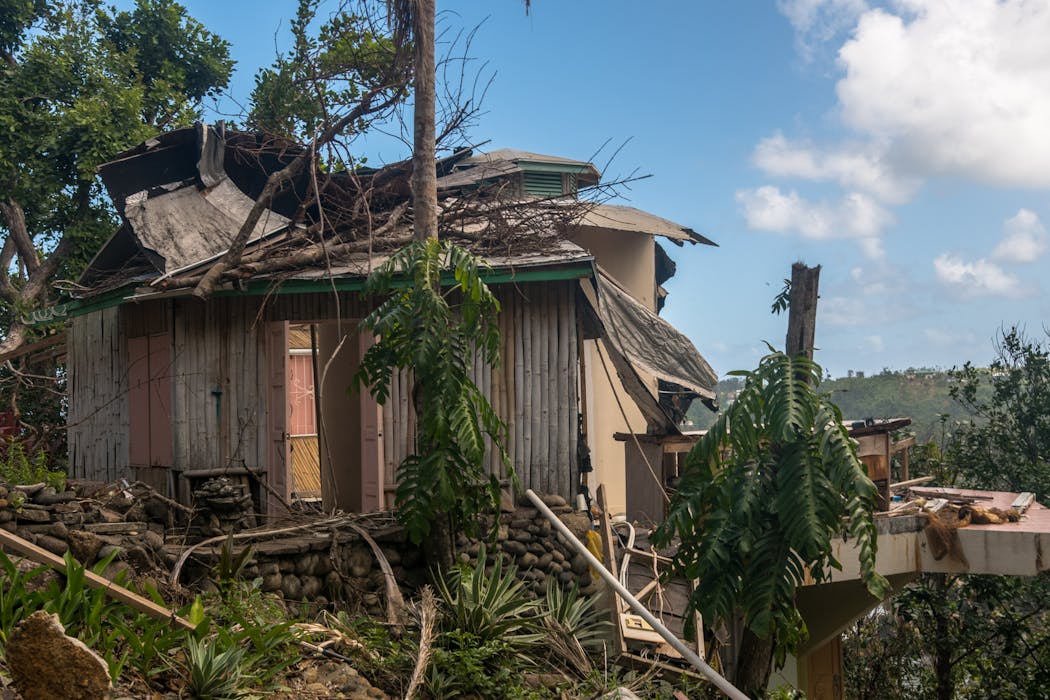
However, in late October Hurricane Melissa, a Category 5 storm, tore across the island, leaving catastrophic destruction in its wake. The island nation was prepared, but not protected.
Preliminary estimates put the damage at a staggering US$7 billion (£5.3 billion) – equivalent to 28-32% of last year’s GDP. Jamaica has a multi-layered financial safety net: a contingency fund, catastrophe insurance through the Caribbean Catastrophe Risk Insurance Facility – which will pay out US$91.9 million, its largest ever payout – and a US$150 million catastrophe bond.
But these buffers barely make a dent in the US$7 billion recovery bill. There is a shortfall of more than US$6 billion. Given the scale of the destruction, Jamaica will likely have to borrow to fund its recovery – deepening its debt, just as it had emerged from a debt crisis.
This loop of disaster, debt, recovery and the another disaster does not just affect Jamaica. Increasingly frequent climate disasters wipe out years of progress in small island developing states, forcing them into increasingly costly borrowing to fund their recovery.
One study shows that climate destruction is becoming more expensive for small island developing states such as Fiji, Guyana and the Dominican Republic, because these nations typically rely on expensive private external debt to cover their disaster recovery costs.
Our team at the thinktank ODI Global estimates that between 2000 to 2022, extreme weather events in small island developing states may have caused an estimated total of US$141 billion in economic loss and damage, of which US$53 billion (38%) could be attributed to climate change.
For severe tropical cyclones and hurricanes, the estimated total economic loss and damage during the same period could be as high as US$122 billion. Climate change may have been responsible for US$52 billion of that. This translates to a total loss of US$5.3 billion from hurricanes, with US$2 billion attributable to climate change each year.
For countries with fragile economies and limited fiscal space, these shocks are existential. Each dollar spent on rebuilding is a dollar not spent on healthcare, education or infrastructure. To meet their development goals, small island developing states would need to raise social spending by 6.6% of GDP by 2030.
Yet disaster recovery and debt repayments continue to consume their limited budgets. The ODI global study found that among 23 small island developing states, external debt service payments are now growing faster than spending on education, health and capital investment combined.
What is loss and damage? An expert explains.
A wake-up call
Jamaica’s story is a preview of what’s to come if the world doesn’t change course.
As global leaders gather for the UN climate summit, Cop30, Jamaica’s devastation should be a wake-up call. The promise of the fund for responding to loss and damage, launched in 2023 to help developing countries pay for the damage from climate-related events caused by global warming, remains largely unfulfilled, woefully undercapitalised, and a low priority for developed countries.
Indeed, loss and damage issues are being currently sidelined at Cop30, with the overall 2035 climate finance goal, national pledges known as nationally determined contributions, and adaptation indicators being top of the agenda. Small islands such as Jamaica, represented by the Alliance of Small Island States (a coalition of leaders of these most vulnerable nations), flagged concerns before the conference had even begun that loss and damage finance has fallen off the radar completely.
Fiji Red Cross has provided thousands of people with emergency relief since Cyclone Winston made landfall in Fiji on Feb 2016. ChameleonsEye/Shutterstock
Developed countries can help ensure the viability of small island developing states in a harsh climate context by offering predictable and accessible grant finance for loss and damage to support recovery and reconstruction. By providing debt relief for climate-vulnerable countries after disasters, they can also ensure that rebuilding does not result in deeper debt.
Without these commitments, the loss and damage fund risks drifting into obscurity as a symbolic gesture rather than the lifeline small island developing states desperately need.
Hurricane Melissa’s impact on Jamaica, Hurricane Maria’s devastation in Dominica in 2017 and several other climate disasters demonstrate that even with fiscal discipline, prudent planning, strong institutions and improved governance, these small island nations remain just one storm away from fiscal collapse and unsustainable debt – the repayment of which diverts critical resources from health, education, and sustainable development.
Without decisive action, Cop30 will fail the world’s most climate-vulnerable nations. Small island developing states need real systemic change, not unfulfilled pledges.
Don’t have time to read about climate change as much as you’d like?
The resignations of the BBC’s director general and director of news were shocking. Perhaps just as shocking is the US$1 billion legal threat the broadcaster now faces from US president Donald Trump.
The full story of what has happened at the BBC may take months (or years) to emerge. But it’s become evident that a combination of poor editorial judgement and political meddling by longstanding BBC critics contributed to Tim Davie and Deborah Turness’s departures.
That there were editorial mistakes is not in question. The BBC Panorama documentary on Trump spliced together two different parts of Trump’s notorious January 6 2021 speech on Capitol Hill, without making the edit clear.
The programme itself, which was broadcast a few days before the 2024 US presidential election, was arguably carefully balanced, containing an equal number of Trump supporters and detractors. Notably, it did not receive a single complaint at the time of transmission.
It was broadcast a week before the 2024 US presidential election – nearly four years after the speech itself. It wasn’t a programme that was likely to sway anyone’s views of the president, who was impeached for “incitement of insurrection” after January 6. He was later acquitted.
Nevertheless, it was wrong to edit the speech in this way. That error was one of many allegations of institutional bias included in a dossier by Michael Prescott. Until June, Prescott – a former political editor for Rupert Murdoch’s Sunday Times and longtime PR professional – was an external adviser to the BBC’s editorial guidelines and standards committee.
The report was leaked to the Telegraph, which splashed with selected excerpts alleging that the programme had been “doctored”, and listing other editorial problems that he claimed the BBC had failed to put right.
Political influence
The Telegraph, like much of the British press, has for decades waged an editorial war against the BBC. As a publicly funded, free-to-air broadcaster, which is by some distance the most trusted news provider in the UK, the BBC is a serious challenge to news publishers’ commercial interests. It also offends the political sensibilities of those opposed to public funding interventions more generally.
It was therefore only a matter of time before the Telegraph “exclusive” on BBC bias and the Panorama programme escalated, especially once noticed by the White House. As the crisis gathered steam, one of the many burning questions was: why on earth is the BBC not responding?
It has now been reported – including by the BBC’s media editor Katie Razzall and BBC presenter Nick Robinson – that an apology was drafted by the BBC news team and was ready to be signed off a week ago.
Unfortunately, the BBC board reportedly prevented Turness from putting out the apology, instead opting for a letter to MPs on the media select committee. What followed was a damaging vacuum, with the BBC unable to defend itself or acknowledge its error. As internal arguments raged, it simply issued a bland statement that it would respond in writing to the select committee.
Key to this institutional paralysis and the fallout that followed were the political appointees to the BBC board. When the BBC charter was renewed in 2016, the then Conservative government introduced a new governance structure. The BBC would be governed by a unitary board of 14, including a chair, and four part-time members, each representing one of the UK’s nations. These five were all government appointees.
That boardroom dissent was, it now appears, led by those political appointees, in particular Sir Robbie Gibb. Following time as a BBC executive in charge of political programmes, Gibb was Conservative prime minister Theresa May’s director of communications. He was subsequently involved in the founding of GB News, an avowedly right-wing news channel.
In the words of Prospect magazine and former Guardian editor Alan Rusbridger, Gibb “does not pretend to be impartial on issues related to British politics or Israel”.
Gibb was appointed to the BBC board by Boris Johnson, reappointed by Rishi Sunak, and his term runs until 2028. It is therefore unsurprising that Liberal Democrat leader Ed Davey has called for Gibb’s immediate removal from the board and for an end to the practice of political appointments.
The Conversation has reached out to Gibb for comment.
In his letter to the chair of the media select committee on Monday, BBC chairman Samir Shah acknowledged the Panorama mistake and apologised for the news team’s “error of judgement”. He made it clear, however, that Prescott’s report “does not present a full picture of the discussions, decisions and actions that were taken”.
Changes for the future
This peculiar arrangement of political appointments appears to have effectively given partisan appointees a veto over a crucial senior management decision, resulting in the forced departure of the BBC’s two most senior news executives.
While Davey is right that this anomaly needs to be rectified, the whole BBC governance structure is in need of an overhaul. At a time of increasing polarisation and social media misinformation, it is more important than ever that the BBC is protected from political interference.
The next BBC charter, starting from January 2028, offers a perfect opportunity to provide the kind of protective structure that the BBC requires. As part of a campaign to support public service broadcasting in the UK, the British Broadcasting Challenge – a group of academics and media professionals that includes myself and The Conversation’s CEO Chris Waiting – published a report last month calling for a “genuinely independent public appointments process for the chair and trustees, insulated from covert and overt government influence”.
This could be done through a dedicated body set up under the same terms as the wholly independent Press Recognition Panel, with no links to any political party or partisan campaigning group. Such a body could be responsible not just for non-executive BBC appointments (including its chair) but also for the chair of regulator Ofcom and the chair of Channel 4 – both currently in the gift of government.
The Labour government is about to kickstart a debate on the next BBC charter. Lisa Nandy, as the responsible secretary of state, has it in her hands to rectify some of the egregious damage inflicted on the BBC’s reputation by the political meddling of the last few days. Let’s hope that she rises to the challenge.
Steven Barnett is on the management and editorial boards of the British Journalism Review. He is a member of the British Broadcasting Challenge which campaigns for Public Service Broadcasting. He is on the Advisory Board of the Charitable Journalism Project which campaigns for public interest journalism and on the board of Hacked Off which campaigns for a free and accountable press.
This year’s new university students are settling into life on campuses often notable for their diversity – and that includes in religion. Over 33,000 Buddhist students started university in the UK in 2023-24, for instance, alongside 769,220 Christian and 37,520 Sikh students.
Universities have a role to play in helping their students relate to others of different religious backgrounds, especially at a time of concern over antisemitism and Islamophobia on campus.
Our research has pinpointed some key things universities can do that make a positive difference. We can also highlight the things they shouldn’t do.
We surveyed 1,000 students twice, one year apart. We wanted to investigate how the university environment, or campus climate, influences how students engage with other religions and worldviews. To assess this we asked students how far they agreed with statements such as “there are people of other faiths or beliefs whom I admire”, “I try to build relationships with people who hold religious or non-religious beliefs that I disagree with”, and “my faith or beliefs are strengthened by relationships with those of diverse religious and non-religious backgrounds”.
We call students’ positive engagement with differences in religion and worldview their “pluralism orientation”.
Diversity, discussion and safety
We found that three key features of the campus climate affect how positively students feel about difference in religion and worldview.
First, students feel more positive about difference when they see a diversity of worldviews around them. When students think of their campus as a place inhabited by students of a wide range of religious and non-religious worldviews, this correlates with growth in pluralism orientation. Interestingly, this is less about actual diversity than perceived diversity. We tested an analysis of actual diversity, and it wasn’t significant. It’s what students perceive that makes a difference.
Second, students’ pluralism orientation grows when they have spaces to express their religion or worldview. Having spaces where students feel safe to be themselves, with like-minded others, leads them to have a more positive attitude to those who are different from them.
It might seem paradoxical. But feeling safe on campus, such as through having a chaplaincy space to pray at lunchtime, a student society for others of the same worldview, or a religious diet that’s catered for by the university cafeteria, gives students the resilience they need to engage well with different religions and worldviews.
Third, it’s important that students have critical conversations that help them challenge their own and others’ worldviews.
We call these “provocative encounters”. They are conversations that provoke students to question the stereotypes they hold about others, as well as their unexamined assumptions about their own beliefs. These happen both in the classroom and outside it, as students socialise or live in student accommodation. A Sikh student we interviewed talked about the dinners she cooked for her white Christian and non-religious flatmates. Eating together sparked conversations about their different faiths and cultures.
Striking a balance
We also found that aspects of the campus climate led to students’ pluralism orientation declining. One example is when they heard insensitive comments about their worldview. These might be from friends, peers or staff.
This is a tricky area, as one person’s insensitive comment is another person’s provocative encounter. The key point is that when students feel their worldviews are under significant threat, they’re less likely to engage with religiously different others in a positive way. Instead, they will close down, compartmentalise life and study, and miss out on the value university provides.
Healthy debate is vital to ensuring freedom of speech and helping students grow intellectually. But if students feel under threat, or that their religious views are seen as incompatible with student life, they’ll stop discussing their views, stop sharing their lives with anyone who thinks differently, and interfaith relations will be impaired.
It can help student relations when universities demonstrate that the campus is religiously diverse and represents a wide range of worldviews. This can be done through communications from universities to students, such as by posting “Happy Vaisakhi” or “Eid Mubarak” on social media to acknowledge religious festivals, or by advertising events, such as World Humanist Day.
Creating opportunities for students to have the provocative encounters they need to mature in their own views should be central to what universities do. Students are good at doing this in their own social spaces. But sometimes staff shy away from classroom discussions of students’ worldviews, perhaps out of fear of causing offence.
Some students we spoke to talked about feeling their views were “shut down” by lecturers who didn’t want to discuss religion. This needs to change. Provocative encounters should not turn into coercive or hate-filled shouting matches, but universities should nurture robust debate and dialogue about religion, politics and social relations.
Religion is global and ubiquitous. So it’s something universities should highlight – not avoid. Our findings show the need for institutional practices that promote pluralism. This can be done through providing supportive spaces for students to engage with worldview differences in ways that ensure safety and exploration, creating climates where students learn about religion.
Kristin Aune receives funding from Porticus.
Mathew Guest receives funding from Porticus and the Spalding Trust.
Matthew J. Mayhew receives funding from the Templeton Religions Trust, the Arthur Vining Davis Foundations, the Pew Charitable Trusts, the Educational Credit Management Corporation (ECMC) Foundation, the National Science Foundation, the Alfred P. Sloan Foundation, the Merrifield Family Trust, the Andrew W. Mellon Foundation, the Fetzer Institute, the Ewing Marion Kauffman Foundation, the Merrifield Family Trust, Porticus, and the United States Department of Education.
Universal basic income (UBI) has supporters across the political spectrum. The idea is that if every citizen received a payment from the state to cover their living costs, it this will allow them the freedom to live as they choose.
UBI could, for example, let people decide whether to work and let them live in dignity after AI has made their labour redundant. Everyone gets the transfer, so the bureaucratic costs of monitoring who is eligible are removed. At the same time, it seems like a just arrangement as taxpayers also receive their fair share. What’s not to like?
But voters who turned down a UBI pilot in a recent referendum in the German city of Hamburg apparently found something to dislike. A frequent argument against UBI is that recipients will decide to work less. This in turn will make labour (and consequently labour-intensive products) more expensive.
Indeed, a recent study on a UBI experiment has found that recipients of an unconditional monthly transfer of US$1,000 (£760) were significantly less likely to work. And if they did work, they put in fewer hours than a control group who received only US$50 per month.
Supporters of UBI may still argue that the increase in recipients’ wellbeing reported by research is worth these mild economic costs. However, the most striking costs of implementing UBI in practice are often overlooked. If a country implemented a UBI on a large scale, the money to be distributed would have to be raised via new taxes.
The Hamburg pilot would have required public funds to the tune of €50 million (£44 million). Paying out the monthly US$1,000 from the US study to all 55 million adults in the UK would require the government to raise an extra £500 billion per year to fund this scheme.
But why should we care about the public funds needed to finance a UBI scheme? After all, the whole point of UBI is that these funds are going to be equally distributed among everyone. So isn’t this just some rearranging of money from some rich people to the less well-off?
The simple answer is no. In practice, taxes are always based on some economic activity. If I earn more labour income, I will pay more income tax. If I spend more money at the grocer’s, I will pay more VAT. Income tax reduces my compensation for the leisure time I sacrificed and makes leisure artificially more attractive as compared to working.
All this will affect my decision on how much to work, and means that decision will differ from what I would do if there were no taxes. Economists call this a distortion.
Counting the costs
Due to the distortion that most taxes create, raising public funds imposes costs on society over and above the amount of the money to be raised. One could think of this as if the tax was water that the taxman taps through a leaking hose – some of it will be lost before it is collected.
For instance, economists estimate for the UK that this distortion imposes costs between a tenth and a quarter of an additional pound raised in a proportional increase in labour income tax.
To imagine what this means, suppose the UK wanted to replace the current universal credit system of welfare benefits with a UBI that pays every adult citizen the standard universal credit allowance of £400 per month.
Imagine you are a middle-income taxpayer whose monthly income tax bill would rise by £400 to finance this scheme. Although it might seem fair that you also receive the same transfer as everyone else, you are no better off than you were under the old system due to the tax increase.
Even worse, this extra tax makes working less attractive for you, as explained above. This distortion makes your labour supply choices less efficient. It implies that this imposes further costs of £40-£100 on society.
The total funds needed to pay £400 per month to every adult in the UK is £22 billion, compared to the £7.3 billion that the government currently spends on universal credit. This means (based on the example above) that the extra funds needed for a UBI of that size would impose a loss between £1.5 billion and £3.7 billion per month purely due to the distortion that raising these funds creates.
Pilots on UBI typically distribute money that was gained through a windfall such as a donation. Consequently, studies based on these events focus on the effect on the people receiving the UBI transfer. However, governments cannot rely on windfalls – and the costs of raising the funds needed to implement a large-scale UBI system cannot be ignored.
Economists aren’t all naysayers against redistribution. Redistribution is an important feature of a fair society. However, there’s a strong arugment that UBI is a bad way of achieving this.
Instead, governments should aim to avoid taxes that distort behaviour. A carefully designed means-tested benefits system can have the same redistributive effect as UBI – at less cost to the state.
Ansgar Wohlschlegel thanks Benjamin Anthony, MSc candidate at Swansea University, for research support and discussions during supervision meetings for his dissertation on universal basic income. Dr Wohlschlegel is on the Research Advisory Committee of the Vegan Society.
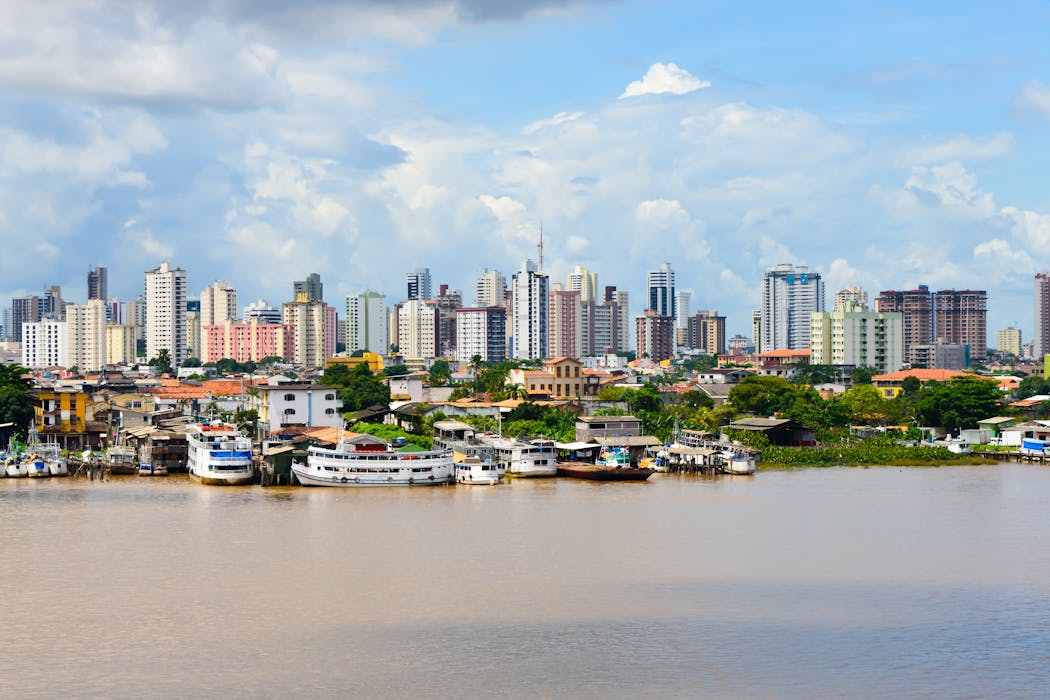
Belém has more than 1 million people yet is too small for a modern ‘Cop’. Maritime Art Blog / shutterstock
If you’re still heading to this year’s UN climate conference in Belém, Brazil, I hope you booked early. Hotels long sold out, and latecomers face extortionate rates – or the prospect of a dubious “love hotel”.
The incredible cost and variable quality of accommodation have sparked outrage. It’s been the subject of high-level meetings and dialogues. But it’s also a symptom of a wider problem: these climate summits have grown so large they’re no longer fit for purpose.
I have been to 11 of these summits over the years, and follow them closely for my academic work, and with the Earth Negotiations Bulletin – a free, curated summary of global environmental negotiations. Cop30, which started on November 10 in Belém, is the first I have missed since Cop18 in Doha in 2012.
I have seen first hand how these annual negotiations and accompanying summit and events (together, broadly called Cops) have grown. They are now MegaCops – enormous conglomerations of events, parallel workshops, receptions, exhibitions and photo ops that attract over 50,000 people. They are the largest events on the UN calendar.
Even with a population of 1 million, Belém is too small. Most cities are. Only a handful of wealthy countries can hope to host them. Many negotiators from poorer countries, along with Indigenous and civil society groups, simply can’t afford to attend this summit.
All this means power is subtly shifting further towards those with the money to participate and host. This bodes poorly for global climate governance.
Prestige and power, for those who can pay
Cities and countries big enough to host a Cop gain some soft power in exchange for the large bill they foot. For instance Paris hosted 25,000 people for the summit in 2015, which cost around €187 million (£164m). In return, the city got its name on a climate treaty we’ll be talking about for decades.
Other MegaCop hosts have also pushed to have an outcome with their name, like the UAE Consensus or Glasgow Climate Pact. It’s hard to imagine a Majuro Pact simply because the Marshall Islands capital won’t be hosting 50,000 diplomats anytime soon, despite the island nation’s climate leadership.
The host countries also set the themes for high-level events and gain support for political declarations of their choosing. The UAE-hosted Cop in 2023 featured declarations on health, renewable energy, peace and gender (among others). None mentioned phasing out fossil fuels. This was no accident – the UAE was reluctant to push its fellow oil-producing states towards such language in the negotiations.
Recent Cop hosts have been oil-producing and exporting states such as the UAE, UK, and Azerbaijan. It’s perhaps little wonder that they spearhead declarations outside the negotiation space on peace or forests, and not fossil fuels.
Too big for small countries
Far fewer declarations have focused on loss and damage (UN jargon for the permanent consequences of climate change), at a time when lives and livelihoods are at risk. Small island states – some of the most climate-vulnerable nations in the world – could get this message across, but these efforts require diplomatic capacity.
Successful Cop hosts have networks of ambassadors or professional diplomats to sound out ideas from negotiators. They can rally consensus in negotiations and support for the president’s various legacy initiatives and declarations. Small countries often lack this capacity. Last year, 39 small island states together sent 261 negotiators to the summit (an average of six or seven people each, compared to the UK’s 37 diplomats).
Cop hosts sometimes find donor money to hire consultants to manage public relations and provide legal and technical advice. Many of these consultants are from developed countries, which has led to questions about their influence.
Inequality in the pavilion
It’s a pervasive myth that a bigger Cop is a more inclusive Cop. It just means more people. At Cop27, there were twice as many fossil fuel lobbyists as Indigenous peoples’ representatives, for instance.
Richer Cop participants can also pay to get their messages across. In Brazil, space in the pavilion – the exhibition zone that runs alongside the main negotiations – starts at US$1,250 (£856) per square meter, excluding additional costs for audio and visual equipment, coffee machines, and decor. These pavilions are offered on a commercial basis by the host countries to help recoup costs.
Governments, corporations and NGOs with deep pockets buy space to host events, distribute their reports, and push their preferred solutions. From the WWF’s Panda Hub to the Gulf Cooperation Council’s space, the pavilion usually focuses on the issues of richer countries and organisations.
In smaller spaces, youth and Indigenous peoples are afforded their own pavilions, paid for by donors or donated by the Cop presidencies. These groups are disproportionately affected by climate change. Yet they struggle to be heard above the din.
If the global climate process could shed its obsession with ever-larger Cops, it would be to its benefit. Smaller countries could help set the agenda, and climate-vulnerable voices might not be outnumbered or outspent.
One practical solution would be to split up the three different events: the main negotiations, the summit for political leaders, and the exhibition zone. Negotiations could take place somewhere smaller and less glamorous, perhaps the UN campus in Bonn, Germany. Political summits and climate action showcases could rotate or sometimes be held online.
We could also limit delegation sizes and centre the talks on implementing the rules we already have rather than new rule-making. These changes would reduce costs and make it easier for smaller and poorer countries to have their say. True climate equity demands a rethink of the very process meant to deliver it.
Don’t have time to read about climate change as much as you’d like?
In October 2025, members of the European Parliament voted in favour of a bill to reserve terms such as “burger” and “sausage” for meat products. If this bill is approved by most EU member states, products made from meat alternatives or vegetables will no longer be allowed to have “burger” on their packaging.
This bill would change the words on the packaging, but it is not enough to change the words that people use in their everyday lives. A push to change the meaning of a word from a government body is unlikely to be successful, linguistically speaking, because of how the human brain processes and stores the meaning of words.
People often think that the meaning of a given word is a single, unchanging definition, much like you would expect to find in a dictionary. However, the linguistic part of the brain that stores words and their meanings is actually a lot more dynamic – and a lot more vague – than that.
Our understanding of meaning is a lot more “I’ll know it when I see it”. Consider the word “milk”. Attached to that word are a number of qualities that you, personally, find relevant to its meaning. These qualities might include its source (from a cow, a pint carton from the supermarket), its appearance (white, liquid) and its function (a drink, a component in coffee or tea, poured over cereal, as an ingredient in baking, or processed into cheese/yoghurt/cream).
It is these qualities that are stored in the brain under the category “milk”. These qualities, or meanings, are continuously edited, upgraded and discarded over time as we gain new information. By this process, the brain learns how to categorise new experiences or unusual examples, such as chocolate-flavoured milk.
Plant-based alternatives have many of the same qualities as their dairy equivalent. Garna Zarina/Shutterstock
Now consider a dairy alternative, such as one made from oat or soya. This plant-based product has many of the same qualities as its dairy equivalent. The milk alternatives fit the appearance and function of milk, and so they are stored under the category “milk” in the brain.
If oat milk is something you drink regularly, then your meanings will update to reflect this: oat milk will become the prototypical “milk” in your brain. Even if oat milk is not a common occurrence in your everyday life, your brain will likely store it under the linguistic category of “milk”, albeit as a fringe example of milk.
When is a burger not a burger?
Now let us consider the meanings associated with a word like “burger”. Its source (beef, turkey, chicken, pork, bean, falafel, meat alternatives), its appearance (a processed disc patty, presented in a bun) and its function (a patty placed in a bun, usually with some accompanying salad or sauces).
There aren’t any non-burger products that have been processed into the prototypical burger-shaped disc. Tatjana Baibakova/Shutterstock
The first thing you might notice is how many options there are for the source of the burger. Most of these sources are quite common and well-known. Even if you yourself have a strong preference for beef burgers, you probably wouldn’t consider a chicken burger an unusual example of a burger.
In other words, our linguistic category of “burger” allows a lot more flexibility and a wider range of sources than “milk”. On the other hand, the shape of the burger (a processed disc patty) and its function (between two buns) are both very important and more restrictive qualities of a burger.
This is in part because there aren’t any non-burger products that have been processed into the prototypical burger-shaped disc. Similarly, there aren’t any sausage-shaped products that aren’t sausages. The shape of the burger is reinforced in our mental linguistic definitions every time we see a burger, and is never undermined by seeing a non-burger patty. This is why we feel very strongly that the very essence of a burger is tied to its function and its shape.
The meaning of the word “burger” doesn’t come from the dictionary definition, or from being told what a burger is by a government. In fact, there isn’t one single meaning for “burger”.
Instead, in the linguistic database in our brain, we have a collection of meanings that we associate with burgers. This linguistic ability allows us to confidently categorise burgers from non-burgers, even if it is, ironically, hard for us to put into words. What is a burger? I’ll know it when I see it.
Don’t have time to read about climate change as much as you’d like?
Victoria-Elliot Bush does not work for, consult, own shares in or receive funding from any company or organisation that would benefit from this article, and has disclosed no relevant affiliations beyond their academic appointment.
Source: The Conversation – UK – By Stewart Lansley, Visiting Fellow, School of Policy Studies, University of Bristol
In the run-up to the 2024 election, future prime minister Keir Starmer labelled wealth creation Labour’s number one mission. “It’s the only way our country can go forward,” he declared. “We should nourish and encourage that – not just individuals but businesses.”
Starmer was right, in theory. But wealth creation is a slippery concept. Essential for economic and social progress, it can also work against both. It’s therefore vital to distinguish between “good” and “bad” wealth.
According to one definition, increases in “good” wealth come from innovation, investment and more productive business methods. Such activity boosts economic resilience, social strength and the size of the economic cake.
Examples include investment in medical and scientific technology – but also, crucially, in the activities that provide vital everyday services and goods to sustain our daily lives. Improvements in the quality of local shops, transport, services for children, adult care and decent hospitality all expand a country’s resources in ways that see the gains shared widely across society.
However, over the past half-century, a rising share of economic activity in the UK and other rich countries has been connected with “bad” wealth accumulation, which actively hampers and harms a country’s prospects.
The Conversation and LSE’s International Inequalities Institute have teamed up for a special online event on Tuesday, November 18 from 5pm-6.30pm. Join experts from the worlds of business, taxation and government policy as they discuss the difficult choices facing Chancellor Rachel Reeves in her budget. Sign up for free here
Bad wealth is especially associated with non-productive or low social-value activities geared to personal enrichment. In Britain and elsewhere, decades of privatisation and wider tax, benefit and monetary economic policies have
fuelled rising inequality while handing much of the command over resources to corporate boardrooms, top bankers and the very rich – with damaging effects for societies and economies alike.
A central source of bad wealth has been a rise in the level of economic “extraction” or “appropriation”. This occurs when capital owners use their power to capture excessive shares of economic gains through activity which weakens economic strength and social resilience. Examples include the rigging of financial markets and manipulation of corporate balance sheets, a range of anti-competitive devices such as the rise in aggressive acquisitions and mergers, and the skimming of returns from financial transactions – a process City of London traders like to call “the croupier’s take”.
Bad wealth is also the product of passive activity unrelated to merit, skill or prescient risk-taking. Over half of the increase in household wealth in the UK since 2010 has come from rising asset prices – in particular relating to property – rather than from more productive activity. This means a huge amount of that wealth is trapped in property and other assets which are not available for reinvestment in the economy.
Britain’s economic record since the 2008 financial crisis has been dismal, with a collapse in the rate of economic growth amid much hand-wringing about its “productivity puzzle”. Yet over the same period, private wealth holdings have surged. In total, UK wealth – comprising property, physical and financial assets – is now more than six times the size of the country’s economy, up from three times in the 1970s. Other rich countries have seen similar trends.
This surge in levels of personal wealth is not the product of more dynamic and innovative economies and record rates of investment. As an editorial in UK financial investment magazine MoneyWeek argued in 2019, too much personal wealth is the result of “mismanaged monetary policy, politically unacceptable rent-seeking, corruption, asset bubbles, a failure of anti-trust laws, or some miserable mixture of the lot”.
It is these activities which account for the burgeoning bank accounts of the already super-rich. Around the world, from the mid-1990s to 2021, the top 1% of wealth holders captured 38% of the growth in personal wealth, while the bottom 50% received just 2%. In the UK, the average wealth of the richest 200 people grew from 6,000 times the average person in 1989 to 18,000 times in 2023.
One of the most important outcomes of the rise of bad accumulation, and the associated surge in the concentration of personal wealth, has been the way opulence and plenty sit beside social scarcity and growing impoverishment. It has brought a significant shift in how national resources are used – away from meeting basic needs to serving the demands of corporate elites, a growing billionaire class, and private markets.
“The test of our progress is not whether we add more to the abundance of those who have much,” declared US president Franklin D. Roosevelt during his second inaugural address in January 1937. “It is whether we provide enough for those who have too little.”
By most metrics, Britain and many other wealthy countries are failing that test.
A key explanation for Britain’s low private investment, low productivity and slow growing economy is the disproportionate share of the rising profit levels of Britain’s biggest companies that has gone in payments to shareholders and executives in recent times. Dividend payments in the UK and globally have greatly outstripped wage rises over the last 40 years. In 2020, aggregate dividend payouts by the FTSE 350 companies made up some 90% of pre-tax profits.
Often, these heightened dividend payments have been financed through borrowing, thus undermining corporate strength. In the case of Thames Water – stripped of much of its value by an aggressive profit strategy by its overseas owners – this has brought near-bankruptcy.
Meanwhile, far from the promise of a property-owning society, large sections of the UK population have – outside of pension provision – no, or only a minimal, stake in the way the economy works. Those with few assets lose out from rising property prices and higher interest rates on savings.
How a nation’s productive resources – land, labour and raw materials plus physical, social and intellectual infrastructure – are owned and used is key to its productive power, social stability, and distribution of life chances. “Money is like muck – not good except it be spread,” wrote the English philosopher and statesman Francis Bacon in 1625.
In the UK, the more egalitarian politics after the second world war led to a more equal sharing of private wealth, and a much higher level of public ownership of key utilities and land. Then in 1979, newly elected prime minister Margaret Thatcher launched her drive for a “property owning democracy”. The windfall gains from council house sales and the selling of cut-price shares in her great privatisation bonanza initially benefited many ordinary people.
But today, the balance sheet looks markedly different. While the sale of council houses initially boosted levels of home ownership in the UK, the number of first-time home buyers is now less than half its mid-1990s rate. As a result, the rate of home ownership has shrunk from a peak of 71% in 2000 to 65% in 2024, with the most marked decline among those aged 25-34.
Getting on the housing ladder is now heavily dependent on having rich parents. The proportion of young people aged 18-34 living with their parents reached 28% in 2024 – a significant rise since the millennium.
At the same time, today’s much more heavily privatised economy has eroded Britain’s holdings of common wealth. Publicly owned assets as a share of GDP have fallen from around 30% in the 1970s to about a tenth. This is one of the principal causes of the deterioration in the UK’s public finances, while handing more control over the economy to private company owners.
The French economist Thomas Piketty has argued that today’s model of corporate capitalism has a natural, inbuilt tendency to generate ever-growing levels of inequality – “a fundamental force for divergence”, as he termed it.
When the return on capital from dividends, interest, rents and capital gains exceeds the overall growth rate, asset holders accumulate wealth at a faster rate than that at which the economy expands, thereby securing an ever-greater slice of the pie – and leaving less and less for everyone else.
In his 2014 book, Capital in the Twenty-First Century, Piketty offered an essentially pessimistic conclusion that breaking this inequality cycle has only happened across history through war or serious social conflict. In response to critics, he modified this position and now seems to accept that there are democratic mechanisms for delivering more equal societies – whatever the undoubted hurdles of implementation.
Suppressing the profiteering and excessive returns that have driven higher levels of inequality is one of the biggest challenges of our time. But such an alignment of growth and rates of return on capital was broadly achieved in the post-war era, and there are several routes for achieving such convergence again – even in today’s very different conditions.
1. Shift the tax focus from income to wealth
Despite the scale of today’s wealth boom, Britain’s tax system is still heavily biased to earnings. Income from work is taxed at an average of around 33% and wealth at less than 4%. Through political inertia, the UK tax system has failed to catch up with the growing importance of wealth over income in the way the economy operates, and does little to dent the growing concentration of wealth holdings at the top.
In her first budget in October 2024, the chancellor, Rachel Reeves, took steps to raise revenue through changes to inheritance and capital gains tax (the profits made on selling shares or property other than your home). But these were too modest to alter the imbalance in the taxation of wealth and earnings.
A more fundamental shift would be to reform the existing system of council tax with a larger number of tax bands at the top. Still based on 1991 property values, this is perhaps the least defensible tax in Britain. Households in poorer areas pay more than better off households in the richest.
In Burnley, the typical household pays some 1.1% of the value of their home in council tax every year. In a typical property in Kensington and Chelsea, it is 0.1%. The most effective alternative would be to replace council tax and stamp duty – the tax on the purchase of homes – with a single progressive or proportionate “property tax”. Any serious reform requires a long overdue property revaluation and an extension in the number of tax bands.
A modest and phased rise in capital taxation would also help to break up today’s wealth concentrations and reduce the passive – and often malign – role played by wealth holdings. Even small changes would release funds which could be used to improve social infrastructure from schools to hospitals.
One such change, as recommended by the Office for Tax Simplification, should be to raise the rates on capital gains tax so that they are equal to income tax rates. In 2024, 378,000 people paid UK capital gains tax worth a total of £12.1 billion – a decrease of 19% on the previous year.
Measures to limit asset inflation could include extending the Bank of England’s remit on inflation to limit rises in property prices, which have led to historically high rents and priced a rising proportion of young people out of home ownership.
2. Reduce how much wealth gets passed on
“A power to dispose of estates forever is manifestly absurd,” the Scottish economist Adam Smith declared 250 years ago. “The Earth and the fulness of it belongs to every generation, and the preceding one can have no right to bind it up from posterity. Such extension of property is quite unnatural.”
Despite Smith’s exhortations, birth and inheritance remain the most powerful indicators across most countries of where you end up in the wealth stakes and the pattern of life chances.
Importantly, inheritance does little to boost productive activity. Higher ratios of inheritance in wealth holdings – and recent decades have seen an upward shift – tend to be associated with reduced economic dynamism. Assets tied up in large wealth pools are often little more than “dead money”: idle resources that could be put to use funding public services or productive investment.
Yet, helped by light taxation, social privileges continue to be handed on in perpetuity. Only 4.6% of deaths in the UK resulted in an inheritance tax charge in the 2023 financial year, contributing a tiny 0.7% of all tax receipts.
Around 36% of all wealth is stored in property, and there is a strong public attachment to people retaining their inherited housing wealth – even among those who are not beneficiaries. In part, inheritance tax is widely perceived as unfair because of the way the richest are able to avoid it.
Of people born in the UK in the 1980s, those in the poorest fifth by wealth will enjoy an average 5% boost to their lifetime income through inheritance, compared with 29% for the top fifth. Clearly, those on the wrong side of this gap will be left even further behind by the end of their lives.
And the divide is widening sharply. The scale of intergenerational wealth transfer is on a steeply upward trend, with projected levels of inheritance set to dwarf all previous wealth transfers in the coming decade. Little of this process contributes to more productive activity, with one of its primary and malign effects being to fuel higher house prices.
3. Introduce a ‘whole wealth’ tax
Another much-debated option would be to levy a new tax on whole wealth holdings, rather than just the revenue these assets generate. An annual 1% tax on wealth over £2 million – affecting some 600,000 people in the UK – could raise around £16 billion a year, according to the 2020 Wealth Tax Commission report.
Such taxes would be easier to levy on immobile assets like buildings and land taxes than on liquid assets, such as financial holdings. But this complexity is not insurmountable – and nor is public opinion. Such a measure could be sold politically as a “solidarity tax” to help pay for key under-resourced but high social-value services – such as a proper social care system and improved services for children.
While many governments have been wary of the political reaction to higher taxes on wealth, YouGov’s most recent survey suggests around three-quarters of the public now support such a tax, with more than half strongly supporting it.
The Inequality Crisis – a talk by the article’s author, Stewart Lansley, in March 2013. Video: RSA.
4. Increase public ownership of utilities and services
Tackling inequality and profiteering also require a greater level of common and social ownership. Britain is a heavily privatised and marketised economy. Few other developed countries have handed over such control of key utilities to private firms.
Privatised in 1989, Britain’s water industry has been turned into a potent example of profiteering. Under private ownership, it has delivered leaky and unrepaired pipes, the illegal dumping of sewage spills into rivers and beaches, and two decades of under-investment in large part because of the disproportionate share of profits going in dividend payments to mostly overseas owners.
Another significant trend has been the private takeover of a range of public services – from social care to children’s services. According to the Competition and Markets Authority (CMA), the UK has “sleepwalked” into a dysfunctional system with widespread profiteering in privately run children’s homes. It found operating profit margins averaging 22.6% from 2016-20, driven by escalating charges and cost-cutting.
These examples of bad accumulation have hollowed out some of the UK’s most vital industries. A mix of public and social ownership and much more effective regulation are necessary to turn these industries into effective service providers rather than cash machines for investors.
Regulatory reforms are also needed to moderate the way some markets work. The CMA suggests that anti-competitive behaviour and “oligopolistic structures” are hallmarks of a rising volume of business activity. For example, it has accused the UK’s seven largest housebuilders of collusion on issues from pricing to marketing.
Price gouging – when firms exploit emergencies such as the COVID pandemic and Russia’s invasion of Ukraine to charge excessively high prices for essential goods – is another area ripe for tougher intervention.
5. Establish citizens’ wealth funds
Alongside greater social ownership, all citizens need to be given a more direct stake in the gains from economic activity. As one heckler put it during the Brexit referendum: “That’s your bloody GDP, not ours.”
One route would be to build models of “people’s capital” through a new strategy of asset redistribution to individuals. This would extend the principle of income redistribution that has been one of the main, if now much weakened, pro-equality instruments of the post-war era. A medium to long-term plan would be to create one or more national and local “citizens’ wealth funds”, owned collectively by all on an equal basis.
Originally advanced by the British economist and Nobel laureate James Meade, such funds would be created by the state but owned by society, with returns distributed either as universal dividends or as investment in public services. Such a fund could be financed from a mix of sources including long-term government bonds; the transfer of several highly commercial state-owned enterprises, such as the Land Registry, Ordnance Survey or Crown Estate; part of the proceeds from higher wealth taxes; and new equity stakes in large corporations.
Anchorage, capital of the US state of Alaska, which operates a permanent fund for its citizens. TripWalkers/Shutterstock
Perhaps the most notable example of citizen-owned capital is the Alaska Permanent Fund. This was created in 1976 from oil revenues and effectively owned by all of the US state’s citizens. It has since paid out a highly popular annual dividend which averages about US$1,150 (£875) a year.
The UK has its own example: also in 1976, the Shetland Islands Council established a charitable trust from “disturbance payments” paid by oil companies in return for operational access to the seas around the islands. The returns from this trust have been used to fund social projects, from leisure centres to support for the elderly.
Another possibility is to establish a national pension fund that would eventually pay for the cost of state pensions. Australia’s Future Fund, for example, is an independently managed sovereign wealth fund to meet future civil service pension obligations. Established in 2006 by receipts of AUS$50 billion (£20 billion) from the sale of Telstra, the national telecoms company, it has since been supplemented by direct government grants and is projected to reach a value of AUS$380 billion by 2033.
The UK government has launched the Community Wealth Fund, a £175 million initiative aiming to “transform neighbourhoods with long-term financing”. Working with local communities the initiative will fund projects in local communities across England. Despite its modest finances, this establishes the principle of collectively owned social funds. This is funded through the government’s Dormant Assets Scheme, which unlocks old bank accounts and other financial products that have been left untouched.
6. Spread access to the nation’s assets across society
Any meaningful redistribution of wealth across society requires a suite of deep structural reforms from improving access to affordable housing to reducing levels of corporate extraction.
One of the most important issues is finding ways of extending access to assets to all citizens as a condition of democratic opportunity. The Child Trust Fund, introduced by New Labour in 2005, was an ambitious attempt to address wealth inequality by giving every child a modest financial stake – a kind of citizen’s inheritance. Yet the scheme was abolished in 2010 by the incoming coalition government.
In the event, it only achieved a modest impact. Average payouts when children reached 18 were around £2,000, with a quarter of all accounts being forgotten or lost. The desired shift in household saving habits tended to be limited to more affluent parents paying extra into the trust funds, meaning the policy reinforced some of the inequalities it had aimed to challenge.
Bold decisions required
While recent years have seen a growing debate about the impact of ever higher concentrations of wealth in the UK, few proposals for real change – beyond a mere tampering at the edges of inheritance and capital gains tax – are yet on the political agenda. Some of these measures would take longer to achieve, and some, such as citizens’ wealth funds, are more ambitious and potentially transformative than others. All would require bold decisions by government.
In the run-up to her much-anticipated November 26 budget, the chancellor has hinted that higher taxes on the wealthy will be “part of the story” – although a manifesto-busting rise in the base rate of income tax is also on the cards.
Against this, Reeves has ruled out a standalone wealth tax, and there appear to be no plans for more radical measures to rein in excessive profiteering. This means that the wealth gap is probably set to widen.
Yet history suggests the idea of limiting high concentrations of wealth is far from utopian. Limits operated relatively effectively among nations including the UK and US in the post-war decades, through a combination of regulation, highly progressive taxation and changes in cultural norms.
The highest personal fortunes were more modest in part because of the destructive effect of war on the size of asset holdings. There was also a new social and cultural climate that would not have tolerated today’s towering fortunes, and which allowed the post-war progressive tax systems to be maintained for decades.
Restructuring the process of wealth accumulation is never going to be straightforward politically. The protests over the adjustment to inheritance tax in 2024, in particular its impact on farmers, demonstrates how sensitive these issues are – particularly when stoked by those seeking to make political capital out of pro-equality reforms.
But Britain stands at a historic moment. Failure to tackle mounting wealth-driven inequality will have harmful consequences for the social and economic stability of generations to come. Amid rising public anxiety about the future and a widespread sense that the economy is “rigged” against ordinary people, a more ambitious political agenda that addresses inequality and economic stagnation could win public backing, if any government is brave enough to try.
The Conversation and LSE’s International Inequalities Institute have teamed up for a special online event on Tuesday, November 18 from 5pm-6.30pm. Join experts from the worlds of business, taxation and government policy as they discuss the difficult choices facing Chancellor Rachel Reeves in her budget. Sign up for free here
To hear about new Insights articles, join the hundreds of thousands of people who value The Conversation’s evidence-based news. Subscribe to our newsletter.
Stewart Lansley is a fellow of the Academy of Social Sciences. His latest book, The Richer, The Poorer: How Britain Enriched the Few and Failed the Poor, is published by Bristol University Press.
Source: The Conversation – UK – By Sophie E Harrison, Lecturer in Sport and Exercise Science, Bangor University, Bangor University
Being anxious, stressed or in a bad mood before a marathon may make you more vulnerable to illness.Asier Romero/ Shutterstock
Marathons have quickly become a popular pursuit. Hundreds of thousands of people submit ballots each year to run in some of the most prestigious races. In 2024, a record number of people crossed the finish line at some of the world’s biggest marathons. If you haven’t run a marathon yourself, chances are you know someone who has.
While we know that running has a range of health benefits, including reducing your risk of illness, research also shows that runners are more likely to catch a cold after completing a marathon.
Scientists used to think this was caused by reduced immune function following prolonged exercise, alongside increased exposure to infection due to the large crowds that marathons attract. But our latest research shows that a person’s anxiety, stress and mood may also play a role in whether they’re more vulnerable to getting ill or not after a long run or marathon.
In our first study, we asked 406 runners to complete questionnaires about their anxiety and mood in the month and days before running a marathon. We also asked them to provide saliva samples before and after the race.
The mouth is one of the main routes of access for the majority of viruses and bacteria that cause respiratory infections. The saliva samples allowed us to detect whether there were signs that the defence systems that normally stop these pathogens from entering the body (known as mucosal immunity) were suppressed.
We then tracked their common cold symptoms during the two weeks after their marathon.
Runners who were more anxious generally and those who experienced greater mood disturbance before the race (such as anger, frustration or tension) were more likely to experience a respiratory infection during the two weeks after the marathon. They also had a greater reduction in mucosal immunity.
In the second study, we asked 45 adults to run on a treadmill for an hour inside our laboratory. We asked them to complete questionnaires about their anxiety, stress and mood before they completed the run. We also measured their mucosal immunity in saliva before and after the run.
Men with higher anxiety levels, stress levels and greater mood disturbance were more likely to have a reduction in mucosal immunity after the run compared to men who had lower anxiety and stress levels before the run.
When examining the influence of stress, anxiety and mood on the immune response to one hour of running in women, findings were not as clear cut. There are many potential reasons for this – with factors such as hormone fluctuations, contraceptive use and differences in immune response depending on menstrual cycle phase all potentially having an influence. It will be important for future studies to examine this.
Together, the findings from our studies indicate that people who are more stressed or anxious before a run might be at greater risk of getting sick or catching a cold. This effect seems to apply not only to marathon-length runs, but to moderate-length runs of around an hour, too.
Immune function
One possible reason for this link between stress and immunity is due to the way stress changes how the immune system functions.
Both psychological and physical stressors affect the body through similar mechanisms – specifically through the hypothalamic-pituitary axis and sympathetic-medullary axis. These pathways link the nervous system to the brain and play a role in the stress response. High psychological stress or prolonged exercise can suppress these axes and reduce immune function.
So when runners experience both psychological and physical stress, the impacts on the immune system might be more significant than if they were just experiencing psychological or physical stress alone.
Stress can make our bodies us less able to fight infections. Dirima/ Shutterstock
For example, both mucosal immunity and the immune system’s ability to respond to new foreign pathogens are reduced following prolonged running in people with higher anxiety and stress levels. This shows just how significant the effects of both psychological stress and physical stress are when it comes to immune function.
But before you cancel that 10k or withdraw your marathon ballot, it’s important to remember that being physically active still reduces your risk of a respiratory infection compared to not exercising at all.
Instead, it’s important to prepare yourself well before your run by dealing with your stress and anxiety beforehand. Finding ways to reduce stress before a run should be treated the same way as you would ensure that you’re hydrated and fuelled well.
It can also help to monitor stress, anxiety and mood so that you can identify when your stress or anxiety starts to increase – or when your mood begins to worsen. This will help you identify triggers and take proactive steps to reduce the impacts before things progress and become worse.
If you’re taking part in a race or marathon, some easy ways to reduce stress include:
Planning your travel route in advance and allowing extra time to avoid rushing and stress
If you can, try to arrive the night before the race to scope out your route
Plan some “what if” or “if/then” strategies to be prepared to deal with anything unexpected on race day.
Of course, some of the best ways to avoid getting sick involve sticking to the tried and tested techniques – such as washing your hands properly (and avoid touching your eyes, nose and mouth), aim to get at least seven hours of sleep each night, eat a well-balanced diet, plan a recovery week into your training every second or third week and never train if you have an injury.
The authors do not work for, consult, own shares in or receive funding from any company or organisation that would benefit from this article, and have disclosed no relevant affiliations beyond their academic appointment.