L’IA générative, un moyen de développer l’approche par compétences

Source: The Conversation – in French – By Chrysta Pelissier, Maîtresse de conférences en sciences du langage et sciences de l’Education, Université de Montpellier

En aidant à personnaliser les parcours, l’intelligence artificielle enrichit la dimension interactive des dispositifs d’apprentissage, permettant à l’approche par compétences de se déployer pleinement.


Si les changements débutés dans l’enseignement avec et par le numérique constituent depuis leur émergence un phénomène intéressant à étudier, la sortie de ChatGPT 5 (GPT-5), le 7 août 2025, par OpenAI, donne à ces questions de recherche une acuité particulière. Les évolutions des pratiques éducatives se sont en effet considérablement accélérées ces derniers mois, laissant une plus large place aux outils technologiques issus notamment de l’intelligence artificielle (IA) générative.

Les enseignants, les élèves, les étudiants et les responsables de formation se sont emparés de ces nouvelles conditions de transmission d’informations, et de partages d’idées.

Cette palette d’outils peut-elle aider à développer de nouvelles manières d’envisager les apprentissages, en privilégiant une approche par compétences ?

L’approche par compétences, une démarche en pleine mutation

L’approche par compétences a pris forme avec le texte de cadrage national des formations conduisant à la délivrance des diplômes nationaux de licence, de licence professionnelle et de master, en 2014. Elle a été complétée, en 2018, par l’arrêté relatif au diplôme de licence et, en 2019, par celui relatif au diplôme de licence professionnelle.

Cette approche impulse des changements nouveaux et profonds dans les universités. Elle se définit comme un mode de conception de l’enseignement qui tente de dépasser certaines limites de la pédagogie par objectifs.

Pour les enseignants, les changements associés à l’approche par compétences se situent notamment dans les modalités de transmission des connaissances et de l’aide apportée à chacun des étudiants. Au niveau des modalités de transmission, l’approche par compétences apparaît comme un mouvement où les objectifs d’enseignement ne se définissent plus comme des contenus à transmettre mais plutôt comme des capacités d’actions qu’un apprenant doit développer afin de pouvoir accomplir ses activités dans une situation professionnelle.

Confronté à ces situations professionnelles nouvelles, l’étudiant est amené à appréhender ses propres besoins en termes de savoirs, savoir-faire et savoir-être pour ensuite mettre en place une démarche de sélection de connaissances personnelles (déjà acquises), de recherches documentaires et de questionnements auprès de professionnels.

Des exemples d’usages de l’IA générative, pour les apprenants

D’abord, dans des activités stimulant l’apprentissage par la découverte, l’apprenant peut explorer et questionner. Il peut par exemple demander à une IA générative de lui proposer des situations propres à un métier, celui qu’il envisage, afin de lui permettre d’entrevoir toute leur diversité, mais aussi de s’entraîner dans la formulation d’hypothèse de résolution pour chacune d’entre elles.

Ensuite, l’apprenant peut demander à l’IA de lui donner des exemples de métiers en lien avec ses propres compétences, qu’il aura lui-même identifiées. Attention, il ne s’agit pas d’imposer un métier en particulier mais plutôt de le renvoyer vers des métiers possibles. Restera à sa charge alors, la nécessité de vérifier les missions associées à ces métiers et les compétences qui lui sont rattachées.

Enfin, ChatGPT peut l’aider à « apprendre à apprendre » en lui permettant de planifier ses révisions (« Quelles sont tes priorités ? »), d’identifier une répartition du temps (« Quels sont tes temps de pause ? »), d’envisager une méthode de travail (« Qu’as-tu trouvé facile aujourd’hui ? », « Pourquoi ? », ou « Aurais-tu pu faire différemment ? »), de bénéficier d’un encouragement dans la formulation d’objectifs personnels (« Que veux-tu comprendre aujourd’hui ? », « Quel était ton objectif du jour ? », « Es-tu fier de toi ? »)

Des exemples d’usages de l’IA générative, pour les enseignants

D’abord, des scénarios pédagogiques peuvent être envisagés à partir de données originales, amenant les enseignants à proposer des escape games (jeux d’évasion), quiz, jeux de société ou encore des contextes immersifs, propres à un métier ciblé par la formation.

Ensuite, des pratiques d’usage d’IA génératives peuvent proposer des activités visant à développer des compétences que l’apprenant a lui-même sélectionnées, celles que cible l’enseignant, mais aussi de répondre à des questions en lien avec un concept particulier qui n’aurait pas été compris en classe.

En analysant plusieurs supports, les outils d’IA peuvent aider à identifier des besoins collectifs (sur une même classe) ou encore créer des supports de formations, des explications, des retours sous différents formats (textes, podcasts, vidéos et montages d’images), adaptés à différents apprenants ou groupes d’apprenants.

Enfin, l’enseignant peut envisager de proposer des activités visant l’esprit critique, en utilisant différentes méthodologies de création de prompts, en comparant les résultats de plusieurs IA tout en développant la capacité d’argumentation.


Cet article est publié dans le cadre de la Fête de la science (qui a eu lieu du 3 au 13 octobre 2025), dont The Conversation France est partenaire. Cette nouvelle édition porte sur la thématique « Intelligence(s) ». Retrouvez tous les événements de votre région sur le site Fetedelascience.fr.

The Conversation

Chrysta Pelissier ne travaille pas, ne conseille pas, ne possède pas de parts, ne reçoit pas de fonds d’une organisation qui pourrait tirer profit de cet article, et n’a déclaré aucune autre affiliation que son organisme de recherche.

ref. L’IA générative, un moyen de développer l’approche par compétences – https://theconversation.com/lia-generative-un-moyen-de-developper-lapproche-par-competences-267766

Bébés abandonnés : deux tragédies récentes révèlent l’urgence de services pour parents en détresse

Source: The Conversation – in French – By Nicole Racine, Associate Professor, School of Psychology, Scientist, Children’s Hospital of Eastern Ontario Research Institute, L’Université d’Ottawa/University of Ottawa

En l’espace d’un mois, deux bébés ont été abandonnés à Longueuil. Ces tragédies ne sont pas des événements isolés : elles révèlent la détresse croissante des femmes enceintes et parents vulnérables, et soulignent l’urgence de services spécialisés pour protéger ces vies fragiles.

Le premier, un petit garçon prématuré de 34 semaines, a été laissé devant la porte d’une maison le 5 octobre. La famille qui habite cette maison a trouvé le bébé et a immédiatement appelé la police. Le 27 octobre, le deuxième bébé a été découvert dans un abribus. Le bébé a été transporté d’urgence à l’hôpital où son décès a été prononcé. Une femme de 33 ans, qui fréquentait un refuge voisin, a été arrêtée dans le hall d’entrée, puis relâchée afin de recevoir un soutien psychologique et médical.

Le nombre de femmes et de futures mères sans domicile fixe est en augmentation au Québec et dans tout le pays. Psychologues communautaires et psychologues pour enfants, nous travaillons avec des organismes qui soutiennent ces femmes et constatons chaque jour les difficultés du personnel à leur trouver un logement.

Nous avons publié plus tôt cette année une analyse dans le Journal de l’Association médicale canadienne sur la hausse du nombre de femmes enceintes et de parents sans abri, les effets néfastes de l’itinérance sur la santé des femmes et le développement des enfants, ainsi que sur les stratégies pour répondre à cette crise.


À lire aussi :
Logement : les partis municipaux prisonniers de la logique du marché


Le profil de l’itinérance se féminise

Il est difficile de déterminer le nombre de femmes enceintes sans domicile fixe au Canada, car les principales sources de données ne posent pas de questions sur la grossesse. Toutefois, selon des données fédérales récentes, le nombre de personnes sans domicile fixe au Canada a augmenté de 20 % entre 2018 et 2022. Parmi les personnes recensées, 10 % déclarent avoir une famille. Si la plupart des personnes sans domicile au Canada sont des hommes, une analyse menée par Statistique Canada en 2022 a révélé que le nombre de femmes en âge de procréer sans domicile a augmenté.

Il existe de nombreuses raisons qui peuvent expliquer cette hausse. L’itinérance se situe à l’intersection de plusieurs autres inégalités sociales : pauvreté, troubles mentaux, traumatismes, statut de réfugié et consommation de substances psychoactives. Les difficultés financières accrues, l’exposition à la violence familiale et les problèmes de santé sont les principaux facteurs associés à l’itinérance en général. Plus précisément, l’exposition à la violence – y compris la violence sexuelle, la traite des êtres humains et la pauvreté – est un facteur majeur à l’origine de l’itinérance chez les femmes et les filles.

Une étude réalisée en 2013 comparant les femmes sans domicile avec et sans enfants a révélé que celles qui ont des enfants sont plus susceptibles de souffrir de problèmes physiques, de santé mentale et de toxicomanie. C’est la dernière étude comparant directement ces deux groupes.


À lire aussi :
Nous avons offert 7 500 dollars à des personnes sans domicile fixe. Voici ce qu’elles ont fait avec cet argent


Cependant, au cours de la dernière décennie, les chercheurs se sont concentrés sur les femmes sans enfants et les femmes avec enfants de manière isolée, et continuent de montrer que les femmes sans domicile, qu’elles aient ou non des enfants, continuent d’être confrontées à des taux disproportionnés de maladies, de traumatismes et de dépendances.

Ces tragédies ne peuvent être réduites à la seule détresse individuelle. Elles découlent d’interactions complexes entre les conditions sociales, parcours marqués par les traumatismes et lacunes profondes dans les services, des défaillances qui laissent tomber les femmes précisément lorsqu’elles sont le plus vulnérables.

Les femmes enceintes et les mères décrivent le système comme déroutant, peu réactifs à leurs besoins et pas sécuritaire. Elles peinent à trouver un logement temporaire ou permanent adapté, avec un soutien avant et après l’accouchement. Cela augmente les risques de fragmentation des soins, de stress et de conséquences négatives sur la santé tant pour les mères que pour les nourrissons.

Les obstacles et la stigmatisation dans les services de santé contribuent en outre à l’insuffisance des soins prénataux et augmentent le risque de complications telles que les hémorragies, les accouchements prématurés et l’insuffisance pondérale à la naissance.

Des aides pour répondre à des besoins complexes

Les femmes et les personnes enceintes sans domicile fixe ont besoin d’un soutien spécialisé répondant à leurs besoins multiples et interdépendants. Bien que l’accès au logement soit une exigence fondamentale, il est urgent que ces logements offrent des services qui s’attaquent aux causes profondes de l’itinérance maternelle.


Déjà des milliers d’abonnés à l’infolettre de La Conversation. Et vous ? Abonnez-vous gratuitement à notre infolettre pour mieux comprendre les grands enjeux contemporains.


Les aides au logement doivent être accompagnées de services de santé physique et mentale qui ciblent ces causes : troubles mentaux, dépendance, traumatismes, exposition à la violence et besoins parentaux. Les femmes doivent pouvoir accéder à des services répondant à leurs besoins périnatals, ainsi qu’à des aides pour la santé et le développement de leur enfant. Elles doivent également avoir accès à des soins leur permettant de faire des choix libres concernant leur santé et leur désir d’être parent ou non.

Idéalement, ces services sont fournis en partenariat avec d’autres services sociaux, notamment la protection de l’enfance, afin d’assurer aux familles un soutien complet. Un soutien intégré peut transformer profondément l’expérience des femmes enceintes en situation de vulnérabilité. Comme le raconte une ancienne cliente d’un centre pour femmes à Toronto, interviewée dans le cadre de nos travaux :

« Ils avaient tout ici. Pas seulement de l’aide pour ma toxicomanie, mais aussi pour devenir mère… Je n’avais jamais été autour de bébés ou de jeunes enfants, je n’avais aucune idée de ce qui m’attendait. »

Ces témoignages montrent à quel point un service sans jugement est essentiel à la réussite à long terme. Une autre femme décrit ainsi son parcours :

« J’étais au plus bas, je n’avais rien, je n’avais personne, je suis venue demander de l’aide, et aujourd’hui, je peux dire que je suis très reconnaissante. Sans eux, je ne serais pas ici… Ils ne vous jugent pas. »

Un exemple de services intégrés au Canada

Les services de santé, de santé mentale et de développement de l’enfant doivent être regroupés et fournis en tandem avec des aides au logement. Il existe au Canada certains modèles qui ont adopté cette approche intégrée.

Par exemple, le centre de santé communautaire Maxxine Wright à Surrey, en Colombie-Britannique, offre des services de santé maternelle et infantile, un soutien en santé mentale, un accompagnement parental et une aide pour les besoins fondamentaux, tout en proposant un hébergement. Grâce à ce modèle, les femmes confrontées à des problèmes de toxicomanie ou de violence peuvent obtenir un logement pendant deux ans après la naissance de leur enfant. Ce type de soutien et de stabilité est essentiel pour aider les familles confrontées aux plus grandes difficultés.

Pour faire face à ces réalités, il ne suffit pas de sensibiliser l’opinion publique : il faut une coordination communautaire, avec une action concertée des services de santé, de santé mentale, de traitement des dépendances, de logement, d’emploi et des organismes communautaires, appuyée par les gouvernements municipaux et provinciaux. Ces réponses doivent être fondées sur la compassion, la bienveillance et un engagement commun à garantir qu’aucune femme et aucun enfant ne soient privés de sécurité, de soutien ou de dignité.

La Conversation Canada

Nicole Racine a reçu des financements de l’Instituts de recherche en santé du Canada et le Conseil de recherches en sciences humaines.

Stéphanie Manoni-Millar a reçu des financements du Conseil de recherches en sciences humaines.

ref. Bébés abandonnés : deux tragédies récentes révèlent l’urgence de services pour parents en détresse – https://theconversation.com/bebes-abandonnes-deux-tragedies-recentes-revelent-lurgence-de-services-pour-parents-en-detresse-268718

Un itinérant dans votre salon ! ? L’« humour » généré par l’IA pose déjà des enjeux éthiques

Source: The Conversation – in French – By Nadia Naffi, Associate professor, Université Laval

La nouvelle tendance TikTok « AI Homeless Man Prank » a déclenché une vague d’indignation et d’interventions policières aux États-Unis et ailleurs.

L’urgence n’est plus seulement d’apprendre à distinguer le vrai du faux, mais de réfléchir aux conséquences humaines de ce que nous créons.

Professeures en technologie éducative à l’Université Laval et en éducation et innovation à l’Université Concordia, nous étudions comment renforcer l’agentivité humaine – cette capacité à comprendre, questionner et transformer de façon consciente les environnements façonnés par l’intelligence artificielle et les médias synthétiques – pour contrer la désinformation.

Une tendance inquiétante

La tendance « AI Homeless Man Prank » désigne la publication par des utilisateurs d’images générées par intelligence artificielle montrant de faux sans-abri allongés dans leur salon ou leur chambre.

Dans l’une des vidéos les plus virales, vue plus de deux millions de fois, le créateur Nnamdi Anunobi piège sa mère en lui envoyant de fausses photos d’un homme sans-abri dormant sur son lit. La scène, devenue virale, a déclenché une vague d’imitations à travers le pays.

Deux adolescents de l’Ohio ont été inculpés pour avoir déclenché de fausses alertes d’intrusion entraînant des déplacements policiers inutiles et une panique réelle. Plusieurs services de police – notamment à Yonkers et Salem – ont publié des avertissements officiels, rappelant que ces « blagues stupides » gaspillent les ressources d’urgence et déshumanisent les personnes vulnérables.

À l’autre bout du spectre médiatique, le boxeur Jake Paul a accepté d’expérimenter la fonction cameo de Sora 2, l’outil de génération vidéo d’OpenAI, en donnant son consentement à l’utilisation de son image. Mais le phénomène lui a rapidement échappé : des internautes ont détourné son visage pour créer des vidéos ultra-réalistes où il apparaît sortant du placard ou donnant des tutoriels de maquillage.

Ce qui devait être une démonstration technique est devenu un raz-de-marée de contenus moqueurs. Sa compagne, la patineuse Jutta Leerdam, a condamné la situation : « Je n’aime pas ça, ce n’est pas drôle. Les gens y croient ».

Deux phénomènes, deux intentions différentes : l’une voulait faire rire, l’autre suivre une tendance. Mais toutes deux révèlent la même faille : nous avons démocratisé la puissance technologique sans porter attention à la conscience morale.

Des jeunes puissants, mais sans boussole

Les cybercrimes d’aujourd’hui – sextorsion, fraudes, deepnudes, cyberharcèlement – ne surgissent pas du néant.

Leurs auteurs sont les adolescents d’hier : ceux à qui l’on a appris à coder, créer, publier en ligne, mais rarement à réfléchir aux conséquences humaines de leurs gestes.

La cybercriminalité juvénile augmente rapidement, stimulée par la banalisation des outils d’IA et la perception d’impunité. Les jeunes ne sont plus seulement des victimes. Ils deviennent aussi acteurs de cyberinfractions, souvent « par curiosité, défi ou jeu ».

Et pourtant, cela fait plus d’une décennie que les écoles et les gouvernements éduquent à la citoyenneté et à la littératie numériques : développer son esprit critique, protéger ses données, adopter des comportements responsables en ligne, vérifier ses sources.


À lire aussi :
La littératie numérique devient incontournable et il faut préparer la population canadienne


Malgré ces efforts, le cyberharcèlement, la désinformation et la mésinformation persistent, et s’intensifient, au point d’être reconnus comme le risque mondial prioritaire pour les prochaines années.

Une désensibilisation silencieuse mais profonde

Ces dérives ne naissent pas d’une malveillance innée, mais d’un manque d’encadrement moral adapté à l’ère numérique.

Nous éduquons des jeunes qui sont capables de manipuler la technologie, mais parfois incapables de mesurer la portée humaine de leurs gestes, surtout dans un environnement où certaines plates-formes repoussent délibérément les limites du socialement acceptable.

Les compagnons de Grok, le chatbot d’Elon Musk intégré à X (ex-Twitter), illustrent cette dérive. Des personnages générés par IA y tiennent des propos sexualisés, violents ou discriminatoires, présentés comme de simples contenus humoristiques. Ce type de banalisation brouille les repères moraux : dans un tel contexte, la transgression devient une forme d’expression et l’absence de responsabilité se confond avec la liberté.

Sans repères, plusieurs jeunes risquent de devenir des criminels augmentés : capables de manipuler, frauder ou humilier à une échelle inédite.

La simple absence d’intention malveillante dans la création de contenu ne suffit plus à éviter le mal.

Créer sans réfléchir aux conséquences humaines, même par curiosité ou pour divertir, alimente une désensibilisation collective où la dignité et la confiance s’effritent – rendant nos sociétés plus vulnérables à la manipulation et à l’indifférence.

De la crise du savoir à la crise morale

Les référentiels de littératie en IA – ces cadres conceptuels qui définissent les compétences, connaissances et attitudes nécessaires pour comprendre, utiliser et évaluer l’IA de manière critique et responsable – ont permis des avancées importantes en matière de pensée critique et de vigilance. La prochaine étape consiste à y intégrer une dimension plus humaine : réfléchir aux effets de ce que l’on crée sur autrui.

Les médias synthétiques fragilisent notre confiance dans la connaissance car ils rendent le faux crédible et le vrai discutable. On finit par douter de tout – des faits, des autres, parfois même de soi. Mais la crise à laquelle nous faisons face aujourd’hui dépasse le plan épistémique : c’est une crise morale.


Déjà des milliers d’abonnés à l’infolettre de La Conversation. Et vous ? Abonnez-vous gratuitement à notre infolettre pour mieux comprendre les grands enjeux contemporains.


La plupart des jeunes savent aujourd’hui douter d’un contenu manipulé, mais pas toujours en mesurer les conséquences humaines. Les jeunes activistes, eux, font figure d’exception. Qu’il s’agisse de Gaza ou d’autres luttes humanitaires, ils expérimentent à la fois la puissance du numérique comme outil de mobilisation – campagnes de hashtags, vidéos TikTok, blocages symboliques, actions coordonnées – et la responsabilité morale que cette puissance impose.

À l’ère des usages génératifs, ce n’est plus la vérité seule qui vacille, c’est notre sens de la responsabilité.

La relation entre l’humain et la technologie a été fortement étudiée. Celle entre humains à travers les contenus générés par la technologie, beaucoup moins. Et c’est précisément là que se joue l’avenir de la responsabilité morale dans l’environnement numérique.

Pour une sobriété morale du numérique

Nous savons désormais mesurer l’empreinte carbone du numérique et parler de sobriété énergétique. Mais l’impact humain – moral, psychologique, relationnel – reste la grande zone aveugle de nos réflexions sur les usages des IA.

Chaque deepfake, chaque « prank », chaque manipulation visuelle laisse une empreinte humaine : perte de confiance, peur, honte, déshumanisation.

Comme les émissions polluent l’air, ces atteintes polluent nos liens sociaux.

La sobriété morale, par analogie à la sobriété environnementale, vise à réduire les blessures invisibles créées par nos usages numériques.

Apprendre à mesurer cette empreinte humaine, c’est penser les conséquences de nos gestes numériques avant qu’elles ne se matérialisent. C’est se demander : Qui est affecté par ma création ? Quelle émotion, quelle perception suscite-t-elle ? Quelle trace laissera-t-elle dans la vie de quelqu’un ?

Construire une écologie morale du numérique, c’est reconnaître que chaque image, chaque diffusion façonne l’environnement humain dans lequel nous vivons.

Former des jeunes qui ne voudront pas nuire

Les lois, comme l’AI Act européen, définissent ce qu’il faut interdire, mais aucune loi ne peut enseigner pourquoi il ne faut pas vouloir nuire.

Concrètement, cela signifie :

  • Cultiver la responsabilité personnelle, en aidant les jeunes à se sentir responsables de leurs créations.

  • Transmettre les valeurs par l’expérience, en les invitant à créer puis à réfléchir : comment cette personne se sentirait-elle ?

  • Favoriser la motivation intrinsèque, pour qu’ils agissent éthiquement par cohérence avec eux-mêmes, non par crainte de sanctions.

  • Impliquer familles et communautés, en transformant écoles, maisons et espaces publics en lieux de discussion sur les impacts humains des utilisations non éthiques ou tout simplement peu réfléchies des IA génératives.

Parce qu’à l’ère des médias synthétiques, penser les conséquences humaines de ce que l’on crée est peut-être la forme la plus avancée d’intelligence.

La Conversation Canada

Les auteurs ne travaillent pas, ne conseillent pas, ne possèdent pas de parts, ne reçoivent pas de fonds d’une organisation qui pourrait tirer profit de cet article, et n’ont déclaré aucune autre affiliation que leur organisme de recherche.

ref. Un itinérant dans votre salon ! ? L’« humour » généré par l’IA pose déjà des enjeux éthiques – https://theconversation.com/un-itinerant-dans-votre-salon-l-humour-genere-par-lia-pose-deja-des-enjeux-ethiques-268717

Physicists and philosophers have long struggled to understand the nature of time: Here’s why

Source: The Conversation – Canada – By Daryl Janzen, Observatory Manager and Instructor, Astronomy, University of Saskatchewan

Time itself isn’t difficult to grasp: we all understand it, despite our persistent struggle to describe it. The problem is one of articulation: a failure to precisely draw the right boundaries around the nature of time both conceptually and linguistically. (Donald Wu/Unsplash), CC BY

The nature of time has plagued thinkers for as long as we’ve tried to understand the world we live in. Intuitively, we know what time is, but try to explain it, and we end up tying our minds in knots.

St. Augustine of Hippo, a theologian whose writings influenced western philosophy, captured a paradoxical challenge in trying to articulate time more than 1,600 years ago:

What then is time? If no one asks me, I know; if I want to explain it to a questioner, I do not know.”

Nearly a thousand years earlier, Heraclitus of Ephesus offered a penetrating insight. According to classical Greek philosopher Plato’s Cratylus:

“Heraclitus is supposed to say that all things are in motion and nothing at rest; he compares them to the stream of a river, and says that you cannot go into the same water twice.”

Superficially, this can sound like another paradox — how can something be the same river and yet not the same? But Heraclitus adds clarity, not confusion: the river — a thing that exists — continuously changes. While it is the same river, different waters flow by moment to moment.

While the river’s continuous flux makes this plain, the same is true of anything that exists — including the person stepping into the river. They remain the same person, but each moment they set foot in the river is distinct.

How can time feel so obvious, so woven into the fabric of our experience, and yet remain the bane of every thinker who has tried to explain it?

An issue of articulation

The key issue isn’t one most physicists would even consider relevant. Nor is it a challenge that philosophers have managed to resolve.

Time itself isn’t difficult to grasp: we all understand it, despite our persistent struggle to describe it. As Augustine sensed, the problem is one of articulation: a failure to precisely draw the right boundaries around the nature of time both conceptually and linguistically.

Specifically, physicists and philosophers tend to conflate what it means for something to exist and what it means for something to happen — treating occurrences as if they exist. Once that distinction is recognized, the fog clears and Augustine’s paradox dissolves.

The source of the issue

In basic logic, there are no true paradoxes, only deductions that rest on subtly mishandled premises.

Not long after Heraclitus tried to clarify time, Parmenides of Elea did the opposite. His deduction begins with a seemingly valid premise — “what is, is; and what is not, is not” — and then quietly smuggles in a crucial assumption. He claims the past is part of reality because it has been experienced, and the future must also belong to reality because we anticipate it.

Therefore, Parmenides concluded, both past and future are part of “what is,” and all of eternity must form a single continuous whole in which time is an illusion.

Parmenides’ pupil, Zeno, devised several paradoxes to support this view. In modern terms, Zeno would argue that if you tried walking from one end of a block to the other, you’d never get there. To walk a block, you must first walk half, then half of what remains, and so on — always halving the remaining distance, never reaching the end.

A painting shows a man in robes leading other men in robes.
The Greek philosopher Zeno of Elea showing his followers the doors of Truth and Falsehood in a 16th century fresco at the El Escorial in Madrid.
(El Escorial, Madrid)

But of course you can walk all the way to the end of the block and beyond — so Zeno’s deduction is absurd. His fallacy lies in removing time from the picture and considering only successive spatial configurations. His shrinking distances are matched by shrinking time intervals, both becoming small in parallel.

Zeno implicitly fixes the overall time available for the motion — just as he fixes the distance — and the paradox appears only because time was removed. Restore time, and the contradiction disappears.

Parmenides makes a similar mistake when claiming that events in the past and future — things that have happened or that will happen — exist. That assumption is the problem: it is equivalent to the conclusion he wants to reach. His reasoning is circular, ending by restating his assumption — only in a way that sounds different and profound.

Space-time models

An event is something that happens at a precise location and time. In Albert Einstein’s theories of relativity, space-time is a four-dimensional model describing all such occurrences: each point is a particular event, and the continuous sequence of events associated with an object forms its worldline — its path through space and time.

But events don’t exist; they happen. When physicists and philosophers speak of space-time as something that exists, they’re treating events as existent things — the same subtle fallacy at the root of 25 centuries of confusion.


Read more:
Space-time doesn’t exist — but it’s a useful concept for understanding our reality


Cosmology — the study of the whole universeoffers a clear resolution.

It describes a three-dimensional universe filled with stars, planets and galaxies that exist. And in the course of that existence, the locations of every particle at every instance are individual space-time events. As the universe exists, the events that happen moment by moment trace out worldlines in four-dimensional space-time — a geometric representation of everything that happens during that course of existence; a useful model, though not an existent thing.

The resolution

Resolving Augustine’s paradox — that time is something we innately understand but cannot describe — is simple once the source of confusion is identified.

Events — things that happen or occur — are not things that exist. Each time you step into the river is a unique event. It happens in the course of your existence and the river’s. You and the river exist; the moment you step into it happens.

Philosophers have agonized over time-travel paradoxes for more than a century, yet the basic concept rests on the same subtle error — something science fiction writer H.G. Wells introduced in the opening of The Time Machine.

In presenting his idea, the Time Traveller glides from describing three-dimensional objects, to objects that exist, to moments along a worldline — and finally to treating the worldline as something that exists.

That final step is precisely the moment the map is mistaken for the territory. Once the worldline, or indeed space-time, is imagined to exist, what’s to stop us from imagining that a traveller could move throughout it?

Occurrence and existence are two fundamentally distinct aspects of time: each essential to understanding it fully, but never to be conflated with the other.

Speaking and thinking of occurrences as things that exist has been the root of our confusion about time for millennia. Now consider time in light of this distinction. Think about the existing things around you, the familiar time-travel stories and the physics of space-time itself.

Once you recognize ours as an existing three-dimensional universe, full of existing things, and that events happen each moment in the course of that cosmic existence — mapping to space-time without being reality — everything aligns. Augustine’s paradox dissolves: time is no longer mysterious once occurrence and existence are separated.

The Conversation

Daryl Janzen does not work for, consult, own shares in or receive funding from any company or organisation that would benefit from this article, and has disclosed no relevant affiliations beyond their academic appointment.

ref. Physicists and philosophers have long struggled to understand the nature of time: Here’s why – https://theconversation.com/physicists-and-philosophers-have-long-struggled-to-understand-the-nature-of-time-heres-why-269762

The rise of the ‘performative male:’ How young men are experimenting with masculinity online

Source: The Conversation – Canada – By Jillian Sunderland, PhD Student , University of Toronto

Across TikTok and university campuses, young men are rewriting what masculinity looks like today, sometimes with matcha lattes, Labubus, film cameras and thrifted tote bags.

At Toronto Metropolitan University, a “performative male” contest recently drew a sizeable crowd by poking fun at this new TikTok archetype of masculinity. “Performative man” is a new Gen Z term describing young men who deliberately craft a soft, sensitive, emotionally aware aesthetic, signalling the rejection of “toxic masculinity.”

At “performative male” contests, participants compete for laughs and for women’s attention by reciting poetry, showing off thrifted fashion or handing out feminine hygiene products to show they’re one of the “good” guys.

Similar events have been held from San Francisco to London, capturing a wider shift in how Gen Z navigates gender. Research shows that young men are experimenting with gender online, but audiences often respond with humour or skepticism.

This raises an important question: in a moment when “toxic masculinity” is being called out, why do public responses to softer versions of masculinity shift between curiosity, irony and judgment?

Why Gen Z calls it “performative”

Gen Z’s suspicions toward these men may be partially due to broader shifts in online culture.

As research on social media shows, younger users value authenticity as a sign of trust. If millennials perfected the “curated self” of filtered selfies and highlight reels, Gen Z has made a virtue of realness and spontaneity.

Studies of TikTok culture find that many users share and consume more emotionally “raw” content that push against the more filtered aesthetics of Instagram.

Against this backdrop, the performative man stands out because he looks like he’s trying too hard to be sincere. The matcha latte, the film camera, the tote bag — these are products, not values. Deep, thoughtful people, the logic goes, shouldn’t have to announce it by carrying around a Moleskine notebook and a copy of The Bell Jar.

But as philosopher Judith Butler explained, all gender is “performative” in that it’s made real through repeated actions. Sociologists Candace West and Don Zimmerman call this “doing gender” — the everyday work we do to communicate we’re “men” or “women.”

This framing helps explain why the “performative man” can appear insincere, not because he’s fake, but because gender is always performed and policed, destined to look awkward before it seems “natural.”

On this end, the mockery of “performative men” acts as a way of keeping men in the “man box” — the narrow confines of acceptable masculinity. Studies show that from school to work, people judge men more harshly than women when they step outside gender norms. In this way, the mockery sends a message to all men that there are limits to how they can express themselves.

When progress still looks like privilege

However, many researchers caution that new masculine styles may still perpetuate male privilege.

In the post-#MeToo era, many men are rethinking what it means to be a man now that toxic masculinity has been critiqued. The calls for more “healthy masculinity” and positive male role models reveal a culture searching for new ways of being a man, yet also uncertain about what that would look like.

In this context, many public commentators argue these men are just rebranding themselves as self-aware, feminist-adjacent and “not like other guys” to seek better dating opportunities.

Sociologists Tristan Bridges and C.J. Pascoe would call this “hybrid masculinity” — a term that describes how privileged men consolidate status by adopting progressive or queer aesthetics to reap rewards and preserve their authority.

A 2022 content analysis of popular TikTok male creators found a similar pattern: many creators blurred gender boundaries through fashion and self-presentation yet reinforced norms of whiteness, muscularity and heterosexual desirability.

This echoes many critiques of performative men: they use the language of feminism and therapy without altering their approach to sharing space, attention or authority.

Can these small experiments matter?

Yet as sociologist Francine Deutsch argues in her theory of “undoing gender,” change often begins with partial, imperfect acts. Studies show that copying and experimenting with gender are key ways people learn new gender roles.

On the surface, there’s nothing inherently harmful about men getting into journaling, vinyl records or latte art.

In fact, youth and anti-radicalization research suggests these could be practical tools in countering online radicalization and isolation, another issue affecting young men.

What would change look like?

The truth is we may not yet have the tools to recognize change, given that much of our world is created to be shared and consumed on social media, and male dominance seems hard to change.

A positive sign is that, rather than being defensive, many male creators are leaning into the joke and using parody as a way to explore what a more sensitive man might look like.

And perhaps the “performative male” trend holds up a mirror to our own contradictions. We demand authenticity but consume performance; we beg men to change but critique them when they try; we ask for vulnerability yet recoil when it looks too forced.

The “performative male” may look ironic, but he’s also experimenting with what it means to be a man today.

Whether that experiment leads to lasting change or just another online trend remains unclear, but it’s a glimpse of how masculinity is being rewritten, latte by latte.

The Conversation

Jillian Sunderland has previously received funding from Social Sciences and Humanities Research Council (SSHRC) Grant and the Ontario Graduate Scholarship (OGS) Award.

ref. The rise of the ‘performative male:’ How young men are experimenting with masculinity online – https://theconversation.com/the-rise-of-the-performative-male-how-young-men-are-experimenting-with-masculinity-online-268742

Greffes d’organes vers l’humain : cœur, rein, peau… pourquoi le cochon est-il devenu l’animal de référence pour les xénogreffes ?

Source: The Conversation – France in French (2) – By Coralie Thieulin, Enseignant chercheur en physique à l’ECE, docteure en biophysique, ECE Paris

Greffer l’organe d’un animal à un être humain n’est plus de la science-fiction. Ces dernières années, plusieurs patients ont reçu un cœur, un rein ou même la peau d’un porc génétiquement modifié. Mais pourquoi choisir le cochon, plutôt qu’un autre animal ?


Le terme xénogreffe désigne la transplantation d’un tissu ou d’un organe provenant d’une espèce différente de celle du receveur, par exemple, d’un porc vers un humain. Elle se distingue de l’allogreffe, entre deux humains, et de l’autogreffe, utilisant les propres tissus du patient. L’objectif est de remédier à la pénurie chronique d’organes humains disponibles pour la transplantation, tout en garantissant la compatibilité et la sécurité du greffon.

En France, au 1er janvier 2025, 22 585 patients étaient inscrits sur la liste nationale d’attente pour une greffe, dont 11 666 en liste active. En 2024, 852 patients sont décédés en attendant une greffe.

La peau de porc, une pionnière des xénogreffes

C’est d’abord la peau qui a ouvert la voie. Depuis les années 1960, la peau de porc est utilisée comme pansement biologique temporaire pour les grands brûlés. Sa structure et son épaisseur sont étonnamment proches de celles de la peau humaine, ce qui permet une bonne adhérence et une protection efficace contre les infections et la déshydratation.

Contrairement à d’autres animaux (vache, mouton, lapin), la peau de porc présente un réseau de collagène (protéine structurelle présente dans le tissu conjonctif et responsable de la résistance et élasticité des tissus) et une densité cellulaire similaires à ceux de l’homme, limitant les réactions de rejet immédiat. Ces greffes ne sont toutefois que temporaires : le système immunitaire finit par les détruire. Néanmoins, elles offrent une protection temporaire avant une autogreffe ou une greffe humaine.

Une proximité biologique frappante

Au-delà de la peau, le cochon partage de nombreux points communs physiologiques avec l’être humain : taille des organes, rythme cardiaque, pression artérielle, composition du plasma, voire métabolisme. Le cœur d’un cochon adulte, par exemple, a des dimensions proches de celui d’un humain, ce qui en fait un candidat naturel pour les greffes.

D’autres espèces, comme les primates non humains, présentent une proximité génétique encore plus importante, mais leur utilisation soulève des questions éthiques et sanitaires beaucoup plus lourdes, sans parler de leur reproduction lente et de leur statut protégé.

Un animal compatible avec la médecine moderne

Au contraire, les cochons sont faciles à élever, atteignent rapidement leur taille adulte, et leurs organes peuvent être obtenus dans des conditions sanitaires contrôlées. Les lignées génétiquement modifiées, comme celles développées par la société américaine Revivicor, sont désormais dépourvues de certains gènes responsables du rejet hyper aigu, ce qui rend leurs organes plus « compatibles » avec le système immunitaire humain.

Les chercheurs ont aussi supprimé des virus « dormants » (qui ne s’activent pas) présents dans le génome du porc, réduisant le risque de transmission d’agents infectieux à l’Homme.

Du pansement biologique à la greffe d’organe

Après la peau, les chercheurs se tournent vers les reins, le cœur, le foie ou encore le pancréas. En 2024, des patients ont survécu plusieurs semaines avec un cœur de porc génétiquement modifié, une prouesse longtemps jugée impossible. Des essais ont également été menés avec des reins de porc, notamment chez des patients en état de mort cérébrale ou, plus récemment, chez un patient vivant. En revanche, les recherches sur le foie et le pancréas en sont encore au stade préclinique, menées uniquement chez l’animal. Ces avancées ne sont pas seulement symboliques : la pénurie mondiale de donneurs humains pousse la médecine à explorer des alternatives réalistes.

Cependant, le défi immunologique reste immense – même génétiquement modifiés, les organes porcins peuvent être rejetés par le système immunitaire humain – tout comme les enjeux éthiques liés notamment au bien-être animal.

Le cochon s’est imposé non par hasard, mais parce qu’il représente un compromis entre proximité biologique, faisabilité et acceptabilité sociale. Si les essais confirment la sécurité et la durabilité des greffes, le porc pourrait bientôt devenir un allié inattendu mais essentiel de la médecine humaine.

The Conversation

Coralie Thieulin ne travaille pas, ne conseille pas, ne possède pas de parts, ne reçoit pas de fonds d’une organisation qui pourrait tirer profit de cet article, et n’a déclaré aucune autre affiliation que son organisme de recherche.

ref. Greffes d’organes vers l’humain : cœur, rein, peau… pourquoi le cochon est-il devenu l’animal de référence pour les xénogreffes ? – https://theconversation.com/greffes-dorganes-vers-lhumain-coeur-rein-peau-pourquoi-le-cochon-est-il-devenu-lanimal-de-reference-pour-les-xenogreffes-267370

Why MAGA is so concerned with Epstein − and why the files are unlikely to dent loyalty to Trump

Source: The Conversation – USA – By Alex Hinton, Distinguished Professor of Anthropology; Director, Center for the Study of Genocide and Human Rights, Rutgers University – Newark

MAGA hats are placed on a table at an election night party in West Palm Beach, Fla., on Nov. 5, 2024. Ricky Carioti/The Washington Post via Getty Images

With the latest shift by President Donald Trump on releasing the Epstein files held by the U.S. Department of Justice – he’s now for it after being against it after being for it – the MAGA base may finally get to view the documents it’s long wanted to see. On the afternoon of Nov. 18, 2025, the House voted overwhelmingly to seek release of the files, with only one Republican voting against the measure. The Senate later in the day agreed unanimously to pass the measure and send it on to the president for his signature. The Conversation’s politics editor, Naomi Schalit, talked with scholar Alex Hinton, who has studied MAGA for years, about Make America Great Again Republicans’ sustained interest in the case of accused child sex trafficker Jeffrey Epstein. Hinton explains how MAGA’s interest in the case fits into what he knows about the group of die-hard Trump supporters.

You are an expert on MAGA. How do you learn what you know about MAGA?

I’m a cultural anthropologist, and what we do is field work. We go where the people we’re studying live, act, talk. We observe and sort of hang out and see what happens. We listen and then we unpack themes. We try and understand the meaning systems that undergird whatever group we’re studying. And then, of course, there’s interviewing.

A man in a suit with a crowd behind him stands at a microphone-covered lectern that has a sign 'EPSTEIN FILES TRANSPARENCY ACT' written on it.
U.S. Rep. Thomas Massie, a Texas Republican, speaks at a press conference alongside alleged victims of Jeffrey Epstein at the U.S. Capitol on Sept. 3, 2025.
Bryan Dozier/Middle East Images via AFP, Getty Images

It appears that MAGA, Trump’s core supporters, are very concerned about various aspects of the Epstein story, including the release of documents that are in the possession of the U.S. government. Are they, in fact, concerned about this?

The answer is yes, but there’s also a sort of “no” implicit, too. We need to back up and think, first of all, what is MAGA.

I think of it as what we call in anthropology a nativist movement, a foregrounding of the people in the land. And this is where you get America First discourse. It’s also xenophobic, meaning that there’s a fear of outsiders, invaders coming in. It’s populist, so it’s something that’s sort of for the people.

Tucker Carlson interviewed Marjorie Taylor Greene, and he said, “I’m going to go over the five pillars of MAGA.” Those were America First, this is absolutely central. Borders was the second. You’ve got to secure the borders. The third was globalist antipathy, or a recognition that globalization has failed. Another one was free speech, and another one he mentioned was no more foreign wars. And I would add into that an emphasis on “we the people” versus elites.

Each of those is interwoven with a key dynamic to MAGA, which is conspiracy theory. And those conspiracy theories are usually anti-elite, going back to we the people.

If you look at Epstein, he’s where many of the conspiracy theories converge: Stop the Steal, The Big Lie, lawfare, deep state, replacement theory. Epstein kind of hits all of these, that there’s this elite cabal that’s orchestrating things that ultimately are against the interests of we the people, with a sort of antisemitic strain to this. And in particular, if we go back to Pizzagate in 2016, this conspiracy theory that there were these Democratic elitists who were, you know, demonic forces who were sex trafficking, and lo and behold, here’s Epstein doing precisely that.

There’s kind of a bucket of these things, and Epstein is more in it than not in it?

He’s all over it. He’s been there, you know, from the beginning, because he’s elite and they believe he’s doing sex trafficking. And then there’s a suspicion of the deep state, of the government, and this means cover-ups. What was MAGA promised? Trump said, we’re going to give you the goods, right? Kash Patel, Pam Bondi, everyone said we’re going to tell you this stuff. And it sure smacks of a cover-up, if you just look at it.

But the bottom line is there’s a realization among many people in MAGA that you’ve got to stay with Trump. It’s too much to say there is no MAGA without Trump. There’s certainly no Trumpism without Trump, but MAGA without Trump would be like the tea party. It’ll just sort of fade away without Trump.

People in MAGA are supporting Trump more than more mainstream Republicans on this. So I don’t think there’s going to be a break over this, but it certainly adds strain. And you can see in the current moment that Trump is under some strain.

A blond woman in a red hat speaks at a microphone while a man in a suit stands behind her, with American flags behind him.
President Donald Trump and U.S. Rep. Marjorie Taylor Greene, a longtime supporter, have split over the Epstein files release.
Elijah Nouvelage/AFP Getty Images

The break that we are seeing is Trump breaking with one of his leading MAGA supporters, Marjorie Taylor Greene, not the MAGA supporter breaking with Trump.

With Greene, sometimes it’s like a yo-yo in a relationship with Trump. You fall apart, you have tension, and then you sort of get back. Elon Musk was a little bit like that. You have this breakup, and now she’s sort of backtracking like Elon Musk did. I don’t think what is happening is indicative of a larger fracturing that’s going to take place with MAGA.

It seems that Trump did his about-face on releasing the documents so that MAGA doesn’t have to break with him.

It’s absolutely true. He’s incredible at taking any story and turning it in his direction. He’s sort of like a chess player, unless he blurts something out. He’s a couple of moves ahead of wherever, whatever’s running, and so in a way we’re always behind, and he knows where we are. It’s incredible that he’s able to do this.

There’s one other thing about MAGA. I think of it as “don’t cross the boss.” It’s this sort of overzealous love of Trump that has to be expressed, and literally no one ever crosses the boss in these contexts. You toe the line, and if you go against the line, you know what happened to Marjorie Taylor Greene, there’s the threat Trump is going to disown you. You’re going to get primaried.

Trump has probably made a brilliant strategic move, which is suddenly to say, “I’m all for releasing it. It’s actually the Democrats who are these evil elites, and now we’re going to investigate Bill Clinton and all these other Democrats.” He takes over the narrative, he knows how to do it, and it’s intentional. Whoever says Trump is not charismatic, he doesn’t make sense – Trump is highly charismatic. He can move a crowd. He knows what he’s doing. Never underestimate him.

Does MAGA care about girls who were sexually abused?

There is concern, you know, especially among the devout Christians in MAGA, for whom sex trafficking is a huge issue.

I think if you look at sort of notions of Christian morality, it also goes to notions of sort of innocence, being afflicted by demonic forces. And it’s an attack on we the people by those elites; it’s a violation of rights. I mean, who isn’t horrified by the idea of sex trafficking? But again, especially in the Christian circles, this is a huge issue.

The Conversation

Alex Hinton receives funding from the Rutgers-Newark Sheila Y. Oliver Center for Politics and Race in America, Rutgers Research Council, and Henry Frank Guggenheim Foundation.

ref. Why MAGA is so concerned with Epstein − and why the files are unlikely to dent loyalty to Trump – https://theconversation.com/why-maga-is-so-concerned-with-epstein-and-why-the-files-are-unlikely-to-dent-loyalty-to-trump-270109

Comment les spectateurs des événements sportifs réagissent-ils face aux sponsors « polluants » ?

Source: The Conversation – in French – By Michel Desbordes, Professeur des Universités, Faculté des sciences du sport, Université Paris-Saclay

L’impact du partenariat avec Dacia avec l’Ultra-Trail du Mont-Blanc a été durablement négatif pour l’évènement emblématique du trail. JuliaMountainPhoto/Shutterstock

La présence de Coca-Cola pour les Jeux olympiques et paralympiques de Paris 2024 et Dacia à l’Ultra-Trail du Mont-Blanc (UTMB) a cristallisé les critiques. Ce qui est en jeu pour les organisateurs d’évènements sportifs : trouver un équilibre entre critères financiers, avec la présence de ces marques commerciales, et environnementaux.


Alors que les grands événements sportifs internationaux (GESI) affichent des objectifs environnementaux ambitieux, la cohérence entre ces engagements et le choix des sponsors deviennent cruciaux.

Comment le mesurer ? Avec Maël Besson, fondateur d’une agence en transition écologique du sport, et l’agence The Metrics Factory, nous avons étudié les perceptions en ligne, principalement sur les réseaux X et YouTube, de deux partenariats – Coca-Cola pour les Jeux olympiques et paralympiques de Paris 2024, et Dacia pour l’Ultra-Trail du Mont-Blanc (UTMB).

Notre analyse souligne que les marques perçues comme « polluantes » peuvent affaiblir durablement l’image d’écoresponsabilité des événements qu’elles financent. Les critères environnementaux ne sont plus des variables secondaires ; ils déterminent l’acceptabilité et la légitimée de la tenue même de l’évènement.

Virage écologique du sponsoring sportif

Dans le cadre de notre étude, nous avons analysé 28 des principaux travaux liant responsabilité sociale et sponsoring sportif entre 2001 et 2024. Nous observons que, longtemps centré sur la visibilité et la performance, le sponsoring sportif se transforme.

Sous l’effet conjugué des attentes citoyennes, de la pression réglementaire et des impératifs climatiques, la question de l’impact environnemental s’invite au cœur des stratégies de partenariat. Une marque ne peut plus se contenter de saturer un événement avec son logo. Elle doit prouver qu’elle partage ses valeurs, notamment en matière de durabilité.

Entre discours marketing et réalité mesurable, le fossé est parfois béant. Notre recherche a révélé un paradoxe frappant. La responsabilité sociale des entreprises dans le sport est surtout abordée sous l’angle économique –, intention d’achat, notoriété, image de marque –, tandis que les impacts environnementaux sont largement ignorés.

Coca-Cola et Paris 2024

Coca-Cola a été partenaire des Jeux Olympiques et Paralympiques de Paris 2024.
RobFuller/Shutterstock

À première vue, les organisateurs des Jeux olympiques et paralympiques de Paris 2024 ont multiplié les initiatives pour réduire l’impact environnemental de l’évènement : sobriété, sites réutilisés, compensation carbone, végétalisation de l’alimentation, sensibilisation des spectateurs, « interdiction » à TotalEnergies d’être partenaire, mobilités douces, 100 % des sites accessibles en transports publics, etc. Pourtant, la présence de Coca-Cola parmi les sponsors a cristallisé les critiques.

Selon notre analyse des réseaux sociaux X et YouTube, plus d’un tiers des messages associant Coca-Cola, Paris 2024 et l’environnement exprime un sentiment négatif.

Pire encore : Coca-Cola est mentionnée dans 56 % des publications critiques à l’égard de l’impact écologique des Jeux, représentant 63 % des impressions générées. En clair, pour beaucoup d’internautes, la présence de la marque incarne à elle seule l’incohérence entre les ambitions écologiques des Jeux et la mise en avant d’un sponsor vécu comme non écologique.

Le reproche principal, toujours selon notre étude, est la production massive de bouteilles en plastique à usage unique, perçue comme incompatible avec un discours de sobriété environnementale. Cette dissonance nourrit un sentiment de greenwashing, où l’écologie devient un simple vernis pour des pratiques peu vertueuses.

UTMB et Dacia : un impact durable sur l’image

Du côté de l’Ultra-Trail du Mont-Blanc, l’impact du partenariat avec Dacia, constructeur automobile, a été durablement négatif. Un an et demi après une polémique très médiatisée, le partenariat – contrat de naming de l’évènement – n’a pas été renouvelé. Notre étude montre qu’un tiers des messages environnementaux sur l’UTMB restent critiques, et que plus de 80 % de ces critiques portent toujours sur le sponsoring par Dacia.


À lire aussi :
Sport, nature et empreinte carbone : les leçons du trail pour l’organisation des compétitions sportives


Malgré le temps passé et les nombreuses actions en faveur de la préservation de l’environnement mis en place par l’organisateur selon leur plan d’engagement, la perception négative demeure. Elle démontre que certains partenariats peuvent laisser une trace durable dans la mémoire collective, bien au-delà de la période de l’événement lui-même.

Loi Evin climat

L’un des enseignements majeurs de notre étude : la cohérence perçue devient une nouvelle norme de légitimité. L’impact négatif d’un partenariat ne se mesure plus uniquement à des données d’émissions, mais à sa capacité à convaincre les parties prenantes – citoyens, élus, ONG, médias – de sa sincérité.

Le sport reproduit une dynamique déjà connue dans le domaine de la santé publique dans les années 80. Comme pour le tabac ou l’alcool, l’acceptabilité sociale de certains sponsors diminue. Faut-il, dès lors, envisager une « loi Evin climat » interdisant la présence de marques à forte empreinte carbone dans les stades et les événements ?

Montée des exigences des parties prenantes

Au-delà des réactions du grand public analysées dans ces deux études de cas, les exigences environnementales montent chez tous les acteurs du sport.

Chez les sponsors eux-mêmes

Selon l’association Sporsora qui regroupe 280 acteurs du monde du sport, le groupe Accor s’assure que ses nouveaux partenariats soient en cohérence avec ses propres engagements climatiques. Onet exclut catégoriquement toute pratique sportive trop polluante.

Dans le champ des médias

France Télévisions a cessé de diffuser le rallye Dakar (au bénéfice de l’Équipe), invoquant entre autres l’incompatibilité entre l’image de l’évènement et les attentes exigeantes des téléspectateurs.

Pour les collectivités locales

Nous pouvons citer le rejet du sponsor TotalEnergies un temps envisagé pour les JOP 2024 par la Ville de Paris.

Face à la pression sociale croissante, le modèle du sponsoring sportif est à un tournant. Ignorer les enjeux écologiques, ou s’y attaquer de façon purement cosmétique, expose les marques et les organisateurs à des risques réputationnels majeurs, à un rejet du public et à des contraintes institutionnelles nouvelles.

Il est primordial que les partenariats sportifs s’alignent sincèrement avec les limites planétaires.


Cet article a été co-rédigé avec Maël Besson, expert en transition écologique du sport, fondateur de l’agence SPORT 1.5.

The Conversation

Les auteurs ne travaillent pas, ne conseillent pas, ne possèdent pas de parts, ne reçoivent pas de fonds d’une organisation qui pourrait tirer profit de cet article, et n’ont déclaré aucune autre affiliation que leur organisme de recherche.

ref. Comment les spectateurs des événements sportifs réagissent-ils face aux sponsors « polluants » ? – https://theconversation.com/comment-les-spectateurs-des-evenements-sportifs-reagissent-ils-face-aux-sponsors-polluants-258603

Beyond the habitable zone: Exoplanet atmospheres are the next clue to finding life on planets orbiting distant stars

Source: The Conversation – USA – By Morgan Underwood, Ph.D. Candidate in Earth, Environmental and Planetary Sciences, Rice University

Some exoplanets, like the one shown in this illustration, may have atmospheres that could make them potentially suitable for life. NASA/JPL-Caltech via AP

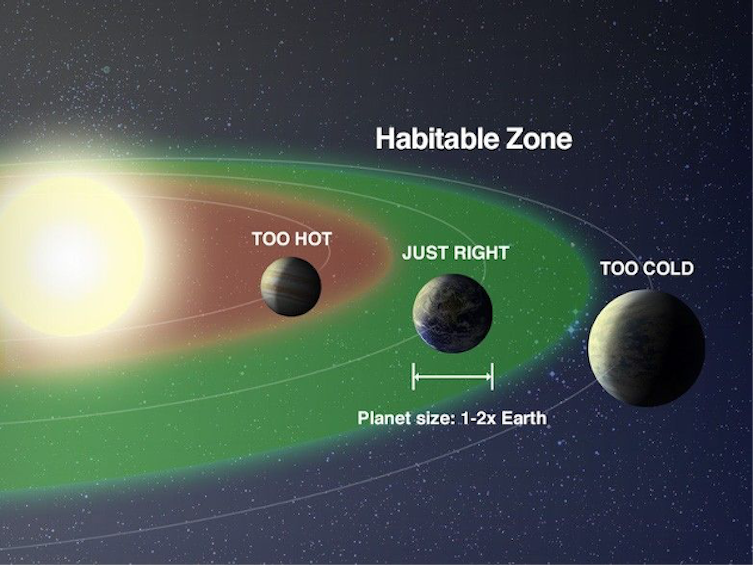
When astronomers search for planets that could host liquid water on their surface, they start by looking at a star’s habitable zone. Water is a key ingredient for life, and on a planet too close to its star, water on its surface may “boil”; too far, and it could freeze. This zone marks the region in between.

But being in this sweet spot doesn’t automatically mean a planet is hospitable to life. Other factors, like whether a planet is geologically active or has processes that regulate gases in its atmosphere, play a role.

The habitable zone provides a useful guide to search for signs of life on exoplanets – planets outside our solar system orbiting other stars. But what’s in these planets’ atmospheres holds the next clue about whether liquid water — and possibly life — exists beyond Earth.

On Earth, the greenhouse effect, caused by gases like carbon dioxide and water vapor, keeps the planet warm enough for liquid water and life as we know it. Without an atmosphere, Earth’s surface temperature would average around zero degrees Fahrenheit (minus 18 degrees Celsius), far below the freezing point of water.

The boundaries of the habitable zone are defined by how much of a “greenhouse effect” is necessary to maintain the surface temperatures that allow for liquid water to persist. It’s a balance between sunlight and atmospheric warming.

Many planetary scientists, including me, are seeking to understand if the processes responsible for regulating Earth’s climate are operating on other habitable zone worlds. We use what we know about Earth’s geology and climate to predict how these processes might appear elsewhere, which is where my geoscience expertise comes in.

A diagram showing three planets orbiting a star: The one closes to the star is labeled 'too hot,' the next is labeled 'just right,' and the farthest is labeled 'too cold.'
Picturing the habitable zone of a solar system analog, with Venus- and Mars-like planets outside of the ‘just right’ temperature zone.
NASA

Why the habitable zone?

The habitable zone is a simple and powerful idea, and for good reason. It provides a starting point, directing astronomers to where they might expect to find planets with liquid water, without needing to know every detail about the planet’s atmosphere or history.

Its definition is partially informed by what scientists know about Earth’s rocky neighbors. Mars, which lies just outside the outer edge of the habitable zone, shows clear evidence of ancient rivers and lakes where liquid water once flowed.

Similarly, Venus is currently too close to the Sun to be within the habitable zone. Yet, some geochemical evidence and modeling studies suggest Venus may have had water in its past, though how much and for how long remains uncertain.

These examples show that while the habitable zone is not a perfect predictor of habitability, it provides a useful starting point.

Planetary processes can inform habitability

What the habitable zone doesn’t do is determine whether a planet can sustain habitable conditions over long periods of time. On Earth, a stable climate allowed life to emerge and persist. Liquid water could remain on the surface, giving slow chemical reactions enough time to build the molecules of life and let early ecosystems develop resilience to change, which reinforced habitability.

Life emerged on Earth, but continued to reshape the environments it evolved in, making them more conducive to life.

This stability likely unfolded over hundreds of millions of years, as the planet’s surface, oceans and atmosphere worked together as part of a slow but powerful system to regulate Earth’s temperature.

A key part of this system is how Earth recycles inorganic carbon between the atmosphere, surface and oceans over the course of millions of years. Inorganic carbon refers to carbon bound in atmospheric gases, dissolved in seawater or locked in minerals, rather than biological material. This part of the carbon cycle acts like a natural thermostat. When volcanoes release carbon dioxide into the atmosphere, the carbon dioxide molecules trap heat and warm the planet. As temperatures rise, rain and weathering draw carbon out of the air and store it in rocks and oceans.

If the planet cools, this process slows down, allowing carbon dioxide, a warming greenhouse gas, to build up in the atmosphere again. This part of the carbon cycle has helped Earth recover from past ice ages and avoid runaway warming.

Even as the Sun has gradually brightened, this cycle has contributed to keeping temperatures on Earth within a range where liquid water and life can persist for long spans of time.

Now, scientists are asking whether similar geological processes might operate on other planets, and if so, how they might detect them. For example, if researchers could observe enough rocky planets in their stars’ habitable zones, they could look for a pattern connecting the amount of sunlight a planet receives and how much carbon dioxide is in its atmosphere. Finding such a pattern may hint that the same kind of carbon-cycling process could be operating elsewhere.

The mix of gases in a planet’s atmosphere is shaped by what’s happening on or below its surface. One study shows that measuring atmospheric carbon dioxide in a number of rocky planets could reveal whether their surfaces are broken into a number of moving plates, like Earth’s, or if their crusts are more rigid. On Earth, these shifting plates drive volcanism and rock weathering, which are key to carbon cycling.

A diagram showing a few small planets orbiting a star.
Simulation of what space telescopes, like the Habitable Worlds Observatory, will capture when looking at distant solar systems.
STScI, NASA GSFC

Keeping an eye on distant atmospheres

The next step will be toward gaining a population-level perspective of planets in their stars’ habitable zones. By analyzing atmospheric data from many rocky planets, researchers can look for trends that reveal the influence of underlying planetary processes, such as the carbon cycle.

Scientists could then compare these patterns with a planet’s position in the habitable zone. Doing so would allow them to test whether the zone accurately predicts where habitable conditions are possible, or whether some planets maintain conditions suitable for liquid water beyond the zone’s edges.

This kind of approach is especially important given the diversity of exoplanets. Many exoplanets fall into categories that don’t exist in our solar system — such as super Earths and mini Neptunes. Others orbit stars smaller and cooler than the Sun.

The datasets needed to explore and understand this diversity are just on the horizon. NASA’s upcoming Habitable Worlds Observatory will be the first space telescope designed specifically to search for signs of habitability and life on planets orbiting other stars. It will directly image Earth-sized planets around Sun-like stars to study their atmospheres in detail.

NASA’s planned Habitable Worlds Observatory will look for exoplanets that could potentially host life.

Instruments on the observatory will analyze starlight passing through these atmospheres to detect gases like carbon dioxide, methane, water vapor and oxygen. As starlight filters through a planet’s atmosphere, different molecules absorb specific wavelengths of light, leaving behind a chemical fingerprint that reveals which gases are present. These compounds offer insight into the processes shaping these worlds.

The Habitable Worlds Observatory is under active scientific and engineering development, with a potential launch targeted for the 2040s. Combined with today’s telescopes, which are increasingly capable of observing atmospheres of Earth-sized worlds, scientists may soon be able to determine whether the same planetary processes that regulate Earth’s climate are common throughout the galaxy, or uniquely our own.

The Conversation

Morgan Underwood receives funding from NASA-funded CLEVER Planets (Cycles of Life-Essential Volatile Elements in Rocky Planets) research project.

ref. Beyond the habitable zone: Exoplanet atmospheres are the next clue to finding life on planets orbiting distant stars – https://theconversation.com/beyond-the-habitable-zone-exoplanet-atmospheres-are-the-next-clue-to-finding-life-on-planets-orbiting-distant-stars-267498

How climate finance to help poor countries became a global shell game – donors have counted fossil fuel projects, airports and even ice cream shops

Source: The Conversation – USA (2) – By Shannon Gibson, Professor of Environmental Studies, Political Science and International Relations, USC Dornsife College of Letters, Arts and Sciences

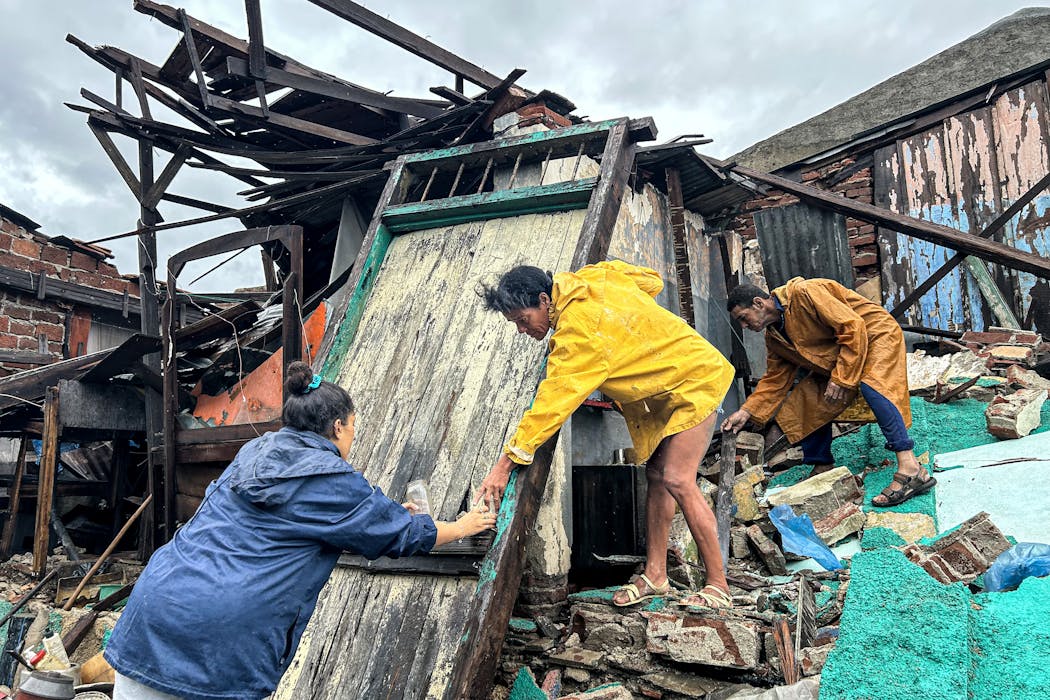
Climate finance is meant to help low-income countries adapt to climate change and recover from disasters like Hurricane Melissa. Yamil Lage/AFP via Getty Images

When Hurricane Melissa tore through the Caribbean in October 2025, it left a trail of destruction. The Category 5 storm damaged buildings in Jamaica, Haiti and Cuba, snapped power lines and cut off entire neighborhoods from hospitals and aid.

Jamaica’s regional tourism, fishing and agriculture industries – still recovering from Hurricane Beryl a year earlier – were crippled.

Melissa’s damage has been estimated at US$6 billion to $7 billion in Jamaica alone, about 30% of the island nation’s gross domestic product. While the country has a disaster risk plan designed to help it quickly raise several hundred million dollars, the damage from Melissa far exceeds that amount.

Whether Caribbean nations can recover from Melissa’s destruction and adapt to future climate change risks without taking on debilitating debt will depend in part on a big global promise: climate finance.

Video shows Category 5 Hurricane Melissa’s damage across Jamaica.

Developed countries that grew wealthy from burning fossil fuels, the leading driver of climate change, have pledged billions of dollars a year to help ecologically vulnerable nations like Jamaica, Haiti and Cuba adapt to rising seas and stronger storms and rebuild after disasters worsened by climate change.

In 2024, they committed to boost climate finance from $100 billion a year to at least $300 billion a year by 2035, and to work toward $1.3 trillion annually from a wide spectrum of public and private sources.

But if the world is pouring billions into climate finance, why are developing countries still struggling with recovery costs?

A man walks through a flooded street with water reaching into homes in Cuba.
Hurricane Melissa killed more than 90 people across the Caribbean in October 2025 and caused billions of dollars in damage, including in Cuba.
Yamil Lage/AFP via Getty Images

I study the dynamics of global environmental and climate politics, including the United Nations climate negotiations, and my lab has been following the climate money.

Governments at the U.N. climate conference in Brazil have been negotiating a plan to get closer to $1.3 trillion by 2035 and make it easier for developing countries to access funds. But the world’s climate finance so far has rested on a shaky foundation of fuzzy accounting, one where funding for airports, hotels and even ice cream stores is being counted as climate finance.

Cooking the climate finance books

Wealthy nations first promised in 2009 to raise $100 billion a year in climate finance for developing countries by 2020. Whether they hit that target in 2022, as claimed, is up for debate.

Researchers have found many cases where the reported numbers were inflated, largely due to relabeling of general aid that was already being provided and calling it “climate aid.”

The United Kingdom, for example, claims it is on track to meet its £11.6 billion (about $15.2 billion) pledge, but it is doing so in part by reclassifying existing humanitarian and development aid as “climate finance.”

This practice undermines the principle of additionality – the idea that climate finance should represent “new and additional” resources beyond traditional aid, and not simply be a new label on funds already planned for other purposes.

An analysis by the climate news site Carbon Brief suggests that to truly meet its target, the U.K. would need to provide 78% more than it currently does.

The U.K.’s “creative accounting” is not a one-off.

The Center for Global Development estimates that at least one-third of the new public climate funds in 2022 actually came from existing aid budgets. In some cases, the money had been shifted to climate adaptation projects, but often development projects were relabeled as “climate finance.”

What’s counted as climate finance comes from a mix of sources and is predominantly provided through loans and grants. Some funding is bilateral, flowing directly from one country to another. Some is multilateral and distributed through organizations such as the World Bank or the Green Climate Fund that are funded by the world’s governments. Money from private investors and corporations can also count in this growing but fragmented system.

Countries providing the assistance have been able to stretch the definition of climate finance so they can count almost any project, including some that have little to do with reducing emissions or helping communities adapt.

Fossil fuels, hotels and ice cream stores

When it comes to climate finance, the devil is in the project details.

Take Japan, for example. In 2020, its state-backed Japan Bank for International Cooperation used an environmental fund to finance a 1,200-megawatt coal plant in central Vietnam. That power plant will emit far more air pollution than Japan would allow for a power plant within its own borders.

The same bank labeled an airport expansion in Egypt as “eco-friendly” because it included solar panels and LED lights.

An external view of a new concourse
Japan counted funding for Egypt’s Alexandria International Airport, formerly Borg El Arab International Airport, as climate finance.
Abdelrhman 1990, CC BY-SA

In some cases, these projects increase greenhouse gas emissions, rather than lowering them.

For instance, Japan funded an airport expansion in Papua New Guinea that it labeled as climate finance because it was expected to reduce fuel use. However, an analysis by the International Council on Clean Transportation, used in Reuters’ analysis, found that if the airport meets passenger targets in its first three years, emissions from outbound flights will rise by an estimated 90% over 2013 levels.

Similarly, Italy claimed $4.7 million as climate finance for helping a chocolate and ice cream company expand into Asia by saying that the project had a “climate component.” And the U.S. counted a $19.5 million Marriott Hotel development in Haiti as “climate finance” because the hotel project included stormwater control and hurricane protection measures.

These are not isolated examples. Reuters reviewed climate finance documents it received from 27 countries and found that at least $3 billion labeled as climate finance went to projects that had little or nothing to do with fighting or recovering from climate change. That included movie financing, coal plant construction and crime prevention programs.

For many of these projects, the money comes in the form of loans, which means the developed country that provided the loan will make money off the interest.

Why fixing climate finance matters

A central test for the success of international climate talks will be whether governments can finally agree on a shared definition of “climate finance,” one that protects the interests of vulnerable countries and avoids creating long-term debt.

Without that clear definition, donor countries can continue to count marginal or loosely related investments as climate finance.

There are plenty of examples that show how targeted climate finance can help vulnerable countries cut emissions, adapt to rising risks and recover from climate-driven disasters. It has helped saved lives in Bangladesh with early warning systems and storm shelters, and improved crop resistance to worsening drought in Kenya, among other projects.

But when governments and banks count existing development projects and fossil fuel upgrades as “climate investments,” the result is an illusion of progress while developing countries face worsening climate risks. At the same time, wealthy countries are still spending hundreds of billions of dollars on fossil fuel subsidies, which further drive climate change.

For countries from Jamaica and Bangladesh to the Maldives, the threats from climate change are existential. Every misreported or “creatively counted” climate finance dollar means slower recovery, lost livelihoods and longer waits for clean water and electricity after the next storm.

University of Southern California environmental science students Nickole Aguilar Cortes and Brandon Kim contributed to this article.

The Conversation

Shannon Gibson does not work for, consult, own shares in or receive funding from any company or organization that would benefit from this article, and has disclosed no relevant affiliations beyond their academic appointment.

ref. How climate finance to help poor countries became a global shell game – donors have counted fossil fuel projects, airports and even ice cream shops – https://theconversation.com/how-climate-finance-to-help-poor-countries-became-a-global-shell-game-donors-have-counted-fossil-fuel-projects-airports-and-even-ice-cream-shops-268764