Why it’s so easy to choke on fish bones – and the other dangers they pose

Source: The Conversation – UK – By Adam Taylor, Professor of Anatomy, Lancaster University

Strictly Come Dancing judge Shirley Ballas recently revealed that she’d “thought that was it” after a fish bone became lodged in her throat. Ballas’s terrifying ordeal lasted for 20 minutes, with the judge struggling to breathe until her hair and makeup artist managed to dislodge the bone using the Heimlich manoeuvre (also known as abdominal thrusts).

Ballas certainly isn’t the first person to make the news for such an ordeal. Even the late Queen Mother had experienced something similar.

Fish bones are actually one of the most common reasons people end up in the emergency department. This phenomenon is particularly common in Asian countries, where diets tend to include a lot of fish. The problem is so great, in fact, that in China specialist fish bone removal clinics have popped up.

Although fish are a good source of many minerals, protein and heart-healthy fatty acids, they also contain multiple small, delicate “pin” bones – usually in the fillet.

Cod have approximately 17 pin bones and salmon have around 30 – though some fish can have over 100. Eel bones have also frequently been linked to emergency room trips, while flounder bones are particularly dangerous because of the number and size of them – making it easy for them to get lodged far down the throat.

This means that despite the care taken during the food prep process, some may inadvertently slip through. These bones can be dangerous if swallowed accidentally – and choking is just one of the serious complications that they can cause.

Fish bones typically become lodged in the tonsils at the back of the throat, in the pharynx at the back of the mouth, the piriform sinus (a small hollow that plays a role in swallowing) and, of course, the oesophagus (the canal which connects the throat to the stomach).

If you do accidentally swallow a fish bone, you’ll probably experience coughing, a prickly or “something stuck” sensation in the throat, as well as pain or difficulty swallowing and spitting up blood.

However, they don’t always cause symptoms – and some people end up living unknowingly with a fish bone stuck in their throat. For instance, in 2012 a 69-year-old Japanese woman went to hospital complaining of a swollen neck – only for doctors to discover she had a 32mm fish bone which had been lodged in her throat for nine months.

Undiscovered fish bones can also migrate around the neck. Repeated swallowing can also result in the bones penetrating the wall of the oesophagus and moving into the tight spaces in the neck.

Here, the bone poses a high risk to the vast number of critical nerves and blood vessels that pass through the neck – such as the carotid artery, which is one of the major vessels that supplies blood to the brain.

A chef wearing black gloves removes a fish bone from a salmon fillet with tweezers.
Fish have many small bones which can be missed even during careful food prep.
Roman Samsonov/ Shutterstock

Bones can also pierce the thyroid gland, which can cause abscesses and inflammation. This can also lead to sepsis, a rare but incredibly dangerous complication.

In some cases, lodged fish bones have even managed to migrate into the neck’s muscles and under the skin. They can even pop out the skin too – as happened recently to one Thai woman.

Any bones that manage to migrate out of the throat are a surgical emergency as there’s no way to dislodge it otherwise. These bones can also cause infections in the spaces around the heart, or migrate into the spinal cord leading to secondary infections which could cause paralysis.

This is why it’s imperative that if you do accidentally swallow a bone, you try to remove it as soon as possible.

What to do

Stuck fish bones can be removed in a variety of ways.

For some people, a forceful cough will be enough to eject it. This technique is most effective in cases where the bone is stuck in the airway, rather than the oesophagus.

But one problem with coughing is that instead of ejecting it, it could dislodge the bone and allow it to pass into the stomach and through the intestines, where there’s a risk of perforation.

Bones that are stuck in the wall of the oesophagus could potentially move through the body, but many cases will require endoscopic removal.

Some tips suggest that eating something such as bread or banana can force the bone down, but there’s no scientific evidence to support this remedy. It may even further block the airway or oesophagus – and could potentially make things worse by lodging the bone further into the tissue. So if coughing doesn’t help and you still have symptoms, seeking medical advice is the next sensible step.

Where a person is unable to speak or breathe then abdominal thrusts may be needed to help dislodge the offending fish bone (or other item). If it comes to this, you should call emergency services and seek urgent medical support.

The Conversation

Adam Taylor does not work for, consult, own shares in or receive funding from any company or organisation that would benefit from this article, and has disclosed no relevant affiliations beyond their academic appointment.

ref. Why it’s so easy to choke on fish bones – and the other dangers they pose – https://theconversation.com/why-its-so-easy-to-choke-on-fish-bones-and-the-other-dangers-they-pose-270613

Cop30 saw important developments amid huge disappointment

Source: The Conversation – UK – By Will de Freitas, Environment + Energy Editor, The Conversation

MN84 / shutterstock

This roundup of The Conversation’s climate coverage was first published in our award-winning weekly climate action newsletter, Imagine.

Cop30 was never just another UN climate summit. Its setting in Belém, at the mouth of the Amazon, was a reminder that negotiations now unfold within the crisis they are meant to solve.

Ultimately the summit, which wrapped up last weekend, was a disappointment. The core negotiations on emissions reductions produced an underwhelming deal, and many academics argue that these days the most exciting progress happens in the side events. Yet even as political negotiations faltered, Cop30 revealed the rising power of first-hand experience – from indigenous leaders and youth negotiators to people using stories not spreadsheets to cut through climate fatigue.

The ‘people’s Cop’ that wasn’t

Brazil promised this would be the “implementation Cop” – one with more action than words, focused on the people most affected by climate change. But Simon Chin-Yee, who was at the negotiations in Belém, and his colleagues at UCL say it failed on that count.

They note that over 5,000 indigenous people were at the summit, but that “only 360 secured passes to the main negotiating ‘blue zone’, compared to 1,600 delegates linked to the fossil fuel industry”.

With the US having withdrawn from the Paris agreement (again), China became “one of the loudest voices in the room” in an attempt to cement its status as a green technology superpower. The absence of America came as a relief for some delegates, say Chin-Yee and colleagues:

“Without the distraction of the US attempting to ‘burn the house down’ … the conference was able to get on with the business at hand: negotiating texts and agreements that will limit global warming.”

But, nonetheless, they say the agreement reached – the Belém package – is “weak” and won’t get us anywhere near limiting warming to 1.5˚C.

“Most striking,” they write, “is the absence of the words ‘fossil fuels’ from the final text even though they were central to the Glasgow climate pact (2021) and the UAE consensus (2023).”


Read more:
Cop30: five reasons the UN climate conference failed to deliver on its ‘people’s summit’ promise


The Amazon speaks

If the main negotiations were disappointing, perhaps Cop30 will be mostly remembered for its location. “The pivot from the two previous conferences in petrostates Azerbaijan and UAE … was jarring.”

That’s according to Alexander Lees, who researches tropical ecology at Manchester Met and has lived in Belém for many years. Lees, with two colleagues, says the city’s climate even “became a protagonist in its own right”. “A huge thunderstorm during one afternoon flooded many roads and brought down trees across the city, causing power outages.”

people in indigenous clothing outside cop30 building
Mundukuru indigeous protesters in Belém.
Antonio Scorza / shutterstock

Meanwhile, Belém’s oppressive heat and humidity was noticeable even in the negotiating rooms: “This catalysed an official complaint from UN climate chief Simon Stiell about the climate conditions in the Cop venue, asking for ‘a clear delivery plan on how temperatures will be brought down within the next 24 hours’. The parallels to the goals of the wider negotiation process were hard to miss.


Read more:
Why hosting the UN climate summit in the Amazon was so important, despite the disappointing outcome


Stories cut through the noise

The image of climate diplomats wiping sweat from their brows as they struggle to focus in a stuffy room is compelling. And it’s this sort of stuff that often gets people interested.

Until the final few days of Cop30, the biggest stories to emerge from the summit all had a human angle: the floods, an indigenous protest, a fire that briefly evacuated the negotiations.

That makes sense. The negotiators speak in mitigation pathways and emissions curves, while people speak in memories, anecdotes and daily struggles shaped by a changing climate. The latter is just much more compelling.

Indeed, stories of personal experience cut through “climate fatigue” in ways that global negotiations can’t, according to climate psychologists Gulnaz Anjum of the University of Limerick and Mudassar Aziz of the University of Oslo.

“Psychology research consistently shows that people engage more deeply when they can recognise themselves, their families, their fears and their hopes in climate stories. Without that human connection, climate messages often become background noise.”

One problem is that people are often exhausted by gloomy climate news. This isn’t them being disengaged, say Anjum and Aziz, it’s a sign they are overwhelmed. “Years of catastrophic headlines, stalled policies and political gridlock create a sense of powerlessness. This ‘climate fatigue’ is often mistaken for apathy, yet it is more accurately a form of emotional self-protection.”

What works, they say, is “grounded hope”, and “stories that reflect their own struggles and resilience: a family rebuilding after a hurricane; neighbours sharing water during heatwaves; young people restoring mangroves to protect coastlines; mothers comforting frightened children as storms approach.”


Read more:
How stories of personal experience cut through climate fatigue in ways that global negotiations can’t


We gambled and lost

With all that said, let’s end on a gloomier note. Our final story doesn’t open with a personal narrative, but it does have a nice metaphor: the lost gamble.

Ten years ago the world placed a bet, say James Dyke of the University of Exeter and Johan Rockström of the Potsdam Institute in Germany. The Paris agreement, and its system of voluntary emissions cuts and agreement by consensus, would put humanity on a path to avert dangerous climate change.

A decade on, after another underwhelming summit, they reckon “we can definitively say humanity has lost this bet.”

Referring to scientific attempts to map out plausible scenarios for the future, they say the best on offer is now “a future where peak warming reaches 1.7°C before returning to within 1.5°C in 75 years”.

That’s certainly better than the scenario in which we do nothing. But even that modest win will require “immediate action” on multiple fronts: a fossil fuel phase out; a food system that absorbs carbon instead of emitting it; removal of carbon dioxide from the atmosphere on an unprecedented scale.

Belém may have failed politically but it highlighted something academics have been saying for years: narrative and symbolism can sometimes be as powerful as facts and laws. If Cop30 taught us anything, it’s that the era of negotiating climate change at arm’s length is hopefully coming to a close. The crisis is no longer outside the venue – it’s flooding the streets and overheating the negotiating rooms. Whether world leaders listen is one question hanging over the road to Cop31 host Turkey, and beyond.


Read more:
Turkey will host the next UN climate summit – here’s how it plans to use its moment in the spotlight


Don’t have time to read about climate change as much as you’d like?

Get a weekly roundup in your inbox instead. Every Wednesday, The Conversation’s environment editor writes Imagine, a short email that goes a little deeper into just one climate issue. Join the 47,000+ readers who’ve subscribed so far.


The Conversation

ref. Cop30 saw important developments amid huge disappointment – https://theconversation.com/cop30-saw-important-developments-amid-huge-disappointment-270712

Could a national, public ‘CanGPT’ be Canada’s answer to ChatGPT?

Source: The Conversation – Canada – By Fenwick McKelvey, Associate Professor in Information and Communication Technology Policy, Concordia University

As generative artificial intelligence (AI) tools like ChatGPT, Google Gemini and others reshape the digital landscape, much of the conversation in Canada has focused on commercial innovation.

But what if AI were developed as a public utility rather than as a commercial service? Canada’s long history with public service media — namely the CBC and Radio-Canada — offers a useful model for thinking about how AI could serve the public amid growing calls for a public interest approach to AI policy.

Commercial AI has largely been built on the assumption that user-generated content posted online is available to train commercial AI. Focusing so much on the technical success of generative AI ignores that its innovations depend on access to global cultural knowledge — the result of treating the internet as a “knowledge commons.”

AI would have been impossible without public data, and much of that data was taken without contributing back to the public system. Canada, in fact, has a historical link to AI innovation.

Early work in automated translation involved a tape reel that was anonymously sent to IBM in the 1980s containing Canadian parliamentary transcripts. The multilingual material helped train early translation algorithms. What if Canada intentionally trained the future of AI in the same way?

CanGPT: a Canadian public-service AI

A growing number of countries are experimenting with national or publicly governed AI models. Switzerland, Sweden and the Netherlands are all building AI systems with the goal of creating public AI services. The Canadian federal service has some of its own experiments with its own alternative to ChatGPT, CanChat, but it’s only an internal tool.

In Montréal, many arts-based organizations have begun discussing creating their own commons-based AI infrastructure and tools, but they lack infrastructure and resources to advance their mission. A national initiative could help.

There is precedent for this approach. When radio and television first emerged, many countries created public broadcasters — like the BBC (British Broadcasting Company) in the United Kingdom and the CBC in Canada — to ensure new communication technologies served democratic needs.

A similar approach could work for AI. Instead of letting companies build the future of AI, Canadian Parliament could sponsor the creation of its own AI model and expand the mandate of an organization like the CBC to deliver better access to AI. Such a public model could draw on materials in the public domain, government datasets and publicly licensed cultural resources.

CBC/Radio-Canada also has an enormous, multilingual archive of audio, video and text going back decades. That corpus could become a foundational dataset for a Canadian public-service AI, if treated as a public good.

A national model could become an open-source system available either as an online service or as a locally run application. Beyond providing public access, CanGPT could anchor a broader national AI strategy rooted in public values rather than commercial incentives.

Setting democratic boundaries for AI

Developing CanGPT would force a needed debate about what AI should and should not be able to do. Generative AI is already implicated in deepfake pornography and other forms of technology-assisted violence.

Today, the guardrails governing these harms are set privately by tech companies. Some platforms impose minimal moderation; others, like OpenAI, ban politicians and lobbyists from using ChatGPT for official campaign business. These decisions have profound political implications that shape content moderation and social media governance.

Content moderation and acceptable-use policies could be solved through normative principals embedded in CanGPT. A publicly governed AI model could allow Canadians to debate and define these boundaries through democratic institutions rather than through technology firms.

Why a public AI model matters

Public AI is a different tack than government’s infrastructure-heavy approach to AI. The federal government — despite growing concerns that we are in an AI bubble — has invested billions in a big, costly AI Sovereign Compute Strategy.

The policy might be ineffective, end up going largely to American firms and dismantle Canada’s capacity to build public-interest AI.

Canada’s AI agenda has a big environmental impact. A public-good framework could encourage the opposite: frugal, energy-efficient models that run on smaller, local machines and prioritize targeted tasks rather than massive, multi-billion parameter models like ChatGPT. A smaller public model could contribute to this by having a lower environmental footprint.

This approach could stand in direct contrast to the federal government’s efforts to build large-scale AI, as reflected in the massive data centre investments outlined in recent federal budgets. Canada has made major investments in big AI projects. If the bubble bursts, however, smaller-scale AI initiatives may offer a less risky future.

Imagining a public future for AI

Building CanGPT would not be simple. Questions remain about how to fund it, how to update it and how to maintain competitive performance compared with commercial AI.

But it would open a national conversation about AI’s social purpose, regulatory standards and the role of public institutions in digital infrastructure. CanGPT is, admittedly, a strange idea, but it might be precisely what is lacking in Canada’s approach to public service media and digital sovereignty.

At minimum, imagining a public AI model opens the possibilities of new ways to deliver on the promises of AI other than another subscription sold to us by Big Tech.

The Conversation

Fenwick McKelvey receives funding from Social Science and Humanities Research Council and the Fonds de recherche du Québec.

ref. Could a national, public ‘CanGPT’ be Canada’s answer to ChatGPT? – https://theconversation.com/could-a-national-public-cangpt-be-canadas-answer-to-chatgpt-231170

Beyond Zohran Mamdani: Social media amplifies the politics of feelings

Source: The Conversation – Canada – By Merlyna Lim, Canada Research Professor, School of Journalism and Communication, Carleton University

Zohran Mamdani’s election as New York City mayor has spurred global celebrations and pride. Scores of social media users worldwide celebrate and claim him as one of their own.

Muslims across the globe, including in Indonesia — home to the world’s largest Muslim population, where I was born and raised — rejoice that he is Muslim. Indians take pride in Mamdani’s Indian roots. Ugandans cheer his victory because Kampala is his birthplace.

Representation does matter. It can be deeply affirming to see someone whose identity resonates with you succeed in a foreign political landscape.

However, Mamdani didn’t win simply because of who he is. He won because of what he did, the politics that his campaigns were based on — a platform that focuses on the cost of living, from utility bills to grocery bills to bus fares to child care to rent — and, more importantly, the feelings, the trust and cohesion generated in the network of people who organized with and for him.

As a scholar who examines digital media and information technology in relation to citizen participation and democracy, I know that political behaviour research has long observed that voters don’t choose based on policy alone: they vote based on identity, group belonging, emotional attachments and symbolic cues, all of which speak to “the politics of feelings.”

This refers to politics that mobilize and build power through shared feelings and emotional bonds.


Read more:
Zohran Mamdani’s transformative child care plan builds on a history of NYC social innovations


Identity, platform, visibility

That Mamdani is Muslim — the son of a South Asian African Muslim father and a Hindu Indian mother, born in Uganda — and that he has lived an immigrant community experience in New York is a formidable part of his story.

This profoundly matters in a political landscape that often marginalizes such identities — and helps explain why he has become so visible online and globally.

Viral videos, algorithmically boosted content and his public persona amplified this visibility. Online, the Zohran Mamdani phenomenon illustrates the power of emotion-driven mobilization, the process through which emotional currents bring people into alignment or connection with a cause, figure or community.

Identity and emotion have always been central to politics. Social media didn’t invent the politics of feelings; it accelerated and amplified them.

Branding a politician

Social media political participation doesn’t operate within a deliberative civic culture, but within an algorithmic marketing culture where algorithmic targeting and data-driven marketing principles shape how persuasion, visibility and emotion circulate.

Branding shapes the way content looks and feels. Algorithms push what’s likely to grab attention, and human users — naturally drawn to emotion — interact with it, feeding the system in return. Together, they produce a self-reinforcing loop where high-arousal content dominates, as a consequence of the interplay of marketing logic, machine learning and user behaviour.

The algorithm rewards emotion, not analysis. It privileges what’s instantly legible — a name, a face, a faith — over the collective labour and work behind a political movement.

Hope, pride as well as fear, outrage

Posts highlighting Mamdani’s Muslim, immigrant or brown identity, whether in celebration or attack, elicit emotions — hope, pride, fear or outrage. These emotions fuel engagement, which algorithms amplify, generating cycles of visibility which can simultaneously mobilize support and provoke backlash.


Read more:
The urgent need for media literacy in an age of annihilation


Indeed, the same identity categories that make him so celebrated abroad have also been weaponized against him at home in the United States.

Through social media disinformation fuelled by racism and Islamophobia, Mamdani’s opponents have framed him as a “Muslim extremist,” “communist,” “jihadi terrorist,” “brown” and “dirty” or a “threat” to American values.

The flattening happens from both sides: he is either attacked for his identity or adored because of it.

The irony is sharp. For example, some Indonesians embrace a man named Mamdani — Mamdanis are part of the Khoja Shia community — while turning a blind eye to anti-Shia persecution at home.

Similarly, some Modi supporters claim Mamdani’s Indian heritage without acknowledging that he is a vocal critic of Modi.


Read more:
Listen: Indian PM Modi is expected to get a rockstar welcome in the U.S. How much is the diaspora fuelling him?


Identity becomes politicized

We can see similar dynamics elsewhere. Sadiq Khan’s visibility as a Muslim mayor of London generated both celebration and Islamophobic backlash on social media, amplified through viral videos, memes and algorithmically boosted news cycles.

In Canada, former prime minister Justin Trudeau’s youthful, multicultural and photogenic persona generated strong emotional attachment and global circulation while overshadowing his substantive political work.

This is how identity becomes politicized. By focusing the debate on who someone is, attention is diverted from what they stand for. It’s easier to categorize than to engage with structural critique.

In an algorithmic age, we consume politics in byte sizes, where visibility often displaces understanding and emotional attachment overshadows knowledge-seeking. It’s easier to celebrate a face than to join a struggle.

Emotion meets lived experience

But visibility is not the same as electoral power. We learn from Mamdani’s case that, for local politics, symbolism is rarely enough. It operates in a different register from national or global scales.

While Mamdani’s online persona benefited from algorithmic amplification, his campaign was also built on grassroots, volunteer-based mobilization combining door-knocking and neighbourhood conversations across the city of New York.

In local elections, voters aren’t distant algorithmic audiences. They’re neighbours, co-workers and community members who experience the effects of policy in their daily lives. A candidate’s identity, promises and track record must resonate with the residents’ tangible needs. Branding and emotional attachment help, but they cannot replace direct knowledge of local realities and persistent organizing work.

Mamdani platform

To cast a ballot for Mamdani in New York, voters needed to not only embrace his identities, but also his platform and the fact that, like Bernie Sanders and Alexandria Ocasio-Cortez, he’s unapologetically a democratic socialist.

The word “socialism” is not widely accepted in the United States, as it’s often conflated with “communism” — the remnant of Cold War anti-communism propaganda. It’s not popular in Indonesia, India and Uganda either.

Whether Mamdani will fulfil his voters’ expectations is too early to tell. What is clear is that his story isn’t just about Muslim pride or immigrant success. It’s about what’s possible when people organize across differences for a common cause. It’s about choosing to see beyond who someone is to what they stand for.

The Conversation

Merlyna Lim does not work for, consult, own shares in or receive funding from any company or organisation that would benefit from this article, and has disclosed no relevant affiliations beyond their academic appointment.

ref. Beyond Zohran Mamdani: Social media amplifies the politics of feelings – https://theconversation.com/beyond-zohran-mamdani-social-media-amplifies-the-politics-of-feelings-269792

New Zealand’s biggest navy ship made transit through sensitive Taiwan Strait this month

Source: Radio New Zealand

HMNZS Aotearoa leaves Auckland for Tonga.

The HMNZS Aotearoa. (File photo) Photo: Supplied / NZDF

New Zealand’s biggest navy ship HMNZS Aotearoa has made a trip through the sensitive Taiwan Strait.

The Strait is part of the South China Sea, over which several countries, including China and the Philippines, have contested territorial claims.

Reuters reported Chinese forces tracked and followed the ship.

Defence Minister Judith Collins said the supply vessel had been on deployment since September after having maintenance done in Singapore.

It sailed through the Strait on 5 November on its way to the North Asian region to take part in UN monitoring of sanctions against North Korea.

Collins said all actions during the transit had been safe, professional and consistent with international law.

That included exercising the right to freedom of navigation, as guaranteed under the United Nations Convention of the Law of the Sea.

“The NZDF conducts all activities in accordance with international law and best practice. By doing this, we are demonstrating our commitment to the international rules-based system in our near region – the Indo-Pacific”.

The Aotearoa also sailed through the Strait last year in September. The minister said at the time it was with an Australian ship as part of routine activity.

Sign up for Ngā Pitopito Kōrero, a daily newsletter curated by our editors and delivered straight to your inbox every weekday.

– Published by EveningReport.nz and AsiaPacificReport.nz, see: MIL OSI in partnership with Radio New Zealand

Négociations sur l’Ukraine : le scandale Witkoff, fausses révélations et vrai symptôme

Source: The Conversation – in French – By Cyrille Bret, Géopoliticien, Sciences Po

Alors que l’administration Trump a récemment présenté un plan en 28 points sur l’Ukraine, très favorable aux intérêts de Moscou, on vient d’apprendre que, le mois dernier, le conseiller du président des États-Unis Steve Witkoff avait affiché lors d’une conversation téléphonique avec un conseiller de Vladimir Poutine une grande proximité à l’égard de la position du Kremlin. Ces fuites ont suscité un scandale artificiel : en écoutant cet échange de quelques minutes, on n’a rien appris que l’on ne savait déjà sur la posture réelle de l’administration Trump… laquelle demeure pourtant, qu’on le veuille ou non, le seul véritable médiateur entre Moscou et Kiev.


Que de bruit autour de demi-révélations et de secrets éventés ! Que d’émois autour du « scandale Witkoff » !

Et que de commentaires indignés suscités par la retranscription intégrale, publiée par Bloomberg le 26 novembre, de la conversation téléphonique entre l’envoyé spécial du président Trump, Steve Witkoff, et le conseiller diplomatique du président Poutine, Iouri Ouchakov, le 14 octobre dernier !

Aux États-Unis comme en Europe, on crie à la trahison de l’Ukraine. On met en cause l’honnêteté du magnat de l’immobilier, ami proche de Donald Trump. Et on met en question sa capacité à mener une médiation entre Moscou et Kiev.

Que les propos échangés ne soient pas à l’honneur du milliardaire américain, on peut en convenir. Que sa connivence surjouée avec un membre éminent de l’administration présidentielle russe choque, c’est l’évidence.

Mais invoquer ces fuites comme autant de raisons pour récuser Witkoff comme émissaire atteste d’une naïveté idéaliste qui n’a pas sa place dans la géopolitique contemporaine de l’Europe. Et qui, paradoxalement, dessert la cause ukrainienne.

Fausses confidences et évidences usées

Quelles sont ces prétendues révélations que les opinions publiques occidentales feignent de découvrir ? Quels secrets ces propos livrent-ils ? Et quels mystères ces fuites mettent-elles à jour ?

Le négociateur américain cultive une familiarité avec la Russie, entretient la flagornerie à l’égard du Kremlin, développe des relations d’affaires avec des businessmen proches de lui et affiche sa condescendance pour les Ukrainiens comme pour les Européens. II suggère à son interlocuteur de demander à Vladimir Poutine de flatter l’ego légendaire de l’actuel locataire de la Maison Blanche. Et il accepte la proposition d’Ouchakov quand celui-ci dit vouloir organiser un entretien téléphonique entre les deux présidents avant la visite à Washington de Volodymyr Zelensky, qui allait avoir lieu deux jours plus tard.

La belle affaire ! Ces secrets sont de notoriété publique, et ces fuites, bien inutiles.

Toutes les déclarations publiques de l’univers MAGA le proclament urbi et orbi, autrement dit sur les réseaux sociaux : l’administration Trump veut se débarrasser de la guerre en Ukraine à tout prix, établir des coopérations fructueuses avec la Russie, tenir les Ukrainiens comme les Européens sous la pression et régler le conflit à son seul profit. Elle professe depuis longtemps une admiration non feinte pour le style de gouvernement Poutine. À l’est, rien de nouveau !

L’entourage de Donald Trump ne veut éviter ni les conflits d’intérêts, ni la servilité envers les chefs, ni l’intrigue, ni même de prendre des décisions concernant des États souverains sans consulter leurs autorités légales. Ses représentants officiels, du vice-président J. D. Vance au secrétaire d’État Marco Rubio, ont déjà montré, dans la guerre en Ukraine comme dans le conflit à Gaza, ce qu’était « la paix selon Trump » : un accord précaire, court-termiste et publicitaire. Le succès personnel, rapide et médiatisable compte bien plus que le règlement durable des conflits. Là encore, rien de nouveau sous le soleil de Bloomberg.

Comme on dit en anglais : « Old news ! » Autrement dit, le scoop est éventé depuis longtemps.

Le monopole américain du dialogue avec la Russie

Les critiques formulées à l’égard de Witkoff par les démocrates et les républicains classiques, comme par les Européens, sont sans doute causées par une indignation sincère. Mais, au fond, elles attestent d’une ignorance coupable à l’égard du rapport de force géopolitique actuel en Europe. Et de la nature d’une médiation internationale.

Peut-on crier à la déloyauté quand un médiateur établit une proximité personnelle avec ses interlocuteurs désignés ? Doit-on s’indigner qu’il ait intégré dans son équation des revendications de la partie adverse, comme base de discussion ? Là encore, ces protestations – certes moralement légitimes – ne tiennent pas compte de la réalité du travail de la médiation américaine concernant l’Ukraine.

En rejetant le rôle de protecteur de l’Ukraine et en endossant celui de médiateur, les États-Unis ont rempli la fonction laissée orpheline par les Européens. À tort ou à raison, ceux-ci ont estimé que la défense de l’Ukraine exigeait de couper les canaux de communication avec la Russie. C’est une réalité dérangeante : un médiateur a précisément ce rôle ambigu de dialoguer avec les deux ennemis, l’agresseur et la victime. Il doit réaliser une opération quasi alchimique, transformer les ennemis en interlocuteurs.

Que le plan en 28 points de l’équipe Trump soit profondément favorable aux intérêts russes, c’est l’évidence.

Mais on ne peut pas non plus nier le fait que seul l’entourage du président américain est aujourd’hui en position géopolitique de parler aux deux parties, de leur proposer des documents de travail, d’exercer sur les deux la pression nécessaire à l’ouverture de discussions et ainsi d’esquisser les conditions d’une fragile suspension des combats, dont, répétons-le, les Ukrainiens sont les victimes sur leur propre territoire.

Aujourd’hui, volens nolens, l’équipe Trump a pris le monopole de la discussion avec la Russie et avec l’Ukraine. Les Européens sont (provisoirement) réduits à se faire les avocats de l’Ukraine à l’égard des États-Unis, pas vis-à-vis de la Russie.

Les négociations internationales selon Donald Trump

La discussion entre Witkoff et Ouchakov atteste de l’amateurisme diplomatique du premier et de l’habileté tactique du second, du moins durant ces quelques minutes. La fuite à l’origine de la retranscription souligne que la méthode Trump ne fait pas l’unanimité aux États-Unis et que certains essaient d’entraver la politique que l’administration actuelle met en œuvre.

Mais ce faux scoop doit servir d’alerte aux Européens. Les règles du jeu diplomatique sont bouleversées par le conflit en Ukraine car celui-ci est bloqué : la paix par la victoire militaire de l’une ou de l’autre partie est impossible ; la reconquête par Kiev des territoires illégalement occupés et annexés par Moscou est plus qu’incertaine ; quant aux négociations directes entre belligérants, elles semblent irréalistes. Pour sortir (même provisoirement) du cycle des offensives et contre-offensives et pour donner à l’Ukraine le répit dont elle a besoin, les outils classiques sont momentanément inopérants.

L’administration Trump, dans son style fait de compromissions, de provocations, de revirements, de vulgarité et de coups de pression, essaie de sortir de l’impasse. C’est sur ce point que les révélations Witkoff sont éclairantes : la lutte existentielle de l’Ukraine peut soit se prolonger dans une guerre sans fin, soit être suspendue par une diplomatie non orthodoxe qui choquera moralement les consciences au nom des résultats espérés. Ceux-ci sont bien incertains : ils peuvent être ruinés en un instant par un dédit du Kremlin, par un succès militaire tactique d’un des deux ennemis ou encore par un nouveau scandale en Ukraine.

Quand la victoire paraît hors de portée, quand les négociations sont impensables et quand la paix paraît impossible, comment récuser la seule médiation actuellement possible, aussi biaisée soit-elle ? Quand la paix est lointaine et la négociation impensable, les méthodes non orthodoxes sont nécessaires pour briser le cercle indéfiniment vicieux du conflit.

Plutôt que de s’indigner d’un faux scoop, les Européens devraient le voir comme le symptôme de leur propre conformisme diplomatique. Plutôt que de réagir avec retard comme intercesseurs de l’Ukraine auprès de l’administration Trump, ils devraient innover, dans leur propre intérêt et dans celui de l’Ukraine. Reprendre directement contact avec le Kremlin, proposer un plan de paix qui ne soit pas le simple rappel du droit international, veiller à ce que la reconstruction de l’Ukraine ne se fasse pas à leurs dépens leur permettrait de s’affirmer pour ce qu’ils sont : la première puissance du continent et non pas de simples spectateurs de leur propre sécurité.

The Conversation

Cyrille Bret ne travaille pas, ne conseille pas, ne possède pas de parts, ne reçoit pas de fonds d’une organisation qui pourrait tirer profit de cet article, et n’a déclaré aucune autre affiliation que son organisme de recherche.

ref. Négociations sur l’Ukraine : le scandale Witkoff, fausses révélations et vrai symptôme – https://theconversation.com/negociations-sur-lukraine-le-scandale-witkoff-fausses-revelations-et-vrai-symptome-270737

Marshall Islands introduces world first crypto-based universal income scheme

Source: Radio New Zealand

Commemorative bitcoin coins are in Yichang, Hubei province, China, on December 5, 2024. (Photo by Costfoto/NurPhoto) (Photo by CFOTO / NurPhoto / NurPhoto via AFP)

Paul confirmed that several Pacific Island nations (though he would not say which) had approached him to understand more about the scheme – and whether they could do it themselves. Photo: CFOTO / NurPhoto via AFP

The Marshall Islands is giving away free cash to its more than 33,000 citizens.

The government announced its universal basic income (UBI) system on Wednesday, with blockchain as its main mode of delivery.

It marks the first system of its kind in the world, where each citizen is periodically paid an equal sum regardless of how much they are making, it said.

Marshall Islands will give their citizens US$800 per year, per person, paid out quarterly. Citizens will have the option of receiving their payment via a stablecoin called USDM1, by cheque, or by bank deposit.

A stablecoin is a cryptocurrency pegged to a real-world asset or group of assets – in this case, US Treasury bonds, tethering it to the ever-changing value of the US Dollar.

Citizens can now access payments on a digital wallet called Lomalo, bypassing the need for bank account and thus, the RMI said, reaching the remotest parts of the nation where access to banking may not be a guarantee.

Alongside the lump-sum payment, the programme offers larger payments to those in extraordinary circumstances for issues such as food and housing.

The Marshall Islands government announced its universal basic income system on Wednesday, with blockchain as its main mode of delivery.

The Marshall Islands government announced its universal basic income system on Wednesday, with blockchain as its main mode of delivery. Photo: RNZ Pacific

Spreading the wealth

The Marshall Islands is one of three Pacific Island countries (alongside the Federated States of Micronesia and Palau) in a Compact of Free Association with the US.

The nation receives around $67 million from the US each year in development assistance to run their government, an arrangement thus far untouched by the Trump administration.

Since 2004, the US has also paid into a trust fund for the nation, alongside Taiwan and the Marhsall Islands themselves. As of the 2024-25 fiscal year, that fund sits at a value of $1.042 billion with an weighted investment return of 20.66 percent.

An agreement signed in 2023 has committed the US to front-loading around $700 million into the fund over five years, ending in 2027 with no further commitments from there. The government has since been trying to figure out for a while now the best way to take the extra cash and do the most good with it.

Finance Minister David Paul told RNZ Pacific citizens have been asking for social investments out of the fund for some time.

“We didn’t see the impact of it, as far as the majority of the Marshallese are concerned,” Paul said.

“All this money goes into financiing the government, infrastructure development and ohter things, but people continue to see that their lives are not improving, their economic situations are not improving.”

Paul described an “opportunity” to introduce a UBI without introducing any new taxes or transfers, thanks to their expectation that the trust fund would continue to grow.

The USDM1 stablecoin, essentially pegged to the wellbeing of the US government, reflected that confidence.

“What is the purpose of having a huge trust fund when you know we have all these ongoing issues, that we need assistance for?”

Trouble in paradise

A UBI has been on the Marshall Islands agenda for years now. When the government changed, the new President Hilda Heine promised to implement a UBI of at least $800 per year by October 2024.

Though they missed their cutoff date by more than a year, the proposal survived a change in US Administrations, and significant scrutiny from the International Monetary Fund.

The policy is designed to make consumer spending on basic necessities, such as food, education, transport and shelter, more predictable and secure at the household budget level. With a GDP per capita of approximately $5813.51 as of 2024, that payment would mean a bump in average annual incomes of around 13-14 percent.

At that point, Marshall Islands was growing by around 3 percent with inflation hovering at around 5.2 percent, according to the IMF. To them, it would boost consumer spending massively, driving up prices while potentially bringing workers out of the labour force, depending on the makeup of their household.

“Fiscal policy support in FY2025-FY2026 is appropriate, but its scale is excessive,” the IMF reported in September.

“The authorities should replace the UBI at the first available and feasible opportunity with a more targeted scheme to ensure more effective uses of the CTF resources.”

Paul stood by the commitment to make the payments universal.

“We’re working with the likes of the IMF to also help track this in real time. And also we’re working with also the likes of the ADB and the World Bank to track the social impact of this in real time,” he said.

“So of course, there is going to be fresh data coming out for us soon to be able to understand fully the impact of a program like this.”

Paul rejected the notion that the UBI would contribute to inflation.

Even if it would, it mattered far less to Paul than the unrelenting tidal force of global prices. The RMIs size and relative dependence on imports, like all Pacific Island states, made it more vulnerable to shocks, he said.

As such, the UBI would form the basis of a safety net for Marshallese citizens in tough times out of their own control. In other words, it would stop them from having to leave.

“In the years prior, (inflation) was in the double digits… Marshallese wouldn’t be able to make a living and be able to stay in the Marshalls, and we would eventually be priced out of paradise.”

But it isn’t a foolproof strategy – a poor global economy would negatively impact the trust fund that the RMI relies on to pay out the UBI in the first place.

Paul said that the $800 per year was not a fixed figure – it would increase or decrease based on the performance of the fund, and for wider economic reasons.

“No one has a crystal ball, but we’re confident that based on the way our portfolio has performed over the years, the money is going to grow.”

So long as it only represented a fraction of the typical Marshallese income, Paul said the negative effects of a potential cut in UBI would not be too painful.

“You have to have a frame of reference.. if you look at last year there was zero, no assistance as such.”

Will it work?

Paul confirmed that several Pacific Island nations (though he would not say which) had approached him to understand more about the scheme – and whether they could do it themselves.

“This is something that each government will have to navigate, I believe it’s going to help sustain communities and societies going forward,” Paul said.

The role of crypto as an “enabler” for Pacific Island countries, in terms of access to finance in the remotest parts of the region, has been top-of-mind for policymakers for some time. Countries are beginning to roll out regulatory frameworks, and explore it’s usefulness for aid and trade.

Australian academic Monique Taylor has written extensively on the uptake of crypto in small island developing states. She told RNZ Pacific that banks are retreating from the region.

“Basic services like branches, ATMs and remittance channels are thin, expensive and unreliable,” she said.

“As banking networks continue to recede, more Pacific governments are likely to look at digital wallets and stablecoin-like instruments as practical ways to move money to citizens who don’t have bank accounts and who live in remote areas.”

Taylor said the Marshall Islands is in a unique position with a vast pool of American cash to draw down on, an advtange that other Pacific island countries lack.

“Other Pacific countries with similar banking constraints but without a comparable trust fund might still adopt digital payment rails for more targeted welfare schemes or social transfers, but replicating a fully universal, permanently funded UBI of this kind would be harder.”

However, in terms of how robust the system will prove, Taylor expressed doubts.

“The reliability question is less about “blockchain” as a technology and more about governance and supervision,” Taylor said.

“Where reliability becomes an issue is in the surrounding system: the strength of supervision, the quality of anti-money-laundering and know-your-customer frameworks, operational risks in digital infrastructure, and the fiscal pressures that can arise if liabilities grow faster than the state can manage.”

Paul said that when it comes to technical issues, they’ll cross that bridge when they come to it.

“We’re working with the likes of the IMF to also help track this in real time,” he said.

“Universal basic income is really going to be a norm of the future.”

– Published by EveningReport.nz and AsiaPacificReport.nz, see: MIL OSI in partnership with Radio New Zealand

Le scandale Witkoff : fausses révélations et vrai symptôme

Source: The Conversation – in French – By Cyrille Bret, Géopoliticien, Sciences Po

Alors que l’administration Trump a récemment présenté un plan en 28 points sur l’Ukraine, très favorable aux intérêts de Moscou, on vient d’apprendre que, le mois dernier, le conseiller du président des États-Unis Steve Witkoff avait affiché lors d’une conversation téléphonique avec un conseiller de Vladimir Poutine une grande proximité à l’égard de la position du Kremlin. Ces fuites ont suscité un scandale artificiel : en écoutant cet échange de quelques minutes, on n’a rien appris que l’on ne savait déjà sur la posture réelle de l’administration Trump… laquelle demeure pourtant, qu’on le veuille ou non, le seul véritable médiateur entre Moscou et Kiev.


Que de bruit autour de demi-révélations et de secrets éventés ! Que d’émois autour du « scandale Witkoff » !

Et que de commentaires indignés suscités par la retranscription intégrale, publiée par Bloomberg le 26 novembre, de la conversation téléphonique entre l’envoyé spécial du président Trump, Steve Witkoff, et le conseiller diplomatique du président Poutine, Iouri Ouchakov, le 14 octobre dernier !

Aux États-Unis comme en Europe, on crie à la trahison de l’Ukraine. On met en cause l’honnêteté du magnat de l’immobilier, ami proche de Donald Trump. Et on met en question sa capacité à mener une médiation entre Moscou et Kiev.

Que les propos échangés ne soient pas à l’honneur du milliardaire américain, on peut en convenir. Que sa connivence surjouée avec un membre éminent de l’administration présidentielle russe choque, c’est l’évidence.

Mais invoquer ces fuites comme autant de raisons pour récuser Witkoff comme émissaire atteste d’une naïveté idéaliste qui n’a pas sa place dans la géopolitique contemporaine de l’Europe. Et qui, paradoxalement, dessert la cause ukrainienne.

Fausses confidences et évidences usées

Quelles sont ces prétendues révélations que les opinions publiques occidentales feignent de découvrir ? Quels secrets ces propos livrent-ils ? Et quels mystères ces fuites mettent-elles à jour ?

Le négociateur américain cultive une familiarité avec la Russie, entretient la flagornerie à l’égard du Kremlin, développe des relations d’affaires avec des businessmen proches de lui et affiche sa condescendance pour les Ukrainiens comme pour les Européens. II suggère à son interlocuteur de demander à Vladimir Poutine de flatter l’ego légendaire de l’actuel locataire de la Maison Blanche. Et il accepte la proposition d’Ouchakov quand celui-ci dit vouloir organiser un entretien téléphonique entre les deux présidents avant la visite à Washington de Volodymyr Zelensky, qui allait avoir lieu deux jours plus tard.

La belle affaire ! Ces secrets sont de notoriété publique, et ces fuites, bien inutiles.

Toutes les déclarations publiques de l’univers MAGA le proclament urbi et orbi, autrement dit sur les réseaux sociaux : l’administration Trump veut se débarrasser de la guerre en Ukraine à tout prix, établir des coopérations fructueuses avec la Russie, tenir les Ukrainiens comme les Européens sous la pression et régler le conflit à son seul profit. Elle professe depuis longtemps une admiration non feinte pour le style de gouvernement Poutine. À l’est, rien de nouveau !

L’entourage de Donald Trump ne veut éviter ni les conflits d’intérêts, ni la servilité envers les chefs, ni l’intrigue, ni même de prendre des décisions concernant des États souverains sans consulter leurs autorités légales. Ses représentants officiels, du vice-président J. D. Vance au secrétaire d’État Marco Rubio, ont déjà montré, dans la guerre en Ukraine comme dans le conflit à Gaza, ce qu’était « la paix selon Trump » : un accord précaire, court-termiste et publicitaire. Le succès personnel, rapide et médiatisable compte bien plus que le règlement durable des conflits. Là encore, rien de nouveau sous le soleil de Bloomberg.

Comme on dit en anglais : « Old news ! » Autrement dit, le scoop est éventé depuis longtemps.

Le monopole américain du dialogue avec la Russie

Les critiques formulées à l’égard de Witkoff par les démocrates et les républicains classiques, comme par les Européens, sont sans doute causées par une indignation sincère. Mais, au fond, elles attestent d’une ignorance coupable à l’égard du rapport de force géopolitique actuel en Europe. Et de la nature d’une médiation internationale.

Peut-on crier à la déloyauté quand un médiateur établit une proximité personnelle avec ses interlocuteurs désignés ? Doit-on s’indigner qu’il ait intégré dans son équation des revendications de la partie adverse, comme base de discussion ? Là encore, ces protestations – certes moralement légitimes – ne tiennent pas compte de la réalité du travail de la médiation américaine concernant l’Ukraine.

En rejetant le rôle de protecteur de l’Ukraine et en endossant celui de médiateur, les États-Unis ont rempli la fonction laissée orpheline par les Européens. À tort ou à raison, ceux-ci ont estimé que la défense de l’Ukraine exigeait de couper les canaux de communication avec la Russie. C’est une réalité dérangeante : un médiateur a précisément ce rôle ambigu de dialoguer avec les deux ennemis, l’agresseur et la victime. Il doit réaliser une opération quasi alchimique, transformer les ennemis en interlocuteurs.

Que le plan en 28 points de l’équipe Trump soit profondément favorable aux intérêts russes, c’est l’évidence.

Mais on ne peut pas non plus nier le fait que seul l’entourage du président américain est aujourd’hui en position géopolitique de parler aux deux parties, de leur proposer des documents de travail, d’exercer sur les deux la pression nécessaire à l’ouverture de discussions et ainsi d’esquisser les conditions d’une fragile suspension des combats, dont, répétons-le, les Ukrainiens sont les victimes sur leur propre territoire.

Aujourd’hui, volens nolens, l’équipe Trump a pris le monopole de la discussion avec la Russie et avec l’Ukraine. Les Européens sont (provisoirement) réduits à se faire les avocats de l’Ukraine à l’égard des États-Unis, pas vis-à-vis de la Russie.

Les négociations internationales selon Donald Trump

La discussion entre Witkoff et Ouchakov atteste de l’amateurisme diplomatique du premier et de l’habileté tactique du second, du moins durant ces quelques minutes. La fuite à l’origine de la retranscription souligne que la méthode Trump ne fait pas l’unanimité aux États-Unis et que certains essaient d’entraver la politique que l’administration actuelle met en œuvre.

Mais ce faux scoop doit servir d’alerte aux Européens. Les règles du jeu diplomatique sont bouleversées par le conflit en Ukraine car celui-ci est bloqué : la paix par la victoire militaire de l’une ou de l’autre partie est impossible ; la reconquête par Kiev des territoires illégalement occupés et annexés par Moscou est plus qu’incertaine ; quant aux négociations directes entre belligérants, elles semblent irréalistes. Pour sortir (même provisoirement) du cycle des offensives et contre-offensives et pour donner à l’Ukraine le répit dont elle a besoin, les outils classiques sont momentanément inopérants.

L’administration Trump, dans son style fait de compromissions, de provocations, de revirements, de vulgarité et de coups de pression, essaie de sortir de l’impasse. C’est sur ce point que les révélations Witkoff sont éclairantes : la lutte existentielle de l’Ukraine peut soit se prolonger dans une guerre sans fin, soit être suspendue par une diplomatie non orthodoxe qui choquera moralement les consciences au nom des résultats espérés. Ceux-ci sont bien incertains : ils peuvent être ruinés en un instant par un dédit du Kremlin, par un succès militaire tactique d’un des deux ennemis ou encore par un nouveau scandale en Ukraine.

Quand la victoire paraît hors de portée, quand les négociations sont impensables et quand la paix paraît impossible, comment récuser la seule médiation actuellement possible, aussi biaisée soit-elle ? Quand la paix est lointaine et la négociation impensable, les méthodes non orthodoxes sont nécessaires pour briser le cercle indéfiniment vicieux du conflit.

Plutôt que de s’indigner d’un faux scoop, les Européens devraient le voir comme le symptôme de leur propre conformisme diplomatique. Plutôt que de réagir avec retard comme intercesseurs de l’Ukraine auprès de l’administration Trump, ils devraient innover, dans leur propre intérêt et dans celui de l’Ukraine. Reprendre directement contact avec le Kremlin, proposer un plan de paix qui ne soit pas le simple rappel du droit international, veiller à ce que la reconstruction de l’Ukraine ne se fasse pas à leurs dépens leur permettrait de s’affirmer pour ce qu’ils sont : la première puissance du continent et non pas de simples spectateurs de leur propre sécurité.

The Conversation

Cyrille Bret ne travaille pas, ne conseille pas, ne possède pas de parts, ne reçoit pas de fonds d’une organisation qui pourrait tirer profit de cet article, et n’a déclaré aucune autre affiliation que son organisme de recherche.

ref. Le scandale Witkoff : fausses révélations et vrai symptôme – https://theconversation.com/le-scandale-witkoff-fausses-revelations-et-vrai-symptome-270737

Violences dans le football amateur : les arbitres en première ligne

Source: The Conversation – in French – By Williams Nuytens, Sociologue, professeur des universités en Sciences et Techniques des APS, Université d’Artois

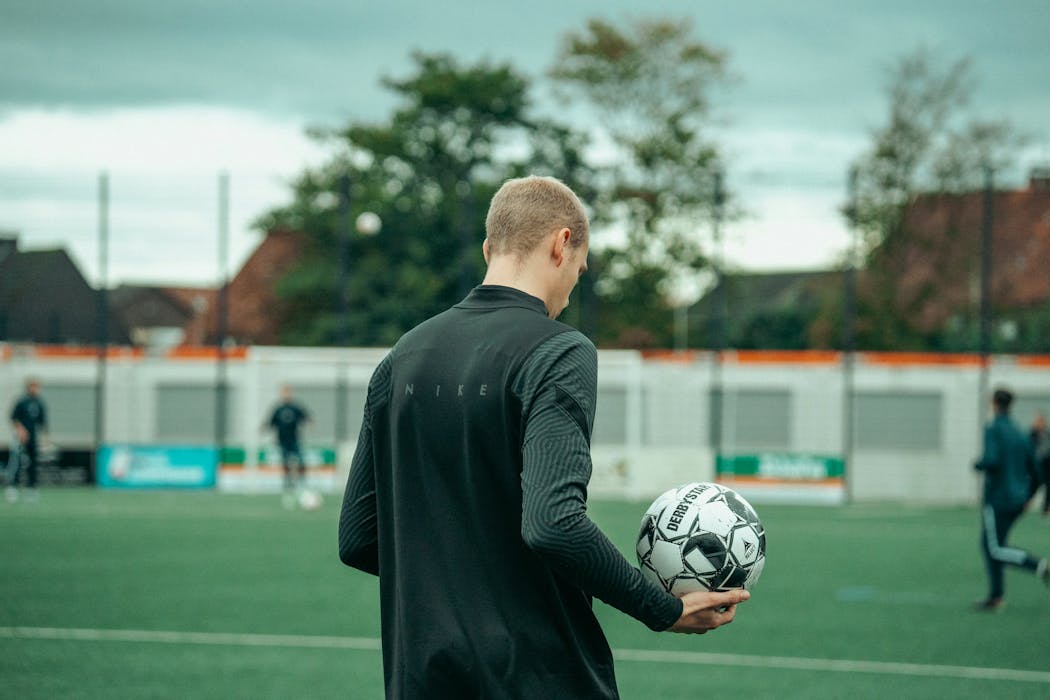
Les arbitres subissent environ 40 % des violences qui ont lieu lors des matchs de football. Omar Ramadan/Unsplash, CC BY

Plusieurs milliers d’arbitres se font agresser verbalement et physiquement chaque année sur les terrains de football. Pourquoi ? Dix ans d’enquête révèlent que l’érosion progressive des cadres collectifs qui régulaient autrefois les comportements au sein des clubs amateurs pourrait expliquer ce phénomène. Derrière les coups et les insultes, c’est un système fragilisé qui se dévoile.


Selon la Fédération française de football (FFF), on dénombre 2 millions de pratiquants licenciés (des hommes à 90 %) qui participent à 30 000 rencontres hebdomadaires. Ces matchs sont arbitrés par 25 500 officiels recensés (dont 1 500 femmes et 1 500 arbitres de moins de 15 ans). Sans eux, le football n’existerait pas. Ils sont souvent victimes d’agressions.

Un mal profond, chiffré et documenté

Selon l’Observatoire des comportements de la Fédération française de football, 12 000 incidents sont répertoriés et environ 11 000 matchs se signalent par un incident ou plus chaque saison. Ce chiffre, quasiment stable depuis la création de l’Observatoire en 2006, renvoie à des violences autant physiques que verbales.

Les joueurs commettent l’essentiel des faits (9 fois sur 10), suivis des encadrants, des spectateurs et des parents. Ce sont les arbitres qui subissent environ 40 % des violences, principalement verbales (8,5 fois sur 10). Cela signifie qu’environ 700 officiels sont physiquement agressés sur les terrains en France chaque année (coups, brutalités, bousculades, tentatives de coup(s), jets de projectiles, crachats), soit plus de 17 arbitres agressés chaque semaine – une saison sportive dure dix mois environ.

Les médias couvrent le phénomène en pointant la responsabilité d’un haut niveau parfois peu exemplaire ou la dégradation des contextes, et en mettant en avant les réactions collectives du monde arbitral. Cela a sans doute contribué au déploiement récent par la FFF d’un plan contre les violences et pour la protection des arbitres. Organisée autour des principes de la surveillance, de la prévention, de la dissuasion et de la répression, une telle entreprise devrait améliorer le déroulement des compétitions.

De nombreuses enquêtes de terrain auront été nécessaires pour comprendre ce phénomène et identifier ses causes. En ce qui nous concerne, nous avons commencé par mettre à distance un monde social qui nous était familier, ethnographié durant une saison à domicile et à l’extérieur un club de quartier prioritaire réputé « violent », collaboré avec divers chercheurs afin de cerner les problèmes et compter encore les faits pour enfin nous concentrer sur la figure des arbitres à partir d’une passation de 5 000 questionnaires et de dizaines d’entretiens.

Des causes multiples

Selon les dernières données que j’ai sollicitées en septembre 2025 auprès de la FFF, la majorité des faits (violences physiques et verbales) concerne la catégorie des seniors (60 % du volume des incidents relevés en saison 2024-2025 concernent les 18 ans et plus). Ceci confirme une tendance déjà pointée sur une période d’observations plus longue et le rôle cathartique du sport. On sait aussi que les violences se propagent notablement chez les plus jeunes (17-18 ans et 15-16 ans) au point aujourd’hui de présenter des taux d’incidence supérieurs aux proportions affectant les seniors (2,7 % chez les 18 ans et plus ; 3,2 % chez les 15 ans-18 ans).

On sait en outre que ces incidents concernent surtout les compétitions départementales, cantonales et régionales dans une moindre mesure. Enfin, contrairement aux idées reçues, on ne constate pas de clubs dans lesquels les violences s’installent au point d’en faire des associations durablement problématiques : sur plusieurs saisons les violences sont réparties entre de nombreux clubs.

La concentration des violences et autres incidents dans les divisions locales du football renvoient aux vulnérabilités des clubs de compétitions départementales. Les dirigeants et bénévoles y manquent – ou changent trop fréquemment, fragilisant le contrôle social que ces figures peuvent exercer sur les licenciés. Leurs paroles, pouvoirs éducatifs et capacités de régulation des comportements déviants s’affaiblissent. En parallèle, des pressions nouvelles se manifesteraient davantage. On pense ici aux intimidations voire aux agressions commises par des parents désireux de voir réussir leur enfant au plus haut niveau, c’est-à-dire l’illustration des effets pervers associés à ce que l’on appelle parfois « le projet Mbappé ». On pense aussi aux conduites violentes de joueurs au cours des rencontres sportives, ces licenciés pour lesquels les interventions des éducateurs ne suffisent parfois plus à canaliser des frustrations.

Dans ces contextes associatifs instables (équipes dirigeantes changeantes, formations insuffisantes des éducateurs en matière de régulation des comportements agressifs…), les arbitres sont très exposés d’autant plus que dans les premières divisions du football amateur, l’arbitre officiel, quand il existe, est une personne seule. Et seule quand des ruptures de cadres surviennent (insultes répétées, menaces, bagarres…).

Il est acquis maintenant que la performance arbitrale, incluant la gestion des matchs et de la sécurité, doit beaucoup aux contributions conjointes des joueurs, dirigeants et assistants. Cette performance est logiquement dégradée lorsque l’arbitre officie sans juge de touche officiel, en présence de dirigeants fragilisés, de joueurs à l’autocontrôle inconstant, de parents et de spectateurs imprévisibles, voire oppressants. Aussi stigmatiser l’arbitre, faire de son activité un facteur explicatif des violences, représente une erreur d’appréciation. En effet les agressions se construisent dans les configurations des compétitions et sont le produit de responsabilités partagées.

La disparition des collectifs

Bien entendu, l’arbitre détient le monopole de l’usage des sanctions légales, possède les lois du jeu, profite d’un statut d’agent ayant une mission de service public et d’un pouvoir qui n’a cessé de se renforcer depuis cent cinquante ans. Toutes ces ressources résistent pourtant mal aux caractéristiques des cadres de la pratique du football, et ne doivent pas laisser penser que les arbitres constituent un groupe homogène.

Le monde associatif perd progressivement ses repères : des dirigeants aux carrières longues laissent la place à des engagements bénévoles moins constants, de jeunes arbitres compensent les retraits d’arbitres expérimentés devenus inaptes ou désintéressés, des joueurs promoteurs et bénéficiaires d’une identité collective se raréfient. Désormais, ici et là, les footballeurs ne joueraient plus pour leurs couleurs, leur territoire, leur groupe d’appartenance et fragilisent des « nous » cohésifs pourtant riches de contrôle social.

Dans le domaine social que compose le football, mes enquêtes me conduisent à défendre la thèse de collectifs moins cohésifs, c’est-à-dire de clubs dans lesquels la nature des liens sociaux entre licenciés (joueurs, éducateurs sportifs, dirigeants, arbitres) est moins forte. Moins protectrice. Moins productrice de reconnaissances sociales. Et il suffirait alors d’une étincelle pour que les stades s’embrasent : l’absence d’une contention chez un pratiquant frustré, une décision arbitrale litigieuse ou erronée, des parents blessés de voir leur enfant sur le banc des remplaçants, une rétrogradation sportive que des spectateurs n’acceptent pas, projetant leur désarroi sur la cible accessible que représente l’arbitre, etc.

Tout ceci conduit souvent à penser l’agression d’un arbitre comme la conséquence d’un facteur déclenchant très situé, localisé et qui parfois renvoie à la psychologie de l’auteur du fait. Cependant, la rareté des carrières de joueurs violents limite la portée d’un tel raisonnement. En combinant plusieurs faits et en se souvenant que les responsabilités sont partagées, on déclenche un autre régime interprétatif qui n’a d’ailleurs rien à voir avec l’illustration d’une société toujours plus violente.

D’après mes recherches, si les violences contre les arbitres ne diminuent pas en dépit de mesures coercitives (durcissement des sanctions, modifications du statut des arbitres…), c’est avant tout en raison d’un tissu associatif moins capable de faire barrage à ces comportements.

Pour reprendre une formule du sociologue Pierre Bourdieu, les faits divers font diversion. Pour les appréhender pleinement, il faut les voir comme le résultat de constructions sociales. Quand les associations s’affaiblissent socialement, elles deviennent plus perméables aux perturbations intérieures (frustrations de joueurs, fatigue physique impliquant un moindre contrôle comportemental, inexpérience de jeunes et de très jeunes arbitres, contrôle social des dirigeants moins efficaces, erreurs d’arbitrage…) et influences extérieures (comme des rivalités sociales et territoriales entre localités ou quartiers). Les arbitres en font les frais et révèlent ces fractures.

The Conversation

Williams Nuytens a reçu des financements de l’université d’Artois, de la région des Hauts-de-France, de l’Institut des Hautes Etudes de la Sécurité Intérieure (1998), de l’INSEP (1997), de la Fédération Française de Football (2010), de l’UFOLEP du Pas-de-Calais (2018, 2020, 2022), de l’UFOLEP nationale (2019-2021), du Ministère de l’Enseignement Supérieure et de la Recherche, de l’ANCT (2023, 2025), des Communautés Urbaines d’Arras et de Lens-Liévin (2021, 2022, 2023), de la Ligue de Sport Adapté des Hauts-de-France (2020-2023), de La Vie Active (2024), du Groupement Hospitalier Arras-Ternois (2024), de l’ANRT (2024), etc. Il ne travaille pas, ne conseille pas, ne reçoit pas de fonds d’une organisation pouvant tirer profit de cet article. Il ne déclare aucune autre affiliation que ses institutions de recherche et d’enseignement en dehors d’un engagement bénévole en qualité d’administrateur auprès de l’association Eveil.

ref. Violences dans le football amateur : les arbitres en première ligne – https://theconversation.com/violences-dans-le-football-amateur-les-arbitres-en-premiere-ligne-267295

Black Friday : le bonheur s’achète-t-il en soldes ?

Source: The Conversation – in French – By Mickaël Mangot, Docteur en économie, spécialiste d’économie comportementale et d’économie du bonheur, conférencier, chargé de cours, ESSEC

Les difficultés de la vie quotidienne peuvent modérer le bénéfice de la consommation sur notre bonheur. Gorodenkoff/Shutterstock

Consommer nous rend-il plus heureux ? Le Black Friday nous rapproche-t-il du bonheur ou, au contraire, nous en éloigne-t-il ? Selon l’économie du bonheur, toutes les consommations ne se valent pas…

Depuis le début des années 1970, l’économie du bonheur constitue un courant de recherche, au sein de la science économique, qui se propose de décrypter comment les comportements des individus influencent leur niveau de bonheur.

Si la relation entre revenus et bonheur a beaucoup occupé la discipline, de plus en plus de chercheurs s’intéressent désormais à la relation entre consommation et bonheur, sur un plan quantitatif – combien on consomme – comme qualitatif – ce que l’on consomme.

Est-on d’autant plus heureux que l’on consomme ? À l’instar de la relation entre revenus et bonheur, la réponse est clairement affirmative, que ce soit en Europe, aux États-Unis ou en Asie. Mais, comme pour le revenu, la consommation explique à elle seule très peu des différences de bonheur entre individus, entre 5 % et 15 %. Il existe beaucoup de personnes qui sont heureuses tout en consommant peu et, inversement, des individus très dépensiers qui sont insatisfaits de leur vie.

Impact éphémère

Cette absence de causalité entre niveau de consommation et niveau de bonheur s’explique en grande partie par plusieurs mécanismes psychologiques.

Hormis quelques exceptions – chômage, handicap lourd, maladies chroniques ou dégénératives, etc., les humains s’adaptent aux chocs de vie, positifs ou négatifs.

La consommation, notamment de biens matériels, fait partie de ces événements qui ne laissent plus aucune de trace sur le bonheur à moyen long terme. Une fois l’achat effectué, nos consommations sont vite reléguées à l’arrière-plan de nos vies. Cette règle s’applique autant pour les petits achats – vêtements, déco ou high-tech – que pour les biens durables très onéreux comme la voiture ou le logement.

Les désirs se renouvellent et progressent constamment. Plus le niveau de vie augmente, plus les aspirations s’élèvent.

Cette montée en gamme (ou lifestyle inflation) s’applique à tout : logement, voiture, vêtements, restaurants, loisirs… À 20 ans on rêve d’un McDo et d’une chambre de bonne et à 60 ans d’un restaurant étoilé et d’une maison de maître. Dans nos armoires ou sur nos étagères, les consommations passées sont les vestiges visibles de désirs aujourd’hui dépassés.

Compétition sociale

S’ajoute aussi le mécanisme de la comparaison sociale : on fait l’expérience de son niveau de vie en partie cognitivement, en l’évaluant par rapport à celui des autres. Un niveau de vie élevé n’est pas gage de satisfaction s’il traduit un statut inférieur à celui de ses collègues, de ses voisins et de sa famille.

Ce n’est donc pas seulement notre propre consommation qui est importante pour le bonheur (positivement), mais également celle de notre entourage immédiat (négativement), du moins pour les consommations facilement observables – logement, voiture, vêtements, montres…

La satisfaction de la vie au sein d’un ménage augmente en fonction du rang de ce ménage en termes de consommation observable au sein de la même localité. D’ailleurs, lorsqu’un ménage gagne à la loterie, cela tend à augmenter les consommations observables des ménages dans ses alentours.


À lire aussi :
Soldes : les commerçants sont-ils d’honnêtes manipulateurs ?


L’observation de biens de luxe chez les autres peut être particulièrement nocive pour le bonheur. Une étude a obtenu que plus la proportion de Porsche et de Ferrari est élevée dans une ville ou une région, et plus le niveau de bonheur moyen y était faible.

Privilégier les expériences

De nombreux travaux ont cherché à distinguer différents types de consommation selon leur intensité et selon la durabilité de leur impact sur le bonheur. Ils ont fait émerger une liste de consommations plus propices au bonheur :

Ces consommations ont la particularité de renforcer la connexion aux autres, d’améliorer l’image sociale ou l’image de soi, ou de contribuer à forger une identité.

Il est à noter que la liste n’est pas exactement la même pour tout le monde. Elle est modérée par les valeurs, la personnalité et les difficultés propres à la personne. Les biens matériels influencent plus le bonheur des personnes ayant des revenus modestes ou des valeurs matérialistes. Les valeurs matérialistes expliquent que la possession d’une voiture et sa valeur marchande sont particulièrement impactantes pour le bonheur des… boomers.

Plus la consommation est alignée avec la personnalité, et plus elle a généralement d’effet. Par exemple, les extravertis bénéficient plus que les introvertis des consommations sociales comme les sorties dans les bars et restaurants, et inversement pour les achats de livres.

Pallier les difficultés

Les difficultés du quotidien modèrent l’effet de la consommation sur le bonheur. La voiture est particulièrement importante pour le bonheur chez les personnes qui ont des problèmes de mobilité du fait d’une santé défaillante ou de l’absence d’alternatives. De même, le recours à des services pour gagner du temps est particulièrement efficace pour doper le bonheur des personnes qui en manquent (comme les parents en activité).

Ces dernières observations sont à relier à un autre mécanisme psychologique fondamental : le biais de négativité. Les émotions négatives affectent plus fortement et plus durablement l’évaluation de la vie que les émotions positives. On s’adapte en général moins rapidement aux chocs de vie négatifs qu’aux chocs positifs.

Les domaines de la vie pour lesquels on est insatisfait influencent plus l’évaluation générale de la vie que les domaines apportant satisfaction. Les consommations ont généralement plus d’effet sur le bonheur quand elles permettent de corriger un manque, plutôt que lorsqu’elles ajoutent du positif.

Plaisir de la transaction

Ces découvertes sont, pour certaines, plutôt intuitives. Néanmoins, les consommateurs peinent à en tirer les leçons pratiques du fait d’erreurs systématiques au moment des décisions. Par exemple, ils tendent à sous-estimer la puissance de l’adaptation aux évènements de la vie, notamment positifs, tout comme ils sous-estiment leurs changements de goûts et de priorités dans le temps.

Lors d’un achat, la quête du bonheur entre souvent en conflit avec la recherche d’une rationalité économique. La satisfaction attendue de la consommation est mise en balance avec le plaisir de la transaction, comme l’a montré le Prix Nobel d’économie Richard Thaler. En période de promotions, on se laisse aller à acheter des produits dont on n’a ni besoin ni réellement envie uniquement pour faire une bonne affaire. Le plaisir de la transaction est éphémère ; après coup on oublie vite avec quel niveau de remise l’achat a été réalisé.

Finalement, essayons de renverser la question : être vraiment heureux changerait-il notre façon de consommer ? Quelques études pionnières suggèrent que les personnes heureuses consomment différemment des autres : elles consomment moins (et épargnent plus) tout en ayant une consommation davantage orientée vers les sorties que vers les biens matériels. Ces études ne disent pas, en revanche, si ces personnes déjà très heureuses vont jusqu’à ignorer le Black Friday…

The Conversation

Mickaël Mangot ne travaille pas, ne conseille pas, ne possède pas de parts, ne reçoit pas de fonds d’une organisation qui pourrait tirer profit de cet article, et n’a déclaré aucune autre affiliation que son organisme de recherche.

ref. Black Friday : le bonheur s’achète-t-il en soldes ? – https://theconversation.com/black-friday-le-bonheur-sachete-t-il-en-soldes-270576