Unpacking Florida’s immigration trends − demographers take a closer look at the legal and undocumented population

Source: The Conversation – USA – By Matt Brooks, Assistant Professor of Sociology, Florida State University

Immigration has dominated recent public discourse about Florida, whether it be the opening of Alligator Alcatraz, a migrant detention facility in the middle of the Everglades, or Florida Gov. Ron DeSantis declaring an “immigration emergency” for the state that has lasted more than two years.

As demographers – that is, people who count people – we’ve noticed that this conversation has proceeded largely without the benefit of a clear description of Florida’s immigrant population.

Here’s a snapshot.

How many immigrants are in Florida?

We used data from the Office of Homeland Security Statistics and the American Community Survey, conducted annually by the U.S. Census Bureau. Homeland Security provides estimates of the state’s undocumented population and annual counts of authorized arrivals. Census data allow us to describe the social and economic characteristics of Florida’s immigrant population.

In 2023, the most recent year for which the Department of Homeland Security provides publicly available data, an estimated 590,000 immigrants without legal status were living in Florida. This is the third-largest population of immigrants without legal status in the U.S., behind California and Texas. But in contrast to those two states, the number of immigrants entering Florida illegally has been shrinking since 2018.

On the other hand, DHS data points to recent growth in Florida’s population of immigrants with legal status. This represents a rebound from declines between 2016 and 2020.

In 2023, Florida welcomed 72,850 residents from outside the country. This is just 0.3% of Florida’s population that year. About 95% of these new Florida residents were admitted as lawful permanent residents, or green card holders. The remainder entered as refugees (3%) and people granted asylum (2%).

For comparison, U.S. Census Bureau estimates suggest roughly 640,000 people moved to Florida in 2023 from other states.

Who makes up Florida’s immigrant population?

The American Community Survey data tells us even more about Florida’s immigrant population. The survey estimates that 4,996,874 foreign-born individuals lived in Florida in 2023, up from 3,798,062 in 2013. These numbers include those who are in the U.S. legally and illegally and encompass both recent arrivals and long-term residents.

In 2023, about 22% of Florida residents – and nearly 7% of Florida children – were immigrants. An additional 29% of Florida children have at least one immigrant parent.

According to the American Community Survey, nearly half of Florida’s immigrants were born in Cuba, Haiti, Venezuela, Colombia or Mexico. Despite being born elsewhere, Florida’s immigrants in many ways resemble other Floridians: About 20% hold a bachelor’s degree, compared to 22% of nonimmigrant Floridians, and 13% of both groups have a graduate degree. Nearly all Florida immigrants, 89%, speak English, and the majority, 57%, are naturalized citizens.

Immigrants make up a disproportionate share of Florida’s workforce, particularly in essential sectors of the state’s economy. They account for more than 47% of Florida’s agricultural workers, 41% of hotel workers and 35% of construction workers.

Florida immigrants also work in sectors that many might not consider to be “immigrant jobs.” They constitute 33% of child care workers, 21% of school and university employees and 27% of the health care workers.

Across all sectors, immigrants have lower unemployment rates than nonimmigrants. Although available data cannot tell us the extent to which these numbers are bolstered by undocumented immigrants, the importance of Florida’s immigrants for the state’s economy is undeniable.

Florida’s population is growing at a faster rate than any other state in the country, boosted by people moving in from abroad and from other states. This growth both reflects and feeds the state’s economic vitality. Between 2019 and 2024, Florida’s GDP grew twice as fast as the nation’s as a whole.

Is Florida experiencing an “immigration emergency”? That’s for politicians to decide. Our research suggests that policies that discourage new arrivals or encourage – or force – migrants to leave could jeopardize Florida’s robust economy and the well-being of its population.

The Conversation

The authors do not work for, consult, own shares in or receive funding from any company or organization that would benefit from this article, and have disclosed no relevant affiliations beyond their academic appointment.

ref. Unpacking Florida’s immigration trends − demographers take a closer look at the legal and undocumented population – https://theconversation.com/unpacking-floridas-immigration-trends-demographers-take-a-closer-look-at-the-legal-and-undocumented-population-261425

When socialists win Democratic primaries: Will Zohran Mamdani be haunted by the Upton Sinclair effect?

Source: The Conversation – USA – By James N. Gregory, Professor of History, University of Washington

Democratic mayoral candidate Zohran Mamdani, right, and Attorney General of New York Letitia James walk in the NYC Pride March on June 29, 2025, in New York. AP Photo/Olga Fedorova

It has happened before: an upset victory by a Democratic Socialist in an important primary election after an extraordinary grassroots campaign.

In the summer of 1934, Upton Sinclair earned the kind of headlines that greeted Zohran Mamdani’s primary victory on June 24, 2025, in the New York City mayoral election.

Mamdani’s win surprised nearly everyone. Not just because he beat the heavily favored former governor Andrew Cuomo, but because he did so by a large margin. Because he did so with a unique coalition, and because his Muslim identity and membership in the Democratic Socialists of America should have, in conventional political thinking, made victory impossible.

This sounds familiar, at least to historians like me. Upton Sinclair, the famous author and a socialist for most of his life, ran for governor in California in 1934 and won the Democratic primary election with a radical plan that he called End Poverty in California, or EPIC.

The news traveled the globe and set off intense speculation about the future of California, where Sinclair was then expected to win the general election. His primary victory also generated theories about the future of the Democratic Party, where this turn toward radicalism might complicate the policies of the Democratic administration of Franklin D. Roosevelt.

What happened next may concern Mamdani supporters. Business and media elites mounted a campaign of fear that put Sinclair on the defensive. Meanwhile, conservative Democrats defected, and a third candidate split progressive votes.

In the November election, Sinclair lost decisively to incumbent Gov. Frank Merriam, who would have stood less chance against a conventional Democrat.

As a historian of American radicalism, I have written extensively about Sinclair’s EPIC movement, and I direct an online project that includes detailed accounts of the campaign and copies of campaign materials.

Upton’s 1934 campaign initiated the on-again, off-again influence of radicals in the Democratic Party and illustrates some of the potential dynamics of that relationship, which, almost 100 years later, may be relevant to Mamdani in the coming months.

A man waves through the window of a black car.
Upton Sinclair is seen in September 1934 in Poughkeepsie, N.Y., following a conference with President Franklin D. Roosevelt.
Bettmann/Contributor/Getty Images

California, 1934

Sinclair launched his gubernatorial campaign in late 1933, hoping to make a difference but not expecting to win. California remained mired in the Great Depression. The unemployment rate had been estimated at 29% when Roosevelt took office in March and had improved only slightly since then.

Sinclair’s Socialist Party had failed badly in the 1932 presidential election as Democrat Roosevelt swept to victory. Those poor results included California, where the Democratic Party had been an afterthought for more than three decades.

Sinclair decided that it was time to see what could be accomplished by radicals working within that party.

Reregistering as a Democrat, he dashed off a 64-page pamphlet with the futuristic title I, Governor of California and How I Ended Poverty. It detailed his plan to solve California’s massive unemployment crisis by having the state take over idle farms and factories and turn them into cooperatives dedicated to “production for use” instead of “production for profit.”

A black and white photo shows a man on a stage, the American flag behind him, speaking to a crowd.
Sinclair speaks to a group in his campaign headquarters in Los Angeles, Calif., in September 1934.
Bettmann/ Contributor/Getty Images

Sinclair soon found himself presiding over an explosively popular campaign, as thousands of volunteers across the state set up EPIC clubs – numbering more than 800 by election time – and sold the weekly EPIC News to raise campaign funds.

Mainstream Democrats waited too long to worry about Sinclair and then failed to unite behind an alternative candidate. But it would not have mattered. Sinclair celebrated a massive primary victory, gaining more votes than all of his opponents combined.

Newspapers around the world told the story.

“What is the matter with California?” The Boston Globe asked, according to author Greg Mitchell. “That is the farthest shift to the left ever made by voters of a major party in this country.”

Building fear

Primaries are one thing. But in 1934, the November general election turned in a different direction.

Terrified by Sinclair’s plan, business leaders mobilized to defeat EPIC, forming the kind of cross-party coalition that is rare in America except when radicals pose an electoral threat. Sinclair described the effort in a book he wrote shortly after the November election: “I, Candidate for Governor: And How I Got Licked.”

Nearly every major newspaper in the state, including the five Democratic-leaning Hearst papers, joined the effort to stop Sinclair. Meanwhile, a high-priced advertising agency set up bipartisan groups with names like California League Against Sinclairism and Democrats for Merriam, trumpeting the names of prominent Democrats who refused to support Sinclair.

Few people of any party were enthusiastic about Merriam, who had recently angered many Californians by sending the National Guard to break a Longshore strike in San Francisco, only to trigger a general strike that shut down the city.

A black and white photo depicts a billboard criticizing Democrat Upton Sinclair.
A billboard supports Republican Frank Merriam and opposes Democrat Upton Sinclair for governor of California in January 1934.
Bettmann /Contributor/Getty Images

The campaign against Sinclair attacked him with billboards, radio and newsreel programming, and relentless newspaper stories about his radical past and supposedly dangerous plans for California.

EPIC faced another challenge, candidate Raymond Haight, running on the Progressive Party label. Haight threatened to divide left-leaning voters.

Sinclair tried to defend himself, energetically denouncing what he called the “Lie Factory” and offering revised, more moderate versions of some elements of the EPIC plan. But the Red Scare campaign worked. Merriam easily outdistanced Sinclair, winning by a plurality in the three-way race.

New York, 2025

Will a Democratic Socialist running for mayor in New York face anything similar in the months ahead?

A movement to stop Mamdani is coming together, and some of what they are saying resonates with the 1934 campaign to stop Sinclair.

The Guardian newspaper has quoted “loquacious billionaire hedge funder Bill Ackman, who said he and others in the finance industry are ready to commit ‘hundreds of millions of dollars’ into an opposing campaign.”

In 1934, newspapers publicized threats by major companies, most famously Hollywood studios, to leave California in the event of a Sinclair victory. The Wall Street Journal, Fortune magazine and other media outlets have recently warned of similar threats.

And there may be something similar about the political dynamics.

Sinclair’s opponents could offer only a weak alternative candidate. Merriam had few friends and many critics.

In 2025, New York City Mayor Eric Adams, who abandoned the primary when he was running as a Democrat and is now running as an independent, is arguably weaker still, having been rescued by President Donald Trump from a corruption indictment that might have sent him to prison. If he is the best hope to stop Mamdani, the campaign strategy will likely parallel 1934. All attack ads – little effort to promote Adams.

But there is an important difference in the way the New York contest is setting up. Andrew Cuomo remains on the ballot as an independent, and his name could draw votes that might otherwise go to Adams.

Curtis Sliwa, the Republican candidate, will also be on the ballot. Whereas in 1934 two candidates divided progressive votes, in 2025 three candidates are going to divide the stop-Mamdani votes.

Religion also looms large in the campaign ahead. The New York City metro area’s U.S. Muslim population is said to be at least 600,000, compared to an estimated 1.6 million Jewish residents. Adams has announced that the threat of antisemitism will be the major theme of his campaign.

The stop-Sinclair campaign also relied on religion, focusing on his professed atheism and pulling quotations from books he had written denouncing organized religion. However, a statistical analysis of voting demographics suggests that this effort proved unimportant.

The Conversation

James N. Gregory does not work for, consult, own shares in or receive funding from any company or organization that would benefit from this article, and has disclosed no relevant affiliations beyond their academic appointment.

ref. When socialists win Democratic primaries: Will Zohran Mamdani be haunted by the Upton Sinclair effect? – https://theconversation.com/when-socialists-win-democratic-primaries-will-zohran-mamdani-be-haunted-by-the-upton-sinclair-effect-260168

Great Lakes offshore wind could power the region and beyond

Source: The Conversation – USA (2) – By Cora Sutherland, Interim Assistant Director, Center for Water Policy, University of Wisconsin-Milwaukee

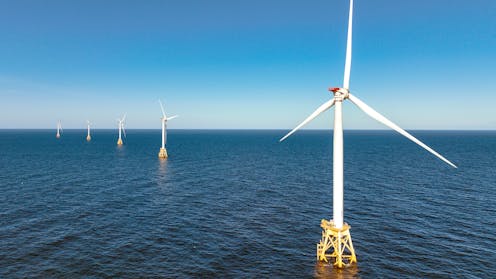
The United States’ offshore wind potential isn’t just in the ocean, where these turbines are located, off Rhode Island. John Moore/Getty Images

Offshore wind power could provide far more electricity than the U.S. uses for residential, commercial and industrial purposes. But the federal government has recently stopped approving offshore projects in the ocean.

Another option is available, though: the Great Lakes, where we are based as water policy researchers, and where state agencies rather than federal officials are the trustees of the lakes. A January 2025 executive order from President Donald Trump attempts to stop all federal permits for offshore and onshore wind power pending a review of federal wind leasing and permitting practices.

But the states, not the federal government, handle leases and permits for wind power on the Great Lakes, though federal agencies are involved in the overall process. It is unclear how this executive order might impede federal action, but at the very least states could lay the groundwork now to be prepared to act when the next shift in federal priorities arrives.

A 2023 analysis from the National Renewable Energy Laboratory found that the Great Lakes states have enough offshore wind power potential to provide three times as much electricity as all eight Great Lakes states use currently, which would mean plenty left over to meet increasing demand or send power elsewhere in the country.

States are looking for opportunities

States have been forging their own paths separate from federal clean energy policy for decades. All eight Great Lakes states have state clean energy goals, and five of them – Illinois, Michigan, Minnesota, New York and Wisconsin – have a goal to achieve 100% clean or renewable energy by 2040 or 2050.

The challenge is not just to transform the current energy supply. As transportation and other sectors electrify, that increases electricity demand. As artificial intelligence proliferates, tech companies need more and more electricity and water for their data centers. By 2028, data centers are projected to consume nearly 12% of the country’s total usage, which requires massive increases in production in the Great Lakes and other key locations.

Companies and states are looking high and low to find enough electricity to meet the rising demand. They are extending the lives of coal-fired power plants and building new gas-fired power plants. Elon Musk’s xAI company has even been powering an artificial intelligence data center in Tennessee with massive generators that add air pollution without permits.

Government and industry are also looking to other sources, such as investing in nuclear fusion advancement and building geothermal plants.

A brief history

In the 2000s and 2010s, the Great Lakes Commission Wind Collaborative, Wisconsin Public Service Commission and the Michigan Great Lakes Wind Council began to sketch out regulations for offshore wind in the Great Lakes and to identify locations that might be suitable for the turbines.

In 2012, the Obama administration agreed to collaborate with five Great Lakes states – Illinois, Michigan, Minnesota, New York and Pennsylvania – to streamline a permitting process for offshore wind development. Multiple projects were proposed off the shores of Michigan, Ohio and Ontario, Canada, though Ontario banned offshore wind projects in 2011.

Since then, momentum has stalled. One effort, the Icebreaker project off Cleveland, was approved and survived various legal challenges, but the project backers paused it indefinitely in 2023 due to the economic impacts of the legal delays.

Community activists are split, with some embracing offshore wind in the Great Lakes as part of a clean energy future and others vocally opposing it, citing environmental, health and economic concerns.

As of mid-2025, the Great Lakes were home to no offshore wind turbines.

A map shows relatively high wind speeds across much of the Great Lakes.
Wind speeds at the altitude of 460 feet (140 meters) above the surface of the Great Lakes are high enough to drive turbines that generate wind power.
National Renewable Energy Laboratory, U.S. Department of Energy

Big potential, big unknowns

States continue to explore the possibility of offshore wind power in the Great Lakes. In early 2025, Illinois legislators again introduced a bill to create a pilot wind project off Chicago in Lake Michigan.

Also in 2025, Pennsylvania legislators introduced a bill to facilitate offshore wind power in Lake Erie. If adopted, the law would map which areas are fit to be leased for development by avoiding nearshore areas, shipping lanes and migration pathways. The Ontario Clean Air Alliance is pushing the province to lift its moratorium and reconsider offshore wind in Canadian waters.

A lot of details remain unknown. New York state supports offshore wind in the ocean but says “Great Lakes Wind does not provide the same electric and reliability benefits” by comparison. Ocean wind tends to be closer to areas where electricity demand is high, which can make those projects more cost-effective.

New York also concluded in 2022 that despite the combined 144.5 terawatt-hours of annual technical potential in state waters in Lake Erie and Lake Ontario, “numerous practical considerations … would need to be addressed before such projects can be successfully commercialized.”

To further explore the concerns New York’s report and others have raised, in 2024, with National Science Foundation funding, we collaborated with a team of researchers looking at a wide range of issues, including engineering, environmental effects and law. That effort resulted in articulating research questions whose answers would clarify how realistic different aspects of offshore wind could be in the Great Lakes, such as:

People sit on a concrete pier sticking out over an area of water, with tall buildings in the background.
The Great Lakes deliver beautiful views, recreation opportunities and commercial activity to a large area of the U.S. – and could supply renewable electricity too.
Kamil Krzaczynski/AFP via Getty Images

State jurisdiction is an opportunity

In the oceans, U.S. states have jurisdiction from shore out three miles, with the federal government’s jurisdiction continuing out for hundreds of miles beyond that. So offshore project sites in the oceans are leased by the federal government.

The Great Lakes are different. The state governments hold the lakes’ waters and submerged lands in trust for the public. And state jurisdiction extends from shore all the way out to the boundary of a neighboring state’s jurisdiction or the international boundary with Canada.

Regulation of planning, site selection, leasing and other elements of offshore wind projects in the Great Lakes are the responsibility of one or another U.S. state. The federal government’s role is secondary, conducting environmental reviews and protecting navigation, but could still result in slowing state-led projects.

In research we published in 2024 and 2025, we explain that states could evaluate and select offshore wind projects based on a range of social and environmental benefits, in addition to financial considerations. For instance, they could look for designs that provide fish habitat or seek corporate partners that agree to train local workers, manufacture turbines and ships near the lakes, and provide cheaper electricity to local consumers.

Despite all the unknowns, we encourage greater support for research to harness the potential of offshore wind energy in the Great Lakes to be a renewable resource for states, the region and the nation as a whole.

The Conversation

The authors do not work for, consult, own shares in or receive funding from any company or organization that would benefit from this article, and have disclosed no relevant affiliations beyond their academic appointment.

ref. Great Lakes offshore wind could power the region and beyond – https://theconversation.com/great-lakes-offshore-wind-could-power-the-region-and-beyond-261311

Parents don’t need to try harder – to ease parenting stress, forget self-reliance and look for ways to share the care

Source: The Conversation – USA (2) – By Elizabeth Sharda, Associate Professor of Social Work, Hope College

Modern parents experience many demands, with little support. Abraham Gonzalez Fernandez/Moment via Getty Images

I wrap up my workday and head for home, making a quick stop to grab the supplies my sixth grader needs for a project due this week and some ingredients for a quick dinner.

Once home, I check the sixth grader’s school website and discover a missing assignment. Bringing this up sparks a minor meltdown. I summon the emotional energy to help her calm down and problem-solve. My husband arrives home with our high schooler, who’s discouraged by something that happened at soccer practice. We’ll have to process that later.

Around the dinner table, we realize that both kids have sports practices Thursday, on opposite ends of town, at the same time as a mandatory parent meeting at school. And now I’m ready for my own meltdown.

On this particular evening, my family wasn’t navigating anything unique or especially catastrophic. Scenes like this play out nightly in homes across the United States. In fact, my family’s circumstances offer the protections of multiple forms of privilege. Certainly others have more difficult circumstances.

Why is it still so hard?

For a long time, I felt ashamed for being overwhelmed by parenthood. How do others seem to have it all together? Of course, the highlight reel of social media only fueled this comparison game. I often felt that I was falling short, missing some hack that others had found for not feeling constantly exhausted.

The reality is I’m far from alone in experiencing what social scientists term parenting stress. Defined as the negative psychological reaction to a mismatch between the demands of parenting and the resources available, parenting stress has become increasingly prevalent over the past five decades. In the wake of the COVID-19 pandemic, nearly half of all parents in the U.S. said their stress was completely overwhelming on most days.

Stress like this has an impact: Parents who experience high levels of parenting stress have decreased mental health and feel less close with their children.

I began researching parental stress and well-being when, several years after becoming a parent, I left my job as a social worker and entered a Ph.D. program. Through this process, I learned something that changed my perspective entirely: Parents today experience such high levels of stress because people have never traditionally raised children in isolation. And yet, we are more isolated than ever.

It clicked: Parents don’t need to do more or try harder. We need connection. We don’t need more social media posts on the “top three ways to keep your family organized.” We need a paradigm shift.

small boy runs away from camera toward extended family at a party
In the age of the nuclear family, it’s common for multiple generations to come together only on special occasions.
Maskot/DigitalVision via Getty Images

The myth of family self-reliance

Throughout human history, people primarily lived in multigenerational, multifamily arrangements. Out of necessity, our hunter-gatherer ancestors relied upon their clan-mates to help meet the needs of their families, including child-rearing. Research over time and across cultures suggests that parents are psychologically primed to raise children in community – not in isolated nuclear family units.

Anthropologists use the term alloparents – derived from the Greek “allo,” meaning “other” – to describe nonparent adults who provide care alongside that provided by parents.

Research suggests that alloparenting contributes to child well-being and even child survival in populations with high rates of child mortality. A 2021 study of a present-day foraging population in the Philippines found that alloparents provided an astounding three-quarters of the care for infants and an even greater proportion of the care for children ages 2 to 6.

In contrast, the ideal of the nuclear family is incredibly recent. It developed with industrialization, peaking in the 1950s and 1960s. Despite the significant changes in family structure – such as an increase in single-parent households – since that period, the paragon of the self-reliant nuclear family persists.

And yet, support from others is a key factor in family resilience. The familiar adage “It takes a village to raise a child” is, in fact, bolstered by social support research among parents in general, as well as those of children with special needs.

Parenting with collective care

Social support, while often viewed as a singular phenomenon, is actually a constellation of actions, each with its own unique function. Social scientists specify at least three types of support:

  • Tangible: Material or financial resources or assistance
  • Emotional: Expressions of care, empathy and love
  • Informational: Provision of information, advice or guidance

Different parenting challenges call for different types of support. When my husband and I realized we had three commitments in a single evening, we didn’t need advice on managing our family’s calendar; we needed someone to take our kid to practice – that’s tangible support. When my tween was blowing up over homework, I didn’t need someone to bring us dinner; I needed to remember what I learned from a book on parenting adolescent girls – that’s informational support.

To move away from the myth of family self-reliance and back toward an ideal of collective care would take a paradigm shift, requiring intervention at every level, from federal to state to family. A 2024 Surgeon General’s Advisory on parenting stress called it an urgent public health issue and provided recommendations for government leaders, service systems and communities. Systemic strategies like providing access to high-quality mental health care, expanding programs like Head Start that support parents and caregivers, and investing in social infrastructure like public libraries and parks could all help reduce parenting stress in the U.S.

three adults hold four toddlers on their laps outside
Finding other families at the same stage you’re in can be one way to fill out your village.
VIJ/iStock via Getty Images Plus

Personal steps toward a paradigm shift

Parenting stress is not a problem that can be solved solely by the individuals experiencing it. But here are five ways you can start making the shift toward collective care in your own life:

  1. Take stock of your network. Assess not only in terms of the number of supporters, but what types of support they offer. Do you have plenty of people to talk to, but no one who would bring you a meal or give your kid a ride? Identify gaps and consider ways to round out your “village.”
  2. Start small. Introduce yourself to your retired neighbor. Sit next to another parent at your kid’s sporting event. Talk to the babysitter you regularly see at the playground. Supportive relationships don’t just happen; they are grown.
  3. Offer help to others. While it seems counterintuitive, people who give support to others experience greater well-being and even longevity compared with those who don’t. Helping others also creates the opportunity for reciprocity. Those you support may be more likely to return the favor in the future.
  4. Normalize asking for help and taking it when offered. For many people, asking for support is hard. It requires dropping the facade and letting people in on your struggles. However, people are often more willing to help than you might assume. Further, allowing others to help you gives them permission to voice their own needs in the future.
  5. Consider your caregiving expectations. The way others care for your children may not mirror your way entirely. Consider what are nonnegotiable practices for your family – such as limits on screen time – and what is worth loosening up on – like veggies at every meal – if it means you have more alloparents helping you out.

None of these suggestions are easy. They take time, vulnerability and courage. In our society of rugged individualism and nuclear family self-reliance, parenting through a lens of collective care is downright countercultural. But perhaps it’s closer to how we, as humans, have raised children throughout the millennia.

The Conversation

Elizabeth Sharda has received research funding from the Andrew W. Mellon Foundation Faculty Development Fund. She serves on the board of directors for Michigan Fosters, a nonprofit organization dedicated to providing support to families involved in the child welfare system.

ref. Parents don’t need to try harder – to ease parenting stress, forget self-reliance and look for ways to share the care – https://theconversation.com/parents-dont-need-to-try-harder-to-ease-parenting-stress-forget-self-reliance-and-look-for-ways-to-share-the-care-253076

It is becoming easier to create AI avatars of the deceased − here is why Buddhism would caution against it

Source: The Conversation – USA (3) – By Elaine Lai, Lecturer in Civic, Liberal, and Global Education, Stanford University

A grief-stricken woman, Kisa Gautami, pleads with the Buddha to resurrect her dead child. Anandajoti Bhikkhu via Flickr

In a story in the Buddhist canon, a grief-stricken mother named Kisa Gautami loses her only child and carries the body around town, searching for some way to resurrect the child.

When she encounters the Buddha, he asks her to collect several mustard seeds from a family that has never experienced death. Not surprisingly, Kisa Gautami is unable to find a single such family. She buries her child and decides to cultivate a spiritual life.

I thought of Kisa Gautami’s story when I first encountered the 2020 Korean documentary “Meeting You,” in which virtual reality technology is used to reunite a grieving mother, Jang Ji-sung, with her deceased 7-year-old daughter, Nayeon. While the virtual reunion was moving to witness, I wondered whether it was truly helping the mother to heal, or whether it was deepening an avoidance of grief and of the truth.

Since the documentary first aired, the business of digitally resurrecting the deceased has grown significantly. People are now using AI to create “grief bots,” which are simulations of deceased loved ones that the living can converse with. There has even been a case where an AI-rendered video of a deceased victim has appeared to deliver a court statement asking for the maximum sentence for the person who took their life.

A person holding a phone with the face of a young man wearing a baseball cap on its screen.
A video created with artificial intelligence shows the face and voice of a young man who died at 22 while attending Exeter University in Britain.
Hector Retamal/AFP via Getty Images

As a Buddhist studies scholar who has experienced several bereavements this year, I have turned to Buddhist teachings to reflect on how creating a digital afterlife for loved ones may inadvertently enhance our suffering, and what alternative ways of grieving Buddhism might offer.

Buddhism’s view on suffering

According to Buddhist thought, the root of all suffering is clinging to illusions. This clinging creates karma that perpetuates negative cycles – for oneself and others – which endure lifetimes. In Mahayana Buddhism, the path to liberate oneself from this suffering begins by becoming a bodhisattva, someone who devotes their life to the liberation of self and others. Mahayana Buddhism, which introduced the idea of celestial bodhisattvas, is the most widely practiced form of Buddhism, particularly in East Asia and the Tibetan Himalayan regions.

In the “37 Practices of All the Bodhisattvas,” the 14th-century author Gyelse Tokme Zangpo wrote:

The practice of all the bodhisattvas is to let go of grasping
When encountering things one finds pleasant or attractive,
Consider them to be like rainbows in the summer skies –
Beautiful in appearance, yet in truth, devoid of any substance.

A digital avatar of the deceased may provide temporary comfort, but it may distort reality in an unhealthy way and intensify our attachment to an illusion. Interactions with a griefbot that responds to our every request may also diminish our memories of the deceased by creating an inauthentic version of who they were.

Grief as a catalyst for compassion

In the tradition of Buddhism that I specialize in, called the Great Perfection – a tradition of Vajrayana Buddhism, which is a branch of Mahayana – uncomfortable feelings such as grief are considered precious opportunities to cultivate spiritual insight.

In a text called Self-liberating Meditation, a 19th century mendicant teacher of the Great Perfection known as Patrul Rinpoche wrote: “No matter what kind of thoughts arise – be they good or bad, positive or negative, happy or sad – don’t indulge them or reject them, but settle, without altering, in the very mind that thinks.”

The Great Perfection contends that all of our emotions are like temporary clouds, and that our true nature is awareness, like the blue sky behind the clouds. Grief and other challenging emotions should not be altered or suppressed but allowed to transform in their own time.

In a culture where we are taught that negative emotions should be eliminated or pushed aside, not pushing away grief becomes a practice of great kindness toward oneself. By cultivating this awareness of our emotions, grief becomes a catalyst for compassion toward others. In Buddhism, compassion is the seed of awakening to the truth of interdependence – the fact that none of us exist as discreet beings but are deeply interconnected with all other beings and life forms.

Communal rituals

A young man, holding incense sticks, stands with an elderly person while they both fold their hands in prayer at an altar, with several others behind them.
Funeral ceremony in a Buddhist family in Vietnam.
Godong/Universal Images Group via Getty Images

Compassion manifests outwardly in community rituals that process grief, such as the 49-day Buddhist service, common to the Great Perfection and other Buddhist traditions.

Many Buddhists believe that it takes 49 days for the consciousness of the deceased to transition into their next life. During this time, the family sets up a special altar and recites prayers for the deceased, often with the support of ordained monks and nuns. Practicing generosity toward others is also recommended to accumulate merit for the deceased.

These communal rituals provide much-needed outlets, time and support for processing grief and having it witnessed by others. The time and attention given to the grief process sharply contrasts to the situation in the United States, where bereavement leave is often limited to three to five days.

Deepening relationship with impermanence

In opting for digital avatars, we may undermine what Buddhism would consider to be critical moments for genuine transformation and connection.

When I think of the family and friends who have passed away this year, I empathize with the desire to hear their voices again, or to have conversations that provide closure where there was none. Rather than turning to a technological fix that promises a reunion with the deceased, I choose to deepen my relationship with impermanence and to savor the fleeting moments that I have with those I love now.

As Kisa Gautami’s story shows, the desire to bring back the dead is not new, but there is great benefit in allowing grief to run its course, including a felt sense of compassion for oneself and all others who have ever experienced similar forms of grief.

The Conversation

Elaine Lai does not work for, consult, own shares in or receive funding from any company or organization that would benefit from this article, and has disclosed no relevant affiliations beyond their academic appointment.

ref. It is becoming easier to create AI avatars of the deceased − here is why Buddhism would caution against it – https://theconversation.com/it-is-becoming-easier-to-create-ai-avatars-of-the-deceased-here-is-why-buddhism-would-caution-against-it-261445

Royal Mail’s delivery pledges have changed. Here’s what the company could look like in future

Source: The Conversation – UK – By Paul Simmonds, Strategy & International Business Group, Warwick Business School, University of Warwick

Andriy Blokhin/Shutterstock

The last few months have been busy for Royal Mail. In late April, Czech businessman Daniel Kretinsky’s EP Group acquired its parent company, International Distribution Services, for £3.6 billion – a value well below the May 2021 peak of £6 billion.

Then, regulator Ofcom announced that from July 28 there would be changes to a regulatory framework called the universal service obligation (USO). This effectively determines delivery standards for Royal Mail – and has been seen as a major barrier to its profitability. The company, which was privatised in 2013, made an adjusted operating loss of £348 million in 2023-24 (and £419 million in 2022-23).

So what do the events of the past few months mean for its future?

It has seen letter volumes fall from a peak of 20 billion in 2004-5 to only 6.6 billion in 2023-24. At the same time, parcel volumes have grown to 3.9 billion – driven by a rise in home shopping. However, Royal Mail has struggled to manage this shift and maintain profitability, effectively downsizing letter infrastructure and rebalancing its workforce to reflect this.

Meanwhile, the costs of meeting its USO obligations have meant its performance has deteriorated. There is competition in letters – but only for the most profitable business. Delivery company Whistl collects and processes bulk business mail and pays Royal Mail to deliver “the last mile”. But Whistl sits outside the USO and can cherry-pick its market segment.

The new USO still requires Royal Mail to deliver first-class letters six days a week, but second-class deliveries will now be on alternate weekdays only. Parcel deliveries are five days a week. Crucially, the obligation applies to around 32 million UK addresses – all for the same price.

The target for delivering first-class post within one day is falling from 93.5% to 90%. For second-class, the three-day target is falling from 98.5% to 95%. There’s also a new target – 99% of all post must arrive no more than two days late.

In making these changes, Ofcom is seeking to strike a balance between reliability, affordability and sustainability. It believes the changes will save Royal Mail between £250 million and £425 million a year, ensuring the service will break even and continue.

However, the company’s 2024-25 performance is below the new targets (76.5% for first-class and 92.2% for second class). As such, it’s likely to come in for more fines from Ofcom to add to those totalling £16 million for the previous two years.

In addition, its ability to increase revenue by raising prices might be curtailed. Second-class prices are regulated – increases are linked to affordability and inflation. They have risen by 74% since 2013, while first-class prices are unregulated and increased by 183%. For comparison, inflation was around 40% over the same period.

Ofcom has said it may also regulate first-class costs, amid concerns that Royal Mail may raise them to such a level that demand disappears, leaving only second-class post.

Change must come

Despite growth, Royal Mail’s parcels business faces headwinds – its market share fell from 45% in 2014-15 to 35% in 2023-24. Competitors, including FedEx, DHL, Evri, DPD and Amazon are not encumbered by USO obligations. This means they can be leaner and more aggressive in their pricing.

In 2020, Royal Mail lost its monopoly with the Post Office, which now also offers services from Evri and DPD. These two companies recently announced a merger, which is awaiting approval by regulator the Competition and Markets Authority but could create a company delivering more than a billion parcels a year.

In addition to modernising sorting offices, Royal Mail will quickly need to adopt technology such as smart postboxes and parcel lockers in order to compete – but for now it is well behind. A recent contract with supermarket Sainsbury’s to put lockers in stores is a good start, but Royal Mail has only 1,500 lockers compared to Amazon’s 5,000 and Inpost’s more than 7,500.

The impact of the EP Group takeover may take some time to be realised. The guarantees given to the government and unions to get the deal done will limit the extent of change for the first few years. Key assurances include maintaining the USO (whatever form that might take) and regulatory compliance, as well as keeping headquarters and tax residency in the UK.

On top of this, it must also protect the brand, reinvest any pension surplus into Royal Mail, and it cannot sell off or break up the company, outsource services or make compulsory redundancies.

female postal worker doing her round on foot.
Under the terms of the takeover deal, Royal Mail cannot impose immediate compulsory redundancies.
Michael J P/Shutterstock

These legally binding commitments, supported by a government “golden share” with some veto powers, are not open-ended. Most are valid for five years but that of no compulsory redundancies was originally valid only until 2025. What happens after they expire is uncertain, but the business has to change significantly. Kretinsky has spoken of the need to modernise to keep pace with competitors. This means there will have to be significant change – sooner rather than later.

Improving productivity will be key, and that is very likely to mean redundancies and changes to work practices. Royal Mail’s management faced a series of damaging strikes in 2022 and 2023. But Kretinsky has sought to work with unions, principally the Communication Workers Union.

He has reached a three-year pay deal with greater job security. But efficiency needs to be improved if Royal Mail is to become profitable – and in a labour-intensive business that could mean difficult decisions and fewer employees.

What Royal Mail has in its favour however is its status as a trusted brand (although recent delivery performance may have tarnished that in some customers’ eyes). Changes to the USO will help in the short term. But the volume of letters will continue to fall and the company’s success will still depend on its ability to match capacity with demand while achieving its targets.

Further USO changes are inevitable. And so is the demise of first-class post, as price increases render it a low-volume, uneconomic service. The takeover is likely to accelerate change.

The parcels business will probably become an integral part of a pan-European logistics enterprise, alongside EP’s existing ventures and Royal Mail’s sister firm, parcel company GLS. This inevitably leaves the letters side of the company as a much smaller offering – with a very uncertain future.

The Conversation

Paul Simmonds does not work for, consult, own shares in or receive funding from any company or organisation that would benefit from this article, and has disclosed no relevant affiliations beyond their academic appointment.

ref. Royal Mail’s delivery pledges have changed. Here’s what the company could look like in future – https://theconversation.com/royal-mails-delivery-pledges-have-changed-heres-what-the-company-could-look-like-in-future-261643

Why modern masculinity is a climate issue

Source: The Conversation – UK – By Michael Joseph Richardson, Senior Lecturer in Human Geography, Newcastle University

What does masculinity have to do with the climate? A surprising amount.

For example, significant figures in the manosphere combine misogyny with anti-environmentalism. Think Andrew Tate boasting of his fleet of cars and his private jet. And because care is central to climate action, it may be seen as “women’s work”.

I recently spoke at a panel event in Newcastle, organised by The Conversation and youth charity Cumberland Lodge, on youth, masculinity and the political divide. The sheer breadth of the discussion – between academics and teenage members of NE Youth on the panel and members of the audience – show how messages and beliefs about gender roles and masculinity are embedded in so many aspects of society and our lives.

My research explores what academics call ecological masculinities. This recognises that there are gender and class expectations of who takes the lead in climate action, like the ones I mentioned.

When young, working-class men – many of whom have never been invited into environmentalism before – get involved with climate action, this is more than helping the environment. It’s reshaping perceptions of who gets to play a caring role, including environmental care.

As part of my research, I’m working on the National Lottery Climate Action Fund project Birds, Bees, Bikes and Trees. This is a partnership between Gateshead’s Baltic Centre for Contemporary Art and North East Young Dads and Lads, a regional charity working with young fathers and their families. Through the project, young men get involved in planting trees, making pollinator habitats, and learning skills in bicycle maintenance.

In listening to the young men at the project launch of Birds, Bees, Bikes and Trees I learned that they live their lives locally. They do not go on holidays abroad. They visit local shops and the vast majority do not own a car – they walk, cycle or take public transport.

But they are not commended for their green citizenship. Instead, they are often marked by poverty and deprivation. This view, which sees them as lacking, consigns their demographic to marginalisation. They are seen as without education and without opportunity. It also helps explain why private car ownership is seen as aspirational.

Many areas of north-east England can be considered “left behind places”. At the panel event, attendees talked eloquently about how in their communities, stories of their hometown’s past industrial successes have become their inherited legacies. The decline of traditional industries, often associated with traditional ideas of masculinities, has created generational gaps, a vacuum in identity and purpose.

Opening up environmental care to young men brings opportunities. I am one of a team of beekeepers who tend to two beehives on the south facing roof of the Baltic.

These hives are managed by the North East Young Dads and Lads. Due to conditions at this site – looking after bees at 42 metres in the air – the young men are offered extra training that provides them with industrial skills, in this case industry standard health and safety certification for harness and lanyard working. This adds value to the their ecological efforts.

Young men involved in the project have become employed as beekeepers and cycling coordinators, as well as trained in bike maintenance, forest school leadership and outdoor first aid.

Birds Bees Bikes & Trees: Source to Sea.

In the North East, though, environmental work has suffered a setback. Durham County Council – now run by Reform UK – has announced they’re removing the words equality and climate change from department names and have rescinded their climate emergency declaration.

This reflects the views of many Reform voters, who – according to YouGov polling – don’t see the environment as a key issue affecting the country.

But the net zero economy in the UK is already four times the size of the manufacturing sector. Challenging the narrative on masculinity – its relationship to caring, and to traditional forms of work – is beneficial for young men. One dad, now employed on the project as a community beekeeper and cycling coordinator, said:

Being more in touch with nature, not only the bees but the flowers and trees they forage on, has been an amazing experience … I see myself as a human worker bee in partnership with these fantastic little creatures, helping them produce a surplus of honey.

Planting trees, restoring bikes, inspecting bee hives and looking after green spaces isn’t just environmental work. It’s emotional work. It’s care work. And changing the narrative on who gets to do it is vitally important.


Get your news from actual experts, straight to your inbox. Sign up to our daily newsletter to receive all The Conversation UK’s latest coverage of news and research, from politics and business to the arts and sciences.

The Conversation

Michael Joseph Richardson receives funding from National Lottery Community Fund.

ref. Why modern masculinity is a climate issue – https://theconversation.com/why-modern-masculinity-is-a-climate-issue-260868

The hunt for ‘planet nine’: why there could still be something massive at the edge of the Solar System

Source: The Conversation – UK – By Ian Whittaker, Senior Lecturer in Physics, Nottingham Trent University

The Sun’s gravitational pull extends more than 160 times further into space than Neptune. Vadim Petrakov

Is there a massive undiscovered planet on the outer reaches of the Solar System? The idea has been around since before the discovery of Pluto in the 1930s. Labelled as planet X, prominent astronomers had put it forward as an explanation for Uranus’s orbit, which drifts from the path of orbital motion that physics would expect it to follow. The gravitational pull of an undiscovered planet, several times larger than Earth, was seen as a possible reason for the discrepancy.

That mystery was ultimately explained by a recalculation of Neptune’s mass in the 1990s, but then a new theory of a potential planet nine was put forward in 2016 by astronomers Konstantin Batygin and Mike Brown at Caltech (the California Institute of Technology).

Their theory relates to the Kuiper Belt, a giant belt of dwarf planets, asteroids and other matter that lies beyond Neptune (and includes Pluto). Many Kuiper Belt objects – also referred to as trans-Neptunian objects – have been discovered orbiting the Sun, but like Uranus they don’t do so in a continuous expected direction. Batygin and Brown argued that something with a large gravitational pull must be affecting their orbit, and proposed planet nine as a potential explanation.

This would be comparable to what happens with our own Moon. It orbits the Sun every 365.25 days, in line with what you would expect in view of their distance apart. However, the Earth’s gravitational pull is such that the Moon also orbits the planet every 27 days. From the point of view of an outside observer, the Moon moves in a spiralling motion as a result. Similarly, many objects in the Kuiper Belt show signs of their orbits being affected by more than just the Sun’s gravity.

While astronomers and space scientists were initially sceptical about the planet nine theory, there has been mounting evidence thanks to increasingly powerful observations that the orbits of trans-Neptunian objects are indeed erratic. As Brown said in 2024:

I think it is very unlikely that P9 does not exist. There are currently no other explanations for the effects that we see, nor for the myriad other P9-induced effects we see on the Solar System.

In 2018, for example, it was announced that there was a new candidate for a dwarf planet orbiting the Sun, known as 2017 OF201. This object measures around 700km across (Earth is roughly 18x bigger) and has a highly elliptical orbit. This lack of a roughly circular orbit around the Sun suggested either an impact early in its lifetime that put it on this path, or gravitational influence from planet nine.

Problems with the theory

On the other hand, if planet nine exists, why hasn’t anyone found it yet? Some astronomers question whether there’s enough orbital data from Kuiper objects to justify any conclusions about its existence, while alternative explanations get put forward for their motion, such as the effect of a ring of debris or the more fantastical idea of a small black hole.

The biggest issue, however, is that the outer Solar System just hasn’t been observed for long enough. For example, object 2017 OF201 has an orbital period of about 24,000 years. While an object’s orbital path around the Sun can be found in a short number of years, any gravitational effects probably need four to five orbits to notice any subtle changes.

New discoveries of objects in the Kuiper Belt have also presented challenges for the planet nine theory. The latest is known as 2023 KQ14, an object discovered by the Subaru telescope in Hawaii.

It is known as a “sednoid”, meaning it spends most of its time far away from the Sun, though within the vast area in which the Sun has a gravitational pull (this area lies some 5,000AU or astronomical units away, where 1AU is the distance from the Earth to the Sun). The object’s classification as a sednoid also means the gravitational influence of Neptune has little to no effect on it.

2023 KQ14’s closest approach to the Sun is around 71AU away, while its furthest point is about 433AU. By comparison, Neptune is about 30AU away from the Sun. This new object is another with a very elliptical orbit, but it is stabler than 2017 OF201, which suggests that no large planet, including a hypothetical planet nine, is significantly affecting its path. If planet nine exists, it would therefore perhaps have to be farther than 500AU away from the Sun.

Solar System representation showing the Kuiper Belt
The band of green objects beyond Neptune is the Kuiper Belt.
Wikimedia

To make matters worse for the planet nine theory, this is the fourth sednoid to be discovered. The other three also exhibit stable orbits, similarly suggesting that any planet nine would have to be very far away indeed.

Nonetheless, the possibility remains there could still be a massive planet affecting the orbits of bodies within the Kuiper Belt. But astronomers’ ability to find any such planet remains somewhat limited by the restrictions of even unmanned space travel. It would take 118 years for a spacecraft to travel far enough away to find it, based on estimates from the speed of Nasa’s New Horizons explorer.

This means we’ll have to continue to rely on ground- and space-based telescopes to detect anything. New asteroids and distant objects are being discovered all the time as our observing capabilities become more detailed, which should gradually shed more light on what might be out there. So watch this (very big) space, and let’s see what emerges in the coming years.


Get your news from actual experts, straight to your inbox. Sign up to our daily newsletter to receive all The Conversation UK’s latest coverage of news and research, from politics and business to the arts and sciences.

The Conversation

Ian Whittaker does not work for, consult, own shares in or receive funding from any company or organisation that would benefit from this article, and has disclosed no relevant affiliations beyond their academic appointment.

ref. The hunt for ‘planet nine’: why there could still be something massive at the edge of the Solar System – https://theconversation.com/the-hunt-for-planet-nine-why-there-could-still-be-something-massive-at-the-edge-of-the-solar-system-261784

Masked and armed agents are arresting people on US streets as aggressive enforcement ramps up

Source: The Conversation – UK – By Dafydd Townley, Teaching Fellow in US politics and international security, University of Portsmouth

There are masked men, and some women, on the streets in American cities, sometimes travelling in unmarked cars, often carrying weapons and wearing military-style kit. They have the power to identify, arrest, detain non-citizens and deport undocumented immigrants. They also have the right to interrogate any individual who they believe is not a citizen over their right to remain in the US.

These are agents from US Immigration and Customs Enforcement Agency, known as Ice. This is a federal law enforcement agency, which falls under the control of the Department of Homeland Security (DHS), and is playing a significant and contentious role in the implementation of Donald Trump’s tough immigration policy.

On the campaign trail Trump promised “the largest domestic deportation operation in American history”. And he is giving Ice more power to deliver his plans.

Since Trump took office in January, Ice funding has been significantly increased. Trump’s “big beautiful bill”, passed by Congress in July 2025, gave Ice US$75 billion (£55 billion) of funding for the next four years, up from around US$8 billion a year.

This funding boost will allow the agency to recruit more agents as well as adding thousands more beds plus extensions to buildings to increase the capacity of detention centres. There is also new funding for advanced surveillance tools including AI-assisted facial recognition and mobile data collection. There’s another US$30 billion going to frontline operations, covering removing immigrants and transport to detention centres.

The president has committed to deporting everyone who is in the US illegally, that is estimated by the Wall Street Journal to be about 4% of the current US population. For the past five months, the numbers of people being picked up by Ice agents has been ticking up fast.

Average daily arrests were up 268% to about 1,000 a day in June 2025, compared with the same month a year earlier. This was also a 42% rise on May 2025, according to data analysis from the Guardian and the Deportation Data Project. However, this is still considerably short of the 3,000 a day ordered by secretary of homeland security Kristi Noem and White House deputy chief of staff Stephen Miller.

Ice’s tactics have already attracted significant criticism. Right-leaning broadcaster Fox News has reported on how masked agents are not showing ID or naming their agency when picking up people in raids. Other reporting has highlighted allegations that American citizens are also sometimes being swept up in the raids.

The agency, currently led by acting director Todd M. Lyons, has three main divisions: the Enforcement and Removal Operations division, which identifies and deports undocumented immigrants as well as manages detention centres. The Homeland Security Investigations, which investigates criminal activities with an international or border nexus such as human trafficking, narcotics, and weapons smuggling. The Office of the Principal Legal Advisor provides legal advice to Ice and prosecutes immigration cases in court.

Lyons claimed that mask wearing was necessary because of Ice agents being “doxed” – when a person’s personal information such as names and home addresses are revealed online without their permission. Assaults on Ice agents have risen, he claimed. DHS data suggested that there were 79 assaults on Ice agents from January to June 2025, compared to ten in the same period in 2024.

Democratic House minority leader Hakeem Jeffries compared mask wearing by Ice agents to secret police forces in authoritarian regimes. “We’re not behind the Iron Curtain. This is not the 1930s.”


Read more:
ICE has broad power to detain and arrest noncitizens – but is still bound by constitutional limits


The Ice agency was established in 2003 by the George W. Bush administration, partly as a result of the 9/11 terrorist attacks, and was part of a broader reorganisation of federal agencies under the then newly created DHS. It incorporated parts of the former Immigration and Naturalization Service (INS) and some elements of the US Customs Service.

According to the agency’s website, Ice’s core mission is “to protect America through criminal investigations and enforcing immigration laws to preserve national security and public safety”.

News coverage of Ice agents wearing masks and not identifying themselves.

What’s changed?

At the start of the administration in January, the White House gave Ice the authority to hasten the deportation of immigrants that had entered the country with government authorisation during the previous administration. This “expedited removal” authority allowed Ice to deport individuals without requiring an appearance before an immigration judge.

As arrests have grown in the past months, Lyons told CBS News that Ice would detain any undocumented immigrant, even if they did not have a criminal record.

And the Trump administration has also allowed Ice agents to make arrests at immigration courts, which had previously been off limits. This restriction was introduced by the Biden administration in 2021 to ensure witnesses, victims of crimes and defendants would still appear in court without fear of arrest for immigration violations, unless the target was a national security threat.

Protests over Ice raids have spread across California.

However, Lyons rescinded those restrictions in May, part of a broader shift towards aggressive enforcement.

Much of the time, Ice has targeted illegal immigrants. But the agency has also arrested and detained some individuals who were residents (green card holders) or tourists – and, in some cases, citizens.

In recent weeks, according to the Washington Post, Ice has been ordered to increase the number of immigrants shackled with GPS-enabled ankle monitors. This would significantly increase the number of immigrants that are under surveillance. Ankle monitors also restrict where people can travel.

Sparking protests

There have been numerous public protests about Ice raids, most notably in California. This peaked on June 6 after Ice had conducted numerous raids in Los Angeles, resulting in clashes between agents and protesters. This led to the White House sending around 2,000 National Guard troops and 700 Marines to Los Angeles, despite opposition from California governor Gavin Newsom.

Part of the friction between the Trump administation and the state is that Los Angeles and San Francisco have adopted local policies to limit cooperation with federal immigration authorities including Ice. California has sanctuary laws, such as SB 54, that prohibit local police and sheriffs from assisting Ice with civil immigration enforcement.

However, Trump shows every sign of pushing harder and faster to crack down on illegal immigrants, and Ice agents are clearly at the forefront of how he aims to do it.

The Conversation

Dafydd Townley does not work for, consult, own shares in or receive funding from any company or organisation that would benefit from this article, and has disclosed no relevant affiliations beyond their academic appointment.

ref. Masked and armed agents are arresting people on US streets as aggressive enforcement ramps up – https://theconversation.com/masked-and-armed-agents-are-arresting-people-on-us-streets-as-aggressive-enforcement-ramps-up-261499

France is set to recognise the state of Palestine and the UK may follow – but what does it really mean?

Source: The Conversation – UK – By Malak Benslama-Dabdoub, Lecturer in law, Royal Holloway University of London

Emmanuel Macron’s pledge to formally recognise the state of Palestine will make France the first G7 country and member of the UN security council to do so. The question is whether others will follow suit. The UK prime minister, Keir Starmer, is coming under mounting pressure from many of his MPs, and has recalled his cabinet from their summer recess to discuss the situation in Gaza.

Starmer is expected to announce a peace plan for the Middle East this week that will include British recognition of Palestinian statehood. Downing Street sources said recognition was a matter of “when, not if”.

Recognition of statehood is not merely symbolic. The Montevideo convention of 1933 established several criteria which must apply before an entity can be recognised as a sovereign state. These are a permanent population, a defined territory, an effective government and the ability to conduct international relations.

The process involves the establishment of formal diplomatic relations, including the opening of embassies, the exchange of ambassadors, and the signing of bilateral treaties. Recognition also grants the recognised state access to certain rights in international organisations. For Palestinians, such recognition will strengthen their claim to sovereignty and facilitate greater international support.

Macron’s announcement was met with enthusiasm in many Arab capitals, as well as among Palestinian officials and supporters of the two-state solution. It was also praised by a number of European leaders as well as several journalists and other analysts as a long-overdue step toward a more balanced approach to the Israeli-Palestinian conflict.

However, the reaction from other major powers was swift and critical. The US called it “a reckless decision” while the Israeli prime minister, Benjamin Netanyahu, said he “strongly condemned” it. Italy’s prime minister, Giorgia Meloni, called it “counterproductive”.

Within hours, it was clear that Macron’s announcement had both shifted diplomatic discourse and reignited longstanding divisions.

France’s decision is significant. It signals a departure from the western consensus, long shaped by the US and the EU, that any recognition of Palestinian statehood must be deferred until after final-status negotiations. The move also highlights growing frustration in parts of Europe with the ongoing violence in Gaza and the failure of peace talks over the past two decades.

Yet questions remain: what does this recognition actually entail? Will it change conditions on the ground for Palestinians? Or is it largely symbolic?

So far, the French government has offered no details on whether this recognition will be accompanied by concrete measures. There has been no mention of sanctions on Israel, no indication of halting arms exports, no pledges of increased humanitarian aid or support for Palestinian governance institutions. France remains a key military and economic partner of Israel, and Macron’s announcement does not appear to alter that relationship.

Nor is this the first time a western country has taken a symbolic stance in support of Palestinian statehood. Sweden recognised the state of Palestine in 2014, becoming the first western European country to do so. It was followed by Spain in 2024.

However, both moves were largely symbolic and did not significantly alter the political or humanitarian situation on the ground. The risk is that recognition, without action, becomes a gesture that changes little.

Macron’s statement also raised eyebrows for another reason: his emphasis on a “demilitarised Palestinian state” living side-by-side with Israel in peace and security. While such language is common in diplomatic discourse, it also reflects a deeper tension.

Palestinians have long argued that their right to self-determination includes the right to defend themselves against occupation. Calls for demilitarisation are often seen by critics as reinforcing the status quo, where security concerns are framed almost exclusively in terms of Israeli needs.

In the absence of a genuine political process, some analysts have warned that recognition of this kind risks formalising a state in name only – a fragmented, non-sovereign entity without control over its borders, resources or defence. Without guarantees of territorial continuity, an end to the expansion of Israeli settlements and freedom of movement, statehood may remain an abstract concept.

What would meaningful support look like?

If France wishes to go beyond symbolism, it has options. It could suspend arms exports to Israel or call for an independent international investigation into alleged war crimes. It could use its influence within the EU to push for greater accountability regarding illegal settlements and the blockade of Gaza. It could also support Palestinian institutions directly and engage with Palestinian civil society.

Without such steps, recognition risks being viewed as a political message more than a policy shift. For Palestinians, the daily realities of occupation, displacement and blockade will not change with diplomatic announcements alone. What is needed, many argue, is not just recognition but support for justice, rights and meaningful sovereignty.

France’s recognition of Palestine marks a shift in diplomatic tone and reflects broader unease with the status quo in the Middle East. It has stirred debate at home and abroad, and raised expectations among those hoping for more robust international engagement with the conflict.

Whether this recognition leads to meaningful changes in policy or conditions on the ground remains to be seen. Much will depend on the steps France takes next – both at the United Nations and through its actions on trade, security and aid.

The Conversation

Malak Benslama-Dabdoub does not work for, consult, own shares in or receive funding from any company or organisation that would benefit from this article, and has disclosed no relevant affiliations beyond their academic appointment.

ref. France is set to recognise the state of Palestine and the UK may follow – but what does it really mean? – https://theconversation.com/france-is-set-to-recognise-the-state-of-palestine-and-the-uk-may-follow-but-what-does-it-really-mean-262095