La pauvreté de masse : symptôme d’une crise de la cohésion sociale

Source: The Conversation – France in French (3) – By Hugo Spring-Ragain, Doctorant en économie / économie mathématique, Centre d’études diplomatiques et stratégiques (CEDS)

En 2023, le taux de pauvreté a dépassé 15 % en France. Cela n’est pas tant le résultat d’une conjoncture économique défavorable que la conséquence de changements structurels emportant des mutations de long terme. Le sujet mérite d’autant plus d’être observé car, au-delà de la situation des personnes concernées, il remet en cause la stabilité des institutions politiques.


En 2023, la France a enregistré un taux de pauvreté monétaire record, atteignant 15,4 %, soit un niveau inédit depuis 1996. La question de la soutenabilité du modèle socio-économique des démocraties occidentales revient au premier plan. Cette progression de la pauvreté ne relève pas uniquement d’un choc conjoncturel, mais témoigne d’une mutation plus profonde du rapport entre croissance, redistribution et cohésion sociale. Le retour de la pauvreté de masse, y compris dans des catégories jusqu’ici intégrées au salariat protégé, signale une possible rupture de régime dans la promesse implicite d’ascension sociale et de protection des plus vulnérables.

La conjoncture n’explique pas tout

Le taux de pauvreté monétaire a atteint 15,4 % en France en 2023, soit le niveau le plus élevé depuis 1996. Cette progression significative (+0,9 point en un an, soit environ 650 000 personnes supplémentaires) interroge profondément les fondements socio-économiques des pays développés. Loin d’un simple effet de conjoncture (inflation, crise énergétique ou guerre en Ukraine), cette inflexion marque une tendance structurelle : la multiplication des zones de précarité latente – vulnérabilité économique persistante, souvent masquée par l’emploi ou des ressources instables, mais exposée au moindre choc – dans les segments inférieurs et médians de la distribution des revenus.


À lire aussi :
Polanyi, un auteur pour mieux comprendre ce qui nous arrive


Les déterminants structurels de l’augmentation de la pauvreté sont multiples : montée des emplois atypiques (et ubérisation), stagnation des salaires réels pour les déciles médians, dualisation du marché du travail, déformation du partage de la valeur ajoutée au détriment du facteur travail et réduction de l’investissement public dans certains services collectifs essentiels. À cela s’ajoutent des dynamiques territoriales inégalitaires où les zones rurales, périurbaines et certains centres urbains dégradés cumulent désindustrialisation, isolement social et sous-dotation en infrastructures publiques comme privées.

Figure – Évolution comparée des niveaux de vie (D1, D5, D9) en France, 1996–2023, avant et après redistribution. – Source : Insee

Lecture : les courbes montrent l’évolution des revenus des 1er, 5e et 9e déciles, en euros constants (base 100 en 2008). Avant redistribution, les écarts sont beaucoup plus prononcés, notamment entre D1 et D9. L’effet redistributif réduit significativement ces écarts, mais ne suffit pas à inverser les dynamiques inégalitaires de long terme. La stagnation du bas de l’échelle (D1) reste visible même après transferts sociaux, alors que le haut (D9) progresse nettement.

Des amortisseurs sociaux de moins en moins opérants

Si les transferts sociaux jouent encore un rôle crucial dans la réduction de la pauvreté (le taux brut atteindrait 21,7 % sans redistribution), leur efficacité relative diminue. Non seulement ils ne parviennent plus à enrayer la montée tendancielle de la pauvreté, mais ils peinent aussi à répondre à la complexité des situations contemporaines : travailleurs pauvres, jeunes diplômés sous-employés, femmes seules avec enfants ou encore retraités vivant sous le seuil de pauvreté (1288 euros).

Ce glissement progressif traduit une rupture dans le compromis fordiste sur lequel reposait la cohésion des économies occidentales : emploi stable, protection sociale contributive et croissance redistributive. Il met également en tension la soutenabilité politique du modèle social à mesure que les classes moyennes perçoivent ces transferts comme moins universels et plus segmentés.

Ce phénomène n’est pas propre à la France : les économies occidentales dans leur ensemble connaissent une montée d’une pauvreté dite « intégrée », c’est-à-dire présente au sein même du salariat. Dans les pays de l’OCDE, plus de 7 % des travailleurs sont aujourd’hui pauvres, signe que l’emploi ne protège plus systématiquement du besoin. Cette évolution remet en cause le postulat selon lequel le marché du travail constitue un vecteur naturel d’intégration économique et sociale. En parallèle, les écarts de niveau de vie entre les déciles extrêmes s’élargissent, accentuant la fragmentation du tissu social.

Les classes moyennes déstabilisées

Au-delà de la pauvreté en tant que phénomène statistique, c’est l’évolution relative des positions sociales qui alimente un sentiment profond de déclassement. Les classes moyennes, longtemps considérées comme les piliers de la stabilité démocratique et de la croissance domestique, sont désormais prises en étau. D’un côté, la paupérisation des actifs précaires et la fragilité de l’emploi fragmenté ; de l’autre, l’accumulation exponentielle de capital chez les 10 % les plus riches et plus encore chez les 1 % supérieurs. Il est ici essentiel de distinguer les flux de revenus (salaires, prestations) des stocks patrimoniaux, dont la concentration alimente des écarts croissants sur le long terme, indépendamment des efforts individuels.

Cette polarisation résulte de dynamiques économiques profondes : concentration du capital immobilier et financier, désindexation salariale, évolution défavorable du capital humain dans les secteurs intermédiaires et fiscalité régressive dans certains segments. Les gains de productivité ne se traduisent plus par des hausses de salaire ; la fonction d’utilité des agents tend à se contracter dans les déciles intermédiaires et les effets de seuils fiscaux, sociaux ou réglementaires amplifient les discontinuités dans les trajectoires de vie.

Perte de foi dans la promesse méritocratique

On assiste ainsi à une recomposition en sablier de la structure sociale : précarité durable en bas, enrichissement du haut, et effritement du centre. Dans ce contexte, la perception d’une mobilité sociale bloquée, ou, pire, inversée renforce le désengagement civique, la frustration relative et la radicalisation des préférences politiques. Ce que révèlent les indicateurs de pauvreté ne relève donc pas uniquement d’un appauvrissement objectif mais bien d’une perte d’espérance en la promesse méritocratique au cœur de la légitimation démocratique.

France 24 – 2025.

La situation est d’autant plus préoccupante que les variables d’ajustement traditionnelles comme l’éducation, le travail qualifié ou l’accession à la propriété ne jouent plus leur rôle d’ascenseur. L’immobilité relative des positions intergénérationnelles, combinée à l’explosion du coût de l’entrée dans la classe moyenne (logement, études, santé), tend à enfermer les individus dans leur position initiale. Autrement dit, la pauvreté s’ancre dans des dynamiques d’exclusion durables plus difficilement réversibles que par le passé.

Une crise de soutenabilité du contrat social démocratique

L’universalité du filet de sécurité et la promesse de mobilité sociale ascendante constituaient les deux piliers implicites du contrat social des économies libérales avancées, or ces deux fondements sont aujourd’hui ébranlés. L’universalité tend à se fragmenter sous l’effet de ciblages budgétaires croissants et d’un tri social plus restrictif dans l’accès aux droits sociaux. La mobilité, quant à elle, est de moins en moins portée par les fonctions traditionnelles de l’école, de l’emploi et du logement.

La question centrale devient donc : nos démocraties disposent-elles encore des moyens économiques et politiques pour corriger les déséquilibres que leur propre trajectoire historique a produits ? Plusieurs options sont sur la table : réforme de la fiscalité sur les hauts patrimoines, réinvestissement dans les infrastructures sociales, redéfinition des politiques d’emploi, expérimentation de mécanismes de revenu minimum garanti, remise à zéro du modèle social. Mais leur mise en œuvre se heurte à une contrainte majeure : le consentement fiscal des classes moyennes, précisément celles dont la position socio-économique est la plus fragilisée.

Le taux de pauvreté à 15,4 % est plus qu’un indicateur social. Il traduit une perte d’efficacité du modèle redistributif, une fragmentation des trajectoires individuelles et une mise en tension du pacte démocratique. Le défi est donc double : restaurer une forme d’égalité réelle tout en reconstruisant les conditions d’un consentement collectif à la solidarité.

The Conversation

Hugo Spring-Ragain ne travaille pas, ne conseille pas, ne possède pas de parts, ne reçoit pas de fonds d’une organisation qui pourrait tirer profit de cet article, et n’a déclaré aucune autre affiliation que son organisme de recherche.

ref. La pauvreté de masse : symptôme d’une crise de la cohésion sociale – https://theconversation.com/la-pauvrete-de-masse-symptome-dune-crise-de-la-cohesion-sociale-261486
Kabylie-État algérien : une confrontation politique persistante

Source: The Conversation – in French – By Salem Chaker, Professeur émérite à l’Université d’Aix-Marseille, Aix-Marseille Université (AMU)

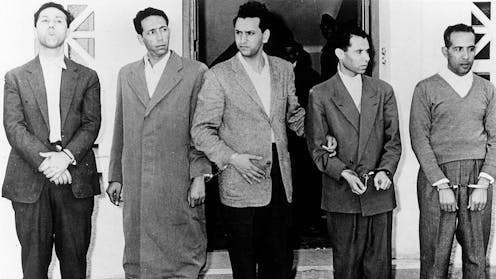
De gauche à droite, les dirigeants du Front de libération nationale algérien, Ahmed Ben Bella, Mohamed Boudiaf, Hocine Aït Ahmed, Mostefa Lacheraf et Mohamed Khider, arrêtés par l’armée française après le détournement de leur avion reliant Rabat à Tunis, le 22 octobre 1956. Picryl, CC BY

La Kabylie reste le théâtre d’un face-à-face politique et idéologique avec Alger, enraciné dans les divisions du mouvement national algérien. Ce texte rassemble une série de constats et de réflexions nourris par plus d’un demi-siècle d’observation et d’engagement – une observation que l’on pourrait qualifier de participante – au sein de la principale région berbérophone d’Algérie : la Kabylie.


À bien des égards, la Kabylie peut être vue comme un condensé de l’histoire politique de l’Algérie depuis son indépendance. Condensé caractérisé par la continuité des pratiques de répression et de neutralisation d’une région qui s’est trouvée maintes fois en opposition frontale avec le pouvoir central.

En 1982, à l’occasion du vingtième anniversaire de l’indépendance de l’Algérie, le chanteur kabyle Ferhat Mehenni du groupe Imaziɣen Imula composait et interprétait une chanson dont le refrain disait à peu près ceci :

« Vingt ans de dictature déjà,
Sans compter ce qui nous attend »

Le futur fondateur du Mouvement pour l’autonomie de la Kabylie (MAK, 2001) n’imaginait certainement pas que sa chanson, quarante ans plus tard, serait encore d’une tragique actualité. Quarante ans plus tard, le caractère autoritaire et répressif du régime algérien n’a fait que se renforcer et se généraliser et la Kabylie en a fait, et en fait, la cruelle et permanente expérience. Certes, cette situation concerne bien sûr l’ensemble de l’Algérie, mais elle se présente pour cette région sous une forme à la fois récurrente, quasiment systémique, et particulièrement diversifiée.

À ce sujet, on me permettra de mentionner ici un souvenir personnel. La première fois que j’ai rencontré, fin 1981 ou début 1982 à Paris, le grand historien algérien Mohamed Harbi, celui-ci, au cours de la conversation, constatant chez ses interlocuteurs une certaine naïveté et improvisation, nous déclara :

« Vous êtes des boy-scouts ! Ne savez-vous pas que les plans de mise en état d’alerte de l’armée algérienne sont fondés sur deux scénarios uniquement : une guerre sur la frontière algéro-marocaine et une insurrection armée en Kabylie ? »

Cette spécificité kabyle est déterminée par un ensemble de facteurs historiques, sociologiques, culturels bien connus : un particularisme linguistique et culturel marqué, une densité démographique élevée, le maintien d’une tradition communautaire villageoise forte, une scolarisation significative ancienne, une émigration précoce et massive vers la France et une politisation sensible des élites et de l’émigration ouvrière… On trouvera une présentation précise de ces paramètres dans mon dernier ouvrage Berbères aujourd’hui.
Kabyles et Berbères : luttes incertaines
(éditions L’Harmattan, 2022).

Continuité d’une répression multiforme

Depuis 1962, la Kabylie a connu à peu près toutes les formes de répression envisageables :

  • L’intervention militaire directe dès 1963 pour mater la rébellion armée du Front des forces socialistes (FFS) de Hocine Aït Ahmed (septembre 1963-juin 1965), qui tentait de s’opposer à la mise en place du système de parti unique et au régime autoritaire du tandem Ben Bella- Boumediene. Intervention qui se soldera par des centaines de morts et des centaines d’arrestations, de détentions arbitraires et de tortures sauvages.

  • La répression violente de manifestations pacifiques. On n’évoquera ici que les événements de grande ampleur, pour un historique détaillé, on se reportera à l’article de Chaker et Doumane (2006). Parmi ces événements, le printemps berbère de 1980 (entre mars et juin) ; les manifestations du printemps 1981 ; celles de juin 1998 à la suite de l’assassinat, dans des conditions suspectes, du chanteur Matoub Lounès ; et surtout celles du « printemps noir » de 2001-2002 qui seront sévèrement réprimées et se solderont par au moins 130 morts et des milliers de blessés.

  • La répression judiciaire récurrente aboutissant à des centaines d’arrestations et condamnations de manifestants et à de nombreuses condamnations des meneurs par la Cour de sûreté de l’État.

  • L’interdiction et la répression de toute tentative d’organisation légale notamment celle de la Ligue algérienne des droits de l’homme, créée autour de feu maître Abdennour Ali Yahia, dissoute en tant que « ligue berbériste » en 1985 (plus d’une dizaine de ses membres ont été arrêtés et sévèrement condamnés et maltraités).

  • Les assassinats ciblés d’opposants politiques, y compris à l’étranger : parmi les plus importants, on citera celui de Krim Belkacem (Francfort, 1970) et celui d’Ali Mecili (Paris, 1987).

  • Des manipulations par les services secrets contre de prétendus groupes terroristes ou armés : affaire des poseurs de bombes (1974), affaire de Cap Sigli (1978).

Le dernier épisode en date (printemps/été 2021) a consisté à classer comme « organisations terroristes » le MAK et le mouvement Rachad et à arrêter des centaines de leurs militants et d’opposants indépendants accusés d’appartenir à ces organisations. Ce dernier épisode n’est pas sans rappeler les pratiques de la Turquie d’Erdogan qui tendent à museler toute opposition en la qualifiant de « terroriste ».

Cette affaire s’est soldée en novembre 2022 par une parodie de justice à l’issue de laquelle ont été prononcés, en moins de trois jours, 102 lourdes condamnations. On vient donc d’atteindre un degré tout à fait inédit dans la répression, sans doute symptomatique d’une crise profonde au sein du régime et/ou d’une volonté de liquider en Algérie toutes les oppositions politiques significatives en les criminalisant.

Dans tous ces cas, la presse officielle s’est déchaînée contre « les ennemis de l’unité nationale, les agents de l’impérialisme et du néo-colonialisme, du Maroc, du sionisme, voire les agents des services secrets occidentaux ». Le but étant de démanteler des groupes ennemis de l’État et de la nation, et de ressouder le peuple autour de ses dirigeants.

Et bien sûr, une répression culturelle structurelle, pendant une trentaine d’années, inscrite officiellement dans les orientations idéologiques, les Constitutions et les lois de l’État algérien qui définissaient l’Algérie comme un pays exclusivement arabe et musulman (Ce n’est qu’en 2016 que le tamazight a accédé au statut de langue nationale et officielle). Le paramètre berbère étant considéré comme ayant disparu ou devant disparaître, car susceptible de porter atteinte à l’unité de la nation. C’était la position tout à fait officielle du FLN et notamment de sa commission culture, totalement investie par le courant arabiste.

Continuité d’une politique de neutralisation

Une autre permanence de la politique de l’État central par rapport à la région est la neutralisation de ses élites politiques et culturelles par intégration dans l’appareil d’État et ses structures satellites. Je ne parle évidemment pas du rôle considérable qu’ont joué les Kabyles au sein de l’appareil d’État, en particulier dans ses sphères technocratiques et sécuritaires, pendant les deux ou trois premières décennies qui ont suivi l’indépendance. Cette surreprésentation des Kabyles dans ces secteurs était une conséquence directe à la fois de leur implication forte dans la guerre de libération et de données socio-culturelles plus anciennes, notamment la formation d’élites locales assez nombreuses.

Je pense en fait surtout à ce que j’ai appelé ailleurs « la nouvelle politique berbère » qui se met progressivement en place à partir de la fin des années 1980/début 1990. En réalité, les premiers signes de cette évolution sont décelables dès 1985, après l’apparition des premières actions terroristes islamistes : certains milieux du pouvoir, son aile « moderniste », ont tenté dès cette époque une approche des milieux berbéristes.

Jusque-là, une grande partie des élites politiques, intellectuelles et culturelles kabyles était globalement dans une relation d’opposition au pouvoir central, du fait même de l’ostracisme prononcé contre le paramètre berbère. Exclue de l’espace institutionnel, la mouvance berbère s’est développée pendant deux à trois décennies en dehors et largement contre le système étatique algérien, particulièrement en émigration. Que ce soit dans le champ de la culture et de la langue ou dans le champ politique, ces deux courants se recoupant largement, en particulier autour du FFS de Hocine Aït Ahmed.

À partir de la fin des années 1980 et le début des années 1990 se dessine progressivement une nouvelle ligne politique officielle, plus tolérante à la berbérité et à ses élites représentatives politiques et culturelles.

Le contexte politique global de cette évolution est bien connu : il est clairement déterminé par la montée en puissance des islamistes qui deviennent pour le pouvoir le danger principal.

Cette nouvelle politique berbère va explicitement se mettre en place pendant la décennie 1990, avec Mohamed Boudiaf et, surtout, avec la prise de pouvoir par les généraux : des composantes significatives du courant berbère soutiendront le pouvoir militaire au nom de la lutte contre les islamistes. Cette politique va s’accentuer et s’accélérer pendant la période Bouteflika. Un des axes majeurs de cette nouvelle orientation, incarnée par la ministre de la culture Khalida Toumi Messaoudi à la longévité exceptionnelle (2002-2014), sera l’intégration systématique des élites culturelles kabyles et la prise en charge de la langue et de la culture berbères dans le cadre d’une politique de gestion patrimoniale et nationale. Le 10 avril 2002, une révision de la Constitution algérienne ajoute l’article 3bis, qui reconnaît le berbère comme langue nationale. Au fond, il s’agit d’une opération méthodique d’intégration d’un paramètre et d’une élite jusque-là hors système d’État.

On notera d’ailleurs qu’une politique similaire peut être observée au Maroc dans le cadre de ce que j’ai appelé « la makhzénisation » de la culture et des élites berbères marocaines. Dans ce pays, cette opération d’intégration a été cependant beaucoup plus aisée, car les élites politiques et intellectuelles berbères marocaines, à l’exception notable de celles du Rif, ont toujours été parties prenantes du système politique.

Dans les deux cas, il s’agit clairement d’une entreprise de neutralisation et de dépossession : la langue et la culture berbères ne sont pas l’apanage des régions berbérophones ou des berbérophones, mais celui de l’État, incarnation de la nation unie et indivisible. Le discours officiel et les réformes constitutionnelles de 2002 et de 2016 en Algérie (et celles de 2011 au Maroc) sont parfaitement explicites et adoptent des formulations strictement parallèles : la langue et la culture berbères font partie du patrimoine indivis de la nation.

Sur ce point précis, la filiation avec la tradition politique et juridique jacobine française est flagrante ; j’ai montré ailleurs (Chaker 2022, chapitre 7) que la République française avait développé exactement le même type d’approche à propos des langues régionales de France : les experts du gouvernement français ont ainsi affirmé, en 1999, que « le breton (le basque, etc.) n’appartient pas aux Bretons ou à la Bretagne, mais au patrimoine indivis de la nation française ».

Le but évident de cette affirmation, en contradiction manifeste avec la réalité historique et sociolinguistique, étant d’éviter de reconnaître des droits spécifiques à des minorités linguistiques, situation qui pourrait aisément dériver vers des revendications autonomistes ou fédéralistes.

The Conversation

Salem Chaker ne travaille pas, ne conseille pas, ne possède pas de parts, ne reçoit pas de fonds d’une organisation qui pourrait tirer profit de cet article, et n’a déclaré aucune autre affiliation que son organisme de recherche.

ref. Kabylie-État algérien : une confrontation politique persistante – https://theconversation.com/kabylie-etat-algerien-une-confrontation-politique-persistante-262078

Our DNA analysis of 75,000-year-old bones in Arctic caves reveals how animals responded to changing climates

Source: The Conversation – UK – By Samuel Walker, British Academy Postdoctoral Fellow, Zooarchaeology, Bournemouth University

Scientists excavating bones in Arne Qvamgrotta, a cave in the Norwegian Arctic. Trond Klungseth Lødøen, CC BY-NC-ND

As the Arctic warms faster than anywhere else on Earth, animals that have evolved to survive the cold face unprecedented challenges. While scientists are learning more about how modern wildlife responds to environmental change, we still know little about how species coped in the past.

Our new study investigates the oldest-known diverse animal community from the European Arctic, dating back 75,000 years. Preserved deep inside a cave in northern Norway, it offers a rare insight into how Arctic ecosystems functioned during a slightly warmer phase of the last ice age.

The Arctic region underwent repeated advances and retreats of glacial ice throughout the last ice age (118,000-11,000 years ago) – a sequence of colder full-glacial conditions (stadials) and warmer phases (interstadials), during which the glaciers retreated to higher elevations. These fluctuating conditions resulted in successive migrations and retractions of animals and plants, eventually shaping the animal communities we see today.

A consequence of being in a glacially active area is that sediment deposits are easily destroyed, as glaciers carve across the landscape and meltwater flushes the caves bare. This has left very few records of the animals and ecosystems prior to the end of the last ice age, around 11,000 years ago.

But remarkably, one sediment deposit has survived intact for more than 75,000 years within Arne Qvamgrotta, a branch off the larger Storsteinhola karst cave system in Norway.

This cave is tucked just within the Arctic Circle in the shadow of Norway’s national mountain, Stetind, on the outskirts of the small coastal town of Kjøpsvik, Nordland. The region is home to thousands of karst caves formed through water dissolving the underlying bedrock, resulting in a dramatic and breathtaking landscapes both above and below ground.

inside the cave in Norway
The sediment profile in Arne Qvamgrotta, Norway, after excavation.
Trond Klungseth Lødøen, CC BY-NC-ND

The intact sediment deposit with preserved bones in Arne Qvamgrotta was first discovered in the early 1990s, during industrial mining activity for limestone. In 2021 and 2022, our team – led by the University of Oslo – returned to the cave to explore these sediments and excavate and recover bone material, to better understand the species diversity in this unusual deposit. Our analyses provide a rare ecological snapshot of the last ice age.

We recovered more than 6,000 bone fragments, on which we used comparative osteology (comparing bone shape and structure to identify species) and ancient-DNA metabarcoding (identifying fragmented bones by analysing DNA strands and matching them to a database of species). Using these techniques, we identified 46 different kinds of animal (to family, genus and species levels) including mammals, birds and fish living both on land and in the sea.

These species include the third-oldest polar bear ever discovered, plus walrus, bowhead whale and seabirds such as king eider and puffin. We found fish including the Arctic grayling and Atlantic cod. One of the most important finds is the now-regionally extinct collared lemming, an animal not previously been identified in Scandinavia.

bone in cave, next to measure rule
Researchers found this well-preserved polar bear vertebra during the cave excavation.
Trond Klungseth Lødøen, CC BY-NC-ND

We used various dating techniques that show the bones are around 75,000 years old – dating back to a slightly warmer (interstadial) phase of the last ice age.

The animals we found show that, during this time in this part of Norway, the coastal land was ice-free – enabling the easy northward movement of migratory reindeer and freshwater fish, for example. We also found a rich mix of marine and coastal animals that support the presence of seasonal sea ice.

This animal community is distinctly different from the most commonly found ice-age megafauna. These include the woolly mammoth and musk ox that are typically associated with the mammoth steppe – the cold, dry grasslands that stretched across much of Europe, North America and northern Asia during the last ice age.

This difference probably reflects the unique coastal setting and landscape surrounding Arne Qvamgrotta, which would have supported a different kind of ecosystem.

Further ancient-DNA analyses from some of the bones reveal that the lineages of the polar bear, collared lemming and Arctic fox from this time and place are now extinct. This suggests these animals could not follow the changing habitats or find refuge during later cold periods of the last ice age – highlighting how vulnerable nature can be under changing climate conditions.


Don’t have time to read about climate change as much as you’d like?

Get a weekly roundup in your inbox instead. Every Wednesday, The Conversation’s environment editor writes Imagine, a short email that goes a little deeper into just one climate issue. Join the 45,000+ readers who’ve subscribed so far.


The Conversation

Samuel Walker receives funding from the British Academy.

Sanne Boessenkool receives funding from The Research Council of Norway.

ref. Our DNA analysis of 75,000-year-old bones in Arctic caves reveals how animals responded to changing climates – https://theconversation.com/our-dna-analysis-of-75-000-year-old-bones-in-arctic-caves-reveals-how-animals-responded-to-changing-climates-261409

From arthritis to nausea: five ways ginger could benefit your health

Source: The Conversation – UK – By Dipa Kamdar, Senior Lecturer in Pharmacy Practice, Kingston University

From warming winter teas to zesty stir-fries, ginger (Zingiber officinale) has long been a kitchen staple. But beyond its culinary charm, this spicy root has a rich history in traditional medicine – and modern science is catching up. Studies now show that ginger may offer a wide range of health benefits, from easing nausea and relieving colds to reducing inflammation and supporting heart health.

Here’s what you need to know:

1. Nausea relief

Multiple clinical trials have shown consistent evidence that ginger can reduce nausea and vomiting, particularly when compared to a placebo. The NHS even recommends ginger-containing foods or teas for easing nausea.

Ginger seems especially effective for nausea during pregnancy. In small doses, it’s considered a safe and effective option for people who don’t respond well to standard anti-nausea treatments.

There’s also promising evidence that ginger can help with chemotherapy-induced nausea, though results are mixed when it comes to motion sickness and post-surgery nausea.

Researchers believe ginger’s anti-nausea effects may work by blocking serotonin receptors and acting on both the gut and brain. It may also help by reducing gas and bloating in the digestive tract.

2. Anti-inflammatory benefits

Ginger is rich in bioactive compounds, such as gingerol and shogaol, which have strong antioxidant and anti-inflammatory properties.

Recent research suggests ginger supplements may help regulate inflammation, especially in autoimmune conditions. One study found that ginger reduced the activity of neutrophils — white blood cells that often become overactive in diseases like lupus, rheumatoid arthritis and antiphospholipid syndrome.

Neutrophils produce extracellular traps (NETs), which are web-like structures used to trap and kill pathogens. But when NETs form excessively, they can fuel autoimmune diseases. In the study, taking ginger daily for one week significantly reduced NET formation.

While this study used ginger supplements, it’s unclear whether fresh ginger or tea has the same effect. Still, the findings suggest ginger may be a helpful, natural option for people with certain autoimmune conditions – though more research is needed.

Ginger also has antimicrobial properties, meaning it can help combat bacteria, viruses and other harmful microbes. Combined with its anti-inflammatory effects, this makes ginger a popular remedy for easing cold and flu symptoms like sore throats.

3. Pain management

When it comes to pain, the research on ginger is encouraging – though not conclusive. Some studies show that ginger extract can reduce knee pain and stiffness in people with osteoarthritis, especially during the early stages of treatment. However, results vary, and not everyone experiences the same level of relief.

For muscle pain, one study found that taking two grams of ginger daily for 11 days reduced soreness after exercise.

Ginger may also ease menstrual pain. In fact, some studies suggest its effectiveness rivals that of non-steroidal anti-inflammatory drugs like ibuprofen.

Researchers believe ginger works by activating pathways in the nervous system that dampen pain signals. It may also inhibit inflammatory chemicals like prostaglandins and leukotrienes.

4. Heart health and diabetes support

High blood pressure, high blood sugar and elevated “bad” cholesterol (low-density lipoprotein or LDL cholesterol) are all risk factors for heart disease. Ginger may help with all three.

A 2022 review of 26 clinical trials found that ginger supplementation can significantly improve cholesterol levels — lowering triglycerides, total cholesterol and LDL cholesterol, while raising HDL (“good”) cholesterol. It may also lower blood pressure.

For people with type 2 diabetes, ginger could offer additional benefits. A review of ten studies found that taking one to three grams of ginger daily for four to 12 weeks helped improve both cholesterol levels and blood sugar control.

These benefits appear to come from multiple mechanisms, including improved insulin sensitivity, enhanced glucose uptake in cells, and reduced oxidative stress. Ginger’s anti-inflammatory actions may also contribute to its heart-protective effects.

Some early research suggests that ginger may also offer benefits for sexual health, though evidence in humans is still limited. Animal studies have found that ginger can boost testosterone levels, improve blood flow, and enhance sexual behaviour. In traditional medicine systems, it has long been used as an aphrodisiac. While there’s not yet strong clinical evidence to confirm a direct impact on libido, ginger’s anti-inflammatory, circulatory and hormonal effects could play a supportive role, particularly for people managing conditions like diabetes or oxidative stress.

5. Brain health and cancer research

Emerging evidence suggests ginger may also offer neuroprotective and anti-cancer benefits. Lab-based studies show that ginger compounds can help protect brain cells from oxidative damage – a key factor in neurodegenerative diseases like Alzheimer’s.

Other in-vitro research has found that ginger can slow the growth of some cancer cells. However, these findings are still in early stages and more research is needed to confirm their relevance in humans.

Ginger is generally safe when consumed in food or tea. But like any supplement, it should be used in moderation.

Doses above four grams a day may cause side effects such as heartburn, bloating, diarrhoea or mouth irritation. These are usually mild and temporary.

Certain groups should use caution with high doses. Ginger may increase bleeding risk in people on blood thinners (like warfarin, aspirin or clopidogrel), and it can enhance the effects of diabetes or blood pressure medications, potentially leading to low blood sugar or blood pressure. Pregnant women should also consult a doctor before using high doses.

So ginger isn’t just a fragrant kitchen spice – it’s a natural remedy with growing scientific support. For most people, enjoying ginger in food or tea is a safe and effective way to tap into its therapeutic potential. If you’re considering taking supplements, it’s always best to speak with your doctor or pharmacist first, especially if you’re managing a medical condition or taking medication.

The Conversation

Dipa Kamdar does not work for, consult, own shares in or receive funding from any company or organisation that would benefit from this article, and has disclosed no relevant affiliations beyond their academic appointment.

ref. From arthritis to nausea: five ways ginger could benefit your health – https://theconversation.com/from-arthritis-to-nausea-five-ways-ginger-could-benefit-your-health-261506

Virtual Beauty exhibition – is our sense of beauty changed by new technologies?

Source: The Conversation – UK – By David Bate, Professor at Westminster School of Arts, University of Westminster

Virtual Beauty is the summer show at Somerset House, London, featuring a fascinating collection of visual work by artists dealing with the connection between technology and beauty. As you might expect, it focuses on the human form and the reshaping of the body and face through computational processes.

While humans have contemplated their self-image through mirrors and pictures of themselves for hundreds of years, digital inventions have reconfigured all this. Today, people regularly use mobile phone screens as mirrors and the camera to record themselves. Posting these images online only affirms that identity to their wider community and networks.

The rectangular shape of a phone screen is used extensively in the exhibition by digital artists to show the new malleability of human identity and how we can reimagine ourselves through digital technologies.

The artist Orlan, for example, conducted cosmetic surgery and recorded it live on video, originally live-streaming it into galleries in 1992. Astonishingly in the video she is seen awake and even discussing the aesthetics of her facial surgery with special guests while the surgeons work with a scalpel on the dotted lines on her face.

But today you don’t need a surgeon to change your image, you can use your phone and apps to “try out” new identities. This is our new digital world and the questions about what these processes mean is what concerns the artists here.

In visual anthropologist Mathilde Friis’s excellent accompanying essay to the exhibition From the Selfie to the Avatar: Beauty, Bias and the Digital Self, she suggests that the actual body no longer limits beauty thanks to our online lives.

In this online presentation of self, she argues, is a tension between our offline identity, the facets of ourselves we inherit and literally inhabit, and the freedom to escape these fixed features in how we present ourselves online.

Do you want to look like a well known model, an exotic anime character or something else? These are all possibilities in the digital world, but what kind of change do they represent? Such are the lingering questions for the viewer at the exhibition.

The artworks explore the trials and tribulations of identity and its relation to traditional notions of beauty and attempts at liberation from them. This point is strongly made in Filip Custic’s installation Pi(x)el (2022), where a 3D silicone mannequin has tiny screens attached in front of the key features of the body.

The screen images flicker between different images of eyes, ears, mouth, nose, genitals and fingernails to demonstrate the potential choices one might make to change them.

I was particularly drawn into Qualeasha Wood’s intriguing textile work It’s All For U (If U Rlly Want It), (2024). The tapestry looks like a photo-collage. At the centre is a black woman who reaches towards a phone screen.

Around her are the tools used to construct the digital self, the phone camera the screen of the selfie, its menu buttons, texts and her hand that taps out this creation. These facets are all beautifully scrambled together into a single work that invites the viewer to linger and meditate on them.

At the same time the many artworks that do use screens tend to play with traditional expectations of them. Some of these images can seem uncanny or confronting while other conform to more traditional ideas of what a digital avatar can be.

An example of one of these works in Angelfire’s XENA (2021), which is inspired by the TV series character Xena: Warrior Princess (1995-2001). This take on the character shows a powerful hyper hybrid figure, a kind of masculine and feminine, neither firmly one nor the other and maybe not even both.

Another is Lil Miquela’s Rebirth of Venus (2020), which presents a virtual figure who looks like a real person. Beautiful butterflies fly around and settle on her, as if to emphasise her beauty. Although Lil Miquela does not exist beyond her digital space, she has a massive following online as a viral influencer as well as a virtual avatar.

The exhibition is a welcome engagement with ideas of virtual beauty and into the growth of digital identities that are at once a part and separate or different from our offline selves. It shows how hybridity is a feature of virtual space and how we tend to sometimes subtly merge our own ideals with the computer images that we see.

It has been said that photography and cinema had a similar effect during the 20th century. The exhibition also offers great insight how these virtual spaces have allowed people to present identities online which might be challenged offline.

All in all, its is an interesting presentation of the tension between the animation of new selves and the palpable anxiety and questions about where we are all headed.

Virtual Beauty is on at Somerset House in London until September 28 2025


Looking for something good? Cut through the noise with a carefully curated selection of the latest releases, live events and exhibitions, straight to your inbox every fortnight, on Fridays. Sign up here.


The Conversation

David Bate has received funding from The Arts Council and The British Council.

ref. Virtual Beauty exhibition – is our sense of beauty changed by new technologies? – https://theconversation.com/virtual-beauty-exhibition-is-our-sense-of-beauty-changed-by-new-technologies-262454

When US and Japanese troops stopped fighting to talk, eat and pray together

Source: The Conversation – UK – By Nick Megoran, Professor of Political Geography, Newcastle University

Japan’s Emperor Hirohito ordered his country’s surrender in a radio broadcast on August 15 1945. After the deaths of some 70 million people, the second world war had finally come to an end.

Reflections on the anniversary of the conflict’s end often turn, understandably, to the cataclysmic atomic bombings of Hiroshimi and Nagasaki that precipitated the emperor’s decision.

But to research a strikingly different – and little-known – story from the final stages of the war in the Pacific, we recently travelled to the remote Japanese island of Aka, where a scarcely believable truce between US and Japanese soldiers took place 80 years ago. In the shadow of one of the war’s fiercest battles, enemy combatants stopped fighting to negotiate, exchange souvenirs, eat – and even pray together.

Map of the Kerama Islands group in Okinawa Prefecture, Japan.
Aka is part of the Kerama Islands group in Okinawa Prefecture, Japan.
Okinawa Island Guide

The battle of Okinawa was the last great engagement of the second world war, and one of its most terrible. The US and UK saw Okinawa as a staging post to the full-scale invasion of mainland Japan, some 400 miles further north. For Japan, defending Okinawa was a way to prolong the war and strengthen its hand in eventual peace negotiations.

To prepare for a battle of attrition, the Japanese army spent months fortifying Okinawa. Sheltering in tunnels and caves, the troops were largely unscathed by a massive initial US air and naval bombardment. They emerged to fight what historian Yunshin Hon called a “three-month orgy of killing”.

After ten weeks of intense combat, the battle was lost. Rather than surrender, before committing ritual suicide, the Japanese commanding generals Mitsuru Ushijima and Isamu Chō issued a final communique ordering every man to “fight to the end of the sake of the motherland … Do not suffer the shame of being taken prisoner.”

Okinawa’s Cornerstone of Peace memorial records the names of more than 240,000 people who died in the battle – more than half of them Okinawan civilians. The Japanese army coerced the civilian population into mass collective suicides, with family members killing each other to prevent them falling into the hands of US troops.

Given this horror, the events on Aka island, 15 miles west of Okinawa, are all the more extraordinary. Using declassified military reports, interviews with participants and eyewitnesses plus archives held by their relatives, we were able to piece together this forgotten story.

An unlikely truce

The Aka operation began on June 13 1945, led by led by US marine reservist Lt. Col. George Clark. About a dozen American soldiers and marines had volunteered for the dangerous mission of going ashore to secure the surrender of a 200-strong Japanese garrison, concealed in the jungle.

The US operation was supported by Japanese prisoners who, having been persuaded of the futility of further deaths in a now-unwinnable war, broadcast appeals for the garrison to surrender from portable loudspeakers.

There was no initial response from the Japanese. But on June 19, the final day of the scheduled mission, the team spotted some civilians. In his official report, Clark recounted that “in a last desperate attempt to save the day”, Lt. David Osborn (a US marine officer who had volunteered to help Clark lead the expedition) “plunged into the water and, naked with the exception of a pair of white skivvy shorts, made off in hot pursuit”.

In the dense undergrowth, the unarmed Osborn stumbled across a Japanese soldier who, remarkably, did not harm him. Instead, the garrison commander, Major Yoshihiko Noda, agreed to meet the Americans – but only if they were accompanied by an old comrade of his, Major Yutaka Umezawa, who had been injured and taken prisoner at the start of the battle.

On June 26, the team returned to Aka (with Umezawa carried on a stretcher), landing on the remote Utaha beach for this conference between Noda and Clark. Umezawa – whose views on the Americans and the war had been transformed by his benign treatment in captivity – strove to persuade Noda of the futility of suicidal resistance.

As negotiations continued, Clark had lunch brought onto the beach and shared with the Japanese: pork and sweet potatoes for the officers, canned goods for the men.

In his official report, Clark noted this led to “the most amazing spectacle it has ever been my lot to behold … On the sand dunes and on the beaches were Jap soldiers and officers, United States marines, soldiers, sailors who had brought in the food, Jap prisoners, officers as well as enlisted men, white folks, black folks, yellow folks; a general melee if there was ever one.”

As a gesture of mutual trust, Noda invited Osborn and another officer, Lt. Newton Steward, back to his command post. He had his men wash and dry the Americans’ shirts, which had become sweaty during the negotiations, and served them tinned pineapple. The Americans then left the island with Noda promising a formal response the next day.

When the marines returned on June 27, Noda’s adjutant, Second Lt. Yoshiyuki Takeda, informed Clark that, regrettably, they were unable to surrender without permission from the emperor. However, the two sides agreed a tacit truce. Noda promised that if the Americans refrained from military action, their men could go “hunting shells or swimming along the beaches” without danger.

In a remarkable final gesture, Clark asked Takeda “if he would like to join the group in a prayer to the Supreme Being of all faiths for international understanding and peace”.

In his report, Clark wrote that Takeda “readily agreed” and, as US and Japanese soldiers knelt together by the shore in prayer, was “visibly moved, arose and thanked us all when the gist of the prayer had been interpreted for him”.

Clark left the island disappointed that he had failed to secure a surrender. However, the truce held until the end of the war. It prevented further Japanese and US military casualties, and spared the island’s inhabitants the devastation that was unleashed on the rest of Okinawa.

Shared humanity

The Aka truce was an isolated event, and we should not romanticise it. Noda’s garrison was responsible for the deaths of a dozen starving Korean conscripted labourers at the start of the battle for Aka, executed for “theft” when they were found with rice stuffed in their pockets.

But like the 1914 Christmas truces on the western front, the Aka truce captures the imagination – and we believe offers three instructive and hopeful lessons.

First, even in the most appalling of circumstances, enemy combatants were able to recognise each other’s shared humanity. They attended to basic needs of food and comfort, and joined together in a moment of spiritual intimacy that transcended cultures.

Second, it showed that enemy soldiers were able to enter into dialogue and choose not to continue fighting – risking not only immediate death or injury, but also future courts-martial. This raises the ethical question: “Do soldiers on the battlefield have the right not to fight?” It is a right that soldiers have increasingly sought to assert, in contexts ranging from Vietnam to the occupied Palestinian territories.

Finally, the Aka truce offered a glimpse of the subsequent Allied-Japanese reconciliation that seemed unthinkable at the time. On the 80th anniversary of the end of history’s most terrible war, that is a story and message worth retelling.

The Conversation

Nick Megoran received funding for this research from Hakusem Partners Ltd, Sapporo City, Japan. He is grateful to the Director, Yasuhiro Kawamoto.

Hiroshi Sakai received funding for this research from Hakusem Partners Ltd, Sapporo City, Japan. He is grateful to the Director, Yasuhiro Kawamoto.

ref. When US and Japanese troops stopped fighting to talk, eat and pray together – https://theconversation.com/when-us-and-japanese-troops-stopped-fighting-to-talk-eat-and-pray-together-262068

Plastics and human health: what’s at stake in the global treaty talks in Geneva

Source: The Conversation – UK – By Cat Acheson, Research Associate, School of Social and Political Science, University of Edinburgh

Plastics are everywhere – they’re even in you right now – and are making many of us sick. Now, global negotiators are fighting over whether that matters.

As 180 countries meet in Geneva to seek agreement on a global treaty on plastic pollution, a landmark review published in medical journal The Lancet has made the stakes clear. Plastics, the evidence shows, are a threat to human health – from womb to grave.

They’re linked to miscarriages, birth defects, heart disease and cancer. Plastics are harming people at every stage of the plastics lifecycle – from initial oil extraction to the production and use of plastic products, and their eventual disposal via landfill, incinerator or just being left in the environment.

Yet the possibility of a strong, health-centred treaty hangs in the balance. Campaigners, scientists and healthcare groups are pushing for strong measures to cap production and ban hazardous chemicals. But petrochemical producers and industry lobbyists are pushing back – arguing, against mounting evidence, that plastics are essential to saving lives.

The UN meeting in Geneva is the culmination of several years of negotiating. In theory, delegates will agree on a global treaty by August 15.

The current draft text, which will be the basis for these negotiations, contains provisional elements which could make a real difference. These include cutting plastic production (Article 6), banning plastic products and chemicals that are hazardous to humans or the environment (Article 3), and a section dedicated to protecting human health (Article 19).

But some negotiators oppose these elements, and there is a risk they will be watered down or scrapped entirely in the final treaty.

The so-called Like-Minded Group of countries – many of whose members are petrochemical producers including Saudi Arabia, China, Iran, and Russia – has led the opposition to a health-centred treaty. They have done so by arguing that plastics are in fact essential for protecting health, due to the role of single-use plastic in modern medicine.

For example, Kuwait’s submission to the previous negotiating round in Busan, South Korea, last year called concerns about plastic “not inclusive”, and cited medical devices as proof that plastic saves lives. Saudi Arabia has opposed the inclusion of a dedicated article on health, arguing that this would divert the treaty away from its core purpose of managing plastic waste.

Since almost all plastic is made from oil or gas, these petrostates have a clear incentive to maintain the status quo of plastic production and dependency. No wonder they want to focus on managing waste, rather than making less in the first place.

Huge bales of plastic waste
Less than 10% of the world’s plastic is recycled.
Clare Louise Jackson / shutterstock

Plastics industry lobbyists have also been accused of “infiltrating” the negotiations and wielding outsized influence. They too have pushed the narrative that plastics are essential for human health – for example, with posters displayed in Busan which claimed “plastics save lives”.

These lobby groups are pushing for healthcare plastics to be exempted from the treaty entirely, which would provide a significant loophole for plastic producers.

As evidence grows of the ways plastics are harming humans, claims they are necessary to safeguard our health are looking increasingly far-fetched. Of course, plastics are everywhere in modern healthcare. But in most cases, and especially with single-use plastics, they can and should be replaced with a less harmful alternative.

Civil society groups, scientists and healthcare professionals are building momentum for a strong health-centred treaty. The international nongovernmental organization Health Care Without Harm has coordinated an open letter rejecting exemptions for the health sector. Signed by 65 organisations representing 48 million health workers across 88 countries, it calls for a treaty that tackles the full plastics lifecycle – and says cutting unnecessary plastic in healthcare is both possible and necessary to protect patients.

The Scientists’ Coalition, made up of independent experts, has been instrumental in bringing evidence of plastics’ health effects into the debate, while groups like the Global Alliance for Incinerator Alternatives have been pushing for the treaty to recognise that plastics, and especially their disposal, affect marginalised populations hardest. They argue that justice for the most affected people and places should be at the heart of the treaty.

The global plastics treaty is an unprecedented opportunity to take decisive, coordinated action to tackle one of the planet’s biggest threats. At stake in Geneva is whether health will stay at the heart of this treaty – or be sacrificed under pressure from industry and petrostates.

The Conversation

Cat Acheson receives funding from The Wellcome Trust for a project which partners with Health Care Without Harm.

Alice Street received a Wellcome Discovery Award for the project: ‘After the Single Use: Rethinking Medical Devices for Reuse, Resilience and Renewal’, which partners with Health Care Without Harm.

Rob Ralston is a member of Scientists’ Coalition for an Effective Treaty.

ref. Plastics and human health: what’s at stake in the global treaty talks in Geneva – https://theconversation.com/plastics-and-human-health-whats-at-stake-in-the-global-treaty-talks-in-geneva-262593

Fear built the nuclear bomb – only trust can ensure it is never used again

Source: The Conversation – UK – By Nicholas John Wheeler, Professor of International Relations, Department of Political Science and International Studies and Non-Resident Senior Fellow at BASIC, University of Birmingham

The world entered its nuclear epoch 80 years ago on August 6 1945. The US dropped an atomic bomb on the Japanese city of Hiroshima, killing between 70,000 and 140,000 civilians by the end of that year.

A stark reminder of this immense destructive power came recently. On August 1, US president Donald Trump announced the redeployment of two submarines – presumably Ohio-class subs carrying ballistic missiles – in response to what he called “highly provocative statements” by Russia’s former president Dmitry Medvedev.

It may have been empty posturing by Trump. But one Ohio-class submarine (the US Navy has 14 in its fleet) carries approximately 90 warheads, each with destructive power many times greater than the bombs dropped on Hiroshima and, three days later, Nagasaki.

As the world remembers the devastation wrought by these bombings, the threat of nuclear conflict remains a persistent threat to humanity.

Frisch-Peierls memorandum

For many years it was believed that building an atomic weapon was not feasible given the amount of uranium-235 required for a bomb. This assumption changed in March 1940 when two refugee physicists – Rudolf Peierls and Otto Frisch, who both worked at the University of Birmingham – produced in secret what became known as the Frisch-Peierls memorandum.

Their memorandum showed that a powerful atomic bomb could be built using only a small amount of uranium-235. What drove Frisch and Peierls was fear that Nazi Germany might build the bomb first.

They wrote: “If one works on the assumption that Germany is, or will be, in the possession of this weapon … The most effective reply would be a counter-threat with a similar bomb. It would obviously be too late to start production when such a bomb is known to be in the hands of Germany, and the matter seems, therefore, very urgent.”

The Frisch-Peierls memorandum was submitted to the British government as a warning. Prime Minister Winston Churchill heeded the message, establishing the Maud committee a month later to investigate the military potential of atomic energy.

It reported in secret in July 1941, urging production of a bomb and Britain’s cooperation with the US in this endeavour. In a now-famous line, the committee said: “No nation would care to risk being caught without a weapon of such decisive possibilities.”

The demonstration of what the atomic bomb was capable of at Hiroshima, and then at Nagasaki, spurred others to follow the committee’s logic. The Soviet Union, fearing a US atomic monopoly, tested its first bomb in 1949. Britain joined the nuclear club in 1952, followed by France in 1960 and China in 1964.

It is widely accepted that Israel had developed nuclear capability by the early 1970s, though it has maintained a position of ambiguity. India and Pakistan became declared nuclear powers in 1998 and North Korea followed in 2006.

While factors such as national ambition and status played a role in proliferation, a key driving force was fear, fear of adversaries achieving a lasting strategic advantage and, in the case of North Korea, an external attack.

Fear’s centrality to the nuclear story is not only in relation to its role as a driver of proliferation. Nuclear fear has also been a key source of restraint. The most dramatic manifestation of this was the October 1962 Cuban missile crisis.

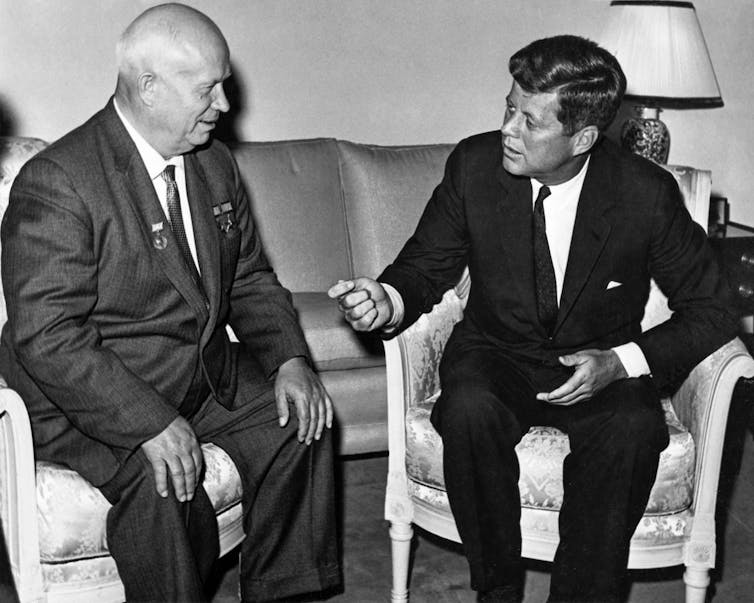
As I have argued elsewhere, shared fear of nuclear catastrophe led the then US president, John F. Kennedy, and his Soviet counterpart Nikita Khrushchev to develop empathy and trust. This was a key factor in the peaceful resolution of the crisis.

John F. Kennedy meeting with Nikita Khrushchev.
John F. Kennedy meeting with Nikita Khrushchev during a 1961 summit held in Vienna.
US Department of State

However, nuclear fear – and the deterrence it makes possible – is a fragile basis on which to safeguard humanity’s future. The world may have avoided the use of nuclear weapons since August 1945 through a combination of prudent statecraft and good luck. But how long is it before some combination of bad luck and reckless risk-taking leads to the use of nuclear weapons once again?

Russian nuclear sabre-rattling over Ukraine and the May 2025 conflict between India and Pakistan, unleashing military force between two nuclear-armed states, are warnings that the ever-present threat of nuclear weapons still hangs over humanity.

In the cold war’s climate of deep distrust and nuclear fear, the US and Soviet Union at least had some shared guardrails and channels of communication. Arms control agreements agreed after the Cuban missile crisis limited superpower competition through the 1960s and 1970s. They continued to restrain US-Soviet competition in the early 1980s.

Nowadays, however, arms control has all but collapsed while reliable and trusted channels of communication between major nuclear adversaries are virtually non-existent. The prospects for regulating the nuclear arms competition between Russia, the US and China are bleak.

Replacing fear with trust

To mark the 80th anniversary of the advent of the nuclear epoch, the Nobel Laureate Assembly – a gathering of Nobel laureates and nuclear experts at the University of Chicago – warned in its 2025 Declaration for the Prevention of Nuclear War that: “Ultimately, security cannot be built on fear.”

If the bomb was born out of fear, then ensuring it is never used again requires replacing fear with trust. Ten years into the nuclear epoch, Albert Einstein and philosopher Bertrand Russell issued a manifesto signed by 11 signatories. It was created principally as a trust-building project between the east and west.

The manifesto concluded: “We appeal as human beings to human beings: remember your humanity, and forget the rest. If you can do so, the way lies open to a new paradise; if you cannot, there lies before you the risk of universal death.”

We now face the same choice the manifesto laid bare. One path leads to annihilation, the other to survival through a recognition of our common humanity.

Japan gives expression to that common humanity every August when Hiroshima and Nagasaki hold their peace memorial ceremonies. Remembering the victims and those who continue to suffer from the effects of the atomic bombings, these memorials look to a future where nuclear weapons no longer exist.

The nuclear bomb may have been born in fear. But only the building of trust, which may spring from that fear, can ensure it is never used again.

The Conversation

I have received past funding from the Economic and Social Research Council and the Open Society Foundations.

ref. Fear built the nuclear bomb – only trust can ensure it is never used again – https://theconversation.com/fear-built-the-nuclear-bomb-only-trust-can-ensure-it-is-never-used-again-262637

The hubris arc: how visionary politicians turn into authoritarians

Source: The Conversation – UK – By Trang Chu, Associate Fellow, Saïd Business School, University of Oxford

Shutterstock/Pandagolik1

What turns a democratically elected leader into an authoritarian? The process is rarely abrupt. It unfolds gradually and is often justified as a necessary reform. It is framed as what the people wanted. All this makes it difficult for citizens to recognise what is happening until it’s too late.

Consider Viktor Orbán’s transformation in Hungary. Once celebrated as a liberal democrat who challenged communist rule, Orbán now controls 90% of the Hungarian media and has systematically packed the country’s constitutional court. His trajectory is now widely recognised as a textbook case of democratic backsliding.

Turkish president Recep Tayyip Erdoğan was initially praised for showing that democracy and Islamic governance could coexist. In early reforms, he lifted millions from poverty by challenging Turkey’s secular establishment – a feat that required exceptional confidence and a bold vision. Now, a decade on, Erdoğan has turned Turkey into what political scientists call a competitive authoritarian regime.

In the US, Donald Trump rose to power promising to “drain the swamp”. In Brazil, Jair Bolsonaro campaigned as an anti-corruption crusader who would restore the country’s moral foundations. Both have since weaponised democratic institutions to consolidate their own power.

Part of this shift is a psychological process we term the hubris arc. This sees a visionary leader become increasingly myopic once in office. Their early successes bolster their belief in their transformative capabilities, which gradually diminishes their capacity for self-criticism.

The visionary stage typically coincides with systemic failure. When established institutions prove inadequate for addressing public grievances, it provides fertile ground for leaders with exceptional self-confidence to emerge. These outsiders succeed precisely because they possess the psychological conviction that they can challenge entrenched systems and mobilise mass support through bold, unconventional approaches.

Such leaders excel at crafting compelling narratives that enable them to to transform public frustration into electoral momentum. They offer simplified solutions to complex problems, providing certainty where establishment politicians offer only incrementalism and compromise.

Losing perspective

But as visionary capacity increases, so too does myopia. Seeing a singular path with exceptional clarity necessitates narrowing one’s perceptual field.

These leaders initially succeed because their heightened focus cuts through the paralysis of nuanced thinking. But they quickly reach an inflection point where they face a fundamental choice: accept institutional constraints as necessary feedback mechanisms or redefine them as obstacles to their vision.

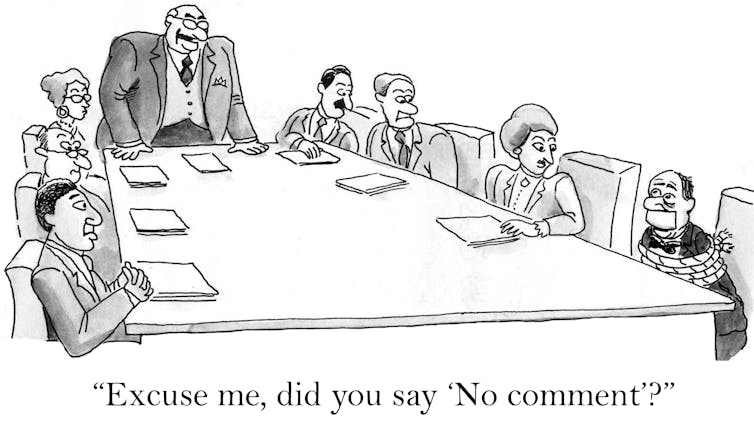
A cartoon of a group of people round a board table with one person gagged and bound. The leader of the meeting is asking,
When dissenting voices magically drop away.
Shutterstock/Cartoon Resource

Those who maintain a productive vision actively build systems for honest feedback. They allow formal channels for dissent to continue and construct diverse advisory teams.

Where strong democratic institutions endure – independent media, empowered legislatures, autonomous courts – leaders must continue negotiating and compromising. This tends to keep their confidence grounded. Some leaders successfully work within these constraints, which proves that the descent into myopia is actually more a reflection of institutional weakness than psychological destiny.

Where institutions lack strength or leaders resist self-discipline, electoral success may embolden rather than restrain authoritarian tendencies. As leaders become increasingly convinced of their transformative vision, their ability to perceive alternatives diminishes.

This psychological narrowing manifests in predictable behaviours, notably eliminating dissenting voices. With every election victory, Orbán has replaced independent-minded allies with loyalists. Trump’s first presidency featured constant turnover among advisers who challenged him. His second is populated by people who can be trusted to toe the line.

Myopic decline follows when hubris reaches saturation. Once leaders systematically eliminate feedback mechanisms, they lose all capacity for self-correction. As their ability to process contradictory information deteriorates, they may increasingly conflate personal power with national interest.

This conflation appears most pronounced in cases where leaders have systematically weakened independent media and judicial oversight.

When leaders achieve complete institutional capture, this self-conception becomes institutionalised. Orbán’s declaration, “We have replaced a shipwrecked liberal democracy with a 21st-century Christian democracy,” reveals how personal vision becomes indistinguishable from national transformation.

Institutional capture occurs through different methods but serves similar purposes. Orbán’s control of the media and courts means he has created parallel institutions that exist solely to validate his vision. Erdoğan used emergency powers after a 2016 coup attempt to instigate mass purges.

In both cases, motivated reasoning becomes institutionalised: leaders come to control the institutions that usually determine what information is legitimate and enable forms of dissent.

The endpoint is a transformation in which opposition becomes an existential threat to the nation. When Orbán positions himself as defender of “illiberal democracy” against EU values, or when Erdoğan arrests his rivals, they frame dissent as treason.

Opposition is a threat not just to their power but to the nation’s essence. Maximum vision has produced maximum blindness. Institutions have been redesigned to perpetuate rather than puncture the delusion.

Resisting the decline

The robustness of democratic institutions is decisive in determining whether hubristic tendencies can be contained within democratic bounds or whether they culminate in authoritarian consolidation.

Hungary and Turkey display a more linear model of democratic erosion. Both Orbán and Erdoğan leveraged initial electoral mandates to systematically capture state institutions. Their hubris evolved from a tool for challenging establishments into a self-reinforcing system in which the regime’s vast sway over state institutions eliminated feedback mechanisms.

Bolsonaro’s slide toward authoritarianism – denying COVID science, attacking electoral systems, attempting to overturn his 2022 defeat – triggered immediate institutional pushback. Unlike Hungary or Turkey, where courts and civil society gradually bent to executive pressure, Brazilian institutions held firm.

Bolsonaro’s trajectory from populist outsider to authoritarian to electoral defeat and institutional rejection suggests that robust federal structures and an independent judiciary can function as circuit breakers. They can prevent permanent democratic capture.

The American experience presents a third model: democratic resilience under stress. Unlike Hungary and Turkey, where institutional capture succeeded, Trump’s first presidency tested whether these patterns could emerge in a system with deeper democratic roots and stronger institutional checks.

While his efforts to pressure state election officials and weaponise federal agencies followed recognisable authoritarian scripts, American institutions proved more resistant than their Hungarian or Turkish counterparts. Courts blocked key initiatives, state officials refused to “find votes,” and congressional oversight continued despite partisan pressures.

Yet even this institutional resistance came under severe strain, suggesting that democratic durability may depend more on specific design features and timing than general democratic culture.

The Trump stress test has revealed vulnerabilities. The erosion of democratic norms – when parties prioritise loyalty over constitutional obligations – creates openings for future exploitation.

The second Trump term could systematically target the weaknesses identified during his first: expanded emergency powers, strategic appointments to undermine the administrative state, and novel statutory interpretations to bypass Congress. The critical question is whether American institutions retain sufficient strength to again disrupt Trump’s trajectory.

The hubris arc appears inherent in populist psychology, underscoring why constitutional constraints and institutional checks are indispensable. Democracies survive not by finding perfect leaders but by constraining imperfect ones.

The Conversation

The authors do not work for, consult, own shares in or receive funding from any company or organisation that would benefit from this article, and have disclosed no relevant affiliations beyond their academic appointment.

ref. The hubris arc: how visionary politicians turn into authoritarians – https://theconversation.com/the-hubris-arc-how-visionary-politicians-turn-into-authoritarians-262562

What your pet’s poo can reveal about the spread of antibiotic-resistant superbugs

Source: The Conversation – UK – By Matthew B Avison, Professor of Molecular Bacteriology, University of Bristol

Antibiotic-resistant _Escherichia coli_ is one of the most common superbugs found in UK dogs’ poo. otsphoto/ Shutterstock

Bagging up and disposing of your pet’s poo is a necessary, albeit unpleasant, part of responsible pet ownership. But a new UK government initiative will be asking people to send them their pets’ poo instead of throwing it away.

As strange as that might sound, the aim of this initiative is to test for antibiotic-resistant superbugs.

A growing number of bacterial species are evolving resistance to the antibiotics designed to kill them. This means that many common infections which were once easily treated are now becoming harder to get rid of.

The World Health Organization lists antimicrobial resistance as one of the top global public health threats, given estimates that antibiotic resistant bacteria were directly responsible for 1.27 million deaths worldwide in 2019.

Antibiotic-resistant superbugs are all around us. We even carry them on our skin and in our gut. You mainly pick antibiotic resistant bugs up from other people – but you can also pick them up from food, or by accidentally swallowing them if they get on your fingers and you haven’t washed your hands before touching your mouth.

There are plenty of documented examples of superbugs being passed from pet to person, as well.

Superbugs find their way into our pets’ bodies through similar means. Our pets swallow them either when eating, drinking, licking or chewing contaminated objects. Once swallowed, they enter the animal’s gut and multiply – then get passed out in its poo.

It then only takes a tiny amount of your pet’s poo to be accidentally swallowed by you for the bacteria to end up in your gut. This could happen during routine moments with your pet – such as when it licks your face, or if you forget to wash your hands after cleaning up after them.

A man picks up his dog's poo in the park, while his small brown and white dog watches.
The superbugs in your pet’s poo can be passed to you.
Lucky Business/ Shutterstock

Bacteria such as Escherichia coli, Klebsiella and Enterococci can be found in pet and human poo, and can cause infections in both.

These bacteria are normally harmless when present in the gut, but problems occur when, by chance, they get into places they don’t belong – such as the urinary tract, a wound or the bloodstream. The bacteria can then cause what’s known as an “opportunistic infection”.

Such infections are a particular risk for people whose immune systems are not functioning very well, and can be serious. Opportunistic infections kill over a million people globally each year.

We use antibiotics to treat opportunistic infections. But if the causative bacterium is a superbug that has evolved resistance to the antibiotic, this makes infections longer-lasting, more serious and more likely to kill.

Clues in poo

Because pet owners pick up some of their gut bacteria from their pets, this is why it’s useful to know whether the bacteria in a pet’s poo are antibiotic-resistant superbugs.

The UK initiative is the first formalised, nationwide attempt to monitor for antibiotic resistant bacteria in pets’ poo. However, it isn’t the first time researchers have studied pet poo to understand antibiotic resistance.

For example, my team recruited 600 adult dogs and almost 250 16 week-old puppies for a series of studies looking at the levels of antibiotic resistant Escherichia coli in their poo. We found them in almost every poo sample we analysed.

One benefit of measuring the levels of superbugs in pet poo is that it can help you figure out probable risk factors. Understanding where pets might have picked up these superbugs can potentially help reduce their risk of picking up more in future.

The new UK initiative may also help researchers identify which bacterial species are resistant to antibiotics, and pinpoint how many antibiotics a specific bacterium is resistant to.

Studies from my research group and others have demonstrated that the biggest risk factor associated with dogs having antibiotic-resistant Escherichia coli superbugs in their poo is that they’re fed raw meat.

This is because resistant Escherichia coli can also be found in the poo of farm animals. Meat can become contaminated with these bacteria at slaughter. Cooking kills the bacteria – but if a pet eats the meat raw, these farm-origin superbugs can get into its gut.

The new monitoring study will work out how best to measure superbug levels, and will monitor levels for up to four years to see if they’re changing. The results might help us work out how to make superbugs go away.

How to reduce your risk

Even without waiting for its findings, there are things you can do if you want to reduce your risk of picking up superbugs from your pet.

Take hygiene seriously when cleaning up or after touching your pet. It’s highly likely your pet’s poo contains antibiotic-resistant superbugs. So make sure to wash your hands after cleaning up after or touching your pet. And don’t let your pet lick your face.

Minimise known risk factors. Since raw meat feeding can increase a pet’s likelihood of picking up superbugs, feed them cooked meat or kibble. Never feed cooked meat that has bones because cooking can make the bones break during chewing, which can cause serious harm.

Finally, follow your vet’s advice when your pet gets sick. If your pet is prescribed antibiotics, follow their advice to ensure your pet is properly treated.

Only a small proportion of the superbugs in your pet’s gut (and poo) will ever be picked up by you. Most of the superbugs that find their way in your gut will come from other people. So don’t put your pet in the dog house.

The Conversation

Matthew B Avison receives funding from UK Research and Innovation; National Institute for Health and Social Care Research; Welsh Government; Medical Research Foundation

ref. What your pet’s poo can reveal about the spread of antibiotic-resistant superbugs – https://theconversation.com/what-your-pets-poo-can-reveal-about-the-spread-of-antibiotic-resistant-superbugs-262397