A conversar se aprende

Source: The Conversation – (in Spanish) – By Estrella Montolío Durán, Catedrática de Lengua Española. Universitat de Barcelona, Universitat de Barcelona

Dime Berlin

Las redes sociales y los móviles se han revelado como un gran disruptor para las conversaciones cara a cara. Investigaciones recientes están demostrando de manera fehaciente que el uso irreflexivo (y casi adictivo) del móvil tiene un efecto directo en la calidad de las conversaciones que mantenemos.

La relación compulsiva con los dispositivos vampiriza la atención, base de la escucha y de la conversación significativa. Los estudios revelan que la simple presencia de un móvil, aunque esté en modo silencio, divide la atención de los participantes entre las personas reales presentes y la gente virtual. Ese móvil silencioso inhibe la posibilidad de iniciar y compartir conversaciones de interés, dado que los participantes sospechan de manera inconsciente que el dispositivo puede reclamar la atención de su propietario en cualquier momento desde un universo virtual paralelo, por lo que deciden “surfear” los temas de conversación en lugar de profundizar en ellos.

De hecho, los niños y jóvenes que han crecido en familias en las que las comidas familiares han estado colonizadas por pantallas (televisión, tablet y el omnipresente móvil) muestran un déficit manifiesto de habilidades comunicativas y conversacionales. No saben interpretar las señales no verbales de sus interlocutores (activan menos neuronas espejo, base de la empatía); y temen exponerse a la conversación real “no editada previamente”, es decir, realizada aquí y ahora. Claro está, saben “hablar”, pero no gestionan con solvencia el intercambio cooperativo que nos ha permitido a los humanos llegar hasta el siglo XXI: la conversación.

Aprender a conversar de manera competente

El lenguaje articulado, una capacidad intrínsecamente humana, es de naturaleza genética; esto es, cualquier ser humano, por remoto que sea el lugar en el que ha nacido, puede hablar. La dimensión más genuina del lenguaje como herramienta de comunicación es la conversación cotidiana. Y a conversar de manera solvente se aprende. Entre otras habilidades, se aprende cómo entrar de manera adecuada en las conversaciones, cómo mantenerlas en un tono cooperativo o cómo afrontar con empatía y asertividad los diálogos difíciles.

En otras palabras, el lenguaje es, por tanto, un don innato. La conversación, en cambio, es un aprendizaje cultural.

En este sentido, es necesario subrayar la importancia educativa de la familia en las capacidades conversacionales de sus retoños. Del mismo modo que nuestras familias nos dotan de un determinado capital económico –y, así, algunos tienen la fortuna de heredar un piso, mientras que otros tenemos que adquirirlo con nuestros propios medios–, las familias nos proporcionan también un determinado capital lingüístico. Por ejemplo, el acceso a un léxico amplio, preciso, cuidado, quizá incluso plurilingüe; o, con menor fortuna familiar, a un vocabulario simple y reducido. Lo mismo cabe decir sobre la sintaxis: algunos heredan el contacto desde la infancia con construcciones sintácticas complejas que permiten elaborar el pensamiento con mayor sofisticación, mientras que otros infantes reciben de su entorno verbal solo estructuras paratácticas sin apenas conexión entre ellas.

Pues bien, de la misma manera, nuestras familias nos confieren también un determinado capital conversacional. Todos hemos podido observar niños que pueden afrontar con tranquilidad conversaciones, por ejemplo, con adultos de mayor jerarquía que sus padres, mientras que otros se sienten confusos porque no saben cómo deben reaccionar. Hay niños que han aprendido a inhibir su habla mientras habla su interlocutor y a esperar su momento, frente a otros chiquillos (y multitud de adultos) que no han recibido nunca esa enseñanza.

En las sociedades desarrolladas, el ideal es que la escuela funcione como instrumento de igualación que permita que los niños que han crecido con una práctica lingüística y conversacional de menor calidad en sus familias puedan entrar en contacto con modelos lingüísticos más ricos y estimulantes, que les permitan reconocer y expresar mejor sus emociones, sentimientos y argumentaciones. Sin embargo, esa igualación no siempre funciona de manera óptima.

Nuestras conversaciones nos identifican

Educar(nos) en el lenguaje y la conversación es crucial por muchas razones, que se concretan en el hecho de que nuestra manera de conversar tiene un impacto decisivo en la construcción de nuestra imagen, de la percepción que los demás tienen de nosotros.

Nuestras conversaciones nos identifican, nos construyen como individuos y crean o destruyen nuestras relaciones sociales, tanto las personales como las profesionales. Sherry Turkle lo expresa así en su metaestudio sobre la conversación: “La calidad de nuestras conversaciones está directamente ligada a nuestra felicidad personal y a nuestro éxito social y profesional”.

Necesitamos urgentemente una alfabetización conversacional

Si lo pensamos, resulta llamativo el muy distinto grado de interés que reciben en el espacio público diferentes –por así decirlo– “automatismos humanos”. La respiración o la alimentación son un caso claro: la nutrición se ha convertido en un tema prioritario de salud pública. Por el contrario, conocemos muy poco la extraordinaria capacidad humana que es el lenguaje articulado. ¿Qué sabemos acerca de cómo afrontar una conversación que se anticipa incómoda? ¿Sobre cómo dialogar con personas diferentes a nosotros? ¿Sobre cómo –lección primera de empatía y cooperación– escuchar al otro cuando habla?

Necesitamos urgentemente una alfabetización conversacional en nuestros espacios públicos que nos permita tener mayor reflexividad y conocimiento sobre las extraordinarias potencialidades de la conversación cotidiana, así como identificar cuándo nos encontramos ante una conversación basura, que, como la comida basura, no alimenta, sino que, antes bien, intoxica.

Cuando mantenemos una conversación humana, aquí y ahora, en la que los cuerpos están presentes y la atención también, ocurren fenómenos fascinantes. Por un lado, se produce una sincronización corporal: los cuerpos de las personas que interactúan se adaptan el uno al otro, se imitan inconscientemente, coordinándose entre sí. Y no solo eso, sino que las tomografías muestran que los cerebros de quienes conversan se sincronizan igualmente y que la sincronización es tanto más intensa cuanto más profunda y significativa resulta la conversación para quienes hablan.

Una sugerencia: cenar en casa sin móviles ni dispositivos a la vista manteniendo una conversación genuina tiene un impacto en el éxito personal y profesional de los más jóvenes de la familia superior a pagarles un máster en una escuela de negocios.

The Conversation

Estrella Montolío Durán no recibe salario, ni ejerce labores de consultoría, ni posee acciones, ni recibe financiación de ninguna compañía u organización que pueda obtener beneficio de este artículo, y ha declarado carecer de vínculos relevantes más allá del cargo académico citado.

ref. A conversar se aprende – https://theconversation.com/a-conversar-se-aprende-270502

Millions of hectares are still being cut down every year. How can we protect global forests?

Source: The Conversation – Global Perspectives – By Kate Dooley, Senior Research Fellow, School of Geography, Earth and Atmospheric Sciences, The University of Melbourne

David Clode/Unsplash, CC BY

Ahead of the United Nations climate summit in Belém last month, Brazil’s President Lula da Silva urged world leaders to agree to roadmaps away from fossil fuels and deforestation and pledge the resources to meet these goals.

After failing to secure consensus, COP president Andre Corrêa do Lago announced these roadmaps as a voluntary initiative. Brazil will report back on progress at next year’s UN climate summit, COP31, when it hands the presidency to Turkey and Australia chairs the negotiations.

Why now?

These goals originate in the outcomes of the first global stocktake of the world’s progress towards the Paris Agreement goals, undertaken in 2023.

At the COP28 talks in Dubai in that year, there was an agreement to transition away from fossil fuels and to halt and reverse deforestation and forest degradation by 2030.

Yet achieving these goals relies on a “just transition”, where no country is left behind in the transition to a low-carbon future, including a “core package” of public finance to address climate adaptation, and loss and damage. The Belém outcome fell short.

Forests need urgent protection

Forest loss and degradation is continuing, at an average rate of 25 million hectares a year over the last decade, according to the Global Forest Watch. This is 63% higher than the rate needed to meet existing targets to halt and reverse forest loss by 2030. Yet the climate pledges submitted for the Belém COP remain far off track from this goal.

In the 2025 Land Gap Report, my colleagues and I calculated the scale of this “forest gap” – the gap between 2030 targets and the plans countries are putting forward in their climate pledges.

We show the pledges submitted up until this year’s climate summit would cut deforestation by less than 50% by 2030, meaning forests spanning almost 4 million hectares would still be cut down. The pledges would lead to forest degradation – where the ecological integrity of a forest area is diminished – of almost 16 million hectares. This is only a 10% reduction on current rates.

Together, this equates to an anticipated “forest gap” of around 20 million hectares expected to be lost or degraded each year by 2030. That’s about twice the size of South Korea.

While this underscores the inadequacy of commitments, the analysis is based on pledges submitted up to the start of November 2025, at which point only 40% of countries had submitted an updated plan. Major pledges submitted during COP31, such as from the European Union and China, don’t change this analysis.

A graph which shows the rate of deforestation.
This graph shows that deforestation will only slightly decline to 2030.
The Land Gap Report, author supplied., CC BY-ND

Forest wins in Belém

A new fund for forest conservation called the Tropical Forests Forever Facility was launched in Brazil, attracting $US6.7 billion in pledges ($A9.9 billion).

The forest fund focuses on tropical deforestation, the leading cause of emissions from forest loss. But it has a key weakness: the limited monitoring of forest degradation, which could allow countries to receive payments while still logging primary forests.

The fund will establish a science committee and plans to revise monitoring indicators over the next three years, creating an opportunity to strengthen its ability to protect tropical forests.

The COP30 leaders’ summit also saw the launch of a historic pledge of $US1.8 billion ($A2.7 billion) to support conservation and recognition of 160 million hectares of Indigenous Peoples’ and local communities’ territories in tropical forest countries.

But global action on forests needs to extend beyond the tropics. Across both deforestation and forest degradation, countries in the global north are responsible for over half of global tree cover loss over the past decade.

Beyond tropical forests

A global accountability framework on forests is needed to increase ambition on climate action, including in countries and regions with extensive forests outside of the tropics, such as Australia, Canada and Europe.

In these regions, industrial logging is a major driver of tree-cover loss but receives far less political attention than tropical deforestation. Wide gaps in reporting – between deforestation and degradation – mean logging-related degradation often goes unreported.

In a recent report, only 59 countries said they monitor forest degradation. Of these, almost three-quarters are tropical forest countries.

The IUCN World Conservation Congress which convened in Abu Dhabi this year prior to the climate talks, passed a motion on delivering equitable accountability and means of implementation for international forest protection goals. This arose from a recognised need to promote greater equity between forest protection standards across countries.

All of this points to an urgent need to tackle accountability in global forest governance. The forest roadmap to be developed for COP31 in Turkey could help drive stronger alignment and transparency across UN processes – from the UN Forum on Forests’ 2017–2030 plan to the Kunming–Montreal Global Biodiversity Framework’s 2030 target to halt and reverse biodiversity loss.

Australia could lead on forests

Australia could help shape global forest ambition in the year ahead. It is currently the only country whose emissions pledge promises to halt and reverse deforestation and degradation by 2030 – a clear signal that developed countries must lead.

As President of Negotiations at COP31, Australia can also work to bring Brazil’s fossil-fuel and forest roadmaps into formal negotiations. But this depends on two things: credible leadership from developed countries and long-overdue climate finance. As a deforestation hotspot with ongoing native forest logging, Australia has considerable work to do to meet this responsibility.

The Conversation

Kate Dooley receives funding from the Australian Research Council and a number of philanthropic organisations. She is affiliated with Climate Integrity and the Minderoo Foundation.

ref. Millions of hectares are still being cut down every year. How can we protect global forests? – https://theconversation.com/millions-of-hectares-are-still-being-cut-down-every-year-how-can-we-protect-global-forests-271305

The year’s best meteor shower is about to start – here’s how to see it

Source: The Conversation – Global Perspectives – By Jonti Horner, Professor (Astrophysics), University of Southern Queensland

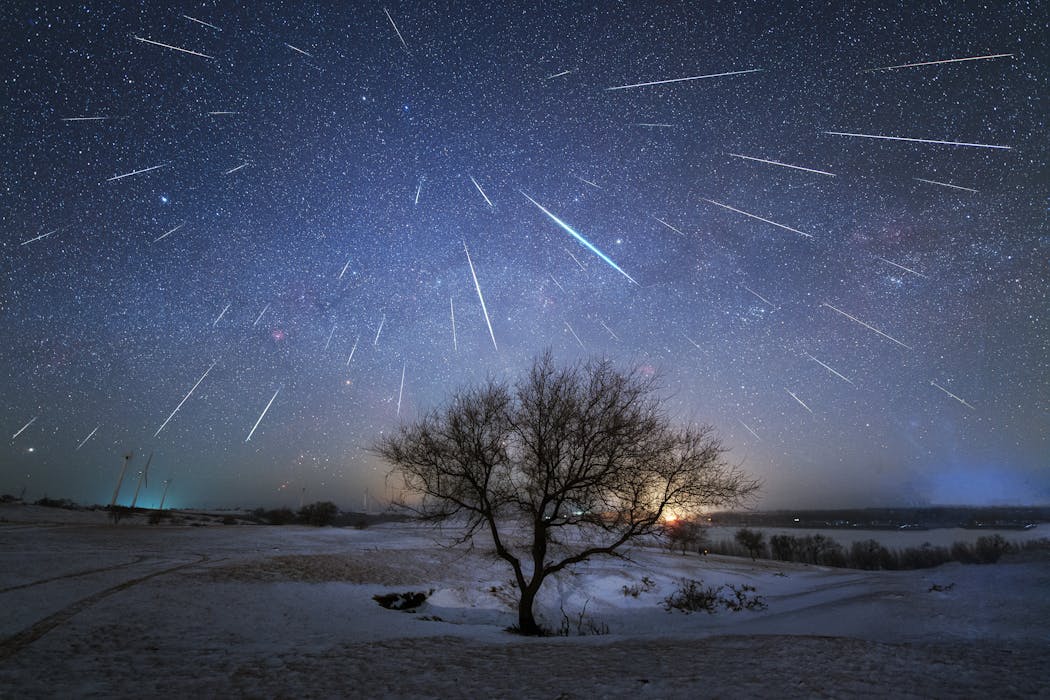
Peak of the Geminids in 2017. Dai Jianfeng/IAU OAE, CC BY

Where many other meteor showers are often over-hyped, the Geminids are the real deal: far and away the best shower of the year, peaking on December 14–15 in Australia and Aotearoa New Zealand.

The Geminids – dust and debris left behind by the rock comet Phaethon – put on a fantastic display every year, but 2025 promises to be extra special because the Moon will be out of the way, giving us perfectly dark skies.

So where and when should you look?

Meteors that radiate from the constellation Gemini

The key thing for working out the visibility of a meteor shower is its “radiant”, the single point in the sky from which the meteors seemingly originate. For the Geminids, at their peak, that point lies within the constellation Gemini, near the bright star Castor (α Geminorum).

The radiant is a result of perspective – the dust that causes a given meteor shower is all travelling in the same direction towards Earth, just like the lines in the drawing below.

The higher the radiant is in the sky, the more meteors you will see. When the radiant is below the horizon, you won’t see any meteors from that shower because they are hitting the other side of the planet.

Artwork demonstrating 1-point perspective drawing. Parallel lines diverge from the perspective of the viewer, from a radiant point on the horizon.
The dust that creates a meteor shower is all moving in the same direction. As meteors approach the observer, they appear to radiate from a single point on the horizon – the result of perspective.
Braindrain0000/Wikipedia, CC BY-SA

What time should I look?

The absolute best time to observe is when the radiant is at its highest in the sky, called “culmination”, which happens around 2am or 3am local time on December 15. But any time between midnight through dawn will be a great time to watch the meteor shower in Australia and New Zealand.

The time at which the Geminid radiant rises varies depending on your latitude. The farther south you live, the later the radiant will rise. And the farther north you live, the higher in the sky the radiant will reach, increasing the number of meteors you will see per hour.

The more light-polluted your skies, the fewer meteors you’ll see. Fortunately, the Geminids often produce many bright meteors so it’s worth looking even from inner city locations. Just remember the rates you see will be markedly worse than if you were camping somewhere dark in the countryside.

If the forecast is cloudy for the night of the Geminid maximum, the nights of December 13 and 15 will still offer a decent display, although not as spectacular.

Where should I look?

The Geminids can appear in any part of the night sky, but the best place to look with the unaided eye is usually around 45 degrees to the left or right of the radiant (whichever direction is a darker sky for you).

The easiest way to work this out is to find the constellation Orion, and look so that Orion is about 45 degrees from the centre of your vision.

I’d recommend spending at least an hour out beneath the stars when looking for Geminids, to give your eyes enough time to adapt to the darkness. Don’t look at your phone or any other bright lights during this time. Instead, take some blankets and pillows and lie down.

Ideally, you want to be resting so that the centre of your vision is about 45 degrees above the horizon. Then lie back, and enjoy the show. Remember that meteors come in randomly – you might wait ten minutes and see nothing, then three come along all at once.

Why do meteors look different in photos?

In the days after the Geminid peak, you’ll doubtless see lots of spectacular images on social media. But photos showing dozens of meteors against the background stars are composites of many photographs taken over a period of several hours.

Keen photographers will often set up their cameras pointing at the northern sky, take a lengthy series of exposures, then pick those with meteors in them and stack them together to make a composite image.

If you want to try this yourself, here are a couple of useful tips.

First, to avoid any star trails on your individual images, follow the rule of 500. Find out the focal length of your lens (common wide-angle lenses have focal lengths of 14 to 35mm), and set your exposure time to be less than 500 divided by the focal length of your lens. For example, if you’re using a 50mm lens, you’d have to keep your exposures under 10 seconds.

Next, set the lens focal ratio, or f-number, to be as small as possible. This will ensure the lens is wide open, allowing it to gather as much light as it can during each image.

Finally, set the ISO of your camera to be relatively high, choosing a number of at least 1,600. The higher you set the ISO, the more sensitive your camera will be to light, and the fainter the objects visible in the dark sky images. However, be warned that setting the ISO too high can make your images grainy.

Once all that is done, set up your camera with the field of view you want to image, take a timelapse of the sky, and leave your camera running while you watch the skies. Hopefully over the course of an hour or two under the stars you might just capture some spectacular shots of debris bits burning up high overhead.

The Conversation

Jonti Horner does not work for, consult, own shares in or receive funding from any company or organisation that would benefit from this article, and has disclosed no relevant affiliations beyond their academic appointment.

ref. The year’s best meteor shower is about to start – here’s how to see it – https://theconversation.com/the-years-best-meteor-shower-is-about-to-start-heres-how-to-see-it-270809

From violence to sexism, the manosphere is doing real-world harm

Source: The Conversation – Global Perspectives – By Stephanie Wescott, Lecturer in Humanities and Social Sciences, Monash University

There’s a lot of debate around the extent to which the manosphere is playing out in young people’s lives and relationships.

Some suggest claims about its malevolence are misplaced. Others think just because something happens on the internet doesn’t mean it affects lives offline.

But this is in spite of a significant body of international evidence demonstrating otherwise.

In this post-digital world, there is little or no delineation between what’s viewed and experienced online and what’s lived in the “real world”. This means we have to consider the potential harms of the manosphere not as remote or abstract, but as very real, and not to be underestimated or dismissed.


The manosphere is a dark, but growing part of the internet that’s harming everyone who gets sucked into it. In this three-part series, Mapping the Manosphere, we’ve asked leading global experts how it works, what the dangers are and how this online phenomenon is playing out in real life.


The gendered content spiral

Broadly, the manosphere is centred on anti-feminist, misogynistic and anti-gender equity ideas and beliefs.

Content can initially appear harmless. It presents information and insights on health, fitness and financial and career success.

But these are generally founded on rigid gendered ideas, extreme and isolating pursuits of self-optimisation and unhealthy ideas about relationships with girls and women.

New research has identified a shift in the manosphere towards monetisation and entrepreneurialism, pseudoscientific wellness and alignment with extremist ideologies.

Users may encounter content documenting extensive morning routines, beginning at 4am. These videos can involve multiple wellness-related rituals, recommendations for preserving testosterone and diatribes on men’s “natural” roles as providers in families.

The manosphere-adjacent content generated by tradwives and stay-at-home girlfriends glamorises an aesthetic (and unrealistically curated) life. A woman performs a caring role in the home, eschewing feminist ideas and advocating for women’s return to the domestic sphere. It’s often connected to white supremacy and far-right conservatism.

There’s evidence boys can find manosphere content helpful and positive. Some seek validation and belonging in these spaces. This makes the need for them to engage with it critically even more prescient.


Read more:
Andrew Tate’s extreme views about women are infiltrating Australian schools. We need a zero-tolerance response


Real world harm

Research widely shows manosphere content causes harm both to the boys and men who consume it and to other people in their lives.

Viewing manosphere content is known to contribute to unhealthy body image.

It’s also correlated with beliefs about violence being permissable. Manosphere sentiments have been identified among men who use violence.

Our own research into the influence of manosphere content on boys’ behaviour in schools has shown a shift in boys’ attitudes towards women and girls. Teachers report a discernible uptick in incidents of gendered violence in their schools.

There is also emerging concern that manosphere content is contributing to a growing ideological shift among young men and young women. Across multiple countries, young men are voting more conservatively than they used to.

Further, there is abundant evidence that misogyny – a central theme in manosphere content – is a predictor of all forms of violence. This includes gendered and extremist violence.

There are growing calls to place misogyny at the centre our efforts to counter and prevent extremist violence. This means acknowledging the role of the manosphere in the process of radicalisation.

Racist and misogynistic attitudes have also been identified as an urgent concern for national security, given they are significant contributors to violent extremism.

The next frontiers

Alongside the established evidence, we’re seeing signs of where manosphere beliefs might manifest next, if they’re not already.

In relationships and dating, advice circulating in manosphere spaces will continue to frame intimacy in transactional and manipulative terms. This will erode trust and mutual respect, while normalising male entitlement in relationships.

Over time, such messages risk reshaping, or regressing, expectations around dating, partnership and consent.

The manosphere frames work and study as competitive arenas. Discourses around “high-value men” and “grindset” culture blame feminism or “soft” values for perceived failures or inefficiencies.

This narrative positions career success as a masculine duty while dismissing collaboration and diversity, with long-term consequences for equity in schools and workplaces.

Finally, manosphere narratives of crisis and decline dovetail with populist politics. In the United States, aggrieved male voters have been central to Donald Trump’s rise, attracted to his performance of strongman masculinity.

Similar dynamics may surface elsewhere as leaders draw on themes of protection, grievance and a return to “traditional” order.

Where to from here?

The danger with manosphere content is that it exaggerates and exploits real (and perceived) problems, issues and grievances among boys and men.

This means it’s becoming increasingly confusing to distinguish what are legitimate and reasonable concerns among young men, what has been manufactured and how victimhood can be constructed by manosphere ideologies.

Explicitly honing young people’s critical digital literacy is an approach committed to empowering young people to become more discerning: to question not only what they are viewing, but its ideologies, how it makes them feel, and how platforms are designed to provoke particular responses.

These skills promote the development of critical dispositions: essential lifelong skills that will help them to consume information in a more informed, less reactive way. Critical literacy in kids helps them to become adults who are informed and discerning, and therefore, empowered.

The Conversation

Stephanie Wescott receives funding from Australia’s National Research Organisation for Women’s Safety and the Australian Research Council.

Steven Roberts receives funding from the Australian Research Council and the Australian Government and ANROWS, among others. He is a Board Director at Respect Victoria, but this article is written wholly separate from and does not represent that role.

ref. From violence to sexism, the manosphere is doing real-world harm – https://theconversation.com/from-violence-to-sexism-the-manosphere-is-doing-real-world-harm-262205

La despedida de Robe Iniesta, un poeta que transformó la música española

Source: The Conversation – (in Spanish) – By Beatriz Amorós Sánchez, Directora del Área de Música, UNIR – Universidad Internacional de La Rioja

Extremoduro en su gira realizada en el año 2014. Ruben Ortega/Wikimedia Commons, CC BY-SA

Si te vas… me quedo en esta calle sin salida”.

Ese verso, de una de las canciones míticas de Robe Iniesta, resuena hoy como un sentimiento compartido entre los miles de seguidores que despiden al artista tras conocerse la noticia de su adiós definitivo. La muerte inesperada de Robe Iniesta (1962–2025), ocurrida en la madrugada del 10 de diciembre a los 63 años, ha sacudido al país: las redes se han llenado de homenajes sinceros, a los que se han sumado artistas y figuras públicas de todos los ámbitos.

¿Quién fue Robe Iniesta?

Quienes lo hemos seguido durante décadas sabemos que no solo nos unió su música, sino la certeza de que sus versos arropaban y daban forma a emociones difíciles de nombrar. Robe no fue únicamente un referente de la música en español; fue, para muchos, quien reinventó la sensibilidad del rock nacional, marcó una forma de mirar a la vida y creó una obra capaz de atravesar generaciones enteras.

En los últimos y escasos conciertos del cantante se podía ver ese legado evidente: públicos de todas las edades compartiendo letras míticas; rockeros abriéndose a baladas; amantes del pop descubriendo la fuerza de sonoridades más crudas; padres que crecieron con Extremoduro acompañados por hijos que heredaron esa devoción; y jóvenes recién llegados que encontraban en su directo una calidad musical y una sensibilidad que parecía venir de otra época y, al mismo tiempo, adelantarse a todas.

‘Si te vas’, de Extremoduro.

El rock transgresivo

Roberto Iniesta Ojeda nació en Plasencia en mayo de 1962 y su interés por la música y la escritura le llevaron a formar con apenas 20 años Dosis Letal, el grupo precursor a su proyecto más conocido: Extremoduro. Esta nueva banda nació en 1987 como un proyecto local y autogestionado, que grabó su primer disco con una especie de crowfounding antes siquiera de que existiera este término. El resultado, Rock transgresivo (1989), dio nombre a un estilo propio que marcaría el resto de sus discos posteriores, 11 en total.

Extremoduro pasó del underground a la primera línea del rock español, especialmente tras Agila (1996), el álbum que introdujo arreglos más complejos –como en el tema “So Payaso”– y consolidó a Robe como un letrista único, capaz de unir metáfora, humor negro y una profundidad emocional rara en el género.

Durante su etapa de madurez, Robe desarrolló una poética más introspectiva y elaborada. Yo, minoría absoluta (2002) consolidó el prestigio de la banda con himnos como “La vereda de la puerta de atrás” o “Standby”, mientras que el conceptual La ley innata (2008) los catapultó a una consagración definitiva.

Este último álbum, considerado una de las propuestas más ambiciosas del rock español, quebró los esquemas de la industria con una estructura continua en seis movimientos, enmarcados por una introducción y una coda, como si de una sinfonía clásica se tratara. Sus canciones, que duplican o incluso triplican la duración de un tema convencional, incluyen auténticas joyas como “Dulce introducción al caos”, cuyos acordes iniciales son ya parte de la historia de la música en España.

En esos años, Extremoduro movilizó a auténticas multitudes. En 2008, reunió a más de 400 000 personas en 48 conciertos por toda España. El tour terminó con dos noches consecutivas en el entonces Palacio de los Deportes (hoy Movistar Arena) de Madrid, con 14 000 asistentes en cada fecha, en una época en la que esas cifras eran mucho menos comunes que hoy en día.

Su siguiente gira multitudinaria llegó en 2014, con un directo de más de tres horas y una calidad inmejorable. Yo, personalmente, nunca olvidaré aquel concierto de la Plaza de Toros de Las Ventas el 13 de septiembre. En aquellos espectáculos, el público se organizaba en zonas delimitadas para “marchosos” y “tranquis”, aunque Robe insistía siempre en que cada cual “se colocara” donde quisiera… en todos los sentidos.

Con el tiempo, la energía del directo fue apagándose, pero no sucedió lo mismo con su vínculo con el público ni con la vigencia de obra. Hoy, Extremoduro mantiene cerca de dos millones de oyentes mensuales en Spotify, pese a no haber publicado un álbum en más de doce años.

En definitiva, a lo largo de sus 105 canciones originales, la banda construyó himnos del rock español y un catálogo que desafió los estándares de la música. Su libertad creativa se convirtió en su sello inconfundible: extremo y duro. El nombre del grupo siempre ha llevado consigo esa doble lectura, cargada de intención, que los fans acogimos desde el principio.

Una leyenda sin límites, un legado infinito

A partir de 2015, Robe inició su carrera en solitario en una versión más depurada del creador, con un mayor componente literario y conceptual. Mayéutica, de nuevo con una estructura de sinfonía, es uno de los trabajos más brillantes del cantante en su última etapa. Un álbum con mucha música y sonidos nuevos que, a su vez, recordaban a los de siempre.

La historia de Robe Iniesta no es solo la de un músico, sino la de un creador que convirtió la marginalidad en poesía, la rebeldía en filosofía cotidiana y el rock español en un refugio emocional compartido. Muchas de sus frases han trascendido la música para acabar estampadas en libretas, camisetas, paredes, cuadernos de instituto y, sobre todo, en la piel de miles de personas. Algunas como “sueña que sueña con ella; si en el infierno le espera, quiero fundirme en tu fuego como si fuese de cera”, “Bebe rubia la cerveza pa’acordarse de su pelo” o “¿Dónde están los besos que te debo? En una cajita… que nunca llevo el corazón encima, por si me lo quitan” no se nos olvidan por mucho tiempo que pase.

Hoy nuestros corazones están encogidos, como en esa cajita de la que él hablaba en “A fuego”, sabiendo que no habrá nuevas canciones de Robe, pero agradecidos también por el legado infinito que nos deja y que, ahora más que nunca, seguirá sonando en nosotros.

The Conversation

Beatriz Amorós Sánchez no recibe salario, ni ejerce labores de consultoría, ni posee acciones, ni recibe financiación de ninguna compañía u organización que pueda obtener beneficio de este artículo, y ha declarado carecer de vínculos relevantes más allá del cargo académico citado.

ref. La despedida de Robe Iniesta, un poeta que transformó la música española – https://theconversation.com/la-despedida-de-robe-iniesta-un-poeta-que-transformo-la-musica-espanola-271788

Novel ‘body-swap’ robot provides insights into how the brain keeps us upright

Source: The Conversation – Canada – By Jean-Sébastien Blouin, Professor, School of Kinesiology, University of British Columbia

Imagine driving a car with a steering that doesn’t respond instantly and a GPS that always reflects where you were a second ago. To stay on course, you must constantly infer how to steer the wheel from outdated information.

Our brains do exactly that every time we move: sensory signals reach the brain tens of milliseconds after an event and motor commands take similar time to travel to the muscles, which then need extra time to generate force. In other words, the brain is always working with “old news” and must predict the future outcome of every action.

This predictive ability is most impressive when we stand upright because it requires keeping a tall, top‑heavy body balanced on two small feet.

Balance challenges

Scientists have long known that neural delays make balance hard to control. Even in healthy young adults, it takes about one-sixth of a second for information from the feet, muscles and inner ears to reach the brain and for a corrective signal to return to the muscles. Simple physics models treat the body as a mass balanced around the ankles and predict that if the delay is too long, standing becomes impossible.

The physical properties of our bodies similarly shape how we move. Just as a large van steers more sluggishly than a compact car, a large person standing upright resists motion and feels sudden pushes or bumps less sharply.

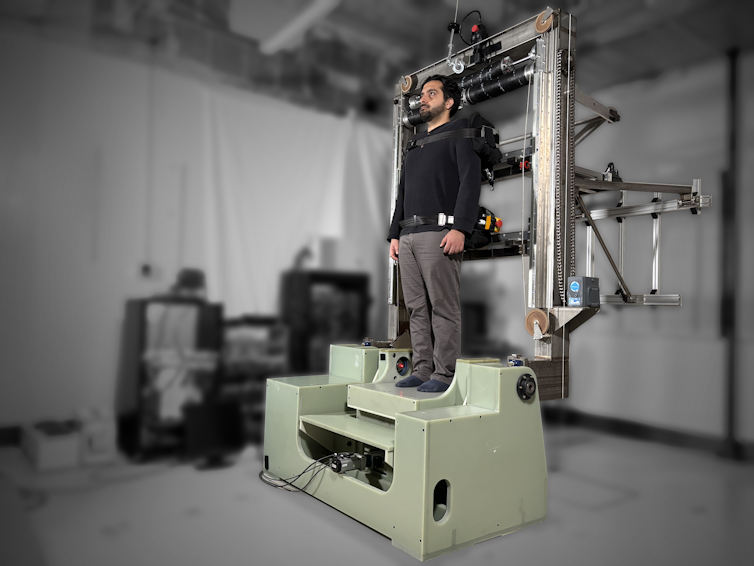
To test whether the brain treats delayed signals similar to changes in body mechanics, a team at the University of British Columbia and the Erasmus University Medical Centre in the Netherlands built a life‑size “body‑swap” robot.

A man stands in a large piece of machinery.
A participant stands in the ‘body-swap’ robot at the University of British Columbia.
(Sensorimotor Physiology Lab/UBC), CC BY-NC-SA

Participants stand on two force‑sensing footplates and are secured to a padded frame. Motors move the frame in response to the forces they generate, making the whole system behave like their real body swaying under gravity.

Crucially, the robot can alter the simulated body mechanics on the fly: it can make you feel lighter or heavier, add or remove energy from your motion, or insert a delay between your forces and the motion you feel — mimicking the brain’s own sensory‑motor lag.

Three experiments

With this tool, researchers asked whether the brain treats time (delay) and space (body dynamics) independently, under three experiments:

1. Changing body dynamics and delays alter balance similarly: Participants stood while the robot inserted a 0.2‑second lag between their commands and resulting motion. That pause — a blink of an eye — caused larger sway and pushed many participants to a virtual “fall” boundary. Similarly, sway increased when the robot made the body feel lighter or added energy to the motion, much like a gust of wind pushes you forward.

2. Delays feel like altered body mechanics: With the delay turned off, participants adjusted their bodies’ mechanical properties until their sensation matched the delayed condition they had just experienced. They chose a lighter body or a setting that added energy. When they were asked to make the delayed condition feel “natural,” participants selected a heavier body or a setting that dissipated energy from the motion. Hence, tweaking the body’s mechanical properties can recreate or cancel the feeling of delayed information.

3. Improving balance under delay: Volunteers who never experienced the robot stood on it with the 0.2‑second delay present, combined with a heavier body or one that dissipated energy from the motion. Their balance improved instantly: sway dropped by up to 80 per cent and most participants no longer reached the virtual fall boundary.

Blending time and space

Taken together, the three experiments support one conclusion: the brain does not store separate solutions for “late information” and an “unstable body.”
Instead, it maintains a unified internal model that blends time and space into one representation of movement.

When sensory feedback is outdated and the body feels unstable, adding heaviness and dissipating energy from the motion restores balance. Conversely, making the body lighter or adding energy reproduces the instability caused by delays. In either case, a unified representation of balance is used to keep you upright.

These findings are more than a laboratory curiosity. As we age or when diseases damage long nerves, signals travel slower and are more disrupted, leading to balance deficits and a higher risk of falls. According to the World Health Organization, about one in three older adults falls each year, and falls are the leading cause of injury‑related hospital stays, costing health systems billions of dollars.

The body‑swap robot offers a new perspective to this problem: assistive devices and wearable exoskeletons that supply just enough “helpful resistance” the moment a person begins to sway can counteract the destabilizing effects of neural delays.

They also raise a broader question: have the body sizes of animals and the mechanics that compensate for neural delays evolved to enhance their survival?

The next time you lean over a sink or chat in a doorway, remember that your brain is quietly juggling time‑and‑body representations in the background. The fact that you never notice this balancing act may be the most astonishing finding of all.

The Conversation

Jean-Sébastien Blouin receives funding from the Natural Sciences and Engineering Research Council of Canada.

Patrick A. Forbes receives funding from the Dutch Research Council (NWO).

ref. Novel ‘body-swap’ robot provides insights into how the brain keeps us upright – https://theconversation.com/novel-body-swap-robot-provides-insights-into-how-the-brain-keeps-us-upright-270846

‘Buy now, pay later’ is everywhere this holiday season. Here’s how to avoid a debt hangover

Source: The Conversation – Canada – By Vivek Astvansh, Associate Professor of Quantitative Marketing and Analytics, McGill University

Each holiday season brings a predictable surge in consumer spending, but the way shoppers finance that spending is changing rapidly. While credit cards once dominated online checkouts, the growing popularity of buy now, pay later (BNPL) arrangements is changing how households manage short-term expenses.

BNPL refers to a short-term payment plan that retailers offer to shoppers at the point of purchase. The most common model is “pay-in-four” — rather than paying the full amount up front, the shopper pays 25 per cent immediately and the remaining 75 per cent over three equal instalments, typically debited automatically every two weeks.

This structure makes BNPL feel relatively frictionless and, for many shoppers, deceptively inexpensive.


Read more:
The hidden risks of buy now, pay later: What shoppers need to know


In 2024, BNPL accounted for five per cent of e-commerce transactions, a proportion expected to increase by 58 per cent by 2030. In comparison, credit cards accounted for 20 per cent of e-commerce transactions in 2024, and this share is projected to increase by only three per cent by 2030.

With half of consumers planning to rely on BNPL for their holiday purchases in 2025, understanding this shift has never been more timely.

As households prepare for another holiday season of spending, BNPL will appear across many checkout pages with promises of convenience and flexibility. But before clicking “pay later,” consumers should recognize that these loans carry real financial consequences.

Why is BNPL so attractive?

Two factors explain BNPL’s appeal. First, the time value of money suggests that funds available in the present are more valuable than the same amount in the future. By reducing the immediate out-of-pocket cost, it offers the impression of greater financial breathing room.

Many consumers also believe BNPL is always interest-free. While the pay-in-four model usually carries no interest, monthly payment plans usually do, sometimes as high as 35.99 per cent. The comparable highest annual percentage rate for credit cards is 26 per cent.

Second, BNPL loan provider companies such as Klarna, Affirm and Afterpay usually run only “soft” credit checks, which don’t affect a borrower’s credit score. This has led to a widespread assumption that BNPL primarily serves individuals with limited credit access.

But in practice, usage spans income levels. In Canada, for example, 40 per cent of BNPL users report high household incomes.

Such widespread use, however, is not without risks.

Why is BNPL risky?

Despite its user-friendly design, BNPL changes how people evaluate purchases. Its psychological effects can encourage overspending and contribute to longer-term financial strain.

BNPL can lead shoppers to prioritize immediate gratification over the delayed pain of payment, instilling what I call a “buy now, regret later” mentality.

Research has found that BNPL adoption increases shoppers’ purchase frequency and purchase amount. The effect is stronger for shoppers who are promotion-sensitive, young and low-income.

More worryingly, BNPL users incur higher overdraft charges, credit card interest and late fees than non-users. Shoppers are particularly vulnerable to overspending during the holiday season. While spending increases in holiday seasons, income does not, leading to debt accumulation.

5 points to keep in mind

Before choosing BNPL at checkout, shoppers should take a moment to consider what they’re agreeing to. The five points below can help consumers navigate these services more safely and avoid common pitfalls.

1. BNPL appears under other names. Not all instalment plans are described as BNPL, so make sure to read terms carefully to avoid being misled by marketing language.

2. BNPL can amount to a loan on top of a loan. When payments are drawn from a credit card, you are effectively borrowing twice and incurring a double risk. If an automatic debit fails, late payment fees can be substantial. Do not be misled when the checkout page states “you’ll never pay interest or late fees.”

3. Governments are increasingly asking BNPL companies to conduct hard credit checks and report defaulters to other financial institutions and governments. As a result, assurances that “your score won’t be affected” may no longer be reliable.

4. Consumer protection remains uneven. It’s unclear which government agency (if any) oversees BNPL complaints. Until regulations are fully developed and consistently enforced, your financial security is your responsibility.

5. BNPL expands the number of companies that handle your data. With credit cards, one financial institution manages the transaction. Under BNPL, consumers may shop at numerous retailers using different BNPL providers. Tracking which provider handled which purchase can be difficult and complicate disputes over unrecognized credit card charges.

3 questions to ask yourself before using BNPL

BNPL can be useful when employed thoughtfully, but it’s not suitable for every shopper or every purchase. Asking yourself the following questions can help you determine whether BNPL aligns with your financial habits and long-term goals.

  1. Who is offering the loan? Review the BNPL provider’s frequently asked questions and payment policies. Compare firms such as Affirm, PayPal, Afterpay and Klarna. Obfuscated and unclear answers signal less transparency, and you should avoid using such companies.

  2. Do you tend to buy products on impulse and lack financial self-control? If yes, be mindful of the risks of BNPL usage, as it may amplify that tendency.

  3. Would strengthening your financial literacy improve your decision-making? If so, consider subscribing to reliable financial education resources before relying heavily on BNPL.

BNPL is a fintech innovation. Used responsibly, it can help shoppers maintain liquidity. However, used carelessly, it can make it easier for shoppers to accumulate debt. As the holiday season approaches, an informed approach will help you appreciate its benefits and avoid risks.

The Conversation

Vivek Astvansh does not work for, consult, own shares in or receive funding from any company or organisation that would benefit from this article, and has disclosed no relevant affiliations beyond their academic appointment.

ref. ‘Buy now, pay later’ is everywhere this holiday season. Here’s how to avoid a debt hangover – https://theconversation.com/buy-now-pay-later-is-everywhere-this-holiday-season-heres-how-to-avoid-a-debt-hangover-271286

The race to mine the Moon is on – and it urgently needs some clear international rules

Source: The Conversation – UK – By Adam Urwick, Junior analyst, RAND Europe, RAND Europe

The vision of mining space for resources is no longer science fiction. The Moon’s proximity to Earth and the presence of precious resources make it an increasingly attractive prospect for exploitation.

Resources thought to be present on the Moon include uranium, potassium,
phosphorus, water ice, platinum group metals and helium-3. The last of these is a rare isotope that could help power relatively clean fusion energy in future.

There are billions of dollars in it for companies able to kickstart mining operations, even if such returns are still years away. Technological breakthroughs in launch and exploration capabilities are occurring at breakneck pace. In the US, Seattle-based startup Interlune, working with Iowa industrial manufacturer Vermeer, is developing an electric lunar excavator designed to extract helium-3.

Their prototype can process up to 100 metric tons of lunar soil per hour. Interlune plans a 2027 mission to confirm helium-3 concentrations before deploying a pilot plant in 2029.

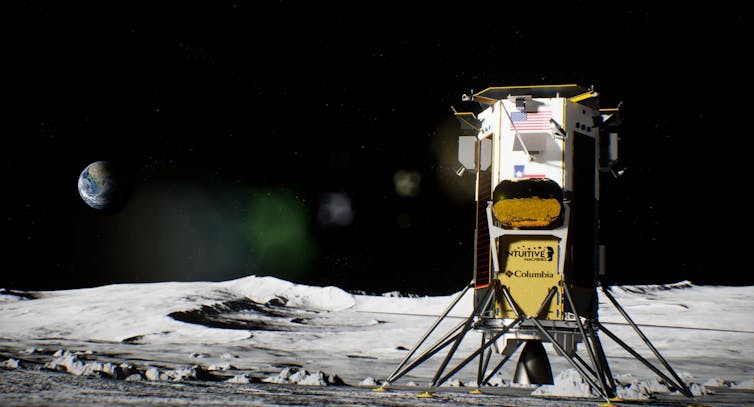
The Pittsburgh-based space company Astrobotic is developing the Griffin-1 lander to transport a rover designed by the California-based company Astrolab for surface analysis. A different lander called Nova-C,, built by Intuitive Machines in Houston, is being designed to conduct analysis of lunar soil and rock under Nasa’s Prism programme. Prism is a science and technology initiative designed to support various aspects of lunar exploration.

Meanwhile, Nasa’s Polar Resources Ice Mining Experiment 1 (Prime-1), which was carried to the Moon this year by an Intuitive Machines lander, demonstrated Honeybee Robotics’ Trident drill on the lunar surface. Trident both drills and extracts samples of lunar soil.

SpaceX’s giant Starship rocket, which has a large payload capacity and reusable design, could send multiple large experiments to the Moon, and cut launch costs by as much as US$250–US$600 (£188-£451) per kg. Assuming it overcomes its teething problems, Starship could be the game changer that makes large-scale lunar infrastructure and resource missions economically viable.

While US-led initiatives have been commonplace in lunar exploration, new political and corporate players are emerging globally. China aims to achieve human lunar landings by 2030, with plans for the robotic construction of lunar bases in partnership with Russia and other nations. This would establish an international Lunar Research Station by 2035.

Nova-C
Intuitive Machines’ Nova-C lander is being used to test capabilities relevant to mining.
Intuitive Machines

Australia’s 2026 rover will put its mining expertise to work extracting oxygen and collecting soil on the Moon, while Japan’s Slim mission focuses on precision landings that can target resource-rich areas. At the same time ispace, a Japanese company, is developing a mini rover to explore lunar resources.

In the EU, the Argonaut programme is developing the Esa (European Space Agency)‘s first lunar lander, with the involvement of a growing body of industrial enterprises across Europe. These missions are critical for gathering data and capabilities needed to understand what’s actually available on the Moon and how we might one day mine it.

Frozen treaties

Yet despite evolving technical capabilities, the international legal framework governing exploitation of the Moon is both very limited and frozen in the Cold War era. The 1967 outer space treaty established that space cannot be subject to national appropriation, but debate remains as to whether this prohibition extends to private entities extracting resources.

The treaty’s article I declares exploration shall benefit “all mankind”, yet provides no mandatory mechanism for sharing benefits, leaving it entirely to nations that have conducted activities to decide how, or whether, to share benefits at all.

The 1979 Moon agreement attempted to designate lunar resources as the “common heritage of mankind” and establish an international regime for exploitation. This agreement received only 15 ratifications, and none from spacefaring powers. The “common heritage” concept met fierce opposition from industrialised countries, who viewed it as restricting their technological advantage.

National legislation, as well as other types of agreement, has filled the vacuum. The US Commercial Space Launch Competitiveness Act of 2015 granted American citizens rights to extract space resources. Luxembourg, UAE and Japan followed with similar laws. The Artemis accords of 2020, which are non-binding arrangements between the US and other countries, have provided for voluntary coordination among like-minded states. They have established principles for lunar activity including transparency and safety zones.

However, they function more as a coalition agreement than a universal law. Clear
international property-rights frameworks would determine which nations capture value. The current state of ambiguity primarily benefits those with clearer frameworks and first-mover advantages, and indicates a missed opportunity for equitable benefit-sharing from space resources.

The pursuit of profit raises paramount scientific and environmental concerns.
Astronomers caution that large-scale mining activities could disrupt ongoing research and preservation of the lunar environment, leading to calls for development of comprehensive lunar laws and regulations to manage these activities responsibly.

Esa’s push for a zero debris charter, which it hopes will gain global recognition by 2030, reflects a growing awareness that mining and resource use in space must go hand in hand with responsible behaviour.

As lunar mining and exploration accelerate, the security dimension also becomes
increasingly complex and fraught, with the potential for conflict between nations. Valuable lunar resources such as water ice and rare metals are concentrated in limited, highly contested regions.

In the absence of internationally binding governance agreements, the risk of overlapping claims, operational interference and even direct confrontation is real. Exclusion zones and safety zones around mining sites could serve as flashpoints for disputes over access, resource rights and commercial interests.

The possibility of competing governance frameworks, such as the Artemis Accords and the Outer Space Treaty, to manage claims could further exacerbate the risk of conflict. The urgent need for international cooperation and transparent, equitable frameworks is clear.

The international community stands at a crossroads. The technology enabling lunar
resource extraction is arriving faster than most anticipated. Policymakers and legislators have a waning opportunity to design and implement governance that keeps pace with innovation and growing appetites for lunar resources.

Binding international agreements – particularly between the great space powers – which emphasise principles of stewardship, clarify access rights and support common benefits from lunar development would ensure the Moon becomes a proving ground for the equitable and sustainable development of space.

The Conversation

The authors do not work for, consult, own shares in or receive funding from any company or organisation that would benefit from this article, and have disclosed no relevant affiliations beyond their academic appointment.

ref. The race to mine the Moon is on – and it urgently needs some clear international rules – https://theconversation.com/the-race-to-mine-the-moon-is-on-and-it-urgently-needs-some-clear-international-rules-270943

Europe must reject Trump’s nonsense accusations of ‘civilizational erasure’ – but it urgently needs a strategy of its own

Source: The Conversation – UK – By Francesco Grillo, Academic Fellow, Department of Social and Political Sciences, Bocconi University

European leaders must agree on how to respond to the accusation that their continent faces “civilizational erasure”. These were the strongest words used in the most strongly-worded national security strategy ever released by a US government, making it clear that allyship is no longer a given.

And yet, what exactly does “civilizational erasure” mean? The term seems to come straight out of science fiction and deserves qualification. What kind of civilisation is being erased?

The document released by the US government explicitly specifies that this is not about economic decline so much as the “values” that make European nations “reliable allies” to the US.

The implication is that the current administration is worried that “life, liberty and the pursuit of happiness” are no longer foundational to Europe as they were to America. In addition, it seems that Trump is worried that migration is the cause of this problem.

This is curious. As far as “freedom of speech” and “political liberty” go, even the ranking published annually by the hyper libertarian Washington-based Cato Institute acknowledges that six of the top ten most free countries of the world are from the EU. In contrast, the US is tied with the UK at number 17.

The evidence on being “happy” is even worse for Americans (they are ranked 24th by Gallup) and even better for Europeans (four of the top five happiest nations in the world seem to be in the EU, and the fifth is Iceland).

Perhaps the most dangerous symptom of civilizational decline is apparent when we consider the parameter of the ability to pursue “life”. According to the OECD, in 2024, the US spent more on health than any other country per person at over U$12,000 (£9,000) per year (Switzerland, in a distant second place, at US$8,000). Yet Americans’ life expectancy is six years less on average than Europeans’.

Last but not least, migration. The US government seems concerned that too many immigrants will make Europe unrecognisable, but it is the United States that hosts the largest number of first or second-generation immigrants (including Donald Trump, whose mother and four grandparents were all born in Europe). The security strategy’s diagnosis seems oddly oblivious to the role migrants played in building American success.

How should Europe respond?

It is, thus, difficult to see how Europe is being erased. It is nevertheless true that Europe has a problem. Whereas the US has a strategy, Europeans are very far from even agreeing on what their own interests are.

As wrong as the US may be to attempt to establish a strategy on Europe’s behalf, this lack of vision makes it increasingly unsustainable for Europe to remain one of the best places to be born or to live.

Three messages stand out clearly from the strategy. First, the US does not want to be the world’s sheriff and is not going to pay to stabilise the world. There is even the implication here that the US is happy for the world to be divided into cold war-style “areas of influence”.

Second, the US now believes it is a mistake to think exporting democracy or liberalism maximises the chance of world peace and will no longer pursue this agenda. Third, the US believes that nation states are the cornerstone of any possible world order and that multilateralism (a notion encompassing a diverse range of institutions from the UN to the EU) is undermining that.

While Europe does not need to agree on these assertions, it can use each of the three US points to come up with a response.

Friedrich Merz, Keir Starmer,  Volodymyr Zelenskyy and Emmanuel Macron sitting in front of their national flags.
European leaders gathered in London to discuss the path ahead after the US published its security strategy.
Flickr/Number 10, CC BY-NC-ND

It should, for example, be relatively happy to fill the gap left by US retreat. This would see Europe equipping itself to contribute to stability in Europe, North Africa and the Middle East. Europe should probably also acknowledge that the Americans have a point when they say that “exporting democracy” does not necessarily buy peace.

Second, Europe can even agree with the US that “exporting” institutions and market regulations is complicated and not effective. We must simply focus on protecting human rights as much as possible, without asking other countries to imitate our model.

Third, and most important, it is true that international organisations are not working. But Europeans should answer US rhetoric not by going back to small nation states (as the security strategy suggests) but by assuming the leadership of a radical reform of multilateralism.

The international organisations that Trump has criticised, must rapidly become more capable of delivering solutions efficiently. This must include the EU because it’s obvious that any kind of strategy cannot be led by 27 individual nations working separately.

European civilization is not imploding. It is, however, true that such a civilization requires financial, political and defence resources. These were once bought cheaply from allies who no longer wish to subsidise Europe’s way of life.

It is time for a European security strategy. And one whose message, in a nutshell, is that Europeans are ready to lead and thrive in the changed geopolitcal climate of the 21st century.

The Conversation

Francesco Grillo is affiliated with Vision, the think tank,

ref. Europe must reject Trump’s nonsense accusations of ‘civilizational erasure’ – but it urgently needs a strategy of its own – https://theconversation.com/europe-must-reject-trumps-nonsense-accusations-of-civilizational-erasure-but-it-urgently-needs-a-strategy-of-its-own-271763

​From head to mistletoe: the curious biology of elves

Source: The Conversation – UK – By Michelle Spear, Professor of Anatomy, University of Bristol

Roman Samborskyi/Shutterstock.com

As Christmas Eve draws near, we’re reminded of the tireless elves behind the scenes, toiling in workshops to bring festive magic to life.

Imagine Santa’s elves not as fantasy figures but as highly adapted beings designed for the unique demands of their world. From enhanced resilience to happy hormones and efficient energy production, each adapted anatomical feature serves a purpose, allowing them to work joyfully, and without pause, in a cold climate that would challenge the rest of us.

Through the lens of this imagined elf, we take a look at general anatomy, using scientific principles and a nod to the Will Ferrell movie Elf to fill in some of the festive details.

Ho-ho-hormones

The remarkable cheer and endurance of an elf can be attributed to a finely tuned endocrine system that supports both their emotional resilience and energy needs.

Their pituitary glands probably produce high baseline levels of serotonin and endorphins – often called “feel-good hormones” – helping them maintain a naturally cheerful disposition even under the pressures of Christmas deadlines.

Beyond individual happiness, elves surely must thrive on teamwork in the workshop. An elevated capacity to release oxytocin, the “bonding hormone”, helps foster strong social connections, promoting a collaborative and harmonious working environment.

With extra oxytocin receptors in the brain, elves would quickly form bonds with each other, boosting morale and creating a positive atmosphere that is crucial for high-stress, close-quarters work. Also essential for good elf and safety.

Presumably, elves would require adaptable sleep patterns to handle the long hours leading up to Christmas. Their pineal glands could produce a specialised form of melatonin, allowing them to reset their internal clocks on demand.

This adaptation would support both sustained alertness during extended shifts and quick recovery naps, keeping them fresh and focused throughout the season.

Good skin and elf care

In the north pole’s long winters, elves may rely on their skin’s heightened ability to synthesise vitamin D even in low-light conditions. This helps regulate mood and energy by supporting serotonin production, which promotes emotional stability, and enhancing mitochondrial function for efficient energy production.

Their skin might also be rich in melanin that adapts to seasonal light changes, maximising their sunlight absorption without risk of seasonal-affective disorder.

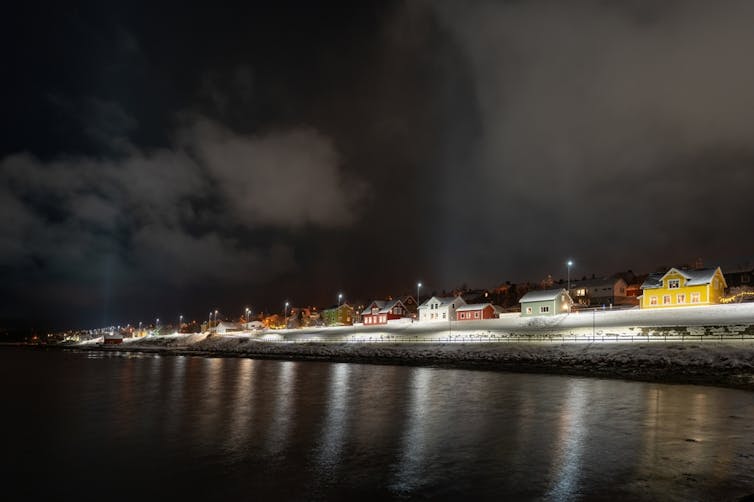
A dark polar night tableau.
Elves’ skin is perfectly adapted to dark polar nights.
Esa Ylisuvanto/Shutterstock.com

Sugar and spice

The elf digestive system is probably optimised for processing high-carbohydrate, high-sugar diets without succumbing to the energy crashes humans might experience.

To thrive on a diet rich in sweets, elves would rely on high levels of sucrase, maltase and amylase — enzymes that break down sugars and starches quickly. This enzymatic boost allows for rapid glucose release, sustaining their energy without the usual sugar crash, and keeping them fuelled for long hours in the workshop.

Elves’ livers could also play a crucial role, storing vast reserves of glycogen for quick energy release when needed, especially during the busiest days of the festive season. Their small intestines might boast enhanced villi – tiny, finger-like projections that line the gut – increasing the surface area for nutrient absorption and ensuring every candy cane is put to good use.

Elves might have highly efficient mitochondria – the tiny powerhouses inside cells that convert food into energy – allowing them to produce energy from nutrients more effectively. This could keep their energy levels steady without sharp crashes, helping them remain upbeat and active throughout their lengthy work shifts.

Cold comfort

Thriving in the subzero temperatures of the north pole requires more than a good set of thermals. Elves’ circulatory systems probably feature counter-current heat exchange mechanisms – where warm blood flowing out heats up cold blood coming back in – similar to those found in penguins’ feet and human testicles, to minimise heat loss in extremities. Blood vessels in their hands and feet would work in tandem to recycle warmth.

Elf respiratory systems are equally impressive, designed to maximise oxygen intake in cold, thin air. With larger-than-average nasal cavities lined with specialised mucous membranes, elves can warm and humidify incoming air, protecting their lungs from the frigid environment.

Hear comes Santa Claus

Acute hearing would be essential for quality control and ensuring every toy meets Santa’s exacting standards.

In a bustling workshop, elves need heightened sensory abilities to stay on task. Their ears, already iconic, might also feature internal adaptations – enhanced auditory canals for picking up subtle sounds.

Elf eyes, adapted for the low-light conditions of the winter months, would probably boast a high density of rod cells – the light-sensitive cells in the retina that help us see in darkness – allowing them to see clearly even during the longest polar nights. Perhaps they’ve also evolved a reflective layer behind the retina, similar to a cat’s tapetum lucidum, giving them a distinctive twinkle and ensuring no detail escapes their gaze.

Sleighing it

An elf’s musculoskeletal system would need to be both robust and specialised for the physical demands of their job. Working long hours crafting toys requires dexterous hands supported by flexible yet strong finger joints, enhanced by tendons and ligaments adapted to repetitive tasks. To avoid the perils of repetitive strain injuries, elves might have increased collagen production, keeping their joints supple and resilient.

With an optimised ratio of fast-twitch muscle fibres (for quick movements) and slow-twitch fibres (for endurance), elves would be perfectly suited for bursts of energy and sustained activity alike, ensuring they can switch seamlessly between nimble toy-making and the occasional snowball fight.

So this Christmas, as you admire the handiwork of Santa’s helpers, spare a thought for the ingenious anatomical adaptations that make the merry work of elves possible.

The Conversation

Michelle Spear does not work for, consult, own shares in or receive funding from any company or organisation that would benefit from this article, and has disclosed no relevant affiliations beyond their academic appointment.

ref. ​From head to mistletoe: the curious biology of elves – https://theconversation.com/from-head-to-mistletoe-the-curious-biology-of-elves-269155