2 superpowers, 1 playbook: Why Chinese and US bureaucrats think and act alike

Source: The Conversation – Global Perspectives – By Daniel E. Esser, Associate Professor of International Studies, American University
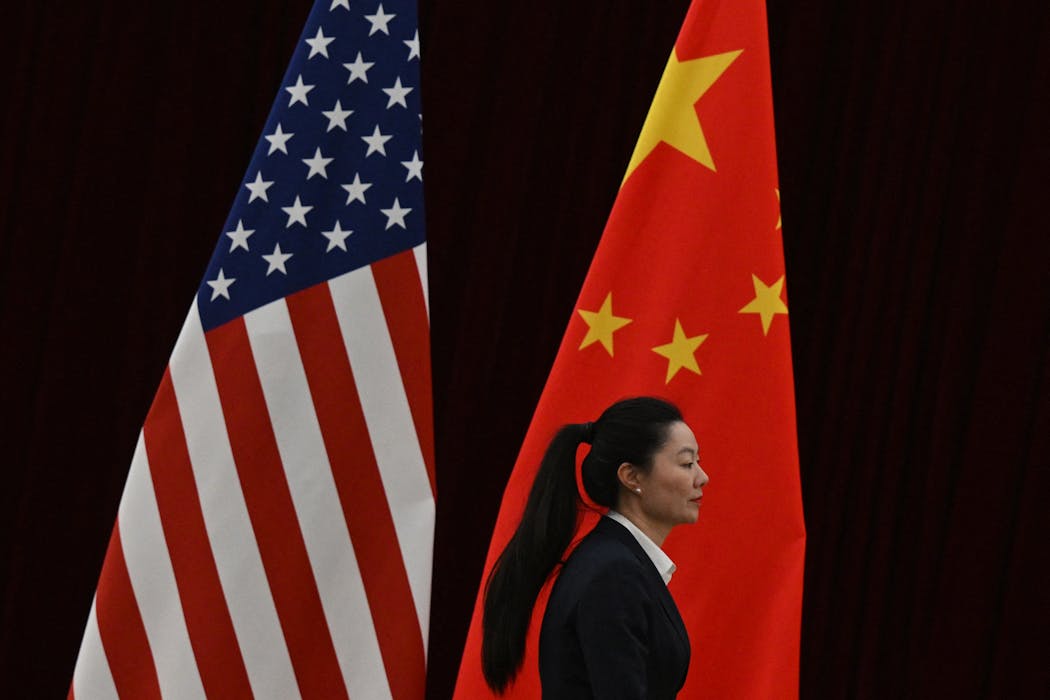
An official walks past the U.S. and Chinese national flags on April 6, 2024. Pedro Pardo/AFP via Getty Images

The year 2025 has not been a great one for U.S.-Chinese relations. Tit-for-tat tariffs and the scramble over rare earth elements has dampened economic relations between the world’s two leading economies. Meanwhile, territorial disputes between China and American allies in the Indo-Pacific region have further deepened the intensifying military rivalry.

This rift has often been portrayed as a clash of opposing ideological systems: democracy versus autocracy; economic liberalism versus state-led growth; and individualism versus collectivism.

But such framing relies on a top-down look at the two countries premised on statements and claims of powerful leaders. What it obscures is that both superpowers are administered by the same kind of professionals: career bureaucrats.

We are an international team of researchers investigating bureaucratic preferences and behavior. Earlier this year, we hosted a two-day workshop with participants from China, the United States and other countries to compare bureaucratic agencies’ responses to global challenges.

Our research and that of others shows that, despite the ideological standoff at the leadership level, officials in China and the U.S. are shaped by comparable incentives and dynamics that lead them to act in surprisingly similar ways. In other words, when it comes to the women and men who carry out the actual work of government – from drafting regulation to enforcing compliance – China and the U.S. aren’t really that different.

Separated by politics, not practice

That’s not to suggest there aren’t differences in aspects of China’s and the U.S.’s bureaucratic base.

China’s system is more centralized, with a larger civil service of around 8 million employees as of 2024. The U.S. bureaucracy is more decentralized across federal, state and local levels and employs fewer bureaucrats, with around 3 million federal employees in 2024.

Still, comparative research on bureaucracies around the world shows that civil servants act similarly when confronted with complex problems, regardless of political system or policy field.

Whether they are municipal bureaucrats in Brazil, foreign aid officials in Germany, Norway and South Korea, or international civil servants at the United Nations, they all operate within the constraints of politically embedded organizations while pursuing their individual careers. In other words, they want to get ahead in their jobs while navigating constantly changing political winds.

Bureaucrats in the U.S. and China also navigate changing demands from their political leaders while seeking to gain expertise and progress in their careers.

Managing public expectations

Foreign aid, environmental management and pandemic governance in the U.S. and China provide telling examples of these parallels.

At first glance, the approaches of China and the U.S. to the use of foreign aid may appear as complete opposites. The former established the China International Development Cooperation Agency in 2018. Since then it has expanded and evolved its engagement abroad.

By contrast, the U.S. abolished USAID earlier in 2025, slashed its foreign aid budget, and moved remaining staff members into the State Department.

It would therefore seem that the U.S. and China are on opposing trajectories. Yet, the current moment obscures similarities between foreign aid bureaucrats in the two countries. Their tasks entail satisfying political objectives, overseeing taxpayer-funded projects abroad, and managing domestic public expectations.

The expertise required of these bureaucrats is to increase their country’s “soft power” while avoiding the appearance of wasting scarce funds abroad amid looming domestic needs.

With foreign aid admonished by the Trump administration as wasteful politics, officials in Washington are under unprecedented pressure to pursue financial diplomacy that recognizably serves U.S. interests while supporting foreign leaders whom the president considers allies. This agenda shift moves the U.S. closer to the Chinese foreign aid principle of seeking mutual benefits.

Meanwhile, Chinese aid officials are pivoting away from prioritizing large-scale infrastructure projects and toward a purported “small but beautiful projects” approach that centers on the well-being of beneficiaries. This pivot aligns their thinking with “softer” topics emblematic of U.S. foreign aid until 2024.

A sign saying USAID is seen behind glass.
Foreign aid practices in Washington and Beijing are converging.
Pete Kiehart for The Washington Post via Getty Images

The logic of blame avoidance

The case of bureaucratic responses to environmental pollution scandals is equally instructive. Again, one might expect bureaucrats in the U.S. and China, operating within different governance systems, to approach the problem differently.

In practice, however, bureaucrats in both countries are often motivated by an urge to avoid blame.

Rather than building on policy success stories, they tend to seek to deflect criticism for policy failures onto others. The underlying reason is so-called asymmetric payoffs: Success stories may lead to short-term public acclaim; policy failures jeopardize entire careers.

In China, the anti-air pollution measures introduced in Hebei province, which borders the capital Beijing, provide a prime example of the logic of blame avoidance. When the central government in 2017 urged provincial officials to reduce air pollution by banning coal heating, the officials’ overzealous implementation was motivated by a desire to shield themselves from potential blame from national leadership.

As a result, the needs of Hebei residents were ignored, with schoolchildren shivering in unheated classrooms. Rather than assuming the blame, both national and local officials shifted the focus onto middle-class Beijing residents, who were pilloried in the media for prioritizing clean air over the well-being of others.

Meanwhile in the U.S., the city of Flint, Michigan, had been reeling from decades of industrial decay and financial distress. The state government appointed an emergency manager who implemented cost-cutting measures, including switching the city’s water source from Lake Huron to the Flint River. This change resulted in lead contamination and widespread health impacts, escalating into a national scandal. As in Hebei, all parties – from state regulators to local officials and environmental agencies – blamed each other in an attempt to avoid responsibility.

Careerism as constraint

Parallel bureaucratic behaviors also became apparent during the COVID-19 pandemic. In China and the U.S. alike, public officials worked at the forefront of implementing public health guidelines. The Chinese response was said to benefit from an “authoritarian advantage,” allowing its authorities to impose drastic measures rapidly and comprehensively.

However, evidence-based policymaking was constrained by political preferences and bureaucratic careerism – the drive of officials to prioritize actions that help them get promoted.

It produced similar dynamics to those observed in the more decentralized U.S. setting. In both China and the U.S., bureaucrats were risk averse and anxious not to fall out with supervisors and political leaders.
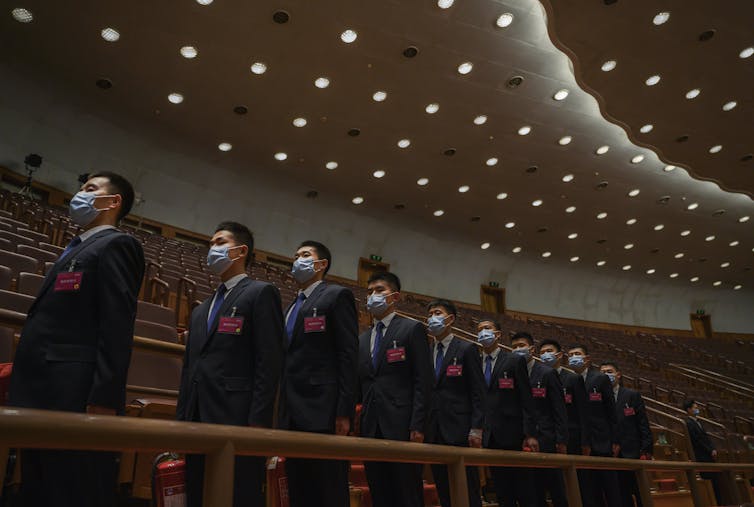
A line of men in suits with masks on.
Chinese bureaucrats faced the same constraints as their U.S. counterparts during the COVID-19 pandemic.
Frayer/Getty Images

The Chinese approach resulted in a decrease in public trust, a phenomenon that has also been unfolding in the U.S.

And much like their American counterparts, Chinese bureaucrats initially scrambled together information from a cacophony of political and expert voices. This indecision blunted their response to the viral outbreak in the decisive early days of the pandemic, even though it was eventually replaced by an official narrative emphasizing efficiency and success. In both systems, bureaucratic delays had detrimental consequences for public health.

An anchor of stability

Amid the heightened geopolitical tensions between Beijing and Washington, it is important to remember that all powers rely on capable administrations to implement political directives. Politics set the tone, but bureaucrats shape reality.

And the modus operandi of Chinese and American bureaucrats has remained strikingly stable over the years – driven primarily by incentives rather than ideology. This similarity is increasingly being reflected by converging leadership styles at the top of each political system.

U.S. President Donald Trump resembles Chinese President Xi Jinping in his campaign-style politics and the cult of personality that many political observers see developing around him.

There is a definite upside to similar bureaucratic behavior. It renders the two superpowers more predictable in periods of increasingly heated political rhetoric.

For national leaders’ proclamations to have any effect, large bureaucratic organizations need to translate political content into national and international action. Not only does this take time and resources, but erratic announcements are dissipated by bureaucratic routines.

And that provides an anchor of stability in volatile times.

The Conversation

While working for the German Institute of Development and Sustainability, Daniel E. Esser received funding from the Federal Ministry for Economic Cooperation and Development.

Heiner Janus works for the German Institute of Development and Sustainability (IDOS), which receives funding from the German Federal Ministry for Economic Cooperation and Development.

Mark Theisen works for the German Institute of Development and Sustainability (IDOS), which receives funding from the German Federal Ministry for Economic Cooperation and Development.

Tim Röthel works for the German Institute of Development and Sustainability (IDOS), which receives funding from the German Federal Ministry for Economic Cooperation and Development.

ref. 2 superpowers, 1 playbook: Why Chinese and US bureaucrats think and act alike – https://theconversation.com/2-superpowers-1-playbook-why-chinese-and-us-bureaucrats-think-and-act-alike-266305

How rogue nations are capitalizing on gaps in crypto regulation to finance weapons programs

Source: The Conversation – Global Perspectives – By Nolan Fahrenkopf, Research Fellow at Project on International Security, Commerce and Economic Statecraft, University at Albany, State University of New York

Two years after Hamas attacked Israel on Oct. 7, 2023, families of the victims filed suit against Binance, a major cryptocurrency platform that has been plagued by scandals.

In a Nov. 24, 2025, filing by representatives of more than 300 victims and family members, Binance and its former CEO – recently pardoned Changpeng Zhao – were accused of willfully ignoring anti-money-laundering and so-called “know your customer” controls that require financial institutions to identify who is engaging in transactions.

In so doing, the suit alleged that Binance and Zhao – who in 2023 pleaded guilty to money laundering violations – allowed U.S.-designated terrorist entities such as Hamas and Hezbollah to launder US$1 billion. Binance has declined to comment on the case but issued a statement saying it complies “fully with internationally recognized sanctions laws.”

The problem the Binance lawsuit touches upon goes beyond U.S.-designated terrorist groups.

As an expert in countering the proliferation of weapons technology, I believe the Binance-Hamas allegations could represent the tip of the iceberg in how cryptocurrency is being leveraged to undermine global security and, in some instances, U.S. national security.

Cryptocurrency is aiding countries such as North Korea, Iran and Russia, and various terror- and drug-related groups in funding and purchasing billions of dollars worth of technology for illicit weapons programs.

Though some enforcement actions continue, I believe the Trump administration’s embrace of cryptocurrency might compromise the U.S.’s ability to counter the illicit financing of military technology.

In fact, experts such as professor Yesha Yadav, professor Hilary J. Allen and Graham Steele, anti-corruption advocacy group Transparency International and even the U.S. Treasury itself warn it and other legislative loopholes could further risk American national security.

A tool to evade sanctions

For the past 13 years, the Project on International Security, Commerce, and Economic Statecraft, where I serve as a research fellow, has conducted research and led industry and government outreach to help countries counter the proliferation of dangerous weapons technology, including the use of cryptocurrency in weapons fundraising and money laundering.

Over that time, we have seen an increase in cryptocurrency being used to launder and raise funds for weapons programs and as an innovative tool to evade sanctions.

Efforts by state actors in Iran, North Korea and Russia rely on enforcement gaps, loopholes and the nebulous nature of cryptocurrency to launder and raise money for purchasing weapons technology. For example, in 2024 it was thought that around 50% of North Korea’s foreign currency came from crypto raised in cyberattacks.

Two men in hoods sit in front of computer screens.
Modern-day bank robbers?
iStock/Getty Images Plus

A digital bank heist

In February 2025, North Korea stole over $1.5 billion worth of cryptocurrency from Bybit, a cryptocurrency exchange based in the United Arab Emirates. Such attacks can be thought of as a form of digital bank heist. Bybit was executing regular transfers of cryptocurrency from cold offline wallets – like a safe in your home – to “warm wallets” that are online but require human verification for transactions.

North Korean agents duped a developer working at a service used by Bybit to install malware that granted them access to bypass the multifactor authentication. This allowed North Korea to reroute the crypto transfers to itself. The funds were moved to North Korean-controlled wallets but then washed repeatedly through mixers and multiple other crypto currencies and wallets that serve to hide the origin and end location of the funds.

While some funds have been recovered, many have disappeared.

The FBI eventually linked the attack to the North Korean cyber group TraderTraitor, one of many intelligence and cyber units engaging in cyberattacks.

Lagging behind on security

Cryptocurrency is attractive because of the ease with which it can be acquired and transferred between accounts and various digital and government-issued currencies, with little to no requirements to identify oneself.

And as countries such as Russia, Iran and North Korea have become constricted by international sanctions, they have turned to cryptocurrency to both raise funds and purchase materials for weapons programs.

Even stablecoins, promoted by the Trump administration as safer and backed by hard currency such as the U.S. dollar, suffer from extensive misuse linked to funding illicit weapons programs and other activities.

Traditional financial networks, while not immune from money laundering, have well-established safeguards to help prevent money being used to fund illicit weapons programs.

But recent analysis shows that despite enforcement efforts, the cryptocurrency industry continues to lag behind when it comes to enforcing anti-money-laundering safeguards. In at least some cases this is willful, as some crypto firms may attempt to circumvent controls for profit motives, ideological reasons or policy disputes over whether platforms can be held accountable for the actions of individual users.

It isn’t only the raising of these funds by rogue nations and terrorist groups that poses a threat, though that is often what makes headlines. A more pressing concern is the ability to quietly launder funds between front companies. This helps actors avoid the scrutiny of traditional financial networks as they seek to move funds from other fundraising efforts or firms they use to purchase equipment and technology.

The incredible number of crypto transactions, the large number of centralized and decentralized exchanges and brokers, and limited regulatory efforts have made crypto incredibly useful for laundering funds for weapons programs.

This process benefits from a lack of safeguards and “know your customer” controls that banks are required to follow to prevent financial crimes. These should, I believe, and often do apply to entities large and small that help move, store or transfer cryptocurrency known as virtual asset service providers, or VASPs. However, enforcement has proven difficult as there are an incredibly large number of VASPs across numerous jurisdictions. And jurisdictions have fluctuating capacity or willingness to implement controls.

The cryptocurrency industry, though supposedly subject to many of these safeguards, often fails to implement the rules, or it evades detection due to its decentralized nature.

Digital funds, real risk

The rewards for rogue nations and organizations such as North Korea can be great.

Ever the savvy sanctions evader, North Korea has benefited the most from its early vision on the promise of crypto. The reclusive country has established an extensive cyber program to evade sanctions that relies heavily on cryptocurrency. It is not known how much money North Korea has raised or laundered in total for its weapons program using crypto, but in the past 21 months it has stolen at least $2.8 billion in crypto.

Iran has also begun relying on cryptocurrency to aid in the sale of oil linked to weapons programs – both for itself and proxy forces such as the Houthis and Hezbollah. These efforts are fueled in part by Iran’s own crypto exchange, Nobitex.

Russia has been documented going beyond the use of crypto as a fundraising and laundering tool and has begun using its own crypto to purchase weapons material and technology that fuel its war against Ukraine.

A threat to national security

Despite these serious and escalating risks, the U.S. government is pulling back enforcement.

The controversial pardon of Binance founder Changpeng Zhao raised eyebrows for the signal it sends regarding U.S. commitment to enforcing sanctions related to the cryptocurrency industry. Other actions such as deregulating the banking industry’s use of crypto and shuttering the Department of Justice’s crypto fraud unit have done serious damage to the U.S.’s ability to interdict and prevent efforts to utilize cryptocurrencies to fund weapons programs.

The U.S. has also committed to ending “regulation by prosecution” and has withdrawn numerous investigations related to failing to enforce regulations meant to prevent tactics used by entities such as North Korea. This includes abandoning an admittedly complicated legal case regarding sanctions against a “mixer” allegedly used by North Korea.

These actions, I believe, send the wrong message. At this very moment, cryptocurrency is being illicitly used to fund weapons programs that threaten American security. It’s a real problem that deserves to be taken seriously.

And while some enforcement actions do continue, failing to implement and enforce safeguards up front means that crypto will continue to be used to fund weapons programs. Cryptocurrency has legitimate uses, but ignoring the laundering and sanctions-evasion risks will damage American national interests and global security.

The Conversation

Nolan Fahrenkopf is a research fellow at the Center for Policy Research at the University at Albany, which receives grants related to nonproliferation from the U.S. Department of State and Department of Energy.

ref. How rogue nations are capitalizing on gaps in crypto regulation to finance weapons programs – https://theconversation.com/how-rogue-nations-are-capitalizing-on-gaps-in-crypto-regulation-to-finance-weapons-programs-269060

La pertinence des chiffres en question : l’exemple du coût d’une journée d’hospitalisation

Source: The Conversation – France (in French) – By Laurent Mériade, Professeur des universités en sciences de gestion – Agrégé des facultés – IAE – CleRMa, Université Clermont Auvergne (UCA)

Dans les journaux, à la télévision ou au Parlement, des chiffres sont souvent sortis comme des arguments irréfutables. Mais de quoi parlent les chiffres ? Le pouvoir magique qui leur était associé il y a plusieurs siècles a-t-il complètement disparu ? Un chiffre est-il toujours incontestable ? Une réflexion encore plus indispensable à l’heure de l’IA toute-puissante.


Dépenses de santé, émissions de gaz à effet de serre, aides publiques aux entreprises, taux de délinquance, coût de la dette, de la fraude fiscale, du système de retraite, des aides sociales… Les dirigeants usent et souvent abusent de chiffres pour justifier leurs décisions ou encore leurs manières de faire ou, parfois, de ne pas faire.

En ce moment, à l’occasion de la discussion de la loi de finances pour 2026 au Parlement, nous assistons tous les jours à des batailles de « chiffres » entre parlementaires. Cependant, peut-on réellement s’y fier ? Et quelles significations leur accorder ?

Des chiffres à la valeur symbolique

Les mathématiciens attribuent, depuis l’époque mésopotamienne (environ 3000 av. notre ère) trois principales significations aux chiffres : économique, idéologique et mystique.

Les tablettes d’argile cunéiforme retrouvées à cette époque représentent à 80 % des textes administratifs de nature d’abord économique comportant principalement des données chiffrées. Il peut s’agir des dimensions d’un champ ou d’une maison, des rations de nourriture, des effectifs de soldats d’une armée, ou encore les volumes d’un stock.


À lire aussi :
La gouvernance par les nombres ne façonne-t-elle pas trop les politiques publiques ?


Les nombres remplissaient aussi un rôle idéologique, notamment en fonction de leur importance. On peut citer le nombre 3 600 qui signifie à la fois « totalité » et « innombrable ». Les chiffres pouvaient également posséder une signification mystique. Les anciens Mésopotamiens associaient certains nombres à des divinités. Par exemple, on utilisait ou insérait le 15 (associé à la déesse de l’amour et de la guerre, Ishtar) pour montrer la puissance du nombre.

Un chiffre, trois dimensions

D’une manière étonnamment similaire à celle des Mésopotamiens, de nos jours, les gestionnaires considèrent aussi que leurs matières premières que représentent les chiffres sont à la fois le résultat d’une technique de calcul, d’une philosophie, et d’une représentation de la réalité. Cette signification en trois dimensions qui jalonne l’histoire des chiffres pousse à analyser plus en détail les manières dont ces chiffres (ou nombres) sont produits, alors même que nous disposons de peu d’outils pour évaluer la valeur scientifique de ces chiffrements.

Dans l’un de nos derniers articles, nous montrons que la valeur scientifique de ces chiffrements provient avant tout de leur pertinence, qui correspond à une mesure de l’utilité d’une réponse. Elle est une indication de l’importance de cette réponse pour un objectif important. Les chiffres pertinents sont ceux étroitement liés à un problème et les ignorer modifierait le problème.

Globalement, les travaux en gestion ou en économie retiennent trois formes de pertinence – pratique, théorique, sociétale – souvent rattachées aux vertus intellectuelles d’Aristote :

  • la pertinence pratique correspond à l’utilité d’un chiffre pour une question ou un problème particulier (la techne aristotélicienne) ;

  • la pertinence théorique correspond à la connaissance intellectuelle produite par ce chiffre (l’episteme) ;

  • la pertinence sociétale ou sociale correspond au savoir pratique commun produit (la phronesis).

L’étude de la pertinence des chiffres consiste souvent à interroger les utilisateurs de ces chiffres. Il est cependant difficile de juger de cette pertinence pour le plus grand nombre, car leurs utilisateurs les communiquent souvent en fonction de leurs propres subjectivités et intérêts particuliers.

La part invisible des chiffres

À travers l’analyse de la production des chiffres des dépenses et coûts hospitaliers en France, nous montrons que les pertinences pratique, théorique et sociétale des chiffres sont avant tout déterminées par leurs méthodes de calcul. Ces méthodes sont souvent la partie invisible des chiffres.

En France, par exemple pour l’année 2023, les coûts hospitaliers totaux annuels (publics et privés) étaient évalués environ à 100 milliards d’euros dans l’Objectif national de dépenses d’assurance maladie (Ondam) voté par l’Assemblée nationale, 122 milliards d’euros par la Direction de la recherche, des études, de l’évaluation et des statistiques (Drees) et à 248 milliards d’euros par l’Institut national de la statistique et des études économiques (Insee).

Ces dépenses hospitalières sont dépendantes du coût d’une journée d’hospitalisation. En France, depuis la réforme de la tarification à l’activité (T2A), les tarifs d’hospitalisation sont facturés aux usagers ou à leurs caisses d’assurance maladie par journée de présence du patient dans l’hôpital. Pour l’Agence technique de l’information sur l’hospitalisation (ATIH), le coût moyen d’une journée d’hospitalisation dans un hôpital public français est environ de 700 euros, mais il est de 600 euros dans les services de médecine, 950 euros dans les services de chirurgie et environ de 2 000 euros en soins intensifs.

Le juste prix de l’hospitalisation existe-t-il ?

Cette journée d’hospitalisation est facturée aux patients ou à leurs caisses d’assurance maladie en moyenne 1 400 euros dans un service de médecine, mais elle est facturée en chirurgie en moyenne 1 700 euros et en moyenne 3 000 euros en soins intensifs. Pour le cabinet EY, en 2025, ce coût d’une journée d’hospitalisation est encore différent. Il est en moyenne de 873 euros en médecine et de 365 euros dans un service de soins et de réhabilitation (SSR).

Comme le dénonçait le député (et médecin) Cyrille Isaac-Sibille lors d’une récente commission des affaires sociales de l’Assemblée nationale : « Plus personne ne sait évaluer les dépenses de santé ! »

La pertinence des méthodes de calcul avant celle des chiffres

Dans notre étude, nous montrons que la fiabilité des chiffres produits provient avant tout de la pertinence de leur méthode de calcul. Pour cela, dans un groupe de travail constitué de gestionnaires, de chefs de service, de cadres de santé et de médecins d’un centre français de lutte contre le cancer chargés de l’analyse des chiffres produits dans cet établissement, nous identifions que la pertinence de la méthode de calcul du coût d’une journée d’hospitalisation peut être mesurée par quatre principaux critères : causalité, traçabilité, exhaustivité et représentativité (ou CTER model).

  • La causalité consiste à comprendre et à expliquer l’origine des chiffres calculés c’est-à-dire la force du lien entre le chiffre calculé et ses éléments de calcul. Par exemple, dans le cas des coûts d’une journée d’hospitalisation, s’assurer du lien entre le chiffre calculé et les principaux déterminants de ce chiffre : nombre ou temps de personnel de santé présents près du patient dans une journée, durée du séjour, coût d’un repas, nombre et coût des prises médicamenteuses ou des actes d’imagerie, etc.

  • La traçabilité permet de s’assurer de la fiabilité des informations de calcul et de leur possibilité de recueil. Par exemple, pour le calcul du coût d’une journée d’hospitalisation, être certain de pouvoir recueillir des informations fiables concernant la durée exacte d’un séjour hospitalier, le coût d’un repas pris durant ce séjour, le coût exact d’un acte d’imagerie médicale, le nombre de médicaments pris et leurs coûts, etc.

  • L’exhaustivité de la méthode est déterminée par le niveau de détail des informations utilisées pour calculer un chiffre. Si pour calculer le chiffre final on utilise des calculs de moyennes (par exemple, les durées moyennes de séjour pour le coût d’une journée d’hospitalisation), l’exhaustivité est faible. Si l’on utilise des éléments spécifiques (par exemple, la durée spécifique de chaque séjour hospitalier), l’exhaustivité est plus importante. Plus on utilise des éléments de calcul spécifiques et détaillés plus l’exhaustivité est grande. Plus on utilise des valeurs moyennes ou médianes, moins l’exhaustivité est grande.

Le respect de ces trois premiers critères permet de s’assurer de la précision des chiffres produits. On peut considérer qu’un chiffre est imprécis s’il ne respecte pas, ou s’il ne le fait que partiellement, ces trois principes.

  • Enfin, la représentativité évalue le rapport entre le chiffre calculé et les valeurs représentées par ses éléments de calcul. Elle détermine le nombre de valeurs (économique, sociale, sociétale, éthique, etc.) que ces éléments de calcul peuvent illustrer et permettre de gérer. Si le chiffre est calculé à partir d’éléments uniquement économiques (par exemple le coût d’un repas, d’une imagerie ou d’une heure de personnel), la représentativité est faible. En revanche, si le calcul d’un chiffre mobilise également des éléments techniques (la durée exacte du séjour, le nombre de kg de linge utilisés, de repas pris, d’imageries médicales, des personnels mobilisés ou de médicaments prescrits) qui nous informent sur les valeurs sociales, sociétales ou éthiques d’une journée d’hospitalisation alors, la représentativité est plus importante et la méthode de calcul est jugée plus pertinente.
Xerfi Canal, 2022.

Développer des outils de vérification

Face aux flux de données chiffrées que l’on reçoit tous les jours, il parait essentiel de vérifier la pertinence des méthodes de calcul avant celle des chiffres qu’elles produisent. La mobilisation des quatre critères de pertinence des méthodes de calcul produits par nos travaux (CTER) peut permettre de concevoir cette justification. Dans la plupart des situations, cela devrait être à l’utilisateur de ces chiffres (celui qui les communique) de justifier un ou plusieurs de ces critères (a minima la causalité ou la traçabilité).

Mais on pourrait également imaginer le développement de dispositifs ou outils de vérification de ces critères de pertinence des méthodes de calcul à l’image du fact-checking qu’opèrent déjà des sites d’information spécialisés sur les chiffres communiqués ou utilisés (AFP Factuel, Le vrai ou faux de France Info, Désintox d’Arte). En intégrant ces critères dans leurs algorithmes, les outils d’intelligence artificielle (IA) peuvent être également un précieux recours dans ces opérations de vérification des méthodes de calcul avant celles des chiffres.

The Conversation

Laurent Mériade a reçu des financements de l’Agence nationale de la recherche (ANR) et de l’Union Européenne (FEDER) pour mener ses travaux de recherche notamment dans le cadre de la chaire de recherche “Santé & Territoires” de l’Université Clermont Auvergne dont il est co-titulaire.

ref. La pertinence des chiffres en question : l’exemple du coût d’une journée d’hospitalisation – https://theconversation.com/la-pertinence-des-chiffres-en-question-lexemple-du-cout-dune-journee-dhospitalisation-266834

De Neropolis à Trumptown, l’ambivalence des dorures

Source: The Conversation – France (in French) – By Matthieu Poux, Professeur des universités en Archéologie romaine et gallo-romaine, Université Lumière Lyon 2

En matière d’architecture comme d’ébénisterie, les dorures ont pour principale fonction de rehausser l’éclat des constructions ou du mobilier afin de manifester l’opulence de leurs propriétaires. Mais quand le temps fait son œuvre, elles acquièrent une nouvelle vertu : masquer leur décrépitude.


Bien avant les fastes de Versailles, symptôme paradoxal des failles de l’Ancien Régime qui l’ont mené à son déclin, le double usage des dorures prévalait déjà sous l’Empire romain. Au début des années 20 avant notre ère, Auguste, premier empereur de Rome, a triomphé de tous ses ennemis, au sénat comme sur les champs de bataille. Parvenu au faîte d’un pouvoir sans partage, au terme d’un siècle de guerres civiles et sociales, il proclame l’avènement d’une nouvelle ère de paix et de prospérité : l’âge d’or (aurea aetas), ou siècle d’or (saeculum aureum), censé marquer le retour aux temps heureux, insouciants et prospères de la Rome des origines.

Du sol au plafond

Cette nouvelle propagande distillée par les poètes de cour (Horace, Virgile, Ovide…) se traduit aussi par un programme de constructions monumentales sans précédent. Forums, édifices de culte, de spectacle et de loisir se multiplient à Rome comme dans toutes les provinces de l’Empire. Leur décoration sculptée ou peinte célèbre les mythes des origines, la nature exubérante et… l’or sous toutes ses formes : lettres dorées, apposées au fronton des nouveaux temples dédiés à l’empereur, statues revêtues de feuilles d’or, jusqu’aux stucs et boiseries des palais impériaux, sont la marque visible d’une richesse recouvrée et inépuisable, tirée du butin et des nouveaux territoires arrachés par Auguste à l’ennemi intérieur et extérieur.

Son lointain successeur Néron, dernier empereur de la dynastie julio-claudienne, portera ce message au paroxysme. Son somptueux palais de plusieurs dizaines d’hectares, construit sur les ruines fumantes de Rome incendiée en 65 de notre ère, était selon le biographe Suétone entièrement décorée de marbres, de peintures, de stucs et de boiseries dorés à la feuille d’or et incrustés de pierreries. Une débauche de moyens déployés du sol au plafond, qui lui a valu le nom de « Maison dorée » (Domus aurea).

La Domus aurea ou Maison dorée est un immense palais impérial de la Rome antique, construit pour Néron, qui couvrait une partie importante de Rome intra muros sur plusieurs dizaines d’hectares.
Matthieu Poux, Fourni par l’auteur

L’indécence de ce Versailles avant la lettre a défrayé la chronique de l’époque, qui prête à Néron l’intention de rebaptiser Rome Neropolis (ville de Néron) et fait naître le soupçon qu’il serait responsable de l’incendie lui-même. Le martyre infligé à une petite communauté d’origine juive, qui se reconnaissait sous le nom de chrétiens, vient opportunément détourner l’attention.

Son propriétaire n’en jouira pas longtemps, puisqu’il est assassiné quelques années plus tard, à la faveur de l’une de ces révolutions de palais qui avaient déjà révélé, sous Caligula, la relative précarité d’un pouvoir impérial qui se voulait absolu. Ses opposants tirent profit d’une conjoncture économique dégradée, souffrant de la fragilité des importations alimentaires, d’un système fiscal inégalitaire et d’une confusion de plus en plus criante entre les finances de l’État et la cassette personnelle de l’empereur. Instabilité politique, explosion des dépenses et dévaluations monétaires annoncent déjà la chute d’un Empire fortement dépendant de son expansionnisme forcené, qui prendra fin une trentaine d’années après la chute de Néron.

Du Neropolis à Trumptown

Le parallèle est facile avec le nouvel « âge d’or » (American Golden Age) proclamé par Donald Trump à la face de l’Amérique. Une référence au Gilded Age (« période dorée »), correspondant à la période de prospérité et de reconstruction consécutive à la guerre de Sécession dans le dernier tiers du XIXᵉ siècle, incarnant sa volonté de mettre un terme aux dissensions politiques et aux difficultés économiques du pays. Ou bien plutôt, une forme de wishful thinking (pensée magique) qui, si l’on en croit les indicateurs, peine encore à se traduire dans les portefeuilles ou dans les sondages.

Quant à sa traduction matérielle, elle ne peut manquer d’interpeller archéologues et historiens de l’Antiquité. Depuis le come-back inattendu de Trump début 2025, l’or a envahi le bureau Ovale et les couloirs de la Maison Blanche : inscriptions, encadrements de tableaux et de portes, moulures, appliques, rideaux… jusqu’aux parasols ornant la terrasse bétonnée qui a remplacé le Rose Garden cher à Jackie Kennedy. L’emblématique East Wing construite par Franklin Roosevelt n’est pas épargnée, qui fera bientôt place à une gigantesque salle de bal dorée du sol au plafond, inspirée de celle qui orne la résidence personnelle de Trump à Mar-a-Lago en Floride.


À lire aussi :
Grands travaux et démesure : Trump réinvente la Maison Blanche


La frénésie édilitaire du président réélu va jusqu’à planifier la construction, avant le 4 juillet 2026, d’un arc de triomphe dans la droite lignée de Napoléon… et d’Auguste, à qui l’on doit le premier arc de triomphe en pierre érigé à Rome.

En moins d’un an, l’or sur fond blanc est devenu la marque de reconnaissance de la présidence Trump et en constituera, à n’en pas douter, l’empreinte archéologique, avec ses projets immobiliers et « d’embellissement » démesurés à plusieurs centaines de millions de dollars, dans une Amérique dont le taux d’endettement dépasse les 120 % du PIB et où un dixième de la population vit toujours sous le seuil de pauvreté.

Le syndrome de Midas

Ce cadre étincelant suffira-t-il à masquer les velléités totalitaires d’un exécutif qui, bien que légitimement élu, est marqué depuis un an par une soumission rampante du Sénat, de la Chambre des représentants, des forces armées et militaires ? à occulter une précarité économique devenue la principale cause de l’impopularité croissante du locataire de la Maison Blanche ? Les prochaines échéances électorales – à supposer qu’elles puissent se tenir dans des conditions normales – fourniront un premier élément de réponse. Si de nouveaux boucs émissaires ont déjà été désignés, pour détourner l’attention de cette confusion croissante entre intérêts publics et privés, les palais dorés ont rarement pour vertu d’apaiser la révolte populaire.

Et dans l’histoire, comme dans les mythes, les exemples sont légion de ces monarques outranciers qui, de Midas à Néron, se sont distingués par leur faculté à transformer l’or en plomb.

Statue équestre de Marc Aurèle en bronze doré, musées du Capitole, Rome.
Wikimeédia, CC BY

Comparaison n’est certes pas raison et Washington apparaît bien éloignée de Rome. On aurait pourtant tort d’y voir une simple analogie formelle, dont l’anachronisme ferait l’impasse sur la nature radicalement différente des sociétés antique et contemporaine. De fait, deux siècles de démocratie pèsent peu face aux cinq siècles d’existence de la République romaine.

Le génie d’Auguste a consisté à imposer à son peuple un nouveau régime d’essence monarchique et totalitaire (le principat), tout en préservant en façade le maintien des institutions républicaines (sénat, comices, magistratures civiles et religieuses…). Si son succès s’appuie sur une forme de consensus, il doit plus encore à une propagande omniprésente véhiculée par la littérature, les images et de simples ornementations dont on aurait tort, aujourd’hui, de minimiser le pouvoir insidieux.

L’histoire ne lui donnera pas tort, puisque son empire lui survivra pendant près de quatre siècles avant que l’aggravation de la situation politique, économique et migratoire par ses héritiers ait définitivement raison des fastes de l’âge d’or. Pour autant, les soubresauts et renversements dynastiques qui émaillent les premières décennies de l’Empire romain en ont tôt fait apparaître les craquelures. Nul ne peut nier qu’elles fracturent déjà l’Amérique de Trump, dont les frasques évoquent de plus en plus celles d’un Néron – un homme de spectacle, lui aussi ! Cette leçon dispensée du fond des âges n’a pas forcément vocation à voir l’histoire se répéter. Mais elle offre une grille de lecture pour tenter de comprendre et d’anticiper le monde qui vient.

The Conversation

Matthieu Poux ne travaille pas, ne conseille pas, ne possède pas de parts, ne reçoit pas de fonds d’une organisation qui pourrait tirer profit de cet article, et n’a déclaré aucune autre affiliation que son organisme de recherche.

ref. De Neropolis à Trumptown, l’ambivalence des dorures – https://theconversation.com/de-neropolis-a-trumptown-lambivalence-des-dorures-271265

80 ans de la Sécurité sociale : revenir à l’esprit fondateur pour couvrir davantage de risques

Source: The Conversation – France in French (3) – By Philippe Batifoulier, Professeur d’économie / CEPN (UMR 7234 CNRS), Université Sorbonne Paris Nord

La Sécurité sociale couvre aujourd’hui différents secteurs (maladie, accident du travail, retraite, perte d’autonomie, famille) grâce à ses différentes caisses. Malgré le recul de certains droits sociaux, cette institution, née de la Résistance, reste résolument moderne. Elle pourrait même servir de modèle de protection sociale face à d’autres risques, par exemple ceux dûs au dérèglement climatique ou à l’insécurité alimentaire.


L’année 2025 est l’occasion de nombreuses manifestations visant à célébrer les 80 ans de la Sécurité sociale. Les ordonnances des 4 et 19 octobre 1945 marquent une étape importante de l’histoire de France.

Dans son article 1, l’ordonnance du 4 octobre dispose que :

la Sécurité sociale est « destinée à garantir les travailleurs et leurs familles contre les risques de toute nature susceptibles de réduire ou de supprimer leur capacité de gain, à couvrir les charges de maternité et les charges de famille qu’ils supportent. »

Née de la Résistance

Si les ordonnances d’octobre 1945 fournissent un point focal, elles ne sont que de l’encre sur du papier et il faut à la fois tout un processus pour en arriver là et toute une énergie pour que la loi se traduise concrètement par des droits sociaux.

Ce processus passe par l’adoption, le 15 mars 1944, du programme du Conseil national de la Résistance (CNR) initialement baptisé « Les jours heureux », qui prévoit un « plan complet de sécurité sociale, visant à assurer à tous les citoyens des moyens d’existence dans tous les cas où ils sont incapables de se le procurer par le travail. »

La date est importante et montre que la Sécurité sociale s’inscrit dans un mouvement de résistance non seulement face à l’occupant mais aussi face à un pôle collaborateur qui promeut sa propre conception de la protection sociale – la France de Vichy.

L’énergie est celle de ceux qui ont construit des caisses primaires de sécurité sociale à partir du 1er juillet 1946. Il ne suffit pas de décréter des droits. Il faut les organiser, il faut des lieux où les assurés vont pouvoir les faire valoir. C’est sous l’impulsion du ministre communiste Ambroise Croizat et du haut fonctionnaire Pierre Laroque, révoqué par Vichy parce juif, que vont se mettre en place les guichets de sécurité sociale.

Face au refus de participation de la Confédération française des travailleurs chrétiens, ce sont essentiellement les militants de la Confédération générale du travail qui construisent les caisses de sécurité sociale.

Cinq risques couverts : vieillesse, maladie, maternité, décès et invalidité

Les assurances sociales existaient avant 1945, en particulier avec les lois de 1928-1930 qui promulguent une protection obligatoire des salariés de l’industrie et du commerce dont le salaire est inférieur à un plafond. Un financement par le biais d’une cotisation obligatoire représentant 8 % du salaire et payée, en part égale, par l’employeur et par l’employé est mis en place.

Il repose également sur l’identification de cinq risques : la vieillesse, la maladie, la maternité, le décès et l’invalidité. À ces lois s’ajouteront une loi sur les allocations familiales en 1932 et une loi sur les retraites en 1941 qui instaure le régime de retraite par répartition ainsi que le minimum vieillesse. La Sécurité sociale hérite de cette histoire. Mais toute la population n’est pas couverte du fait du mécanisme de plafond d’affiliation (qui exclut les salariés les mieux rémunérés) et de la variété des statuts hors salariat.

Le régime général, une institution révolutionnaire

L’innovation majeure de 1945 est la création du régime général (RG) qui est une institution révolutionnaire. Sa radicalité s’incarne par la création d’une caisse unique (pour tous les travailleurs et tous les risques sociaux), une cotisation sociale interprofessionnelle à taux unique alors qu’elle dépendait auparavant de l’entreprise, et une gestion de la Sécurité sociale par les « intéressés », c’est-à-dire les salariés cotisants. Cette organisation confère donc aux salariés eux-mêmes la gestion de l’institution (en majorité face au patronat aussi représenté dans les caisses).

La Sécurité sociale n’est pas une institution étatique et reste encore une institution de droit privé qui remplit une mission de service public. L’État est mis à distance notamment parce qu’une majorité de parlementaires a voté les pleins pouvoirs à Pétain. Tous les grands corps sont discrédités, en particulier le patronat qui s’est compromis avec l’occupant nazi. La gestion du budget de la Sécurité sociale est confiée aux résistants, les travailleurs.

Dès 1946, le régime général est une bataille et doit faire face à de nombreux opposants. Les gestionnaires ouvriers sont mis en procès pour mauvaise gestion des comptes et les débats du Parlement en 1946 révèlent que les arguments contre la « Sécu » n’ont pas changé : les cotisations freinent la compétitivité des entreprises (à l’époque, c’est la concurrence japonaise qui était visée), les assurés fraudent les prestations, seuls les plus pauvres doivent être ciblés par la « Sécu » et il faut laisser les autres s’assurer comme ils l’entendent, etc.

L’étatisation de la Sécurité sociale

L’État, qui n’a jamais réellement disparu en gardant la main sur le niveau des cotisations et de certaines prestations, va progressivement reprendre le pouvoir sur les intéressés et transformer la Sécurité sociale en une agence d’État.

Cette étatisation s’incarne dans quatre processus fondamentaux :

  1. La gestion par les intéressés qui est l’innovation majeure de 1945–1946 se traduisait par des conseils d’administration des caisses primaires constitués de trois quarts de représentants syndicaux et un quart de représentants patronaux. La réforme Jeanneney de 1967 introduit un paritarisme et donne le même nombre de sièges aux organisations patronales.
    Cette réforme met fin aussi au principe de la caisse unique en créant trois caisses au sein du régime général, celles que nous connaissons aujourd’hui : la Caisse nationale d’assurance maladie ou CNAM (vouée aux maladies et accidents du travail), la Caisse nationale d’assurance vieillesse ou CNAV (qui concerne la retraite) et la Caisse nationale des allocations familiales ou CNAF (plus couramment appelée la CAF, en charge de la famille). La Caisse nationale des solidarités pour l’autonomie ou CNSA est venue se rajouter en 2021.

  2. Depuis le plan Juppé de 1995, le Parlement vote chaque année le budget de la Sécurité sociale. Les prestations sociales et notamment les dotations hospitalières sont tributaires des arbitrages budgétaires de l’État et de l’austérité budgétaire. Le choix de ce qu’il faut financer ou définancer, les règles de calcul, est la propriété des parlementaires et non plus de la représentation ouvrière.

  3. Le pouvoir d’État s’accompagne d’une prolifération d’agences et de bureaucraties techniques comme la Haute Autorité de santé (HAS), l’Union nationale des caisses d’assurance maladie ou encore les agences régionales de la santé (ARS). Avec ces agences, l’État central recentralise la politique sociale. Ainsi, pour la politique hospitalière, les ARS sont-elles dirigées par un « préfet sanitaire » directement nommé par le gouvernement et qui désigne lui-même les directeurs hôpitaux. La chaîne de commandement va du ministère à l’hôpital.

  4. Enfin, la réappropriation de la Sécurité sociale par l’État s’observe dans la fiscalisation croissante de la protection sociale avec la contribution sociale généralisée (CSG). Cet impôt, créé en 1991 avec un taux de 1,1 %, vaut aujourd’hui 9,2 % en régime normal. Son taux est fixé par l’État et il est prélevé sur d’autres revenus que les revenus du travail, comme les pensions de retraite et les allocations chômage. Contrairement à la cotisation sociale, la CSG n’ouvre pas de droits sociaux en contrepartie.

Du fait de cette fiscalisation, en 2024, la part des cotisations sociales n’était plus que de 48 % des recettes des administrations de sécurité sociale (contre 90 % à la fin des années 1980)

Ne pas fantasmer la « Sécu de 45 »

Cette évolution va de pair avec des droits de meilleure qualité aujourd’hui qu’en 1946. Il ne faut pas fantasmer la « Sécu de 45 », car l’essentiel des dépenses de sécurité sociale concernait les allocations familiales, les dépenses de santé étant principalement constituées des indemnités journalières et la Sécurité sociale était largement genrée puisque faite pour « Monsieur Gagnepain » et non « Madame Aufoyer ».

Cependant, l’étatisation a aussi accompagné, depuis les années 1980, un recul des droits sociaux avec les réformes successives sur les retraites et la santé en particulier, toujours menées pour « sauver la Sécurité sociale ».

Vers des « Sécurités sociales » climatique, de l’alimentation… ?

La Sécurité sociale reste une institution très populaire. Si elle était une institution de la résistance, elle n’est pas pour autant une institution du passé. Au contraire, elle incarne la modernité. D’abord, en 1945-1946, elle répond de façon inédite à l’incapacité du capitalisme à répondre à la question sociale. Ensuite, de nos jours, elle offre un moyen de penser l’avenir sur de nombreux domaines.

La variété des propositions d’extension de la Sécurité sociale à d’autres risques en témoigne. Un rapport récent publié par le Haut-Commissariat à la stratégie et au plan (anciennement France Stratégie) pose l’hypothèse d’une Sécurité sociale climatique. L’argumentation s’appuie sur la grande proximité entre le risque climatique et le risque social. Ces deux risques sont collectifs et très difficiles à individualiser.

Qui est responsable des inondations et comment organiser la couverture de risque avec les outils habituels du monde de l’assurance ? Une sécurité sociale climatique pourrait non seulement être plus égalitaire et plus économe, mais son ampleur financière pourrait solvabiliser les travaux d’adaptation au changement climatique qu’aucun assureur individuel ne pourrait prendre en charge.

L’autre grand champ de développement de la sécurité sociale concerne la Sécurité sociale de l’alimentation. Partant du constat de l’échec des politiques alimentaires (à distribuer de la nourriture à tous en quantité et en qualité suffisante), alors même que le secteur est largement subventionné, les expérimentations de Sécurité sociale de l’alimentation s’inspirent largement des outils de la Sécurité sociale : conventionnement, cotisation, caisse, pouvoir démocratique des intéressés, etc. Ces projets s’inscrivent dans des conceptions populaires de l’écologie qui renouvellent les formes de lutte.

En plus du climat et de l’alimentation, beaucoup d’autres activités font l’objet de réflexions à partir de la Sécurité sociale. Ainsi la Sécurité sociale des décès invoque une mutualisation des coûts de la fin de vie dans un contexte où les funérailles sont souvent hors de prix et s’ajoutent à la charge mentale et au travail des sentiments.

Ce foisonnement de plaidoyers pour l’extension de la sécurité sociale concerne aussi la culture ou l’énergie, etc. La Sécurité sociale – mais laquelle ? – n’est-elle pas un exemple à généraliser ? Car, pour beaucoup, la Sécurité sociale est une institution capable d’organiser collectivement et démocratiquement la société. Elle permet à chacun de trouver sa place en échappant à toutes les formes d’insécurités économiques, politiques et sociales.

La Sécurité sociale est résolument une institution de la modernité.

The Conversation

Les auteurs ne travaillent pas, ne conseillent pas, ne possèdent pas de parts, ne reçoivent pas de fonds d’une organisation qui pourrait tirer profit de cet article, et n’ont déclaré aucune autre affiliation que leur organisme de recherche.

ref. 80 ans de la Sécurité sociale : revenir à l’esprit fondateur pour couvrir davantage de risques – https://theconversation.com/80-ans-de-la-securite-sociale-revenir-a-lesprit-fondateur-pour-couvrir-davantage-de-risques-271694

How cranberries can be a Christmas cracker for health this festive season

Source: The Conversation – UK – By Dipa Kamdar, Senior Lecturer in Pharmacy Practice, Kingston University

Media_Photos/Shutterstock

From festive sauces to brightly coloured juices, cranberries have long been part of our diets. Beyond their tart flavour and seasonal appeal, these red berries are often described as a superfood with several potential health benefits.

Cranberry supplements are promoted as a convenient way to get these benefits without the sugar or sharp taste of the juice. So what does the science actually say about cranberries, and are supplements as effective as eating the fruit?

Cranberries are best known for their role in helping prevent urinary tract infections (UTIs). The fruit contains compounds called proanthocyanidins. These compounds appear to stop bacteria such as E. coli from sticking to the lining of the urinary tract, which is one of the first steps in developing an infection. This explains why cranberry products may help prevent UTIs, although they do not treat infections once bacteria have already attached and multiplied. Research supports cranberry’s preventive role in women who experience recurrent infections and in children, although results vary between studies. One study found both cranberry juice and tablets reduced UTI rates in women, but tablets worked slightly better and were more cost-effective. Both forms reduced antibiotic use compared with placebo.

Hand pouring cranberry juice into a glass with ice cubes. A bowl of fresh cranberries is nearby.
Some research suggests cranberry juice can help reduce urinary tract infections in women and children.
Pixel-Shot/Shutterstock

Cranberries have also been investigated for their effects on heart health. They are rich in antioxidants such as anthocyanins, proanthocyanidins and quercetin. Antioxidants help protect cells from damage caused by unstable molecules called free radicals. Research shows that cranberry juice or extracts can improve several risk factors for heart disease.

These include raising levels of HDL cholesterol, often called good cholesterol because it helps remove excess cholesterol from the bloodstream, and lowering LDL cholesterol in people with diabetes. LDL is sometimes described as bad cholesterol because high levels can build up in artery walls, and it becomes even more harmful when it is oxidised. Oxidised LDL is more likely to stick to artery walls and fuel inflammation, which contributes to plaque formation. Cranberries’ antioxidants may help slow this process. They may also improve flexibility in blood vessels, reduce blood pressure and lower homocysteine, an amino acid linked to inflammation at high levels. However, not all studies report the same findings, so the evidence remains mixed.

Researchers are also studying cranberries for their possible role in cancer prevention. Lab and animal studies show that cranberry compounds, including ursolic acid, may slow the growth of tumour cells. Some compounds have anti-inflammatory effects, which is important because chronic inflammation can contribute to the development of cancer. A clinical trial found that cranberry juice may help reduce the risk of stomach cancer by blocking H. pylori, a bacterium strongly linked to this form of cancer, from attaching to the stomach lining. Adults who drank about two glasses of cranberry juice had lower infection rates. Lab and animal studies point to other possible anti-cancer effects, and upcoming research will determine whether these laboratory findings translate to humans.

The antioxidant and anti-inflammatory properties of cranberries may also support brain health. A 2022 study found that adults who consumed freeze-dried cranberry powder each day, which is equivalent to about 100 grams of fresh cranberries, showed better memory for daily tasks and improved blood flow to brain regions involved in learning. They also had reduced LDL cholesterol. High LDL can contribute to hardened arteries, which affects circulation.

Cranberries may also support the immune system. Studies suggest their natural compounds can make it less likely to catch colds or flu. Cranberries are a source of vitamin C, vitamin E, carotenoids and iron, all of which contribute to normal immune function.

Supplements, juice and whole fruits

Cranberry supplements are often promoted as an easier alternative to juice or fresh fruit. They deliver concentrated extracts of dried, powdered cranberries, usually standardised to contain a set amount of proanthocyanidins. This allows people to obtain active compounds without the sugars found in many commercial cranberry juices. However, whole fresh or frozen cranberries provide fibre and a wider range of nutrients that may be missing in supplements. Eating fruit also encourages healthier overall habits, while capsules can tempt people to treat them as a shortcut.

Wooden spoon with cranberry supplements and fresh cranberries in a bowl berries
Supplements provide concentrated extracts of dried, powdered cranberries but the whole fruit provides fibre and a wider range of nutrients too.
Pixel-Shot/Shutterstock

For most people, cranberries are safe to consume in moderation. Large amounts of juice or supplements can cause stomach upset or diarrhoea. Cranberries contain oxalates, natural chemicals that may contribute to kidney stones in people who are prone to them. Sweetened cranberry juices can also undermine potential health benefits by raising sugar intake.

The most important safety concern is the potential interaction between cranberries and certain medicines. Some case reports suggest cranberry juice may enhance the blood thinning effect of warfarin, which increases the risk of bleeding. Evidence is inconsistent, but people taking warfarin are usually advised to avoid large quantities of cranberry products. There may also be interactions with other drugs processed by the liver, although these effects are not well established.

Cranberries, then, whether eaten whole or taken as supplements, offer real health benefits, especially in reducing the risk of recurrent urinary tract infections. They may also support heart health, reduce inflammation and provide some protection against certain cancers, although the evidence for these effects is less clear. Supplements cannot replace a balanced diet, and whole cranberries provide additional nutrients and fibre that extracts cannot match. Some people should exercise caution, particularly those at risk of kidney stones or those taking specific medications.

Cranberries are not a magic solution, but they can be a valuable addition to the table, whether in a festive sauce, a handful of fruit or an occasional supplement. Enjoy them for their flavour and colour, and consider any health benefits a welcome bonus.

The Conversation

Dipa Kamdar does not work for, consult, own shares in or receive funding from any company or organisation that would benefit from this article, and has disclosed no relevant affiliations beyond their academic appointment.

ref. How cranberries can be a Christmas cracker for health this festive season – https://theconversation.com/how-cranberries-can-be-a-christmas-cracker-for-health-this-festive-season-269522

With UK unemployment rising, will the goverment’s plan for young people pay off? An economist’s view

Source: The Conversation – UK – By Rachel Scarfe, Lecturer in Economics, University of Stirling

Monkey Business Images/Shutterstock

There are nearly one million young people in the UK who are not in employment, education or training (so-called Neets). After falling in number during the 2010s before the pandemic, this cohort of 16 to 24-year-olds has grown from 750,000 only six years ago. This is a worrying shift, for several reasons.

Research shows that a spell of unemployment at a young age can have outsized negative effects on the young person. Workers who were unemployed for even a short time at a young age have to contend with lower wages and poorer mental health even years later. In the three months to October, unemployment in the UK climbed to 5.1%, with young people particularly badly affected.

To address these challenges, the UK’s autumn budget introduced a package of measures intended to help young people move into stable work. The announcements include more apprenticeships, employment support and a guaranteed work placement for long-term unemployed young people.

There were also policies aimed at young people already in work. The government previously promised to abolish the “discriminatory” lower minimum wage for 18 to 20-year-olds. As a step towards that, the minimum wage for this age group will increase by 85p per hour in April 2026, from £10 to £10.85. This compares to an increase of 50p per hour, from £12.21 to £12.71, for workers aged 21 or over.

To make sure employers play by the rules, the government also announced stricter enforcement of employment regulations, including the minimum wage, by the new Fair Work Agency.

Together, these policies have a range of implications for young workers. The minimum wage increase means that full-time workers aged over 21 will earn around £900 more per year. And those aged 18 to 20 will receive about £1,500 more.

Stronger enforcement should reduce the risk of young people being underpaid. This year, more than 40,000 workers won compensation for earning less than the minimum wage. But of course, these are only employees of firms that have been caught – the actual number of underpaid workers is likely to be higher. More effective enforcement should boost workers’ pay and living standards.

The guaranteed jobs scheme is expected to create around 55,000 jobs – and research indicates that programmes of this kind can help young people remain in employment even after the placement ends. More funding for apprenticeships also opens up opportunities for young people to enter skilled careers.

The other side of the coin

But there are also downsides. Although the minimum wage has increased substantially over the past few years from a maximum of £8.91 in 2022 to £12.71 from April, living costs have been rising as well. As the table below shows, increases in other costs have absorbed much of the rise. In particular, average monthly rents have been rising nearly as fast as the minimum wage over the last few years.

Not only that, but employers may respond to higher minimum wages by reducing new hires or relying more heavily on flexible arrangements, such as zero-hours contracts. Evidence shows that as the minimum wage has risen, employers have moved towards flexible, temporary and hourly-paid jobs.

This is concerning for full-time workers, but also for young people relying on part-time work in sectors such as hospitality or retail while studying.

For businesses, the debate has centred on rising costs, but the picture is actually more nuanced. Higher minimum wages do increase labour and administration costs. And employing young workers can be riskier – they have less experience and it is not easy for firms to know how productive they might be compared to more seasoned workers. As a result, higher minimum wages for young workers can encourage firms to substitute towards hiring older, and possibly less risky, workers.

A more cautious approach might have been for the government to address the challenges for young people sequentially, first expanding employment opportunities, and then later raising their minimum wage.

Yet the measures in the budget could create opportunities. Evidence has consistently shown that higher minimum wages can reduce staff turnover by encouraging workers to stay in their jobs, which are now worth more to them. This is particularly true for younger workers, who tend to move jobs more often. This can lower recruitment costs and reduce interruptions for businesses, especially when they have invested in training staff.

Small and medium-sized firms will benefit directly from government-funded apprenticeships. They will no longer have to pay 5% of the training costs, making employing an apprentice more cost effective. And more flexible rules around apprenticeships give businesses greater freedom to tailor training to their needs, helping them build a workforce with relevant skills at a time of increasing technological change.

Today’s young people face significant uncertainty – nobody knows what the labour market will look like in five years’ time. But these changes represent a modest step towards supporting them.

But by increasing the minimum wage at the same time, the government is taking a gamble. On the one hand, higher wages alongside policies aimed at reducing the number of Neets could help young people into work and encourage them to stay there. But on the other, the wage increase could undermine these efforts if firms begin hiring fewer young workers. In that case, even well-designed employment schemes would struggle to offset the loss of opportunities.

The Conversation

Rachel Scarfe is a member of the Labour Party.

ref. With UK unemployment rising, will the goverment’s plan for young people pay off? An economist’s view – https://theconversation.com/with-uk-unemployment-rising-will-the-goverments-plan-for-young-people-pay-off-an-economists-view-271993

Christmas at the end of the world: the curious allure of festive apocalypse films and TV

Source: The Conversation – UK – By Andrew Crome, Senior Lecturer in History, Manchester Metropolitan University

Navigating the chaos of Christmas celebrations can feel a bit like fighting through the battle of Armageddon. Yet while it might be tempting to escape this with a hot chocolate and another viewing of Love Actually, Christmas films needn’t be jolly.

Each year brings its share of snowbound action films and bauble-laden slasher movies. But some filmmakers choose to take things a step further – to the apocalypse. If you find yourself longing for the end of civilisation as December 25 nears, fear not – film and TV have you covered.

This link isn’t as counterintuitive as it might seem. In the Christian church calendar, the lead up to Christmas is supposed to heighten anticipation for Christ’s return. The theme of apocalypse resonates through some of the best-known Christmas images: Sandro Botticelli’s famous Mystic Nativity(1500), for example, depicts the birth of Christ along with scenes from the Bible’s Book of Revelation. An inscription declares that the artist was living through “the second woe of the Apocalypse”.

My research has explored how and why popular culture might use Christmas when depicting “the end”. Like the Ghost of Christmas yet-to-come, I can therefore point you in the direction of some of the best festive end-times stories.

The trailer for Night of the Comet.

Some seasonal horror films use festive settings to add a lighter, playful touch. In the December zombie apocalypse Night of the Comet (1984), Christmas trees and Santa suits appear amid the chaos, while Scottish musical horror Anna and the Apocalypse (2017) creatively turns giant candy canes into weapons against the undead.

Others use the holiday to generate strong emotions. As the most widely celebrated cultural festival in the west, depictions of Christmas have an obvious emotional appeal. This is why the imminent destruction of Earth sees families recreate Christmas celebrations at all times of the year as they await the end, as in Last Night (1998) or the Netflix animation Carol and the End of the World (2023).

TV shows, from Fear the Walking Dead (2015) to the comedy The Last Man on Earth (2018), have depicted characters drawing strength from memories of festivities or attempting to recreate a post-apocalyptic Christmas.

This reflects religious studies researcher Christopher Deacy’s observation that even secular visions of Christmas often contain a sense of “eschatological hope” – the desire to enter a transformed, ideal and perfected world.

While in English the word “apocalypse” suggests catastrophe or extinction, in Greek the term signifies a “revelation” of reality on both a personal and cosmic level. A last Christmas, therefore, serves as revelatory for characters – as they realise what truly matters to them beyond their own needs, fulfilling one of the classic functions of an apocalyptic story.

Christmas after the bomb

Ancient depictions of the apocalypse, like the Book of Revelation, often sought to confront readers with the horrors awaiting those who did not repent. In apocalyptic media, Christmas can serve a similar, confrontational role. The 1939 animated, Oscar-nominated short Peace on Earth depicted humanity’s destruction through endless warfare, with animals rebuilding a new world after discovering the Bible and the hope of Christmas.

Hanna-Barbera’s 1955 remake, Good Will to Men (also Oscar-nominated), heightened the Dickensian festive imagery before delivering an even more devastating vision, as an elderly mouse graphically recounts humanity’s annihilation by the atomic bomb.

Although Christmas survived the fallout in this instance, in British productions it wasn’t so lucky. The haunting portrayal of the first Christmas after the bomb, in Peter Watkin’s 1965 docudrama The War Game, showed an unshaven and haggard vicar playing Silent Night on a gramophone to traumatised survivors. The carol’s lyrics about hopeful birth and childhood are undercut with narration revealing the fate of survivors – a mother who will give birth to a stillborn child, a child who will be bedbound until death, and other youngsters expressing their desire to die.

Hanna-Barbera’s Good Will to Men.

Even grimmer is the brief festive scene in the BBC’s notorious 1984 nuclear apocalypse film, Threads. A group of shattered survivors sit in silence around a fire, the only soundtrack a baby’s wails in a grim parody of the nativity scene. The on-screen caption identifies the date only as December 25, rather than as Christmas Day. The festival has ceased to exist here; it is a day of subsistence survival like every other.

Perhaps the bleakest depiction in recent years belongs to 2021 British black comedy Silent Night. When a group of British families gather in the country to celebrate Christmas, it slowly becomes apparent they are awaiting certain death at the hands of climate catastrophe on Boxing Day. Armed with government-issued suicide pills and a special “Exit” app, the cosy festive stylings of the majority of the film are replaced by toxic fogs, horrifying injuries and parents euthanising their own children.

These apocalyptic scenarios are what researchers have described as “avertive”. They portray a horrifying future to encourage viewers to fight against it, whether encouraging protest to nuclear proliferation or environmental destruction.

Although this sort of vision might not seem particularly festive, it has a deeper root in Christmas storytelling than we might think. After all, when Scrooge is shown Tiny Tim’s death in A Christmas Carol (1843), or George Bailey the corruption of Pottersville in It’s a Wonderful Life (1946), it is precisely to avert those horrific visions from becoming a reality.

So why not wrap up in a warm blanket, grab a mulled wine, and settle down to consider the end of everything – and your role in it – this Christmas? On second thoughts, maybe Love Actually doesn’t sound so bad.


Looking for something good? Cut through the noise with a carefully curated selection of the latest releases, live events and exhibitions, straight to your inbox every fortnight, on Fridays. Sign up here.


The Conversation

Andrew Crome does not work for, consult, own shares in or receive funding from any company or organisation that would benefit from this article, and has disclosed no relevant affiliations beyond their academic appointment.

ref. Christmas at the end of the world: the curious allure of festive apocalypse films and TV – https://theconversation.com/christmas-at-the-end-of-the-world-the-curious-allure-of-festive-apocalypse-films-and-tv-271025

Teenagers are preparing for the jobs of 25 years ago – and schools are missing the AI revolution

Source: The Conversation – UK – By Irina Rets, Research Fellow, Institute of Educational Technology, The Open University

Matej Kastelic/Shutterstock

The government has recently released its national youth strategy, which promises better career advice for young people in England. It’s sorely needed: for teenagers today, the future of work probably feels more like a moving target than a destination. Barely three years after ChatGPT went mainstream, the labour market has already shifted under young people’s feet.

In the US, job postings for roles requiring no degree have dropped by 18% since 2022, and roles requiring no prior experience by 20%. Administrative and professional service jobs – once key entry points for school-leavers – are down by as much as 40%.

While headlines often warn of looming mass job losses due to GenAI, the reality is more complex. Jobs are not simply disappearing but transforming, and new kinds of jobs are appearing.

Research has projected that the adoption of new technologies will displace around two million jobs in the UK by 2035. However, this loss is expected to be offset by the creation of approximately 2.6 million new roles, particularly in higher-skilled occupations and healthcare roles.

Despite a transformed job market, OECD data from 80 countries shows that most young people still aim for traditional roles – as architects, vets and designers as well as doctors, teachers and lawyers – even as demand rises in digital, green and technical sectors. One-third of students in the OECD survey said school has not taught them anything useful for a job.

Students from more disadvantaged backgrounds are hit hardest. They engage less in career development activities, have less access to online career information and are less likely to recognise the value of education for future transitions.

Meanwhile, the very skills young people say they lack – digital skills and being informed, followed by drive, creativity and reflection – are the ones the labour market now demands.

The workforce challenge is, fundamentally, an education challenge. But schools aren’t keeping up with the world students are entering. Despite unprecedented labour-market change, teenagers’ career aspirations have not shifted in 25 years.

While older students and graduates often have networks or some workplace experience to fall back on, school-leavers do not. Yet they need to prepare for a future in which the labour market is changing faster than ever.

Future-proof skills

Young people are told they need “skills for the future”. But the evidence about which skills matter is messy, uneven and often contradictory.

A few things are clear, though. One is that digital and AI-related skills now carry significant premiums. Workers with AI or machine-learning skills earn more, and early evidence suggests that GenAI literacy can boost wages in non-technical roles by up to 36%.

Cognitive skill requirements have also surged. Critical thinking, prompt engineering – the ability to ask the right questions and provide clear, context-rich instructions to AI tools to obtain relevant results – and evaluating AI outputs are increasingly valued.

Boy with laptop looking stressed
School leavers are likely to need AI skills in the job market.
MAYA LAB/Shutterstock

However, not everything can be outsourced to AI – especially numbers. While large language models (LLMs) excel at text, they do not perform as well on quantitative tasks that involve pattern detection or numerical reasoning, although this may change with new LLM models. This makes strong numeracy a growing advantage for humans, not a declining one.

Creativity and empathy also matter – even though AI is everywhere. The future paradox is clear: young people are expected to adapt to AI systems while also offering the human qualities that machines cannot. They must be data-savvy and emotionally intelligent, digitally fluent and genuinely collaborative.

It doesn’t help that even employers are confused. Many organisations, especially small and medium-sized businesses, may not fully understand which AI-related skills they need or how to identify them. This confusion shows up in job ads, which shape who applies and who is excluded.

My research with colleagues shows, for example, that language describing jobs influences the gender and racial makeup of applicants. Ads emphasising flexibility and caring qualities tend to attract more women, reinforcing workforce segregation. If employers do not know what skills they need, or what signals they are sending, it is unreasonable to expect schools to fill the gap alone.

Identifying demand

The UK lacks a coordinated national labour market information system that could help schools, policymakers and employers see – in real time – where demand is emerging.

Preparing teenagers for the future cannot be left to a single careers lesson or a one-off talk from a visiting employer. Nor can it rely solely on career advisers operating in isolation.

A whole-school approach, supported by the wider employment and labour-market ecosystem, would make a significant difference. This means linking every subject to real-world skills and careers, and every student routinely encountering employers, workplaces and skills-building opportunities. Teenagers need up-to-date information and advice about higher education and careers, and support that challenges stereotypes and barriers.

This is not about telling students there is a “right” job or a single future path. It is about giving them tools to navigate uncertainty with confidence.

Young people need schools that understand the world they are entering, and employers who understand what they are asking for. Most of all, they need systems that recognise the future of work has changed – and help them change with it.

The Conversation

Irina Rets does not work for, consult, own shares in or receive funding from any company or organisation that would benefit from this article, and has disclosed no relevant affiliations beyond their academic appointment.

ref. Teenagers are preparing for the jobs of 25 years ago – and schools are missing the AI revolution – https://theconversation.com/teenagers-are-preparing-for-the-jobs-of-25-years-ago-and-schools-are-missing-the-ai-revolution-270630

Doubts about women in combat don’t stand up to history

Source: The Conversation – UK – By Ashleigh Percival-Borley, PhD Candidate in the Department of History, Durham University

British special forces soldiers take part in a training exercise. PRESSLAB / Shutterstock

Germany has unveiled plans to introduce voluntary military service. From January 2026, all 18-year-old men will be required to complete a questionnaire asking if they are interested and willing to join the armed forces. Women will not be required to fill out this form.

Across Europe, the pattern is similar. In countries where military service is compulsory such as Austria, Cyprus, Estonia, Finland, Greece, Latvia, Lithuania, Switzerland and Ukraine, women’s enlistment remains voluntary.

The German government’s move, which has sparked a debate within the country about the role of women in the armed forces, comes months after the US defence secretary, Pete Hegseth, said in a speech to a hall of generals that if “no women qualify for some combat jobs, then so be it”.

As a former British Army combat medic who served in Afghanistan, what I recognise here is an age-old myth that war is, and always has been, a man’s world.

During my military service, I learned the different sounds made by bullets whizzing past my ears or pinging overhead. I also became familiar with the unmistakable ringing after an IED explosion. I know from experience that competence, professionalism, teamwork and a certain amount of luck all matter on the battlefield. A person’s gender does not.

History agrees with this sentiment. From the Scythian warriors of the ancient steppes – the inspiration for the Amazons’ race of women warriors in Greek mythology – and Viking shieldmaidens, to the Japanese samurai and women fighting in the crusades, evidence reveals women not only participating in battle but leading it.

The modern era has been no different. Women like Harriet Tubman guided raids during the American civil war in the 19th century.

Polish women performed crucial roles in the Warsaw uprising against German forces in 1944. And Britain’s female agents in the Special Operations Executive (SOE) assassinated, sabotaged and led resistance forces in the second world war.

A portrait image of Odette Hallowes.
Odette Hallowes joined the Special Operations Executive in 1942 and was sent to occupied France to work with the French resistance.
Imperial War Museums / Wikimedia Commons

Yet these women are largely remembered as exceptions, having performed extraordinary roles due to wartime necessity, rather than as proof of a long tradition of competence and ability under fire. Their stories remain at odds with the wider war narrative in a culture that is uncomfortable seeing women as combatants.

This was evident in Britain following the second world war, which saw the largest mobilisation of women for war work in history. Women were called upon to carry out a variety of war roles, including pilots and anti-aircraft gunners. Some women even parachuted into occupied territories as secret soldiers.

These roles allowed women to bypass the combat taboo. Yet they were still regarded as temporary, effectively excluding them from the broader war story. After the war ended, there was a strong push in Britain for women to return to traditional roles as housewives and mothers.

This was not new. Following the first world war, the 1919 Restoration of Pre-War Practices Act forced women out of the jobs they had taken during the war so that returning soldiers could be reinstated. There was no similar law following the second world war, but the government and media still encouraged women to leave working roles and focus on home life.

Magazines promoted the idea of the perfect homemaker, with Christian Dior’s 1947 “new look” fashion collection reinforcing a nostalgic vision of femininity that symbolised the broader cultural return to pre-war gender norms.

Some women welcomed this return to gendered ideals, others resisted. Pearl Witherington, an SOE agent who commanded 3,500 Maquis resistance fighters in France, was recommended for a Military Cross medal following the war. But, as a woman, she was not allowed to receive it.

Witherington refused a civil MBE honour when offered it instead, writing in a letter to Vera Atkins, an intelligence officer in the SOE: “The work which I undertook was of a purely military nature in enemy occupied country … The men have received military decorations, why this discrimination with women when they put the best of themselves into the accomplishment of their duties?”

Witherington became so important in Nazi-occupied France that the Germans put up posters offering one million francs for her capture. The reluctance to recognise her achievements shows how women’s military service was quietly stripped of its combat significance in the post-war years.

Excluding women no more

Modern conflicts have made the exclusion of women’s presence in war increasingly untenable. Insurgencies, as well as cyber and drone warfare, mean the boundaries between combatants and non-combatants have become much more blurred. Many wars nowadays no longer have clear frontlines, making it harder to distinguish between those who fight and those who don’t.

The increasing complexity of modern battlefields has demanded broader thinking and adaptability beyond traditional combat practices. This shift has contributed to the adoption of gender-neutral military standards and the more widespread inclusion of women in combat roles in many armies.

A female soldier in the Ukrainian army with a Ukraine flag wrapped around her.
Women are serving on the frontlines in Ukraine.
Dmytro Sheremeta / Shutterstock

The British Army has employed gender-neutral physical standards for combat roles since 2019. Male and female recruits must pass a 4km march carrying 40kg of equipment in less than 40 minutes, followed by a 2km march carrying 25kg of equipment in under 15 minutes.

The Australian Defence Force has adopted similar standards since 2017, while the Canadian military has been employing women in combat roles for 25 years. As a former combat medic, I support this approach.

War has always been a test of human skill and courage, not of gender. A bullet doesn’t care which body it shatters and nor should history.

The Conversation

Ashleigh Percival-Borley does not work for, consult, own shares in or receive funding from any company or organisation that would benefit from this article, and has disclosed no relevant affiliations beyond their academic appointment.

ref. Doubts about women in combat don’t stand up to history – https://theconversation.com/doubts-about-women-in-combat-dont-stand-up-to-history-268589