Final preparations are underway for NASA’s Artemis II mission, the first crewed mission around the Moon for more than 50 years. Four astronauts, three men and one woman, will spend 10 days aboard the Orion spacecraft, going further into space than any other humans as they orbit the Moon and return to Earth.
Issues caused by a fuel leak while testing the Space Launch System rocket used for the mission meant launch windows in February and March were missed. Now NASA is targeting early April for launch.
The mission is the next step of the Artemis programme, which plans to land astronauts back to the Moon by 2028. China has its own programme targeting a full crewed mission to the lunar surface by 2030.
In this episode of The Conversation Weekly podcast we speak to Scott Pace, director of the Space Policy Institute at George Washington University about why NASA is sending people back round the Moon. Pace worked in space policy for the George W. Bush Administration, followed by a stint at NASA before his appointment as the executive secretary of the National Space Council during the first Trump administration, where he worked on the launch of the Artemis programme.
No human has set foot on the Moon since Gene Cernan climbed back aboard Apollo 17 in 1972. Pace says that once the Americans had beaten the Russians to the Moon “the geopolitical reason for continuing those missions really wasn’t there”.
Today, Pace believes the “geopolitical purpose for being on the Moon is to be there a lot”. He compares the Moon to Antarctica, arguing that the US and its allies have influence over Antarctica in part because they put 3,000 people on the ice every summer. “Rules are made by people who show up,” he says. It matters to him if China beats the US back to the Moon, “if China drives all the standards and the operating norms”.
For Pace, this means it’s important to up the flight rate to the lunar surface by building capacity to send more than one crewed mission a year. He thinks Artemis’s partnerships with commercial space partners will be crucial to achieving this.
“What we’re seeing now with Artemis is NASA and industry learning how to fly to the Moon, and then making a decision about what will be a sustainable future for doing this,” says Pace. “That is a current debate that will shape what happens after Artemis II.”
Listen to the interview with Scott Pace on The Conversation Weekly podcast and read an article based on the interview here. This episode was written and produced by Katie Flood and Gemma Ware. Mixing by Eleanor Brezzi and theme music by Neeta Sarl.
Listen to The Conversation Weekly via any of the apps listed above, download it directly via our RSS feed or find out how else to listen here. A transcript of this episode is available via the Apple Podcasts or Spotify apps.
Scott Pace is an advisor for Sierra Space and is a member of the Board of Trustees for the Planetary Science Institute, and the Board of Advisors for the National Security Space Association. He was a political appointee in the Administrations of George W. Bush (2002-2008) and Donald J. Trump (2017-2020). He is the Director of the Space Policy Institute at the Elliott School of International Affairs, at George Washington University, Washington, D.C.
Source: The Conversation – Canada – By Arushan Arulnamby, Policy Analyst, National Institute on Ageing, Toronto Metropolitan University
NBA star Tyrese Haliburton was recently diagnosed with shingles. The news drew attention to an illness that many people rarely talk about but is far more common than many realize.
In Canada, 130,000 people develop shingles each year. The infection can cause a painful rash and, for some, long-lasting pain that can affect their quality of life for months.
Yet shingles cases are also largely preventable through vaccination. Despite the availability of a highly effective vaccine, fewer than four in 10 Canadian adults aged 50 and older report having received the shingles vaccine.
As researchers focused on aging and vaccination at Toronto Metropolitan University’s National Institute on Ageing, we study vaccine-preventable diseases, vaccination policies and opportunities to improve prevention in Canada.
What is shingles?
Shingles, also known as herpes zoster, is an infection that typically appears as a painful rash with blisters. The virus responsible for shingles is the same virus that causes chickenpox.
After a chickenpox infection, the virus remains in the body and can reactivate when the immune system weakens due to aging, health conditions or certain treatments. People who received the chickenpox vaccine can also develop shingles, but the risk is much lower.
Symptoms often begin with itching, tingling or pain, followed by a rash that usually appears as a strip on one side of the body, most commonly on the torso. In some cases, the rash can appear on the face.
While the rash typically clears within a few weeks, shingles can lead to serious complications. The most common is post-herpetic neuralgia, pain that lasts more than 90 days and can affect daily activities.
People who are immuno-compromised, meaning their immune systems are weakened by disease or treatment, are at higher risk. This includes those with conditions such as autoimmune diseases, cancer, human immunodeficiency virus (HIV) and those who have undergone transplants.
Chronic conditions like asthma, diabetes, cardiovascular disease and chronic obstructive pulmonary disease (COPD) have also been associated with higher shingles incidence.
For many people with these conditions, shingles infections may be more severe, with a greater risk of complications.
The shingles vaccine
There is currently one shingles vaccine available in Canada: Shingrix (generic name non-live zoster vaccine recombinant, adjuvanted), which is given in two doses.
Clinical trials have consistently shown this vaccine provides strong protection against shingles and its complications across multiple populations, with 97 per cent effectiveness against shingles among immuno-competent adults aged 50 and older over three years. The vaccine has also been found to be generally well tolerated among immuno-competent adults aged 50 and older and immuno-compromised adults aged 18 and older.
Recent research shows the vaccine remains highly effective even in the 11th year after vaccination, with 82 per cent effectiveness against shingles among immuno-competent adults aged 50 and older.
Canada’s National Advisory Committee on Immunization (NACI) strongly recommends Shingrix for adults aged 50 and older, including those who previously received the earlier shingles vaccine (Zostavax, generic name zoster vaccine live) or who have had shingles. NACI also strongly recommends Shingrix for immuno-compromised adults aged 18 and older.
The second dose of Shingrix is recommended two to six months after the first dose. For immuno-compromised adults, however, the second dose can be administered at least four weeks after the first dose.
Vaccine coverage remains low in Canada
Despite strong recommendations and a highly effective vaccine, shingles vaccination rates remain relatively low in Canada.
As of 2023, only 38 per cent of adults aged 50 and older reported having received at least one dose of the shingles vaccine. In some provinces and territories, vaccination rates are even lower, falling to around 25 per cent.
One reason is that public coverage for the shingles vaccine varies widely across Canada. Currently, eight of Canada’s 13 provinces and territories provide some level of public coverage for Shingrix, often limited to specific age groups or high-risk populations.
Only Prince Edward Island and Newfoundland and Labrador provide coverage for all adults aged 50 and older. Newfoundland and Labrador also covers immuno-compromised adults aged 18 and older.
For those without public coverage, the two-dose vaccine costs roughly $300 to $400, which must be paid out of pocket or through private insurance.
Perception of risk may also play a role in low vaccination rates. One national survey found that 72 per cent of adults aged 50 and older in Canada either do not know or underestimate their risk of developing shingles.
In surveys of older Canadians, the most commonly reported reason for not receiving the shingles vaccine was the belief that vaccination was unnecessary.
Other factors related to vaccine delivery may also influence uptake, including barriers to pharmacist provision and a lack of recommendations from health-care providers.
Preventing this painful infection
Shingles is a common and often painful infection, but it is also largely preventable through vaccination.
Approaches to prevention include increasing awareness, improving vaccine access, encouraging health-care provider recommendations and urging those at higher risk to speak with a health-care provider about shingles vaccination.
These measures can help increase vaccination rates across Canada and prevent a disease that can unnecessarily have a negative impact on people’s overall quality of life.
Arushan Arulnamby is a Policy Analyst at the National Institute on Ageing based at Toronto Metropolitan University. Arushan Arulnamby is the lead author of a shingles white paper developed by the National Institute on Ageing. This report received funding in the form of an unrestricted educational grant from GlaxoSmithKline Inc., a manufacturer of shingles vaccines. None of the authors received personal compensation directly from GlaxoSmithKline Inc. Arushan Arulnamby represents the National Institute on Ageing in the Adult Vaccine Alliance, a coalition focused on improving adult vaccination access in Canada.
Dr. Samir K. Sinha is the Director of Health Policy Research at the National Institute on Ageing based at Toronto Metropolitan University. Dr. Sinha is the senior author of a shingles white paper developed by the National Institute on Ageing. This report received funding in the form of an unrestricted educational grant from GlaxoSmithKline Inc, a manufacturer of shingles vaccines. None of the authors received personal compensation directly from GlaxoSmithKline Inc. Dr. Sinha is also a PI on a number of other foundation and research council grants including CIHR, SSHRC and the Slaight Family Foundation.
The resolution passed by United Nations General Assembly on 25 May 2026 seeking recognition of the transatlantic slave trade as the “gravest crime against humanity” potentially creates a broader definition of crimes against humanity in international law and allows for restitution claims against perpetrators. The resolution could elevate the legal and moral standard for what counts as the worst crimes against humanity, and compel more people to legally pursue reparations or compensation cases and thus deter such crimes.
Proposed by Ghana, it was adopted with 123 votes. The United States, Israel and Argentina voted against it. Fifty-two countries abstained, among them the UK and European states.
There has never been a single “gravest crime” designation applied to one human event or condition. Instead, international law defines categories of crimes considered the most serious. Examples are genocide, war crimes, crimes of aggression, and crimes against humanity. Being classified under these categories triggers severe legal consequences. These include global prosecution, lifelong accountability, international sanctions, and reparation claims.
Ghana’s declaration views transatlantic slavery and its system of forced African labour as the worst crime ever committed. It explains how millions of Africans were abducted, treated like property, and abused because of their race.
The declaration points out that the effects of slavery still influence inequality and racism today. It calls on all nations to recognise what happened, teach its history honestly, and remember the victims. It also works towards fixing the lasting damage, including institutional and monetary reparations.
I am a professor of history who has researched and written extensively on the slave trade and its impact. I argue that Ghana’s resolution represents more than a moral or diplomatic statement. It marks a decisive step in an ongoing effort of historical reclamation and political transformation. It asserts that the histories of enslavement, displacement and organised theft are foundational to the modern world.
More importantly, it insists that recognition must lead to action. For contemporary Africa, this moment is about leveraging historical truth to reshape present conditions and future possibilities within a global system still marked by the legacies of transatlantic slaving.
Slavery shaped the modern world
Transatlantic slaving was not an isolated historical episode but a foundational process that made the modern world. Between the 15th and 19th centuries, over 12 million Africans were forcibly removed from their homelands. It was a massive, organised system of theft that left African societies dealing with long-term demographic, political and economic disruptions.
During the 1800s slavery changed form. It became tied to European imperialism. Powerful nations such as Britain and France took over land in Africa and other regions. The countries that had been major slave traders became the leading imperial powers in Africa. For example, French forces in the late 1800s still captured people and forced them into service. Laws in French west Africa didn’t truly end slavery. They simply allowed colonial governments to take over land.
The colonising countries often claimed they were bringing “civilisation”. Similarly, European colonisers in central Africa – especially under Belgian rule in the Congo Free State (1885-1908) – caused massive suffering and death. Around 10 million people died over about 40 years.
The creation of diaspora communities
Over the course of transatlantic slaving, Africans participated, resisted, adapted, and preserved cultural and intellectual systems that would later shape diaspora communities and their bonds with Africa. Those bonds included shared historical experiences, cultural practices, religious systems, political ideas and intellectual traditions that travelled and transformed across the ocean.
Recent calls for reparatory justice emerge from this long-standing network of connections.
Ghana’s resolution comes out of a convergence of continental and diaspora political efforts. African states and Caribbean nations have increasingly coordinated their positions on historical injustice and reparations.
Ghana’s resolution was built on earlier declarations:
the Abuja Proclamation of 1993. It formally recognised that a moral debt is owed to the peoples of Africa for slavery and colonisation.
The Ghana declaration sets a precedent. It seeks to redefine the moral language of the international order. Elevating it as the gravest crime underscores slavery’s scale and duration. Its systemic nature establishes it as the fundamental architect of global capitalism, racial hierarchies and modern state formation.
Why it matters
The Ghana declaration recognises the centrality of transatlantic slavery and compels a reassessment of how modern inequalities are explained and addressed.
For contemporary Africa, this recognition carries material implications. The aftermath of transatlantic slaving are evident in patterns of underdevelopment, external dependency and unequal integration into global markets. A formal recognition at the highest level of international governance strengthens the basis for claims to reparatory justice.
Such claims may take multiple forms. These may include investment in infrastructure, education and health systems. There could also be reforms to global financial institutions that boost mobilising resources within African borders.
Equally significant is the resolution’s role in consolidating pan-African and diasporic solidarity. By aligning African states with Caribbean nations and broader diaspora communities, it reactivates a political consciousness rooted in shared histories and strategic alignments.
A unified transatlantic African bloc possesses greater leverage within – and outside – international institutions and can more effectively advocate for systemic transformation.
The Ghana resolution also functions as a global educational intervention. Public understanding of transatlantic slaving often remains fragmented or minimised. This is true particularly in regions where some groups or historical individuals benefited from it.
By placing this issue before the United Nations General Assembly, Ghana compels a broader confrontation with the scale and consequences of transatlantic slaving. This is essential for historical accuracy as well as for shaping near future policies and coordinated actions.
Resistance lies ahead
The resolution will face resistance. Some nations such as the United States and Great Britain remain wary of the legal and financial implications of a “gravest crime” recognition. The subject of reparations for them is contentious and untenable. These tensions reveal enduring asymmetries in global power and the difficulty of translating moral or historical claims into enforceable outcomes.
Yet resistance itself underscores the resolution’s significance. It exposes the extent to which historical injustices remain embedded in contemporary political and economic power arrangements.
Kwasi Konadu does not work for, consult, own shares in or receive funding from any company or organisation that would benefit from this article, and has disclosed no relevant affiliations beyond their academic appointment.
A new feature film, Makemation, is an African coming-of-age story set in a time of artificial intelligence (AI).
Makemation was produced by Nigerian AI-developer-turned-filmmaker Toyosi Akerele-Ogunsiji. As conversations about AI are dominated by external global powers, his film offers a different vantage point: an AI story rooted in African realities.
After a successful run in Nigerian cinemas in 2025, it’s now touring internationally and I attended a screening at the Harvard Center for African Studies. It was followed by a discussion with its producer and economist Ebehi Iyoha, who researches AI in Africa. The evening foregrounded precisely what the film so deftly dramatises: that the future of AI can also be imagined, contested and built on the African continent.
Makemation is about a young girl, Zara, who discovers AI as a tool not just for personal advancement, but for transforming her community. She must navigate poverty, gender expectations and limited access to science, technology, engineering and maths education. In the process, her journey becomes a powerful reflection on youth innovation, digital inclusion and the possibilities of homegrown technology in Africa.
As a scholar of literature and cultural studies, I see Makemation as a vital intervention that challenges the dominance of western techno-narratives. It places AI within local histories of inequality, aspiration and improvisation.
My work also examines popular media as cultural archives through which African futures are imagined and debated. Makemation expands the archive through which we study who gets to imagine and write African futures.
African tech futures
The title of the film is a blending of words that combines “make” and the suffix “–mation” to evoke ideas like automation, transformation and imagination. It captures the film’s central claim: that young Africans are not passive consumers of AI, but active makers of it.
Makemation asks: who gets to shape the AI revolution? Who benefits from it? And what does innovation look like in places where infrastructure is fragile? Where formal employment is scarce, and ingenuity is often born of necessity?
It does not treat Africa as a technological afterthought. Much of the global AI debate remains abstract and heavily mediated by the concerns of major technology companies or the governments of China and the US: existential risk, large language models, automation at scale.
These conversations, while important, often obscure the material realities of communities where access to electricity, stable internet or quality education cannot be taken for granted. In many African cities, largely informal and dynamic, young people are already improvising with technology in ways that challenge narrow definitions of innovation.
Makemation demonstrates this vividly. Informality is not depicted as absence or lack, but as a site of creativity. The protagonist captures this tension when she says, “My father is a welder and my mother sells akara (street food).” She goes on to explain that she believes education and innovation can create opportunities. Lines like this connect the film’s discussion of AI to everyday forms of labour, grounding its ideas in the realities of family, work, and aspiration.
In the discussion after the screening, Akerele-Ogunsiji spoke about the importance of storytelling in shaping technological futures. If narratives about AI continue to centre only a handful of geographies and demographics, they risk entrenching existing inequalities.
Africa’s youth bulge
Africa, according to the UN, is home to one of the youngest populations in the world. This demographic reality has profound implications for AI adoption, labour markets and education systems.
If supported by inclusive policies and meaningful access to digital tools, this film tells us, this generation could shape AI in ways that reflect local priorities rather than imported assumptions.
At the heart of the film lies a set of intertwined questions about access and privilege. Who has the bandwidth, literally and figuratively, to participate in AI development? Who has the confidence to imagine themselves as technologists?
The young protagonist’s journey is not simply about mastering code or winning a competition. It’s about negotiating gender expectations, economic precarity and the psychological barriers that tell many young African girls that technology is not for them.
In this sense, Makemation is as much about social infrastructure as it is about digital infrastructure. Mentorship, community support and visible role models matter. The film does not romanticise hardship. Instead, it shows how structural constraints shape technological possibility.
Makemation works not only because of its idea but also because it is well made. The camera often stays close to the characters, and the soft colours create a reflective mood. The slow editing gives the story time to develop.
Its most important message is to destabilise the idea that meaningful AI conversations happen only in elite spaces. Makemation demonstrates that debates about AI technologies and opportunities that come with them are already unfolding in classrooms, community centres and informal neighbourhoods across Africa.
Tinashe Mushakavanhu does not work for, consult, own shares in or receive funding from any company or organisation that would benefit from this article, and has disclosed no relevant affiliations beyond their academic appointment.
South-African born writer and world literature scholar Elleke Boehmer’s sixth novel, Ice Shock, is a breathtaking story about two lovers who, soon after they meet, find themselves separated to pursue different career choices in different parts of the world.
Niall Lawrence spends 14 months at a polar institute in Antarctica while Leah Nash pursues a writing career in London. This relationship, which starts when the two meet on a London train, sets in motion a philosophical interrogation of love, career choice and the sustenance of both in a turbulent world.
Through this love story told across two continents, Boehmer paints, in broad strokes, a picture of a planet in crisis, reflected through the melting ice in Antarctica, the Fukushima disaster in Japan and the volcanic eruptions that disrupt global air travel.
In this new world, the old distinctions between “here” and “there” – the centre and the periphery – are disrupted and new ways of inhabiting the planet are imagined. The changing climate intrudes into and disrupts private lives as Leah and Niall struggle to communicate across vast distances and in hostile weather conditions.
Ice Shock asks serious questions about choice, decision-making and the extent to which the unforeseen and the coincidental interrupt and change the courses of our lives. The central question is how the two manage to strike a balance between commitment to love and to career.
How is it that two people who are not looking for love become so strongly connected that their lives take a completely different turn? Is it possible some people are meant for each other? Soulmates?
Leah and Niall are entangled, we are told, like particles in quantum physics, which, once they have interacted, “remain intrinsically linked even when separated by astronomically large distances”. Their birthdays come one after the other – on 31 December and 1 January – and even their initials (NL and LN) interconnect.
As a literary scholar with an interest in travel and migration, I read my colleague’s new book as a radical re-examination of taken-for-granted distinctions such as north and south, here and there, us and them.
This book brings into sharp focus the urgency of the heating planet, showing that its effects are disrupting the most mundane human activities, incuding love relationships.
In Ice Shock, Boehmer combines the teasing style of romance fiction with the contemplative edge of a modernist novel to write about how both the global and the local are making an impact on the way people live, work and love.
Modernist novel
When I first read the book, my impression was “this is a modernist novel”. The modernist novel, which became popular at the turn of the 1900s, radically broke away from the traditional, realistic way of telling stories.
Modernist novels experimented with new narrative styles like stream of consciousness and fragmentation. Modernist writers such as Virginia Woolf and James Joyce wrote novels that were not only interested in telling stories but also engaging with ideas and exploring the minds of their characters.
The backdrop of Boehmer’s story (global disasters and a warming planet) mirrors the backdrop of the modernist novel (massive industrialisation, technological innovations and global catastrophe in the form of the first world war).
Ice Shock deploys a non-linear narrative style and an open-ended plot. Typical of the modernist novel, it refuses to speak about anything with certainty.
It recalls Woolf’s 1925 novel, Mrs Dalloway, not only because of how it explores, in explicit detail, the minds of the characters but also because of the intensity of the relationship between Niall and Leah. Like Niall in Ice Shock, Peter in Mrs Dalloway loves Clarissa to the point of suffocation.
Epic love story
Ice Shock seems to ask the basic question about what it means to love. Is love the intense emotional connection between two people? Is it sacrifice? Faithfulness? Can one love without being faithful?
This is not only a story about the beauty of love but also the pain of it. Niall and Leah may be entangled like particles in quantum physics, but they are still human beings susceptible to human frailties.
They enter into and keep various flirtatious relationships and fateful romantic entanglements from each other and, somehow, readers are complicit because we do not want to see the lovebirds separate.
Still, they remain powerfully connected. The constant friction between them seems to be the fuel that keeps them going. Boehmer suggests that love, especially between soulmates, thrives in a state of constant but productive tension.
Leah is a free-spirited, self-driven personality while Niall is thoughtful and considerate. They both know and understand each other telepathically, without words. Across vast distances, they communicate with each other through the stars and the moon.
In her review of Ice Shock, South African literary scholar Barbara Boswell describes it as “a novel saturated with extremes”.
The lovers know their relationship is moving too fast, but they do not know how to slow it down. Is this a reflection of the preoccupation with speed in the contemporary world or the fast pace with which the planet is warming?
Perhaps the question that Boehmer is asking is how much love is enough to maintain a healthy relationship. Ice Shock is an intrusive novel that captures the inner thoughts (and reflections) of the characters in a way that blurs the distinction between fiction and reality, self and other.
Burning planet
Niall and Leah’s intense, ferocious love affair, in a sense, mirrors the seemingly irreversible catastrophe of global warming – as if to say, we all know the effects of unsustainable human activity on the planet but somehow, we keep going with the same ferocity and intensity. Leah and Niall’s love, like the warming planet, has no reverse gear.
Ice Shock is an attempt to rethink and rewrite how we inhabit the planet.
Rodwell Makombe is affiliated with North West University. He receives funding from Humboldt Foundation under the Experienced Researchers Fellowship.
Source: The Conversation – Canada – By Sadaf Mehrabi, Postdoctoral Research Associate, Environmental Engineering, Iowa State University
When systems fail and crises occur, gendered burdens become more visible in households.(Unsplash/Yianni Mathioudakis)
Every March, the United Nations marks World Water Day to raise awareness about water scarcity and inequality. This year’s theme — water and gender — focuses on how women and girls often face the brunt of water inequities.
Highlighting how unequal access to water impacts women and girls is essential, but even when issues of leadership and participation are acknowledged, the dominant narrative remains incomplete.
Gender inequity is still framed primarily as a problem of access and representation. It’s also a governance problem.
When people hear “water and gender,” a familiar image may come to mind: women and girls in the Global South walking long distances to collect water, missing out on education and employment as a result. That reality remains urgent but the conversation cannot stop there.
In high-income countries, gendered water inequities have not vanished but shifted into less visible forms embedded in governance, trust and crisis response. These inequities are not limited to moments of failure; they are built into how water systems are governed.
Modern water infrastructure creates an image of neutrality and efficiency. Water appears as a service delivered through pipes and utilities. However, even when systems function, decisions about risk, cost and communication are not neutral.
When systems fail and crises occur, gendered burdens become more visible in households: managing bottled water, protecting children, bearing financial and emotional strain and navigating institutions that may no longer be trusted.
Water burdens and governance
The years-long water crisis in Flint, Mich., made gendered inequities painfully clear. Residents experienced sustained stress, anxiety and financial hardship alongside a collapse in trust in public institutions. But for women in particular, the crisis meant more than inconvenience.
Research shows that when confidence in piped water collapsed, the burden of securing safe water shifted back onto households, disproportionately onto women as they navigated conflicting official advice and decided which water sources could be trusted for different household uses.
Water crises are not just technical malfunctions but governance failures that redistribute risk and responsibility downward.
Another example comes from Detroit, where households had their water supply shut off due to unpaid water bills. The shutoffs disproportionately impacted low-income and racially marginalized women and their families.
These examples highlight how even in “developed countries” water inequity can emerge through health, systemic and policy issues. These outcomes are not accidental but produced by water system governance.
Water decisions are made by regulators, municipalities and other public agencies. These institutions determine which risks are prioritized, how problems are framed, and whose concerns are taken seriously, often compounding challenges for those at the intersection of gender, race, income and caregiving roles.
Those with the most power over water policy, from governments to the heads of international organizations, are still predominantly men. This shapes not only who is represented, but how risks are interpreted and decisions are made.
When leadership spaces remain narrow, so do the assumptions behind water policy. This is where gender becomes an issue. One way this becomes visible is in how people perceive and respond to water crises.
Research consistently shows that more diverse decision-making groups produce more effective, equitable and sustainable outcomes. This is a finding reflected in global governance frameworks such as those advanced by UN Women.
Yet, increasing diversity in these spaces is not just a matter of access or representation. It is also shaped by how majority groups respond to the threats embedded in water crises that can influence how underrepresented individuals are viewed, judged or heard.
As of March 21, 2026, there were 40 active long-term drinking water advisories on public systems on reserve in 38 communities. (Indigenous Services Canada)
Trust and decision-making in water relations
Water crises are often both technical and psychological problems. How these crises are framed can evoke fear. Decades of social psychology research has found that when people face existential threats, they tend to disengage, deny risk or gravitate toward those with similar identity and values, which creates distance from those who are different.
In our research, we found that these responses can reinforce gender biases in how water decision-makers are perceived and evaluated. People may be more likely to trust those who look like them, making it harder to diversify decision-making spaces precisely when diverse perspectives are needed most.
In systems where leadership is already concentrated, they can reinforce existing power structures and narrow whose expertise is trusted. If water governance is to be both effective and inclusive, these psychological dynamics cannot be ignored.
Importantly, other emotional responses bring opportunities for enhanced water relations. Awe, empathy and compassion can strengthen feelings of connection, belonging and trust. These are essential components for effective water governance and diplomacy.
Resilient water systems depend on more than engineering capacity. They depend on institutional legitimacy and public trust. Research on water reuse, one of the most contested areas of water policy, shows that public support varies widely depending on experience, perceived risk and confidence in water systems.
Towards gender equity in water governance
A serious water policy agenda should do at least three things:
First, move beyond diversity head counts. Utilities and regulators should track both representation as well as who holds decision-making authority, especially during crises.
Without transparency about who shapes operational, emergency and communication decisions, commitments to equity remain superficial.
Second, governments must consider women’s unequal burden in crisis planning. Water policy continues to assume uniform public behaviour and equal capacity and responsibility to adapt.
However, emergency frameworks should assess how crisis communication, compliance demands and service disruptions will affect different groups, especially those with care-giving responsibilities, low incomes or limited institutional trust.
Third, apply gender analysis where systems fail, not just where systems are measured. Analytical tools such as Gender-Based Analysis Plus help highlight all who are impacted by the issue or action at hand, identify and address challenges early, and call attention to ways in which actions can be tailored to meet diverse needs.
However, these tools should be used not only for access and representation but also for system governance, emergency response, affordability pressures, policy development and public communication. This is where governance decisions most clearly translate into unequal lived outcomes.
World Water Day’s focus on gender is a start, but it’s not enough. If gender inequity is treated only as an access issue, we miss how it shapes authority, trust and decision-making. Water policy may appear gender-neutral, but it’s not. Crises makes this visible. They do not create inequity but expose what governance has already produced.
The authors do not work for, consult, own shares in or receive funding from any company or organisation that would benefit from this article, and have disclosed no relevant affiliations beyond their academic appointment.
Source: The Conversation – Canada – By Jennifer Brant, Associate Professor in Curriculum, Teaching and Learning, Ontario Institute for Studies in Education, University of Toronto
An award-winning author, King was positioned as one of the most widely taught Indigenous authors in North America. His work featured prominently on high school and university syllabi, and on library reading lists.
The widespread acceptance and celebration of King’s work stands in contrast to the experiences of many Indigenous authors and artists, whose work, while more culturally relevant, is often seen as less palatable.
The Indigenous Literatures Lab at the Ontario Institute for Studies in Education at the University of Toronto is a literary hub that seeks to build bridges between academic researchers, school practitioners and Indigenous communities.
As members of the lab, we’re interested in directing readers toward the vast field of Indigenous literature that expands, contradicts, integrates and challenges the western literary canon. Part of this means introducing new literary genres that are core to Indigenous philosophies, world views and understandings of non-linear time.
King’s legacy
In addition to replacing King’s works from reading lists, syllabi or bookshelves, we implore readers — including educators who may have selected his books to teach — to consider how King became so ubiquitous in the first place — and what gaps his teachings left unfilled as a result of his lack of lived experience.
Brant’s work examines stories as inter-generational, transcendent of time, ceremonial, spiritual and relational. Was Brant too political to be a mainstream figure of reconciliation? Were her calls to justice not palatable enough for a settler audience?
We recently launched a series of reading circles to support informed dialogue and praxis for engaging Indigenous literatures.
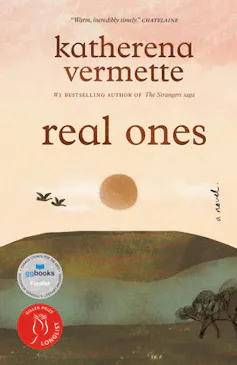
Real Ones by Katherena Vermette. (Penguin Random House)
Our conversation around the allure of King’s work was prompted by our reading of Katherena Vermette’s 2025 novel, Real Ones. This novel was reminiscent of the experiences and harm that accompany false claims to Indigenous identity among celebrated icons.
Real Ones offers important reflections on the rippling effects of false claims to Indigenous identity and the ongoing harm inflicted when people appropriate and misrepresent the lived experiences of Indigenous Peoples.
Since the public news of King’s false identity claims, there have been numerous posts on social media pages that vet resources of Indigenous content. For instance, there’s been an uptake in posts seeking replacement texts for King’s Borders or The Inconvenient Indian in online discussions among teachers of Indigenous content.
As our research continues to examine, there’s much to discuss when teaching Indigenous literature. Readers should not be limited by the literary themes forwarded by false identity claims.
For these reasons, rather than offer “replacement” texts for King’s work, we reconceptualize “the truth about stories.”
In doing so, we recommend some that resist settler myths about Indigeneity and reclaim the creative intellectualism of Indigenous storytelling.
Recommended books
Johnny Appleseed by Joshua Whitehead. (Arsenal Pulp Press)
Joshua Whitehead’s Johnny Appleseed offers an Indigiqueer coming-of-age delight exploring Indigenous boyhood from a two-spirit lens and examines notions of maternal figures, love and kinship.
Sara General’s beautiful collection of short stories and other writings, Spirit and Intent, weaves in Haudenosaunee teachings alongside contemporary visions. The fantastical and imaginative connections to writers like Tolkien alongside the everyday experiences of Indigenous womanhood situate this collection in a wider body of literature concerned with Indigenous futures.
Alicia Elliot’s And Then She Fell is a riveting debut novel that weaves storytelling with the everyday contemporary realities of Indigenous womanhood. As a novel defined as realist fiction on the cusp of fantasy and horror, And Then She Fell shape-shifts between realism and the fantastical, and is a brilliant “wonderwork.”
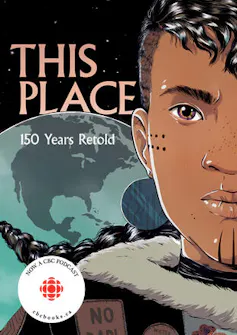
This Place (Portage & Main Press)
The graphic anthology This Place: 150 Years Retold brings forward elements of wonderworks and speculative fiction, examining Canadian history over the last 150 years from the point of view of Indigenous authors and creatives.
We hope that readers and educators are now reimagining their reading lists and recommitting to Indigenous literature in the wake of the King controversy.
We celebrate that there’s no shortage of extraordinary Indigenous writers to choose from, whose work unsettles and expands literary study beyond broad accessibility.
“The truth about stories” is that Indigenous Peoples have been telling stories since time immemorial. As literature scholar Heath Justice notes, these ancient and contemporary literary traditions are “inclusive of all the ways we embody our stories” and include ceremonial teachings, social exchanges and pathways towards Indigenous futures.
Jennifer Brant receives funding from SSHRC.
Erenna Morrison, Gayatri Thakor, Jasmine Rice, and Miyopin Cheechoo do not work for, consult, own shares in or receive funding from any company or organisation that would benefit from this article, and have disclosed no relevant affiliations beyond their academic appointment.
Source: The Conversation – UK – By Lynn Akesson, Professor Emerita of Ethnology in the Department of Arts and Cultural Sciences, Lund University
The Swedish painter Margareta Magnusson died on March 12 aged 92. She became famous in 2017 for coining the smart and humorous concept of döstädning in a book known in English as The Gentle Art of Swedish Death Cleaning. The book was rapidly translated into an impressive number of languages, exporting the notion of death cleaning internationally.
Death cleaning is a decluttering practice where you go through what you own and get rid of things so that, when you die, the process of sorting your affairs is easier on your loved ones.
The year the book was published, the concept found its way into the Swedish Language Council’s annual list of new words. These annual lists feature new expressions that, the council hopes, say “something about today’s society and the year that has passed”. This undoubtedly holds true for death cleaning.
While döstädning quickly became part of everyday Swedish language, the habit of cleaning out belongings before dying was not entirely new. It is, however, no coincidence that the concept appeared when it did rather than, say, in the 1950s when ordinary homes were not yet so crowded with things. The increasing need for death cleaning has to do with living in a consumer society amid an accelerating overflow of possessions.
In earlier times, the importance of setting matters right before death was more concerned with relations: with God, relatives, friends, enemies, neighbours and so forth. In a Christian context, this last rite is known as Commendation of the Dying, known also as death bed rites.
In 1734, the establishment of an estate inventory, or bouppteckning, (a comprehensive list of a deceased person’s assets, property and debts at the time of death) became mandatory in Sweden by law. Although the law was not strictly enforced in its first decades, the inventories that do exist from this time are fascinating.
These early inventories belong to a range of people, from wealthy noblemen to widows of limited means with no more possessions than a set of clothing and few kitchen utensils. Many things listed were manufactured at home, and the few items that were purchased were highly valued. In a society like this, there was no need for death cleaning in the sense of clearing out. On the contrary, objects were passed on between generations or sold at well-attended local auctions.
Death cleaning is a form creating order and tidiness, which have often come with moral narratives closely tied with them. In this, the role of death cleaning now and in the past does have something in common.
In both cases, a person’s posthumous reputation is at stake, and leaving behind an untidy home or unsolved personal matter tells an unwanted story to the living of the person who has passed. Different stories can be crafted by getting rid of belongings or leaving them in good condition to pass on. What a person’s death cleaning looks like is a matter shaped by time and culture.
In memories collected by The Folk Life Archives at Lund University of the decades around 1900, people stress the importance of well-filled cabinets and cupboards as part of an impressive estate inventory. Such bounty was also meant to elicit admiration among visitors at the local auction. At that time, it was important to demonstrate good housekeeping by displaying your possessions, the more the better. Reading The Gentle Art of Swedish Death Cleaning, talking to people engaged in death cleaning and in my general work, I have seen how, nowadays, the same effect is achieved by leaving behind a minimum of things.
This change in cultural preferences naturally reflects changes in material conditions. In societies where goods are relatively easy to acquire – both in terms of cost and availability – we all have a lot more. As such, death cleaning has become a good deed. Not burdening surviving relatives with sorting through unwanted items has become an act of love and care. However, it is worth noting that the idea of death cleaning is an ideal not everybody can live up to. Many people still find it difficult to part with their belongings.
The international fascination with the Swedish art of death cleaning invites reflection on widespread fantasies of the Nordic region. Media representations of Scandinavia frequently emphasise tropes of minimalism and emotional restraint. Such framing may contribute to the global appeal of döstädning, yet risks obscuring the more complex and culturally grounded logic underpinning the practice.
Positioned within Swedish everyday life, death cleaning is less an exotic cultural curiosity and more a meaningful negotiation of material abundance, kinship responsibilities and existential reflection.
Lynn Akesson does not work for, consult, own shares in or receive funding from any company or organisation that would benefit from this article, and has disclosed no relevant affiliations beyond their academic appointment.
The Warner Bros. Discovery streaming service HBO Max has launched in the UK. If you’re trying to work out the best way to access its content, you are faced with a choice that surely shouldn’t be this complicated.
You could subscribe to HBO Max Basic with Ads, which provides access to HBO shows like Euphoria and The White Lotus, and some films in Full HD. However, Warner Bros movies that have recently ended their theatrical run, such as the Oscar-winning Sinners and One Battle After Another, will not be available via this tier.
Alternatively, you could sign up to the Sky-owned Now platform’s new Entertainment & HBO Max Membership. This tier automatically includes the same HBO Max Basic content with ads, but displayed at a lower screen resolution. Want your Now service to match the picture quality of HBO Max’s cheapest tier? For that, you’ll need Now’s Boost add-on at an increased cost.
Neither option gives you everything, and both require you to read the small print to fully understand the restrictions they impose. And this is before you have even considered the other six monthly subscription plans HBO Max is offering at launch and the various price points available on Now. By the time you’ve weighed it all up, you might ask, wasn’t streaming supposed to make watching television simpler?
A Knight of the Seven Kingdoms is another prequel series to Game of Thrones on HBO Max.
The erosion of simple streaming
When the subscription video-on-demand (SVOD) sector emerged in the late 2000s and early 2010s with Netflix at its forefront, it was marketed as something liberating. It was presented as offering a clean break from the linear broadcast, cable and satellite television services it sought to replace. Viewers could watch what they wanted, when they wanted, free of commercial interruption, and at their own pace. The sector promised a personalised viewing experience free from broadcasters’ schedules.
Yet the range of options facing UK viewers at the launch of HBO Max appears to be at odds with the sector’s founding promise of convenience and autonomy. As my colleague Laura Minor and I argue in our book Television Goes Back to the Future: Rethinking TV’s Streaming Revolution (2025), streaming platforms have already begun eroding that promise.
For instance, many SVOD services now regularly adopt weekly episode releases for series rather than the full-season drops that once distinguished streaming from traditional broadcasters. A further example is the sector’s introduction of ad-supported tiers, reintroducing the commercial interruption that subscription platforms originally promised to leave behind.
HBO Max’s UK launch, however, generates a more specific kind of friction for consumers. That is, its arrival creates uncertainty over what viewers are getting, from whom, and at what cost – a confusion rooted in the shared history between HBO and Sky in the UK.
For 15 years, British viewers have associated HBO’s prestige programming with Sky. The channel Sky Atlantic was launched in 2011 largely as a vehicle for HBO shows after Sky secured exclusive UK rights to them. Series like Game of Thrones, The Sopranos and Succession all had their UK home on Sky Atlantic. For many British viewers, HBO content has become synonymous with Sky programming.
Now, with HBO Max having arrived as a standalone service, that cultivated brand association has been distorted but not cleanly severed – Sky and Warner Bros Discovery struck an updated distribution agreement in 2024 ensuring an ongoing relationship between the two companies. This branding muddle was evident in the weeks leading up to HBO Max’s launch, when the hit Game of Thrones prequel series A Knight of the Seven Kingdoms was identified on the Now platform as Sky Atlantic programming, while HBO Max’s own UK page branded it as an HBO Original.
Both descriptions were technically accurate, but for a viewer trying to make sense of the streaming landscape, the effect was disorientating. Now has since relabelled the show as HBO Max content to coincide with the HBO Max launch, but the example illustrates the deeper confusion about where HBO content now sits in the UK market, caught between a long-standing association with Sky and a new platform asserting its own identity.
Uncertainty about HBO Max’s future adds to the complexity of the platform’s launch. Paramount Global agreed to acquire Warner Bros Discovery in late February 2026, and Paramount’s CEO David Ellison has confirmed plans to ultimately merge HBO Max and Paramount+ into a single streaming service.
How the combined service will operate and how the shift will affect existing UK subscriptions remains entirely unclear. HBO Max, then, has arrived in the UK as a platform that may not exist in its current form for long. Viewers are being asked to familiarise themselves with a new platform and navigate its relationship with Sky and Now, while its parent company simultaneously plans to fold it into something else.
The brand muddle stemming from HBO’s entanglement with Sky, and the corporate uncertainty over what Paramount Global intends to do with the HBO Max service are specific to this case.
However, the broader confusion surrounding HBO Max’s UK launch is symptomatic of a streaming sector that has come to resemble the television landscape it aimed to revolutionise. Viewers are now confronted by a sprawl of overlapping brands, tiers and add-ons that demands the kind of careful navigation more commonly associated with conventional cable and satellite TV packages.
This is a trend that looks set to continue, with analysts noting that streamers are becoming increasingly focused on bundling strategies and diversifying the range of subscription tiers they offer. This means the experience of subscribing to streaming services in 2026 feels more like a return to complexities it was supposed to move beyond – rather than a liberation from them.
This article features references to books that have been included for editorial reasons, and may contain links to bookshop.org; if you click on one of the links and go on to buy something, The Conversation UK may earn a commission.
Anthony Smith does not work for, consult, own shares in or receive funding from any company or organisation that would benefit from this article, and has disclosed no relevant affiliations beyond their academic appointment.
Source: The Conversation – France – By Robert Kluijver, Visiting researcher at Leiden University’s Institute of Political Science, Leiden University
In 2019, a popular uprising in Sudan ended 30 years of Omar al-Bashir’s Islamist military dictatorship. Protesting masses brought down the regime and imposed a return to civilian rule. While a political settlement was being negotiated at the national level, local communities experimented with self-governance. But the armed forces seized power again, fell out among themselves, and plunged the country into war – producing one of the worst humanitarian crises in recent years.
What has become of the revolutionary impulse amid all this mayhem? What are the prospects for a return to civilian rule?
Despite the ongoing fighting, Sudanese civilians are starting to return home, pushed by dire conditions inside Sudanese displacement camps or driven back by hostility in neighbouring countries. Egyptian authorities have been expelling Sudanese refugees with or without papers.
Entrepreneur and women’s empowerment activist Randa Hamid describes a typical returnee’s experience: arriving at Port Sudan, the country’s only operational international airport, driving to a largely empty Khartoum, reduced to rubble and stripped of infrastructure, finding home and workplace thoroughly looted, and encountering local officials more interested in self-enrichment than in reconstruction. Sad, but safer than it has been the past years.
The SAF’s main political ally is the Muslim Brotherhood, whose networks provide fighting forces and governance experience to the military. Civilian positions are filled by old-regime figures: the corrupt oligarchy that provoked the revolution is reclaiming power uncontested.
The Sudanese resistance committees (RCs) that drove the revolution had formed as neighbourhood solidarity groups in the years before it.
IMF-mandated neoliberal policies under Omar al-Bashir had withdrawn the state from its social functions, forcing communities to rely on one another. Alongside trade unions and professional organisations, the RCs mobilised mass sit-ins that brought the regime down.
Crucially, they declined to join the transitional civilian-military coalition – the Forces for Freedom and Change – that governed briefly under former UN official Abdullah Hamdok. Their wariness of co-optation proved well founded when the military staged a coup in October 2021.
The committees instead maintained their horizontal, participatory approach, established a national charter and became incubators of cultural creativity, youth entrepreneurship and public life. With hindsight, the Sudanese revolution was an early instance of the Gen Z mobilisation now visible globally. It was remarkable for the full participation of women and the absence of the racism historically embedded in Sudanese public life.
When fighting erupted between the SAF and RSF in Khartoum in April 2023 and spread rapidly, the resistance committees became targets of both factions. Their members fled abroad if they could, to continue their civilian advocacy. Those who remained devoted themselves to setting up Emergency Response Rooms (ERRs) – virtual spaces, typically messaging groups, through which communities share information, needs and resources.
Jasour Abu Algasim was involved in the revolutionary movement from its earliest days and helped establish an ERR in Khartoum. He noted that state collapse allowed resistance committees to play a stronger public role. When war came, they pivoted from society building to survival.
Mohamed Younis, Director in Sudan of the Center for Civilians in Conflict, points out that solidarity initiatives unconnected to any political agenda – communal kitchens, volunteer brigades repairing infrastructure, community evacuations – emerged in nearly every affected community.
While international agencies struggled with security and logistical obstacles, local solidarity groups became the primary collective survival mechanism. Attention from abroad, however, was focused on the ERRs, which were twice nominated for the Nobel Peace Prize.
The aid dilemma
Donors frustrated by the difficulty of reaching those most in need have begun insisting that NGOs channel funds through the response rooms, viewing them as the most authentically democratic forces available. The logic is appealing, but Younis identifies the following unintended consequences.
Donor accountability requirements – detailed documentation of recipients, bio-data, dedicated administrative capacity – consume the very resources ERRs need for direct assistance. Both volunteers and communities face danger if such records fall into hostile hands. The ERR’s role shifts from autonomous community actor to service provider for foreign donors, typically via chains of international and local NGOs that each add their own requirements and consume a share of the budget.
This leaves no room for local strategic input. Communities are reduced to “beneficiaries” of programmes designed elsewhere. The vertical control mechanisms that donors and NGO partners impose skew the horizontal decision-making that characterises self-governing bodies. Internal accountability to volunteers and community members is replaced by external accountability to funders. Finally, this chain of command causes the response rooms to be perceived – by combatant factions and potentially by local populations – as instruments of foreign political agendas.
The result, notes Younis, is a perverse taxonomy of “good” and “bad” ERRs, distinguished not by service to communities but by compliance with donor requirements. Meanwhile the vast landscape of grassroots solidarity activity outside the ERR label goes unrecognised. “Decolonisation of aid” has therefore become a priority for the Sudanese civilian sector. Yet the trend toward increasing donor control over shrinking aid flows is likely to intensify rather than abate.
External factors
Sudan’s revolution alarmed the region’s autocracies much as the Arab Spring had eight years earlier. Containing democratic contagion remains a priority for Egypt, Saudi Arabia and the UAE, as well as more distant regional powers. They also support strongman rule to facilitate the control over Sudan’s mineral wealth – particularly gold – and its rich agricultural lands.
Western support for democratisation meanwhile has grown tepid. Multilateral bodies such as the African Union, the UN and the EU, unable to reach civilian forces inside Sudan, rely on exiled politicians and civil society leaders. The current coalition of civilian forces in exile, Sumoud (“steadfastness”), follows its predecessor Tagadum, which collapsed over the question of a government-in-exile.
Sarra Majdoub, a member of the UN Panel of Experts on Sudan, has witnessed successive civilian peace initiatives. She noted that efforts by exiled civil society leaders to reconnect with civilians inside the country are blocked by hostile authorities, unreliable communications, the dispersal of the population and material hardship.
Diasporic communities, by contrast, are readily mobilised online and end up occupying the entire bandwidth of “Sudanese civil society.” The question of how representative they are, or whether they can influence events on the ground, remains unresolved.
Civilian rule versus vertical governance
Sudan’s future will be determined by the clash between two colossal forces. On one hand, the military-landowning bloc, backed by regional powers and holding a monopoly on violence. It has ruled the country with few interruptions since independence in 1956. On the other, the mostly young Sudanese masses who tasted the promise that the revolution offered before the country was plunged back into war.
Hadia Hasaballah, a university professor in Omdurman who participated in the first wave of the uprising, now heads the women’s section of Sumoud. Rather than relying on existing political formations, she calls for the recognition of the youth-led mass movement in Sudan that embodies the values of the revolution: freedom, peace and justice. She is adamant that the regression to Islamist rule visible under the SAF – two women were sentenced to death by stoning in February 2026 – is no longer acceptable to Sudanese women, youth and minorities. They experienced the freedoms of the revolutionary period and will not simply relinquish them.
The Sudanese crisis reflects a wider tension in democratic politics between representational and participatory models. The resistance committees and emergency response rooms embody an emergent participatory politics being actively suppressed by actors with interests in vertical control.
Yet the Sudanese activists and analysts, on whose expertise this article draws, agree on one thing: the groundswell of young people of all backgrounds, united around freedom, peace and justice, constitutes a remarkable and durable foundation for genuine civilian rule. How they can wrest control from the military is, for now, nearly inconceivable – but eventually, they will.
A weekly e-mail in English featuring expertise from scholars and researchers. It provides an introduction to the diversity of research coming out of the continent and considers some of the key issues facing European countries. Get the newsletter!
Robert Kluijver ne travaille pas, ne conseille pas, ne possède pas de parts, ne reçoit pas de fonds d’une organisation qui pourrait tirer profit de cet article, et n’a déclaré aucune autre affiliation que son organisme de recherche.