Inside the challenges faced by journalists covering Iran’s protests

Source: The Conversation – UK – By Sanam Mahoozi, Research Associate, City St George’s, University of London

Iran is enduring one of the darkest periods in its modern history. Protests that erupted in late December initially over economic hardship have clearly transformed into a nationwide rejection of the Islamic Republic and a call for regime change.

Thousands of people have been killed by Iranian security forces, with human rights organisations saying many more are injured, detained or missing. In moments like these, journalism plays a critical role in informing the Iranian public and the international community about what is happening inside the country.

Yet Iran is not like most other countries. Reporting on it comes with extraordinary personal and professional risks and obstacles, particularly for journalists who are Iranian themselves with personal ties to the country and family and friends still living there.

This is something I am acutely aware of as a journalist and media researcher who has been covering Iran’s anti-government protests for years.

One of the most significant obstacles is the Iranian government’s repeated shutdown of the internet and communications networks during periods of unrest. On January 8, more than a week after the protests began, the authorities imposed one of the most severe and prolonged internet shutdowns in the country’s history.

More than 90 million people have effectively been cut off from the outside world since then, with limited access to the internet only possible through circumvention tools like virtual private networks (VPNs). Some “vetted” individuals, who are largely government loyalists or regime officials, are able to access the unfiltered global internet.

For journalists outside Iran, this makes reporting difficult. Access to local news outlets and on-the-ground sources vanished almost overnight. Information has had to be pieced together through a handful of people who have access to satellite internet services, such as Starlink and are willing to speak, alongside activist networks operating from outside the country.

The only media currently able to operate openly inside Iran are state and conservative outlets such as Islamic Republic of Iran Broadcasting and Tasnim, often through Telegram channels. These platforms offer a highly controlled narrative aligned with the government’s position. Senior Iranian officials, including foreign minister Abbas Araghchi and parliamentary speaker Ali Larijani, have described the protests as “riots” and have labelled protesters as “terrorists”.

For journalists trying to counter this narrative, human rights organisations such as the Human Rights Activists News Agency and Hengaw have become crucial sources. Their daily reports on deaths, arrests and injuries have helped document the scale of the crackdown. Diaspora media outlets such as BBC Persian and IranWire have also played a vital role, as videos and eyewitness accounts slowly emerge despite the blackout.

The information vacuum created by the shutdown has, at the same time, also enabled disinformation. Regime supporters have actively created fake accounts on social media to sow division among opposition groups, while AI-generated videos purportedly depicting the protests have flooded the web. This has impeded the ability of journalists to trust social media as a source of news gathering and information.

Deeply polarised opposition

Another defining feature of the current protest movement has been the emergence of calls for an alternative leadership. Unlike previous protests – including those in 2021 over water shortages and the 2022 nationwide Woman, Life, Freedom movement – this wave has included chants calling for the return of Iran’s former crown prince, Reza Pahlavi. Slogans such as “long live the king” and “Pahlavi will return” have been heard across most provinces.

But Iran’s opposition landscape is deeply polarised, and this presents a further challenge for journalists. Feelings on all sides are intense. Iranian journalists and their families face harassment, threats and coordinated attacks not only from the authorities, but also from opposition supporters.

This dynamic is particularly difficult to navigate. Quoting government officials in a news article, or interviewing them, can prompt accusations of “platforming the regime”. Yet accurate journalism requires reporting on those still in power as well as on opposition figures and possible successors. If I had to identify the single most exhausting challenge of reporting on Iran, this would be it.

The hatred towards the regime is entirely warranted. But it has created an environment in which any coverage of state officials – even when critical or contextual – is treated by Iranian opposition supporters as betrayal. For Iranian journalists, this pressure is constant. Many argue with friends and family, lose relationships and, in some cases, miss out on professional opportunities simply for doing their jobs.

There also seems to be a broader misunderstanding about how journalism works. Critics often expect a single article to address all of Iran’s problems at once and on a 24/7 rotation. But news has limits and each country has a dedicated space in international news cycles.

A short article cannot fully explore Iran’s economic collapse, environmental crises, human rights abuses, regional conflicts and internal repression simultaneously. Journalists must make difficult decisions about focus and framing.

Recognising these points does not mean lowering expectations of the media, particularly in turbulent times when news is a vital source of information. But it can help provide a small window into the challenges journalists face while covering Iran.

The Conversation

Sanam Mahoozi is a freelance reporter for The New York Times focused on Iran.

ref. Inside the challenges faced by journalists covering Iran’s protests – https://theconversation.com/inside-the-challenges-faced-by-journalists-covering-irans-protests-274130

Did the US ever ‘give back’ Greenland to Denmark, as Trump claims?

Source: The Conversation – UK – By Rikke Lie Halberg, PhD Candidate in History, Lund University

American servicemen in Greenland during the second world war. Signal Corps Archive / Wikimedia Commons

When Nazi Germany began its occupation of Denmark in April 1940, Greenland suddenly found itself cut off from its colonial power and thrust into the centre of North Atlantic wartime strategy. The US took control of Greenland temporarily, establishing bases and defence perimeters there to prevent Germany from using the island.

More than 80 years later, Donald Trump invoked that moment at the World Economic Forum in Davos. In his speech on January 21, the US president claimed his country “gave Greenland back” to Denmark after the second world war. This history, Trump implied, still gives the US a claim to Greenland today.

Trump’s claim rests on a selective reading of wartime history. It also reflects a colonial and imperial way of thinking about territory, sovereignty and ownership. To understand why his claim is misleading, it helps to follow the sequence of agreements that governed Greenland before, during and after the war.

In 1916, Denmark sold its Caribbean colony, the Danish West Indies, to the US (which then changed its name to the US Virgin Islands). That same convention included an explicit American declaration that the US would not object to Denmark extending its “political and economic interests to the whole of Greenland”. As one colony was transferred, sovereignty over another was reaffirmed.

But during the second world war, wartime circumstances and US strategic needs drove another agreement between Denmark and the US that allowed the Americans to assume responsibility for Greenland’s defence. That arrangement was formalised in the 1941 Greenland Defense Agreement, drawn up by the American state department and signed by Henrik Kauffmann, the Danish envoy in Washington.

The agreement explicitly stated that the US government “fully recognizes the sovereignty” of Denmark over Greenland. It added that the US is “animated by sentiments of the completest friendliness for Denmark and believes that by taking these steps, it is safeguarding the eventual re-establishment of the normal relationship between Greenland and the Kingdom of Denmark”.

In practice, the US did defend Greenland during the war. It built airstrips and military installations there, while also running patrols and integrating the island into wider allied logistics.

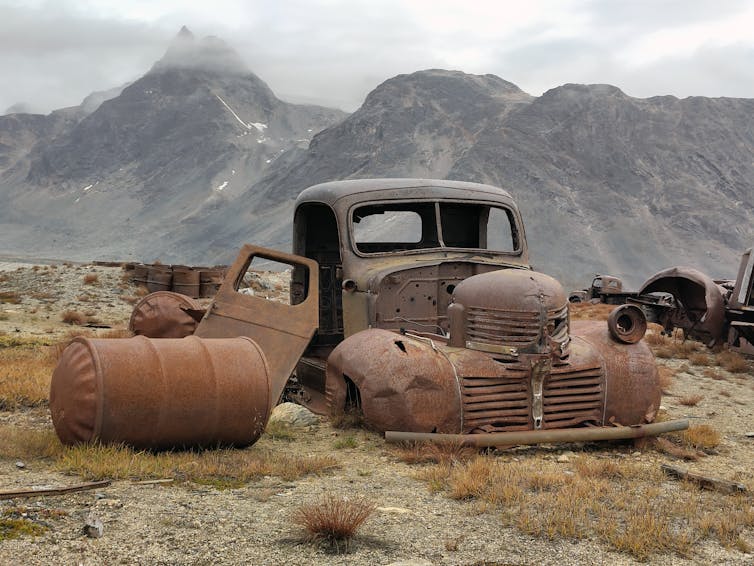
A rusting vehicle surrounded by mountains in Greenland.
An abandoned US military vehicle in Ikateq, eastern Greenland.
Michelle van Dijk / Shutterstock

In 1945, after the end of the war, Kauffmann wrote a diplomatic note to the US. He declared that it had “been a source of great satisfaction to the Danish people” that Denmark had an “opportunity to contribute to the war effort through the placing of Danish territory at the disposal of the United States in the fight against the common enemy”.

Kauffmann added that Denmark did not wish “to receive any payment” for the US military’s use of Greenland during the war. The note framed Denmark’s wartime cooperation as a voluntary contribution, again affirming Danish sovereignty over Greenland.

The wartime arrangement was later translated into a post-war security relationship. In 1951, with Denmark and the US now formal allies within the UN and Nato, the two countries concluded a new defence agreement. This granted the US extensive and permanent military rights in Greenland, now within the framework of peacetime alliance politics.

The post-war period represented a legal consolidation of a US presence in Greenland that had begun under wartime exception. This included the construction of installations such as the Thule Air Base (now Pituffik Space Base) on Greenland’s north-west coast. The base became a cornerstone of US strategic operations in the Arctic, and remains the only active American base in Greenland today.

The construction and expansion of Thule entailed the forced relocation of the local Inuit population in 1953. This move was later recognised as unjust by the Danish court system, leading to compensation awarded by the Danish state in 1999.

Colonial entanglements

These arrangements stabilised Danish sovereignty over Greenland and bolstered the island’s security. But they left the colonial relationship itself largely unexamined. In 1953, in the context of emerging UN norms on decolonisation, Greenland’s colonial status was formally lifted, and the territory was integrated into the Danish state.

This administrative transformation allowed Denmark to present its relationship with Greenland as post-colonial, without engaging in a broader reckoning with the political, cultural and economic legacies of colonial rule. Subsequent reforms can be understood as belated attempts to address this unresolved colonial relationship.

These include home rule in 1979, which transferred responsibility for most domestic affairs from Denmark to a Greenlandic parliament. Self-government in 2009 further expanded Greenland’s political autonomy and recognised Greenlanders as a people under international law.

Recent developments underline just how new the participation of Greenlanders in their own affairs is. The inclusion of Greenland’s foreign minister, Vivian Motzfeldt, in high-level January talks in Washington marks a clear break with earlier practice, where Greenland’s strategic future was negotiated without Greenlandic representatives at the table.

Trump’s attempt to revive imperial language of ownership sharpens the contrast between older colonial ways of thinking and emerging efforts to include Greenlandic political voices in discussions over their future. On this terrain, the contest is no longer only about the past, but also which parties will be part of the discussion about the future.

The Conversation

Rikke Lie Halberg receives funding from Lund University for her PhD research on the Fireburn revolt in the Danish West Indies.

ref. Did the US ever ‘give back’ Greenland to Denmark, as Trump claims? – https://theconversation.com/did-the-us-ever-give-back-greenland-to-denmark-as-trump-claims-274335

How Iran shut down the internet and built a sophisticated system of digital control

Source: The Conversation – UK – By Gemma Ware, Host, The Conversation Weekly Podcast, The Conversation

On January 8, as thousands of Iranians took to the streets in nationwide protests, the government cut off the internet.

Under cover of digital darkness, the Iranian regime launched a brutal and deadly crackdown against anti-government protesters. What information has got out, including testimony from morgues, graveyards and doctors who treated the injured, suggests thousands of people have been killed.

 Iran has shutdown the global internet before, but never for this long.  Without the internet, trading has slumped.  Many entrepreneurs who rely on Instagram to do business can’t post. Lorry drivers are struggling to cross borders because they can’t access digital documents. By some estimates, internet shutdown can cost more than US$37 million a day.


Read more:
Iran’s latest internet blackout extends to phones and Starlink


After three weeks of internet blackout, reports from web traffic monitor Netblocks suggest that the internet is slowly coming back online but the connection is predominantly for government-approved users.

Yet for most of the shutdown, banks and some local government websites and apps still worked. And that’s because Iran is developing its own, national internet, cut off from the rest of the world.

In this episode of The Conversation Weekly podcast, we speak to Amin Naeni, a PhD candidate researching digital authoritarianism at Deakin University in Australia, about how Iran built one of the world’s most sophisticated systems of digital control.


This episode of The Conversation Weekly was written and produced by Mend Mariwany and Gemma Ware. Mixing by Michelle Macklem and theme music by Neeta Sarl. Gemma Ware is the executive producer.

Newsclips in this episode from The Guardian, Al Jazeera English, DW News, CNA, CBS News, CNN, CBC News and BBC News.

Listen to The Conversation Weekly via any of the apps listed above, download it directly via our RSS feed or find out how else to listen here. A transcript of this episode is available via the Apple Podcasts or Spotify apps.

The Conversation

Amin Naeni does not work for, consult, own shares in or receive funding from any company or organisation that would benefit from this article, and has disclosed no relevant affiliations beyond their academic appointment.

ref. How Iran shut down the internet and built a sophisticated system of digital control – https://theconversation.com/how-iran-shut-down-the-internet-and-built-a-sophisticated-system-of-digital-control-274570

Student well-being comes from care, but is caring enough? Academics reflect on 3 stumbling blocks

Source: The Conversation – Africa – By Martina van Heerden, Senior Lecturer in English for Educational Development, University of the Western Cape

Christina @ wocintechchat.com via Unsplash, CC BY

Students’ well-being in higher education has been a growing concern globally since the coronavirus pandemic, which disrupted learning and lives generally.

Well-being has been described as “the combination of feeling good and functioning well; experiencing positive emotions such as happiness and contentment as well as the development of one’s potential, having some control over one’s life, having a sense of purpose, and experiencing positive relationships”.

Well-being is important for student engagement, achievement and belonging, which all make for a more positive learning and teaching experience.

We teach in an academic literacy module at a historically disadvantaged university in South Africa. Since the pandemic, we’ve continued to see that students’ well-being is often neglected, especially by students themselves. This neglect could potentially lead to lack of motivation, lack of interest and burnout.

In South Africa, first-year students’ well-being is often precariously placed, as they have to navigate socioeconomic and familial stresses, while adjusting to the demands of higher education. One of the many hurdles that students face is due to the “digital divide”, and it includes having to learn how to use unfamiliar technological resources. There are high dropout rates for first-year students.

That’s despite the efforts of universities to support them.

As academic literacy practitioners, we aim to help students to understand what’s required of them academically. In the last five years, since the pandemic, we’ve revised our module to foster a more caring, responsive and engaging environment. The idea is to smooth the way into university studies and to enhance student well-being.

We recently published a paper on what we’ve learnt so far. Our main finding is that creating a “care-full” environment for learning is not as simple as it sounds. Care has to be offered at various levels – and also received. Universities, lecturers and students still need to overcome some barriers to receiving care.

Getting to know students

Our academic literacy module is offered to first-year undergraduate students and runs for both semesters, with a different group of students each semester. In line with the university’s mandate, the module is concerned with student flourishing and success.

During the pandemic (2021-2022), we became aware of our students being in emotional distress, and so, to focus more deliberately on student well-being, we adopted a more “care-full” approach to learning and teaching. We embedded “care” into our module, by considering how we might equip students better to deal with the demands of higher education. We listened to our students’ experiences and needs and made the necessary adjustments to provide a more supportive, holistic, care-full classroom. This continued in our post-pandemic classroom.


Read more:
During lockdown, South African students wrote a book about ‘a world gone mad’


The changes included adding assignment-specific guides, more resources, more focused discussions on time management and organisation, regular reminders of due dates, and links to work apps.

We also had regular conversations with the students as our way of getting to know them and finding out how they were coping. We wanted them to know that we were there to care for them, not just to impart knowledge.


Read more:
Lecturers reflect on their efforts to ensure no student gets left behind


But we came to realise that by 2023 students were still struggling with the same issues as before, despite the changes we had made. This became clear from student questionnaires, end-of-semester feedback forms, and the informal conversations we had with them.

An analysis of our data showed that certain challenges acted as impediments to care and negatively affected students’ well-being. The three main impediments were:

  • resources

  • time management

  • anxiety.

In other words, these problems prevented students from “receiving” and benefiting from the care we offered.

Resources

Resources present a dual impediment to students’ well-being. Firstly, students might not have access to resources like laptops and a stable internet connection. Secondly, they might not know how to use the available resources efficiently.

For example, many of our students indicated that they struggled to find lecture content or to submit assignments on the university’s Learning Management System. This was even though we had made “how-to” guides for students showing step-by-step instructions and the university scheduled workshops on how to navigate it. Resources became another hurdle instead of helping as intended.

Organisation and time management skills

Many students struggle with meeting deadlines and balancing their social and university lives. During the pandemic, the online environment provided little structure to their days, so some of them struggled with managing their workload. This continued when classes were back on campus. It is not a problem that is unique to South Africa, but time management is important for well-being (and thus student success).

Feelings of inadequacy and anxiety

The last impediment we identified related to feelings of inadequacy and anxiety. These feelings may be a result of struggles with resources and time management skills, but they might also be related to students’ own perceived competence in their studies. Anxiety has become a challenge for many students in university, not just in South Africa, but globally. These feelings may stop students from reaching out for help.


Read more:
Mental health: almost half of Johannesburg students in new study screened positive for probable depression


Getting past the impediments

We’ve realised these challenges act as impediments to care. That is, despite the efforts educators may put into creating a “care-full” environment, certain challenges can hamper their effectiveness. In our context, we weren’t able to make all our students feel cared for. This realisation could negatively affect the well-being of students and educators alike. Academics are at risk of burnout too.

We still think academics have to be “care-full” with students, but they can’t do it alone, and their care has to be reciprocated if it’s to result in academic success and well-being. Care requires input from both the educators (the carers) and the cared-for (the students). When it works both ways, a “care-full” approach might improve students’ well-being.

Both parties need to take responsibility. Students must be willing to receive care by taking care (that is, asking for advice, accepting the advice and resources that have been made available, doing what they can).

We understand that they might feel uncomfortable or anxious; we are not blaming them. Educators must take care in interactions with students, in pedagogical choices, and in content. University structures and processes are also involved in care. And the issue extends beyond the confines of the university into the national health, welfare and safety landscape. Care requires buy-in from all parties. Otherwise there may be limits to how care is received.

The Conversation

Martina van Heerden is a member of the South African Association of Academic Literacy Practitioners.

Sharita Bharuthram does not work for, consult, own shares in or receive funding from any company or organisation that would benefit from this article, and has disclosed no relevant affiliations beyond their academic appointment.

ref. Student well-being comes from care, but is caring enough? Academics reflect on 3 stumbling blocks – https://theconversation.com/student-well-being-comes-from-care-but-is-caring-enough-academics-reflect-on-3-stumbling-blocks-274066

Africa, rating agencies and the cost of debt

Source: The Conversation – Africa – By Caroline Southey, Founding Editor, Africa, The Conversation

How much we pay for the debt that we incur determines a great deal in our lives. This is true of countries too. In the world of sovereign debt – money raised or borrowed by governments – the cost of debt is dependent on, among other factors, how rating agencies “grade” a country.

It’s a sensitive issue. Three agencies dominate the rating business. A criticism often meted out is that they judge African countries more harshly than others, which pushes up borrowing rates. These tensions lie behind the acrimonious fall-out between one of the big three – Fitch – and the African Export-Import Bank (Afreximbank).

On 28 January 2026 Fitch announced it had downgraded the bank’s credit rating to junk status, and that it was ending its relationship with the bank.

Fitch’s decision was preceded by Afreximbank announcing that it was severing all ties with the rating agency. A few days later the African Union weighed in, issuing a statement from its watchdog, the African Peer Review Mechanism, backing the bank’s decision, and warning Fitch not to issue any credit assessments of the bank. The rating agency clearly chose to ignore the warning.

Below you can find articles from our archives that examine various dimensions of Africa’s debt challenges.


Africa’s development banks are being undermined: the continent will pay the price

African countries need strong development banks: how they can push back against narratives to weaken them

Africa’s new credit rating agency could change the rules of the game. Here’s how

Eurobonds issued by African countries are popular with investors: why this isn’t good news

African countries are bad at issuing bonds, so debt costs more than it should: what needs to change

African finance ministers shouldn’t be making bond deals: how to hand over the job to experts

Senegal’s rating downgrade: credit agencies are punishing countries that don’t check their numbers

South Africa’s debt has skyrocketed – new rules are needed to manage it

The Conversation

ref. Africa, rating agencies and the cost of debt – https://theconversation.com/africa-rating-agencies-and-the-cost-of-debt-274676

Weakening the soy moratorium in Brazil: a political choice that ignores the science

Source: The Conversation – Global Perspectives – By Aline Soterroni, Pesquisadora associada do Departamento de Biologia, University of Oxford

In the first days of 2026, the Brazilian Association of Vegetable Oil Industries (ABIOVE), which represents the largest soybean traders in Brazil, announced its withdrawal from the Amazon soy moratorium.

Created in 2006, the moratorium is a voluntary commitment between companies, governments and civil society, establishing that signatory traders and industries will not purchase soy produced from areas deforested in the Amazon biome after July 2008.

The moratorium is widely recognised as one of the world’s most effective voluntary multisectoral agreements for decoupling direct deforestation from soy expansion in the Brazilian Amazon.

ABIOVE’s member companies account for a substantial share of Brazil’s soybean processing capacity and exports. As such, they play a central role both in the soy expansion and in the implementation of environmental commitments across the country.

Although the moratorium has not been formally terminated, its weakening by an actor as influential as ABIOVE may mark the beginning of the end of the most successful zero-deforestation agreement in history.

Fewer state tax benefits

A large body of research demonstrates unequivocally that the moratorium has not constrained soybean production in the Amazon biome. On the contrary, between 2009 and 2022, the area planted with soy increased by more than 300%, while deforestation fell by 69% in the municipalities monitored under the moratorium.

In addition, the agreement was responsible for establishing a sophisticated system for monitoring, traceability and independent auditing of the soybean supply chain in the Brazilian Amazon.

Despite all this evidence, some argue that the soy moratorium is no longer necessary. This view has recently gained political traction through manoeuvres by the government of the state of Mato Grosso, including the Decree 1,795, which seeks to regulate part of a state law (Law 12,709/2024) whose constitutionality is still being examined by Brazil’s Supreme Federal Court.

In practice, the Mato Grosso government aims to restrict state tax benefits for companies that adopt environmental criteria beyond those required by law, as is the case with the Amazon soy moratorium.

The core argument is that Brazil’s Forest Code – the country’s main environmental law regulating land use on private properties – alone is sufficient to ensure high socio-environmental standards in agricultural production. But is this really the case?

Full implementation of Brazil’s Forest Code

There is a scientific tool capable of addressing this question: mathematical and economic land-use modelling. According to a study I led, published in Global Change Biology, even the rigorous implementation of the Forest Code would prevent only about half of the deforestation projected to accommodate the expansion of agriculture and livestock production in Brazil up to 2050.

These findings indicate that, while full implementation of the Code is essential and urgent, it is not sufficient to guarantee deforestation-free agricultural production that is truly sustainable and aligned with increasingly demanding markets, such as that of the European Union.

It is also worthwhile to remember that achieving zero deforestation is central to Brazil fulfilling the commitments it has voluntarily undertaken, including the Paris Agreement and the Glasgow Leader’s Declaration on Forests and Land Use.

Better futures are possible

One of the most motivating aspects of my research area is the opportunity to explore better futures. What if the Amazon Soy moratorium were expanded from the Amazon to the Cerrado? Around a decade ago, in 2017, this was precisely the debate.

That year, the Cerrado Working Group was created with the aim of discussing an agreement that would eliminate the direct conversion of native vegetation for soybean production in the most biodiverse and threatened tropical savanna on Earth.

In another modelling study that I led, published in Science Advances, we simulated this plausible future, in which the Soy moratorium is adopted simultaneously in the Amazon and the Cerrado biomes.

The results show that even with a moratorium of this scale, Brazilian soybean production would continue to grow in order to meet domestic and international demand. By 2050, the reduction in planted area would be only about 2% compared with a scenario without an expanded moratorium.

With strategic land-use planning, the impact on production would therefore be minimal, while the environmental and social benefits would be immense. This scenario highlights Brazil’s potential for environmental leadership, demonstrating that large-scale commodity production can be reconciled with the conservation of natural resources.

Brazil is one the most megadiverse nations in the world, home to around 20% of all known species. This extraordinary biodiversity – together with ecosystem services such as pollination, climate regulation and rainfall patterns – underpins the country’s position as a major global producer and exporter of food.

Yet prolonged droughts, intense rainfall events and more frequent heatwaves are already affecting agricultural productivity, confirming scientific warnings about the vulnerability of Brazilian agriculture in an increasingly warming planet.

In the face of the intertwined climate and biodiversity crises, the debate should focus on policies and initiatives that complement Brazil’s Forest Code, such as expanding the Amazon Soy moratorium to the Cerrado, rather than on dismantling it.

Protecting native vegetation is an essential condition for the long-term viability of Brazilian agriculture and the most effective insurance against the impacts of climate change.

Approving legislation that trades standing forests, irreplaceable biodiversity, water security and climate regulation – while also jeopardising the rights of Indigenous Peoples and local communities – for soybeans largely used as animal feed is not just short-sighted land-use governance. It is, quite literally, casting pearls before swine. Not to mention the unnecessary reputational risk generated for the Brazilian agricultural sector.

Rather than hastily weakening one of the most successful environmental agreements ever implemented, companies and trade associations should strengthen safeguards, resist legislation that undermines environmental protection, and work alongside governments and civil society to build supply chains that are genuinely sustainable and free from deforestation. The science is clear. The choice, however, is political.

The Conversation

Aline Soterroni não presta consultoria, trabalha, possui ações ou recebe financiamento de qualquer empresa ou organização que poderia se beneficiar com a publicação deste artigo e não revelou nenhum vínculo relevante além de seu cargo acadêmico.

ref. Weakening the soy moratorium in Brazil: a political choice that ignores the science – https://theconversation.com/weakening-the-soy-moratorium-in-brazil-a-political-choice-that-ignores-the-science-274677

Weakening the soy moratorium: a political choice that ignores the science

Source: The Conversation – Global Perspectives – By Aline Soterroni, Pesquisadora associada do Departamento de Biologia, University of Oxford

In the first days of 2026, the Brazilian Association of Vegetable Oil Industries (ABIOVE), which represents the largest soybean traders in Brazil, announced its withdrawal from the Amazon soy moratorium.

Created in 2006, the moratorium is a voluntary commitment between companies, governments and civil society, establishing that signatory traders and industries will not purchase soy produced from areas deforested in the Amazon biome after July 2008.

The moratorium is widely recognised as one of the world’s most effective voluntary multisectoral agreements for decoupling direct deforestation from soy expansion in the Brazilian Amazon.

ABIOVE’s member companies account for a substantial share of Brazil’s soybean processing capacity and exports. As such, they play a central role both in the soy expansion and in the implementation of environmental commitments across the country.

Although the moratorium has not been formally terminated, its weakening by an actor as influential as ABIOVE may mark the beginning of the end of the most successful zero-deforestation agreement in history.

Fewer state tax benefits

A large body of research demonstrates unequivocally that the moratorium has not constrained soybean production in the Amazon biome. On the contrary, between 2009 and 2022, the area planted with soy increased by more than 300%, while deforestation fell by 69% in the municipalities monitored under the moratorium.

In addition, the agreement was responsible for establishing a sophisticated system for monitoring, traceability and independent auditing of the soybean supply chain in the Brazilian Amazon.

Despite all this evidence, some argue that the soy moratorium is no longer necessary. This view has recently gained political traction through manoeuvres by the government of the state of Mato Grosso, including the Decree 1,795, which seeks to regulate part of a state law (Law 12,709/2024) whose constitutionality is still being examined by Brazil’s Supreme Federal Court.

In practice, the Mato Grosso government aims to restrict state tax benefits for companies that adopt environmental criteria beyond those required by law, as is the case with the Amazon soy moratorium.

The core argument is that Brazil’s Forest Code – the country’s main environmental law regulating land use on private properties – alone is sufficient to ensure high socio-environmental standards in agricultural production. But is this really the case?

Full implementation of Brazil’s Forest Code

There is a scientific tool capable of addressing this question: mathematical and economic land-use modelling. According to a study I led, published in Global Change Biology, even the rigorous implementation of the Forest Code would prevent only about half of the deforestation projected to accommodate the expansion of agriculture and livestock production in Brazil up to 2050.

These findings indicate that, while full implementation of the Code is essential and urgent, it is not sufficient to guarantee deforestation-free agricultural production that is truly sustainable and aligned with increasingly demanding markets, such as that of the European Union.

It is also worthwhile to remember that achieving zero deforestation is central to Brazil fulfilling the commitments it has voluntarily undertaken, including the Paris Agreement and the Glasgow Leader’s Declaration on Forests and Land Use.

Better futures are possible

One of the most motivating aspects of my research area is the opportunity to explore better futures. What if the Amazon Soy moratorium were expanded from the Amazon to the Cerrado? Around a decade ago, in 2017, this was precisely the debate.

That year, the Cerrado Working Group was created with the aim of discussing an agreement that would eliminate the direct conversion of native vegetation for soybean production in the most biodiverse and threatened tropical savanna on Earth.

In another modelling study that I led, published in Science Advances, we simulated this plausible future, in which the Soy moratorium is adopted simultaneously in the Amazon and the Cerrado biomes.

The results show that even with a moratorium of this scale, Brazilian soybean production would continue to grow in order to meet domestic and international demand. By 2050, the reduction in planted area would be only about 2% compared with a scenario without an expanded moratorium.

With strategic land-use planning, the impact on production would therefore be minimal, while the environmental and social benefits would be immense. This scenario highlights Brazil’s potential for environmental leadership, demonstrating that large-scale commodity production can be reconciled with the conservation of natural resources.

Brazil is one the most megadiverse nations in the world, home to around 20% of all known species. This extraordinary biodiversity – together with ecosystem services such as pollination, climate regulation and rainfall patterns – underpins the country’s position as a major global producer and exporter of food.

Yet prolonged droughts, intense rainfall events and more frequent heatwaves are already affecting agricultural productivity, confirming scientific warnings about the vulnerability of Brazilian agriculture in an increasingly warming planet.

In the face of the intertwined climate and biodiversity crises, the debate should focus on policies and initiatives that complement Brazil’s Forest Code, such as expanding the Amazon Soy moratorium to the Cerrado, rather than on dismantling it.

Protecting native vegetation is an essential condition for the long-term viability of Brazilian agriculture and the most effective insurance against the impacts of climate change.

Approving legislation that trades standing forests, irreplaceable biodiversity, water security and climate regulation – while also jeopardising the rights of Indigenous Peoples and local communities – for soybeans largely used as animal feed is not just short-sighted land-use governance. It is, quite literally, casting pearls before swine. Not to mention the unnecessary reputational risk generated for the Brazilian agricultural sector.

Rather than hastily weakening one of the most successful environmental agreements ever implemented, companies and trade associations should strengthen safeguards, resist legislation that undermines environmental protection, and work alongside governments and civil society to build supply chains that are genuinely sustainable and free from deforestation. The science is clear. The choice, however, is political.

The Conversation

Aline Soterroni não presta consultoria, trabalha, possui ações ou recebe financiamento de qualquer empresa ou organização que poderia se beneficiar com a publicação deste artigo e não revelou nenhum vínculo relevante além de seu cargo acadêmico.

ref. Weakening the soy moratorium: a political choice that ignores the science – https://theconversation.com/weakening-the-soy-moratorium-a-political-choice-that-ignores-the-science-274677

Dans l’océan, comment les écosystèmes marins s’organisent sans chef

Source: The Conversation – France (in French) – By Céline Barrier, Chercheuse, Université de Corse Pascal-Paoli

Et si on élargissait l’idée qu’on se fait de l’intelligence ? Exemple appliqué au milieu marin. Céline Barrier, Fourni par l’auteur

À la différence de l’intelligence humaine, régie par un centre de décision (le cerveau), celle du monde marin s’organise sans chef d’orchestre. Elle repose sur une multitude d’interactions où chaque processus physique contribue à un fonctionnement global. Que penser de cette analogie ? Peut-on encore parler d’intelligence ? Étudier ces formes d’organisation non humaines invite à repenser notre définition de l’intelligence.


Docteure en sciences marines, spécialisée dans la modélisation des processus écologiques, je travaille principalement sur la dispersion larvaire et la connectivité entre habitats marins, en particulier dans les écosystèmes côtiers de la Méditerranée.

Mes recherches consistent notamment à « suivre des larves marines », afin de comprendre comment l’information circule dans un système naturel complexe, à travers l’espace, le temps et de fortes contraintes physiques. Les « propagules » marines, larves de poissons ou d’invertébrés, ne sont en effet pas seulement de la matière vivante transportée passivement par les courants.

Elles sont aussi des vecteurs d’information écologique. En effet, elles transportent un patrimoine génétique, des traits d’histoire de vie, une mémoire évolutive et surtout un potentiel fondamental : celui de permettre, ou non, le maintien d’une population dans un habitat donné.

Leur évolution dans l’espace est un exemple intéressant de la façon dont les écosystèmes marins s’organisent. Cette organisation fait intervenir une forme d’intelligence bien différente de celle que nous connaissons en tant qu’humains.


À lire aussi :
La Fête de la science 2025 met toutes les intelligences à l’honneur


Une intelligence sans chef d’orchestre

Les écosystèmes marins peuvent être décrits comme des systèmes distribués : il n’y existe ni centre de décision, ni contrôle centralisé.

L’organisation globale émerge de l’interaction continue entre des processus physiques (courants, stratification de la colonne d’eau), biologiques (développement larvaire, mortalité, parfois comportement) et écologiques (disponibilité et qualité des habitats).

Comprendre cette organisation revient à comprendre comment des systèmes complexes peuvent fonctionner efficacement sans intelligence centrale. Dans ce cadre, l’« intelligence » du monde marin n’est ni neuronale ni intentionnelle. Elle est collective, spatiale et émergente.

Chaque processus physique y joue un rôle spécifique. Par exemple :

  • les courants marins forment une infrastructure invisible, comparable à un réseau de communication ;

  • les habitats fonctionnels, zones de reproduction, de nourricerie ou habitats adultes, constituent des nœuds ;

  • enfin, les larves assurent la circulation entre ces nœuds, rendant possible la connectivité du système.


À lire aussi :
Podcast : Intelligence animale… Quand la seiche sèche le poulpe !


Modéliser des réseaux invisibles

Dans mon travail, je cherche à modéliser cette connectivité, c’est-à-dire le réseau d’échanges dont la structure conditionne la résilience, l’adaptabilité et la persistance des populations marines face aux perturbations environnementales.

Pour explorer ces réseaux invisibles, j’utilise des modèles biophysiques dits lagrangiens, qui combinent des données océaniques (courants, température, salinité) avec des paramètres biologiques propres aux espèces étudiées, tels que la durée de vie larvaire ou la période de reproduction.

L’objectif n’est pas de prédire le trajet exact de chaque larve, mais de faire émerger des structures globales : corridors de dispersion, zones sources, régions isolées ou carrefours d’échanges.

C’est précisément ce que j’ai montré dans un travail récent consacré à la grande araignée de mer Maja squinado en Méditerranée nord-occidentale. En simulant plus de dix années de dispersion larvaire à l’échelle régionale, j’ai mis en évidence l’existence de véritables carrefours de connectivité. Ils relient certaines zones côtières éloignées, tandis que d’autres, pourtant proches géographiquement, restent faiblement connectées.

Une intelligence fondée sur les relations

Cette organisation ne résulte d’aucune stratégie consciente. Elle émerge de l’interaction entre la circulation océanique, la biologie des espèces et la distribution spatiale des habitats favorables.

Les résultats obtenus illustrent une forme d’intelligence collective du système, dans laquelle l’organisation globale dépasse largement la somme des trajectoires individuelles.

On retrouve ici des propriétés communes à de nombreux systèmes complexes – colonies d’insectes, réseaux trophiques ou dynamiques sociales humaines. Dans tous les cas, ce sont les relations entre les éléments, bien plus que les éléments eux-mêmes, qui structurent le fonctionnement de l’ensemble.

Élargir notre définition de l’intelligence

Un parallèle peut enfin être établi avec l’intelligence artificielle, sans qu’il soit nécessaire de forcer l’analogie. Les modèles que je développe agissent, avant tout, comme des outils de traduction : ils transforment un monde continu, chaotique et tridimensionnel en représentations intelligibles – cartes, matrices de connectivité, probabilités.

Comme en intelligence artificielle, l’enjeu n’est pas de tout contrôler ni de tout prédire, mais d’identifier les échelles pertinentes et les relations clés à partir desquelles le sens peut émerger.

Étudier ces formes d’organisation non humaines nous invite ainsi à repenser notre définition de l’intelligence. Dans un monde marin sans cerveau, sans mémoire explicite et sans intention, des systèmes entiers parviennent pourtant à se maintenir, à se réorganiser et parfois à résister aux perturbations environnementales.

Reconnaître cette intelligence diffuse, incarnée dans des flux et des réseaux, ne revient pas à humaniser la nature, mais à élargir notre regard sur ce que signifie « être intelligent » dans un monde complexe et interconnecté.


Cet article est publié dans le cadre de la Fête de la science (qui a eu lieu du 3 au 13 octobre 2025), dont The Conversation France est partenaire. Cette nouvelle édition porte sur la thématique « Intelligence(s) ». Retrouvez tous les événements de votre région sur le site Fetedelascience.fr.

The Conversation

Céline Barrier ne travaille pas, ne conseille pas, ne possède pas de parts, ne reçoit pas de fonds d’une organisation qui pourrait tirer profit de cet article, et n’a déclaré aucune autre affiliation que son organisme de recherche.

ref. Dans l’océan, comment les écosystèmes marins s’organisent sans chef – https://theconversation.com/dans-locean-comment-les-ecosystemes-marins-sorganisent-sans-chef-273541

Les « dupes », ces copies légales de produit best-seller que vous avez déjà dû acheter

Source: The Conversation – France (in French) – By Aurore Ingarao, Maitre de conférences en Marketing , Université d’Orléans

Selon la Fédération des entreprises de la beauté, 31 % de Français et Françaises ont acheté un produit « dupe » cosmétique au cours des douze derniers mois. Faithie/Shutterstock

Entre la recherche de produits d’exception, des prix bas et la peur de la contrefaçon, le marché des « dupes » est en plein essor. Ces produits qui copient le succès d’une grande marque sont valorisés sur les réseaux sociaux, notamment TikTok. Comment sont-ils perçus par les consommateurs et les professionnels ?


La brosse soufflante Airwrap de Dyson, la crème hydratante Sol de Janeiro ou encore le Birkin d’Hermès… ces produits voient leurs copies s’envoler sur l’Internet. Elles sont mises en avant sur les réseaux sociaux et plus particulièrement sur TikTok à travers des tendances (trend) lancées autour de hashtag intégrant le mot dupe.

Entre la recherche de produits d’exception, de prix bas et la peur de la contrefaçon, le marché des dupes est en plein essor. En 2024, 561 000 de recherches mensuelles pour le terme dupe sont recensés sur Google et 398 100 vidéos sur TikTok. Selon la Fédération des entreprises de la beauté, 31 % des consommateurs ont acheté un dupe de produit cosmétique au cours des 12 derniers mois.

Ce phénomène s’inscrit dans la dynamique du marketing d’influence que nous avons étudié avec Sophie Renault, professeure des universités, dans notre communication scientifique « Tout ce qui brille n’est pas d’or : le défi de l’authenticité dans l’univers complexe du marketing d’influence » (2024). Les créateurs de contenus, en mettant en avant ces inspirations sur les réseaux sociaux, jouent un rôle clé dans la légitimation de l’achat de ces produits, notamment auprès des jeunes générations.

Alors, comment ces produits sont-ils perçus par les consommateurs et les professionnels ?

Contrefaçon, dupe et imitation

La contrefaçon est définie par l’Institut national de la propriété intellectuelle (Inpi) comme « la reproduction, l’imitation ou l’utilisation totale ou partielle d’un droit de propriété intellectuelle sans l’autorisation de son propriétaire. Il peut s’agir d’une marque, d’un modèle, d’un brevet, d’un droit d’auteur, d’un logiciel, d’un circuit intégré ou d’une obtention végétale ». La contrefaçon est à distinguer des termes de copycat, imitation, dupe, pingti ou générique.

Dupe

Désigne des produits qui imitent ceux de marques renommées, donnant l’impression de proposer une offre similaire à moindre coût, mais cette similitude se limite à l’apparence. Les « dupes » ne possèdent absolument rien des caractéristiques de l’original, en termes de matériaux, d’efficacité ou de durabilité.

Copycat

Une imitation de « l’habillage commercial d’une marque leader, comme son nom ou le design de son emballage, pour profiter de la réputation et des efforts marketing de cette dernière ».

Imitation

Un « produit ou service, bien que non identique, considéré comme similaire en substance, nom, forme, signification ou intention à un produit ou service reconnu et largement connu actuellement sur le marché. »

« Pingti »

Les pingti (« leurre » en mandarin) sont des copies haut de gamme, venant de Chine, de produits de luxe. Seuls les designs et finitions sont reproduits, et non la marque et le logo, les distinguant de la contrefaçon.

Générique

Les produits génériques se « caractérisent par leur emballage sobre et l’absence de marque reconnue. Leur principal attrait, pour le consommateur, réside dans l’écart de prix important entre les produits génériques et leurs équivalents de marque. »

Plaisir de la transgression

Le consommateur a pour première motivation le prix. Près de 39 % des consommateurs déclarent préférer tester un produit équivalent moins cher, afin de comparer son efficacité avec le produit original pour « peut-être » l’acheter par la suite.

Considérer un prix élevé comme un gage de qualité est remis en cause, puisque la qualité des produits est revendiquée comme égale aux originaux, traduisant une culture des dupes.


À lire aussi :
Contrefaçon des produits de luxe Vuitton, Saint Laurent, Chanel ou Hermès… Pourquoi la pression sociale l’emporte sur la morale


La valeur perçue repose sur le sentiment de fierté procuré par l’achat de ces copies. Certains acheteurs se considèrent comme des smart shoppers, avec l’impression de contourner les stratégies des marques aux prix élevés. Ces dupes leur permettent de contrôler leur consommation, les libérer des codes élitistes traditionnels, accéder à leurs désirs sans en payer le prix, allant jusqu’à ressentir le plaisir cognitif de la transgression.

Promotion par les influenceurs

Avec pas moins de 180 000 influenceurs recensés en France, les relais auprès des consommateurs sont assurés. Les influenceurs dupes sont définis comme « des individus qui incitent les consommateurs à acheter des contrefaçons via les réseaux sociaux ». Leur force réside dans leur expertise, appréciée par leurs abonnés qui leur font confiance.

Nombreux sont les formats diffusés sur les réseaux sociaux par de célèbres influenceurs. Certains fabricants collaborent avec ces influenceurs pour promouvoir leurs produits. C’est le cas de Celesta, une marque proposant des appareils coiffants comparables à ceux de Dyson, qui a choisi de mener une campagne d’influence sur TikTok.

Alerte des fabricants

Le dupe semble accepter par le marché – les fabricants de dupes, les influenceurs, les consommateurs ou les plateformes numériques – comme étant légal, par opposition à la contrefaçon. L’argument principal : le produit ne laisse apparaître ni logo ni nom de marque apparent, souvent caractéristique de la contrefaçon.

La frontière entre l’imitation et l’inspiration se révèle plus mince qu’elle n’y paraît, puisqu’un produit peut être protégé indépendamment de sa marque. Pour certaines d’entre elles, des modèles spécifiques peuvent être protégés au titre du droit d’auteur. Une action en contrefaçon peut être engagée même si la marque n’apparaît pas, selon Vanessa Bouchara, avocate spécialisée dans les questions de propriété intellectuelle.

Contrefaçon ou dupe, ces pratiques très proches ne cessent d’inquiéter les fabricants. L’Union des fabricants (Unifab) alerte et rapproche les deux concepts : « La contrefaçon dupe ». Elle liste des conseils pour être, devenir ou redevenir un consommateur responsable en jouant sur l’affect. « Acheter de la contrefaçon revient à cautionner la perte de plus de 38 000 emplois et 6,7 milliards de revenus en France tous les ans », rappelle l’Unifab.

Des marques tentent de renverser la tendance en surfant sur le buzz généré. C’est le cas d’Olaplex, spécialisée en soins capillaires, qui a lancé l’opération Oladupé en partenariat avec de nombreux influenceurs, mettant en avant un faux dupe de la marque pour montrer que les atouts de l’original sont inégalables.

The Conversation

Les auteurs ne travaillent pas, ne conseillent pas, ne possèdent pas de parts, ne reçoivent pas de fonds d’une organisation qui pourrait tirer profit de cet article, et n’ont déclaré aucune autre affiliation que leur organisme de recherche.

ref. Les « dupes », ces copies légales de produit best-seller que vous avez déjà dû acheter – https://theconversation.com/les-dupes-ces-copies-legales-de-produit-best-seller-que-vous-avez-deja-du-acheter-273038

Copier, coller, plagier ? Le droit d’auteur expliqué aux étudiants (et aux autres)

Source: The Conversation – France (in French) – By Rose-Marie Borges, Maître de conférences HDR en droit privé , Université Clermont Auvergne (UCA)

Où finit l’inspiration, où commence le plagiat ? Si la question a toujours été complexe à trancher, elle est de plus en plus brûlante alors que les réseaux sociaux permettent à tous de diffuser des contenus à grande échelle et que l’IA brouille le rapport aux sources. Et elle se pose sur les bancs de la fac déjà : peut-on enregistrer son prof ? À quelles conditions partager des images trouvées sur Internet dans un mémoire ? Quelques repères.


Guillaume Musso a-t-il plagié l’ouvrage de Diana Katalayi Ilunga comme l’affirme celle-ci ? La vidéo de Noël avec le loup d’Intermarché constitue-t-elle un plagiat du livre pour enfants Un Noël pour le loup, de Thierry Dedieu ? La chanson On va s’aimer, interprétée par Gilbert Montagné, est-elle un plagiat de la chanson Une fille de France, interprétée par Gianni Nazzaro ?

Ces affaires mettent en lumière les droits que possède l’auteur d’une œuvre sur l’utilisation de celle-ci. Né au XVIIIᵉ siècle, à la suite de l’essor de l’imprimerie, le droit d’auteur protège les œuvres quelle que soit leur nature (musicale, picturale, audiovisuelle) et constitue le lien entre la défense des intérêts des créateurs et la nécessité de permettre la circulation des savoirs et des œuvres.

Les questions relatives au droit d’auteur ne concernent pas simplement les professionnels de la création. Toute personne peut y être confrontée dans son quotidien, dans le cadre de son travail ou de ses études. À l’heure où les réseaux sociaux donnent accès à une multitude d’œuvres et où l’intelligence artificielle (IA) est de plus en plus utilisée, il est facile de ne pas respecter le droit des auteurs, sciemment ou non.

Partant du constat que de très nombreux étudiants ignoraient les principes du droit d’auteur dans la rédaction de leurs travaux, nous avons, avec d’autres enseignants-chercheurs et sous l’impulsion de Marie Latour, créé le MOOC Voler-Coller : stop au plagiat, dont l’objectif est de mieux faire connaître les règles de la propriété intellectuelle aux étudiants, particulièrement de master et de doctorat. Revenons sur quelques-uns de ses enjeux clés.

Qu’est-ce que le droit d’auteur ?

Le droit d’auteur protège toute œuvre de l’esprit originale, c’est-à-dire portant l’empreinte de la personnalité de l’auteur, qui traduit un apport créatif. Le droit est composé de deux catégories de droits.

Les droits patrimoniaux permettent à l’auteur de contrôler l’utilisation de son œuvre. Cela signifie qu’il peut autoriser ou interdire la reproduction, la représentation ou l’adaptation de son travail. Les droits patrimoniaux peuvent faire l’objet de contrats d’exploitation et bénéficient à l’auteur durant toute sa vie et à ses ayants droit soixante-dix ans après sa mort. Après ce délai, l’œuvre tombe dans le domaine public et peut être exploitée librement.

Les droits moraux garantissent à l’auteur le respect de son nom et l’intégrité de son œuvre. Contrairement aux droits patrimoniaux, ils sont inaliénables et imprescriptibles. Même après la mort de l’auteur, ses héritiers peuvent veiller à ce que sa qualité d’auteur soit respectée et que l’œuvre ne soit pas dénaturée. Par exemple, bien que l’œuvre soit tombée dans le domaine public, les descendants de Victor Hugo conservent un droit moral éternel sur les Misérables, qui leur permettrait de s’opposer à l’adaptation de l’ouvrage en comédie.

Un enseignant bénéficie d’un droit d’auteur sur son cours dès lors que celui-ci est original. De ce fait, toute utilisation de ce cours suppose son autorisation, y compris par les étudiants à qui il est dispensé. Un étudiant ne peut pas capter un cours, quelle que soit la forme de la captation (vidéo, son, photos) et le diffuser, à titre gratuit ou onéreux, sans l’accord de l’enseignant.

De plus, si la captation inclut l’image ou la voix de l’enseignant sans son accord, cela constitue une atteinte aux droits de la personnalité de celui-ci et au droit des données personnelles. À l’inverse, l’étudiant bénéficie également du droit d’auteur sur ses productions, dès lors que celles-ci sont originales. Un enseignant ne pourrait donc pas s’approprier le travail d’un étudiant ou l’utiliser sans son accord.

Les exceptions au droit d’auteur

En principe, toute représentation, reproduction ou modification d’une œuvre est soumise à l’autorisation de l’auteur. Dans un certain nombre de cas, la loi prévoit toutefois qu’une personne peut représenter ou reproduire une œuvre sans avoir à obtenir l’accord de l’auteur. Parmi ces exceptions, le droit de citation et l’exception pédagogique sont particulièrement utilisés dans le cadre académique.

Le droit de citation permet d’utiliser un extrait d’une œuvre protégée sans autorisation, si trois conditions cumulatives sont remplies : la citation doit être courte, elle doit être justifiée par un objectif critique, pédagogique, scientifique ou informatif et elle doit clairement indiquer le nom de l’auteur et la source.

La reproduction de pages entières dans un mémoire ou une thèse ne peut être couverte par le droit de citation et constitue donc du plagiat.

L’exception académique permet aux enseignants et chercheurs d’utiliser certaines œuvres dans un cadre strictement éducatif. Un enseignant pourra par exemple diffuser un extrait de film ou un extrait d’article en classe pour illustrer un cours. En revanche, la diffusion de l’intégralité du film ou de l’article sans autorisation est interdite.

Plagiat ou inspiration ?

En droit d’auteur, la frontière entre plagiat et inspiration est parfois ténue. Le plagiat suppose une reproduction non autorisée d’une œuvre, sans mention de l’auteur. L’inspiration, en revanche, relève d’un processus créatif où l’on s’appuie sur des idées ou des styles existants pour produire une œuvre nouvelle.

Les idées n’étant pas protégées en tant que telles par le droit d’auteur, on dit qu’elles sont de libre parcours. Tout un chacun peut les reprendre et en donner une expression originale. Ainsi, un auteur qui écrirait une enquête mettant en scène un détective excentrique, doté d’une logique implacable et d’un sens aigu de l’observation rappelant fortement Sherlock Holmes, mais avec ses propres traits de caractère, un contexte différent et une intrigue nouvelle, resterait dans le cadre de l’inspiration.

En revanche, si l’auteur reprend des dialogues, des scènes emblématiques ou des intrigues quasi identiques aux aventures de Sherlock Holmes, sans les transformer ni les citer, cela pourrait être qualifié de plagiat.

Les tribunaux apprécient au cas par cas, en examinant le degré de similitude, l’intention de l’auteur et si l’œuvre nouvelle apporte une véritable originalité ou si elle se contente de copier la forme de l’œuvre antérieure. La frontière se situe donc dans la manière dont l’auteur parvient à injecter une véritable originalité dans son récit.

« Plagiat ? Cinq chansons épinglées par la justice » (Le Nouvel Obs, 2015).

L’inspiration consiste à reprendre une idée alors que le plagiat reprend une expression originale de l’idée. Par exemple, un étudiant qui doit rédiger un commentaire du Petit Prince, de Saint Exupéry, consulte un site Internet qui propose une analyse détaillée du livre. Si l’étudiant lit l’analyse pour mieux comprendre l’ouvrage et rédige ensuite son propre texte, avec ses propres mots et ses propres exemples, la fiche d’analyse ne constituera qu’une inspiration. En revanche, s’il reprend plusieurs phrases de la fiche, ne change que quelques mots tout en conservant la structure et les idées développées dans le même ordre, sans citer la source, il se rend coupable de plagiat.

Droit d’auteur et intelligence artificielle

L’intelligence artificielle (IA) bouleverse le droit d’auteur dans la mesure où elle s’appuie sur des œuvres existantes pour produire de nouveaux contenus. L’IA peut réutiliser des éléments protégés sans autorisation, parfois de manière subtile, rendant la frontière entre inspiration et reproduction difficile à tracer.

Les auteurs des œuvres originaires craignent, à raison, que leurs œuvres ne soient exploitées sans reconnaissance ni rémunération et que l’usage massif des œuvres existantes par les IA ne fragilise le modèle économique de la création.

Se pose également la question de la titularité des droits sur une œuvre générée par IA : appartiennent-ils à l’utilisateur de l’IA, au concepteur du logiciel ou à personne puisque l’IA n’a pas de personnalité juridique ? À l’heure actuelle, la plupart des juridictions ayant eu à trancher des demandes de protection par le droit d’auteur sur des créations réalisées par l’IA ont rejeté ces demandes.

Certaines décisions ont toutefois admis la protection à des œuvres générées par l’IA. En janvier 2025, l’US Copyright Office a accepté d’accorder une protection par droit d’auteur à l’œuvre A Single Piece of American Cheese réalisée grâce à l’IA Invoke, notamment grâce à la preuve d’une intervention humaine déterminante.

En 2023, un tribunal de Pékin avait déjà déclaré que l’utilisateur de l’IA, à l’origine de la création de l’image litigieuse, était bien le titulaire des droits d’auteur. Ces décisions montrent la nécessité de réfléchir à une adaptation de la législation sur le droit d’auteur ou à la création d’un système de protection hybride.

L’usage de l’IA dans un travail universitaire peut être utile, mais il expose aussi l’étudiant à des risques réels de plagiat, sans qu’il s’en rende compte. Les outils d’IA peuvent générer des phrases ou des formulations très proches de textes existants, sans nécessairement citer la source. Si l’étudiant se contente de copier-coller le texte dans son travail, il peut réaliser un plagiat involontaire. Il faut donc utiliser l’IA pour comprendre, pas pour copier, reformuler les idées avec ses propres mots et vérifier toutes les informations, afin de minimiser les risques.

Le non-respect du droit des auteurs peut avoir des conséquences lourdes, tant financières que réputationnelles. Il faut donc sensibiliser au plus tôt les utilisateurs, qu’ils soient étudiants ou enseignants, au bon usage du droit d’auteur.

The Conversation

Rose-Marie Borges ne travaille pas, ne conseille pas, ne possède pas de parts, ne reçoit pas de fonds d’une organisation qui pourrait tirer profit de cet article, et n’a déclaré aucune autre affiliation que son organisme de recherche.

ref. Copier, coller, plagier ? Le droit d’auteur expliqué aux étudiants (et aux autres) – https://theconversation.com/copier-coller-plagier-le-droit-dauteur-explique-aux-etudiants-et-aux-autres-264617