El plástico es inevitable, su desperdicio no

Source: The Conversation – (in Spanish) – By Roberto Rosal, Catedrático de Ingeniería Química, Universidad de Alcalá

Manipulación de residuos plásticos en una planta de reciclaje. Rene Notenbomer/Shutterstock

El plástico forma parte de nuestra vida cotidiana porque reúne cualidades muy útiles. Es ligero, resistente, resulta barato de producir y puede emplearse en una enorme variedad de productos. Sin embargo, su propio éxito se ha convertido en su condena. La producción masiva, sumada a una gestión deficiente y a su lentitud para degradarse, ha diseminado residuos plásticos por todos los rincones del planeta.

La Unión Europea produce cada año más de 2 200 millones de toneladas (Mt) de residuos, de los cuales el plástico representa una fracción pequeña. Sin embargo, el hecho de que prácticamente toda la población genere a diario residuos plásticos hace que su impacto sea muy visible y difícil de gestionar, especialmente en el caso de los envases, cuyo uso efímero dispara la tasa de residuos.

Rastrear cuánto plástico emitimos al medio es difícil debido a la falta de datos globales homogéneos. Si nos centramos en Europa (Unión Europea junto con Suiza, Noruega y el Reino Unido), donde las estadísticas son más consistentes, nos encontramos una producción de polímeros de origen fósil destinados a plásticos de algo más de 40 Mt.

Los datos más recientes disponibles indican que el volumen de residuos plásticos canalizado anualmente a través de los sistemas oficiales de recogida asciende a las 32,3 Mt, de las cuales aproximadamente la mitad se incinera y una cuarta parte acaba en vertederos. Tras descontar mermas, exportaciones y los residuos que regresan realmente al ciclo productivo, queda un desfase de más de 20. Entre 8 y 10 de esas Mt podrían corresponder a plástico acumulado en bienes duraderos que aún no se han convertido en residuo, tales como, como edificios o vehículos que seguimos utilizando. Sin embargo, aún restando eso, quedan entre 11 y 13 Mt anuales sin explicar.

Plástico en Europa. Datos tomados de varias fuentes incluyendo Plastics Europe y la Agencia Europea del Medio Ambiente. Los datos presentados se refieren al año 2022, el período más reciente con información relativamente completa disponible e incluyen algunas estimaciones (Mt = millones de toneladas).
Roberto Rosal, CC BY-SA

La conclusión lógica es que ese es, precisamente, el plástico que se está filtrando al medio ambiente. Son los residuos que escapan de los sistemas de tratamiento de aguas residuales, los microplásticos que se emiten por desgaste de neumáticos, las fibras textiles que desprende nuestra ropa o la basura arrastrada por las lluvias hacia los ríos. Como sucede con cualquier otra actividad, es imposible reducir a cero nuestro impacto. Pero el modelo actual tiene fugas masivas y contenerlas es viable, aunque exige cambios estructurales en la forma en que usamos y gestionamos este material.


Leer más:
¿Podemos atajar el problema de la contaminación por plásticos sin prescindir totalmente de ellos?


Los límites del reciclaje y el reto del diseño

El reciclaje de plásticos se enfrenta a barreras económicas, logísticas y técnicas. El factor económico es fácil de identificar. Sin considerar impuestos, el coste del plástico virgen es menor que el de la granza reciclada, además de ofrecer mayor calidad. Las limitaciones logísticas se refieren a la carencia de infraestructuras, algo que afecta especialmente a regiones en desarrollo, donde el plástico a menudo ni siquiera llega a los circuitos de recuperación.

Las limitaciones técnicas se deben a que la mayoría de los productos están diseñados para ser funcionales, no para ser reciclados. El uso de materiales complejos, colores oscuros que los sensores no detectan o la presencia de etiquetas y adhesivos, provocan que una gran parte del material se descarte. Incluso en el que sí se recupera, la mezcla de resinas incompatibles impide volver a fabricar el mismo producto.

Un caso paradigmático son los films alimentarios multicapa, estructuras flexibles formadas por la unión de dos o más capas de materiales para conservar alimentos frescos, congelados o envasados al vacío. La imposibilidad de separar sus distintas láminas obliga a transformarlos en productos de bajo valor, como mobiliario urbano, sin retorno posible al circuito de envases.

Algunos problemas que presentan los procesos de separación, clasificación y reprocesamiento durante el reciclaje mecánico de plásticos.
Roberto Rosal, CC BY-SA

Sustituir el plástico por vidrio o metal podría parecer una solución. Sin embargo, esta estrategia tiene riesgos, ya que son materiales con una huella de carbono e hídrica superior. Además, en sectores críticos como el sanitario o el alimentario, el plástico es insustituible para garantizar la asepsia y la conservación de alimentos. La eliminación de usos innecesarios o la elección de plásticos biodegradables en sustitución de los convencionales en ciertos usos son soluciones viables, aunque limitadas.

Las múltiples ventajas del ecodiseño

La vía más eficaz es el ecodiseño, que integra el fin de vida desde la concepción del producto. Esto implica priorizar la reutilización (envases retornables) y la durabilidad para minimizar residuos, además de reducir materia prima sin perder funcionalidad. Ejemplo de ello son las botellas de PET, que han rebajado su peso hasta un 50 % gracias a mejoras de diseño y moldeo. Frente a la difícil reciclabilidad de productos como los briks, en los que solo se recupera la fibra de papel, el diseño para el desmontaje (Design for Disassembly o DfD) facilita separar materiales puros.


Leer más:
Hacia una economía circular en Europa: dónde estamos y cuánto nos falta


El ecodiseño también busca minimizar la liberación de microplásticos durante el uso. En el sector textil, priorizar tejidos densos y fibras largas reduce su desprendimiento en el lavado. En los neumáticos, el reto es disminuir la emisión de partículas debido a la abrasión, un desafío creciente debido al aumento del peso de los vehículos. Este enfoque preventivo se refuerza con el Reglamento (UE) 2023/2055, que prohíbe microplásticos añadidos intencionadamente en productos como cosméticos, detergentes o fertilizantes.

Por último, es crucial evitar aditivos peligrosos, en línea con el Reglamento REACH de la Unión Europea. La diversidad de sustancias químicas añadidas a los polímeros es inmensa, abarcando miles de compuestos, muchos de ellos con un perfil toxicológico incompleto o desconocido. Dado que estos aditivos pueden migrar durante su vida útil y su extracción posterior es inviable, resulta indispensable actuar preventivamente desde la fase de diseño.

En definitiva, y puesto que el reciclaje actual no logra contener la fuga masiva de residuos plásticos y la sustitución directa tiene límites prácticos y ecológicos, la solución pasa necesariamente por el ecodiseño. Solo repensando los productos desde su origen, priorizando durabilidad, desmontaje y seguridad, podremos cerrar razonablemente el ciclo del plástico y minimizar su impacto ambiental.

The Conversation

Roberto Rosal recibe fondos del Ministerio de Ciencia, Innovación y Universidades de España.

ref. El plástico es inevitable, su desperdicio no – https://theconversation.com/el-plastico-es-inevitable-su-desperdicio-no-273846

La incertidumbre geopolítica cambia la logística y el transporte de mercancías

Source: The Conversation – (in Spanish) – By Silvia Pinto Valero, Profesora Asociada Departamento de Financiación e Investigación Comercial , Universidad Autónoma de Madrid

Fahroni/Shutterstock

Nueve meses después del inicio de la guerra arancelaria impulsada por la administración Trump, las cadenas de suministro atraviesan un momento de enorme fragilidad: se han redibujado rutas comerciales, renegociado contratos y revisado planes logísticos. Pero la tensión no se explica únicamente por el pulso entre Washington y Pekín. El mapa geopolítico al completo se ha convertido en un factor determinante para cualquier operador global.


Leer más:
Trump y el arte de desestabilizar: aranceles, fragmentación y geopolítica a golpe de titular


Repaso geopolítico

En Europa del Este, el conflicto entre Rusia y Ucrania, que el próximo febrero cumplirá 4 años de duración, continúa ejerciendo presión sobre el mercado energético y agrícola. La volatilidad de los precios del gas y del diésel y las dificultades para operar en el mar Negro han afectado de lleno a sectores tan dispares como la automoción, la química o la alimentación. Las materias primas siguen sujetas a oscilaciones repentinas y el riesgo de interrupciones persiste en cada campaña agrícola.

En Oriente Medio, la incertidumbre geopolítica en torno al mar Rojo y los estrechos de Bab el-Mandeb y Ormuz ha desestabilizado al transporte marítimo. Los desvíos por el cabo de Buena Esperanza añaden hasta dos semanas de tránsito hacia Europa, tensionan la oferta global de capacidad y disparan los seguros. Las líneas intentan normalizar sus escalas, pero cada incidente puntual obliga a replantear los desvíos, generando un efecto dominó en los puertos de tres continentes.

Mientras tanto, China observa cómo la estrategia China Plus One (evitar producir únicamente en China y diversificar hacia otros países con bajos costes de fabricación) gana fuerza: parte de la producción se desplaza a India, Vietnam o México, creando nuevos corredores logísticos que aún buscan consolidarse.

La disputa por los minerales críticos, el pulso tecnológico en torno a los chips y la sombra permanente de Taiwán completan un tablero geoestratégico cada vez más complejo.


Leer más:
China y Estados Unidos: De Taiwán a la guerra de los chips, una historia geopolítica


El negocio del flete en 2026

El mercado logístico avanza, pero con el freno de mano echado. Los costes de los fletes han rebotado desde los mínimos del verano, aunque siguen sujetos a variaciones. La fiabilidad operativa apenas supera el 60 % y la congestión vuelve a ser un problema recurrente en corredores puntuales. Paralelamente, el transporte aéreo continúa tensionado por la demanda del comercio electrónico y por la necesidad de alternativas rápidas cuando el transporte marítimo se ve alterado.

Este año, la pregunta ya no es solo cuánto costará mover un contenedor, sino qué grado de certeza puede aportar cada ruta en un mundo donde la geopolítica pesa tanto como la demanda y donde cada incidente local tiene repercusión global.
Los analistas coinciden en que, en 2026, las cadenas de suministro se moverán en un escenario híbrido, donde conviven avances tecnológicos prometedores con tensiones estructurales aún sin resolver.

Reconfiguración de las rutas Asia–Europa

Los desvíos por el cabo de Buena Esperanza podrían dejar de ser una solución temporal si la seguridad en el mar Rojo no mejora de forma sostenida. Algunas navieras ya están diseñando redes permanentes basadas en tránsitos más largos, pero más predecibles, priorizando la estabilidad frente a la velocidad.

Se mantiene el ‘nearshore’

Continuará la relocalización parcial hacia México, Europa del Este o el Sudeste Asiático, pero la fabricación de componentes clave, como baterías, paneles solares o electrónica, seguirá dependiendo de China, lo que mantendrá la vulnerabilidad ante cualquier tensión geopolítica.

Automatización de almacenes y puertos

La presión sobre los costes laborales y la necesidad de una mayor adaptación al cambio van a impulsar las inversiones en automatización de terminales, gestión de almacenes, digitalización documental y trazabilidad. No será un avance homogéneo, pero sí muy visible en los principales centros logísticos europeos.

El avión, la válvula de escape a las presiones logísticas

El comercio electrónico, el transporte de productos de alto valor y las urgencias derivadas de disrupciones marítimas harán que se mantenga alta la demanda de carga aérea. En este escenario, Europa y Oriente Medio van a competir por convertirse en el gran centro de interconexión este–oeste.

Proveedores integrales

Las empresas buscan tener menos proveedores y más soluciones integrales (contratos “de principio a fin”, end to end o E2E) en un modelo en el que la naviera, los agentes de carga o el operador logístico asumen toda la cadena, desde la fábrica hasta el cliente final, integrando transporte, almacenamiento, rastreo y gestión de riesgos.

Volatilidad persistente en los fletes

Aunque es probable que los precios se estabilicen respecto a 2025, la volatilidad seguirá siendo la norma. Un solo incidente (un puerto bloqueado, un conflicto regional o una subida arancelaria) puede alterar las tarifas en cuestión de días. Por otra parte, la oferta logística marítima seguirá siendo limitada.

Un cliente más exigente y menos tolerante al retraso

En 2026 se consolidará un cambio cultural: las empresas exigirán no solo precio y capacidad, sino también previsibilidad y visibilidad en tiempo real. Quien no pueda ofrecerla quedará atrás.

Entre la fragilidad de los mercados y la presión por mantener el flujo de mercancías, el sector afronta una pregunta inevitable: ¿será capaz la logística de anticiparse al próximo shock antes de que suceda?

El desafío está servido. La adaptación, en curso.

The Conversation

Silvia Pinto Valero no recibe salario, ni ejerce labores de consultoría, ni posee acciones, ni recibe financiación de ninguna compañía u organización que pueda obtener beneficio de este artículo, y ha declarado carecer de vínculos relevantes más allá del cargo académico citado.

ref. La incertidumbre geopolítica cambia la logística y el transporte de mercancías – https://theconversation.com/la-incertidumbre-geopolitica-cambia-la-logistica-y-el-transporte-de-mercancias-269211

El tenaz “hongo ingeniero” que superó el intelecto humano

Source: The Conversation – (in Spanish) – By Sergio Fuentes Antón, Profesor de Didáctica de las Ciencias Experimentales, Universidad de Salamanca

Physarum polycephalum_, también conocido como “blob” por su aspecto gelatinoso y su comportamiento asombroso a la hora de buscar las mejores rutas para avanzar. Lebrac / Wikimedia Commons., CC BY

En el subsuelo húmedo de los bosques y en la materia en descomposición, existe un organismo que, pese a no tener cerebro ni sistema nervioso, actúa con lógica y meticulosidad.

Se llama Physarum polycephalum y es una especie de hongo capaz de resolver laberintos, diseñar y seguir rutas óptimas. Sus logros, a veces, superan a trabajos hechos por ingenieros, urbanistas y programadores de software.

¿Cómo es posible que algo aparentemente tan simple tenga una capacidad tan compleja? ¿Cómo puede este “hongo ingeniero” inspirar nuevas formas de computación o diseño urbano?

Un cerebro sin cerebro

Physarum polycephalum actualmente está incluido en el Reino Protista, donde se categorizan los hongos mucilaginosos o Myxomiycetos.

Vive en ambientes húmedos y sombreados, alimentándose de bacterias y materia orgánica en descomposición. Su apariencia amarillenta y su textura viscosa lo hacen poco atractivo a simple vista, pero su comportamiento es asombroso.

No es de extrañar que comúnmente se le llame blob, en alusión a la película de terror de los años 1950, The Blob.

La biología de Physarum ha captado la atención de neurocientíficos, ingenieros y filósofos, ya que cuestiona la idea de que la inteligencia requiere de neuronas.

A pesar de carecer de sistema nervioso, es capaz de recordar rutas, evitar obstáculos previamente recorridos y adaptar sus movimientos según las condiciones del entorno.

Esto es posible gracias a un sistema de movimiento interno. Su protoplasma –material interior de la célula– es capaz de oscilar con vaivenes de aproximadamente dos minutos entre la ida y la vuelta, generando patrones de movimiento coordinados.

Cómo resuelve laberintos

En el año 2000, investigadores japoneses realizaron experimentos donde colocaron a Physarum en un laberinto con comida al inicio y al final. En apenas unas horas, el organismo había encontrado la ruta que lo resolvía con el mínimo recorrido posible.

Otro experimento llevado a cabo en la Universidad de Toulouse, puso al hongo en contacto con sustancias amargas como la cafeína y la quinina. Los investigadores observaron que, al cabo de pocos días, el hongo evitaba e ignoraba dichas sustancias con las que se iba encontrando y conocía como frecuentes.

El experimento de Tokio

Con todas estas funciones “inteligentes” y complejas derivadas de Physarum, no es de extrañar que su sorprendente comportamiento haya sido estudiado para tratar de mejorar la sociedad humana.

En 2010, otros investigadores japoneses llevaron a cabo un experimento tan simple como brillante. Prepararon un gel con la forma del mapa de la región de Tokio y colocaron copos de avena (a modo de alimento) en las posiciones correspondientes a las principales estaciones del metro. Luego introdujeron Physarum polycephalum en el centro del mapa y lo dejaron actuar.

En cuestión de horas, el hongo comenzó a extenderse, conectando los puntos de alimento mediante redes de tubos. Lo sorprendente fue que, al cabo de unos días, la red creada por el hongo coincidía en gran parte con la red real del metro de Tokio.

Pero había una diferencia: era más eficiente. El organismo había eliminado algunas conexiones redundantes y estableció rutas más cortas o económicas.

Rutas trazadas por Physarum polycephalum en el experimento de Tokio, 2010.
Wikimedia Commons., CC BY

El estudio demostró que Physarum utiliza principios similares a los del diseño humano: coste mínimo, cobertura máxima y adaptación al entorno. Todo ello sin cálculos, sin planos y sin ordenadores. La naturaleza estaba poniendo en práctica la optimización urbana.

Biocomputación y robótica blanda

También se han llevado a cabo experimentos simulando autopistas americanas y británicas. En España, se han hecho simulaciones parecidas con la red de carreteras de Madrid.

Tras todos estos casos de estudio, Physarum se ha convertido en un organismo modelo para la investigación en otros campos.

En biocomputación, se estudia cómo este moho puede resolver problemas complejos como encontrar rutas mínimas entre nodos o adaptarse dinámicamente a cambios en el entorno. Todo esto sin necesidad de procesadores ni software: su cuerpo es el sistema de cálculo.

Así, se explora su uso en robótica blanda y sistemas bio-cibernéticos, donde la lógica de movimiento pulsátil y adaptable podría aplicarse al diseño de robots que se autorregulan o reparan e, incluso, prótesis, polímeros y recubrimientos bioeléctricos.

El hongo ingeniero está empezando a tomar protagonismo en nuestra sociedad actual, permitiendo al ser humano adquirir estructuras más eficientes y comprender procesos que, de otra manera, tardaríamos años en desarrollar por nosotros mismos.

Interrogantes filosóficos

En términos filosóficos, Physarum está ayudando a redefinir lo que entendemos por inteligencia y decisión: no como procesos conscientes, sino como respuestas emergentes a la información del entorno.

Blob es una prueba viviente de que la inteligencia no siempre necesita neuronas, ni circuitos, ni algoritmos artificiales. Su cuerpo blando, sin órganos ni estructura aparente, ha demostrado ser capaz de resolver problemas complejos que nosotros resolvemos con planos, cálculos y simulaciones.

En un momento en que la humanidad busca inspiración para diseñar sistemas más sostenibles, adaptativos y eficientes, quizás no tengamos que mirar hacia Marte o Silicon Valley. Muy posiblemente, la solución esté oculta bajo nuestros pies, desplazándose con calma, pero con claridad y objetivo.

The Conversation

Sergio Fuentes Antón no recibe salario, ni ejerce labores de consultoría, ni posee acciones, ni recibe financiación de ninguna compañía u organización que pueda obtener beneficio de este artículo, y ha declarado carecer de vínculos relevantes más allá del cargo académico citado.

ref. El tenaz “hongo ingeniero” que superó el intelecto humano – https://theconversation.com/el-tenaz-hongo-ingeniero-que-supero-el-intelecto-humano-272600

Lecciones norteamericanas sobre la legalización del cannabis recreativo

Source: The Conversation – (in Spanish) – By Luis Sordo, Investigador y profesor del Departamento de Salud Pública y Materno-Infantil. CIBERESP, Universidad Complutense de Madrid

Tienda de productos de cannabis en la ciudad de Bothwell (estado de Washington, EE. UU.). Colleen Michaels/Shutterstock

La legalización del cannabis recreativo (hablamos solo del uso lúdico, no del medicinal) es una realidad consolidada en parte de Norteamérica. Tanto Canadá como 24 estados de EE. UU. (además de tres territorios y el distrito de Columbia) permiten este tipo de consumo. Esta coexistencia ha creado un laboratorio natural que permite observar los efectos sociales, sanitarios y económicos de la legalización en contextos culturales muy semejantes.

Aumento del consumo y sus consecuencias

Uno de los aspectos observados tras la legalización es un aumento del uso de cannabis en algunos segmentos de la población, tanto de manera esporádica como frecuente. Este cambio pueden inferirse de encuestas de consumo, pero también de consecuencias derivadas del mismo. En Canadá, tras un periodo de contención inicial, las urgencias médicas y los ingresos hospitalarios relacionados con el cannabis y los brotes psicóticos inducidos por esta droga aumentaron. En parte podría explicarse por la disminución de la percepción de riesgo.

Alteración en la percepción del riesgo

Cuando un producto pasa de la ilegalidad a la venta regulada, la percepción social del riesgo tiende a disminuir y se produce un proceso de normalización que afecta especialmente a los jóvenes, favoreciendo la iniciación o el aumento del consumo. La legalización del cannabis no elimina sus efectos adversos, ampliamente documentados a nivel físico y mental, pero puede contribuir a ocultarlos bajo una apariencia de sustancia “segura” o “natural”. Así ocurrió históricamente con el alcohol y el tabaco, cuya integración en el mercado legal fue acompañada de estrategias que minimizaron sus riesgos.

Cambios en el mercado legal

Más allá del cambio en la percepción, la gran transformación está en el mercado. Sus principales consecuencias son tres:

  1. La legalización ha hecho más accesibles y visibles los lugares de venta.

  2. El porcentaje del compuesto del cannabis responsable de los efectos que busca el consumidor recreativo (THC) ha aumentado. Es decir, mismas cantidades tienen más efectos psicoactivos, aumentando los casos de intoxicación por su uso.

  3. La venta legal ha impulsado la aparición de una gran variedad de formas de administrar el cannabis: flores, aceites, comestibles, extractos y, quizá lo más preocupante, bebidas que empiezan a ser muy populares entre la población joven. Ya no solo se fuma y eso abre un nuevo horizonte a las empresas que lo comercializan. Es decir, se ha legalizado el cannabis recreativo en el contexto de sociedades de consumo.

Persistencia del mercado negro

Uno de los propósitos más importantes de la legalización era reducir el mercado negro. Aunque la comercialización legal supone muchas ventajas que veremos más adelante, no ha eliminado la venta ilegal. De hecho, en lugares como Nueva York, el cannabis más consumido se sigue consiguiendo de forma clandestina. Al no estar controlado con impuestos, el producto se vende más barato, haciendo que las ventajas de la legalización se diluyan. En Canadá, se estima que el porcentaje de consumo ilegal está en torno al 30 %.

Buenas noticias

Existen elementos positivos de la legalización. La evidencia es clara: se ha registrado una reducción de los delitos relacionados con el cannabis. Tanto en Canadá como en los estados de EE. UU. donde se ha aprobado, los arrestos y detenciones por delitos relacionados con el cannabis se han desplomado entre un 70 % y un 90 %, lo cual libera recursos para delitos de mayor gravedad, reduce la carga policial sobre sectores poblacionales más penalizados por infracciones menores y facilita su reinserción laboral y educativa (en muchos estados, los delitos previos a la legalización han sido borrados).


Leer más:
Nuevas drogas: baratas, “legales” y a un clic de distancia


Las otras buenas noticias derivan del aumento de ingresos fiscales y la posibilidad de someter al cannabis a controles sanitarios, etiquetado y límites de contaminantes. Esto reduce los riesgos asociados al producto adulterado o contaminado, comunes en el mercado negro. Además, la legalización ha abierto espacio para un discurso más racional y menos estigmatizante sobre el consumo y sus riesgos, favoreciendo políticas de reducción de daños más realistas. Y permitiendo investigar mejor los efectos de su consumo.

La legalización sin simplismos

La legalización no es intrínsecamente negativa o positiva: depende en gran medida de cómo se diseñe, implemente y supervise. En Norteamérica, los beneficios esperados (recaudación fiscal, reducción del mercado ilegal, mejora del control del producto y disminución de condenas penales) están presentes, aunque el balance es incierto.

La implantación de la venta legal requiere periodos de transición y campañas sobre sus riesgos, así como marcos regulatorios sólidos que controlen el producto y su precio, restrinjan la publicidad e impidan el acceso a menores. En Europa, solo Alemania, desde 2024, permite el uso recreativo (en Países Bajos, no es exactamente legal). Pronto veremos qué lecciones sacar de su experiencia.

The Conversation

Luis Sordo no recibe salario, ni ejerce labores de consultoría, ni posee acciones, ni recibe financiación de ninguna compañía u organización que pueda obtener beneficio de este artículo, y ha declarado carecer de vínculos relevantes más allá del cargo académico citado.

ref. Lecciones norteamericanas sobre la legalización del cannabis recreativo – https://theconversation.com/lecciones-norteamericanas-sobre-la-legalizacion-del-cannabis-recreativo-274568

Some companies claim they can ‘resurrect’ species. Does that make people more comfortable with extinction?

Source: The Conversation – Global Perspectives – By Christopher Lean, Research Fellow in Philosophy, Centre of Excellence in Synthetic Biology, Macquarie University

Ross Stone/Unsplash

Less than a year ago, United States company Colossal Biosciences announced it had “resurrected” the dire wolf, a megafauna-hunting wolf species that had been extinct for 10,000 years.

Within two days of Colossal’s announcement, the Interior Secretary of the US, Doug Burgum, used the idea of resurrection to justify weakening environmental protection laws: “pick your favourite species and call up Colossal”.

His reasoning appeared to confirm critics’ fears about de-extinction technology. If we can bring any species back, why protect them to begin with?

In a new study published in Biological Conservation, we put this idea to the test. We found no evidence people will accept extinction more readily if they’re promised de-extinction. But it’s important to communicate about de-extinction efforts with care.

The ‘moral hazard’ of de-extinction

Since the emergence of de-extinction technology, critics have argued it potentially undermines support for conserving existing species.

In other words, de-extinction technology poses a “moral hazard”. This is a situation in which someone is willing to behave in riskier ways than they would otherwise, because someone or something else will bear the cost or deal with the consequences. Behaving recklessly because you have health insurance is a classic example.

The moral hazard of de-extinction technology is that if we believe extinct species can be brought back, we may be more willing to let species go extinct in the first place.

Photo of a white wolf with the word extinct crossed out above it.
TIME magazine cover featuring the dire wolf ‘de-extinction’ story.
TIME

This concern mirrors debates in other areas of environmental policy. For example, critics of carbon capture and solar radiation modification worry that believing we can later fix climate change may weaken the incentive to reduce emissions now. However, most studies investigating this claim found these technologies don’t reduce people’s support for also cutting back carbon emissions.

Our study is the first to investigate whether de-extinction technology reduces people’s concern about the extinction of existing species.

What we found

We presented 363 people from a wide range of backgrounds with several scenarios. These described a company doing something that yields an economic or public benefit, but results in the extinction of an existing endangered species.

For example, in one scenario a company intended to build a highway for a new port through the last habitat of the dusky gopher frog, a critically endangered species. The construction would lead to the frog’s extinction.

A medium sized spotted frog with golden eyes held up to a camera.
Endemic to the southern United States, the dusky gopher frog is critically endangered because its native habitat, longleaf-pine forests, are almost entirely destroyed.
ememu/iNaturalist, CC BY-NC

There were two versions of each scenario, differing in how the company would compensate for the species’ extinction.

In the “environmental compensation” version, a large investment would be made to preserve other species. In the “de-extinction” version, de-extinction technology would be used to reintroduce the DNA of the extinct species into a related species at a later date.

For each scenario, people were asked: did they think the project was good for the public? Was the species extinction justified? Did compensation make the company less blameworthy for causing the species extinction? Should we allow projects like this one in the future?

Finally, in cases where de-extinction was proposed, we asked if the respondent believed the companies’ claims that genetic engineering could be used to successfully recreate the extinct species.

A warning against spin

We found no evidence that proposing de-extinction makes people more accepting of extinction than compensation for environmental destruction would.

Therefore, moral hazard alone is not a reason to outright reject the ethical deployment of de-extinction technology. Further, overemphasising potential but unsubstantiated hazards of de-extinction research may undermine the development of effective tools for preserving current species.

We did, however, find one reason for caution.

There was a correlation between a person’s belief that de-extinction could resurrect the species and the belief that causing its extinction would be acceptable.

This is a correlation, so we can’t tell which belief comes first. It could be that these people already think extinction is justified to gain access to economic benefits, and then adopt the view that de-extinction is possible to excuse that belief.

A more worrying possibility is the reverse: believing that de-extinction is possible could have led to these individuals viewing extinction as acceptable. A strong belief in de-extinction’s success could either act as an excuse for extinction, or a reason for extinction.

This creates a major risk if those who develop de-extinction technology overstate or mislead the public about what this tech can achieve.

Avoid misleading claims

It’s crucial the companies and scientists working on de-extinction efforts communicate accurately and without hype. Claims that de-extinction can reverse extinction are misleading. Genetic engineering can introduce lost traits from an extinct species into a closely related living species and restore lost ecological functions, but it can’t re-create the extinct species.

Problems arise when companies present these limits cautiously within the scientific community but make stronger claims in public-facing communication.

Doing so encourages the false belief that extinction is fully reversible. This risks undermining the ethical justification for any de-extinction efforts.

This risk can be avoided. For example, the de-extinction project attempting to restore aurochs (ancient cattle) to Europe clearly states it’s creating aurochs 2.0. It’s an ecological proxy for the extinct species, not the species itself.

Colossal Biosciences attracts widespread controversy for publicising its projects, which include “resurrection” of the woolly mammoth, the dodo, and the thylacine.

Our results show claims that de-extinction will necessarily create a moral hazard are unjustified.

However, de-extinction advocates bear a burden to be cautious and clear in their communication about what their technology offers – and what it can’t do.

The Conversation

Christopher Lean receives funding from the Australian Government through the ARC Centre of Excellence in Synthetic Biology (project number CE200100029).

Andrew James Latham has been supported by a Marie Skłodowska-Curie Postdoctoral Fellowship.

Annie Sandrussi receives funding from the Australian Government through the ARC Centre of Excellence in Synthetic Biology (project number CE200100029).

Wendy Rogers receives funding from The Australian Research Council. She is a Chief Investigator in the ARC Centre of Excellence in Synthetic Biology (project number CE200100029), funded by the Australian Government.

ref. Some companies claim they can ‘resurrect’ species. Does that make people more comfortable with extinction? – https://theconversation.com/some-companies-claim-they-can-resurrect-species-does-that-make-people-more-comfortable-with-extinction-273583

Over 100 deaths linked to January storms – here’s how to stay safe when cold, snowy weather moves in

Source: The Conversation – USA (2) – By Brett Robertson, Associate Professor and Associate Director of the Hazards Vulnerability and Resilience Institute, University of South Carolina

Powerful winter storms that left hundreds of thousands of people across the U.S. without power for days in freezing temperatures in late January 2026 have been linked to more than 100 deaths, and the cold weather is forecast to continue into February.

The causes of the deaths and injuries have varied. Some people died from exposure to cold inside their homes. Others fell outside or suffered heart attacks while shoveling snow. Three young brothers died after falling through ice on a Texas pond. Dozens of children were treated for carbon monoxide poisoning from improperly used generators or heaters.

These tragedies and others share a common theme: Winter storms pose multiple dangers at once, and people often underestimate how quickly conditions can become life-threatening.

A man stands by the open door of a car stuck on a road with deep snow.
If you plan to drive in a winter storm, be prepared to be stranded, as this driver was in Little Rock, Ark., on Jan. 24, 2026. Cars can slide off roads, slide into each other or get stuck in snow drifts. Having warm winter gear, boots and a charged cell phone can help you deal with the cold.
Will Newton/Getty Images

I’m the associate director of the Hazards Vulnerability and Resilience Institute at the University of South Carolina, where we work on ways to improve emergency preparedness and response. Here is what people need to know to reduce their risk of injury during severe winter weather.

Prepare before the storm arrives

Preparation makes the biggest difference when temperatures drop, and services fail. Many winter storm injuries happen after power outages knock out heat, lighting or medical equipment.

Start by assembling a basic emergency kit. The Federal Emergency Management Agency recommends having water, food that does not require cooking, a flashlight, a battery-powered radio, extra batteries and a first-aid kit, at minimum.

Some basics to go into an emergency kit
In addition to these basics, a winter emergency kit should have plenty of warm clothes and snacks to provide energy to produce body heat.
National Institute of Aging

In wintertime, you’ll also need warm clothing, blankets, hats and gloves. When you go out, even in a vehicle, make sure you dress for the weather. Keep a blanket in the car in case you get stranded, as hundreds of people did for hours overnight on a Mississippi highway on Jan. 27 in freezing, snowy weather.

Portable phone chargers matter more than many people realize. During emergencies, phones become lifelines for updates, help and contact with family. Keep devices charged ahead of the storm and conserve battery power once the storm begins.

If anyone in your home depends on electrically powered medical equipment, make a plan now. Know where you can go if the power goes out for an extended period. Contact your utility provider in advance to ask about outage planning, including whether they offer priority restoration or guidance for customers who rely on powered medical equipment.

What to do if the power goes out

Loss of heat is one of the most serious dangers of winter storms. Hypothermia can occur indoors when temperatures drop, especially overnight.

If the power goes out, choose one room to stay in and close its doors to keep the warmth inside. Cover windows with curtains or blankets. Wear loose layers and a knit hat to keep your own body heat in, even indoors. Remember to also eat regular snacks and drink warm fluids when possible, since the body uses energy to stay warm.

Five people sit around a table, each wrapped up in warm clothes and hats. Two children are studying.
Wearing knit caps, lots of layers and staying together in one room can help with warmth. If you light candles, use them carefully to avoid fires.
SimpleImages/Moment via Getty Images

It might seem tempting, but don’t use camp stoves, outdoor grills or generators inside a home. These can quickly produce carbon monoxide, an odorless and deadly gas. During the January storm, one Nashville hospital saw more than 40 children with carbon monoxide poisoning linked to unsafe heating practices.

If you must use a generator, keep it outdoors and far from windows and doors. Make sure your home’s carbon monoxide detectors are working before storms arrive.

If your home becomes too cold, go to a warmer place, such as a friend’s home, a warming center or a public shelter. You can call 2-1-1, a nationwide hotline, to find local options. The American Red Cross and the Salvation Army also list open shelters on their websites. Several states maintain online maps for finding warming centers and emergency services during winter storms, including Kentucky, Louisiana, Mississippi, New York, Tennessee, and Texas.

Be careful outside – ice changes things

Winter storms make everyday activities dangerous. Ice turns sidewalks into slippery hazards. Snow shoveling strains the heart.
Frozen ponds and lakes might look solid but often are not as the ice can change quickly with weather conditions.

Walking on icy surfaces, even your own sidewalk, requires slow steps, proper footwear and full attention to what you’re doing. Falls can cause head injuries or broken bones, and it can happen with your first step out the door.

A group of kids scream as they sled down a hillside, legs flying in the air.
Playing in the snow, like this group was at Cherokee Park in Louisville, Ky., can be the best part of winter, but be sure to do it safely. At least three people died in accidents while being towed on sleds behind vehicles on icy streets during the January 2026 storm.
Jon Cherry/Getty Images

Shoveling snow is a common risk that people often overlook, but it deserves special caution. The actions of shoveling in cold weather can place intense strain on the heart. For people with heart conditions, it that extra strain can trigger heart attacks.

Why shoveling snow is more stressful on your heart than mowing your lawn. Mayo Clinic.

If you’re shoveling, take frequent breaks. Push snow instead of lifting when possible. And stop immediately if you feel chest pain, dizziness, or shortness of breath.

Communication saves time and lives

Winter storms disrupt information flows. Cell service fails. Internet access drops. Power outages silence televisions.

In my research on heat and storm emergencies, people frequently rely on personal networks to share updates, resources, and safety information. With that in mind, check on family, friends and neighbors, especially older adults and people who live alone.

Research I have conducted shows that nearby social ties matter during disasters because they help people share information and act more quickly when services are disrupted. Make sure that the information you’re sharing is coming from reliable sources – not everything on social media is. Also, let others know where you plan to go if conditions worsen.

A woman in a puffy jacket, hat and scarf walks up snow-covered subway stairs.
Walk carefully on snow and ice, particularly stairs like these in a New York subway station on Jan. 25, 2026. At home, be sure to clear snow off your steps soon after a storm so ice doesn’t build up.
Spencer Platt/Getty Images

Use multiple sources for information. Battery-powered radios remain critical during winter storms. Sign up for local emergency alerts by email or text. Studies have found that in regions accustomed to frequent hazardous weather, people often take actions in response to risks more slowly when they don’t have reliable local updates or clear alerts.

Practice matters

Many injuries happen because people delay actions they know they need to take. They wait to leave a house that’s getting too cold or at risk of damage by weather, such as flooding. They wait to ask for help. They wait to adjust plans.

In research I contributed to on evacuation drills involving wildfires, people who practiced their evacuation plan in advance were more likely to react quickly when conditions changed. Talking through evacuation plans for any type of emergency, whether a hurricane or a winter storm, builds people’s confidence and reduces their hesitation.

Take time each winter to review your emergency supplies, communication plans, and heating options.

Winter storms will test your preparation, judgment, and patience. You cannot control when the next one arrives, but you can decide how ready you will be when it does.

This article, originally published Jan. 29, 2026, has been updated with additional details on the new storm.

The Conversation

Brett Robertson receives funding from the National Science Foundation (Award #2316128). Any opinions, findings, conclusions, or recommendations expressed in this material are those of the author and do not necessarily reflect the views of the National Science Foundation.

ref. Over 100 deaths linked to January storms – here’s how to stay safe when cold, snowy weather moves in – https://theconversation.com/over-100-deaths-linked-to-january-storms-heres-how-to-stay-safe-when-cold-snowy-weather-moves-in-274605

The only remaining US-Russia nuclear treaty expires this week. Could a new arms race soon accelerate?

Source: The Conversation – Global Perspectives – By Tilman Ruff, Honorary Principal Fellow, School of Population and Global Health, The University of Melbourne

The New START treaty, the last remaining agreement constraining Russian and US nuclear weapons, is due to lapse on February 4.

There are no negotiations to extend the terms of the treaty, either. As US President Donald Trump said dismissively in a recent interview, “if it expires, it expires”.

The importance of the New START treaty is hard to overstate. As other nuclear treaties have been abrogated in recent years, this was the only deal left with notification, inspection, verification and treaty compliance mechanisms between Russia and the US. Between them, they possess 87% of the world’s nuclear weapons.

The demise of the treaty will bring a definitive and alarming end to nuclear restraint between the two powers. It may very well accelerate the global nuclear arms race, too.

What is New START?

The New START or Prague Treaty was signed by then-US President Barack Obama and his Russian counterpart, Dimitri Medvedev, in Prague on April 8, 2010. It entered into force the following year.

It superseded a 2002 treaty that obligated Russia and the United States to reduce their operationally deployed, strategic nuclear warheads to between 1,700 and 2,200 by the end of 2012.

The New START Treaty called for further reductions on long-range nuclear weapons and provided greater specificity about different types of launchers. The new limits were:

  • 700 deployed intercontinental and submarine-launched ballistic missiles (together with heavy bombers)
  • 1,550 nuclear warheads deployed on those platforms, and
  • 800 launchers (both deployed and non-deployed).

These reductions were achieved by February 5, 2018.

The treaty included mechanisms for compliance and verification, which have worked effectively. It provided for twice-yearly exchanges of data and ongoing mutual notification about the movement of strategic nuclear forces, which in practice occurred on a nearly daily basis.

Importantly, the treaty also mandated short-notice, on-site inspections of missiles, warheads and launchers covered by the treaty, providing valuable and stabilising insights into the other’s nuclear deployments.

Lastly, the treaty established a bilateral consultative commission and clear procedures to resolve questions or disputes.

Limitations of the deal

The treaty was criticised at the time for its modest reductions and the limited types of nuclear weapons it covered.

But the most enduring downside was the political price Obama paid to achieve ratification by the US Senate.

To secure sufficient Republican support, he agreed to a long-term program of renewal and modernisation of the entire US nuclear arsenal – in addition to the facilities and programs that produce and maintain nuclear weapons. The overall pricetag was estimated to reach well over US$2 trillion.

This has arguably done more harm by entrenching the United States’ possession of nuclear weapons and thwarting prospects for disarmament.

As the New START treaty was about to expire in 2021, Russia offered to extend it for another five years, as allowed under the terms. US President Donald Trump, however, refused to reciprocate.

After winning the 2020 US presidential election, Joe Biden did agree to extend the treaty on February 3, 2021, just two days before it would have expired. The treaty does not provide for any further extensions.

In February 2023, Russia suspended its implementation of key aspects of the treaty, including stockpile data exchange and on-site inspections. It did not formally withdraw, however, and committed to continue to abide by the treaty’s numerical limits on warheads, missiles and launchers.

What could happen next

With the imminent expiry of the treaty this year, Russian President Vladimir Putin announced in September 2025 that he was prepared to continue observing the numerical limits for one more year if the US acted similarly.

Besides an off-the-cuff comment by Trump – “it sounds like a good idea to me” – the US did not formally respond to the Russian offer.

Trump has further complicated matters by insisting that negotiations on any future nuclear arms control agreements include China. However, China has consistently refused this. There is also no precedent for such trilateral nuclear control or disarmament negotiations, which would no doubt be long and complex. Though growing, China’s arsenal is still less than 12% the size of the US arsenal and less than 11% the size of Russia’s.

The New START treaty now looks set to expire without any agreement to continue to observe its limits until a successor treaty is negotiated.

This means Russia and the US could increase their deployed warheads by 60% and 110%, respectively, within a matter of months. This is because both have the capacity to load a larger number of warheads on their missiles and bombers than they currently do. Both countries also have large numbers of warheads in reserve or slated for dismantlement, but still intact.

If they took these steps, both countries could effectively double their deployed strategic nuclear arsenals.

The end of the treaty’s verification, data exchanges, and compliance and notification processes would also lead to increased uncertainty and distrust. This, in turn, could lead to a further build-up of both countries’ already gargantuan military capabilities.

An ominous warning

The most unsettling part of this development: it means nuclear disarmament, and even more modest arms control, is now moribund.

No new negotiations for disarmament or even reducing nuclear risks are currently under way. None are scheduled to begin.

At a minimum, after New START expires this week, both Russia and the US should agree to stick to its limits until they negotiate further reductions.

And, 56 years after making a binding commitment in the nuclear Non-Proliferation Treaty to achieve nuclear disarmament, both nations should work to implement a verifiable agreement among all nuclear-armed states to eliminate their arsenals.

But Russia, the US and and other nuclear-armed states are moving in the opposite direction.

Trump’s actions since taking office a second time – from bombing Iran to toppling Venezuela’s leader – show his general disdain for international law and treaties. They also affirm his desire to use any instrument of power to assert US (and his personal) interests and supremacy.

Putin, meanwhile, has used of a nuclear-capable intermediate-range ballistic missile to strike Ukraine, made repeated threats to use nuclear weapons against Kyiv and the West, and continued his unprecedented and profoundly dangerous weaponisation of Ukraine’s nuclear power plants.

These moves signal a more aggressive Russian stance that rides roughshod over the UN Charter, as well.

All of this bodes ill for preventing nuclear war and making progress on nuclear disarmament.

The Conversation

Tilman Ruff is affiliated with International Physicians for the Prevention of Nuclear War, the International Campaign to Abolish Nuclear Weapons, the Medical Association for Prevention of War, Doctors for the Environment Australia and the Public Health Association of Australia.

ref. The only remaining US-Russia nuclear treaty expires this week. Could a new arms race soon accelerate? – https://theconversation.com/the-only-remaining-us-russia-nuclear-treaty-expires-this-week-could-a-new-arms-race-soon-accelerate-269508

Pierre Poilievre aces leadership review: Why the Conservatives opted to stand by their man

Source: The Conversation – Canada – By Sam Routley, PhD Candidate, Political Science, Western University

With the support of almost 90 per cent of party delegates, Pierre Poilievre’s Conservative party leadership review results are clear and decisive.

These results not only demonstrate that the party continues to believe that he is their best option to win the next federal election, but that a large majority of Conservatives remain broadly united behind his leadership and message.

Post-election reflection

Poilievre entered the review following a period of assessment and recovery. As is typical after an election loss, this phase involved internal debate, intense media scrutiny and renewed attention to the leader’s perceived weaknesses.

Critics pointed to a familiar set of concerns: Poilievre’s attack-dog political style, his strained relationship with much of the national media and his perceived alignment with American populism, particularly Donald Trump.

His approach, they argued, had been designed for Justin Trudeau and was less effective against the former prime minister’s replacement, Mark Carney. Polling reinforced the sense of unease. While the Conservative Party continues to be seen as a better economic manager, Poilievre also lags behind Carney in personal popularity.

Organizational concerns also compounded these doubts. Controversies over nomination processes and strained relationships with other Conservative politicians, particularly Ontario Premier Doug Ford, raised questions about party management and coalition-building.

Within conservative intellectual circles, there has also been extensive ideological debate about tone, strategy and the party’s electoral ceiling.

Poilievre, after all, had to win an Alberta by-election after he lost his Ottawa seat in the federal election and has faced high-profile floor crossings over the past several months.

Yet this moment of reflection proved more cathartic than transformative. Much of the criticism levelled against Poilievre by Conservatives proved fleeting, an emotional response to loss rather than a durable movement to replace him. Instead, it reflected a familiar post-election pattern: disappointment amplified by punditry and frustration rather than a genuine collapse of confidence within the party.

Election results

How did Poilievre survive? Likely because the election results themselves were ambiguous. Although the Conservatives failed to form government, they were otherwise successful by many other measures.

They increased their vote share, expanded their support to new voter constituencies — especially young adults and recent immigrants — and demonstrated strength on core issues such as affordability, housing and cost of living. From the conservative perspective, this suggests incompletion — an inability to seal the final deal — rather than total rejection.

With the largest share of the popular vote for any Conservative party in Canada since 1988, the only thing that stood between the party and governing was a few percentage points.

This creates a powerful argument for continuity. Replacing Poilievre would have required the party to gamble that a new leader could quickly unify the coalition, define themselves nationally and outperform an already familiar figure in Carney — all without the benefit of incumbency or clear front-runner status.

Compounding this, of course, was the absence of a clear successor. No alternative candidate commanded widespread loyalty or offered an obviously superior electoral profile. In such circumstances, continuity becomes the least risky option.

The broader political and electoral context also matters. While Carney may be more personally popular than Poilievre, he governs on top of a coalition that is internally complex, undefined and potentially short-lived.

Carney’s electoral success depended heavily on the collapse of the NDP vote and the broader political disruption caused by Trump’s threats to annex Canada. With a new NDP leader, the New Democrats could recover and cut into Liberal margins.

Meanwhile, the government’s more mixed response to issues such as pipeline development, housing and the cost-of-living crisis could push enough voters toward the Conservatives by the next federal election campaign.

Young voters like Poilievre

All this said, however, Poilievre’s support cannot be explained solely by institutional inertia or a lack of alternative leadership candidates. His leadership has and continues to generate genuine enthusiasm among some voters — especially those who are young, recently immigrated or working in trades. This support is fuelled by economic frustration, declining living standards and the sense of a lost promise.

At a moment when centre-right parties elsewhere are struggling with internal upheaval and fragmentation, Poilievre’s Conservative Party has remained cohesive and even expanded by organizing around what former communications director Ben Woodfinden calls the “locked-out:” voters who feel shut out of prosperity amid weak growth and chronic productivity problems.

In this context, Poilievre’s orthodox centre-right agenda — cutting regulatory burdens, boosting competition and removing interprovincial trade barriers — continues to attract broad, cross-class support that transcends cultural and regional divides.

The success of this can be seen from the fact that, throughout his keynote address at the Conservative Party convention, Poilievre’s core message and policy proposals haven’t changed substantively.


Read more:
Why does Pierre Poilievre appeal to young Canadians? It’s all about economics


But there has been a shift in style. Poilievre has begun to pair his combative style with a more personal, reflective and occasionally vulnerable public persona, an adjustment aimed at consolidating support while expanding appeal among undecided voters.

Finally, although Poilievre’s coalition wasn’t large enough to win the 2025 election, Canadian electoral history suggests that his prospects aren’t bleak. There’s a long history of decisive results or shifts playing out across two electoral successes, as coalitions are consolidated and expanded. Both John Diefenbaker and Stephen Harper, for example, endured defeats before securing durable governing mandates.

By endorsing Poilievre so decisively, Conservatives signalled their belief that he remains on an upward trajectory. The leadership review was less about absolution than affirmation: a collective judgment that the party is closer to power with Poilievre than without him.

The Conversation

Sam Routley does not work for, consult, own shares in or receive funding from any company or organisation that would benefit from this article, and has disclosed no relevant affiliations beyond their academic appointment.

ref. Pierre Poilievre aces leadership review: Why the Conservatives opted to stand by their man – https://theconversation.com/pierre-poilievre-aces-leadership-review-why-the-conservatives-opted-to-stand-by-their-man-274159

16 Oscar nods for ‘Sinners’ signals a broader appetite for imaginative Black cinema

Source: The Conversation – Canada – By Cornel Grey, Assistant Professor in Department of Gender, Sexuality, and Women’s Studies, Western University

When Sinners recently received a record-breaking 16 Oscar nominations, the response was overwhelmingly celebratory, but not uncomplicated.

The nominations capped a year in which the film had already defied expectations at the box office. An original horror film with no built-in franchise, Sinners broke multiple domestic and international records and earned more than US$300 million during its theatrical run.

Critics also responded strongly, praising Ryan Coogler’s direction and the film’s blend of spectacle and social commentary. Those reviews helped cement Sinners as both a commercial hit and a critical success.

Sinners doesn’t resolve longstanding debates about Black recognition or racial equity in Hollywood. However, its nominations arrive at a moment that suggests wider audience interest — and possible film industry openness — to Black films that are culturally specific, formally ambitious and uninterested in proving their importance through suffering alone.

Questions of popular success and excellence

The Academy of Motion Picture Arts and Sciences — the group of just over 10,000 film industry professionals who vote on Oscar nominations and winners — has long grappled with how to balance popular success and its self-image as an arbiter of artistic excellence.

In the wake of declining viewership, the academy proposed a new category in 2018 for “Outstanding Achievement in Popular Film.”

The plan was met with significant backlash from commentators who were offended by the implication that commercially successful films couldn’t also be great art. The idea was shelved amid concerns that it would undermine the Oscars’ standards instead of bridging the gap between popular taste and critical recognition.

Sinners is not a traditional prestige drama designed for the awards circuit. It is a piece of work that refuses easy classification, blending elements of horror, musical, Southern Gothic and Black folklore into a form that balances excess and control.

As director Ryan Coogler has said, the film resists categorical conventions, dubbing it “genre-fluid.”

‘Sinners’ official trailer.

Directorial innovation

Coogler’s directorial innovation is central to the cultural significance of the film’s nominations.

Historically, the Oscars have rewarded Black films that conform to a narrow range of familiar narratives. Stories centred on racial trauma, historical injustice, moral redemption or social pathology have been far more likely to receive acknowledgement than films that foreground pleasure and fantasy.

Best Picture winners like 12 Years a Slave and Green Book, along with heavily awarded films such as Precious and The Help, illustrate this pattern, as does Halle Berry’s Best Actress win for Monster’s Ball, a performance structured around sexualized suffering and endurance.

Acclaimed Black films that don’t focus on trauma or suffering have been long overlooked by the academy.

Movies like Do the Right Thing, Eve’s Bayou, Girls Trip and Sorry to Bother You received strong critical and cultural support, but were largely ignored during Oscar voting.

Rather than critiquing those films or performances, this pattern points to how Hollywood taste — reflecting racialized assumptions and values — shapes what kinds of Black stories are recognized as important and deserving of reward.

Black creative achievement and possibility

Sinners does something different. It bends and unsettles the frames that tell audiences how to read a film. Vampires, music, violence, sex and history are woven together in a way that invites audiences in, without stopping to explain or defend each choice.

The film draws on familiar genre esthetics that white audiences recognize (like horror, spectacle, supernatural myth) but it refuses to translate its cultural references or soften its Black specificity.

Viewers unfamiliar with Black Southern folklore, diasporic spiritual traditions or the film’s musical and historical cues may miss things. The film does not slow down to catch them up.

Award bodies’ reception

The film’s success also raises questions about how awards bodies respond when Black creative experimentation gains critical acclaim.

A recent example comes from the Recording Academy. After Beyoncé won Best Country Album in 2025, the Grammys split the category into “traditional” and “contemporary” — a change that expanded recognition while also reintroducing distinctions.


Read more:
Beyoncé’s ‘Cowboy Carter’ transmits joy, honours legends and challenges a segregated industry


The move echoed earlier controversies around genre-labelling, including debates over the now-retired “urban” category. It also underscored how recognition can be followed by new forms of sorting rather than lasting structural change.

Wider shift in Black creative possibility

The risk is that Sinners is celebrated as a one-off, rather than understood as part of a wider shift in Black creative possibility.

Some conservative responses have framed Sinners less as an artistic achievement and more as an example of cultural overreach, reading its genre play and historical remixing as ideological provocation rather than creative labour.

Alongside this, the film’s record-breaking nominations are likely to be interpreted by some viewers or critics as further evidence of a so-called “woke era” in awards culture, a framing that tends to downplay the craft, ambition and substance of works featuring Black talent.

These reactions reveal ongoing anxieties over who gets to reshape tradition, and how recognition by industry powerbrokers is interpreted when it is attached to Black cultural production.

Reputational weight, star power

Sinners could take these creative risks in part because of the reputational weight behind it.

Coogler’s track record of commercially successful films, combined with the star power of Michael B. Jordan and their history of delivering profitable collaborations, created a level of confidence among funding studios that is rarely extended to Black filmmakers more broadly.

The uneven distribution of that creative latitude and resourcing remains visible across the industry, where many Black directors continue to face funding barriers for innovative or less conventional projects.

Challenging esthetic norms

The academy recently introduced representation and inclusion standards for Best Picture eligibility that require films to meet benchmarks for on-screen representation, creative leadership, industry access or audience outreach to be considered for nomination.

These measures are aimed at expanding opportunities for underrepresented groups, yet they focus on who appears in and works on films rather than on how films innovate or challenge esthetic norms.

As a result, longstanding assumptions about genre bias and what counts as quality cinema are largely unexamined, even as the rules change around how films qualify for consideration.

Works that trust audiences

The recognition of Sinners by the academy points to a widening space for Black films rooted in lived experience, place and history. Similar dynamics are visible elsewhere.

Recent global successes like K-Pop Demon Hunters show that viewers are drawn to genre-blended, culturally grounded stories that stimulate the imagination rather than explain themselves away. These works trust audiences to enter unfamiliar worlds without constant translation.


Read more:
With _KPop Demon Hunters_, Korean women hold the sword, the microphone — and possibly an Oscar


Sinners belongs to this moment. Its record-breaking nominations expand the range of Black cinema visible at the highest levels of recognition and quietly signal greater room for formal experimentation. The film treats Black creativity as something that can include visual excess, genre experimentation and narrative openness, and still be recognized as artistically rigorous work.

The Conversation

Cornel Grey does not work for, consult, own shares in or receive funding from any company or organisation that would benefit from this article, and has disclosed no relevant affiliations beyond their academic appointment.

ref. 16 Oscar nods for ‘Sinners’ signals a broader appetite for imaginative Black cinema – https://theconversation.com/16-oscar-nods-for-sinners-signals-a-broader-appetite-for-imaginative-black-cinema-274191

¿Qué pasa en Sudán? Política y geopolítica de un gran desastre humanitario

Source: The Conversation – (in Spanish) – By Alicia Campos Serrano, Profesora Titular de Estudios Africanos y Antropología de las Relaciones Internacionales, Universidad Autónoma de Madrid

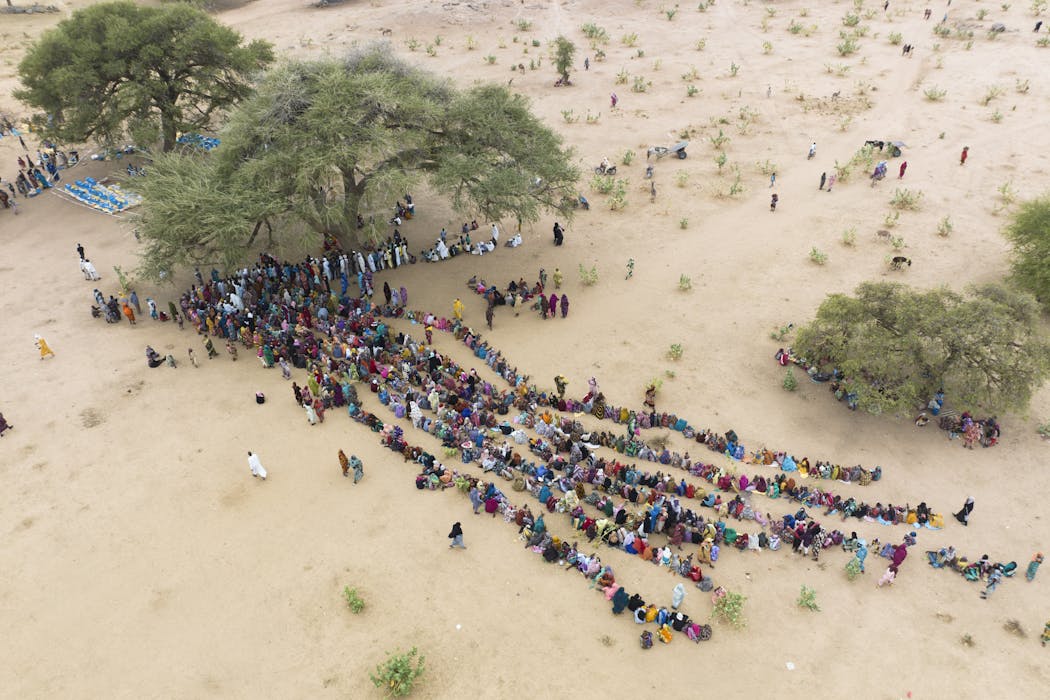
Decenas de refugiados sudaneses hacen fila para recibir comida en Kufrun (Chad) en 2023. EU Civil Protection and Humanitarian Aid/Flickr, CC BY

A finales de la década pasada, la paz y la democracia parecieron aumentar sus posibilidades en la región del Nilo Blanco. En Sudán, un movimiento popular contribuía a la caída de la dictadura de Omar al-Bashir tras casi 30 años en el poder. Hoy, sin embargo, el país está fracturado y constituye el escenario de una de las peores crisis humanitarias del mundo según Naciones Unidas.

Estos son los principales actores y lógicas del conflicto que arrasa el país y algunas claves para explicarlo.

2019: el ejército depone al dictador

En abril de 2019, tras meses de protestas populares contra el largo gobierno autoritario de Omar al-Bashir, el ejército, liderado por el teniente-general Abdel Fattah al-Burhan, depuso al dictador y estableció un Consejo Militar Transitorio. Posteriormente, se creó un Consejo Soberano compuesto de miembros civiles y militares con el objetivo de organizar unos comicios para la elección de un nuevo gobierno.

Un nuevo golpe militar en octubre de 2021 puso en cuestión la participación civil en el Consejo, que se convirtió en plenamente militar cuando el primer ministro Abdalla Hamdok lo abandonó en 2022. Estas maniobras no dejaron de tener una fuerte contestación social en las calles, duramente reprimida.

En abril de 2023 estalló un cruento conflicto por el control del país entre antiguos aliados: el ejército regular (Fuerzas Armadas de Sudán-SAF) y las Fuerzas de Apoyo Rápido (RFS) dirigidas por el general Mohamed Hamdan Dagalo Hemetti. Las RFS son los herederos de la milicia paramilitar janjaweed creada por al-Bashir durante la guerra de Darfur (2003-2020), que luchó junto con el ejército contra el Movimiento de Liberación de Sudán y el Movimiento Justicia e Igualdad.

Ambos grupos, apoyados por otras milicias locales, tratan de mantener estructuras estatales en los territorios que controlan: las SAF en la parte oriental desde Puerto Sudán y las RFS en la parte occidental. Al mismo tiempo, tanto las RFS como las SAF son responsables de masacres contra población civil considerada hostil sobre bases étnicas, como es el caso de aquellos no identificados como árabes en las regiones de Darfur y Kurdufán, al este del país.

La última de dichas matanzas, calificada de genocida, ha tenido lugar durante el asedio y ocupación de la ciudad de El-Fasher por las RFS, donde se calcula que han sido asesinados o desaparecidos decenas de miles de civiles.

Integración forzosa en un orden político discriminatorio

La guerra ha conformado parte de la historia política de la región desde la independencia de Sudán en 1956. La primera guerra civil sudanesa (1955-1972) ya se planteaba en torno a la independencia del sur del país, que se reprodujo entre 1985 y 2005 y propició la independencia de Sudán del Sur en 2011.

Dos años más tarde estalló otra guerra en Darfur, en la que se enfrentaron milicias surgidas de poblaciones agrícolas con las milicias janjaweed, procedentes de poblaciones mayoritariamente ganaderas y apoyadas por mismo gobierno sudanés.

Una de las claves de estos conflictos ha sido la integración forzosa de diferentes poblaciones y regiones en un orden profundamente jerárquico y desigual. El predominio de la élite arabizada de la capital, Jartum, y la ausencia de políticas de redistribución del poder y la riqueza han generado profundos agravios, interpretados a menudo en clave étnica y aprovechados por élites alternativas.

La fragmentación y la segmentación alcanzan a los mismos grupos que ocupan el poder, como vemos actualmente. También en Sudán del Sur el movimiento independentista se fracturó muy pronto entre el Ejército Popular de Liberación de Sudán (SPLA) y una facción de este (SPLA In Opposition).

Un fenómeno que contribuye a la violencia de los conflictos sociales, aquí y en muchos otros lugares en África, es la existencia de milicias locales armadas de distinto perfil que participan en coaliciones complejas con las fuerzas del gobierno o contra las mismas. Líderes políticos, en el gobierno y en la oposición, alimentan a grupos armados paralelos a los ejércitos y las policías nacionales, formados por jóvenes que no encuentran proyectos vitales y económicos alternativos.

Con recursos naturales, pero en la cola del desarrollo

La extracción y comercialización de recursos naturales en mercados internacionales constituyen un elemento clave del mantenimiento de la guerra, aunque también se han visto muy afectadas por la misma. Las áreas de producción de petróleo están en la región atravesadas por la frontera con Sudán del Sur y se transporta a través de oleoductos hasta Puerto Sudán. El destino de este petróleo incluye Malasia, Italia, China, Singapur y Alemania.

El principal actor local beneficiario del petróleo es el gobierno, junto con las grandes operadoras, que son de capital indio, chino, malasio y sudanés. Pero en el caso del oro, extraído a través de minería artesanal, no solo las SAF sino también las RSF se lucran con su venta, mayoritariamente hacia Emiratos Árabes Unidos.

A pesar de la riqueza mineral e hidrocarburífera, el Índice de Desarrollo Humano de Sudán es de los más bajos del mundo, ocupando el puesto 176 de 193 países. Lejos de ser una paradoja, la abundancia de recursos que adquieren su valor a través de la exportación contribuye al desempoderamiento de la mayoría de la población y a la debilidad de los contratos sociales. A su vez, la pobreza proporciona un caldo de cultivo fructífero para los grupos armados en conflicto.

Geopolítica de la guerra

En Sudán se llevan a cabo proxy wars o guerras subsidiarias donde los contendientes de otros conflictos se enfrentan indirectamente apoyando a uno u otro de los bandos.

El gobierno sudsudanés de SPLA parece estar apoyando a las RSF, que ha llegado a enfrentarse directamente con las milicias opositoras del SPLA-IO. Ello no ha impedido un acuerdo entre todas las partes para que el ejército de Sudán del Sur garantice la neutralidad del área petrolífera de Hegling.

El gobierno de Etiopía también ha intervenido en el conflicto en Sudán financiando a las guerrillas contra el gobierno, al que acusa de haber apoyado a las autoridades insurgentes en la guerra en la región etíope de Tigray (2020-2022).

El principal apoyo tanto diplomático como militar de las SAF de Sudán es el gobierno de Egipto, que actualmente mantiene una tensión regional con el de Etiopía por la construcción de la Presa del Milenio en el curso alto del Nilo. Otros gobiernos de la región como los de Chad, República Centroafricana, el Ejército Nacional Libio, Kenia, Uganda y el ya mencionado de Etiopía, han facilitado la llegada de armas a las RSF e incluso tropas o entrenamiento militar.

Uno de los actores externos más relevantes son los Emiratos Árabes Unidos, que importan la mayor parte del oro sudanés y son el principal proveedor de armas al RSF. Por su parte, Irán, Catar, Arabia Saudí y Turquía se han posicionado a favor del gobierno sudanés, aunque estos dos últimos de manera menos explícita, y tratando de convertirse también en facilitadores de un posible acuerdo de paz.

Por último, las grandes potencias están presentes en el conflicto de Sudán con posicionamientos menos unívocos. Mientras Putin apoya oficialmente a Puerto Sudán, también lo hace a grupos alineados con RSF en las zonas de producción de oro. Por su parte, Ucrania también apoya a las SAF en su conflicto con estos grupos. La misma paradoja se da con China, que al tiempo en que se manifiesta a favor del gobierno sudanés, produce las armas que llegan a las RSF.

Washington ha intentado jugar un papel relevante en los intentos de acabar con el conflicto liderando la iniciativa Quad, planteada en septiembre de 2025 por Estados Unidos, Arabia Saudí, Egipto y Emiratos Árabes Unidos con una ruta para la paz sin mayores efectos. Lo que sí está teniendo consecuencias devastadoras para millones de refugiados es la drástica reducción de ayuda humanitaria realizada por la administración Trump.

Muchos actores y pocas normas

Las causas y dinámicas del conflicto en Sudán son complejas, y no se derivan directamente de las estrategias y enfrentamientos entre las grandes o medianas potencias. Pero actores tanto locales como extranjeros tratan de sacar provecho de una situación donde millones de personas sufren violaciones sistemáticas de sus derechos. Los múltiples actores internos y externos dificultan enormemente el éxito de las propuestas de acuerdo.

El contexto belicista internacional, en el que están reduciendo su poder las instituciones de seguridad colectiva y se cuestionan principios básicos de derecho internacional en torno a la soberanía y los derechos humanos, contribuye de manera decisiva al mantenimiento de conflictos devastadores.

The Conversation

Alicia Campos Serrano es socia de varias ONG: ACNUR, Amnistía Internacional, Comisión Española de Ayuda al Refugiado, Ecologistas en Acción, Madre África y UNICEF.

ref. ¿Qué pasa en Sudán? Política y geopolítica de un gran desastre humanitario – https://theconversation.com/que-pasa-en-sudan-politica-y-geopolitica-de-un-gran-desastre-humanitario-273791