Fifteen years after Egypt’s uprising, how faith and politics reshaped a generation

Source: The Conversation – USA (3) – By Nareman Amin, Assistant Professor of Contemporary Islam, Michigan State University

The crowd in Tahrir Square in Cairo just before a speech by Egyptian President Hosni Mubarak on Feb. 10, 2011. Photo by Chris Hondros/Getty News Images

Fifteen years ago, Egyptians from all walks of life took to the street to demand “bread, freedom, social justice.” They were protesting the oppressive 30-year rule of Hosni Mubarak.

Egypt had been under martial law for 31 years. This meant that political opposition was silenced, and opponents were often imprisoned and tortured. Police brutality was the norm.

Egypt’s economy was also weak and relied heavily on foreign aid and loans from the World Bank and International Monetary Fund. Even though the country’s per capita gross domestic product was growing, almost 25% of the population was living in poverty by 2011.

Neighboring Tunisia had toppled its dictator, Zine El Abidine Ben Ali, on Jan. 14, 2011, after 28 days of protest. The Tunisian revolution’s success led to a wave of uprisings against corruption, injustice and economic inequality across the region, including the January 2011 revolution in Egypt.

For many who joined the movement in Egypt, there was a newfound sense of unity, equality and nationalism. Egyptians young and old, Muslim and Christian, rich and poor, man and woman, stood arm-in-arm for 18 days, until Mubarak resigned on Feb. 11, 2011.

Mubarak’s resignation signaled to many Egyptians the power of common will and determination.

Slowly, however, political divisions set in. While there were exciting voting opportunities that seemed free and fair for the first time in modern Egyptian history, there were many disappointments in this nascent and short-lived democratic experiment.

In my recently published book, “Is God for Revolution? Affect, Youth and Islam,” I investigate these political changes, but through the lens of religion.

Islam in Egypt

Egypt is a Muslim-majority country. Islam can be felt, seen and heard in every corner of the nation: The melodic call to prayer rings out five times a day to remind Muslims to stop what they are doing and turn their attention to God in worship.

People sit on a red carpet in a large hall, facing a recessed niche in the wall at the front of the room.
People praying at the Al-Azhar Mosque in Cairo.
Emad Aljumah/Moment via Getty Images

Minarets of mosques and domes of churches dot the sepia-toned Egyptian sky. The Quran plays in shops, taxi cabs and on radios and television in local cafes. Most women wear veils as part of a religious obligation; men grow long beards, which they believe to be a prophetic tradition.

Scholars of Islam like Saba Mahmood, Charles Hirschkind, Aaron Rock-Singer and others have noted a resurgence in these physical aspects of Islamic piety since the 1970s. Some of these scholars attribute it to Islamic groups like the Muslim Brotherhood, established by Hasan al-Banna in 1928 as a response to the cultural and political incursions of the British occupation.

Salafis are another group who urged people to be good Muslims by believing in Allah – the Arabic word for God – and looking and acting the part as well. The Salafis believe they follow the Islam of the “pious predecessors,” or salaf – that is, the generations during and immediately following the life of the Prophet Muhammad.

The Muslim Brotherhood and Salafis offered social services for the poor and preached their versions of Islam widely.

The research

I lived in Egypt between 2007 and 2012 and visited every summer until 2018, when I formally began conducting interviews for this book.

In 2018 and 2019, I spoke with 61 middle- and upper-middle class Muslim Egyptians who were in their early- to mid-20s when the Egyptian uprising began in 2011. Most interviewees were from big cities like Cairo and Alexandria, but some also grew up in smaller villages and towns across Egypt.

For them, the revolution and the social and political freedoms it came with offered them a space to question everything in their lives, including how they relate to the Islamic teachings they grew up with and heard from Muslim parents and preachers.

For example, many of the interviewees came to believe that there are many paths to gaining God’s favor. Some turned to Sufism, or mystical Islam, for answers. Others left Islam altogether.

My interviewees all grew up with the sights and sounds of Islam surrounding them. Their parents and schools also taught them an Islam that highlighted both belief in God and physical practices like the veil, beards and prayer. For many of the people I spoke to, these rituals and visible markers of Islam were no longer as important as they had been raised to believe.

Heidi, a human rights activist, explained that the revolution was an eye-opener, especially for women. She explained that, after the revolution, she took off the veil and now places more importance on the ethical and spiritual rather than the ritualistic aspects of Islam.

“The revolution broke the fear barrier we had of thinking for ourselves … including about religion,” she said.

Similarly, Hasan, a tech entrepreneur, who once used to be conservative in his understanding of what makes one a good Muslim, told me that after the uprising, he came to believe that “religion is not one single path, and that no one action can take you to heaven.” He became more accepting of the different ways people relate to Islam.

Some of my interviewees turned to Eastern practices like yoga and meditation, sometimes even mixing them with Sufism or Islamic mysticism. I spoke to Sonia, an Egyptian American Muslim woman who received training in various wellness methods like pranic healing, breath work and meditation, and I attended her sessions online during the COVID-19 pandemic.

In post-revolution Egypt, she held sessions in yoga studios in which she guided practitioners through traditional breath work and meditation. She asked practitioners to chant the names of Allah in Arabic: al-Nur (the Light) and al-Rahman (the Merciful), in sync with their rhythmic, conscious breathing.

In these spaces, one would find energy crystals, and incense wafting in and out of the room. Attendees, both Muslim and non-Muslim, would sit in a semicircle around Sonia, trying to reach something transcendent, spiritual, maybe even universal.

Not all my interviewees approved of this spiritual practice. Basim, an entrepreneur, felt that practices like Sonia’s were not Islamic; they were a mishmash of Eastern practices that pull on the Islamic tradition selectively for marketing purposes.

Sonia, however, felt that people should not be judged for how they choose to build a connection with God or something transcendent.

Other interviewees left Islam altogether. Six of the people I spoke to had become atheist or agnostic. There were atheists in Egypt before 2011, but shortly after the uprising, more people became vocal about their lack of belief. The media widely reported on what it framed as a worrying trend in society.

Why did this happen?

The revolution opened a space for people who may never have come together to join one another in protest. Once Mubarak fell, people found unprecedented freedom of speech, freedom of assembly and freedom to take part in politics.

Among those who openly joined the political scene after Mubarak’s removal were the Muslim Brotherhood and political arms of the Salafis, who made considerable political gains in 2011 and 2012.

In June 2012, Muhammad Mursi of the Muslim Brotherhood became the first democratically elected president of Egypt. But just a year into his administration, Mursi was deposed by the military. People who staged demonstrations and sit-ins to protest his deposition were violently removed from public squares and killed.

Religion in post-revolution politics

How religion was used in the political processes led almost all my interviewees to rethink matters of faith, practice and religious authority.

Data from the Arab Barometer, which conducts public opinion surveys in the Middle East, shows similar trends over the past decade. In 2011, when respondents were asked if Egypt would be better off if religious people held public office, 53% disagreed. By 2022, the figure had risen to 80%. Views on religious practice also indicated a change.

Young boys cheer and shout, their faces lit with excitement.
Many Egyptian youth are changing how they express their religion.
Sayed Hassan/Getty Images Sport

At the very beginning of the 2011 movement, for example, many of the Islamic scholars my interviewees followed argued that revolting against a ruler, no matter how unjust, is a sin and forbidden in the Islamic tradition. Later, when Islamists like the Muslim Brotherhood came to power, most of my interviewees were shocked that many of these Islamist politicians played the political game, which meant lying and reneging on promises made.

When Mursi became president, his supporters compared his rule with that of the prophet. Others used offensive language to describe political opponents who did not share their political vision.

My interviewees believed that these behaviors were antithetical to the ethical and moral codes of the Islamic tradition that these Islamists and their supporters preached for years prior to the uprising and their political ascent.

Things came to a head when Mursi was deposed through a violent coup. The country was divided between those who praised the military for restoring order and stability in Egypt and those who decried the move as a massacre that ushered in the end of the democratic experiment.

All my interviewees were horrified by the massacre, leading a few to question why a just God would allow hundreds of innocent people to be killed in such a way. Worse yet was that some of the religious scholars who forbade people from protesting against Mubarak in 2011 urged people to protest against Mursi in 2013, with a few even condoning the massacre or at least staying silent in the face of renewed oppression.

The Egyptians I interviewed witnessed all these events and reacted emotionally to them. And because religion was at the center of these political processes in ways that almost all my interviewees viewed as hypocritical and opportunistic, my interviewees wanted to break away from the version of Islam that the Islamists and their supporters represented.

Fifteen years on, though the political and economic aims of the 2011 movement have not been realized, the social afterlives of a revolution live on.

The Conversation

Nareman Amin does not work for, consult, own shares in or receive funding from any company or organization that would benefit from this article, and has disclosed no relevant affiliations beyond their academic appointment.

ref. Fifteen years after Egypt’s uprising, how faith and politics reshaped a generation – https://theconversation.com/fifteen-years-after-egypts-uprising-how-faith-and-politics-reshaped-a-generation-274430
Americans are asking too much of their dogs

Source: The Conversation – USA (3) – By Margret Grebowicz, Distinguished Professor of the Humanities, Missouri University of Science and Technology

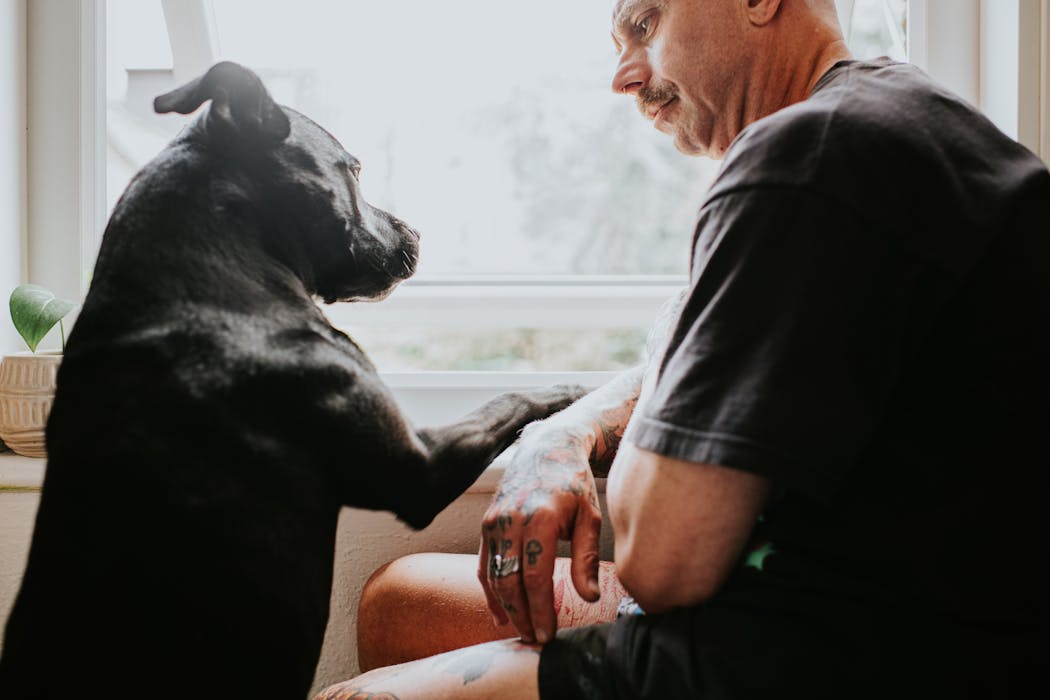
Some people appreciate relationships with pets to combat loneliness – but others simply prefer dogs’ company. Catherine Falls Commercial/Moment via Getty Images

Americans love dogs.

Nearly half of U.S. households have one, and practically all owners see pets as part of the family – 51% say pets belong “as much as a human member.” The pet industry keeps generating more and more jobs, from vets to trainers, to influencers. Schools cannot keep up with the demand for veterinarians.

It all seems part of what Mark Cushing, a lawyer and lobbyist for veterinary issues, calls “the pet revolution”: the more and more privileged place that pets occupy in American society. In his 2020 book “Pet Nation,” he argues that the internet has caused people to become more lonely, and this has made them focus more intensely on their pets – filling in for human relationships.

I would argue that something different is happening, however, particularly since the COVID-19 lockdown: Loving dogs has become an expression not of loneliness but of how unhappy many Americans are with society and other people.

In my own book, “Rescue Me,” I explore how today’s dog culture is more a symptom of our suffering as a society than a cure for it. Dogs aren’t just being used as a substitute for people. As a philosopher who studies the relationships between animals, humans and the environment, I believe Americans are turning to dogs to alleviate the erosion of social life itself. For some owners, dogs simply offer more satisfying relationships than other people do.

And I am no different. I live with three dogs, and my love for them has driven me to research the culture of dog ownership in an effort to understand myself and other humans better. By nature, dogs are masters of social life who can communicate beyond the boundaries of their species. But I believe many Americans are expecting their pets to address problems that they cannot fix.

Dogs over people

During the pandemic, people often struggled with the monotony of spending too much time cooped up with other humans – children, romantic partners, roommates. Meanwhile, relationships with their dogs seemed to flourish.

Rescuing shelter animals grew in popularity, and on social media people celebrated being at home with their pets. Dog content on Instagram and Pinterest now commonly includes hashtags like #DogsAreBetterThanPeople and #IPreferDogsToPeople.

“The more I learn about people, the more I like my dog” appears on merchandise all over e-commerce sites such as Etsy, Amazon and Redbubble.

One 2025 study found that dog owners tend to rate their pets more highly than their human loved ones in several areas, such as companionship and support. They also experienced fewer negative interactions with their dogs than with the closest people in their lives, including children, romantic partners and relatives.

The late primatologist Jane Goodall celebrated her 90th birthday with 90 dogs. She stated in an interview with Stephen Colbert that she preferred dogs to chimps, because chimps were too much like people.

Jane Goodall said she appreciates dogs for their “unconditional love.”

Fraying fabric

This passion for dogs seems to be growing as America’s social fabric unravels – which began long before the pandemic.

In 1972, 46% of Americans said “most people can be trusted.” By 2018, that percentage dropped to 34%. Americans report seeing their friends less than they used to, a phenomenon called the “friendship recession,” and avoid having conversations with strangers because they expect the conversation to go badly. People are spending more time at home.

Today, millennials make up the largest percentage of pet owners. Some cultural commentators argue dogs are especially important for this generation because other traditional markers of stability and adulthood – a mortgage, a child – feel out of reach or simply undesirable. According to the Harris Poll, a marketing research firm, 43% of Americans would prefer a pet to a child.

Amid those pressures, many people turn to the comfort of a pet – but the expectations for what dogs can bring to our lives are becoming increasingly unreasonable.

For some people, dogs are a way to feel loved, to relieve pressures to have kids, to fight the drudgery of their job, to reduce the stress of the rat race and to connect with the outdoors. Some expect pet ownership to improve their physical and mental health.

A woman with short brunette hair sits on the floor in front of a sliding door and balcony, as a black dog sits beside her and looks at her.
Even years after the pandemic lockdown, many people are spending more time at home – often with pets.
curtoicurto/iStock via Getty Images Plus

And it works, to a degree. Studies have found dog people to be “warmer” and happier than cat people. Interacting with pets can improve your health and may even offer some protection against cognitive decline. Dog-training programs in prisons appear to reduce recidivism rates.

Unreasonable expectations

But expecting that dogs will fill the social and emotional gaps in our lives is actually an obstacle to dogs’ flourishing, and human flourishing as well.

In philosophical terms, we could call this an extractive relationship: Humans are using dogs for their emotional labor, extracting things from them that they cannot get elsewhere or simply no longer wish to. Just like natural resource extraction, extractive relationships eventually become unsustainable.

The late cultural theorist Lauren Berlant argued that the present stage of capitalism creates a dynamic called “slow death,” a cycle in which “life building and the attrition of life are indistinguishable.” Keeping up is so exhausting that, in order to maintain that life, we need to do things that result in our slow degradation: Work becomes drudgery under unsustainable workloads, and the experience of dating suffers under the unhealthy pressure to have a partner.

Similarly, today’s dog culture is leading to unhealthy and unsustainable dynamics. Veterinarians are concerned that the rise of the “fur baby” lifestyle, in which people treat pets like human children, can harm animals, as owners seek unnecessary veterinary care, tests and medications. Pets staying at home alone while owners work suffer from boredom, which can cause chronic psychological distress and health problems. And as the number of pets goes up, many people wind up giving up their animal, overcrowding shelters.

So what should be done? Some philosophers and activists advocate for pet abolition, arguing that treating any animals as property is ethically indefensible.

This is a hard case to make – especially with dog lovers. Dogs were the first animal that humans domesticated. They have evolved beside us for as long as 40,000 years, and are a central piece of the human story. Some scientists argue that dogs made us human, not the other way around.

Perhaps we can reconfigure aspects of home, family and society to be better for dogs and humans alike – more accessible health care and higher-quality food, for example. A world more focused on human thriving would be more focused on pets’ thriving, too. But that would make for a very different America than this one.

The Conversation

Margret Grebowicz does not work for, consult, own shares in or receive funding from any company or organization that would benefit from this article, and has disclosed no relevant affiliations beyond their academic appointment.

ref. Americans are asking too much of their dogs – https://theconversation.com/americans-are-asking-too-much-of-their-dogs-256768

US-Iran talks are not a countdown to conflict

Source: The Conversation – UK – By Bamo Nouri, Honorary Research Fellow, Department of International Politics, City St George’s, University of London

When Iranian and US officials met for talks in the Omani capital of Muscat on February 6, many journalists and analysts were speculating as to whether diplomacy will fail and whether war will inevitably follow. But that framing misses the deeper reality of this moment. The more important question is why both sides have returned to the negotiating table at all, despite years of hostility, sanctions, proxy conflict and open threats.

The anxiety that has surrounded the talks is understandable. Washington warned its citizens to leave Iran hours before the talks took place, fuelling speculation about military strikes. US officials outlined sweeping demands that go far beyond wanting to curb Iran’s ambition to possess nuclear weapons. And recent history offers no shortage of examples where negotiations have collapsed into violence.

But treating the talks as a countdown to conflict misunderstands diplomacy and the balance of power in the Middle East today. Negotiations are not a single test of resolve, nor a one-off gamble on peace. The talks in Oman were not a final reckoning but an opening move. They reflect a shared recognition in Washington and Tehran that 15 years of coercion, pressure and force have failed to produce decisive outcomes, and that escalation now would be vastly more dangerous than before.

As diplomacy scholar Geoffrey Berridge has long argued, the first stage of any serious diplomatic process is the establishment of common ground on key points. Only once this groundwork is laid can substantive negotiations begin. The talks in Oman should thus be understood as an opening phase rather than a decisive round.

The purpose was to clarify positions, communicate red lines and test whether a workable diplomatic pathway exists. Iranian officials described the atmosphere as constructive, noting that the two sides communicated their concerns and views through their host, Oman’s foreign minister Badr Albusaidi. This is precisely how diplomacy begins, not how it ends, and Iranian and US officials have both subsequently called for talks to continue.

For Tehran, engaging a US delegation in talks is significant. Iran has consistently sought recognition as a legitimate regional player rather than a state to be coerced or isolated. The willingness of Iran’s foreign minister, Abbas Araghchi, to attend the talks personally signals how seriously Iran views this moment and how invested it is in a diplomatic outcome that confers mutual respect.

For Washington, the incentives are equally clear. Over the past 15 years, the US has applied nearly every available tool of pressure against Iran. These have included sanctions, cyber operations, targeted strikes, the killing of senior Iranian figures, the degradation of Iran-aligned groups across the region and direct support for Israel during its brief 2025 war with Iran. Yet none of this has delivered regime change, capitulation or lasting regional stability.

Sanctions have devastated the Iranian economy and Tehran’s regional network has been weakened. Hezbollah has faced mounting pressure and economic strain in Lebanon, Hamas has been severely battered in Gaza and Houthi forces in Yemen have been constrained by international military patrols. Even so, Iran’s core political system remains intact.

Domestic unrest has also failed to produce collapse. Recent protests, met with intense and often violent repression, did not topple a regime that has been deliberately built to survive external pressure since 1979. This highlights a central paradox: Iran may be weaker than at any point in recent decades, but it is not as fragile as many external observers assume.

Washington’s negotiating position

Statements from US officials insisting that talks should encompass Iran’s ballistic missile programme, its regional alliances and its domestic governance represent the high end of any negotiating position.

This is not unusual. In diplomacy, opening demands are often maximalist by design. They are intended to create leverage rather than define an achievable endpoint, something the US president, Donald Trump, is known for. The risk lies in treating these demands as simultaneously attainable.

From Tehran’s perspective, these issues are not equivalent. Iran has consistently signalled that nuclear weapons are the only area it is prepared to engage meaningfully over. This is because its nuclear programme has already been internationalised through treaties, inspections and prior agreements.

Iran’s leadership has also repeatedly pointed to Supreme Leader Ayatollah Ali Khamenei’s religious decree declaring the production and use of nuclear weapons forbidden under Islamic law. Western policymakers are sceptical of the decree’s legal enforceability. But it nonetheless provides Tehran with an ideological framework that allows nuclear restraint to be framed domestically as principled rather than imposed from outside.

In contrast, Iran views the existence of its ballistic missile arsenal as non-negotiable. In a region where Iran faces nuclear-armed adversaries and an overwhelming conventional military imbalance, missile capabilities are central to its deterrence strategy. Likewise, Iran’s regional alliances are not simply tools of influence. They are an extension of this defensive posture that has been shaped by decades of war, sanctions and isolation.

Domestic governance is even more sensitive. No Iranian negotiating team could accept external constraints on how the Islamic Republic governs itself without calling into question the legitimacy of the system they represent. Attempts to fuse diplomacy with demands for internal political reform are therefore perceived not as bargaining positions, but as existential threats.

Bundling nuclear limits, regional retrenchment and internal transformation into a single negotiating framework thus risks overreach. Progress is far more likely through sequencing: addressing the nuclear issue first, building confidence through verification and reciprocity, and only then exploring narrower forms of deescalation elsewhere. Understanding this helps explain why talks can proceed despite sharp rhetoric and military signalling.

Mutual risk, mutual opportunity

Araghchi’s description of the talks in Muscat as a “good beginning” where both sides were able to convey their interests and concerns, as well as his subsequent expression of hope for further negotiations, suggests that diplomacy remains preferable for Iran. The same probably applies for the US.

Military intervention has rarely produced stable outcomes in recent Middle Eastern and North African history. The removal of Saddam Hussein in Iraq, Muammar Gaddafi in Libya and the collapse of state authority in Syria did not bring immediate peace or genuine democracy. They produced power vacuums, proxy wars, mass displacement and chronic instability.

Iran is larger, more institutionalised and more deeply embedded in regional dynamics than any of those cases. A conflict involving the Islamic Republic would be longer, more destructive and far harder to contain.

The real danger is not that diplomacy between Iran and the US will fail, but that it will be dismissed too quickly. Negotiations are incremental, often frustrating and rarely linear. But in this case, they may reflect the only viable strategy available to both sides.

Iran avoids an unwinnable war. The US avoids another Middle Eastern quagmire. And the region gains a fragile but vital opportunity to move away from permanent crisis. In that sense, the talks themselves may already represent the most meaningful progress possible.

The Conversation

Bamo Nouri does not work for, consult, own shares in or receive funding from any company or organisation that would benefit from this article, and has disclosed no relevant affiliations beyond their academic appointment.

ref. US-Iran talks are not a countdown to conflict – https://theconversation.com/us-iran-talks-are-not-a-countdown-to-conflict-275349

El gran reto técnico de proteger a los menores de las redes sociales sin poner en peligro su privacidad ni su derecho a la información

Source: The Conversation – (in Spanish) – By David Arroyo Guardeño, Científico Titular. Ciberseguridad y protección de la Privacidad. Instituto de Tecnologías Físicas y de la Información "Leonardo Torres Quevedo" (ITEFI), Instituto de Tecnologías Físicas y de la Información Leonardo Torres Quevedo (ITEFI -CSIC)

Impedir que los menores usen las redes sociales no es una cuestión técnica fácil de abordar. Reihaneh Golpayegani / https://betterimagesofai.org, CC BY-NC-SA

Dejando al margen el reto nada pequeño de establecer criterios para cualificar el contenido compartido en redes como dañino o potencialmente lesivo para menores, nos encontramos ante un doble desafío. Por un lado, cómo identificar a un menor que intenta acceder a un servicio o plataforma de internet. Por otro, cómo evitar que acceda a contenido no adecuado.

Esto ha de llevarse a cabo sin que ninguna de esas dos medidas suponga una pérdida de privacidad ni para los menores ni para adultos que quieran acceder a dicho contenido. Subrayemos algo crucial: en 2026, proteger la privacidad no es un derecho, es una obligación. No hacerlo, nos convierte en personas vulnerables a ciberataques, manipulaciones y todo tipo de efectos no deseados.

Verificación biométrica frente a verificación a través de autoridades

La primera cuestión a aclarar es cómo se puede determinar la edad de un usuario de internet. Hay dos opciones: usando biometría o usando credenciales emitidas por autoridades de confianza.

Con biometría, el principal riesgo radica en dónde se almacena y procesa la información biométrica –con el agravante de que hay ciertos rasgos biométricos que son insustituibles y, si esa información se filtra, no se pueden cambiar, dando pie a suplantaciones difíciles de detectar–. Quizá, lo positivo de las soluciones con biometría es que implicaría poco esfuerzo por parte de los usuarios.

Por otro lado, la principal dificultad de usar credenciales es que se necesita una infraestructura compleja: ¿cómo puede un usuario obtenerlas? ¿Dónde las guarda? ¿Y si necesita usarlas desde otro dispositivo? Son preguntas de difícil respuesta, si lo que buscamos es una tecnología accesible para cualquiera, especialmente usuarios sin conocimiento técnico.

Aquí, el usuario con escaso conocimiento técnico no es, en muchos casos, el menor, sino los tutores y la comunidad educativa encargados de velar por su formación y seguridad digital.

Identidades privadas frente a no privadas

En caso de contar con un mecanismo de validación de usuarios para permitir o evitar el acceso a servicios en internet, el siguiente paso es discutir si se quiere separar la asignación de una credencial de la obtención de una prueba criptográfica para demostrar que se tiene una “edad cualificada” para acceder a contenido o servicios inadecuados para población infantil.

Este es uno de los casos de uso paradigmáticos a la hora de introducir las llamadas pruebas de conocimiento nulo. Se trata del enfoque de partida del denominado EUDI Wallet, la solución que la Comisión Europea plantea para gestionar nuestra identidad digital a partir de finales de este año.

En efecto, su marco de diseño es compatible con mantener la privacidad como requisito fundamental e innegociable. Teóricamente, EUDI Wallet permitiría generar un identidad a través de una entidad cualificada y, tras ello, recurrir a otras entidades cualificadas que nos darían una prueba criptográfica para mostrar que tenemos una determinada propiedad; por ejemplo, una edad superior a un valor umbral.

Si existe una arquitectura que es capaz de impedir la colusión entre los actores encargados de emitir credenciales y aquellos responsables de certificar propiedades o atributos de las personas naturales tras dichas credenciales, tendríamos un esquema válido de verificación del atributo “edad cualificada” que protege la privacidad de usuarios de servicios de internet.

Para hacer que eso sea una realidad, necesitamos todavía implementar grandes avances técnicos a escala internacional-europea. En este sentido, la comunidad criptográfica ha puesto sobre la mesa retos técnicos sobre su arquitectura a la hora de impedir la monitorización de usuarios y garantizar la protección frente a intentos de suplantación.

¿Cómo se custodia una identidad digital?

Supongamos que tenemos un sistema de credenciales –que además ofrece privacidad máxima– y, cuando se entra en una web, desvela únicamente si su usuario es mayor de 16 años, cumpliendo artículo 8.1 del Reglamento General de Protección de Datos europeo.

Probablemente, esa credencial se almacenará en un teléfono móvil para que sea lo más usable posible. Por poner un ejemplo, ¿es realista suponer que un niño de 14 o 15 años no será capaz de aprovechar algún descuido de sus padres para desbloquear el teléfono de un adulto y usar sus credenciales de adulto? Es más, ¿debe tener acceso a un móvil un niño de menos de 16 años?

Finalmente, al margen de que se use un móvil u otra interfaz de acceso, si no existe una coordinación entre países a escala global, ¿cómo se puede impedir que un menor haga uso de servicios de red privada virtual (VPN) para acceder a contenido inadecuado, conectándose a distancia a través de ubicaciones geográficas en las que las plataformas implicadas no están obligadas a realizar verificación de edad cualificada de acceso al contenido concreto?

Por otra parte, lo cierto es que no hay consenso sobre cuál es esa edad mínima que cualifica para acceder a contenido inadecuado porque, además, tampoco hay consenso generalizado sobre todos los tipos de contenido inadecuado.

Recordemos que el debate actual está en torno al acceso a redes sociales. Las dificultades, en este punto, surgen de la divergencia de criterio en cuanto a edad mínima, pero también en la dificultad para acotar qué es una red social en 2026. ¿Por qué no restringirse a lo que establece el artículo 8.1 del Reglamento de Protección de Datos, solicitando el consentimiento informado de los tutores de todo menor de 16 años antes de acceder a servicios digitales?

¿Es un sistema fácil de usar para todos?

Si se pretende controlar el acceso a determinada información en internet, en base a atributos de la identidad –como la edad–, es imprescindible que el sistema que se utilice sea accesible para todo el mundo. De lo contrario, se estaría vulnerando el derecho a acceso a la información.

Esto, aunque pueda parecer una cuestión filosófica, tiene importantes implicaciones tecnológicas. ¿Qué mecanismos se van a utilizar para garantizar que cualquiera, independientemente de su habilidad con la tecnología, pueda acceder a la información que necesite? Aquí hemos de recalcar la perdida de derechos colectivos que llevamos evidenciando desde finales de 2024 en lo relativo a neutralidad de red para proteger un interés corporativo. Debemos evitar repetir este error.

Diseñar esquemas de gobernanza adecuados para el ecosistema digital demanda poner en juego intereses enfrentados y objetivos contradictorios. El fomento de un uso responsable de tecnología por parte de nuestros menores debe estar orientado a crear un marco tecnológico, legal y pedagógico que los integre de forma sana y saludable, en lugar de excluirlos para protegerlos.

No está en juego solo la confianza en lo tecnológico, sino también la misma confianza en nuestras instituciones democráticas. Y, en 2026, esas instituciones están necesariamente mediadas por lo digital.


Este artículo ha sido redactado en colaboración con Jesús Díaz Vico, Applied Cryptography Researcher.


The Conversation

David Arroyo Guardeño no recibe salario, ni ejerce labores de consultoría, ni posee acciones, ni recibe financiación de ninguna compañía u organización que pueda obtener beneficio de este artículo, y ha declarado carecer de vínculos relevantes más allá del cargo académico citado.

ref. El gran reto técnico de proteger a los menores de las redes sociales sin poner en peligro su privacidad ni su derecho a la información – https://theconversation.com/el-gran-reto-tecnico-de-proteger-a-los-menores-de-las-redes-sociales-sin-poner-en-peligro-su-privacidad-ni-su-derecho-a-la-informacion-275128

More young adults are developing osteoarthritis – here’s how we can spot those at risk before the damage is done

Source: The Conversation – UK – By Atiqah Aziz, Senior Research Officer at the Tissue Engineering Unit (TEG), National Orthopaedic Centre of Excellence for Research & Learning (NOCERAL), Department of Orthopaedic Surgery, Faculty of Medicine, University of Malaya

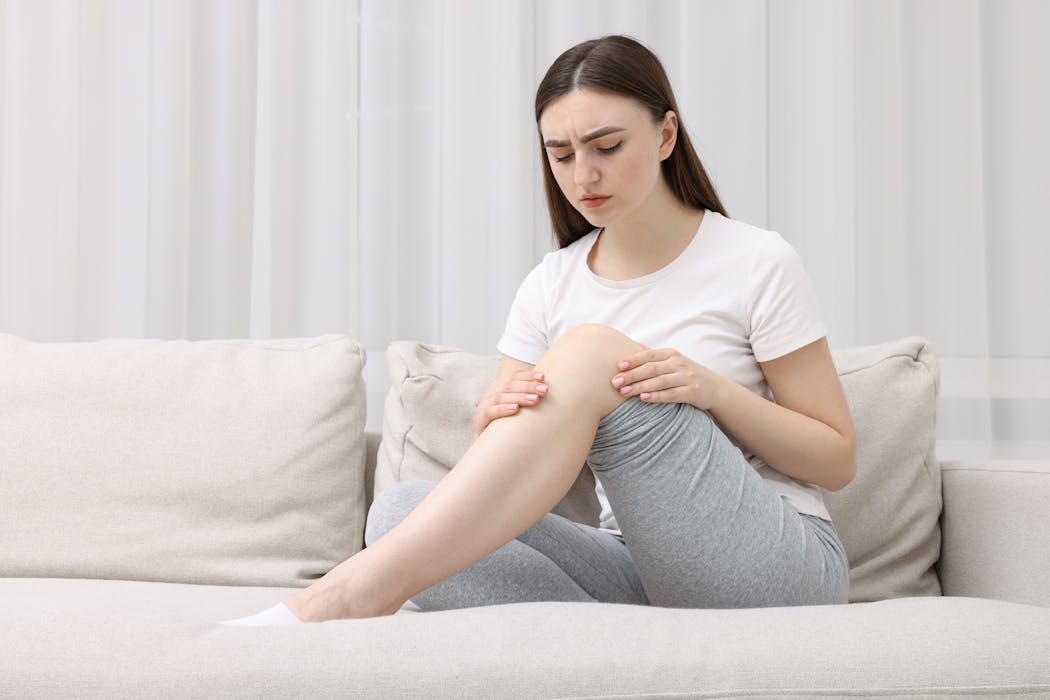
New Africa/Shutterstock

Research suggests young, active people are increasingly being diagnosed with osteoarthritis at much earlier ages than many expect. I have seen its effects first-hand among my own friends. One, a keen marathon runner, developed stage 2 osteoarthritis in her mid-30s. Several well-known public figures, including Robbie Williams, Tiger Woods and Andy Murray, have also spoken openly about experiencing the condition relatively young.

Osteoarthritis is often dismissed as an inevitable consequence of ageing, but it can erode quality of life at any age. It can turn everyday activities such as walking, climbing stairs or exercising into painful challenges. More than 600 million people worldwide live with osteoarthritis, and its risk factors are varied. They include obesity, ageing, metabolic disorders, chronic inflammation, previous joint injury and repetitive mechanical stress.

For younger people, osteoarthritis can be particularly devastating. Pain and stiffness can limit physical activity during years when work, caregiving and family life are often most demanding. It can affect mental health, restrict career choices and reduce the ability to stay active, which in turn increases the risk of other long-term health conditions. Unlike older adults, younger patients may also face decades of managing symptoms and repeated treatments.

Osteoarthritis develops when the smooth cartilage that cushions joints gradually breaks down. Cartilage normally acts as a shock absorber, allowing bones to move smoothly over one another. As it wears away, joints lose this protection. Bone surfaces begin to rub together, leading to pain, stiffness and the grinding or crunching noises many people jokingly refer to until the discomfort becomes impossible to ignore.

The condition does not appear overnight. Osteoarthritis usually takes years, and often decades, to develop. Early symptoms are often subtle and easy to dismiss: mild knee pain after activity, stiffness that eases with movement, or discomfort that comes and goes. Many people delay seeking medical advice until pain becomes persistent and joint damage is already advanced.

At present, treatment focuses on managing symptoms rather than reversing the disease. This includes exercise therapy, pain relief and therapeutic injections.


Read more:
Joint pain or osteoarthritis? Why exercise should be your first line of treatment


These injections may include platelet-rich plasma, which is made from a concentrated portion of a patient’s own blood and contains growth factors thought to support tissue repair. Others use platelet-derived vesicles, tiny particles released by platelets that carry biological signals involved in inflammation and healing.

However, most evidence for vesicle-based approaches currently comes from animal studies, including rat models, and they are not yet used routinely in human clinical practice. Hyaluronic acid may also be injected. This is a gel-like substance naturally found in joint fluid that helps lubricate and cushion the joint.

These treatments aim to reduce pain or improve joint movement rather than repair damaged cartilage. For some people, they provide temporary relief. Ultimately, however, when joint damage becomes severe, total joint replacement may be the only remaining option.


Read more:
Do you have knee pain from osteoarthritis? You might not need surgery. Here’s what to try instead


But what if osteoarthritis could be detected much earlier, before pain and irreversible damage set in?

Early prevention and early intervention have the potential to reduce pain, preserve mobility and significantly lower healthcare costs. The challenge has always been identifying osteoarthritis early enough to act.

Early diagnosis

This is where emerging diagnostic technologies may eventually offer a breakthrough. Every chemical compound in the body has a unique molecular structure, and when analysed it produces a distinctive pattern known as a “spectral fingerprint”.

This fingerprint reflects the chemical composition of a sample, such as blood serum. In people with osteoarthritis, researchers have observed subtle changes in inflammation, metabolism and tissue turnover that may alter this chemical profile.

One way of studying these fingerprints is through a technique called attenuated total reflection Fourier-transform infrared spectroscopy. Despite the intimidating name, the principle is straightforward.

A small blood sample is exposed to infrared light, and the way that light is absorbed provides information about the types of molecules present. Changes in proteins, lipids and other biomolecules can leave measurable signatures, which researchers are investigating as potential indicators of osteoarthritis.

These approaches are still largely used in research settings and are not yet part of routine clinical care. Even at this early stage, this research is important because it may eventually allow osteoarthritis risk to be identified earlier, when lifestyle changes and targeted interventions are more likely to protect joint health.

By combining this approach with computational analysis, researchers can identify complex chemical patterns associated with disease. In practice, this means comparing blood samples from people with and without osteoarthritis and detecting differences that are invisible to the naked eye. Similar approaches can also be used with other laboratory techniques, including spectroscopy-based methods and molecular biology tools, to identify biomarkers linked to early joint disease.

This kind of early detection could transform how osteoarthritis is managed. Identifying risk before symptoms become severe would allow people to take action earlier, through targeted exercise, weight management, injury prevention and tailored treatment strategies.

Osteoarthritis does not have to mean decades of pain and limitation. By shifting the focus from late-stage treatment to early detection and prevention, it may be possible to change the trajectory of the disease and improve quality of life for millions of people worldwide.

The Conversation

Dr Atiqah Aziz work in Universiti Malaya, Malaysia. She is affiliated with Tissue engineering Group,TEG,National Orthopaedic Centre of Excellence for Research & Learning (NOCERAL),Department of Orthopaedic Surgery
Faculty of Medicine,Universiti Malaya, 50603 Kuala Lumpur, Malaysia.

ref. More young adults are developing osteoarthritis – here’s how we can spot those at risk before the damage is done – https://theconversation.com/more-young-adults-are-developing-osteoarthritis-heres-how-we-can-spot-those-at-risk-before-the-damage-is-done-274451

Drastic seaweed growth threatens marine life and fishing – but also offers opportunities

Source: The Conversation – UK – By Yanna Alexia Fidai, Earth Observation and Remote Sensing Scientist, Plymouth Marine Laboratory

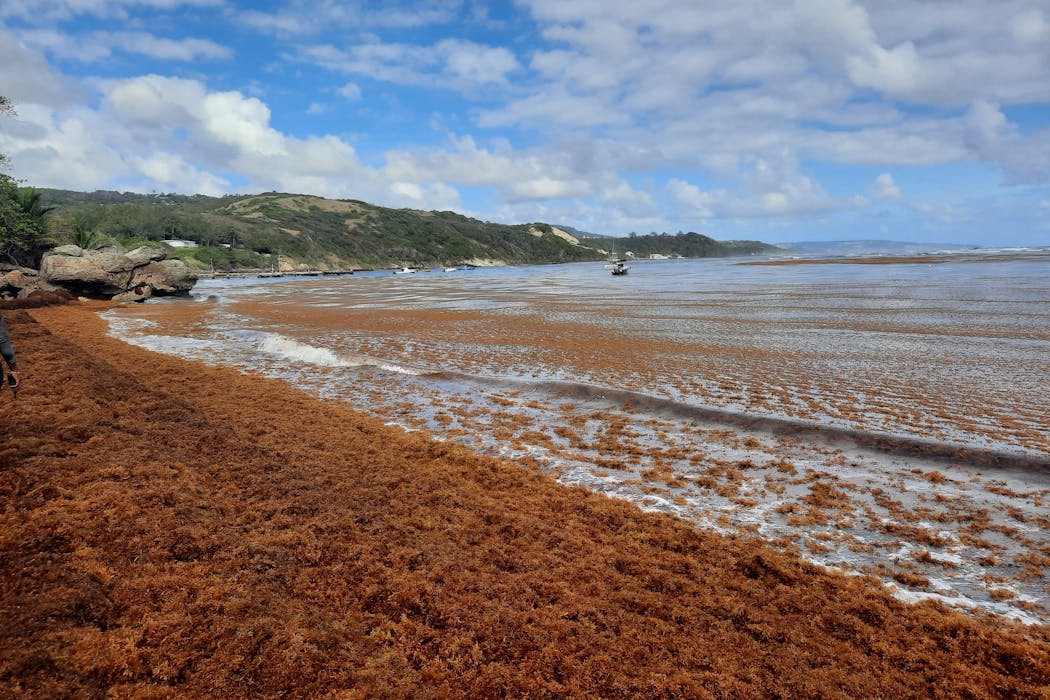
Sargassum seaweed on a beach in Barbados. Yanna Fidai, CC BY-NC-ND

Large blooms of seaweed are increasingly being reported along coastlines globally, from Europe and Asia to the tropics and beyond.

Both native and invasive (non-native) seaweeds are appearing in quantities that are hard to ignore and at unusual or surprising times of year.

As an earth observation and remote-sensing scientist, I track these blooms from space using high-resolution satellite imagery. My research shows that seaweed blooms are getting bigger.

My team’s 2025 study reveals a significant rise in sargassum blooms in the north-eastern tropical Atlantic, with a staggering 2.6 million tonnes washing up in September 2020. This is the first long-term analysis of trends in seaweed blooms from 2011 to 2022 in this region.

These unpredictable tides of seaweed have serious consequences for West African coastal communities and marine ecosystems. Our research shows that warming sea surface temperatures link closely with peaks in seaweed growth. Essentially, warmer temperatures can promote seaweed growth and lead to bloom surges.

Seaweed blooms are not a new phenomenon. But over the past 15–20 years, their scale and persistence have increased noticeably.

Of particular concern are free-floating seaweeds: species that float at the ocean surface, either because they detach from the seabed or because they spend their entire lives drifting. Unlike seaweeds that are anchored to the seafloor, floating seaweed can travel long distances to new territories and accumulate in large mats or wash ashore in huge quantities.

One example I have spent much of my career studying is sargassum. Like something from a sci-fi movie, I’ve seen swathes of sargassum seaweed spreading across the tropical Atlantic, with mats reaching depths of 7 m and spanning hundreds of square miles.

Sargassum fluitans collected on a beach in Mexico. The air-filled grape-like sacs help this seaweed to float on the surface of the ocean.
Yanna Fidai, CC BY-NC-ND

While most sargassum species are anchored to the seafloor, two species – Sargassum natans and Sargassum fluitans – are entirely free floating. They float freely at the surface of the ocean, kept buoyant by small air-filled grape-like sacs called pneumatocysts, which lift them up towards the surface for photosynthesis.

Our study shows that, since 2011, huge blooms of sargassum seaweed have appeared across the tropical Atlantic, piling up on coasts in the Caribbean, Gulf of Mexico and increasingly West Africa. This drifting seaweed makes fishing difficult and causes mayhem for coastal communities.


Read more:
How seaweed is a powerful, yet surprising, climate solution


Seaweed plays an essential role in marine ecosystems, but excessive growth can disrupt them. Large floating mats block sunlight, limiting the growth of seagrasses and corals below. They also alter oxygen conditions in the water, and when seaweed decomposes, particularly in sheltered bays or on beaches, it can create low-oxygen environments that are harmful to marine life.

Some of the most striking consequences are seen on wildlife. In tropical regions, sargassum has accumulated on turtle nesting beaches, with recent studies suggesting that up to a quarter of nesting habitat can be affected. Hatchlings struggle to move through both sand and dense seaweed before eventually reaching the sea, exhausted. This reduces their chances of survival.

traditional wooden boat at sea, seaweed in foreground
Seaweed blooms make it more difficult for fishers in Ghana.
Yannai Fidai, CC BY-NC-ND

Across Europe

Sargassum as an invasive species has actually found its way to UK waters, but sargassum blooms are not nearly as vast as in the tropical Atlantic. Blooms of other types of seaweed are becoming more noticeable in the UK and Europe. For example, ulva, a green seaweed known as sea lettuce regularly forms dense mats on the surface of the sea in places like Poole harbour, Dorset.

In small amounts, ulva is a native and largely harmless part of UK coastal ecosystems. But when it blooms excessively, it can start to cause problems. Thick mats at the surface reduce the amount of sunlight reaching seagrasses and other organisms below, while decomposition can reduce oxygen levels in the water, creating stressful conditions for fish and invertebrates and death of plants and animals as a result.

Across Europe, invasive seaweeds are becoming a growing concern. In the Mediterranean, species such as Rugulopteryx okamurae (originally from the northwest Pacific) have spread rapidly, likely introduced through shipping routes. These seaweeds can attach to the seabed, but then detach, float for long distances, and then reattach elsewhere, allowing them to spread efficiently along coastlines. In parts of Spain and Portugal, large accumulations are now washing up on beaches, with negative effects similar to those seen with sargassum in the tropics.

Even when blooms are smaller or more localised, their effects can still be disruptive. Seaweed accumulation can interfere with recreation, small-scale fishing and coastal tourism – all important parts of the UK’s coastal economy.

Why is seaweed blooming?

Seaweed growth is driven by a combination of triggers and favourable conditions, so there isn’t a single cause.

In the case of sargassum in the tropical Atlantic, one important trigger appears to have been an anomaly in the large scale atmosphere-ocean pattern known as the North Atlantic Oscillation in 2009. This change in atmospheric pressure at sea helped redistribute seaweed from the Sargasso Sea. Once established in new regions, further seaweed growth was fuelled by access to nutrients.

Seaweed growth is limited by the availability of nutrients such as nitrogen and phosphorus. As long as those nutrients are available for them, they will grow. Nutrient-rich runoff from agriculture, rivers such as the Amazon and Congo, and sediment inputs all deliver these nutrients into the ocean – so human-caused pollution also plays a part.

Together, warming waters, nutrient enrichment and changing ocean circulation can create ideal conditions for blooms to persist and expand.

Seaweed blooms, while sometimes problematic, are fundamental to ocean ecosystems. They act as habitats to small fish and crustaceans. They absorb carbon dioxide through photosynthesis and transport it to deeper waters. They are also a valuable resource. They are used to make fertiliser and building materials, pharmaceuticals and potentially biofuels.

With effective monitoring, more accurate forecasting and better management, communities can live alongside seaweed blooms, harnessing their benefits while minimising environmental and economic consequences.


Don’t have time to read about climate change as much as you’d like?

Get a weekly roundup in your inbox instead. Every Wednesday, The Conversation’s environment editor writes Imagine, a short email that goes a little deeper into just one climate issue. Join the 47,000+ readers who’ve subscribed so far.


The Conversation

My previous research on sargassum has been supported by the Economic and Social Research Council GCRF (Grant number: ES/T002964/1), and the UK Natural Environment Research Council (grant number NE/W004798/1), a scholarship from Southampton Marine and Maritime Institute, University of Southampton, and the School of Geography and Environmental Sciences, University of Southampton.

ref. Drastic seaweed growth threatens marine life and fishing – but also offers opportunities – https://theconversation.com/drastic-seaweed-growth-threatens-marine-life-and-fishing-but-also-offers-opportunities-274661

Why Emerald Fennell was so well placed to adapt Wuthering Heights – period drama expert explains

Source: The Conversation – UK – By Shelley Galpin, Lecturer in Culture, Media and Creative Industries, King’s College London

From Kate Bush’s otherworldly pop anthem to Laurence Olivier and Merle Oberon embracing on the wild Yorkshire moors, Wuthering Heights is one of the most adapted works of literature in the western world.

One of the most critically acclaimed adaptations to date was Andrea Arnold’s art house take on Emily Brontë’s only novel, released in 2011. Arnold’s film, following her roots in neo-realist filmmaking, adopted a low-key approach to characterisation.

She used improvisational dialogue and placed emphasis on the characters’ relationships with the natural world. The result was a beautifully evocative depiction of the Yorkshire landscape, but a rather understated telling of the novel’s central love story between the foundling Heathcliff and proud, passionate Cathy.

Following in these well-trodden footsteps is filmmaker Emerald Fennell. Her new adaptation, Wuthering Heights, is in cinemas on Valentine’s Day. Just like Arnold, Fennell’s adaptation is her third full length feature. And just like Arnold, Fennell comes to the project having already established herself as a filmmaker with a singular vision. She’s unafraid to confront audiences with challenging characters and a unique visual style.

Emerald Fennell talks about her unique take on Wuthering Heights.

Though critically lauded, Arnold’s adaptation faltered at the box office. Based on the reception of Fennell’s past films, however, there is every reason to anticipate that her interpretation of Brontë’s novel will be more crowd-pleasing.

Despite being described in the new film’s trailer as “the greatest love story of all time”, Wuthering Heights is arguably a tough sell. Cathy and Heathcliff might be iconic characters, but they are also rather unlikeable. They repeatedly seek to harm each other and any innocent bystander who gets in their way. The novel is morally ambiguous. It communicates not only humanity’s capacity for love and passion, but also its appetite for destruction.


Read more:
Emily Brontë’s Wuthering Heights is a dark parable about coercive control


Luckily, if any filmmaker has demonstrated their ability to sit comfortably with the darker sides of human nature, it is Fennell. Promising Young Woman (2020, a pastel-toned revenge mission) and Saltburn (2023, a systemic annihilation of the privileged upper class), both successfully portrayed protagonists who do the unthinkable while also, just about, keeping the audience onside.

Fennell’s theatre of obsession

Both Fennell’s previous films centre around obsession. Cassie (Carey Mulligan), once the “promising young woman” of the title, has allowed her life to become dominated by her determination to avenge the death of her childhood best friend. Fennell followed this audacious debut with Saltburn. The film achieved notoriety for its “did he really just do that?” depiction of Oliver Quick (Barry Keoghan) and his silently obsessive pursuit of friend Felix (Jacob Elordi).

The trailer for ‘Wuthering Heights’.

This pattern looks set to continue with Wuthering Heights. It’s a story with obsession at its heart, in the deep-rooted bond between Cathy (Margot Robbie) and Heathcliff (Elordi). The promotional material has leaned into this. The trailer features Heathcliff’s desperate plea to the dead Cathy to “be with me always, take any form, drive me mad! Only do not leave me in this abyss where I cannot find you!”

While previous adaptations of the novel often emphasise the wildness of the landscapes, Fennell’s film has a heightened theatricality. The costumes, impressive set design and lighting all suggest an expressionistic take on the story which privileges the uncontrollable emotions of the characters, rather than the naturalistic approach of other filmmakers.

This theatrical visual style also allows Fennell to follow the trend for recent period dramas to present a colourful and rather fantastical vision of the past (hello Bridgerton). Albeit with her own darker twist.

Following on from Saltburn, which was set in the titular stately home, Fennell’s Wuthering Heights is also rooted in the British class system, once again following the fate of a seemingly underprivileged hero (Heathcliff) and his complex relationship with his social superior (the ambitious Cathy).

As with Saltburn, the plot of Wuthering Heights reveals the shifting sands on which apparent class differences are built. The more privileged characters gradually succumb to misfortune as the socially inferior hero succeeds to a position of power through a combination of cunning, skill and luck.

The varied aesthetic of the pre-release material for Wuthering Heights also hints at this undercutting of the myth of the civilised society, with Elordi’s Heathcliff shifting from dishevelled labourer to respectable gentleman. Just as with Oliver Quick’s eventual ownership of Saltburn, this process hints at the fallacy of civilisation. Obsessive, destructive behaviour is not quite forgotten despite the façade of social privilege.

So, will Fennell’s Wuthering Heights find its audience? All the signs are there. The reception of her previous work has shown that there is an appetite for boundary-pushing, morally ambiguous characters, and her uncompromising ability to plumb the darkest corners of human nature makes her an ideal auteur to tackle this material.

Couple that with the recent trend for more fantastical representations of the British past, and now feels like the perfect moment for Fennell to move into literary adaptation. Prepare to get obsessed.


Looking for something good? Cut through the noise with a carefully curated selection of the latest releases, live events and exhibitions, straight to your inbox every fortnight, on Fridays. Sign up here.


The Conversation

Shelley Galpin does not work for, consult, own shares in or receive funding from any company or organisation that would benefit from this article, and has disclosed no relevant affiliations beyond their academic appointment.

ref. Why Emerald Fennell was so well placed to adapt Wuthering Heights – period drama expert explains – https://theconversation.com/why-emerald-fennell-was-so-well-placed-to-adapt-wuthering-heights-period-drama-expert-explains-275156

Les arbres indigènes pourraient être la clé d’une filière laitière résiliente au climat au Bénin, selon une nouvelle étude

Source: The Conversation – in French – By Alassan Assani Seidou, Research fellow at Future Africa and Senior Lecturer at University of Parakou, University of Pretoria

Dans les zones arides du Bénin, en Afrique de l’Ouest, l’élevage subit une pression croissante. Ces vastes étendues chaudes couvrent environ 70 % de la superficie du pays. Leurs pâturages clairsemés et leurs arbres dispersés nourrissent environ six millions d’animaux d’élévage, soit 2,5 millions de bovins, un million de moutons et 2,4 millions de chèvres qui parcourent de longues distances avec leurs bergers à la recherche de nourriture et d’eau.

La saison des pluies dans les zones arides du Bénin est de plus en plus courte et imprévisible. Les pâturages s’assèchent plus tôt qu’auparavant. Les vagues de chaleur sont plus fréquentes.


Read more:
Reconnecter l’agriculture et l’élevage est nécessaire, mais l’effet rebond peut annuler les bénéfices espérés


Lorsque les vaches mangent moins parce que les prairies sont asséchées et qu’elles ne peuvent pas se rafraîchir sous la chaleur, la production de lait diminue. Les maladies telles que la mammite, les maladies transmises par les tiques, la trypanosomiase (maladie du sommeil) et les infections parasitaires gastro-intestinales augmentent. Toutes ces maladies sont aggravées par l’affaiblissement du système immunitaire et leur mauvaise condition physique.

Pour les ménages qui dépendent fortement de l’élevage, ces changements peuvent rapidement se traduire par une insécurité alimentaire et une perte de revenus.

Je mène des recherches sur les systèmes d’élevage adaptés au climat et l’agroforesterie (culture, élevage et plantation d’arbres).

J’ai fait partie d’une équipe qui a suivi 447 vaches laitières dans 40 petites exploitations agricoles des zones arides du nord du Bénin afin d’observer comment le bétail se comportait face au stress climatique dans les fermes traditionnelles par rapport aux systèmes agroforestiers (culture et arboriculture conjointes). Dans les systèmes traditionnels, le bétail était élevé en pâturage libre dans des prairies naturelles, avec très peu d’arbres dans la zone concernée. Bien que les éleveurs complétaient traditionnellement l’alimentation du bétail avec des feuilles d’arbres qu’ils ramassaient pendant la saison sèche, les arbres étaient généralement dispersés dans le paysage et ne faisaient pas partie de la zone de pâturage des animaux.


Read more:
Les règles de la Cedeao visant à protéger les éleveurs découragent les investissements dans l’élevage moderne


Les fermes agroforestières étaient de petites exploitations agricoles où les agriculteurs avaient volontairement intégré des arbres avec les cultures et le bétail pendant plusieurs années.

Cette comparaison nous a permis d’évaluer comment les pratiques agroforestières établies depuis longtemps influencent la santé du bétail, la production de lait et la résilience face au stress climatique croissant. Dans notre récente publication, nous avons présenté nos conclusions sur la façon dont les différentes méthodes agricoles influençaient la quantité de lait produite par les vaches et leur succès en matière de reproduction.

Notre étude a révélé que l’élevage sylvopastoral (où le bétail paît sous les arbres) et les systèmes agrosylvopastoraux (où les arbres, les cultures et le bétail sont gérés ensemble sur les mêmes terres) aident les agriculteurs à s’adapter aux changements climatiques. Les arbres fournissent du fourrage pour le bétail, de l’ombre et des paysages plus sains lorsque l’herbe et l’eau se font rares.

Nous avons constaté que les vaches élevées dans des systèmes agricoles intégrant les arbres produisaient jusqu’à près de trois fois plus de lait par jour que celles élevées dans des systèmes conventionnels de pâturage en plein air. Le taux de survie des veaux était également plus élevé, ce qui laisse penser qu’une meilleure nutrition et une réduction du stress ont des effets à long terme sur la productivité du troupeau.

Les décideurs politiques et les institutions financières de développement devraient utiliser les résultats de nos recherches pour mettre en place des moyens d’encourager et de financer les petits éleveurs laitiers des zones arides afin qu’ils intègrent des arbres et des cultures dans leurs exploitations.

L’élevage face une pression climatique croissante

Les arbres ont toujours joué un rôle important dans les systèmes d’élevage en Afrique de l’Ouest. Bien avant que l’adaptation au changement climatique ne fasse partie des programmes de financement du développement, les agriculteurs utilisaient les arbres et arbustes indigènes pour nourrir les animaux pendant la saison sèche. Les feuilles, gousses et fruits d’espèces telles que l’acajou africain (Khaya senegalensis), le palissandre africain (Pterocarpus erinaceus) et l’Afzelia africana (une autre espèce d’acajou africain) étaient couramment consommés par le bétail pendant les périodes de sécheresse, lorsque les herbes disparaissaient.

Mais avec la pression foncière et l’expansion de l’agriculture, associer l’élevage aux arbres est devenu moins courant. Aujourd’hui, ce qui était vu comme une pratique traditionnelle ou informelle est reconnu comme une réponse adaptée au changement climatique par les agriculteurs face au réchauffement climatique.

Les agriculteurs qui ont participé à la recherche ont expliqué que les arbres et le bétail sont élevés ensemble de différentes manières. Certains éleveurs dépendent principalement des pâturages naturels, où les animaux se nourrissent eux-mêmes des arbres et des arbustes. D’autres agriculteurs ont déclaré avoir mis au point des systèmes où ils plantent des cultures comestibles pour les humains avec des arbres et des plantes fourragères pour le bétail.

Mes recherches ont montré que les microclimats plus frais sous les canopées des arbres aident à rafraîchir le bétail. Les feuilles des arbres fournissent aux vaches les protéines et les minéraux qui manquent dans les herbes séchées. Cela empêche la perte de poids et maintient le bétail en bonne condition pour la reproduction.


Read more:
Au Sahel, maintenir l’élevage pastoral pour s’adapter au changement climatique


La présence d’arbres dans les exploitations laitières enrichit le sol (lorsque les feuilles tombées, ou litière de feuilles, se décomposent sur le sol). Les arbres enrichissent le fumier du bétail, qui fertilise les champs. Certaines espèces d’arbres fournissent également des fruits, du bois de chauffage, du bois d’œuvre ou des produits médicinaux, offrant ainsi aux ménages agricoles une gamme plus diversifiée de ressources.

Les éleveurs de bétail du nord du Bénin sont confrontés à la sécheresse et à des pénuries alimentaires à chaque saison sèche, mais les familles pratiquant l’agroforesterie s’en sortent mieux. Mes recherches ont montré que les familles de petits exploitants agricoles disposaient d’une alimentation animale plus fiable, d’une production laitière plus régulière et d’une source supplémentaire de nourriture et de revenus provenant des arbres pendant la saison sèche que les familles qui faisaient paître leurs vaches dans les pâturages. Elles étaient mieux à même de faire face aux chocs climatiques et à l’incertitude économique.

L’intégration des arbres et du bétail contribue également à l’atténuation du changement climatique. Les arbres stockent le carbone dans leur biomasse et dans le sol. Ce qui contribue à compenser les émissions de gaz à effet de serre provenant du bétail.

Les agriculteurs ne décrivent pas leurs pratiques agricoles comme un moyen de réduire leur empreinte carbone, mais leurs systèmes s’alignent étroitement sur les objectifs mondiaux de durabilité.

Ce qui rend ces approches particulièrement précieuses, c’est qu’elles sont développées localement et adaptées à des contextes écologiques et sociaux spécifiques.

Ce qu’il faut faire

Alors que le changement climatique s’intensifie, l’expérience des éleveurs des zones arides du Bénin offre une leçon importante. L’adaptation ne passe pas toujours par de nouvelles technologies ou des interventions complexes. Elle passe parfois par la valorisation et le renforcement des pratiques que les agriculteurs ont perfectionnées au fil des générations, où les arbres, les animaux et les hommes coexistent dans des systèmes agricoles résilients.


Read more:
Reconnecter l’agriculture et l’élevage est nécessaire, mais l’effet rebond peut annuler les bénéfices espérés


Malgré leur potentiel, les systèmes associant arbres et élevage restent sous-estimés dans les politiques agricoles. Les stratégies de développement de l’élevage se concentrent souvent sur l’amélioration des races ou l’apport d’aliments externes, négligeant le rôle des paysages et des écosystèmes.

Les agriculteurs ont besoin d’un soutien spécifique pour renforcer ces systèmes. Ils ont besoin d’un régime foncier sûr, d’un accès aux plants d’arbres et de cultures, et que les agents de vulgarisation agricole des gouvernements reconnaissent que les connaissances locales doivent être valorisées et non remplacées.

The Conversation

Alassan Assani Seidou reçoit un financement du Service allemand d’échanges universitaires (DAAD) dans le cadre du programme Climate Research for Alumni and Postdocs in Africa (ClimapAfrica).

ref. Les arbres indigènes pourraient être la clé d’une filière laitière résiliente au climat au Bénin, selon une nouvelle étude – https://theconversation.com/les-arbres-indigenes-pourraient-etre-la-cle-dune-filiere-laitiere-resiliente-au-climat-au-benin-selon-une-nouvelle-etude-275100

La selección: un San Valentín que solo durará tres meses

Source: The Conversation – (in Spanish) – By Lola Delgado, Editora de Política y Sociedad, The Conversation

SeventyFour/Shutterstock

“El amor eterno dura aproximadamente tres meses”, dijo en una ocasión la novelista y dramaturga Françoise Sagan, símbolo de la juventud hedonista y desinhibida de la posguerra francesa. Hace años ya de eso, pero lo cierto es que la frase ha envejecido más que bien.

Se acerca el 14 de febrero. Otro San Valentín más para regalar flores y peluches y para reflexionar sobre las nuevas formas de amar, ya sea entre personas del mismo o de distinto sexo.

En pleno siglo XXI, con la libido tan globalizada como las aplicaciones de citas, San Valentín puede ser un festival de amor romántico, poliamor, celos, infidelidad y notificaciones de Tinder a medianoche. Y la ciencia social nos lo confirma: no todo es monogamia ni chocolates con forma de corazón.

Pero empecemos por lo básico: ¿qué es ese amor idealizado que nos enseñan desde las películas hasta los álbumes de baladas que escuchamos? En el artículo “Qué es el amor romántico y por qué existe (de momento)” los autores exploran cómo la idea de un amor totalizante –una única alma gemela– no es una ley natural, sino una construcción social con raíces históricas profundas.

60 genes de amor romántico

Este modelo ha configurado nuestras expectativas del amor como algo que debe ser eterno, exclusivo y perfecto –una fórmula que a menudo choca con la realidad de los afectos humanos–. El amor romántico es probablemente la emoción con mayor presencia en nuestra cultura, dicen los autores, y aseguran que se han descrito más de 60 genes asociados a ciertas características del amor romántico: ¡60 genes!

Si el amor romántico es la receta tradicional, entonces llega el poliamor como el topping moderno que divide opiniones: dulce para unos, indigesto para otros. Este artículo de Jorge Barraca, de la UCJC, plantea que incluso en relaciones múltiples consensuadas los sentimientos complejos como los celos o la sensación de traición pueden aparecer si no se respetan los acuerdos.

En otras palabras, aunque una relación abierta tenga reglas explícitas –puede haber sexo, pero sin mensajes ocultos– el manejo de emociones sigue siendo tan complejo como en una relación monógama tradicional.

Claro, puede pensar que esa es una buena excusa para abandonarse a las emociones de las apps de citas y dejar que el algoritmo decida por usted. Pero cuidado: incluso aquí hay terreno pantanoso. Hoy, con las notificaciones de mensajes sobresaltándonos de emoción en mitad de la noche, muchas cosas que antes no contarían como “cuernos” ahora sí entran en la definición social de infidelidad.

Por ejemplo, una encuesta del CIS encontró que más del 60 % de los españoles considera infidelidad tener una conversación subida de tono por mensajes con otra persona, sin necesidad de contacto físico. Así que ese “hola, ¿qué haces?” puede sonar inofensivo hasta que lo lea junto a un emoji de corazón rojo.

Y, hablando de infidelidad, es cierto que no todo el mundo la ve igual. En el artículo “Por qué la infidelidad femenina todavía se condena y de la masculina se presume” se explica cómo la historia ha jugado con dos varas de medir: cuando el infiel es hombre, a menudo se romantiza su “aventura”; cuando es mujer, todavía se carga con estigmas históricos. Desde Helena de Troya hasta Cleopatra, pasando por ejemplos actuales, el debate muestra cómo las normas culturales moldean la manera en que juzgamos el deseo y la traición, incluso en pleno auge de libertades sentimentales.

La montaña rusa de atracción-traición

Pero si piensa que todo esto es pura teoría, basta encender la tele o abrir TikTok para recordar que la cultura popular sigue fascinada con la idea de la tentación. El artículo “Ver ‘La isla de las tentaciones’ es asistir a la enésima recreación del mito de Don Juan” analiza cómo formatos como el del famoso programa perpetúan el mito de que hay siempre una figura capaz de seducir y derribar cualquier pacto de pareja. En otras palabras, el entretenimiento nos ofrece esa montaña rusa de atracción-traición que, vista desde la distancia, puede parecer amor, aunque no es más que un culebrón.

Todo este aparataje emocional viene acompañado de esos compañeros a veces inseparables del amor llamados celos. En “La patologización de los celos” el texto plantea que sentirlos no es necesariamente señal de una relación enferma ni de un amor “menos verdadero”: son emociones humanas que se disparan cuando percibimos amenazas a lo que valoramos. El problema no es sentir, sino cómo gestionarlo sin caer en el espionaje de contraseñas ni en juramentos eternos que nadie puede sostener.

Y ya que hablamos de gestionar expectativas, no podríamos ignorar otra pieza clave del rompecabezas moderno: las apps de ligar. En “Busco, comparo y si me gustas, te amo” se reflexiona sobre cómo los servicios digitales han transformado el mercado del amor en una experiencia casi de consumidor: ver perfiles, comparar atributos y decidir rápido. Esta lógica puede parecer pragmática, pero también puede fomentar relaciones superficiales si no se acompaña de comunicación honesta y transparencia con las personas del otro lado de la pantalla.

Sea con quien sea que vaya a celebrar San Valentín, lo importante es hacerlo de una forma sana y, sobre todo, segura. Y, lo más importante: tenga muy presente, si acaba de conocer a su media naranja y va a acudir a esa cena íntima iluminada con velas llevando consigo un frasco de perfume o un ramo de rosas rojas, que, como decía Françoise Sagan, el amor eterno dura unos tres meses. Si es de las personas que lleva celebrando San Valentín con la misma pareja desde hace años, le felicitamos desde lo más profundo de nuestro corazón. Eso nos demostraría, una vez más, que los intelectuales no siempre están en lo cierto.

Lo celebre como lo celebre, incluso en soledad y delante de la televisión viendo una buena película romántica, disfrute de este día: ¡feliz San Valentín!

The Conversation

ref. La selección: un San Valentín que solo durará tres meses – https://theconversation.com/la-seleccion-un-san-valentin-que-solo-durara-tres-meses-275287

Recruter son remplaçant : réflexe naturel ou erreur stratégique ?

Source: The Conversation – France (in French) – By Elodie Gentina, Professeur à IESEG School of Management, Univ. Lille, CNRS, UMR 9221 – LEM – Lille, IÉSEG School of Management

Qui mieux que le sortant pour recruter son successeur ? Qui, mieux que lui, connaît le poste et ses attendus ? Gare pourtant aux fausses bonnes idées car de nombreux biais peuvent conduire à des recrutements imparfaits.


Le départ d’un collaborateur entraîne une perte de savoirs explicites et tacites, une rupture dans les routines de travail et un affaiblissement des réseaux relationnels, tant internes qu’externes. Bien souvent, il s’agit également de la disparition d’un repère collectif : un collègue reconnu pour son expertise, porteur d’une mémoire organisationnelle construite au fil du temps. Cette discontinuité impose nécessairement une réorganisation du travail, qu’il s’agisse d’un remplacement poste pour poste ou d’une redistribution des missions au sein des équipes existantes.

Dès lors, l’idée d’associer le collaborateur sortant au choix de son successeur peut sembler pertinente. En tant que détenteur d’une connaissance fine du poste et de ses contraintes, il apparaît, à première vue, comme un acteur légitime du processus de succession. Cette légitimité ne saurait toutefois se traduire par un pouvoir décisionnel autonome : elle suppose un cadrage méthodologique, généralement porté par les ressources humaines, afin d’objectiver les critères de sélection et de limiter les effets de reproduction.

Transmettre son rôle sans façonner son double

Lorsqu’un collaborateur quitte son poste, il peut manifester le souhait de contribuer au choix de son successeur, ce qui apparaît légitime. En tant qu’acteur directement impliqué, il détient une connaissance fine des exigences du métier, des interactions construites au fil du temps et des dimensions informelles du poste, souvent invisibles pour un nouvel arrivant.


À lire aussi :
Réduire les biais cognitifs dans le recrutement : pour une pratique fondée sur des preuves


Cette implication suppose toutefois un équilibre subtil. Il s’agit de transmettre sans chercher à modeler, d’accompagner sans contraindre. Une transmission authentique repose sur la capacité de partager son expérience avec sincérité, sans tenter de reproduire son propre profil. Elle implique de rendre compte aussi bien des réussites que des difficultés rencontrées, d’identifier les fragilités du rôle, les contraintes opérationnelles et les zones d’incertitude. Dans cette perspective, le rôle des RH consiste à aider à distinguer ce qui relève du poste de ce qui relève de la personne, afin que l’expérience individuelle ne devienne pas une norme implicite. En offrant une vision lucide et exhaustive du poste, le collaborateur sortant permet à son successeur de s’approprier la fonction de manière autonome, sur des bases réalistes plutôt que sur une représentation idéalisée.

Prévenir l’ « Alzheimer organisationnel »

Ce phénomène, parfois qualifié d’« Alzheimer organisationnel » correspond à une disparition silencieuse de l’expertise accumulée, faute de transmission structurée. Sans démarche volontaire et sans plan de succession clair, la mémoire collective s’effrite, et, avec elle, la capacité de l’organisation à apprendre et à se renouveler. Le principe fondamental en matière de transmission des savoirs consiste à anticiper.

Celle-ci ne devrait pas relever d’une logique d’urgence déclenchée par un départ imminent, mais s’inscrire durablement dans les politiques de gestion des compétences et des talents de l’entreprise. Dans les organisations disposant de fonctions RH structurées, cette anticipation permet de formaliser les compétences clés, d’identifier les zones de vulnérabilité et d’encadrer la participation du collaborateur sortant. Lorsqu’un départ est identifié suffisamment en amont, l’organisation peut mettre en place des dispositifs progressifs de formation et d’accompagnement, favoriser une passation fluide des responsabilités et limiter les tensions opérationnelles liées à la transition.

Attention au piège du « clone »

De nombreuses recherches récentes montrent que les biais – qu’ils soient humains ou issus d’outils automatisés – poussent souvent les recruteurs, mais aussi les collaborateurs directement impliqués dans le processus de sélection, notamment le salarié sortant, à privilégier des profils qui leur ressemblent ou qui correspondent à des modèles déjà présents dans l’organisation, renforçant ainsi l’homogénéité plutôt que la diversité.

En matière de recrutement, les biais et les stéréotypes n’épargnent personne. Si les stéréotypes sont naturels, c’est parce qu’ils reposent sur des heuristiques, des raccourcis que nous utilisons pour prendre des décisions rapides sans mobiliser des ressources cognitives. Lors d’un entretien, 87 % des décisions sont prises en moins de quinze minutes, le reste ne servant qu’à confirmer la décision déjà prise. Les sociologues nomment ce phénomène « homophilie » : inconsciemment, on tend à recruter des personnes qui nous ressemblent. Dans un contexte de succession, ce mécanisme est renforcé par l’enjeu symbolique du départ : désigner un successeur « similaire » permet de préserver une continuité rassurante. Au fil du temps, ce mécanisme renforce l’homogénéité au sein d’une organisation, où les individus partagent un même habitus qui devient la norme, puis un statu quo qu’on ne remet pas en question.

Gare aux biais

Par conformisme et en raison de biais cognitifs, les organisations passent à côté de nombreux talents. Trois biais cognitifs se combinent.

Le premier mécanisme inconscient à l’œuvre, c’est celui qui nous pousse à ne retenir que ce qui conforte nos convictions : on appelle cela le biais de confirmation. Au moment de confier sa place à quelqu’un d’autre, notre regard se porte spontanément vers celles et ceux qui nous ressemblent. Même manière d’être, mêmes codes, même façon d’occuper la fonction, cette continuité nous rassure et finit par passer pour la norme.

À l’inverse, toute proposition différente est facilement rangée du côté de l’exception, de l’essai provisoire, voire de la prise de risque inutile. Plutôt que d’interroger notre attachement à la reproduction du modèle existant, nous trouvons de bonnes raisons de le maintenir. Dès lors, l’enjeu ne tient plus tant à imaginer d’autres façons de faire le travail qu’à identifier qui détient le pouvoir de fixer ce qui, justement, ne doit pas changer.

Répéter ne prouve rien

Le second piège mental s’appelle l’erreur d’attribution : on attribue des comportements à la personnalité, en oubliant le contexte. Ainsi, une prise de parole discrète peut être interprétée comme un manque d’assurance, sans que l’on s’interroge sur les conditions de l’entretien (le cadre, la dynamique de l’échange, le temps laissé pour répondre ou encore la posture de l’intervieweur). Ce n’est alors pas le filtre d’analyse qui est questionné, mais le candidat qui se voit assigner une caractéristique durable.

Le troisième biais est le biais de vérité illusoire, encore appelé l’effet de simple répétition. Comme pour les fake news, une affirmation douteuse – voire complètement fausse – peut finir par paraître crédible à force d’être répétée. Plus une affirmation circule, plus elle s’installe dans les esprits, même lorsqu’elle repose sur peu de faits. Avec le temps, ces discours deviennent des évidences. Ils influencent alors nos jugements et nos choix, notamment quand il s’agit de confier sa place à quelqu’un d’autre. Sans y prêter attention, on privilégie ce qui correspond à ces idées largement partagées, au détriment d’options différentes mais tout aussi pertinentes. En particulier lorsqu’il faut choisir son propre remplaçant, une personne en poste aura souvent le réflexe de désigner quelqu’un qui lui ressemble, persuadée que le rôle exige « un certain profil » ou « une manière d’être » bien précise. Ce n’est pas que les autres candidats manquent de compétences, mais plutôt que ces croyances, répétées depuis longtemps, finissent par passer pour des évidences.

Comment recruter sans biais ?

Les mises en situation et les tests de compétence – où l’on demande simplement au candidat de faire la preuve de ce qu’il sait faire – sont des méthodes plus efficaces pour limiter l’impact des biais cognitifs en recentrant l’évaluation sur des preuves concrètes de savoir-faire. Quant aux entretiens structurés, ils conservent le format de l’échange, mais en limitent drastiquement la subjectivité : mêmes questions pour tous, critères d’évaluation préétablis, notation rigoureuse. Un entretien structuré ressemble alors moins à une discussion qu’à un oral noté… et c’est justement ce qui en fait sa force.

B Smart, 2025.

Remplacer ce n’est pas fabriquer un clone

Alors, est-ce une bonne idée de laisser un collaborateur choisir celui ou celle qui prendra sa place ? Remplacer quelqu’un ne consiste pas à fabriquer un double. L’essentiel n’est pas de reproduire un style ou une manière de faire, mais de transmettre assez pour que le successeur puisse s’approprier le rôle, l’exercer différemment… et peut-être même l’améliorer.

Tout se joue dans l’intention du recrutement. Si l’objectif est simplement de combler un vide, on cherchera le même profil. Mais si l’on considère ce départ comme une transition, alors il devient une opportunité : celle d’introduire d’autres compétences, un regard neuf, une dynamique différente, à condition que cette ouverture soit accompagnée par une méthode claire et un cadre RH explicite.

The Conversation

Elodie Gentina ne travaille pas, ne conseille pas, ne possède pas de parts, ne reçoit pas de fonds d’une organisation qui pourrait tirer profit de cet article, et n’a déclaré aucune autre affiliation que son organisme de recherche.

ref. Recruter son remplaçant : réflexe naturel ou erreur stratégique ? – https://theconversation.com/recruter-son-remplacant-reflexe-naturel-ou-erreur-strategique-275052